Short answer: Start with a single loose hydrangea cluster in one colour, on cold-press paper, using a big round brush and plenty of water. Paint the whole flower head as one soft, bumpy shape first, then add darker petal edges only once it is dry. That one habit — shape first, detail second — is what makes all 34 ideas below feel doable for a beginner.
A watercolor hydrangea painting is a painting of a hydrangea flower head — a rounded cluster of many small four-petalled florets — made with transparent watercolor washes, so the white of the paper shines through as light.
AT A GLANCE
- Best first idea: No. 1, Pink Cluster on Rough Paper — one colour family, forgiving washes.
- Paper: cold-press (textured) paper for fluffy petals; hot-press (smooth) for crisp detail.
- Brushes: one large round brush for washes, one small round brush for petal edges.
- Colour rule: blue hydrangeas need blue + a touch of violet; pink ones need rose + a touch of orange for warmth.
Discover captivating watercolor hydrangea drawing ideas that ignite your creativity and refine your brush skills. These vibrant blooms capture nature’s delicate beauty, offering endless ways to express emotion on paper.
Watercolor hydrangea drawing ideas transform simple sketches into lush masterpieces, perfect for skill-building and artistic exploration. Dive into techniques that blend soft washes with bold petals, fostering a deeper connection to the world around you.
This collection welcomes aspiring artists and seasoned painters alike, with step-by-step guides and community tips to elevate your craft.
How to Paint Realistic Hydrangea Petals in Watercolor?
- Layer wet-on-wet for soft blooms: Start with pale blue and purple washes on damp paper for hydrangea petals’ fluffy texture; let colors blend naturally for depth (key watercolor hydrangea drawing idea for beginners).
- Build vibrancy gradually: Add darker edges with dry brush after drying, using quinacridone rose for pinks; this technique grows skills in color control and realism.
- Capture light effects: Dab salt on wet paint for starry textures mimicking dew; enhances creative expression and petal dimension.
- Refine with negative painting: Paint stems around petals to define shapes, boosting precision and artistic confidence.
- Practice daily: These steps turn observation into mastery, resonating with enthusiasts exploring watercolor hydrangea drawing ideas.
Easy Watercolor Hydrangea Bouquet Ideas for Beginners?
- Simple composition setup: Sketch loose clusters first, then flood with diluted cerulean blue base; ideal starter watercolor hydrangea drawing idea for quick skill gains.
- Mix greens for foliage: Layer sap green and yellow ochre for leaves, adding life and teaching color harmony.
- Achieve fluffy volume: Use tissue to lift paint for highlights, creating 3D petals that inspire creative storytelling.
- Frame with vignettes: Soften edges with water blooms for dreamy bouquets, perfect for personal expression.
- Experiment freely: These approachable tips build technique while inviting you to explore nature’s palette in your unique style.
Grab your brushes and dive into these watercolor hydrangea drawing ideas today. Unleash your inner artist, connect with a vibrant community, and watch your skills bloom beautifully!
1. Pick Your Hydrangea Style Before You Paint
Hydrangeas are not one flower shape. Picking the shape first saves you from the most common beginner frustration: a painting that looks like a blob instead of a bloom. The three shapes below cover every idea in this collection.
| Shape | What it looks like | Best ideas to try first |
|---|---|---|
| Mophead | One big round ball of petals | Ideas 1, 4, 12, 34 |
| Lacecap | Flat centre ringed with larger petals | Ideas 2, 18, 33 |
| Panicle | A cone that points upward | Ideas 29, 32 |
Try this: Paint the same cluster twice — once as a mophead ball and once as a lacecap ring. You will immediately see which shape your hand prefers, and that is the one to practise for a week. For brush and paint choices, our guides to watercolor brushes for beginners and watercolor sets under $25 cover the basic kit without overspending.
Real hydrangeas also change colour with their soil: mophead and lacecap types tend to turn blue in acid soil and pink in alkaline soil, while white types stay white. The Royal Horticultural Society explains this in its shrubby hydrangea growing guide, which is worth a read before you paint a blue bloom from memory — the blue is rarely a pure blue, it usually leans violet.
2. Paint a Hydrangea in 5 Simple Steps
Use these steps for any idea below. A small cluster takes about 20 to 30 minutes, and most of that time is waiting for washes to dry.
1
Sketch the ball, not the petals. Lightly draw one bumpy, cloud-like outline for the whole flower head, plus a simple stem. Do not draw every petal — you will lose the fluffy shape.
2
Wet the flower head. Brush clean water over the inside of the outline only, keeping the paper outside it dry. This keeps your colour inside the bloom.
3
Drop in one pale wash. Touch diluted blue, pink, or violet paint into the wet shape in three or four spots and let it spread. Leave white gaps — those gaps become your highlights.
4
Let it dry completely. This is the step beginners skip, and skipping it is what turns petals muddy. When the paper is cool and dry to the touch, move on.
5
Add a few darker petal edges. With a small brush, paint short curved marks around the outer edge and in the shadowed side only. Stop while you can still count them — fewer than 20 marks beats a fully outlined flower.
Common mistake: scrubbing back and forth with a wet brush to “fix” a petal. Scrubbing lifts the paper surface and makes dull patches. If a wash goes wrong, let it dry and glaze a fresh, darker wash over it instead.
1. Pink Cluster on Rough Paper
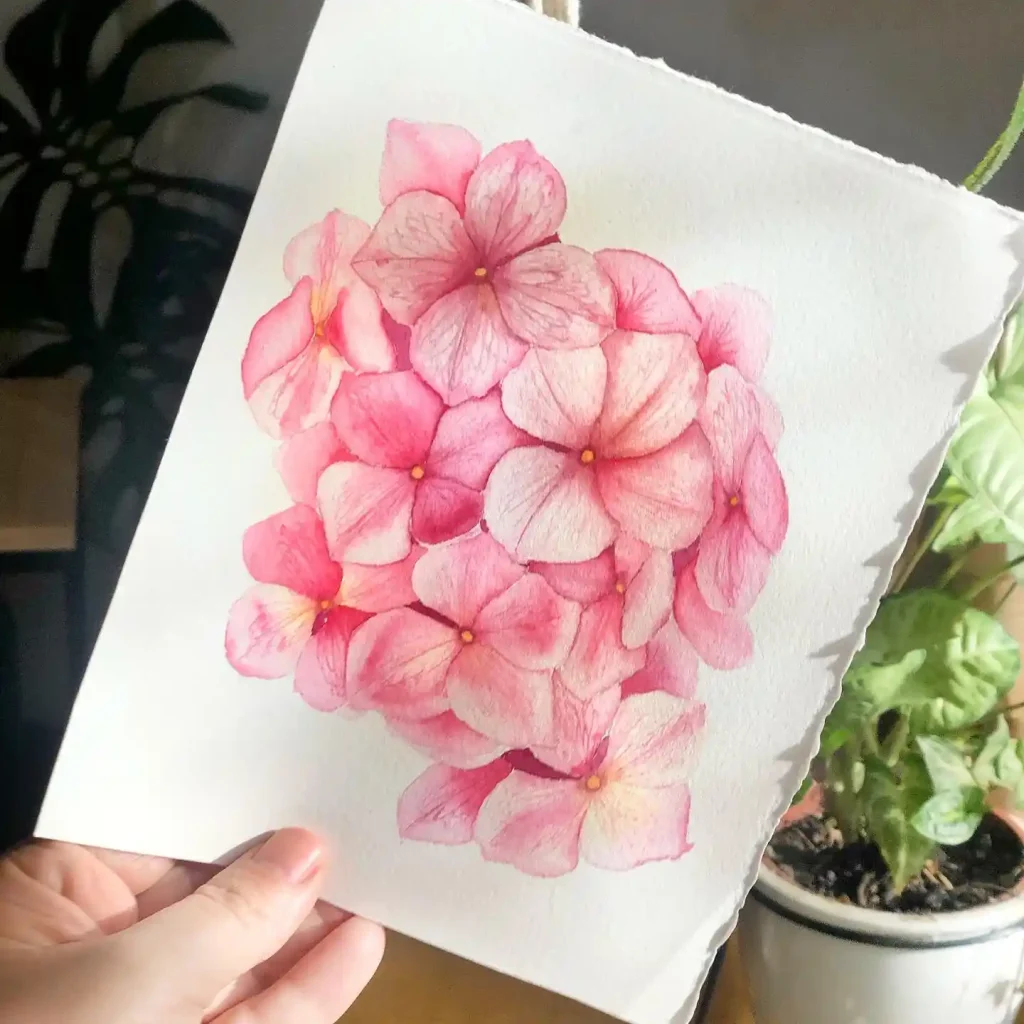
Soft pink washes define this piece, capturing the gentle warmth of summer blooms. I built up layers of rose madder to give each petal distinct volume while keeping the overall shape rounded and organic. It symbolizes heartfelt emotion and gratitude. The rough edge of the paper adds a lovely, rustic touch that contrasts with the delicate subject matter.
2. Blue and White Bloom on Textured Paper
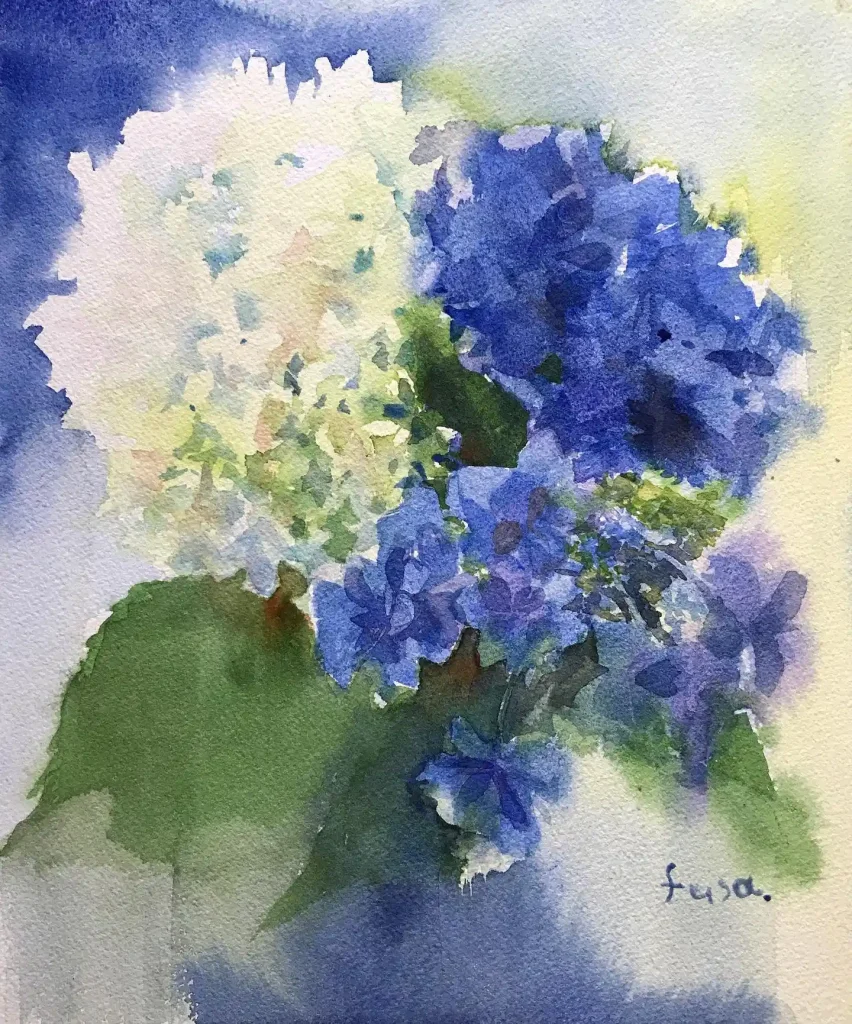
Light and shadow play a huge game here. The stark white hydrangea on the left feels like it is catching the morning sun, while the deep indigo bloom retreats into the shade. Using negative space to define the white petals was a fun challenge. It represents the dual nature of seasons, balancing brightness with cool, deep tones.
3. Hydrangea Color Study on Watercolor Block
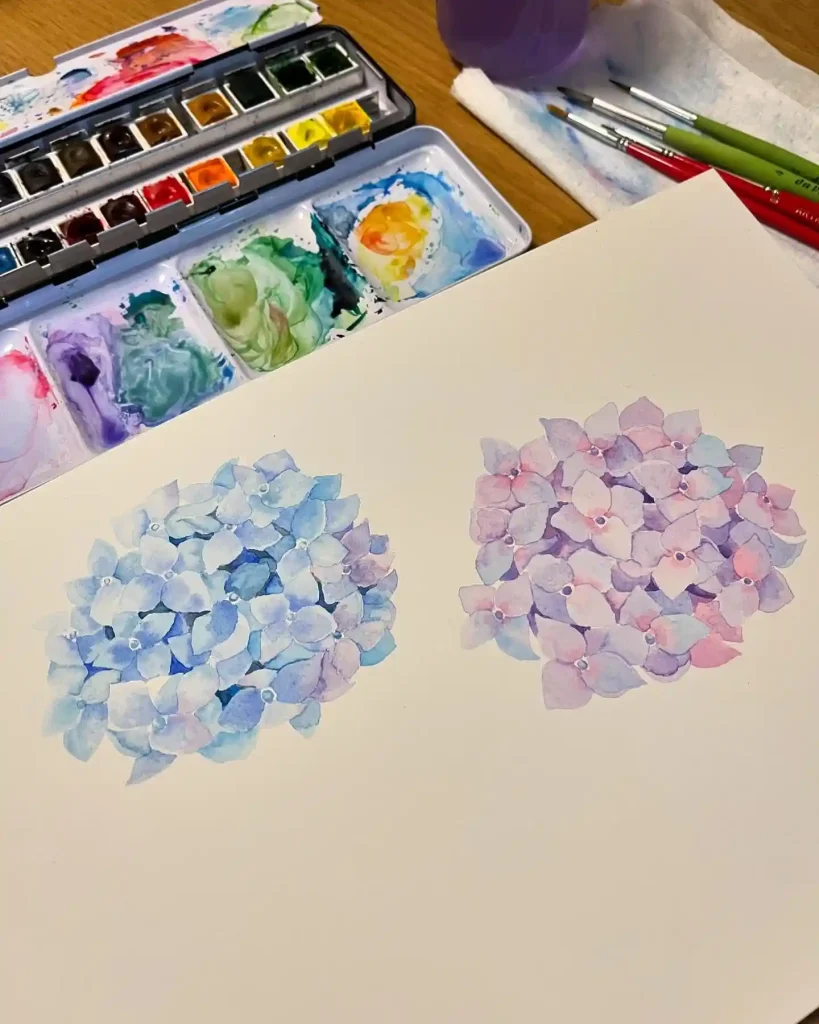
Harmony in color is the focus of this study. Placing the cool cerulean head next to the warm lavender one highlights the incredible variety within this species. I kept the washes loose and watery to suggest the delicate texture of the petals without overworking them. It captures the essence of a garden where different soils create a rainbow of blooms.
4. Realistic Blue Hydrangea on White Paper
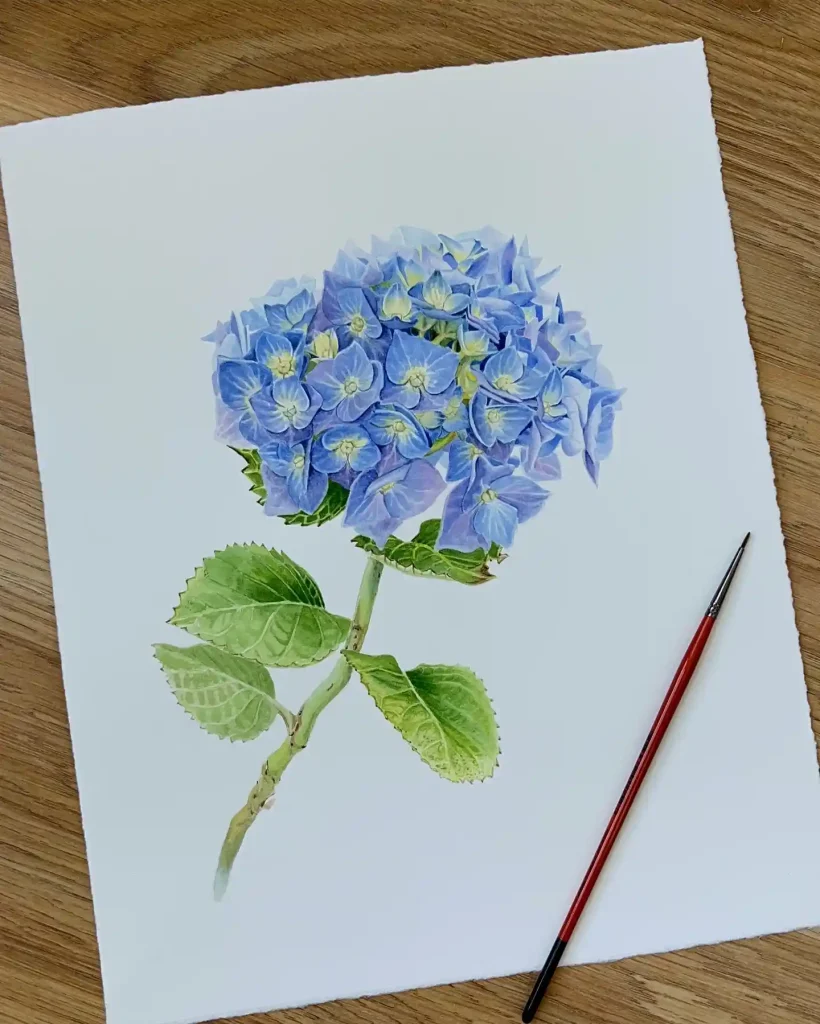
Classic botanical illustration vibes run strong here. I used precise layering of ultramarine and cobalt to build the depth in the flower head, giving it a heavy, lush appearance. The detailed veins in the green leaves anchor the composition perfectly. It symbolizes the enduring beauty of nature and the patience required to capture every tiny floret.
5. Windowside Pot on Rough Grain
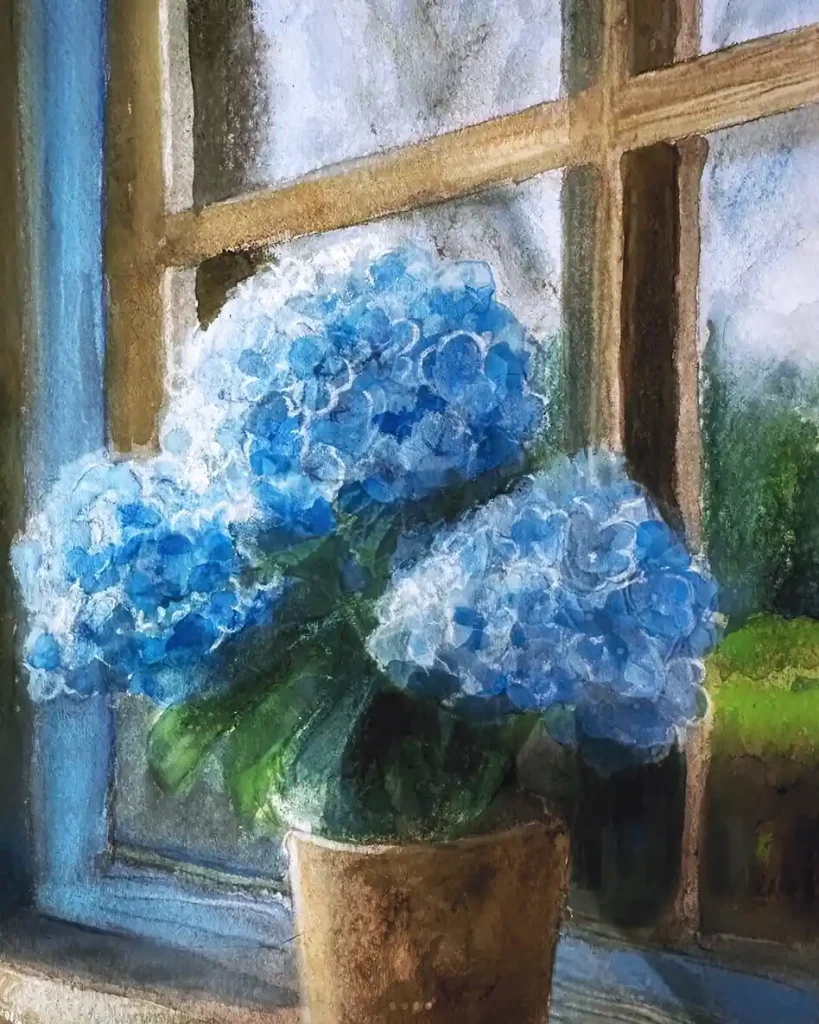
Home is where the heart is, and this painting feels like a memory. The vibrant blue blooms sit happily in a pot by the window, bathed in natural light. I used loose, impressionistic strokes to suggest the glass and the greenery outside. It represents the comfort of bringing nature indoors and the quiet peace of a lazy afternoon.
6. Green White Bloom on Card Stock
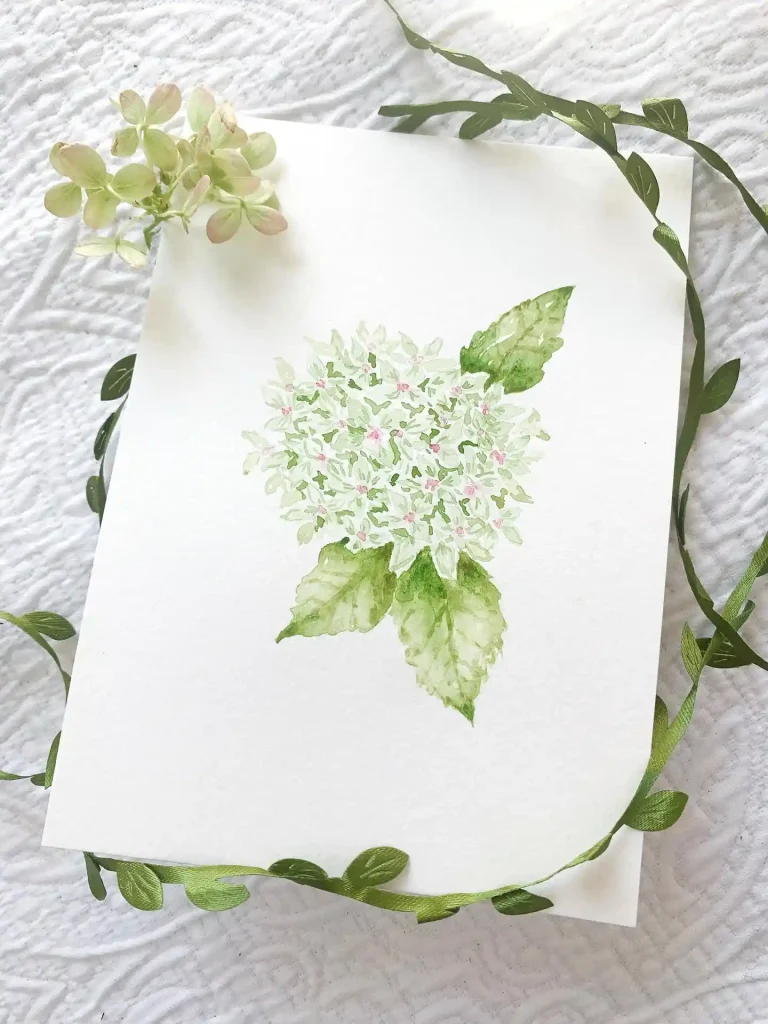
Freshness defines this young bloom. The pale green and white palette suggests a flower just starting to open, symbolizing new beginnings and growth. I used very diluted washes to keep it light and airy, almost ethereal. The composition is simple and clean, letting the subtle color shifts tell the story of spring turning into summer.
7. Purple Flower Head on Sketchbook Paper
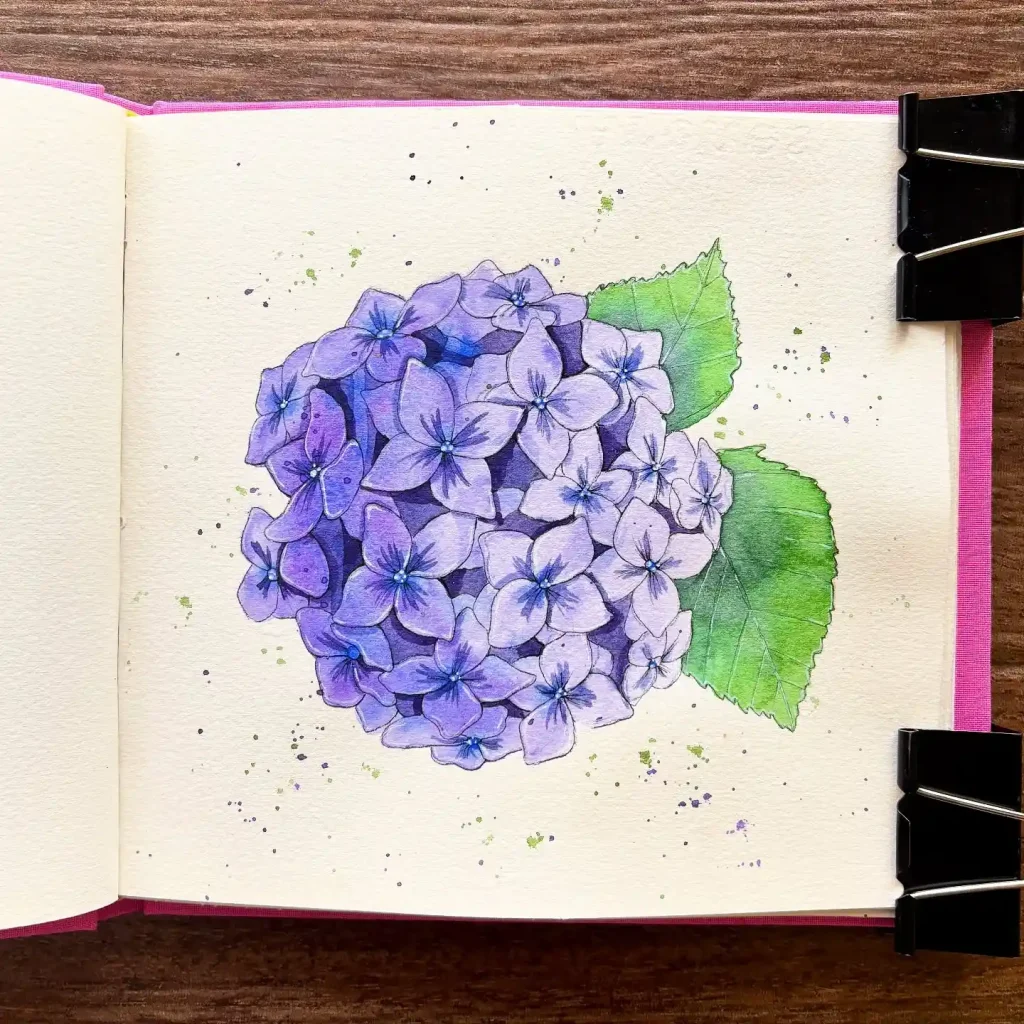
Deep violet tones take center stage in this sketchbook entry. I loved exploring the way the purple petals overlap and create deep shadows in the center of the cluster. It feels intimate and personal, like a field note from a garden walk. The green leaves provide a necessary pop of brightness to balance the moody, rich flower head.
8. Pink Potted Hydrangea on Cold Press
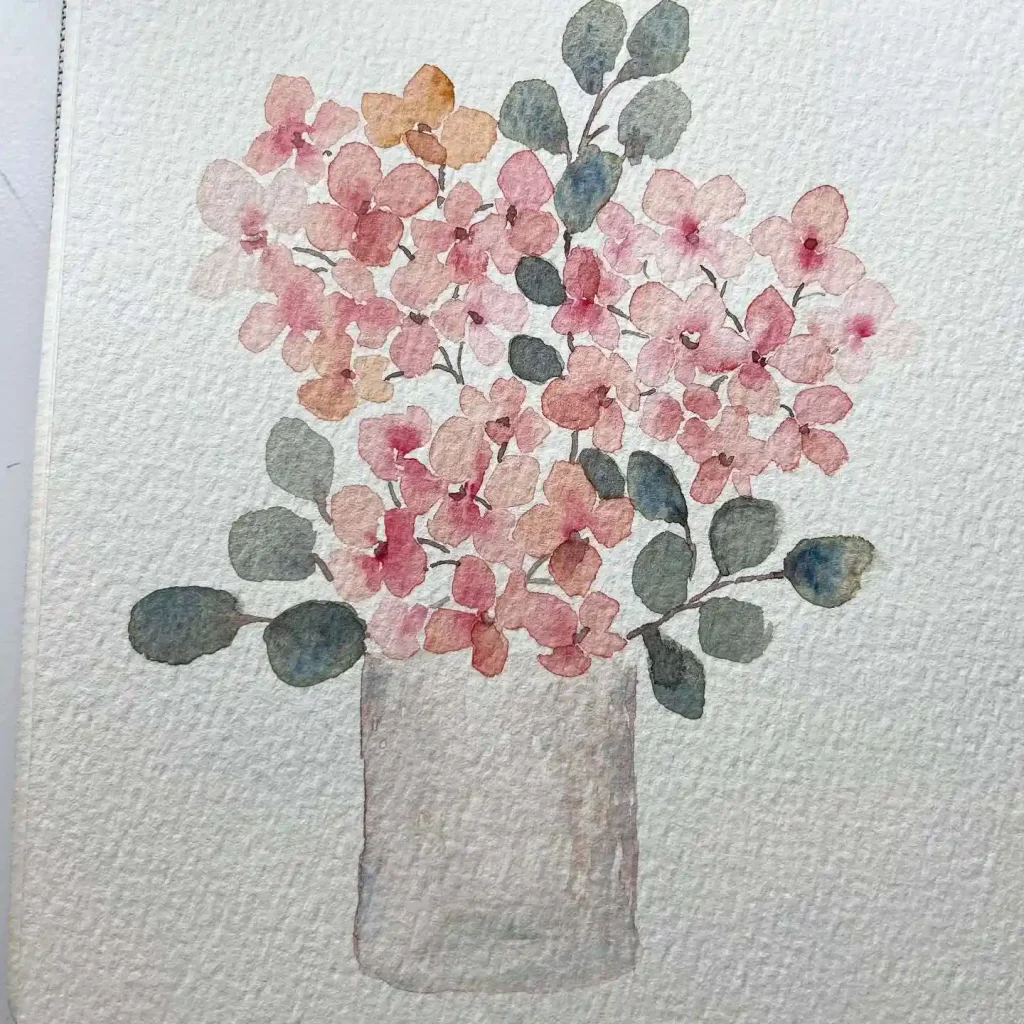
Simplicity is key in this arrangement. The soft salmon and pink petals are painted with quick, dab-like strokes that feel spontaneous and lively. Resting in a neutral grey pot, the flowers really pop. It captures the joy of simple home decor and how a splash of color can brighten up a room instantly.
9. Variegated Purple Bloom on Smooth Paper
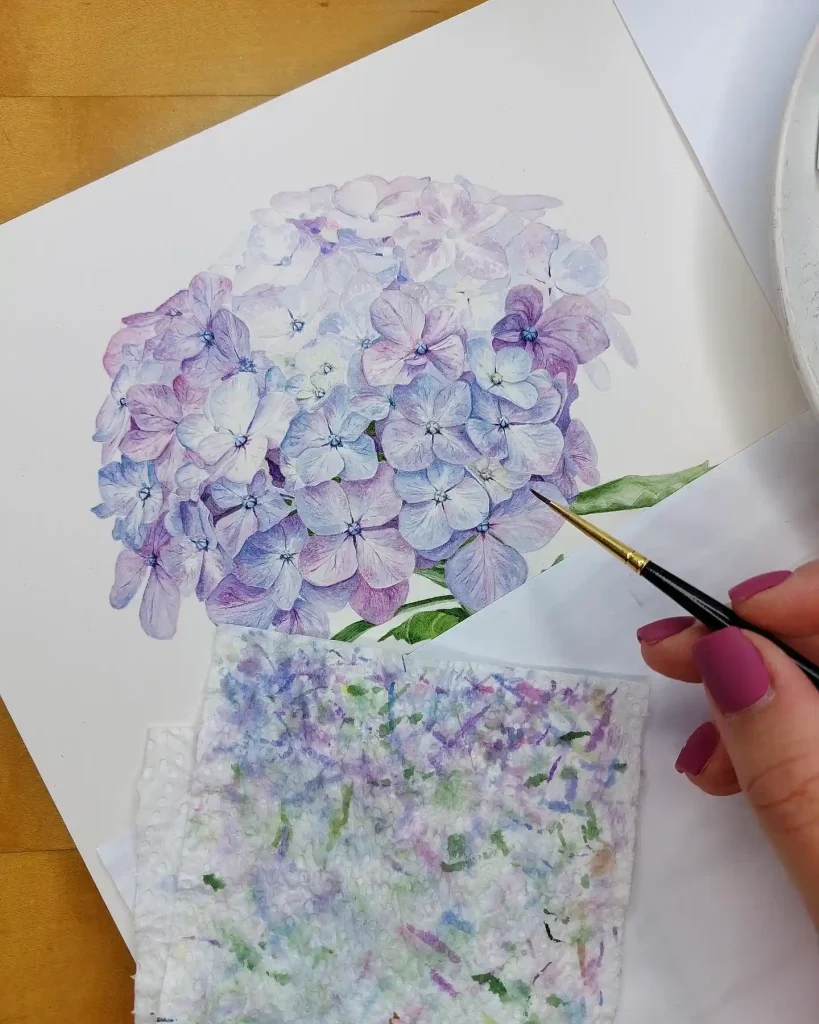
Abundance is the word for this massive bloom. The transition from soft periwinkle to deep violet mimics the natural variegation found in mature hydrangeas. I focused on the “star” centers of the individual flowers to add detail and focus. It symbolizes understanding and the depth of emotion. The wet-on-wet background adds a soft, dreamy atmosphere to the piece.
10. Blue Hydrangea Study on Hot Press
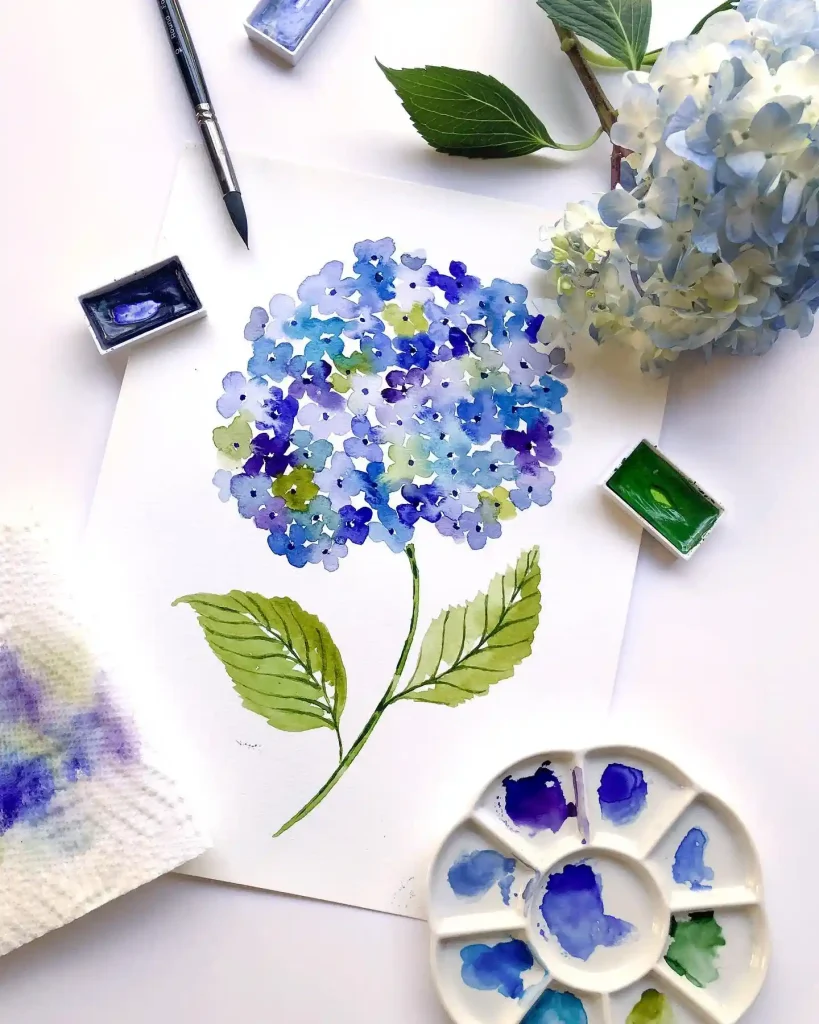
Process is just as beautiful as the result. This piece shows the vibrant blue and purple mix used to create the flower, with the palette right there as proof. The spherical shape is rendered with careful attention to light source. It celebrates the artist’s journey and the magic of turning pigment into life.
11. Botanical Study with Pink Sprig on Smooth Paper
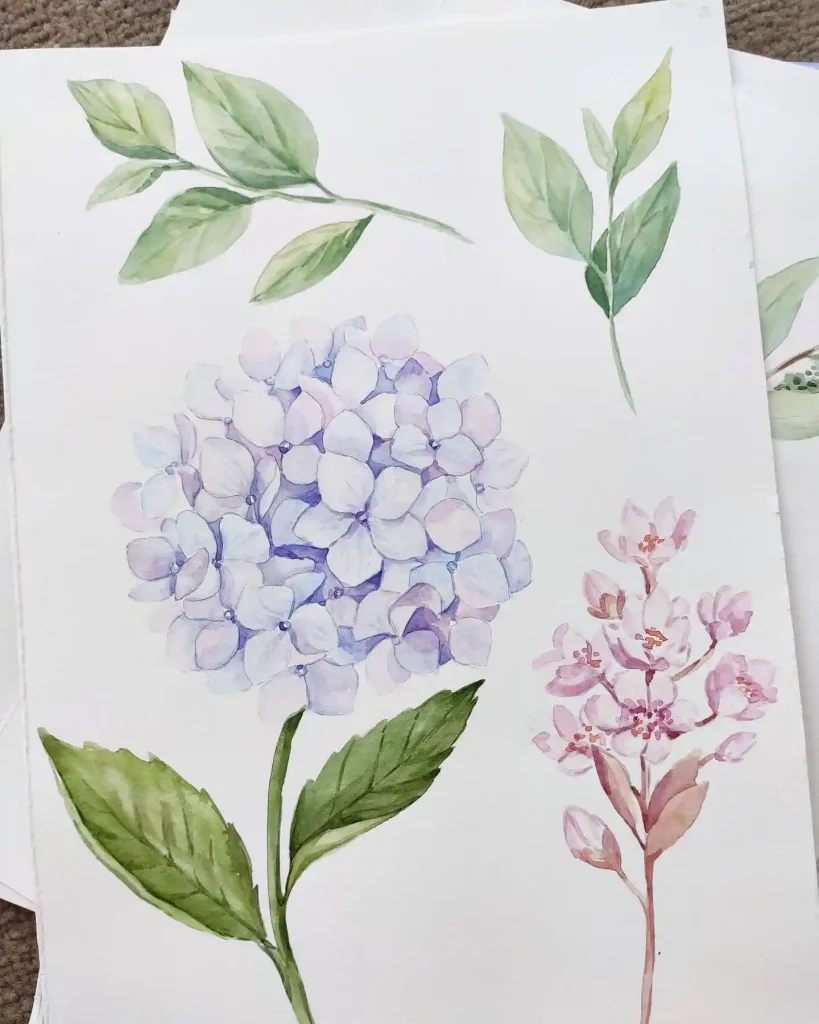
Science meets art in this clean layout. The artist separated the blue hydrangea head from the green leaves and delicate pink buds to create a study sheet. The shading on the blue petals is soft and pillowy, contrasting with the sharper veins of the leaves. It symbolizes the deconstruction of nature to understand its parts. The white space keeps it modern and fresh.
12. Loose Purple Bloom on Watercolor Block
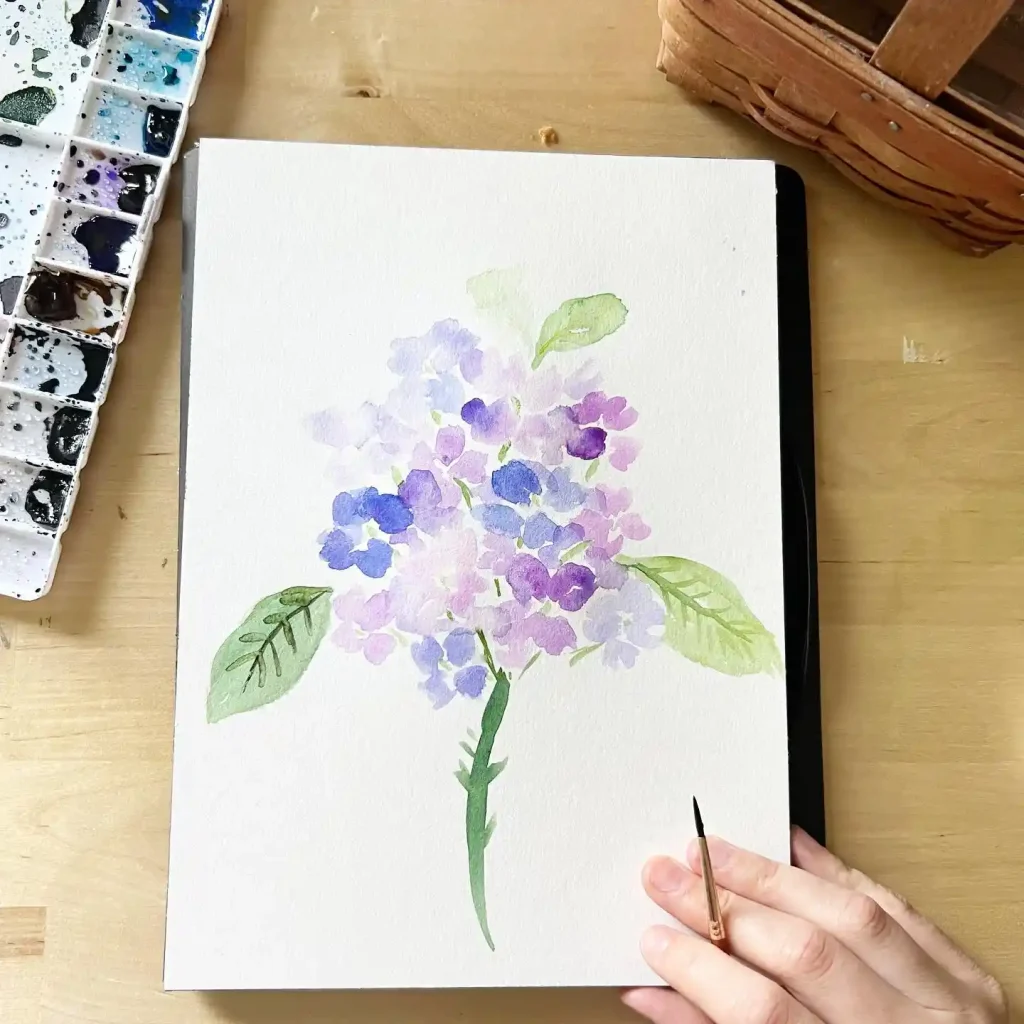
Spontaneity rules this piece. The wet-on-wet technique creates a lovely, blurred effect where the purple and blue pigments bleed together. Seeing the messy palette in the corner emphasizes the process over perfection. It captures the fleeting, impressionistic beauty of a garden in rain. The green leaves are mere suggestions, keeping the focus on the vibrant floral color.
13. Detailed Violet Cluster on Fine Grain Paper
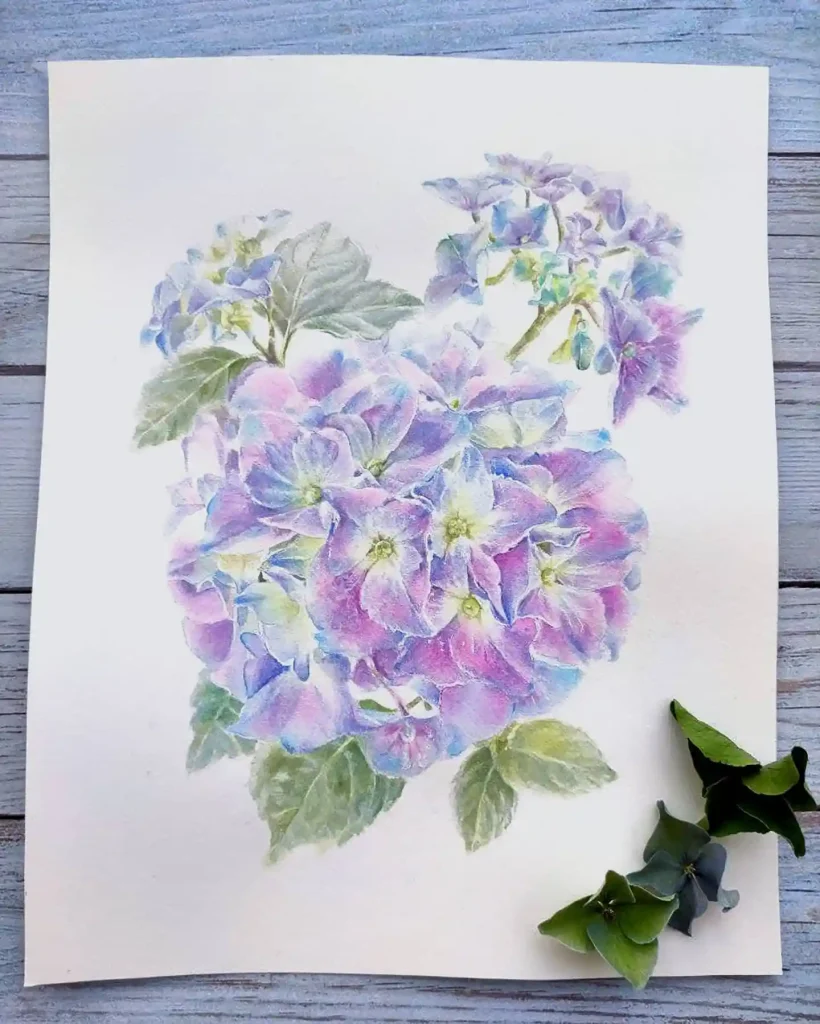
This is realism at its finest. Every petal in this violet and blue cluster is rendered with precise attention to light and shadow. The hints of yellow in the centers add a glowing life to the flower. It represents the complexity and fullness of summer abundance. The soft, faded edges make it look like a vintage botanical print found in an old book.
14. Pink Bloom Comparison on Cold Press
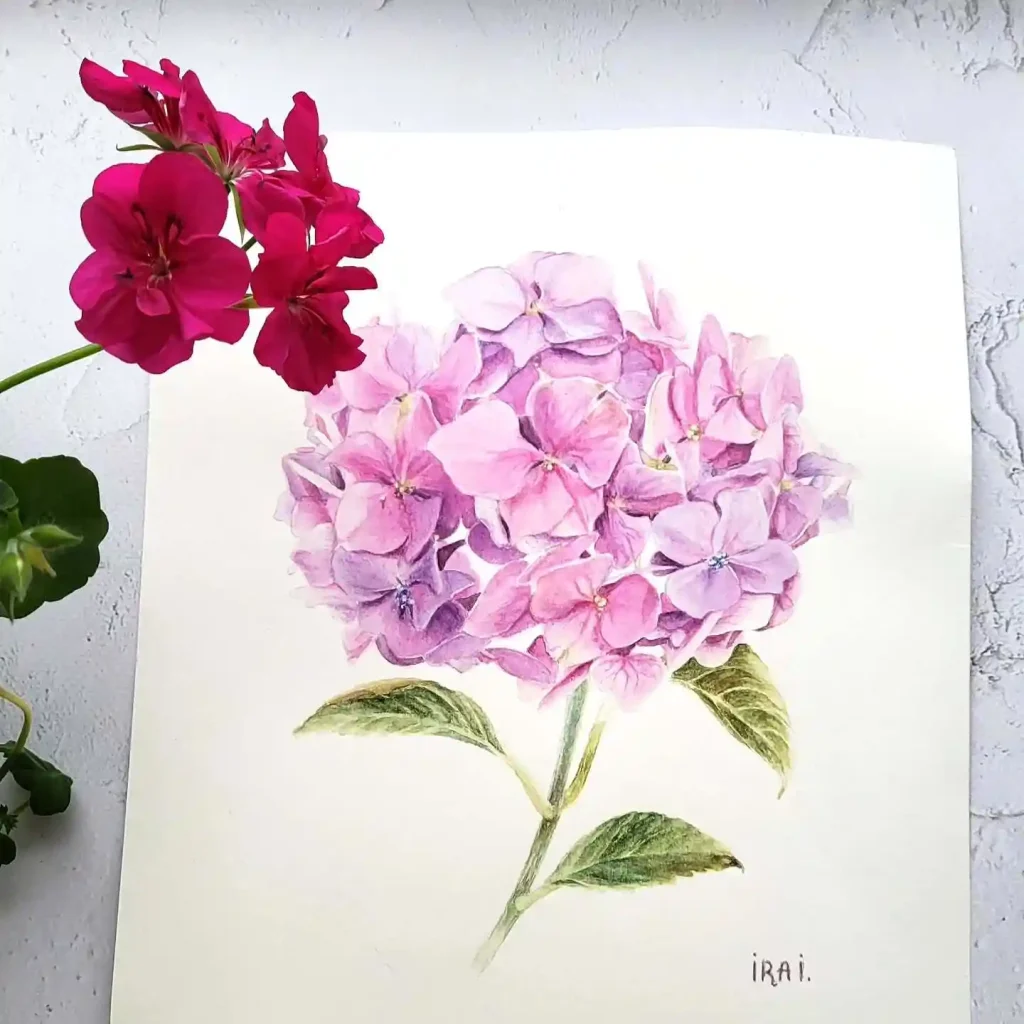
Life imitates art here. Placing the real magenta geranium next to the painted pink hydrangea highlights the artist’s challenge to capture nature’s vibrancy. The painting uses soft washes to build the volume of the flower head, creating a gentle, romantic feel. It symbolizes the connection between the gardener and the painter. The green stem provides a strong vertical anchor.
15. Tied Bouquet on Textured Card
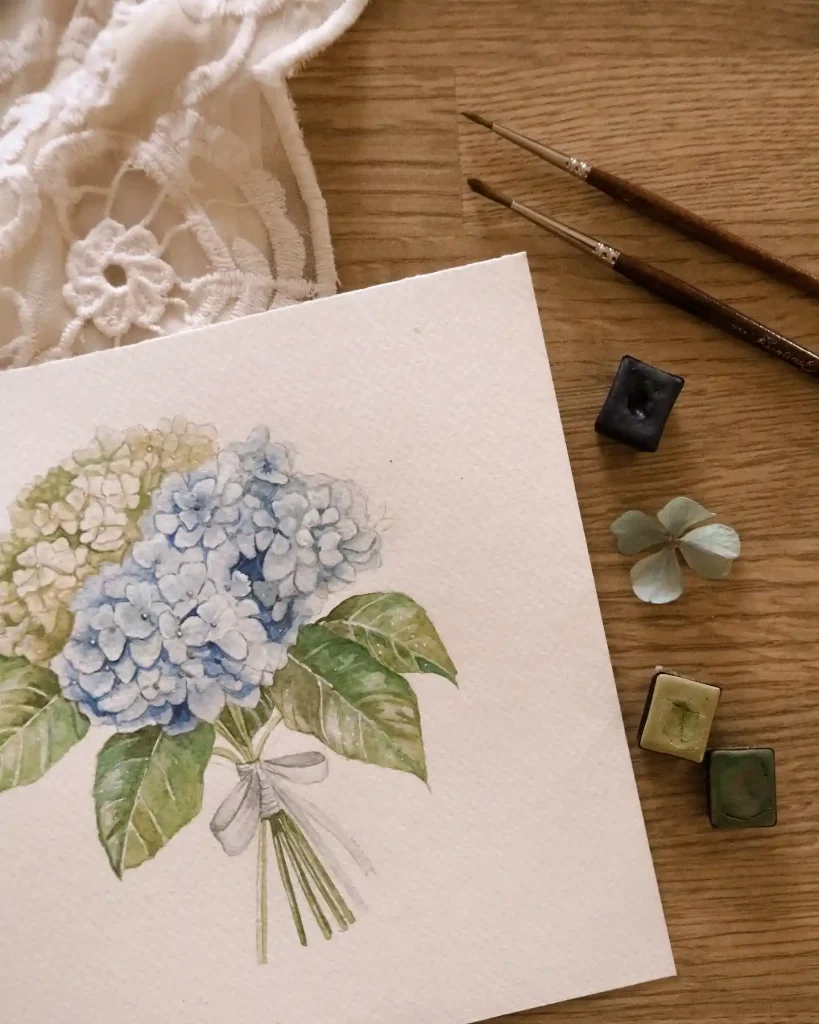
There is something so sweet about a hand-tied bouquet. This piece features blue and creamy white hydrangeas bound with a delicate ribbon. The texture of the paper adds a rustic charm to the illustration. It represents a gift of friendship or gratitude. The artist used dry brushing on the leaves to give them a crispy, realistic texture that contrasts with the soft blooms.
16. Vase of Blues on Cotton Paper
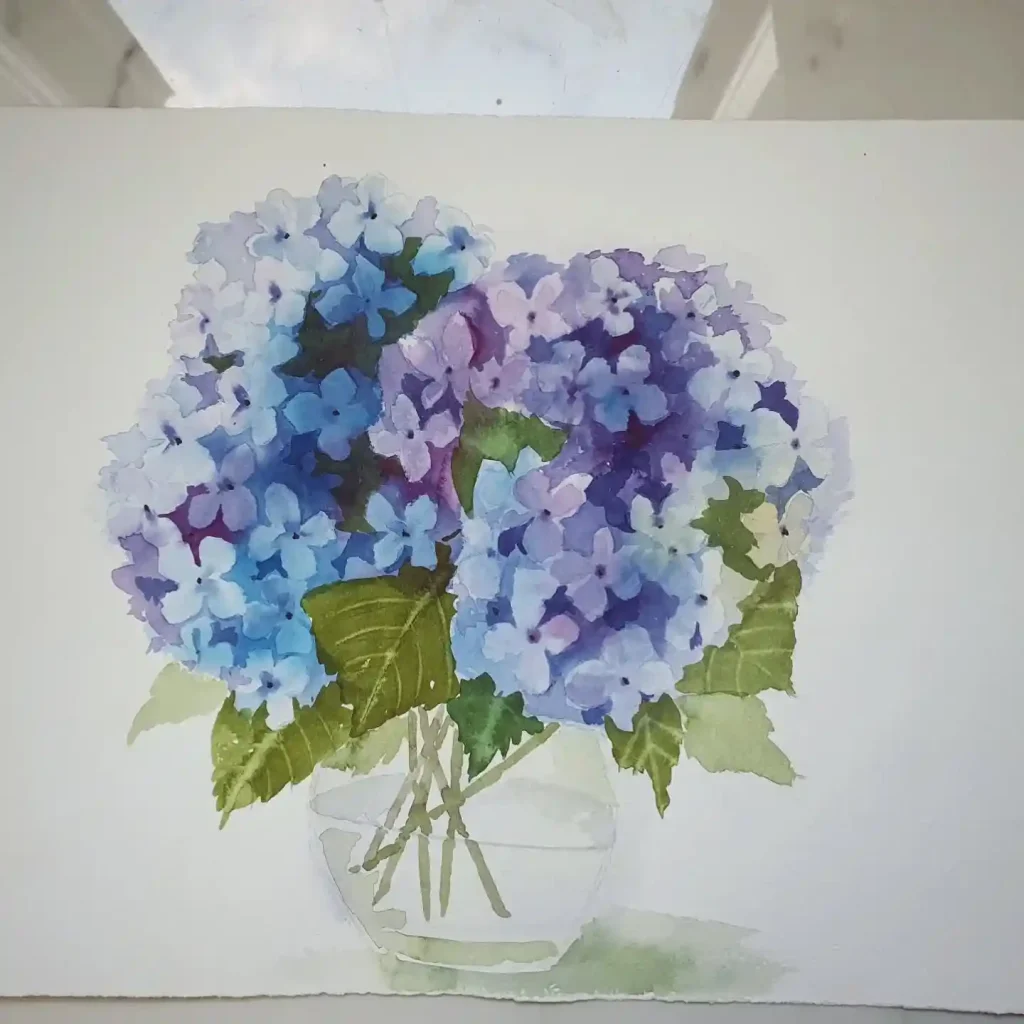
Bringing the garden inside. This large arrangement of blue and purple hydrangeas in a clear glass vase feels lush and heavy. The artist expertly navigated the negative space to define the petals without outlining them. It captures the domestic joy of fresh cut flowers. The transparency of the water in the vase is handled with subtle, watery washes.
17. Macro Purple Petals on Hot Press
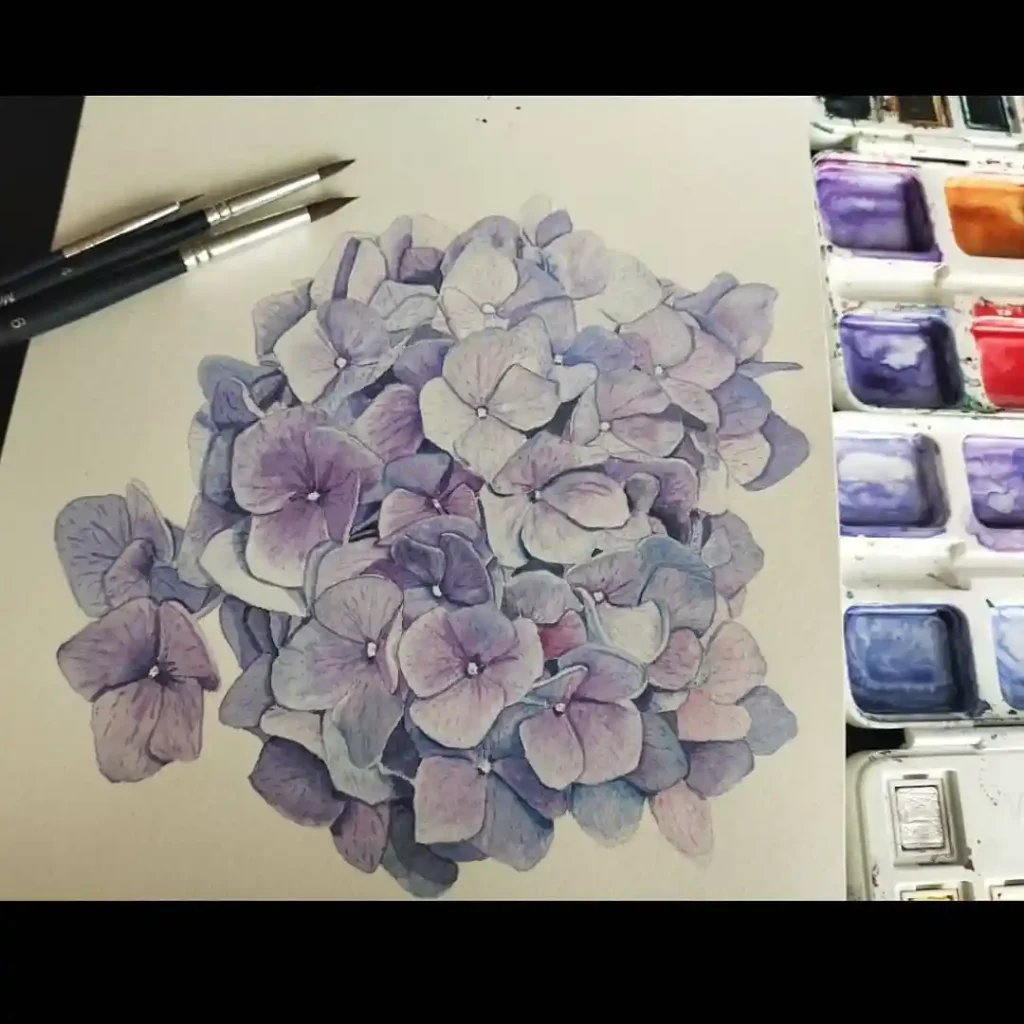
Zooming in changes the perspective completely. This piece focuses on the intricate geometry of the purple petals, treating the flower like a landscape. The shadows are deep and rich, giving the cluster immense volume. It symbolizes intimacy and paying attention to small details. The brushes nearby remind us of the patience required for such precision work.
18. Solitary Blue Head on White Sheet
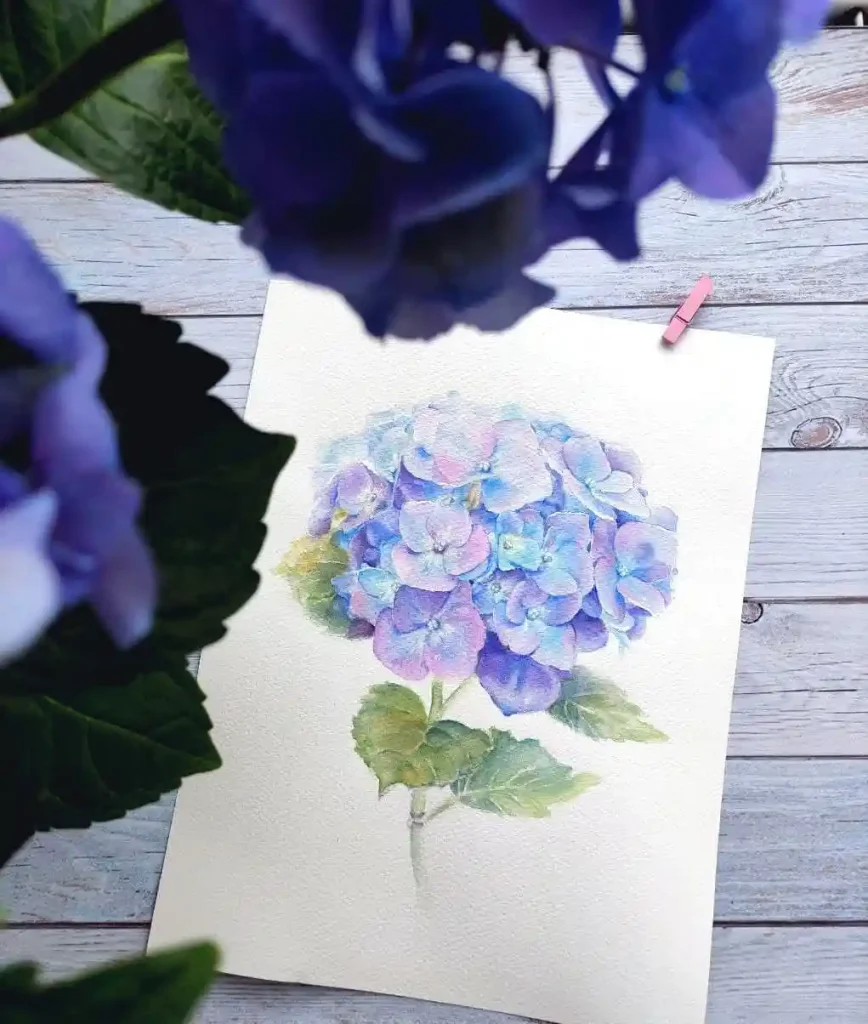
The contrast here is striking. The vibrant periwinkle blue of the flower pops against the warm, blurred wood table background. A tiny pink clothespin adds a playful, human element to the composition. It represents a singular moment of beauty frozen in time. The wet washes on the petals give them a soft, velvet-like appearance that invites touch.
19. Falling Petals on Smooth Paper
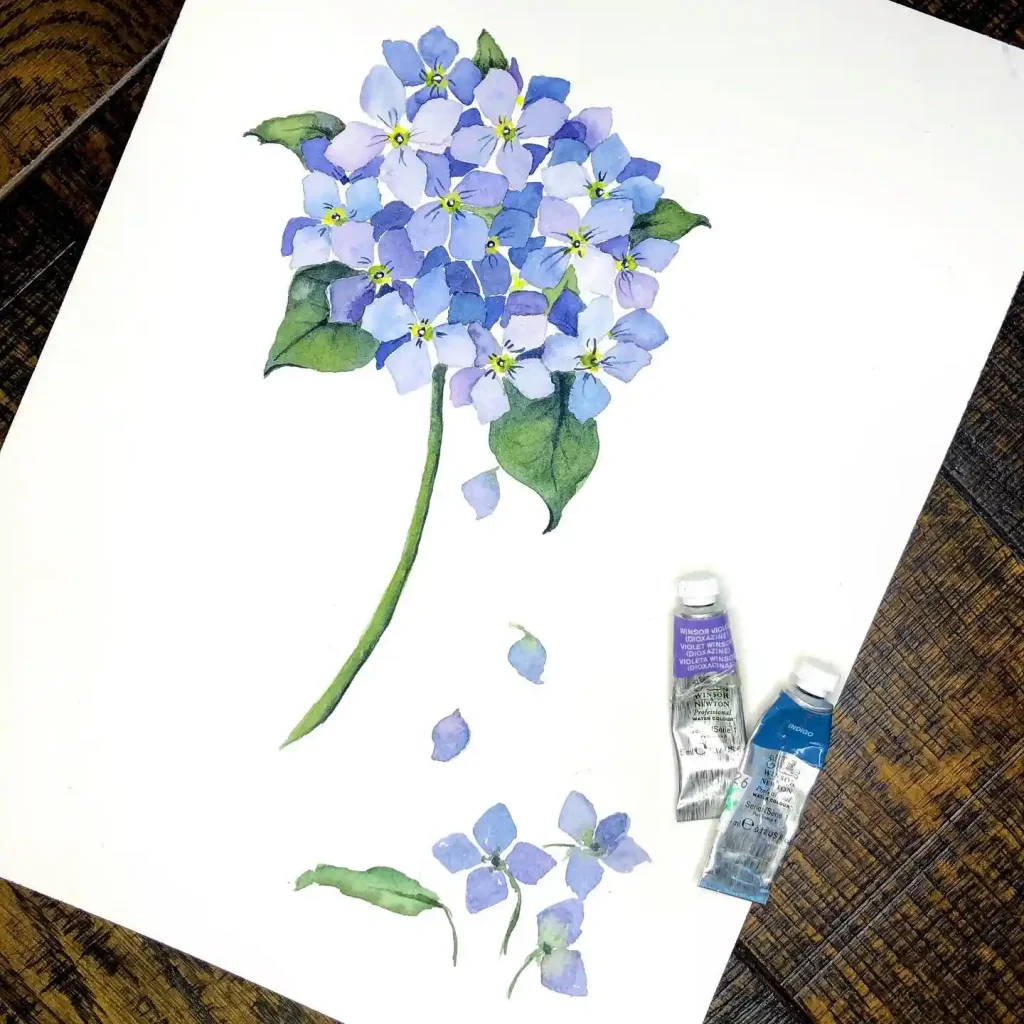
Deconstruction can be beautiful. This blue hydrangea is shown with petals drifting down, suggesting the end of the season or a gentle breeze. The paint tubes included in the shot reveal the specific pigments used to achieve those cool tones. It symbolizes the impermanence of nature. The composition feels light, airy, and full of movement.
20. Pink Flower in Progress on Sketchbook
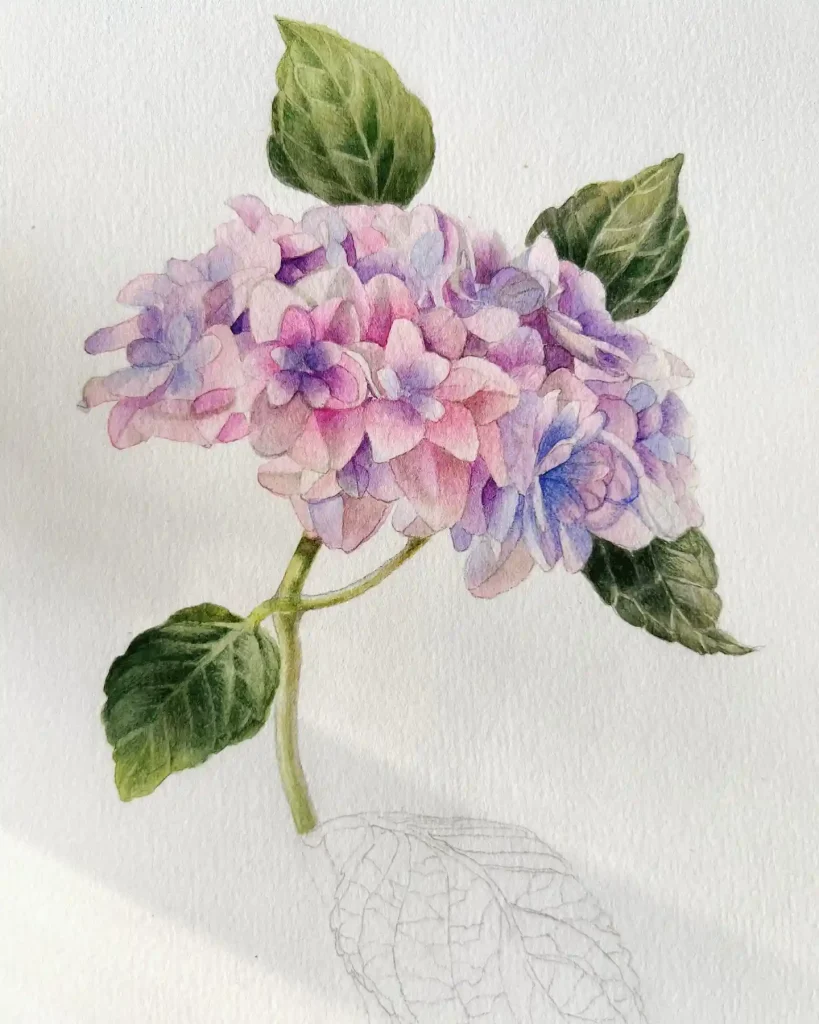
I love seeing the “bones” of a painting. This piece shows a pink and purple hydrangea halfway done, with the bottom leaves still in pencil outline. It highlights the journey of creation, from sketch to color. It represents potential and growth. The transition from the painted upper leaves to the graphite sketch is seamless and fascinating to observe.
21. Pink and Purple Gradient Study on Smooth Paper
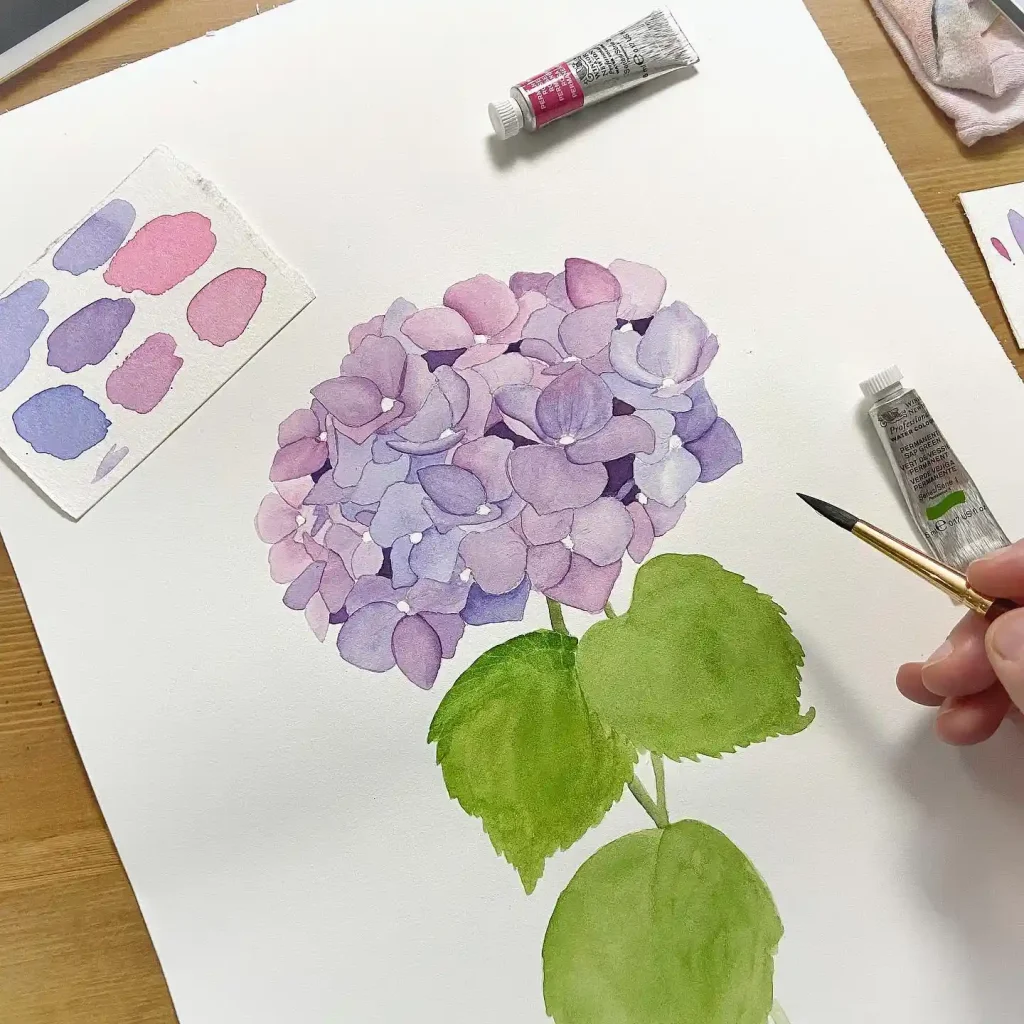
This illustration captures the delicate transition between seasons. The bloom shifts from a soft, warm pink to a cool violet, creating a lovely gradient effect. Seeing the color swatches and the paint tube nearby emphasizes the planning behind the palette. It symbolizes the complexity of nature where no two petals are exactly alike. The leaves add a fresh green contrast.
22. Purple Bloom in Progress on Taped Board
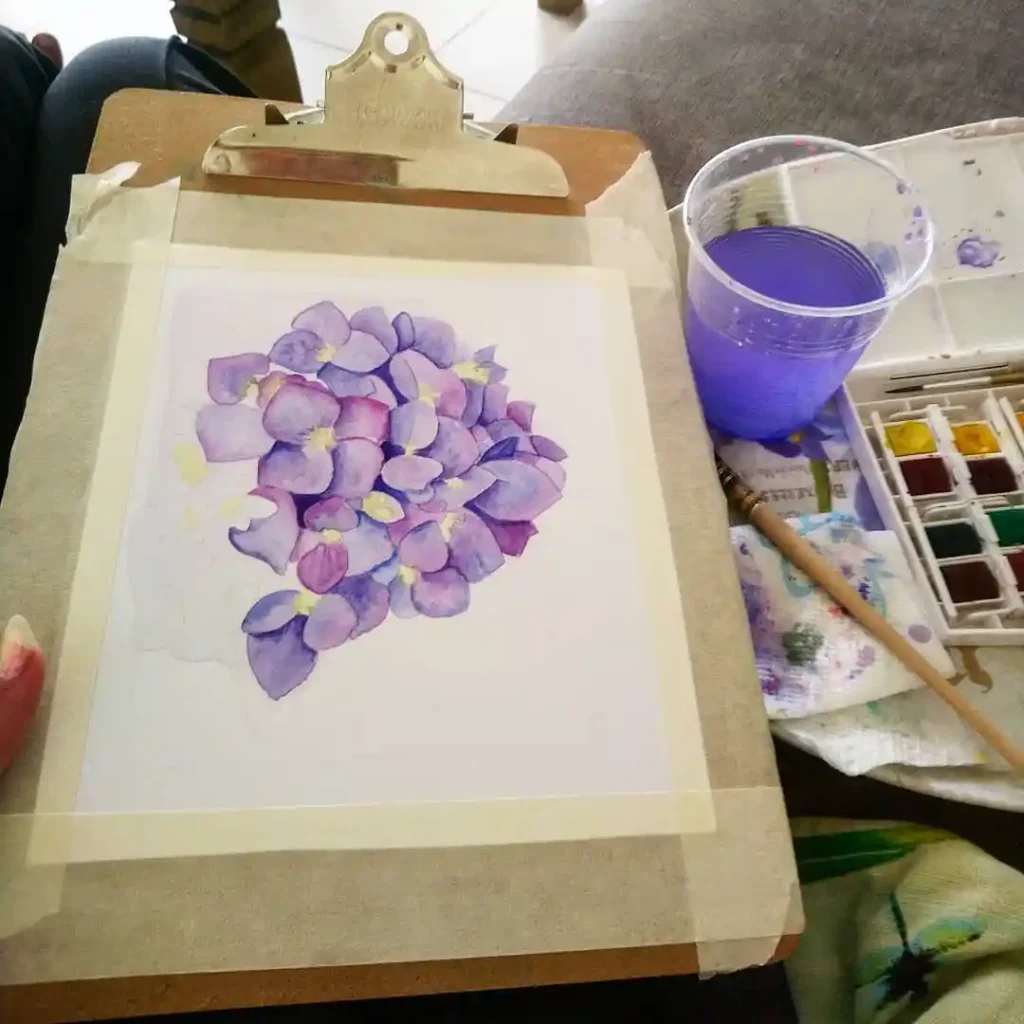
There is a raw beauty in a work in progress. This purple hydrangea is taped securely to a board, suggesting a plein air session or a serious studio study. The cup of purple rinse water is a fun, accidental color match that ties the scene together. It represents the immersive process of painting. The loose washes keep it feeling spontaneous.
23. Autumnal Red Hydrangea on Sketchbook
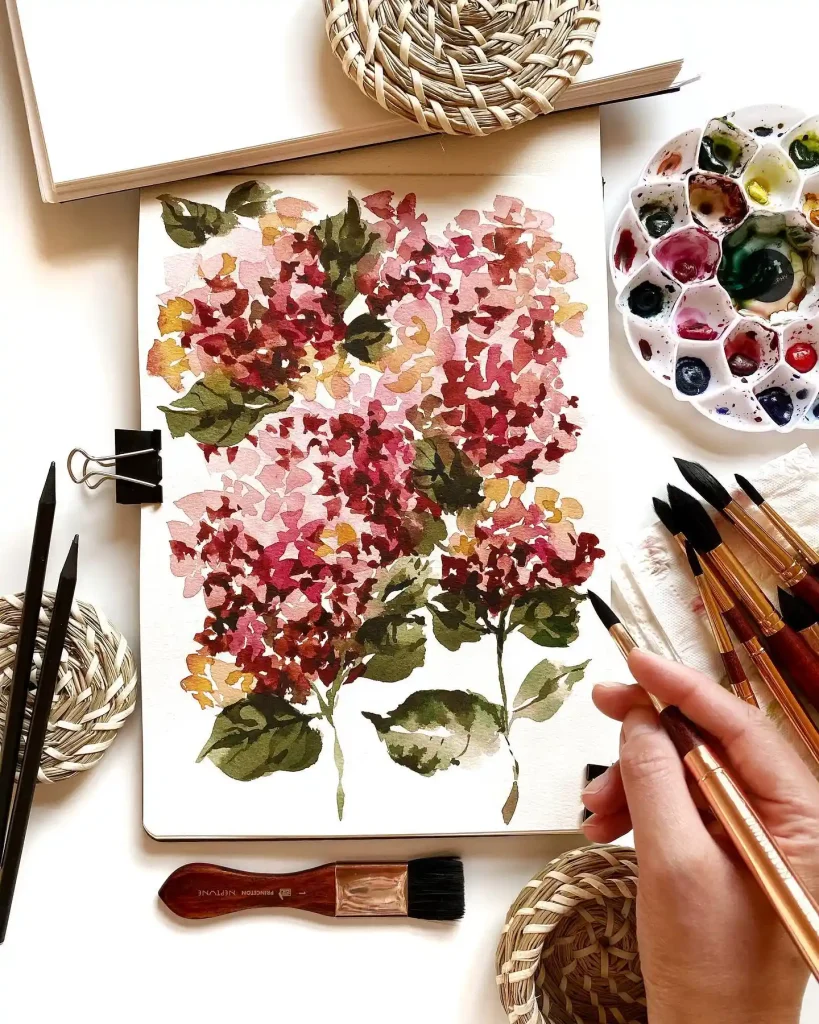
Rich, earthy tones define this stunning piece. The artist moved away from the typical blues to capture the rusty reds and pinks of an autumn hydrangea. Seeing the hand and brush in the frame brings a human connection to the artwork. It symbolizes the changing seasons and the beauty of aging blooms. The texture of the petals is intricate and dense.
24. Blue Violet Mosaic on Hot Press
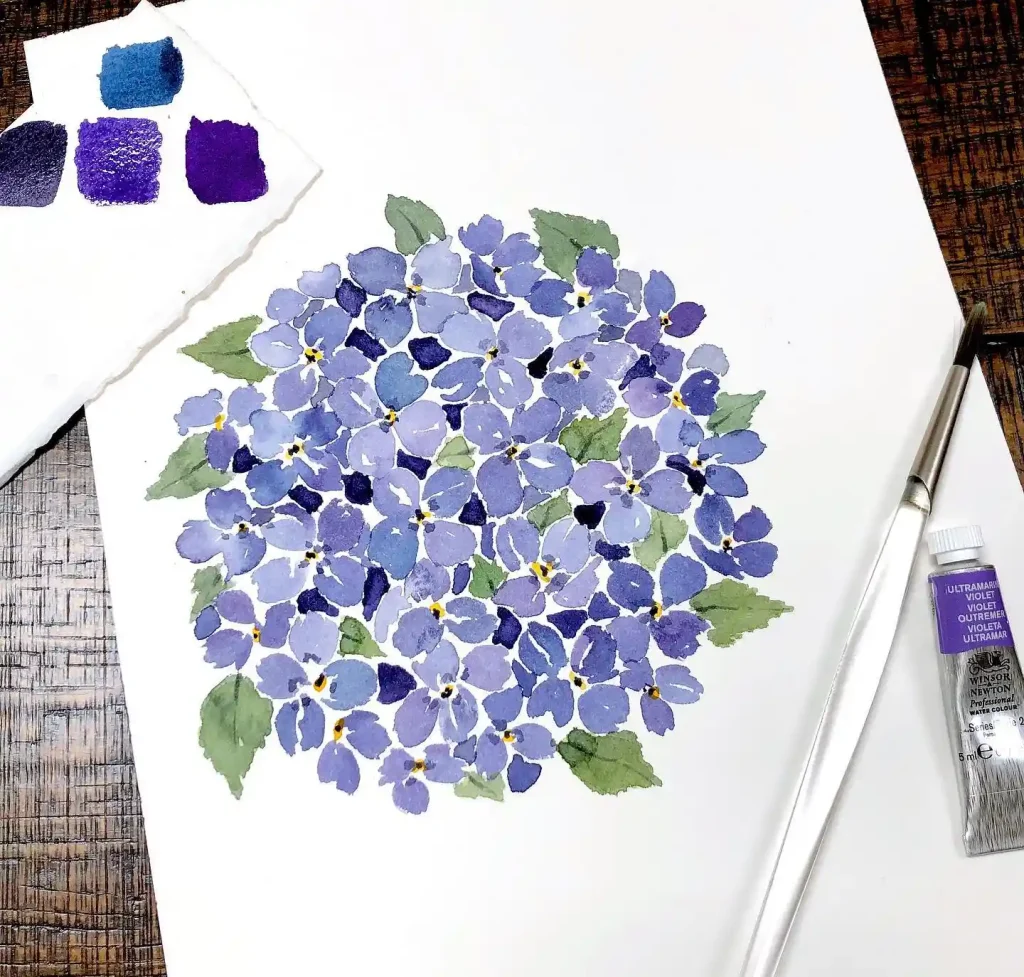
This piece feels like a stained glass window. The distinct separation between the blue and violet petals creates a mosaic effect that is incredibly pleasing to the eye. The color test sheet at the top shows the specific mix of ultramarine and purple used. It captures the organized chaos of a flower head. The paint tube adds context to the medium.
25. Ethereal Pastel Bloom on Cotton Paper
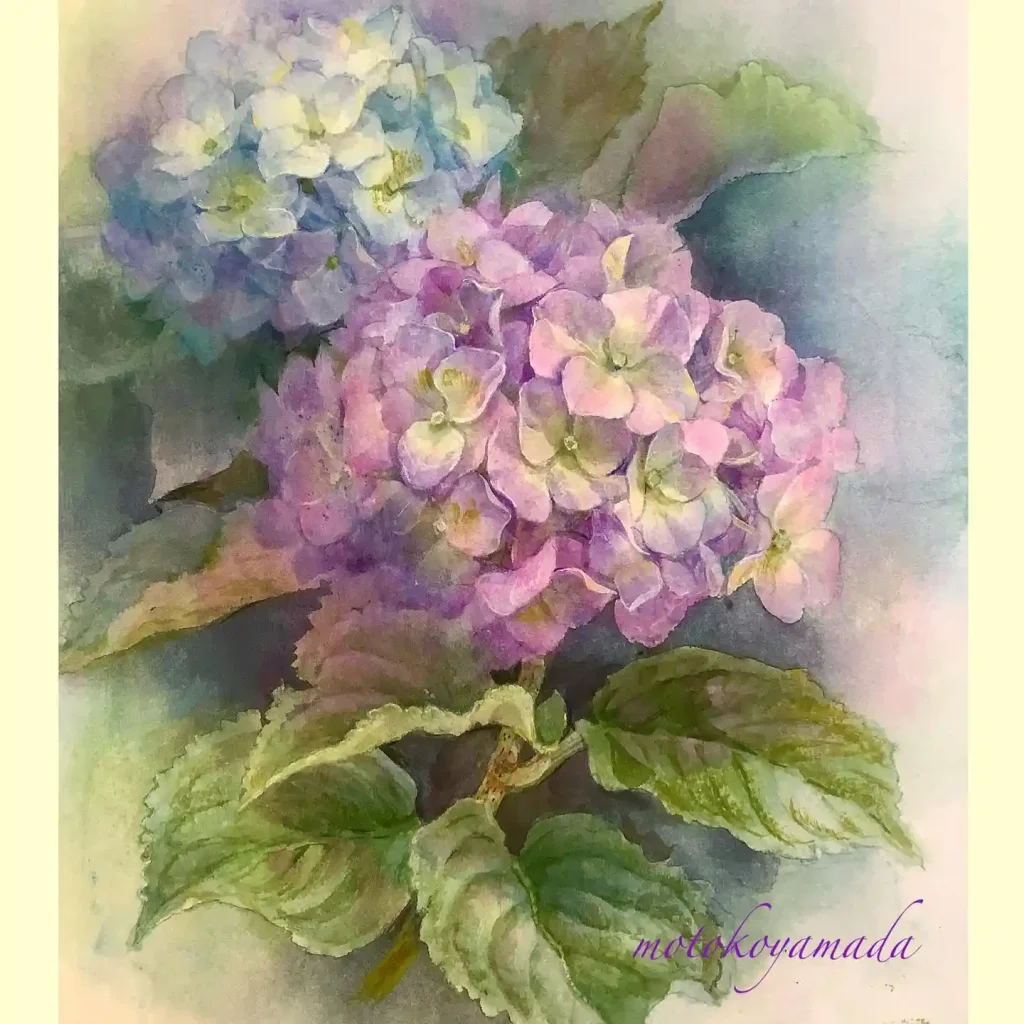
Softness is the ultimate goal here. The artist used a very wet technique to blur the edges of the pink and blue petals, making them look like a dream. The light seems to glow from within the flower cluster. It symbolizes gentleness and the fleeting nature of a summer morning. The green leaves are muted to keep focus on the pastel bloom.
26. Pink and Blue Comparison on Watercolor Sheets
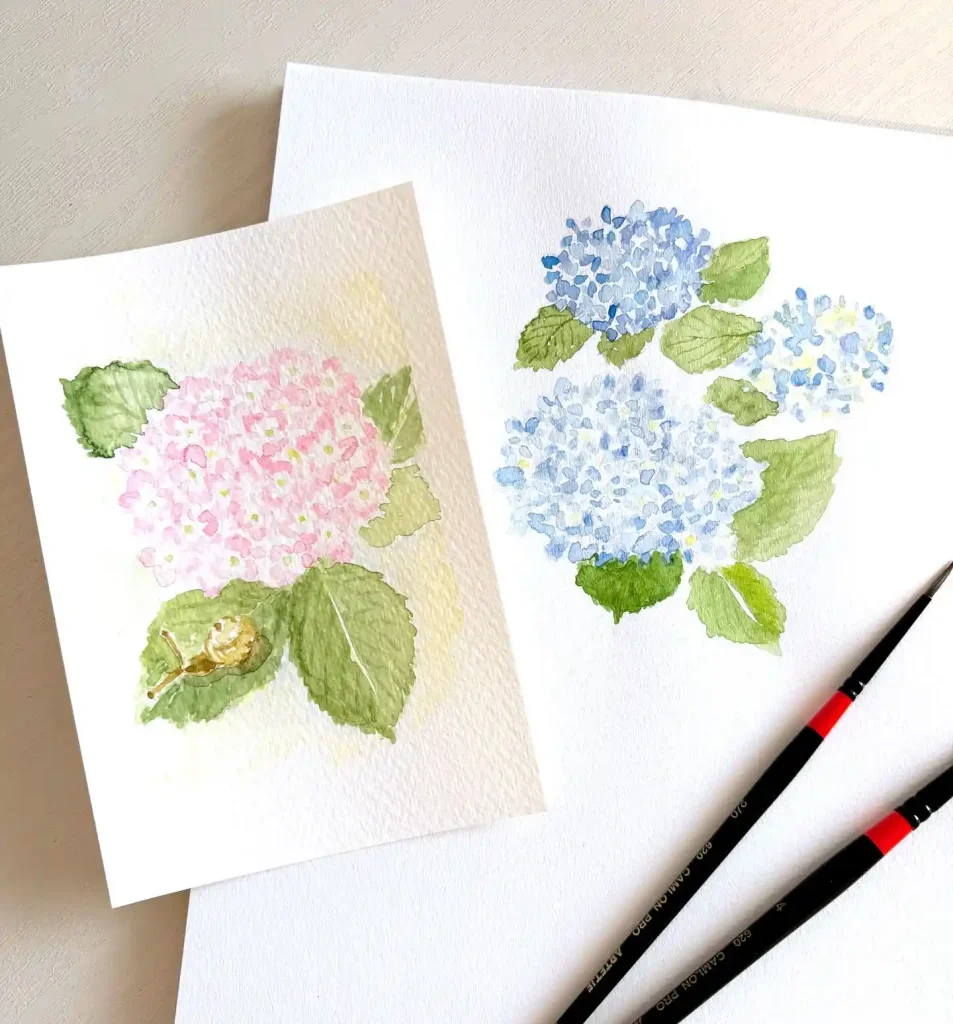
Two distinct personalities shine in this photo. On the left, a soft pink bloom feels warm and inviting, while the right features cool, crisp blue clusters. It perfectly illustrates how soil pH changes the flower’s color. The clean white background makes the colors pop vividly. It represents diversity and the choice between warmth and cool tones.
27. Loose Violet Cluster on Textured Paper
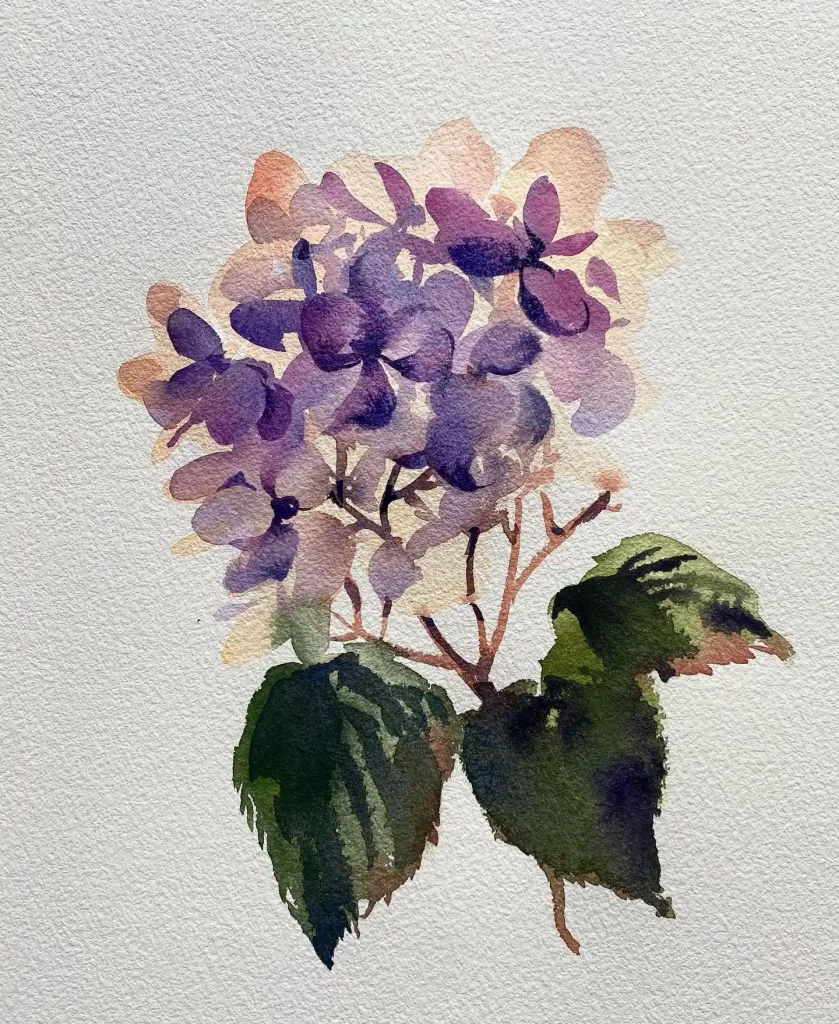
Texture plays a huge role in this expressive piece. The rough grain of the paper catches the purple pigment, giving the flower a lovely, organic feel. The dark green leaves provide a heavy anchor for the airy bloom. It captures the wild, untamed nature of a garden bush. The splatter adds a touch of modern artistic flair.
28. Blue Hydrangea Branch on Smooth Paper
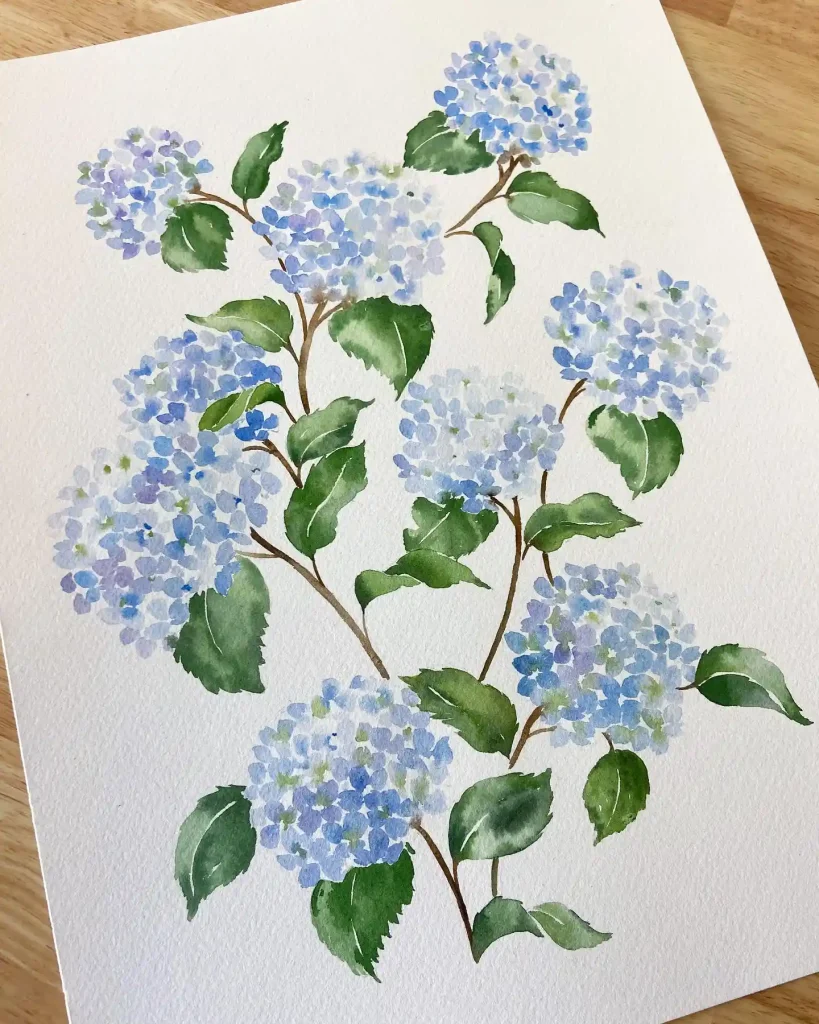
Composition drives this vertical illustration. Instead of a single head, we see a branch laden with multiple blue clusters, showing the plant’s growth pattern. The varying shades of blue create depth and volume in each small flower. It symbolizes abundance and the structural beauty of botany. The leaves dance around the stems to create rhythm.
29. Panicle Hydrangea on Cream Paper
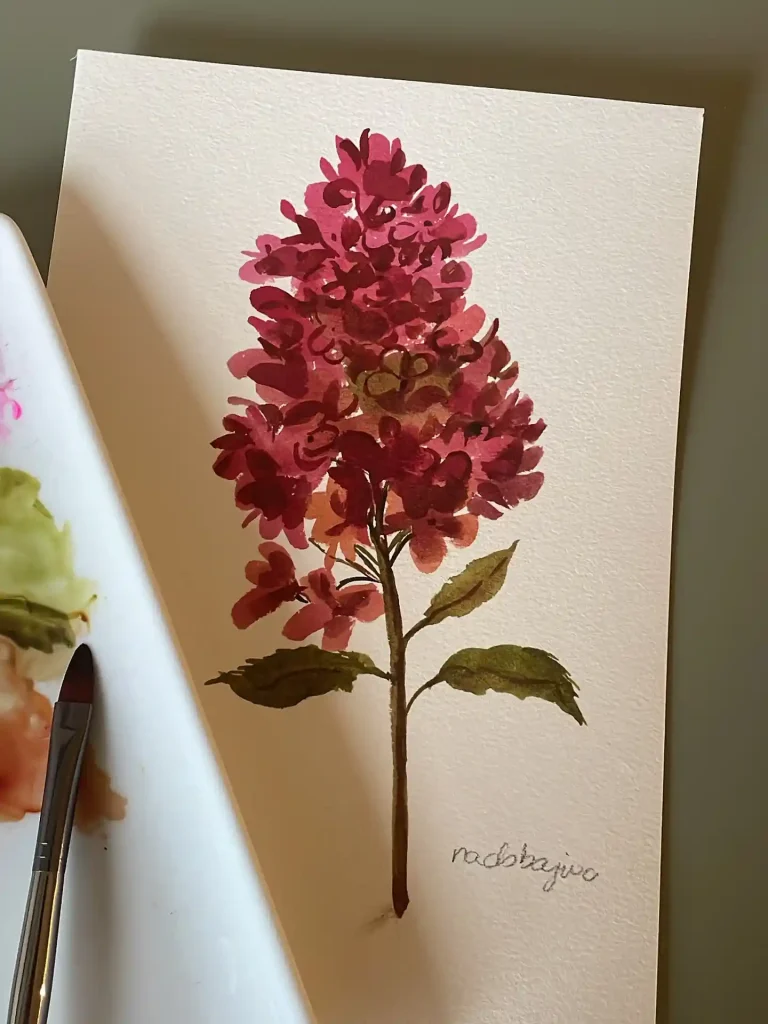
Shape makes this one stand out. Unlike the usual round mops, this painting features the conical shape of a panicle hydrangea in deep red and pink. The vertical orientation draws the eye upward along the stem. It represents a different variety of beauty found in the garden. The shadow texturing on the left side gives it great three-dimensional form.
30. Twin Blooms on Clipboard
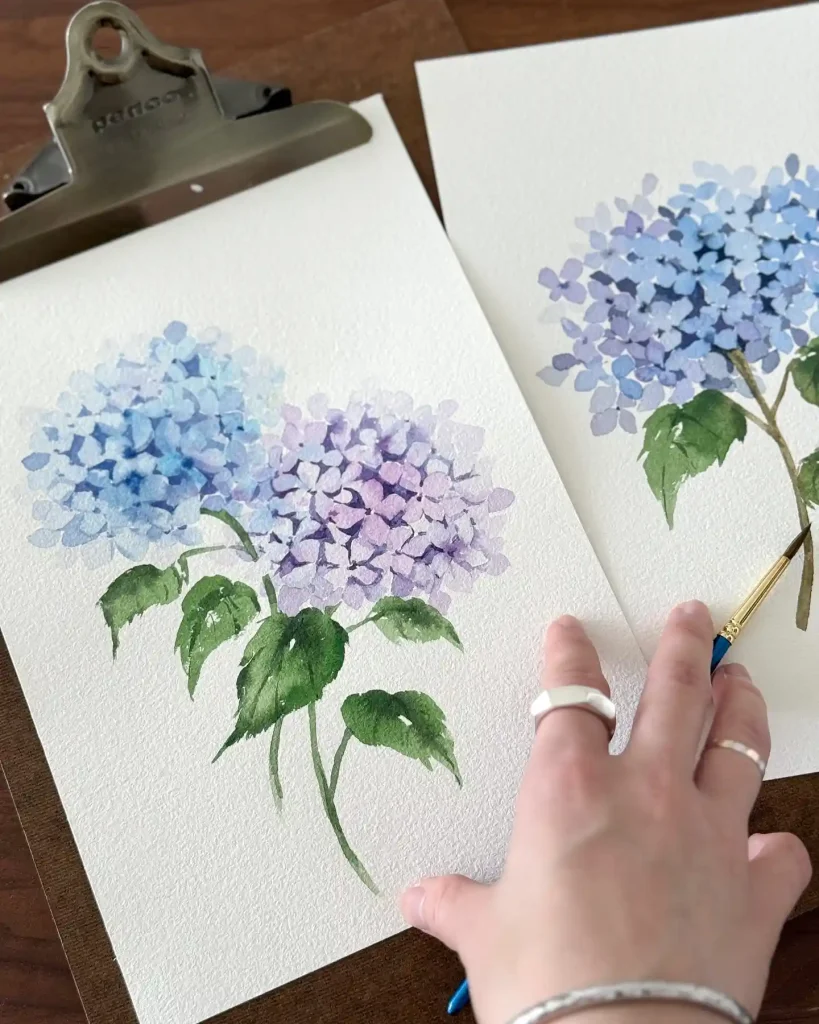
Pairing these two creates a lovely dialogue. The blue and purple blooms sit side by side on the clipboard, showcasing the subtle differences in their hues. The artist’s hand entering the frame adds a sense of scale and action. It symbolizes harmony and companionship. The delicate stems are painted with fine, precise lines that contrast with the fluffy heads.
31. Handheld Purple Hydrangea on Card Stock
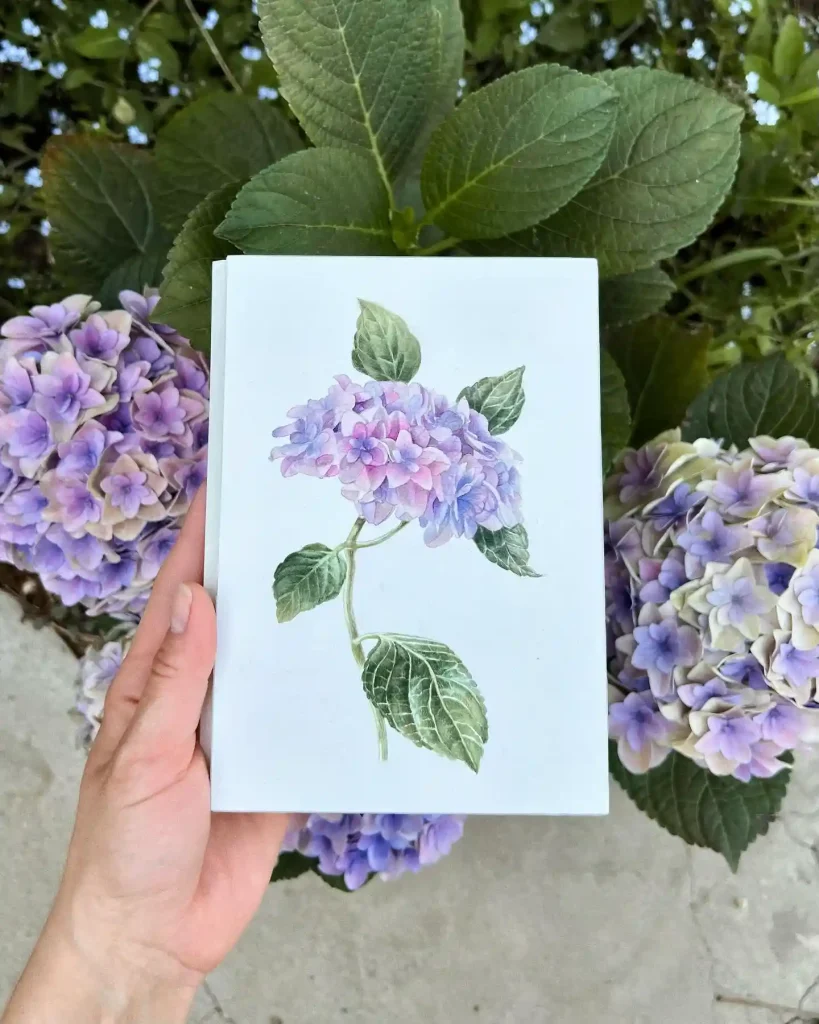
Holding this miniature painting against the real blooms creates a lovely dialogue between art and nature. The artist captured the soft transition from pink to periwinkle on the small card, mimicking the live flowers in the background. It symbolizes the portable joy of the garden. The delicate petals are rendered with subtle washes that feel incredibly fragile.
32. White Panicle Bloom on Cold Press
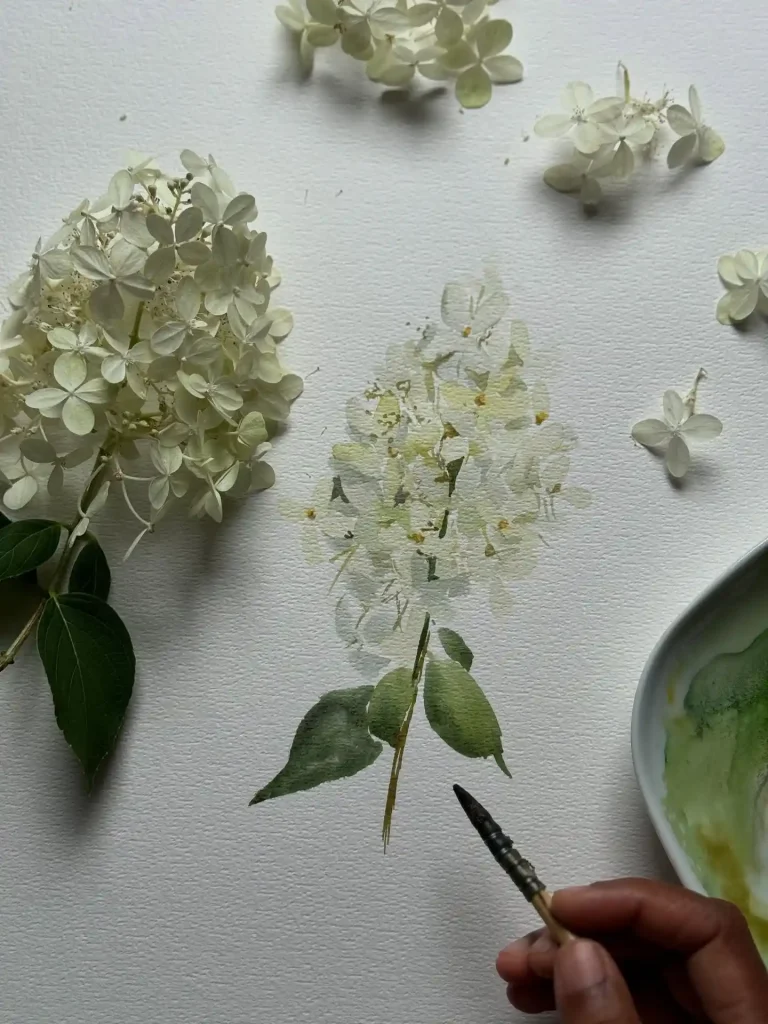
Capturing white flowers on white paper requires mastering negative space. This work in progress shows how pale yellow and green washes define the conical shape of the bloom without using heavy outlines. The scattered real petals emphasize the study from life. It represents purity and the patience needed to build volume with minimal pigment.
33. Blue Hydrangea Sprig on Grainy Paper
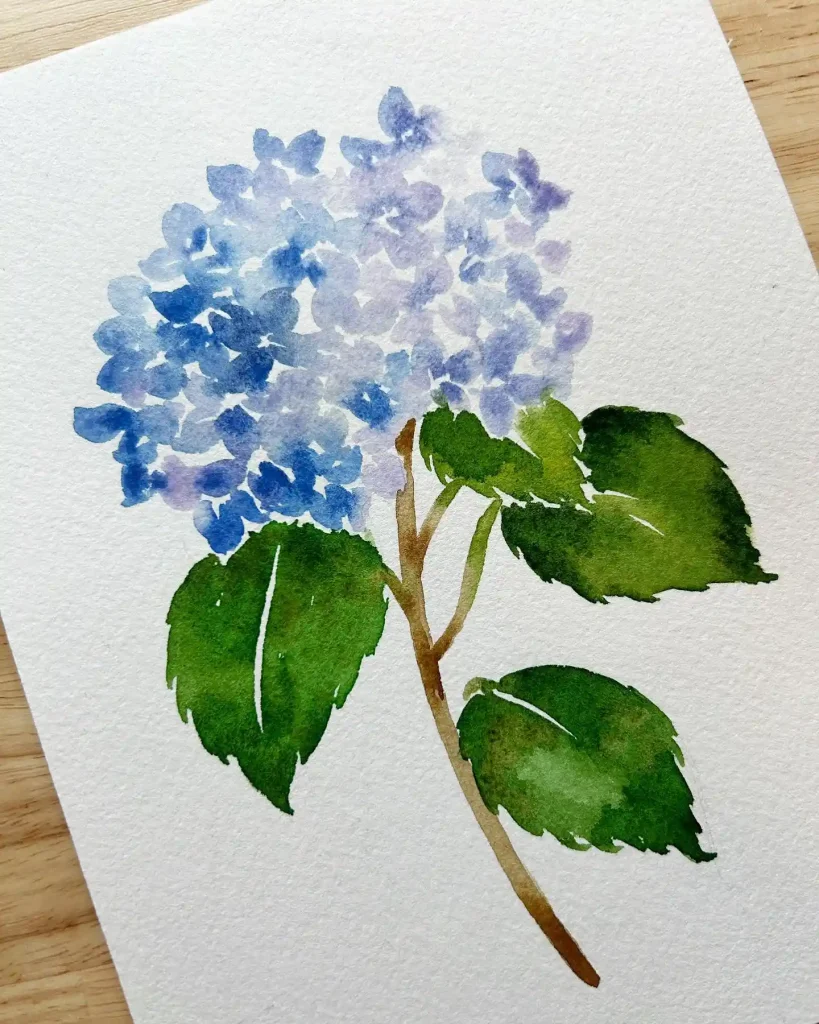
Classic elegance defines this blue hydrangea sprig. The artist used a mix of ultramarine and violet to create depth in the flower head, while the textured paper adds an organic feel. The dark green leaves provide a strong contrast, grounding the airy petals. It symbolizes grace and the simple beauty found in a single stem.
34. Purple Gradient Bloom on Smooth Paper
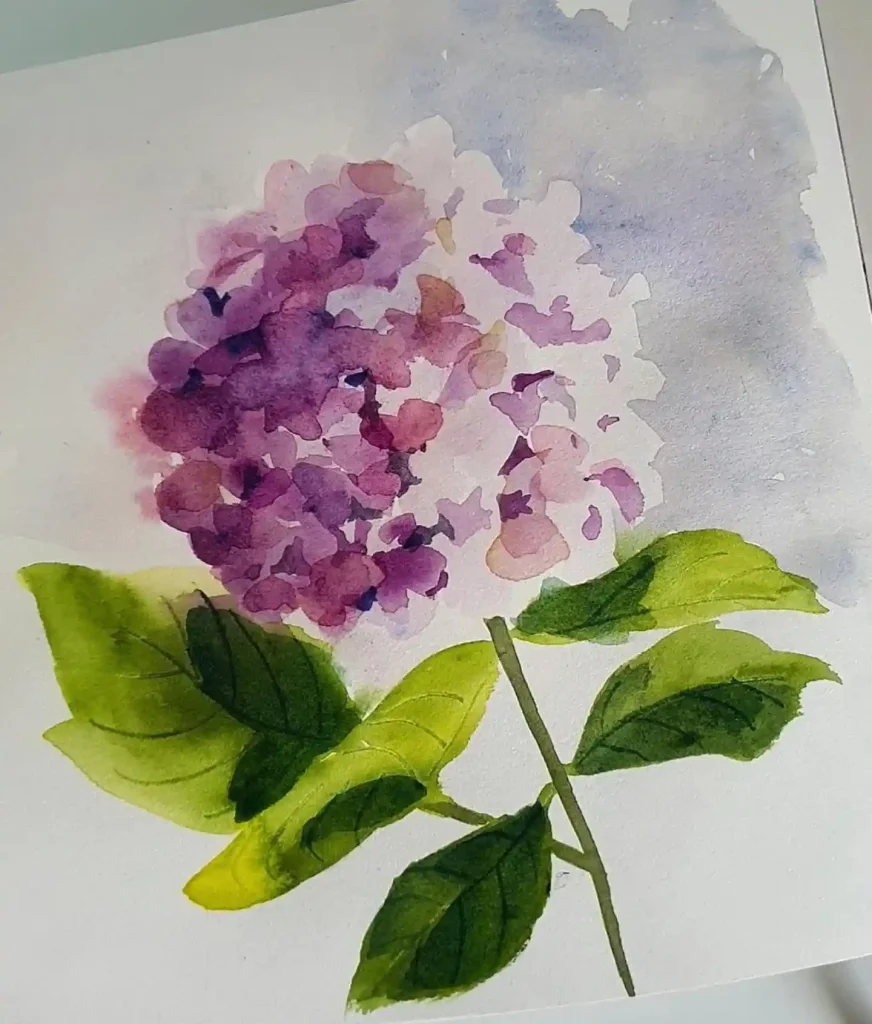
The gradient here is stunning, shifting from deep violet to a whisper of pink. It captures the moody, changing nature of hydrangeas as they respond to the soil. The artist used wet-on-wet techniques to blend the colors seamlessly within the cluster. The vibrant green leaves frame the bloom, highlighting its rich, saturated tones.
Hydrangea Blues Are the Hardest Color to Print Accurately
Those cool violet-blues live right at the edge of what a four-ink printer can reproduce, so a bloom that glows on paper often comes back flat purple or oddly grey in print. Machines with extra photo inks reach further into that corner of the color space, which is why florals are the standard test image reviewers use. If you are turning these paintings into cards or wall prints, this printer breakdown for artists shows what the extra ink tanks actually buy you.
Hydrangeas are unusual among flowers in being a mass rather than a single bloom, so they are worth alternating with simpler subjects while you learn. Our flower drawing ideas collect the single-stem shapes that build the same skills more slowly.
3. Frequently Asked Questions About Watercolor Hydrangeas
What is the easiest way to paint a hydrangea in watercolor?
Paint the whole flower head as one wet, bumpy shape in a single pale wash, let it dry, then add a few darker petal edges. Beginners who try to paint every small floret first usually end up with a stiff, overworked flower.
Why do hydrangea flowers change colour from blue to pink?
In mophead and lacecap hydrangeas, flower colour follows soil acidity: acid soil makes aluminium available to the plant and the blooms turn blue, while alkaline soil keeps them pink. White-flowered types stay white whatever the soil. The Royal Horticultural Society’s shrubby hydrangea growing guide describes this colour change in detail.
Which paper is best for watercolor hydrangeas?
Cold-press paper (with a light texture) is the easiest starting point because its texture breaks up washes into soft, petal-like edges. Hot-press (smooth) paper suits crisp, detailed studies such as ideas 10 and 17, but it shows every brush mark, so it is less forgiving.
How do I paint white hydrangeas on white paper?
Do not paint the petals white. Paint the shadows and the background around them in pale grey-green and soft yellow, and leave the petals as untouched paper. Idea 32 shows this negative-painting approach in progress.
How long does a beginner hydrangea painting take?
A single small cluster takes about 20 to 30 minutes, including drying time. A full bouquet with leaves and a vase, such as ideas 15 and 16, is better planned as a relaxed hour, with a break while each wash dries.
What colours do I need for a blue hydrangea?
Three are enough: a cool blue such as cerulean or ultramarine, a violet for the shadowed side, and a warm green such as sap green for the leaves. Mixing the blue with a little violet stops the flower from looking flat and poster-like.
Keep painting: when hydrangea clusters feel comfortable, try simpler single-stem flowers in our flower drawing ideas, or switch to animals and butterflies in watercolor animals and watercolor butterflies to practise the same wet-on-wet washes on new shapes.