Watercolor seashell drawing ideas provide a perfect gateway for artists to master the delicate interplay of light, texture, and transparency found in nature. By focusing on organic spirals and calcified textures, you can enhance your observation skills while creating calming coastal artwork.
Engaging with these marine subjects offers a meditative practice that builds technical proficiency in wet-on-wet blending and glazing methods. Whether you want to capture the pearlescent shine of an abalone or the rugged ridges of a scallop, this resource connects you with the inspiration needed to elevate your portfolio.
How Do You Create a Pearlescent Effect on Watercolor Seashells?
Capturing the iridescent “mother of pearl” finish on a seashell requires patience and specific glazing techniques. This effect relies on the transparent nature of watercolors to layer subtle shifts in hue without creating muddy mixtures.
- Start with a Wet-on-Wet Base: Apply a clear water glaze to the inner shell area and drop in very diluted washes of Cobalt Teal, Quinacridone Rose, and a touch of Aureolin Yellow to create a soft, multi-colored foundation.
- Utilize Negative Painting for Shine: Leave the brightest white of the paper untouched for the highest reflections, or use masking fluid to preserve these areas before you begin painting.
- Layer Thin Glazes: Once the first layer is bone dry, apply ultra-thin glazes of cool blue or violet in the shadowed curves to deepen the luster without covering the underlying colors.
- Lift Color for Soft Highlights: Use a damp, clean brush (thirsty brush) to gently lift pigment from the center of the shell’s curve, mimicking the way light catches the nacreous surface.
- Add Metallic Accents: For a modern touch often seen in trending art, add a faint wash of iridescent medium or metallic watercolor over the dry paint to enhance the shimmering effect.
What Are the Best Techniques for Painting Realistic Ridges?
Drawing the ribbed texture of shells like scallops or cockles can be challenging, but mastering the logic of light and shadow simplifies the process. The key is to paint the form of the shell first, then the texture, rather than drawing individual lines.
- Follow the Contour: Always ensure your brushstrokes curve with the shape of the shell, fanning out from the umbo (the hinge) to the outer edge to maintain a 3D illusion.
- Paint the Shadows, Not the Lines: Instead of painting dark lines for ridges, paint the cast shadows between the ridges using a mix of Ultramarine Blue and Burnt Sienna for a natural grey.
- Use the “Lost and Found” Edge Technique: Allow some ridge lines to fade out in the highlighted center of the shell and reappear in the shadowed edges to prevent the drawing from looking like a flat diagram.
- Deepen the Scalloped Edge: Concentrate your darkest values at the bottom rim of the shell where the ridges are deepest, creating a high-contrast edge that lifts the subject off the paper.
- Dry Brush for Texture: Once the main wash is dry, drag a semi-dry brush with a darker pigment across the raised areas to simulate the rough, calcified surface typical of older seashells.
Grab your palette and let the ocean inspire your creativity with these watercolor seashell drawing ideas today. Dive into practice, refine your unique style, and share your beautiful coastal creations!
1. Earthy Whelk Study on Sketchbook Paper
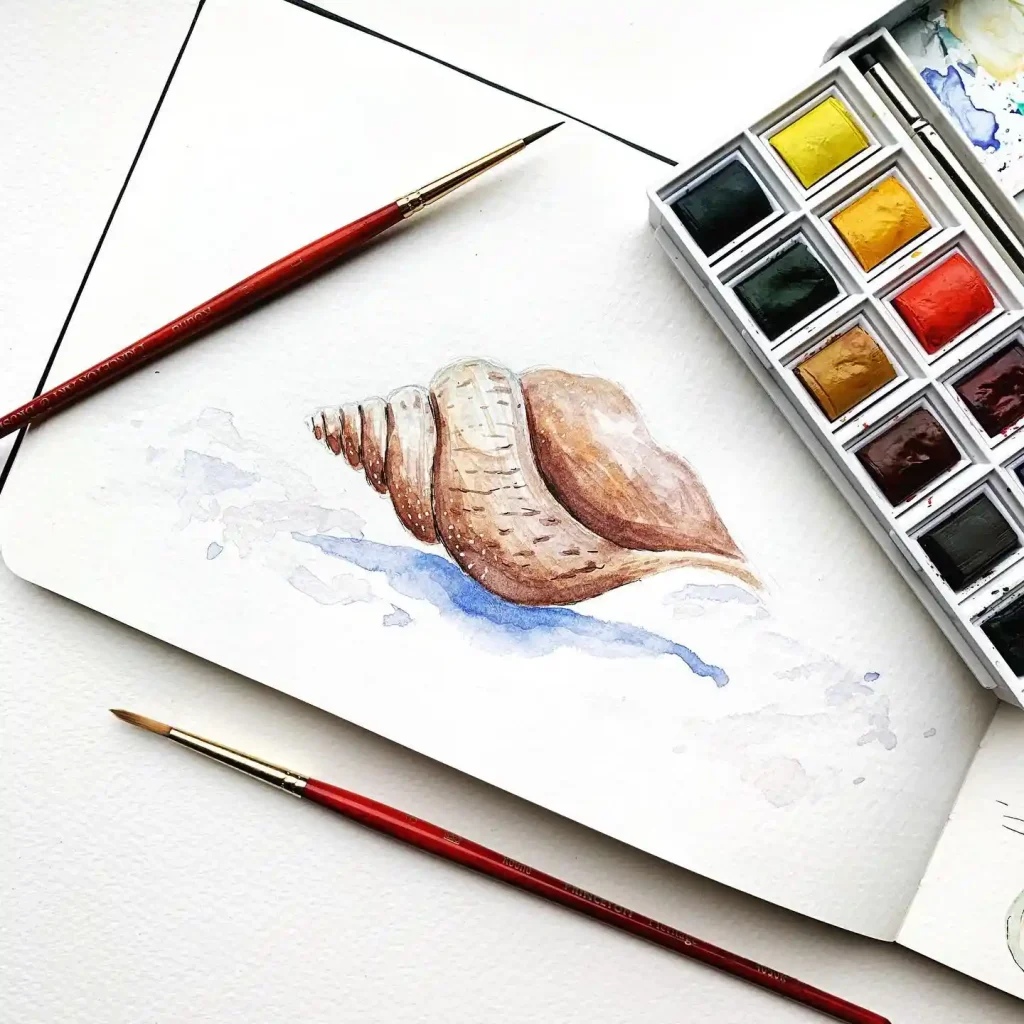
Classic seashells always remind me of long walks on the beach. This piece captures a spiral whelk using warm ochre and burnt sienna tones that feel incredibly organic. The artist used a wet-on-dry technique to build up the rigid texture of the shell while keeping the shadow beneath soft and cool. It is a study in patience that honors the protective home of ocean life.
2. Iridescent Pearl Discovery on Smooth Paper
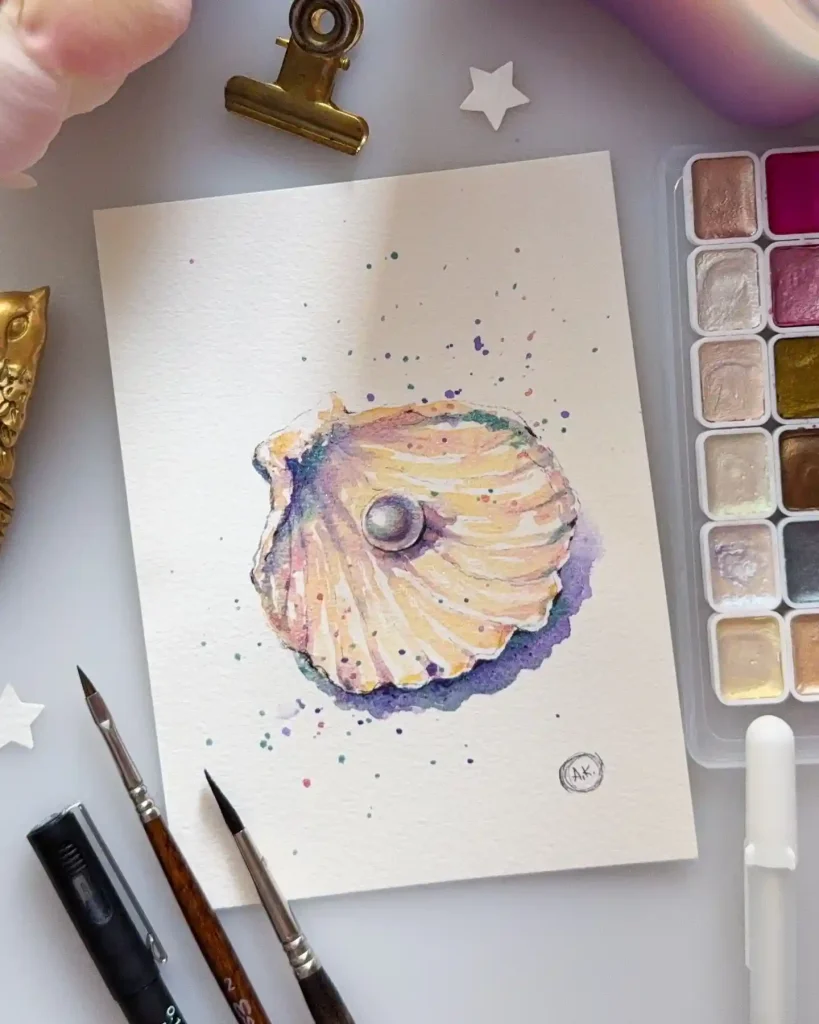
Finding a pearl is like discovering a hidden secret. This dreamy illustration uses a wet-on-wet wash of pastel purples and yellows to create a pearlescent glow around the central gem. The loose paint splatters add a magical, spontaneous feel that contrasts with the detailed ridges of the shell. It symbolizes hidden beauty and the precious rewards of exploring nature.
3. Textured Scallop Fan on Cold Press Paper
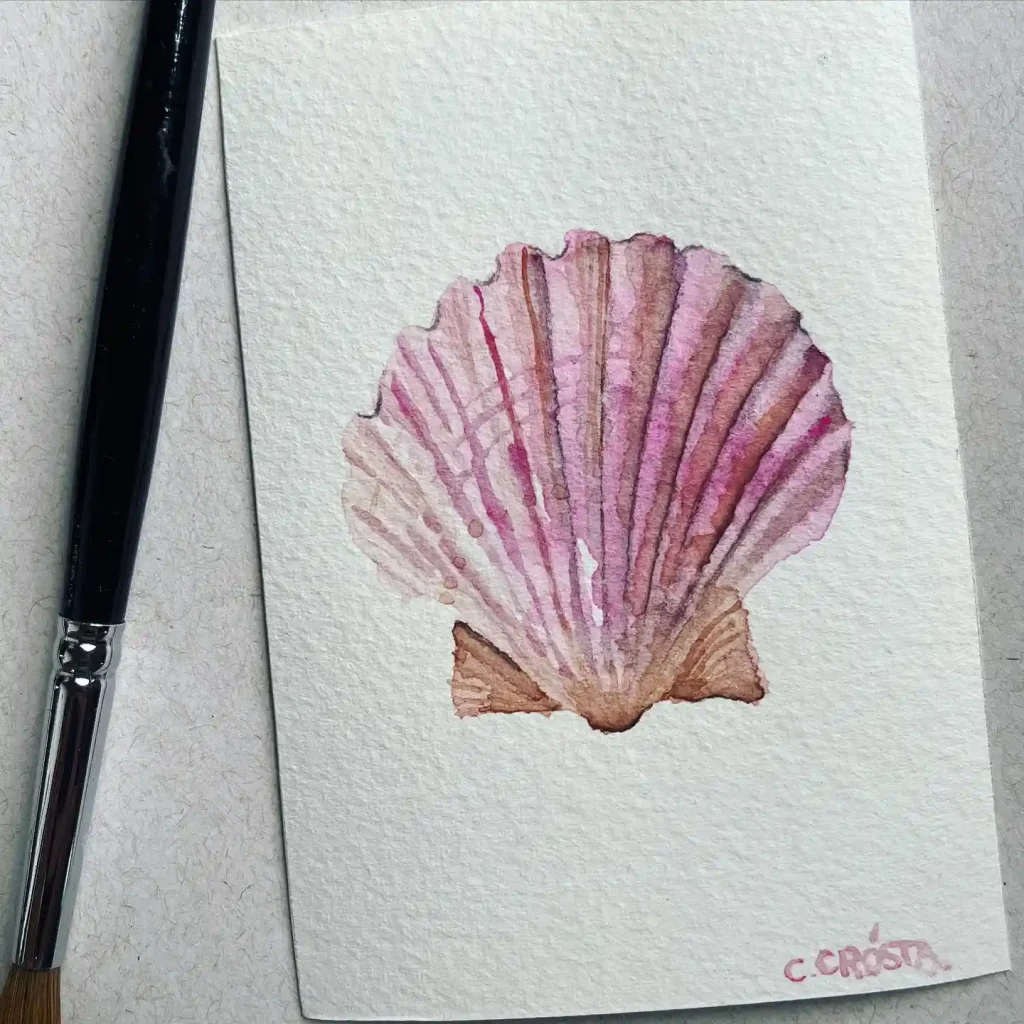
Scallop shells have such a satisfying symmetry to them. Here, the artist focuses on the fan-like ridges using strokes of magenta and deep violet to define the shape. The rough texture of the cold press paper enhances the natural, weathered look of the shell surface. It feels like a collected treasure from a summer vacation that preserves the vibrant colors of the sea.
4. Moody Oyster Illustration on White Cardstock
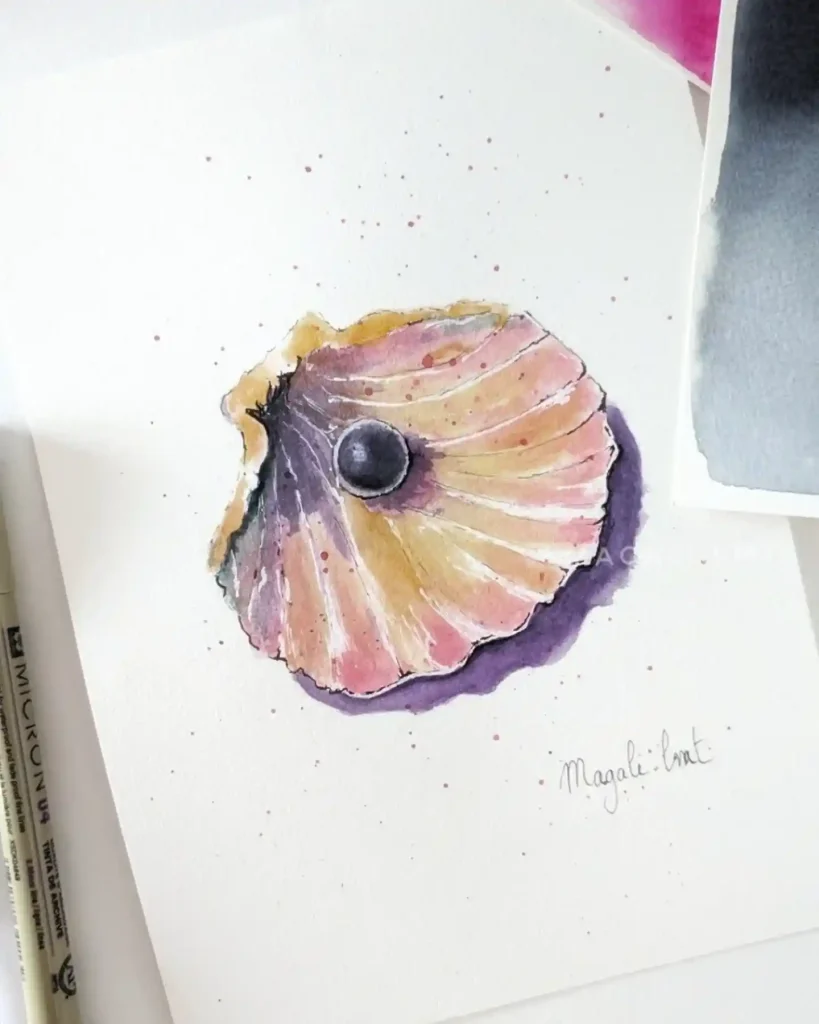
There is a moody elegance to this piece that really draws you in. A dark, lustrous pearl sits at the heart of an open shell painted with soft washes of peach and violet. The deep purple shadow grounds the object to give it weight and drama. It speaks to the mystery of the ocean and represents wisdom gained through the passage of time and tides.
5. Blue Spiral Nautilus on White Watercolor Paper
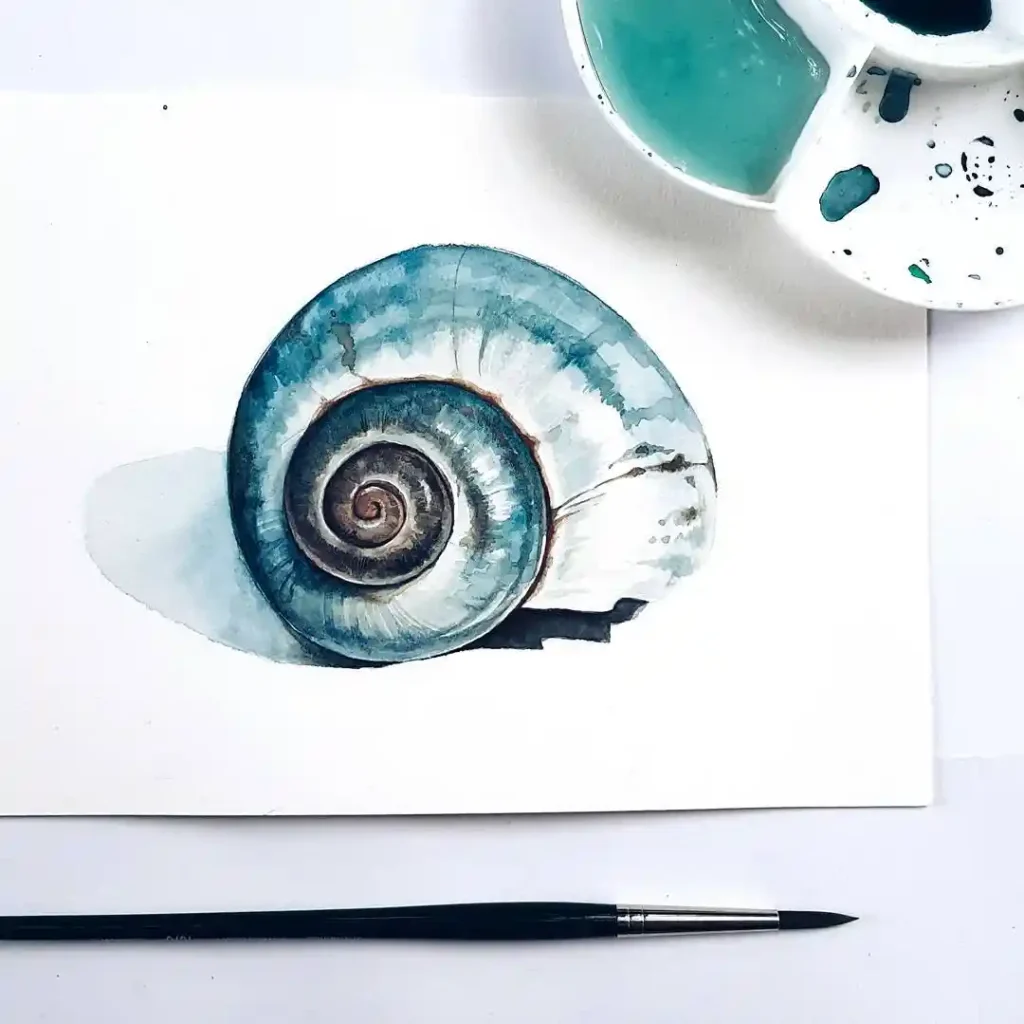
Cool tones can make a seashell look almost jewel-like. This spiral shell is rendered in beautiful shades of turquoise and indigo that mimic the colors of deep water. The artist carefully preserved white highlights to show the smooth, polished curve of the surface. It captures the calming energy of the ocean and brings a fresh, coastal vibe to any art collection.
6. Coastal Trio Collection on Textured Paper
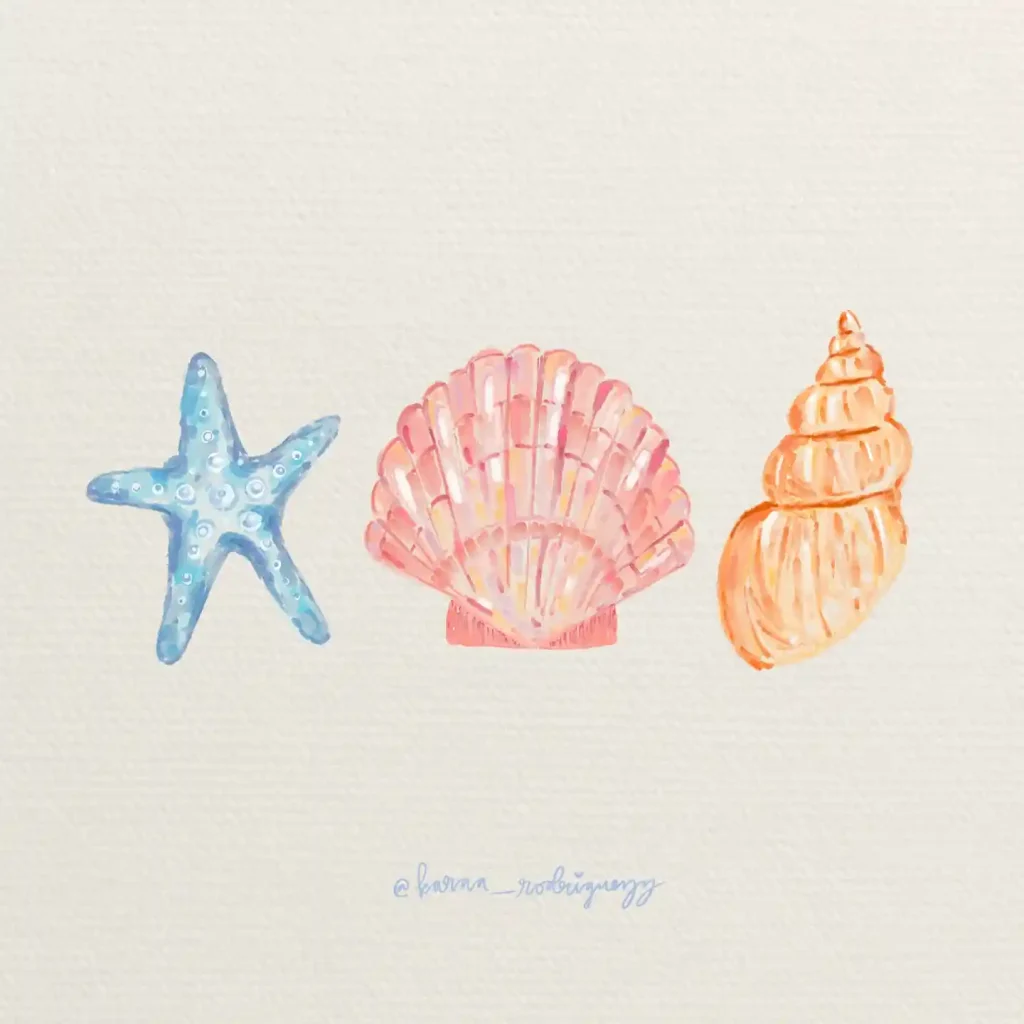
Collections are always more fun than single items. This trio features a blue starfish, a pink scallop, and an orange spiral shell to offer a playful study of different marine shapes. The bright, cheerful colors feel like a sunny day at the beach. It celebrates the diversity of sea life and the simple joy of beachcombing for colorful treasures in the sand.
7. Tropical Beach Scene on Spiral Sketchbook
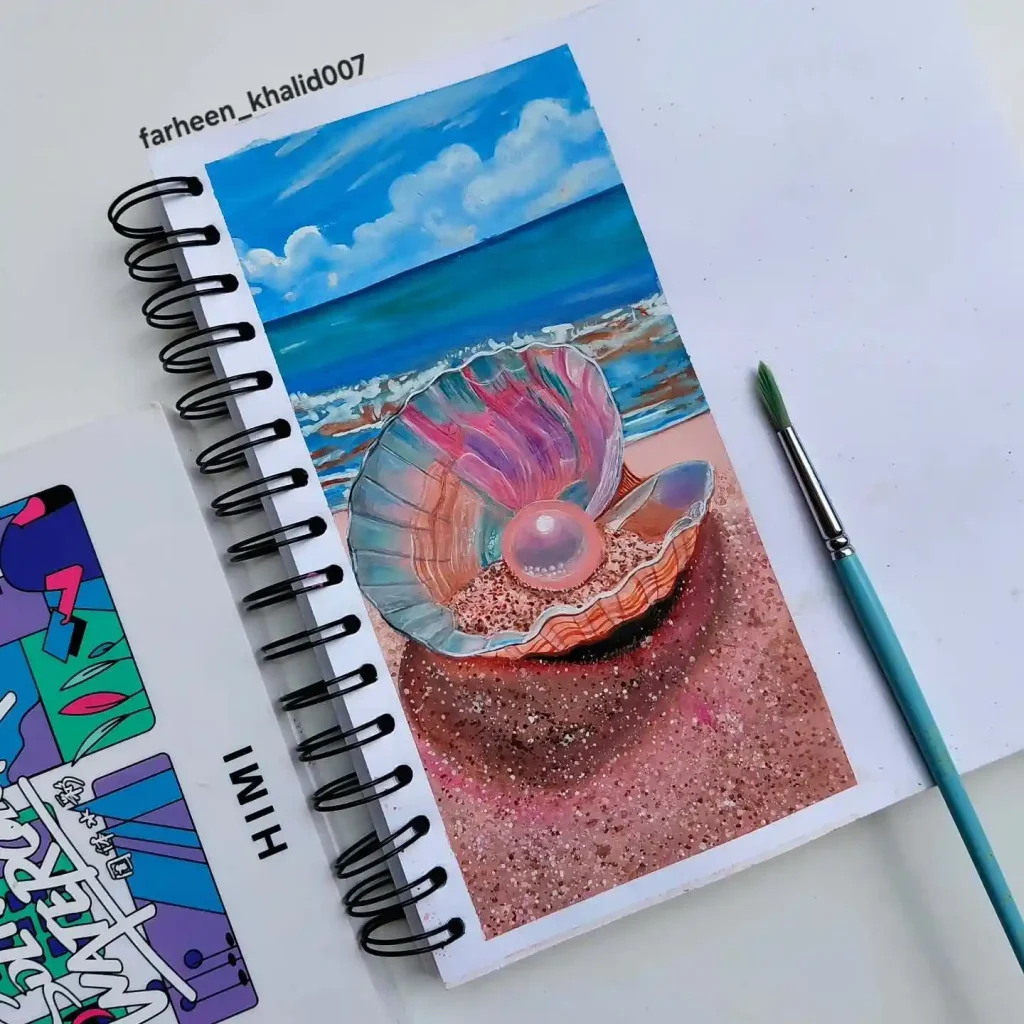
Sometimes you need to paint the whole scene to tell the story. This sketchbook entry features a fantasy-colored shell resting on textured sand against a bright blue ocean backdrop. The shell glows with pink and blue hues while cradling a large pearl. It is a vibrant escape that invites the viewer to imagine the sound of waves crashing on a tropical shore.
8. Solitary Conch Landscape on Watercolor Paper
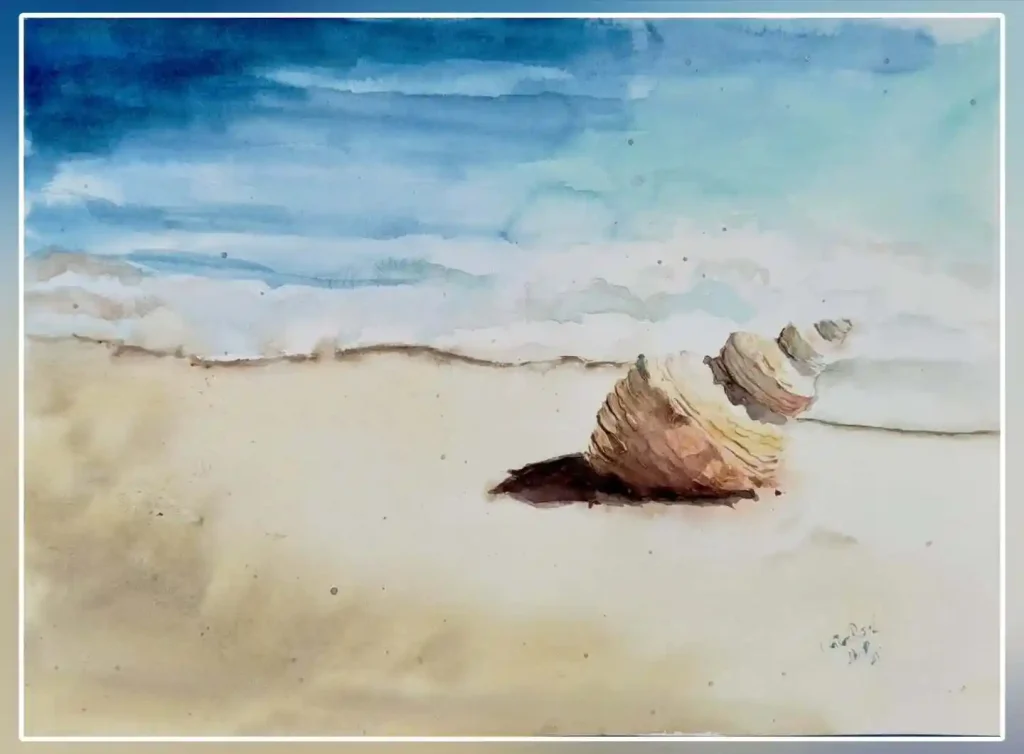
A lone shell on the sand evokes such a strong sense of solitude. This painting places a large, textured conch against a soft background of crashing waves and beige sand. The loose brushwork on the water contrasts with the detailed ridges of the shell. It symbolizes the peaceful isolation of the coast where the only music is the rhythm of the tide.
9. Loose Conch Sketch on Rough Paper
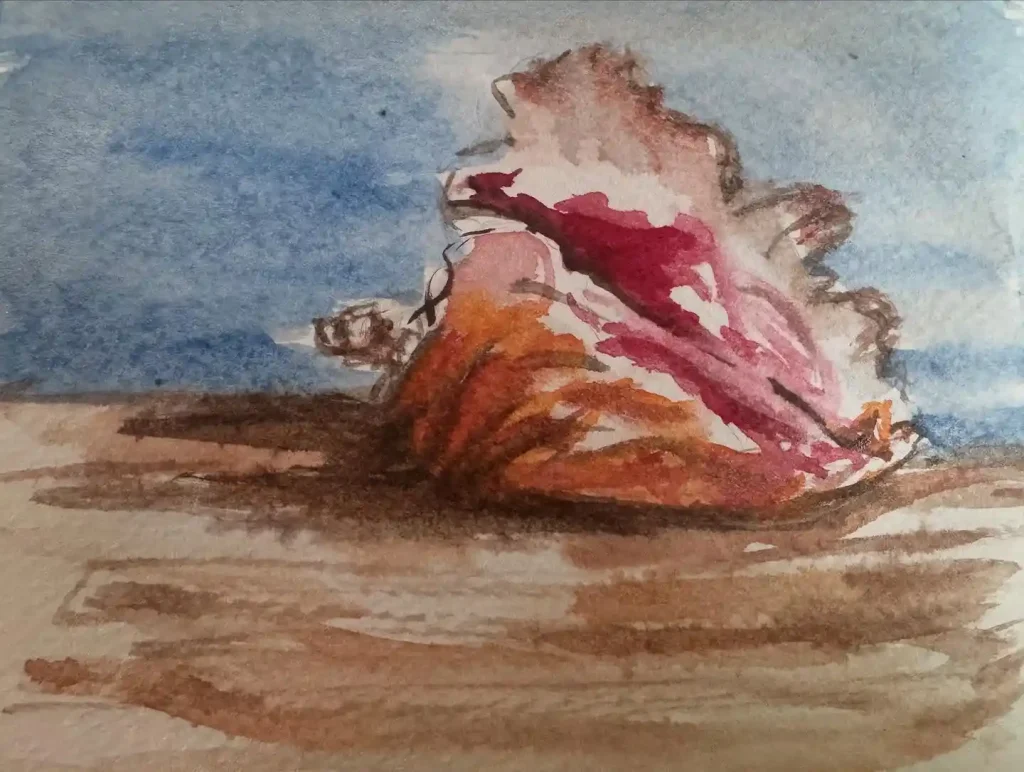
Quick sketches often capture the most energy. This piece uses bold, expressive strokes of rust red and brown to form the shape of a large conch shell. The background is suggested with broad washes of blue and earth tones to keep the focus on the raw form. It feels like a plein air study done right on the dunes that captures the fleeting light of the coast.
10. Striped Auger Shell on White Paper
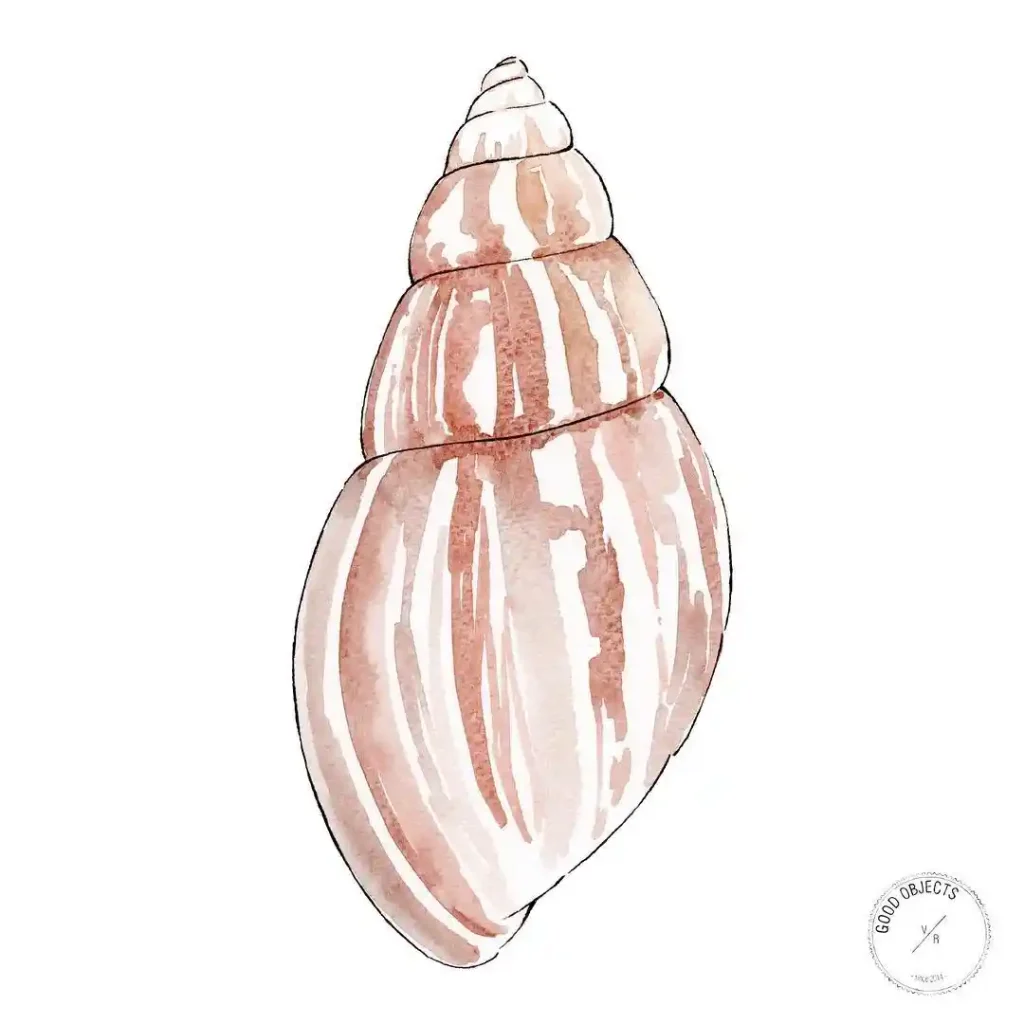
Patterns in nature are fascinating to replicate in paint. This tall, spiral shell features distinct vertical stripes in warm brown tones that follow the curve of the structure. The white highlights give it a glossy, polished appearance. It is a beautiful example of nature’s design that represents growth and the upward spiral of life that we see throughout the natural world.
11. Teal Spiral Shell on Smooth White Paper
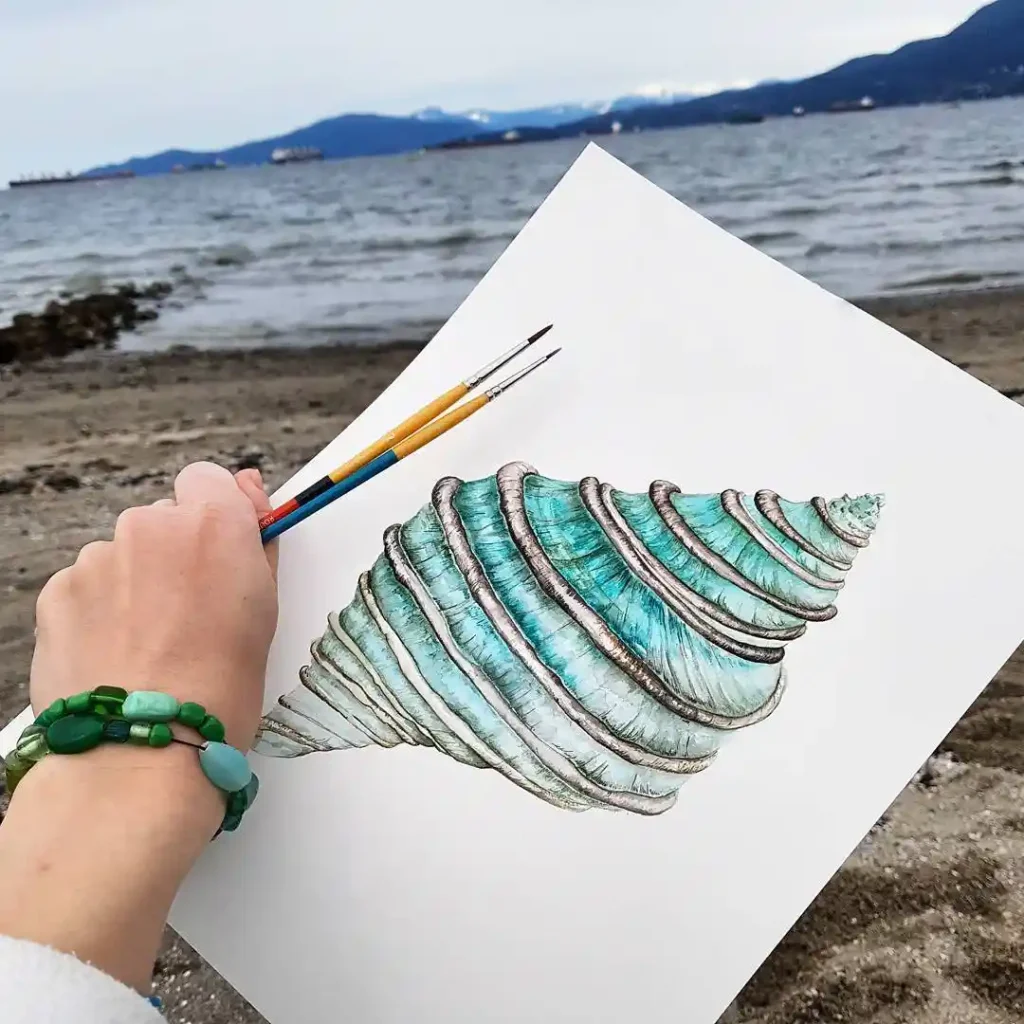
Taking your sketchbook to the beach adds a whole new layer of inspiration. This illustration features a large spiral shell with striking teal and grey stripes that perfectly match the cool ocean tones in the background. The high contrast between the ridges creates a sculptural 3D effect. It connects the created world with the real one, honoring the sea as the ultimate artist.