Unleash your creativity and let your artistic spirit take flight with the enchanting world of watercolor bird drawing. This beautiful medium allows you to capture the delicate grace and vibrant plumage of birds in a way that feels both lively and expressive.
From the simplest sparrow to the most majestic eagle, each bird offers a unique lesson in color, form, and texture. These ideas will help you develop your skills, whether you’re just starting or looking to refine your technique, transforming a blank canvas into a sky filled with feathered wonders.
How Do You Paint Realistic Bird Feathers in Watercolor?
To paint realistic bird feathers, begin with a light, flat wash of the feather’s base color and let it dry completely. This creates a smooth foundation for adding texture and detail.
- Create Soft Texture: Use a slightly damp brush to gently lift some color in soft, sweeping motions. This technique, called “lifting,” creates the subtle highlights and soft texture of the feather’s barbs.
- Define the Shaft: With a fine-tipped brush, paint a thin, crisp line for the central shaft (rachis). Use a slightly darker shade than your base color for definition.
- Add Barb Details: Use a dry brush technique with minimal paint to create fine, hair-like strokes fanning out from the shaft. Overlap these strokes to build realistic depth and dimension.
- Layer for Depth: Glaze thin layers of darker colors, especially near the shaft and tip, to build shadows. For iridescent feathers, like on hummingbirds, layer thin washes of blues, greens, and purples.
What Are Some Simple Watercolor Bird Ideas for Beginners?
For beginners, the best approach is to start with simple bird shapes and focus on mastering basic watercolor techniques. Choosing subjects with distinct silhouettes and minimal detail helps build confidence.
- Chickadee Silhouette: Paint a simple black silhouette of a chickadee on a branch against a colorful, wet-on-wet background of a sunset or soft blue sky.
- Stylized Bluebird: Focus on the iconic shape and bold blue color. Use a wet-on-wet wash for the body and add a touch of orange for the breast once the first layer is damp.
- Minimalist Hummingbird: Capture the motion and energy of a hummingbird with loose, suggestive brushstrokes and splatters of bright color, rather than focusing on perfect detail.
- Cartoon Owl: Draw a simple, round owl with large eyes. Use flat washes of brown and gray, and add small, V-shaped strokes for a feathery texture without getting too complex.
Don’t just wing it! Pick a bird that captures your heart, let your colors fly, and watch your beautiful creation come to life on the page. Your masterpiece awaits.
1. Loose Kingfisher Study on Watercolor Paper
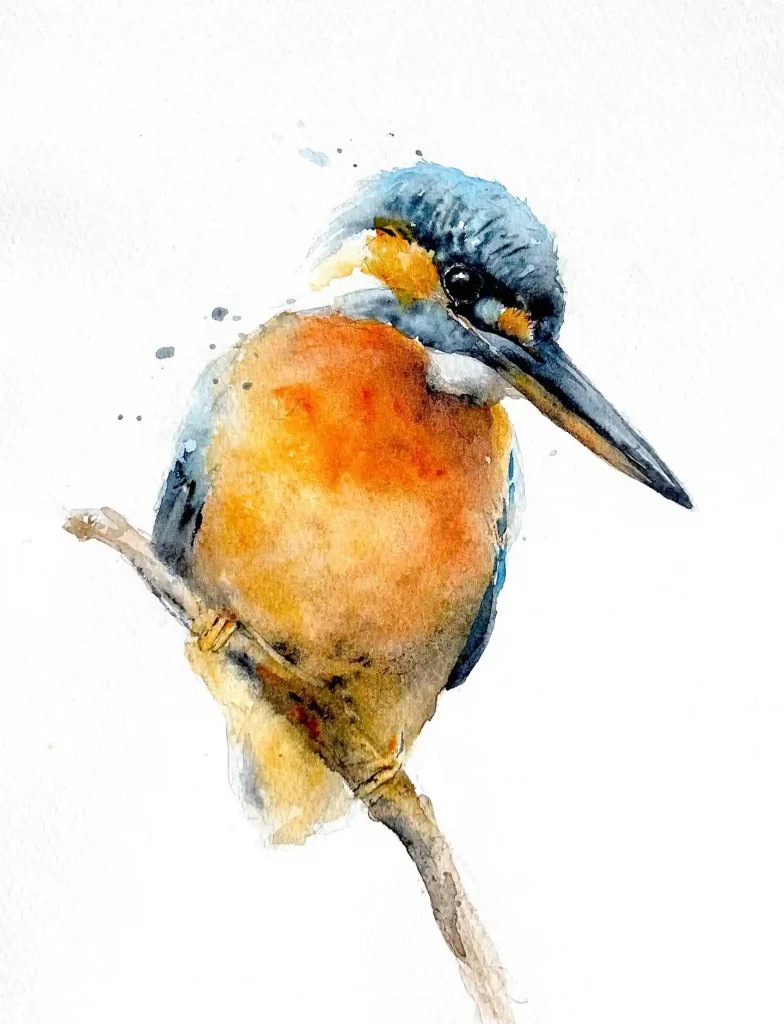
I love this loose, expressive style. It’s all about capturing the essence of the kingfisher, not every single feather. The artist let the bright orange and cerulean blue bleed together beautifully. That sharp, dark beak and eye create a perfect focal point against the soft, wet-on-wet body. The little splatters add a nice, spontaneous touch of energy.
2. Hummingbird with Red Gorget on Watercolor Paper
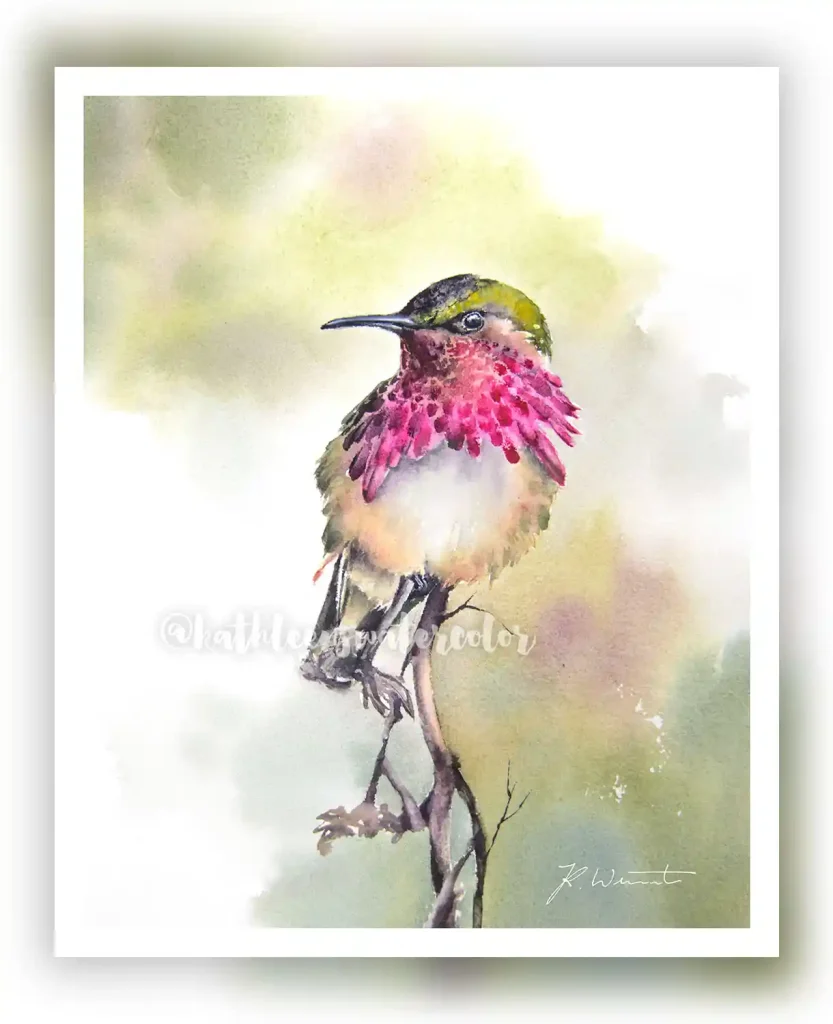
What a little jewel. The artist really nailed that iridescent throat by carefully layering those vibrant magenta and red tones. I love the contrast between the detailed, sharp rendering of the bird’s eye and beak and the soft, out-of-focus green watercolor wash in the background. It really makes the bird pop right off the page.
3. Curious Chickadee on Watercolor Paper
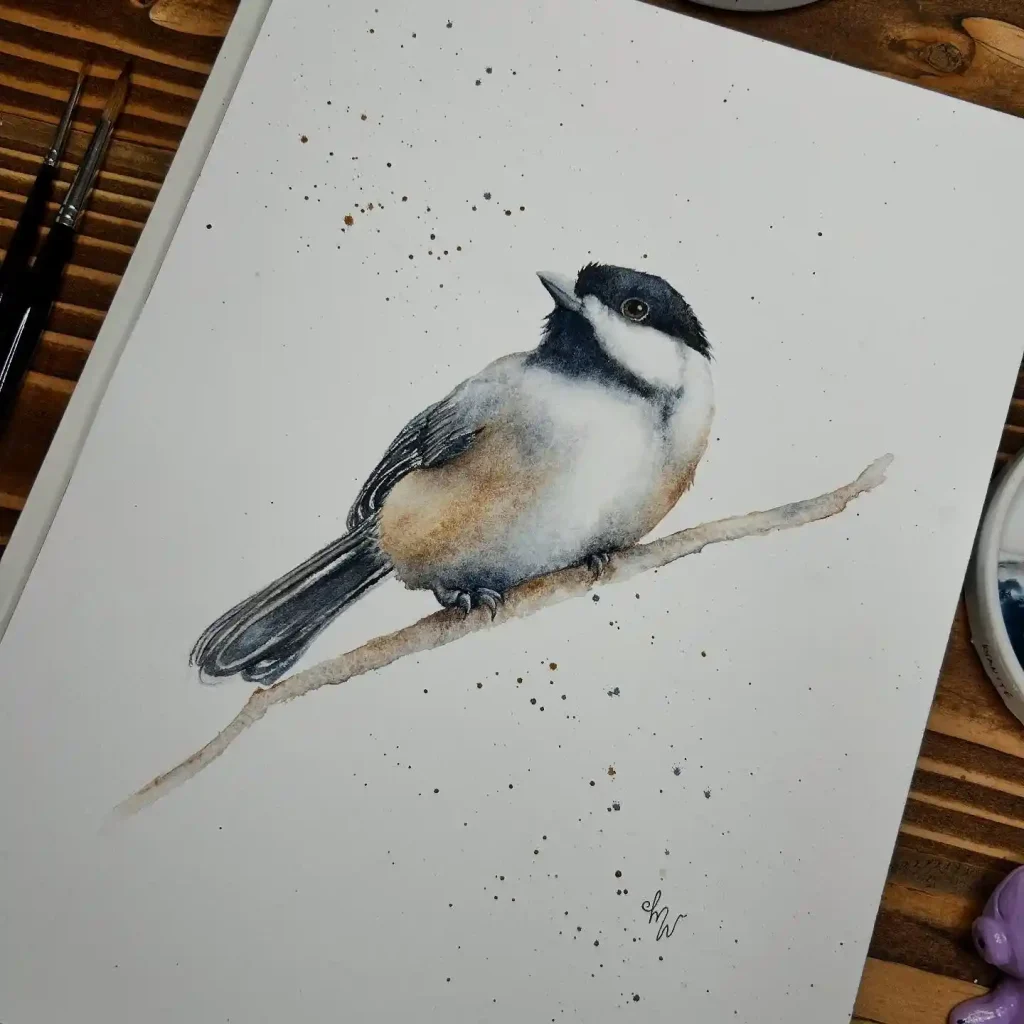
This one just has so much personality. The artist perfectly captured that curious, upward tilt of the chickadee’s head. By using a wet-on-wet technique for the soft tan belly and grey back, the sharp, black-capped head and bright eye become the clear center of attention. Those little brown splatters add a great sense of a forest setting.
4. Stylized Round Robin on Watercolor Paper
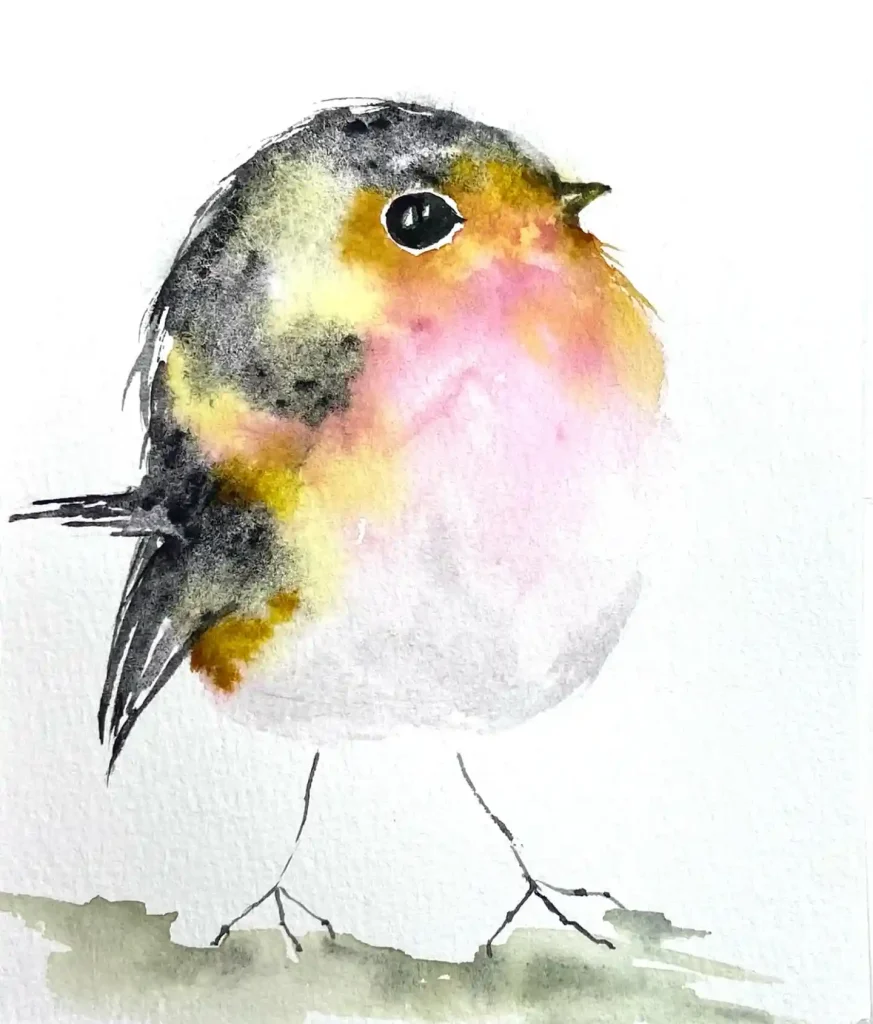
This is just pure fun. I love how the artist reduced the robin to this adorable, round poof of color. The wet-on-wet bleeds of pink, yellow, and grey are so soft and gentle. Then, adding those spindly little ink legs and a simple beak gives it so much character. It’s a perfect example of minimalist, whimsical bird art.
5. Two Sparrows on Watercolor Paper
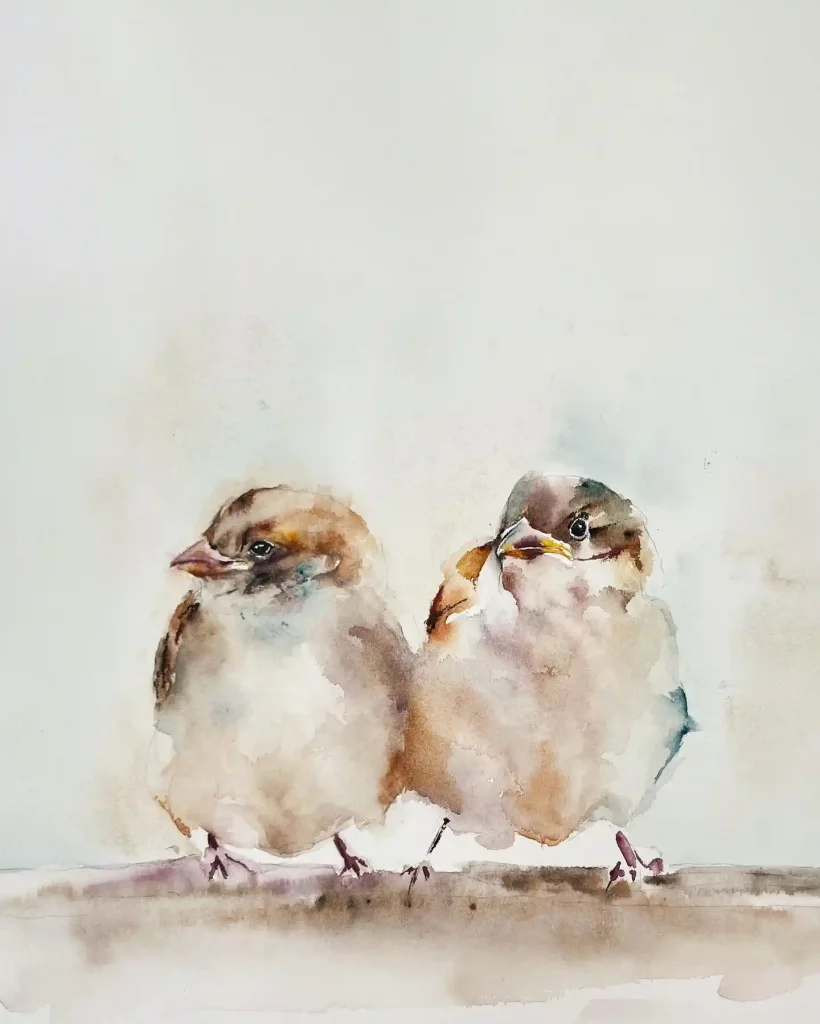
A simple, quiet moment. This piece is all about connection and companionship. The artist used a very soft, wet-on-wet technique, letting the browns and greys of the sparrows’ feathers blur together. Leaving so much of the white paper empty really draws your eye to their forms and the subtle, warm interaction between them. It feels very gentle.
6. Bluebird with Watercolor Pencils on Drawing Paper
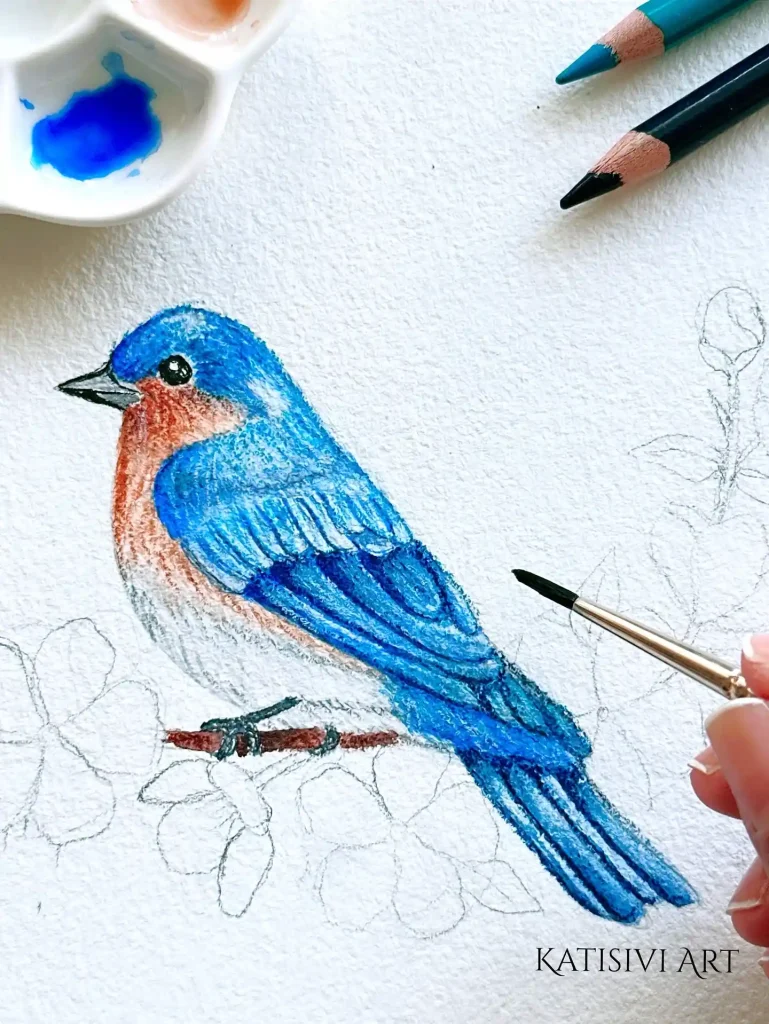
I love a good “in-progress” shot. This shows the magic of watercolor pencils. The artist first laid down that rich, textured blue and orange, and is now using a wet brush to activate the pigment. This technique gives you the precision of a pencil with the beautiful, soft-blending quality of watercolor. The feathery texture is just fantastic.
7. Bluebird in Soft Light on Watercolor Paper
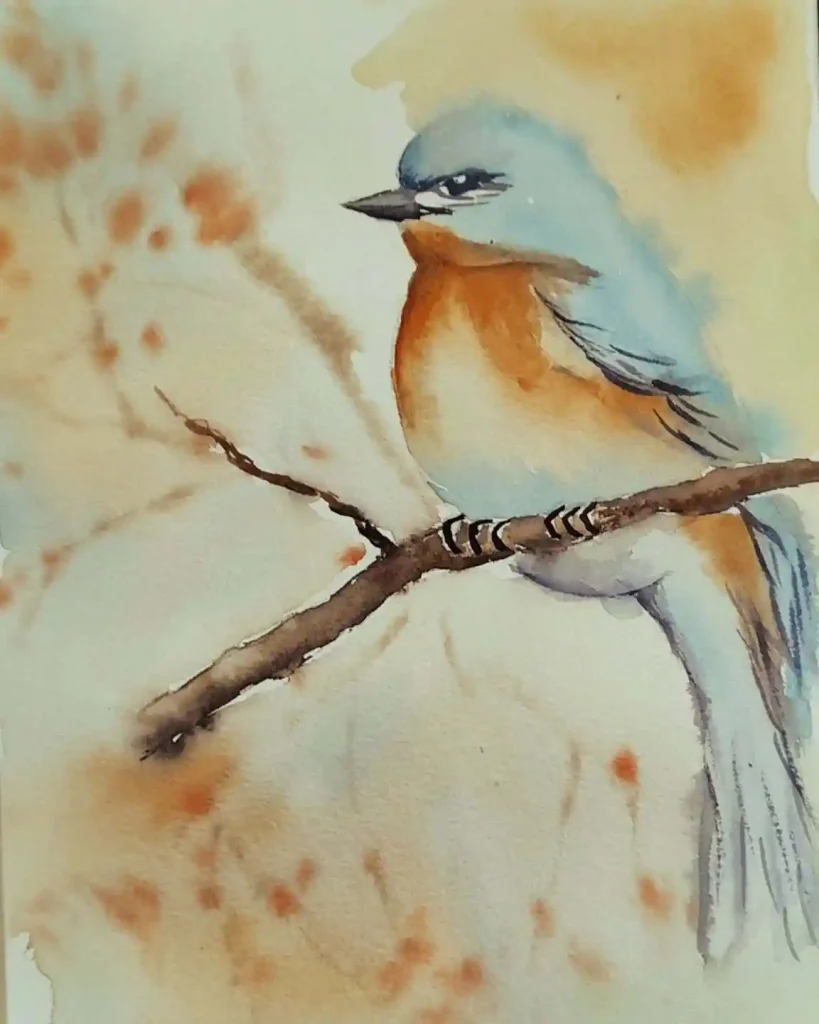
This piece is all about the warm, atmospheric light. The artist set the bright blue and rust-orange of the bluebird against a very soft, wet-on-wet background of yellow ochre. This makes the bird feel like it’s glowing. The loose, impressionistic dots of color in the background suggest leaves without distracting from the bird’s sharp, focused gaze.
8. Realistic Kingfisher on Watercolor Paper
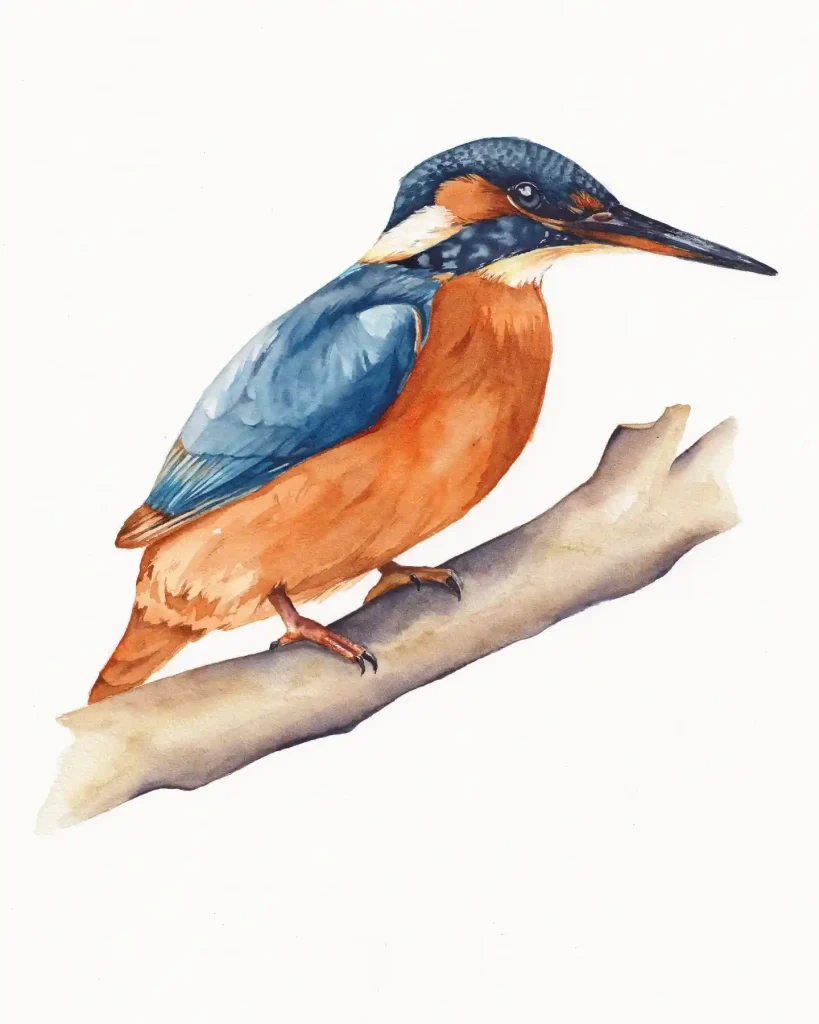
This is a beautiful, classic natural-history illustration. The artist showed great control, using careful layers of watercolor to build up the vibrant, opaque colors of the kingfisher’s feathers. That rusty orange against the deep blue back is perfect. By keeping the background totally white, the bird itself becomes a clean, elegant study of the species.
9. Colorful Tanager on Mixed Media Paper
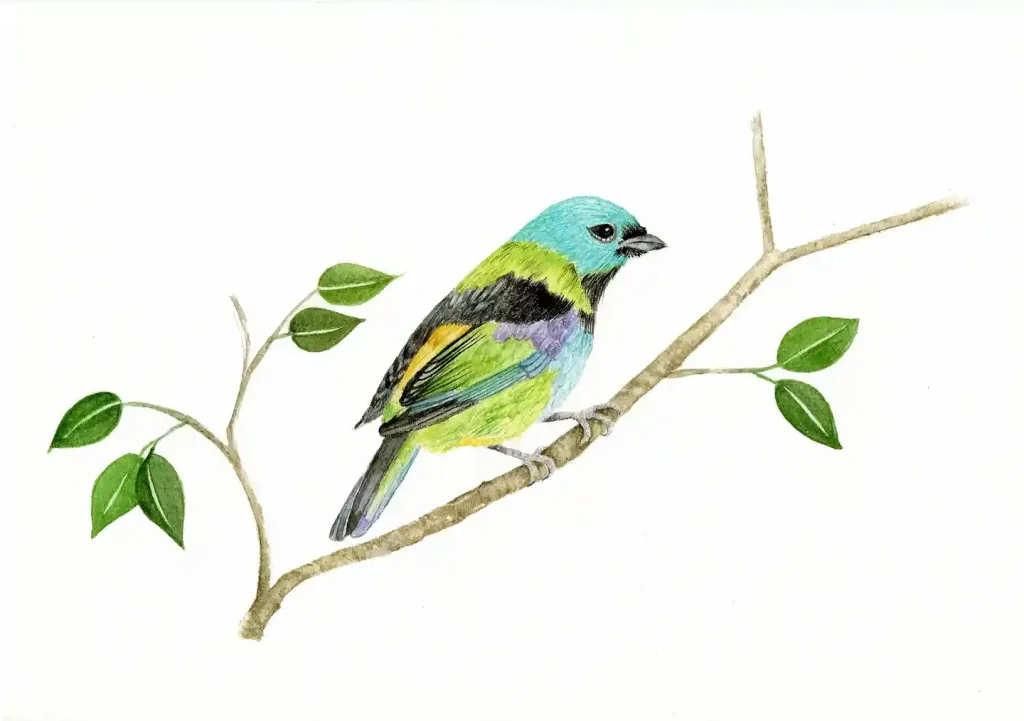
What a stunning mix of colors. This looks like a beautiful blend of watercolor and colored pencil. The artist used soft watercolor washes for the base tones—that turquoise head and bright green body. Then, they went in with pencil to add all the fine, feathery details and those pops of yellow and purple. It’s a great way to get texture.
10. Flamingo with Ink on Watercolor Paper
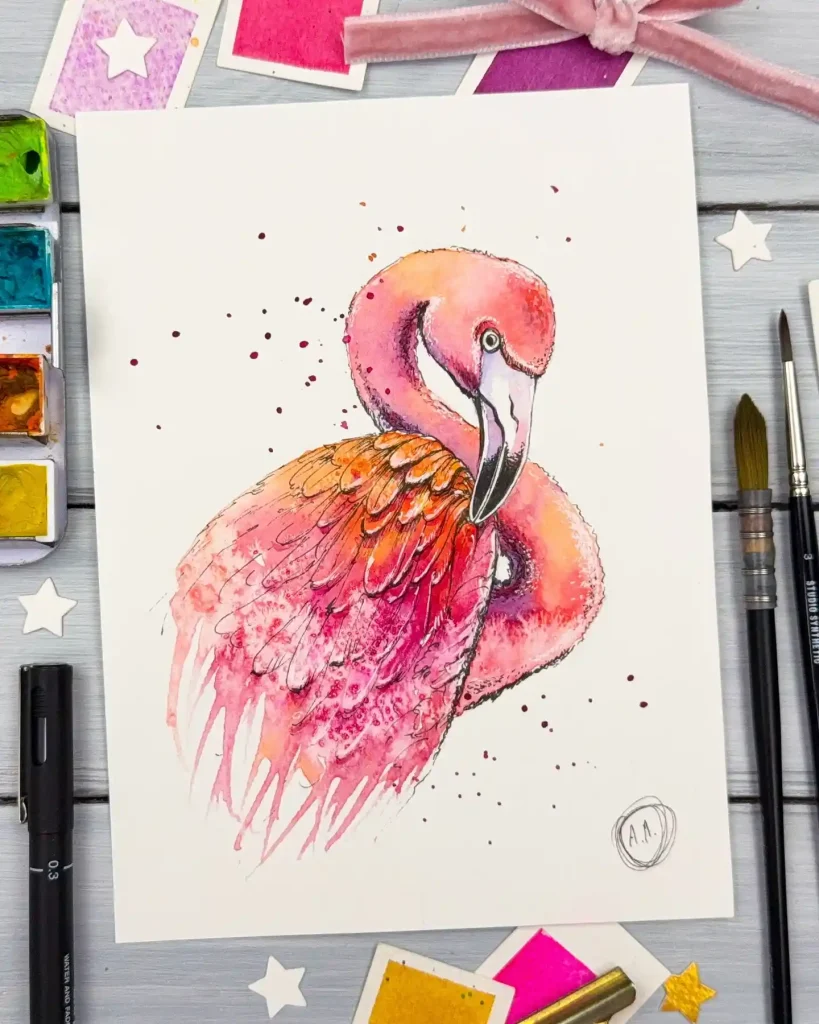
This piece has so much graphic punch. The artist combined bold, black ink lines with vibrant watercolor washes. I love the way the pinks, oranges, and reds are allowed to drip and bleed, creating a sense of movement. The detailed linework on the feathers contrasts so well with the loose color. The splatters are the perfect finishing touch.
11. Flying Swallow in Motion on Watercolor Paper
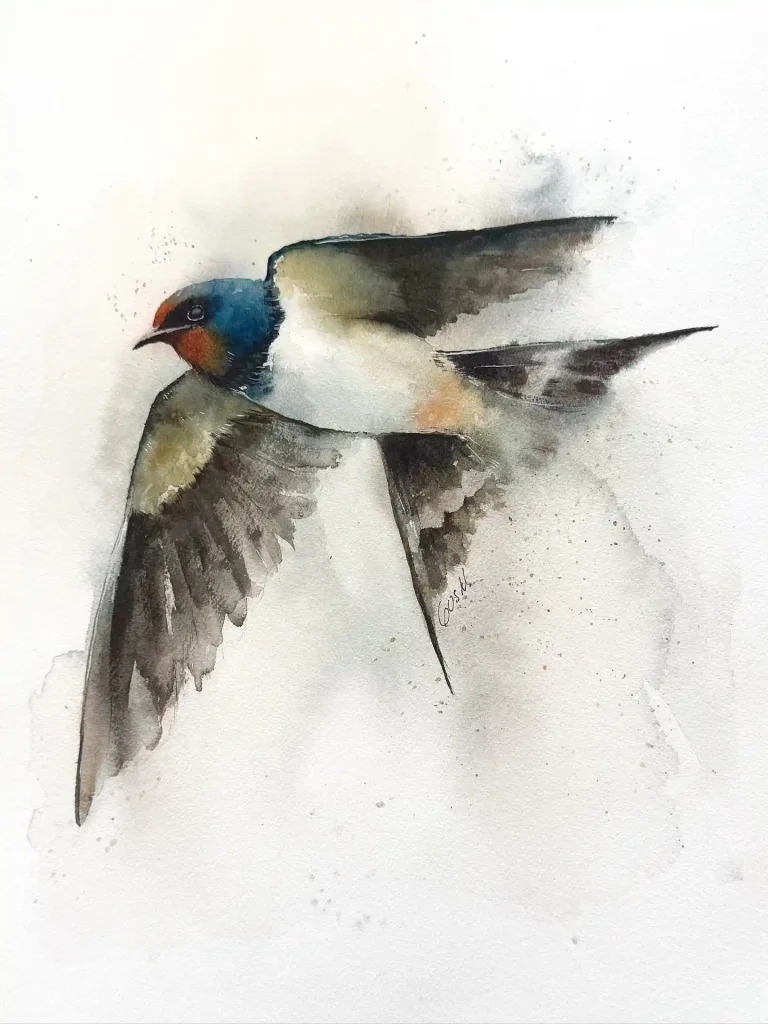
Capturing a swallow in flight is all about energy. I love the loose, wet-on-wet technique here. The artist let the dark wings and the rusty red throat bleed into the white of the paper. It’s not a tight illustration; it’s the feeling of speed and freedom. The splatters and blurred edges are perfect for suggesting rapid movement.
12. Detailed Motmot on Mossy Branch on Watercolor Paper

This is a stunning example of building up color in layers. The artist did an amazing job on that long, racket-tipped tail and the mossy branch. This piece shows incredible patience, using tiny brushstrokes to get the feathery texture on the head and back. That bright, iridescent blue against the olive green is just beautiful. A real high-detail study.
13. Blue Tit with Pink Blossoms on Watercolor Paper
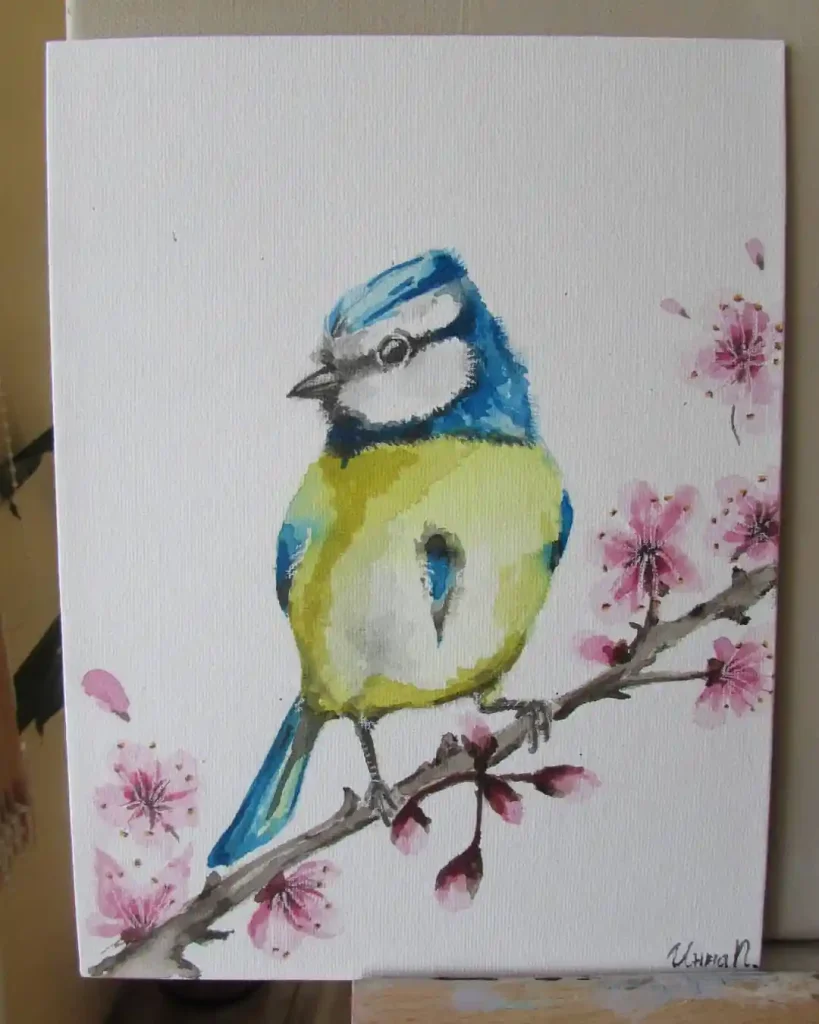
What a sweet, simple composition. This piece just feels like spring. The artist used bright, clean washes of yellow and blue for the bird, a classic symbol of joy. Setting it against those delicate, pink cherry blossoms gives it a hopeful, seasonal vibe. It’s a very gentle and light-hearted painting, a perfect celebration of nature.
14. Robin on a Water Faucet on Watercolor Paper
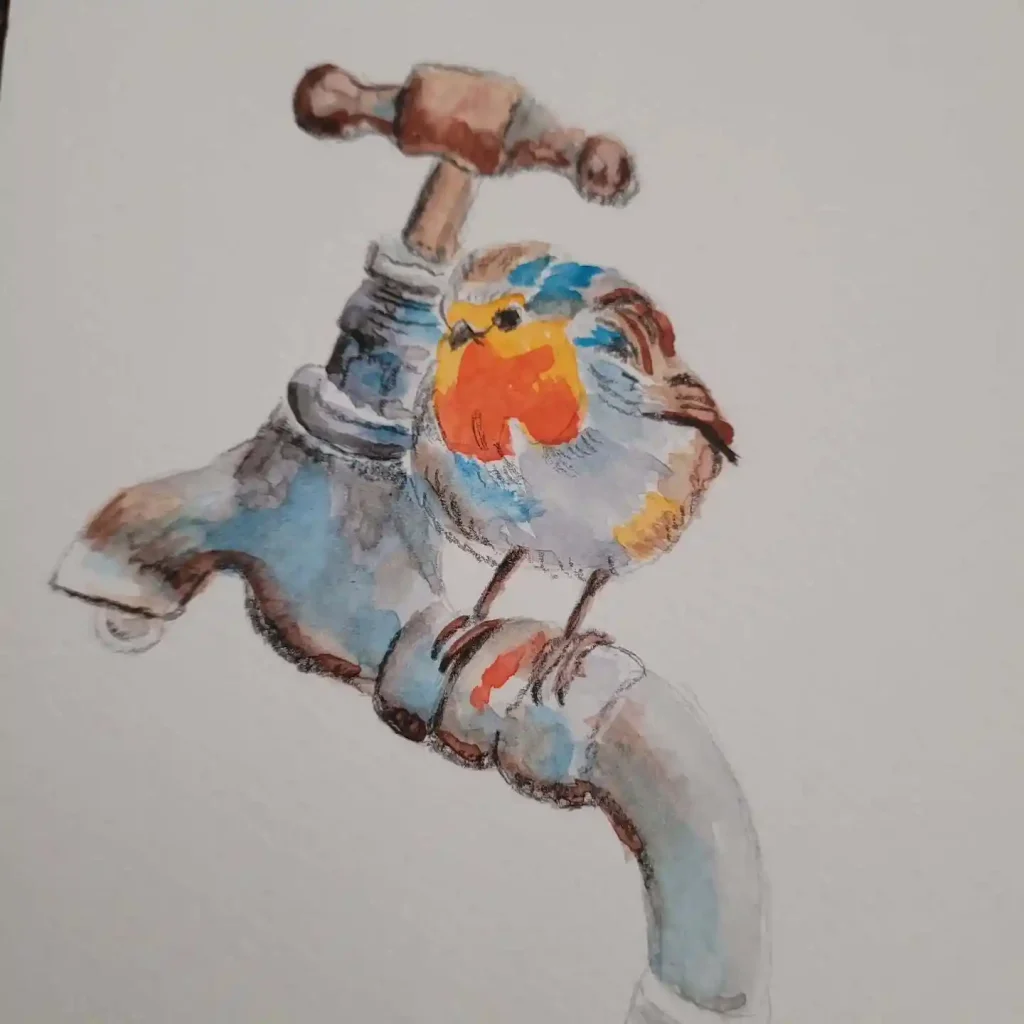
I love the story this one tells. It’s that perfect mix of the natural and the man-made. The artist did a great job using wet-on-wet washes to capture the rust and patina on the old faucet. The robin, with its bright orange and blue patches, looks so curious and out of place. It’s a whimsical, charming little scene.
15. Detailed Starling Study on Watercolor Paper
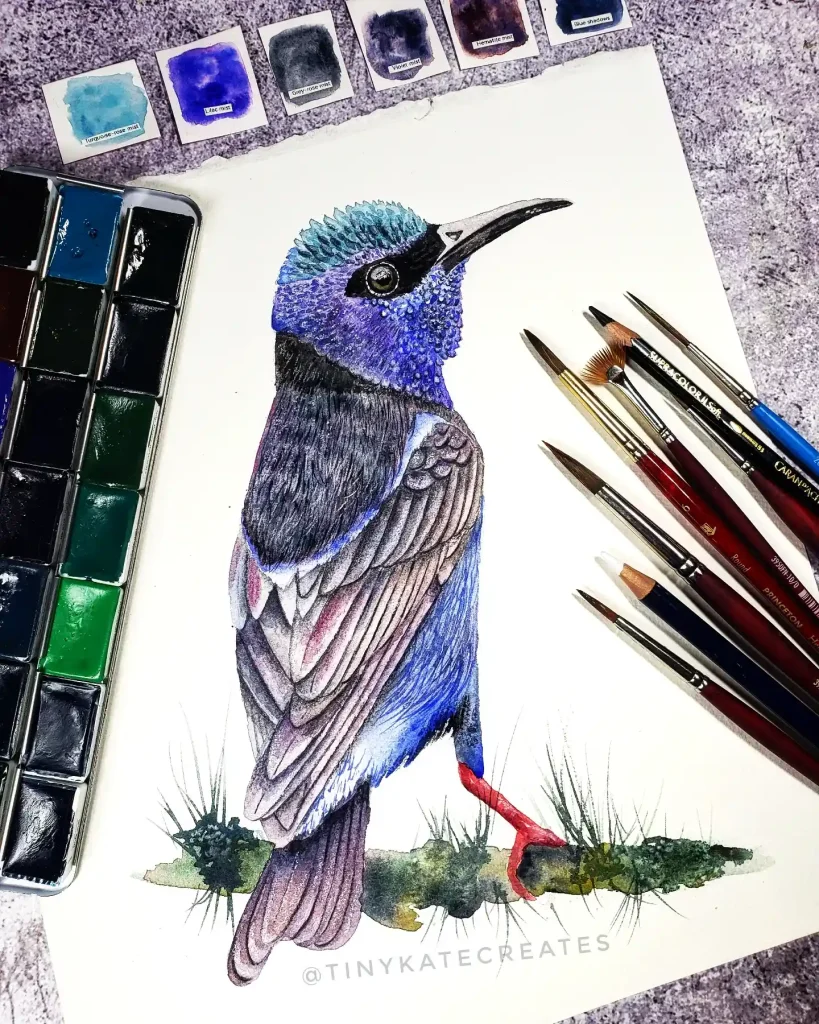
This is all about capturing iridescence. The artist used a “stippling” or dotting technique with deep blues and purples to create that shiny, textured look on the bird’s head. This contrasts so well with the softer, layered washes on the wings. Those bright red legs just anchor the whole piece. A fantastic technical study in light and texture.
16. Yellow Finch with Spread Wing on Watercolor Paper
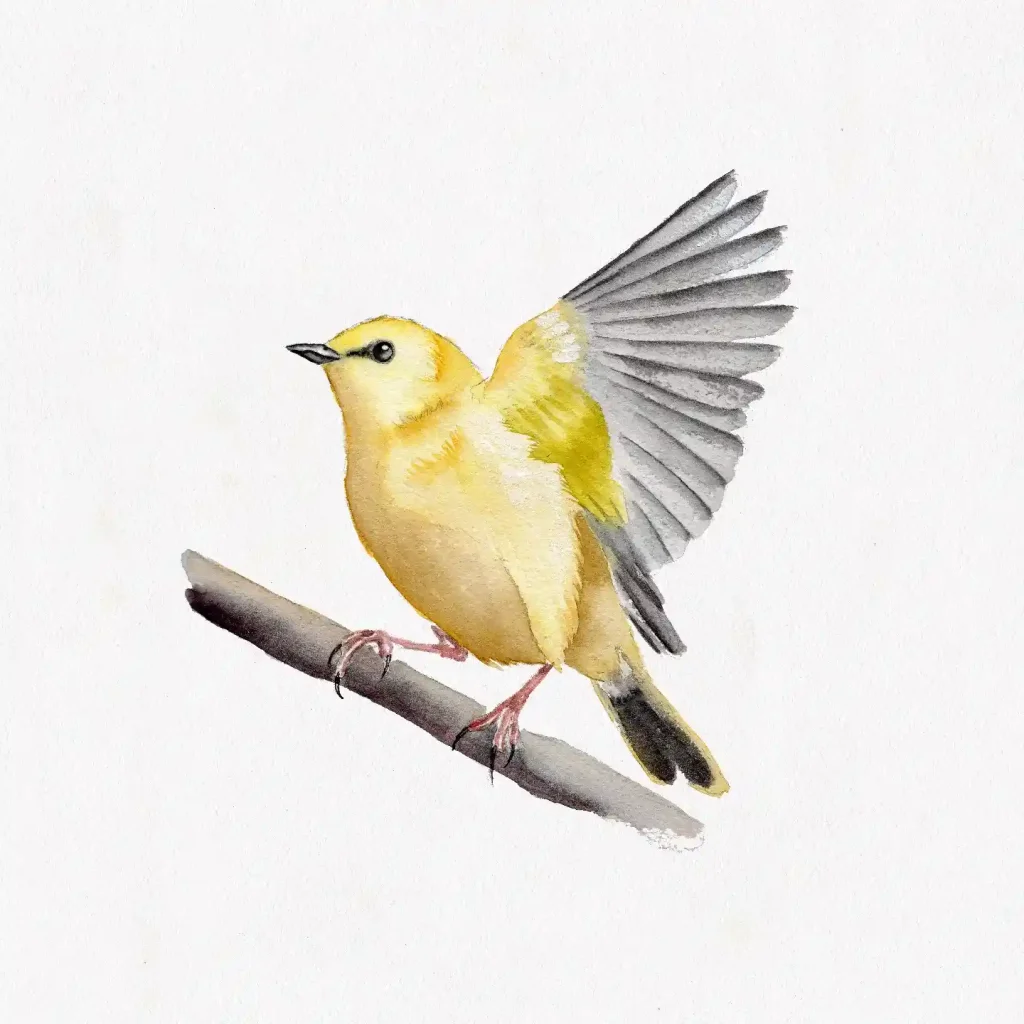
This piece captures a perfect “in-between” moment. The artist used clean, smooth washes of yellow for the body, which really pops against that one detailed, outstretched wing. The decision to leave the background completely white was smart—it puts all the focus on the bird’s pose and the delicate, individual feathers. It feels so clean and elegant.
17. Seagulls on a Wet Shore on Watercolor Paper
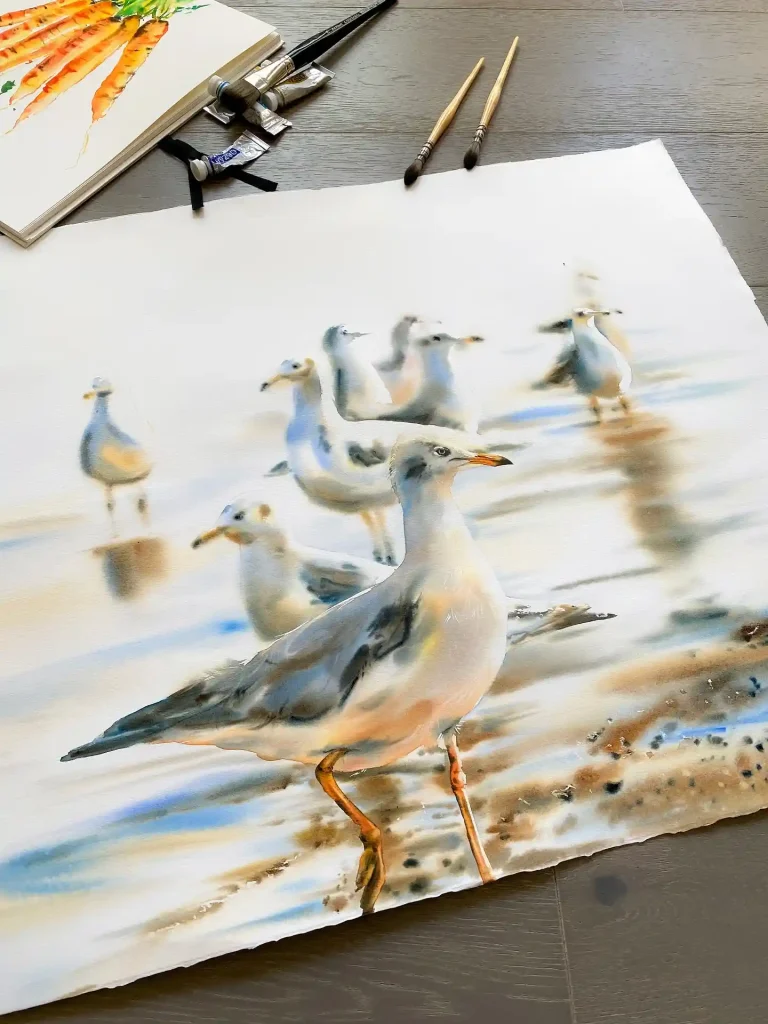
A masterclass in creating depth and atmosphere. The artist put one gull in sharp focus right up front, then let the others recede by painting them with softer, blurrier, wet-on-wet washes. This perfectly mimics how we see. The reflections on the wet sand, using just hints of blue and brown, are minimal but so effective.
18. Realistic Blue Jay on a Branch on Watercolor Paper
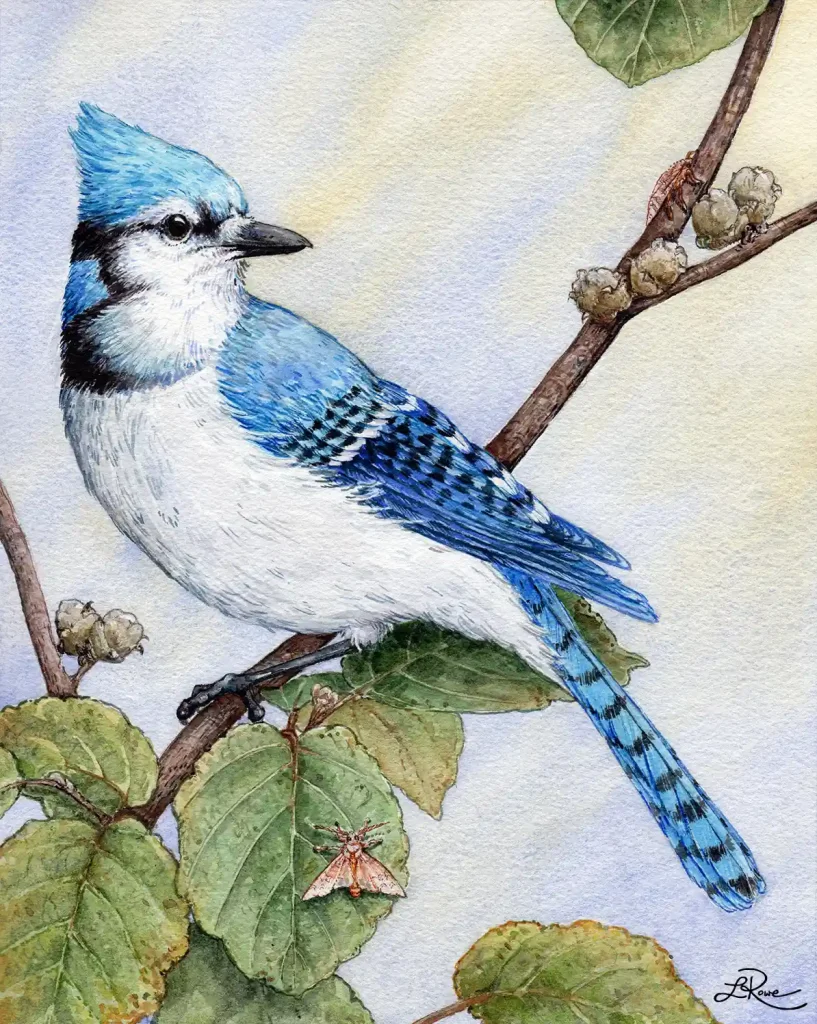
This is a classic, Audubon-style illustration, and it’s gorgeous. The artist showed incredible precision, using dry-brush techniques to render every tiny feather on the blue jay’s head and wing. In many cultures, a blue jay is a symbol of clarity and intelligence. This piece really honors that with its sharp focus and true-to-life detail.
19. Kingfisher Looking Upward on Watercolor Paper
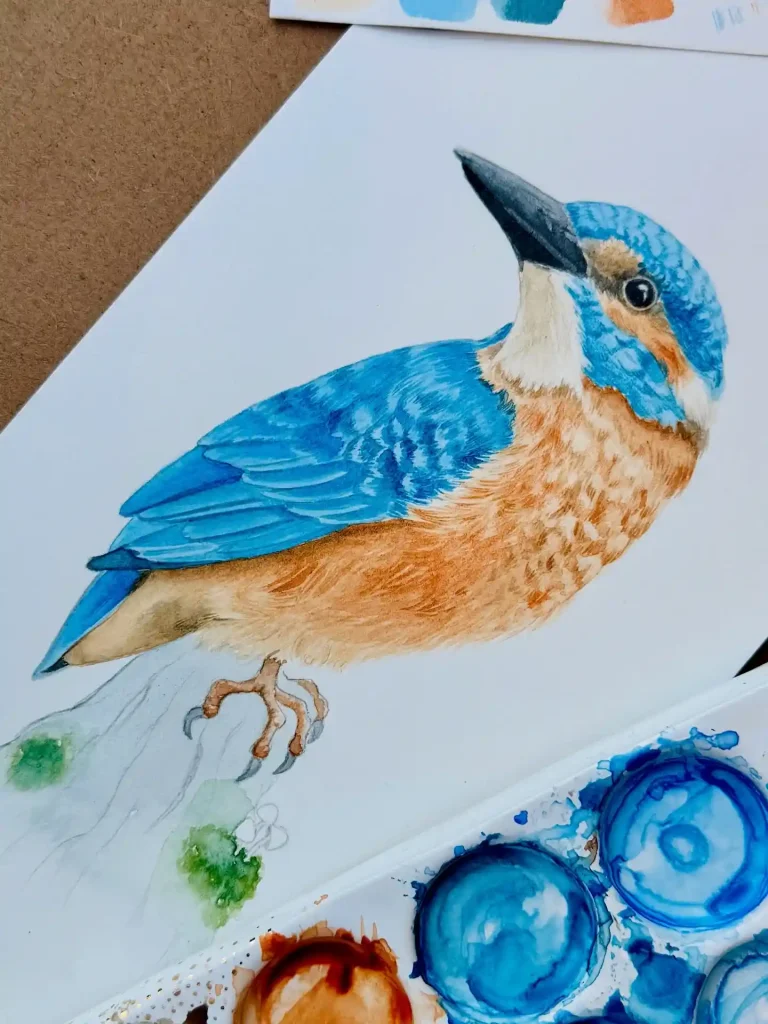
Such a great pose. That upward glance gives this kingfisher so much personality. The artist really saturated the paper with that brilliant, rich blue, letting it contrast with the warm, granular orange on the breast. I love that the branch is just a suggestion, a few simple lines, which keeps all the focus on the bird’s vibrant colors.
20. Storks in a High Nest on Watercolor Paper
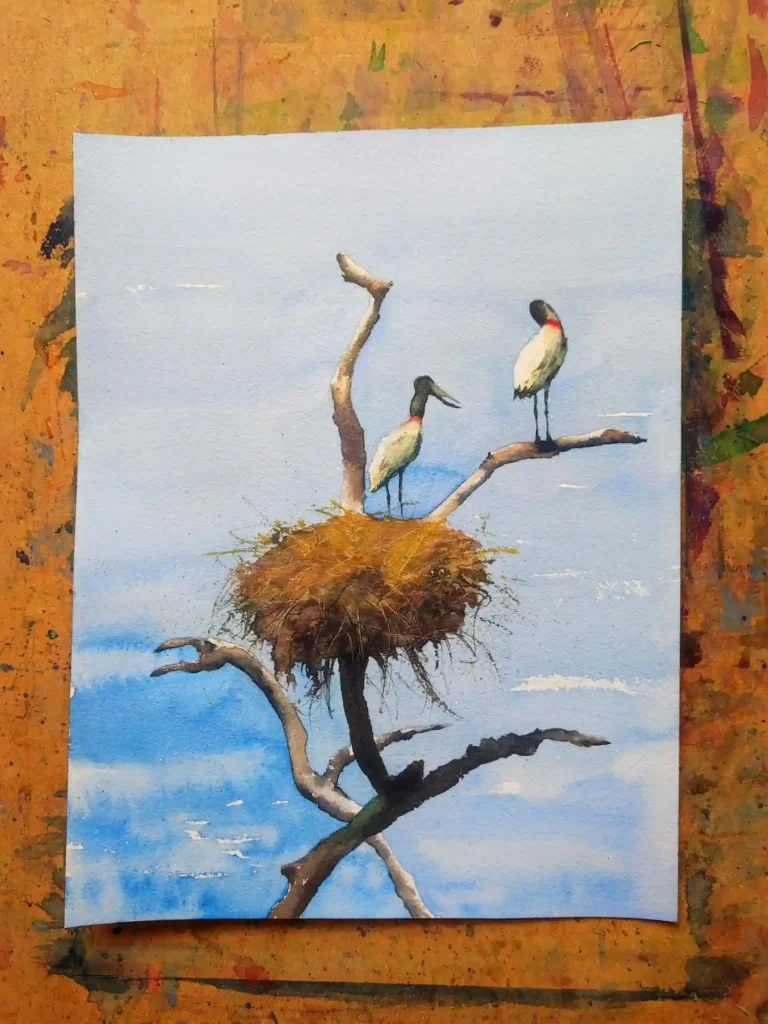
This piece tells a great story of home and survival. The artist really focused on the nest, making it the central, most textured part of the painting. Those storks, with their unique red and black necks, stand out beautifully against the simple, wet-in-wet sky. It’s a powerful image of nature, high up and exposed to the elements.
21. Great Blue Heron in Water on Watercolor Paper
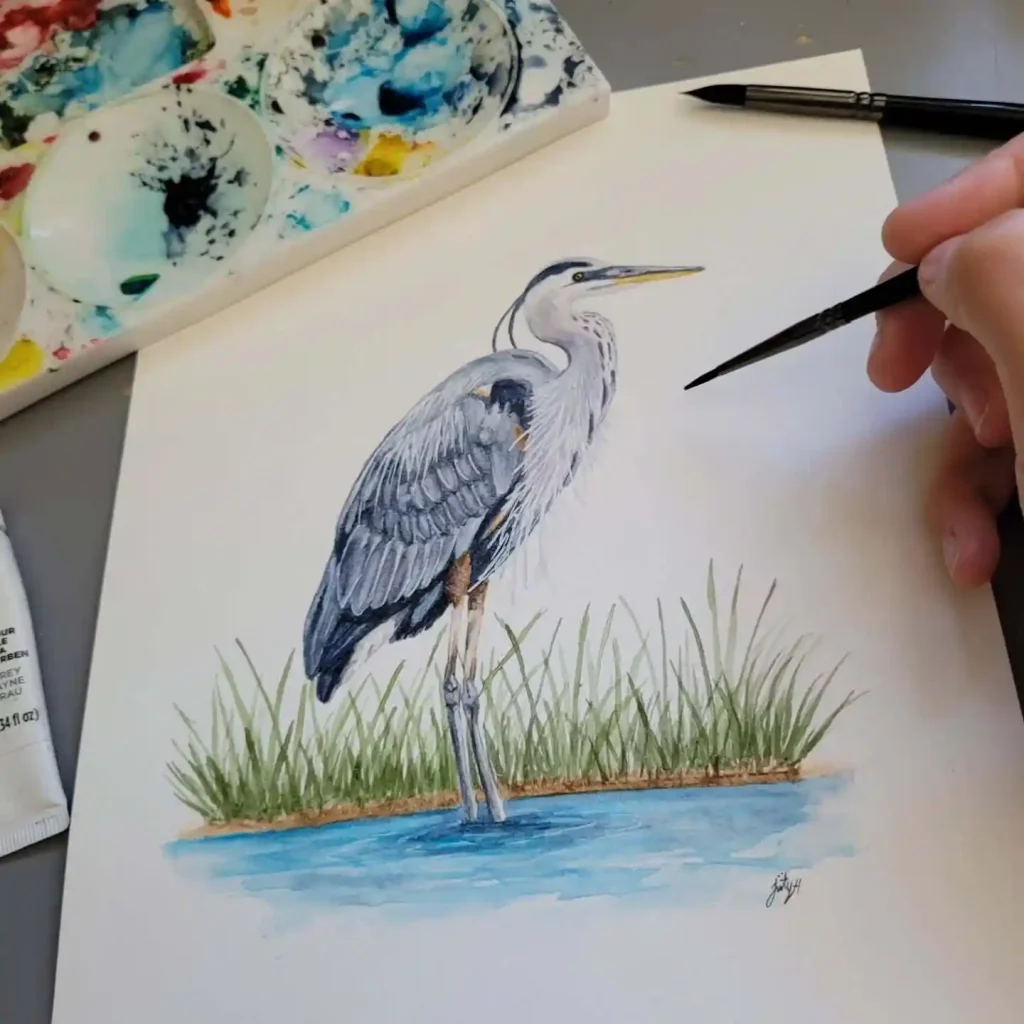
This is a classic, elegant study. The artist really captured the heron’s symbolic patience and stillness. Using careful layers of grey and blue washes for the wings, with fine lines for detail, gives it a realistic form. The simple patch of blue water and tall green reeds grounds the bird in its natural habitat, creating a very calm, focused scene.
22. Puffin with Flowers on Watercolor Paper
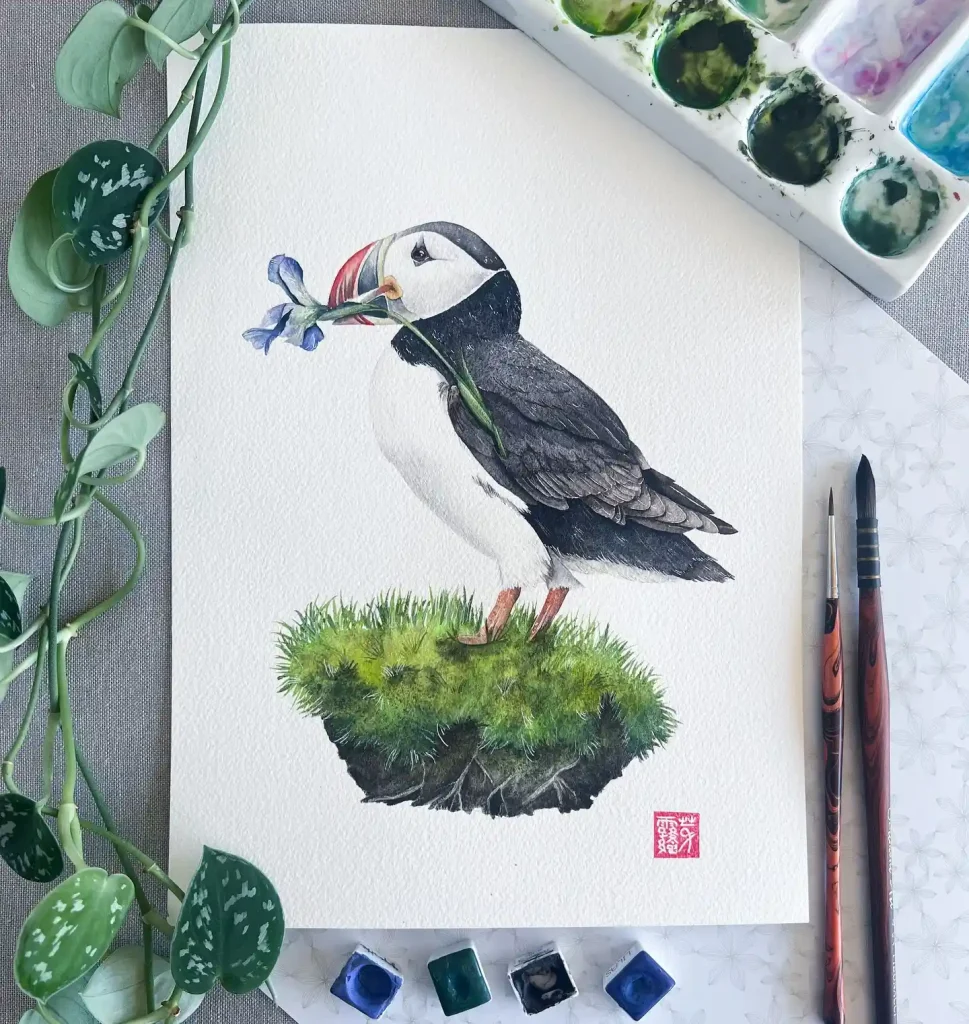
What a charming and illustrative piece. The puffin, with its iconic, colorful beak, is made even more whimsical by holding those little purple flowers—a lovely, gentle touch. The artist showed great skill in the fine, dark feather textures and the grassy, mossy mound. It’s a clean, crisp painting that really pops against the white paper.
23. Colorful Sunbird on Stem on Watercolor Paper
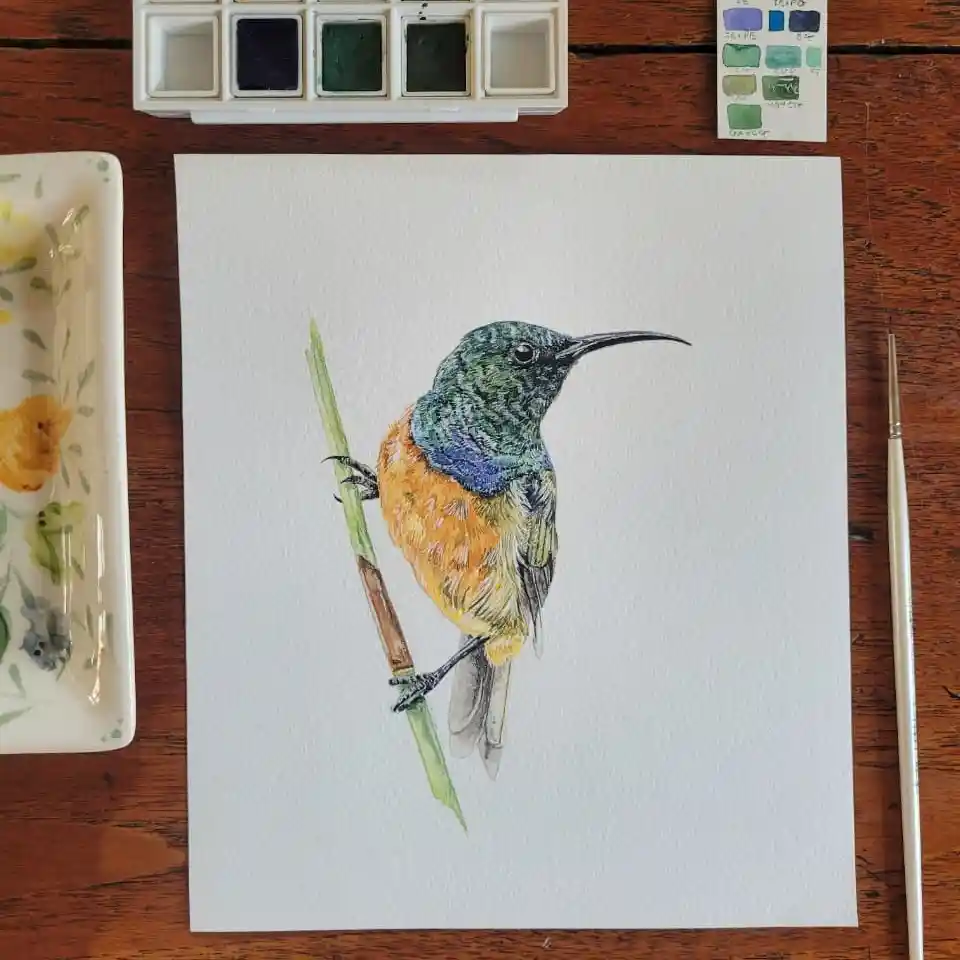
This piece is all about capturing that incredible iridescence. The artist used a careful “stippling” or dotting technique on the head to create that shimmery, textured green and blue. This contrasts beautifully with the smoother, bright orange wash on the bird’s belly. Keeping the branch simple and clean makes this little jewel-toned bird the absolute star.
24. Stylized Robin on Bowl on Watercolor Paper
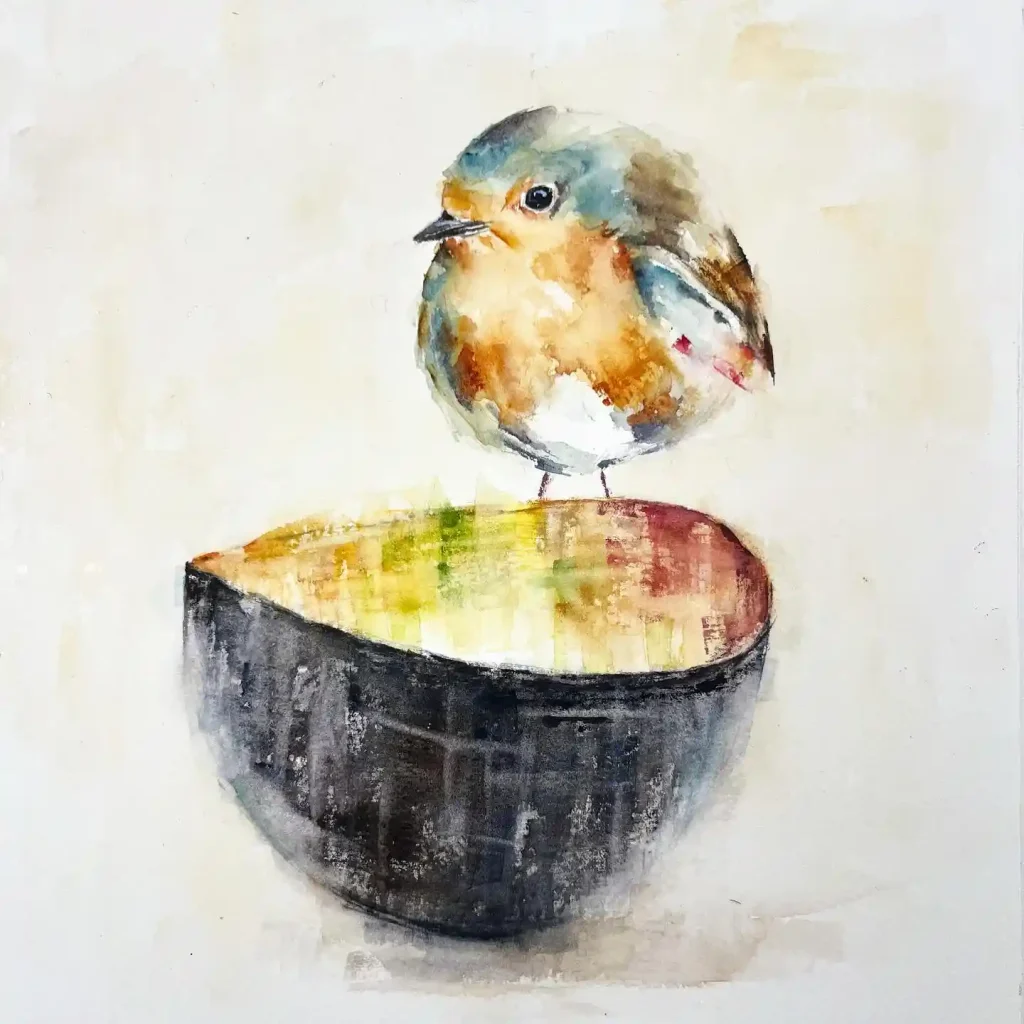
I just love the textural play in this one. The artist painted the robin to be so soft and round, using loose, wet-on-wet bleeds of blue and orange. Then, they placed it on this dark, heavily textured bowl, which looks like it was made with a dry brush. Those colorful reflections in the bowl are a great touch.
40 More Watercolor Bird Drawing Ideas to Try
Birds suit watercolor better than almost any other subject, because feathers and soft washes want the same thing: edges that dissolve into one another. But a bird is also a strong graphic shape, which means it takes hard-edged treatment just as well. The 40 ideas below work across that whole range, from wet-into-wet botanical studies to pixel art and tattoo flash, each with the medium and key technique named.
25. Watercolor Peacock with a Trailing Tail
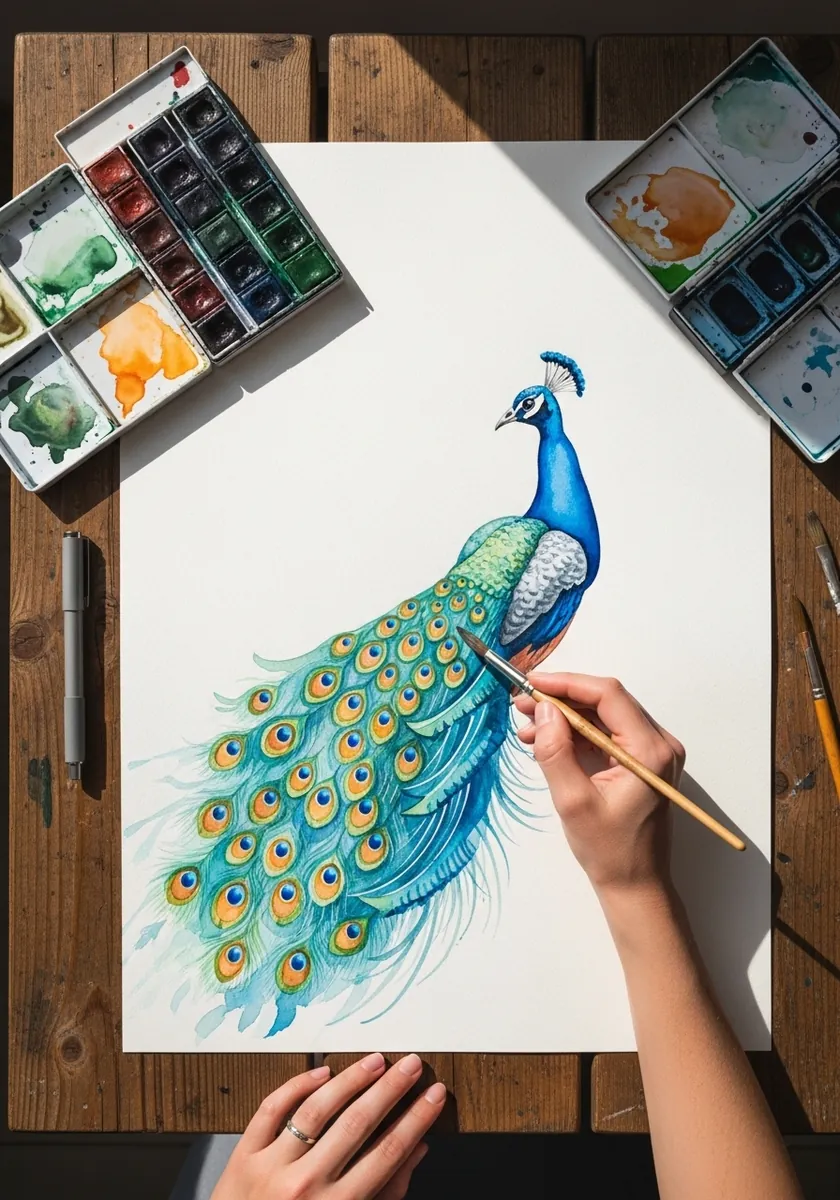
A peacock with its tail sweeping down the page in teal, green and gold, each eye feather picked out individually. Paint the tail as one large graded wash first and let it dry completely, then add the eye feathers on top so they read as pattern rather than as separate shapes.
26. One Line Hummingbird in Flight
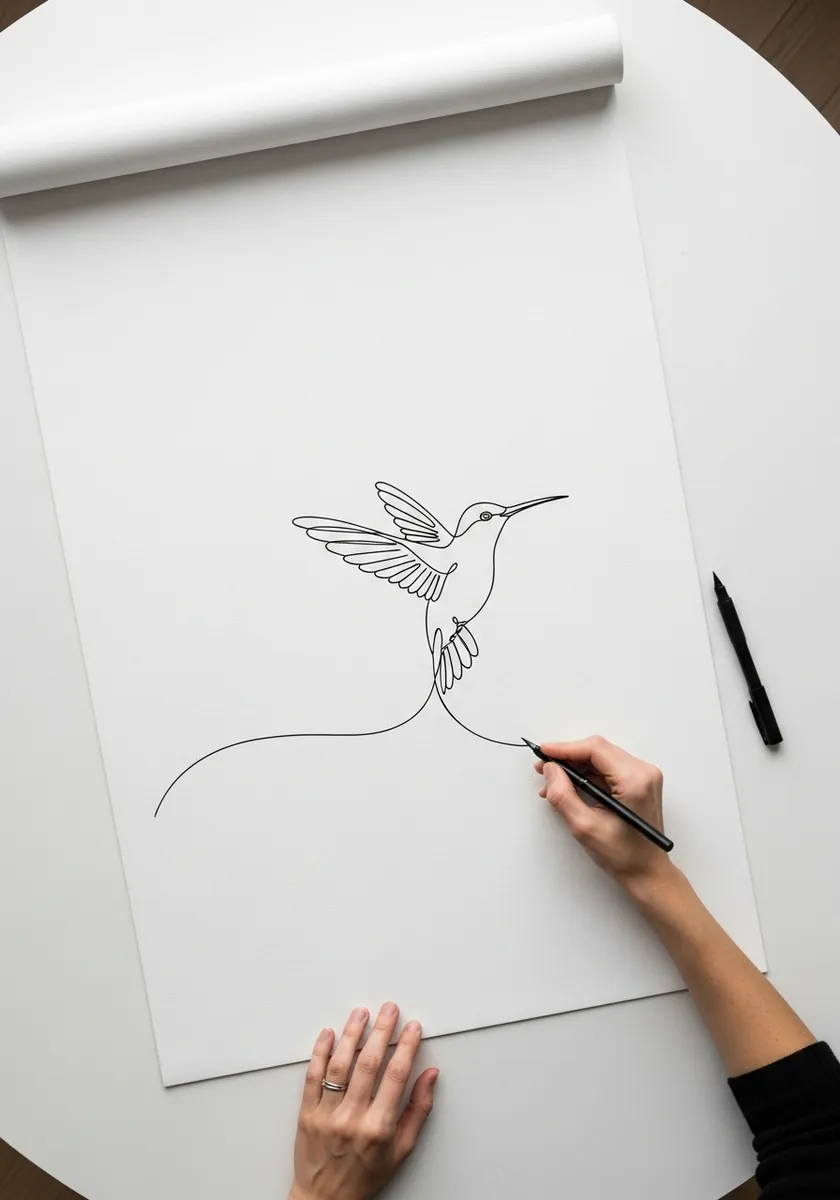
A hummingbird described by one unbroken line that runs in from the edge of the paper, forms the wing and body, and exits again. Rehearse the route with the pen held above the page, then commit in one steady movement.
27. Bold Cartoon Macaw in Primary Colors
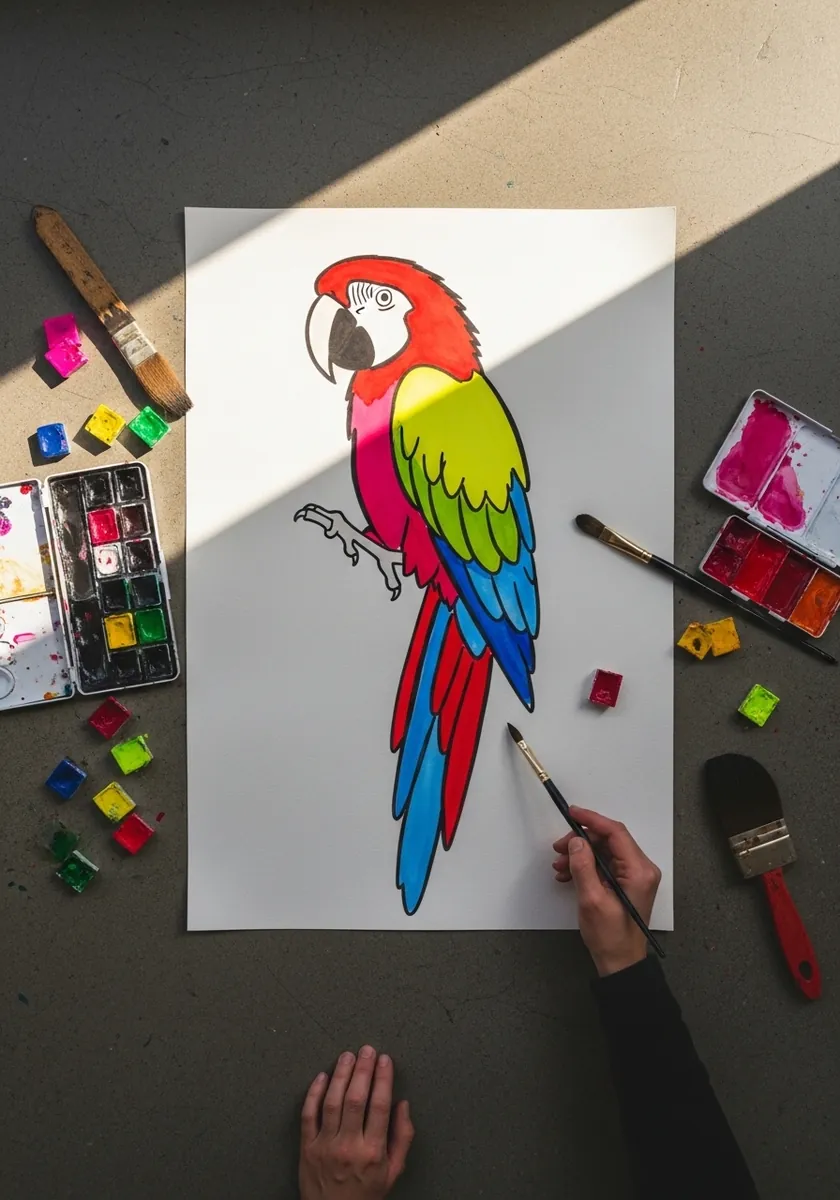
A macaw in flat red, yellow and blue with thick black outlines and no shading at all. Ink the outline first with a waterproof pen so the washes cannot lift it, then fill each block of color in a single pass to keep it even.
28. Charcoal Owl in Low Light
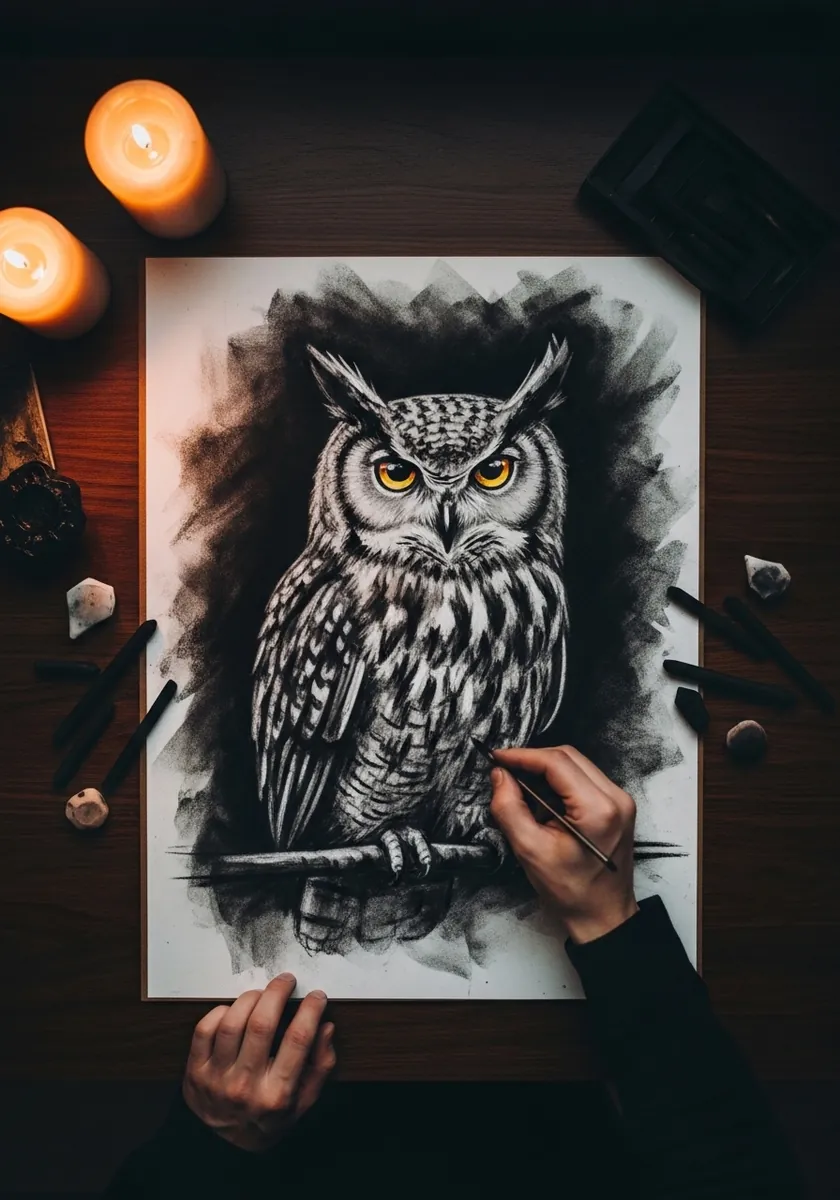
An owl emerges from a heavily worked charcoal ground with only its amber eyes carrying any color. Cover the sheet in charcoal first, lift the bird out with a kneaded eraser, then add the eyes last as the single warm accent.
29. Soft Pastel Flamingo at Sunrise
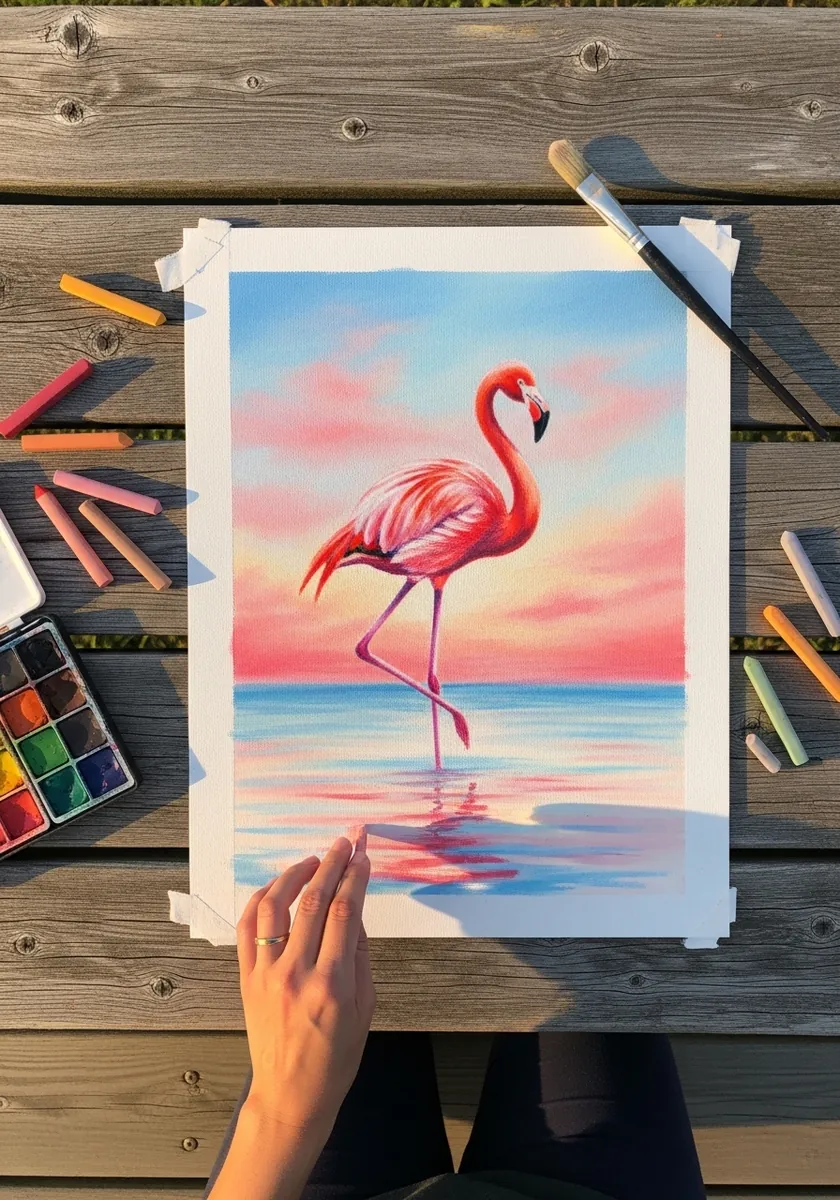
A flamingo stands in still water under a pink and turquoise sky, with its reflection running down the page beneath it. Blend the sky and water with a finger, keep the reflection paler and slightly broken, and leave the bird as the only crisp edge.
30. Geometric Faceted Owl in Line
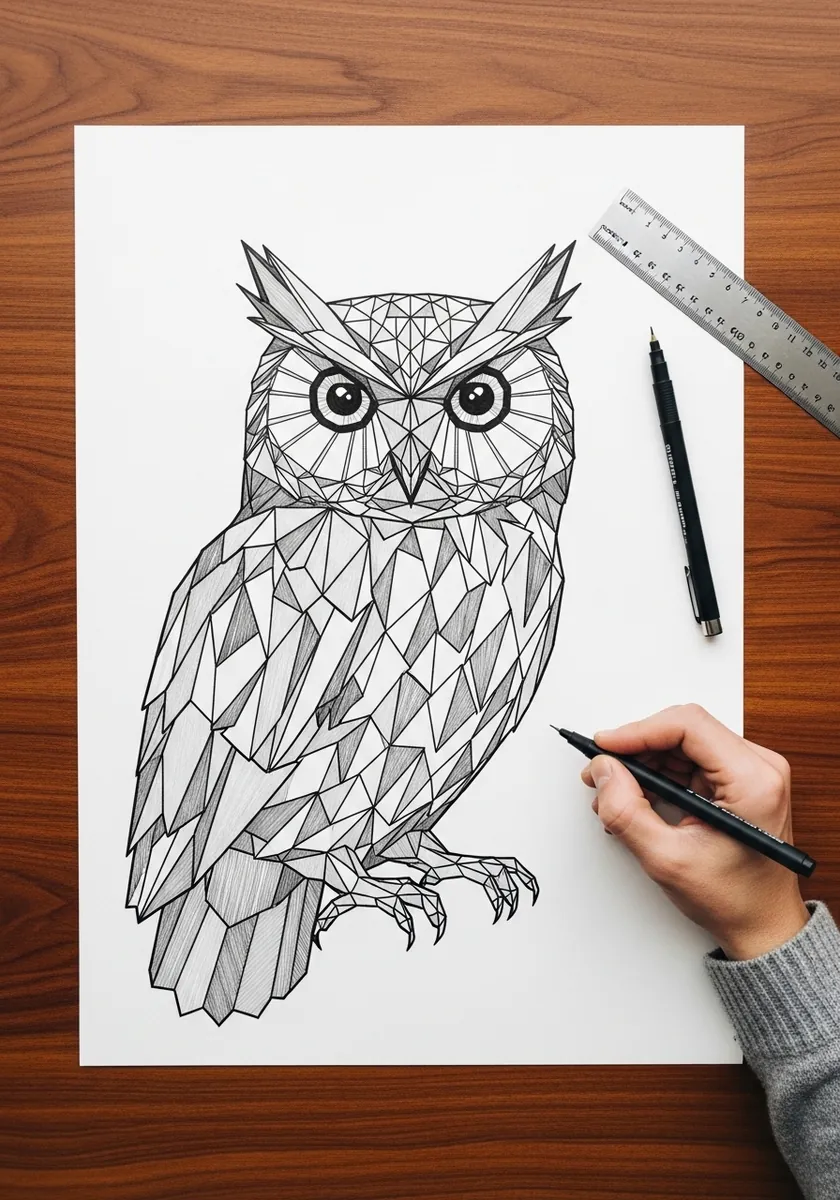
An owl broken into angular facets, drawn purely in line with no fill anywhere. Rule every edge, tighten the facets around the eyes where you want attention, and let them open out toward the body and feet.
31. Graffiti Eagle Over Wildstyle Lettering
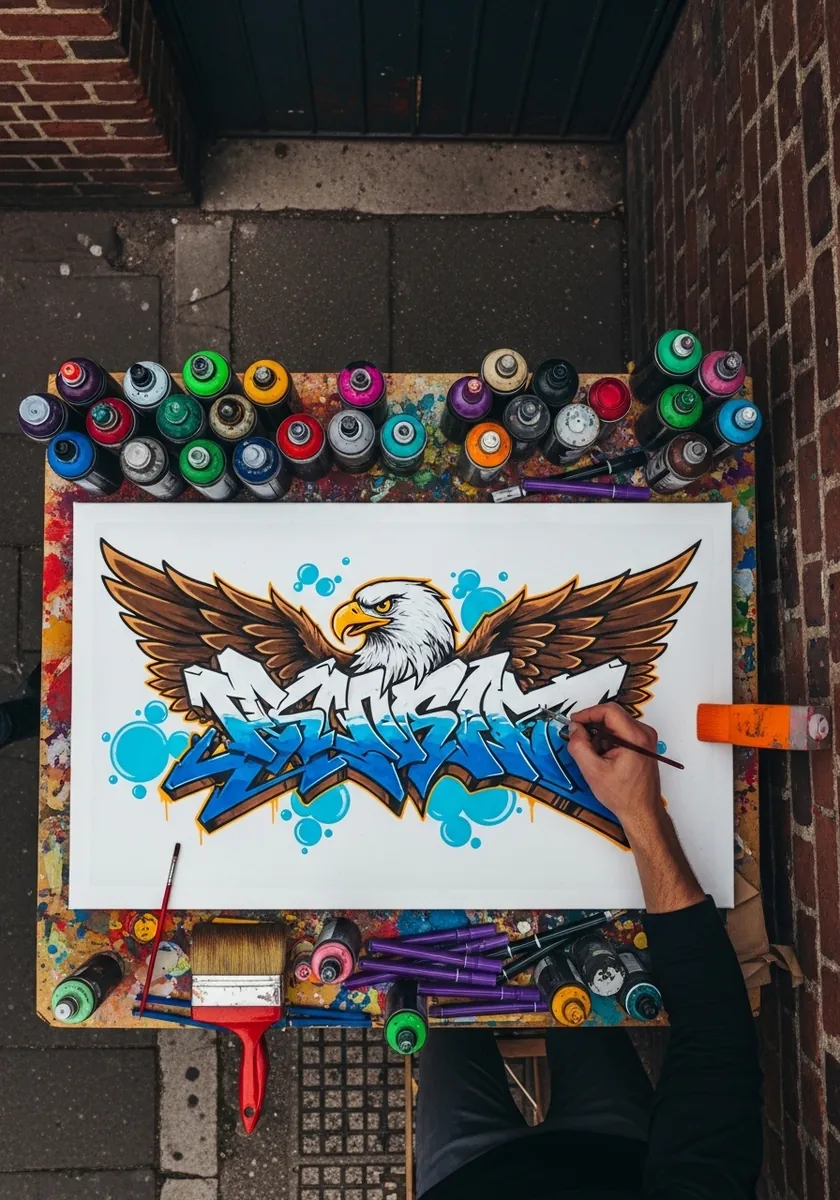
An eagle with outstretched wings sits above interlocking wildstyle letters, with cyan splatter behind. Sketch the lettering first and fit the bird above it, then outline everything in black at the end so the layers read as one piece.
32. Flat Vector Toucan in Two Colors
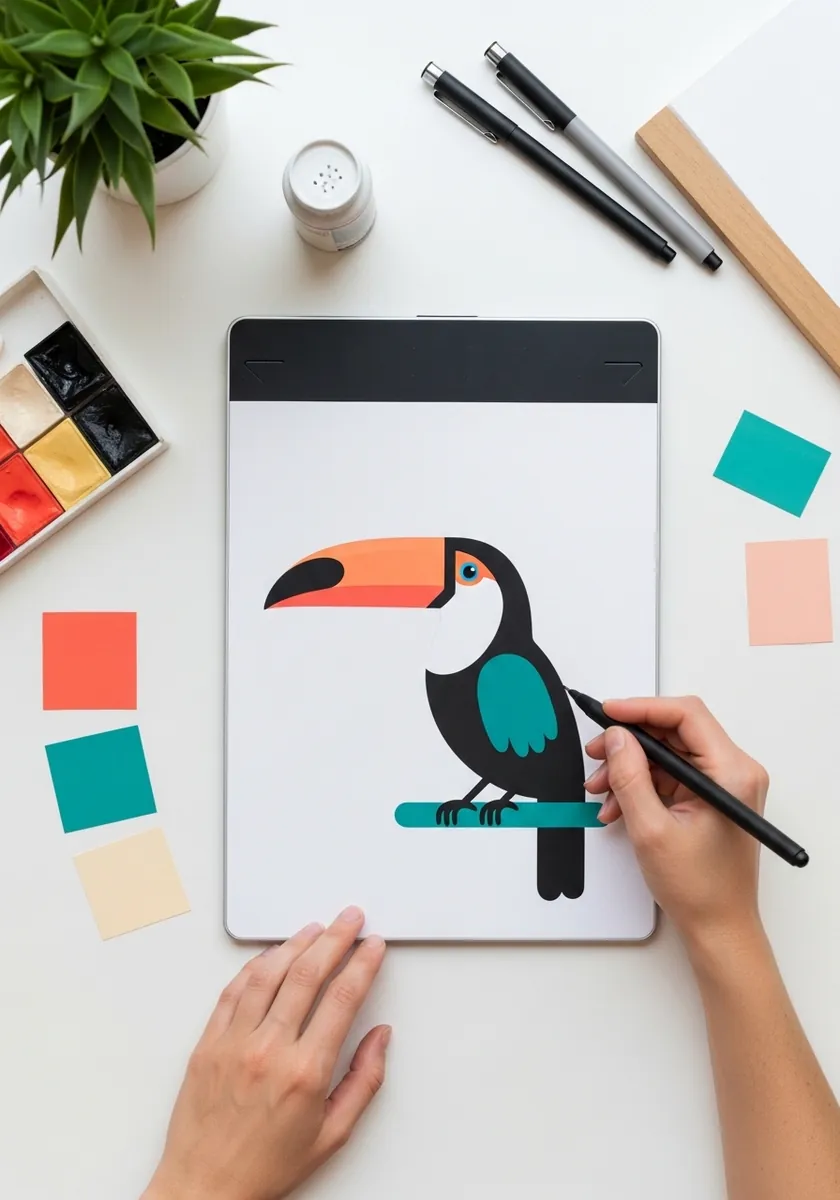
A toucan reduced to flat black, teal and orange shapes with no outline at all. Build the whole bird from four or five geometric shapes, keep every edge clean, and let the orange beak carry the entire composition.
33. Boho Phoenix with Moon Phases
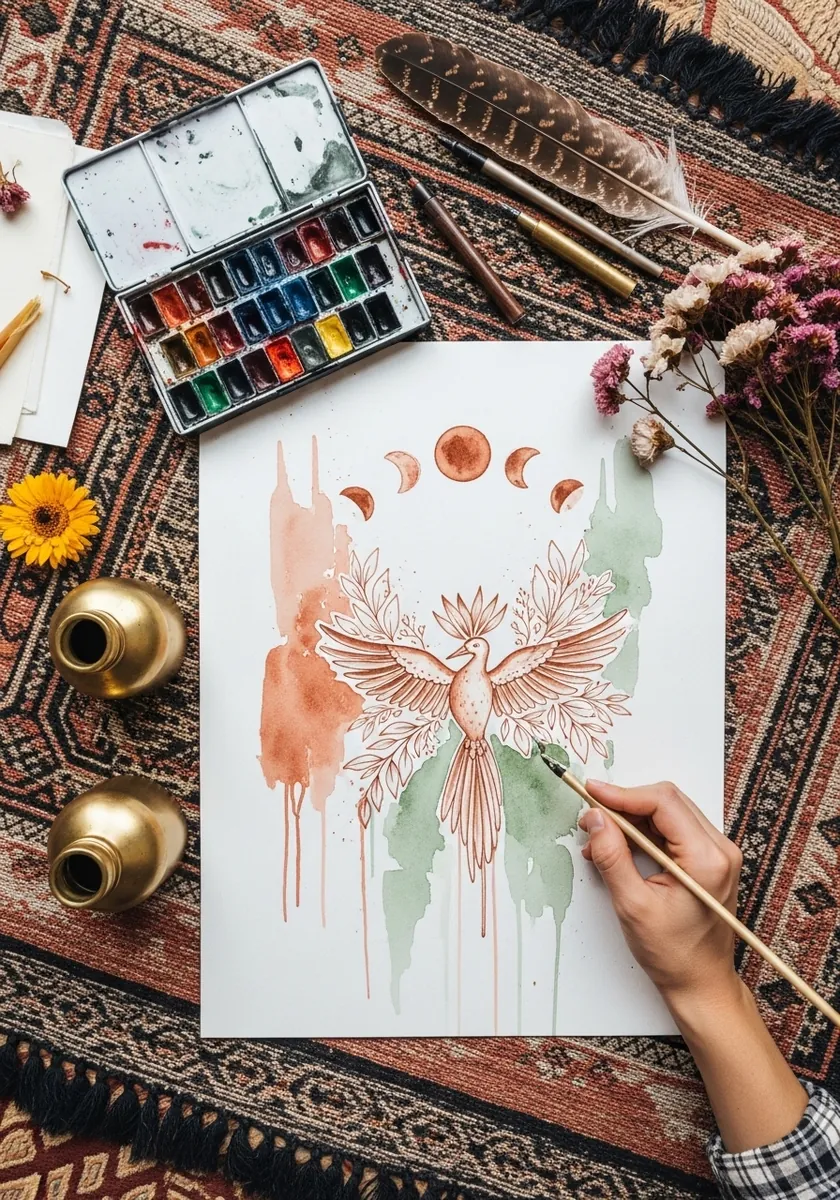
A phoenix drawn in fine line over loose terracotta and sage washes, with moon phases arcing above it. Lay the color blocks first and let them dry, then draw the bird over the top without following their edges.
34. Low Poly Crow in Greyscale
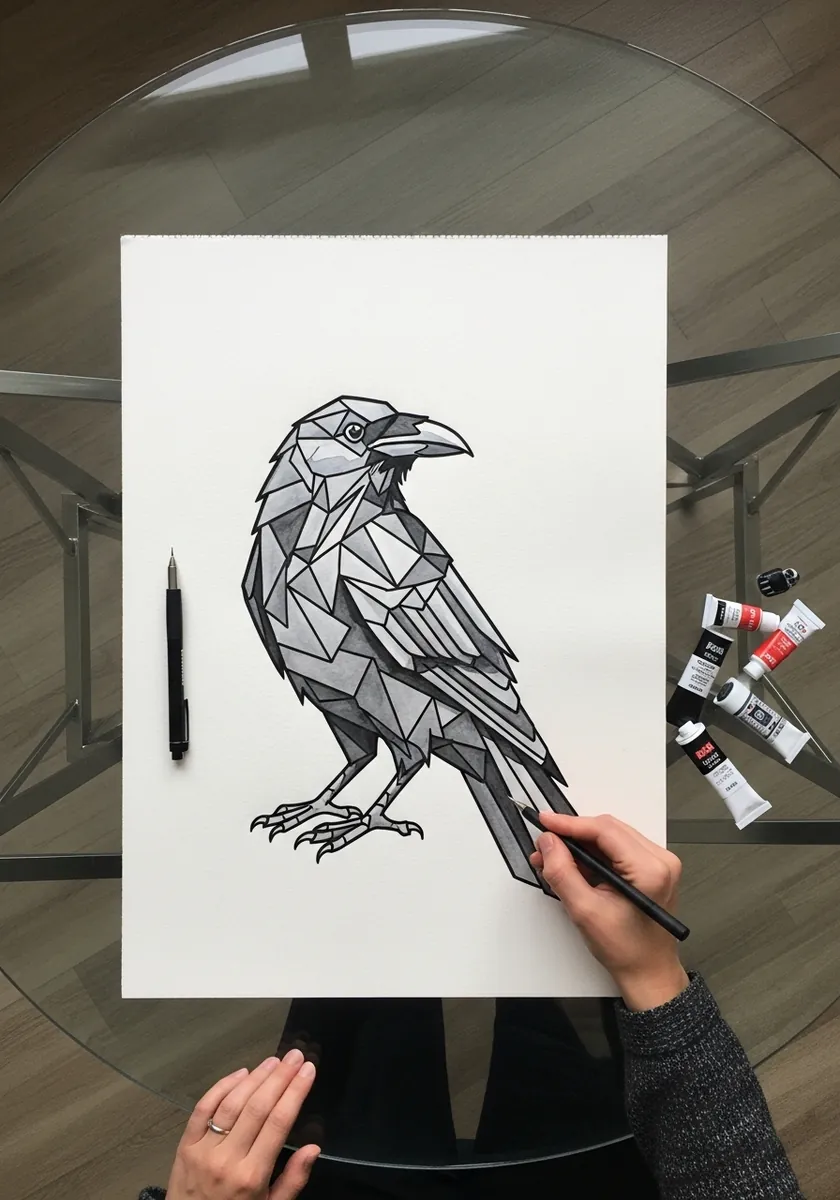
A crow assembled from gray triangles, darkest along the back and palest on the breast. Keep the facets larger through the body and smaller around the head, and let neighboring tones differ only slightly so the form still holds.
35. Ink and Watercolor Kingfisher with Drips
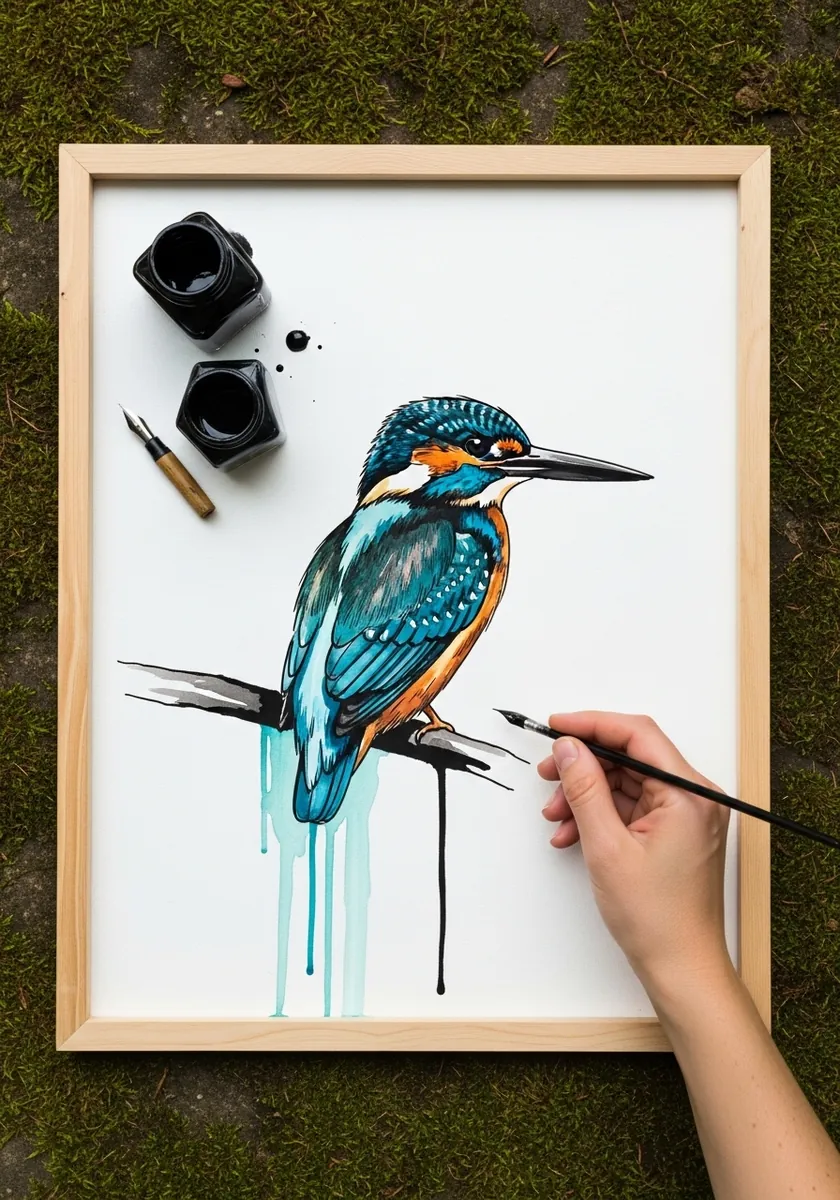
A kingfisher in vivid teal and orange perched on a branch, with deliberate drips running from the tail down the page. Paint the bird tightly, then load the brush heavily at the base and let gravity make the drips.
36. Tiny Sparrow Study on a Blank Page
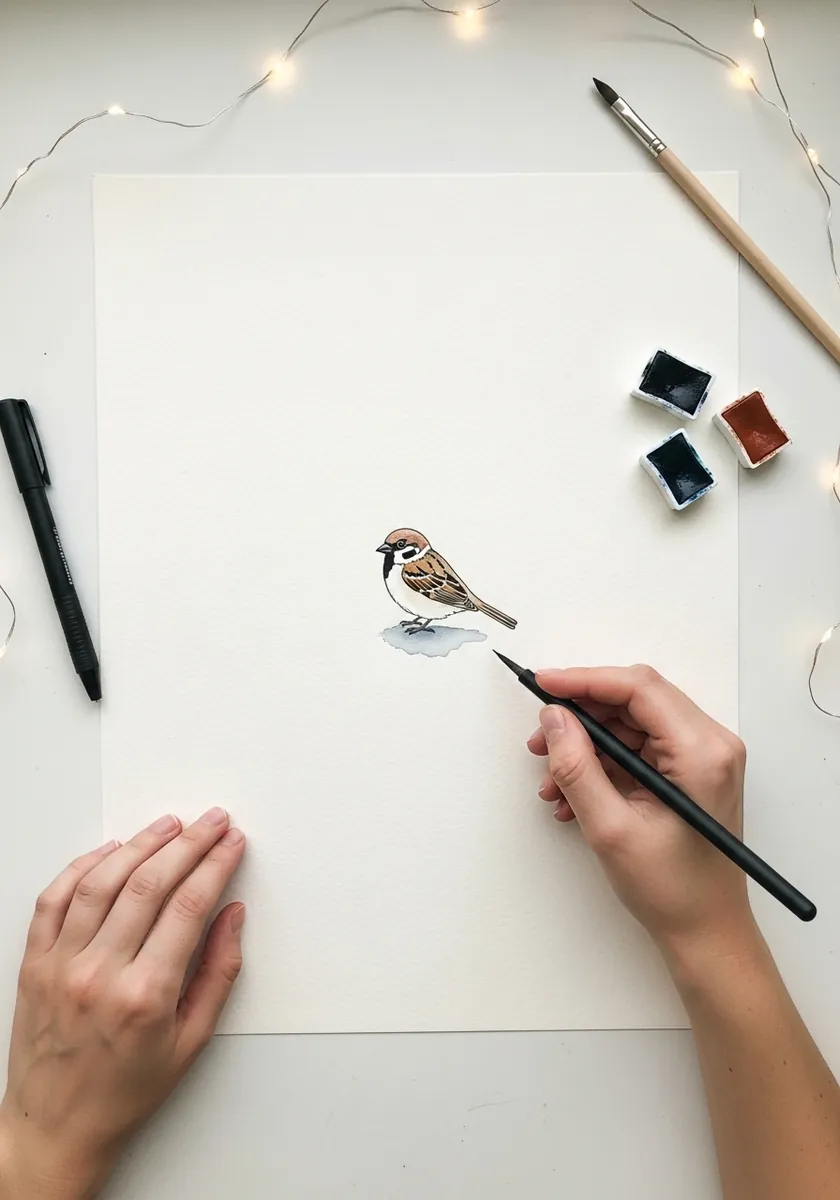
A sparrow no bigger than a thumbnail sits alone on a large sheet, with a soft gray shadow beneath it. The empty paper is doing all the work. Resist the urge to add anything else; scale alone makes this composition.
37. Cartoon Robin with Oversized Eyes
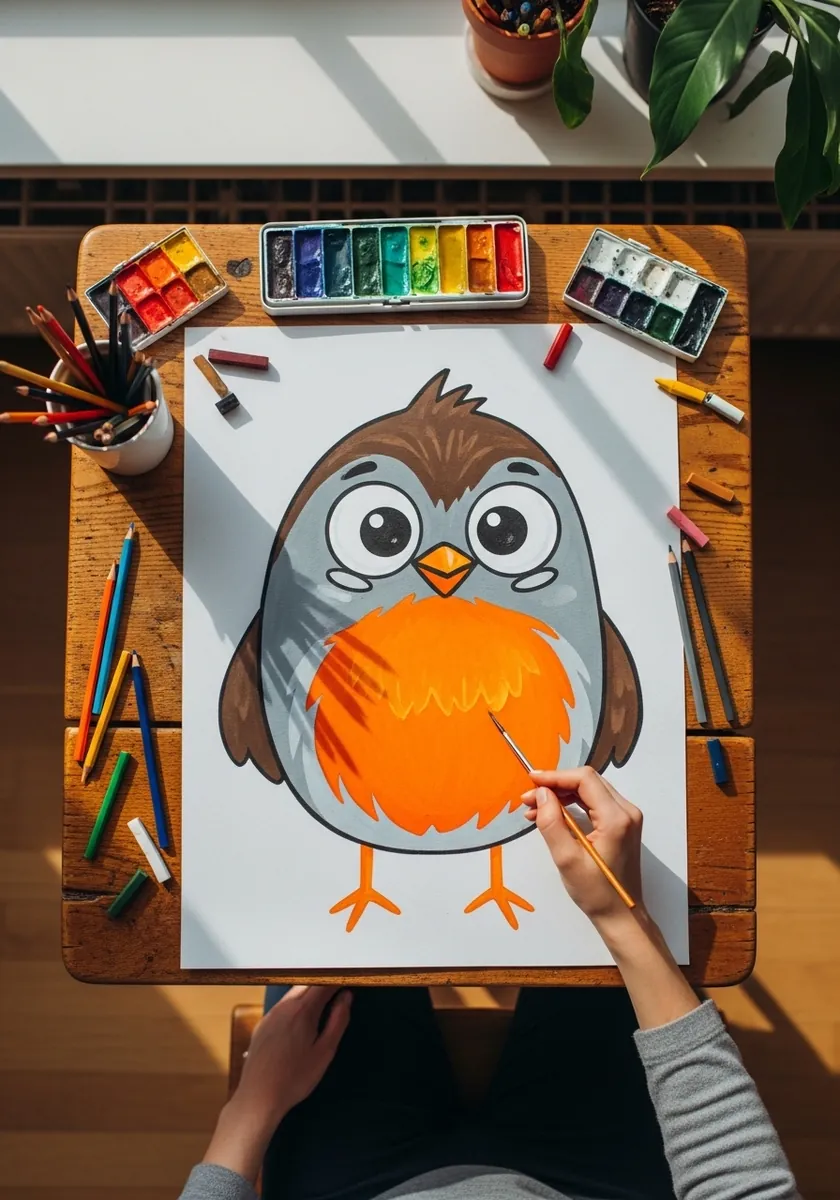
A round robin with enormous eyes and a saturated orange breast, drawn in bold outlines for coloring. Enlarge the head, shrink the body, and keep the eyes widely spaced so the bird reads as friendly.
38. Golden Eagle with Spread Wings
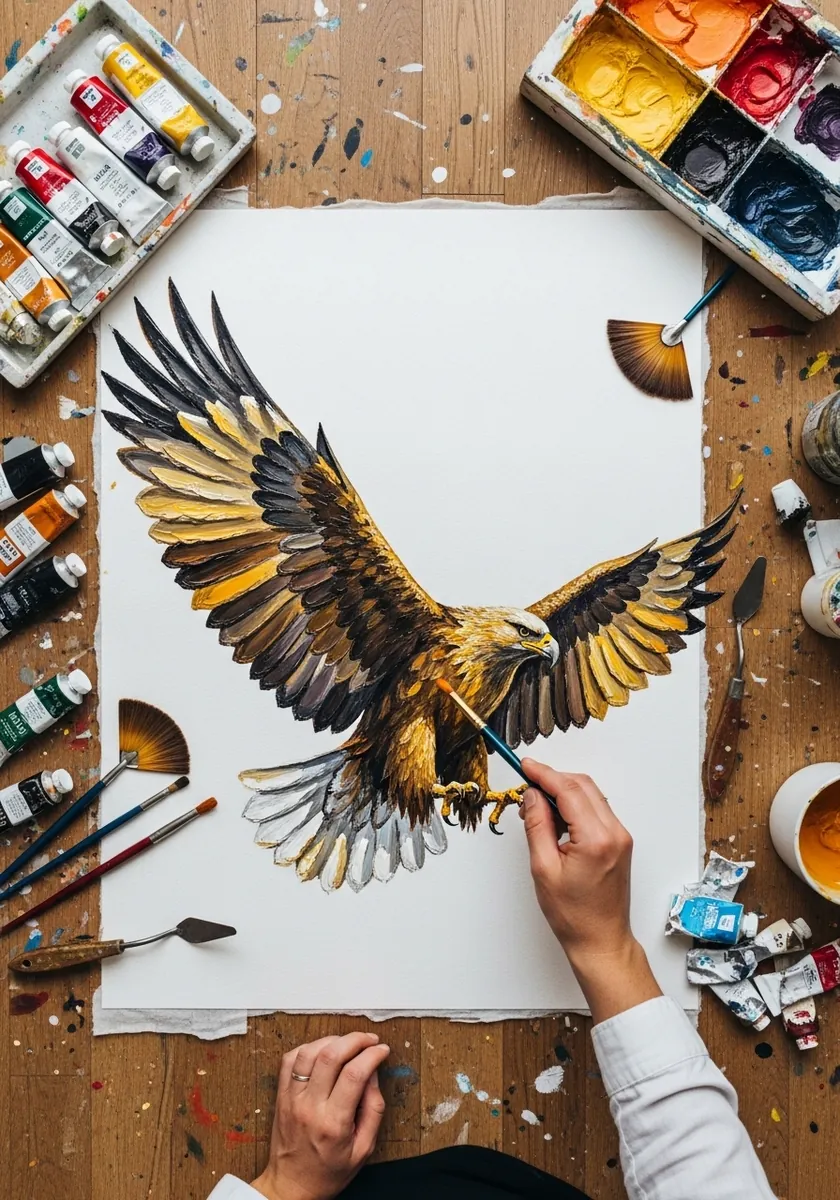
An eagle with wings spread edge to edge across the page, each flight feather painted separately in gold, ochre and brown. Lay a graded wash across the whole wing first, dry it, then define individual feathers on top.
39. Gouache Seagull Over a Sunset Sea
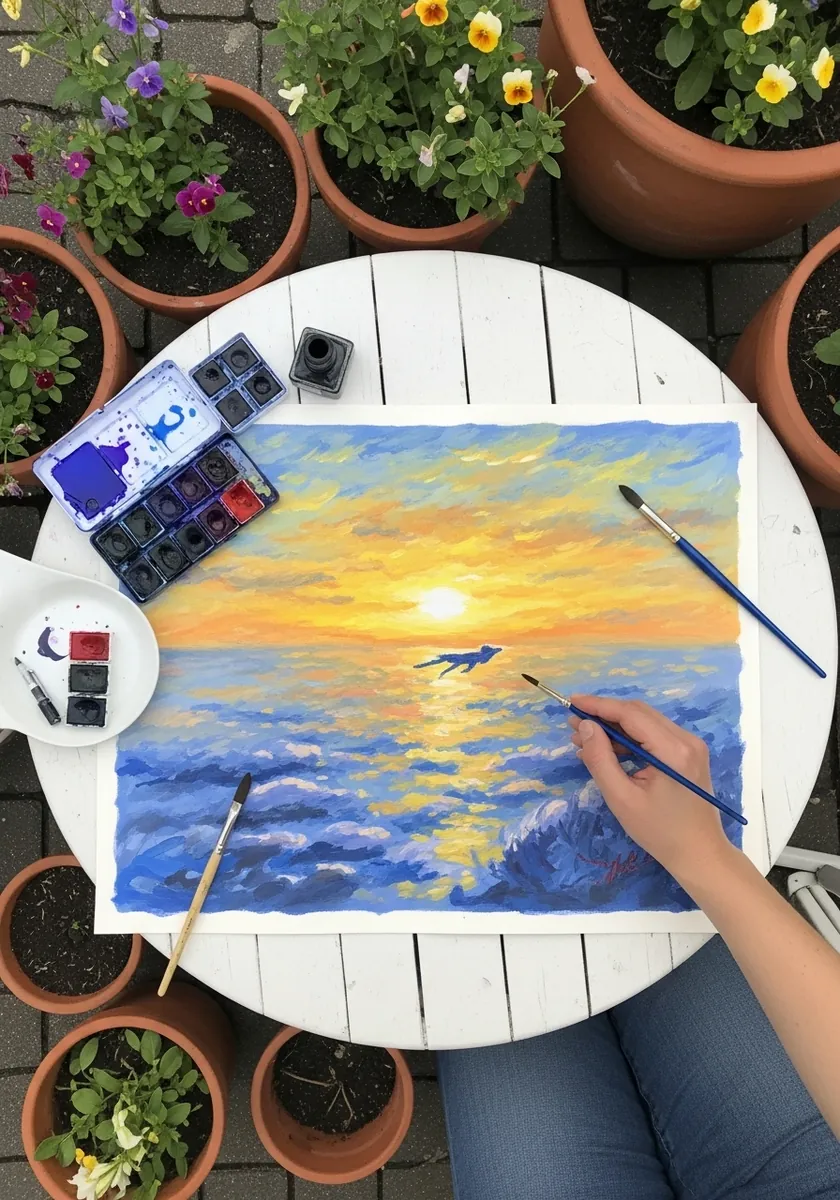
A single gull crosses a sky of orange and gold above a choppy blue sea, painted in broken gouache strokes. Lay the sky in horizontal bands, keep the sea loose, and place the bird last as a few dark marks.
40. Tattoo Flash Raven on Sacred Geometry
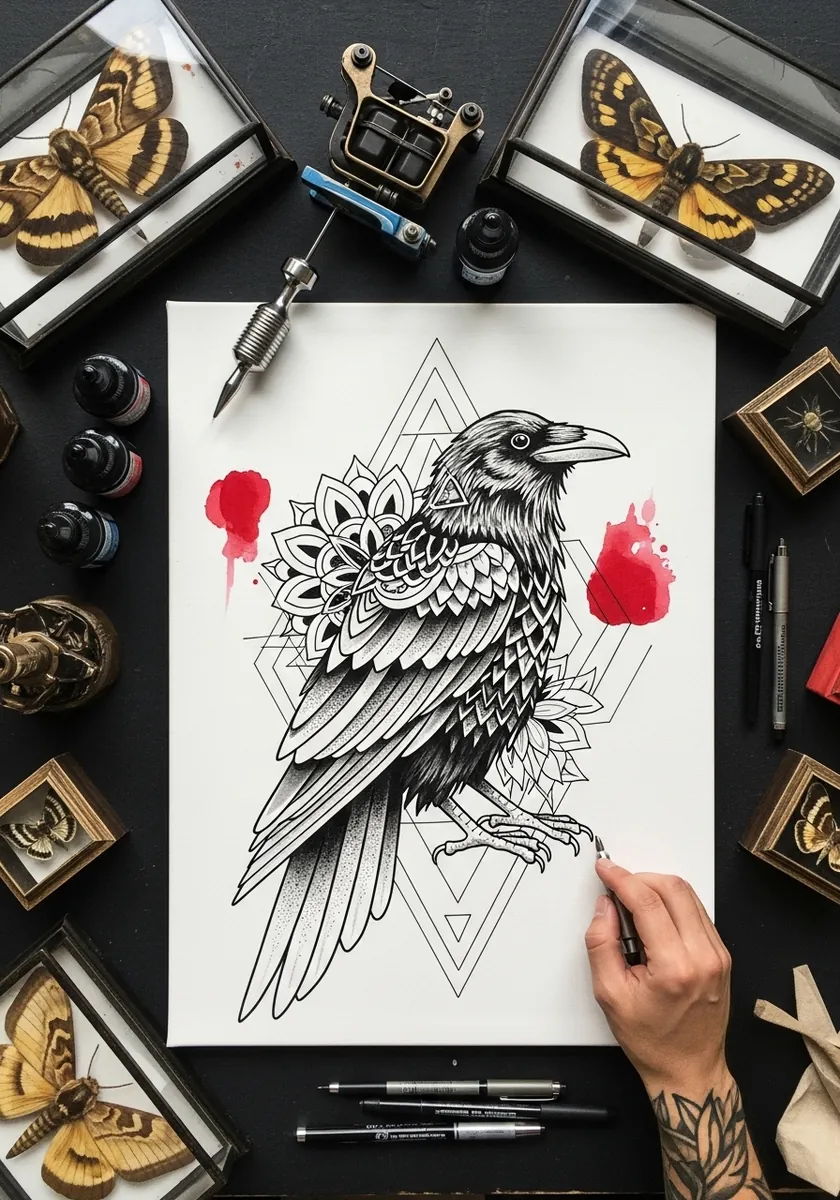
A raven drawn in fine black ink over ruled triangles and a mandala, with two red splashes behind. Rule the geometry first, ink the raven over it, and let the red sit behind everything as the only color.
41. Zentangle Warbler Among Doodled Leaves
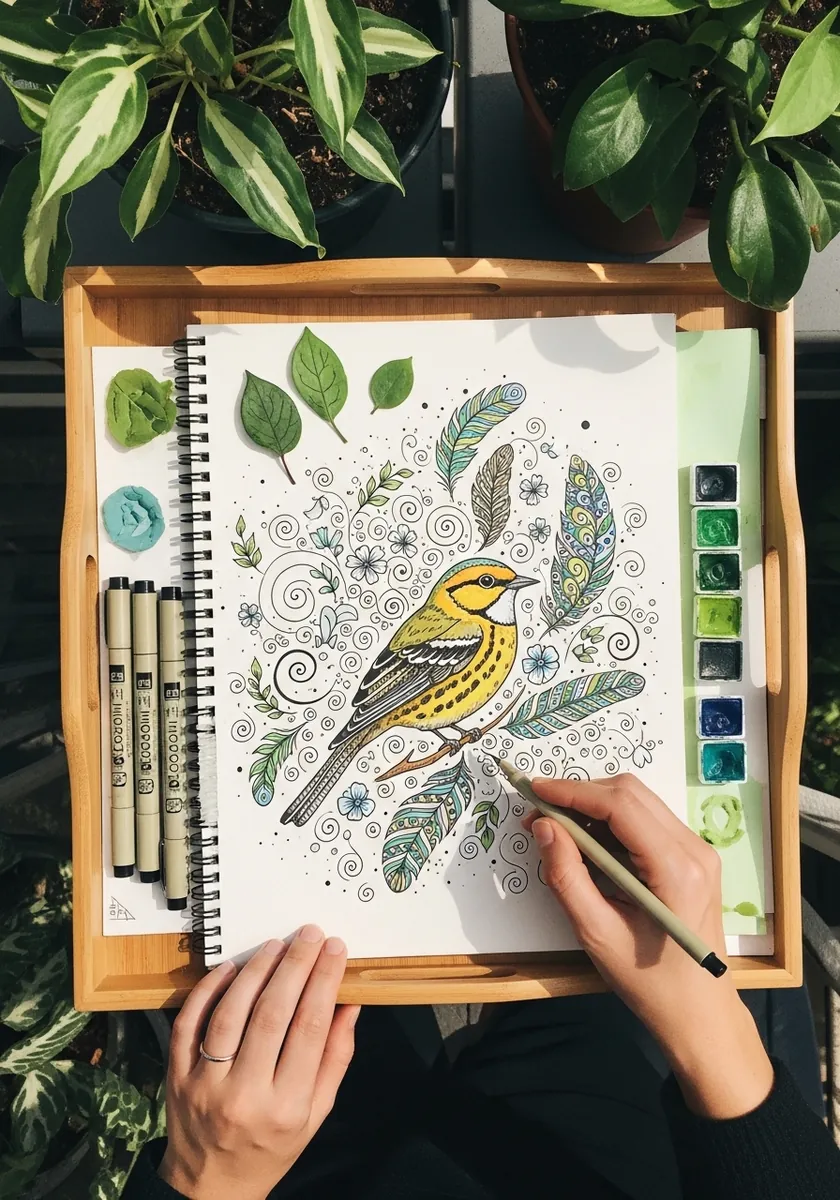
A yellow warbler perches among leaves filled with fine doodled pattern, with spirals filling the space around it. Paint the bird first and keep it simple, then let the pattern build outward so the bird stays the calmest thing on the page.
42. Bluebird in an Ornate Border
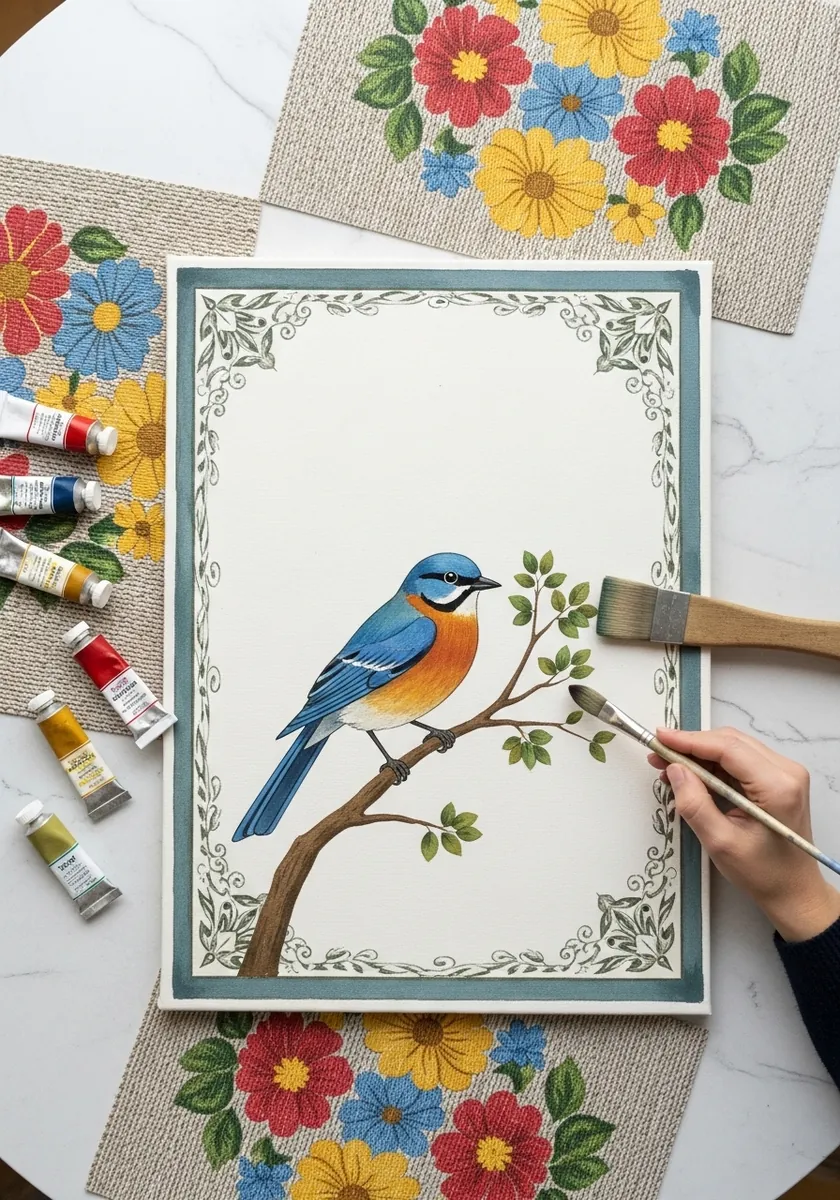
A bluebird sits on a branch inside a formal painted border of vines and scrollwork. Rule the border first as a rectangle and build the ornament symmetrically, then keep the bird small and centered inside it.
43. Minimal Line Bird in Two Strokes
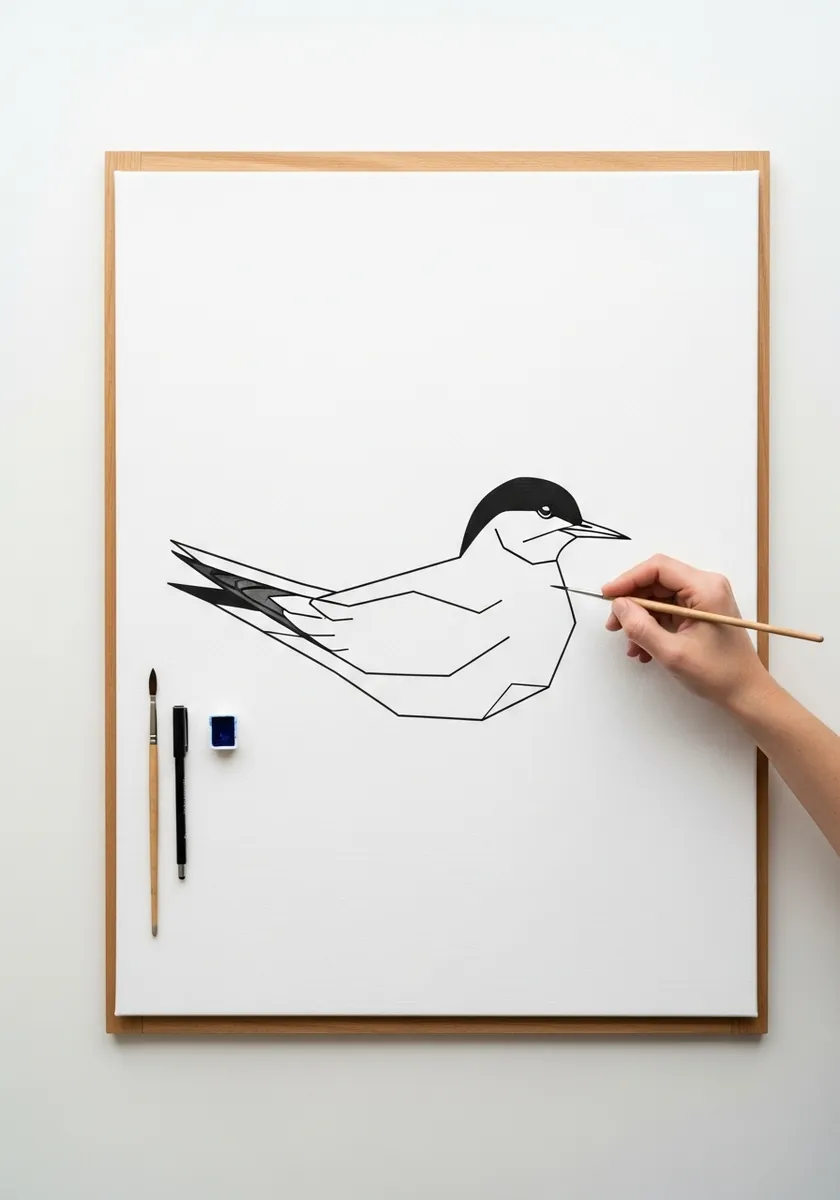
A bird reduced to a handful of straight lines with only the head filled solid. Simplify ruthlessly: one line for the back, two for the wing, and stop. Any extra mark weakens it.
44. Botanical Woodpecker Study
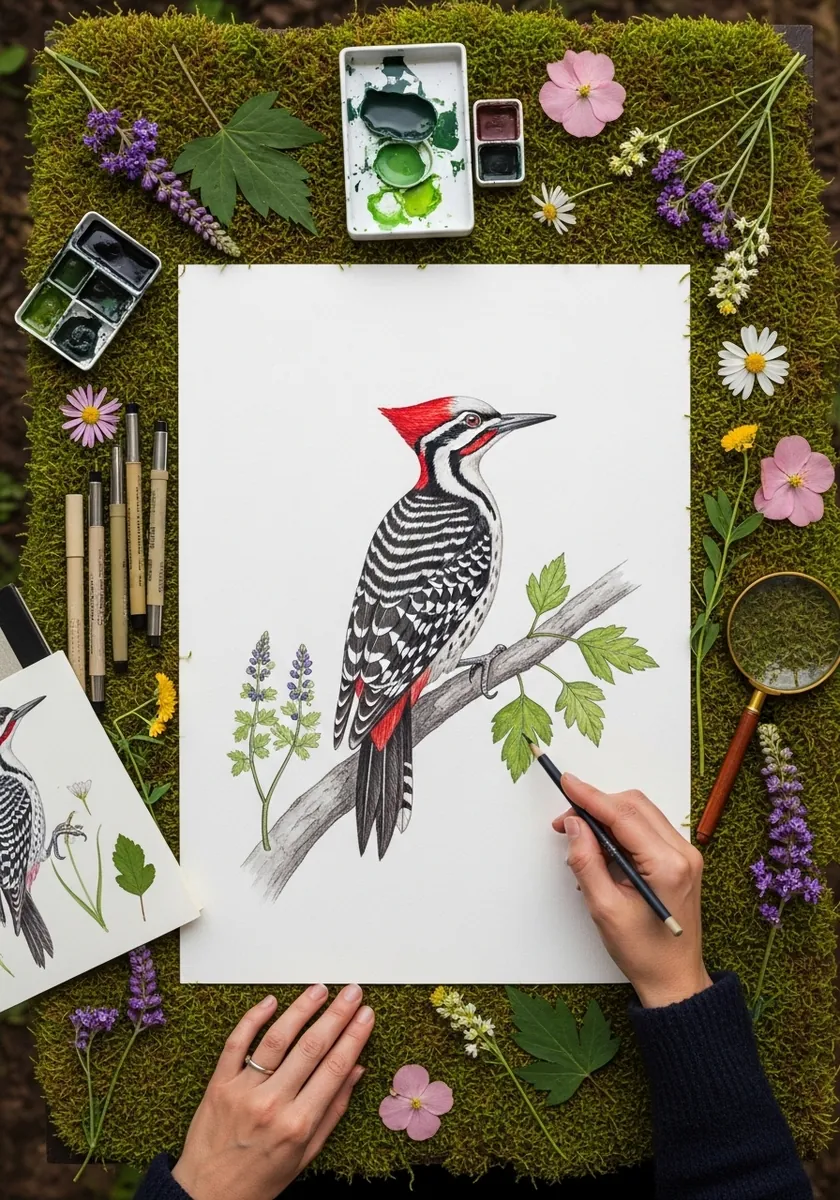
A woodpecker with a red crest and finely barred black and white plumage, on a leafy branch. Paint the bars last with a fine brush over a dry base, keeping them following the curve of the body rather than running straight.
45. Pixel Art Parrot on Grid Paper
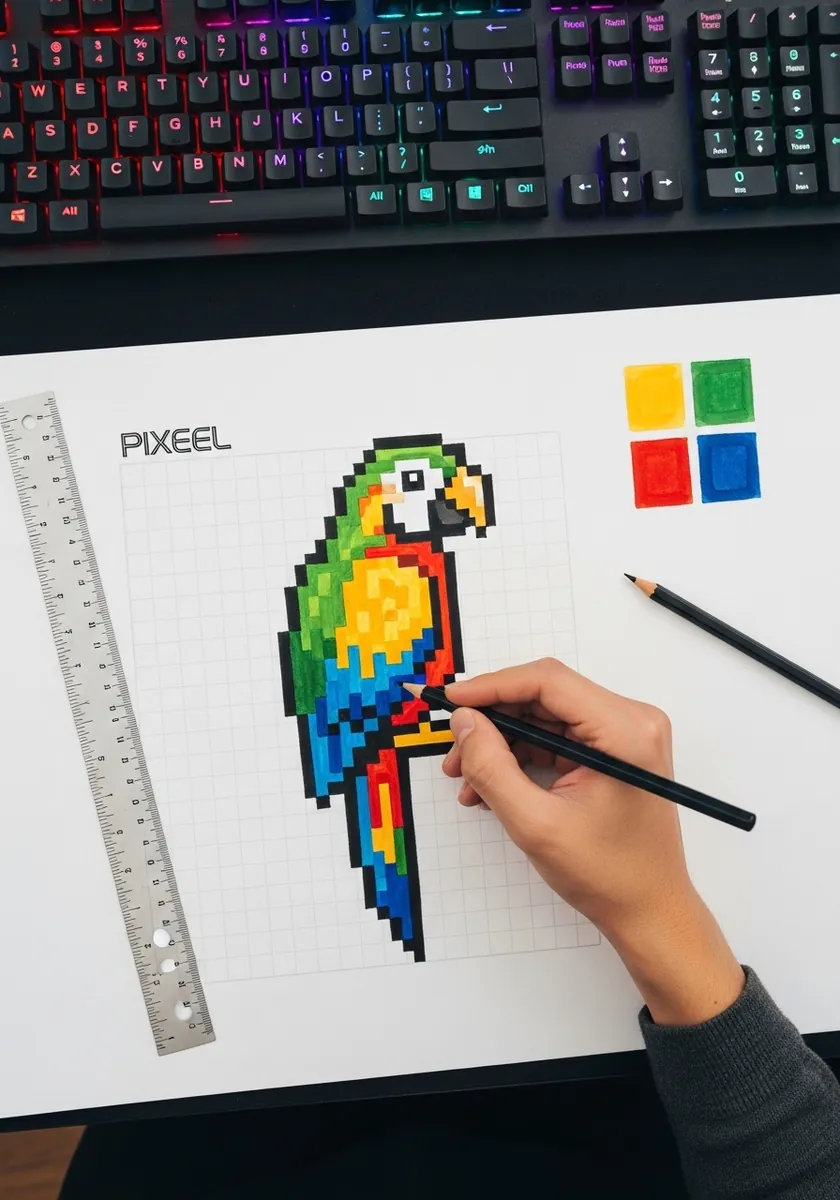
A parrot built square by square in red, green, yellow and blue on graph paper. Rule the grid, plan the outline in whole squares, and never blend within a square; the hard steps are the whole point.
46. Sumi-e Crane in Still Water
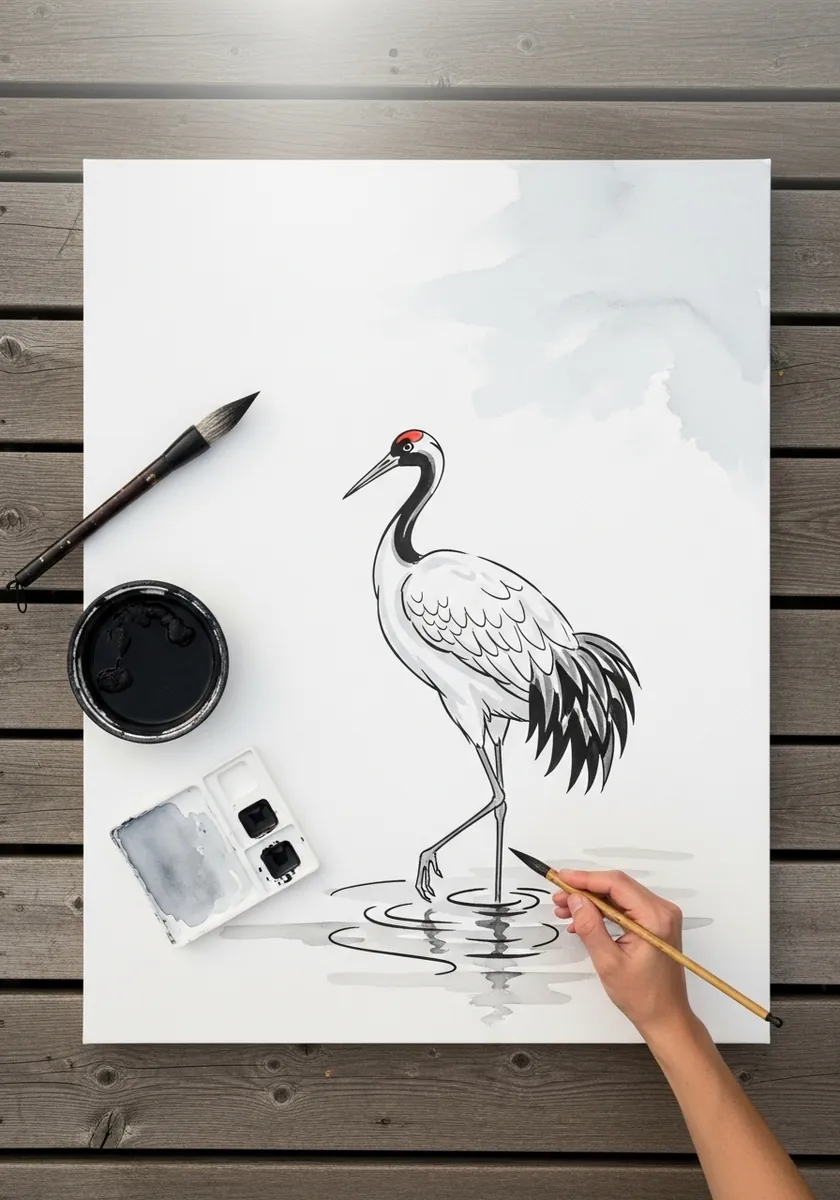
A crane stands in shallow water, painted with a loaded brush in black ink with a pale gray wash behind. Load the brush once for the body and let the tail feathers break dry; that variation cannot be recreated by going over it.
47. Mid Century Robin in Flat Shapes
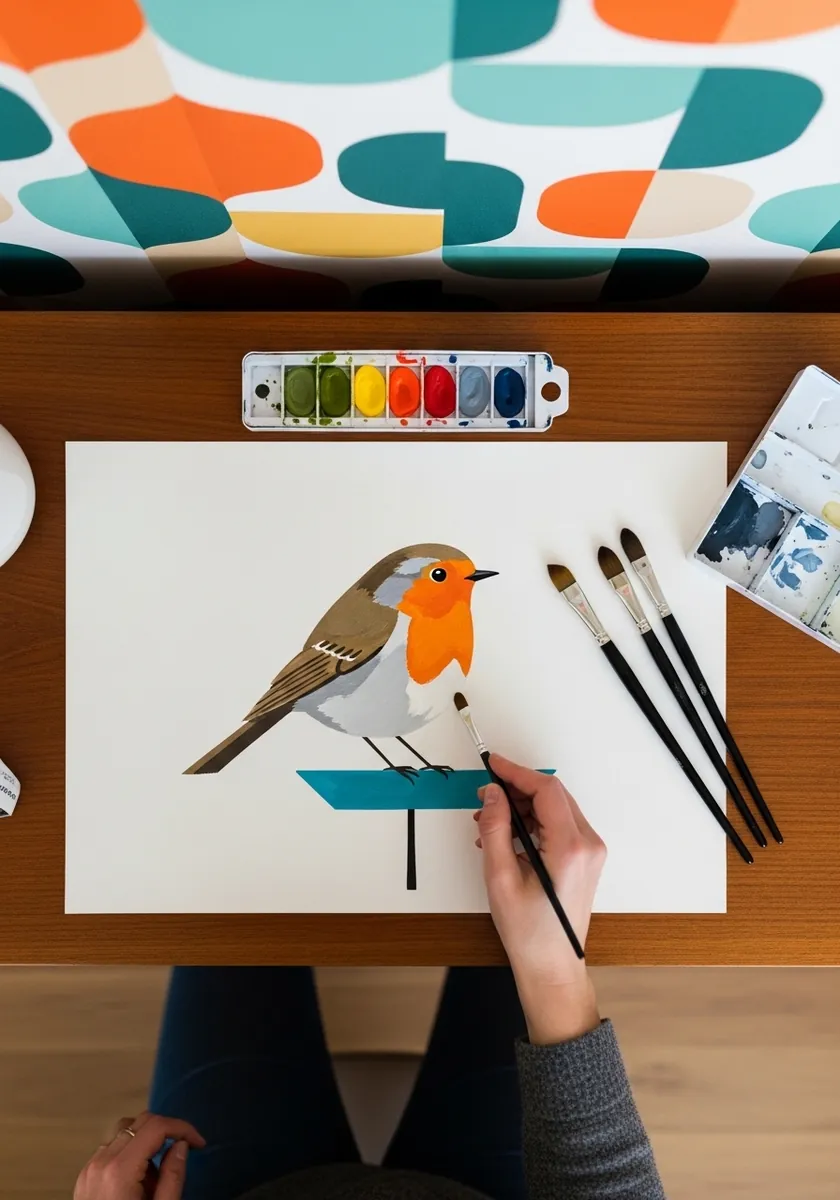
A robin built from flat overlapping shapes in brown, orange and teal, perched on a simple teal bar. Limit the palette to four colors, use no outline at all, and let overlapping shapes describe the form.
48. Rainbow Peacock in Swirling Feathers
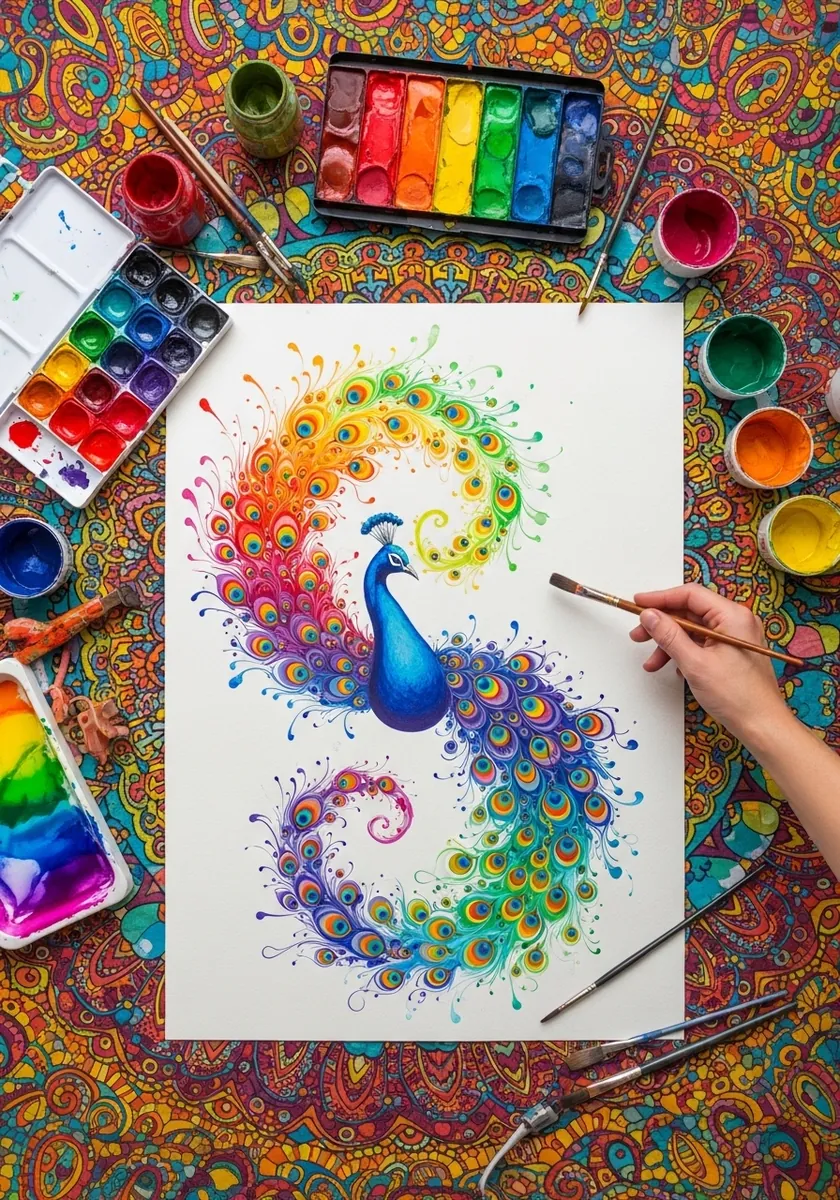
A peacock whose tail unfurls into two rainbow spirals filling the page. Draw the spiral paths first in pencil, then work the color out along them so the sequence stays even, and add the eye feathers last.
49. Folk Peacock in Black Line
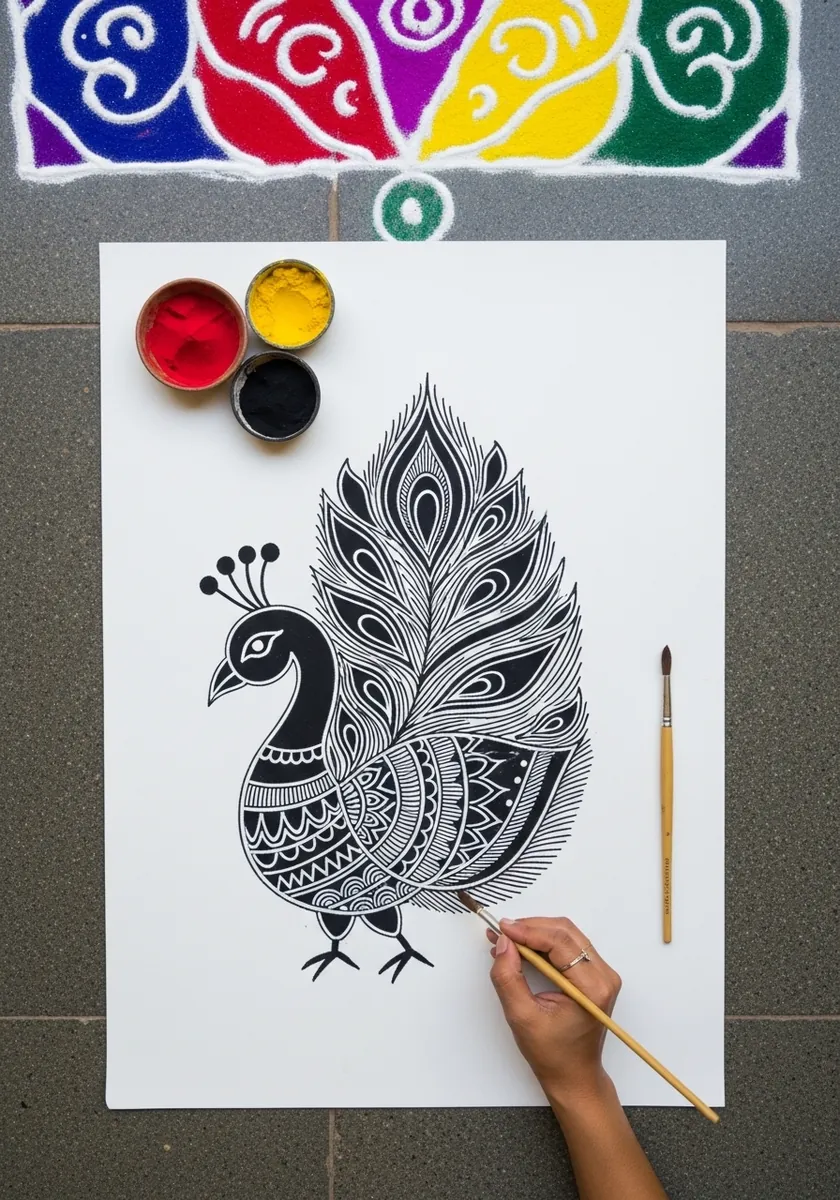
A peacock drawn as a flat black silhouette filled with fine white pattern, in the manner of traditional folk painting. Ink the outline solid, then cut the pattern in as negative shapes rather than drawing lines on top.
50. Mixed Media Peacock on Collage
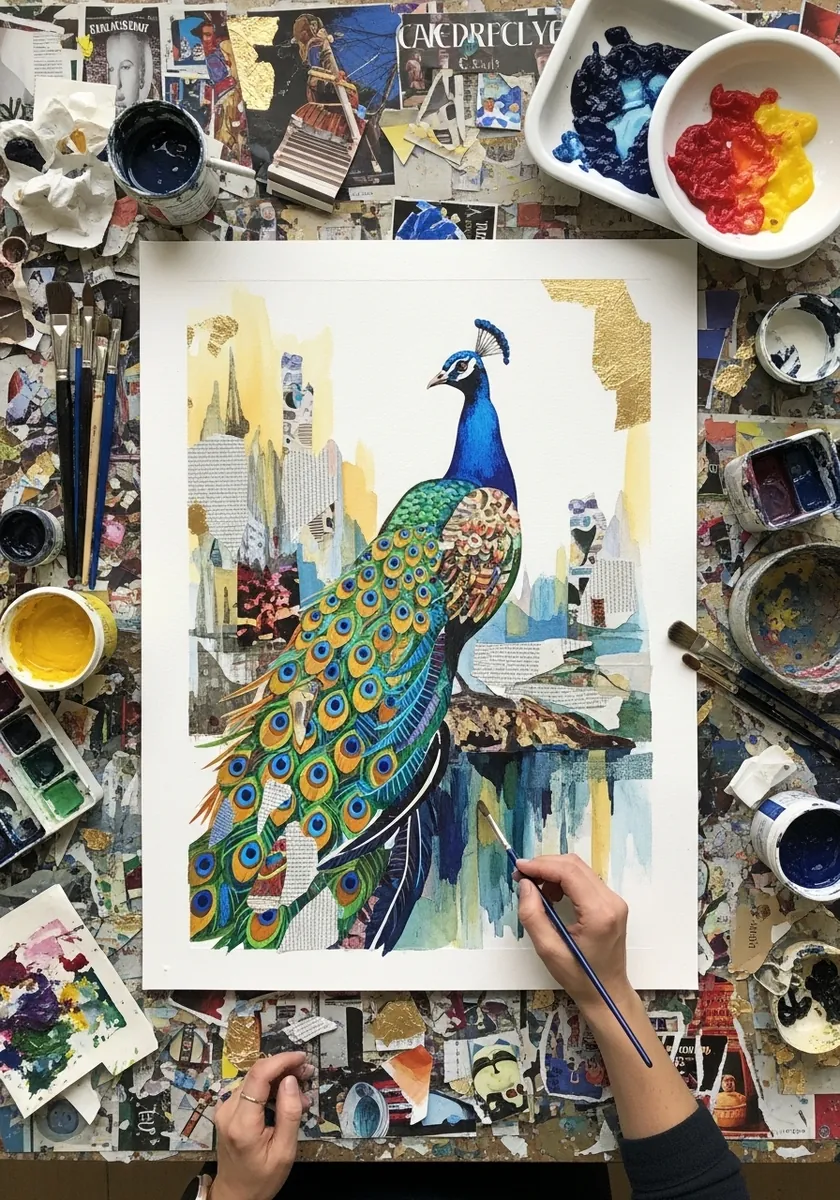
A peacock painted over a bed of torn magazine pages with applied gold leaf. Glue and seal the collage first, then paint the bird over the top, and add the leaf last to two or three areas only.
51. Swallow Among Wildflowers
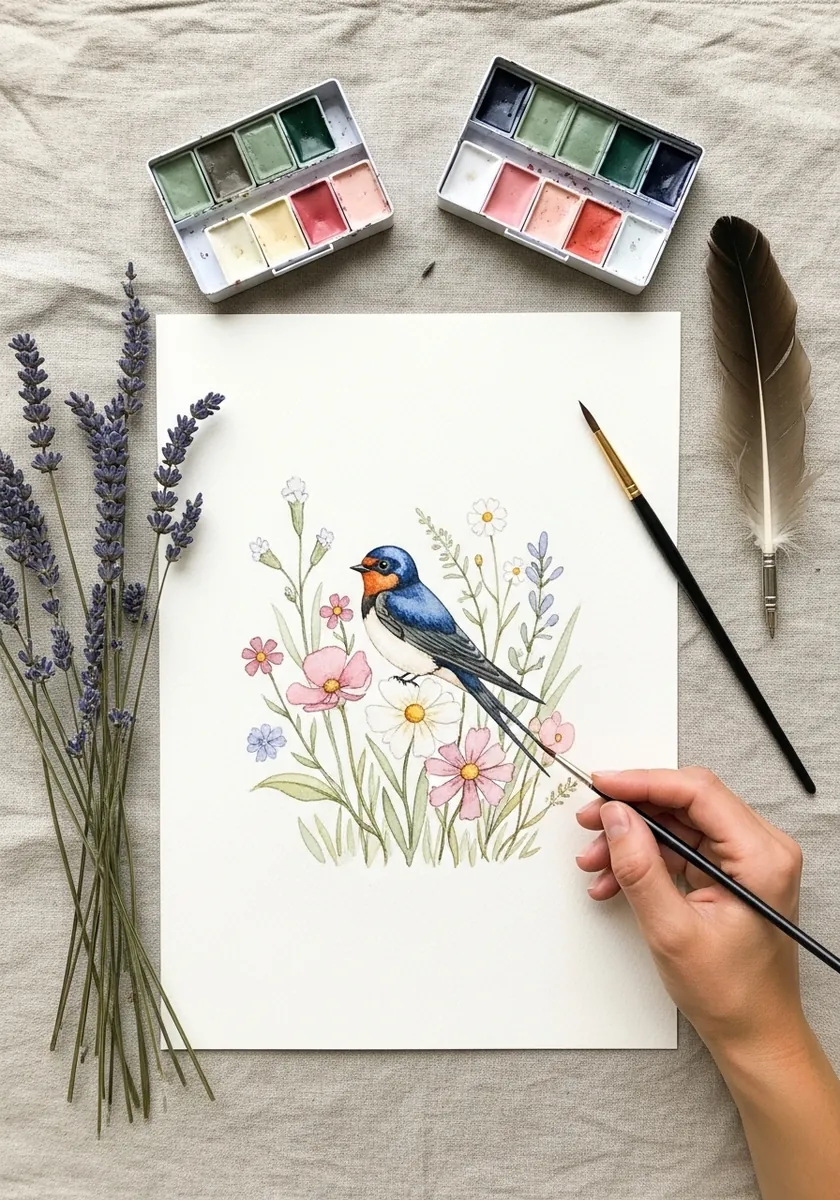
A swallow with a blue back and orange throat sits among soft wildflowers and grasses. Paint the flowers loosely and wet, then let everything dry before adding the bird, which should be the only tightly painted element.
52. Palette Knife Eagle in Bold Color
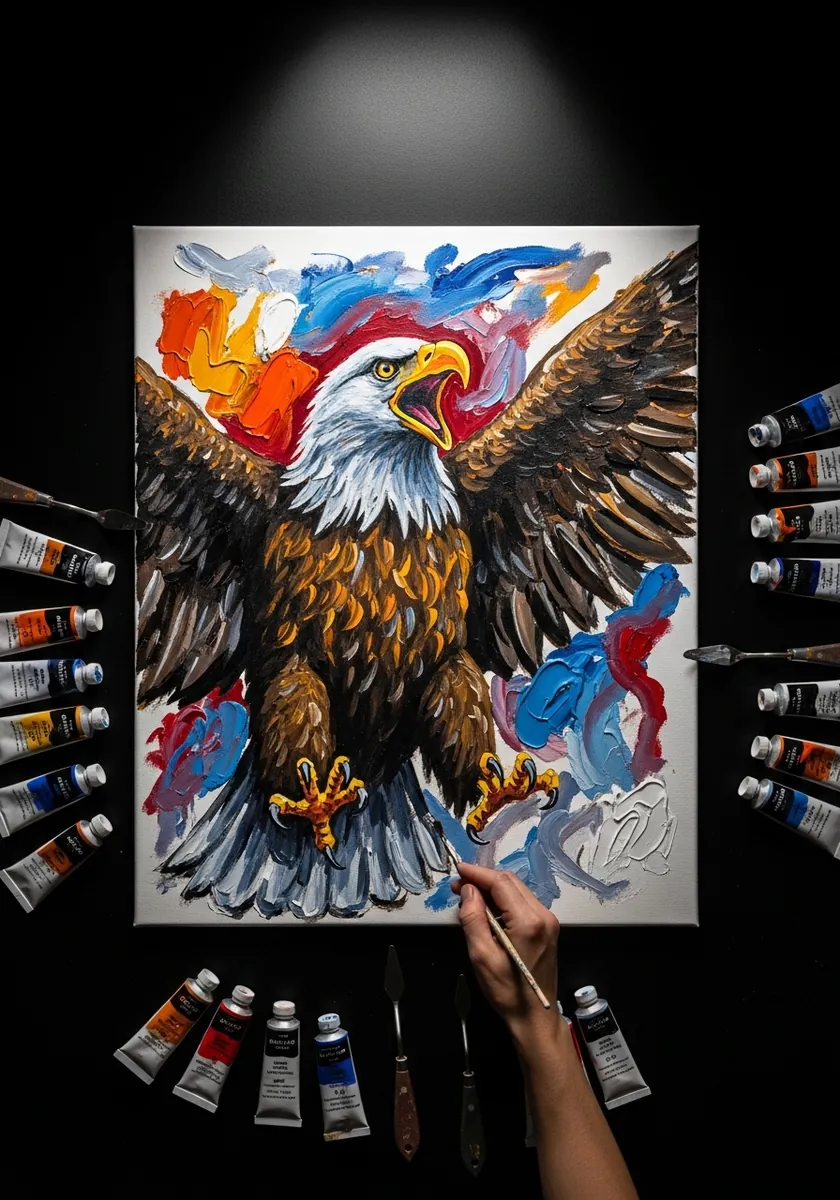
An eagle painted with a palette knife in thick unblended strokes, with slabs of red and blue thrown in behind. Place each stroke once and leave it; the ridges catching the light are the whole appeal.
53. Flat Owl in a Winter Hat
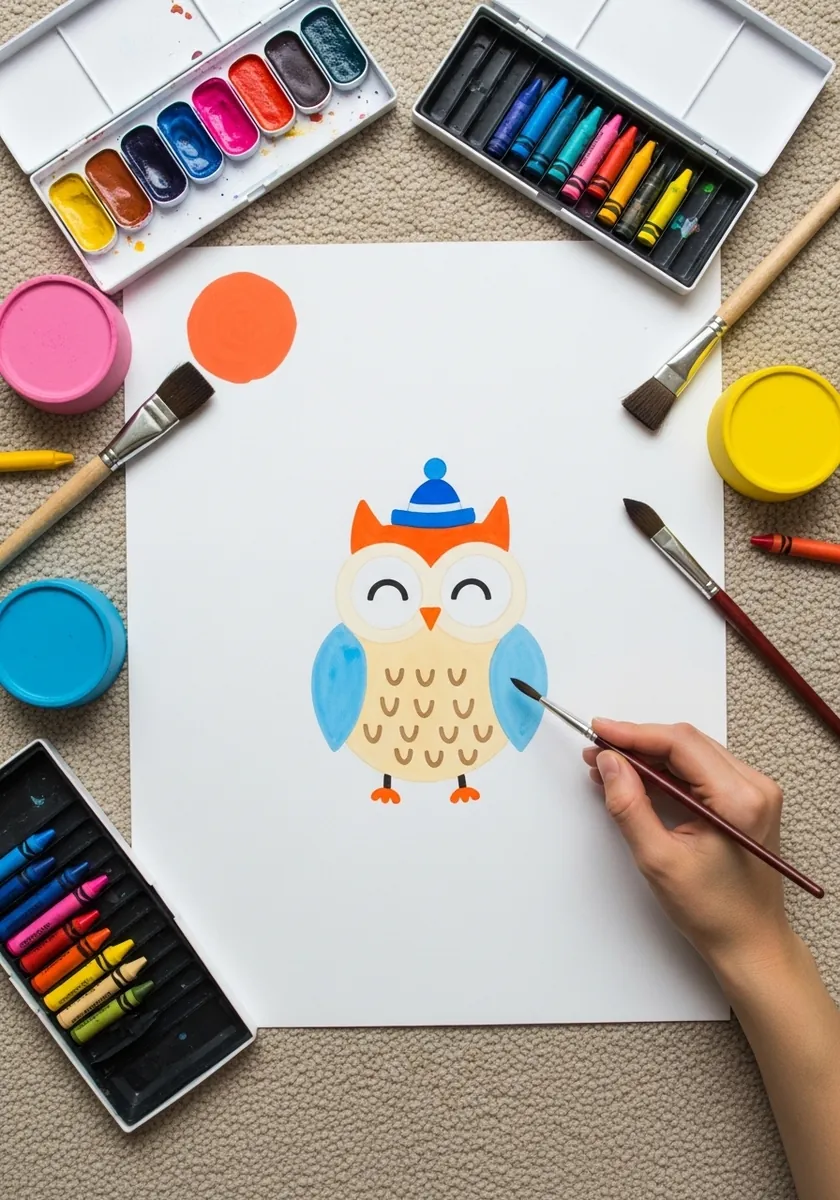
A cheerful owl in flat cream, blue and orange with a small knitted hat, built entirely from simple shapes. Keep every shape geometric, use four colors at most, and let the hat be the only detail.
54. Realistic Robin with Cast Shadow
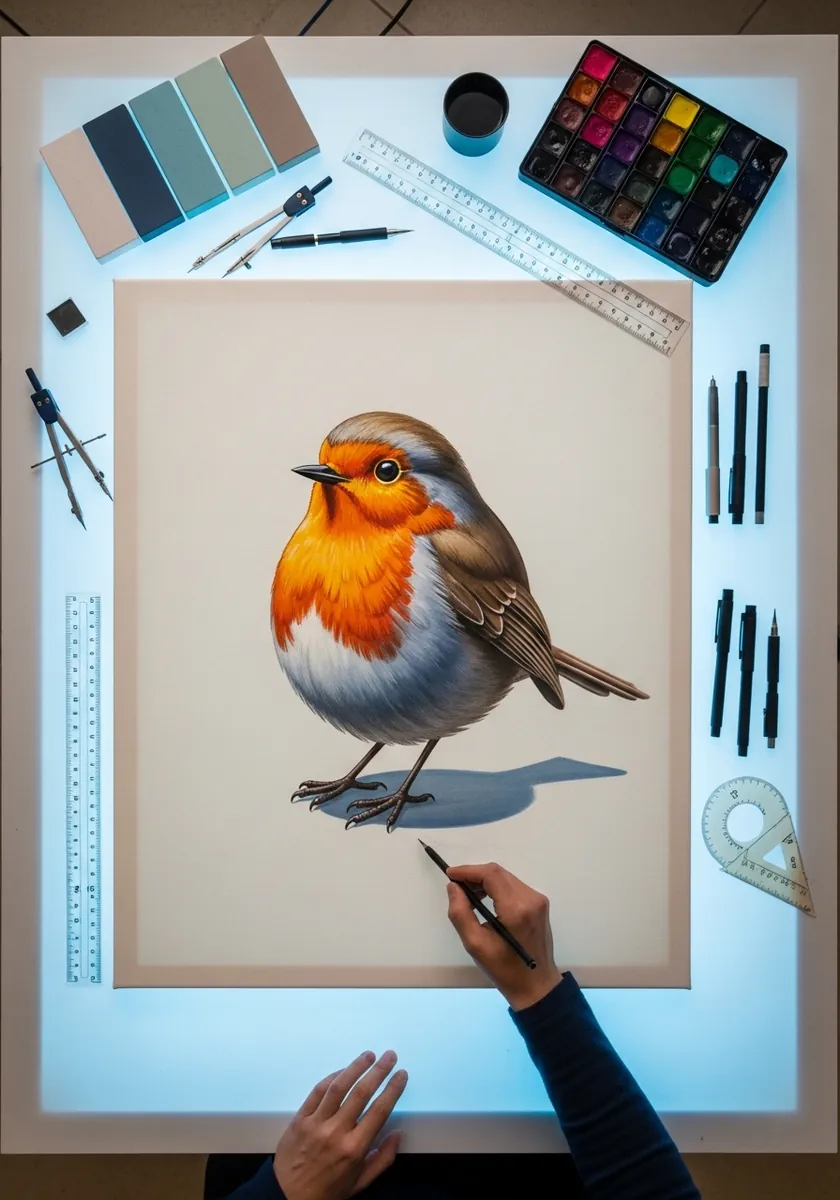
A robin rendered in careful colored pencil with a soft shadow behind it that lifts it off the page. Build the breast color in several light layers rather than one heavy one, and keep the shadow neutral and soft-edged.
55. Kingfisher with Construction Lines Showing
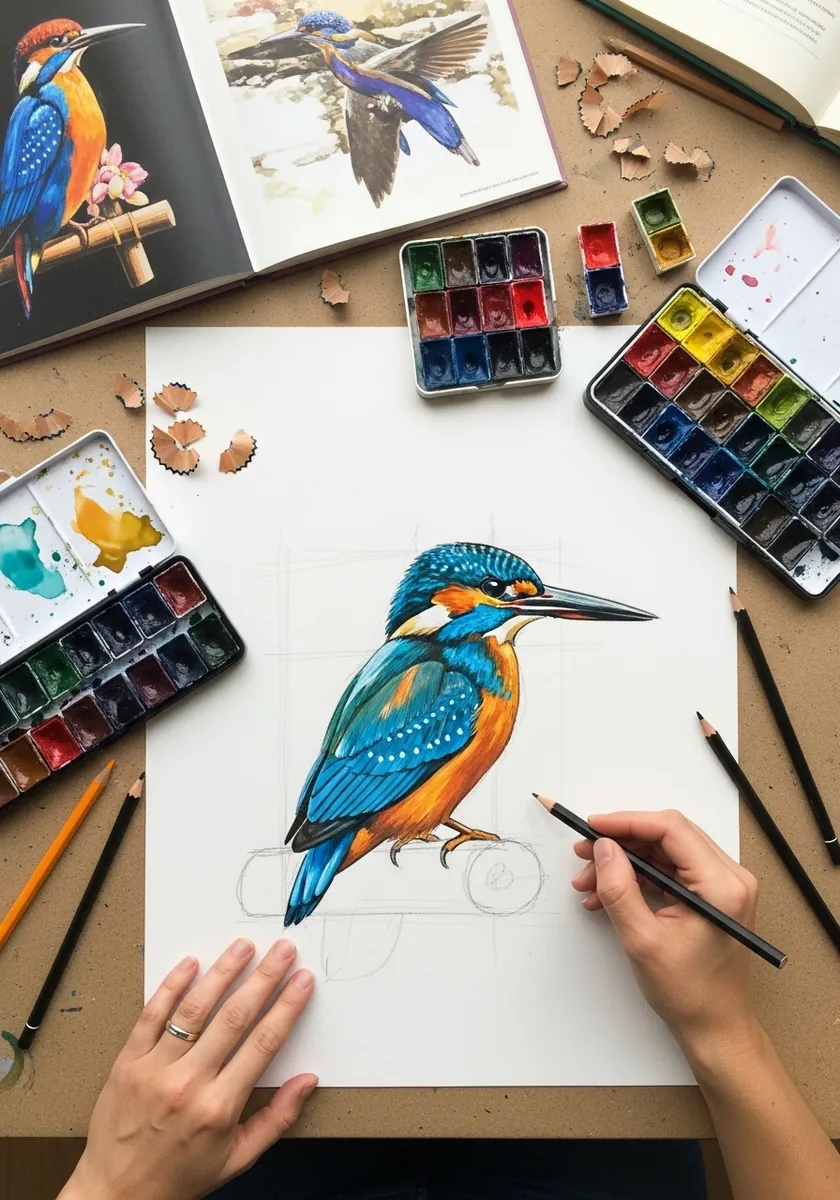
A kingfisher rendered in colored pencil with the original construction circles and guidelines left showing beneath. Keep the guides light, finish the bird fully, and resist erasing them; the working method is part of the image.
56. Neon Gradient Macaw
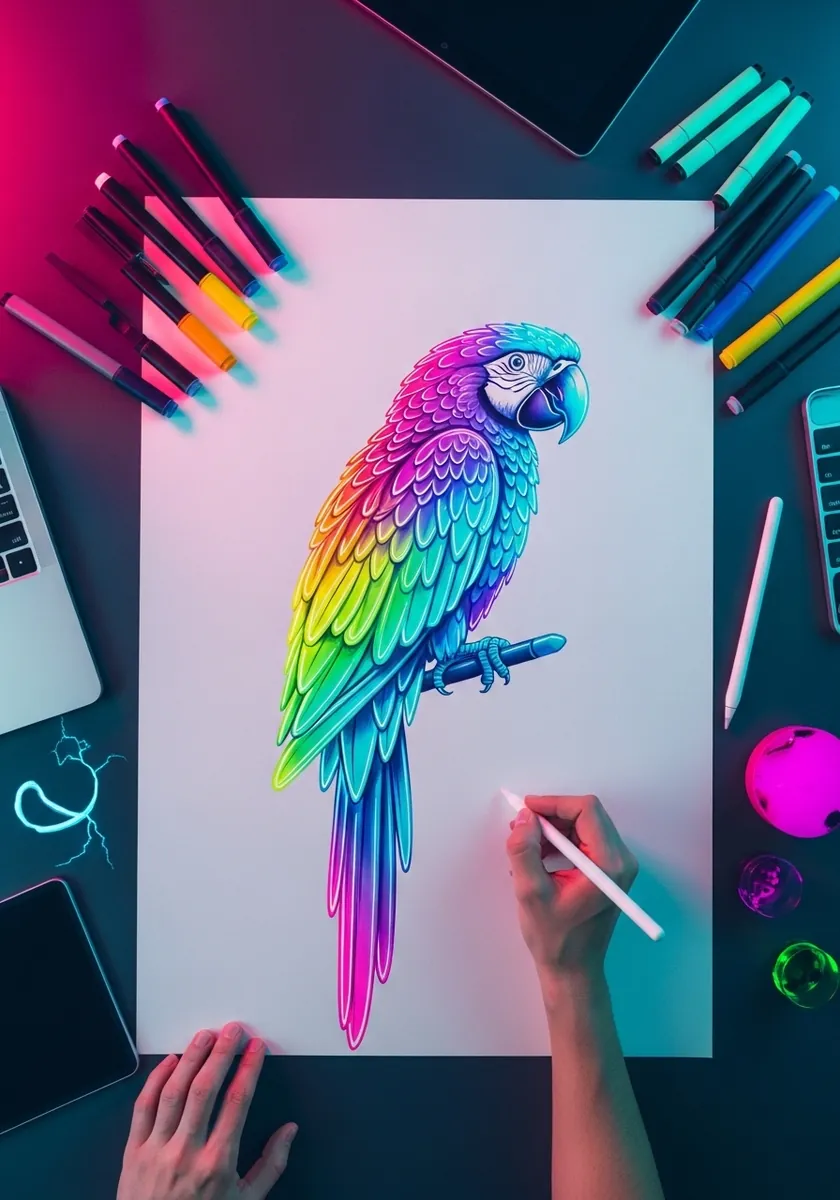
A macaw whose plumage runs through a full neon gradient from magenta to cyan. Work light to dark within each color band, blend where the bands meet while both are still workable, and keep the background plain white.
57. Geometric Parrot in Graphite
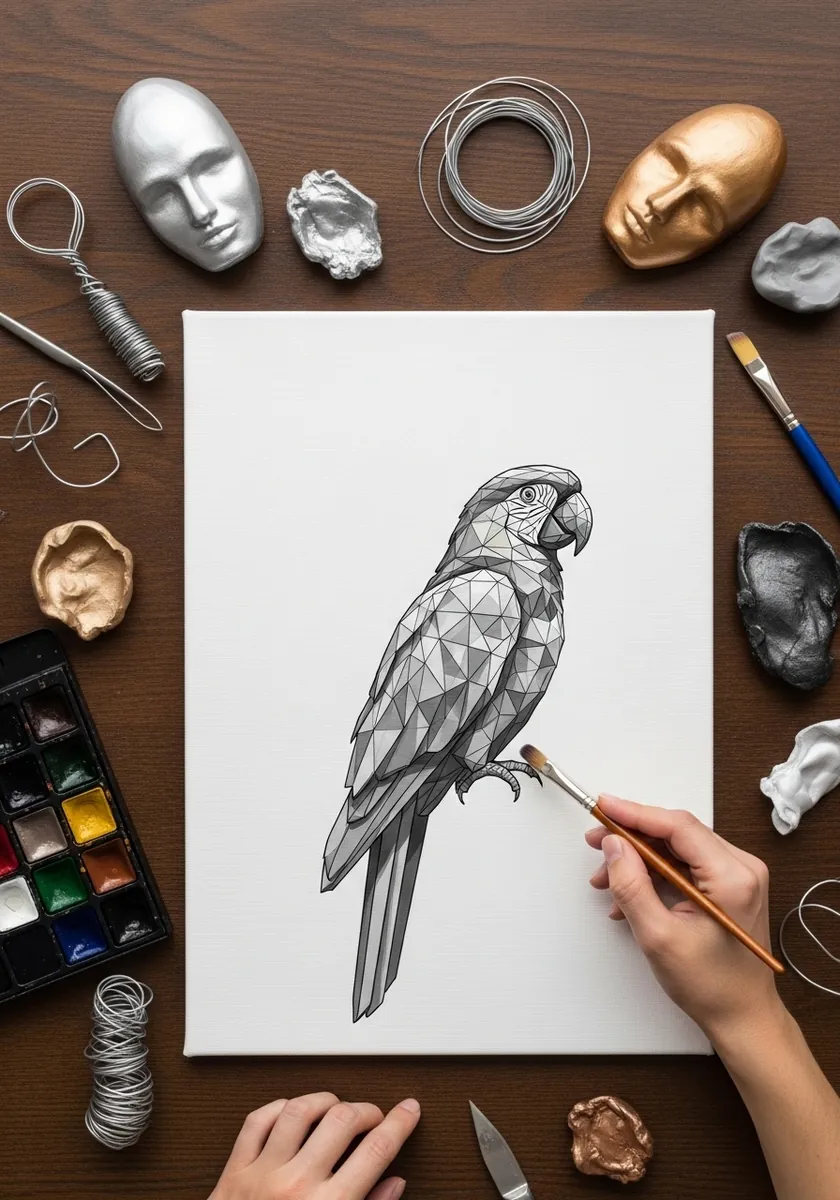
A parrot drawn entirely as small graphite facets with no color at all. Draw the bird in outline first, lay the facet mesh over it, and shade each facet a slightly different value so the form emerges from tone alone.
58. Surreal Swan in a Dreamscape
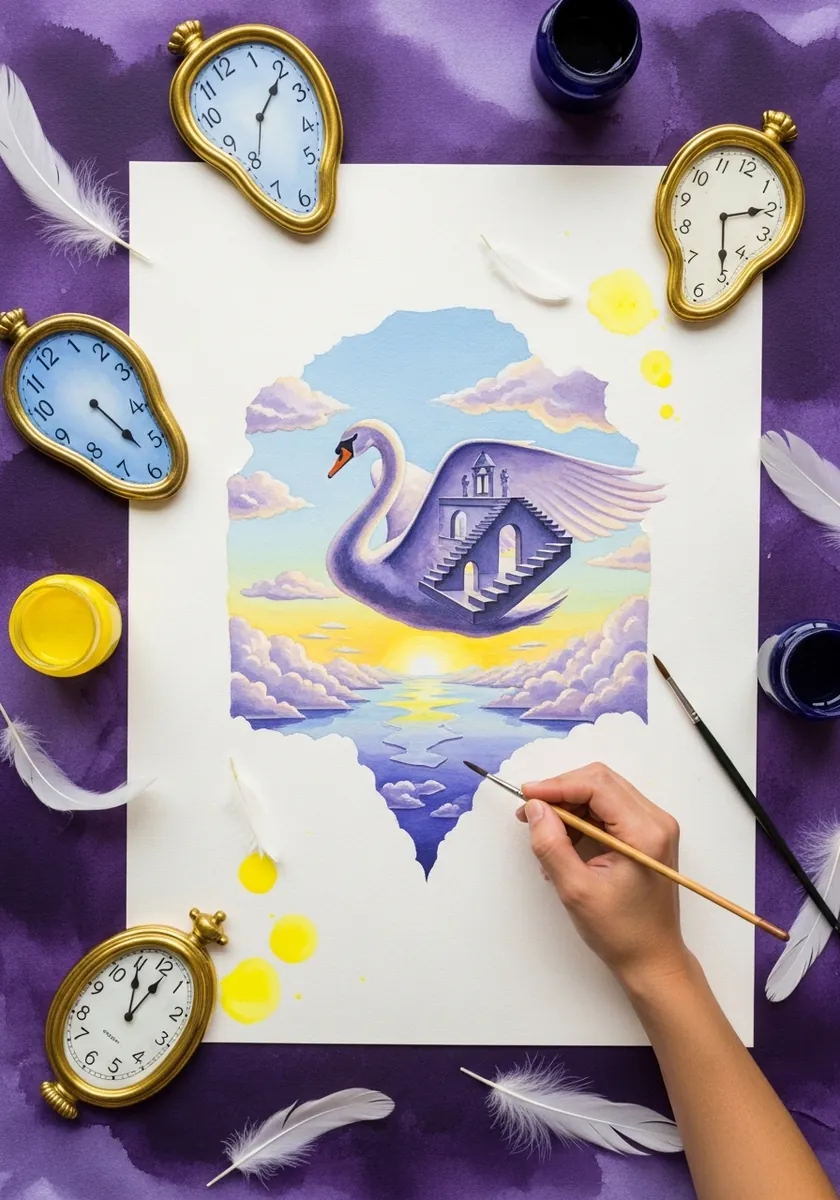
A swan glides on a pale violet lake with a small building floating on its back and clouds drifting past. Keep the palette to soft lilacs and yellows, and render every element with the same softness so the strangeness reads as dreamlike.
59. Manga Phoenix in Fine Line
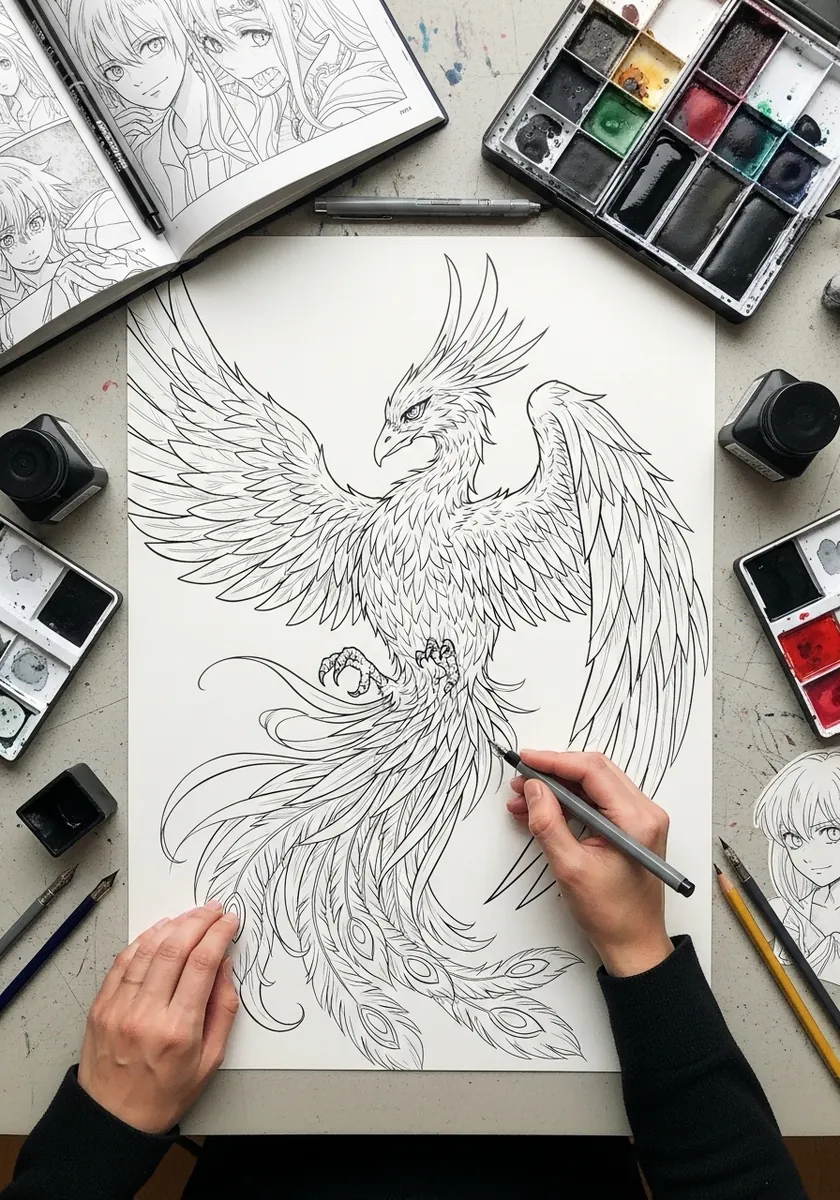
A phoenix with long trailing tail feathers drawn in clean manga linework with no shading. Vary the line weight so the near feathers are heavier, and let the tail sweep off the bottom of the page.
60. Tribal Eagle in Black and Orange
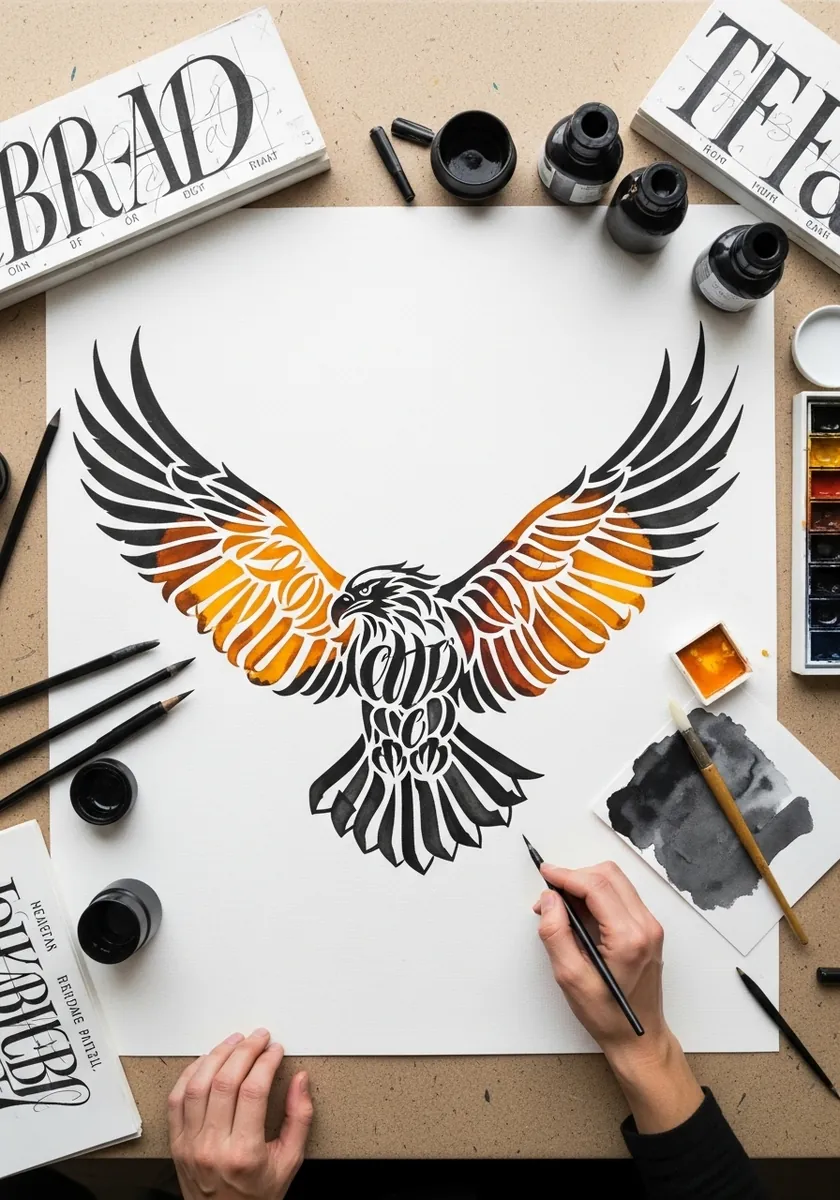
An eagle drawn as bold tribal shapes with a black-to-orange gradient through the wings. Design the shapes to be symmetrical, keep every edge sharp, and use no internal detail at all.
61. Splatter Painting Bird in Flight
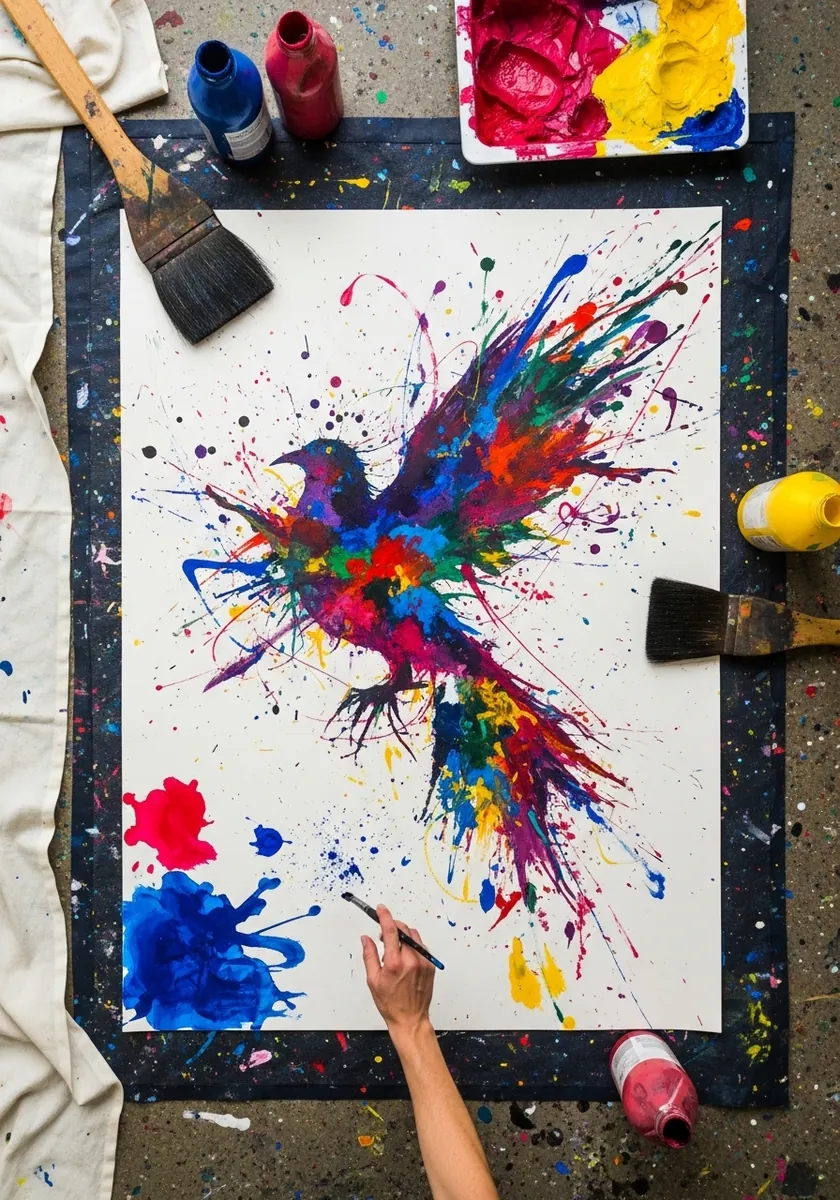
A bird suggested entirely by thrown paint, with primary colors radiating outward from a dark core. Lay the body in one loaded stroke, then flick the splatter from a distance and stop after two or three passes.
62. Block Printed Crane in Folk Pattern
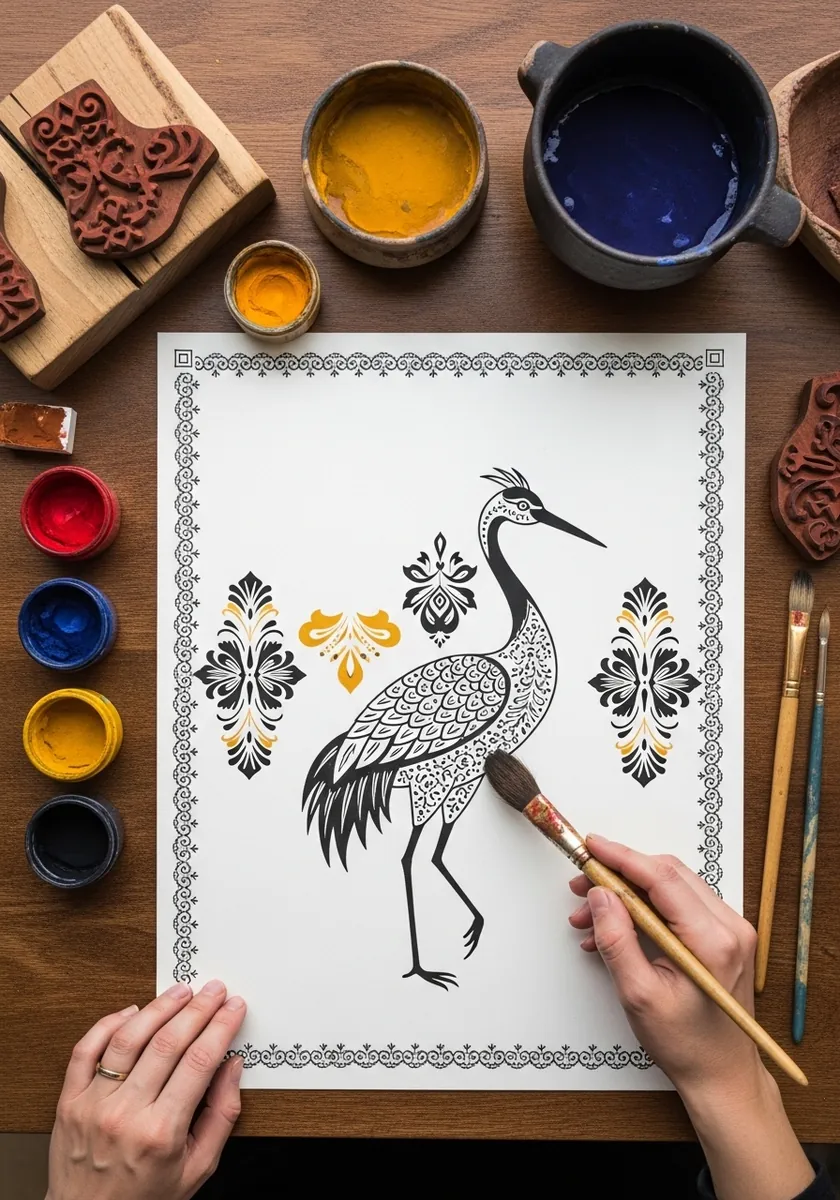
A crane drawn in flat black pattern inside a repeating folk border, in the manner of a hand block print. Build the border by repeating one motif around the edge, and keep the crane in the same flat black as the frame.
63. Heron on a Blue Geometric Ground
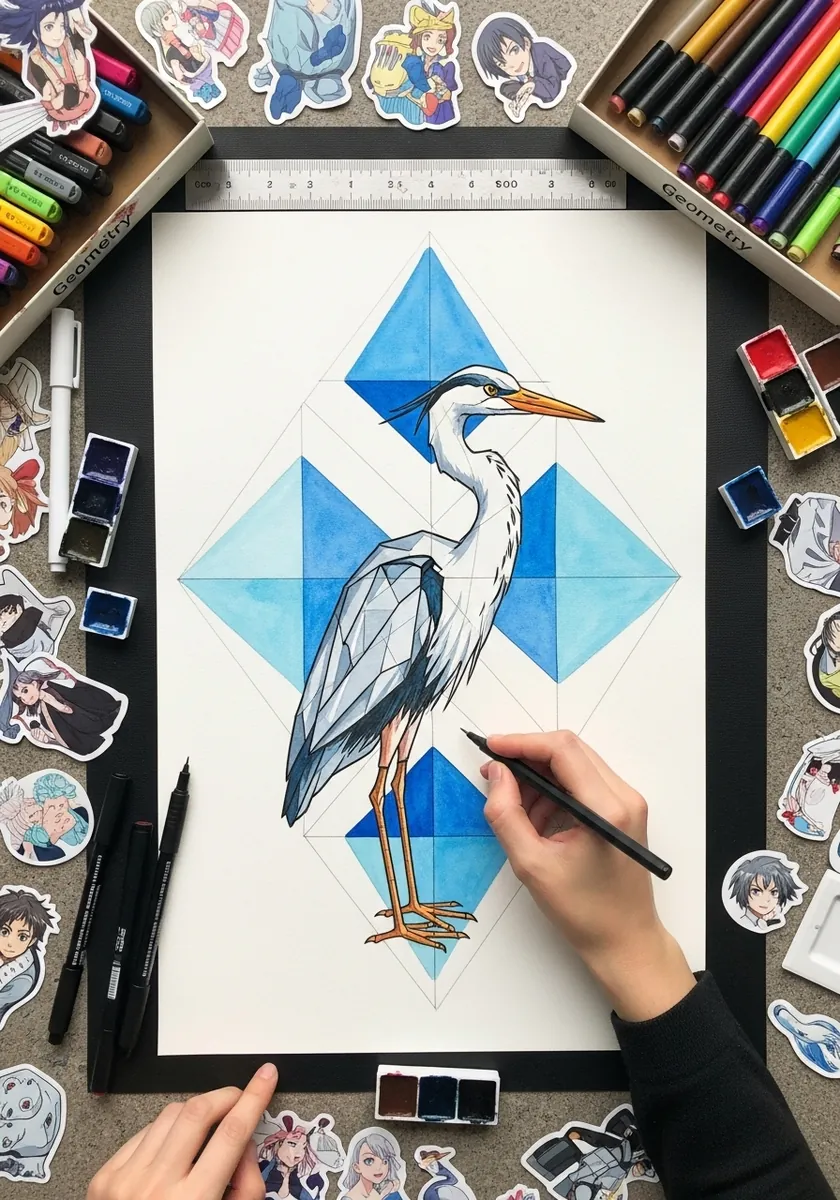
A gray heron stands against overlapping blue diamonds in graded tones. Paint the geometric background first and let it dry completely, then draw the heron over it so the two layers stay clearly separate.
64. Detailed Feather Study of a Sparrow
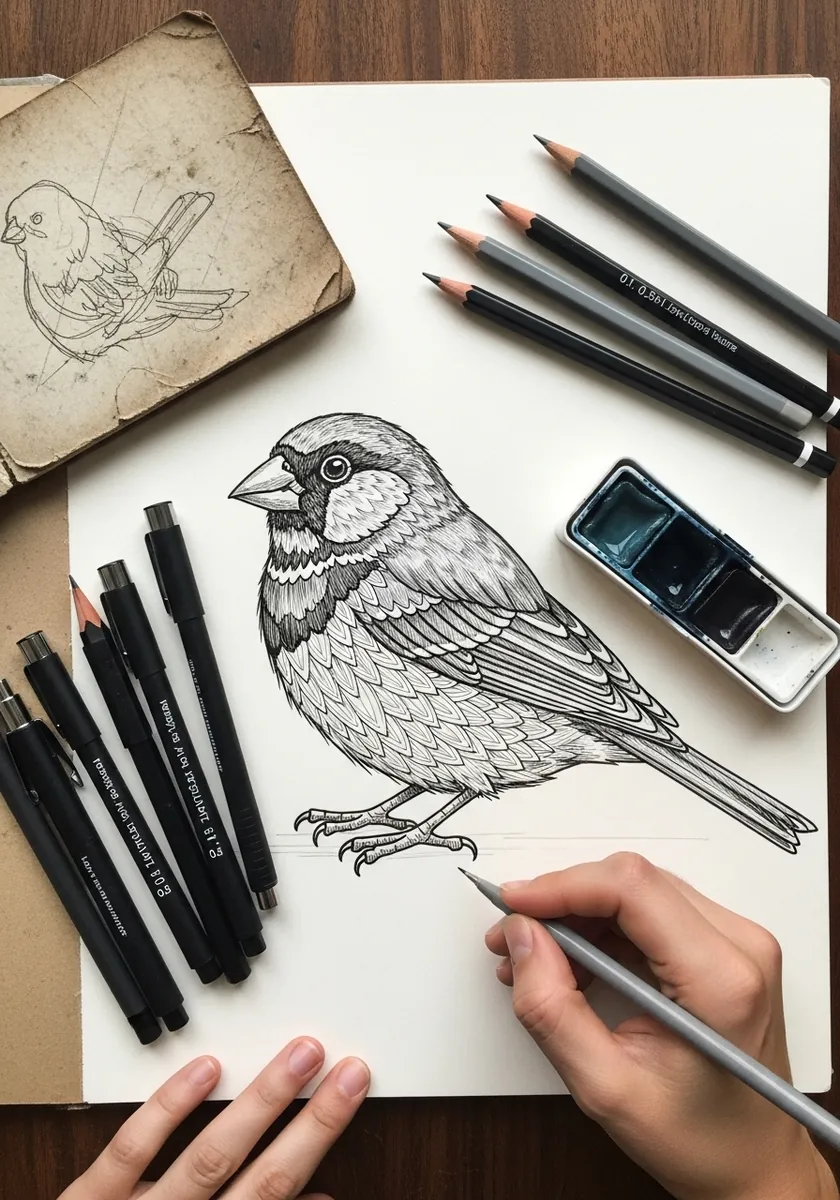
A sparrow drawn feather by feather in fine graphite, with the scalloped pattern of the wing worked out precisely. Draw the feather rows as overlapping arcs first, then detail within them, and keep the head simpler than the body so the eye settles there.