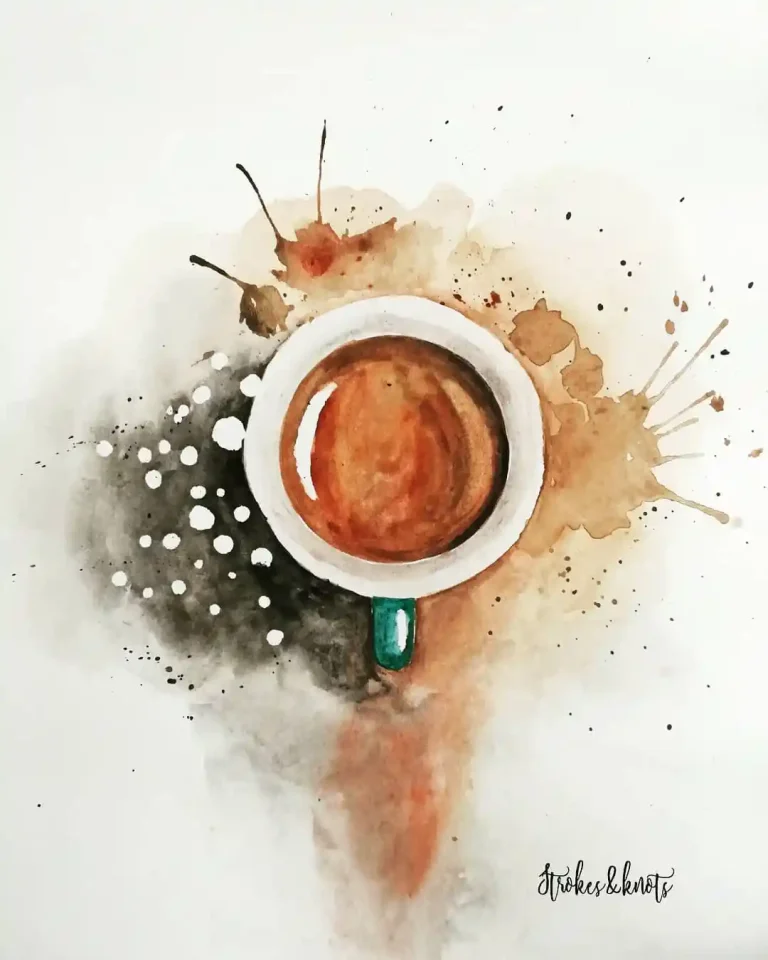
Short answer: Yes. Beginners can paint beautiful watercolor fish with just three washes, one round brush, and 140 lb cold-pressed paper. Start with a simple goldfish or a minimal betta, use wet-on-wet paint for soft fins, and let each layer dry before adding details. Below you will find 19 easy watercolor fish drawing ideas, from flowing bettas and graceful koi to a playful pufferfish, plus a step-by-step goldfish guide and answers to common beginner questions.
TL;DR: Pick one fish, not nineteen. Paint a light pencil outline, lay a pale wash, add darker layers only where the body curves away from the light, and save the eye and white highlights for last. Cold-pressed paper forgives wobbly washes; smooth paper suits crisp fins. If a wash turns muddy, let it dry completely instead of scrubbing it.
In this guide
- 1. Which Watercolor Fish Should You Paint First?
- How to Paint a Realistic Goldfish in Watercolor
- What Are Some Creative Watercolor Fish Ideas?
- 19 Easy Watercolor Fish Drawing Ideas
- 2. Beginner Mistakes That Muddy Your Fish (And How to Fix Them)
- Koi and Betta Designs Sell Well as Digital Files
- 3. Frequently Asked Questions About Watercolor Fish Drawing
Dive into the tranquil world of watercolor fish drawing, where every brushstroke brings aquatic wonders to life on your paper. This art form is a beautiful way to capture the serene and vibrant essence of underwater creatures, blending color and water to create stunning effects.
Whether you’re a seasoned artist or just starting, these ideas will spark your imagination and refine your skills. Explore how simple techniques can transform into breathtaking portraits of marine life, turning a blank page into a window to the ocean’s depths. Let your creativity flow and discover the endless possibilities that watercolor offers.
1. Which Watercolor Fish Should You Paint First?
If you are new to watercolor, the fish you choose matters more than the paints you own. A simple body shape with one flowing fin is far easier than a detailed tropical fish with dozens of scales. Use this picker to choose a first painting you can actually finish in one sitting.
| Start here | Why it is beginner-friendly | Paper that helps | Time |
|---|---|---|---|
| Simple goldfish | One round body, one tail, forgiving orange washes | 140 lb cold-pressed | 30 minutes |
| Minimal betta | A few expressive strokes carry the whole painting | Fine art paper | 30 minutes |
| Simple fish duo | Two shapes, lots of white space, no fiddly detail | Watercolor card | 20 minutes |
| Graceful koi | Bold shapes and white space do the work for you | Cold-pressed | 45 minutes |
| Detailed tropical fish | Save this for later: scales and ink outlines need a dry, steady hand | Rough paper | 60 minutes or more |
A simple first-session plan
Sketch the fish lightly in pencil, keeping the outline to one smooth body shape and one tail. Wet only the body area, drop in a pale yellow or orange wash, and leave the eye white. While that layer dries, mix your darker orange. Only when the paper is dry to the touch should you add the fin lines and the dark pupil. Working in this order is what keeps a beginner fish looking clean instead of muddy.
For a step-by-step look at how wet paint behaves on wet paper, Bromleys Art Supplies’ wet-on-wet watercolour masterclass shows the wash, the bleed, and the settling of pigment in plain detail. The same wet-on-wet idea is what gives the bettas and koi in this guide their soft, flowing fins.
Once fish feel comfortable, the same wash skills carry straight into other sea subjects. Try watercolor jellyfish drawing ideas for soft, glowing bells, or build your general skills with the complete watercolor painting guide for beginners and 30 easy watercolor painting ideas for beginners.
How to Paint a Realistic Goldfish in Watercolor
To paint a realistic goldfish, start with a light sketch and apply a pale yellow or orange wash, leaving the eye and highlights white. This initial layer establishes the base color and form of the fish.
- Layering Colors: Build depth by adding layers of orange and red washes, focusing on the body’s curves and where shadows would naturally fall. Use a wet-on-wet technique for soft, blended transitions.
- Defining Scales: Suggest scales with a fine-tipped brush using a slightly darker orange. You don’t need to draw every scale; a few well-placed curved lines will create a realistic texture.
- Adding Fins and Tail: Paint the fins and tail with a very light, almost transparent orange wash. Add delicate lines with a darker shade to suggest the fin rays while they are still damp.
- Final Details: Use a touch of dark brown or black for the pupil and add bright white highlights to the eye and body with opaque gouache or a gel pen to make it pop.
What Are Some Creative Watercolor Fish Ideas?
For creative watercolor fish ideas, move beyond realism and explore imaginative concepts that combine patterns and abstract elements. This approach allows for more personal expression and unique artwork.
- Celestial Fish: Paint a fish with a galaxy pattern inside its body. Use deep blues, purples, and pinks with a wet-on-wet technique, then splatter white paint for stars.
- Zentangle Fish: Draw the outline of a fish and fill its sections with intricate black and white Zentangle patterns. Add pops of watercolor to select areas for a striking contrast.
- Botanical Fish: Incorporate floral and leaf motifs into the fish’s body. Imagine its scales as petals or its fins as flowing leaves, blending marine life with nature.
- Steampunk Fish: Create a mechanical fish using metallic watercolor paints. Add gears, bolts, and clockwork details with a fine liner pen to give it an industrial, fantasy look.
Ready to make a splash? Grab your brushes, pick an idea that inspires you, and let your artistic current guide you. Your next watercolor masterpiece is just a brushstroke away.
1. Flowing Betta Fish on Watercolor Paper
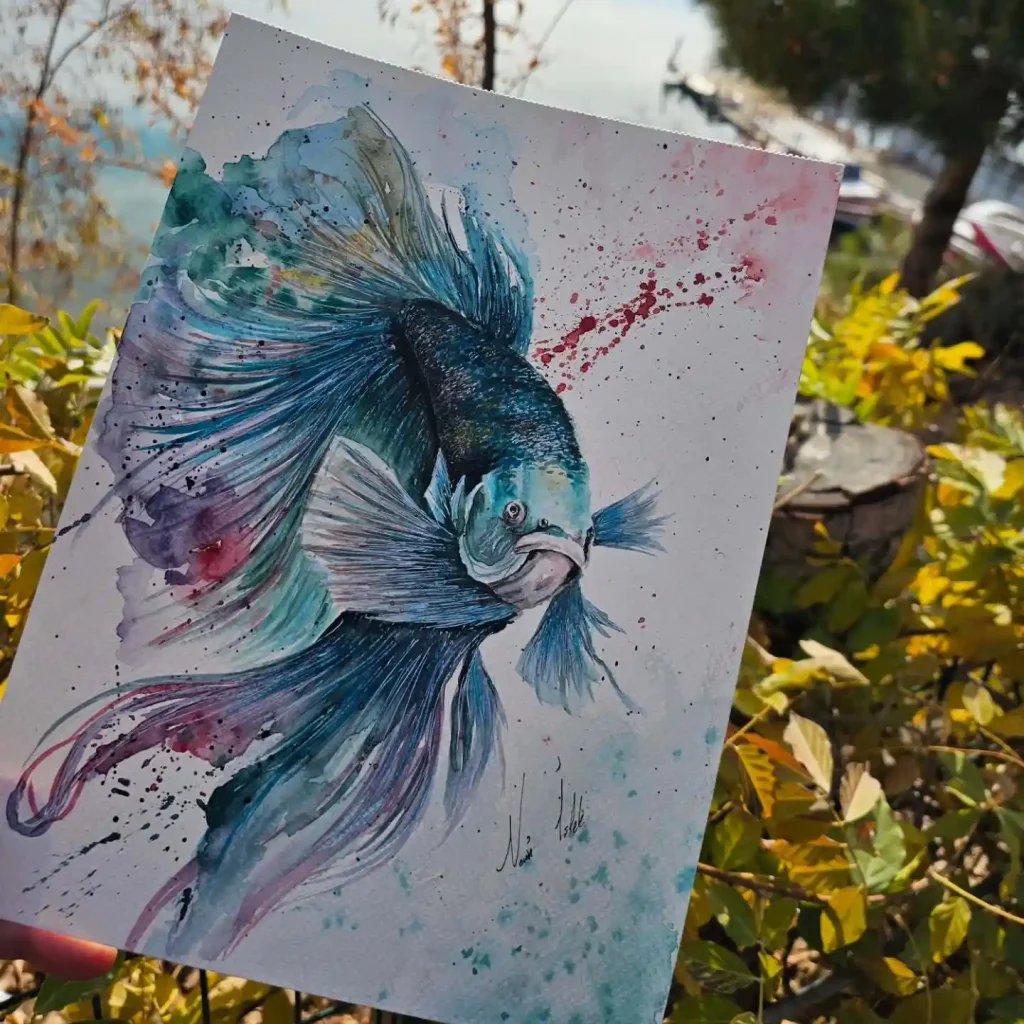
This painting captures the elegance of a Betta fish in motion. The artist’s use of cool blues and soft purples creates a sense of depth and grace. Splashes of red and turquoise mimic water’s unpredictability, symbolizing freedom and emotional strength. It’s a stunning fusion of movement, emotion, and watercolor artistry.
2. Realistic Sardine Studies on Sketchbook Paper
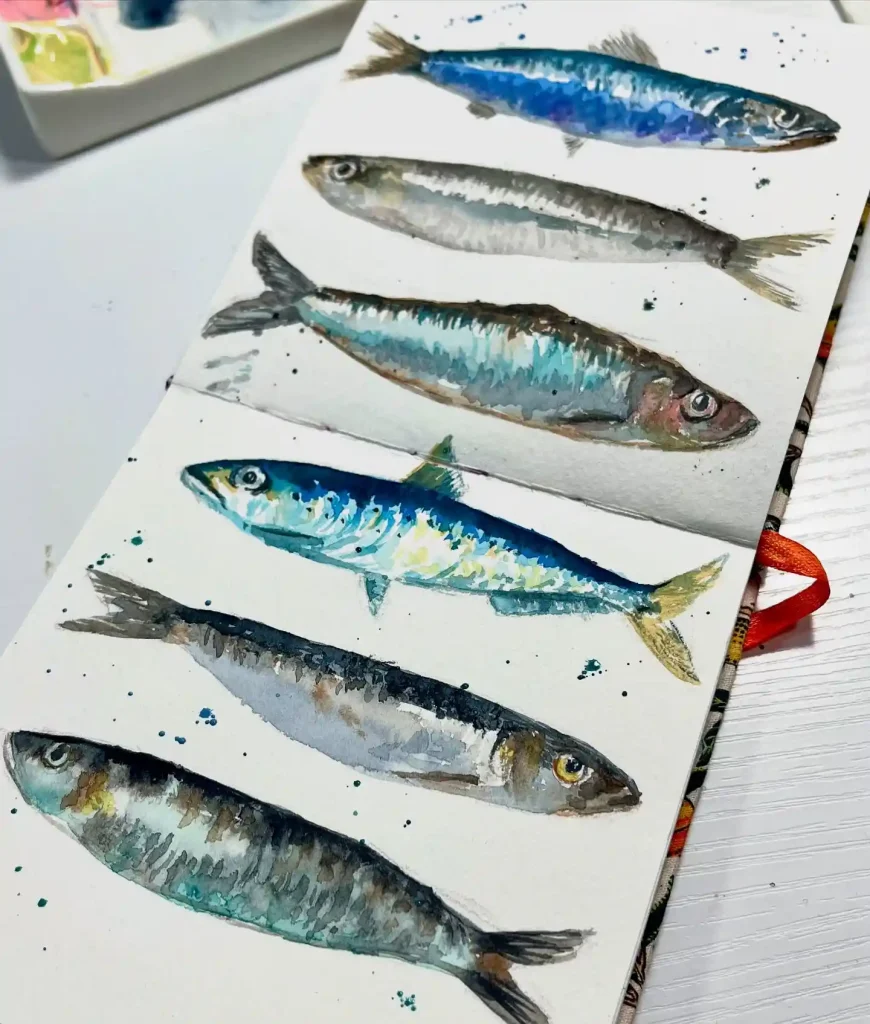
These watercolor sardines shine with lifelike metallic tones, their silvery blues and greens reflecting natural light beautifully. Each fish varies slightly, showing individuality within unity—a subtle nod to teamwork and adaptability. The loose, painterly strokes add freshness and rhythm, making this study both realistic and artistically expressive.
3. Colorful Fish Collection on Textured Watercolor Paper
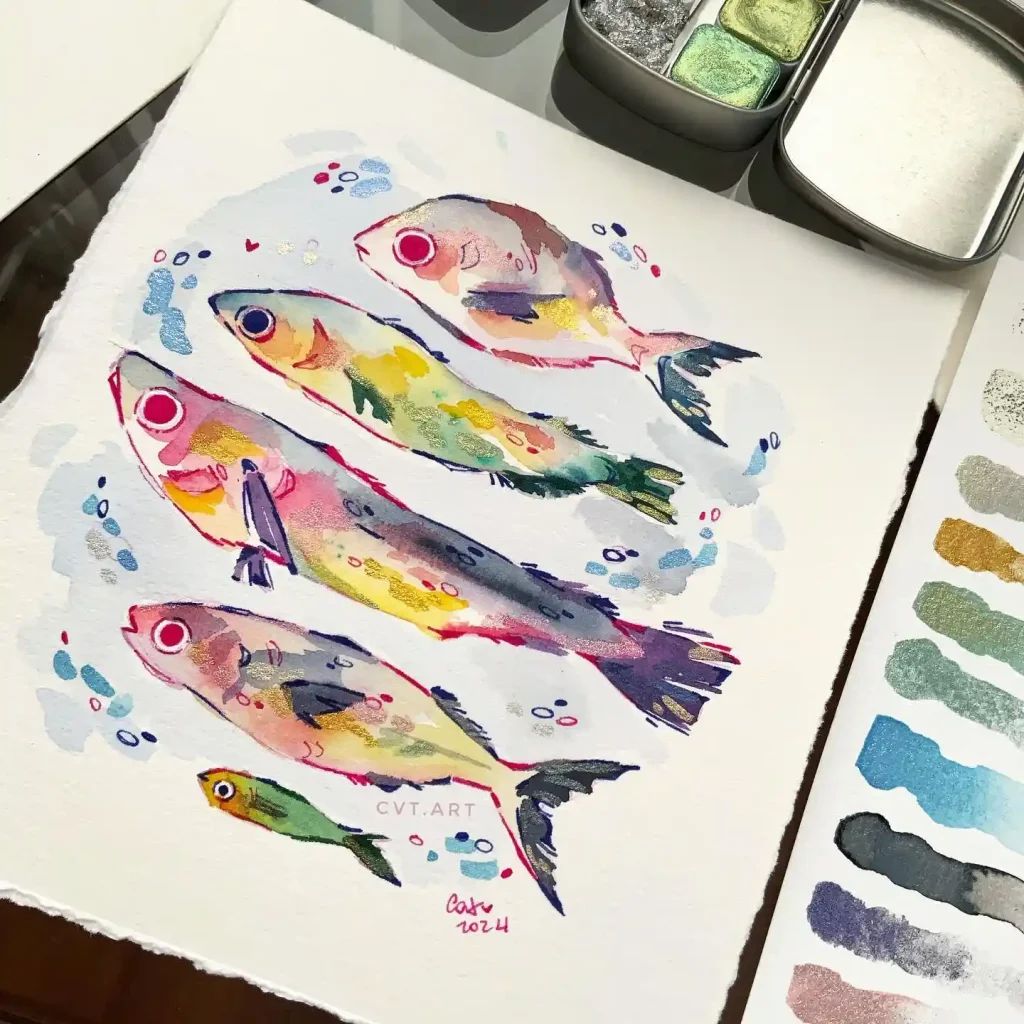
Bright and playful, this composition bursts with color and personality. Each fish features vibrant blends of pink, yellow, blue, and green, giving a whimsical twist to marine life. It feels joyful and spontaneous, symbolizing diversity and imagination. The piece celebrates creativity through an energetic use of watercolor and free-flowing design.
4. Graceful Koi Fish on Cold-Pressed Watercolor Paper
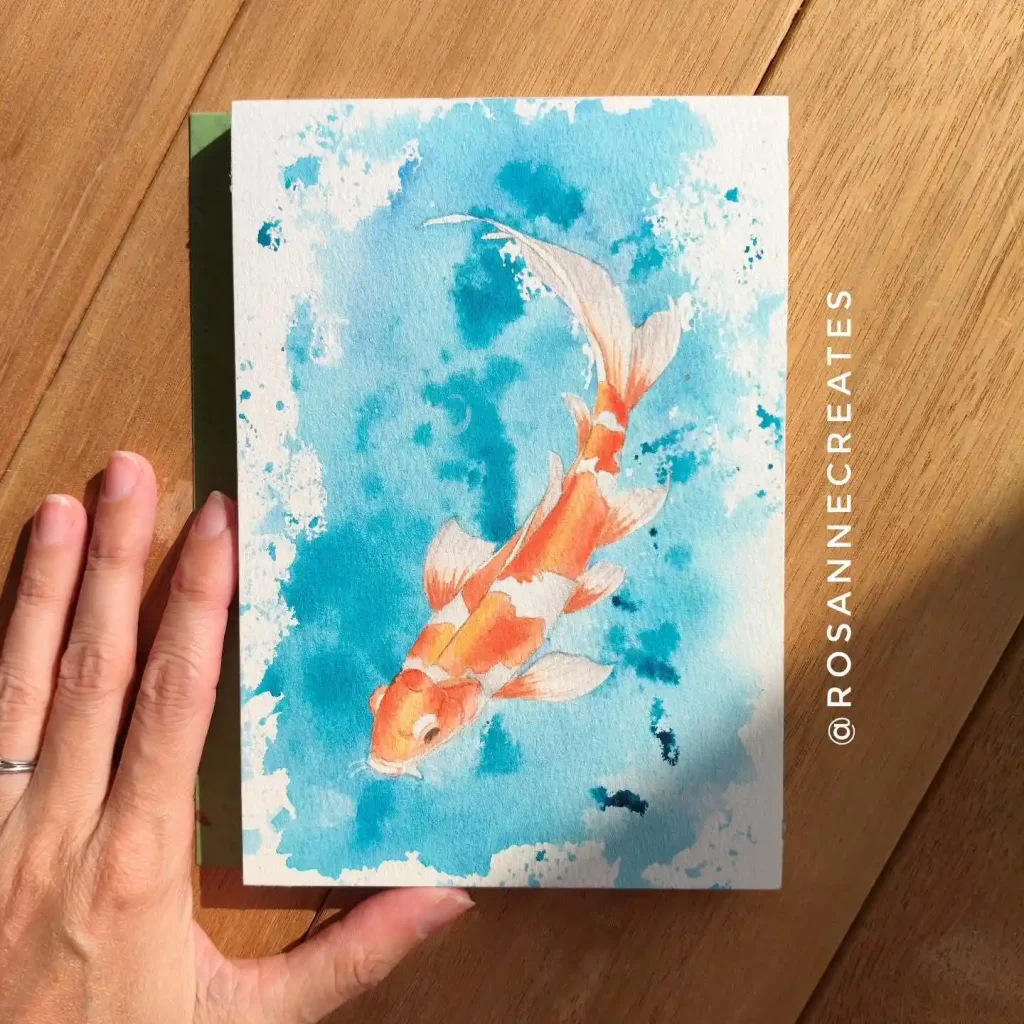
This artwork highlights a single koi swimming through a sea of cool blue tones. The artist’s delicate brushwork and white space mimic sunlight dancing on water. Koi traditionally symbolize perseverance and good fortune, making this piece both peaceful and meaningful—a meditative study of calm and quiet strength.
5. Blue Salmon Composition on Smooth Watercolor Paper
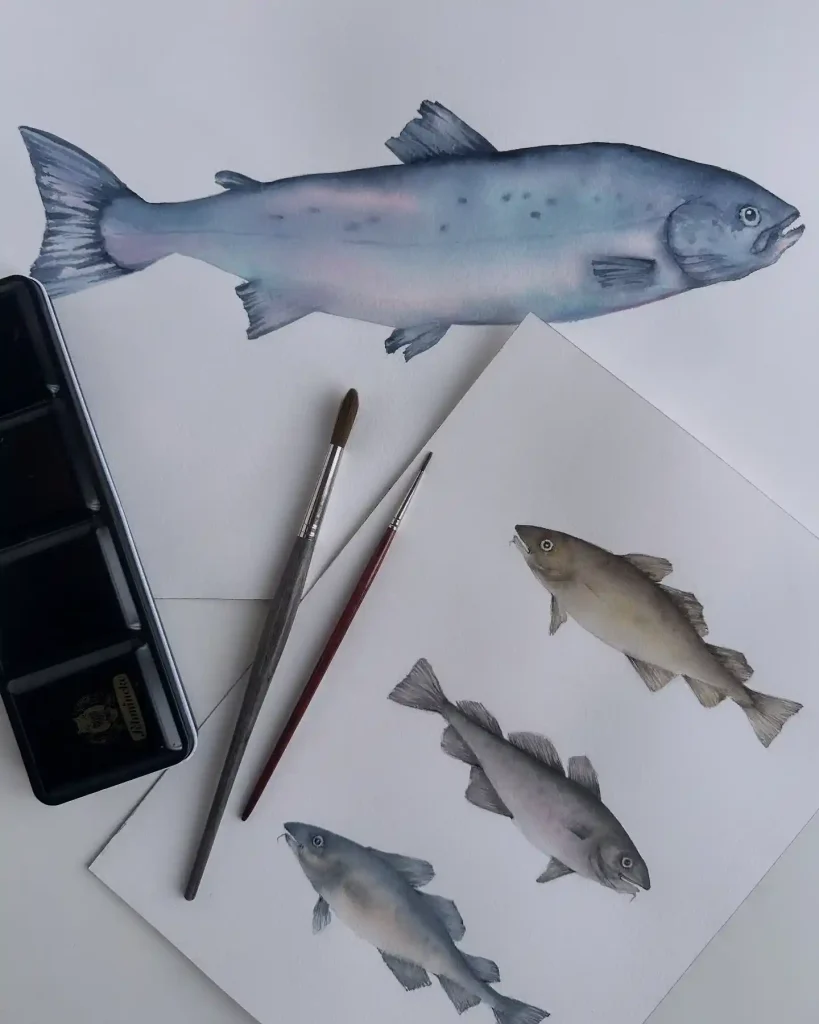
A cool-toned study of salmon, this watercolor painting focuses on realism and simplicity. The gradient transitions of blue, gray, and lilac reflect nature’s balance and serenity. Each brushstroke suggests gentle movement, symbolizing resilience and flow. It’s a thoughtful exploration of life beneath the surface, calm yet full of depth.
6. Minimal Betta Fish Painting on Fine Art Paper
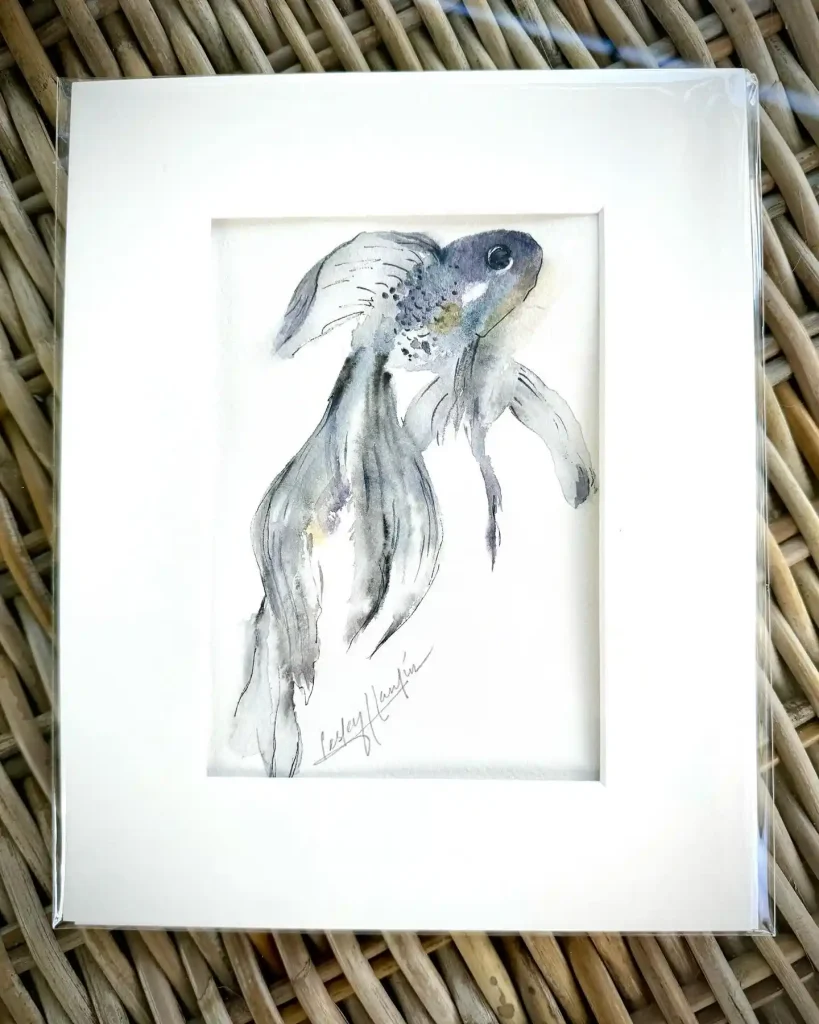
This soft watercolor depiction of a Betta fish feels delicate and ethereal. The muted grays and gentle blues convey quiet beauty and fluidity. With just a few expressive strokes, the artist evokes motion and grace, symbolizing tranquility and emotional introspection—proof that less can truly mean more in art.
7. Majestic Whale Painting on Cold-Pressed Watercolor Paper
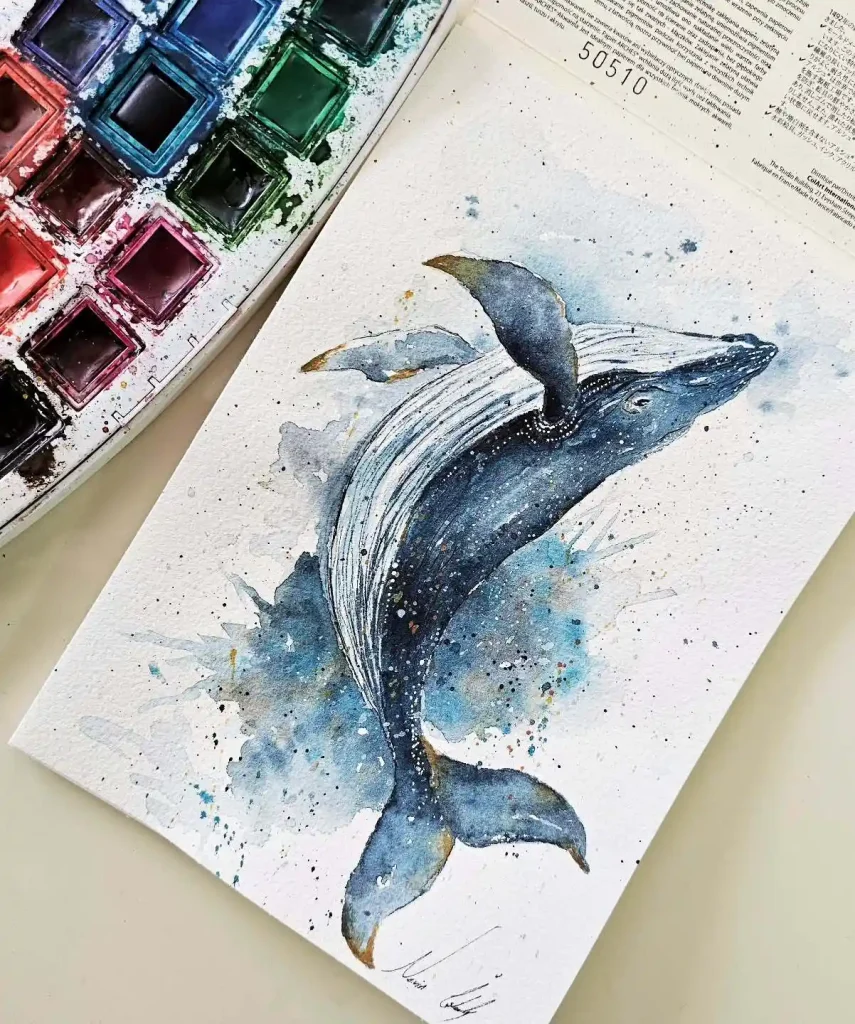
A breathtaking watercolor whale glides through shades of blue and indigo, surrounded by splatters that mimic ocean spray. The composition feels vast yet intimate, symbolizing strength, wisdom, and freedom. The artist uses fluid transitions and light speckles to portray the deep connection between nature’s power and peace.
8. Simple Fish Duo on Watercolor Card
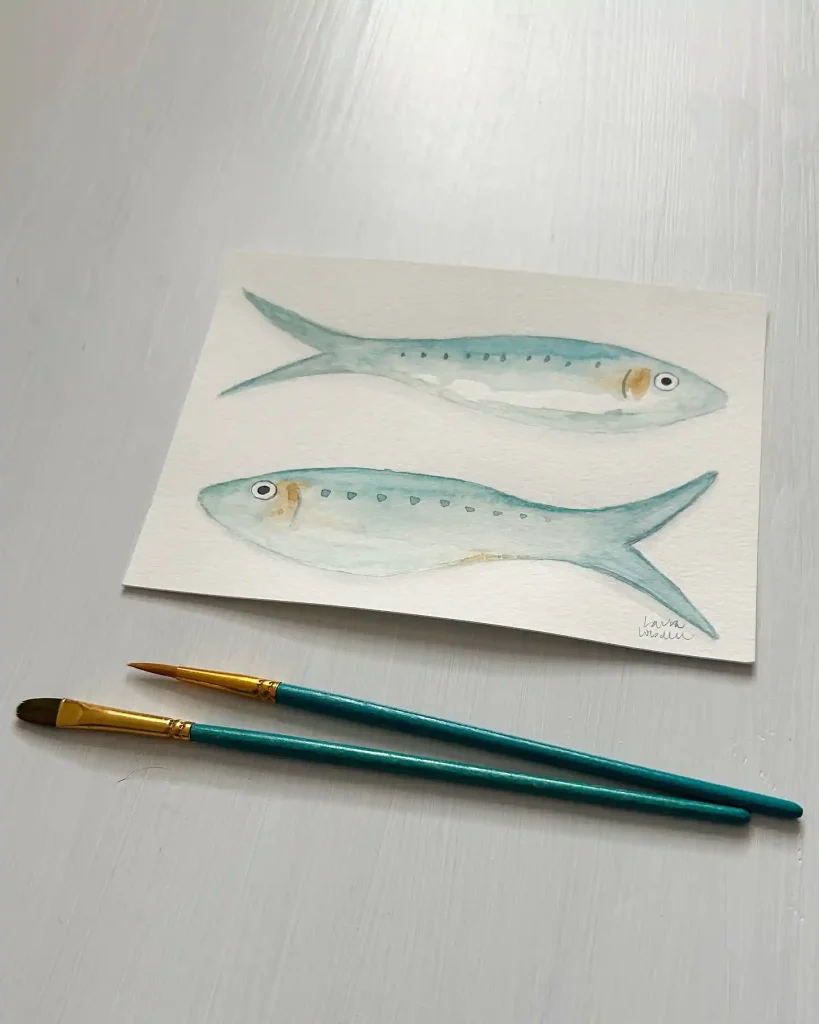
Two minimalist fish painted in soft aquas and grays rest on a clean white background. The artist captures balance and serenity through gentle washes and subtle detail. This piece embodies simplicity and mindfulness—a quiet reminder of harmony in pairs and the beauty found in understated design.
9. Natural Fish Pair on Textured Watercolor Paper
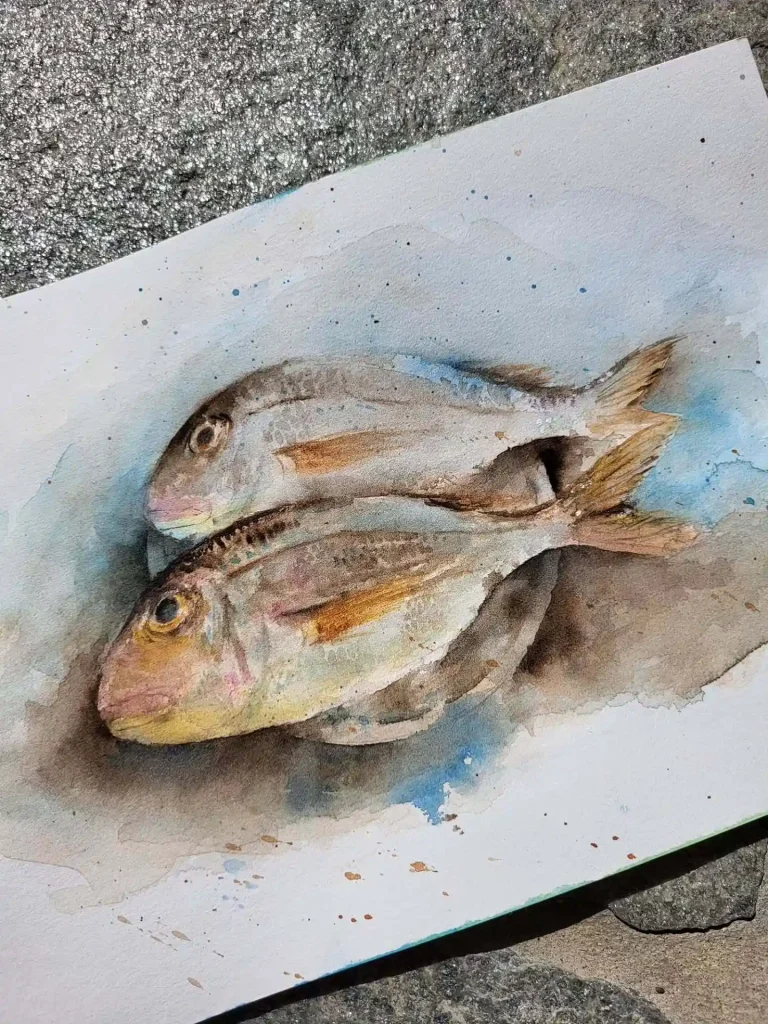
Rendered with earthy browns and golds, this realistic fish pair feels grounded and organic. The artist’s blending of shadows and highlights adds tactile realism. It symbolizes sustenance, patience, and the connection between art and nature. A beautifully humble yet technically skillful composition that celebrates authenticity.
10. Elegant Siamese Fighting Fish on Fine Watercolor Paper
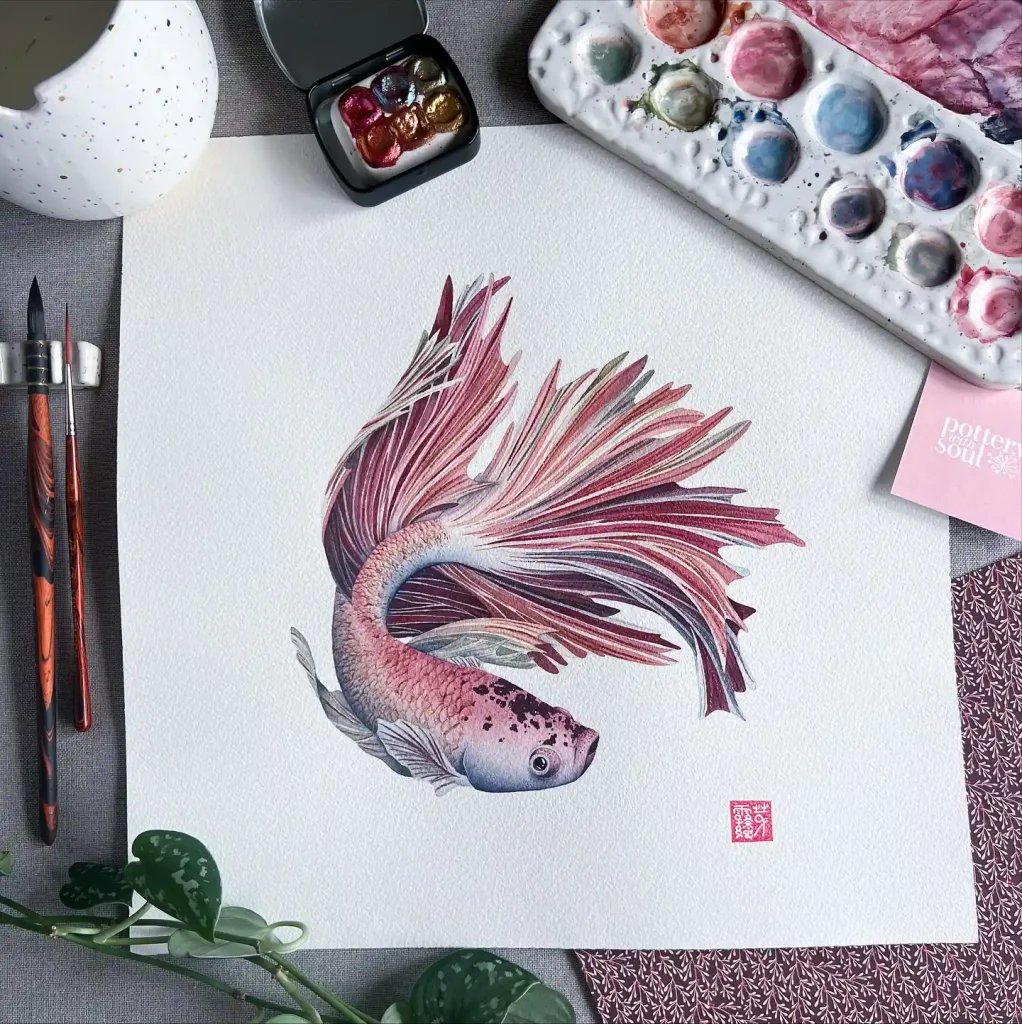
This stunning Betta fish painting displays exquisite control and precision. The artist layers fine washes of pink, violet, and silver, giving the fins a soft, silk-like texture. Each movement feels alive, symbolizing courage and individuality. It’s both graceful and bold—a true testament to watercolor mastery and emotional storytelling.
11. Vibrant Betta Fish on Cold-Pressed Watercolor Paper
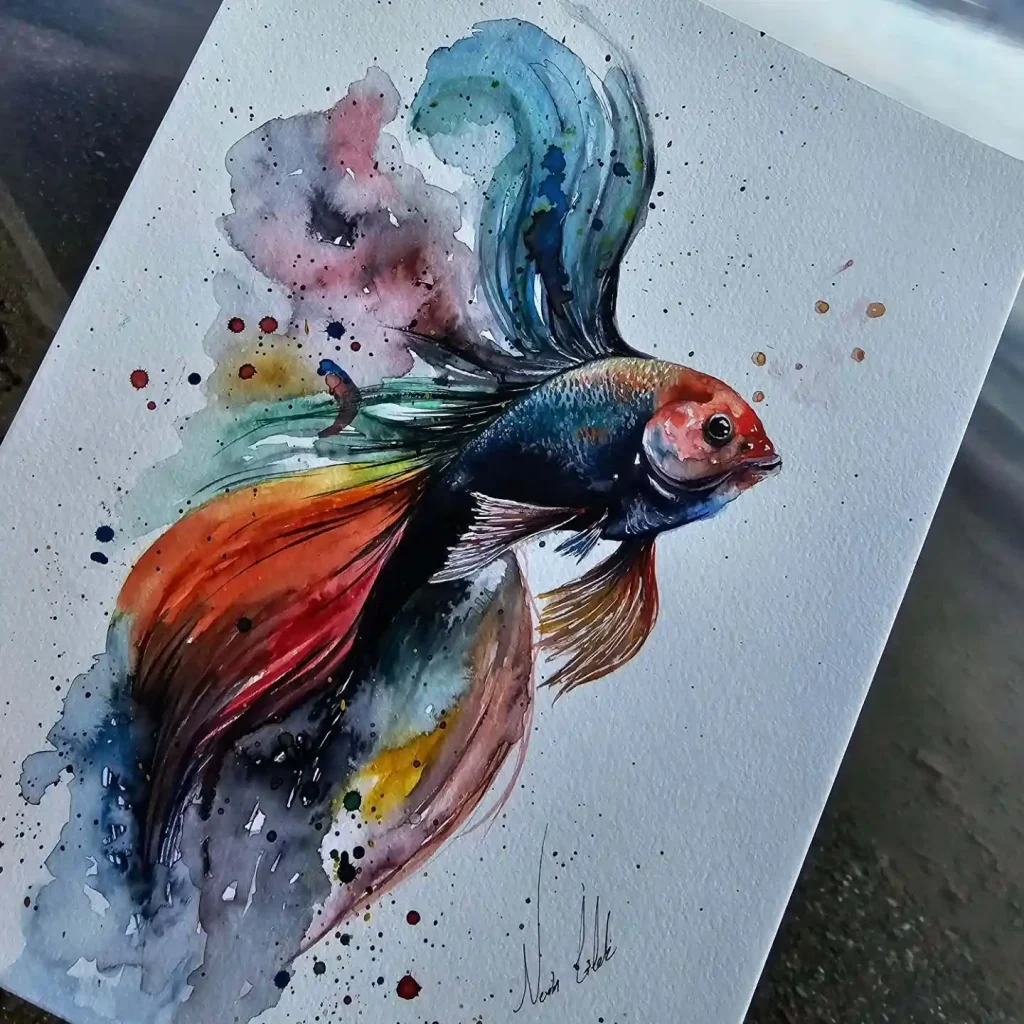
This striking Betta fish explodes with life, blending fiery oranges, deep blues, and splashes of purple. The loose watercolor splatters enhance its motion, giving the sense it’s leaping from the page. Symbolically, Betta fish represent confidence and individuality—qualities perfectly mirrored in the painting’s fearless color palette and expressive brushwork.
12. Twin Koi Fish on Textured Watercolor Paper
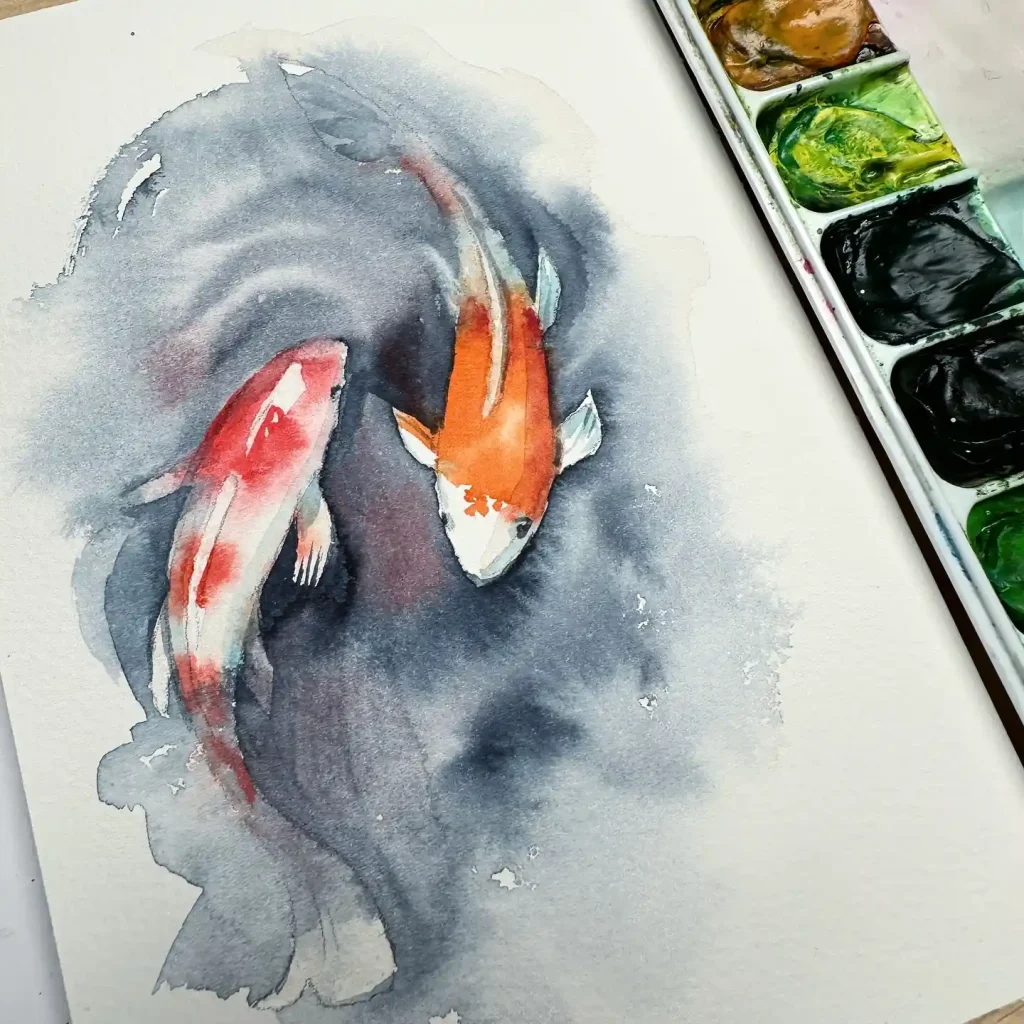
These two koi fish glide gracefully through cool, inky water. Their orange and red hues pop against the moody background, symbolizing harmony and perseverance. The soft gradients and circular movement suggest balance and renewal—a quiet nod to yin and yang, captured in the calm rhythm of watercolor flow.
13. Electric Blue Betta Fish on Smooth Watercolor Paper
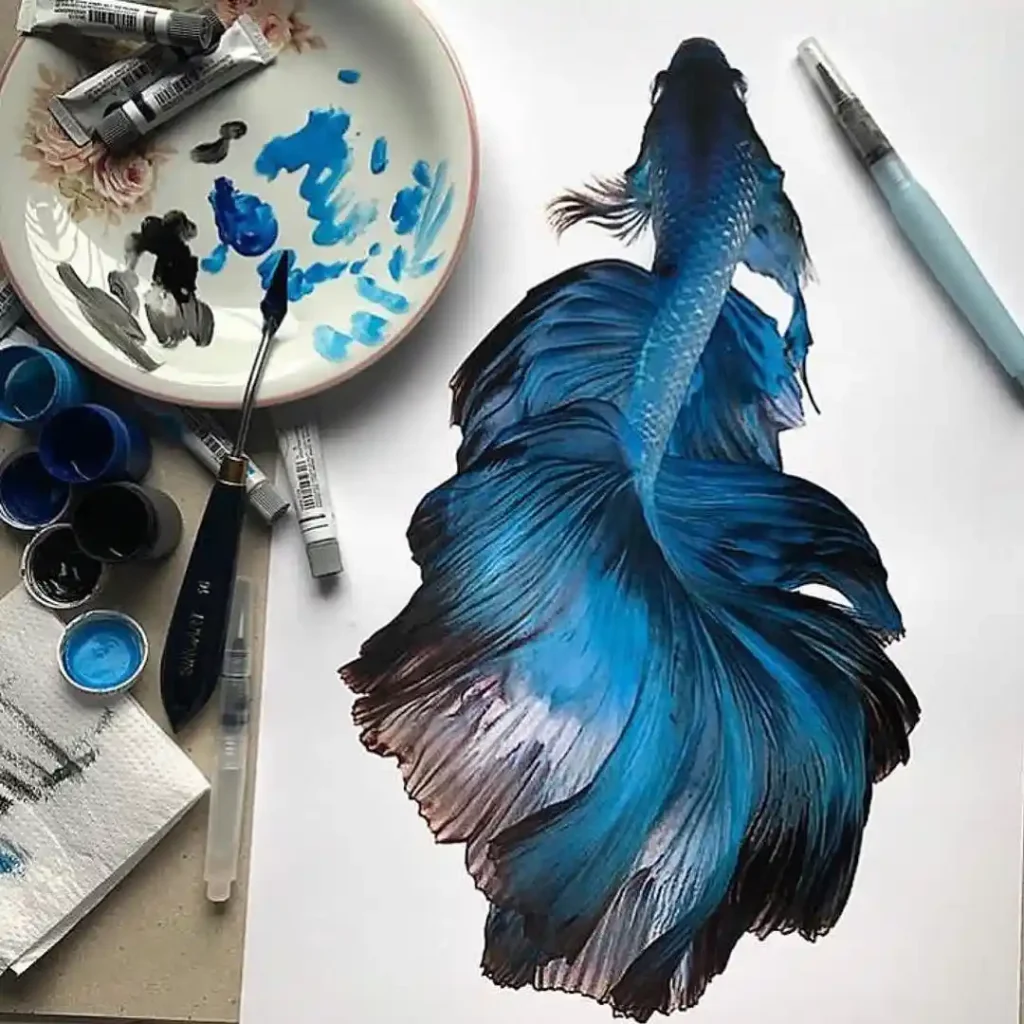
Bold and dramatic, this blue Betta commands attention with its sweeping fins and layered tones. The artist’s careful blending creates an almost photographic depth while keeping a painterly softness. Blue represents serenity and trust, making this piece a reminder of inner peace and strength beneath life’s surface tension.
14. Detailed Tropical Fish on Rough Watercolor Paper
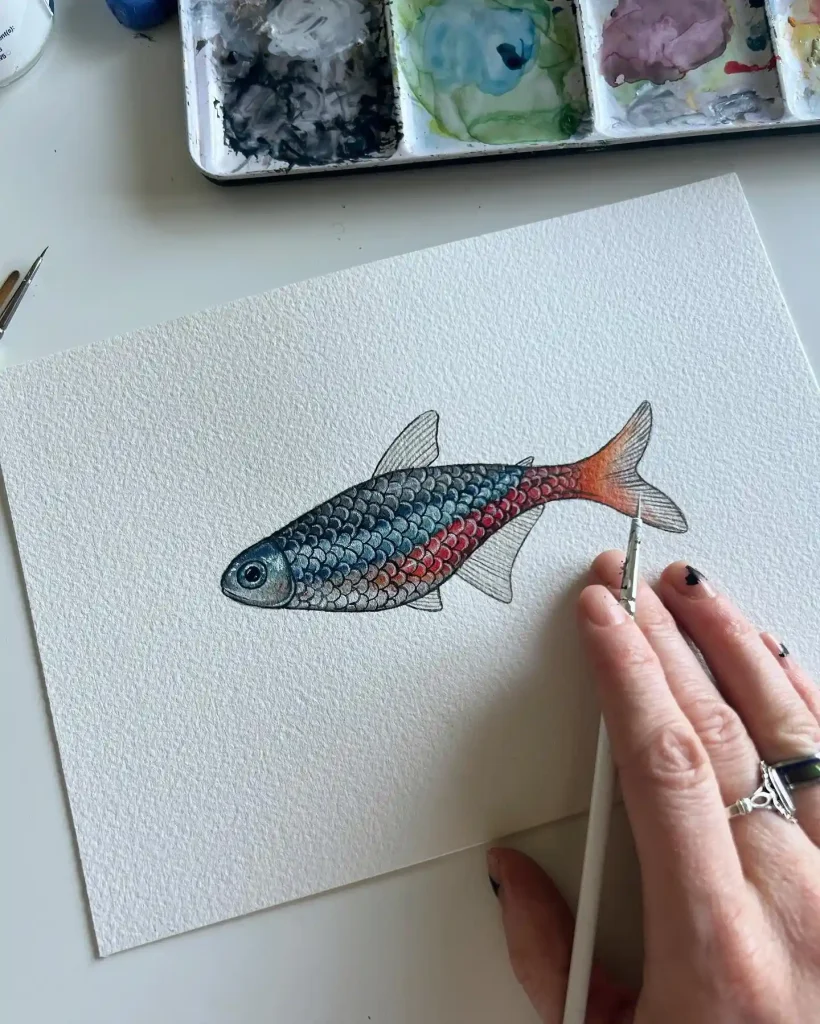
This small but intricate fish showcases meticulous brushwork. Every scale glimmers with gradient blues, silvers, and soft reds. The contrast between the sharp ink outlines and the soft watercolor wash makes it both scientific and artistic—a balance of observation and creativity that celebrates nature’s precision and beauty.
15. Golden Fantail Fish on Watercolor Paper
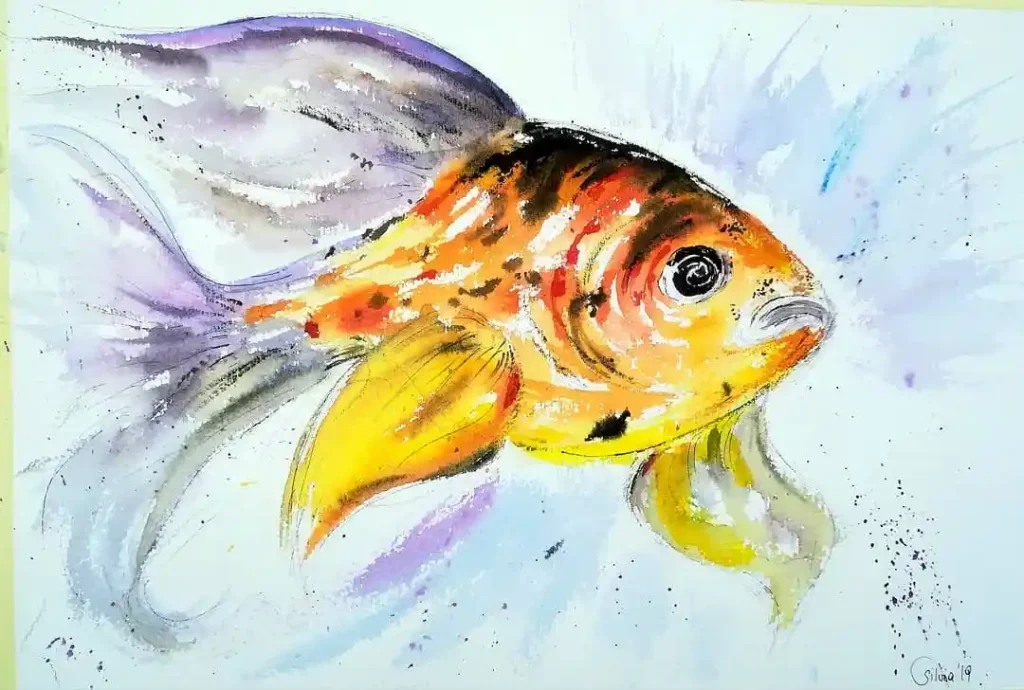
Filled with energy, this goldfish swirls across the page in vivid yellows and oranges. The brushstrokes burst outward, suggesting playful motion and freedom. Goldfish often symbolize good luck and prosperity, and here, that meaning radiates through color and spontaneity—a joyful tribute to life’s bright and unpredictable nature.
16. Trio of Blue Fish on Soft-Textured Paper
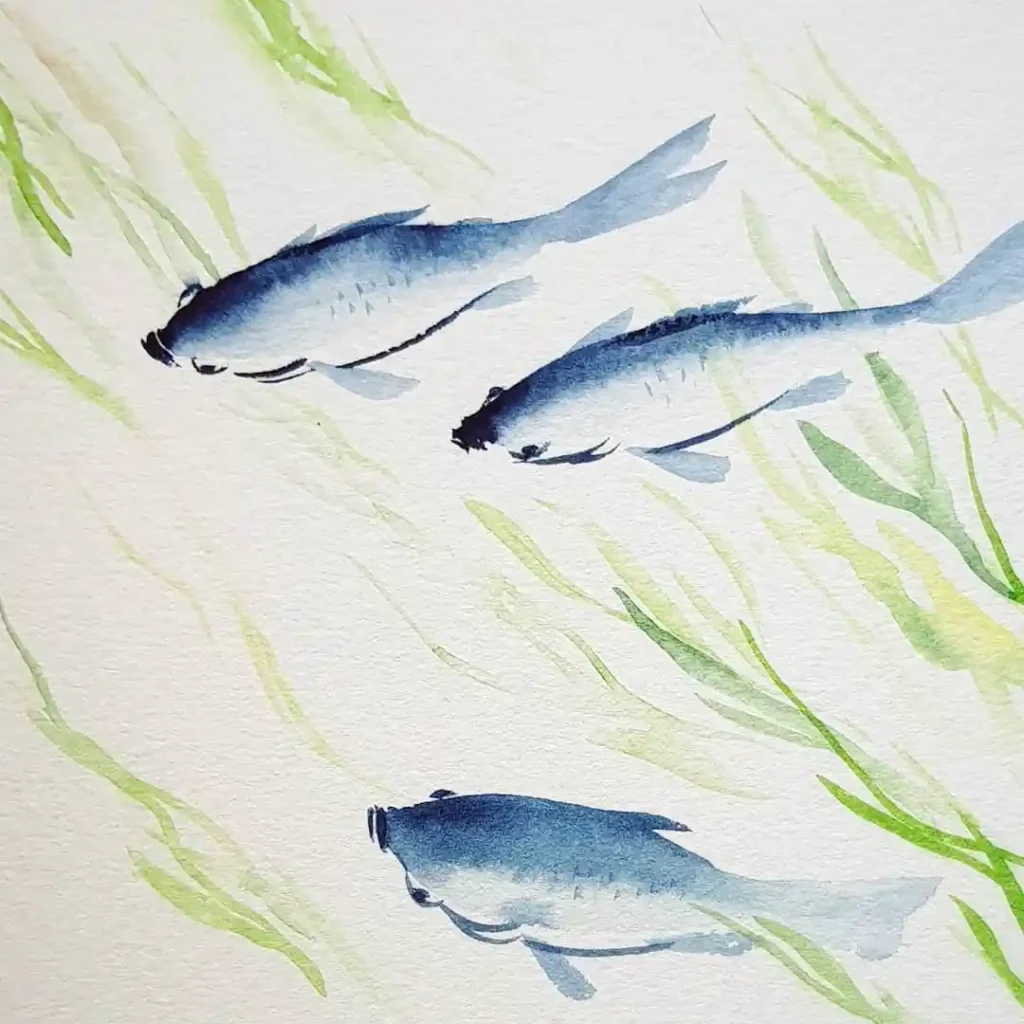
Simple yet serene, this minimalist watercolor captures three blue fish drifting among soft green seaweed. The artist uses negative space and delicate gradients to evoke calmness. It’s a poetic reflection of unity and flow, symbolizing friendship and the quiet comfort of moving together in harmony.
17. Playful Pufferfish on Watercolor Postcard Paper
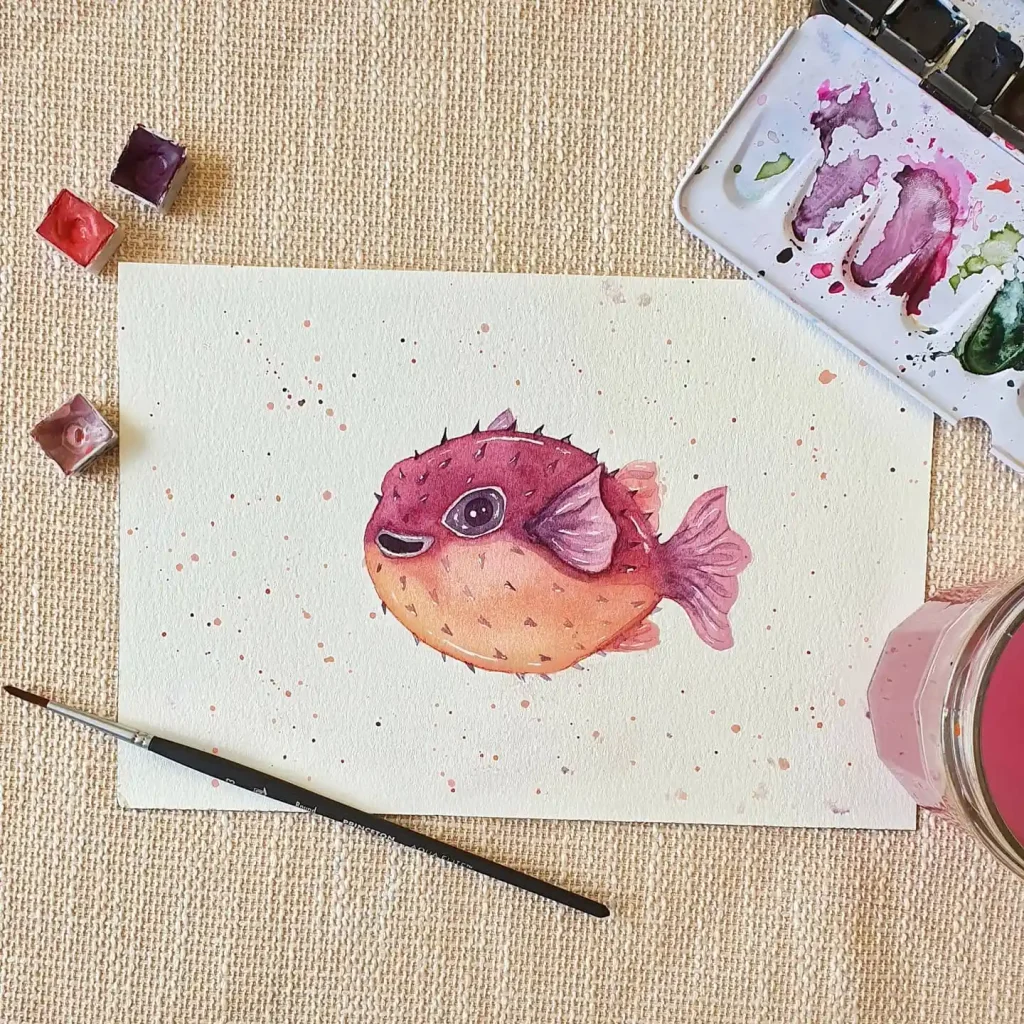
This round little pufferfish is full of personality, painted in warm coral and peach tones. Its smiling expression and speckled details bring a sense of whimsy. The soft splashes around it add movement and charm, symbolizing resilience and joy in simplicity—a cheerful watercolor that’s bound to make anyone smile.
18. Bright Goldfish Study on Watercolor Pad
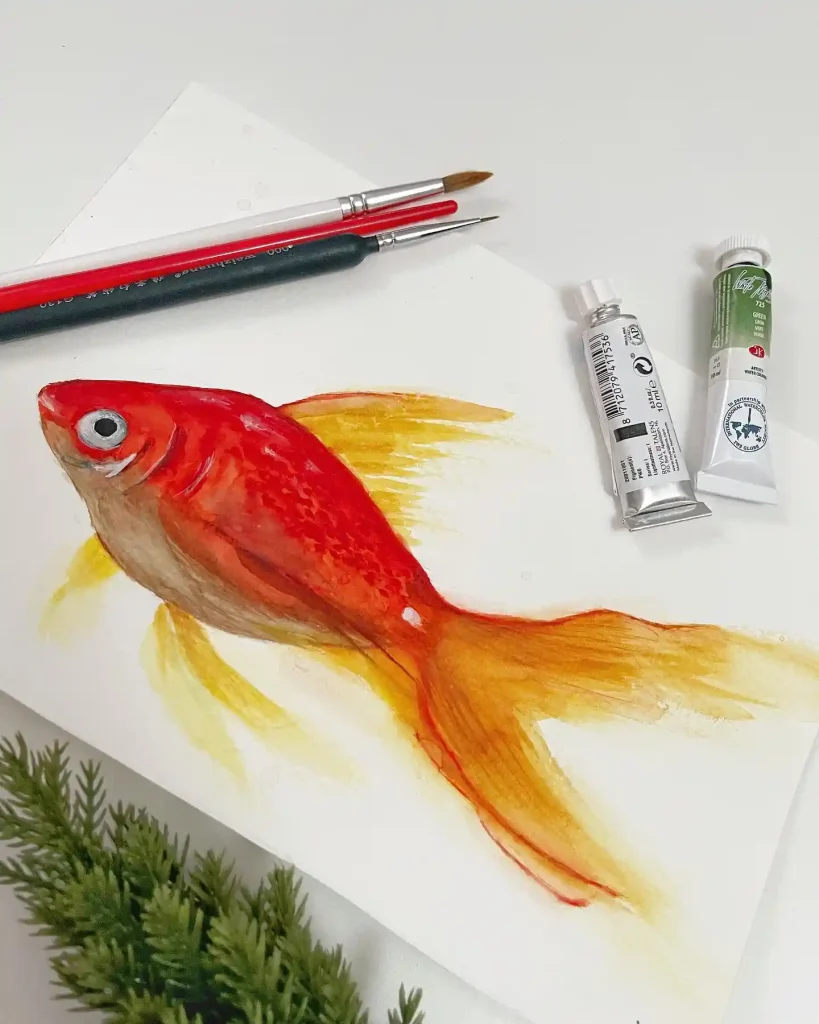
This goldfish glows with lively red and golden hues, its fins fanning like ribbons in motion. The translucent washes of paint give it a lifelike shimmer. Goldfish are known symbols of wealth and abundance, and here the artist captures that spirit through confident strokes and radiant light effects.
19. Dual Koi Harmony on Watercolor Paper
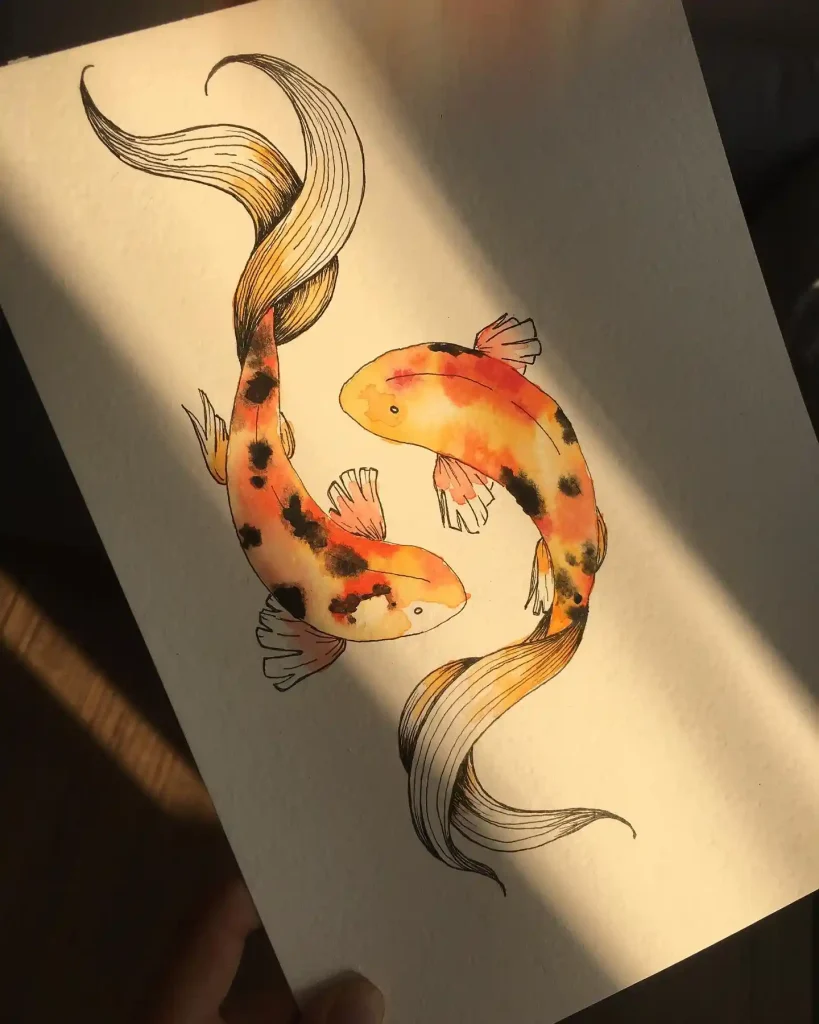
Under a beam of soft sunlight, two koi fish swim in graceful symmetry. Their orange, gold, and black markings are outlined delicately with ink, balancing realism and flow. The piece represents unity and eternal balance—a watercolor expression of peace, partnership, and the timeless rhythm of water and life.
2. Beginner Mistakes That Muddy Your Fish (And How to Fix Them)
Mistake 1: Painting every scale
A real fish has hundreds of scales, but a painting only needs a suggestion of them. A few curved lines on the shadow side of the body read as scales from any normal viewing distance, while drawing each one turns the body into a stiff pattern. Paint the body first, then add five or six scale hints where the body turns away from the light.
Mistake 2: Scrubbing a wash that is already muddy
Scrubbing wet paint lifts the paper surface and mixes every colour into grey. If a wash goes wrong, stop, let it dry fully, and glaze a fresh transparent layer over it. A dry glaze can rescue a dull body far better than a wet scrub ever will.
Mistake 3: Adding the eye too early
The eye is the smallest mark and the easiest to flood. Keep it white through every wash, then paint the pupil last with a dark brown or black, and finish with a single white highlight dot. One clean eye makes the whole fish look alive.
Mistake 4: Using thin paper for wet washes
Thin sketchbook paper buckles and pills under repeated washes, which is why the sardine studies in this guide sit on sketchbook paper while the finished koi and betta pieces use cold-pressed watercolor paper. If your paper is buckling, tape the edges down before you start and use less water per layer.
For the water around your fish, see water drawing ideas and the reflection rule, and for more sea life on textured paper, try watercolor seashell drawing ideas for beginners or the wider set of watercolor animal drawing ideas.
Koi and Betta Designs Sell Well as Digital Files
Fish motifs get bought repeatedly as tattoo references, sticker sheets and print-on-demand designs, and every one of those buyers wants a layered file rather than a single flat painting. Building the piece digitally from the start means the scales, fins and background wash stay on separate layers, so one artwork can be resold in half a dozen formats. If that side of things interests you, picking the right drawing tablet is the first practical decision to make.
Fish are rarely painted on their own for long, and the moment you add the water around them the difficulty moves to the surface rather than the subject. Our watercolor ocean drawing ideas deal with waves, depth and reflections in detail.
Another sea creature worth trying once fish feel comfortable is the seahorse. Its tail curls forward, not backward, and its body is ringed with bony plates rather than scales. These 30 watercolor seahorse ideas walk through that S-curve drawing step by step, from a simple outline to realistic and galaxy versions.
For the brushes behind these techniques, see our guide to the best watercolor brushes for beginners, which explains brush shapes, sizes, and which ones are worth starting with.
3. Frequently Asked Questions About Watercolor Fish Drawing
What is the easiest watercolor fish for a beginner?
A simple goldfish or a minimal betta is the easiest place to start. Both have one round body shape, one flowing tail, and forgiving washes, so you can finish a good-looking painting in about 30 minutes without detailed scale work.
What paper should beginners use for watercolor fish?
Use 140 lb cold-pressed watercolor paper. It holds wet washes without buckling, forgives wobbly brushwork, and still shows enough texture for scales and fins. Smooth paper suits crisp fins, while rough paper suits detailed tropical fish, but cold-pressed is the safest all-round choice.
How do I keep watercolor fish from looking muddy?
Use fewer colours per wash, let each layer dry fully before adding the next, and never scrub wet paint. Muddy colour almost always comes from mixing too many pigments on wet paper or reworking a wash that should have been left to dry.
Should I paint fish wet-on-wet or wet-on-dry?
Use wet-on-wet for soft fins, flowing tails, and blended body colour, and wet-on-dry for sharp details such as fin rays, eyes, and ink outlines. Most of the fish in this guide combine the two: a soft wet-on-wet body first, then crisp wet-on-dry detail on top.
How do I paint white highlights on a watercolor fish?
Leave the paper white where you want highlights, especially on the eye and the top of the body. If a highlight gets painted over, add it back at the very end with opaque white gouache or a white gel pen, as the goldfish guide above suggests.
How many fish ideas are in this guide?
This guide includes 19 watercolor fish drawing ideas, from flowing bettas and graceful koi to sardines, salmon, a whale, and a playful pufferfish, along with a step-by-step realistic goldfish guide and creative ideas such as celestial, Zentangle, botanical, and steampunk fish.
If you enjoyed the sea theme, keep going with watercolor jellyfish drawing ideas, watercolor ocean drawing ideas, and watercolor bird drawing ideas for a change of subject with the same wash skills.