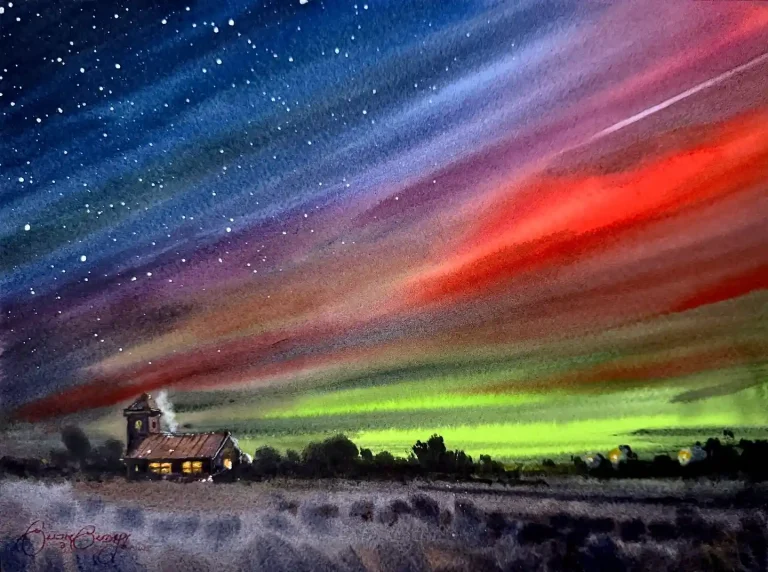
Capturing the delicate beauty of nature begins when you explore fresh Watercolor Daisy Drawing Ideas for your sketchbook. These artistic concepts provide a perfect starting point for beginners who want to master floral composition without feeling overwhelmed. If you enjoy simple blooms, these watercolor marigold drawing ideas are another great beginner-friendly subject.
Simple techniques often yield the most stunning results as you practice various Watercolor Daisy Drawing Ideas to build your confidence. A wet brush and loose strokes can transform a blank page into a vibrant garden that reflects your unique perspective.
Refining your skills happens naturally when you dedicate time to experimenting with these creative Watercolor Daisy Drawing Ideas every single day. You will soon discover that even accidental blooms add character and depth to your evolving portfolio of artwork.
How to Master Loose Style Techniques for Floral Art
- Start by wetting your watercolor paper with clean water in rough circular shapes to prepare the surface for soft and blooming petals.
- Load your round brush with a very light yellow pigment and gently drop it into the center of the wet area to create a glowing core.
- Pick up a diluted mix of cool blue or violet to paint loose petal shapes radiating outward while the center is still damp.
- Allow the petal colors to bleed slightly into the yellow center to achieve that characteristic soft and organic watercolor look found in professional work.
- Leave plenty of white space between the petals to define the flower structure without using heavy outlines or rigid pencil marks.
- Add concentrated touches of darker indigo or payne’s gray near the center while the paint is wet to suggest depth and shadow instantly.
- Lift out excess pigment with a clean and damp brush if you need to recover highlights on the petals for a brighter finish.
- Vary the pressure on your brush strokes to create petals that look different from one another and avoid a stiff or uniform pattern.
- Let the flower head dry completely before painting a thin and curving green stem to anchor your loose floral composition securely.
What Color Palettes Create the Most Realistic White Flowers
- Understand that white petals are rarely pure white in painting because they reflect the colors of the sky and surrounding foliage constantly.
- Mix a shadow color using cobalt blue and a tiny touch of burnt sienna to create a neutral gray for shading white petals.
- Apply this cool gray mix only to the specific areas where petals overlap or curve away from the light source to build dimension.
- Select a warm cadmium yellow for the sunlit side of the center disk and a raw sienna for the shadowed side to create volume.
- Incorporate sap green mixed with a little red for the stems and leaves to avoid an unnatural or artificial plastic look in your greens.
- Test your color mixes on a scrap piece of paper first to ensure the values are correct before touching your main artwork surface.
- Layer a transparent wash of dilute violet over dry shadow areas to deepen the contrast without making the flower look muddy or dirty.
- Keep your palette limited to three or four main pigments to maintain color harmony throughout your entire floral botanical illustration project.
- Use the white of the paper as your lightest light by painting around the highlights rather than using white paint at the end.
Grab your brushes today and let these simple techniques guide your hand. Watch as your confidence grows with every petal you paint, transforming blank paper into a blooming masterpiece.
1. Sunset Meadow Watercolor Daisy on Cold-Pressed Paper
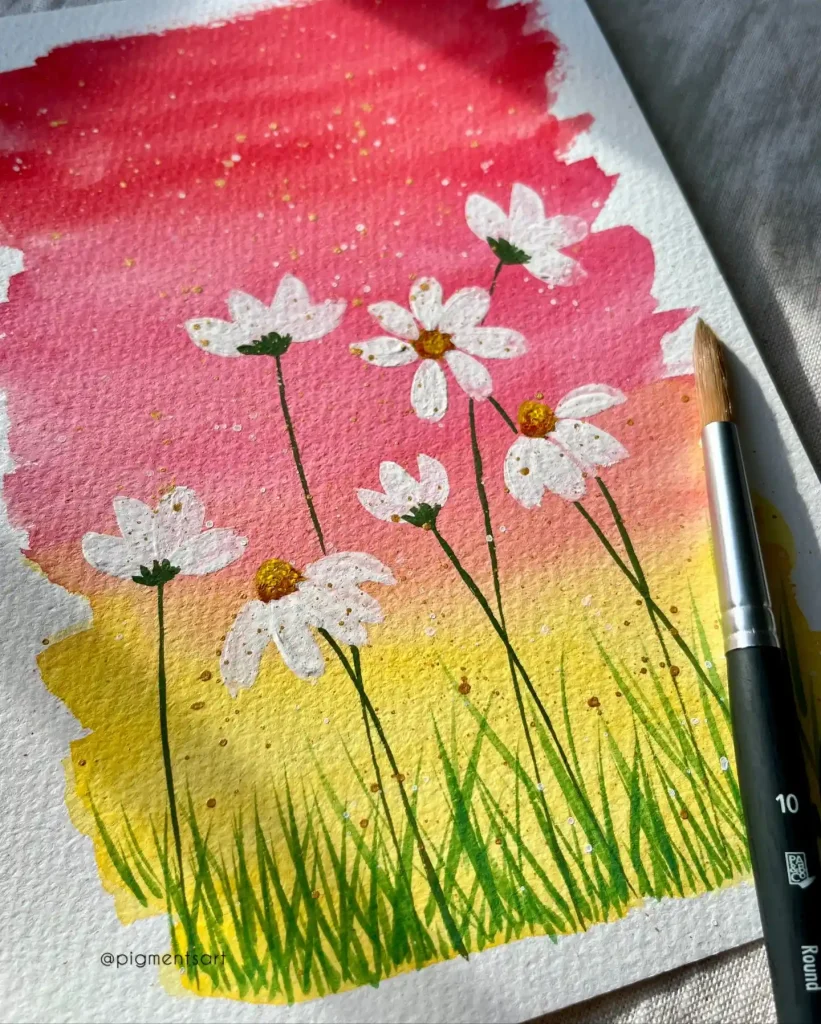
Warm pink and orange hues melt into a vibrant yellow ground, creating a striking sunset backdrop for these delicate white flowers. The simple silhouettes of the stems rise gracefully through thin blades of grass. This piece captures that fleeting moment when evening light makes everything feel golden and calm. It is a wonderful study in high-contrast color layering and atmospheric mood.
2. Dappled Light Watercolor Daisy on Textured Paper
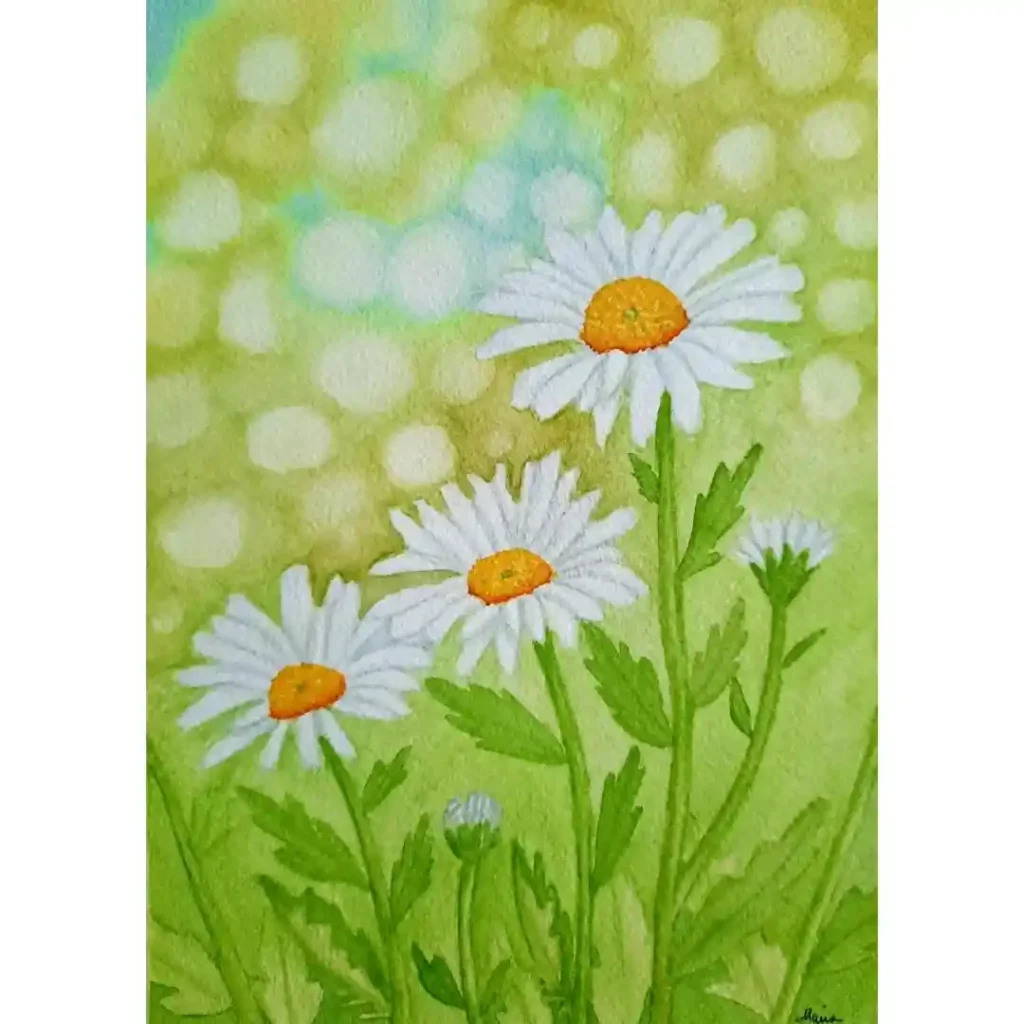
Soft bokeh circles dance across the background, mimicking sunlight filtering through lush garden trees. Three daisies stand tall with bright yellow centers that pop against the muted green leaves. The gentle blending of the background creates a dreamlike quality that feels both peaceful and nostalgic. It reminds viewers of quiet summer mornings spent wandering through a hidden, sun-drenched flower patch.
3. Sky Blue Watercolor Daisy on Mixed Media Paper
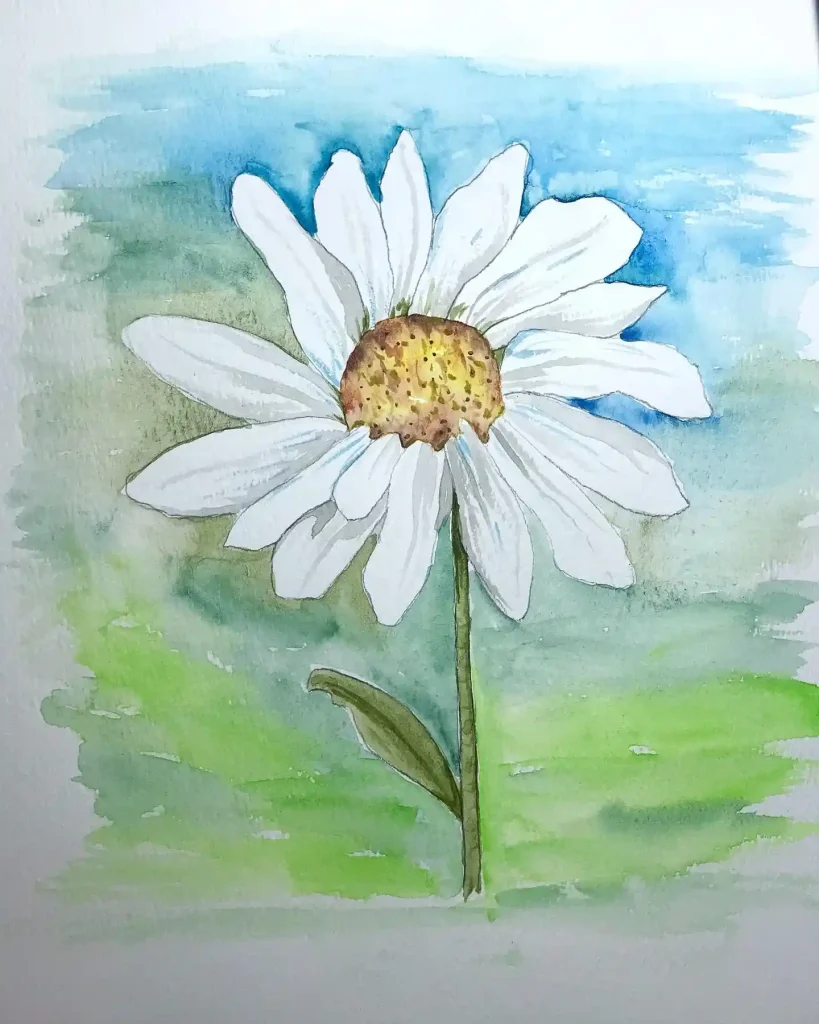
A single bloom takes center stage against a loosely washed sky of cerulean and emerald tones. The petals are defined by soft shadows and light pencil outlines, giving the flower a structured yet airy appearance. You can almost feel the fresh breeze moving through the petals. This composition highlights the beauty of simplicity and the elegance of a lone subject.
4. Cosmic Splatter Watercolor Daisy on Handmade Paper
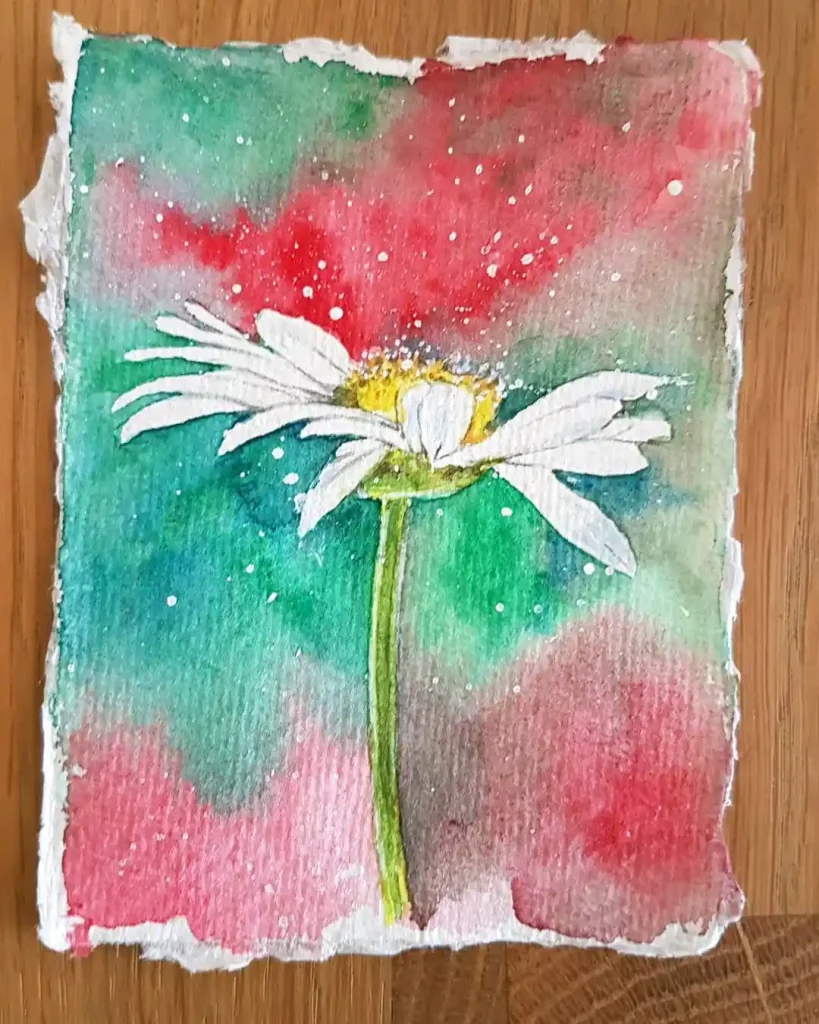
Vibrant reds and deep teals collide in a beautiful explosion of color that surrounds a wind-swept flower. White paint splatters act like distant stars, adding a sense of energy and movement to the scene. The deckled edges of the paper enhance the raw, organic feel of the work. It is a bold departure from traditional floral styles and looks magical.
5. Purple Haze Watercolor Daisy on Heavyweight Paper
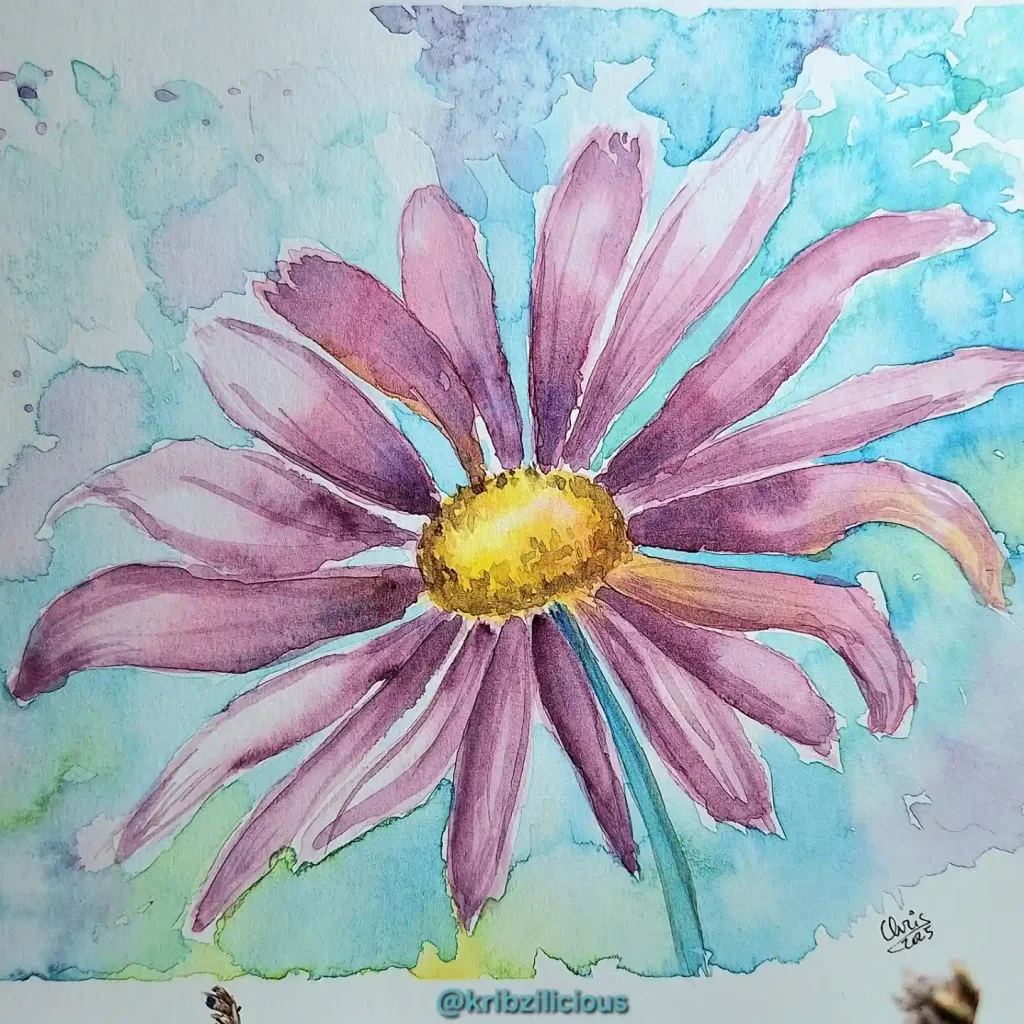
Deep lavender and plum tones give this large flower an incredible sense of depth and mystery. The petals curve inward toward a textured golden center, while a watery blue background keeps the focus entirely on the bloom. Each stroke reveals the fluid nature of the paint. This piece explores the emotional weight of cooler colors within a traditional botanical subject.
6. Minimalist Wreath Watercolor Daisy on Smooth Cardstock
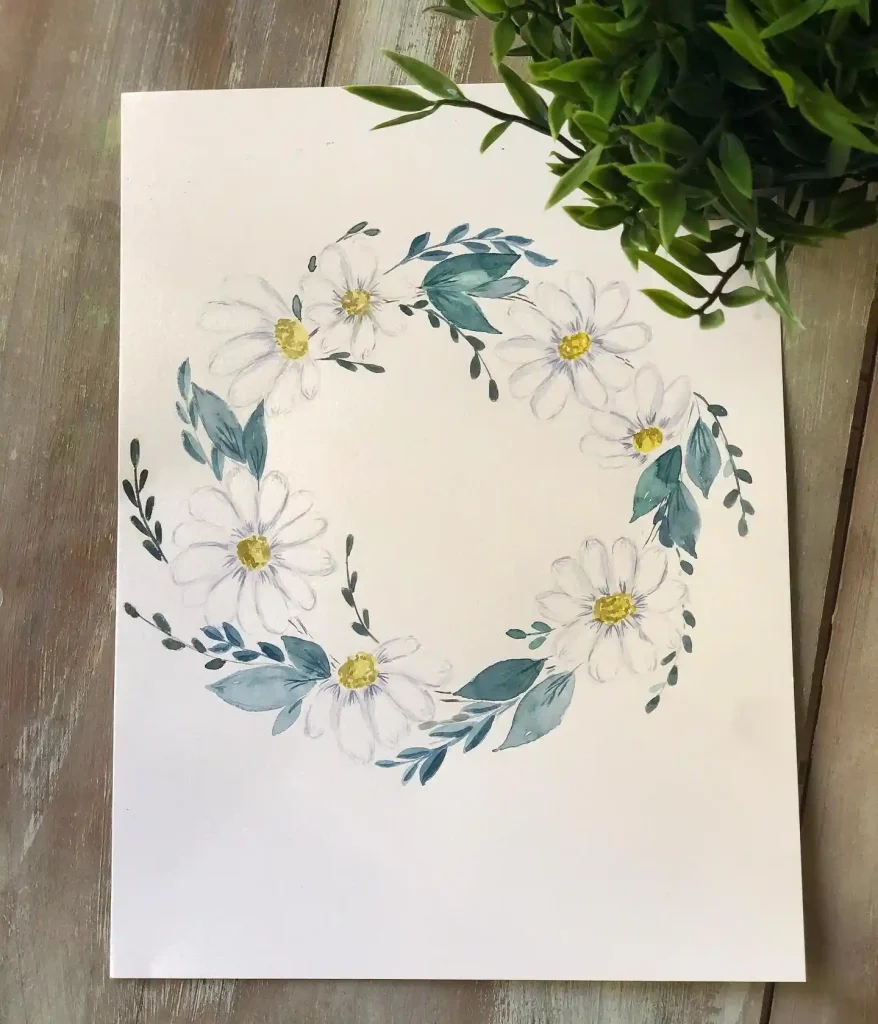
Classic white petals and deep teal leaves form a perfect circle, creating a clean and modern aesthetic. The negative space in the center provides a sense of balance and breathing room for the viewer. This arrangement feels timeless and sophisticated, perfect for those who love understated elegance. The subtle blue-gray shadows on the petals add just enough realistic three-dimensional form.
7. Forest Glow Watercolor Daisy on Watercolor Paper
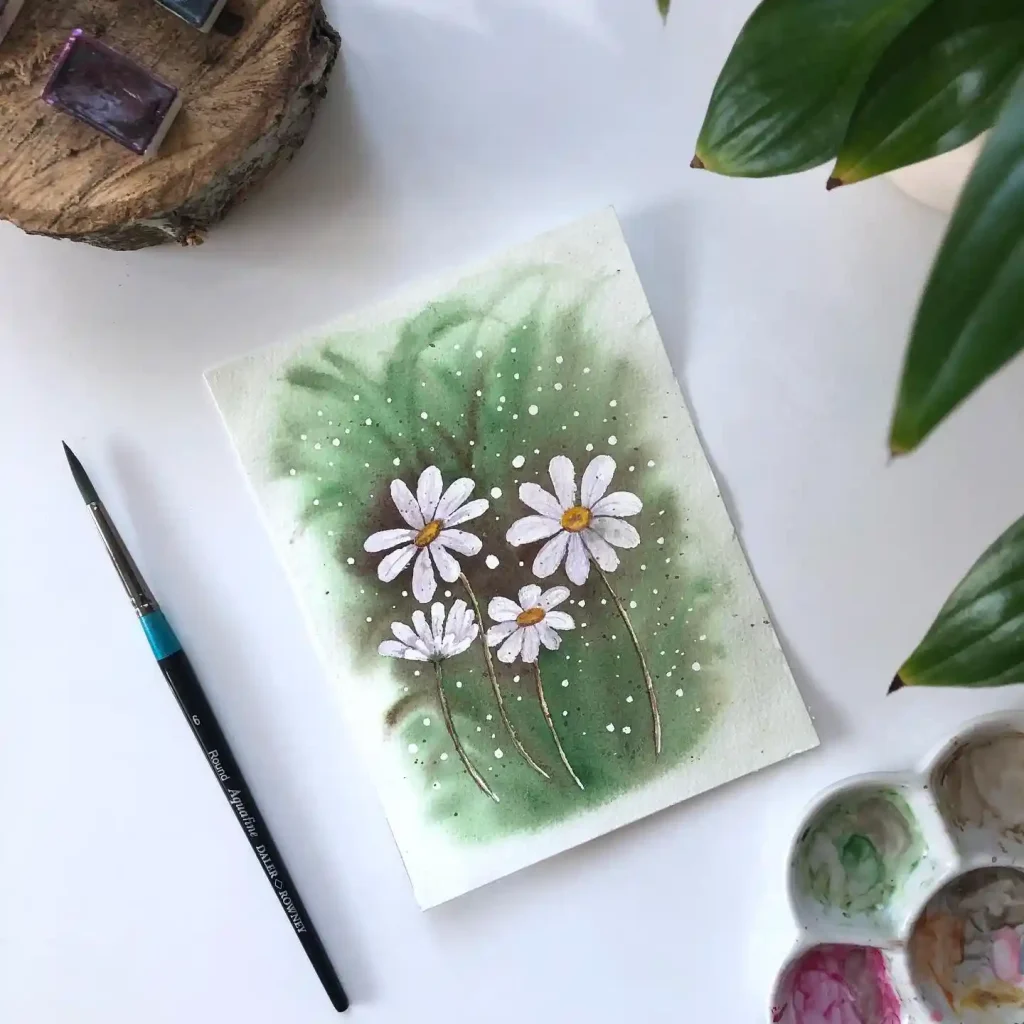
Tiny white dots float like fireflies against a dark, moody green background that recedes into shadow. Four daisies emerge from the darkness, their bright faces providing a hopeful focal point. This piece uses light and shadow to tell a story of resilience and beauty. The soft, blurred edges of the greenery make the flowers feel like they are truly glowing.
8. Loose Bloom Watercolor Daisy on Spiral Sketchbook
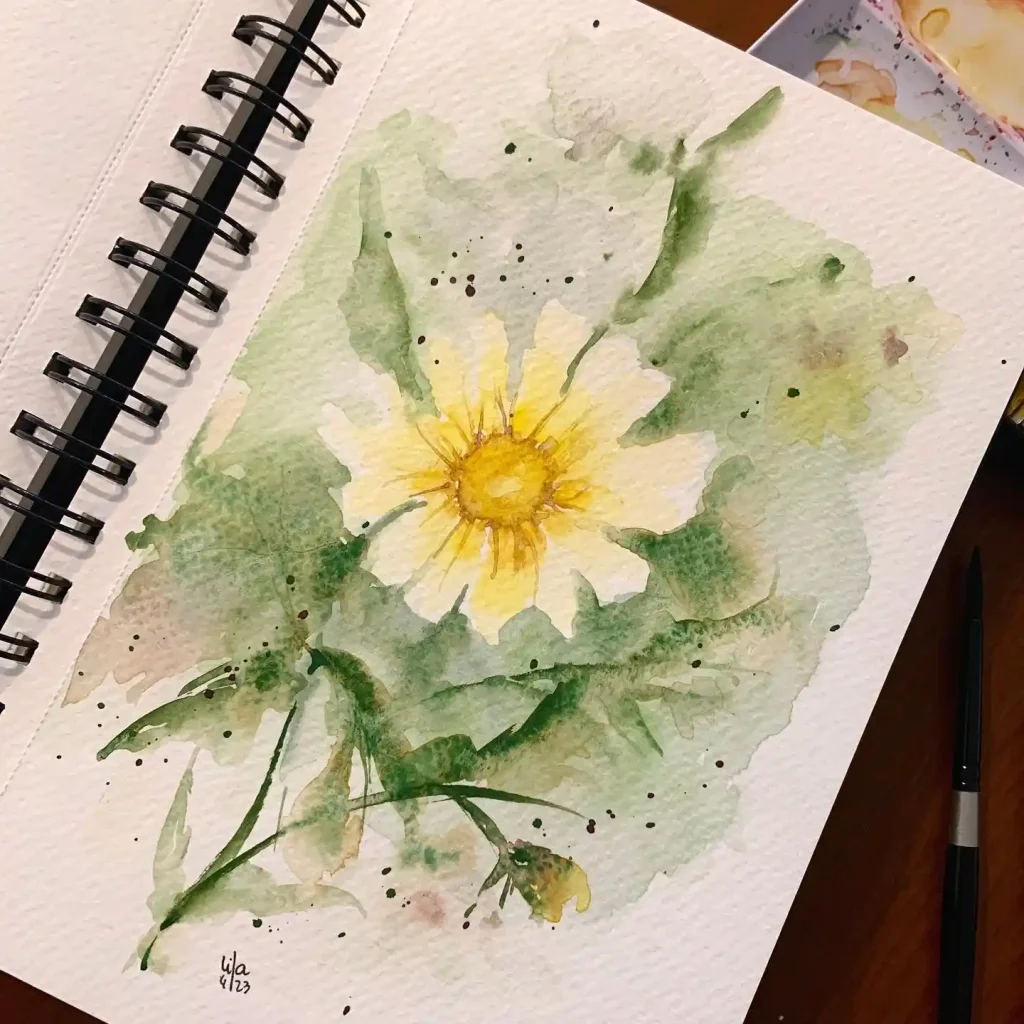
Quick, expressive brushstrokes and watery pigments bring this yellow flower to life with a sense of spontaneity. Green leaves bleed into the background, showing the beauty of the wet-on-wet technique. This sketch captures the raw essence of creativity without overthinking the details. It is a perfect example of how letting the water lead can result in a beautiful image.
9. Butterfly Garden Watercolor Daisy on Arches Paper
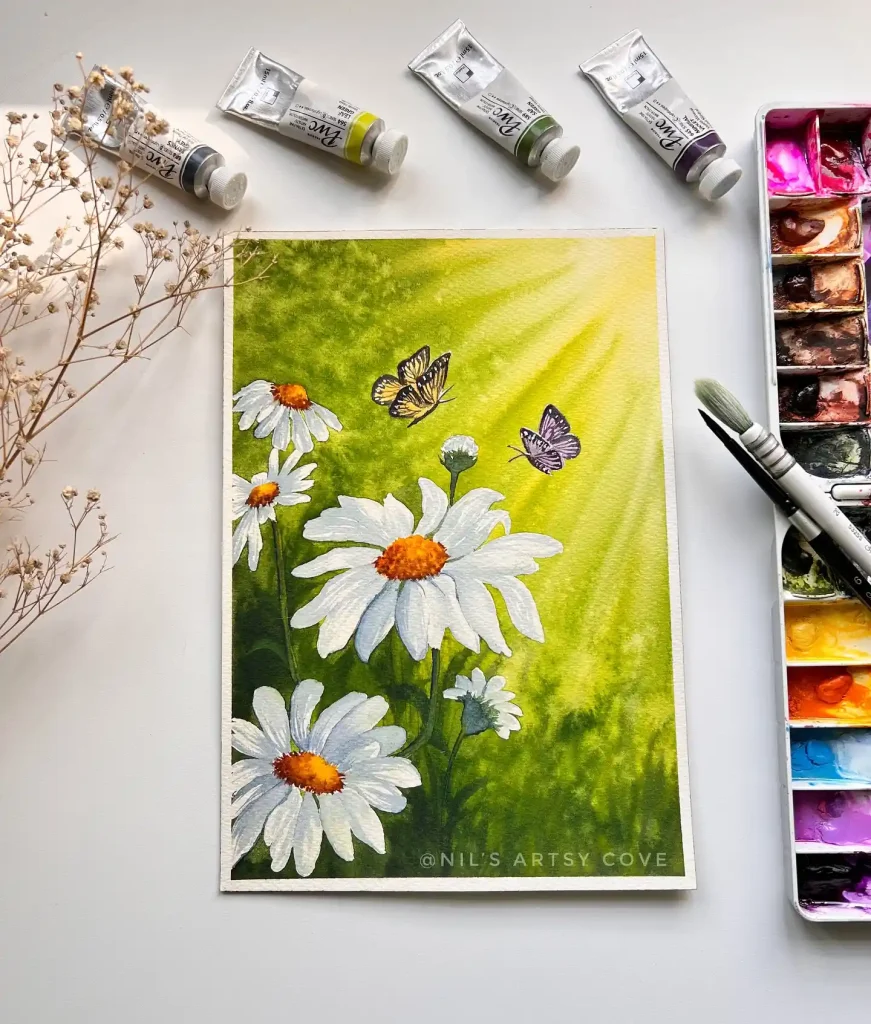
Radiant sunbeams cut through a lush green field where butterflies flutter near oversized petals. The light brings a cheerful energy to the composition, making the entire garden feel warm and alive. If you love adding insects to your florals, these watercolor butterfly drawing ideas pair perfectly with a daisy meadow. Highly saturated yellows and greens create a joyful atmosphere that celebrates the peak of springtime.
10. Botanical Study Watercolor Daisy on Cotton Paper
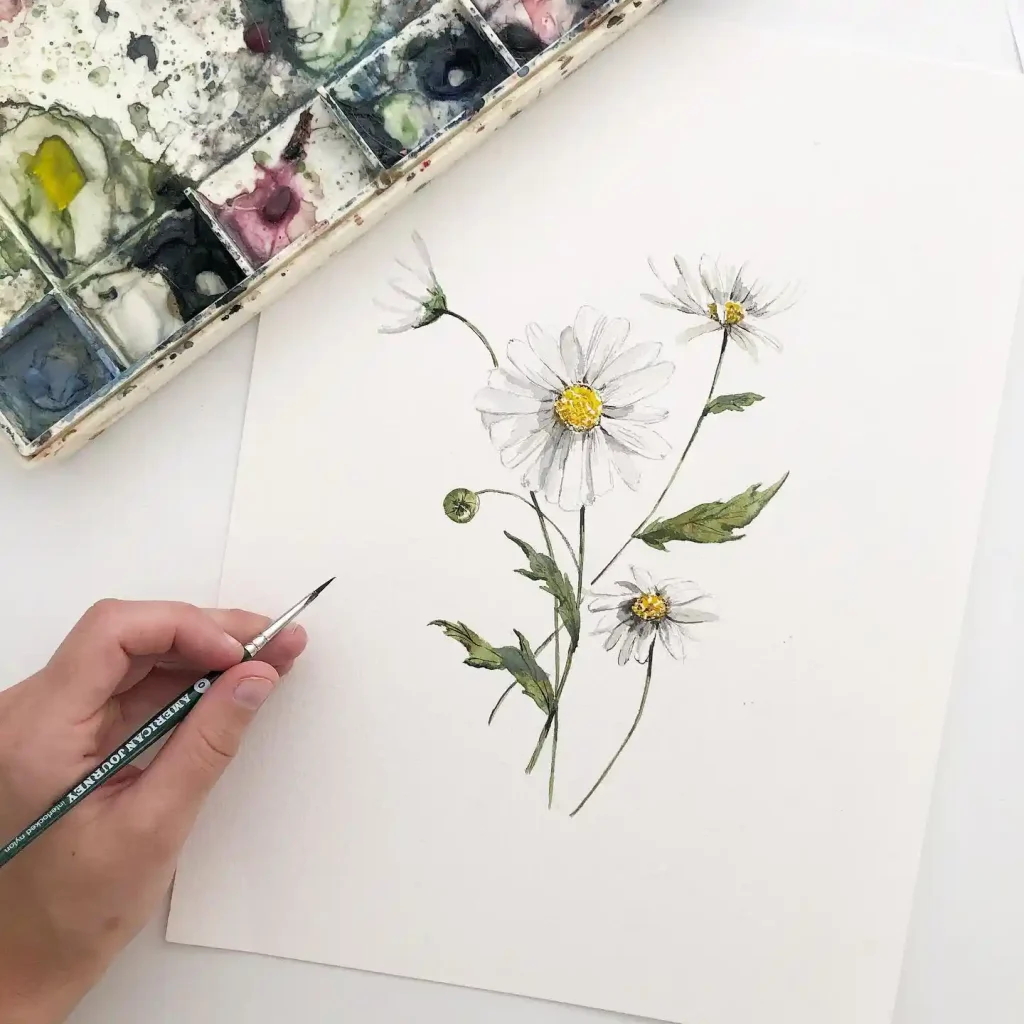
Thin, precise stems and delicate buds show the intricate anatomy of these garden favorites against a clean white background. The use of light gray shadows gives the white petals a crisp, clean look without losing their softness. This style feels like a page from a modern field guide. It focuses on the graceful lines and natural growth patterns of the plant.
11. Midnight Bloom Watercolor Daisy on Cold Pressed Paper
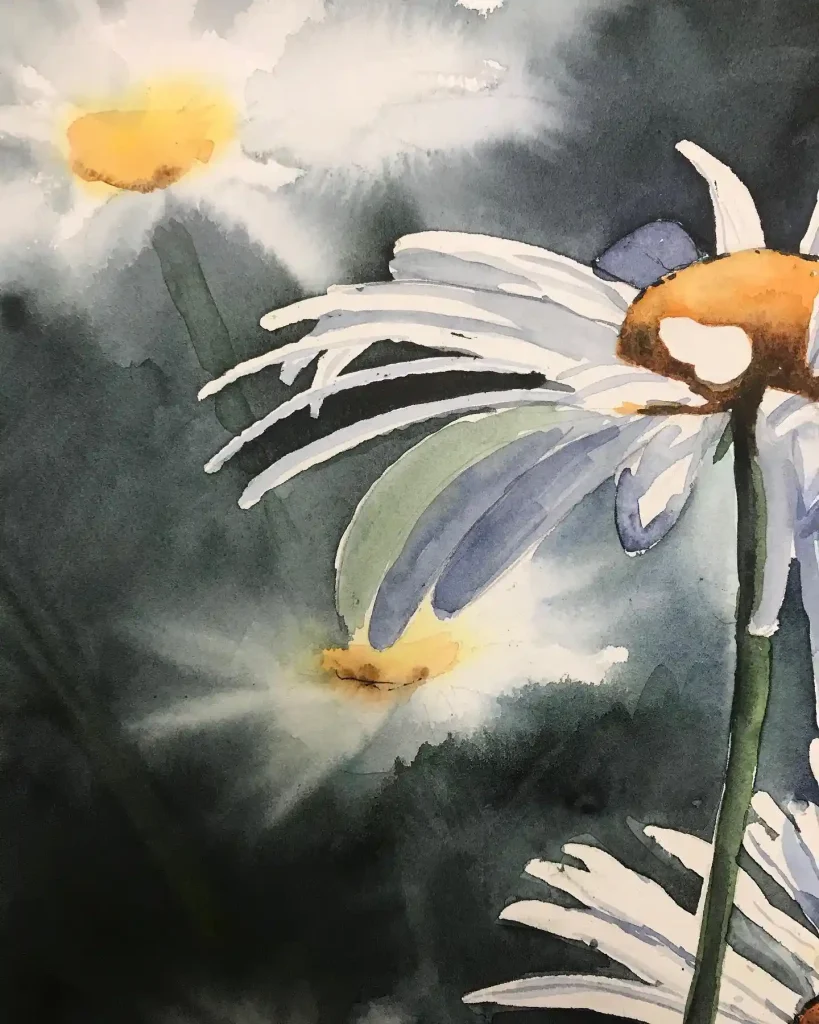
Dusk settles heavily in this piece, where deep indigo washes create a dramatic backdrop for the luminous white petals. The contrast symbolizes a light that persists even during the darkest hours. You can feel a sense of quiet strength as the flowers emerge from the shadows. The wet-on-wet technique allows the background colors to bleed softly into the floral edges.
12. Gentle Cluster Watercolor Daisy on Bright White Paper
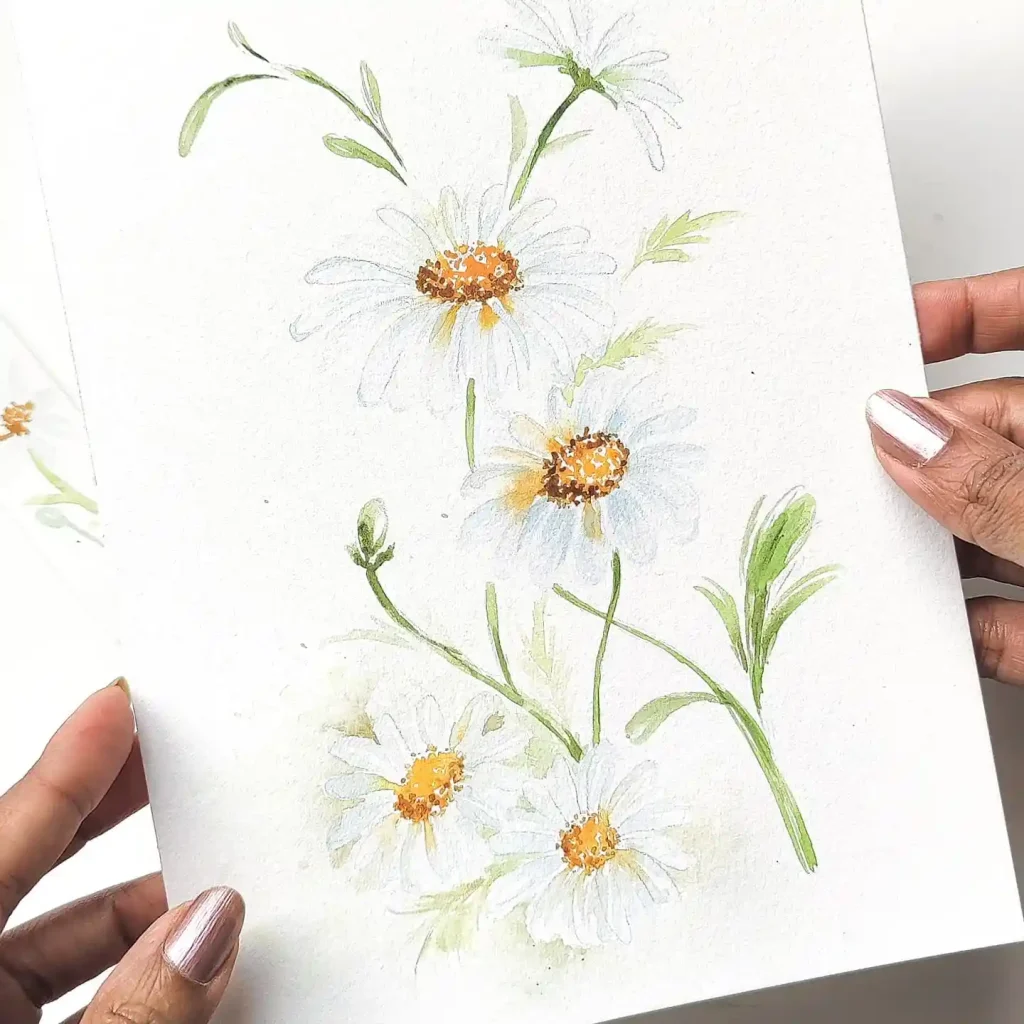
Softness reigns supreme here, with light washes and delicate pencil outlines defining a cheerful group of wildflowers. The airy composition feels like a warm spring breeze captured on a page. Every petal is treated with such tenderness that the whole image seems to glow from within. It is a wonderful example of using high-key values to create an uplifting mood.
13. Botanical Journal Watercolor Daisy on Spiral Bound Sketchbook
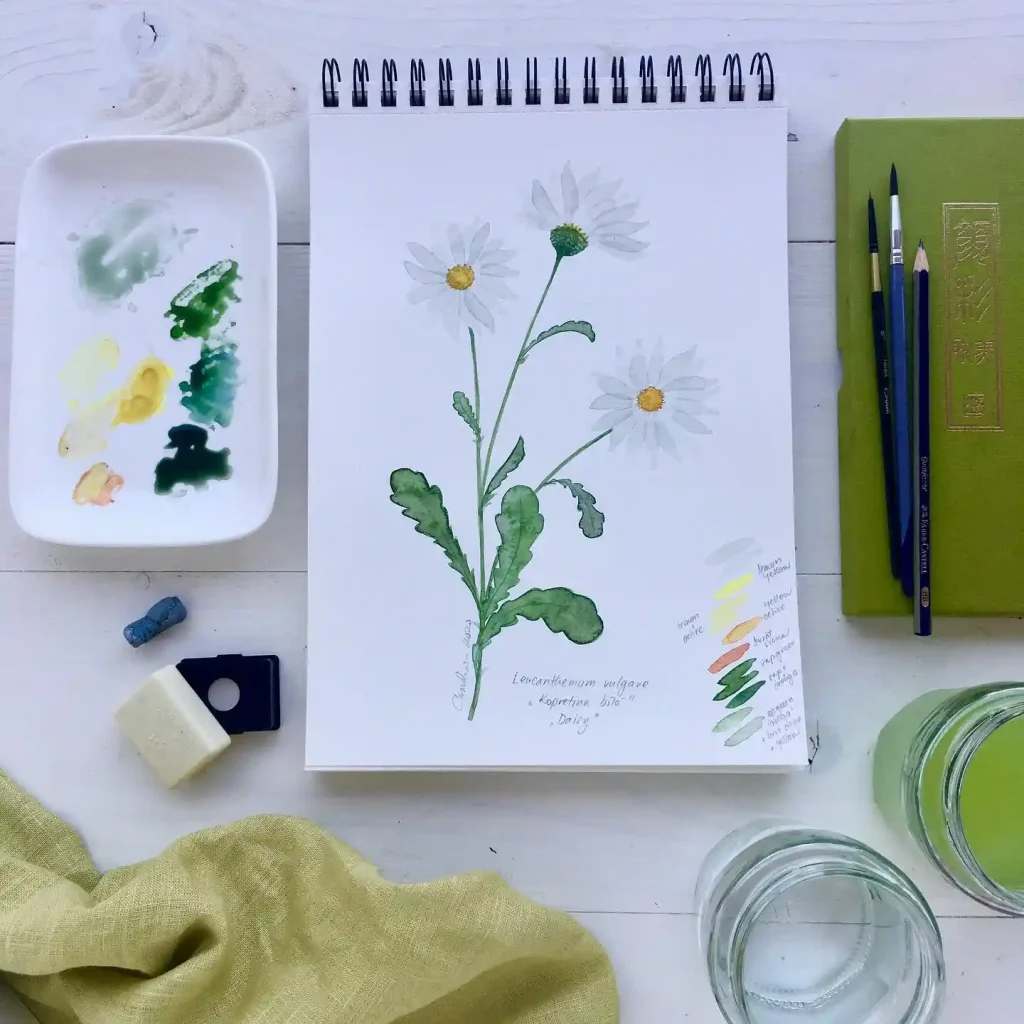
This page offers a beautiful look into the artist’s process by pairing a finished illustration with a custom color palette. The deep green leaves provide a sturdy base for the pristine white blossoms reaching upward. Observing the transition from raw pigment swatches to a life-like plant is truly inspiring. It reminds us that every masterpiece begins with simple color exploration.
14. Lone Stem Watercolor Daisy on Textured Artist Paper
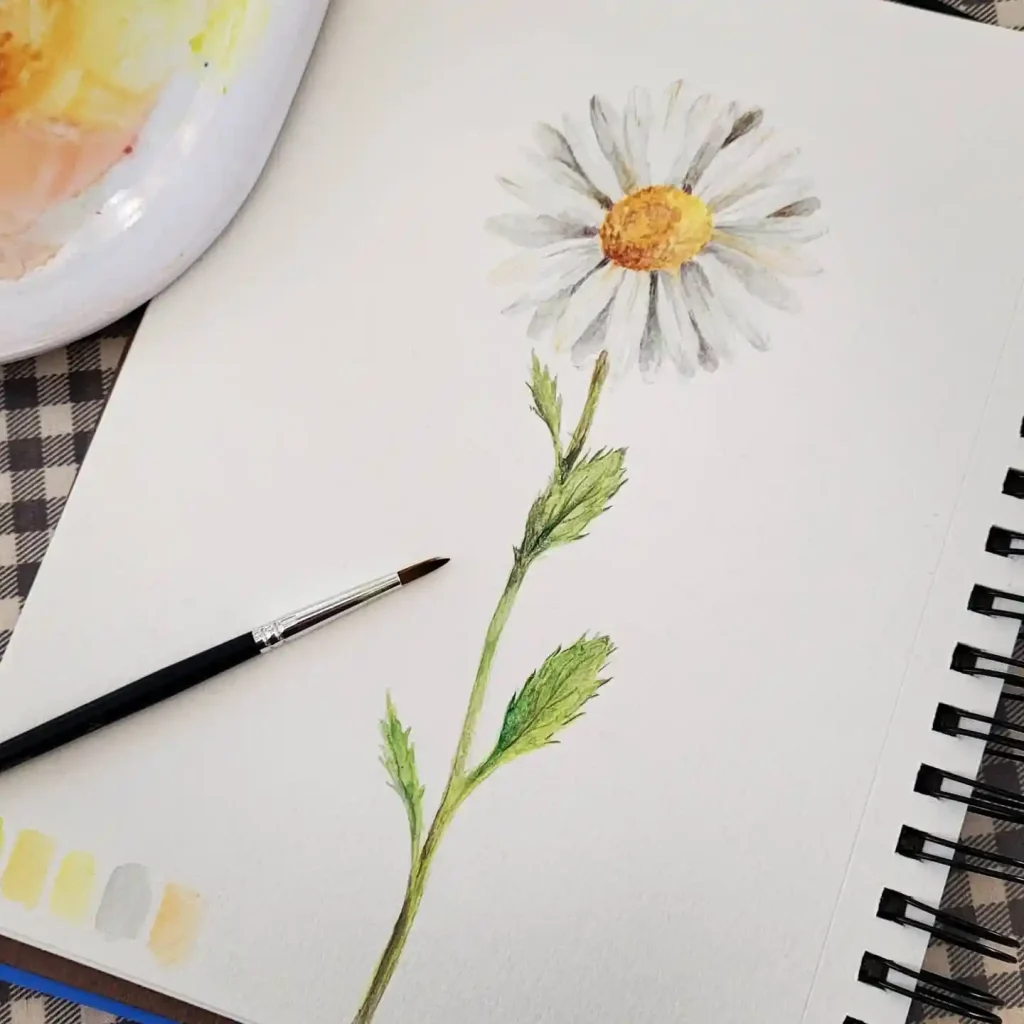
Focusing on a single subject allows the viewer to appreciate the intricate details of the textured yellow center and feathered petals. The long, slender stem adds an elegant verticality to the composition. Bright green leaves provide just enough color to ground the flower against the white space. This piece celebrates the singular beauty found in nature’s most humble, common treasures.
15. Minimalist Spirit Watercolor Daisy on Rough Grain Paper
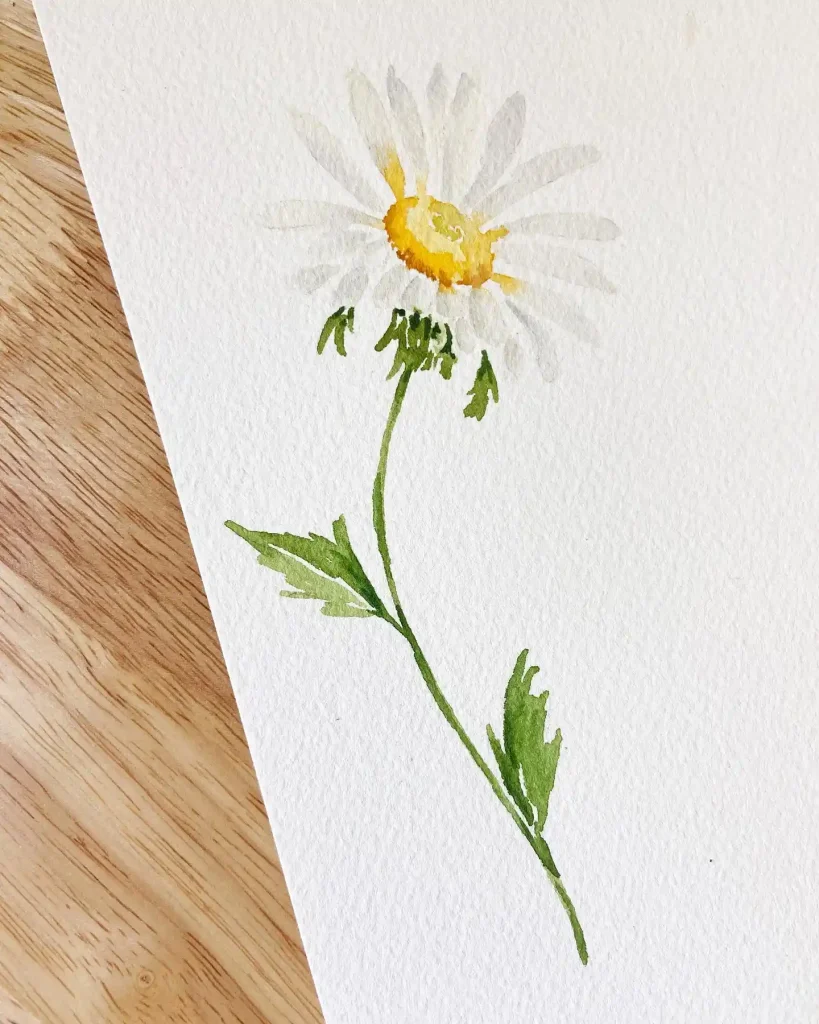
Clean lines and a limited color palette create an image that feels sophisticated and remarkably modern. The placement of the flower off-center adds a dynamic tension that keeps your eyes moving across the textured surface. By stripping away unnecessary details, the artist highlights the iconic shape of the bloom. It is a perfect study in the power of artistic restraint.
16. Artistic Precision Watercolor Daisy on Smooth Illustration Board
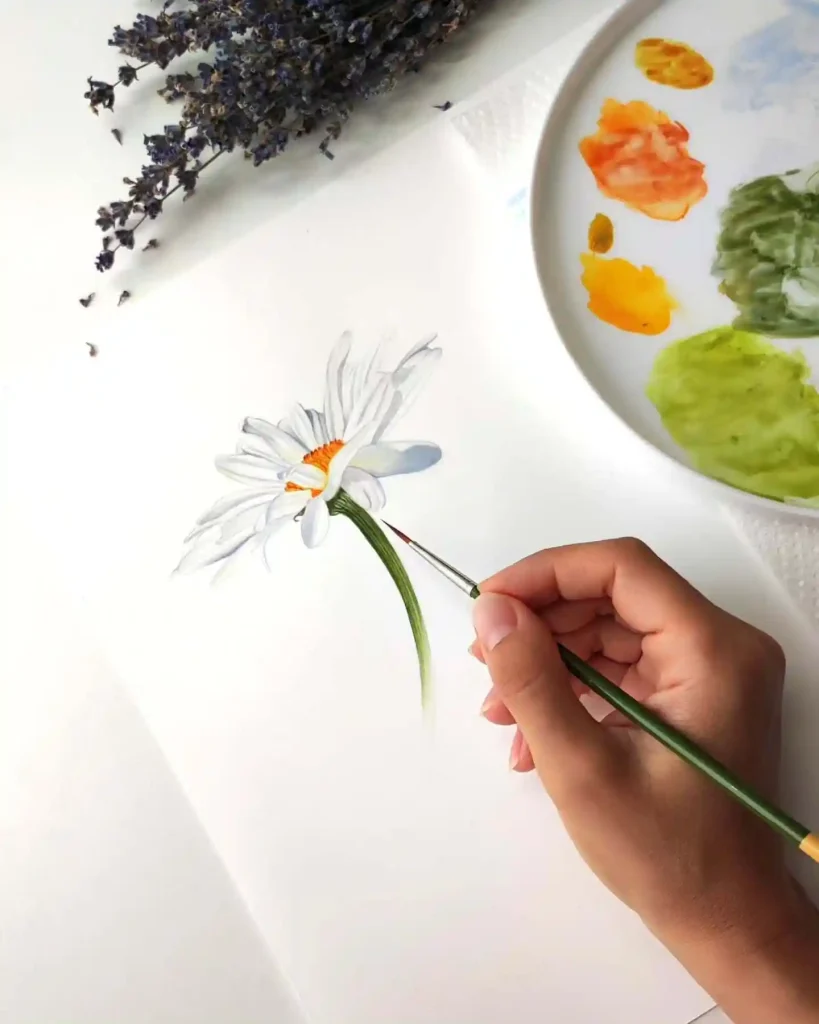
Watch as a fine-tipped brush adds the final, delicate details to a slender green stem and curving petals. The highlights on the flower head show a masterclass in light blending and shadow placement. This perspective makes you feel like you are standing right in the studio during the creative process. The blue undertones in the white paint add amazing depth.
17. Jar of Sunshine Watercolor Daisy on Heavyweight Cotton Paper
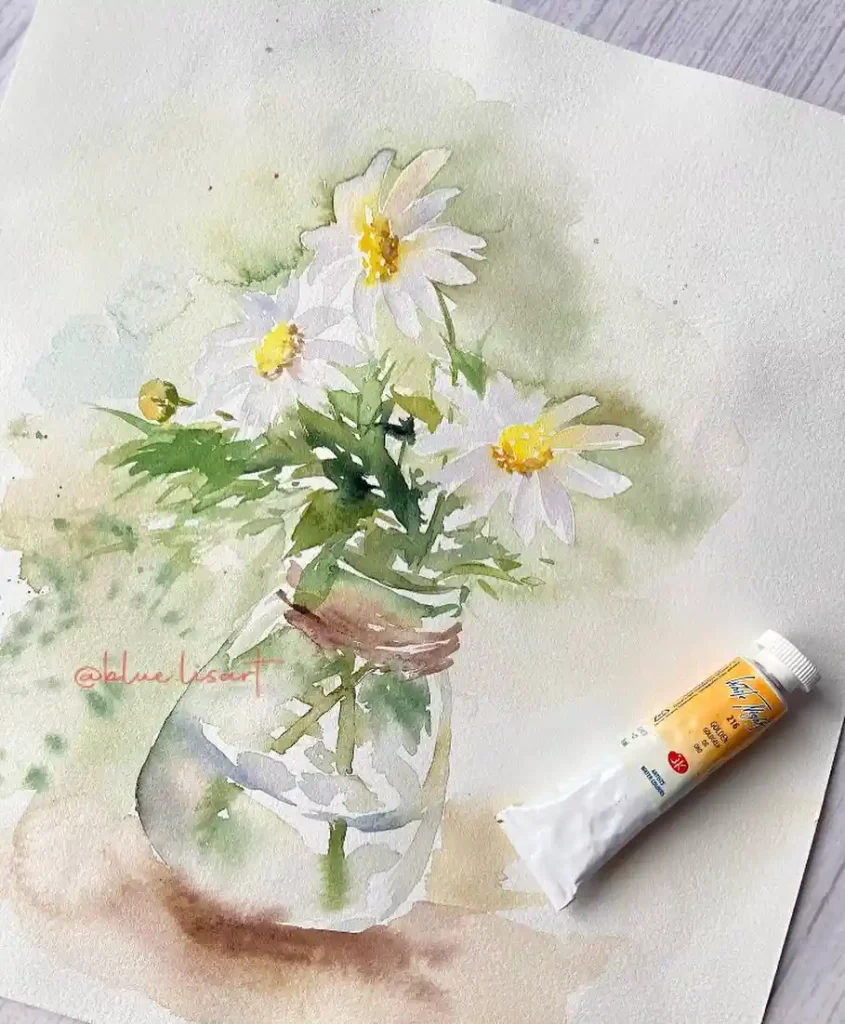
Loose brushwork and watery layers create a nostalgic scene of flowers resting in a simple glass vessel. The soft green background bleed suggests a sunlit garden just beyond the window. This reflective piece captures the simple joy of bringing the outdoors inside to brighten a room. The way the light hits the water in the jar is incredibly realistic.
18. Dreamy Field Watercolor Daisy on Soft Wash Paper
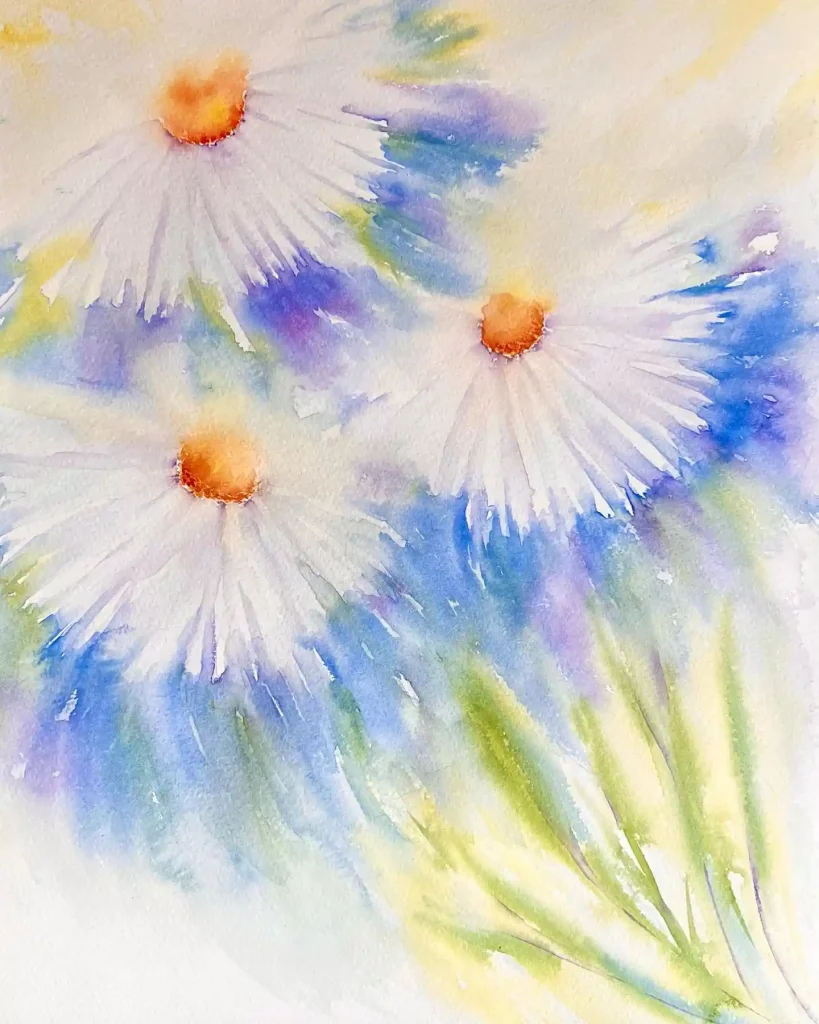
Imagine walking through a foggy meadow where the flowers seem to dissolve into a hazy sky of blue and violet. This dreamy, atmospheric style works beautifully for other soft subjects too, like these calming watercolor lavender drawing ideas. This imaginative piece uses blurred edges and bleeding pigments to create a sense of wonder. The centers of the flowers glow like tiny suns through the mist.
19. Earthy Duo Watercolor Daisy on Toned Art Card
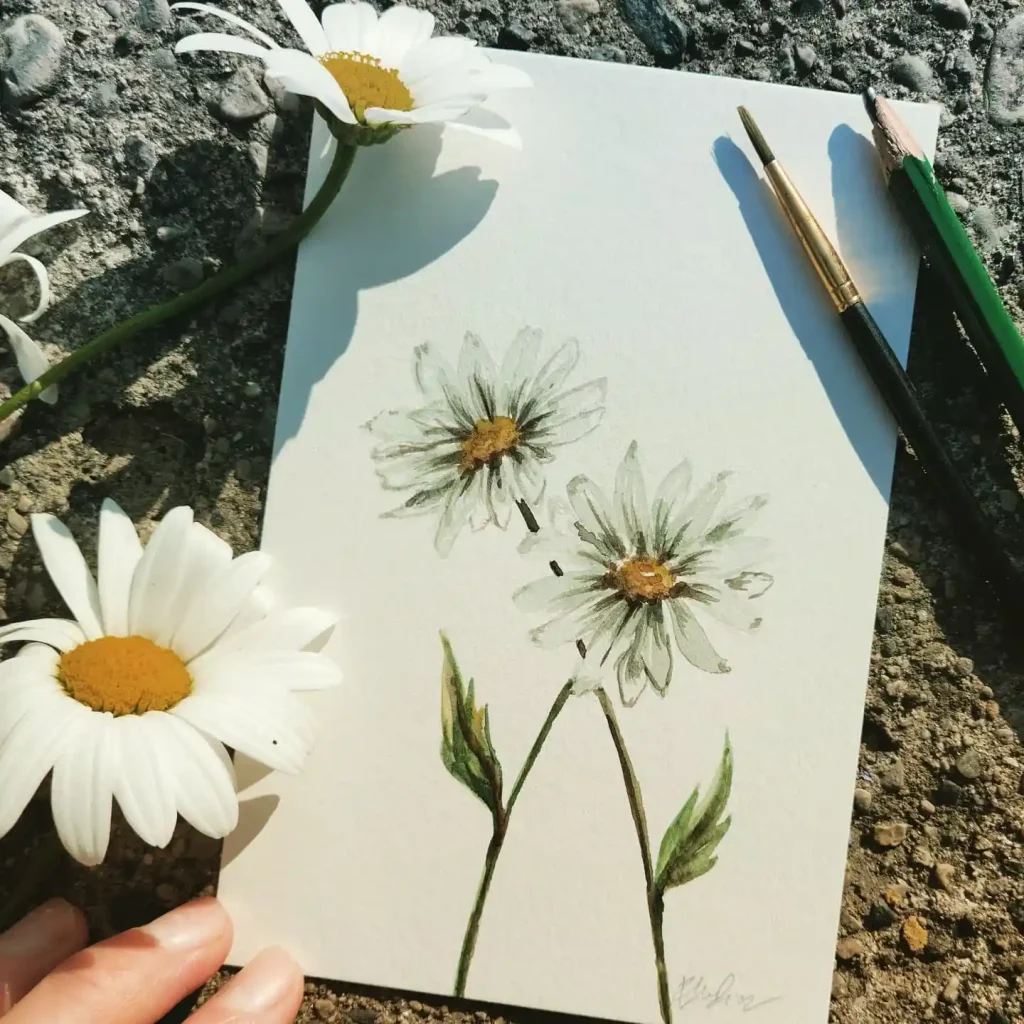
Two small blooms stand side by side in this charming study that emphasizes natural, muted tones and organic shapes. The darker green leaves provide a lovely weight to the bottom of the composition. Real flowers placed nearby highlight the artist’s ability to capture life-like textures with paint. This relaxed approach makes the art feel very accessible and truly grounded.
20. Simple Elegance Watercolor Daisy on White Cardstock
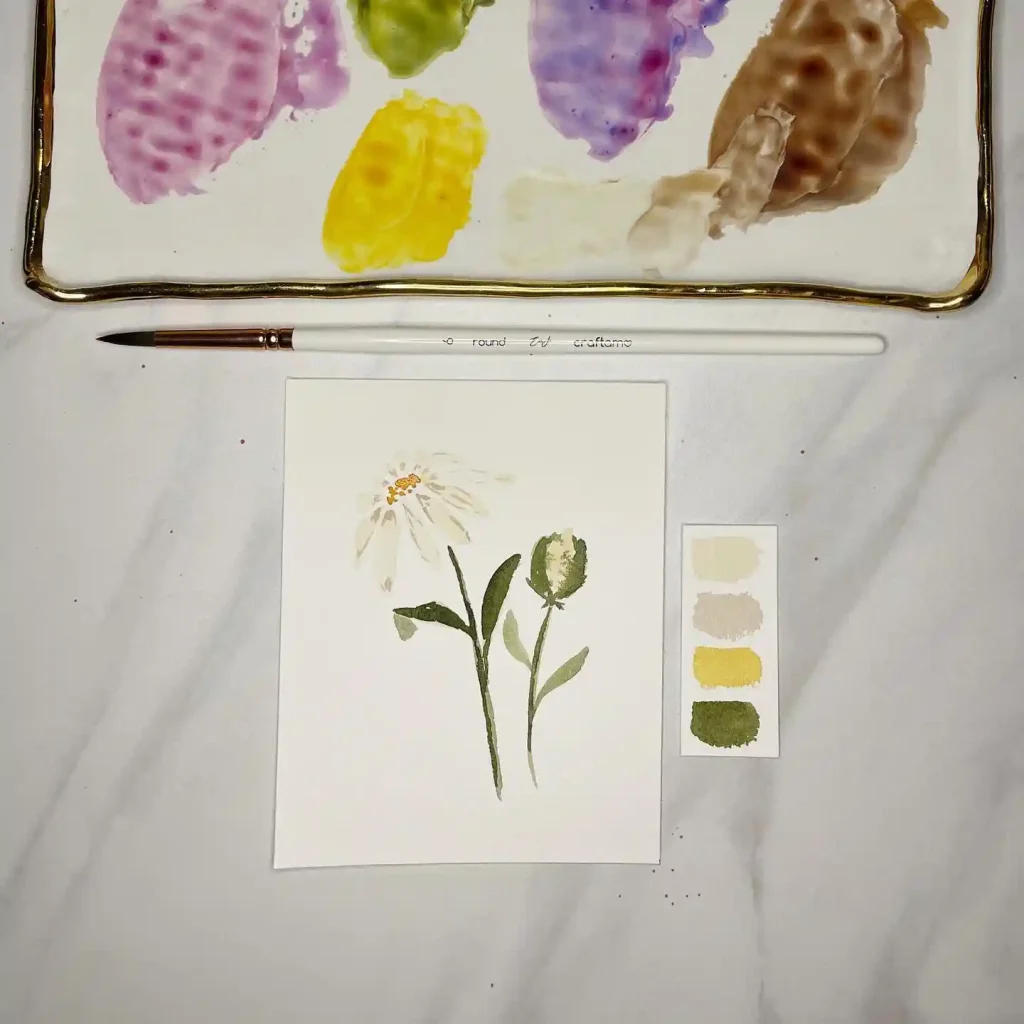
Small paint swatches next to a solitary bloom reveal the specific greens and yellows used to build this delicate image. The unpainted white paper serves as the perfect highlight for the petals, making them look crisp and fresh. This educational layout helps beginners understand how a few choice colors can create a full story. It is a lovely, quiet observation.
21. Lakeside Meadow Watercolor Daisy on Bound Sketchbook Paper
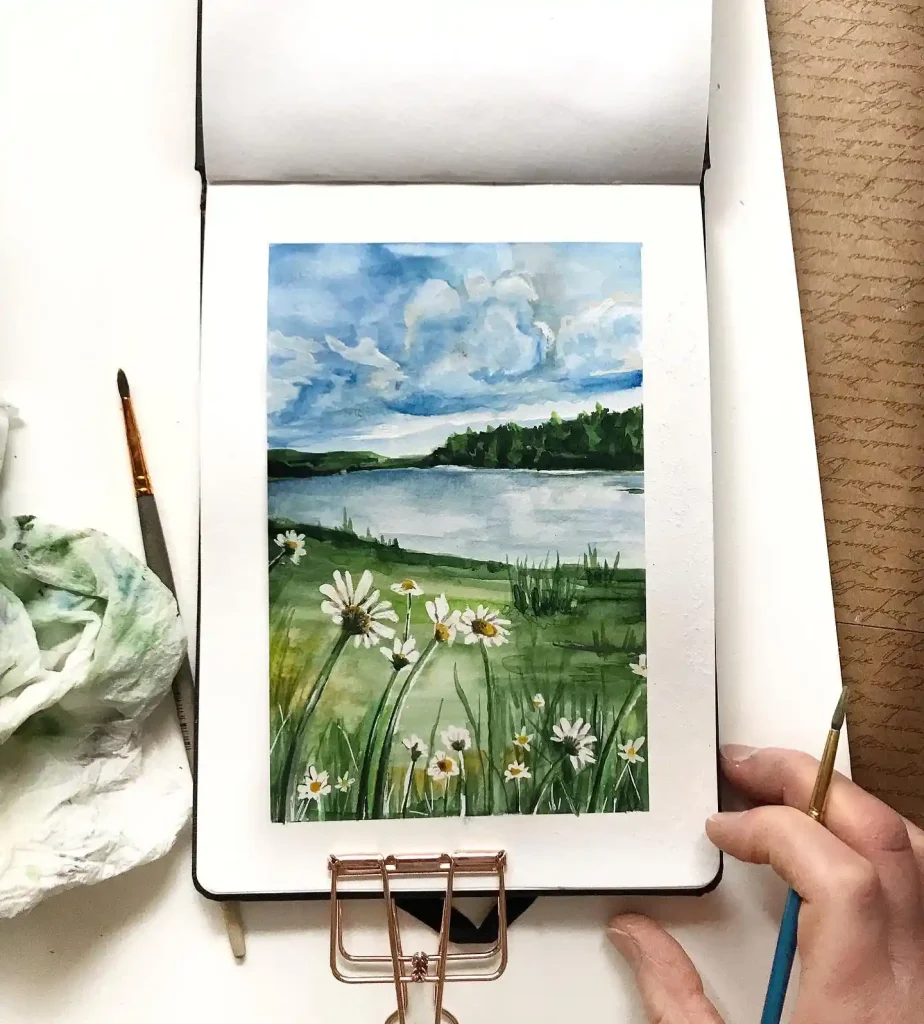
Towering clouds gather over a tranquil lake while white blossoms dance in the foreground greenery. This visual storytelling approach makes you feel like you are standing at the water’s edge during a brewing summer storm. The heavy indigo sky contrasts beautifully with the bright floral highlights. It captures a fleeting moment of natural drama where the earth feels quiet and very expectant.
22. Sunlit Profile Watercolor Daisy on Grained Art Paper
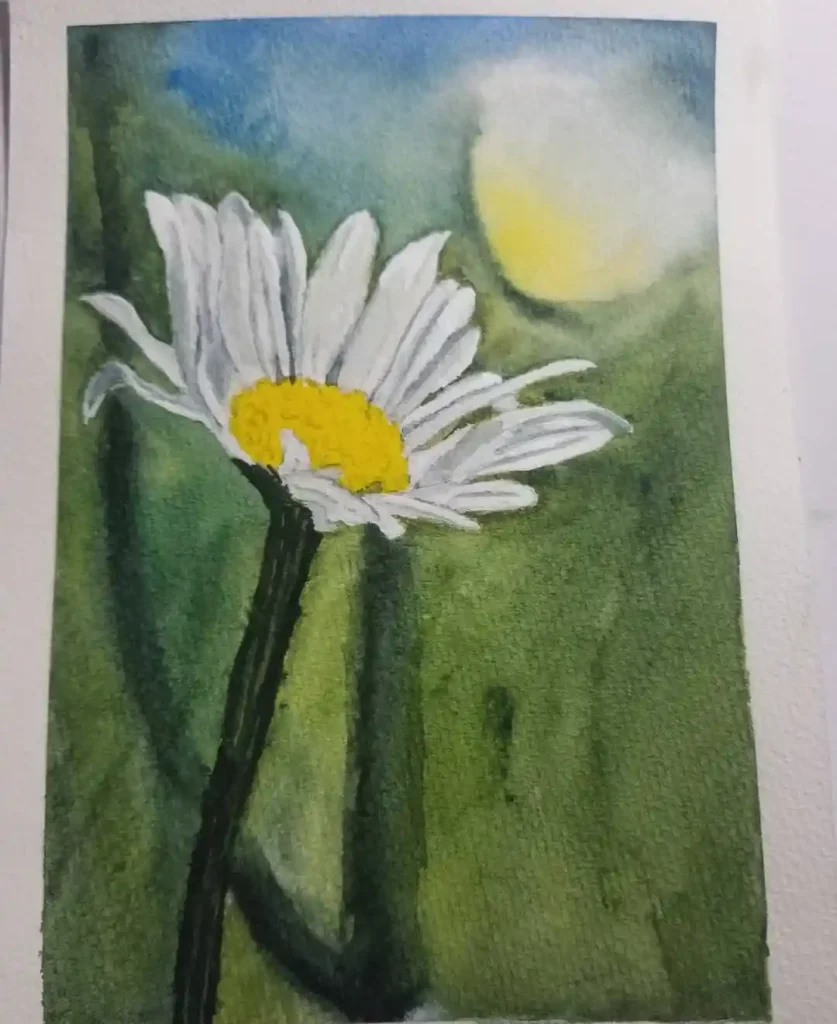
Glowing light from a soft yellow sun spills across the background of this intimate floral study. One large bloom turns slightly away, its textured yellow heart catching the warmth of the morning. This reflective piece invites us to slow down and appreciate the quiet dignity of a single flower. The blurred green tones behind it create a wonderful sense of depth.
23. Bold Contrast Watercolor Daisy on Heavy Illustration Board
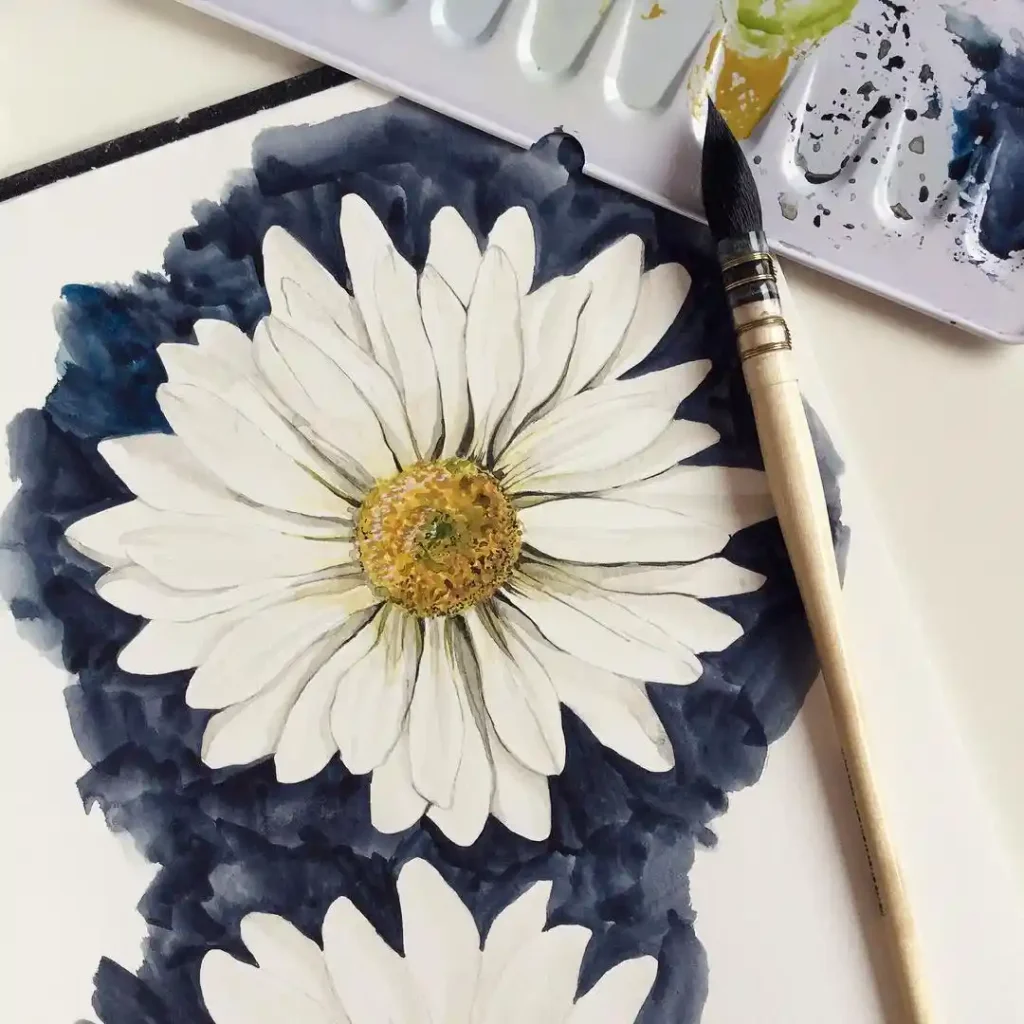
Ink-like indigo washes swirl around the edges of these pristine white petals, creating a powerful and modern focal point. The artistic brushwork in the center of the bloom shows incredible texture using tiny dots of gold and ochre. This high-contrast composition feels both sophisticated and energetic. It is a fantastic example of how a dark background can make white subjects pop.
24. Peachy Trio Watercolor Daisy on Smooth Mixed Media Paper
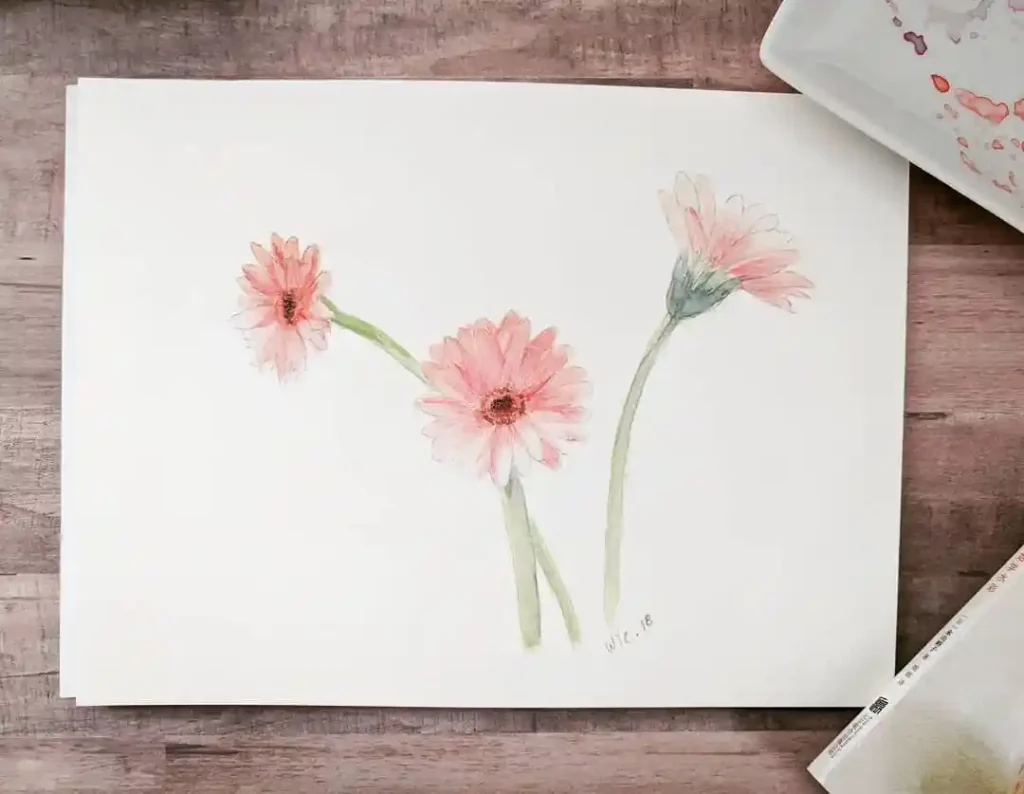
Soft pink and peach tones give these long-stemmed flowers a gentle, whimsical personality that feels light as air. The playful arrangement of the three stems creates a natural sense of rhythm across the wide white space. These colors remind me of early morning light in a suburban garden. It is a sweet, simple take on traditional floral themes for any room.
25. Warm Gold Watercolor Daisy on Textured Cold Pressed Paper
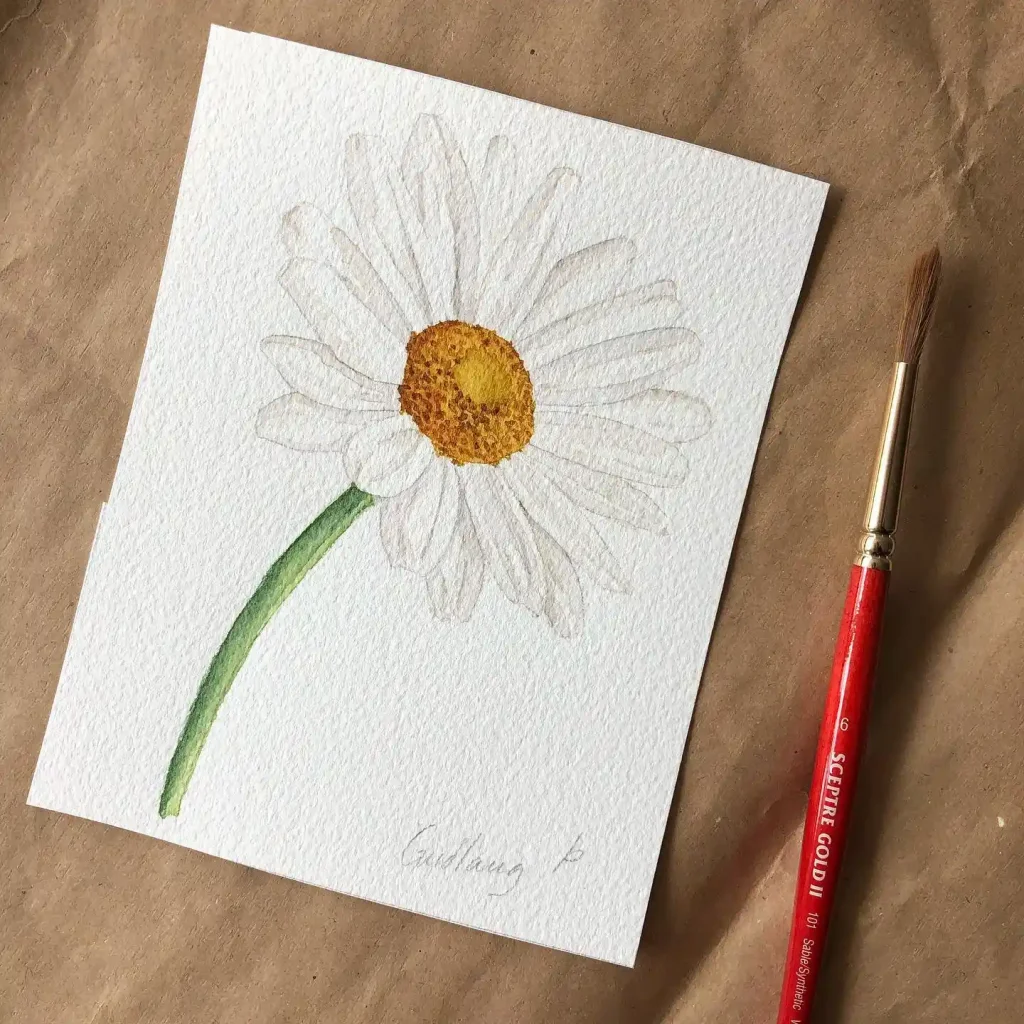
Granulated paint textures in the golden center provide a tactile quality that makes this single flower feel incredibly real. A slender green stem curves gracefully toward the bottom corner, balancing the large head of the bloom. This minimal and modern design focuses entirely on the organic beauty of the plant. The unpainted petals look crisp against the natural paper grain.
26. Lavender Shadows Watercolor Daisy on Bright White Cardstock
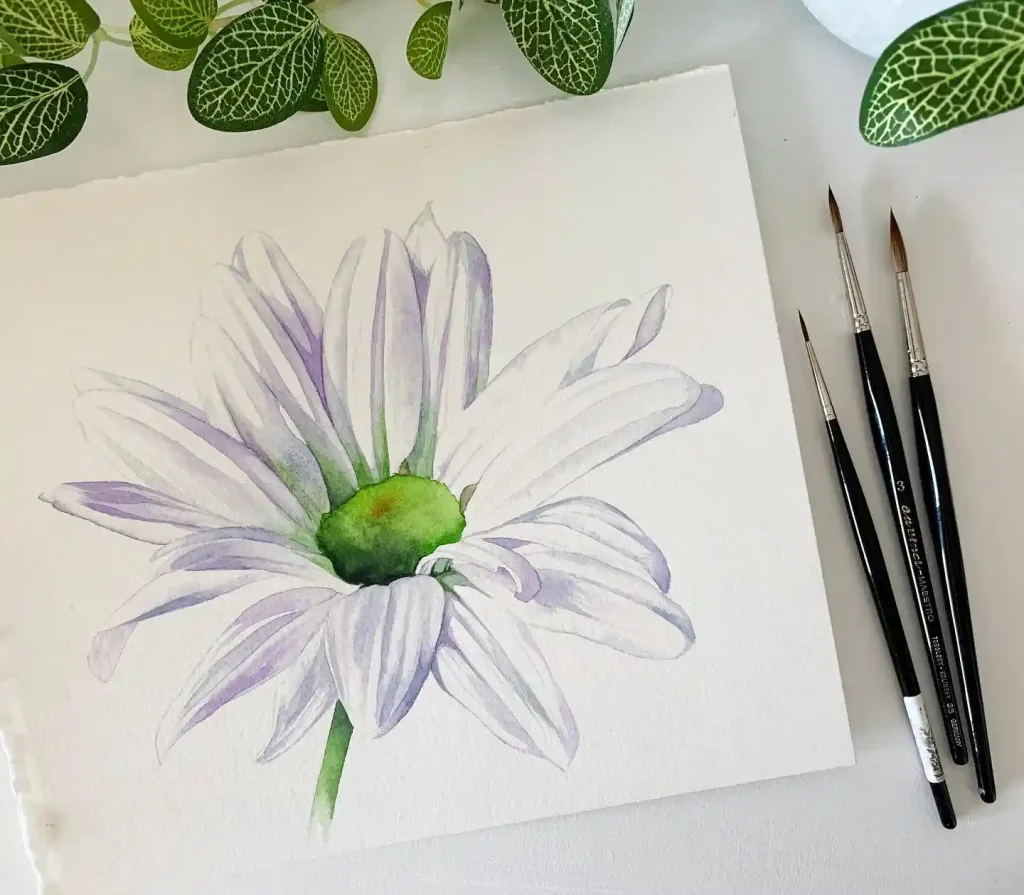
Cool purple and blue hues hide within the shadows of these white petals, adding a layer of unexpected complexity. The artistic blending of the lime green center creates a fresh and vibrant focal point. Seeing the brushes resting nearby gives us a great look at the scale of this piece. It feels like a very elegant and carefully observed botanical study.
27. Soft Purple Watercolor Daisy on Textured Drawing Paper
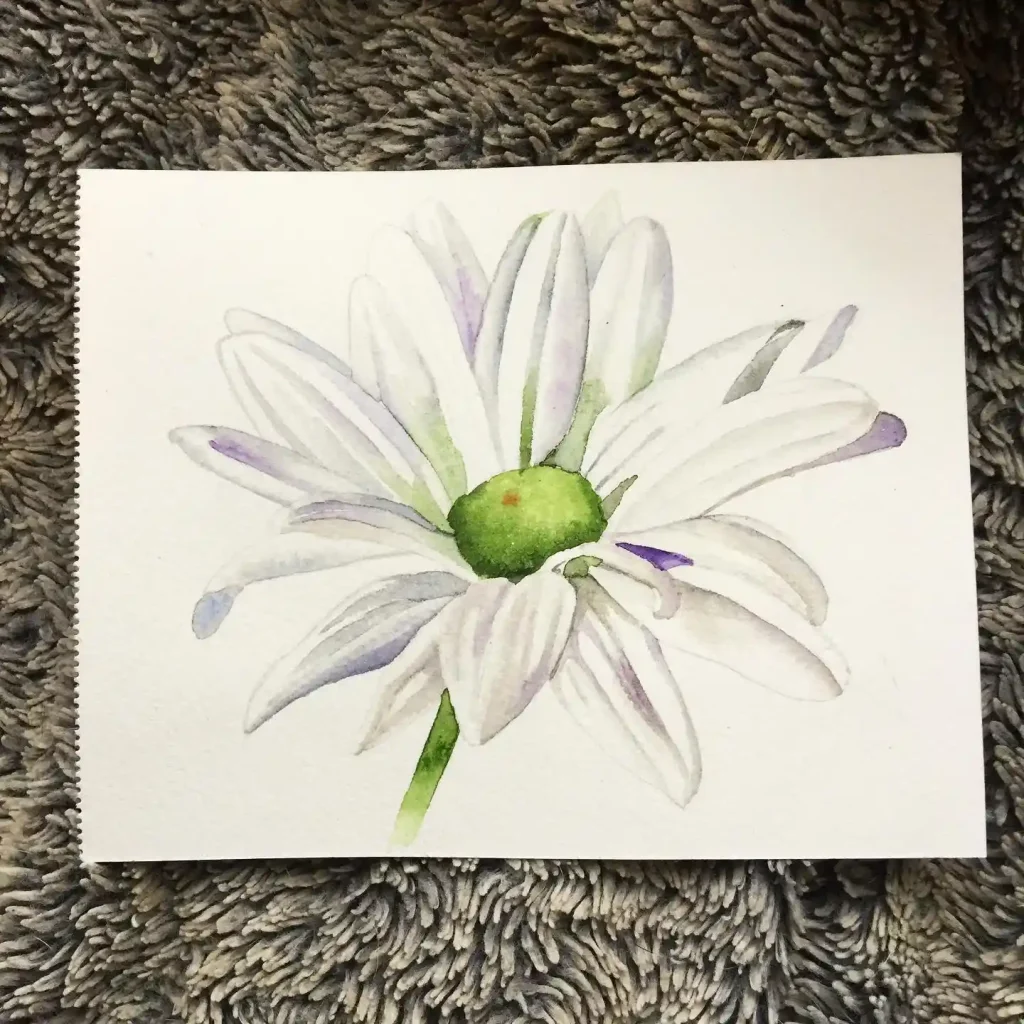
Gentle violet streaks and green undertones bring a dreamlike quality to this wide-open blossom. The imaginative use of color within the white petals suggests a nearby garden filled with competing blooms. Every stroke feels purposeful yet soft, resulting in a very peaceful image. This composition is perfect for those who enjoy a more romantic and delicate approach to floral art.
28. Rose Garden Watercolor Daisy on Heavyweight Artist Paper
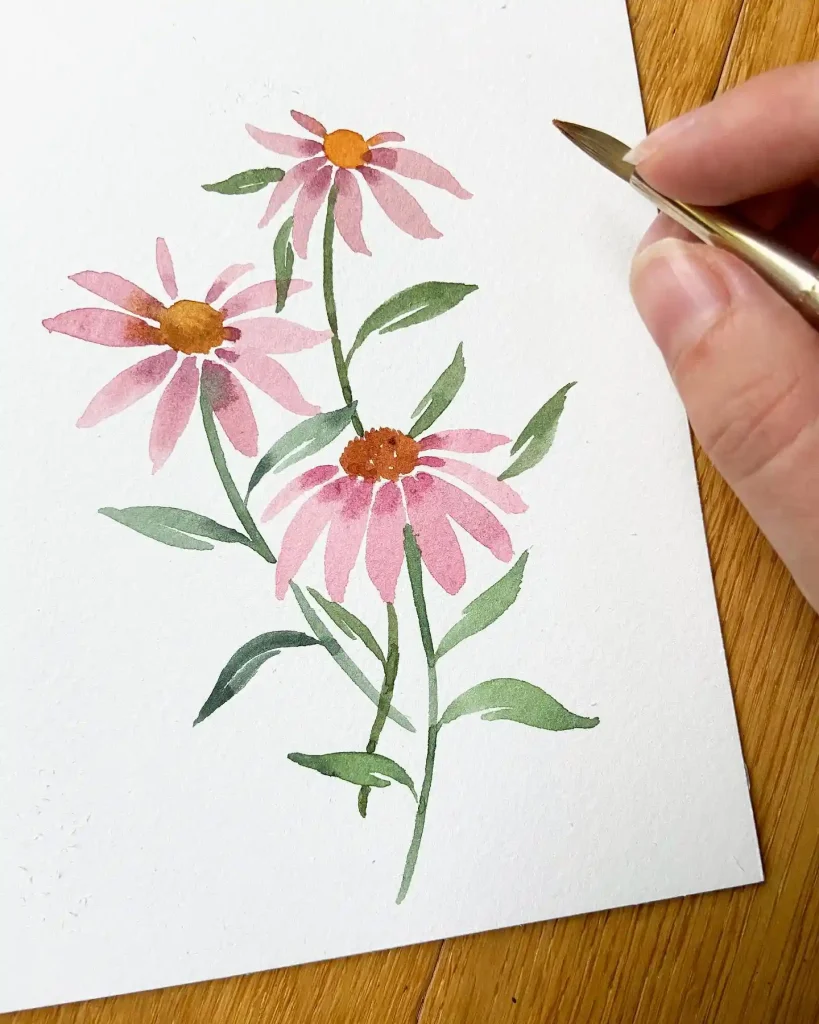
Vibrant magenta and rose pinks bleed into the petals, making these flowers feel like a cross between a daisy and a coneflower. If those warm pinks appeal to you, explore these classic watercolor rose drawing ideas next. The educational layout shows how a fine-tipped brush can define delicate leaf structures and slender stems. These warm colors symbolize energy and growth in a sunny meadow.
Related Watercolor Flower Drawing Ideas
- Watercolor marigold drawing ideas — cheerful, beginner-friendly blooms
- Cherry blossom drawing ideas for delicate spring florals
- Elegant watercolor orchid drawing ideas for petal detail practice