Watercolor roses bloom with expressive beauty on paper, transforming simple brushstrokes into delicate floral poetry. Each petal becomes a meditation on color, light, and the gentle art of observation. If you love painting blooms, you’ll also enjoy these watercolor cherry blossom drawing ideas for more floral inspiration.
Mastering these flowers builds confidence in wet-on-wet techniques and color harmony that elevates all your artwork. You’ll discover how water carries pigment like morning dew across petals, creating natural gradients that breathe life into your paintings.
This guide shares proven methods and fresh inspiration that artists use daily. Whether painting your first bud or refining botanical mastery, these ideas will blossom your skills. Once you’ve mastered roses, try expanding your botanical range with these elegant watercolor orchid drawing ideas and vibrant marigold painting techniques.
How do you paint loose watercolor roses?
- Load your brush with two colors for natural petal gradients without mixing on palette
- Use a round brush size 6-8 for ideal petal shapes and control
- Apply paint to damp paper, not soaking wet, for soft, bleeding edges
- Create petals with single, confident curved strokes using your whole arm
- Tilt your board 15-30 degrees to let colors merge organically
- Leave white spaces between petals for breathing room and light
- Add darker centers while paint is still wet for seamless blending
- Practice five-minute rose drills daily to build muscle memory
- Use the tip of your brush for delicate edge details and texture
- Avoid overworking; loose style thrives on spontaneity and freshness
- Drop in secondary colors like purple or blue for realistic variations
- Keep a spray bottle handy to reactivate edges and create soft effects
- Study real roses to understand petal placement and natural growth patterns
- Work from light to dark, adding shadows last for depth
- Remember that imperfections create character and artistic authenticity
- Use a larger brush than you think you need to prevent tight, fussy strokes
- Hold your brush further back on the handle for looser, more fluid movements
- Time your strokes; work quickly while paper is in the perfect moisture state
What are the best color combinations for watercolor roses?
- Mix permanent rose with a touch of cadmium red for vibrant pink roses that pop
- Add ultramarine blue to red for deep burgundy shadows with natural depth
- Use cadmium yellow for warm highlights on yellow roses and petal edges
- Create coral roses with permanent rose plus cadmium orange for sunset effects
- For white roses, use pale blue and lavender shadows instead of gray
- Mix colors on paper, not palette, for natural variation and soft transitions
- Test all mixes on scrap watercolor paper before committing to your painting
- Keep colors clean; use separate water cups for warm and cool tones
- Layer transparent glazes of the same color for luminous depth
- Add a touch of green to red for muted, antique tones with character
- Consider light source temperature when selecting warm or cool shadows
- Use complementary colors in shadows for realistic color vibration
- Pre-mix puddles of your main colors to maintain consistency
- Record successful combinations in a sketchbook for future reference
- Remember that rose colors shift dramatically in different lighting conditions
- Add a speck of purple to shadows for richness and complexity
- Use quinacridone pigments for transparent, vibrant layers
- Keep your lightest lights by preserving white paper strategically
Ready to paint your first watercolor rose? Grab your brush and try a loose five-petal bloom today. Every expert started with one stroke. Share your creation and watch your garden grow!
1. Traditional Red Rose Bloom on Arches Cold Press Paper
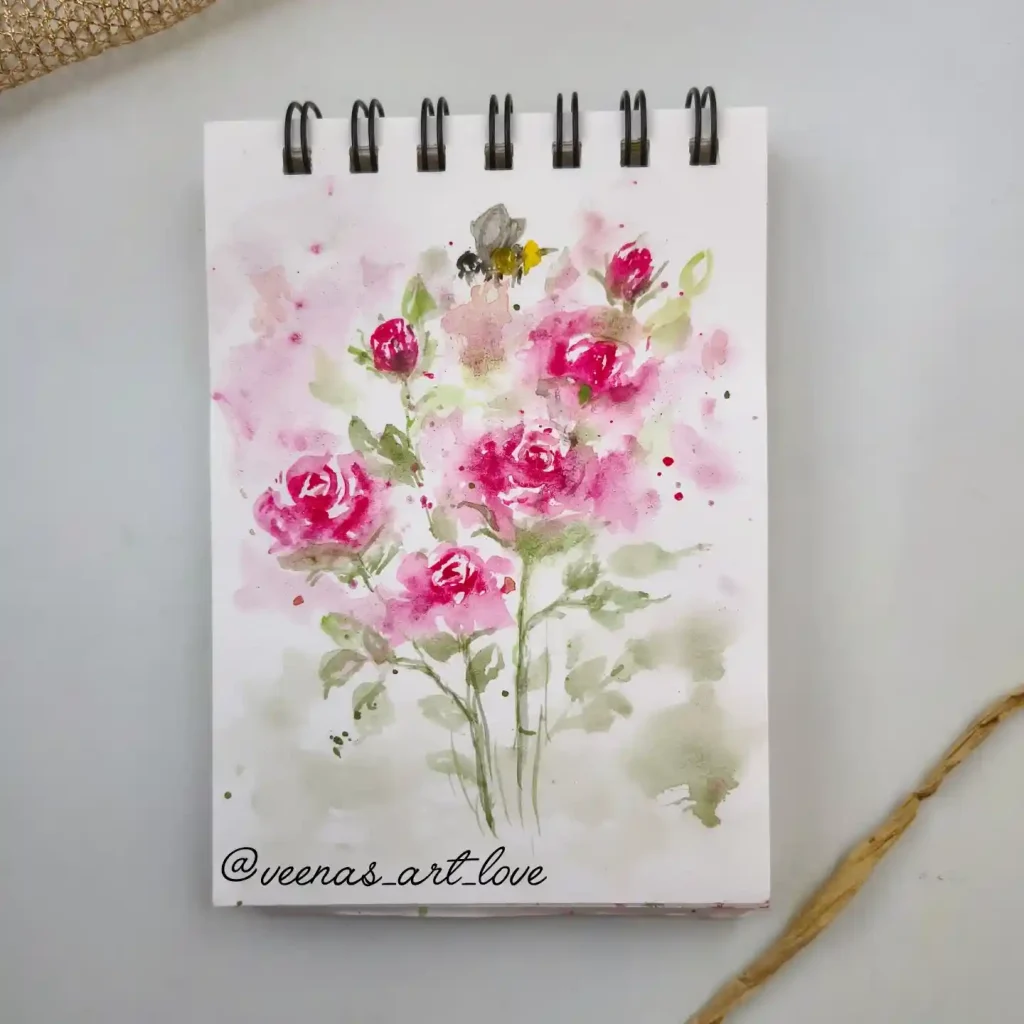
This classic red rose stands as a timeless symbol of passionate love and devotion. The artist used deep crimson washes and intricate petal layering to create a sense of velvety depth. A single, sturdy green stem grounds the composition, emphasizing the artistic meaning of endurance. It is a stunning, informative study of botanical symmetry that feels both romantic and incredibly lifelike.
2. Ethereal Pink Rose Bud on Smooth Artist Board
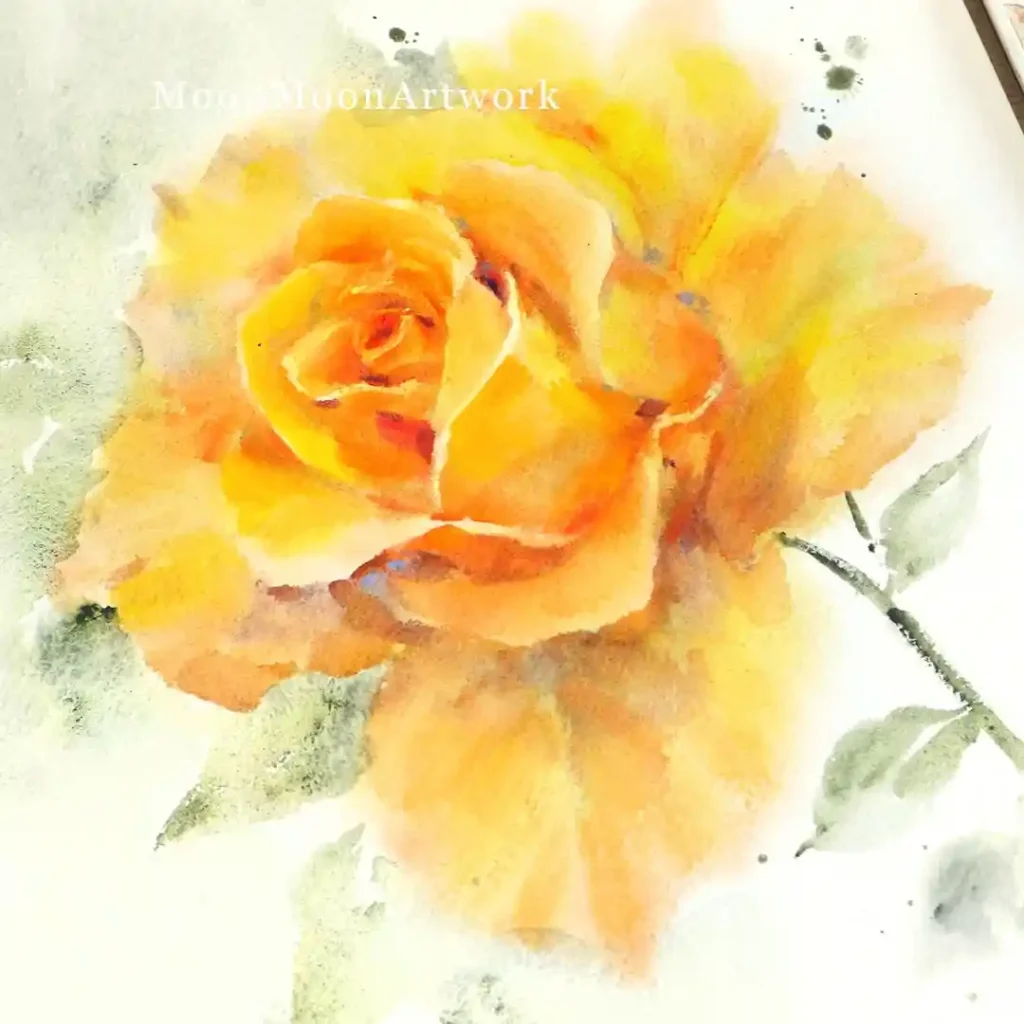
Soft, pale pink petals unfurl in this delicate drawing, symbolizing grace and the beauty of new beginnings. The artist explored a minimalist approach, using transparent layers to mimic the fragility of real flowers. Note how the light touches the edges of the bud, adding a luminous, dreamlike quality. This piece is a lovely artistic celebration of youth and simple garden elegance.
3. Vibrant Yellow Rose Trio on Textured Art Paper
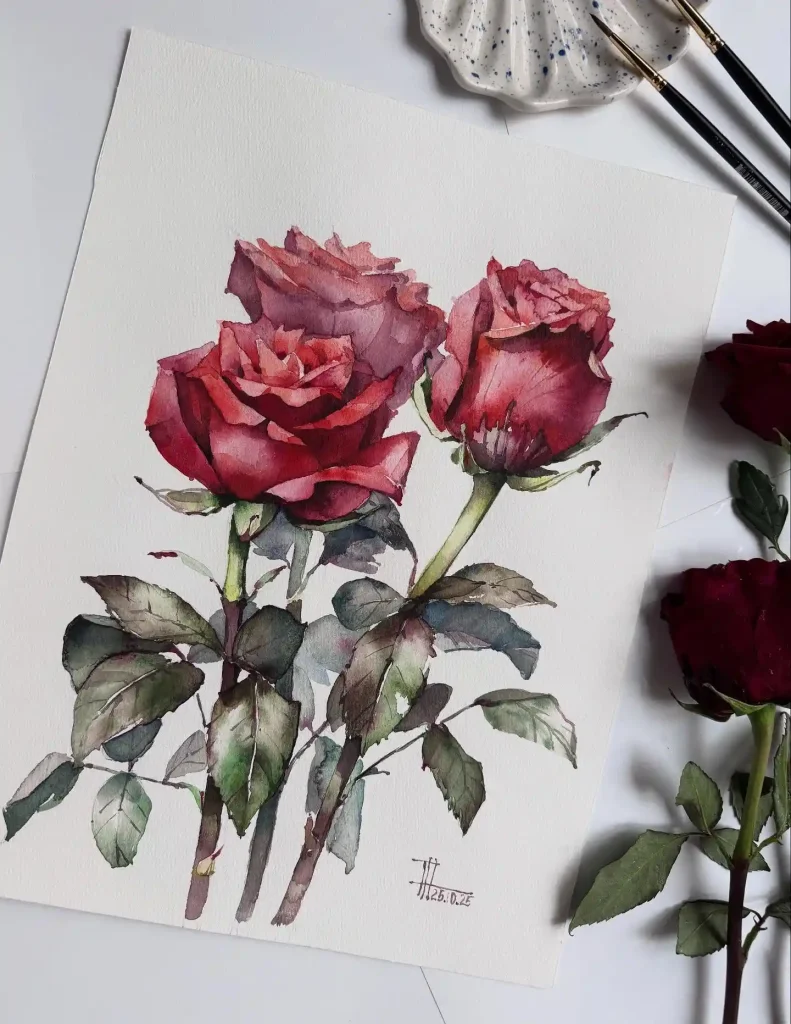
Bright yellow blooms pop against a neutral background, representing friendship and the cultural joy of a sunny afternoon. This playful illustration uses bold brushstrokes and high-contrast shadows to give the roses a modern, energetic feel. The artistic arrangement suggests a hand-picked bouquet. It serves as a cheerful reminder of the warmth and happiness found in a well-tended suburban garden.
4. Moody Purple Rose Silhouette on Heavyweight Cotton Paper
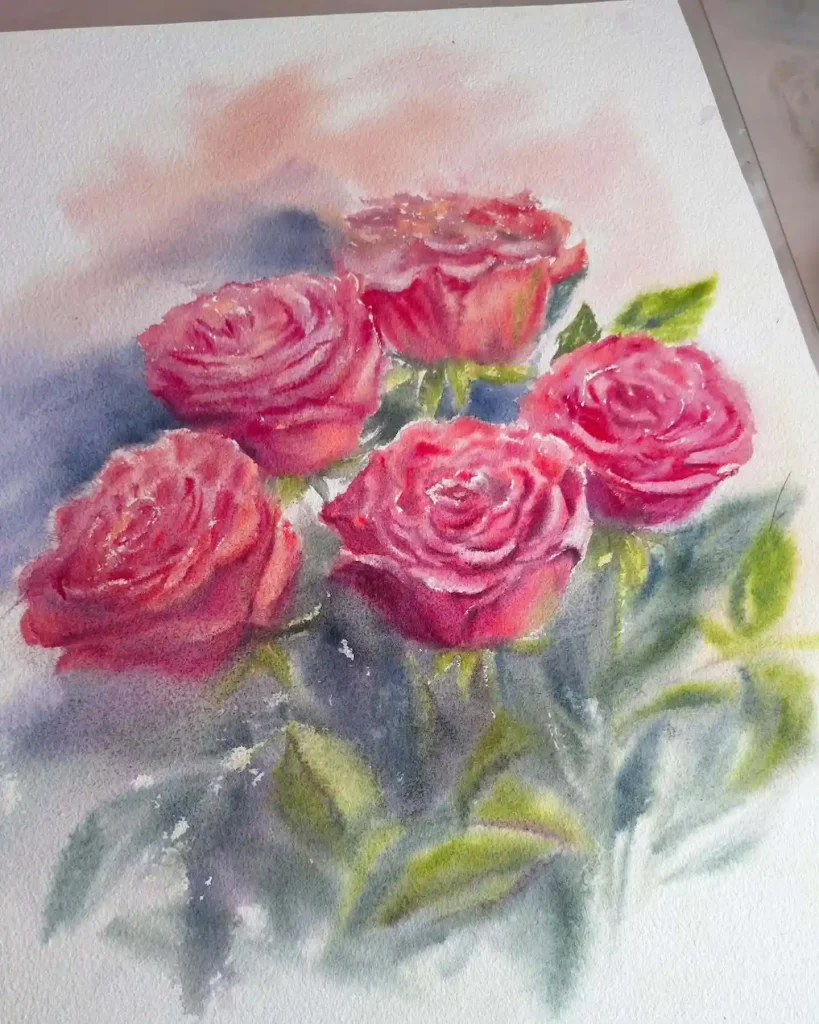
Deep violet and plum tones merge in this atmospheric study, symbolizing mystery and enchantment. The artist utilized wet-on-wet techniques to create soft, bleeding edges that suggest a rose seen through a morning mist. This artistic perspective focuses on mood and color theory rather than strict botanical form. It is a hauntingly beautiful piece that captures the soulful side of nature.
5. Sun-Dappled Orange Rose on Premium Watercolor Sheet
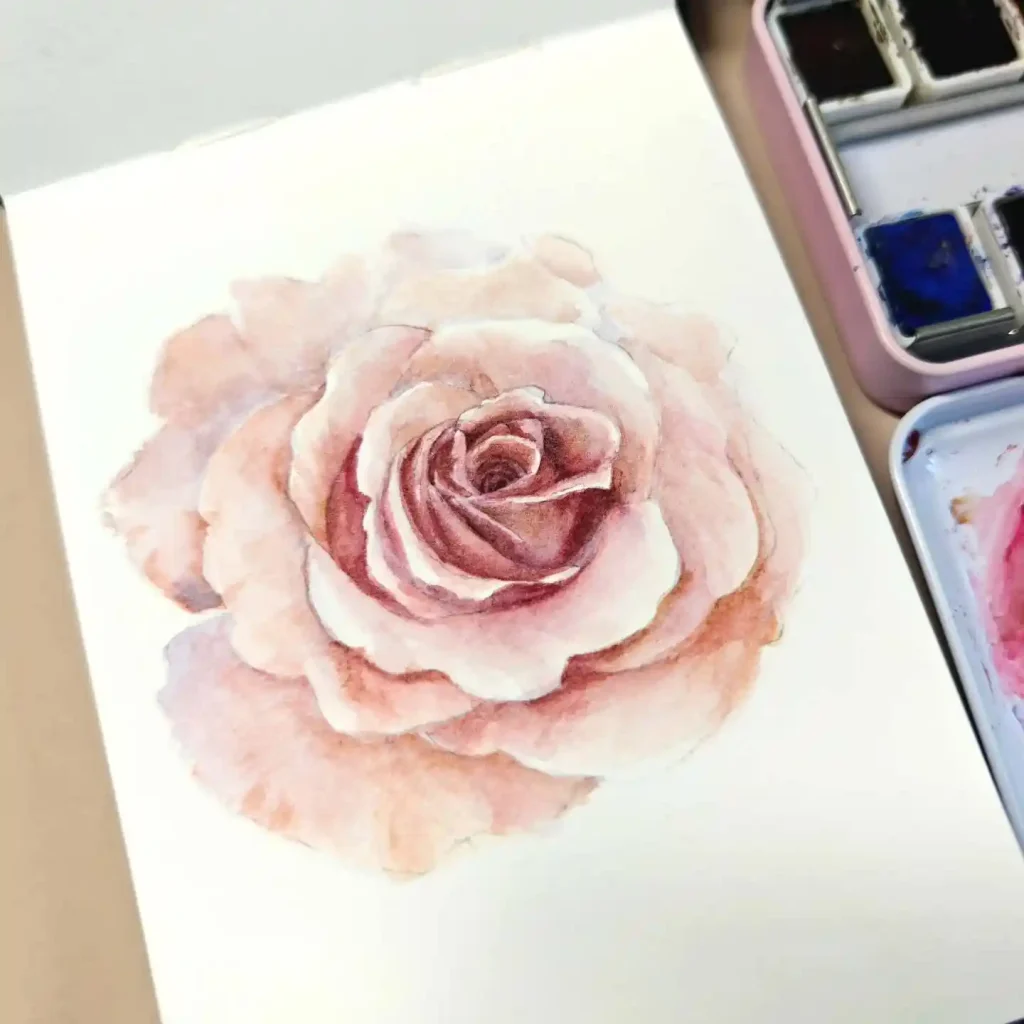
Warm peach and tangerine washes radiate from the center of this bloom, symbolizing enthusiasm and fiery energy. The artist expertly handled the light, leaving crisp white paper highlights to represent the sun’s reflection. This portrait-style drawing feels incredibly personal and intimate. It is an artistic tribute to the vibrant, high-energy colors that define a late-summer American landscape at dusk.
6. Vintage Tea Rose Cluster on Grainy Mixed Media Paper
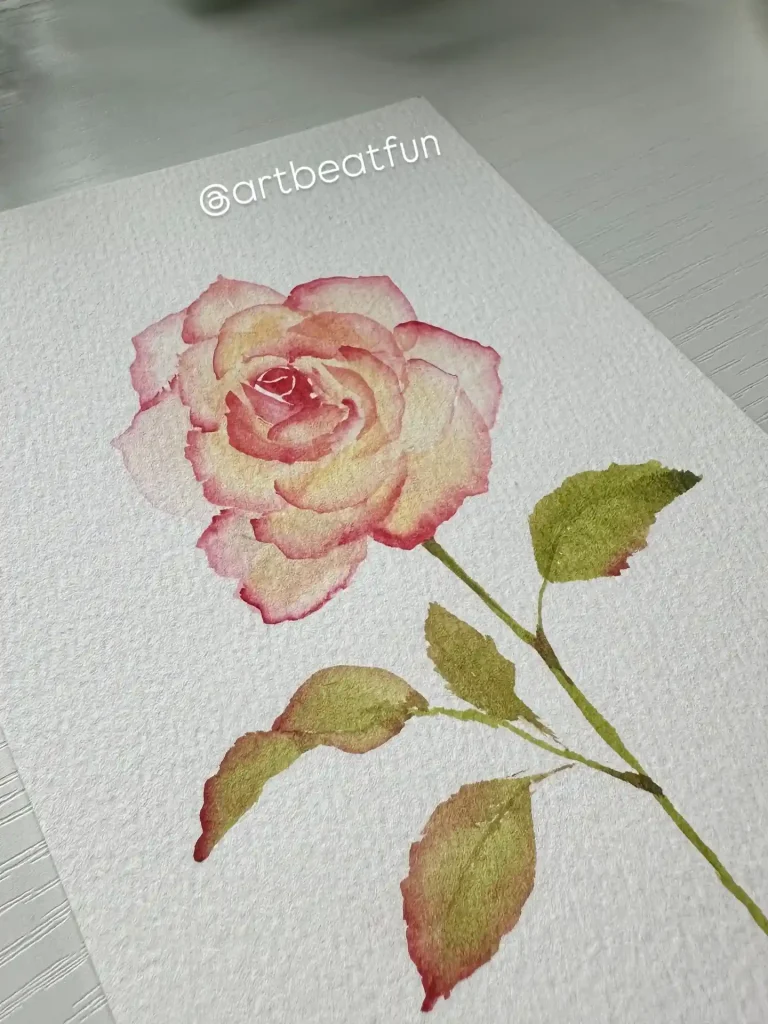
Muted dusty rose and sage green tones give this drawing a nostalgic, cultural feel that connects with old-world botanical sketches. The artist used fine-line details and soft glazes to build a sense of historical charm. This symbolic cluster represents heritage and the quiet passage of time. It is a sophisticated artistic study perfect for those who appreciate classic garden aesthetics.
7. Rainbow Rose Explosion on Smooth White Cardstock
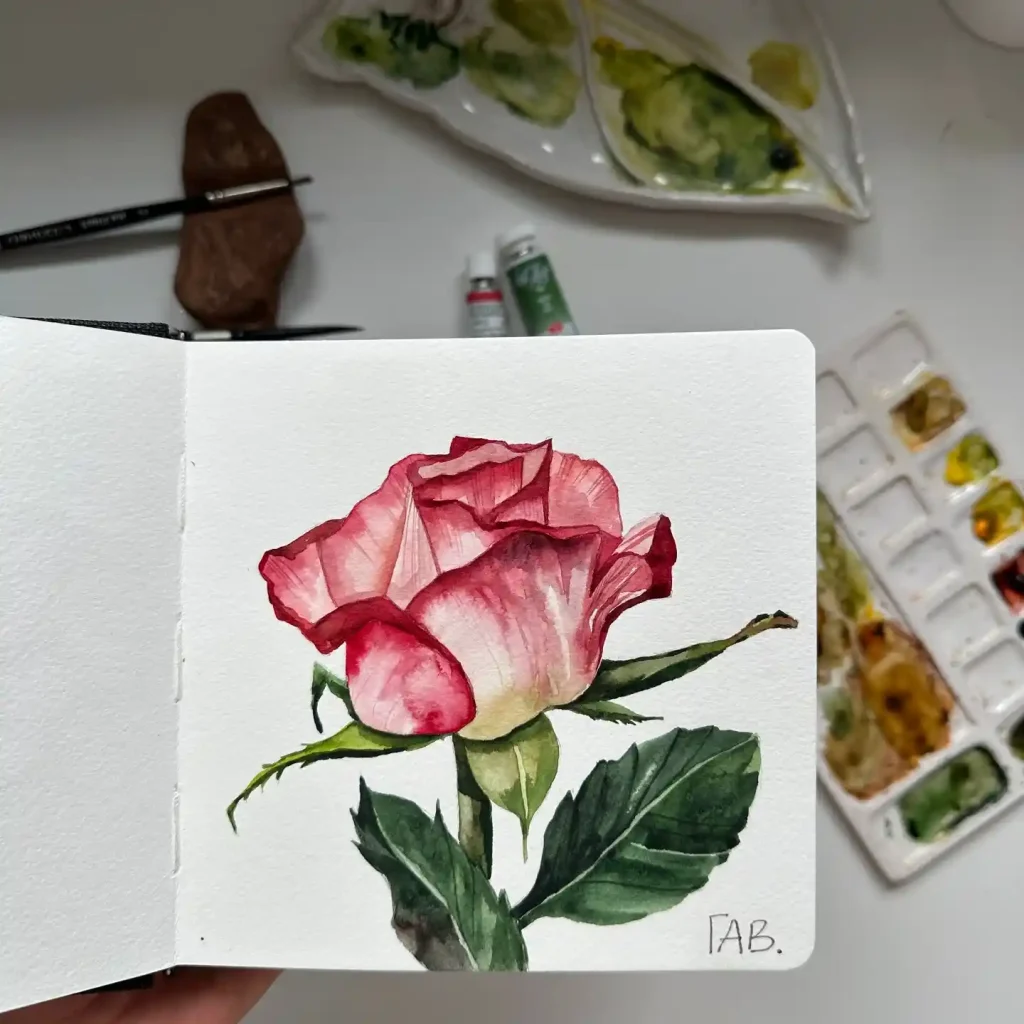
Prismatic petals in every hue of the rainbow create a joyful, high-energy centerpiece in this imaginative piece. This playful approach symbolizes diversity and the limitless creativity found in nature. The artist used saturated pigments and splattered accents to suggest a sense of celebration. It is a striking artistic experiment that brings a fresh, youthful perspective to traditional floral art.
8. White Rose of Peace on Textured Watercolor Board
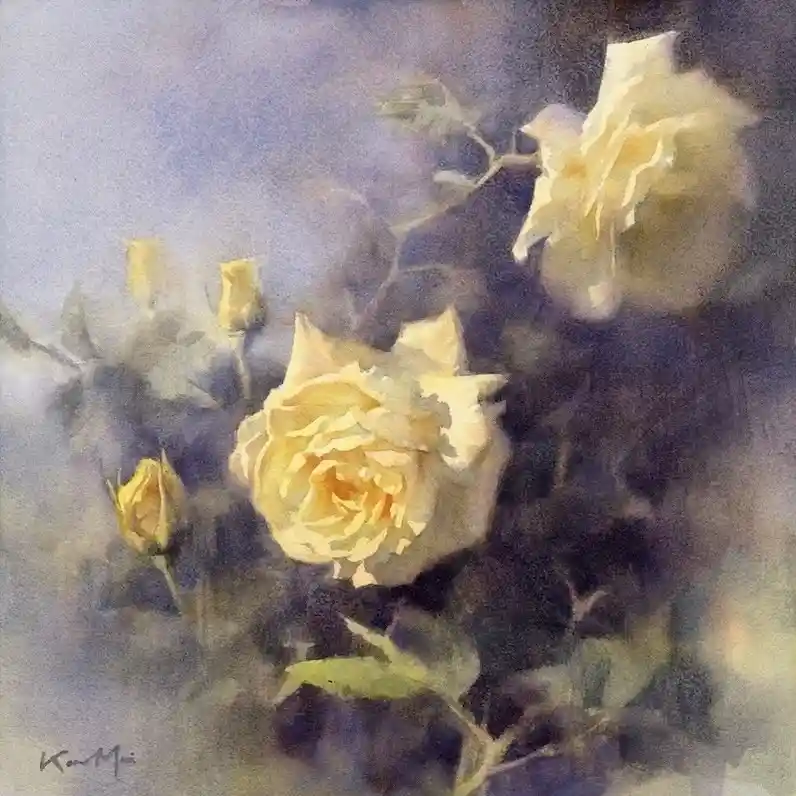
Pristine white petals are defined by soft gray and blue shadows, serving as a powerful symbol of purity and quiet reflection. The artist used a very limited palette to keep the focus on the complex, spiraling structure of the bloom. This artistic composition feels incredibly serene and grounded. It is a beautiful, informative look at the subtle elegance of white.
9. Abstract Botanical Garden Rose on Rough Surface Paper
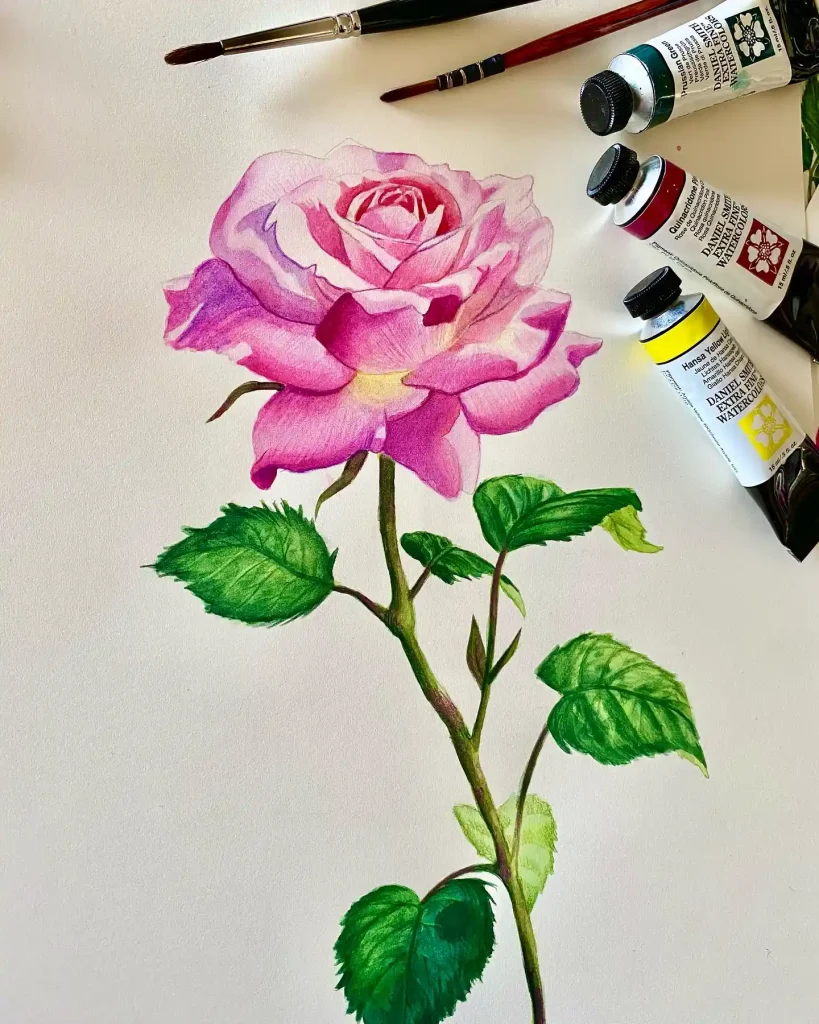
Loose, expressive marks and intentional drips define this modern take on a classic garden rose. The artist prioritized the artistic meaning of movement and spontaneity over realistic detail. Symbolizing the wild, untamed spirit of a country garden, the composition feels alive and breathy. It is a unique conversational piece that explores the boundaries between traditional watercolor and contemporary abstract art.
10. Golden-Edged Royal Rose on Fine Art Paper
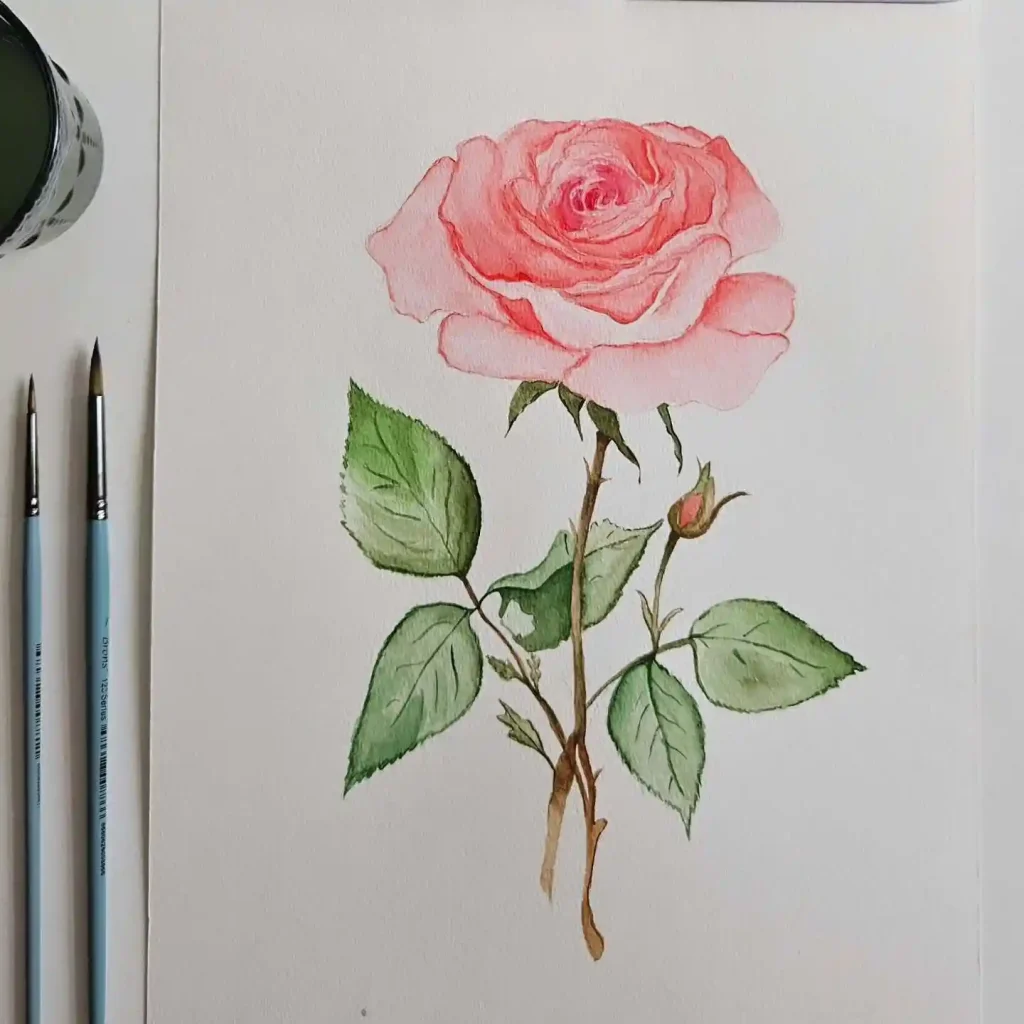
Deep burgundy petals are accented with shimmering gold highlights, symbolizing royalty and a cultural sense of luxury. The artist combined heavy pigment loads with delicate metallic line work to create a rich, tactile design. This symbolic piece feels like a botanical treasure found in a palace garden. It is an artistic celebration of opulence and the magnificent detail of nature.
11. Solitary White Rose on Cold Press Paper
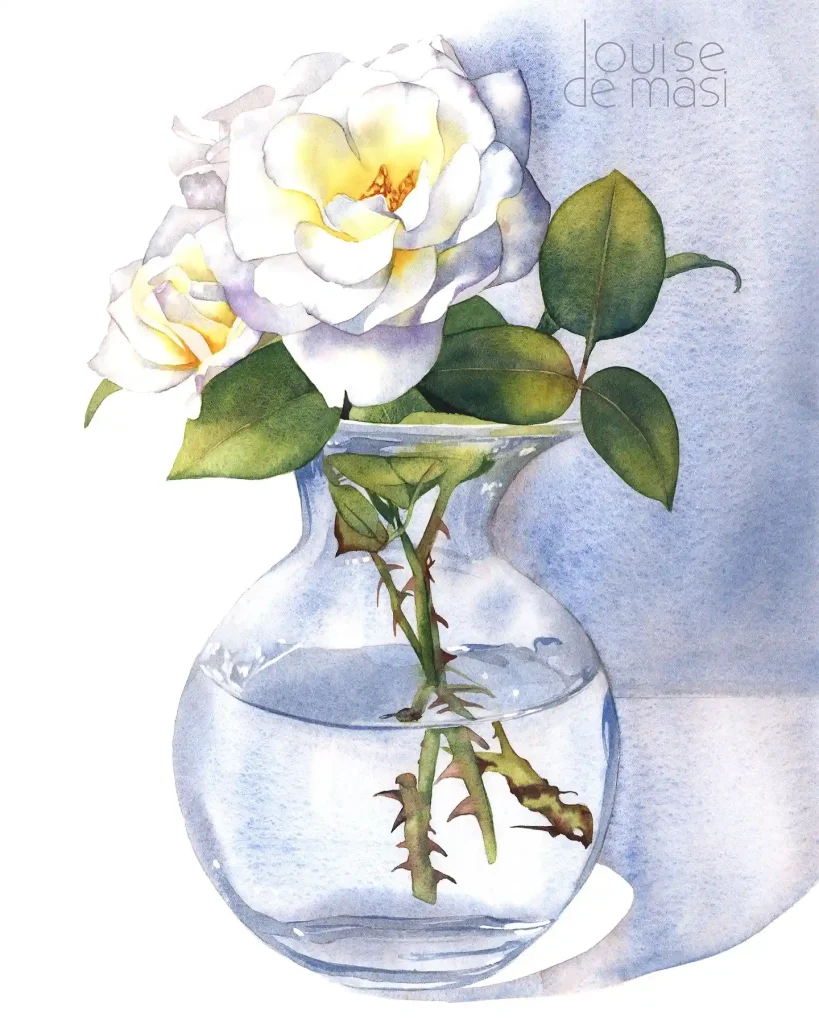
Pristine white petals are defined by soft indigo shadows, serving as a powerful symbol of purity and quiet reflection. The artist used a limited palette to keep the focus on the complex, spiraling structure of the central bloom. This artistic composition feels incredibly serene and grounded. It is a beautiful, informative look at the subtle elegance and peace of white.
12. Soft Coral Rose Cluster on Heavyweight Watercolor Paper
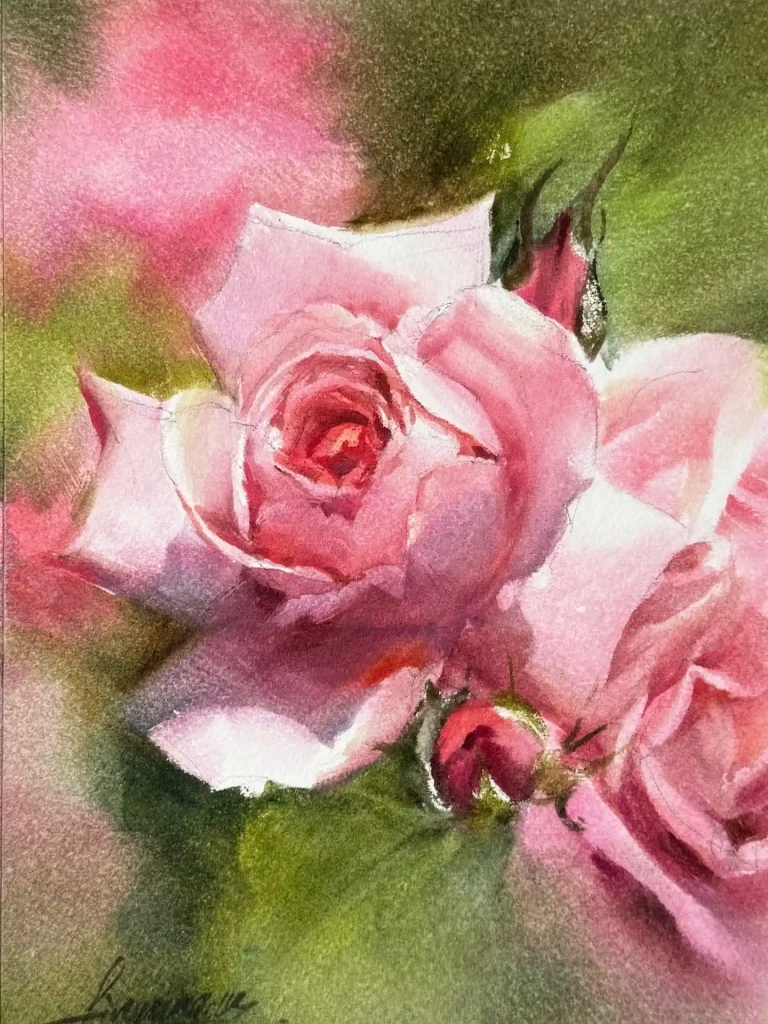
Warm peach and coral washes merge in these delicate drawings, symbolizing grace and the beauty of new beginnings. The artist explored a minimalist approach, using transparent layers to mimic the fragility of real garden flowers. Note how the light touches the soft petal edges, adding a luminous quality. This piece is a lovely artistic celebration of youth and simple elegance.
13. Traditional Red Rose Stem on Smooth Art Board
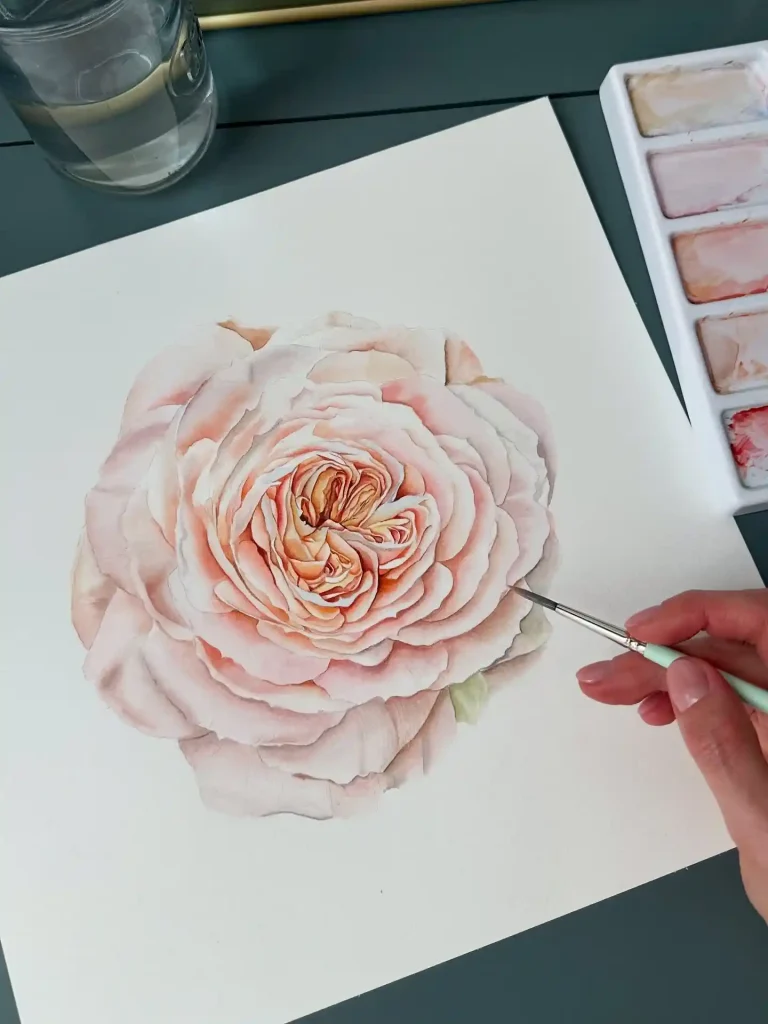
This classic red rose stands as a timeless symbol of passionate love and deep devotion. The artist used rich crimson washes and intricate petal layering to create a sense of velvety depth in the blossom. A single, sturdy green stem grounds the composition, emphasizing the artistic meaning of endurance. It is a stunning, informative study of botanical symmetry and romance.
14. Ethereal Blue Rose Fantasy on Heavyweight Paper
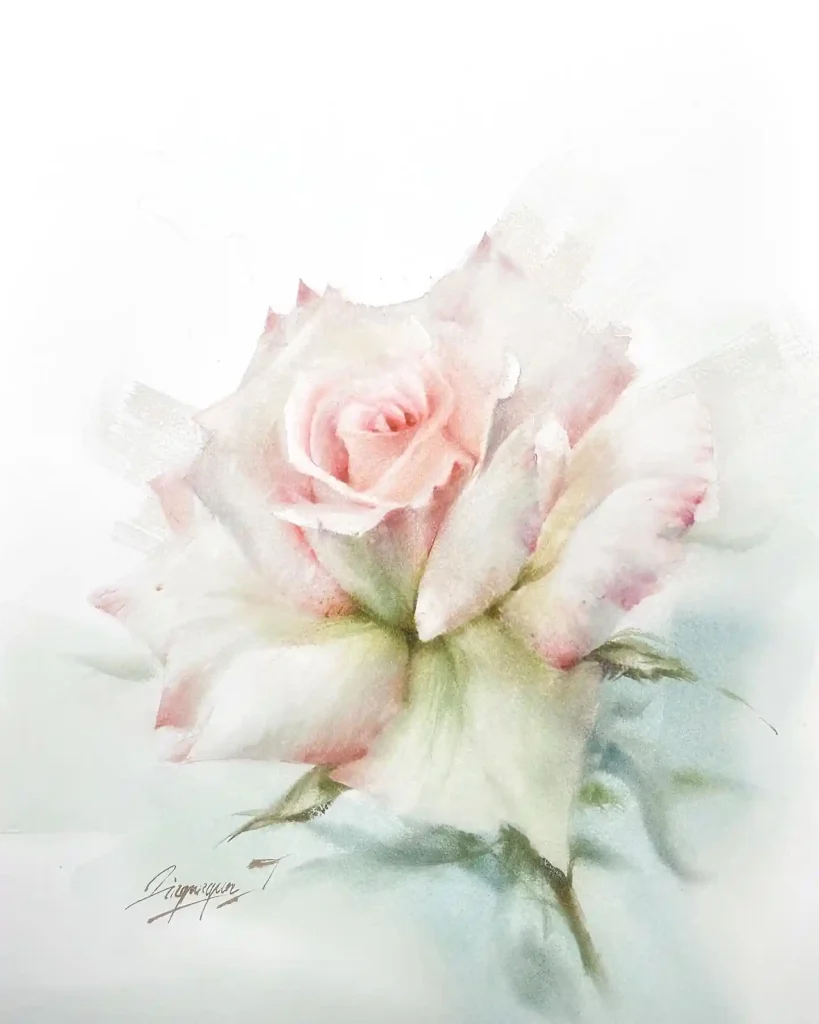
Deep azure and sapphire tones merge in this atmospheric study, symbolizing the unattainable and the mysterious. The artist utilized wet-on-wet techniques to create soft, bleeding edges that suggest a flower seen through a morning mist. This artistic perspective focuses on mood and color theory rather than strict botanical form. It is a hauntingly beautiful piece that captures nature’s mystery.
15. Sun-Dappled Yellow Rose on Mixed Media Paper
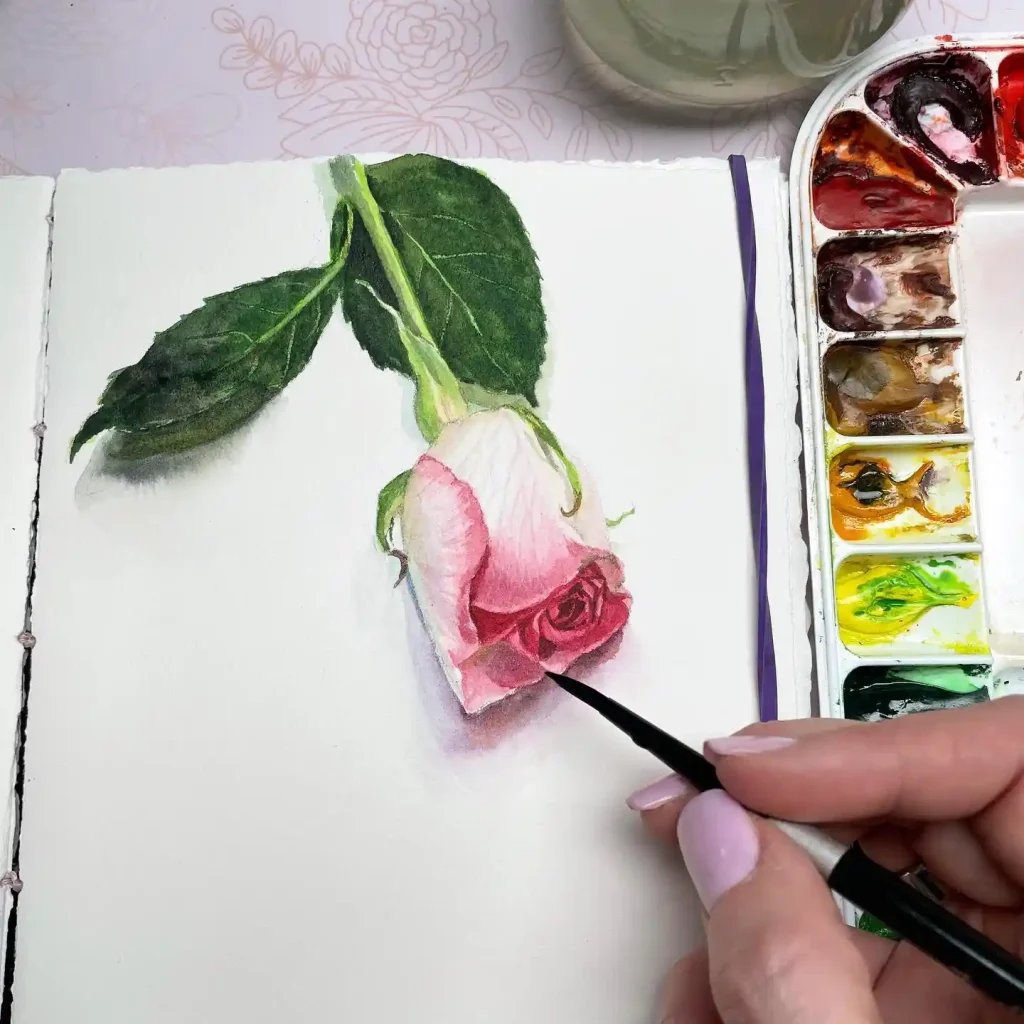
Bright yellow pigment radiates from the center of this bloom, symbolizing friendship and high-energy sunshine. The artist expertly handled the light, leaving crisp white paper highlights to represent a direct sun reflection. This portrait-style drawing feels incredibly personal and intimate. It is an artistic tribute to the vibrant colors that define a cheerful late-summer American landscape in full bloom.
16. Vintage Dusty Rose on Arches Watercolor Paper
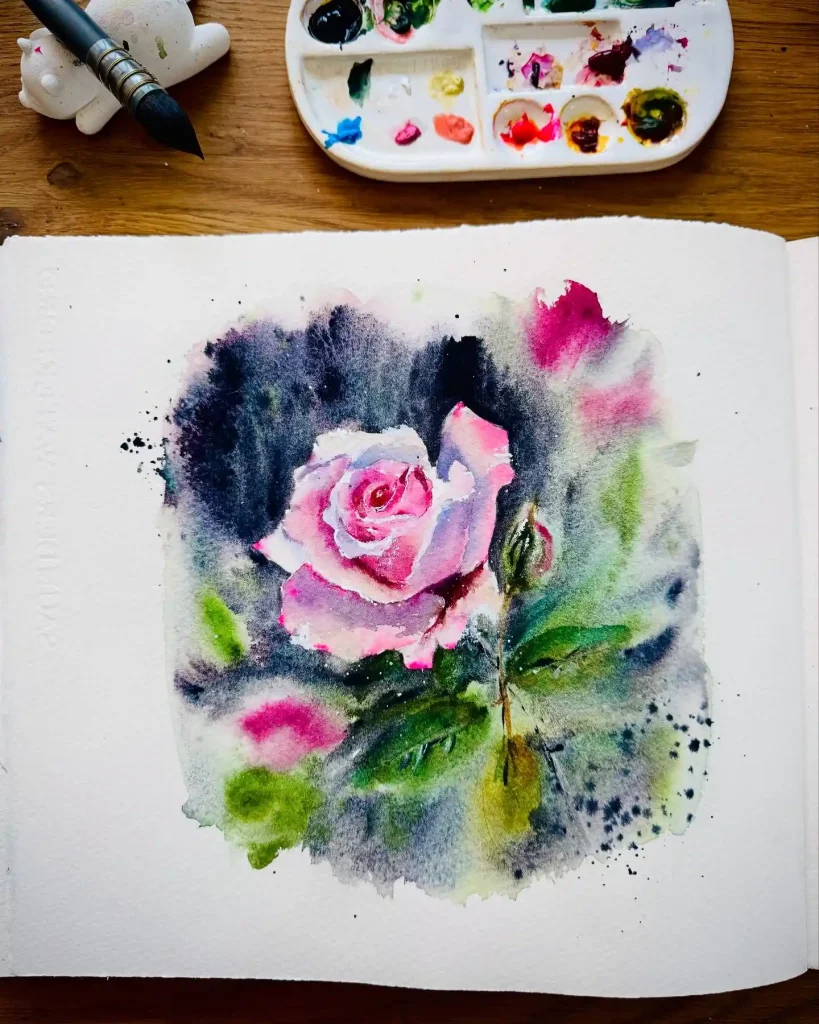
Muted mauve and sage green tones give this drawing a nostalgic, cultural feel that connects with old-world botanical sketches. The artist used fine-line details and soft glazes to build a sense of historical charm. This symbolic cluster represents heritage and the quiet passage of time. It is a sophisticated artistic study perfect for those who appreciate classic garden aesthetics.
17. Rainbow Rose Petals on Grainy Watercolor Paper
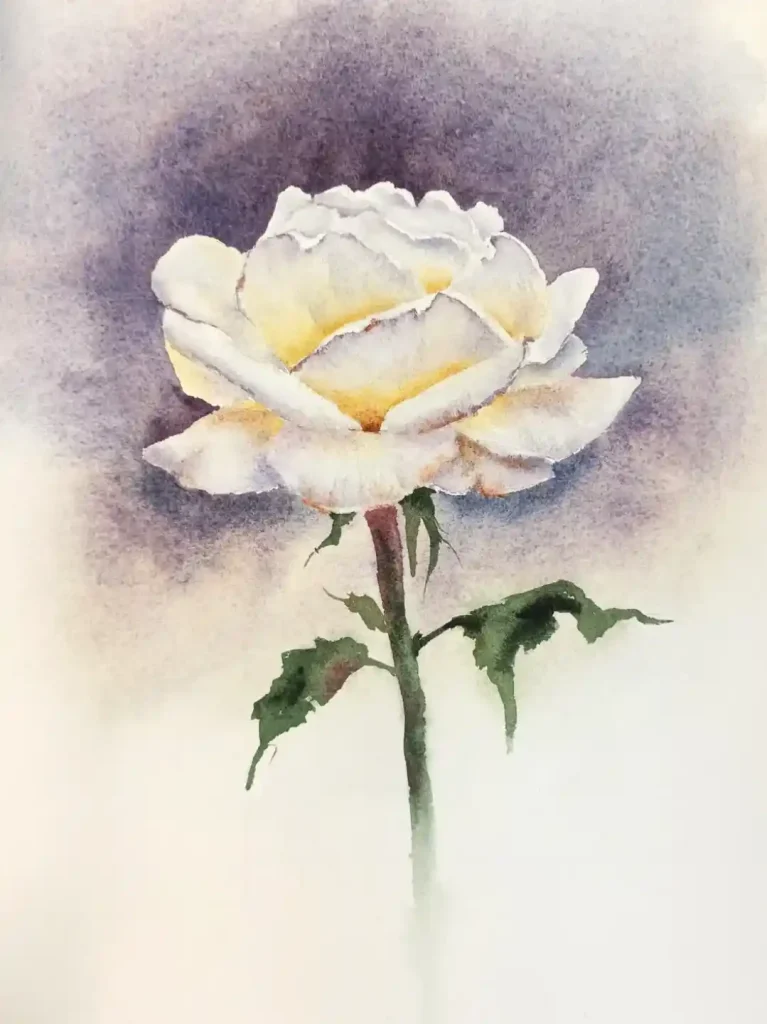
Prismatic petals in every hue of the rainbow create a joyful, high-energy centerpiece in this imaginative floral piece. This playful approach symbolizes diversity and the limitless creativity found in nature. The artist used saturated pigments and splattered accents to suggest a sense of celebration. It is a striking artistic experiment that brings a fresh perspective to traditional botanical art.
18. Moody Black Rose Silhouette on White Watercolor Paper
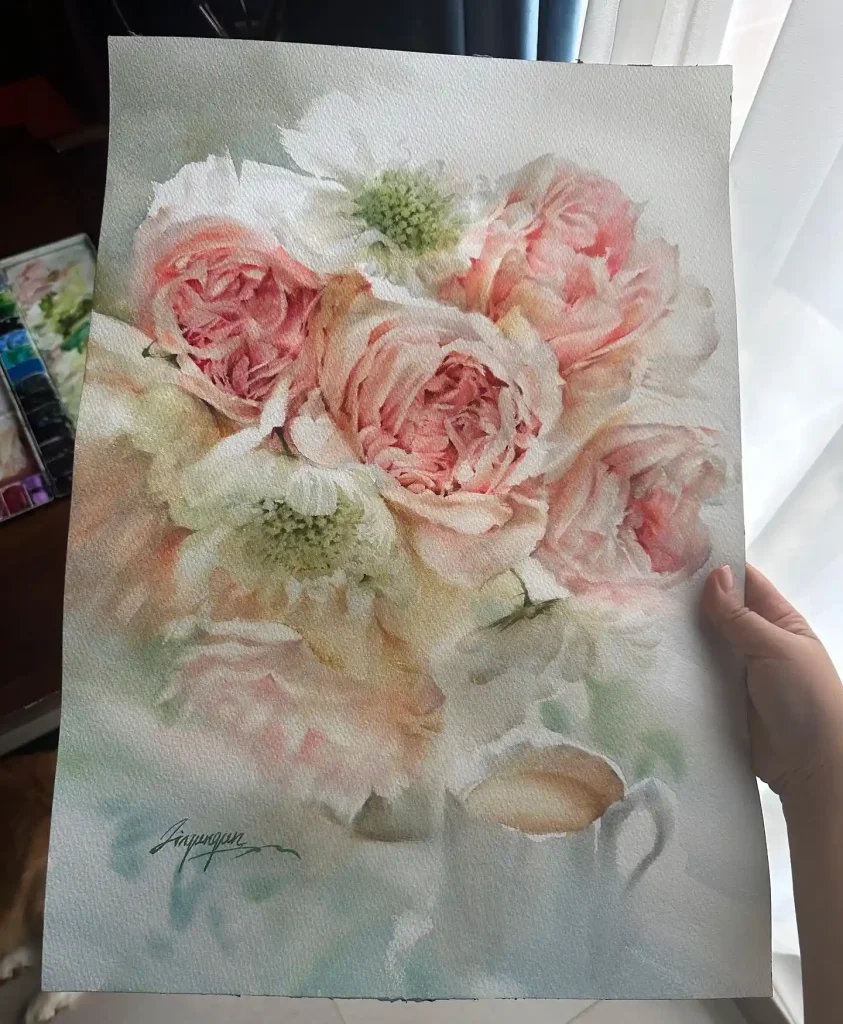
Deep charcoal and plum tones define this dramatic study, representing rebirth or the end of a significant journey. The artist used high-contrast shading to give the petals a sculptural, heavy feel. This artistic choice emphasizes the symbolic weight of the flower. It is a powerful, informative look at how dark values can evoke strong emotions in a simple composition.
19. Abstract Wild Rose Sketch on Distressed Paper
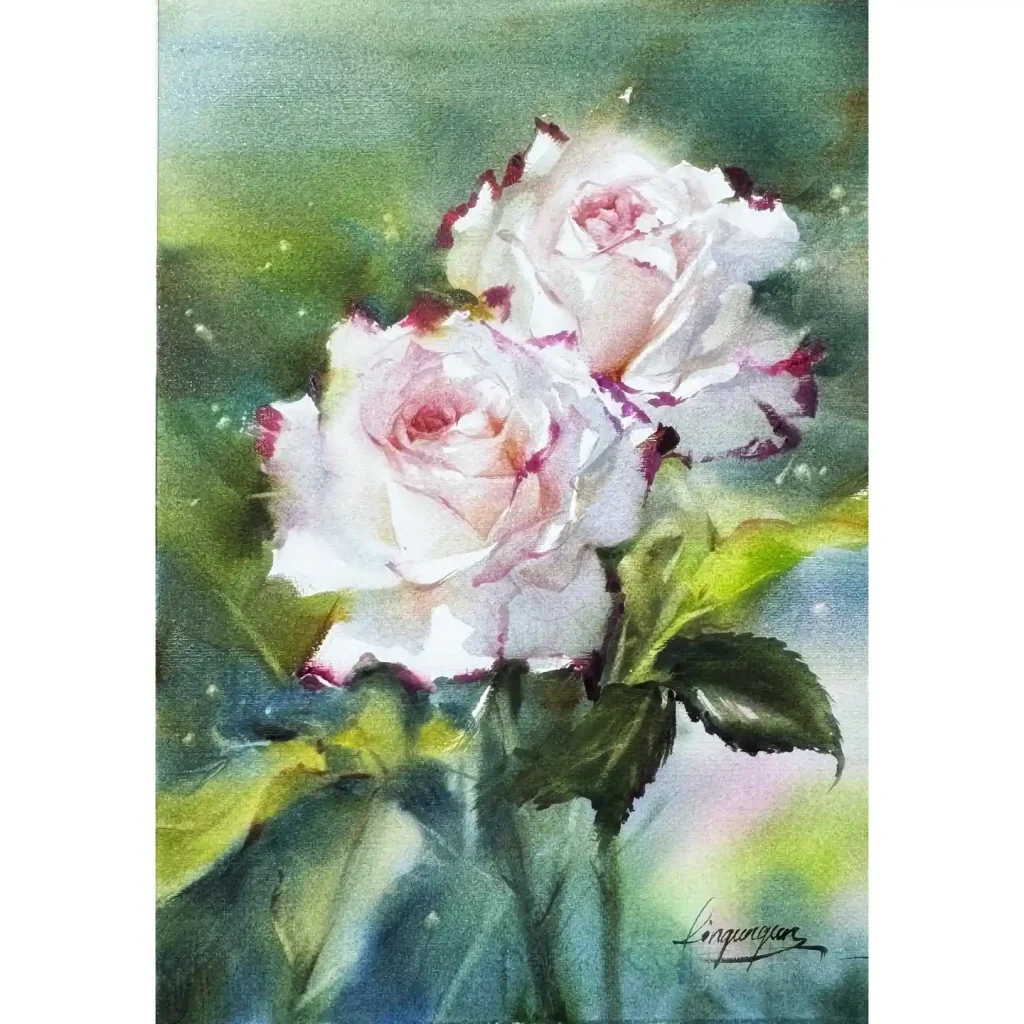
Loose, expressive marks and intentional drips define this modern take on a classic wild rose. The artist prioritized the artistic meaning of movement and spontaneity over realistic detail. Symbolizing the wild, untamed spirit of a country meadow, the composition feels alive and breathy. It is a unique conversational piece that explores the boundaries of contemporary abstract watercolor art.
20. Golden Royal Rose on Cold Press Surface
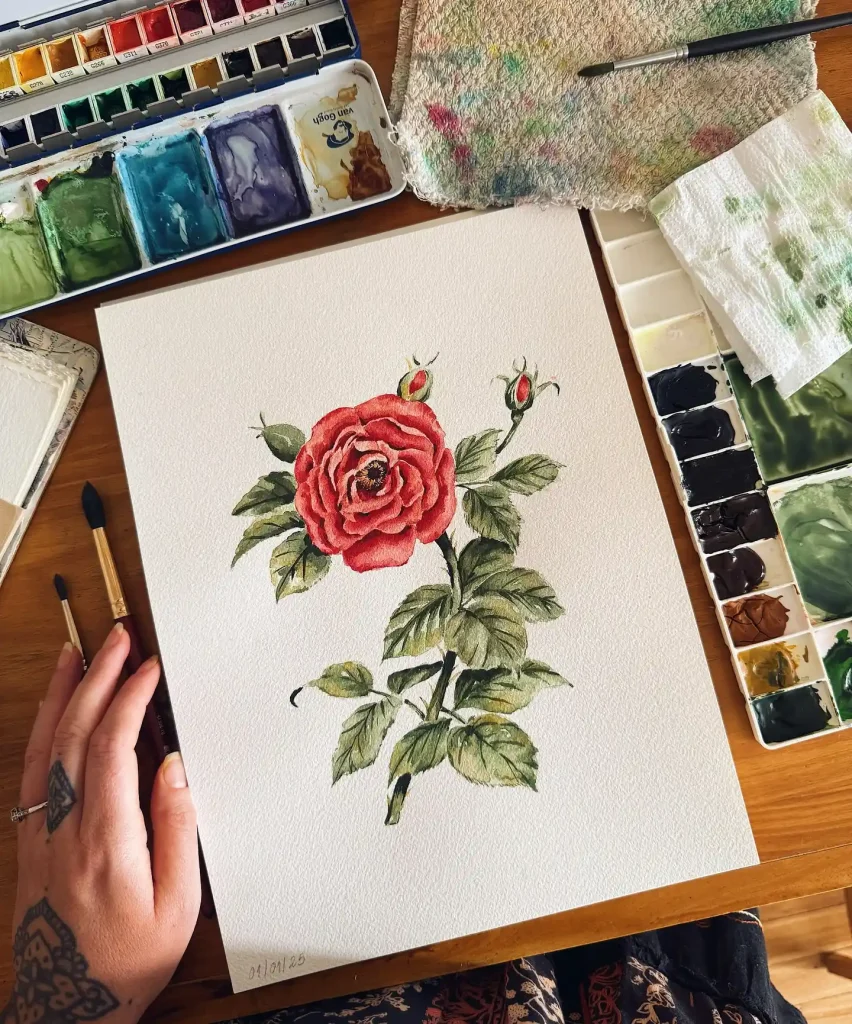
Deep burgundy petals are accented with shimmering yellow highlights, symbolizing royalty and a cultural sense of luxury. The artist combined heavy pigment loads with delicate line work to create a rich, tactile design. This symbolic piece feels like a botanical treasure found in a palace garden. It is an artistic celebration of opulence and the magnificent detail of nature.
21. Crimson Passion Bloom on Cold Press Watercolor Paper
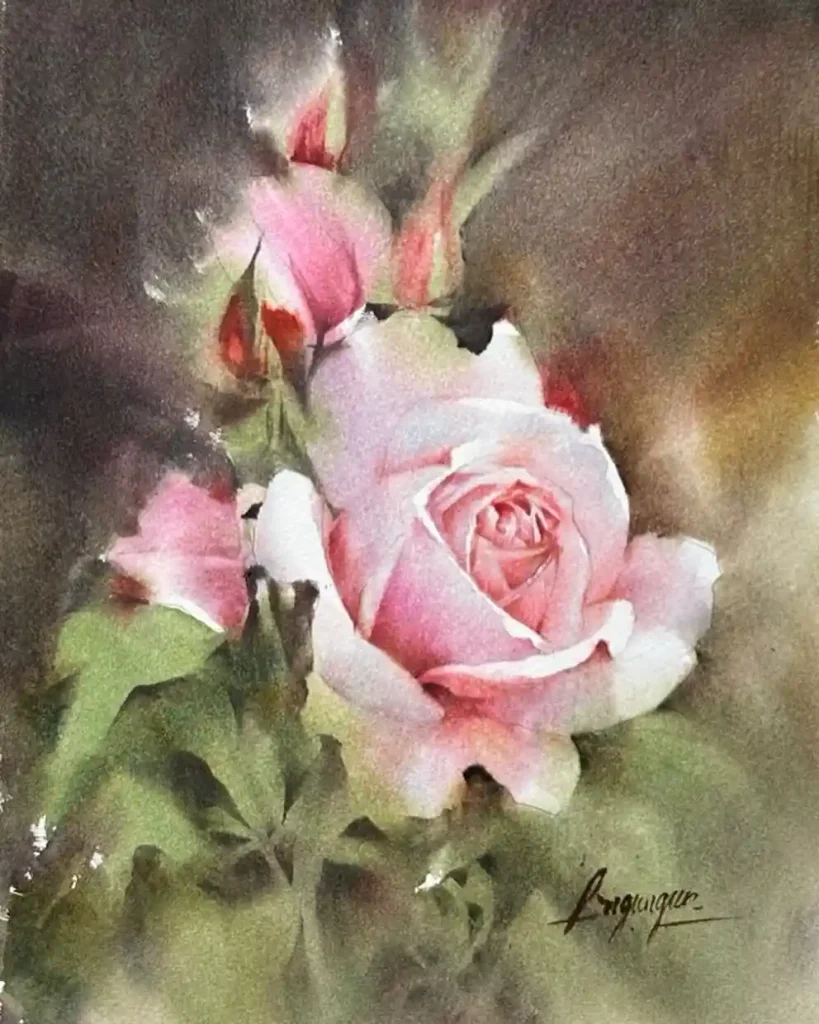
Saturated red pigments define this bold rose, standing as a timeless symbol of romantic love and deep desire. The artist used heavy, wet-on-wet washes to create a velvety petal texture that feels incredibly lifelike. Sharp green leaves provide a grounding contrast to the fiery blossom. This artistic study focuses on the raw emotional power that a single, vibrant flower can command.
22. Delicate Blush Rosebud on Smooth Artist Board
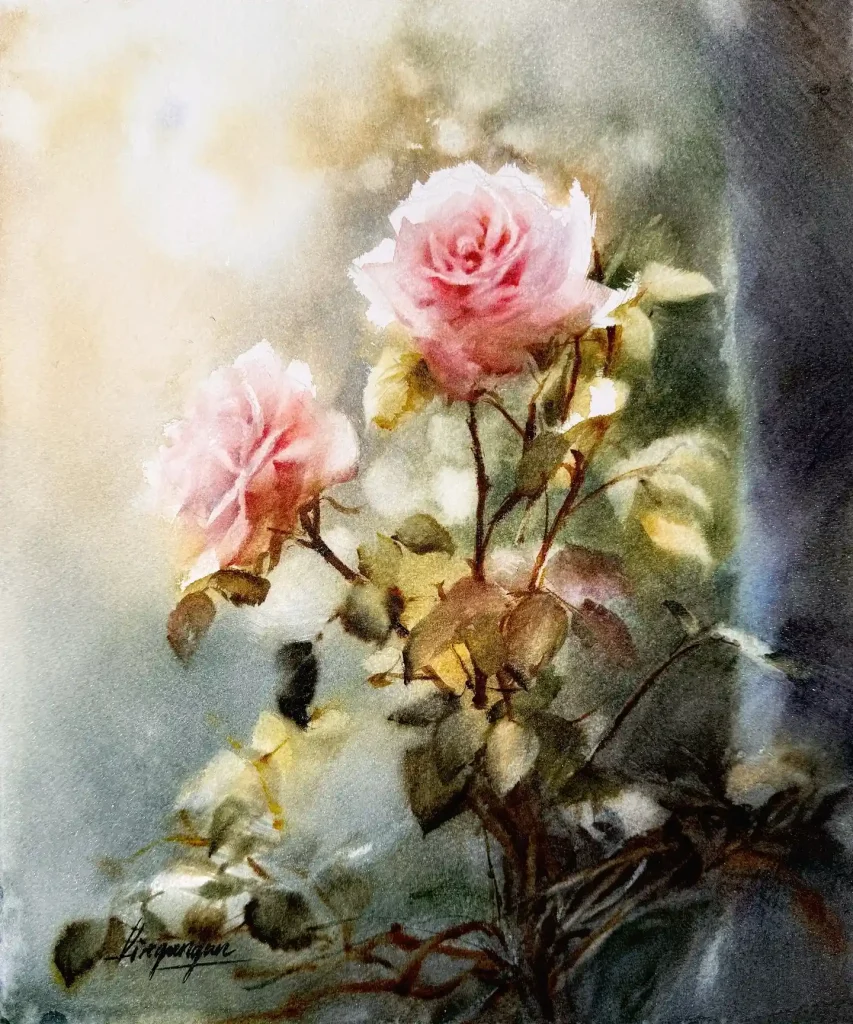
Soft, pale pink washes give this young rosebud an ethereal quality, symbolizing grace and the quiet beauty of new beginnings. The artist utilized transparent layering to mimic the fragility of real garden petals. Small, precise brushstrokes highlight the tightly curled center, suggesting untapped potential. It is a lovely, minimalist tribute to the fleeting elegance of a spring morning in the garden.
23. Sunny Friendship Trio on Textured Mixed Media Paper
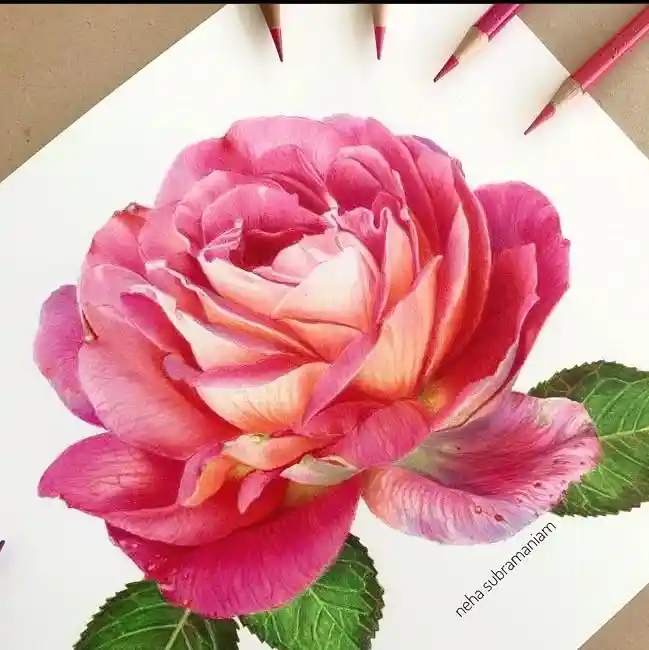
Bright yellow hues radiate from this playful trio, representing joy and the cultural importance of lasting friendship. The artist used a loose, expressive style with visible pencil underdrawings to add a modern, sketch-like flair. These roses feel like they were just plucked from a sun-drenched backyard. This cheerful composition is an artistic celebration of warmth, light, and suburban floral charm.
24. Moody Indigo Night Rose on Heavyweight Cotton Paper
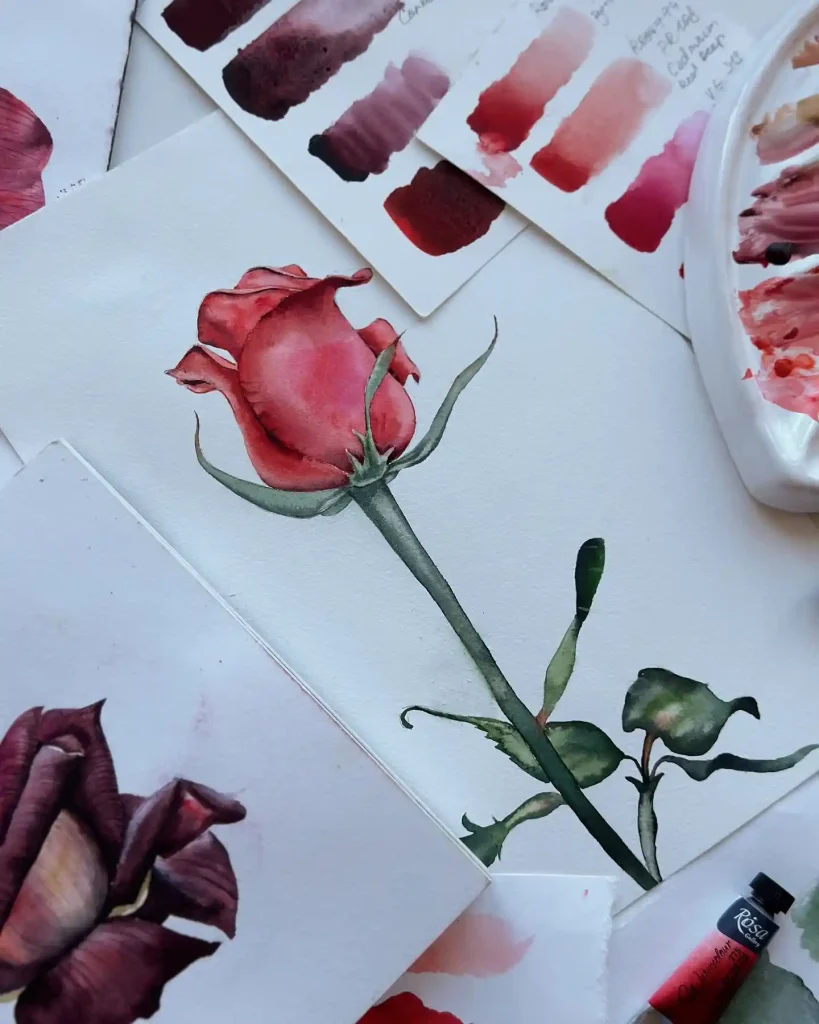
Deep sapphire and violet tones merge in this atmospheric study, symbolizing mystery and the unattainable. The artist explored the artistic meaning of shadows by using dark, bleeding edges that blend into a moody background. This unconventional color choice provides a fresh, contemporary perspective on traditional floral art. It is a hauntingly beautiful piece that captures the soulful, secret side of nature.
25. Golden Hour Peach Bloom on Arches Grainy Paper
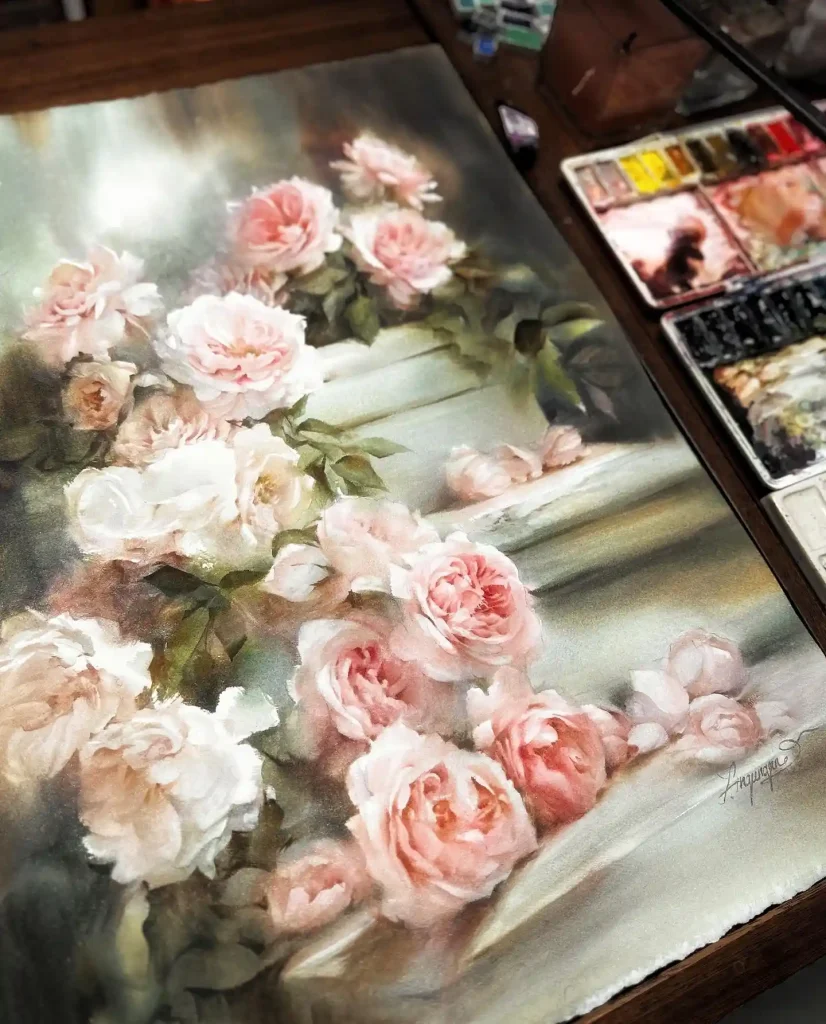
Warm tangerine and apricot washes capture the essence of a late summer sunset. This rose symbolizes enthusiasm and the fiery energy of life. The artist expertly left white spaces on the paper to represent brilliant sun highlights hitting the petals. This portrait-style drawing feels personal and intimate, serving as a sophisticated artistic tribute to the vibrant colors of the American landscape.
26. Vintage Tea Rose Cluster on Smooth White Cardstock
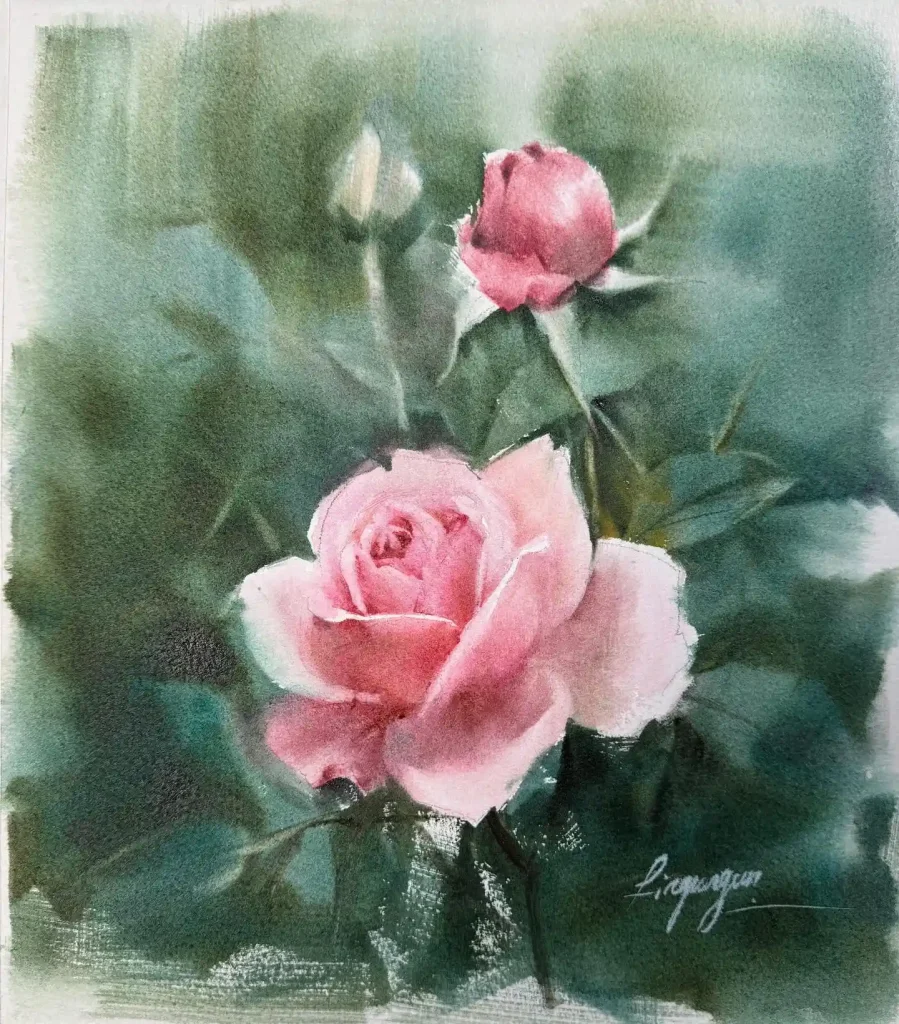
Muted dusty rose and sage tones give this piece a nostalgic, cultural feel reminiscent of old-world botanical illustrations. The artist used fine-line ink work over soft watercolor glazes to build a sense of historical charm. This symbolic cluster represents heritage and the quiet beauty of aged gardens. It is an informative and elegant study for those who love classic aesthetics.
27. Prismatic Rainbow Rose on Premium Watercolor Sheet
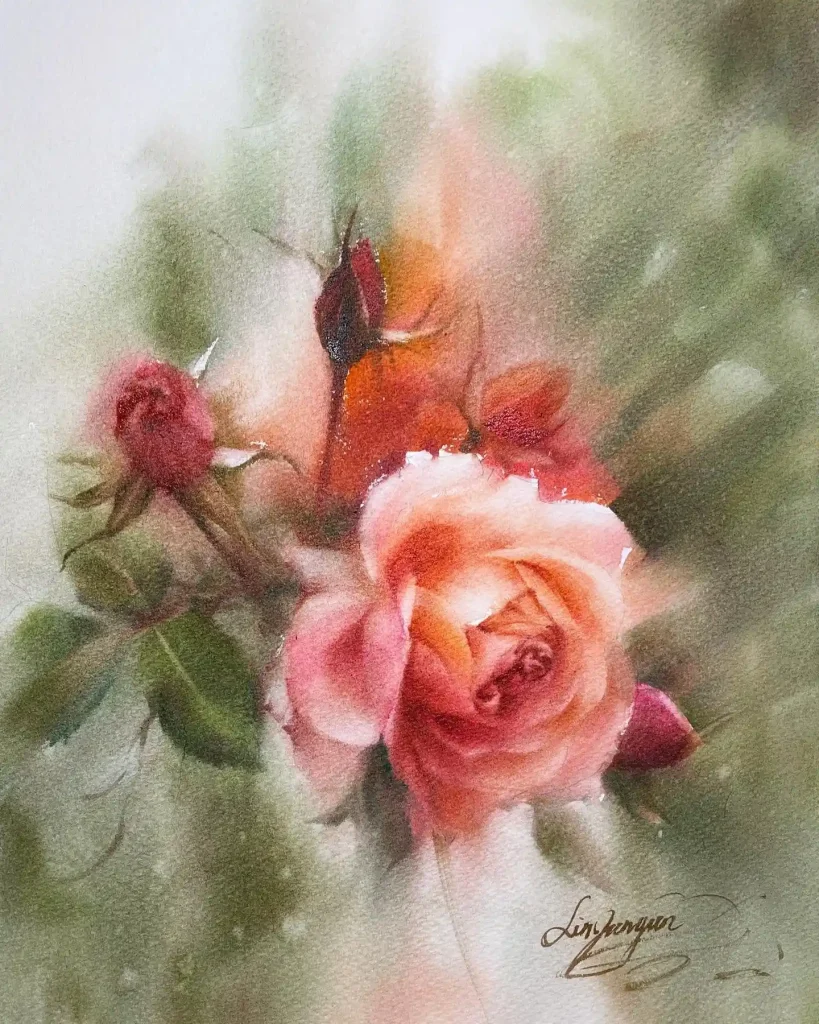
Every color of the rainbow finds a home in these joyful, high-energy petals. This playful approach symbolizes diversity and the limitless creativity of the natural world. The artist used highly saturated pigments and intentional splatters to create a sense of movement and celebration. It is a striking artistic experiment that brings a bold, youthful energy to traditional botanical subjects.
28. Pure White Peace Blossom on Cold Press Surface
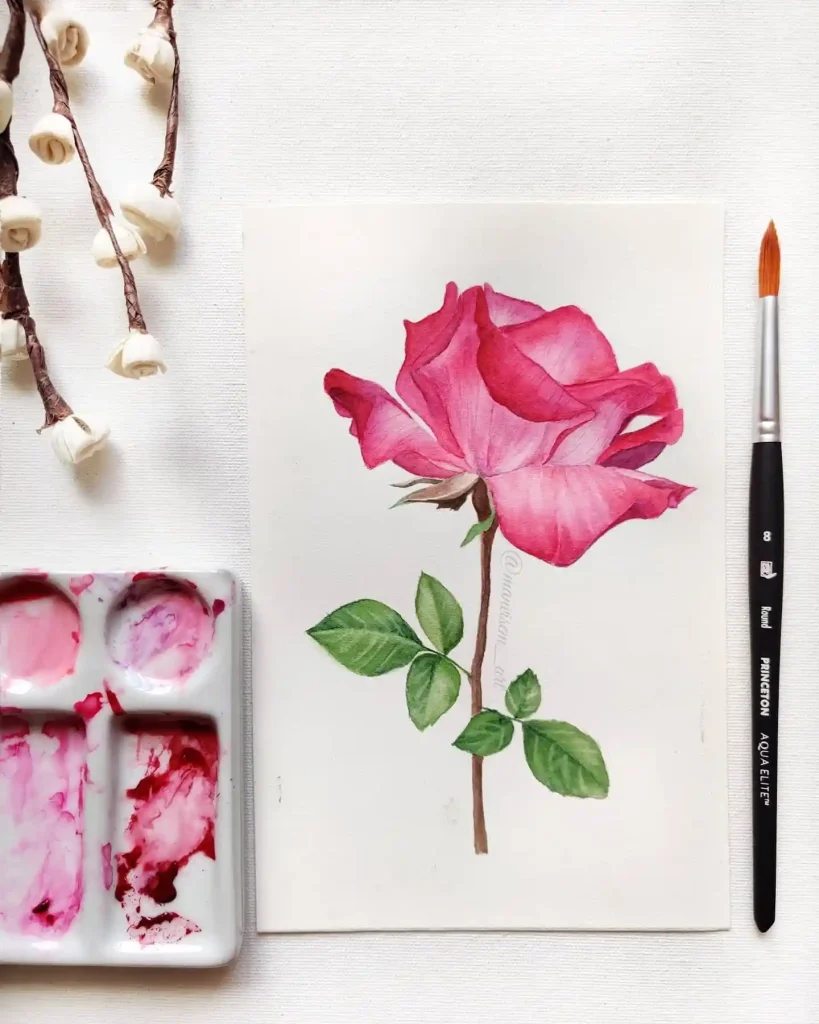
Pristine white space is defined by soft gray and cerulean shadows, serving as a powerful symbol of purity and quiet reflection. The artist used a very limited palette to keep the focus on the complex, spiraling anatomy of the flower. This artistic composition feels incredibly serene and grounded. It is a beautiful, informative look at the subtle elegance found in simplicity.
40 More Watercolor Rose Drawing Ideas to Try
Below are 40 further rose ideas added to this collection, deliberately pulling in different directions. Some are quiet single-stem studies you could finish in twenty minutes. Others borrow from pop art, tattoo flash, pixel art and folk painting, using the rose as a shape to experiment on rather than a flower to copy. Each one notes the palette and the technique that makes it work.
29. Classic Blush and Cream Garden Rose
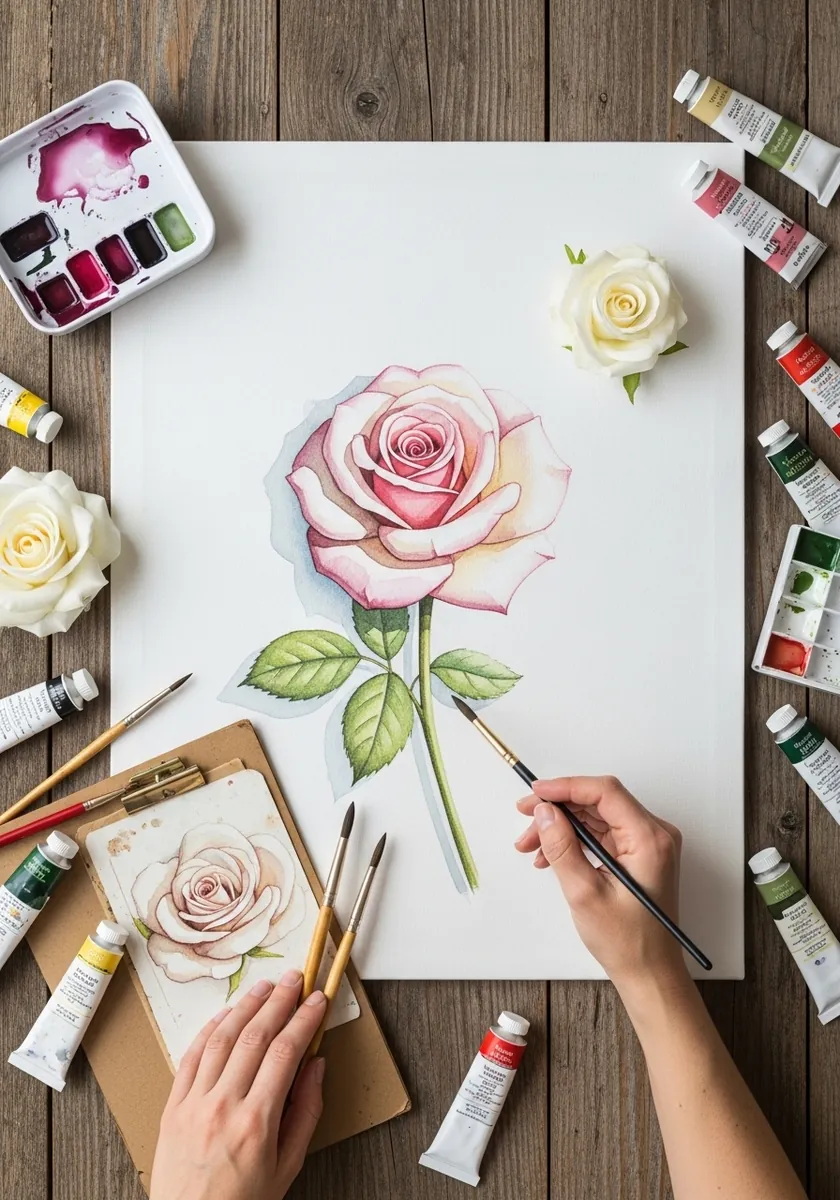
This is the rose most people picture first: a full, open bloom in blush pink fading to cream at the outer petals, with soft green leaves holding it upright. The painter kept the center darker and let the edges stay pale, which is what creates the sense of depth. Work light to dark and leave the palest petals as bare paper. It is the ideal starting point if you have never painted a rose before.
30. Bright Neon Abstract Rose for Kids
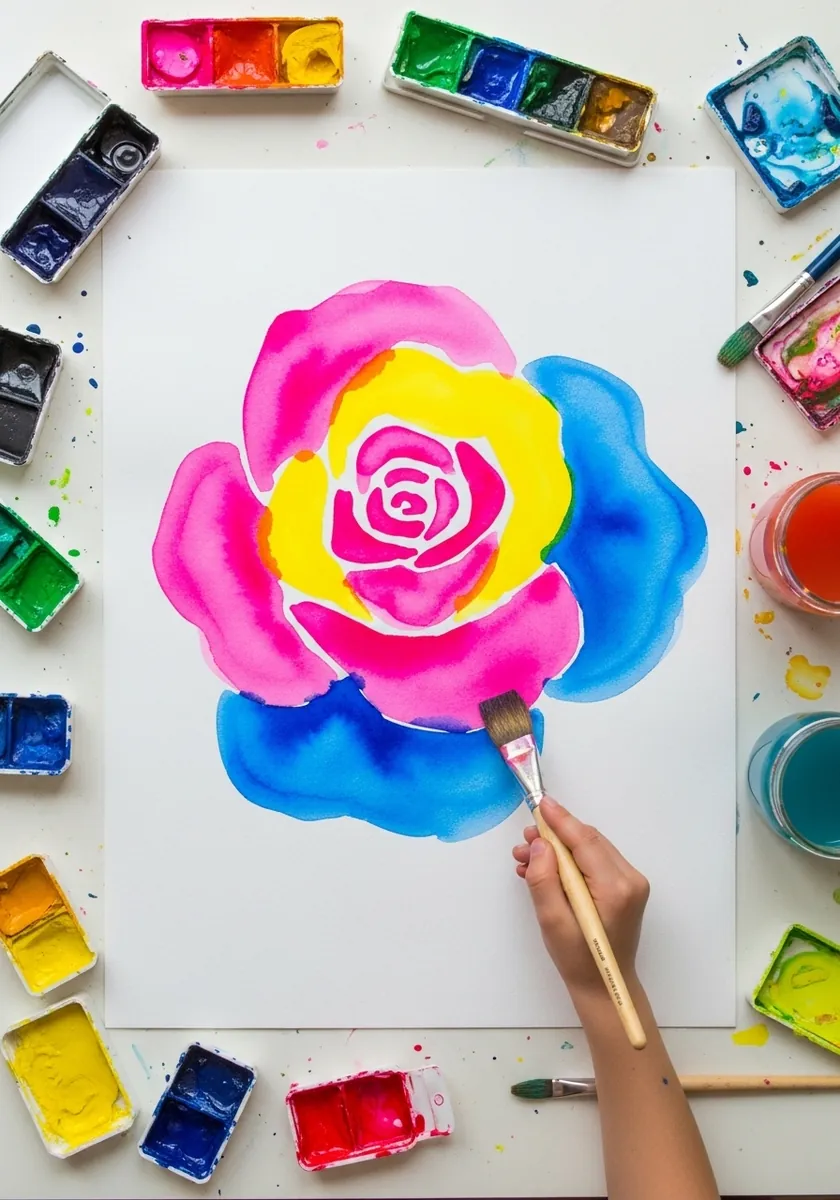
Hot pink, lemon yellow and cobalt blue collide here with no attempt at realism, and that is the point. The rose is reduced to a spiral and a few loose petal blobs, so young painters get the satisfaction of a recognizable flower without the frustration of detail. Use a fat round brush and pan paints straight from the tin. It is a brilliant first watercolor project for a child.
31. Single-Line Minimalist Rose with Soft Pink Wash
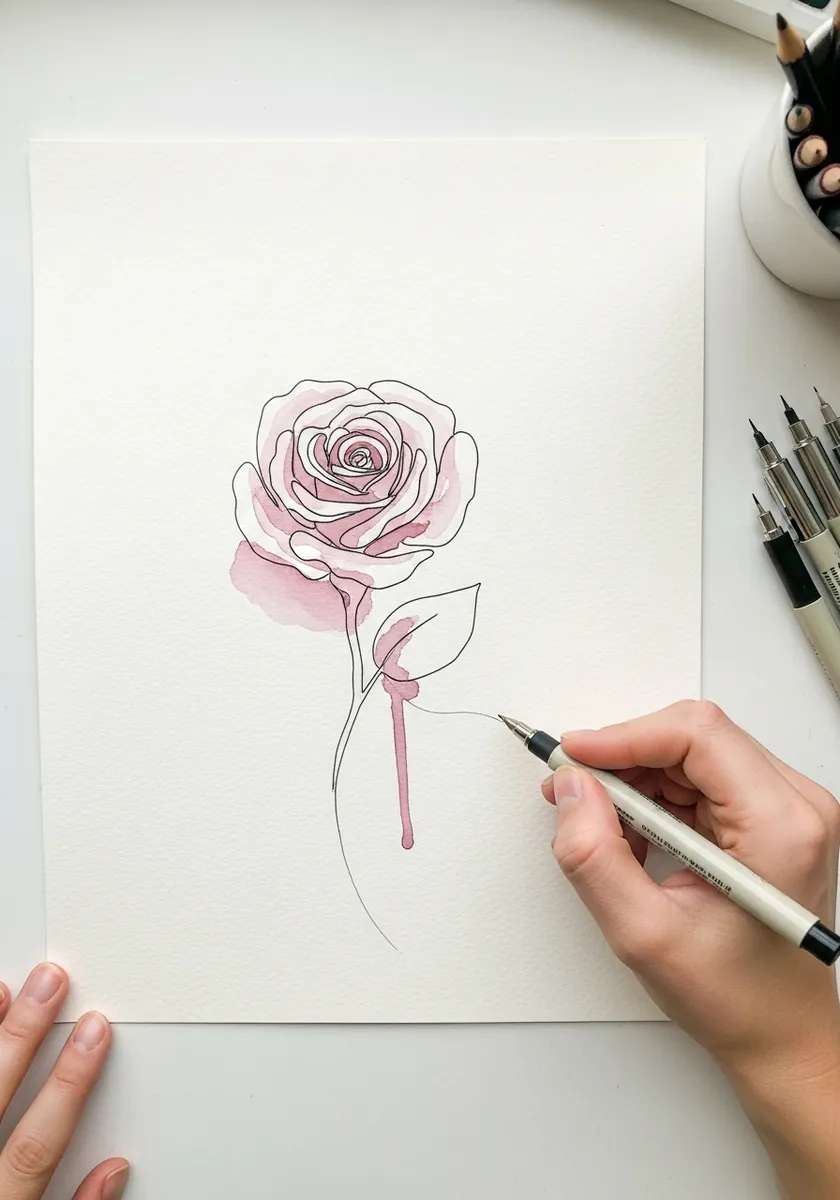
A continuous fine-liner outline sits over a barely-there pink wash that does not quite line up with the drawing. That deliberate offset is a modern design trick and it stops the piece looking like a coloring book. Draw the line first in one unbroken movement, let it dry completely, then float the wash behind it. Perfect for greeting cards and small framed prints.
32. Delicate Minimalist Rose Stem in Pale Pink
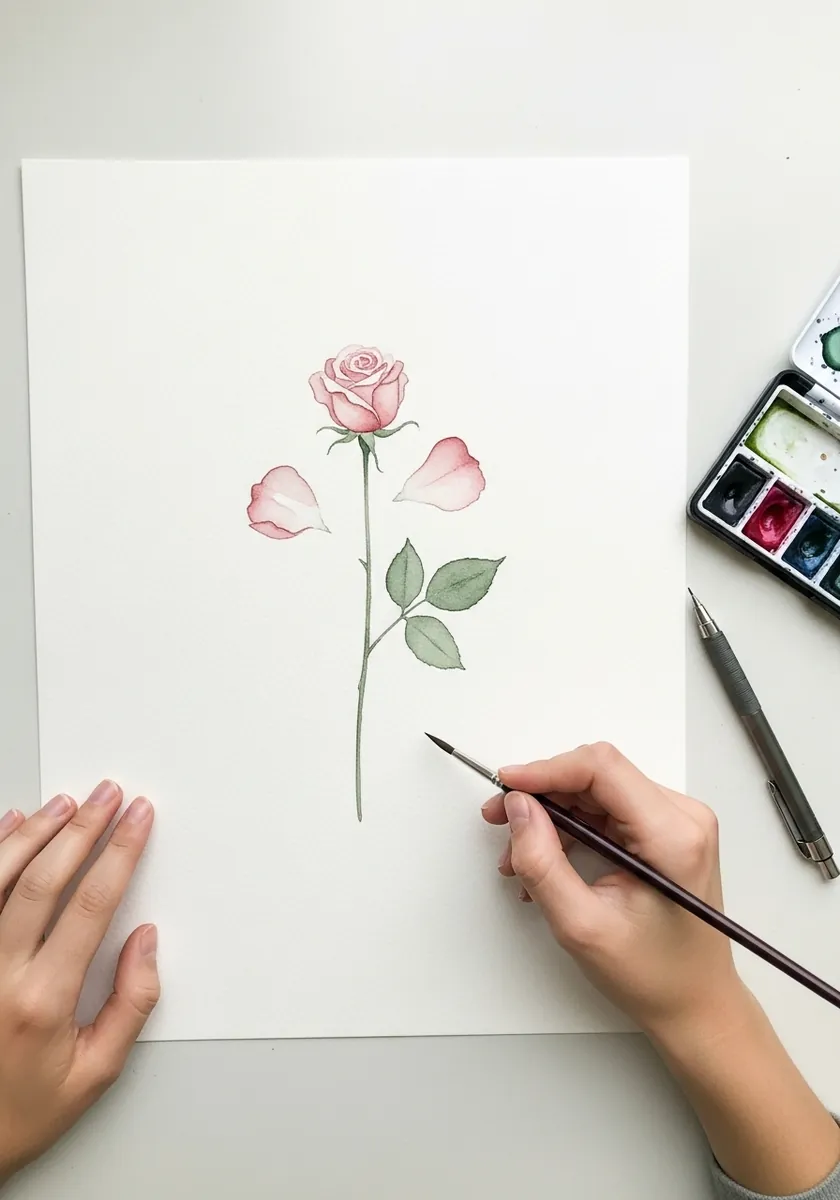
Restraint carries this one. A single small bloom sits high on a slim stem, with two loose petals drifting beside it and a great deal of white paper left untouched. The palette is barely three dilutions of the same pink. Negative space is doing as much work as the paint, so resist the urge to fill the page. Excellent practice in knowing when a painting is finished.
33. Pop Art Halftone Rose in Comic Style
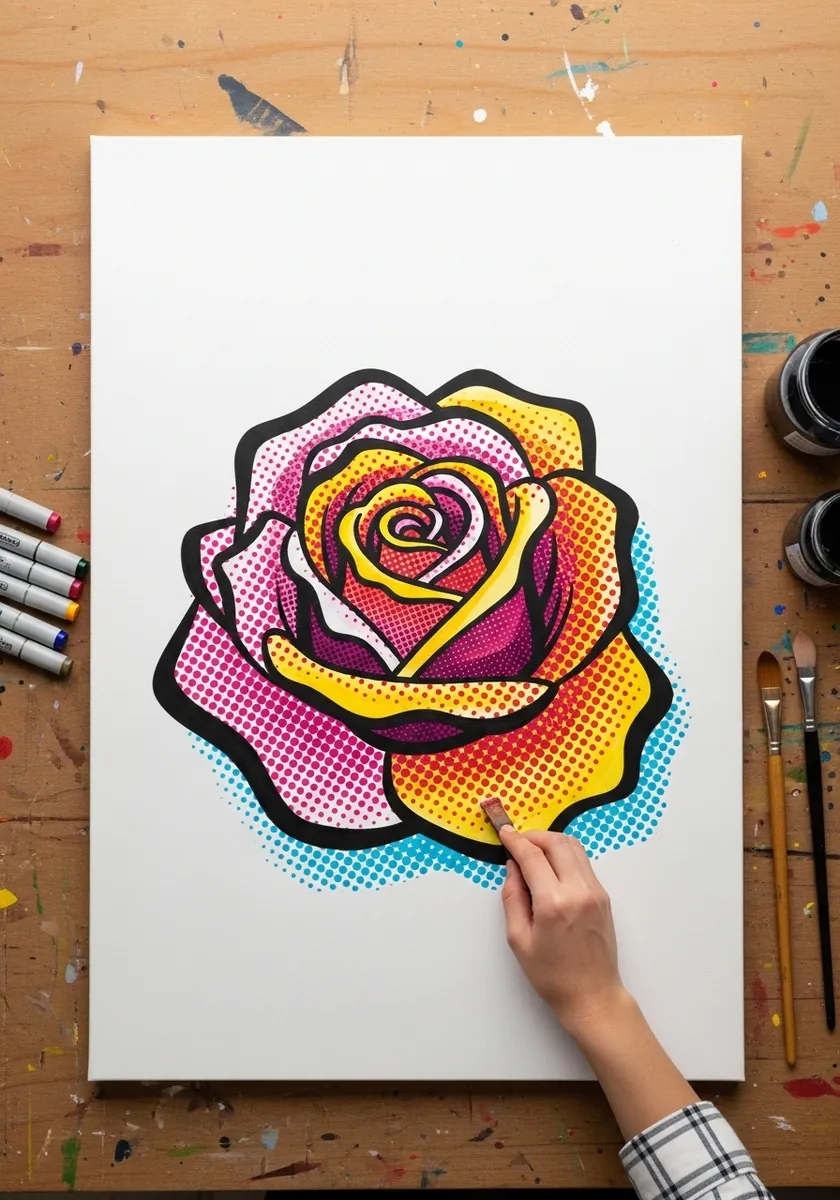
Thick black outlines, flat magenta and yellow petals and a field of printed halftone dots turn the rose into a comic panel. The watercolor supplies the color while the ink supplies all the structure. Ink your outlines first with a waterproof pen so the washes cannot lift them, then block in color without worrying about blending. A strong choice for bold, graphic wall art.
34. Surreal Dripping Rose with Butterflies and Clocks
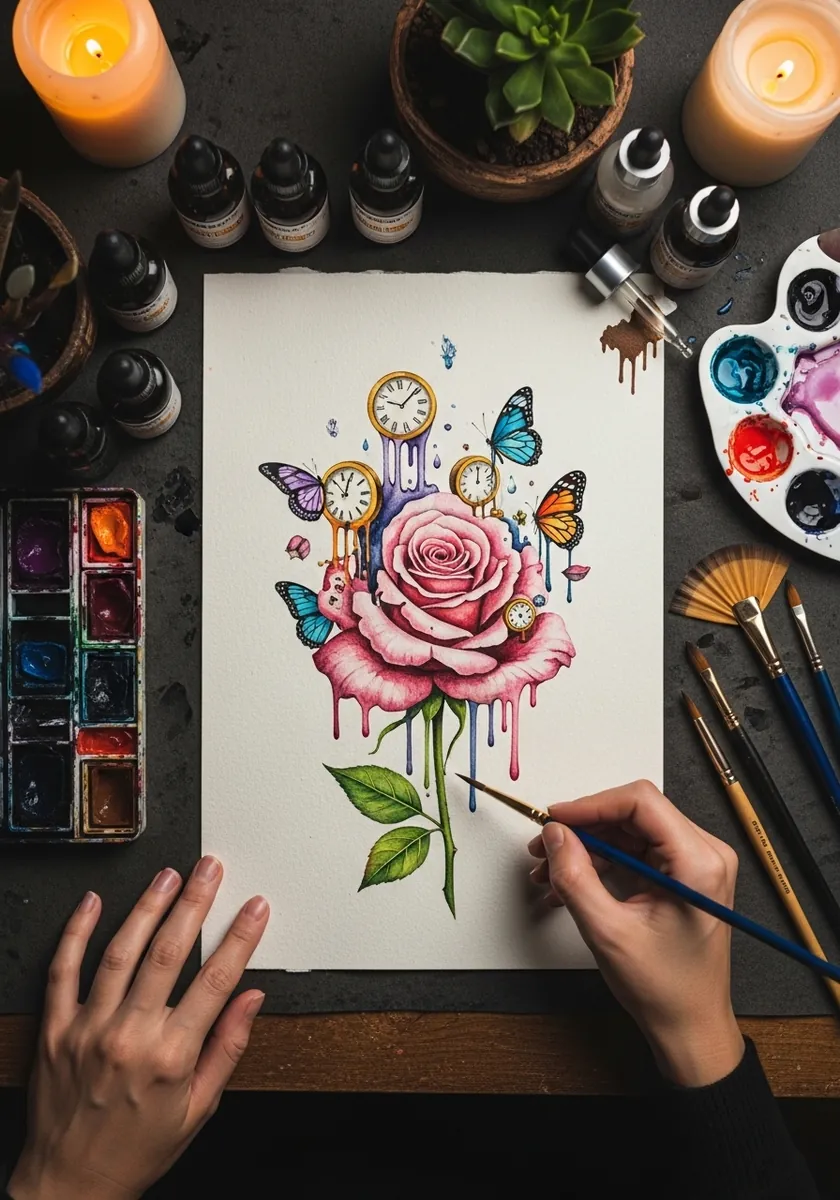
Melting pigment runs down from the petals while butterflies and small pocket watches float around the bloom, giving the piece a dreamlike, time-slipping feel. The dark desk and candlelight in the setup reinforce the mood. Tilt your board while the paint is still wet to control where the drips travel. Ideal if you want your florals to tell a story rather than simply record a flower.
35. Loose Expressive Rose with Splatter Accents
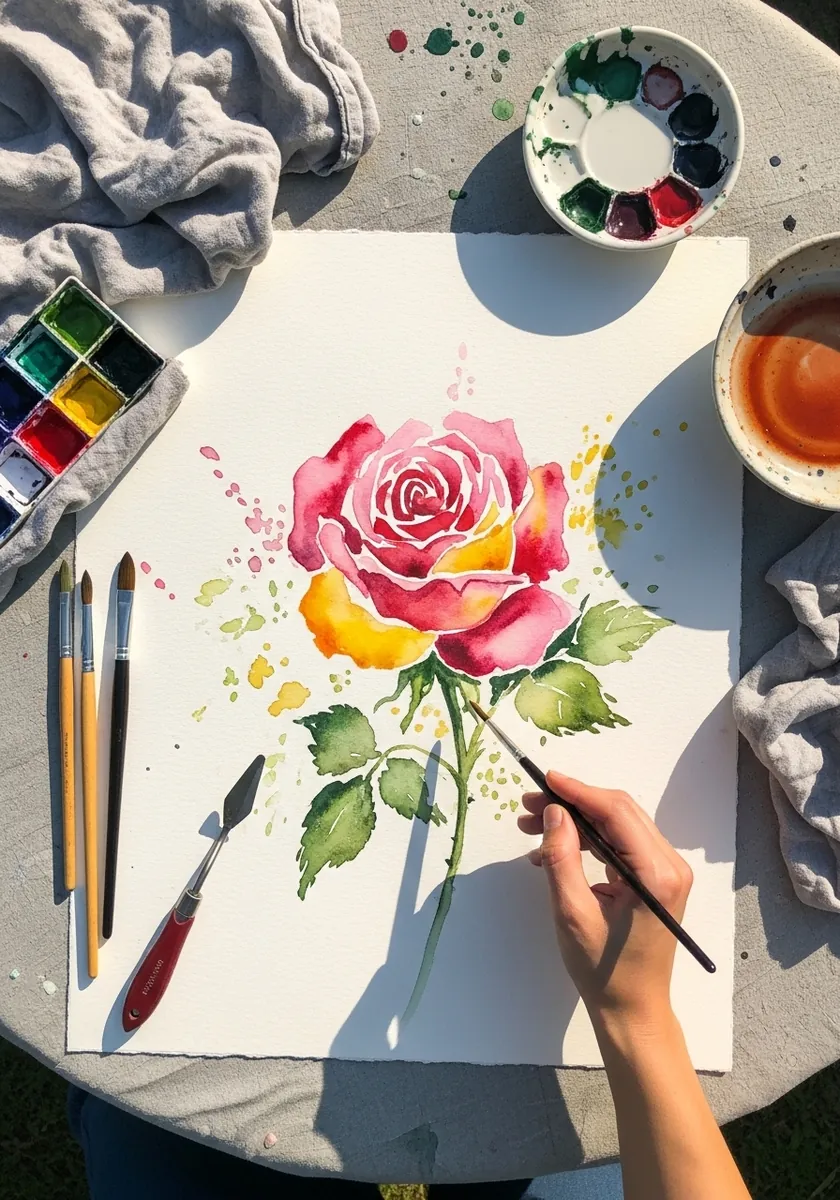
Painted quickly and wet-on-wet, this rose lets pink bleed into orange and yellow with no hard edges anywhere. Flicked splatters scatter across the paper and stop the composition feeling too tidy. The leaves are single confident strokes rather than drawn shapes. Load more water than feels sensible and stop while it still looks unfinished, because overworking is what kills a loose painting.
36. Dramatic Crimson Rose with Paint Drips
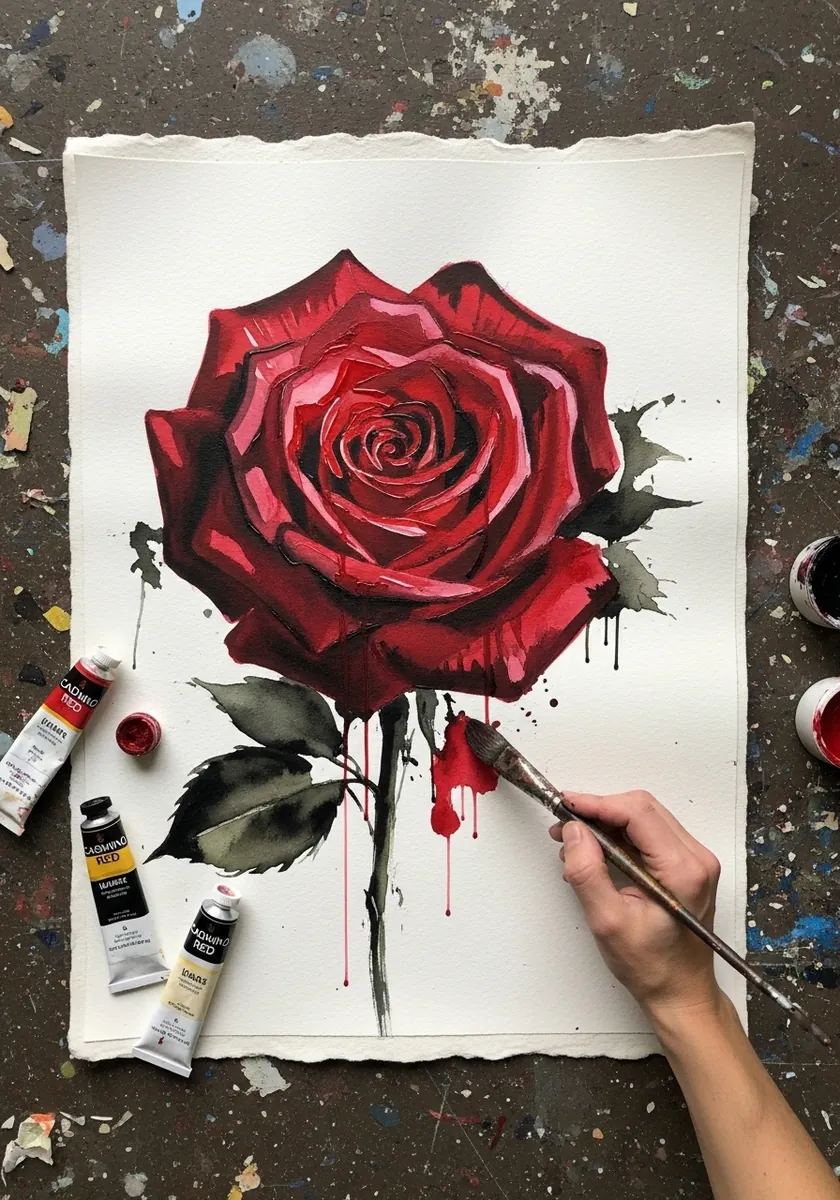
Deep crimson and near-black shadows give this rose real weight, and the red running down the page reads as deliberate rather than accidental. The torn deckle edge of the paper adds to the raw feel. Build the darks in two or three glazes, letting each dry, rather than trying to reach that depth in a single heavy wash. Dramatic and best kept large.
37. Geometric Faceted Rose in Bold Primary Colors
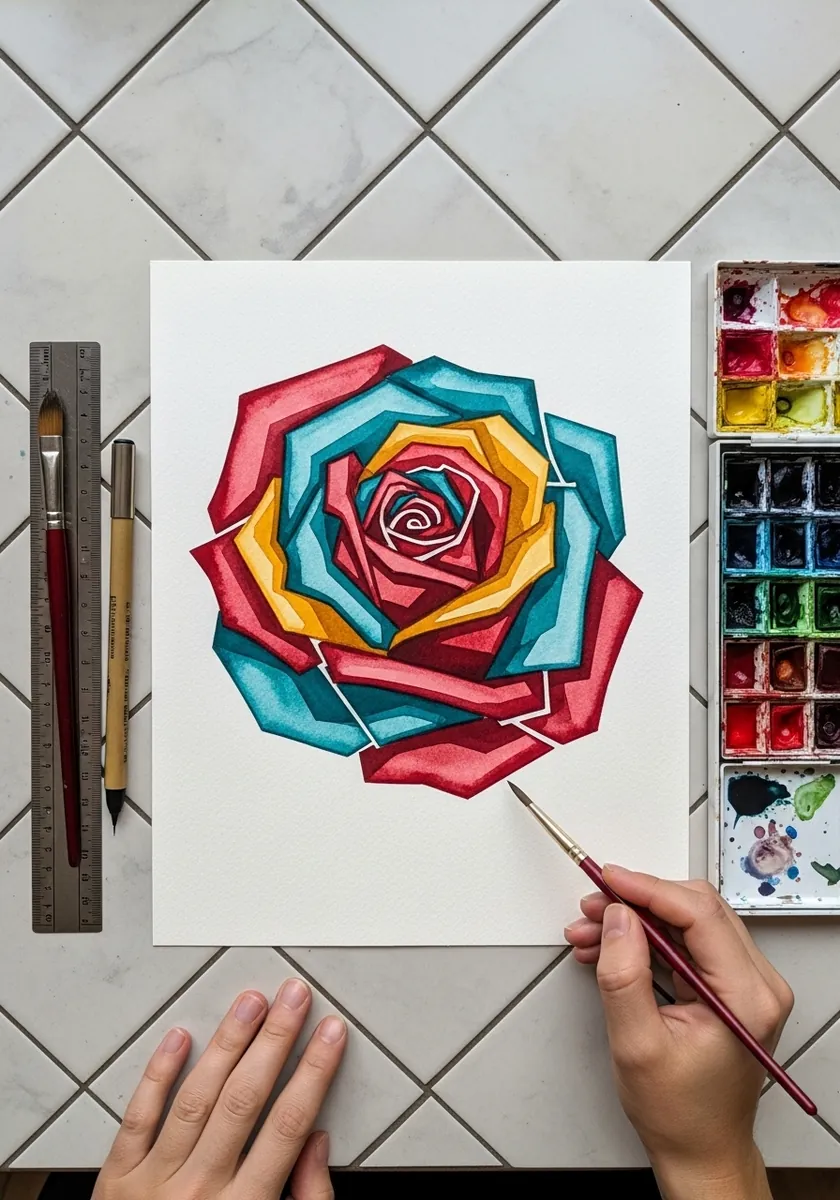
The rose has been broken into flat angular facets in red, teal, yellow and cream, with thin white gaps left between each shape. It looks like stained glass. Pencil the whole facet map lightly before you touch paint, then fill each shape as a separate flat wash and let it dry before painting a neighbor. Patient work, but the crisp result is worth it.
38. Hyperrealistic Pink Rose with Dew Droplets
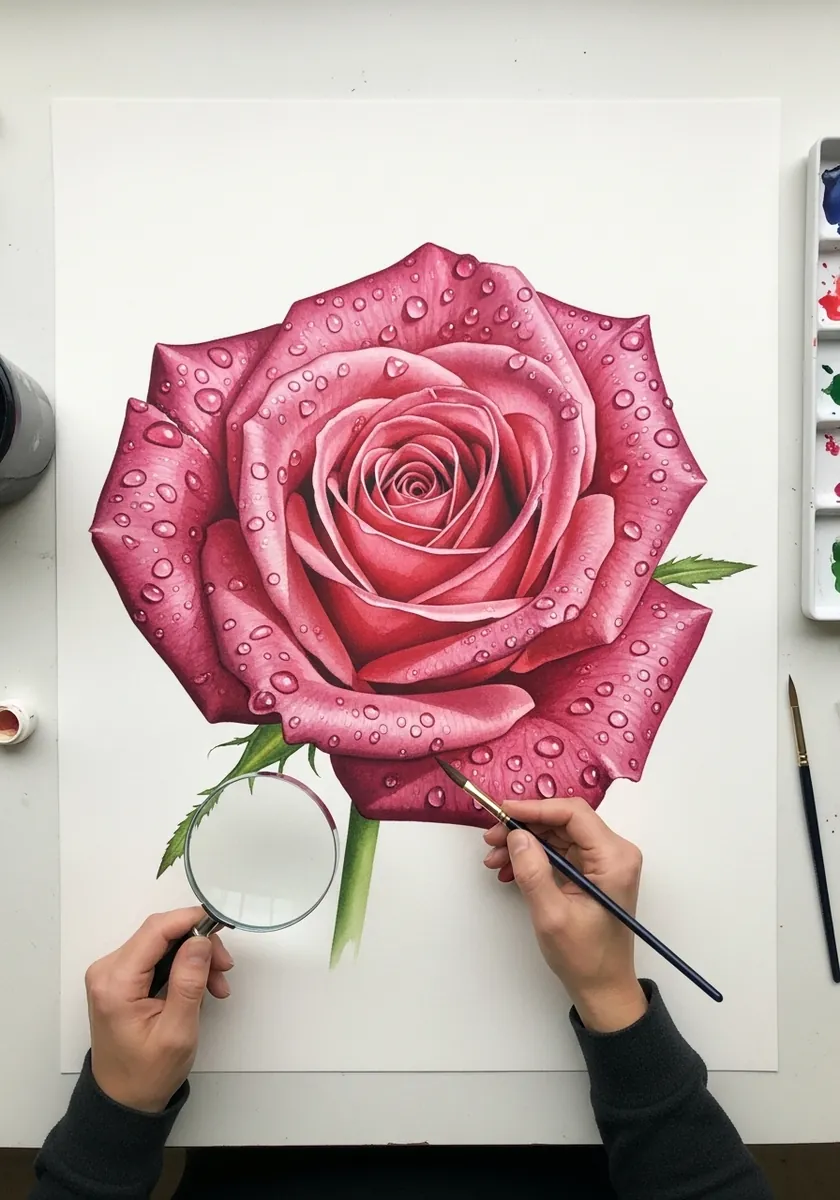
Every petal here carries beaded water, and each droplet has a dark underside and a tiny white highlight, which is the whole trick to painting convincing dew. The rose itself is layered in maybe eight glazes of the same pink to reach that saturation. Slow, technical and genuinely difficult. Attempt this once you are comfortable controlling hard and soft edges in the same wash.
39. Vintage Botanical Rose in Blush and Sage
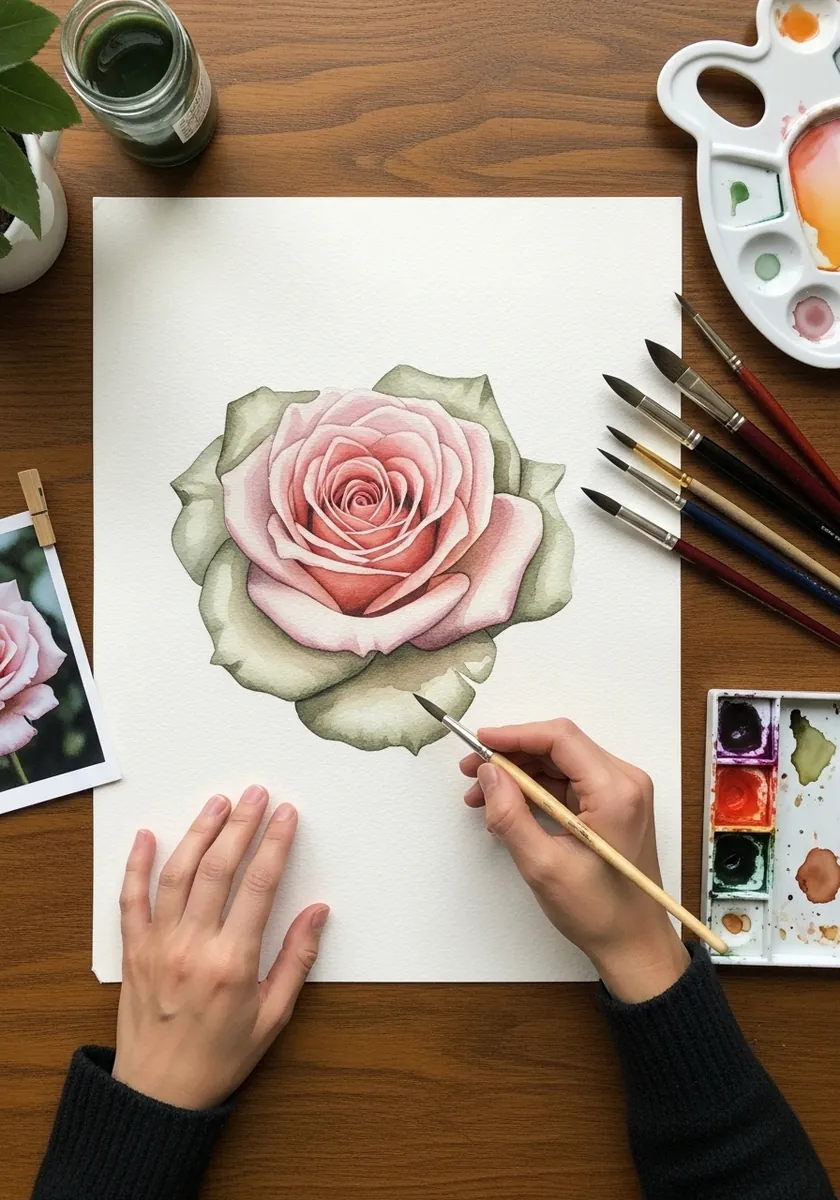
Muted dusty pink petals against gray-green sage leaves give this the look of a plate from an old botanical reference book. Nothing is fully saturated, which is exactly what creates the aged feeling. Knock every color back with a touch of its complement before you apply it. Frame a set of three in cream mounts and they will look far more expensive than they were.
40. Low Poly Coral Rose Built from Triangles
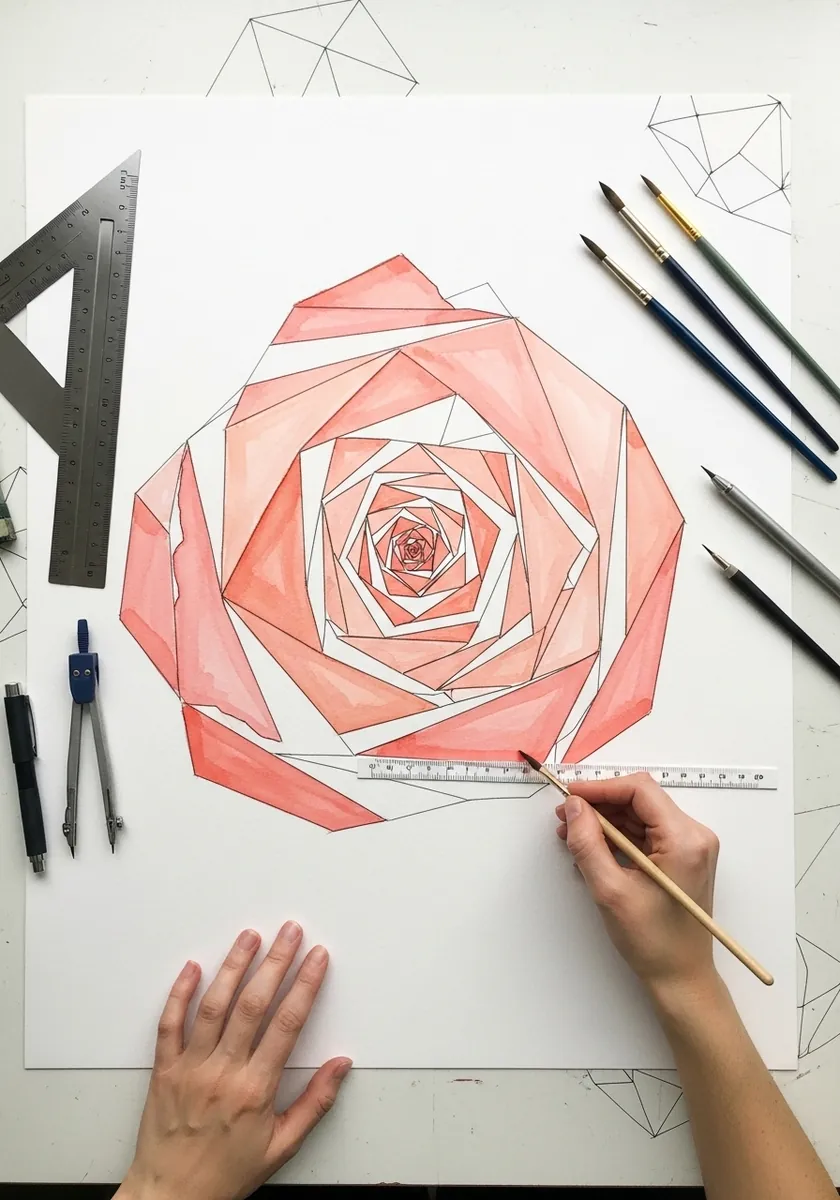
Built entirely from ruled triangles in graded coral tones, this rose spirals inward through pure geometry rather than observation. Darker triangles cluster at the center to suggest depth. Use a ruler and a hard pencil for the framework, then paint each triangle a slightly different dilution. A satisfying project if you enjoy structure more than free brushwork.
41. Ink Hatched Rose over a Soft Pink Wash
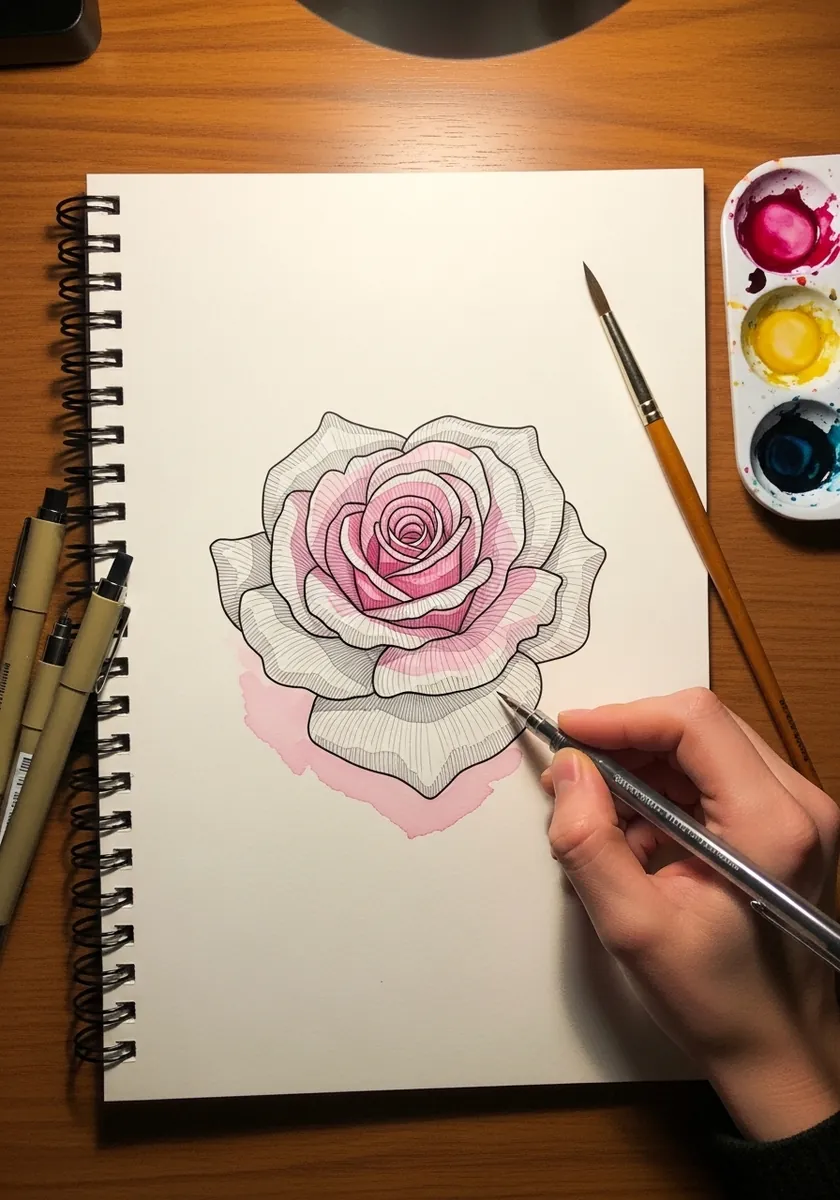
Dense fine-liner hatching describes every petal fold while a loose pink wash sits underneath, spilling past the outlines. The contrast between obsessive line and casual color is what makes it work. Lay the wash first and let it dry fully, then hatch on top with a waterproof pen. A good sketchbook exercise for anyone who likes drawing more than painting.
42. Zentangle Rose with Rainbow Watercolor Base
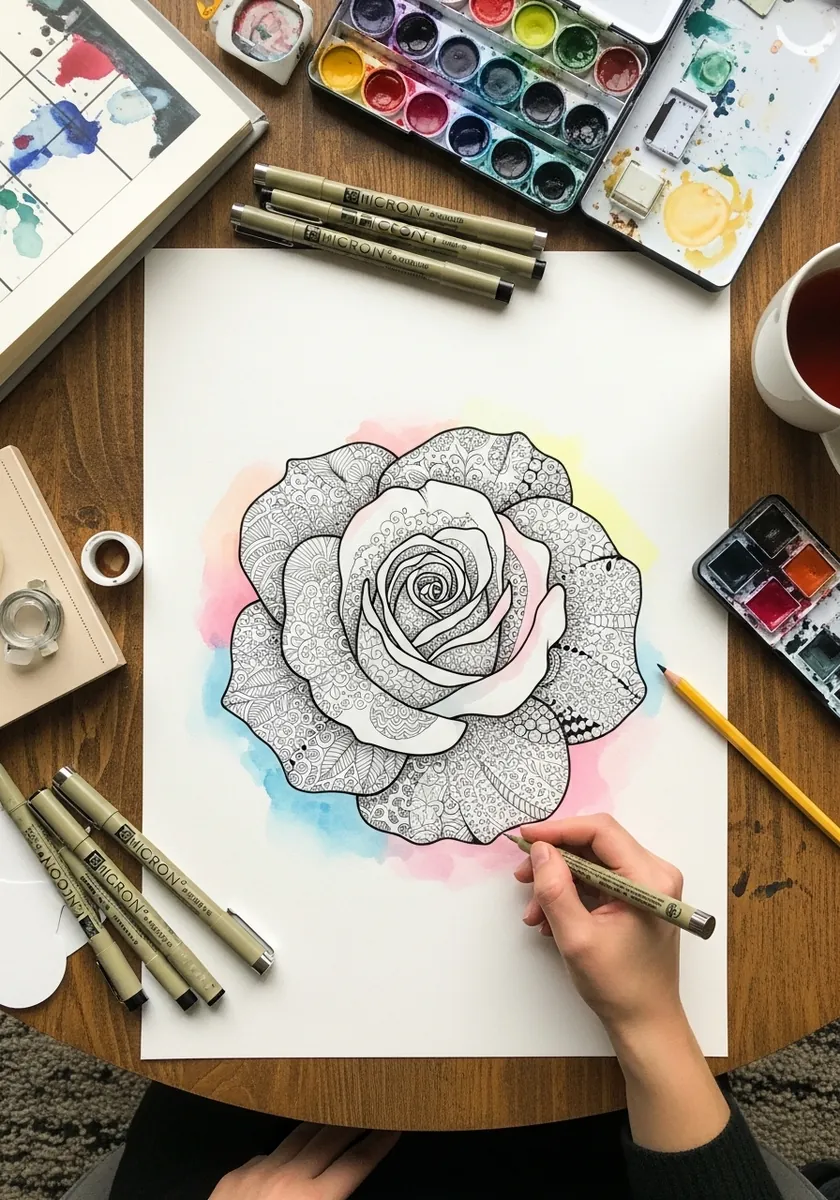
Intricate zentangle patterning fills each petal in black micron pen, sitting over a soft rainbow wash of pink, blue and yellow that shows around the edges. The pattern gives the eye somewhere to travel. Paint the wash, dry it thoroughly, then fill petals one at a time with a different motif in each. Meditative work that rewards an unhurried evening.
43. Graffiti Airbrush Rose in Purple and Gray
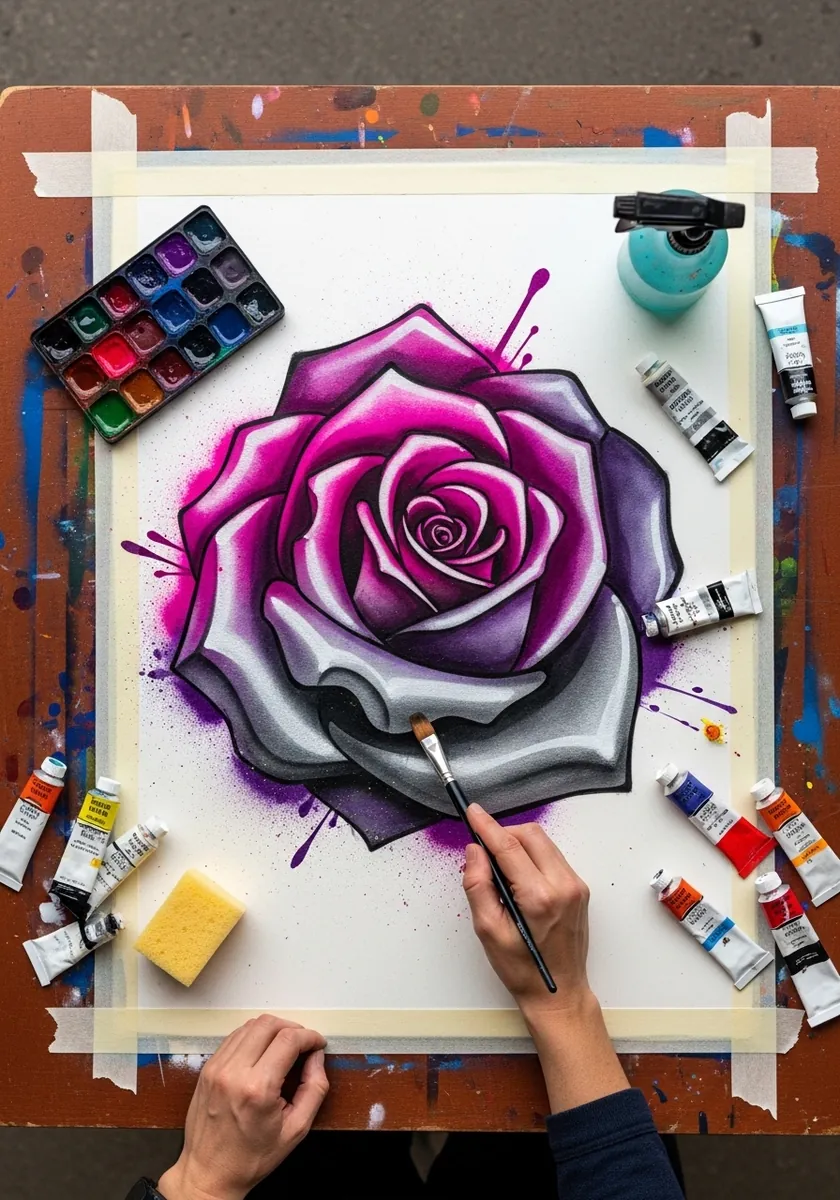
Magenta and purple bleed through gray petals with a sprayed halo of color behind, giving this the feel of street art brought onto paper. Masking tape holds a clean white border, which sharpens the whole thing considerably. Spatter with a toothbrush for the fine spray. Tape your paper down before you start, because the border is half the effect.
44. Digital Neon Gradient Rose on a Drawing Tablet
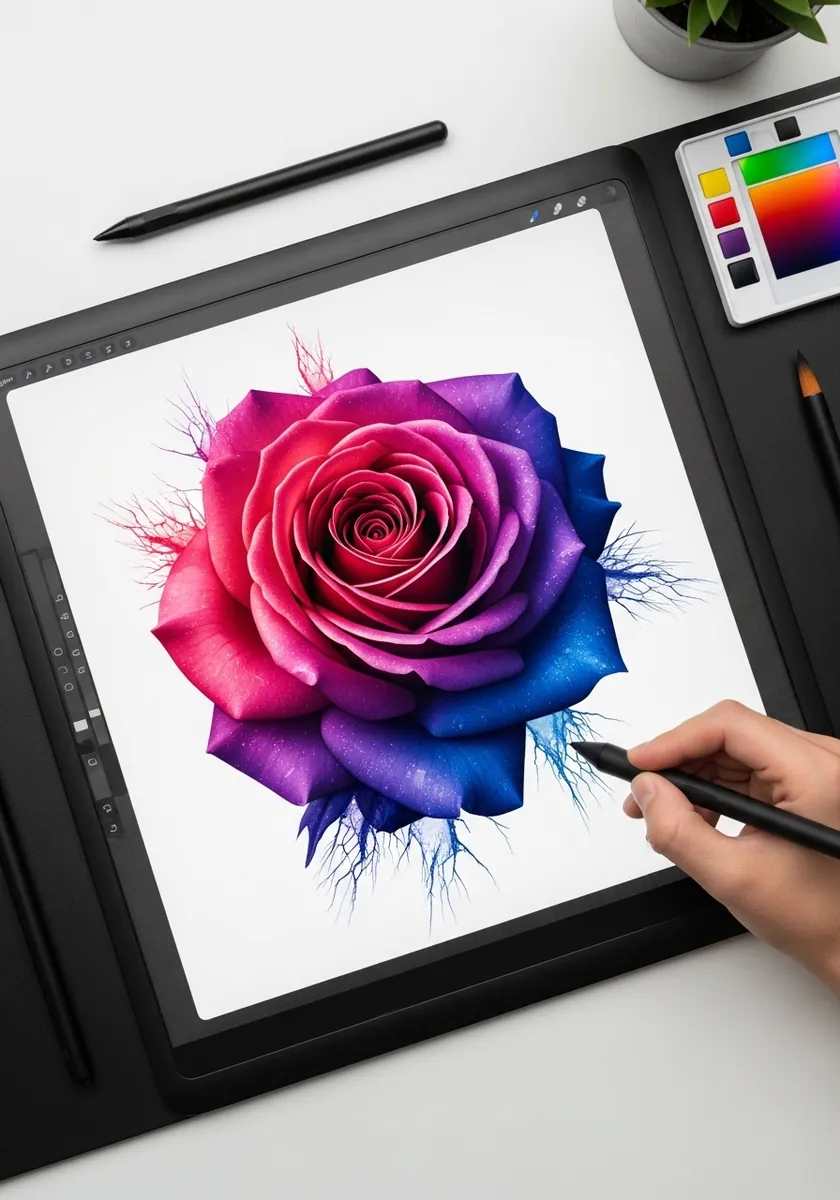
A pink-to-blue gradient runs across the petals with glowing electric edges, painted digitally in a watercolor brush style. The white background keeps the neon reading as bright rather than muddy. If you are working on paper, mask the flower and airbrush the gradient, then lift highlights with a clean damp brush. Well suited to phone wallpapers and print-on-demand designs.
45. Retro Pixel Art Rose on Graph Paper
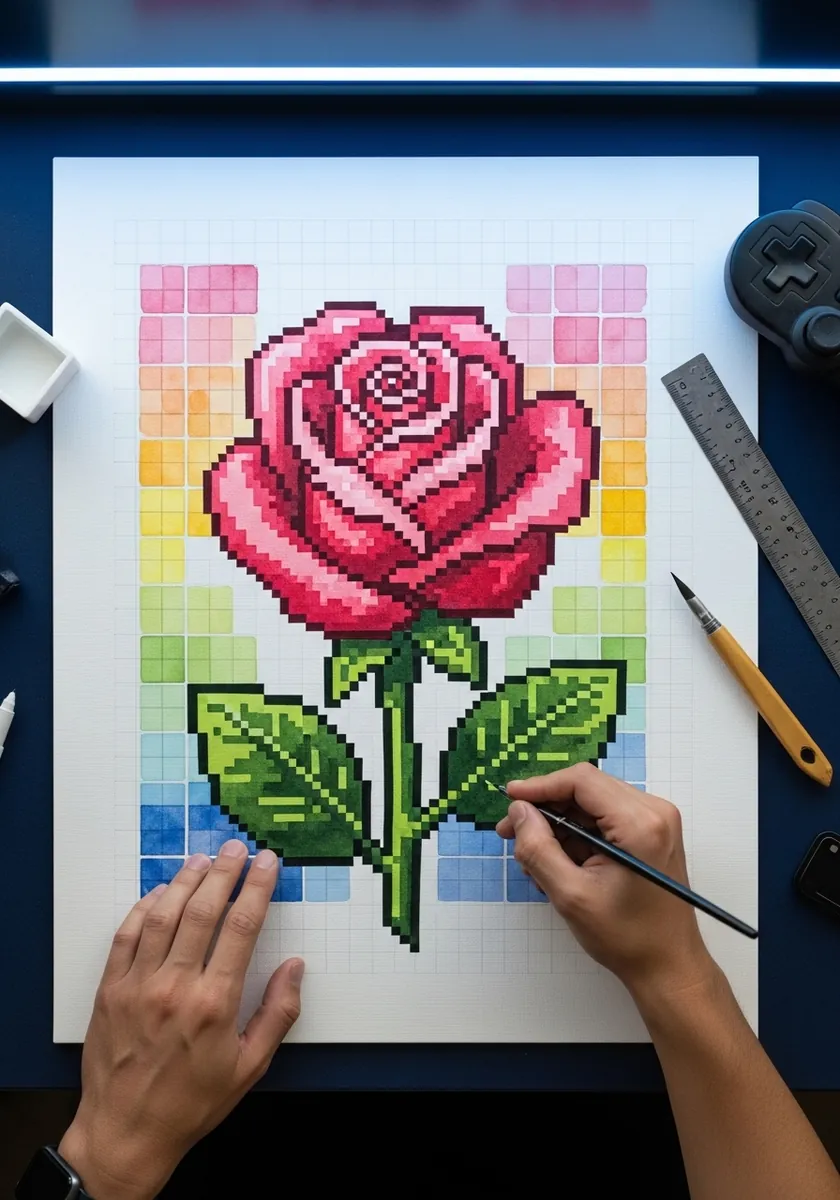
Every petal is built from painted squares on a grid, with a pastel rainbow block pattern filling the background. It reads instantly as a sprite from an old video game. Rule your grid in pencil first, then fill one square at a time with a small flat brush and do not blend anything. Blending is the one thing that would break the illusion.
46. Translucent Overlapping Geometric Rose
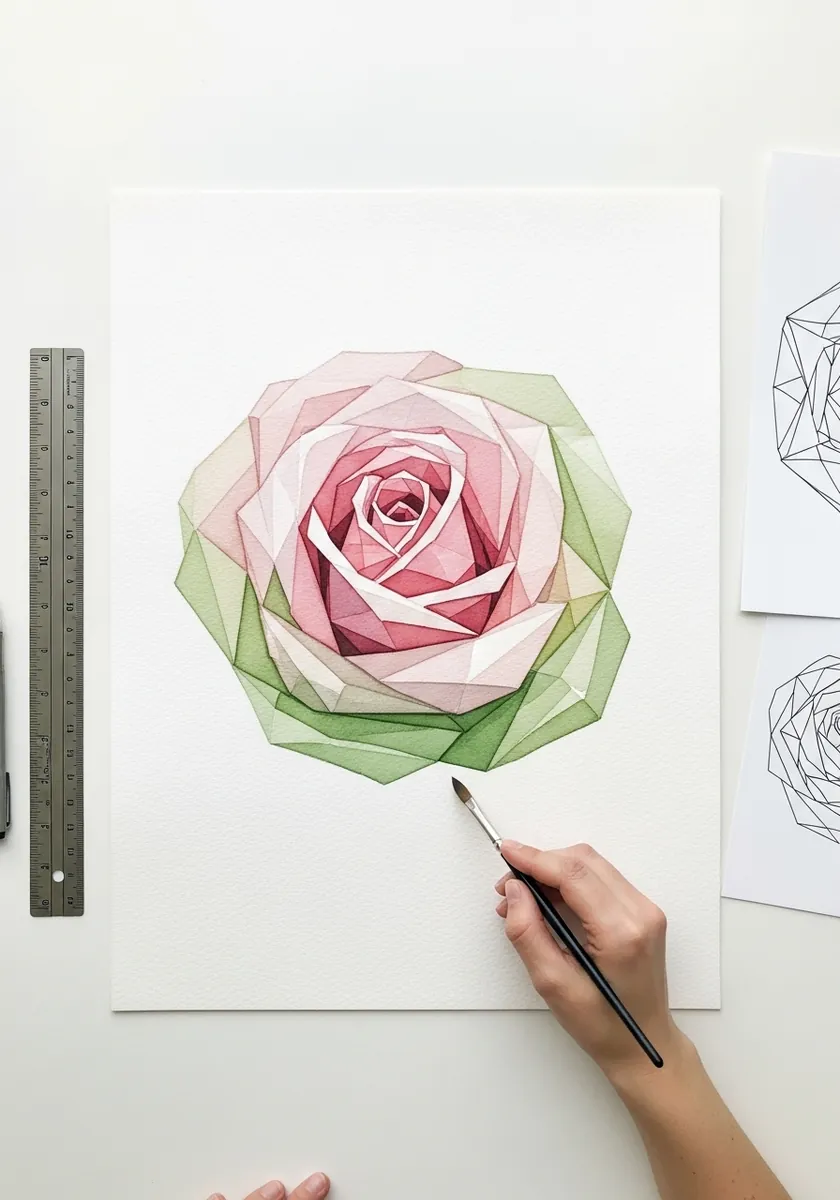
Transparent pink and sage shapes overlap, and wherever two cross, the color deepens naturally. That layering is doing all the work, so the piece stays light and airy despite being quite complex. Use genuinely transparent pigments and let each layer dry completely before adding the next. Elegant, modern, and much easier than it looks.
47. Paper Cut Style Flat Rose in Coral and Sage
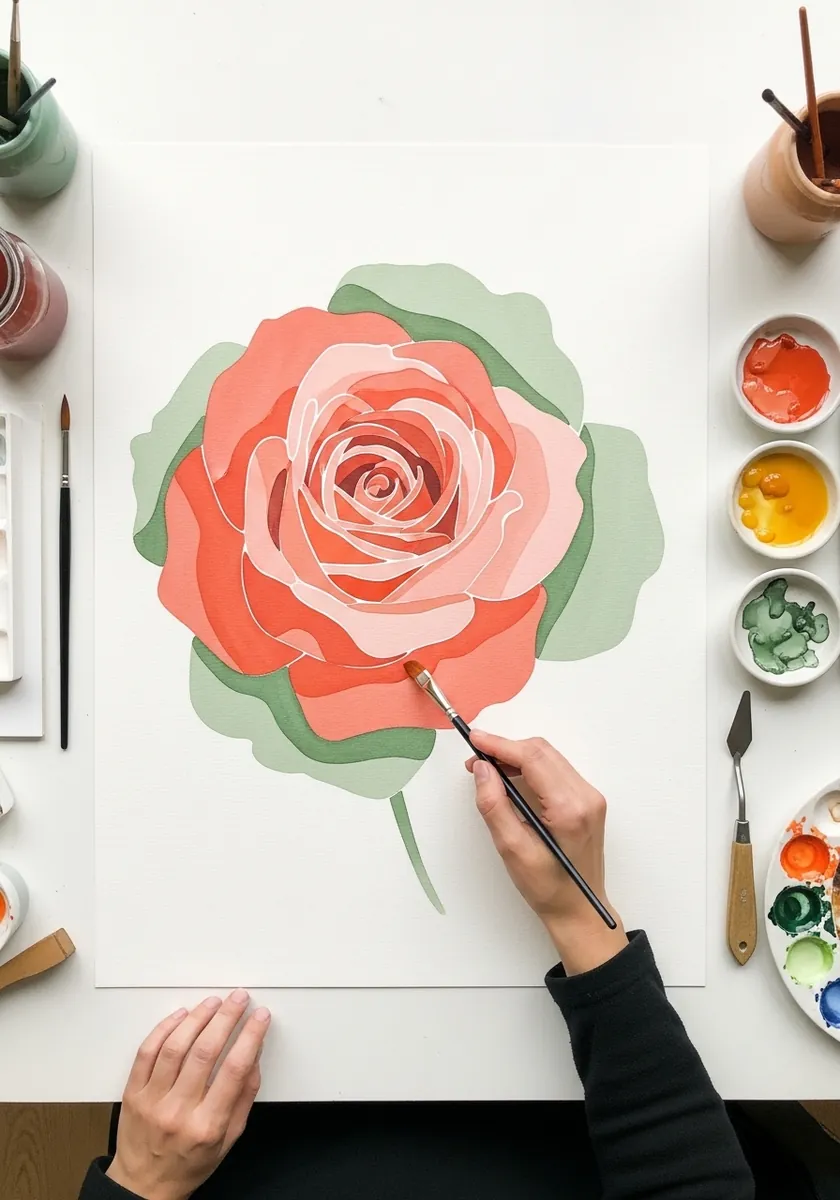
Flat matte shapes in coral, blush and sage sit against clean white with no shading anywhere, so the rose reads as cut paper rather than paint. It is all about clean edges and confident shape design. Mix enough of each color in advance to fill a shape in one pass, because a flat wash cannot be patched invisibly. Strong, contemporary and very printable.
48. Mixed Media Collage Rose with Newsprint Petals
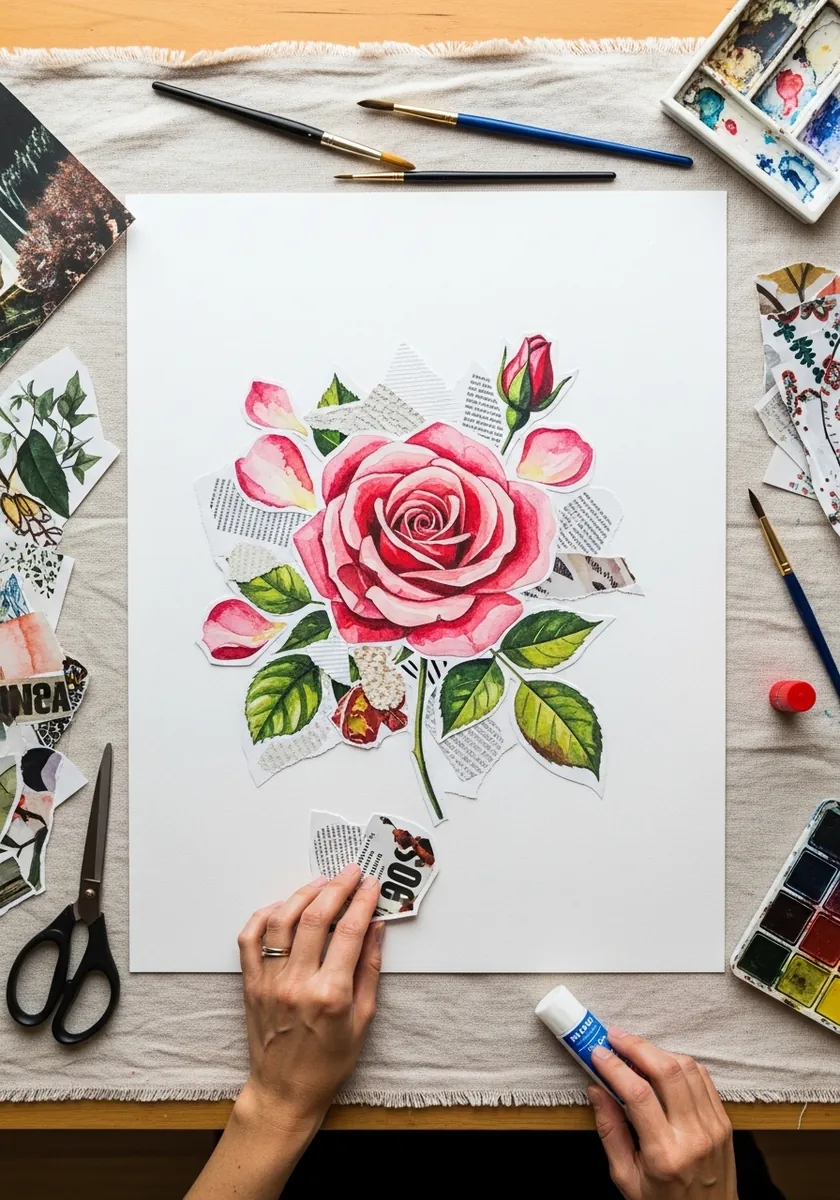
Newspaper clippings form the petal underlayer with pink watercolor washed over the top, so fragments of type show through the color. Painted leaves and a small butterfly finish it. Glue the paper down and seal it with matte medium before painting, otherwise the wash will pull the print and go gray. A good way to use up magazine offcuts.
49. Psychedelic Rainbow Rose with Bold Outlines
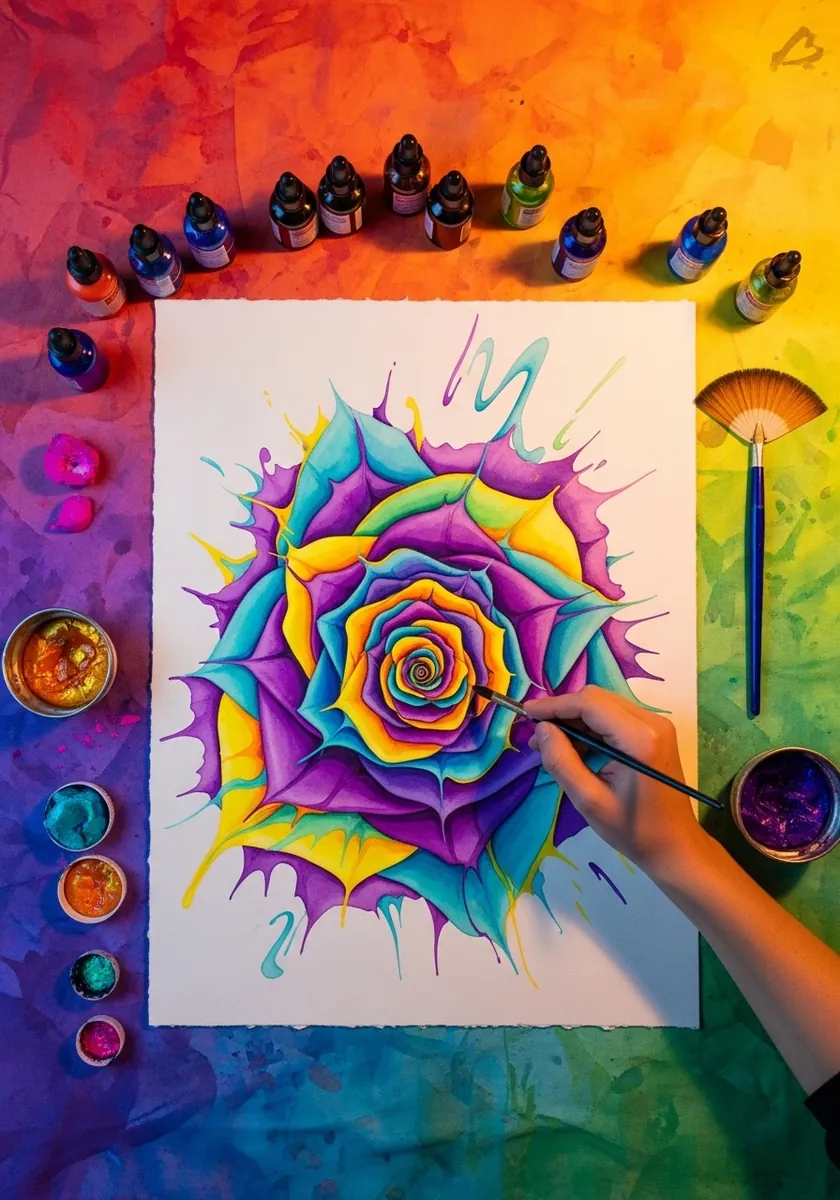
Turquoise, purple, yellow and magenta spiral outward from the center with heavy outlines keeping every band separate. The vivid painted background pushes the saturation even further. Work from the center out so the color sequence stays logical, and use the most pigmented paint you own. Loud, joyful, and not remotely subtle.
50. Neo Traditional Tattoo Flash Rose
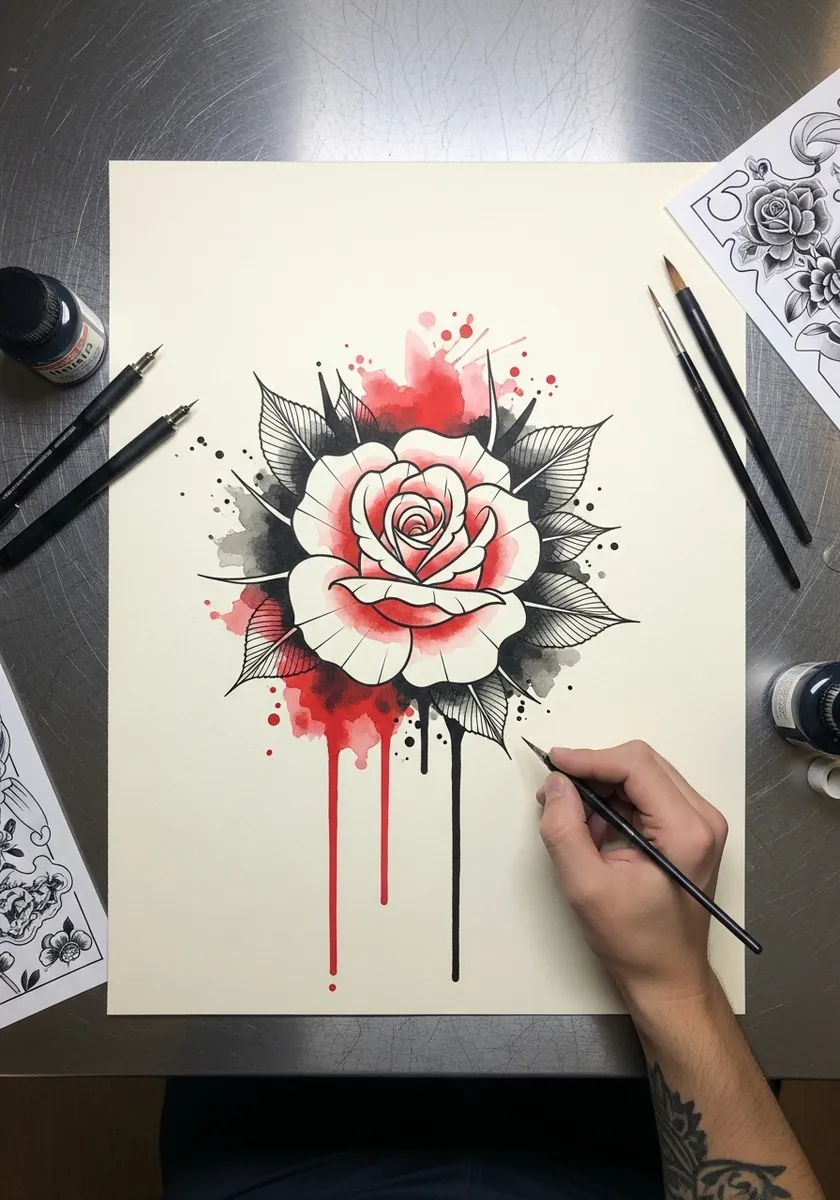
Bold black linework, sharply pointed leaves and a red splatter behind the bloom put this squarely in tattoo flash territory. The cream paper and the drips running below the flower are what mark it as watercolor rather than ink. Ink every line first and let it cure, then keep the color loose and let it break the outlines. A good bridge between illustration and tattoo design.
51. Bold Cartoon Rose with Heavy Black Outlines
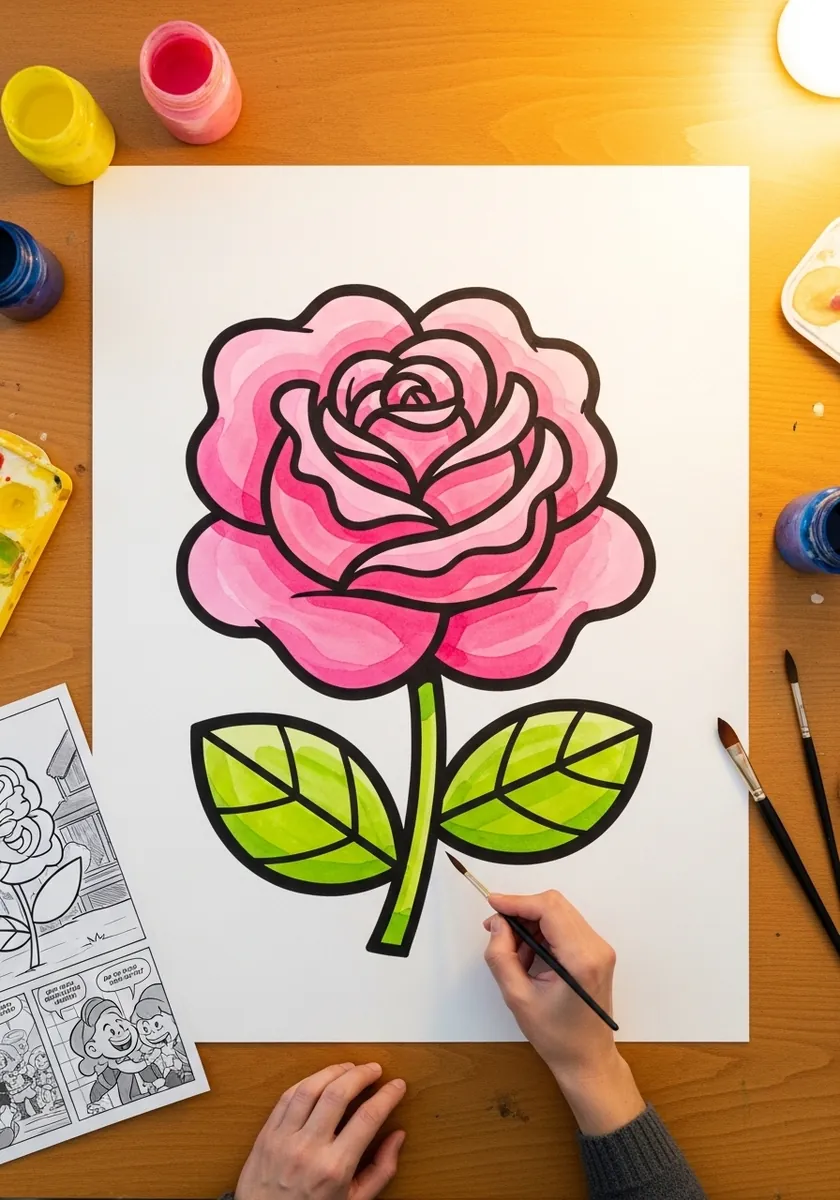
Thick black outlines, bright pink petals and two oversized green leaves make this instantly readable from across a room. There is no shading at all, just flat color inside firm lines. Ink with a brush pen for line weight that varies, then fill with saturated flat washes. Children love painting these, and they work well as sticker or print designs.
52. Kawaii Sparkle Rose in Soft Pink Line Work
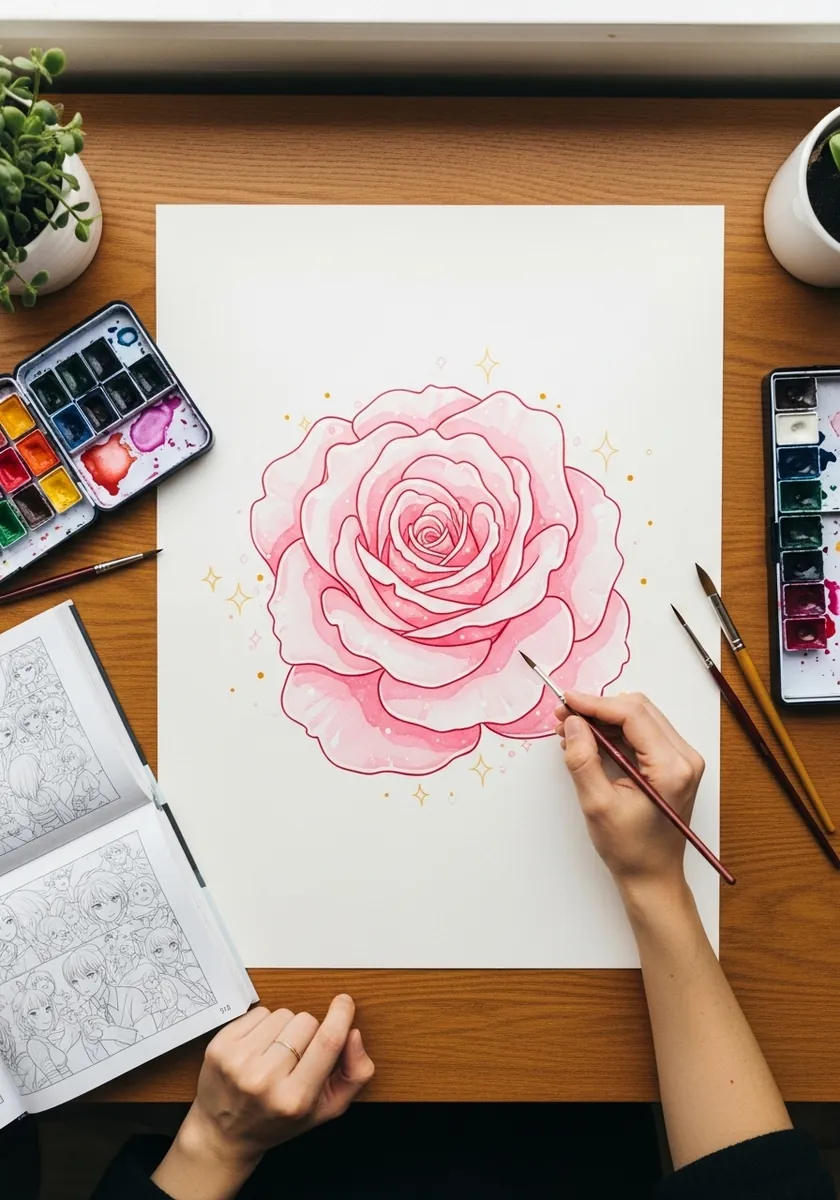
Fine pink linework spirals through a pale blush bloom with tiny gold sparkles scattered around it. Everything is soft, low contrast and deliberately sweet. Use a pink fine-liner rather than black, because black would immediately harden the mood. Add the sparkles last with a gel pen. Well suited to journal pages, planner decoration and stationery.
53. Manga Speed Line Rose in Black Ink
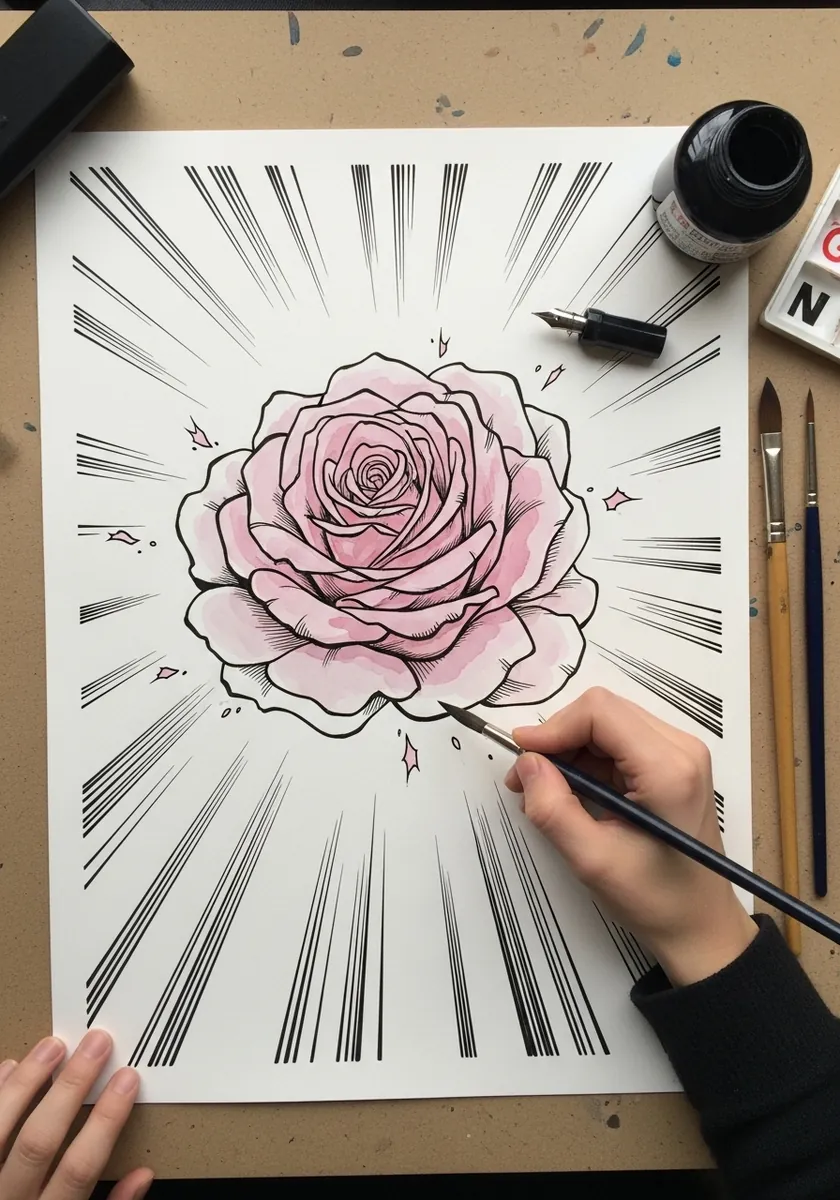
Black ink speed lines burst outward from a pale pink rose, borrowing a device straight from manga panels to create urgency around an otherwise still subject. The flower stays quiet while the background does the shouting. Rule the lines from a single vanishing point behind the bloom, and vary their thickness so they do not read as mechanical.
54. Black Silhouette Rose on a Splash Background
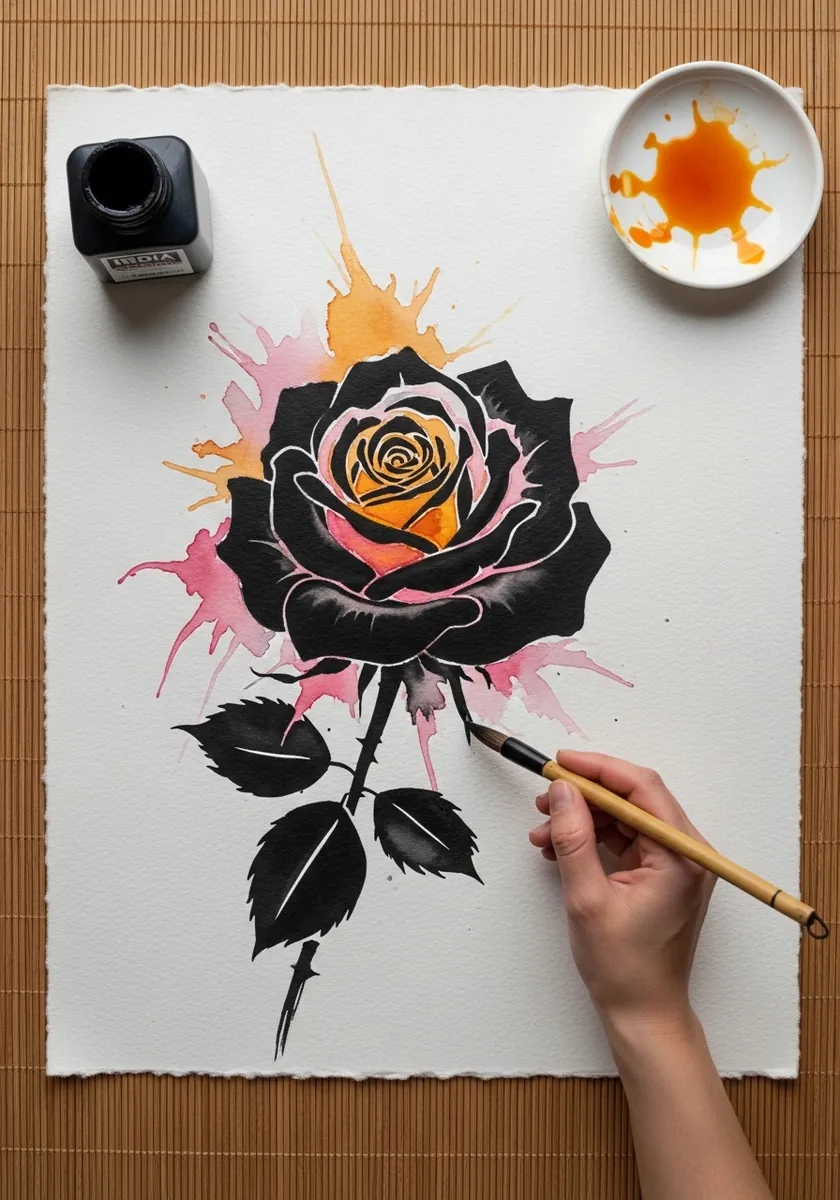
The rose is painted as a solid black silhouette with only a thin gold outline suggesting the petal spiral, sitting on a burst of orange and pink splashes. High contrast does everything here. Lay the color splash first, dry it, then paint the silhouette over the top in one confident pass. Bold, graphic and quick once the background is dry.
55. Realistic Pink Rose with Cast Shadow
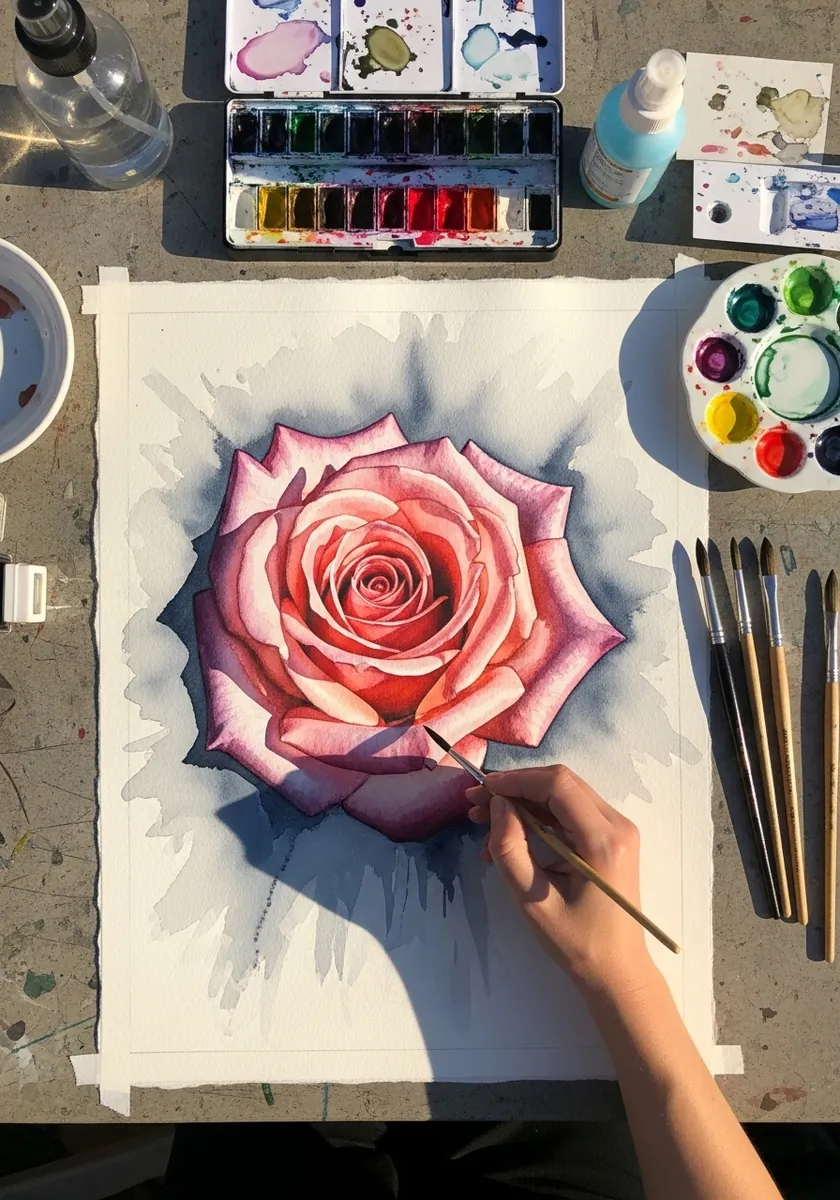
A carefully rendered pink and coral rose sits above a soft gray shadow washed onto the paper, which makes the flower appear to lift off the page. That painted shadow is a small trick with a large payoff. Keep it neutral, keep it soft-edged, and place it consistently with your imagined light source. Try adding one to a study you have already finished.
56. Charcoal and Gray Wash Monochrome Rose
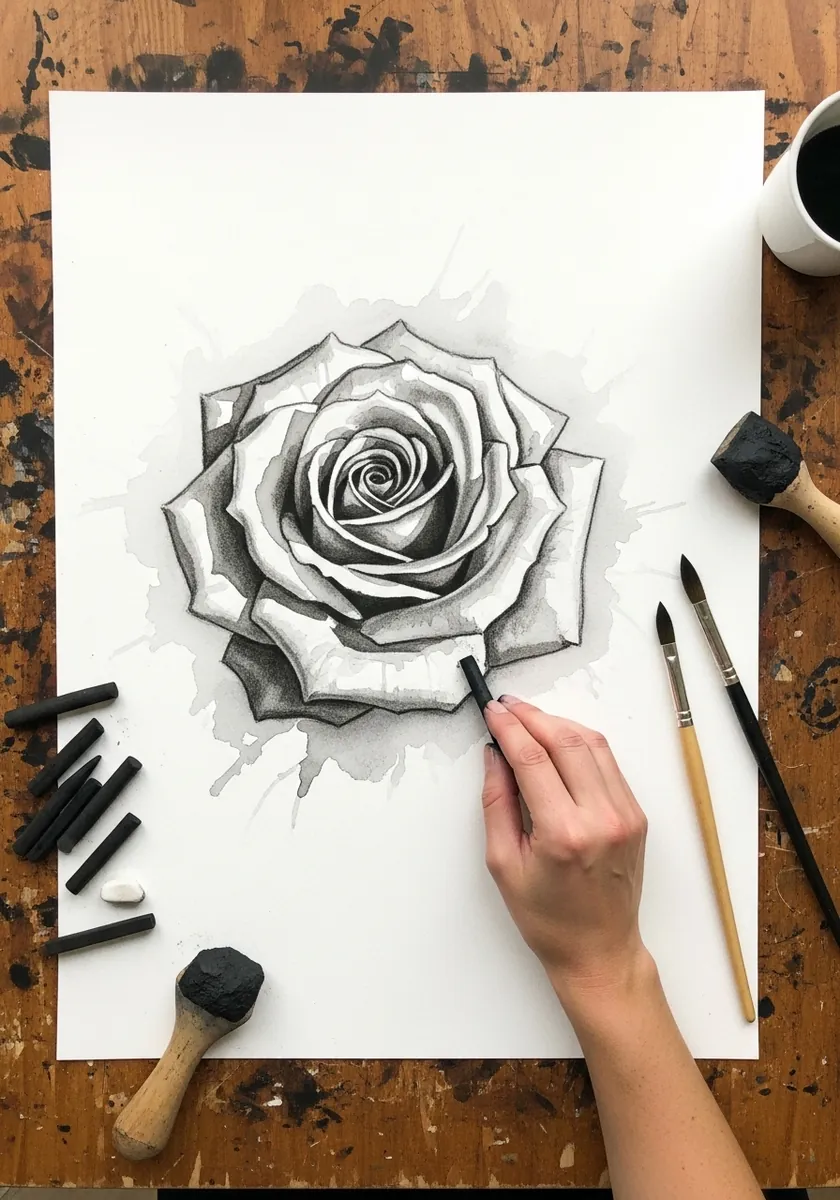
Working entirely in grays strips out color and forces you to think purely in values, which is the single most useful exercise in painting. Charcoal handles the darkest petal folds while gray washes carry the mid-tones. Squint at your reference to see where the values actually sit. Do a monochrome study before any full-color rose and the color version will improve noticeably.
57. Rich Red Studio Rose on Stretched Canvas
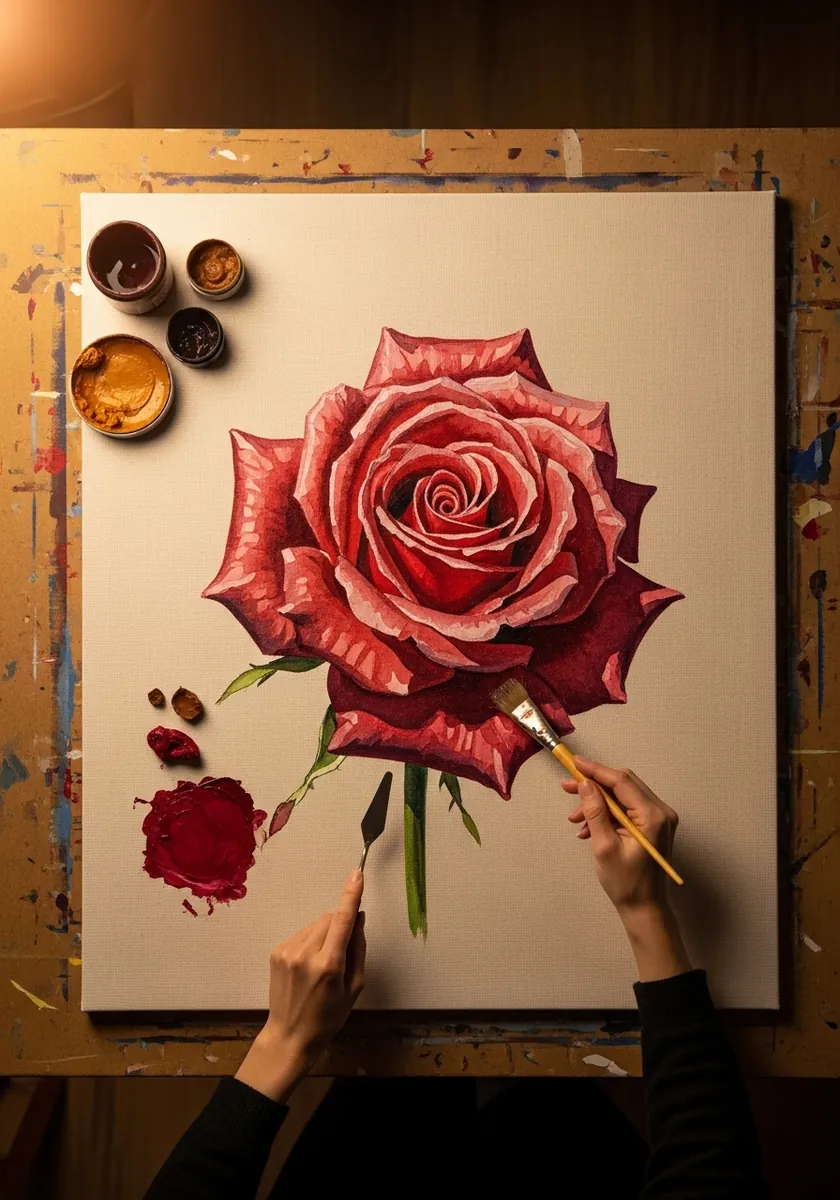
Deep red and burgundy petals with visible brushwork, painted on canvas under warm lamplight so the whole piece glows amber. The warm light is influencing every color, which is worth noticing. If you paint under tungsten light, check your work in daylight before calling it finished, because the reds will look quite different. Substantial and gallery-ready.
58. Soft Dusty Pink Rose in Extreme Close Up
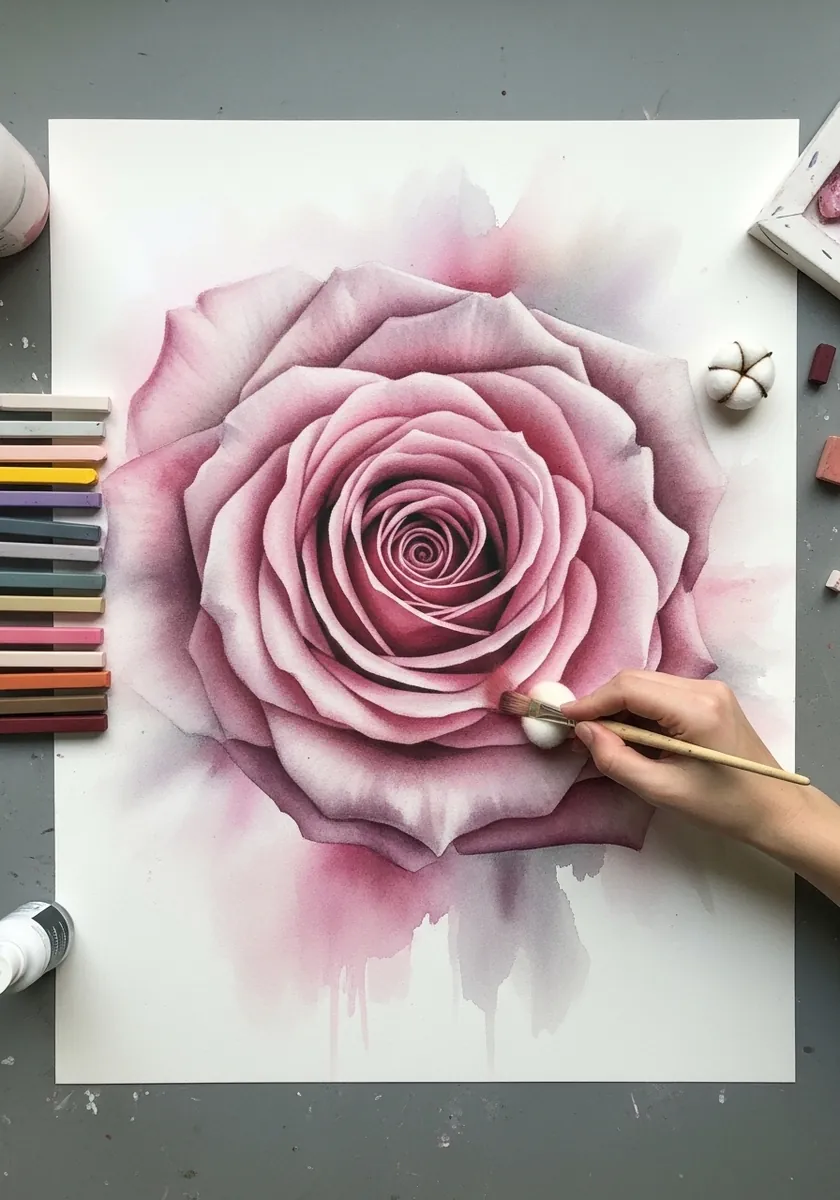
The bloom is cropped so tightly that petals run off all four edges, which pulls you straight into the spiral of the center. Dusty pink and mauve keep it calm despite the scale. Choose your crop before you start drawing, not after. Filling the page like this is one of the easiest ways to make a simple subject feel considered.
59. Antique Ink and Wash Rose by Candlelight
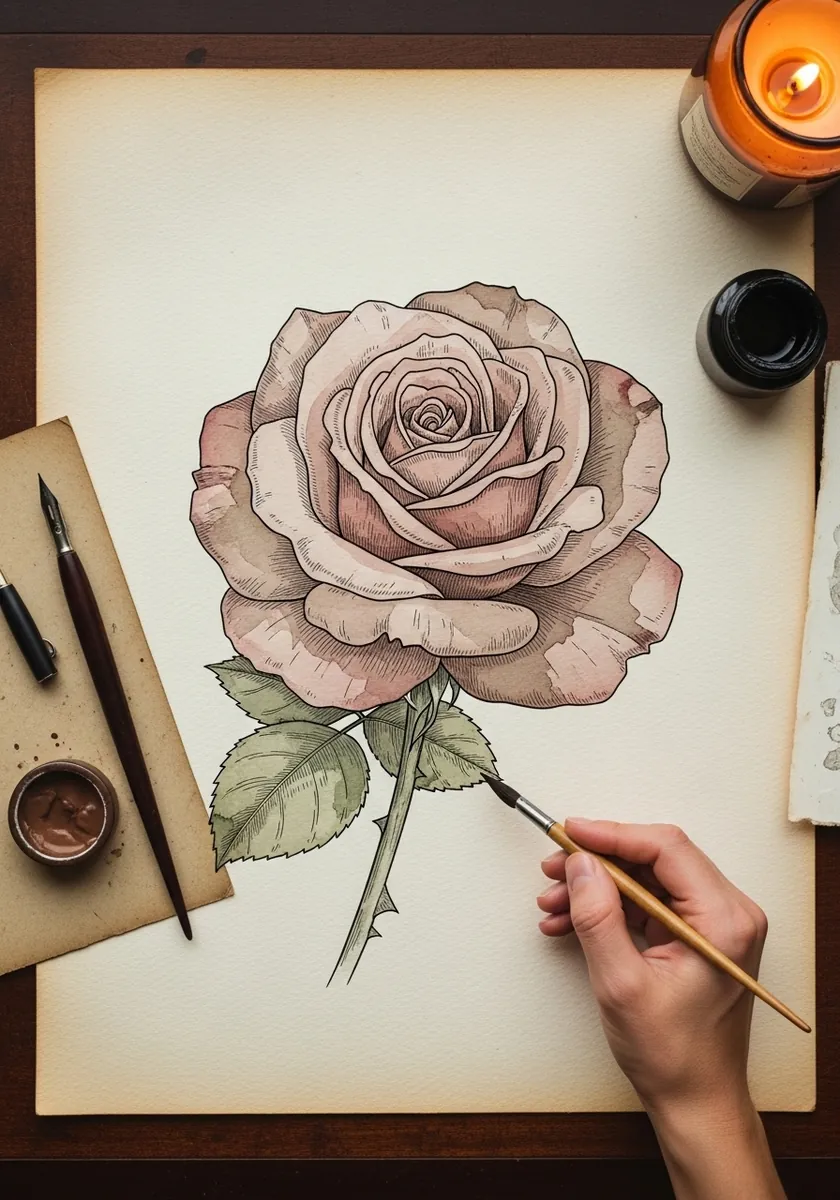
Muted mauve and faded green with fine brown ink linework and a properly thorny stem give this the look of a page torn from a Victorian herbal. Even the paper is toned. Use a sepia or brown pen rather than black, and stain your paper with weak tea if you want the aged ground. Charming as a set of small framed studies.
60. Mid Century Modern Rose in Orange and Yellow
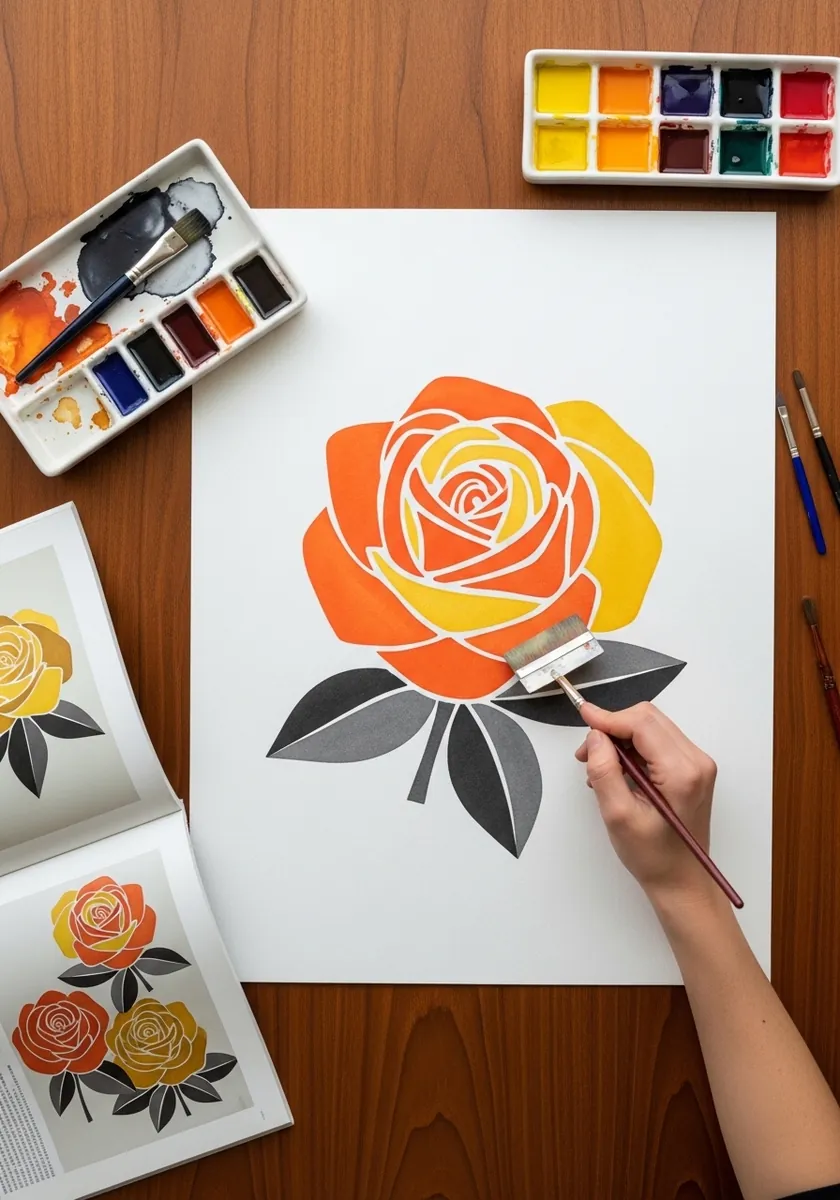
Flat orange and yellow petals with gray-green leaves and a rounded, simplified silhouette place this firmly in mid-century design territory. There is no attempt at botanical accuracy and it does not need any. Limit yourself to three colors and simplify the rose to five or six shapes. Excellent for textile patterns and repeat prints.
61. Terracotta Drip Rose with Botanical Styling
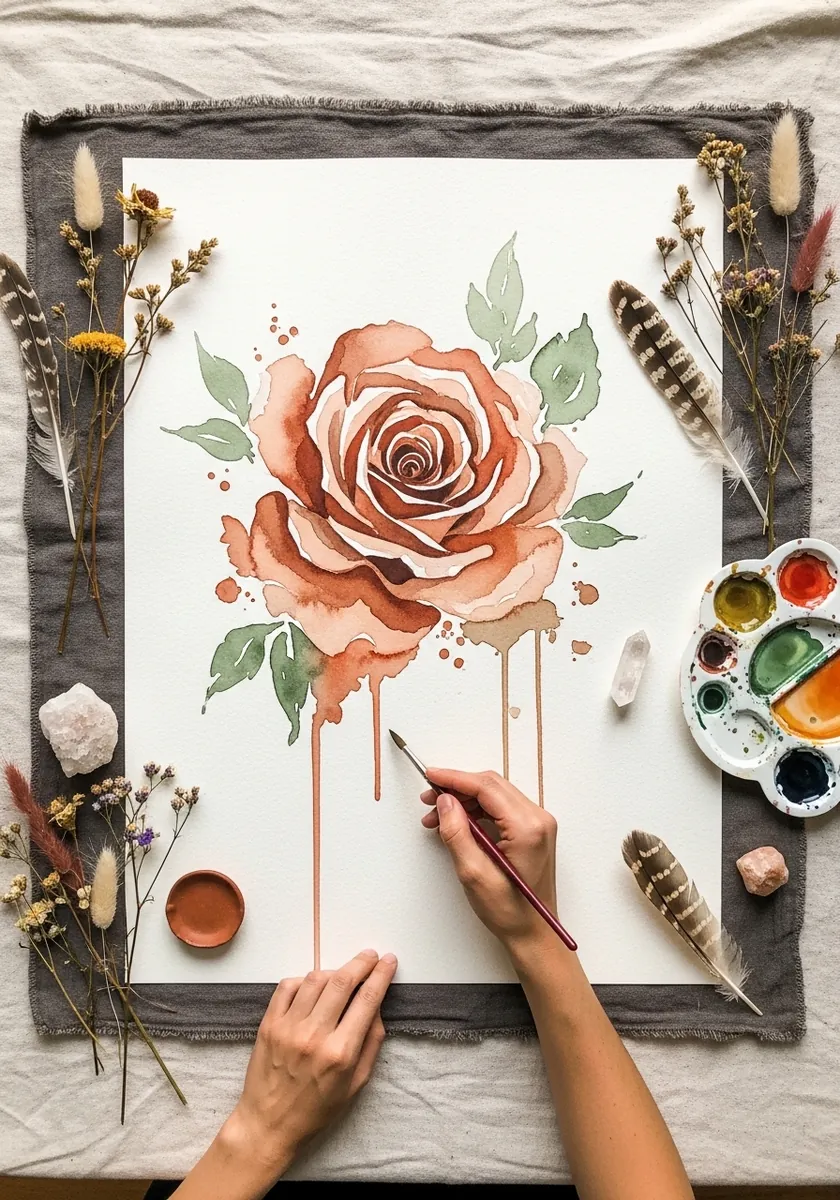
Warm terracotta and rust petals with sage leaves, and deliberate drips running down from the flower onto bare paper. The dried flowers and feathers in the setup match the palette exactly, which is why the whole scene hangs together. Load your brush heavily at the base of the bloom and let gravity pull the drips. Earthy and very current.
62. Botanical Study of a Single Wild Rose
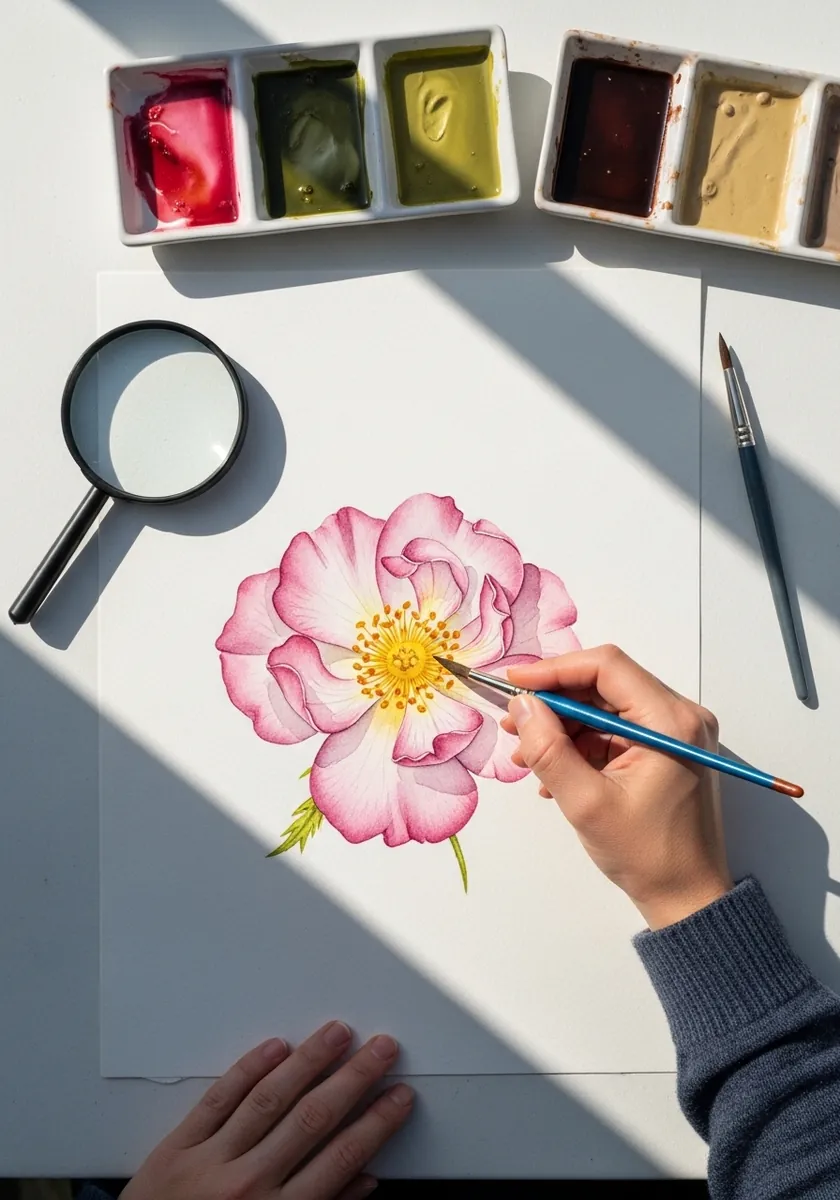
Unlike a garden rose, a wild rose has just five flat petals around a bright yellow stamen center, and painting one is a useful reminder of how varied the family is. Pink shades into white at the base of each petal. Dot the stamens with a fine brush once everything else is dry. A quick, accurate study that suits a nature journal.
63. Cottage Garden Rose with Bees and Vines
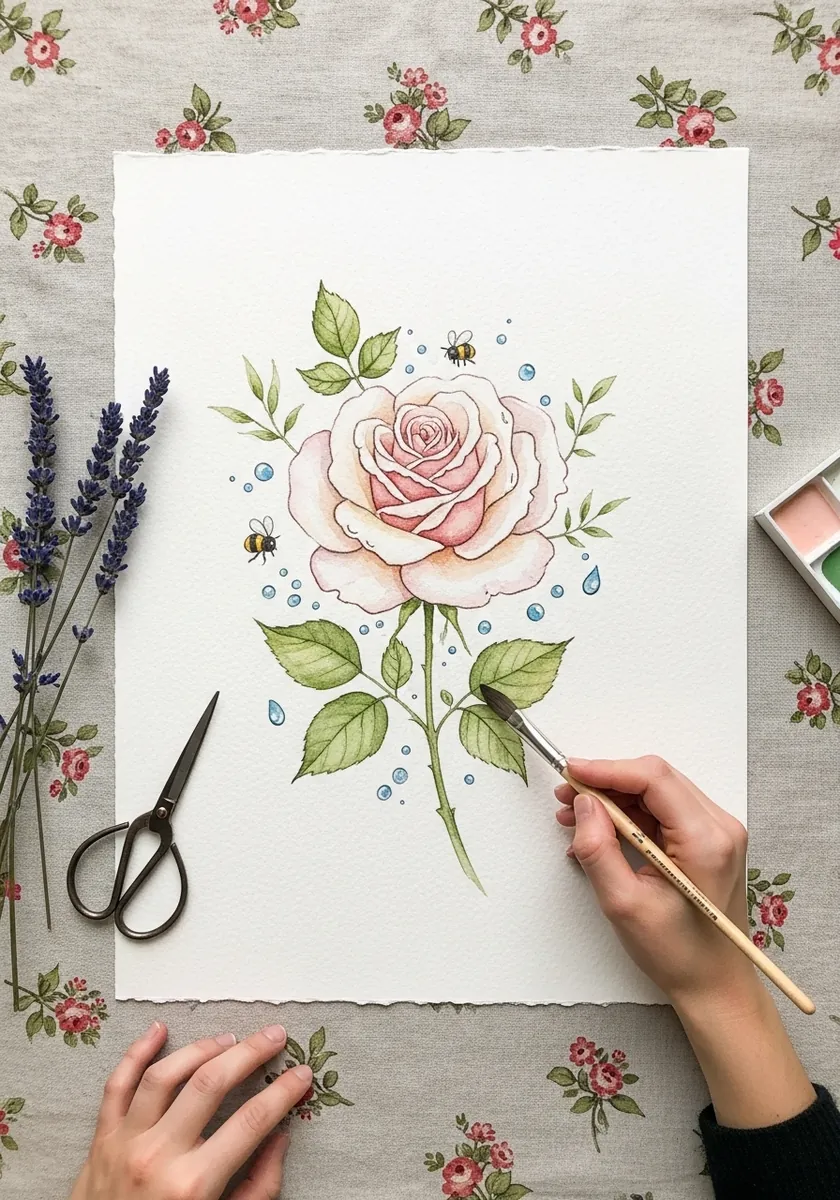
A pale blush bloom sits among trailing green vines and leaves with two small bees hovering nearby and tiny blue dots suggesting dew. Adding a living element to a botanical study changes it from a specimen into a scene. Paint the flower and foliage first, then place the bees where they lead the eye back toward the bloom. Gentle and full of narrative.
64. Calligraphy Rose Formed from Hand Lettering
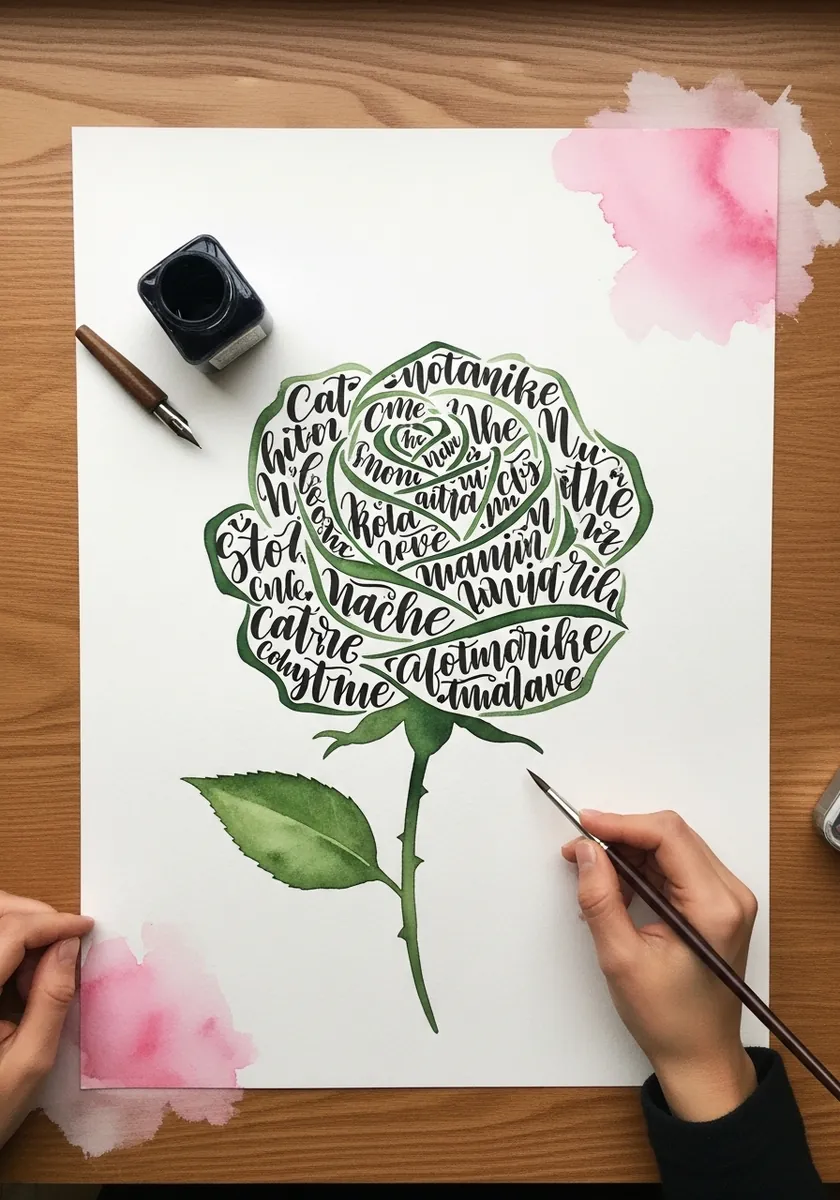
The entire flower is built from looping brush-lettered words in green and pink, spiralling to form the petals, with a painted leaf and stem below. Read closely and the words are still legible. Sketch the rose shape in pencil first and use it purely as a guide for where each line of lettering should curve. Ideal for a personalised gift.
65. Light Pencil and Wash Rose Outline
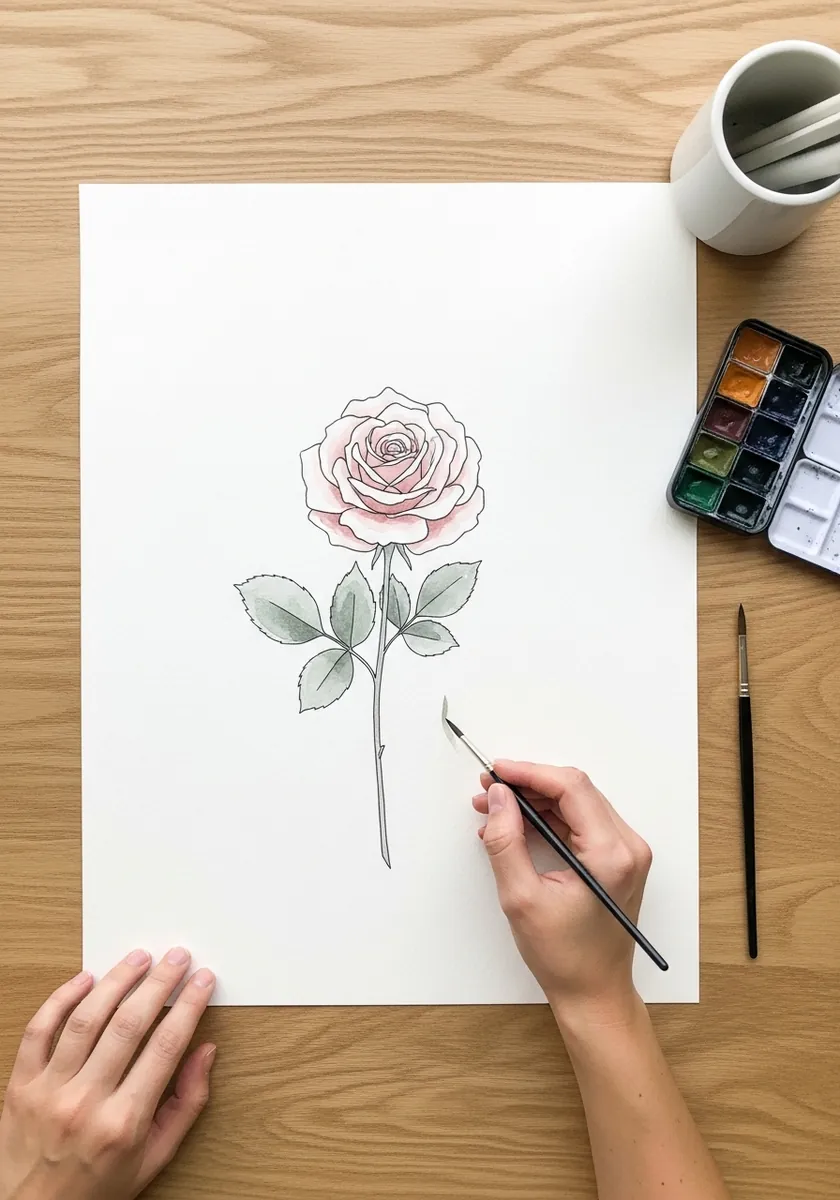
Almost nothing is committed here: a faint pencil outline, a whisper of pink in the petals, a suggestion of gray-green in the leaves. It captures the moment a painting begins. Use a 2H pencil and washes diluted far past what feels reasonable. A genuinely useful exercise if you tend to overwork every piece you start.
66. Folk Art Rose in Traditional Red and Blue
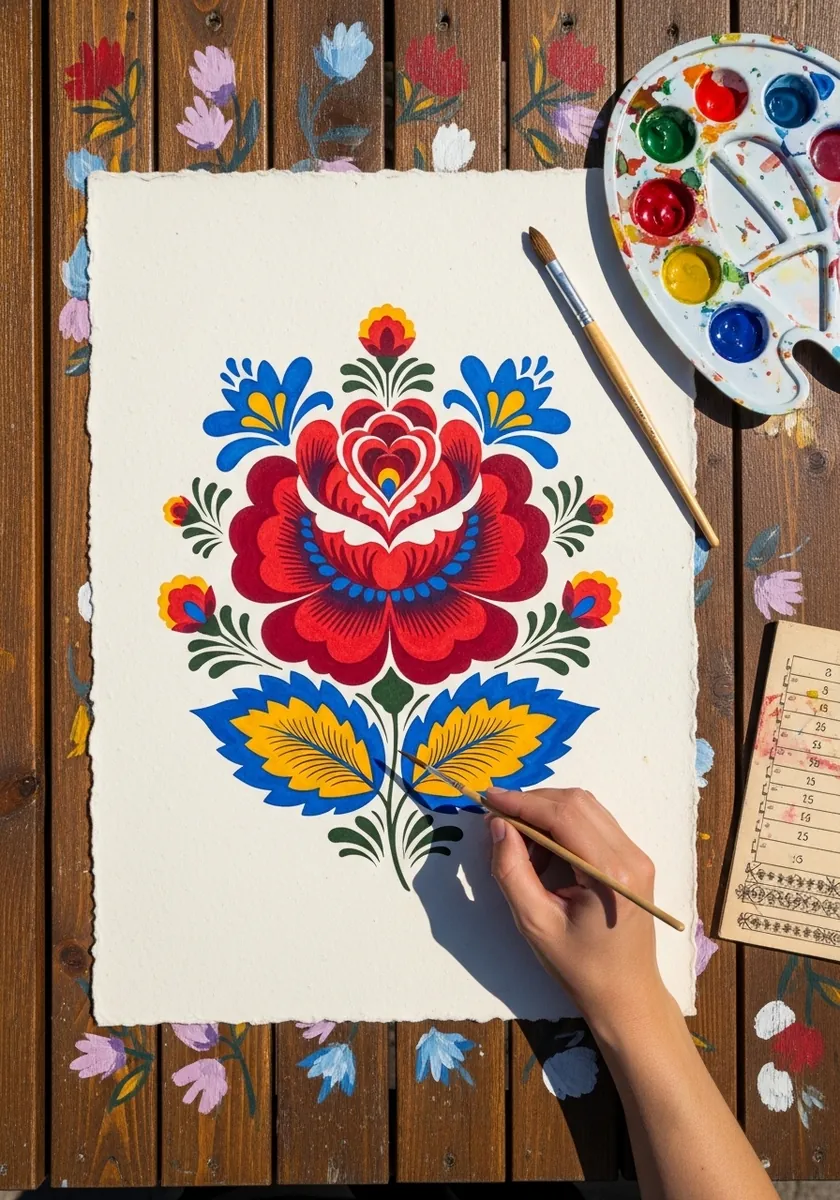
Symmetrical red petals flanked by blue and yellow leaves with small decorative dots, painted in the flat, patterned style of Eastern European folk art. Everything mirrors around a central axis. Fold your paper to mark the center line and build outward from it. A refreshing change if you have been painting realistically for a while.
67. Urban Sketch Rose with Loose Ink and Splatter
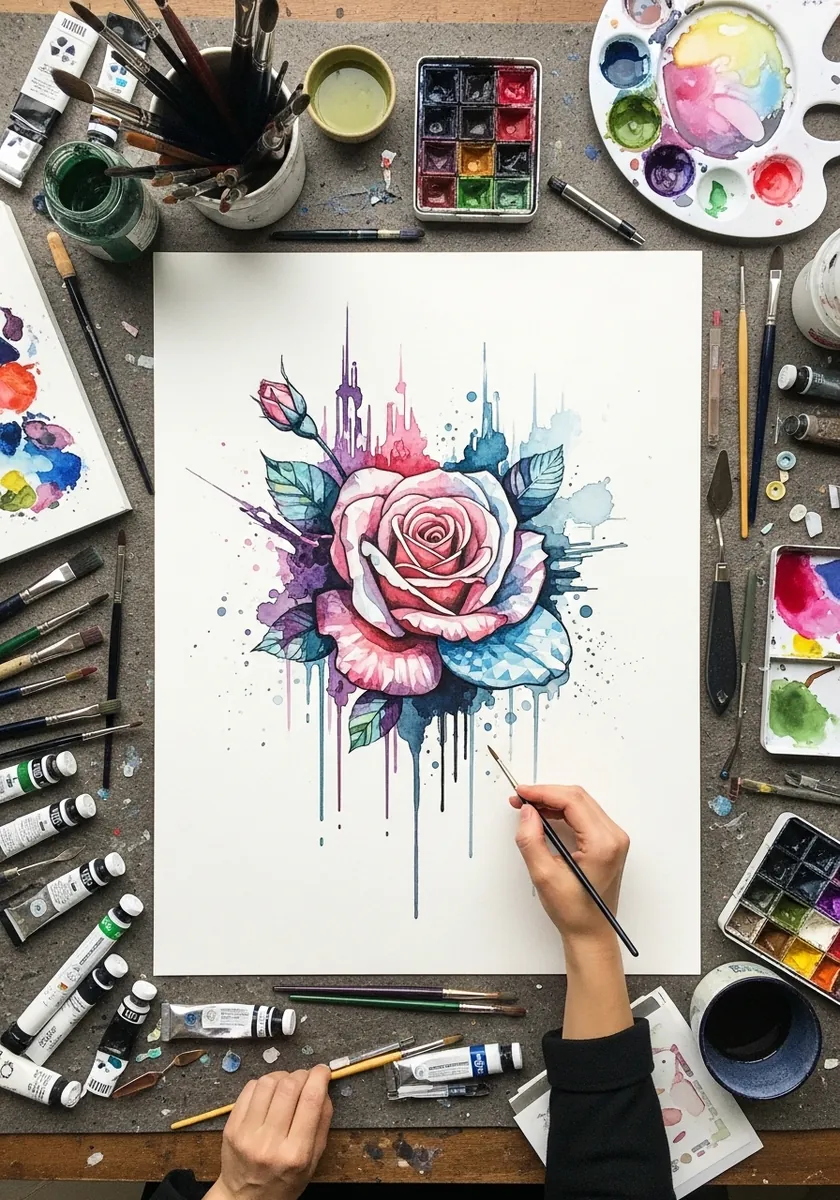
Pink petals, teal leaves, running drips and flicked ink combine into something that feels caught rather than composed. A few sharper lines pull the center into focus while everything at the edges dissolves. Keep detail only where you want the eye to land and let the rest fall apart. This is the style that most rewards painting fast.
68. Bold Gouache Rose in Crimson and Magenta
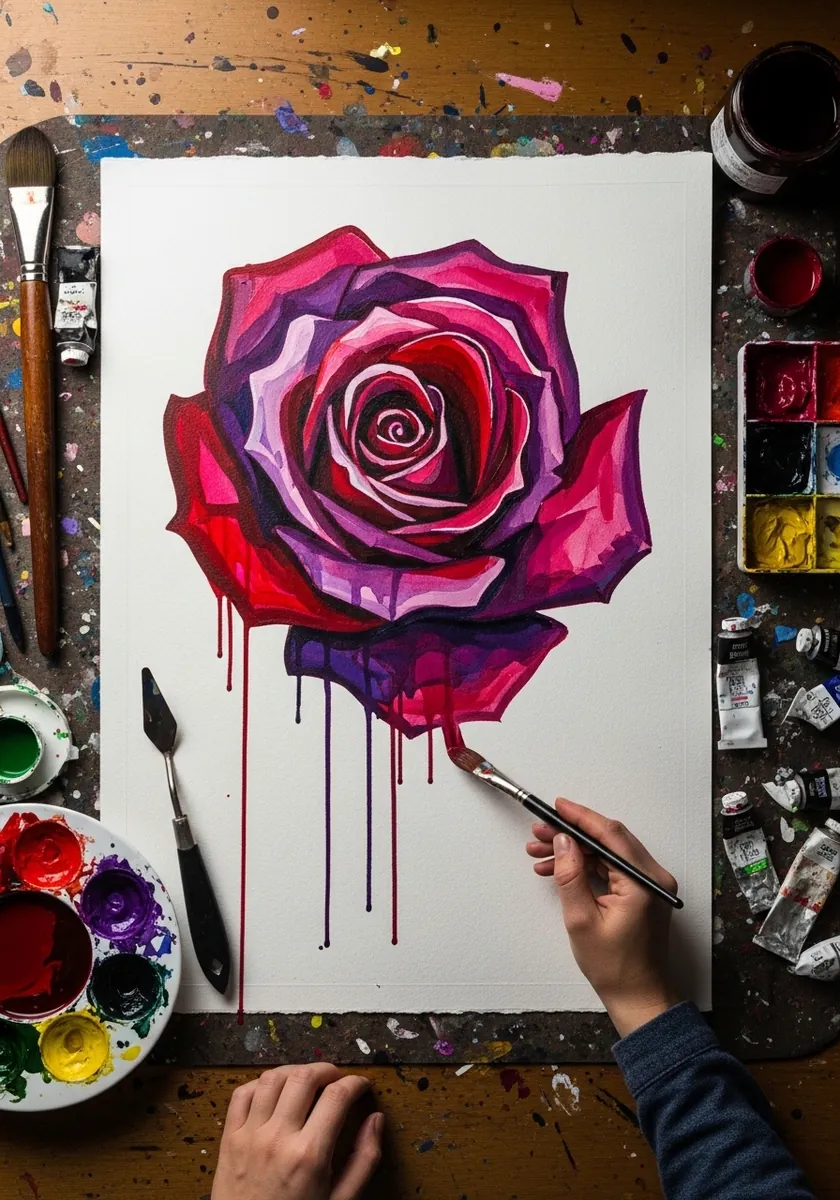
Opaque crimson and magenta laid down in visible, unblended strokes, with drips running below the bloom. Gouache lets you place a light petal over a dark one, which transparent watercolor will not do. If your rose has gone too dark, gouache is how you rescue it. A confident, painterly finish to end the collection on.
Related Watercolor Drawing Ideas
- Watercolor orchid drawing ideas — elegant botanical blooms to paint next
- Stunning watercolor cherry blossom drawing ideas for delicate spring florals
- Vibrant marigold watercolor techniques for bold, warm color practice
- Watercolor magnolia drawing ideas to master large, graceful petals
- Floral wreath painting ideas to combine your favorite blooms into one design