Watercolor Olive Drawing Ideas can turn a simple fruit into a full mood, from sunlit groves to minimalist kitchen sketches. Try a loose olive branch study first, because Watercolor Olive Drawing Ideas grow skills fast through layering, edges, and color mixing.
You can explore texture, shine, and shadow while keeping the subject beginner friendly and endlessly remixable. Watercolor Olive Drawing Ideas work best when you focus on three things, believable greens, crisp highlights, and confident stems.
These ideas also connect you to a wider art community that shares palettes, brush tests, and quick studies you can copy for practice. Start with one small painting today, and you will build a personal library of Watercolor Olive Drawing Ideas you can revisit anytime.
How do you paint realistic olives in watercolor (shine, form, and depth)?
- Start with a light sketch of 3 to 5 ovals, vary sizes, and tilt each olive so they feel natural. Keep one tiny “shine zone” unpainted on every olive for instant realism
- Mix two greens, warm green (sap + yellow) and cool green (sap + a touch of blue), then paint a pale first wash that stays lighter than you think you need
- While damp, drop in darker pigment on the underside and one side to wrap the form, then soften the edge with a clean, barely wet brush
- After drying, glaze a second layer only where shadows deepen, near the base, overlap areas, and around the highlight so the shine pops
- Add a tiny shadow cast beneath each olive using diluted neutral, then lift a few speckles with a damp brush for waxy texture
- Finish with a pinpoint dark accent at the deepest crease, then stop early so the olives stay fresh
What are easy watercolor olive branch composition ideas for beginners?
- Pick one composition rule, diagonal branch for energy, gentle “S” curve for elegance, or wreath circle for a calm, balanced look. Choose one and commit for a cleaner result
- Paint the stem first in a light brown green mix, then add leaves in clusters of 3 to 7 so the branch feels botanical, not patterned
- Use two leaf shapes only, long teardrops and slightly rounded ovals, and rotate them to suggest twist and movement
- Keep values simple, one light wash for most leaves, then a second darker pass on the base of each leaf to imply fold and depth
- Add olives last at intersections and near focal points, then vary edges, crisp on the focal olive, soft on background olives
- Reserve negative space, leave small gaps of white paper between clusters so the piece breathes and looks intentional
Start your sketch today and paint one olive, one leaf, one shadow. Keep it playful, test two green mixes, and collect your favorite Watercolor Olive Drawing Ideas in a simple practice series.
1. Minimalist Branch Watercolor Olive on Smooth Art Card
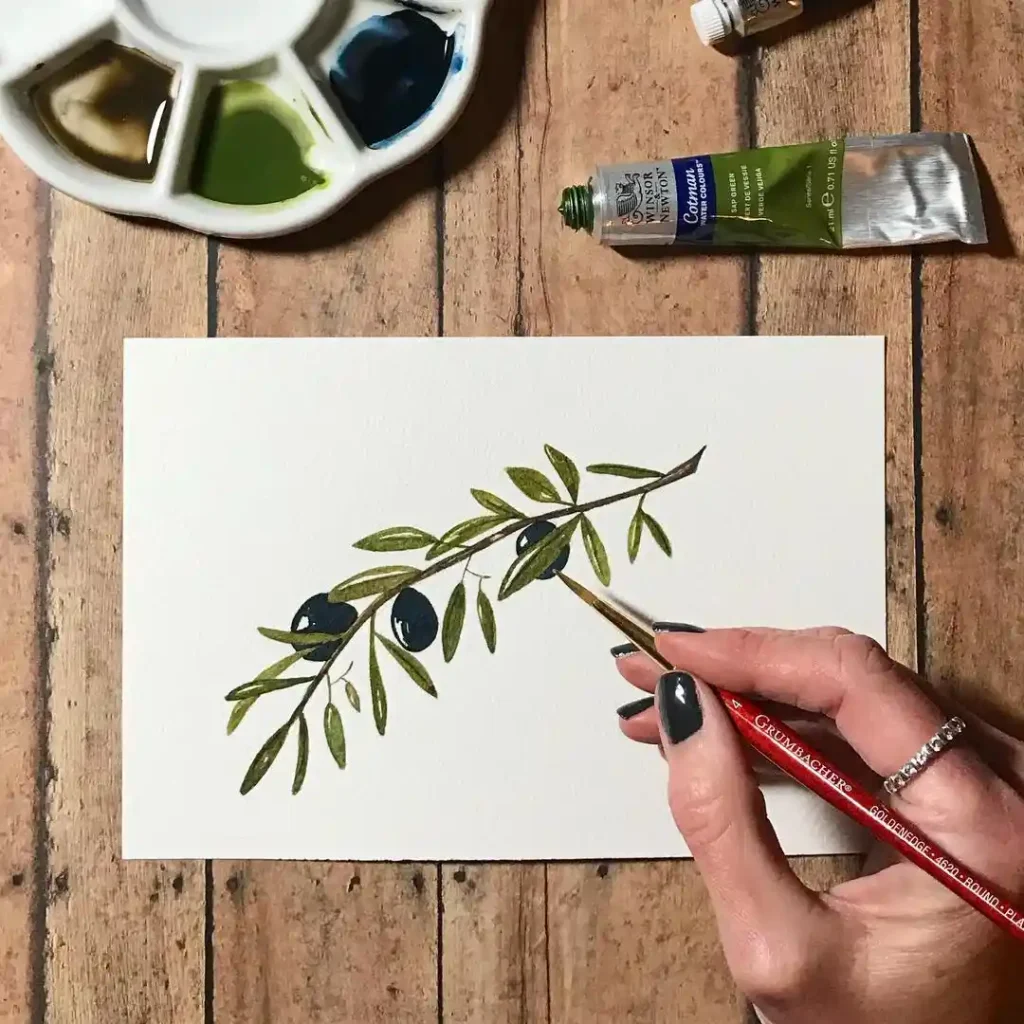
Clean lines and a bright white background make this single branch feel incredibly fresh and modern. The deep indigo olives provide a sharp, sophisticated contrast against the sap green leaves. I love the tiny white highlights that give the fruit a realistic, glossy sheen. It is a perfect example of how simplicity can create a very elegant and calming atmosphere.
2. Rustic Harvest Watercolor Olive on Handmade Deckle Paper
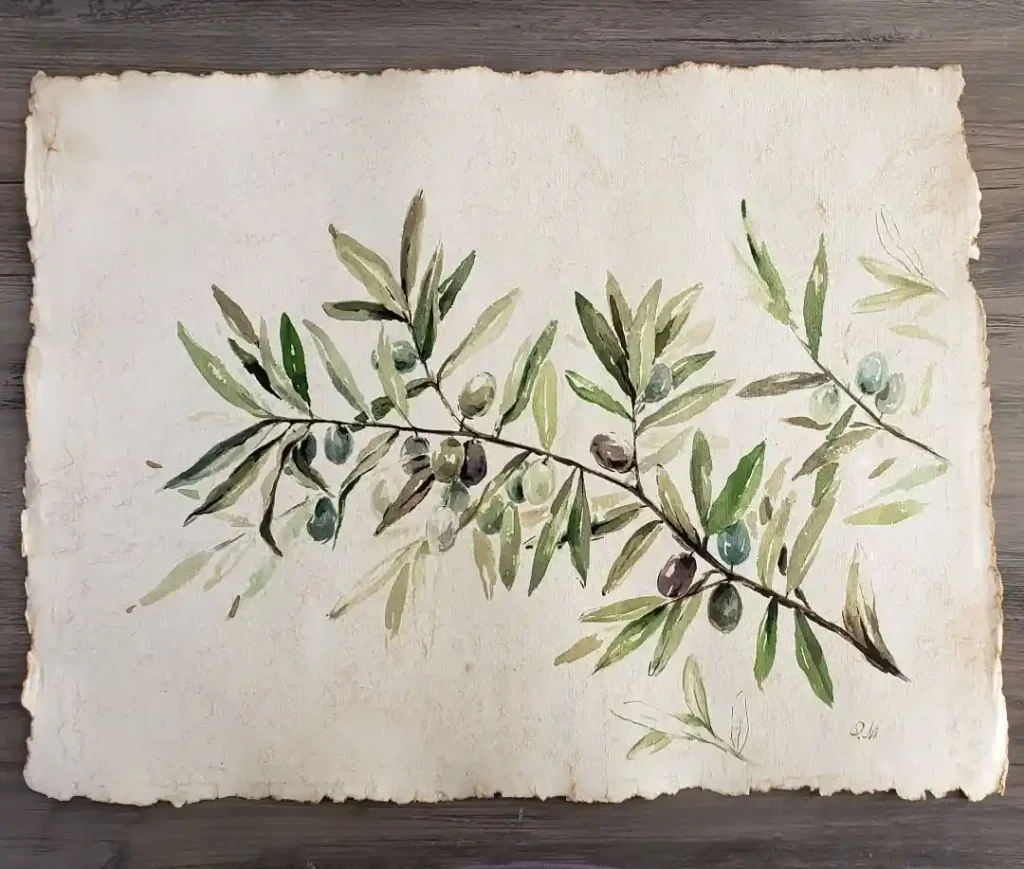
Soft, earthy tones and a rough paper edge give this piece a lovely old world Mediterranean feel. The muted greens and various stages of ripening fruit suggest a slow, sunny afternoon in a quiet grove. This artwork celebrates traditional beauty through gentle washes and organic shapes. It feels like a peaceful connection to nature that would look beautiful in any home.
3. Detailed Botanical Watercolor Olive on Premium Hot Press
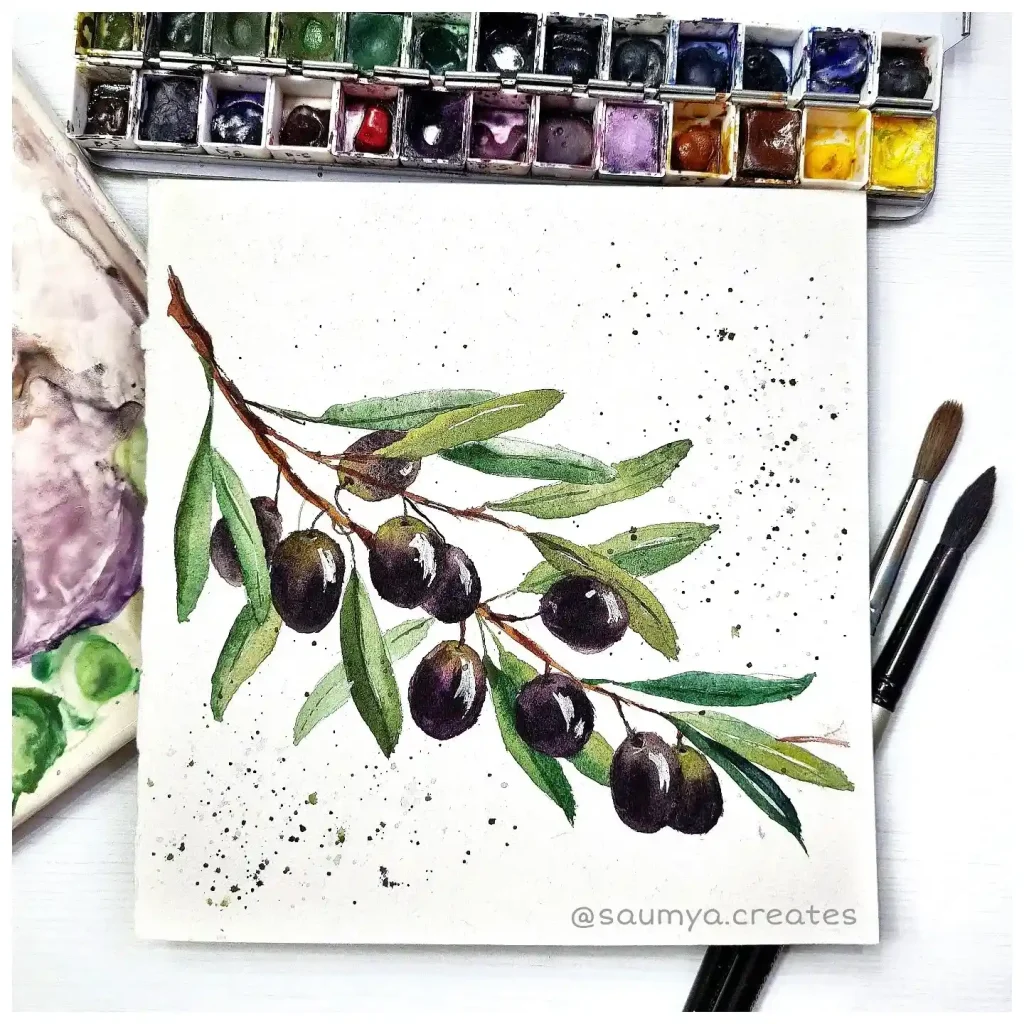
Richly pigmented black olives hang heavily from a branch detailed with energetic splatters and deep forest greens. The artist used masterful layering to create incredible depth and realism in every leaf. You can almost feel the weight of the harvest in this vibrant, textural study. It is an inspiring piece for anyone wanting to master light and shadow in botanical illustrations.
4. Soft Sage Watercolor Olive on Textured Watercolor Sheet
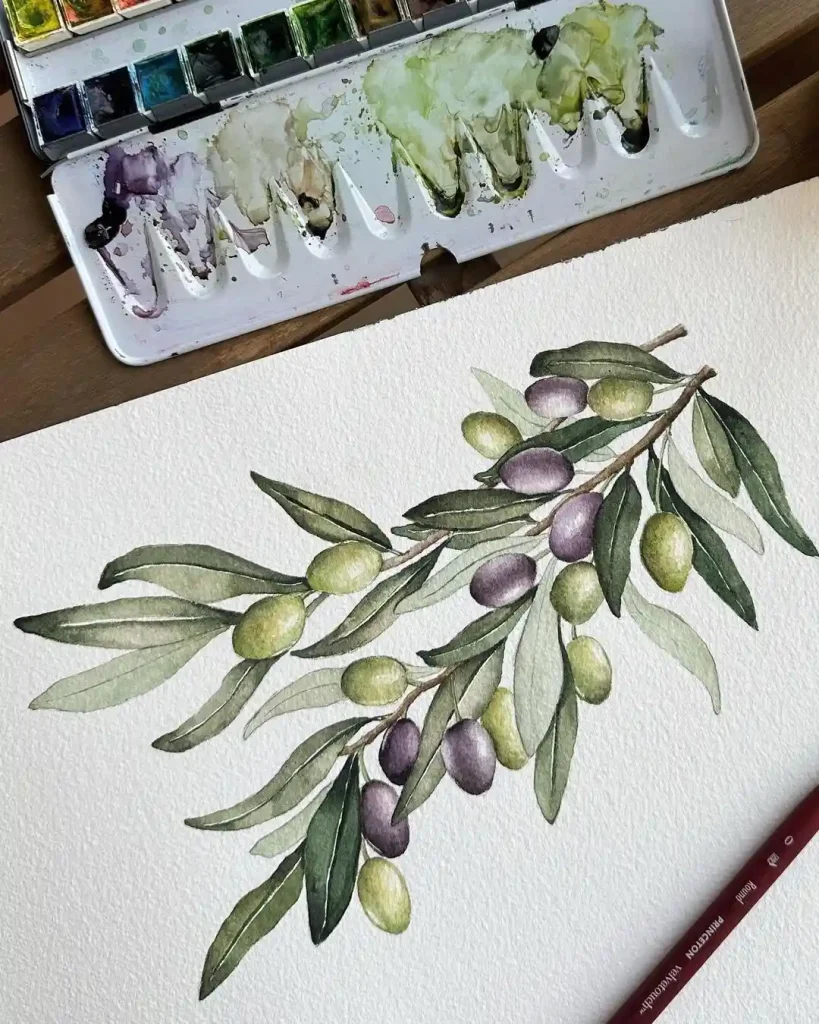
Muted sage and dusty violet tones blend beautifully to create a very relaxed and airy botanical composition. This piece focuses on the delicate movement of the leaves rather than sharp details. It has a dreamy, romantic quality that feels very contemporary. I really enjoy how the soft color palette makes the classic olive branch feel light, modern, and very sophisticated.
5. Single Fruit Study Watercolor Olive on Heavyweight Cardstock
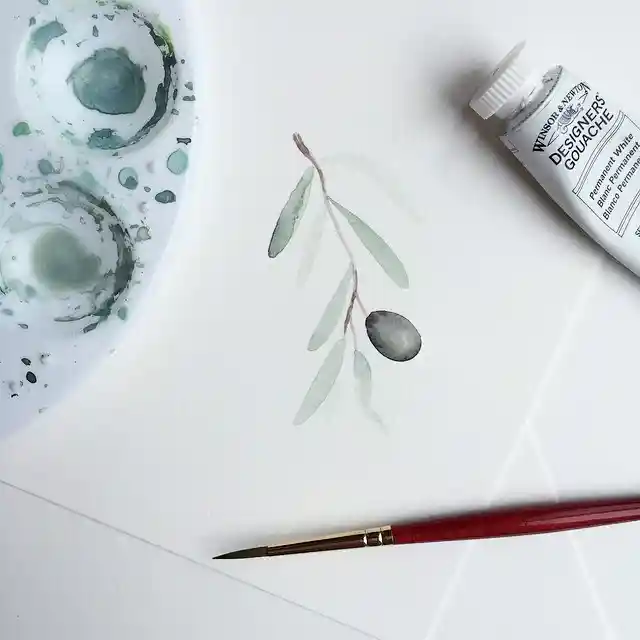
One dark, perfectly rendered olive sits as the focal point of a very light and wispy branch. This minimal approach creates a powerful sense of focus and artistic intention. The translucent quality of the pale green leaves provides a beautiful, airy balance to the solid fruit. It is a great lesson in using negative space to let a subject breathe.
6. Deep Violet Branch Watercolor Olive on Cold Pressed Paper
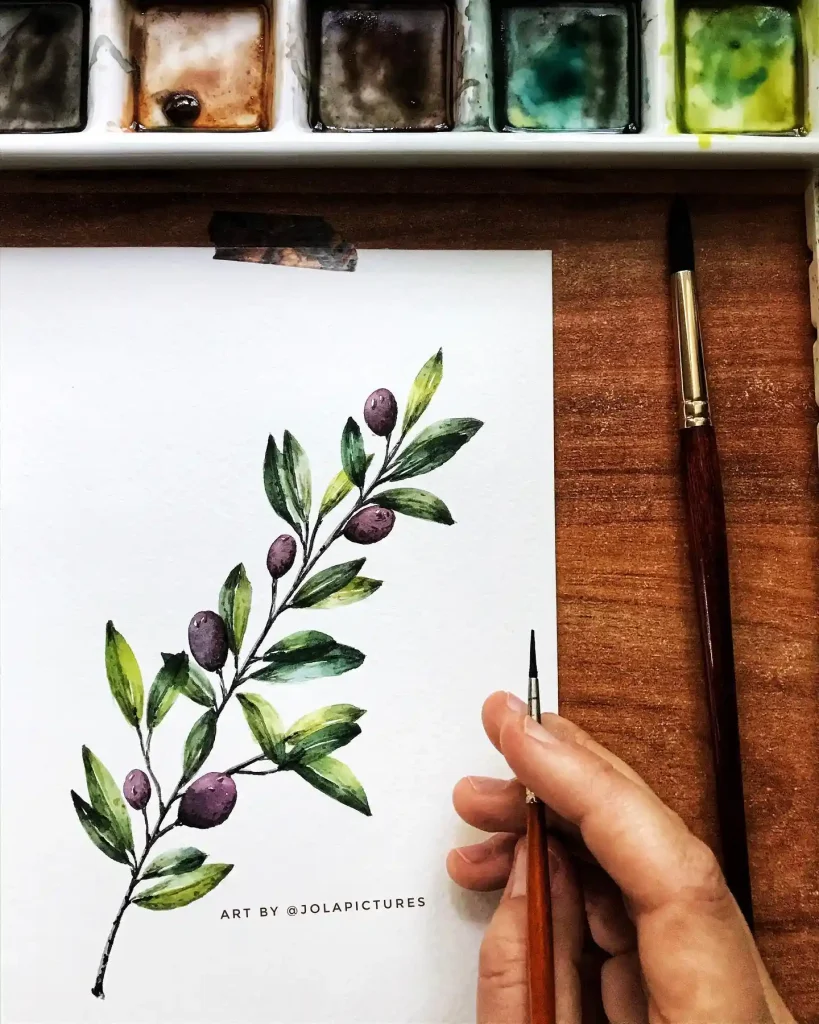
Vivid purple olives and dark, waxy green leaves create a very bold and energetic botanical illustration. The brushwork is confident, showing off beautiful wet on dry techniques that give the plant a lot of structure. This artwork feels very alive and full of character. It is a wonderful inspiration for using saturated colors to bring traditional subjects to life today.
7. Multi Toned Ripening Watercolor Olive on Smooth Drawing Paper
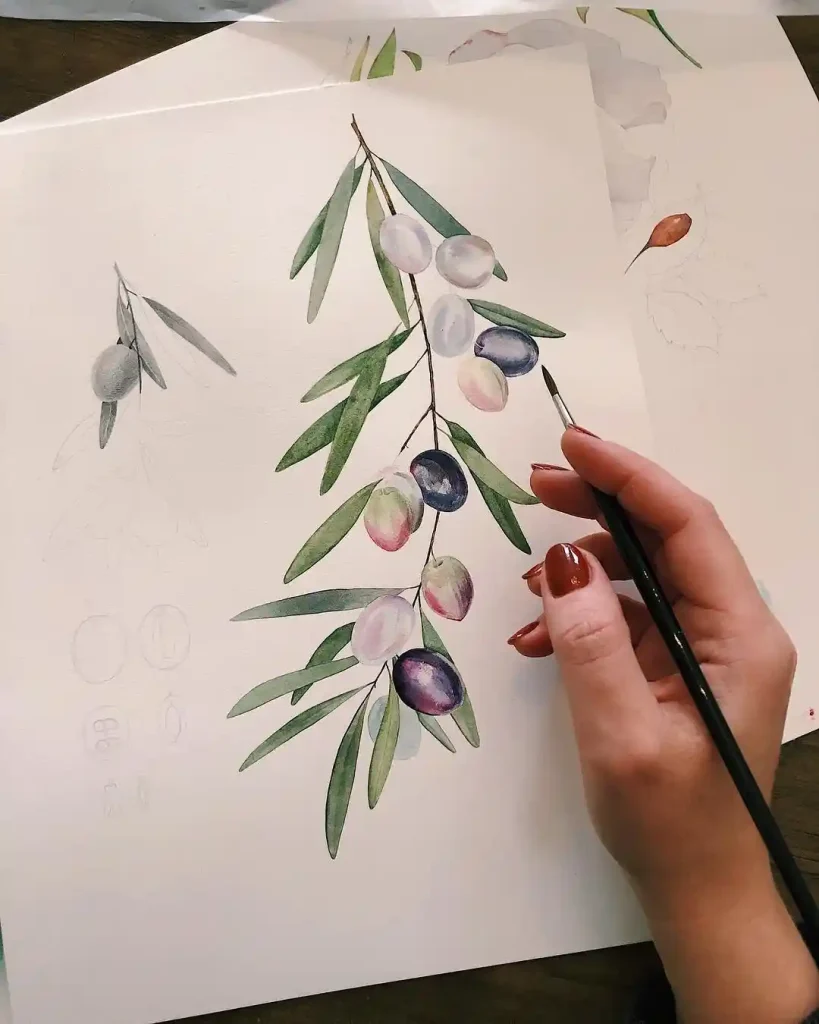
Graceful clusters of olives in shades of lilac, green, and deep blue show the beautiful stages of natural growth. This piece feels like a scientific study transformed into a work of art. The vertical composition and delicate stems create a sense of elegant height. Each fruit has its own personality, making the entire branch feel authentic and very carefully observed.
8. Fresh Green Watercolor Olive on Spiral Bound Sketchbook
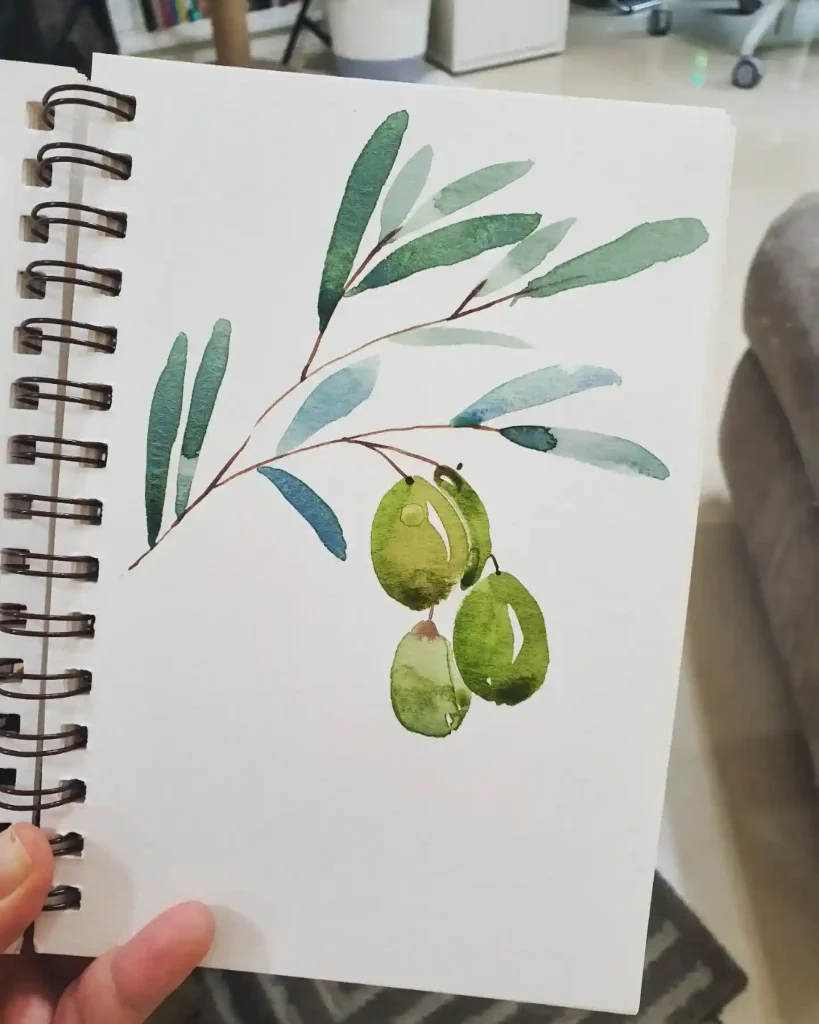
Bright lime and mossy greens give this quick sketch a very cheerful and spontaneous feeling. The artist used loose, gestural strokes to capture the essence of the leaves without overworking them. It is a fantastic example of a relaxed hobbyist style that prioritizes mood over perfection. This artwork reminds us that capturing a simple moment can be very rewarding.
9. Winter Sage Watercolor Olive on Small Format Art Square
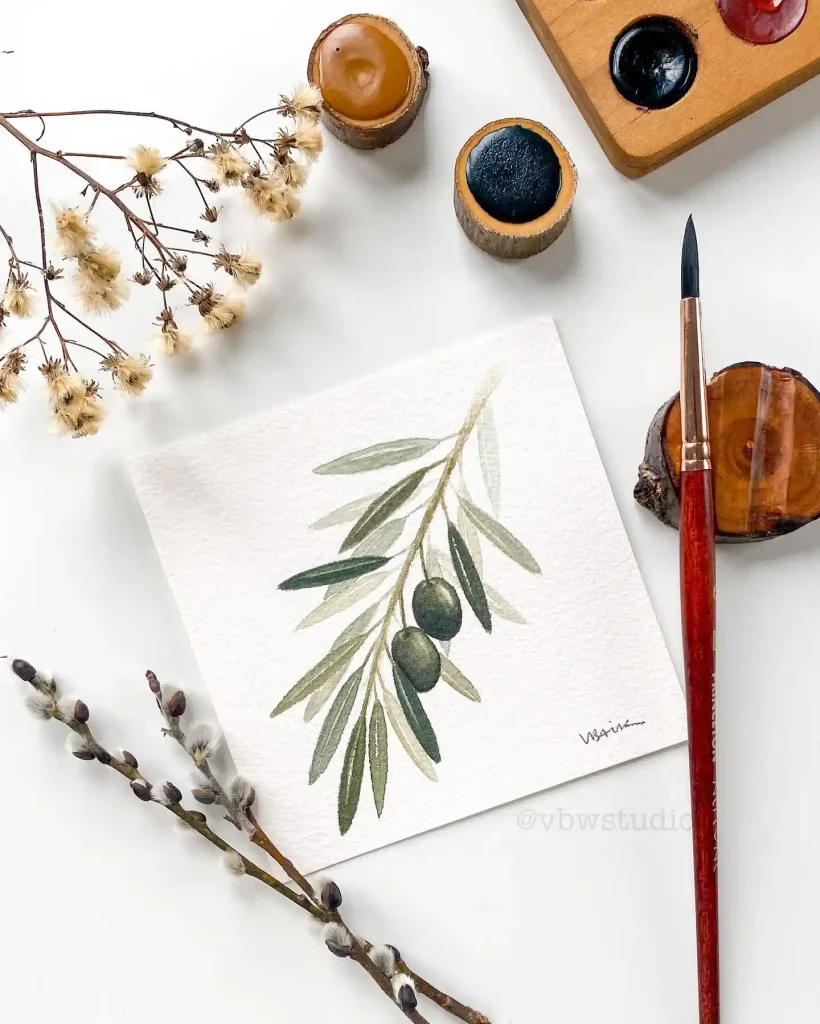
Palest green leaves and dark, earthy olives are arranged in a compact, balanced composition that feels very tidy. The textured paper adds a nice layer of physical depth to the soft watercolor washes. This piece would make a beautiful design for a personalized note card or kitchen art. It is a charming and quiet celebration of a timeless natural symbol.
10. Atmospheric Shadow Watercolor Olive on Fine Grain Paper
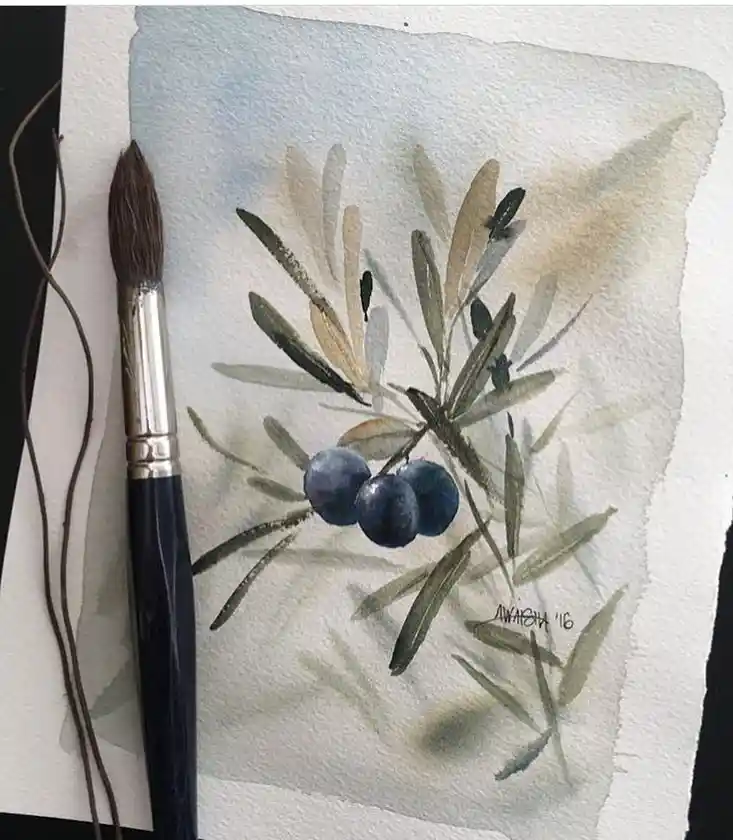
Moody indigo olives are surrounded by soft, blurred leaves that seem to fade into a misty gray background. This piece uses a very limited and cool color palette to create a reflective, somber mood. The artistic use of soft focus and diffused light is very unique. It tells a story of a quiet, foggy morning in a coastal olive grove.
11. Vibrant Ripening Branch Watercolor Olive on Cold Pressed Paper
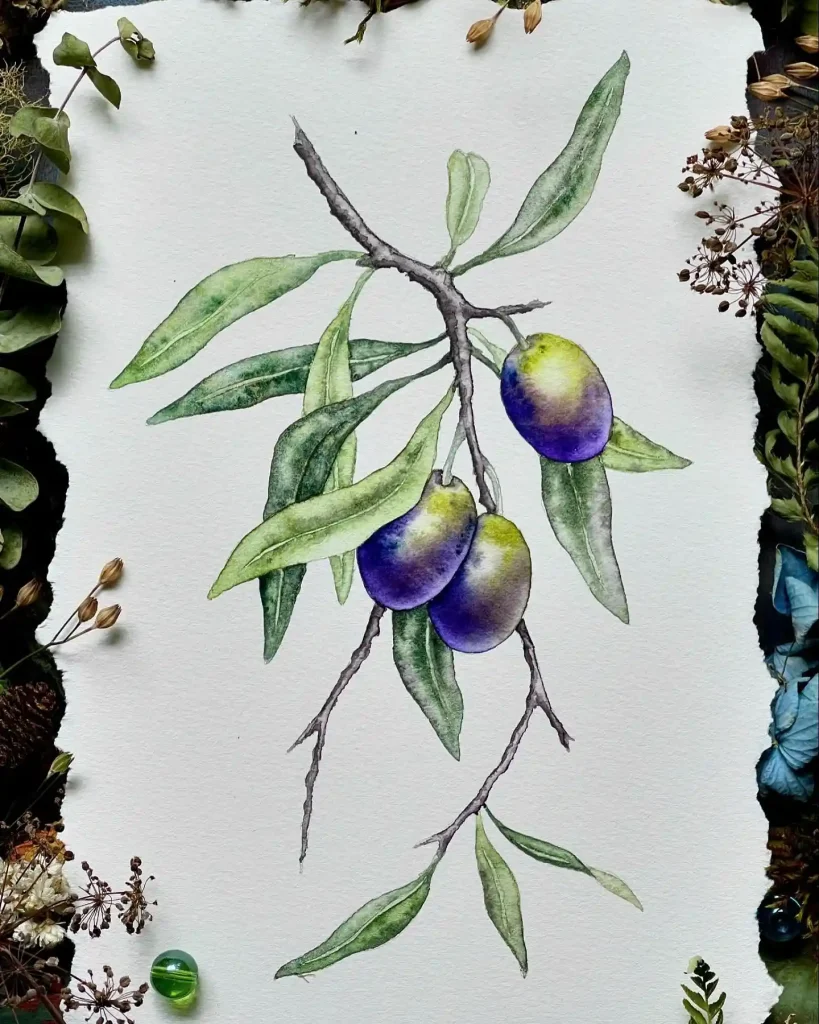
Vibrant shades of purple and gold sweep across the plump fruit in this energetic botanical study. The artist used a delicate wet on wet technique to blend the ripening colors perfectly. I love how the dark, twisty branch provides a strong structural contrast to the soft, elongated leaves. It captures that beautiful moment of transition right before a late summer harvest.
12. Elegant Vertical Sprig Watercolor Olive on Smooth Art Card
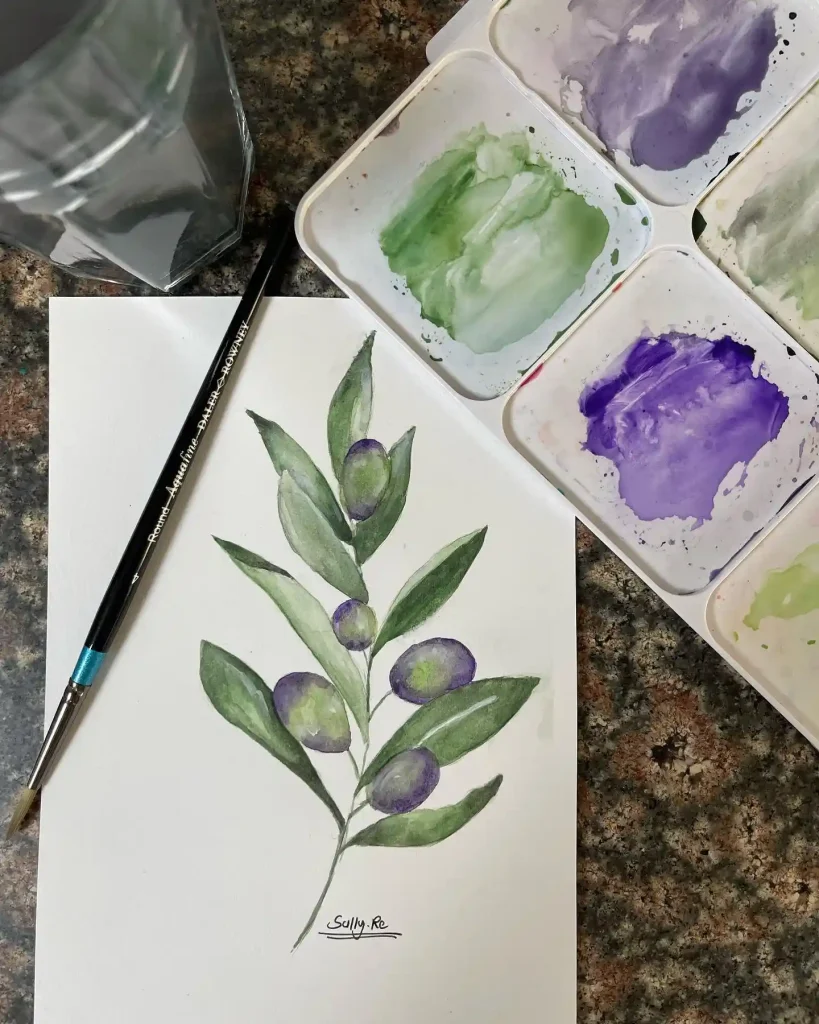
Graceful purple olives hang symmetrically along a slender stem in this very modern and clean composition. The soft violet shadows and pale green highlights give the fruit a lovely sense of roundness. This piece feels very balanced and sophisticated because of its minimal color palette. It is a fantastic example of how simple botanical shapes can create a calm atmosphere.
13. Sunlit Orchard Study Watercolor Olive on Deckle Edge Paper
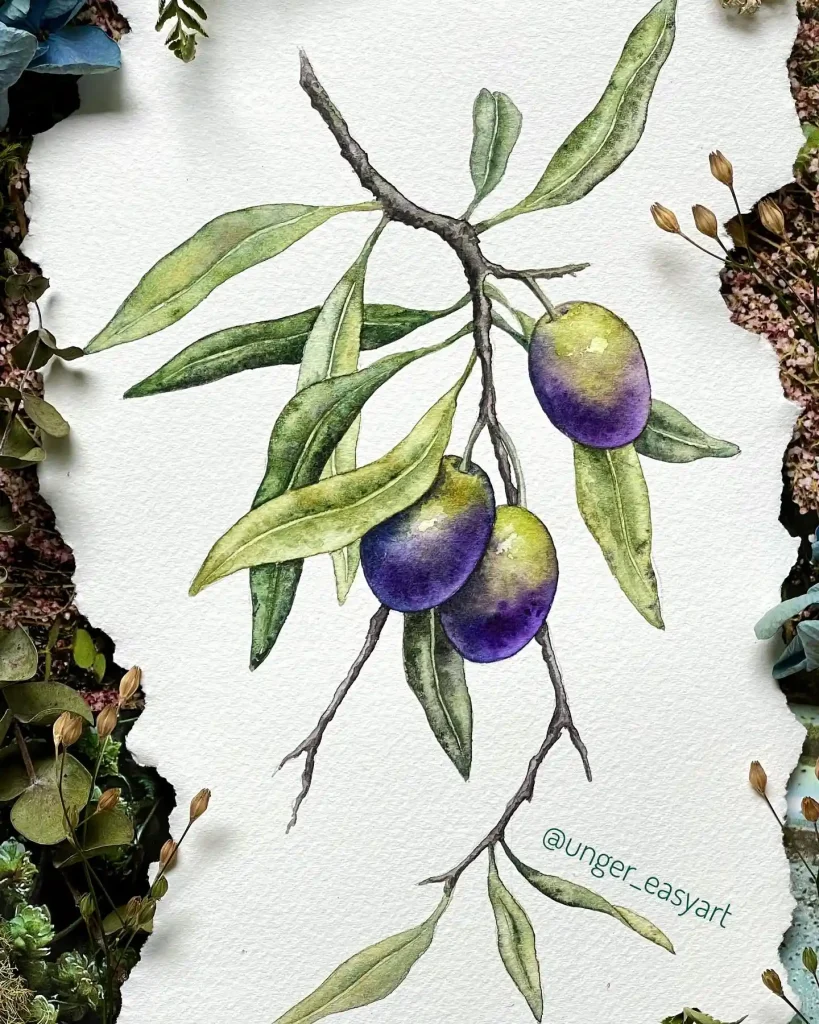
Thick washes of mossy green and deep plum bring a wonderful sense of life to this textured branch. The artist focused on the unique, almost leathery texture of the long leaves by using fine brushstrokes. I notice the beautiful play of light reflecting off the skin of the fruit. This artwork feels like a warm afternoon spent in a Mediterranean grove.
14. Dusty Sage Harvest Watercolor Olive on Textured Heavyweight Paper
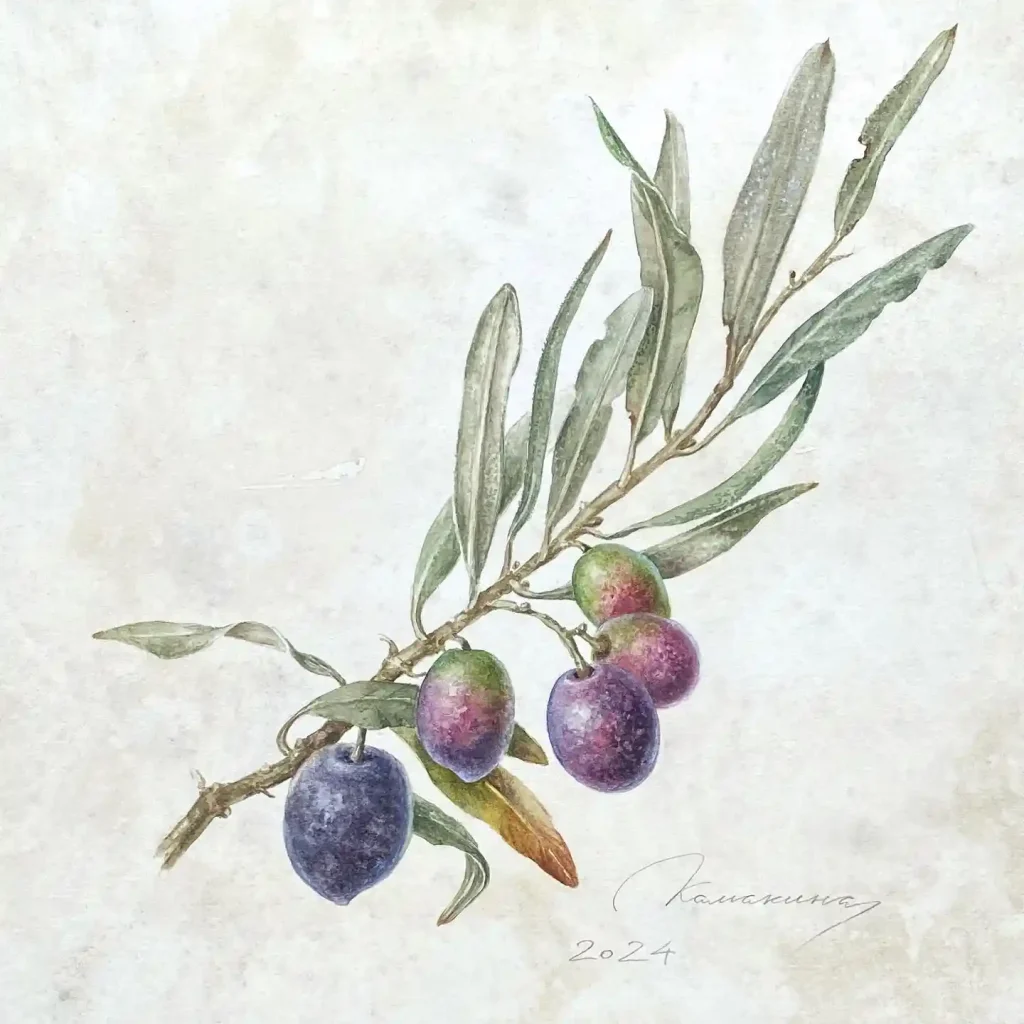
Muted sage and dusty rose tones create a very soft and romantic feel in this detailed painting. The fruit appears heavy and full of juice, suggesting a peak ripeness that is visually very satisfying. I really enjoy the subtle, earthy brown tones used for the main branch. It is a quiet celebration of natural abundance and slow, steady growth.
15. Bold Cluster Silhouette Watercolor Olive on Premium Art Paper
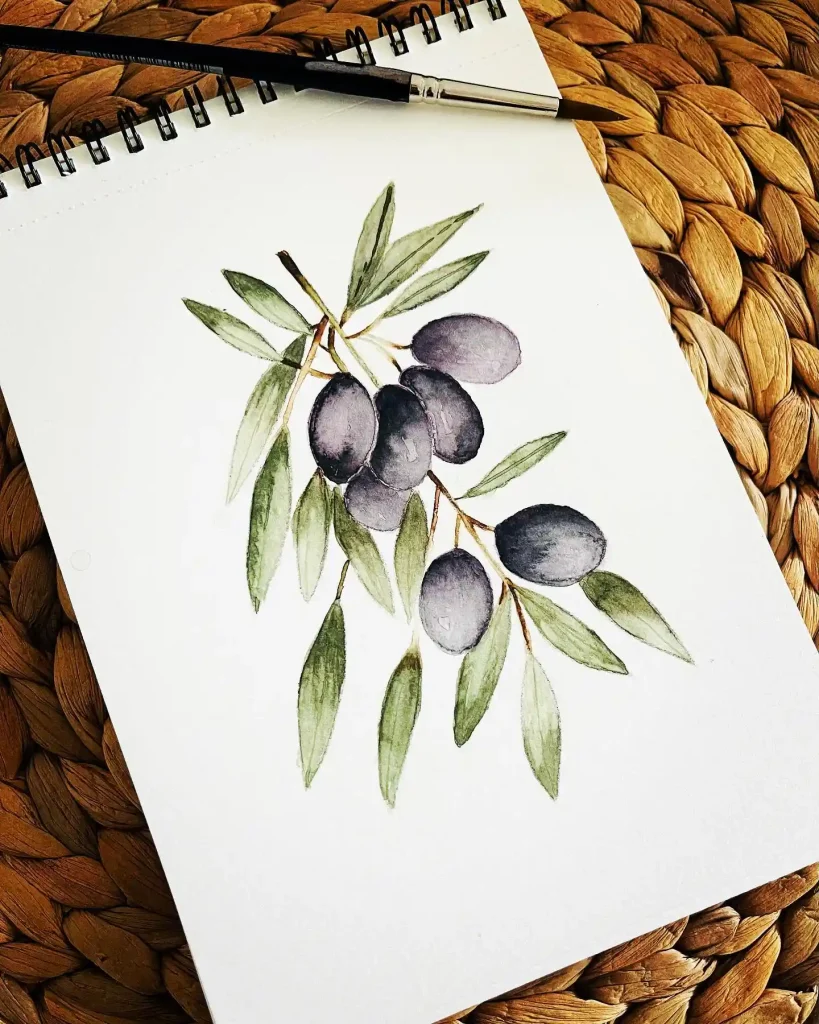
Deep violet olives are clustered tightly together, creating a powerful focal point against the lighter green foliage. This piece uses high contrast to make the dark fruit feel almost tangible and weighted. The artist kept the leaf shapes simple and elegant to let the rich colors of the harvest shine. It feels very grounded, authentic, and beautifully intentional.
16. Pastel Ripening Tones Watercolor Olive on Fine Grain Paper
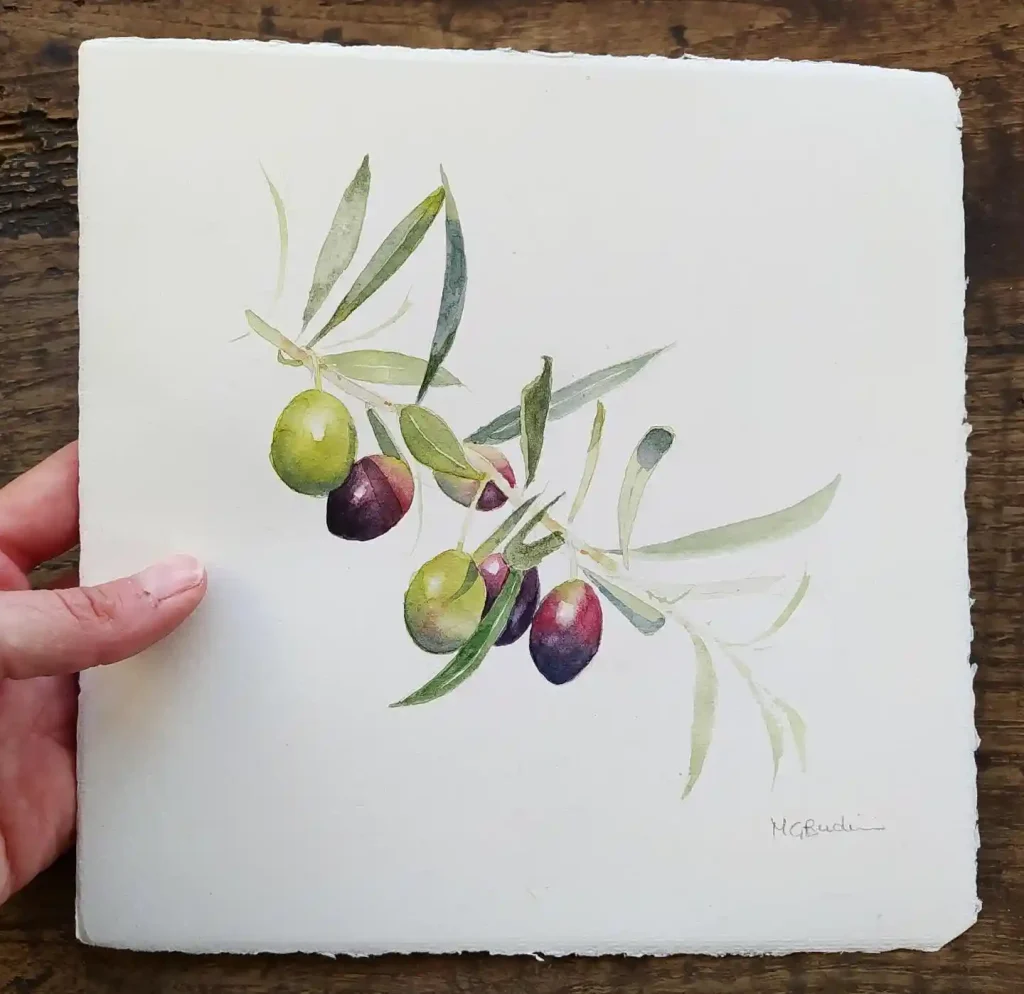
Soft washes of lime, burgundy, and plum mingle on each individual olive to show a varied ripening process. The loose, airy style of the leaves makes the whole branch feel like it is dancing in a light breeze. I am impressed by the transparency of the paint layers here. This piece is perfect for anyone who loves delicate and artistic botanical.
17. Minimalist Shadow Branch Watercolor Olive on Smooth White Card
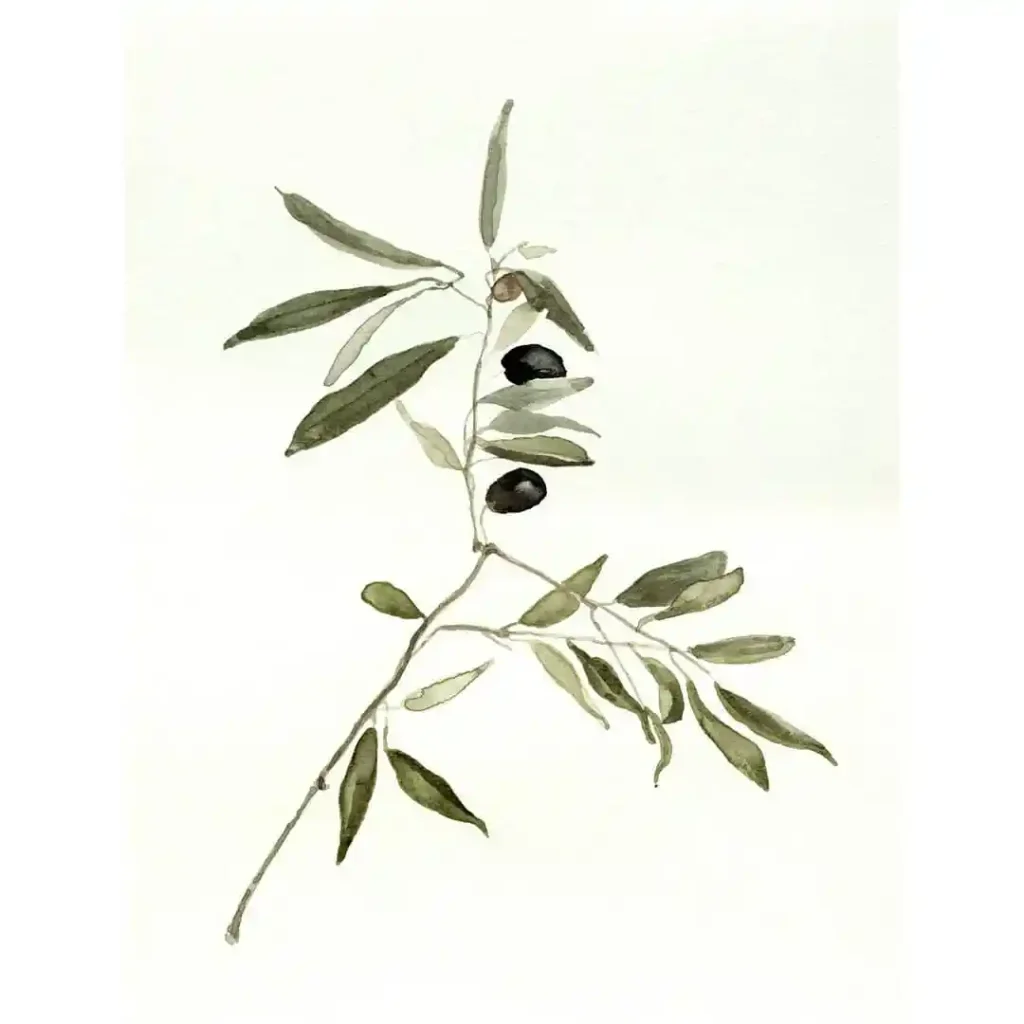
Crisp black olives stand out sharply against a background of very pale, almost translucent green leaves. This modern and minimal approach highlights the graphic beauty of the olive plant. The simple composition and limited color range feel very fresh and intentional. It is an elegant study of form that brings a contemporary touch to a very traditional subject.
18. Glossy Midnight Harvest Watercolor Olive on Cold Pressed Sheet
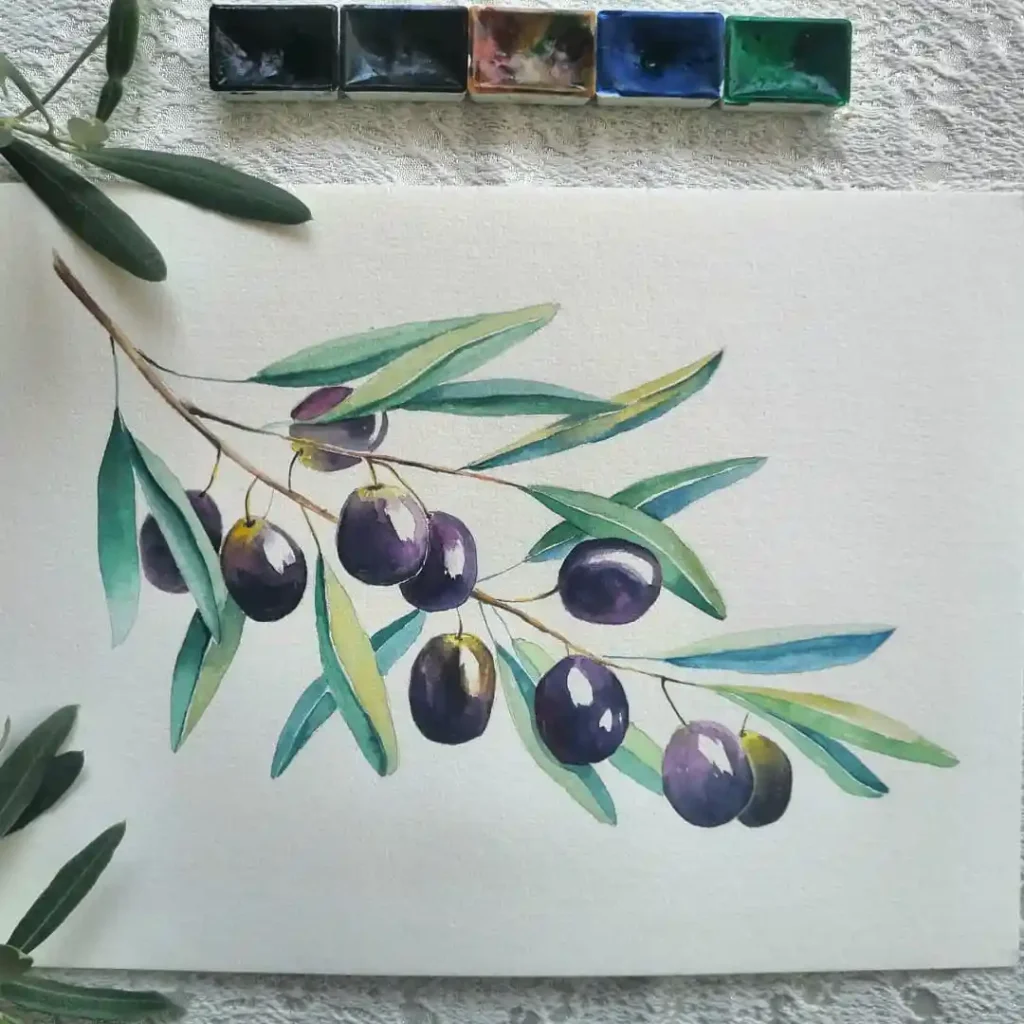
Rich, dark indigo and purple tones give these olives a beautiful glossy finish that catches the light perfectly. The long leaves are painted with a nice variety of green hues to create depth and movement. I particularly like the way the artist handled the fine stems connecting the fruit. This artwork captures the lush and healthy spirit of a bountiful tree.