Snake drawing offers artists a mesmerizing journey into fluid motion and hypnotic patterns, where every curve and coil tells a story of grace, power, and ancient symbolism. These serpentine subjects challenge artists to master the art of continuous flow while capturing the intricate beauty of scales, textures, and dynamic poses.
Drawing snakes develops crucial artistic skills including understanding S-curve anatomy, creating realistic texture patterns, and mastering the balance between movement and stillness in composition. Each sketch teaches precision in line work and the delicate art of suggesting three-dimensional form through two-dimensional media.
The symbolic richness of snakes across cultures makes every drawing a powerful exploration of transformation, wisdom, and primal energy. From coiled rattlesnakes showcasing defensive postures to elegant pythons demonstrating flowing movement, these subjects offer endless opportunities for creative interpretation and technical growth.
The passionate snake art community shares reference materials, technique tutorials, and inspiration across platforms, creating a supportive environment where artists can explore both realistic wildlife studies and fantastical serpentine creatures with confidence and artistic freedom.
What are the essential techniques for drawing realistic snake scales and textures?
- Create scale pattern foundations: Start with light guidelines showing scale rows, then build individual scales using small overlapping shapes that follow the snake’s body curvature
- Vary scale sizes naturally: Draw larger scales on the belly and smaller, more detailed scales on the back and sides for anatomically accurate proportions
- Use directional shading: Apply shadows that follow each scale’s individual curve while maintaining overall body form, creating depth and dimensional realism
- Study species-specific patterns: Research different snake species to understand unique scale arrangements, from smooth python scales to keeled viper textures
- Master highlight placement: Add strategic highlights on scale edges where light catches the surface, creating the characteristic glossy appearance of healthy snake skin
- Practice texture shortcuts: Develop efficient techniques for suggesting scales in background areas while maintaining detailed work in focal points for time-effective drawing
How do you capture dynamic snake movement and poses in drawings?
- Understand S-curve anatomy: Study how snakes create natural S-shaped curves when moving, with each curve flowing smoothly into the next for realistic motion
- Practice coiling compositions: Master the art of overlapping body segments in coiled poses, showing proper depth relationships and avoiding confusing tangent lines
- Study striking positions: Capture the dramatic tension in defensive or hunting poses, emphasizing the compressed energy before a strike through body positioning
- Use gesture lines first: Begin drawings with flowing gesture lines that establish the overall movement before adding body thickness and details
- Show weight distribution: Understand how snakes distribute their weight when climbing, swimming, or resting, affecting body shape and muscle tension
- Create environmental interaction: Show how snakes wrap around branches, rocks, or other surfaces, demonstrating their incredible flexibility and adaptive movement capabilities
Ready to slither into your artistic adventure? Embrace the serpentine challenge and let these snake drawing techniques guide you toward creating stunning reptilian masterpieces!
1. Ornate Cobra on Ink on Paper
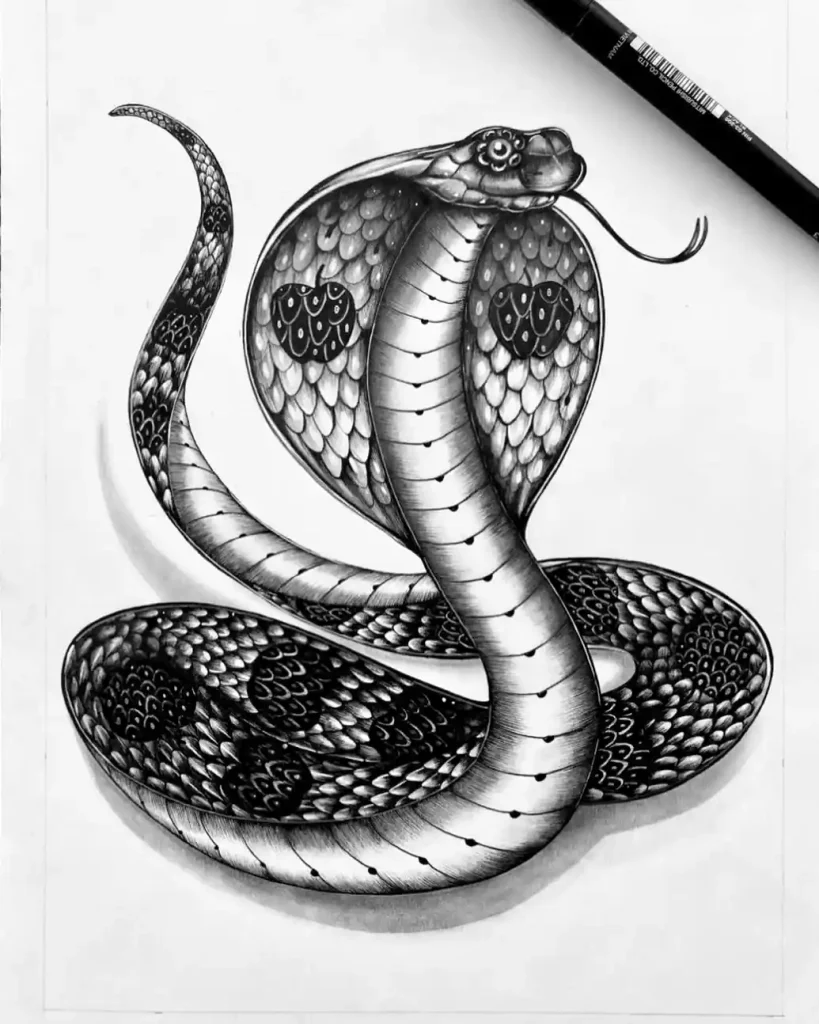
The artist has elevated this cobra into a piece of high art. Using crisp, clean ink lines, they’ve rendered every scale with incredible precision. The addition of the ornate, heart-like patterns on the hood gives this traditionally dangerous creature a touch of unexpected beauty. It’s a stunning, graphic design that balances elegance with raw power.
2. Python Life Studies on Pencil on Paper
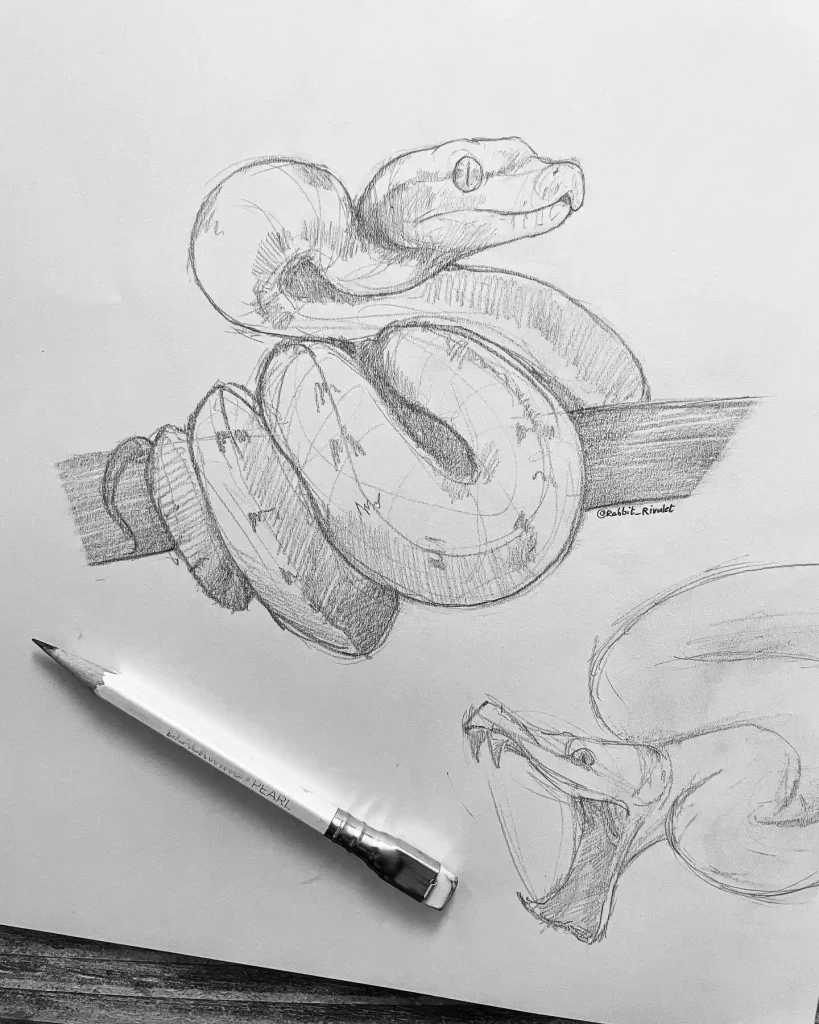
This sketchbook page is a great example of an artist studying their subject. The quick, confident pencil sketches explore the python from different angles—one coiled peacefully on a branch, the other in a moment of fierce aggression. This is how you learn an animal’s anatomy and character, capturing both its quiet grace and its powerful, intimidating nature.
3. Viper Portrait on Pencil on Sketchbook Paper
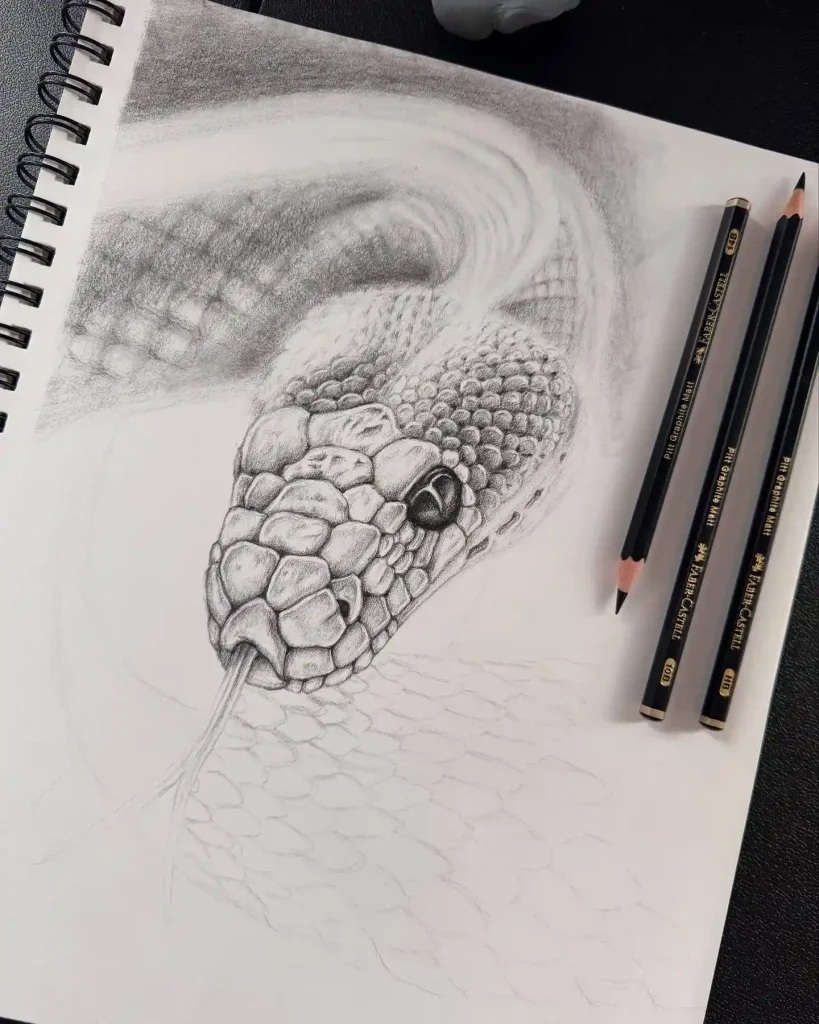
This drawing is an incredible study in texture and detail. The artist has focused on the snake’s head, using precise pencil work to render the complex, armor-like scales. The way the light reflects in the eye brings the entire piece to life. It’s a masterful work-in-progress that showcases the beautiful, intricate patterns of the natural world.
4. Stippled Serpent on Ink on Paper or Canvas
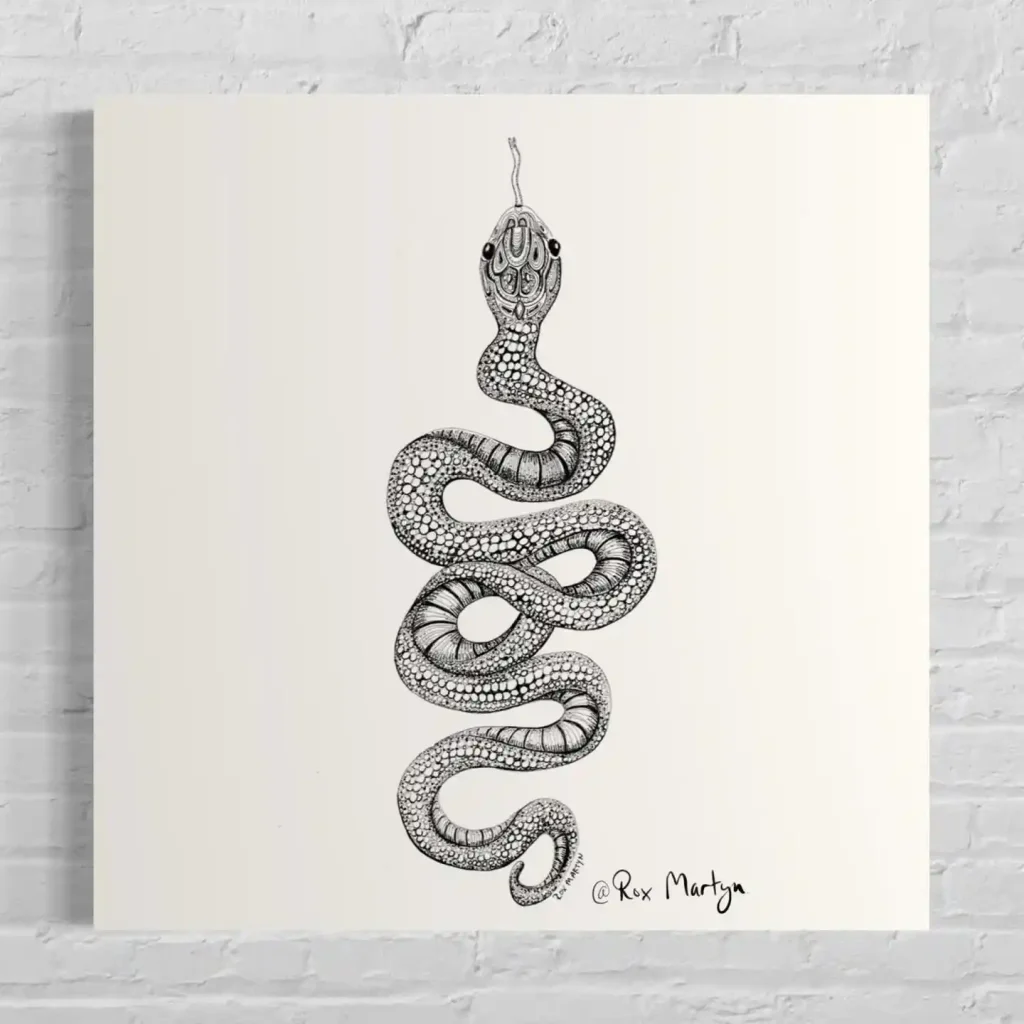
Instead of simple lines, this artist used a meticulous stippling technique to build up the snake’s form. Thousands of tiny ink dots create a unique, pebbled texture for the scales, giving the drawing a fantastic sense of depth. It’s a testament to patience and skill, turning a simple serpent into a complex and mesmerizing piece of pointillist art.
5. Serpent and Staff on Ink on Sketchbook Paper
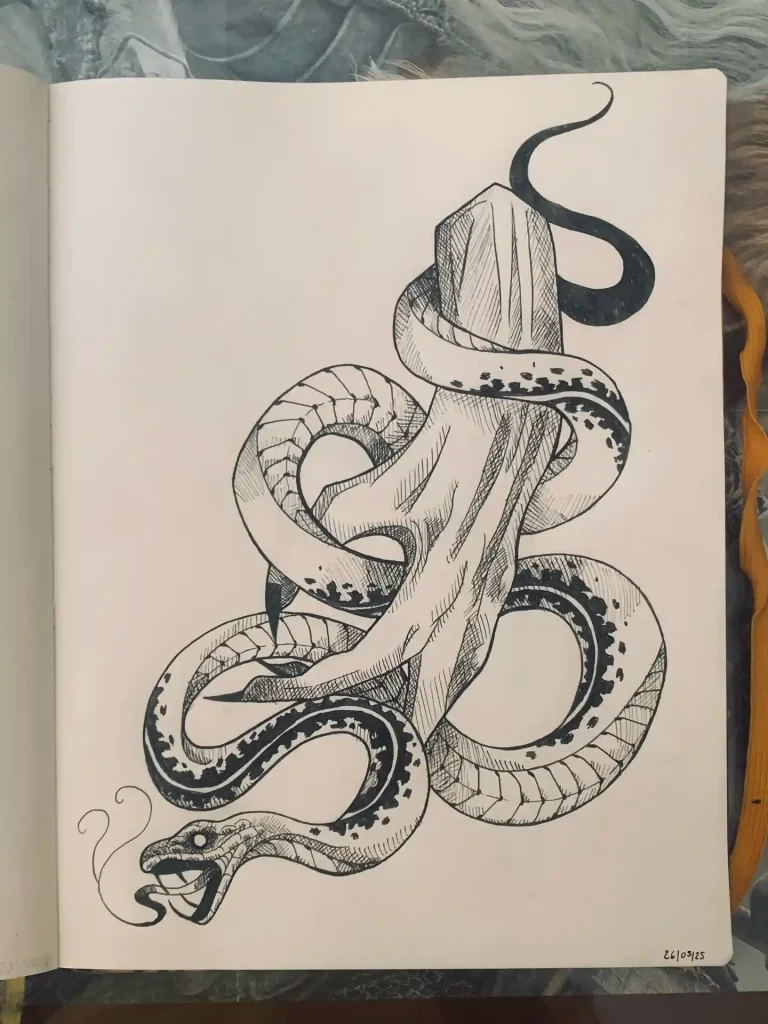
A classic symbol of healing and transformation, this ink drawing depicts a powerful snake wrapped around a staff or crystal. The artist used bold, high-contrast ink work to give the piece a graphic, almost mythic quality. It evokes ancient symbols like the Rod of Asclepius, representing the dual nature of the serpent as a symbol of both poison and medicine.
6. Sacred Cobra on Pencil and Ink on Sketchbook Paper
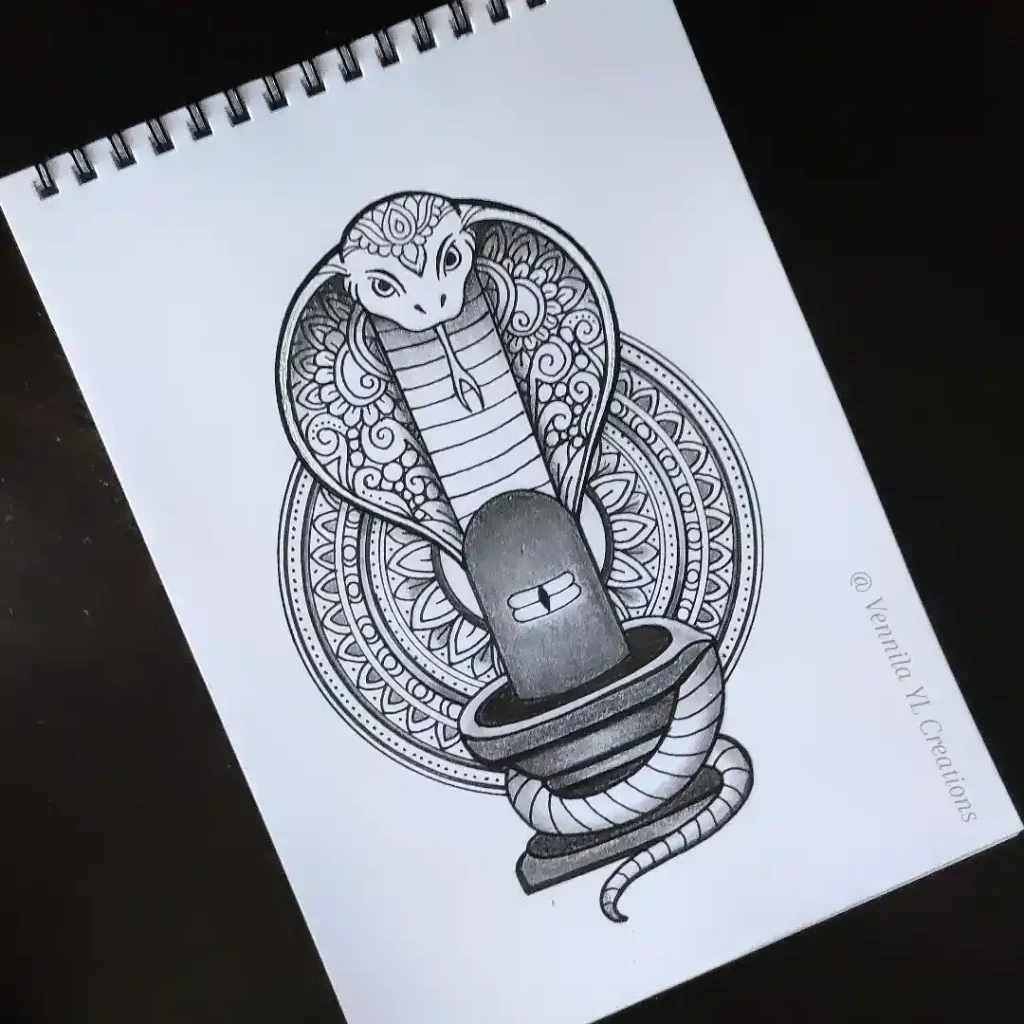
This drawing is rich with cultural and spiritual symbolism. A majestic cobra, its hood decorated with intricate mandala patterns, rises to protect a Shiva Lingam, a sacred Hindu icon. The piece beautifully combines realistic shading with ornamental design to honor the cobra’s divine status in Hinduism as a creature of power, transformation, and protection.
7. Python Sketch on Pencil on Sketchbook Paper
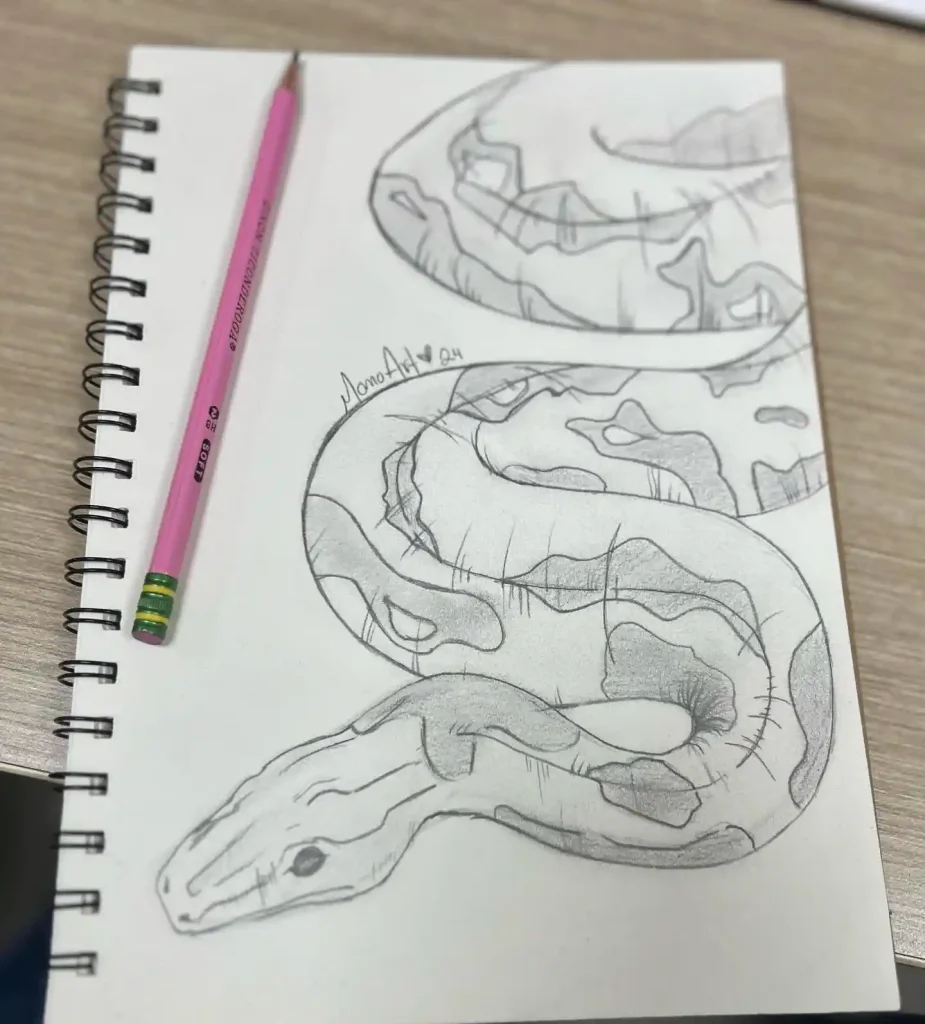
This sketchbook page shows a great foundational drawing of a python. The artist has cleanly outlined the snake’s powerful body and blocked in the distinctive patterns along its back. It’s a perfect example of a preliminary sketch, capturing the essence and form of the animal before committing to more detailed shading. A great start to a beautiful piece.
8. Knotted Serpent on Pencil on Paper
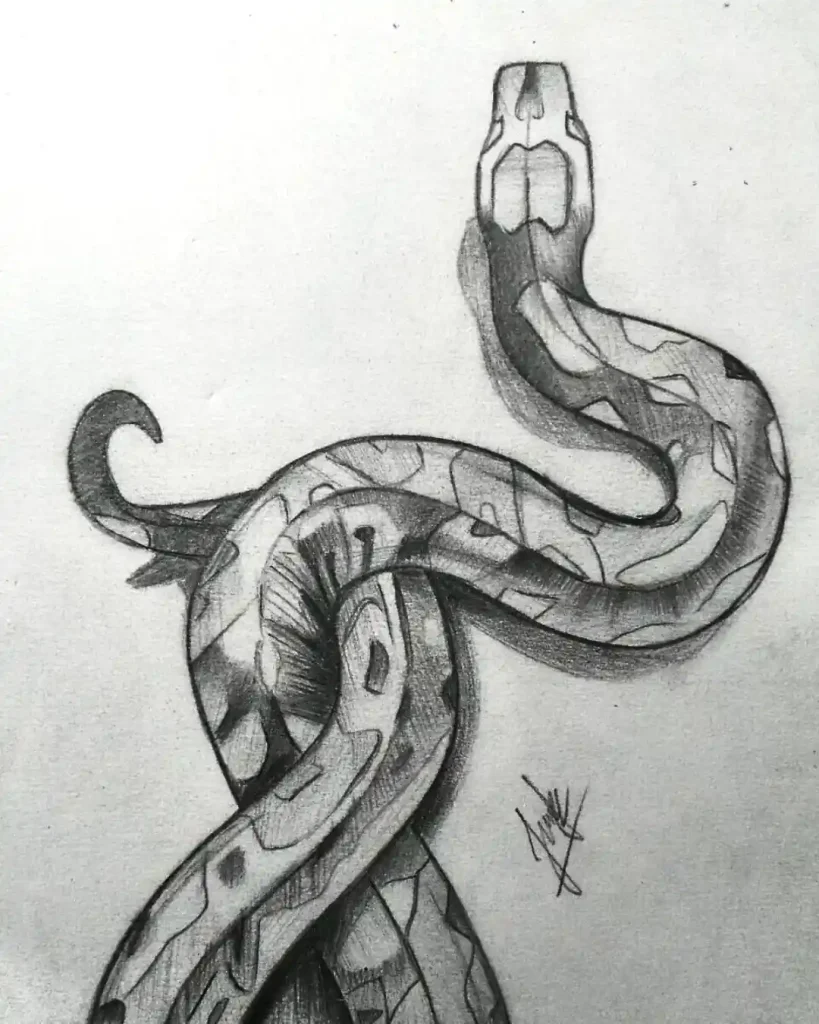
A snake tied in a knot is a powerful visual metaphor. This pencil drawing, with its smooth shading and strong drop shadow, creates a convincing 3D effect. The impossible knot can symbolize feeling trapped, facing a complex problem, or the endless, cyclical nature of life. It’s a simple concept that makes for a deeply thought-provoking piece of art.
9. Serpentine Bond on Pencil on Sketchbook Paper
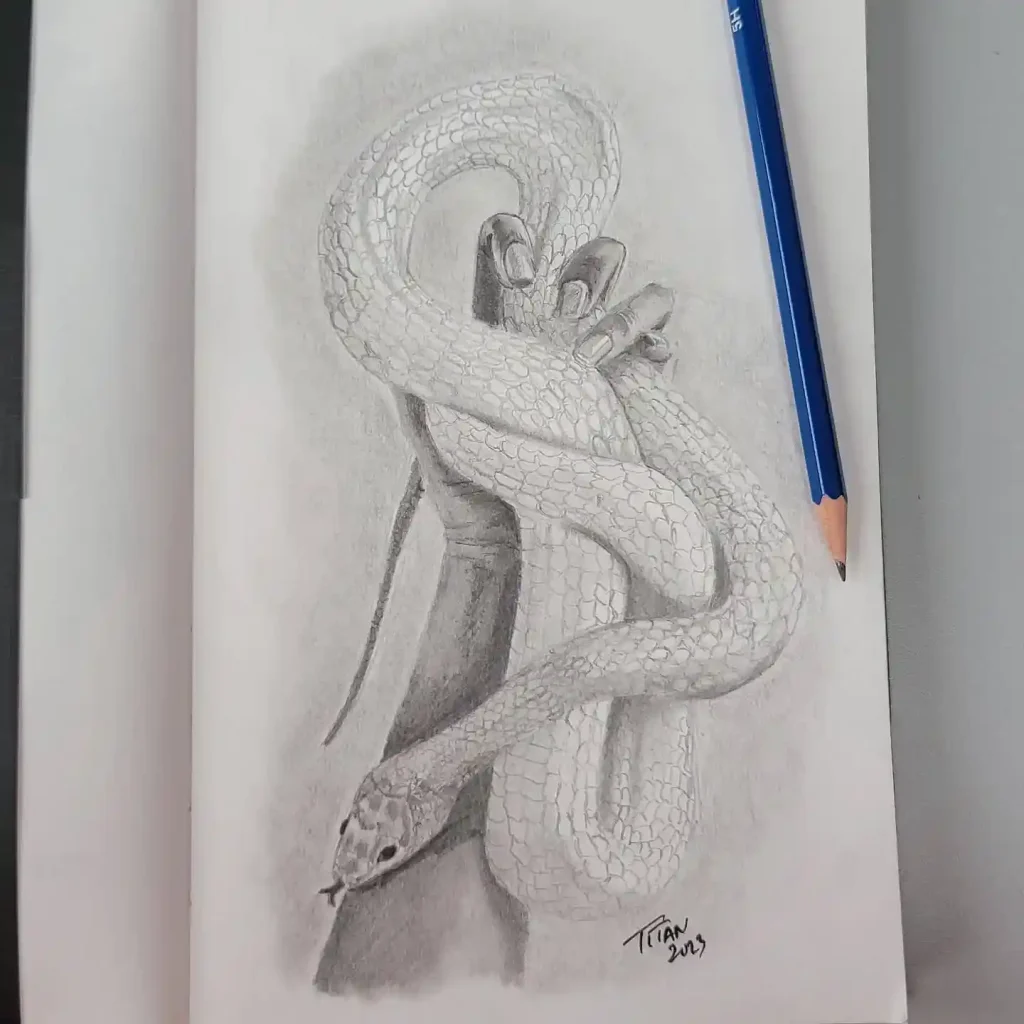
There’s a beautiful sense of trust and connection in this drawing. The artist has captured the delicate texture of the light-colored snake as it coils gently around a human hand. This piece challenges the common fear of snakes, instead portraying a harmonious relationship between human and animal. It’s a lovely study in contrast, texture, and interspecies connection.
10. Coiled Python Study on Pencil on Paper
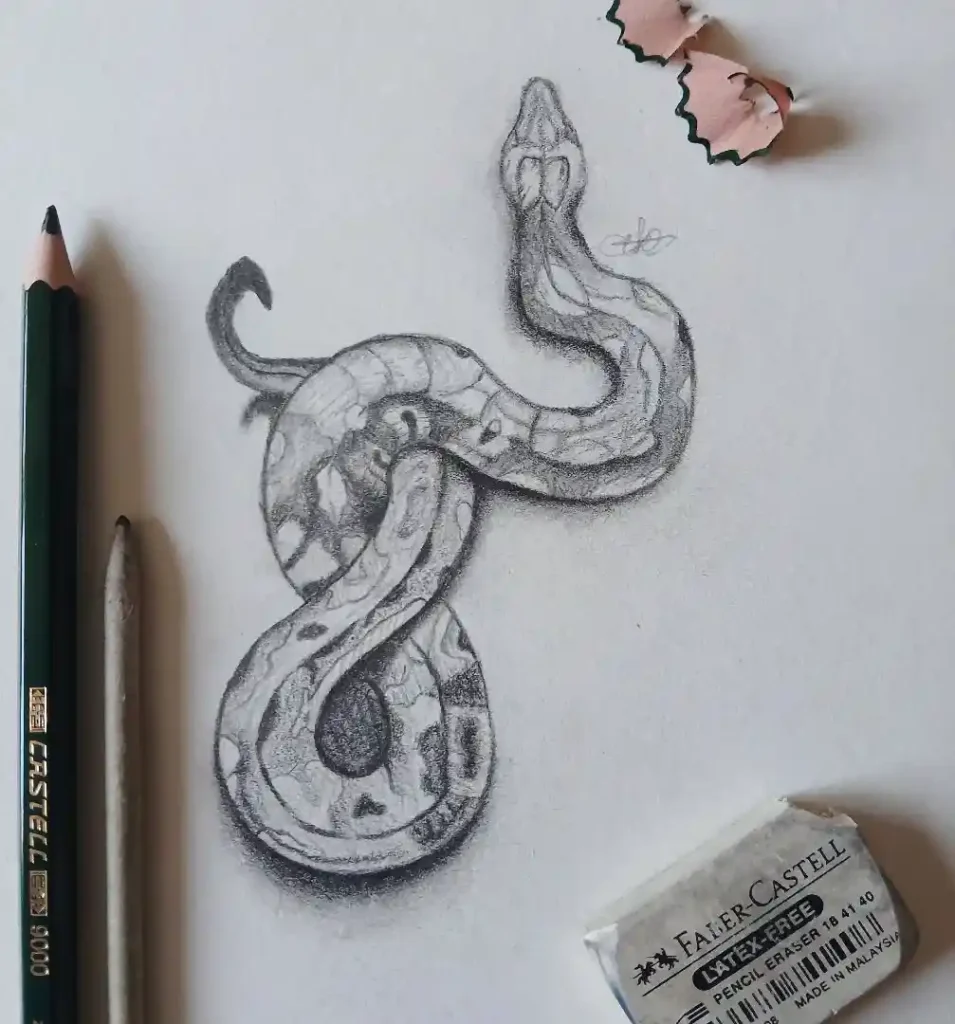
This small study is a great exercise in creating form and depth. The artist used soft pencil shading and a strong drop shadow to make this knotted python look three-dimensional. The way the light hits the scales and the patterns wrap around the coiled body is handled really well. It’s a solid little drawing that shows a good understanding of light.
11. The Temptation on Pencil on Sketchbook Paper
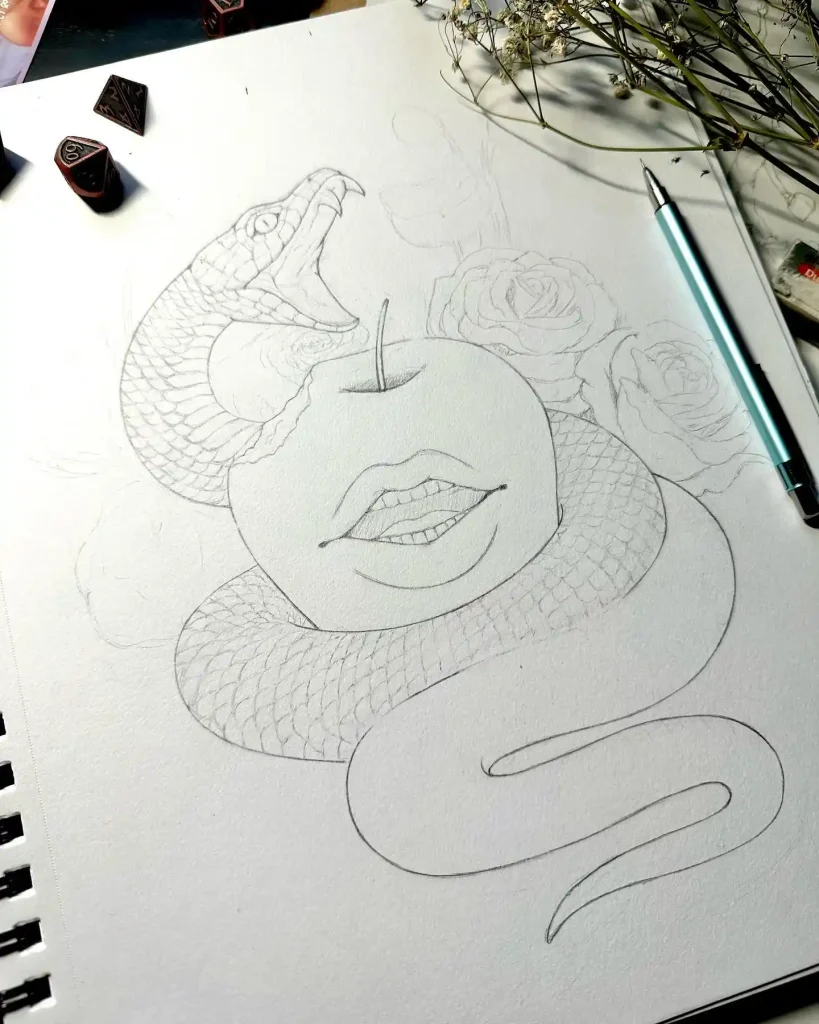
A fantastic work-in-progress, this pencil sketch is a modern take on a timeless story. The snake, symbolizing temptation and knowledge, coils around a surreal, talking apple. The artist is in the process of building up the scaly texture, creating a compelling narrative composition that explores the classic tale of the Garden of Eden with a unique, illustrative twist.
12. Striking Viper on Ink on Paper
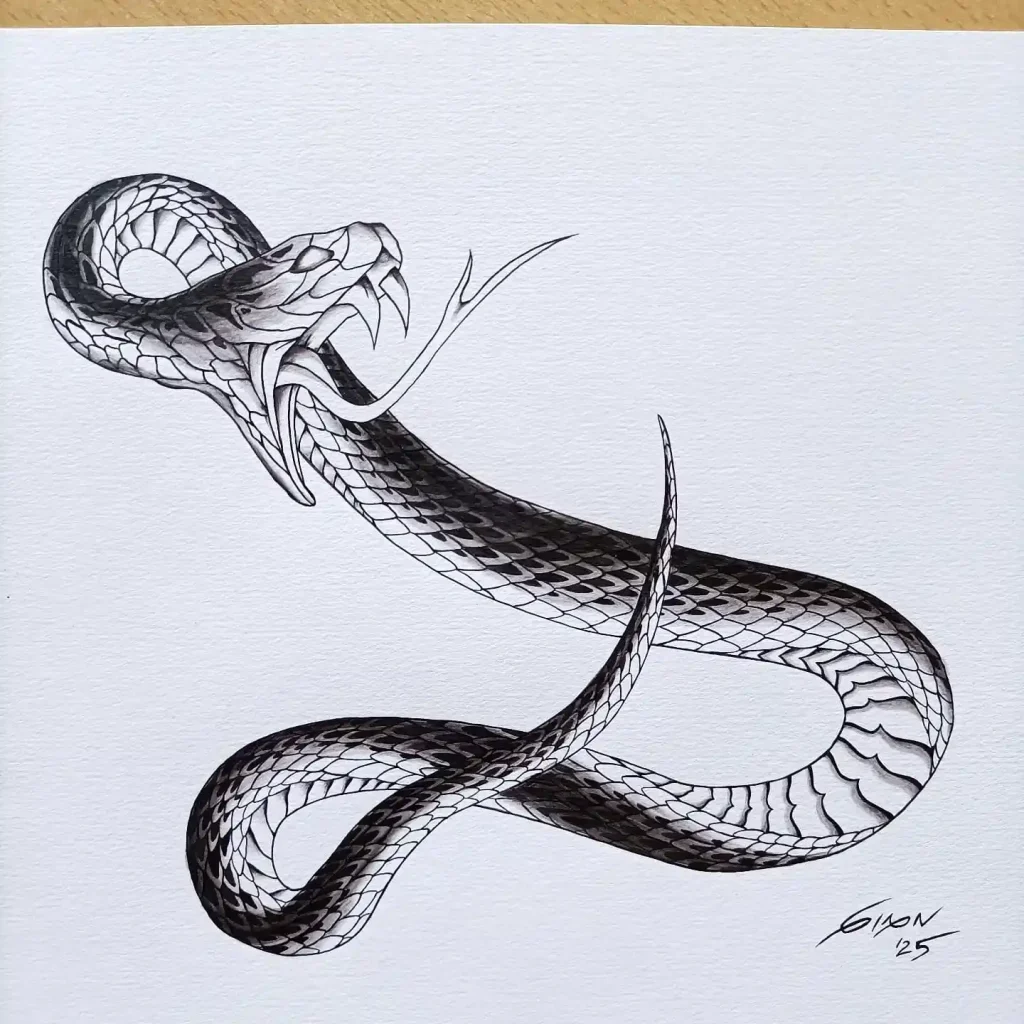
The artist captured a moment of pure, dynamic action in this drawing. With its fangs bared and body coiled to strike, this viper is the epitome of lethal elegance. The clean lines and smooth black-and-grey shading give it a powerful, graphic quality reminiscent of traditional tattoo art. A stunning piece that showcases the snake’s dangerous beauty.
13. Celestial Serpent on Ballpoint Pen on Sketchbook Paper
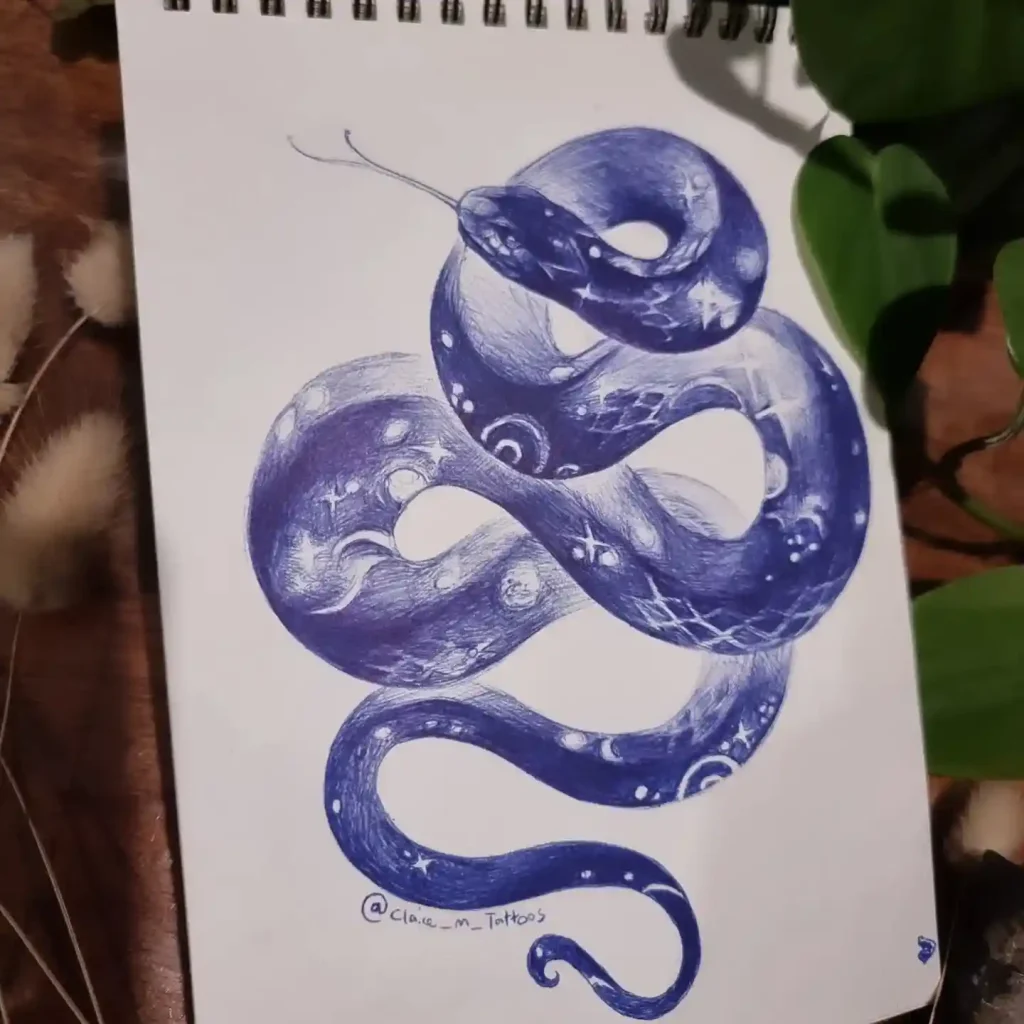
This drawing transforms a simple snake into a cosmic entity. Using only a blue ballpoint pen, the artist has filled the serpent’s body with stars, moons, and swirling galaxies. It’s a beautiful and imaginative piece that evokes ancient myths of world-serpents, representing the universe, eternity, and the cyclical, creative forces of the cosmos.
14. Scale Study on Ink on Sketchbook Paper
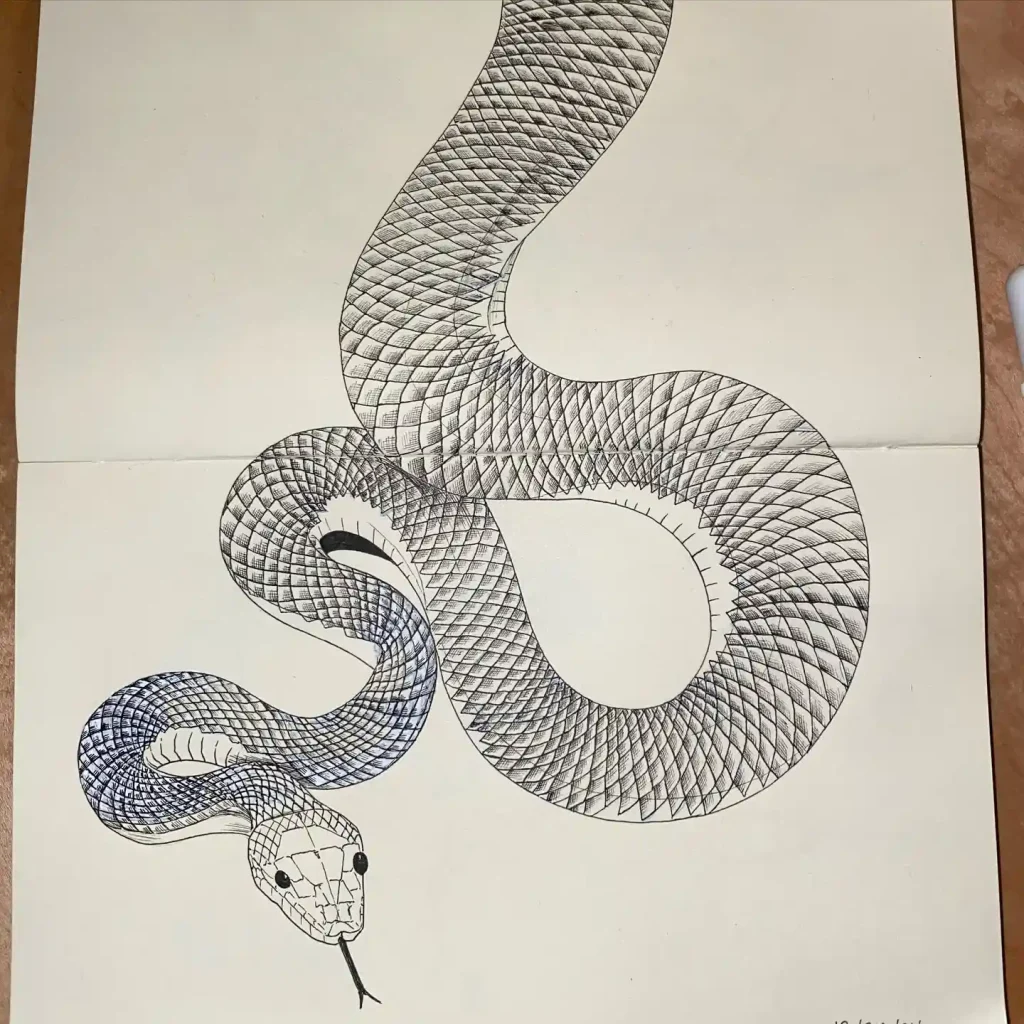
This sketchbook drawing is an incredible study in patience and pattern. The artist has meticulously rendered each individual scale with precise ink lines, creating a mesmerizing, textured surface. The subtle use of blue ink on the snake’s tail adds a lovely, cool touch to the composition. It’s a testament to the meditative process of detailed linework.
15. Viper Head Sketch on Pencil on Paper
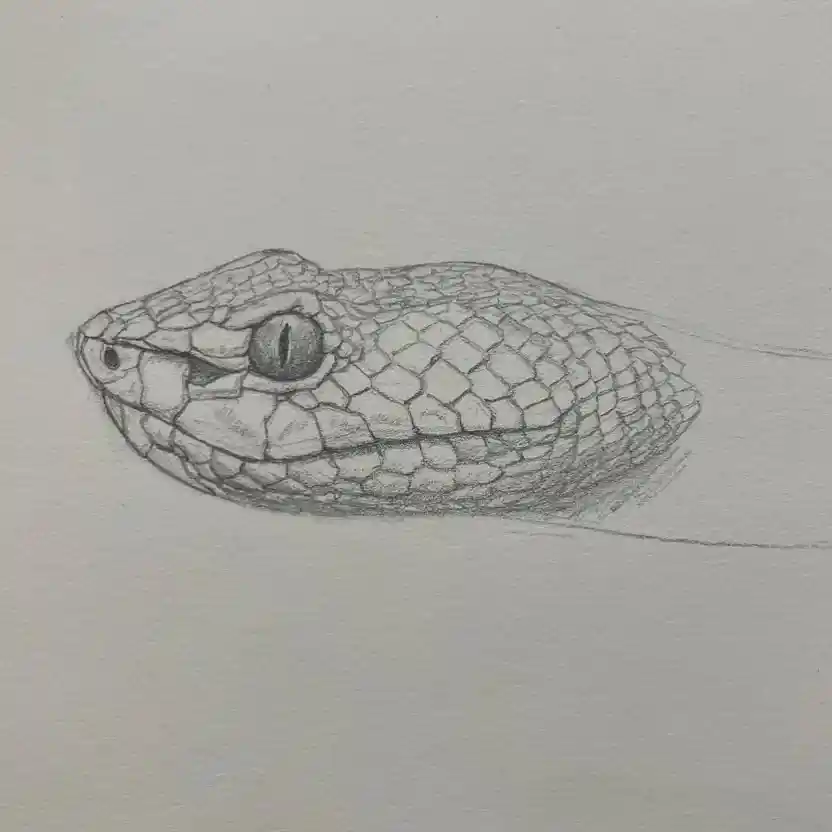
A quick but effective study, this pencil sketch perfectly captures the dangerous essence of a viper’s head. The artist focused on the key features: the triangular shape, the heat-sensing pits, and the vertical pupil. The simple, soft shading gives it form and dimension. It’s a great example of an anatomical sketch that’s all about understanding the subject.
16. Serpent and Peonies on Ink on Paper
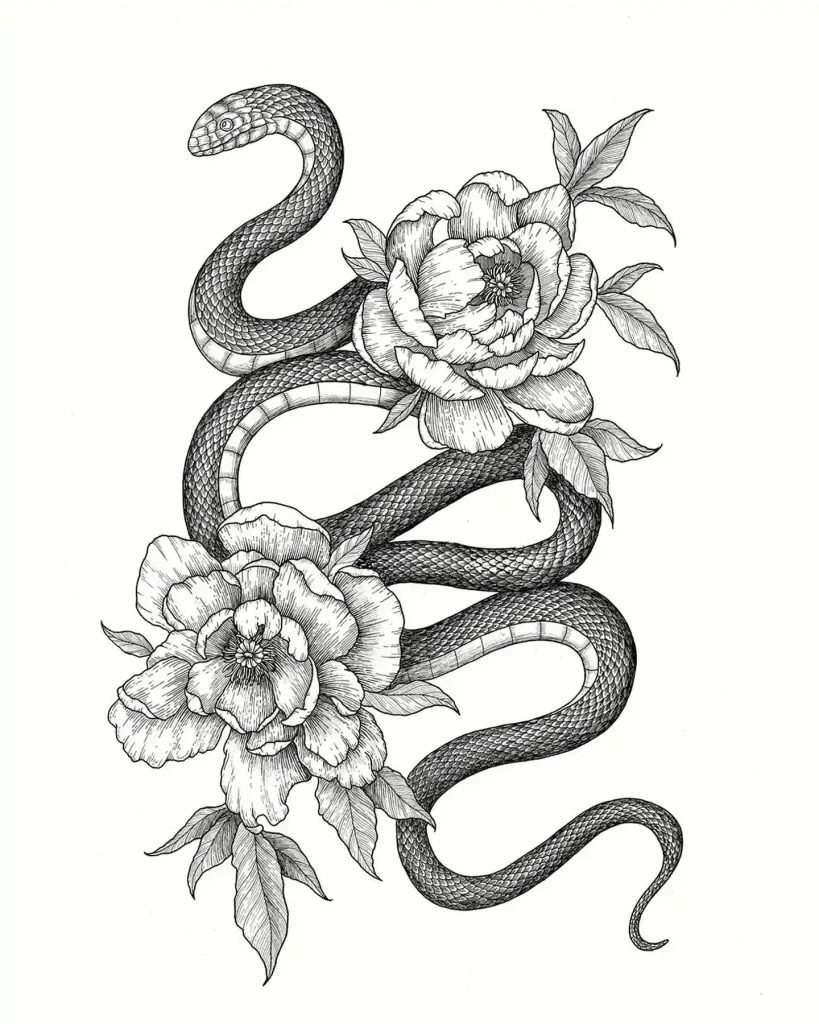
There’s such an elegant balance in this ink drawing. A sleek, scaly serpent weaves gracefully through lush, blooming peonies. This classic pairing creates a beautiful contrast between danger and beauty, temptation and prosperity. The artist’s incredibly fine linework and delicate cross-hatching give the piece a timeless, illustrative quality that is simply breathtaking.
17. Psychedelic Serpent on Colored Pencil on Paper
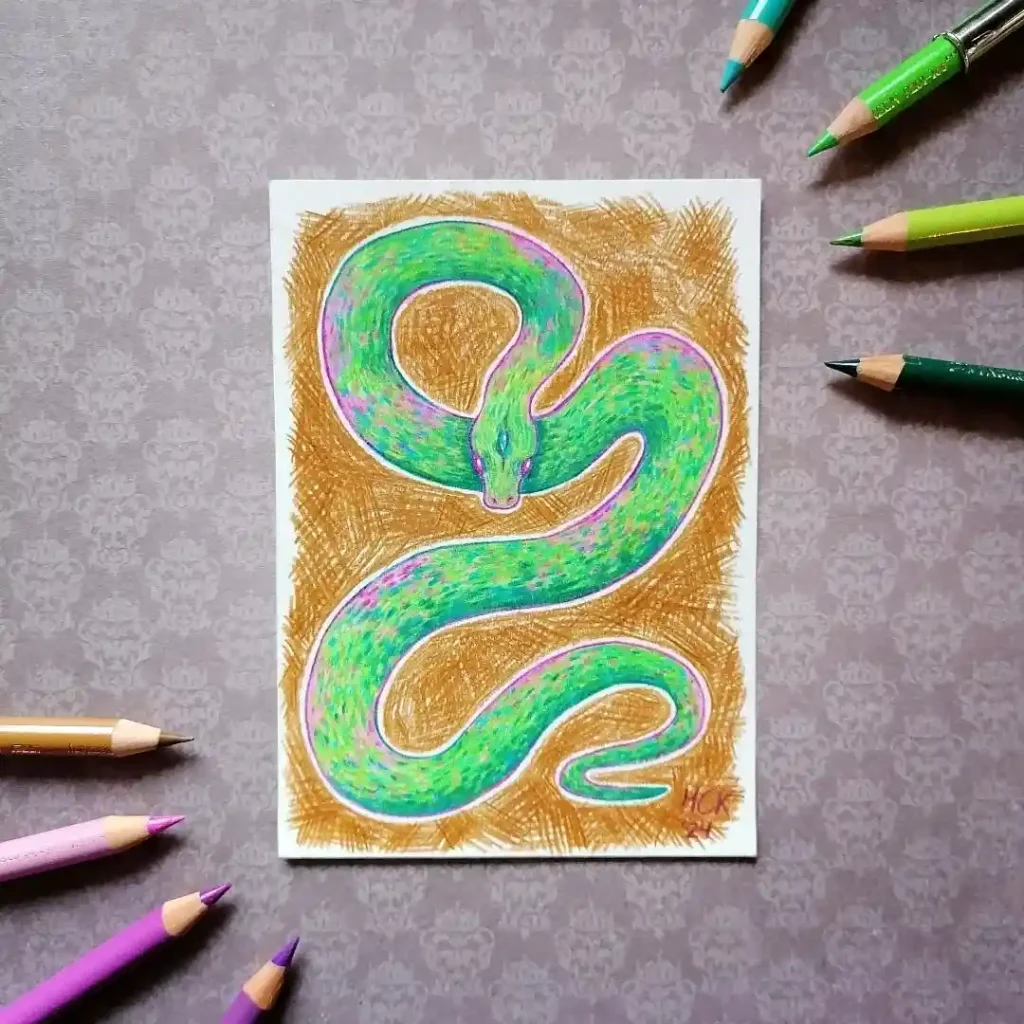
This piece is a vibrant, psychedelic exploration of color. The artist used a wild palette of bright greens and pinks to create a snake that feels magical and otherworldly, complete with a mystical third eye. The rough, energetic shading of the background makes the smooth, vivid serpent pop. A fantastic drawing that celebrates a free and creative spirit.
18. Coiled Cobra on Pencil on Paper
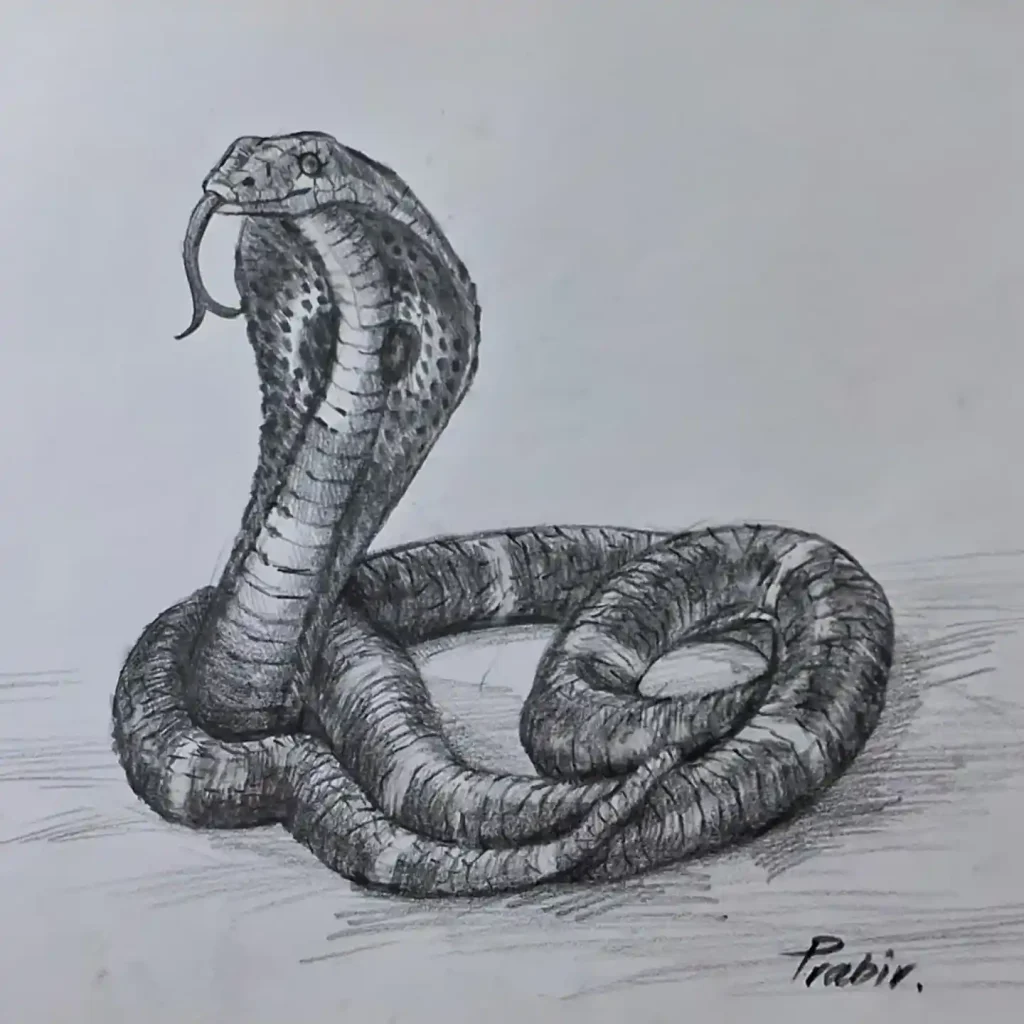
The artist did a great job of capturing the cobra’s iconic and intimidating pose. Through careful pencil shading, they’ve conveyed the texture of the scales and the solid, powerful form of the coiled body. The snake’s direct gaze and flared hood are rendered with a quiet intensity, creating a classic and realistic portrait of this majestic creature.
19. Micron Cobra on Ink on Paper
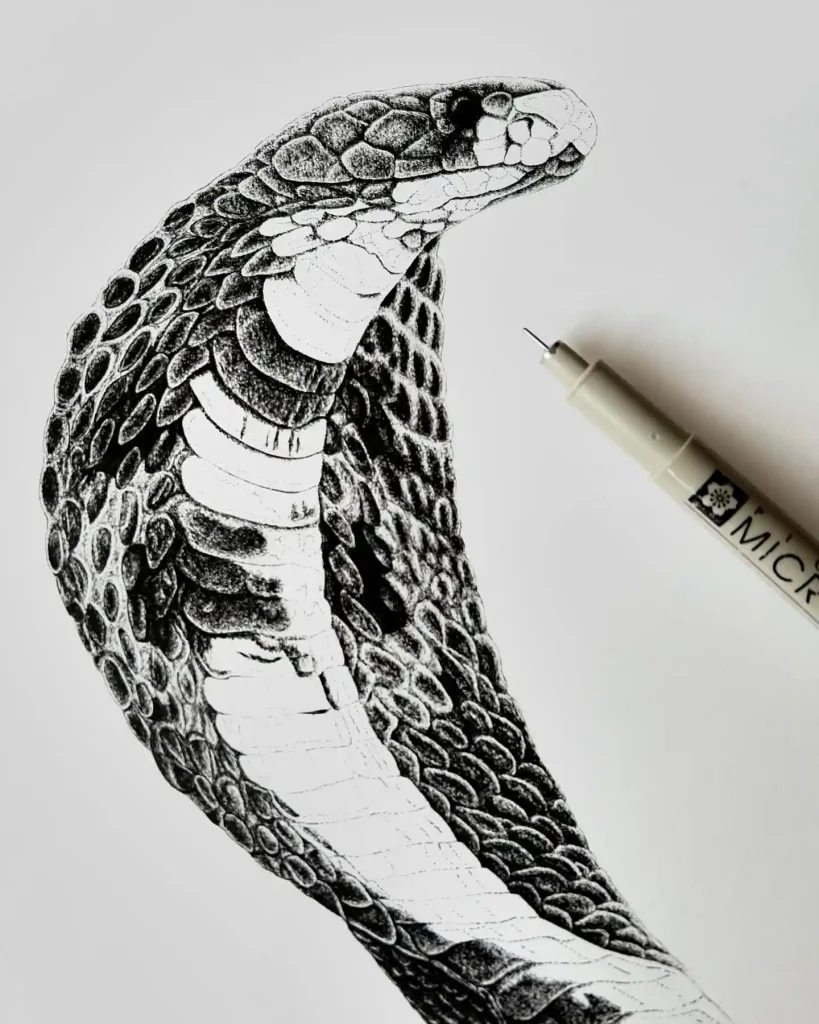
This is an absolutely stunning example of micro-pen work. The artist has used a fine-tipped pen to build up the cobra’s texture with an incredible density of dots and lines. Each scale is a miniature work of art. This piece is a true testament to the power of meticulous detail, creating a hyper-realistic image with amazing depth and texture.
20. Aggressive Viper on Ink on Paper
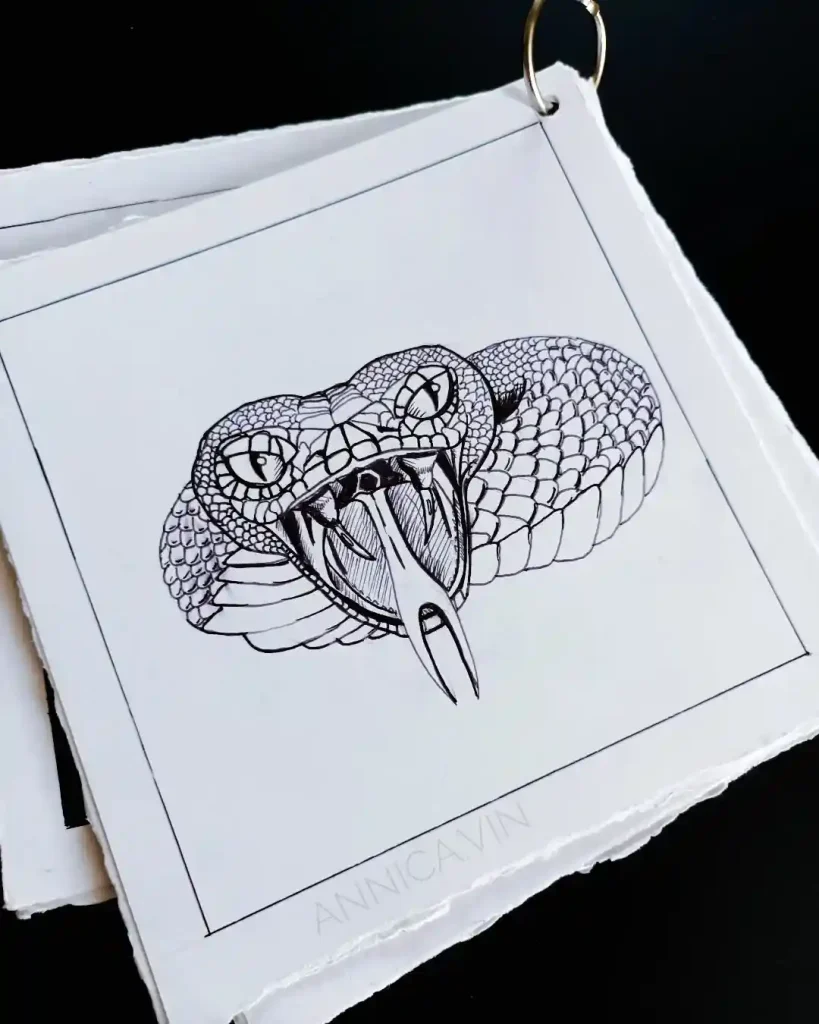
Full of energy and aggression, this ink drawing captures a viper at the peak of its threat display. The artist used bold, graphic lines to emphasize the wide-open mouth, sharp fangs, and intense eyes. The head-on perspective makes the piece incredibly dynamic and confrontational. It’s a powerful illustration that perfectly conveys the snake’s dangerous nature.
21. Cross-Contour Viper on Pencil on Paper
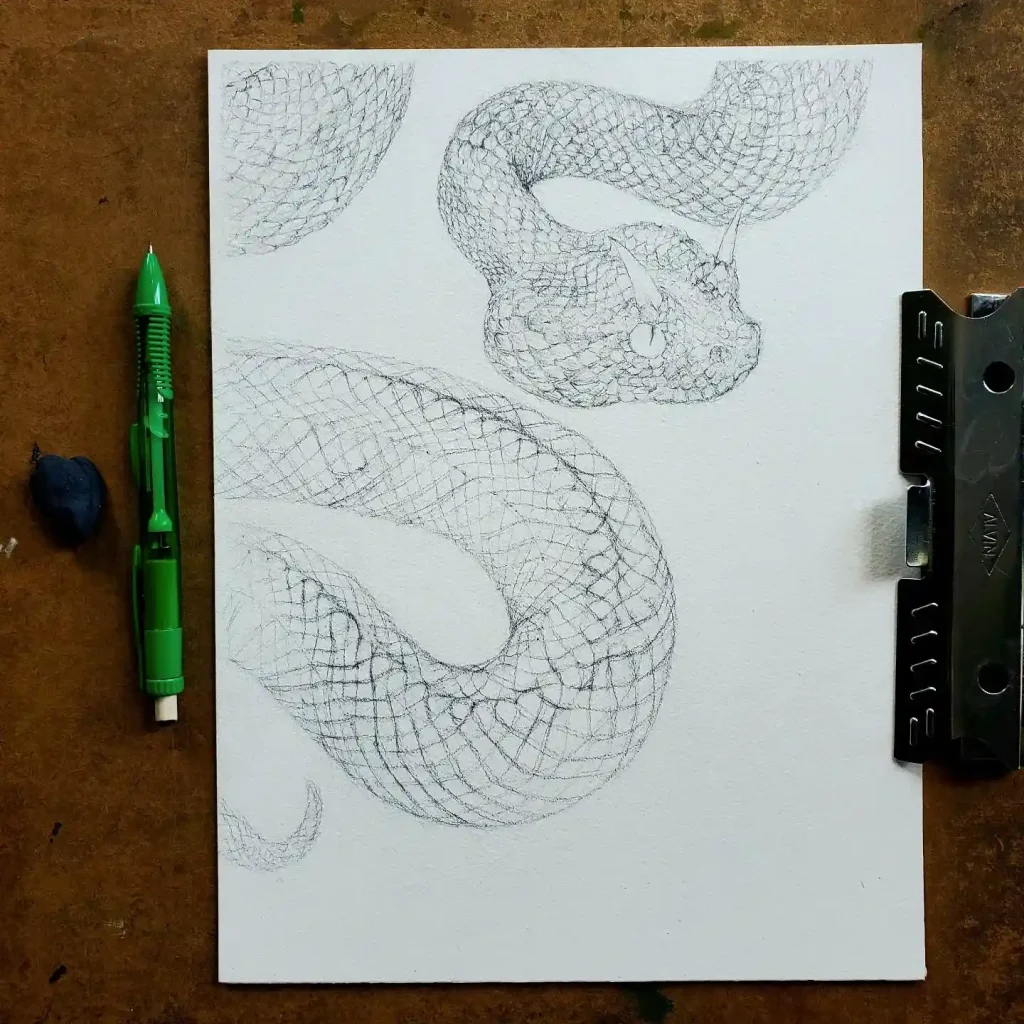
This drawing provides a fantastic look at an artist’s process. Using a cross-contour technique, the artist maps out the form and scales of this horned viper, creating a wireframe-like structure before adding shading. It’s a foundational sketching method that shows a deep understanding of form, ensuring the final piece will have a convincing, three-dimensional quality.
22. Coiled Serpent on Colored Pencil on Sketchbook Paper
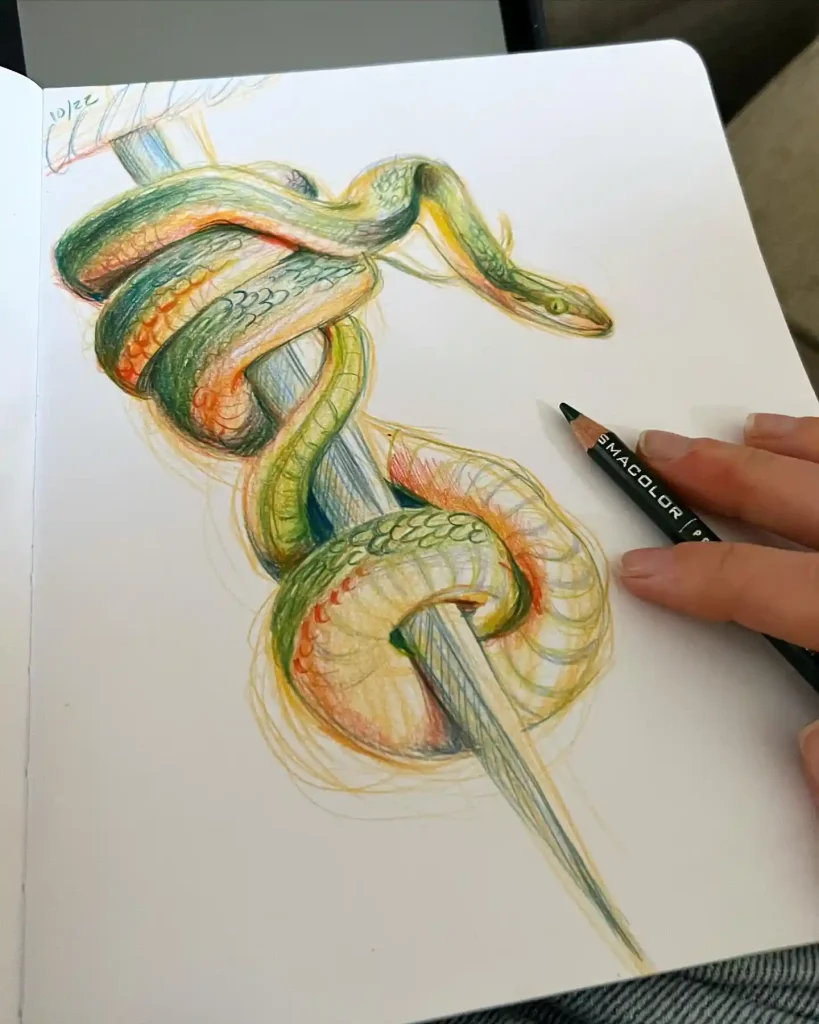
There is a beautiful, painterly quality to this colored pencil sketch. The artist used loose, expressive strokes to capture the way light hits the green and yellow scales of the snake as it coils around a staff. This classic composition evokes the Rod of Asclepius, a symbol of healing and medicine, rendered here with vibrant, energetic style.
23. Knotted Serpent of Love on Ink and Watercolor on Paper
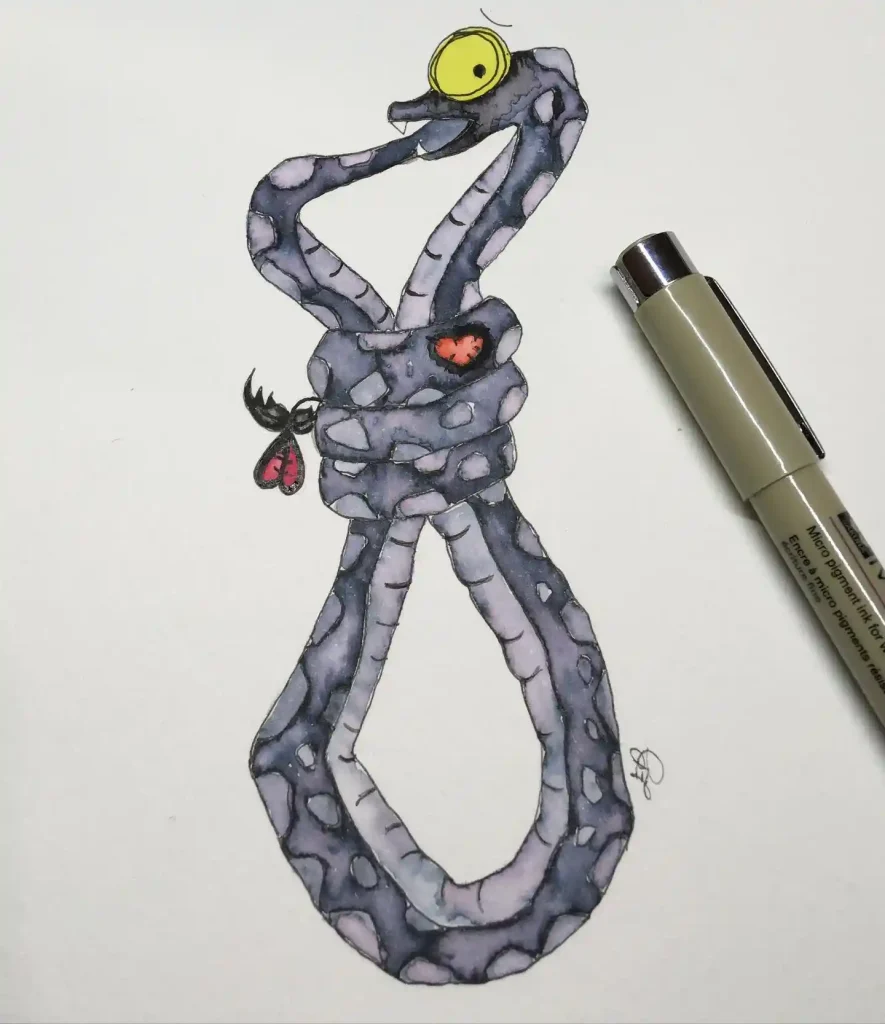
Full of quirky symbolism, this cartoon snake is tied in a knot that has trapped a little bat-winged ladybug. With its big yellow eye and a stitched-up heart, this piece is a playful and surreal exploration of being “tongue-tied” or tangled up in love. It’s a fun, illustrative piece that tells a strange and charming story.
24. High-Contrast Python on Ink on Paper
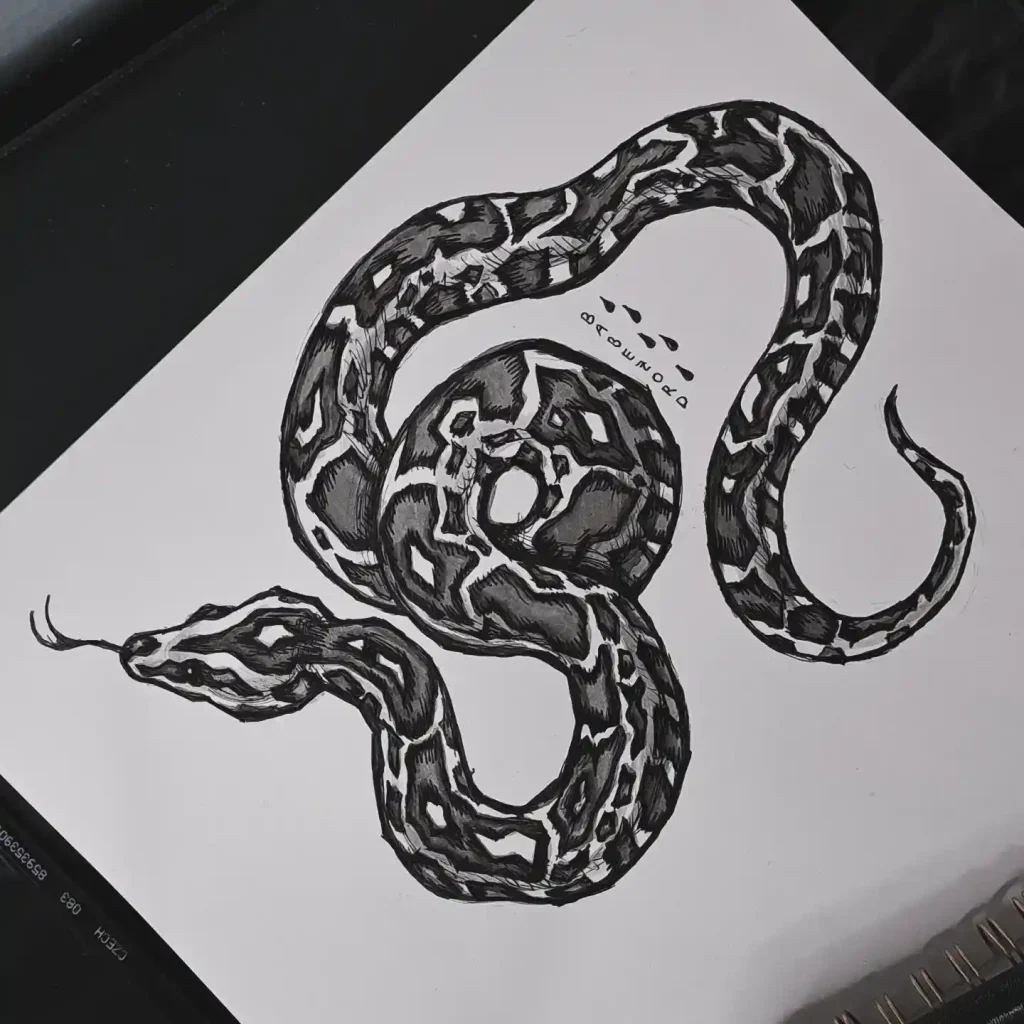
This ink drawing is a powerful study in pattern and contrast. The artist used bold, black shapes against the stark white of the paper to masterfully render the intricate pattern of a python. The fluid, coiled pose and strong graphic quality give it the striking look of a traditional tattoo design, celebrating the snake’s captivating and beautiful markings.