Choose wax core colored pencils for fast coverage and smooth burnishing, and oil core for fine detail. Wax is softer but crumbles and can develop a hazy wax bloom; oil holds a sharp point through long sessions and never blooms.
Key takeaways
- The binder, wax or oil, matters more than the number of colors in the tin.
- Wax cores blend and burnish beautifully but can bloom and need frequent sharpening.
- Oil cores hold a point for detail work and never develop wax bloom.
- Paper tooth sets a hard ceiling on how many layers a drawing can accept.
- Burnishing finishes a drawing: once the tooth is crushed flat, nothing more will stick.
Some links on this page are affiliate links. As an Amazon Associate we earn from qualifying purchases, at no extra cost to you. Prices shown were correct at the time of writing.
Colored pencil is the most patient medium in this whole site. A finished piece is twenty or thirty translucent layers, each one barely visible on its own, and the entire result depends on whether the pencil can keep laying color down after the paper’s tooth has already been filled.
That single requirement is what separates a set that gets you to a finished drawing from one that stalls halfway. The specification that decides it is not the color count on the tin. It is the binder.
Wax Core or Oil Core
Pigment has to be held together by something. In most pencils that binder is wax; in a smaller and generally more expensive group it is oil.
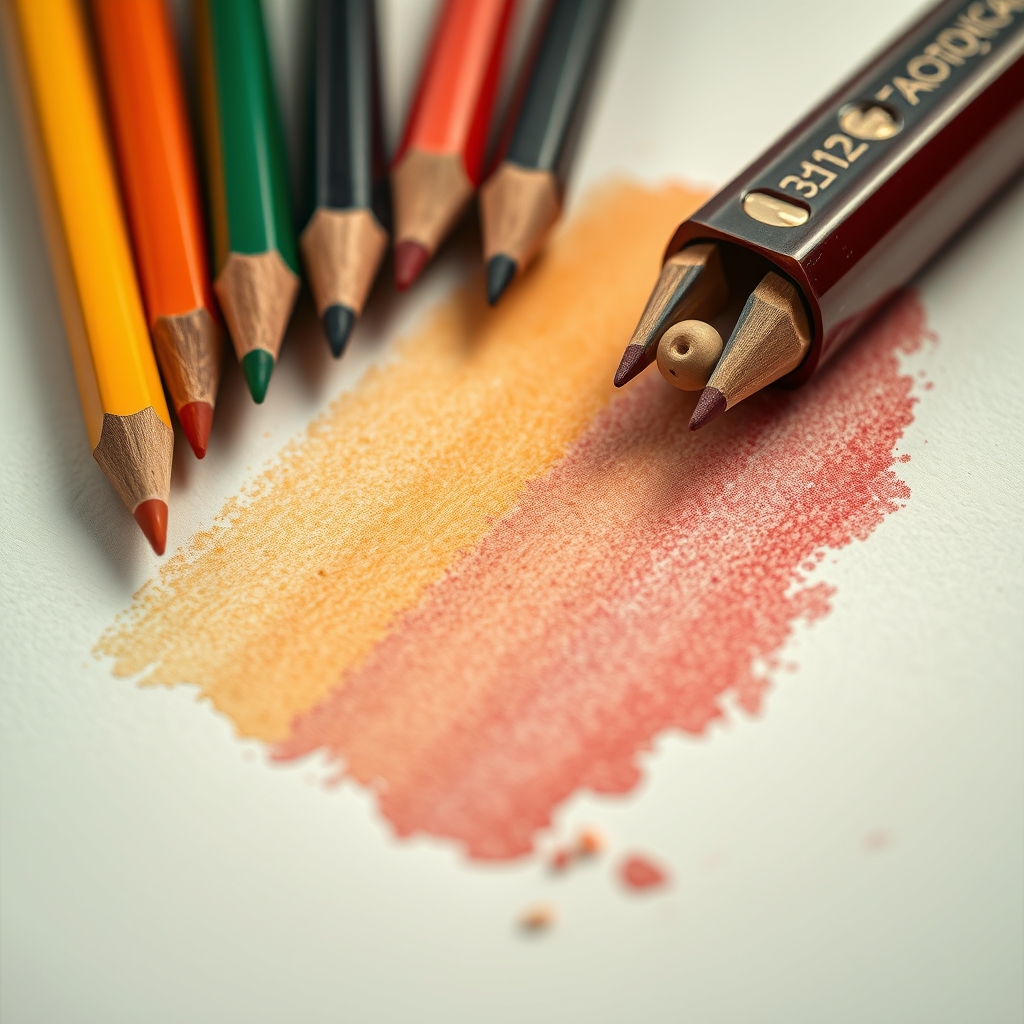
Wax cores are soft and buttery. They cover fast, blend beautifully with a colorless blender, and burnish to a polished finish that oil cores struggle to match. Two things go wrong with them. Points crumble under pressure, so detail work means constant sharpening, and after a few weeks a hazy grey film called wax bloom can rise to the surface of a heavily layered area. Bloom wipes off with a soft cloth and is prevented by a light fixative spray, but it surprises everybody the first time.
Oil cores are firmer. They hold a needle point through an entire session, which is why botanical and hyperrealist artists prefer them, and they never bloom. The trade is that they cover more slowly and take real pressure to reach full saturation, so filling a large background is slower work.
Most artists who work seriously in the medium end up owning both and reaching for oil when the drawing is mostly fine detail.
Four Sets Worth Owning
Best All-Round Wax Set


ARTEZA Colored Pencils – 72 Soft Wax Cores
$38.10on Amazon
The default recommendation. Soft enough to blend properly, wide enough in range that you are not forced to mix every shade from scratch.
- ✓Lightfastness printed on the barrel. Rare at this price, and the only way to know which of your colors will still be there in a decade.
- ✓4 mm cores that survive sharpening. Thin cores snap inside the barrel and you lose half a pencil discovering it. Thicker cores are simply cheaper over time.
- ✓72 shades is the useful number. Enough closely spaced values to build a skin tone or a leaf gradient without heavy burnishing at every step.
As an Amazon Associate we earn from qualifying purchases. Price shown at time of writing.
Best Oil Core Value


JusArt Oil-Based Colored Pencils – 72 Colors
$34.99on Amazon
Oil cores usually cost several times this. If you want to find out whether you prefer them, this is the sensible way to test it.
- ✓Holds a point far longer. The practical effect is fewer interruptions: you draw for twenty minutes instead of stopping every two to sharpen.
- ✓No wax bloom to manage. Oil binders do not migrate to the surface, so a finished drawing looks the same in a month as it did on the day.
- ✓Sharpener and extender included. The extender is genuinely useful: it lets you use the last two inches of an expensive pencil instead of discarding it.
As an Amazon Associate we earn from qualifying purchases. Price shown at time of writing.
Fine points matter most when the subject is built from thousands of short directional strokes, which is exactly how the fur and feather studies in our detailed nature drawing gallery and animal work are made.
For Work You Intend to Sell


Derwent Lightfast Colored Pencils – 24 Tin
$69.54on Amazon
Expensive per pencil, and the only set here with a lightfastness claim you can actually check against a published standard.
- ✓Tested to ASTM D6901 and Blue Wool ISO 105. Named standards rather than a star rating a manufacturer invented for itself.
- ✓Blends toward a paint-like surface. Worked with a brush and solvent, the layers integrate rather than sitting on top of each other as visible strokes.
- ✓Opaque enough for toned paper. Light colors still read over a mid-grey or kraft ground, which most wax pencils cannot manage.
As an Amazon Associate we earn from qualifying purchases. Price shown at time of writing.
Cheapest Sensible Start


KALOUR Colored Pencils – 72 Soft Cores
$11.99on Amazon
Not archival, and not pretending to be. What it is: enough pencil to learn layering on without worrying about wearing anything down.
- ✓Cheap enough to press hard with. Burnishing wears pencils down fast, and hesitating over that is the main reason beginners never reach full saturation.
- ✓Named and numbered barrels. Once you know which numbers you reach for, replacing or upgrading exactly those becomes straightforward.
- ✓Fine for coloring books and studies. Work that lives in a sketchbook does not need pigments rated to survive a century of daylight.
As an Amazon Associate we earn from qualifying purchases. Price shown at time of writing.
Paper Limits the Pencil, Not the Other Way Around
Every sheet has a tooth, a microscopic texture that catches pigment. Once that tooth is full, no further layers will stick and the drawing simply stops accepting color no matter how hard you press. Smooth bristol takes perhaps six or eight layers. Heavier textured paper takes twenty or more, and that difference is usually what separates a rich colored pencil piece from a flat one.
If your drawings look thin and you have blamed the pencils, try the same subject on toothier paper before buying anything else.
Frequently Asked Questions
What is wax bloom and how do I stop it?
Wax bloom is a pale haze that rises to the surface of heavily layered wax pencil work over days or weeks. Wipe it gently with a soft cloth, then seal the drawing with a light coat of workable fixative to stop it returning.
Are oil-based colored pencils better than wax?
Not better, different. Oil holds a point and never blooms, which suits detail. Wax covers faster and burnishes to a glossier finish, which suits broad areas. Serious colored pencil artists usually keep both on the desk.
How many colored pencils do I actually need?
Between 48 and 72 is the practical range. Fewer than that forces heavy layering to reach mid tones, while much larger sets mostly add shades so close together you will never choose between them under normal light.
What does burnishing mean?
Burnishing is pressing hard with a light pencil or a colorless blender over finished layers, crushing the pigment into the paper’s tooth. It removes the visible paper texture and leaves a smooth, saturated surface, but it also ends the drawing because nothing more will stick afterwards.
Can colored pencils be blended with solvent?
Yes. Odorless mineral spirits applied with a brush or blending stump dissolve the binder and turn the layers into something closer to paint. Test on a scrap first, because the technique fills the paper’s tooth quickly.
Related Guides
Colored pencil work is slow and detailed, which makes two other things matter more than they do in other media: a fixed place to work with everything left out, covered in our home art studio setup guide, and consistent light, since judging a subtle layer shift under a changing bulb is guesswork. See art studio lighting for that. When a piece is finished, scanning it properly preserves the layered detail that a phone photo flattens.
If you want a project that puts all of this layering to work at once, illusionistic drawing is the sternest test there is: it fails immediately if the values are even slightly wrong. Our 3D pencil drawing studies are built around exactly that discipline. And if you are still building your kit, our art supplies guide puts pencils in context with everything else.