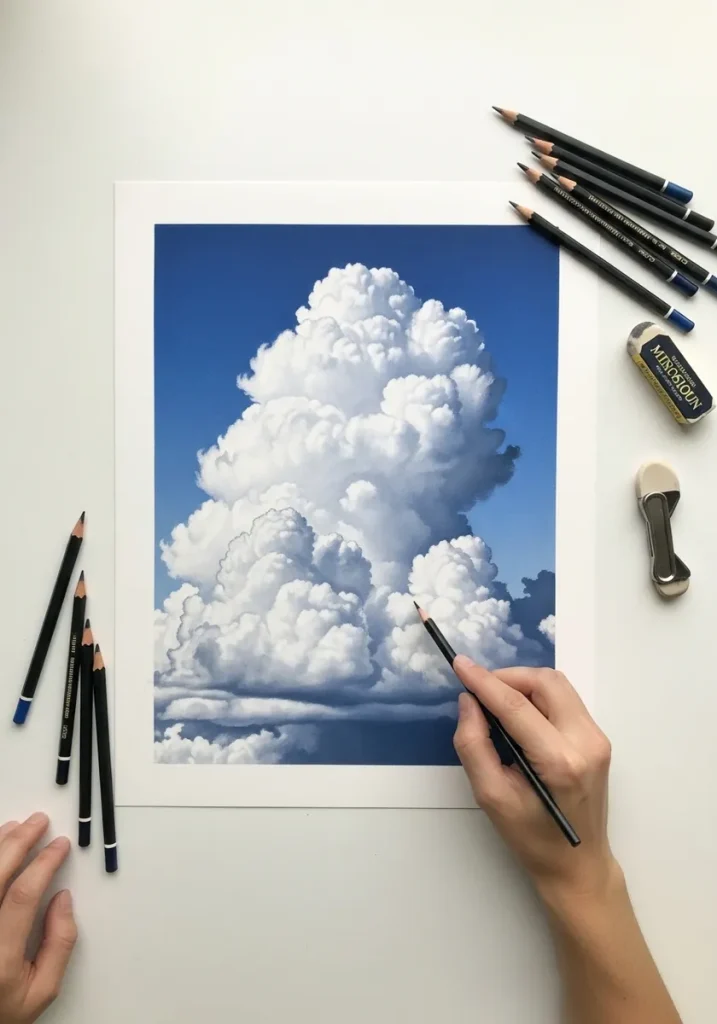
A convincing cloud has a flat base and a rounded top. Cumulus clouds form a flat bottom because water vapor condenses at one altitude, so light hits the top while the base stays in shadow. Draw that flat base first and the cloud reads correctly.
Key takeaways
- Cumulus clouds have flat bases because condensation begins at a single altitude across the sky.
- Light comes from above, so cloud tops are brightest and bases are always the darkest part.
- Keep the lit edge crisp and the shadow edge soft; equal edges everywhere make a cloud look like cotton.
- Clouds shrink and flatten toward the horizon, which is what creates depth in a full sky.
- Reserve white paper for the brightest tops rather than painting white over a dried wash.
The single detail that separates a real cloud from a cotton ball is the flat base. Rising air cools as it climbs and its water vapor condenses at one particular altitude, so every cumulus in a sky forms its bottom at the same level. Draw that flat line first and everything above it falls into place.
The second rule is lighting. Sunlight arrives from above, so cloud tops are the brightest thing in the picture and the undersides are always the darkest. Keep the sunlit edge crisp and let the shadow edges stay soft, because equal edges all the way round is what makes clouds look like wool.
These forty studies cover cumulus, towering cumulonimbus with anvil tops, high wispy cirrus and flat stratus, worked in graphite, charcoal, watercolor, marker, oil pastel and ink. For the sky behind them, watercolor sky drawing ideas and sunset painting ideas are the natural companions.
A few pieces here treat clouds as design rather than weather, with geometric, folk and lettering variations. If that side appeals, easy watercolor sunset art is a gentle starting point and nature watercolor ideas covers the wider landscape.
Compiled by the GS Art Zone editorial team. Last updated August 2026. Each idea is paired with the specific step that produces the effect, so you can go from the reference straight to paper.
What You Need Before You Start
- A kneaded eraser, which lifts cloud tops out of graphite better than any pencil draws them
- A blending stump plus 2B and 6B graphite for the soft interior gradients clouds need
- A natural sponge and a flat wash brush, the two fastest tools for painting soft cloud edges
- Cool blue plus a touch of warm gray, since pure black shadow makes clouds look dirty
- Toned gray or black paper with white pastel for the night and backlit studies later on
1. Graphite Cumulus with a Hard Flat Base
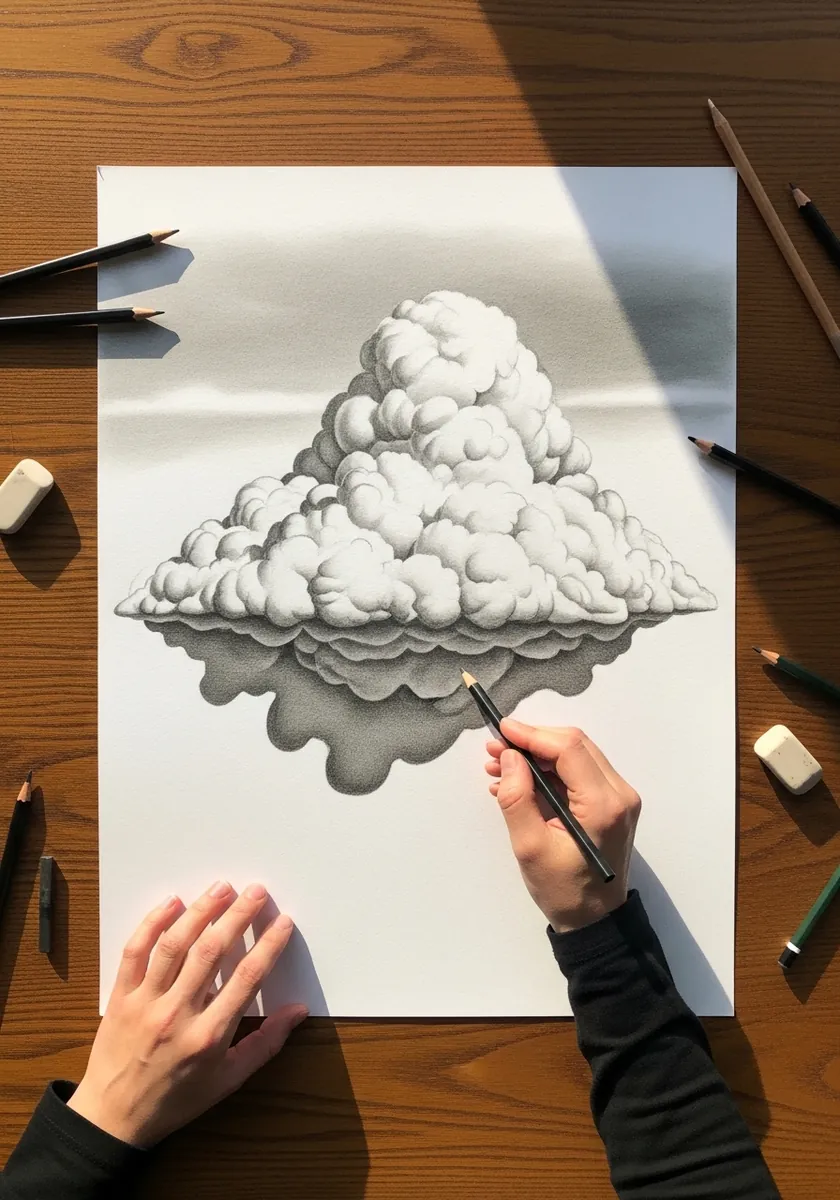
This is the whole lesson in one drawing. Rule a light horizontal line for the base, build rounded lumps above it, then shade everything below that line heavily. Lift the top edges out with a kneaded eraser rather than drawing around them, which keeps the sunlit rim genuinely bright.
2. Rainbow Cloud Bank in Acrylic
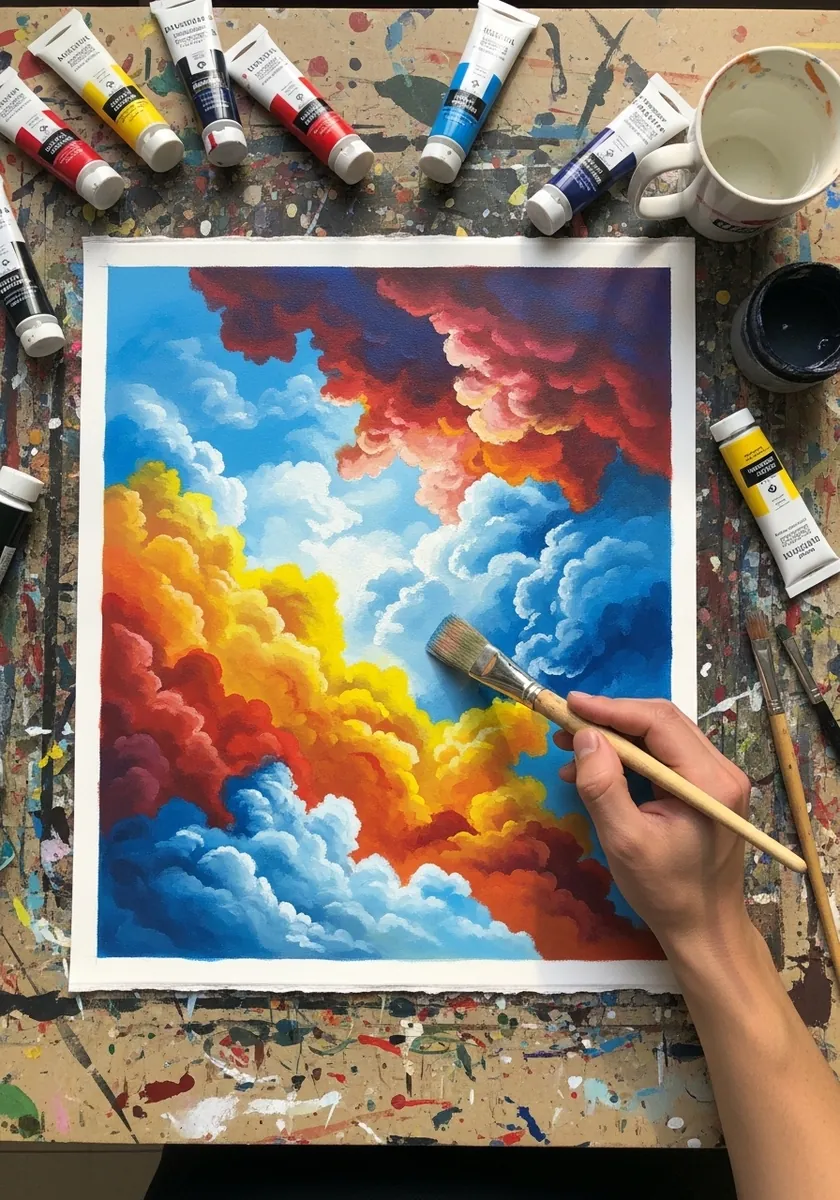
Color can replace value if you commit fully. Use warm reds and yellows for the sunlit tops and cool blues for every underside, keeping the flat-base rule intact underneath all that saturation. The structure survives even when the color is entirely invented.
3. Single Line Cloud Outline
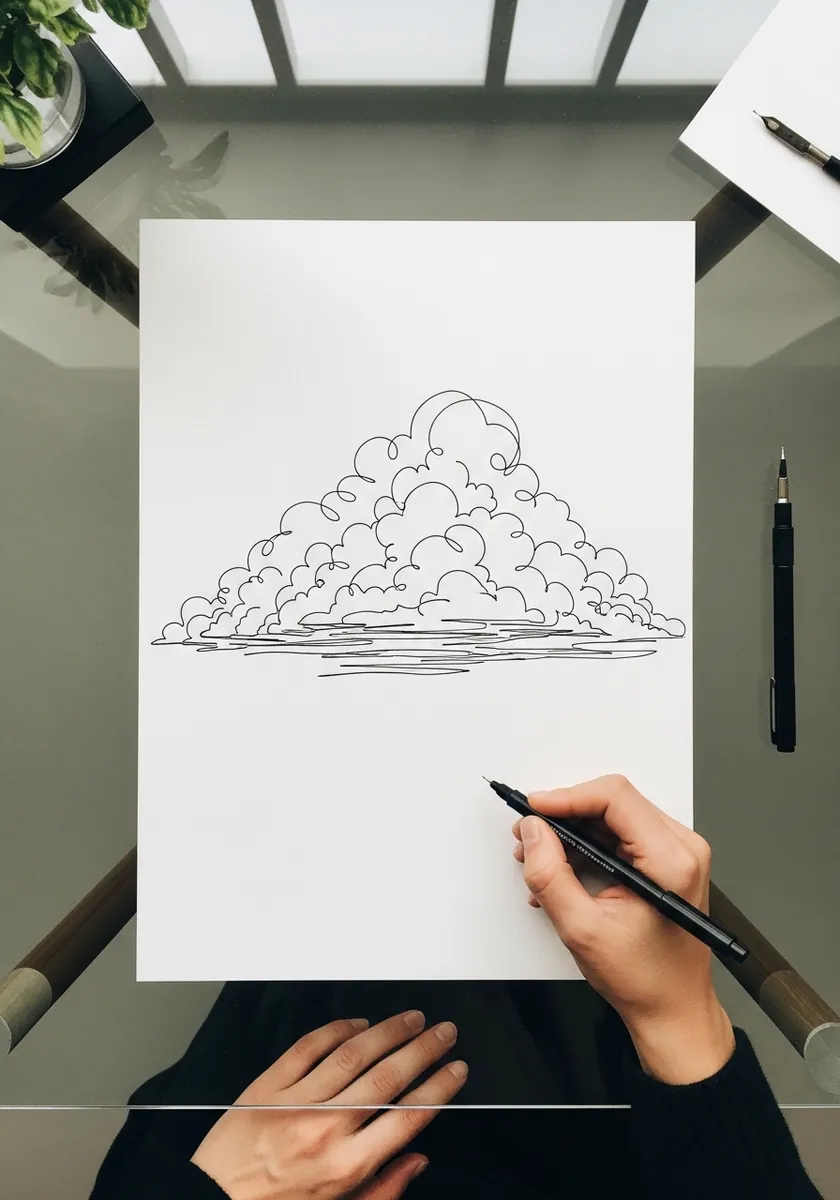
One unbroken line, no shading, no lifting the pen. Because you cannot go back and fix anything, you have to know where the flat base sits before you start moving. It is the fastest way to test whether you actually understand the shape.
4. Simple Layered Cloud Outlines
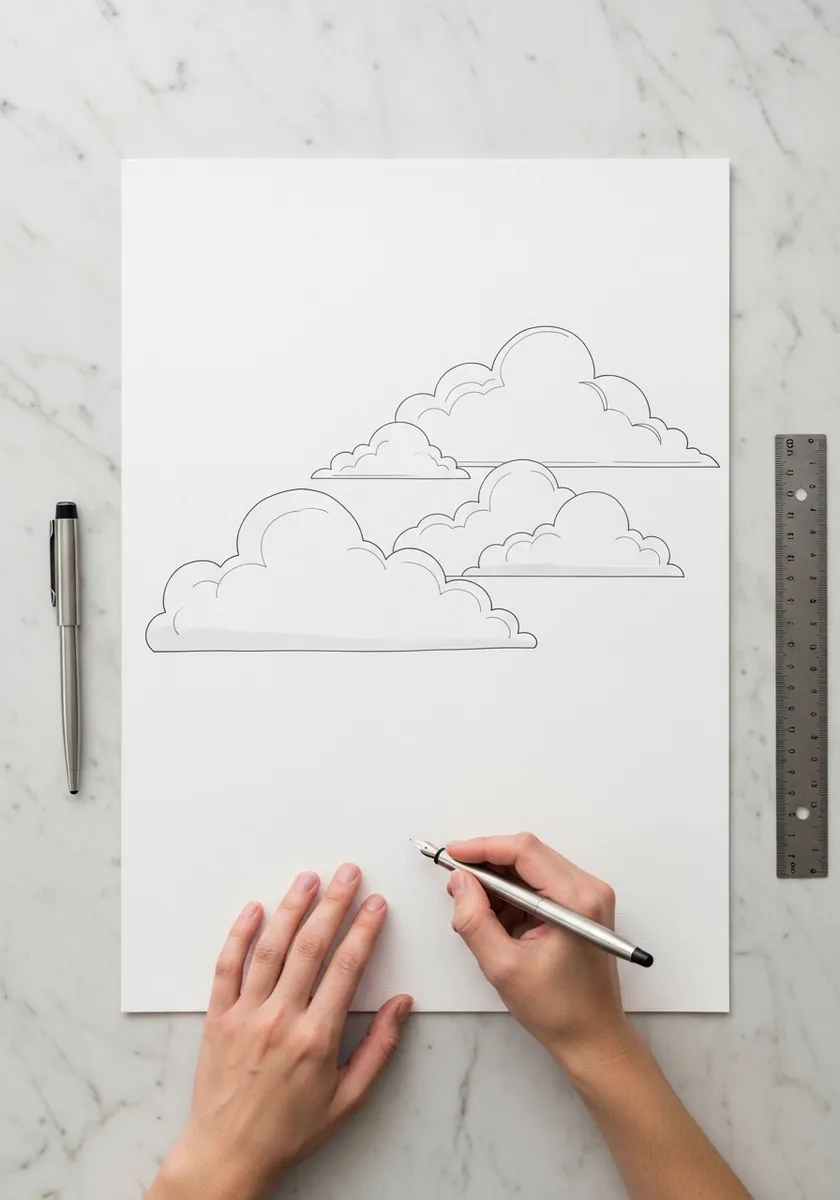
Overlap alone can create depth, with no shading required anywhere. Draw three clouds and let each one interrupt the outline of the one sitting behind it, and the sky immediately reads as three distinct layers. This is the cheapest depth trick available and it works in every medium on this page.
5. Dense Ink Cloud Field
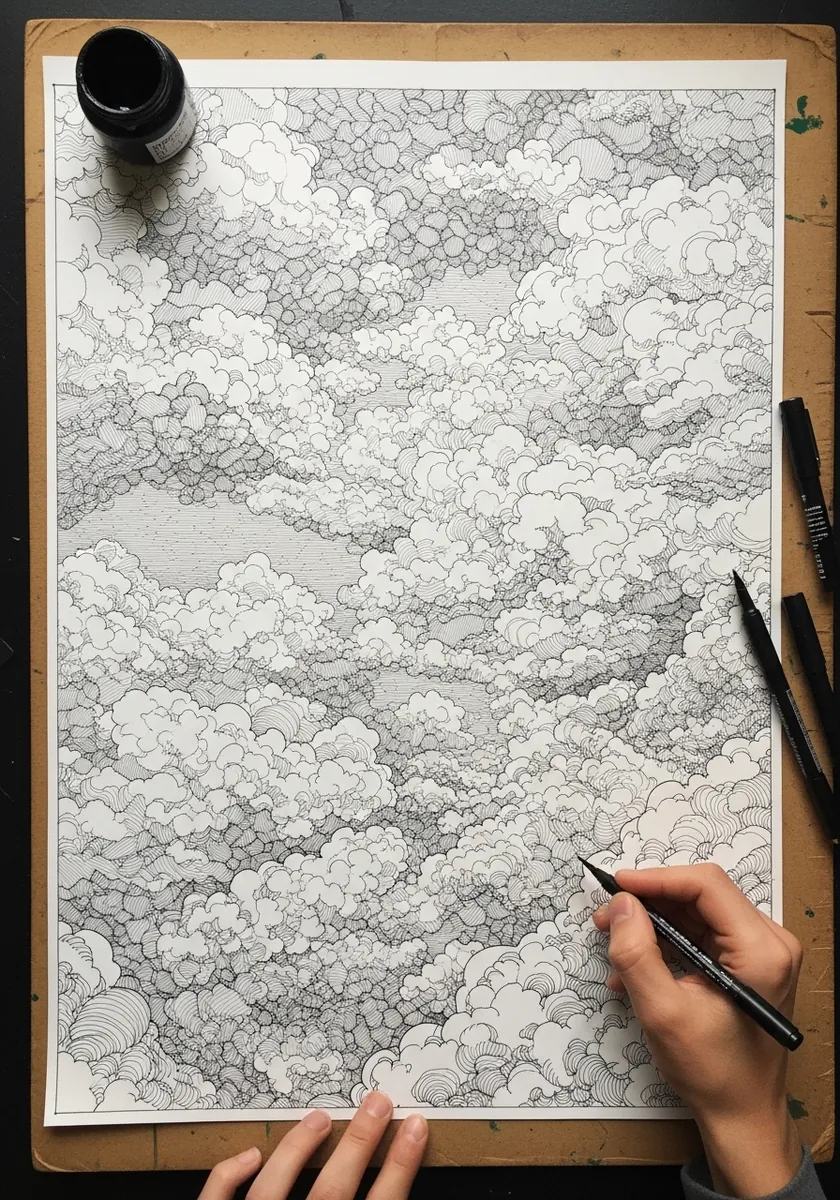
Japanese and Chinese woodblock traditions draw clouds as repeating spirals rather than tonal masses. Build the entire sky from small curled units, keeping every scroll roughly the same size, and let the density of those curls alone suggest where the sky darkens. No shading is used anywhere in the drawing.
6. Low Poly Geometric Cloud
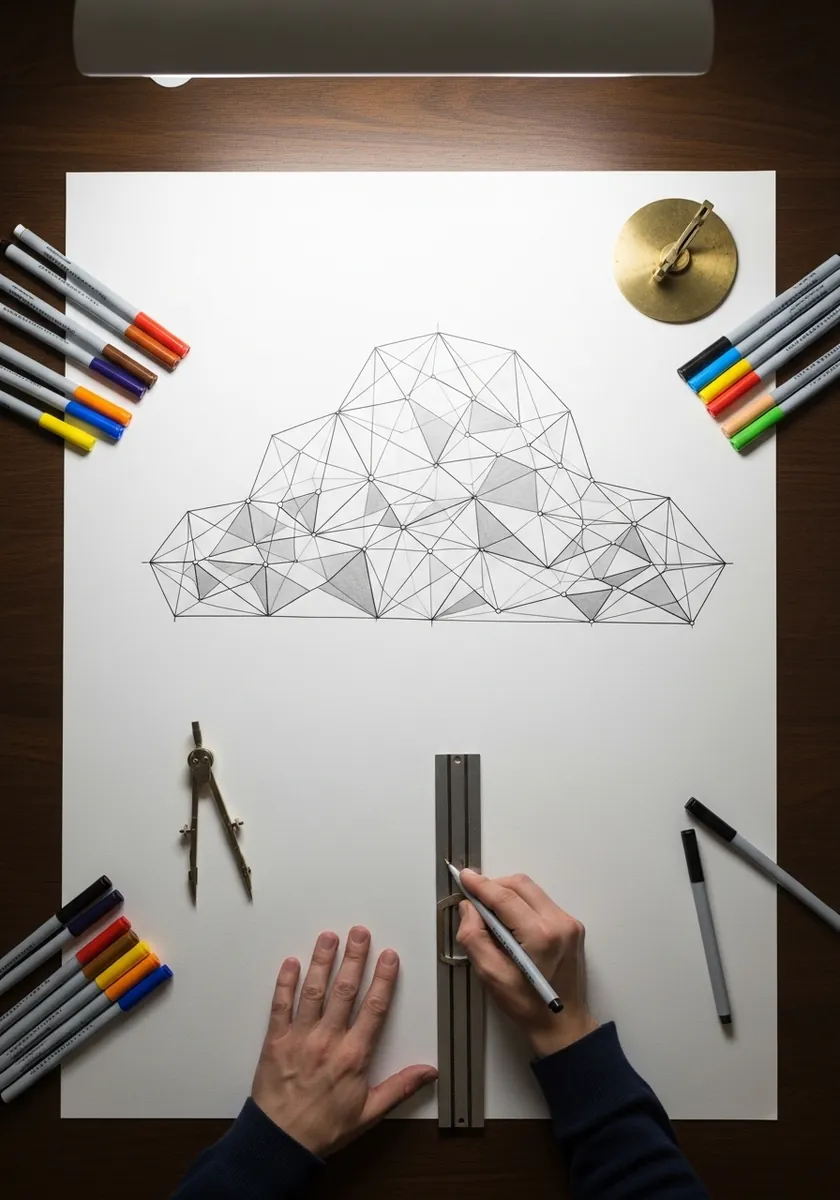
Faceting something as soft as a cloud is a deliberate contradiction and it teaches you a lot. Draw the cloud normally in light pencil, then break it into triangles, keeping the facets smallest where the form curves fastest along the top edge.
7. Comic Book Cloud with Halftone Dots
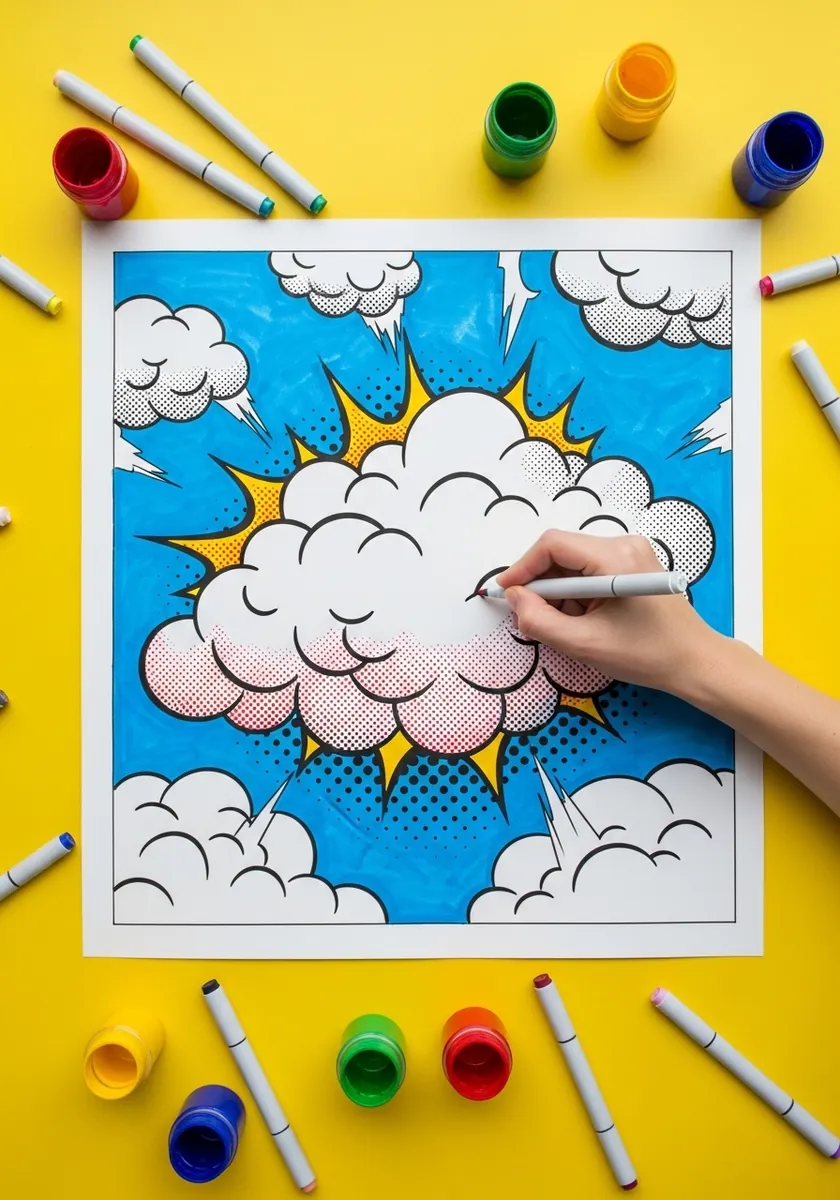
Comic printing built every tone from dots of a single size, so copying that by hand is a genuine value exercise. Control the shading by varying how closely the dots sit rather than how large they are, and keep the sunlit cloud tops as completely bare paper so the range stays wide.
8. Surreal Melting Clock Cloud
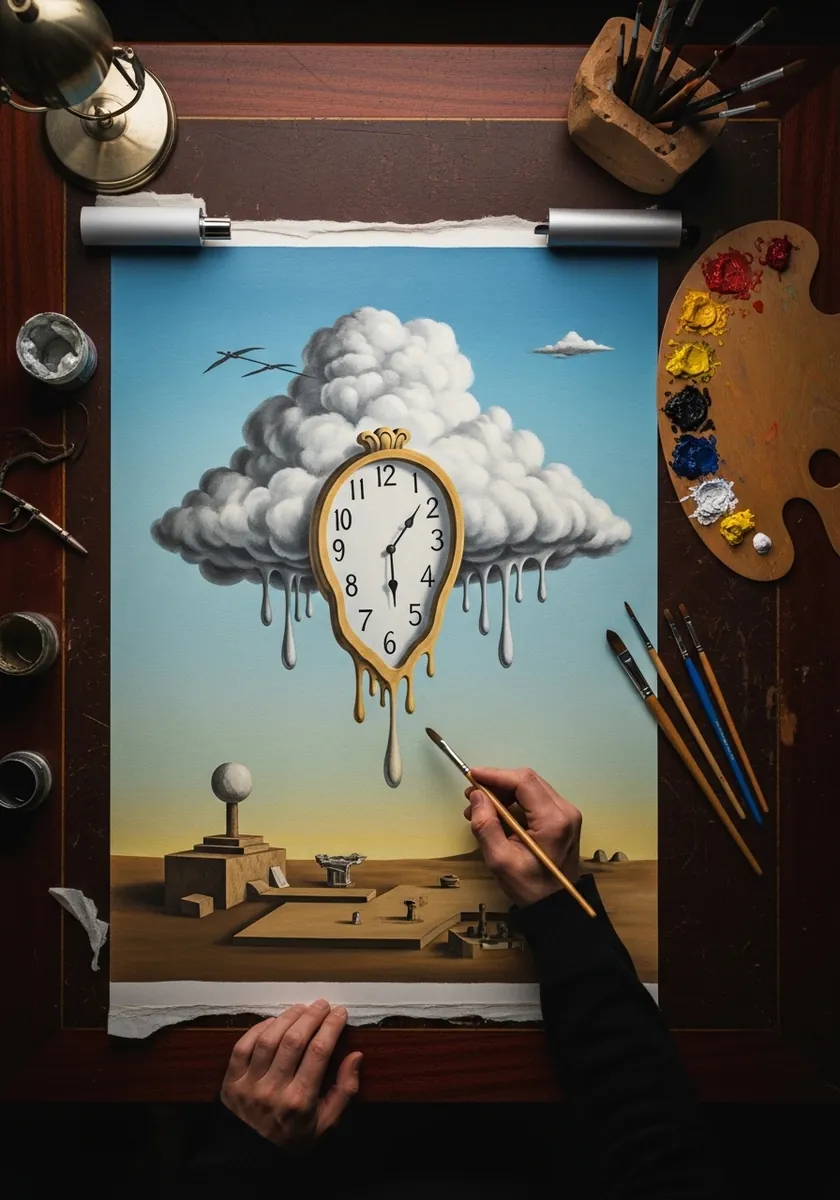
Surrealism works best when all the ordinary parts are painted absolutely straight. Render the cloud with a correct flat base and proper top lighting, exactly as you would in a realistic study, and only then hang something impossible beneath it. The contrast between accurate and absurd carries the whole image.
9. Classic Blue Sky in Watercolor
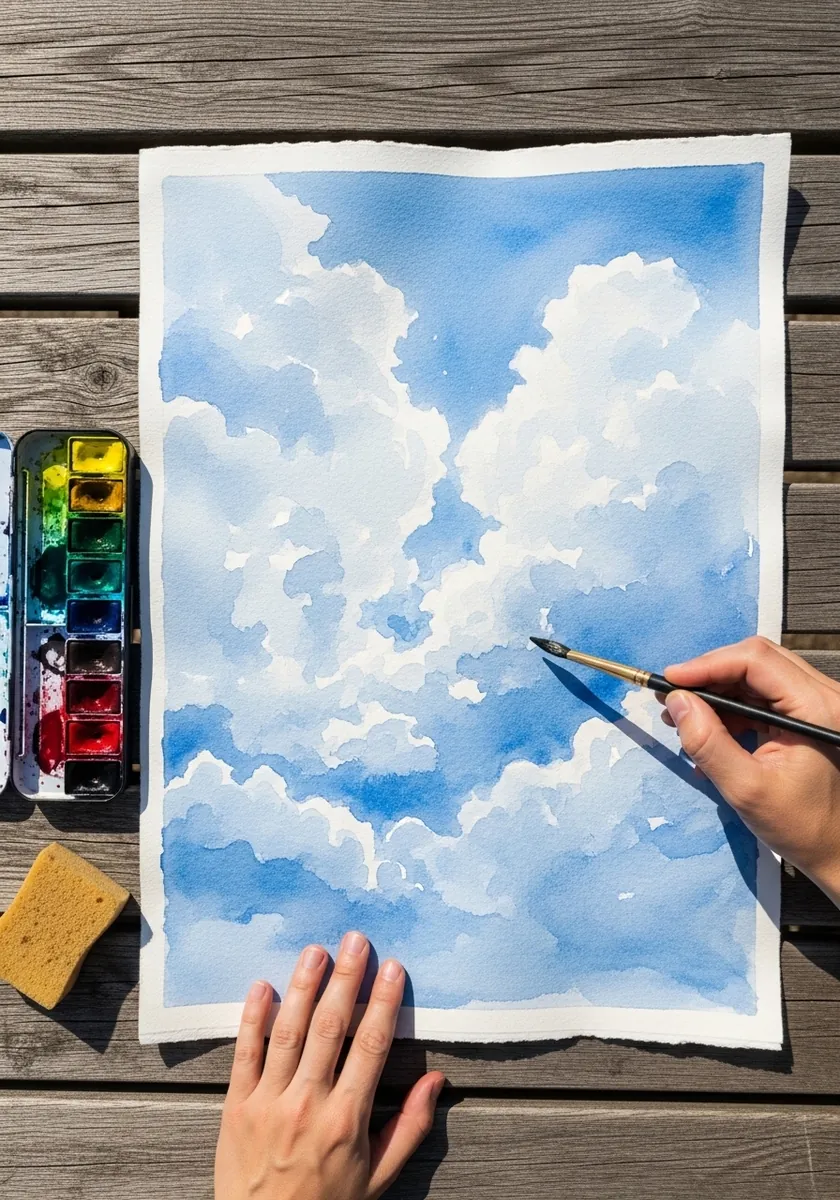
Reserve the whites rather than adding them later. Wet the paper, drop blue in around the cloud shapes, and leave the paper bare where the tops catch light. Lift softer edges with a damp sponge while the wash still has a slight sheen.
10. Dramatic Storm Sky in Oils
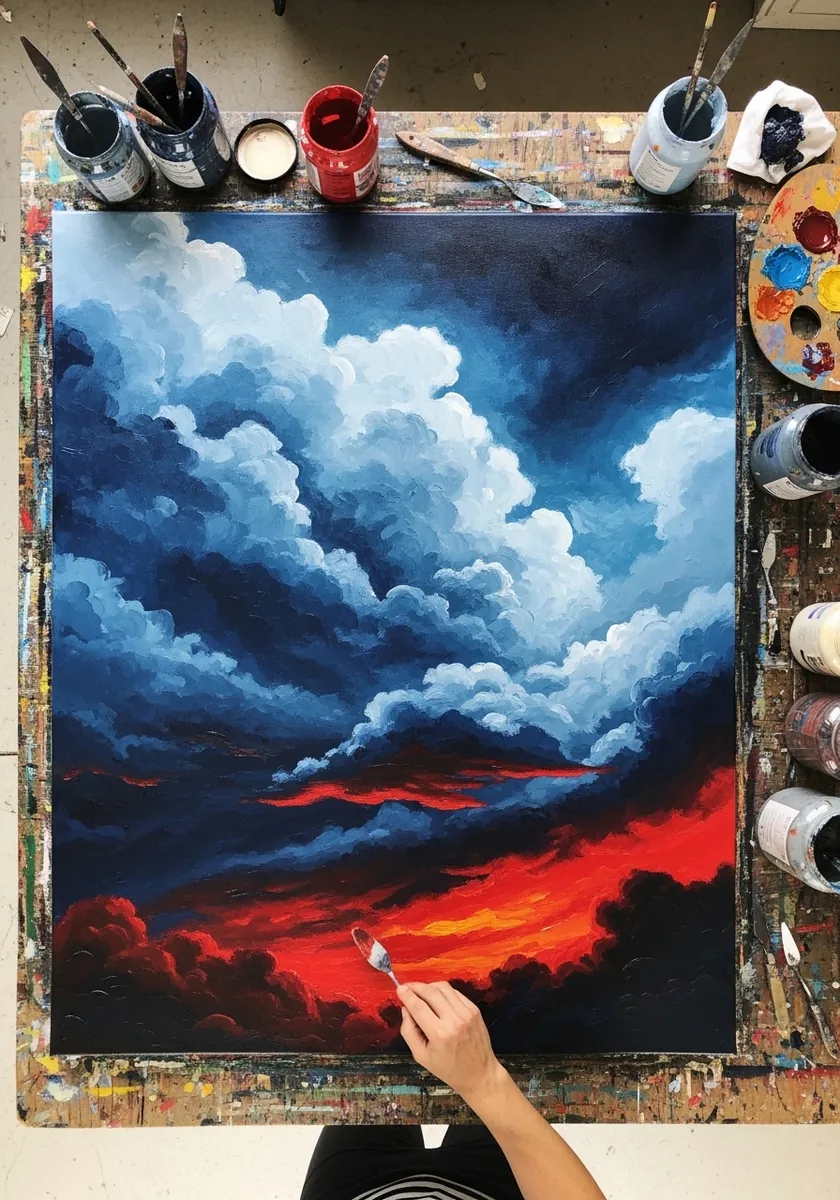
Storm skies need a wide value range and one bright note. Keep the upper clouds nearly black, then break the horizon open with a strip of hot red so the eye has somewhere to travel. Work light over dark rather than the reverse.
11. Cloud Merged with Geometric Cubes
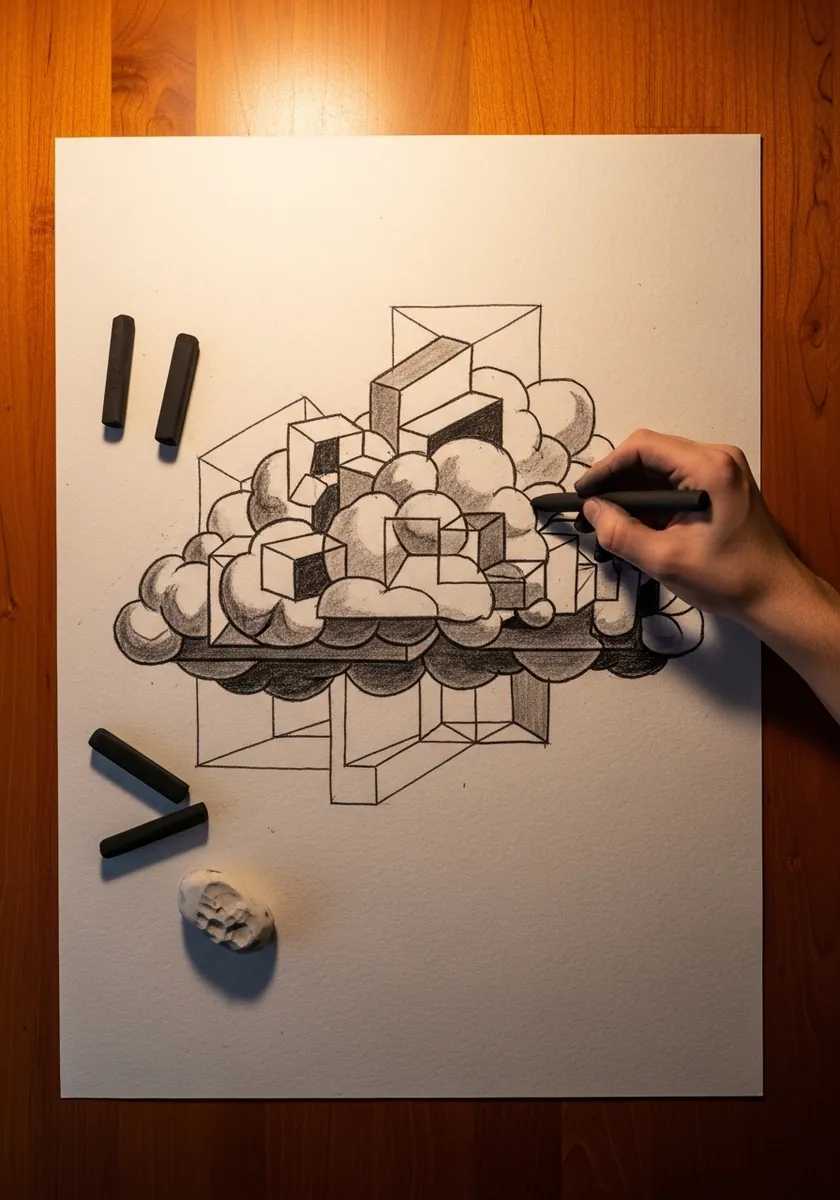
Soft against hard is one of the most reliable contrasts available. Shade the cloud with a blending stump so every edge dissolves, then rule the cubes with a sharp pencil and leave their edges razor crisp. The difference does all the work.
12. Towering Cumulonimbus in Colored Pencil
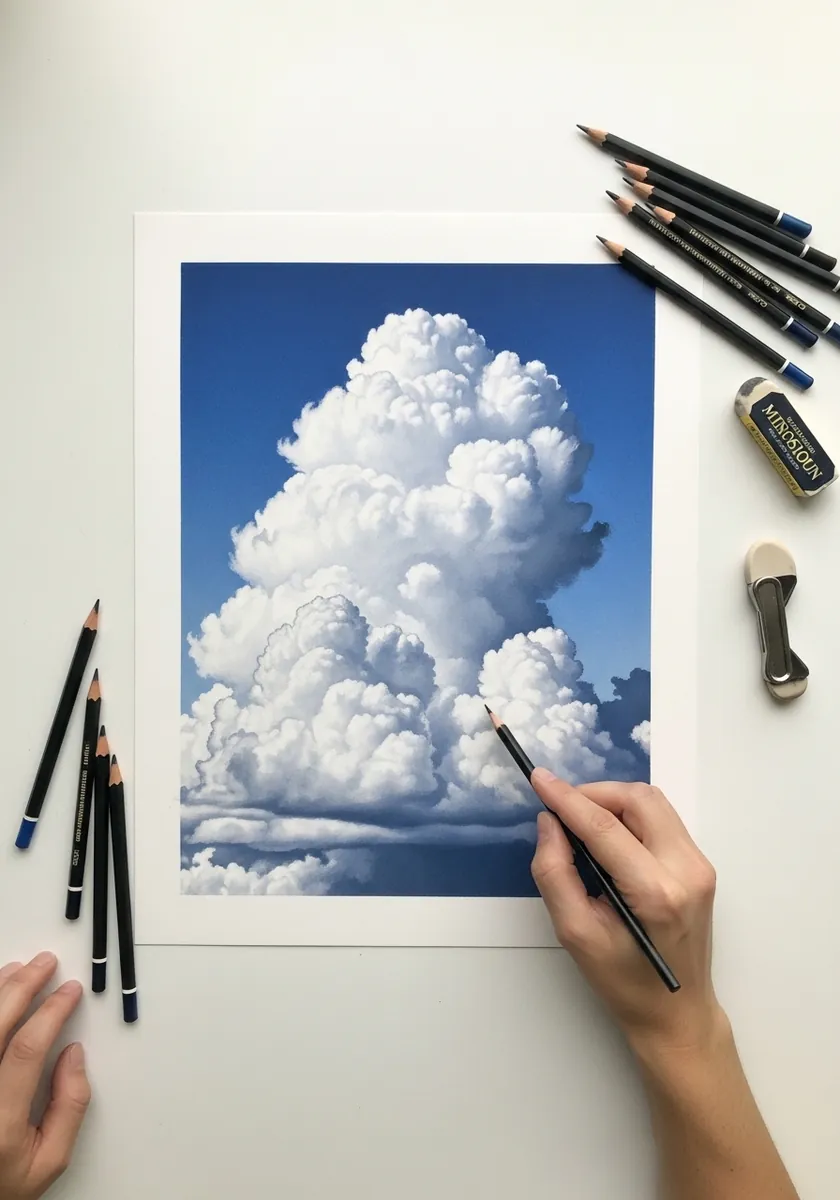
A cumulonimbus is a cumulus that kept growing, so it holds the same flat base but rises into a tower. Build it in stacked bulges, each one slightly overlapping the last, and let the whole structure lean slightly as real storm clouds do. For the volume work underneath, these 3D pencil drawing studies cover stacked forms directly.
13. Full Sky of Layered Clouds in Graphite
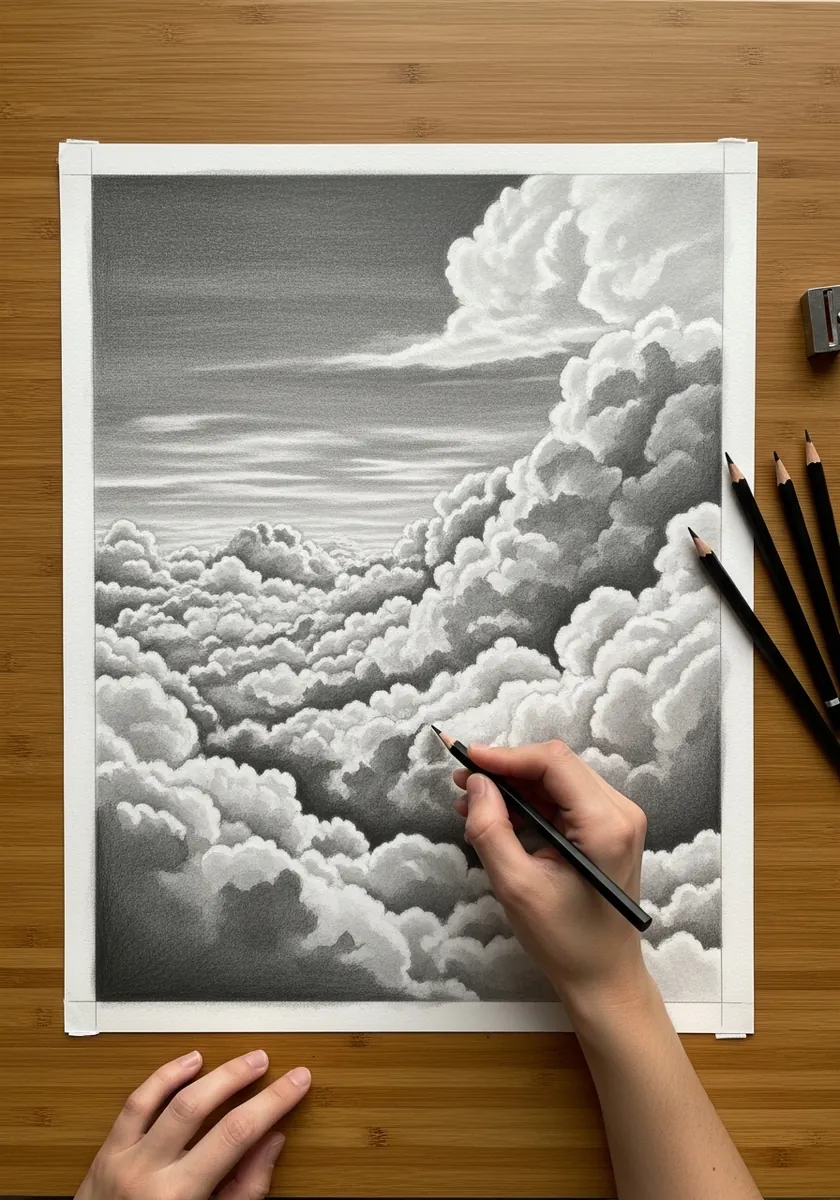
Depth in a sky comes from compression. Make the clouds overhead large with strong contrast, then shrink and flatten them steadily as they approach the horizon, dropping the contrast at the same time. That squeeze is what creates the sense of distance.
14. Cartoon Cloud in Blue Marker
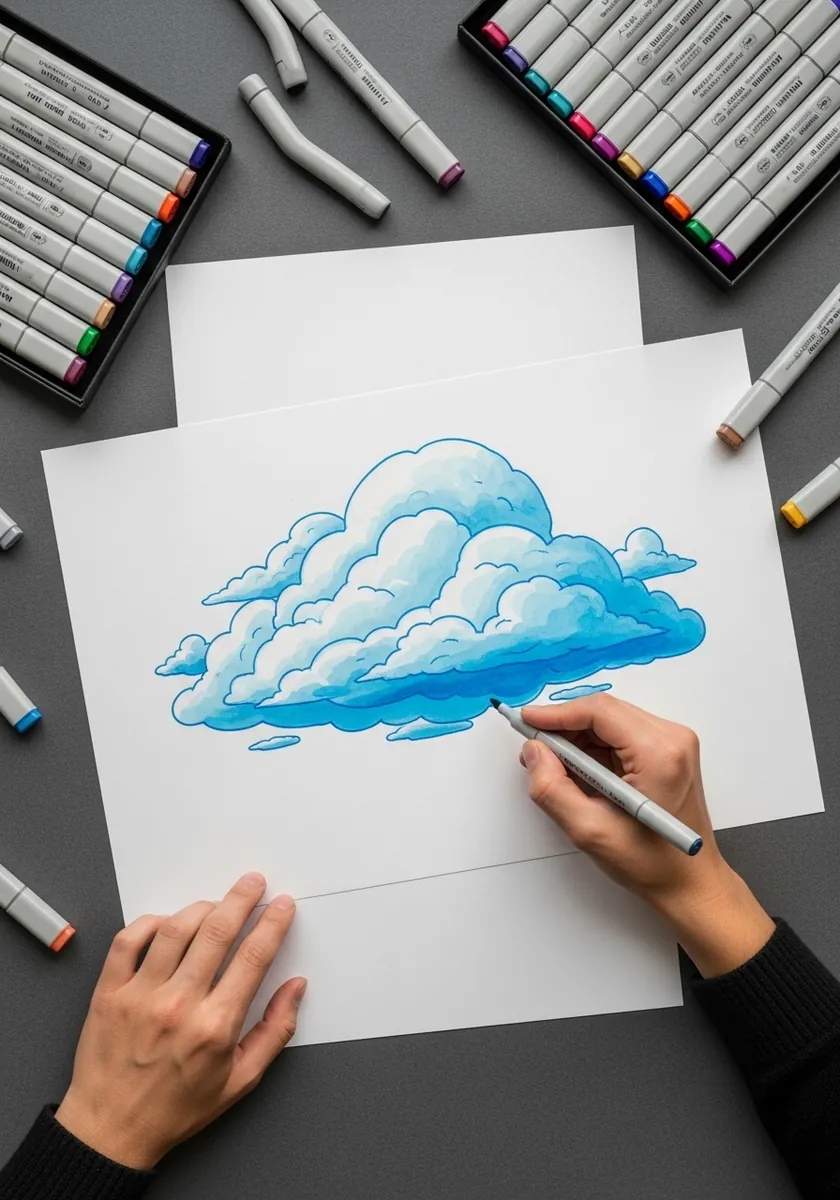
Simplification still needs the underlying rule to be intact. Even reduced to four scalloped bumps and a heavy blue outline, this cloud has a noticeably flatter bottom edge than top, and that single asymmetry is the only reason it reads as a cloud rather than as a puddle or a blob.
15. Flat Design Cloud with Color Circles

Graphic design borrows the silhouette and throws away everything else. Keep the cloud outline as a single even weight with no variation, place flat translucent circles behind it, and let the overlaps between those circles supply every scrap of color variation on the page. Nothing else is needed.
16. Faceted Gray Cloud in Cool Tones
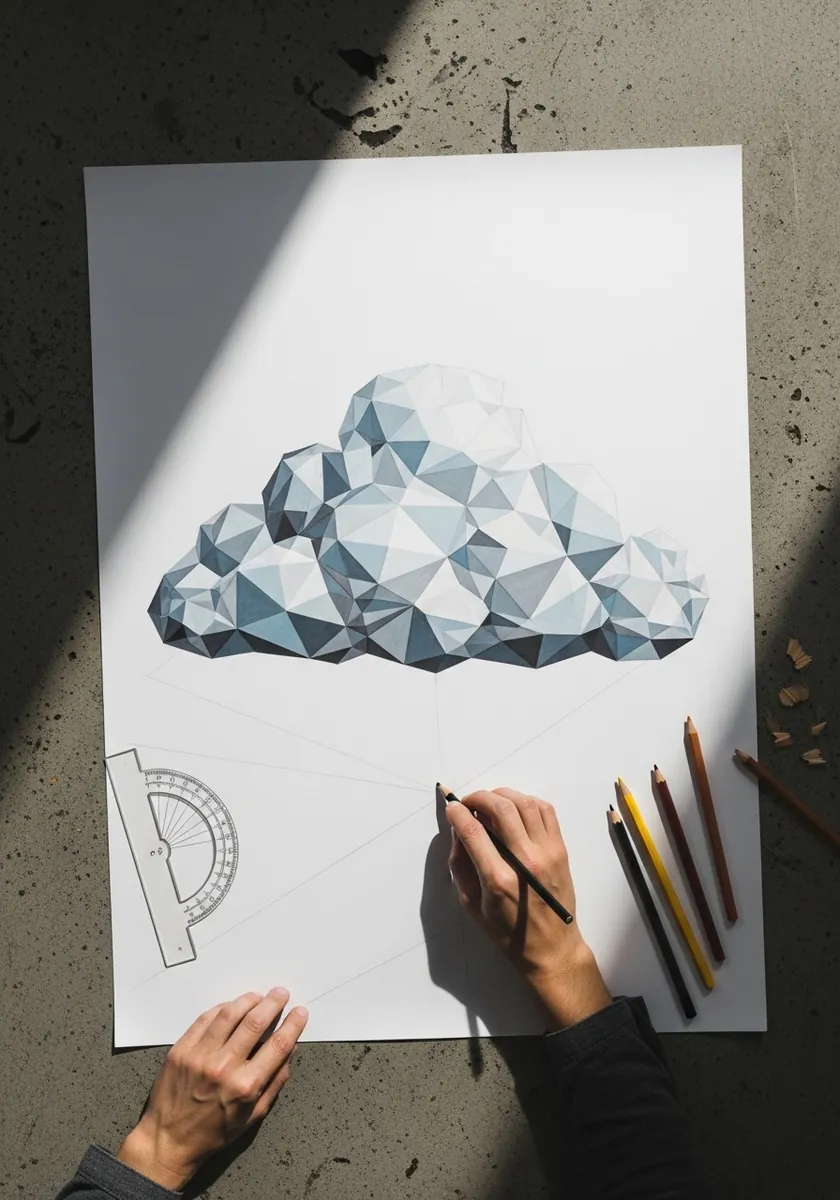
Where the earlier low poly piece stayed linear, this one is fully shaded. Assign each facet a single flat value and never blend between two of them. The staircase of tones still describes a rounded form, which is the surprising part.
17. Pixel Art Cloud on Grid Paper

Working on a grid forces radical simplification, which is exactly why it is useful. Block the cloud in whole squares only, restrict yourself to three values at most, and put the darkest row along the flat bottom edge. Even at this coarse resolution the top-lit rule stays clearly readable.
18. Pale Misty Sky in Soft Watercolor
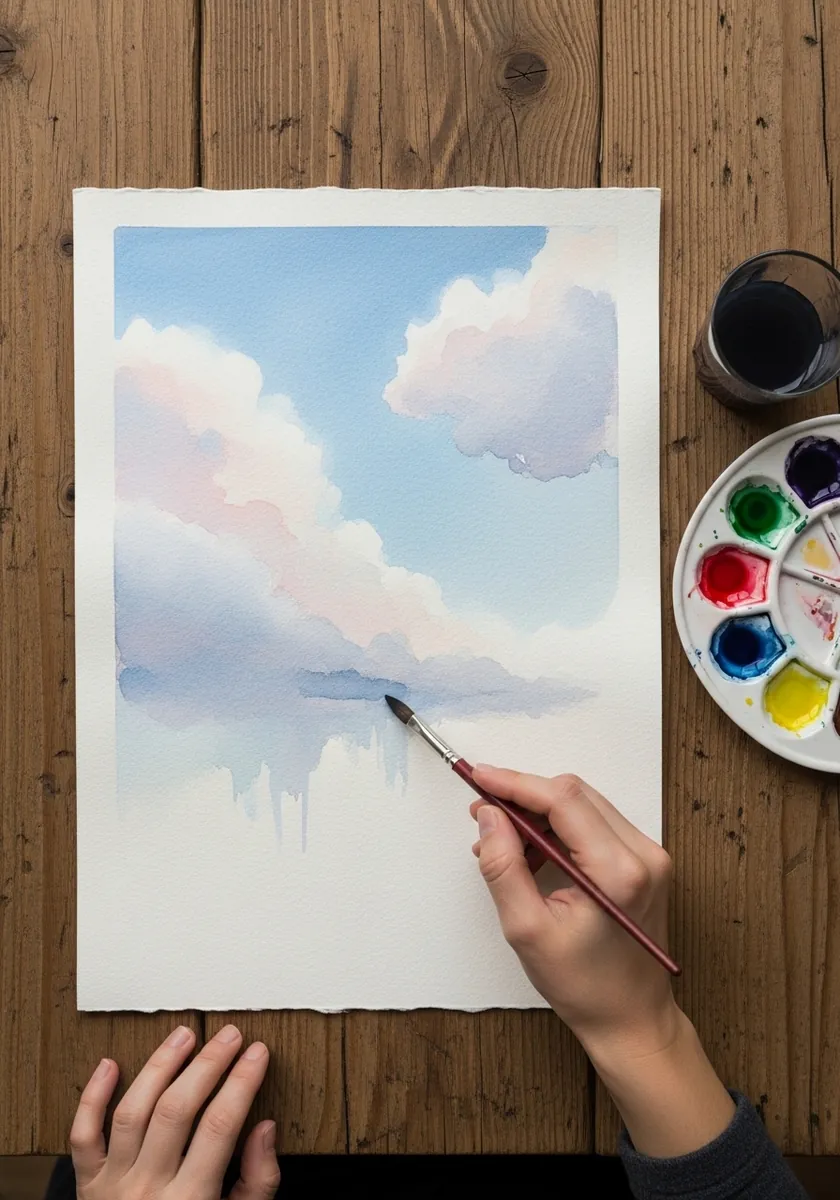
Restraint is the entire exercise here. Keep the whole painting within about three closely related values, let every edge blur softly into its neighbour, and resist the strong temptation to add a dark accent somewhere for contrast. Done properly the result reads as genuine haze rather than an unfinished wash.
19. Stylized Storm Clouds with Lightning
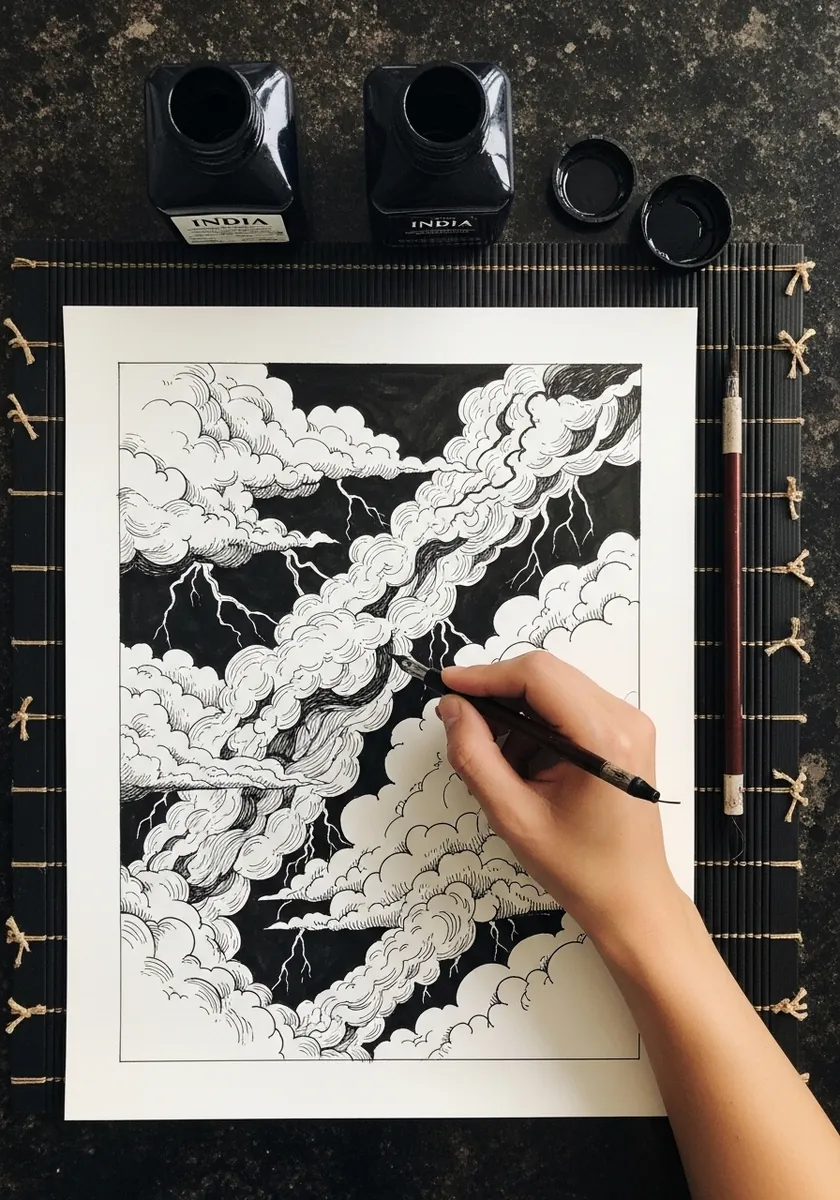
Lightning is drawn as a hard angular line against soft curls, which is the entire point of the composition. Keep the bolts perfectly straight with sharp direction changes and never let them curve, because a curved bolt instantly looks wrong.
20. Charcoal Storm Study
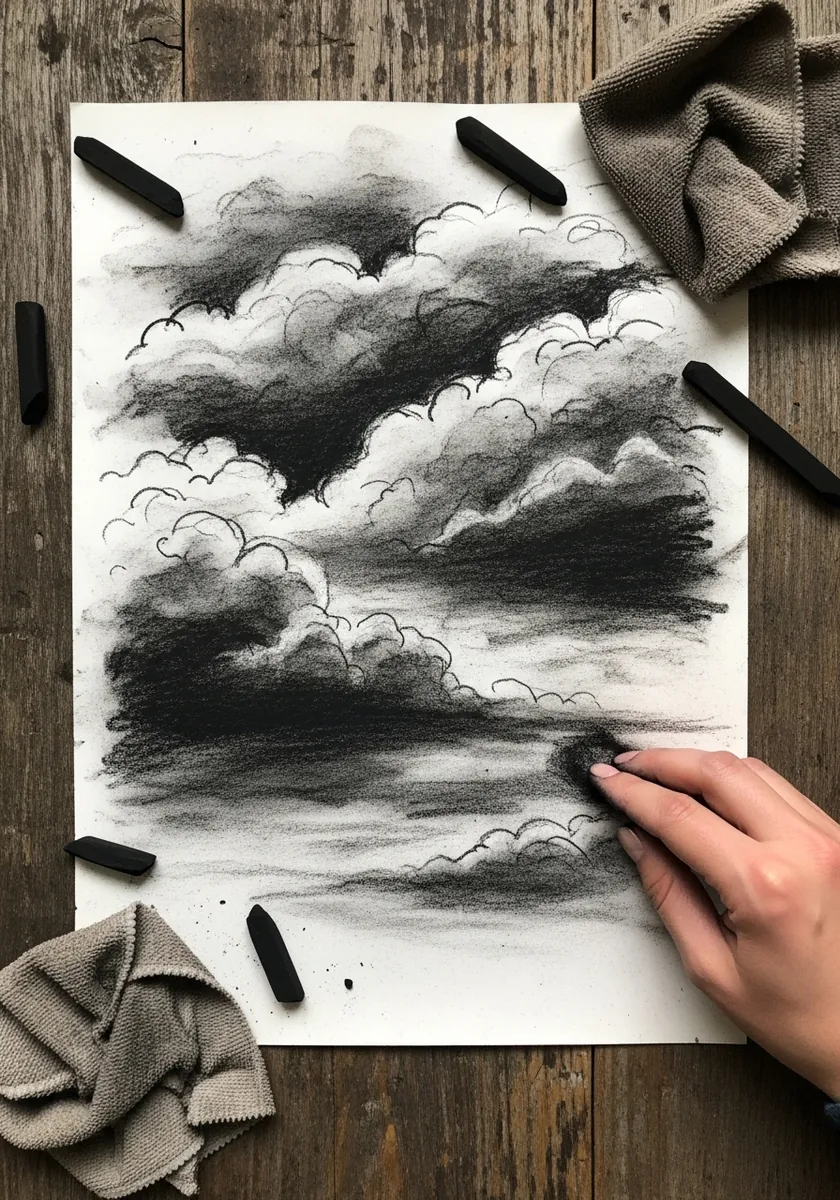
Charcoal smudges, which suits weather. Block the darkest masses with the side of the stick, drag a cloth through them to pull the rain streaks downward, and only sharpen two or three cloud tops with the tip so the eye has something to hold.
21. Golden Hour Clouds in Oil
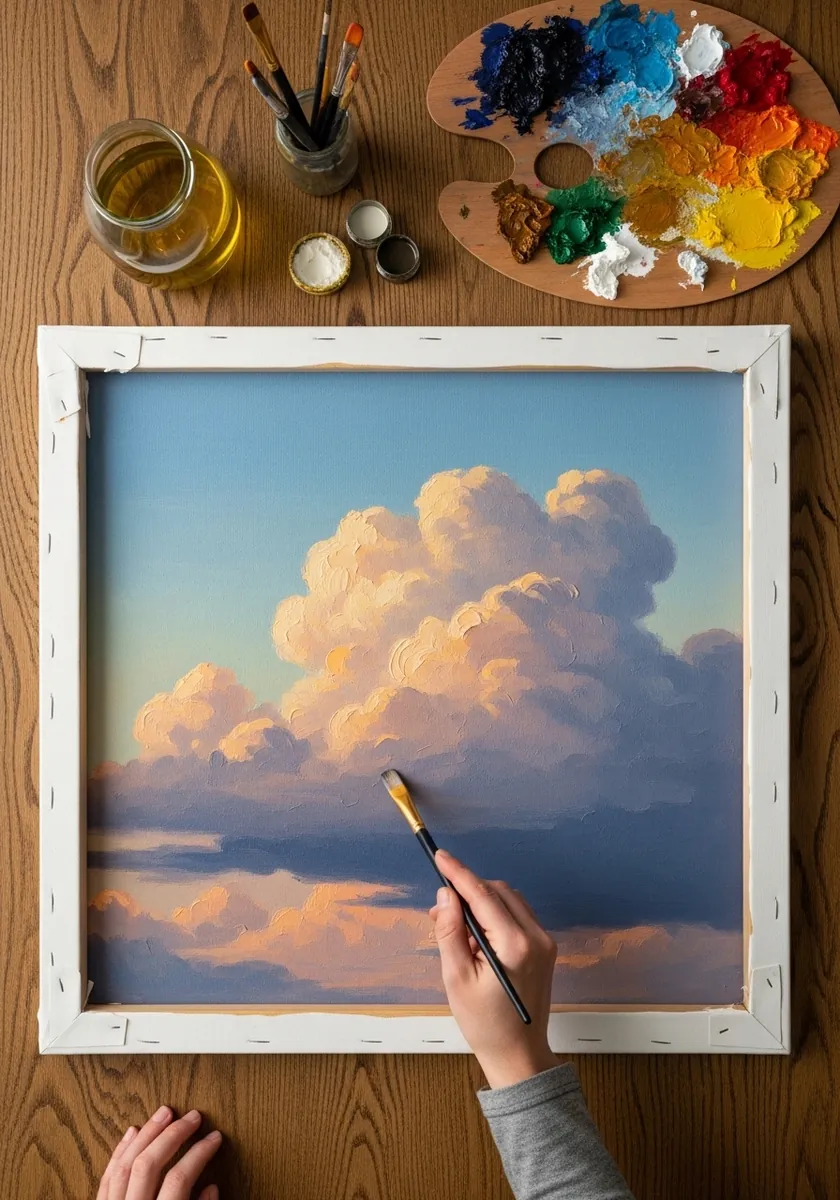
At sunset the light comes from the side rather than above, which flips everything. The undersides now catch warm light while the tops fall into cool shadow, so this is the one case where the standard shading rule is deliberately reversed. The same reversed lighting drives these easy watercolor sunset ideas.
22. Pastel Sunset Cloud on Gray Paper
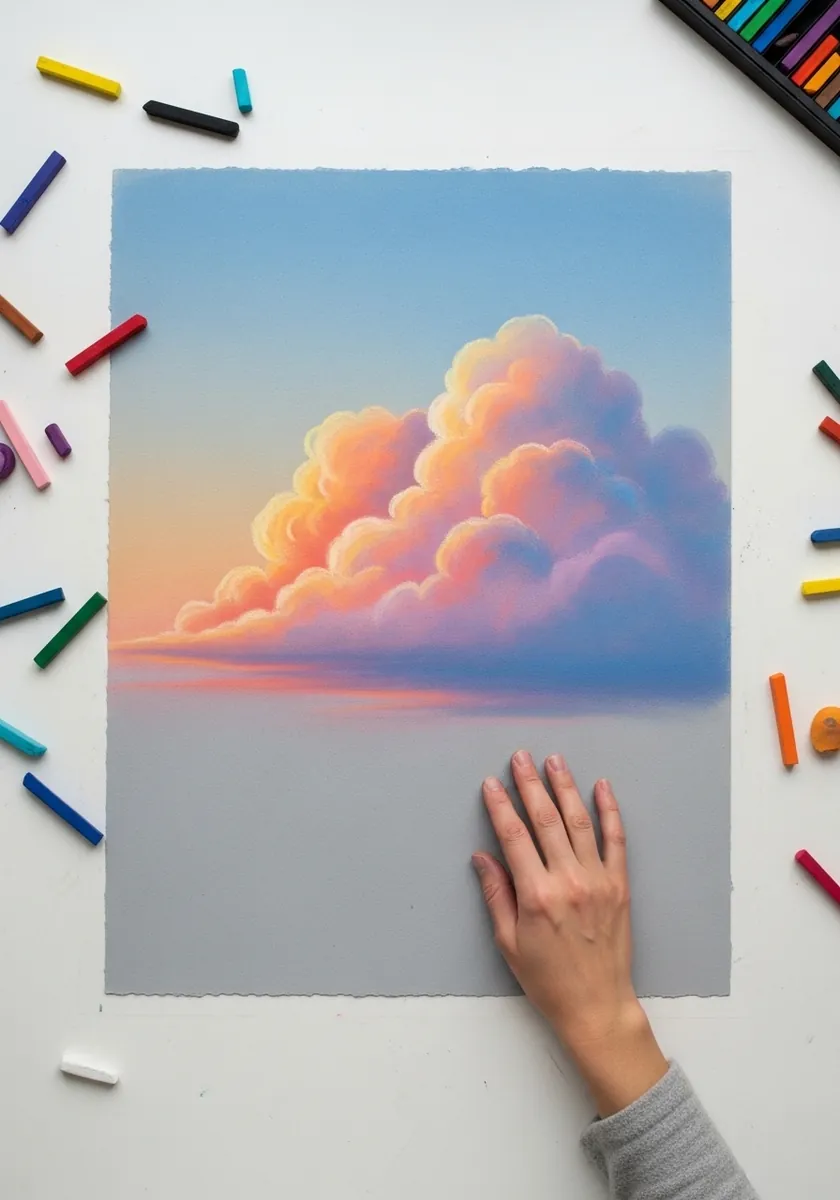
Toned paper hands you the mid value for free, so you only add the extremes. Work the peach and pink lights across the top, deepen the base with violet, and leave large areas of the paper completely untouched between them.
23. Mixed Media Cloud with Torn Paper
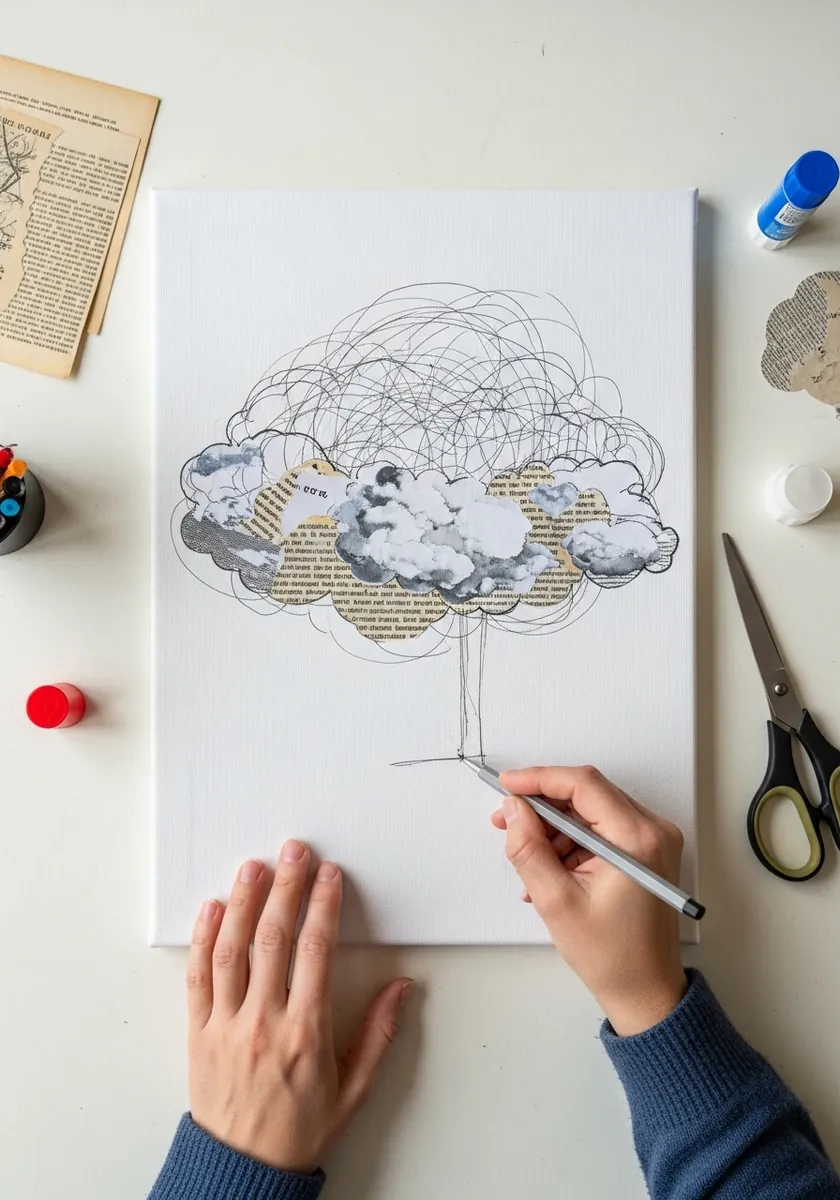
Collage is drawing with edges. Tear rather than cut so the paper fibers stay soft and cloudlike, layer the fragments with the darkest at the base, and use the loose pencil scribble above as the loosest possible suggestion of sky.
24. Neon Psychedelic Cloud Swirl
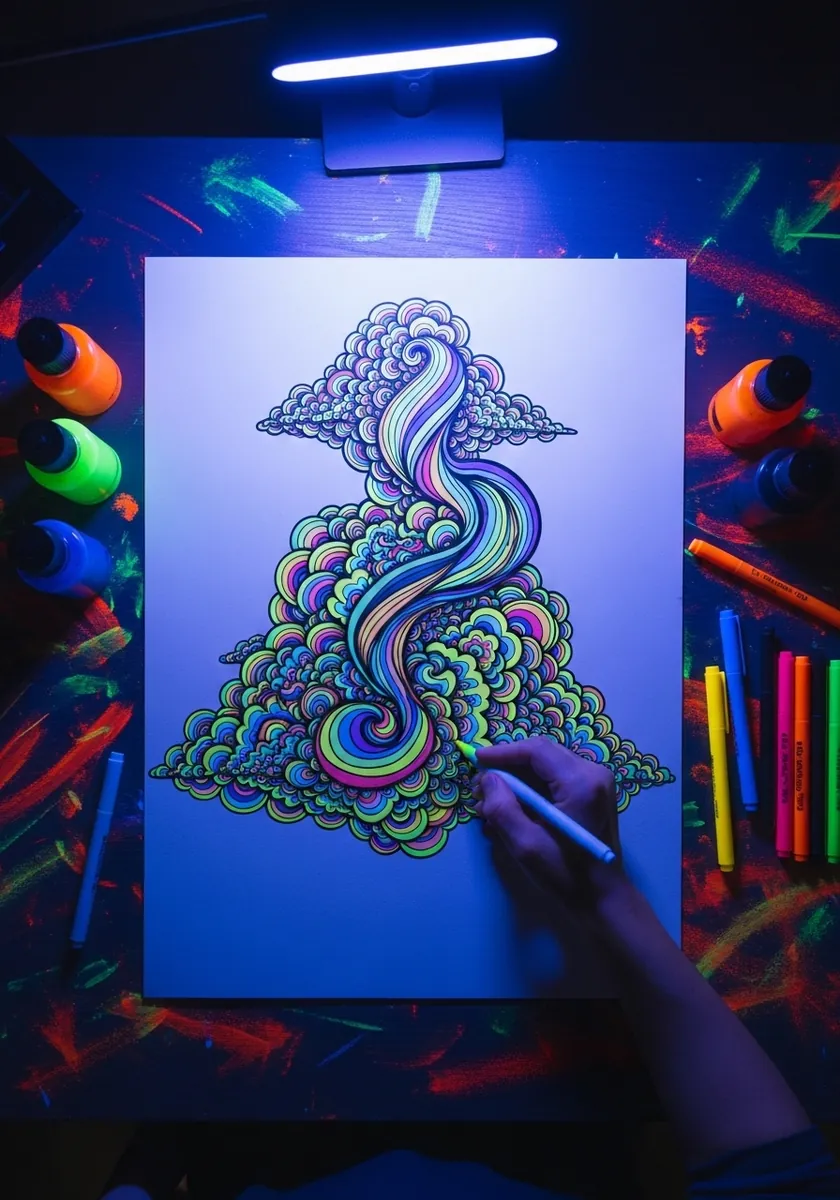
Pattern replaces tone entirely in this one. Draw the cloud as concentric curling bands that follow its outer silhouette, keep the line weight completely uniform throughout, and let the sequence of colors rather than any shading create the sense of a rolling, turning mass of vapor.
25. Graffiti Cloud with Drips
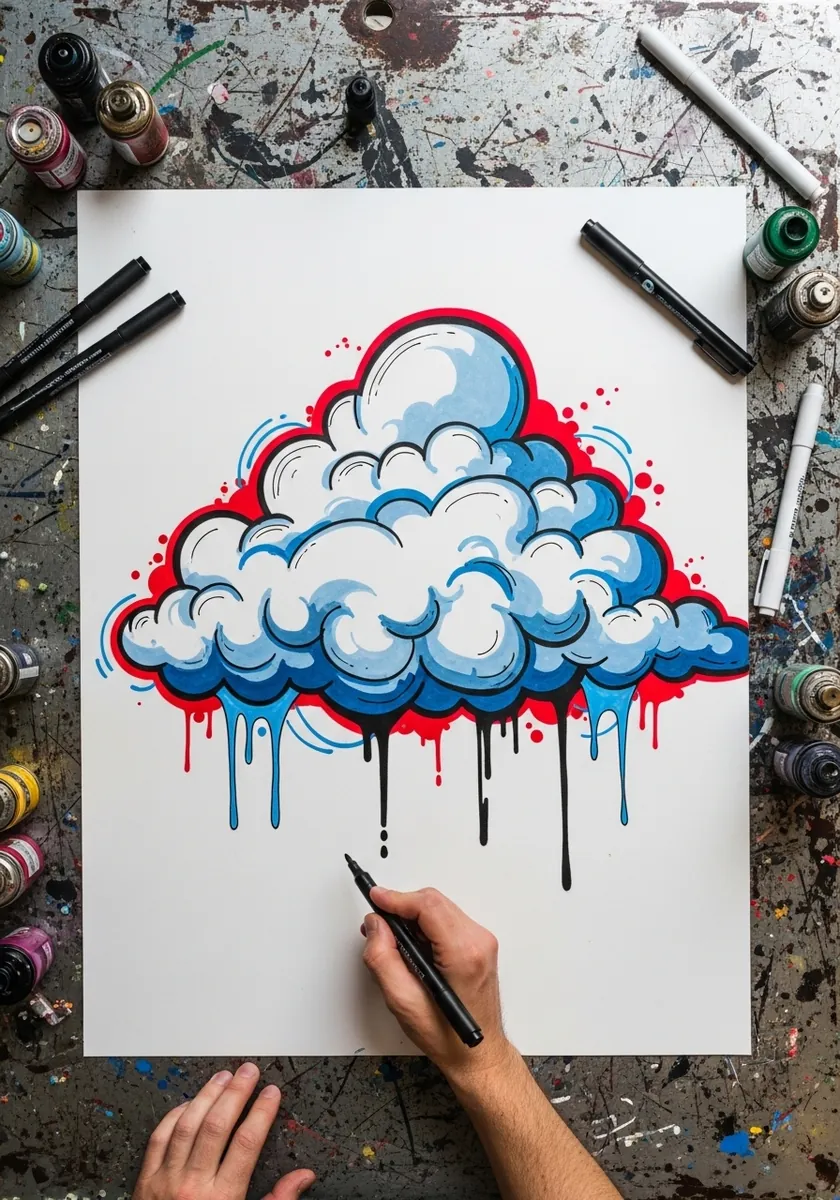
Graffiti keeps the silhouette and then exaggerates it hard. Use a thick black keyline, add a red offset outline outside that, and let the drips fall from the flat base only. Drips running off the top edge would contradict the light direction and break the illusion straight away.
26. Vintage Engraved Cloud with Banner

Engravers built every value from parallel line alone. Hatch the cloud with curved strokes that follow its surface, cross-hatch only in the deepest shadow at the base, and keep the banner in the same line weight so the page stays unified.
27. Mid Century Clouds in Teal and Mustard
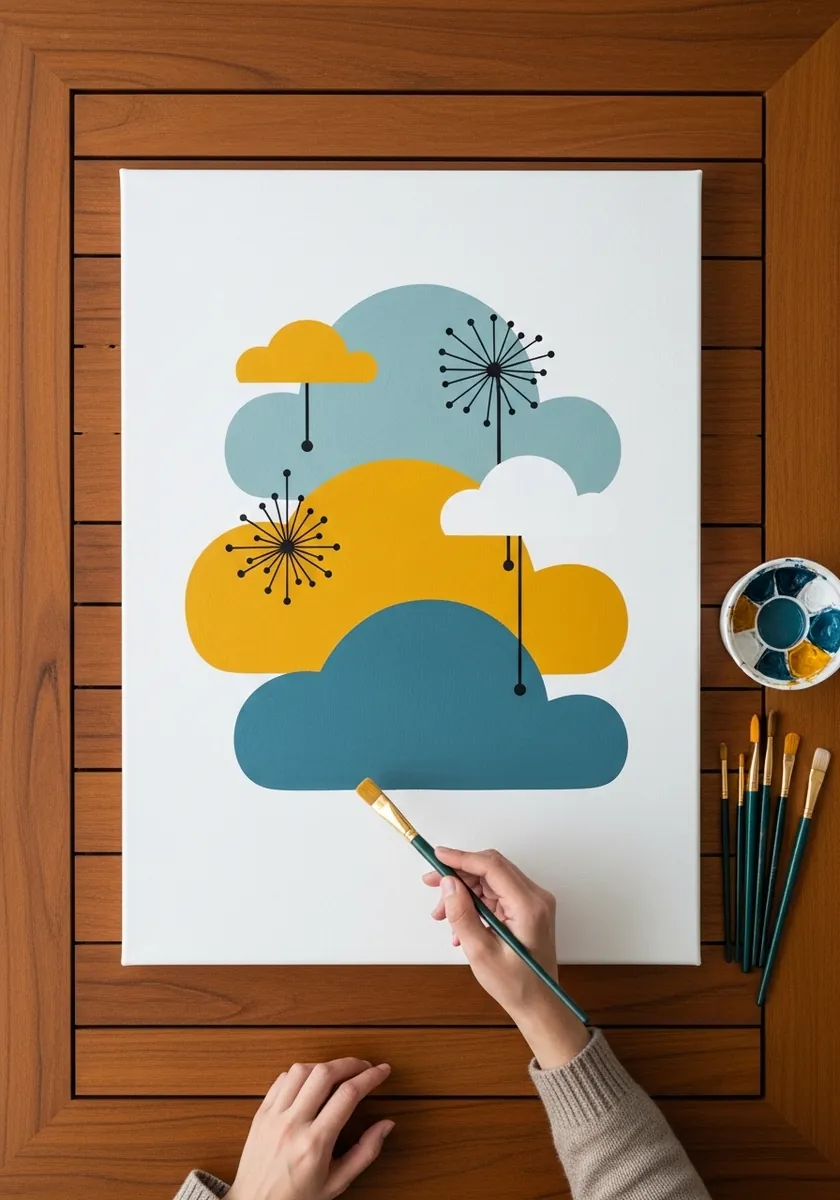
Mid century design reduces everything to flat shape and a tight palette. Two colors, no shading, no outline anywhere, and the clouds distinguished purely by which color happens to sit in front. The starburst shapes add visual rhythm without contributing any tonal information at all.
28. Terracotta Sunset Clouds with Sun
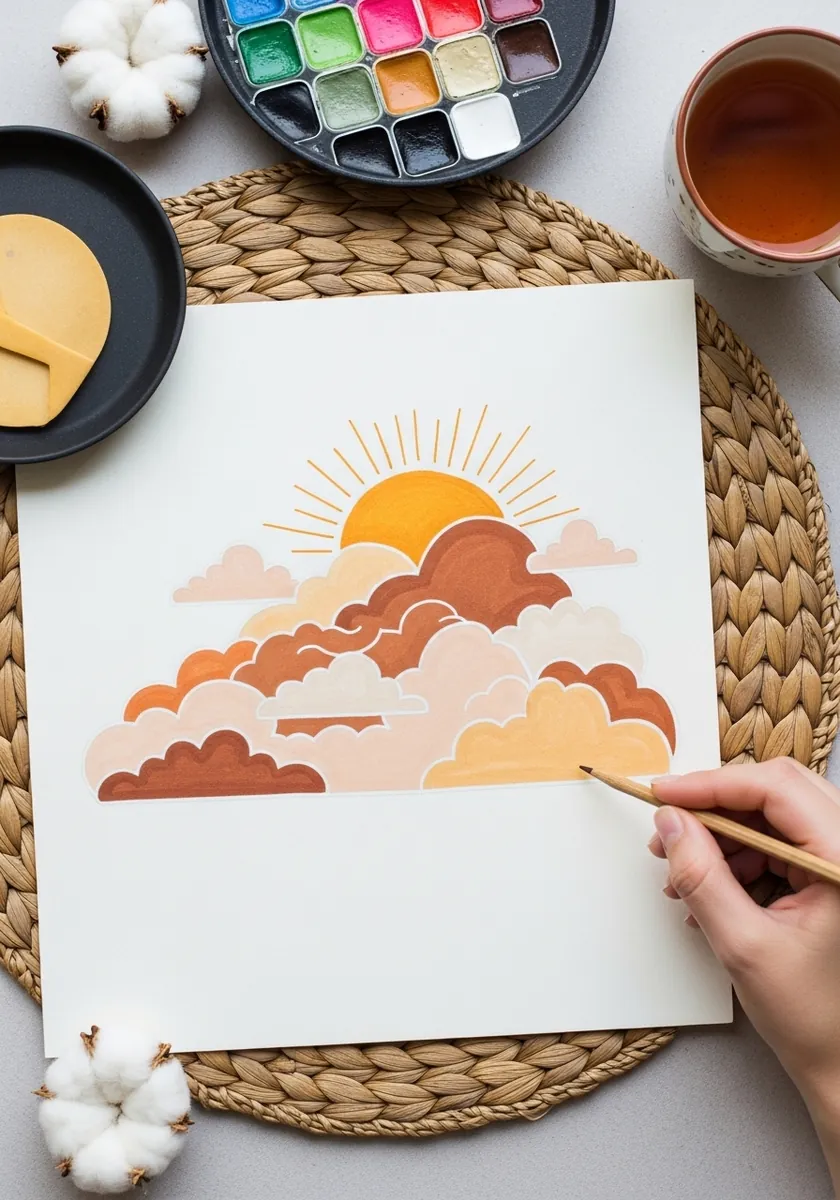
A limited earth palette can still describe form. Use three flat tones of terracotta, assign the palest to the tops and the deepest to the undersides, and let the ruled sun rays behind the clouds pass in front of nothing.
29. Botanical Cloud Made of Leaves
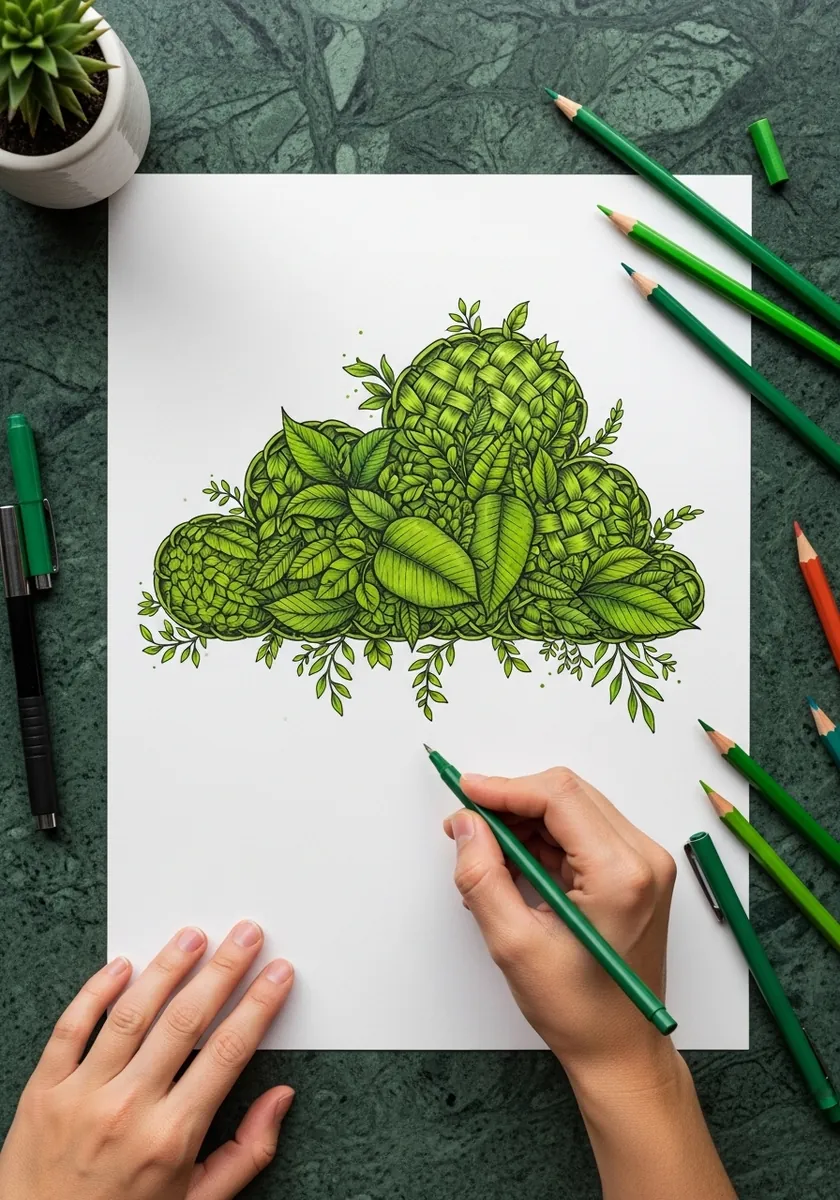
Filling a familiar silhouette with something unrelated works when the outline stays crisp. Keep the cloud’s flat base and rounded top exactly right, then pack the interior with leaf forms, letting a few break past the edge to soften it.
30. Cute Sleeping Cloud with Stars
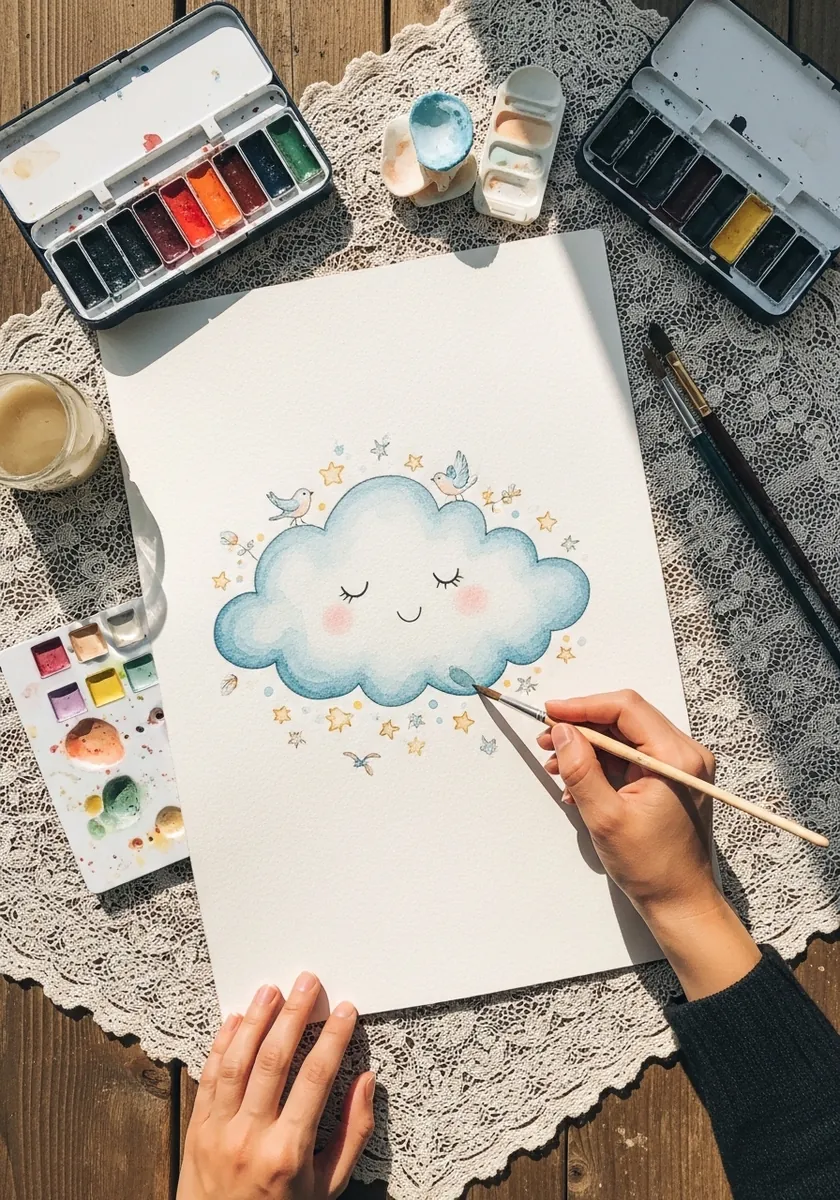
Character design needs proportion rather than accuracy. Set the closed eyes low and wide apart, add small round cheeks, and keep the cloud shape simple with only four or five bumps so the face has room to read at small sizes.
31. Pink and Gold Swirling Cloud
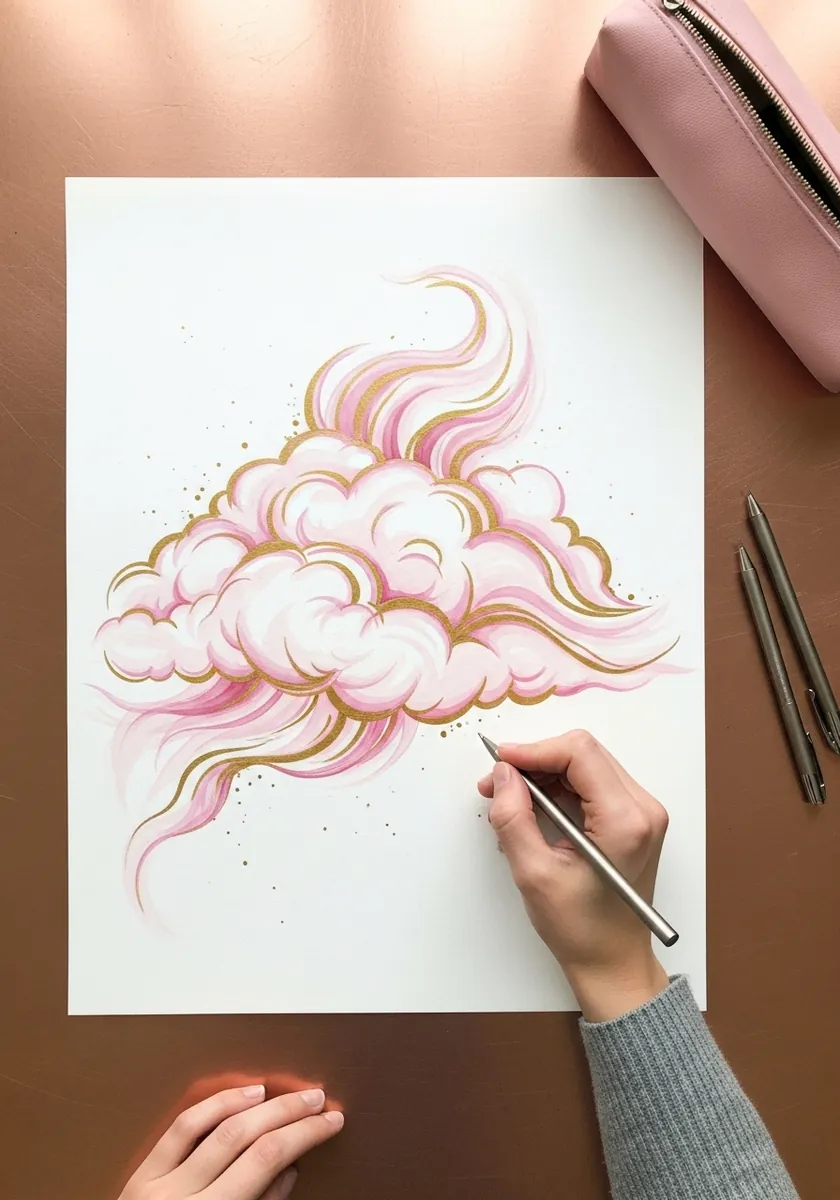
Metallic accents work best when used sparingly. Paint the cloud in soft pinks with proper top lighting, then add gold only along two or three of the sunlit upper edges. Outlining the whole shape in gold would flatten it immediately.
32. Calligraphy Cloud Filled with Words
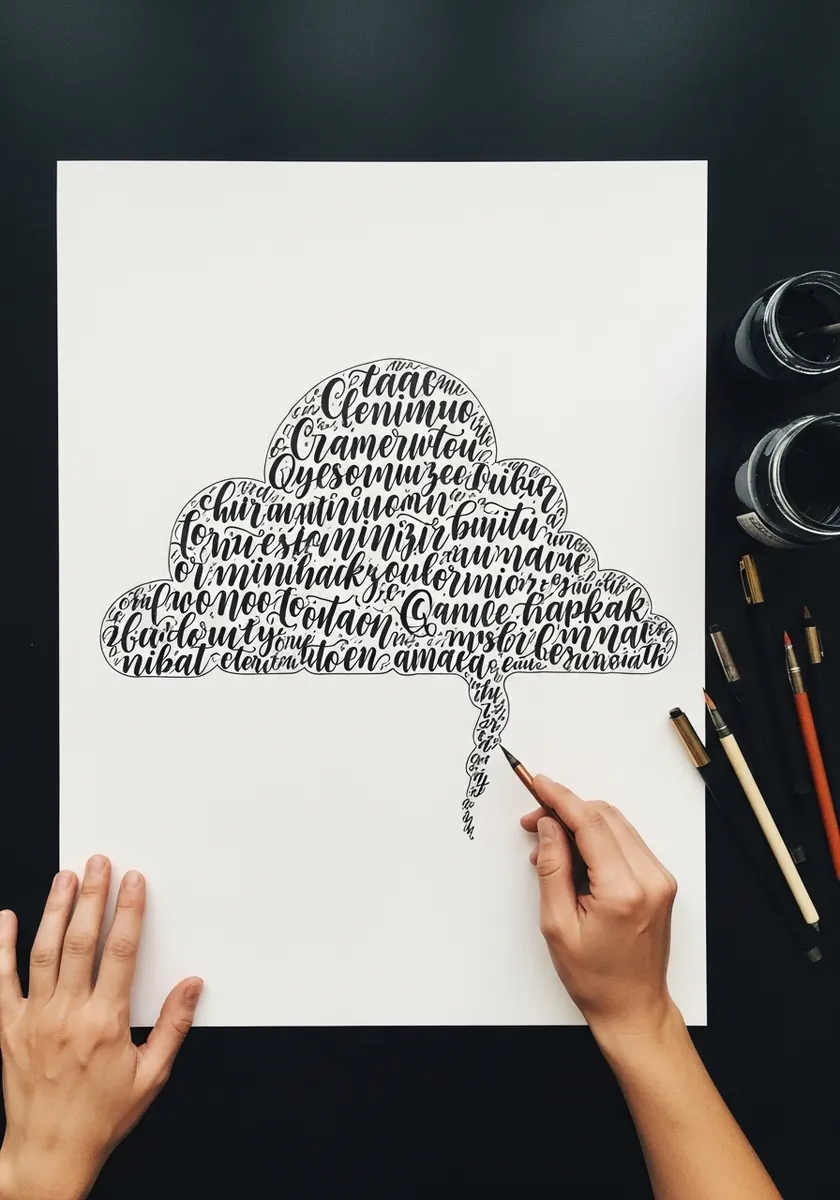
Text can build a shape provided it follows the contour rather than ignoring it. Write in curved lines that echo the cloud’s outer edge, letting those lines compress toward the base where the form narrows. The changing density of the writing then becomes the shading, with no tone added at all.
33. Ink Storm Cloud with Bold Lightning
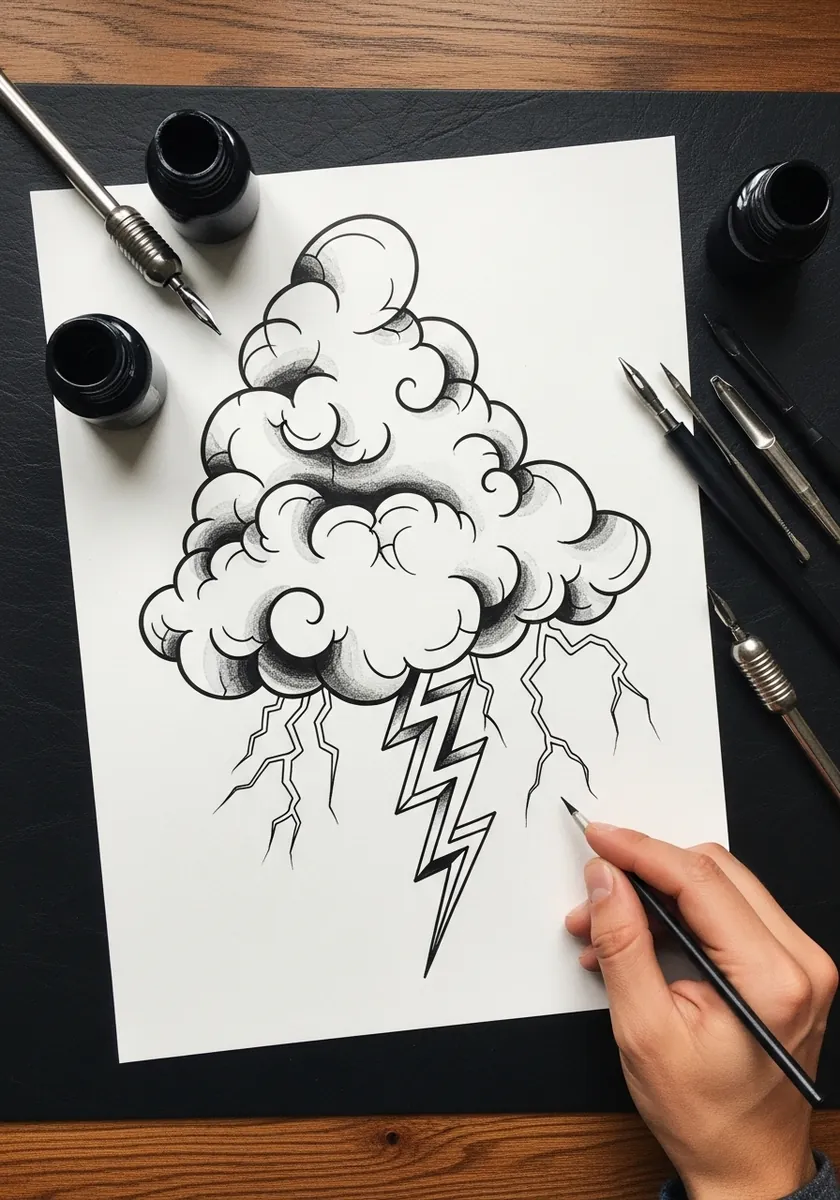
Two line weights carry this drawing. Use a fine nib for the cloud’s curled scrolls and a much heavier one for the bolts, so the lightning reads as violently in front of everything else without needing any tone at all.
34. Anime Sky with Pink and Blue Clouds
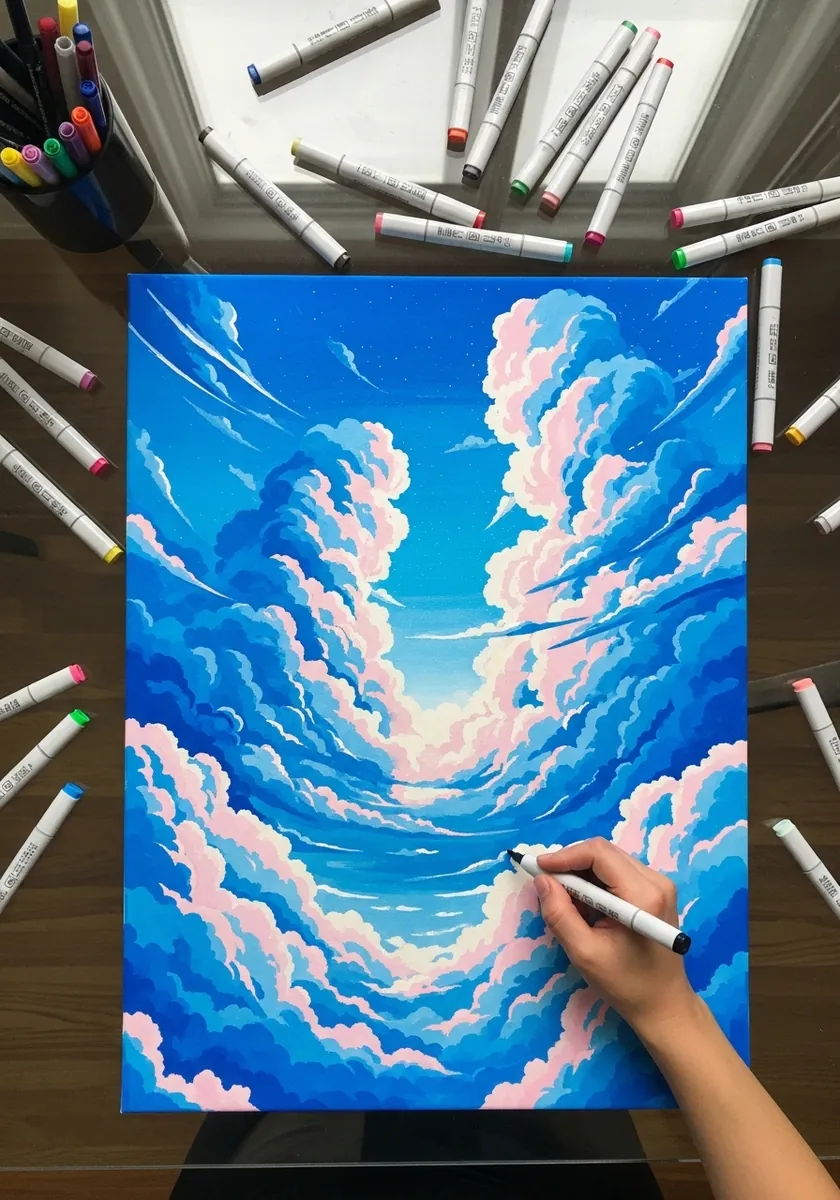
Anime skies deliberately exaggerate perspective for drama. Arrange the clouds so they radiate outward from a point near the center of the frame, growing steadily larger and further apart toward the edges. That arrangement alone creates the sense of an enormous dome curving overhead above the viewer.
35. Manga Speed Line Clouds
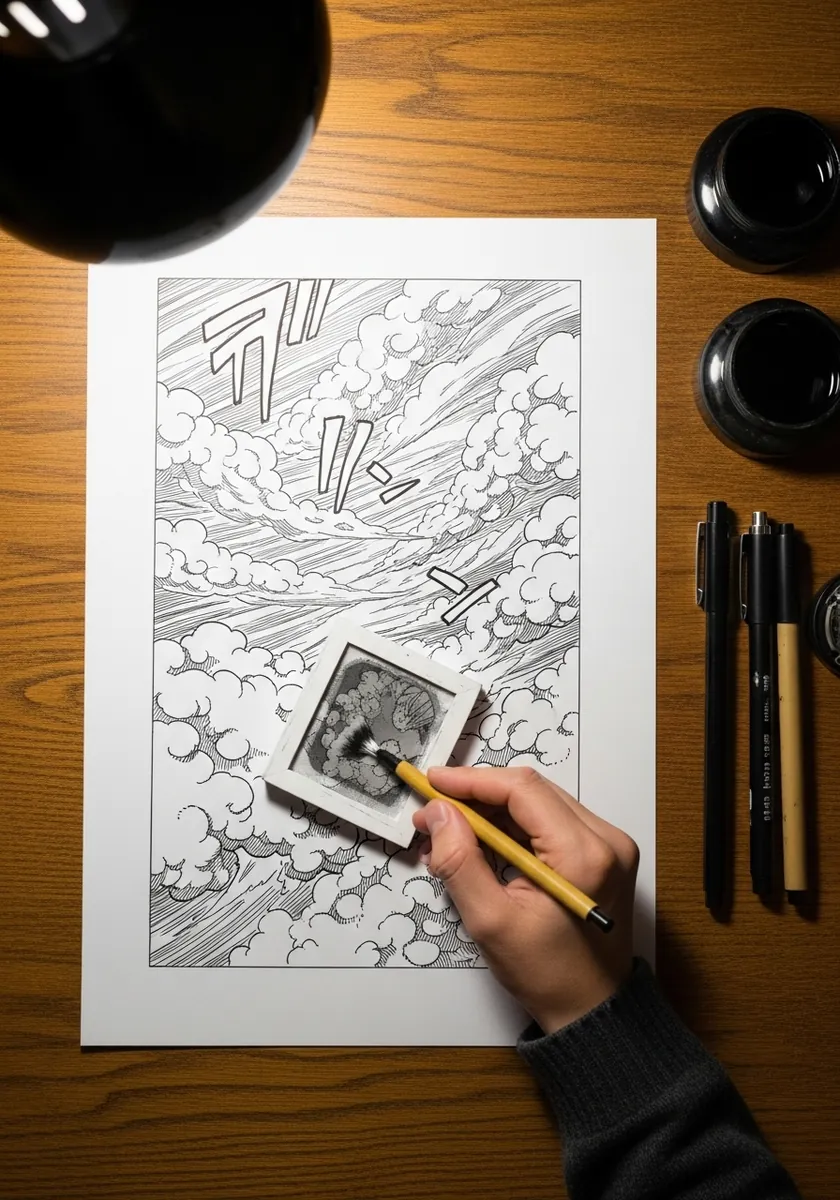
Speed lines must be ruled from one point or they lose all their force. Set that point behind the clouds, rule every line to it, and keep the cloud outlines crisp so they clearly sit in front of the motion.
36. Smiling Cartoon Cloud for Kids
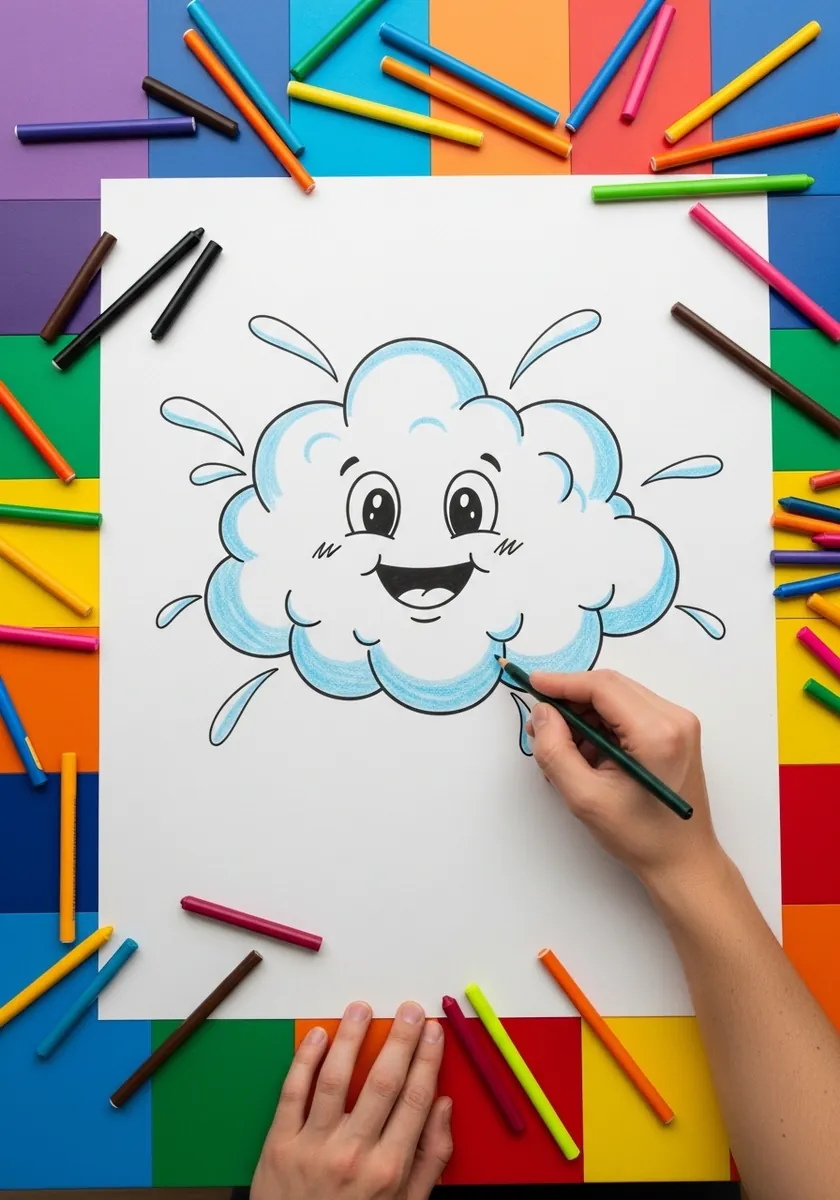
The simplest drawing in this list is also the most forgiving of mistakes. Four bumps, a curved base, two dots and a smile is the entire construction. Keep every line the same weight throughout and the drawing stays friendly and childlike rather than drifting into a technical study.
37. Doodle Cloud Packed with Tiny Objects
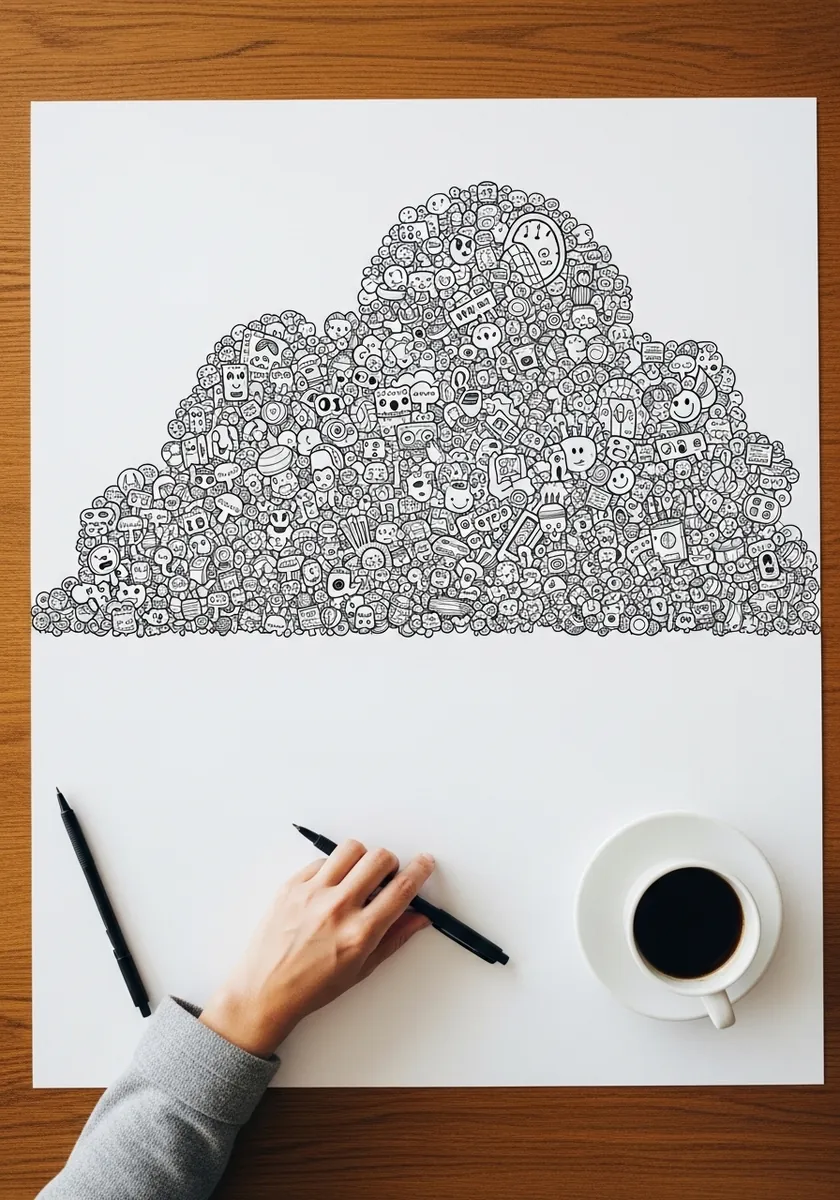
This is a patience exercise more than a drawing one. Rule the cloud outline lightly, then fill it with small doodles worked outward from the center, keeping every one roughly the same size so the whole mass reads as one texture.
38. Folk Art Cloud with Floral Pattern
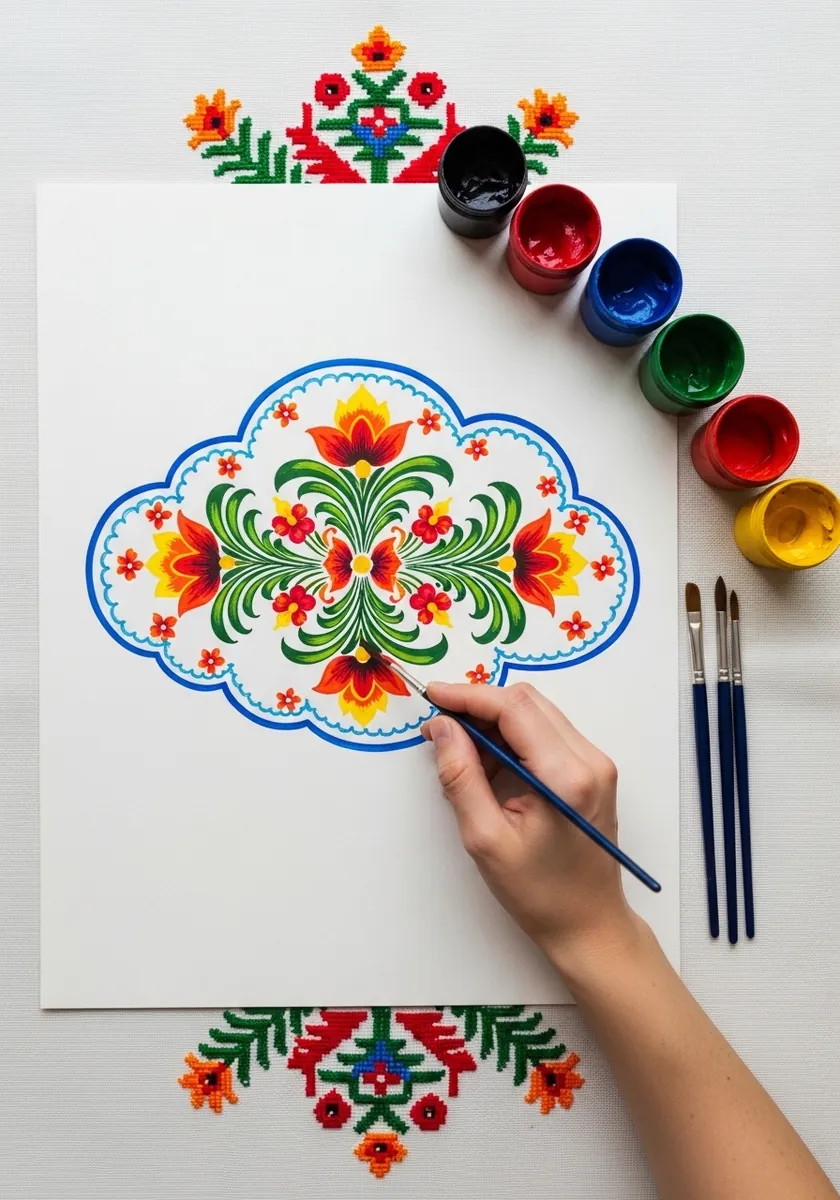
Folk decoration works by repeating a very small vocabulary of shapes. Choose four motifs at most, arrange them symmetrically about a center line inside the cloud silhouette, and keep everything completely flat with no shading anywhere, so the piece stays decorative rather than atmospheric.
39. Flat Gray Cloud in Three Tones
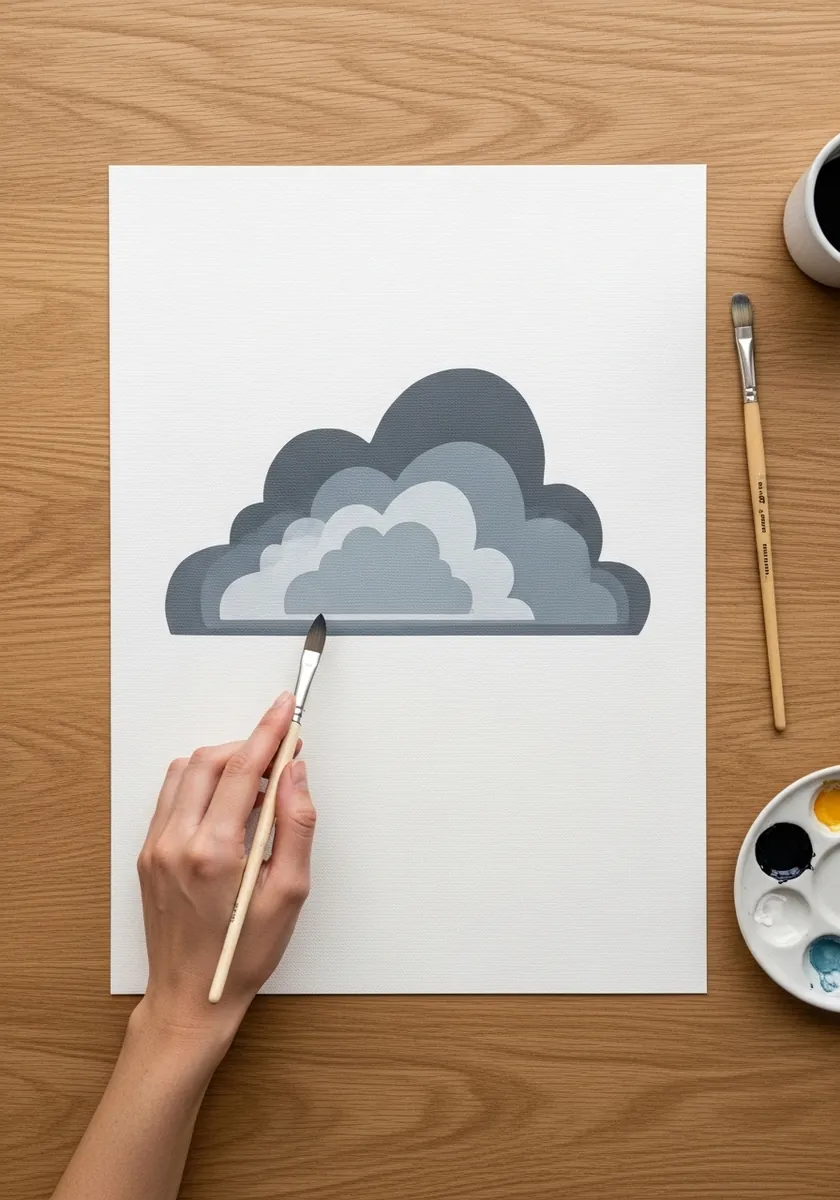
Three flat values and nothing else. Assign the palest to the top bumps, the mid tone to the middle, and the darkest to the flat base. It proves that the top-lit rule alone is enough to make a cloud read, with no gradient anywhere.
40. Rainbow Cloud with Dripping Colors
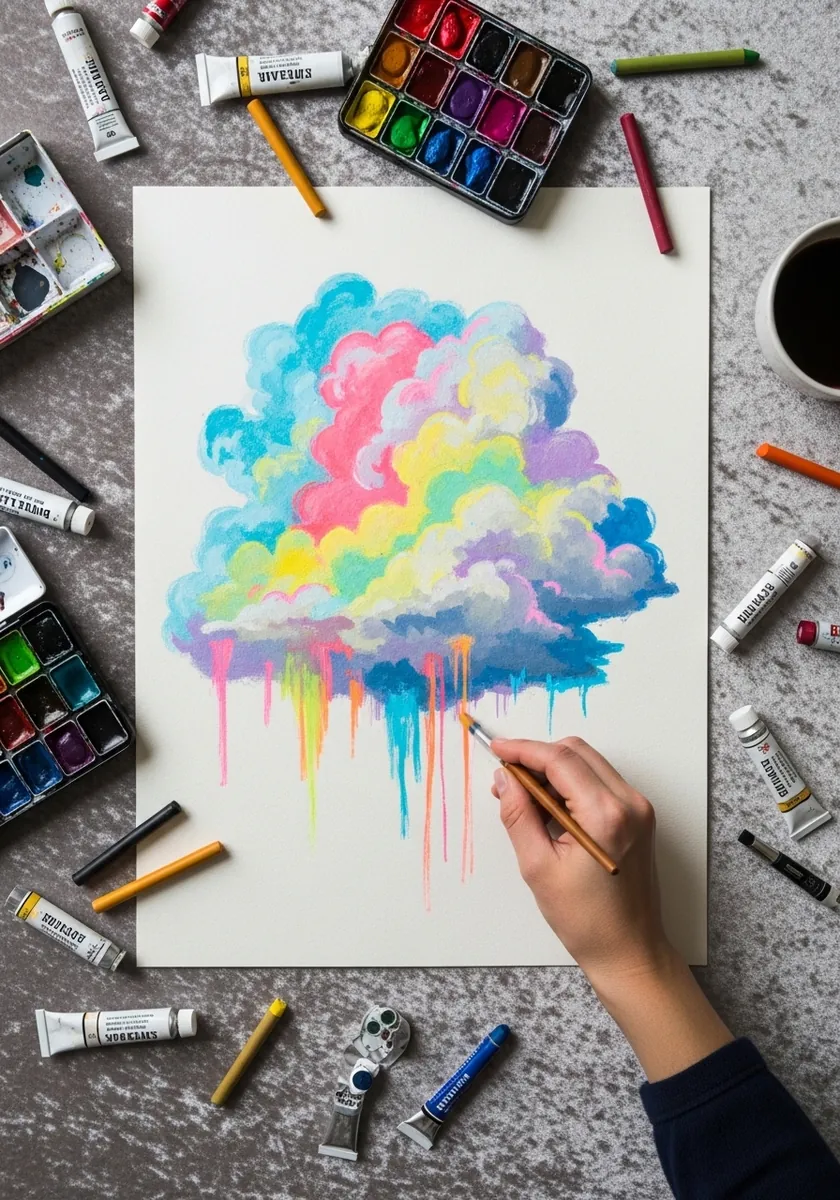
End with something loose. Paint the cloud shape properly with its flat base, then load the brush and let the color run downward from that base as rain. Because the structure above is sound, the drips read as weather rather than as a spill.
Frequently Asked Questions
How do you draw realistic clouds?
Start with a flat base line, then build rounded lumps above it. Shade the underside darkest, keep the top edge brightest, and soften the shadow edges while leaving the sunlit edges crisp. That contrast of hard and soft edges is what makes a cloud look solid.
Why do clouds have flat bottoms?
Rising warm air cools as it climbs, and water vapor condenses at the altitude where it reaches its dew point. Because that altitude is the same across a wide area, every cumulus cloud in the sky forms its base at roughly the same flat level.
What are the main cloud types to draw?
Four cover almost everything. Cumulus are the puffy flat-based clouds, cumulonimbus are the tall storm clouds with a spreading anvil top, cirrus are the high thin wispy streaks made of ice, and stratus is the flat gray layer that covers the whole sky.
How do you paint clouds in watercolor?
Reserve the whites rather than adding them. Wet the sky area, drop blue around the cloud shapes and let the paper stay bare where the cloud tops are brightest. Lift any soft edges with a damp sponge while the wash is still slightly wet.
How do you make a sky look deep?
Scale and value both change with distance. Make clouds larger and higher in contrast directly overhead, then progressively smaller, flatter and paler as they approach the horizon. Compressing them near the horizon line does more for depth than any amount of detail.
References and Further Reading