Gouache painting for beginners is one of the easiest ways to start making bold, colorful art. Gouache (say it like “gwash”) is a water-based paint that dries flat and matte, a bit like poster paint for grown-ups. It covers the paper fully, hides mistakes well, and washes out of your brushes with plain water.
If watercolor feels too runny and hard to control, gouache is a friendly middle ground. You can paint light colors on top of dark ones, fix errors by painting over them, and get bright, flat color in a single layer. That is why so many beginners, illustrators, and art journalers love it. This guide walks you through everything: what gouache is, what to buy, the five basic techniques, your first painting, and the mistakes to avoid.
TL;DR
- Gouache is an opaque water-based paint. It dries matte, covers well, and lets you paint light over dark.
- You only need paint, a few brushes, thick paper (300 gsm), a palette, and water to start. A starter setup costs about $20-$45.
- Learn five core skills first: flat wash, layering, dry brush, wet blending, and mixing pastels with white.
- Keep your paint thick, like cream. Most beginner problems come from adding too much water.
In this guide
- What Is Gouache Paint?
- What Do You Need to Start Gouache Painting?
- How Do You Use Gouache? The 5 Basic Techniques
- Your First Gouache Painting, Step by Step
- What Mistakes Do Gouache Beginners Make?
- Gouache or Watercolor: Which Is Better for You?
- 7 Tips to Improve at Gouache Fast
- Frequently Asked Questions
- Where to Go Next
What Is Gouache Paint?
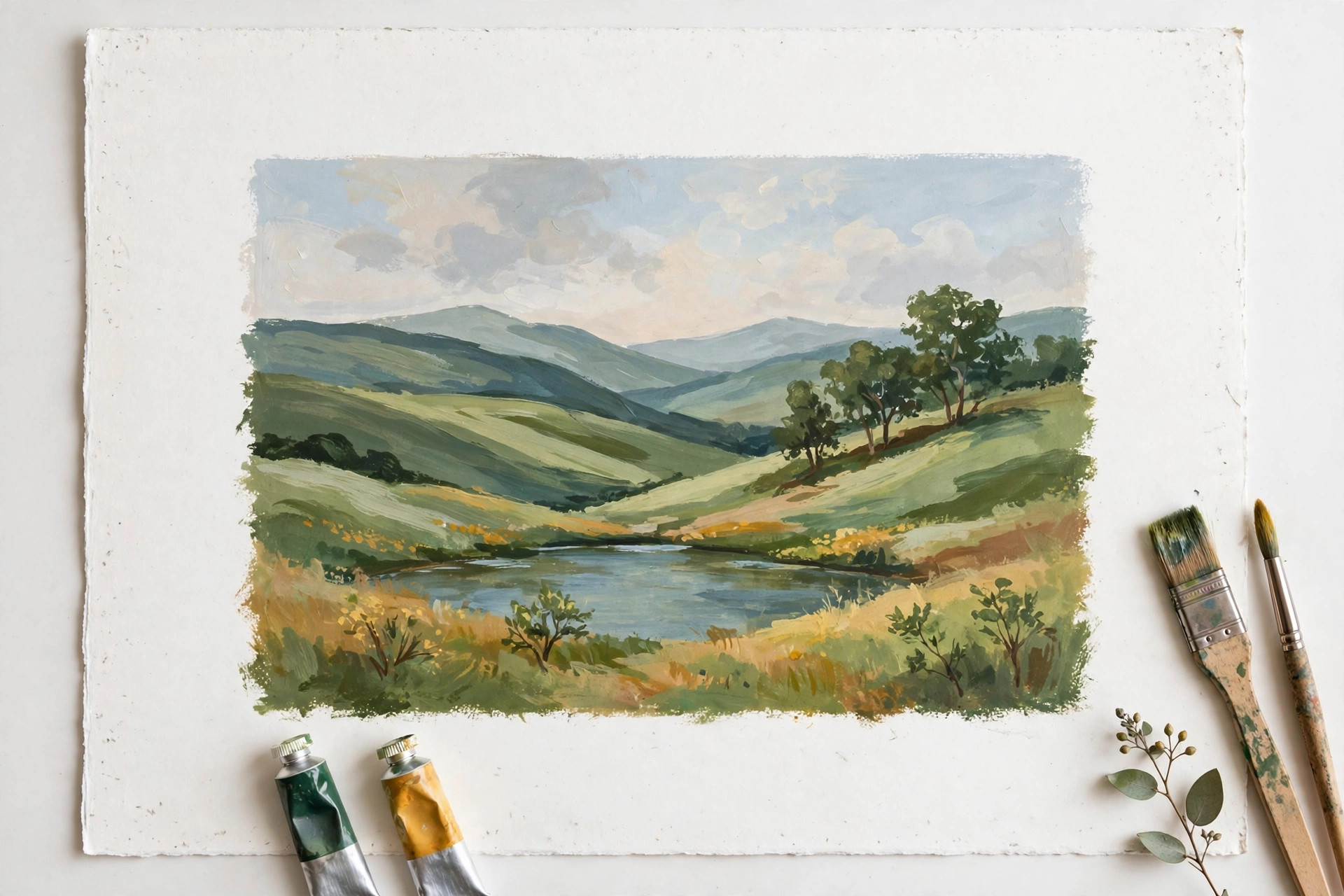
Gouache is a water-based paint made from pigment (the colored powder), water, and a binder that holds it together. The simple difference from watercolor is this: gouache is opaque, watercolor is transparent. Opaque means light cannot pass through it, so the paint hides whatever is underneath.
Think of it this way. Watercolor is like stained glass: the white of the paper shines through and gives the color its glow. Gouache is like a wall painted with house paint: the color you see is the color in the tube, solid and flat. Because of this, gouache dries to a smooth matte finish, which means it has no shine. Photos and scans of gouache art look clean, which is one reason illustrators use it so much.
You will meet two main types in stores:
- Tube gouache comes in small tubes, like watercolor. You squeeze out a little at a time. It stays fresh for a long time and is great if you paint now and then.
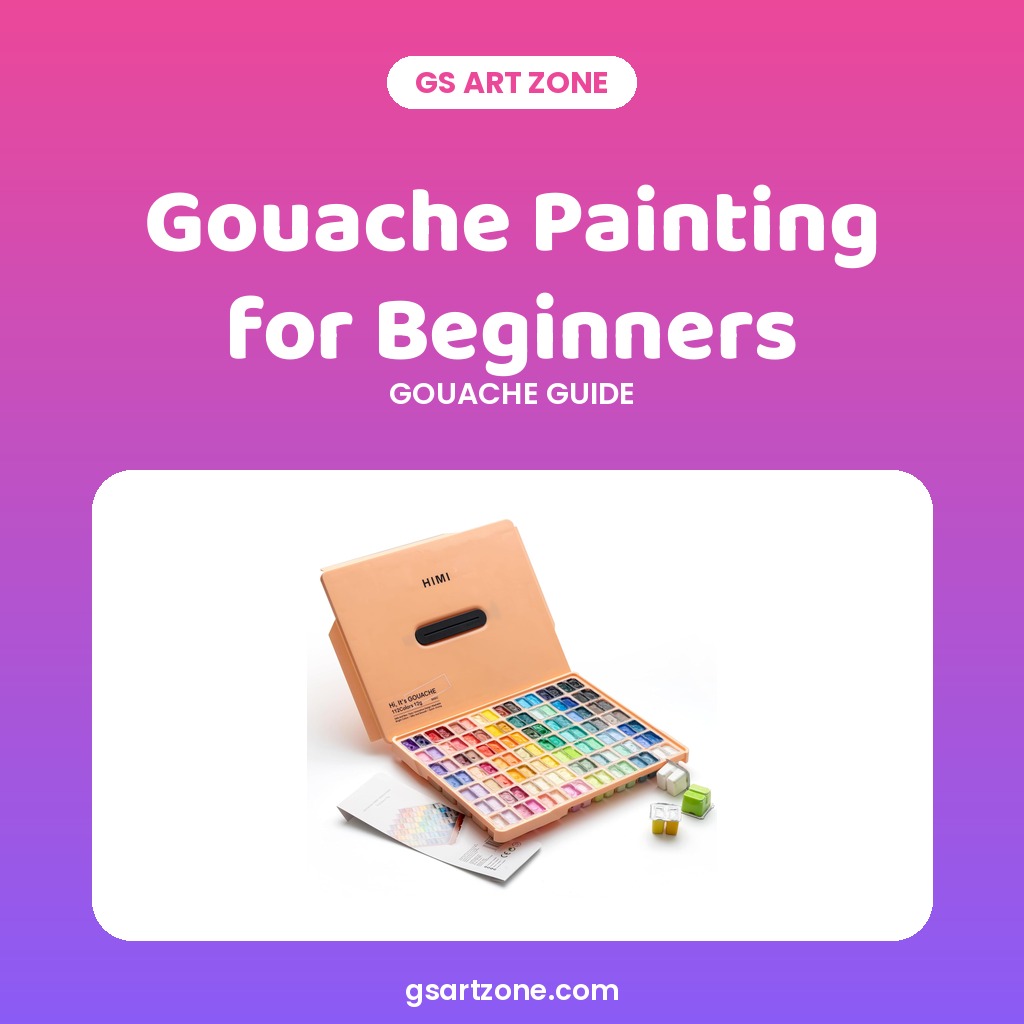
- Jelly gouache comes in small cups or “jelly” pots inside a sealed box. The paint is already soft and wet, so you dip your brush straight in. It is fun and fast to use, which is why it became so popular in art videos. Keep the lid closed and spray it with a little water now and then so it does not dry out.
Both types work the same on paper. Pick whichever style you think you will enjoy more, because the best paint is the one you actually use.
What Do You Need to Start Gouache Painting?
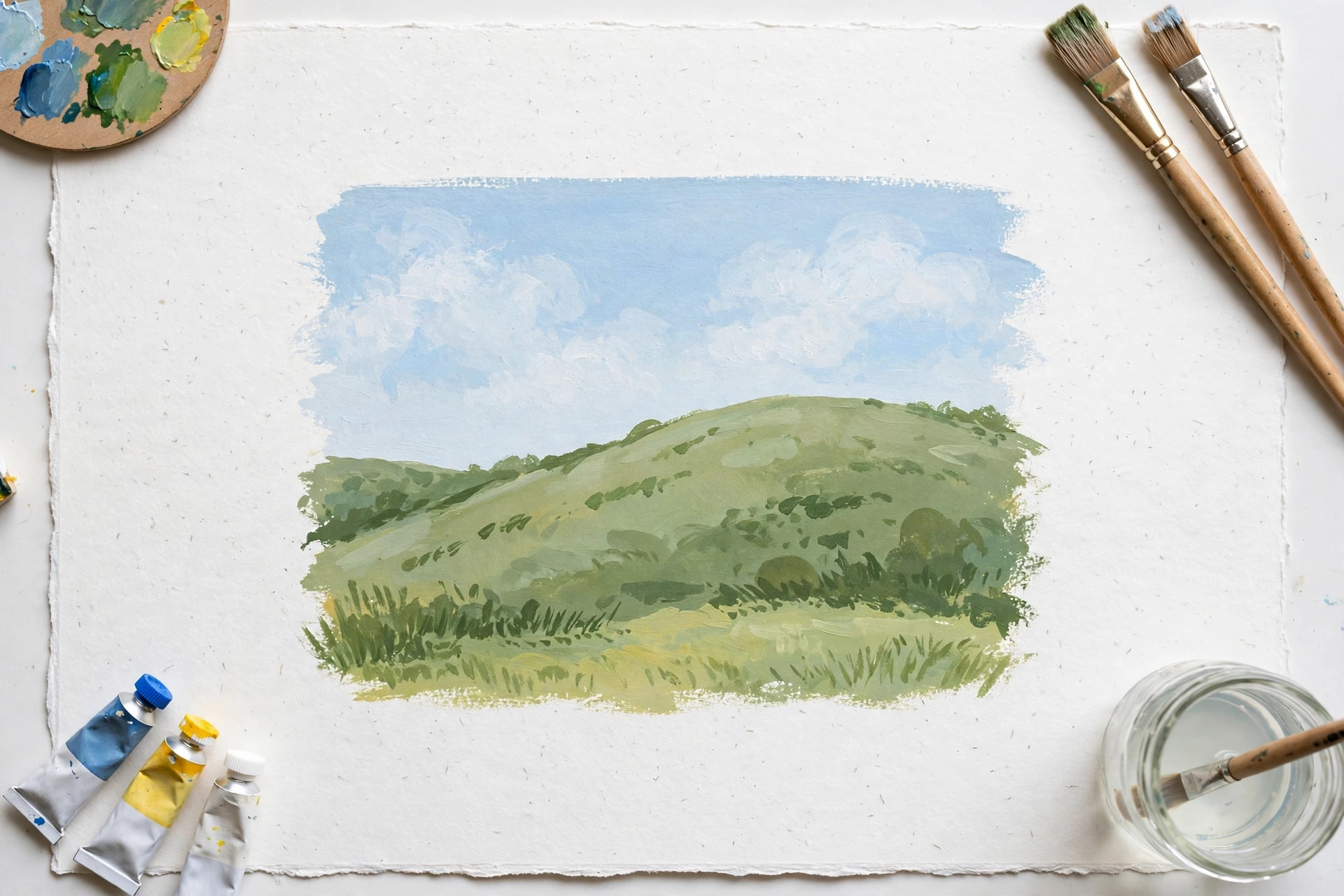
You need only six things to start: gouache paint, brushes, thick paper, a palette, water, and tape. You do not need an easel, fancy tools, or a big set of colors. A small, good setup beats a big, cheap one.
- Gouache paint: A set of 12 to 24 colors is plenty. Jelly cup sets are popular with beginners because the paint is ready to use. A decent starter set costs about $15-$30.
- Brushes: Get 3 to 4 soft synthetic brushes (synthetic means man-made fibers, which suit water-based paint). One large flat brush for skies and backgrounds, one medium round brush for most shapes, and one small round brush for details. A simple set costs about $6-$12.
- Paper: Use thick paper, at least 300 gsm. GSM is just how paper weight is measured; higher numbers mean thicker paper. Thin paper wrinkles and tears when it gets wet. Watercolor paper or mixed-media paper both work well, about $8-$15 for a pad.
- Palette: A flat surface for mixing colors. A white ceramic plate, a plastic palette, or even a clean piece of thick plastic works fine. White is best because you can see the true color.
- Two jars of water: One jar for rinsing dirty brushes, one with clean water for mixing. This one small habit keeps your colors bright instead of muddy.
- Painter’s tape: Tape the edges of your paper to the table or a board. It stops the paper from curling and leaves a clean white border when you peel it off.
All together, a solid beginner setup costs roughly $20-$45. If you want a wider look at papers, brushes, and other art basics, our complete art supplies guide walks through each category in plain language.
How Do You Use Gouache? The 5 Basic Techniques
Almost every gouache painting is built from five basic techniques. Learn these five and you can paint nearly any simple subject. The golden rule for all of them: mix your paint to the thickness of melted ice cream or thick cream. Too watery is the number one beginner problem.
1. Flat Wash
A flat wash is one smooth, even layer of color with no streaks. Load your brush well, paint in long strokes in one direction, and keep the paint wet as you go. Tip: mix more paint than you think you need before you start, because stopping to mix mid-wash leaves marks.
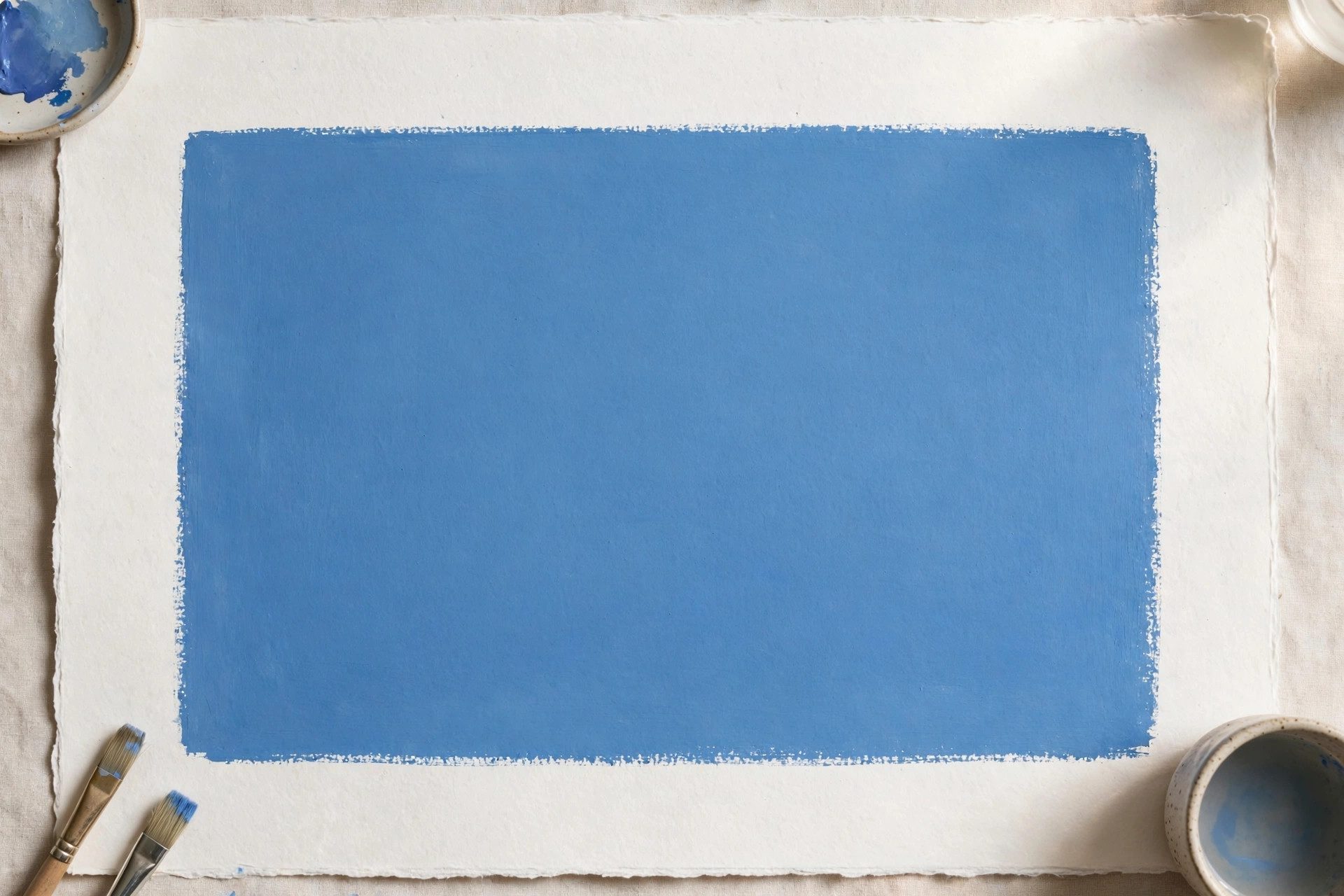
2. Layering Light Over Dark
This is gouache’s superpower. Let a dark layer dry fully, then paint a lighter color right on top and it will cover completely. Tip: use paint that is thick, not watery, for the top layer, or the dark color will mix in and turn muddy.
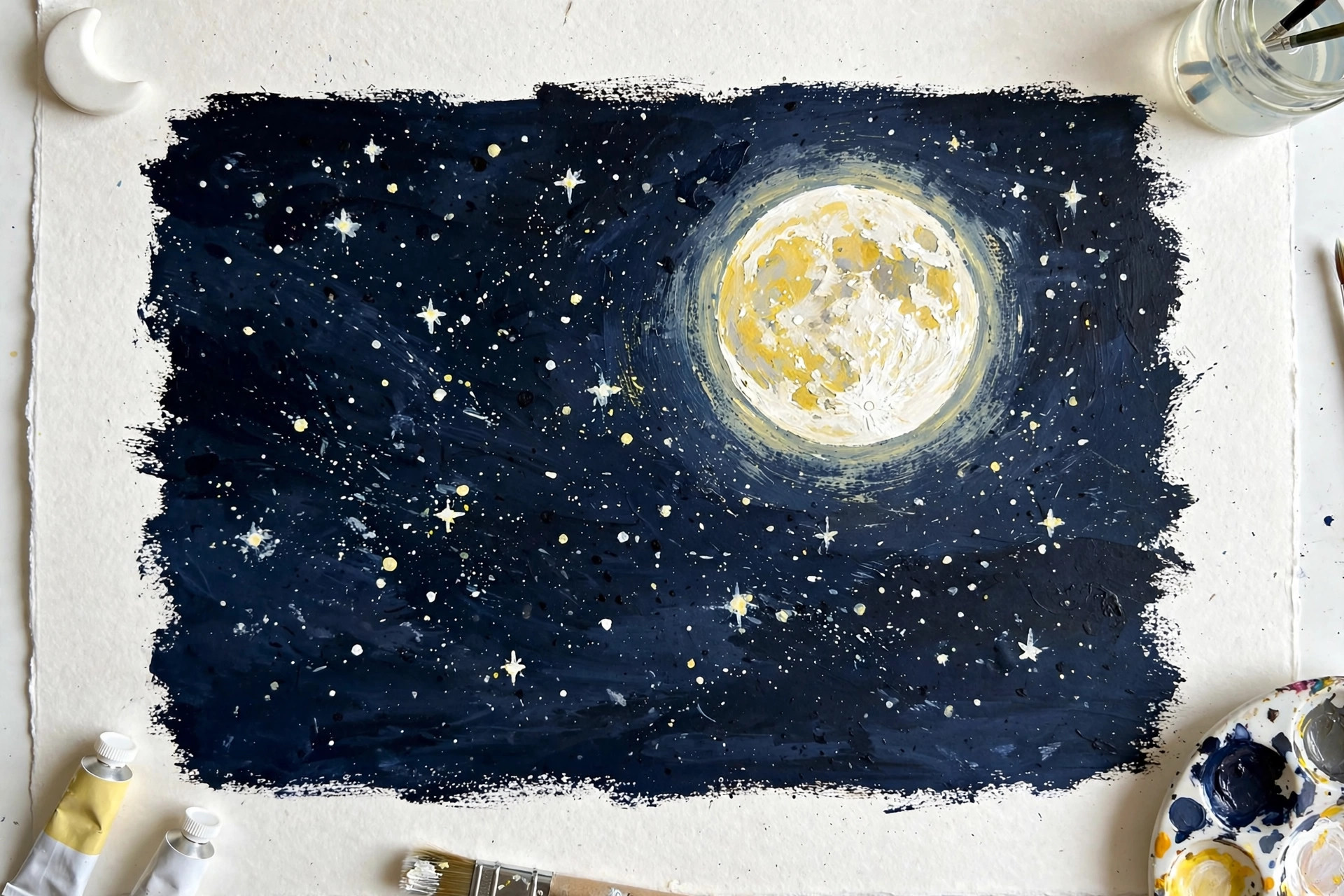
3. Dry Brush
Wipe most of the paint off your brush, then drag it lightly across the paper. The brush skips over the paper’s texture and leaves a rough, broken line. It is perfect for grass, tree bark, sparkles on water, and rough stone. Tip: it works best on textured (slightly bumpy) paper.
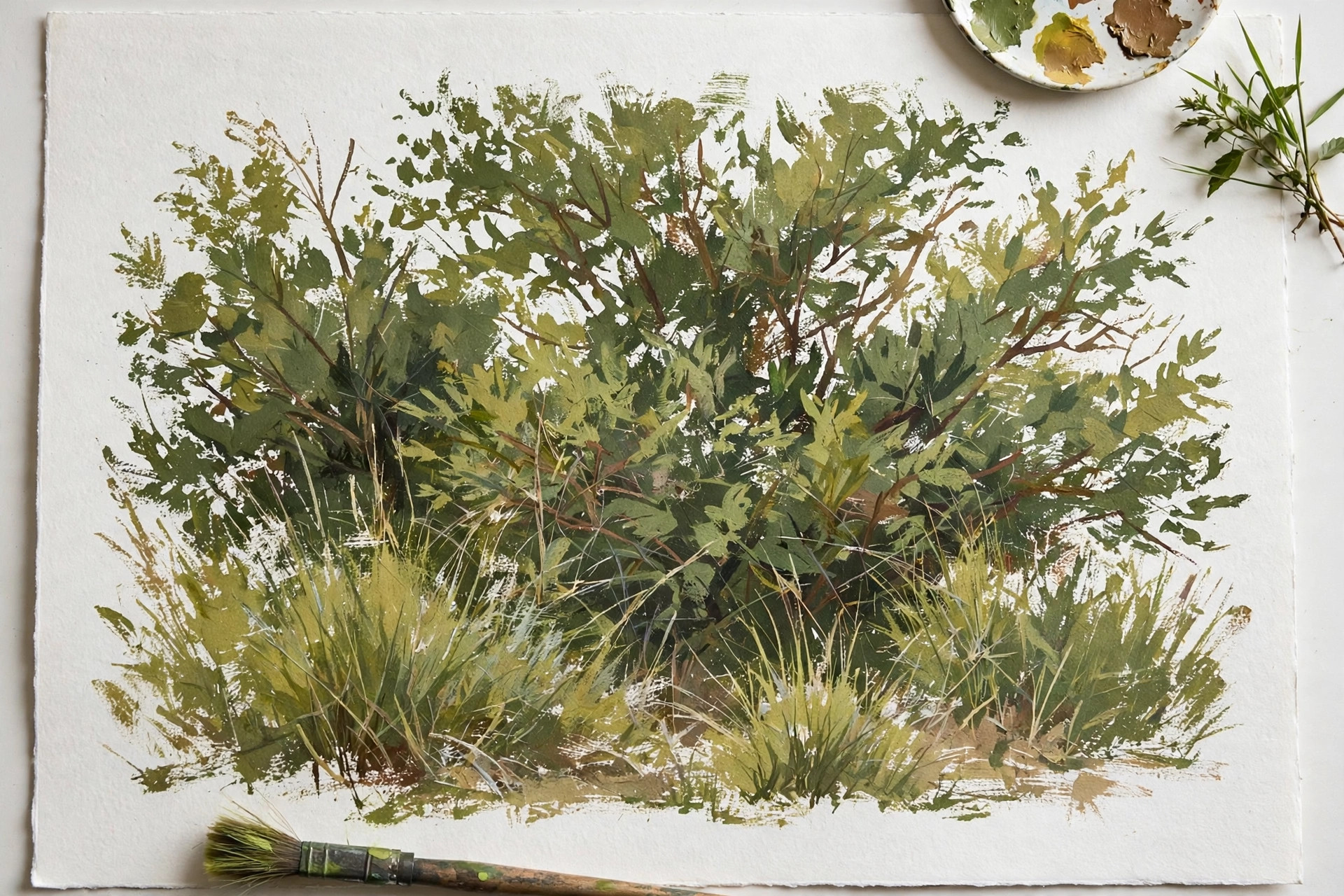
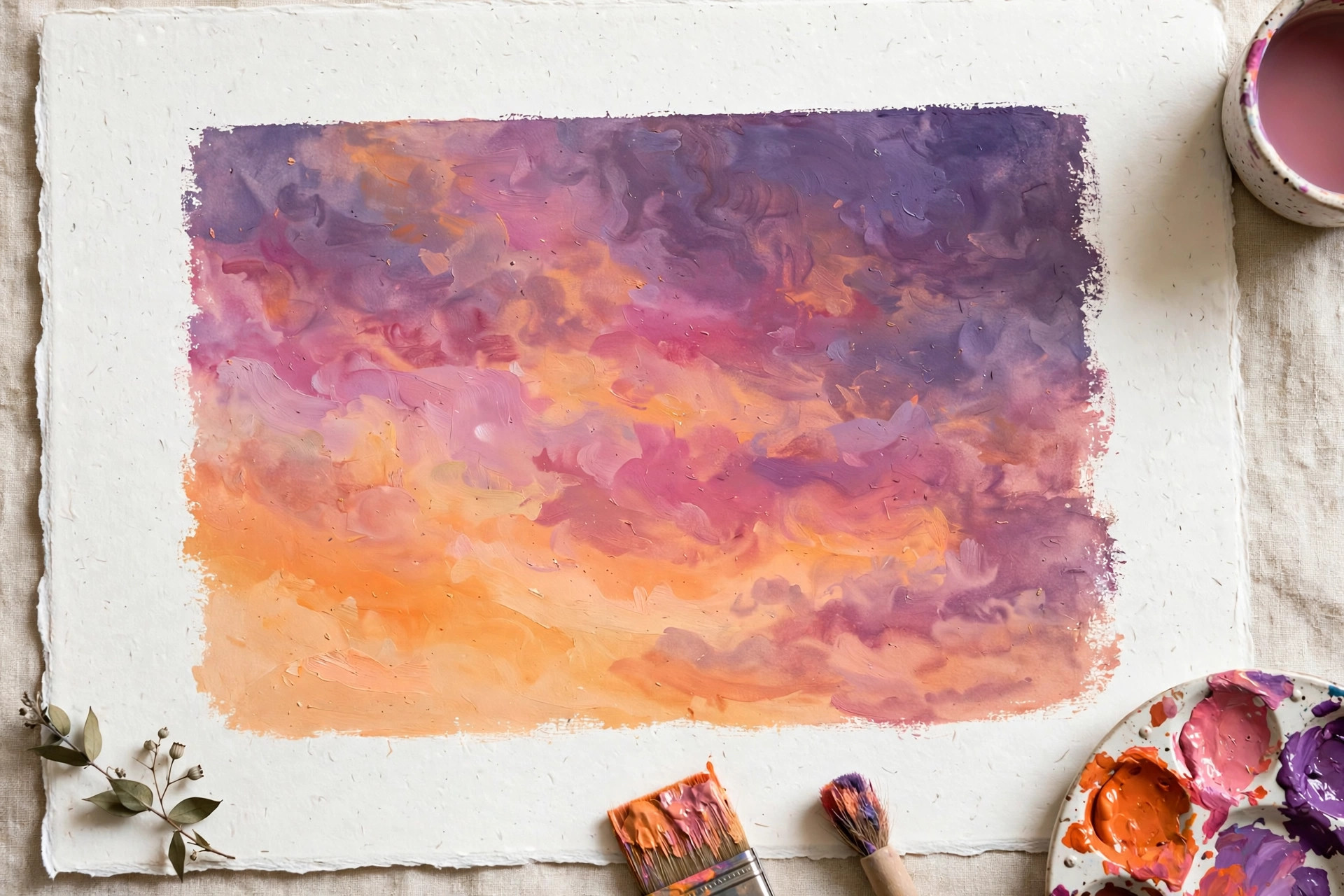
4. Blending Wet-into-Wet
Put two wet colors side by side and let them melt into each other on the paper. This is how you paint smooth sunsets and soft shadows. Tip: work quickly, because gouache dries in a few minutes. If an edge dries too soon, touch it with a damp (not dripping) brush to soften it.
5. Adding White for Pastels
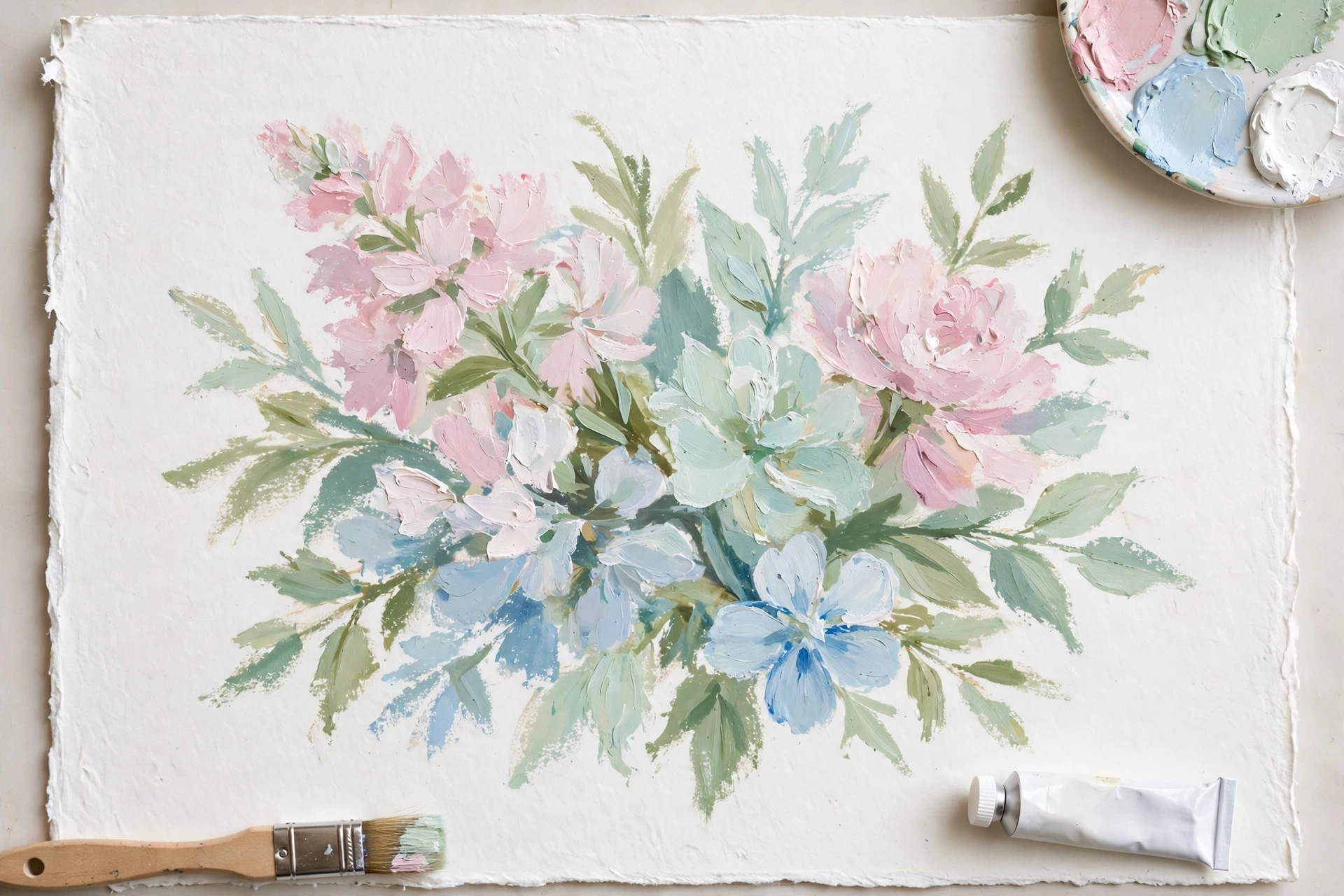
Mix any color with white gouache to make soft pastel shades: baby pink, mint green, powder blue. Gouache lightens colors beautifully, unlike watercolor, where you lighten with water. Tip: always mix a little more than you need. Matching the exact same pastel twice is hard.
Your First Gouache Painting, Step by Step
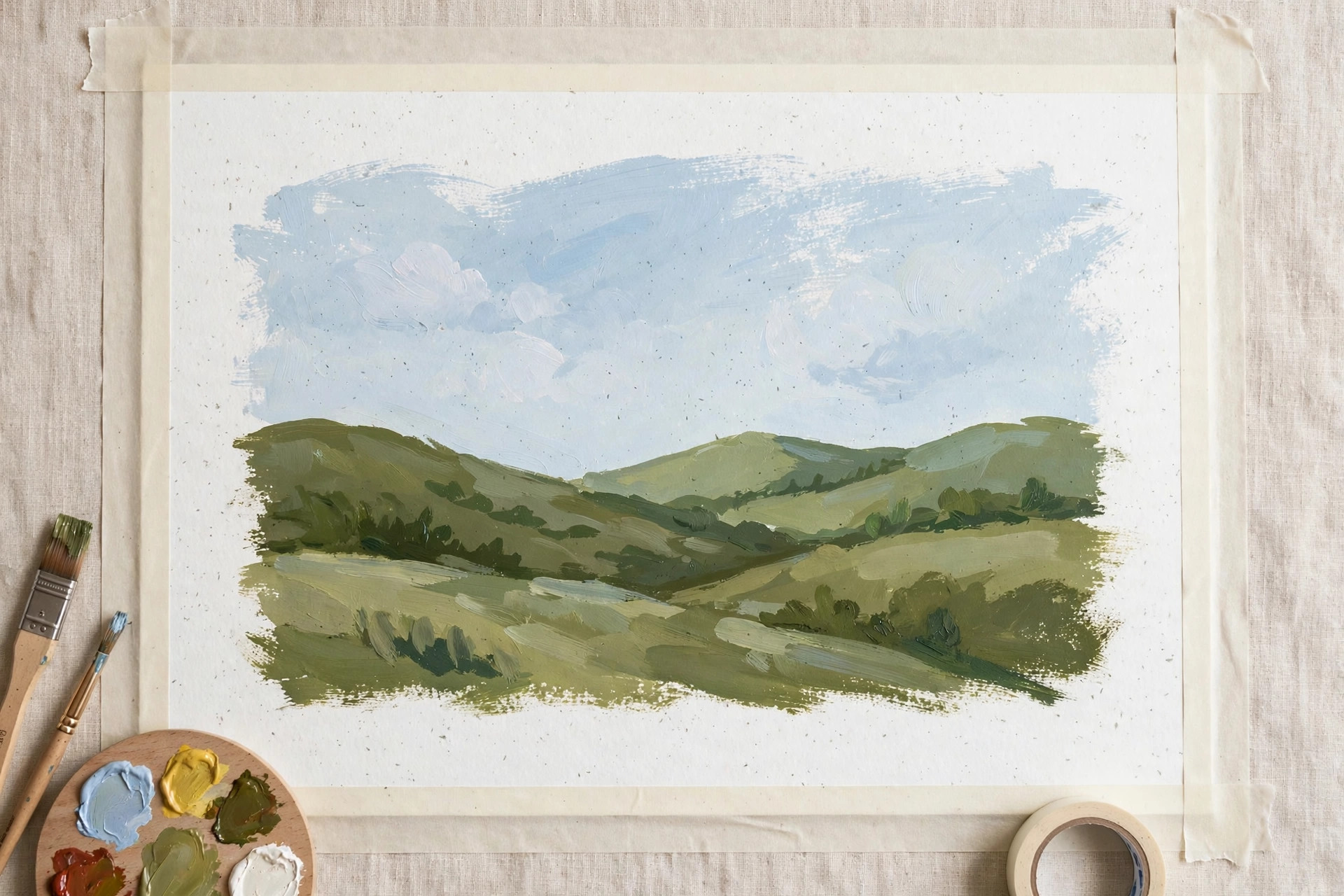
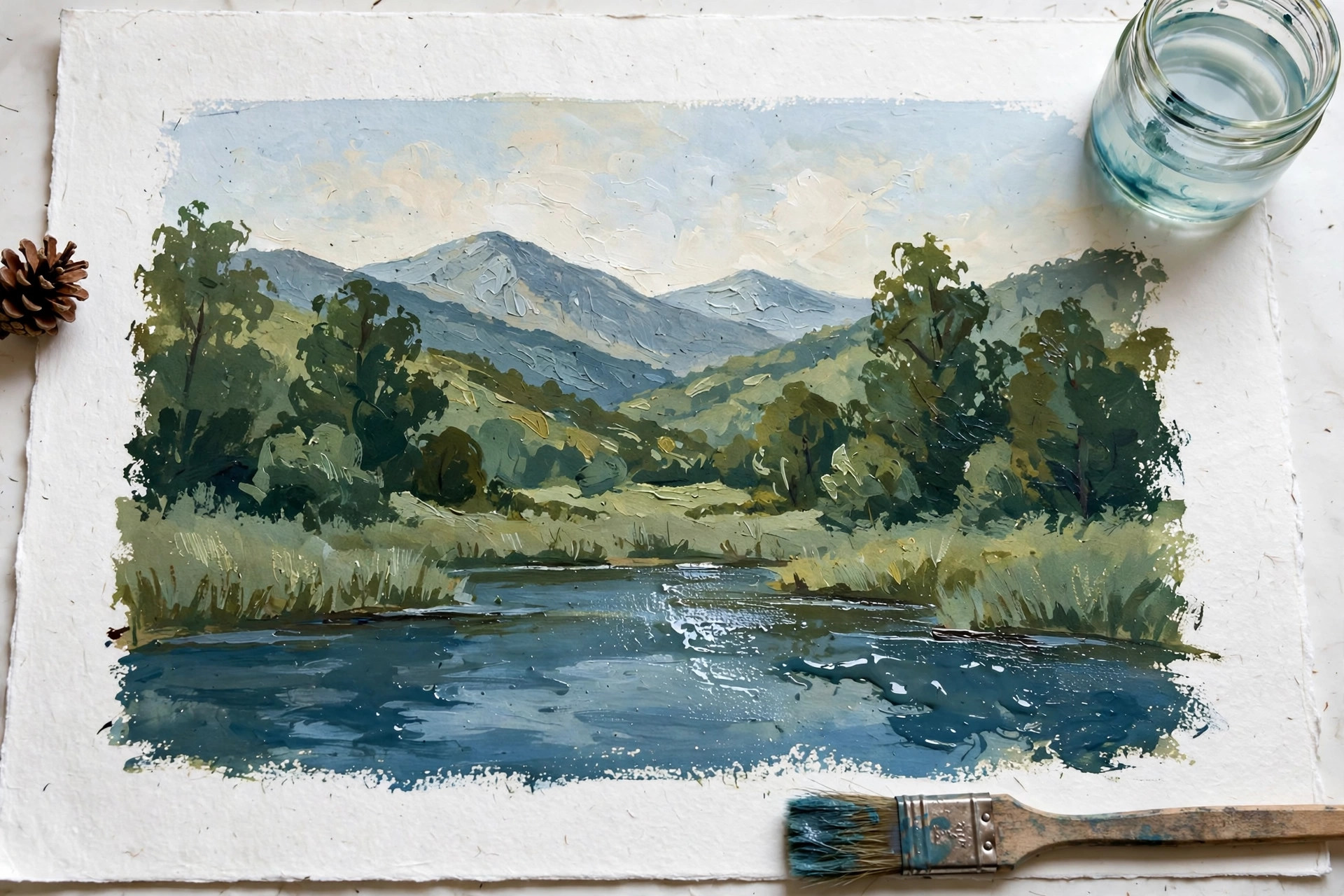
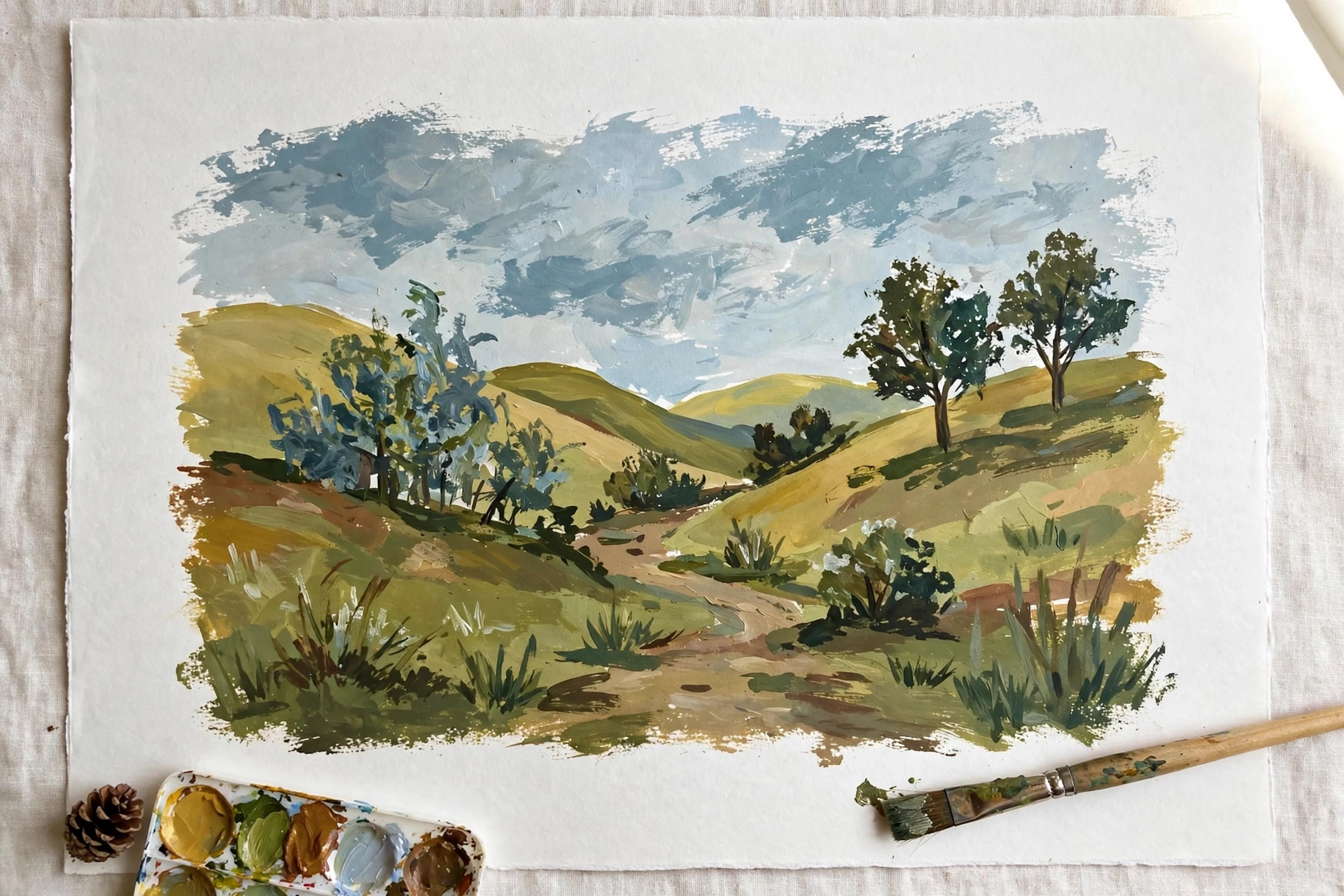
The best first painting is a simple landscape: a sky, two hills, one tree, and a few highlights. It uses every basic technique, and it is almost impossible to ruin. Set aside about 30 minutes and follow these steps.
1
Tape your paper down. Stick painter’s tape along all four edges on a board or table. This keeps the paper flat while it is wet.
2
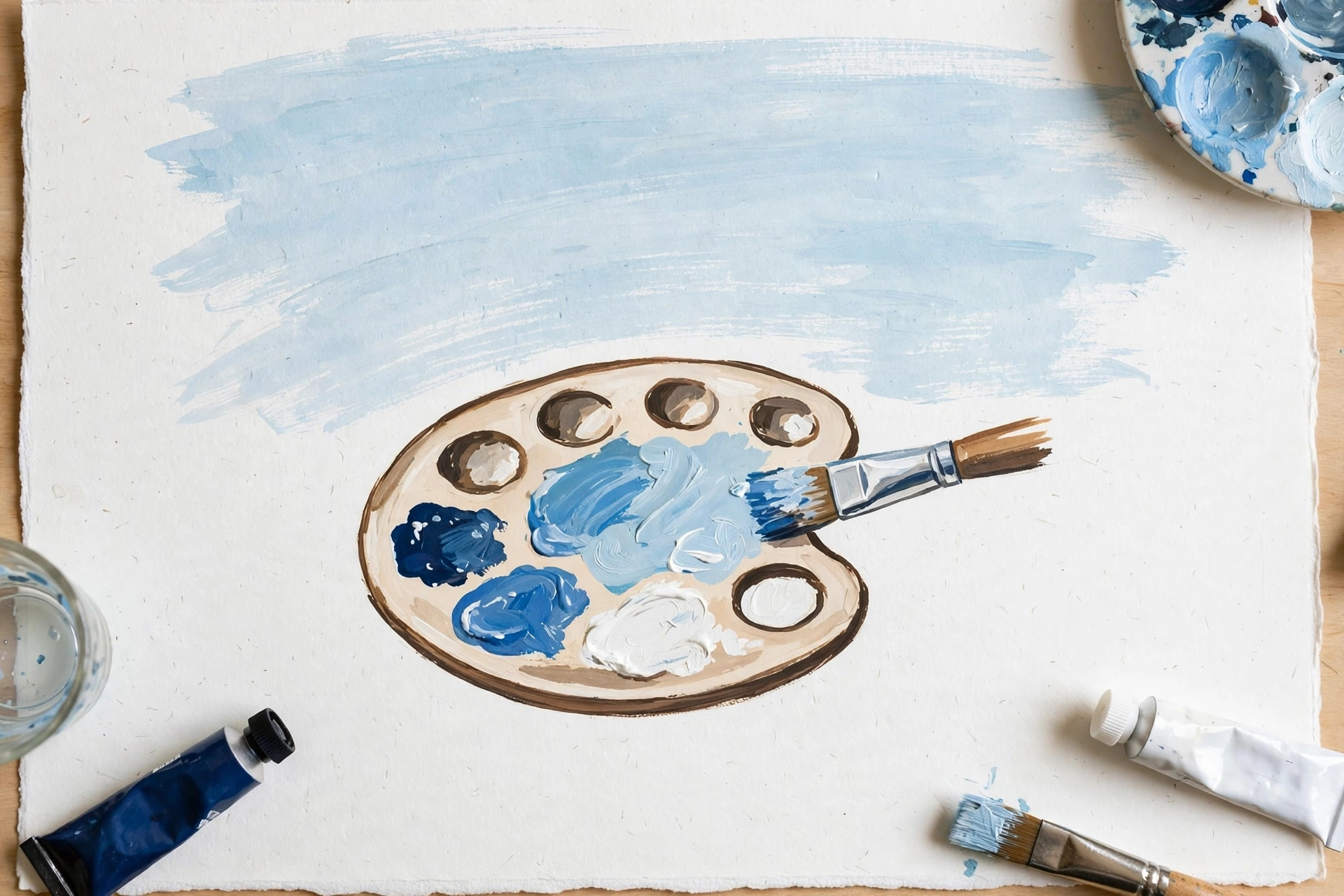
Mix your sky color. Stir blue with a touch of white until it looks like thick cream. Make a generous puddle, more than feels necessary.
3
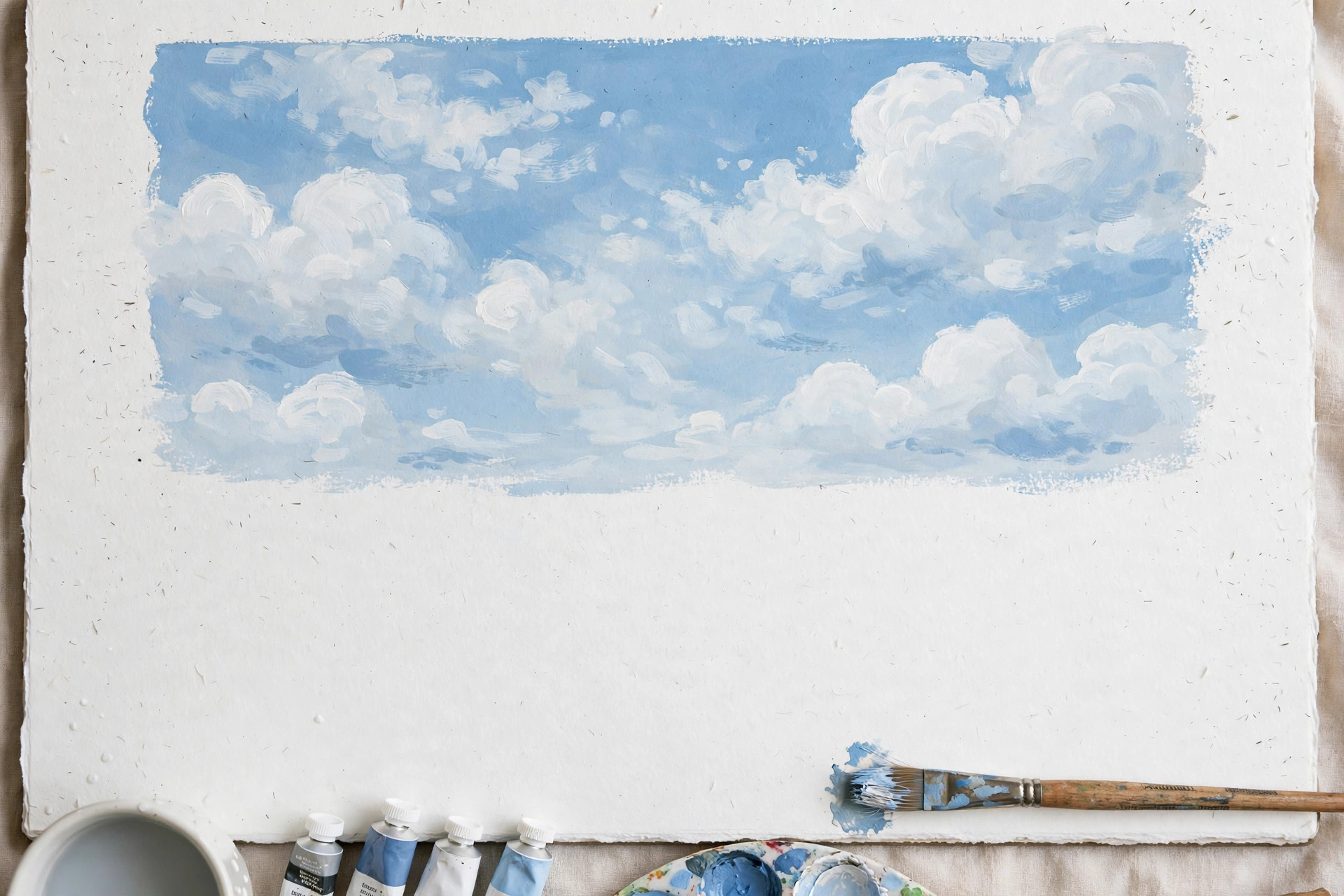
Paint the sky. With your large flat brush, lay a flat wash across the top half of the page. Work in long side-to-side strokes. While it is still wet, blend a little pink or pale yellow near the horizon for a soft sunset feel.
4
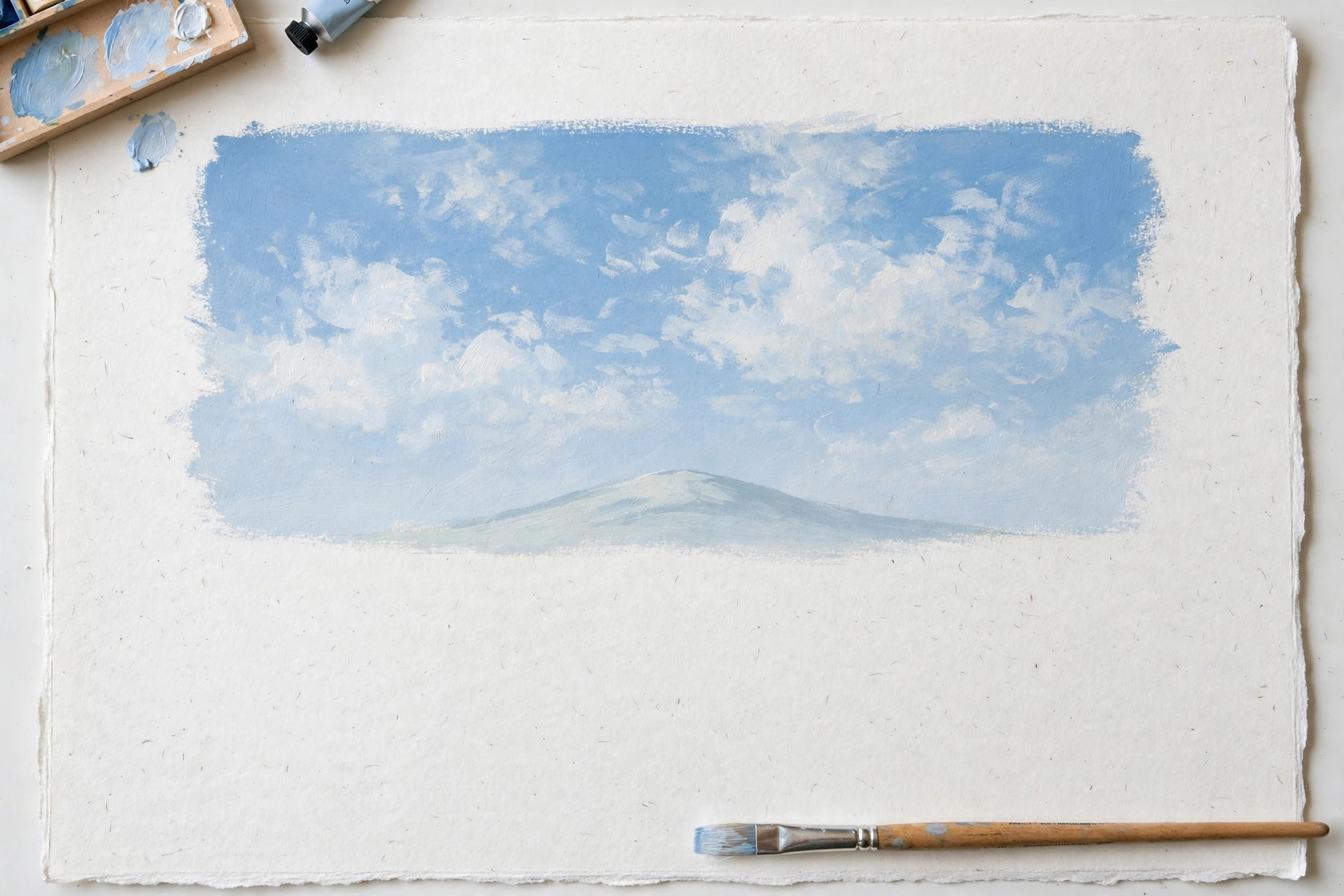
Add the far hill. Once the sky is dry (about 5 minutes), paint a gentle hill shape across the middle in a medium green or blue-green. Let it dry.
5
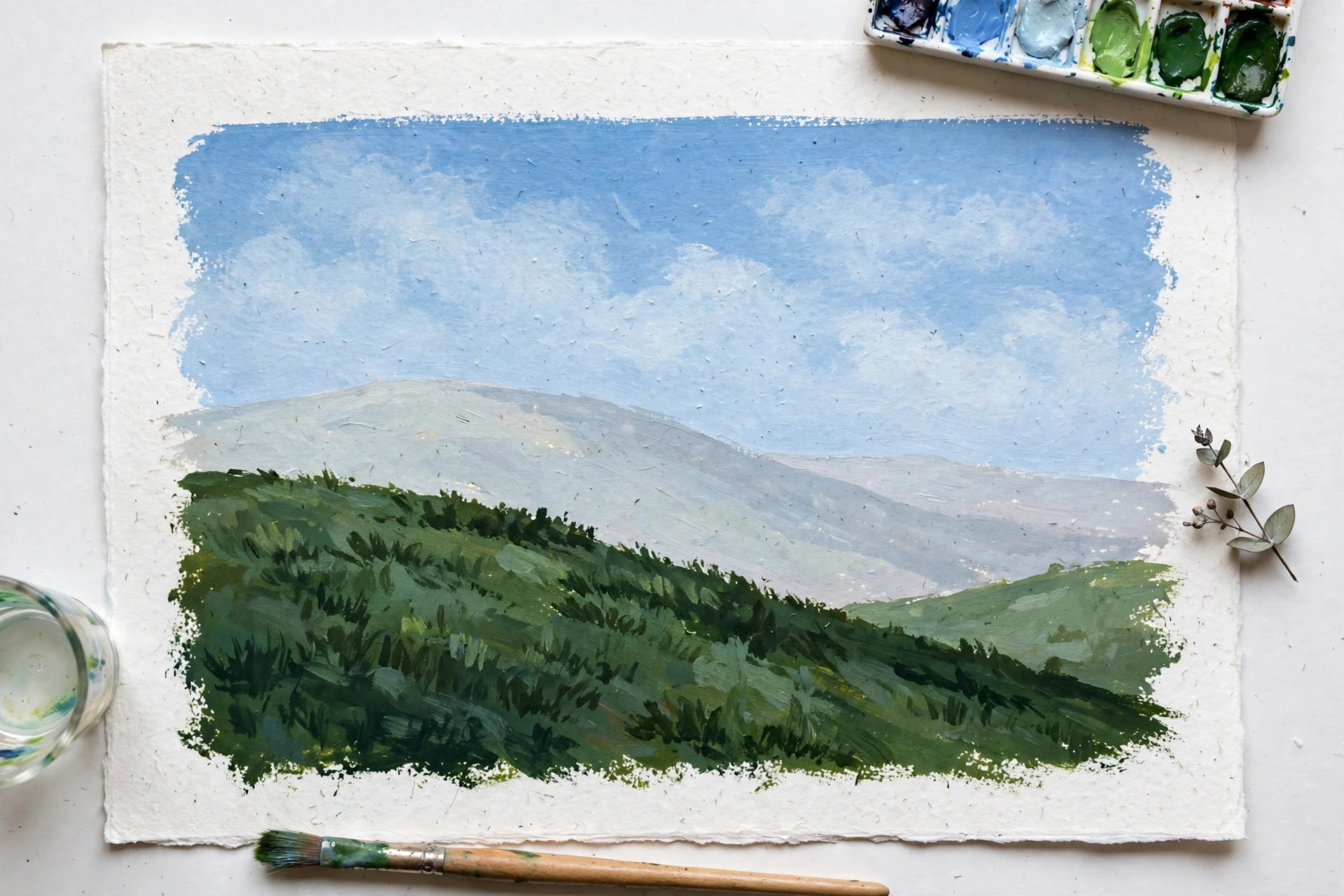
Add the near hill. Paint a second, lower hill in a darker green, overlapping the first. Darker in front and lighter behind makes the scene look deep, like real distance.
6
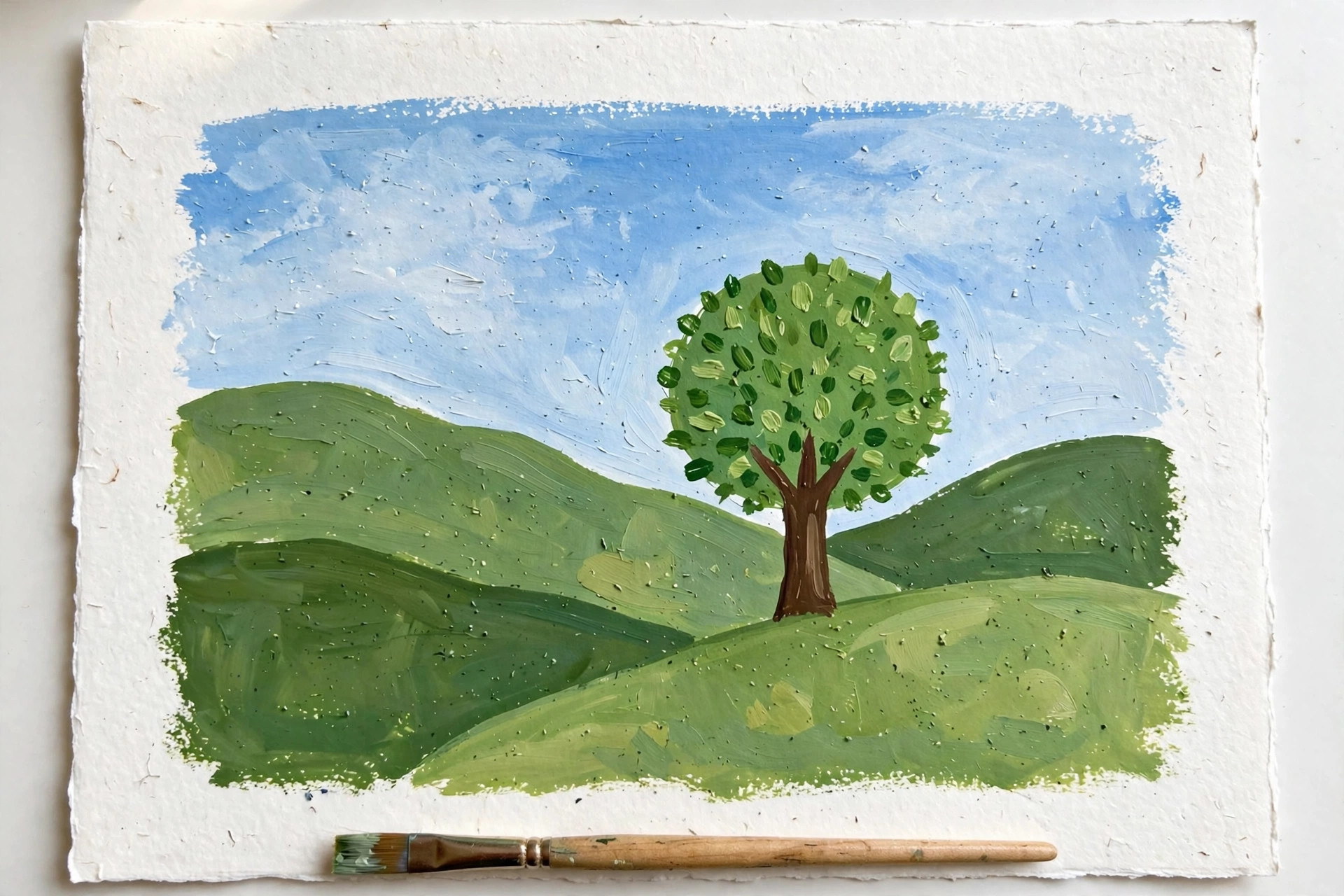
Paint a simple tree. With the small brush, draw a thin brown trunk on the near hill. Dab on leaf shapes with two greens, a darker one first, then a lighter one on top for light and shadow.
7
Add highlights and peel the tape. Dot in tiny white or pale-yellow flowers, a few birds as small curved lines in the sky, and a moon if you like. When everything is fully dry, peel the tape off slowly at an angle for a crisp, clean border.
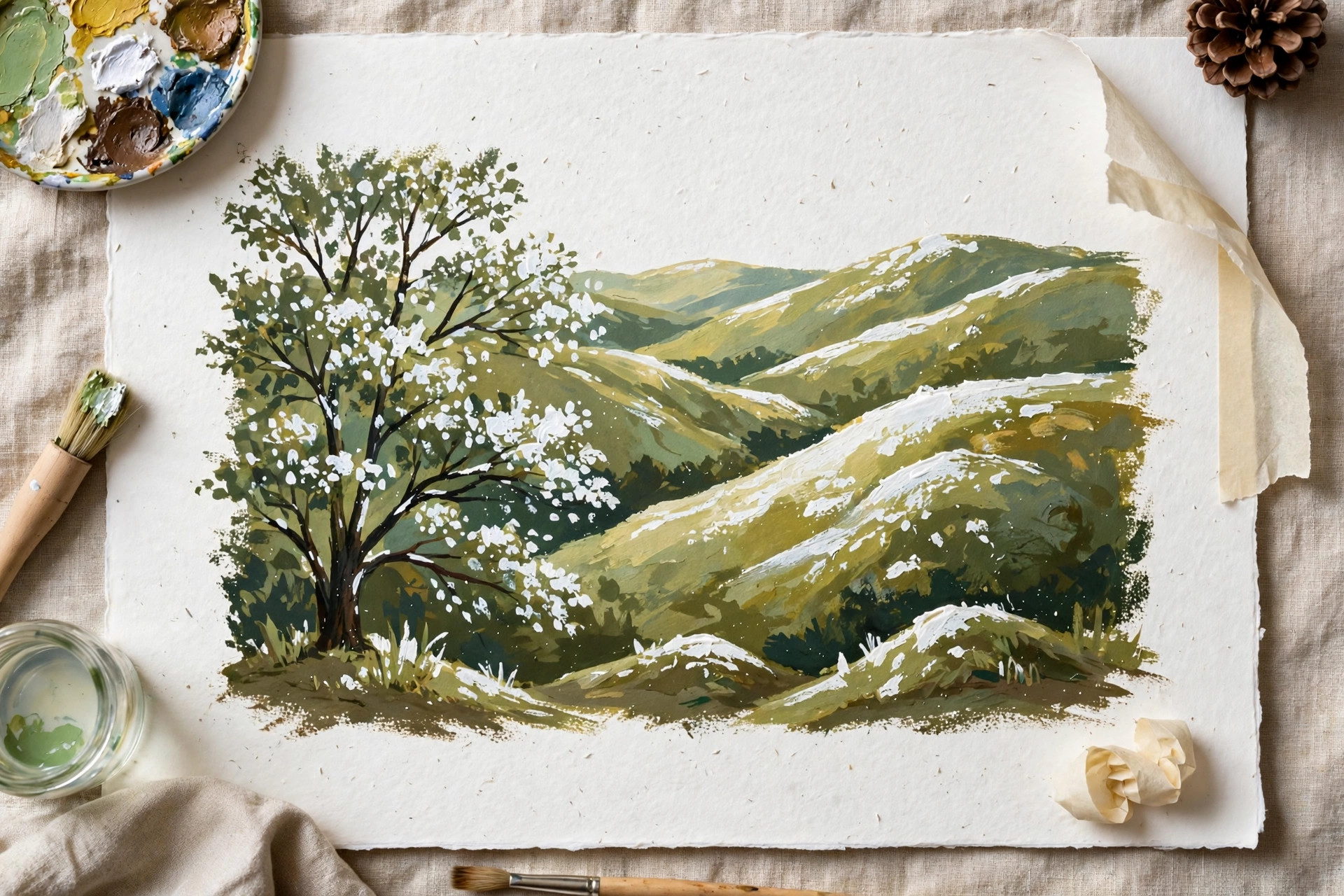
Finished? Look at what you just used: a flat wash, wet blending, layering light over dark, and small details. That is real gouache painting, and every bigger piece is just more of the same steps.
What Mistakes Do Gouache Beginners Make?
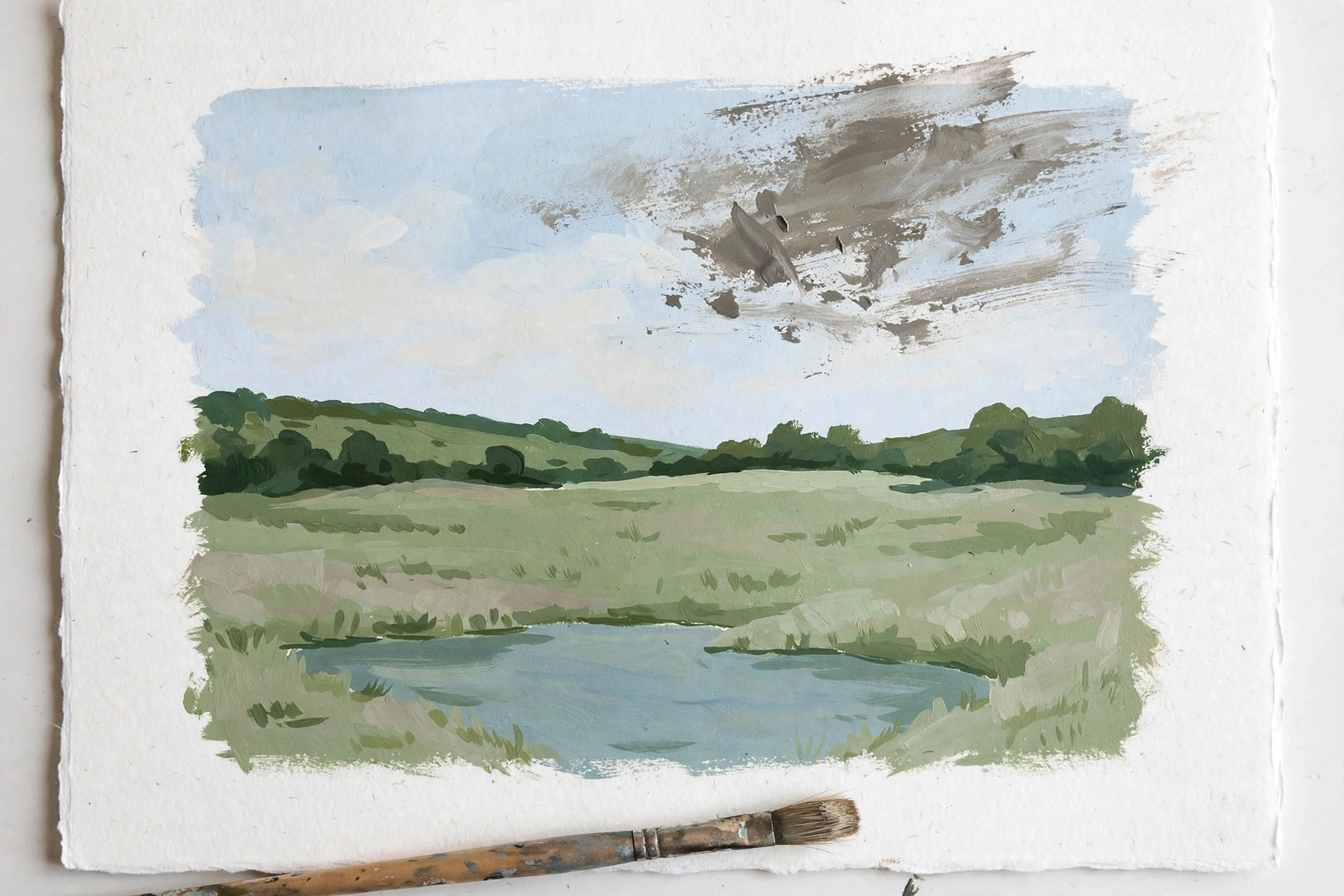
The three most common beginner mistakes are using too much water, painting too thin, and using paper that is too cheap. The good news: all three are easy to fix once you spot them.
- Too much water. Watery gouache dries streaky and see-through, like weak watercolor. If your paint runs like ink, add more paint, not more water. Aim for the texture of thick cream or yogurt.
- Painting thin like watercolor. Many beginners copy watercolor habits and spread gouache too thin. Gouache wants to be laid down in confident, creamy layers. Thin layers crack, streak, and refuse to cover.
- Cheap, thin paper. School paper and sketchbook pages wrinkle into waves the moment they get wet, and the paint pools in the dips. Thick 300 gsm paper is not a luxury with gouache; it is what makes the paint behave.
- Reworking wet paint. Brushing again and again over a half-dry area lifts the layer below and makes mud. If a spot looks wrong, let it dry fully, then paint over it. Gouache forgives almost anything once it is dry.
If your paintings keep coming out streaky even with thick paint, our troubleshooting guide on why gouache looks streaky and how to fix it goes through every cause one by one.
Gouache or Watercolor: Which Is Better for You?
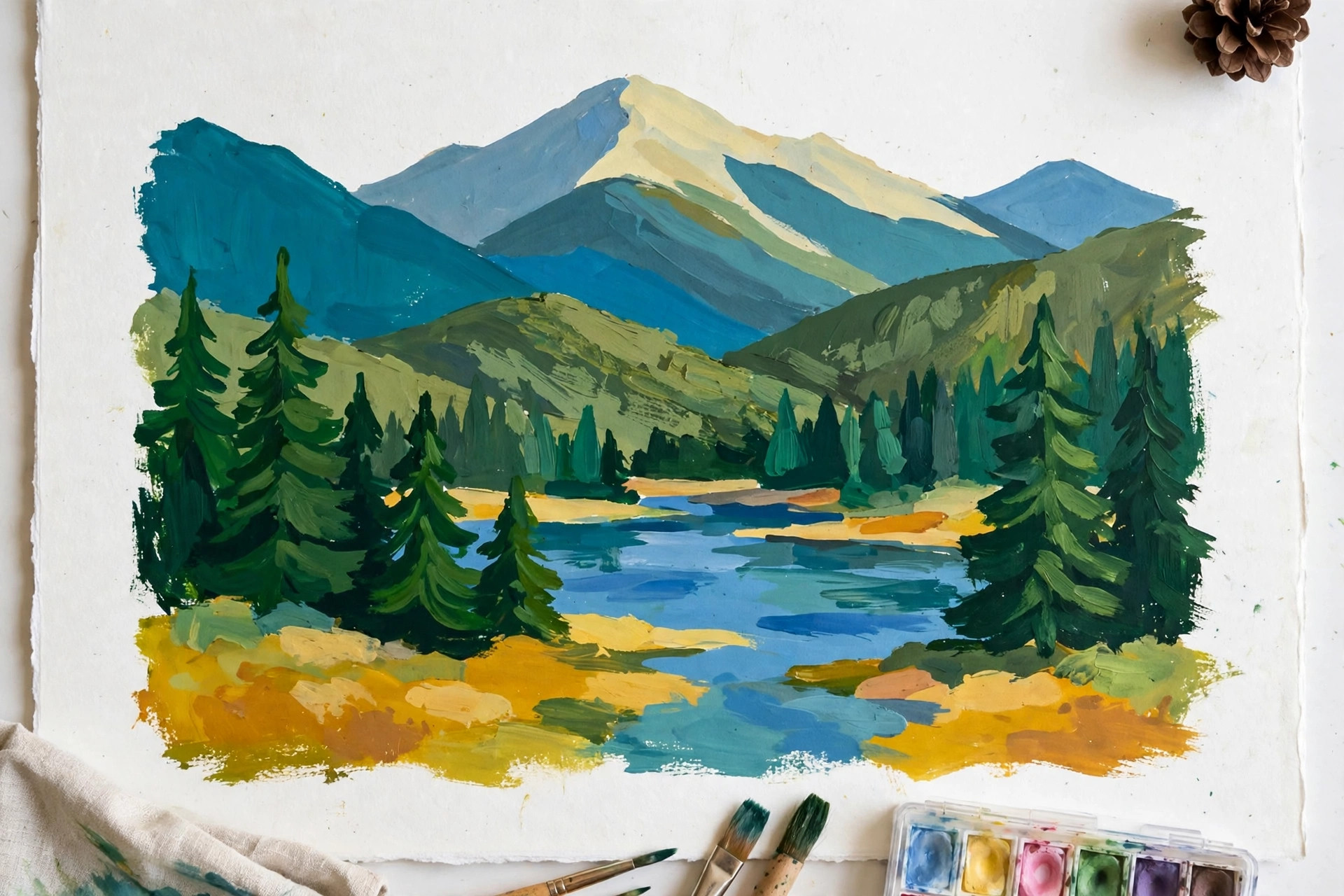
Neither paint is “better”; they give different looks and forgive different mistakes. Choose gouache if you like bold, flat color and want to fix errors by painting over them. Choose watercolor if you love soft, glowing washes and do not mind planning your white areas in advance, because watercolor cannot cover a mistake.
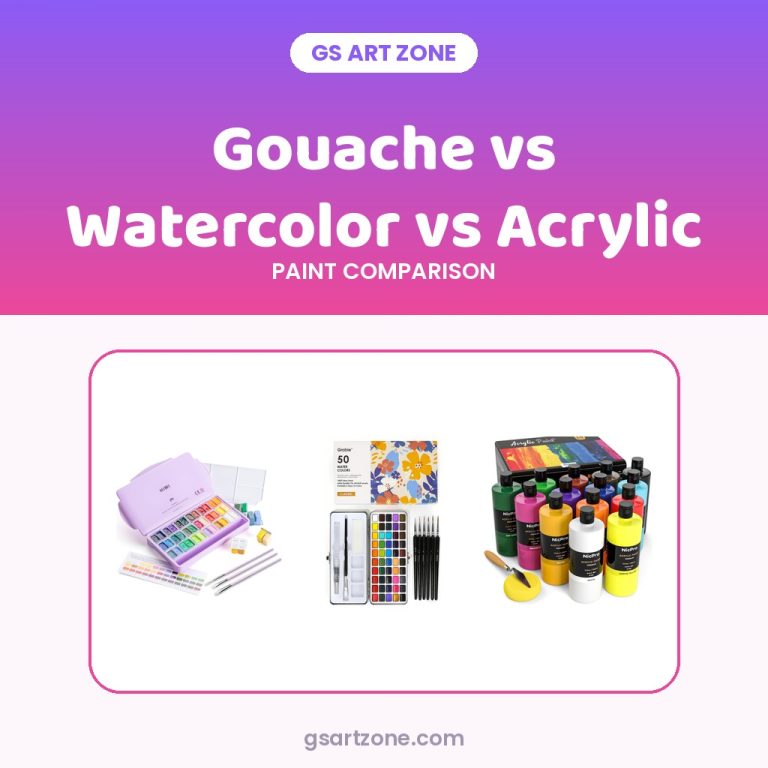
Many artists end up using both. Gouache is often called “opaque watercolor,” and the two mix happily in the same painting. If you want the full side-by-side picture before you spend money, read our detailed comparison of gouache vs watercolor vs acrylic, which also covers acrylic paint.
7 Tips to Improve at Gouache Fast
You improve at gouache fastest with small, regular practice and a few smart habits. None of these tips cost money, and together they make a bigger difference than any new supply.
1
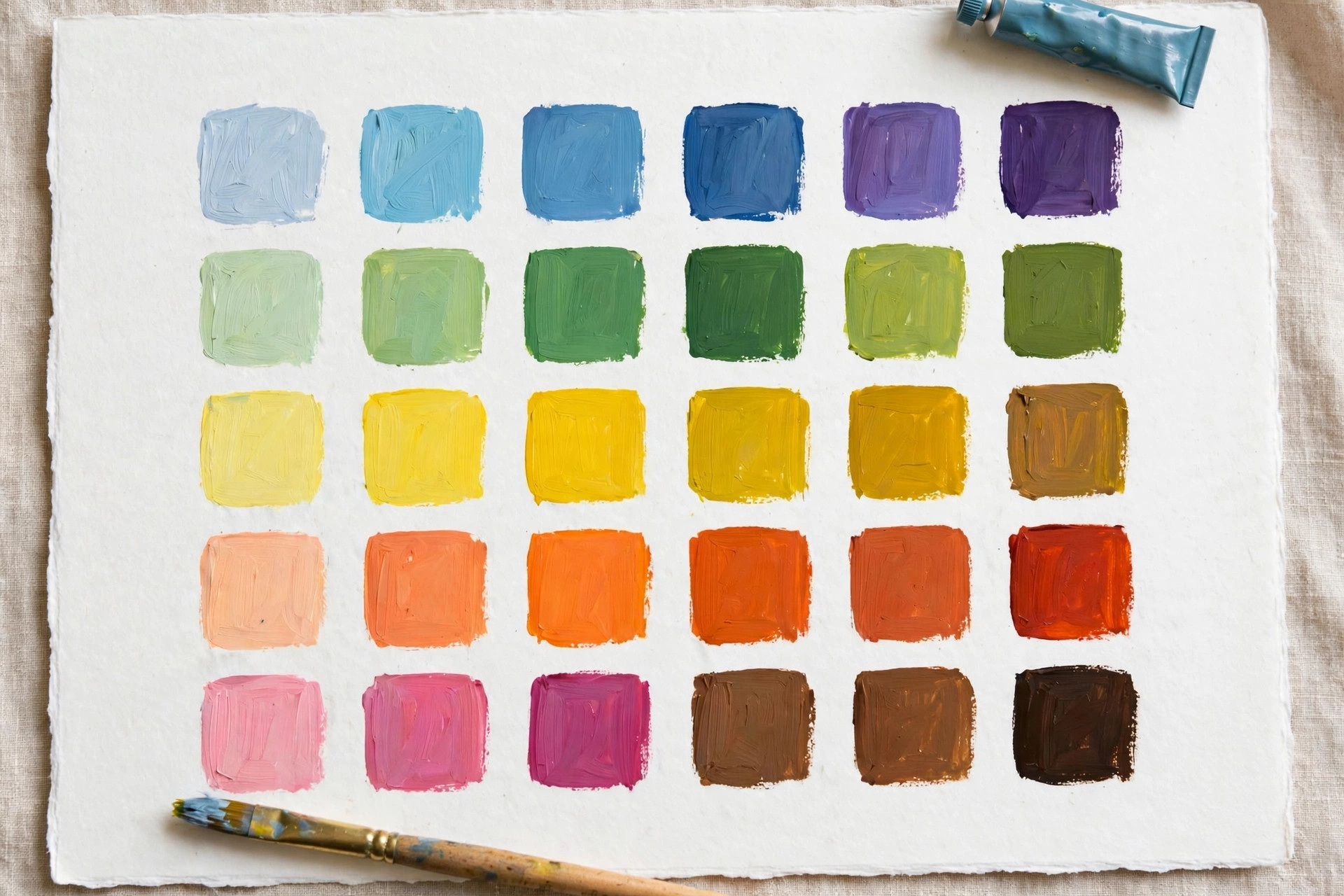
Make a swatch chart. Paint a small square of every color you own on one page, and label each one. A swatch chart (a test page of your colors) shows you how colors really look dry, because gouache often dries a shade darker or lighter than it looks wet.
2
Use a limited palette. A limited palette means using just 4 to 6 colors for a whole painting. Your colors automatically look harmonious, and you learn mixing much faster.
3
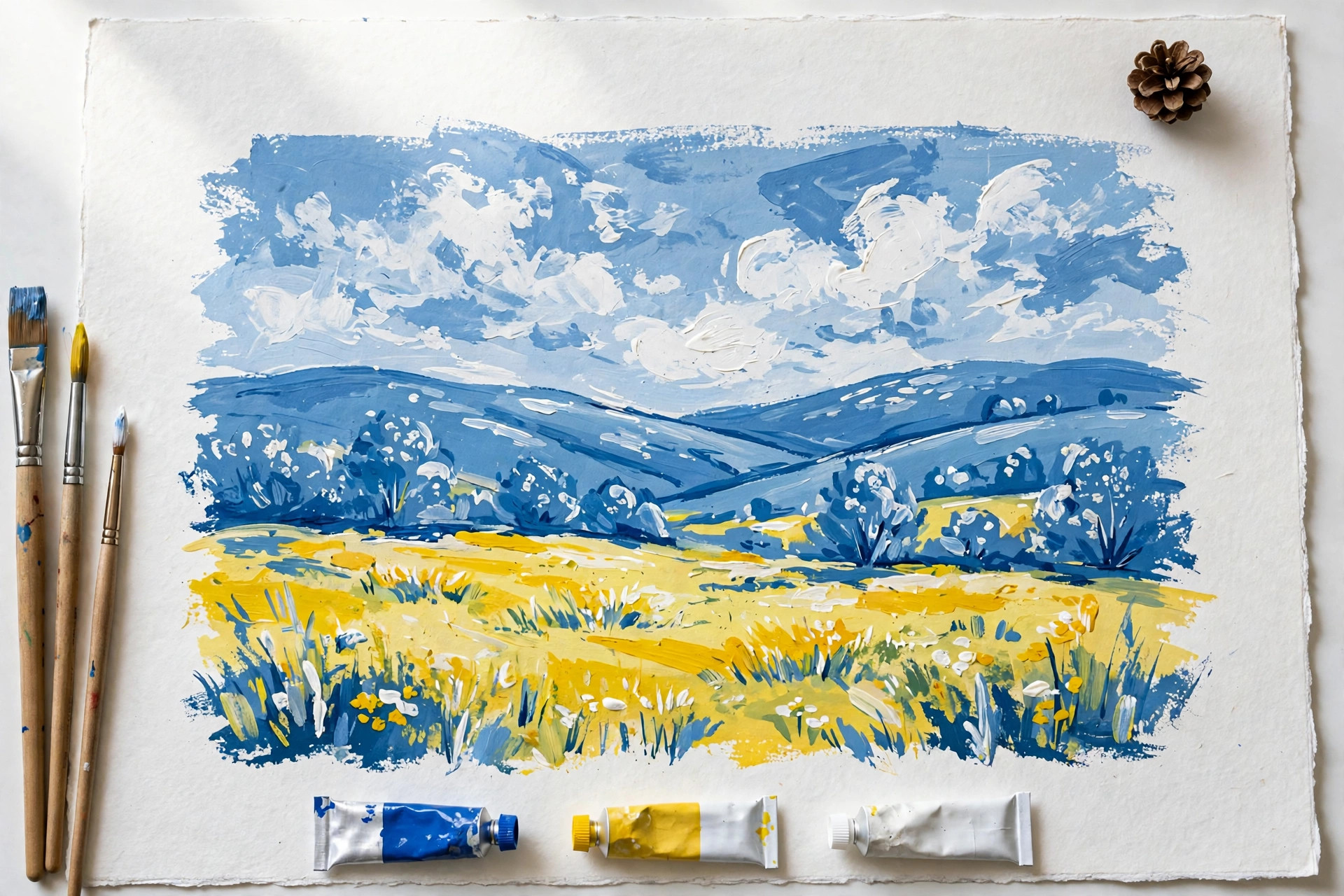
Paint small and often. A 20-minute mini painting every day teaches more than one big painting a month. Small pages are less scary, so you experiment more.
4
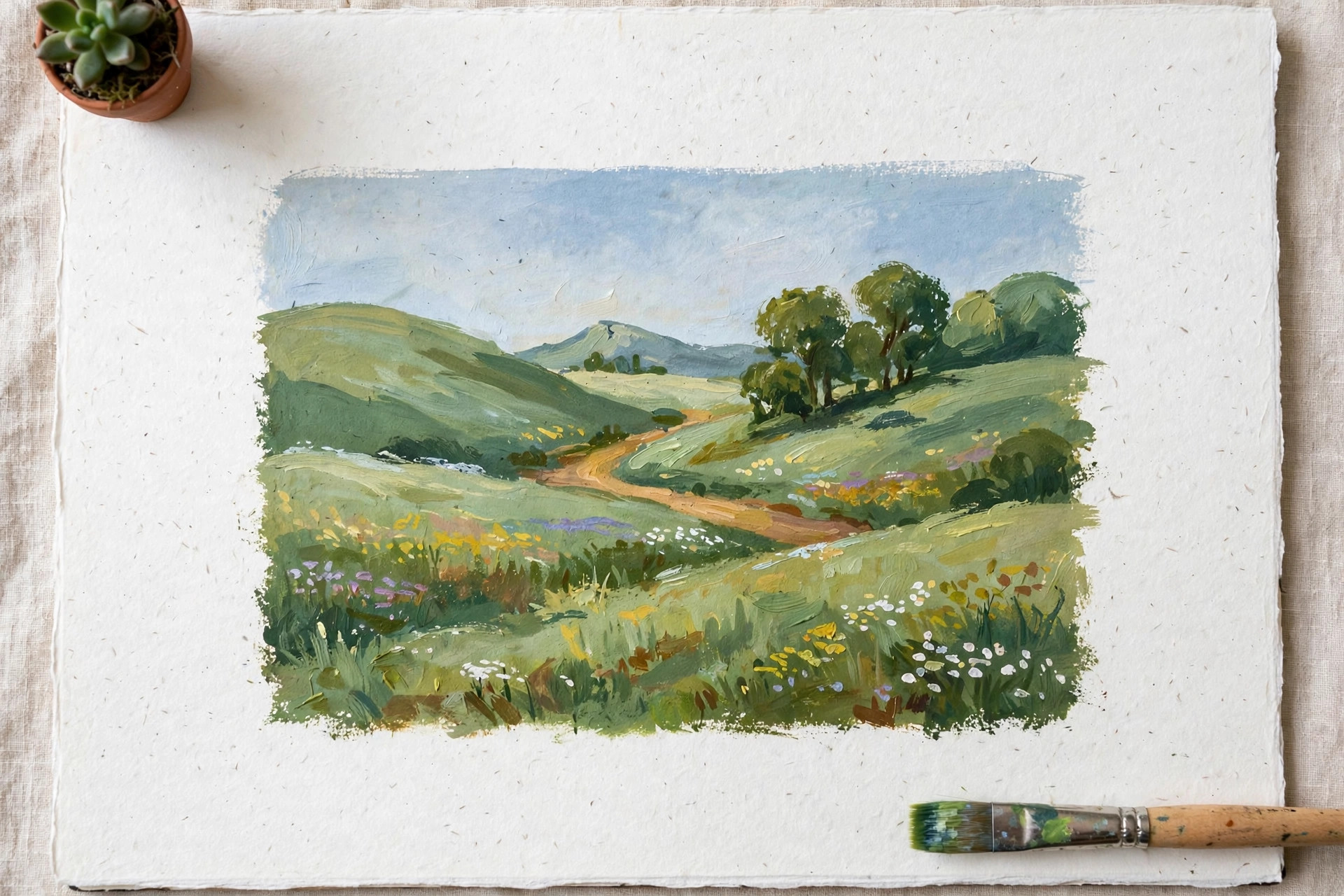
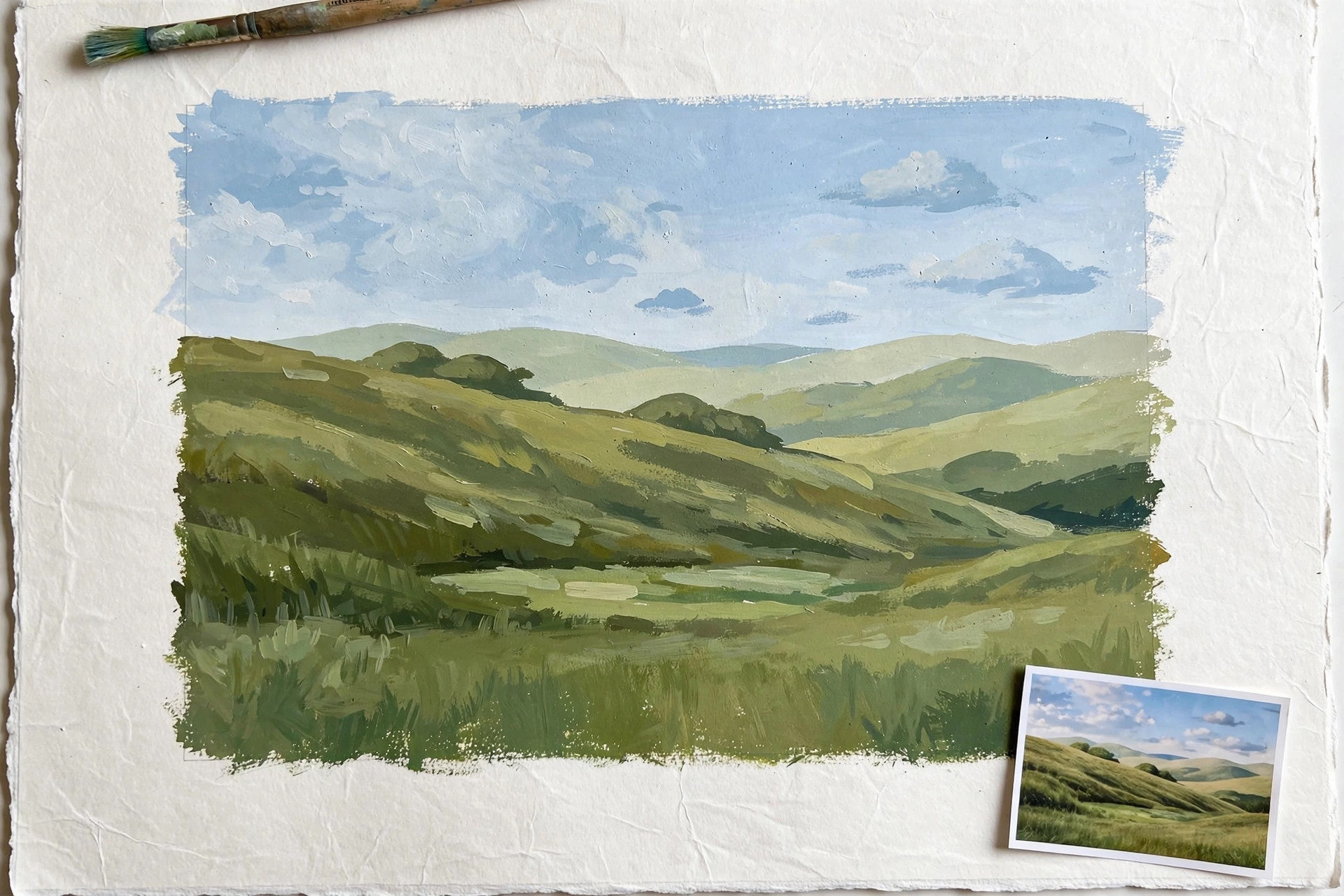
Copy simple reference photos. Painting from a photo trains your eye to see shapes and values (how light or dark something is). Start with single objects: a mug, a plant, an apple.
5
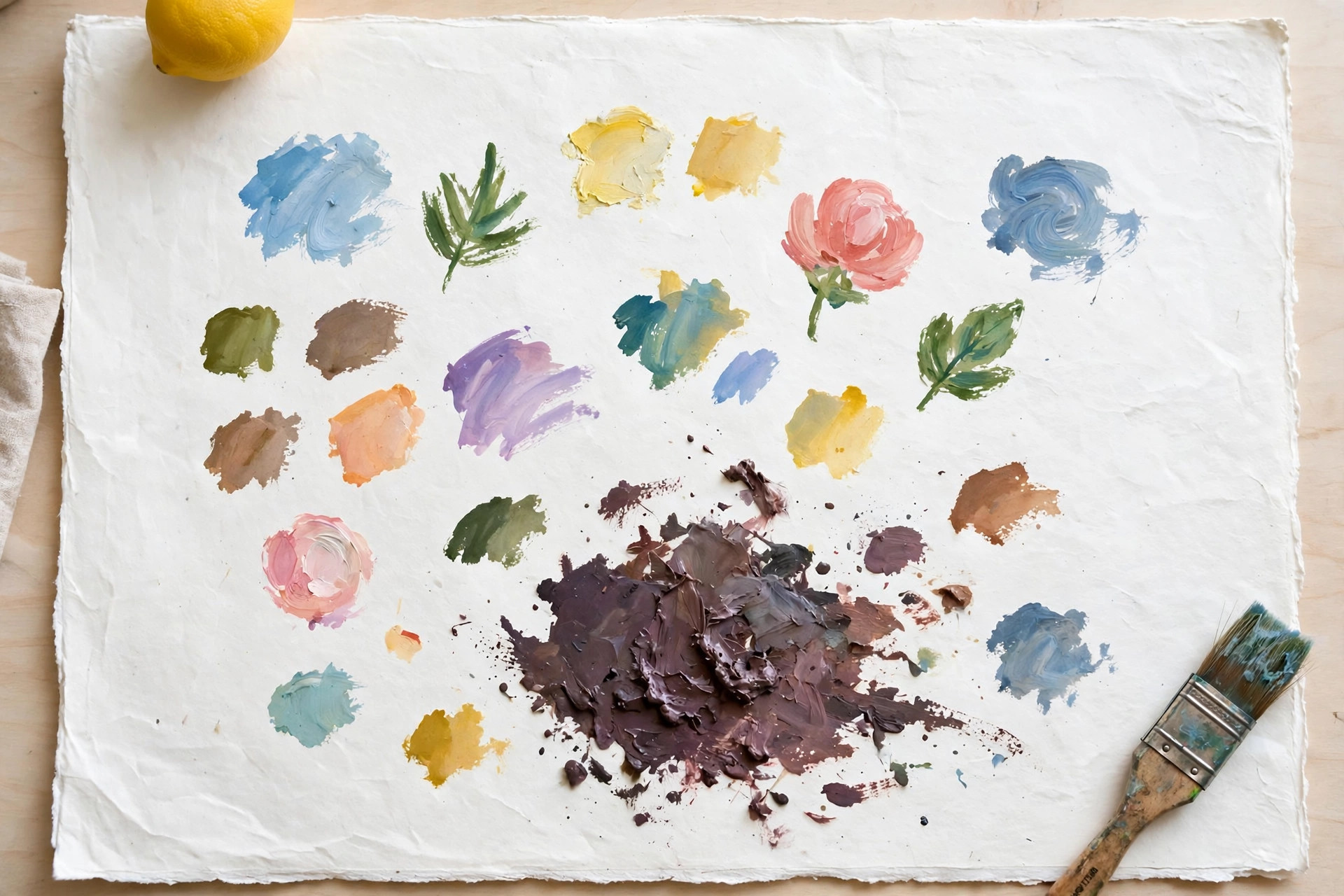
Keep a “mistakes” page. Test new mixes and brush strokes on scrap paper first. It removes the fear of ruining a good page.
6
Let layers dry. Count to a full five minutes between layers. Dry layers give you clean, sharp shapes; rushed layers give you mud.
7
Finish ugly paintings. Push through the messy middle stage instead of quitting. Most paintings look bad halfway and come together at the end, and finishing teaches you recovery skills.
Frequently Asked Questions
Is gouache good for beginners?
Yes, gouache is one of the best paints for beginners. It is water-based, so cleanup is easy, and because it is opaque you can paint over mistakes instead of starting again. It also dries fast, so you can finish a small painting in one sitting.
Is gouache the same as acrylic?
No. Gouache and acrylic look similar in the tube, but they behave differently. Gouache dries matte, can be rewet with water even after it dries, and is made for paper. Acrylic dries like plastic, becomes waterproof, and cannot be rewet once dry.
Can you mix gouache with watercolor?
Yes. Gouache and watercolor are both water-based and mix well together. Many artists paint the transparent parts with watercolor and add opaque details with gouache on top. You can also stir a little gouache into watercolor to make it less see-through.
Does gouache need special paper?
It does not need gouache-only paper, but it does need thick paper. Use watercolor or mixed-media paper of at least 300 gsm so the page stays flat and the paint sits smoothly. Thin sketchbook paper will wrinkle and may tear.
How long does gouache take to dry?
A thin layer of gouache usually dries in 5 to 15 minutes, depending on how thick it is and how humid the room is. Thick jelly gouache can take a little longer. Wait until the surface looks fully matte and feels dry before adding the next layer.
Where to Go Next
Now that you know the basics, the fastest way to grow is to compare your options and then paint a lot of small pieces. Start with our head-to-head guide to gouache vs watercolor vs acrylic if you are still choosing a first paint. Then jump into these easy gouache painting ideas for beginners and finish one small painting today. If streaks are ruining your flat areas, the fixes in why is my gouache streaky will help. And whenever you need to restock or upgrade, the art supplies guide explains every basic tool in plain words.

Similar Posts