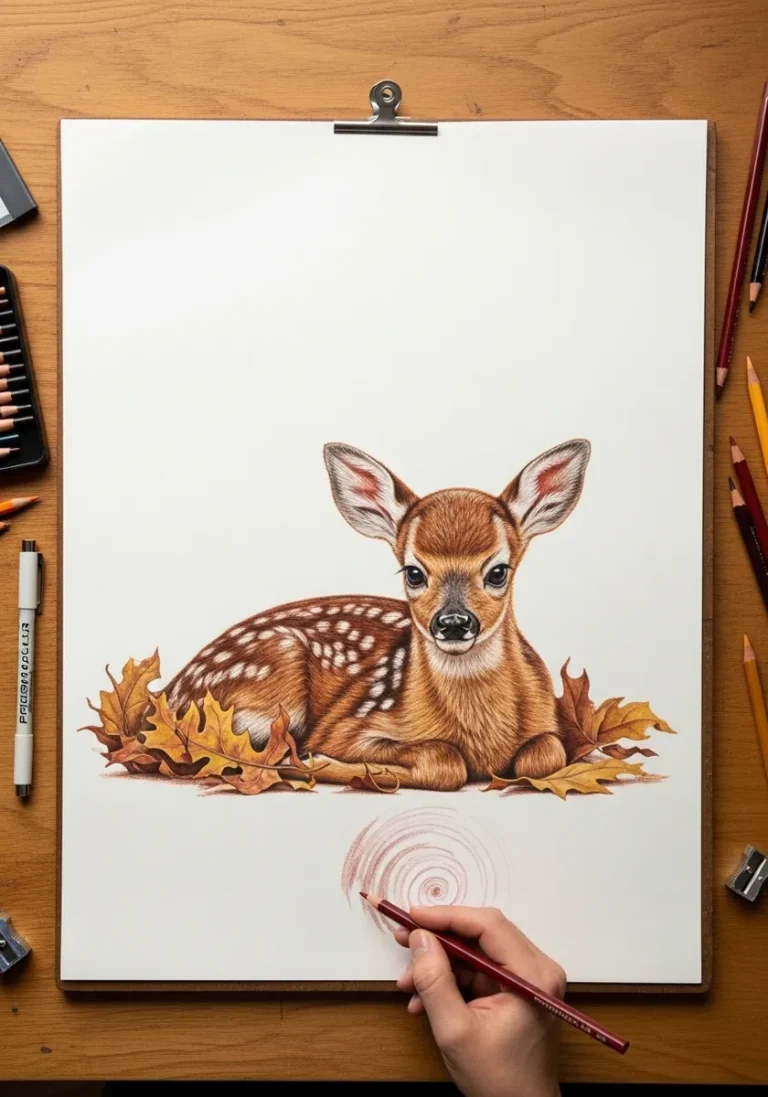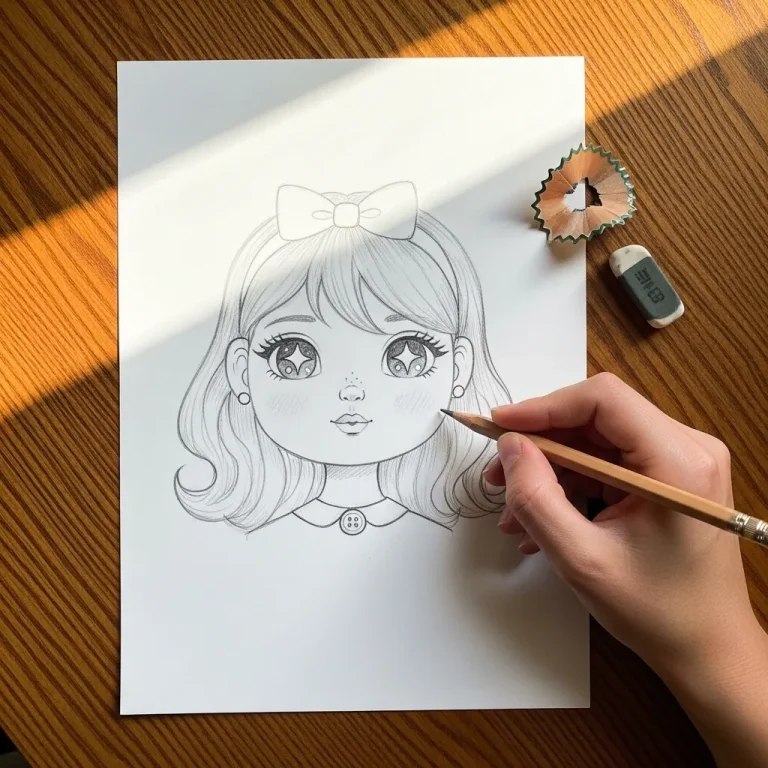
Fall is the easiest season to make look good on paper, and these 25 fall drawing ideas prove it. Warm oranges, reds, and golds do half the work for you, so even a five-minute sketch of a single leaf can look warm, cozy, and finished. If your sketchbook has been sitting empty since summer, autumn is the perfect time to open it again.
The ideas below are grouped into three simple themes: nature, cozy home scenes, and fall treats and objects. Every idea is beginner friendly, needs only a pencil and a few warm colors, and comes with a quick way to start plus one small tip. Pick one idea a day and you will have a full autumn sketchbook before the season ends.
TL;DR
- Fall is beginner friendly because warm colors make simple shapes look rich and finished.
- This list has 25 ideas in three groups: nature, cozy home scenes, and fall treats and objects.
- You only need five colors for almost every idea here: burnt orange, mustard yellow, deep red, warm brown, and sage green.
- Short on time? Draw one idea in five different styles across the week to build real skill fast.
In this guide
Leaves, Trees and Nature (Ideas 1-8)
Nature is the best place to start because fall shapes are simple and forgiving. A leaf, an acorn, or a mushroom does not need perfect lines to look right, and small wobbles just make it feel more real. Start with these eight outdoor ideas.
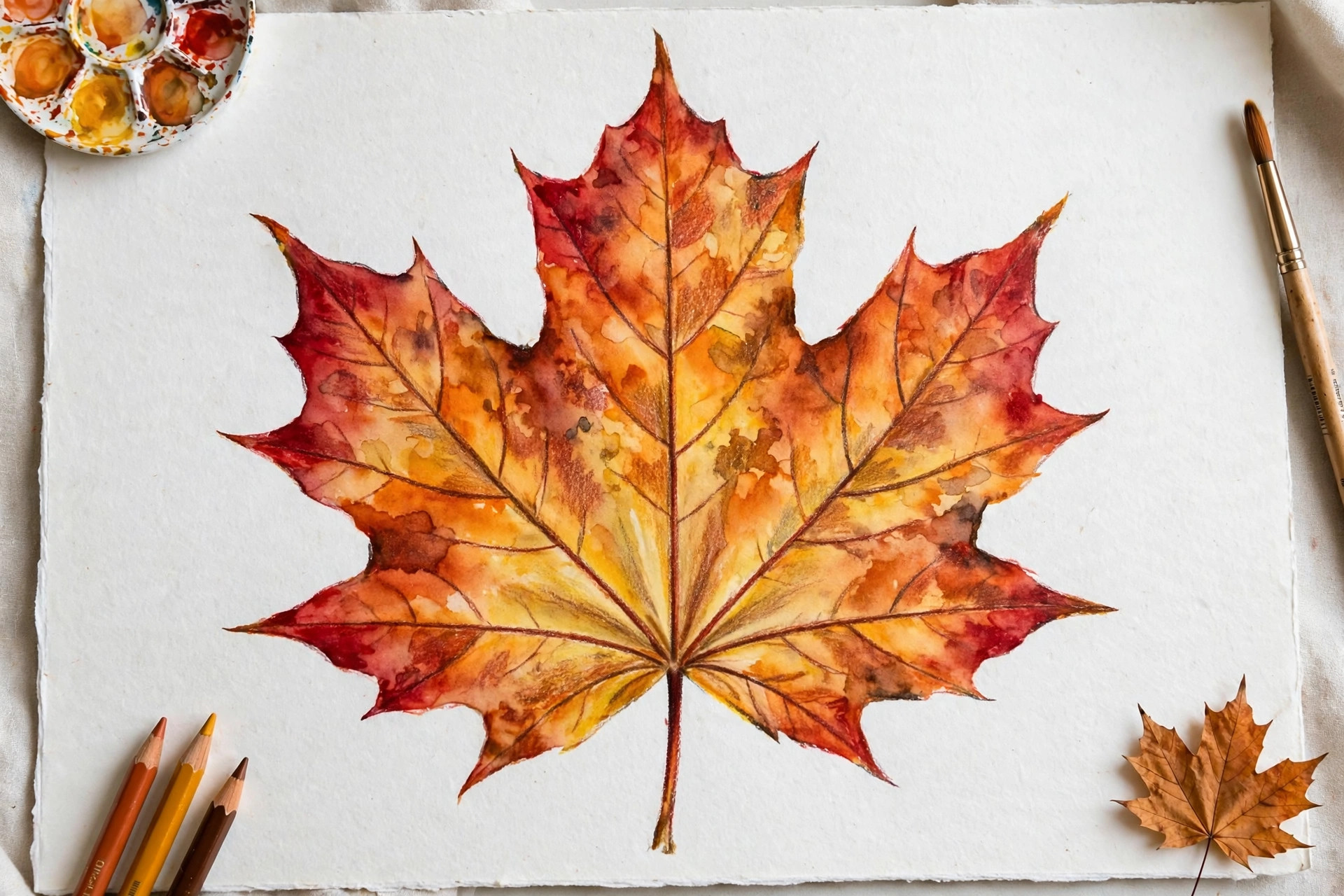
1. A single maple leaf. Start with a light star shape, then connect the points with soft zigzag lines to make the leaf edge. Add a thin stem and a few vein lines from the center. Tip: color one half slightly darker than the other so the leaf looks like it is curling.
2. A page of falling leaves. Fill the page with leaf shapes in different sizes, some big and detailed, some just small silhouettes (simple dark shapes with no detail inside). Turn a few sideways so the page feels like leaves drifting down. Tip: keep the biggest leaf near the middle as the main focus.
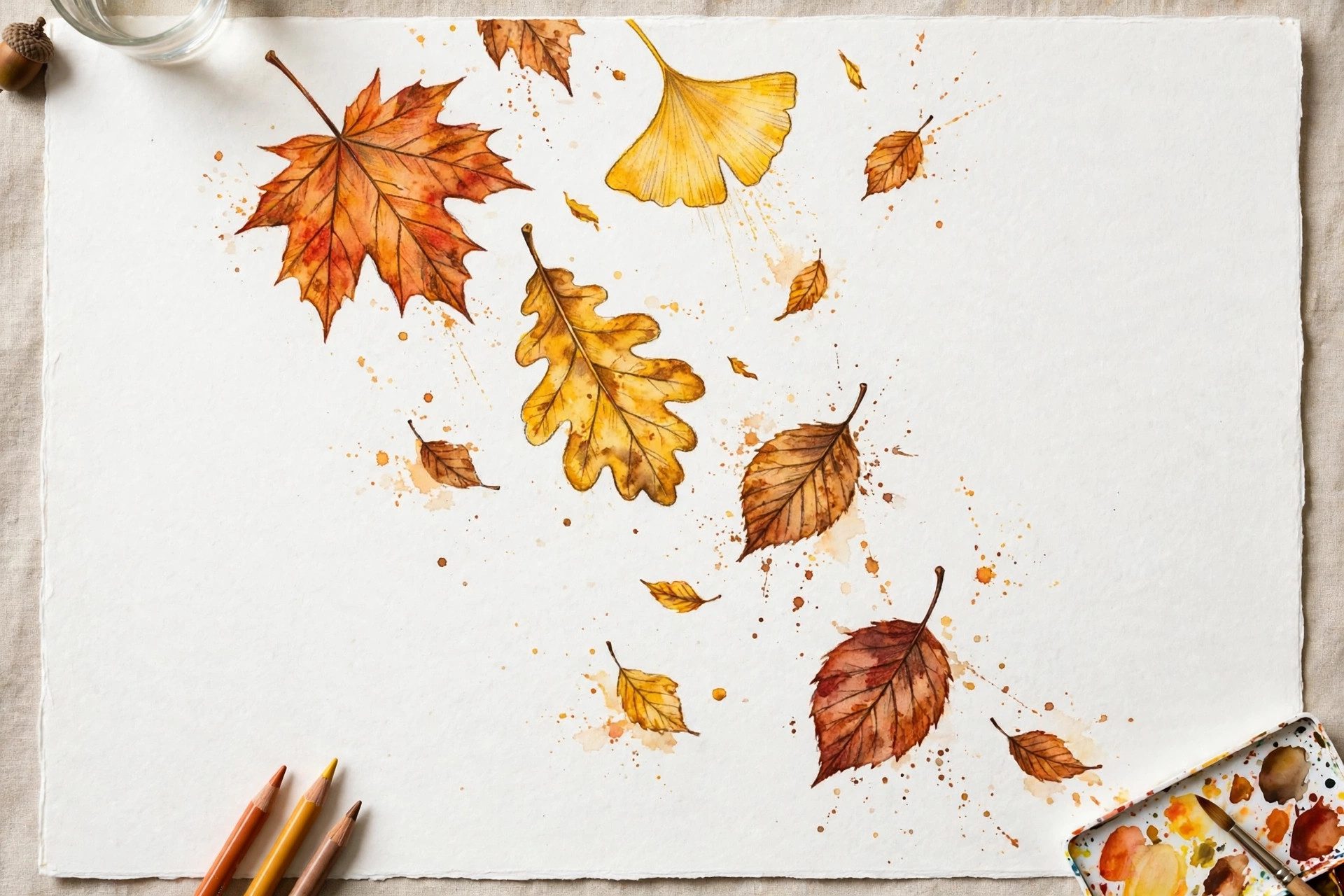
3. An autumn tree. Draw a thick trunk with two or three main branches, then build the leafy top from overlapping cloud shapes. Leave small white gaps between the clouds so it looks like light coming through. Tip: mix orange, red, and one touch of green in the canopy (the leafy top of the tree) for a natural look.
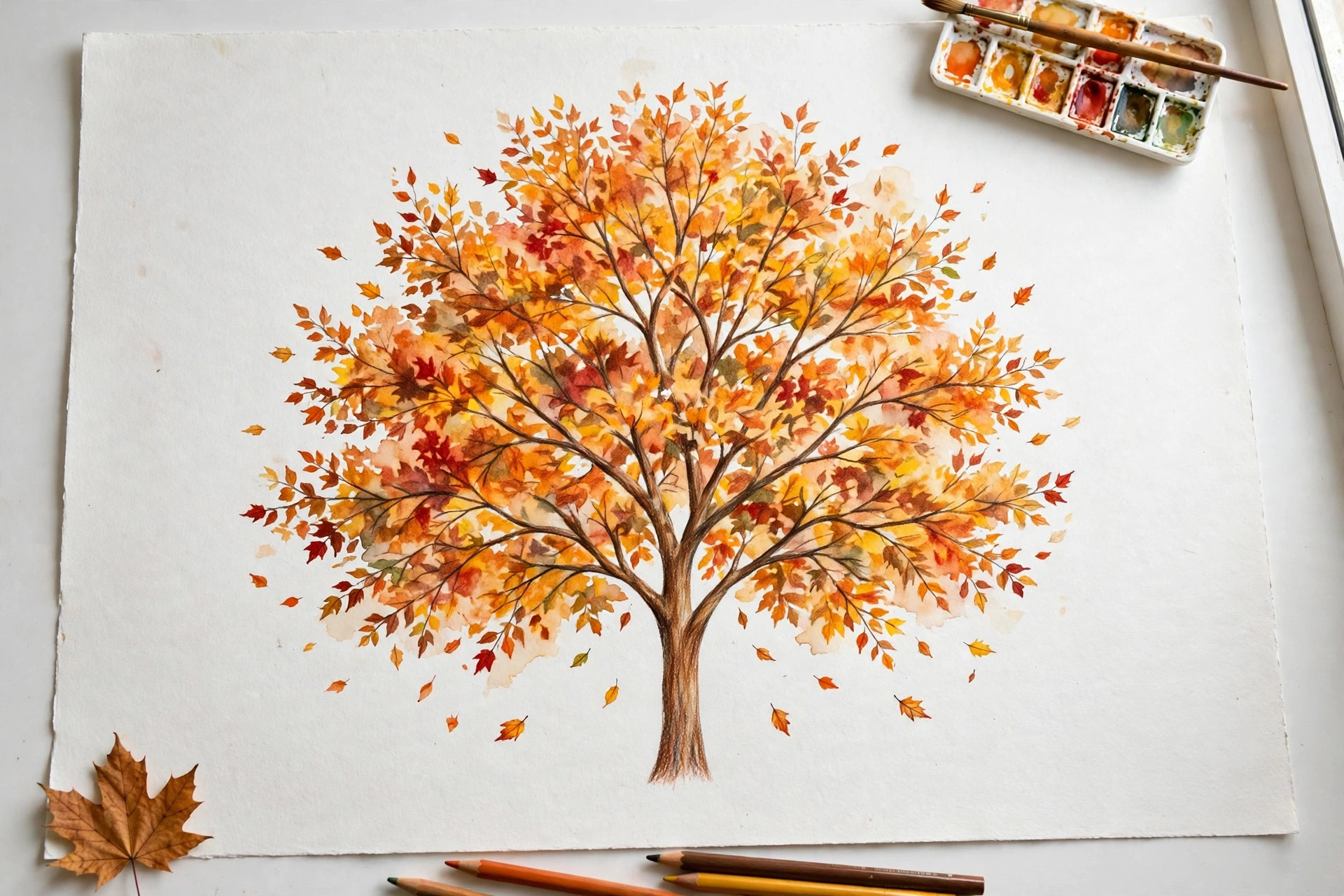
4. Acorns and pinecones. An acorn is just an oval with a bumpy cap and a tiny stem. A pinecone is rows of overlapping curved scales (the small shell-like pieces) stacked from wide at the top to a point at the bottom. Tip: draw three in a small group instead of one alone; groups always look better.
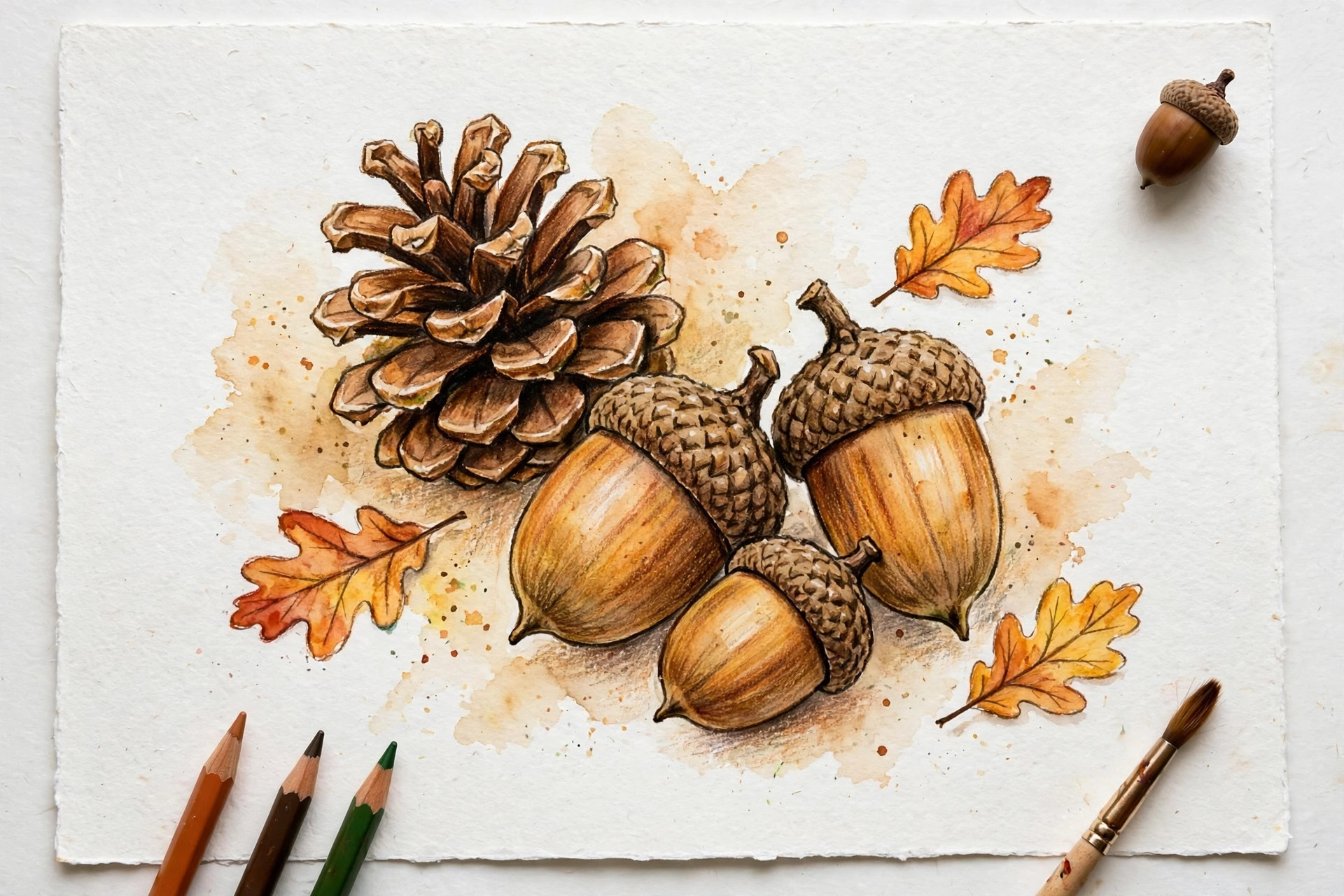
5. Mushrooms. Draw a rounded half-dome for the cap and a short thick stem under it. Add a few dots on the cap and a little grass at the base. Tip: a deep red cap with cream spots is the classic cozy fall mushroom and reads instantly on the page.
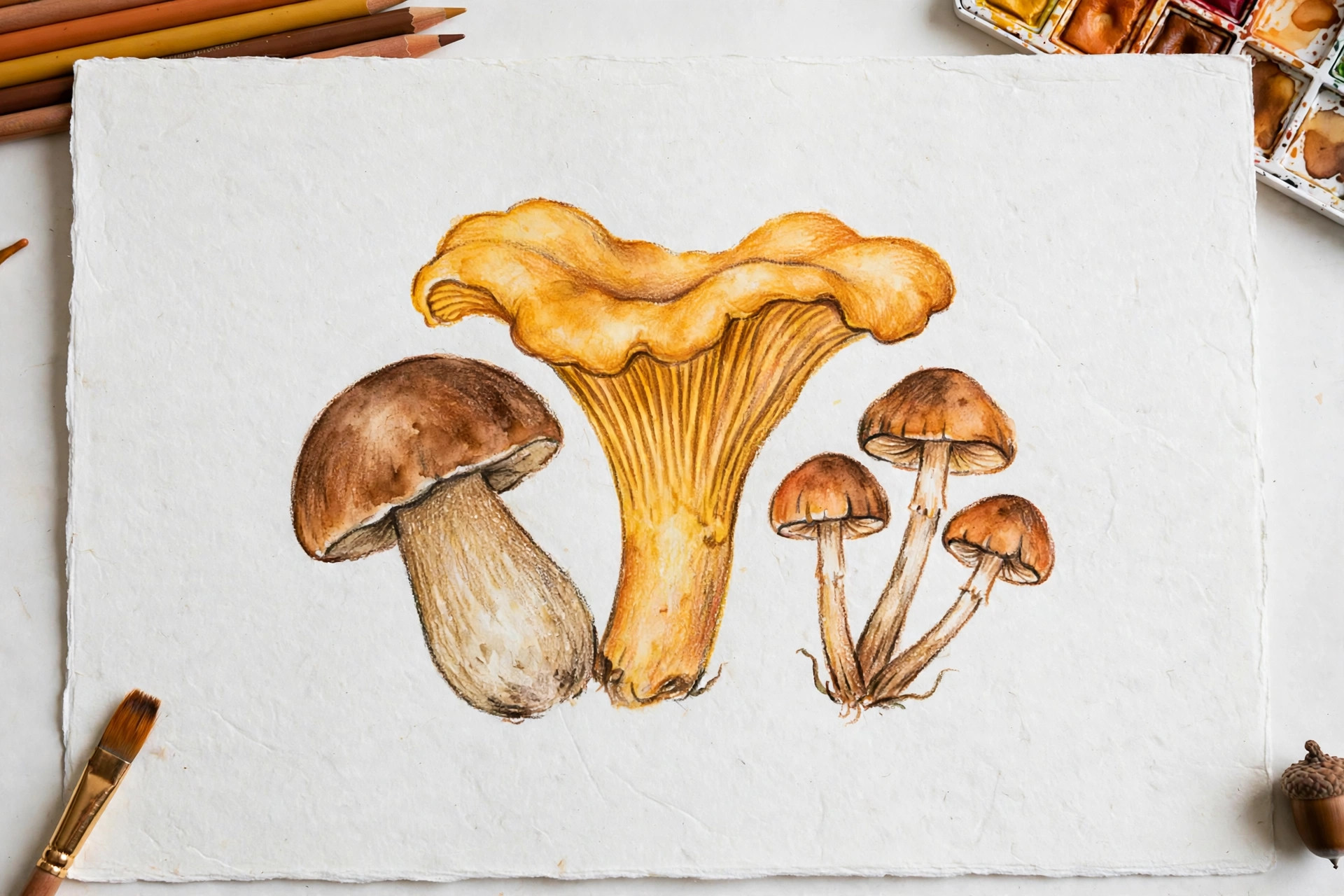
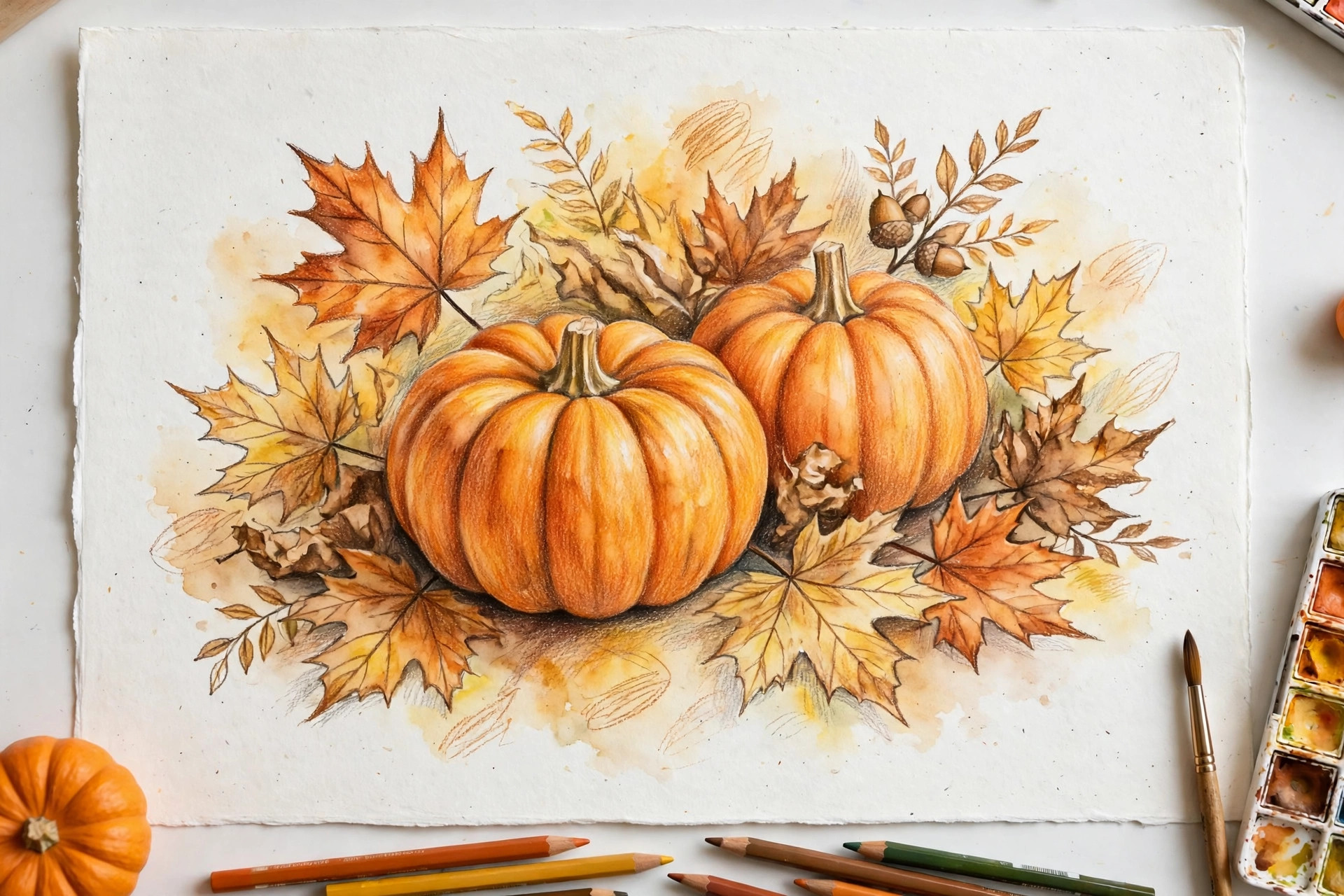
6. A pumpkin still life. A still life is a drawing of objects arranged together. Start with overlapping ovals for the pumpkin body, add curved lines from top to bottom for the ridges, then place a small leaf and a curled vine beside it. Tip: put the pumpkin slightly off-center and add a soft shadow under it.
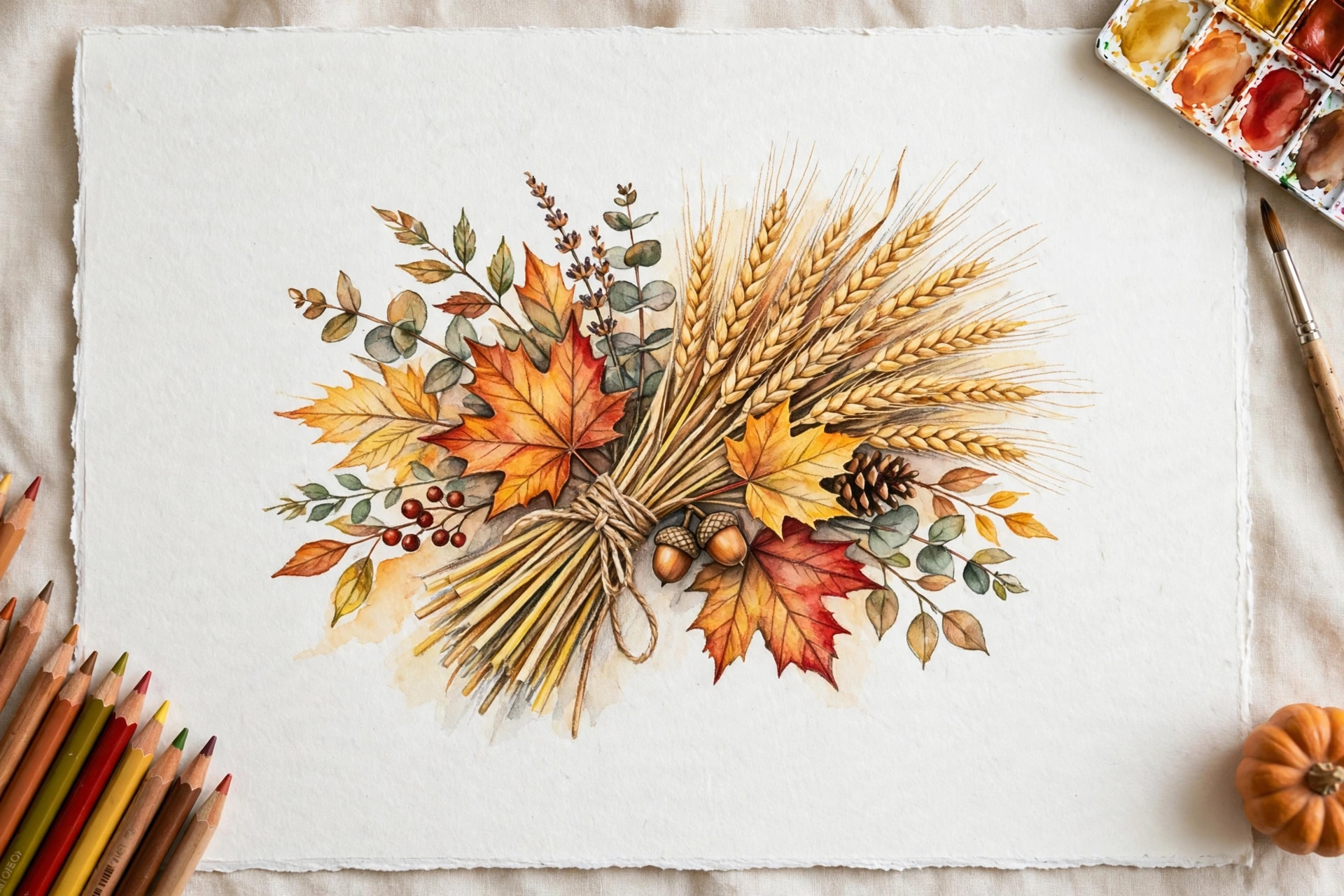
7. A harvest bundle. Sketch a simple bundle of wheat or corn: long thin stalks tied in the middle with a bow or a piece of string. Add two or three leaves hanging down. Tip: use long, loose lines here; stiff straight lines make it look like sticks instead of plants.
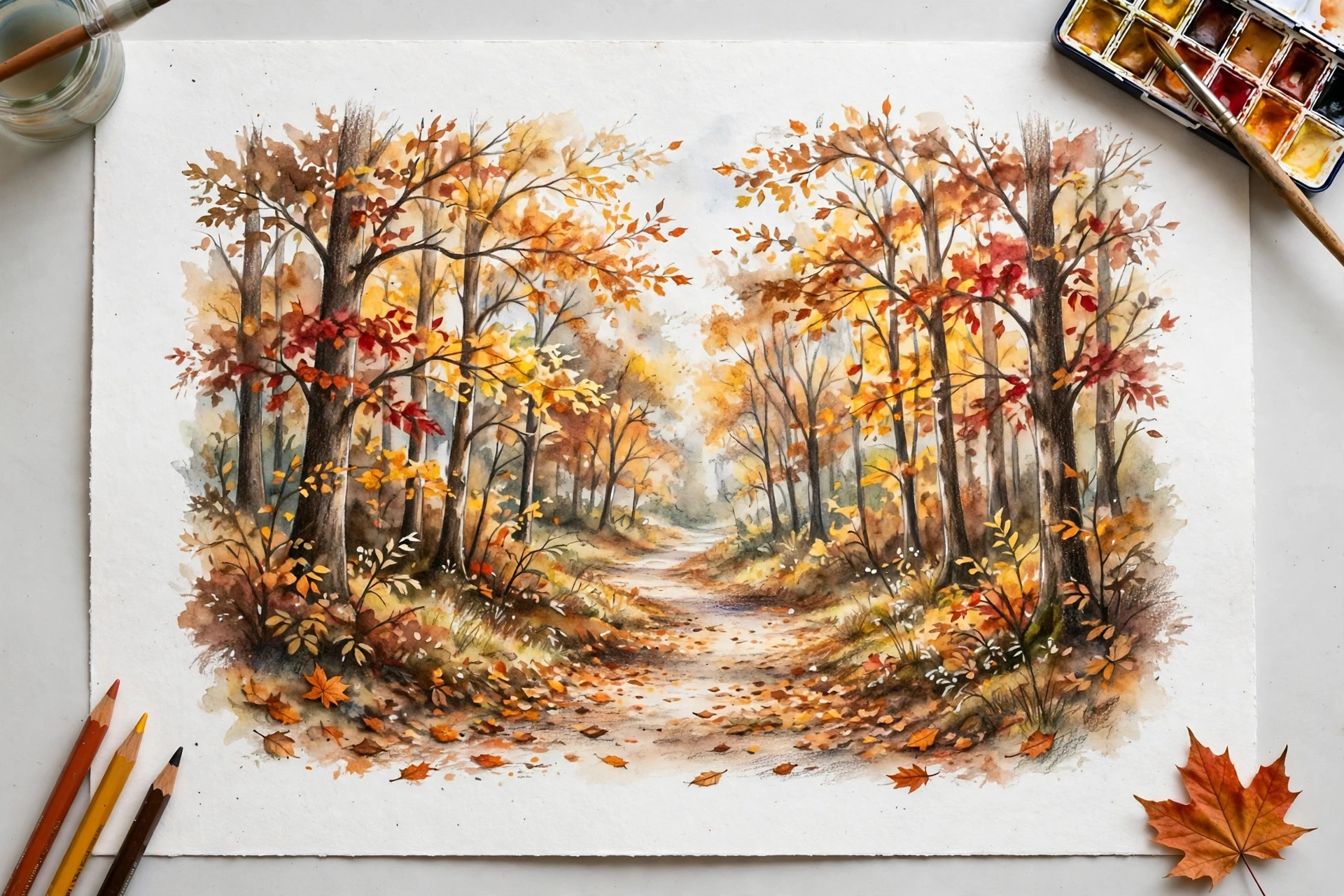
8. A forest path. Draw two lines that start wide at the bottom of the page and meet near the middle; that is your path. Add tree trunks on both sides, bigger near the front and smaller far away, plus scattered leaves on the ground. Tip: this is the easiest way to practice depth, which means making things look near or far.
Cozy Home Scenes (9-16)
Cozy home scenes are the heart of fall drawing because they tell a tiny story. You do not need a whole room; one window, one corner, or one small arrangement of objects is enough. Warm light is the secret: a candle, a fireplace, or a golden window makes everything feel snug.
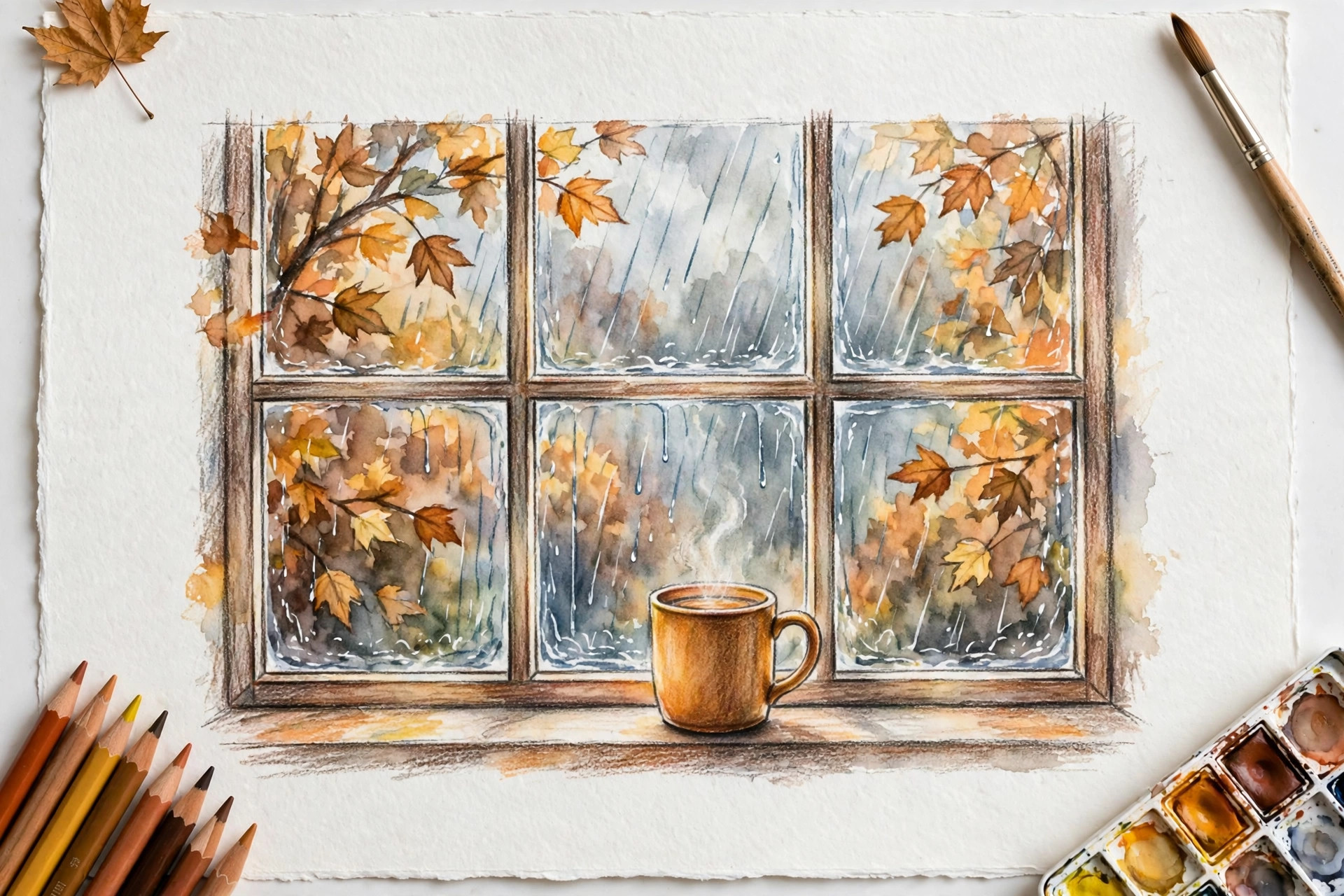
9. A rainy window with a mug. Draw a simple window frame, then add short diagonal lines and small drops on the glass for rain. Put a mug with steam curls on the windowsill. Tip: keep the mug big and in front; the rain can stay light and blurry behind it.
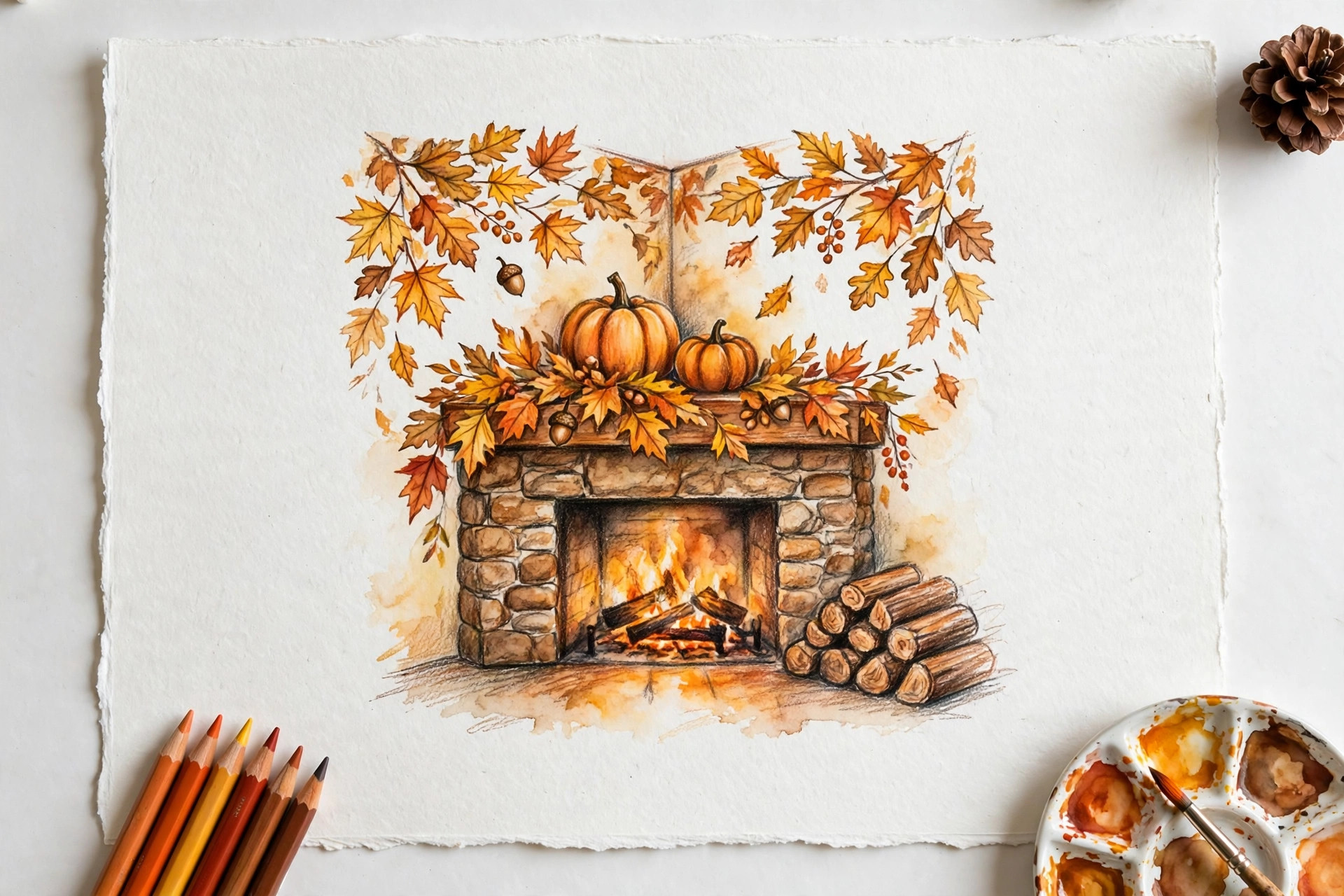
10. A fireplace corner. Start with a rectangle for the fireplace, an arch or rectangle inside for the fire, and a few log shapes. Add teardrop flame shapes in yellow and orange. Tip: draw a mantel (the shelf above the fireplace) with two candles or a tiny pumpkin to finish the scene.
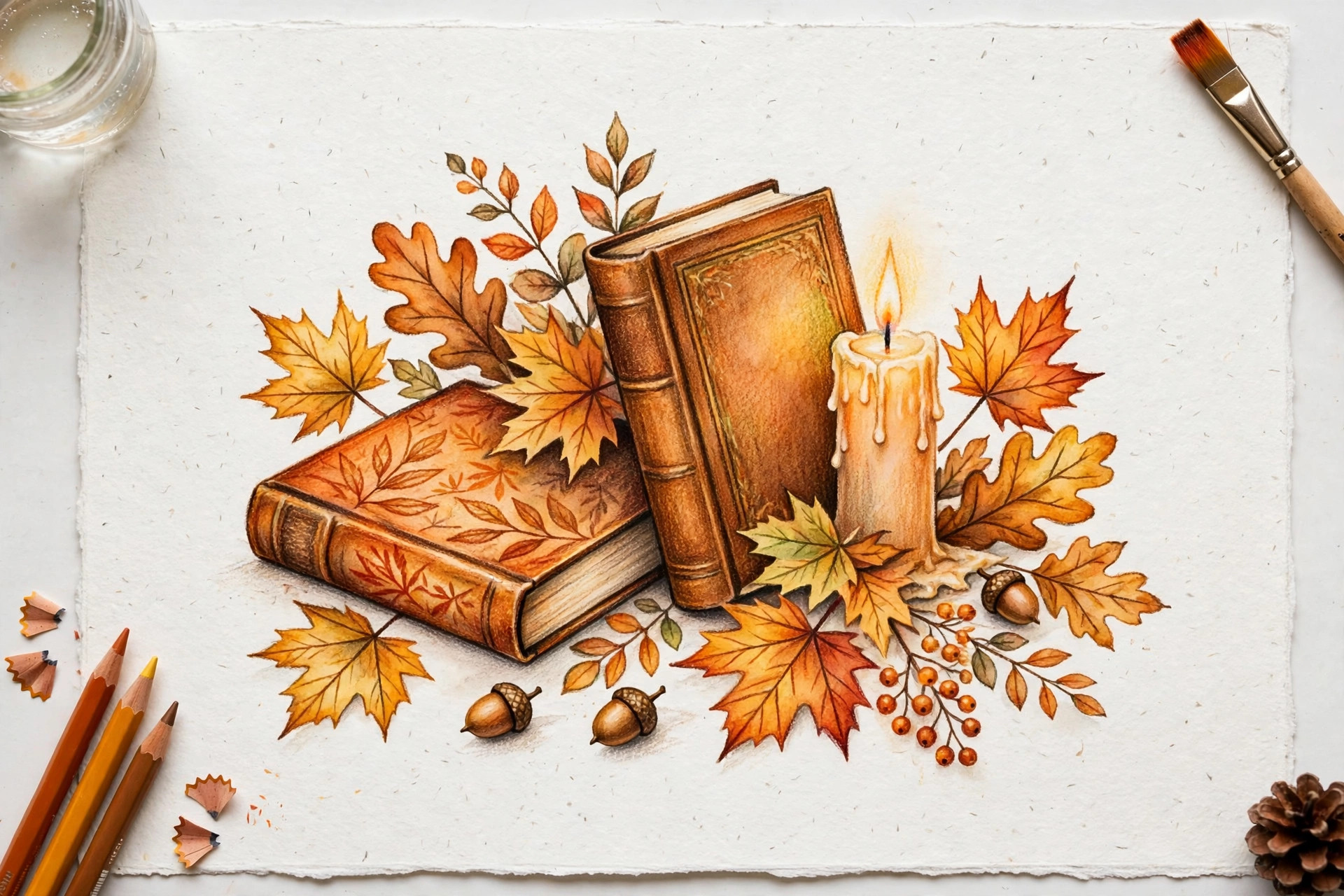
11. Books and a candle. Stack three books with slightly uneven edges, then add a short candle with a small flame on top or beside them. Tip: write fun fall titles on the book spines (the narrow side of the book); tiny details like this make viewers smile.
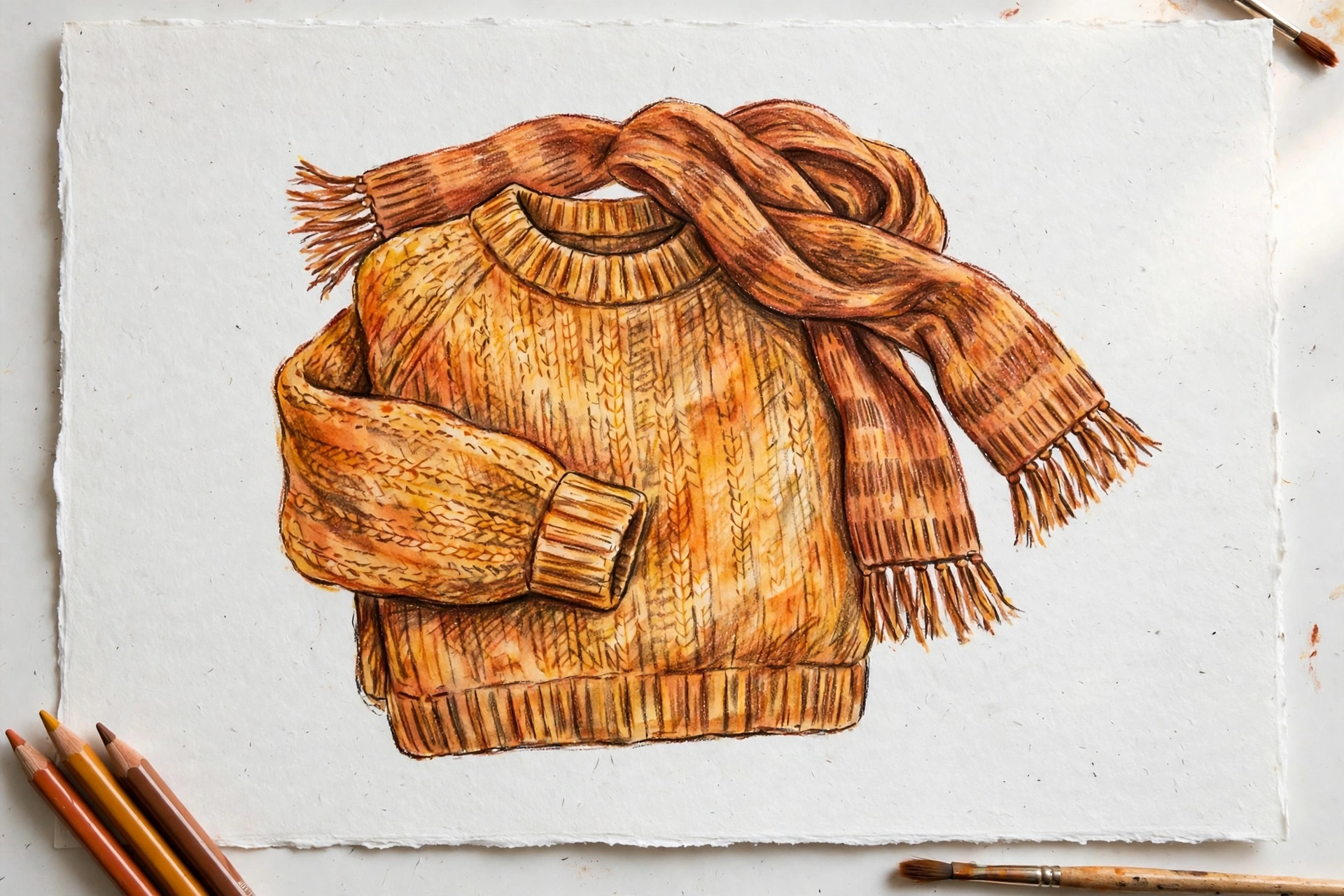
12. A sweater-and-scarf flat lay. A flat lay is a drawing of items arranged neatly as if seen from above. Draw a folded sweater as a soft rounded rectangle, then a scarf draped in an S-curve over it. Tip: add small ribbed lines (short repeated lines) on the cuffs and scarf ends to suggest knitted texture.
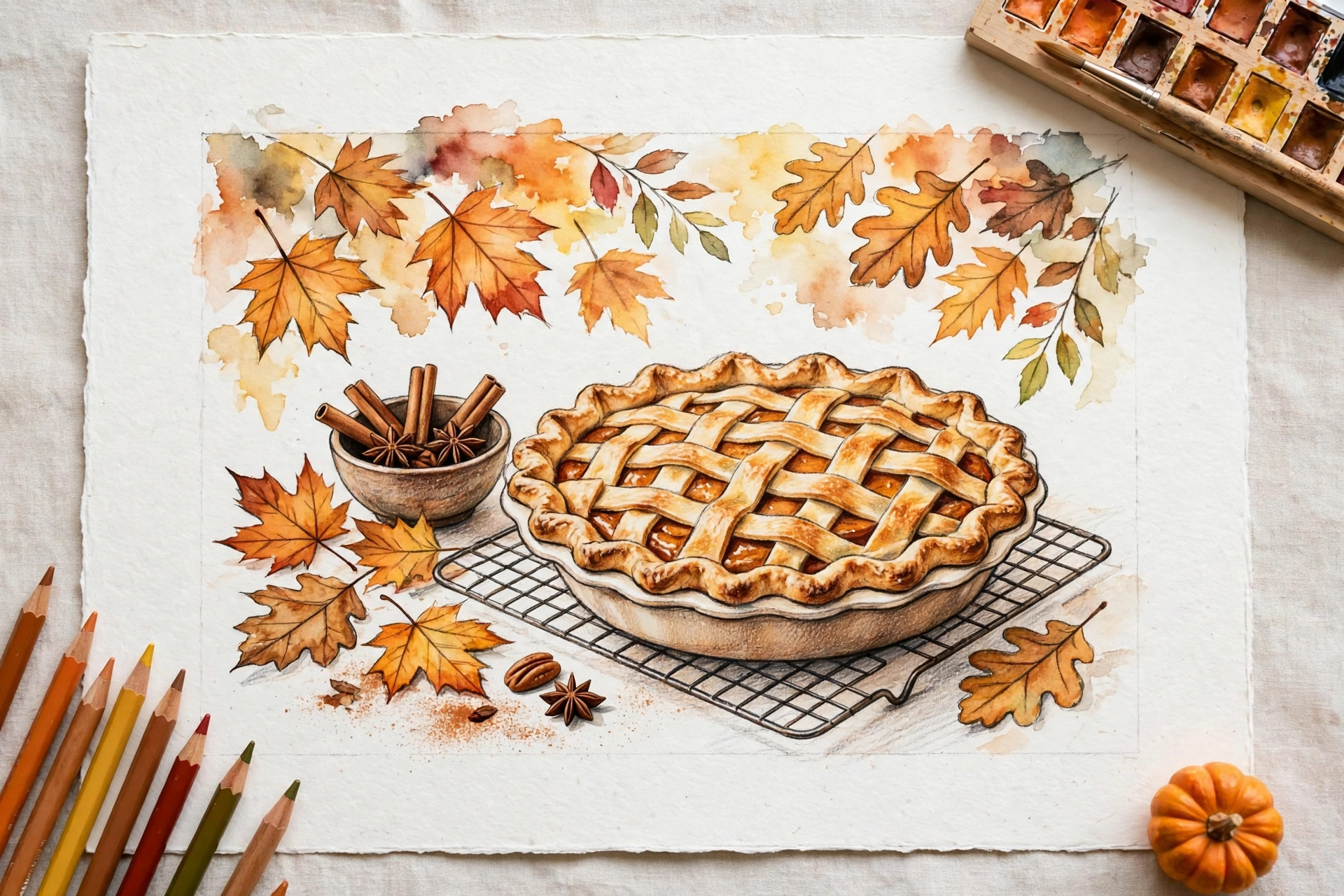
13. A baking scene. Sketch a mixing bowl, a rolling pin, and a pie with a crisscross top. Add a few apples or a small pumpkin beside the bowl for color. Tip: a light dusting of dots above the pie suggests flour and makes the scene feel alive.
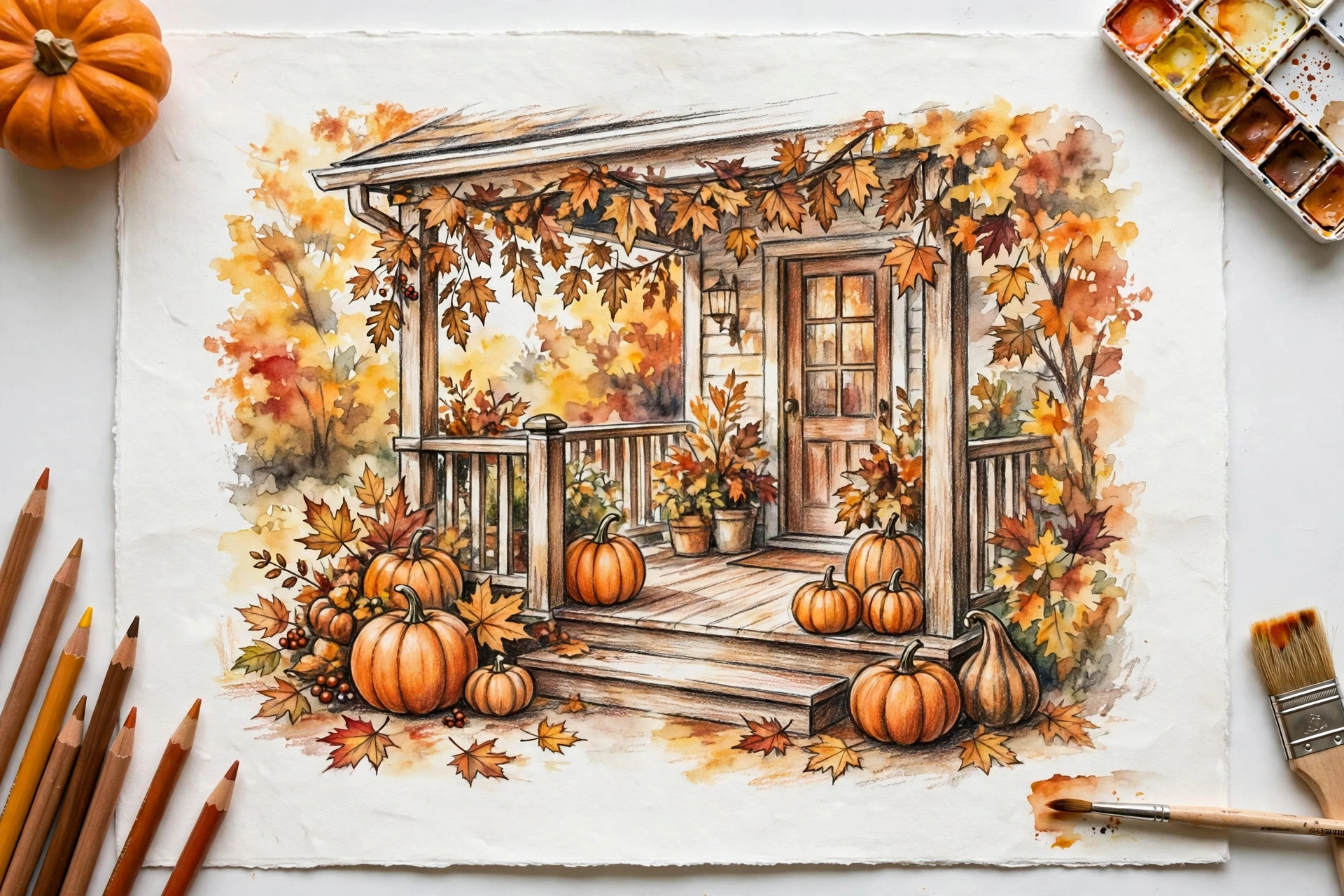
14. A porch with pumpkins. Draw two steps, place pumpkins of different sizes on them, and add a door or railing line behind. Tip: vary the pumpkin shapes, one tall, one round, one tiny; perfect copies look fake, small differences look real.
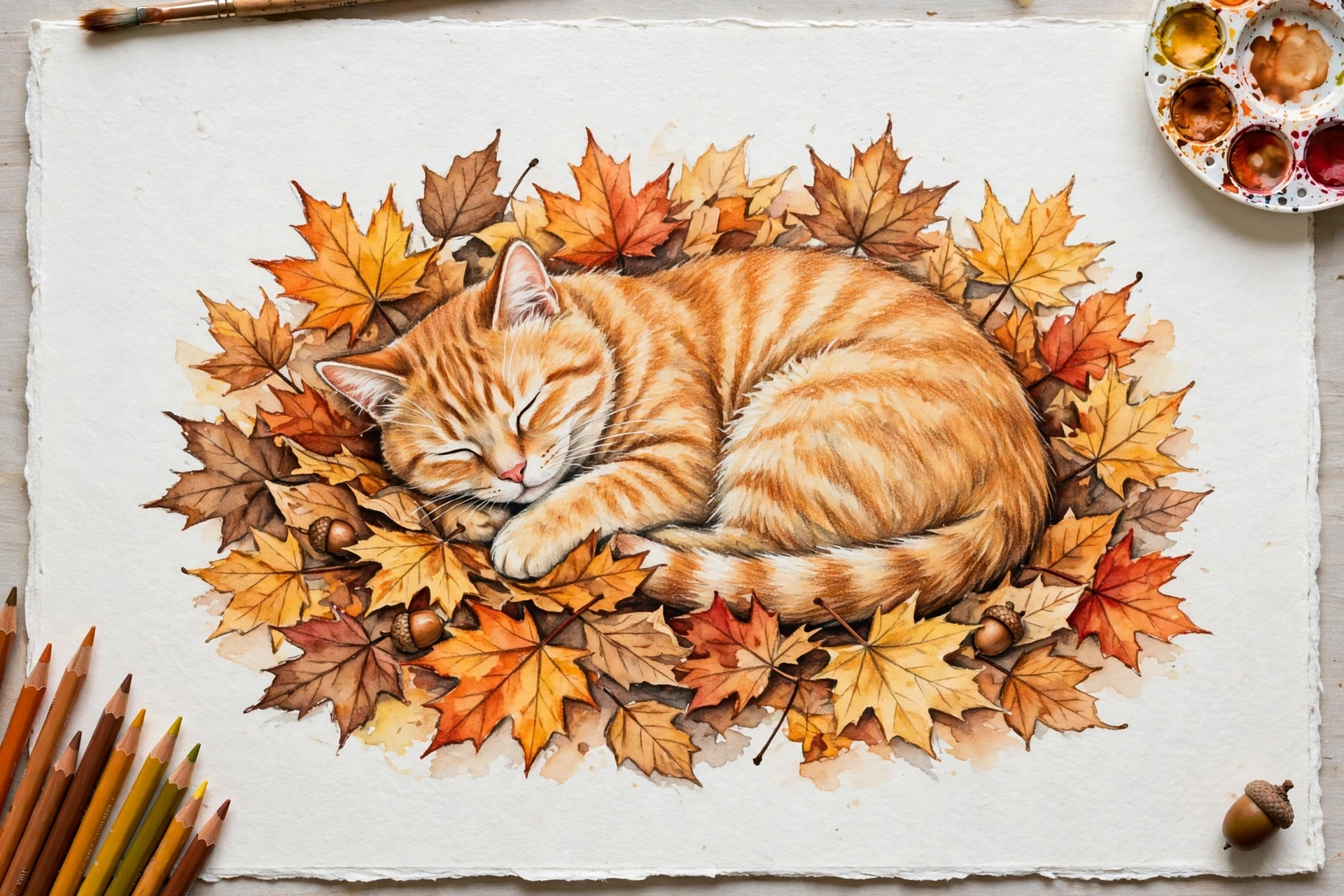
15. A cat sleeping on leaves. A sleeping cat is mostly one big curved shape: a round back, a tucked head, and a tail wrapped around. Scatter simple leaf shapes under and around it. Tip: keep the cat’s lines smooth and unbroken; calm lines make the cat look truly asleep.
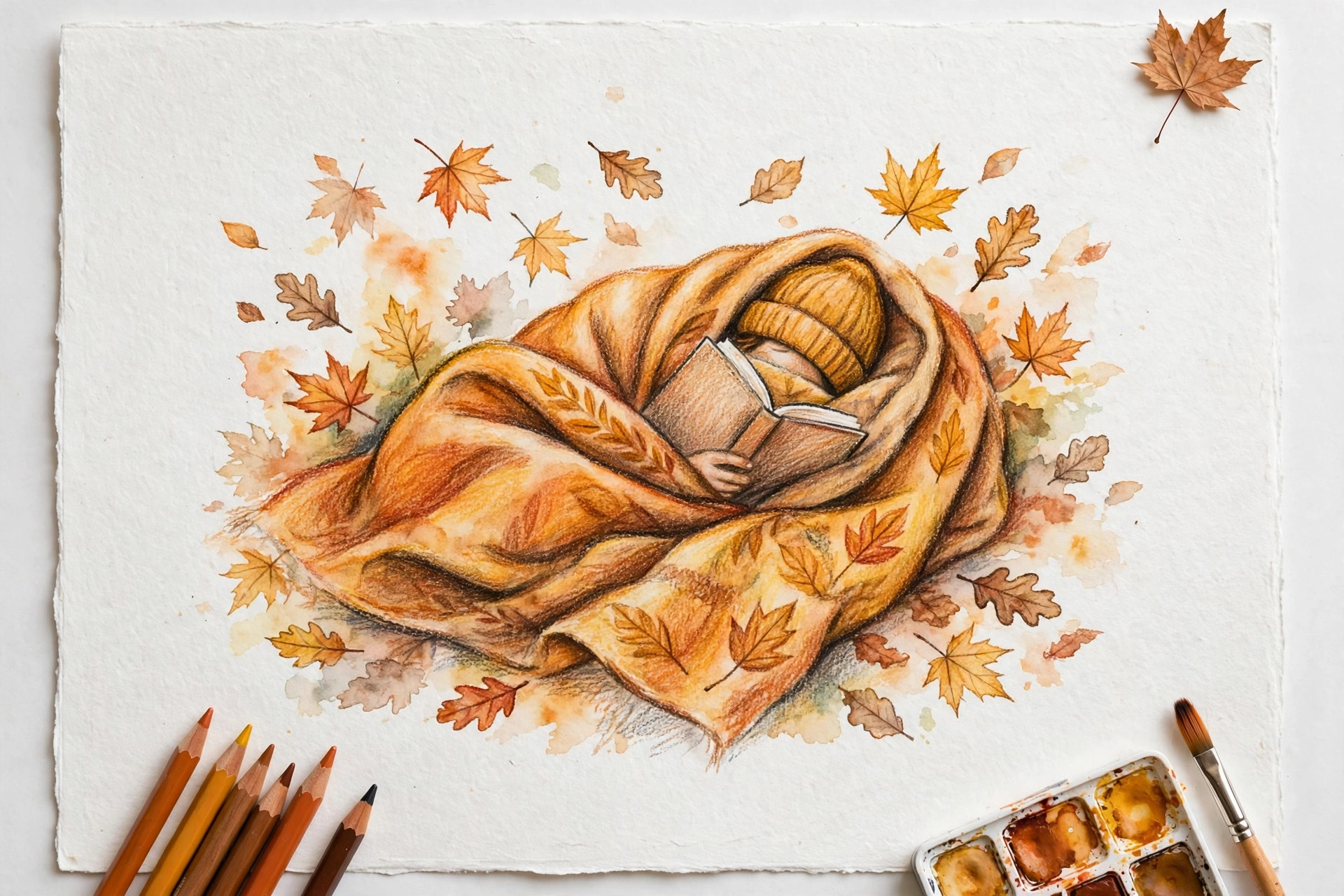
16. Reading under a blanket. Draw a cozy chair or just a big blanket shape with a book held open in front. A small lamp or mug beside it completes the story. Tip: drape the blanket with soft wave lines so it looks heavy and warm, not stiff.
Fall Treats and Objects (17-25)
Single objects are the fastest wins in this whole list. Each one is a simple shape with one or two details, so you can finish most of them in ten minutes. They also make great spot drawings to fill the corners of a sketchbook page.
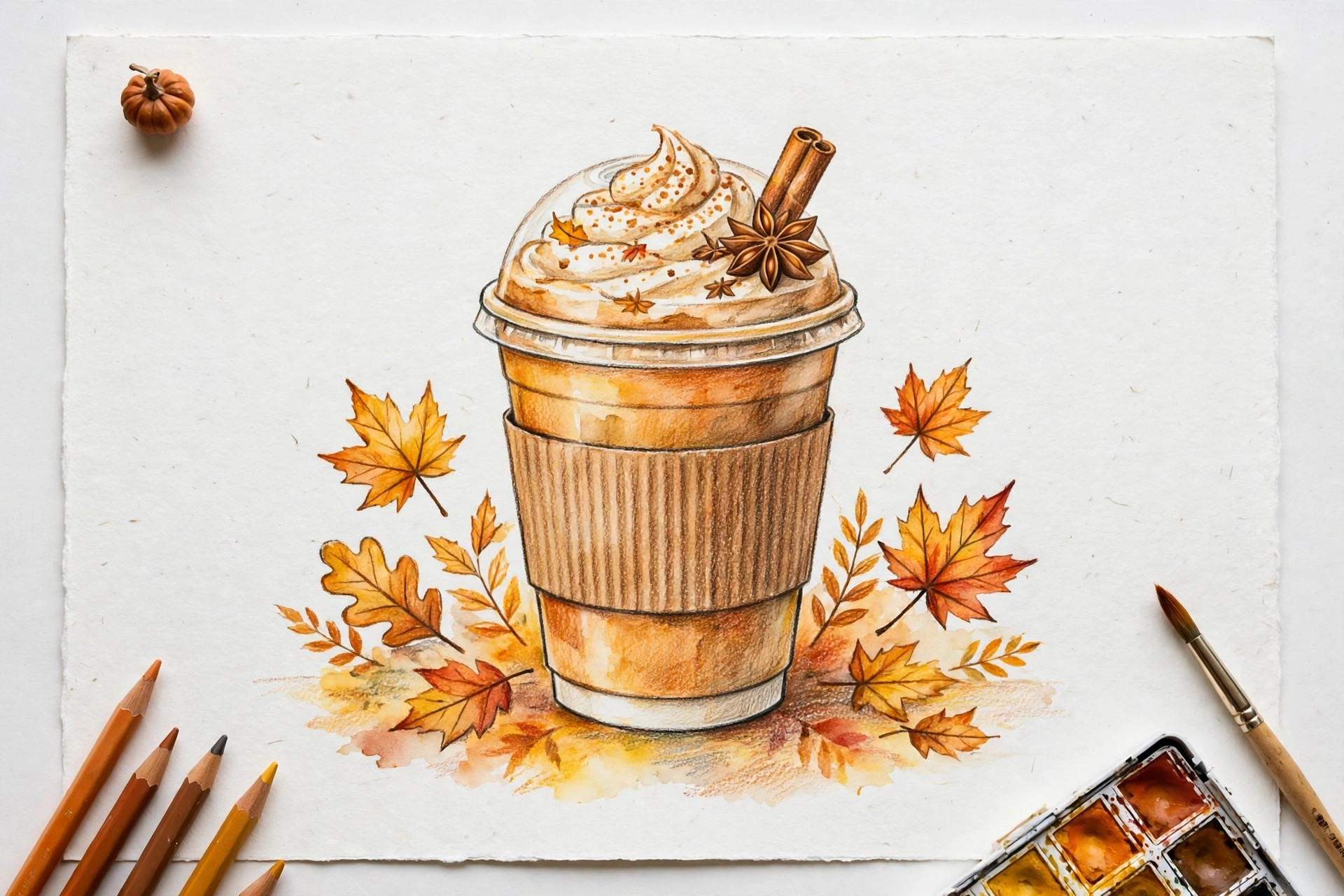
17. A pumpkin spice cup. Draw a takeaway cup with a lid, a sleeve band in the middle, and a tiny pumpkin doodle on the sleeve. Add two steam curls on top. Tip: warm brown for the sleeve and orange for the pumpkin makes the whole cup read as fall instantly.
18. A pie slice. Start with a triangle, add a thick crust edge along the back, and a dollop of cream as a soft cloud shape on top. Tip: let a little filling drip down one side; small imperfections make food drawings look tasty.
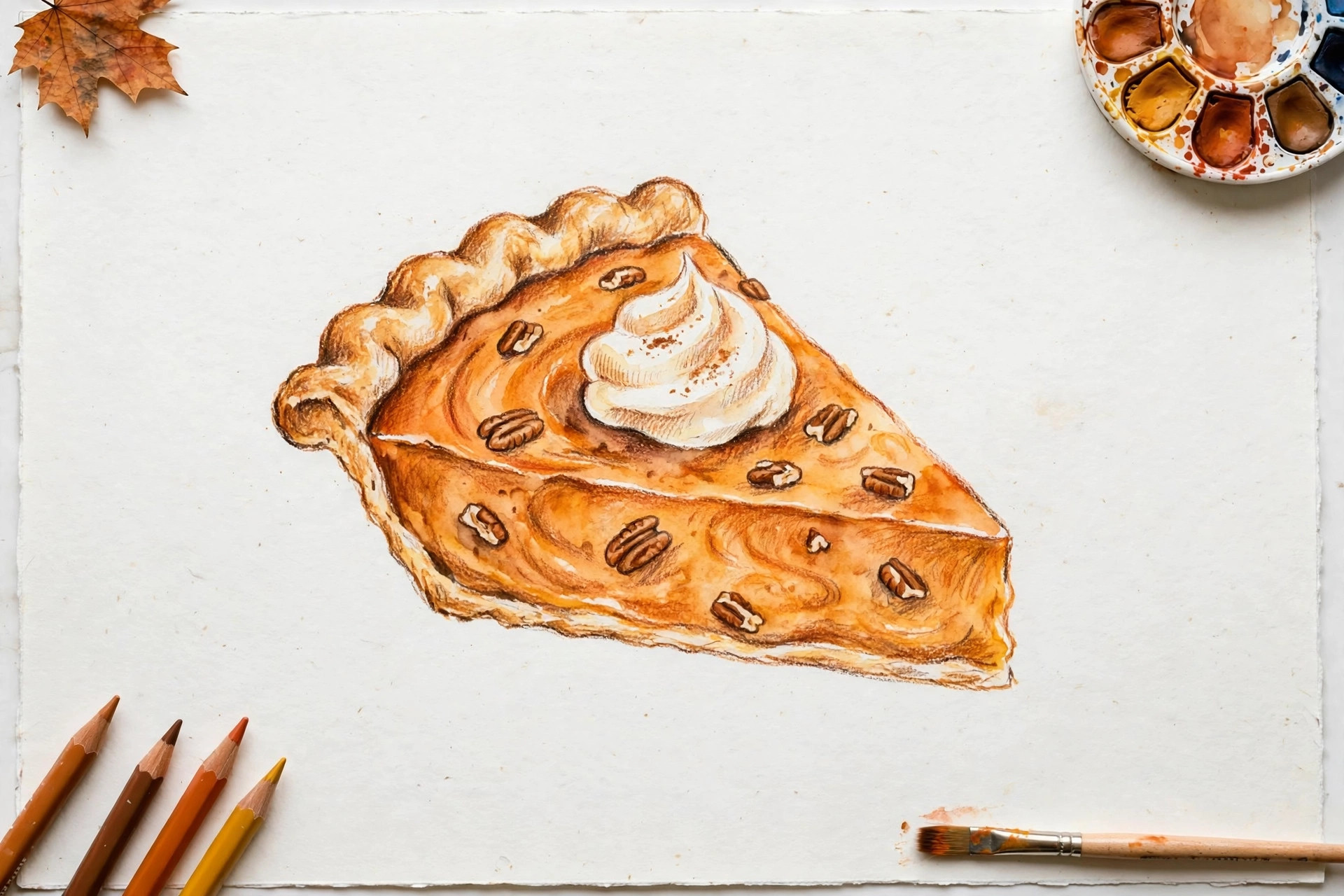
19. A caramel apple. A circle on a stick is the whole base. Add a wavy drip line around the top third for the caramel coating. Tip: leave a tiny white highlight spot on the apple so it looks shiny and sticky.
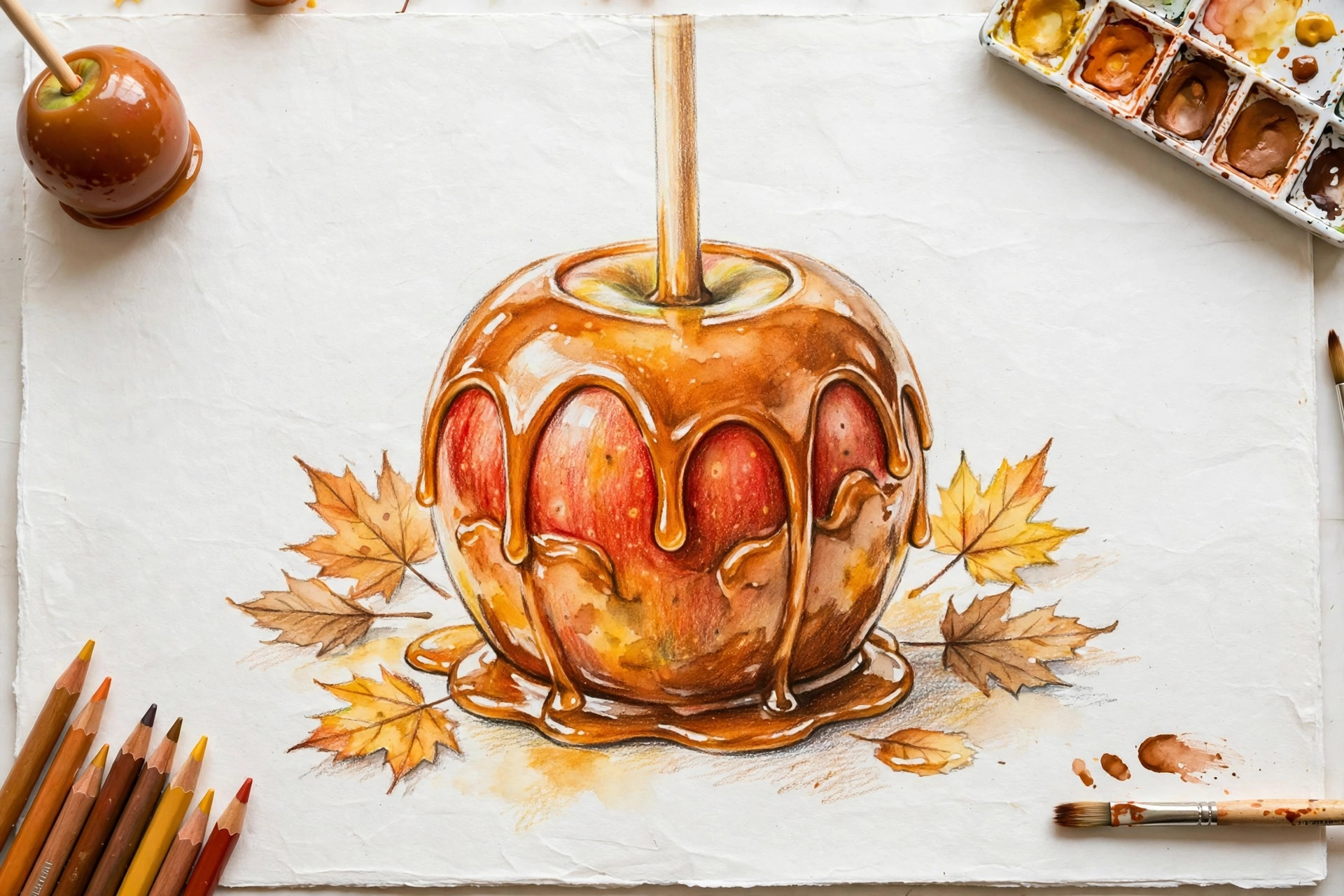
20. A hot cider mug. Draw a mug, an oval of lighter color on top for the drink, one cinnamon stick leaning out, and steam curls. Tip: a star anise (a small star-shaped spice) floating on top is one tiny shape that adds a lot of charm.
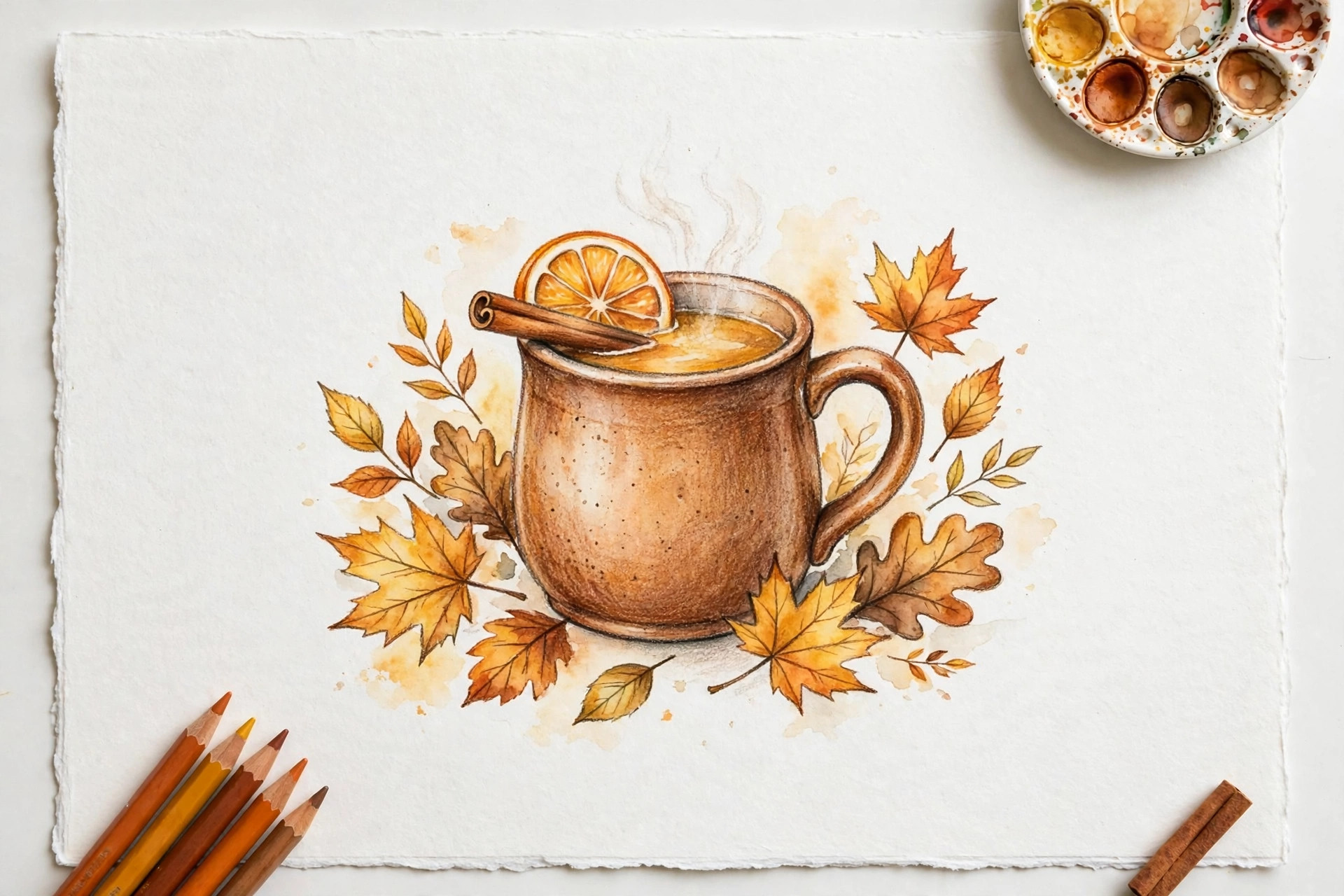
21. A lantern. Build it from a rectangle with a domed top and a ring handle. Inside, draw a candle flame and soft glow lines. Tip: color the background a dusky blue or gray so the warm light inside the lantern really glows.
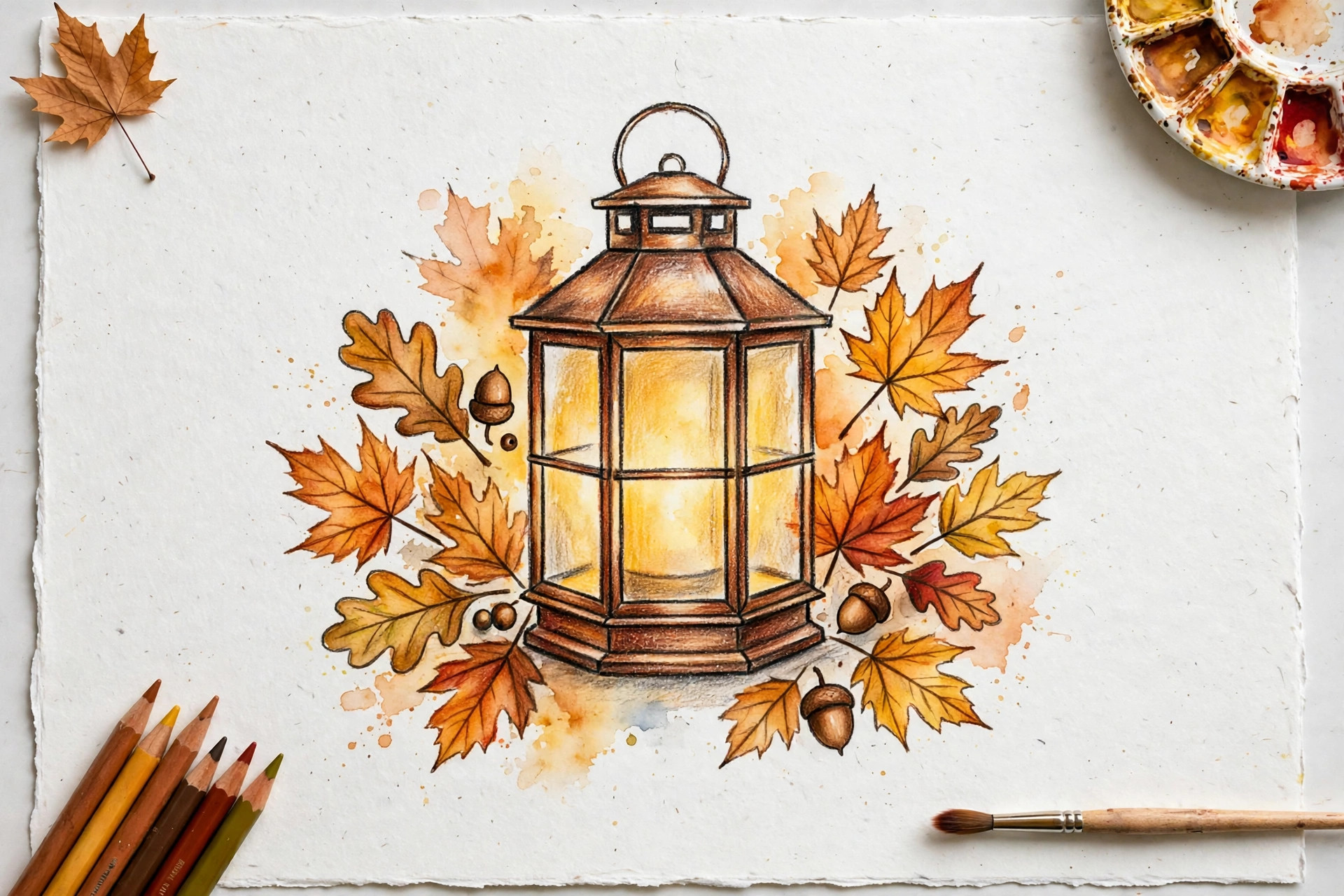
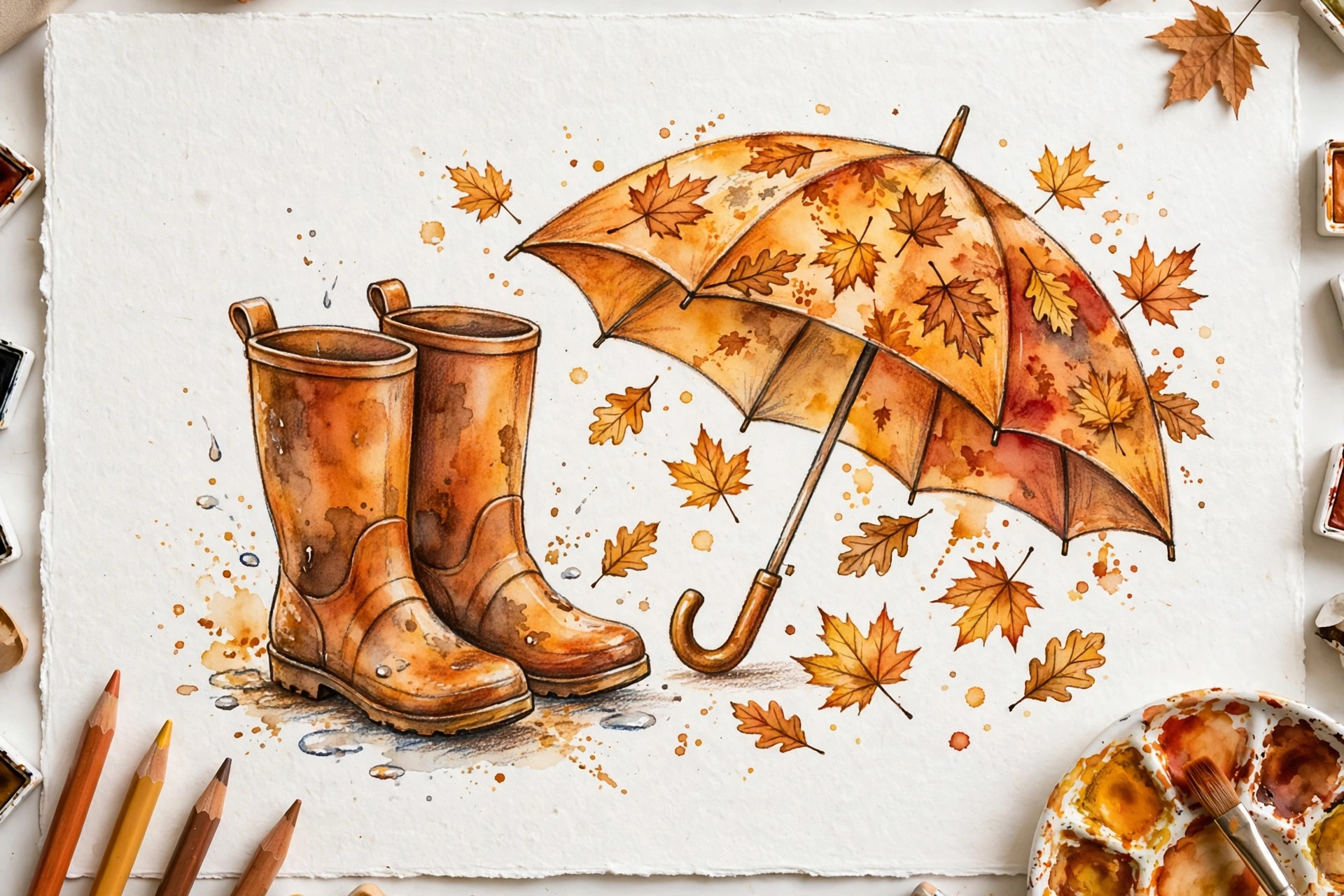
22. Boots and an umbrella. Draw a pair of rain boots from the front: two rounded L-shapes with a sole line. Lean a simple umbrella shape beside them. Tip: add two or three small puddle ellipses (flat ovals) under the boots to set the rainy-day mood.
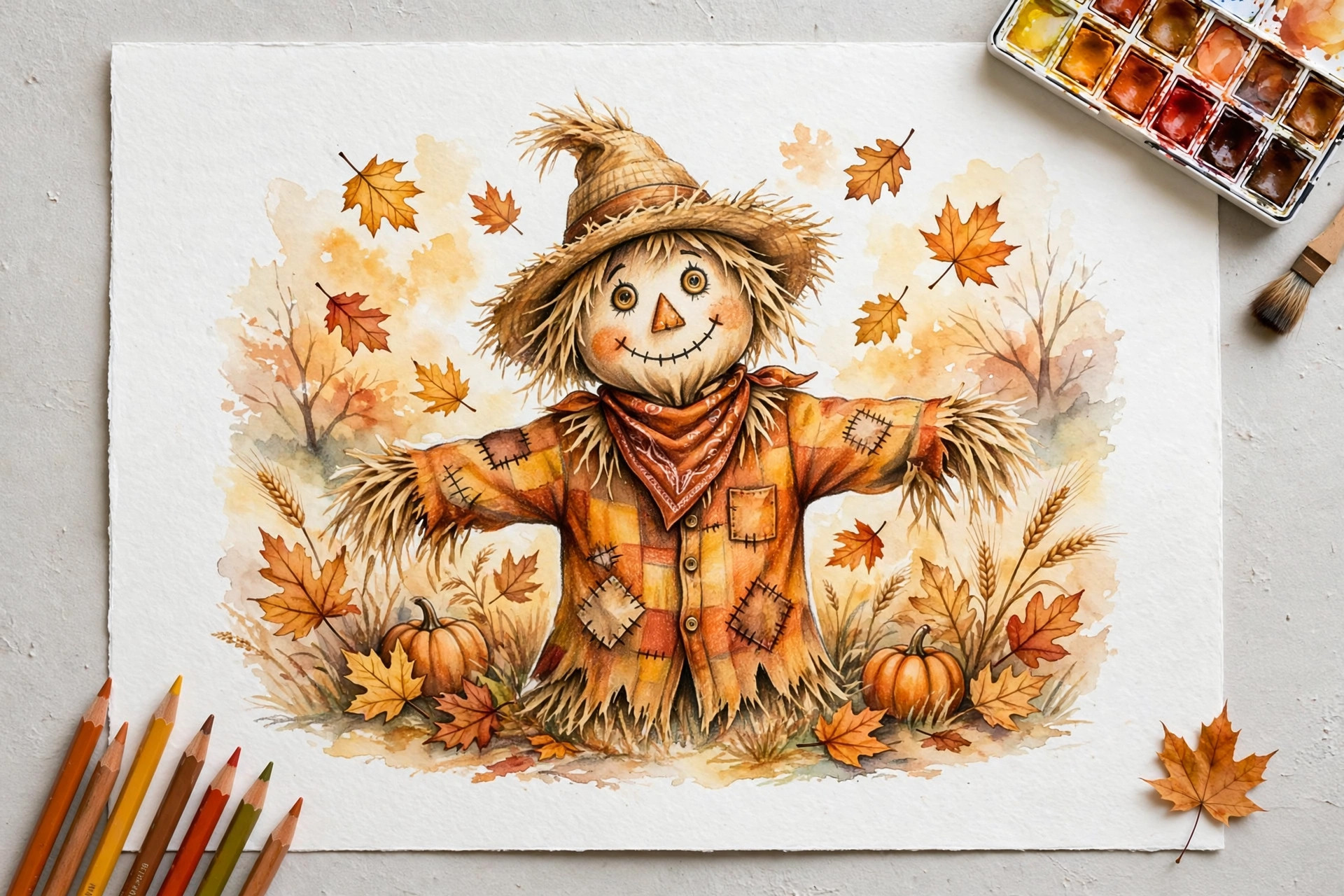
23. A scarecrow. A scarecrow is a friendly cross shape: a pole, arms out to the sides, a round head with a hat, and straw lines poking out at the hands and neck. Tip: keep the face simple, two dot eyes and a stitched smile, so it stays cute rather than spooky.
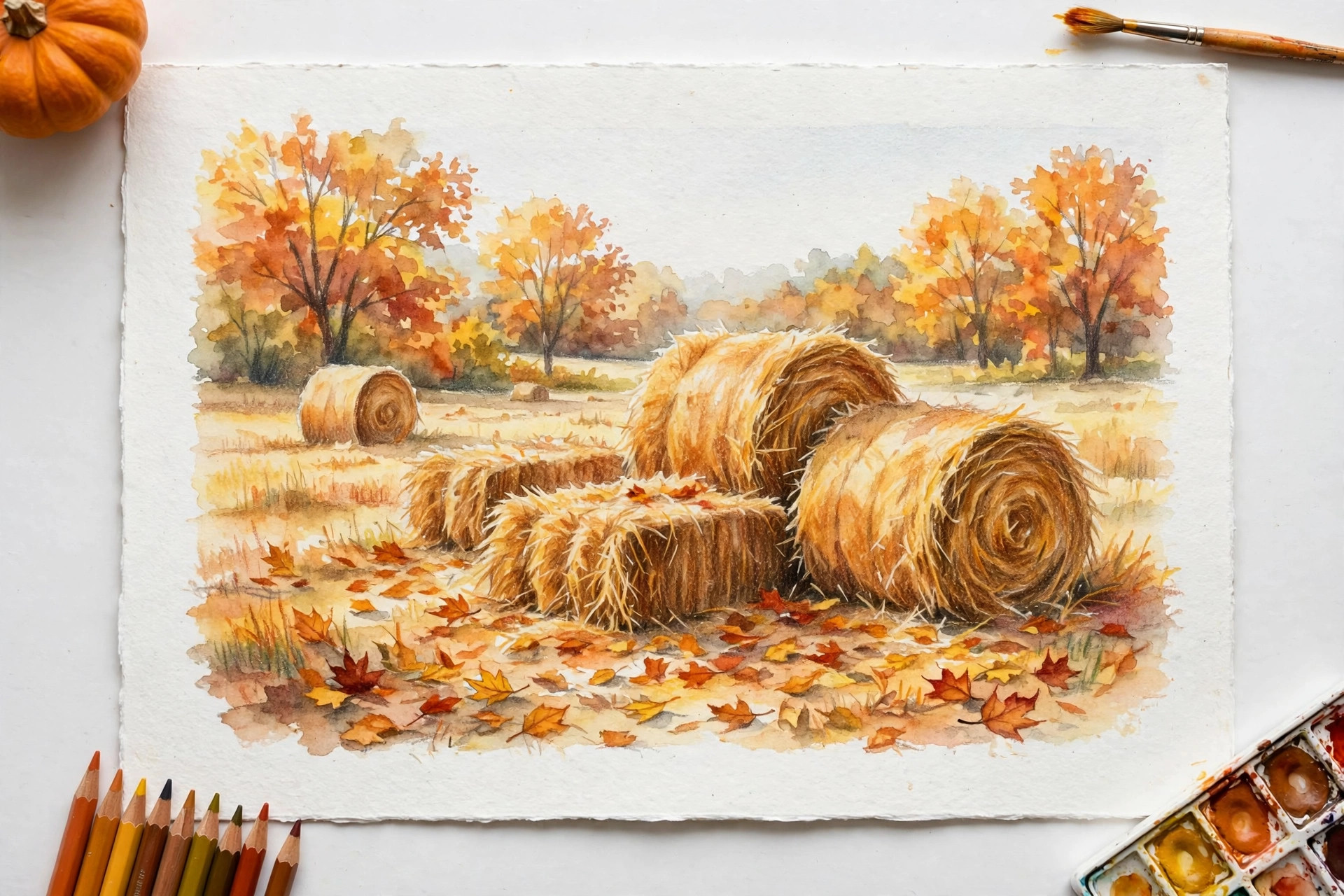
24. A hay bale scene. Draw a big cylinder (a tube shape) lying on its side, with a spiral on the round end. Place it in front of a simple fence line. Tip: short curved strokes across the bale give it that dry, straw-like texture with almost no effort.
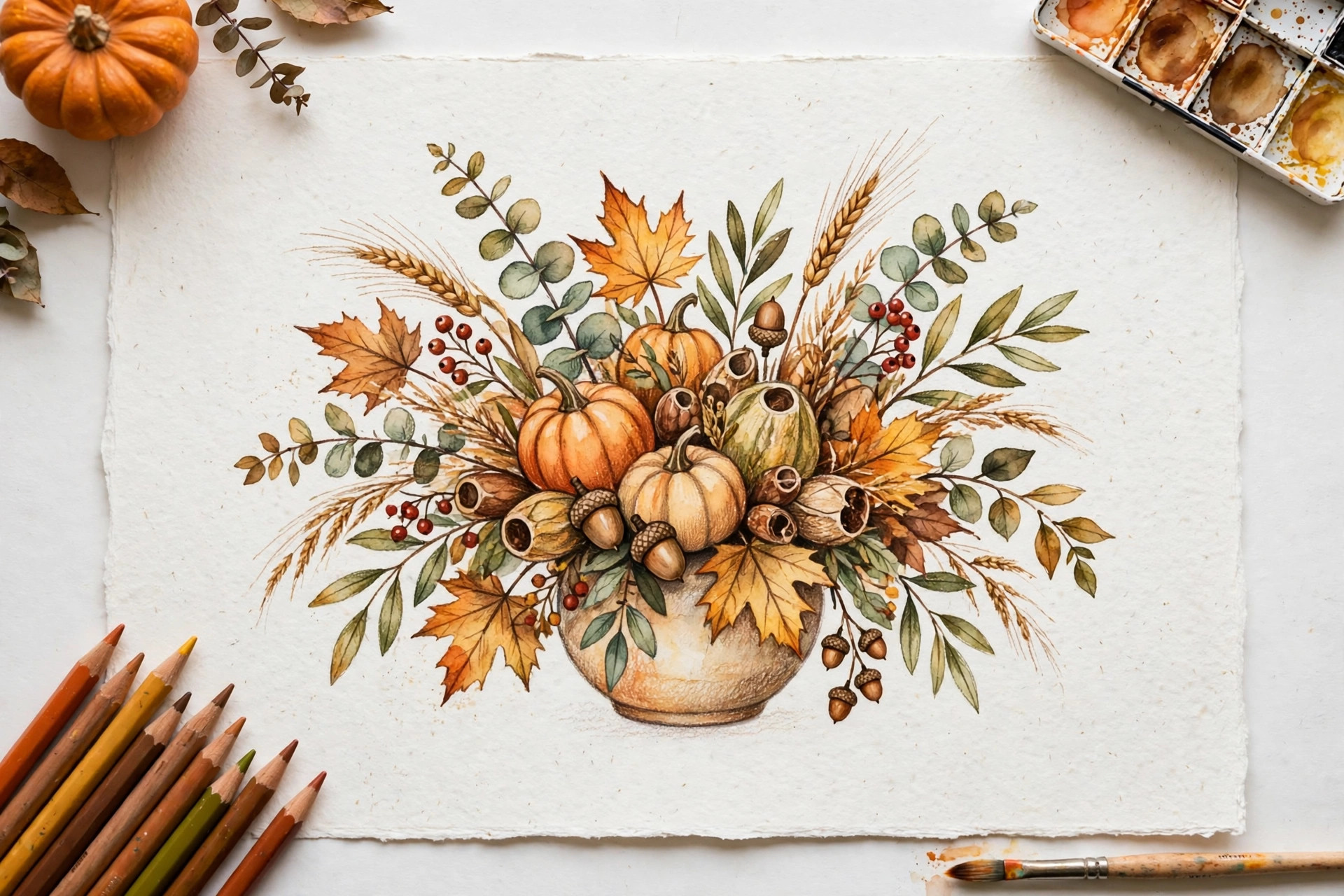
25. A Thanksgiving table centerpiece. Arrange a long low pumpkin in the center, candles on both sides, and leaves scattered along the table line. Tip: draw this one in a wide, short format; the stretched shape makes it look like a real table runner scene.
The Only Fall Color Palette You Need
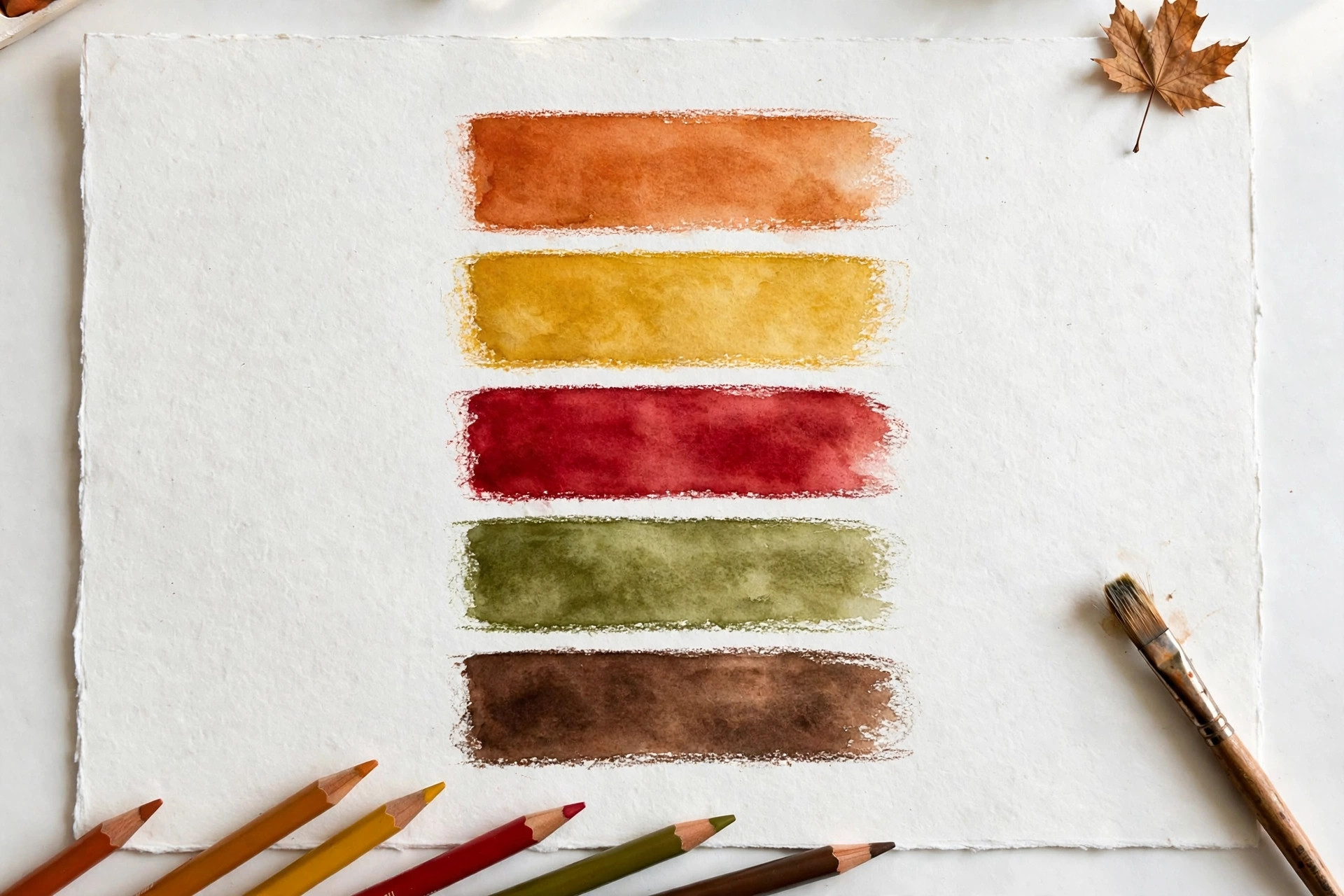
Five colors will carry you through every idea on this page: burnt orange, mustard yellow, deep red, warm brown, and sage green. Use the first four as your warm base and the sage green as the cool contrast (the opposite-feeling color that makes the warm ones pop). When a drawing feels flat, the fix is almost always one touch of that green or one deeper brown shadow.
Burnt Orange
Mustard Yellow
Deep Red
Warm Brown
Sage Green
Here is how the same palette behaves in the three tools beginners use most:
| Tool | How to use the palette | Beginner tip |
|---|---|---|
| Colored pencil | Layer burnt orange over mustard yellow for glowing leaves; press harder for deep red shadows. | Always layer light to dark. You can add dark over light, but not the other way around. |
| Markers | Color the whole shape mustard first, then add burnt orange and red while the ink is still slightly wet for smooth blends. | Work fast on small areas at a time so the colors melt together instead of leaving streaks. |
| Watercolor | Mix burnt orange and warm brown for tree trunks; drop deep red into wet mustard washes for instant autumn leaves. | Let colors mix on the wet paper instead of the palette. The soft, messy edges look like real foliage. |
If you want more practice with warm, snug palettes before you start, browse these cozy coloring ideas and borrow their color combinations for your sketches.
Turn One Fall Idea Into a Week of Practice
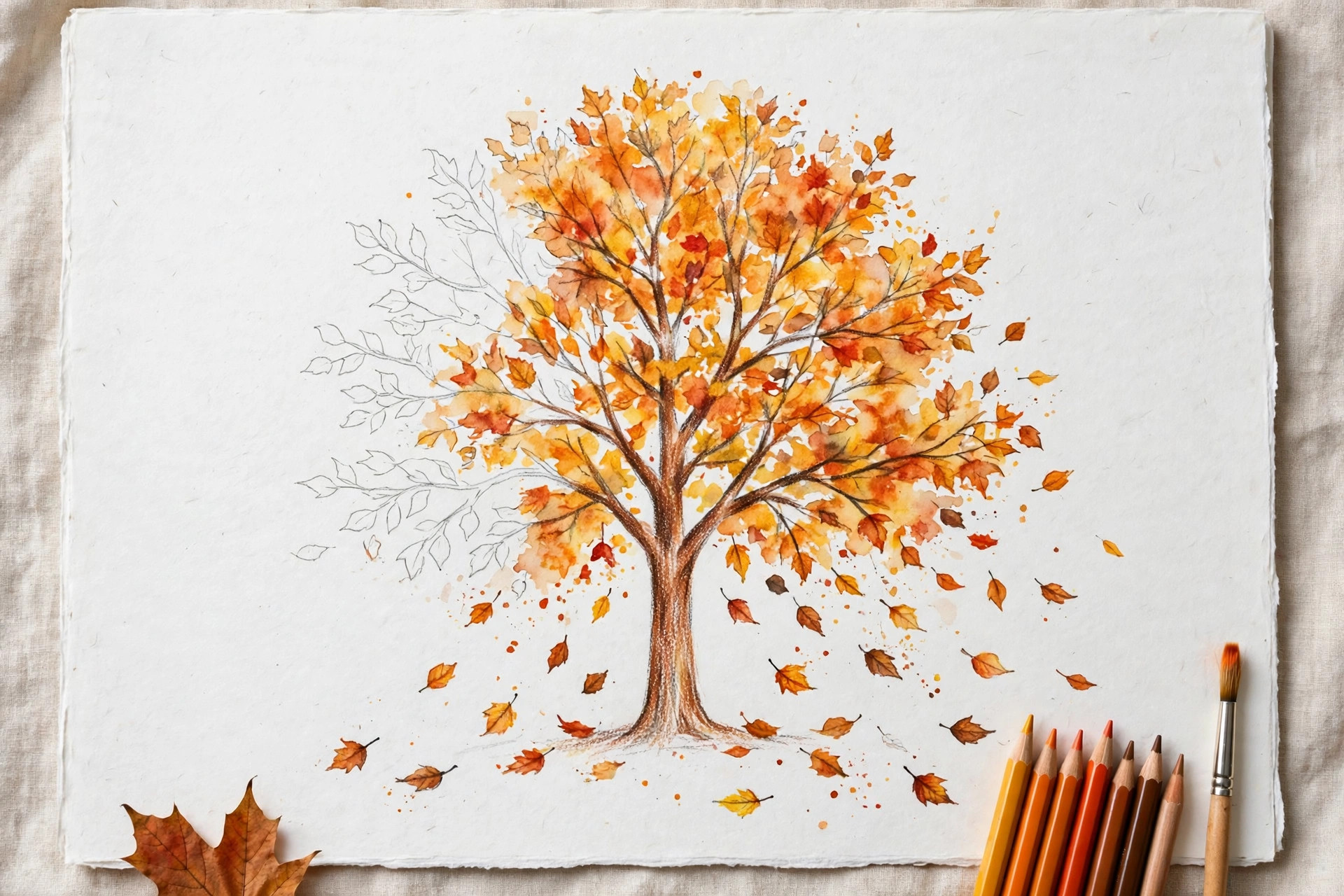
One idea drawn five ways teaches you more than five ideas drawn once. Pick your favorite from the list, a pumpkin, a leaf, or the sleeping cat, and repeat it across five days in five styles. This is how a simple sketch quietly turns into real skill.
- Day 1, line only: draw it with a single pen or pencil and no color. Focus on getting the shapes right.
- Day 2, one color: add shading (darker and lighter areas) using only one pencil or one marker.
- Day 3, full color: use the five-color fall palette above and color the whole scene.
- Day 4, tiny: draw the same idea inside a small circle, like a thumbnail (a mini preview sketch). Tiny forces you to keep only what matters.
- Day 5, huge: fill a whole page with the same subject. Big drawings expose weak spots, and fixing them is where the growth happens.
Keep all five versions together in your sketchbook. Seeing your own progress side by side is the best motivation to keep going through the whole season.
Frequently Asked Questions
What should I draw in autumn?
Draw the things autumn is famous for: falling leaves, pumpkins, acorns, mushrooms, cozy window scenes, and warm drinks. Start with single objects like a leaf or a mug, because they are simple shapes with forgiving edges. Once you feel comfortable, combine two or three objects into a small scene.
What are easy fall drawings for kids?
The easiest fall drawings for kids are a pumpkin (overlapping ovals with a stem), a single leaf, a scarecrow with a smiley face, and a sleeping cat made from one big curve. These use basic shapes kids already know. Big shapes, thick lines, and bright orange and red colors keep it fun and frustration free.
How do I draw a fall leaf?
Start with a light star shape as your guide. Connect the points with soft zigzag lines to form the leaf edge, then erase the guide lines. Add a stem and a few vein lines from the center out to the points. Color it mustard yellow first, then add burnt orange at the edges for a classic autumn look.
What colors make a drawing feel like fall?
Burnt orange, mustard yellow, deep red, and warm brown are the four colors that instantly read as fall. Add sage green as a soft contrast so the warm colors glow even more. If your drawing still feels like summer, the usual fix is removing bright greens and blues and adding more brown and orange.
Where to Go Next
Ready to keep the seasonal streak going? Try these easy Halloween drawing ideas when you want something a little spookier, or relax with these cozy coloring ideas on a quiet evening. And when the first snow arrives, move on to these watercolor art ideas for Christmas to carry your warm-color skills into winter.