
If you keep asking yourself why does my watercolor look muddy, here is the short answer: muddy color happens when too many different pigments mix together on the paper, and when wet paint gets pushed around too much. It is not a talent problem, and it is not usually your paint’s fault. Mud is preventable once you know what causes it, and a painting that already turned muddy can often still be rescued.
Almost every beginner goes through a muddy phase. The colors in the pan look bright and clean, but on paper they dry into dull grey-brown soup, especially in skies, skin, and shadows. The gap between the paint in the box and the color on the page is almost always about mixing habits, not skill. Change a few habits and the same paints suddenly look bright again.
TL;DR
- Muddy color is what you get when red, yellow, and blue all mix in one spot — that combination always makes dull brown or grey.
- The biggest causes are mixing opposite colors, using too many colors in one mix, and painting into half-dry paint.
- Prevention is simple: mix at most two pigments at a time, rinse your water often, and leave wet paint alone.
- A dried muddy painting can still be saved with one clean layer of color, gentle lifting, dark accents, or a smart crop.
In this guide
The Short Answer: What “Muddy” Really Means
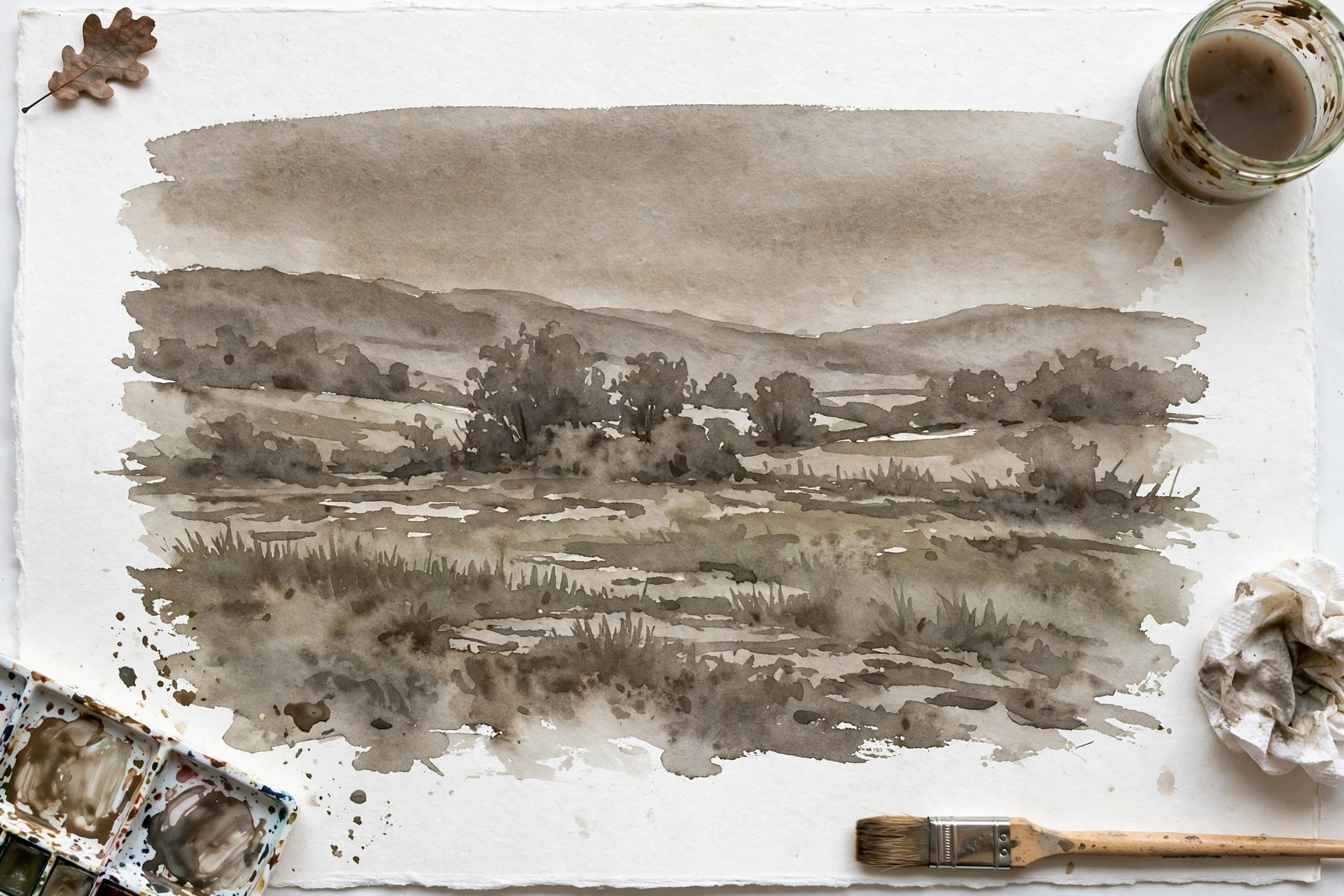
Muddy color is simply dull, greyish-brown color that appears when all three primary colors mix together in one place. Primary colors are red, yellow, and blue — the three colors that cannot be made by mixing others, and from which every other color is built. Mix any two of them and you get a lively new color. Mix all three, and they cancel each other out into brown or grey.
Think of the color wheel as a circle with red, yellow, and blue spread around it. Colors that sit opposite each other on that circle, like red and green or blue and orange, are called complementary colors. They look exciting side by side, but stirred together they neutralize each other — each one kills the brightness of the other, and the result drifts toward grey-brown.
The second ingredient of mud is overworking. Every extra brush stroke pushes more pigment (the colored powder that gives paint its color) into the paper and stirs separate colors into one puddle. A color that was placed once and left alone stays clean. The same color scrubbed back and forth five times turns to soup. So mud is really two problems wearing one coat: too many pigments in the mix, and too many strokes on the paper.
7 Causes of Muddy Watercolor (and How to Fix Each)
Nearly every muddy painting can be traced back to one of these seven causes. Read through them honestly — most painters recognize their own habit in at least two. Each cause comes with its fix, so you can change one thing at a time.
1. Mixing Opposite (Complementary) Colors
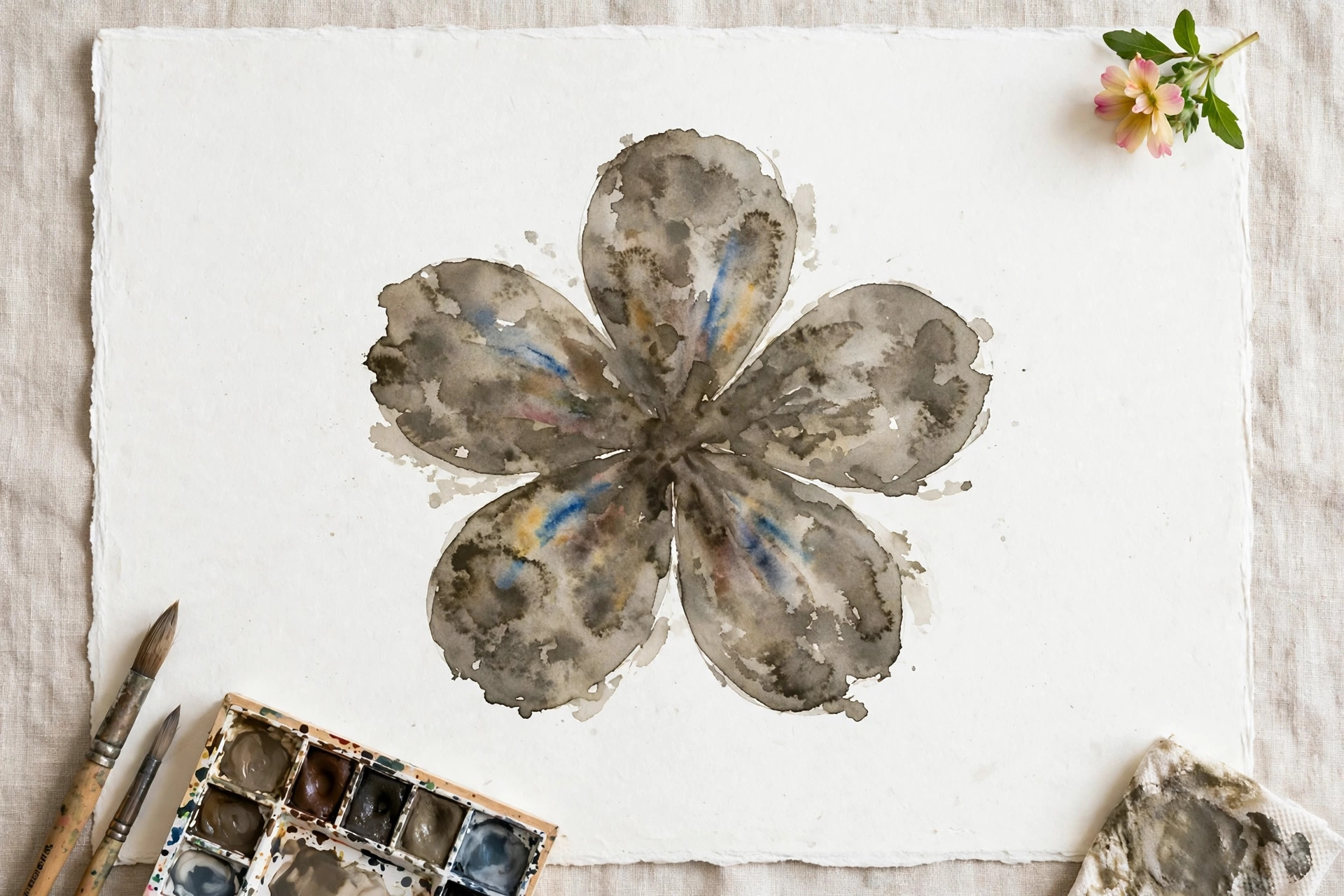
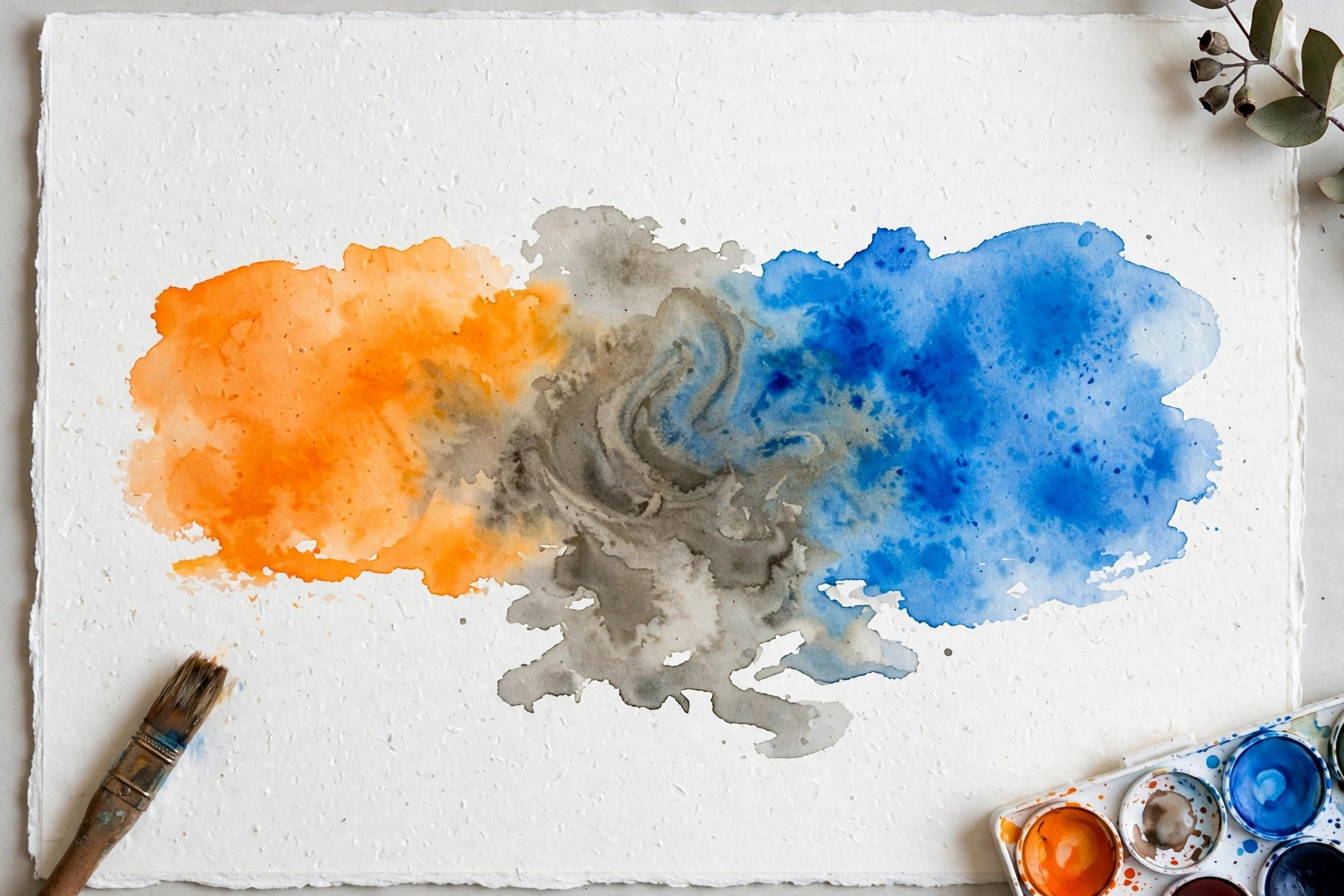
Why it happens: When you stir a color together with the color opposite it on the color wheel — red with green, blue with orange, purple with yellow — the two fight and both lose. The mix turns dull brown or grey almost instantly. This sneaks up on beginners because it often happens by accident: a green mixed into a red shadow, or orange paint dragged through a blue sky.
The fix: Keep opposites apart on the paper. If you need to darken a color, darken it with a neighbor on the wheel instead — darken red with a little purple or brown-red, not with green. Place opposites side by side for sparkle, but never stir them together in one puddle.
2. Too Many Colors in One Mix
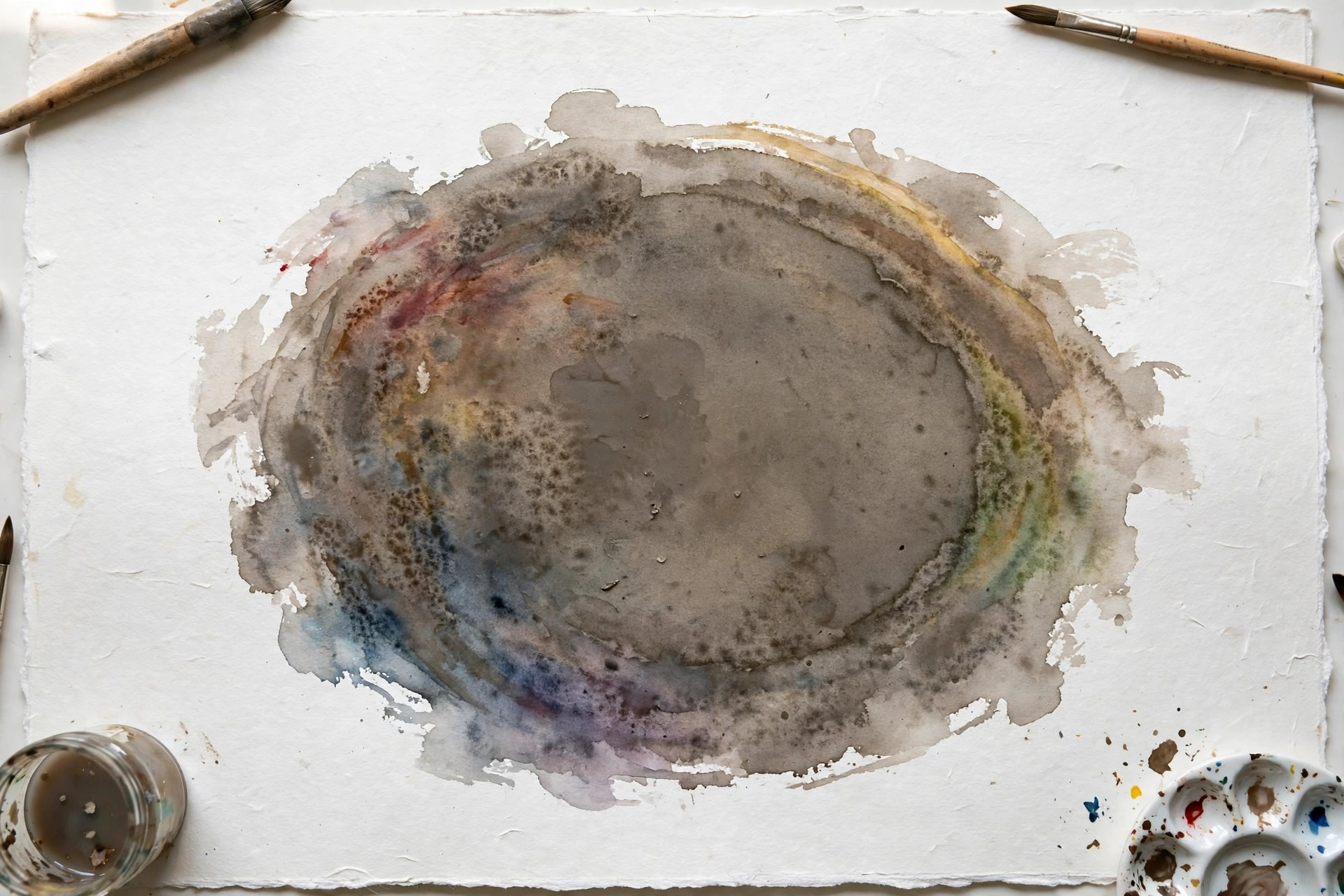
Why it happens: A mix that starts with three, four, or five different paints almost always ends up muddy, because somewhere in that pile all three primary colors are hiding. Each extra paint you add pushes the mix closer to neutral grey-brown. Beginners often keep adding “a bit of this, a bit of that” while chasing a perfect color, and every addition makes it duller.
The fix: Follow the two-color rule covered fully below: build every mix from at most two pigments plus water. If a mix looks wrong, start a fresh puddle instead of rescuing the old one with more paint. And always test a mix on scrap paper before it touches your painting.
3. Painting Into Half-Dry Paint
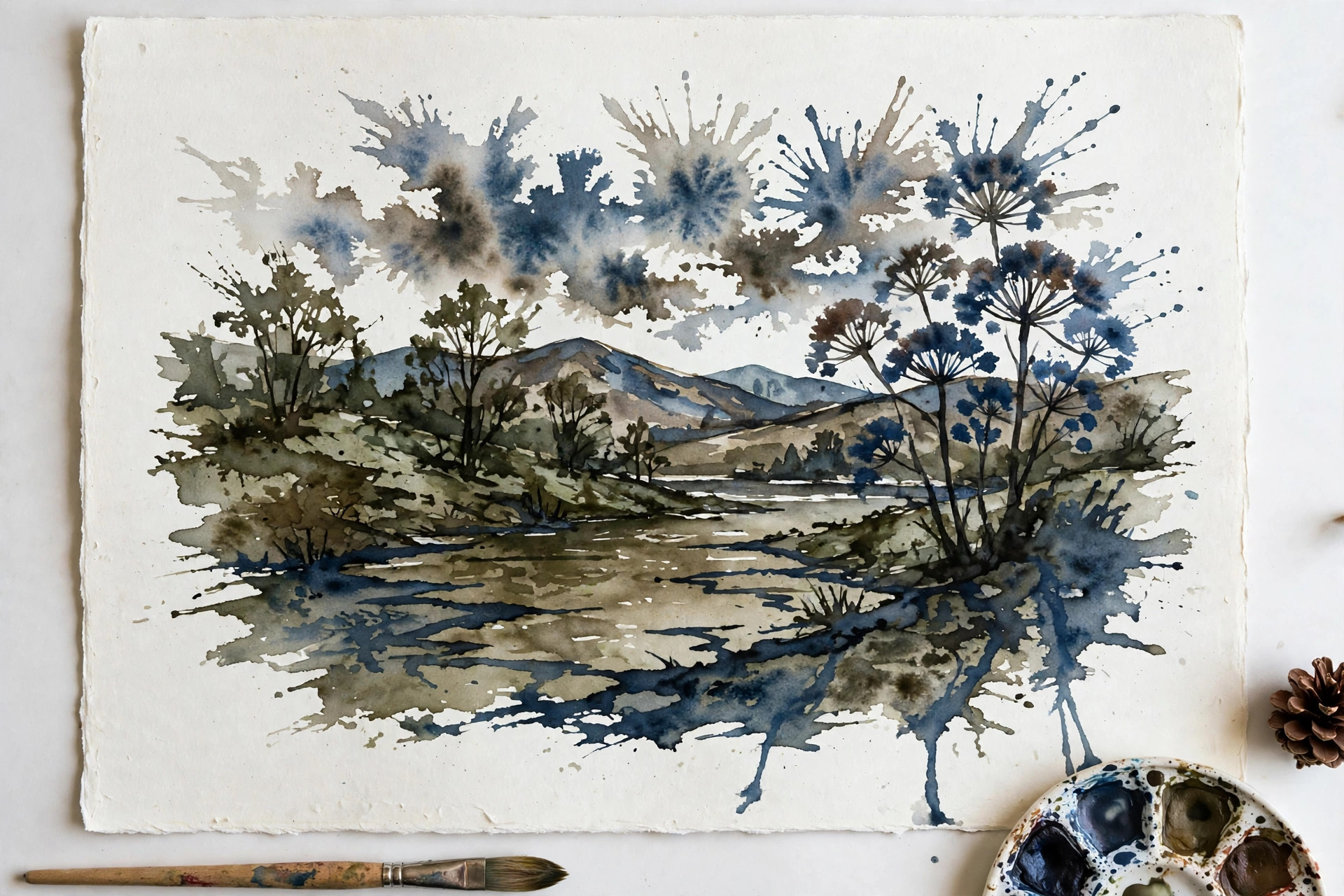
Why it happens: Half-dry paint is the most dangerous stage in watercolor. The paint is no longer wet enough to flow, but not dry enough to sit still. Brushing into it drags half-settled pigment across the paper, stirring colors together and leaving streaky, dirty patches. Many muddy skies are born when a painter tries to “fix” a wash that was halfway dry.
The fix: Make a simple rule: work fully wet or fully dry, never in between. If an area is drying, walk away from it. Let it dry completely — bone dry, not just surface dry — and then paint over it as a fresh layer if needed.
4. A Dirty Water Jar
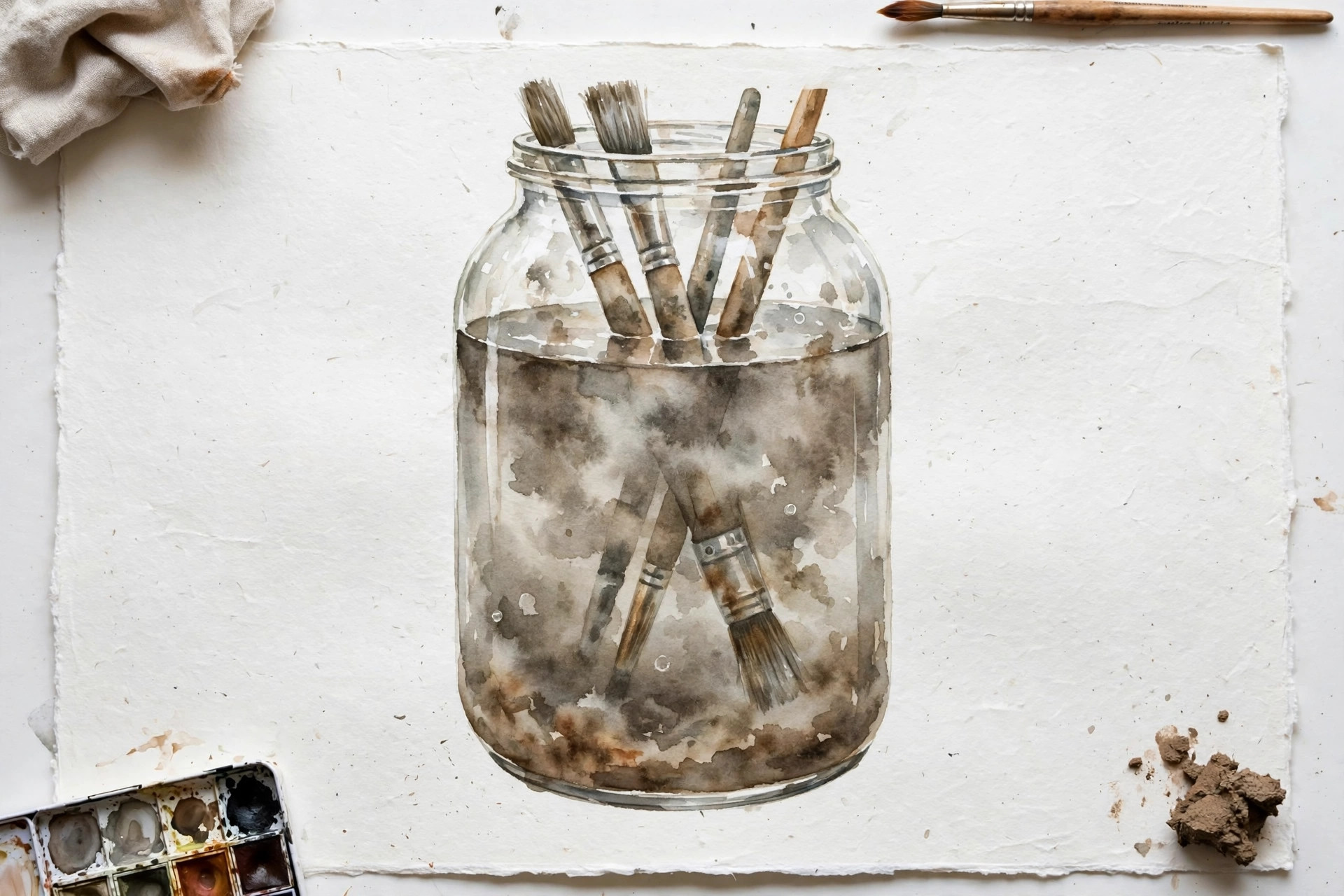
Why it happens: Your rinse water is part of every mix you make. By the middle of a painting, that jar often holds a brown-grey soup of every color you have used. Rinsing your brush in it, then loading fresh paint, quietly adds grey to each new color before it even reaches the paper. Clean yellows are usually the first victims.
The fix: Use two water jars: one for rinsing off dark and dirty colors, one kept cleaner for mixing fresh color. Change both the moment the water turns cloudy. It sounds small, but fresh water is one of the fastest brightness upgrades there is.
5. Cheap, Chalky Paint With Fillers
Why it happens: Very cheap paint sets often stretch their pigment with fillers — extra ingredients like chalk that add bulk but no color strength. These paints look pale, feel gritty, and turn dull faster when mixed, because there is less real pigment doing the work. Two weak colors mixed together can collapse into mud that better paint would have survived.
The fix: You do not need expensive tubes. Look for paints that list one clear pigment per color and feel creamy rather than chalky. A small set of good colors beats a giant box of weak ones, and it removes one whole cause of mud from your life.
6. Lifting and Reworking the Same Area
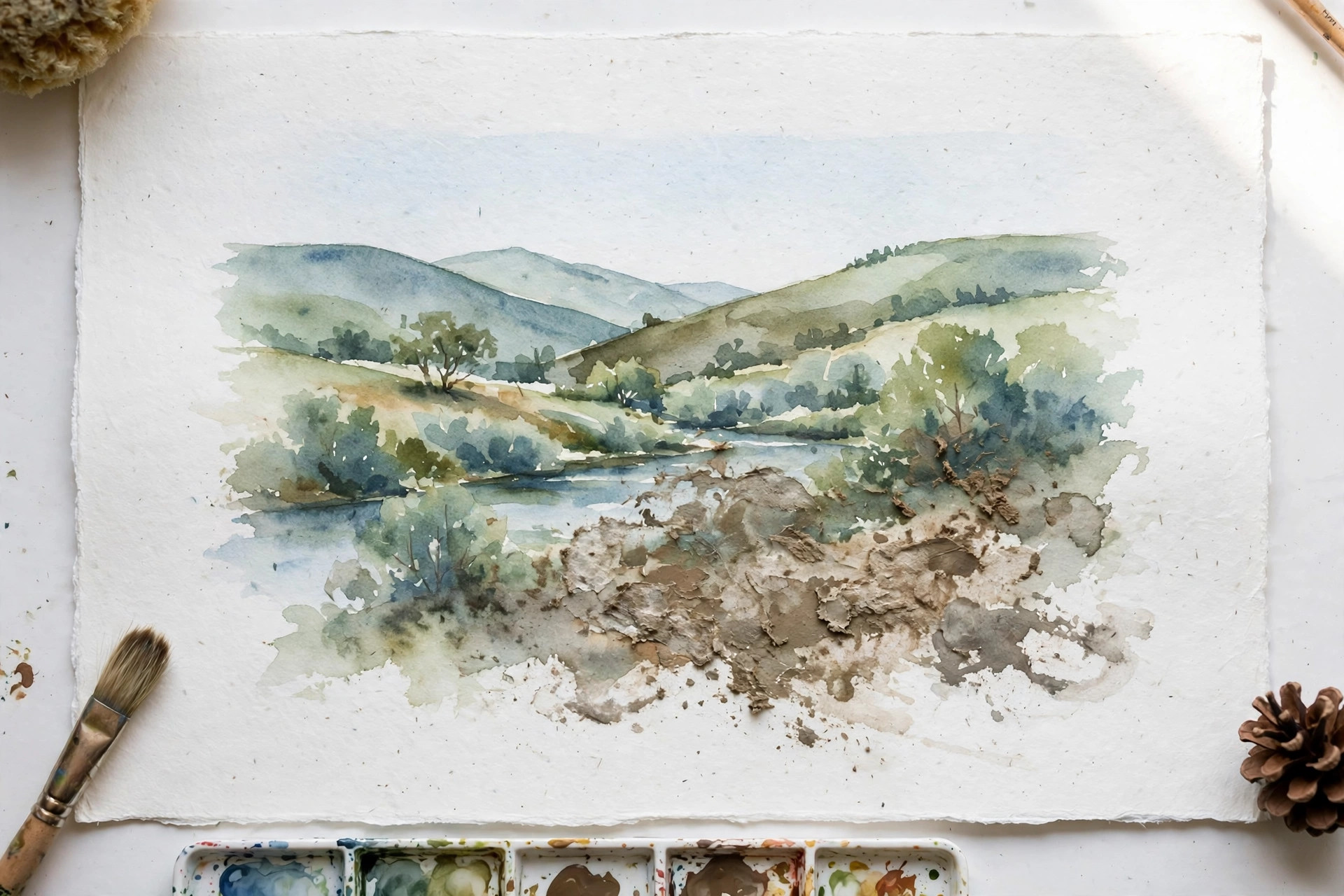
Why it happens: Lifting means soaking color back off the paper with a clean, damp brush. It is a useful rescue skill, but doing it again and again in the same spot roughens the paper surface. Damaged paper drinks pigment unevenly, so every new layer sinks in patchy and dull. The more you scrub one area, the muddier it gets — a frustrating loop many beginners know well.
The fix: Give each area a budget: place the color, adjust it once while wet, then leave it alone. If it dries wrong, fix it with one planned layer rather than five nervous ones. When you must lift, use a gentle blotting motion instead of scrubbing side to side.
7. Glazing Over a Layer That Is Not Fully Dry
Why it happens: Glazing means painting a thin, see-through layer of color over paint that is already dry, so the color underneath shines through and the two mix in your eye. It is a beautiful technique — but only on a fully dry layer. Glaze too early and your brush does not sit on top of the old color; it digs into it, remixing wet pigment into mud right on the paper.
The fix: Wait longer than feels necessary. Dry means the paper feels room-temperature and flat, with no cool, damp feel when you touch the back of your hand to it. On thick paper or a humid day, that can take a full 15 to 20 minutes. Patience here is a genuine painting skill.
The Two-Color Rule That Prevents Mud
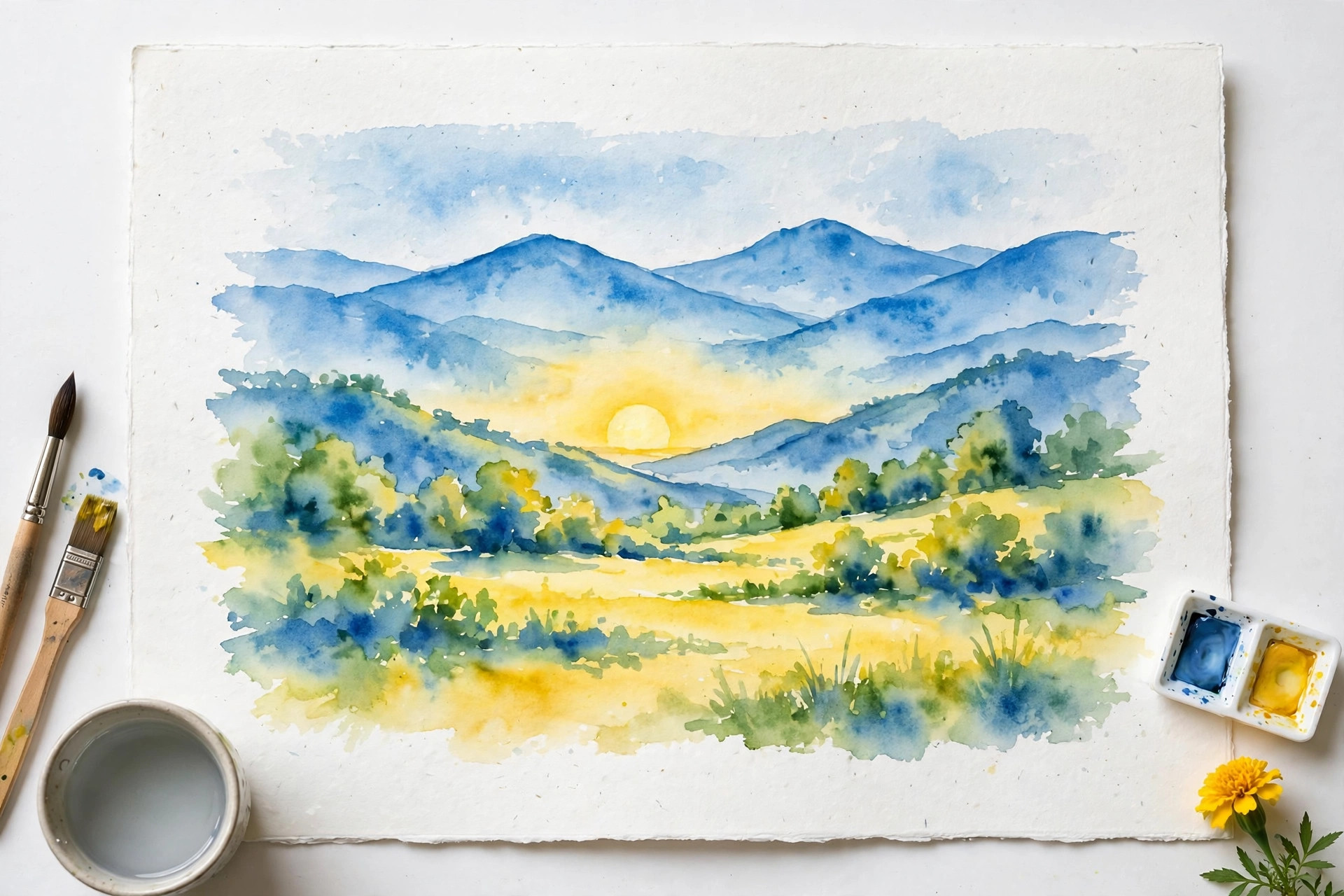
If you remember one habit from this whole guide, make it this one: mix at most two pigments plus water, every time. Two pigments can still make a rich range of colors by changing the proportions — mostly color A with a touch of color B, half and half, or mostly B. But two pigments can never contain all three primary colors at once, so the mix physically cannot collapse into mud.
Support the rule by keeping warm and cool families apart. Warm colors lean toward red and orange; cool colors lean toward blue and green. A painting usually looks clean when each area is clearly warm or clearly cool, and dull when warm and cool puddles keep getting stirred into each other. Paint your warm shadow with warm colors, your cool sky with cool colors, and let them meet only at crisp, dry edges.
Finally, keep a small mixing chart in your sketchbook: rows of two-color mixes you have tested, labeled with the paint names. It takes an evening to make and saves you from muddy experiments for years, because you will mix from a map instead of guessing.
How to Fix a Muddy Painting You Already Made
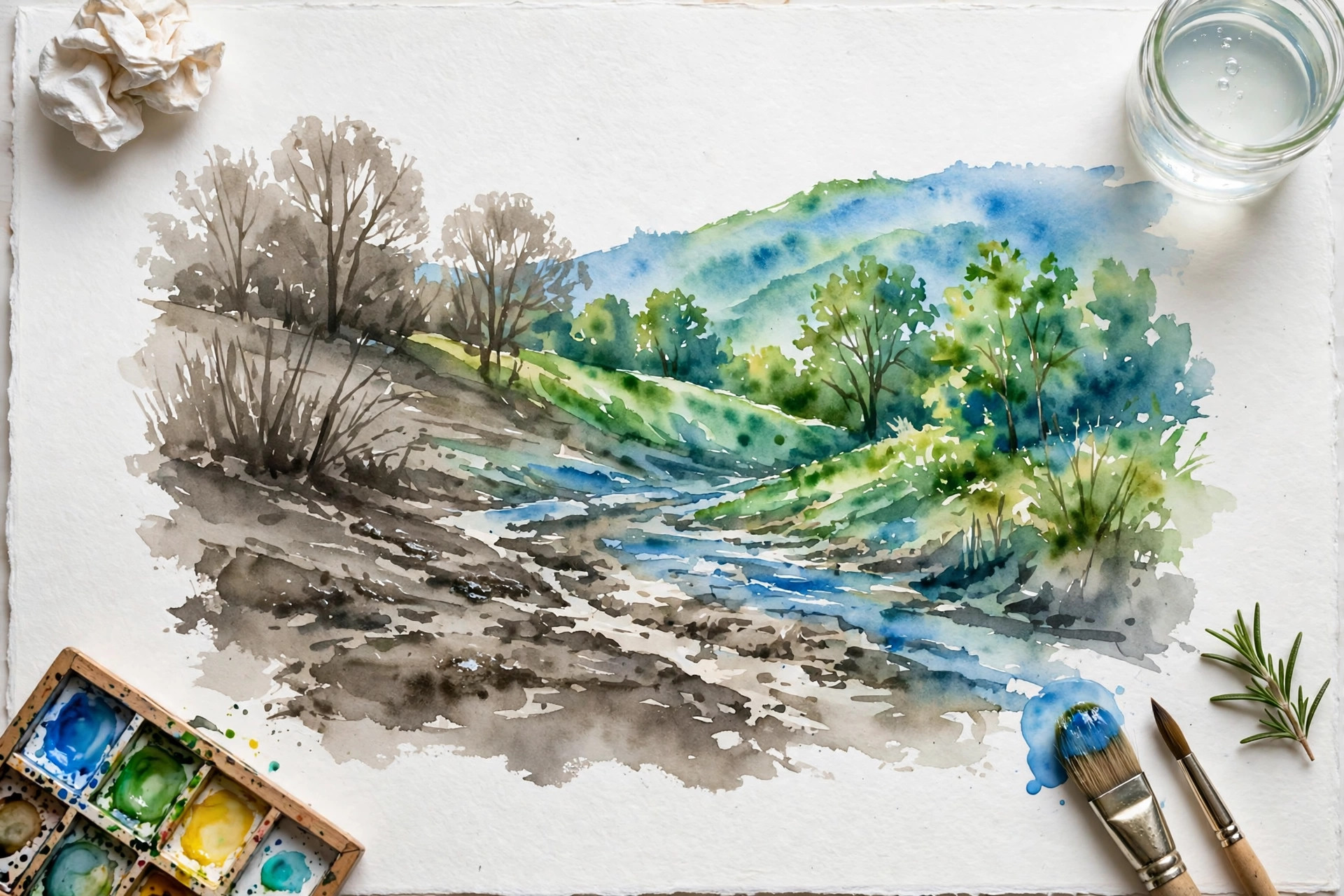
Do not throw the painting away yet. Mud sitting in one dry painting can often be improved a lot, as long as the paper surface is still in decent shape. Work through these rescues in order, from gentlest to boldest.
Let it dry fully first. Muddy color always looks worse while damp, because wet paint appears darker and more saturated (strong and rich) than it will when dry. Judging a painting mid-drying leads to panic fixes. Give it a full hour, then decide with honest eyes.
Glaze one clean color over it. Once bone dry, brush a single thin, transparent color over the muddy area. One clean glaze can pull dull patches back toward life — a warm golden glaze warms a grey landscape, a clear blue glaze freshens a dull sky. Use one pass only, and let it dry before judging.
Lift gently with a damp brush. For small muddy spots, wet a clean brush, blot most of the water off, and softly roll it over the spot to pick pigment back up. Work in light passes, rinsing the brush between each, so you lift mud instead of spreading it.
Add dark accents or ink lines. Mud often looks worst because everything sits at the same dull mid-tone. A few confident dark shapes — deep shadows, a dark tree line — or fine ink outlines give the eye strong contrast, and the muddy areas suddenly read as quiet, soft background. Weak color looks far better next to strong darks.
Crop to the good part. Many muddy paintings contain one lovely corner. Cut the sheet down, or cover the edges with a paper window, and keep only the part that works. Artists do this all the time. A small good painting beats a big muddy one.
A 10-Minute Clean-Color Exercise
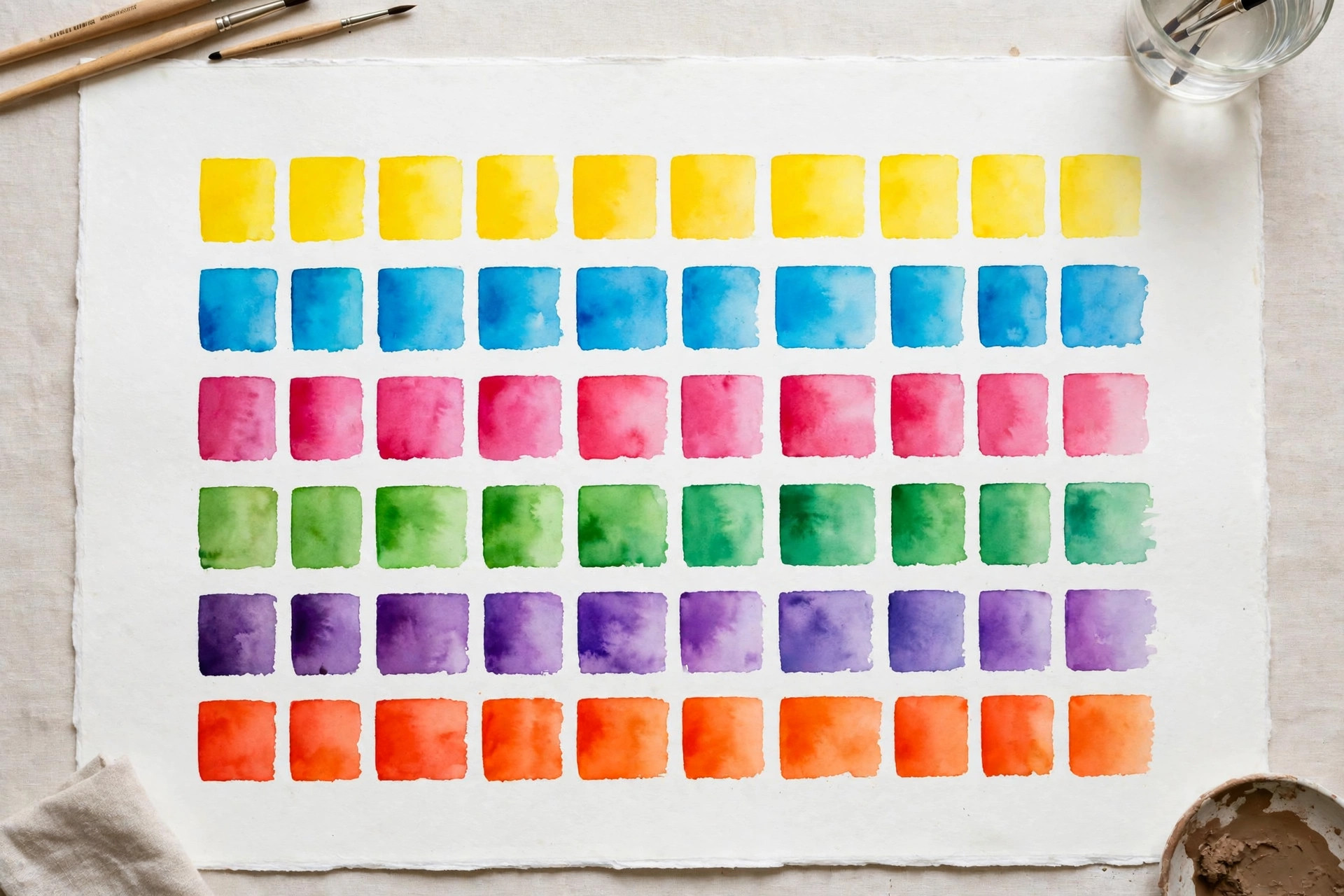
This simple drill builds clean-mixing muscle memory fast. Take two paints — say, a blue and a yellow. In a row on scrap paper, paint seven small squares. The first square is pure blue. Each square after it holds a little more yellow and a little less blue, until the last square is pure yellow. Every square is a two-pigment mix, so notice: the whole row stays clean and alive, with no mud anywhere.
Repeat the drill with a different pair — red and blue, or orange and green — and label each row with the paint names. The orange-and-green row will show you exactly where lively color tips into dullness, which teaches your eye more than any rule. Do one row a day for a week and you will feel your mixing get cleaner on real paintings almost without trying.
| Color pair | What you will see | Lesson |
|---|---|---|
| Blue + yellow | A row of clean, bright greens | Neighbors on the wheel mix safely |
| Red + blue | Purples that can turn dusty at the middle mix | Even good pairs dull if over-stirred |
| Orange + green | Browns appear quickly | Near-opposites make mud fast |
| Any 4 paints together | Grey-brown almost every time | More pigments means more mud |
Frequently Asked Questions
Why do my colors look dull when they dry?
Watercolor always dries lighter than it looks when wet, because water on the surface deepens color temporarily. If yours dry dramatically dull, though, the usual reasons are over-mixing several pigments together, painting into half-dry layers, or dirty rinse water adding grey to every mix. Compare a dry swatch (a small test patch of color) with the same mix painted fresh to see how much change is normal for your paints.
Which colors make mud when mixed?
Opposite pairs make mud fastest: red with green, blue with orange, and purple with yellow. Any mix that accidentally contains all three primary colors — red, yellow, and blue — will also turn brown or grey. The safest habit is the two-color rule: never stir more than two pigments together in one puddle.
Can a muddy watercolor painting be fixed?
Often, yes. Let it dry completely, then try one clean transparent glaze over the dull area, gentle lifting with a damp brush for small spots, or strong dark accents and ink lines to add contrast. If only part of the painting works, cropping to that part is a perfectly respectable rescue. The main case that cannot be fixed is paper that has been scrubbed until its surface is damaged.
What watercolor paints stay bright?
Paints made with a single pigment and little filler stay brightest, because nothing in the tube is working against the color. Artist-grade paints from any well-known maker generally use more real pigment and less chalk than bargain sets. Whatever brand you use, a short list of strong, single-pigment colors will mix cleaner than a huge box of weak ones.
Where to Go Next
Mud is only one of the classic beginner troubles, and most of the others have rescues too. If your painting has other problems besides dull color, start with our step-by-step guide on how to fix watercolor mistakes without starting over. If your paper keeps buckling under the paint, read why watercolor paper wrinkles and how to keep it flat. Feeling like the medium itself is working against you? You are not alone — see why watercolors are so difficult and why that is normal. And if you suspect your paints really are part of the problem, compare your set with our picks for the best watercolor paint sets for beginners.