Short answer: Start with idea 2, Minimalist Sprigs. A lavender spike is simply a thin green stem with small purple dabs that get tinier toward the top, so even a first painting reads clearly as lavender. You only need three colors: a violet, a blue-purple for shadows, and a muted green for stems.
In this guide
- 1. How to Pick the Right Lavender Idea for Your Skill Level
- 2. Techniques for Loose and Expressive Lavender Spikes
- 3. Creative Compositions and Floral Arrangements
- 4. The 22 Watercolor Lavender Drawing Ideas
- 5. Frequently Asked Questions About Watercolor Lavender Drawing
- 6. Related Watercolor Flower Drawing Ideas
Delving into the world of Watercolor Lavender Drawing Ideas offers a soothing escape where you can explore the subtle dance between vivid purples and soft, dusty greens. You can instantly elevate your botanical artwork by applying loose, expressive dabs of pigment to capture the airy, wild nature of a summer herb garden. If you enjoy calming florals, these watercolor orchid drawing ideas make a lovely companion study.
Engaging with diverse Watercolor Lavender Drawing Ideas provides the perfect opportunity to master the balance of warm and cool tones within a single floral spike. This practice is crucial for any aspiring artist aiming to build a portfolio filled with romantic, atmospheric pieces that evoke a sense of calm.
The creative community frequently turns to Watercolor Lavender Drawing Ideas to experiment with minimalistic strokes that yield highly impactful and elegant compositions. For more botanical inspiration, explore these delicate watercolor cherry blossom drawing ideas or graceful magnolia painting techniques to expand your floral range.
1. How to Pick the Right Lavender Idea for Your Skill Level
All 22 ideas below use the same basic move: a stem, then purple dabs. What changes is how much of the scene you paint around it. Use this picker to find your starting point, then jump to the matching idea.
| Your level | Time | Start with these ideas | What you will practice |
|---|---|---|---|
| Beginner | 20–30 minutes | Ideas 2, 7, and 17 | Single sprigs, loose dabs, and dry-brush texture |
| Intermediate | 30–45 minutes | Ideas 1, 10, and 16 | Fields, light effects, and splatter |
| Confident | 45 minutes or more | Ideas 5, 8, and 18 | Moody values, multi-panel studies, and dark blending |
A four-item starter palette for lavender
Violet for the buds, mixed from ultramarine and magenta if you do not own a tube violet. Indigo or deep blue-purple for the shadow side of each spike. Sap green with a touch of raw sienna for woody, natural stems. Cold-pressed paper, around 300 gsm, so wet washes do not buckle the page. If you are still choosing brushes, our guide to the best watercolor brushes for beginners explains which round brushes suit this kind of dab-and-wash work.
1
Paint the stem. One confident, slightly curved stroke in diluted green, thinner at the top than at the base.
2
Dab the buds. With a round brush, tap purple dots along the top of the stem: larger at the bottom of the spike, tiny at the tip.
3
Let it dry, then add shadow. Drop a little indigo into the lower buds only. Leaving the top buds pale is what makes the spike look sunlit.
4
Soften the base. Run a clean, wet brush along the bottom of the stem so the plant fades gently into the paper instead of ending in a hard line.
Learn the two classic moves first: drop-shaped petals and lazy stippling, both shown step by step in this lavender watercolor techniques tutorial. Practise each move on scrap paper once before your first finished sprig, and keep the finished painting loose rather than chasing every petal.
2. Techniques for Loose and Expressive Lavender Spikes
- Master the “stippling” effect by loading a round brush with a mix of ultramarine and magenta, tapping the paper lightly to create clustered buds.
- Use a “dry brush” technique over a damp wash to suggest the delicate, textured edges of the petals without overworking the details.
- Create instant depth by painting the background buds with a highly diluted, cool purple wash and leaving the foreground bold and vibrant.
- Establish a focal point by varying the size of your dabs, making the buds larger at the bottom of the stem and tapering to tiny dots at the top.
- Incorporate a touch of raw sienna into your green mix for the stems to give them that authentic, slightly woody appearance.
- Soften the bottom edge of the stems with a clean, wet brush to create a dreamy, faded look that grounds the plant in a soft focus.
- Drop a tiny amount of concentrated indigo into the center of the wet purple dabs to simulate shadows and add immediate volume to the flowers.
3. Creative Compositions and Floral Arrangements
- Design a rustic composition by illustrating a bundle of lavender tied with a piece of twine, focusing on the tension and gathering of the stems.
- Experiment with a “macro” perspective by painting a highly detailed close-up of a single spike to highlight the individual bell-shaped flowers.
- Add a dynamic element to your piece by painting a small, delicate bumblebee hovering near the top blooms to create movement and life.
- Combine your lavender with other herbs like rosemary or sage in a vintage watering can to create a charming, farmhouse-style still life.
- Use a “bokeh” effect in the background by painting soft, blurry circles of green and purple to make your main lavender subject stand out sharply.
- Create a sweeping landscape of a Provence lavender field using long, horizontal strokes that converge at a distant vanishing point.
- Practice painting a minimalist wreath using only a few curved stems of lavender, perfect for modern greeting cards or elegant wedding invitations.
Pick up your brushes and let these Watercolor Lavender Drawing Ideas inspire your next masterpiece. Discover how simple strokes and fluid washes can transform your imagination into a fragrant, blooming meadow.
4. The 22 Watercolor Lavender Drawing Ideas
Each idea below keeps its original painting and description exactly as published. Browse them in order, or use the picker above to jump to the ones that match your level.
1. Sunset Field Watercolor Lavender on Cold Pressed Paper
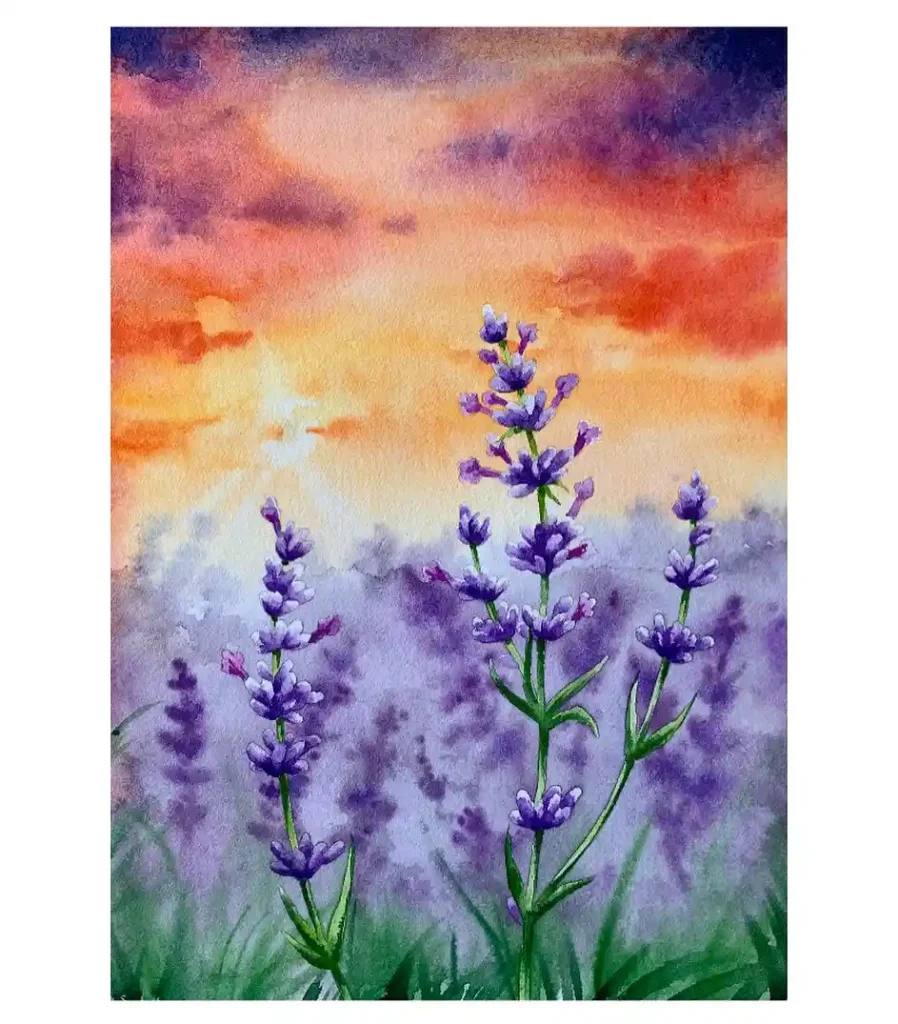
Vibrant orange and purple hues collide in the sky to represent a perfect summer evening. The detailed lavender sprigs in the foreground stand tall against the soft, blurred background of the distant field. It feels like a moment of pure peace as the sun sets. The artist masterfully captured the warm, golden glow reflecting off the delicate violet petals.
2. Minimalist Sprigs Watercolor Lavender on Textured White Paper
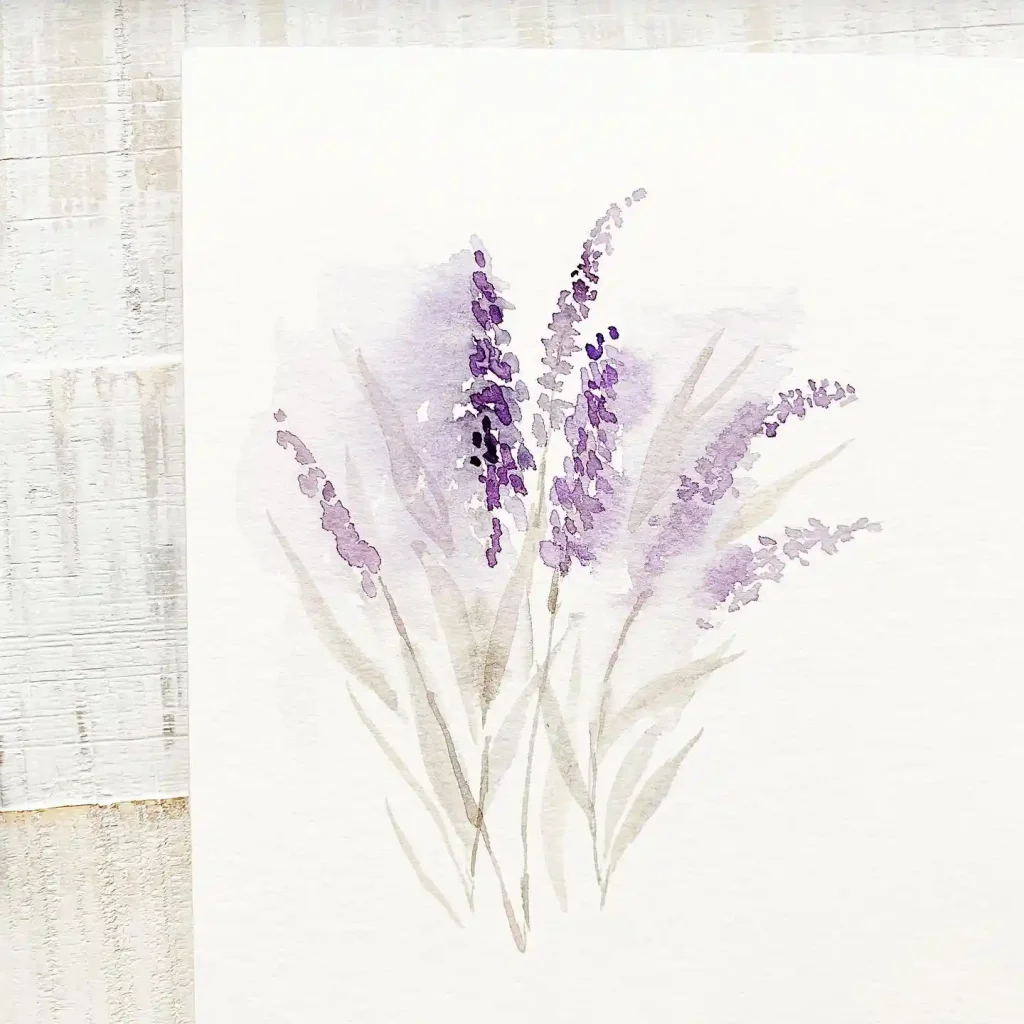
Clean lines and soft washes define this elegant botanical study. By focusing on a single cluster of stems, the artist highlights the natural grace and simplicity of the plant. The light purple pigment bleeds gently into the paper, creating a sense of effortless beauty. It is a wonderful example of how a modern approach can breathe life into traditional subjects.
3. Tuscan Rows Watercolor Lavender on Artist Sketchbook
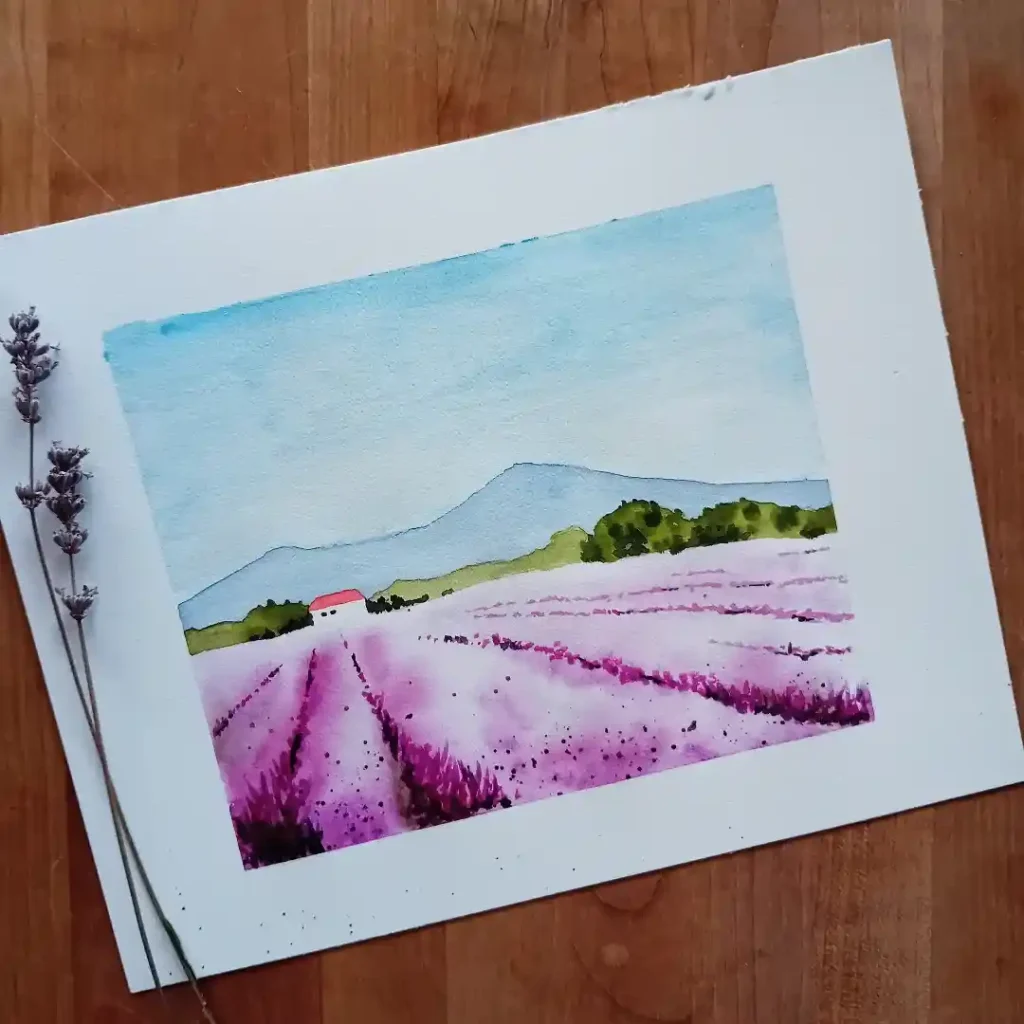
Parallel lines of purple lead your eye toward a charming red roofed cottage in the distance. This piece captures the traditional beauty of European countryside farming with a cheerful and bright palette. The blue mountain silhouette adds depth to the horizontal composition. It feels like a sunny vacation spent wandering through fragrant fields under a clear and calm summer sky.
4. Farmhouse Morning Watercolor Lavender on Heavyweight Paper
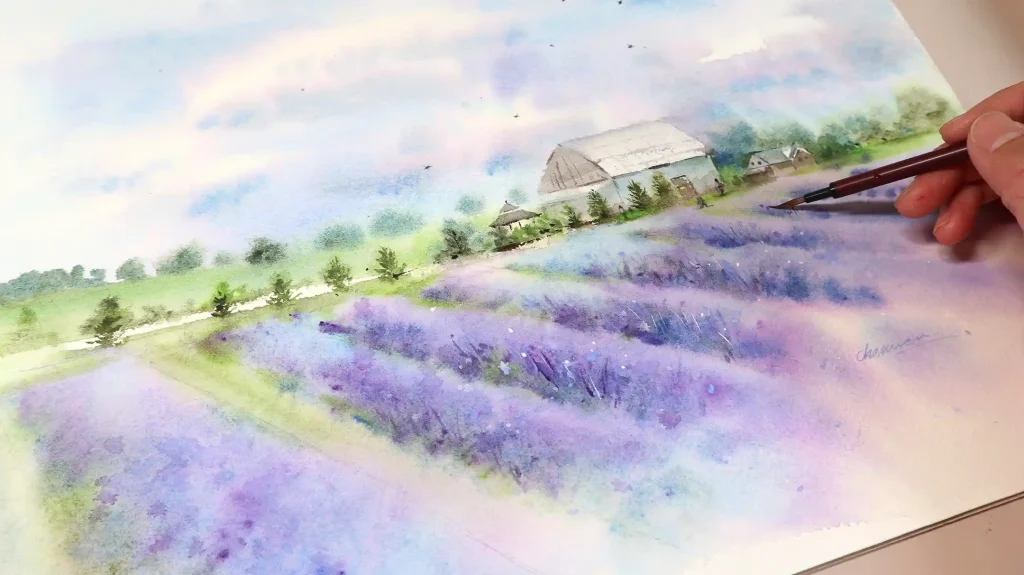
Soft sunlight filters through a hazy sky to illuminate a vast field and a rustic white barn. The artist used a wet on wet technique to create the dreamy, blurred effect of the distant flowers. Tiny dabs of saturated purple in the foreground add just enough detail to anchor the scene. This artwork narrates a quiet story of rural life.
5. Deep Twilight Watercolor Lavender on Cotton Rag Paper
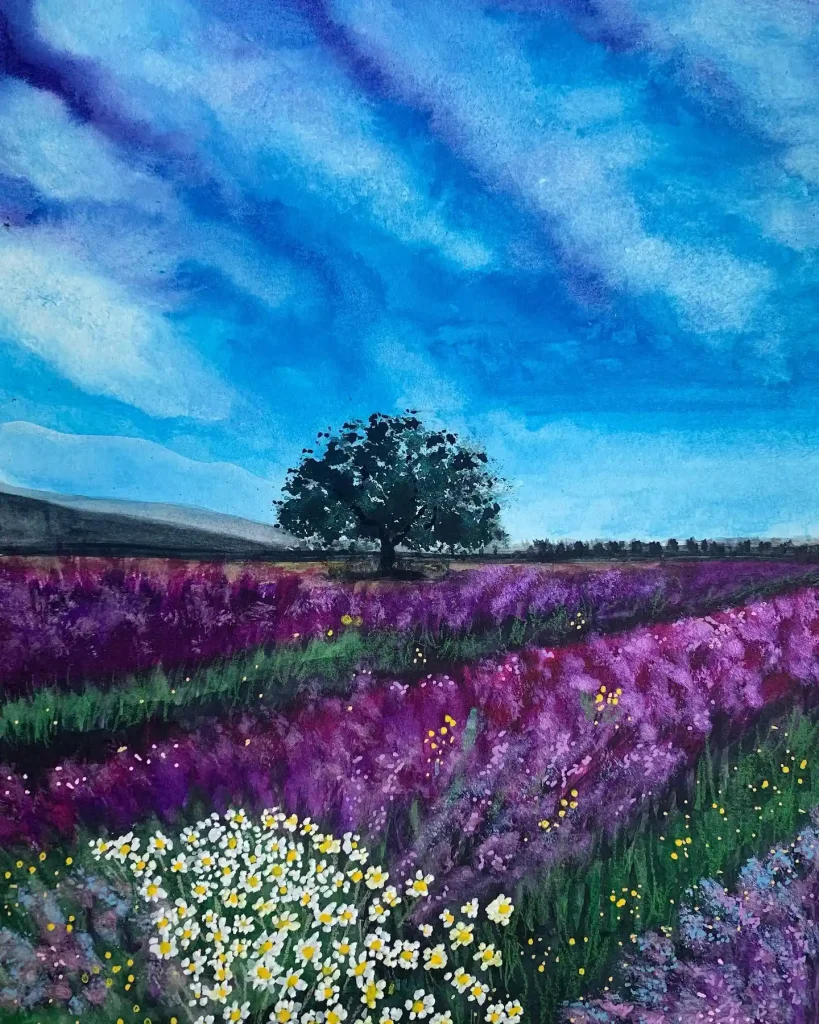
Moody blues and rich purples suggest a hidden emotional depth within this dramatic landscape. A single dark tree stands as a silent guardian over the sprawling violet field. The high contrast between the saturated land and the streaky sky evokes a sense of wonder. It is a symbolic piece that explores the mystery and calm found in the late evening.
6. Bright Bloom Watercolor Lavender on Fine Art Paper
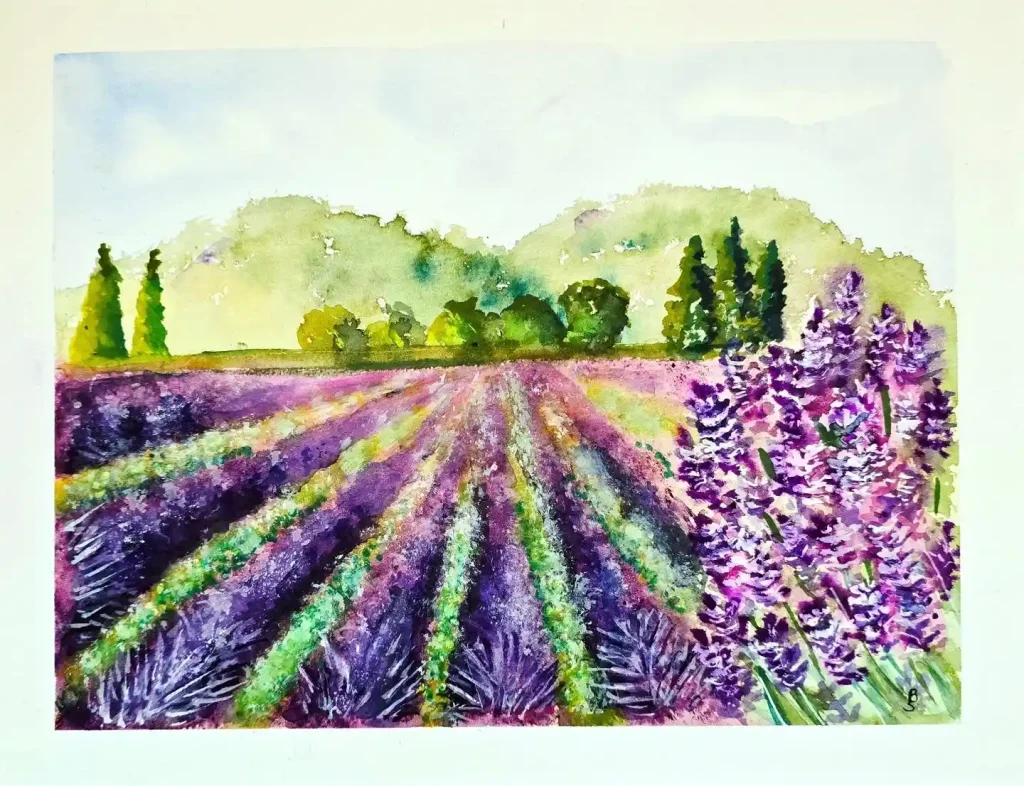
Cheerful rows of flowers stretch toward a lush green hillside in this vibrant and energetic composition. The artist used thick, textured brushstrokes to give the lavender heads a tangible sense of volume. It is an educational look at how to layer different shades of purple to create realistic depth. The overall mood is incredibly uplifting and full of natural life.
7. Splattered Petals Watercolor Lavender on Smooth Illustration Paper
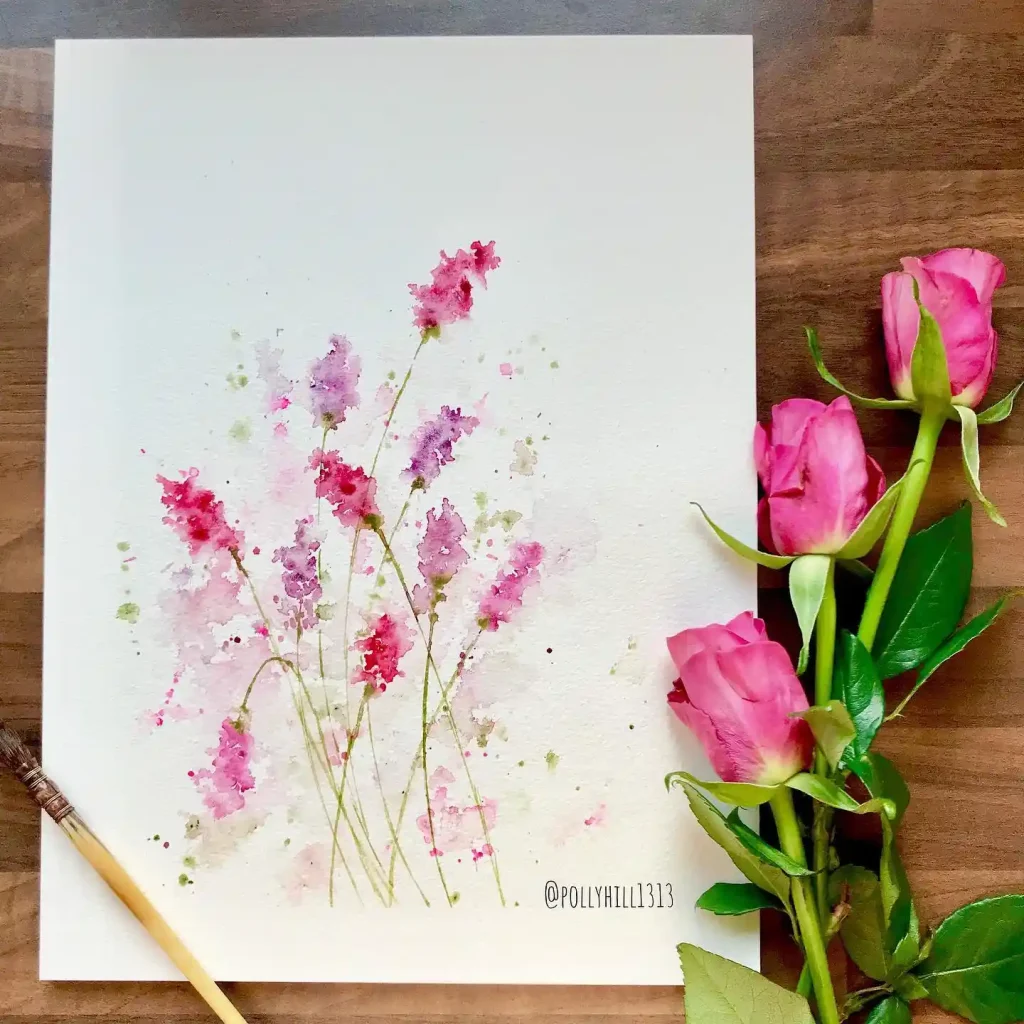
Playful pink and purple splashes create a whimsical and lighthearted version of a classic floral arrangement. The loose, gestural stems give the piece a sense of movement as if the flowers are dancing in a breeze. Small green splatters suggest leaves and stems without needing precise lines. It is a fun, creative way to explore color and organic shapes.
8. Triple Studies Watercolor Lavender on Rough Textured Paper
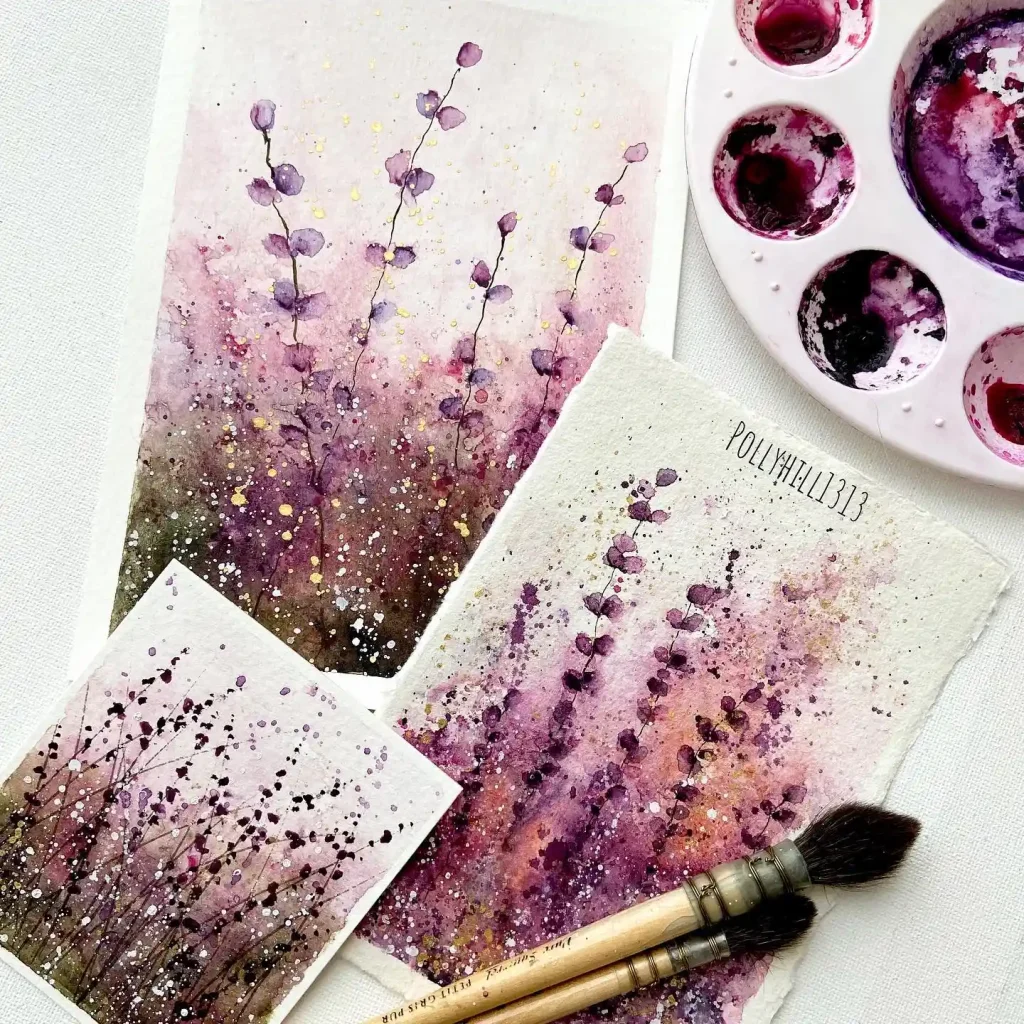
Three distinct panels offer a reflective look at different ways to capture a floral mood. The artist experimented with splattering techniques and deep pigment saturation across these small studies. Seeing the brushes and palette nearby reminds us of the messy, beautiful process of creation. Each piece feels like a personal meditation on the various textures found in the garden.
9. Deckled Edge Watercolor Lavender on Handmade Paper
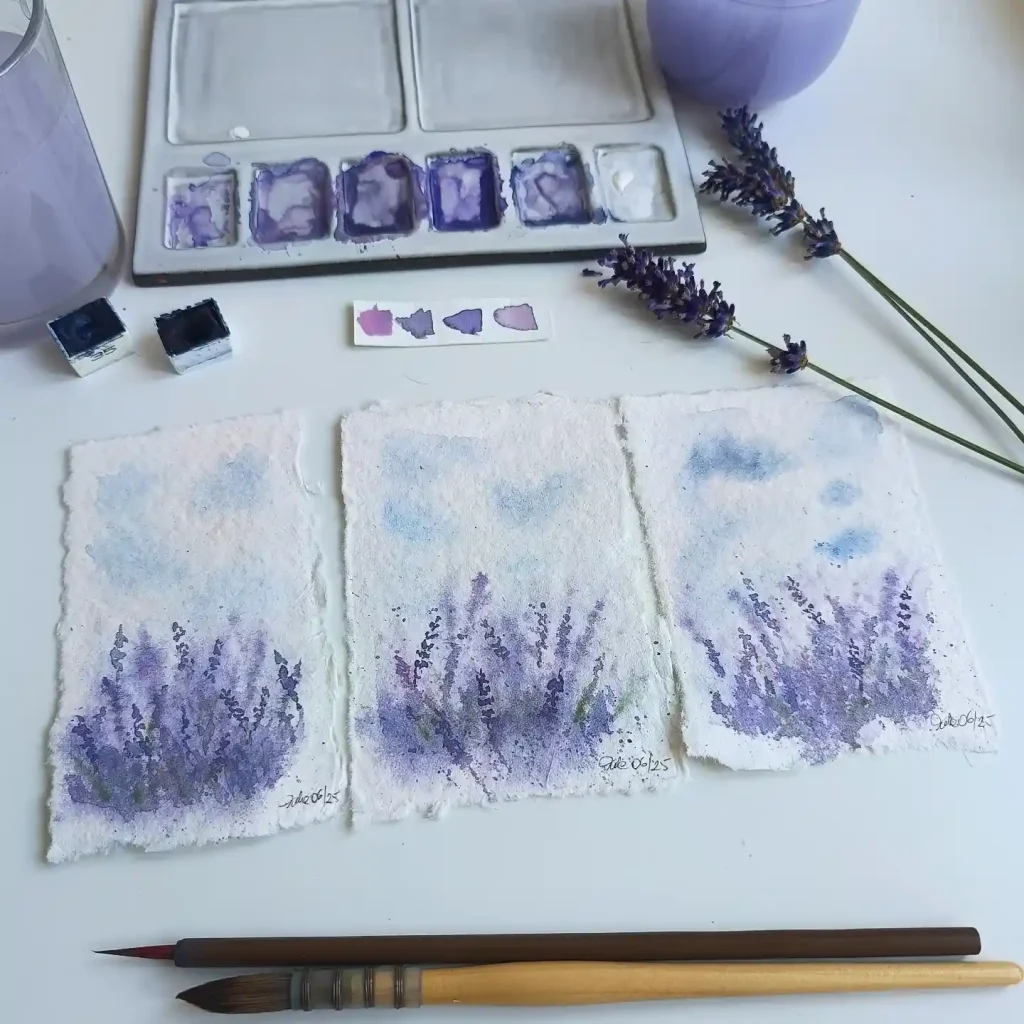
Ethereal purple washes sit beneath a soft blue sky in these three delicate miniature paintings. The raw, deckled edges of the paper add a tactile and authentic feel to the collection. It feels like a dreamlike memory of a garden rather than a literal representation. The simplicity of the forms allows the viewer to project their own peaceful emotions.
10. Dancing Violet Watercolor Lavender on Cold Pressed Paper
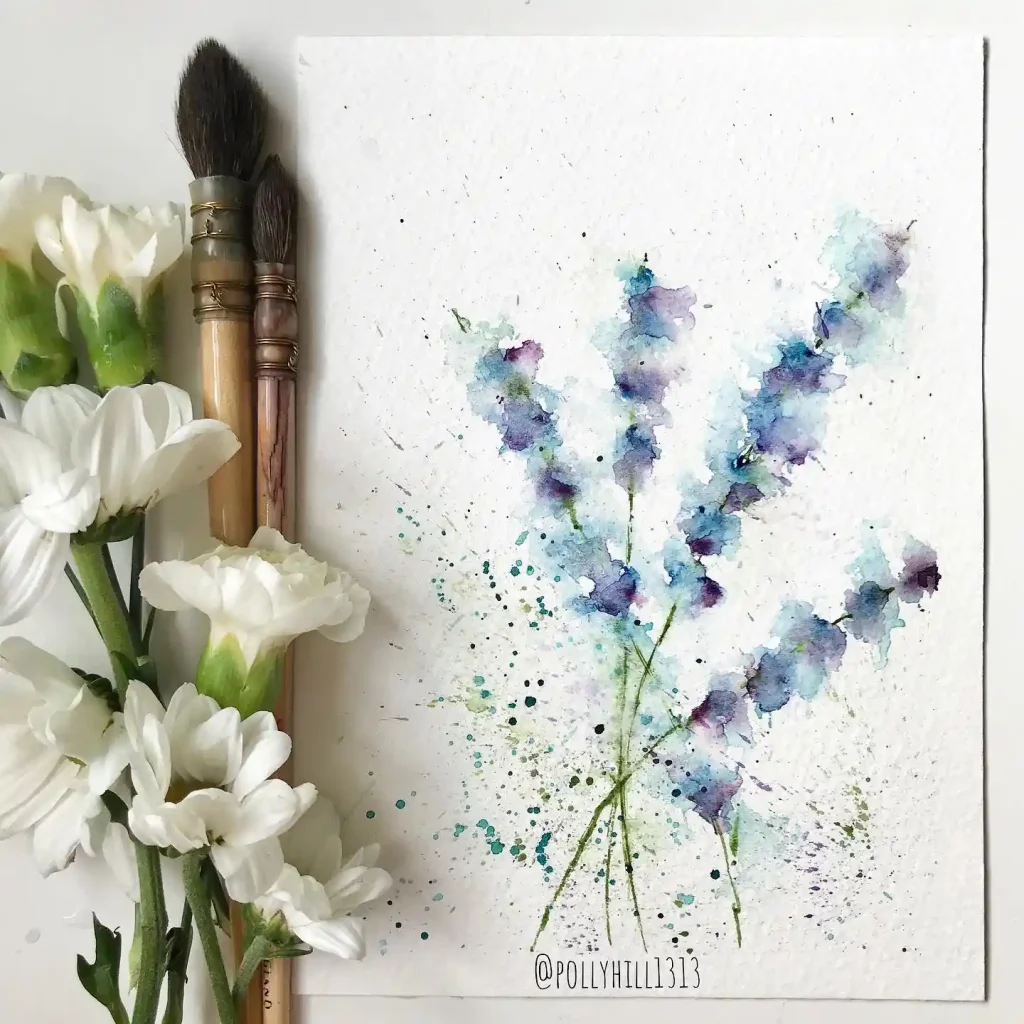
Splashes of turquoise and deep purple mingle together to create a modern and high energy floral piece. The artist used a spray technique to suggest a field in bloom without painting every single petal. It is a fantastic lesson in letting the water do the work to create interesting textures. This artwork feels fresh, contemporary, and full of artistic spirit.
11. Golden Haze Watercolor Lavender on Fine Art Paper
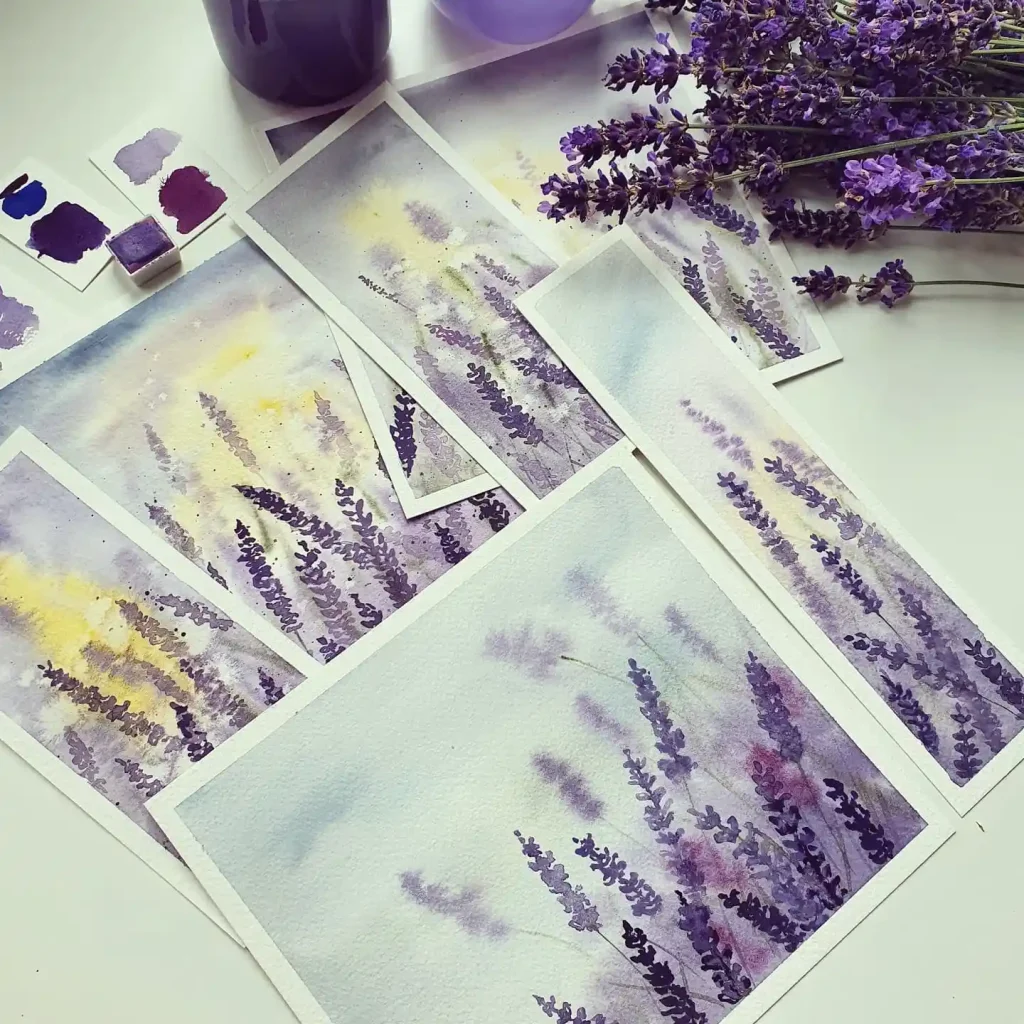
Luminous yellow light spills across these botanical panels, creating a warm and inviting atmosphere. The artist used soft, hazy washes to suggest a sun-drenched field where the scent of purple blooms fills the air. It is a beautiful study of how backlighting can transform a simple floral subject into something truly magical. The vertical compositions feel elegant and very intentional.
12. Morning Glow Watercolor Lavender on Artist Sketchbook
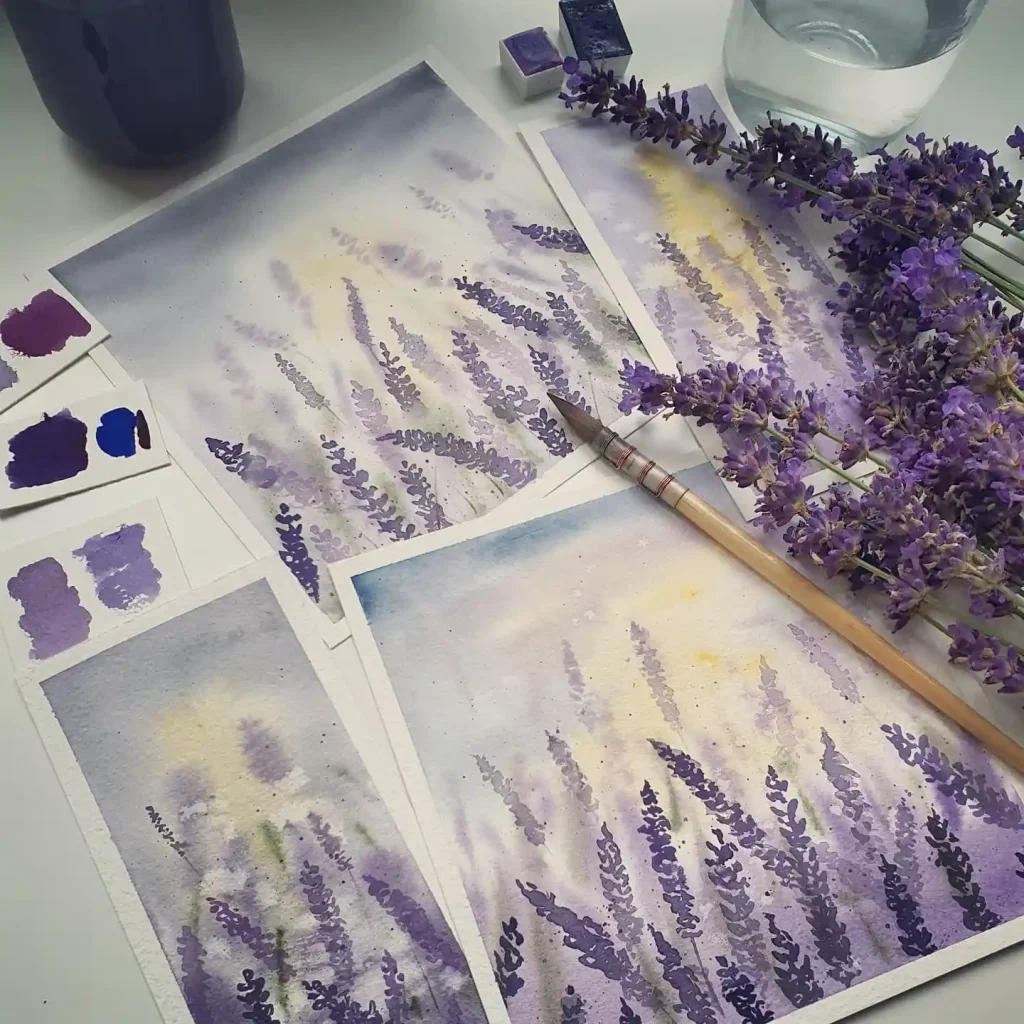
Bright sunlight seems to radiate from the center of these pages, highlighting the delicate violet stems. By layering pale yellows and soft purples, the painter captured that fleeting moment when the dew still clings to the garden. It is an educational look at using high-key values to create a sense of freshness. These studies feel like a warm, quiet hug.
13. Pastel Fields Watercolor Lavender on Textured Watercolor Paper
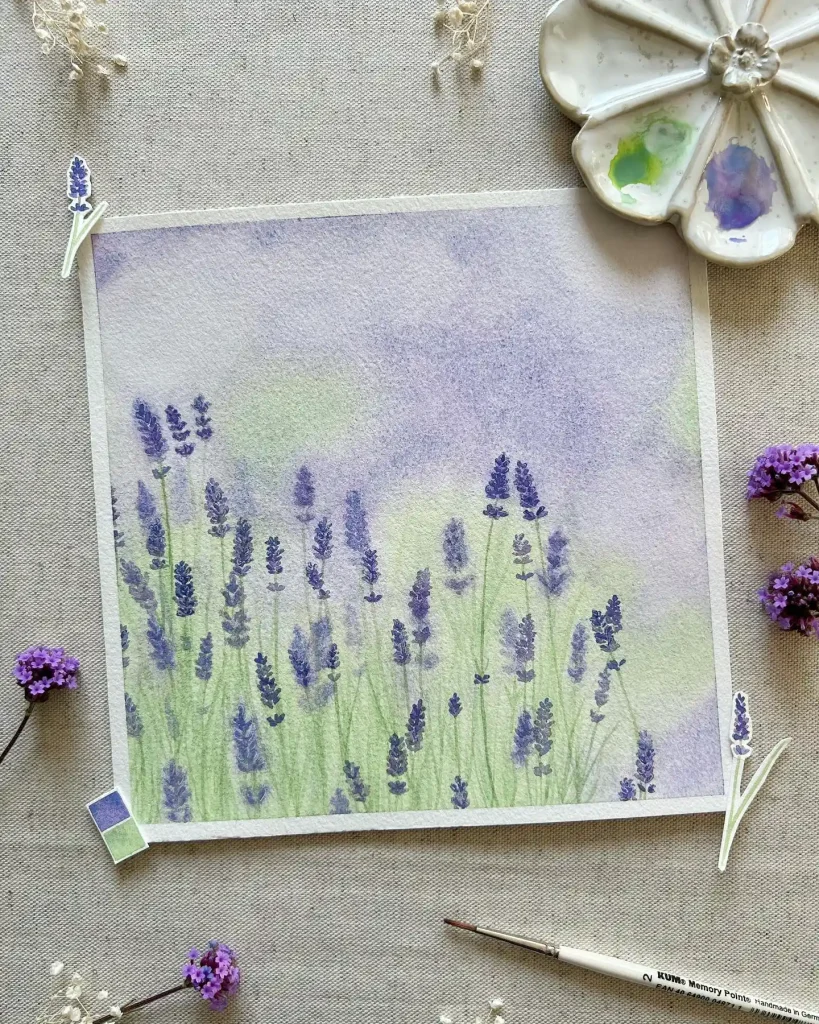
Soft lilac tones mingle with a pale green sky in this dreamy, expansive landscape. The artist used a very light touch to keep the mood ethereal and calm. It feels like a place where time slows down and the only sound is the gentle rustle of leaves. The minimal detail allows the viewer to focus on the soothing color harmony.
14. Dewy Garden Watercolor Lavender on Mixed Media Paper
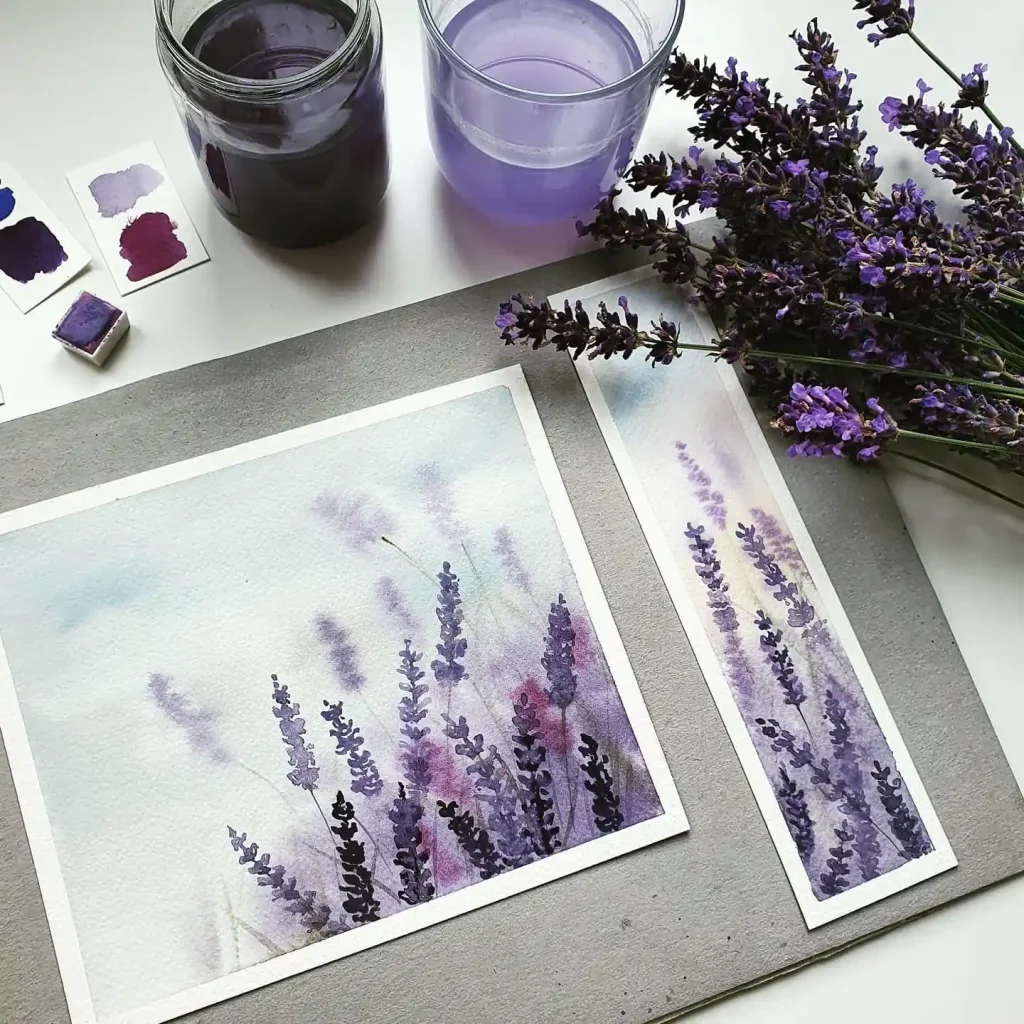
Cool purples and soft blues blend together to suggest a damp, early morning in the countryside. The taller sprigs in the foreground provide a nice sense of depth against the misty background. It is a reflective piece that captures the quiet solitude of nature. You can almost feel the refreshing cool air just by looking at the fluid washes.
15. Violet Bouquet Watercolor Lavender on Handmade Deckled Paper
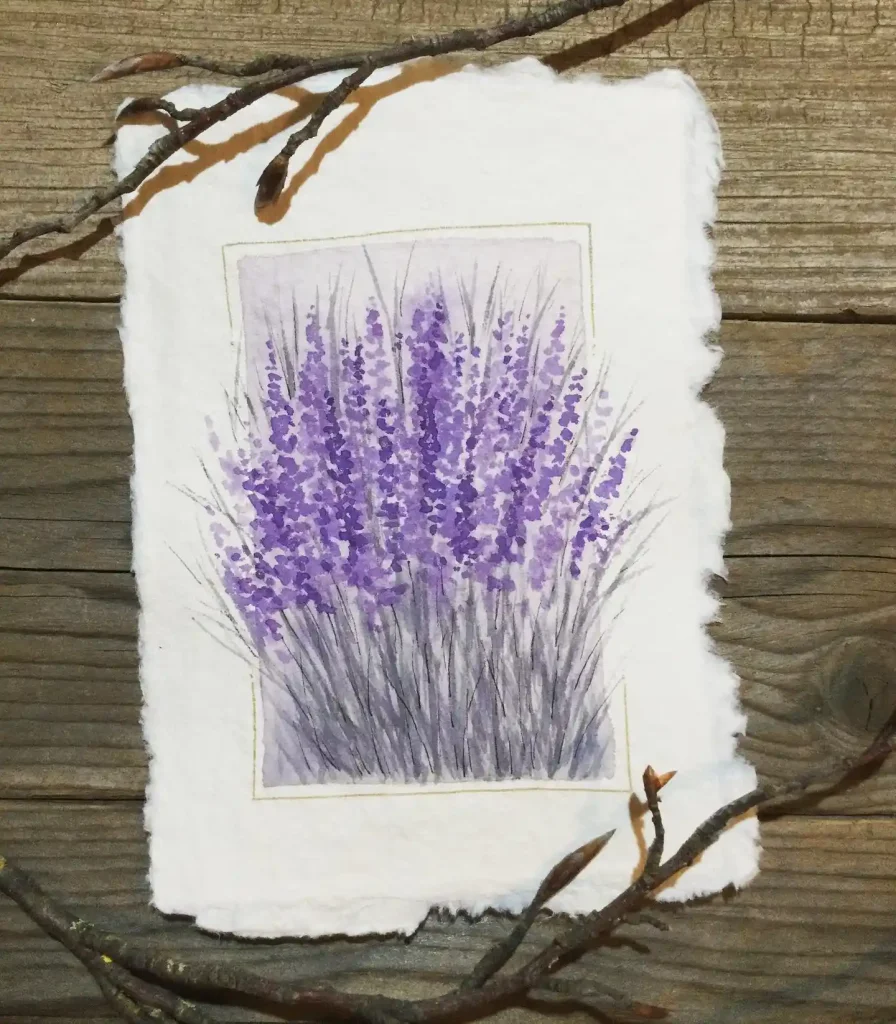
Vibrant clusters of purple blooms are centered perfectly on this raw, textured surface for a rustic feel. The artist used saturated pigments to make the flower heads pop against the pale lavender background. It feels like a cherished gift pulled straight from a wild garden. The deckled edges of the paper add a tactile quality that feels very authentic and grounded.
16. Summer Meadow Watercolor Lavender on Cold Pressed Paper
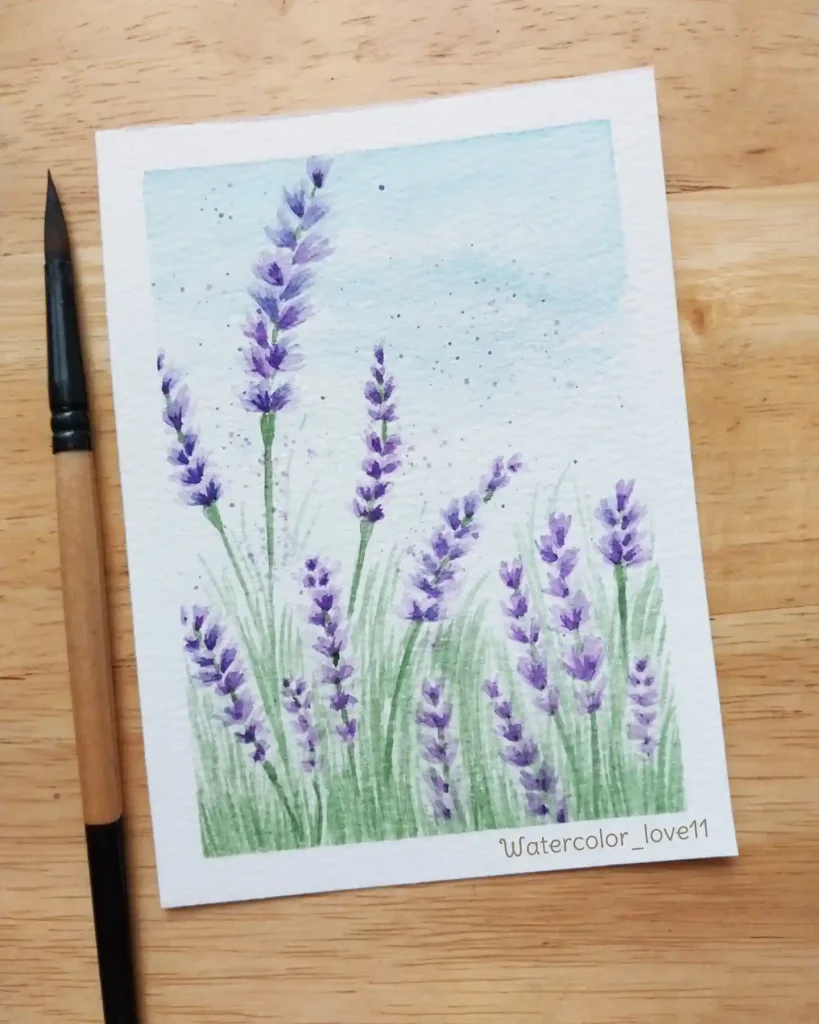
Splattered paint adds a sense of whimsy and movement to this bright, sky-blue composition. The green grass at the bottom feels lush and full of life, grounding the delicate purple stems. It is a playful interpretation of a field in full bloom under a clear day. This style is perfect for beginners who want to practice loose, expressive brushwork.
17. Tall Sprigs Watercolor Lavender on Smooth Illustration Paper
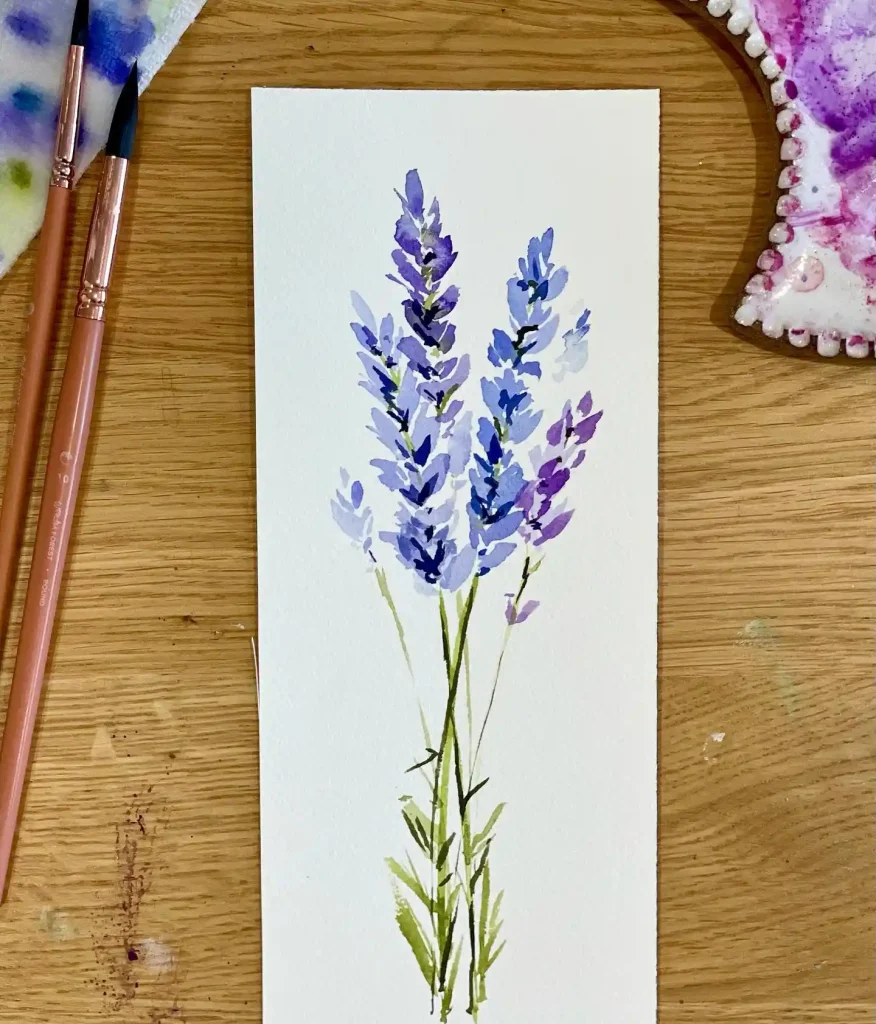
Clean and modern, these three stems stand out with their bold shapes and varied purple tones. The artist used a dry brush technique to add texture to the individual blossoms. It is a minimal study that celebrates the unique architecture of the plant. The vertical format makes it feel very sophisticated and would look amazing in a contemporary art gallery.
18. Wild Bloom Watercolor Lavender on Heavyweight Paper
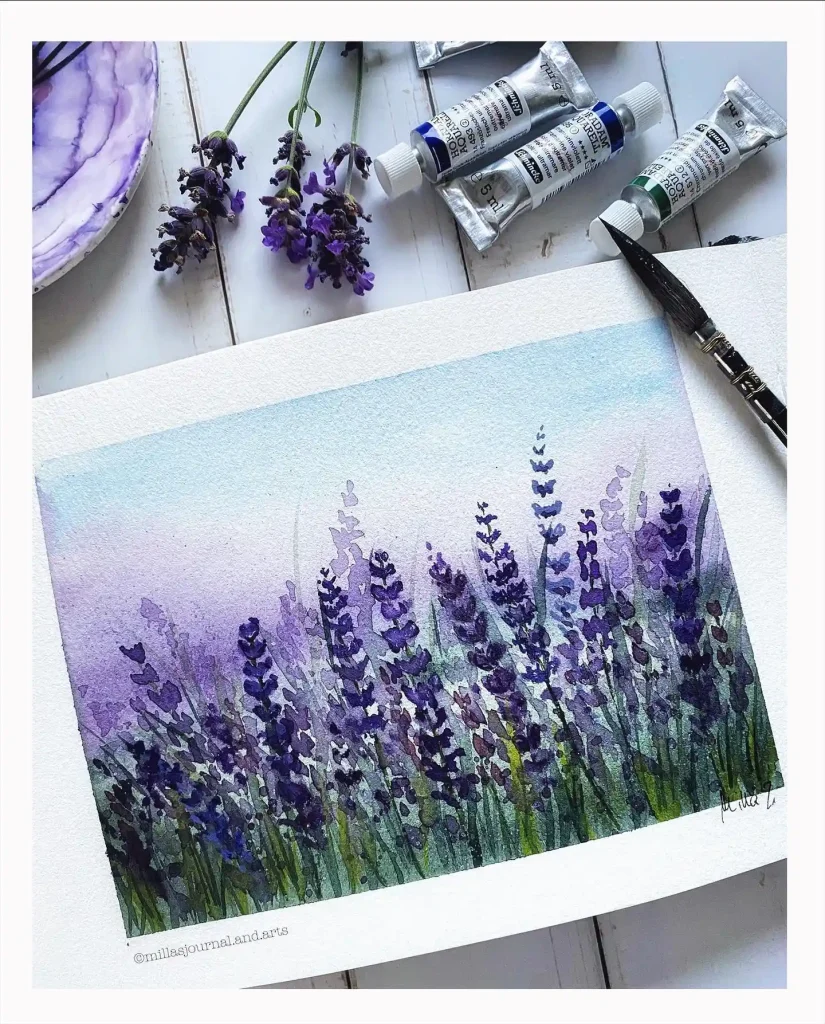
Deep violets and forest greens create a rich, moody landscape that feels full of mystery. The sky has a soft, multicolored wash that suggests a transition between day and night. It is a masterclass in blending dark values without losing the luminosity of the watercolor. The overall composition feels very balanced and offers a sense of deep, natural wonder.
19. Expressive Stems Watercolor Lavender on Textured White Paper
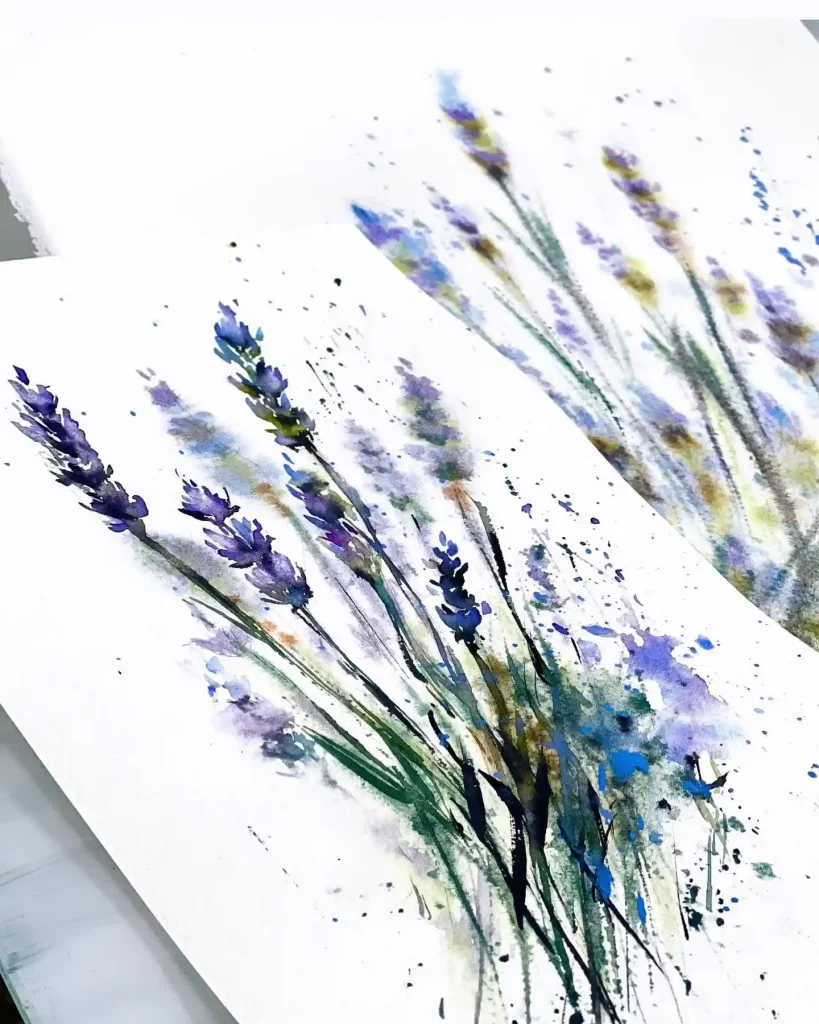
Dynamic blue and purple splatters give this piece an imaginative and high-energy personality. The loose stems seem to grow upward with a sense of purpose and joy. It is a great example of how to use “happy accidents” in art to create something unique. This artwork feels alive, as if the flowers are reaching toward a bright, invisible sun.
20. Gentle Horizon Watercolor Lavender on Small Format Paper
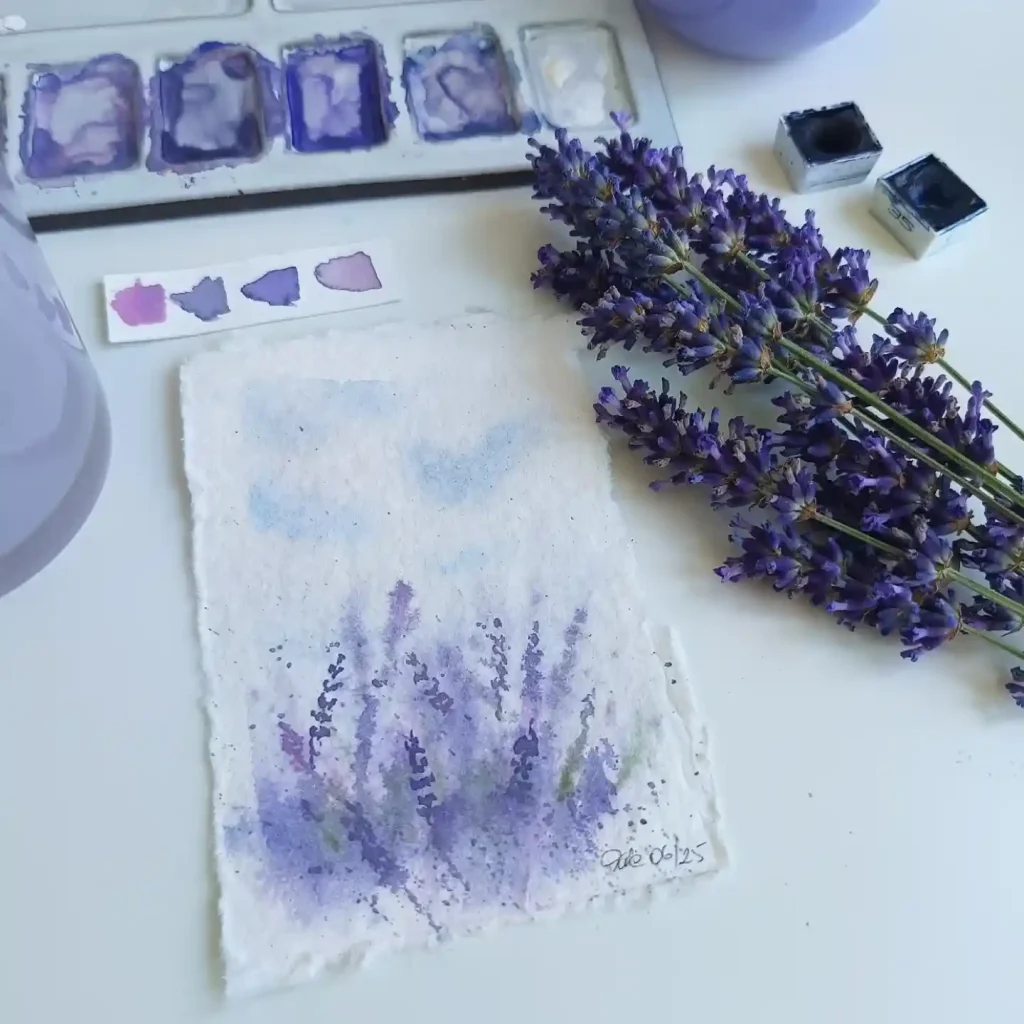
Tiny purple blossoms sit beneath a soft, cloudy sky in this intimate and peaceful study. The artist used a very limited palette to keep the focus on the texture of the paper and the paint. It feels like a quiet moment of discovery in a secret garden. The small scale makes the viewer lean in to appreciate the delicate details.
21. Scattered Petals Watercolor Lavender on Fine Art Paper
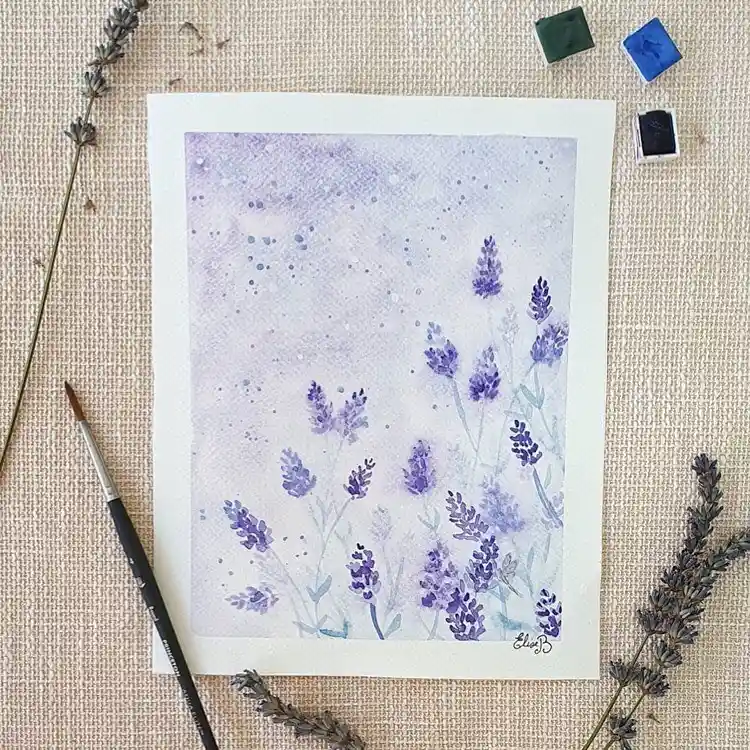
Soft violet washes float effortlessly across this piece like a gentle morning mist settling over a secret garden. The artist used delicate splatters to represent tiny blossoms catching the light, giving the composition a truly ethereal and dreamlike quality. It feels as if the flowers are dissolving into the hazy sky, inviting the viewer to get lost in the wonder.
22. Grassland Stems Watercolor Lavender on Textured Watercolor Paper
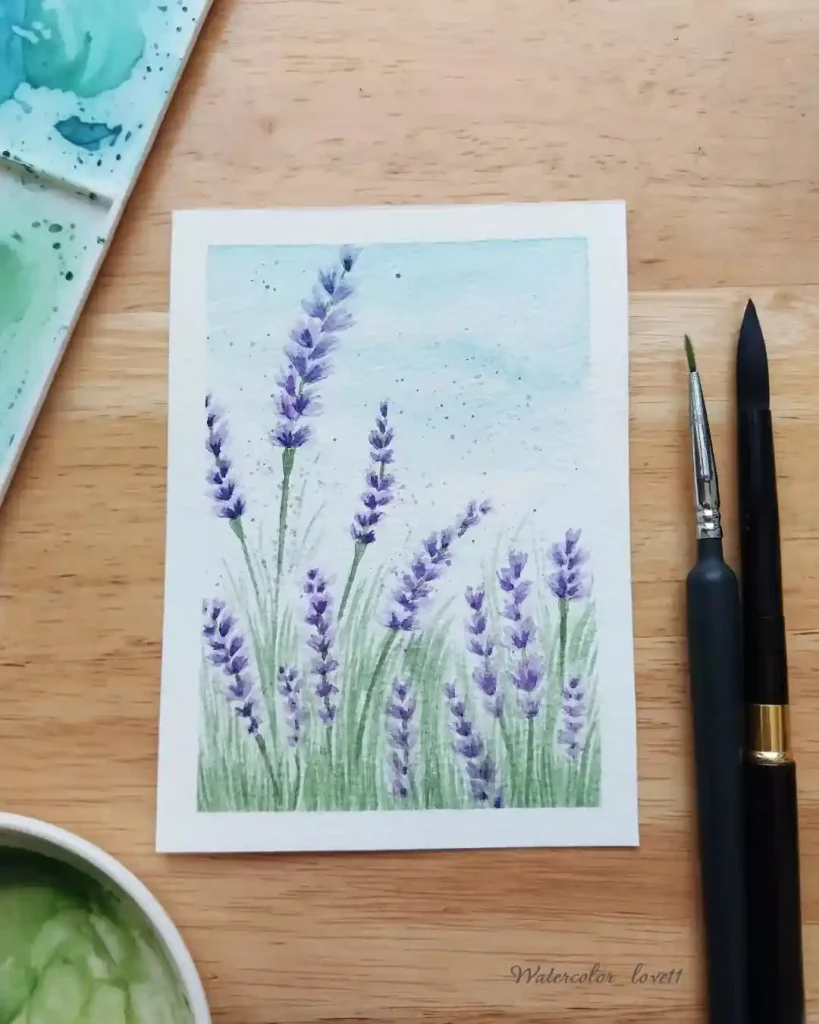
Technical skill shines through the rhythmic brushwork used to create the dense green grass swaying beneath the purple sprigs. This painting offers a wonderful educational look at how to layer vertical strokes to build realistic depth and movement. The soft blue sky provides a calm backdrop that allows the vibrant textures of the botanical elements to really pop and feel alive.
5. Frequently Asked Questions About Watercolor Lavender Drawing
What colors do I need to paint watercolor lavender?
Three colors are enough to start: a violet for the buds, a blue-purple such as ultramarine for the shadows, and a muted green for the stems. Mix the violet with a little ultramarine for the shaded side of each spike, and mix the green with a touch of raw sienna so the stems look woody instead of bright green.
What paper works best for watercolor lavender?
Cold-pressed paper is the easiest all-round choice because its light texture holds both soft washes and crisp dabs. Heavyweight paper (around 300 gsm) buckles less when wet. Smooth paper suits fine detail, such as the macro close-up in idea 2, but it shows every brush mark, so it suits a steadier hand.
How do I keep my purples from turning muddy?
Use fewer colors, let each layer dry before adding the next, and rinse your brush water often. Muddy purple usually comes from mixing too many pigments while the wash is still wet, or from scrubbing the same spot. Paint the pale background buds first, let them dry, then add the bold foreground buds on top.
How do I paint a lavender spike step by step?
Paint the thin stem first in diluted green. While it is still slightly damp, dab small purple dots along the top third of the stem, making them larger at the bottom of the spike and tinier toward the tip. Once dry, drop a touch of indigo into the lower buds for shadow, then soften the base of the stem with a clean, wet brush.
Can a beginner paint the field scenes, like ideas 1, 3, and 6?
Yes. A distant lavender field is mostly horizontal strokes: a pale diluted wash for the far rows, stronger color for the near rows, and a few dark dabs in the foreground. Start with idea 16, Summer Meadow, which uses loose splatter and simple grass strokes, before trying the detailed sunset field in idea 1.
How long does a watercolor lavender painting take to dry?
A thin wash usually feels dry to the touch in about 10 to 20 minutes in a normal room, while a very wet wash on heavyweight paper can take longer. Wait until the paper looks matte and feels cool-dry before painting detail on top, or the new paint will bleed into the wash underneath.
6. Related Watercolor Flower Drawing Ideas
- Watercolor rose drawing ideas — classic blooms for petal-layering practice
- Elegant watercolor orchid drawing ideas for delicate petal work
- Watercolor magnolia drawing ideas for large, graceful blossoms
- Cherry blossom drawing ideas for delicate spring florals
- Vibrant marigold painting ideas for bold, warm color practice
If you love painting lavender sprigs, try turning them into something you can send. Our hand-painted watercolor card ideas show 25 card designs, including botanical save-the-dates and floral suites, that put sprigs like these on the front of a card.