Frog drawing opens up a magical world where creativity leaps beyond boundaries, offering endless possibilities for artistic expression and skill development. These charming amphibians provide the perfect subject for both beginners discovering their artistic voice and experienced artists refining their techniques.
Drawing frogs teaches essential skills like capturing organic shapes, understanding proportions, and mastering texture details from smooth skin to bumpy surfaces. The versatility of frog subjects allows exploration of various styles, from whimsical cartoon characters to scientifically accurate illustrations.
Whether you’re sketching a simple tree frog silhouette or crafting an intricate realistic portrait, each drawing builds confidence and technical ability. The frog drawing community celebrates every artistic journey, sharing techniques, inspiration, and encouragement across all skill levels.
What are the easiest frog drawing techniques for beginners?
- Start with basic geometric shapes: Begin with a large oval for the body and smaller circles for the head and eyes to establish proportions quickly
- Master the signature frog pose: Practice the classic sitting position with bent hind legs and front legs supporting the body weight
- Focus on distinctive features: Emphasize the large, protruding eyes and wide mouth that make frogs instantly recognizable
- Use simple line work: Keep initial sketches clean with confident, flowing lines rather than scratchy, hesitant strokes
- Practice basic shading: Add depth with simple light and shadow patterns, focusing on the rounded belly and limbs
- Study reference photos: Observe real frogs to understand anatomy, but simplify complex details for easier drawing success
How do you draw realistic frog textures and details?
- Layer different skin textures: Combine smooth areas on the belly with bumpy, warty textures on the back using varied pencil pressures
- Create depth with cross-hatching: Use overlapping lines to build shadow areas and dimensional form around joints and muscle definition
- Add environmental context: Include lily pads, water ripples, or marsh grass to enhance realism and create compelling compositions
- Focus on eye details: Render the reflective, jewel-like quality of frog eyes with careful highlight placement and pupil definition
- Vary your mark-making: Use stippling for rough skin, smooth blending for wet areas, and sharp lines for defined edges
- Study light interaction: Observe how light reflects off moist frog skin differently than dry textures for authentic rendering
Ready to hop into your frog drawing adventure? Grab your pencils and start sketching these amazing amphibians today – every artist was once a beginner!
1. Contemplative Frog Portrait on Graphite on Paper
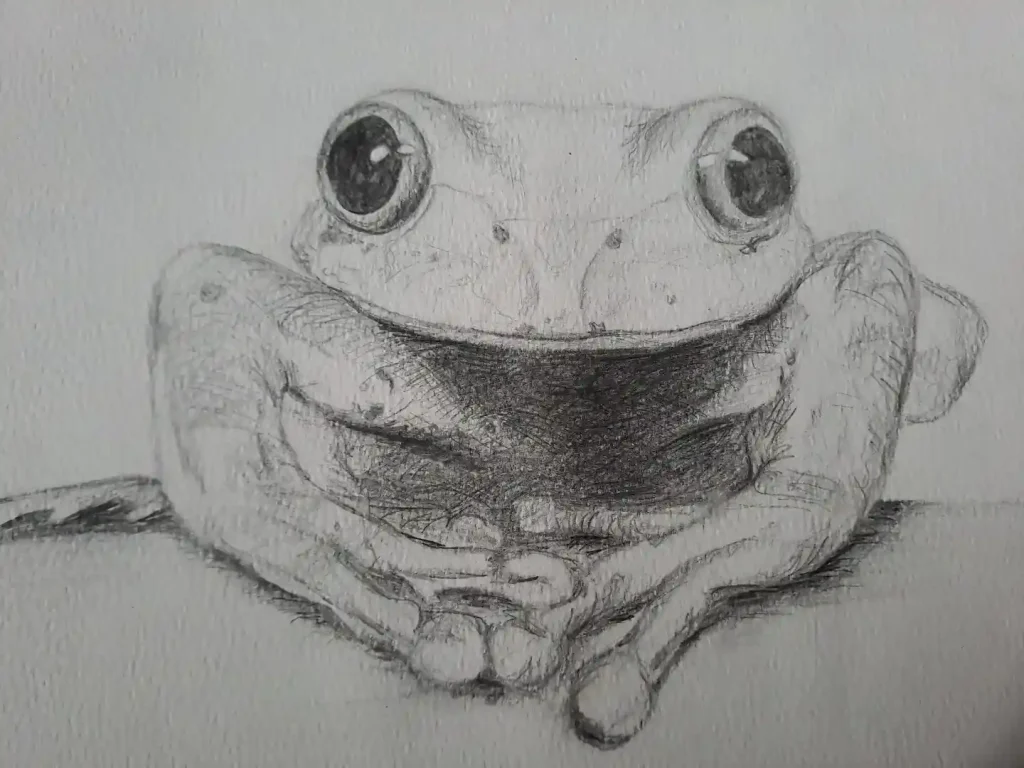
What a wonderfully gentle and expressive portrait. The artist used soft, layered graphite with delicate cross-hatching to build up the frog’s form and the subtle texture of its skin. The real focus, however, is on those large, dark, soulful eyes, which give the creature a sense of deep, quiet contemplation. A beautiful study in capturing a peaceful moment.
2. Blue Dart Frog in a Harness on Colored Pencil on Paper
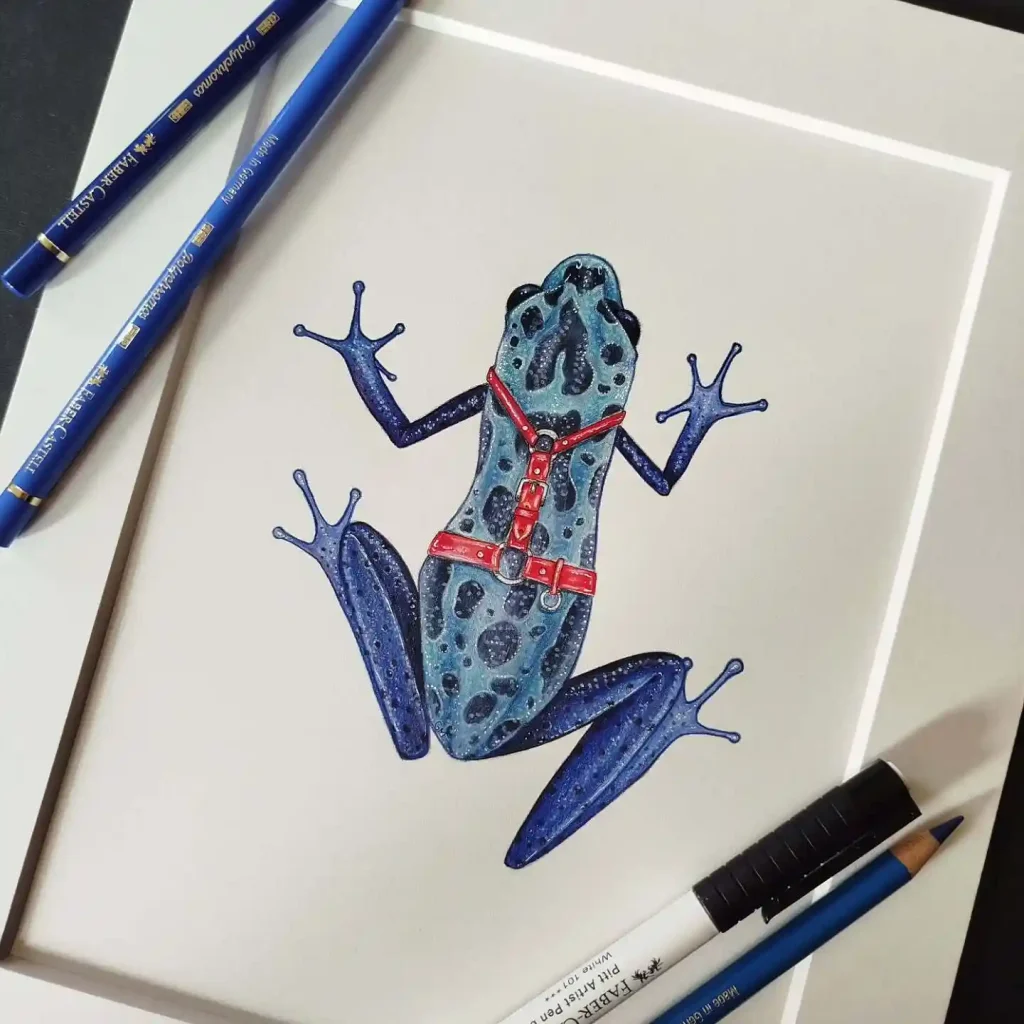
This is such a cool and brilliantly imaginative piece of art. The artist’s skill with colored pencils is fantastic, perfectly capturing the vibrant, glossy blue of the poison dart frog’s skin. Adding the detailed red harness is a wonderfully surreal and playful touch, giving this beautiful but dangerous creature an unexpected, almost tamed quality. A truly unique concept.
3. Vibrant Blue Dart Frog on Colored Pencil on Toned Paper
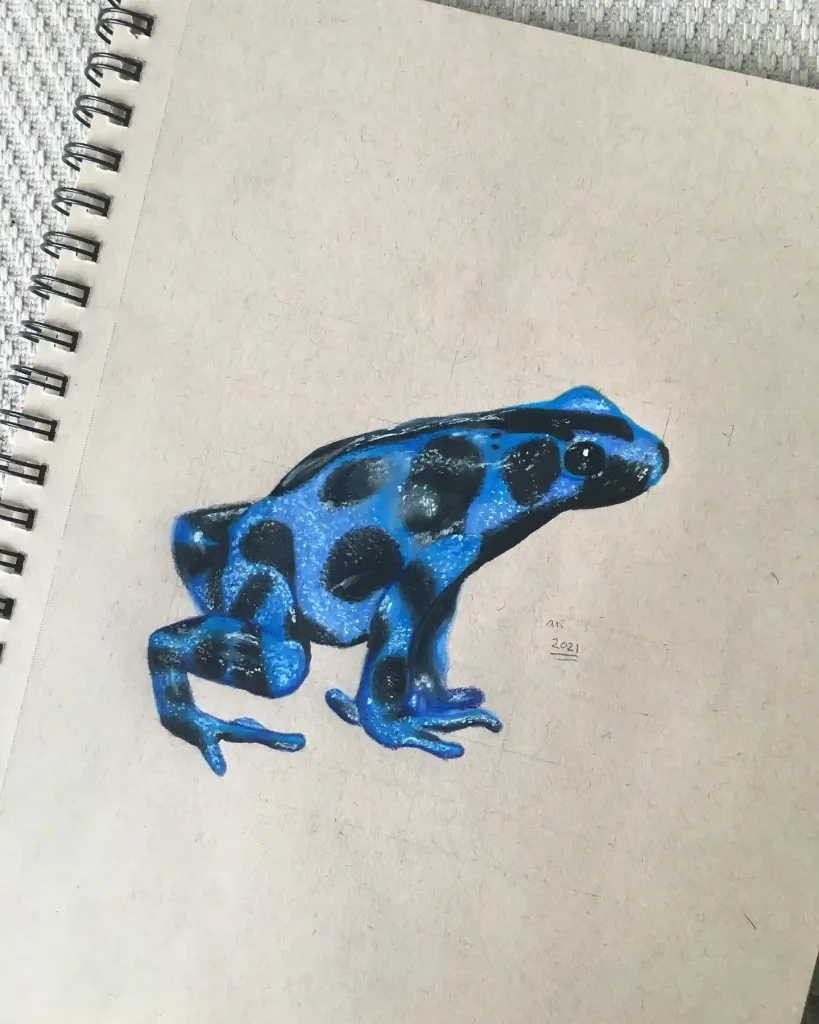
Using toned paper for a subject like this is a masterful choice, as it makes the vibrant blues and deep blacks of the poison dart frog leap off the page. The artist did an incredible job using highlights to create a wet, glossy texture on the frog’s skin, which gives it a stunningly lifelike quality. A truly beautiful wildlife study.
4. Puzzled Cartoon Frog on Digital Illustration
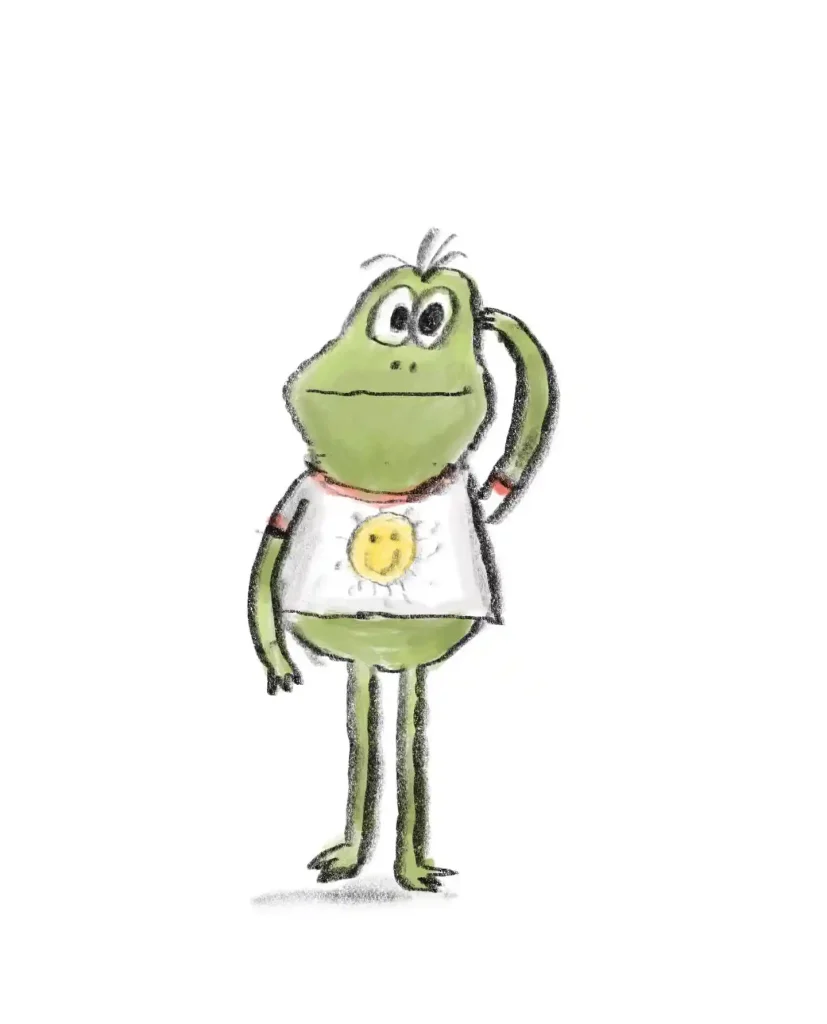
This little character is just brimming with personality. The artist used a loose, textured digital brush to give the drawing a charming, classic storybook feel. The simple character design, combined with the universally relatable “puzzled” gesture of scratching its head, creates a wonderfully endearing character. It’s a perfect example of how simple shapes can tell a whole story.
5. Hyper-Realistic Green Tree Frog on Colored Pencil on Paper
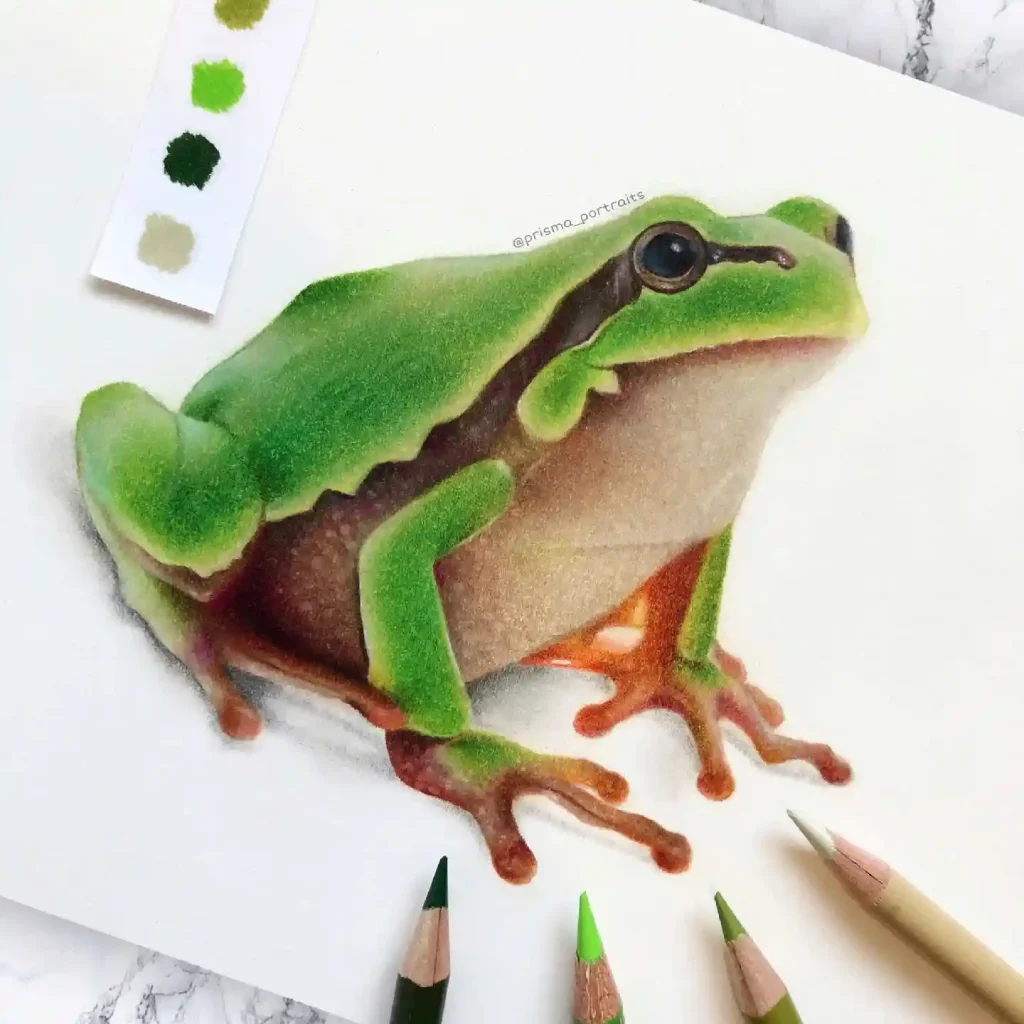
The level of realism achieved in this drawing is simply breathtaking. This artist is a true master of the colored pencil medium, using countless layers of greens, yellows, and browns to create the frog’s soft, velvety skin texture. The way the light is captured in its eye makes it feel completely alive—a stunning wildlife portrait of immense skill.
6. Tree Frog Study on Pencil on Paper
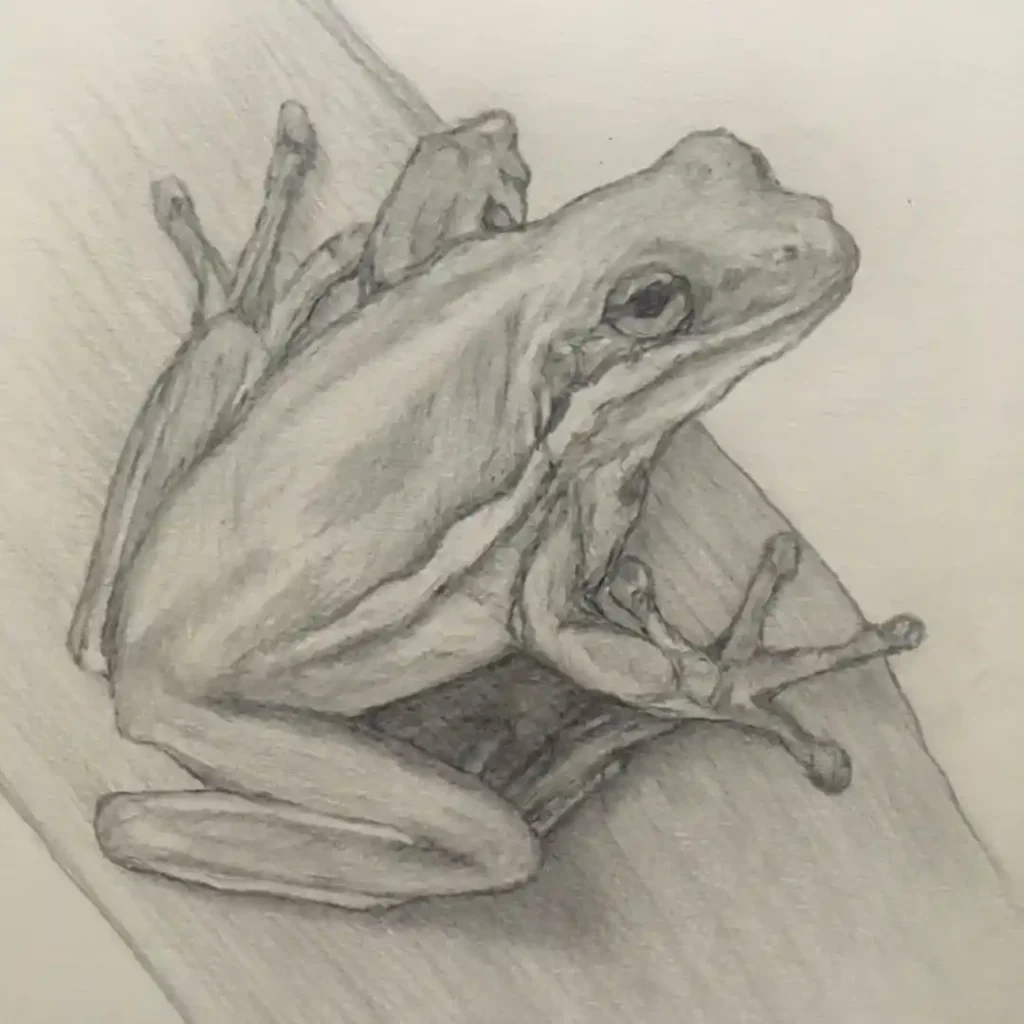
This is a lovely and effective observational sketch. The artist’s main focus was on accurately capturing the frog’s anatomy and its unique posture as it clings to a surface. The use of simple, clean shading and confident lines effectively describes the creature’s form and the soft, smooth texture of its skin. A great example of a classic nature study.
7. The Royal Stag-Frog on Ink on Paper
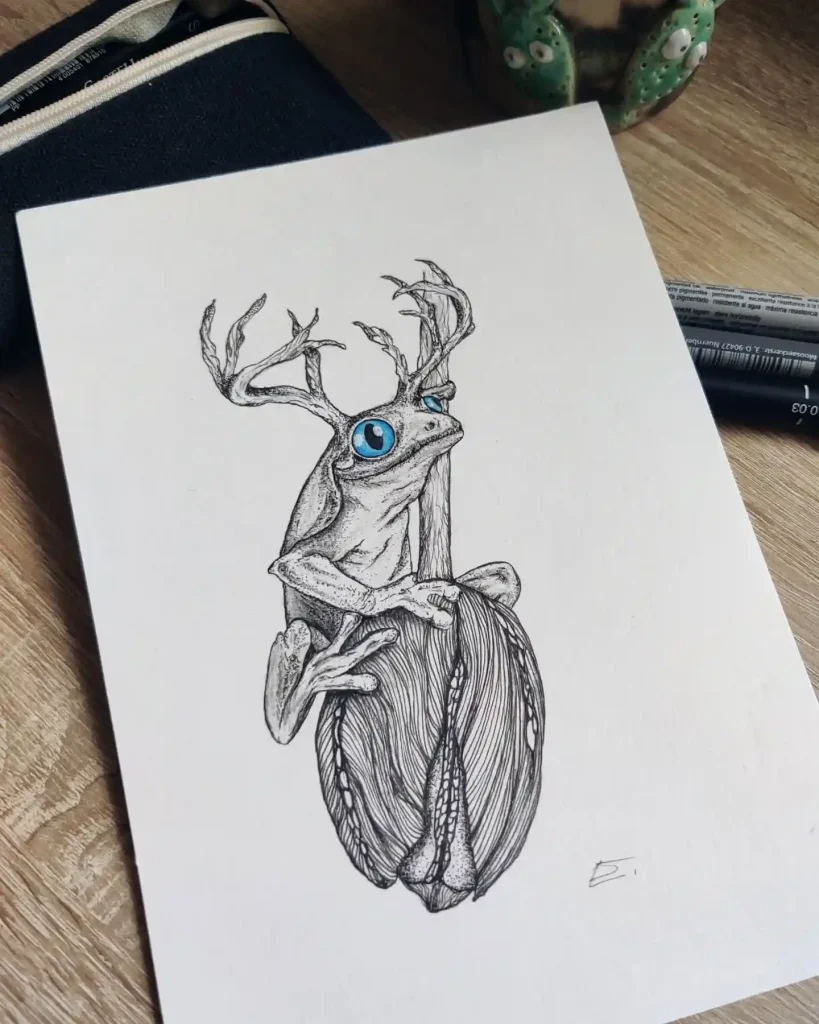
I absolutely love this kind of surreal creature design. The artist has seamlessly blended the anatomy of a frog with the antlers of a stag, creating a mythical “jackalope” of the swamp. The meticulous stippling and clean linework give it a fantastic texture, and the piercing blue eyes are a striking focal point. A wonderfully imaginative ink drawing.
8. Red-Eyed Tree Frogs on a Lily on Watercolor and Pencil on Paper
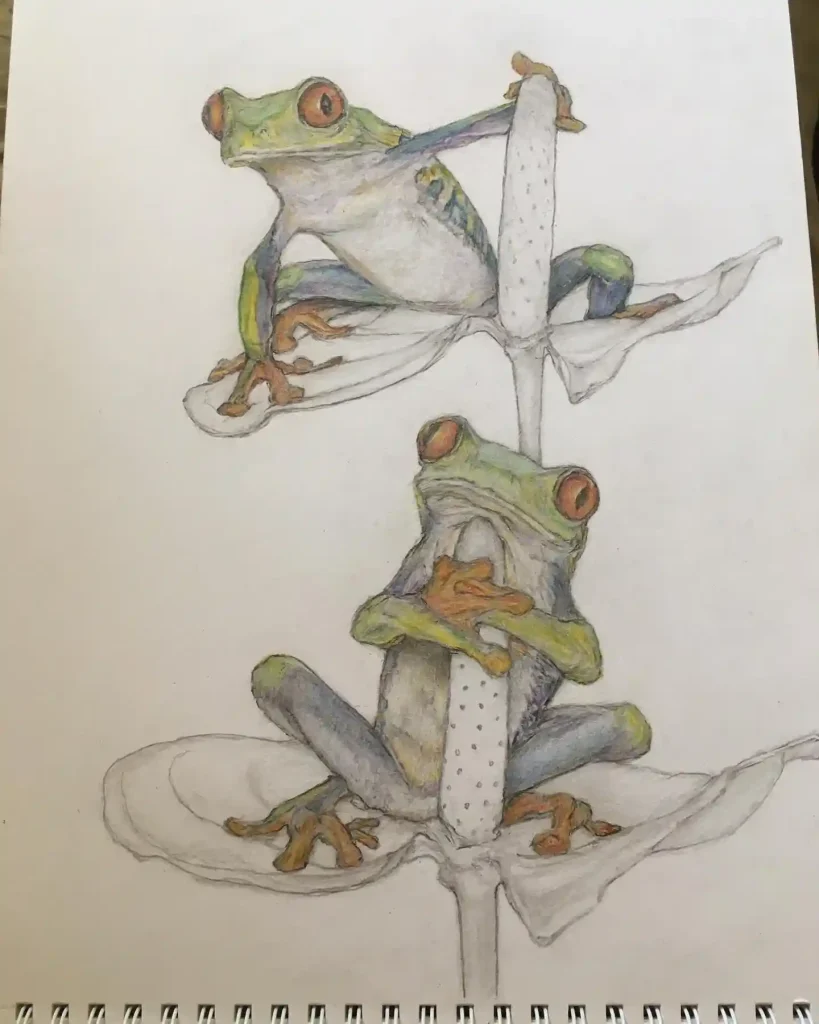
This piece has the wonderful, timeless feel of a classic naturalist’s field guide. The artist used light, transparent watercolor washes to bring out the subtle, beautiful colors of the red-eyed tree frogs, while the underlying pencil drawing defines their forms. The charming, almost human-like poses give these two frogs so much personality and character.
9. Spotted Frog on a Leaf on Graphite on Sketchbook Paper
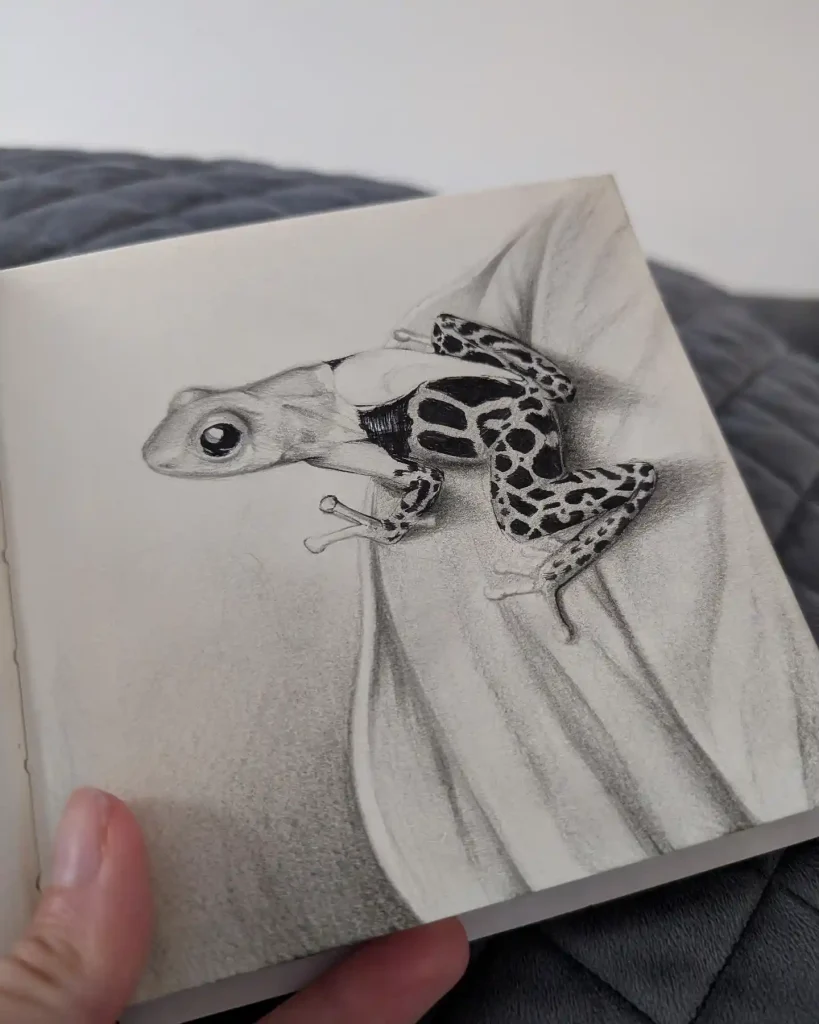
The realism in this sketchbook drawing is just phenomenal. The artist has used a full range of graphite values to create a powerful three-dimensional effect, making the frog seem like it could hop right off the page. The technical skill used to render the contrast between the frog’s sharp spots and the soft leaf is truly impressive.
10. Fine-Line Frog Studies on Ink on Paper
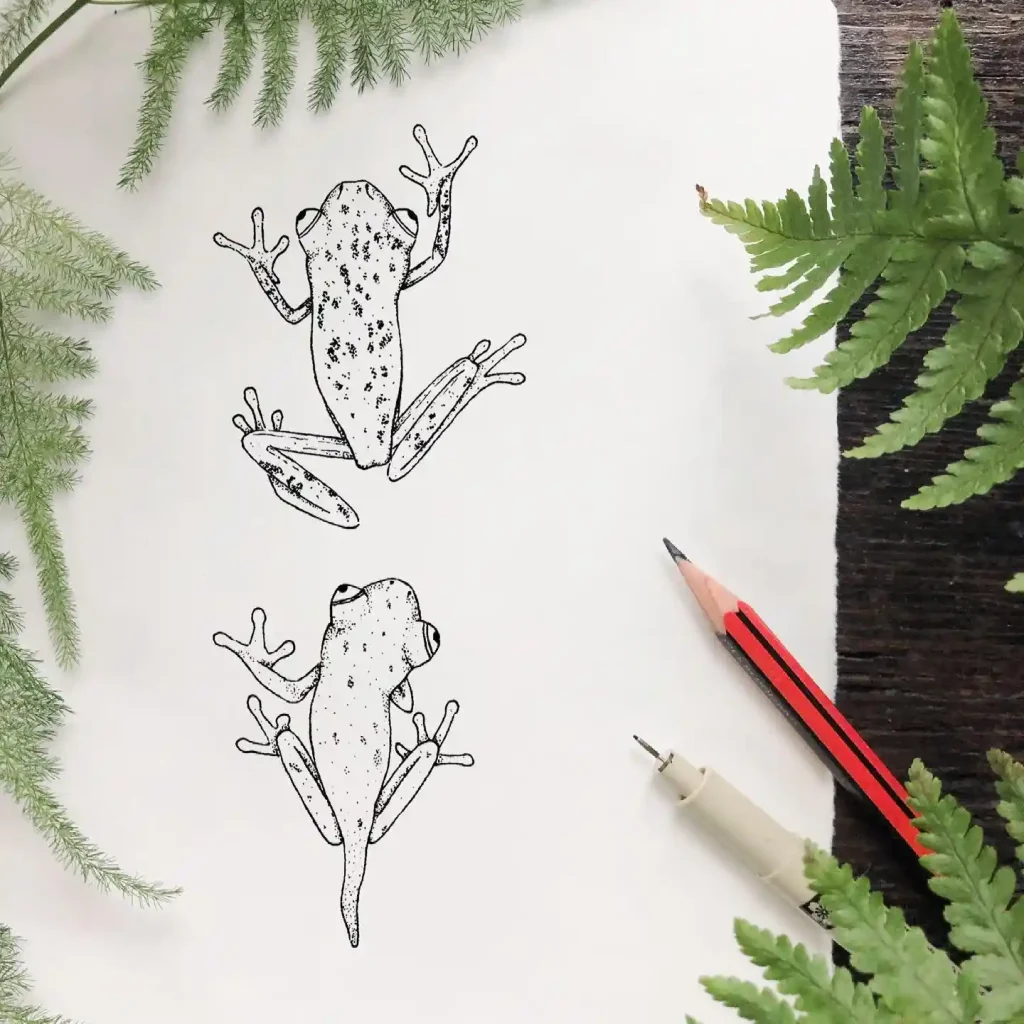
This page is a beautiful example of scientific illustration done with a delicate, artistic sensibility. The artist used a fine-tipped pen to render these frogs with incredibly clean outlines and meticulous stippling for texture and pattern. This technique is perfect for capturing the unique details of each animal with both clarity and precision, turning an anatomical study into fine art.
11. Light Pencil Frog Sketch on Pencil on Paper
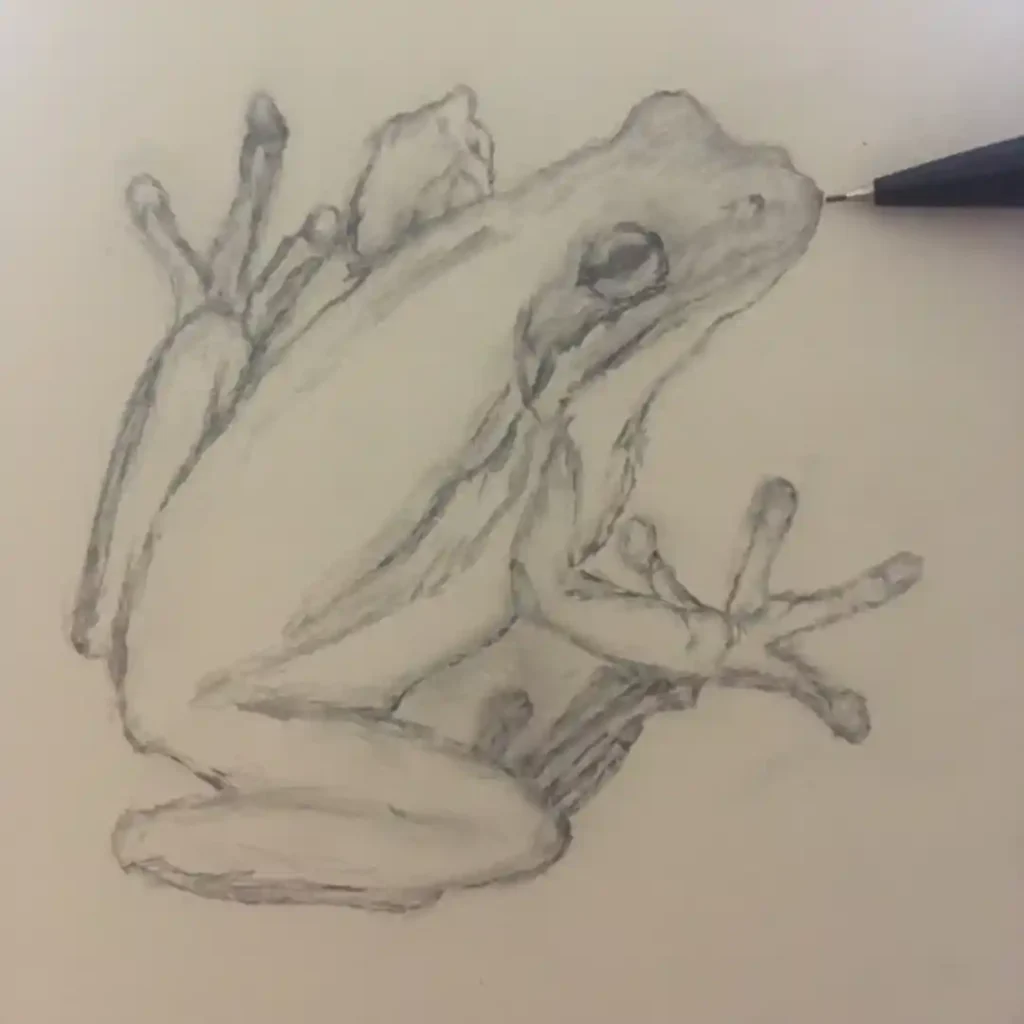
This is a beautiful example of the delicate, early stages of a drawing. The artist used a very light and sensitive touch with the pencil to gently map out the frog’s form and posture on the branch. It’s not about finished detail, but about capturing the initial gesture and soft contours—a quiet, lovely study showing the thoughtful beginnings of a piece.
12. Big-Eyed Cartoon Frog on Pencil on Paper
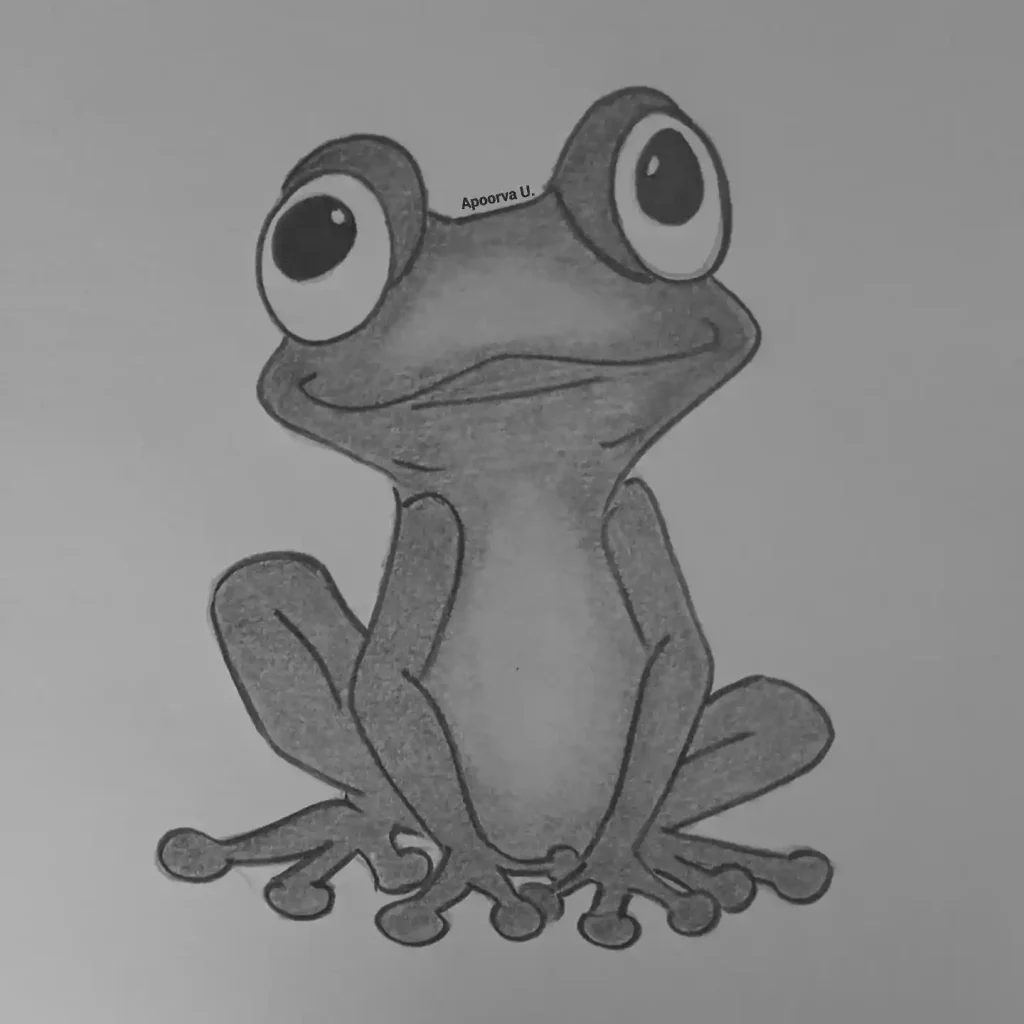
The absolute charm of this drawing is all in those wonderfully expressive, oversized eyes. The artist used a clean, simple cartooning style with smooth, effective shading to create a character that is instantly friendly and full of innocent curiosity. It’s a great study in character design, proving how much personality can be conveyed through simple shapes and exaggerated features.
13. Gestural Frog Sketches on Pencil on Paper
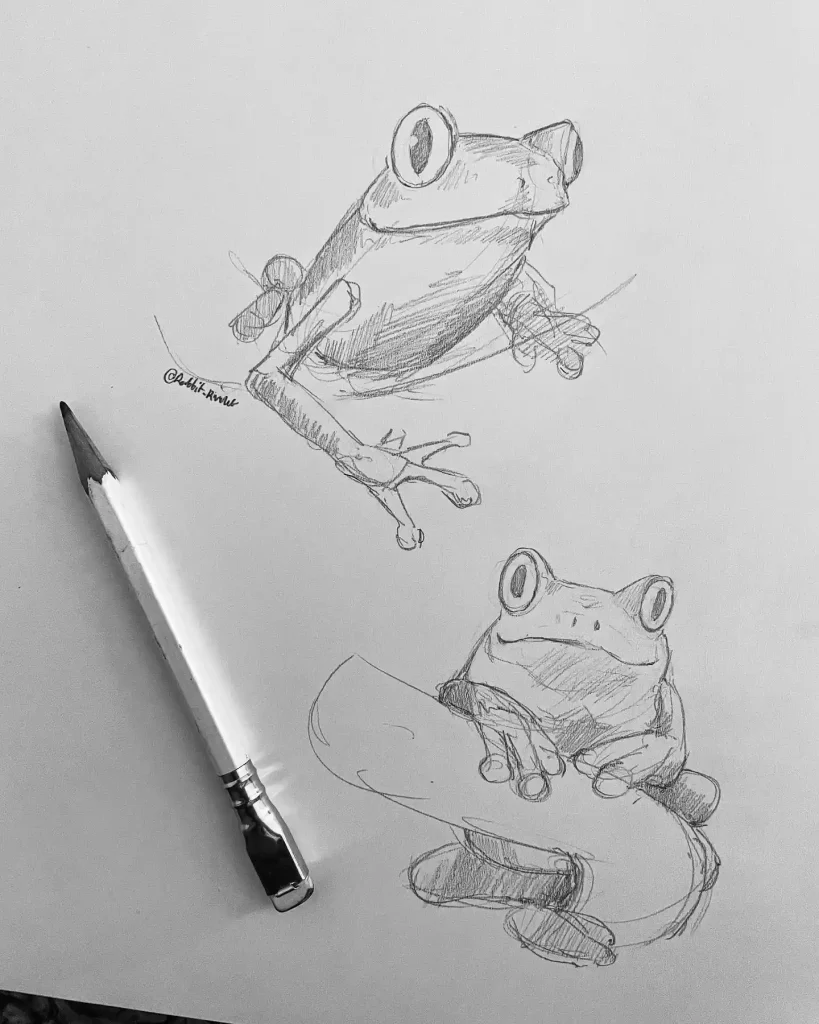
This is a fantastic page of quick, observational sketches. You can really see the artist using loose, energetic lines to rapidly capture the dynamic poses and underlying anatomy of the frogs. These aren’t meant to be finished pieces, but are instead lively explorations of form, perspective, and gesture—the kind of essential practice every artist’s sketchbook is filled with.
14. Anatomical Frog Studies on Pencil on Paper
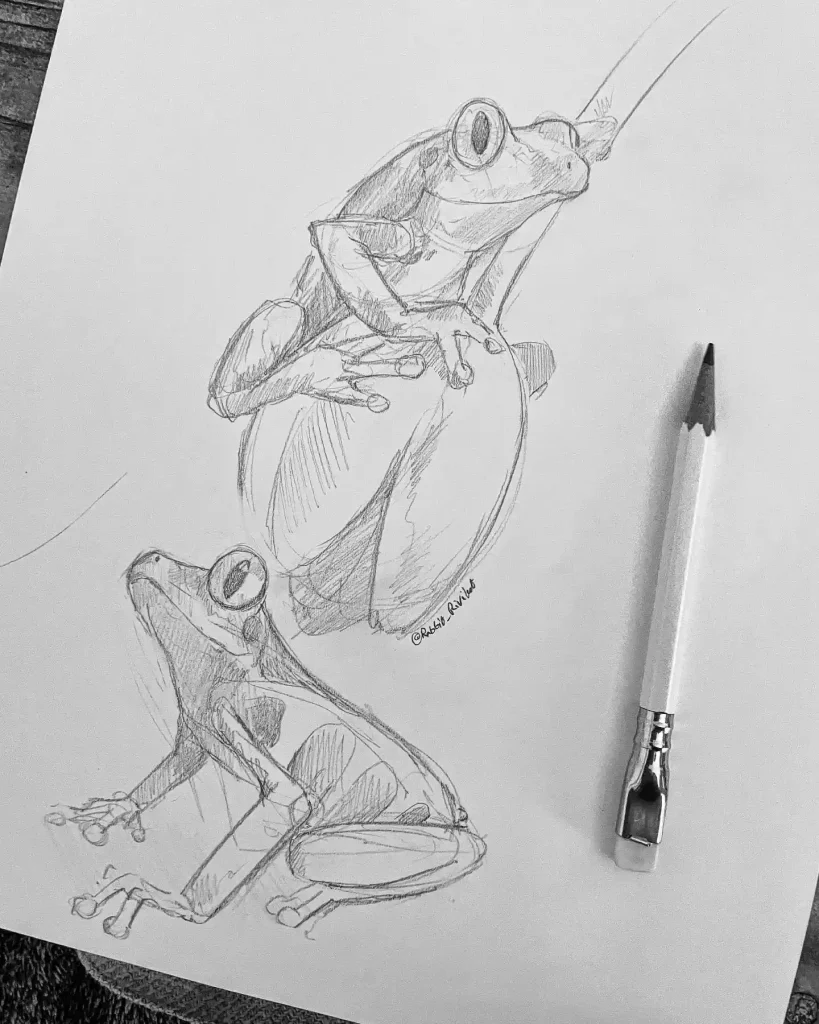
What I really appreciate about these studies is the clear focus on construction. You can almost see the simple, blocky shapes the artist used to build the frogs’ bodies before refining the contours. This is a great technical exercise for truly understanding anatomy and perspective, and the clean, confident lines show a strong grasp of three-dimensional form.
15. Vibrant Red-Eyed Tree Frog on Marker on Paper
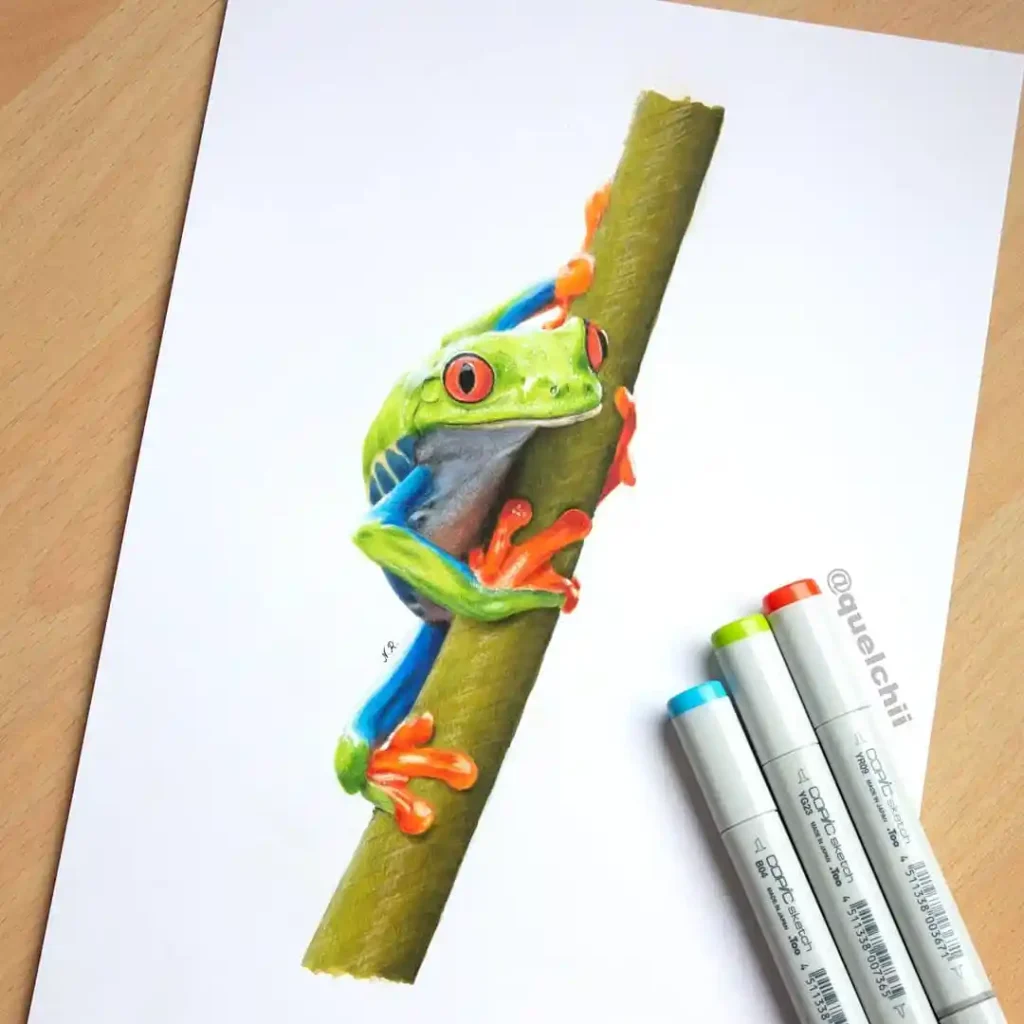
The incredible color saturation in this piece is just stunning. The artist, likely using high-quality alcohol markers, has masterfully blended the iconic bright greens, blues, and oranges of the red-eyed tree frog. The rich, smooth gradients and sharp details make the frog look incredibly vibrant and lifelike—a brilliant example of the photorealistic potential of markers.
16. Expressive Frog Character Sketches on Pencil on Sketchbook Paper
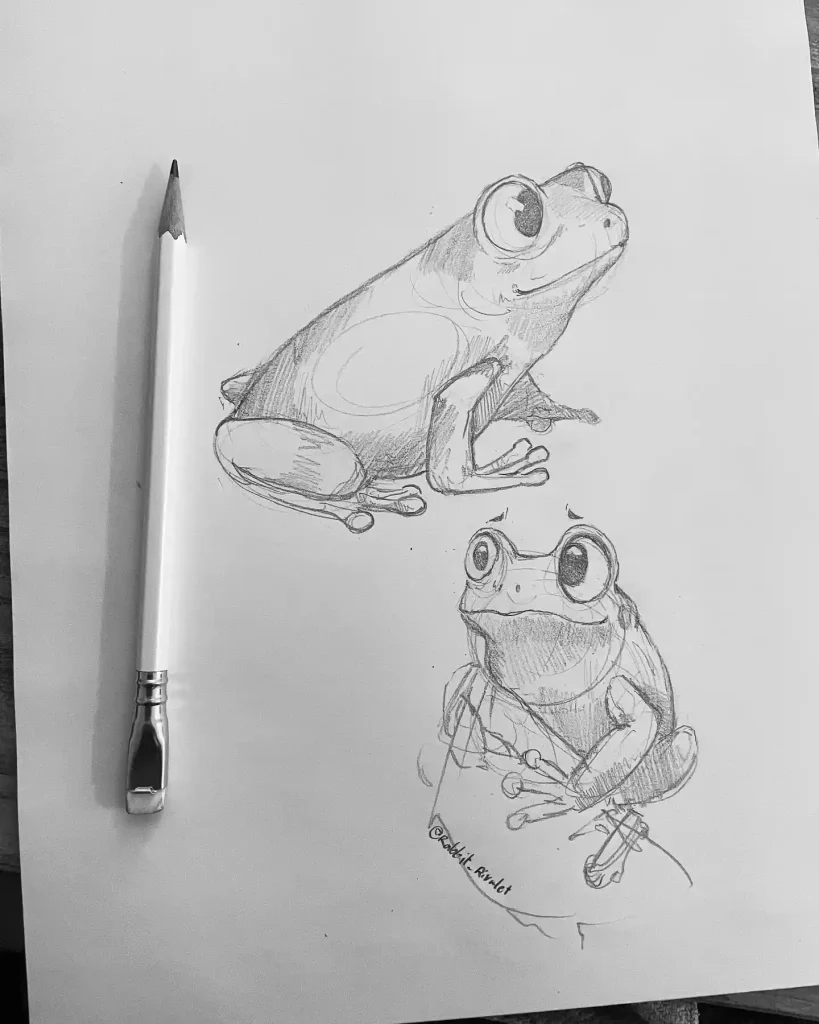
This sketchbook page is a wonderful exploration in character and emotion. The artist has given these two frogs so much personality through their expressive eyes and subtle differences in posture. One seems hopeful and curious, while the other appears a bit shy or contemplative. These are fantastic examples of how an artist breathes life and feeling into their characters.
17. Sleepy Frog with a Flower on Pencil on Sketchbook Paper
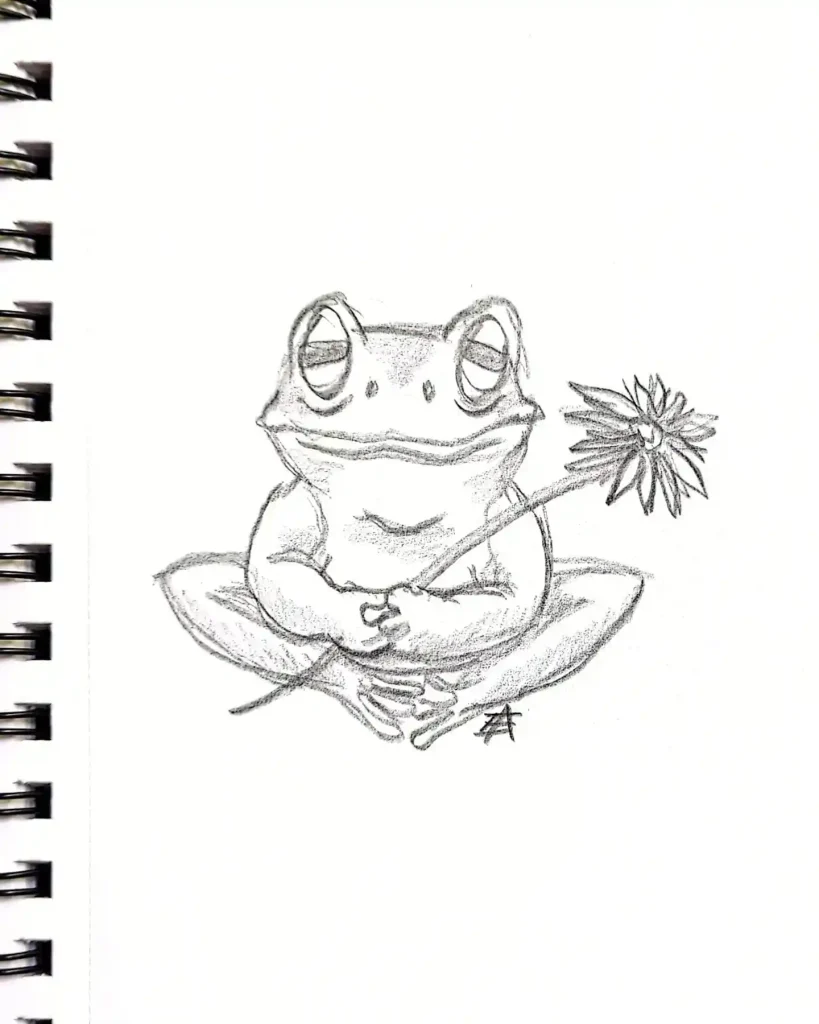
This simple sketchbook drawing is pure, unadulterated charm. The artist has perfectly captured a feeling of blissful contentment with the frog’s relaxed, rounded posture and its sleepy, half-closed eyes. Giving it a little flower to hold adds a touch of sweetness and innocence. It’s a beautiful, lighthearted sketch that creates a whole mood with just a few lines.
18. Realistic Frog on a Branch on Graphite on Sketchbook Paper
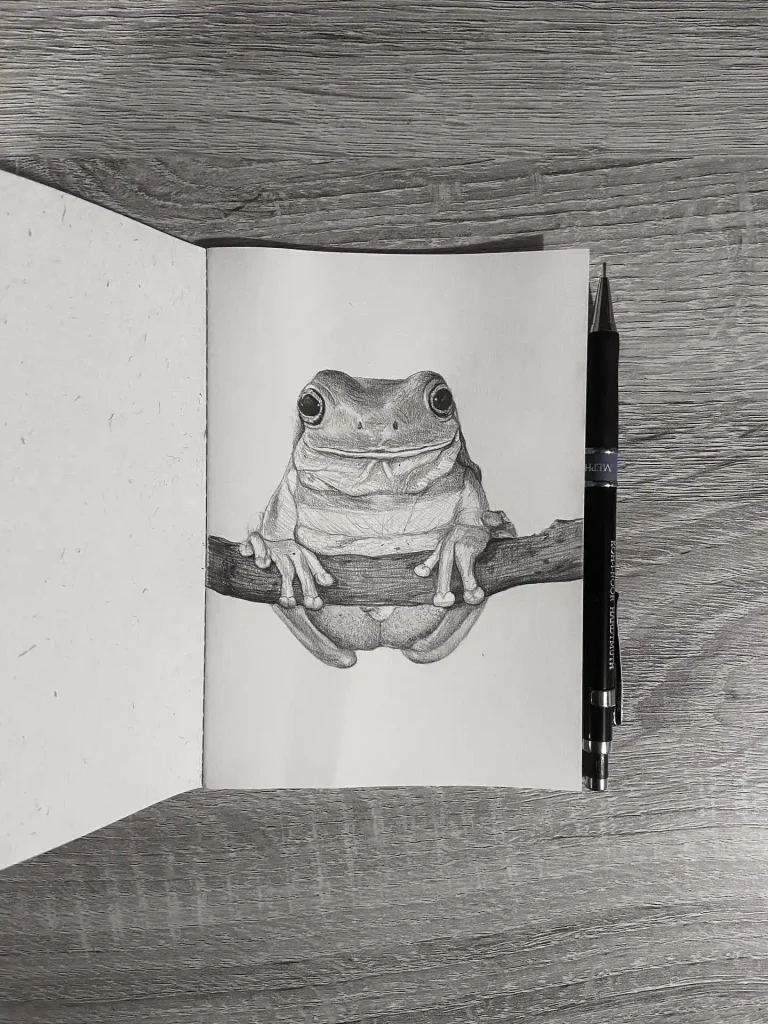
This sketchbook drawing is a fantastic study in patient realism. The artist has paid incredible attention to detail, using meticulous shading and highlighting to render the frog’s smooth, moist-looking skin and the rough, woody texture of the branch. The simple, head-on composition makes this a powerful and engaging portrait that captures the creature’s quiet, watchful nature.
19. Stylized Ink Frog Sketch on Ink on Paper
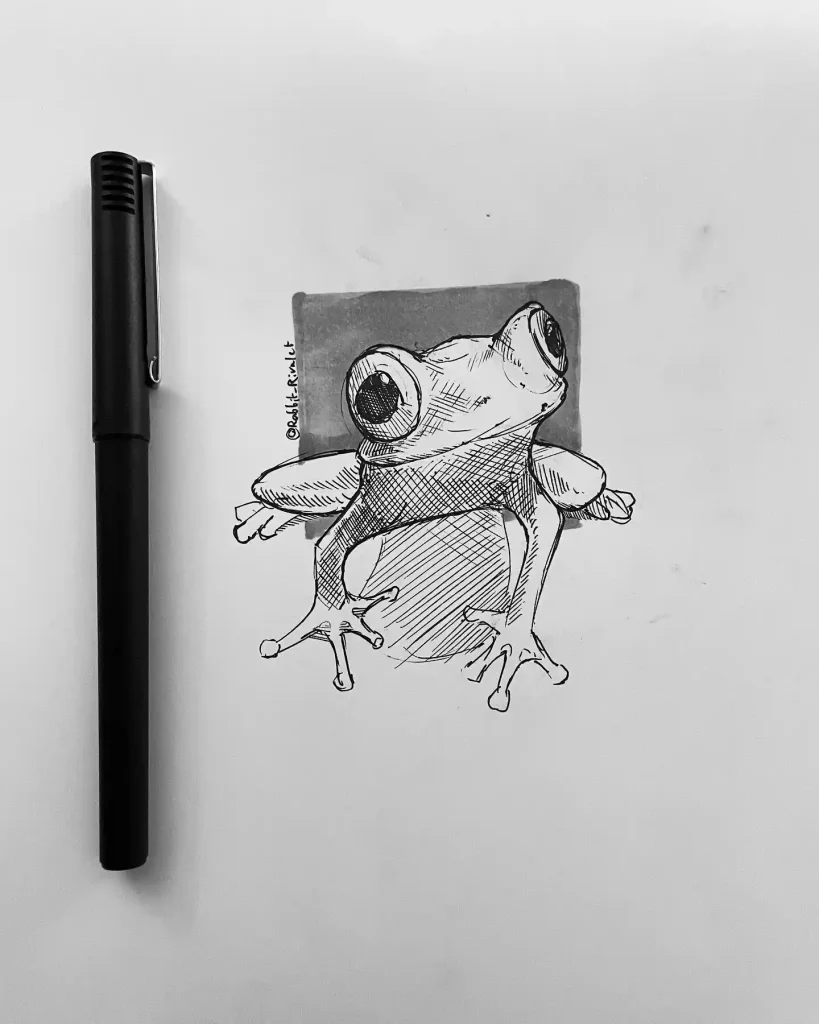
I really enjoy the bold, graphic energy of this ink sketch. The artist used confident, clean linework and simple, effective cross-hatching to create a great sense of form and shadow without a lot of fuss. The slightly exaggerated, large eyes and wide stance give the frog a ton of character and personality. A great example of a strong illustrative style.