Drawing is a journey of discovery, where a blank page becomes a canvas for your imagination. It’s a powerful skill that allows you to translate the world, and the ideas within you, into tangible art. With a pencil in hand, you can explore form, perspective, and emotion, creating something truly unique.
Whether you are a seasoned artist seeking fresh inspiration or a beginner just starting your creative path, our collection of skull drawings offers a rich resource. This is a space to learn, experiment, and connect with a community of fellow artists who share your passion.
How to Draw a Realistic Skull for Beginners?
- Start with Basic Shapes: Instead of tackling the complex details right away, begin by breaking the skull down into simple geometric forms. Think of the cranium as a large sphere and the jaw as a separate, box-like shape. This foundational approach helps you establish correct proportions and placement.
- Understand Anatomy: A realistic skull is more than just a spooky symbol; it’s an anatomical structure. Study the key landmarks, such as the eye sockets, nasal cavity, and zygomatic arches (cheekbones). Knowing where these elements are in relation to each other is crucial for creating a convincing drawing.
- Use Reference Images: Don’t be afraid to use reference photos or even a physical skull model. Observing how light and shadow fall on the bone structure is the best way to understand form and volume. Pay attention to the subtle curves and indentations that give the skull its unique character.
- Build up with Layers: Begin with light, sketchy lines to lay out your initial shapes. As you gain confidence, you can gradually darken your lines and add more detail. Save the deep shadows and final, crisp lines for the end to avoid making mistakes that are hard to correct.
Creative Skull Drawing Ideas (Beyond the Basics)
- Combine with Other Elements: Integrate the skull into a larger narrative or theme. Pair it with organic elements like flowers, vines, or moths to symbolize life and death. Or, try combining it with mechanical parts like gears and cogs for a steampunk aesthetic.
- Experiment with Different Mediums: Don’t limit yourself to just a pencil. Try drawing with ink pens for a bold, graphic look, charcoal for a moody, textured feel, or even digital tools to experiment with color and layers easily.
- Focus on Emotion and Storytelling: A skull doesn’t have to be just a static object. Give it a personality. Is it serene, broken, or adorned with symbols that tell a story? Think about what you want your art to say.
- Play with Abstraction and Style: Explore different artistic styles. Try a minimalist approach using only clean lines, a stylized cartoon version, or a more chaotic, abstract rendition. Pushing the boundaries of what a skull can be is a fantastic way to develop your unique artistic voice.
Unleash your inner artist and start your skull drawing journey today! Explore our guides and find your next masterpiece.
1. Realistic Skull on Paper
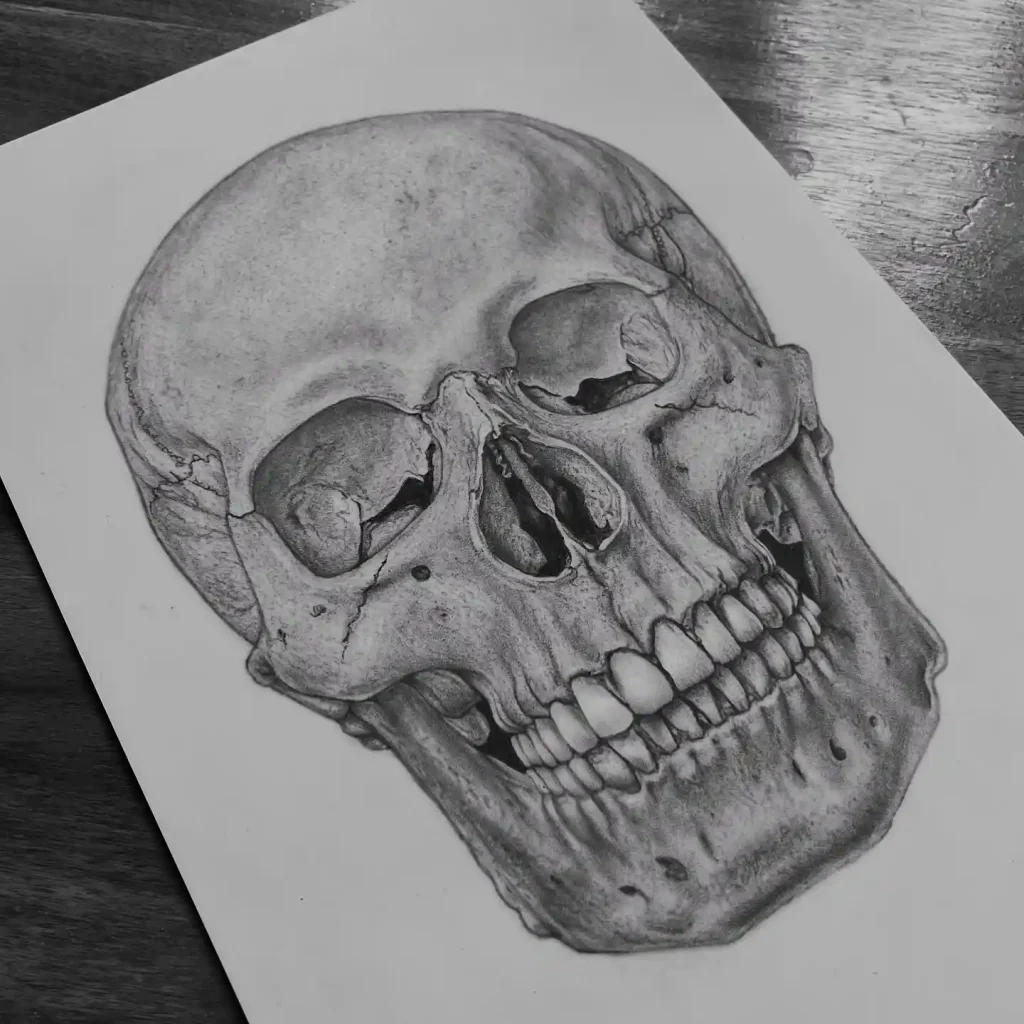
This skull drawing is a stunning study in realism, with every crack and texture meticulously rendered. The artist’s keen eye for detail brings the bone structure to life, focusing on the interplay of light and shadow to create a sense of depth and volume. It’s a powerful exploration of human anatomy as a foundation for art.
2. Contemplative Skull on Paper
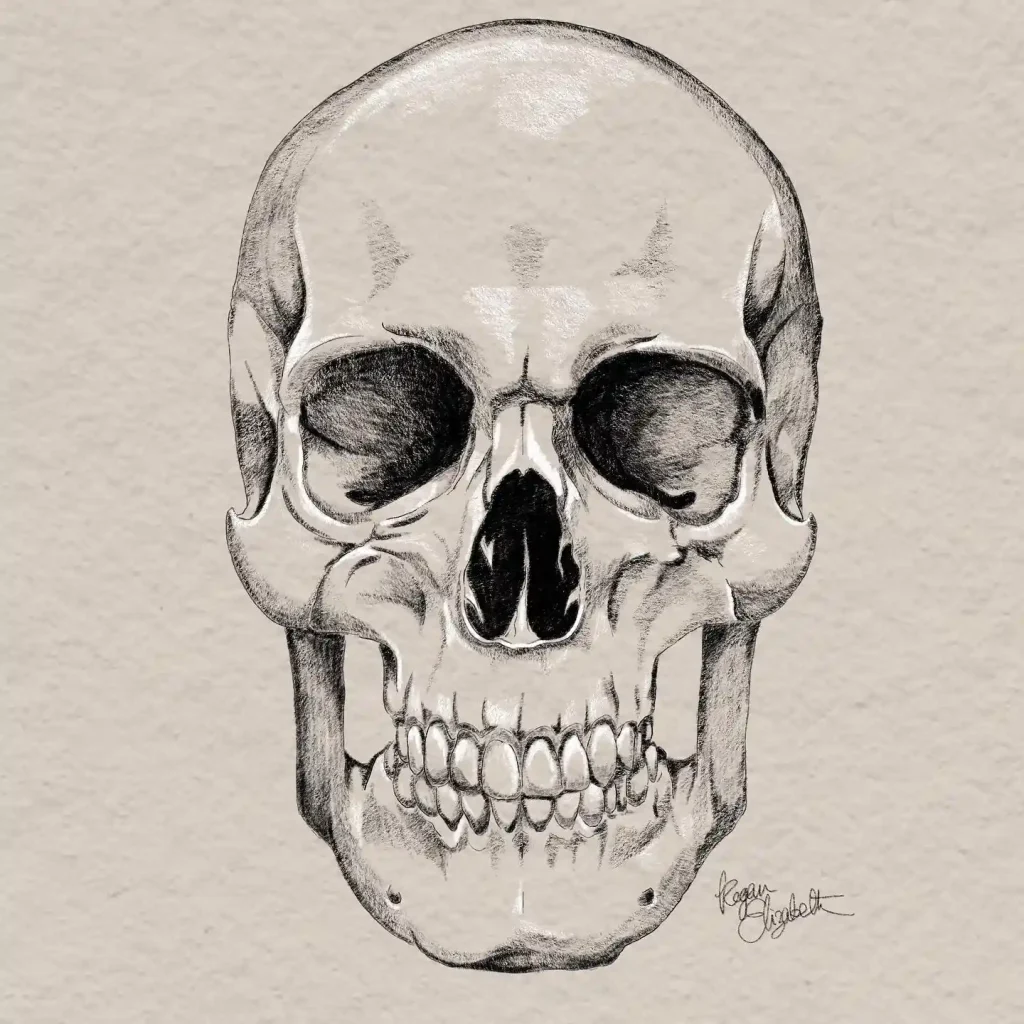
This stylized piece presents the skull as a subject for quiet contemplation. The soft shading and clean lines give it a peaceful, almost serene quality. The drawing invites the viewer to reflect on the meaning of life, memory, and the passage of time, making it a meditative work of art.
3. Dynamic Skull on Paper
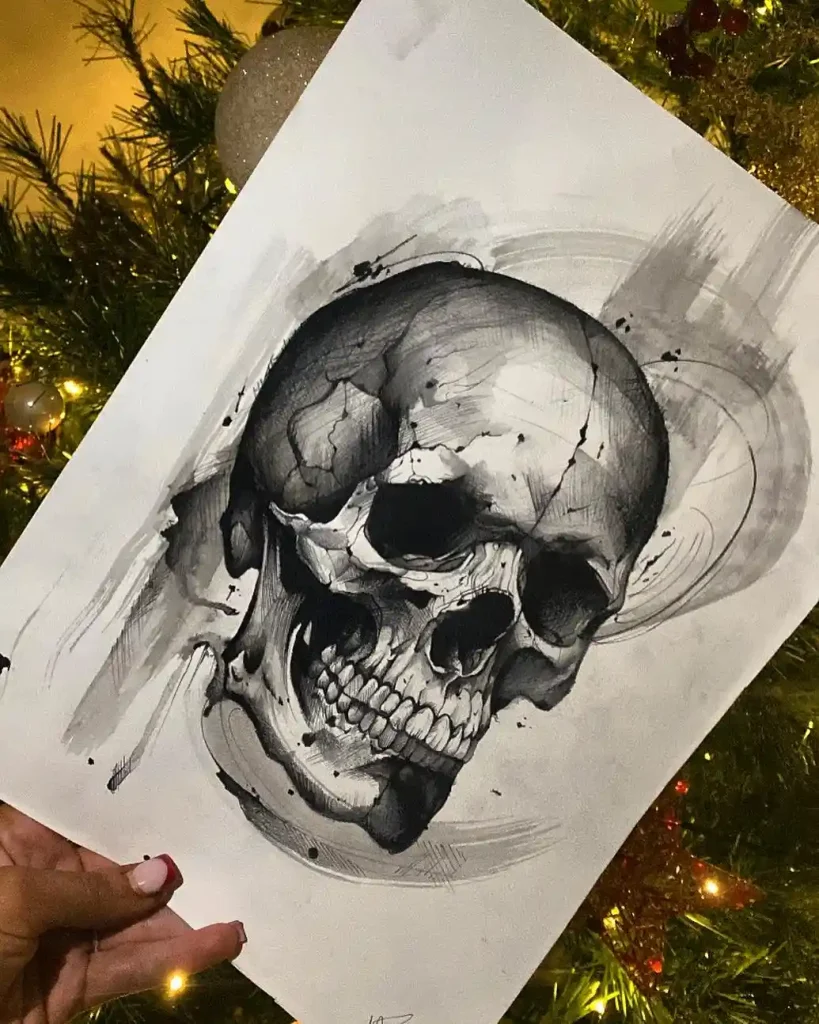
Bold and expressive, this skull drawing is full of energy. The dark, inky splashes and sharp lines give it a raw, street art vibe, while the detailed shading keeps it grounded in reality. It’s a drawing that speaks of rebellion and creative freedom, celebrating a style that breaks away from traditional realism.
4. Chrome Skull on Paper
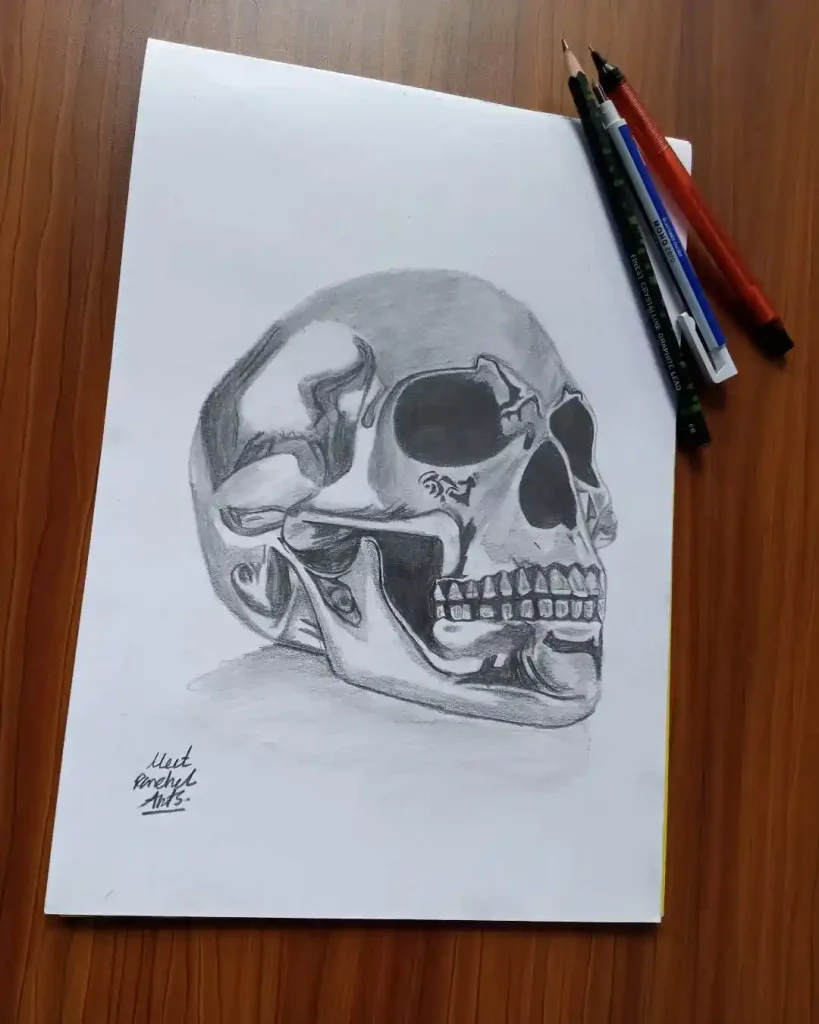
This drawing masterfully captures the illusion of a chrome skull, reflecting its surroundings in a distorted yet fascinating way. The high contrast and sharp highlights create a futuristic, almost otherworldly feel. It’s a fantastic example of using light and reflection to turn a simple subject into a work of complex visual art.
5. Detailed Side-Profile Skull on Paper
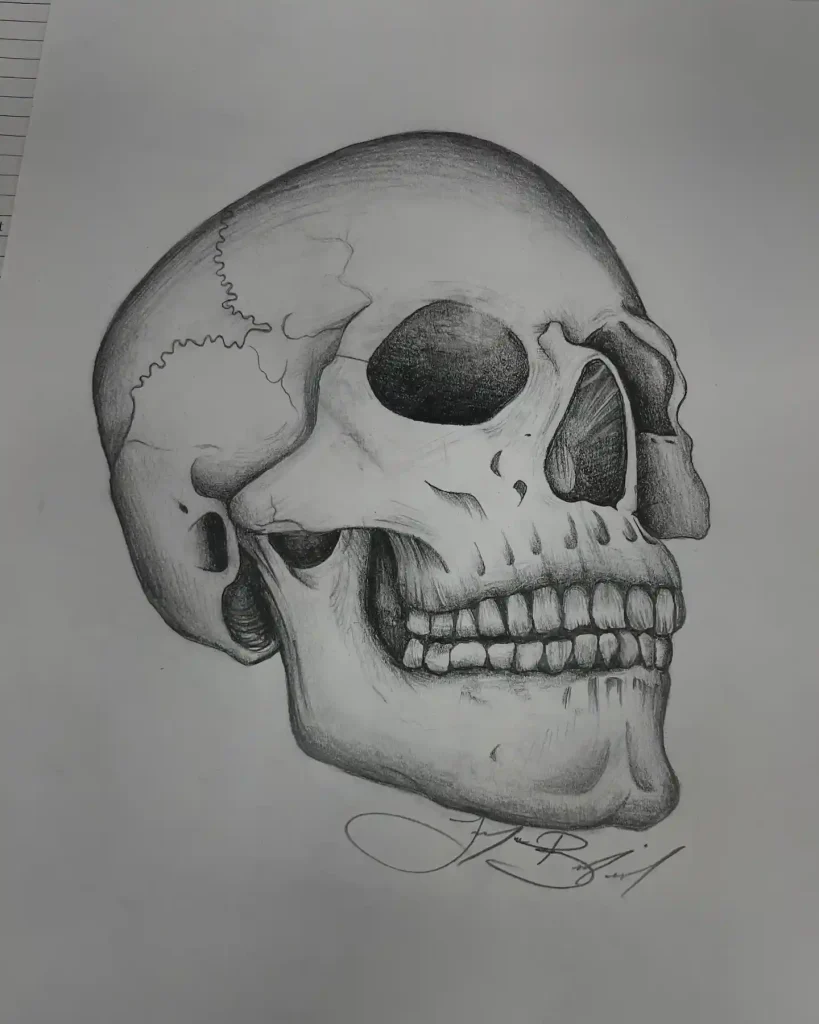
A beautifully rendered side-profile, this drawing focuses on the intricate details of the jawline and the cranial sutures. The gentle shading and precise lines give it an elegant, almost scientific feel, celebrating the complex beauty of human anatomy. It’s a great reference for anyone looking to perfect their anatomical studies.
6. Skull in a Frame on Paper
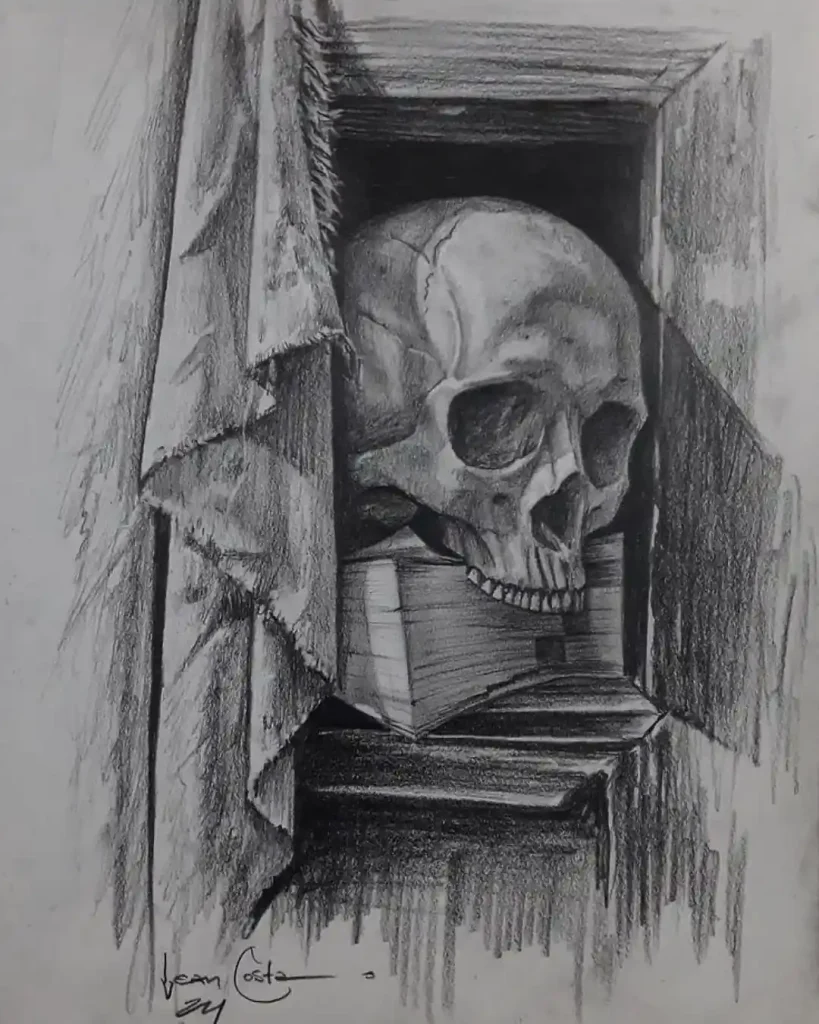
This drawing places the skull within a draped, window-like frame, adding a theatrical and mysterious element. The composition suggests a hidden story, making the skull an object of discovery rather than a mere subject. The artist’s use of light and texture on the fabric adds another layer of intrigue to the piece.
7. Distorted Skull on Paper
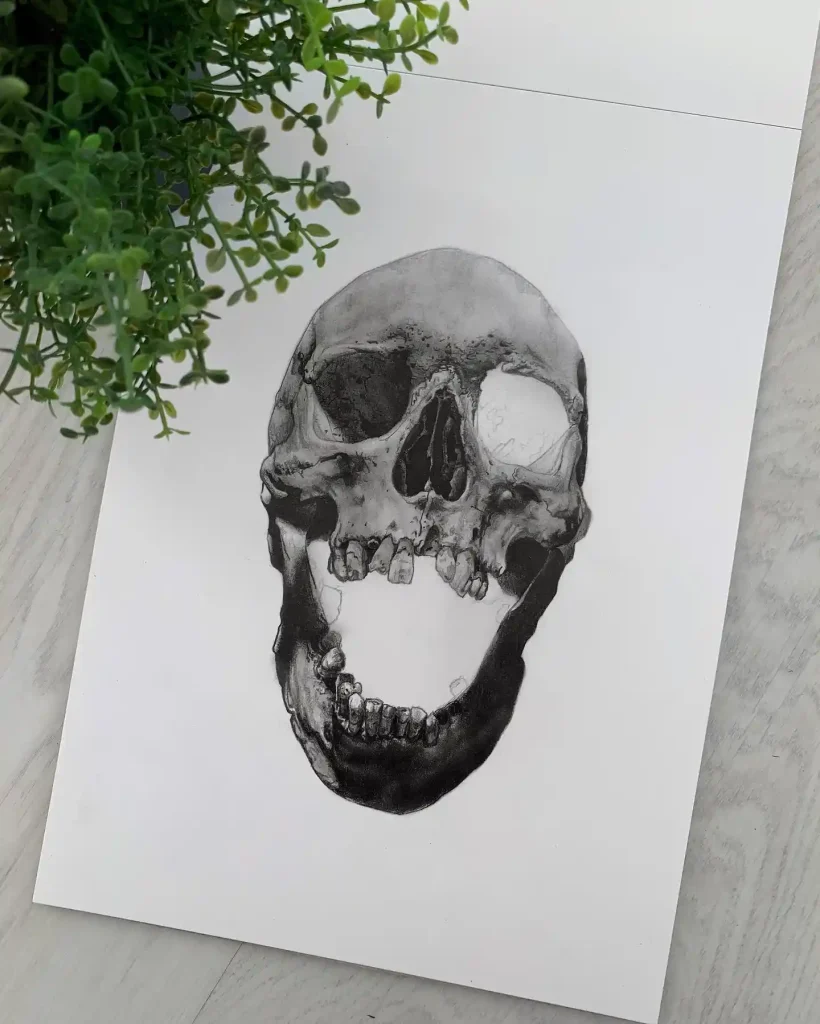
This piece offers a more expressive and abstract take on the skull, with a wide, gaping jaw and exaggerated features. The artist uses heavy, dark shading to create a sense of drama and emotion, giving the skull a powerful, almost scream-like presence. It’s a drawing that challenges traditional forms and embraces a more raw, emotional style.
8. Frontal Skull View on Paper
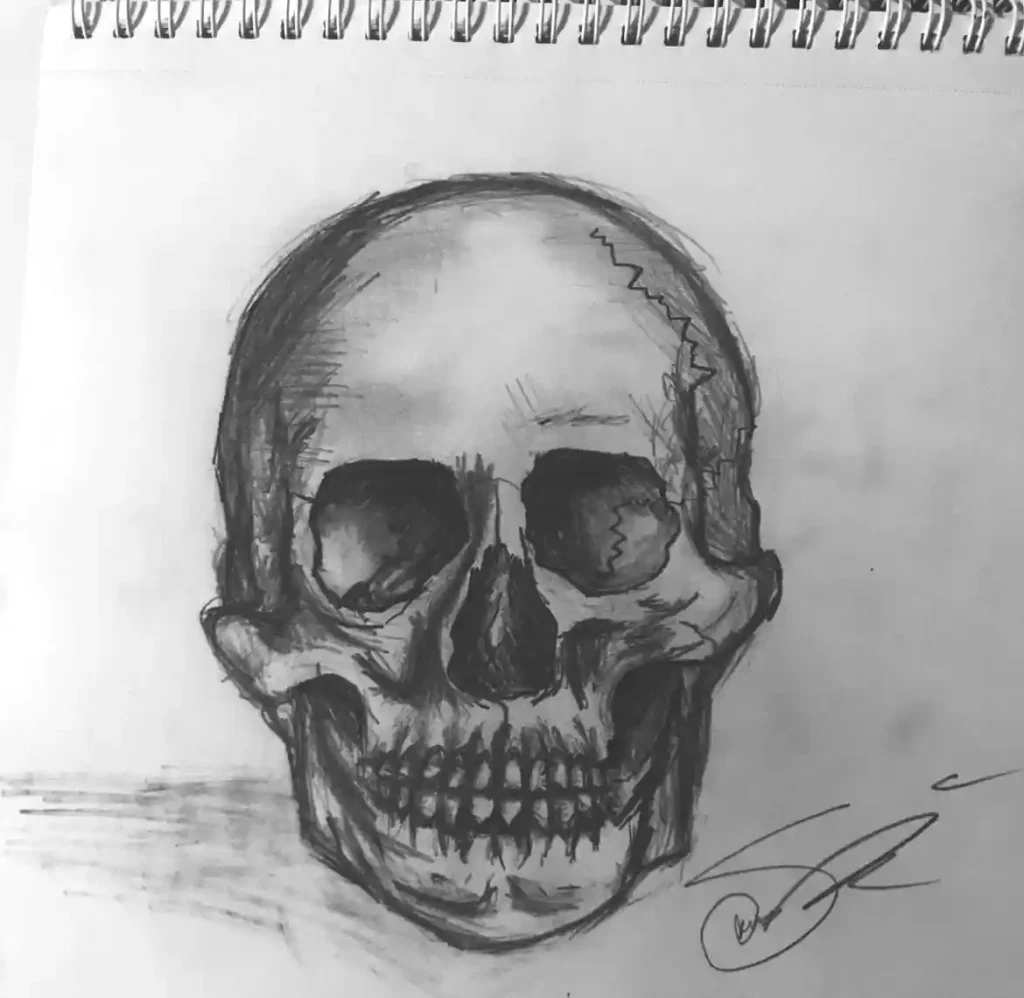
A straightforward and classic frontal view, this drawing highlights the symmetry and iconic structure of the skull. The bold lines and heavy shadows give it a strong presence, making it a classic take on the subject. It’s a perfect example of how a simple composition can be incredibly impactful.
9. Simple Side-Profile Skull on Paper
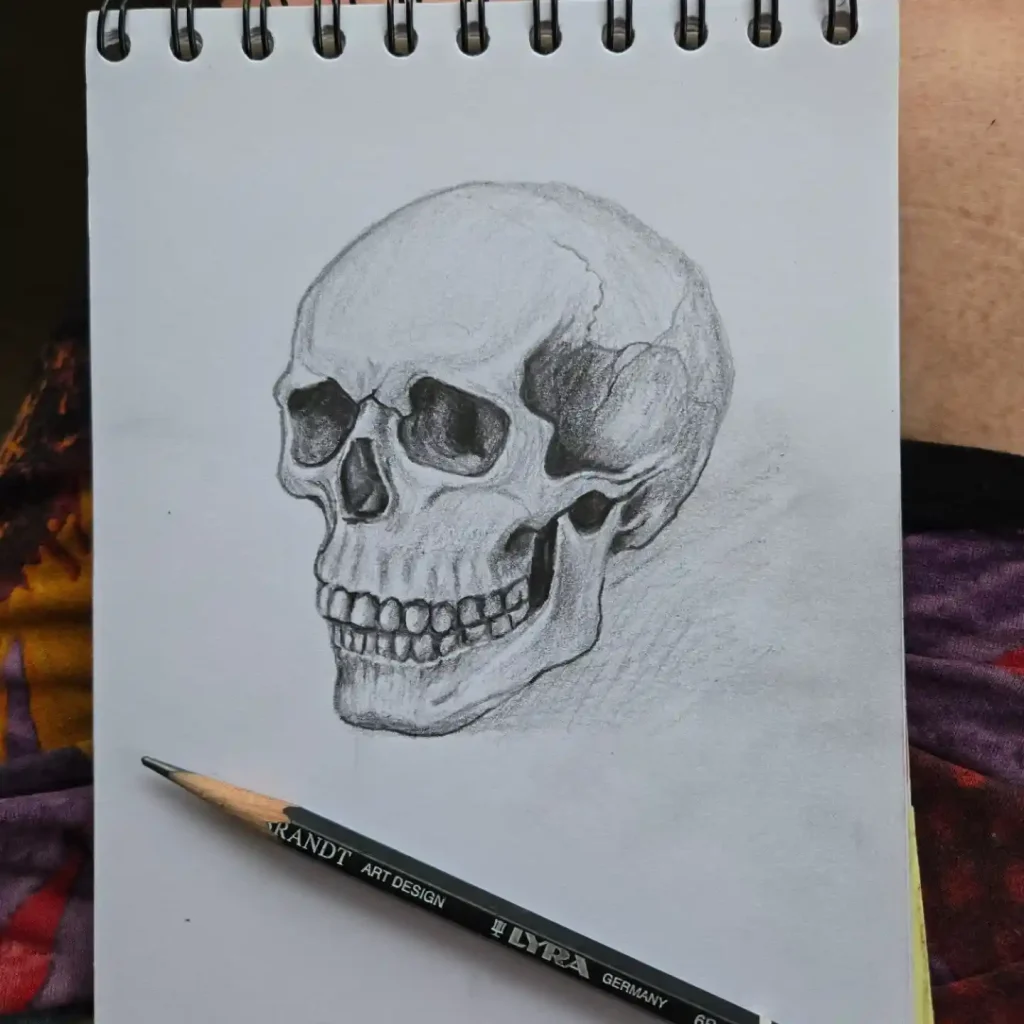
A great example of a beginner-friendly approach, this drawing uses simple lines and light shading to capture the skull’s essence. The focus is on getting the basic shapes and proportions right, making it a perfect starting point for anyone learning to draw. Its simplicity is its strength, proving that you don’t need excessive detail to create a good drawing.
10. Stylized Skull on Paper
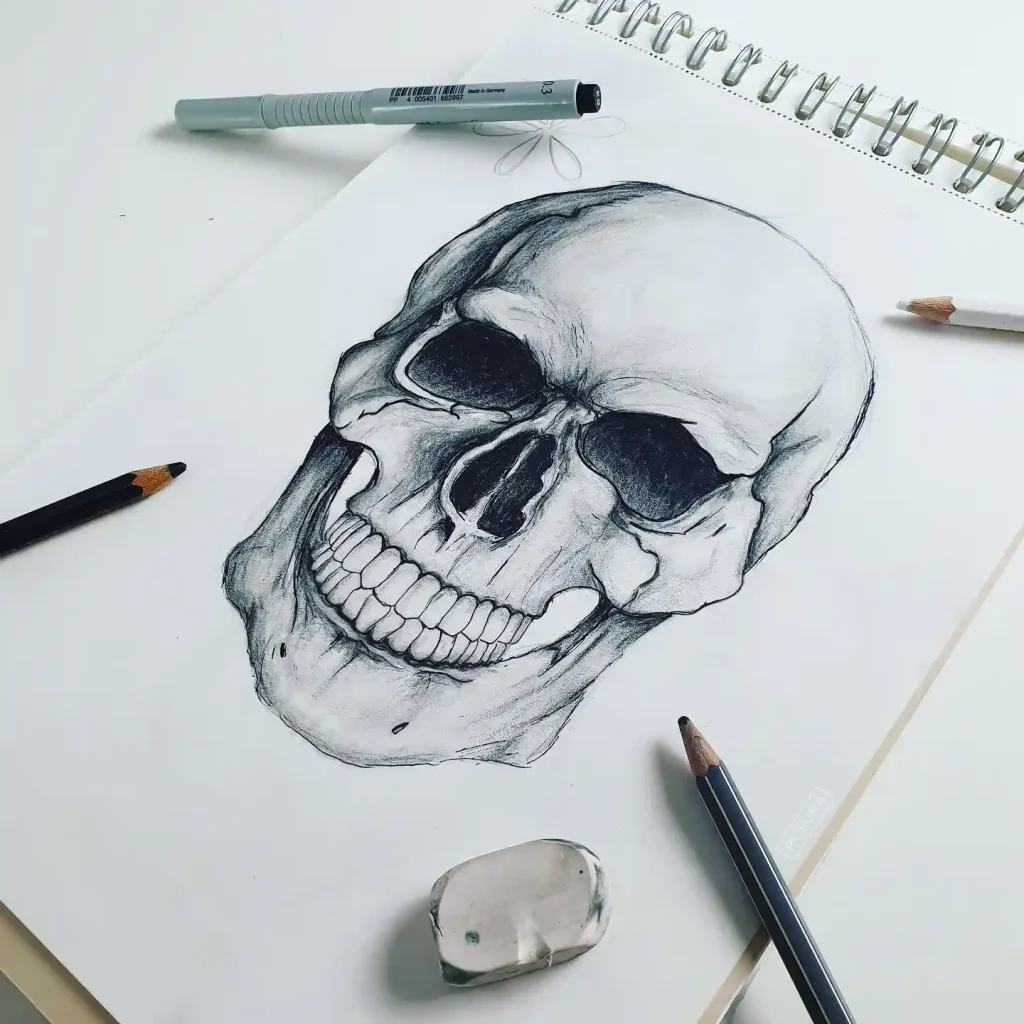
This skull drawing is a masterclass in clean lines and defined shading. The artist’s use of sharp contrast between light and dark gives it a bold, stylized look, almost like a comic book illustration. It’s a fantastic piece that shows how you can simplify and stylize a complex subject while still retaining its character.
11. Dagger Skull on Sketchbook
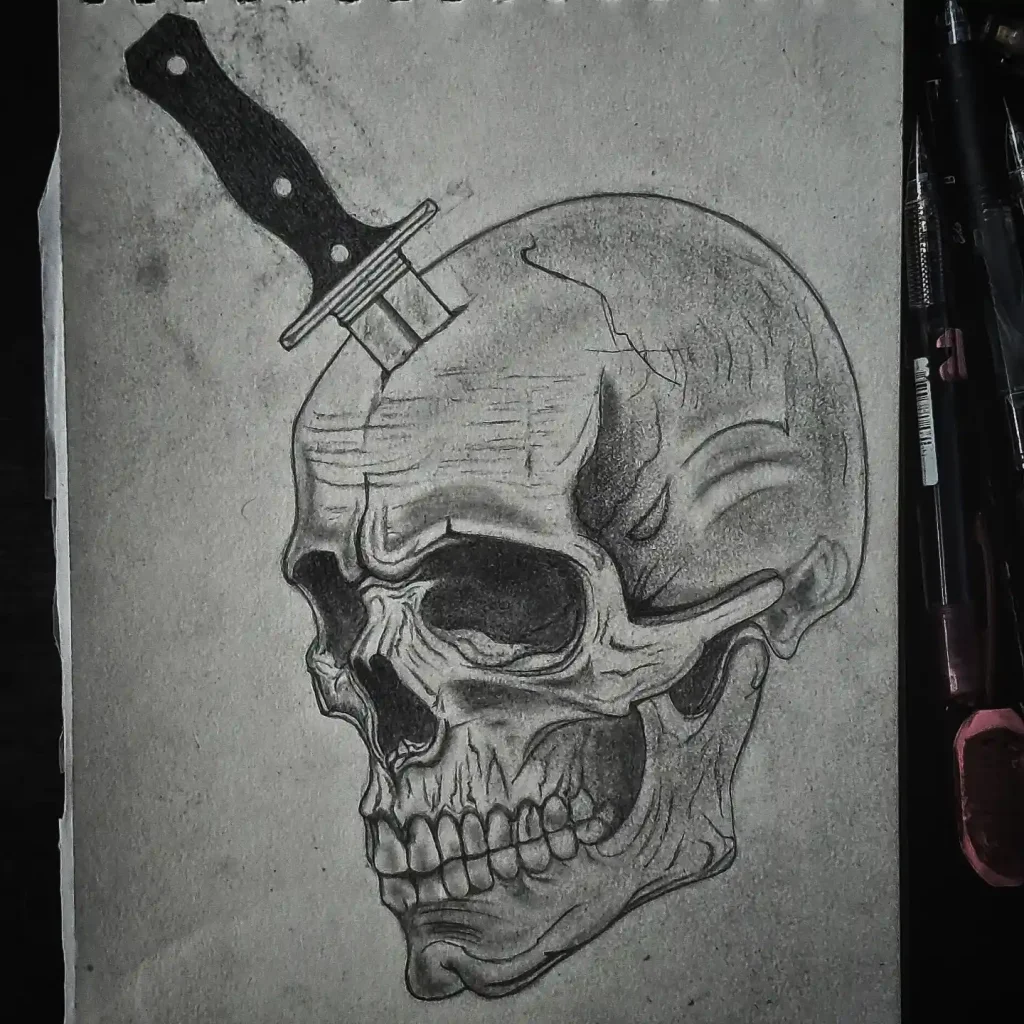
A bold and dramatic piece, this drawing combines the skull with a dagger piercing the cranium, symbolizing mortality and defiance. The artist’s use of deep shading and sharp lines gives the drawing a powerful, edgy feel, making it a statement piece that challenges conventional ideas of beauty.
12. Hyper-Realistic Skull on Paper
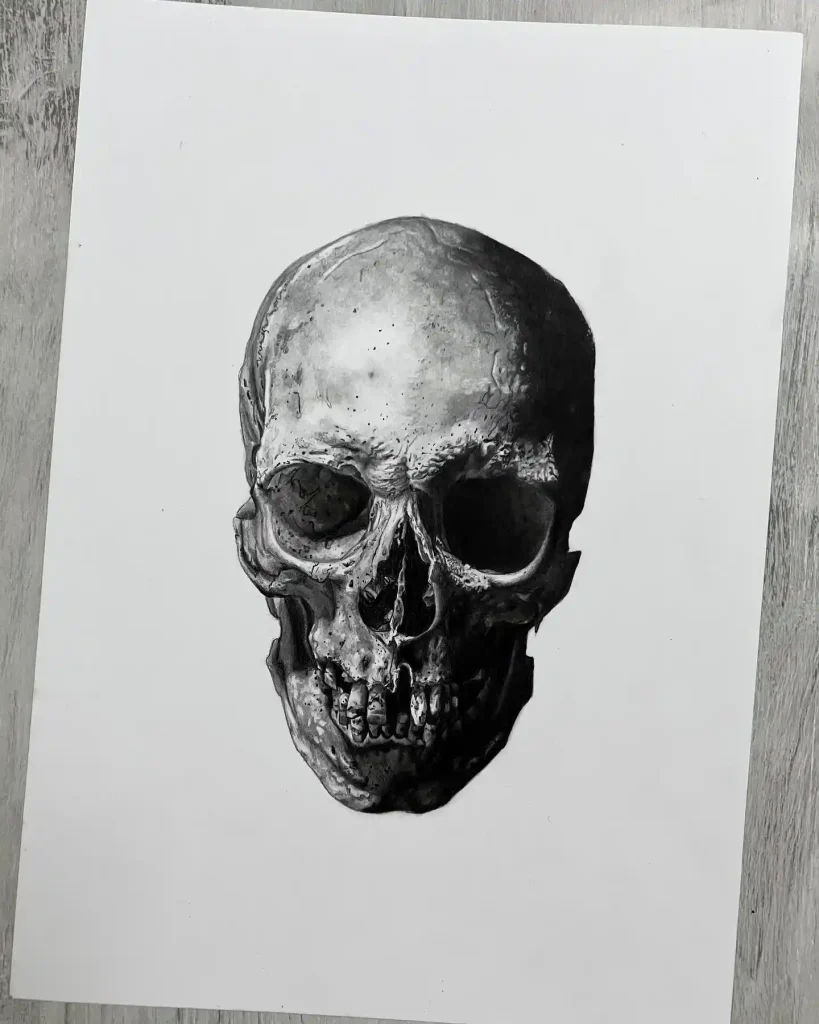
This skull drawing is a masterclass in realistic rendering. The artist has captured every subtle texture, crack, and imperfection of the bone, creating a piece that feels almost tangible. It’s a powerful study of light and shadow, demonstrating incredible technical skill and an appreciation for the intricate details of anatomy.
13. Hat & Rose Skull on Paper
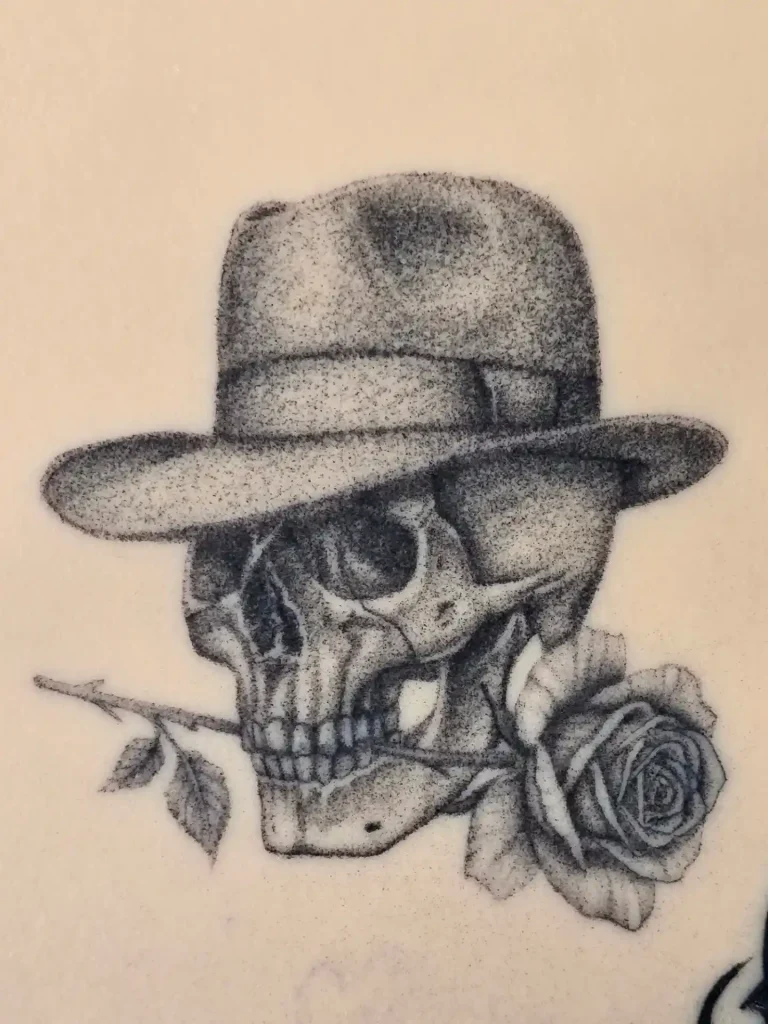
A truly romantic and classic take on the skull, this drawing features a dapper skull with a fedora and a rose in its teeth. This iconic imagery, often seen in tattoo art, playfully juxtaposes life and death, love and loss, in a stylish and memorable way. The stippling technique adds a unique texture.
14. Side-Profile Skull on Paper
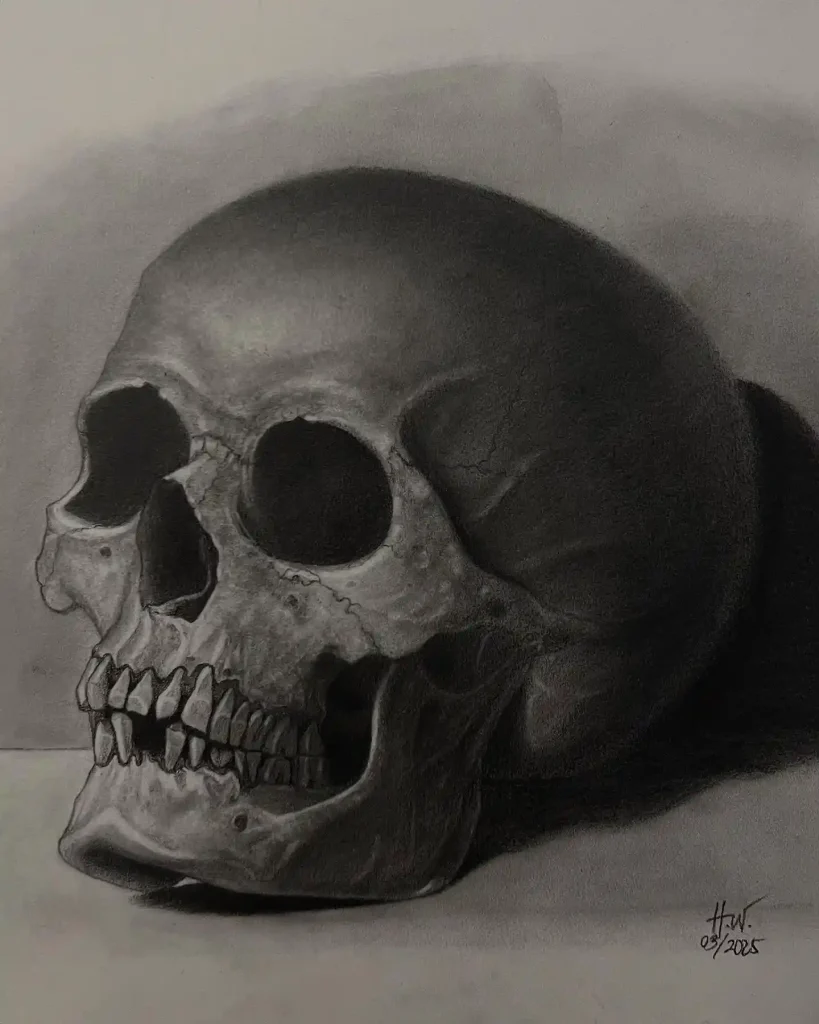
With a focus on deep shadows and soft transitions, this drawing captures the skull from a compelling side profile. The artist uses a dark background to make the details of the bone structure pop, giving the piece a dramatic and moody feel that is perfect for a study in chiaroscuro.
15. Skull on Fire on Paper
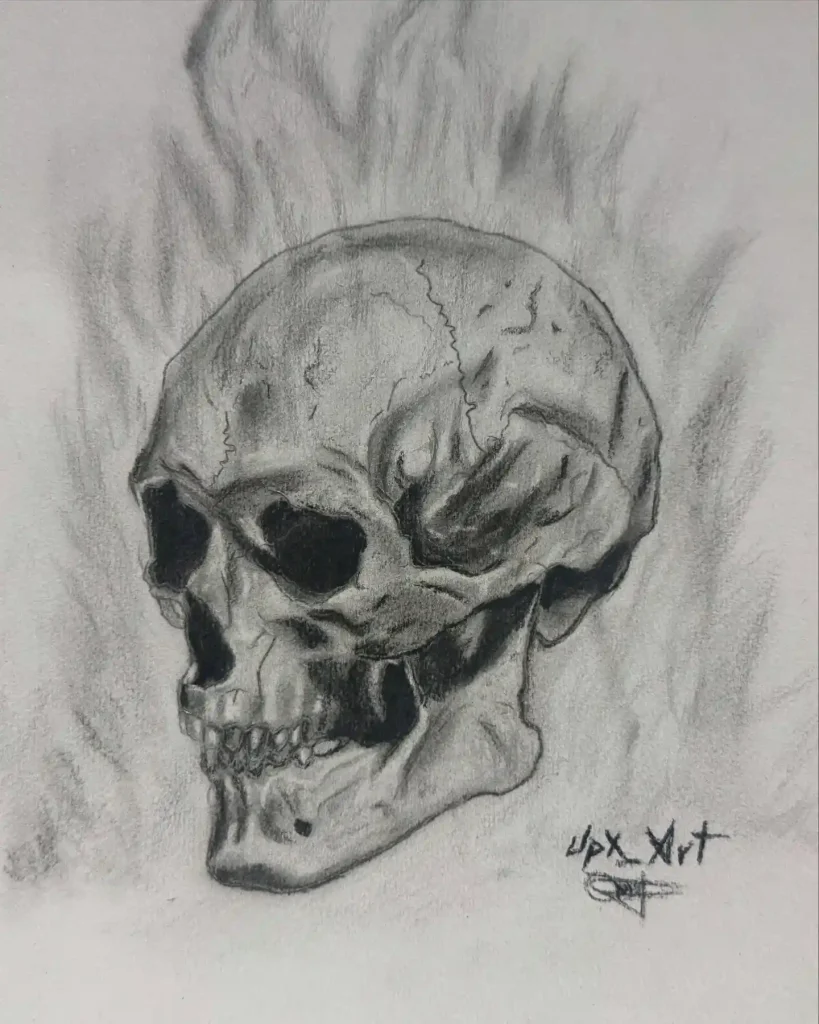
This drawing presents the skull engulfed in flames, a potent symbol of passion, destruction, and rebirth. The artist uses dynamic, swirling lines to create the illusion of fire, adding a sense of motion and intensity to the piece. It’s a fiery and powerful take on a classic subject.
16. Skull with Rising Smoke on Sketchbook
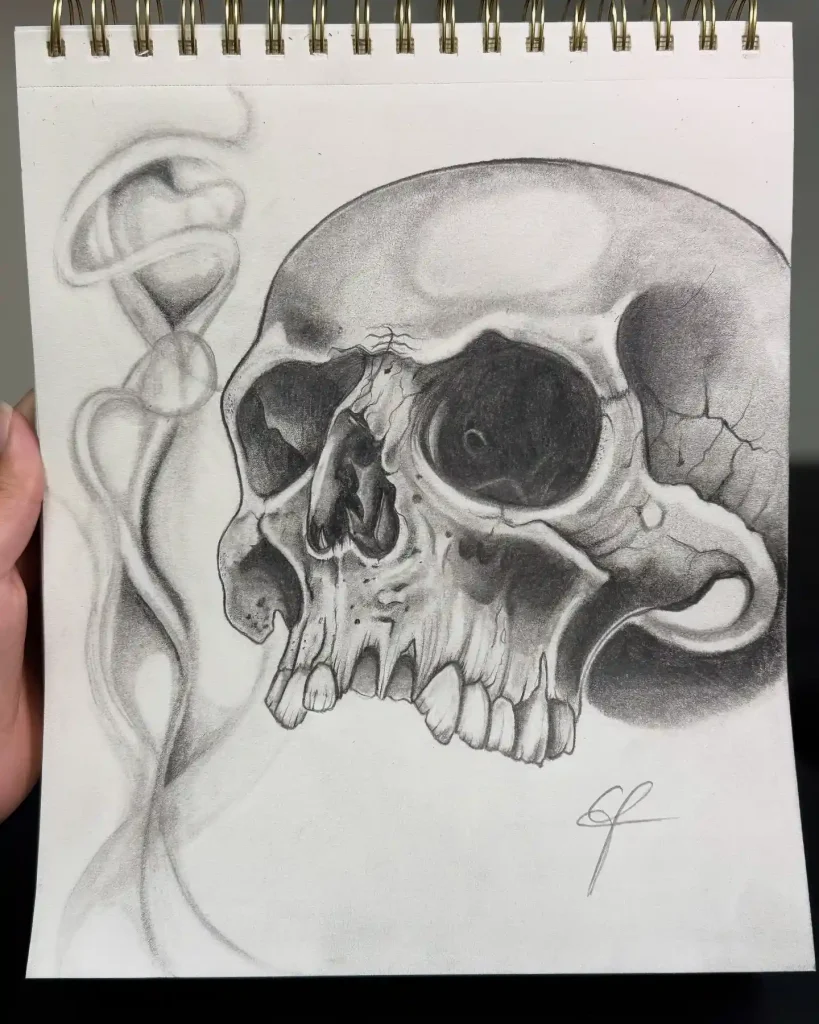
A mystical and symbolic piece, this drawing shows smoke rising from the eye socket, giving the skull a haunting, ethereal quality. The artist’s use of soft, blended lines for the smoke creates a beautiful contrast with the detailed bone, suggesting the transition from the physical to the spiritual.
17. Skull on Toned Paper

Working on toned paper allows this artist to use both highlights and shadows to create a stunning sense of volume. The bright highlights on the forehead and cheekbones make the skull appear to glow, giving the piece a classic, academic feel. It’s a wonderful example of using medium to its full potential.
18. Partially Shaded Skull on Paper

This drawing feels like a work in progress, showcasing the artist’s process. The lighter lines and partial shading give it a fresh, spontaneous feel, inviting the viewer into the creative journey. It’s a great inspiration for artists who are still finding their way with shading and form.
19. Classic Skull on Paper

A beautifully executed, classic study of the skull in a three-quarter view. The deep shadows and smooth transitions give it a lifelike quality. This piece feels both timeless and modern, celebrating the fundamentals of drawing while showcasing the artist’s personal touch and skill.
20. Shaded Skull on Paper

This piece feels like a quiet moment in an artist’s studio. The skull is softly shaded, with a strong light source creating dramatic shadows and highlights that give the form a solid, three-dimensional feel. The pencils in the frame add a touch of personality.
21. Skull in Hand on Paper

This drawing, reminiscent of Hamlet’s famous scene, captures the skull in the palm of a hand, a powerful symbol of mortality and the contemplation of life’s brevity. The artist’s use of soft shading on both the skull and the hand gives the piece a profound and reflective quality. It’s a timeless and thought-provoking image.
22. Skull & Snake on Sketchbook
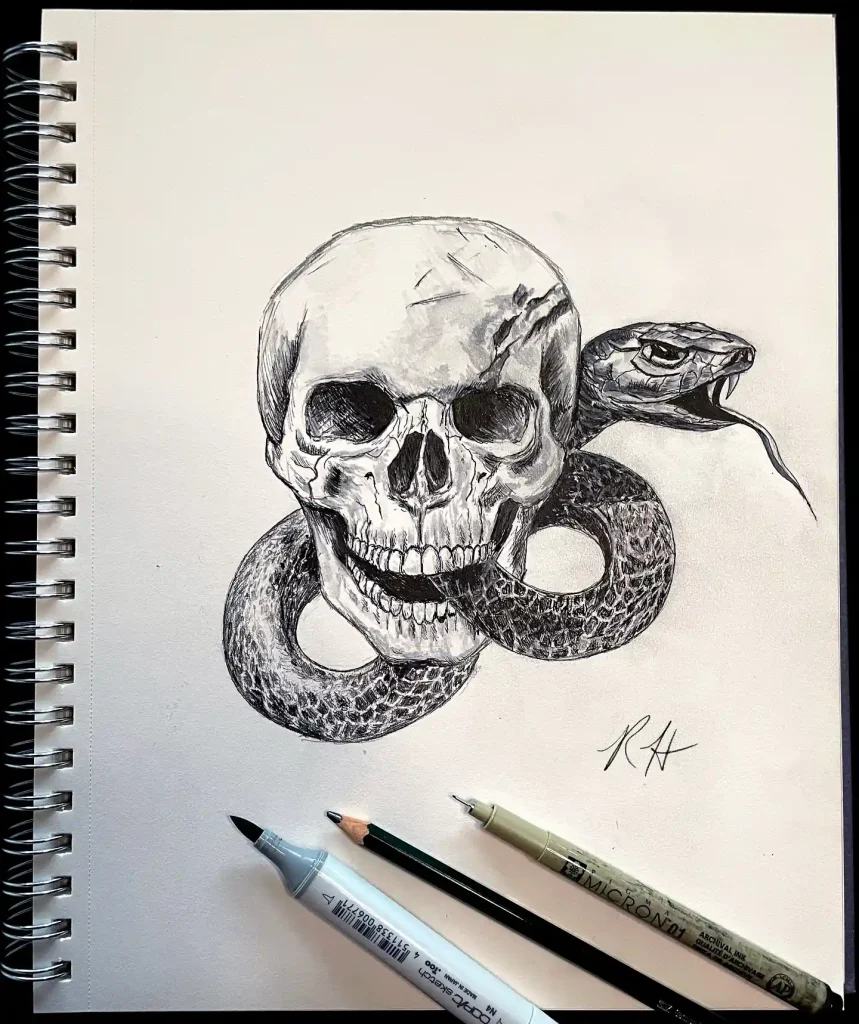
A captivating combination, this drawing features a skull entwined with a snake. The snake, a symbol of transformation and eternal life, contrasts with the skull’s representation of death, creating a potent visual narrative. The artist’s detailed ink work on the snake’s scales is particularly impressive, adding texture and realism.
23. Sketchy Skull on Paper
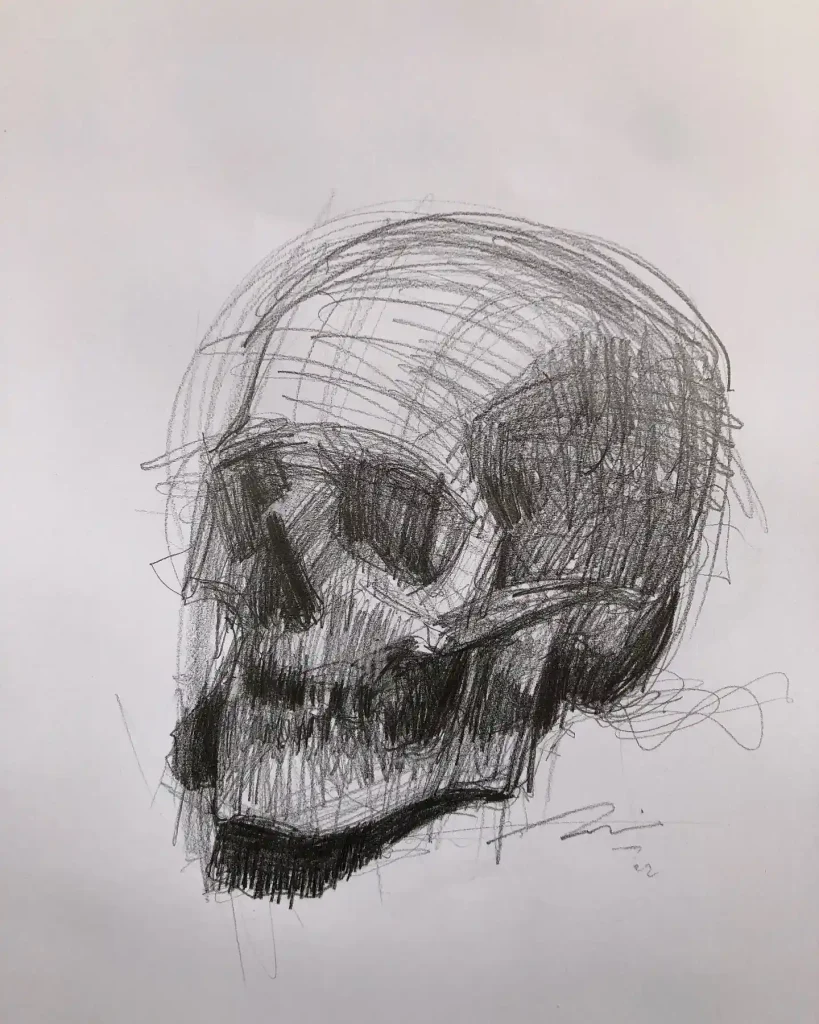
This piece is all about raw energy and expression. The loose, gestural lines and heavy cross-hatching give the skull a dynamic, almost chaotic feel. It’s a great example of how a drawing can convey emotion and movement even with a static subject, embracing a more impressionistic and less polished style.
24. Basic Frontal Skull on Paper
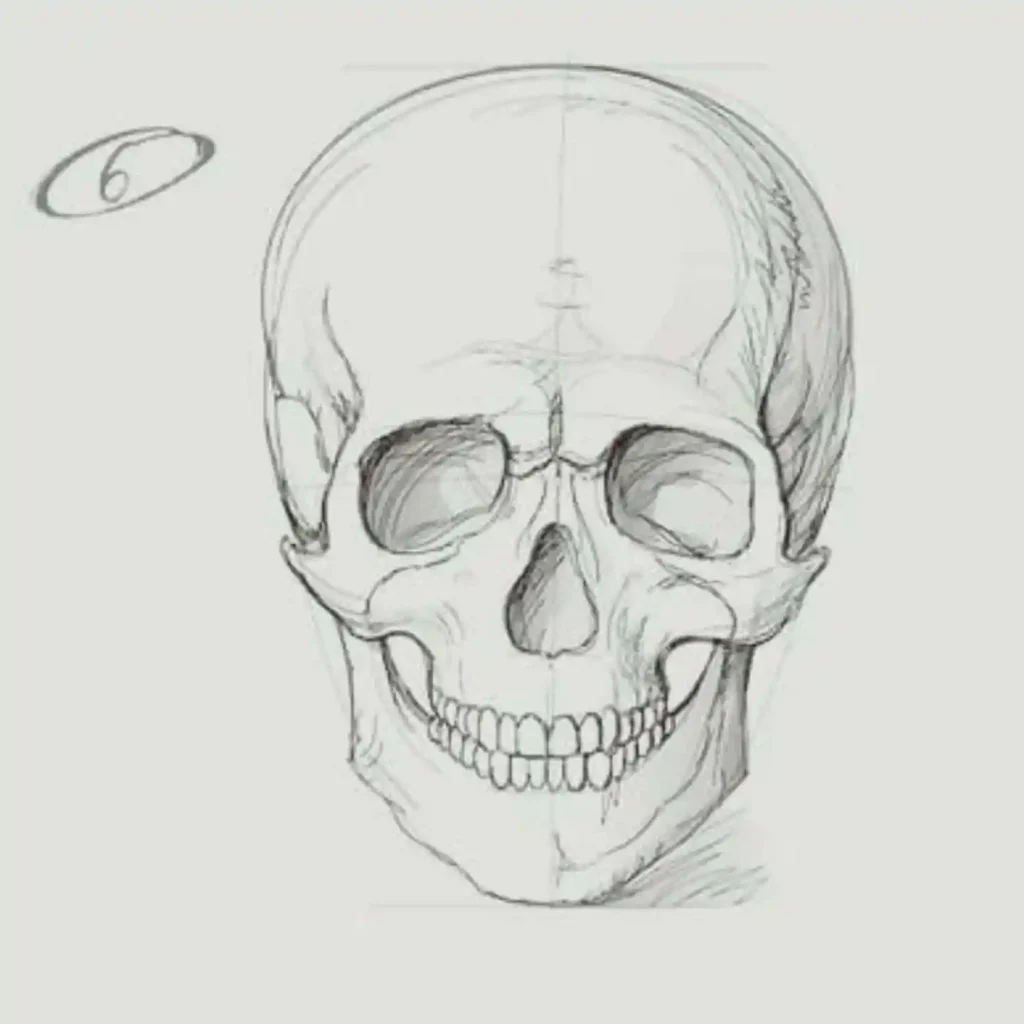
A perfect reference for artists, this drawing provides a clear and symmetrical frontal view of the skull. The artist has used construction lines to establish proportion, making it a valuable tool for learning. The clean, simple shading focuses on the fundamental form, making it an excellent guide for beginners.
30 More Skull Drawing Ideas to Try
The skull is the single best object in art for learning form, because it is symmetrical, it has clearly defined planes, and every shadow on it means something. It is also endlessly decorative, which is why it turns up in tattoo flash, Day of the Dead altars and Celtic knotwork alike. The 30 ideas below cover both sides of that, from strict anatomy to pure ornament, with the medium and key technique named for each.
25. Ornamental Floral Pattern Skull
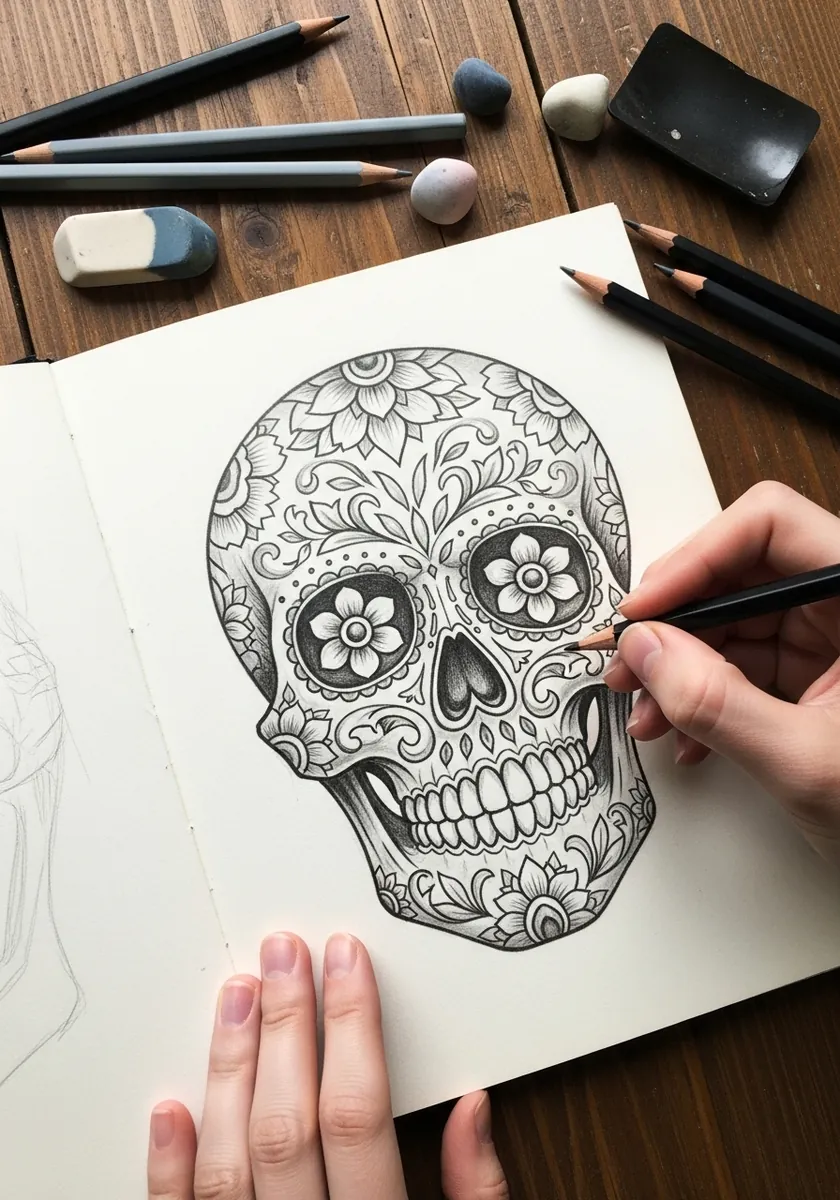
A skull filled edge to edge with fine floral scrollwork and small mandalas in the eye sockets, drawn lightly in pencil. Draw the skull accurately first and treat its outline as a boundary the pattern cannot cross, then work the ornament outward from the eye sockets so the density falls off naturally toward the jaw.
26. Watercolor Galaxy Skull with Drips
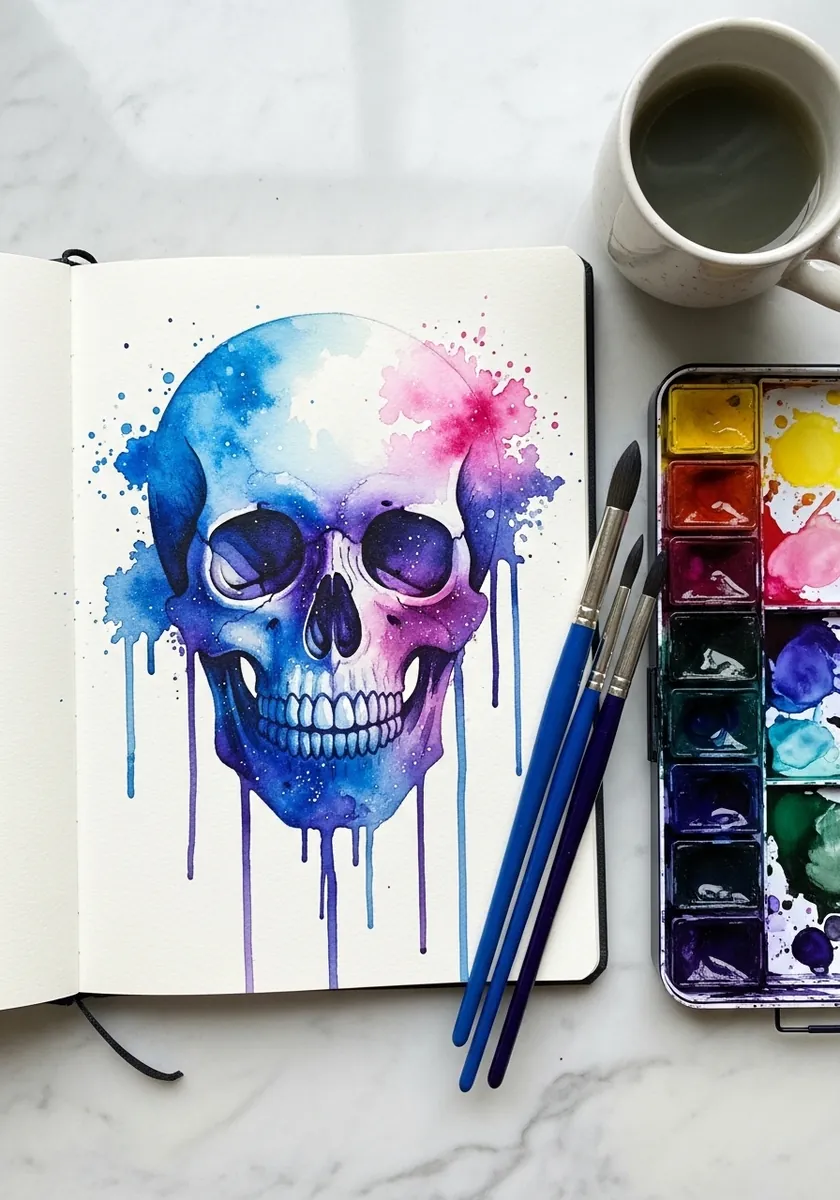
Blue, magenta and violet bleed through the cranium with long drips running off the jaw. The skull is barely drawn at all; the pigment does the describing. Wet the whole shape, drop the colors in and tip the book forward to start the drips, then add the teeth and sockets once it is nearly dry.
27. Stippled Ink Skull
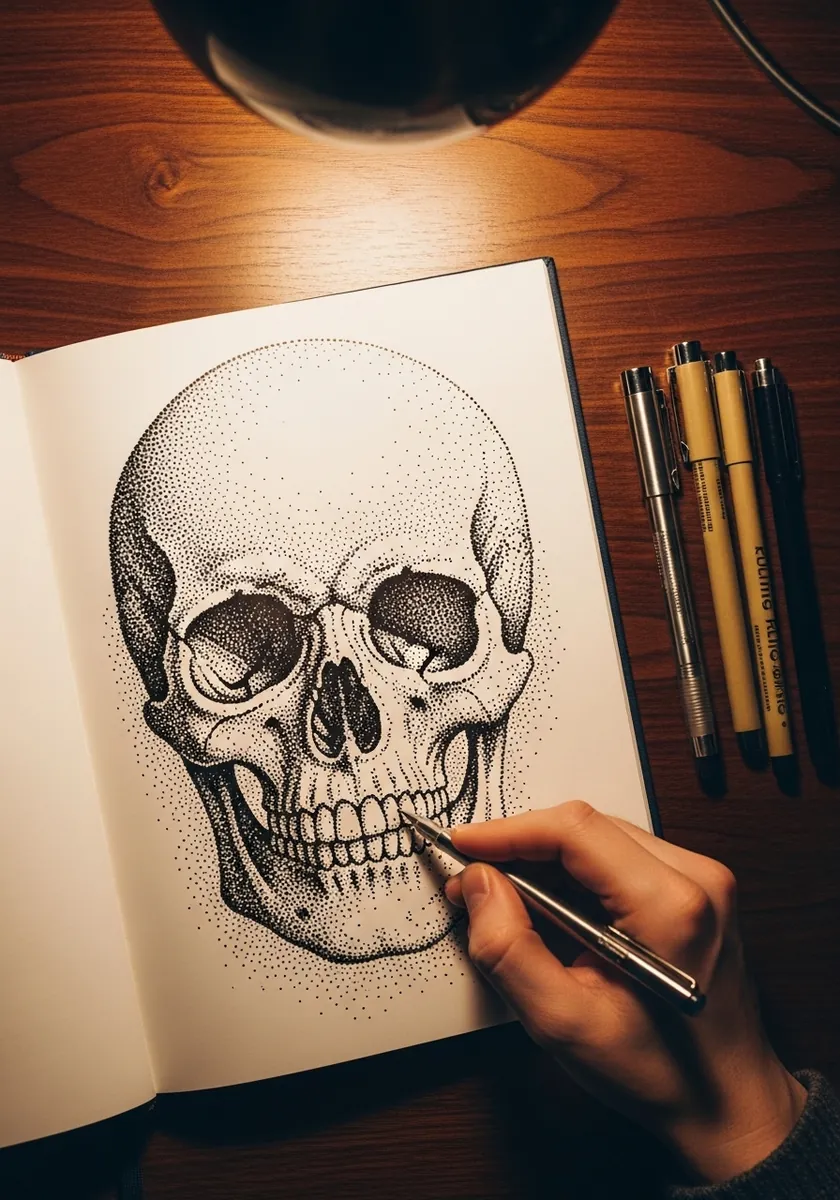
Every value on this skull is built from individual dots, dense in the sockets and sparse across the forehead. It is slow work with a real payoff. Keep the pen vertical so each dot is the same size, and build the darks with more dots rather than bigger ones.
28. Skull with Cherry Blossom Branches
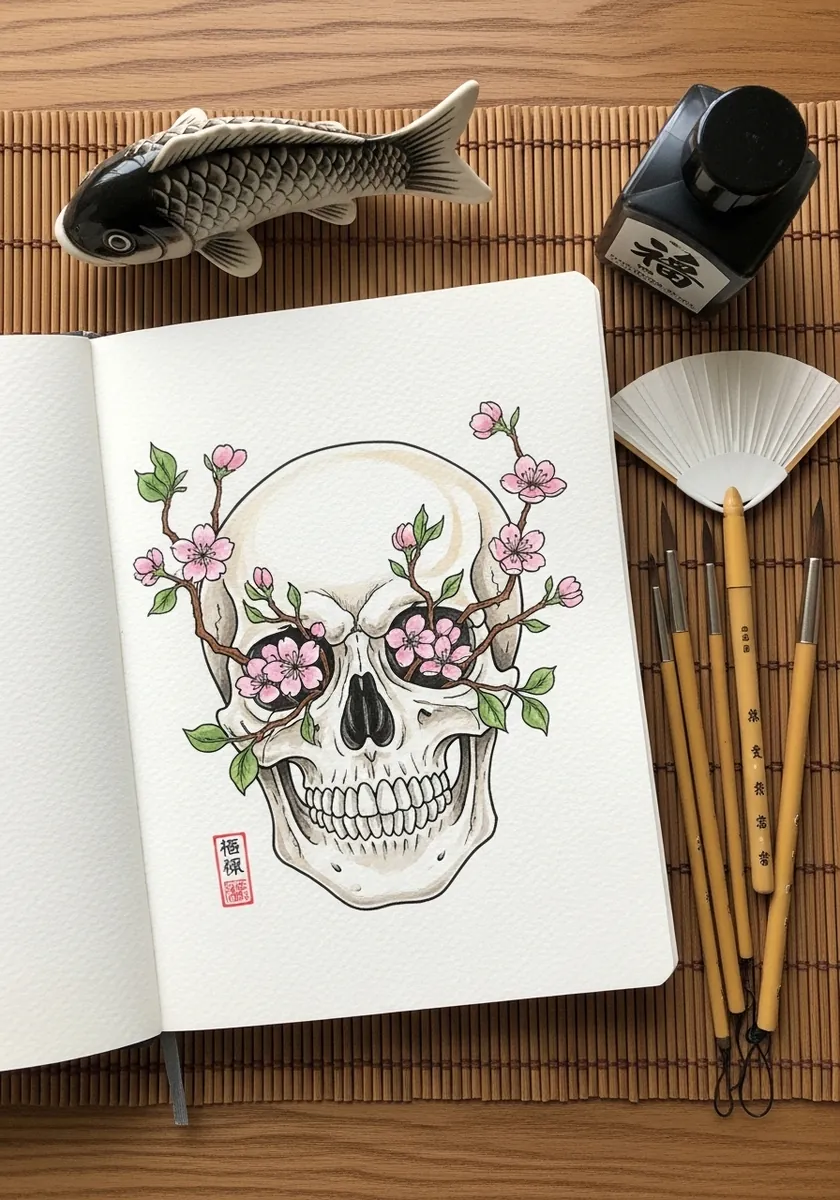
Cherry blossom branches grow out through the eye sockets and arc over the cranium, drawn in soft pink against a clean ink skull. Ink the skull fully first, then let the branches cross in front of it so they sit clearly in a nearer plane.
29. Low Poly Wireframe Skull
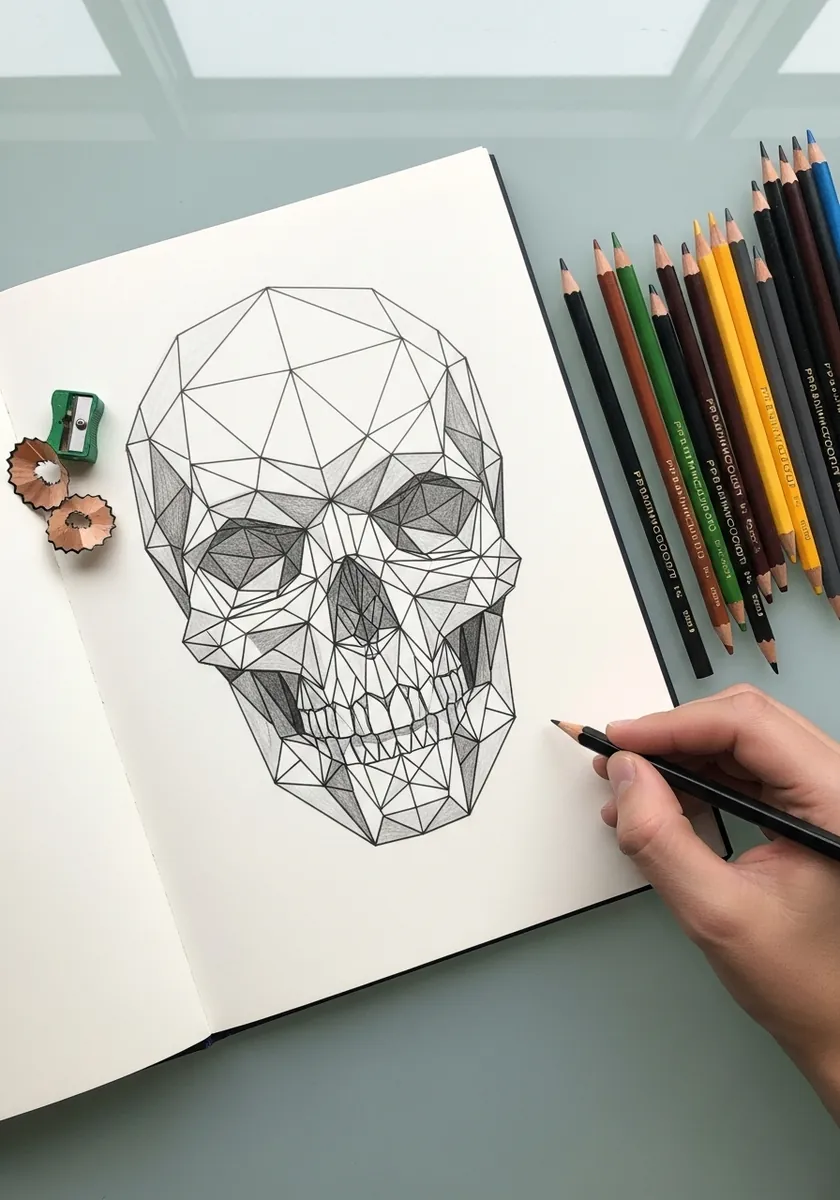
The skull is broken into a mesh of small triangles, with the facets tightening around the eye sockets and nasal opening. Draw the skull in outline first, then lay the mesh over it, making the triangles smaller wherever the surface curves fastest.
30. Day of the Dead Sugar Skull with Marigolds
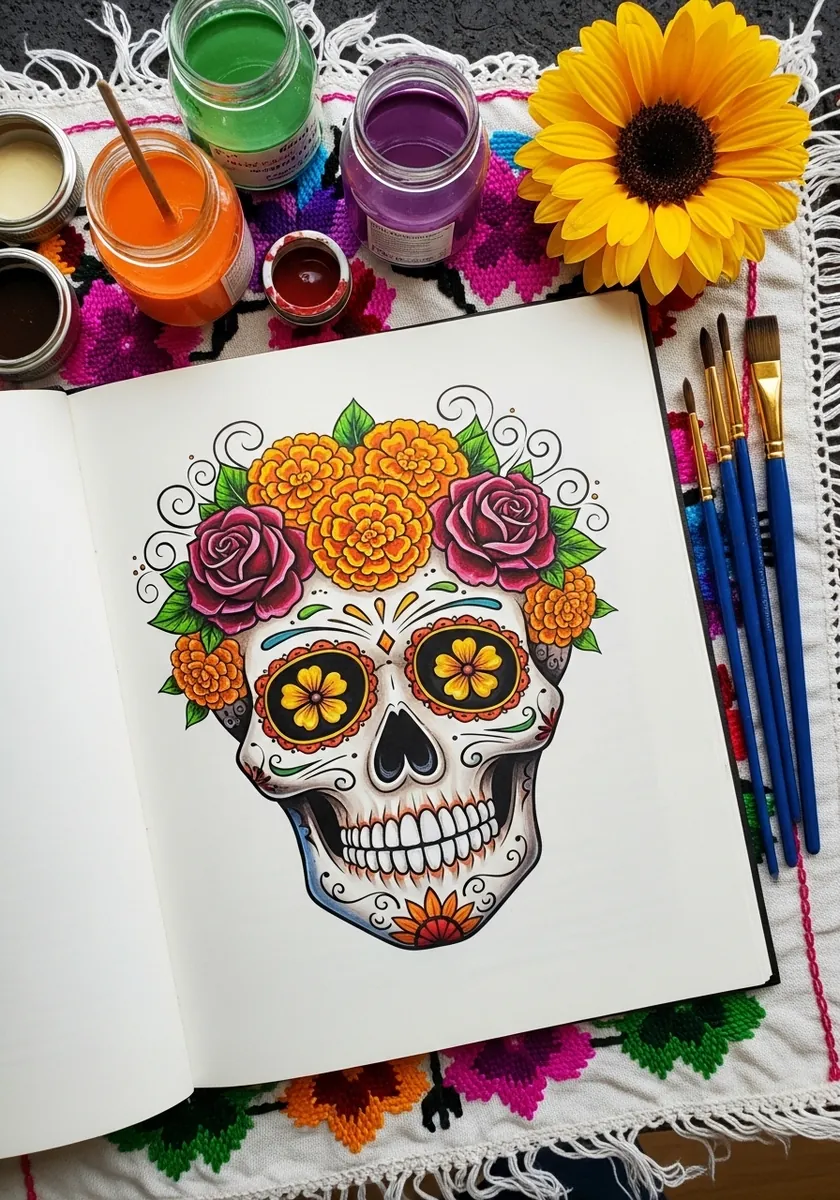
A classic calavera crowned with orange marigolds and pink roses, with flower motifs in the eye sockets. Symmetry carries it. Mark a center line, paint the left side and mirror it exactly, and keep every color flat and fully saturated.
31. Charcoal Skull with Deep Cast Shadow
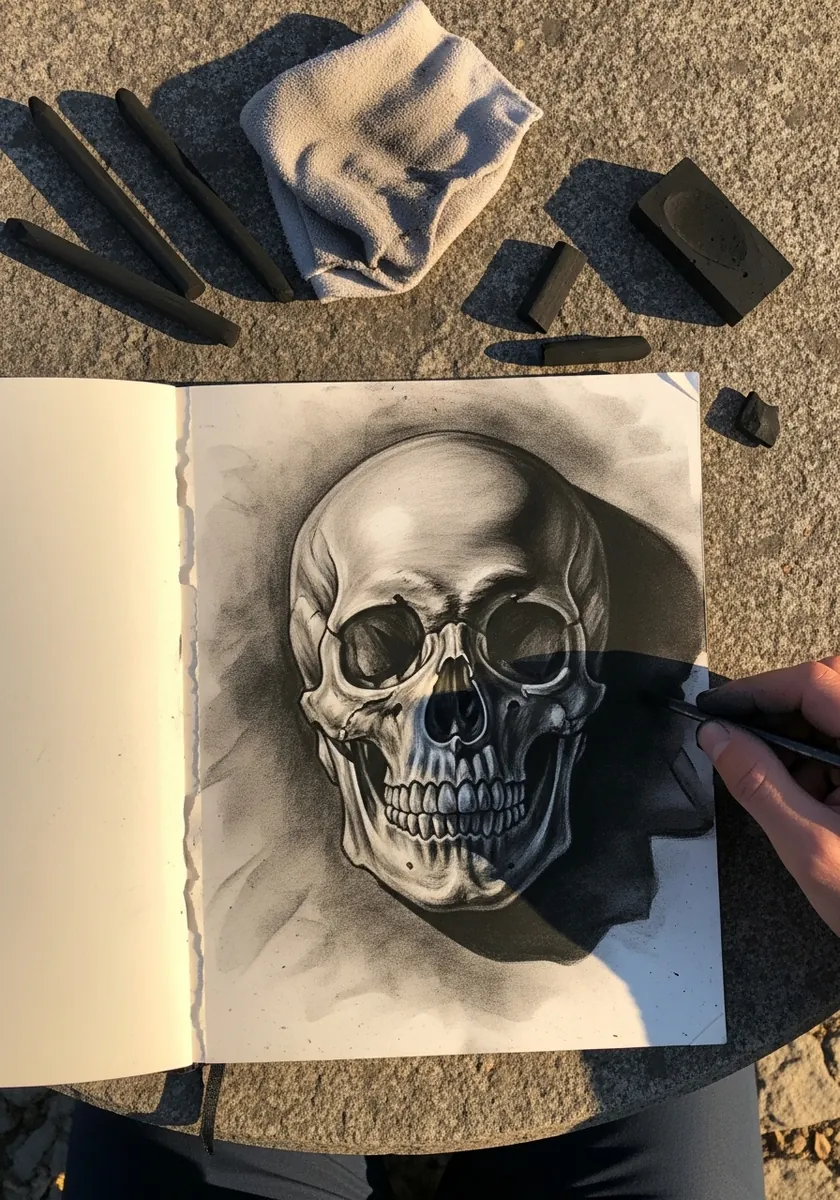
A skull lit hard from one side, with a solid black shadow pooling to its right. Understanding this drawing means understanding the planes. Establish the light direction before you make a mark, keep the shadow side almost featureless, and reserve your brightest highlight for the brow ridge.
32. Celtic Knotwork Skull
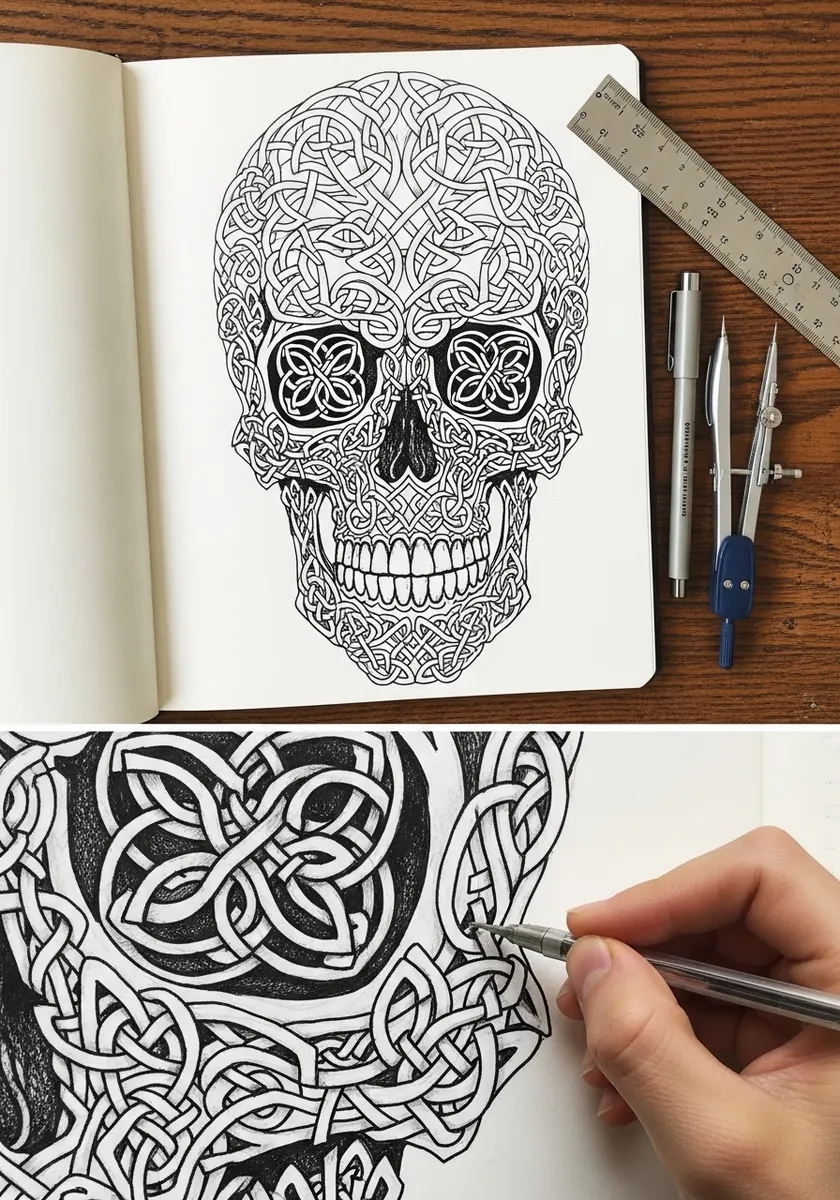
Interlacing Celtic knots fill the entire cranium and jaw, each strand passing correctly over and under its neighbor. That over-under discipline is the whole craft. Rule a light grid first, plot the knot path in pencil, and ink only once every crossing is resolved.
33. Kawaii Skull with a Bow
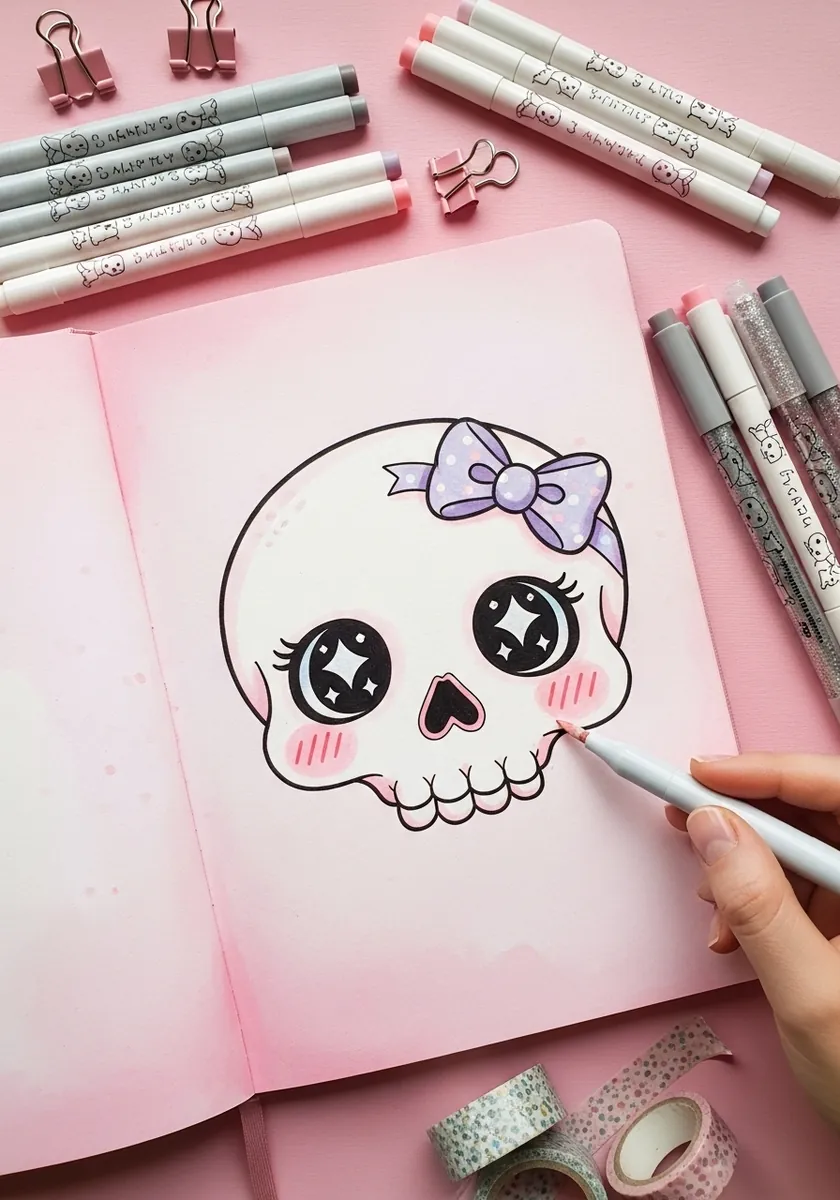
A round skull with huge sparkling eyes, blushed cheeks and a lilac bow, drawn in soft pastel marker. Enlarge the cranium, shrink the jaw, and make the eye sockets round rather than angular, because those three changes are what turn a skull friendly.
34. Steampunk Mechanical Half Skull
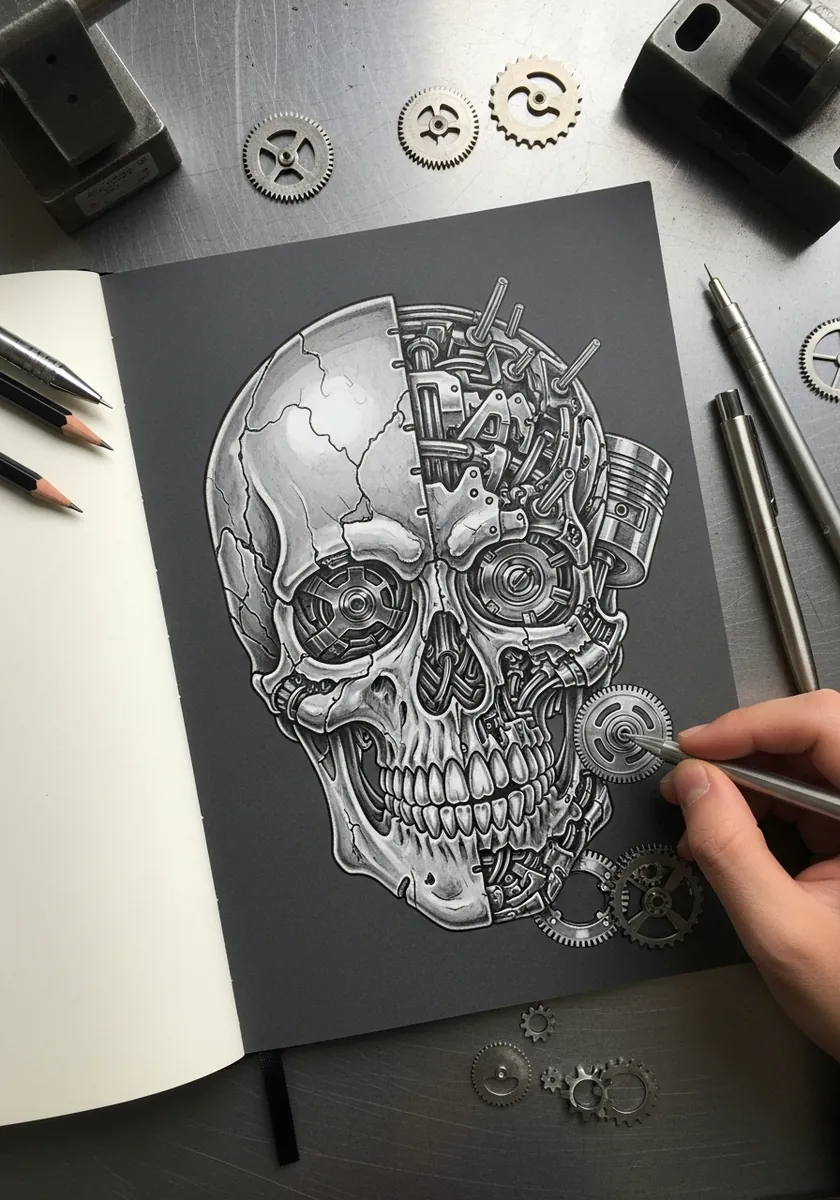
One half of the skull is bone and the other is exposed gears, pistons and pipework, drawn in graphite on gray paper. Split it cleanly down the center line, render the bone smoothly, and keep the machinery hard-edged so the two halves stay distinct.
35. Sumi-e Brush Ink Skull
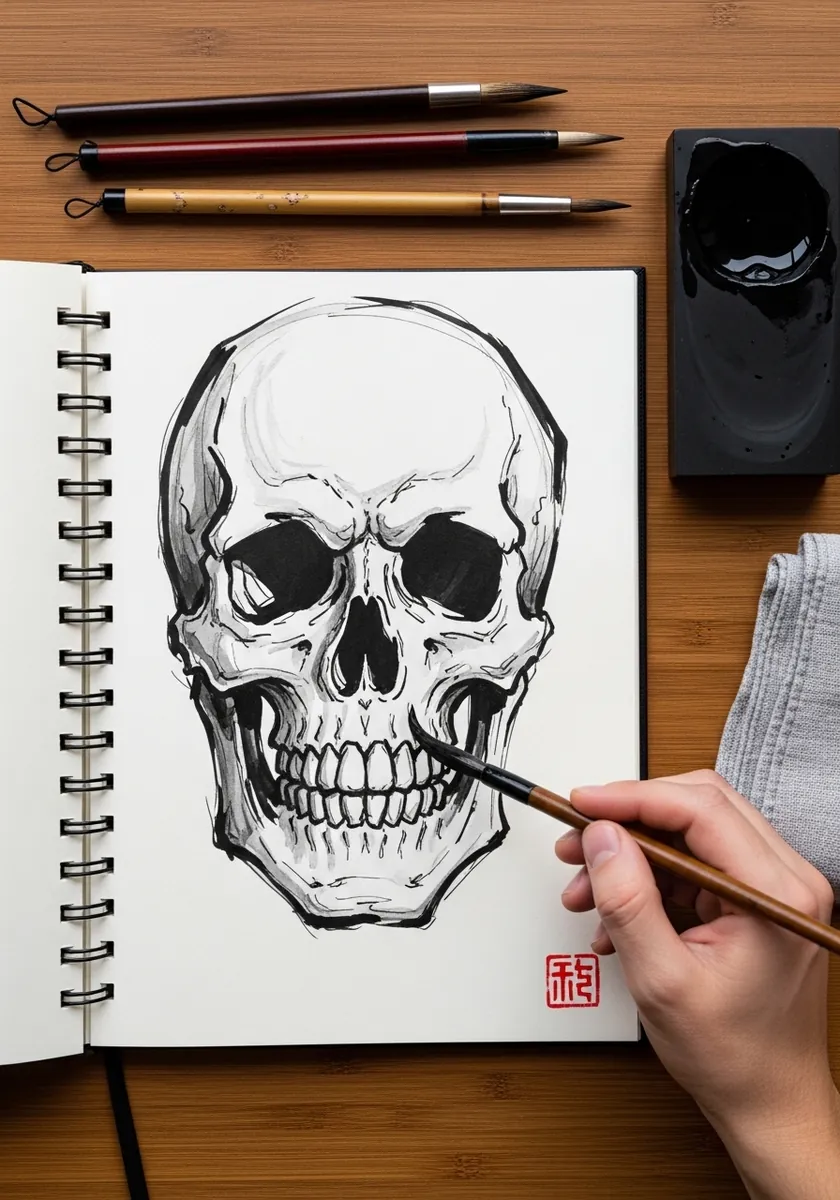
A skull laid down in a handful of loaded brush strokes, the ink running dry toward the jaw. Load the brush once, work from the cranium down, and accept whatever the drying brush gives you; a second pass would kill it.
36. Fine Line Skull on Aged Paper
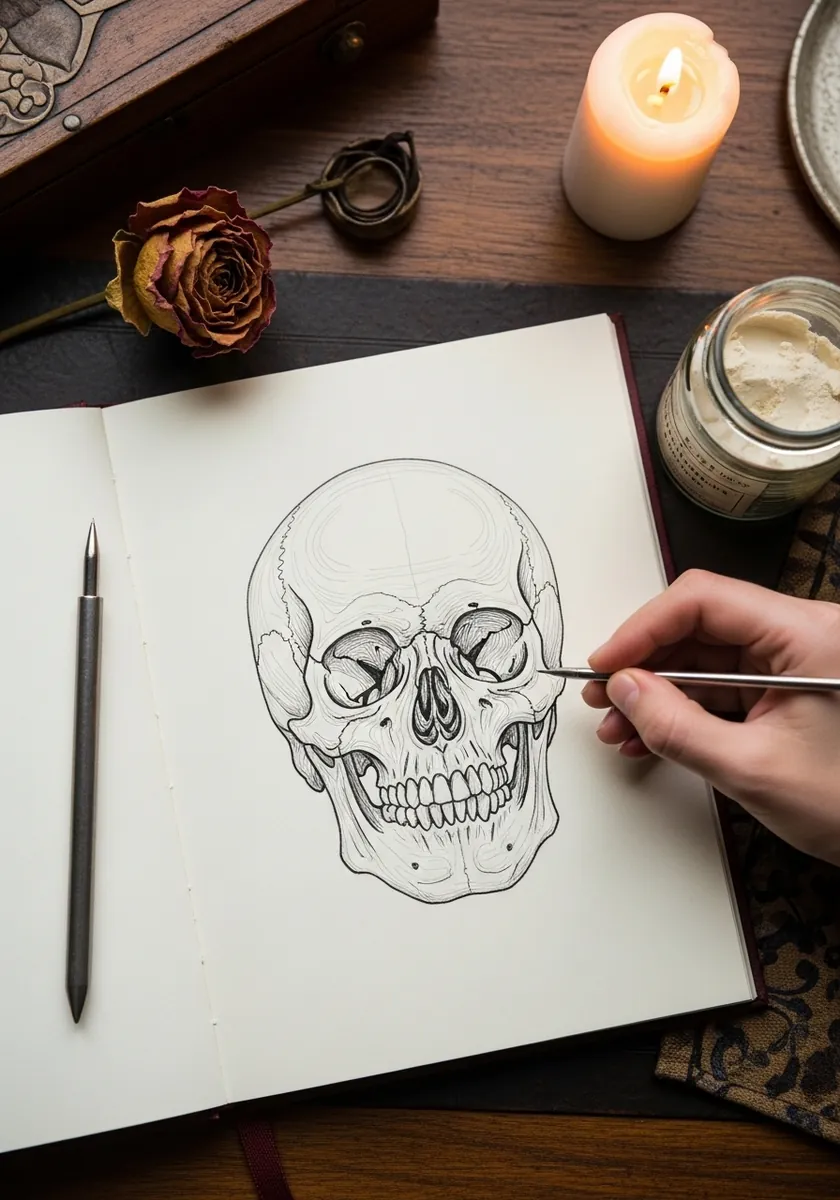
A skull in the lightest possible pen line on toned cream paper, with no shading beyond a few contour marks. Use a fine nib and a light hand, and let the tone of the paper stand in for every mid-value.
37. Graffiti Skull with Wildstyle Lettering
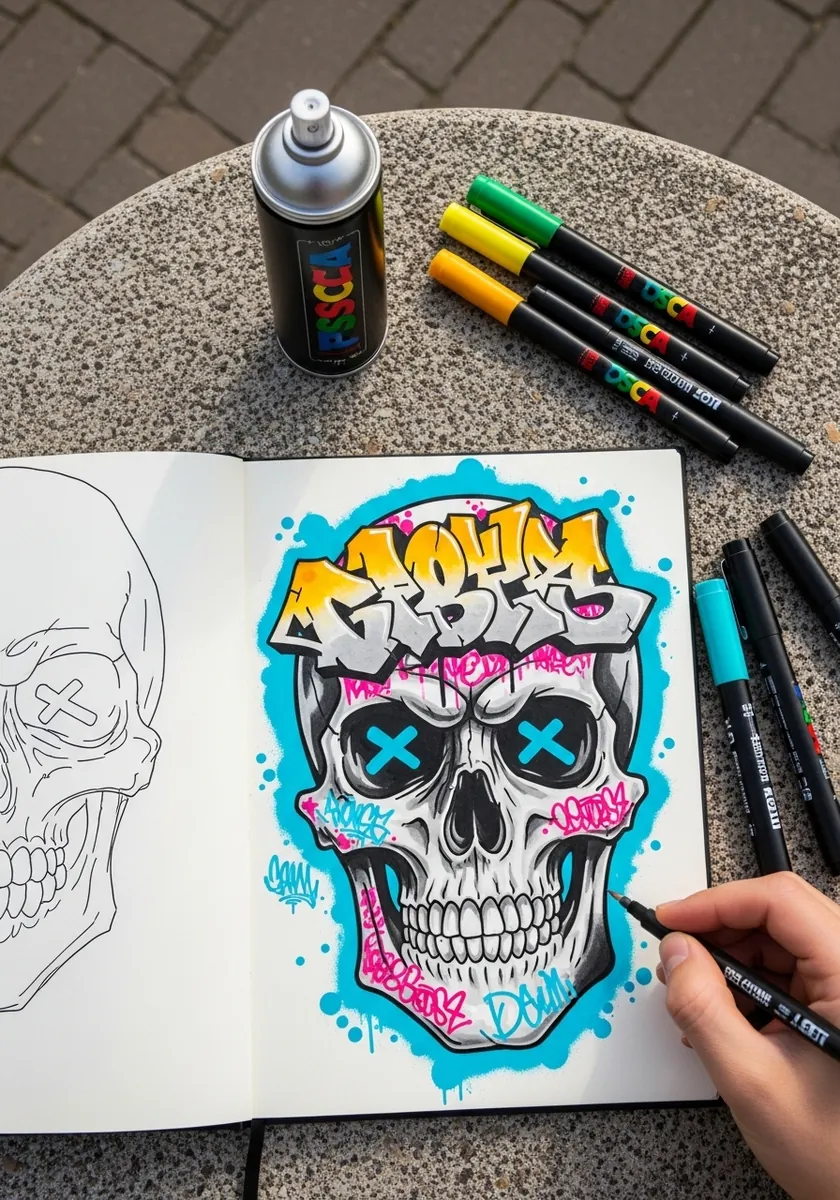
A skull with heavy cyan outlines, magenta accents and interlocking wildstyle letters across the cranium. Sketch the letters first, fit the skull beneath them, then outline everything in black at the end to bind the layers together.
38. Anatomical Skull with Labels
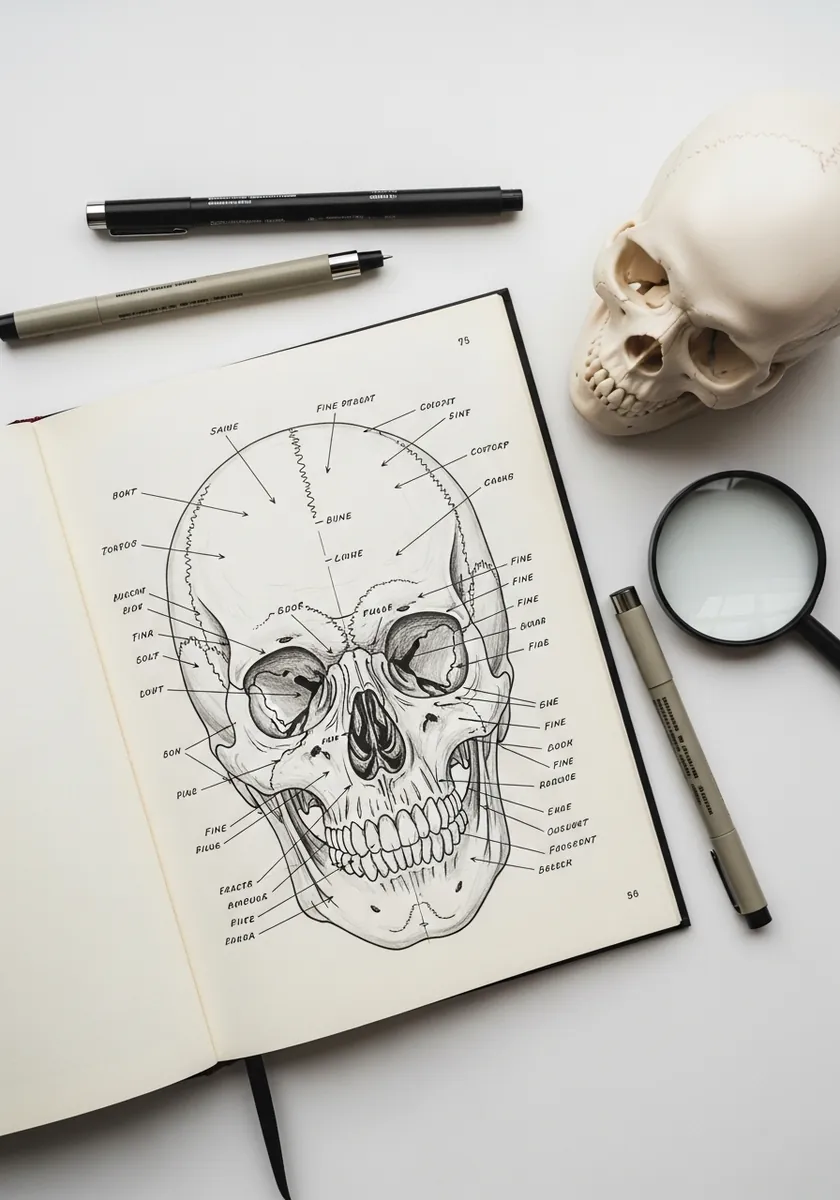
A precise skull surrounded by leader lines and handwritten labels, drawn like a page from an anatomy text. Draw the skull accurately, keep all leader lines the same fine weight, and letter the labels by hand so the page keeps its notebook character.
39. Surreal Melting Skull with Smoke Spirals
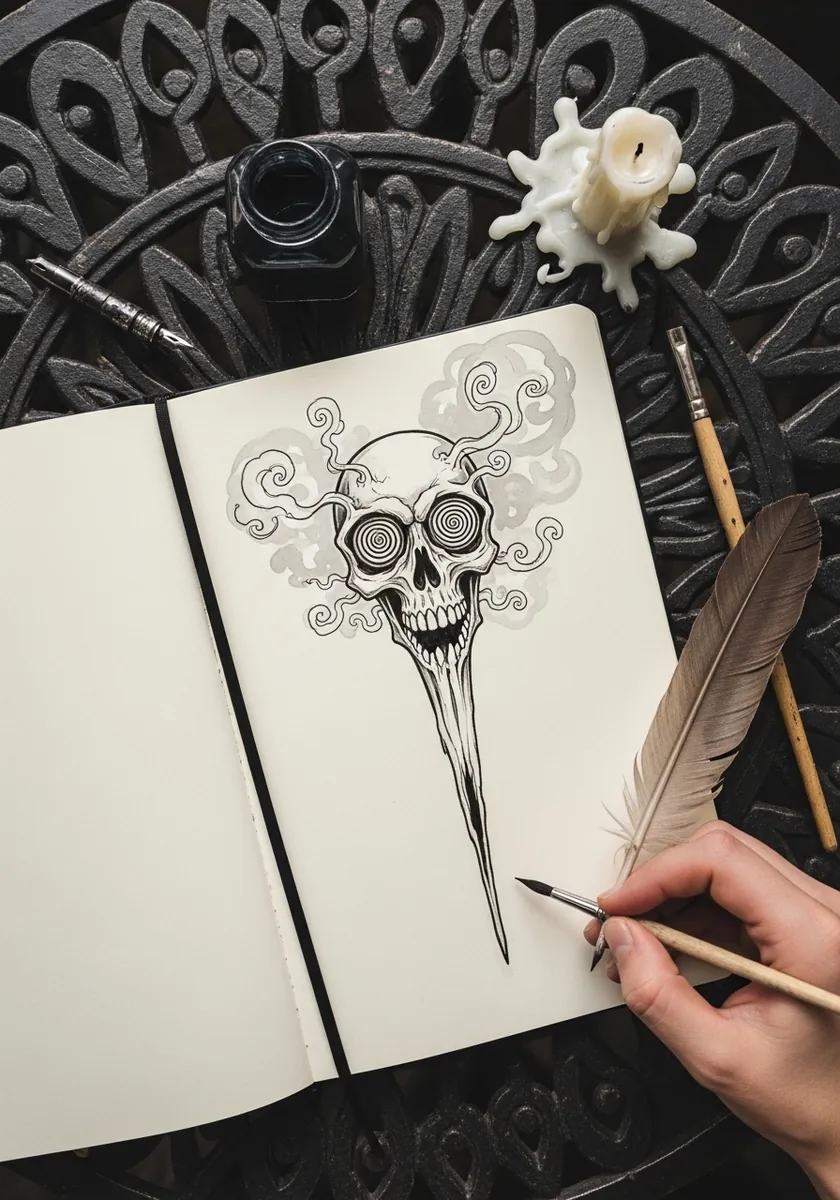
The skull dissolves upward into smoke spirals while the jaw stretches into a long drip, with hypnotic spirals in the sockets. Keep the cranium solid and let only the edges dissolve, drawing the smoke as continuous curling lines rather than shaded cloud.
40. Bold Black Tribal Pattern Skull
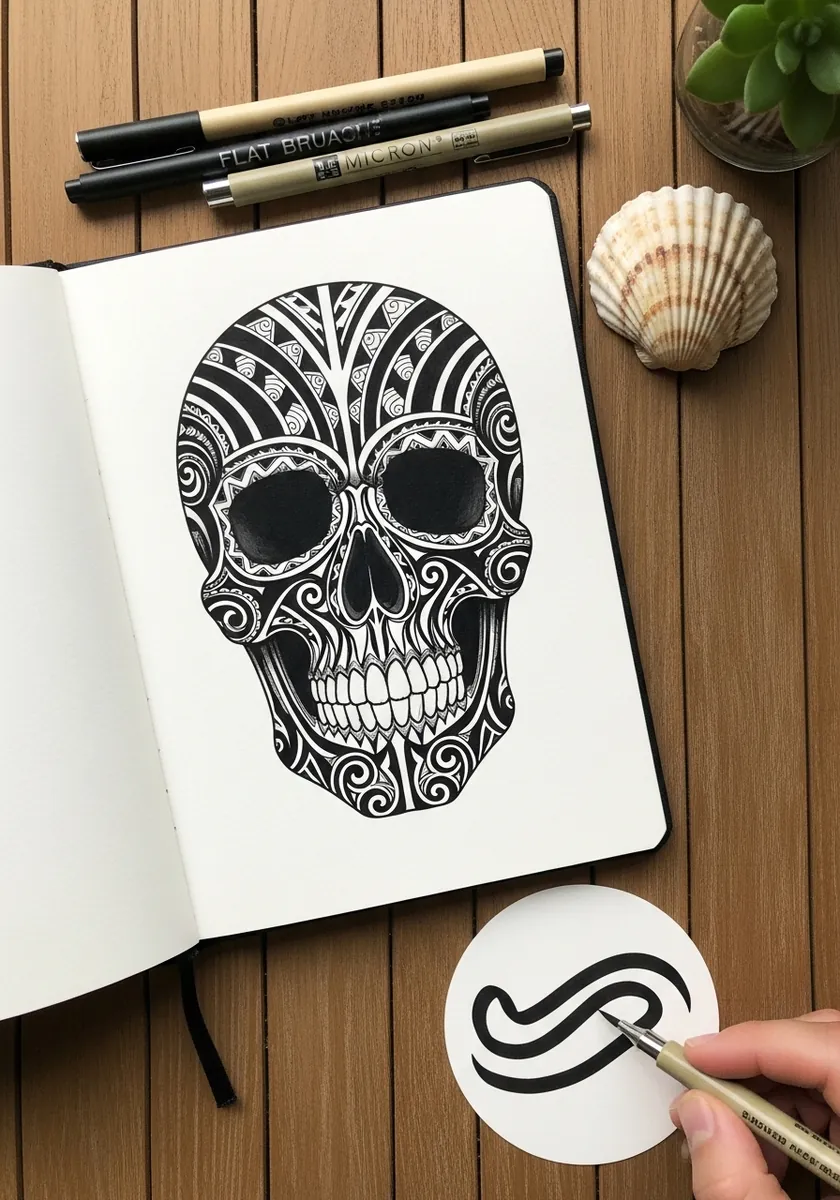
Thick black tribal swirls fill the skull with solid black sockets and a plain white grin. There is no gray anywhere. Design the pattern to be roughly symmetrical, ink it in one solid weight, and rely on the balance of black to white for all the tone.
41. Geometric Sunburst Pattern Skull
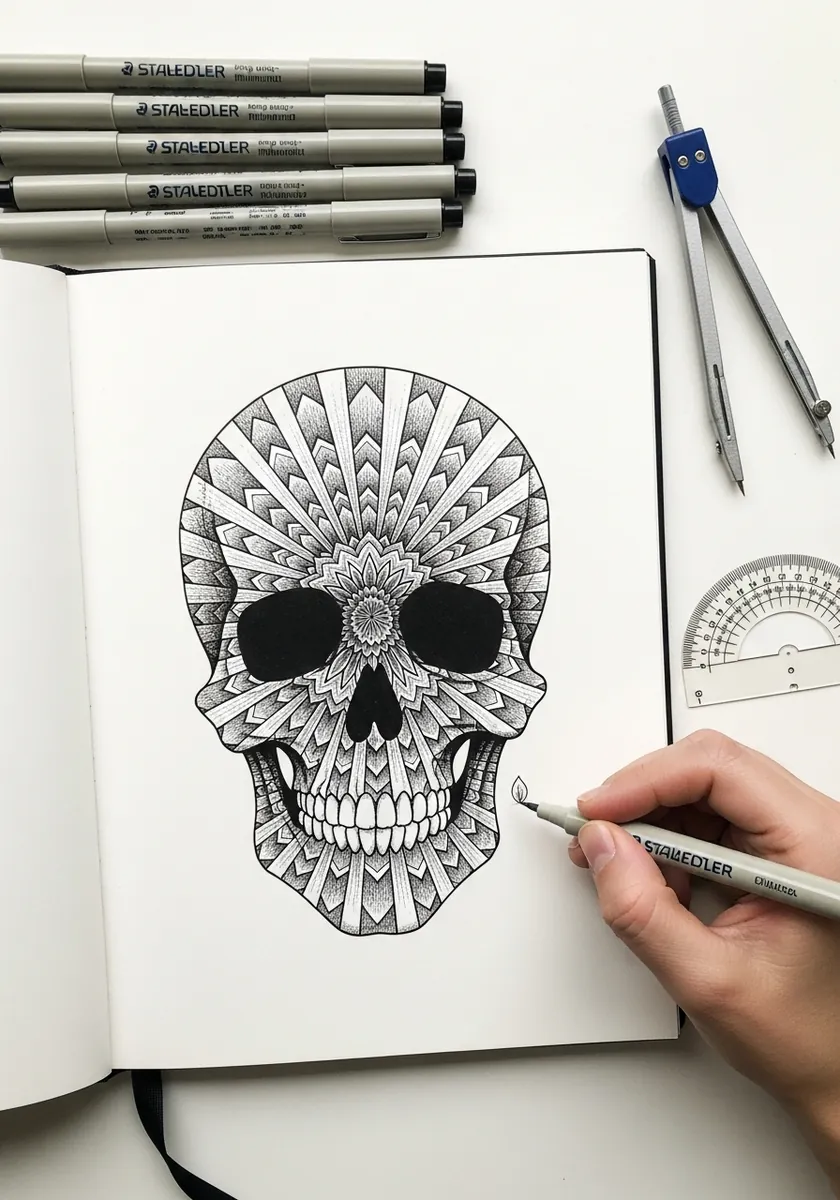
Chevrons and sunburst rays radiate from a mandala at the center of the forehead, all drawn with a ruler and compass. Set your center point first, build the rings outward, and let the pattern compress where it meets the eye sockets.
42. Loose Watercolor Skull in Pastel Washes
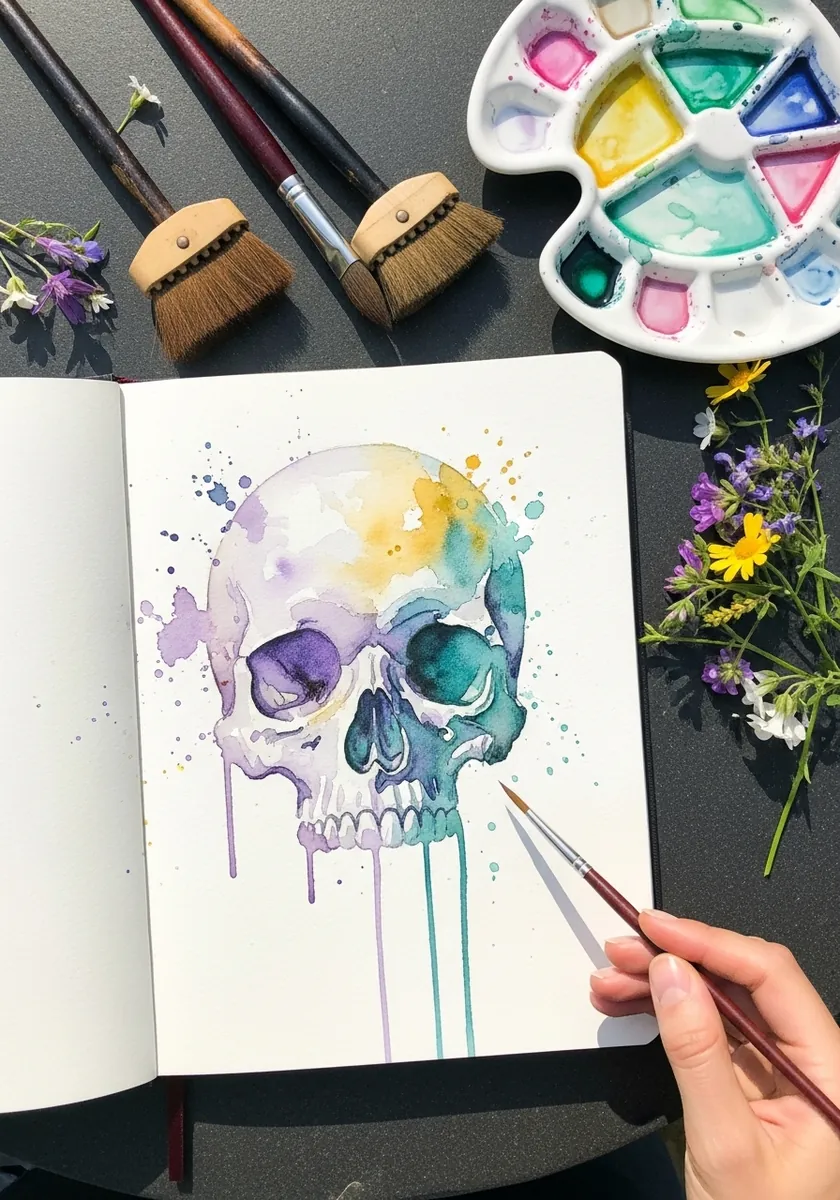
A skull suggested in soft yellow, teal and violet washes with fine splatter and a few drips. Work wet-into-wet and let the colors mingle, then wait until the paper is dry before adding the sockets and teeth in a darker mix.
43. Steampunk Skull in a Top Hat
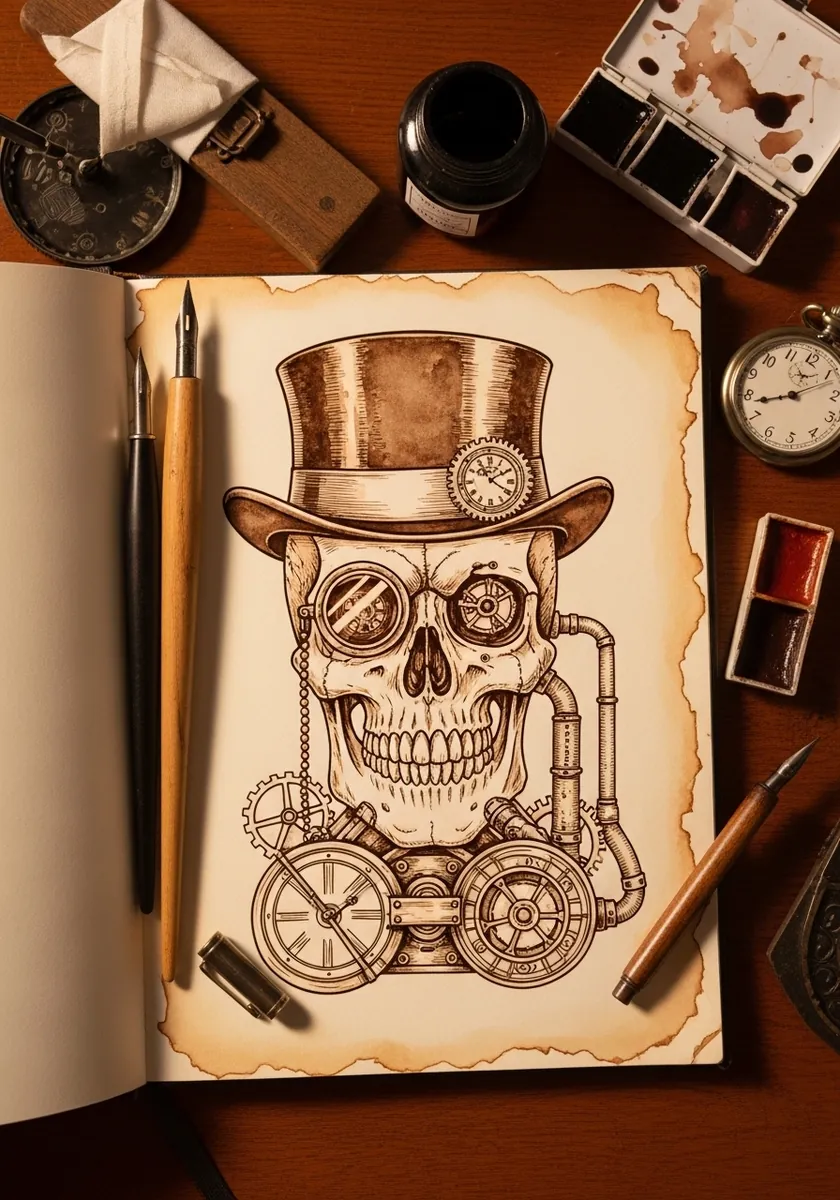
A skull in a top hat with a brass monocle, pipework and gear cluster, drawn in sepia on burnt-edged paper. Work entirely in browns rather than black, and age the paper first so the ink sits into the tone.
44. One Line Continuous Skull
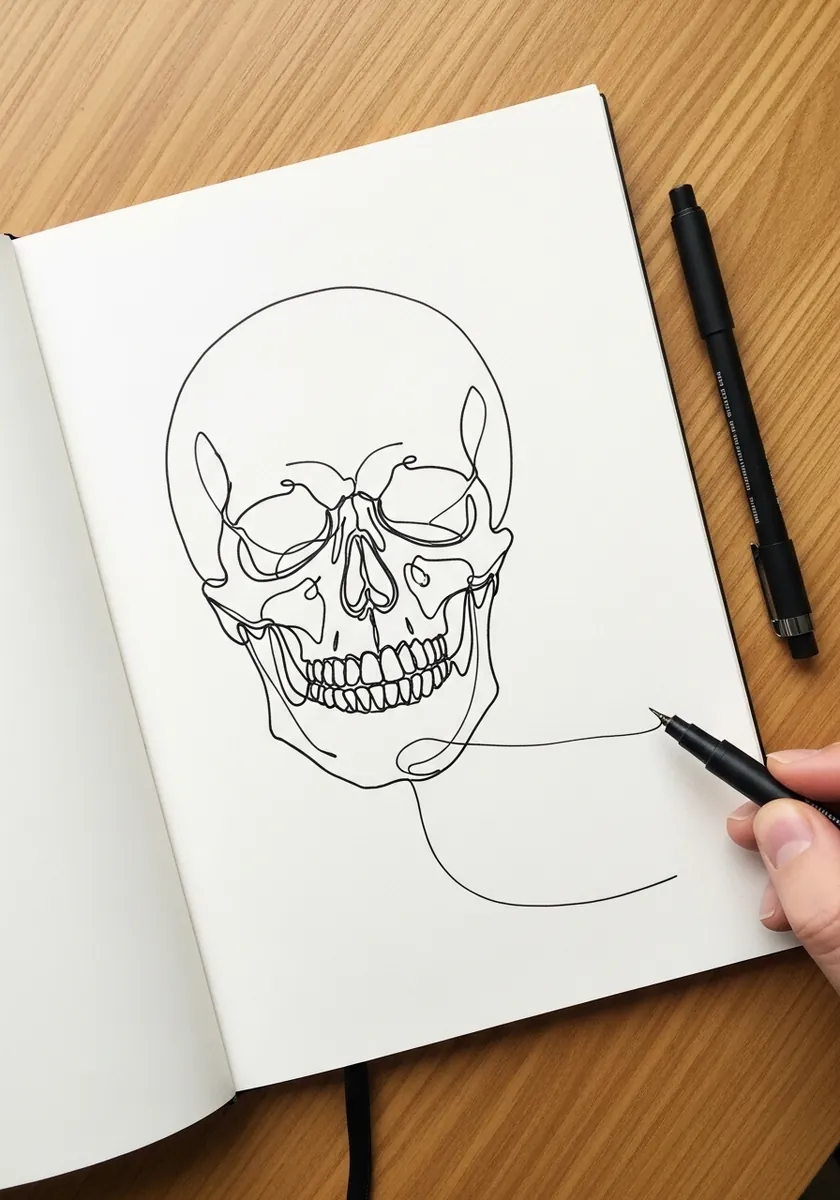
A skull described by a single unbroken line that loops through the sockets, teeth and jaw before trailing off the page. Rehearse the route first; the whole appeal is that it was clearly done in one movement.
45. Halftone Pop Art Skull in Red and Blue
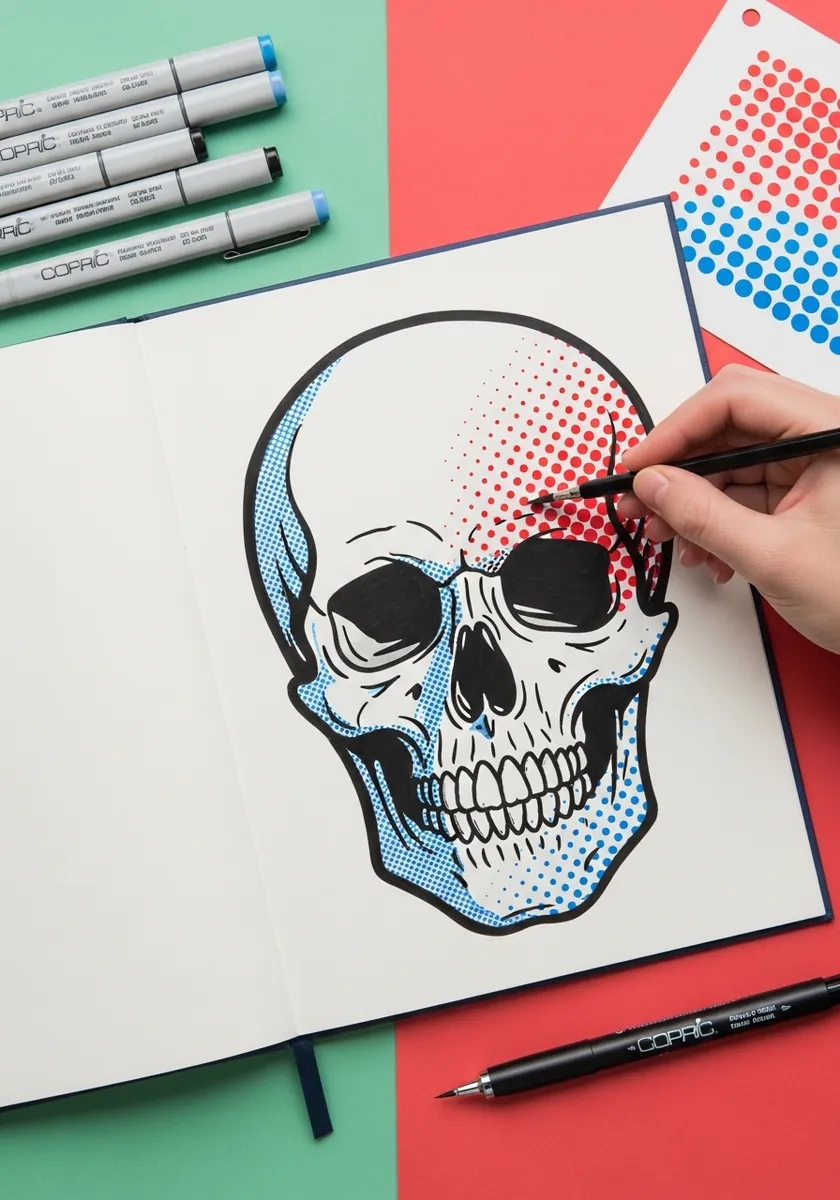
A skull shaded in two halftone fields, cyan on one side and red on the other, over a heavy black outline. Ink the outline first, then lay each dot field with a marker held vertically, keeping the dot size constant within each field.
46. Tropical Sugar Skull with Hibiscus
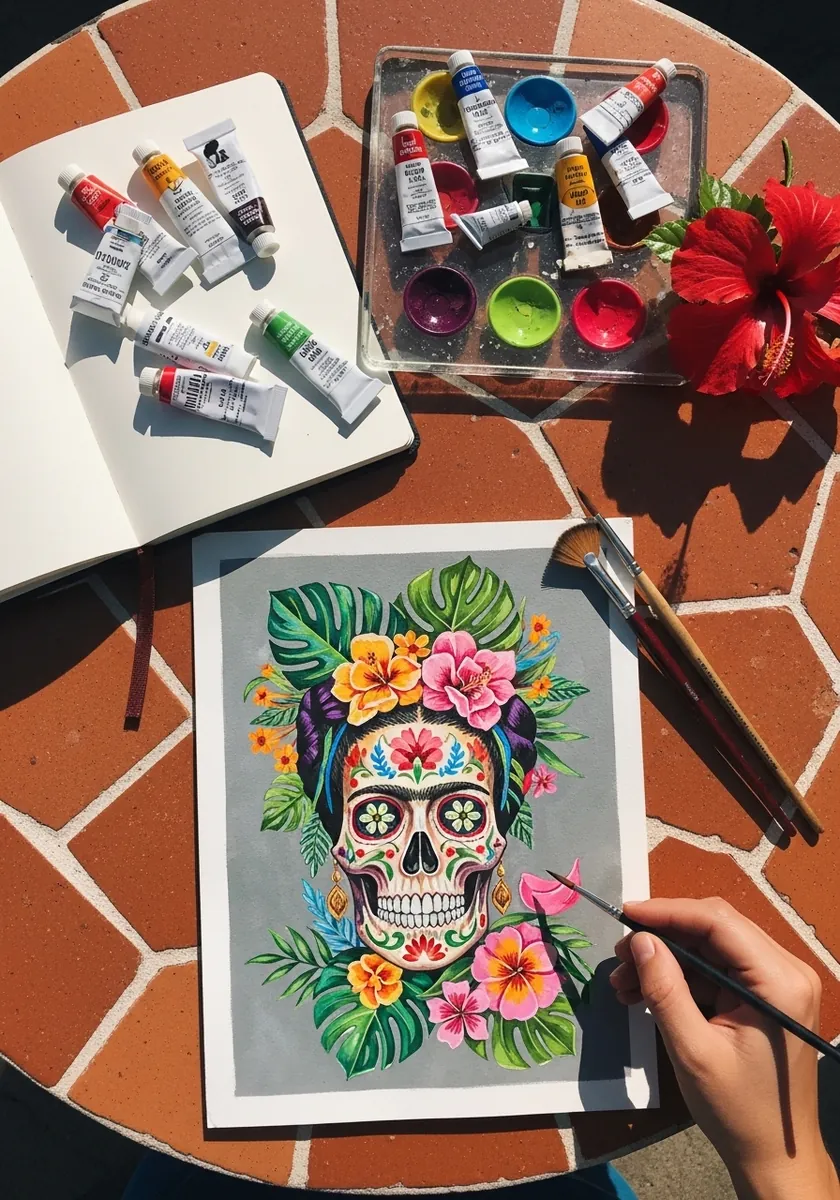
A decorated calavera framed by hot pink hibiscus and green monstera leaves. Paint the skull first and keep it lighter than everything around it, then build the foliage behind so the skull stays the brightest thing on the page.
47. Dense Doodle Pattern Skull
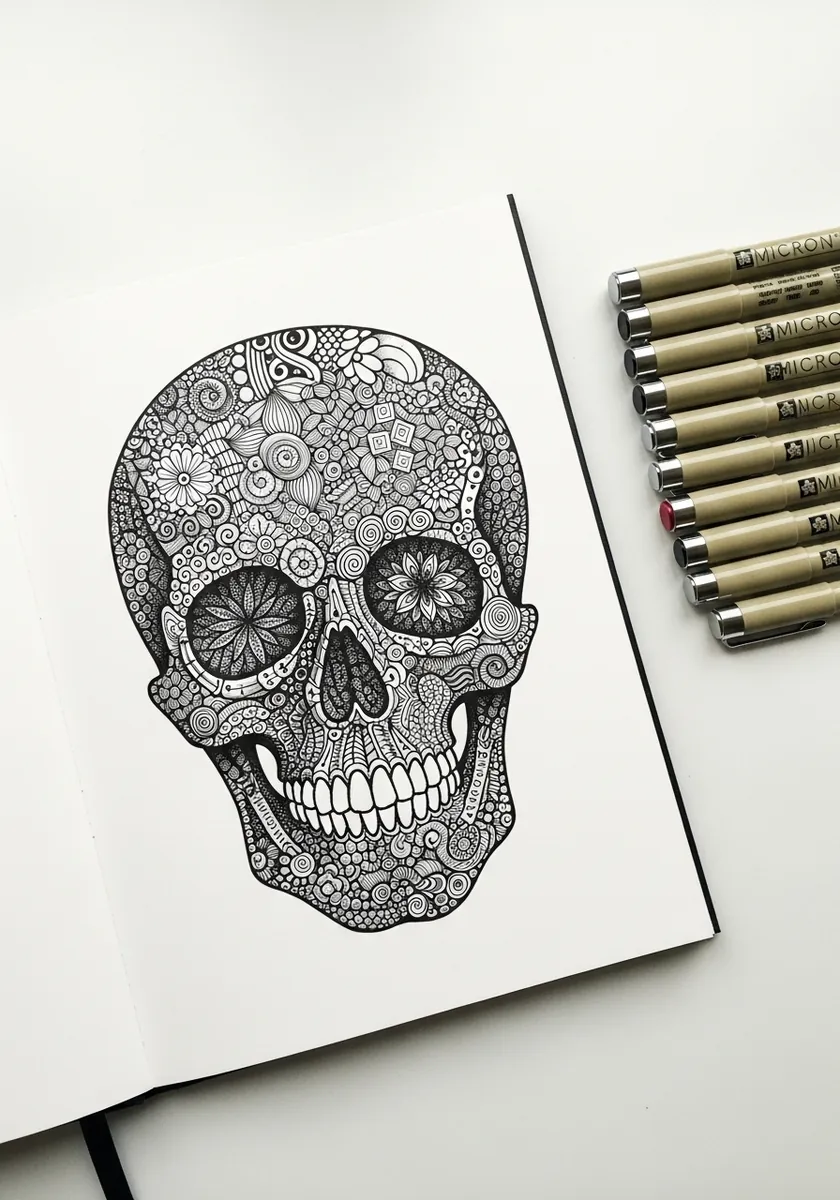
Hundreds of tiny motifs, spirals and florals fill the skull with no repeated area anywhere. Divide the skull into loose regions in pencil first and give each region its own motif, which stops the whole thing turning into visual noise.
48. Norse Rune Skull
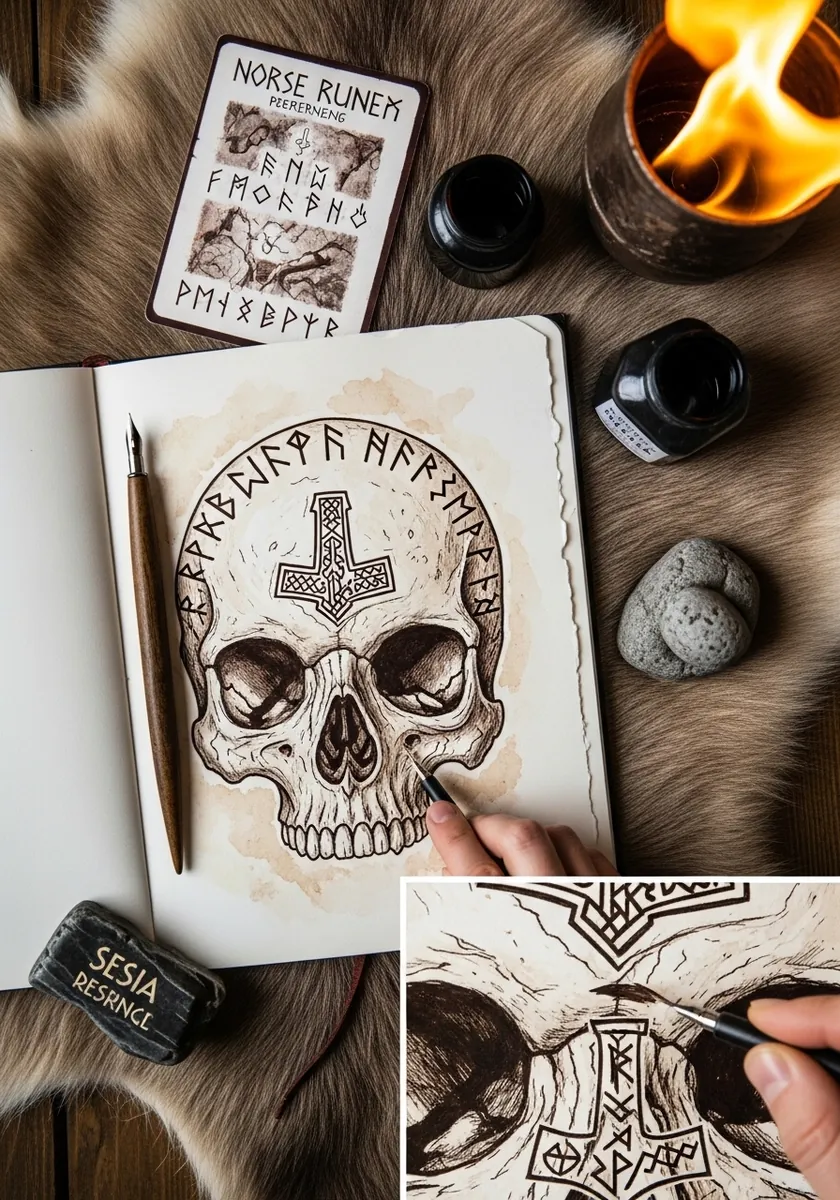
A weathered skull ringed by carved Norse runes with a hammer motif on the brow, drawn in sepia on stained paper. Draw the rune ring as a true circle first, space the characters evenly around it, and keep the skull itself rough and cracked.
49. Glitch Effect Skull with RGB Offset
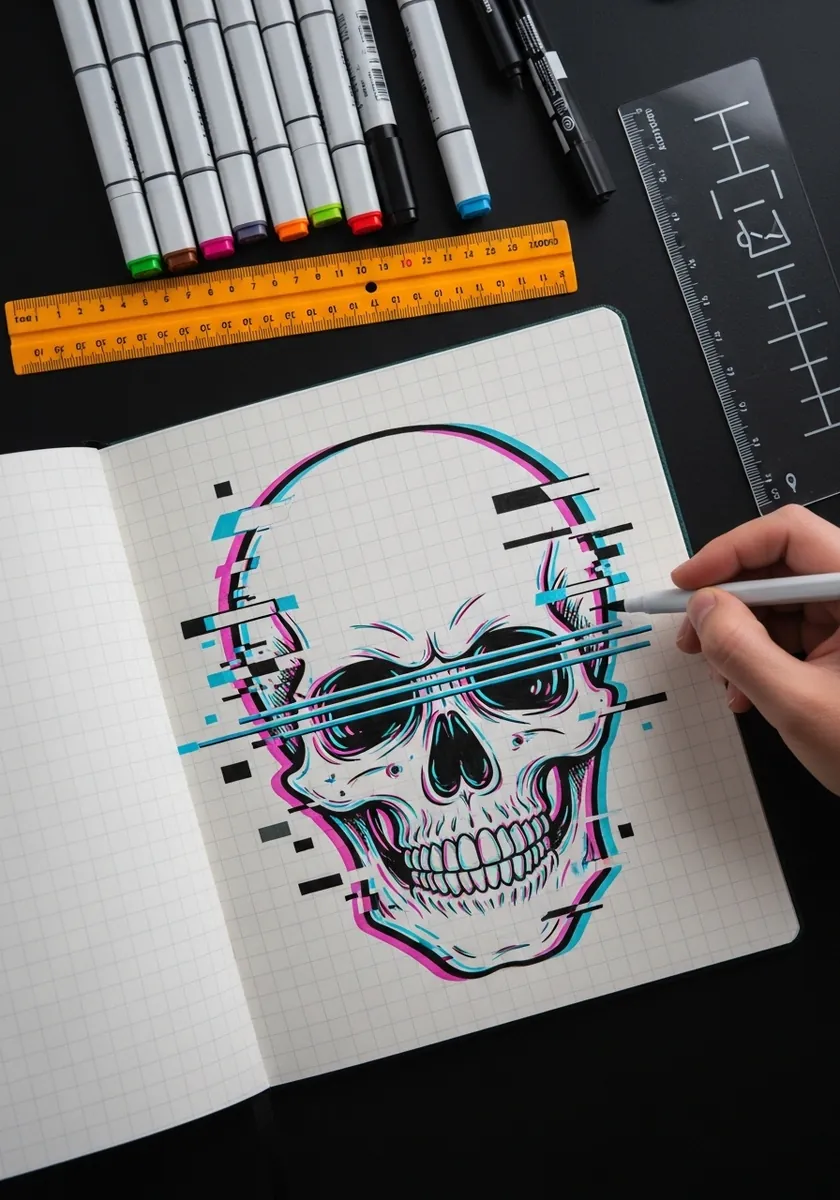
The skull is sliced by horizontal bands that shift left and right, with cyan and magenta ghosting either side of the black line. Draw the skull cleanly, then redraw displaced slices in each color, keeping the offsets horizontal only.
50. Oil Pastel Skull in Fire Tones
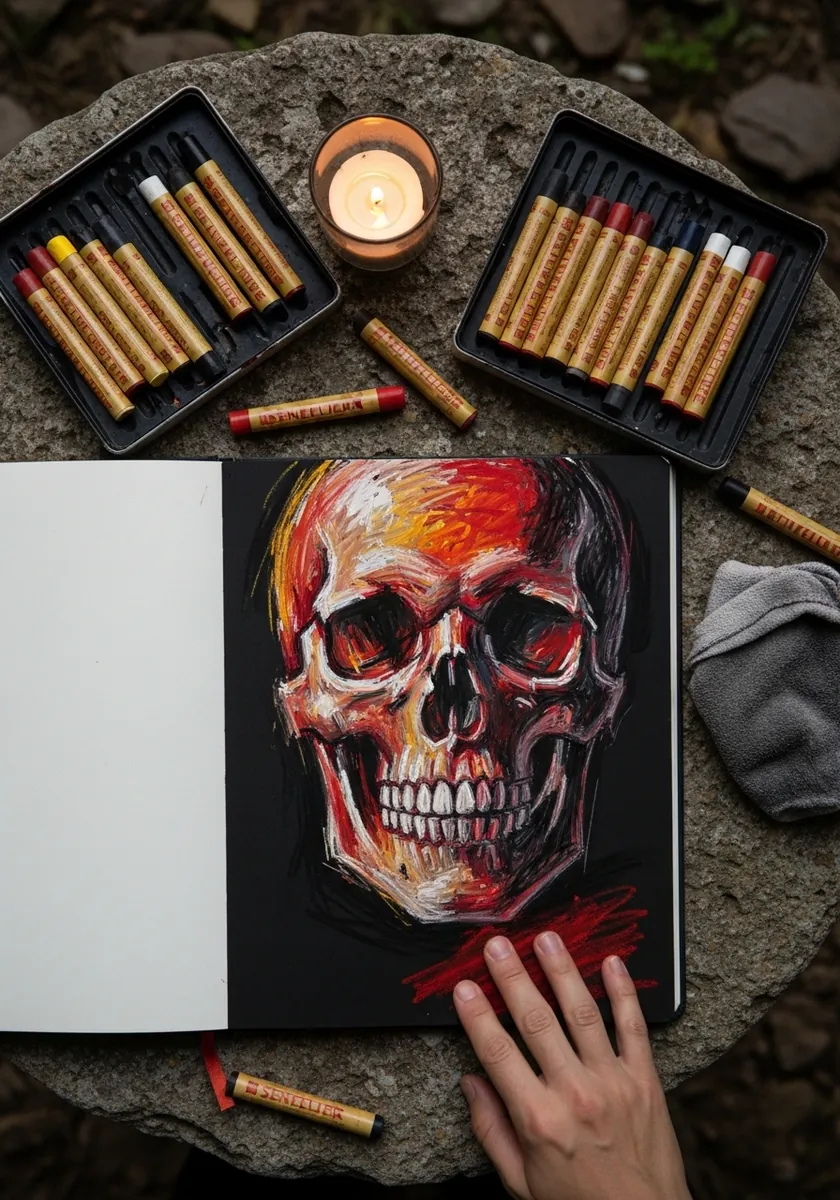
A skull scraped onto black paper in red, orange and white oil pastel with a red smear below. Work on black so the paper supplies the shadows, and keep the marks fast and unblended.
51. Realistic Graphite Skull with Cracks
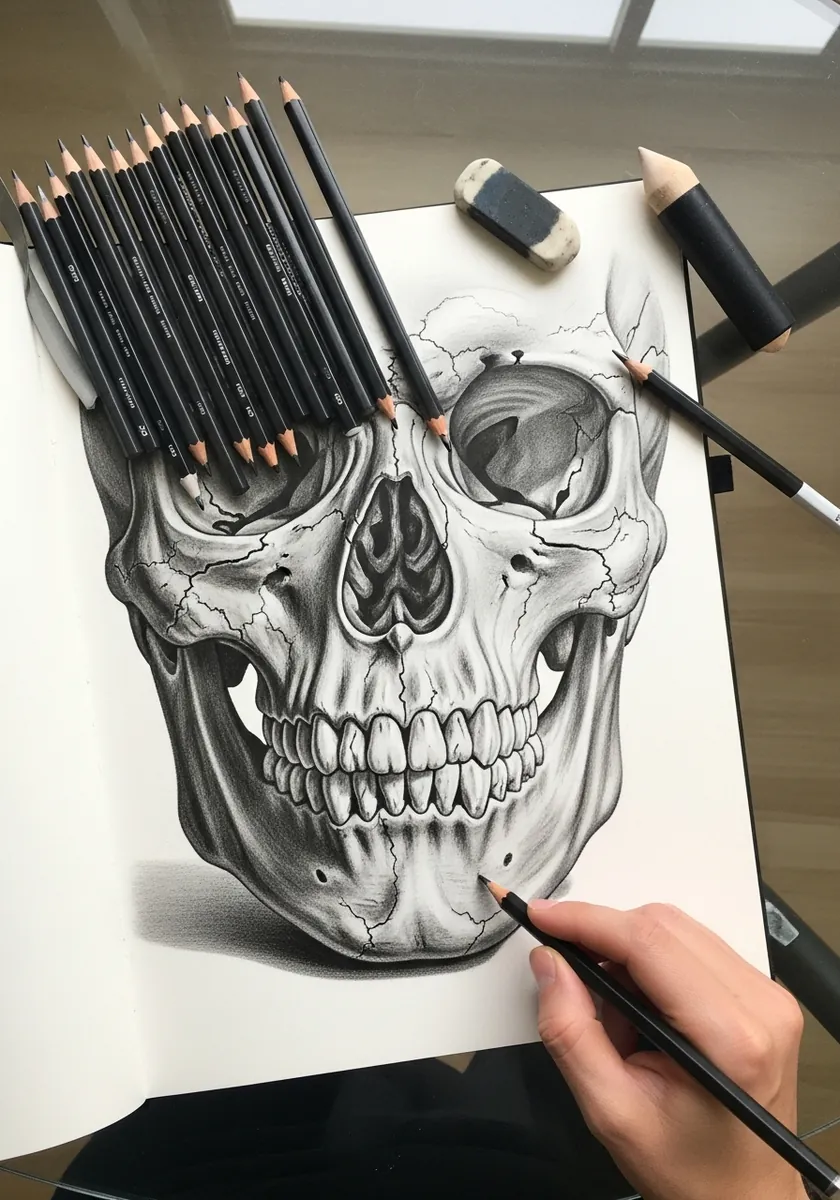
A carefully rendered skull with hairline cracks running across the cranium and smooth tonal transitions throughout. Build the tone in several light passes, blend between each, and draw the cracks last as fine dark lines with a soft edge beside them.
52. Ink and Watercolor Geometric Skull
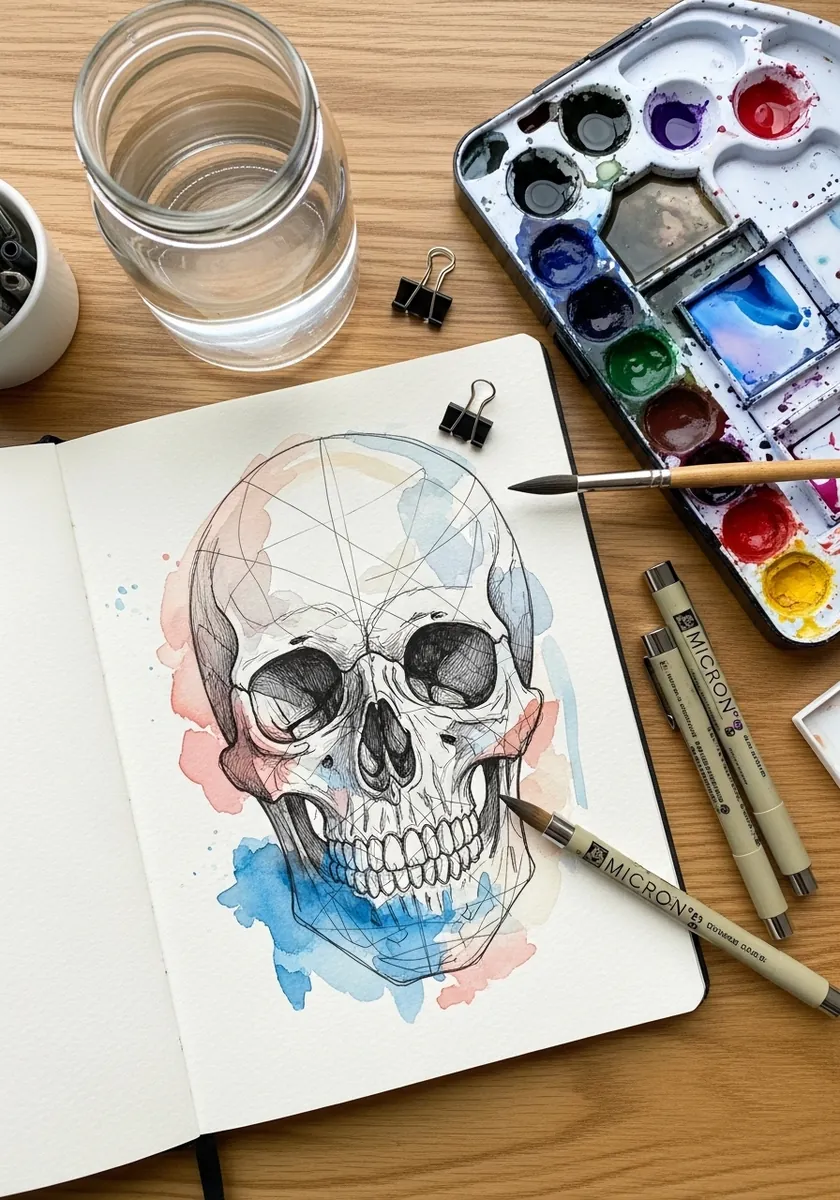
A hatched ink skull sits inside a web of fine ruled geometric lines with pink and blue washes bleeding out behind it. Paint the washes first, dry them completely, then ink the skull and rule the geometry over the top.
53. Baroque Ornamental Frame Skull
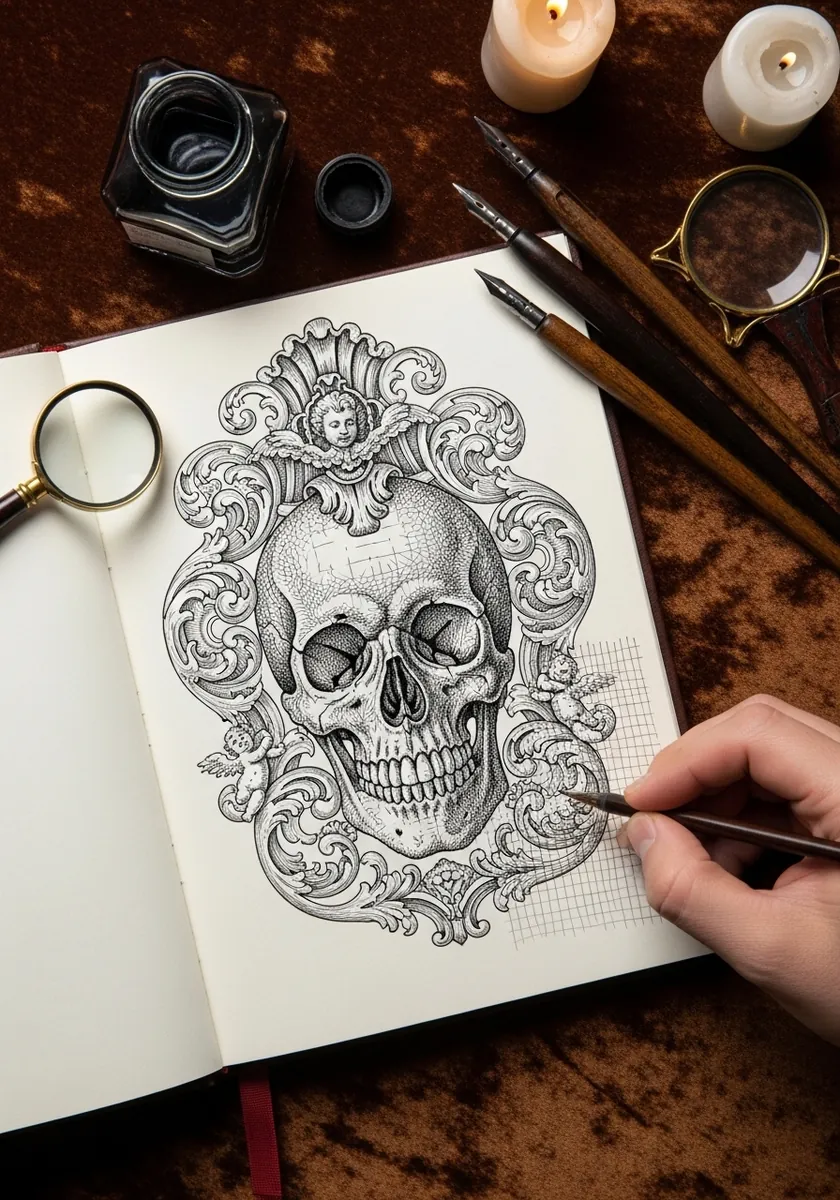
A stippled skull sits inside a heavily carved baroque frame with scrollwork and a small cherub at the crown. Draw the frame as a symmetrical shape first, then fit the skull inside it, and keep the frame more detailed than the skull itself.
54. Oil Pastel Sugar Skull on Kraft Paper
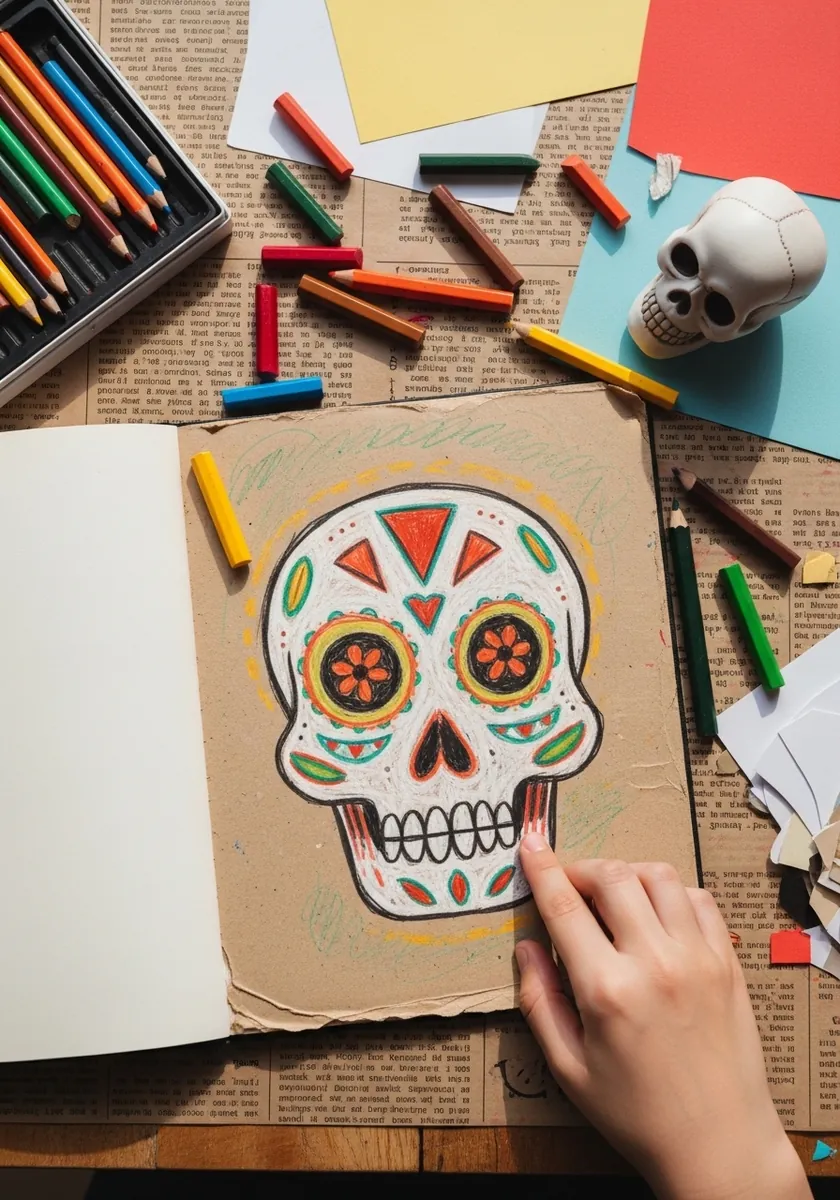
A folk-style calavera in orange, green and cream oil pastel on brown kraft, the paper tone showing through everywhere. Kraft gives you a mid-value ground for free, so work outward with both lighter and darker colors from there.
Skull Anatomy Is Worth Studying on Layers
The reason most skull drawings look wrong is placement rather than rendering: the eye sockets sit higher and the cheekbone flares wider than beginners expect. Tracing a reference on one layer, drawing your own version on a second, and toggling between them shows that error instantly in a way flipping between two sheets of paper never quite does. Artists who study anatomy this way tend to progress faster, and a tablet suited to that kind of study does not have to be an expensive one.
Skulls and hands are the two anatomy subjects that expose weak observation fastest, and for the same reason: everyone believes they already know the shape. Our step-by-step hands tutorial takes the same construction-first approach, building the palm as a box before any finger exists.