Short answer: Start with a dome-shaped mantle, add eight tapering arms that curl in S-curves, then add two rows of suckers that get smaller toward each tip. That one order — mantle first, arms second, suckers last — is what keeps an octopus drawing from turning into a tangle of lines.
An octopus drawing is a drawing of an eight-armed sea animal with a soft, rounded head called a mantle, large eyes, and arms lined with suckers. This guide gives you 18 ideas to try, from a simple cartoon doodle to a detailed ink study, plus the techniques that make each one work.
In this guide: 18 octopus drawing ideas in pencil, ink, watercolor, marker and mixed media; a 5-step method that works for any style; realistic tentacle and sucker techniques; a style picker so you can start with the idea that fits your level; and answers to the questions beginners ask most.
In this article
Octopus drawings blend nature’s mystique with artistic challenge, offering artists a chance to explore fluid forms and dynamic movement. These eight-armed creatures inspire creativity through their unique anatomy and graceful underwater presence.
Whether you’re sketching realistic portraits or whimsical cartoon octopuses, each drawing sharpens your understanding of symmetry, texture, and organic shapes. The octopus drawing community celebrates both beginners experimenting with simple tentacle patterns and experienced artists mastering intricate sucker details, providing endless inspiration for your artistic journey.
1. Pick Your Octopus Style in 60 Seconds
Do not start with the hardest drawing on the page. Pick the row that matches your time and tools, draw that idea first, and only then move to a harder one. Every idea below is numbered, so you can jump straight to it.
| Style | Best for | Hardest part | Start with |
|---|---|---|---|
| Cute cartoon / kawaii | Beginners, kids, quick doodles | Keeping all eight arms even | Ideas 8, 15, 17 |
| Realistic graphite | Patient sketchers who like shading | Smooth skin and hundreds of suckers | Ideas 2, 13 |
| Watercolor | Loose, colorful, expressive work | Controlling wet paint on arms | Ideas 14, 16 |
| Ink and tattoo style | Bold lines and strong contrast | Even hatching and stippling | Ideas 7, 10, 12, 18 |
| Scientific and stipple | Careful, detailed observation | Patience — dots take time | Ideas 3, 9, 11 |
| Surreal and mixed media | Artists who want an original idea | Blending two subjects believably | Ideas 1, 4 |
Get the anatomy right before you stylize it
An octopus has eight arms, not tentacles, and the undersides of the arms are covered with suction cups that are very sensitive to touch and taste. Its soft body has no bones, so it can squeeze through very small spaces, and its skin holds color-changing cells called chromatophores that let it change color and pattern. Even a cartoon octopus looks more believable when you keep those facts in mind: eight arms, suckers underneath, a rounded mantle on top, and eyes placed high on the head. Source: National Wildlife Federation, Octopuses.
For the water around your octopus, our water drawing ideas cover reflections and waves, and a soft round brush helps with the wet washes in ideas 14 and 16 — see our best watercolor brushes for beginners.
2. How to Draw an Octopus in 5 Steps
Use these five steps for any idea in the gallery. Change the medium, not the order.
1
Block in the mantle. Draw a soft dome or rounded bulb for the head. Keep it bigger than you think — a small head makes the arms look like spaghetti.
2
Place the eyes. Put two eyes high on the mantle, looking the same direction. Uneven eyes are the fastest way to make a cute octopus look confused.
3
Draw eight arms as S-curves. Sketch each arm as one smooth, tapering curve from the base of the mantle outward. Count them as you go: four on each side for a front view.
4
Add suckers last. Draw two rows of small ovals or circles along the underside of each arm, large near the body and smaller toward the tip.
5
Shade one side only. Pick one light direction and shade the opposite side of the mantle and arms. Leave a clean highlight on the rounded skin so it still looks wet.
Try this: Draw the same octopus three times — once in pencil, once in ink, once in watercolor — using ideas 8, 6 and 14 as your references. You will learn more from one subject in three media than from three different subjects.
What Are the Best Techniques for Drawing Realistic Octopus Tentacles?
- Start by sketching the basic S-curve or spiral shape of each tentacle to establish natural flow and movement
- Add the double rows of suckers along the underside, varying their size from large at the base to smaller toward the tip
- Create depth by shading the spaces between suckers darker, making them appear recessed into the tentacle surface
- Use curved cross-contour lines wrapping around each tentacle to emphasize their cylindrical three-dimensional form
- Observe how tentacles taper gradually, becoming thinner and more delicate as they extend away from the body
- Apply gradual shading techniques to show how light hits the smooth, wet skin, creating highlights on the rounded surfaces
- Practice drawing tentacles in various positions—curled, stretched, twisted—to capture the octopus’s incredible flexibility and range of motion
How Do You Draw Cute Cartoon-Style Octopuses for Beginners?
- Begin with a simple rounded or dome shape for the head, keeping proportions large and friendly for maximum cuteness
- Draw big expressive eyes near the top of the head, using circles with large pupils and sparkle highlights
- Add eight tentacles flowing downward in various playful positions, keeping them thick and chunky rather than realistic
- Include small oval shapes for simplified suckers, spacing them evenly without worrying about perfect anatomical accuracy
- Use smooth, rounded lines throughout to maintain a soft, approachable appearance that appeals to all ages
- Experiment with fun accessories like hats, glasses, or holding objects to give your octopus character and personality
- Keep color schemes bold and vibrant—pinks, purples, teals, and oranges work beautifully for whimsical underwater friends
- Add simple environmental elements like bubbles, seaweed, or coral to create context and complete your adorable scene
Ready to dive into your octopus drawing adventure? Grab your pencils and start with simple shapes today—each stroke brings you closer to mastering these fascinating creatures while discovering your unique artistic style and building confidence in marine art!
3. The 18 Octopus Drawing Ideas
Each idea below keeps its original description. Work through them in order, or use the picker above to jump to the style you want today. A sturdy sketchbook makes the ink and graphite ideas much easier — see our best sketchbooks for beginners.
1. Surreal Octopus with Hydrangea on Mixed Media on Drawing Paper
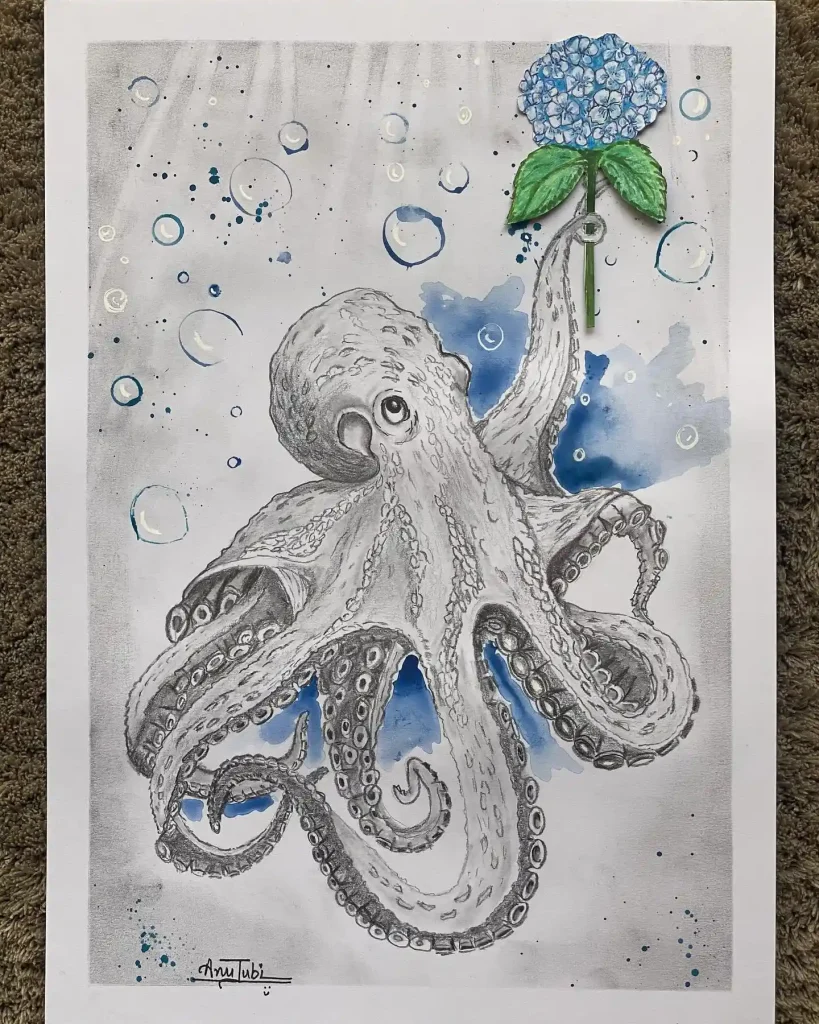
What a creative and surreal piece. This is a mixed-media drawing, combining a detailed graphite octopus with a soft, blue watercolor wash and bubbles. The most symbolic part is the tentacle, which is holding up a blue hydrangea. It’s a beautiful, imaginative work, blending the mystery of the deep sea with an unexpected, gentle gesture.
2. Hyper-realistic Graphite Octopus on Sketchbook Paper

This is just a stunning technical showcase. It’s a hyper-realistic graphite drawing in a sketchbook, and the artist has captured every detail. You can feel the bumpy texture of the skin and the suction of the hundreds of suckers. The coiling tentacles create a deep sense of movement, making it a powerful, classic study.
3. Scientific Illustration Style Octopus on Ink on Drawing Paper

Here’s a beautiful, classic ink drawing. It has the feel of a vintage scientific illustration, with its precise, clean lines and meticulous shading. The artist used stippling and hatching to give the octopus form, letting its long, graceful tentacles drift across the page. It’s a very elegant and timeless piece of nature art.
4. Surreal Octopus with Flower Tentacles on Drawing Paper
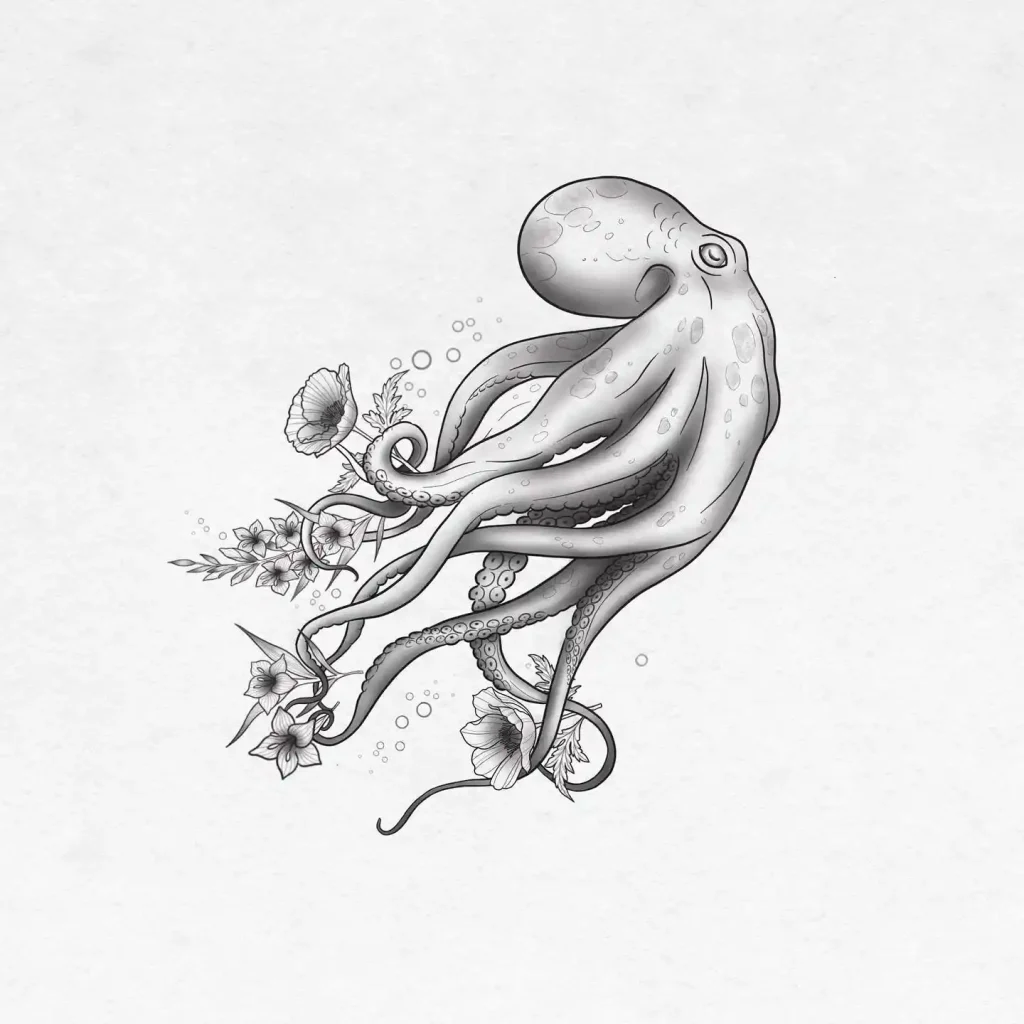
A very surreal and elegant concept. This black and grey drawing shows an octopus swimming, but its tentacles are seamlessly transforming into blooming flowers, like poppies and cherry blossoms. The tiny bubbles add to the underwater feel. It’s a beautiful symbolic piece, merging the animal’s grace with the delicate beauty of a garden.
5. Realistic Colorful Octopus Portrait on Colored Pencil on Drawing Paper
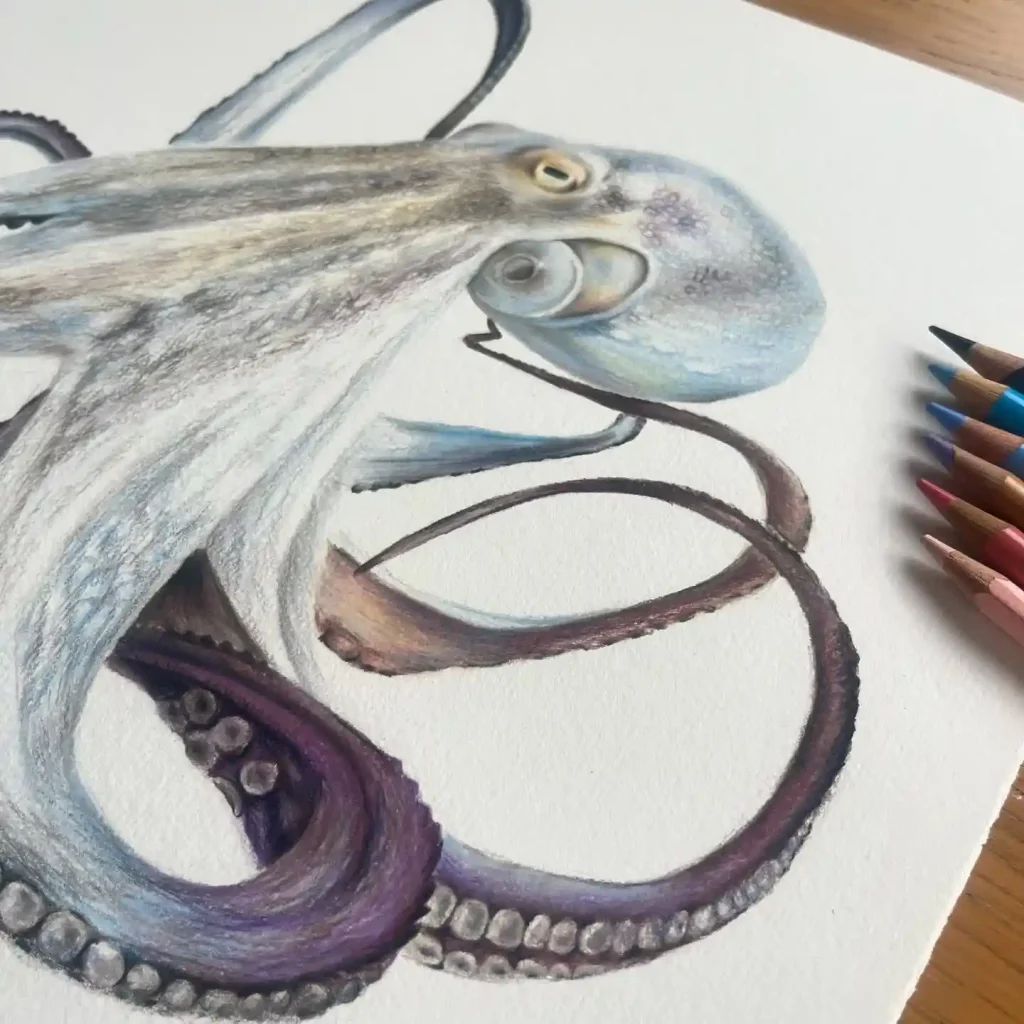
This colored pencil drawing is all about capturing that incredible, shifting skin. The artist masterfully blended cool blues, greys, and warm purples to show the octopus’s iridescent, camouflaging ability. The realistic eye is the focal point. This close-up view feels very intimate, like a snapshot of this intelligent, beautiful creature.
6. Playful Octopus with Starfish on Ink on Drawing Paper
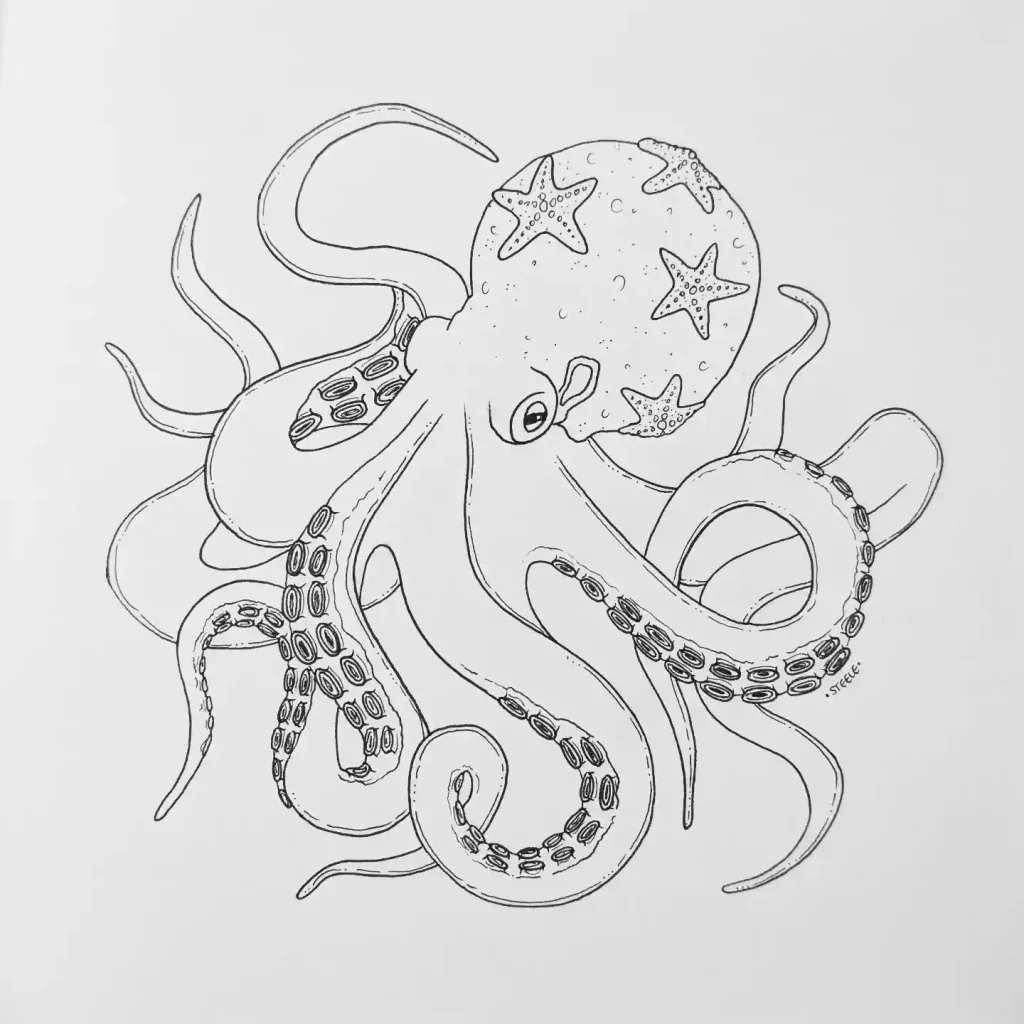
A very clean and playful line art piece. This ink drawing has a fun, illustrative style. The octopus is simple and clear, but the artist gave it a whimsical twist: its head is covered in little starfish, as if it’s wearing them for decoration. It’s a charming, lighthearted drawing with a ton of personality.
7. High-Contrast Illustrative Octopus on Ink on Drawing Paper
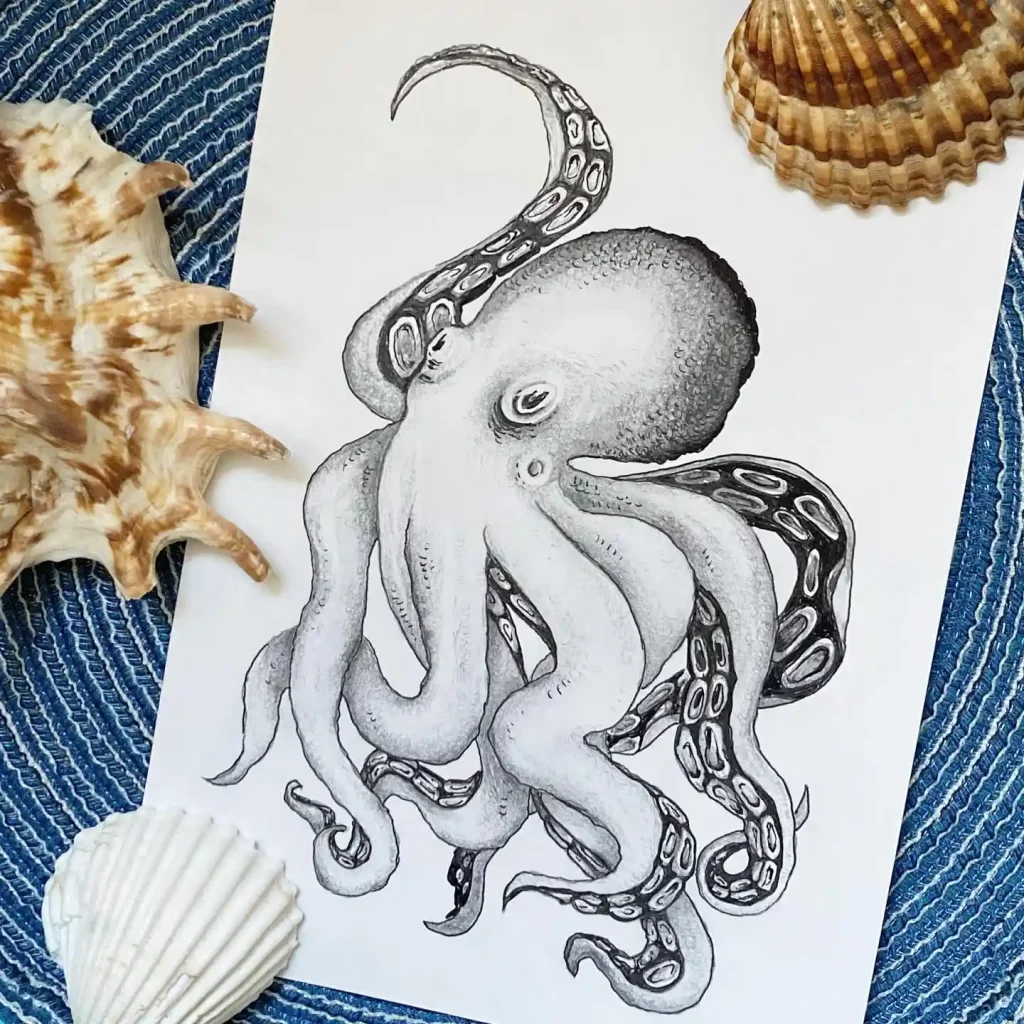
This is a very bold, high-contrast ink drawing, perfect for a tattoo. The artist used stippling to shade the mantle, but the real punch comes from the tentacles. The suckers are shown as graphic, black-and-white patterns, which contrasts sharply with the soft shading. It’s a very strong, illustrative, and powerful design.
8. Stylized Cartoon Octopus on Pencil on Paper
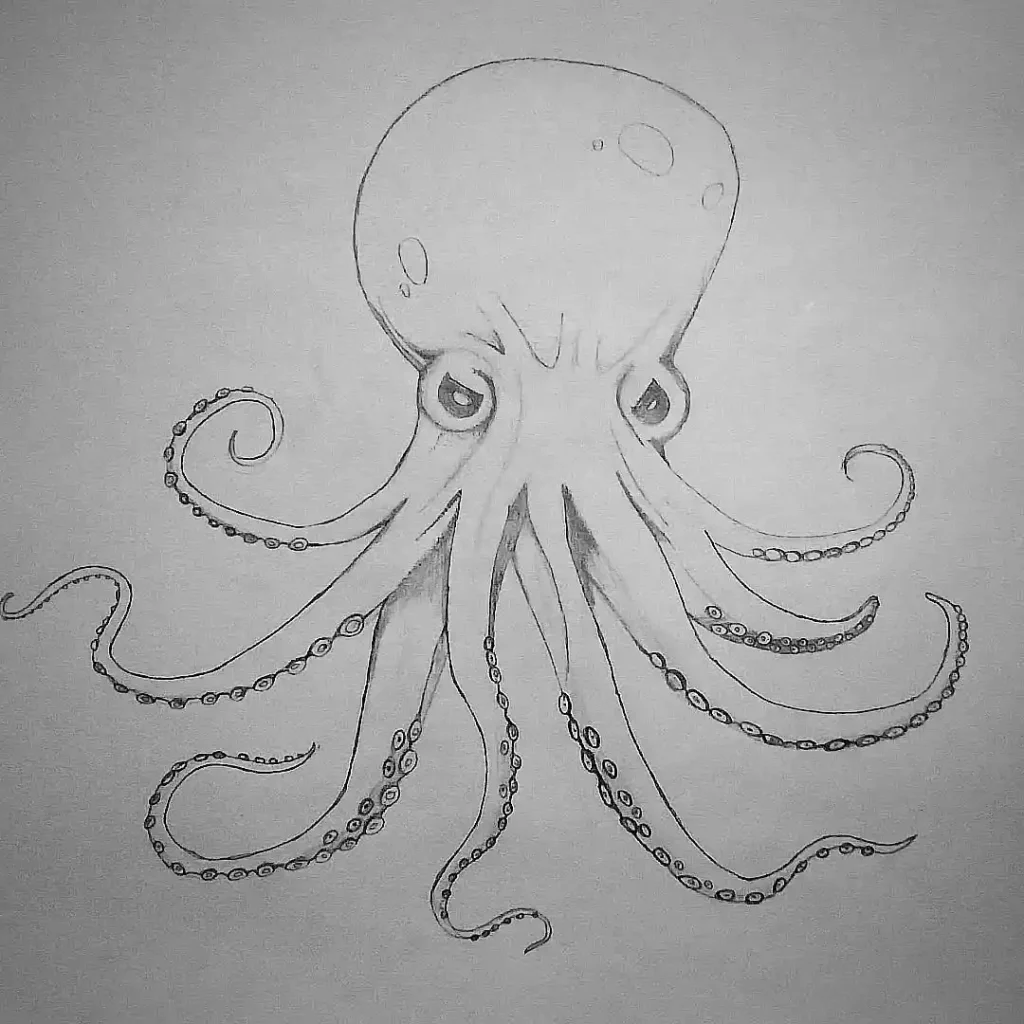
A simple and expressive pencil sketch. This drawing isn’t about realism; it’s all about character. The artist created a symmetrical, front-facing octopus with big, angry, cartoon-like eyes that give it a ton of personality. The simple, curling tentacles and dotted suckers make this a fun, stylized, and classic beginner’s doodle.
9. Realistic Sepia Ink Wash Octopus on Watercolor Paper
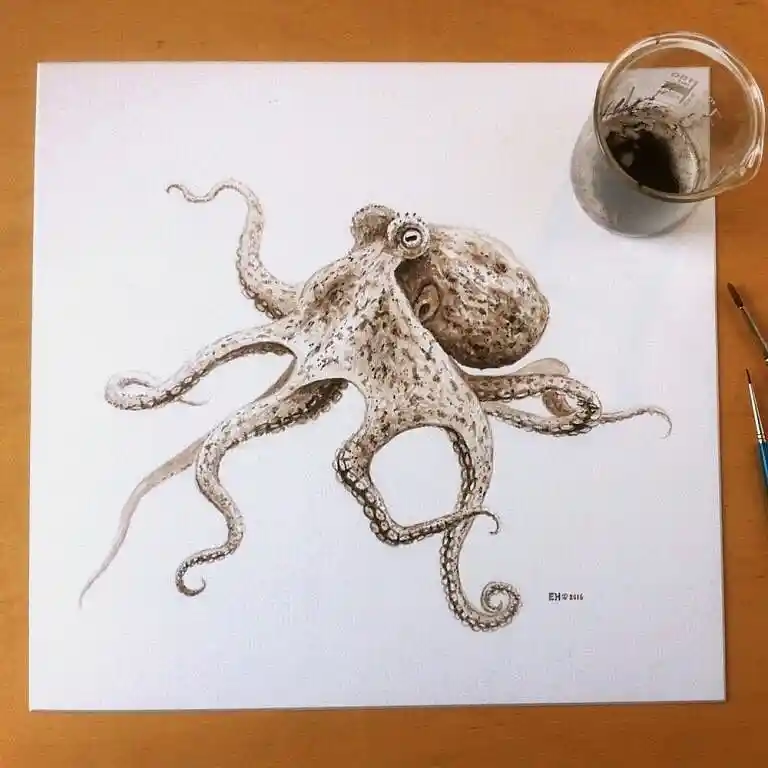
This is a beautiful, painterly piece. Using what looks like a sepia ink wash, the artist captured the octopus in a very realistic, natural pose. The real skill is in the way they used the watered-down ink to create the complex, mottled, and speckled texture of the animal’s skin. It feels both artistic and scientific.
10. Octopus and Skull Tattoo Design on Ink on Drawing Paper
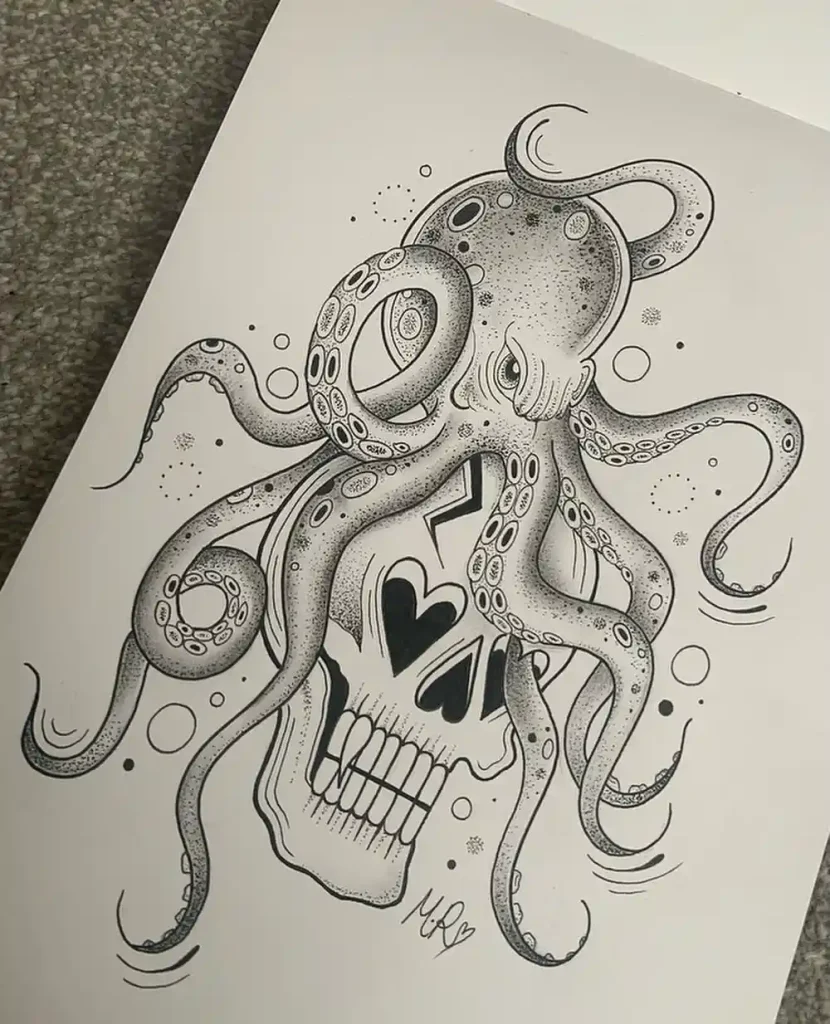
A classic, bold tattoo design. This ink drawing shows a stippled, detailed octopus with coiling tentacles wrapped around a human skull. The artist gave this gothic “memento mori” a twist: the skull has heart-shaped eyes. It’s a fantastic symbolic piece, combining themes of love, death, and the mystery of the ocean.
11. Stippled Octopus Silhouette on Ink on Drawing Paper
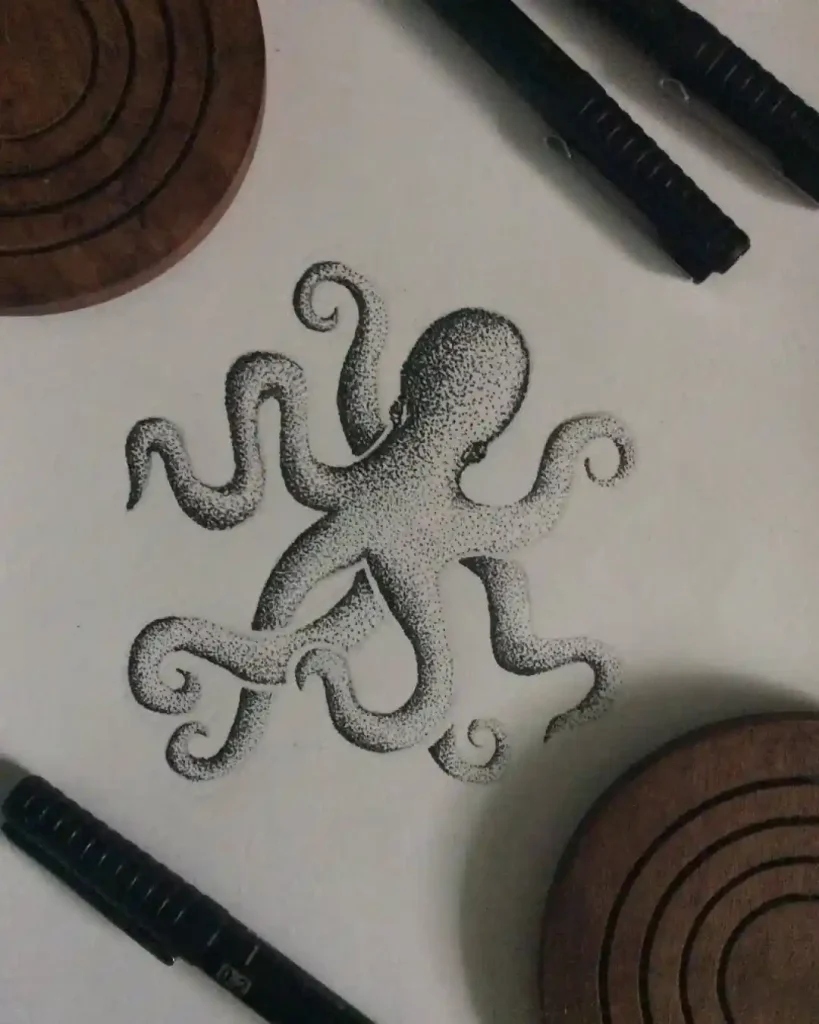
This is a fantastic, minimalist piece created entirely with stippling. The artist used thousands of tiny ink dots to form the octopus, creating a beautiful, grainy texture. The way the dots are clustered builds the shadows, giving the simple, elegant silhouette a 3D form. It’s a very patient, technical, and artistic design.
12. Graphic Octopus in Black Rectangle on Ink on Sketchbook Paper

What a striking, high-contrast design. This ink drawing uses a solid black rectangle as a graphic element, with the detailed, white octopus emerging from it. The long, coiling tentacles, full of tiny suckers, break the frame. It’s a very bold, modern, and symbolic piece, perfect for a tattoo.
13. Realistic Graphite Octopus Study on Pencil on Drawing Paper

A beautiful, classic pencil drawing. The artist used soft, blended graphite shading to perfectly capture the smooth, rubbery skin and the complex, coiling tentacles. This piece is a quiet, realistic study of the animal’s form and anatomy, showing a great understanding of light and shadow. It’s both scientific and elegant.
14. Vibrant Blue Watercolor Octopus on Watercolor on Watercolor Paper

This piece is just a joyful splash of color. The artist used vibrant, stylized watercolor, painting a bright blue octopus with contrasting orange suckers. The “wet-on-wet” technique and the white “sparkle” highlights give it a fluid, lively energy. It’s a very graphic, illustrative, and cheerful take on the creature.
15. Cute Pink “Kawaii” Octopus on Marker on Paper
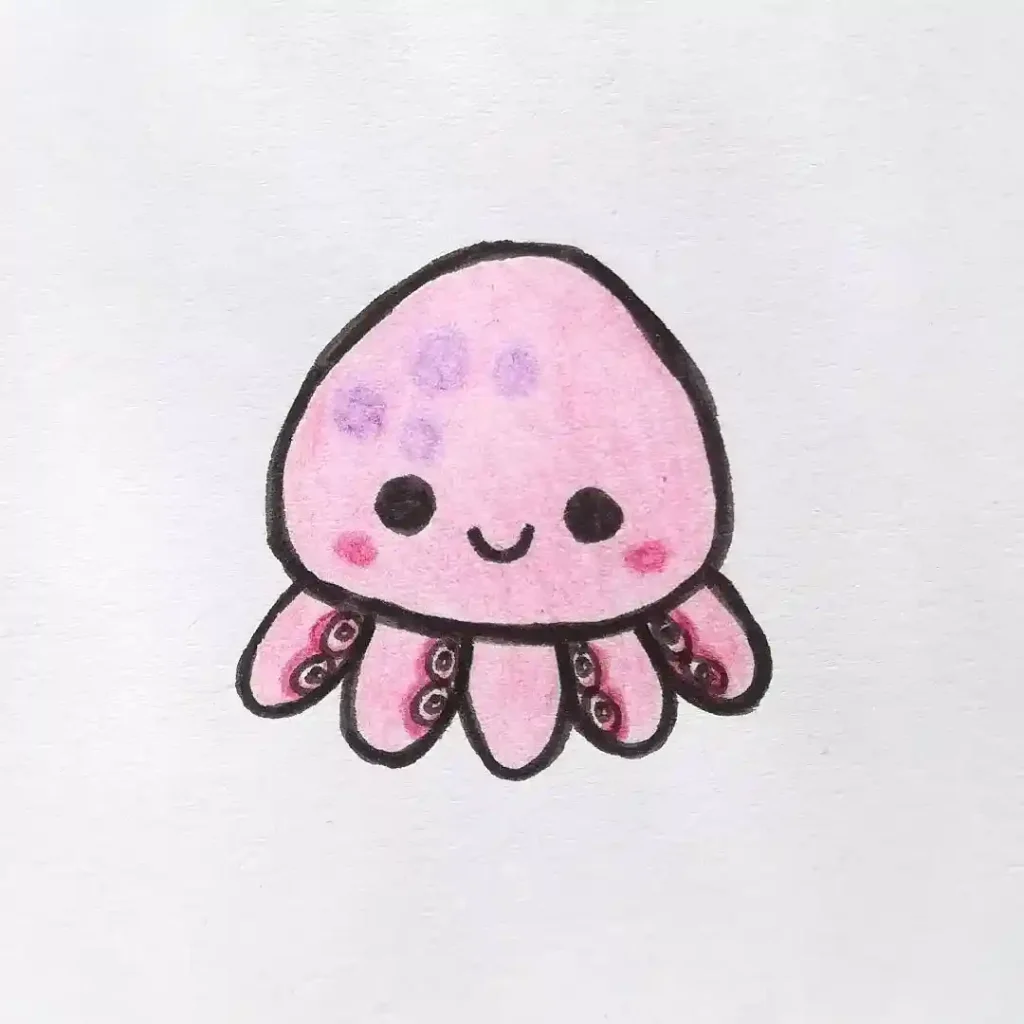
This is just pure, simple adorableness. It’s a “kawaii” or “chibi” style drawing of a tiny, pink octopus. With its simple smile, blushing cheeks, and big, dot-like eyes, it’s designed to be as cute as possible. This is a perfect, lighthearted doodle, all about capturing a feeling of sweet, innocent joy.
16. Expressive Watercolor Octopus on Watercolor on Watercolor Paper
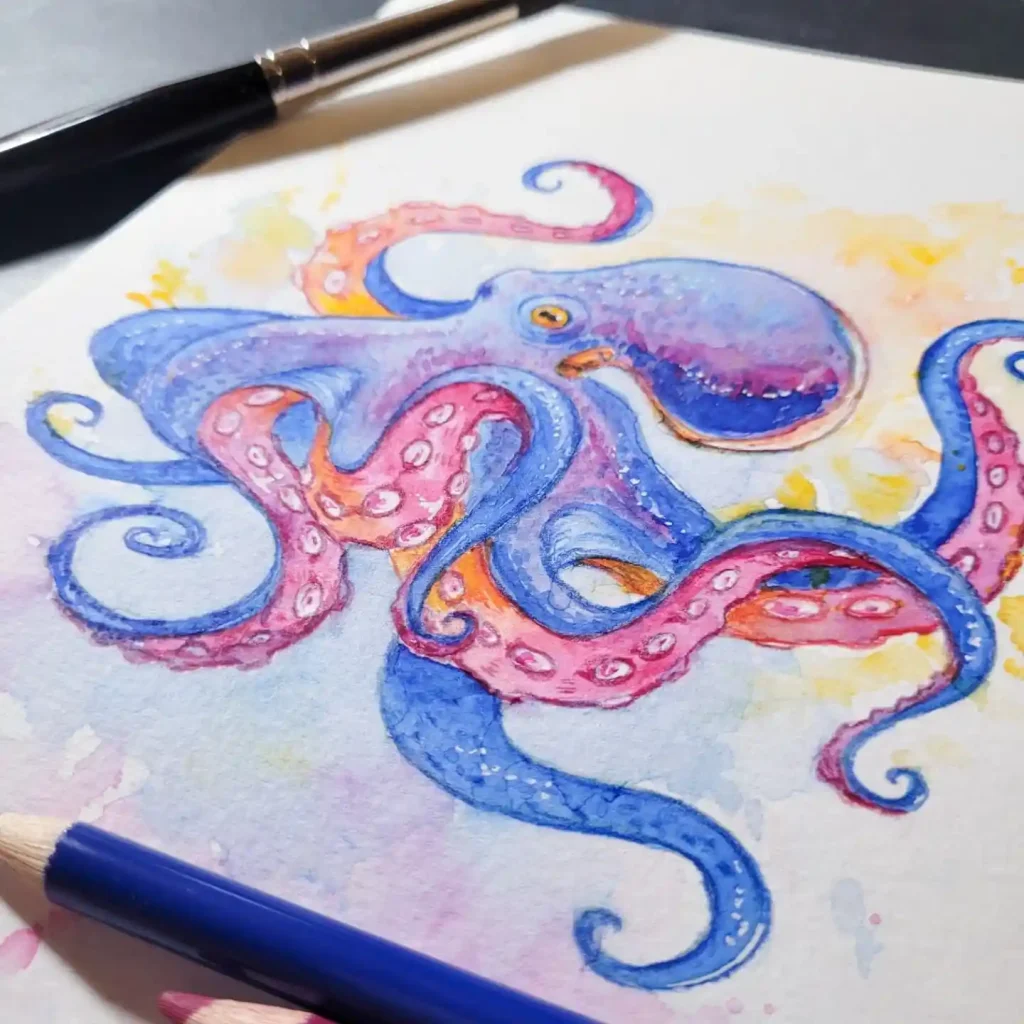
What a beautiful, expressive painting. The artist used a “wet-on-wet” watercolor technique, letting the blues, purples, and bright pinks bleed together. This creates a vibrant, almost psychedelic look. This piece isn’t about realism; it’s about capturing the fluid, colorful, and magical spirit of the octopus.
17. Stylized Blue and Purple Octopus on Marker on Drawing Paper
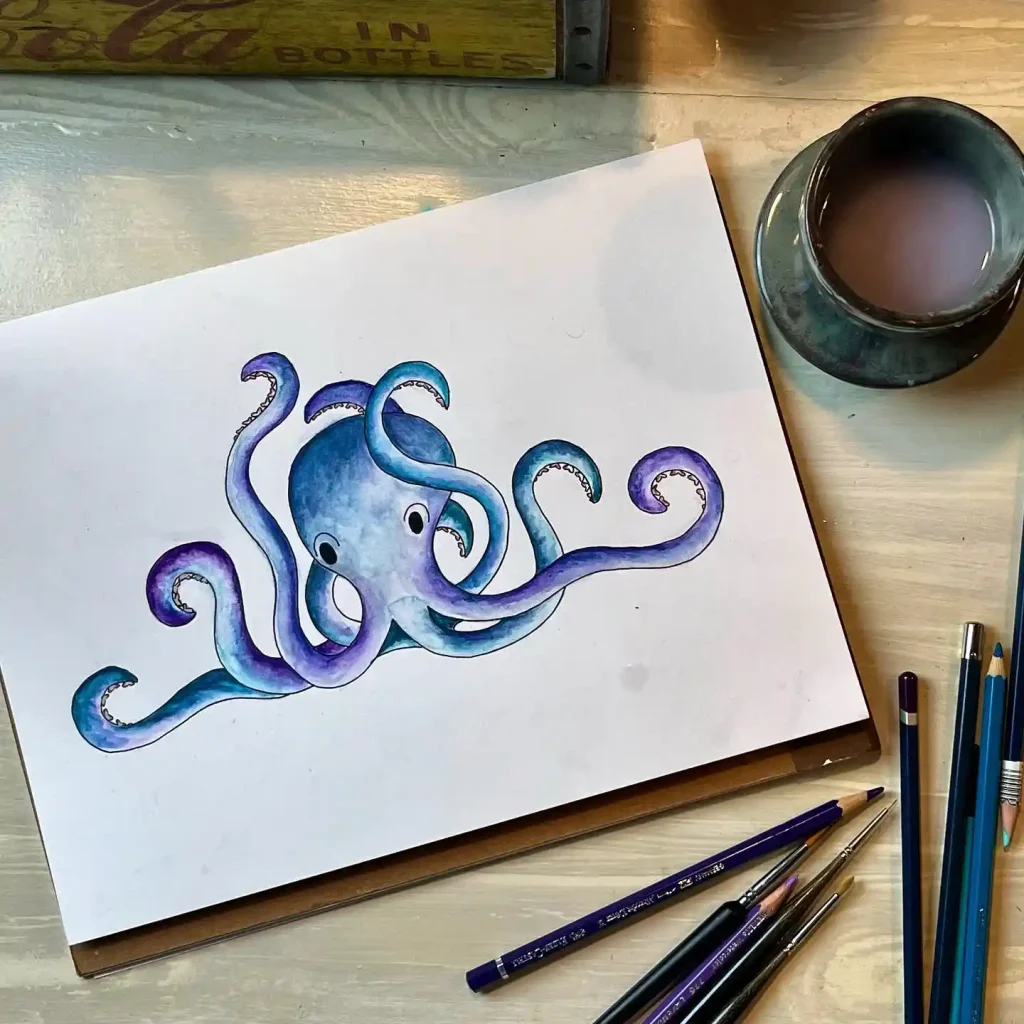
A very cute and colorful illustrative piece. This octopus is drawn in a simple, friendly, cartoon style with big, curious eyes. The artist used markers or colored pencils to create a beautiful, smooth blend of color on the tentacles, shifting from a cool blue to a rich purple. It’s a very clean, charming, and gentle design.
18. Detailed Cross-Hatched Octopus on Ink on Drawing Paper
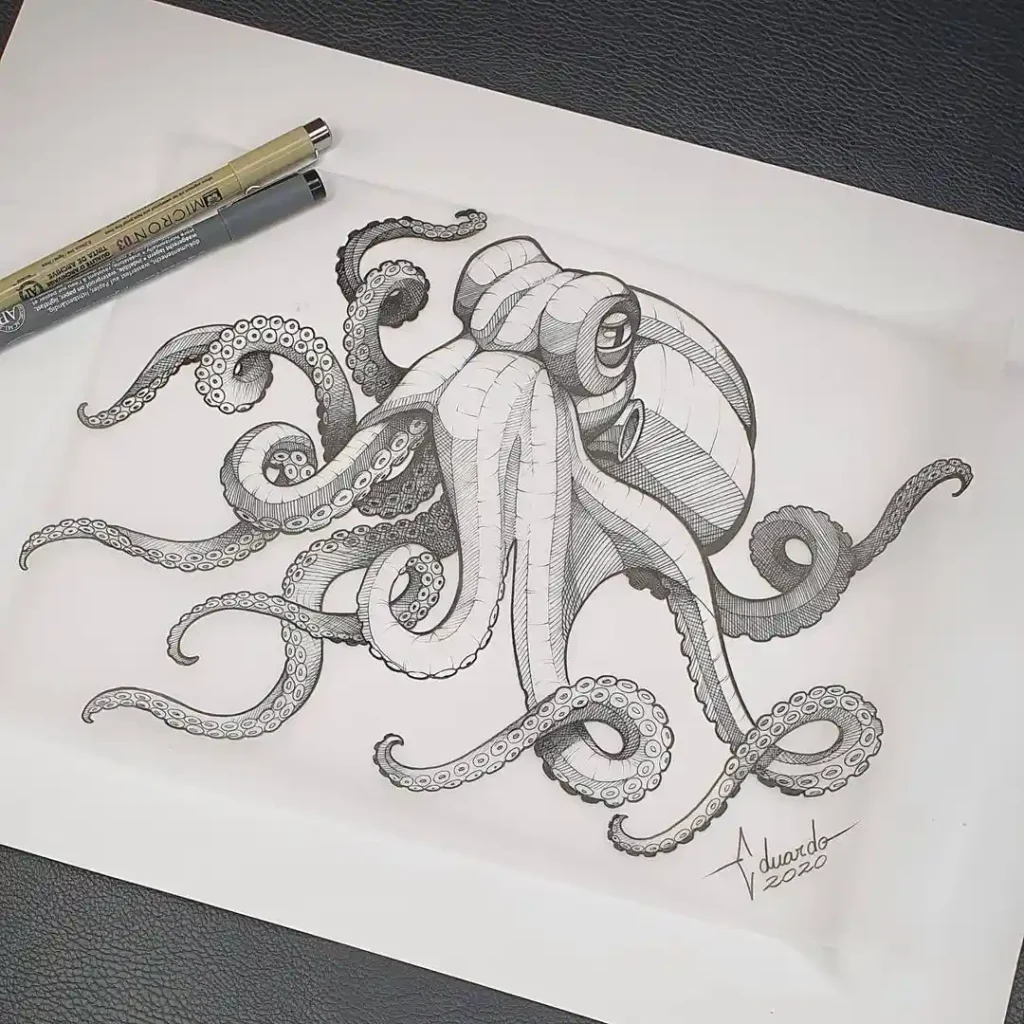
This is a stunningly technical ink drawing. The artist, likely using fine-line pens, has masterfully used cross-hatching to build up all the shadows and roundness of the octopus. You can see the meticulous, layered lines in the head and tentacles, giving it a classic, engraved look. A true showcase of patience and skill.
Long Tentacle Curves Are Where a Shaky Hand Shows Up
A tentacle is one continuous line that has to taper and coil without wobbling, and it is the hardest thing on this page to do freehand. Digital art apps solve it with a stroke stabilizer, which averages out the tremor while you drag the line, so a single confident sweep stays smooth from mantle to sucker tip. Pressure levels and pen lag decide how well that works, and the tablets we recommend for artists are compared on exactly those specs.
If you want the same underwater palette without the anatomy problem, shells are the gentler place to start: fixed shapes, no limbs, and spiral patterns that reward careful observation. See our watercolor seashell drawing ideas.
4. Mistakes That Make Octopuses Look Wrong
Watch out for these four: (1) Seven or nine arms — count before you ink. (2) Arms that stay the same width all the way down — real arms taper. (3) Suckers on top of the arm instead of underneath. (4) Shading both sides equally, which flattens the round, wet skin.
- Eight arms, counted before inking
- Each arm tapers from base to tip
- Suckers in two rows, shrinking toward the tip
- One clear light direction with a wet highlight
- Eyes level and looking the same way
5. Octopus Drawing FAQs
How do you draw an octopus step by step for beginners?
Draw a dome for the mantle, add two eyes high on the head, sketch eight tapering S-curve arms, add two rows of small suckers underneath each arm, then shade one side only. Start with idea 8 or idea 15, which use simple shapes and forgiving lines.
How many arms does an octopus have, and how do you draw them?
An octopus has eight arms. Draw each one as a single smooth curve that gets thinner toward the tip, and count them as you draw — four on each side in a front view. Curl at least two arms in different directions so the drawing does not look flat or symmetrical like a star.
What is the easiest octopus drawing for a beginner?
The kawaii pink octopus in idea 15 is the easiest: a round head, dot eyes, a small smile, and short, chunky arms. There is no realistic shading to worry about, so you can finish it in a few minutes with markers or colored pencils.
How do you draw realistic octopus suckers?
Draw two rows of ovals along the underside of each arm, large near the body and smaller toward the tip, then shade the gaps between them darker so the suckers look recessed. Add a tiny highlight on the edge of each sucker that catches the light.
What colors work best for an octopus drawing?
Blues, purples and teals suit the underwater setting, with orange or pink suckers for contrast, as in idea 14. For a realistic portrait, layer cool blues and greys with warm purples, like idea 5, instead of using one flat color.
How do you fix wobbly tentacle lines?
Draw the arm in one slow, confident sweep from the shoulder, not in short joined segments, and keep your wrist loose. On a tablet, a stroke stabilizer smooths the line for you. On paper, practice five loose S-curves on scrap paper before drawing the real arm.
Keep drawing sea life
If you enjoyed the underwater colors here, try our watercolor seashell drawing ideas next — shells are a gentler subject, with fixed shapes and spiral patterns, and they pair beautifully with an octopus in a full underwater scene. For more water and waves, see our water drawing ideas.
If your young artist needs a dedicated workspace, our guide to the best art easel for kids compares sturdy, adjustable easels by height, storage, and mess containment.