Short answer: The coolest basketball drawing ideas for most artists are the classic ball, a dunk silhouette, a hoop and net, a sneaker study, and a jump-shot or layup action pose. Beginners should start with the ball and the hoop, because both teach round shapes, curved seams, and simple perspective before a full player figure. This collection gives you 11 ideas in order, from simple doodles to a detailed pen-and-ink portrait, so you can pick one, finish it today, and level up one skill at a time.
In this guide
Ready to capture the high-flying energy of the court on your canvas? Basketball drawing is a fantastic way to blend your passion for the sport with your creative spirit, turning iconic moments into timeless art. It’s more than just sketching; it’s about translating the power of a dunk and the grace of a jump shot into lines and shades.
With every drawing, you’re not only honing your artistic skills but also developing a deeper appreciation for the game’s dynamic movement. This journey allows you to explore different styles, from realistic portraits of your favorite players to abstract representations of on-court action.
Our collection of basketball drawing ideas is designed to spark your imagination and provide the inspiration you need. Whether you’re a beginner or a seasoned artist, there’s always a new angle to discover and a new story to tell through your work.
If you enjoy these basketball subjects and want to try them in paint, the watercolor basketball drawing ideas collection covers the same energy in watercolor — including the curved-seam rule that keeps a painted ball looking round instead of flat.
What are some easy basketball drawing ideas for beginners?
For beginners, the best approach is to start with foundational shapes and iconic imagery that build confidence. An easy basketball drawing idea is to focus on simple subjects before tackling complex scenes. Here are some cool and easy basketball drawing ideas to get you started:
- The Classic Basketball: Begin by drawing the ball itself. Focus on mastering its spherical shape and the distinct lines of the panels. Practice shading techniques to make it look three-dimensional, adding texture to mimic the pebbled grip.
- Iconic Footwear: Sketch a classic basketball sneaker. High-tops offer bold, simple shapes and fun details like logos and laces, making them an excellent subject for practicing line work and perspective.
- The Hoop and Backboard: Draw a basketball hoop from different angles. This helps you practice drawing geometric shapes and perspective, from the rectangular backboard to the circular rim and the intricate patterns of the net.
- Action Silhouettes: Create a silhouette of a player in a classic pose, like a dunk or a jump shot. This allows you to capture the energy and motion of the game without worrying about detailed facial features or uniforms.
How can I make my basketball drawings look more dynamic and full of action?
To make your basketball drawings look more dynamic, the key is to convey movement and energy. A dynamic drawing captures a moment in time, making the viewer feel the action. Here’s how you can draw a basketball player in a dynamic action pose:
- Use a Line of Action: Start your sketch with a single, curved “line of action.” This fluid line should represent the core movement of the player’s body, from their head to their feet, guiding the entire pose.
- Build with Gesture Drawing: Instead of focusing on perfect outlines, use loose, quick gesture strokes to build the player’s form around the line of action. This technique helps maintain a sense of fluidity and energy.
- Exaggerate the Pose: Don’t be afraid to slightly exaggerate the player’s movements. Extend a layup, deepen a crouch, or twist the torso more dramatically to emphasize the force and athleticism involved in the action.
- Add Motion Lines and Foreshortening: Use subtle motion lines or blurs around fast-moving elements like the ball or limbs. Applying foreshortening—making objects closer to the viewer appear larger—can create a powerful sense of depth and impact.
Grab your sketchbook and bring the court to your page. Let these ideas inspire your next creation and share your unique artistic vision of the game with the world!
1. Beginner’s Basketball Sketches on Drawing Paper
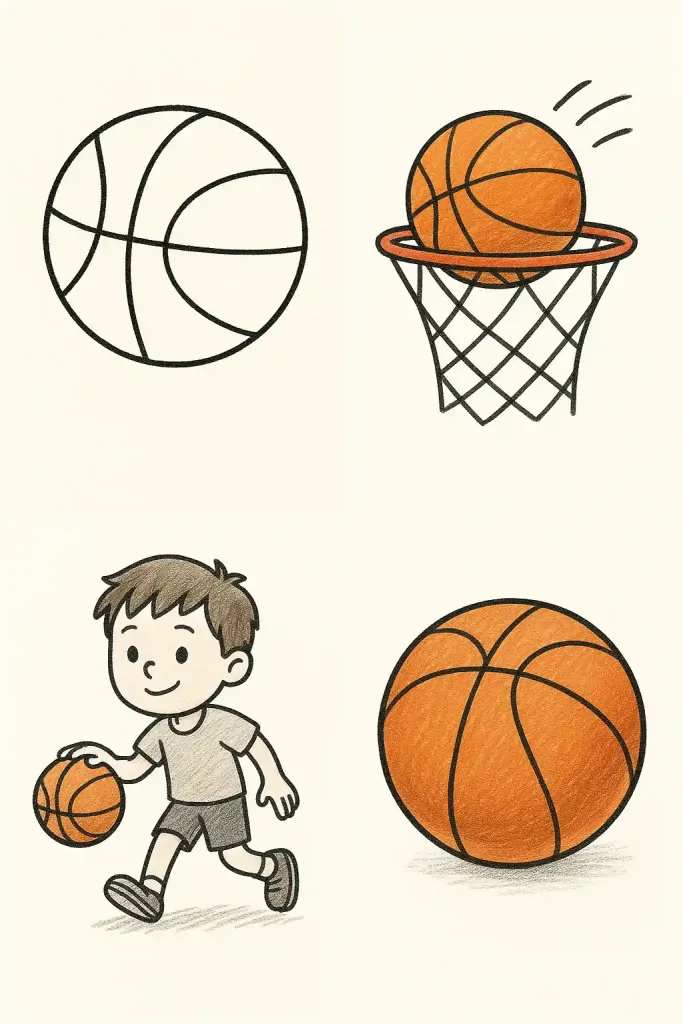
This is where the fun starts. This collection of simple doodles breaks down the game into its core elements, perfect for anyone just picking up a pencil. From the basic lines of the ball to a character’s first dribble, each sketch is a playful exercise in shape and form, capturing the pure, simple joy of basketball and art.
2. Character and Form Studies on Drawing Paper
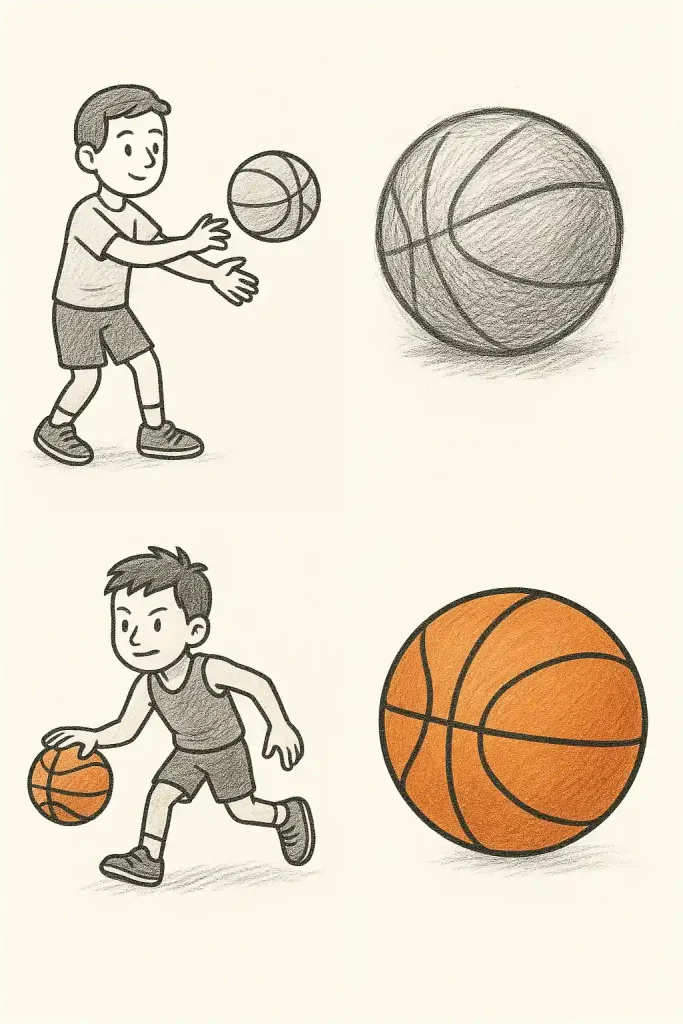
Here, we see an artist exploring the fundamentals. The page acts as a practice ground, contrasting the simple weight of a shaded pencil drawing with the clean vibrancy of color. It’s a smart look into the process of developing both the object’s form and a player’s on-court attitude, showing how different techniques can tell different stories.
3. Realistic Floating Basketball on Textured Paper
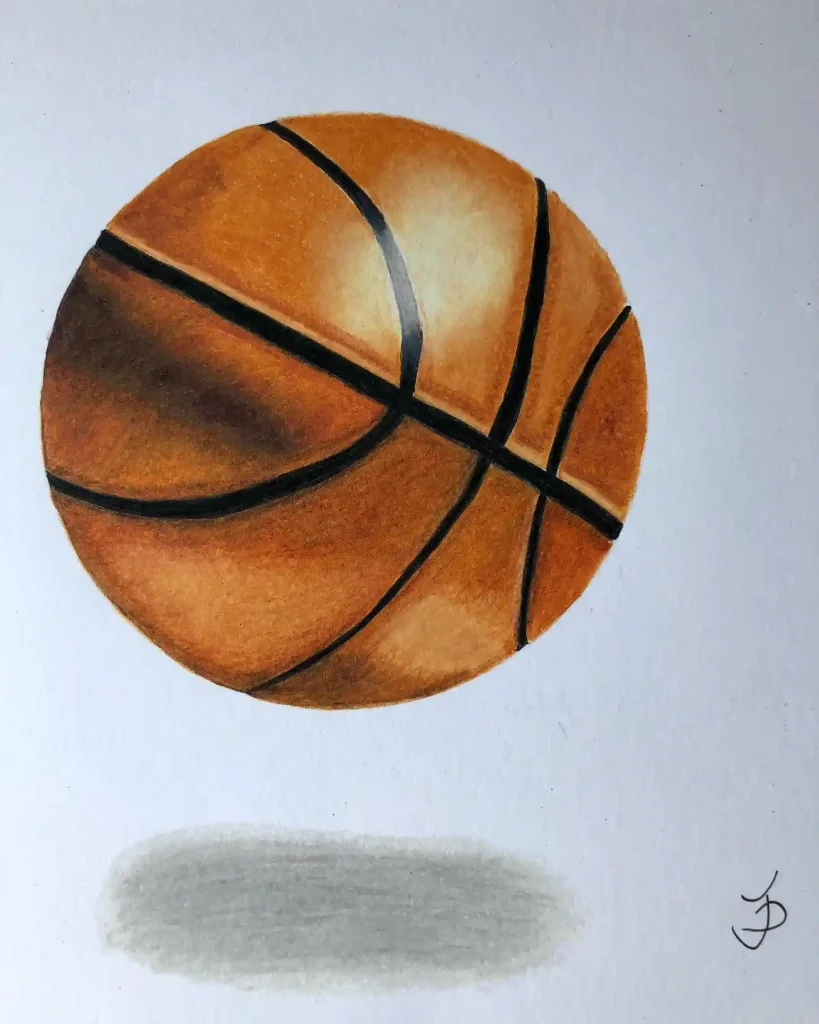
Take a moment with this one. The artist’s skillful use of colored pencils creates a stunning sense of realism, with warm tones and brilliant highlights giving the ball a tangible, leather-like texture. Floating above its shadow, the ball symbolizes that quiet, weightless moment of potential right before the game-changing play, full of energy and anticipation.
4. High-Contrast Dunk Silhouette on Paper
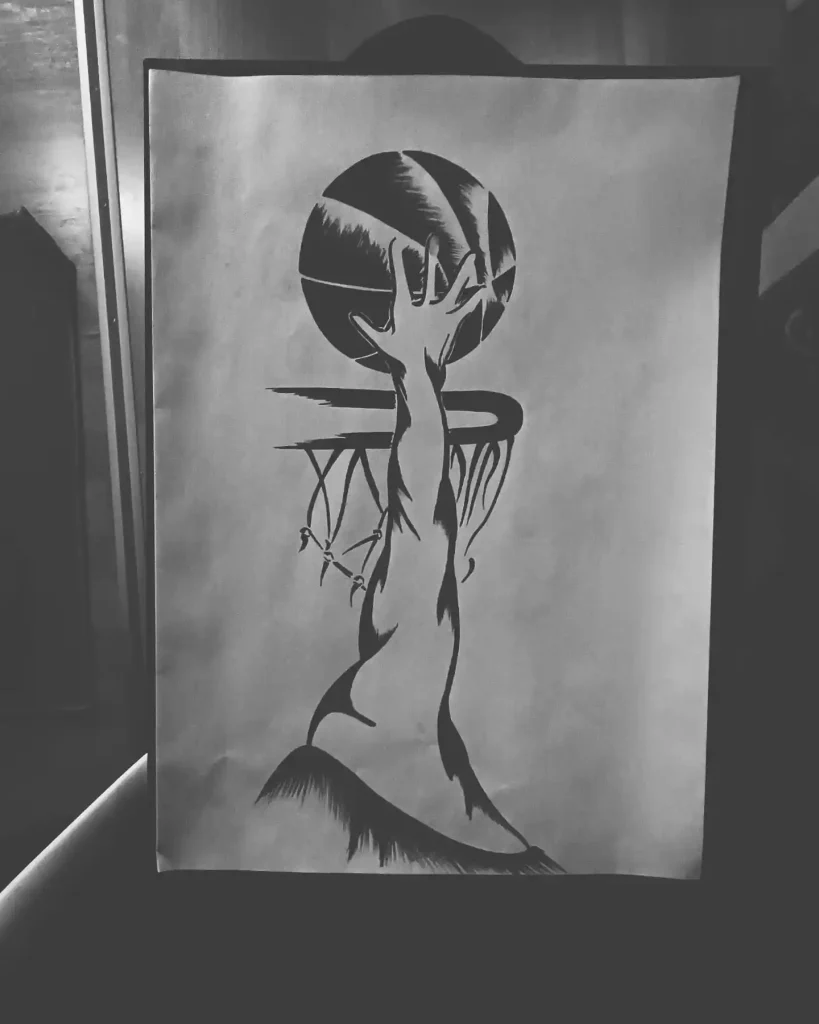
Pure power. This striking black-and-white piece uses bold, graphic shapes to capture the explosive energy of a dunk. By stripping away all detail, the artist focuses entirely on the raw force of the moment, creating a symbolic image of athletic dominance. It’s less of a drawing and more of an eruption of kinetic energy on paper.
5. Sea Turtle Baller Concept in Sketchbook
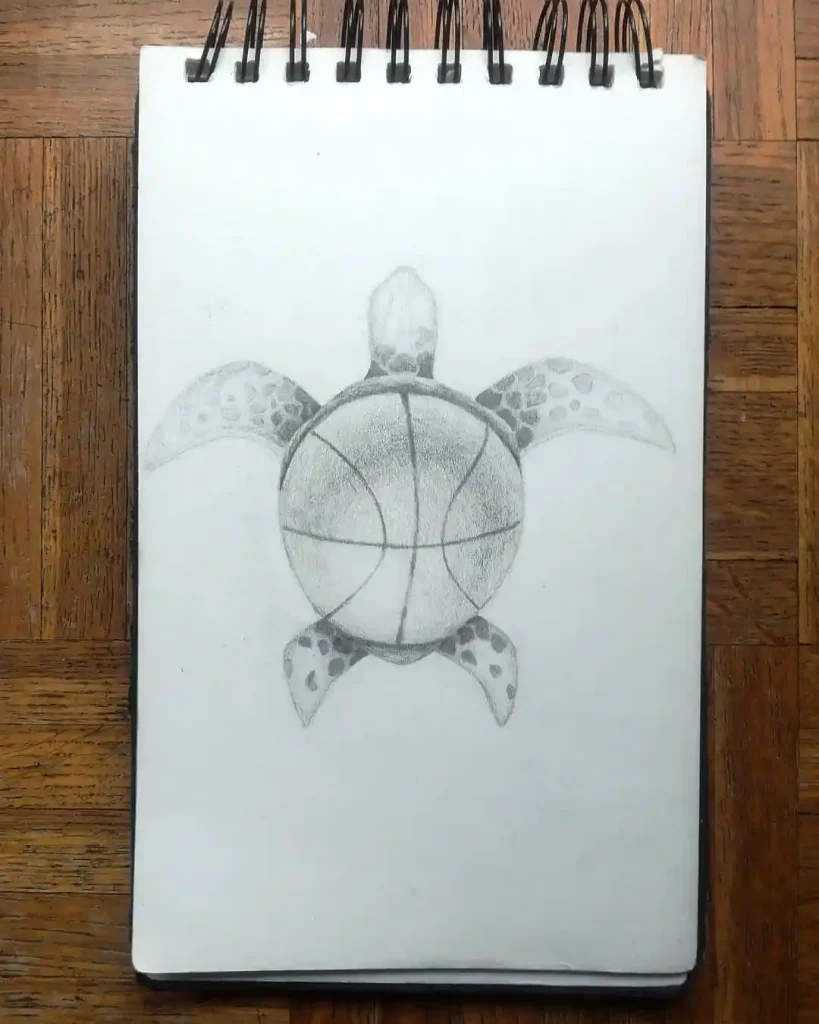
What a wild and wonderful idea. This imaginative pencil sketch fuses the worlds of marine life and basketball, turning a turtle’s protective shell into the familiar lines of the ball. It’s a brilliant, creative mashup that playfully symbolizes a strong defensive game—a cool reminder that artistic inspiration can come from the most unexpected places.
6. Swish in Progress on Sketchbook Paper

You can almost hear this drawing. Captured with vibrant markers and bold outlines, this piece freezes the perfect shot just before it sinks through the net. The clean, animated style radiates a sense of fun and satisfaction, celebrating that universally loved “swish.” It’s a simple, joyful ode to the flawless play that every baller dreams of.
7. Portrait with Selective Color on Drawing Paper
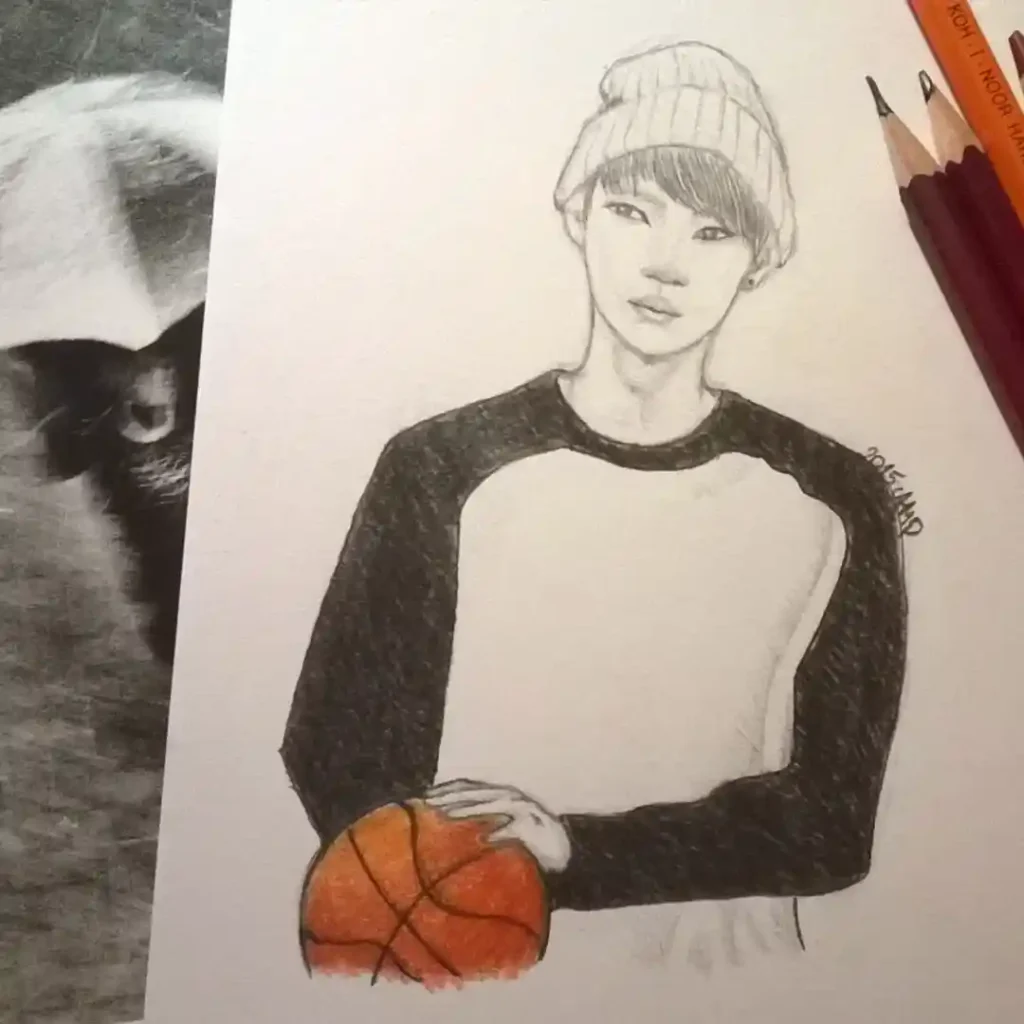
The game is a part of his identity. In this thoughtful portrait, the artist uses selective color to make the basketball pop against the soft graphite sketch. This technique masterfully draws the eye, suggesting that the sport is the most vibrant and central element in the subject’s world. It’s a personal piece that connects passion with personality.
8. Anonymous Baller Girl on Paper
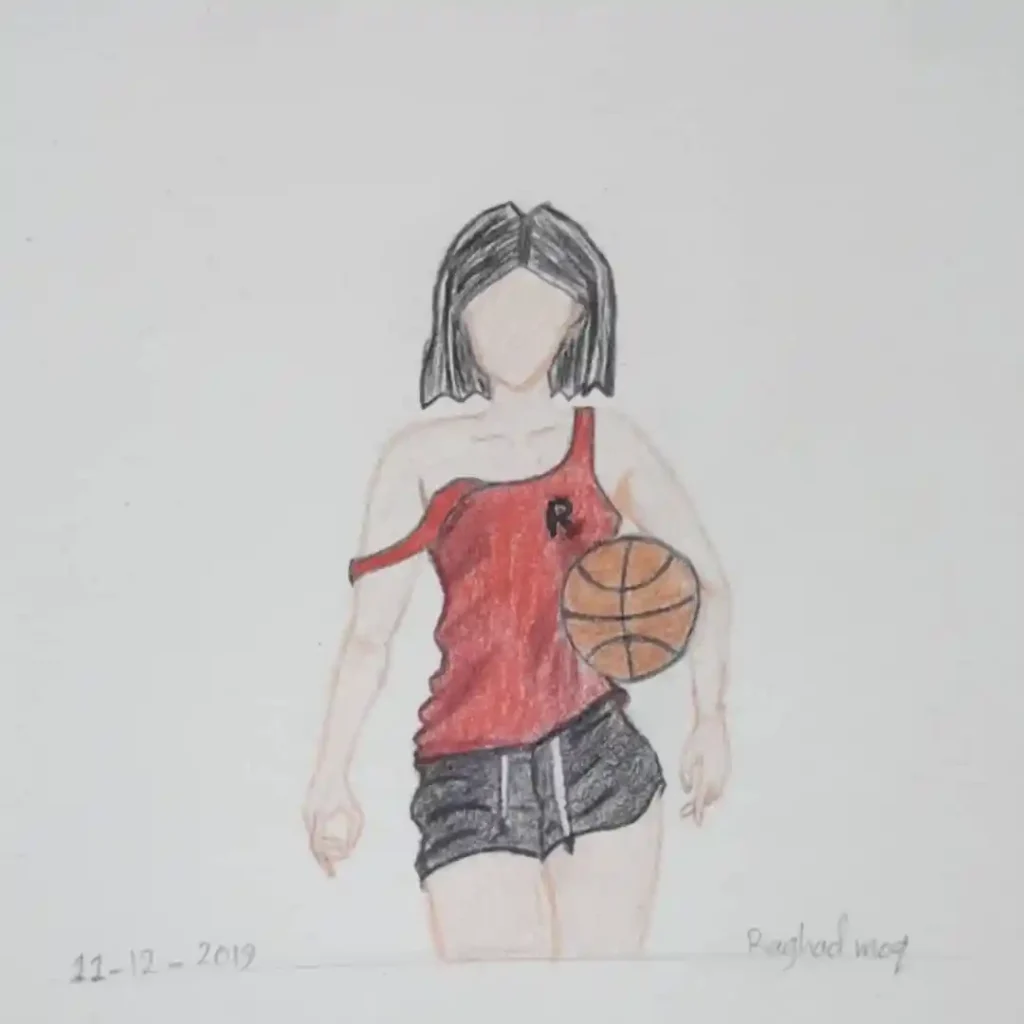
Sometimes, it’s all about the love of the game. By leaving the player’s face blank, the artist creates a powerful, universal symbol for every girl who steps onto the court. The focus shifts from individual identity to her confident stance and the ball she holds, celebrating the shared passion and strength found in all female athletes.
9. Pen and Ink Tribute to a Legend on Drawing Paper
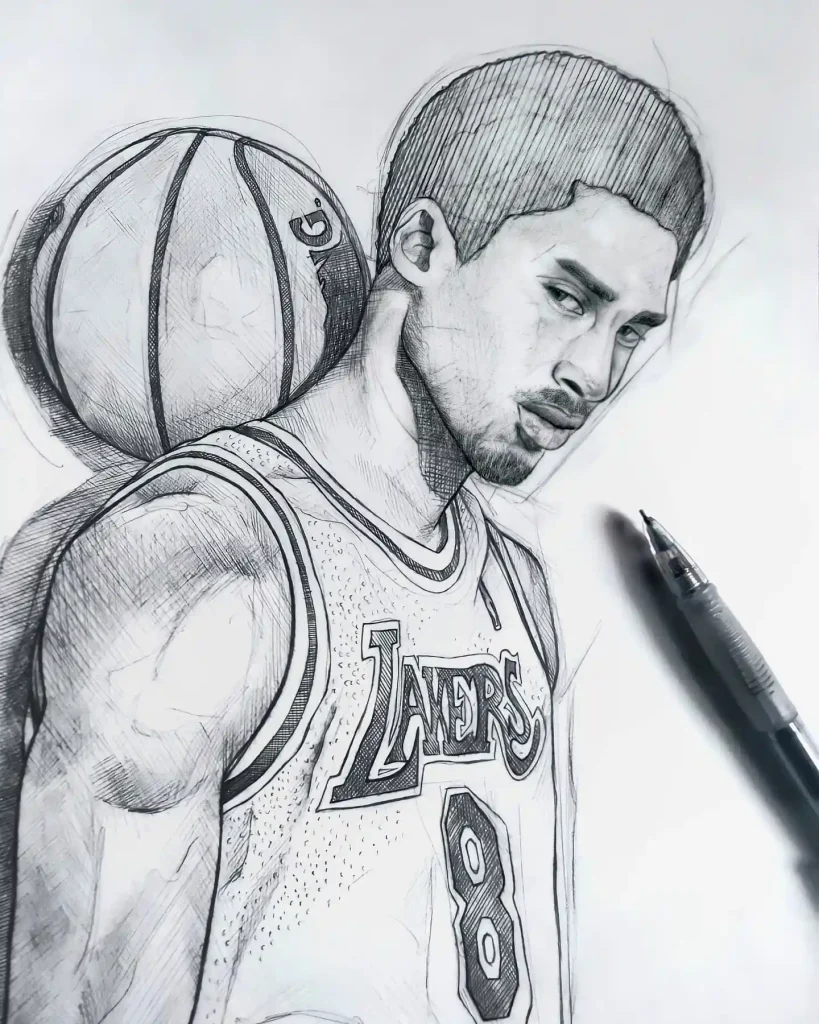
This is an homage to greatness. Through meticulous pen-and-ink cross-hatching, the artist captures the intense focus and unwavering spirit of a basketball icon. The detailed line work builds a portrait that feels both gritty and soulful, immortalizing the “Mamba Mentality” for generations of fans. It’s a stunning tribute to an unforgettable cultural legacy.
10. Dynamic Layup Line Art on Paper
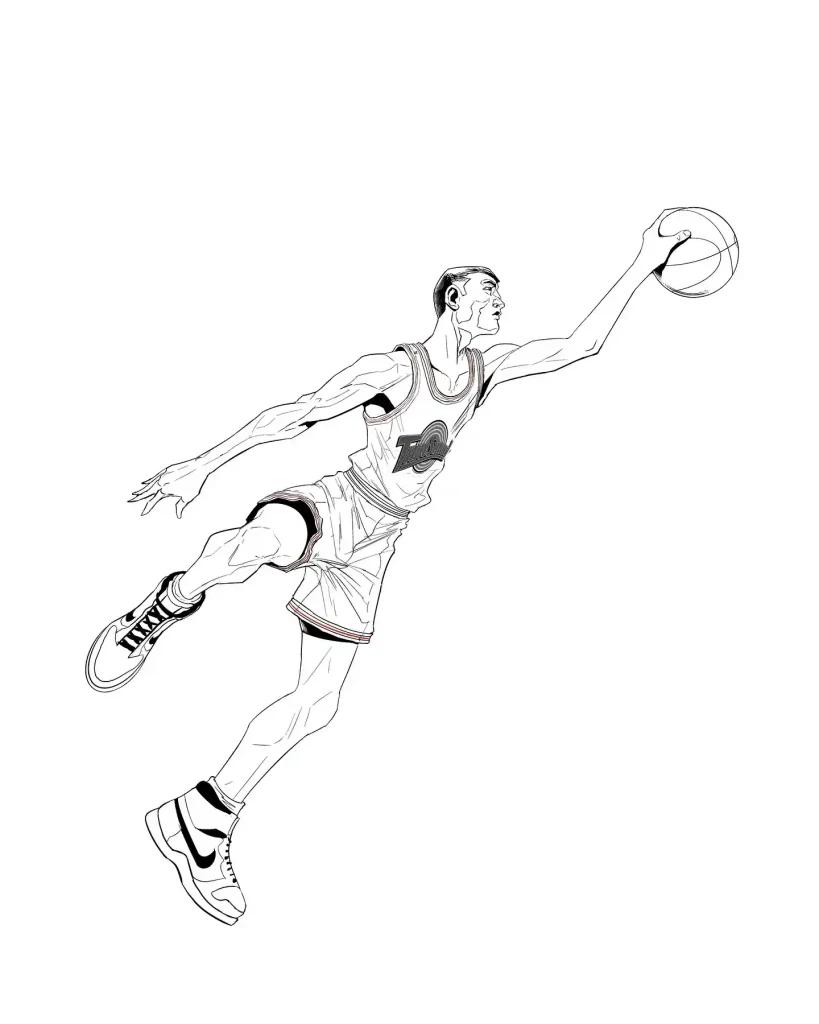
Behold the art of flight. This clean ink drawing strips motion down to its bare essentials, using precise lines to define the player’s graceful, gravity-defying form. Without any shading, the focus is purely on the elegant anatomy of the layup. It’s a minimalist yet powerful study of the moment where athleticism becomes pure art.
11. The Perfect Release in Pencil on Drawing Paper

There’s a story in this shot. The artist uses sharp, geometric shading on the hand to contrast with the smooth curve of the ball, symbolizing the precise effort behind every successful play. This unique perspective captures the moment of release and reward, as the ball finds its home in the net—a perfect follow-through frozen in time.
1. Pick your basketball drawing in 30 seconds
Do not start with the hardest idea first. Match the drawing to the skill you want to practise, and you will actually finish it.
| If you want to practise | Start with | Why it works |
|---|---|---|
| Round shapes and shading | Idea 1 or 3 | One ball, one light source, no figure to worry about |
| Energy and movement | Idea 4 or 10 | Silhouettes and clean line art force you to get the pose right |
| Faces and character | Idea 7 or 9 | Selective colour and cross-hatching carry the personality |
| Something playful and original | Idea 5 | The turtle-ball mashup is a fun concept piece, not a realism test |
If faces feel hard, the face drawing tutorial for beginners breaks the head down into simple proportions first, which makes ideas 7 and 9 much easier. For the shaded ball in idea 3, the easy 3D pencil art ideas show how light, shadow, and a cast shadow turn a flat circle into a solid object.
2. The ball rule that makes it look round, not flat
A basketball drawn with straight seams looks flat. Real seams curve with the ball, like lines drawn on an orange. Sketch a light circle first, then draw the vertical seam as a gentle curve, the horizontal seam as a shallow curve, and the two curved side panels. Keep the seams inside the circle, darkest where the ball turns away from the light, and leave one bright highlight untouched. That single habit is what separates idea 3, the realistic floating ball, from a simple orange circle.
Try this: Draw the same ball three times, 5 minutes each — once in plain pencil, once with heavy shading on one side, and once in colour. Compare them side by side, just like the practice page in idea 2, and keep the version where the highlight and the cast shadow agree on where the light is coming from.
For colour work, the best colored pencils guide is a useful starting point for affordable pencils that layer well, and a smooth sketchbook for beginners stops heavy shading from tearing thin paper. Neither choice needs to be expensive — consistent paper matters more than a big set.
3. A 20-minute practice plan
- Minutes 0–5: Warm up with 30-second gesture lines. Find one curved line of action from head to feet before you draw any detail — a good explainer of this line-of-action idea is the Gesture Drawing 101 guide, which walks through the action line step by step.
- Minutes 5–12: Draw the ball or the hoop from the picker table above, using curved seams and one light source.
- Minutes 12–20: Add one action idea, such as the dunk silhouette or the layup line art, and stop while the pose still feels loose and energetic.
Repeat the same idea on three different days instead of jumping to a new one each time. The second attempt is usually where the pose, the seams, or the shading suddenly clicks.
4. Basketball drawing FAQs
What is the easiest basketball drawing for a beginner?
The classic basketball itself. Draw a circle, add curved seams, shade one side, and leave a highlight. It teaches roundness and shading with no anatomy to get wrong, and it is the fastest way to a drawing that actually looks like a basketball.
How do I draw a basketball player in action without it looking stiff?
Start with one curved line of action through the whole body, then build loose gesture strokes around it before adding outlines. Slightly exaggerate the stretch of a layup or the crouch before a jump, and keep the fastest limb a little simpler than the rest so the eye reads motion, not detail.
Why does my basketball look flat?
Usually the seams are too straight, or the shading and the cast shadow disagree about the light. Curve every seam with the ball, shade darkest opposite the light, and put the cast shadow on the same side as the shading.
What pencil and paper should I use?
An ordinary HB pencil for sketching, a 2B or 4B for darker shading, and smooth sketchbook paper that can take repeated shading without tearing. Coloured pencils work well for the realistic ball in idea 3 because they layer slowly and let you build warm leather tones.
Can I draw a good basketball player without drawing a face?
Yes. Silhouettes, back views, and the faceless player in idea 8 all work because the pose, the stance, and the ball carry the story. Leaving the face out is a real artistic choice, not a shortcut, when the body language is clear.
Keep going: If you liked these, try the watercolor basketball drawing ideas next for the same subjects in paint, or practise faces first with the face drawing tutorial for beginners.