Every artist knows the feeling: a fresh sketchbook, a sharpened pencil, and a completely empty brain. The good news is that the best sketchbook page ideas are not masterpieces at all. A page does not need one big, impressive drawing. It needs a theme. Pick one theme from this list, fill one page with it, and you are drawing again.
A sketchbook is a practice lab, not a gallery. Nobody frames practice pages, and nobody should judge them. The pages in this list are small, friendly assignments: a page of hands, a page of stars, a page of silly monsters. Each one teaches you something real while asking for nothing more than a pencil and twenty minutes.
Below you will find 50 ideas in five groups: study pages, fun fill-the-page ideas, story and character pages, nature and world pages, and challenge pages. Start with whichever group sounds fun today.
TL;DR
- One page, one idea: pick a theme and fill the whole page with it.
- Ugly pages count. A sketchbook is for practice, not for showing off.
- The 50 ideas below are grouped into studies, fun fills, characters, nature, and challenges.
- Date every page. Future you will love seeing how far you have come.
In this guide
How to Use This List
The only rule is this: one page equals one idea. When a page has a single theme, you stop asking “what should I draw?” and start asking “what is the next small version of this?” That tiny shift removes most of the pressure.
Ugly pages are not just allowed, they are expected. Roughly half of any working artist’s sketchbook is experiments that did not fully work, and those pages are where the learning happens. If a page goes wrong, turn to the next one. Never tear pages out, because the “bad” pages are proof of progress when you look back in a month.
Finally, date every page in a corner. It takes two seconds, and it turns your sketchbook into a timeline. On a low day, flipping back and seeing last month’s shaky attempts next to today’s steadier lines is the best motivation there is.
Study Pages (Ideas 1-10)
Study pages are the gym workouts of drawing: small, repeated drawings of one subject that quietly build real skill. They are not glamorous, but no other pages will improve your art faster.
1
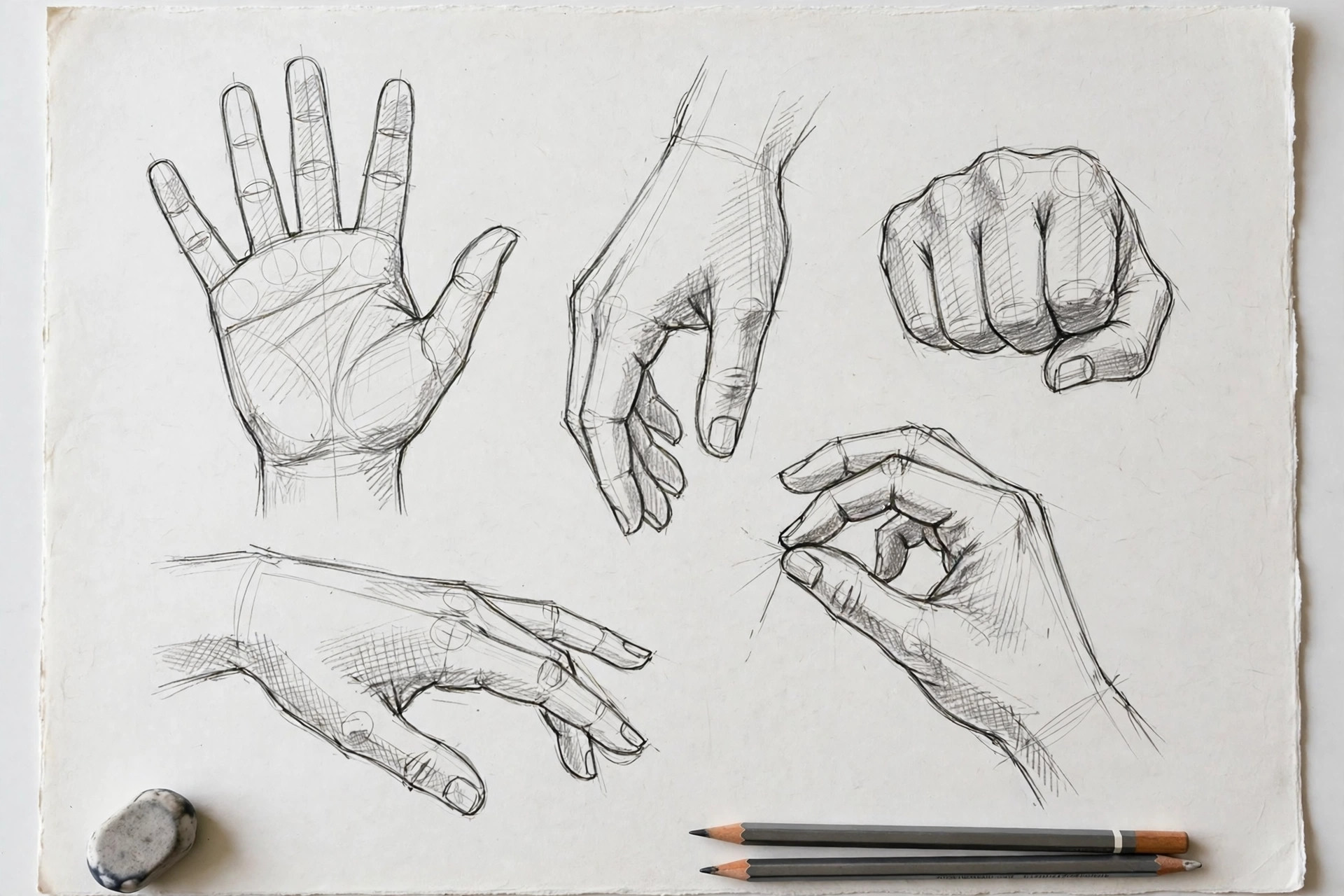
Hand studies. Draw your free hand in four or five different poses across the page. Hands are famously hard, and every honest attempt teaches you observation and patience.
2
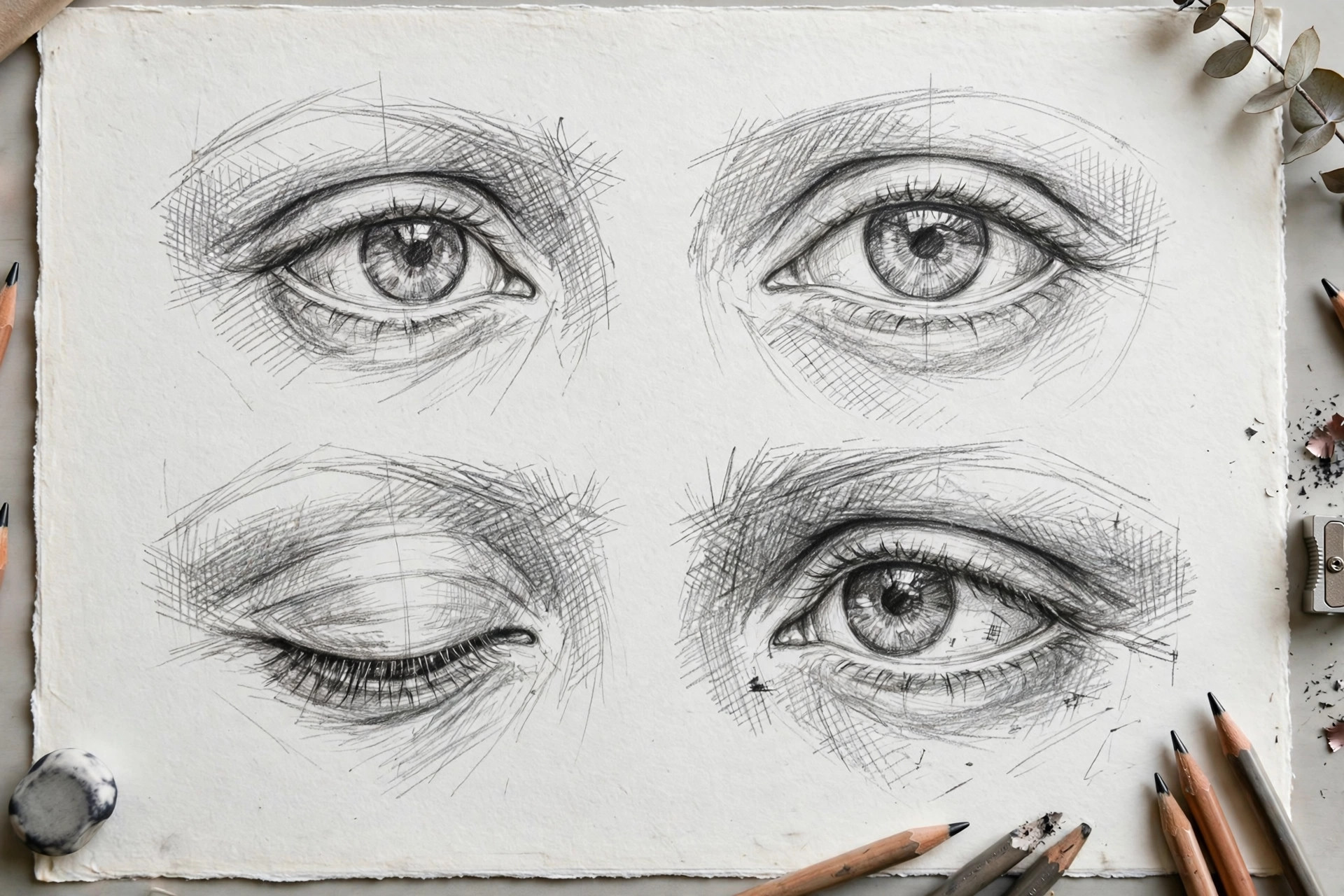
Eye close-ups. Fill the page with eyes looking in different directions, open, closed, and mid-blink. This teaches detail, symmetry, and how a small highlight makes an eye look alive.
3
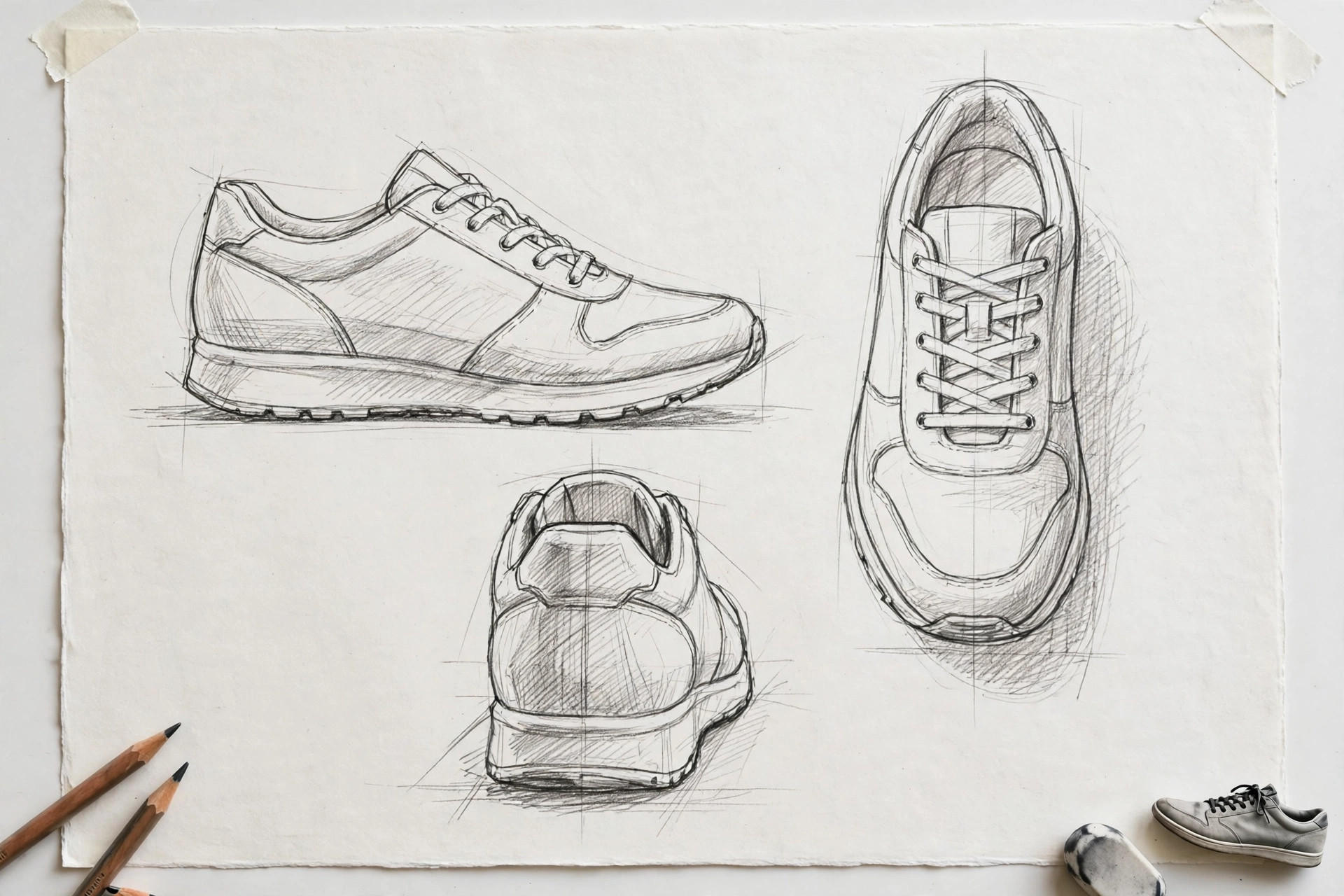
Your shoes from 3 angles. Draw the same shoe from the front, the side, and above. It teaches you to see one object in space instead of drawing a flat symbol of a shoe.
4
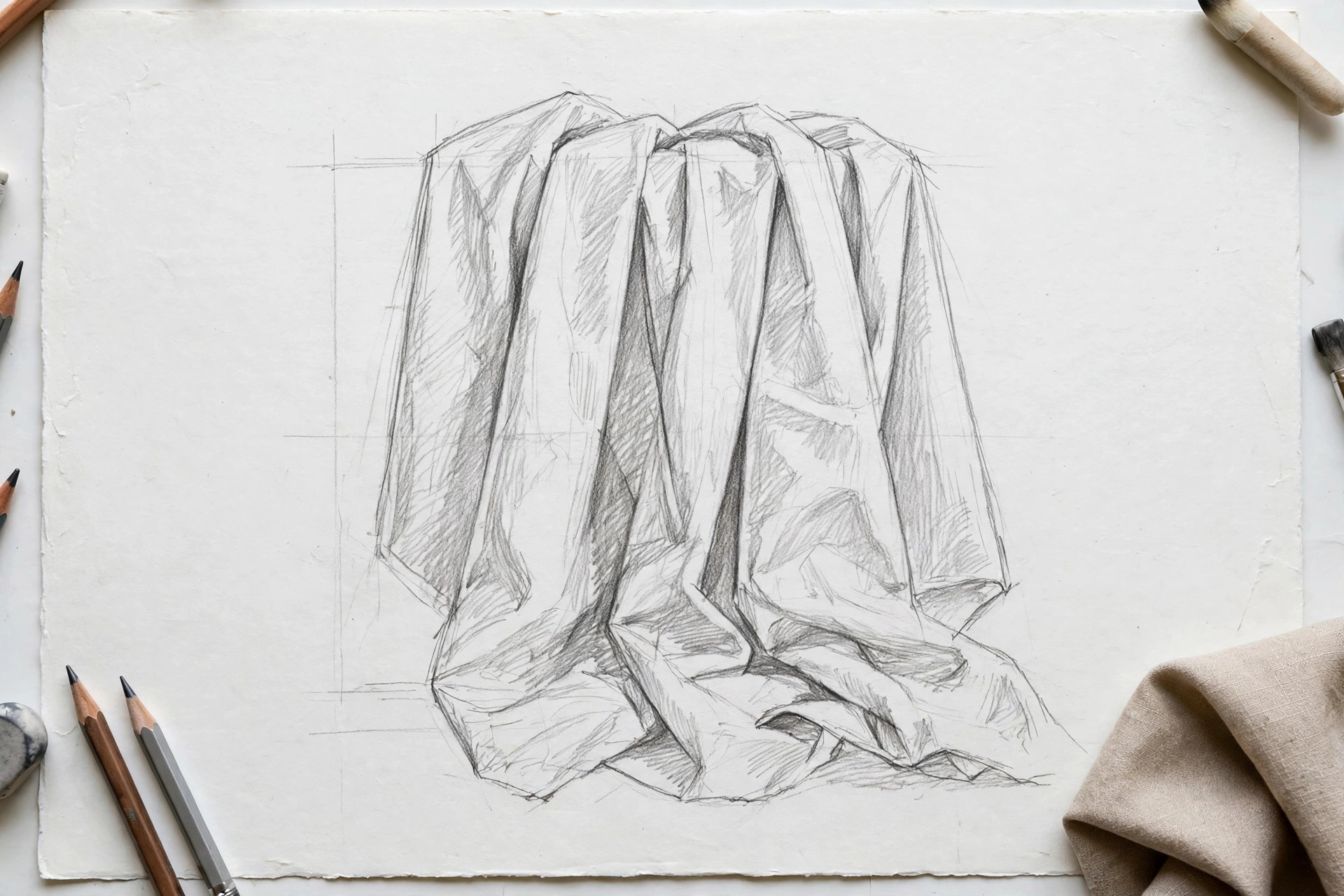
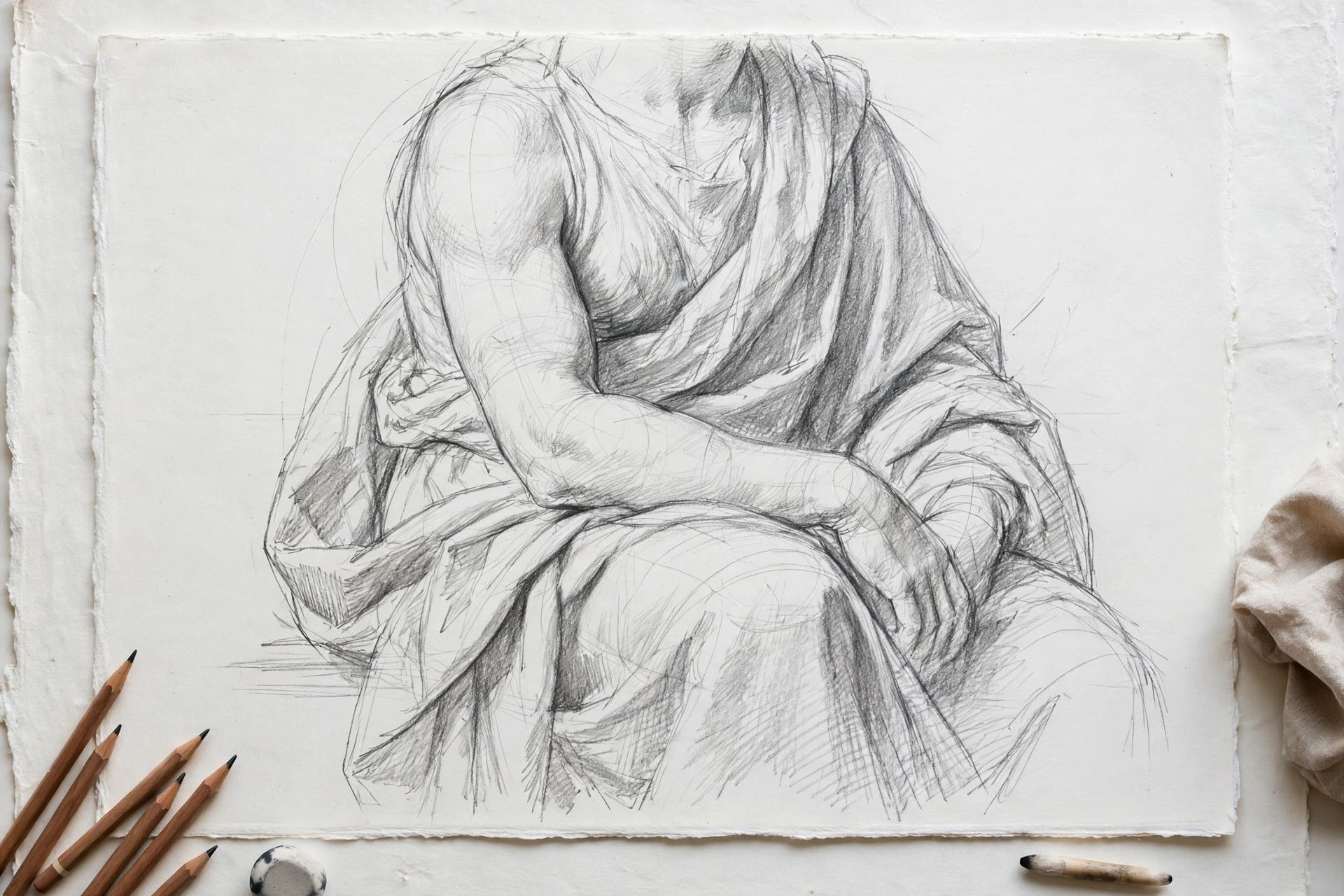
Cloth folds. Drape a towel or shirt over a chair and draw only the folds. This teaches soft shadows and how fabric bends, which you will use in every clothing drawing later.
5
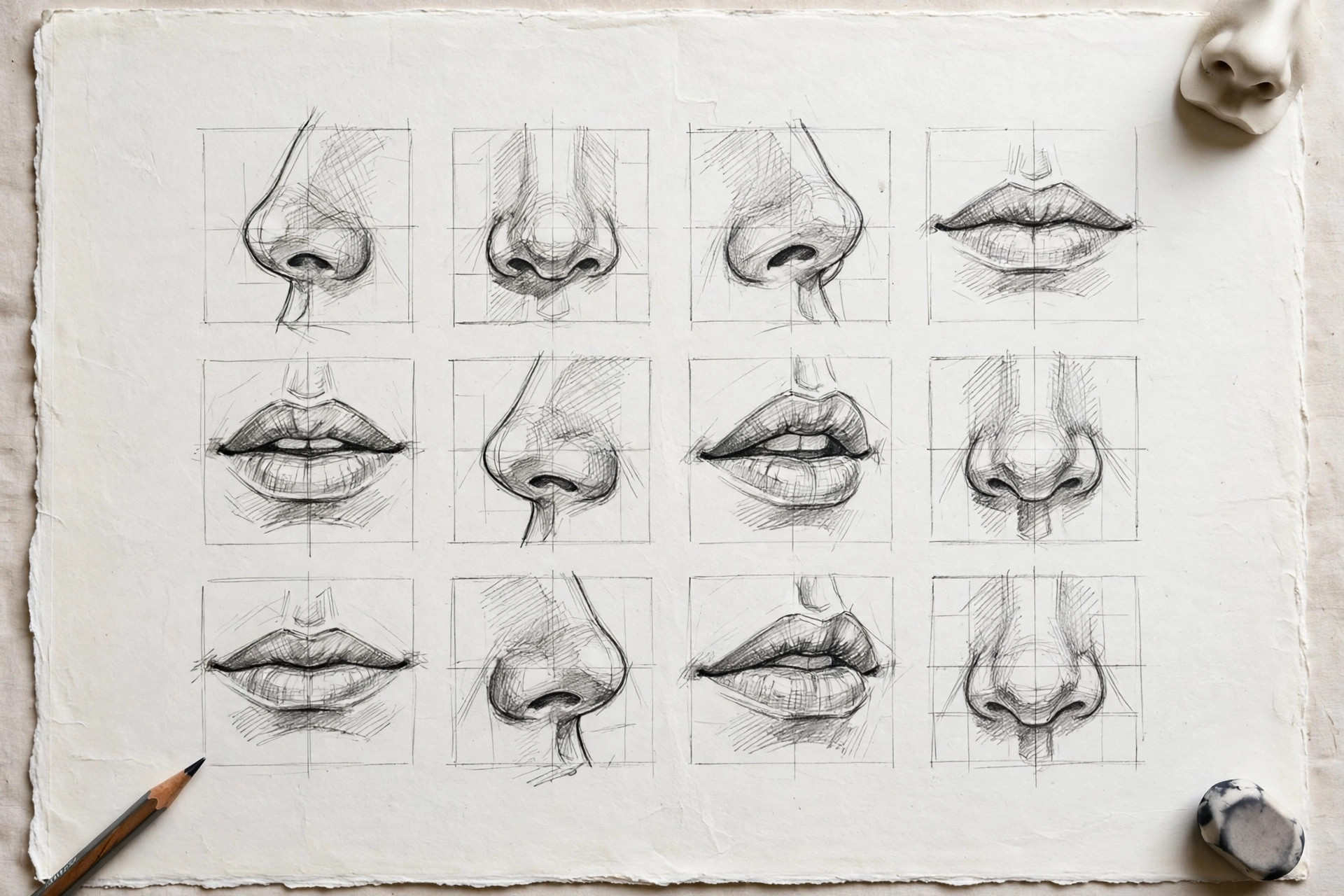
Nose-and-lips grid. Draw a grid of small boxes and put a different nose or mouth in each one. It teaches facial features one at a time, without the pressure of a full portrait.
6
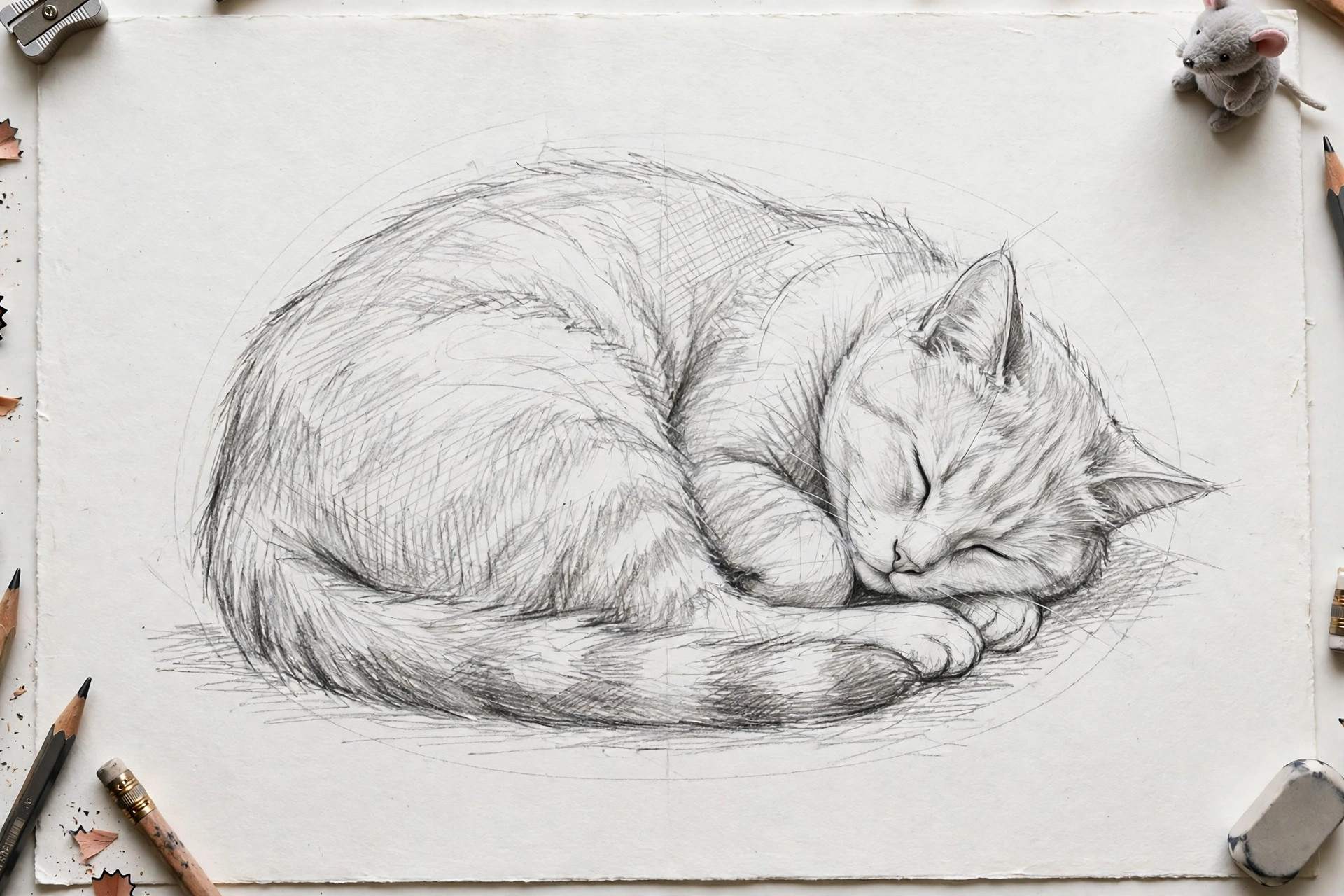
Your pet sleeping. Draw your pet while it sleeps, or use a photo of any sleeping animal. The relaxed pose teaches you loose, calm lines and simple fur texture.
7
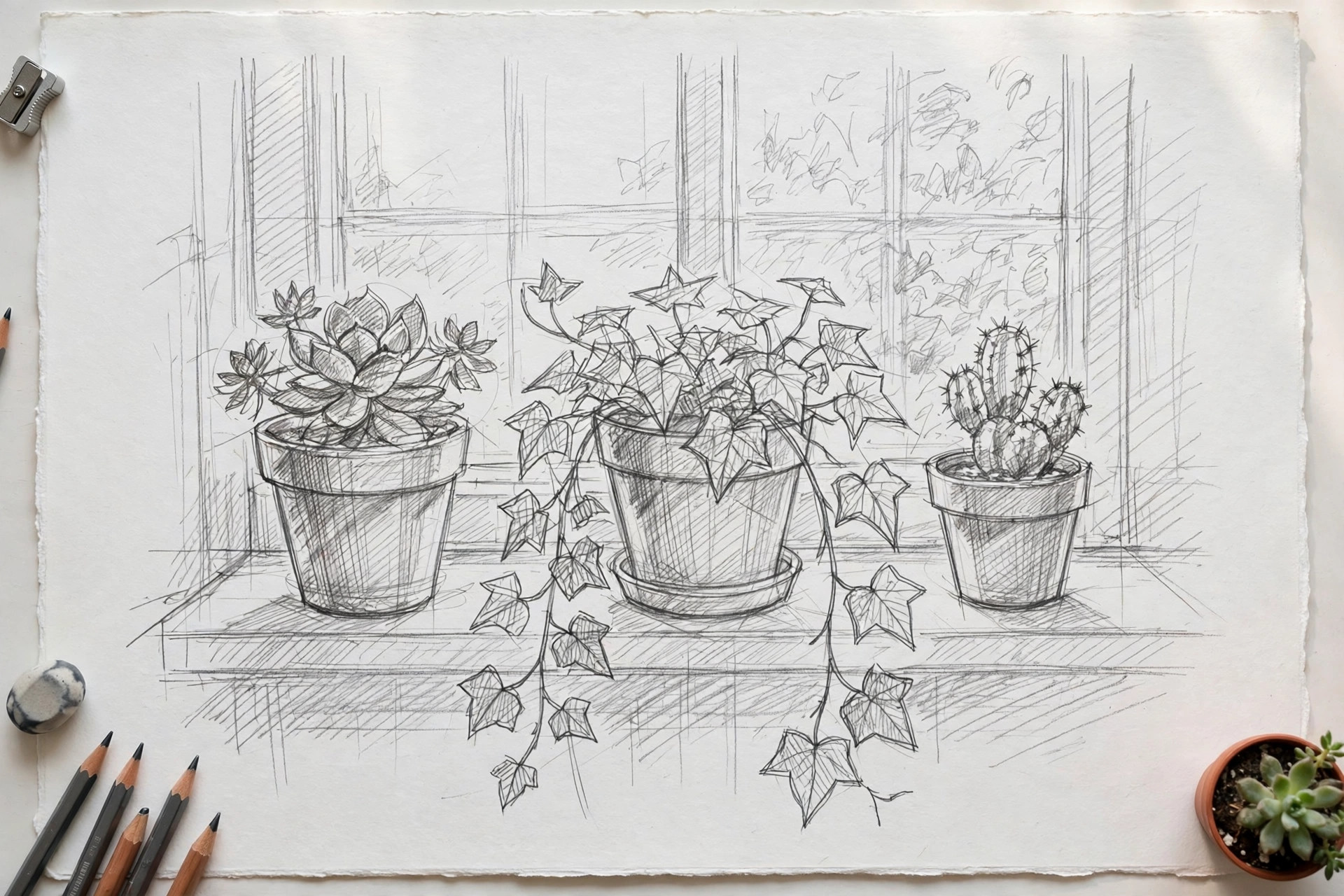
Windowsill plants. Draw the pots and leaves on a windowsill, real or from a photo. Plants teach organic shapes, the wobbly natural lines that never need to be perfect.
8
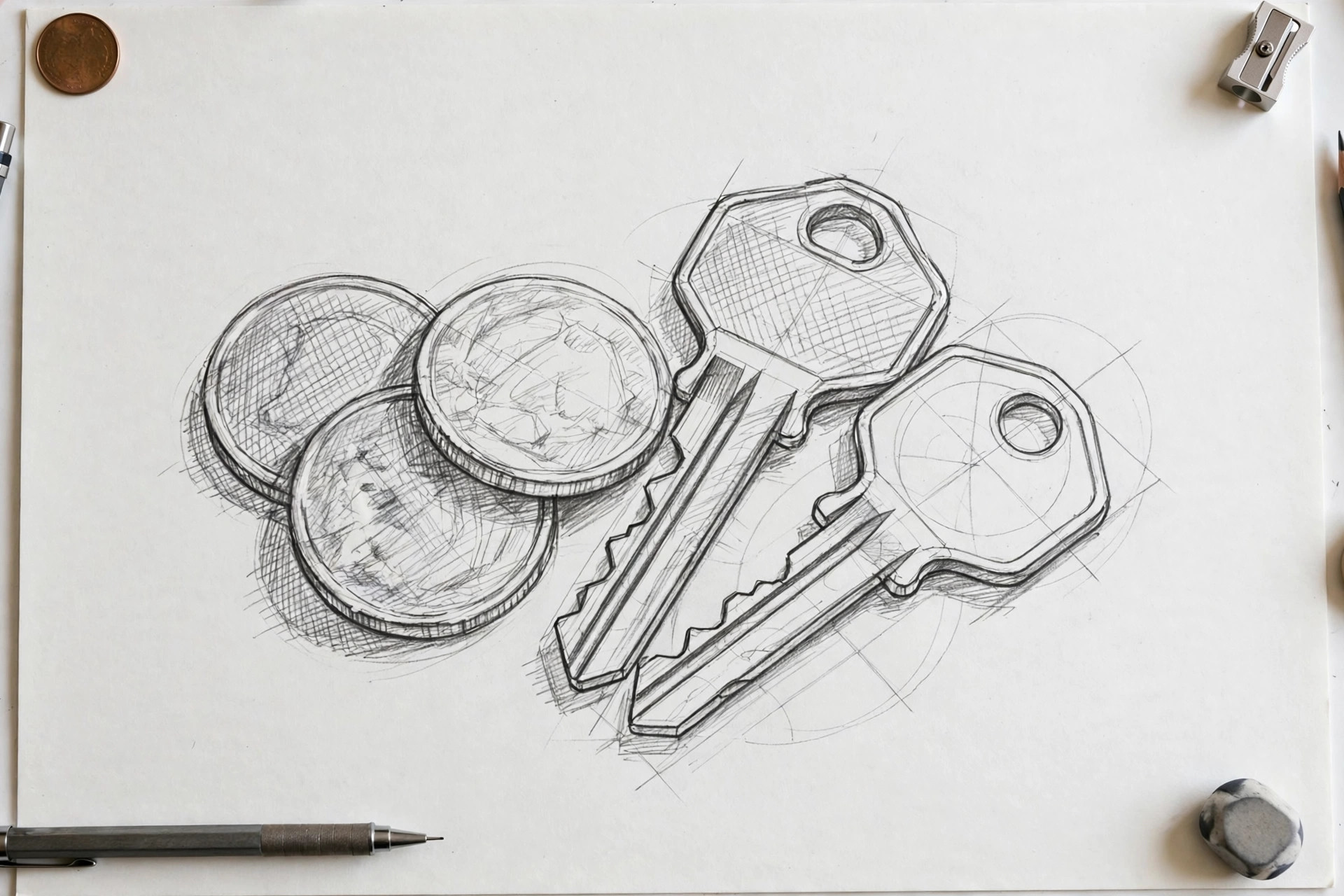
Keys and coins. Spread out small metal objects and draw them at real size. This teaches ellipses (flattened circles), tiny details, and bright highlights on shiny surfaces.
9
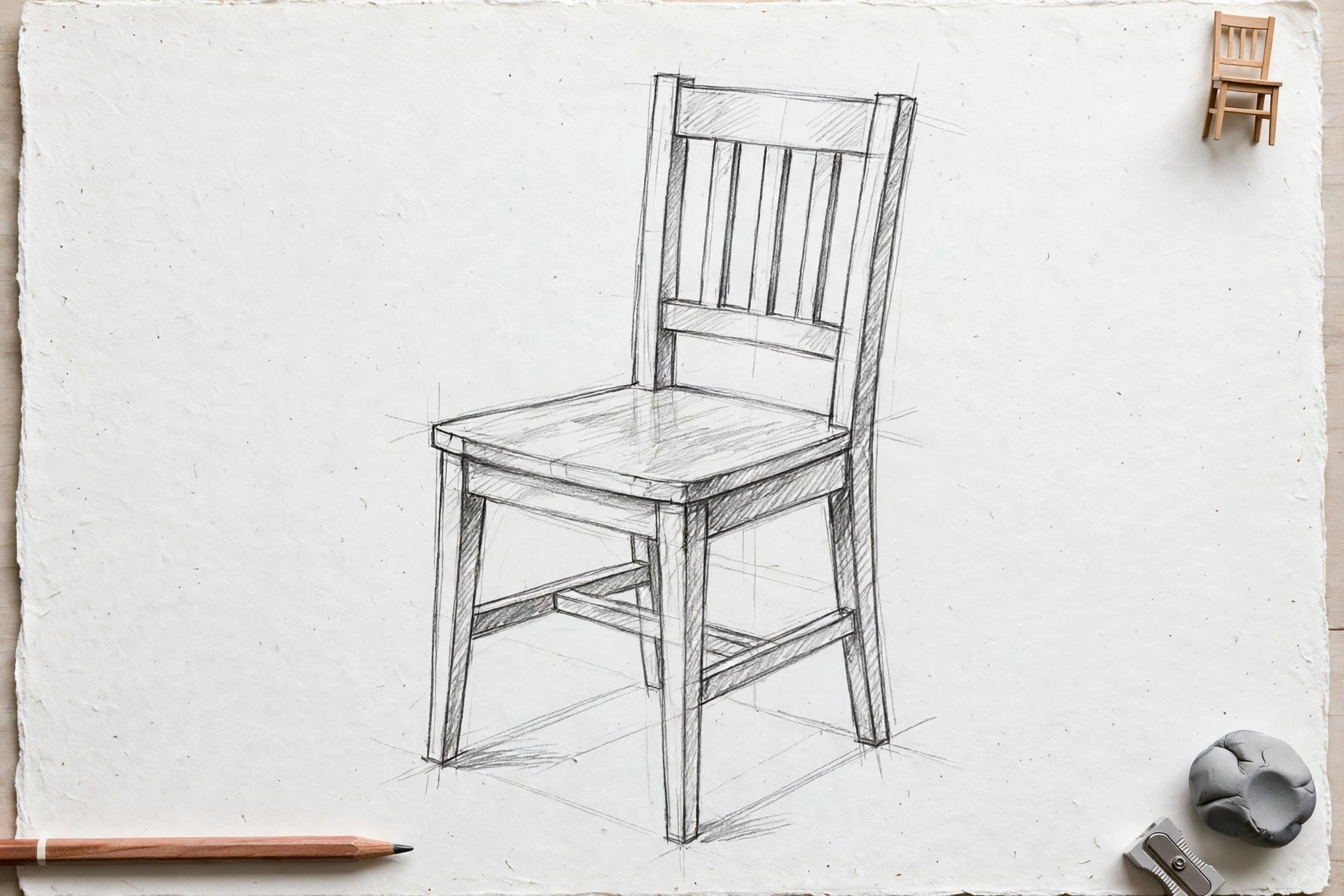
A chair. One ordinary chair, drawn as carefully as you can. Chairs teach structure, straight lines, and proportion, because a wrong leg is easy to spot.
10
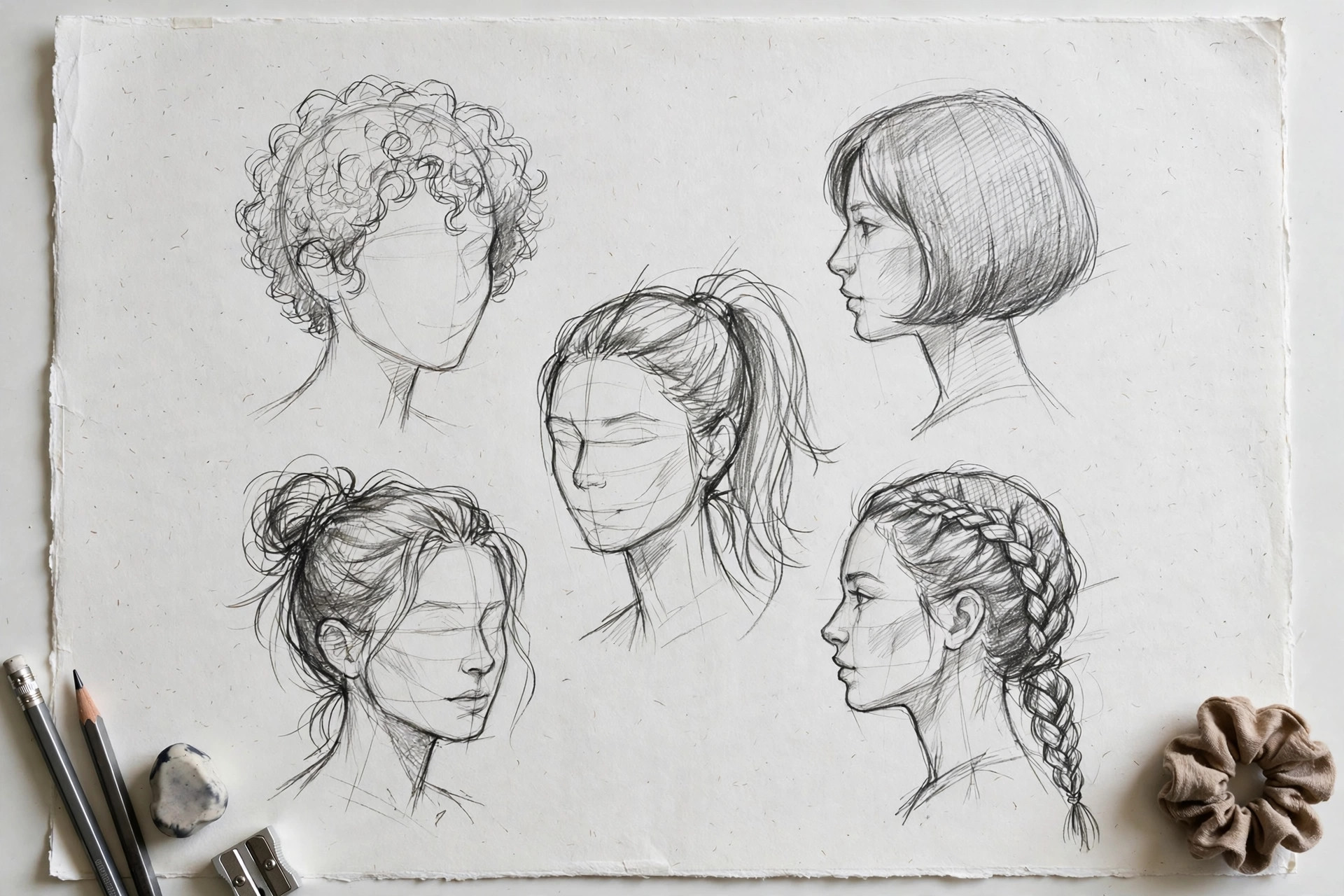
Hairstyles. Draw simple head shapes and give each one a different hairstyle. This teaches flow and volume, how hair sits on the head instead of lying flat like a hat.
Fun Fill-the-Page Ideas (Ideas 11-20)
Some days you do not want a lesson. You want the calm, happy feeling of a page slowly filling up. These ideas are low-pressure and relaxing, and they are perfect for days when your energy is low.
1
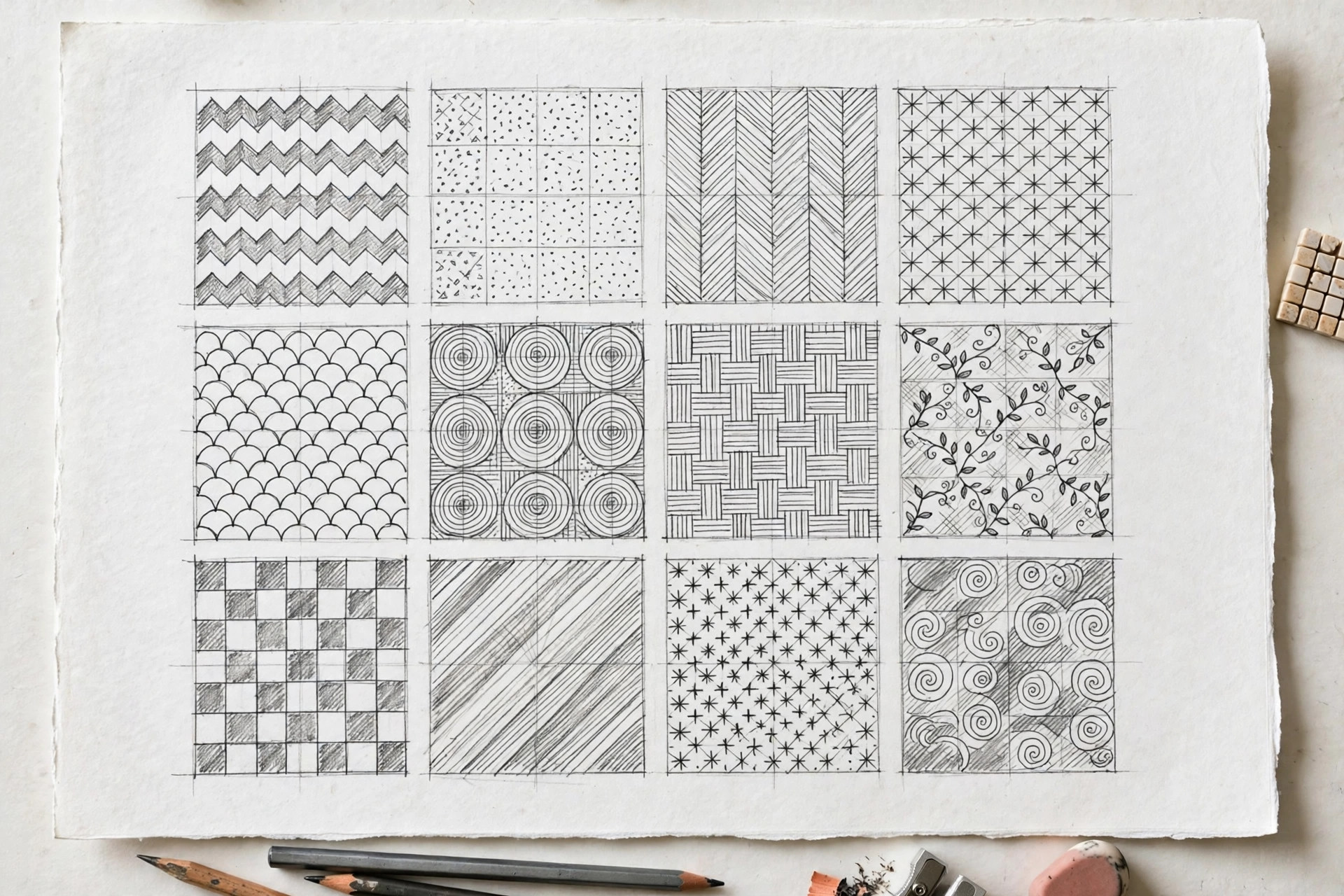
Pattern tiles. Divide the page into small squares and fill each with a different repeating pattern: dots, waves, checks, leaves. It teaches control and gives you a library of patterns for future art.
2
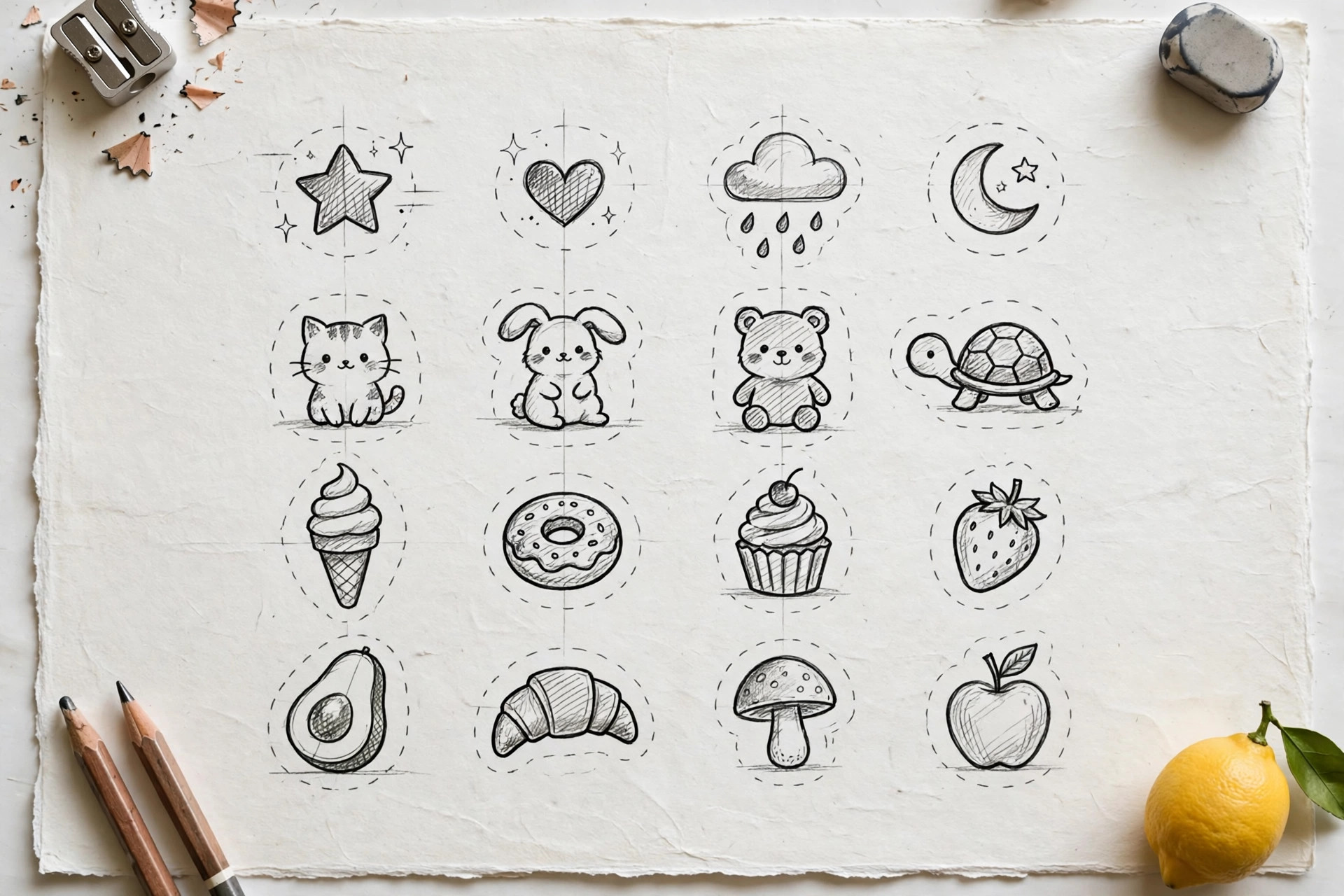
Doodle sticker sheet. Draw small cute doodles and give each one a thick white border, like a real sticker. It teaches clean outlines and simple, readable shapes.
3
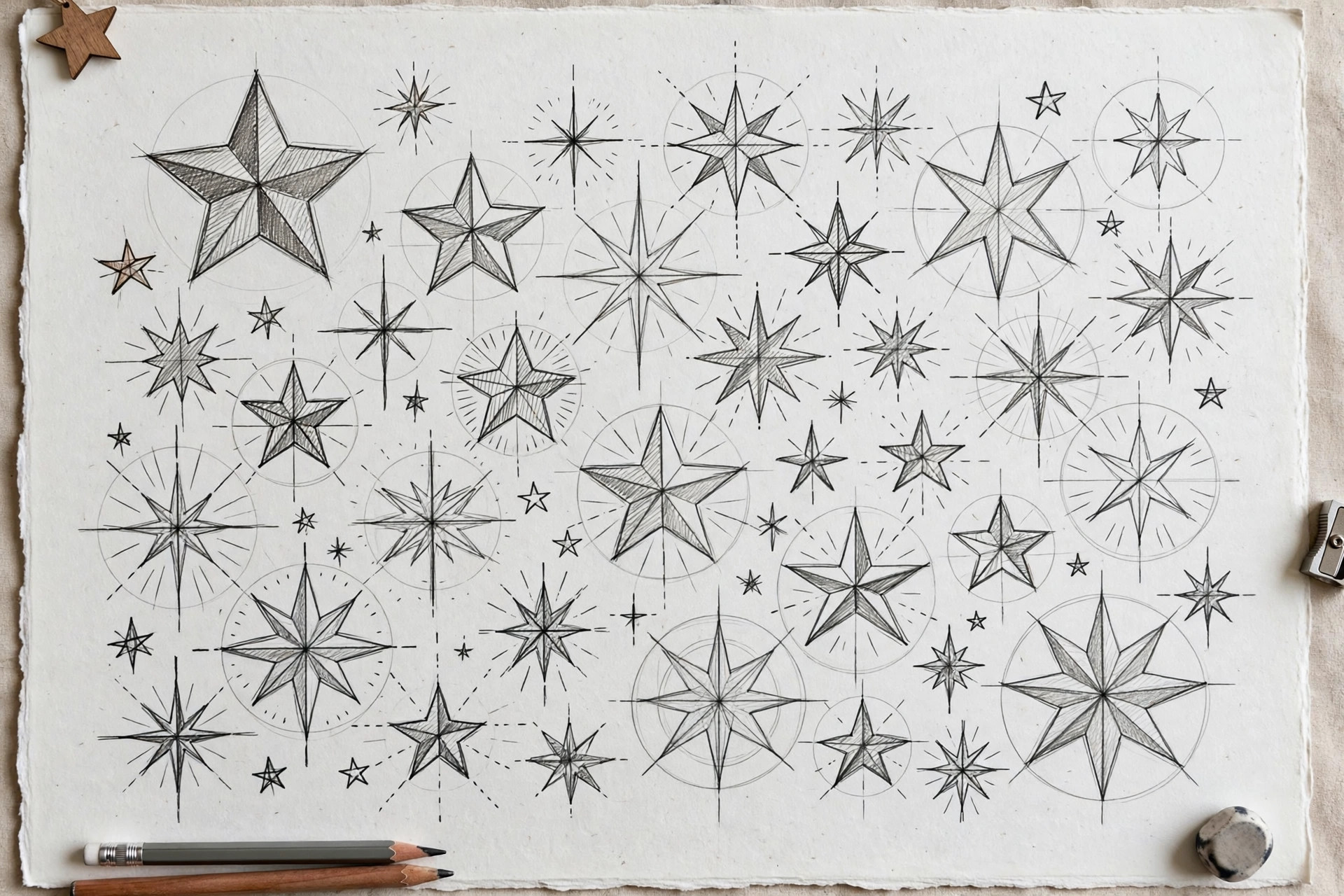
A page of stars. Stars, moons, sparkles, and tiny planets in every size. It teaches you to vary one simple shape, and the result always looks cheerful.
4
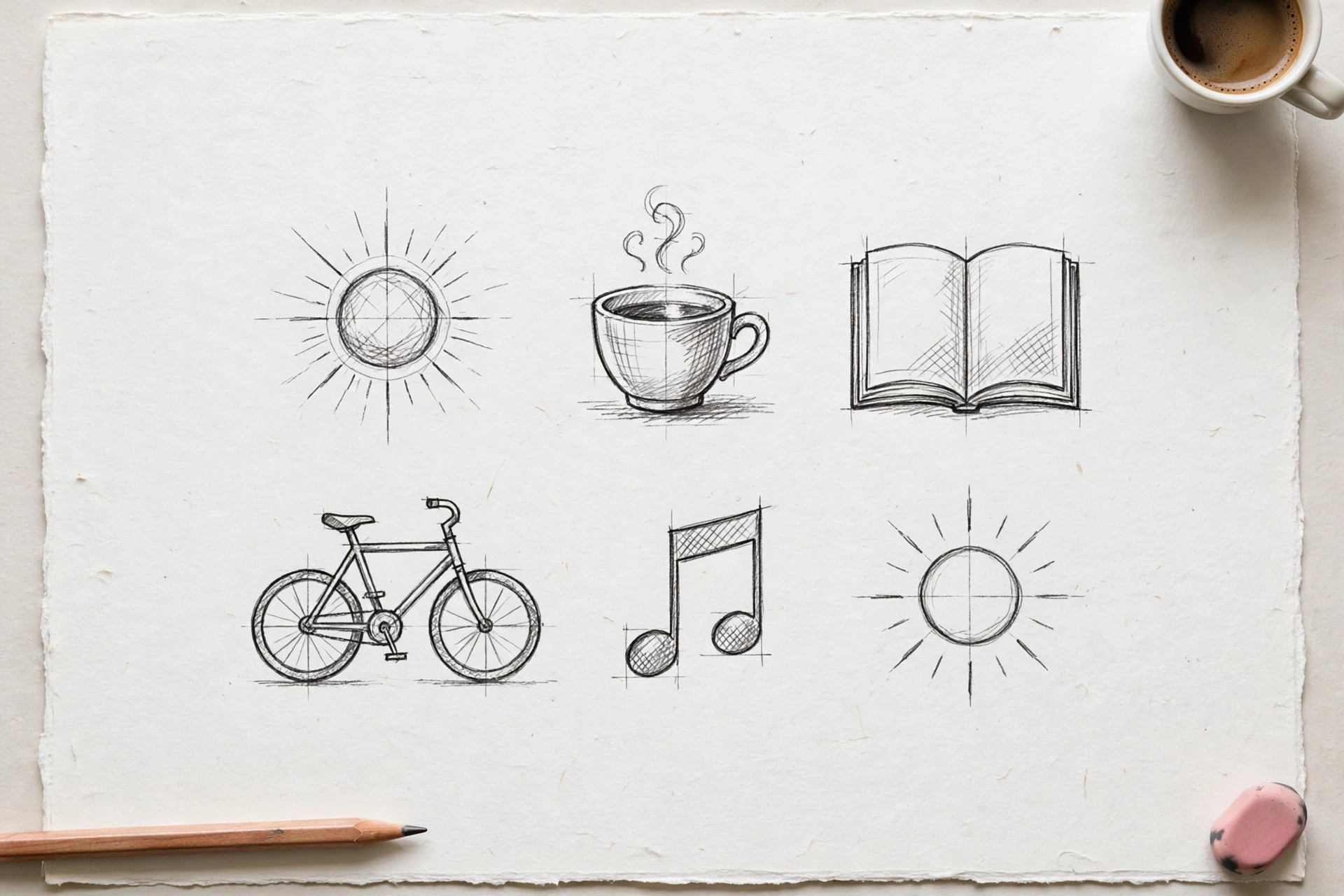
Tiny icons of your day. Draw your whole day as little pictures: a coffee cup, a bus, a book, a dog. It teaches you to simplify real things into clear symbols.
5
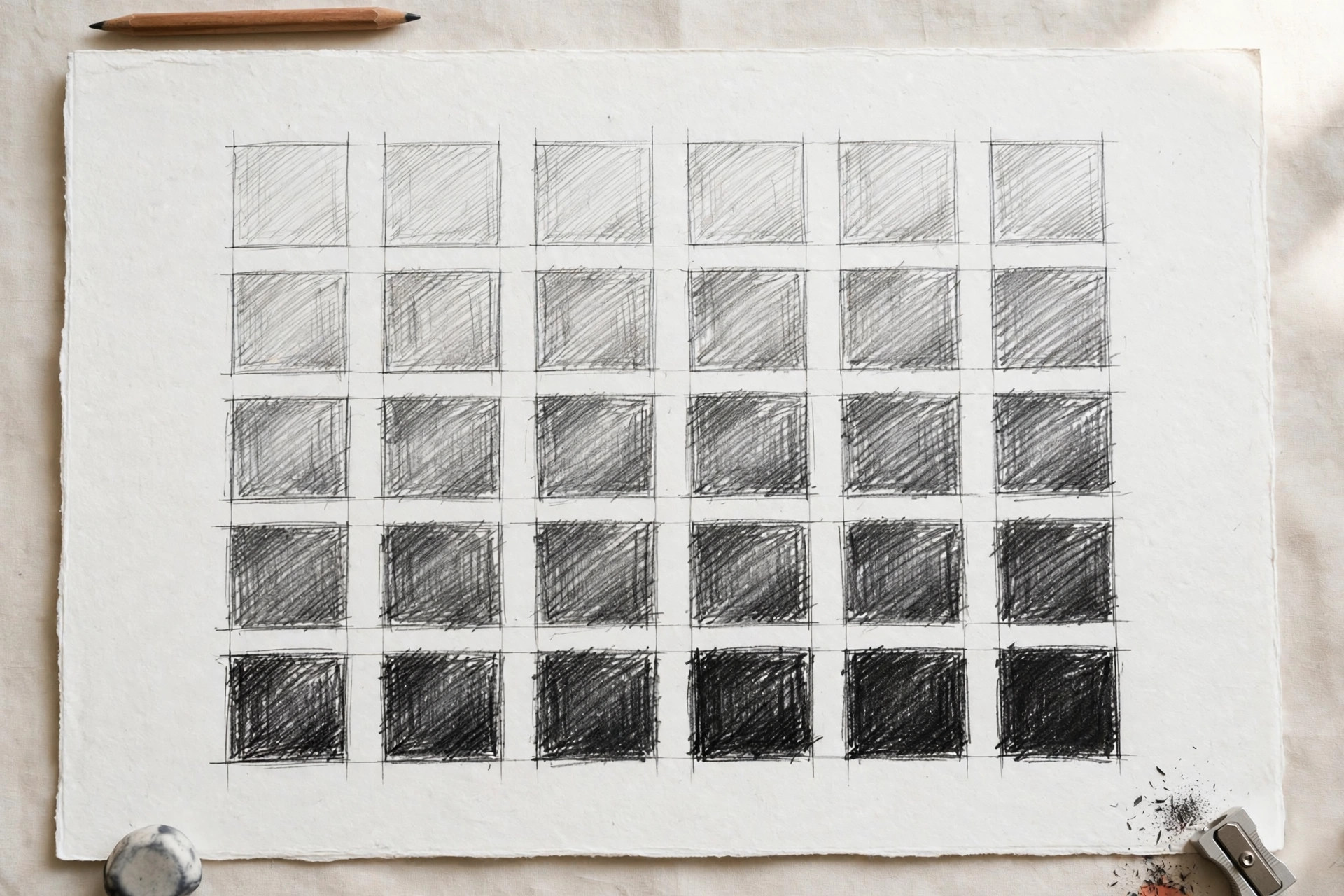
Color swatch tests. Test every pen, pencil, and marker you own in neat labeled rows. It teaches you your own tools, and the page becomes a reference you will actually use.
6
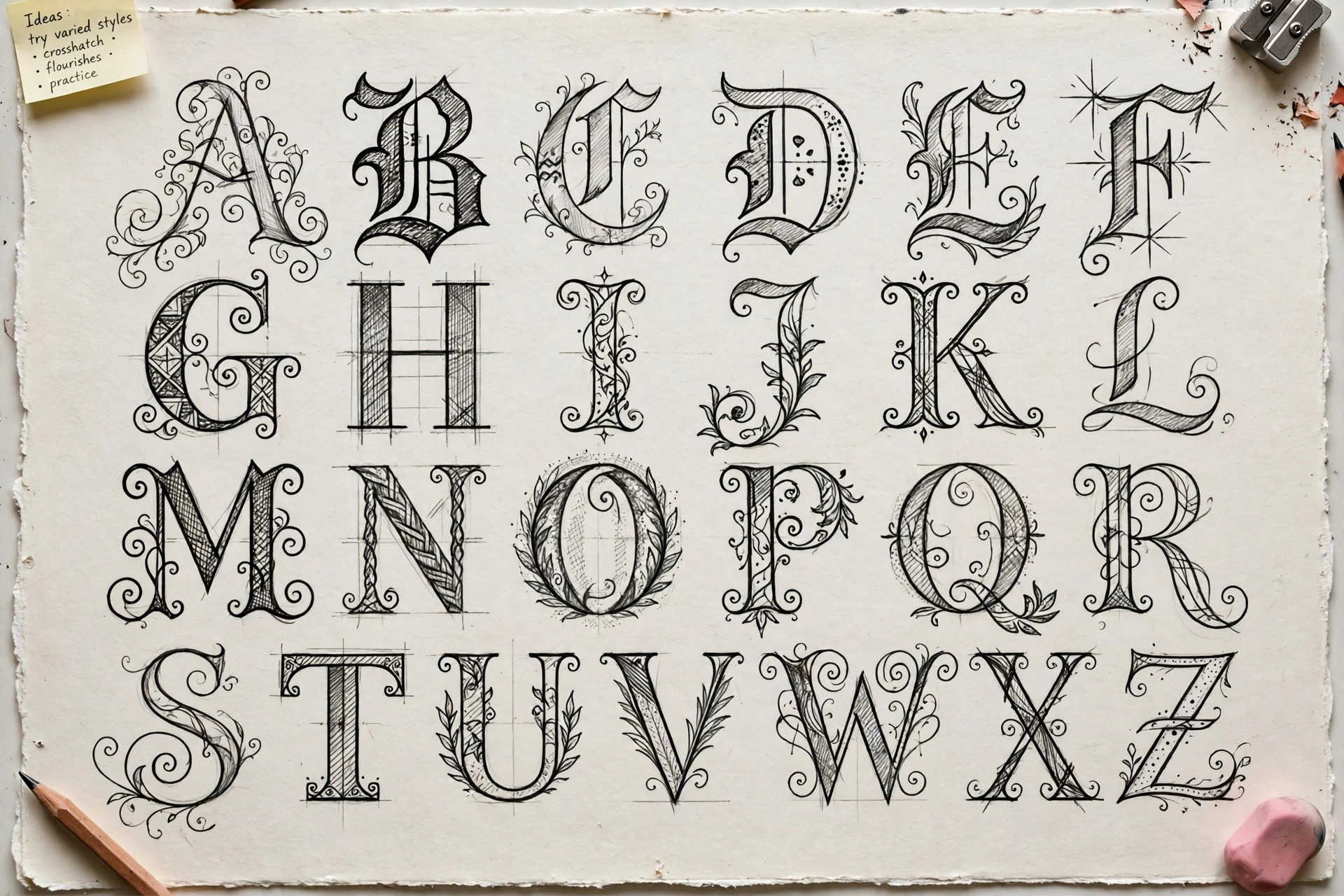
Fancy alphabet letters. Pick a few letters and decorate each one ten different ways. It teaches lettering, patience, and how small design choices change a shape.
7
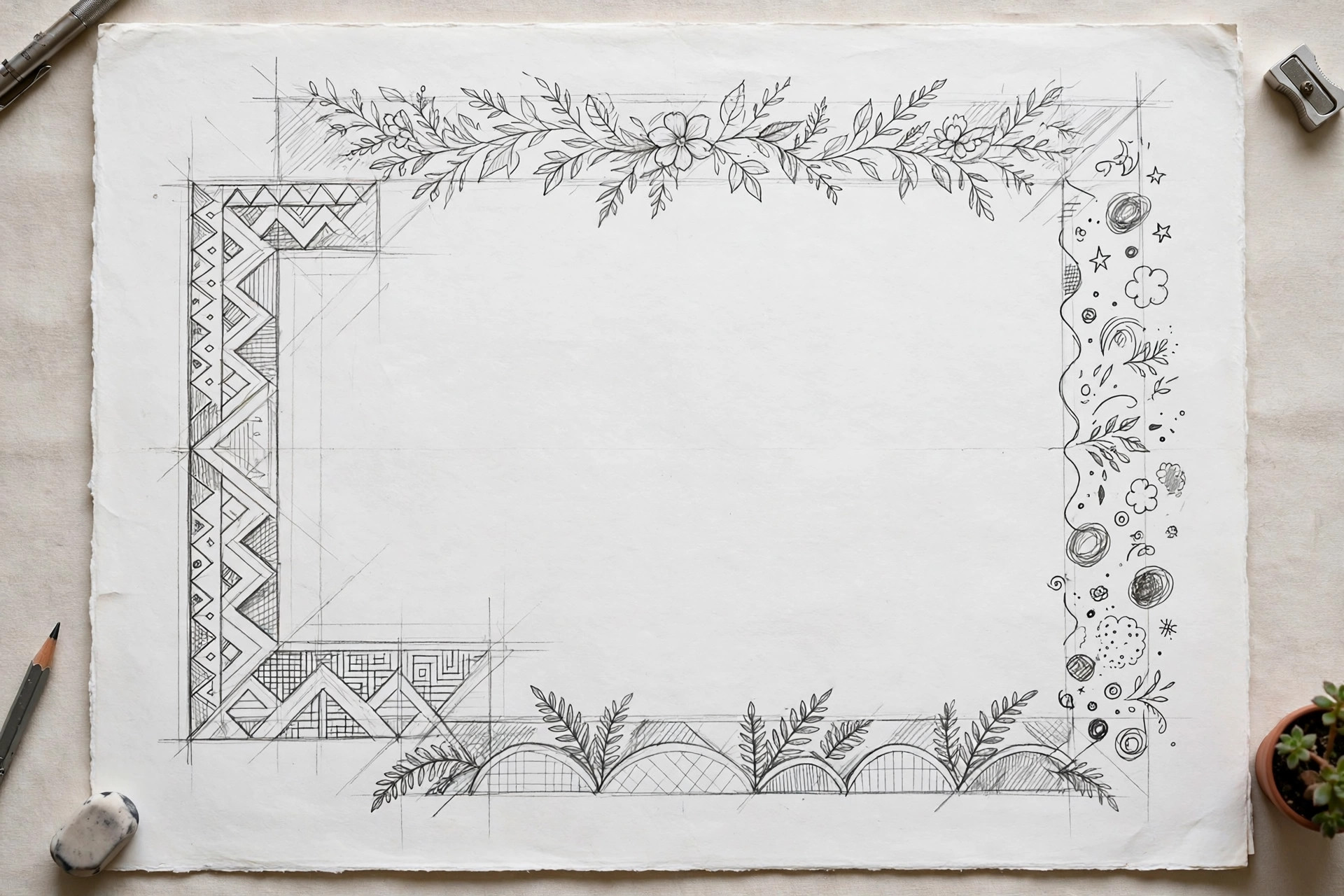
Border designs. Draw frames and edge patterns around the page: vines, gems, waves, zigzags. It teaches rhythm and repetition, and the borders will upgrade your future pages and cards.
8
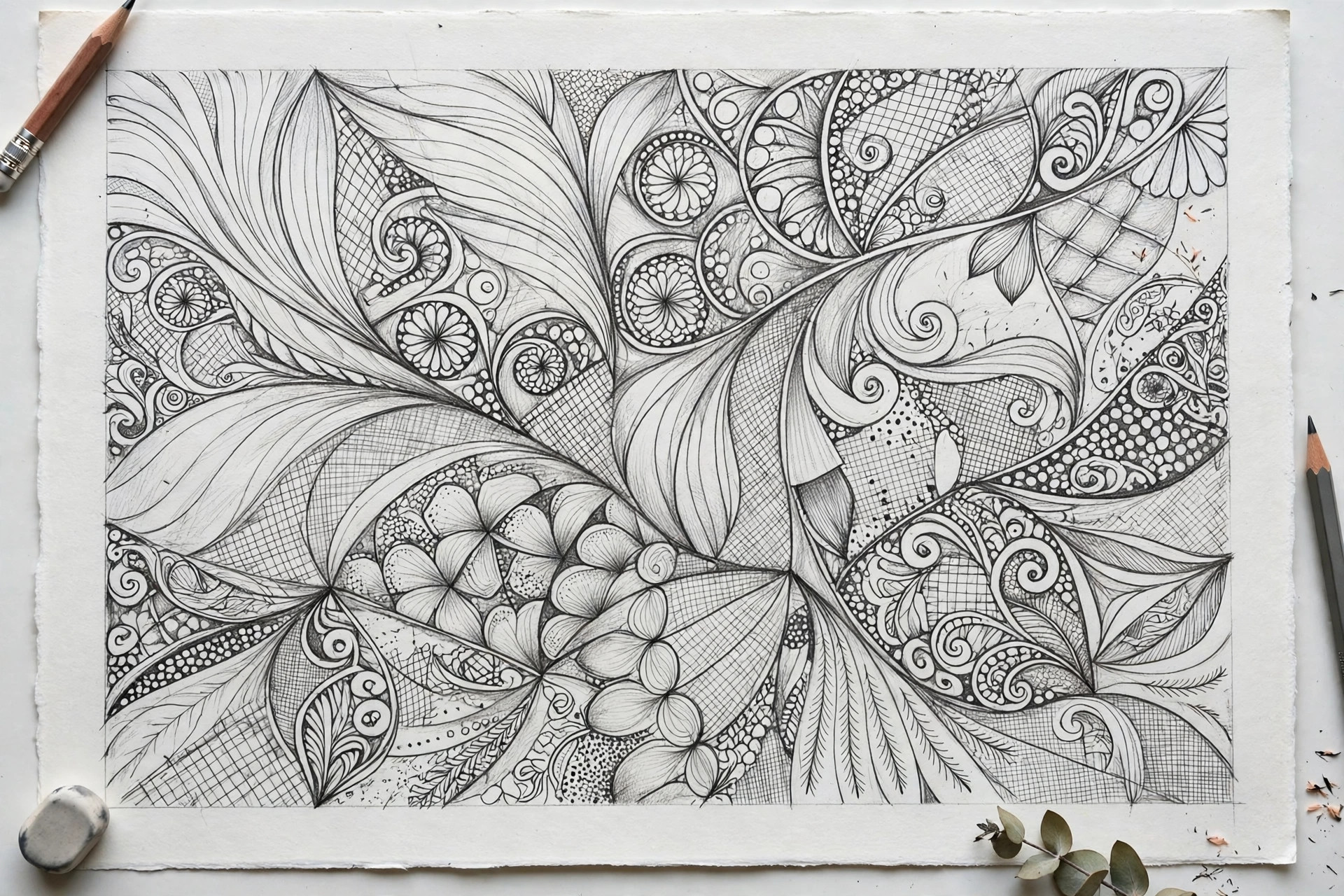
A zentangle tile. A zentangle is a small drawing filled with repeating patterns, drawn slowly and calmly. Fill one square this way. It teaches focus and proves a page does not need a subject to be satisfying.
9
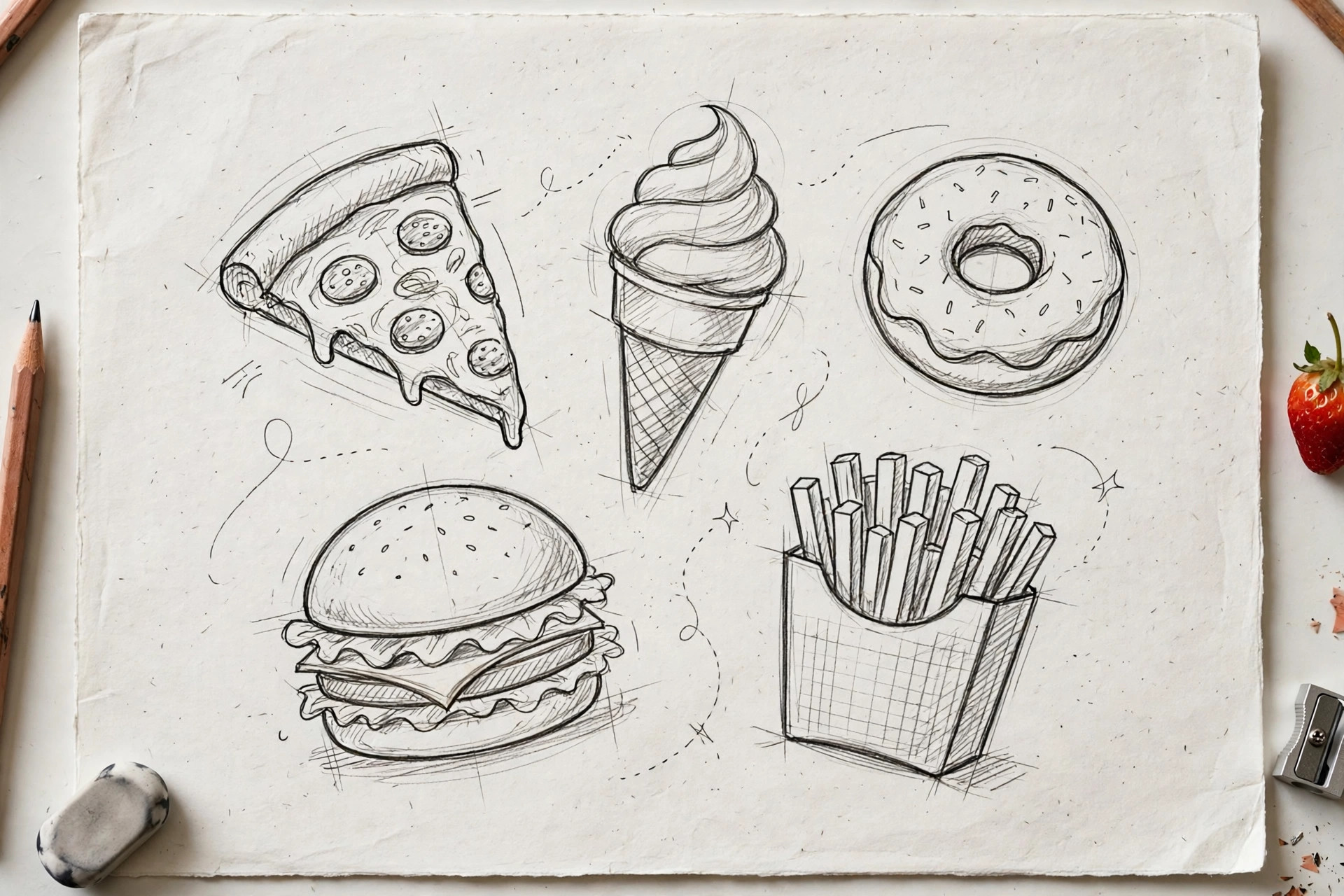
Sticker-style favorite foods. Draw your favorite snacks and meals with thick outlines and happy colors. It teaches simple shapes and the art of making something look tasty.
10
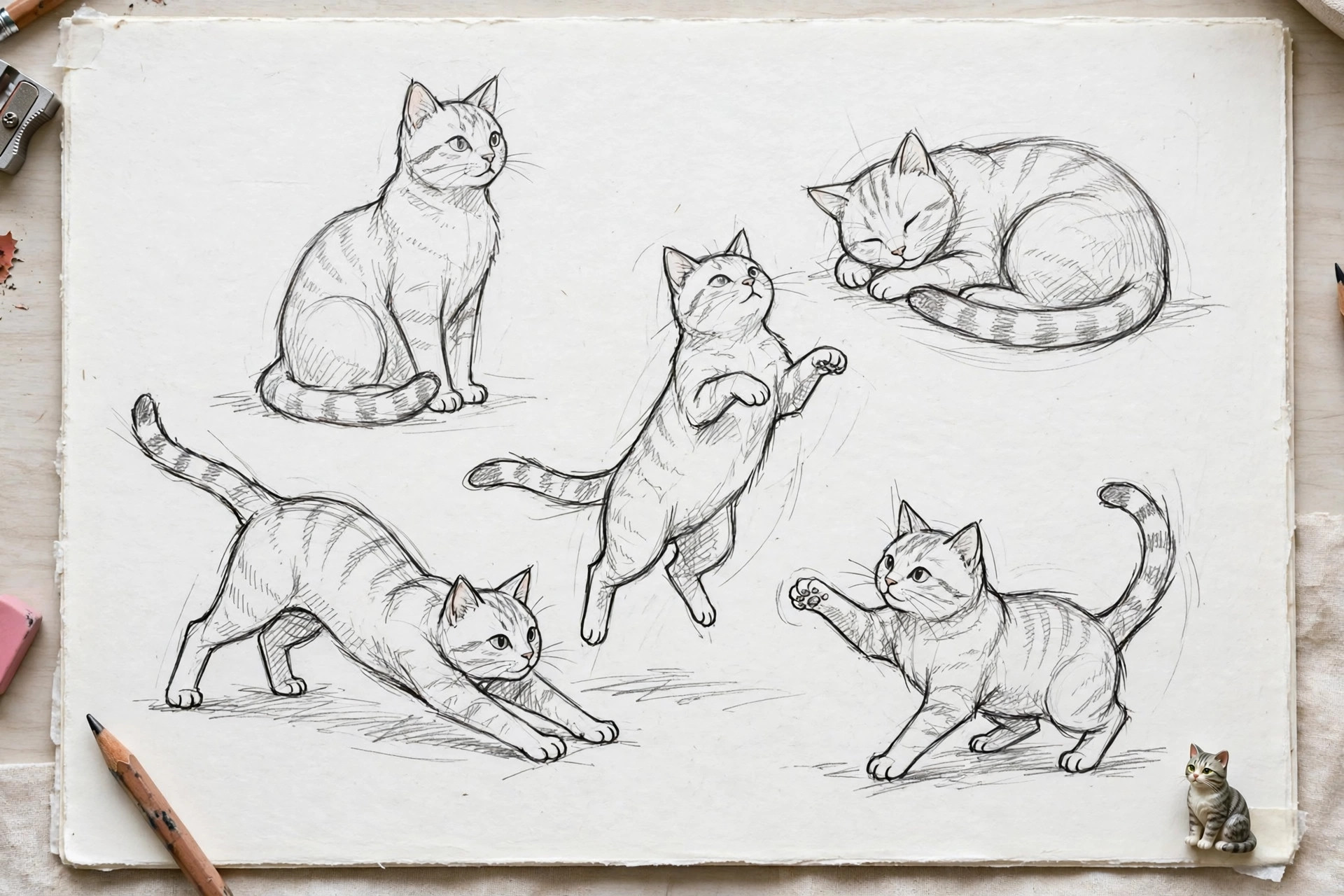
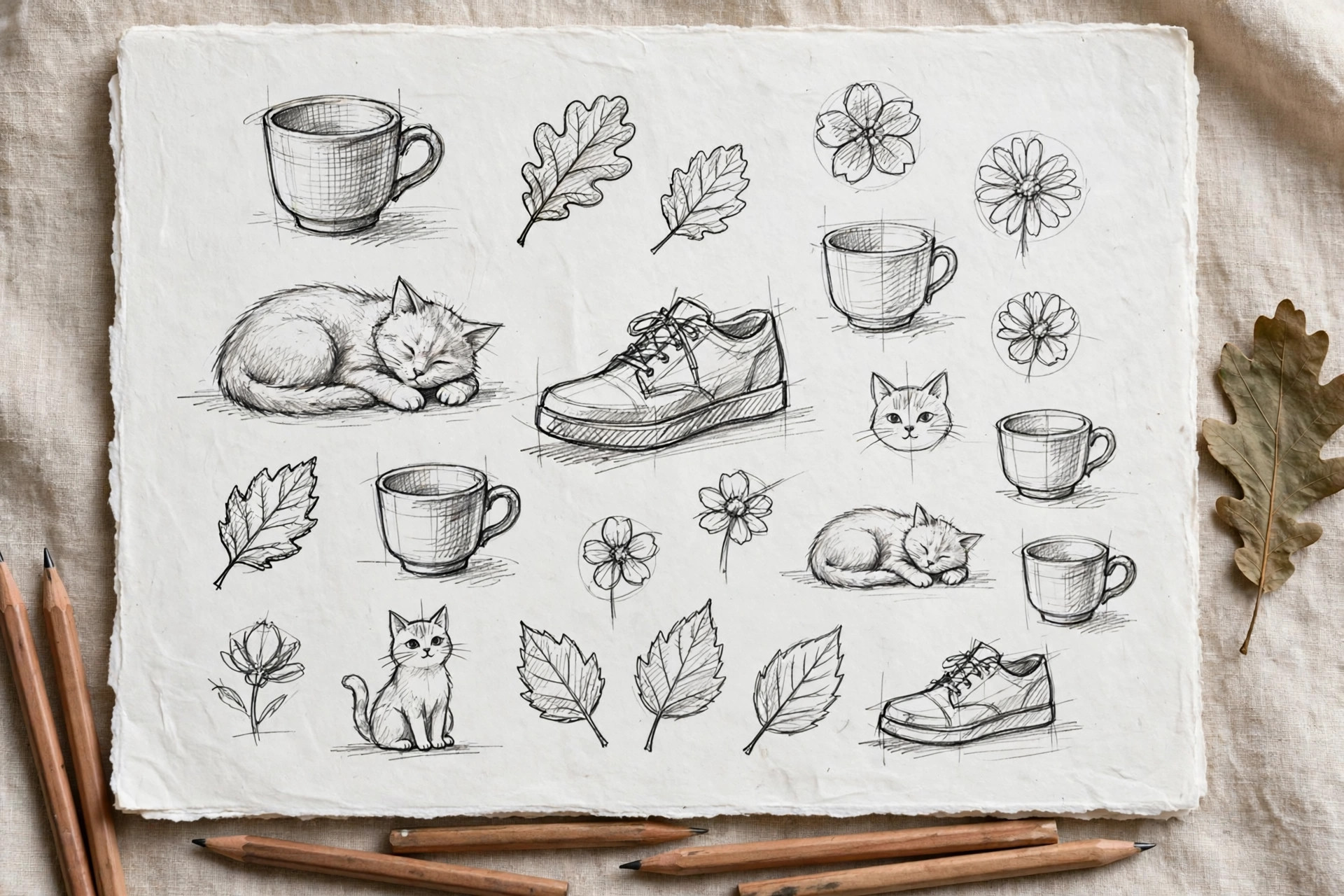
Repeated cats in different poses. Draw the same cat sitting, sleeping, stretching, and playing. Repeating one character teaches consistency, and cats forgive every mistake.
Story and Character Pages (Ideas 21-30)
These pages turn your sketchbook into a little story world. Characters grow from page to page, and drawings that start as doodles can turn into comics, book ideas, and designs you genuinely love.
1
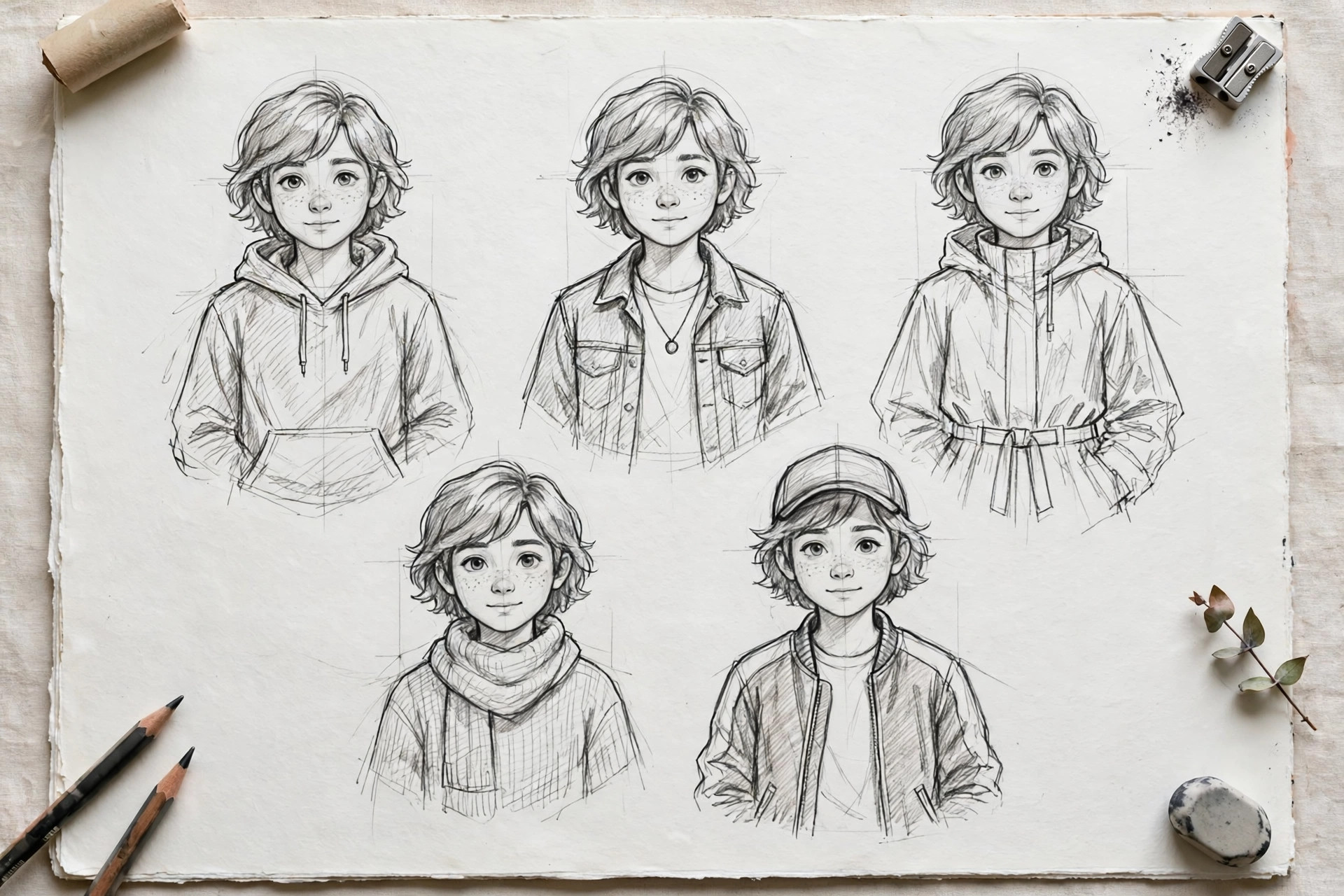
One character in 5 outfits. Design one simple character and draw them in five different outfits. It teaches clothing design and how to keep a character looking like the same person.
2
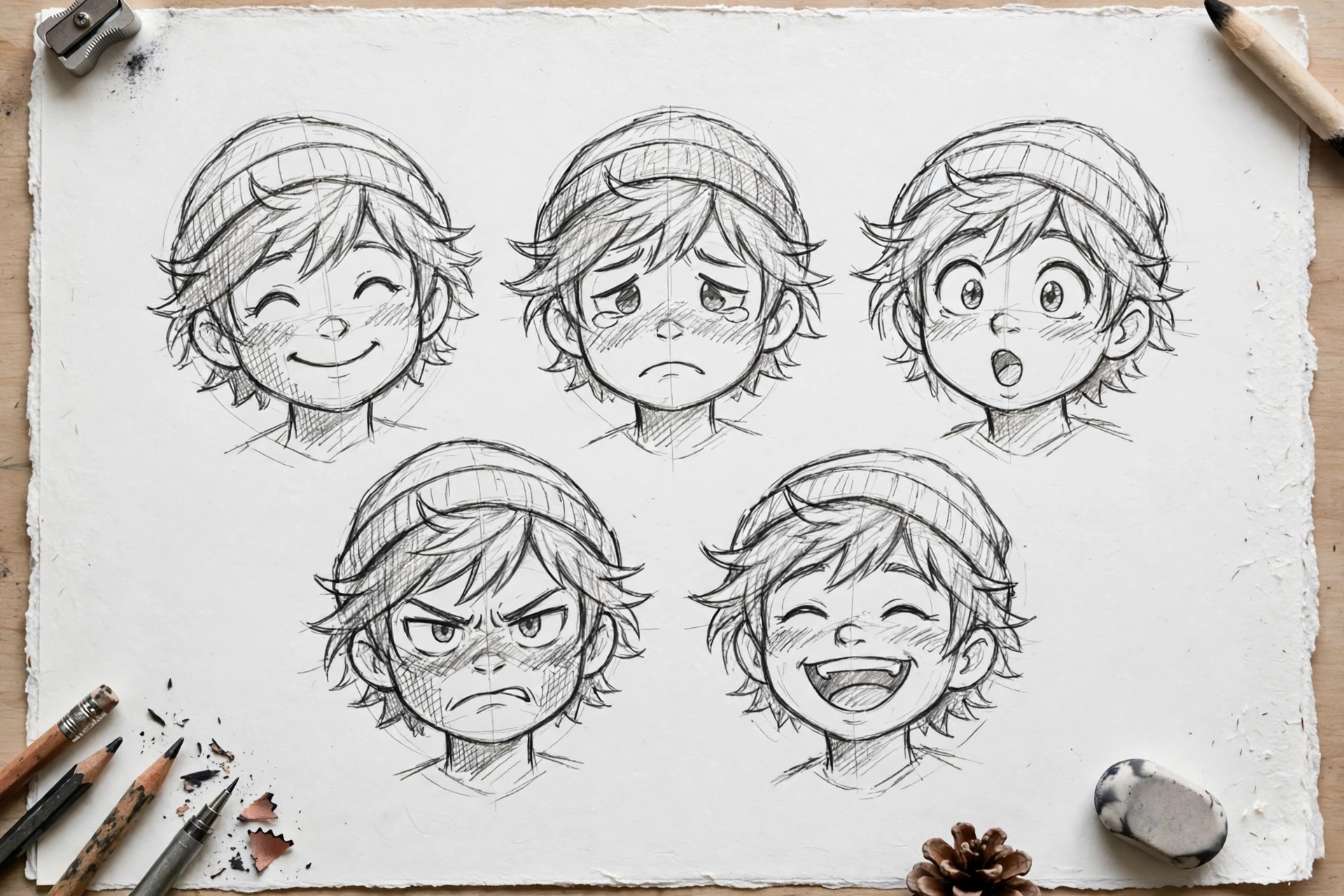
An expression sheet. Draw the same face showing eight emotions: happy, sad, angry, surprised, sleepy, and more. It teaches how small changes in eyebrows and mouths carry big feelings.
3
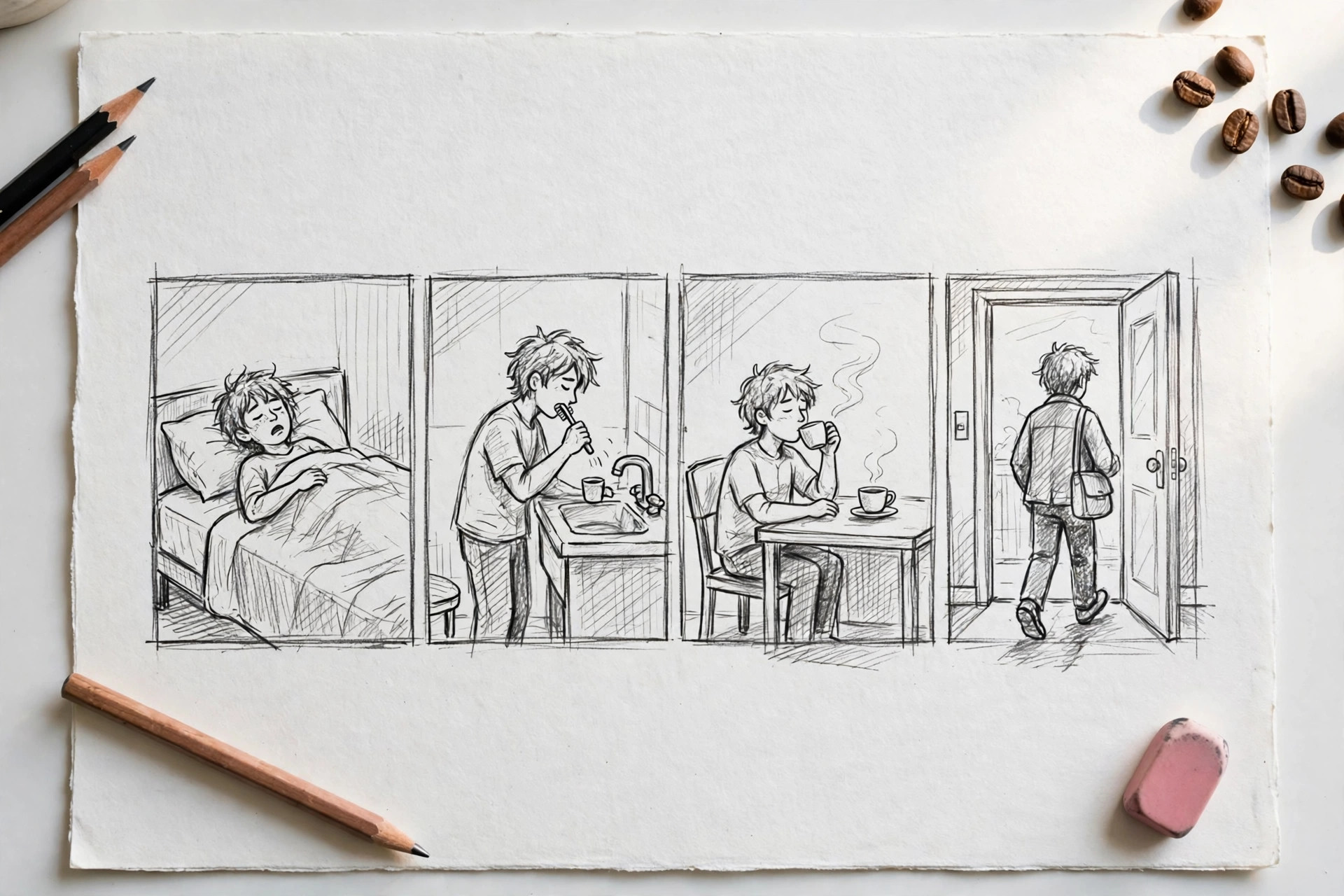
A tiny comic of your morning. Tell your morning in four to six small panels, from alarm clock to breakfast. It teaches storytelling and picking the moments that matter.
4
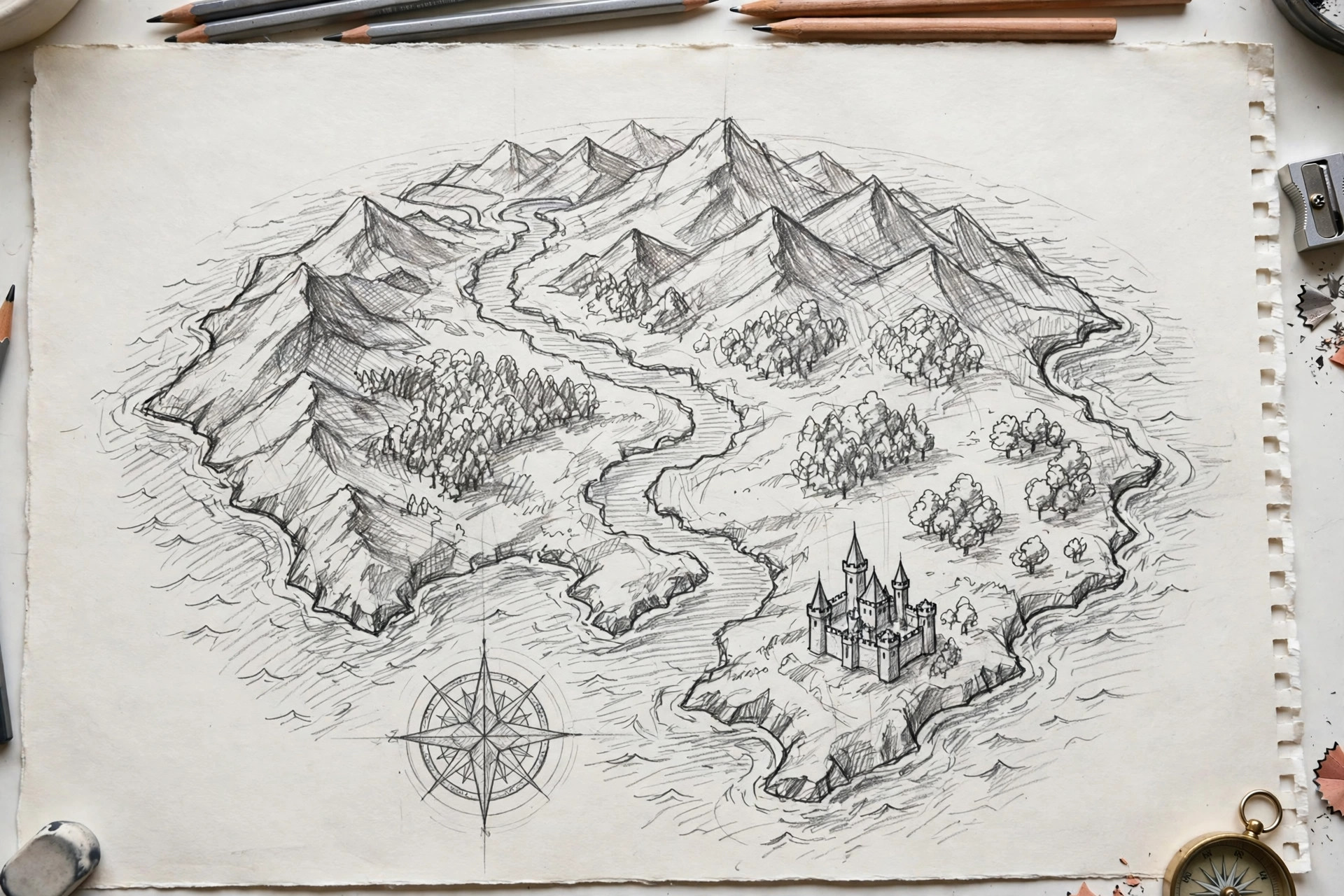
A map of an imaginary island. Draw an island map with mountains, a harbor, forests, and invented place names. It teaches composition, and it is pure relaxing fun.
5
An invented shop front. Design the front of a shop that does not exist: a bakery, a plant shop, a store that sells only umbrellas. It teaches simple architecture and lettering.
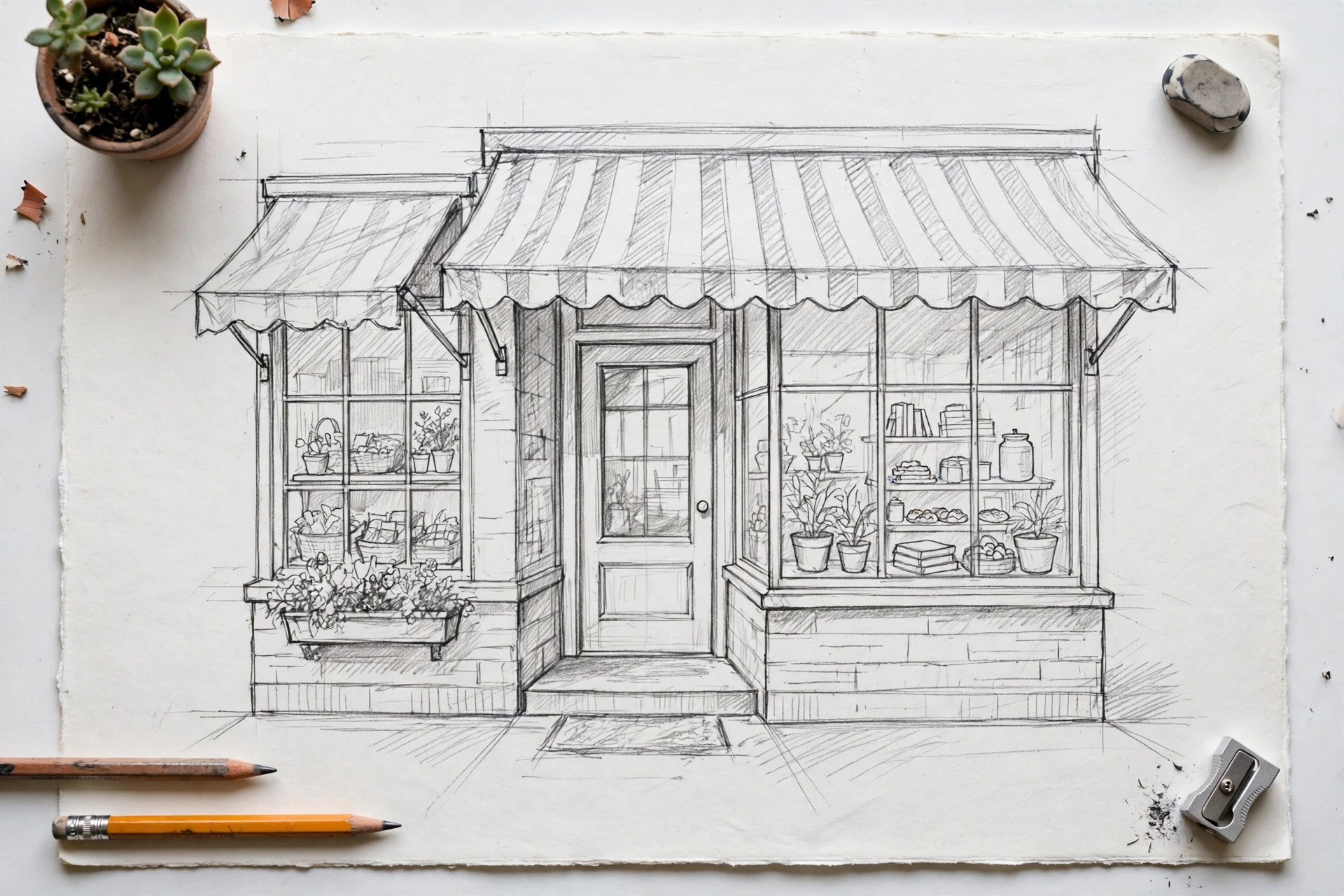
6
A character and their room. Draw a character standing in their own bedroom, surrounded by their things. It teaches you to tell a story with objects, not just faces.
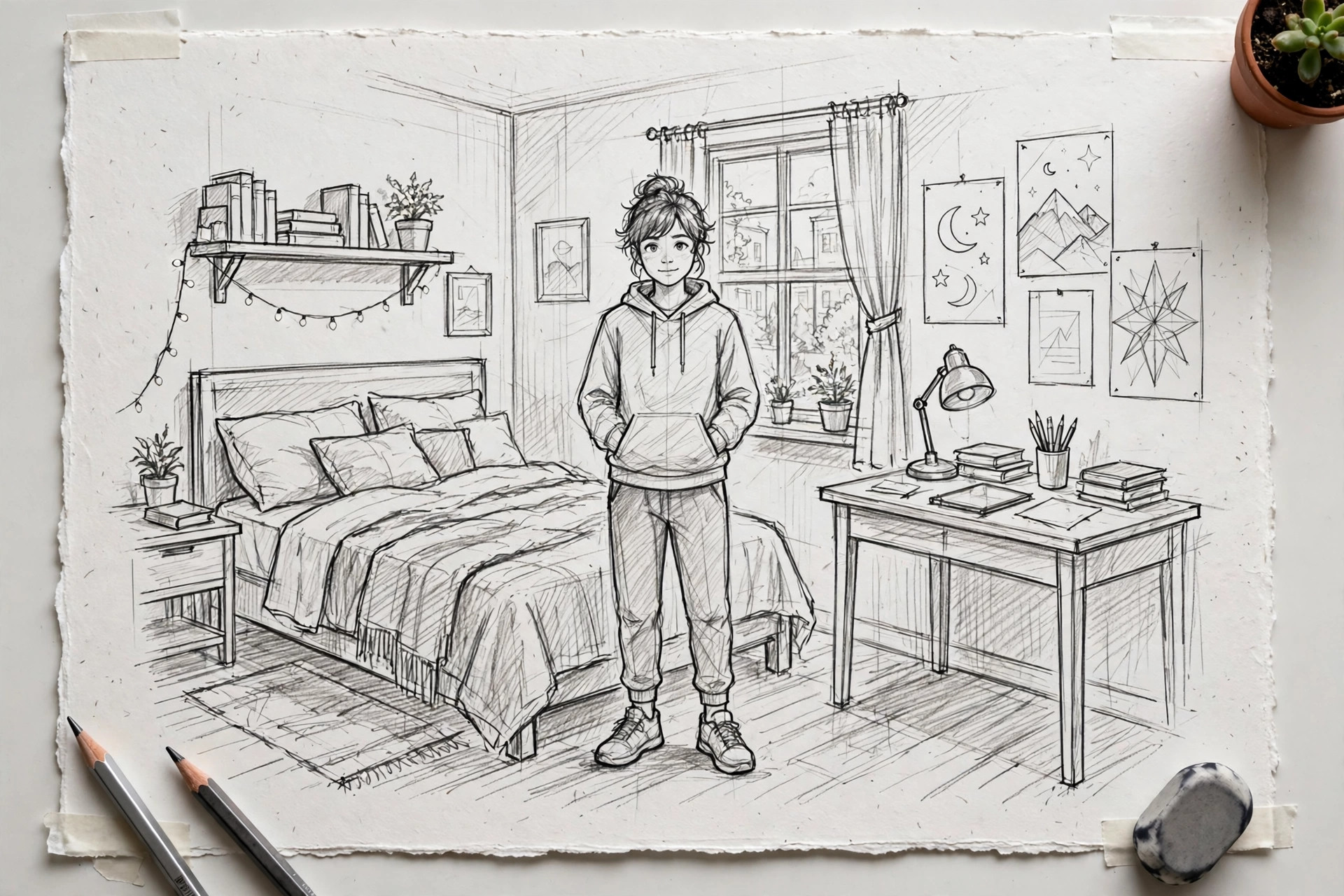
7
A redesigned book cover. Take a favorite book and design a brand-new cover for it in your own style. It teaches layout: where the title goes, what to draw, what to leave out.
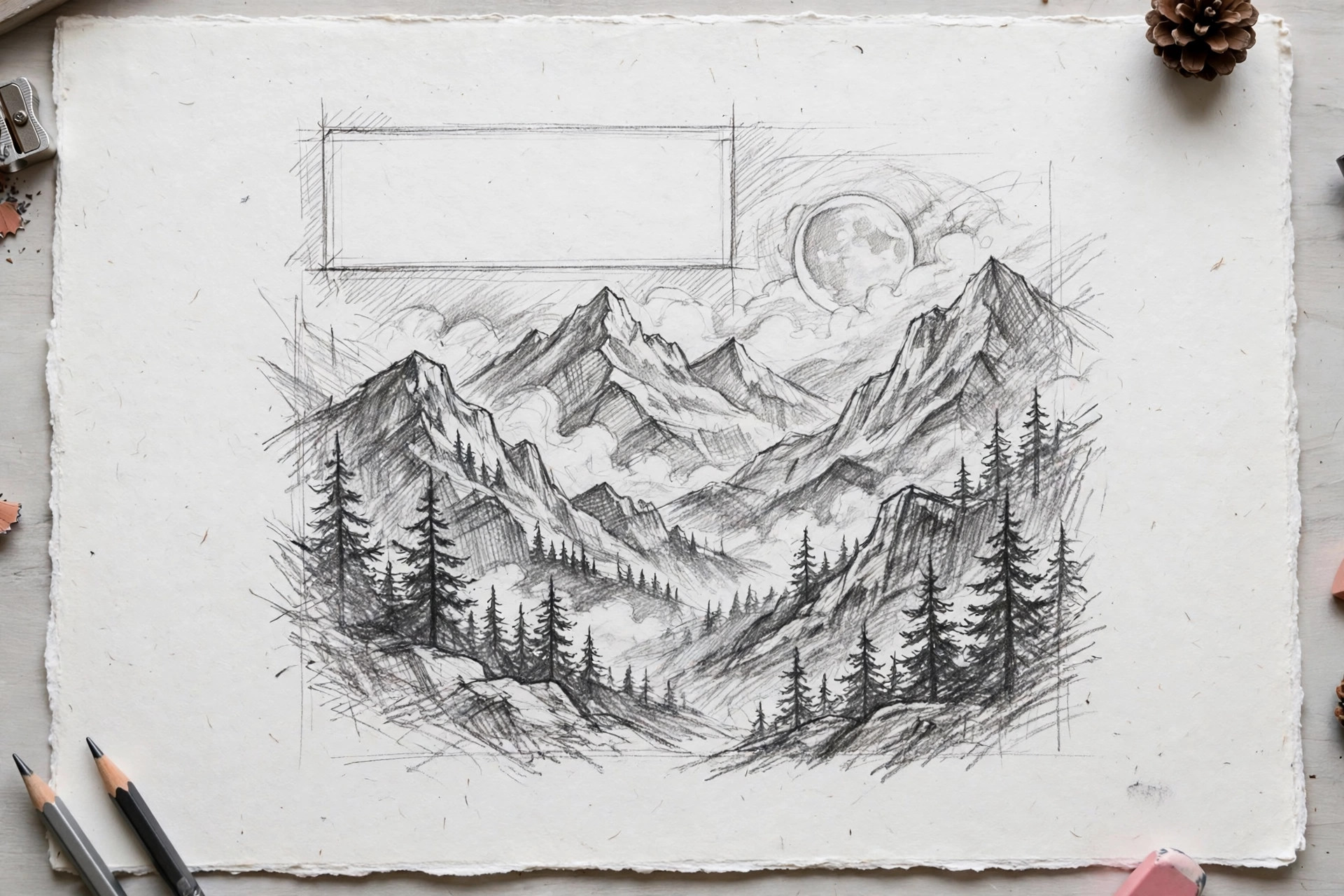
8
A monster made of household objects. Build a friendly monster out of a lamp, a teapot, a broom, and other things at home. It teaches creative combining, the heart of character design.
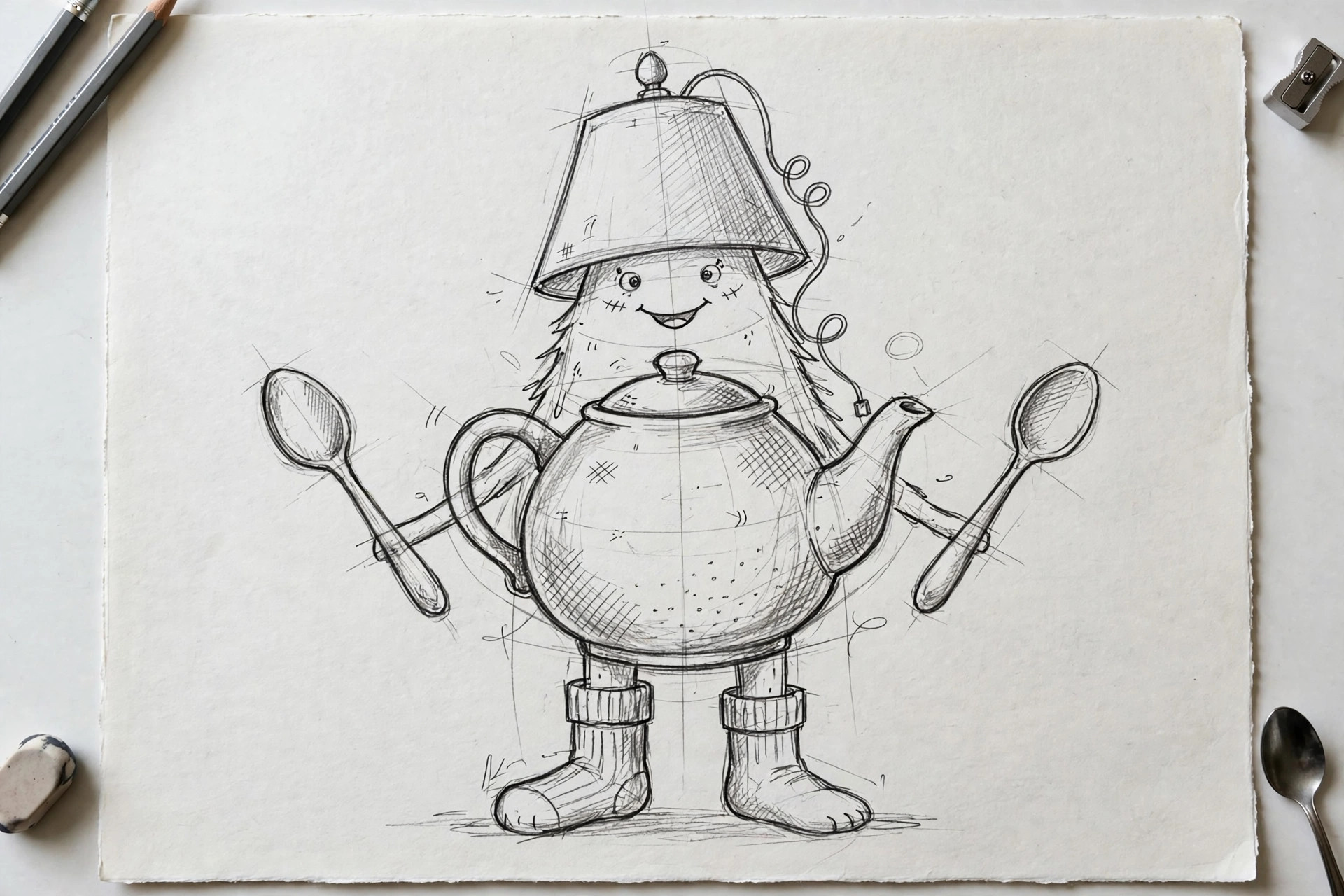
9
Your dream house. Draw the house you would live in if anything were possible: treehouse, lighthouse, tiny cottage. It teaches simple perspective and joyful planning.
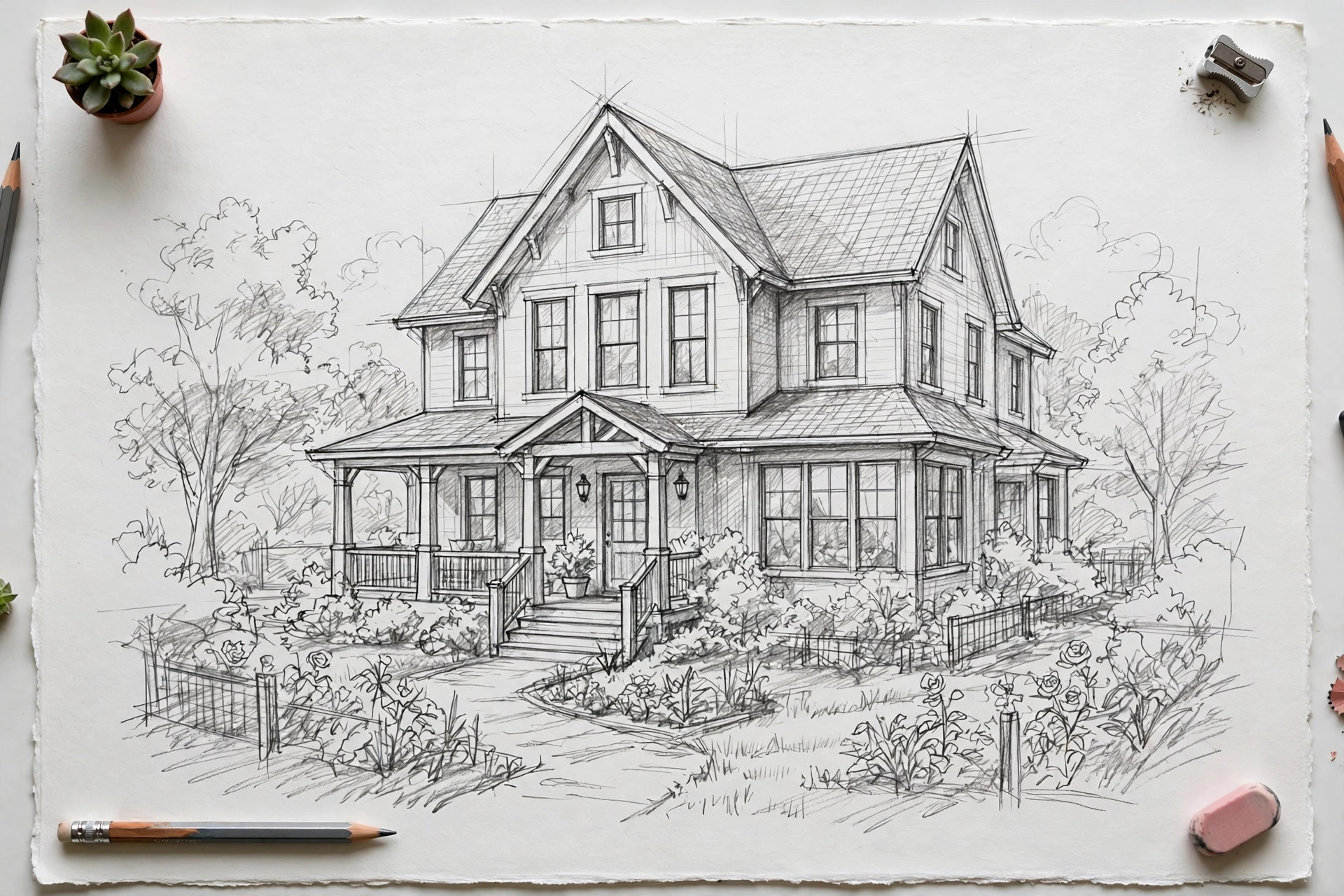
10
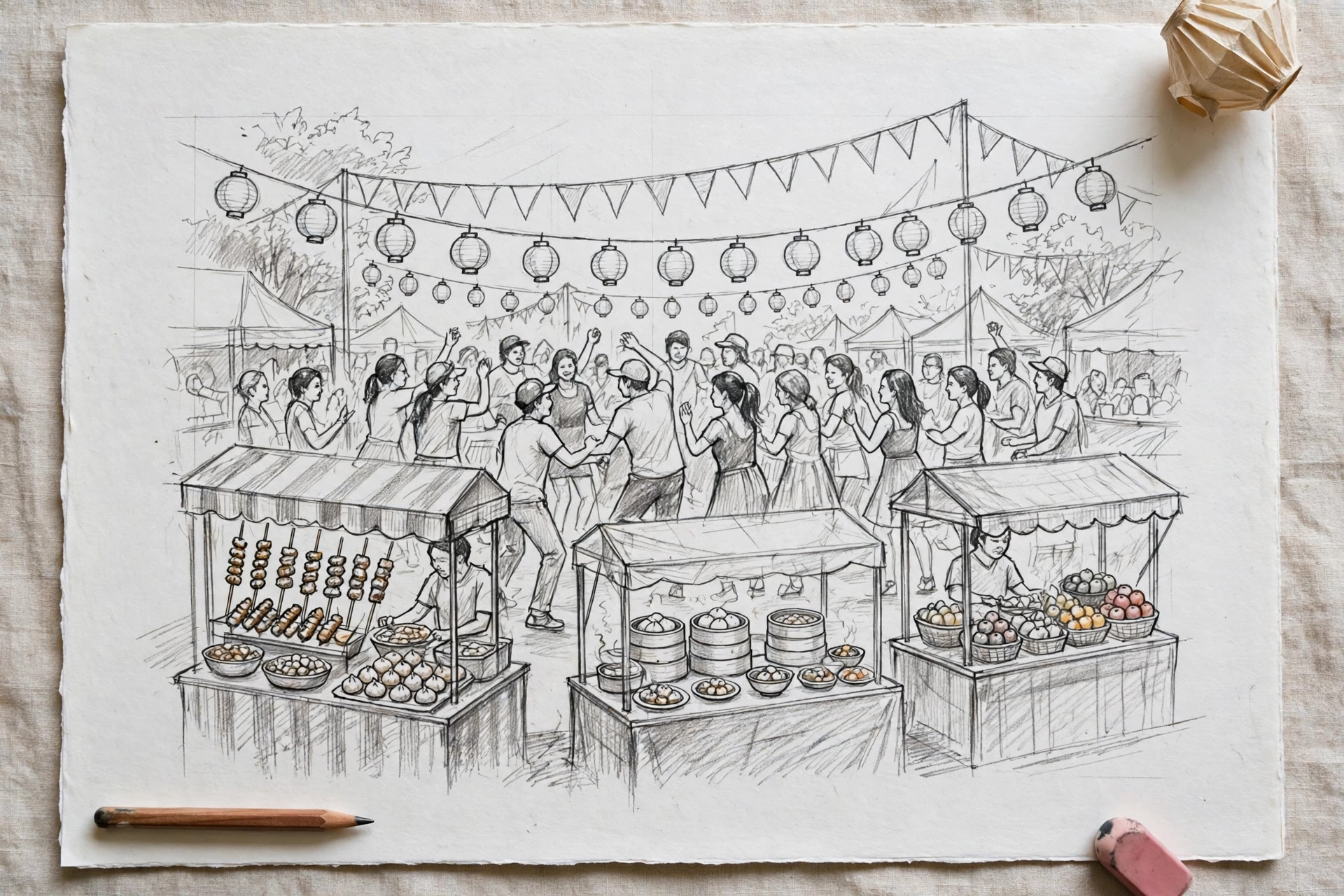
A festival scene. Draw a busy fair or festival with stalls, lights, and a crowd of tiny people. It teaches you to suggest a crowd with simple figures instead of drawing every face.
Nature and World Pages (Ideas 31-40)
Nature is the most patient teacher an artist can have. Clouds do not hold still, but they also never complain, and no two leaves are alike, so there is no single correct answer to get wrong.
1
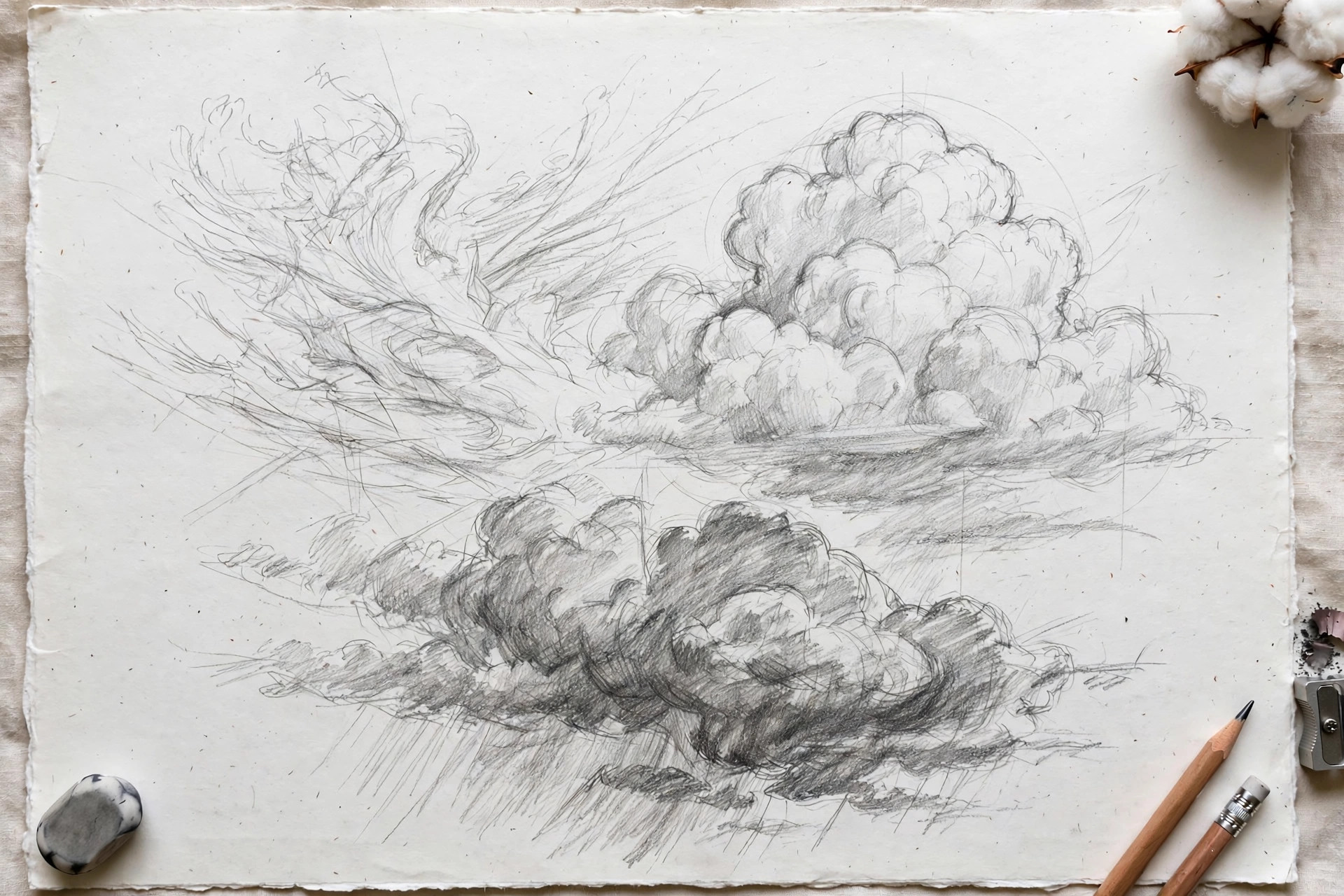
Cloud study. Fill the page with clouds of different shapes, soft and puffy or thin and stretched. It teaches shading without hard outlines.
2
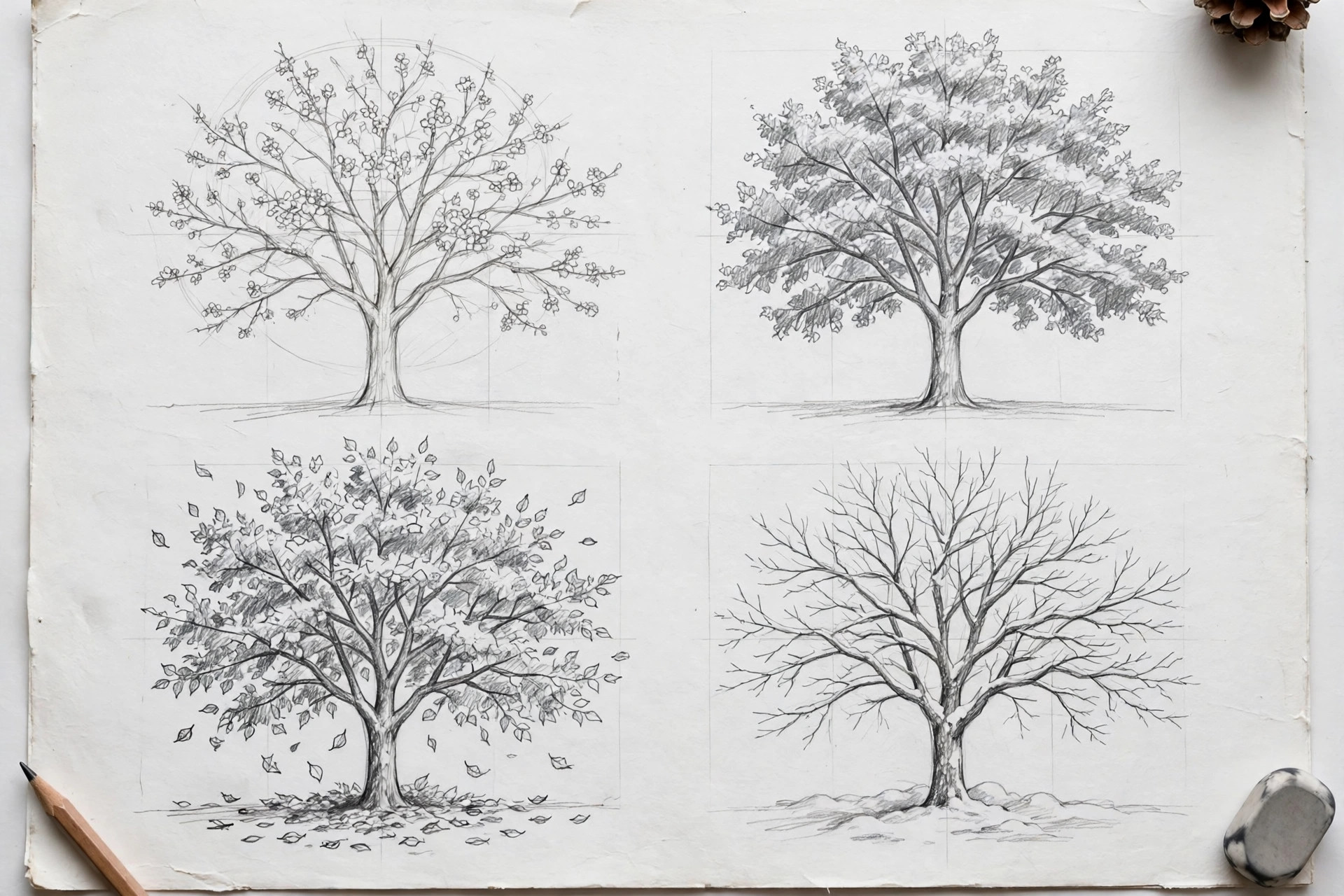
One tree in four seasons. Draw the same tree in spring, summer, autumn, and winter. It teaches how one subject changes, and how color and detail tell a season.
3
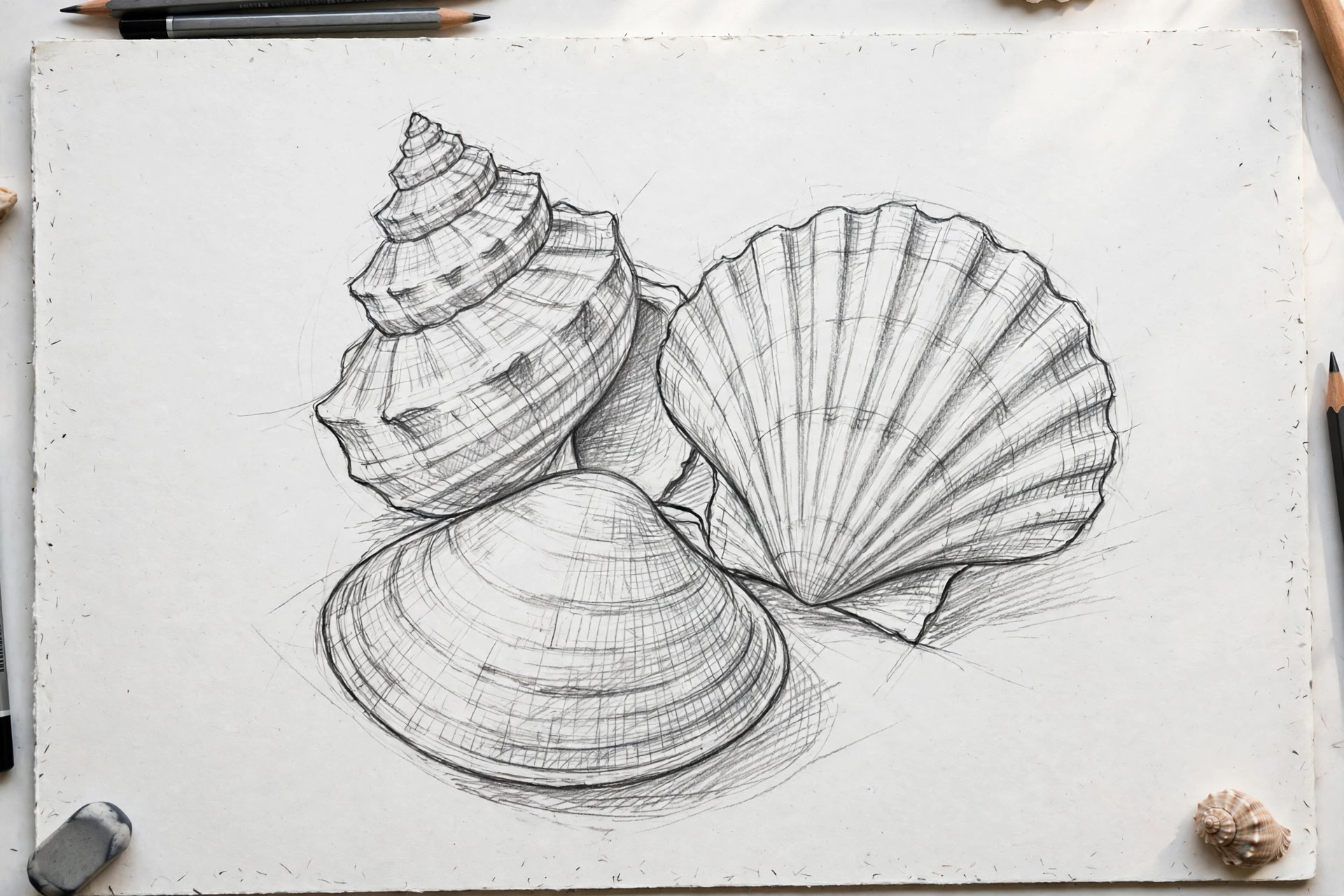
Seashells. Draw shells in a row, real ones or from photos. It teaches spirals, ridges, and patient, close looking.
4
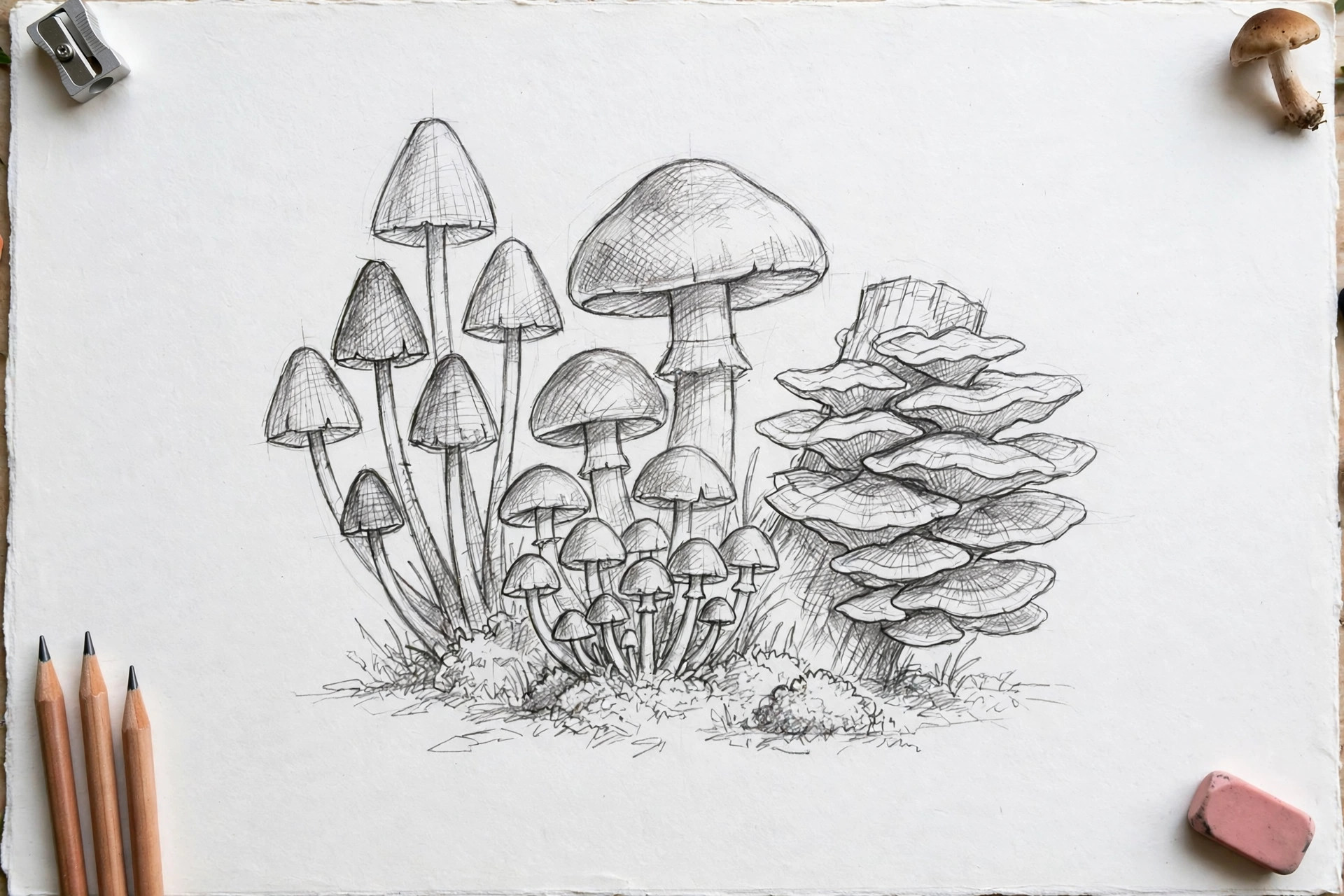
Mushrooms. Draw a page of mushrooms, real shapes and invented ones mixed together. It teaches simple forms with endless variety.
5
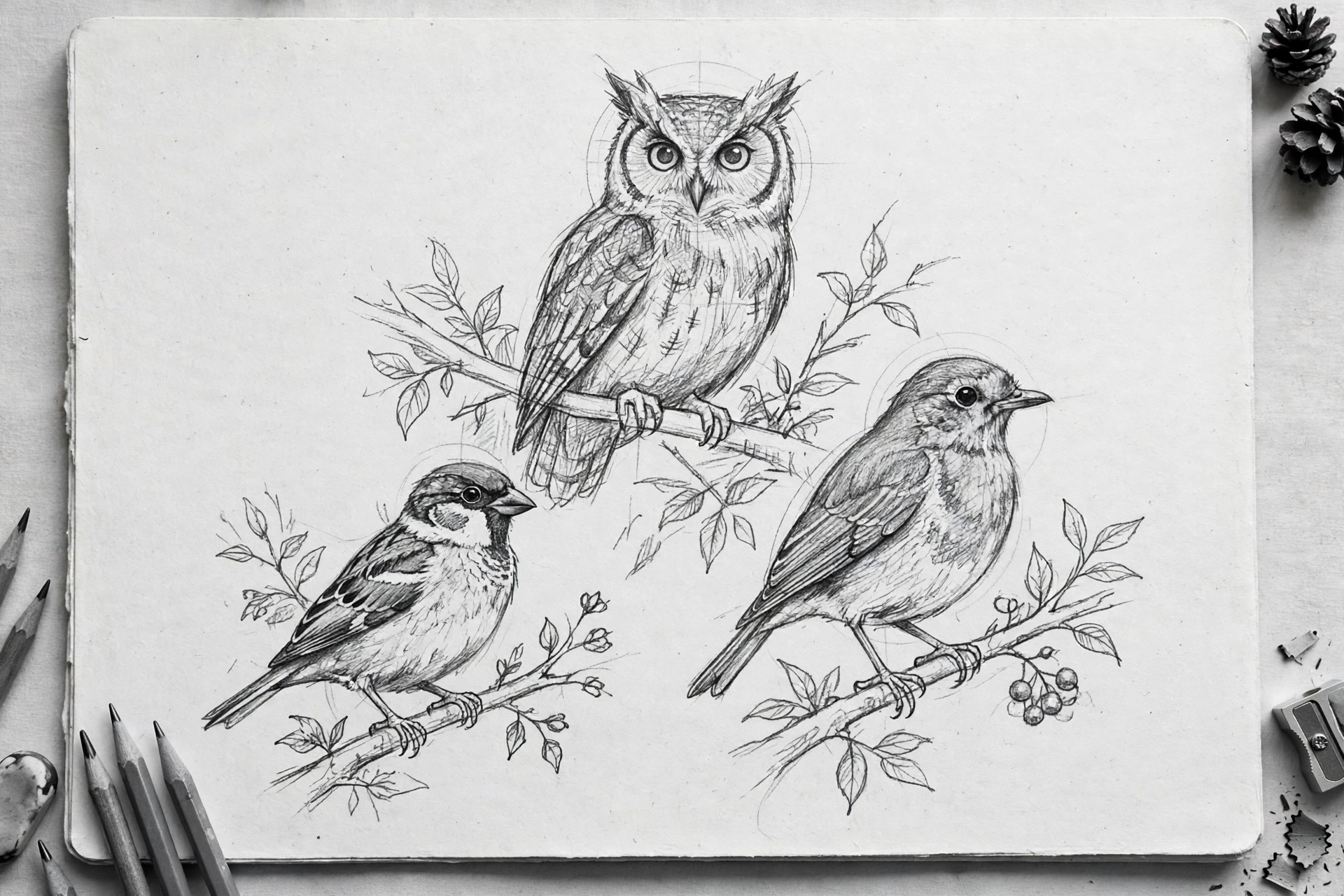
Birds. Draw birds perched, flying, and preening. It teaches how to build an animal from an egg shape, a beak, and a few feather hints.
6
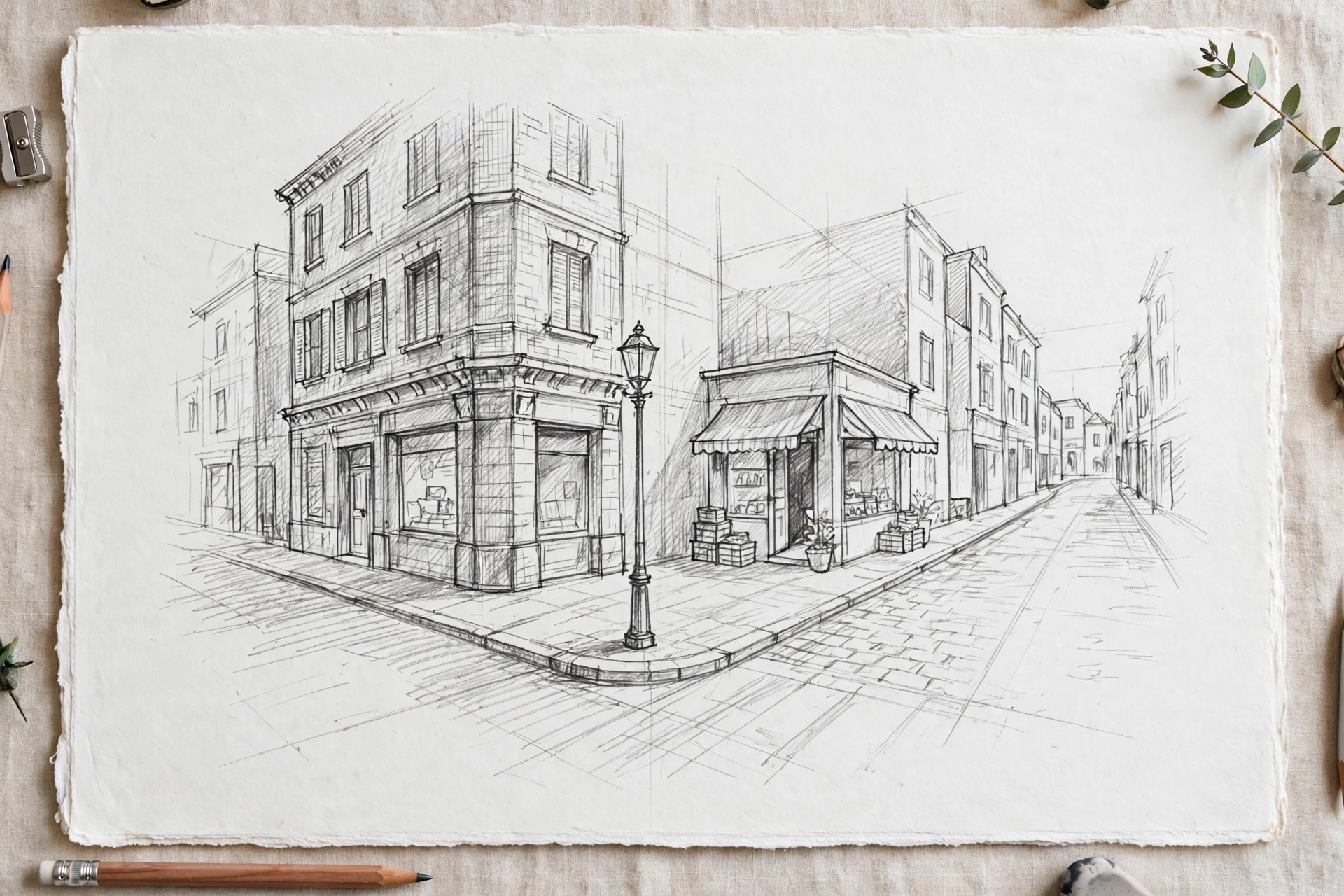
A street corner. Draw one corner of a street: a sign, a window, a parked bicycle. It teaches you to find a drawing anywhere, which is the sketchbook habit in one page.
7
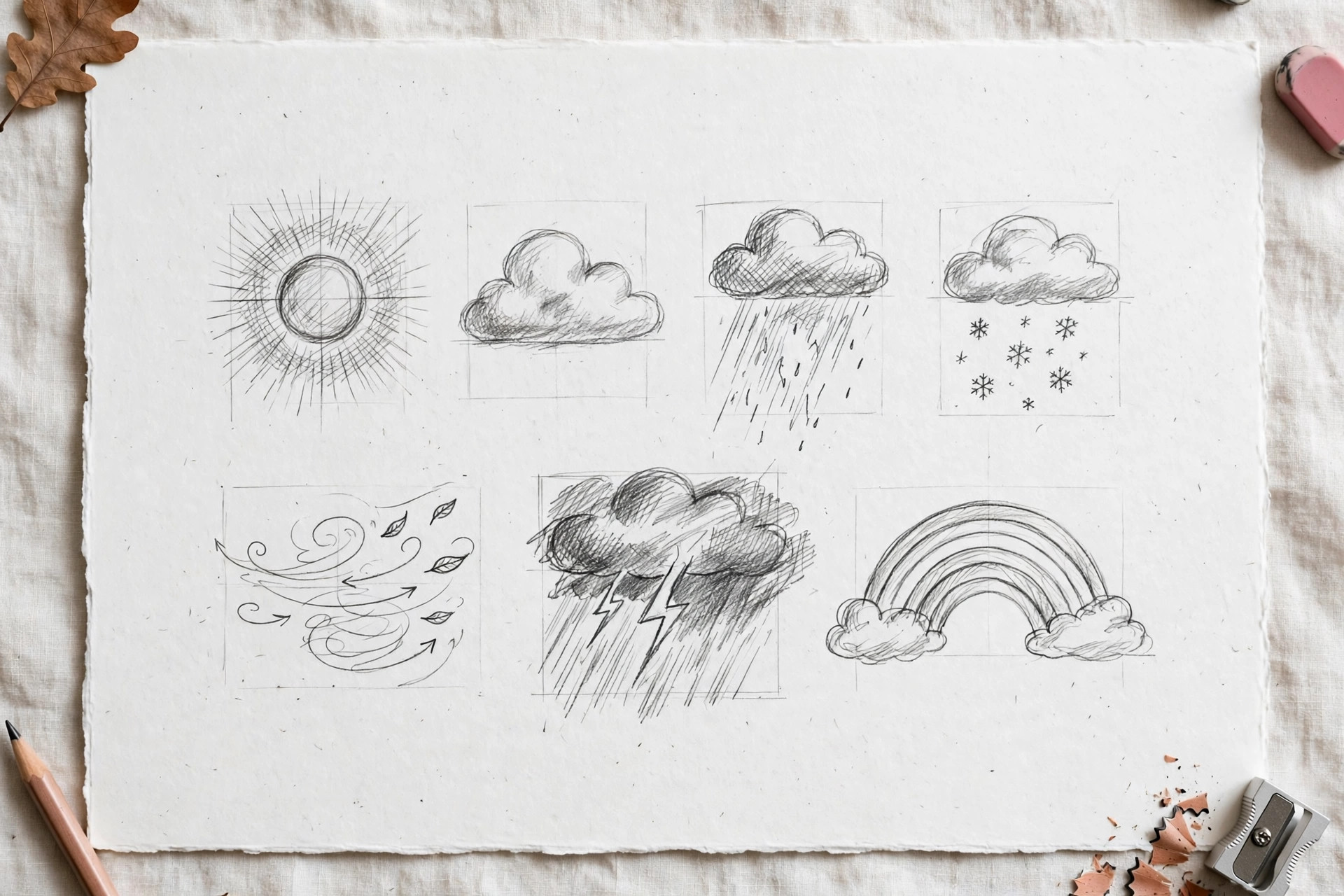
A week of weather diary sketches. Split the page into seven boxes and sketch one small weather moment per day. It teaches quick noting and turns your sketchbook into a diary.
8
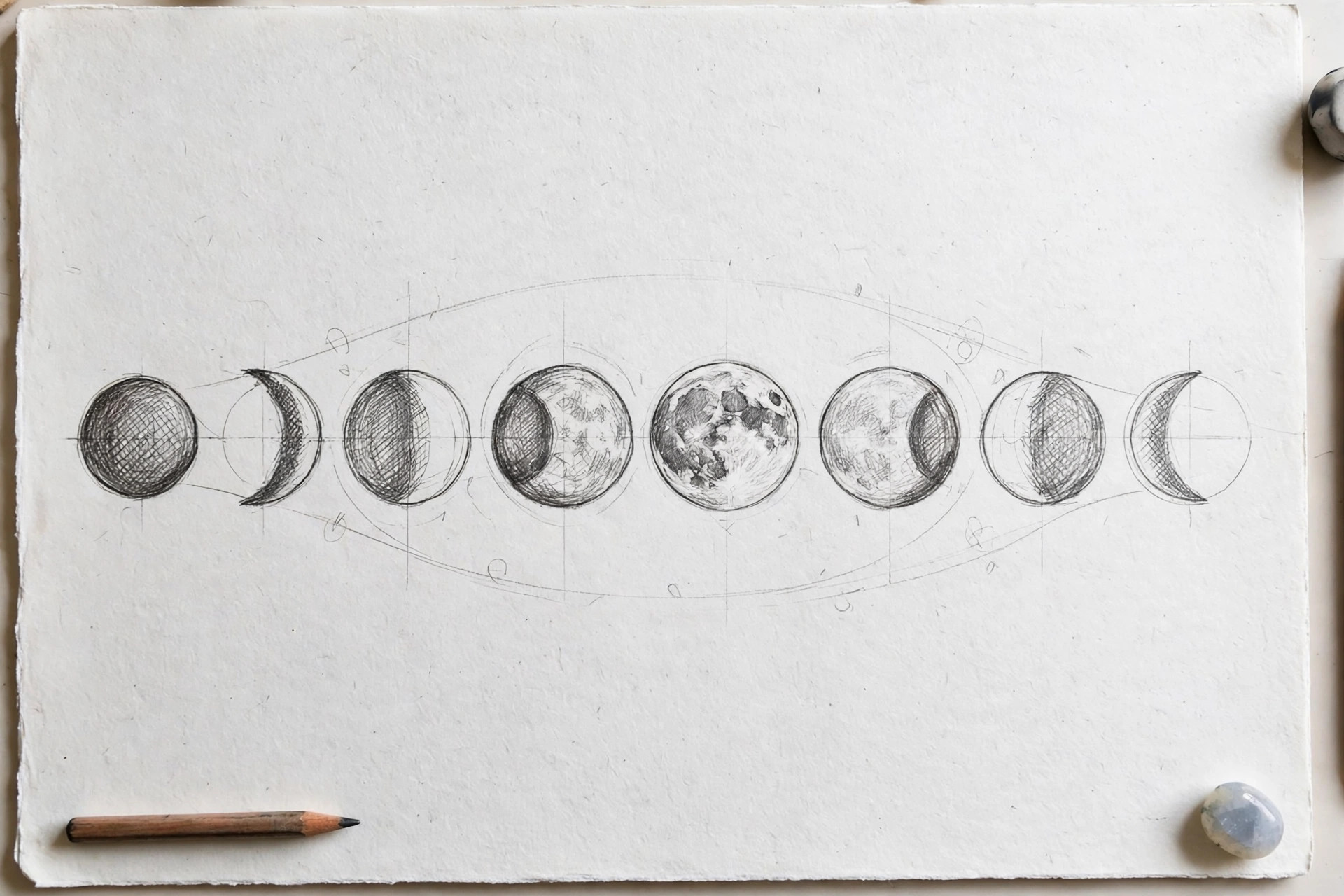
Moon phases. Draw the moon in its phases, from thin crescent to full circle. It teaches circles, patience, and the beauty of one subject repeated with small changes.
9
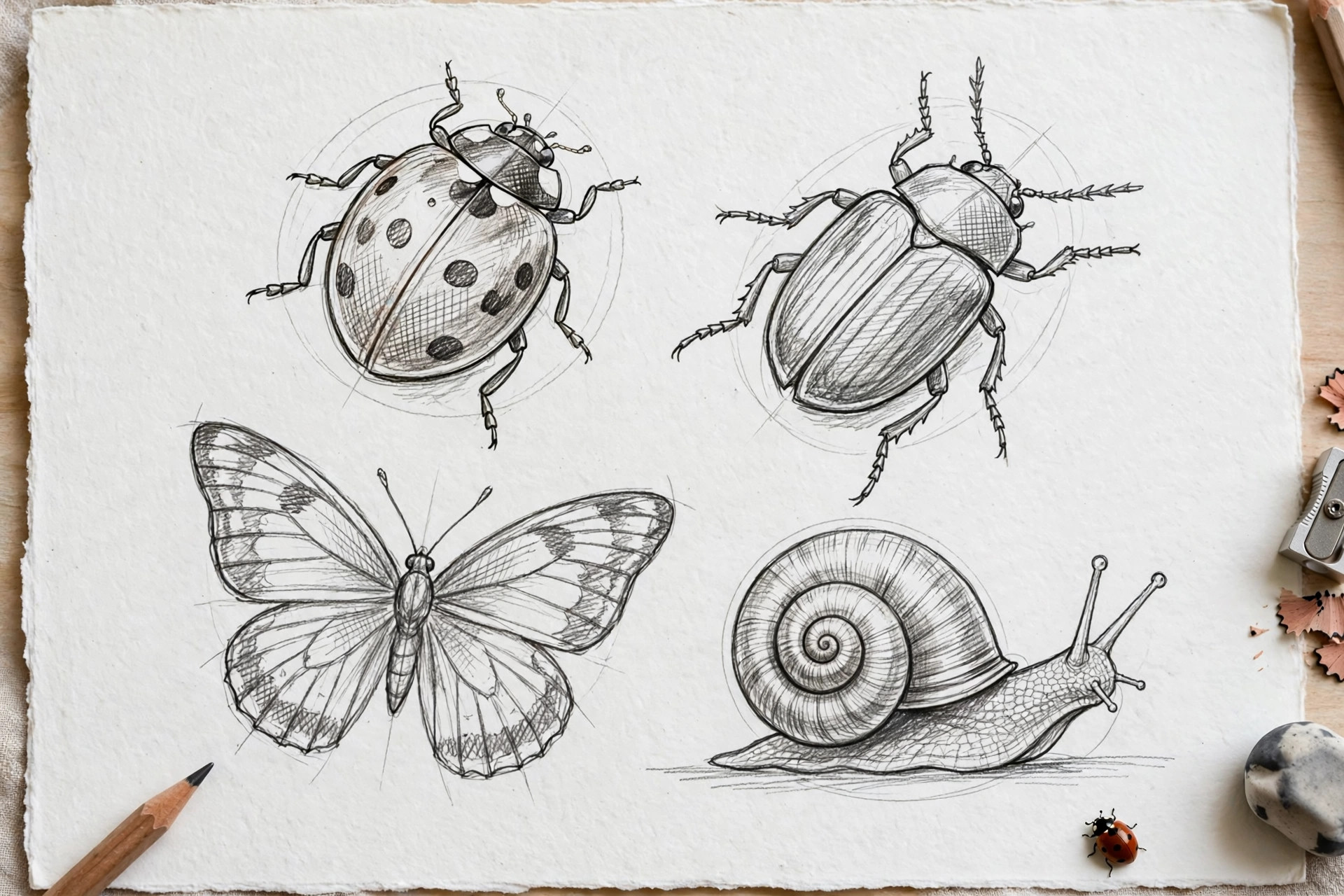
Garden bugs. Draw beetles, butterflies, bees, and ladybugs, big and detailed. It teaches symmetry and the tiny patterns hiding in small things.
10
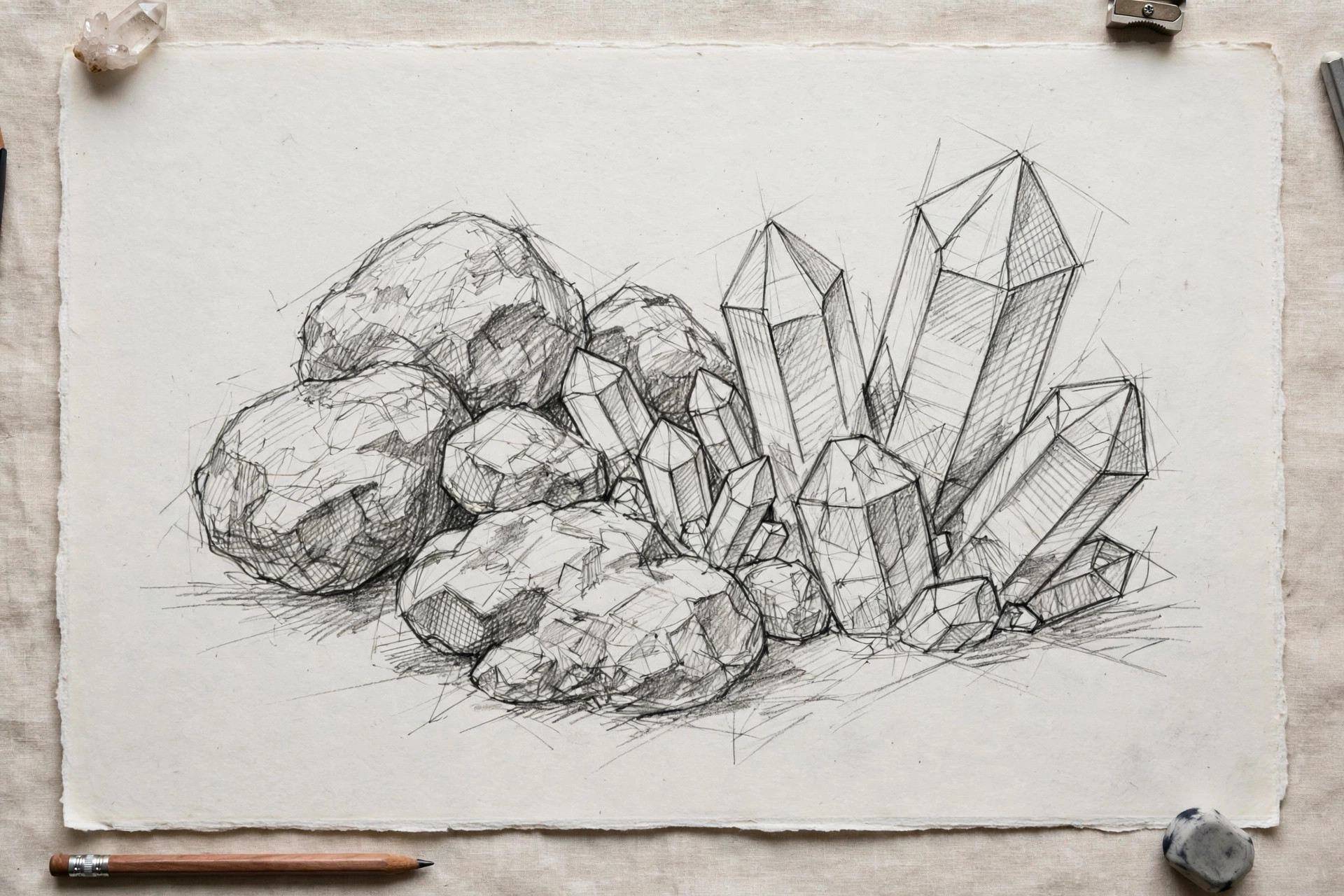
Rocks and crystals. Draw rough rocks next to sharp, shiny crystals. It teaches contrast: soft, dull shapes against hard, bright ones.
Challenge Pages (Ideas 41-50)
Challenge pages add one playful rule that forces your brain to draw in a new way. The results are often wobbly, funny, and surprisingly educational. When a normal page feels boring, pick one of these.
1
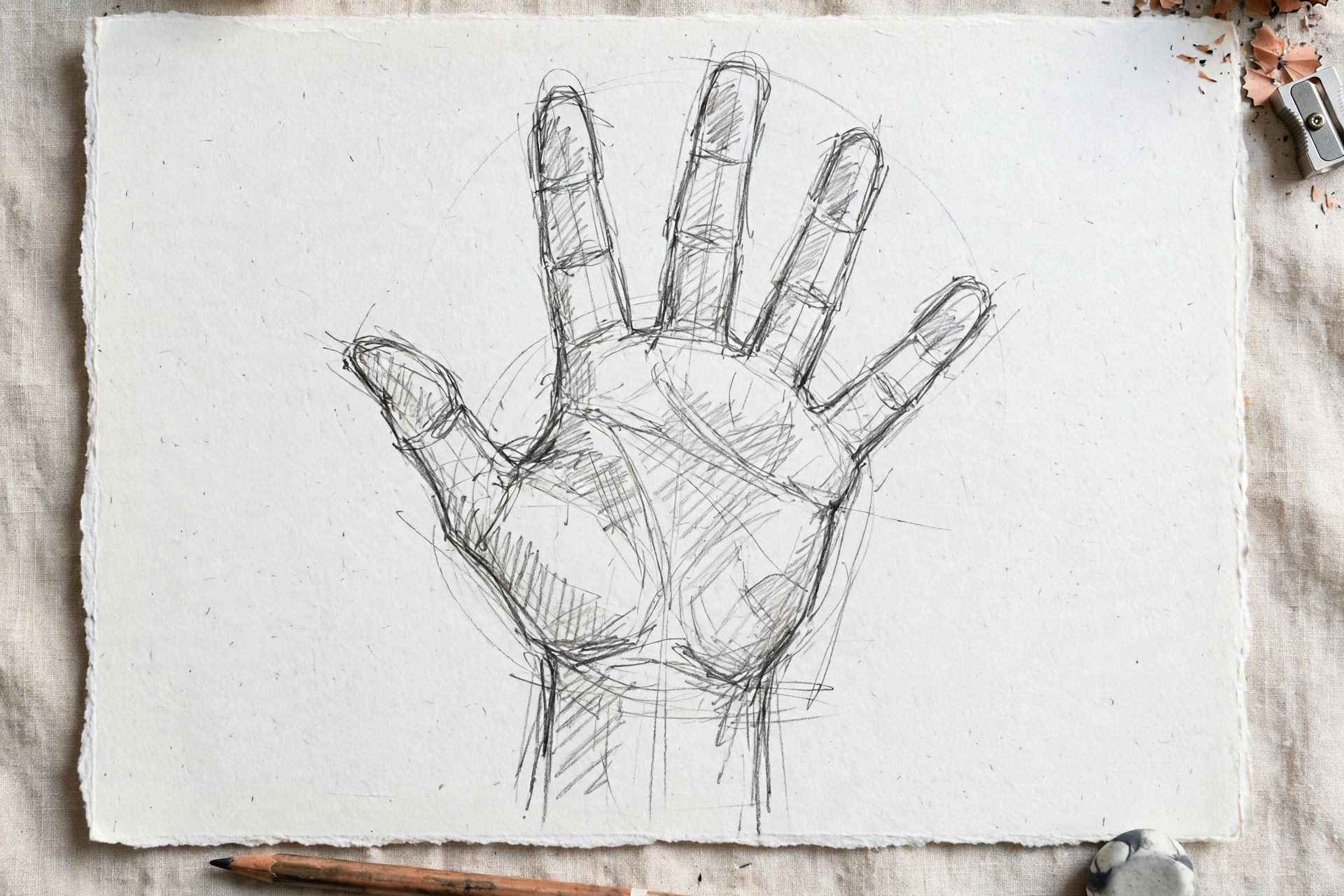
Non-dominant hand. Draw a simple object with the hand you do not normally use. It teaches humility and patience, and the shaky lines show you how much control your main hand has learned.
2
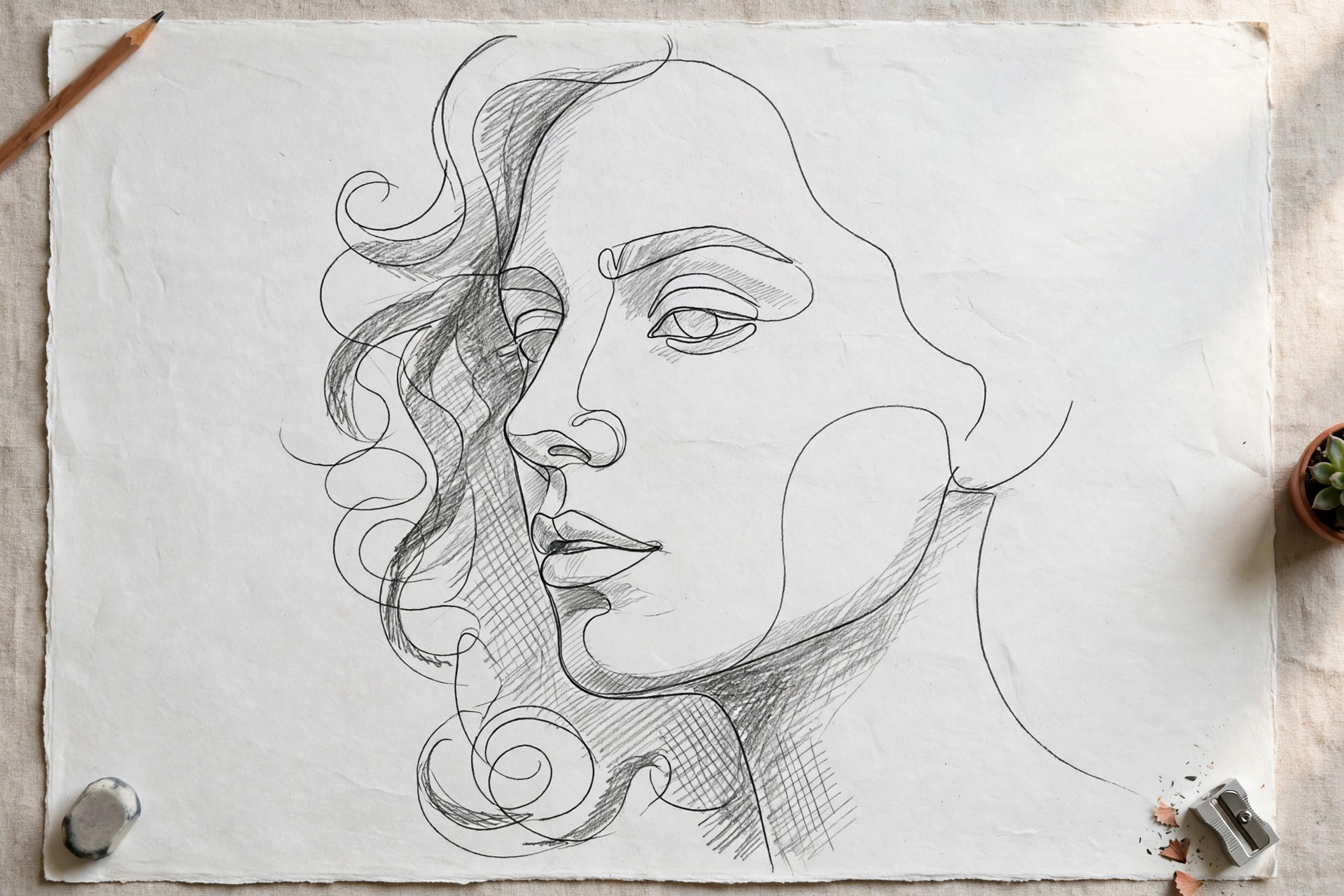
One-line drawing. Draw an object without lifting your pen from the page, in one continuous line. It teaches planning and confidence, because there is no erasing a line you cannot lift away from.
3
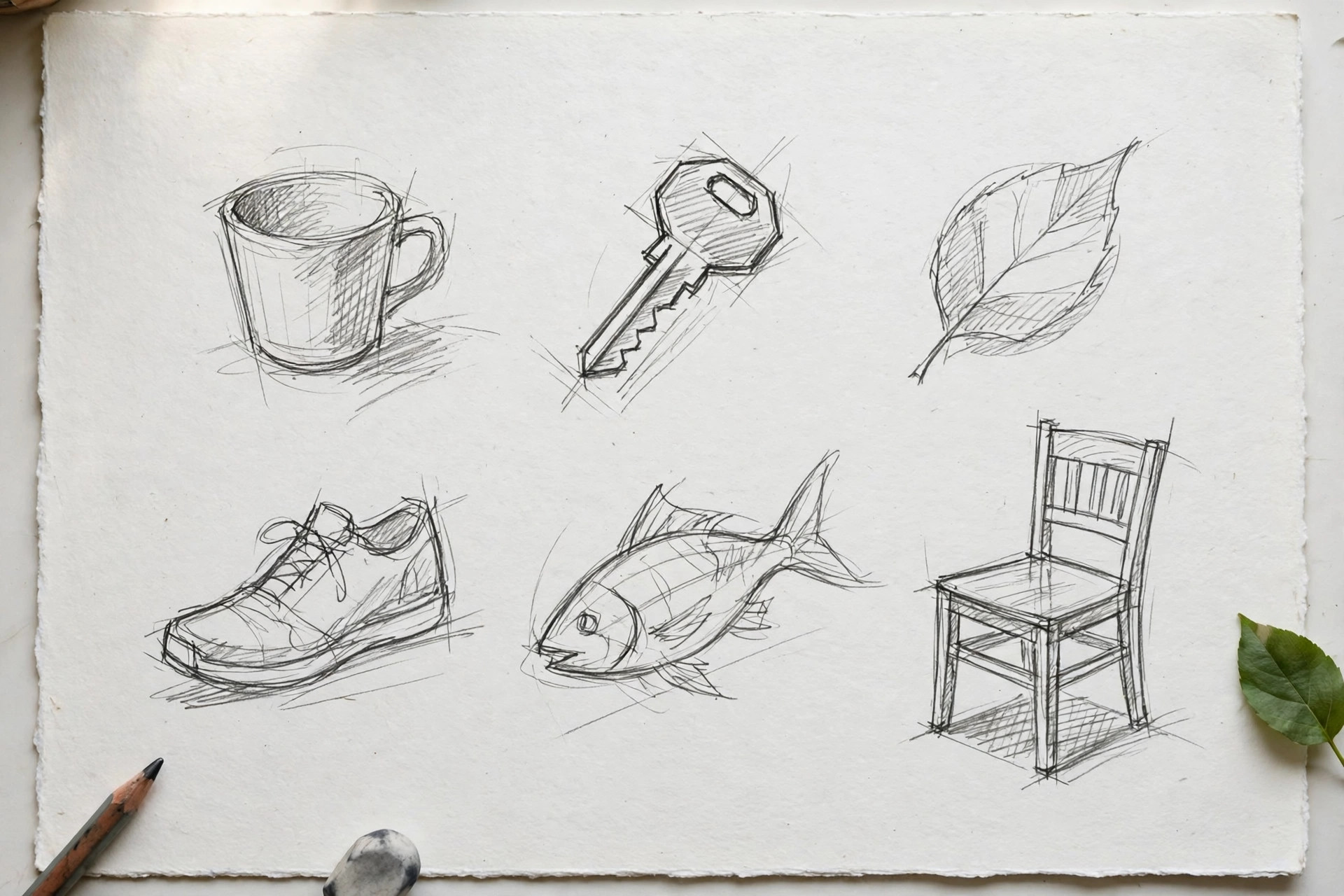
Six 60-second sketches. Set a timer and draw six quick sketches, one minute each. It teaches you to grab the big shapes first and ignore detail until the end.
4
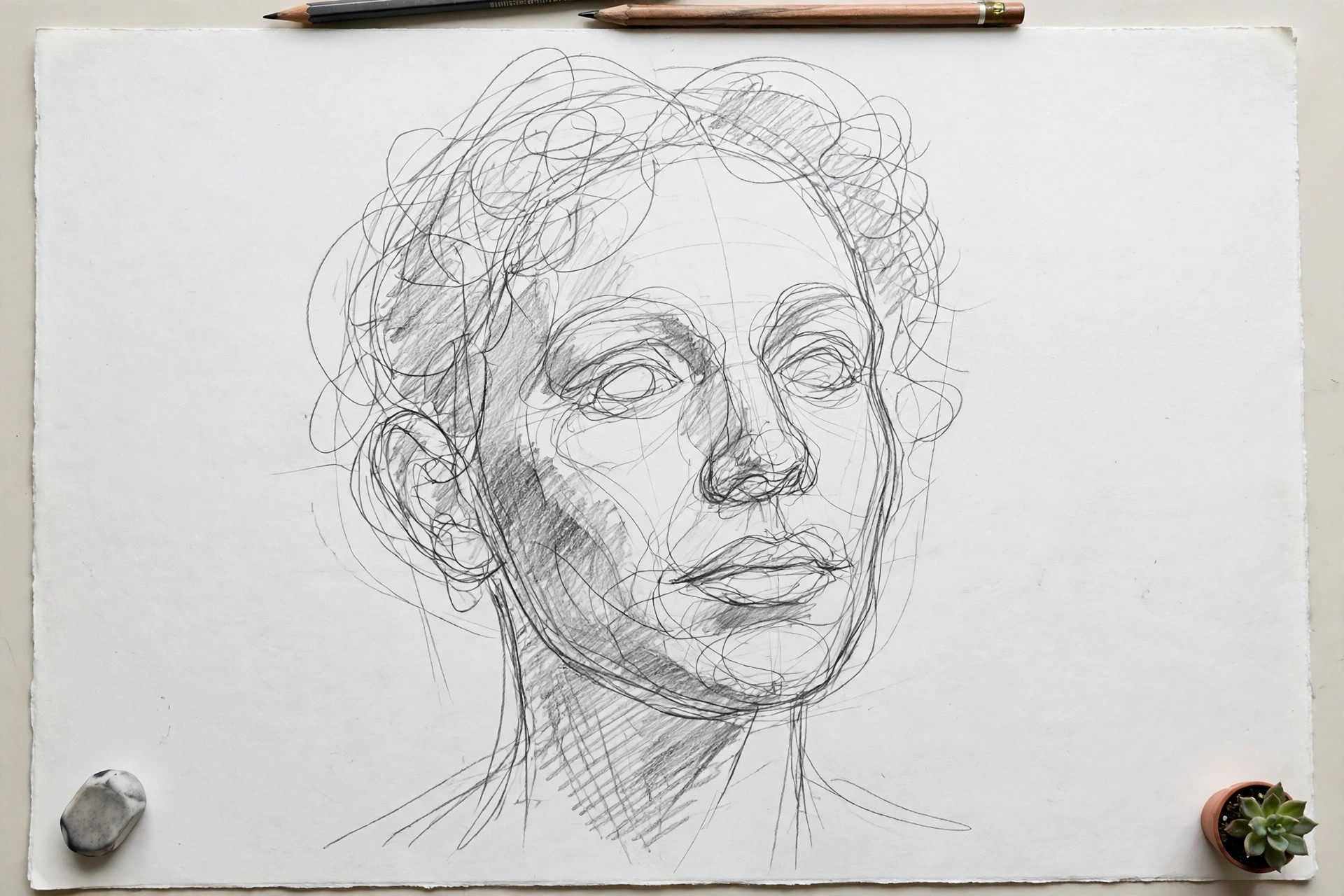
Draw without looking at the paper. This is called blind contour drawing: your eyes follow the edge of an object while your hand copies the movement, and you never peek. It teaches pure observation, and the wobbly results are half the fun.
5
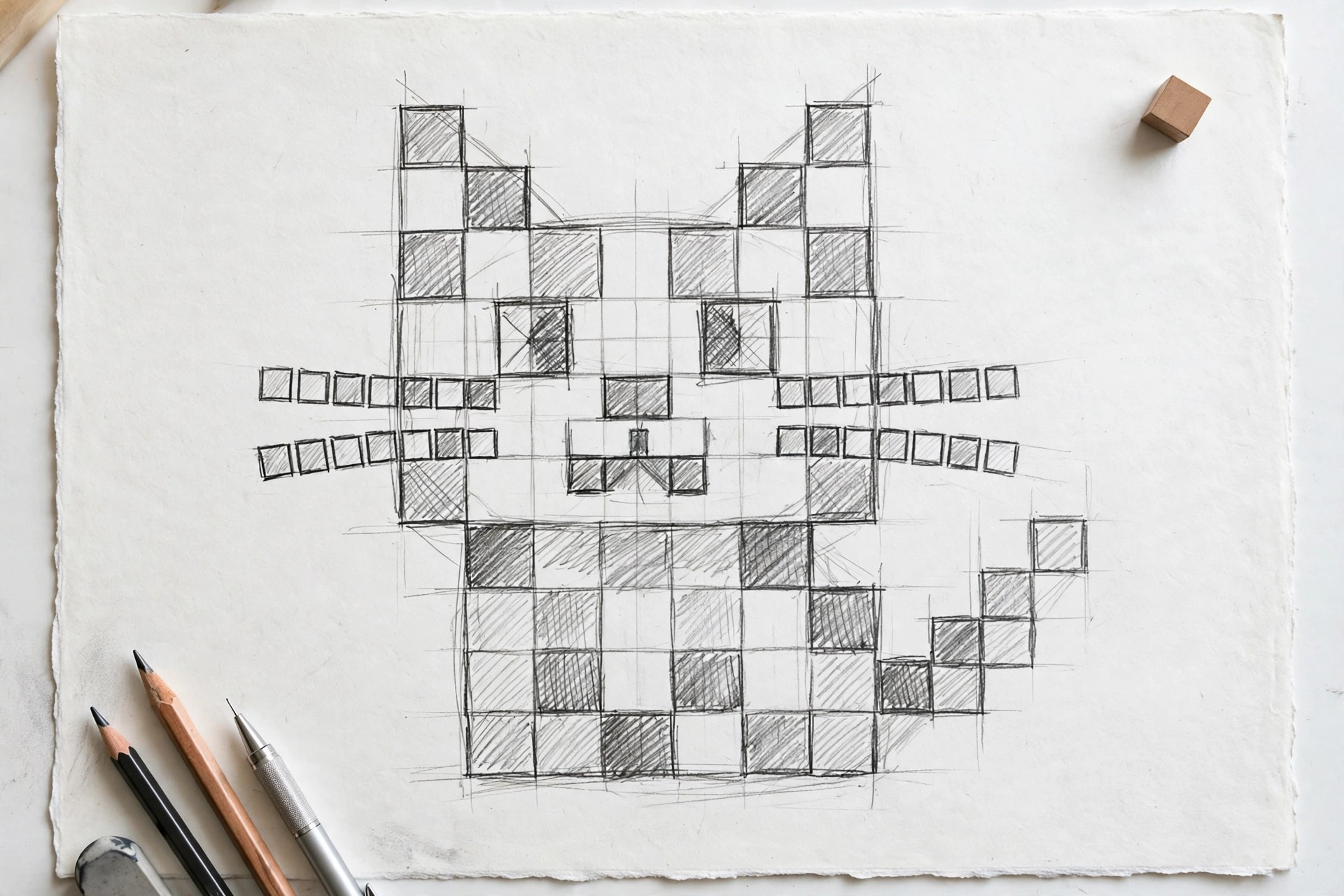
Only squares. Draw a whole picture using nothing but squares and rectangles. It teaches you to simplify any subject into simple blocks.
6
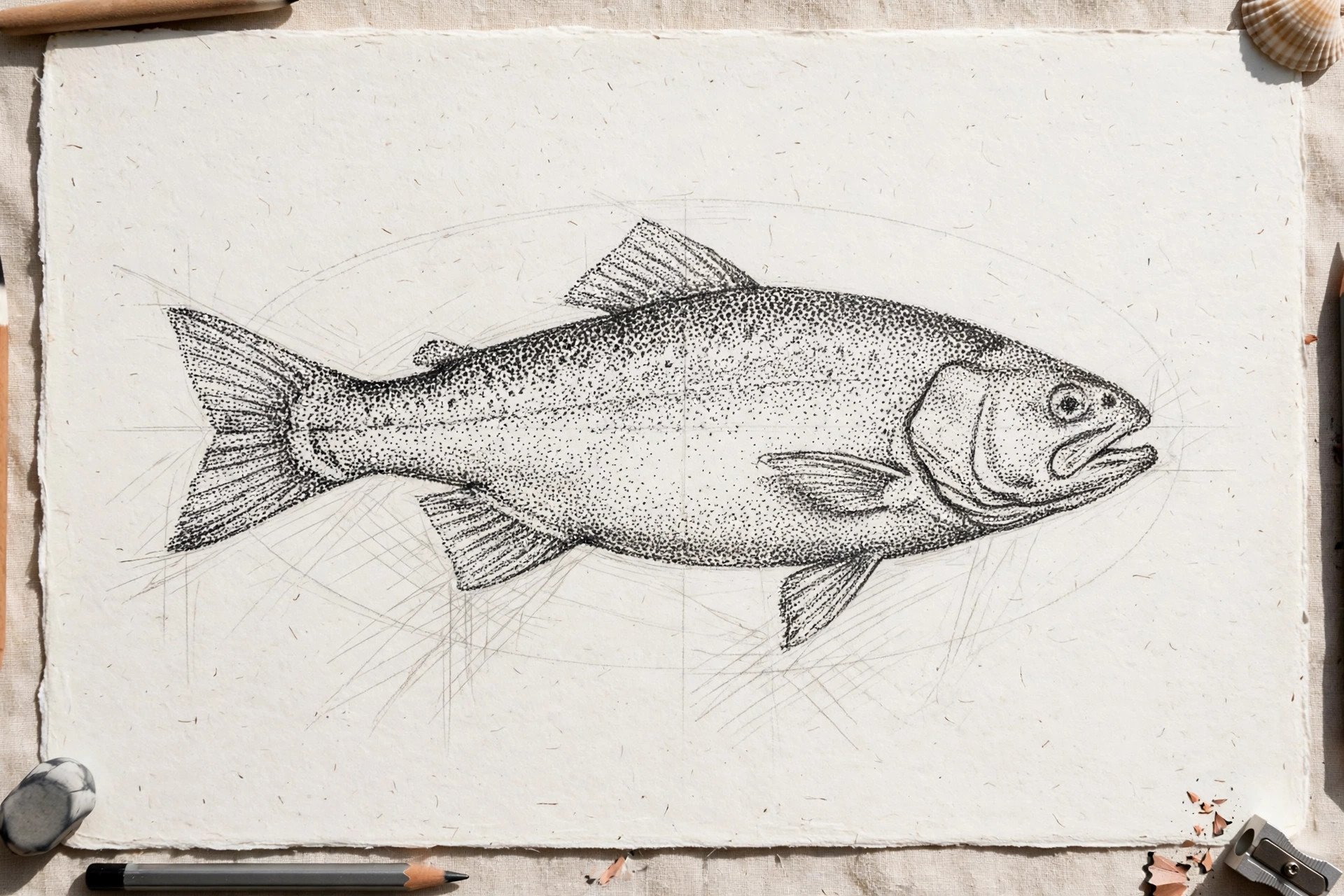
Only dots. Build a drawing entirely from dots, a method called stippling. More dots mean darker areas. It teaches patience and how shading creates form.
7
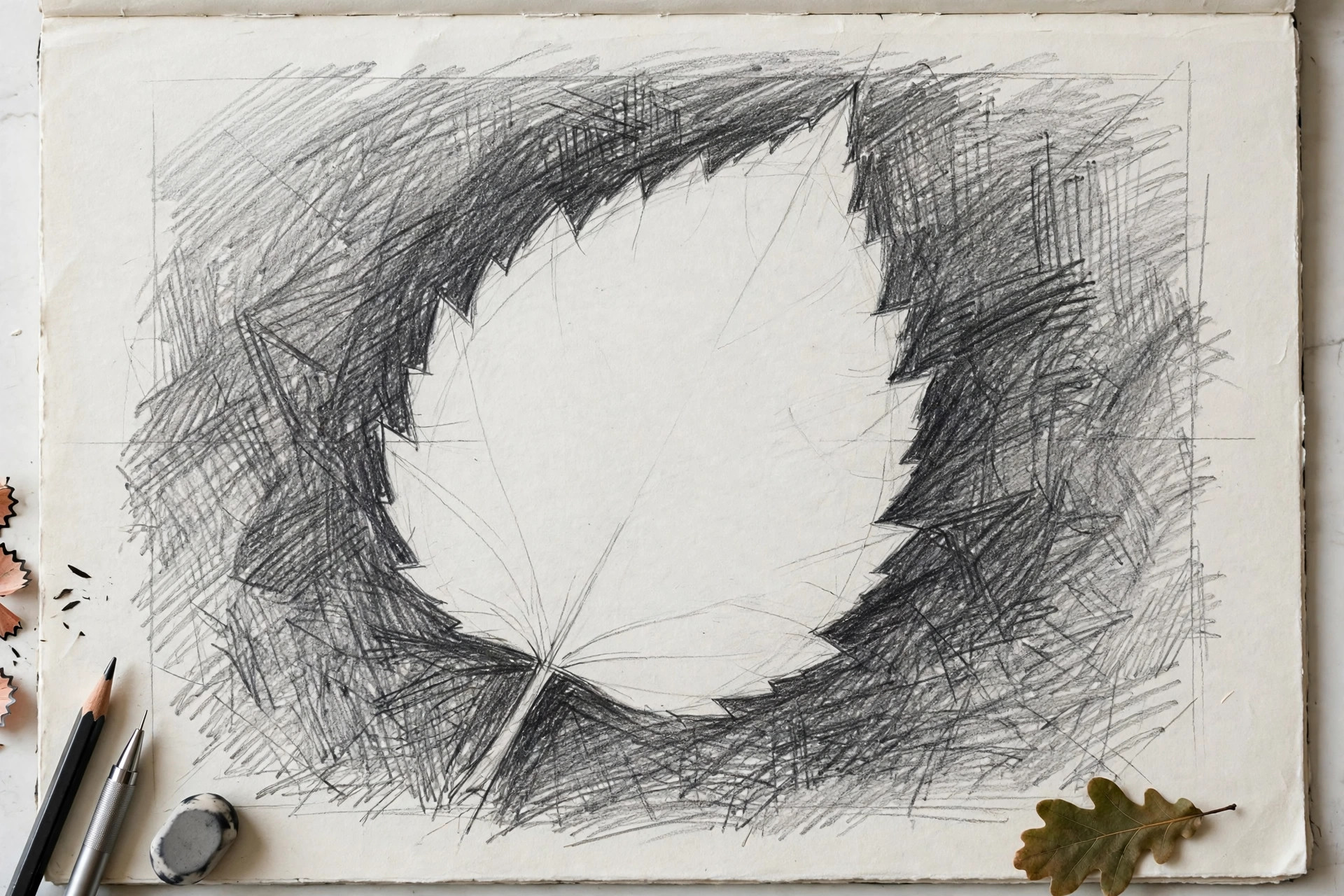
Negative space only. Negative space is the shape of the empty area around an object. Draw only that background shape and let the object appear as a blank silhouette. It teaches a completely different way of seeing.
8
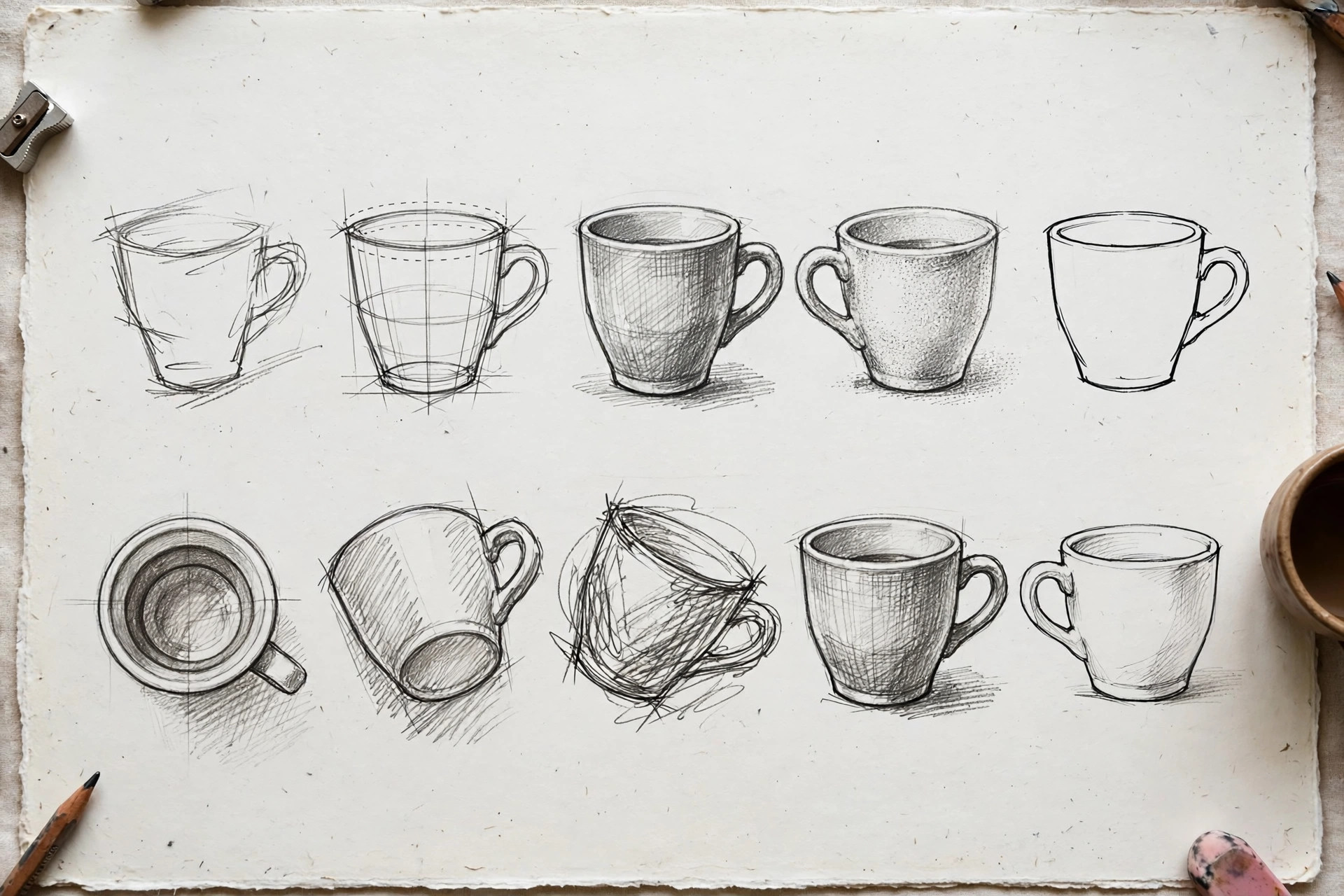
The same object 10 ways. Pick one object and draw it ten times: realistic, cartoon, tiny, huge, from odd angles. It teaches flexibility and kills the fear of the one perfect drawing.
9
Copy a classic artist’s sketch. Choose a sketch by an old master from centuries ago, such as the nature studies and self-portraits of Van Gogh, and copy it slowly in pencil. Artists have learned this way for hundreds of years: you absorb their line choices without noticing.
10
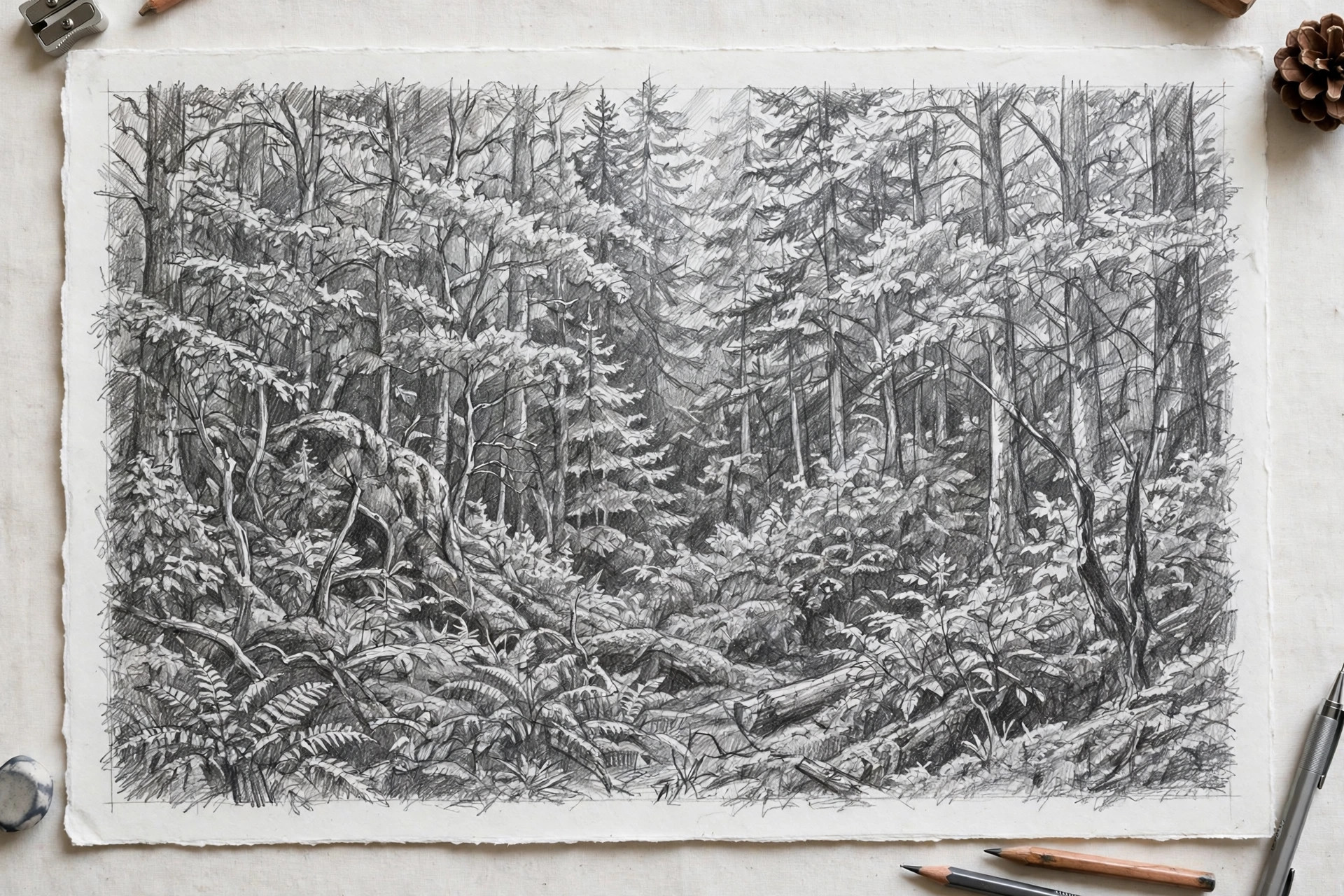
Fill a whole page in one color. Use a single pen or pencil and cover the entire page with a scene or pattern in that one color, using pressure for light and dark. It teaches value, the range from light to dark, better than almost anything.
How Do You Keep a Sketchbook Habit?
You keep a sketchbook habit by making it small, regular, and easy to start. A page from this list takes fifteen to thirty minutes, and an unfinished page still counts. Keep your sketchbook somewhere visible, next to your keys or on the kitchen table, because a hidden sketchbook is an easy one to forget.
Attach drawing to a moment that already exists in your day, like morning coffee or the last half hour before bed. And when you want a ready-made structure with daily prompts and a finish line, try our 30-day drawing challenge, which walks you through a full month of small daily drawings. The streak matters more than any single page.
Frequently Asked Questions
What should I draw on my first sketchbook page?
Draw something easy and low-pressure, like a color swatch page, your coffee mug, or a page of stars. Many artists skip the very first page and start on the second, so the book never feels too precious to use. The first page sets the tone: this book is for play and practice.
How do I stop worrying about ruining pages?
Remember that a sketchbook is a notebook, not a frame. Working artists fill sketchbooks with experiments, half-ideas, and honest failures, and those pages are where the learning lives. Use an affordable sketchbook, give yourself permission to make ugly pages, and you will find the fear fades within a week or two.
Should a sketchbook look pretty?
No. Pretty pages are a bonus, not the goal. A messy page where you figured out how hands work is worth more than a tidy page that taught you nothing. If you want a few polished pages for sharing, that is fine too, but never let prettiness decide whether a page was worth drawing.
How often should I draw in my sketchbook?
A few times a week beats one rare, long session, and even ten minutes counts. Short, regular practice keeps your hand and eye in training, and it is far easier to keep up than marathon drawing days. Daily is wonderful if you enjoy it, but steady is more important than daily.
Where to Go Next
If you loved this list, give your pages a structure with the 30-day drawing challenge, one small prompt for every day of the month. For quick in-the-moment inspiration, keep our list of easy things to draw when you are bored bookmarked. A better book helps too, so check our picks for the best sketchbooks for beginners. And if the blank page still wins some days, read our guide on what causes art block and how to beat it.