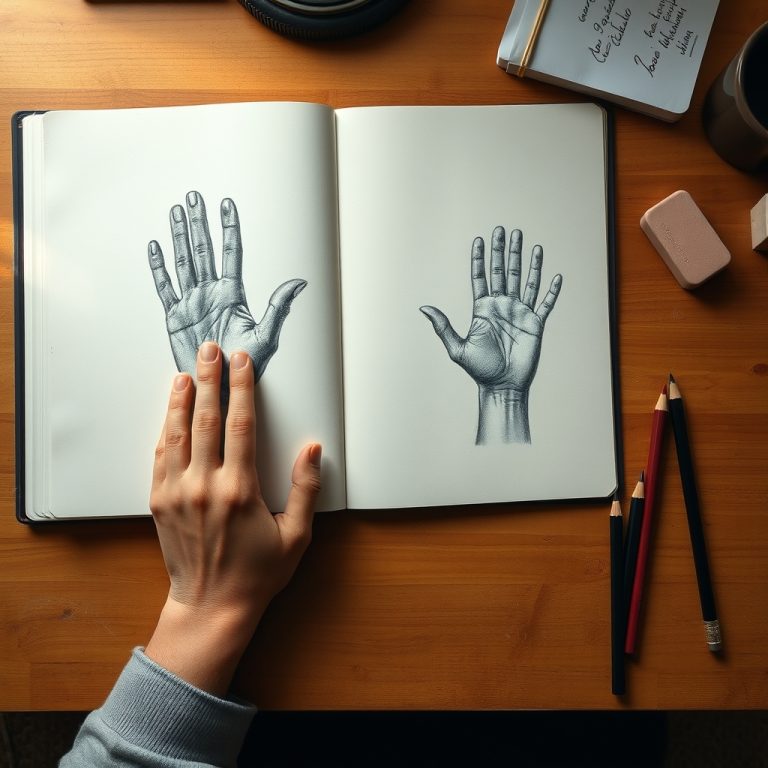
Draw both figures as one combined outline before separating them. Two people sketched individually almost never look connected, but a single shared silhouette forces the overlaps, the leaning and the gap between them to be right from the start.
Key takeaways
- ["Block both figures as one shared silhouette before drawing either separately", "Get the shape of the gap between them right and both figures land correctly", "Put the darkest tone wherever the two of them actually touch", "Let one figure overlap the other rather than standing them side by side", "Tilt the two heads toward each other, since parallel heads read as strangers"]
Two people drawn one after the other almost never look like a couple. Block them in as a single shared silhouette first. Draw the outline that encloses both bodies as one mass, get that shape right, and only then find the edge where one figure ends and the other begins.
The gap does the rest of the work. The negative space between two figures is easier to judge than either figure, so draw the shape of the air between an arm and a waist, or between two heads, and correct that shape until it looks right. Both people will be right too.
One tonal decision separates a convincing couple from a pasted one. Wherever they actually touch, the tone goes darkest. Hands, shoulders, foreheads, the point where a coat meets a coat: those contact shadows are what physically join the two figures on the page.
The thirty ideas below run from a rainy umbrella and a Paris bridge to tango, fireworks and a wedding portrait. For getting the faces right see the face drawing tutorial for beginners, and for the hair, hair drawing techniques for beginners.
Compiled by the GS Art Zone editorial team. Last updated August 2026. Each idea is paired with the specific step that produces the effect, so you can go from the reference straight to paper.
What You Need Before You Start
- An HB for the shared block-in and a 4B for the contact shadows
- A kneaded eraser, for pulling the two figures apart once the mass is right
- Toned or colored paper for the moodier scenes, which halves the shading
- A photograph of two real people, because invented poses drift apart
- A larger sheet than usual, as two figures need room to lean
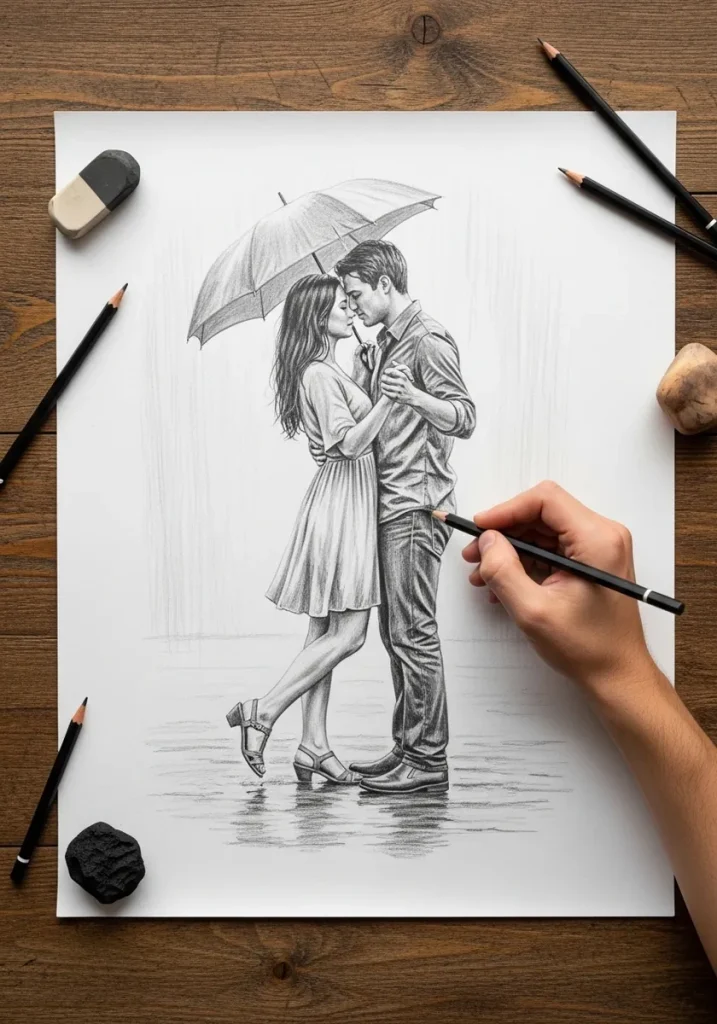
1. Couple Under an Umbrella
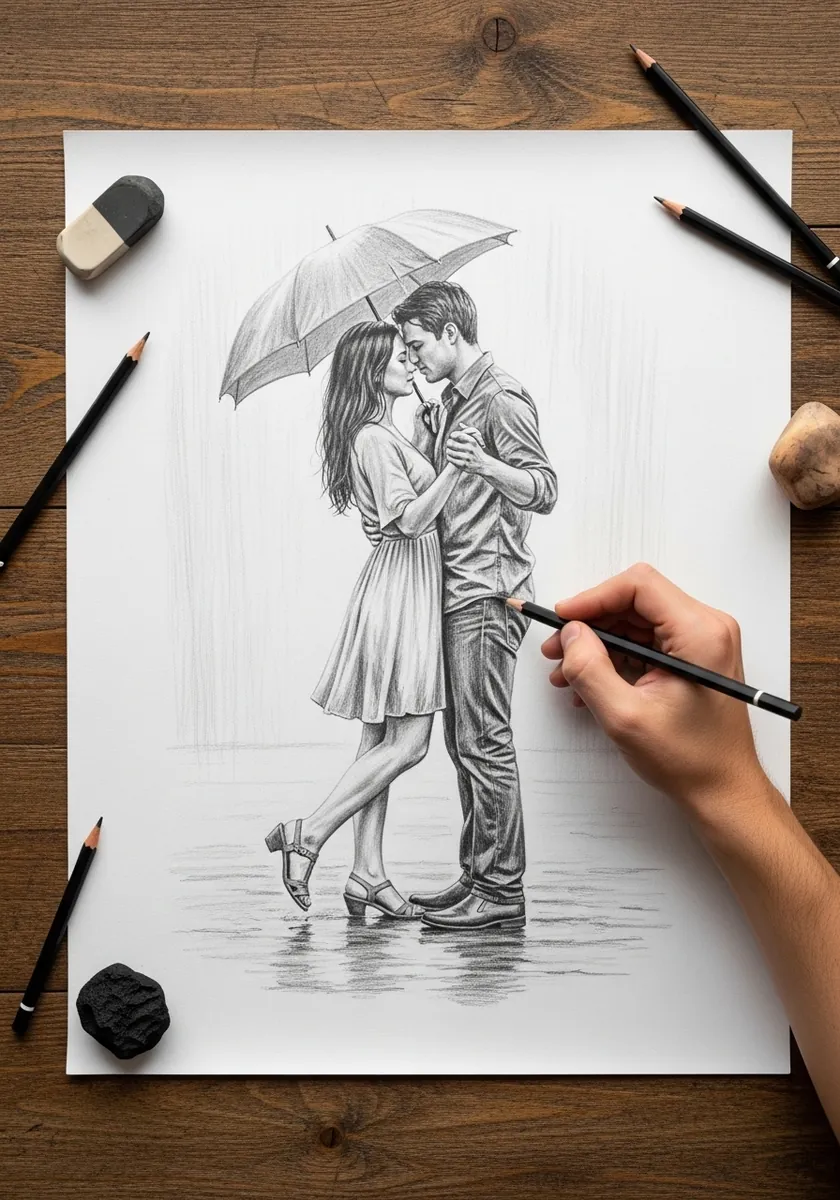
An umbrella is a gift, because it encloses both figures inside one shape. Draw the canopy first and let it define how close the two of them stand, then build both bodies inside its shadow and darken everything under the rim.
2. Under the Cherry Blossom
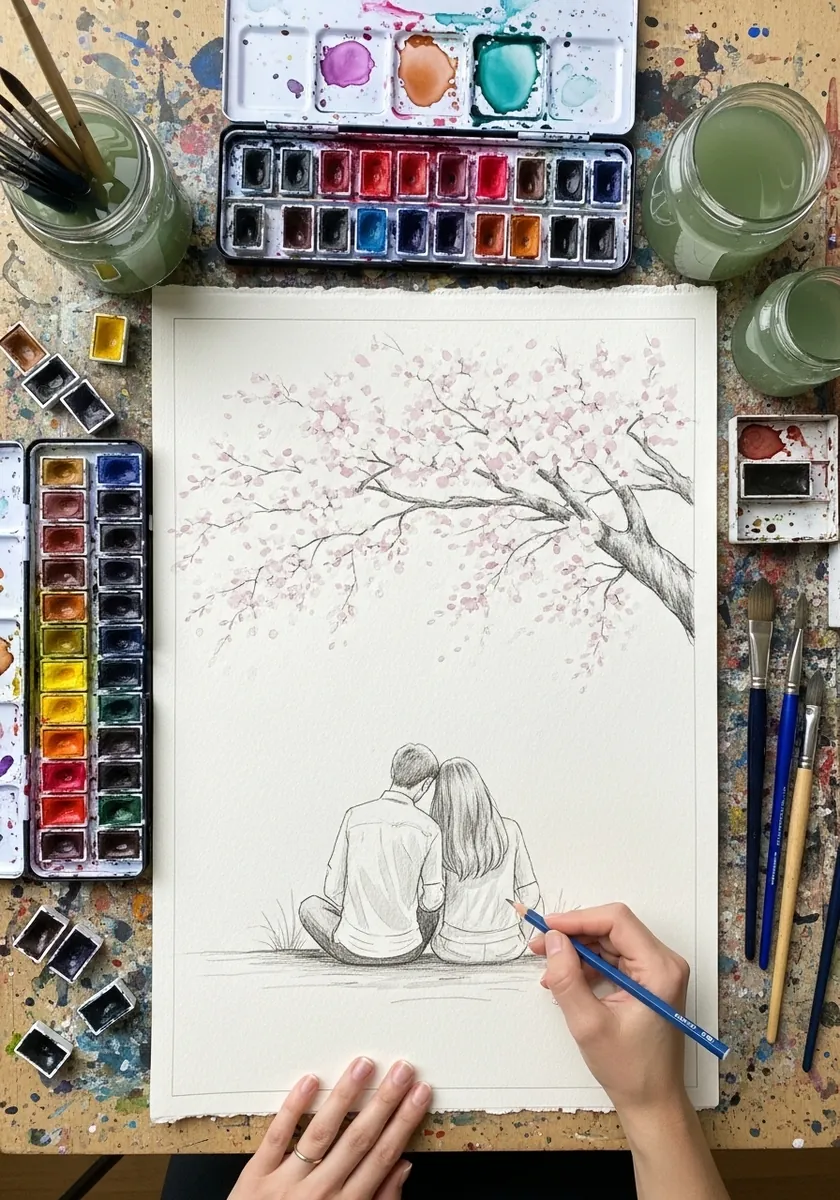
Seen from behind, the whole story is in the shoulders. Let one shoulder overlap the other, keep both heads tilted very slightly inward, and leave the faces out entirely; the blossom above supplies all the mood the picture needs. Keep the ground beneath them almost empty so the tree carries the picture.
3. Couple in Paris
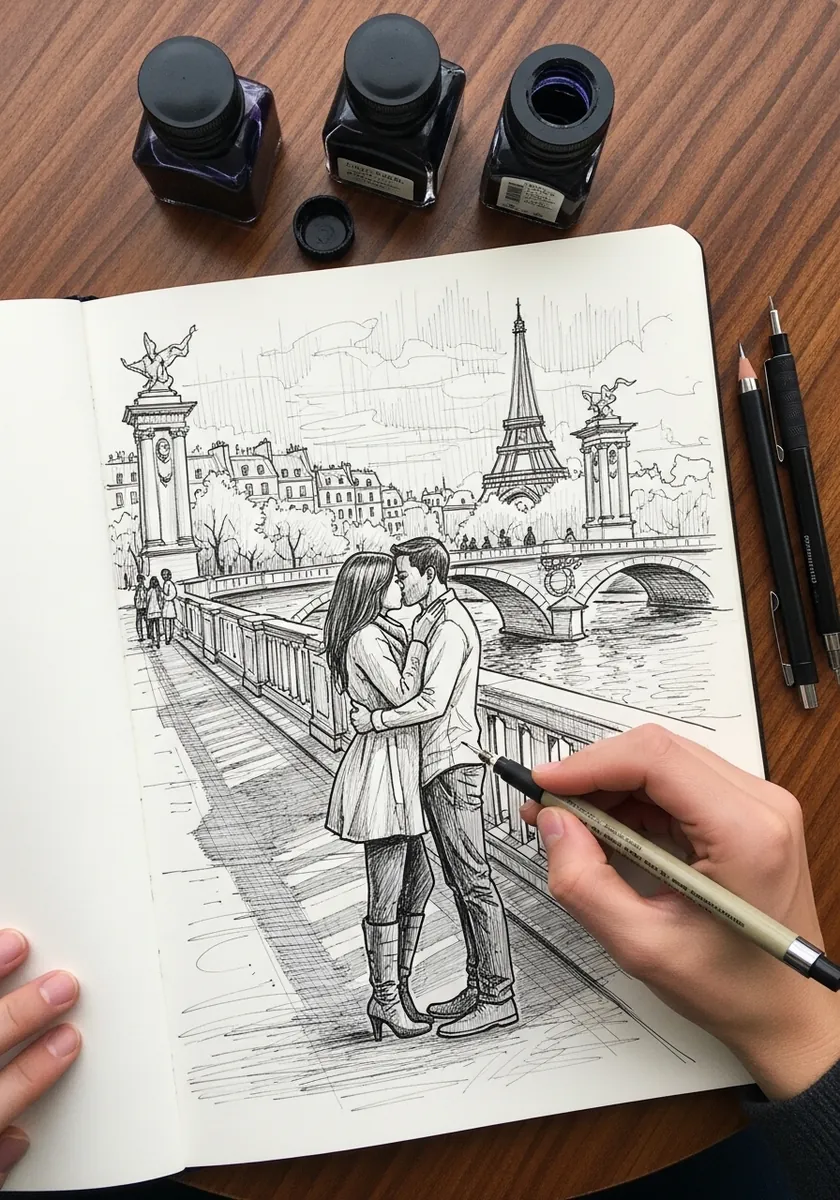
A famous background risks stealing the picture. Keep the tower and the bridge as thin unshaded line work, put every dark tone into the two figures instead, and the eye will go to the couple despite the landmark behind them.
4. Tango in Silhouette
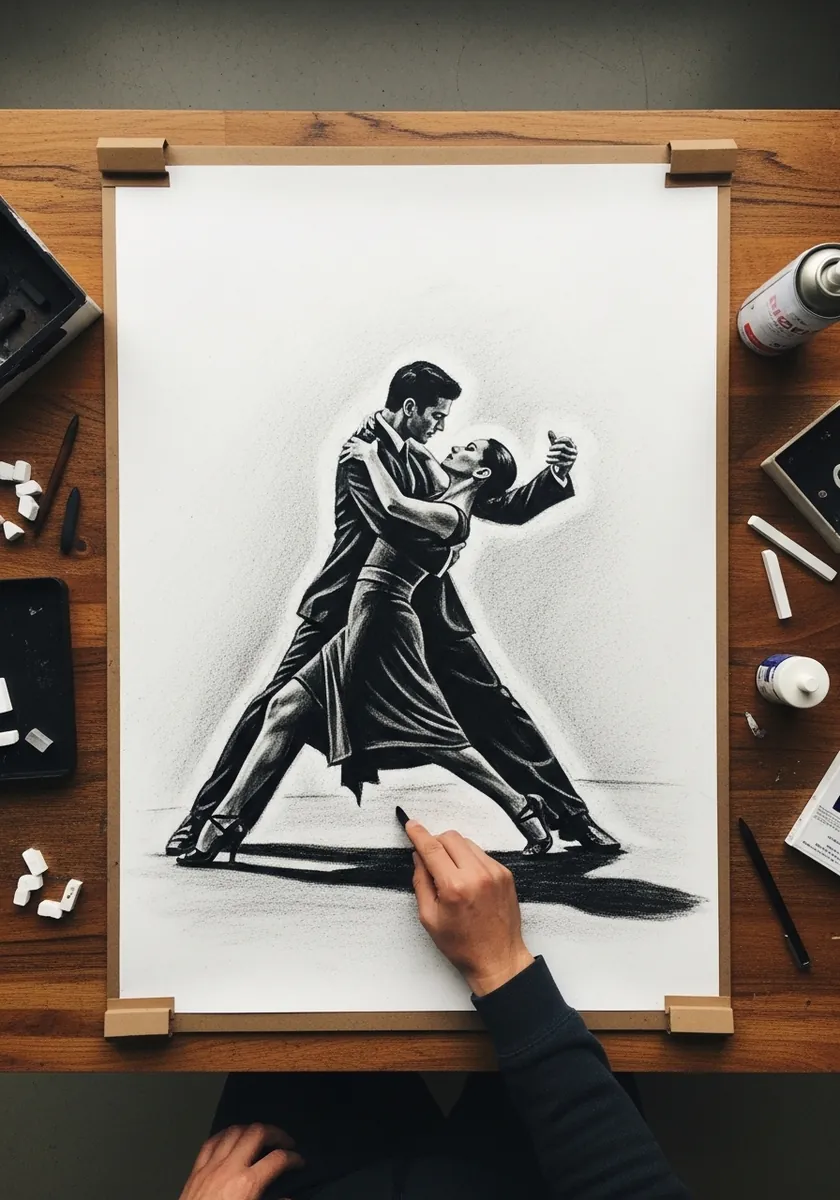
Silhouette removes every detail except the pose, which is exactly the challenge. Get the shared outline unmistakable, keep a clear gap of white between the two heads, and let the two bodies join into one shape only from the waist down.
5. Reading Together in Sepia
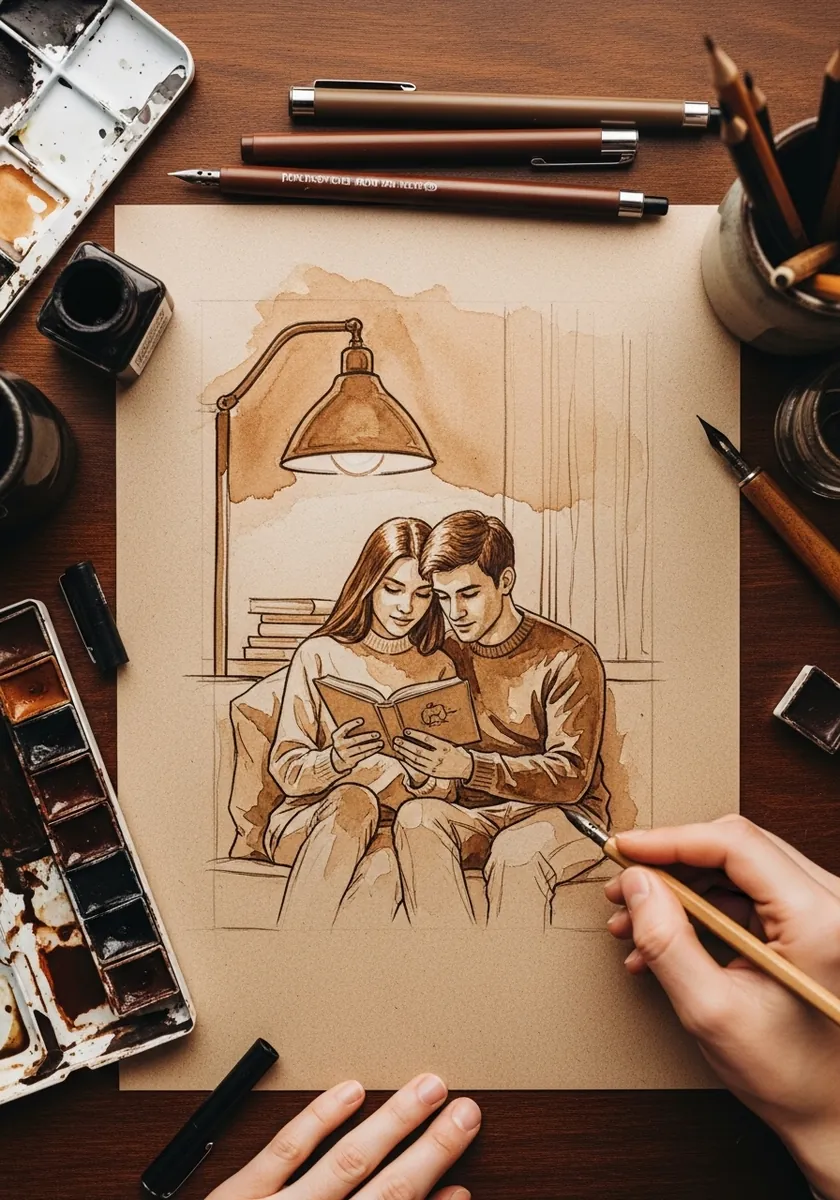
Shared attention makes a quiet scene work. Point both heads at the same object, let the near figure partly cover the far one, and keep the book itself the lightest thing on the page so the eye starts there. Sepia suits it, because a single warm tone reads as remembered rather than observed.
6. Walking an Autumn Path
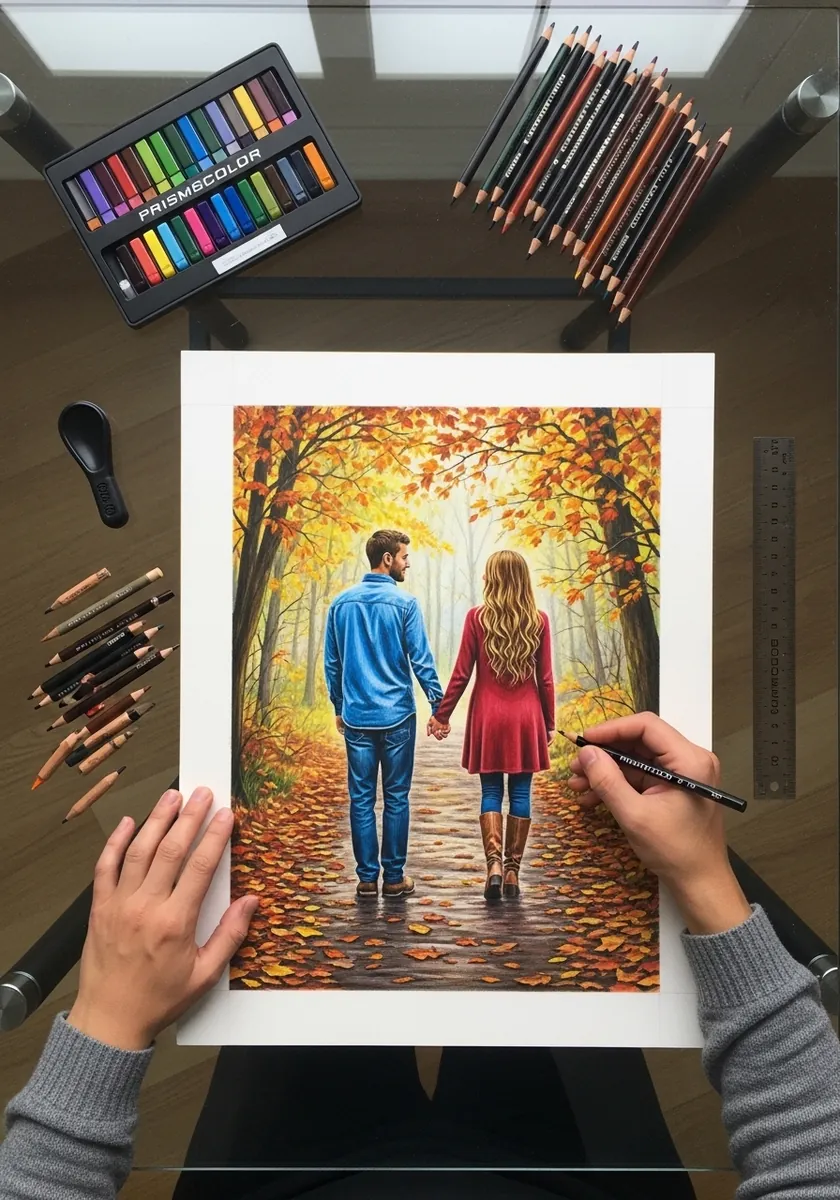
Walking figures need a shared stride. Put both far legs forward or both near legs forward rather than mirroring them, keep the joined hands at the exact midpoint between the two bodies, and let the path narrow behind them. Scatter a few fallen leaves in front of them to anchor the pair to the ground.
7. Embrace on a Cliff
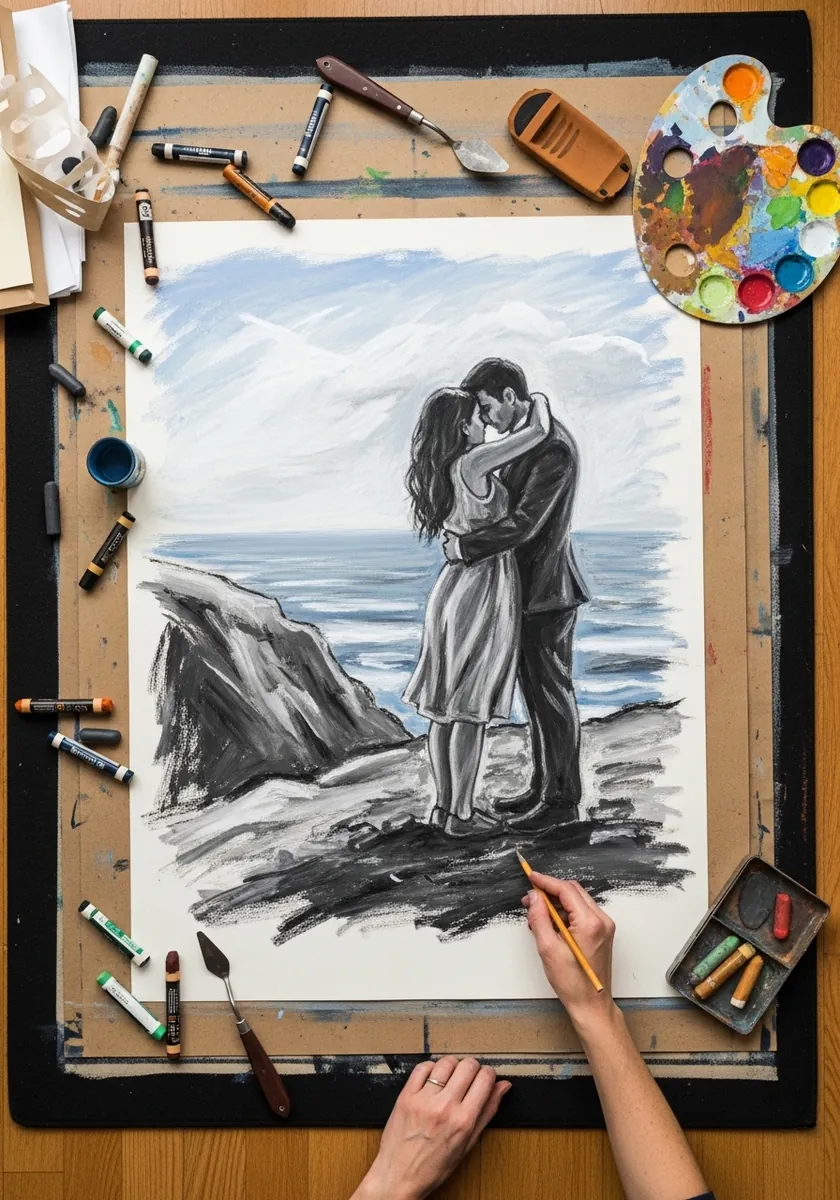
A dramatic setting needs the figures kept small and dark. Place the couple against the sky rather than the rocks so their silhouette reads cleanly, and keep the sea loose and smudged by comparison. Contrast does the work. Keep the horizon low so the two of them stand against open sky.
8. Under a Street Lamp
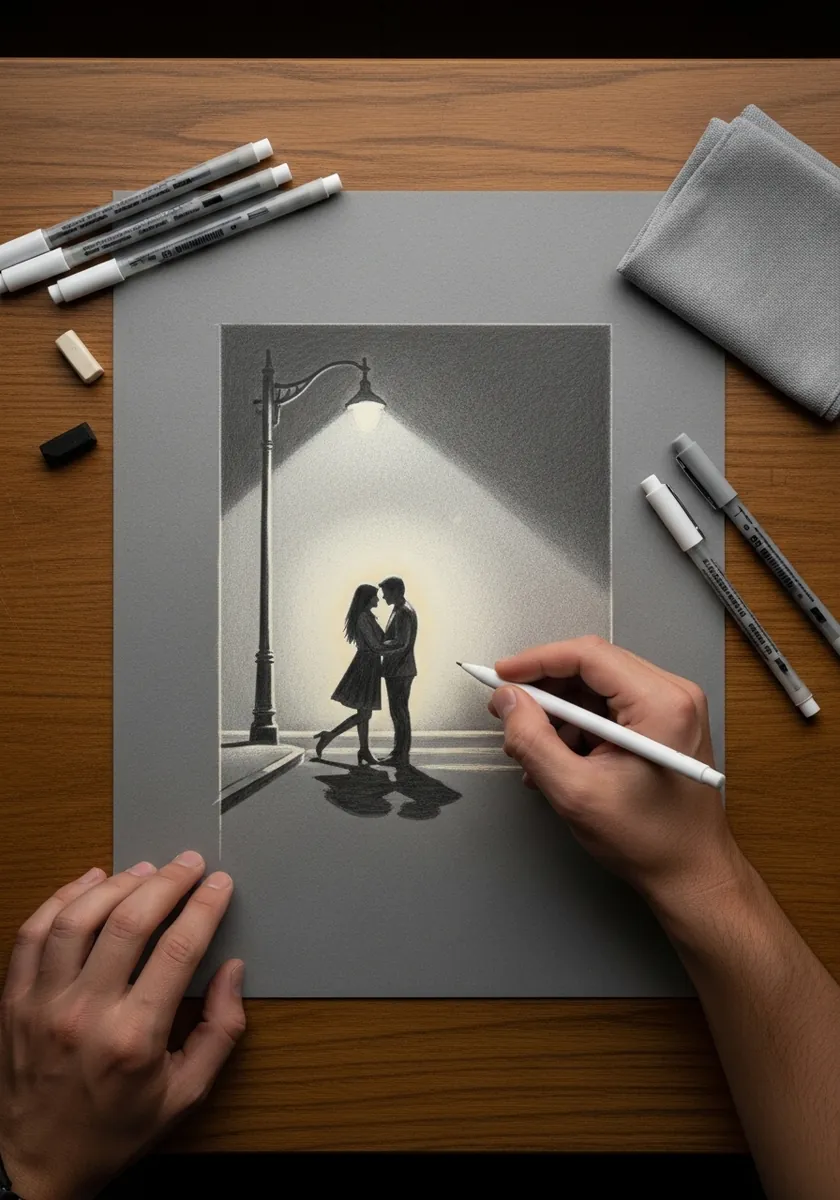
On gray paper the light is drawn rather than the dark. Add white only where the lamp actually reaches, keep both figures mostly in the paper’s own tone, and let the pool of light on the ground be the brightest thing in the picture.
9. Picnic on the Grass
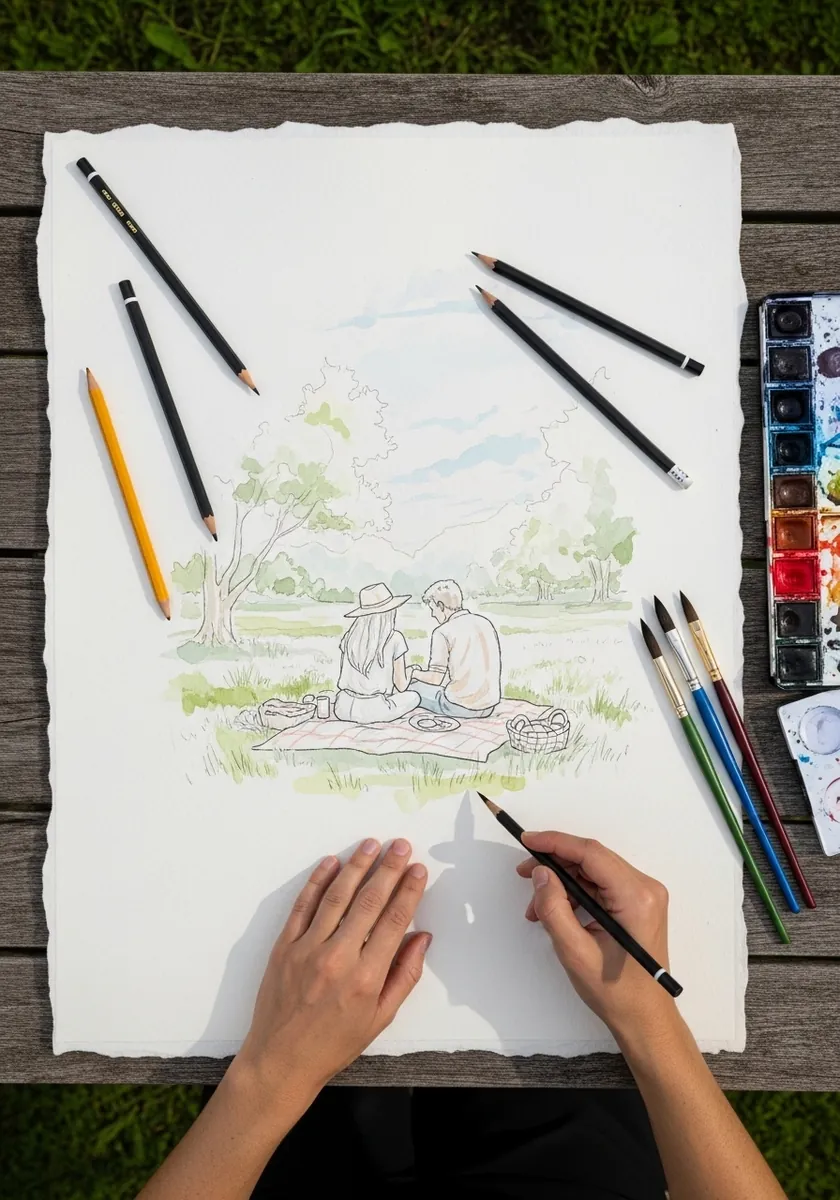
Sitting figures compress. Shorten the legs sharply because they are foreshortened toward you, keep both torsos leaning slightly back, and let the blanket edge run behind them so they are clearly sitting on it rather than floating. A basket or a cup nearby gives the pair something to have arrived for.
10. Building a Home Together
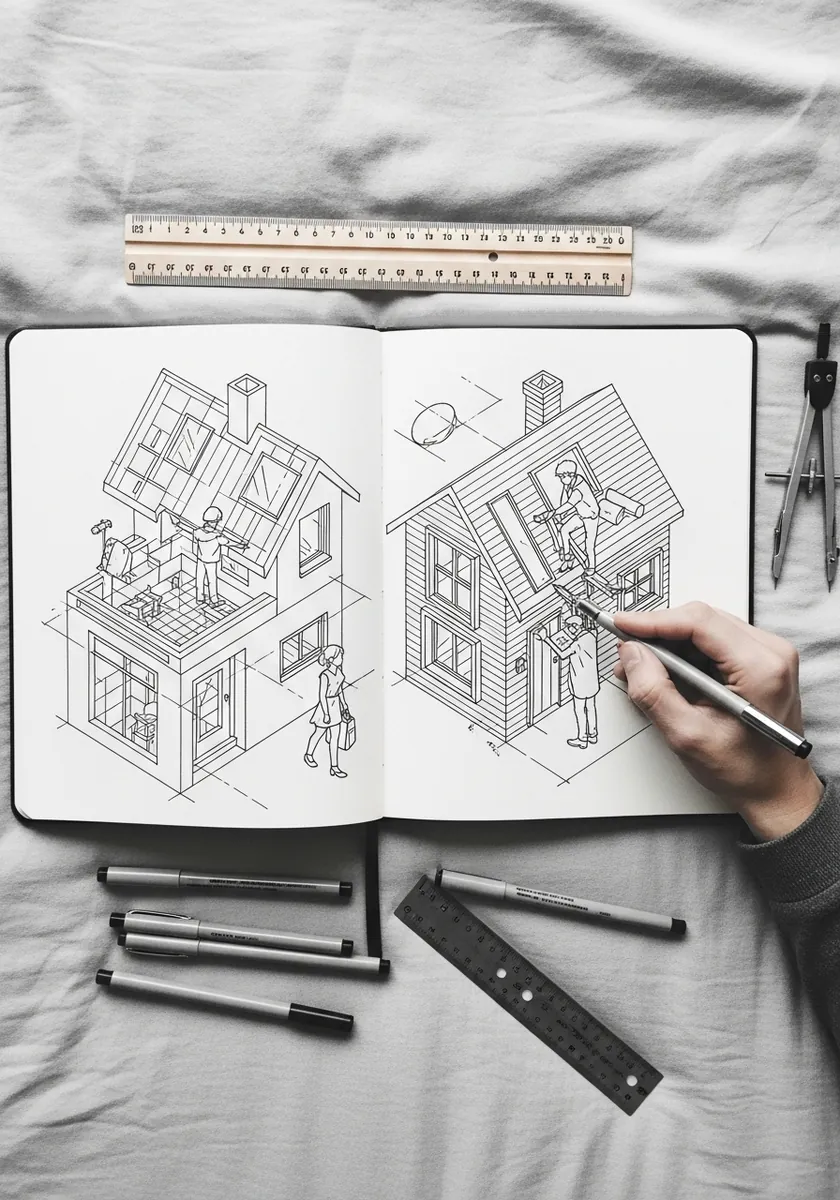
Two people doing a task need to be doing different parts of it. Give one figure the higher position and the other the lower, let their tools point toward each other, and keep the structure between them lightly drawn. Sawdust and offcuts on the ground finish the scene without stealing attention.
11. Renaissance Style Portrait
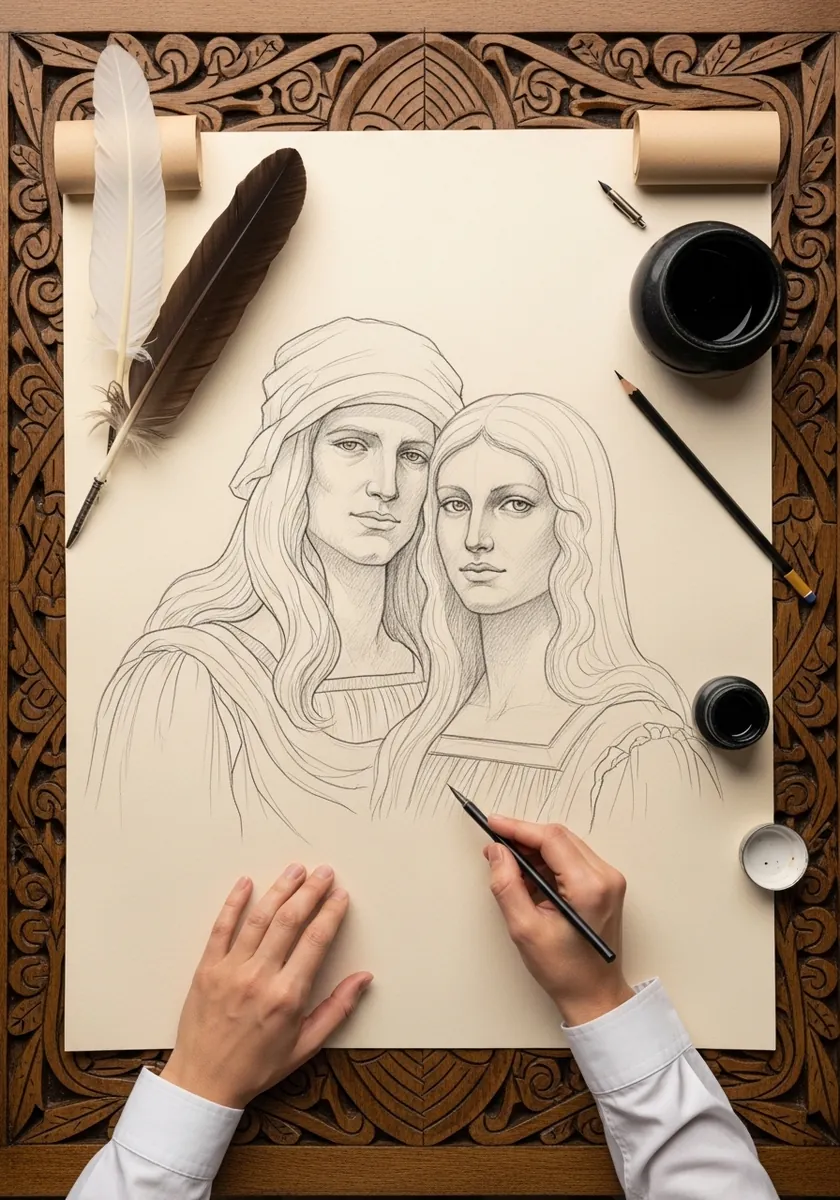
Historical double portraits stack the heads rather than levelling them. Set one head slightly behind and lower than the other, keep both looking out at the viewer, and use fine parallel hatching for every tone rather than blending. Add a plain dark background behind both heads, as the period painters always did.
12. Winter Walk
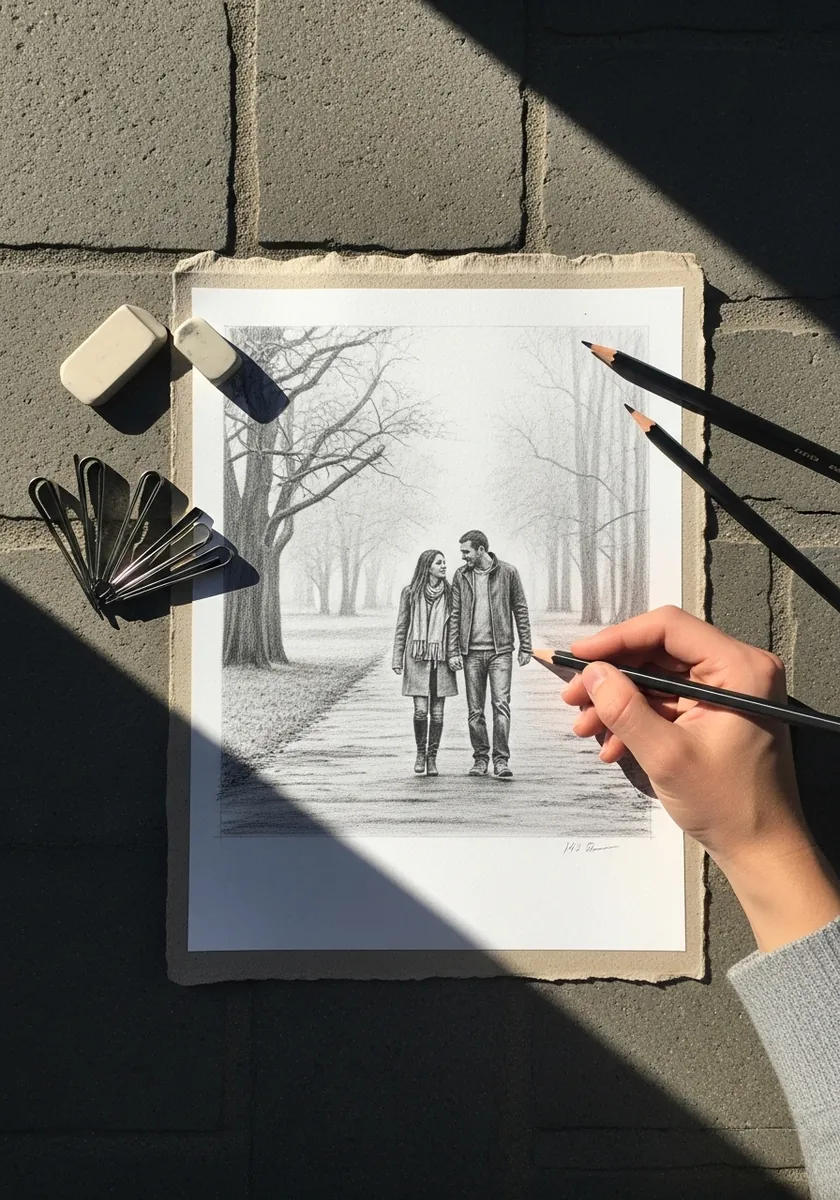
Bare trees give you vertical lines to place figures against. Stand the couple where two trunks frame them, keep the ground pale and empty, and make the figures the only dark shapes at that level. Everything else stays gray. A few marks for footprints behind them show where the pair has come from.
13. Sitting Under the Moon
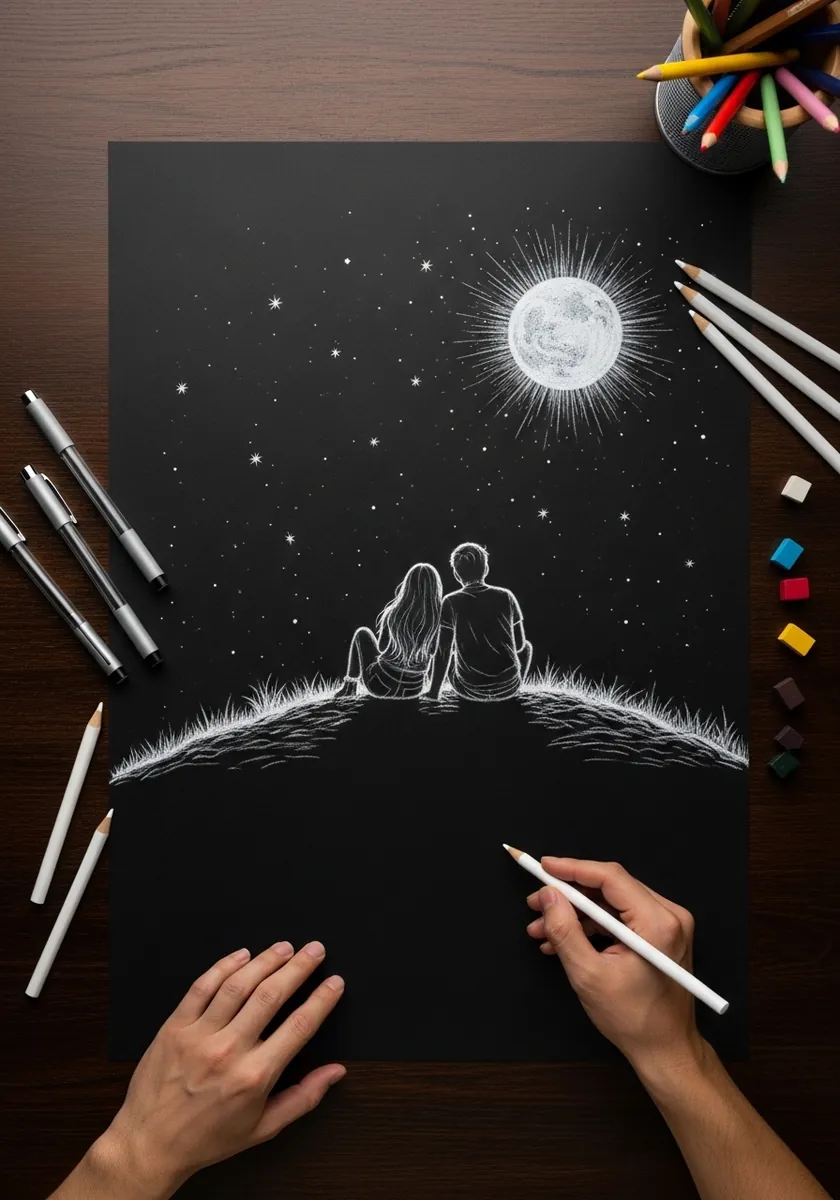
White on black inverts everything you know. Draw only what catches the moonlight, which is the tops of the heads and shoulders, and leave the rest as black paper; less white always looks better here than more. Keep the moon itself small, since a huge one makes the figures look like a poster.
14. Vintage Couple in the Snow
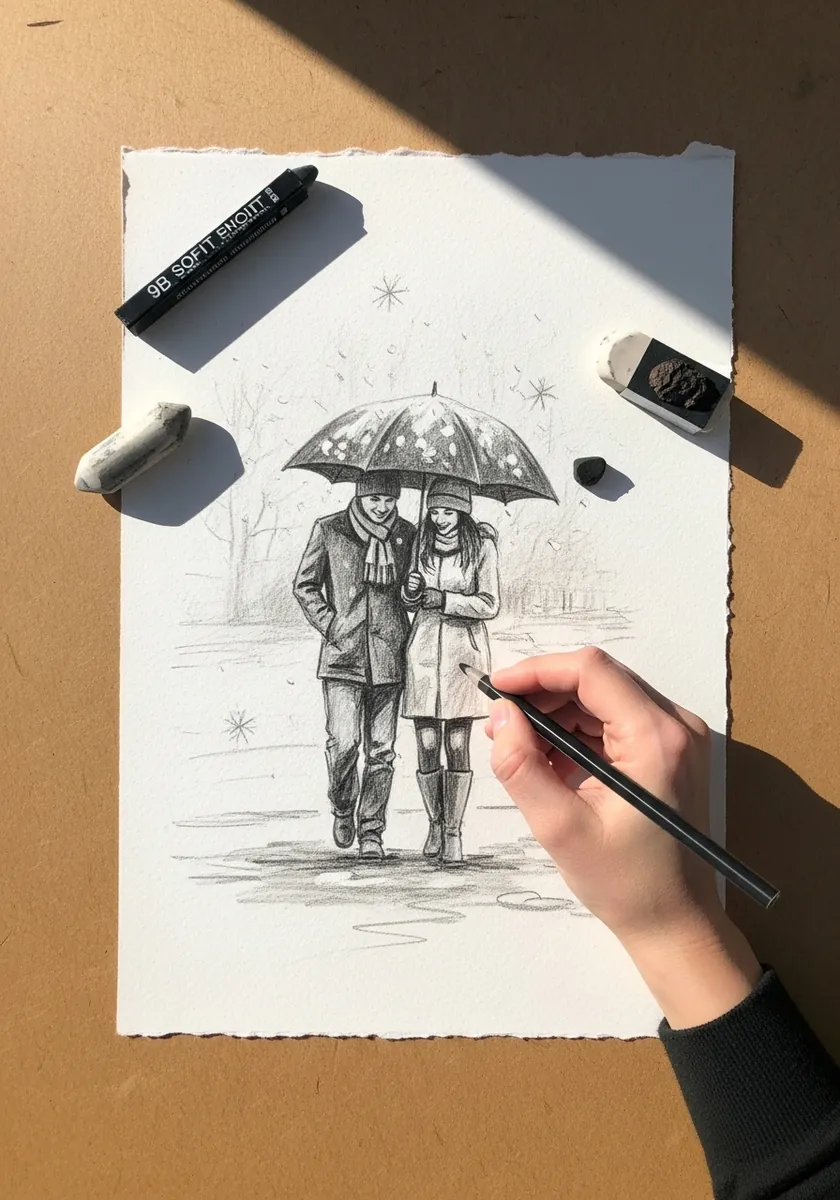
Snow is the paper, not the pencil. Leave the flakes as untouched white, darken the coats and the umbrella heavily so the flakes read against them, and never draw a single snowflake as a circle. Period clothing helps here, because heavy coats simplify both bodies into blocks.
15. Cooking Side by Side
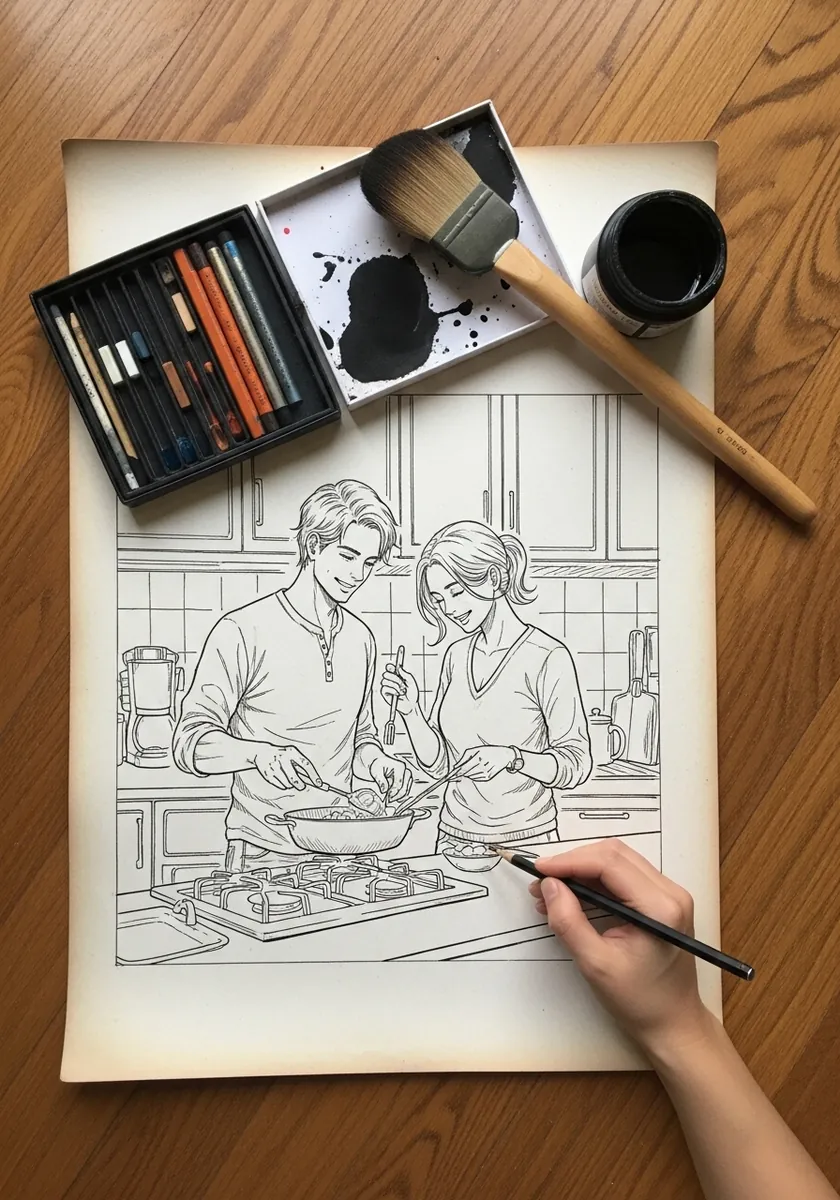
Domestic scenes need clutter to be believable. Fill the surface in front of them with a few real objects, keep both figures leaning inward over the same spot, and let their arms cross into each other’s space. Steam rising between them is the cheapest way to add warmth to the scene.
16. Canoe on a Lake
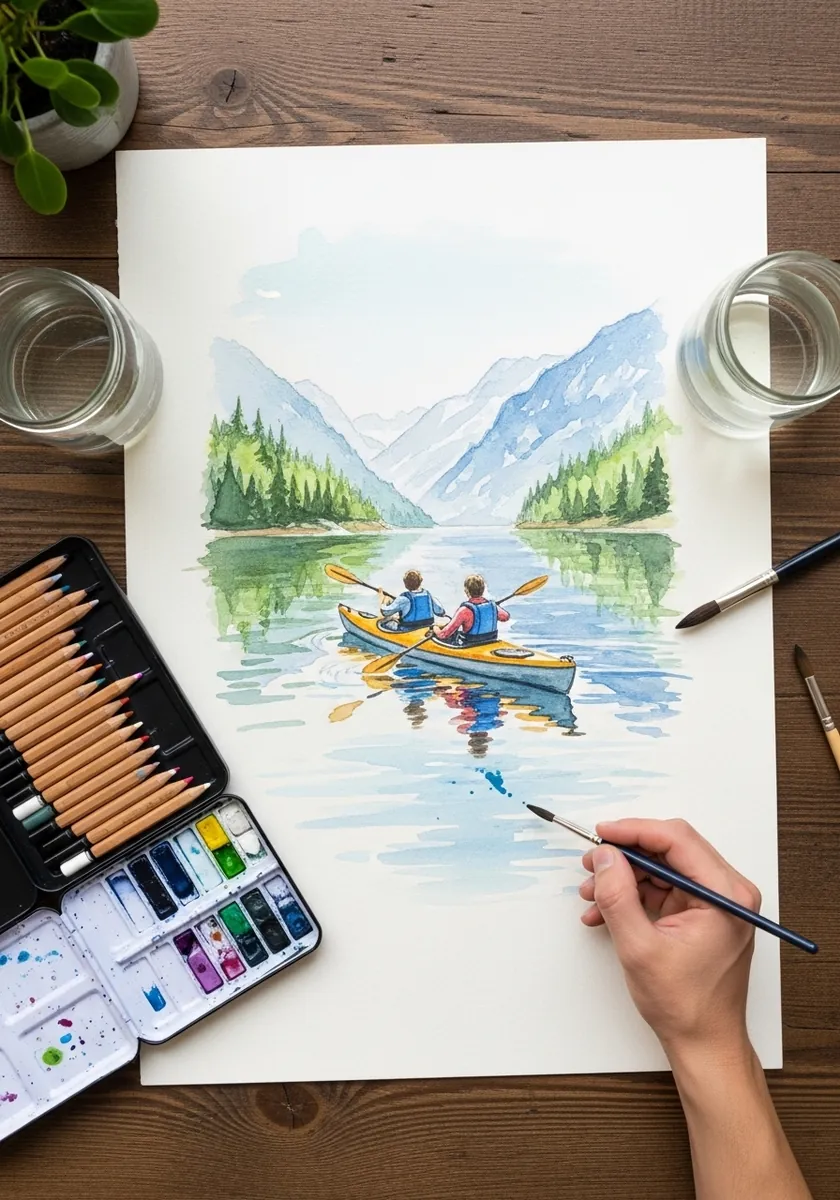
In a boat the two figures share one line. Draw the canoe as a long shallow curve, sit both people on that curve at different heights, and reflect the whole group beneath with a few broken horizontal strokes. Keep the far shore as one flat band of tone so the boat stays the subject.
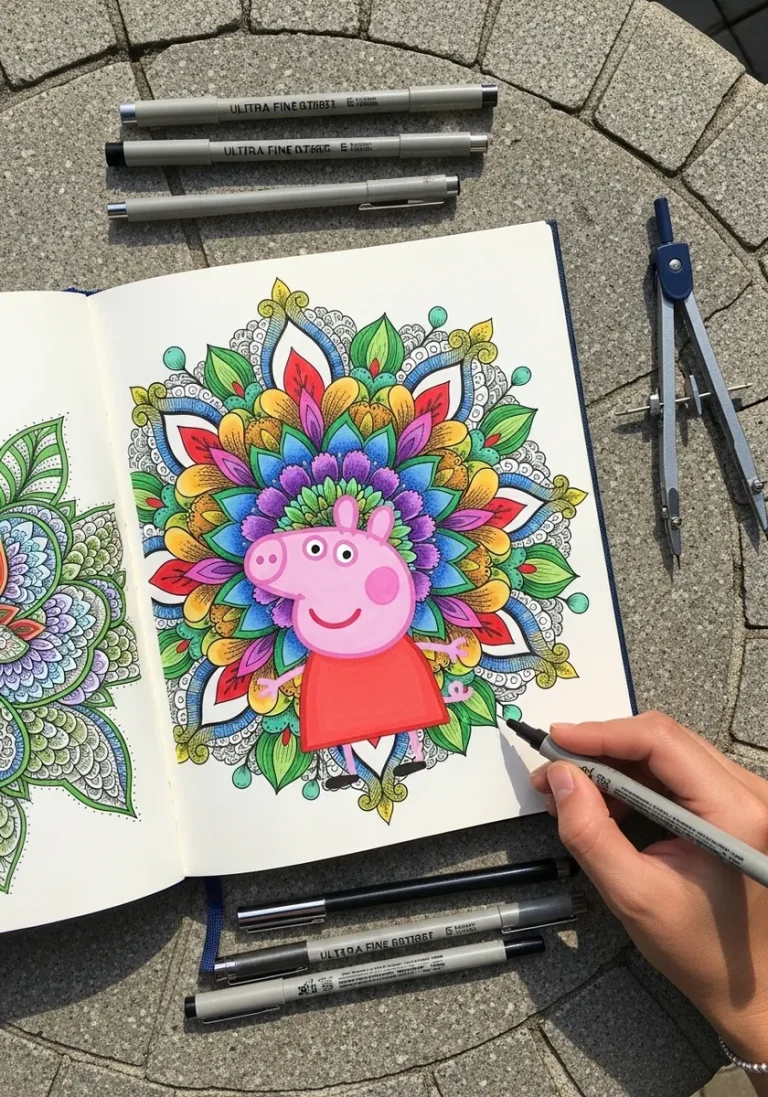
17. Mandala Profiles
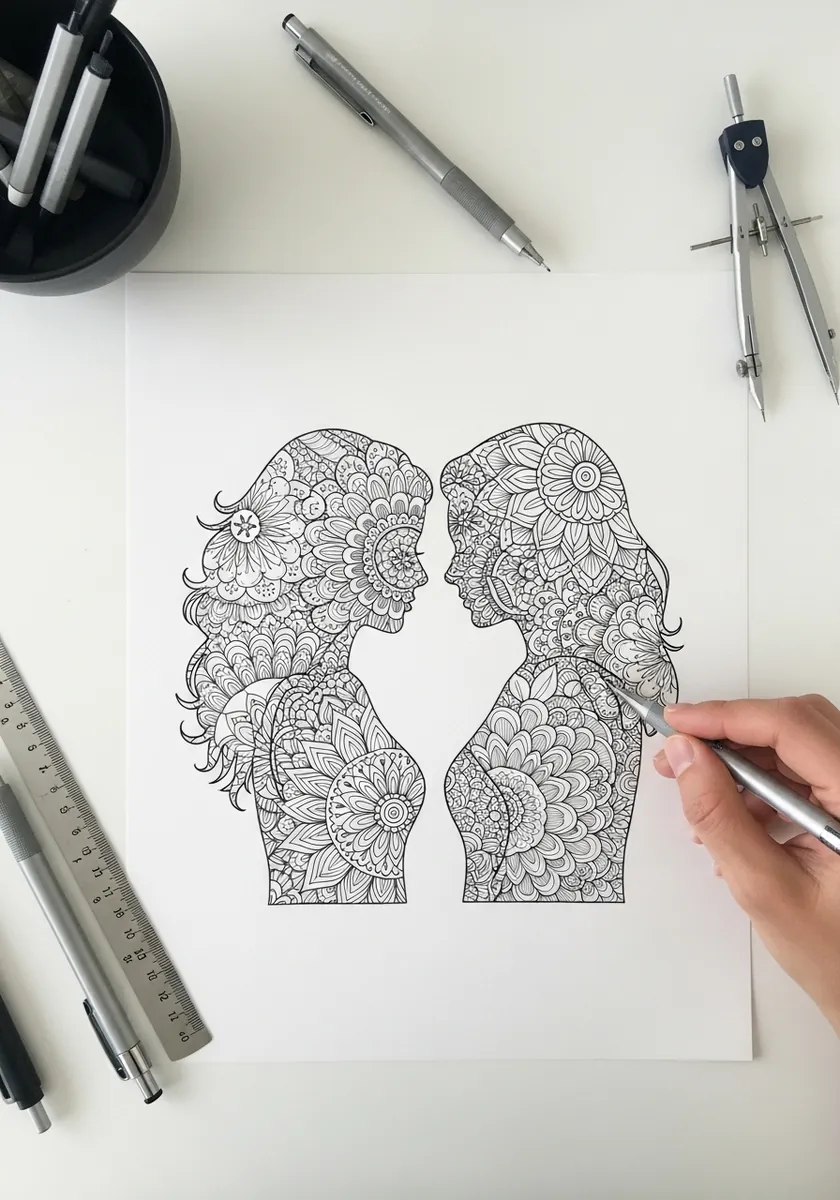
Two profiles facing each other create a shape between them. Draw both outlines first and check that the gap reads as a clear symmetrical form, then fill the heads with pattern and leave that gap completely empty. Use a different pattern in each head so the two are not simply mirrored.
18. Ballroom Dance in Sepia
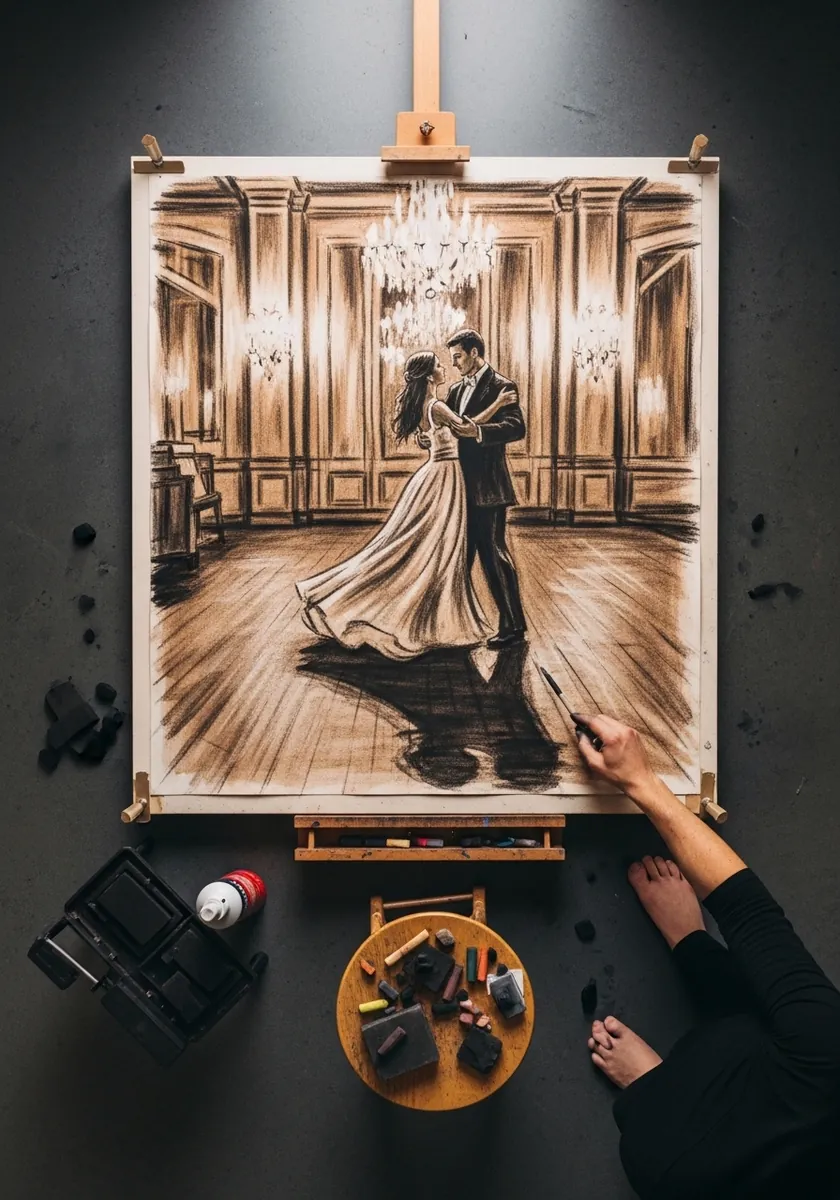
A dance hold is a rigid geometric frame. Draw the linked arms as one straight line from elbow to elbow, keep the gap between the two chests constant, and let the skirt sweep out to show the rotation. Blur the floor beneath them slightly to suggest that the pair is turning.
19. Watching Fireworks
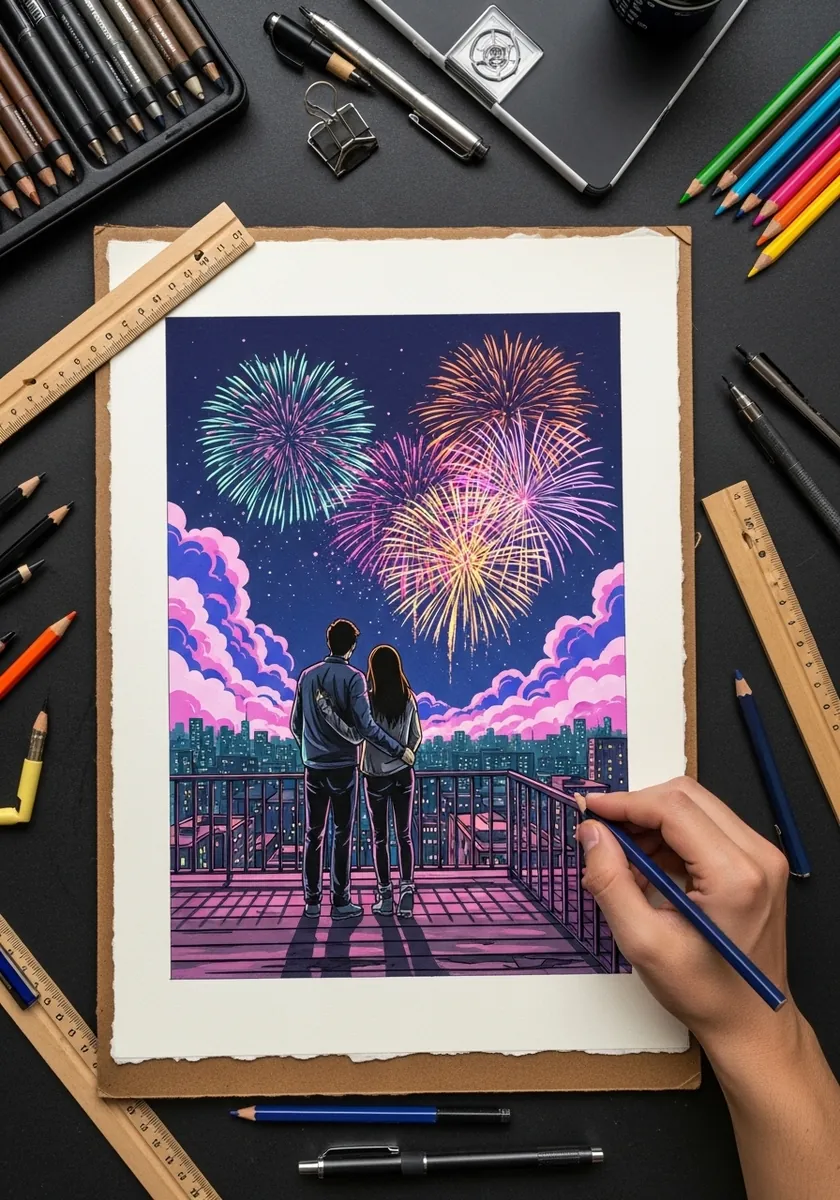
Backlit figures lose all internal detail. Fill both bodies almost solid, keep only the outline crisp, and put every color and value into the sky above them. The railing gives the eye somewhere to rest. Keep one small gap of sky visible between the two heads for separation.
20. Hot Air Balloon Ride
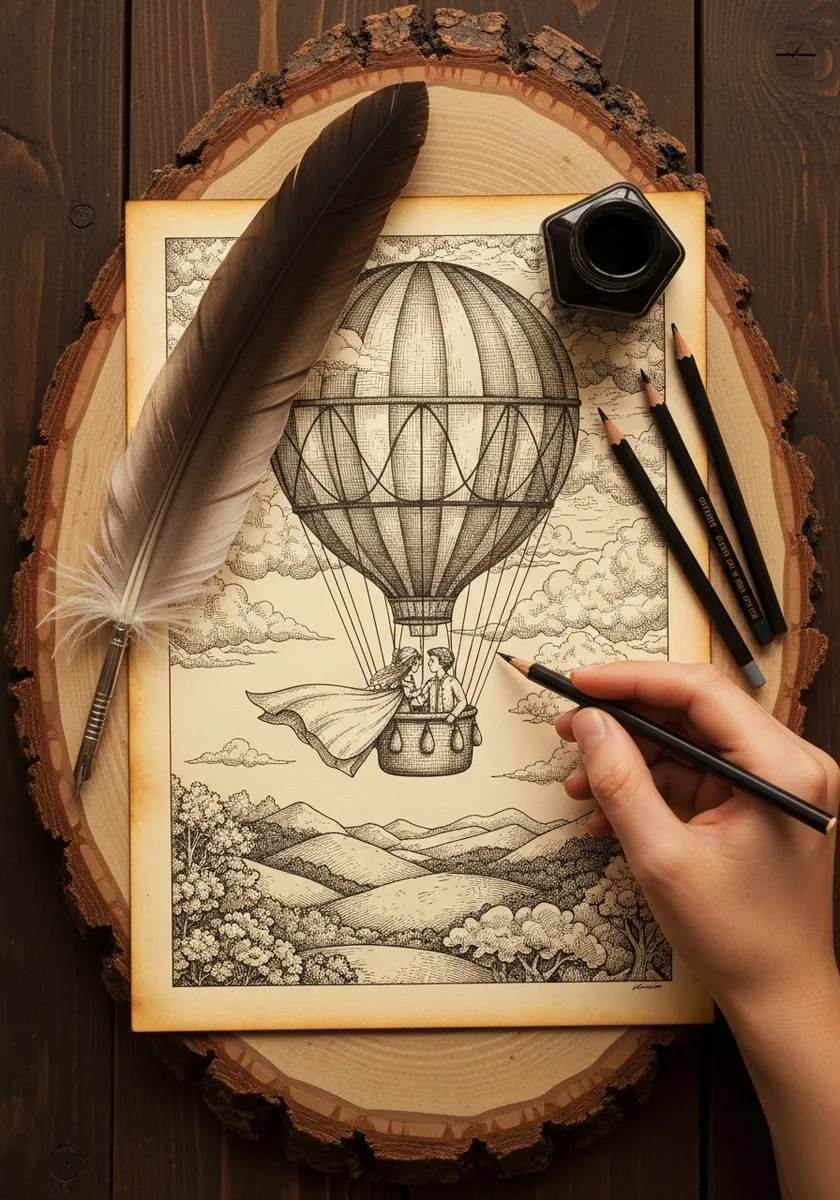
The balloon dominates, so the figures must not compete. Keep the two of them small in the basket, show only heads and shoulders above the rim, and let the balloon’s panels carry all the line work. Add two or three smaller balloons far below to give the height some scale.
21. Ice Skating Outline
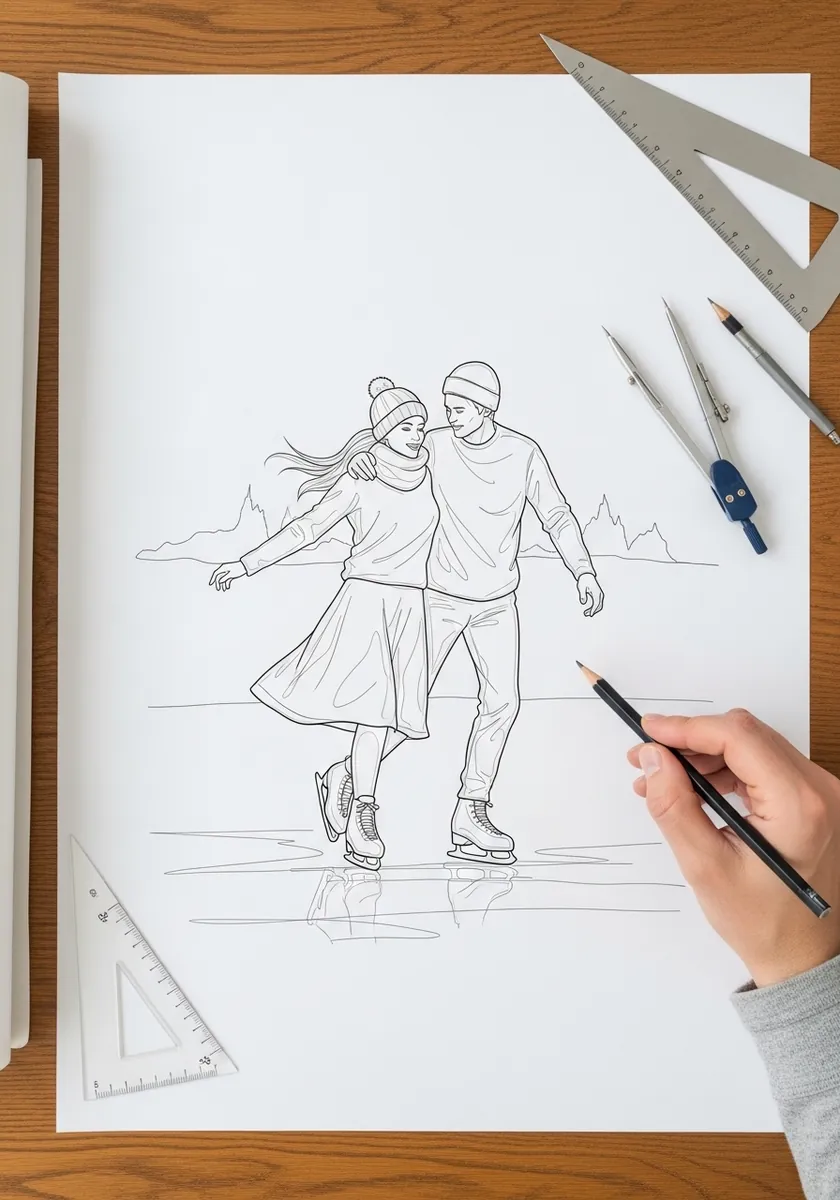
Skating is about the lean. Tilt both figures the same way off vertical, keep the outside edges of the blades off the ice, and let their joined arms stretch rather than bend. Upright skaters look like they are standing still.
22. New Parents
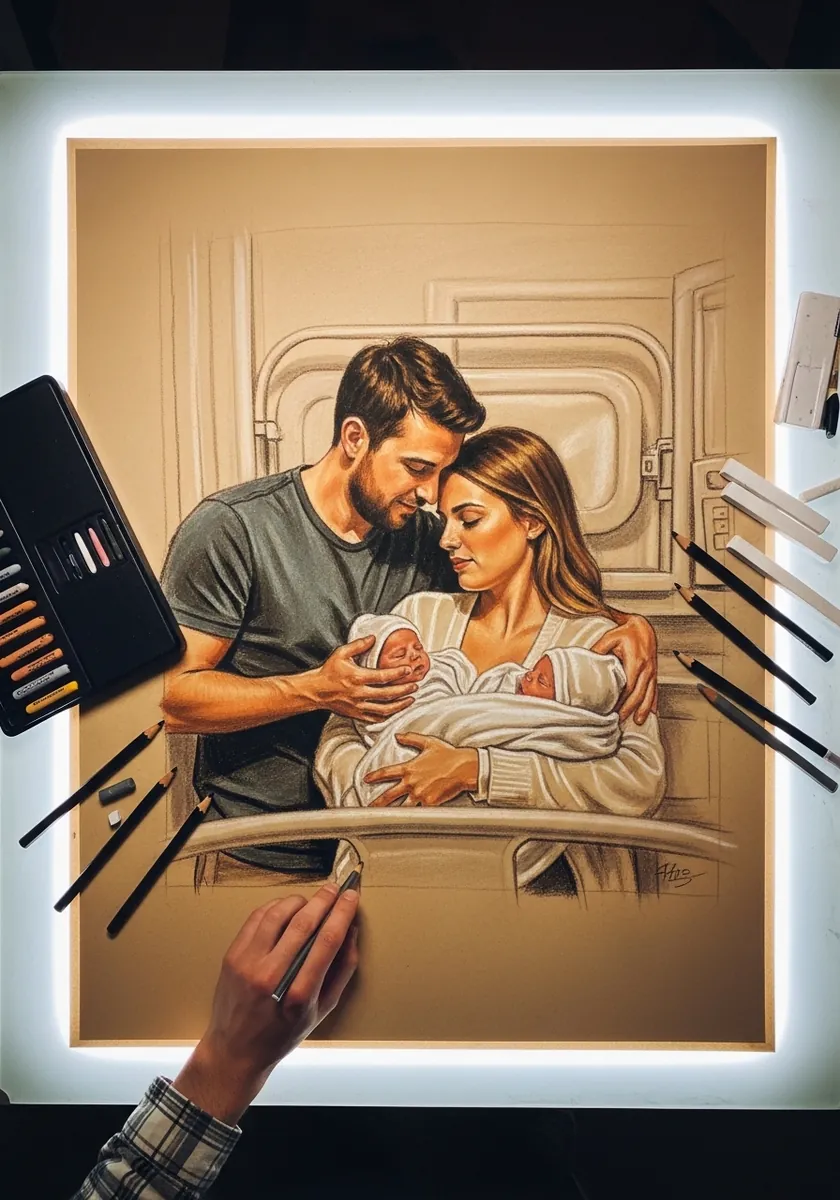
Three figures is really one shape. Enclose the baby completely within the arms of both parents, let both heads bend inward over it, and put the darkest tone in the fold of the blanket where all three meet. Keep both parents’ hands visible, since hidden hands make the hold look unsafe.
23. Waiting on the Platform
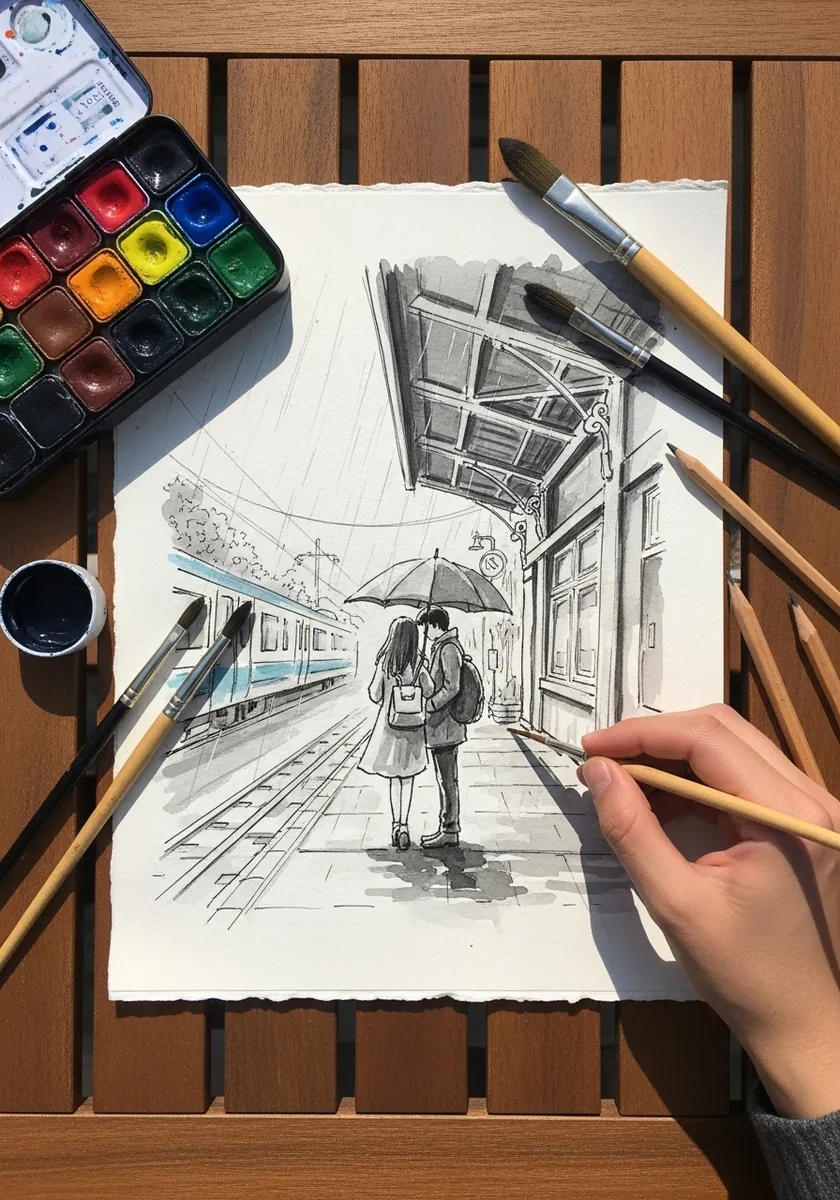
Perspective lines make a scene like this. Run the platform edge and the canopy back to a single vanishing point, stand the couple slightly off that center line, and keep them the darkest shapes in the drawing. A departure board or a distant train gives the pair something to be waiting for.
24. Children at the Beach
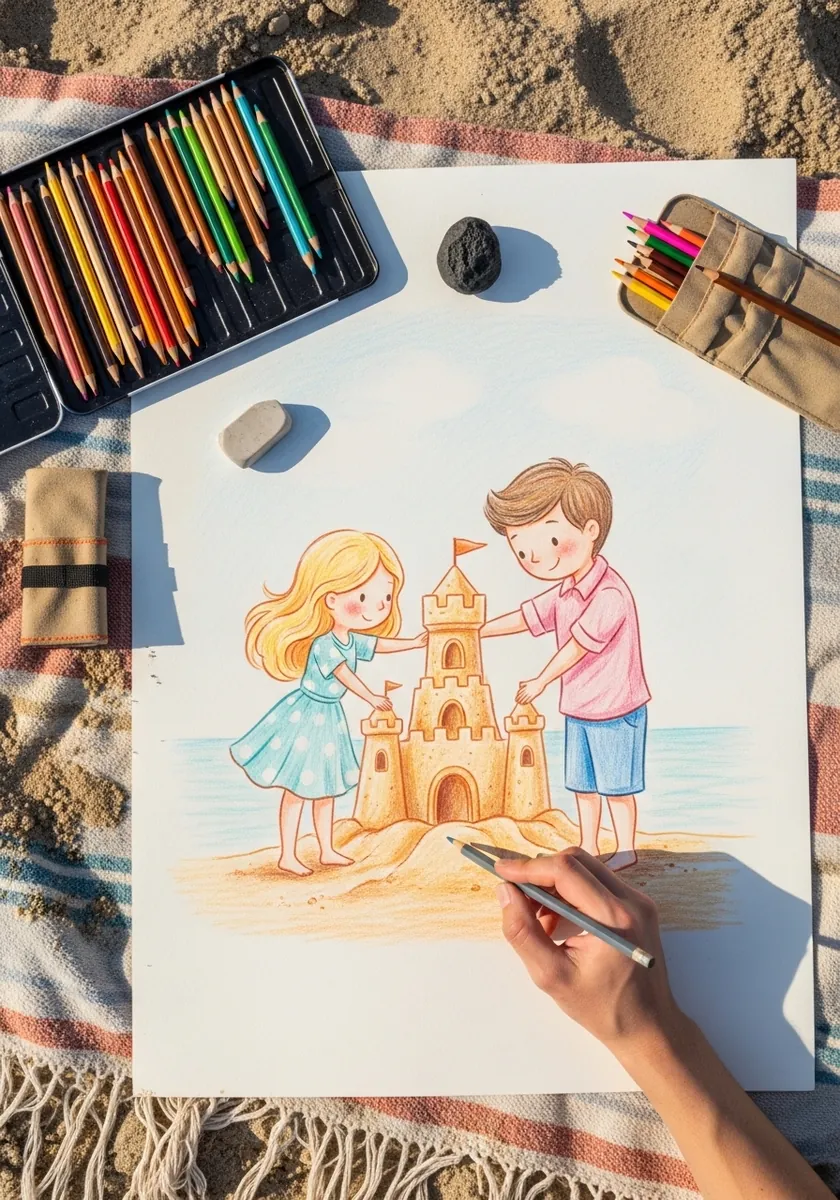
Children lean in much closer than adults do. Overlap the two figures heavily, put both pairs of hands on the same sandcastle, and keep the heads almost touching. Distance between them would read as an argument. Bare feet and a scattered bucket keep the scene from looking too tidy.
25. Motorcycle and Sidecar
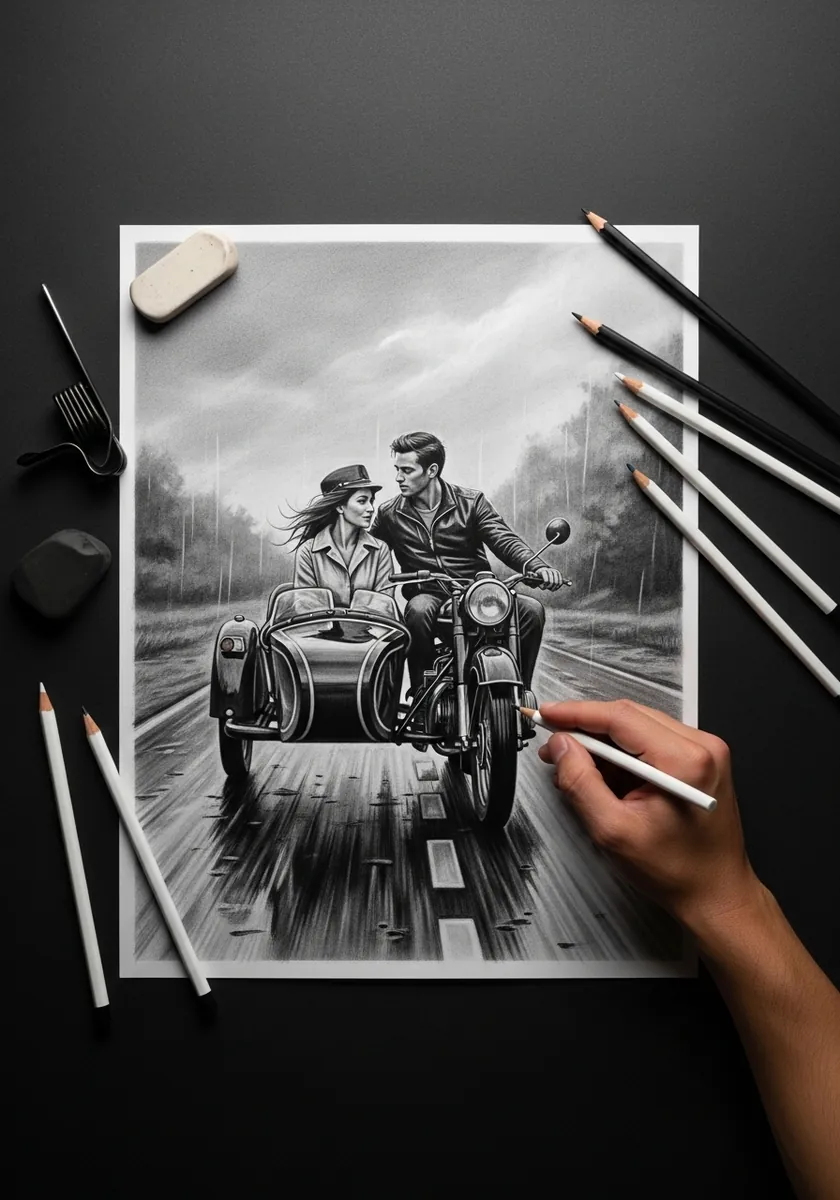
A machine between two people is a composition problem. Draw the motorcycle first and accurately, seat both figures into it rather than on top of it, and let the sidecar passenger turn toward the rider. Blur the spokes and the road behind to show that the machine is moving.
26. Art Nouveau Panel
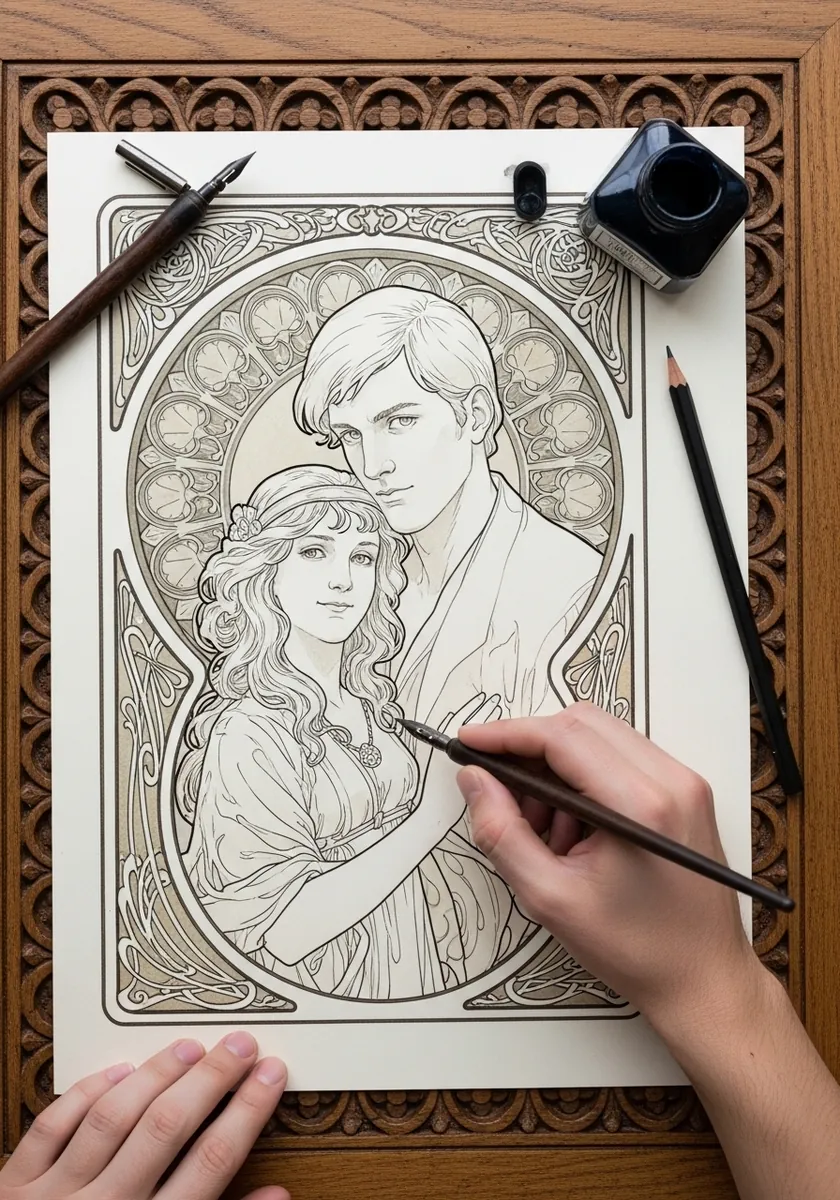
Nouveau treats hair and drapery as pattern. Let the woman’s hair flow out and become the frame around both figures, keep every line an even weight, and repeat the same curl shape at three different scales. Keep the palette to two colors at most, as the original posters usually did.
27. Hikers in the Mountains
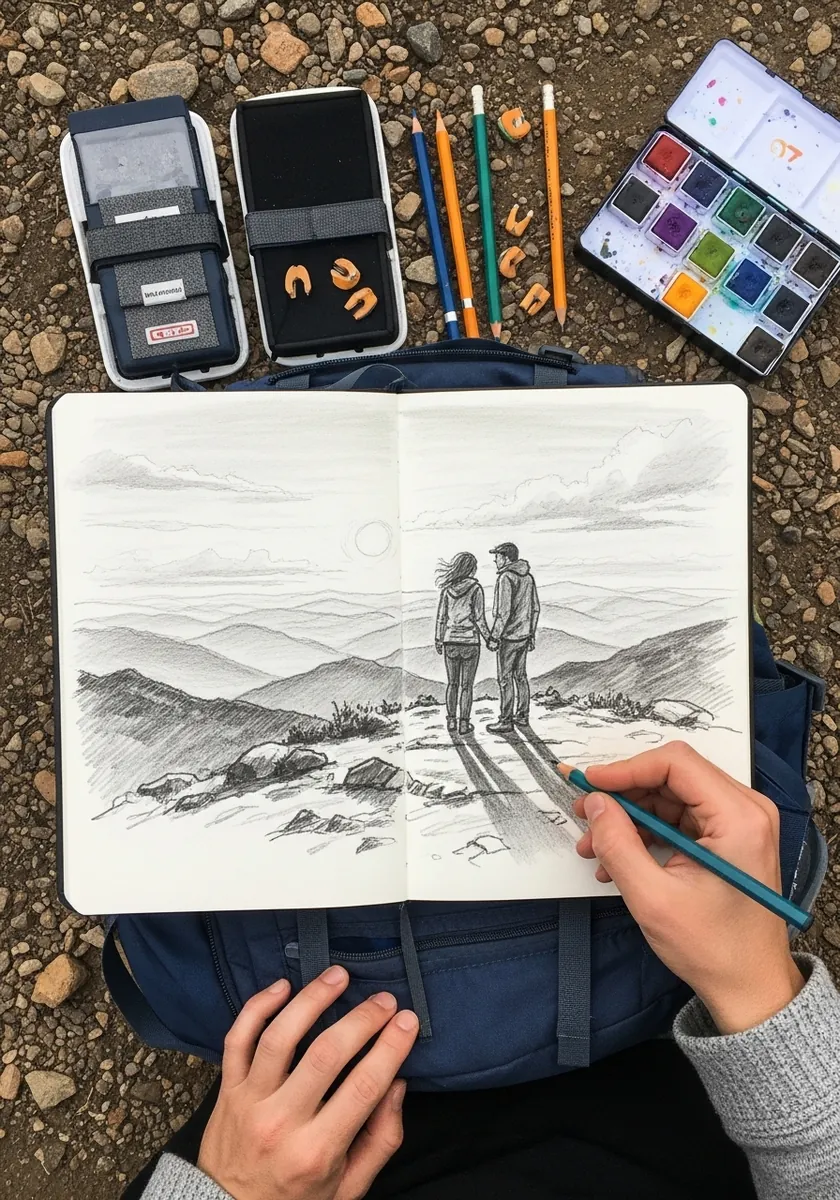
Small figures in a big landscape need a strong contrast. Keep both hikers dark and sharp against a pale distance, place them slightly off center, and let the packs break their outlines so they read as loaded. Put one hiker a step ahead of the other so the pair reads as walking.
28. Wedding Portrait
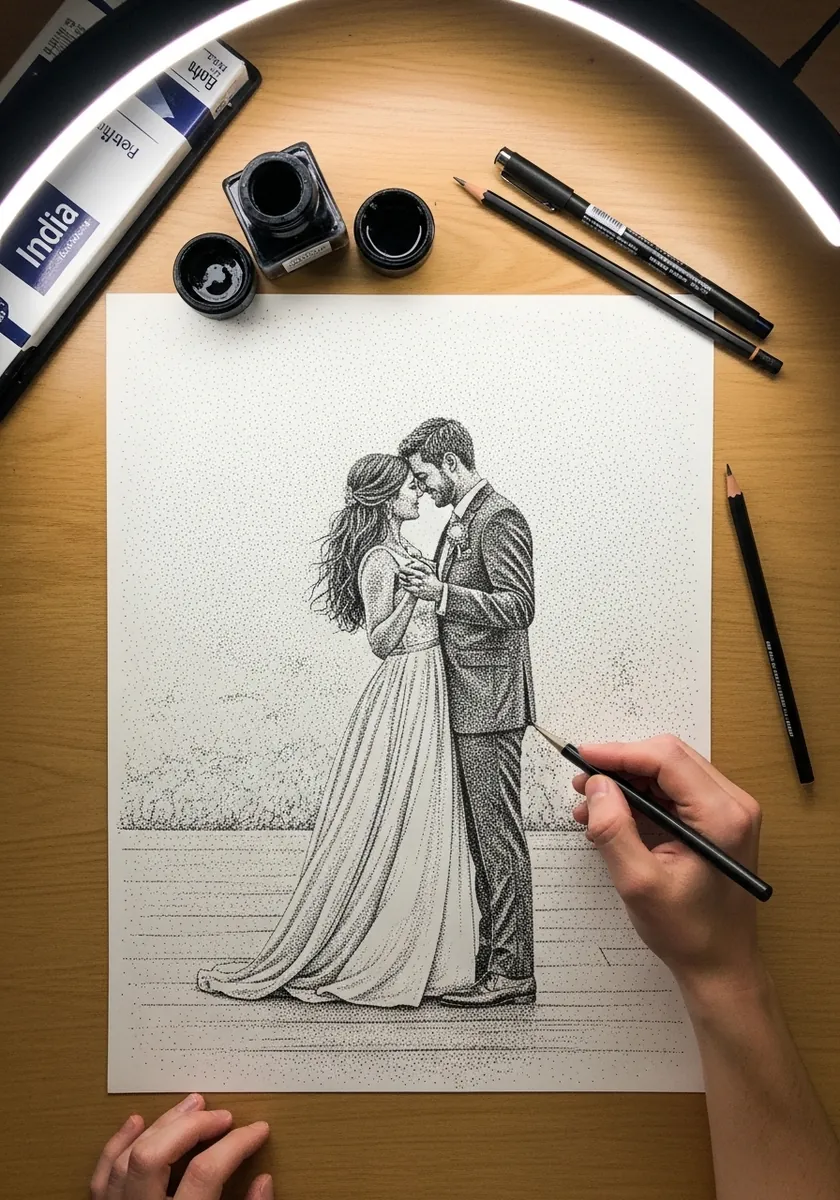
The dress will take over unless you control it. Keep the fabric shading light and the folds few, put the strongest darks into the suit and the hair instead, and let the two heads touch at the temple. Leave the background almost blank, because a formal portrait needs no setting.
29. Dancing in a Cafe
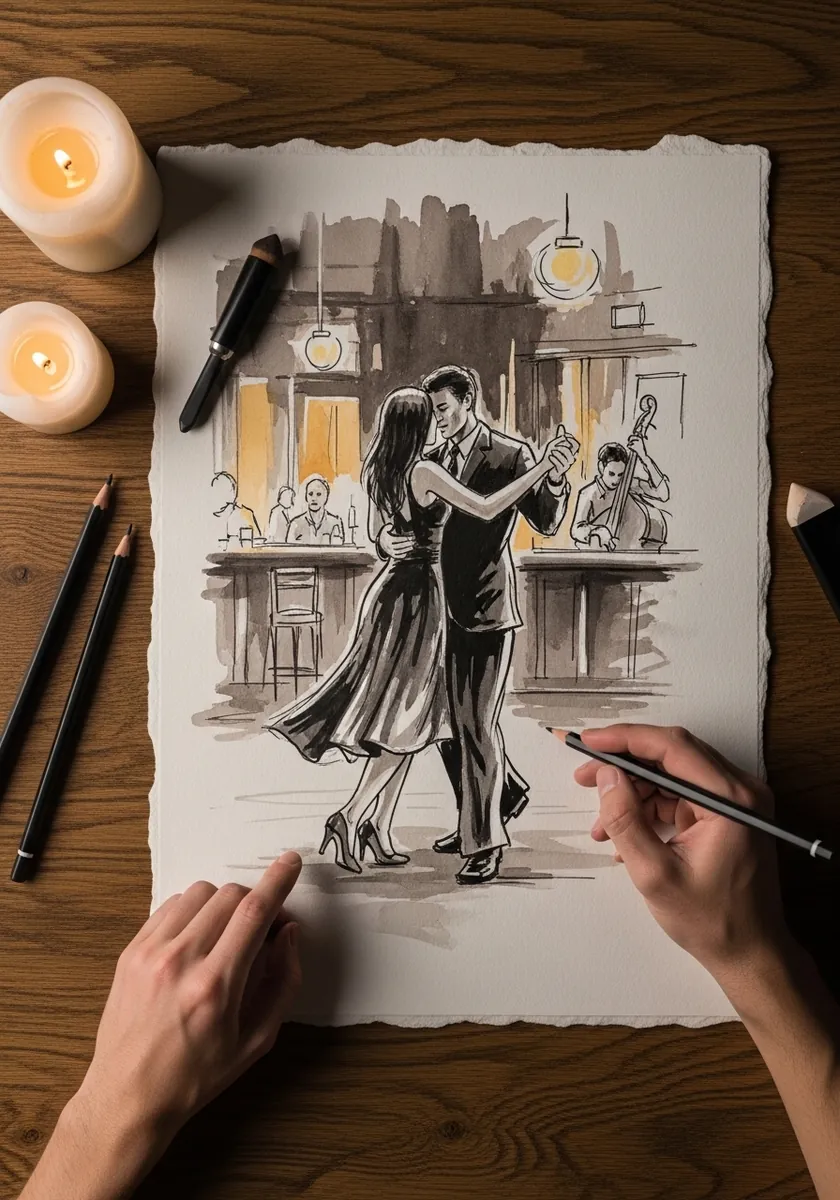
Warm interior light comes from below and behind. Light the two figures along their outer edges only, keep the faces in shadow, and let the background tables dissolve into loose tone; the rim light is what makes it feel candlelit.
30. On the Jetty
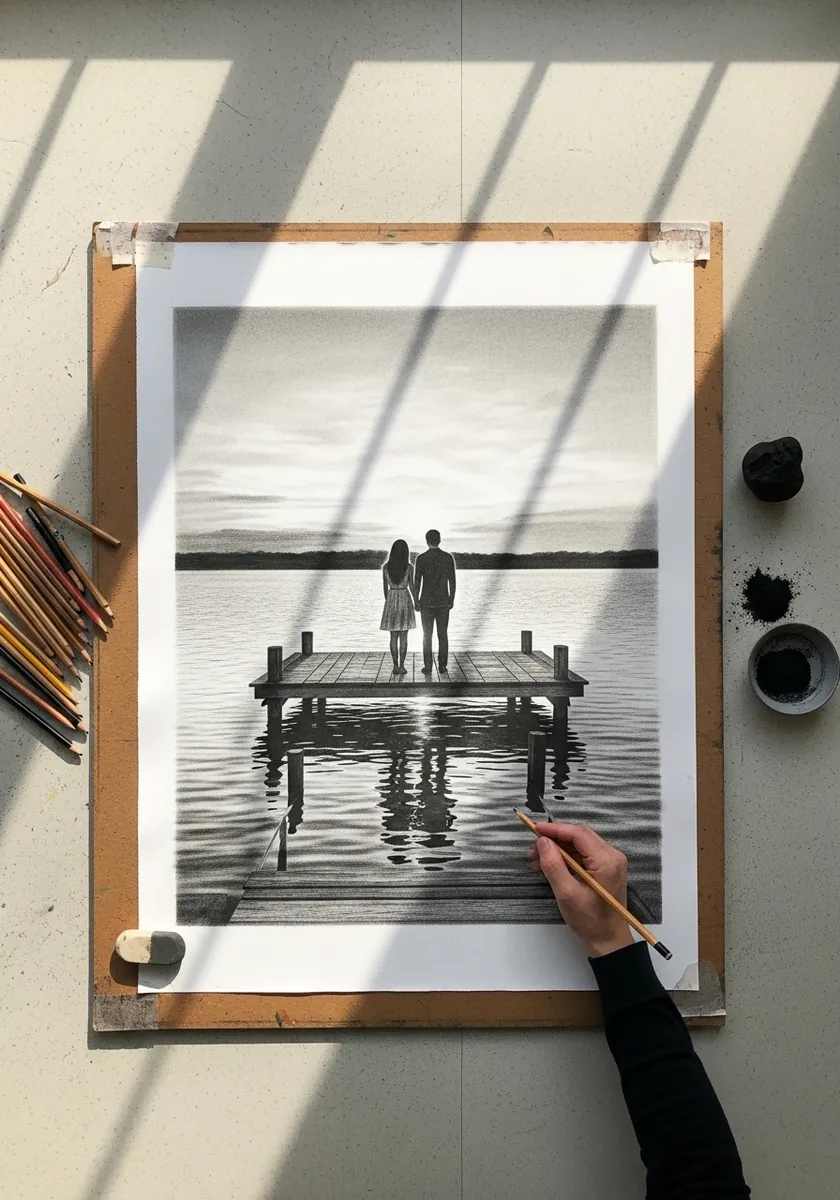
Finish with the quietest composition in the set. Run the jetty straight away from the viewer, stand both figures at the very end as one small joined silhouette, and reflect them in the water with a broken vertical smudge. Keep the water perfectly flat, since any ripple would break the stillness.
Frequently Asked Questions
Why do my two figures look pasted together?
Because they were drawn separately and then placed next to each other. Block both in as one shared silhouette before separating them, let one overlap the other, and put a genuinely dark tone wherever they touch.
How do I get the space between two people right?
Draw the gap as a shape rather than judging the figures. The negative space between an arm and a waist has a definite outline, and it is far easier to see when that shape is wrong than to see that a shoulder is a centimeter out.
Should the two heads be the same height?
Almost never. Give one figure a little more height, tilt both heads slightly toward each other, and let the shoulders sit at different levels. Two heads at the same height with parallel necks read as strangers standing in a queue.
How do I draw a couple from behind?
It is the easiest view to start with, because there are no faces to match. Concentrate on the shared outline, the difference in height and build, and one clear point of contact such as a hand or a shoulder leaning in.
What is the hardest part of drawing two people?
Keeping both at the same scale and in the same perspective. Check that both heads sit on the same horizon line and that both sets of feet meet the same ground, because one figure drifting larger is the most common failure.
References and Further Reading