Peppa is always drawn in profile with both eyes and the snout on the same side of the head. That head silhouette, often described as a hairdryer, is the single detail that keeps the character recognizable.
Key takeaways
- Draw the head in profile with both eyes and the snout on the same side, never split across the face.
- The snout is a rounded rectangle on a short stalk, with two dots, projecting sideways from the head.
- Keep the black outline one uniform weight and the fills completely flat, with no shading anywhere.
- One small blush circle sits below the eyes and the mouth is a simple U set off to one side.
- The series first aired in the UK on 31 May 2004, created by Neville Astley, Mark Baker and Phil Davies.
One detail decides whether this character looks right. Peppa is drawn in profile with both eyes and the snout on the same side of the head, and the snout projects sideways on a short stalk. That combined shape, often described as a hairdryer, is the whole design.
The rest is about restraint. Keep the black outline a single uniform weight, the fills completely flat, and add no shading or gradients anywhere, since the series style has none. A blush circle sits below the eyes, and the mouth is a simple U placed off to one side.
The show first aired in the UK on 31 May 2004, created by Neville Astley, Mark Baker and Phil Davies, and the design has stayed remarkably consistent since. For related flat-style construction, 3D cartoon character ideas makes a useful contrast.
One honest note first: she is a copyrighted and trademarked character, so these are practice pieces rather than anything you can sell. The thirty ideas below push the design through watercolor, sumi-e, graffiti, steampunk, fashion illustration and pointillism.
Compiled by the GS Art Zone editorial team. Last updated August 2026. Each idea is paired with the specific step that produces the effect, so you can go from the reference straight to paper.
What You Need Before You Start
- A black fine liner or brush pen, since a single uniform outline weight defines this style
- One pink and one deeper rose, enough for the character and her blush
- A flat red for the dress, which is the only strong color in most of these compositions
- Alcohol markers or gouache, both of which give the flat fills the style needs
- Black paper and a white pencil for the two reversed-value pieces further down
1. Pencil Ballerina in a Tutu
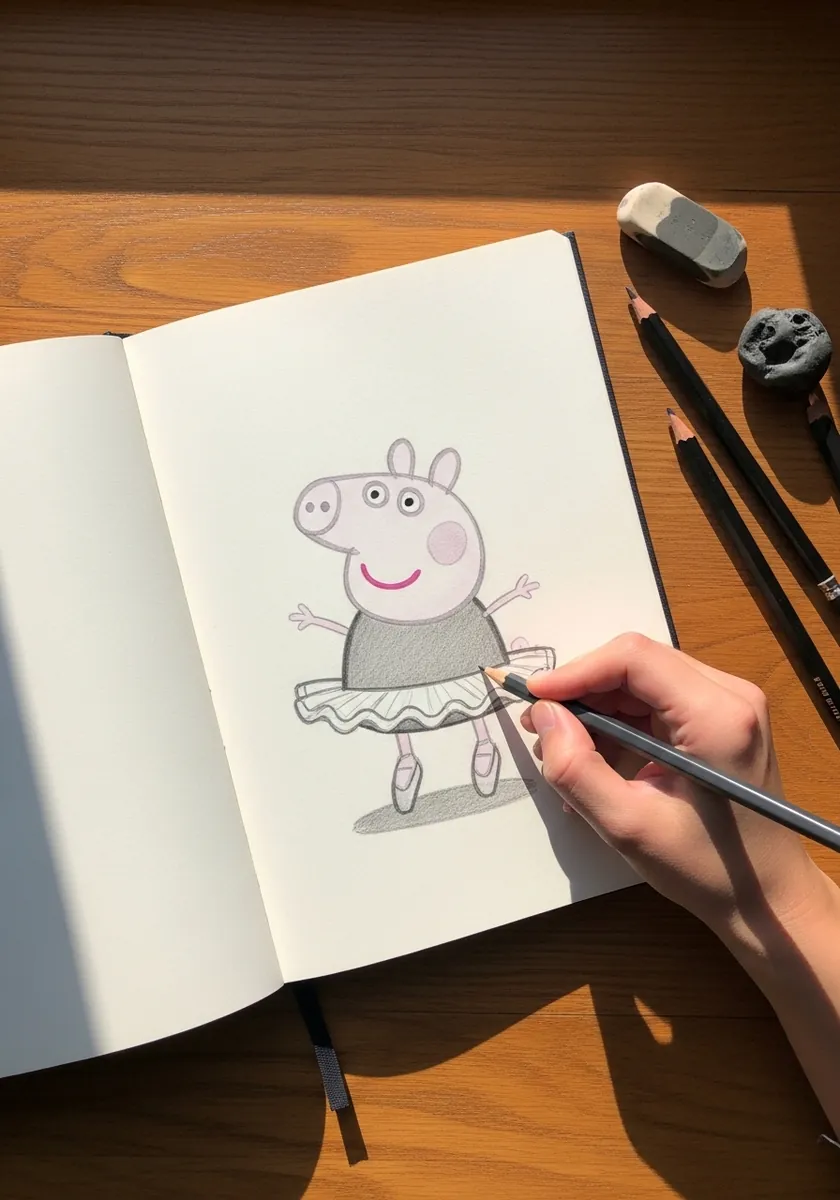
A costume changes the body but never the head. Draw the profile head first at full accuracy, then hang the tutu on the standard dress shape as a simple layered disc. Arms stay as smooth tubes with no elbows, held out in a rounded arc.
2. Jumping in a Muddy Puddle
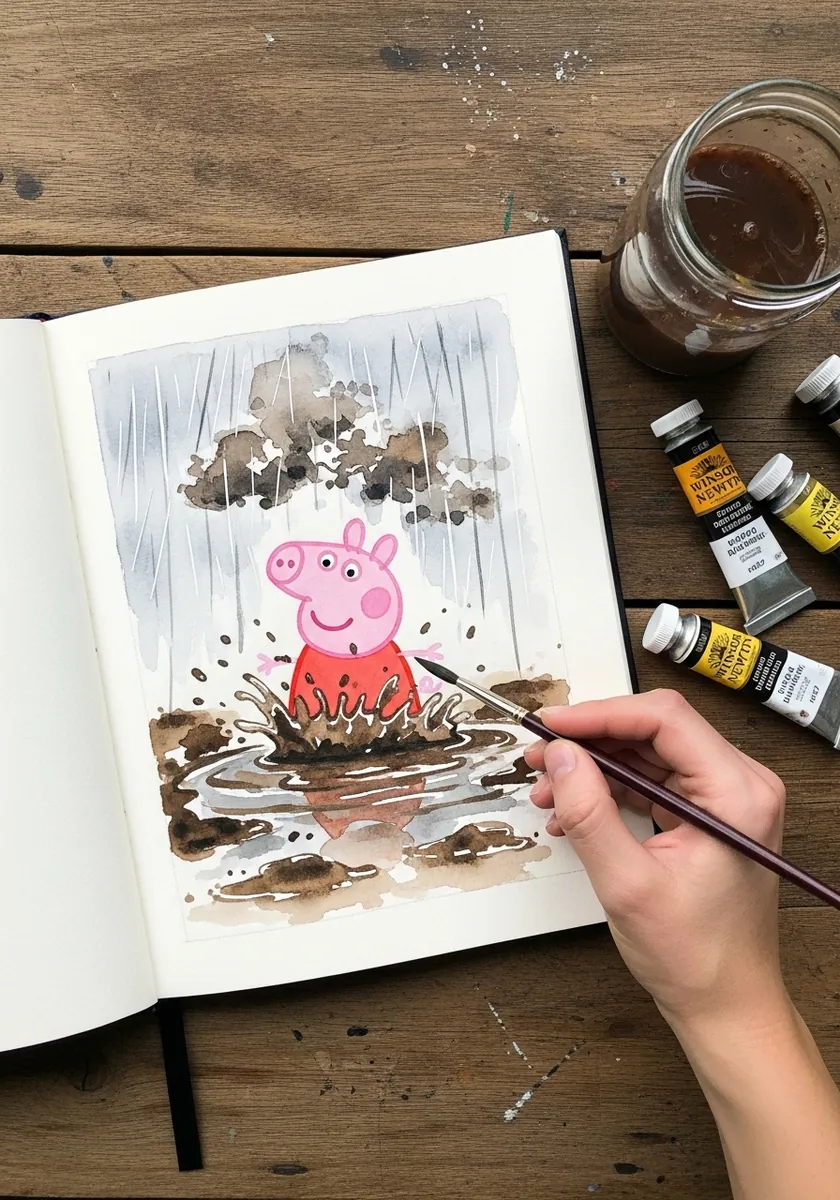
Splashes need direction and a source. Make every droplet radiate outward from the single point where the boots land, keep them larger nearest that point and smaller further out, and let a few clear the character’s outline entirely. Keep her boots the only fully saturated dark note, so the eye lands on the contact point.
3. Superhero Flight in Ink
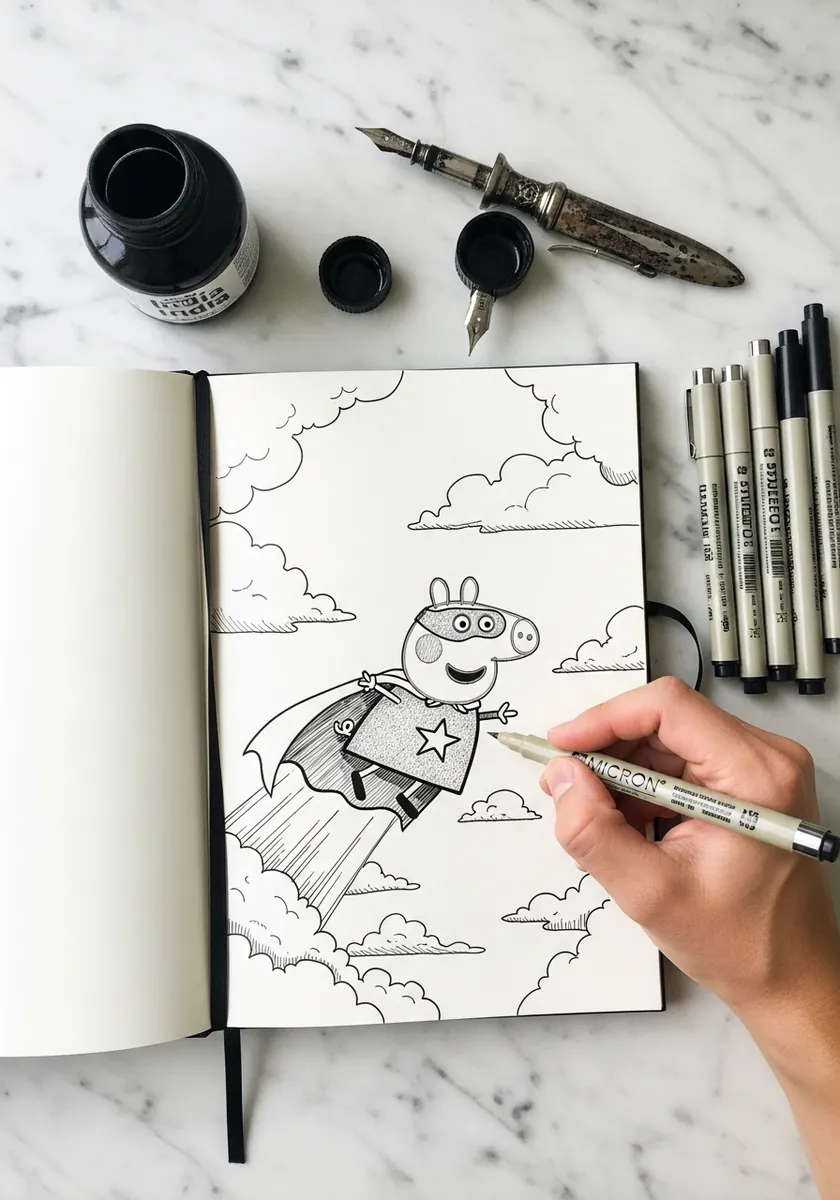
Flight is communicated by the trailing elements. Let the cape stream backward in one long curve, tilt the whole body forward off vertical, and keep the arms extended ahead. The clouds should stay below her rather than around her. Speed lines behind her should all converge on a single point well off the page.
4. Gouache Picnic Under a Tree
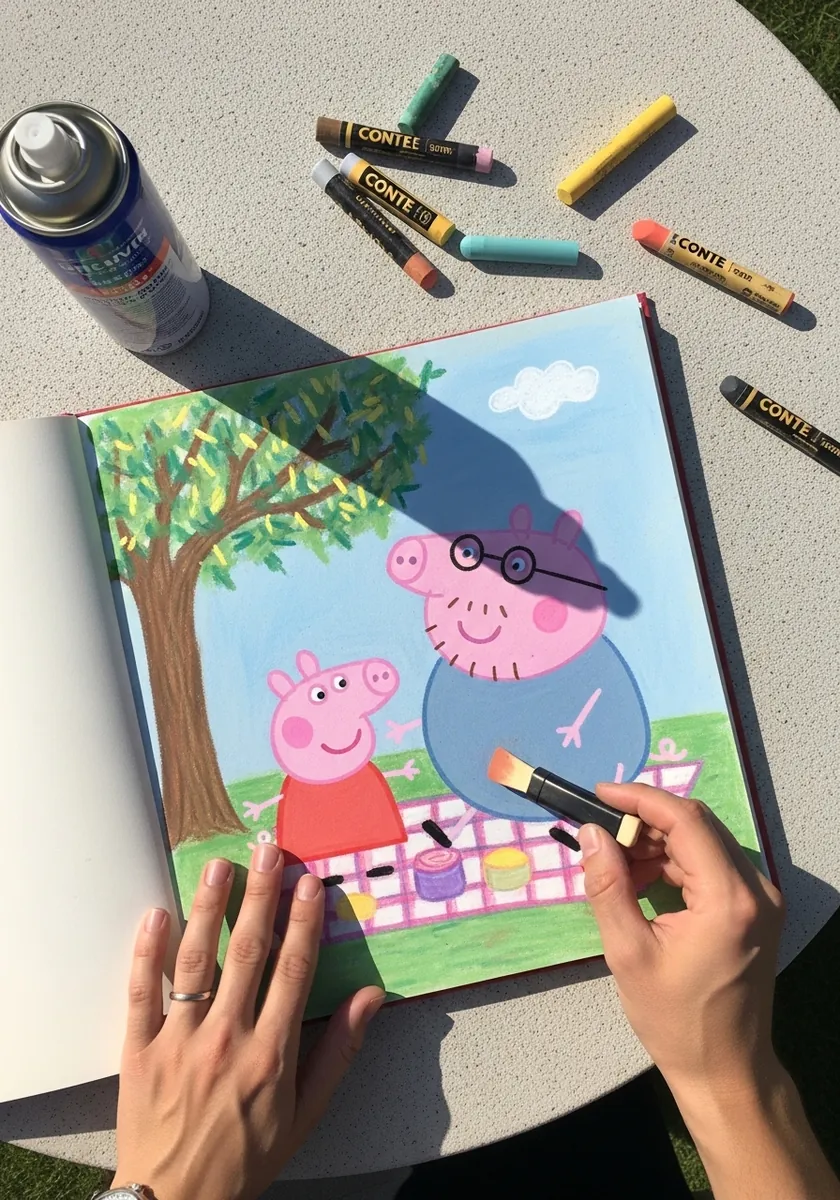
Flat gouache scenes need value separation between layers. Make the grass, the picnic blanket and the tree canopy three clearly different lightnesses, then place the characters against whichever is furthest from their own pink. Dapple a few lighter patches through the grass, which is what makes shade under a tree read.
5. Charcoal Detective on Black
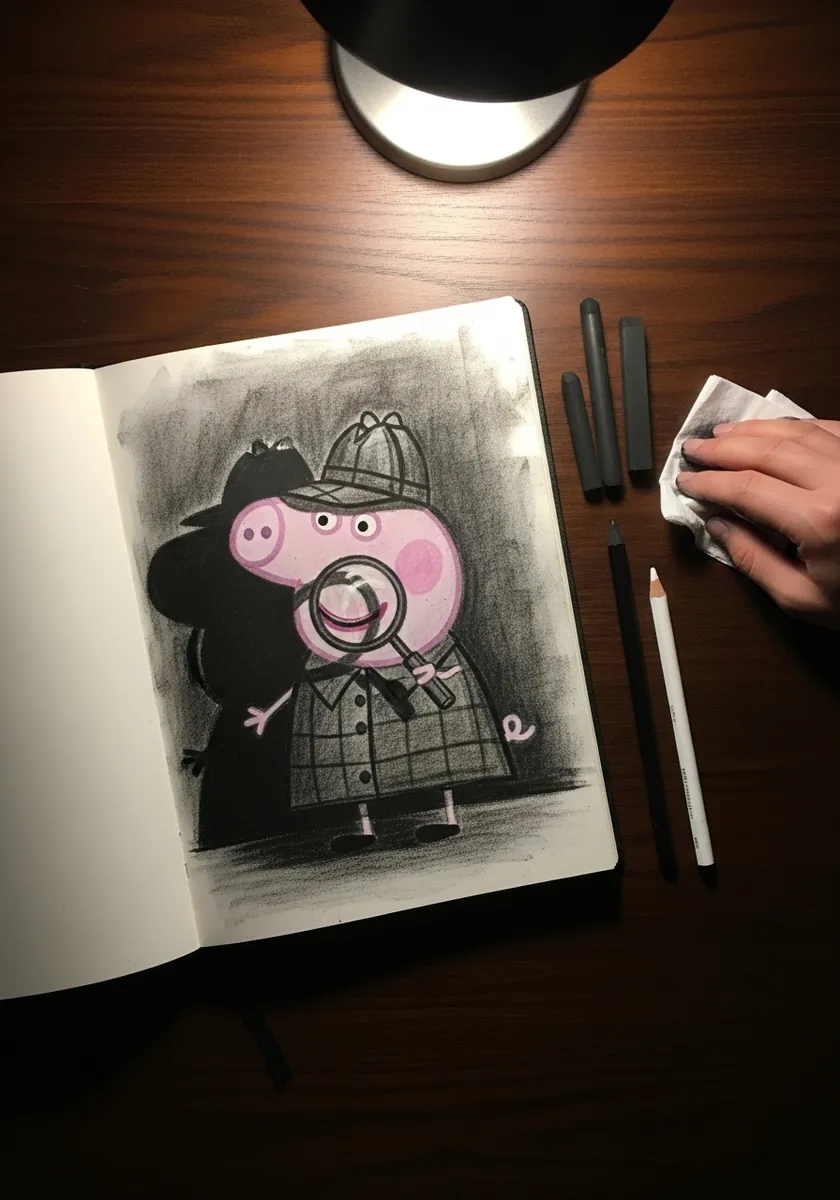
Working dark on dark forces you to rely on edges. Outline the whole figure in white, fill only the lit upper surfaces, and let the black paper stand in for the coat entirely. The magnifying lens becomes your brightest note.
6. Marker Comic Strip Panels
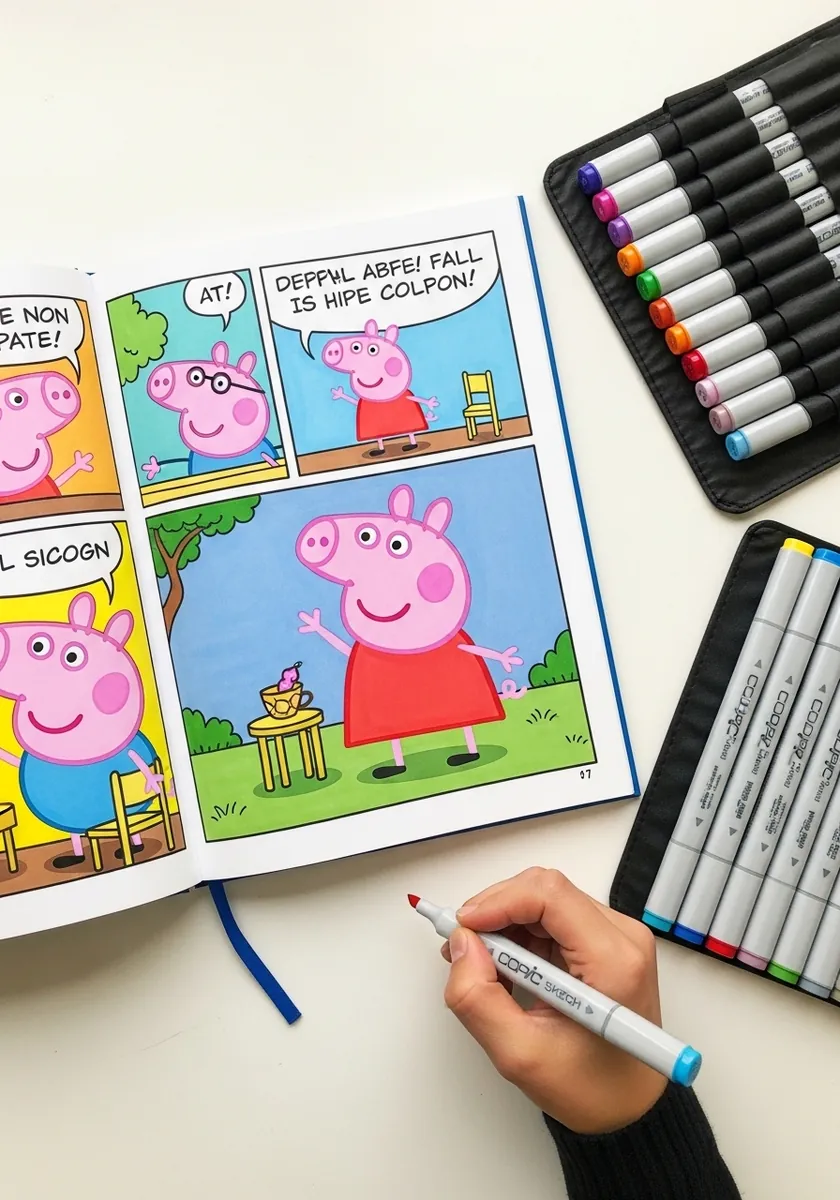
Comic panels need consistent gutters. Rule identical gaps between every frame, keep the character at the same scale across the strip unless you have a reason to change it, and place speech bubbles so their tails never cross a panel border.
7. Beach Sandcastle in Pencil
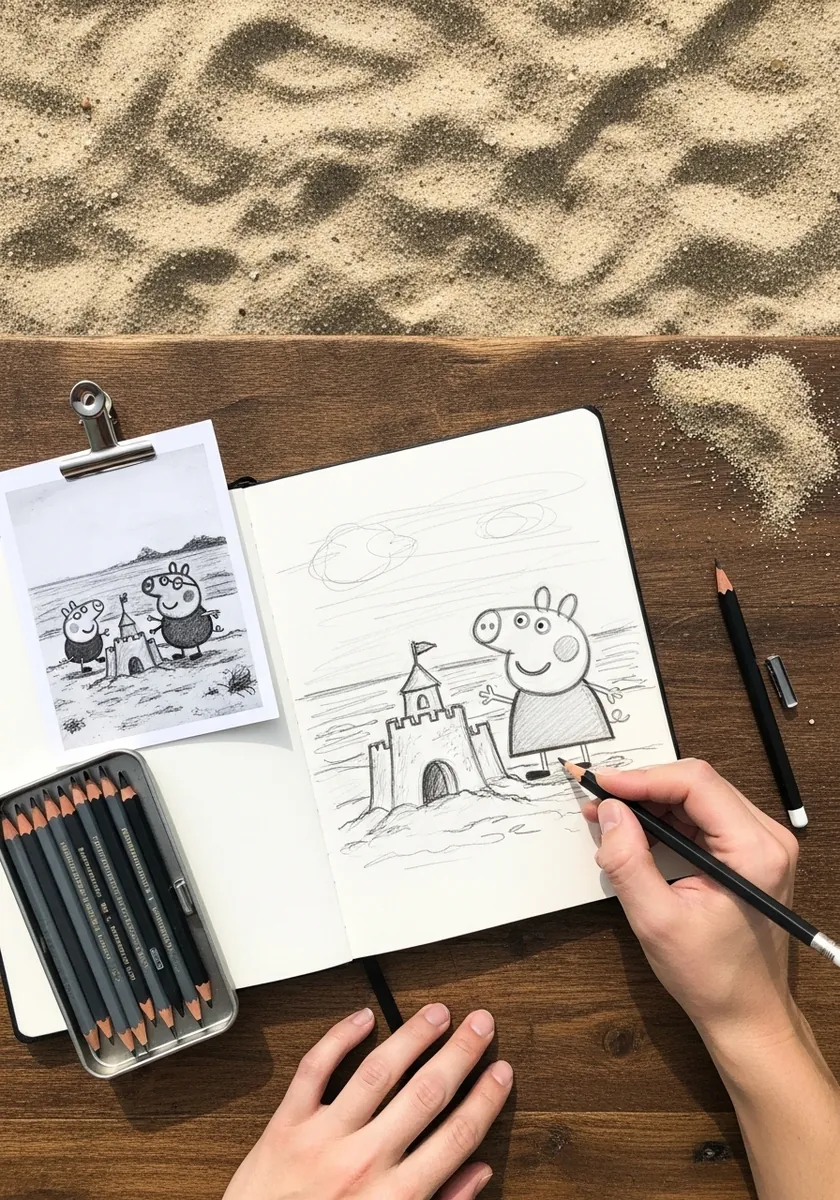
A sandcastle is a stack of truncated cones. Draw each turret as a slightly tapered cylinder with a rounded top, add a single ellipse where each one meets the sand, and keep the whole thing loosely irregular. Perfect towers look molded rather than built.
8. Birthday Cake in Watercolor
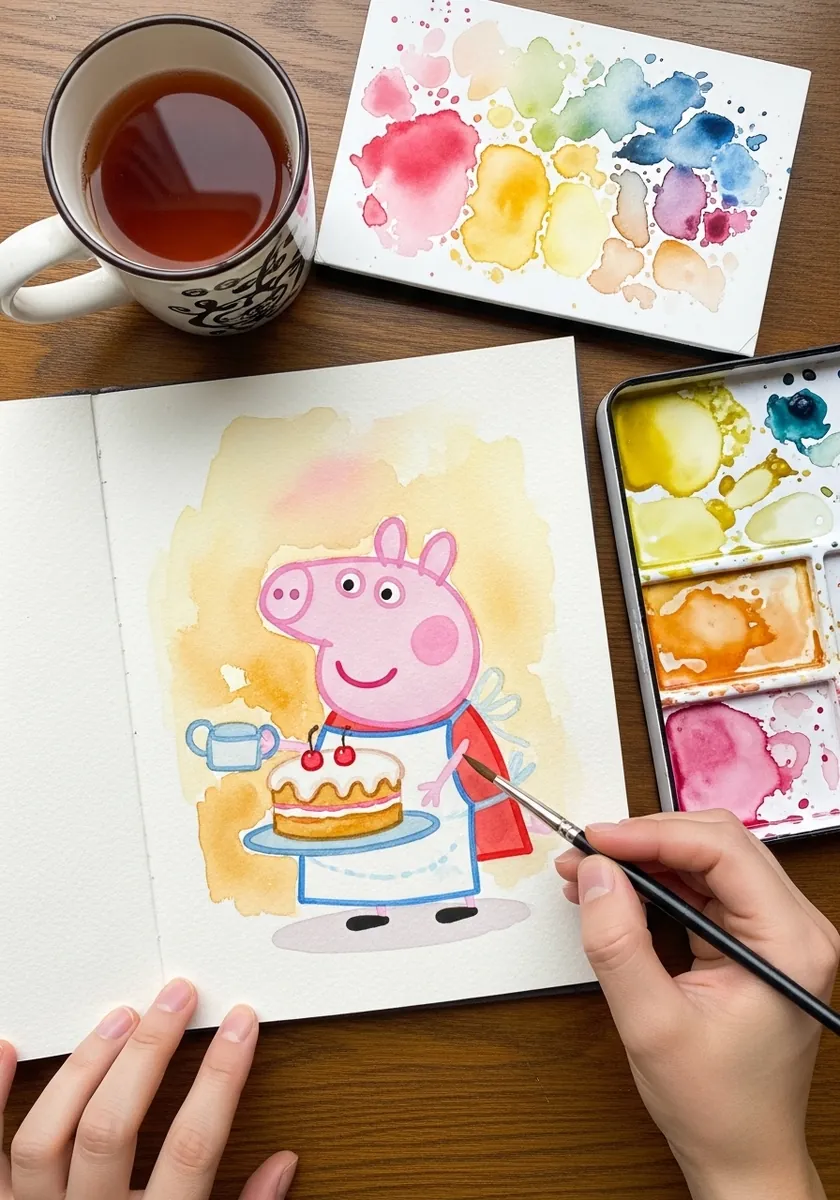
Loose washes around a flat-style character work if the character stays crisp. Paint the background wet and let it bloom freely, wait for it to dry completely, then ink and fill the figure. The contrast in edge quality carries the piece.
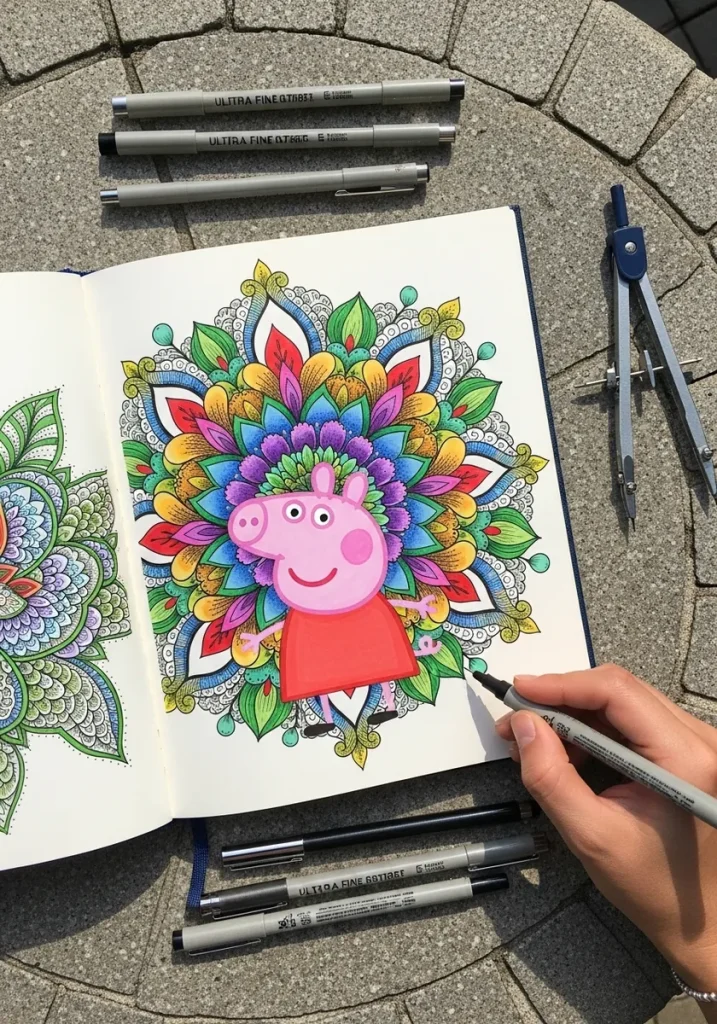
9. Mandala Patterned Portrait
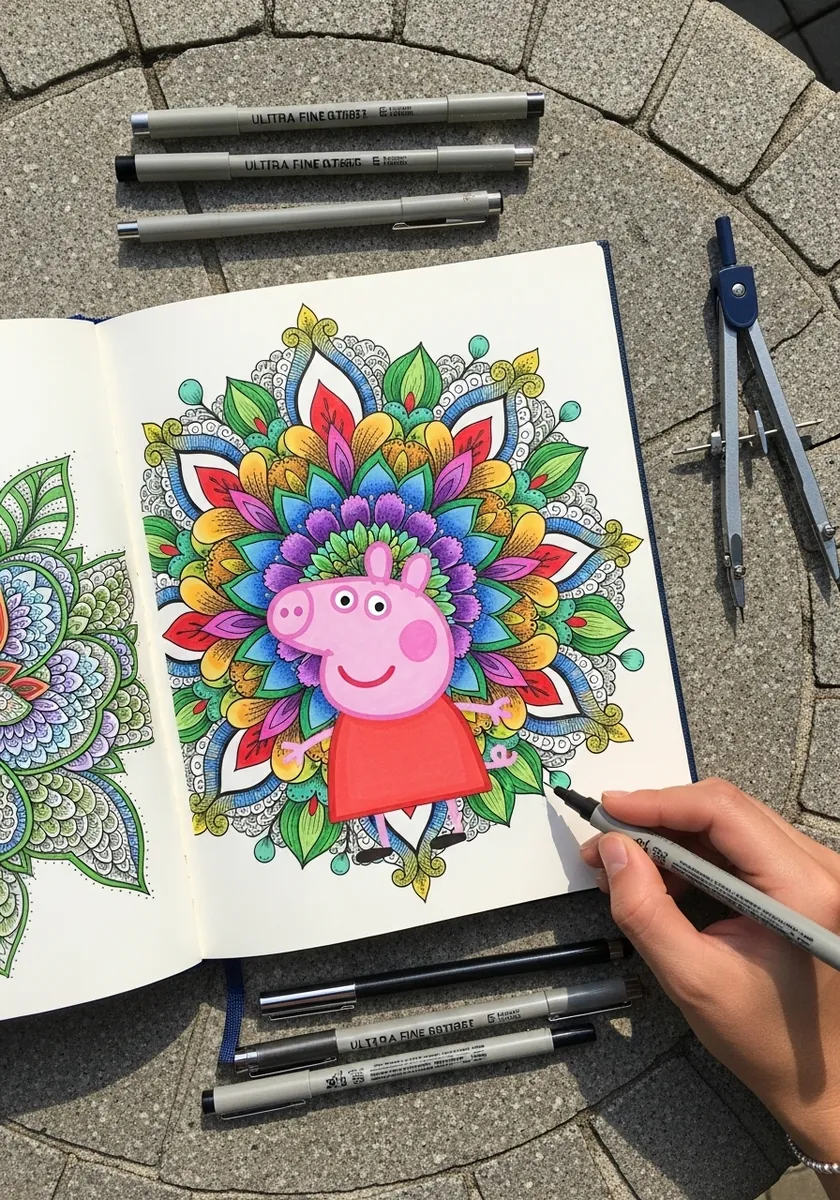
Ornament around a flat character needs a clear gap. Draw the figure first, leave a ring of untouched paper around her, and grow the mandala outward from beyond that. This follows the same radial logic as mandala construction. Work outward in complete rings rather than filling one sector at a time, or the pattern drifts.
10. Sepia Farm Scene
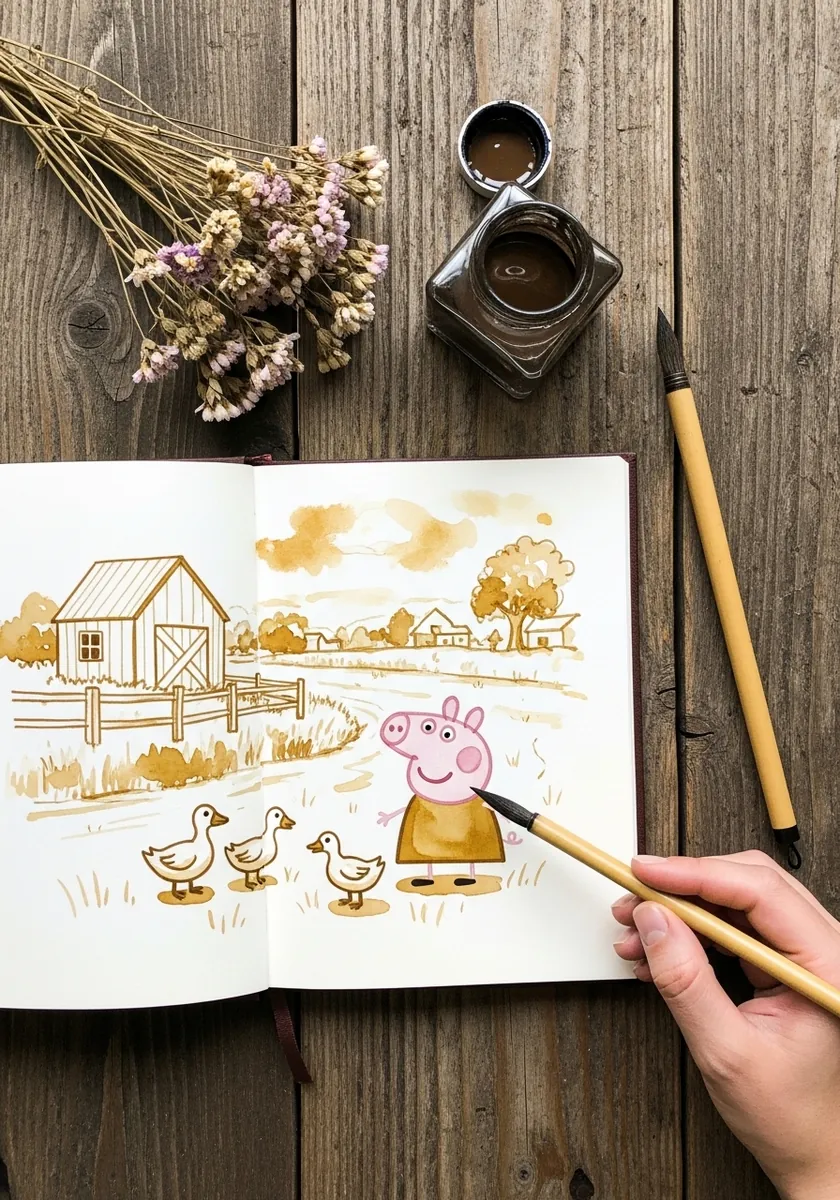
A single-hue scene relies entirely on value steps. Mix three strengths of sepia before starting and assign them: sky palest, mid-ground next, foreground darkest. The character sits at whichever step contrasts most with what is behind her. A single warm ink also unifies a busy farmyard where several colors would fragment it.
11. Pop Art Color Blocks
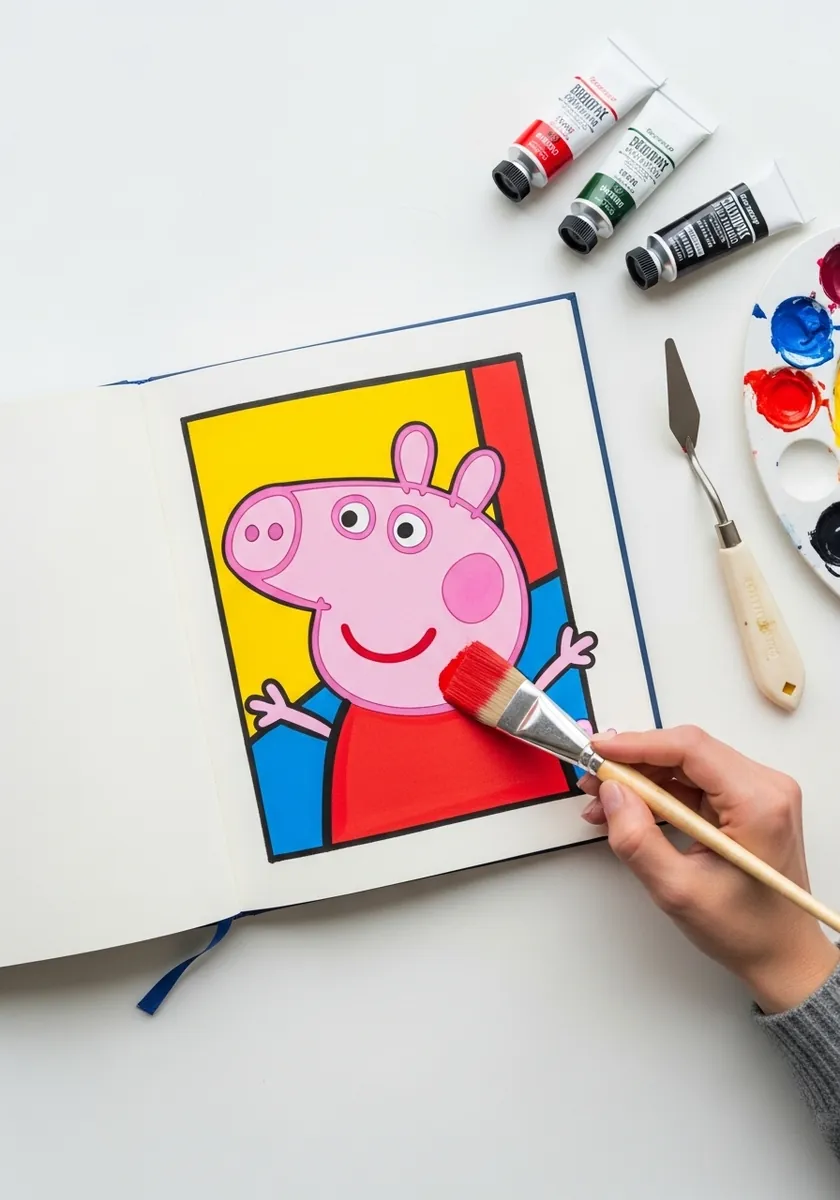
Flat primaries behind a flat character can fight unless you separate them. Ring the figure with a thin white keyline, keep the background blocks large and few, and let no block share an edge value with the pink. Heavy black outlines hold everything apart.
12. Cherry Blossom Swing
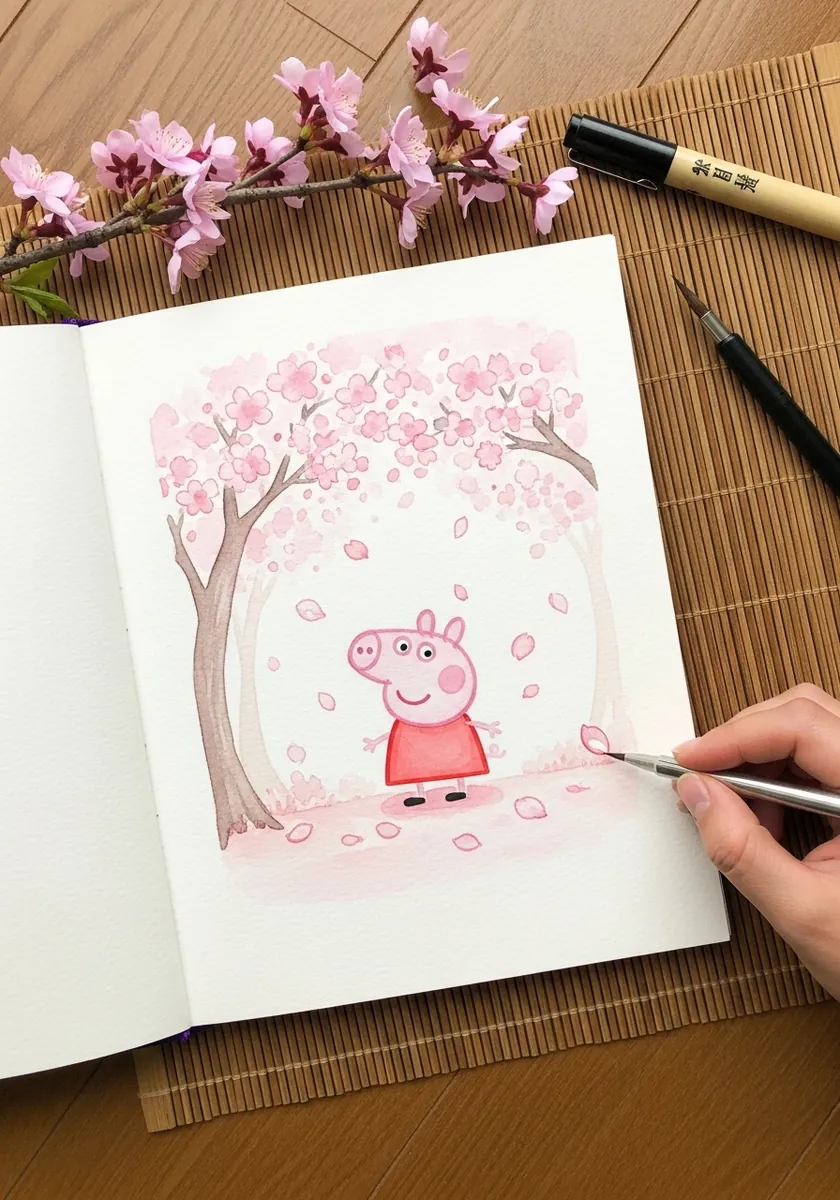
A pale pink character against pink blossom needs one anchor. Keep the red dress fully saturated and let it be the only strong color, then wash everything else back. The swing ropes give you two useful verticals in a very soft composition.
13. Paris Street in Ink and Wash
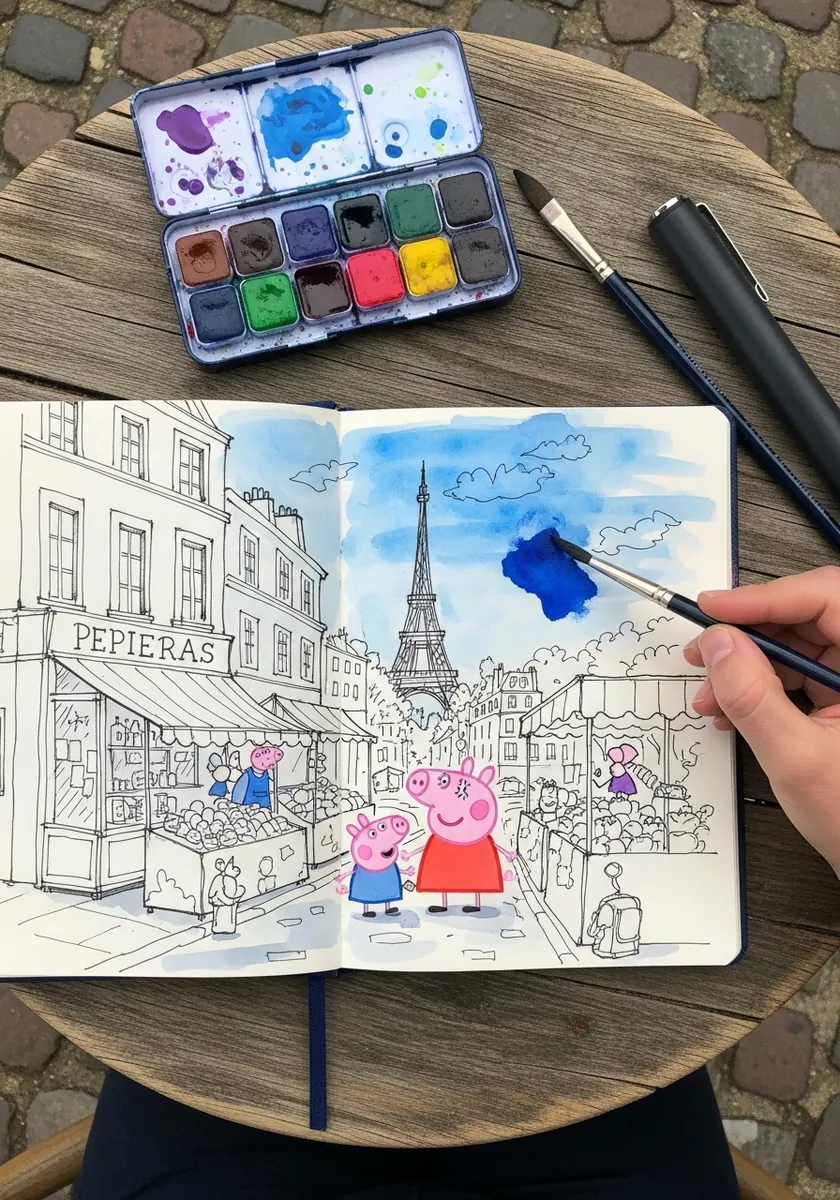
Architecture behind a cartoon character should stay in line only. Draw the buildings with a fine pen and leave them largely unpainted, then flood color into the sky and the figures. Selective color directs the eye better than coloring everything.
14. Winter Coat on Black Paper
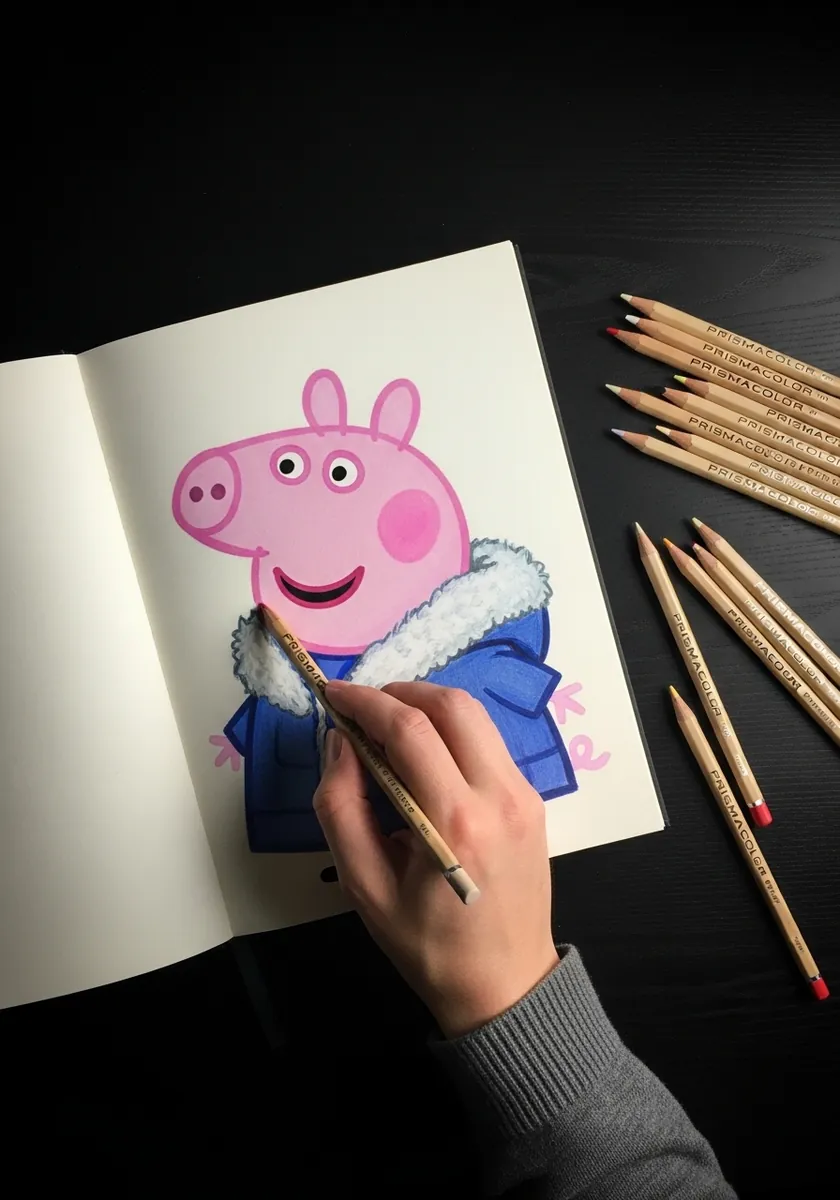
Colored pencil on black needs a white underlayer to stay bright. Lay white first wherever color will go, then build the blue and pink over it, and leave the paper untouched everywhere else. Applied directly, the colors sink and go dull.
15. Botanical Wildflower Frame
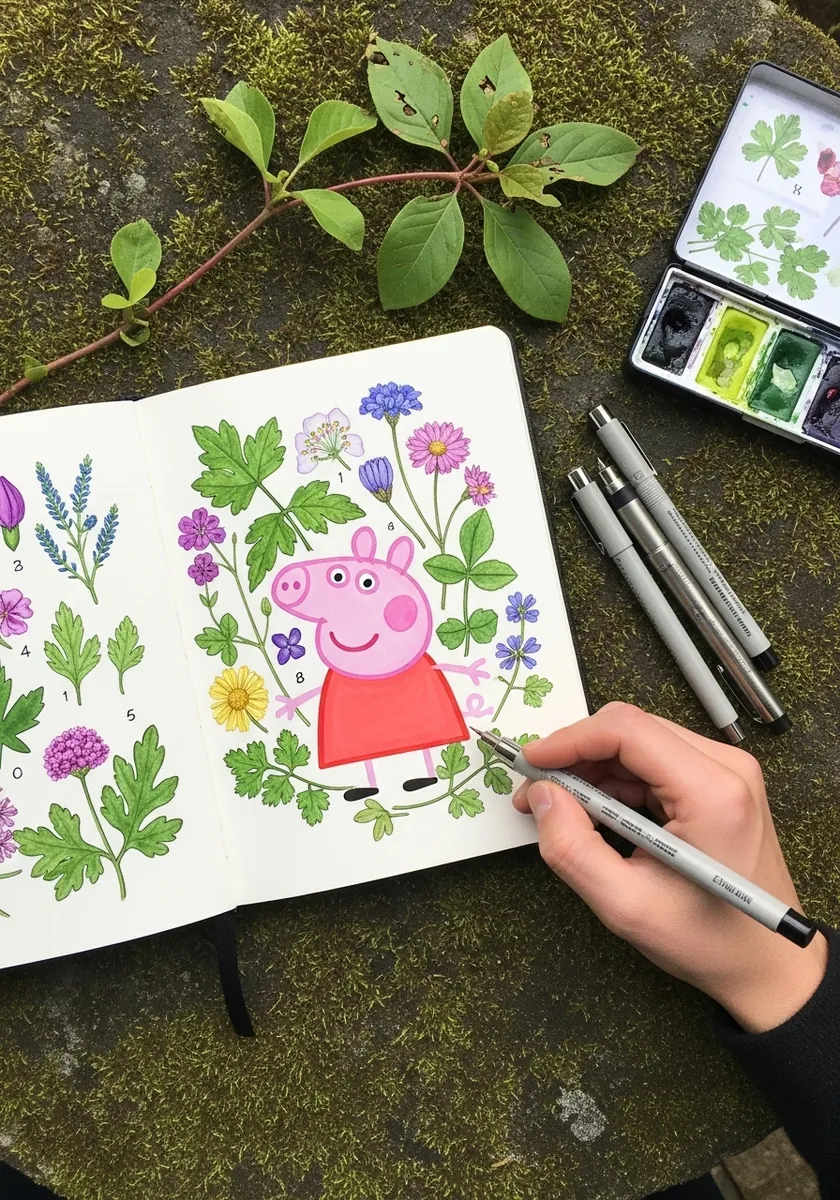
Botanical framing works when the plants are more detailed than the character. Render the flowers with real observation, keep the figure flat and simple, and let a few stems overlap her outline so the two layers genuinely interlock. Cluster the flowers at two opposite corners and leave the other two comparatively bare.
16. Impasto Acrylic Portrait
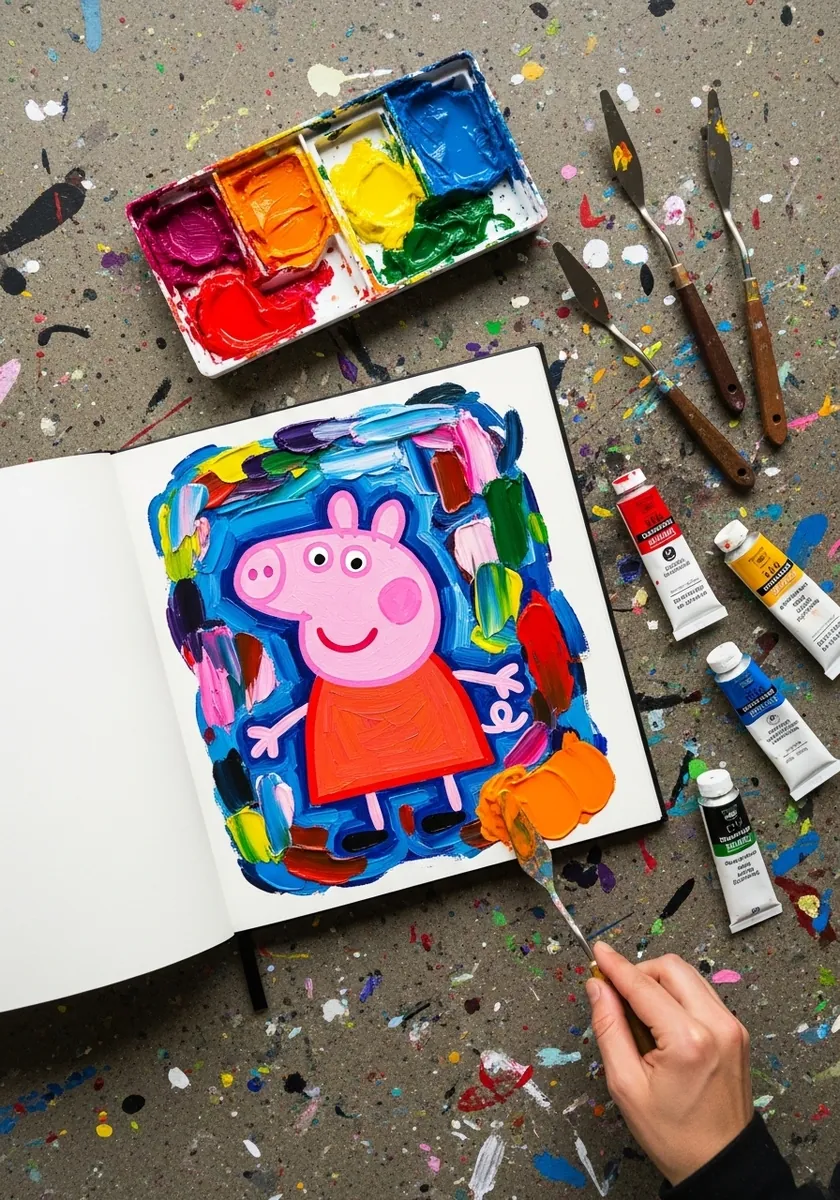
Thick paint contradicts a flat design, which is exactly what makes this interesting. Keep the shapes absolutely true to the original but build them from loaded strokes, letting the ridges catch light. Do not soften any edge while working. Work on board rather than paper, since heavy acrylic will buckle anything lighter as it dries.
17. White Line Violinist on Black
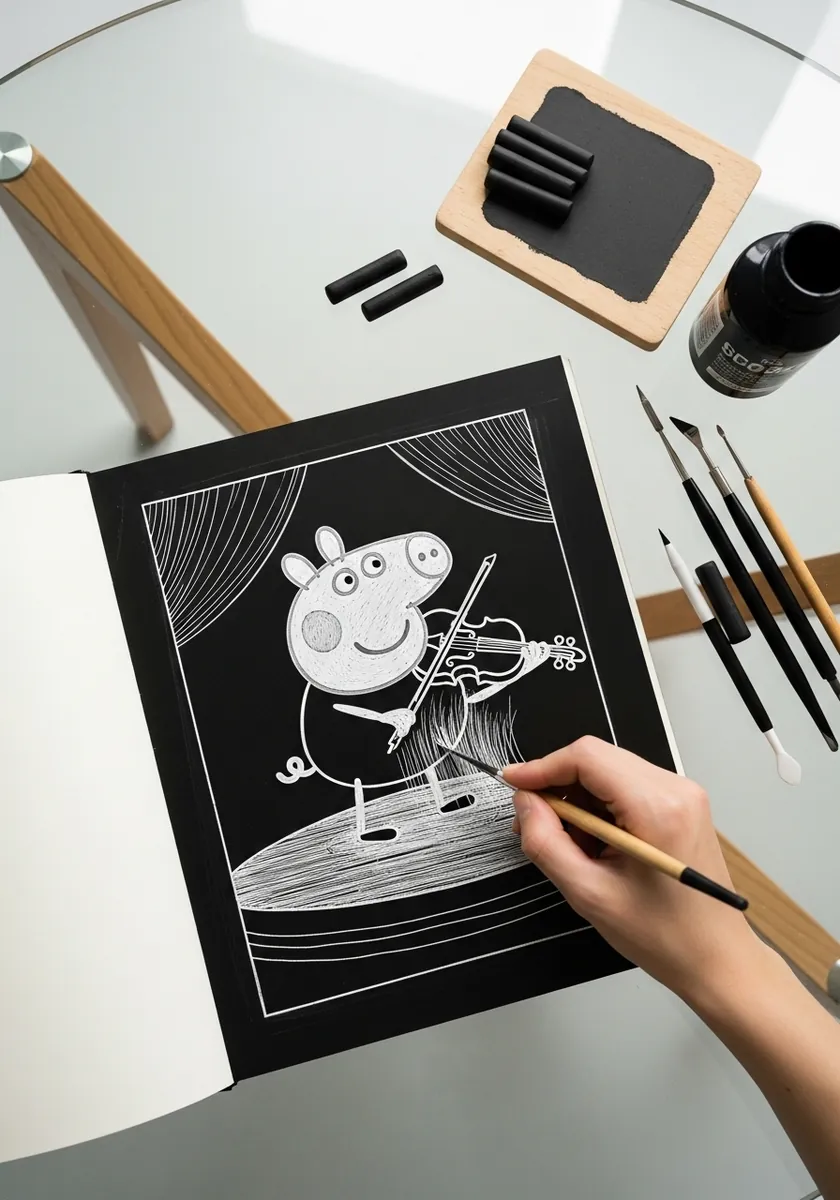
Line-only work on black is about what you leave out. Draw the outline and a few internal divisions in white, add nothing else, and let the black carry every filled area. The bow and strings should be the finest lines on the page.
18. Surfing a Blue Wave
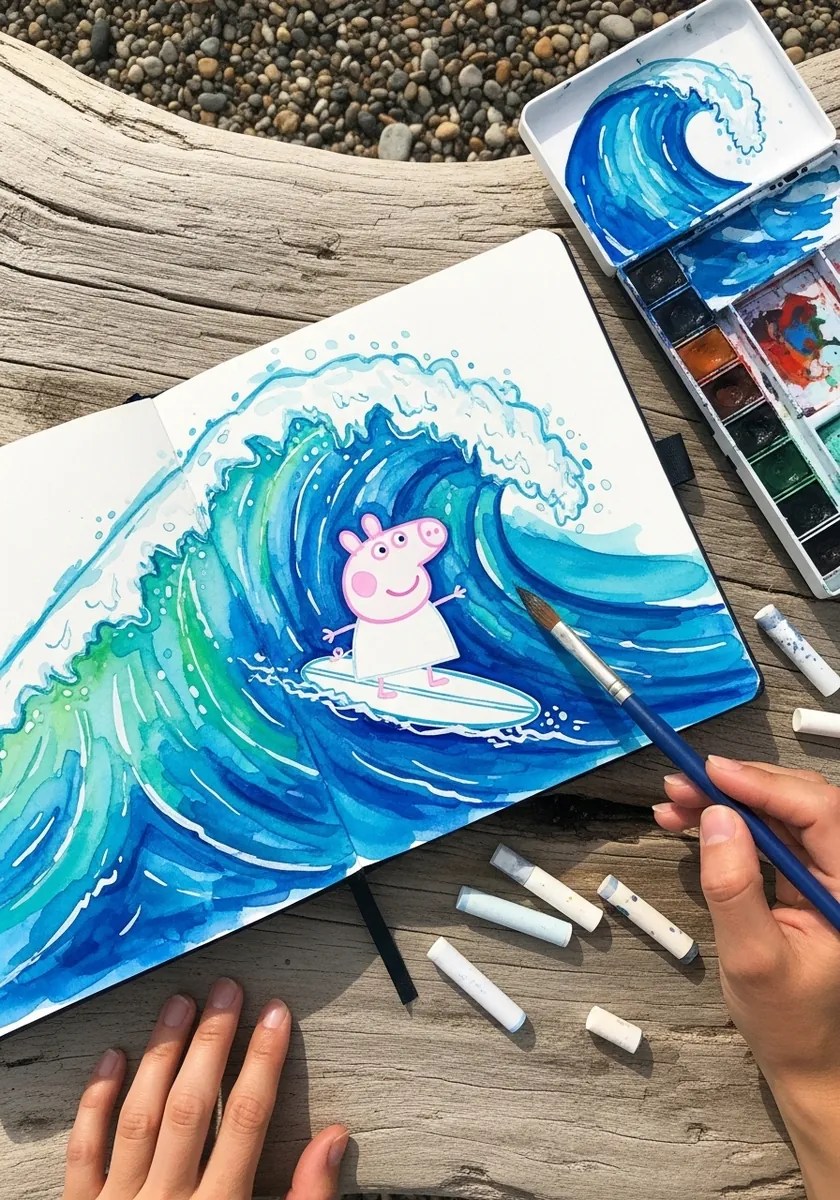
A breaking wave curls forward over itself. Draw the crest arcing ahead of the base, keep the foam as reserved white paper rather than added paint, and darken the water directly beneath the curl. The figure sits inside that dark area.
19. Sumi-e With Bamboo
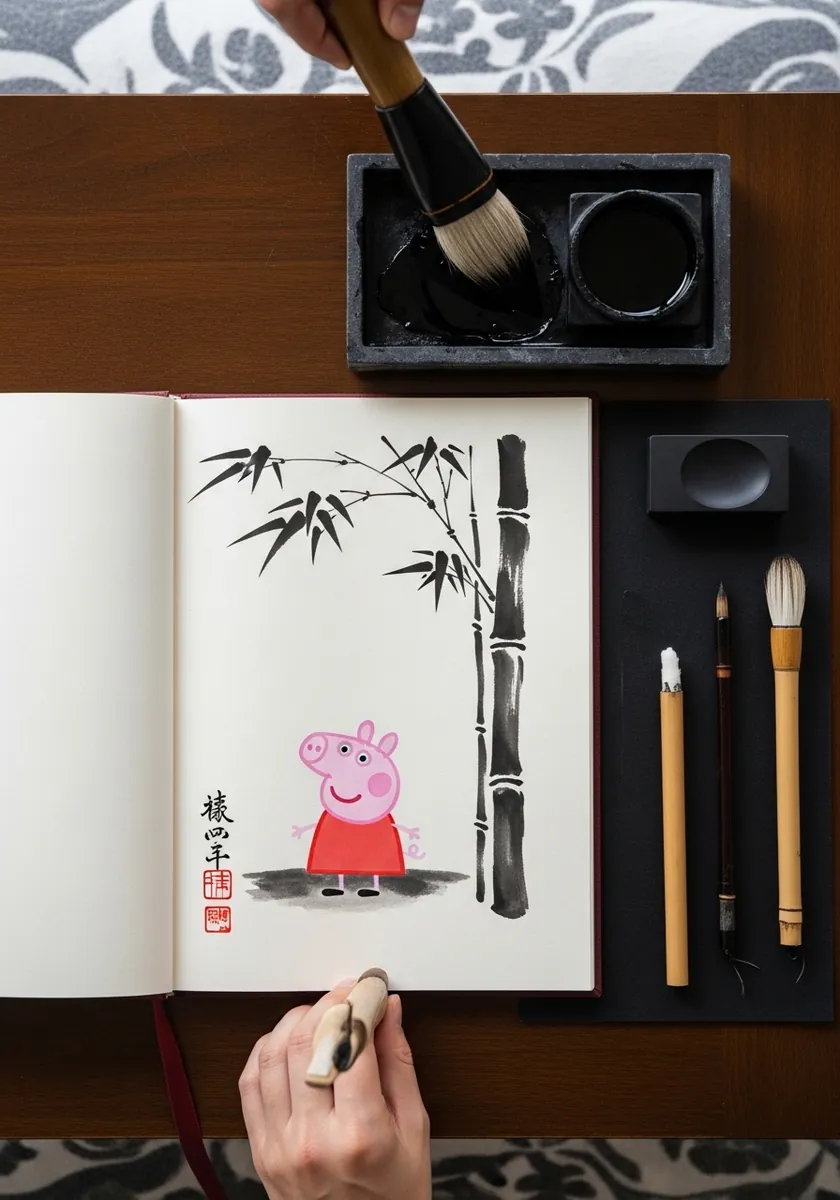
Brush painting wants economy. Place the bamboo in a few loaded strokes, keep the character small and low on the page, and leave most of the paper empty. The red seal is the only warm accent, so its position genuinely matters.
20. Oil Pastel Carousel
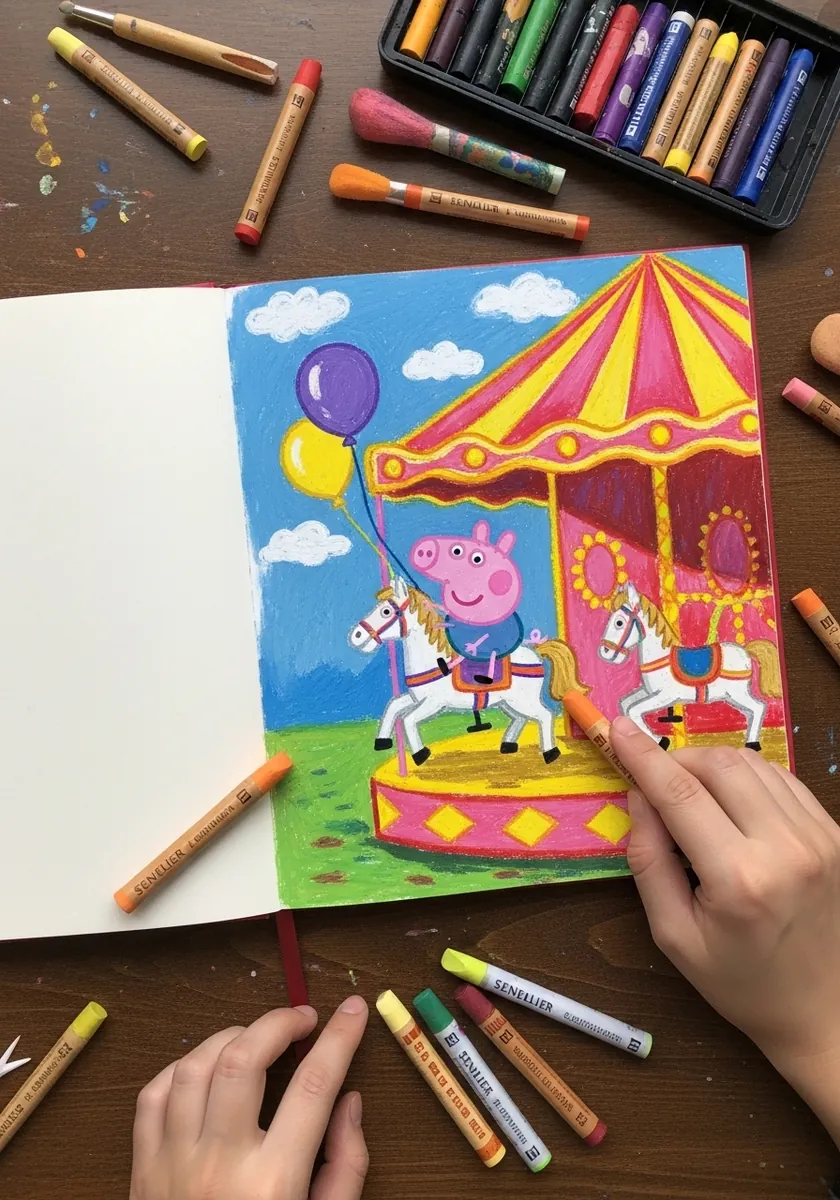
Oil pastel sits on top rather than mixing, which suits a flat character. Lay each color separately, press hard for saturation, and outline last in black. A carousel canopy is drawn as a shallow cone with radiating stripes. Balloon strings should curve rather than hang straight, which suggests the whole ride is turning.
21. Stippled Autumn Woods
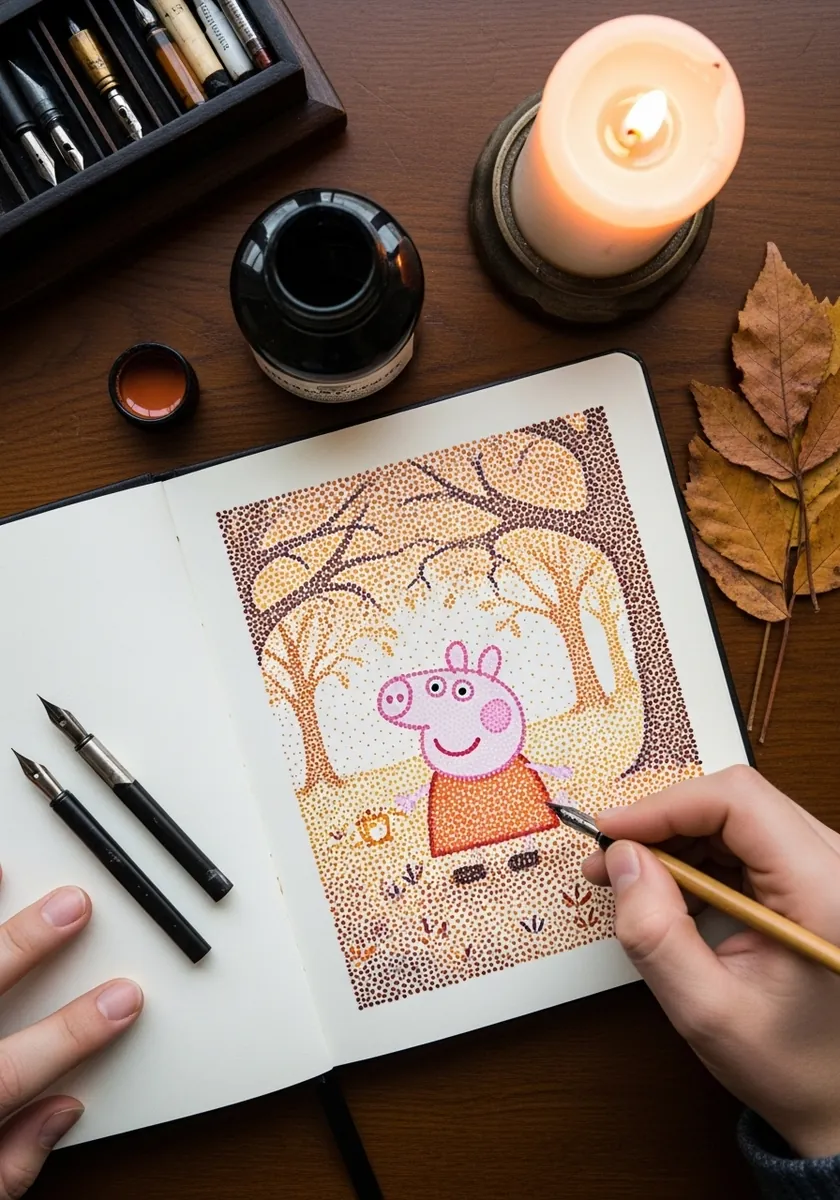
Stippling builds tone through density alone. Keep every dot the same size, cluster them tightly in the shadows and thin them out toward the light, and leave the character almost entirely undotted so she stays flat against the texture. Build the darkest passages over several sittings, since stipple density is slow to correct.
22. Skiing in Snowy Mountains
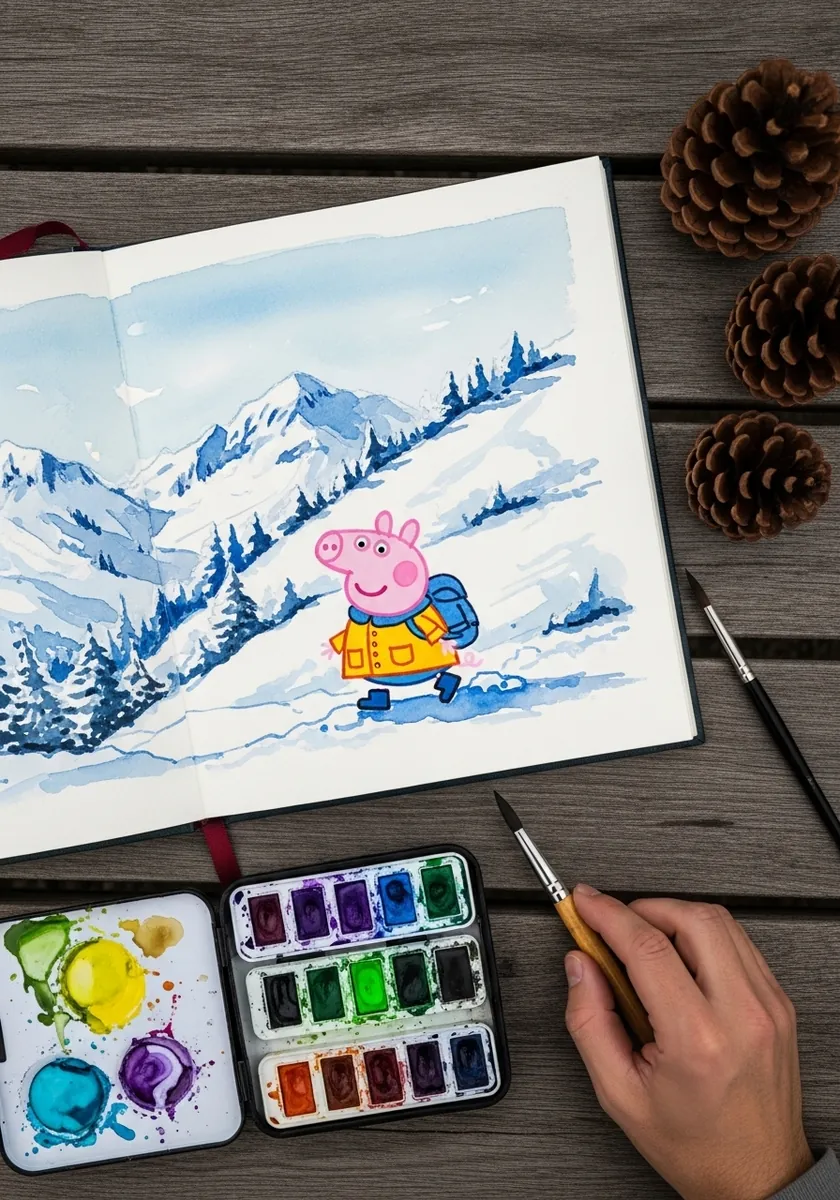
Snow is painted as blue-gray shadow rather than white paint. Reserve the paper for the lit slopes, wash cool shadow into the hollows, and let the sky be the darkest value on the page. That reversal is what makes snow read as snow.
23. Fashion Illustration Gown
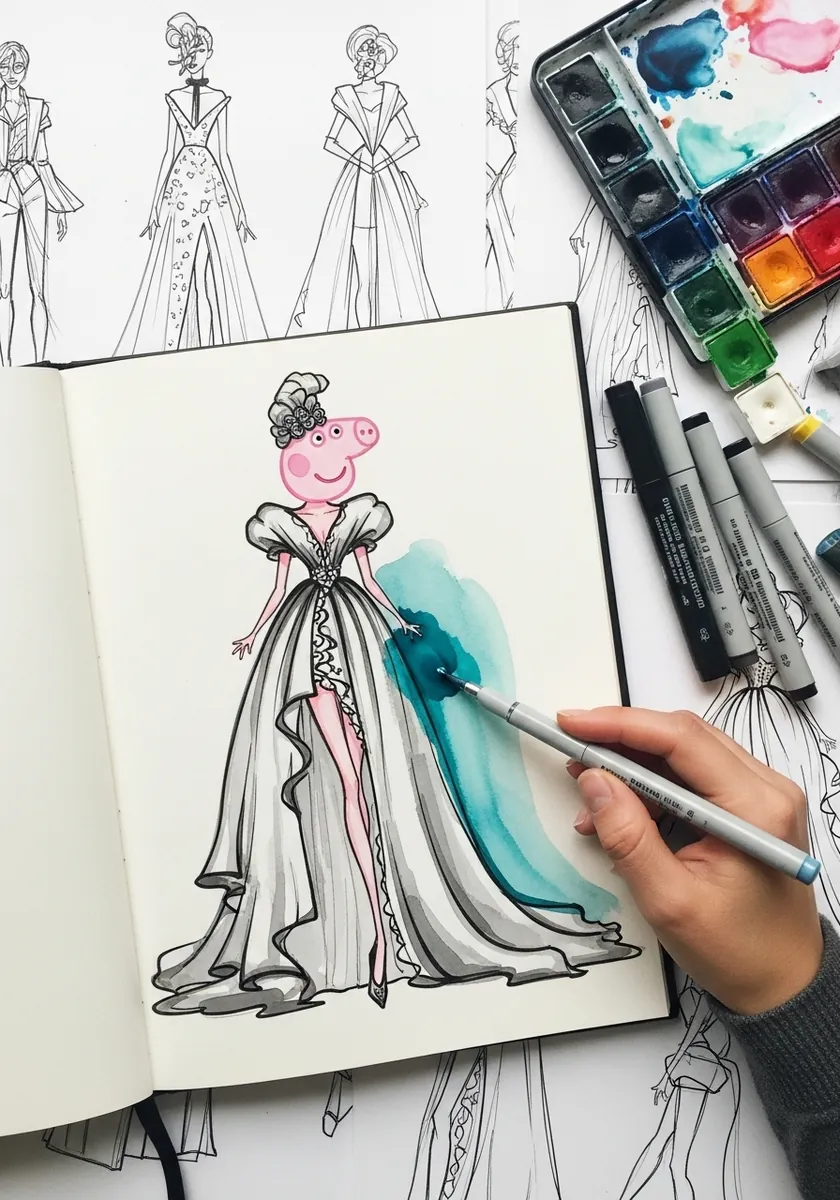
Fashion drawing exaggerates length. Stretch the figure well beyond its normal proportion, let the gown sweep into a long train, and render the fabric with a single loose wash while the character stays crisp and unshaded. Keep the head at its true size, because only the body gets stretched in fashion drawing.
24. Magical Forest With Fireflies
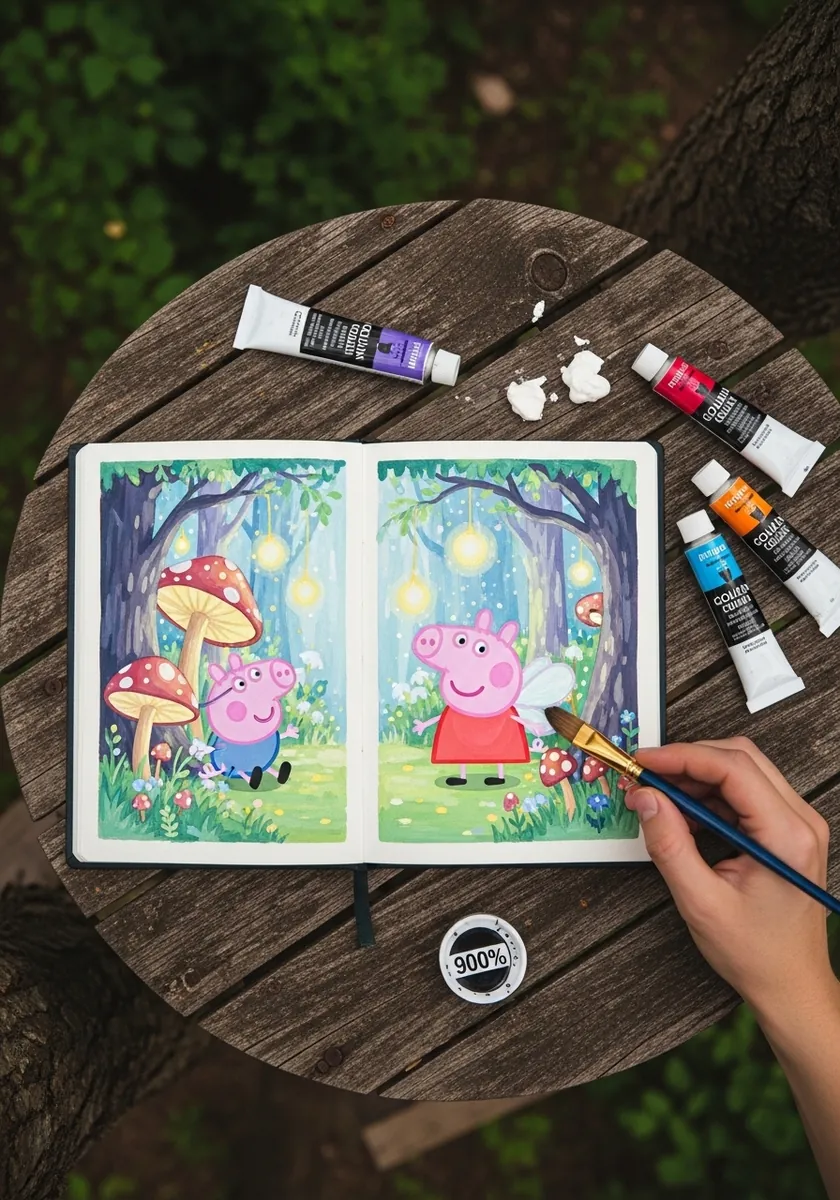
A two-panel spread needs something crossing the gutter. Run the forest floor or one tall mushroom across both pages, keep the lighting identical in each, and place the character on one side only so the pages are not symmetrical. Give each firefly a soft halo, or they read as specks of dust rather than points of light.
25. Graffiti DJ With Spray Lettering
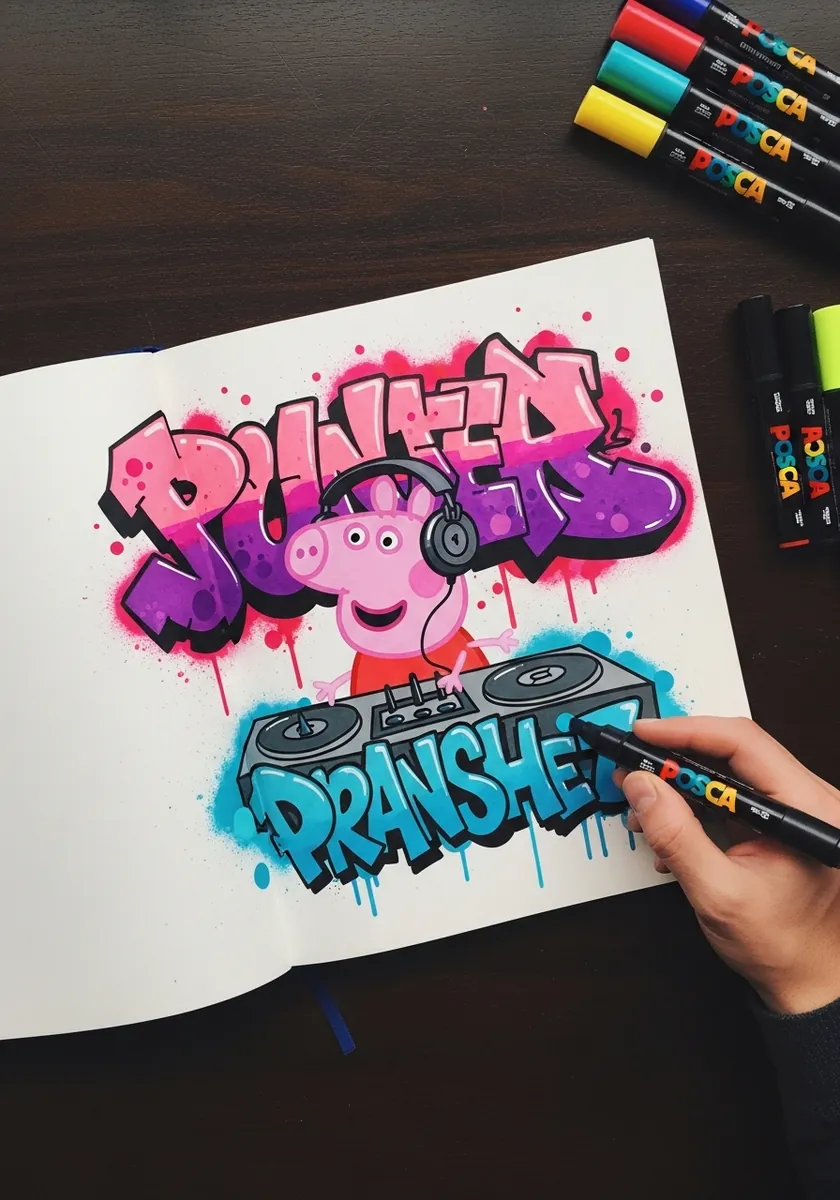
Street styling stacks in a fixed order: fill, black outline, bright keyline, then drips and highlights last. Let the lettering dominate and the character sit within it, and keep every drip below the lowest edge of a shape. Overlap the lettering slightly with her outline so the two layers genuinely belong together.
26. Paper Boat at Sea in Ink
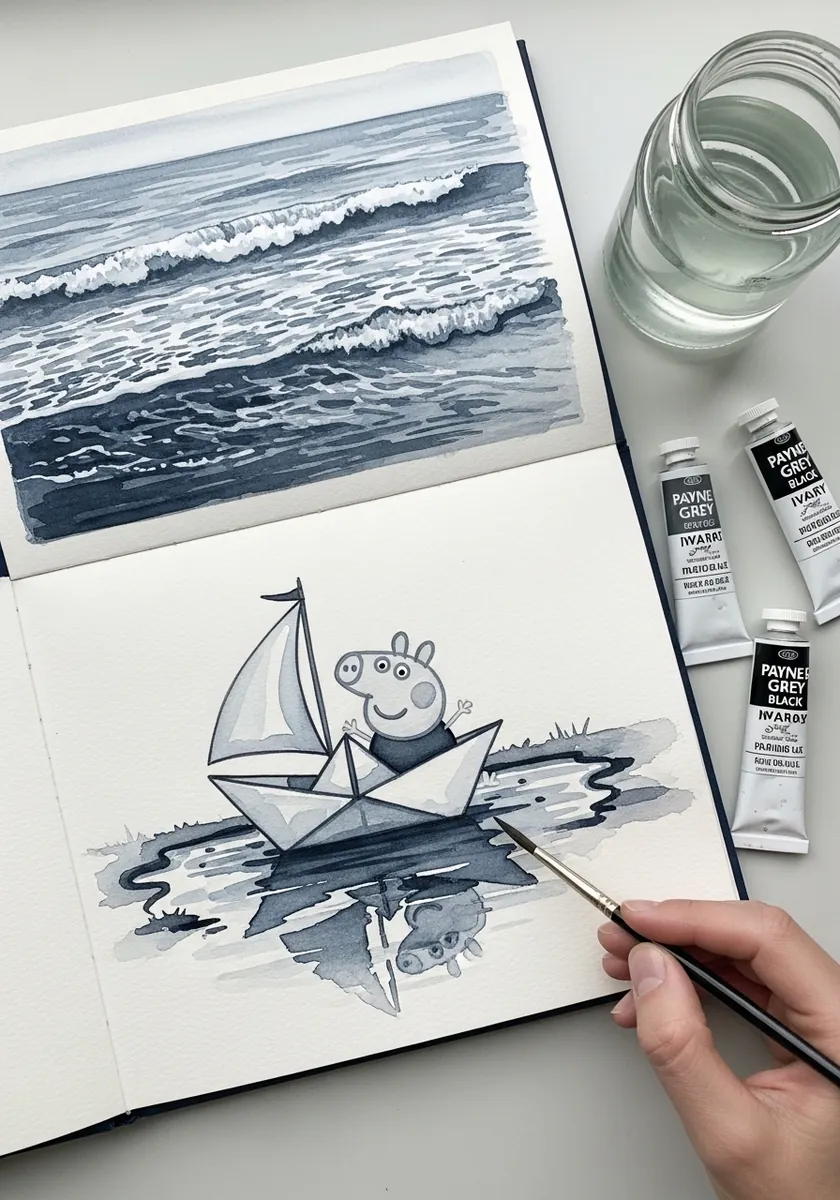
A paper boat is a folded plane, so keep every crease absolutely straight. Draw the folds as hard-edged triangles, add one reflection beneath broken by horizontal ripples, and let the sea stay a loose wash by contrast. Keep the waterline where it cuts the hull perfectly straight, since a folded boat sits flat.
27. Steampunk Gears in Fine Ink
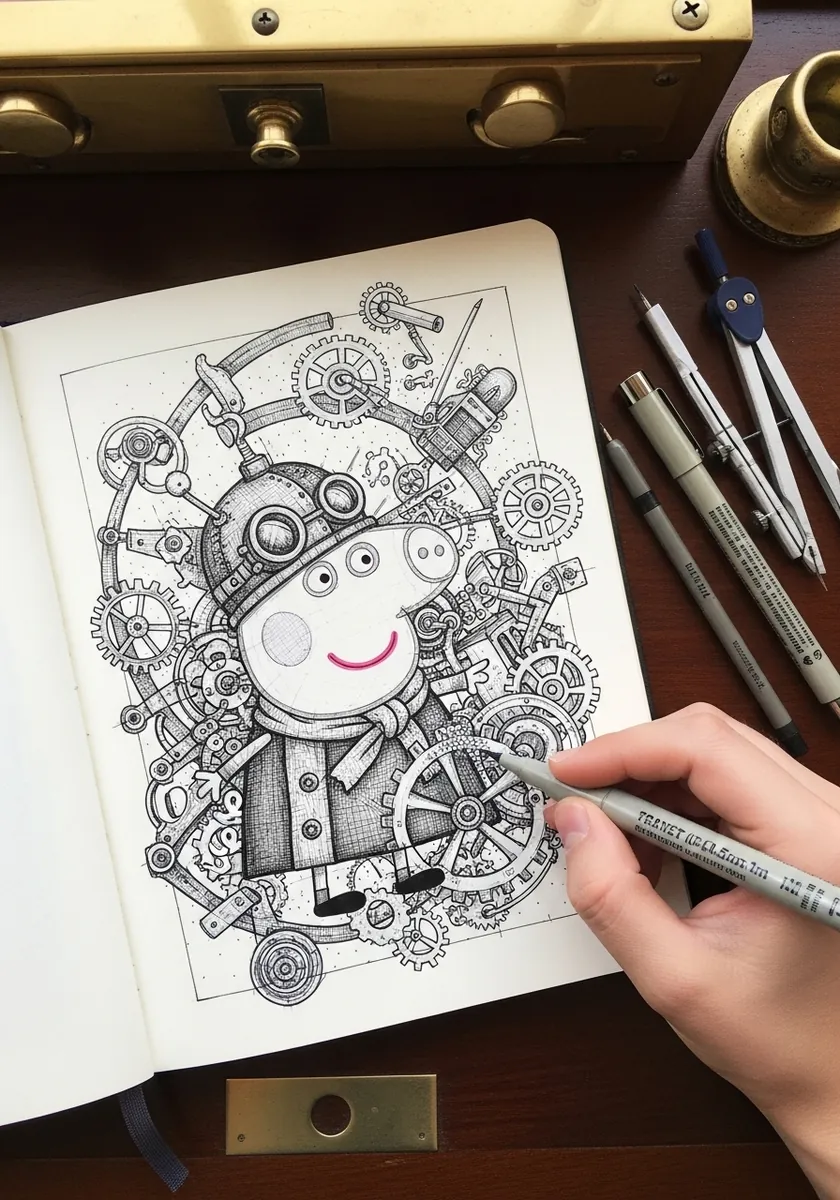
Dense machinery around a simple character needs the gears to sit behind. Draw the figure at full line weight, render the cogs finer, and overlap them so they pass behind her shoulders. Rivets and small dials read as machinery faster than large gears do.
28. Minimal Pencil Line Figure
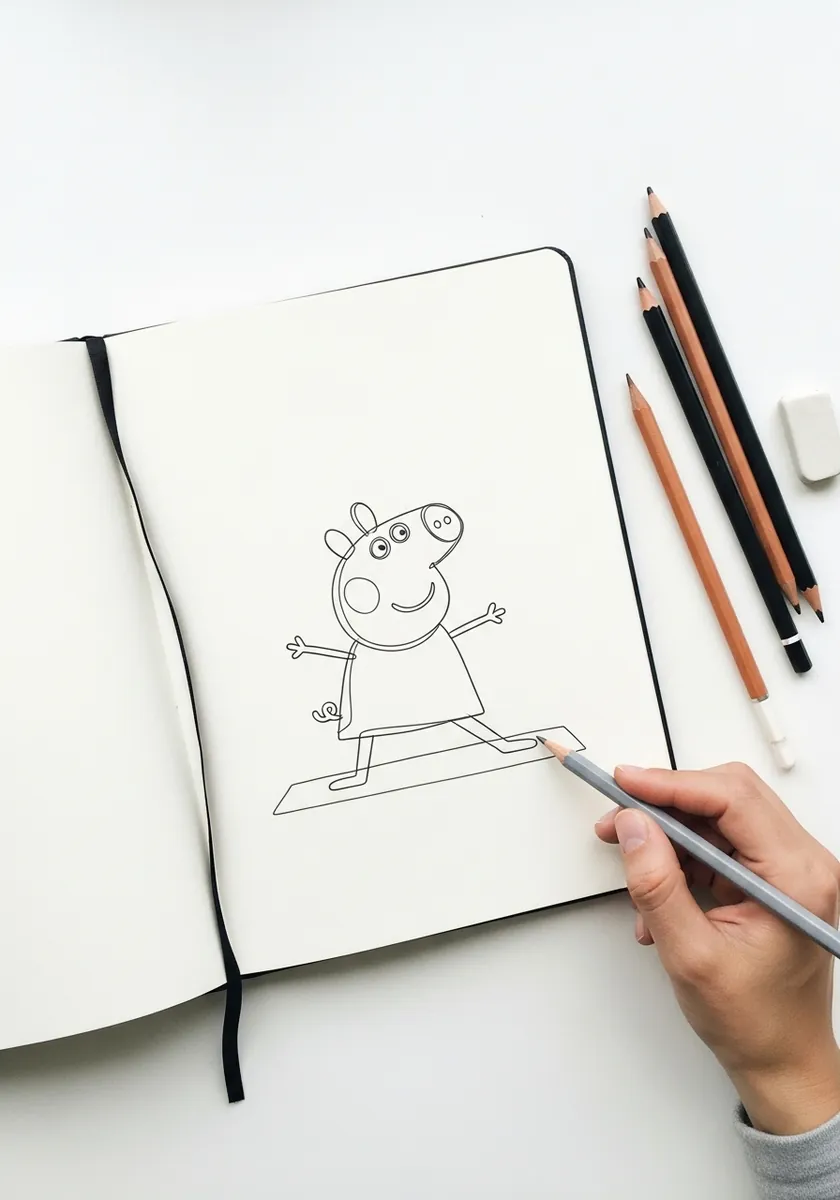
This is the version worth practicing most. Nothing but outline, drawn once, with correct head geometry and no shading at all. If the profile head, the snout stalk and the dress trapezoid are right, the drawing works with no further help.
29. Rainforest Scene in Gouache
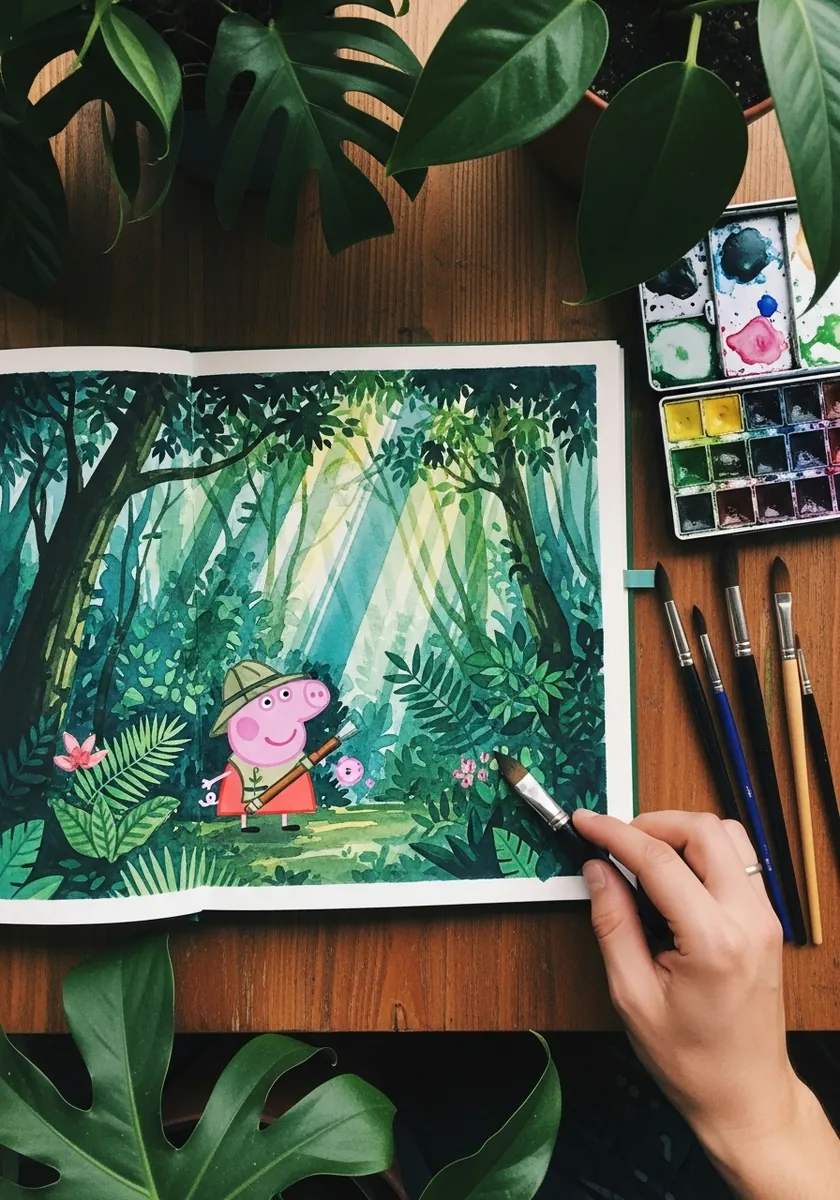
Layered foliage is built from three greens. Use the darkest for the deep background, a mid tone for the main leaf mass and the lightest for the few leaves nearest the viewer, then place the character against the darkest layer.
30. Mixed Media Rooftop Collage
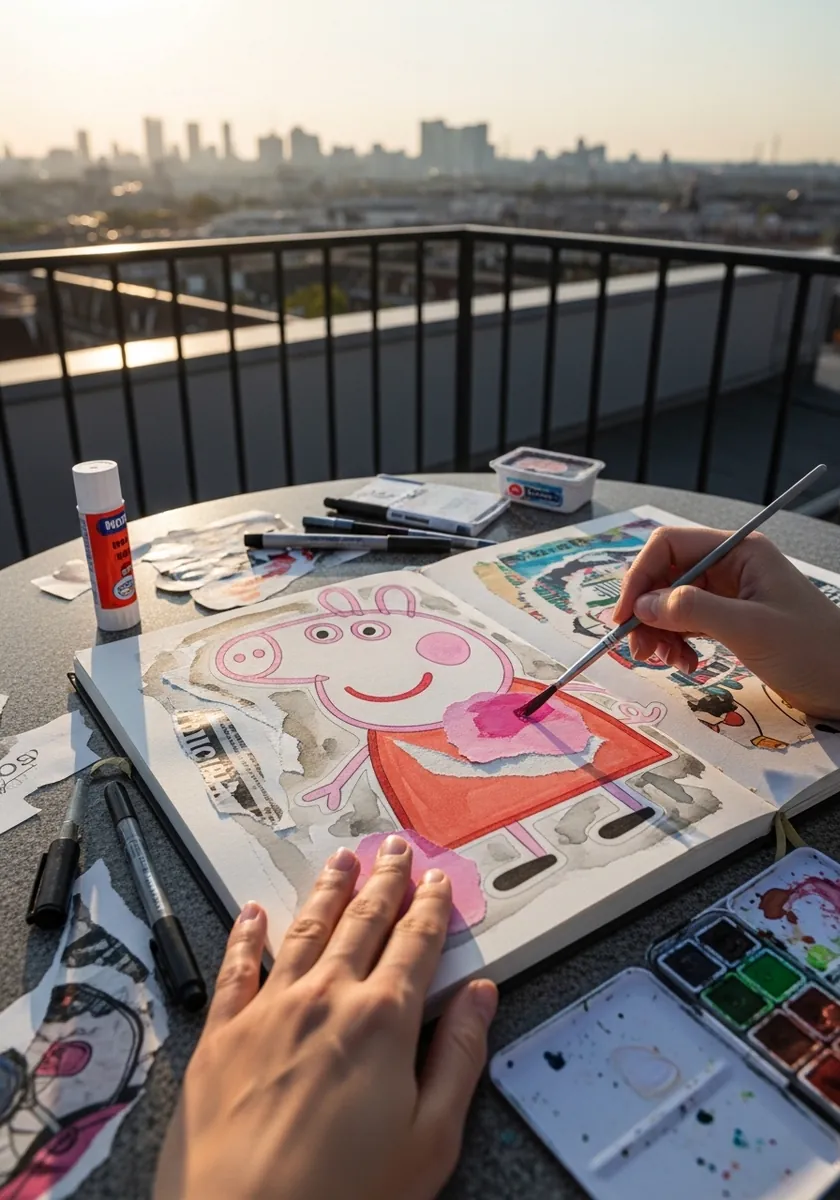
Collage works when one element stays drawn. Cut the background shapes from paper, paint the sky loosely, then keep the character fully hand drawn on top. That difference in making is what gives mixed media its layered quality. Let a torn paper edge stay visible somewhere, because that roughness is the point of collage.
Frequently Asked Questions
How do you draw Peppa Pig’s head correctly?
Draw it in profile. Both eyes and the snout sit on the same side of the head, with the snout projecting sideways on a short stalk. That combined silhouette is often described as a hairdryer, and it is what makes the character instantly recognizable.
Why do both eyes appear on one side of the face?
It is a deliberate stylization from the series rather than an error. Keeping both eyes and the snout on the profile side preserves a strong, simple silhouette that reads at any size, which matters for a show aimed at very young children.
What shape is the snout?
A rounded rectangle carrying two dark nostril dots, attached to the head by a short narrow stalk. Draw the stalk clearly, because a snout joined directly to the face loses the distinctive gap that makes the profile work.
Should Peppa Pig drawings be shaded?
No. The style is completely flat, with a uniform black outline, solid unmixed fills and no gradients or cast shadows at all. Adding shading makes the character look like a different design entirely, however carefully it is rendered.
Can I sell my Peppa Pig drawings?
No. Peppa Pig is a copyrighted and trademarked character, so fan drawings are fine for practice and personal use but cannot be sold or used commercially. Study the construction, then apply the same flat-style rules to a character of your own.
References and Further Reading