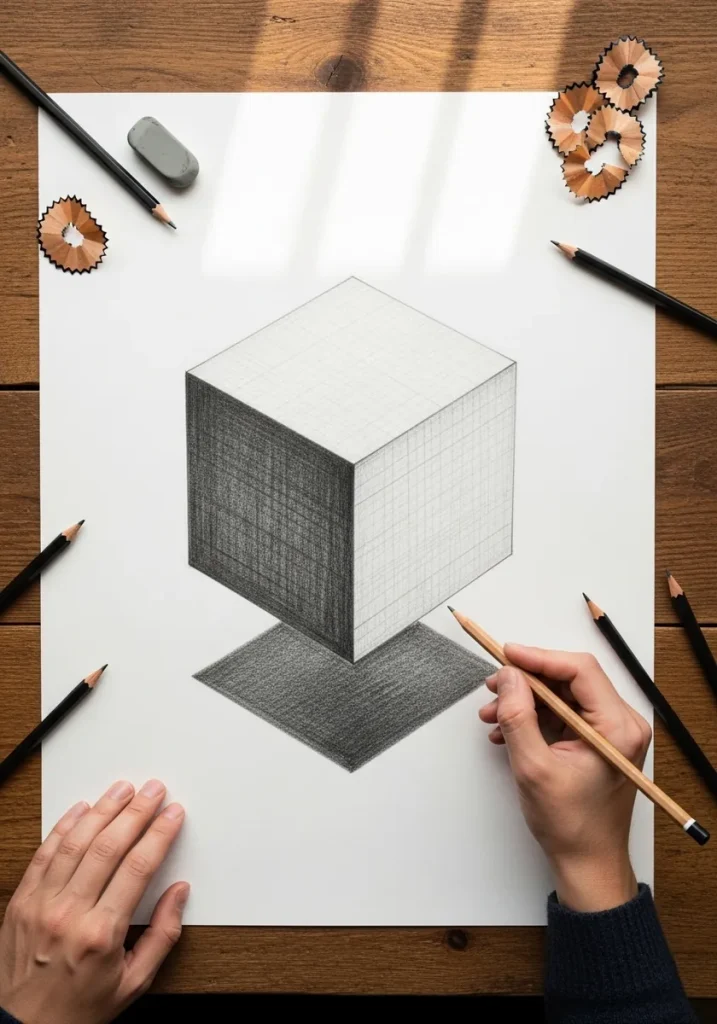
3D pencil art for beginners starts with one exercise: a cube shaded in three distinct values with a cast shadow beside it. Every other illusion, from portals to warped grids, is a variation on that same foundation.
Key takeaways
- Start with a shaded cube and its cast shadow; it contains the whole foundation of 3D drawing.
- Give each flat face one value with a hard edge between them rather than blending faces together.
- A portal into another scene is just a hole with visibly thick walls drawn around the opening.
- Anything crossing the torn edge, smoke, fur or a whisker, strengthens the illusion more than shading.
- You need only three pencil grades, a kneaded eraser, a blending stump and a ruler to start.
If you have never drawn anything three-dimensional, start with the cube. Draw a square, add depth lines, shade the three visible faces in three clearly different values, and drop a shadow beside it. That is the entire foundation, and every other idea on this page is a variation of it.
The illusions get more impressive but they do not get much harder. A portal into the sea is a hole with thick walls. A warped checkerboard is a normal grid with curved lines. A hand reaching out of the page is a hand plus a torn edge. In each case one rule does the work, and the rest is patience.
These are ordered roughly by difficulty, so the first few are genuinely for a first attempt and the later ones assume you are comfortable with smooth shading. If you want to build that up separately, mandala practice is excellent for pencil control and drawing eyes teaches you gradients.
You need very little: an HB, a 2B and a 6B, a kneaded eraser, a blending stump and a ruler. For more ways to push depth on a flat sheet once these feel easy, these 3D digital art ideas are a good next step.
1. Floating Cube with a Cast Shadow
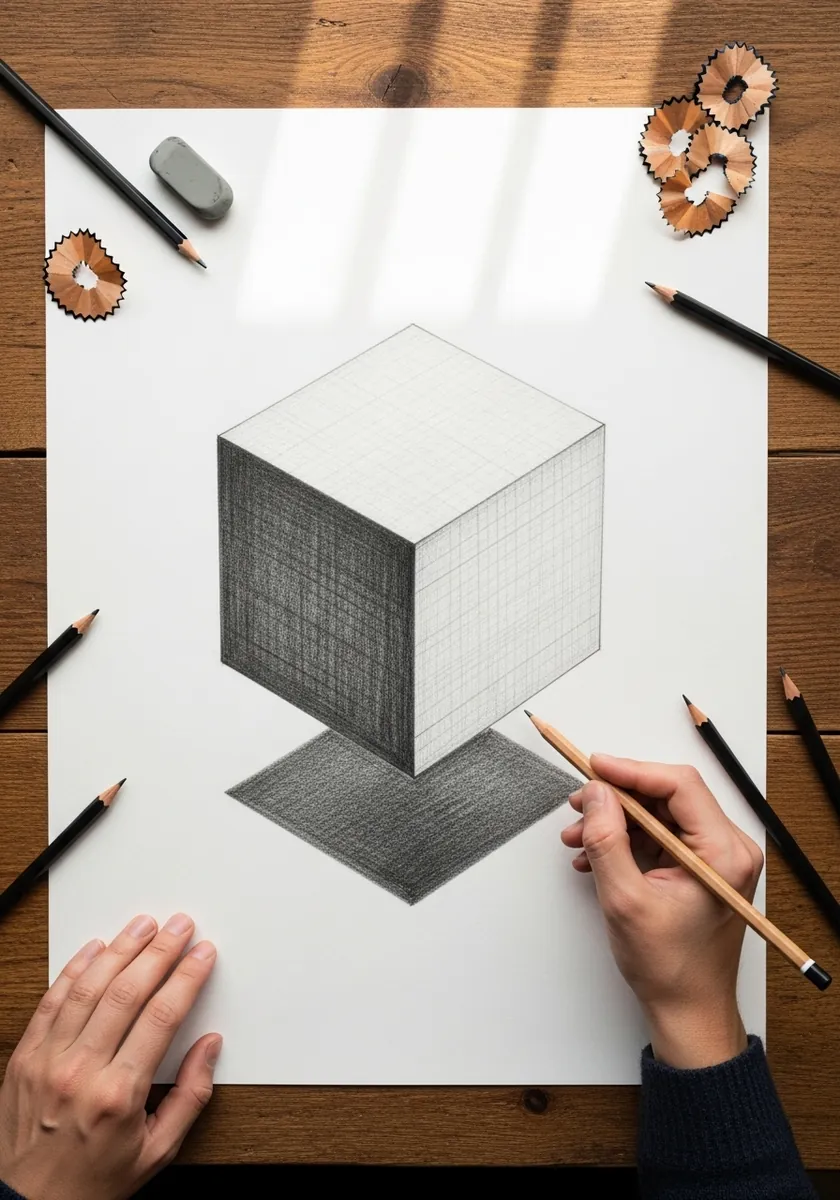
The place to start. A cube with its three visible faces shaded in three distinctly different values, hovering above a flat shadow. Do not blend the faces into each other; keep each one a single flat tone with a hard edge between them, and the box will read as solid immediately.
2. Interlocking Stairs and Spiral Structure
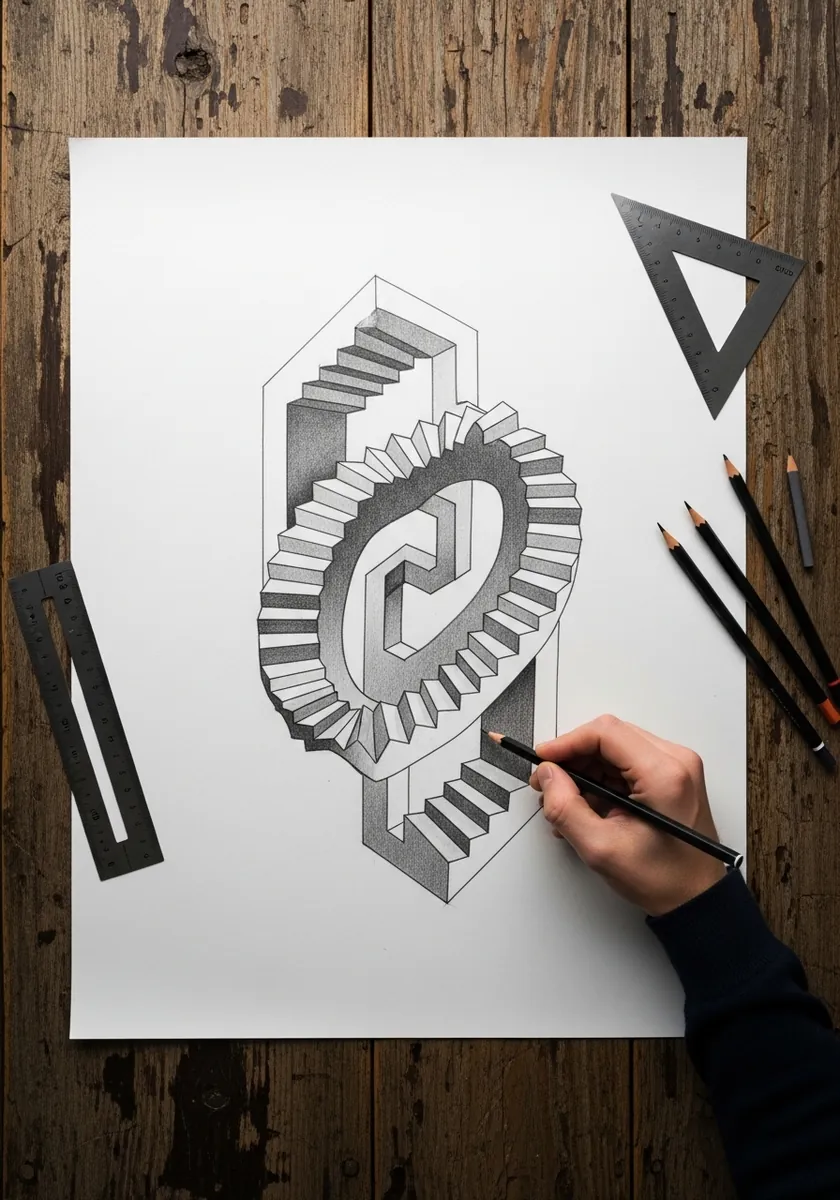
A structure of stairs that wraps around itself in a way that could not exist. Build it entirely on an isometric grid so every step is the same size, then work out the over-and-under at each crossing before committing any shading.
3. Eye with a Teardrop Leaving the Page
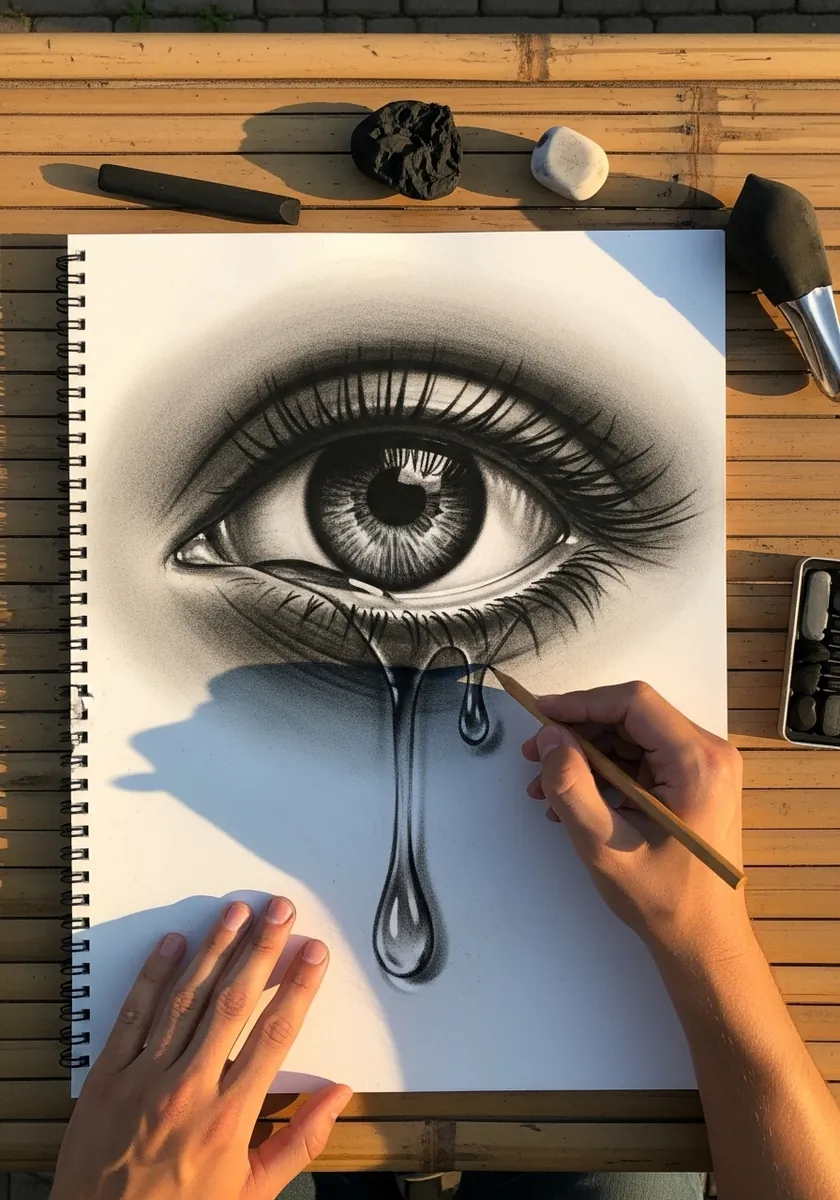
A realistic eye with a tear that hangs below the drawing and casts its own shadow onto the sheet. The tear must overlap the paper edge and have a bright highlight on top; a drop drawn entirely inside the picture never lifts off.
4. Patterned Sphere with a Ground Shadow
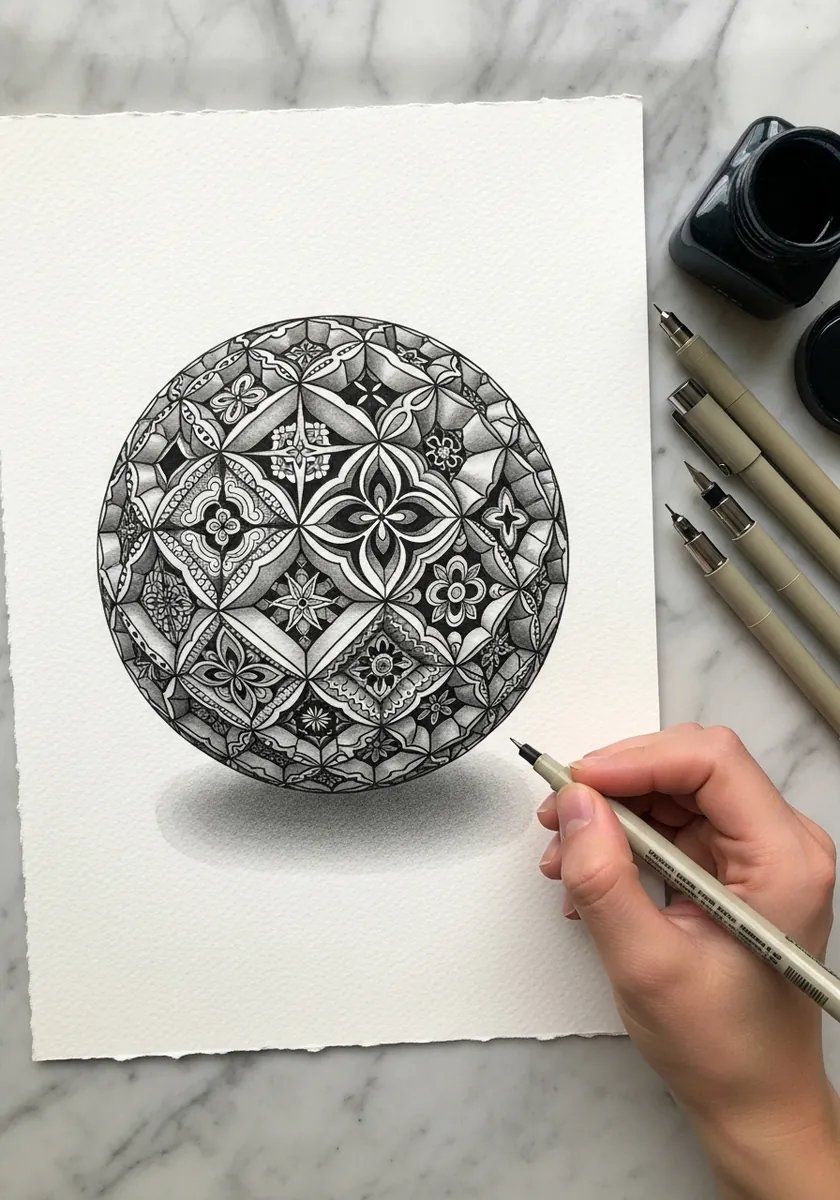
A ball covered in dense geometric pattern. The pattern has to curve with the surface, so draw curved guide lines around the sphere first, like lines of latitude, and fit every motif between them so it compresses toward the edges.
5. Origami Crane in Clean Line
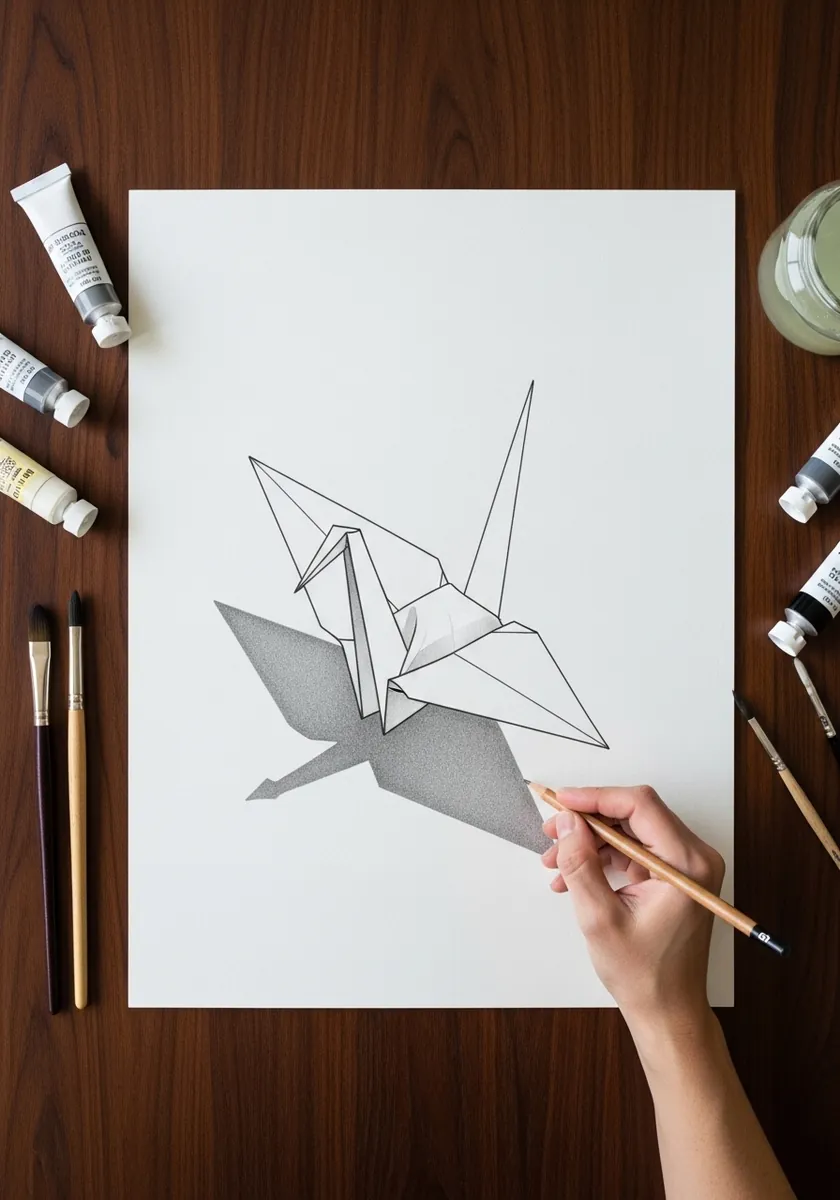
A paper crane drawn as flat planes with no shading at all, and a single grey shadow. With straight-edged subjects you can skip rendering entirely; accurate angles plus one shadow does the whole job.
6. Rippled Hole in Cracked Ground
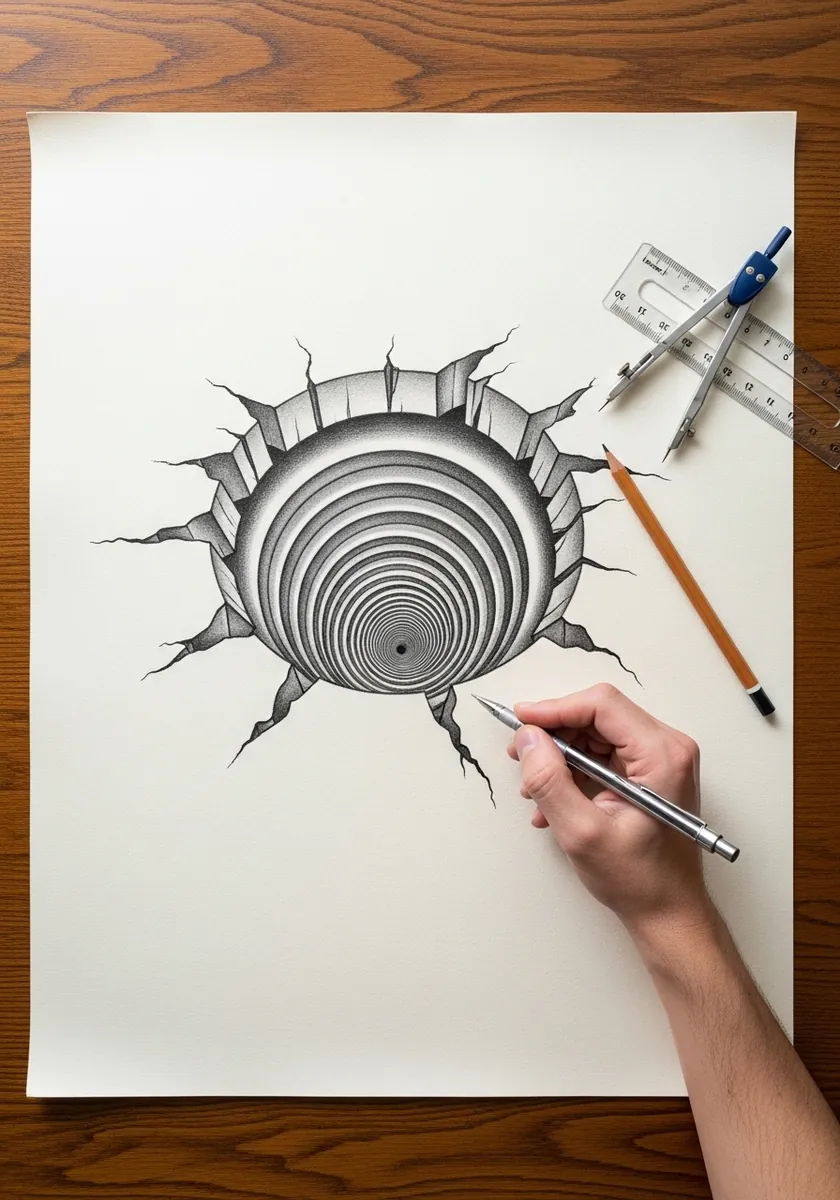
Concentric rings sink into a cracked opening. Draw the rings as ellipses that get smaller and closer together toward the center, and darken steadily as they descend. The tightening spacing is what creates the depth.
7. Detailed Graphite Rose
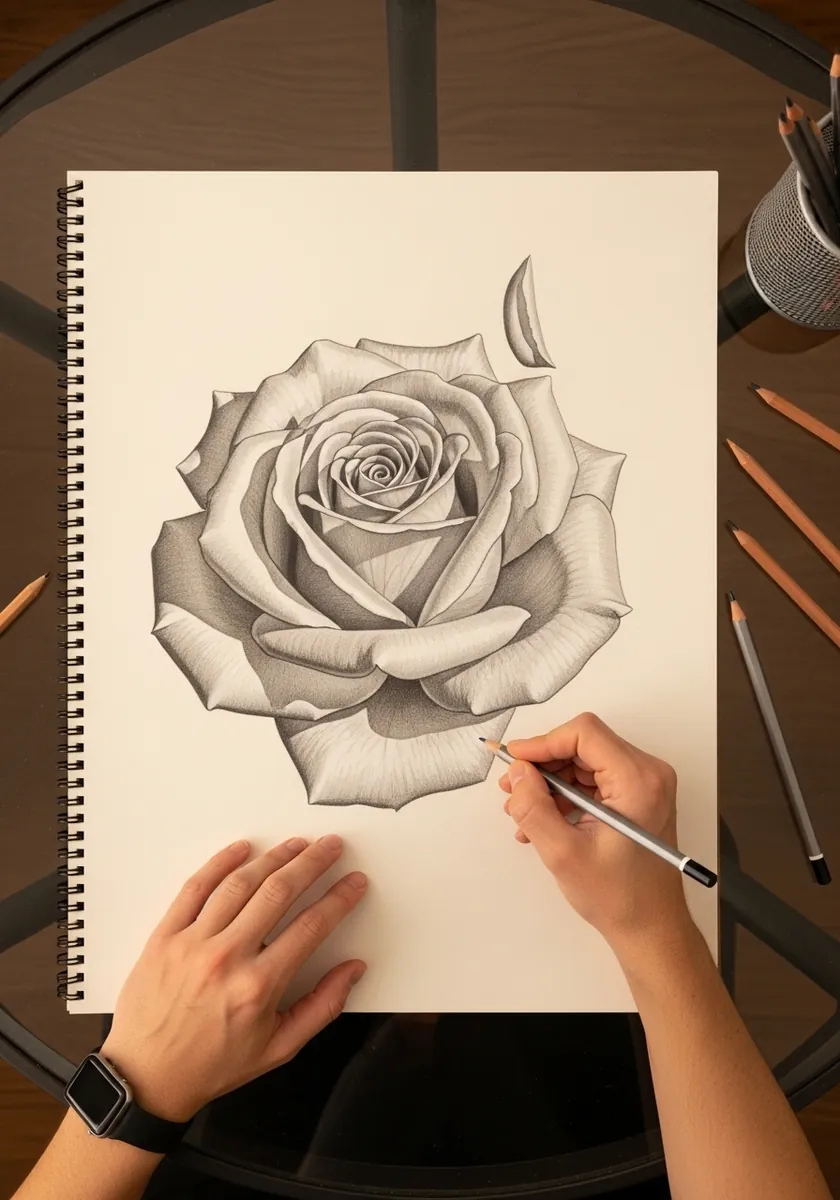
A rose built petal by petal, each one a curved plane catching light differently. Work from the center outward, keep the innermost spiral darkest, and let the outer petals stay pale so the flower opens visually.
8. Low Poly Geometric Wolf Head
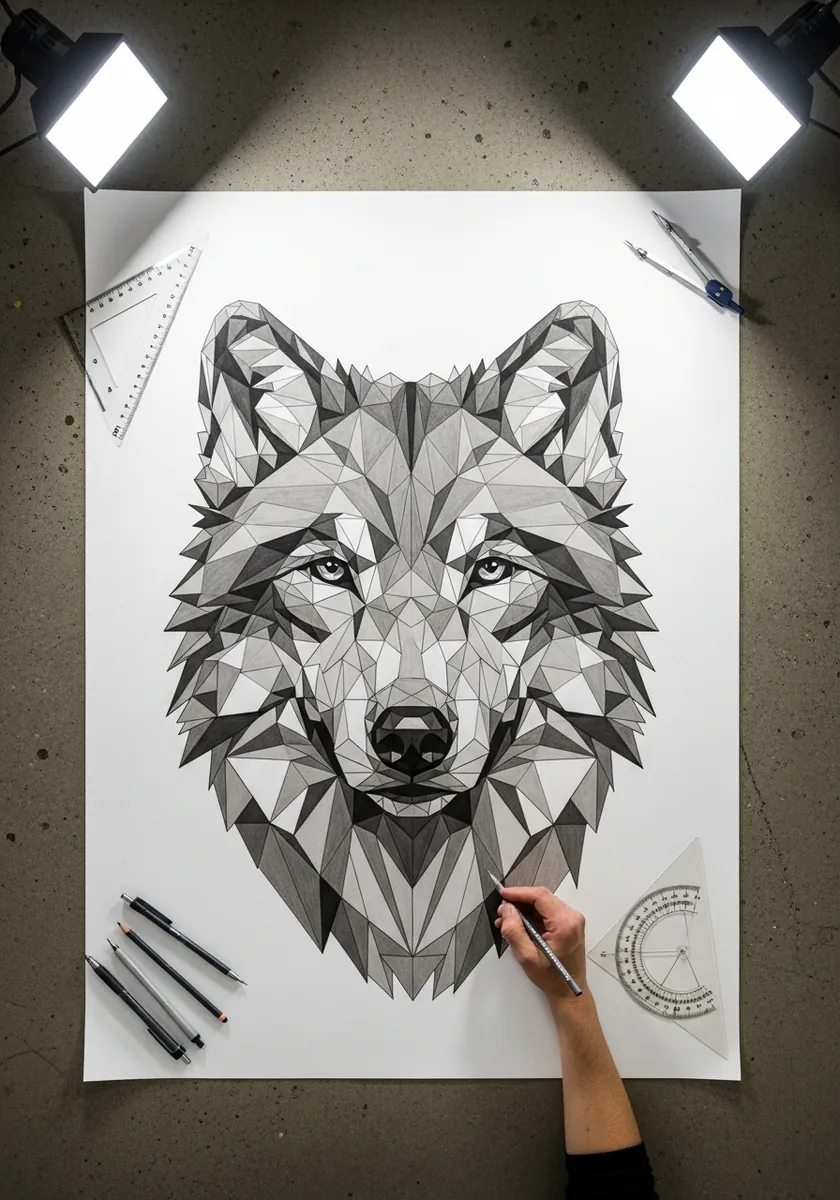
A wolf head broken into flat triangles, each one a single tone. Draw the head normally in light pencil first, then lay the facet map over it, and make the triangles smaller wherever the form turns fastest.
9. Coiled Snake Rising from a Hole
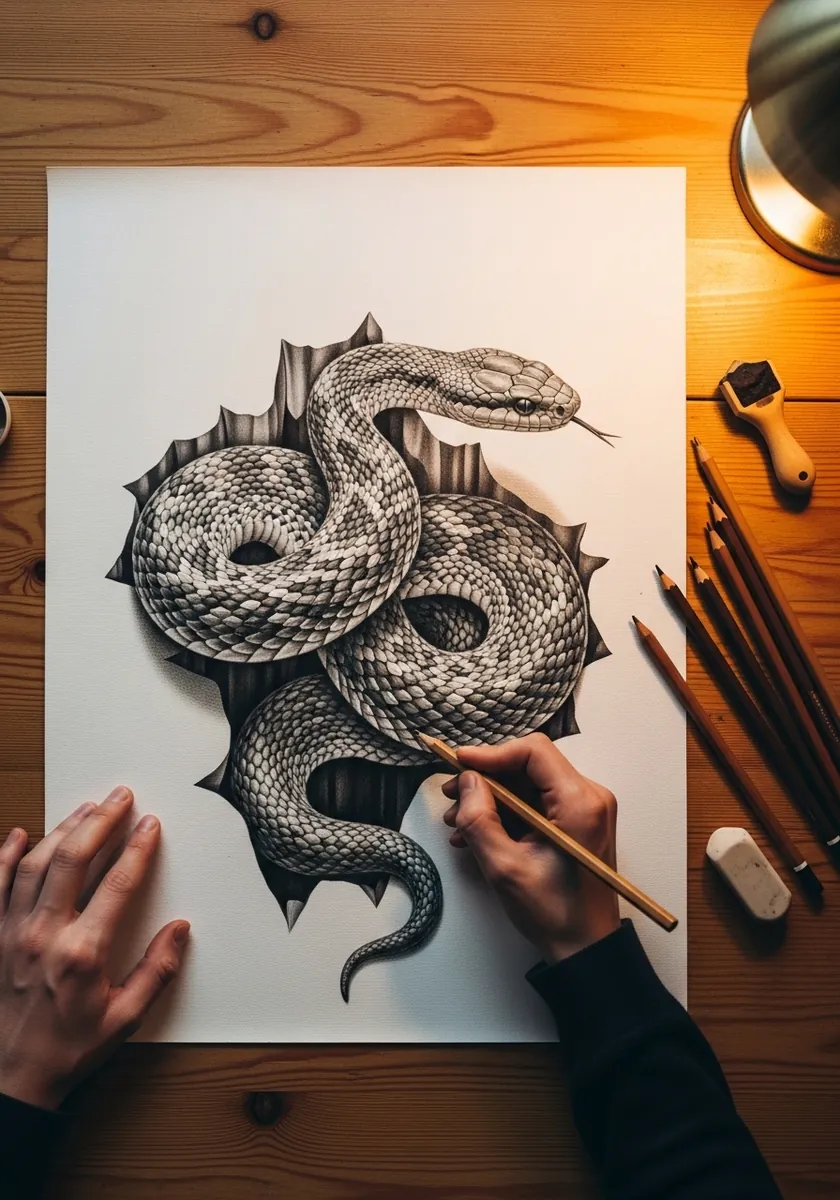
A snake coils up out of an opening, its body overlapping the torn edge. Draw the scales as overlapping rows that compress where the body curves away, and keep the darkest value directly inside the hole.
10. Castle Rising from an Open Book
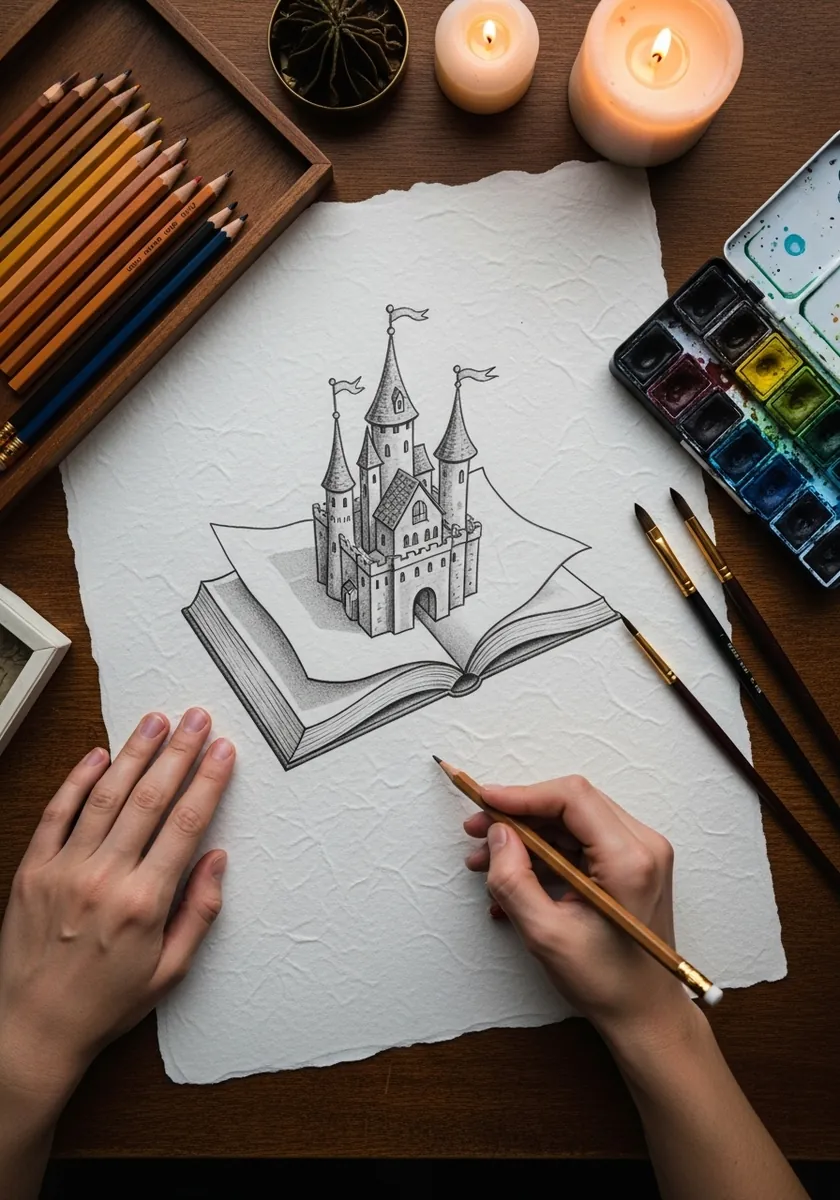
A castle grows out of an open book. The book is the anchor, so draw it in correct perspective first and let the castle’s base sit convincingly on the curved pages rather than floating above them.
11. Isometric Miniature City Block
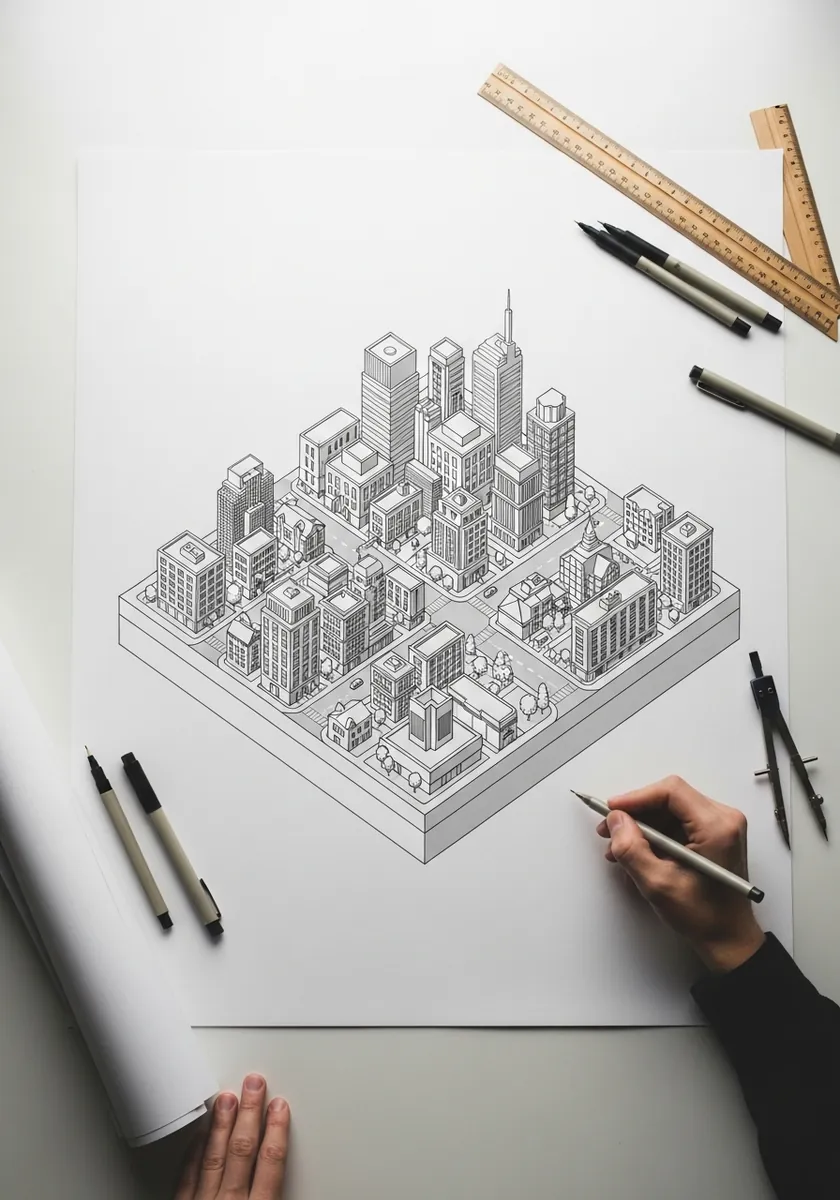
A tiny city sitting on a square slab, drawn on an isometric grid. Rule the base first, divide it into a street grid, then grow buildings upward from it, keeping every vertical truly vertical.
12. Crumpled Paper Ball
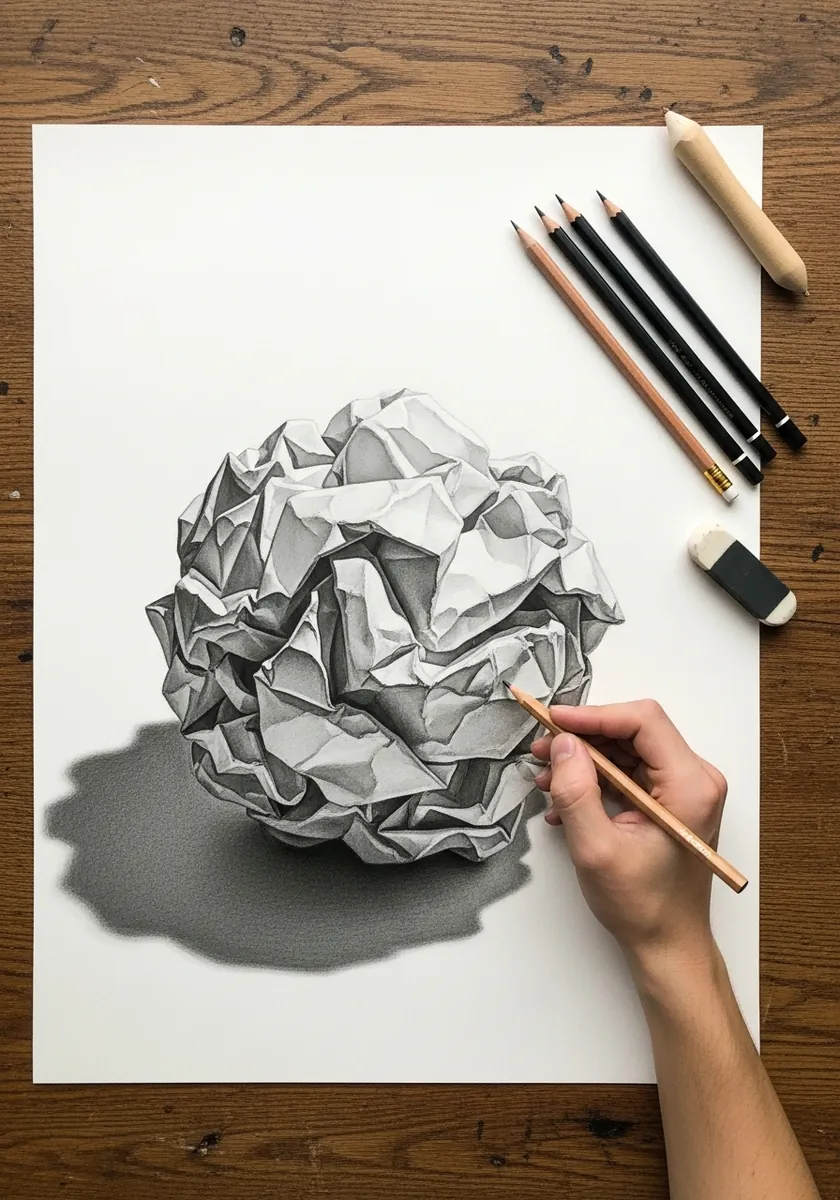
A crumpled ball, made of dozens of small flat planes. This is the best exercise on the page for learning to see planes. Squint at a real crumpled ball and give each facet one flat value with no blending.
13. Dragon Head Through a Cracked Hole
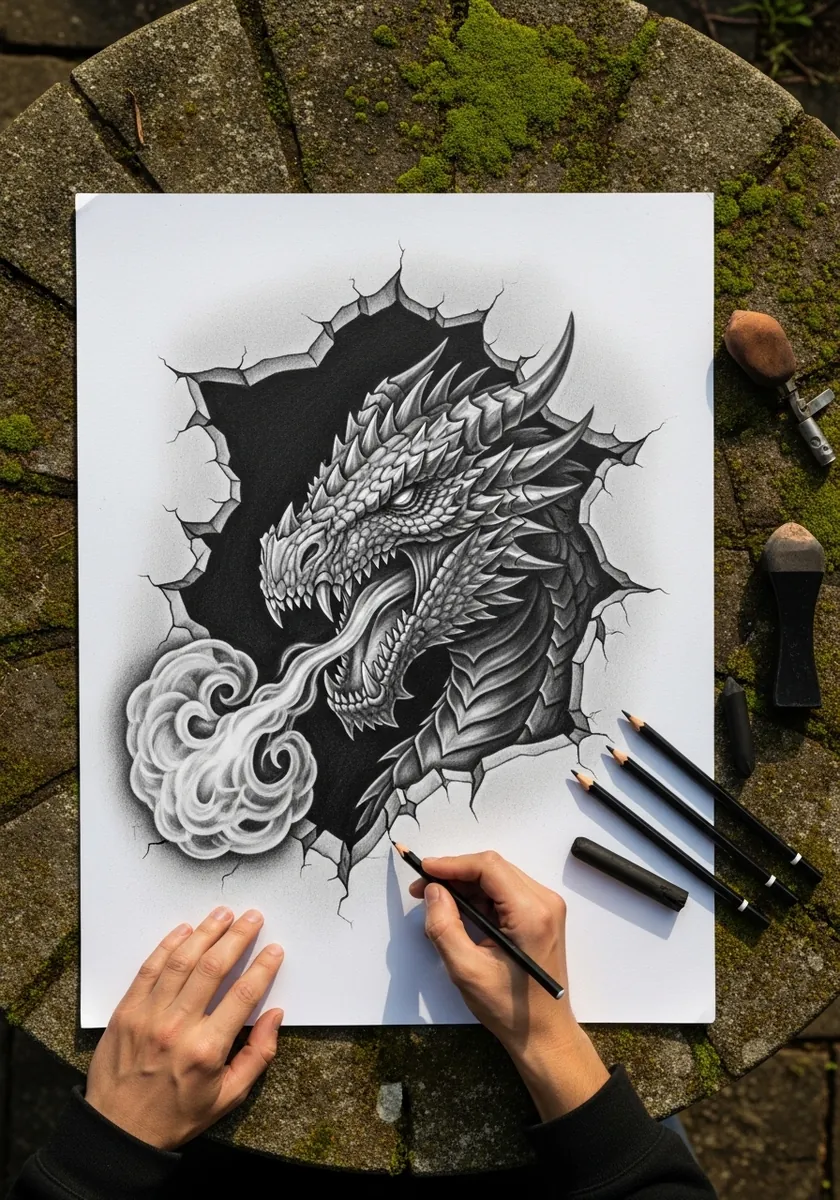
A dragon pushes through a broken opening with smoke curling out past the edge. Let the smoke cross onto the flat paper; anything that crosses the boundary reinforces the illusion more than shading does.
14. Impossible Penrose Triangle
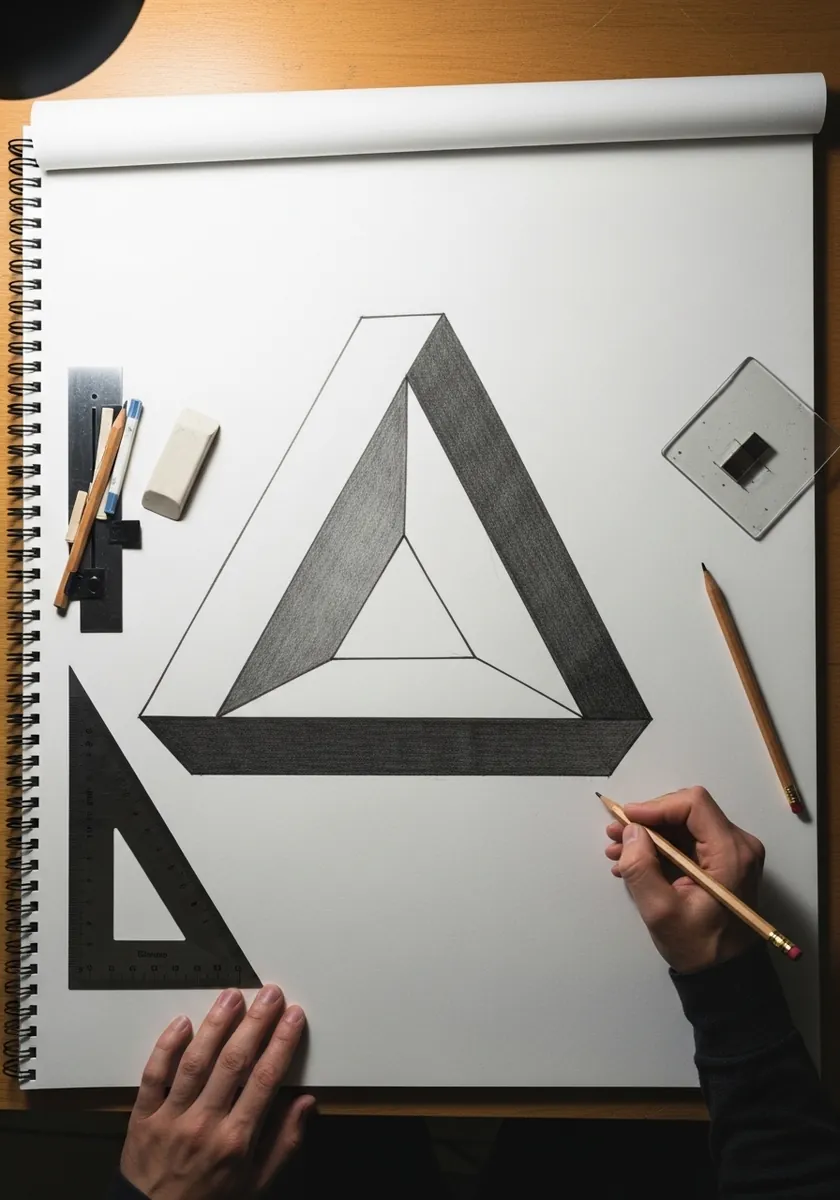
Three beams that appear to join impossibly. Draw them as three separate isometric bars and only connect them at the last moment. Give each of the three faces one consistent value all the way around.
15. Hand Reaching Out of the Paper
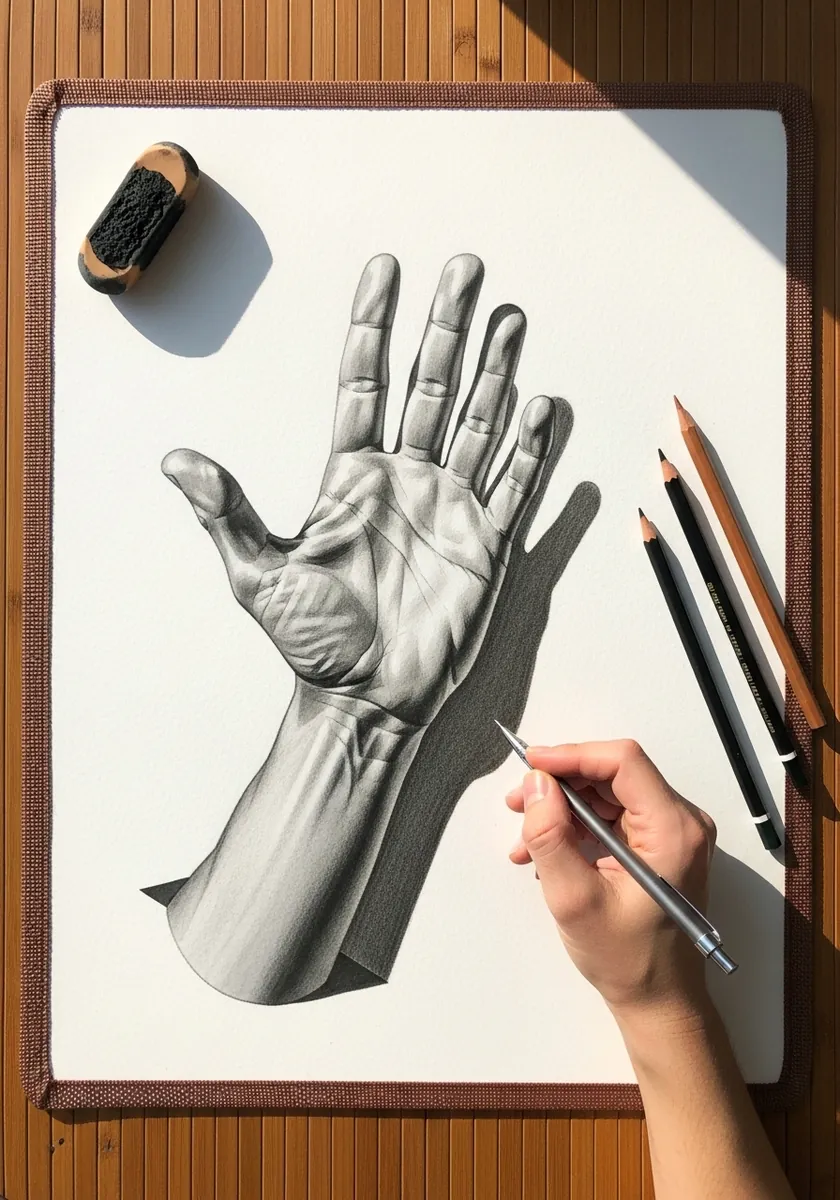
A hand emerges from the sheet with a long shadow beside it. Draw the hand accurately first, because a badly proportioned hand ruins the illusion no matter how good the shadow is. Then add the torn edge and the shadow last.
16. Clockwork Gear Mechanism
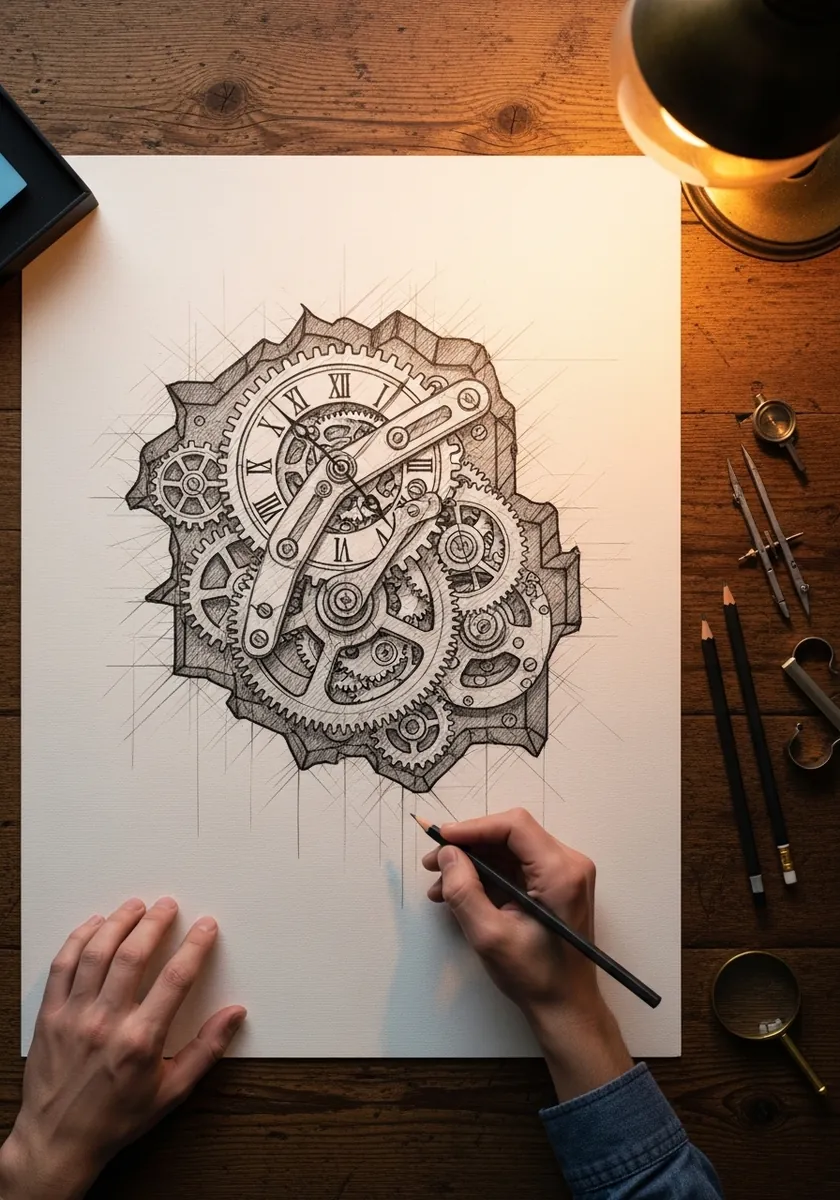
A watch mechanism with a clock face and meshing gears. Draw the pitch circles first and place teeth on them; if adjacent gears do not actually mesh, the drawing looks wrong even to people who cannot say why.
17. Black Spiral Vortex
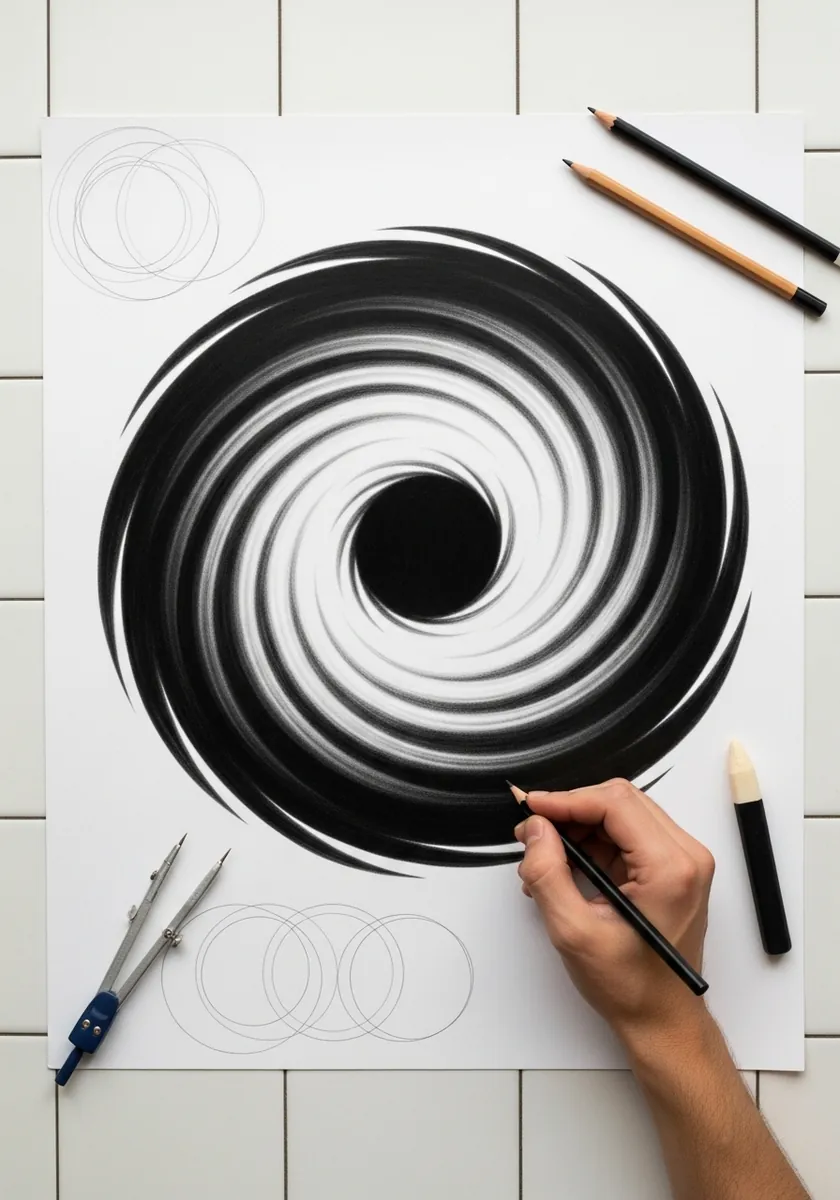
A high-contrast spiral that appears to pull inward. Draw the spiral path in pencil first, then fill alternate bands solid black, keeping the white bands the same width. Consistency of width is what makes it spin.
18. Butterfly Lifting Off the Page
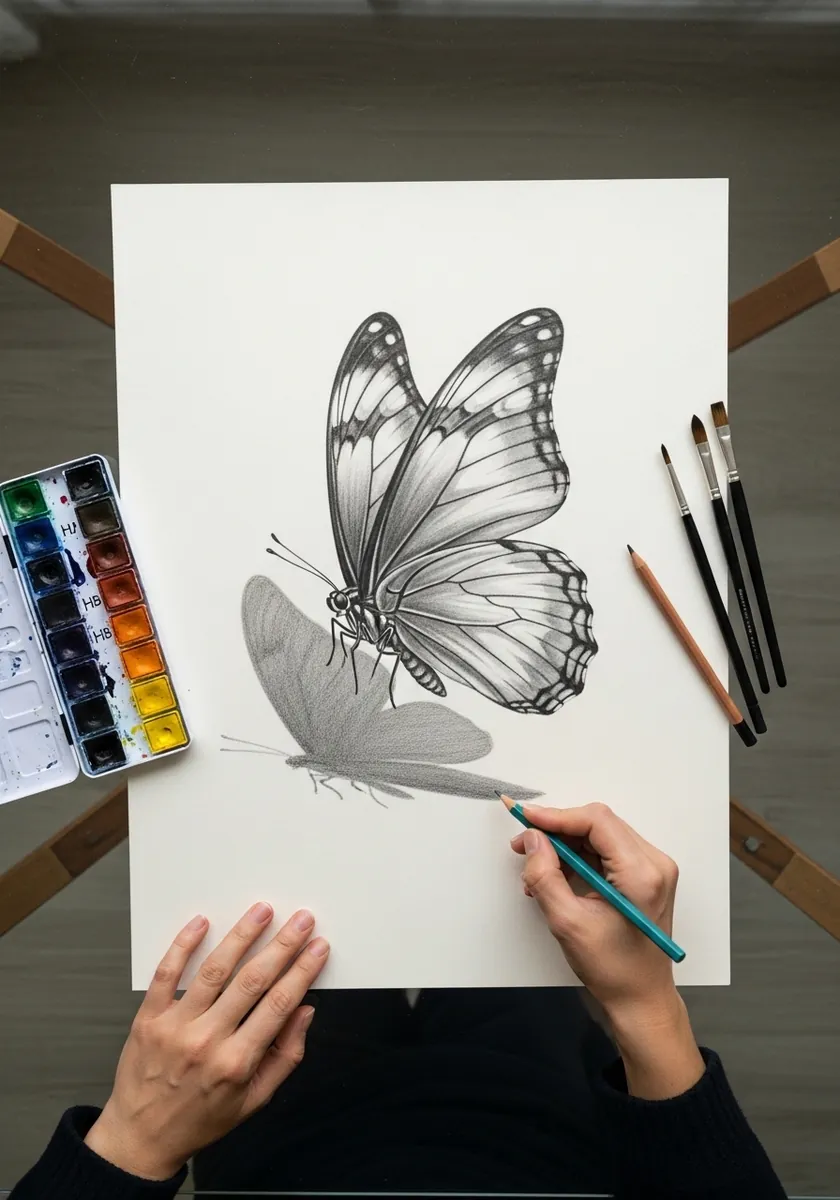
A butterfly hovering above the sheet with a soft shadow below. Keep the shadow blurred and slightly offset, because a hard shadow makes the butterfly read as lying flat rather than flying.
19. Cracked Ground with Glowing Lava
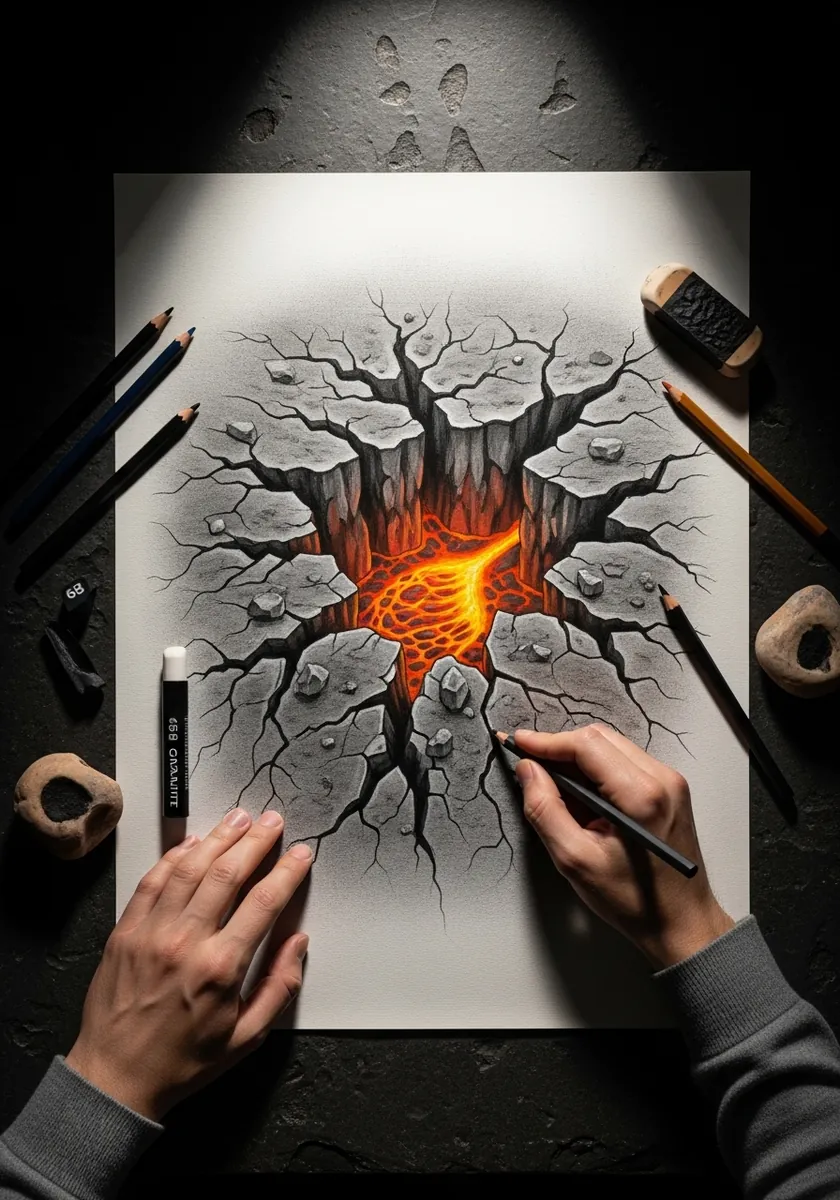
Cracked earth with lava glowing in the fissures, the one warm accent on the page. Draw the cracks radiating from a center, vary their width, and add colour only inside them so the glow reads as coming from below.
20. Isometric Maze
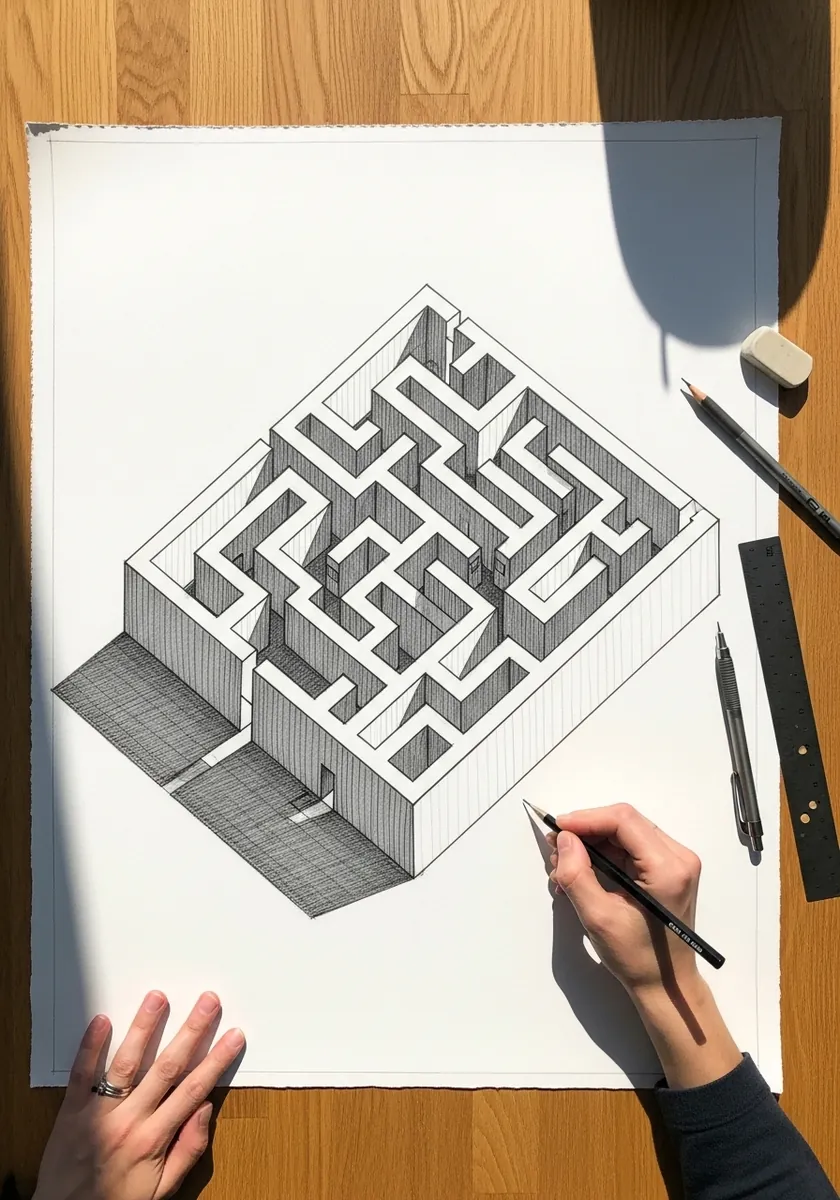
A maze with raised walls drawn in isometric. Rule the floor grid first, then extrude every wall by exactly the same height, and shade one side of each wall consistently so the whole maze is lit from a single direction.
21. Skull with a Monocle and Drips
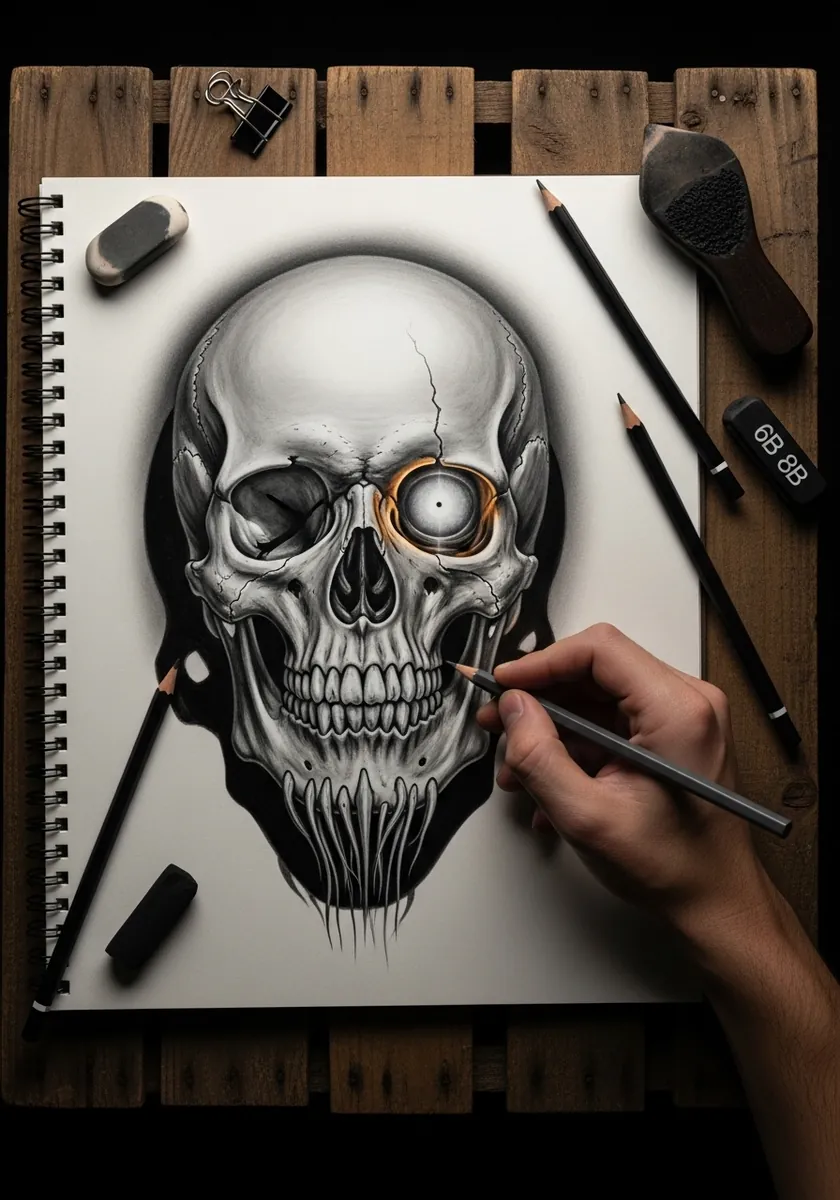
A skull with a brass monocle and drips running down from the jaw. Render the skull smoothly and keep the drips loose; the contrast between controlled and uncontrolled is what gives it energy.
22. Contour Line Mountain Range
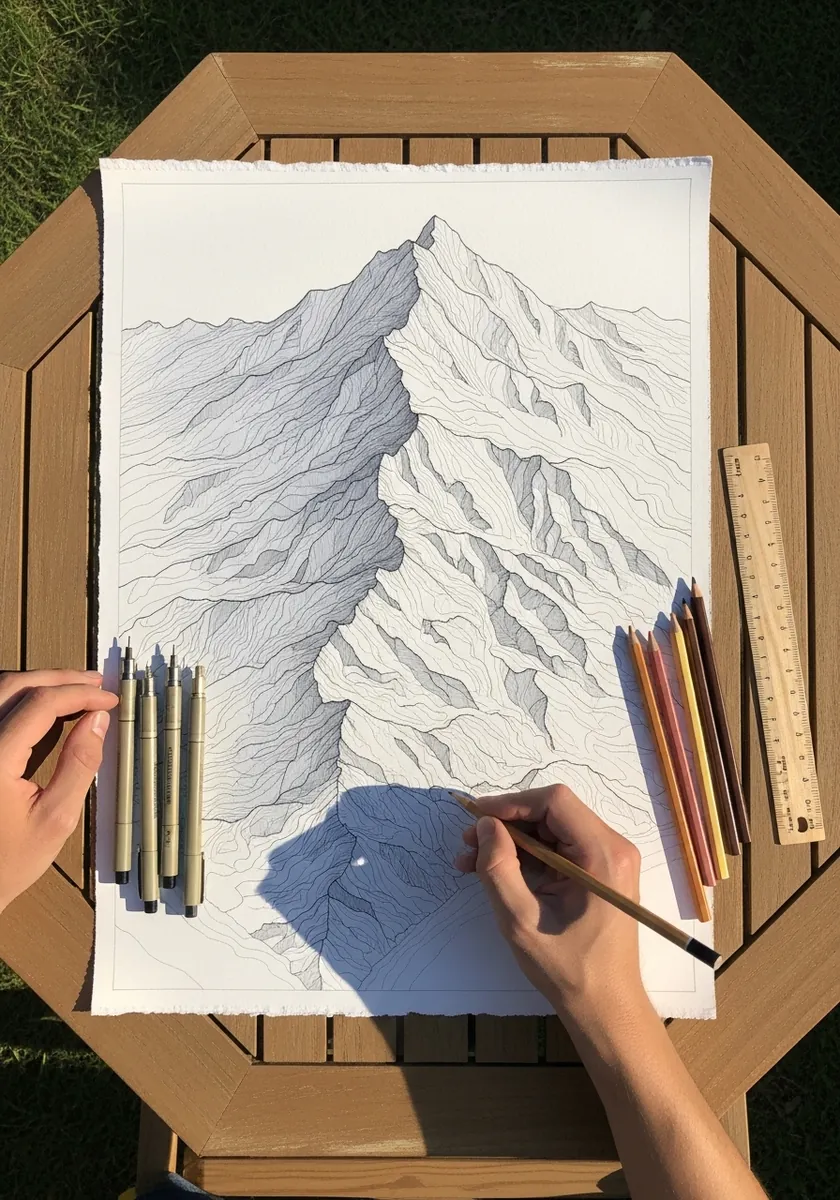
A mountain range drawn entirely from contour lines with no shading at all. Space the lines closer together where the slope is steeper. Done properly, the form appears purely from line density.
23. Infinity Symbol with Smooth Gradients
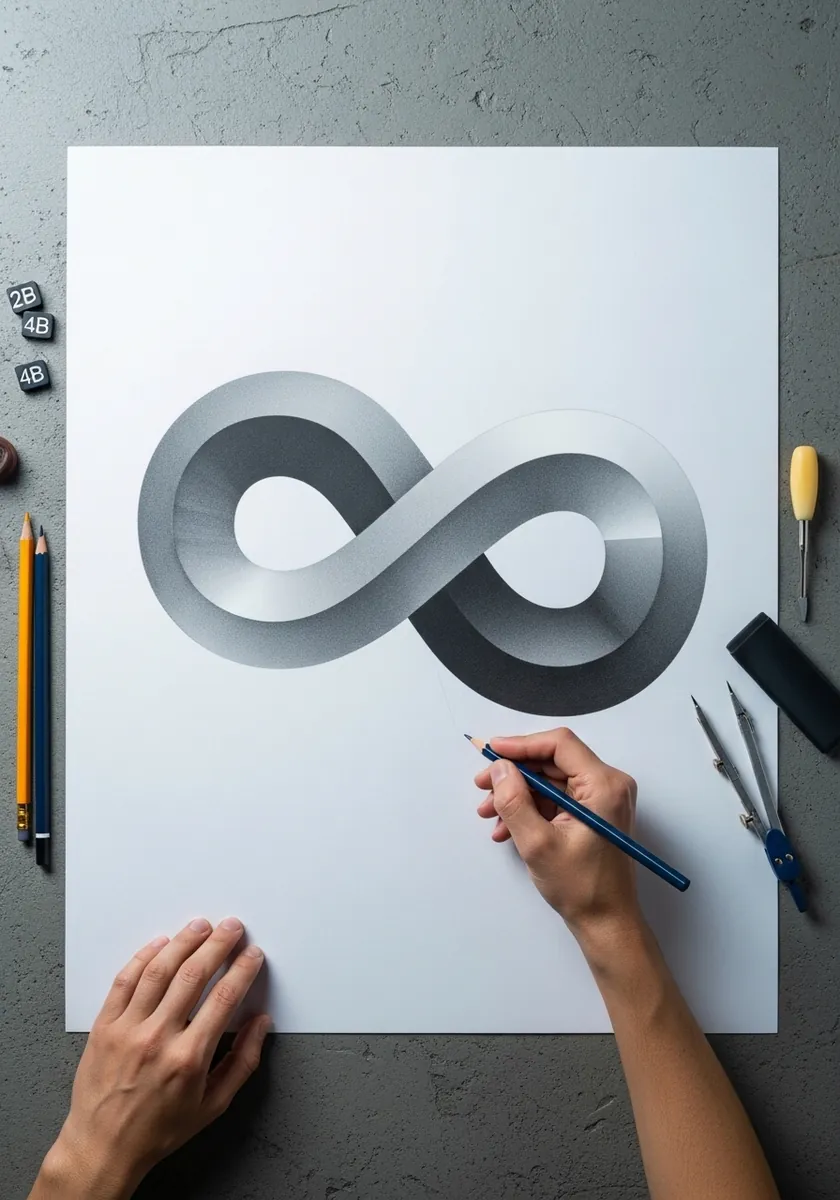
A Möbius-style infinity loop with smooth graduated shading. Work out which surface faces up at every point along the loop before shading, then keep the gradient continuous as the ribbon twists.
24. Detailed Moon Sphere
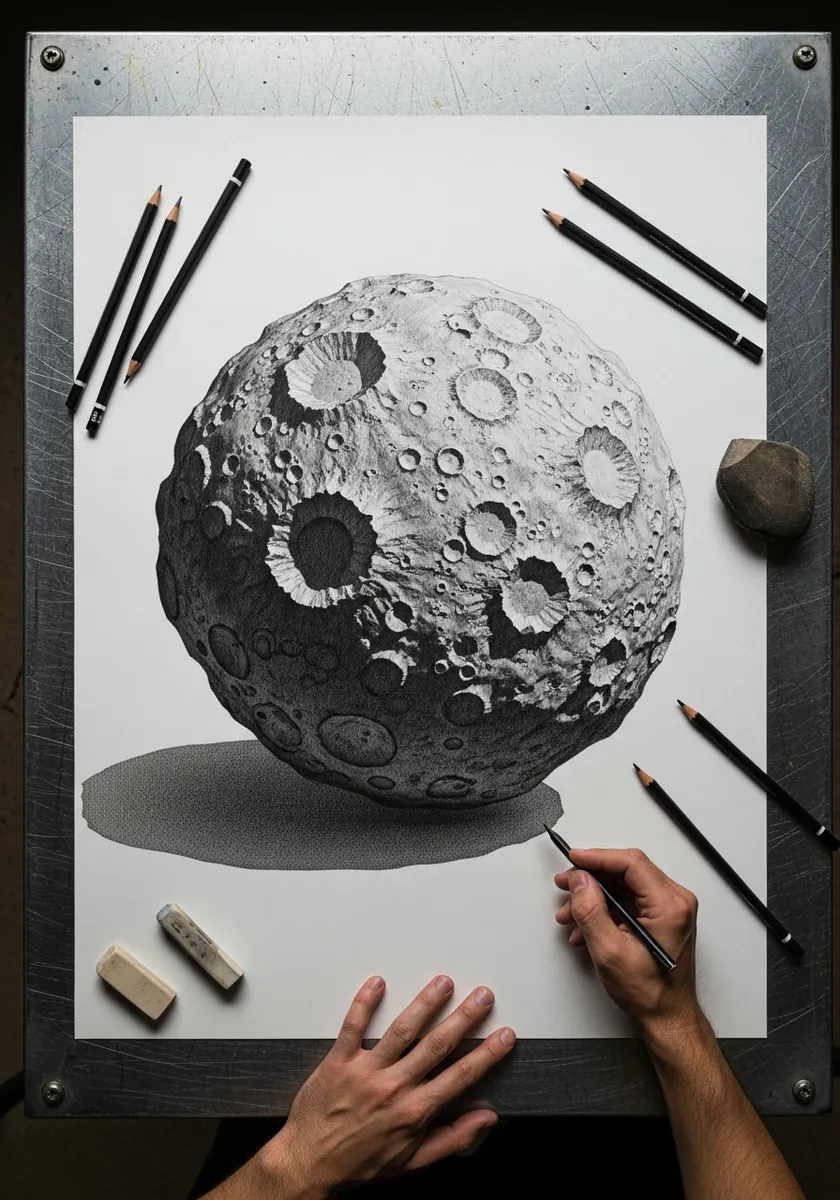
A moon covered in craters, floating above a shadow. Each crater is a small bowl, so shade the inside of every one on the opposite side to the main light, which is the detail most people get backwards.
25. Stack of Donuts with a Halftone Shadow
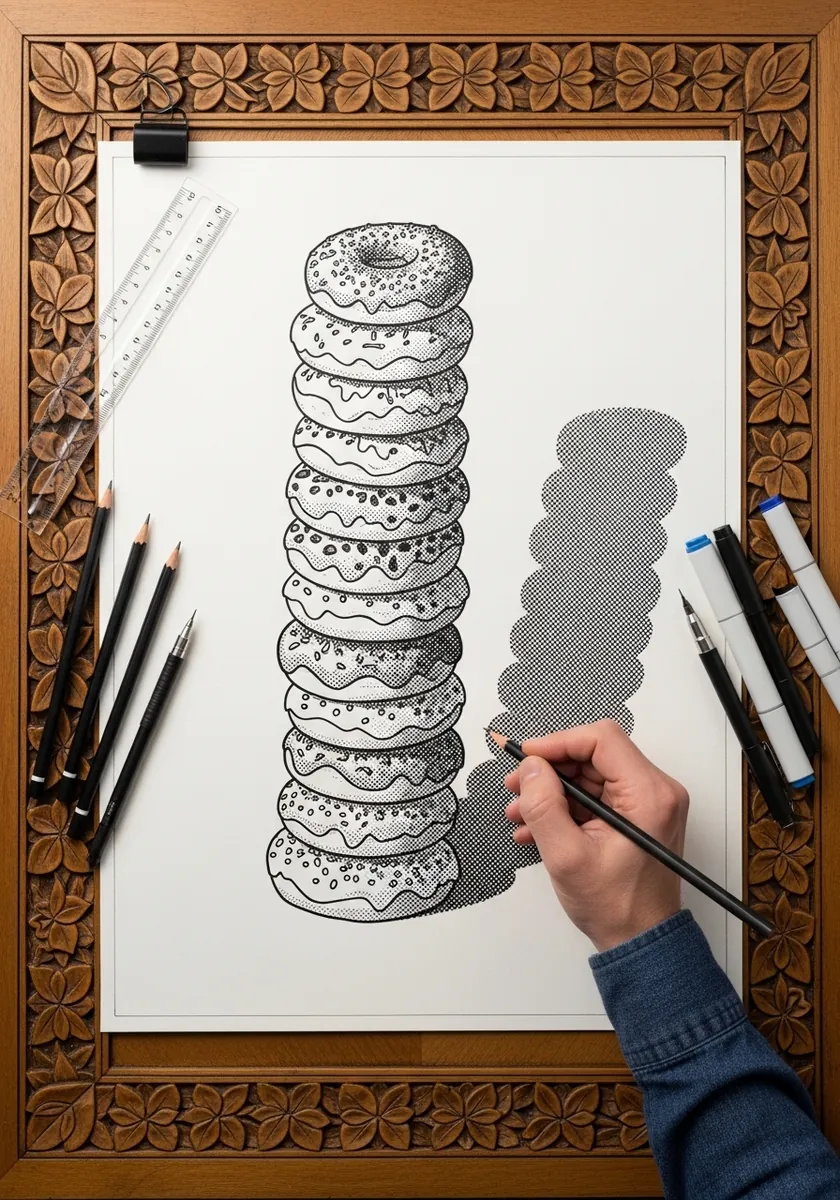
A stack of donuts with a shadow built entirely from dots. A halftone shadow is a nice trick when your ink drawing has no grey; vary the dot density rather than the dot size.
26. Shattered Glass Hole
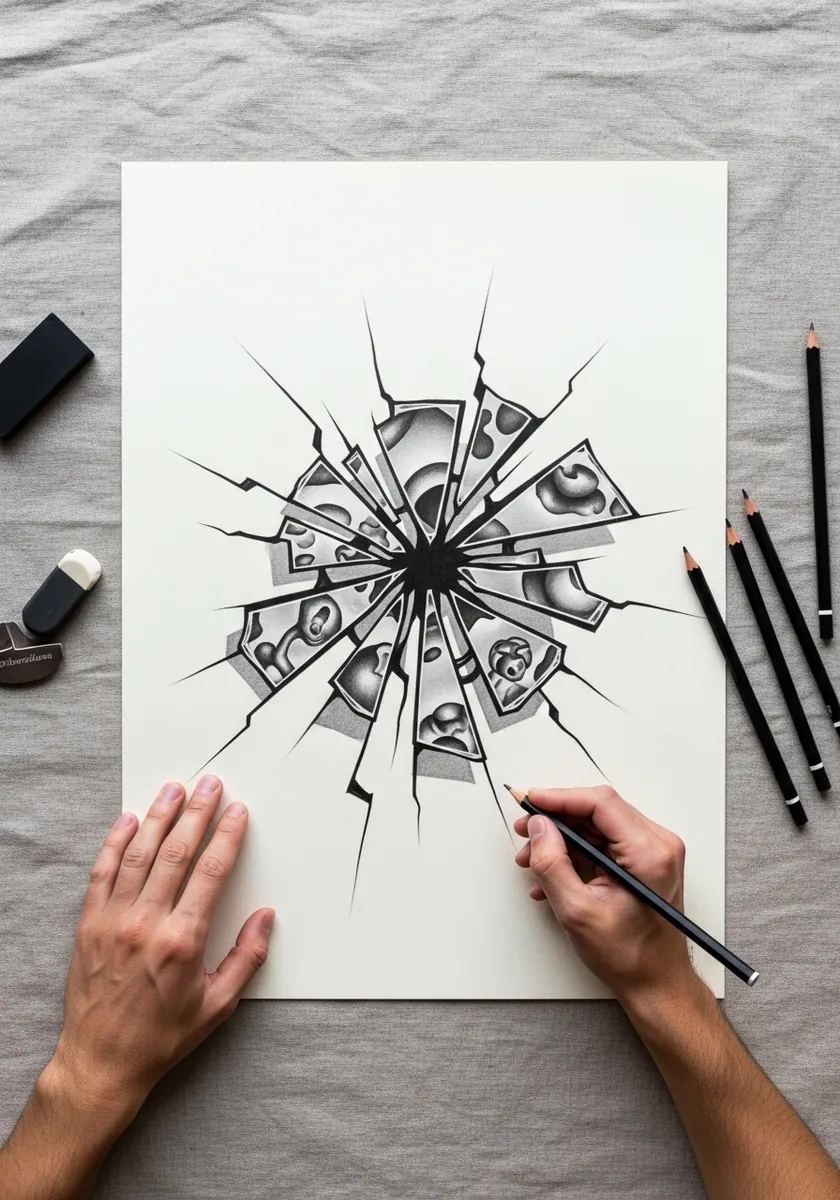
Glass shatters outward from a single impact point. Draw the radial cracks first, then the concentric ones connecting them, and shade each resulting shard slightly differently so they read as separate pieces.
27. Detailed Compass Rose
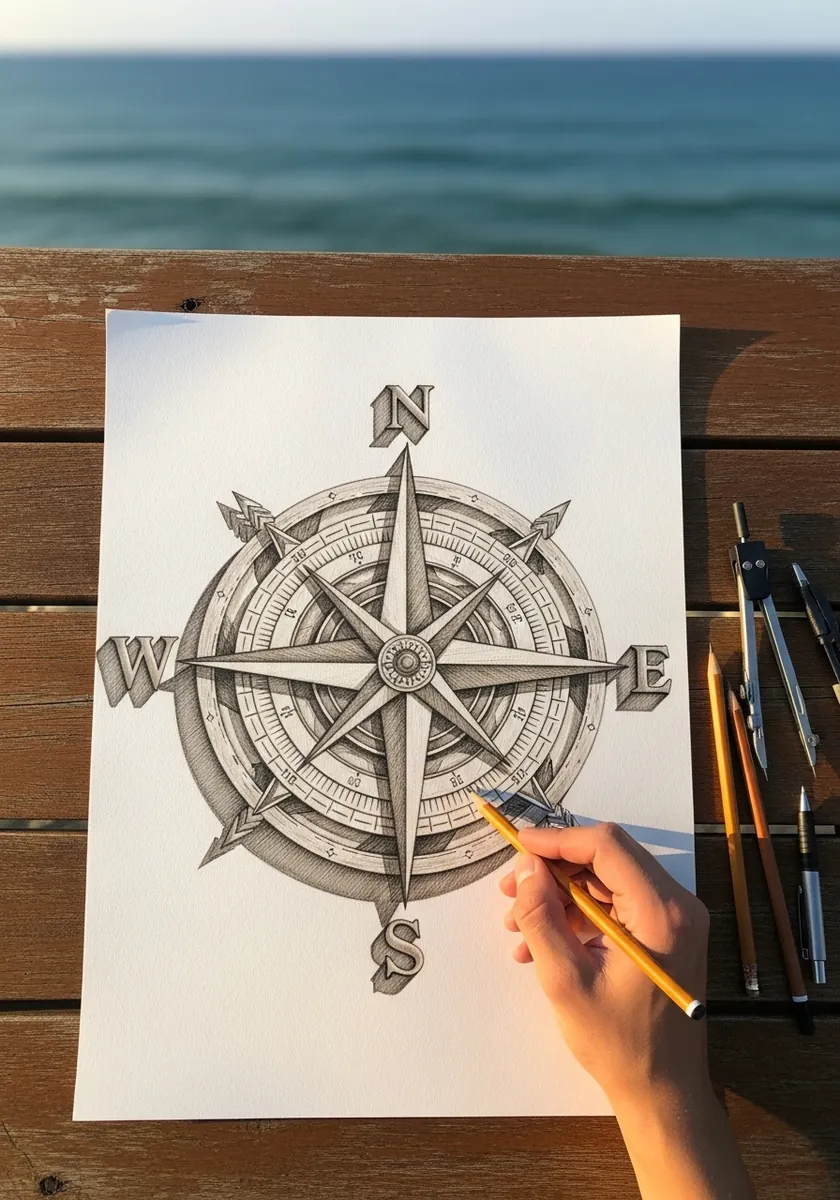
An ornate compass rose with cardinal letters and decorative rings. Draw the outer circle and both axes first, then build every point symmetrically outward from the center; freehanding the symmetry never works.
28. Warped Checkerboard Hole
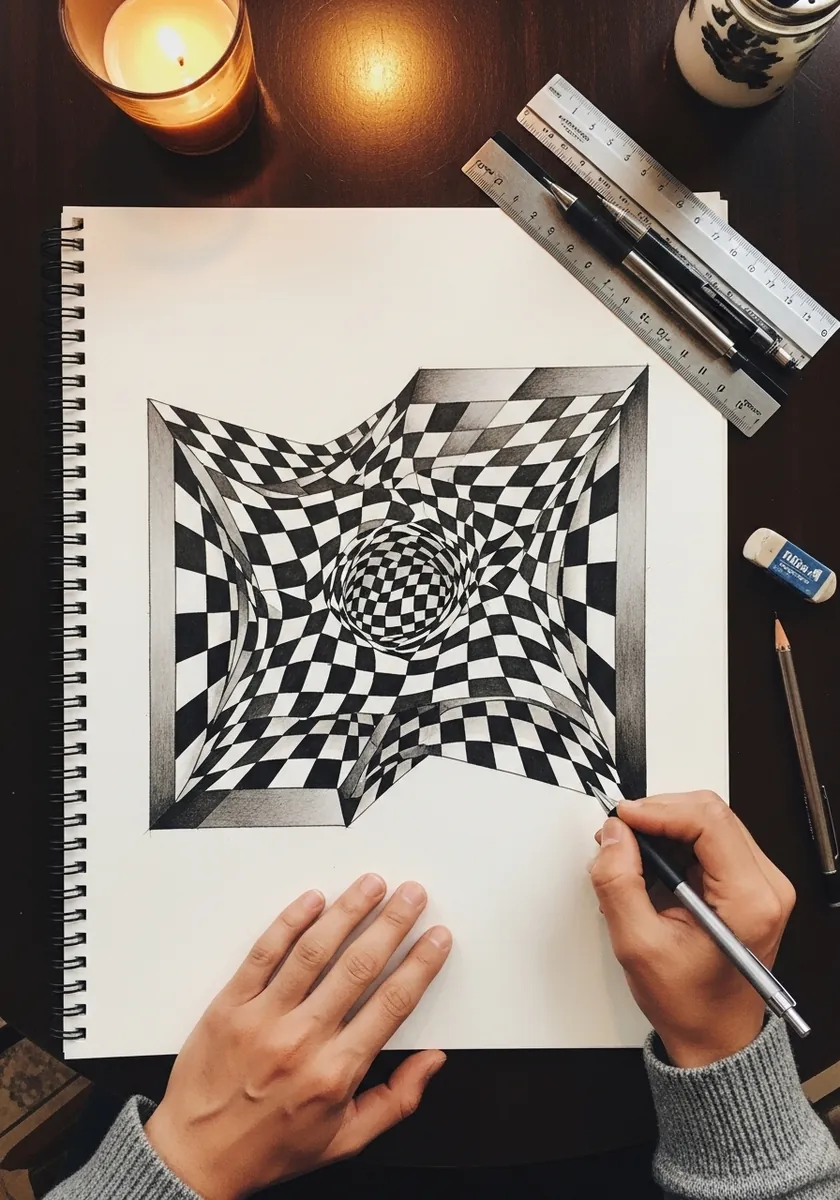
A checkerboard grid that bends down into a bowl. Rule the flat grid first, then curve every line toward the center point, keeping the squares the same count. The regular grid becoming irregular is what creates the dent.
29. Cracked Vase Emerging from a Wall
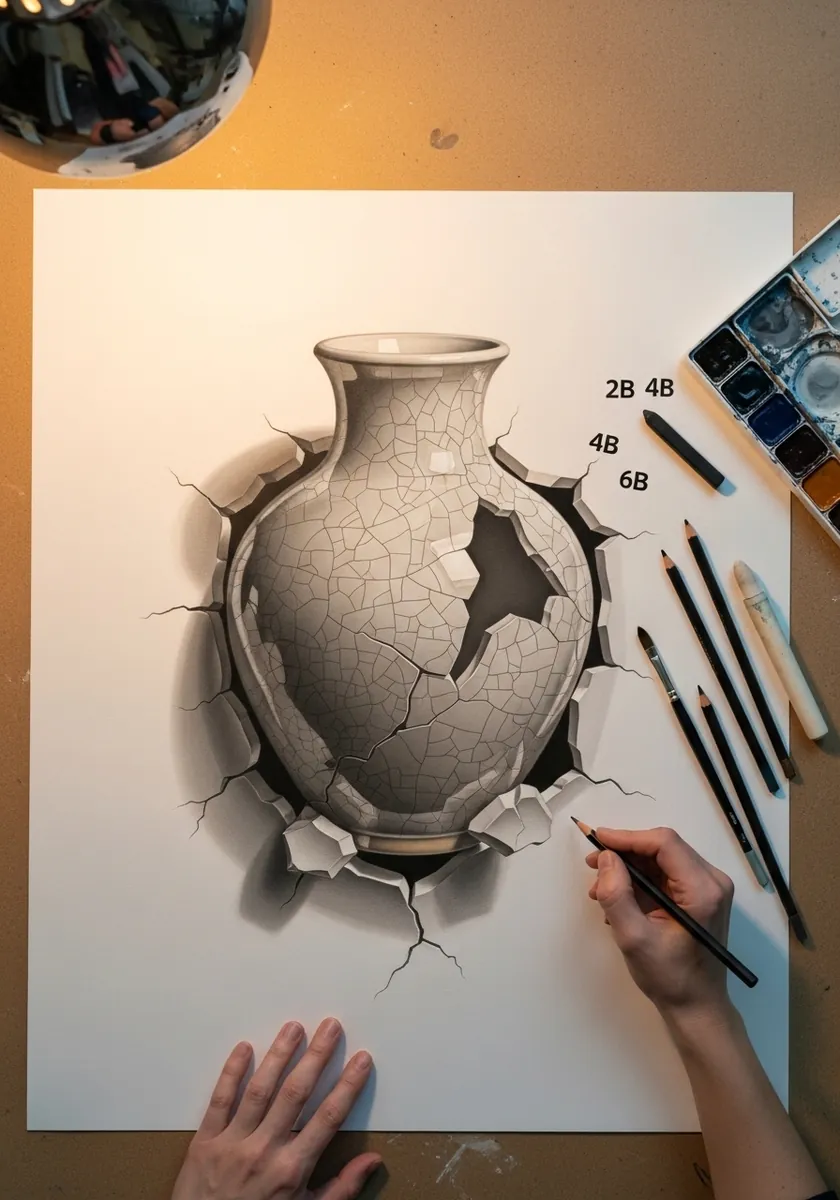
A vase pushes out of a broken wall with fragments scattered around. Draw the vase as a symmetrical form on a center line, then break the wall around it and let a few chips fall onto the flat paper.
30. Faceted Diamond Gem
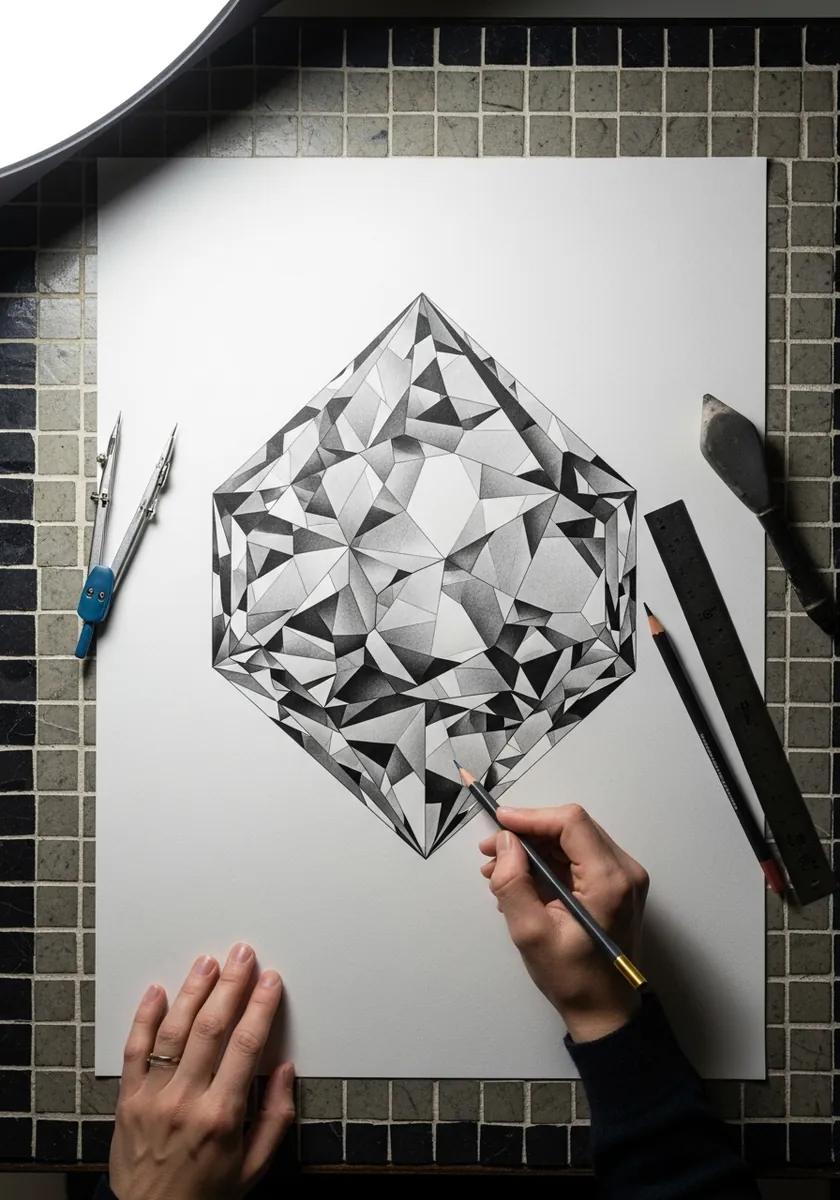
A cut gem, where every facet is a flat plane reflecting something different. Rule the facet map first, then assign each face one value at random within a limited range; the apparent randomness is what makes it sparkle.
31. Whale in a Torn Paper Portal
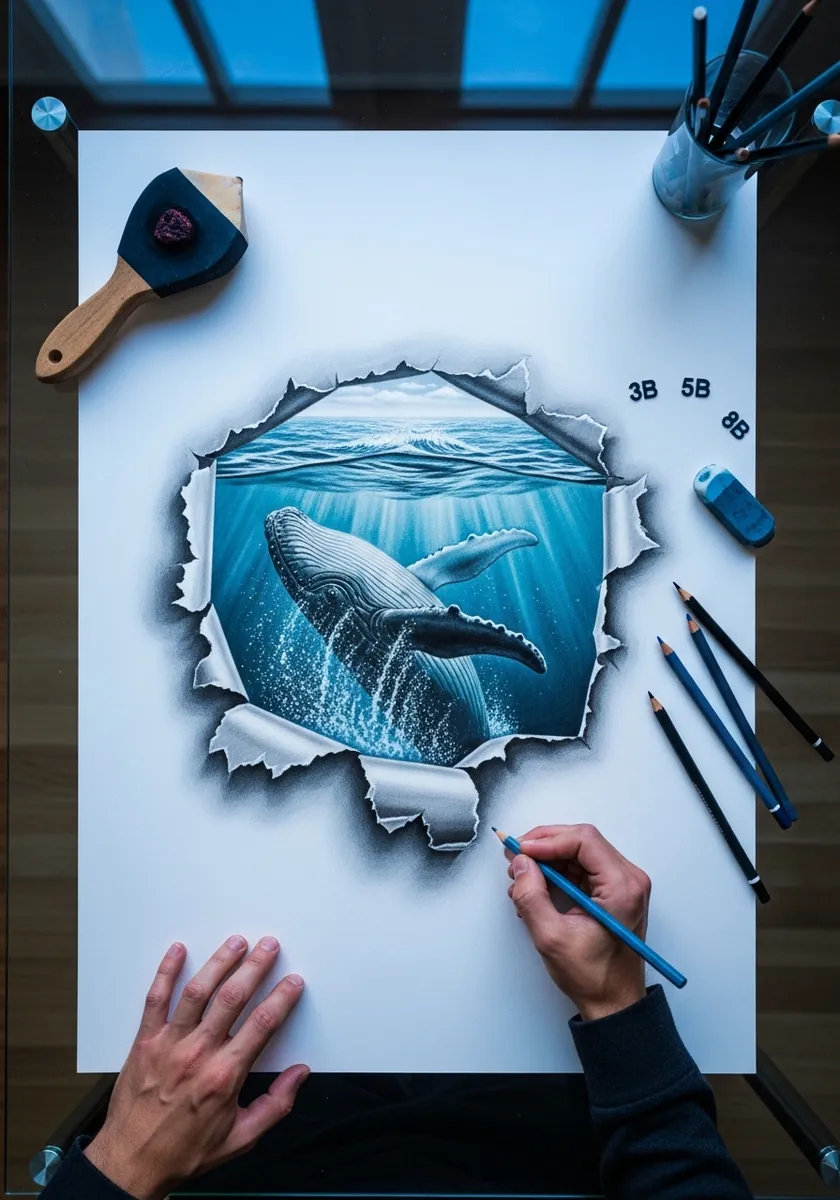
A whale swims past, seen through a ragged opening in the sheet. Draw the torn edge with a visible white paper thickness, then keep everything inside the hole cooler and softer than the crisp edge to push it back.