Short answer: Start with a simple circle, shade one side, and leave the other side bright — that single light-and-dark split is what makes a flat circle look like a real moon. This guide gives you 23 moon drawing ideas, from easy crescents to detailed charcoal studies, so you can pick one and start tonight.
A moon drawing is a picture of Earth’s Moon, drawn in pencil, charcoal, ink, watercolor, or digital tools, showing its round shape, craters, and glow against the night sky.
Drawing the moon sparks that creative fire inside you, turning the soft glow of the night sky into your own captivating scenes. From a gentle crescent to a bold full moon, these ideas help you pour your feelings into every line and shade, while sharpening your eye for the world’s quiet beauties.
It’s a great way to build steady hands and deeper focus, evolving quick doodles into something truly special. Check out our collection of moon drawing ideas, packed with easy tutorials, fresh approaches, and a friendly group of fellow artists ready to cheer you on.
Get started and let the moon inspire your next creation.
TL;DR — pick your moon in 30 seconds: Beginners, start with a crescent on white paper (idea 6 style). Want drama fast? Try white charcoal on black paper (ideas 1, 3, and 20). Love slow, calming detail? Try stippling (idea 4) or graphite (ideas 16 and 23). Painting instead? Leave the moon white and paint the sky around it.
1. How to Draw a Moon in 5 Simple Steps
1
Draw a light circle. Sketch it lightly with an HB pencil so you can erase it later. A round jar lid or a compass helps if your freehand circle wobbles — there is no prize for a shaky outline.
2
Decide where the light comes from. Pick one side — say, the left — and keep that side bright. Everything on the opposite side gets shade. This one choice controls the whole drawing.
3
Add craters lightly. Dot in three or four soft, uneven circles on the shaded side, not a neat row. Real craters overlap, vary in size, and sit closer together near the edge of the moon.
4
Shade in layers. Build the dark side slowly with two or three light layers instead of one heavy one. Then use a kneaded eraser to lift out a few bright crater rims — lifted highlights look more natural than white pencil added on top.
5
Finish the sky, not the moon. Shade the sky dark around the moon and fade it outward into a soft halo. Stop while the moon is still the brightest thing on the page; overworking the moon itself is the most common beginner mistake.
Try this tonight: look at the real moon for two minutes before you draw. Notice which side is bright, where the dark patches sit, and whether the edge looks sharp or soft. Drawing what you actually see beats drawing a moon from memory every time.
2. Which Moon Drawing Style Should You Pick?
Each medium below changes the mood of the same moon. Use this picker to match a style to your time, patience, and supplies, then jump to the matching ideas.
| Style | Best for | Try these ideas |
|---|---|---|
| White pencil or pastel on black paper | Instant glow and drama, even for beginners | Ideas 1, 3, 6, 10, 20, 21 |
| Charcoal | Soft, realistic shading and moody skies | Ideas 2, 5, 14 |
| Ink and stippling | Calm, detailed work and bold graphic looks | Ideas 4, 7, 8, 9, 15, 18 |
| Graphite pencil | Small, precise studies and sketchbook practice | Ideas 16, 23 |
| Gouache or watercolor | Colourful, expressive moons and night skies | Ideas 19, plus our watercolor moon collection |
| Mixed media or digital line art | Story scenes and clean, modern designs | Ideas 11, 12, 13, 17 |
If you are painting your moon, a good starter watercolor set and a couple of soft round brushes make the sky wash much easier — see our guides to the best watercolor sets under $25 and the best watercolor brushes for beginners. For a gentle first painting project, try our easy watercolor painting ideas too.
3. Moon Phases at a Glance
The moon itself does not change shape — what changes is how much of its sunlit side we can see from Earth. The full cycle takes about 29.5 days, and it runs through eight phases in the same order every time. NASA explains the eight phases with clear diagrams at NASA Space Place: What Are the Moon’s Phases? — worth a look before you draw a phase series like idea 22.
| Phase | What you see | Drawing tip |
|---|---|---|
| New moon | Dark, almost invisible | Draw a faint outline only, against a starry sky |
| Waxing crescent | Thin sliver, lit on the right (Northern Hemisphere) | Two curves meeting at sharp points |
| First quarter | Right half lit | Shade the left half, keep the right edge crisp |
| Waxing gibbous | More than half lit | Leave a small dark curve on the left edge |
| Full moon | Whole disc lit | Show craters and shading, not a flat white circle |
| Waning gibbous | More than half lit, shrinking | Darken from the right edge inward |
| Last quarter | Left half lit | Mirror of first quarter — shade the right half |
| Waning crescent | Thin sliver, lit on the left | A delicate final sliver before new moon |
Beginner-Friendly Ideas for Drawing Moon Phases
- Begin with simple outlines: Sketch a basic circle for the full moon, then gently erase parts to shape crescents or half-moons—these moon drawing ideas make learning the sky’s cycles fun and straightforward, helping you get comfortable with proportions in just a few minutes.
- Give it some texture: Try light cross-hatching to suggest craters, keeping it loose so it doesn’t feel too fussy; this adds a sense of real depth and teaches how light dances across the surface for that peaceful vibe.
- Play with smooth shading: Use a soft pencil or blending tool to fade from light to dark on different phases—ideas like this in moon drawings help you get the hang of tones, making your moon feel alive and full of quiet movement.
- Frame it in a scene: Surround your moon with a few stars or a dark sky using tiny dots; it brings the drawing to life with a bit of story, boosting your layout skills and inviting you to dream up nighttime adventures.
- Make it a habit: Draw a different phase each day to see your improvement—these moon drawing ideas encourage regular practice, linking your art to the actual moon outside and filling your sketches with personal magic.
Artistic Tips for Moonlit Landscapes to Level Up Your Skills
- Set the scene with layers: Draw a simple horizon like hills or trees in front of a rising moon, letting the empty spaces create contrast—these moon drawing ideas sharpen your sense of space, pulling you into the calm hush of the evening.
- Create a hazy glow: Dab on watercolors starting light for the moon’s halo, letting them blend into the background; it’s a technique that hones your mixing skills, letting more seasoned artists weave in feelings of mystery and serenity.
- Weave in meaningful details: Include things like a lone bird or rippling water under a big harvest moon to tell a tale—these moon drawing ideas fuel your imagination, tying your work to old stories or your own thoughts under the stars.
- Sharpen with outlines: After shading, go over key lines with a fine pen for crisp edges; this builds your steady hand, turning everyday landscapes into polished pieces that capture the night’s poetic side.
- Share and refine: Show your work to others for fresh eyes and suggestions on flow—these moon drawing ideas grow stronger with input from the community, blending solid techniques with the shared thrill of chasing lunar inspiration.
Grab a pencil, gaze at the sky, and dive into these moon drawing ideas—your first sketch could unlock a whole world of artistic joy tonight!
4. All 23 Magical Moon Drawing Ideas
Work through these in any order. Each one keeps its original artwork and description — pick the medium that matches your mood, and do not worry about copying it exactly. Your version only needs to feel like a moonlit night to you.
1. Lunar Line Art on Black Paper
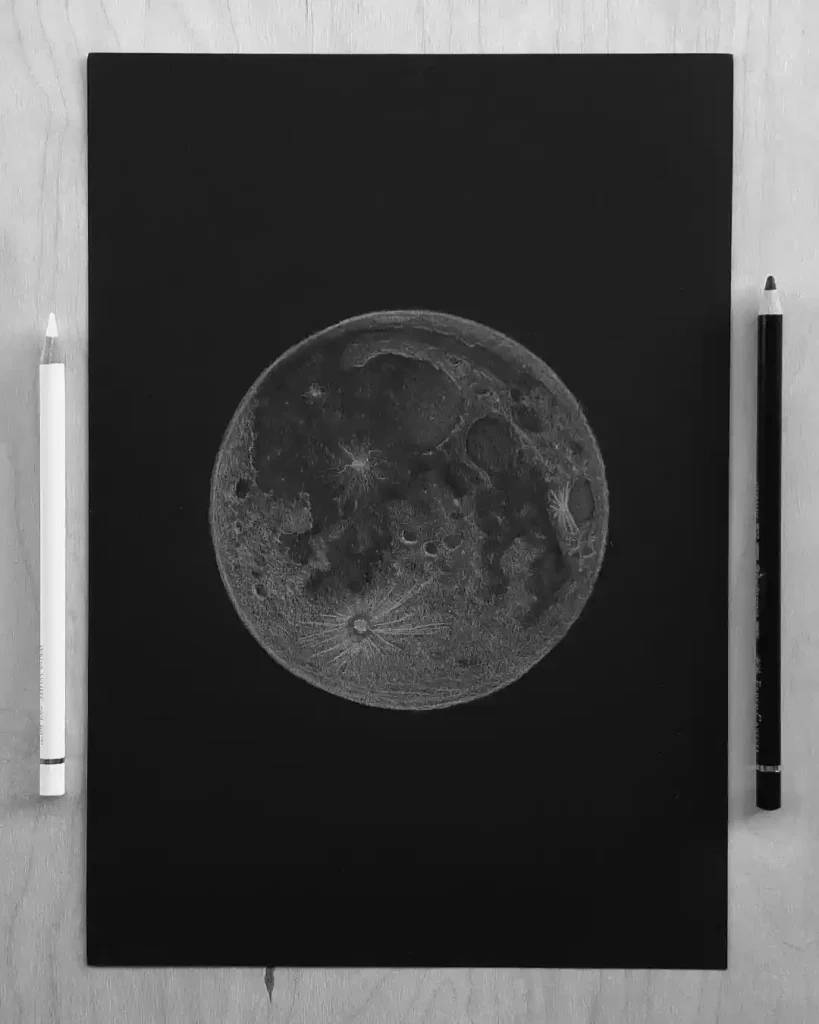
This is a fantastic example of using fine, detailed linework to build a complex image. With just a white pencil on black paper, the artist has meticulously traced the moon’s geography. Every crater and mare is suggested through careful, patient strokes, creating a delicate, web-like texture that is both technically impressive and beautifully minimalist.
2. A Window to the Moon on Charcoal
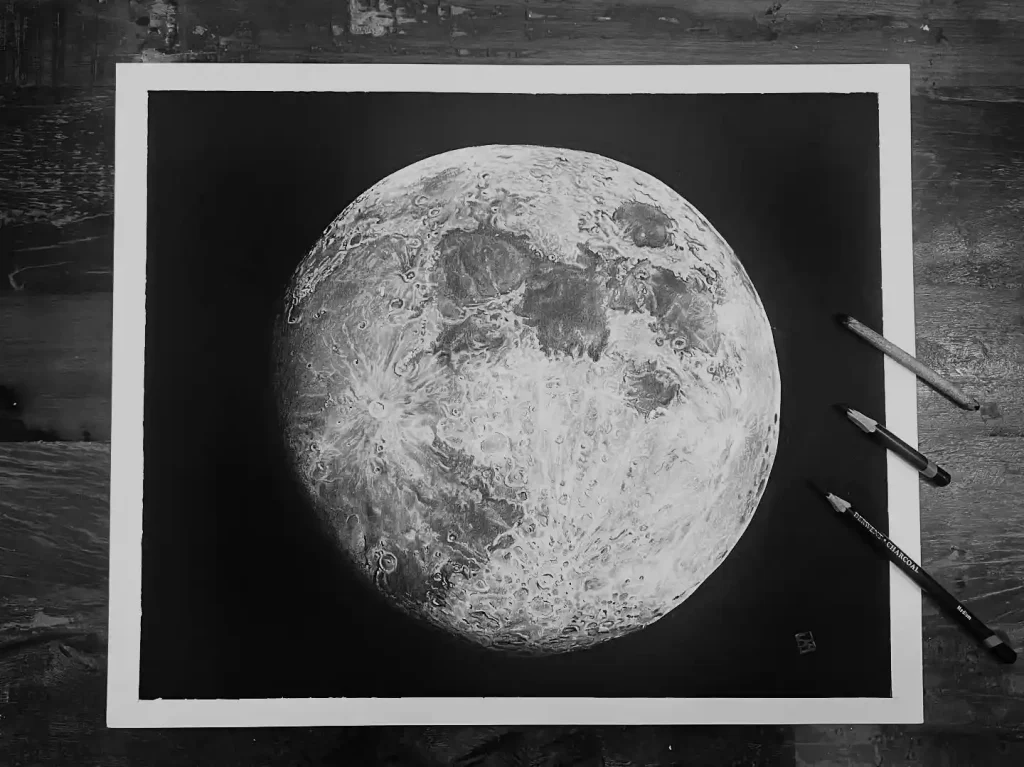
The level of photorealism in this charcoal and pastel drawing is simply out of this world. The artist has masterfully rendered every crater, mountain, and plain with breathtaking accuracy. The subtle gradations of light and shadow give the sphere a convincing three-dimensional form, making it feel less like a drawing and more like a photograph.
3. A Study in Lunar Light on Black Paper
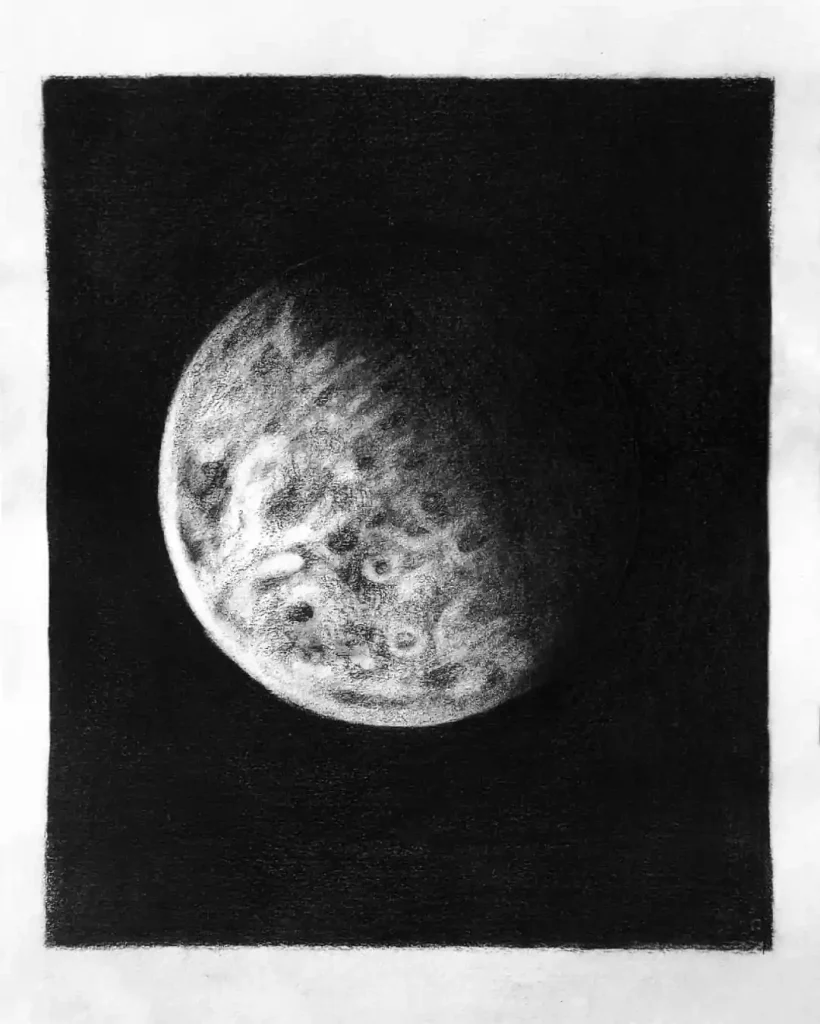
What a beautiful study of light falling across a curved surface. Using white charcoal on black paper, the artist captures a gibbous moon phase, focusing on the soft transition from the brightly lit surface into deep shadow. The gentle blending and crater textures create a quiet, moody piece that is both realistic and deeply atmospheric.
4. A Million Dots on Ink Paper
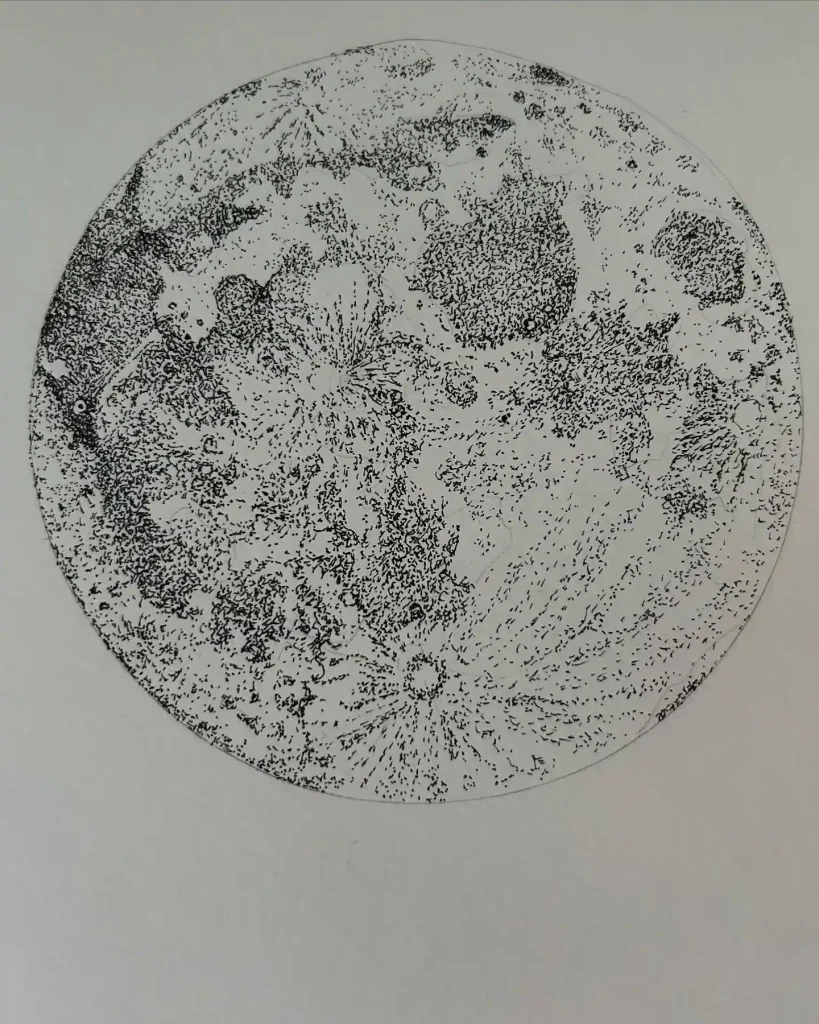
Patience is the key to the stippling technique, and this piece is a masterclass. The artist has created the entire lunar surface using nothing but tiny ink dots. By varying the density of the dots, they build up shadows and highlights, resulting in a beautifully textured image that has a unique, almost granular feel. An incredible feat of dedication.
5. A Celestial Sketch on Charcoal
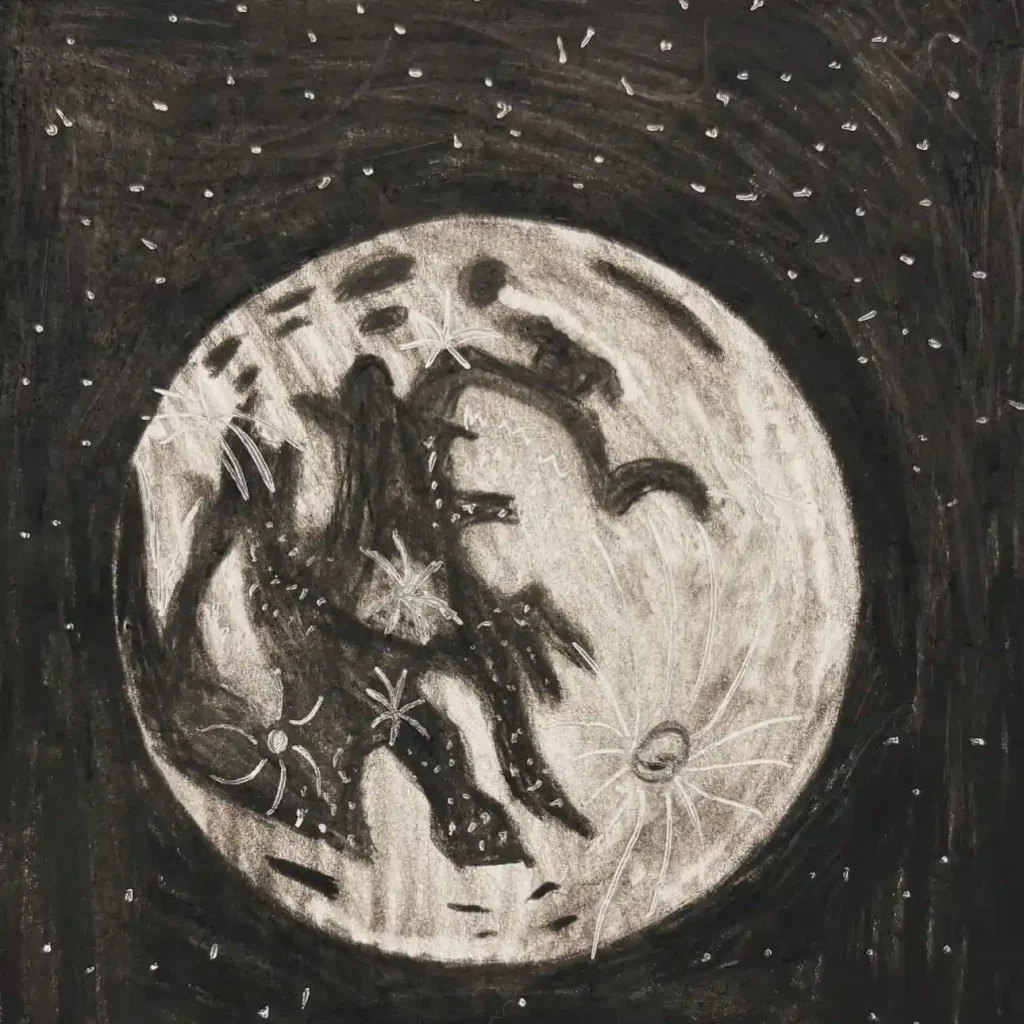
This drawing showcases a more expressive and raw approach to depicting the moon. Using charcoal, the artist focuses on energetic mark-making and textural contrasts rather than photorealism. The bold, dark shapes against the softly blended gray surface give it a dynamic and almost chaotic energy, like a celestial body in the midst of creation.
6. The Silver Sliver on Black Paper
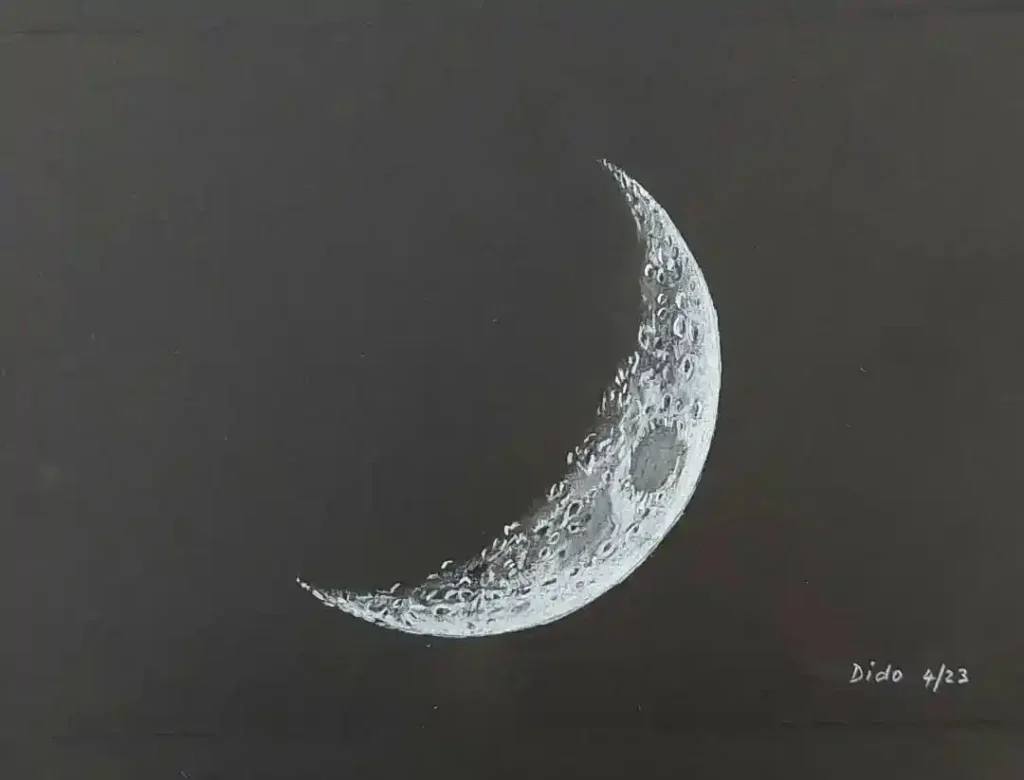
A perfect capture of the delicate crescent moon. Using what looks like white pastel on black paper, the artist has beautifully detailed the cratered texture along the terminator line, where the light is most dramatic. The sharp, bright sliver against the deep, empty blackness creates a simple, elegant, and powerfully serene astronomical portrait.
7. Lunar Bloom on Ink Paper
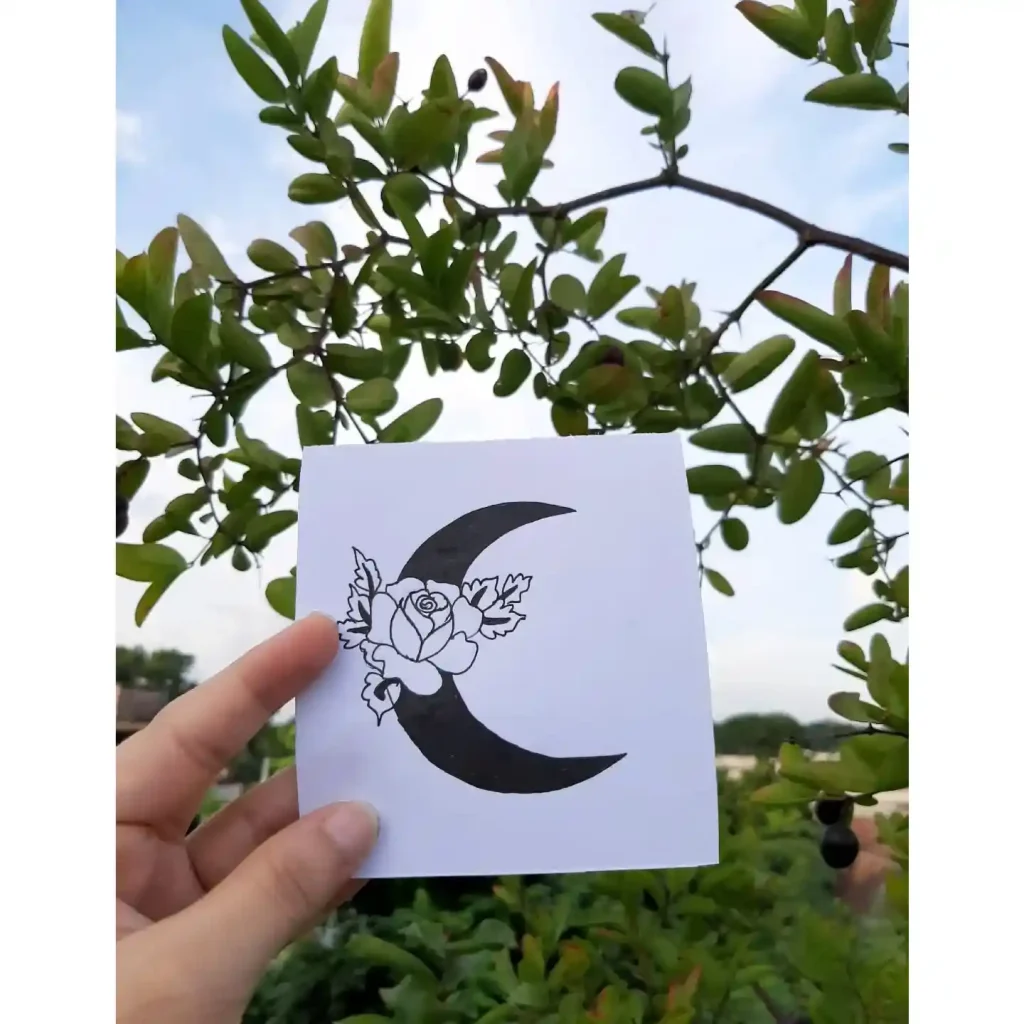
This is a beautiful symbolic pairing of the celestial and the terrestrial. The clean, bold ink lines of the crescent moon are softened by a delicate rose and leaves, creating a wonderfully balanced graphic design. This style, which uses negative space within the flower, is perfect for a tattoo idea, blending themes of nature, beauty, and the cosmos.
8. Cosmic Corona on Ink Sketchbook
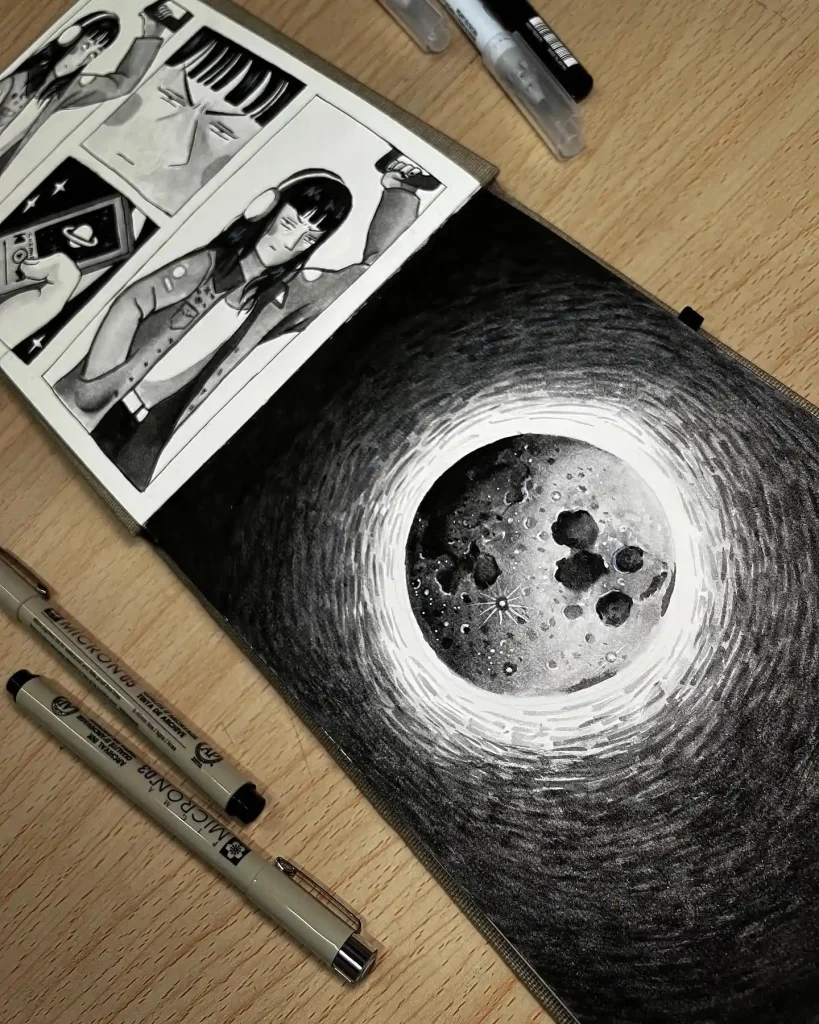
Drawing inspiration from manga and graphic novels, this ink drawing is incredibly atmospheric. The artist uses radiating lines and high-contrast shading to create a powerful corona effect, making the moon feel like an intense source of energy. The meticulous detail on the moon’s surface, combined with the bold halo, creates a dynamic and stylized cosmic scene.
9. Midnight Reflection on India Ink
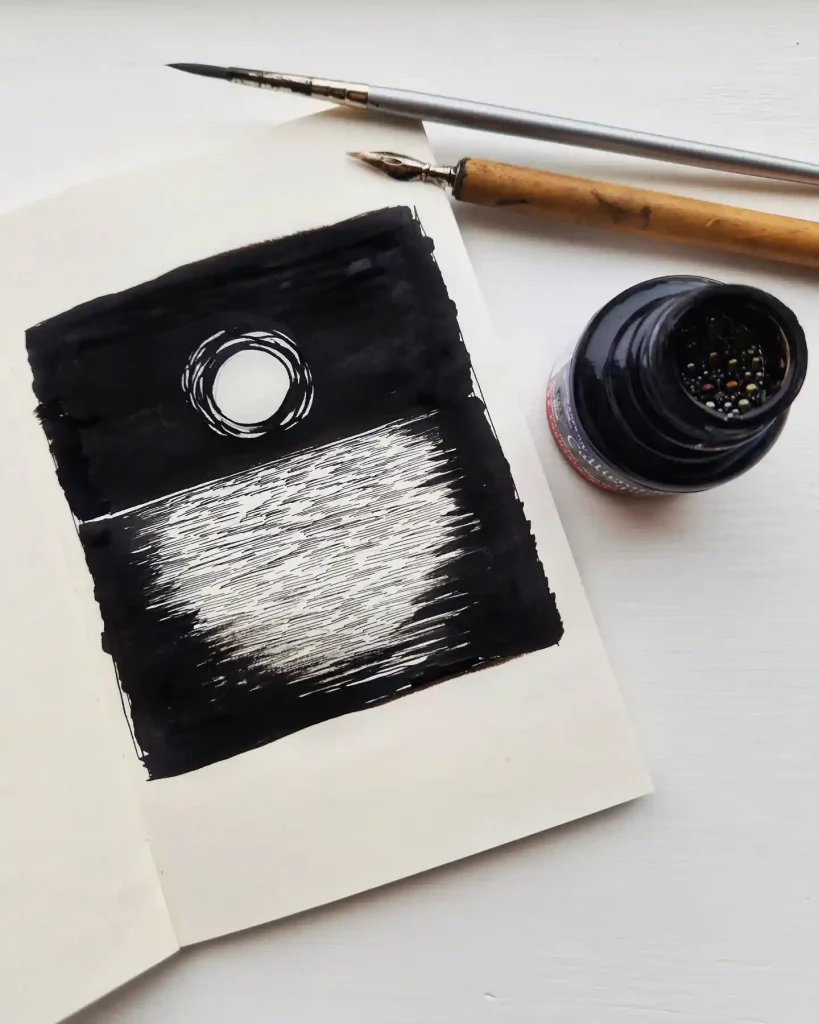
The stark, graphic quality of this piece is reminiscent of a classic woodcut print. Using bold India ink, the artist captures the shimmer of moonlight on water with a series of sharp, horizontal white lines. This simple yet effective technique creates a powerful sense of contrast and a moody, nocturnal atmosphere that is both timeless and striking.
10. A Sparkling Sphere on Black Paper
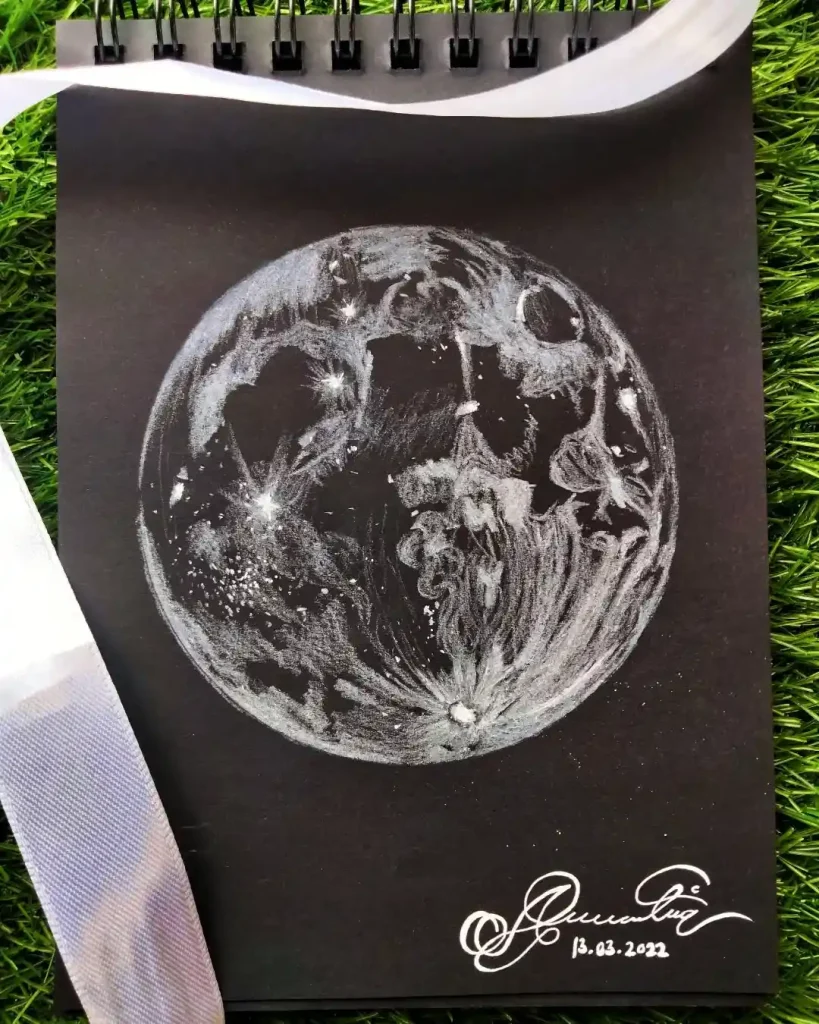
This isn’t just a drawing of the moon; it’s a capture of its magic. The artist uses a white pencil on black paper to create a shimmering, almost crystalline texture across the lunar surface. The bright, sparkling highlights and swirling patterns give it an ethereal and lively energy, transforming the familiar sphere into something wonderfully fantastical.
11. Celestial Window on Digital Line Art
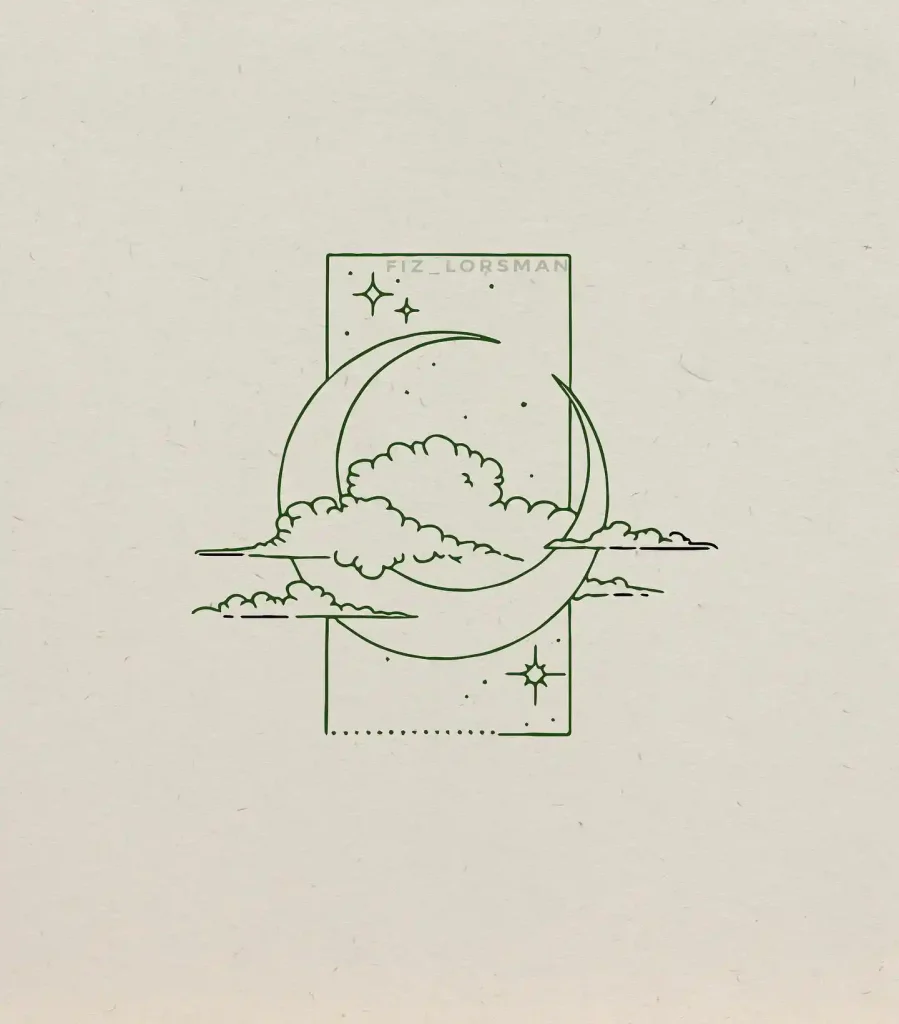
This design is a perfect example of elegant minimalism. Using clean, simple lines, the artist has framed a crescent moon and soft clouds within a geometric window. This creates a beautifully serene and balanced composition that feels both modern and timeless. It’s a tranquil, stylish piece that would make a wonderful logo or tattoo design.
12. The Cat in the Moon on Handmade Paper
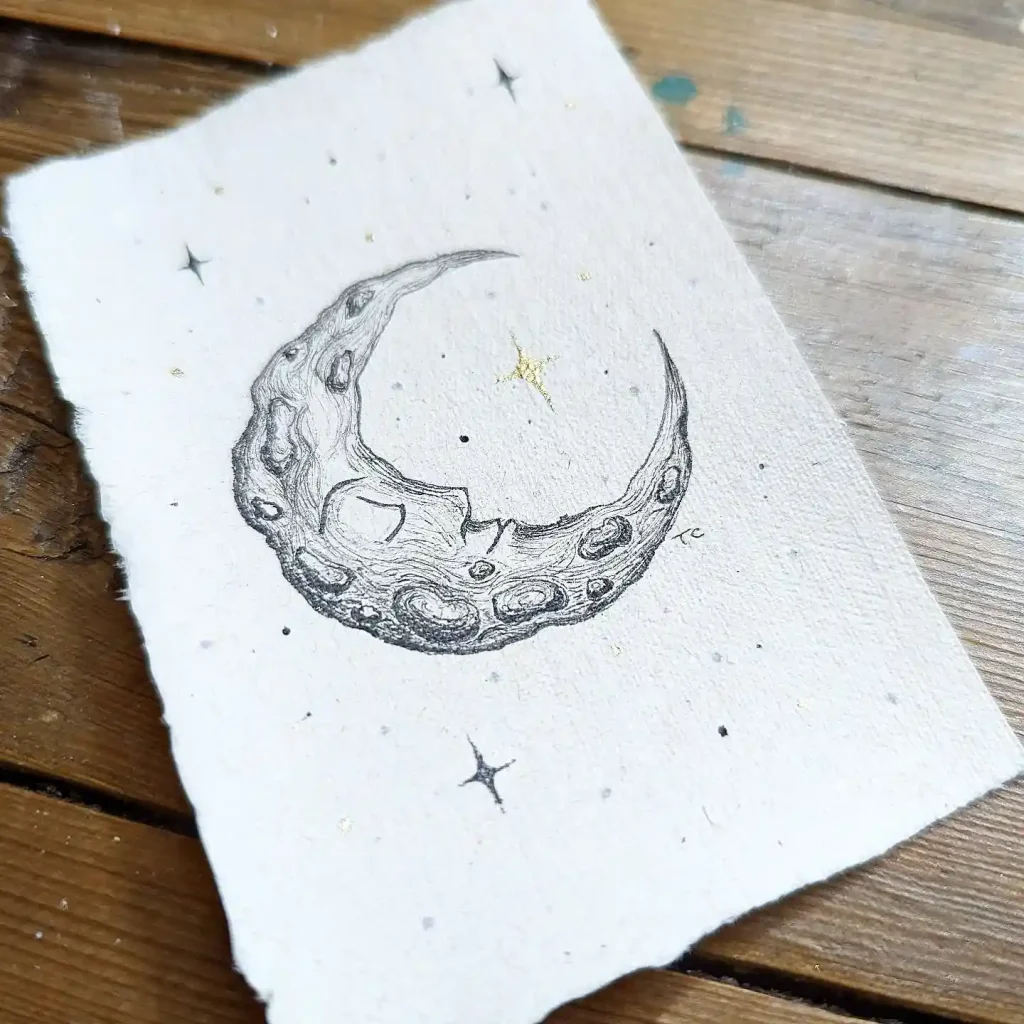
There’s a whimsical, storybook magic to this little drawing. On beautifully textured, handmade paper, a tiny cat is curled up asleep in the crescent of a cratered moon. The delicate ink work, combined with a single sparkling gold star, creates a charming and cozy scene that feels like it was lifted from a beloved fairytale.
13. Sailing the Lunar Sea on Handmade Paper
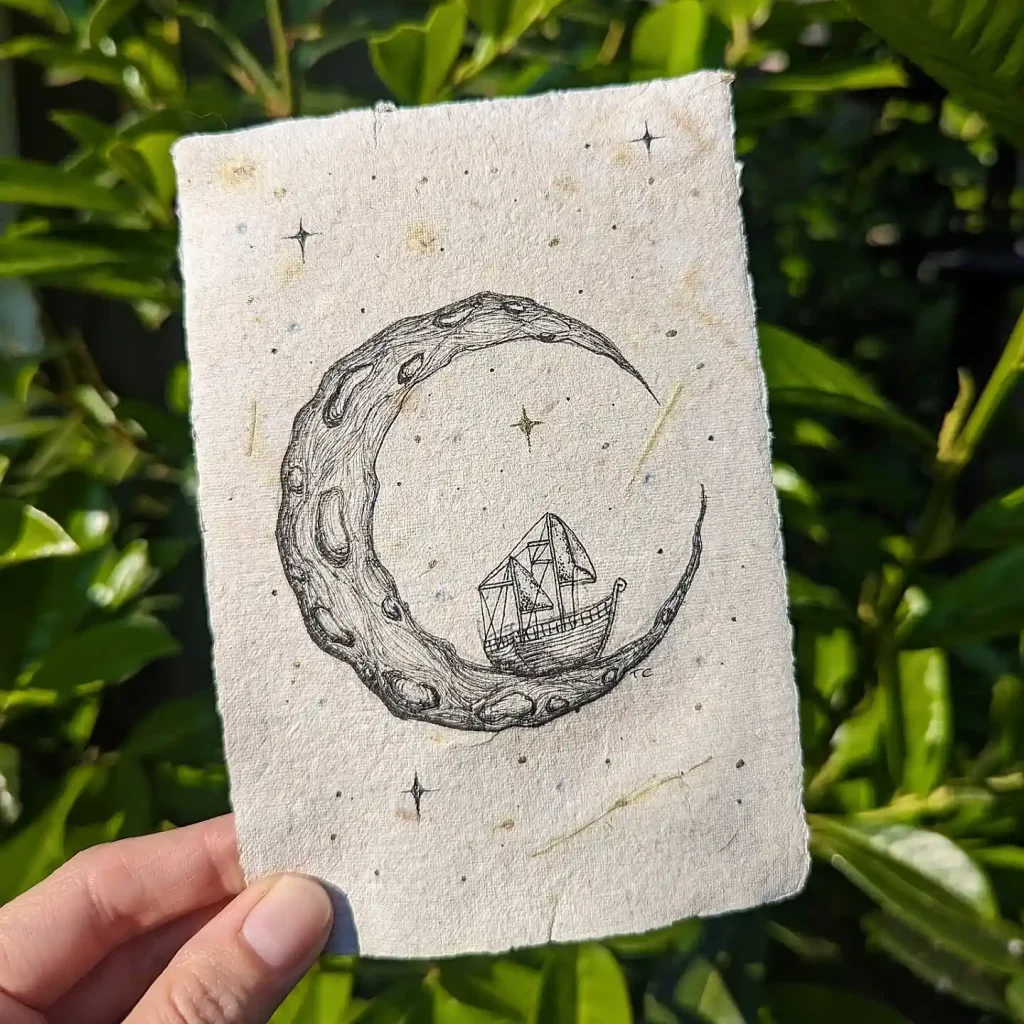
What a wonderfully imaginative concept, full of adventure and dreams. This ink drawing depicts a majestic tall ship sailing calmly within the curve of a cratered crescent moon. The setting on rustic, handmade paper enhances the feeling of an old map or a forgotten legend, inviting the viewer on a fantastical voyage through the cosmos.
14. Above the Clouds on White Charcoal
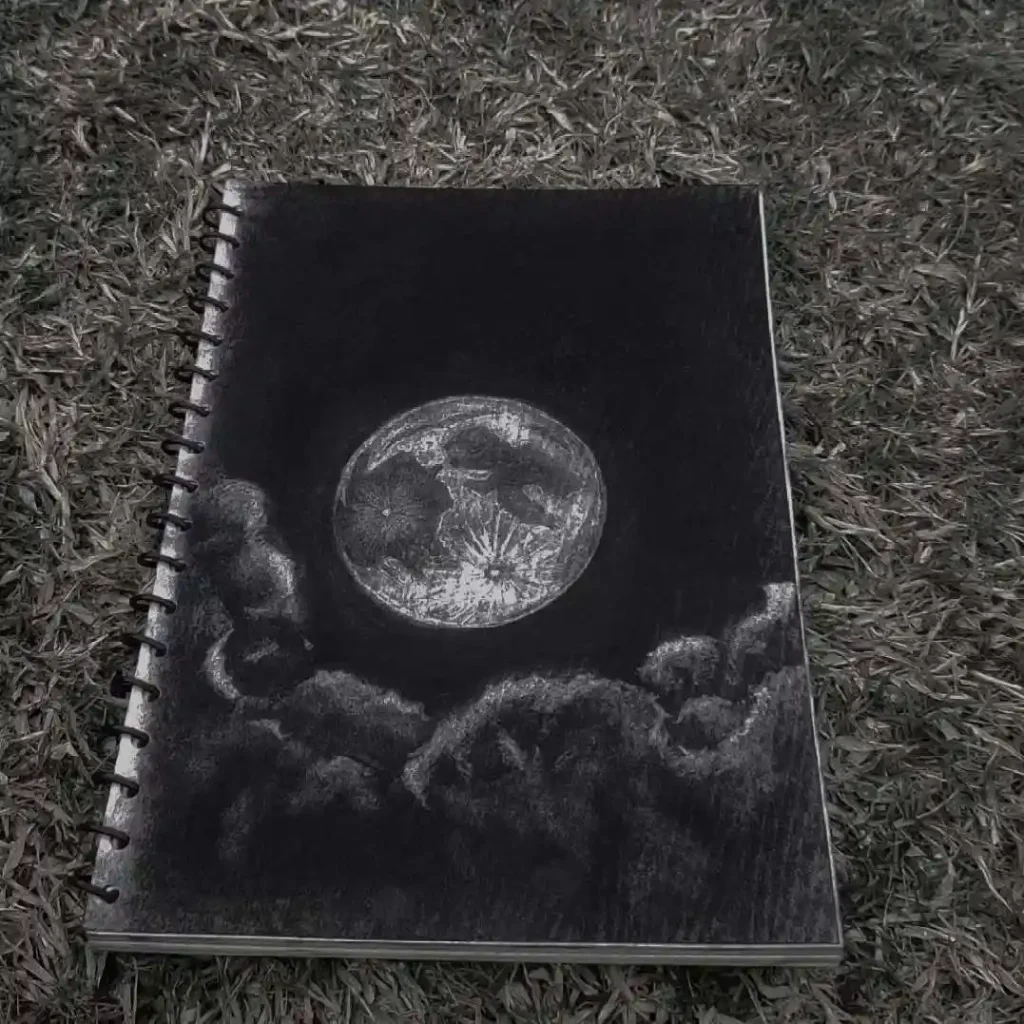
This white charcoal piece creates such a powerful and moody atmosphere. The moon, rendered with a soft, almost powdery texture, glows intensely as it breaks through a thick blanket of clouds. Drawing on black paper allows the artist to build up the light, making this a dramatic and immersive scene that feels like you’re soaring above the world.
15. The Lunar Balloon on Ink
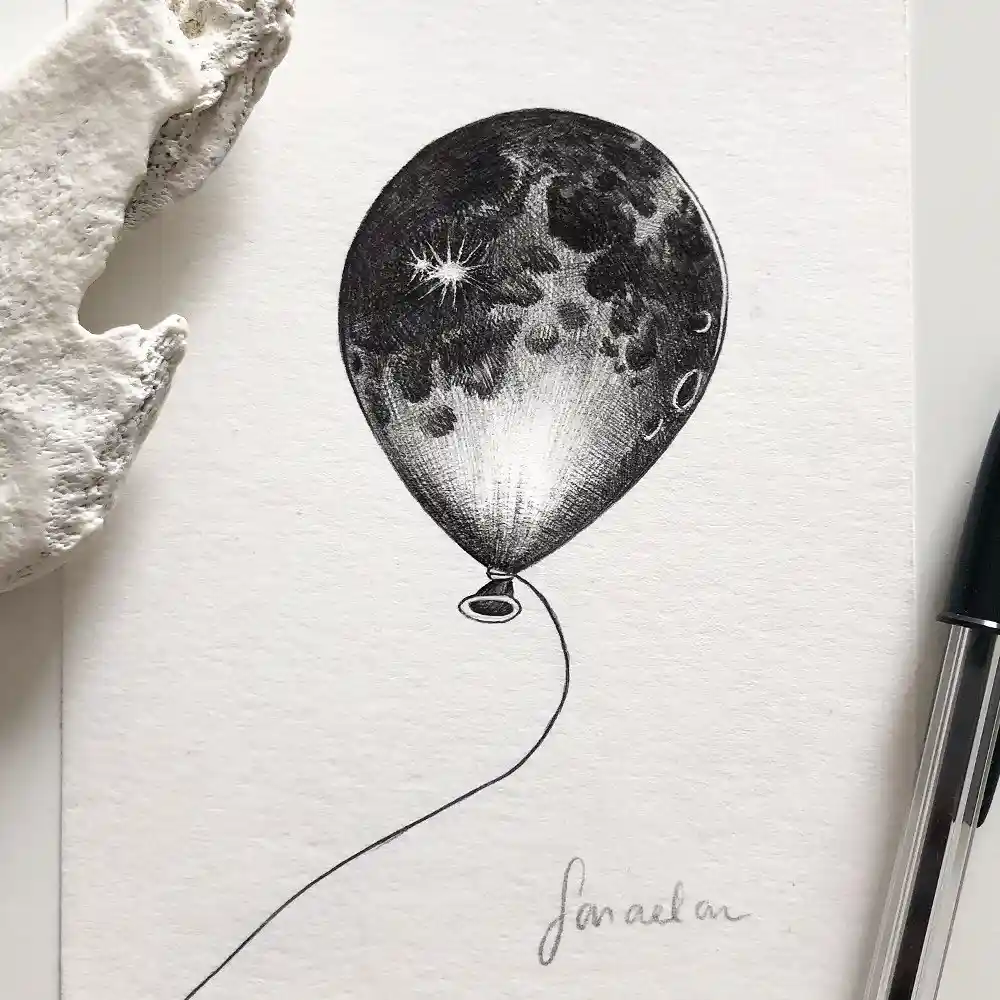
This ink drawing is a beautiful piece of surrealism, turning the moon into something light and whimsical. The artist has meticulously rendered the lunar surface with fine cross-hatching inside the shape of a balloon. This clever concept, contrasting the celestial body’s weight with the feather-light nature of a balloon, creates a thought-provoking and wonderfully imaginative image.
16. A Pocket Moon on Graphite
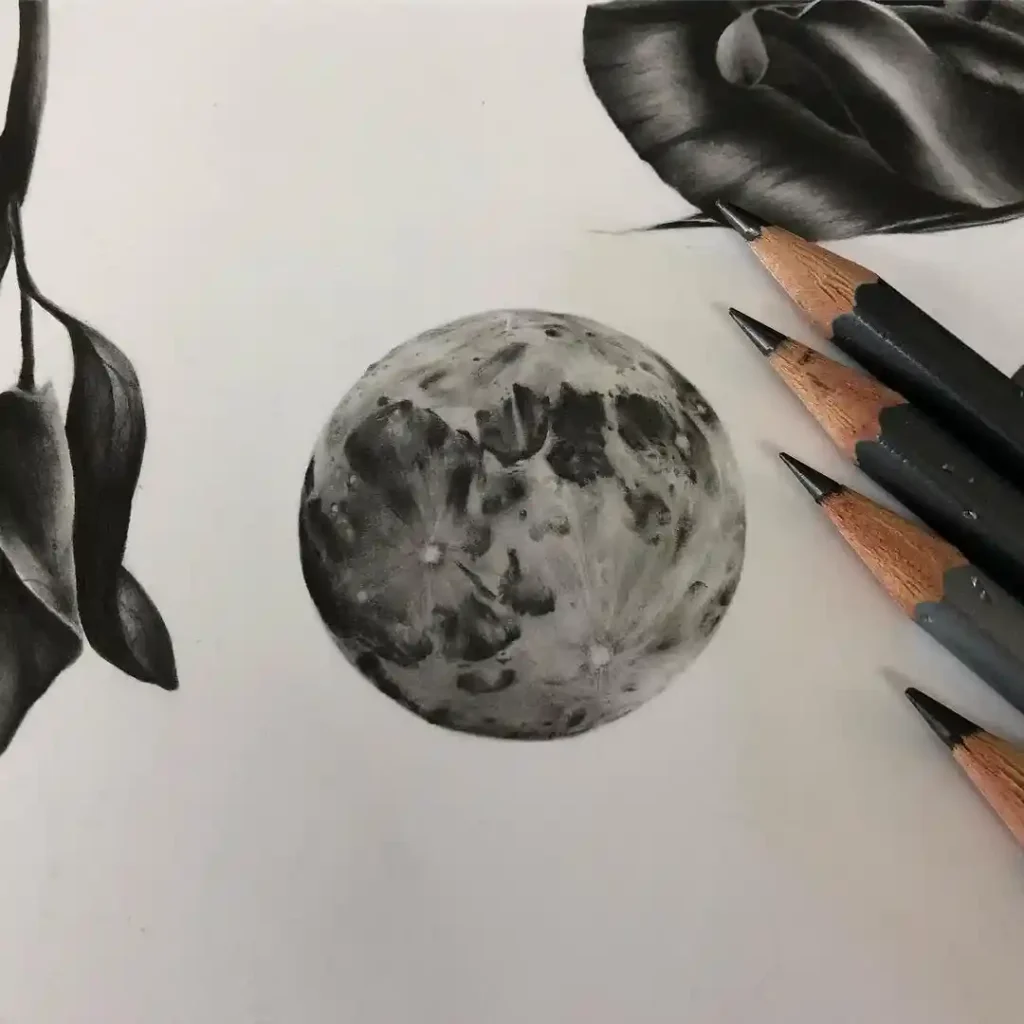
Sometimes a small study can be just as powerful as a large piece. This tiny, realistic moon, rendered in graphite, is a perfect example. The artist has achieved a remarkable level of detail and soft, spherical shading on a miniature scale. Nestled among delicately drawn leaves, it becomes a quiet, contemplative focal point in a larger, elegant composition.
17. Forest Moonrise on Mixed Media
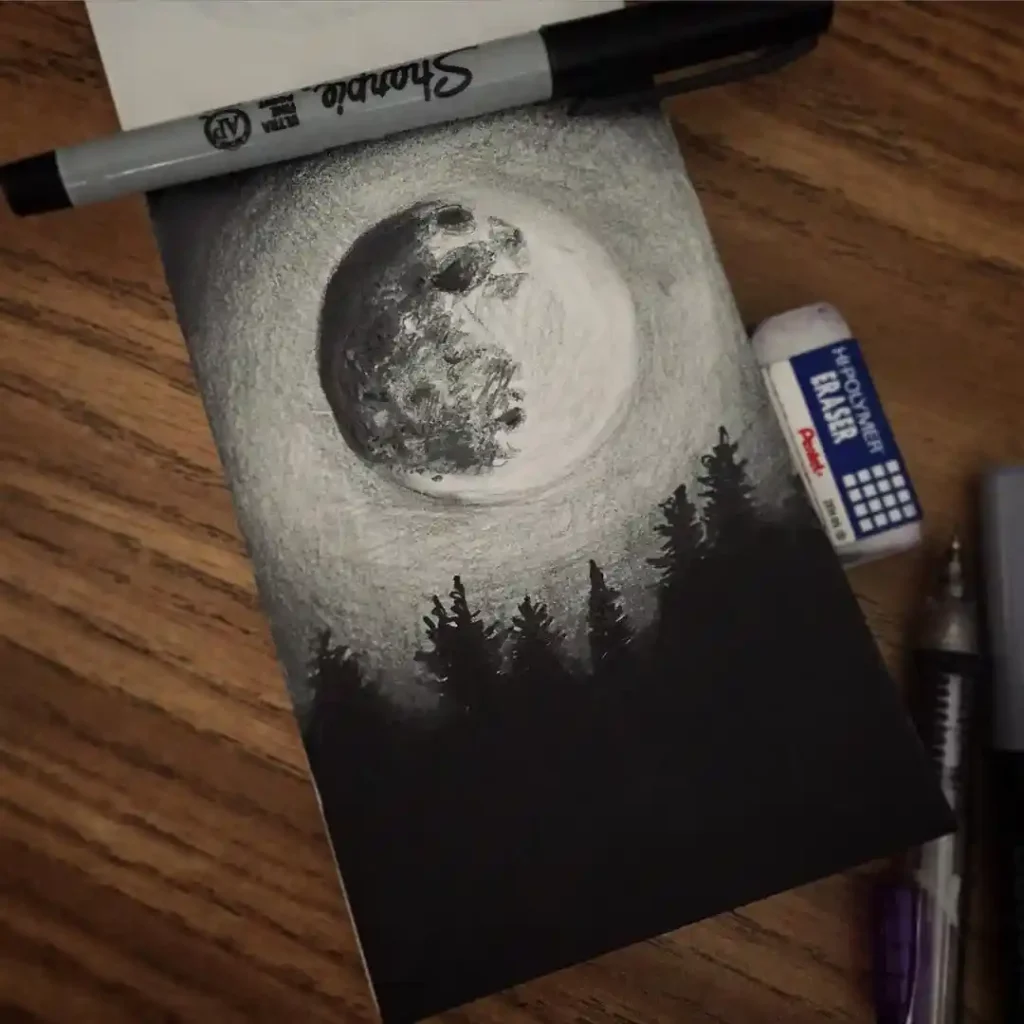
The use of mixed media in this piece creates a fantastic textural contrast. The sharp, solid black silhouette of the forest treeline provides a stark foreground against the soft, hazy glow of the moon’s corona. The moon itself is beautifully detailed, making this a dramatic and atmospheric scene that perfectly captures the quiet majesty of a forest night.
18. Duality of Night on Ink
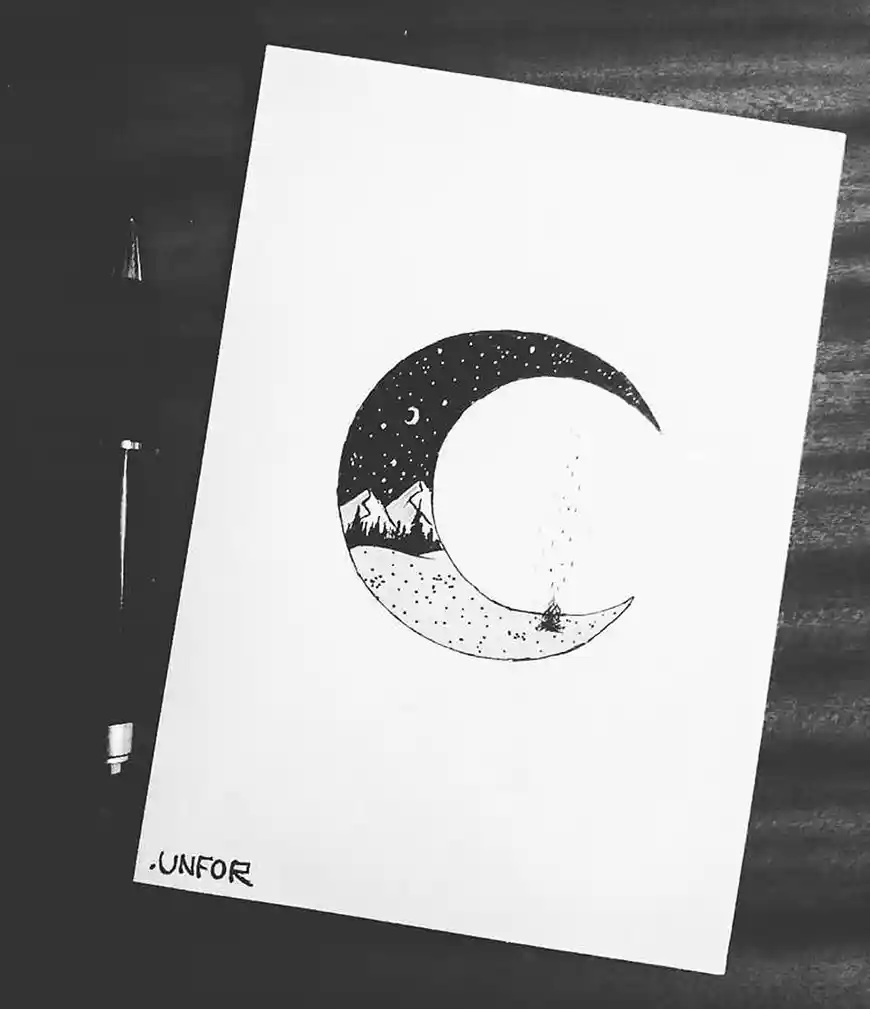
This minimalist ink drawing is a brilliant piece of visual storytelling. The crescent moon is cleverly divided to depict two sides of the night. One half shows the vast, starry wilderness, while the other features the small, intimate warmth of a campfire. It’s a beautiful symbolic design that explores themes of nature, solitude, and comfort.
19. The Crimson Moon on Gouache
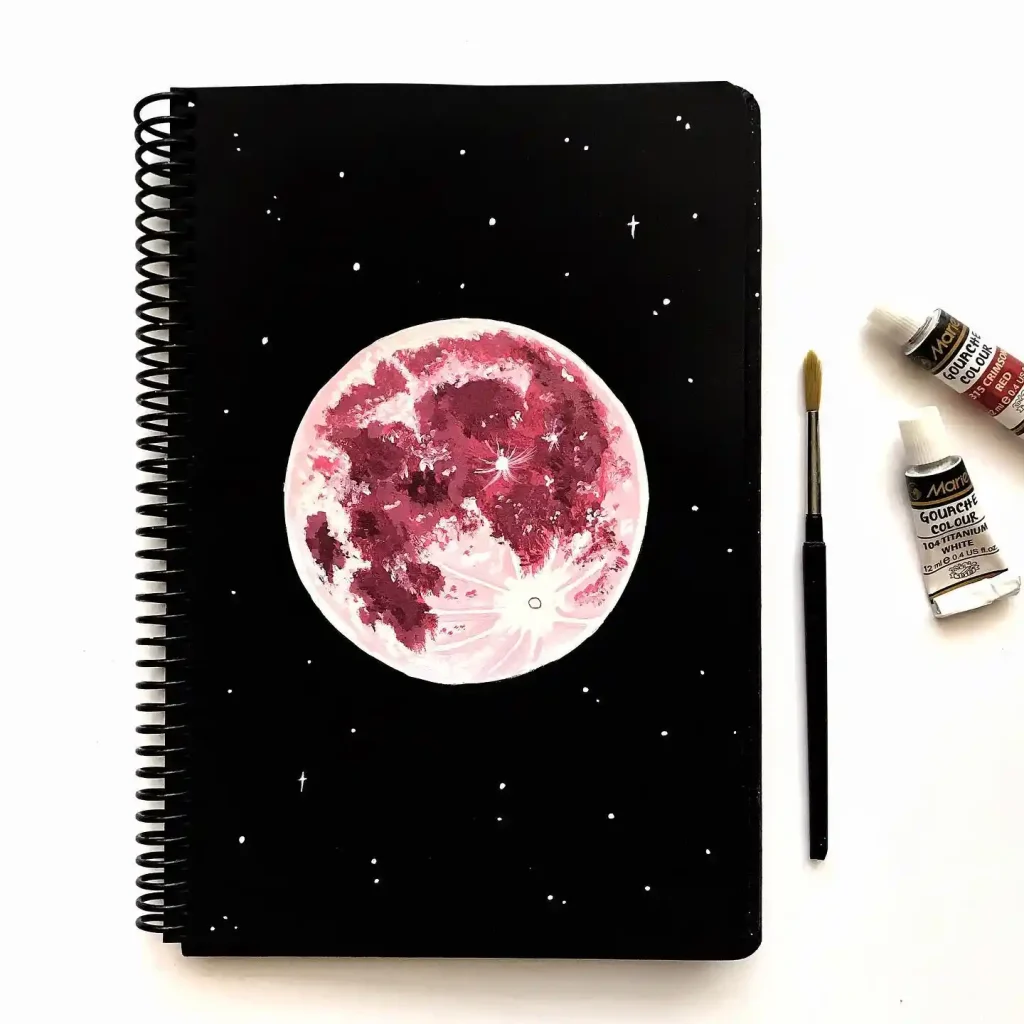
Abandoning realism for pure artistic expression, this gouache painting reimagines the moon in stunning crimson and pink hues. The artist uses thick, painterly strokes to build up texture, creating a surface that feels vibrant and alive. This bold color choice transforms the moon into a dramatic, fiery, and deeply personal celestial object.
20. Moon Over the Pines on White Charcoal
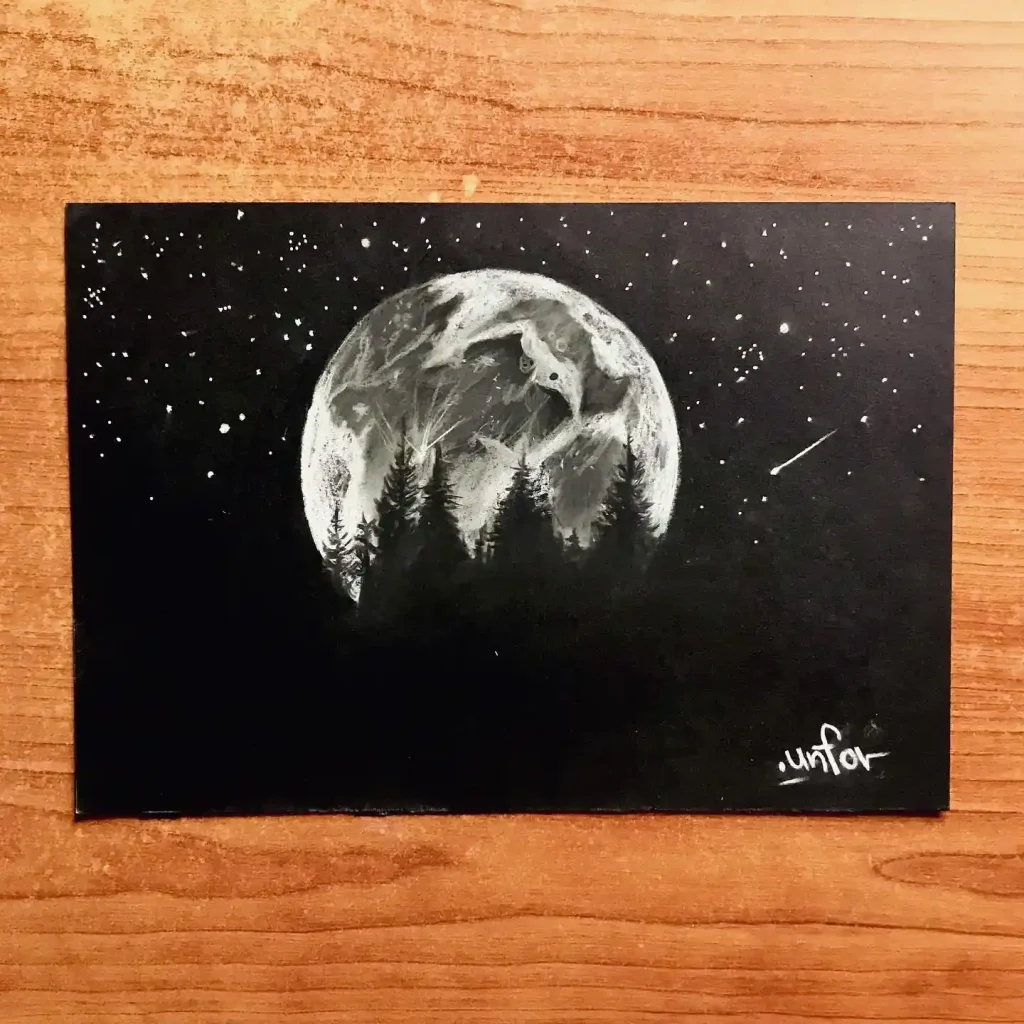
A classic and beautifully cinematic scene, brought to life with white charcoal on black paper. The massive, detailed moon serves as a brilliant backdrop for the dark silhouette of a pine forest. This layering creates a wonderful sense of depth and scale, capturing that breathtaking moment when the full moon rises over the wilderness.
21. Edge of Light on White Pencil
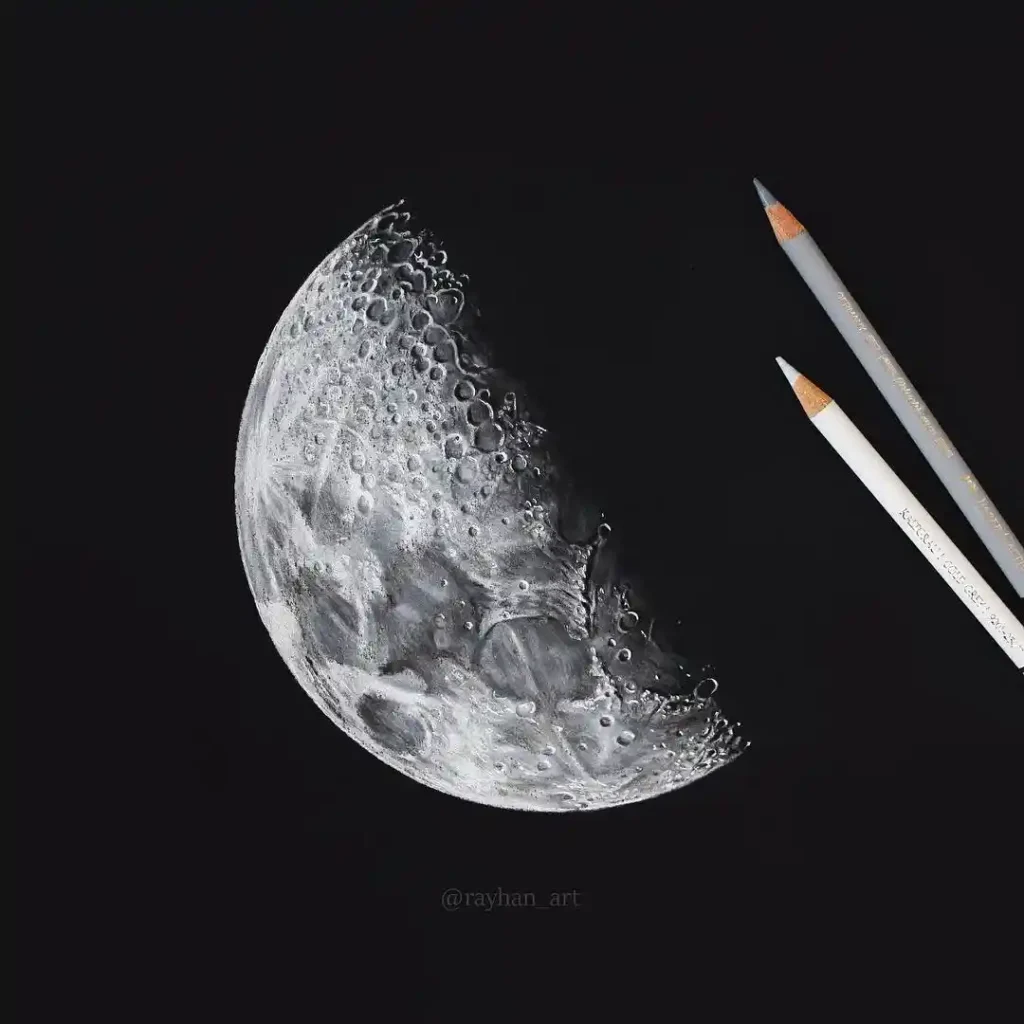
This is an absolutely incredible close-up study of the lunar surface. The artist uses a white pencil with surgical precision on black paper to render each crater in breathtaking three-dimensional detail. The way the light catches the rims of the impacts is masterfully done, creating a photorealistic piece that highlights the rugged, beautiful texture of our moon.
22. A Study in Phases on Black Sketchbook
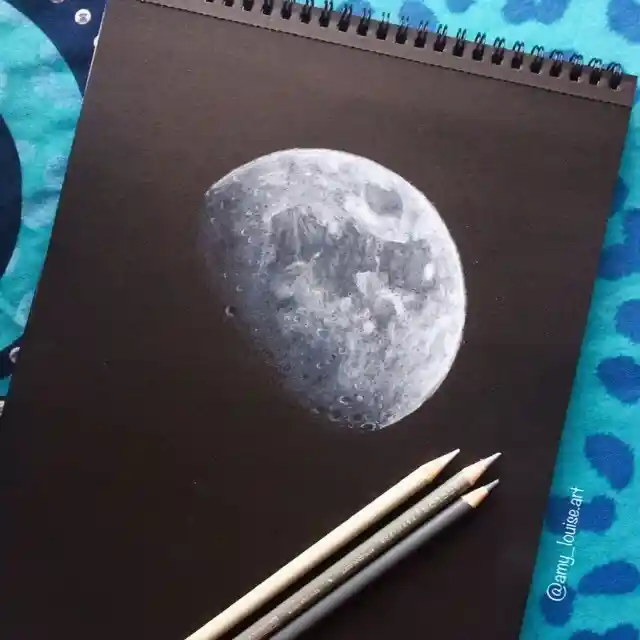
Capturing the moon’s different phases is a classic artistic exercise, and this one is beautifully done. Using what appears to be white pastel or charcoal on a black sketchbook, the artist has perfectly captured the soft light of a gibbous moon. The subtle shading and texture give it a realistic, spherical form against the deep void of space.
23. A World Within on Graphite
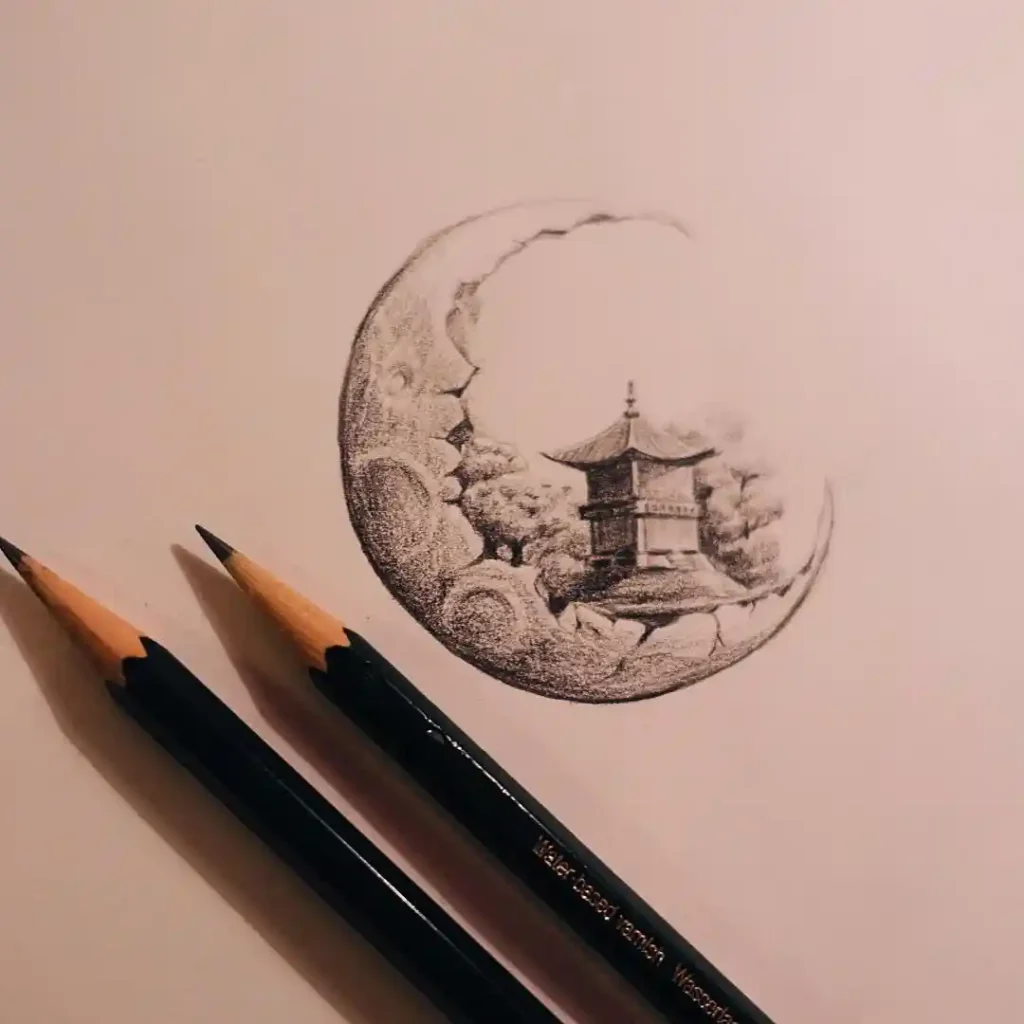
What a breathtaking and surreal concept. This graphite drawing reimagines the crescent moon as a vessel holding a tiny, peaceful world. A serene pagoda sits nestled among misty trees, all rendered with incredible, fine-point detail. This beautiful piece transforms the moon from a celestial object into a magical, self-contained universe of tranquility and wonder.
5. Common Moon Drawing Mistakes and How to Fix Them
- Flat white circle: add at least three crater marks and a soft shadow on one edge — a moon with no texture reads as a plain ball.
- Hard black outline: soften the edge on the dark side and let the halo do the glowing; a thick outline flattens the whole drawing.
- Stars everywhere: keep stars small, uneven, and fewer near the moon so the moon stays the brightest, clearest shape.
- Shading in one heavy layer: build tone slowly in layers, and lift highlights with an eraser instead of pressing harder.
- Copying the photo line for line: use the reference for light direction and crater placement, then let your own hand finish it — that is what makes it yours.
6. Frequently Asked Questions About Drawing the Moon
What is the easiest way to draw the moon for beginners?
Start with a light circle, then shade one side and leave the other side bright. A simple crescent is the easiest first moon: draw two curved lines that meet at two sharp points, add a few soft crater dots, and keep the background dark so the lit edge stands out.
How do you draw the different moon phases?
Draw the same circle eight times, then change how much of it is lit: new moon is dark, crescent is a thin sliver, first and last quarter are half lit, gibbous is more than half lit, and full moon is fully lit. Keep the lit side on the same side for the waxing phases, then switch sides after the full moon.
What paper and pencil work best for a realistic moon?
For a realistic moon, use smooth white paper with a soft graphite pencil such as 2B or 4B for shading, plus a kneaded eraser to lift out bright craters. For a glowing moon on a dark sky, flip it around: use black paper with white charcoal or white pastel, as in ideas 1, 3, and 20 below.
How do you make the moon glow in a drawing?
Leave the moon itself almost white, then fade a soft halo around it instead of drawing a hard outline. Blend the halo outward with a tissue or blending stump, keep the sky darkest right next to the halo, and add only a few small stars so the moon stays the brightest part of the picture.
How long does a detailed moon drawing take?
A quick crescent sketch can take 10 to 15 minutes, while a detailed crater study in charcoal or stippling can take an hour or more. The time depends on the size, the medium, and how much texture you add, so start small and add detail in layers rather than rushing the shading.
Can I draw the moon with watercolors?
Yes. Paint the sky first in a dark wash, leave the moon area unpainted so the white paper does the glowing for you, then add a pale yellow-grey wash for the lit craters once the sky is dry. For more watercolor moon ideas, see our watercolor moon drawing collection.
Keep exploring the night sky
Love moonlit scenes? Try our watercolor moon drawing ideas for painted moons, our forest magic scenes for moonlit woodland layers, or our easy watercolor painting ideas if you are just starting with paint. Then come back here and try the same moon in a second medium — the comparison teaches more than any single drawing.