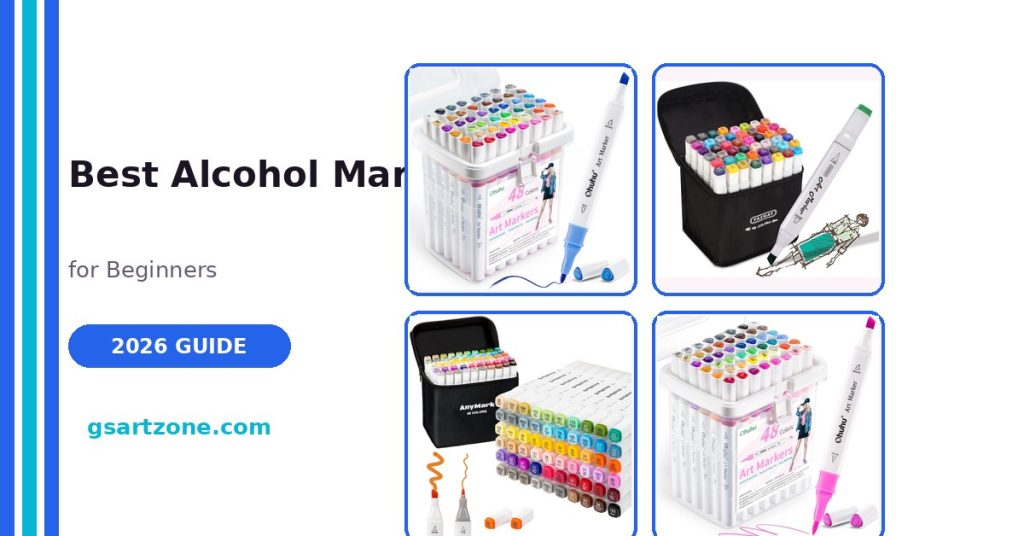
The best alcohol markers for beginners are the Ohuhu 48-color Fine & Chisel set: the category's default starter with 5,600+ verified reviews at $21.99. Budget buyers should try the YASNAY 48 at $12.99, and the refillable Ohuhu 48 (4.8 stars) is the premium pick that saves money over time.
Key takeaways
- Ohuhu 48-color Fine & Chisel is the #1 pick: 5,600+ reviews, the beginner-standard brand, $21.99.
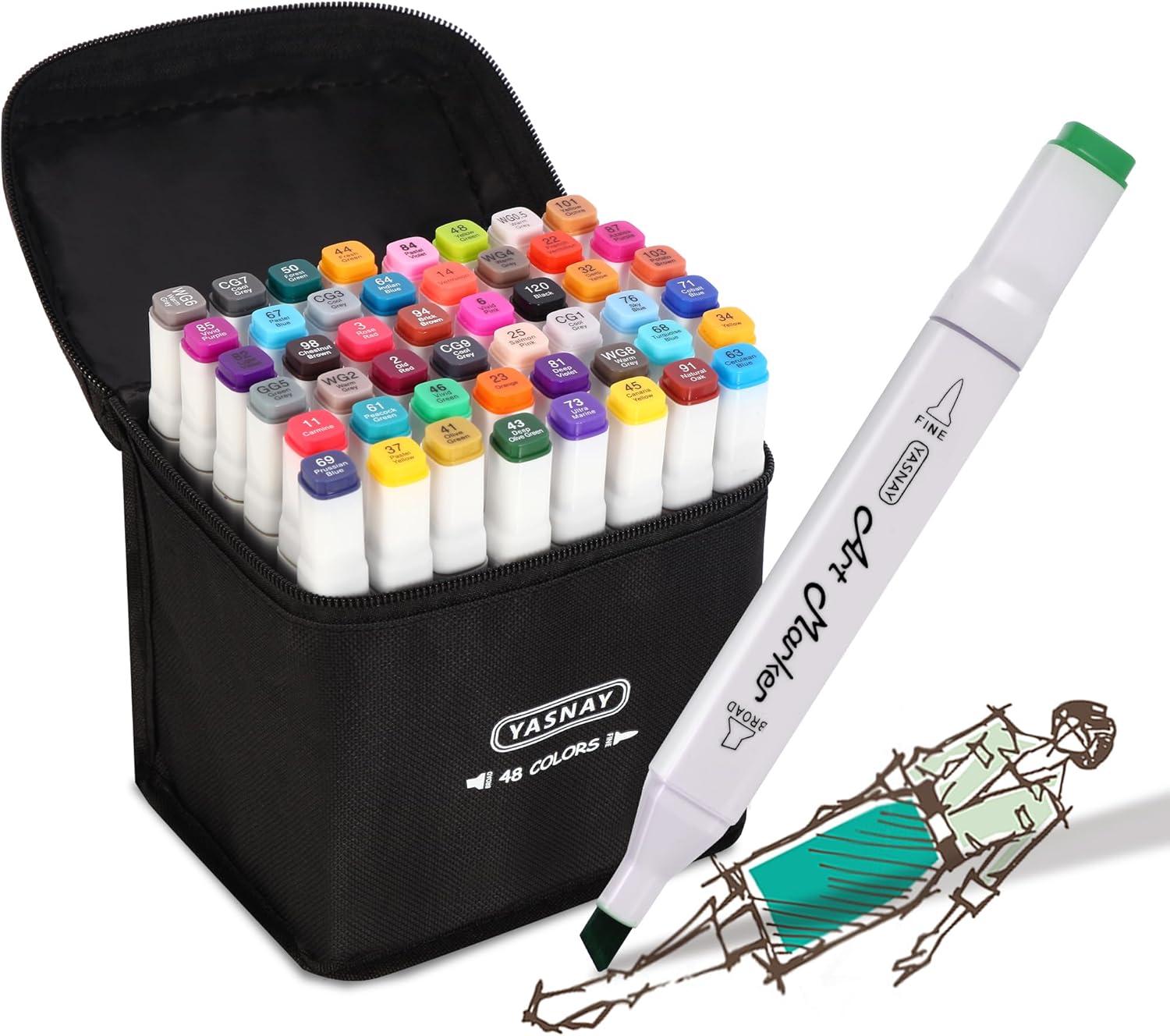
- YASNAY 48 at $12.99 is the best budget entry — remarkably close to big-brand quality.
- Brush nibs are more forgiving than fine nibs for shaky beginner hands.
- 48 colors is the sweet spot; refillable sets are cheapest long-term despite higher upfront cost.
- Alcohol markers need marker paper (regular paper bleeds) and ventilation — they're for teens/adults, not young kids.
Affiliate Disclosure: This post contains affiliate links. If you buy through them, we may earn a small commission at no extra cost to you. Prices were checked in October 2026 and may vary.
Short Answer
The best alcohol markers for beginners are the Ohuhu 48-color Fine & Chisel set — the beginner-standard brand with 5,600+ reviews, the two most useful nib types, and a $21.99 price. On a tight budget, the YASNAY 48-color set at $12.99 is remarkably close in quality, and the refillable Ohuhu 48 (4.8 stars) is the smart premium pick that saves money long-term.
Alcohol markers are the moment coloring becomes illustration — smooth blends, vibrant color, and professional-looking results from the first try. But the wrong set means streaky color, dried nibs, and money wasted. We compared the 10 most popular beginner alcohol marker sets on Amazon, checking nib types, color curation, ink consistency, and verified buyer reviews, to find the sets worth buying in 2026. Our method: we compared specifications and verified buyer feedback — no fake hands-on testing claims.
★ Our Top Pick: Ohuhu 48 (Fine & Chisel)
≡ In This Guide
Our Top 3 Picks at a Glance
★ BEST OVERALL

Ohuhu 48 (Fine & Chisel)
The beginner-standard set: 5,600+ reviews, two essential nibs, $21.99.
Check Price on Amazon
★ BEST BUDGET
★ BEST PREMIUM
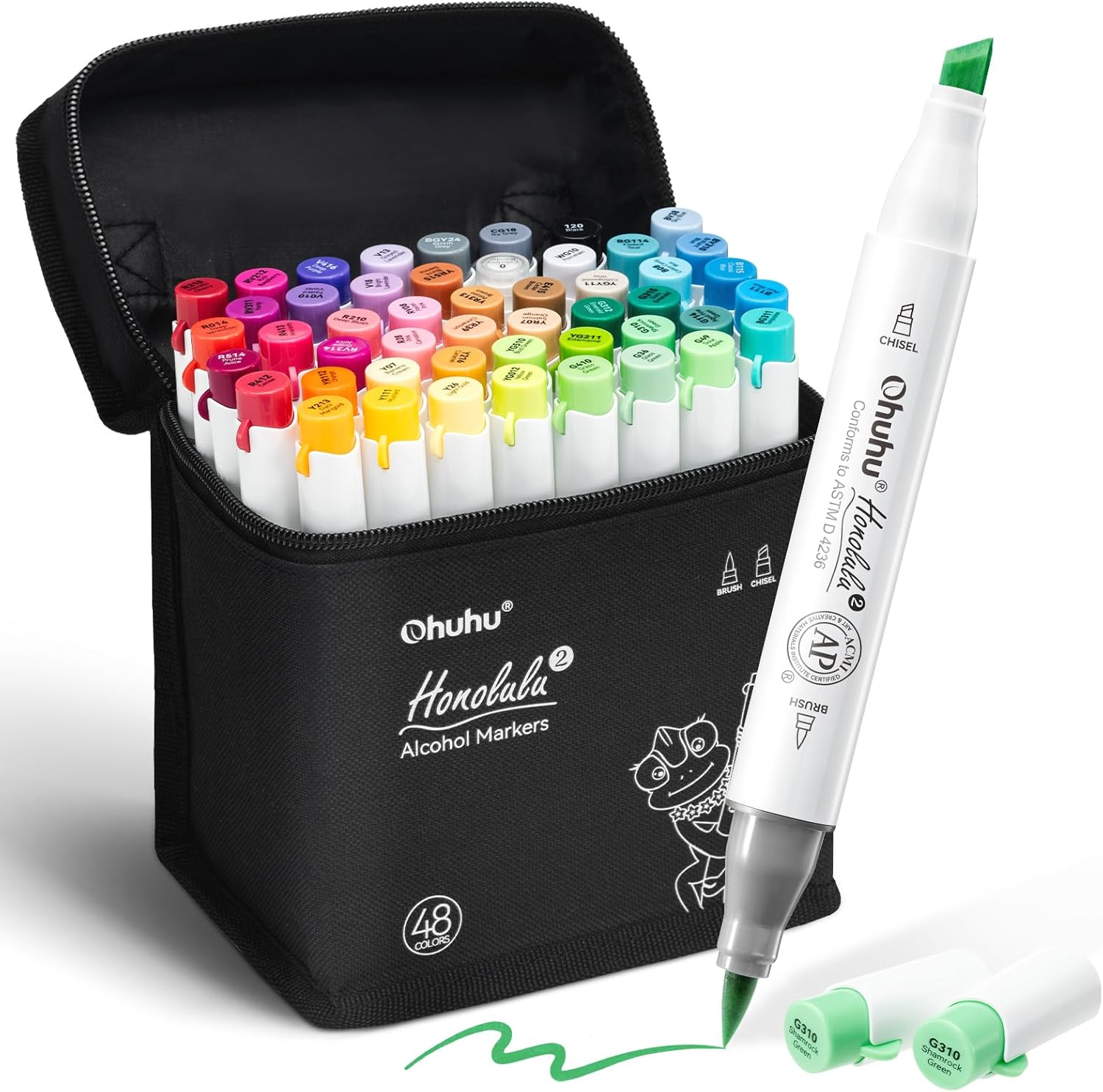
Ohuhu 48 Refillable
4.8 stars and refillable — the smart long-term investment.
Check Price on Amazon
Quick Comparison Table
| # | Product | Detail | Price* | Rating |
|---|---|---|---|---|
| 1 | Ohuhu Alcohol Markers 48 Col | 48 | $21.99 | 4.4 |
| 2 | YASNAY Alcohol Markers 48 Co | 48 | $12.99 | 4.4 |
| 3 | AnyMark Alcohol Markers 60 C | 60 | $15.99 | 4.4 |
| 4 | Ohuhu Alcohol Markers 48 Col | 48 brush | $21.99 | 4.3 |
| 5 | Ohuhu Alcohol Markers 80 Col | 80 | $29.99 | 4.6 |
| 6 | Ohuhu Alcohol Markers 48 Col | 48 refill | $39.99 | 4.8 |
| 7 | Chen Rui Alcohol Markers 168 | 168 | $45.99 | 4.1 |
| 8 | CREATSPARK Alcohol Markers 8 | 80 | $17.99 | 4.4 |
| 9 | CREATSPARK Alcohol Markers 1 | 168 | $42.99 | 4.4 |
| 10 | Chen Rui Alcohol Markers 60 | 60 | $19.99 | 4.1 |
*Prices checked October 2026; they change often on Amazon.
1. Which Set Should You Buy First? A 60-Second Picker
Short on time? Match yourself to one line below and you are done. Every pick here is one of the 10 sets reviewed above, so you can scroll back up to read its full card before you buy.
1
Tightest budget, or not sure markers are for you. Buy the YASNAY 48-color set. At $12.99 it is the cheapest way to learn real blending, and if markers turn out not to be your medium, you have risked very little.
2
You want the safe default. Buy the Ohuhu 48-color Fine & Chisel set. It is the beginner-standard pick on this list, with the most buyer feedback behind it, and the fine nib is ideal if you like clean outlines and detail work.
3
Your lines feel shaky, or you love soft blending. Buy the Ohuhu 48-color Brush & Chisel set. Brush nibs flex like a paintbrush, so smooth strokes and gradients come much more easily than with a stiff fine nib.
4
You already know you will stick with markers. Buy the refillable Ohuhu 48 set. It costs more up front, but refilling ink instead of replacing dried markers makes it the cheapest option over a year or two of regular use.
5
You are buying a gift. Buy the CREATSPARK 80-color set with the desk base. It looks like a serious studio upgrade when unwrapped, and the base keeps every marker visible instead of lost in a case. See more gift ideas in our guide to the best gifts for artists under $50.
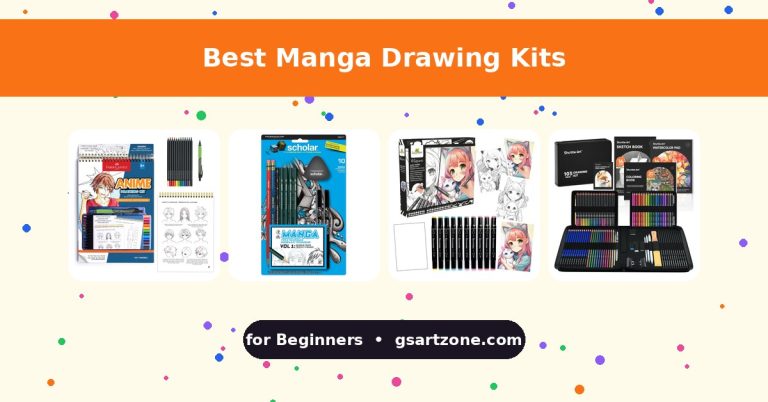
If you mainly draw anime or manga characters, start with a brush-nib set and pair it with the supplies in our best manga drawing kit for beginners guide. And whatever set you choose, buy the paper at the same time: our best sketchbooks for beginners guide explains which pads stand up to alcohol ink without bleeding through.
- Paper: marker paper or a bleed-proof sketchbook, never thin copy paper.
- Air: a ventilated room, since alcohol markers give off noticeable fumes.
- Storage: flat, never upright, so both nibs stay inked.
- Blender: keep the colorless blender marker in reach; it fixes mistakes and smooths gradients.
- Caps: cap both ends straight after every use, even for a short break.
Why does capping matter so much? Alcohol ink dries as the alcohol evaporates, so an uncapped marker loses ink to the air instead of to your paper. Copic’s official FAQ describes the same mechanism for its own alcohol markers: leave the cap off and the nib dries out, and once the inside dries completely the marker cannot be saved.
How to Choose Alcohol Markers for Beginners
Which nib combination should beginners start with?
Markers come with brush, chisel, and fine nibs, and the combo matters more than the color count. For most beginners, brush + chisel is the sweet spot: brush nibs flex like a paintbrush for forgiving strokes and easy blending, while chisel nibs fill large areas fast. Fine + chisel suits beginners focused on line art, manga, and detail work — the fine nib handles outlines while the chisel covers backgrounds. Avoid single-nib sets; you’ll outgrow them in weeks. And whatever you choose, confirm replacement nibs exist — nibs wear out, and a set you can’t maintain is disposable by design.
How many colors do beginners actually need?
Forty-eight colors is the beginner sweet spot: enough for real blending and shading without decision paralysis. Below 36, you’ll constantly miss the shade you need; above 80, you’re paying for colors you can’t yet use well. The jump from 48 to 80 matters most for skin tones and grays — if you draw people, consider it. Beyond 100 colors is enthusiast territory. Remember the colorless blender marker (included in most sets): it pushes wet ink around for seamless gradients and fixes mistakes, and it’s the most underrated tool in the box.
What hidden costs should beginners know about?
Three things new buyers miss. First, paper: alcohol markers bleed through regular paper, so budget for marker paper or a bleed-proof sketchbook — see our art supplies guide for what to pair with markers. Second, ventilation: the fumes are real; a ventilated room isn’t optional. Third, replacement economics: disposable sets seem cheap until favorite colors run dry in months — that’s why the refillable Ohuhu pick, despite its $39.99 price, is often the cheapest option by year two. Factor all three into your real budget, not just the sticker price.
The 10 Best Alcohol Markers for Beginners in 2026
1
Ohuhu Alcohol Markers 48 Colors (Fine & Chisel)
Best Overall
Our VerdictOhuhu is the name beginners know, and this 48-color fine-and-chisel set is why: it’s the starter set with the most buyer feedback on Amazon — over 5,600 reviews. You get the two most useful nibs (fine for details, chisel for filling), colors chosen for actual illustration work rather than random brights, and Ohuhu’s famously good customer service if a marker arrives dry. It isn’t the highest-rated set here, but it’s the safest first purchase in the category.
48 colorsFine & chisel nibs5,600+ reviews
What We Like
- The beginner-standard brand
- Two most useful nib types
- Great color curation
Keep in Mind
- Not the top-rated here
- Chisel nibs wear with heavy use
2
YASNAY Alcohol Markers 48 Colors (Fine & Chisel)
Best Budget Pick
Our VerdictForty-eight alcohol markers for $12.99 — YASNAY is the price disruptor of this list, undercutting Ohuhu by nine dollars for the same color count and nib combo. With 1,947 reviews at 4.4 stars, buyers confirm the ink flows well and the colors are genuinely usable. Are they as consistent as Ohuhu? Reviewers say close enough, especially for practice work. If you’re not sure you’ll stick with markers, start here and risk almost nothing.
48 colorsFine & chisel nibs$12.99
What We Like
- Cheapest 48-color set
- Good ink flow
- Low-risk trial
Keep in Mind
- Less consistent than Ohuhu
- Basic packaging
3
AnyMark Alcohol Markers 60 Colors (Chisel & Fine)
Best Value
Our VerdictSixty colors for $15.99 with a 4.4-star rating from 3,856 buyers — AnyMark wins the value math. The extra twelve colors over standard 48-sets are mostly useful mid-tones and skin shades, the ones beginners actually reach for. Ink quality gets consistent praise for the price, and the color-coded caps match the barrels so you grab the right shade fast. The smart-money pick if you want more than 48 colors without paying for them.
60 colorsDual tips3,856 reviews
What We Like
- Best price per marker
- Useful extra shades
- Color-coded caps
Keep in Mind
- Nibs less refined than Ohuhu
- Ink runs out faster
4
Ohuhu Alcohol Markers 48 Colors (Brush & Chisel)
Best for Beginners
Our VerdictHere’s the beginner secret the pros know: brush nibs are more forgiving than fine nibs. They flex like a paintbrush, making smooth strokes and easy blending almost automatic — while stiff fine nibs punish every wobble. This Ohuhu 48-set pairs brush nibs with chisel nibs, is explicitly made for beginners, and has 3,987 reviews behind it. If your lines look shaky with regular markers, the brush nib will change everything.
48 colorsBrush & chisel nibsBeginner-focused
What We Like
- Brush nibs forgive shaky hands
- Easy blending
- 3,987 reviews
Keep in Mind
- Brush nibs wear faster
- Less precise than fine tips
5
Ohuhu Alcohol Markers 80 Colors (Chisel & Fine)
Most Versatile
Our VerdictEighty colors is where alcohol markers get serious: full gradient families, proper skin-tone ranges, and the subtle grays illustrators live by. This Ohuhu 80-set carries the highest rating of any Ohuhu here — 4.6 stars from 1,408 buyers — suggesting the step up in color count comes with a step up in quality control. For the beginner who’s past the ‘is this for me’ phase and wants a set that lasts into intermediate work, this is the sweet spot.
80 colorsFull gradient families4.6-star rating
What We Like
- Highest-rated Ohuhu here
- Grows into intermediate work
- Real skin tones & grays
Keep in Mind
- $29.99 is a commitment
- Big case to store
6
Ohuhu Alcohol Markers 48 Colors (Brush & Chisel, Refillable)
Best Premium
Our VerdictRefillable markers change the economics completely: instead of replacing dried markers, you buy ink refills for pennies. This 48-color Ohuhu set is the only refillable pick on this list, and its 4.8-star rating (the highest here) reflects how much owners love that. Yes, $39.99 is the premium price — but for a committed beginner, it’s cheaper than rebuying a disposable set twice. The closest thing to Copic logic at a fraction of the price.
48 colorsRefillable4.8-star rating
What We Like
- Refills save money long-term
- Highest rated here
- Pro-style system
Keep in Mind
- Highest upfront price
- Refills sold separately
7
Chen Rui Alcohol Markers 168 Colors with APP (Brush & Chisel)
Best Bulk
Our VerdictOne hundred and sixty-eight colors — the biggest set on this list, with a companion app offering tutorials and color inspiration. At 4.1 stars from 334 reviews, it’s the lowest-rated pick here, and buyers note some color duplication and variable nib quality. So why include it? Because for sheer shade-hunting freedom at $0.27 per marker, nothing else comes close — and the app genuinely helps beginners learn. Buy it for quantity and guided learning, not perfection.
168 colorsCompanion appBrush & chisel
What We Like
- Most colors per dollar
- App teaches techniques
- Huge creative freedom
Keep in Mind
- Lowest rating here (4.1)
- Some duplicate shades
8
CREATSPARK Alcohol Markers 80 Colors (Dual Tip, with Base)
Best Gift
Our VerdictEighty dual-tip markers in an organized desk base for $17.99 — this is the set that looks like $40 when unwrapped. The included base keeps everything upright and visible (no more digging through a jumbled case), and 1,092 buyers rate it 4.4 stars. For gifting an aspiring artist, the presentation-to-price ratio is outstanding: it feels like a serious studio upgrade at a stocking-stuffer-adjacent price.
80 colorsDesk base includedDual tips
What We Like
- Impressive gift presentation
- Stays organized
- Great price
Keep in Mind
- Base takes desk space
- Ink consistency varies
9
CREATSPARK Alcohol Markers 168 Colors (Dual Tip, with Base)
Easiest to Use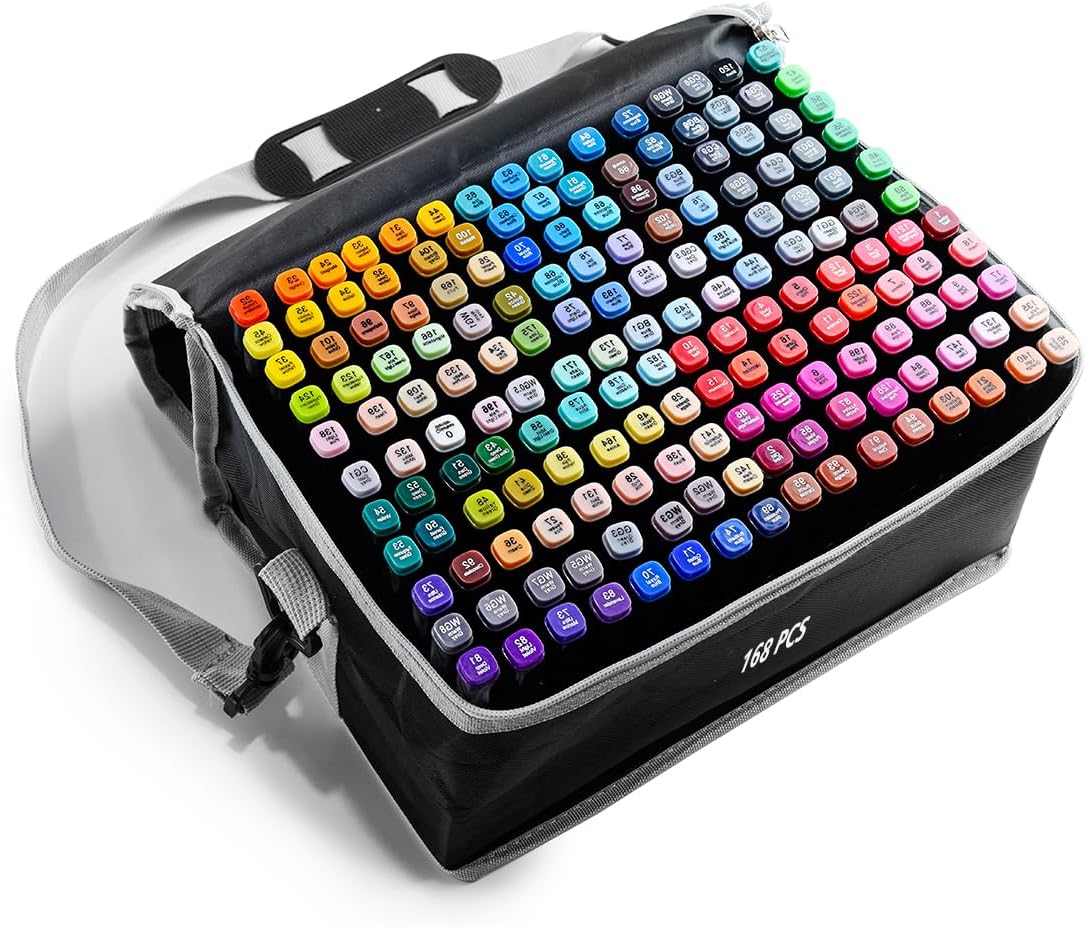
Our VerdictWhat makes a 168-color set ‘easy to use’? Never hunting for a shade. With the full spectrum organized in the included base — numbered caps, color chart, every gradient family complete — beginners spend their time drawing instead of wishing they had ‘that one blue.’ Rated 4.4 stars by 1,092 buyers, it’s the everything-at-your-fingertips option for the beginner who hates limitations more than they fear choices.
168 colorsOrganized baseNumbered system
What We Like
- Every shade you’ll need
- No more color-hunting
- Good for ambitious projects
Keep in Mind
- Overwhelming for some
- $42.99 investment
10
Chen Rui Alcohol Markers 60 Colors with APP (Brush & Chisel)
Best for Kids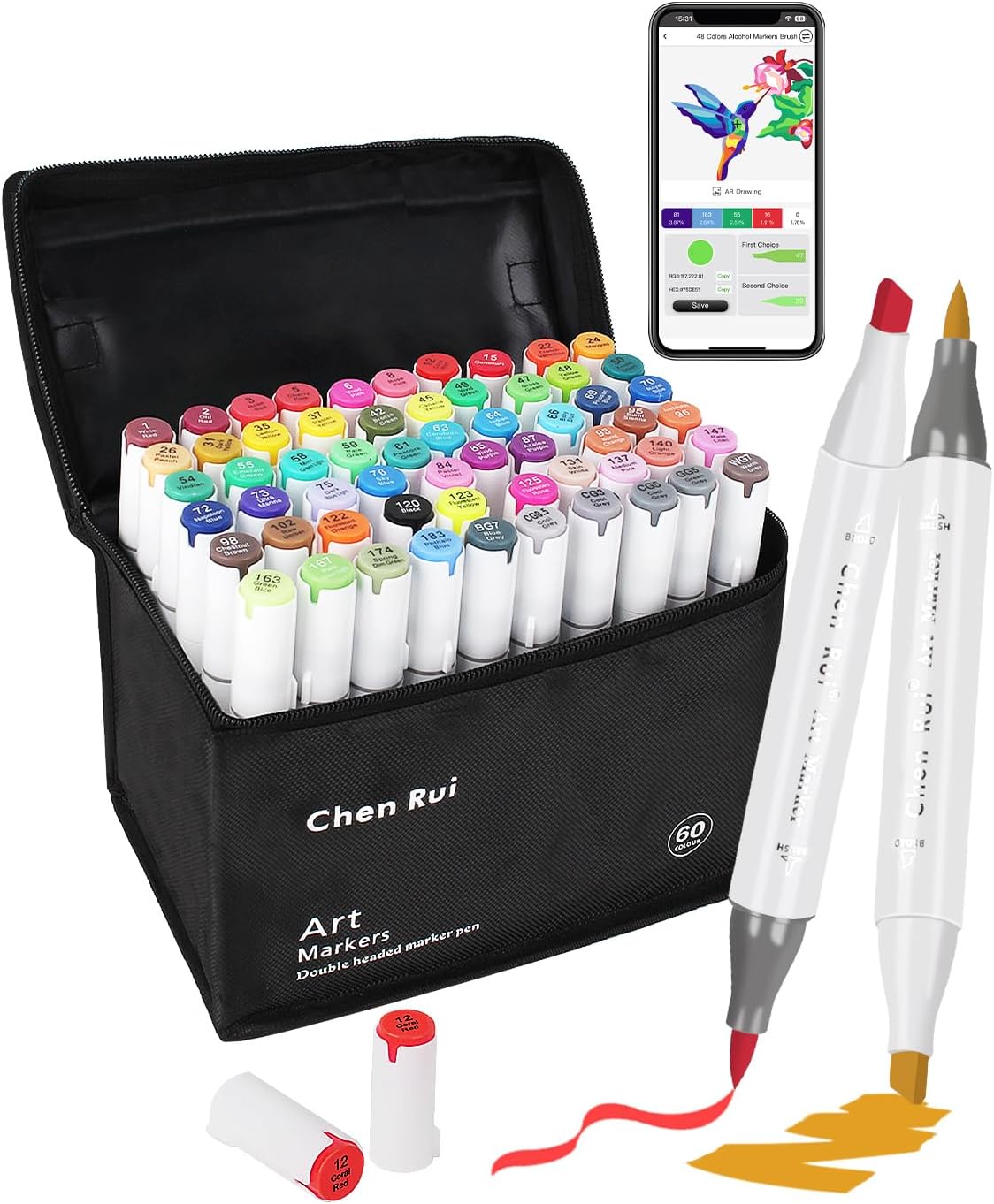
Our VerdictAn honest note first: alcohol markers are permanent and have fumes — they’re for teens (13+), not young children. With that said, this is the most teen-friendly pick here: 60 colors plus a companion app with drawing tutorials that actually teaches technique, rated 4.1 stars by 334 buyers. For the teenager obsessed with anime or illustration who wants guided learning alongside their markers, the app makes this the right starter set.
60 colorsTutorial appBrush & chisel
What We Like
- App teaches real techniques
- Good teen starter set
- Fair price
Keep in Mind
- For teens 13+, not young kids
- Permanent ink — supervise use
Pro Tips for Alcohol Markers
- Store them flat. Horizontal storage keeps both nibs inked; upright storage starves one end. This alone doubles marker life.
- Work light to dark. Dark alcohol ink stains light nibs permanently — always lay light colors first.
- Use the colorless blender. It lightens, blends, and fixes mistakes. Most beginners ignore it for months; don’t.
- Work fast in small areas. Alcohol ink dries in seconds — blend while wet, section by section, for seamless gradients.
- Cap immediately. Even a few minutes uncapped dries nibs. Make capping a reflex, not a chore.
- Test on scrap first. Alcohol ink looks darker wet than dry — always swatch new colors before committing.
2. Your First Week With Alcohol Markers: A Simple Practice Plan
New markers feel exciting for about ten minutes, then most beginners stall on the same question: what should I actually draw first? This seven-day plan answers that. Each day takes about 20 minutes, uses only the set you bought, and builds exactly one skill, so by day seven you have a finished piece instead of a pile of half-started pages.
1
Day 1: Make a swatch chart. Color one small square per marker on marker paper and write its number underneath. This is the single most useful page you will make: from now on you pick colors from the chart instead of guessing from the cap, and you learn which shades you actually own.
2
Day 2: Blend two colors. Lay down a light color, then add a darker color next to it while the first is still wet, and drag the colorless blender through the join. Practice on strips first, not on a drawing you care about: smooth gradients come from working small areas while the ink is wet, exactly as the tips section above explains.
3
Day 3: Color one simple object. An apple, a mug, or a leaf is perfect. Use three markers only: a light, a mid-tone, and a dark shade of the same color. Limiting yourself to three markers teaches shading faster than owning 168 colors ever will.
4
Day 4: Try a small character face. Skin tones are where beginners notice gaps in their set, because faces need several close shades, not one flat color. Layer light to dark, blend each edge while wet, and keep your swatch chart open so you can repeat a combination that works.
5
Day 5: Fix mistakes on purpose. Color past a line, then try to rescue it: lift color with the blender, layer a darker shade over the slip, or turn the mistake into shading. Learning to recover is what separates a relaxed marker artist from one who restarts every page.
6
Day 6: Color one of your own line drawings. Sketch something simple in pencil or fineliner first, then color it with markers. This is the moment markers stop feeling like a coloring tool and start feeling like your medium, because the drawing underneath is yours.
7
Day 7: Finish one small piece and store everything flat. Pick your best day-6 coloring, finish it properly, and photograph it next to your swatch chart so you can see a week’s progress. Then cap every marker and lay the set flat: good storage habits start in week one, not after your first dried nib.
Tip: Keep a scrap sheet beside every drawing and test each new color on it first. Alcohol ink looks darker when wet than when dry, so the scrap test stops you from committing to a shade that dries much stronger than you expected.
Please note: Alcohol markers are permanent and give off fumes, so practice in a ventilated room, cover your work surface, and keep them away from young children. If the markers are for a younger child, washable markers for kids are the safer choice, and if you want color without the permanence worry at all, our best acrylic paint pens for beginners guide covers a friendlier alternative medium.
Frequently Asked Questions
Are alcohol markers good for beginners?
Yes — they’re actually more beginner-friendly than they look. The ink blends smoothly with minimal technique, so even first attempts look polished. Start with a 40–60 color set (like the Ohuhu or YASNAY 48s on this list) rather than 100+; fewer choices means faster learning. The main beginner skills are learning to work quickly (the ink dries fast) and using the colorless blender.
What paper should you use with alcohol markers?
This matters enormously: regular paper lets alcohol ink bleed straight through and feather at the edges. Use dedicated marker paper or bleed-proof sketchbooks — they’re coated to keep ink on the surface, which also makes colors more vibrant and blending easier. It’s the single biggest quality upgrade after the markers themselves, and it prevents ruining the page underneath.
Do alcohol markers dry out fast?
They last well if stored properly: always keep them horizontal (never upright), cap both ends immediately after use, and store away from heat. A well-kept set lasts 1–2 years of regular use. Refillable sets (like the Ohuhu refillable pick on this list) extend this indefinitely — you replace ink, not markers.
What’s the difference between brush, chisel, and fine nibs?
Brush nibs flex like a paintbrush — best for blending, shading, and expressive strokes; most forgiving for beginners. Chisel nibs have a broad edge — best for filling large areas quickly. Fine nibs are rigid and precise — best for details and outlines. Most beginner sets pair two of the three; brush + chisel is the most versatile combo to start with.
Are alcohol markers toxic? Can kids use them?
Alcohol markers contain solvents with noticeable fumes — use them in ventilated areas, and they’re not recommended for young children. Teens (13+) can use them with supervision and ventilation. The ink is permanent and will stain clothes and furniture, so cover work surfaces. For younger kids, stick with washable water-based markers instead.
Ohuhu vs. Copic — should beginners just buy Copic?
No. Copic markers are the professional gold standard at $6–8 per marker — a 36-color set costs over $200. Beginners can’t yet use the quality difference, and you’ll burn through expensive markers learning basics. Start with Ohuhu or similar ($15–30 for 48–80 colors); upgrade to Copic only when your skills demand it, typically after a year or more of regular practice.
Once you have your markers picked out, the paper matters just as much as the pens — thin sketch paper bleeds straight through with alcohol ink. Our guide to the best sketchbooks for Copic markers compares 10 bleedproof options, from a $6.99 practice book to a premium blending pad, so your colors stay on the page you meant them for.
Final Verdict
For most beginners, the Ohuhu 48-color Fine & Chisel set is the right buy: the category’s default starter with 5,600+ reviews at $21.99. Budget-conscious? The YASNAY 48 at $12.99 gets you started for less. Thinking long-term? The refillable Ohuhu 48 (4.8 stars) is the investment that pays for itself.
Prices were observed on Amazon.com in October 2026 and may vary — check the current price here.
Flat, even colour is also what makes optical illusion drawing ideas work: the pinwheel, the primary-colour tunnel, and the colour grid all need single unmixed patches, so markers that lay down solid colour without streaking are an advantage there.
Trying a new medium is also one of the fastest ways to break a creative stall: if your drawings have felt stuck lately, that flat feeling is often art block rather than a lack of talent, and our guide to what causes art block explains how to tell it from burnout and the low-stakes fixes that actually work.
New to drawing altogether? Before worrying about markers, it helps to know how long it takes to learn to draw — counted in hours, not months — so you can set a practice routine that actually fits your week.