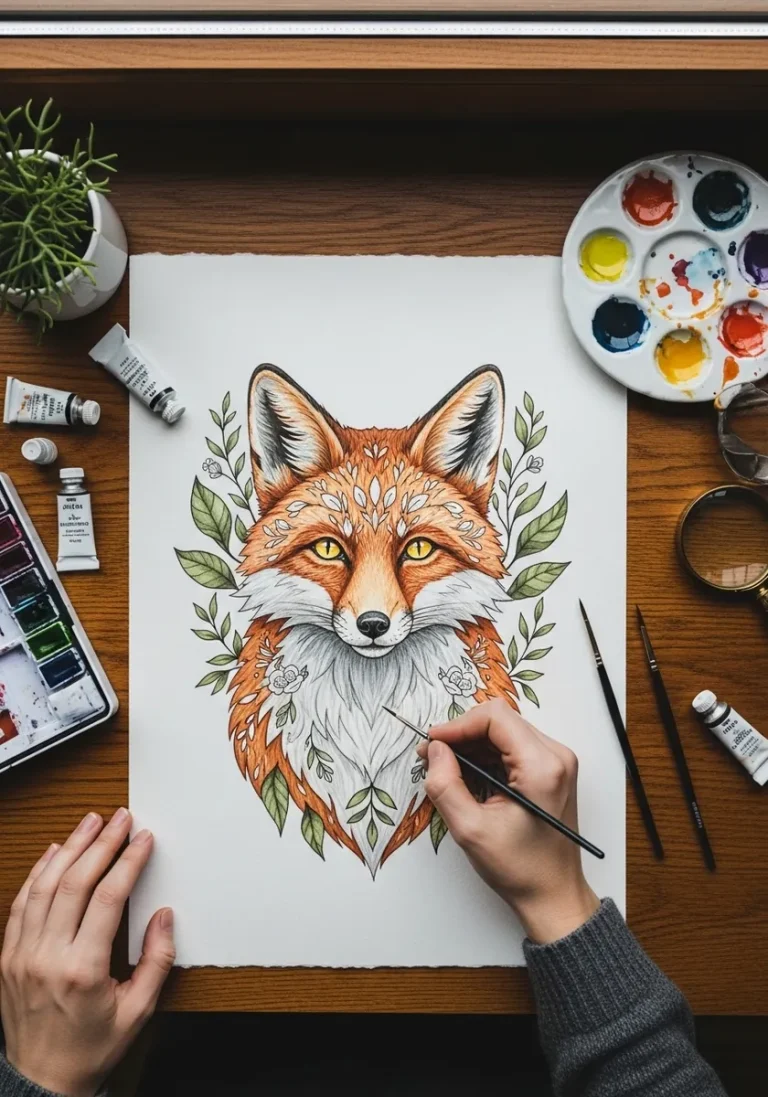
Draw the eyes, ears and feet at nearly adult size on a much smaller body. A mammal's eyes barely grow after birth, so a young animal is carrying full-size eyes in a half-size head, and that mismatch is what we recognize as babyish.
Key takeaways
- ["Eyes are almost adult sized at birth, so draw them large on a small head", "Feet and ears look oversized on a young animal, and exaggerating that helps", "Keep the muzzle short, because it lengthens as the animal grows", "Place the baby low in the frame with something above it, so it reads as small", "Soften every outline, since young coats are downy rather than sleek"]
There is a specific reason baby animals look the way they do, and it is measurable. A mammal’s eyes are close to full adult size at birth and barely grow afterwards. A fox cub is carrying an adult fox’s eyes in a much smaller head, which is why the eyes look enormous.
The same applies further down. Feet and ears run ahead of the rest of the body, so a lamb, a fawn or a puppy always looks slightly too big at the extremities. Draw them oversized deliberately and the animal reads as young without any other change.
One more thing is worth doing on the page rather than in the animal. Place the baby low in the frame with flowers, grasses or a branch above it. Something taller nearby is what tells the eye how small the creature actually is; a baby alone in the middle of a page reads as adult.
The thirty-nine ideas below run through lambs, ducklings, fox cubs, seal pups, hedgehogs and more, in pencil, ink, watercolor, pastel and gouache. For simpler versions see cute animal drawing ideas for kids, and for painted big cats, watercolor lion drawing ideas.
Compiled by the GS Art Zone editorial team. Last updated August 2026. Each idea is paired with the specific step that produces the effect, so you can go from the reference straight to paper.
What You Need Before You Start
- A soft 4B for the deep eye darks, which carry the whole expression
- Two greens rather than one, because spring foliage is never a single color
- A rigger or liner brush for downy fur and single blades of grass
- A kneaded eraser for pulling soft highlights out of dense fur
- A real reference photo, since invented babies end up looking like small adults
1. Chick Among Daisies
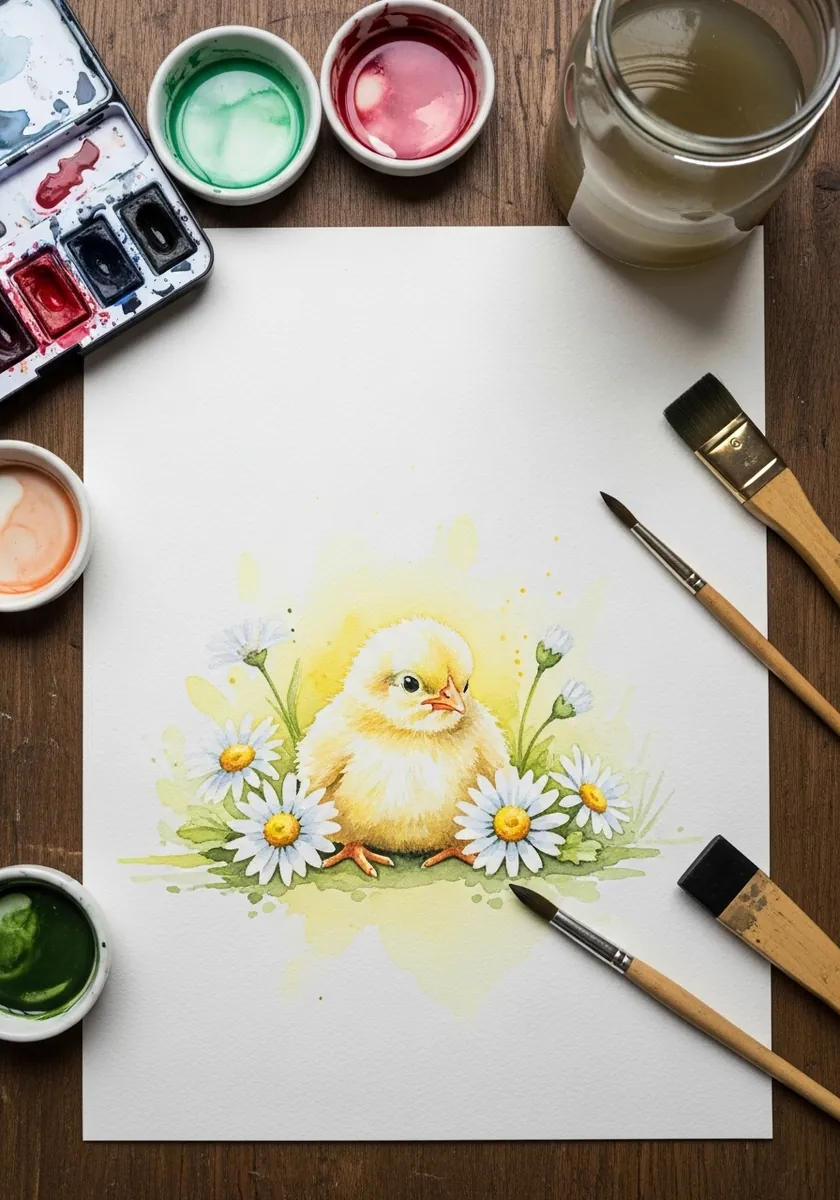
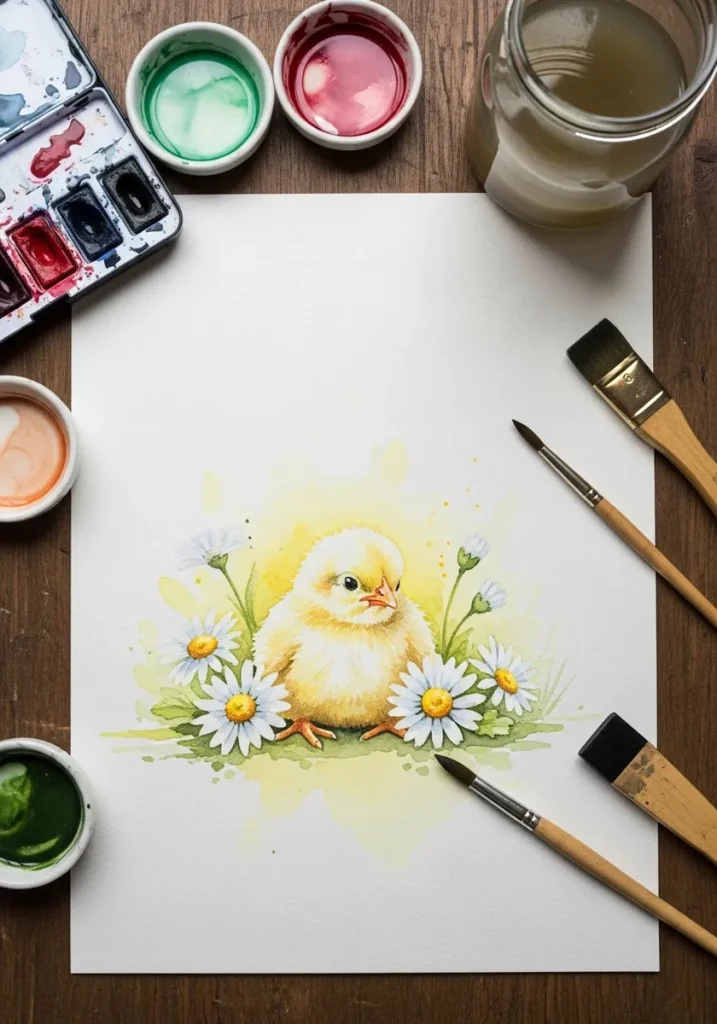
A yellow subject on white paper needs something to push against. Wash a soft warm halo around the chick before painting it, keep the daisy petals as reserved white paper, and let the yellow stay pale so the flowers still read as the lightest thing.
2. Loose Watercolor Lamb
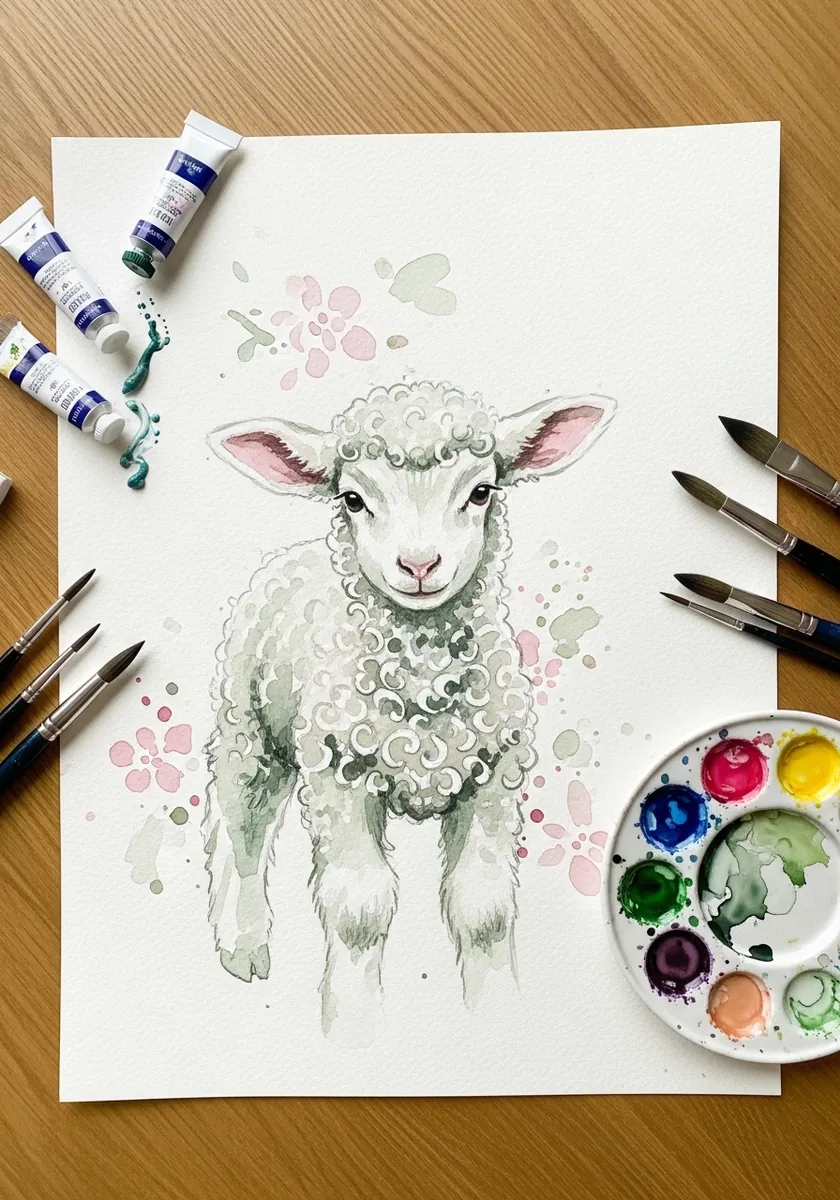
Fleece is a texture that must not be drawn. Paint the whole body as one soft gray mass, let the edges bleed outward into the damp paper, and add only three or four curled marks near the chest to suggest wool.
3. Graphite Rabbit With Flowers
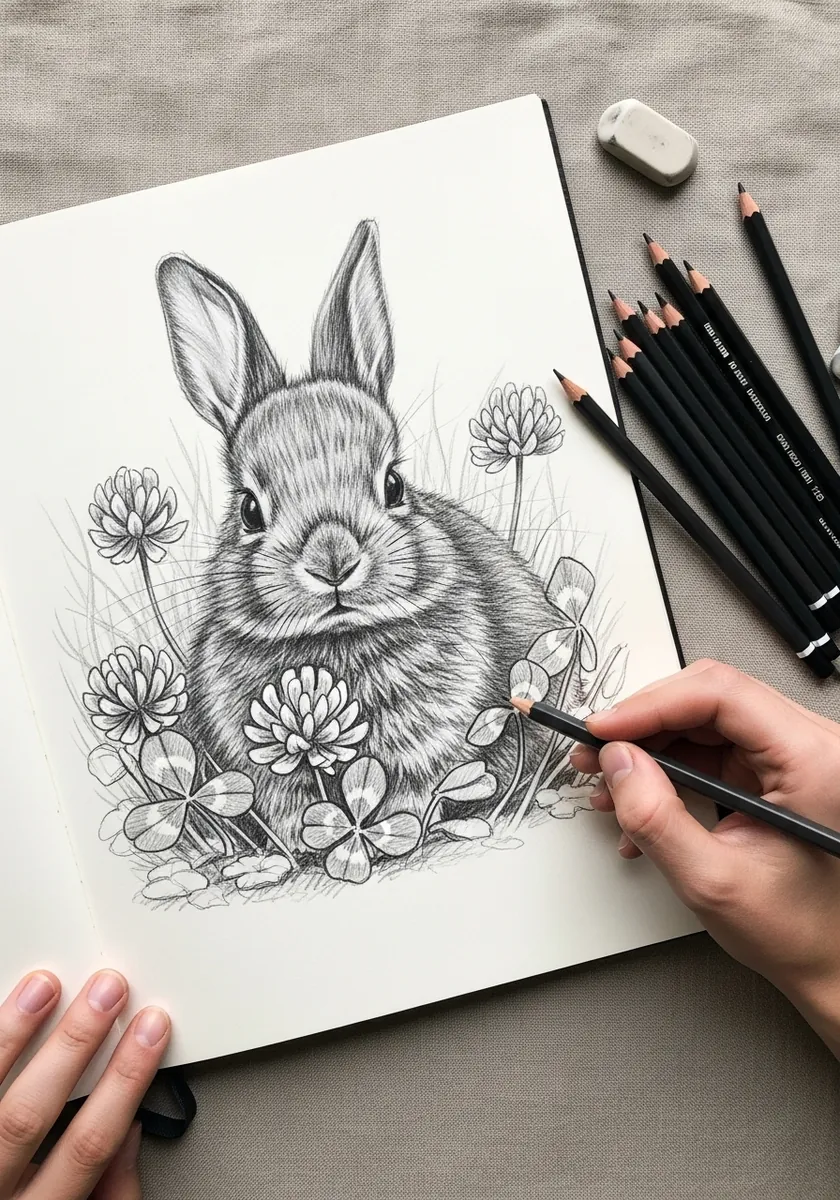
The ears carry a young rabbit. Make them longer and wider than feels right, shade the inside of the near ear darkest so it turns toward you, and keep the outer edge fringed with fine hairs. The body stays a soft rounded lump beneath.
4. Fawn in the Wildflowers
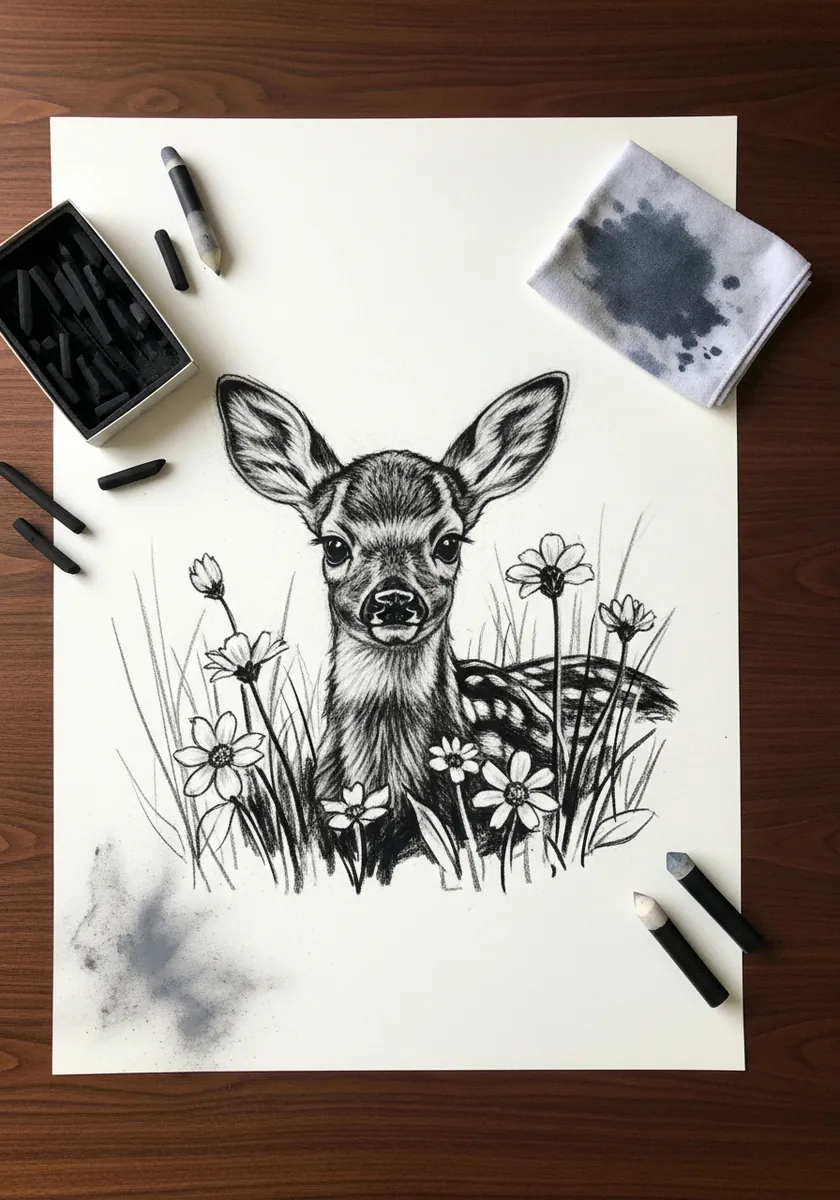
Fawn spots are not scattered evenly. Run them in loose rows along the back and let them thin out over the flanks, keep them oval rather than round, and make them follow the curve of the body as it turns away.
5. Hedgehog With Tulips
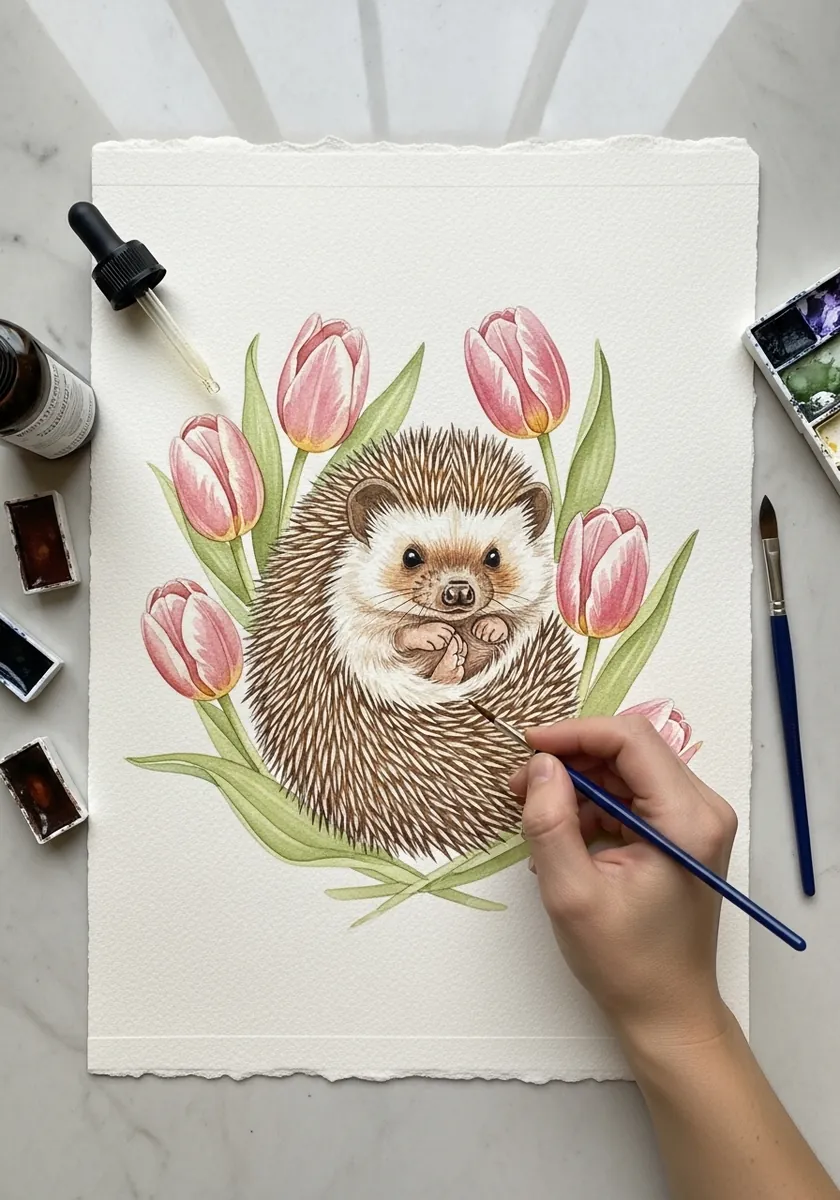
Spines are drawn outward from the body, never inward. Flick every stroke away from the surface so it tapers naturally, layer two browns for depth, and leave the face completely smooth by contrast. The tulips frame the whole shape. Keep the tulip stems crossing behind the body so the animal sits among them.
6. Two Ducklings on Water
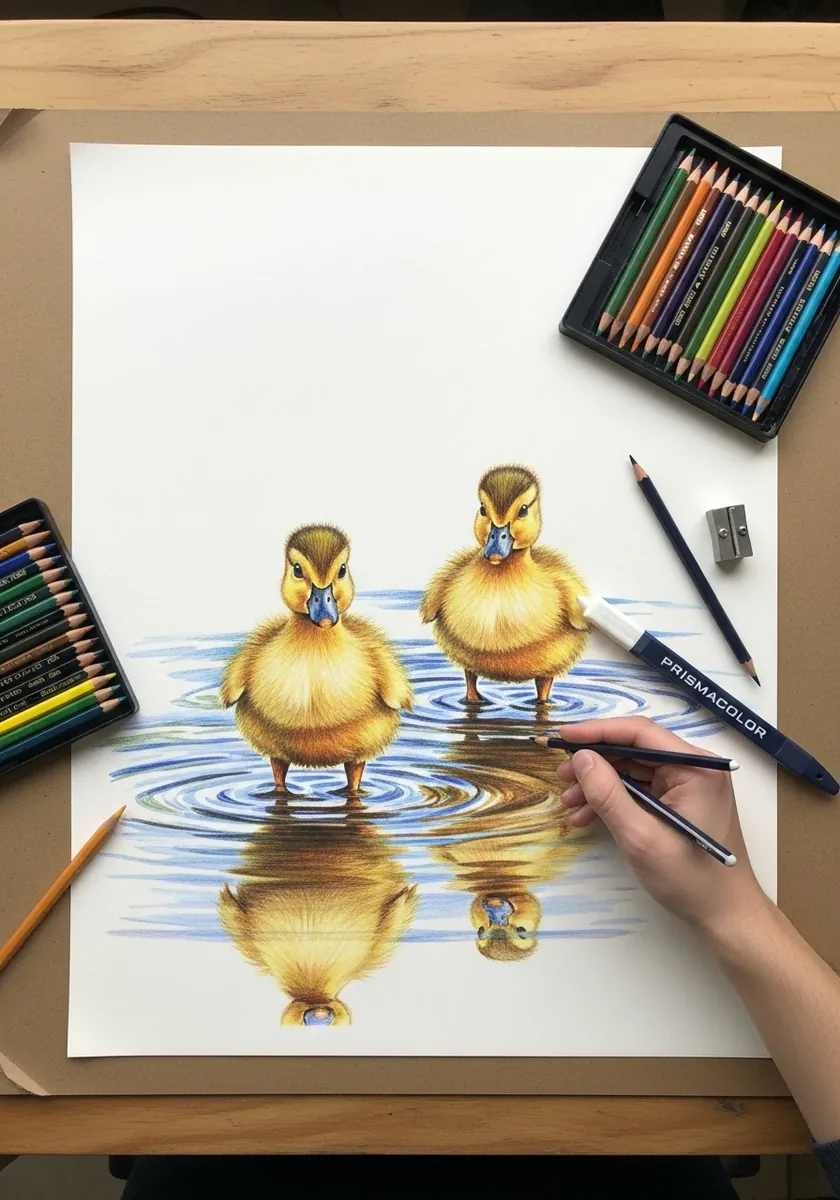
A reflection is not a copy. Keep it directly below each duckling, break it into short horizontal marks, and make it a shade darker and much less detailed than the bird above it. Ripples spread outward in flattened ellipses. Leave a strip of untouched paper along the top of each bird for the light.
7. Fox Cub in Blossom
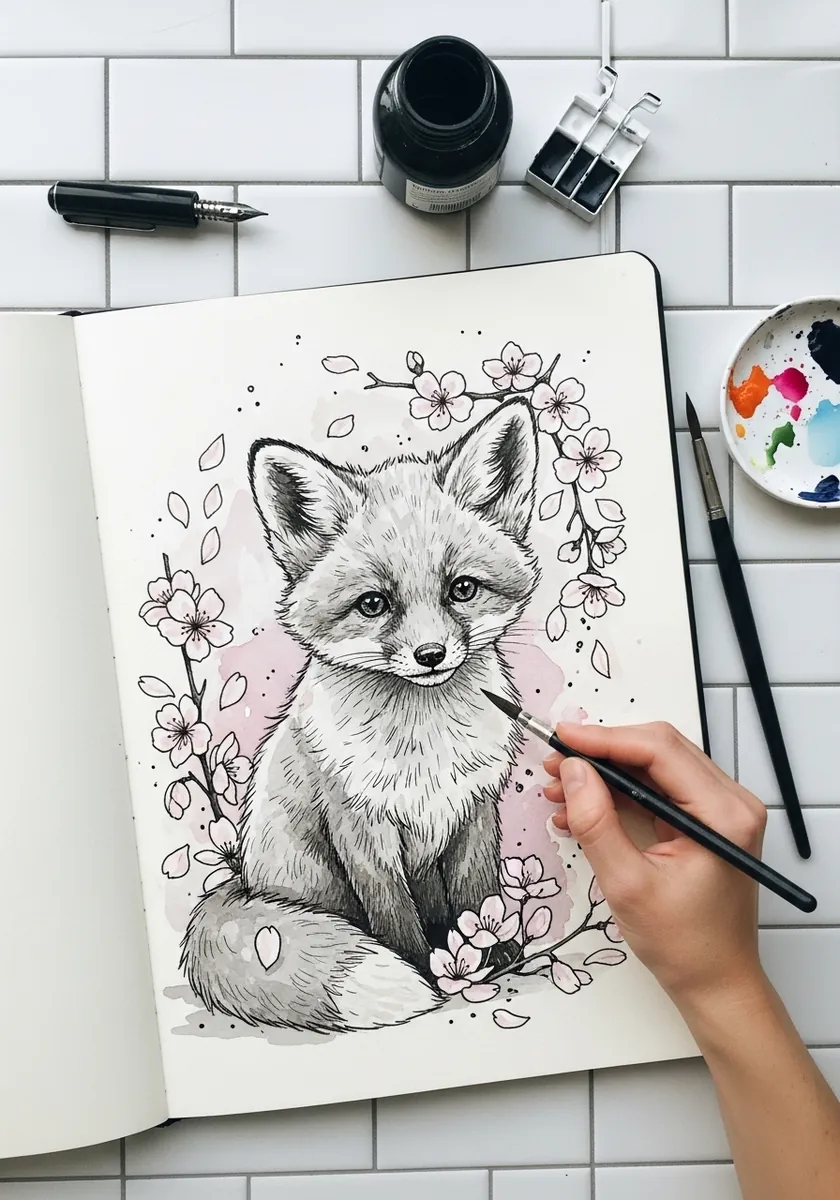
Cub proportions differ from an adult fox in three places. Shorten the muzzle, widen the skull between the ears, and thicken the legs; keep the ears full adult size and the whole animal reads as young. Let a few petals fall in front of the muzzle to push the head back in space.
8. Elephant Calf in a Meadow
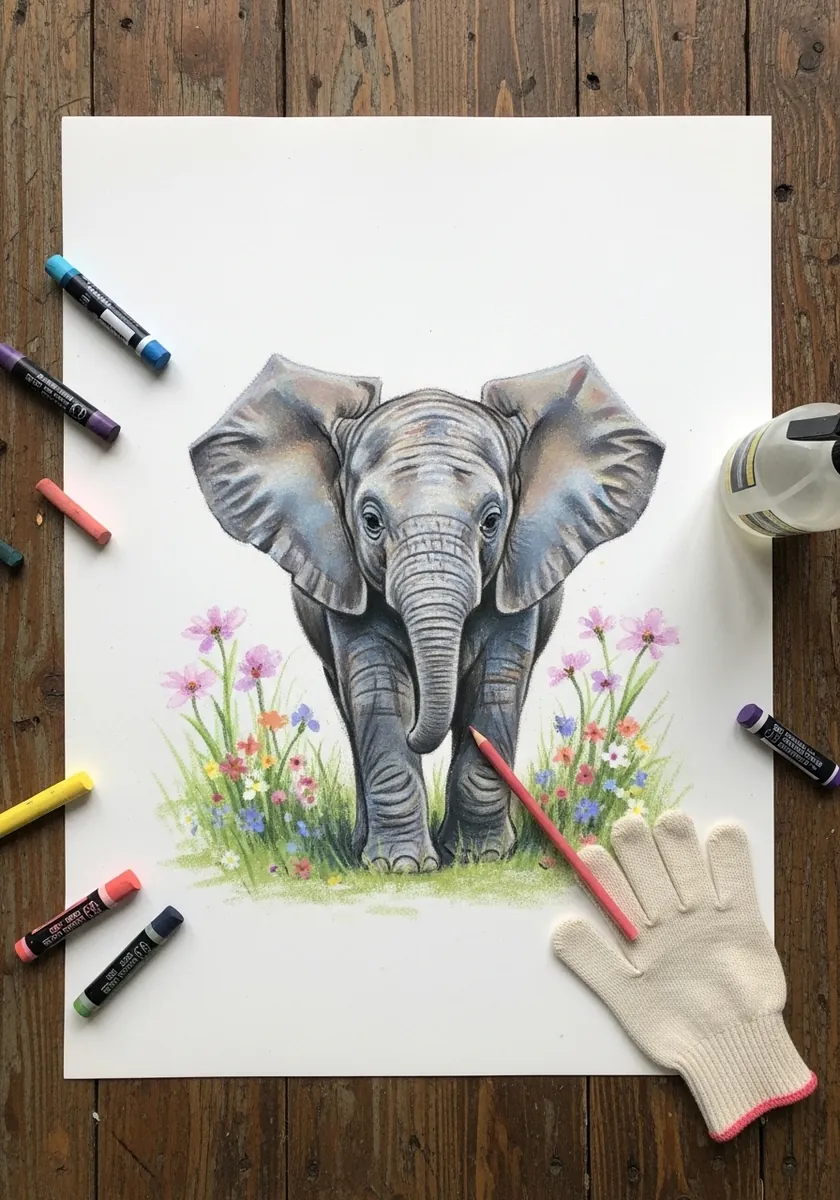
A calf is mostly ears and wrinkles. Draw both ears far wider than the head, keep the trunk short and slightly curled at the tip, and run the skin creases across the form rather than along it. Short thick legs finish the impression.
9. Sumi-e Panda Cub
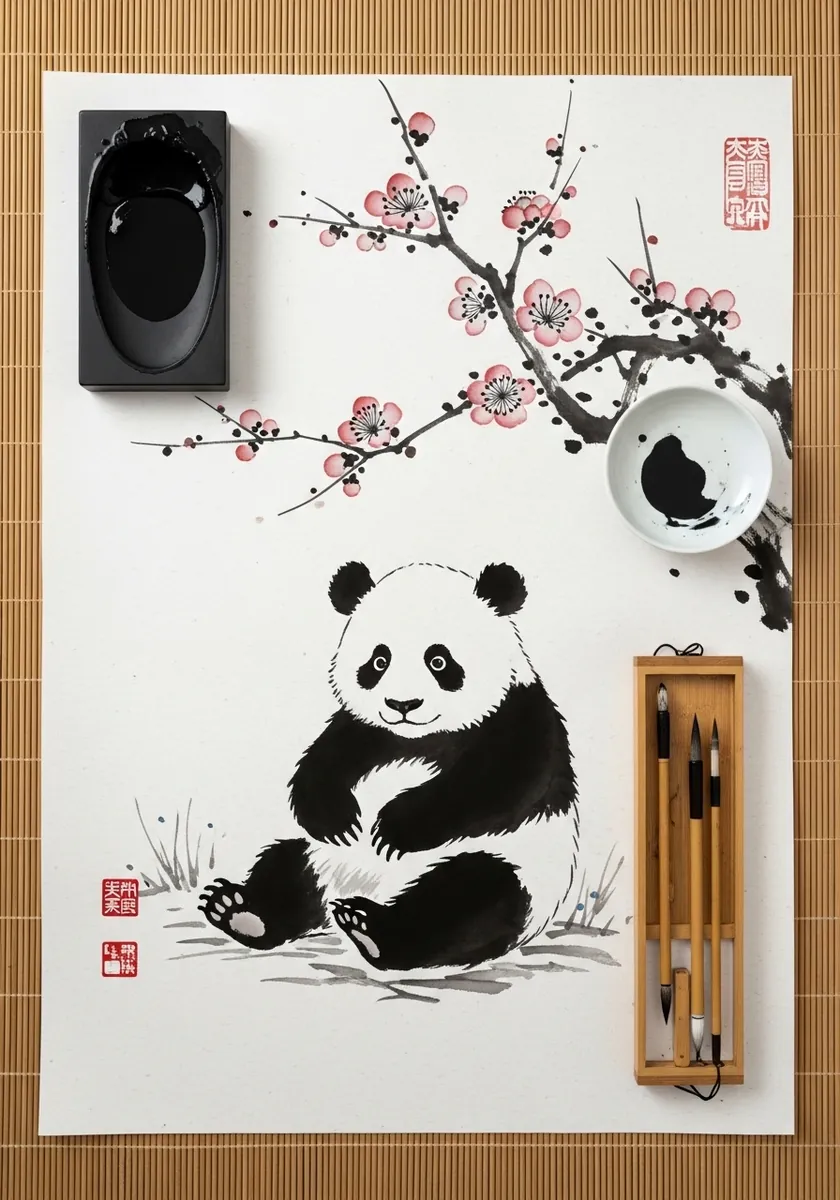
Brush work rewards restraint. Load the brush once for each black patch and place it in a single press without going back, keep the white body as untouched paper, and let the blossom branch above supply the only other marks.
10. Owlet on a Branch
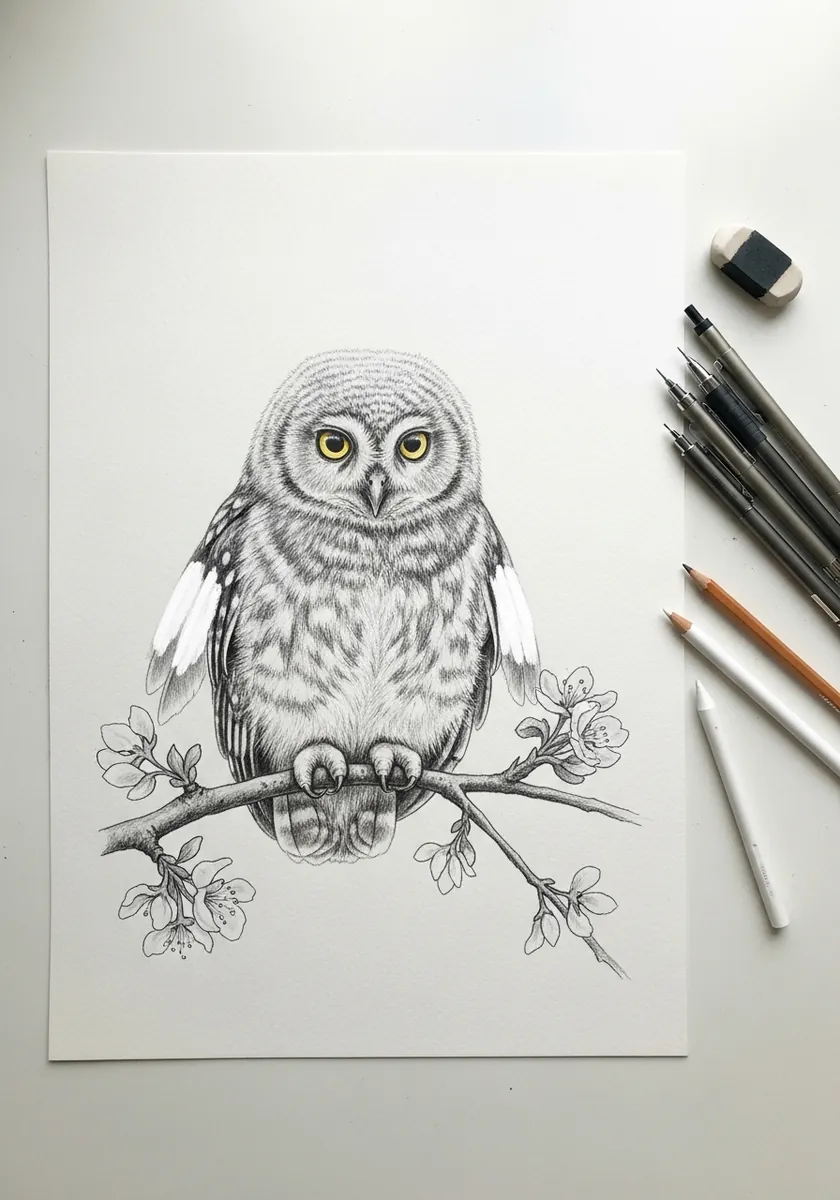
Owlets are round where an adult owl is upright. Keep the body almost spherical, set the eyes wide and enormous, and let the feet grip the branch as two oversized forks. Down at the edges keeps the outline soft. Keep the branch thin so the bird looks heavy for its size.
11. Rabbit in a Flower Pot
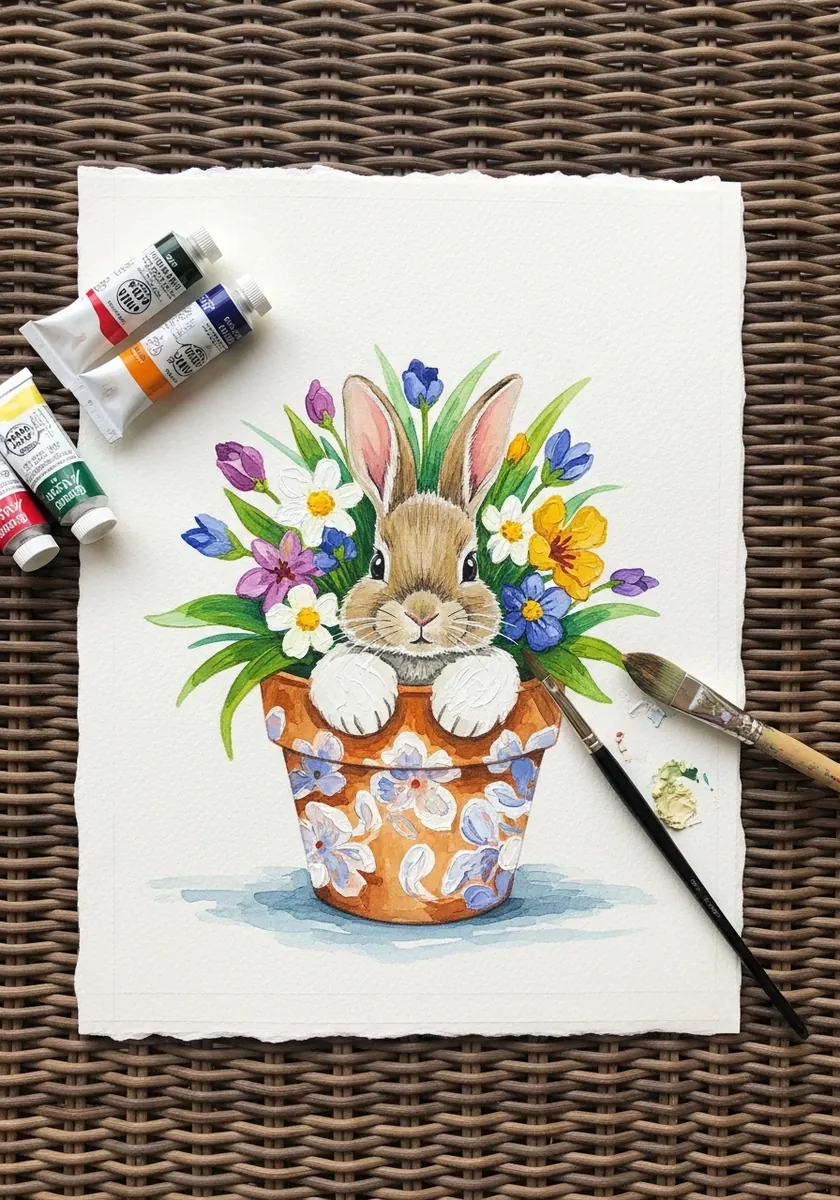
A container fixes the scale immediately. Draw the pot at a believable size first, sit the rabbit inside it so the rim crosses the body, and let the flowers rise behind. The overlap is what makes the animal small. Tip the pot very slightly off vertical so the arrangement does not look posed.
12. Koala Joey in Line
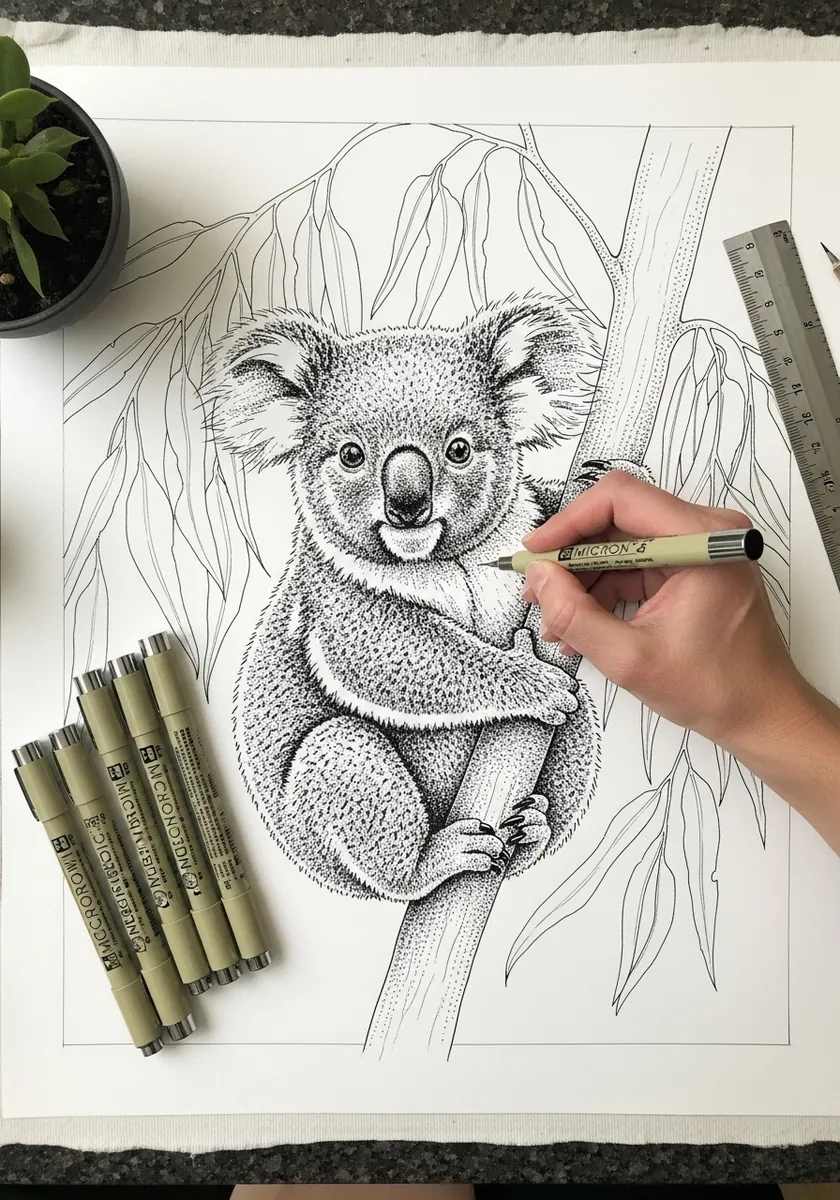
Pure line work has to carry the texture. Break the outline of the fur into short irregular segments, keep the nose and the inner ears as solid black shapes, and leave the body almost empty. Density of line does the shading.
13. Goslings on the Water
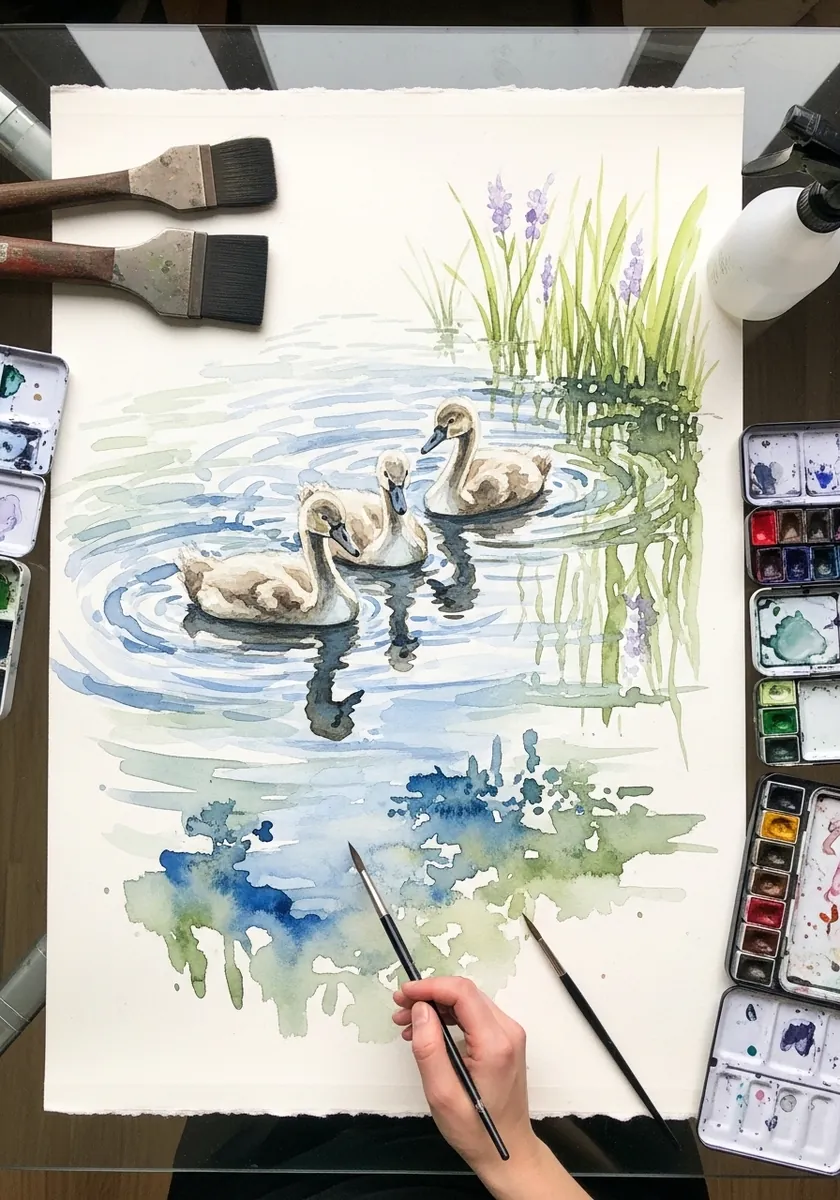
A line of small birds needs to recede. Make each gosling slightly smaller and paler than the one in front, keep them on one gently curving path rather than a straight line, and let the reeds cross in front of the furthest one.
14. Giraffe Calf Sketch
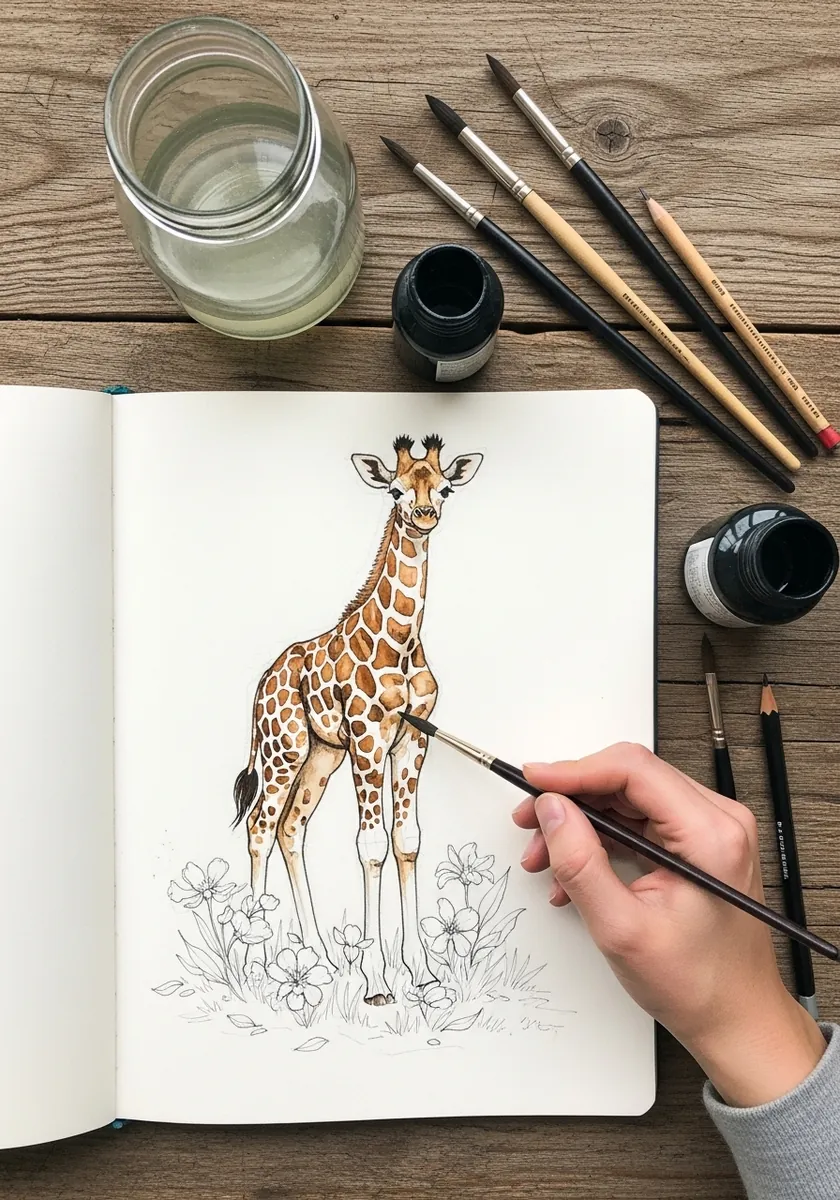
A calf’s legs are almost adult length at birth, which is why they look ungainly. Keep them long and thin, shorten the neck compared to an adult, and make the patches larger near the body and smaller toward the face.
15. Hedgehog in a Flower Ring
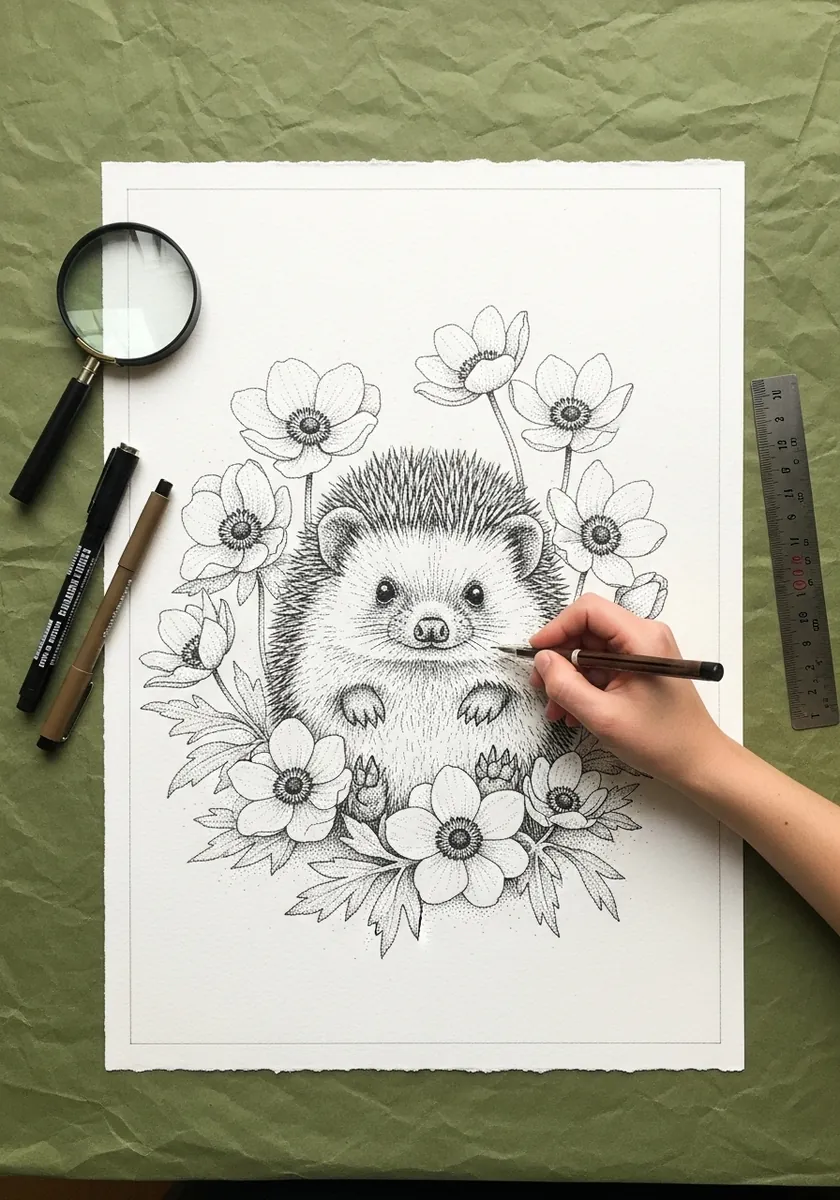
A circular frame changes how the subject is placed. Center the hedgehog exactly, keep the flower ring an even width all the way round, and let two or three blooms overlap into the middle so the ring does not feel like a stencil.
16. Tiger Cub With Butterflies
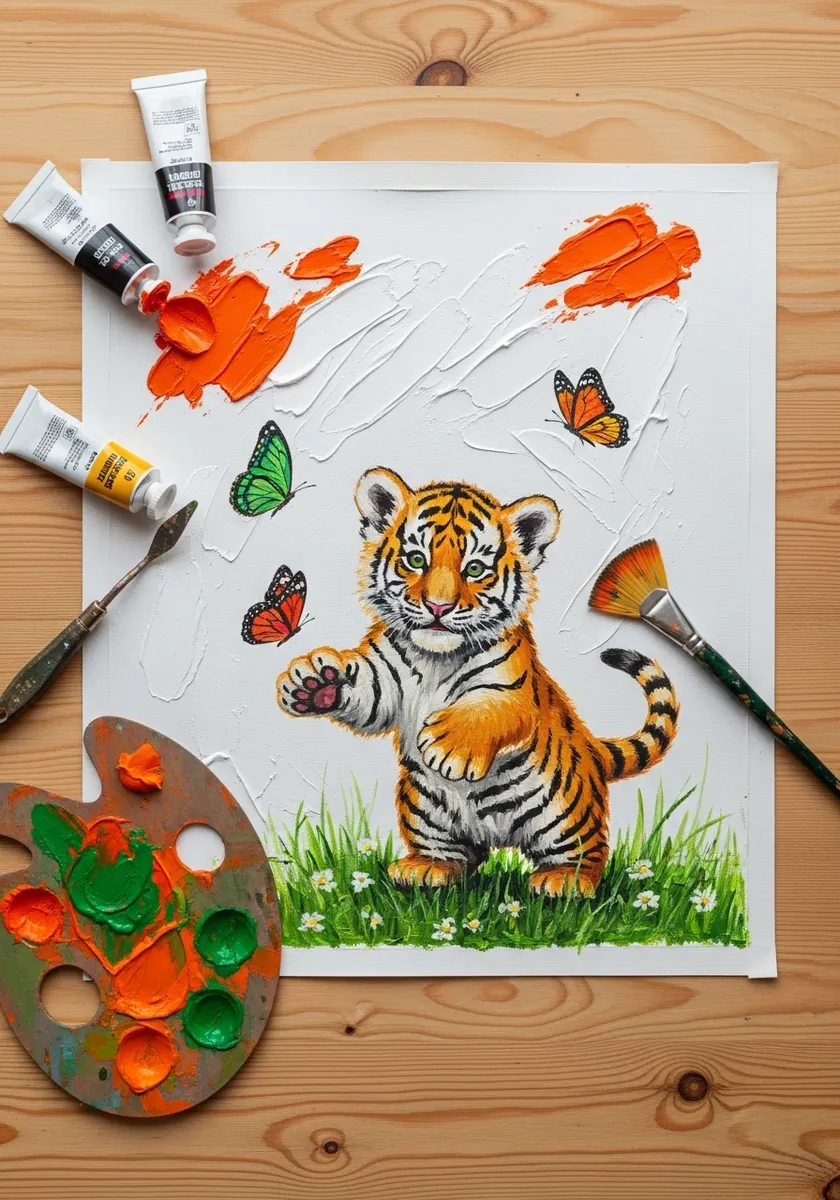
Stripes wrap around a body rather than lying flat. Curve each one over the ribs and let it break where the leg meets the shoulder, make them irregular in width, and never draw two stripes exactly parallel. Keep the butterflies small, since large ones would compete with the cub.
17. Monkey on a Blossom Branch
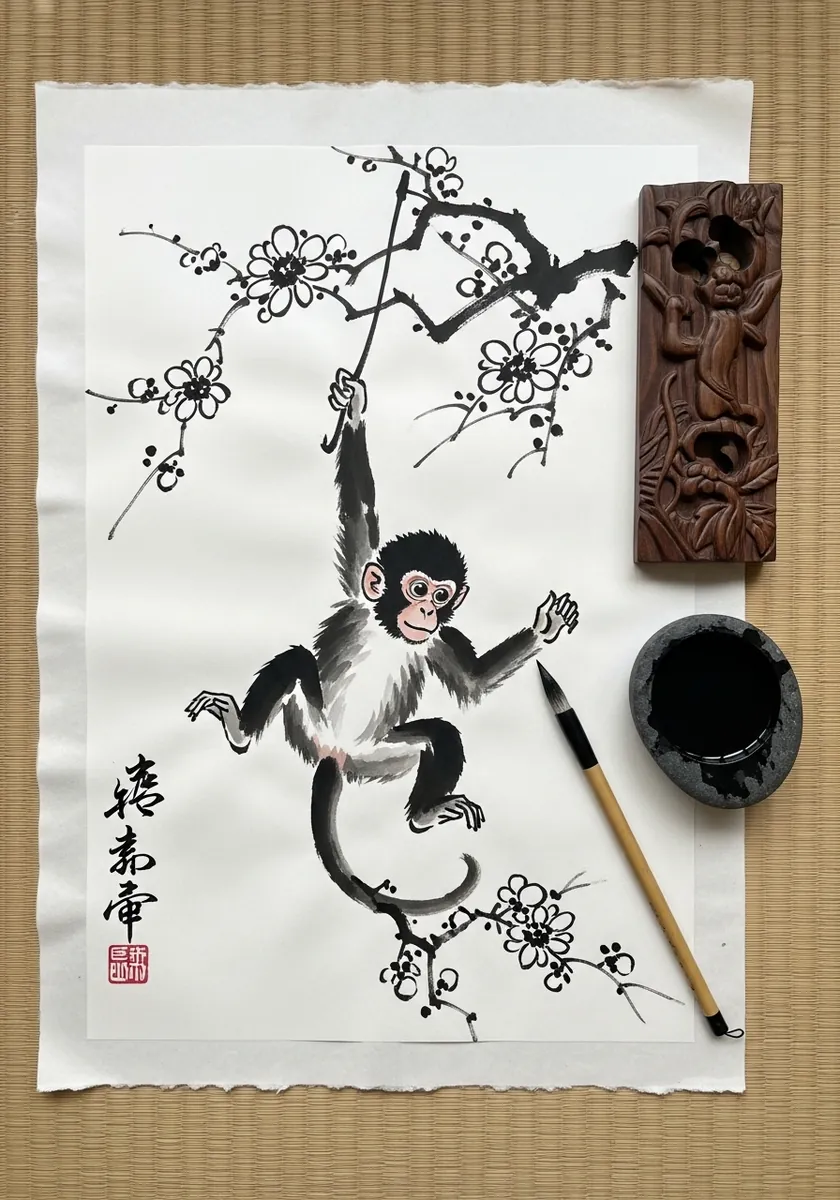
A hanging pose needs the weight to read. Let the arm holding the branch stretch fully, drop the body below it with a visible bend at the waist, and curl the tail into a loose spiral. Gravity does the rest.
18. Lamb and Duckling Together
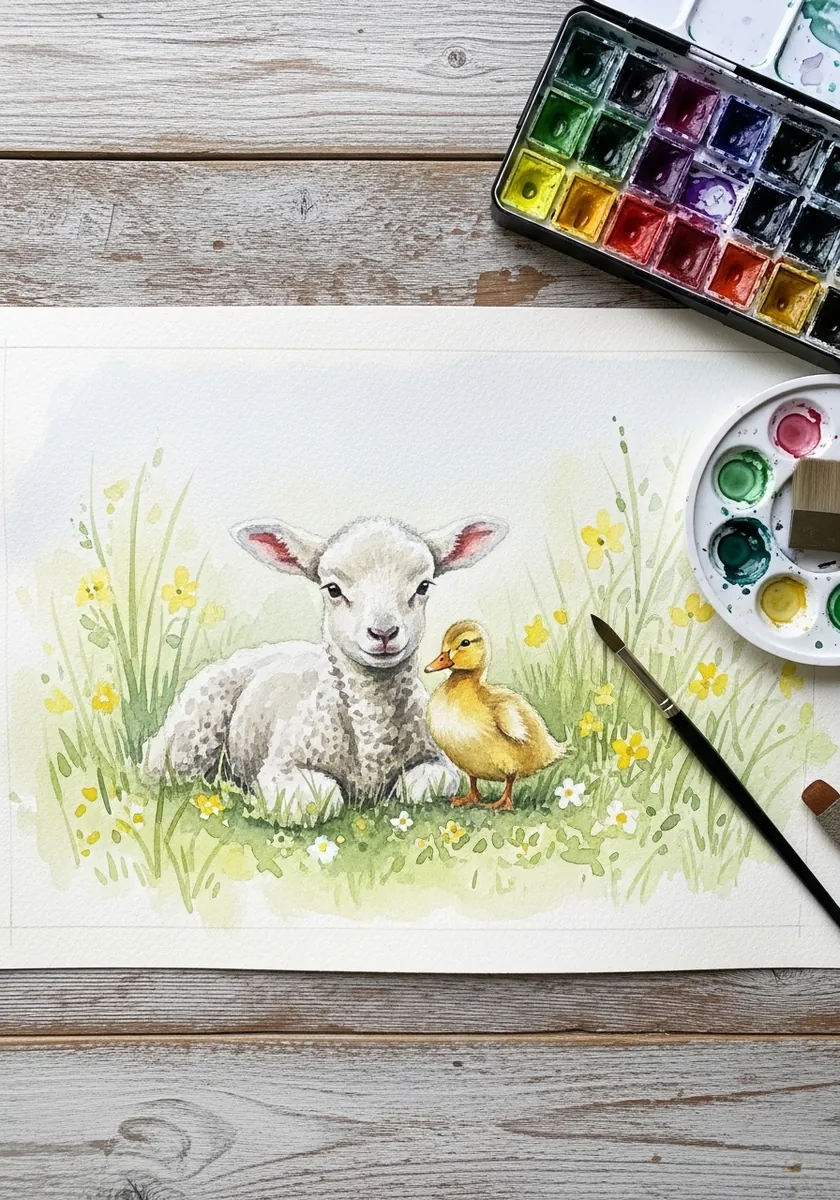
Two animals together need a size relationship the viewer already knows. Keep the duckling small enough to sit comfortably against the lamb’s chest, put both on the same ground line, and let the lamb’s fleece overlap the duckling slightly. Keep the meadow behind them pale so both animals stay the darkest shapes.
19. Lion Cubs in the Poppies
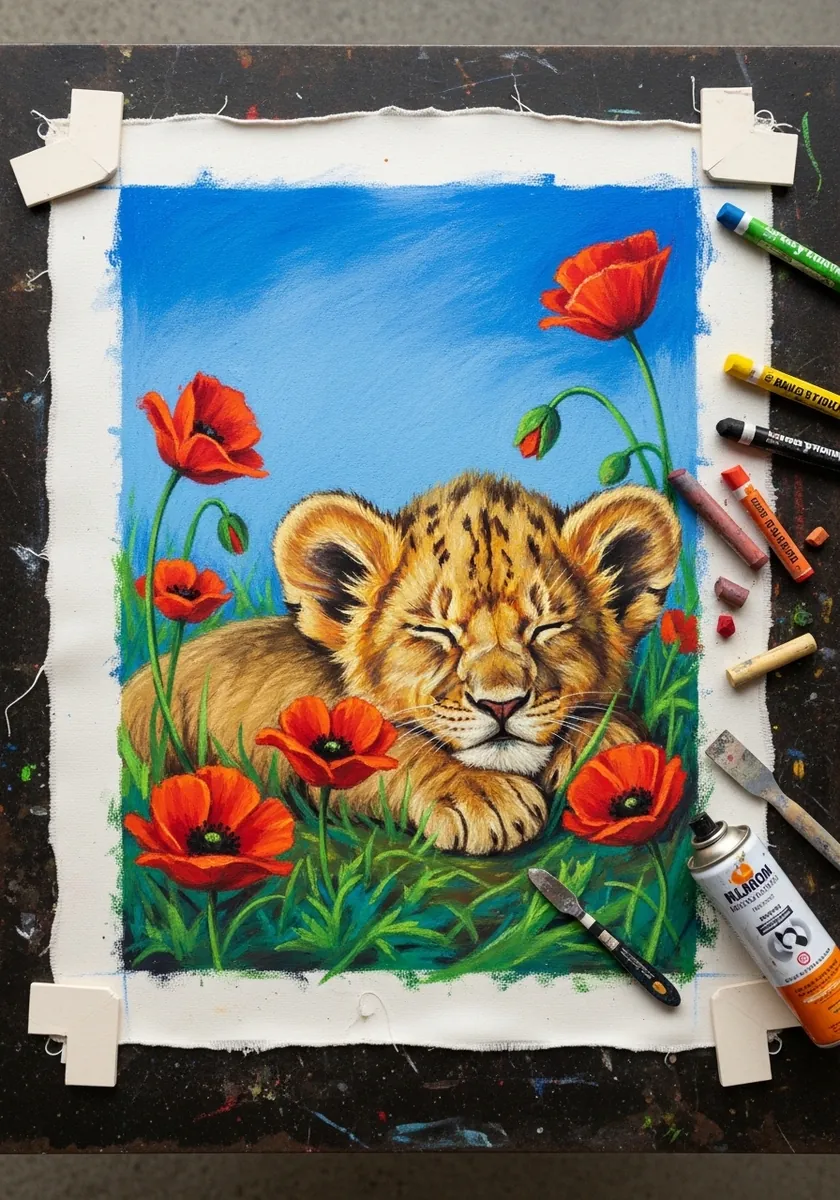
Sleeping animals lose all their edges. Curl both cubs into each other so the two bodies read as one soft mass, keep every outline blurred, and let the poppies be the only sharp shapes in the picture. Scatter a few petals across the fur to lock the animals into the setting.
20. Squirrel With a Leaf
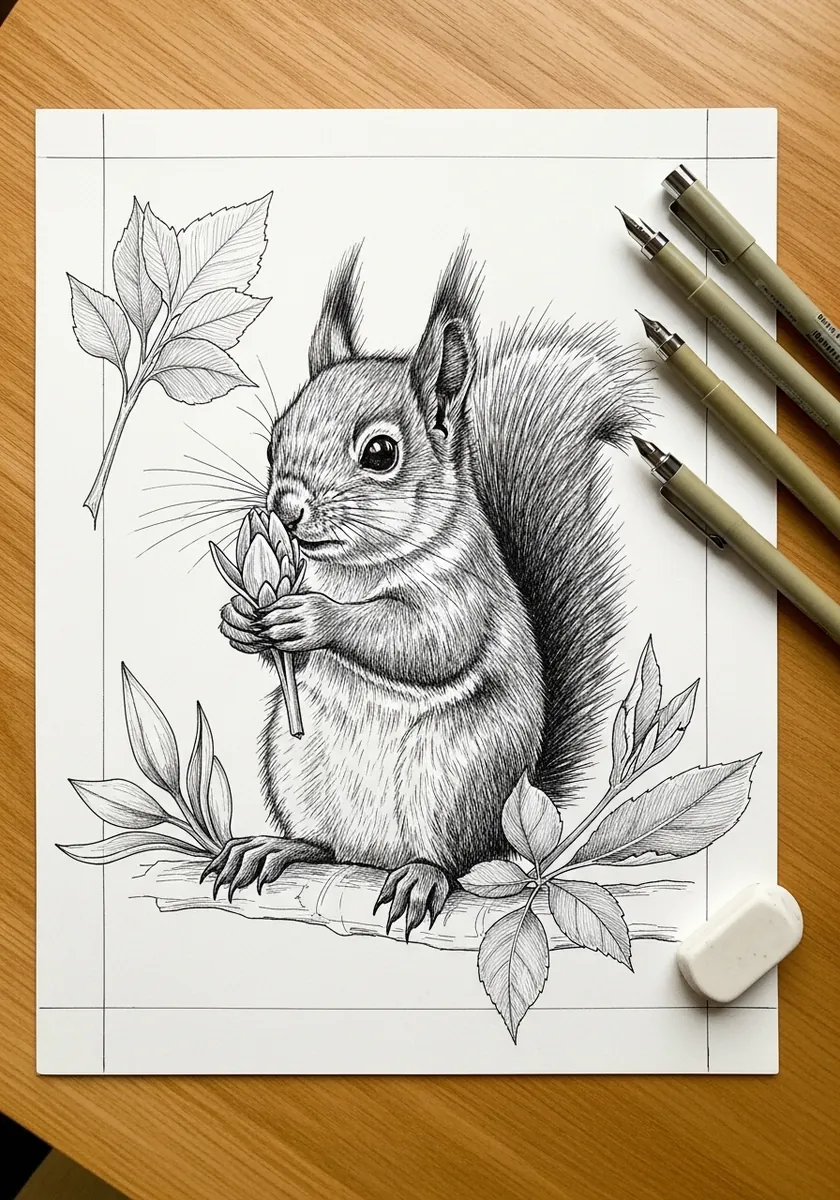
Hands are what make a squirrel charming. Draw the front paws as small fingered hands gripping the leaf, hold them up near the chest, and keep the tail as a broad soft plume arching behind the whole body. Keep the leaf itself veined and crisp, which sets off the softness of the fur.
21. Bear Cub by a Stream
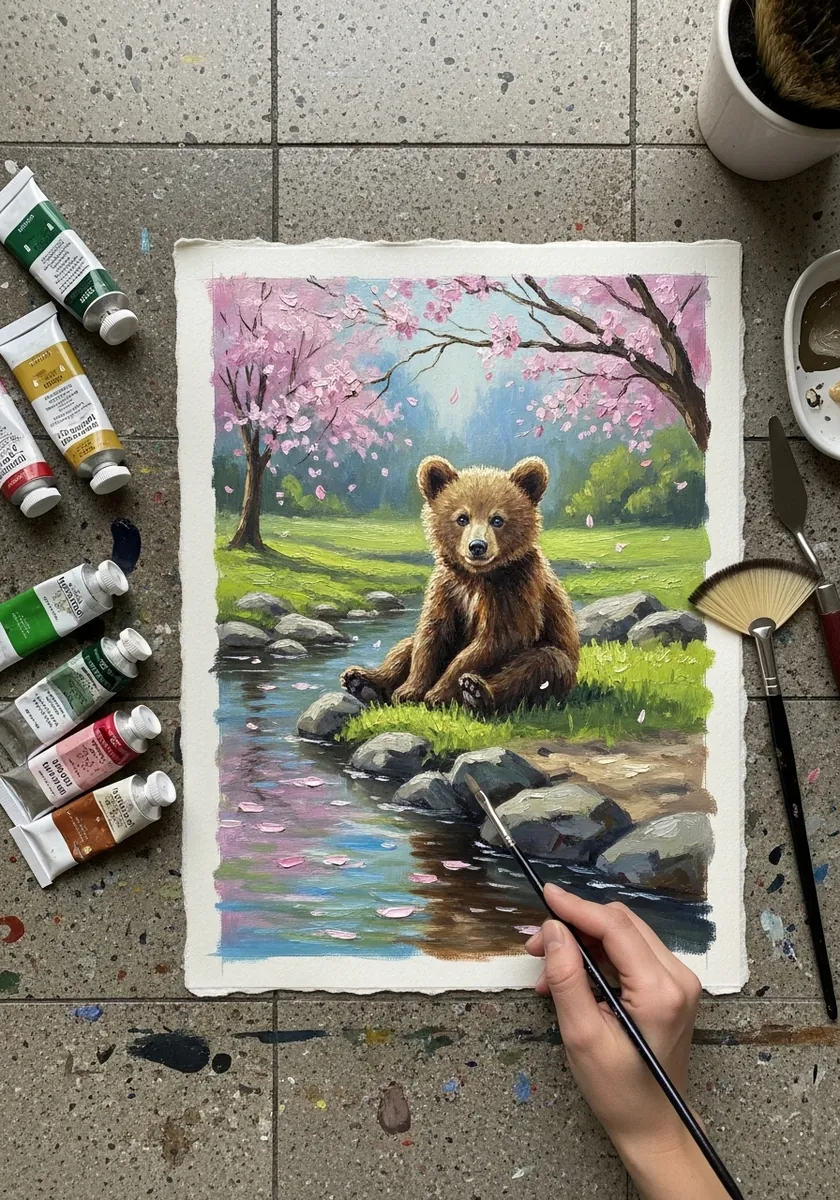
Water gives you a reason for a light passage. Keep the stream pale and horizontal, sit the cub above it on the bank, and let a broken reflection sit directly beneath. The blossom overhead frames the top of the picture.
22. Seal Pup on the Rocks
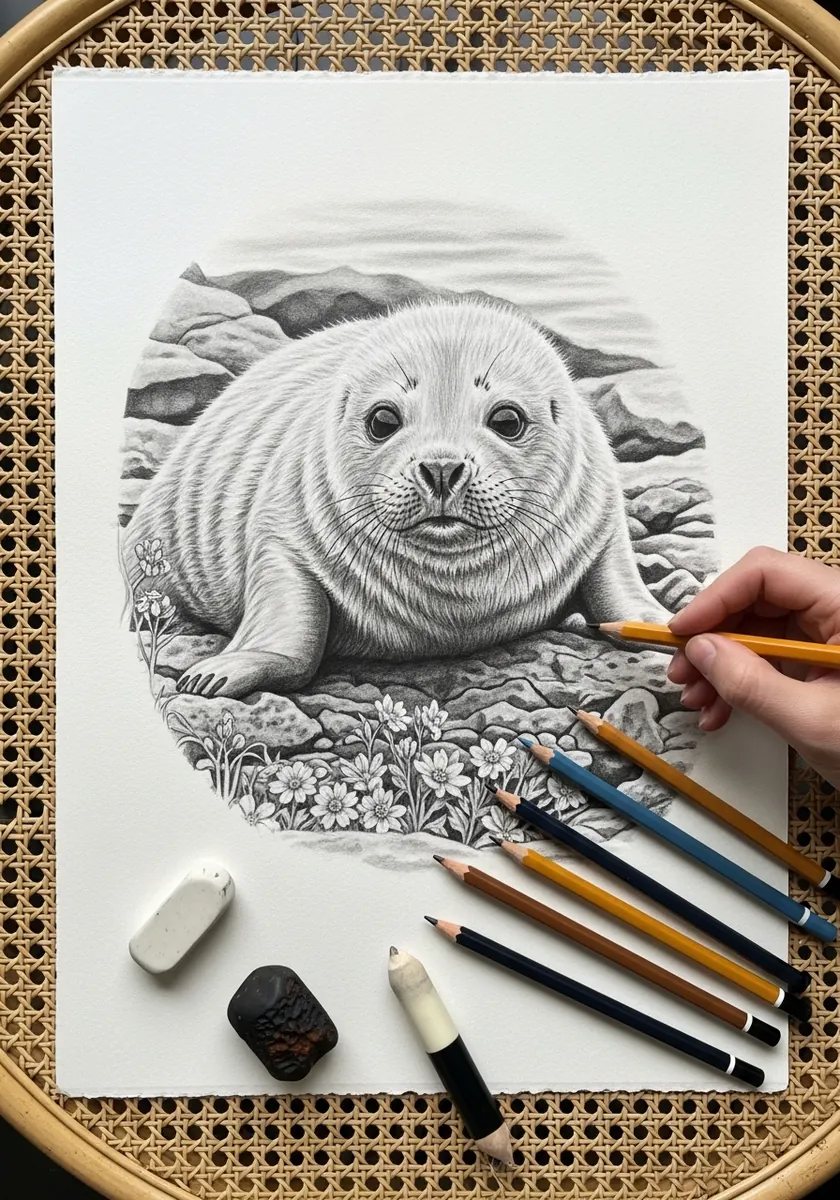
Seal pups are one smooth tapered shape, so all the interest lives in the face. Keep the body outline unbroken and softly shaded, place the huge dark eyes low and wide, and press the darkest tone only into the eyes and nostrils.
23. Penguin Chick With a Flower Crown
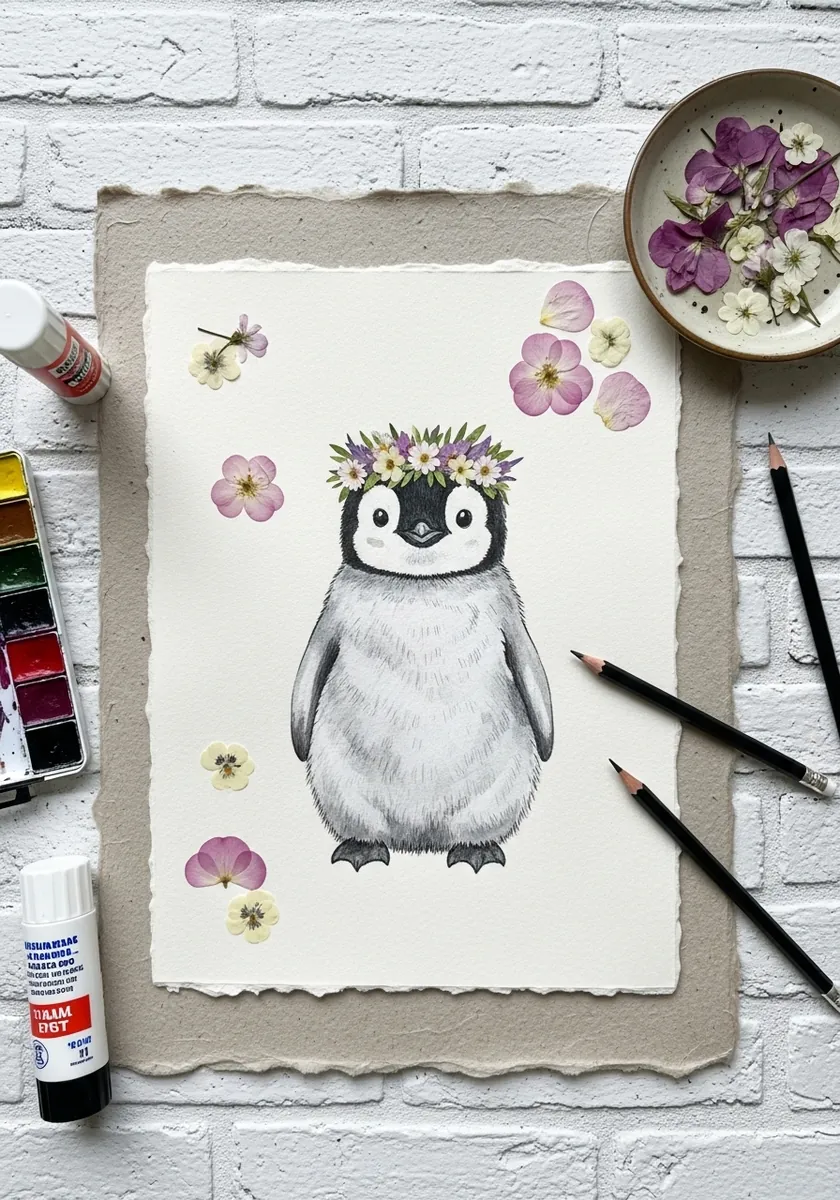
A flower crown on a bird needs to follow the skull. Curve the band over the top of the head rather than drawing it straight, angle the side flowers away from the viewer, and keep the chick’s own shape completely simple beneath.
24. Chameleon on a Flower
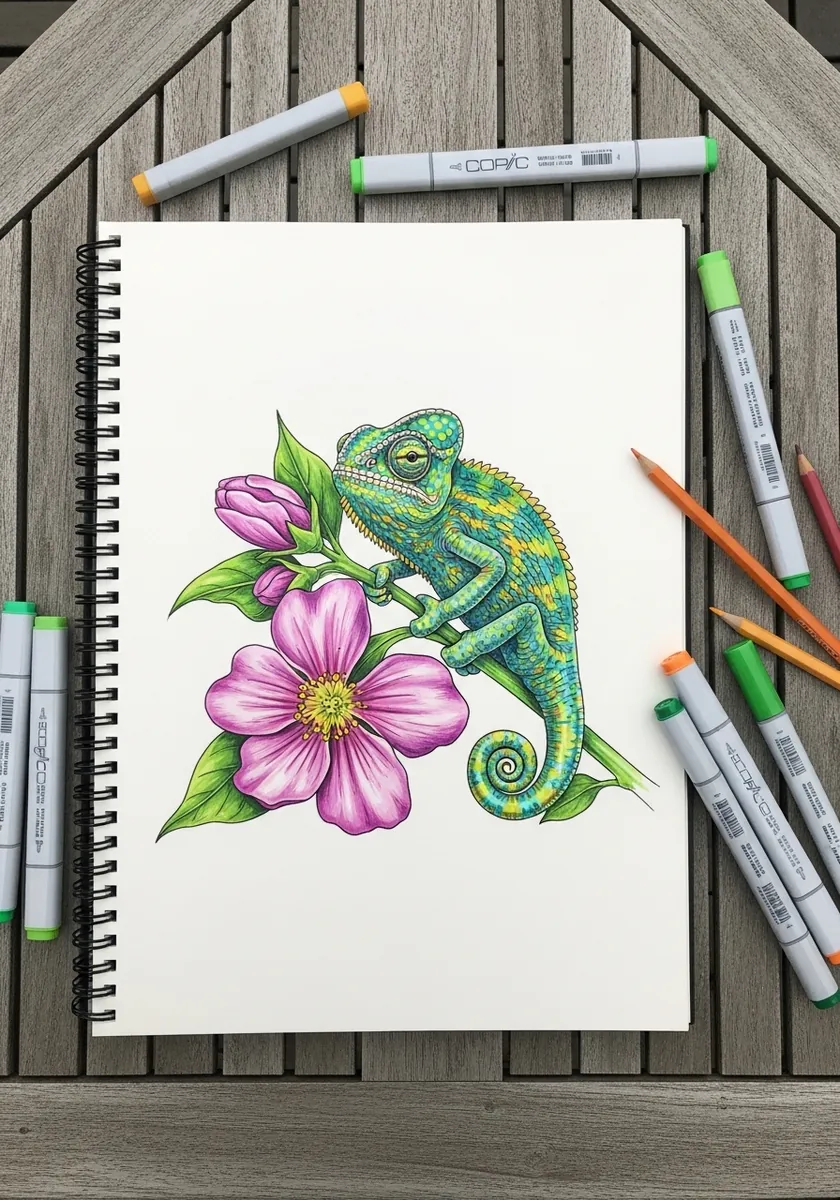
Markers want flat confident color. Block each area in one direction without going back over it, let two greens meet without blending, and outline the whole animal last so the edges stay clean. The curled tail is the signature shape.
25. Wolf Pup in Grass
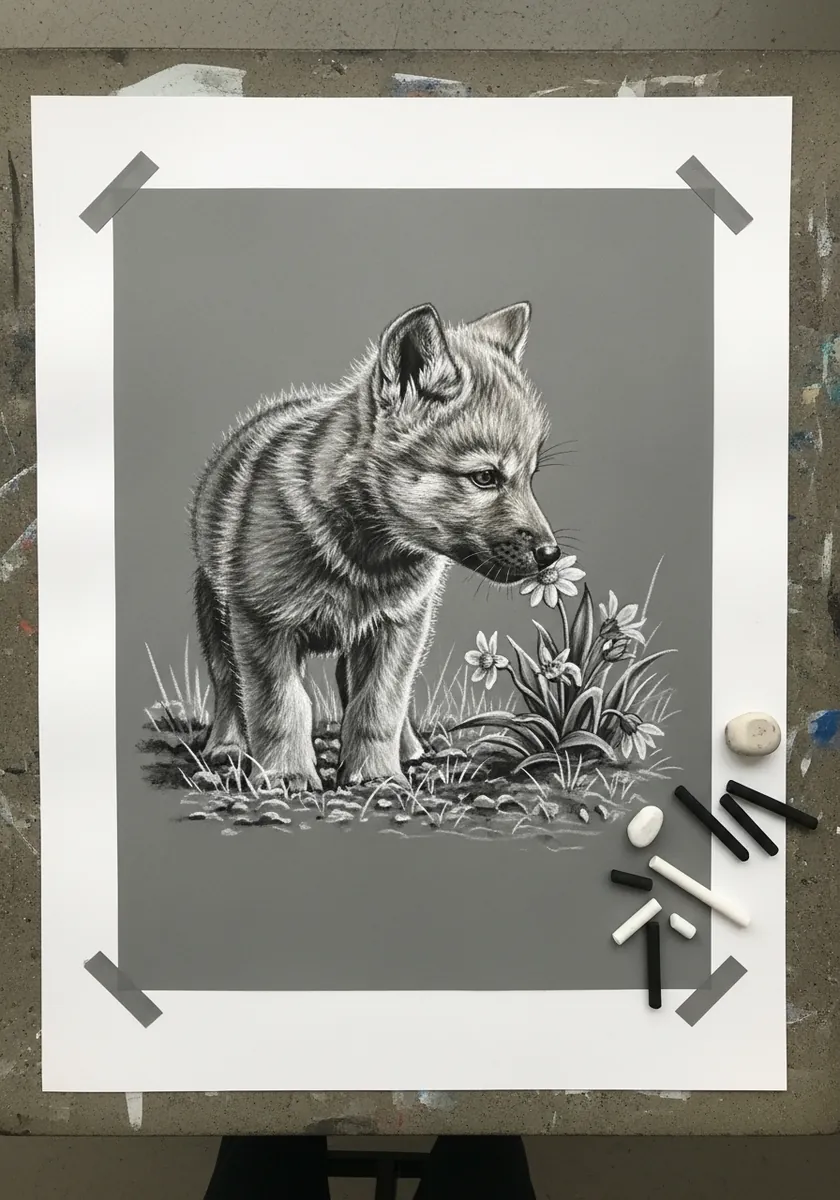
A pup differs from an adult wolf in the head. Widen the skull, shorten the muzzle by a third, and round off the ears at the tips; the legs stay short and the paws stay noticeably large for the body.
26. Leaping Hare and Dandelions
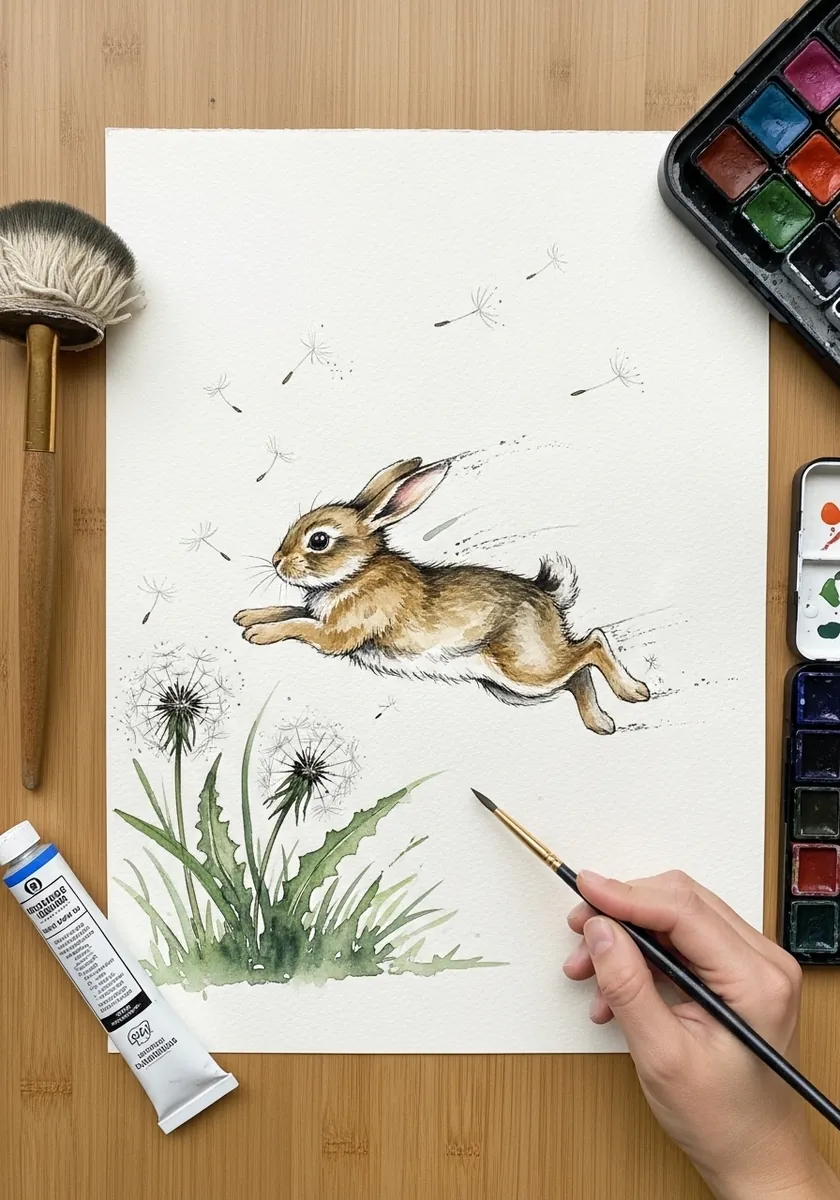
Movement needs one continuous line. Draw the hare’s back as a single stretched curve from nose to tail, extend both back legs fully behind, and let the dandelion seeds trail in the direction it has come from. Keep all four feet clear of the ground, since one touching kills the movement.
27. Pink Flamingo in Ink
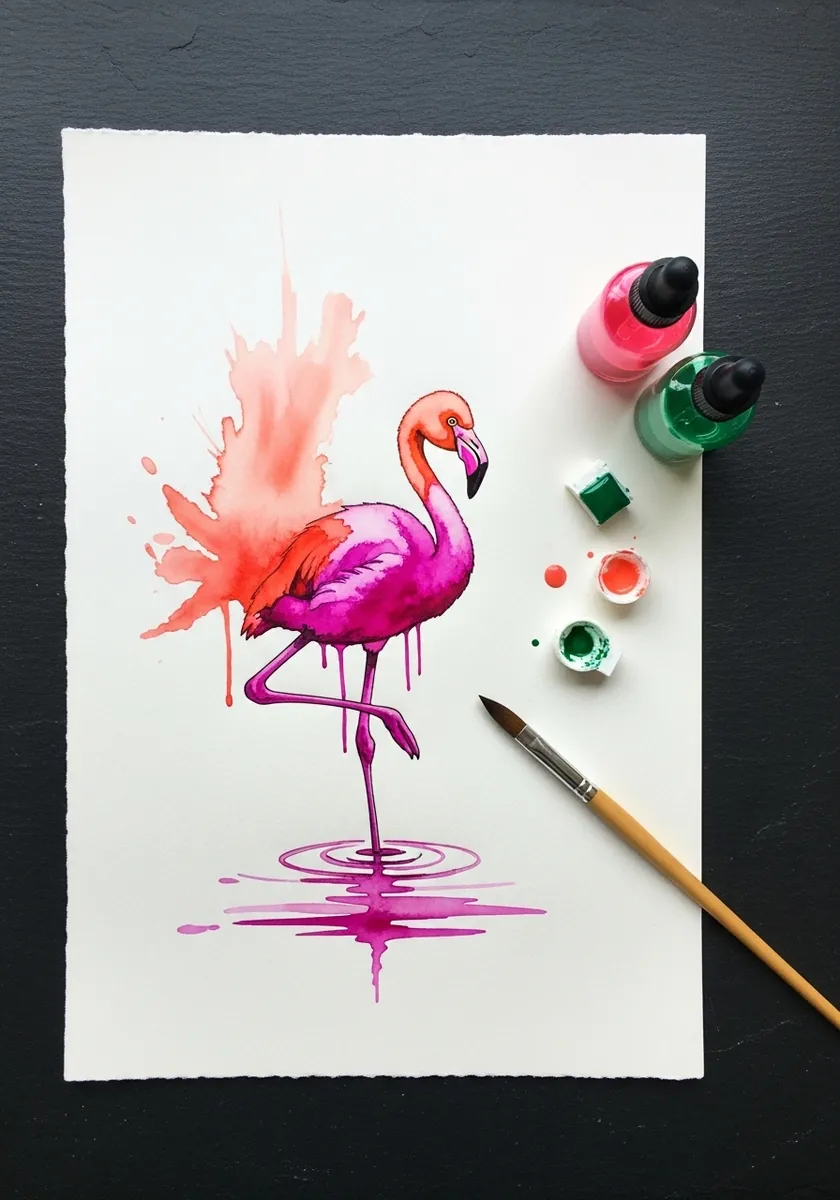
Letting the medium misbehave can be the point. Paint the bird accurately, then flick and drop pink ink above it so the color runs down through the body, and let those runs stay. Control the shape, not the paint. Work standing up, because splashing needs distance from the paper.
28. Meerkat Among Succulents
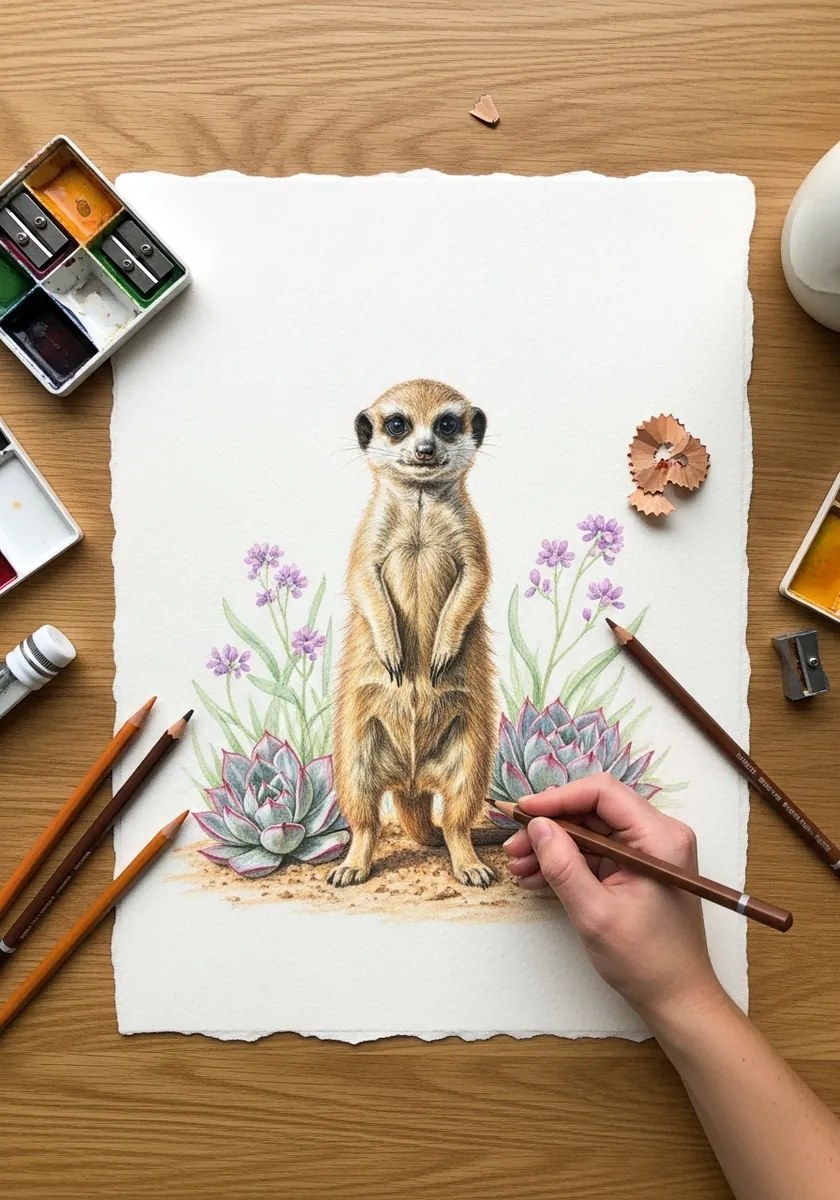
The upright pose is the whole character. Stand the meerkat perfectly vertical on its back legs, tuck the front paws together at the chest, and keep the tail straight down as a prop. Plant the succulents low and blunt around it so nothing else in the picture stands tall.
29. Hummingbird at Honeysuckle
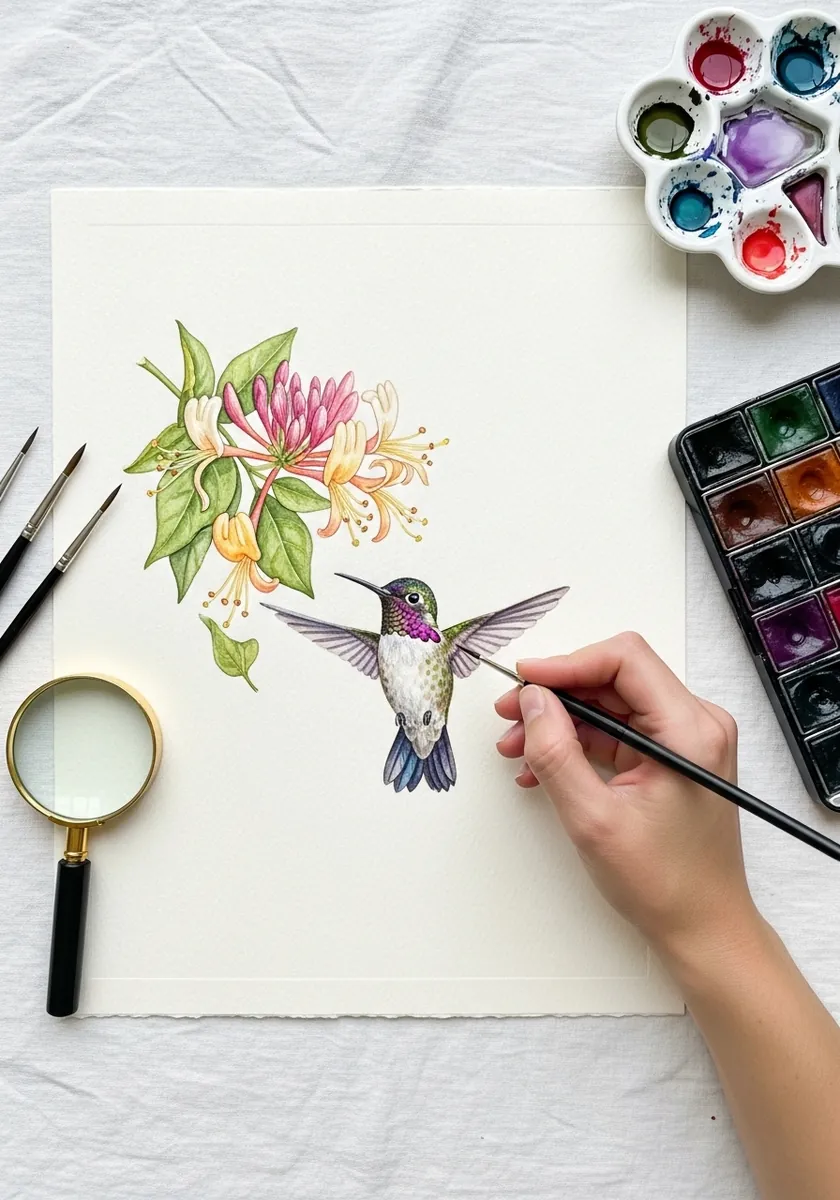
Hovering wings are painted, not drawn. Keep them as two pale blurred shapes above the body with no outline at all, make the body itself the only crisp thing, and let the long beak actually enter the flower. Angle the whole bird slightly nose-down, which is how they actually feed.
30. Turtle in Cut-Paper Style
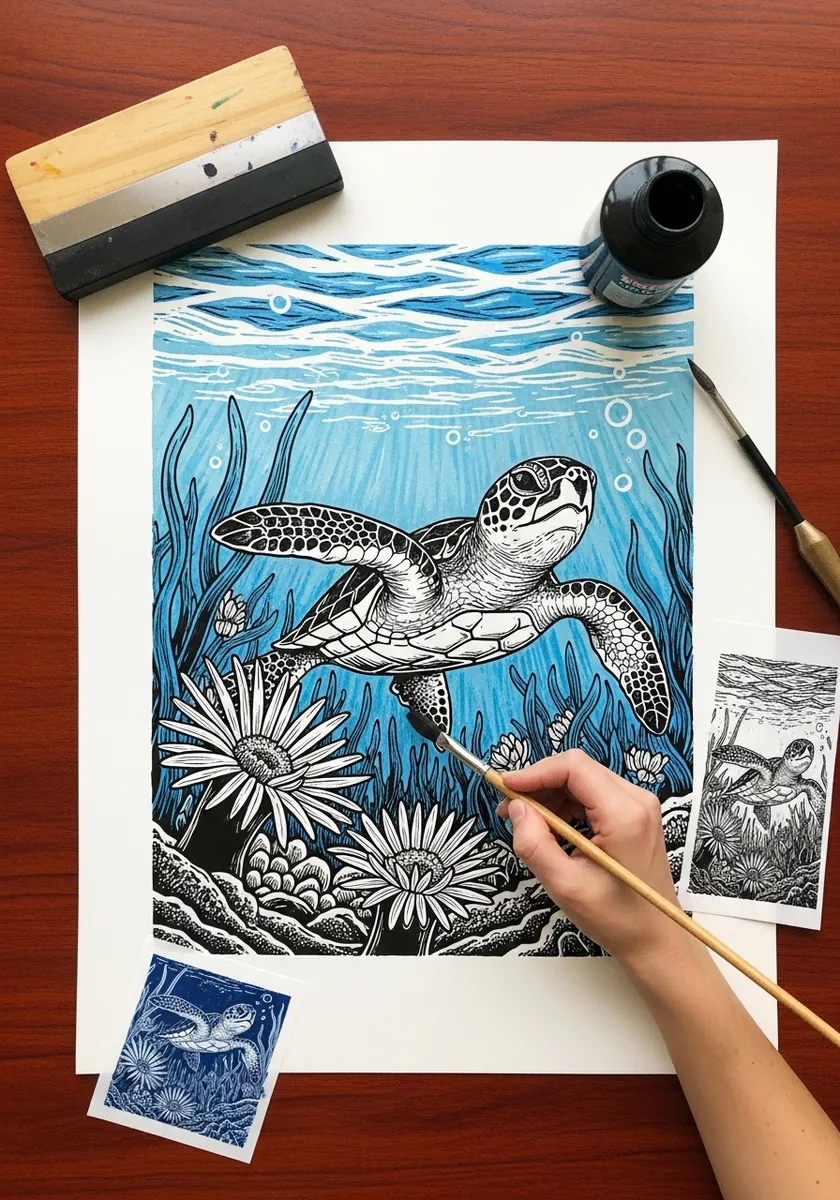
Flat graphic work depends on the shapes alone. Reduce the turtle to a shell, four paddles and a head, cut the water into repeating wave bands behind it, and use no shading anywhere. Two blues are enough. Keep every edge hard, since a soft edge would break the cut-paper illusion.
31. Foal in a Field
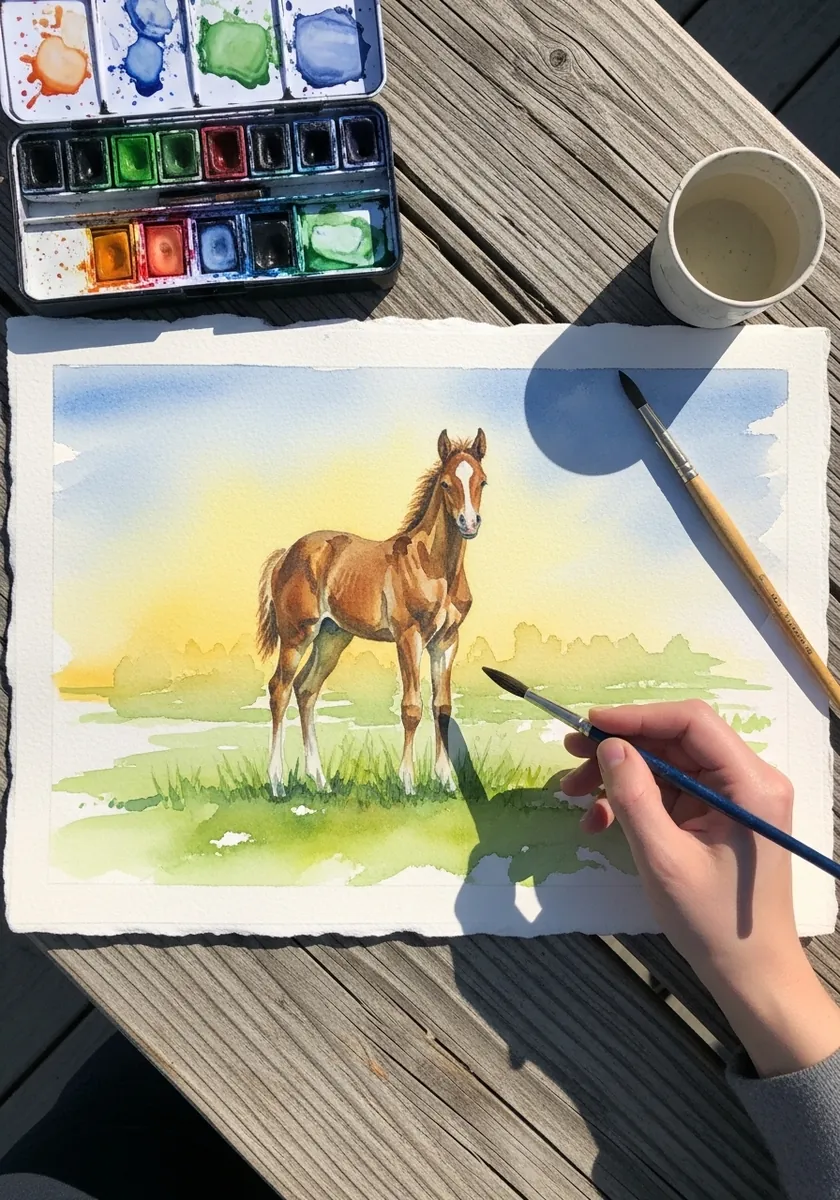
Foals are mostly legs. Make them longer in proportion than an adult horse’s, keep the knees knobbly and the body short, and drop the head low. A foal that looks slightly unstable on its feet is a foal drawn correctly.
32. Hedgehog in a Wreath
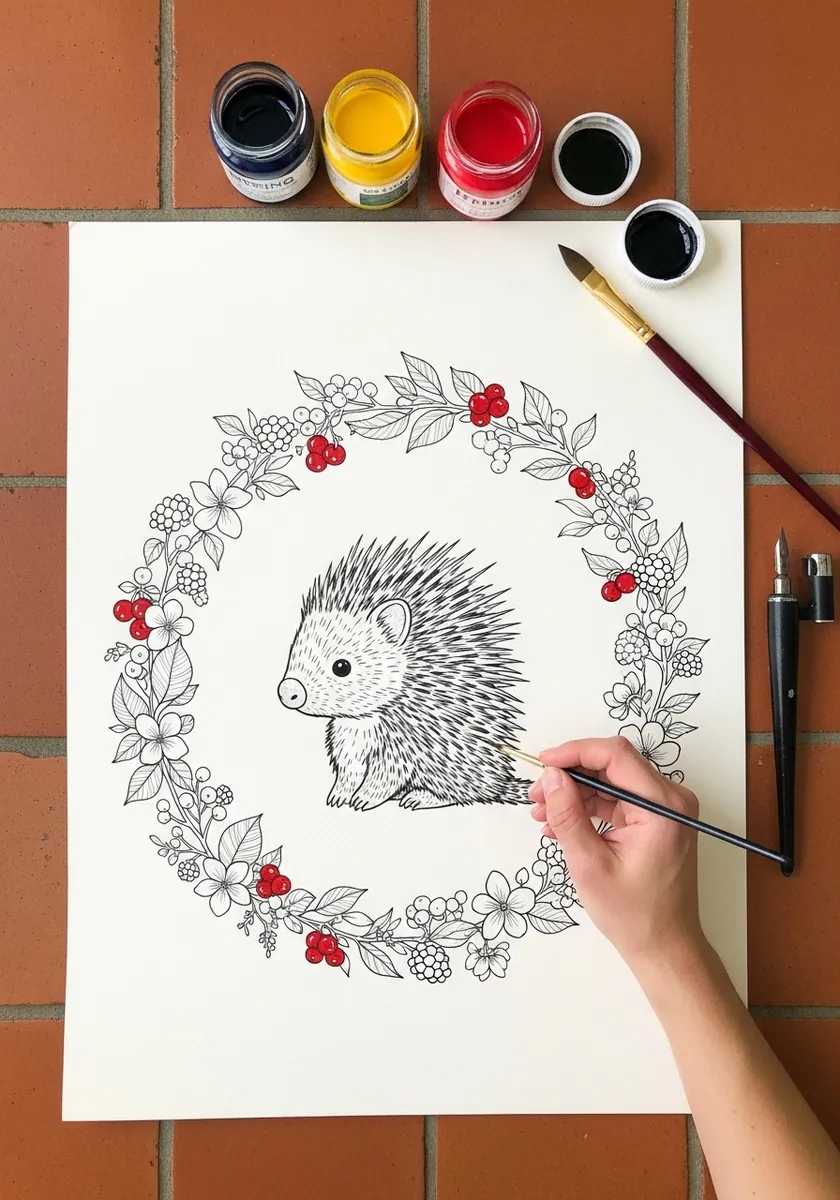
A wreath needs a rhythm rather than variety. Choose two flower shapes and repeat them all the way round with a leaf between each, keep the spacing even, and let the animal in the middle be the only irregular element.
33. Raccoon Kit at the Water
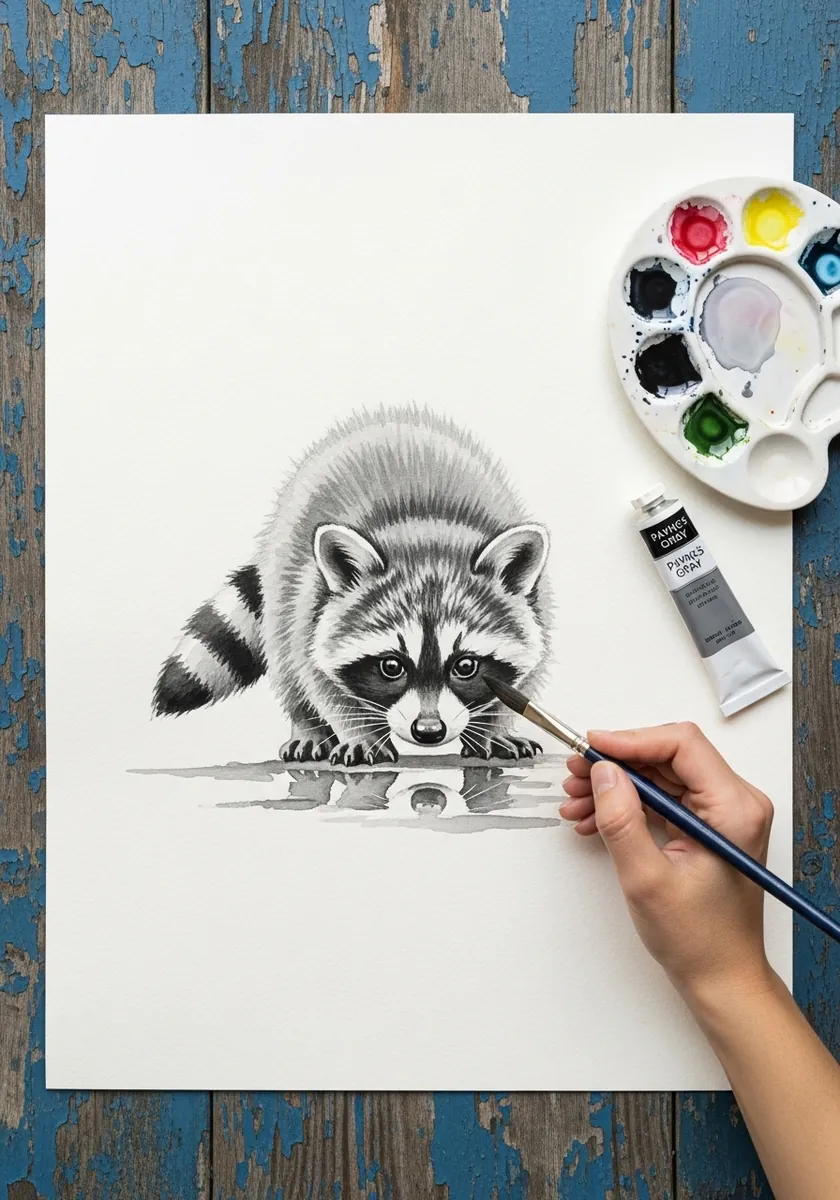
The mask is one continuous shape, not two patches. Draw the dark band across both eyes as a single form, keep the muzzle pale and pointed down toward the water, and let the reflection break up immediately below the paws.
34. Joey in a Floral Pouch
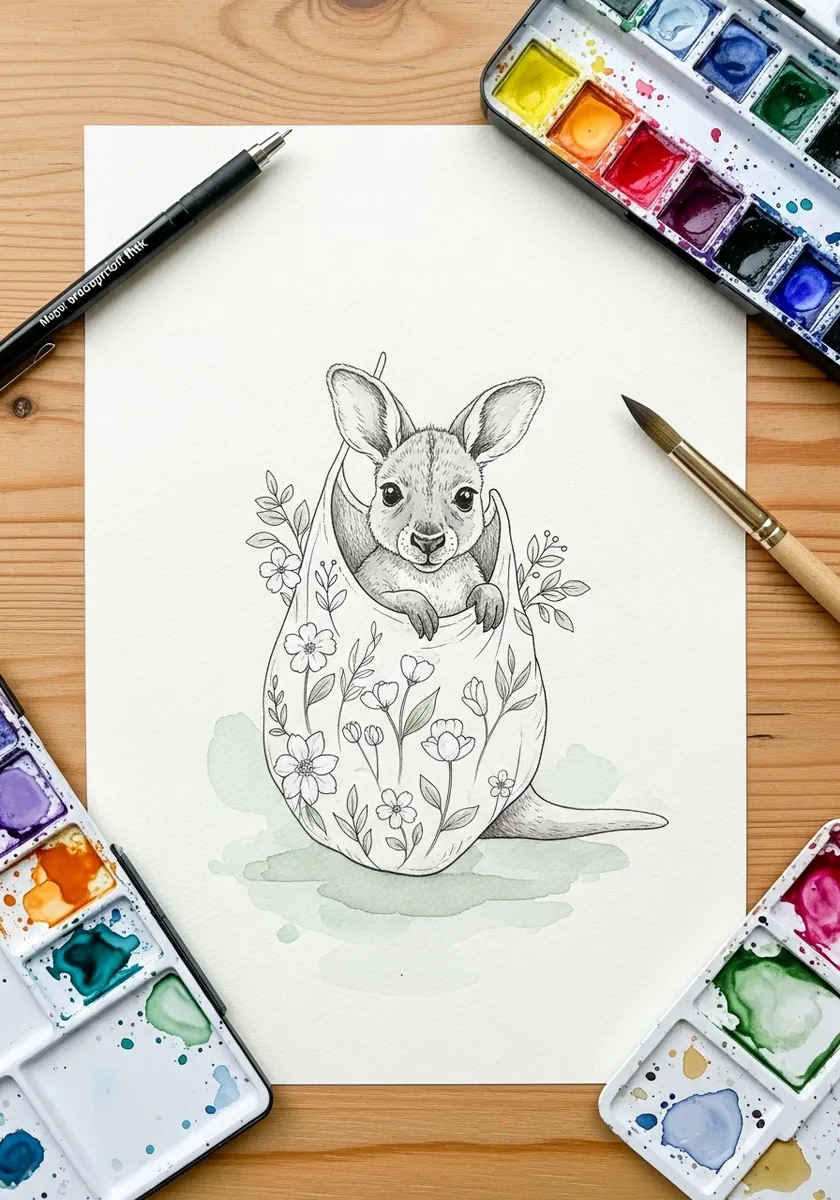
Decorative and observational drawing can share a page. Keep the joey itself accurate and simple, then treat the pouch as pure pattern filled with flowers, and let the two styles meet at a clean hard edge. Keep the pattern flat and unshaded so it never competes with the animal.
35. Cheetah Cub Portrait
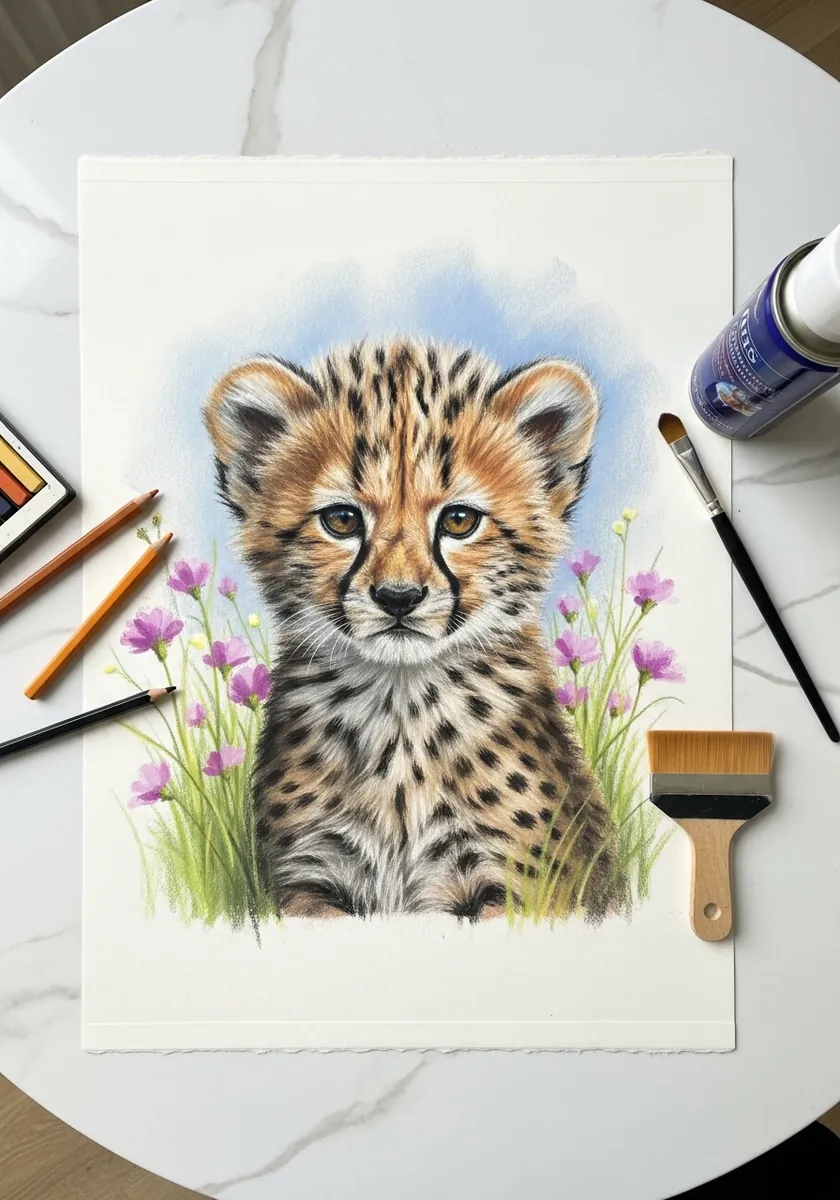
Cheetah cubs have a silver mantle of long hair down the back that adults lose. Draw it as loose strands breaking the outline along the neck and shoulders, keep the spots small on the face, and run the tear lines from eye to mouth.
36. Sleeping Koala
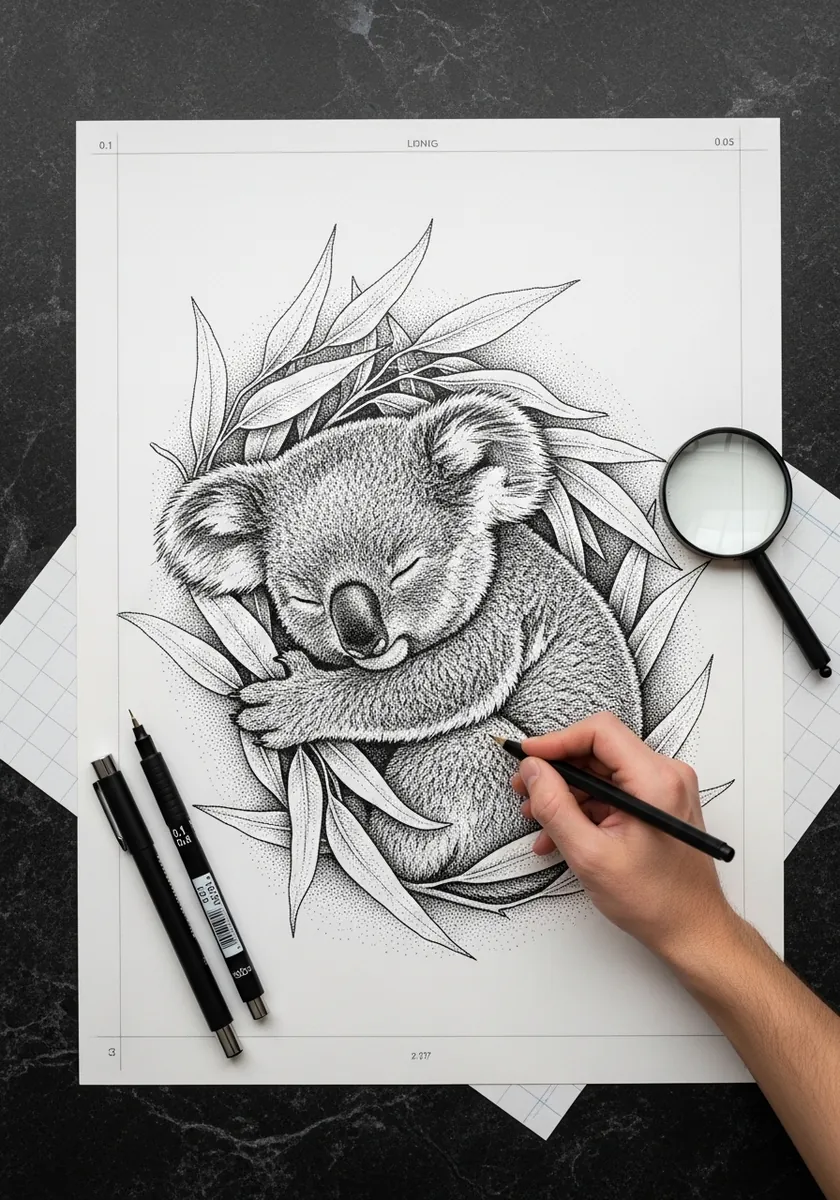
A sleeping animal has no visible eyes, so the shape must do everything. Curl the body into a tight ball, tuck the head into the chest, and let the ears be the highest point. Keep every edge soft and the leaves sharp.
37. Elephant Calf at a Pond
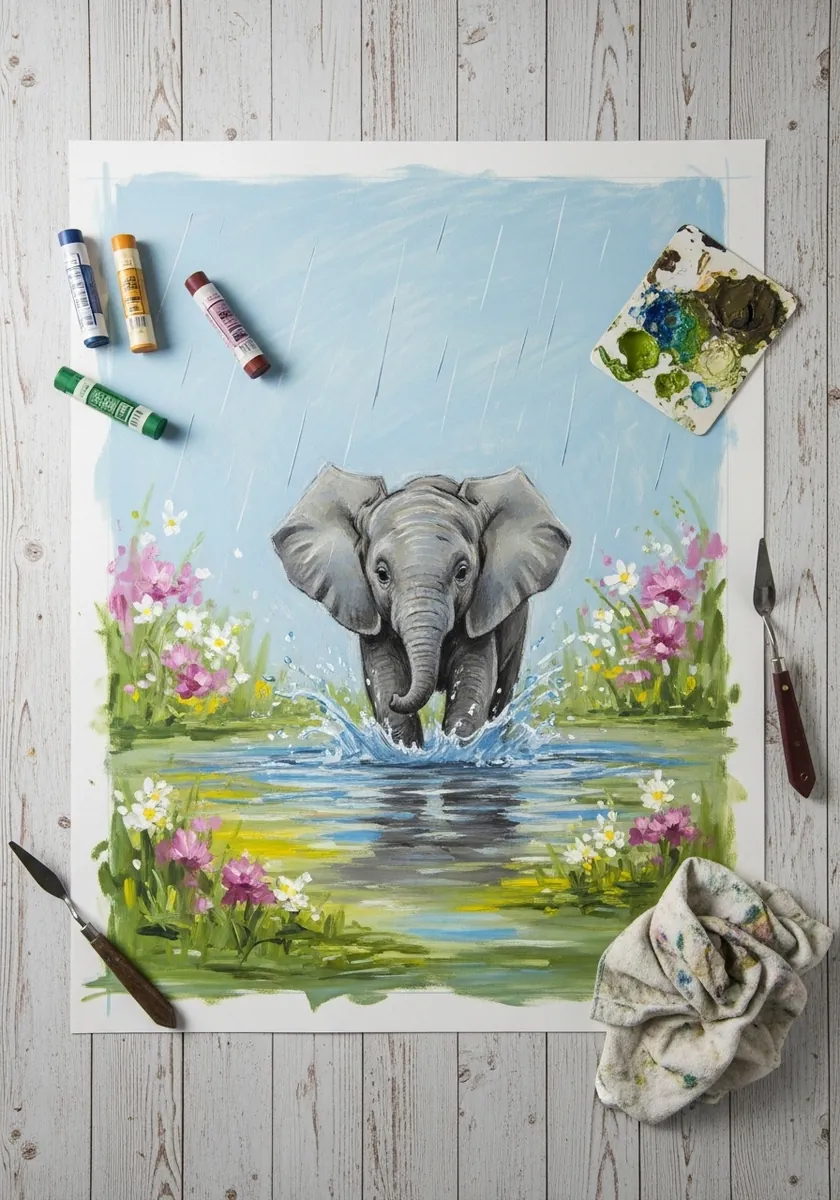
Standing water needs a hard horizontal. Keep the pond edge perfectly level, stand the calf so its feet break that line, and reflect only the legs and belly beneath. Everything above stays clear of the water. Ripples around the feet show the weight has just landed in the water.
38. Red Panda in Blossom
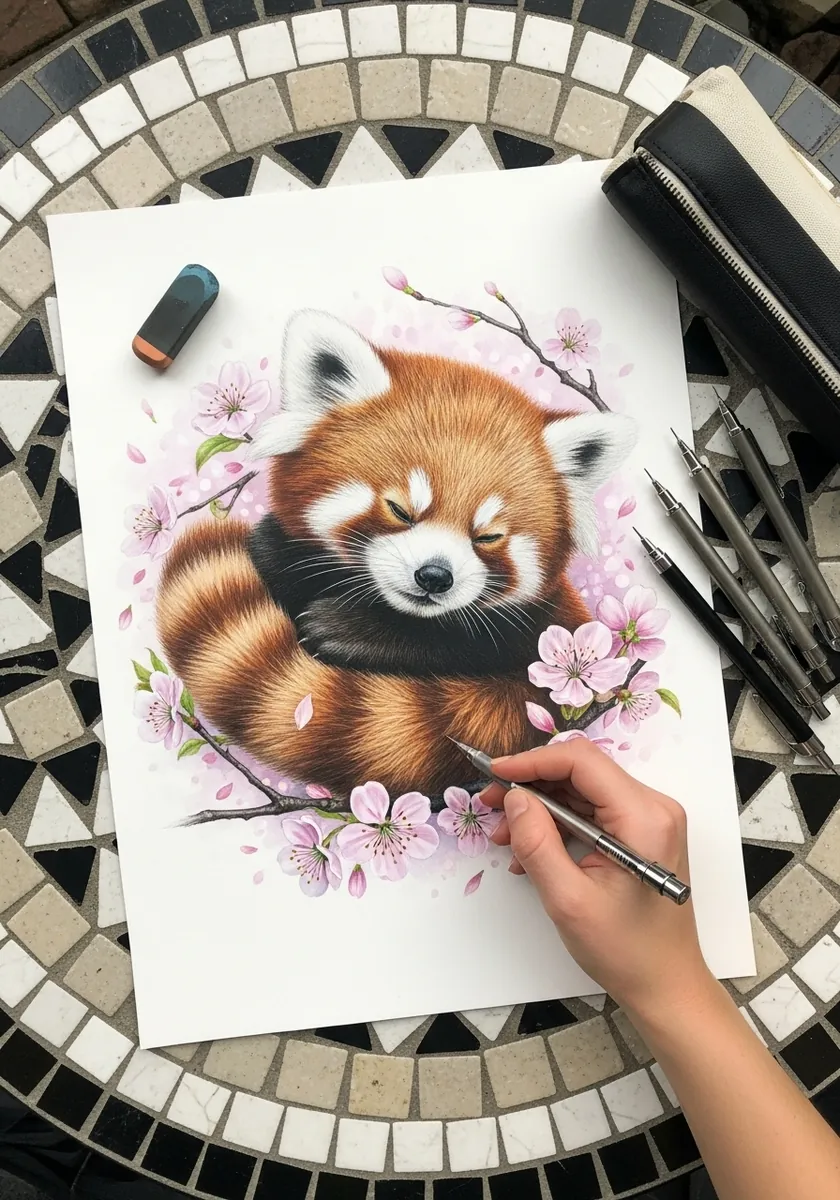
A curled animal on a branch is a circle on a line. Draw the branch first as one long diagonal, coil the cub on top of it so the tail wraps right around, and let the blossom cluster at the two ends of the branch only.
39. Folk Art Spring Bird
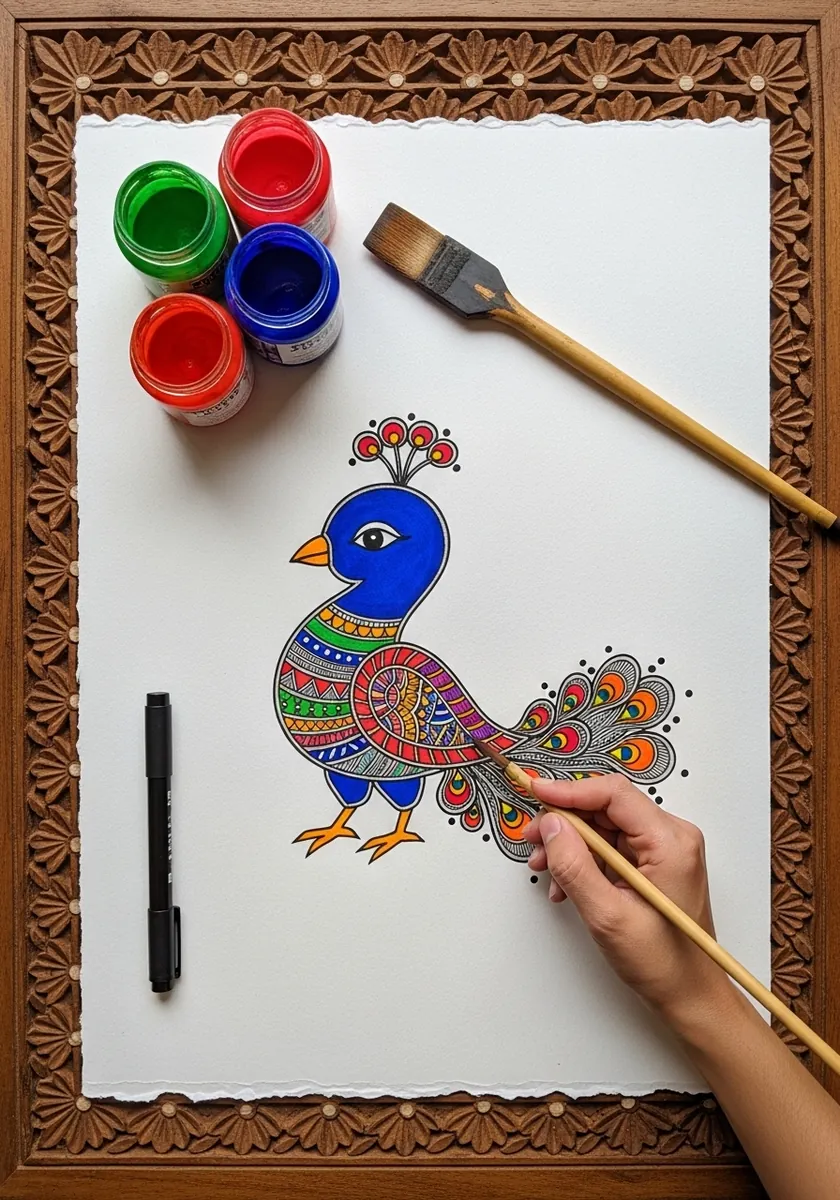
Finish with something purely designed rather than observed. Reduce the bird to flat symmetrical shapes, fill each one with a repeating pattern in a different color, and outline everything in one dark tone. Accuracy is irrelevant here and boldness is the only thing that matters.
Frequently Asked Questions
Why do baby animals have such big eyes?
Because eyes reach almost their final size very early and change little afterwards. The rest of the skull keeps growing around them, so the same eye that looks normal on an adult looks enormous in a smaller head. Drawing this proportion correctly is what makes a young animal convincing.
How do I make an animal look young rather than small?
Change the proportions, not just the scale. Shorten the muzzle, enlarge the eyes, ears and feet, round off the body, and keep the legs short and thick. A correctly proportioned adult drawn small just looks far away.
What is the easiest spring baby animal to draw?
A chick or a duckling, since both are two overlapping circles with a beak. A lamb is nearly as easy if you treat the fleece as a single cloud shape rather than trying to draw the wool.
How do I draw downy fur?
Break the outline rather than shading the inside. Draw the edge of the body as a soft irregular line with tiny flicks pointing outward, keep the interior mostly smooth, and the animal will read as fluffy from a distance.
Which medium suits spring subjects best?
Watercolor, because the pale washes and soft edges match new growth and young coats. Graphite works equally well for texture-heavy animals such as hedgehogs and seal pups, where the interest is in the surface rather than the color.
References and Further Reading