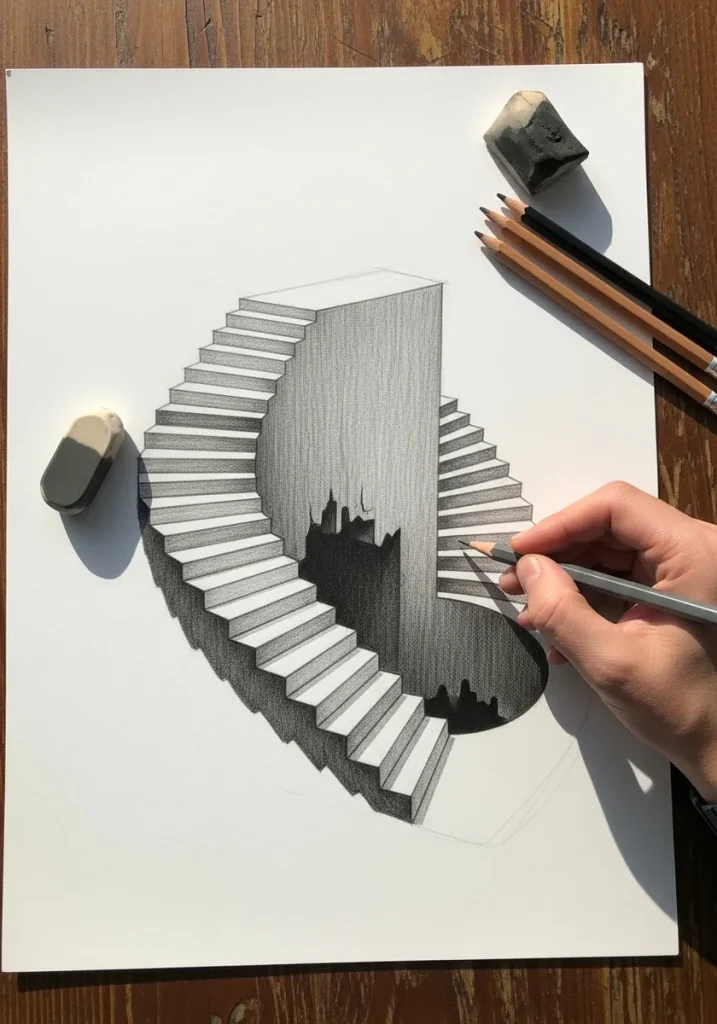
Easy 3D pencil art relies on three tricks: a cast shadow that sits on the paper instead of in the picture, an edge broken by something crossing it, and spacing that tightens as shapes recede. None require advanced rendering.
Key takeaways
- Three tricks cover nearly every easy 3D drawing: cast shadow, broken edge, and tightening spacing.
- Decide where the light is before the first stroke, then never move it for the rest of the piece.
- A portal or hole needs visible wall thickness, or it reads as a flat printed picture.
- Toned and black paper give you the mid value free, so you work outward in both directions.
- Straight-edged subjects need accurate angles plus one shadow, not detailed rendering.
Most 3D pencil drawings run on one of three tricks: a cast shadow that sits on the paper instead of in the picture, an edge that gets broken by something crossing it, or spacing that tightens as shapes recede. None of them require advanced rendering. They require you to decide where the light is and then stay consistent.
That is why so many of these work for beginners. A staircase spiralling into the page is really just ruled steps that get smaller and darker. A hand reaching out of a hole is a normal hand plus a torn edge with a dark underside. The illusion is a rule, not a talent.
The 30 ideas below are ordered by how much they lean on the illusion. Some are pure trickery, a few are straightforward realistic studies to build up the shading skills the illusions depend on. If you want to warm up first, these easy mandala art ideas are good for control, and eye drawing practice builds the smooth gradients you will need.
Everything here needs graphite in two or three grades, a kneaded eraser and a blending stump. A ruler helps for the geometric pieces. For more ways to build depth on a flat sheet, these 3D digital art ideas are worth a look.
1. Spiral Staircase Descending Into the Page
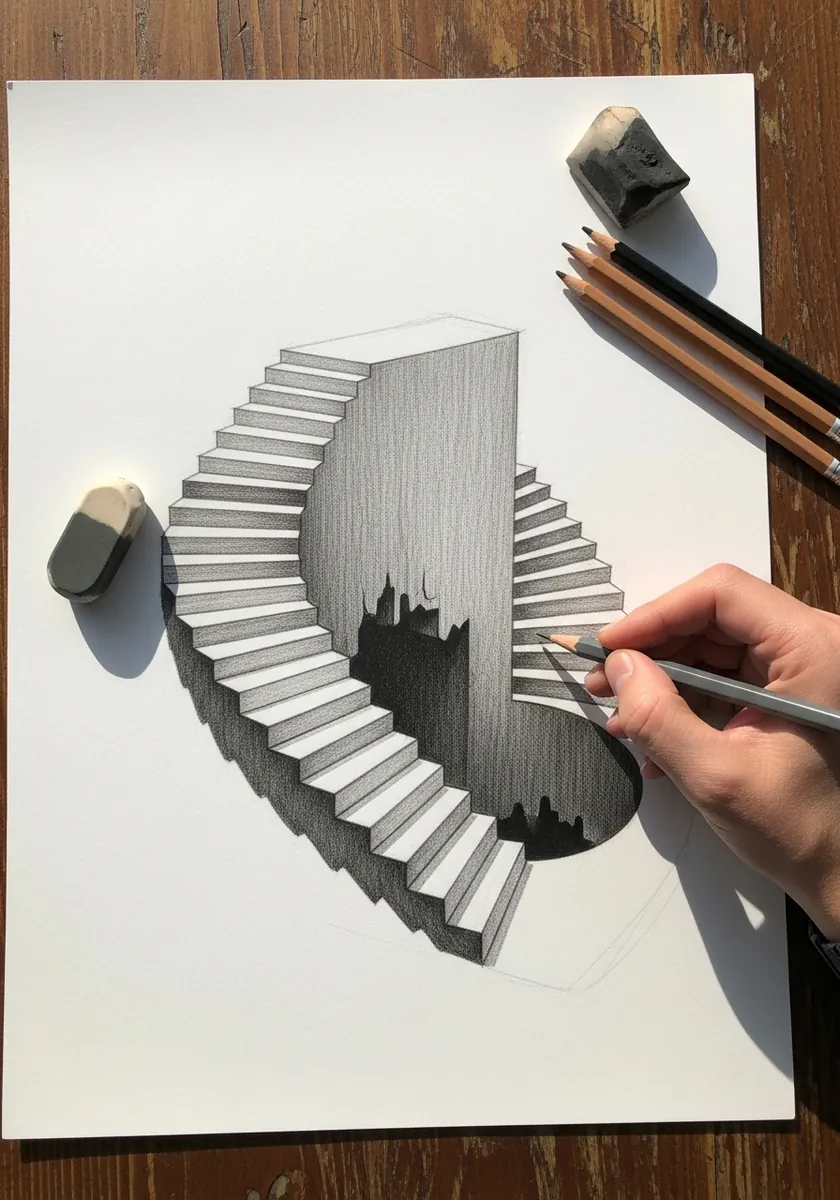
A flight of steps curls down into the sheet, with the darkest shadow at the bottom of the shaft. Rule each step as a small rectangle and make them progressively narrower and closer together as they descend. That tightening spacing, not the shading, is what creates the drop.
2. Floating Island with Hanging Roots
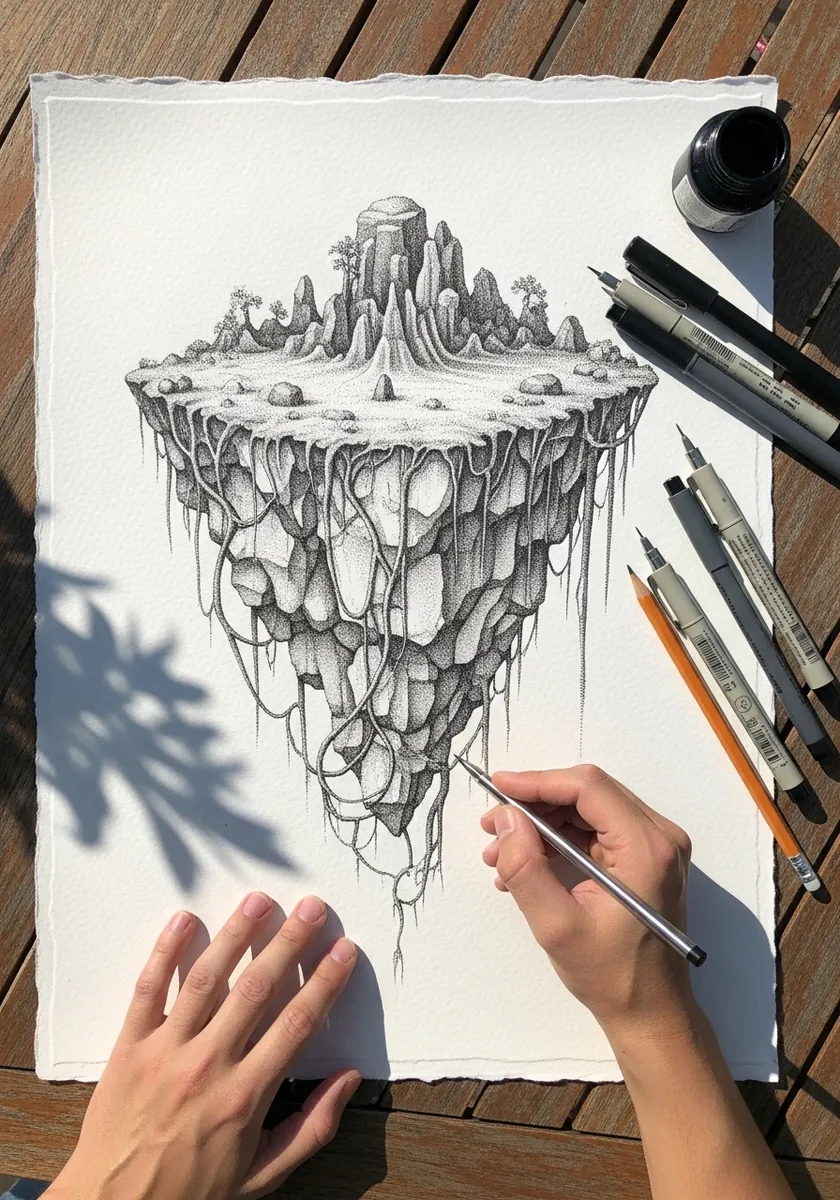
A chunk of land hangs in empty space with roots and rock trailing below. The underside is what sells it, so give the island real thickness and shade the bottom heavily. Keep the top surface light and detailed and the base almost black.
3. Charcoal Spiral Vortex
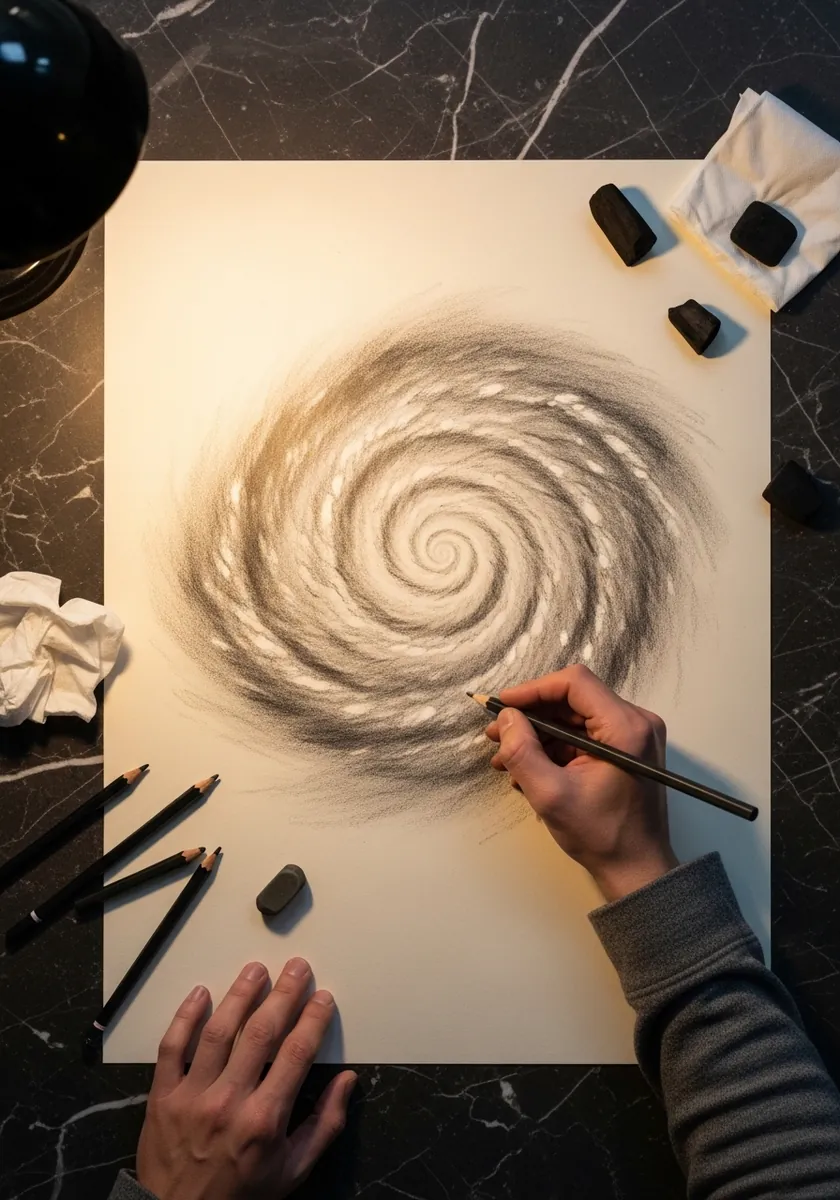
A spiral of soft charcoal that appears to pull inward. Draw the spiral path lightly first, then shade along it so each band is darker on one side, and blend outward with a finger. The consistent light edge on every coil is what creates the twist.
4. Hand Reaching Up Through the Paper
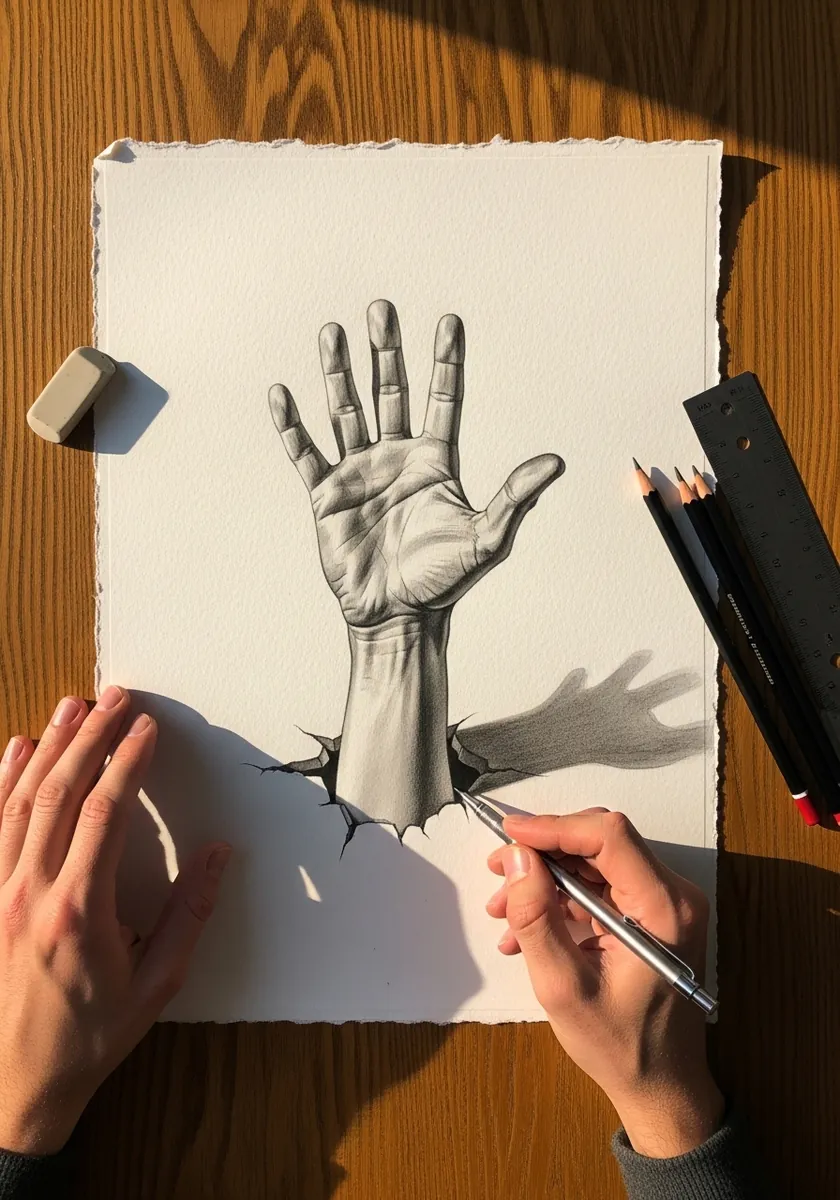
A hand pushes up through a jagged hole, fingers spread, with a shadow falling across the flat paper beside it. Draw the torn edge with a light top lip and a dark underside, then let the shadow of the fingers fall onto the intact sheet.
5. Isometric Cube Construction Grid
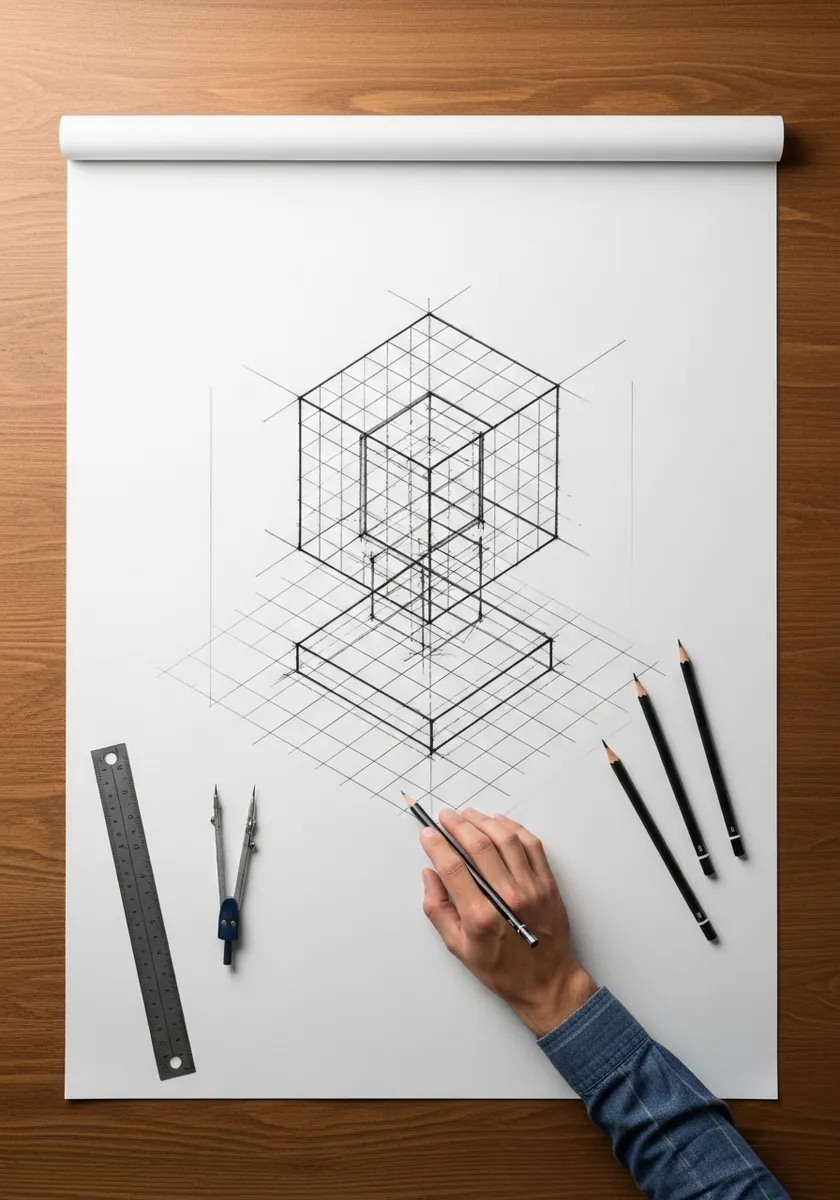
A cube built on a strict isometric grid with all the construction lines left visible. Rule the grid before anything else and keep every vertical truly vertical and every diagonal at thirty degrees. This is the exercise that makes all the other geometric pieces possible.
6. Skull Bursting Through Torn Paper
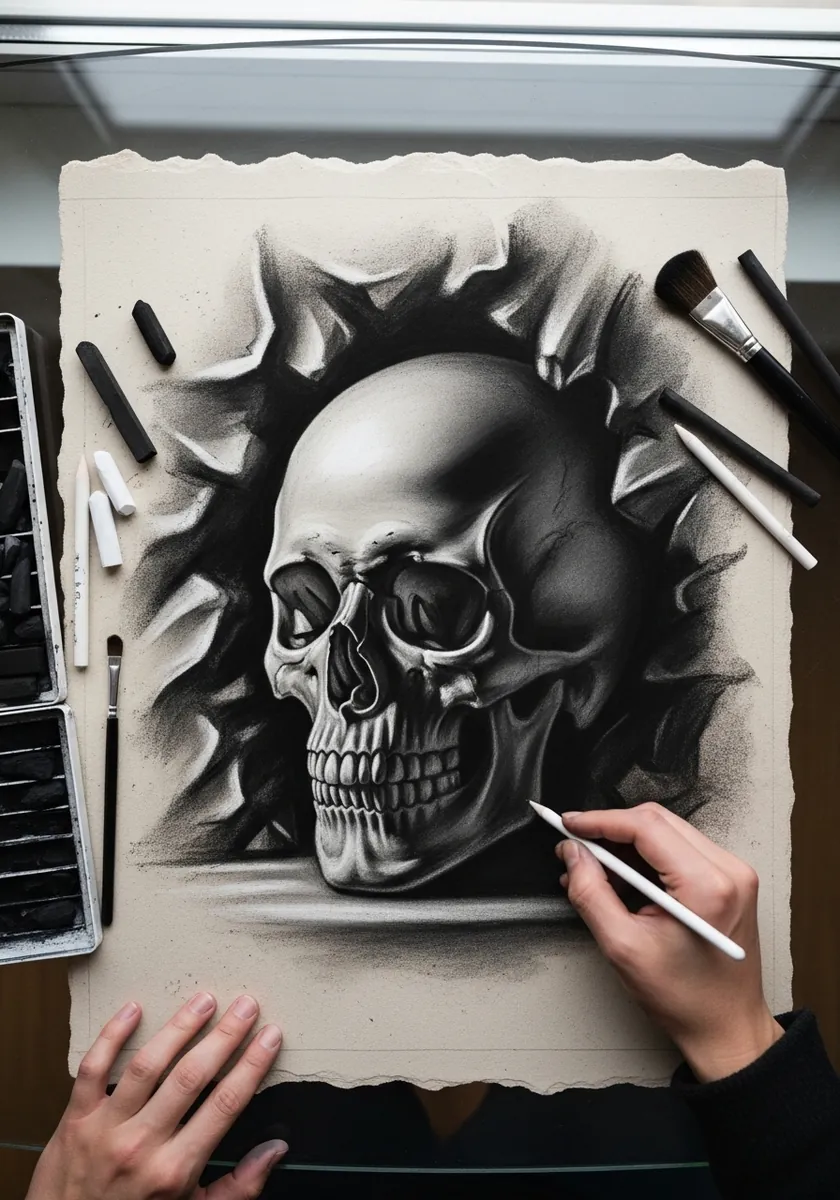
A skull pushes out through a ragged opening with the paper curling back around it. Render the skull smoothly and keep the torn edge rough; the contrast between the two textures is half the effect. Put your darkest value just inside the rim.
7. Detailed Lion Head with Flowing Mane
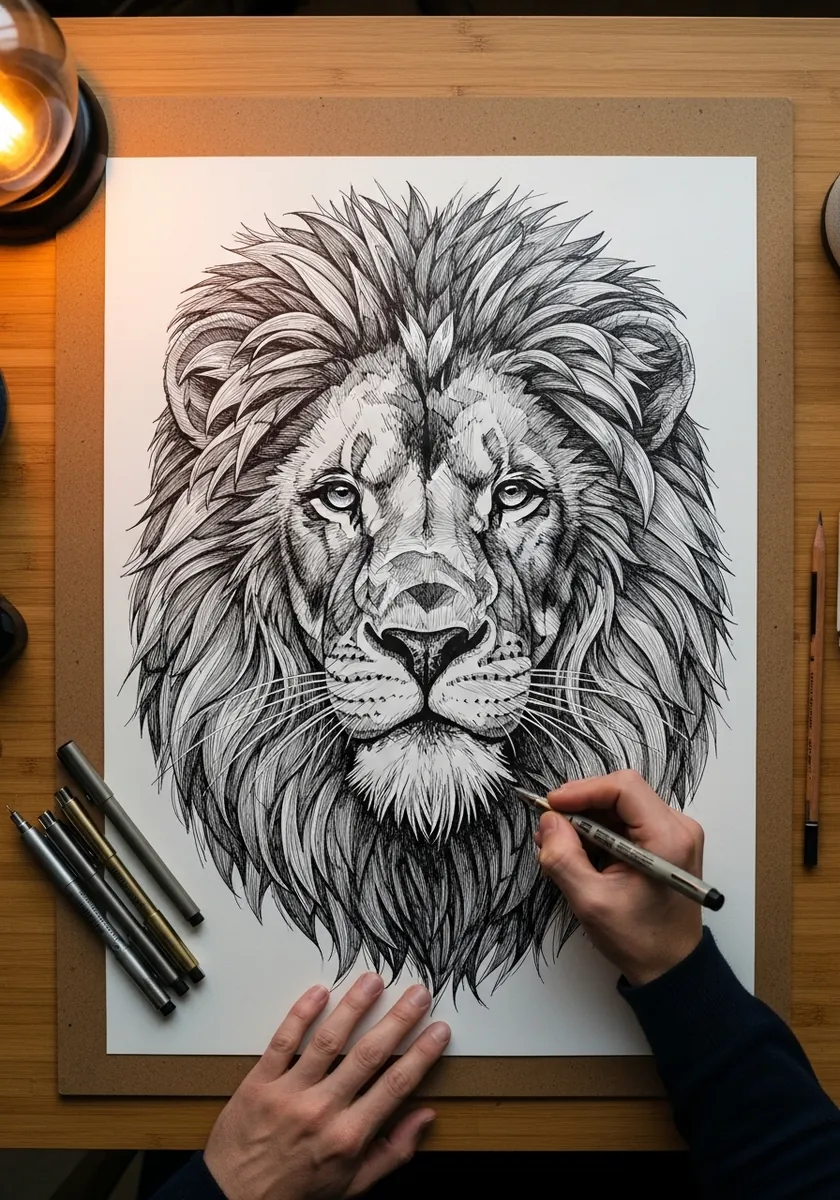
A lion drawn almost entirely from directional strokes that radiate out through the mane. Work from the face outward so the mane grows away from a fixed center, and keep the eyes the sharpest thing on the page while the outer mane stays loose.
8. Realistic Eye with a Reflected Scene
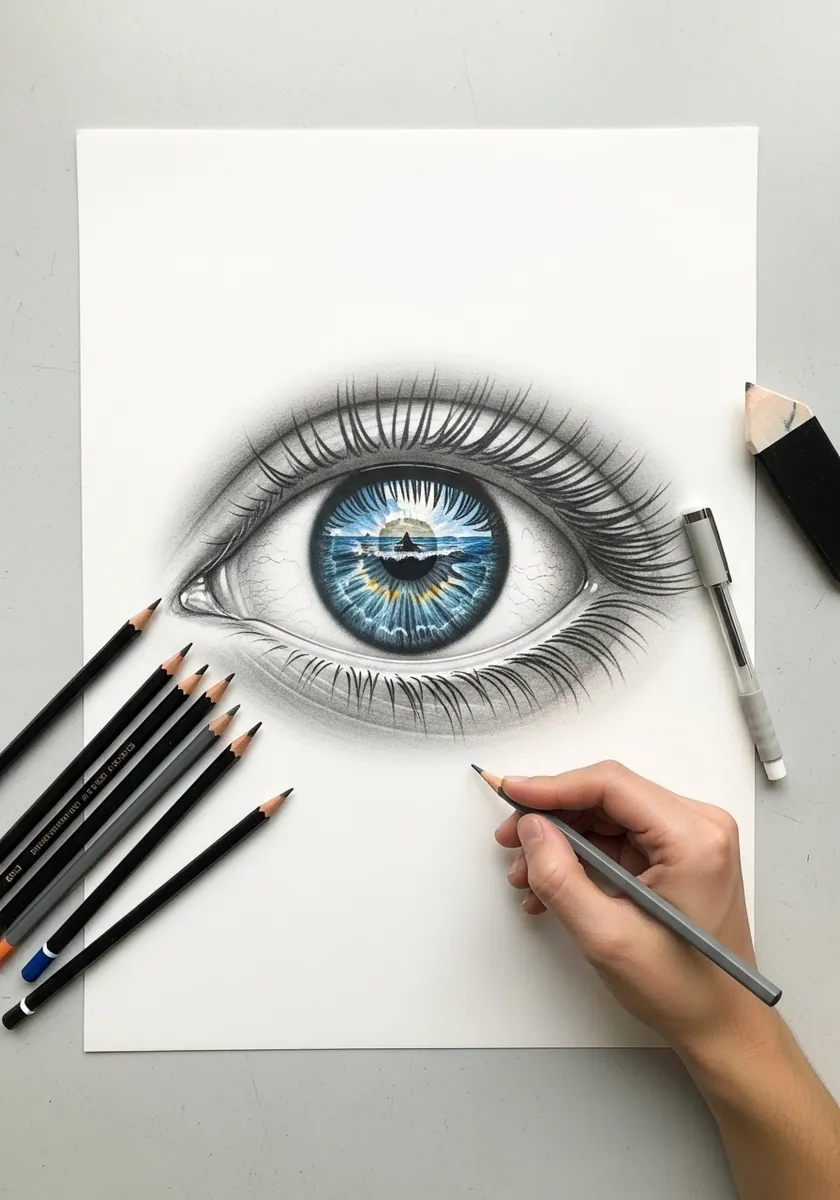
A close-up eye with a small landscape reflected in the iris. The reflection has to be low contrast or it fights the eye itself. Build the iris with radiating strokes from the pupil outward, then place one hard white highlight and leave it untouched.
9. Howling Wolf on Gray Paper
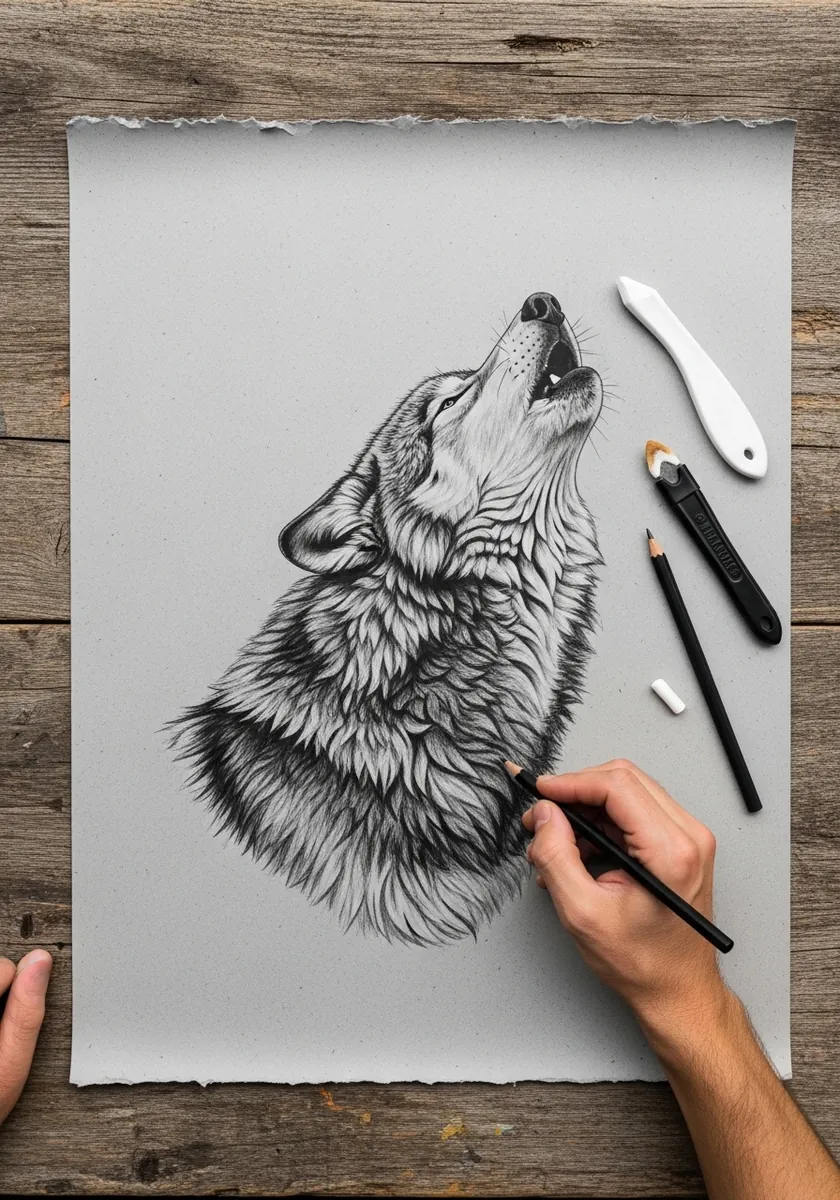
A wolf mid-howl on gray paper, using both graphite for the darks and white pencil for the lit fur. Toned paper gives you the mid-value free, so work outward in both directions and never fill the gray in completely.
10. Underwater Portal in the Page
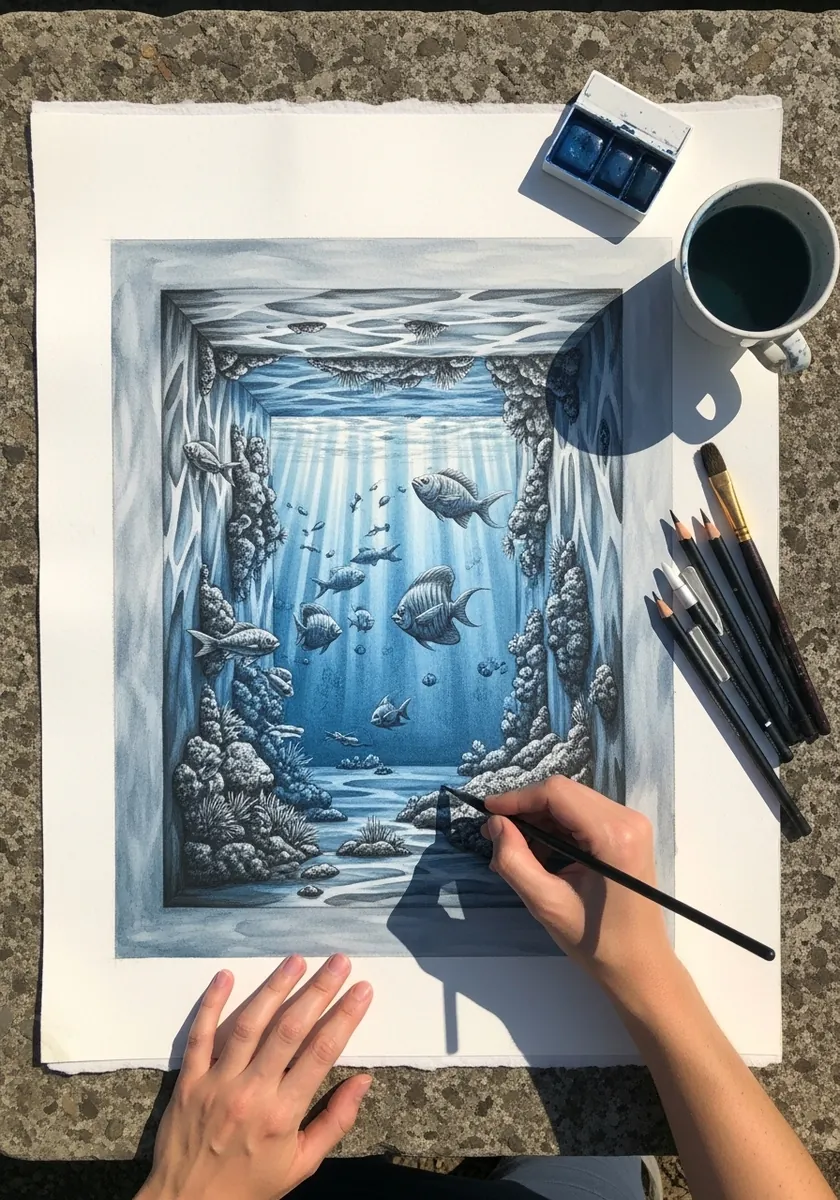
A rectangular opening looks down into a reef with light shafts and fish. Draw the opening’s four inner walls with visible thickness before anything else, because a portal without wall thickness always reads as a flat picture instead of a hole.
11. Ancient Stone Arch Ruin
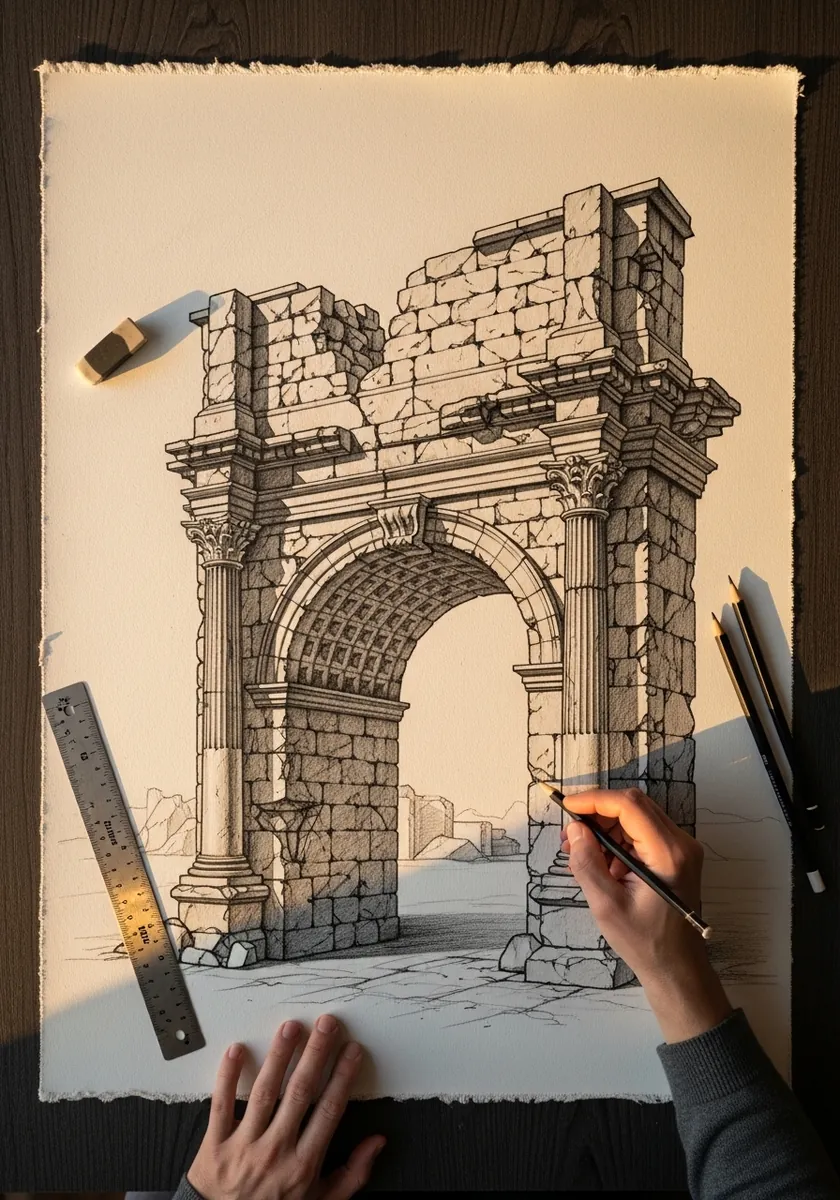
A weathered arch drawn in perspective with individual blocks and a shadow falling through the opening. Draw the arch as a smooth curve first, then divide it into wedge-shaped stones that all point to the arch’s center.
12. Fine Line Butterfly with a Dissolving Trail
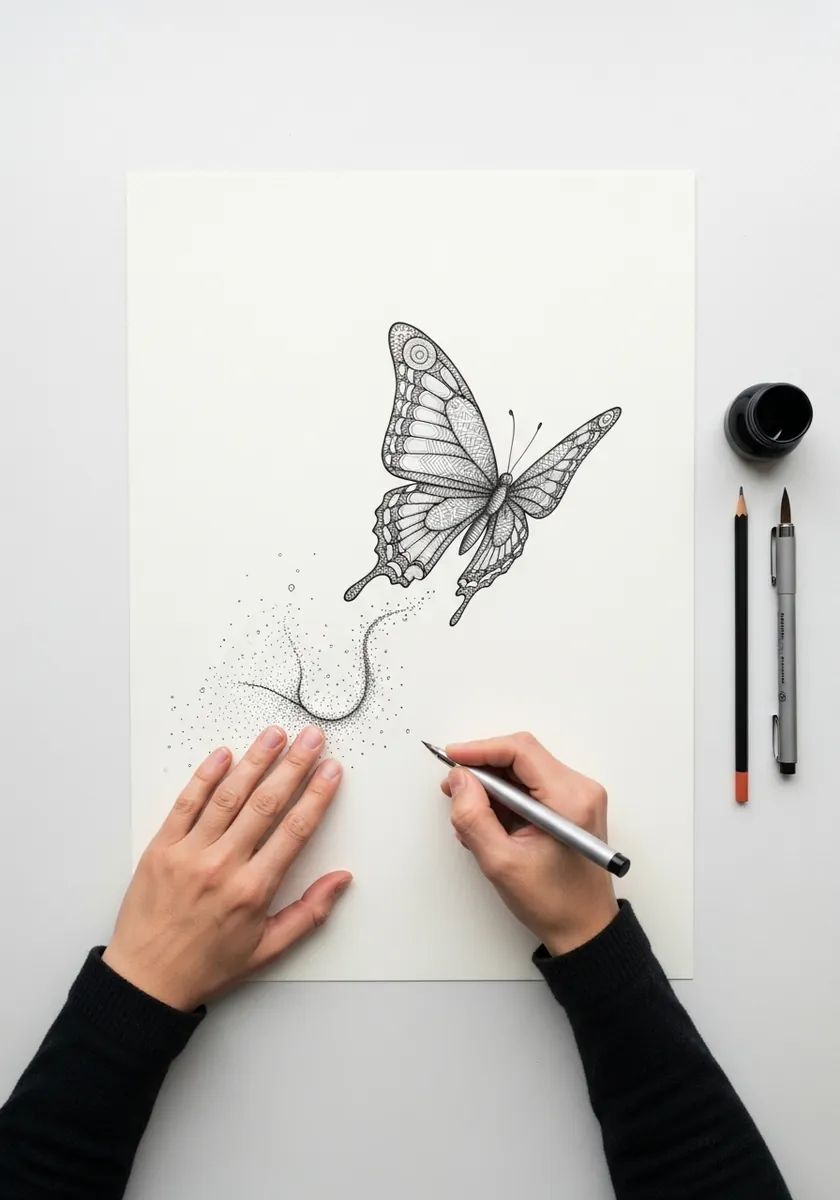
A butterfly drawn in fine line with a trail of scattered dots dissolving behind it. The dots suggest motion without any blur. Keep the butterfly crisp and let only the trail break down, thinning the dots as they get further away.
13. Dragon Coiled Around a Torch
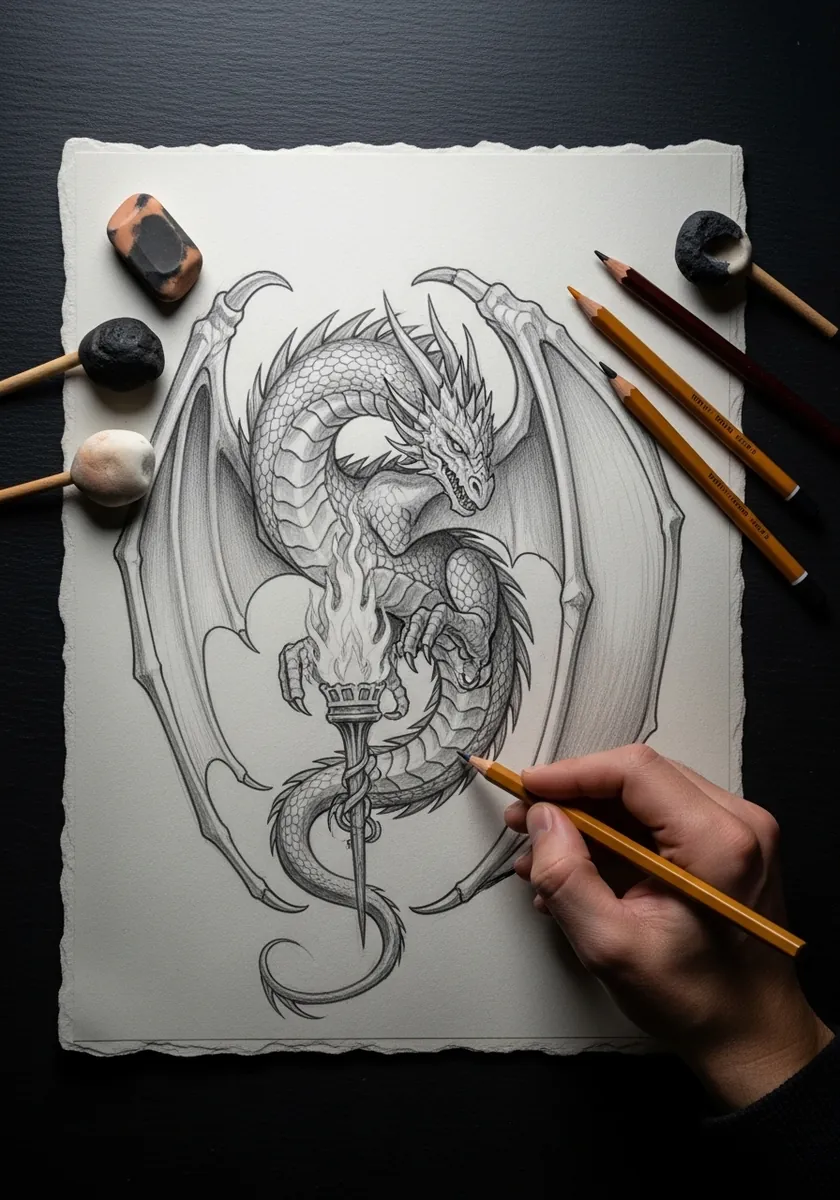
A winged dragon wraps around a torch, with the flame as the only light source. Everything facing the flame stays pale and everything above it drops into shadow, which is what makes a single-light-source drawing convincing.
14. Mountain Range on a Floating Block
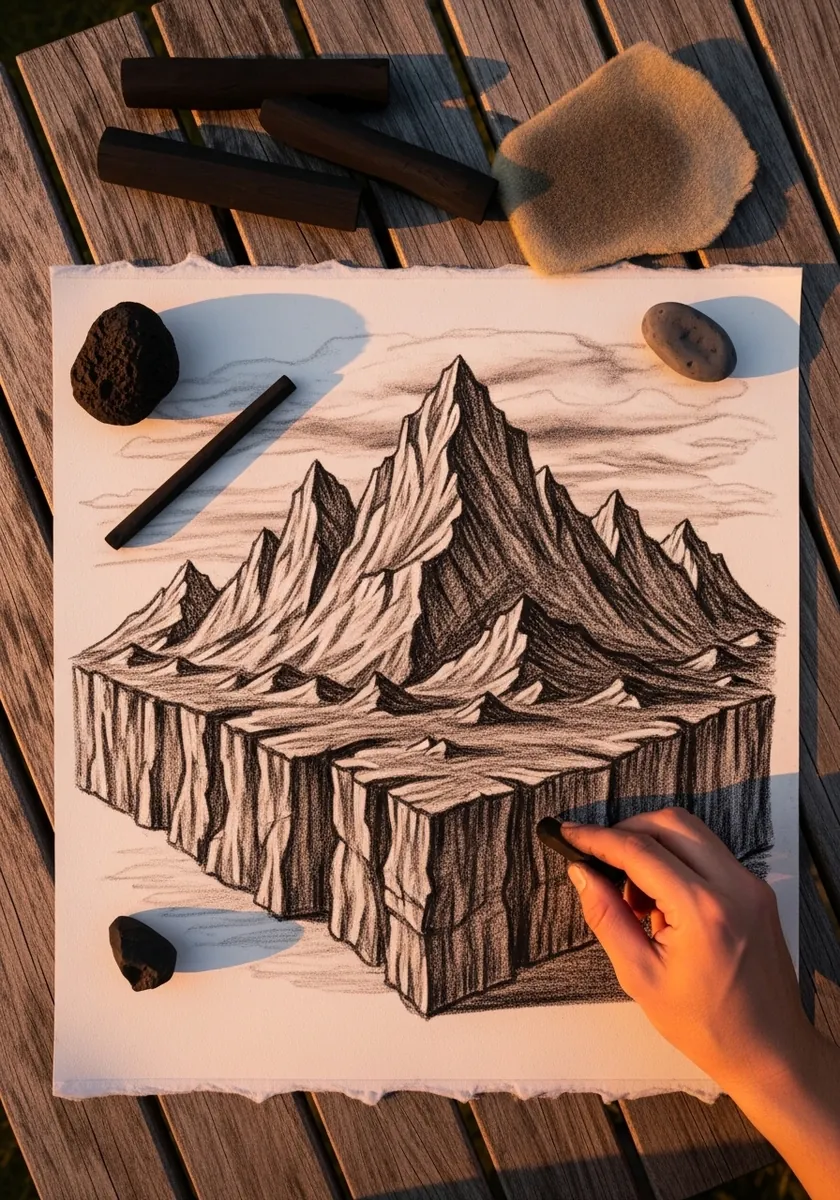
A mountain range sits on a cube of rock cut cleanly from the ground. The interest is entirely in the join: keep the mountains organic and jagged, then let the block’s sides be dead straight and flat, and shade them like a simple box.
15. Impossible Penrose Triangle
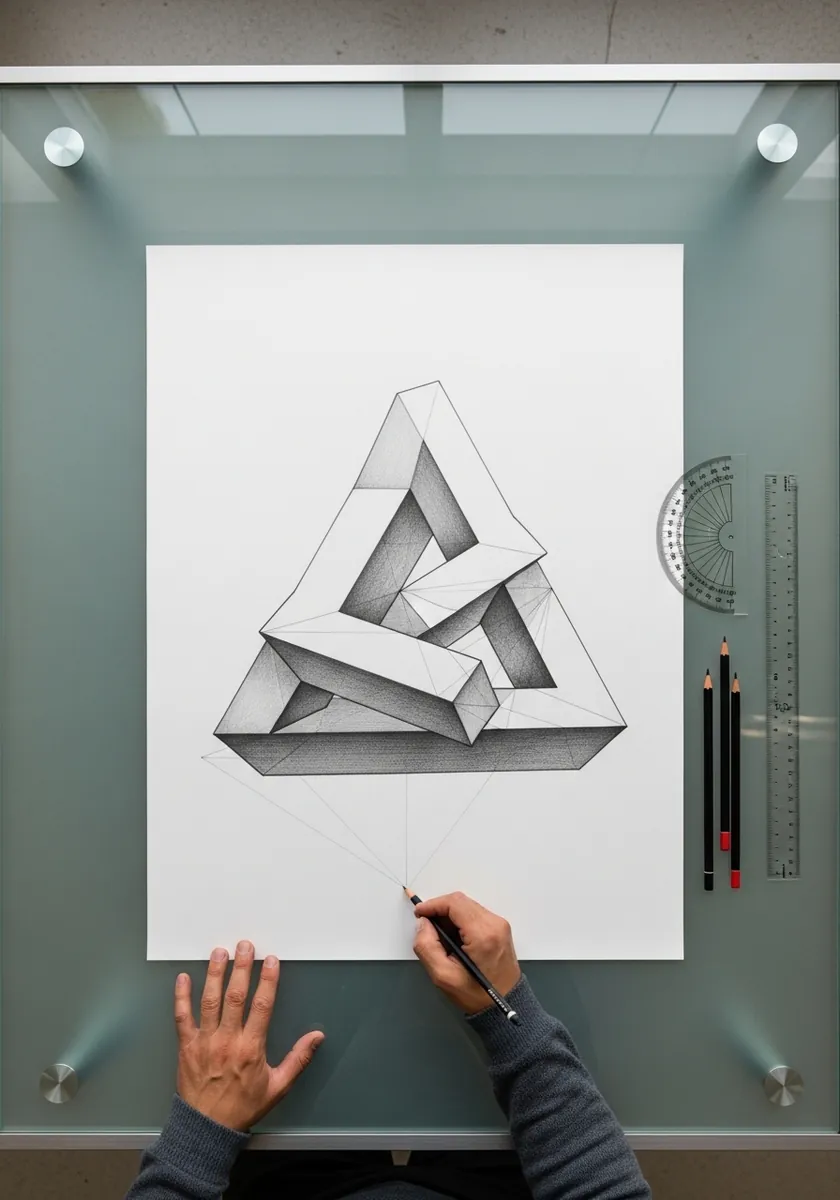
The classic impossible triangle, where three beams appear to join in a way that cannot exist. Draw it as three separate bars in isometric first and only join them at the very end. Shade each of the three faces a consistent value throughout.
16. Tree Ring Portal Into a Forest
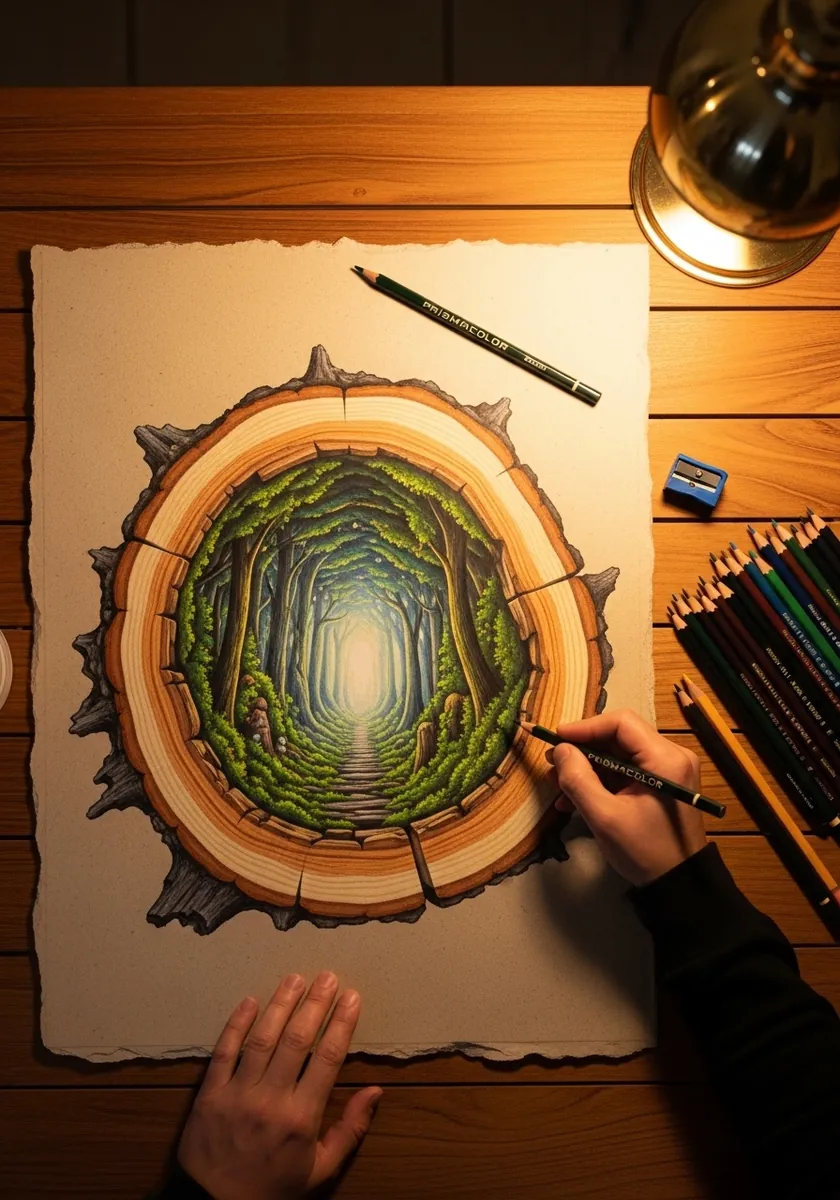
A cut tree trunk opens into a green forest path receding away. The rings around the opening are the frame, so draw them tight and concentric, then let the path inside get smaller and lighter as it recedes toward a bright end point.
17. Anatomical Heart on Aged Paper
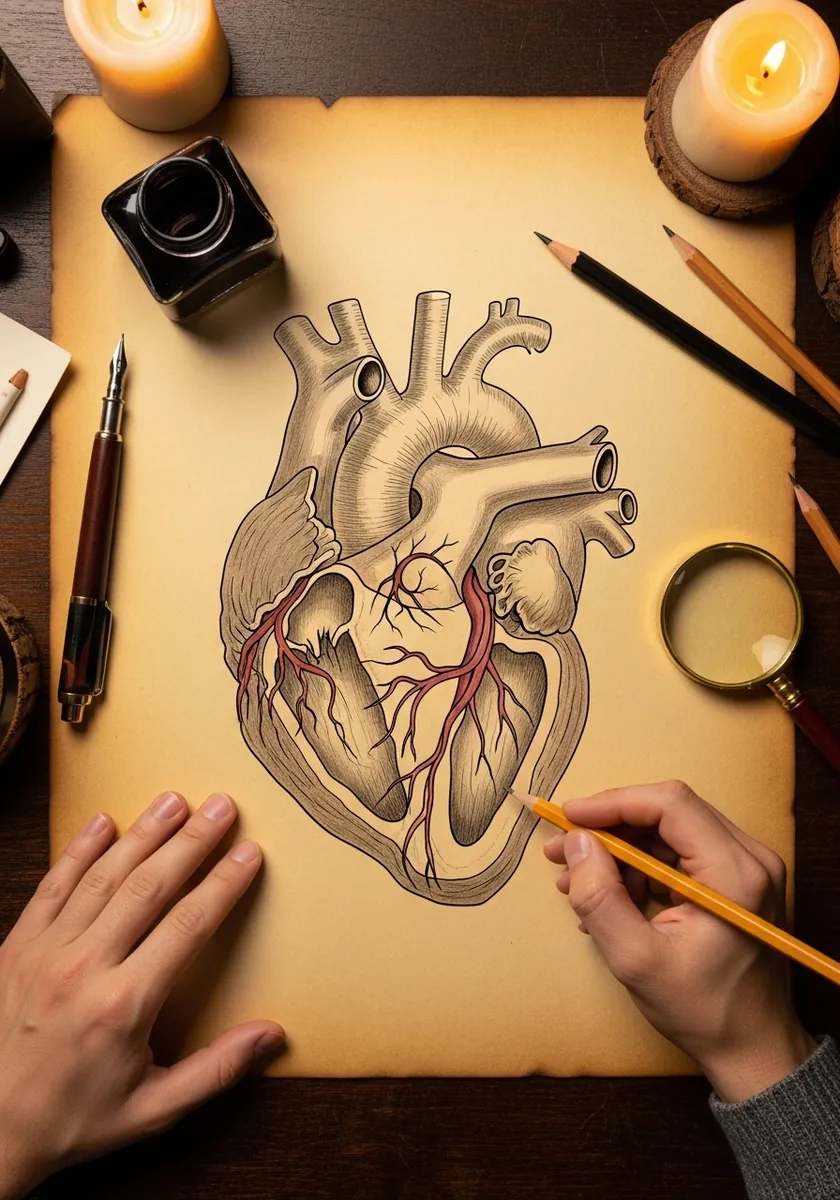
A human heart drawn as an old anatomical plate, with sepia line and a few red vessels. Keep the linework restrained and let one accent colour carry all the emphasis; too much red and it stops looking like a study.
18. Crumpled Paper Ball with a Cast Shadow
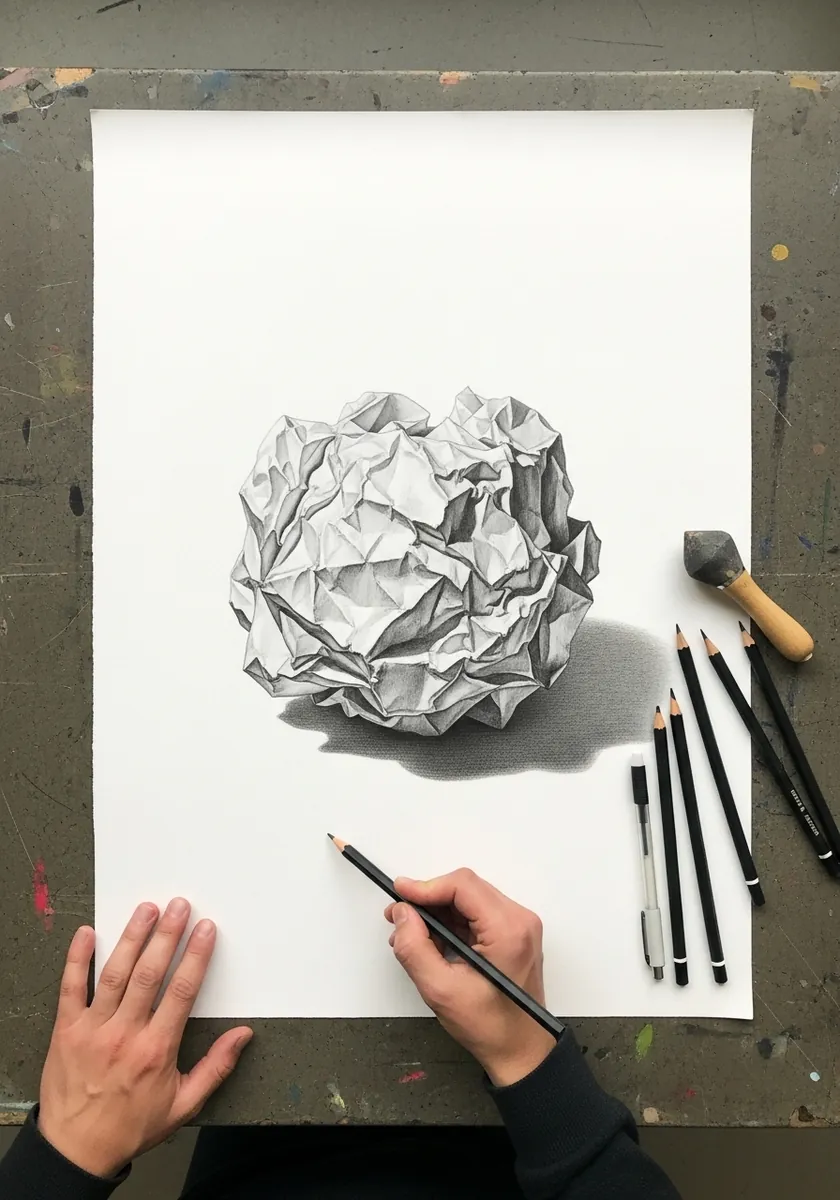
A ball of crumpled paper, drawn as dozens of small flat planes each catching light differently. This is the single best exercise for learning planes. Squint at a real crumpled ball and simplify each facet to one flat value.
19. Butterfly Study Sheet
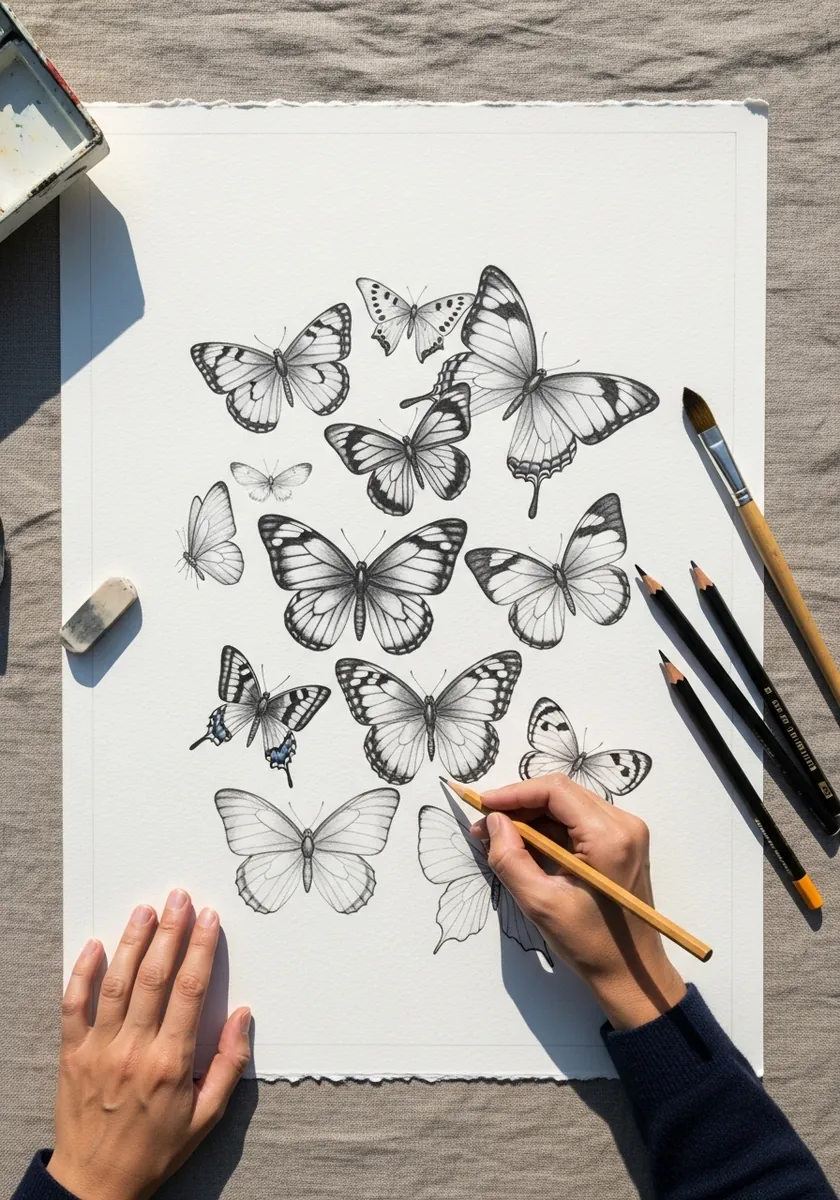
A page of butterflies drawn at different angles with varied wing patterns. Work from real reference for the vein structure, and draw one wing fully before mirroring it, since symmetry copied badly is worse than none.
20. Glowing Crystal in Cracked Ground
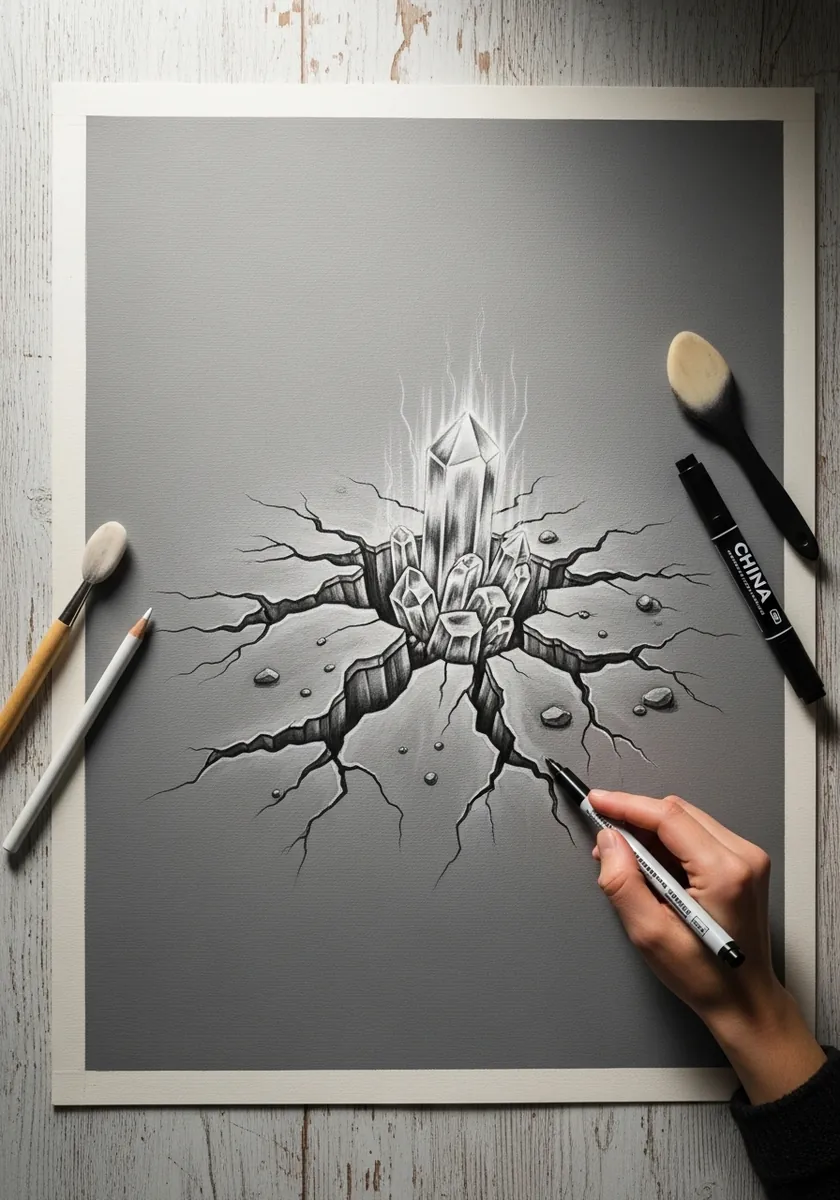
A crystal glows inside a network of cracks radiating outward. Work on gray paper and add the glow with a white pencil, layering it heaviest at the crystal and feathering outward, with the cracks getting finer as they travel.
21. City Skyline in Two Point Perspective
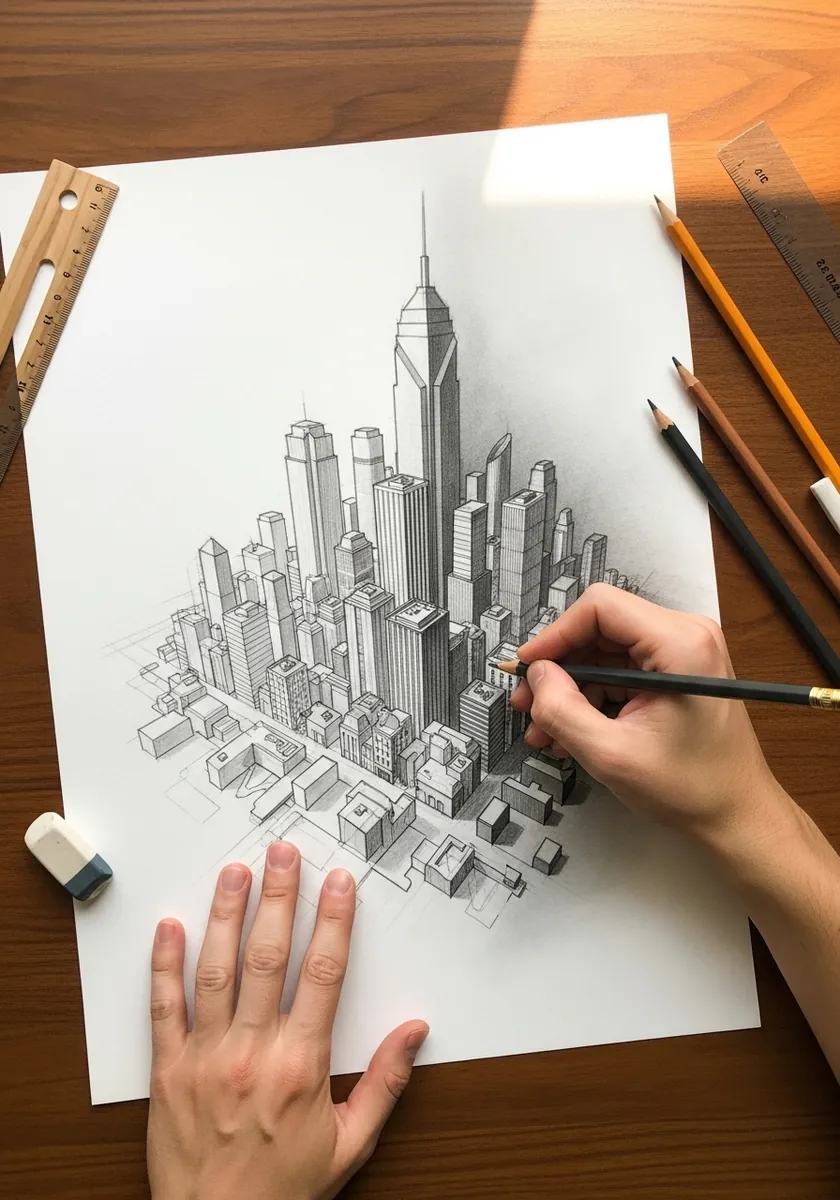
A cluster of skyscrapers drawn in two-point perspective. Set your horizon line and both vanishing points on the page before drawing a single building, and keep every horizontal edge pointed at one of those two points.
22. Sanguine Portrait of an Old Man
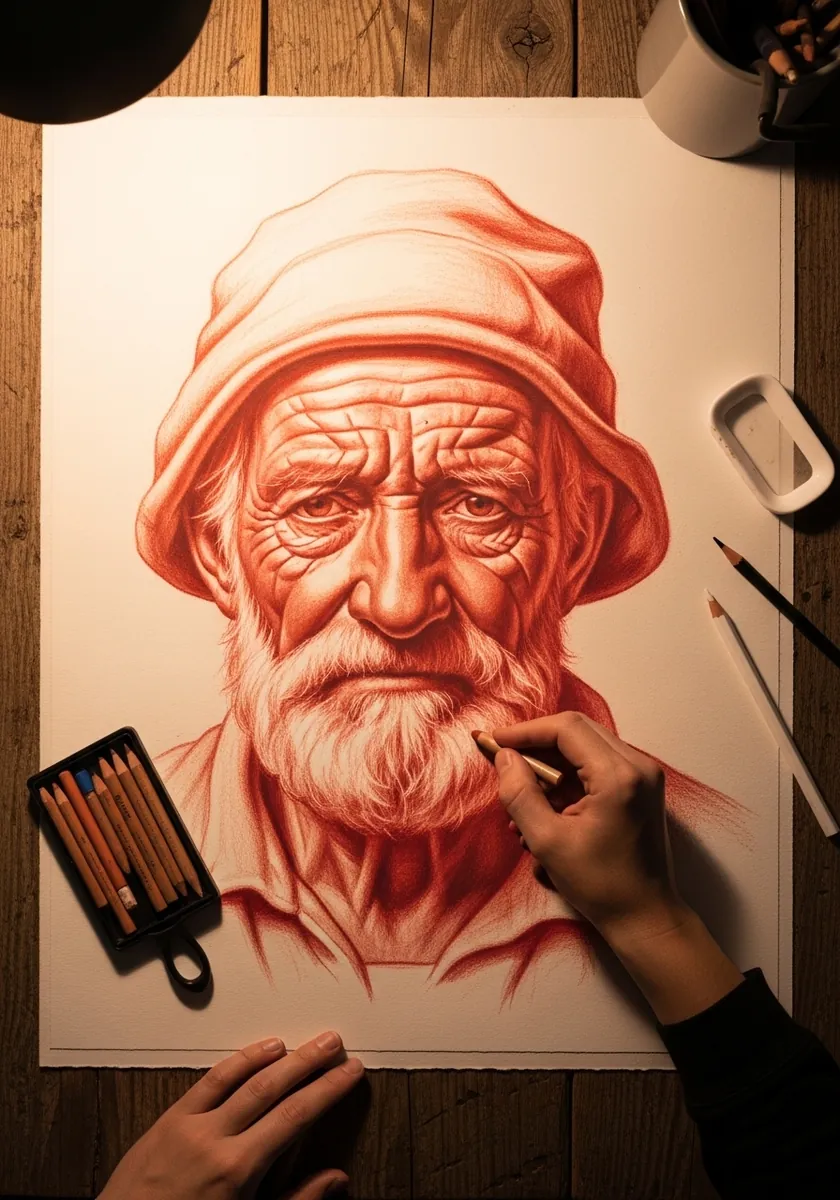
A weathered face drawn in red chalk, where every wrinkle is a small change of plane. Follow the direction of each fold with your strokes rather than hatching uniformly, and keep the beard loose so it does not compete with the eyes.
23. Small Bird on a Branch
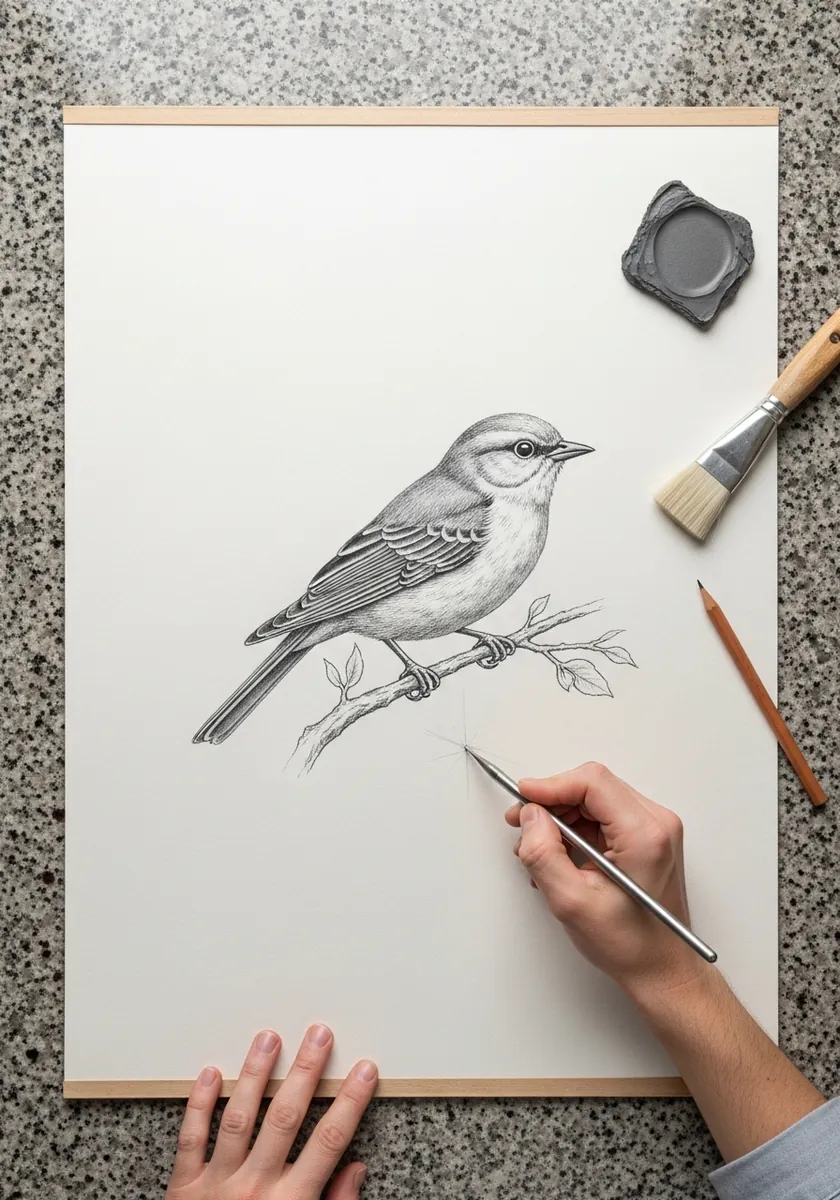
A quiet, simple study of a small bird. Draw the body as one oval and the head as a smaller one overlapping it, get the feather rows as overlapping arcs, and leave a lot of the page empty.
24. Astronaut Floating on Kraft Paper
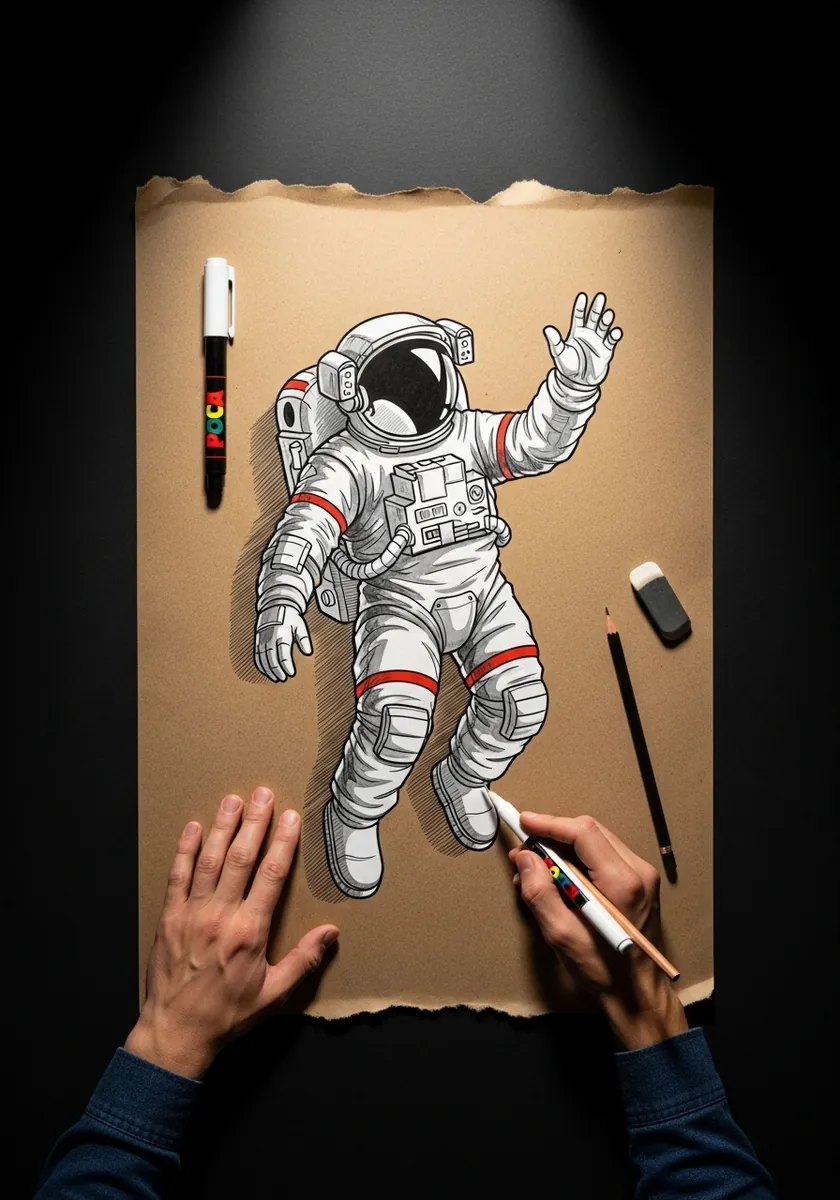
An astronaut drawn in white pen on brown kraft, with a red accent on the suit. Kraft supplies the mid-tone, so use white only where light actually falls and let the paper stay as every shadow.
25. Geometric Mandala with a Compass
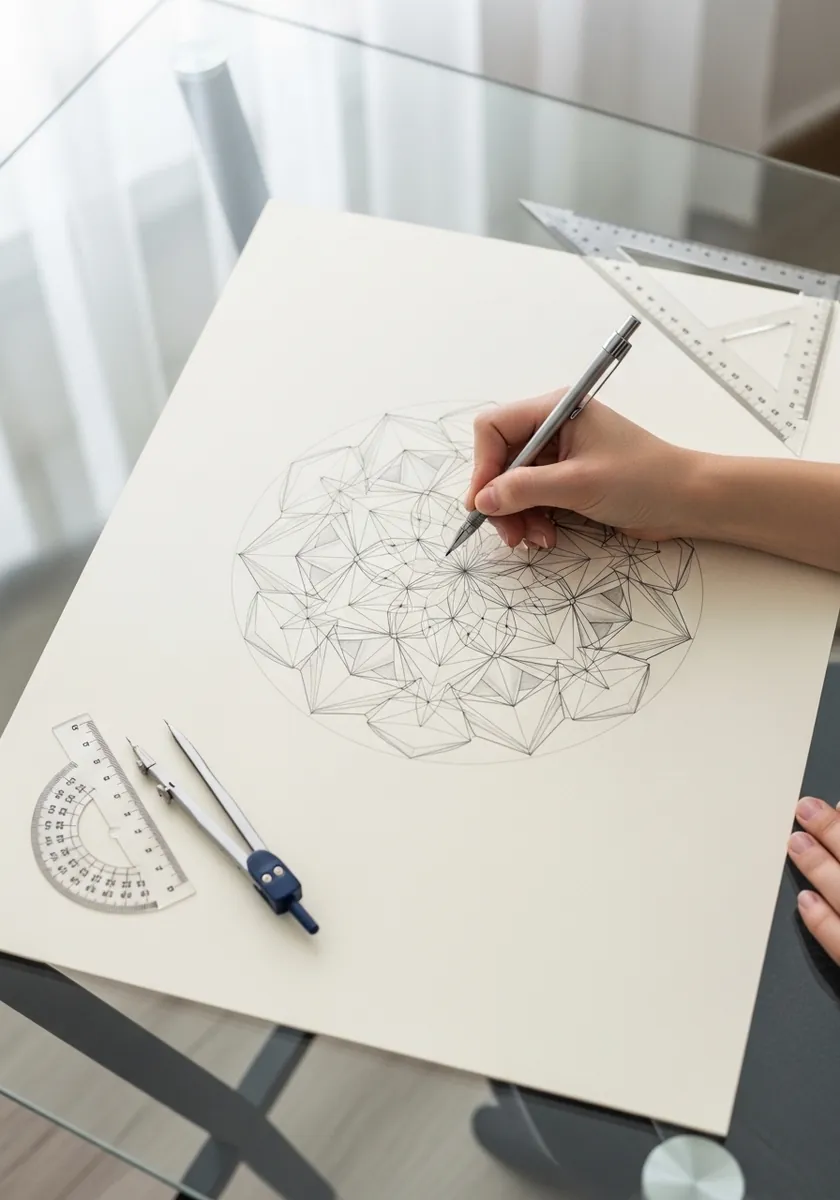
A mandala built entirely with compass and protractor rather than freehand. Mark your center, draw the outer circle, then divide it into equal segments with the protractor before adding any motif. Accuracy at this stage decides everything after.
26. Tiger Roaring Through Torn Paper
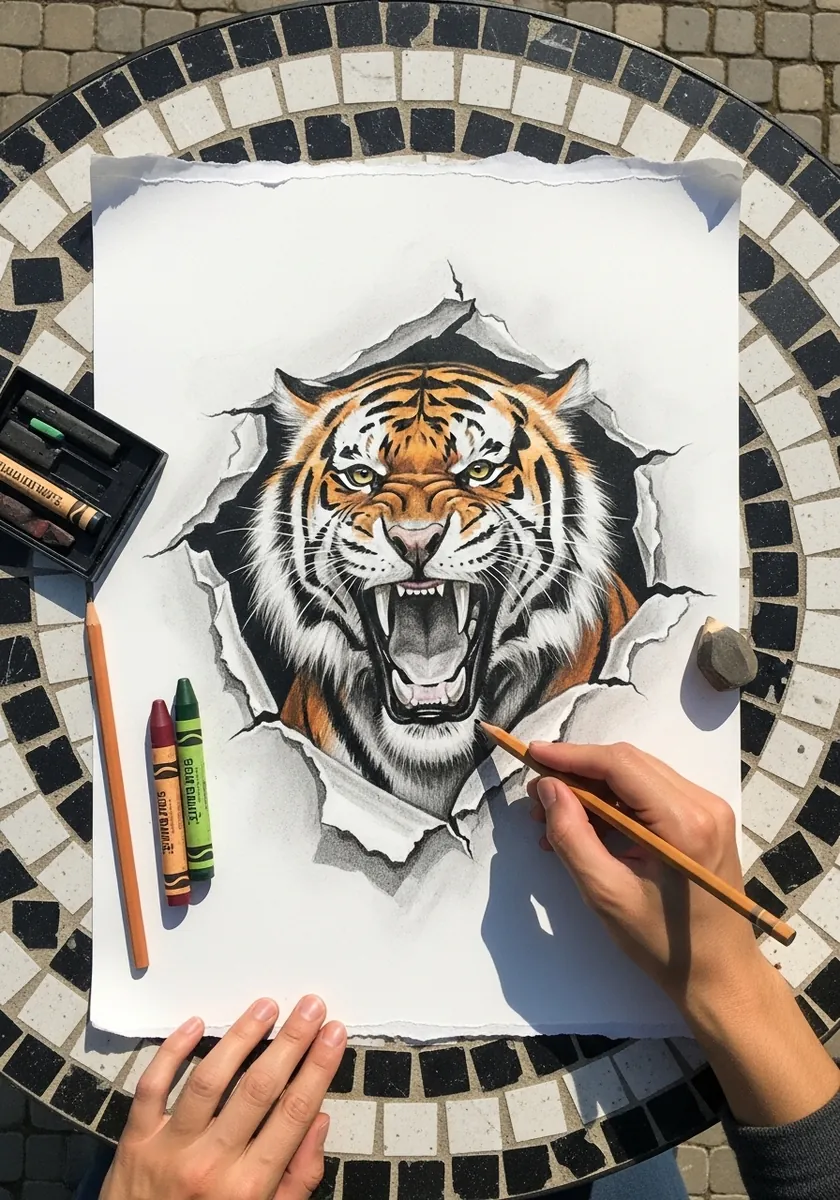
A tiger’s head bursts through a tear with its whiskers crossing onto the flat sheet. Colour the tiger fully but leave the torn edge in plain graphite; the unpainted edge reads as real paper and strengthens the illusion.
27. Sunflower Field in Oil Pastel
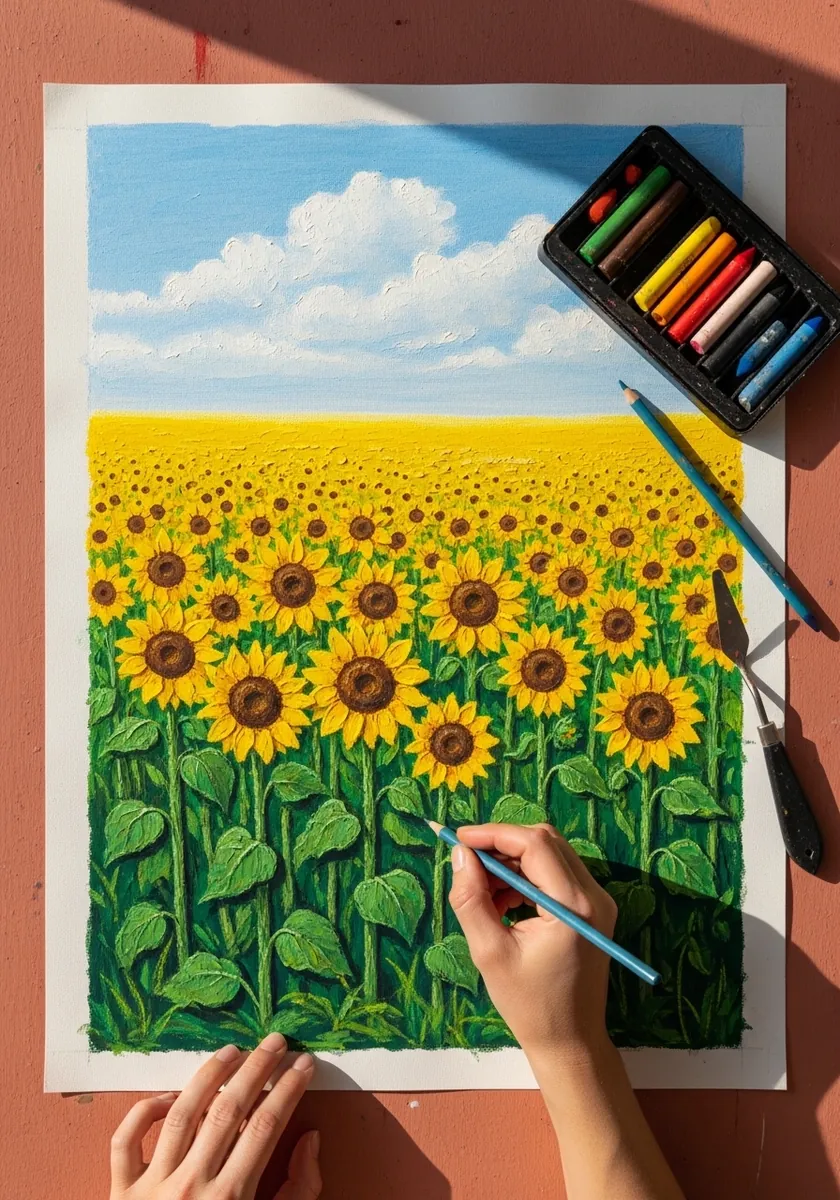
A field of sunflowers in oil pastel, the one full-colour piece in this set. Lay the sky first with the flat of the pastel, then the field, and add individual flower heads last with the tip so they sit clearly in front.
28. Clockwork Gear Mandala
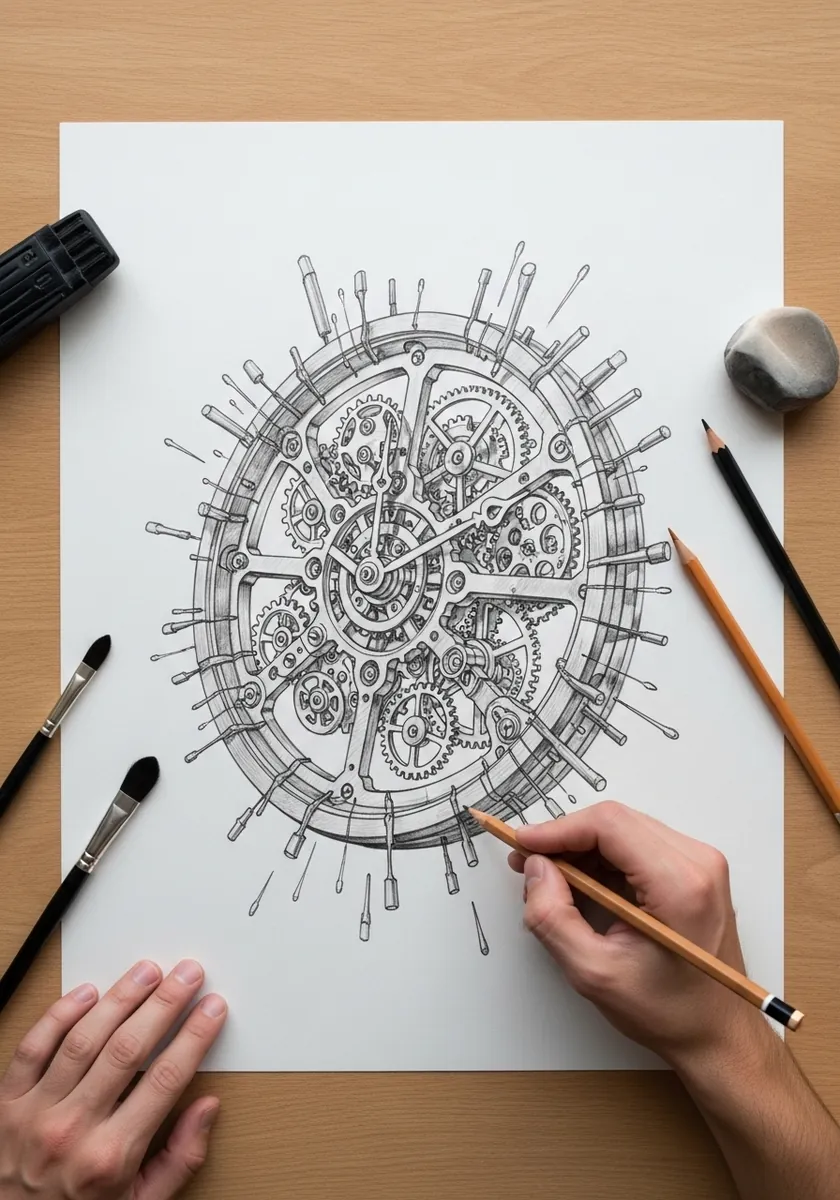
Interlocking gears arranged in a circular mandala. Draw the pitch circles first and place the teeth on them, and make sure adjacent gears actually mesh; a gear drawing where the teeth do not line up is immediately obvious.
29. Charcoal Ocean Wave
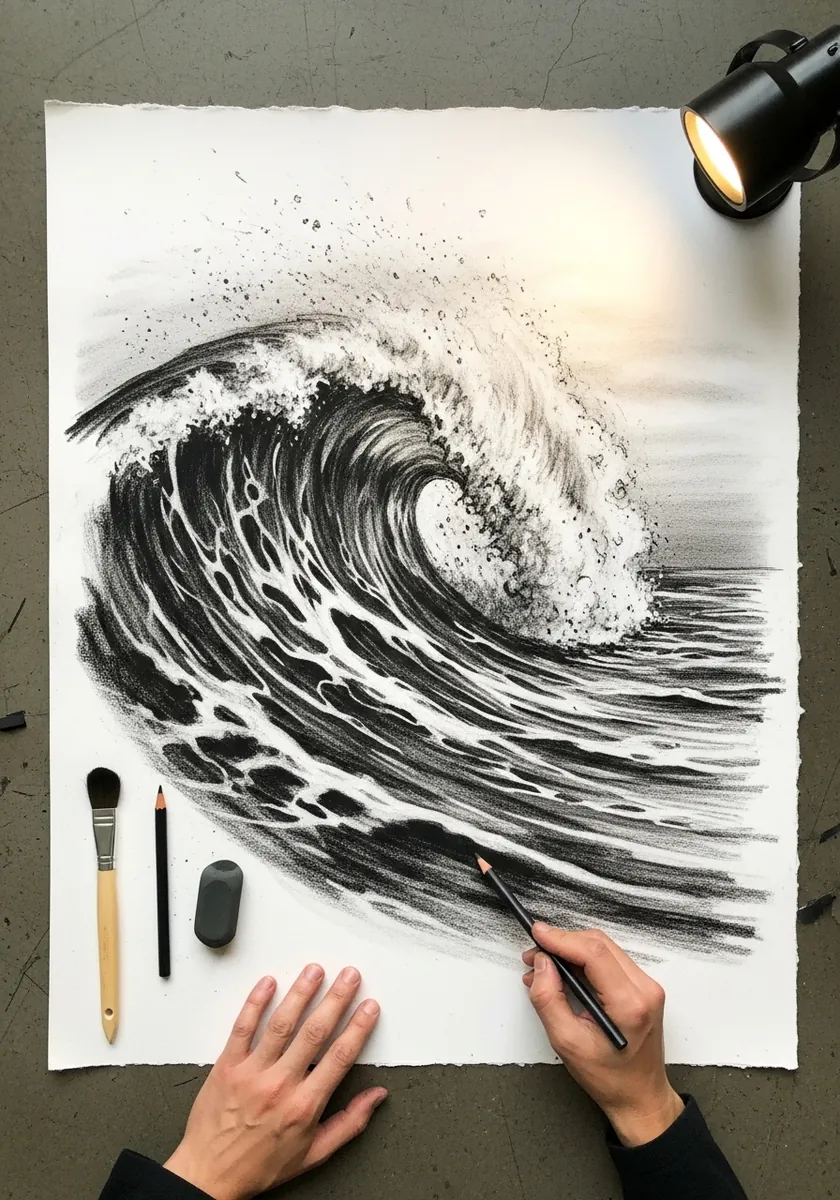
A big wave curling over, drawn in charcoal with the foam lifted back out. Cover the whole area in charcoal first, then pull the white water out with a kneaded eraser rather than trying to draw around it.
30. Architectural House Cutaway
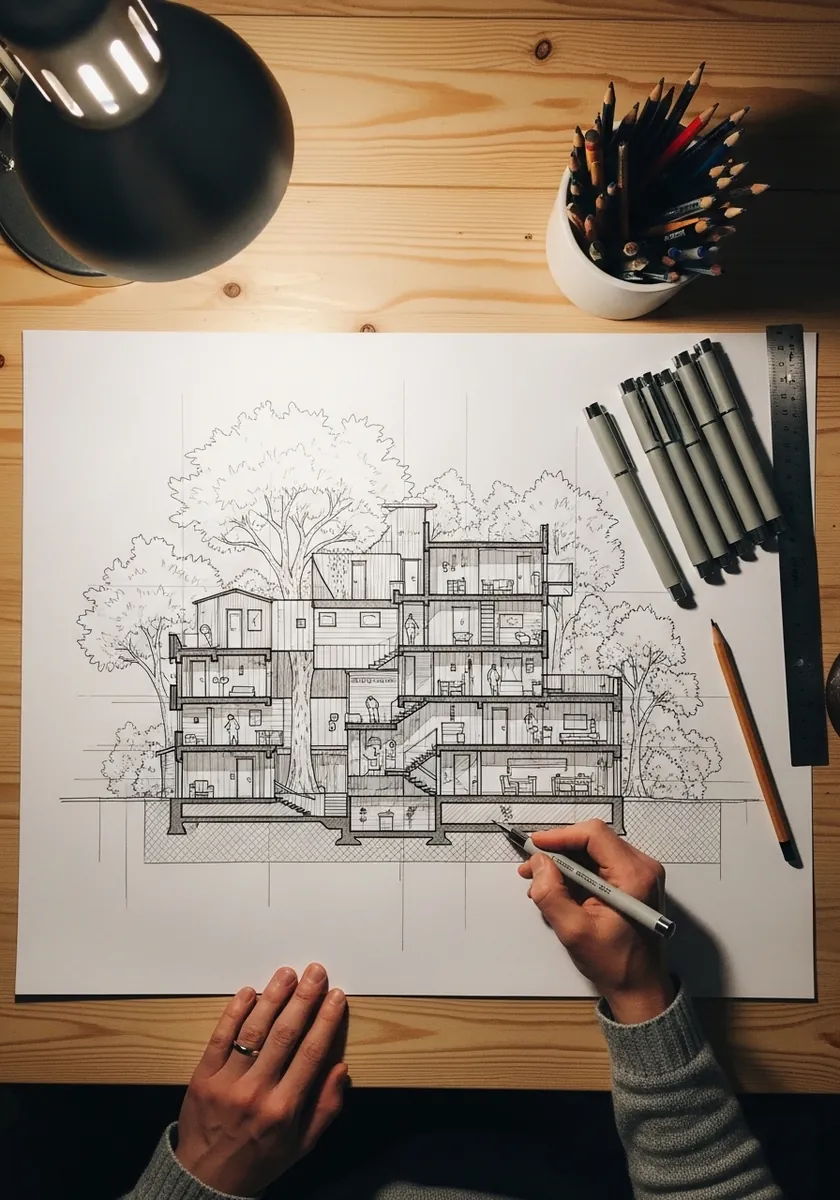
A house sliced open to show every room, drawn in fine pen. Establish the floor levels as parallel horizontals first, then build the rooms between them, and keep the furniture small and simple so the structure stays readable.