Every beetle drawing starts with one line: the seam down the center of the back where the two elytra meet. Elytra are hardened forewings that form a wing case. Draw that seam first, build both halves symmetrically from it, and attach all six legs to the thorax.
Key takeaways
- Elytra are hardened forewings, and the straight seam where they meet is the defining beetle feature.
- All six legs attach to the thorax, never to the abdomen, which is the commonest anatomical error.
- The body has three visible parts: head, pronotum shield behind it, and the elytra covering the abdomen.
- A stag beetle's antlers are enlarged mandibles, so they hinge from the mouth rather than the forehead.
- Jewel beetle iridescence is structural color from shell microstructure, so it shifts with viewing angle.
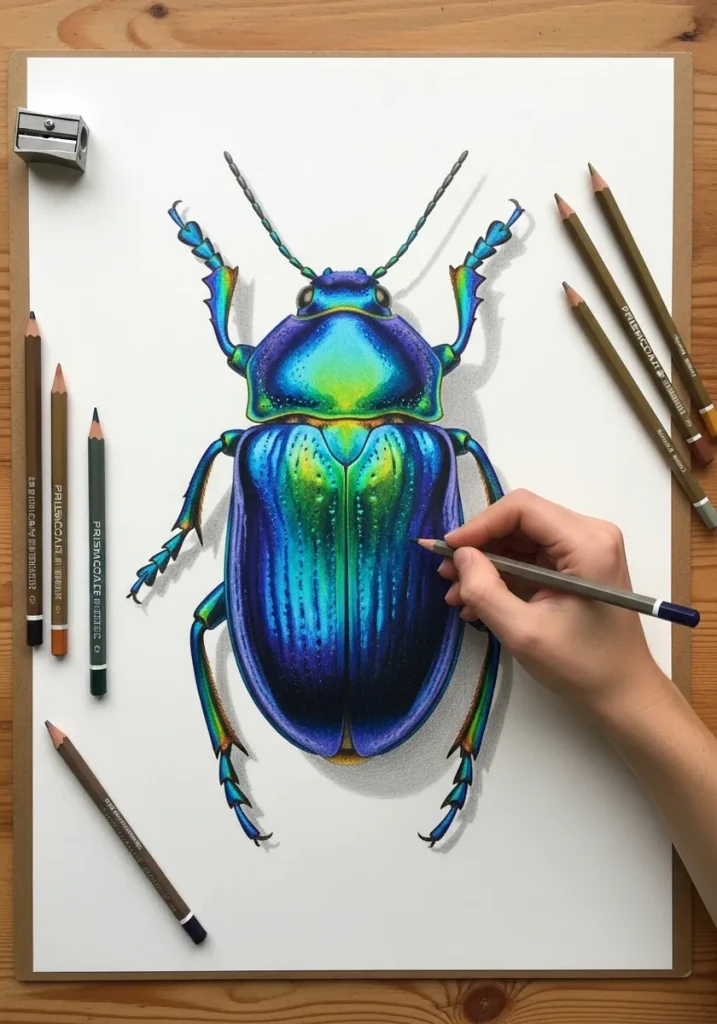
Every beetle drawing starts with one line. The seam down the center of the back, where the two elytra meet, sets the symmetry for everything else. Elytra are forewings hardened into rigid cases, and that straight central join is the feature that instantly identifies a beetle rather than any other insect.
The second rule fixes the commonest error in insect art. All six legs attach to the thorax, three on each side, never to the abdomen. Once you know that, badly drawn beetles become impossible to unsee, because legs sprouting from the elytra are everywhere.
These thirty-one studies cover stag beetles, rhinoceros beetles, scarabs, jewel beetles and ladybirds, worked in stippled ink, watercolor, colored pencil, lino print, gouache and gold leaf. If you want more insect practice, bee drawing ideas and butterfly drawing ideas use the same close observation.
Several pieces pair the insect with foliage or place it on a specimen plate, so botanical leaf tracing and nature watercolor ideas are useful groundwork, while the ornamental scarabs borrow directly from mandala construction.
Compiled by the GS Art Zone editorial team. Last updated August 2026. Each idea is paired with the specific step that produces the effect, so you can go from the reference straight to paper.
What You Need Before You Start
- Fine liners in 0.05 and 0.1, since beetle work needs finer nibs than almost any other subject
- A ruler or folded paper to check symmetry, because the two elytra must mirror each other exactly
- Burnished colored pencils or gouache for the hard glossy shell, which needs a sharp specular highlight
- A magnifier or a real specimen photo, as leg segment counts are impossible to guess correctly
- Black or kraft paper with white and gold pens for the reversed and metallic studies later on
1. Green Scarab with Splash Background
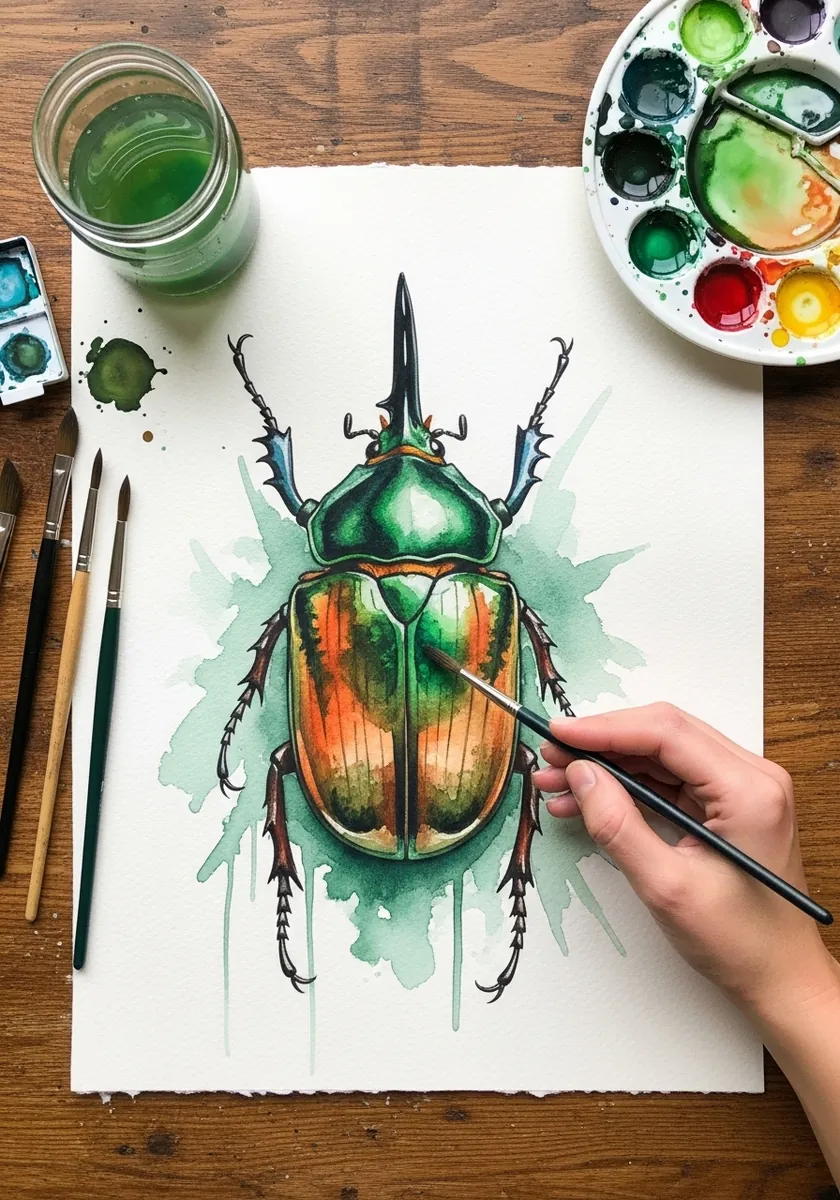
Begin here because the loose background forgives a great deal. Draw the elytra seam and get both halves symmetrical, then paint the shell in green over orange letting the two colors mix on the paper. Let the splash behind stay completely uncontrolled by comparison.
2. Stippled Stag Beetle in Fine Ink
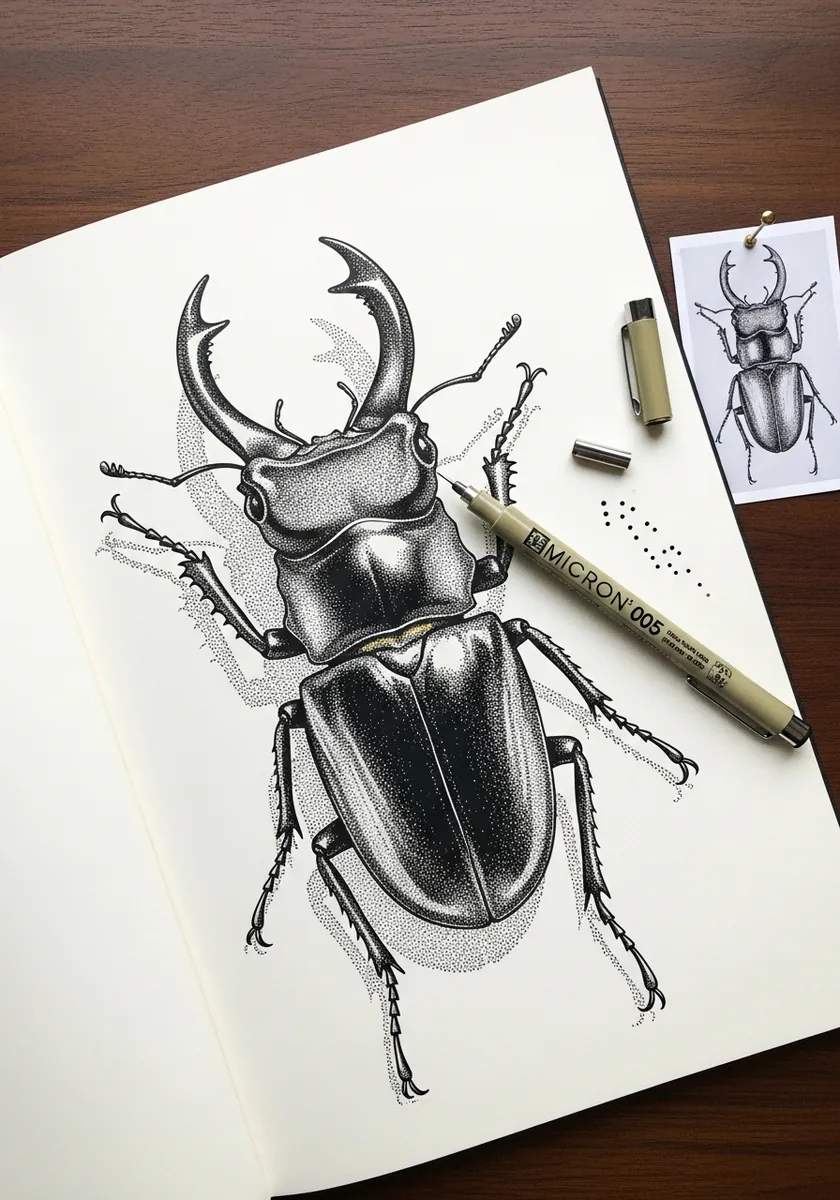
Those branching antlers are enlarged mandibles, which means they hinge from the mouth at the front of the head rather than growing from the top. Stipple the shell densest along the sides where it curves away, and leave the domed center almost bare to suggest gloss.
3. Graphite Rhinoceros Beetle Study
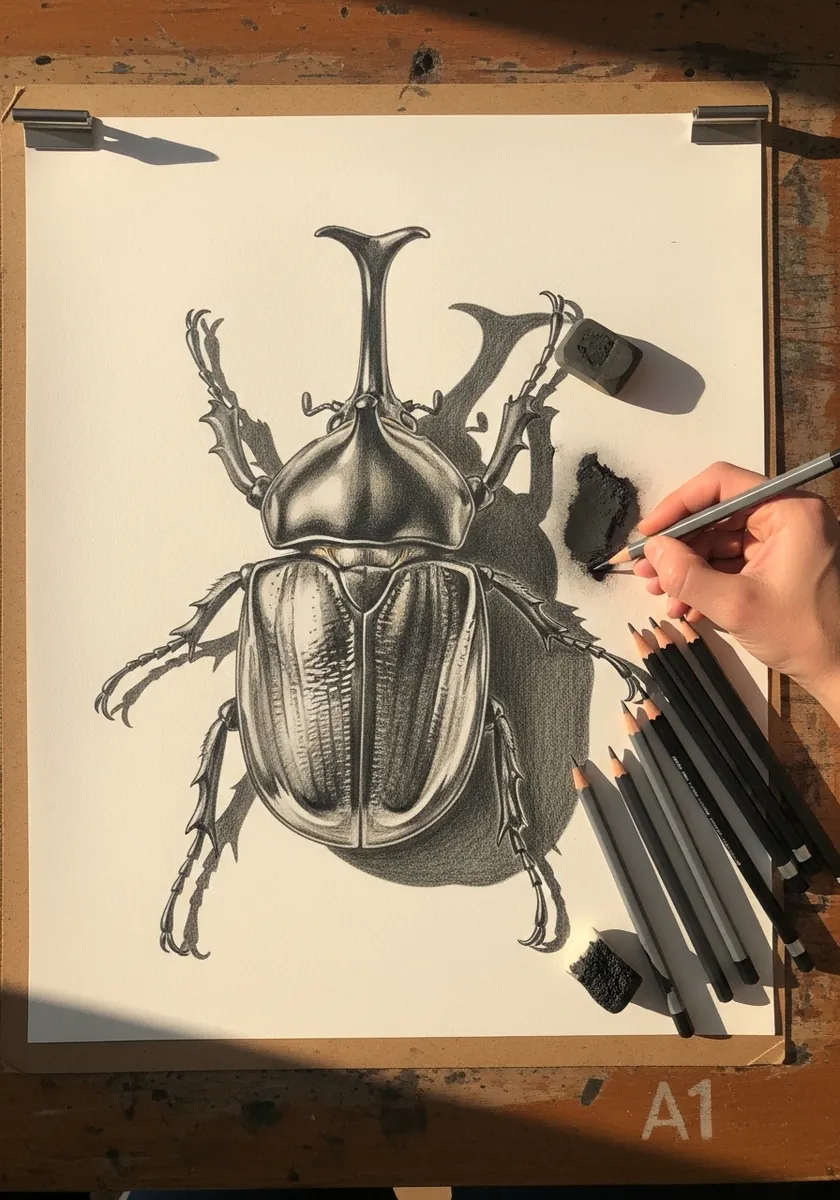
A rhinoceros beetle horn projects forward and upward from the head, and its curve is the whole character of the animal. Build the shell with smooth graphite gradients, then cut the elytra ridges in as fine parallel grooves running front to back.
4. Bold Folk Ladybird in Red and Black
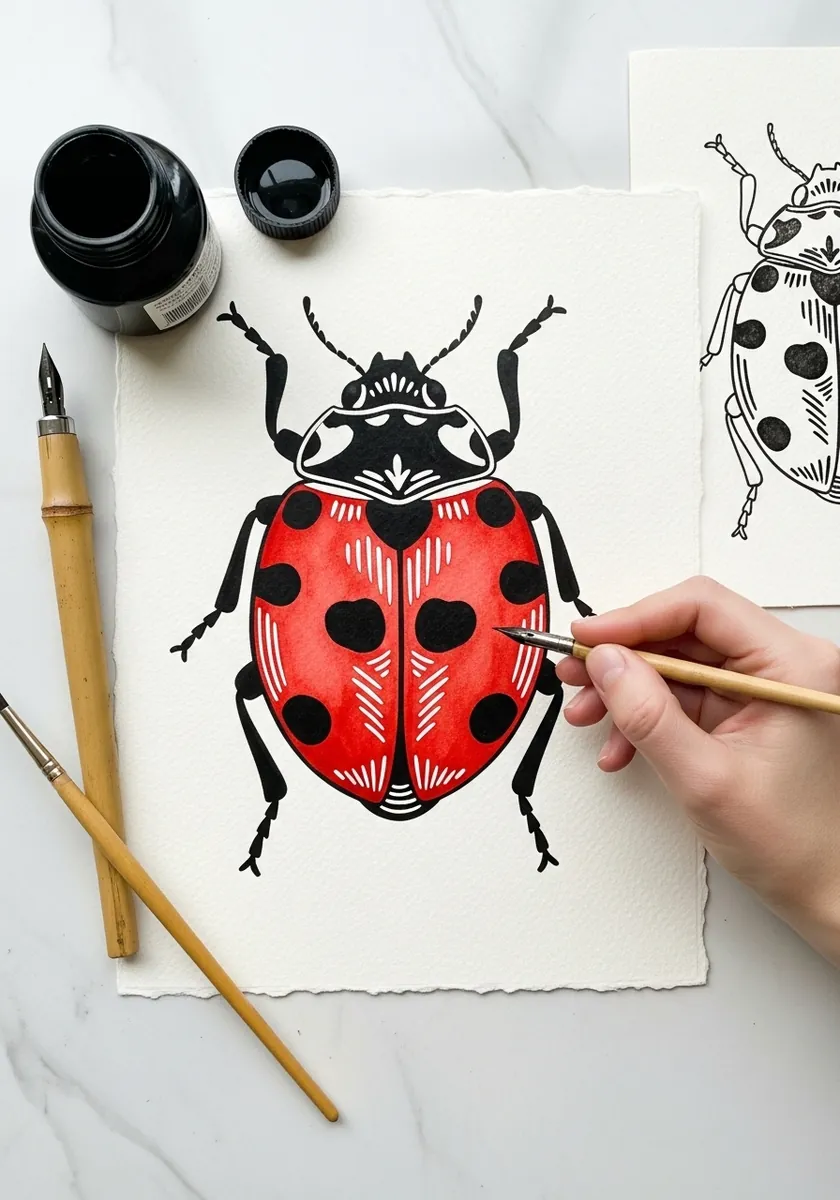
Folk treatment strips a subject to flat shape. Keep the red completely unshaded, place the black spots symmetrically either side of the seam, and add the fine white line work last as decoration rather than as any attempt at texture.
5. Iridescent Blue Beetle in Colored Pencil
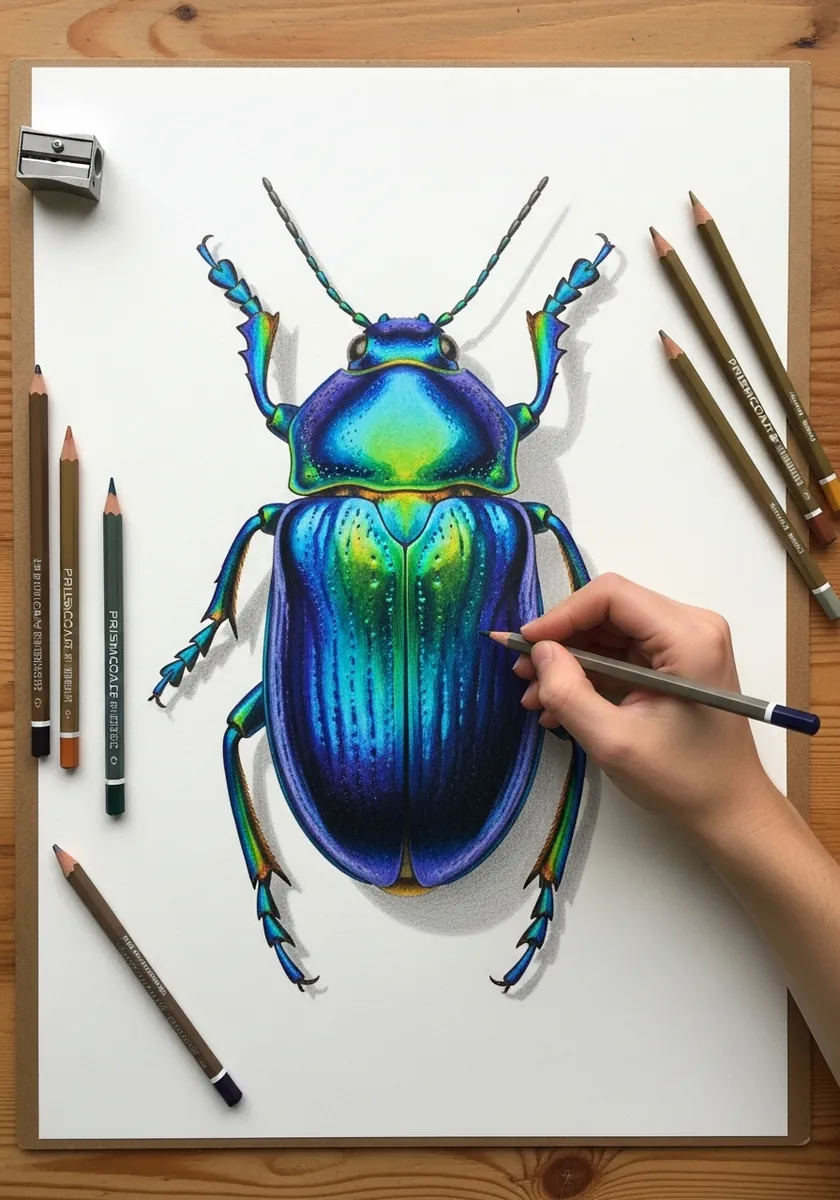
Iridescence comes from the shell’s microscopic layers rather than pigment, which is why it shifts as you move. Layer blue, green and violet in bands across the elytra, burnish them together, and finish with one small hard white highlight on the dome.
6. Tribal Pattern Beetle in Black Marker
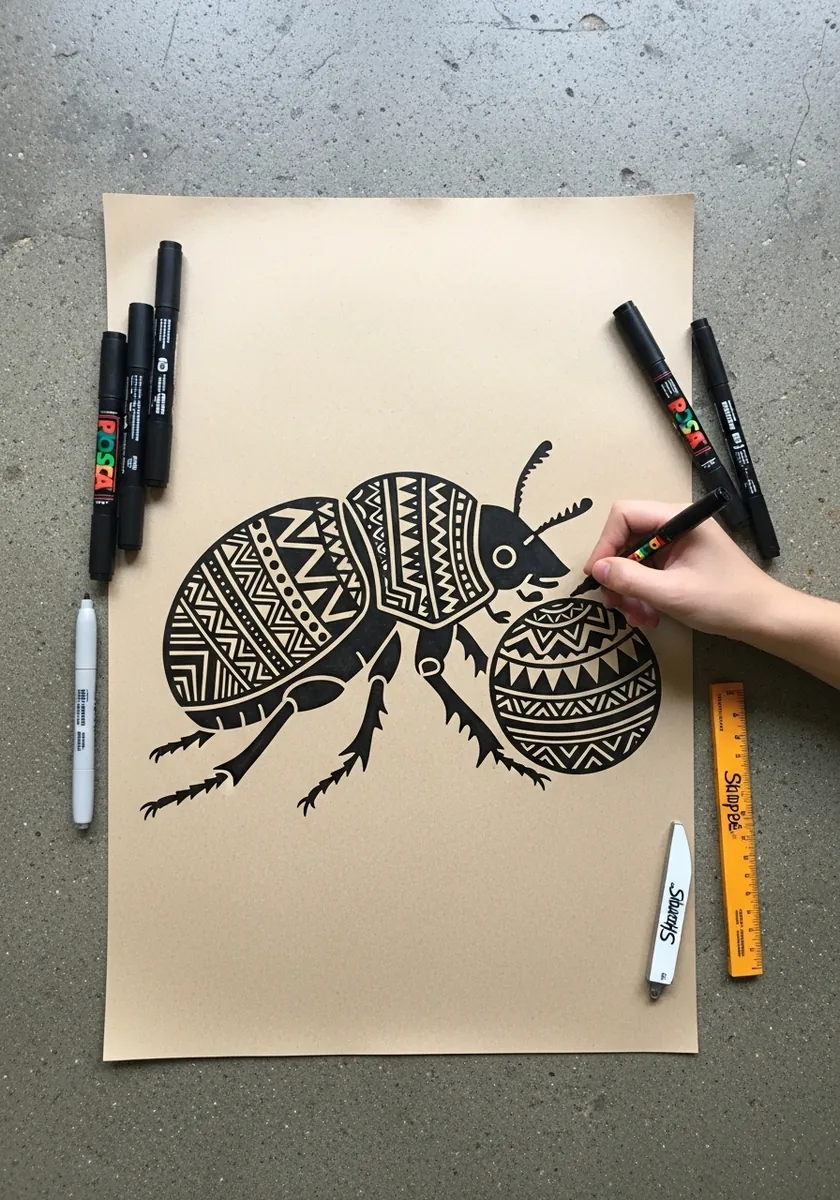
Pattern inside a fixed silhouette is a good discipline for anyone who over-renders. Ink the beetle outline heavily first and treat it as a container that nothing crosses, then fill the pronotum and each elytron with different geometric motifs. Keep every line the same weight from start to finish.
7. Loose Watercolor Beetle with Drips
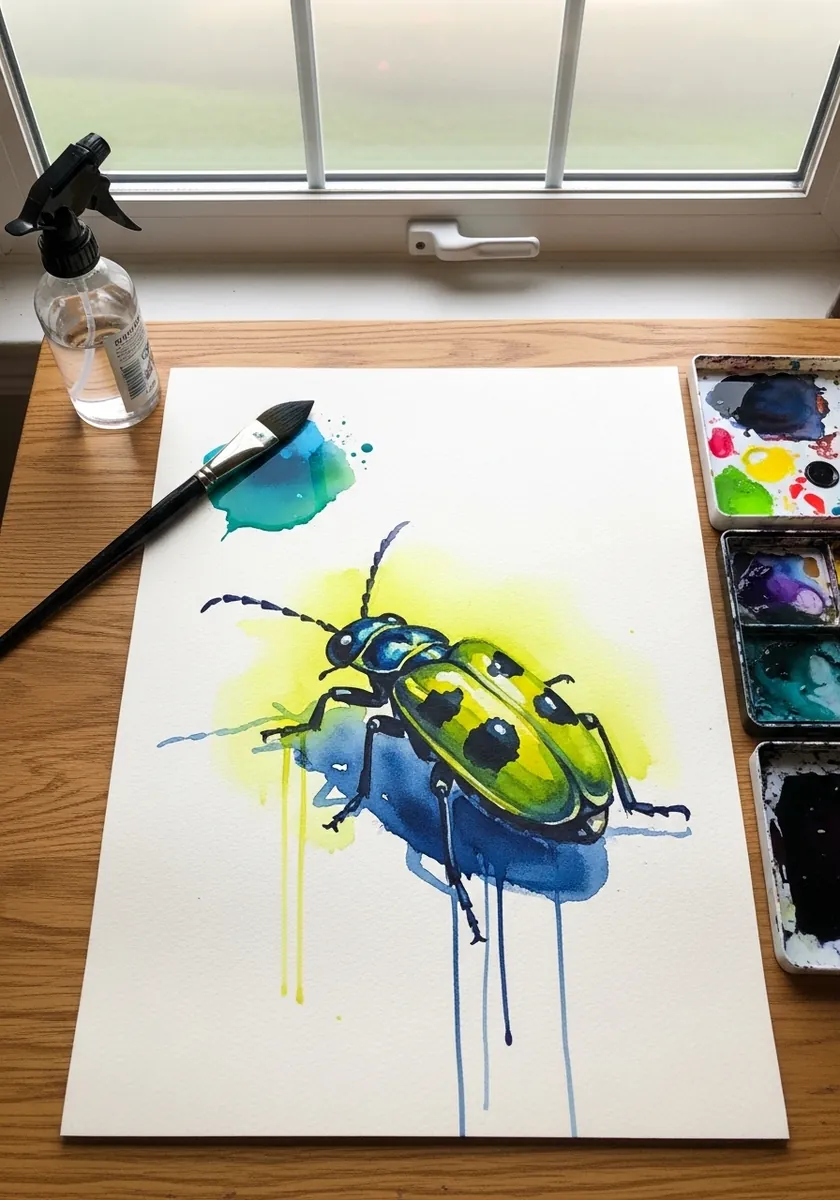
Wet on wet needs a plan before it needs skill. Draw the beetle lightly in pencil, wet only that shape, then drop blue and yellow in and let them mix on the paper. Tilt the board once and the pigment will run downward as drips.
8. Silver Beetle on Gray Paper
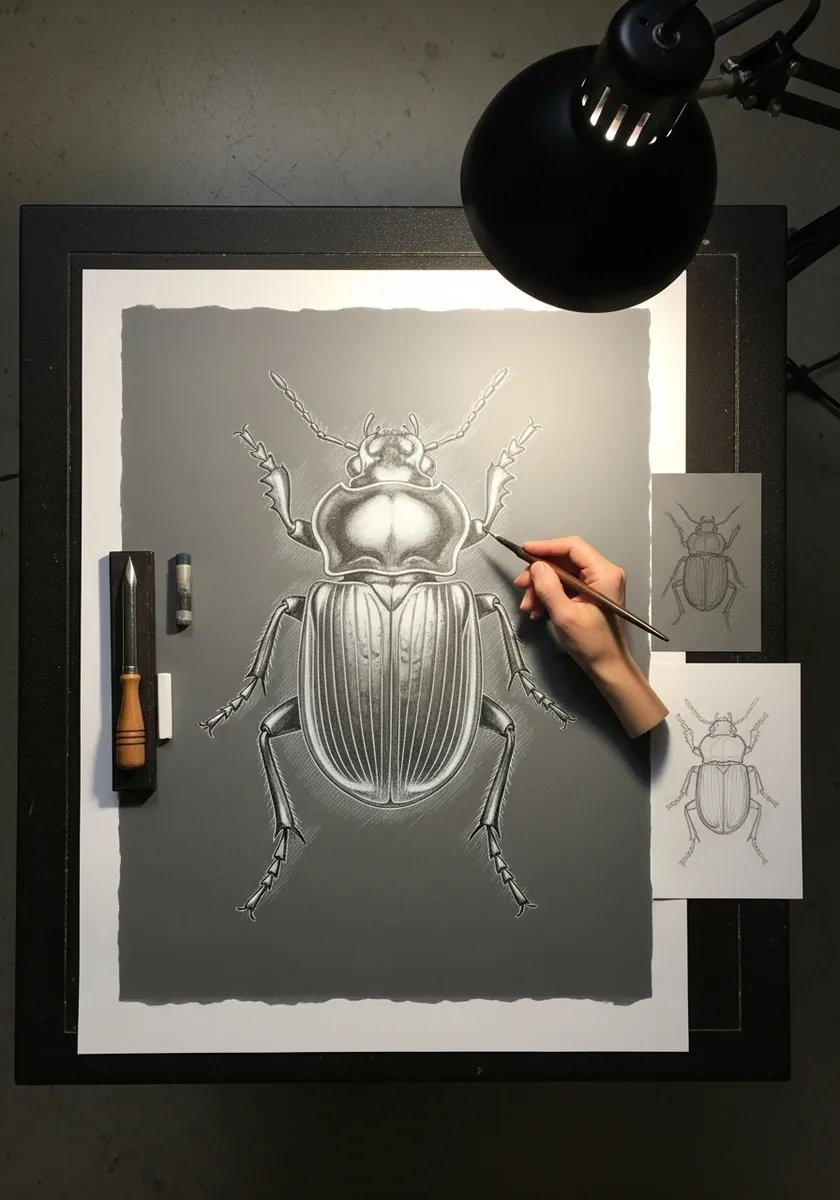
Toned paper hands you the mid value for free, which suits a hard glossy shell perfectly. Add white only along the top of the pronotum and the raised center of each elytron, and let the gray paper stay as the whole shadow side.
9. Ukiyo-e Style Longhorn Beetle
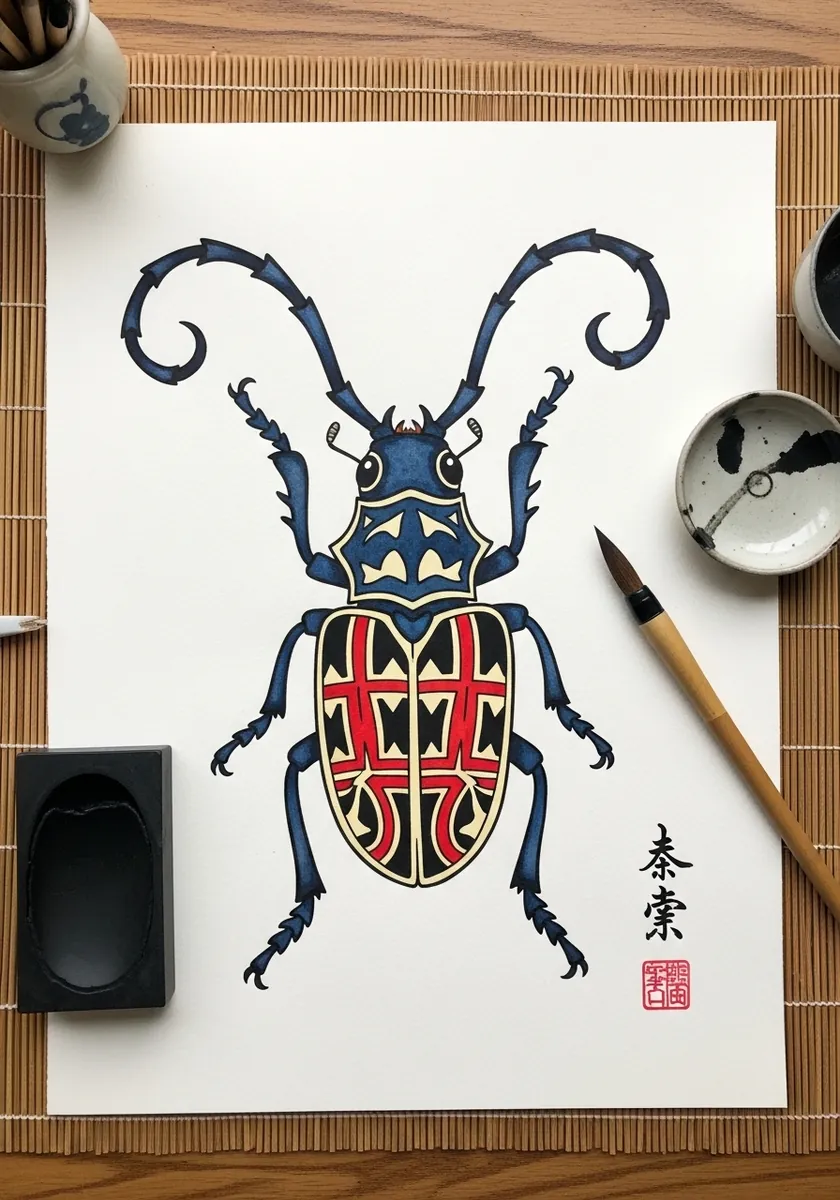
Longhorn beetles are named for antennae that can exceed their own body length. Draw those as long tapering curves segment by segment, and keep the shell in flat blocks of color with a firm outline, exactly as a woodblock print would.
10. Oil Painted Beetle with Amber Shell
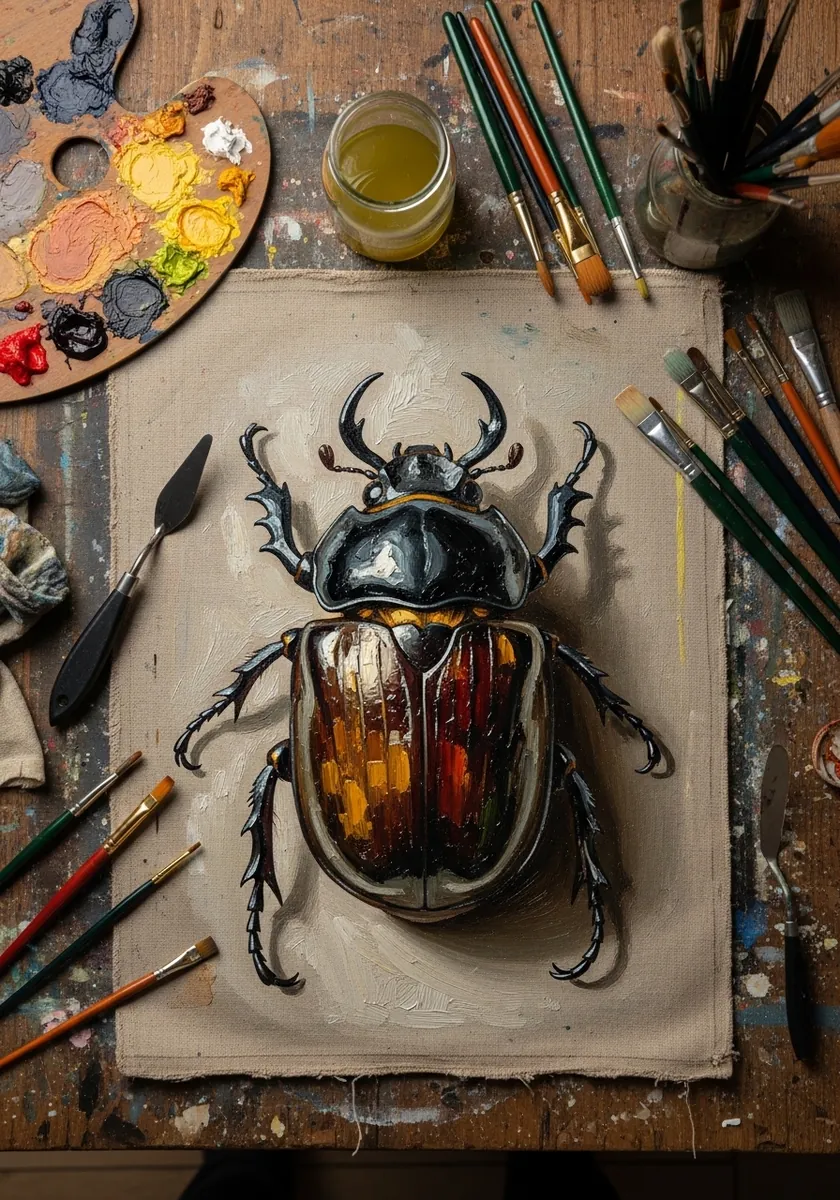
Impasto and hard shell should not work together and yet they do. Build the elytra with loaded strokes running front to back, then scrape a highlight through the wet paint with the knife edge, revealing the underlying color as a glint.
11. Blue Beetle with Radiating Line Burst
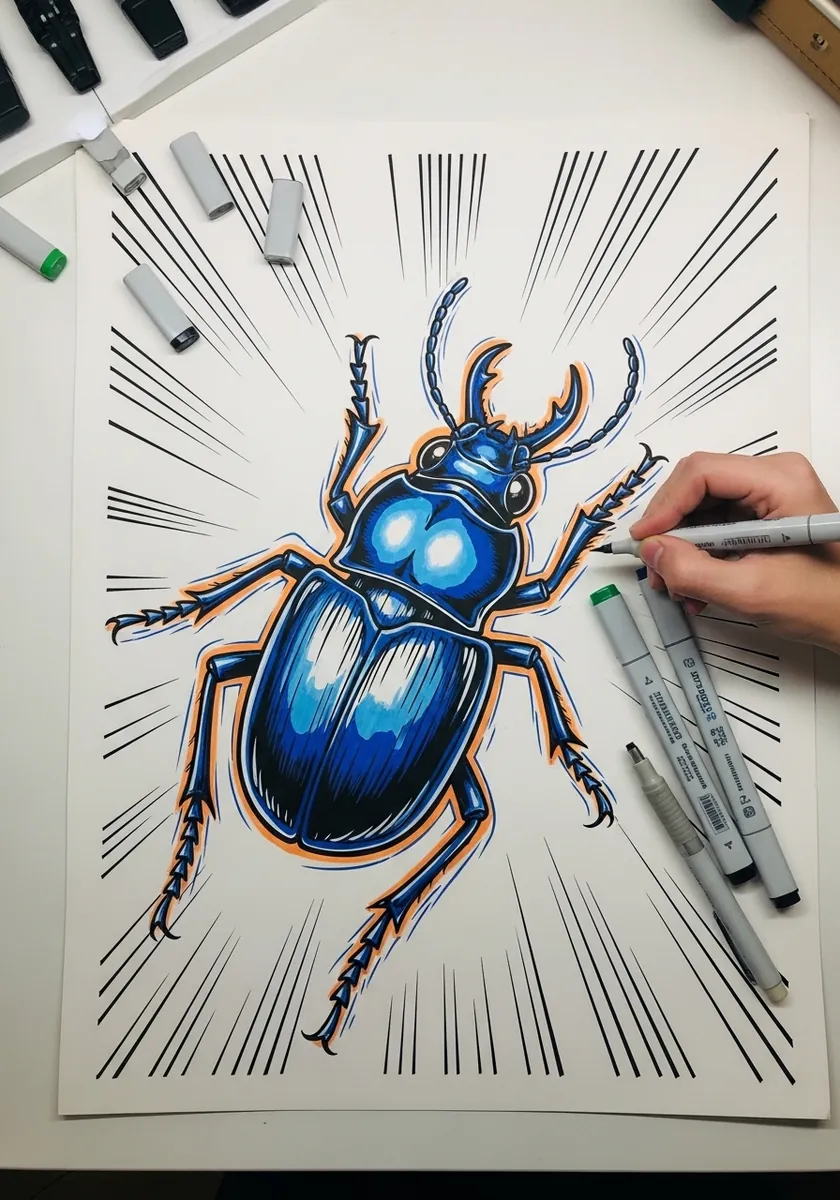
Radiating lines must be ruled from a single point or they lose all their force immediately. Set that point directly beneath the beetle and rule outward in every direction, then keep the insect’s own outline crisp and unbroken. It will read as sitting clearly in front of all that motion.
12. Rainbow Beetle with Small Flowers
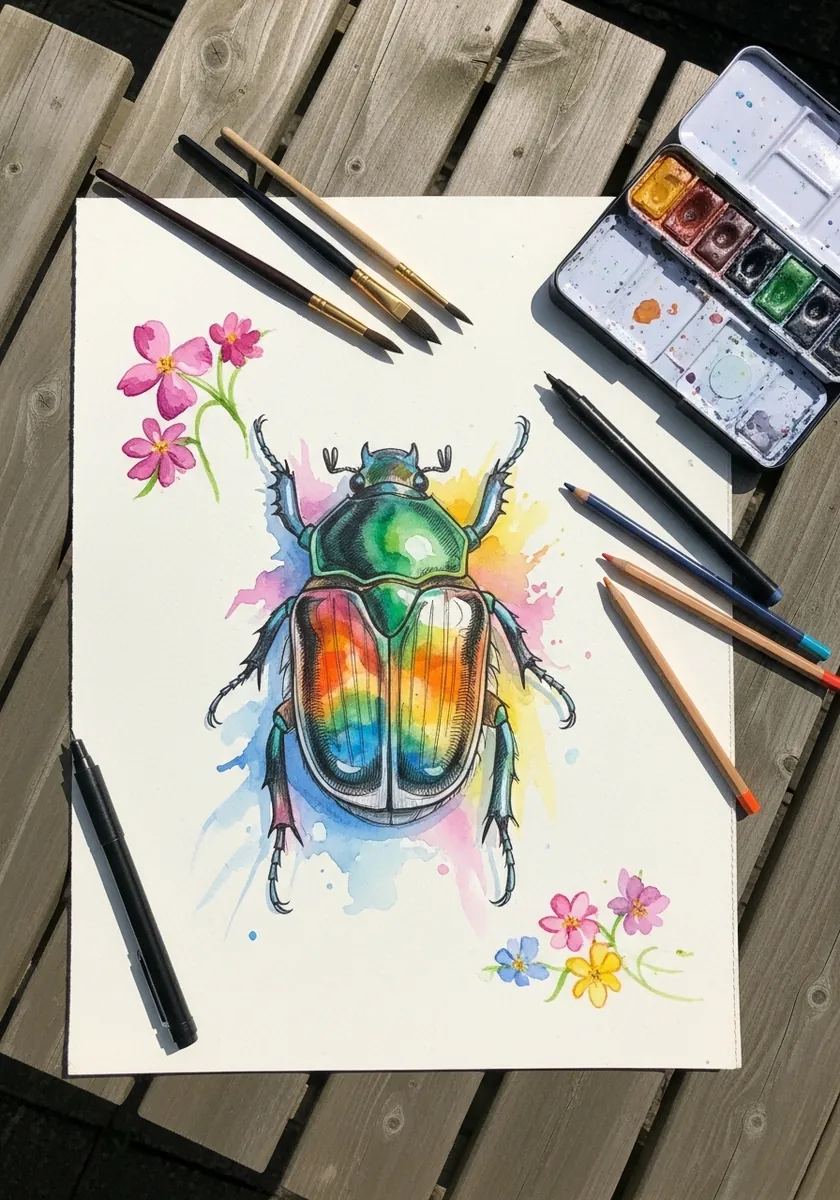
A rainbow shell still needs correct structure underneath. Keep the elytra seam and the symmetry exact, then run the color bands across both halves, lining them up exactly at the join. Mismatched bands at the seam ruin the whole effect.
13. Green Hercules Beetle in Gouache
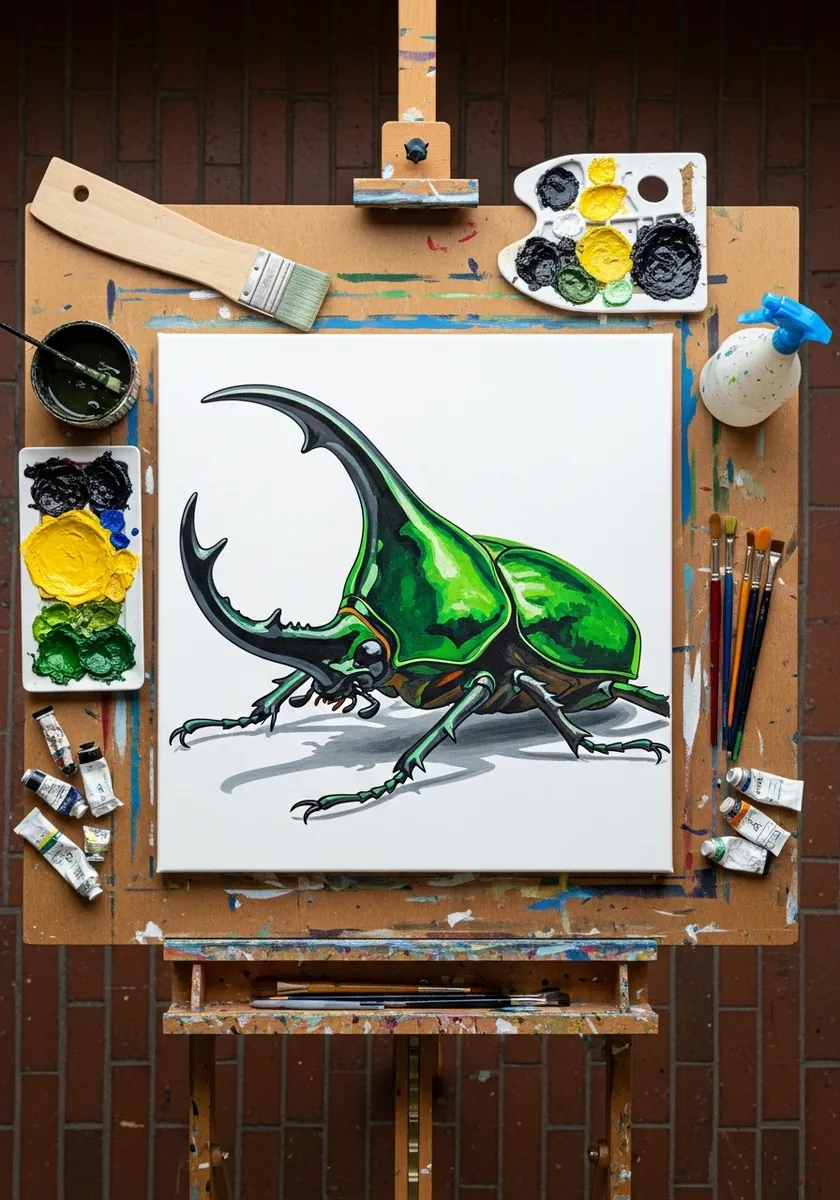
Hercules beetles carry an enormous thoracic horn that curves downward to meet a smaller horn on the head. Draw those two together as a pincer, keep the gouache completely flat with no blending anywhere, and let a heavy black outline supply every scrap of definition the shape needs.
14. Naturalist Sketchbook Beetle Page
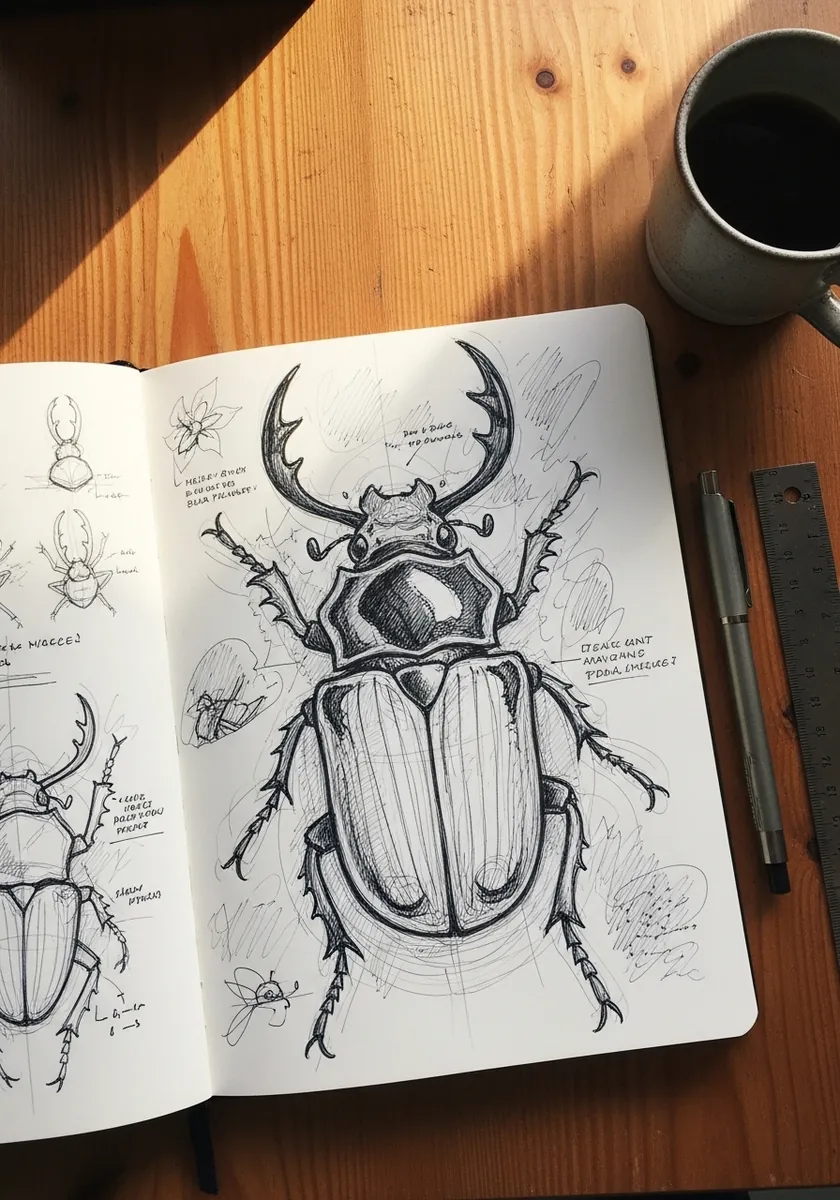
Field pages teach layout as much as drawing. Place the main beetle centrally, add smaller detail studies of the leg and antenna in the margins, and keep every handwritten note in the same small script so the page reads as one considered study.
15. Sepia Ink Beetle by Candlelight
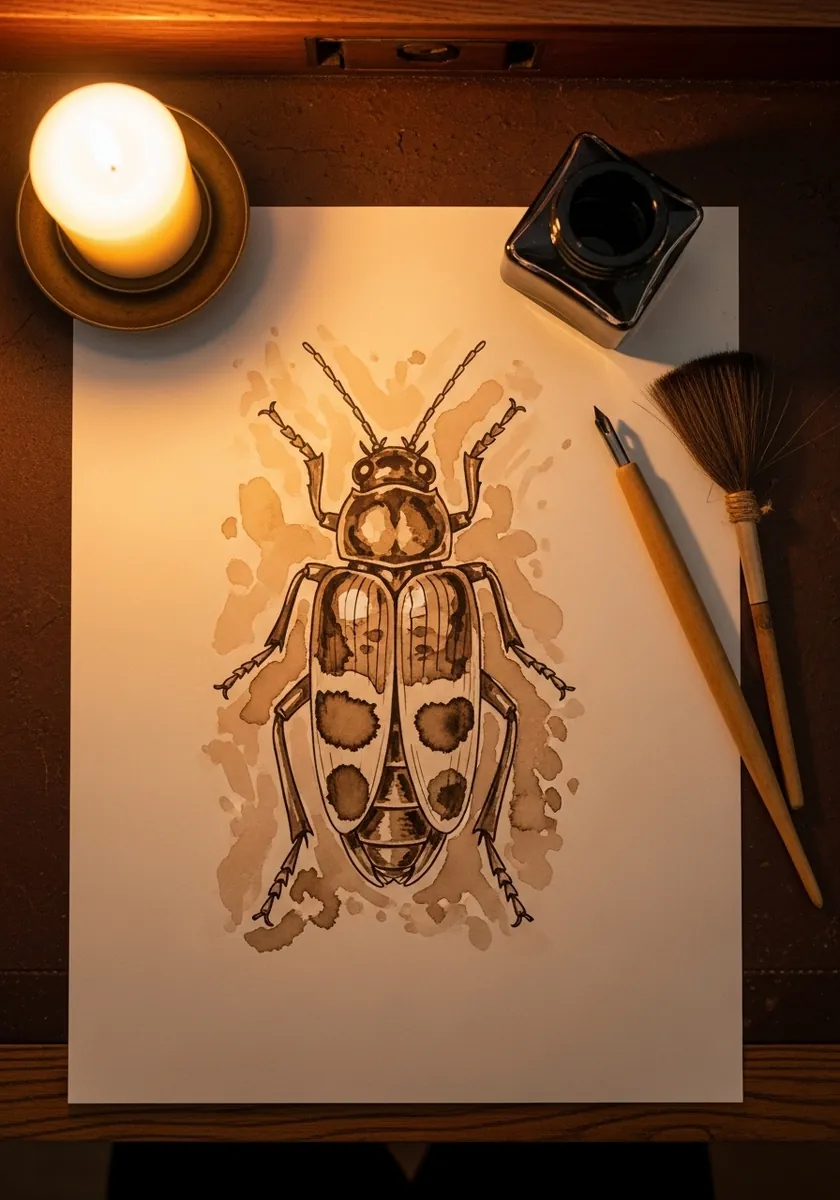
Warm ink on cream reads as a specimen from an old collection rather than a modern study. Mix a little brown into black rather than using pure sepia, and let a few loose stains around the insect stay as part of the drawing.
16. Annotated Line Diagram with Numbers
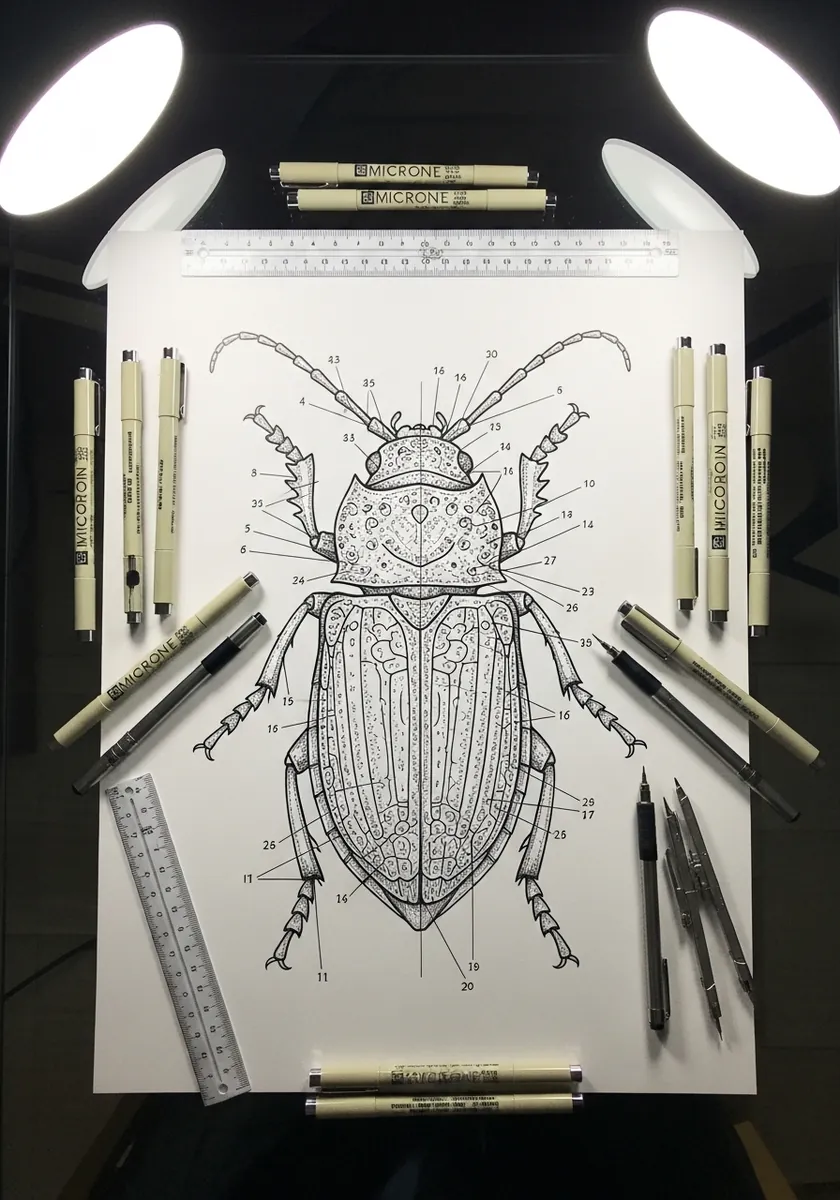
A numbered diagram forces you to actually understand what you are drawing rather than copying shapes. Label the head, the pronotum, the elytra, the seam between them, and each of the six leg attachment points along the thorax. Getting those attachments right will fix every beetle you draw afterward.
17. Vivid Multicolor Stag Beetle
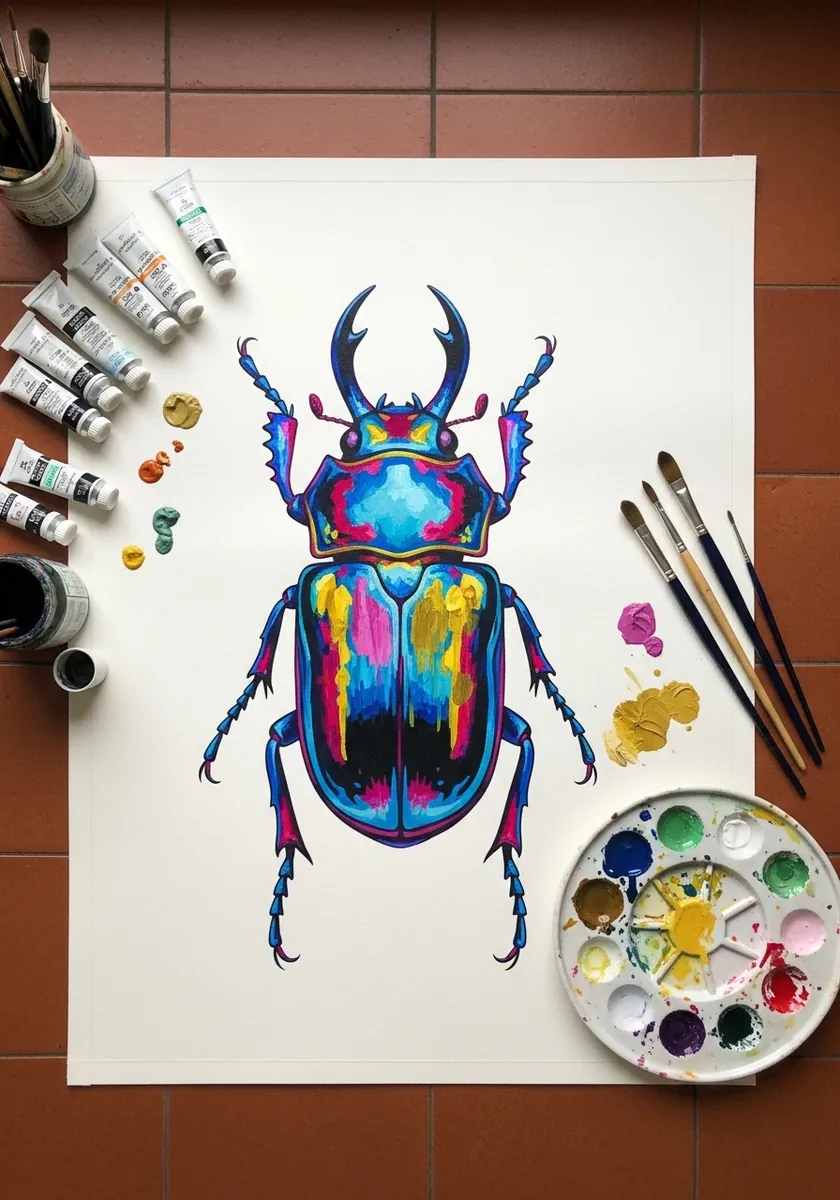
Invented color works perfectly well when the value structure underneath stays truthful. Assign a different hue to each anatomical section, but place your darkest hues wherever the shell curves away into shadow. The beetle then still reads as one solid object rather than a flat pattern.
18. Ornate Gold Scarab on Kraft
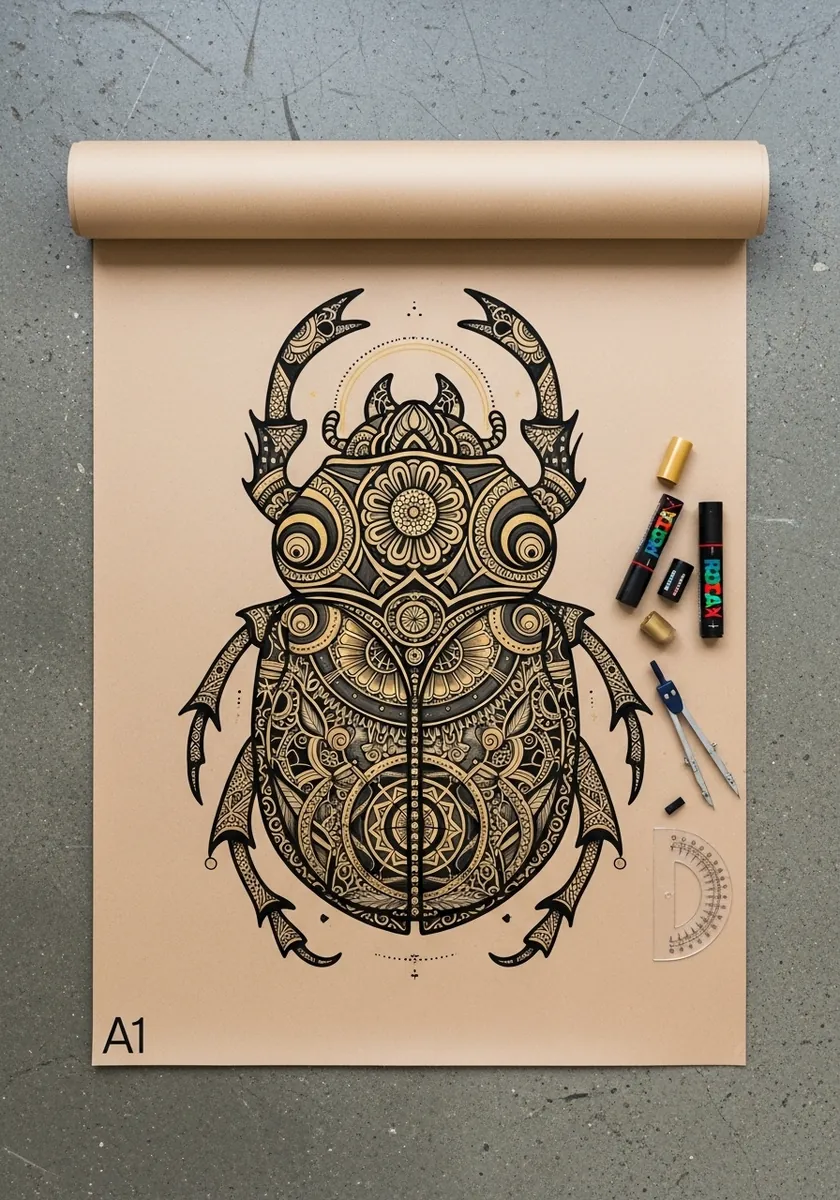
Scarabs have been drawn as ornament for thousands of years. Build the pattern outward symmetrically from the central seam, use a rosette at the center of the pronotum as the anchor, and reserve the gold for only the raised areas.
19. Beetle on a Eucalyptus Branch
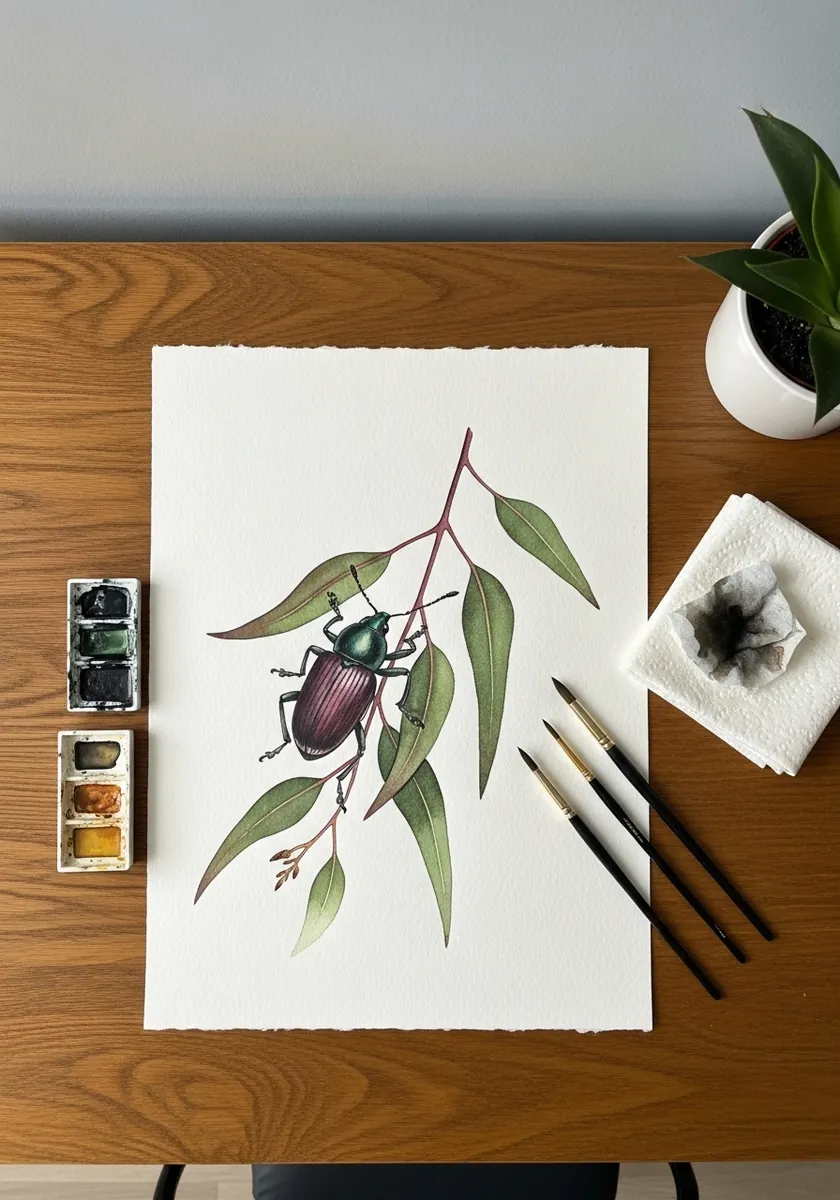
Placing an insect on a plant demands believable physical contact. Draw the branch passing behind the beetle and let at least two legs visibly grip it, curling slightly around the stem as real tarsal claws would. Legs merely floating near a branch break the illusion instantly.
20. Charcoal Stag Beetle on Toned Board
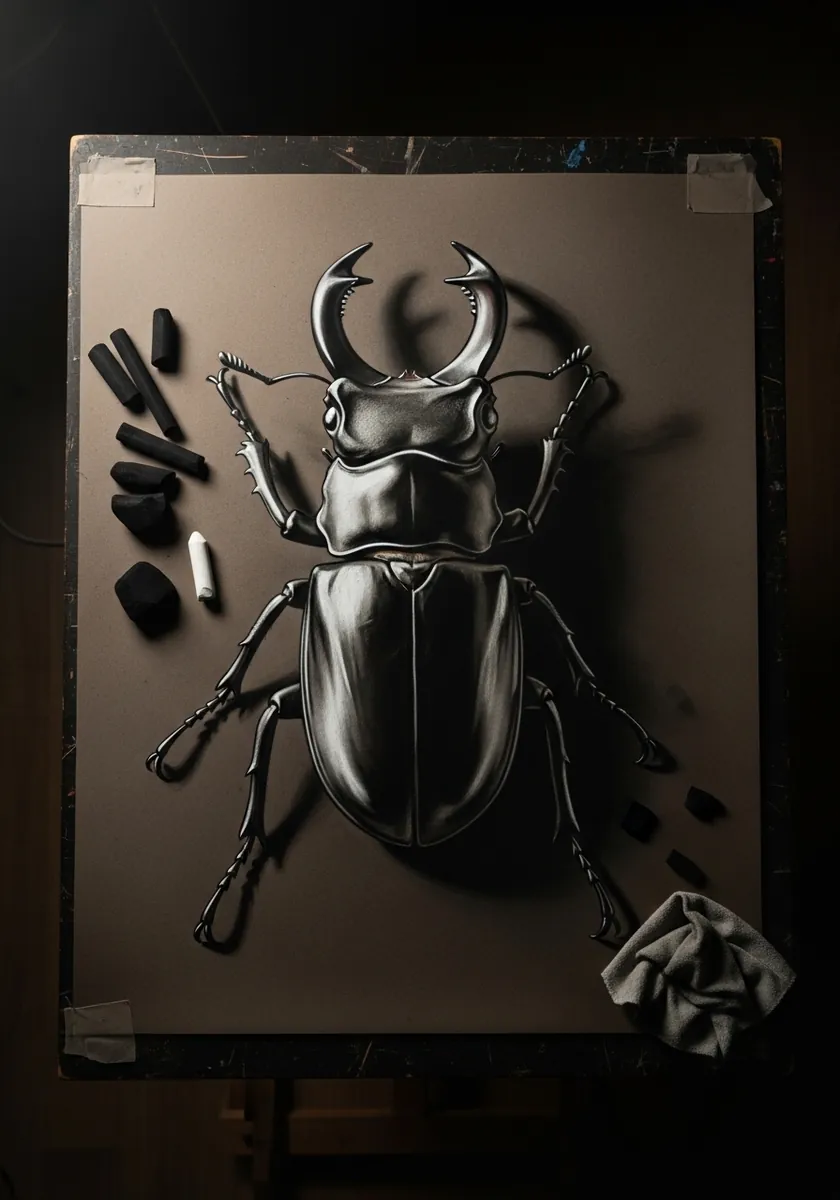
One strong light source turns a hard shell solid. Keep the lit upper surfaces of the elytra pale, drop the sides into near black, and place a single sharp highlight where the dome is highest. Contrast does all the work here.
21. Split Color Beetle in Teal and Coral
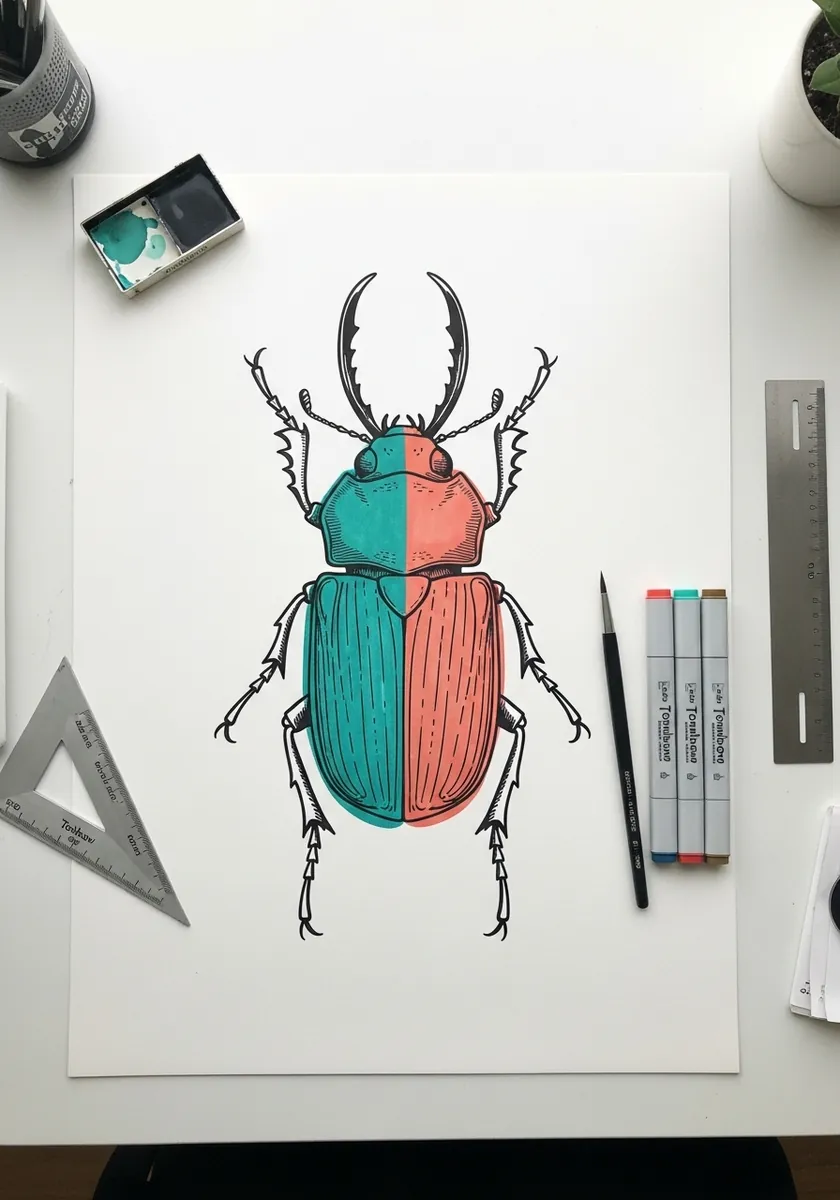
Splitting a symmetrical subject along its own seam is a neat use of beetle anatomy. Because the elytra already divide down the exact center of the back, your color change has a natural boundary to follow rather than an arbitrary one you have to invent and justify.
22. Gold Leaf Beetle with Fine Detail
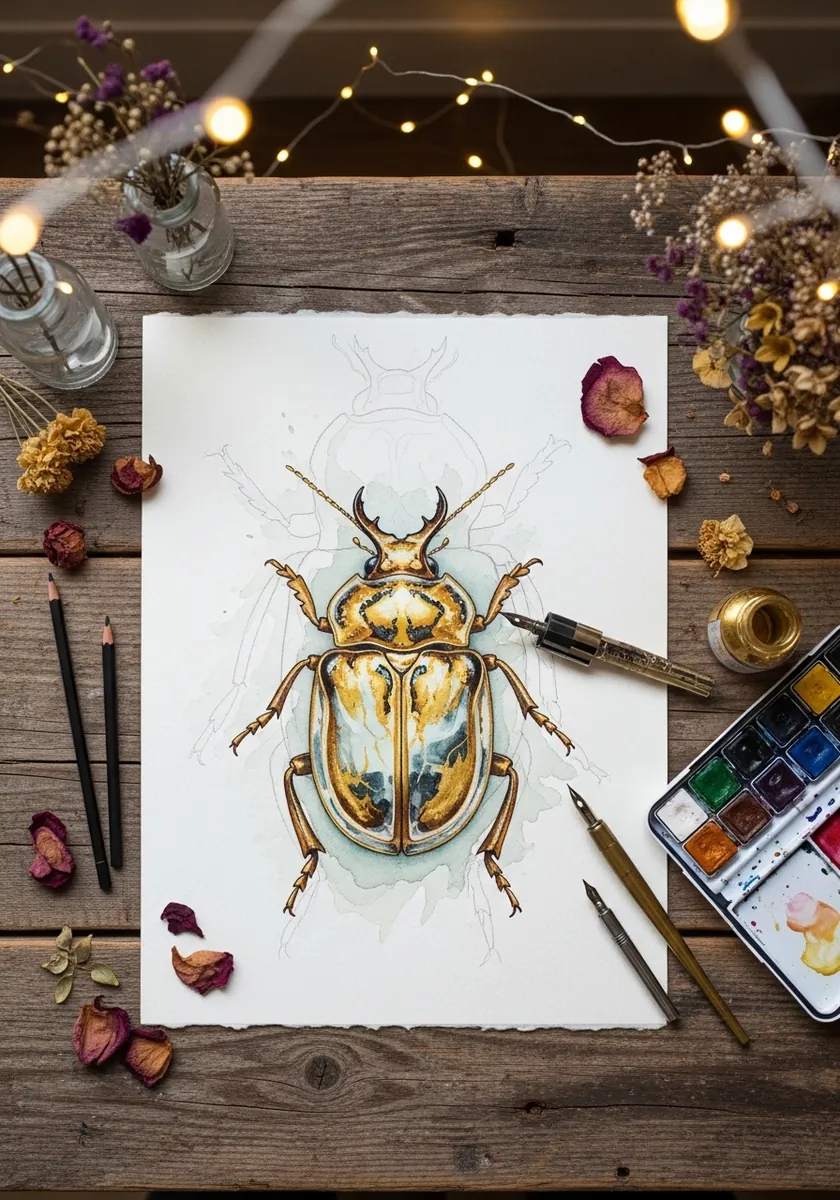
Gold needs restraint to stay precious. Draw the beetle in fine ink first, then apply gold only to the pronotum and the raised center of each elytron, leaving the legs and antennae in plain line, giving the metal somewhere to breathe.
23. Tropical Beetle with Monstera Leaves
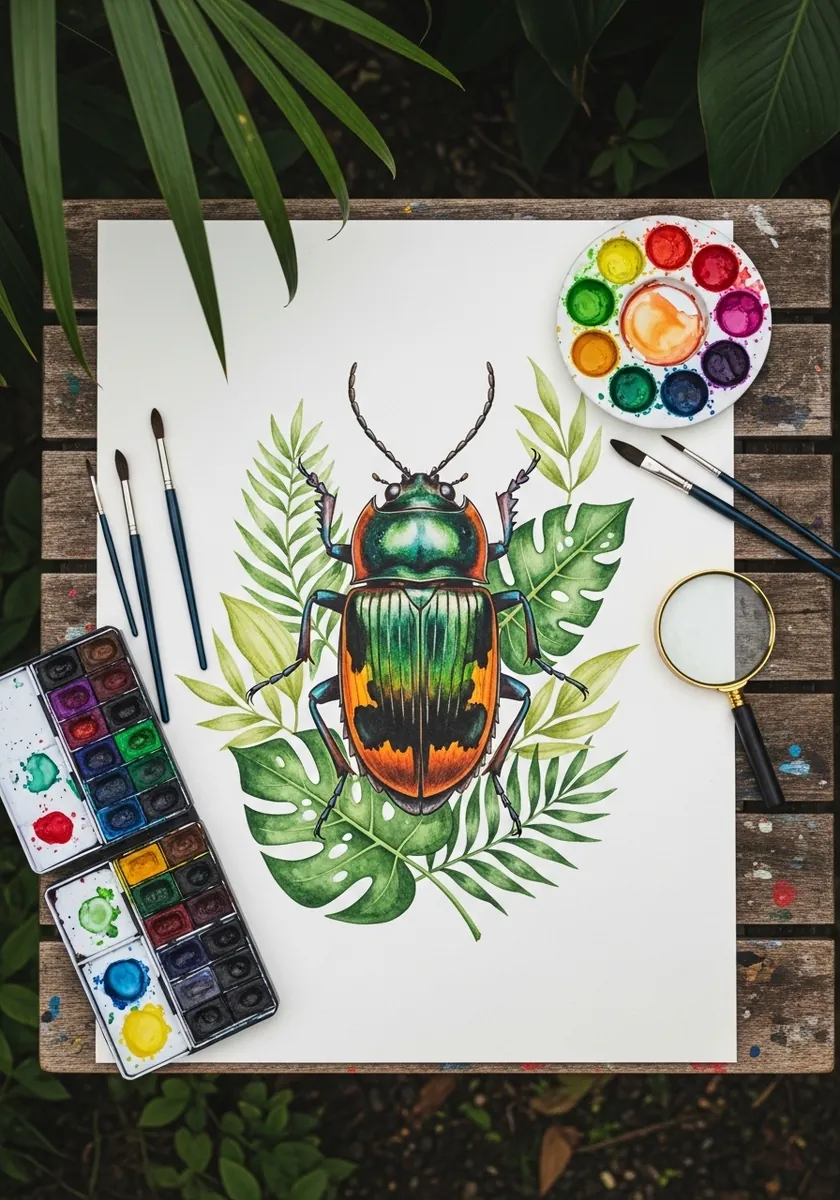
Big foliage always needs a small still center to work against. Arrange the leaves radiating outward but angled back toward the insect, and keep every one of them in mid value greens. The beetle’s warmer orange elytra then become the only saturated note anywhere on the page.
24. White Line Beetle on Black Paper
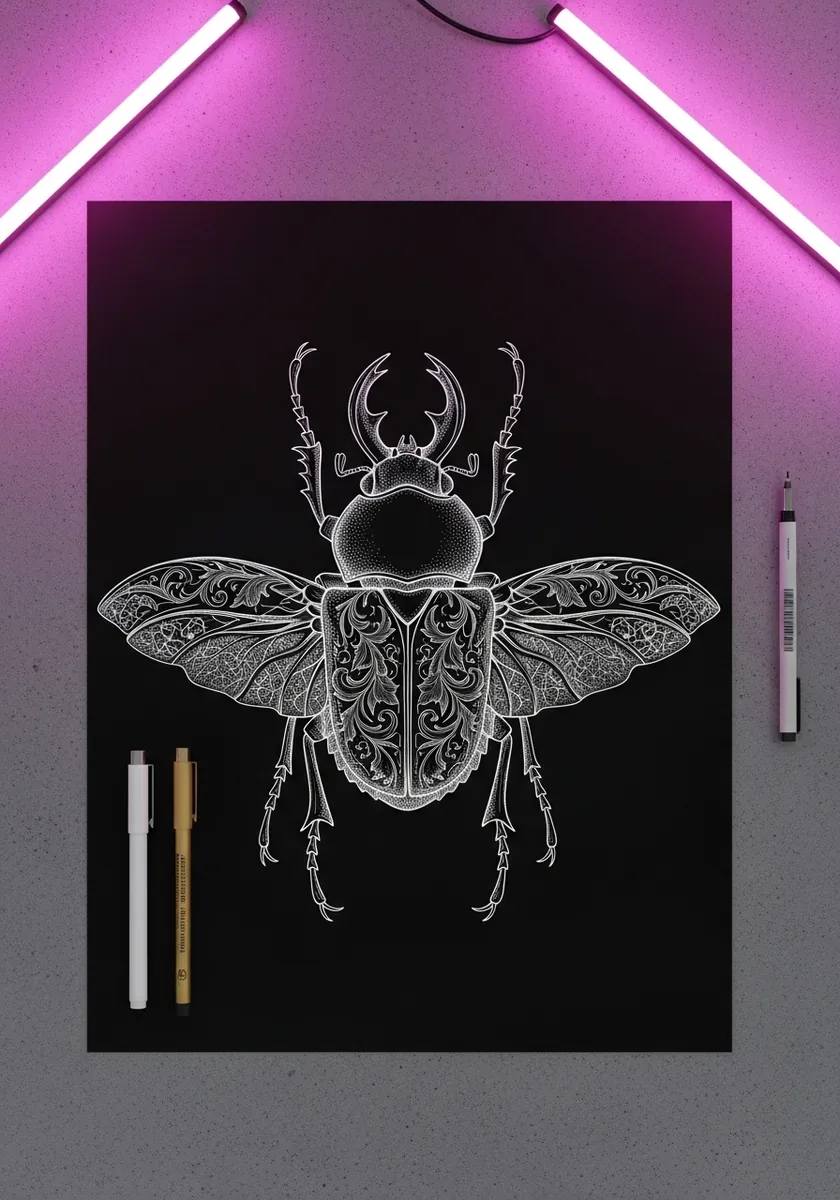
Showing the hindwings spread open is worth attempting at least once. The membranous flight wings live folded away beneath the rigid elytra, and drawing them extended explains what the wing cases are actually protecting, which almost no beetle artwork ever bothers to show.
25. Purple and Orange Beetle in Chalk Pastel
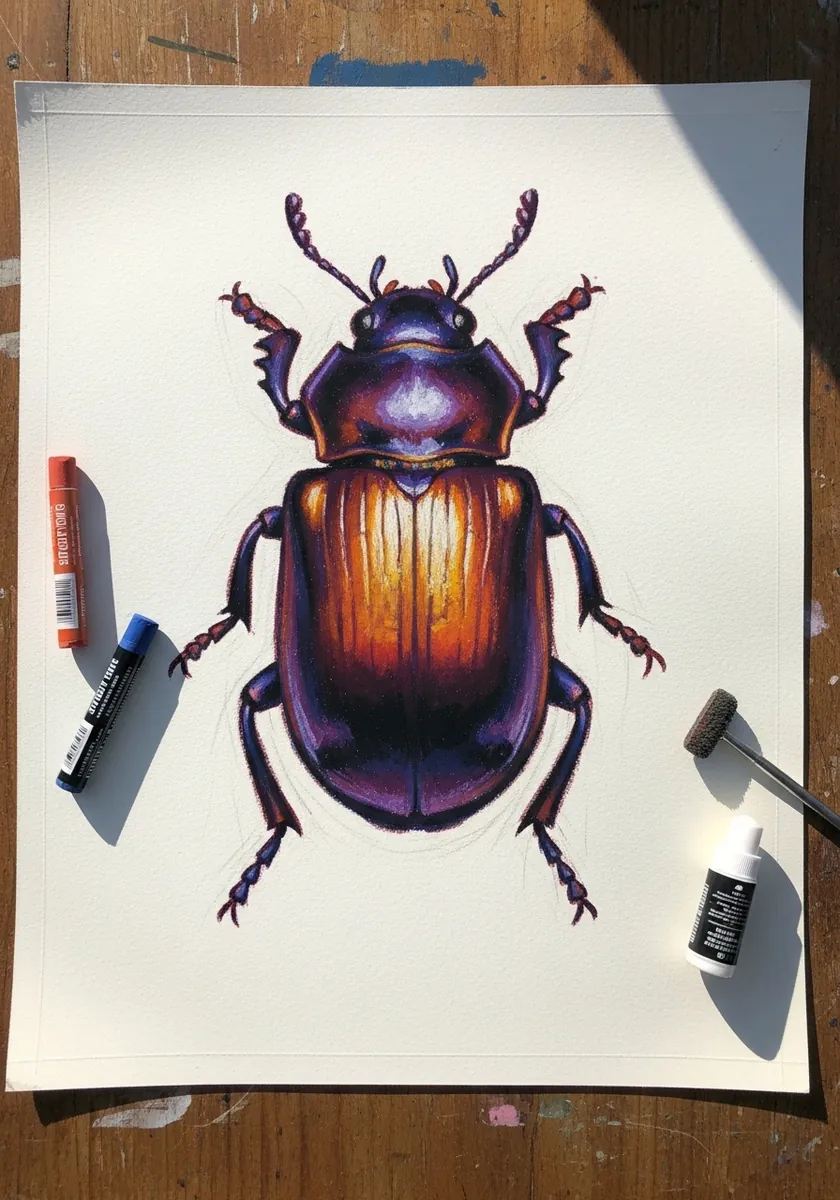
Pastel is too soft for hard edges, which makes a glossy shell a genuine challenge. Blend the gradient across the elytra with a finger, then sharpen only the outer contour and the seam with a hard pastel edge so the shape stays crisp.
26. Botanical Plate with Species Labels
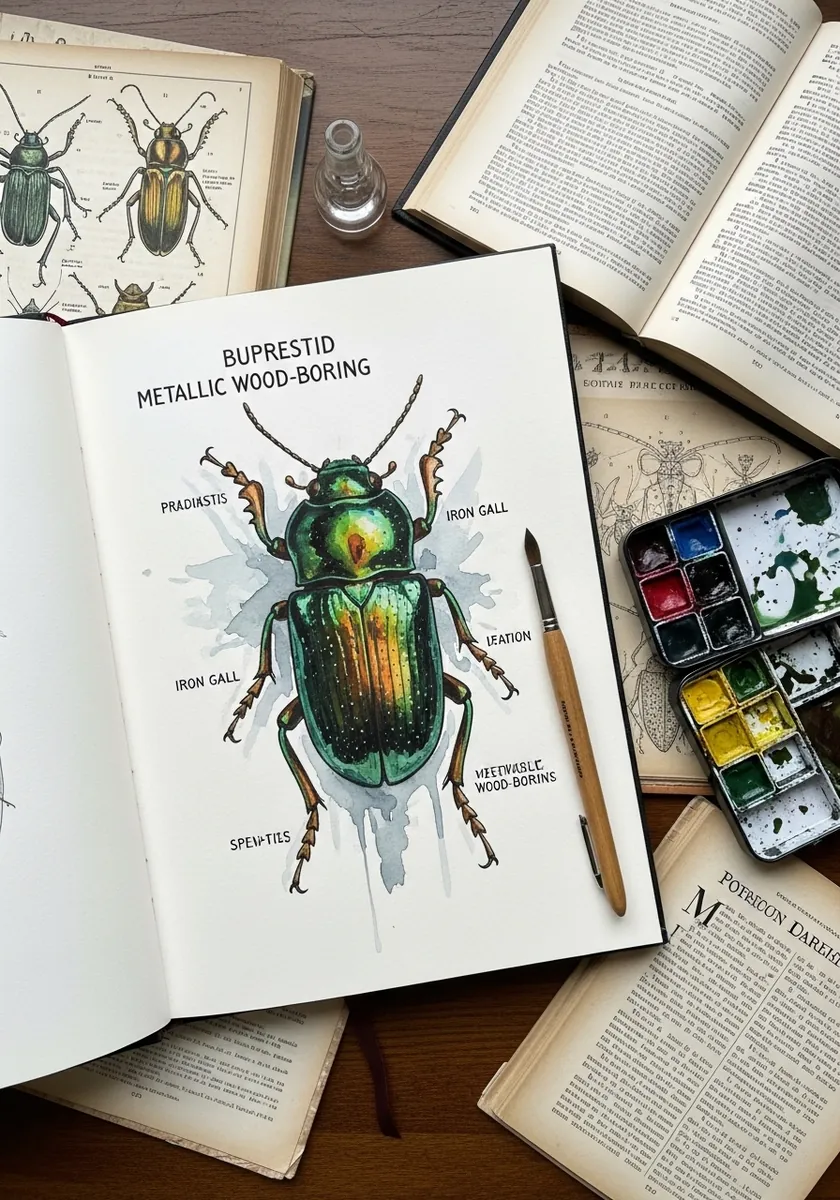
Proper scientific plates keep absolutely everything even. One ink color throughout, a single consistent line weight, generous white space around the specimen, and labels set in one small typeface. That restraint is precisely what makes a plate read as scientific rather than as a decorative illustration.
27. Lino Print Beetle in Black and White
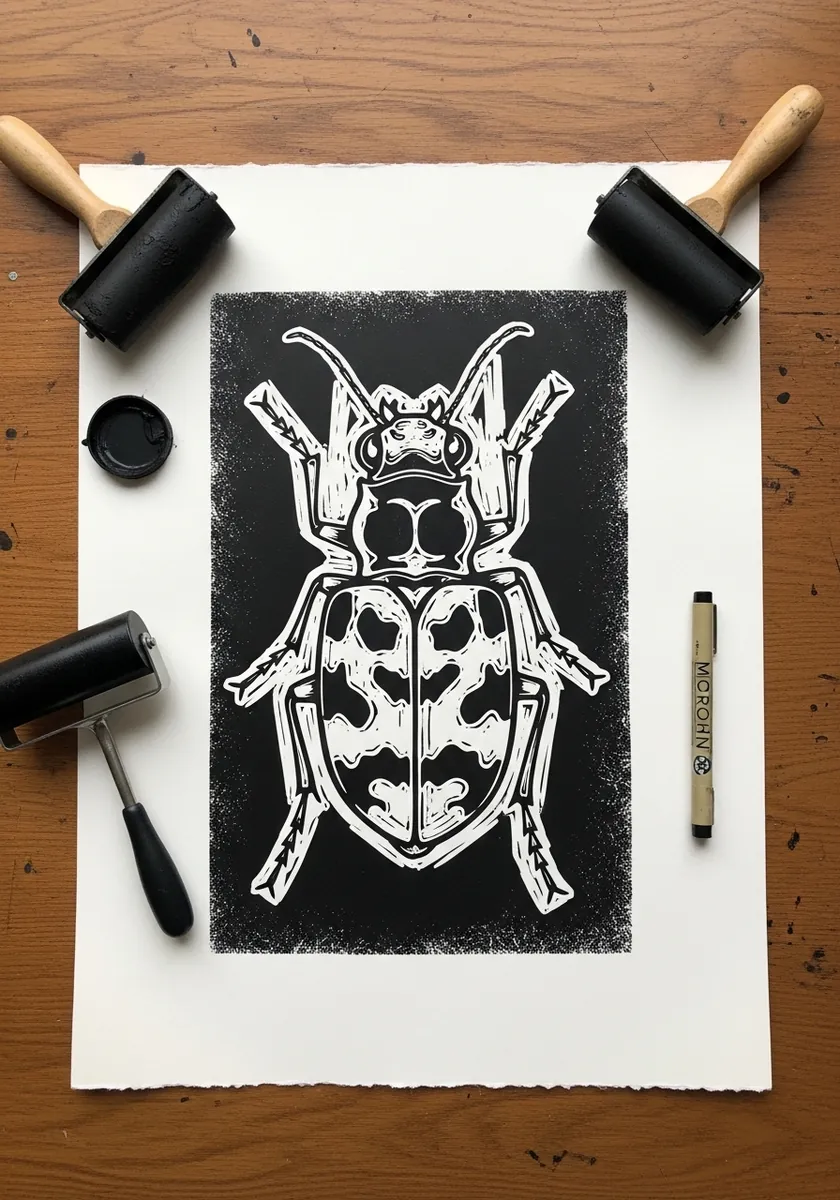
Relief printing removes every mid tone, meaning the drawing has to work in pure black and white. Carve the white lines as texture across the elytra and let the black carry the mass. If it reads at this level, the design is sound.
28. Simple Ladybird in Flat Poster Color
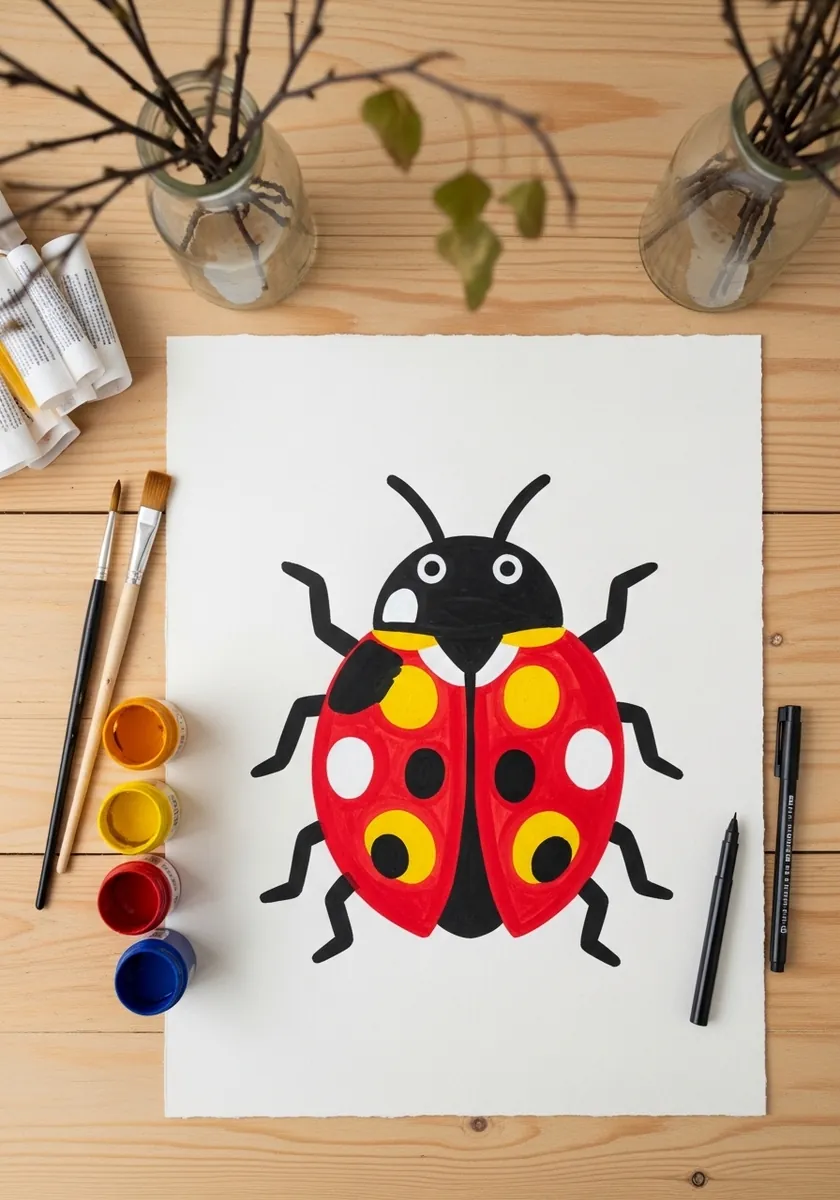
The simplest piece in this list is also the best test of proportion you will find. Two elytra meeting at the seam, six legs on the thorax, a black pronotum and a handful of spots. With nothing else to hide behind, every single placement has to be correct.
29. Beetle in Ripples on Blue Paper
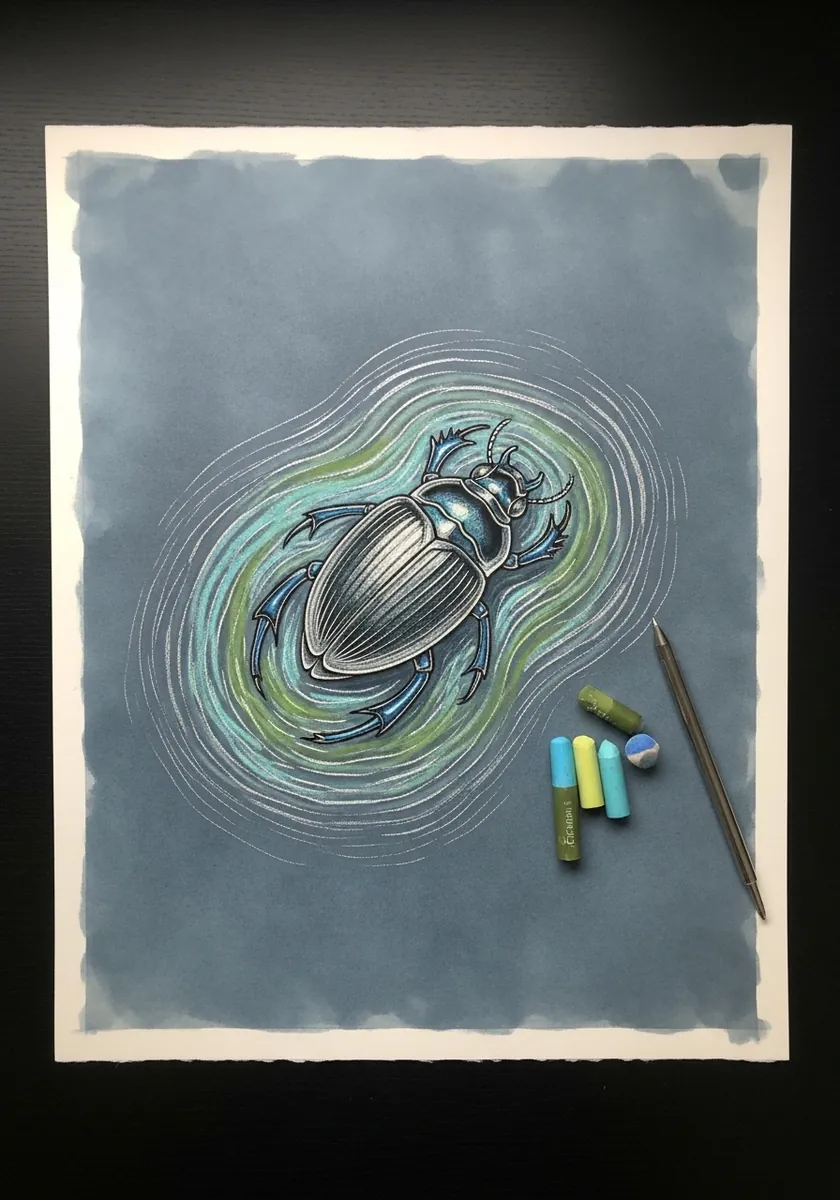
Concentric rings around a subject pull the eye inward like a target. Draw the beetle in careful detail at the center, then let the rings become looser and paler as they travel outward, keeping the focus firmly on the insect.
30. Steampunk Clockwork Beetle
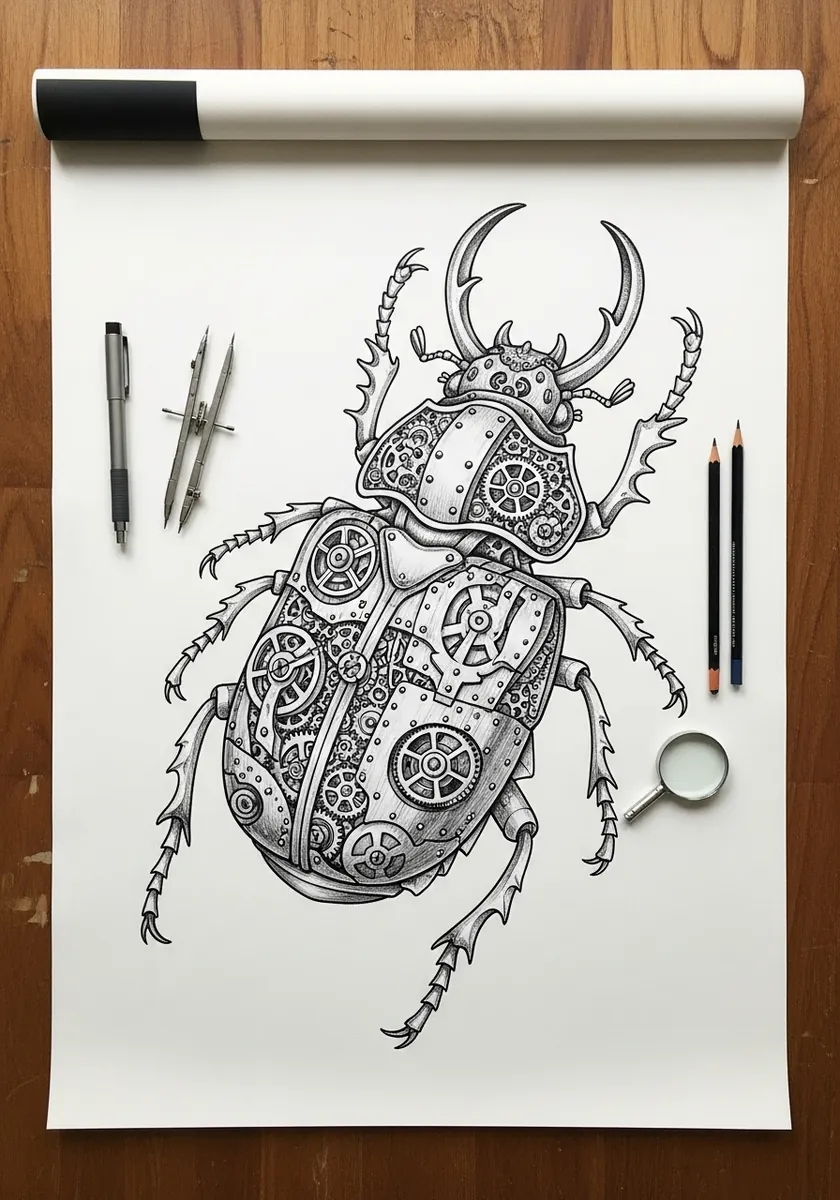
Mechanical creatures still need real anatomy sitting underneath the machinery. Sketch the beetle properly in light pencil first, then replace each shell section with gears and riveted plates, while keeping the central seam, the pronotum and all six thoracic legs exactly where they genuinely belong.
31. Pointillist Beetle in Teal Dots
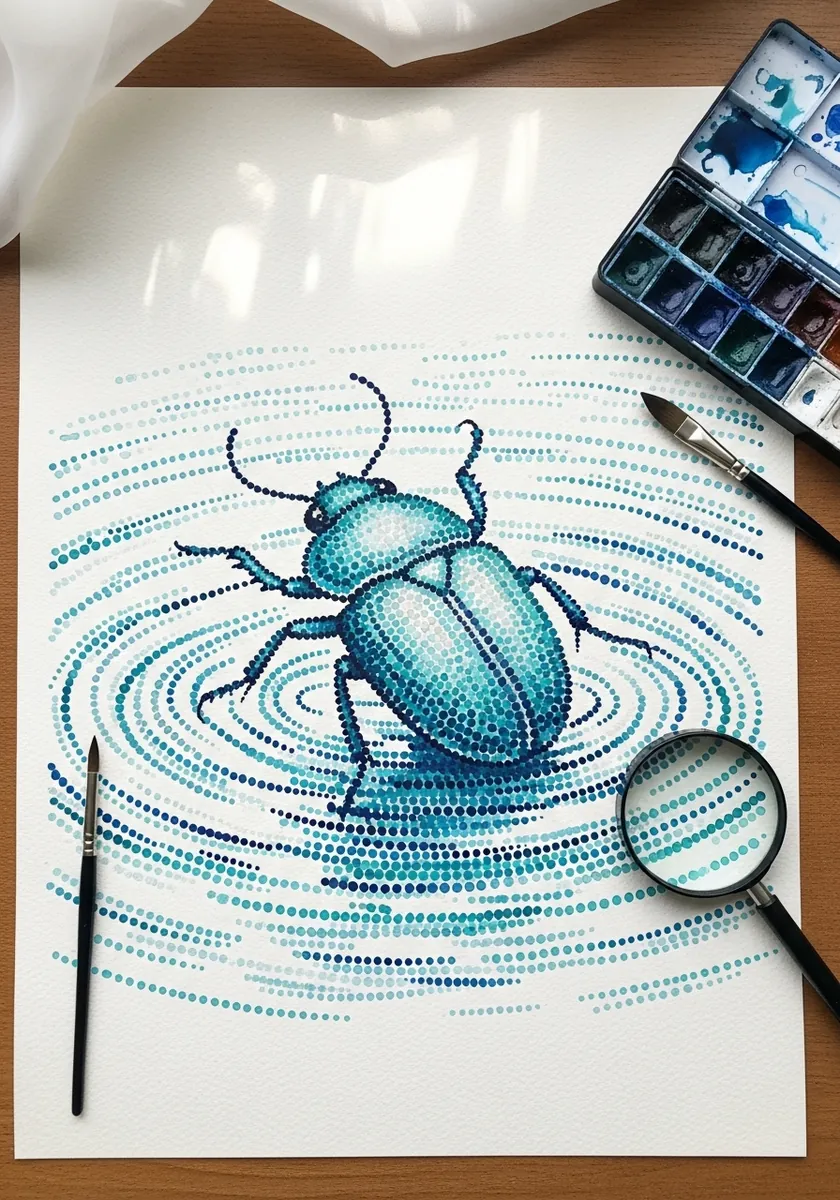
Pointillism builds every value from separated dots, which is slow but teaches enormous control. Increase density where the shell curves away, keep the domed highlight almost bare, and let the surrounding rings thin gradually toward the edges of the page.
Frequently Asked Questions
How do you draw a beetle step by step?
Draw a center line first, then the seam where the two elytra meet along it. Add the pronotum shield above, then the head. Mirror the elytra either side of the seam, and finally attach three legs to each side of the thorax, never to the abdomen.
What are elytra on a beetle?
Elytra are the beetle’s forewings, hardened into rigid protective cases that cover the abdomen. They meet in a straight seam down the center of the back. Underneath them sit the membranous hindwings the beetle actually flies with.
How many legs does a beetle have and where do they attach?
Six legs, three on each side, and all of them attach to the thorax rather than the abdomen. Drawing legs coming out of the elytra is the single most common mistake in beetle art, and once you know to look for it you see it everywhere.
Are a stag beetle’s antlers actually horns?
No. Those large branching structures are enlarged mandibles, which means they hinge from the mouth at the front of the head rather than growing from the top of it. Getting that attachment point right is what makes a stag beetle drawing convincing.
How do you paint an iridescent beetle shell?
Iridescence is structural color produced by the shell’s microscopic layers, so it shifts with viewing angle. Lay a deep base color, then drag two or three shifting hues across it in bands, and finish with one small hard white highlight on the domed area.
References and Further Reading