Cuteness is a set of proportions, not a style. Draw the head large, then place the eyes on or slightly below the halfway line of the head instead of near the top, and keep the nose and chin small.
Key takeaways
- ["Put the eyes on or just below the midline of the head, never near the top", "Make the head large compared with the body, the way real babies are built", "Keep the nose, mouth and chin small so the eyes stay the biggest feature", "Round off every limb and paw, because sharp corners read as grown-up", "Leave a white dot in each eye, since the shine is what makes it look alive"]
There is a reason some drawn animals melt people and others do not, and it comes down to one measurement. The eyes belong on or just below the halfway line of the head. Almost everybody puts them too high, roughly where an adult’s eyes actually sit, and the drawing instantly reads as grown-up.
Biologists have a name for the whole package. Kindchenschema, the baby schema, is the set of features we automatically find endearing, and it is short and specific: a big head, low-set eyes, a small nose and chin, round cheeks and short, rounded limbs. Hit those and any animal turns cute.
One extra mark does more than all the shading in the world. Leave a small white dot in each eye and never color over it. That single highlight is what makes the eye look wet and alive, and it is why cartoon eyes without it look like buttons.
The forty animals below run from bunnies and ducklings to axolotls, capybaras and a glowing firefly, so there is something for every level. For feathered subjects see bird drawing ideas for kids, and for a full walkthrough of one animal, how to draw a dolphin.
Compiled by the GS Art Zone editorial team. Last updated August 2026. Each idea is paired with the specific step that produces the effect, so you can go from the reference straight to paper.
What You Need Before You Start
- A soft pencil for the head and body circles, so they rub out cleanly afterwards
- A white gel pen or white pencil for the eye shine, which nothing else can fake
- Round-tipped markers, because a fine nib makes cute animals look scratchy
- An eraser you can shape to a point, for lifting tiny highlights out of fur
- Paper with a little tooth, so pencil fur has something to catch on
1. Fluffy Lop-Eared Bunny
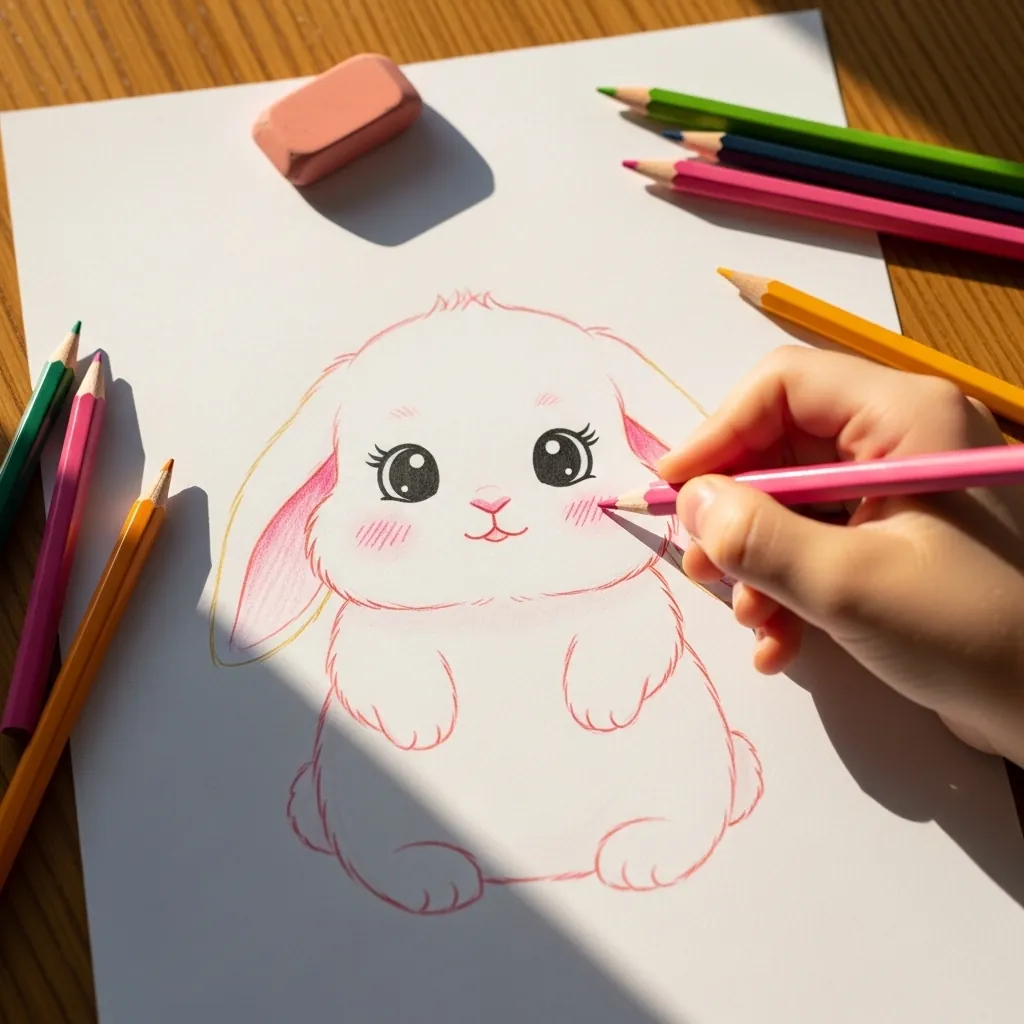
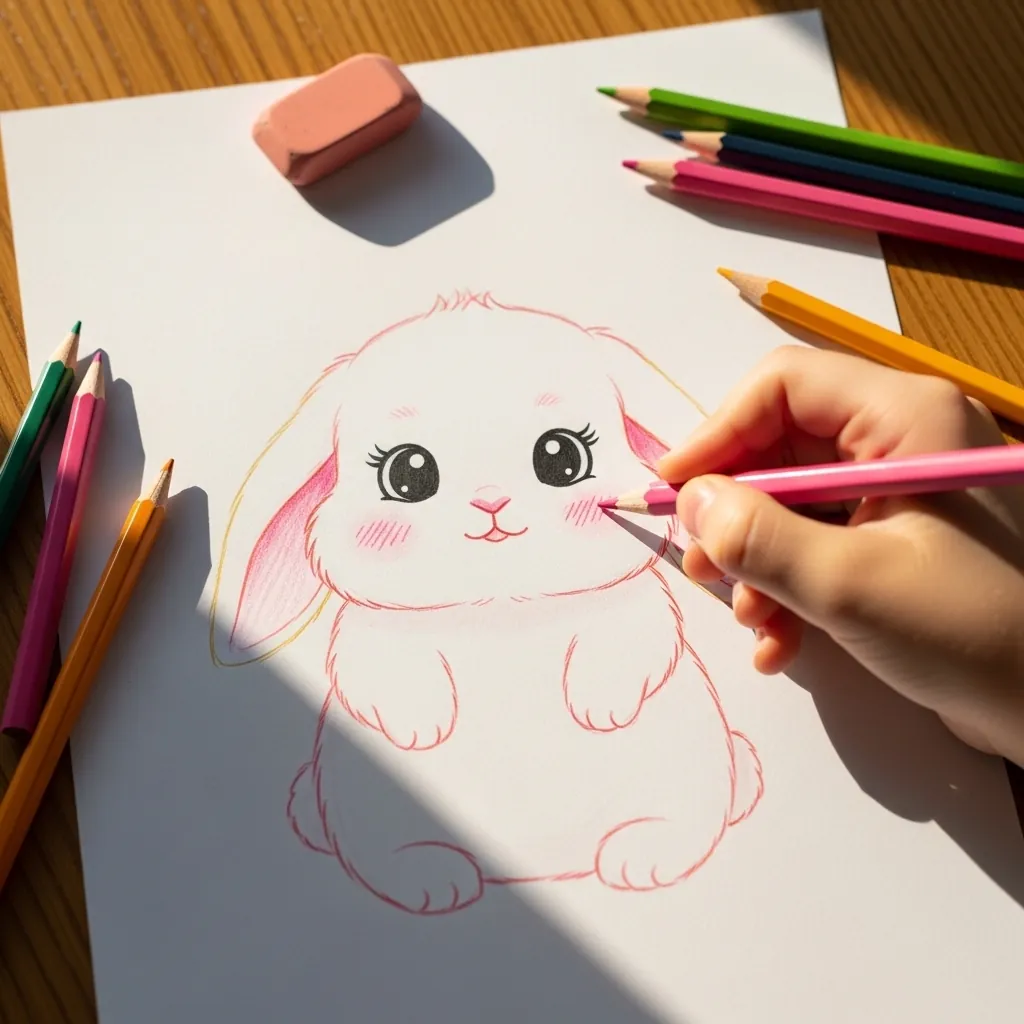
Lop ears are what make this bunny read as a baby rather than a wild rabbit. Draw them hanging down beside the cheeks instead of standing up, keep the body one soft round mass with no visible legs, and set the eyes low and wide apart. A tiny triangle nose is all the face needs.
2. Yellow Duckling
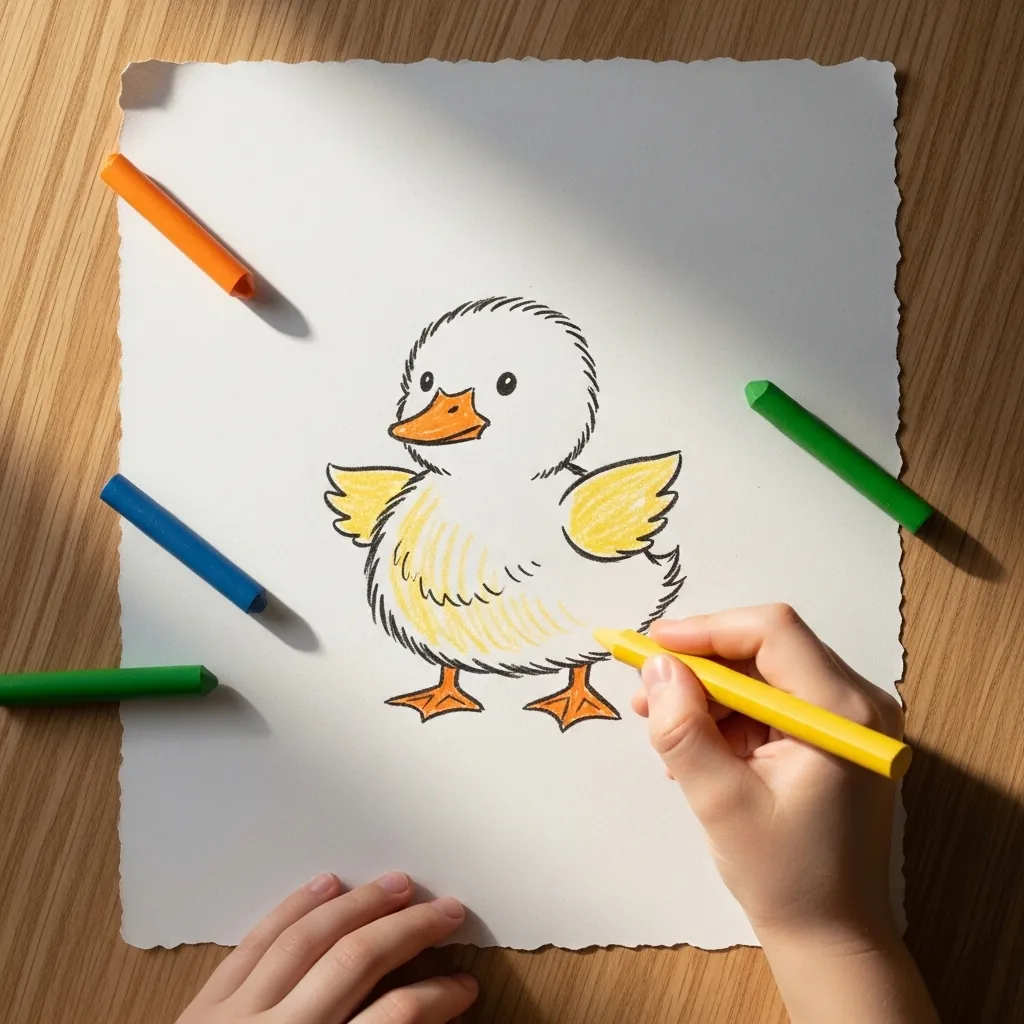
Ducklings are two overlapping circles with a wedge stuck on the front. Make the head circle nearly as big as the body, angle the beak slightly downward so it looks shy rather than alert, and leave the outline fuzzy so the down reads as soft.
3. Sitting Ginger Kitten
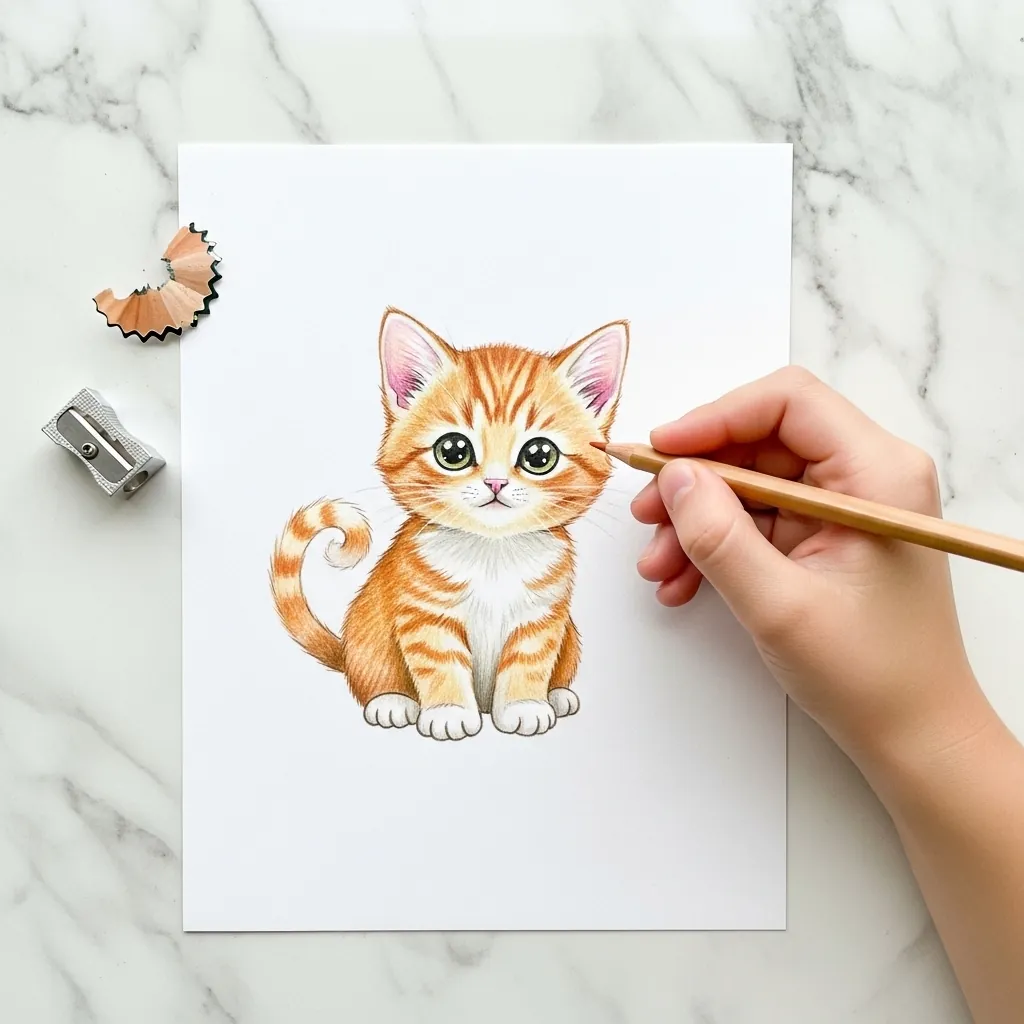
A sitting kitten is a pear shape, wide at the base and narrow at the shoulders. Tuck the front paws together at the bottom, curl the tail around one side, and give the eyes plenty of green iris with only a thin ring of white showing; the stripes follow the curve of the body, never straight across.
4. Frog on a Lily Pad
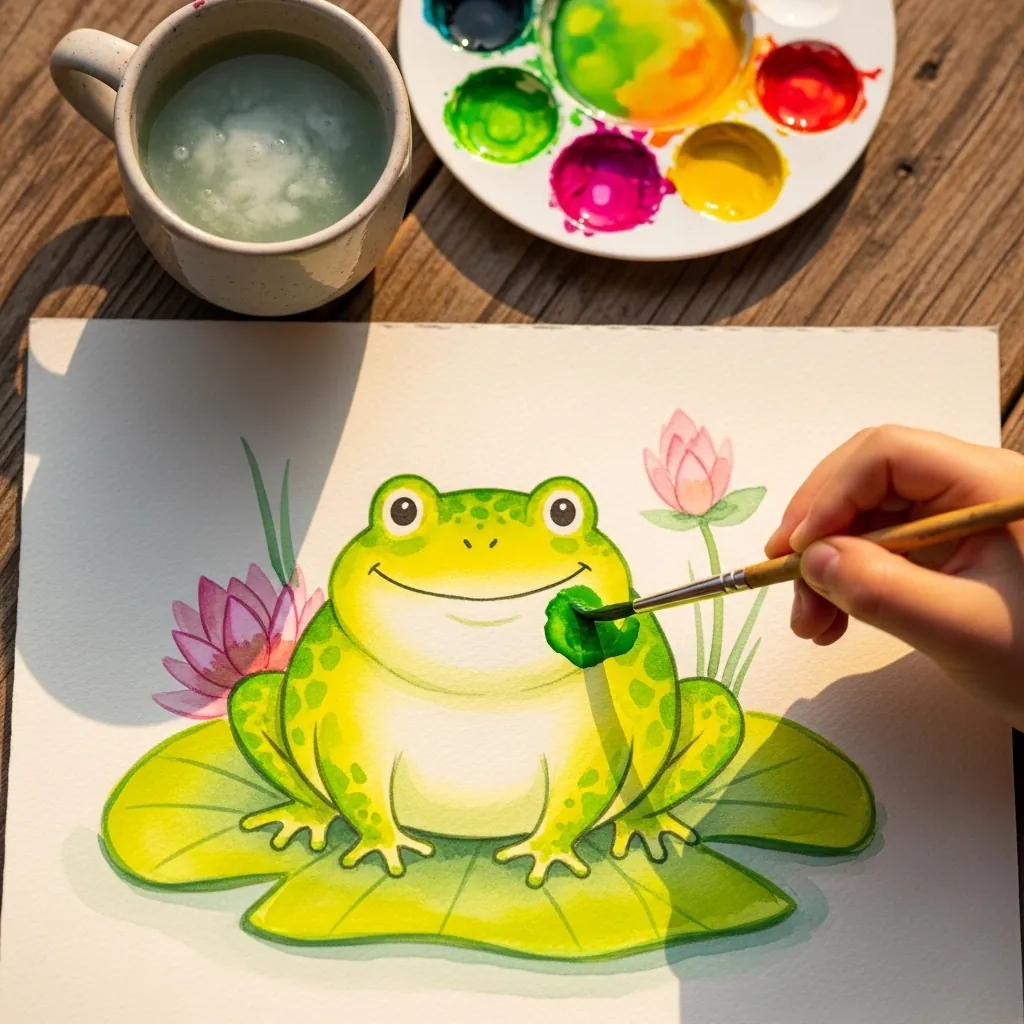
Frogs are easy to make cute because the eyes already sit on top of the head. Draw them as two domes rising above the skull line, give the mouth a wide gentle curve, and let the back legs fold up beside the body in flat triangles.
5. Spiky Hedgehog Outline
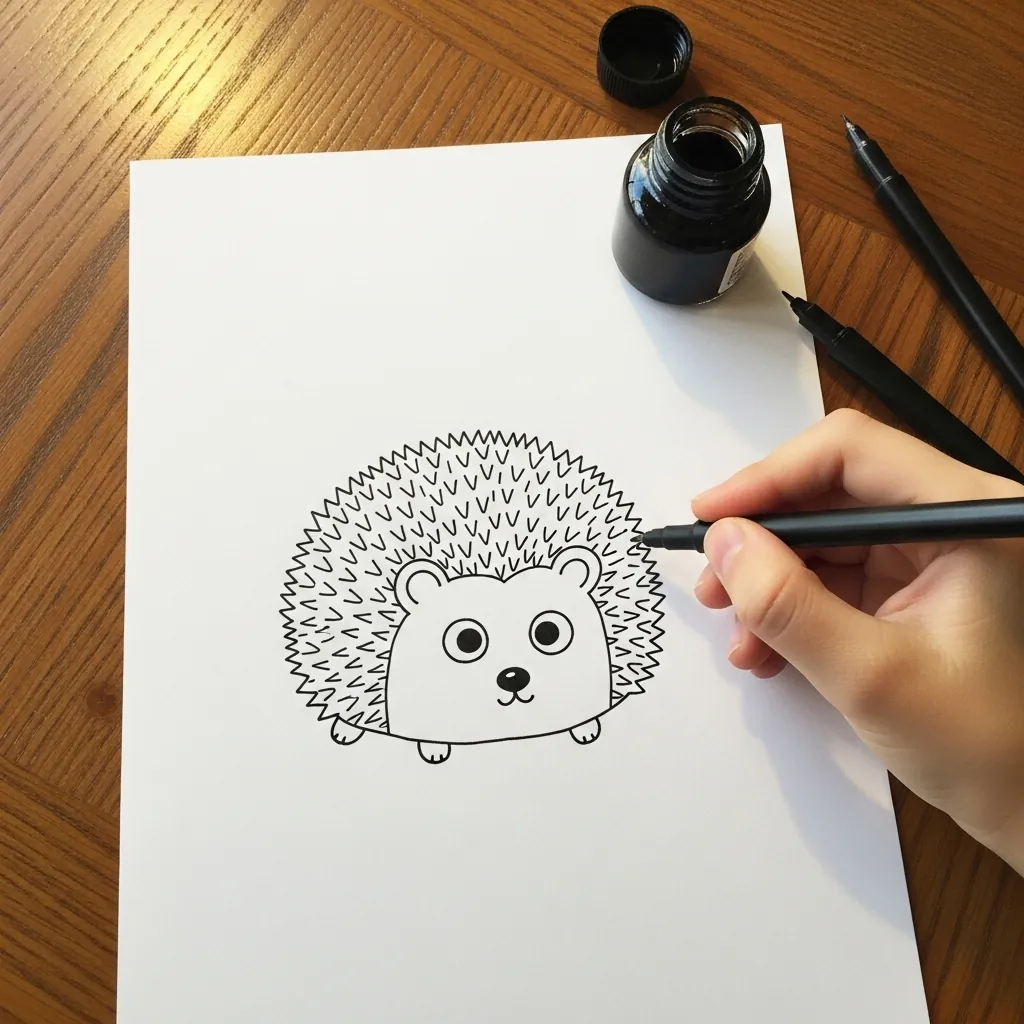
The whole hedgehog is one dome of spines with a face poking out at the front. Draw the dome first, fill it with short strokes all leaning the same way, and keep the face small and low so it looks like it is peeping out. Round the nose off rather than pointing it.
6. Baby Panda Sitting
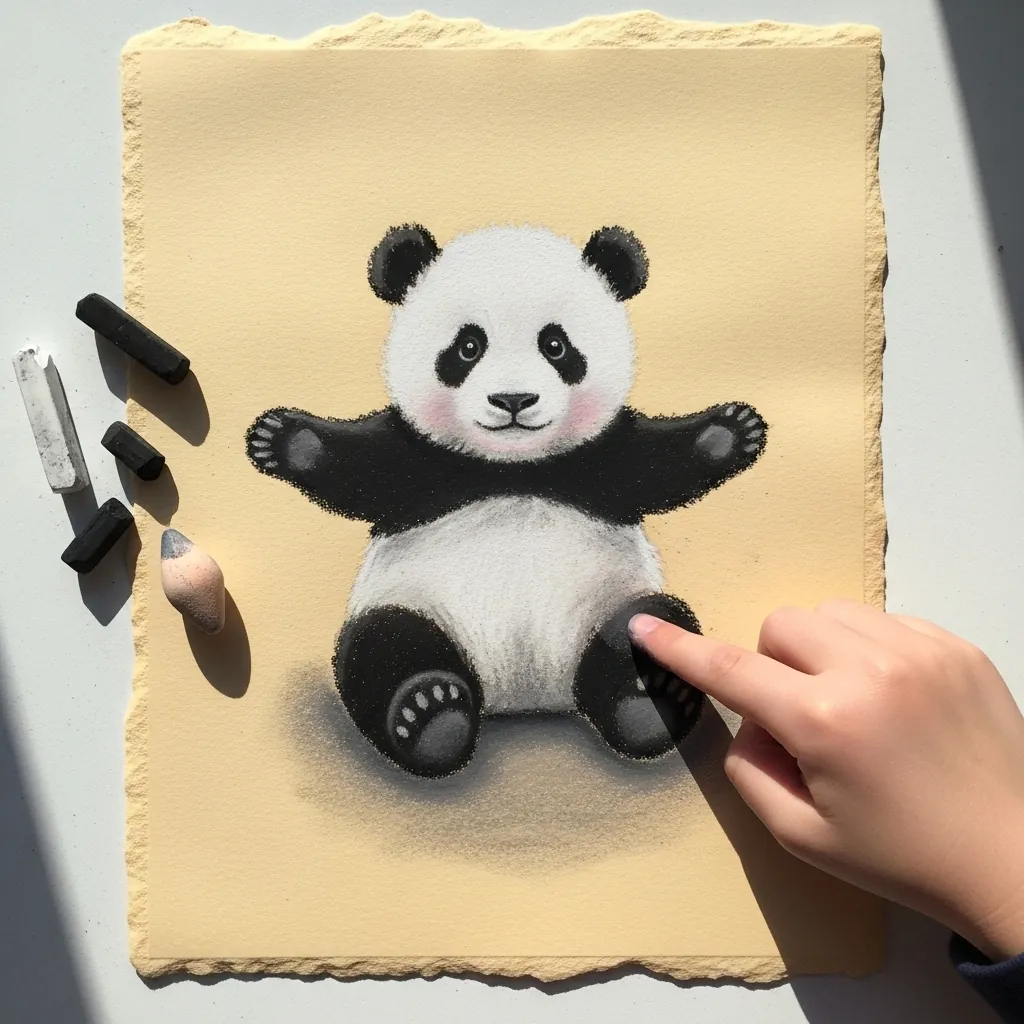
Pandas are a gift, because the black patches are already placed for you. Put the eye patches low and slanting slightly inward, which reads as a friendly expression, and keep the body a plain white oval; the arms go straight out to the sides like a toddler asking to be picked up.
7. Big-Eared Baby Elephant
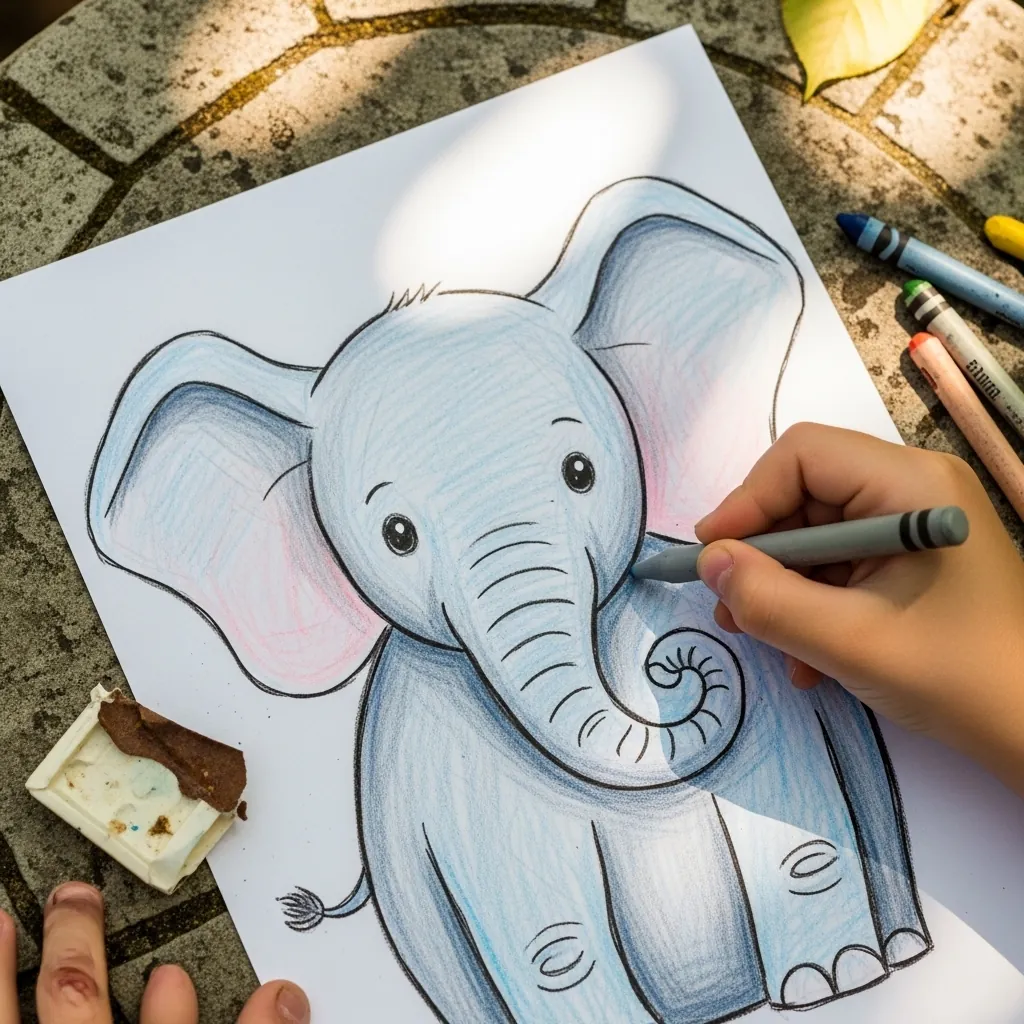
Baby elephants have ears far too big for their heads, and exaggerating that is the point. Draw each ear as wide as the head itself, keep the trunk short and curled up at the tip, and thicken the legs into soft columns with no visible joints.
8. Round Little Owl
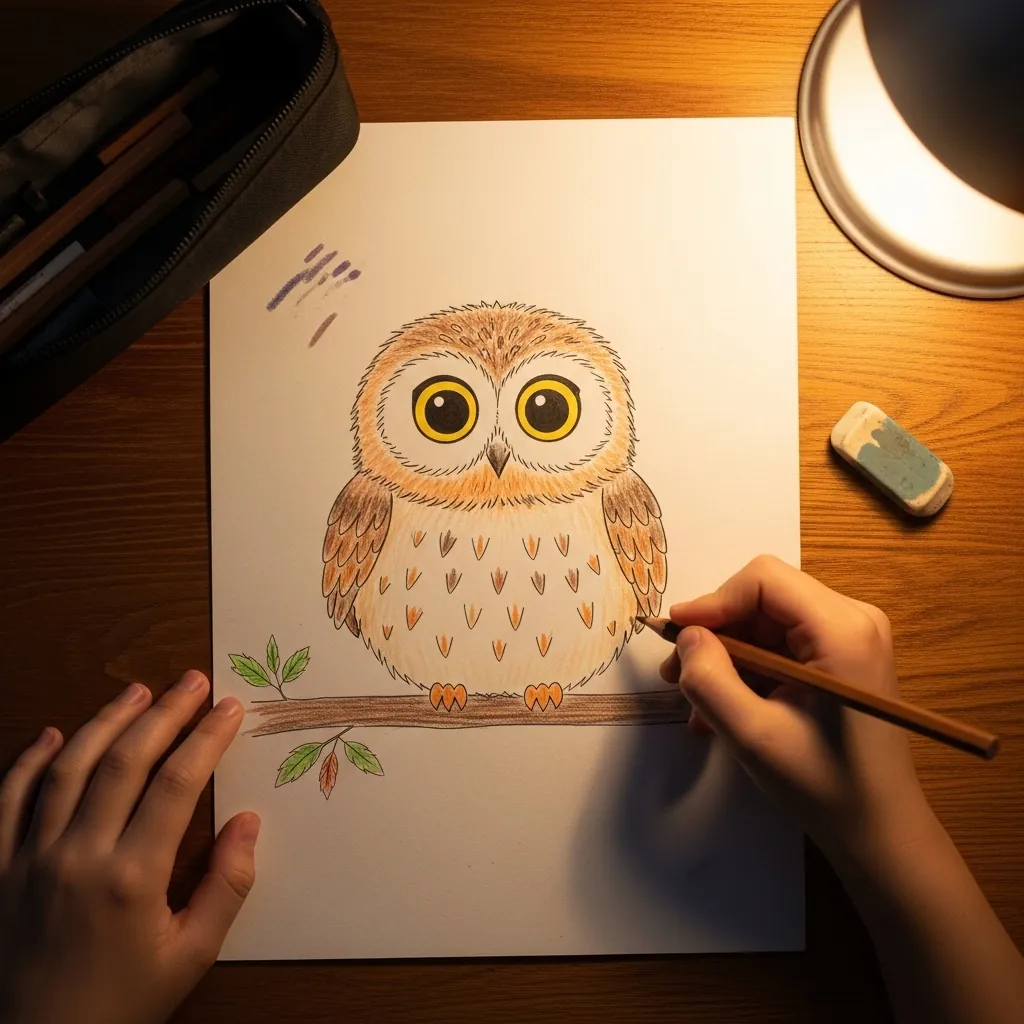
Owls only look cute when the eyes take over the face. Make them enormous and touching in the middle, sit a small triangular beak between them, and let the body be one rounded shape with no neck at all. The feet grip the branch as two simple forks.
9. Baby Seal Pup
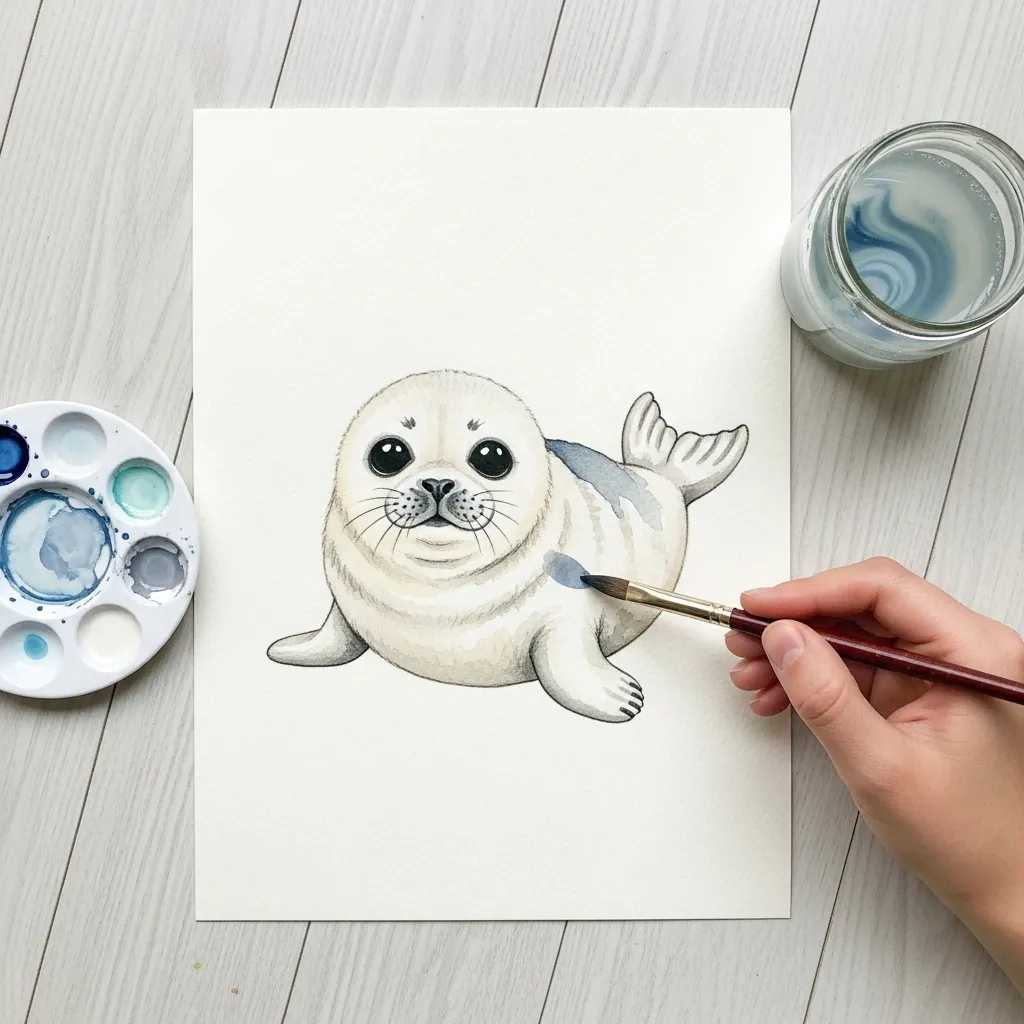
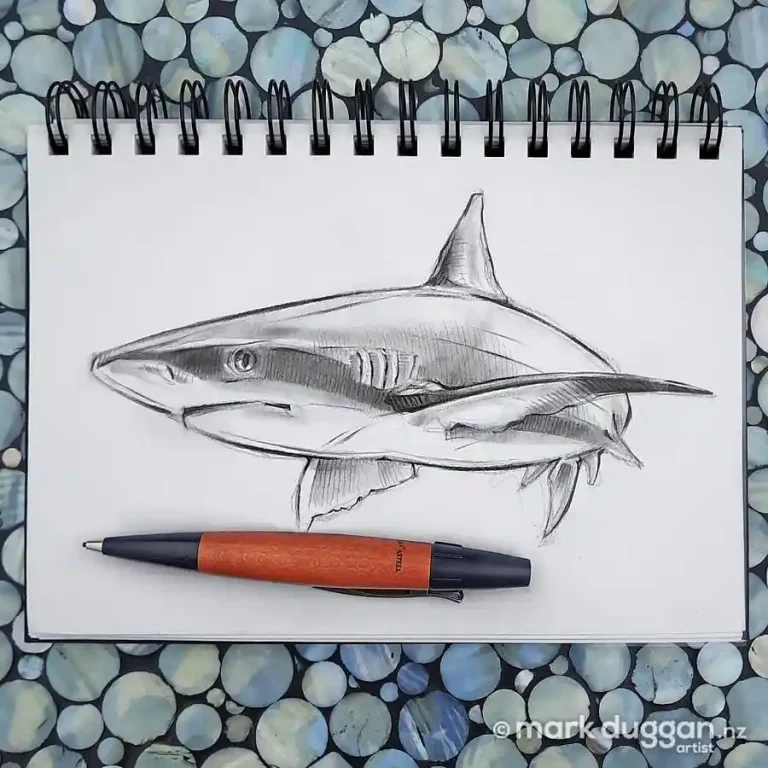
A seal pup is one long tapering sausage, and the charm is all in the face. Keep the body outline completely smooth, place the huge dark eyes low and close together, and add the whisker dots as light dents rather than dark spots; shade only underneath so it looks round.
10. Lion Face From a Circle
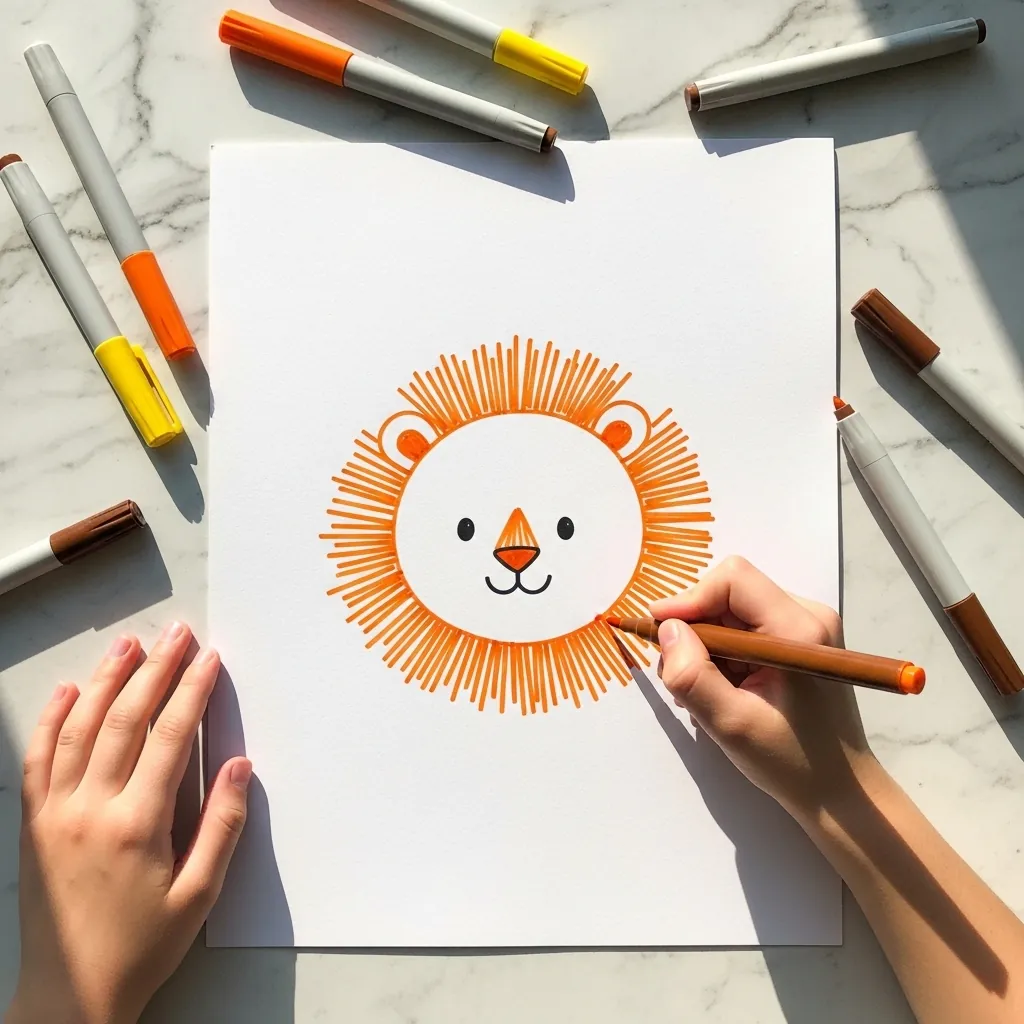
This lion is two circles and a burst of lines. Draw the face circle, ring it with short straight strokes for the mane, and keep every stroke the same length so the mane reads as a sunburst. The features go in the lower half of the face circle, small and simple.
11. Chubby Yellow Chick
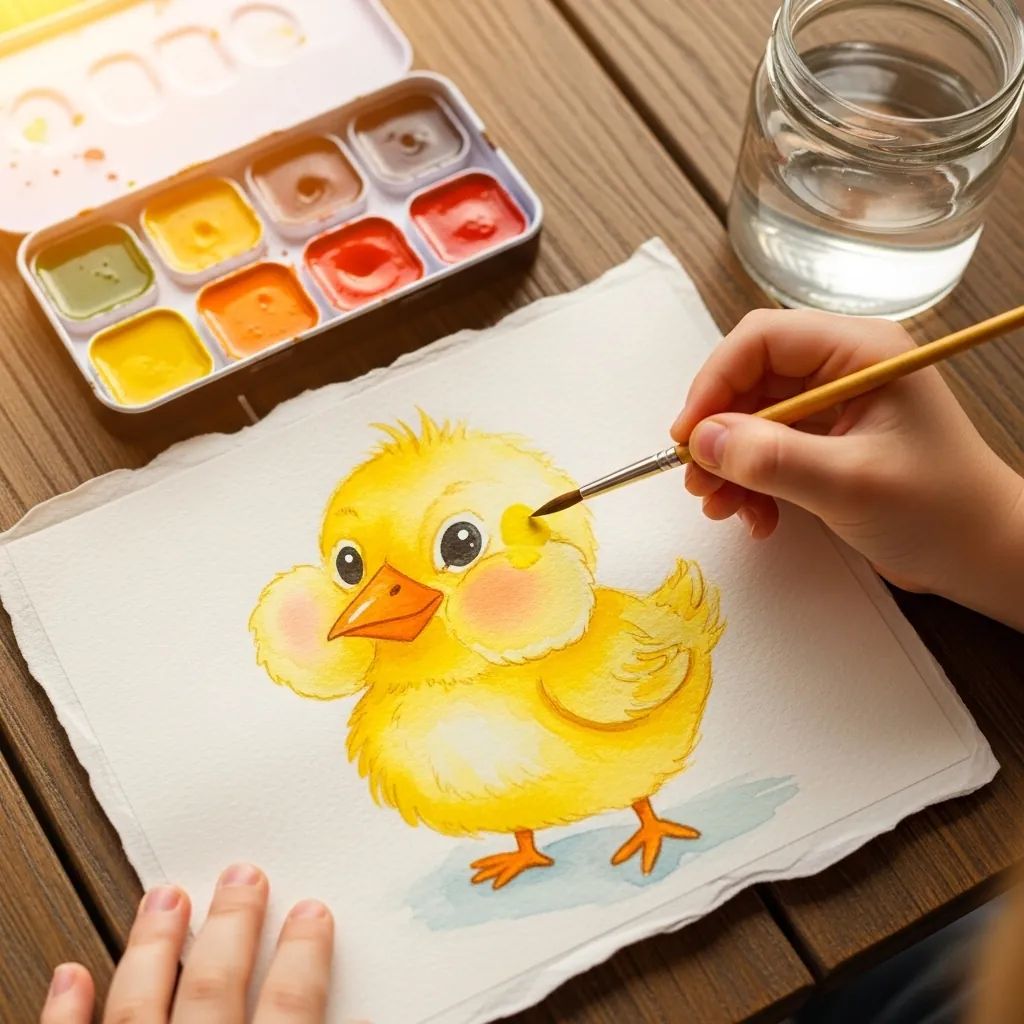
Chicks are the fastest cute animal there is. Paint one round body, drop a smaller round head on top so they overlap, and add two orange sticks for legs. Let the yellow dry before you place the eyes, or they will bleed into fuzz.
12. Tall Baby Giraffe
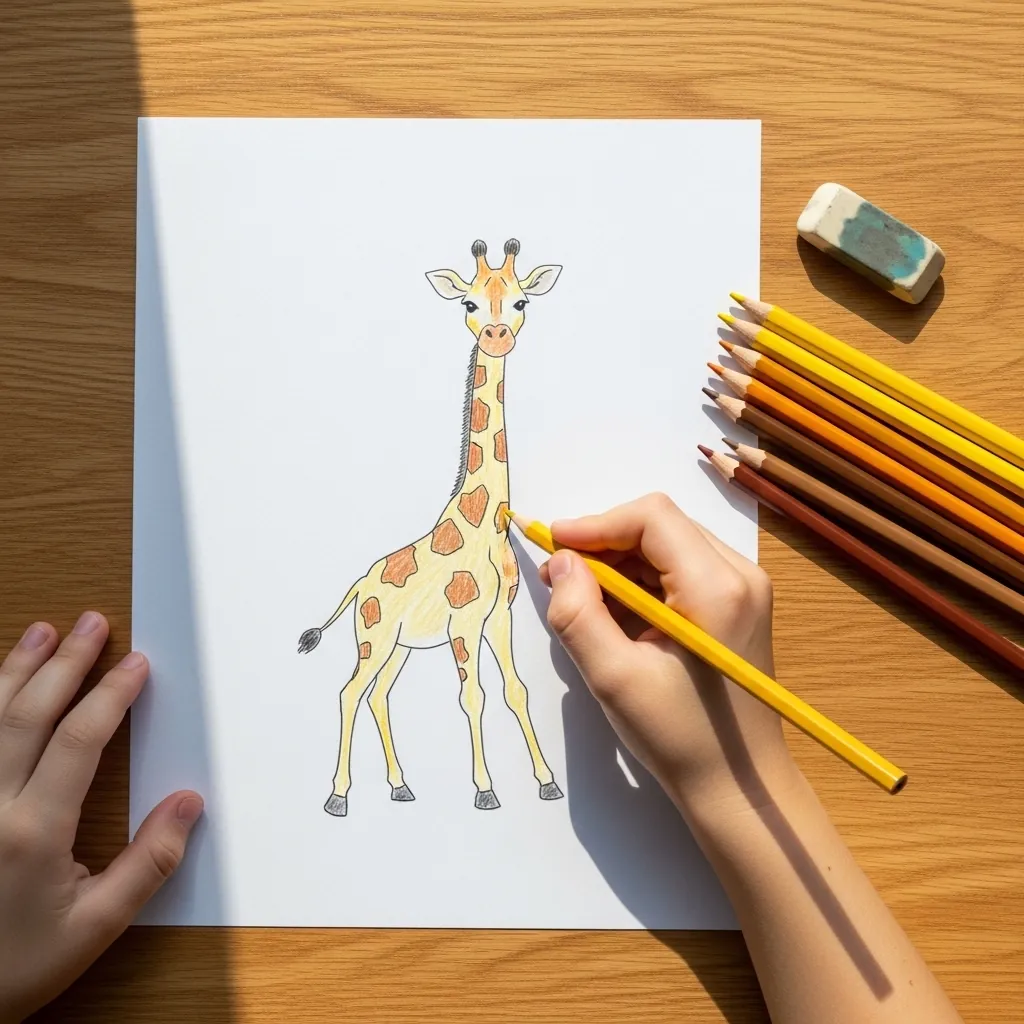
A giraffe is a proportion challenge dressed up as a cute animal. Keep the neck long but the head small and rounded, place the eyes low with heavy lashes, and make the patches smaller near the face and larger down the body; two little horns finish the head.
13. Simple Penguin Shape
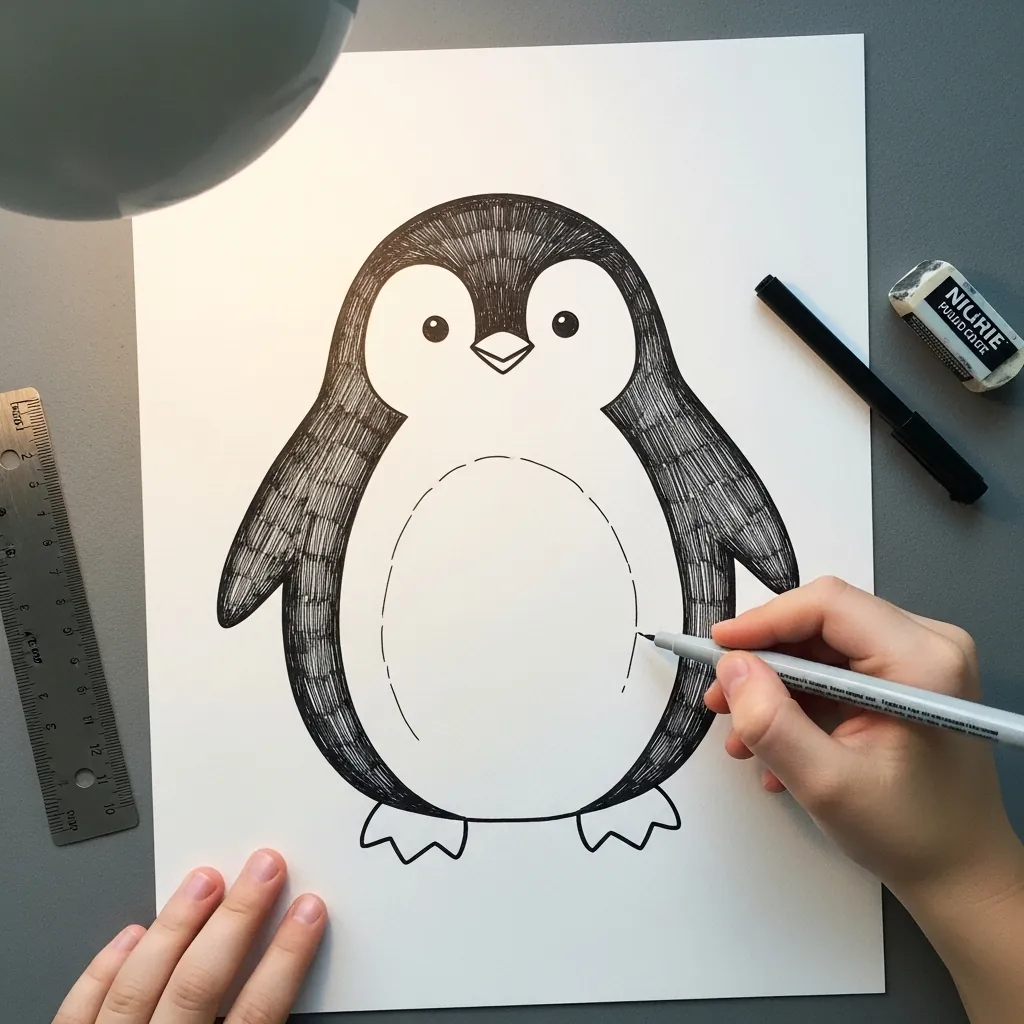
Penguins prove that a cute animal can be one shape. Draw a tall oval, put a smaller oval inside it for the pale front, and add two flippers and two feet. The eyes sit close together near the top of the pale panel, which is what makes it look like a chick.
14. Koala on a Branch
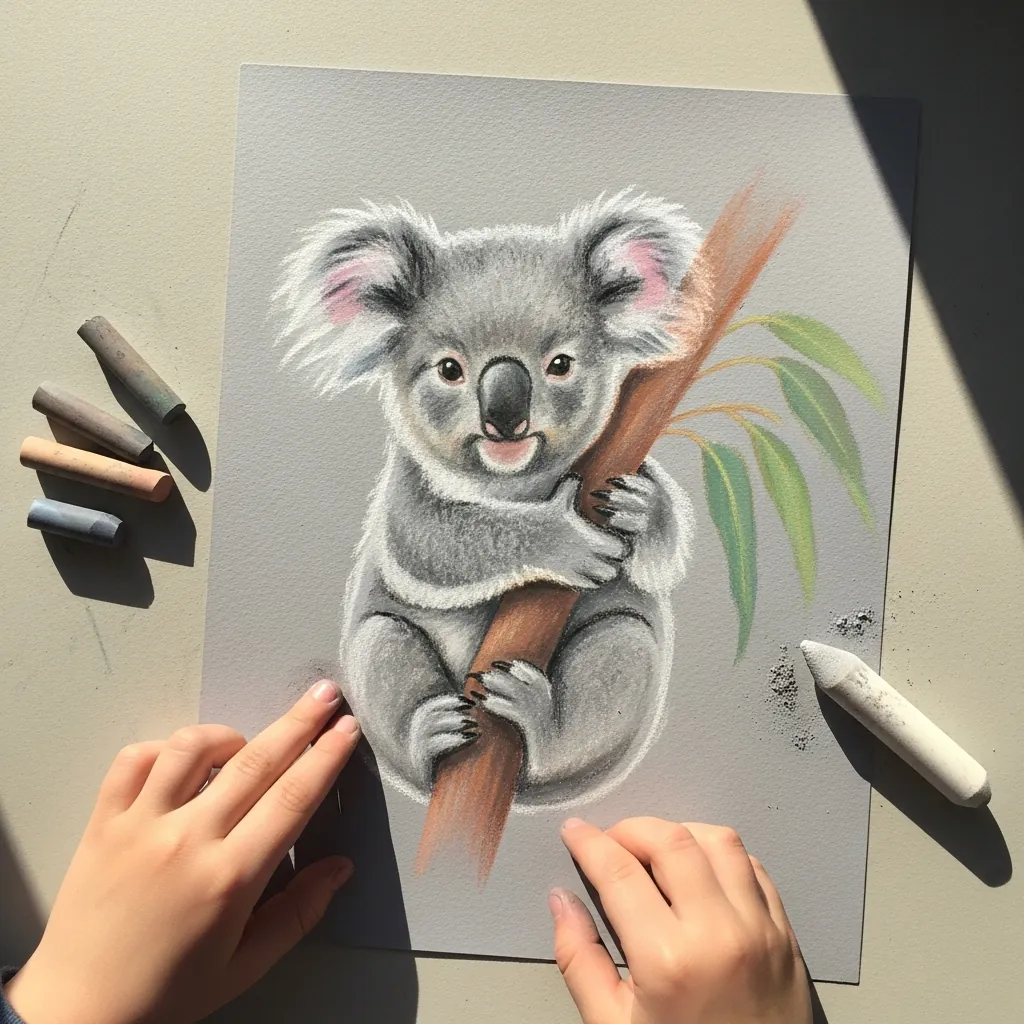
Koalas are round ears and a round nose, and everything else is secondary. Make the ears oversized and fluffy at the edges, draw the nose as a large dark oval covering most of the face, and set the eyes small and low on either side of it. The arms wrap right around the branch.
15. Smiling Tortoise
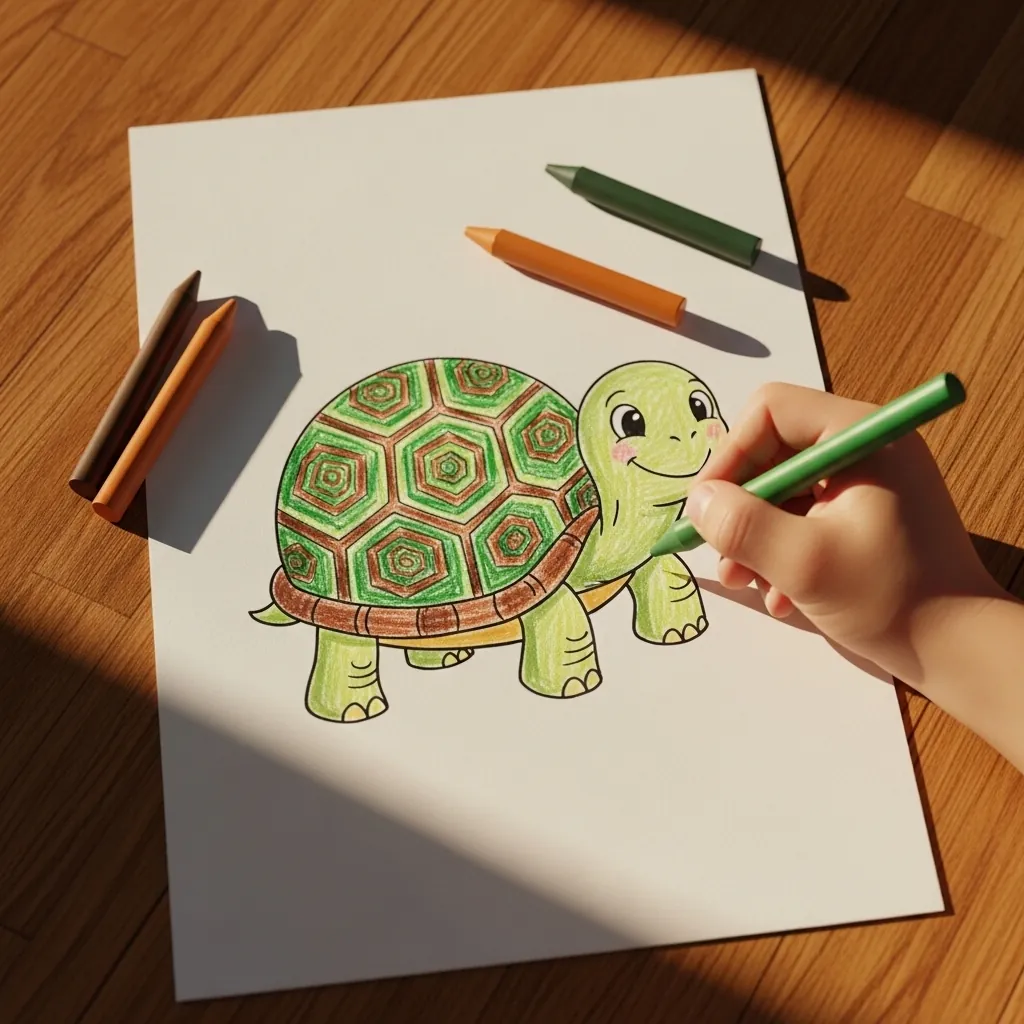
Shell patterns are a chance to slow down and be neat. Draw the shell as a dome, divide it into hexagons that get smaller toward the edge, and color each one in two greens; the head and legs poke out as short rounded stubs, never long ones.
16. Happy Little Fox
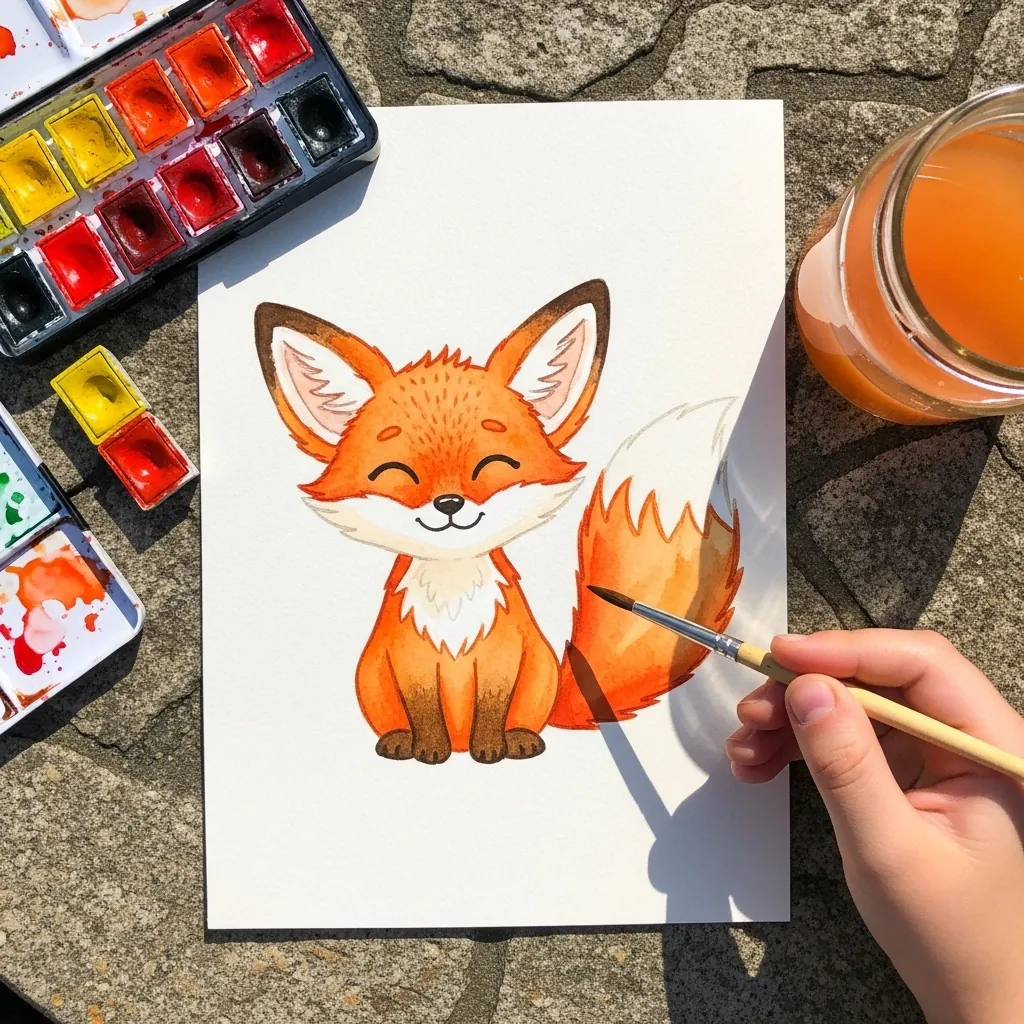
Foxes are pointed animals, so you have to fight the points. Round off the muzzle, keep the ears triangular but soft at the tips, and make the tail as big as the whole body with a white tip. Closed smiling eyes work better here than open ones.
17. Spotted Baby Deer
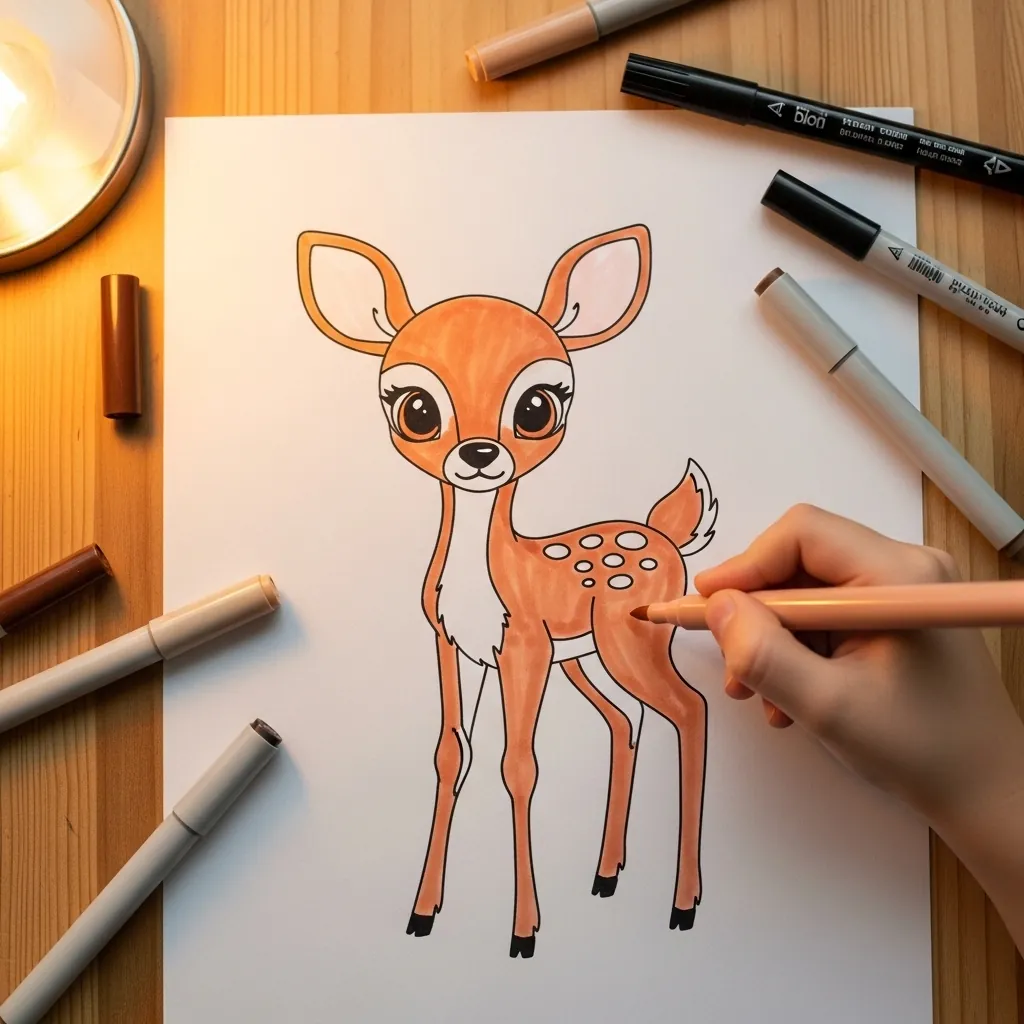
Fawns are all leg, so keep the legs thin and slightly wobbly. Draw the body small and the ears large, scatter the white spots in loose rows along the back rather than evenly, and give the eyes long lashes. The legs end in small dark hooves, not feet.
18. Bear Cub With Arms Up
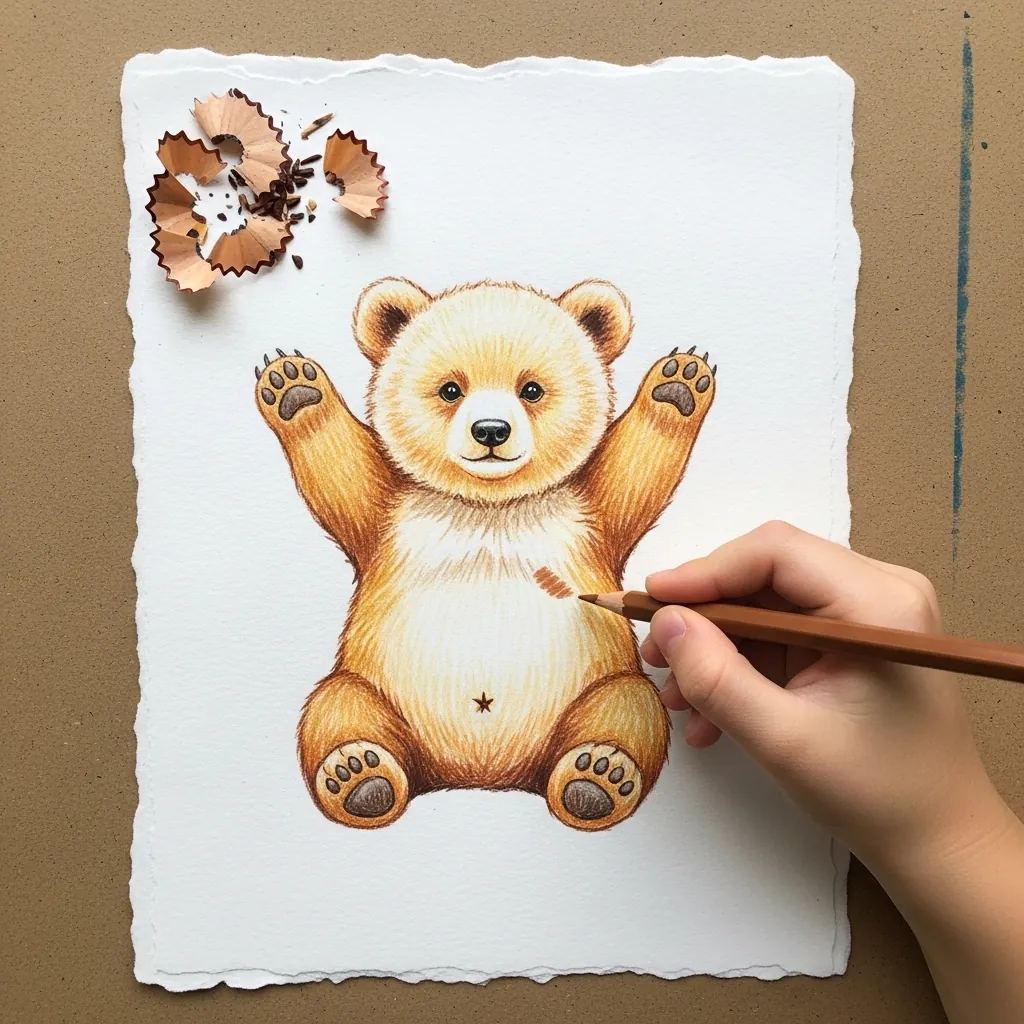
Arms in the air is a pose that reads as delight without needing any expression. Sit the cub on its bottom with the legs splayed forward, raise both arms straight up, and show the soft pads on the paws; the muzzle is a pale oval low on the face.
19. Leaping Blue Dolphin
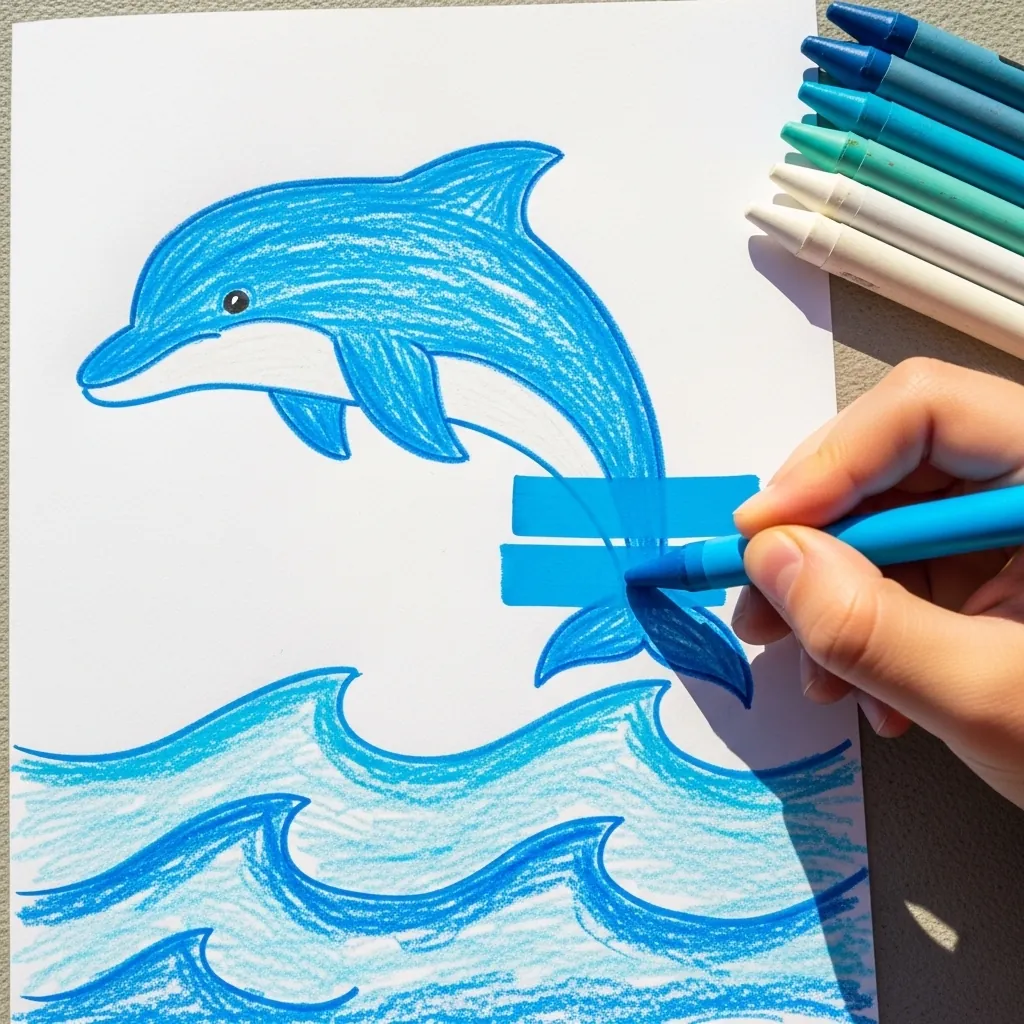
Dolphins are drawn in one curve from nose to tail. Sweep that line first, add the fins afterwards, and set the eye small and just behind the start of the smile line. Blue crayon waves underneath give it something to leap out of.
20. Round Hamster
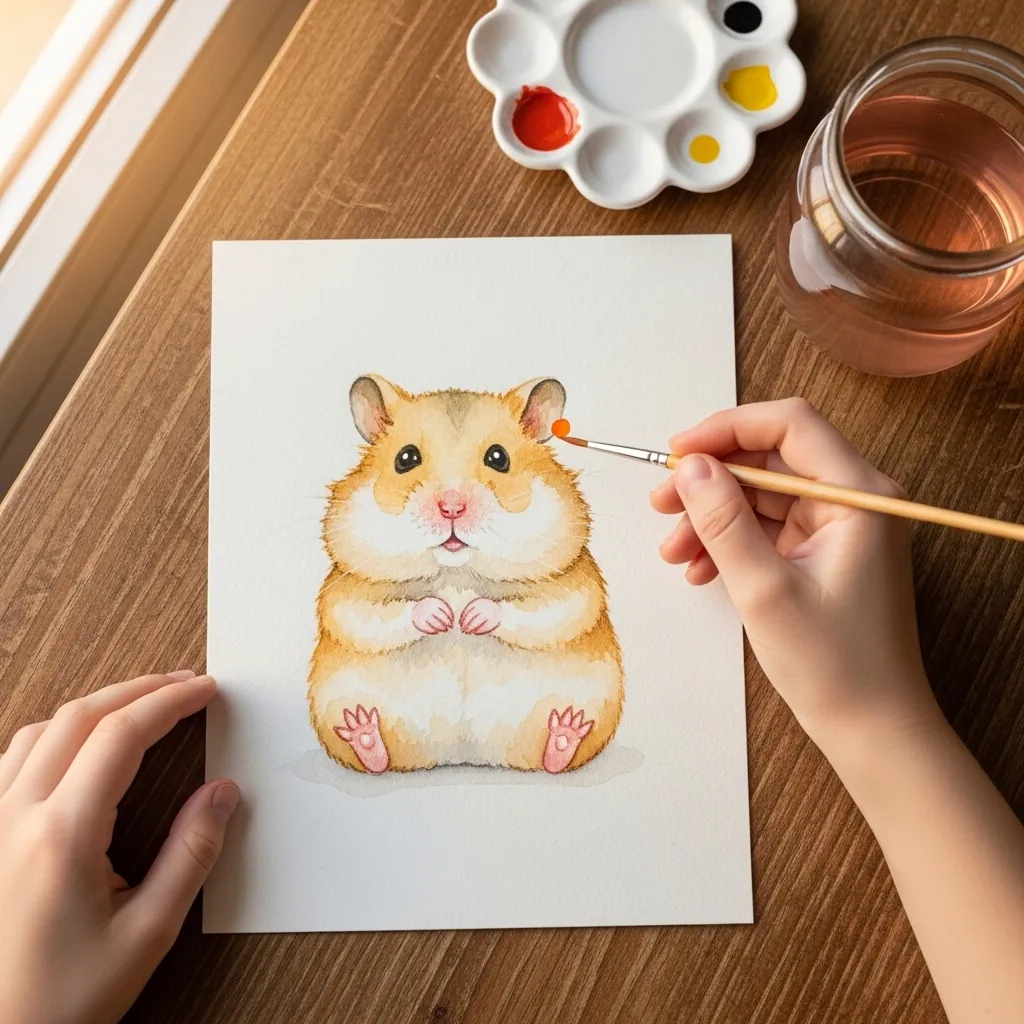
A hamster is barely more than a circle with ears. Keep the body almost perfectly round, add two small semicircle ears near the top, and hold the tiny front paws up under the chin. Cheeks bulging outward on both sides tell the whole story.
21. Hippo in the Water
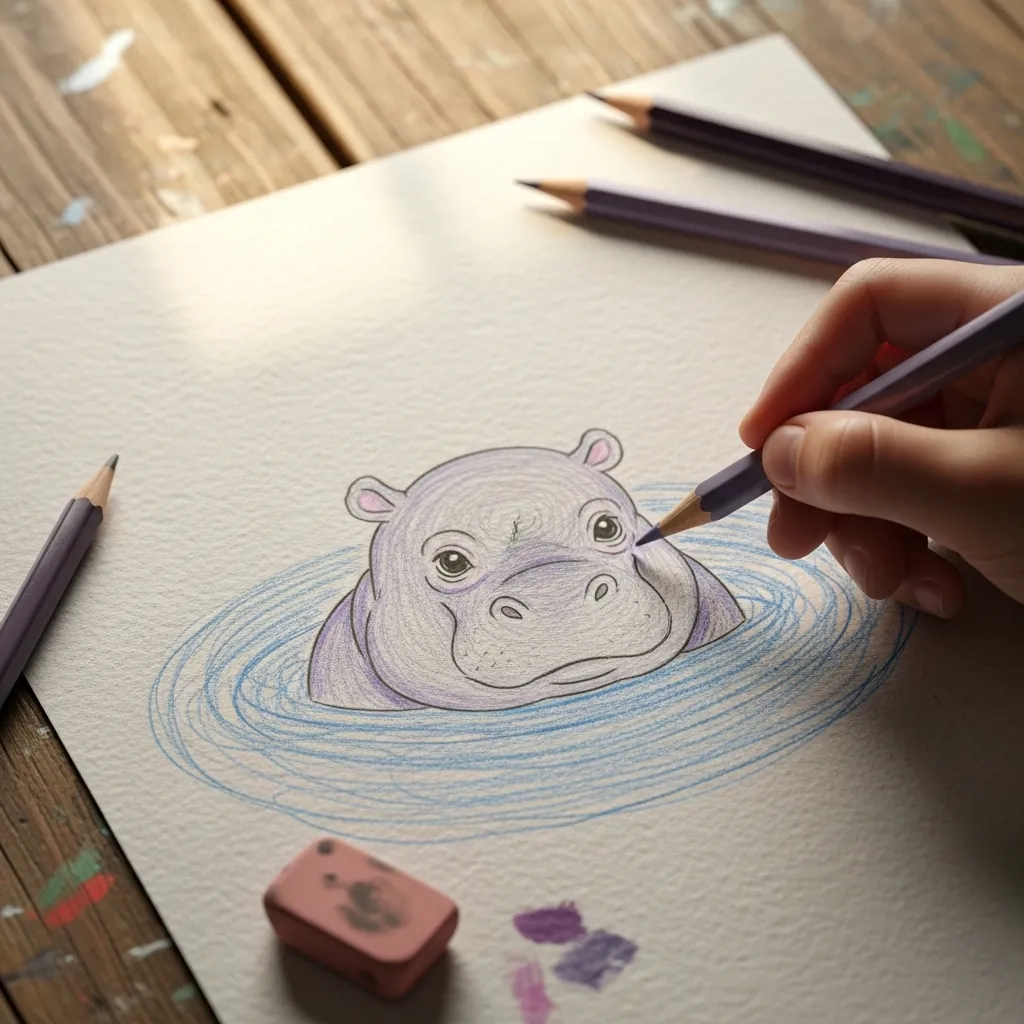
Half an animal can be cuter than a whole one. Draw only the top of the head above a wavy waterline, put the eyes and the two round nostrils above it, and let everything else disappear; ripples spreading outward show the weight underneath.
22. Brushstroke Flamingo
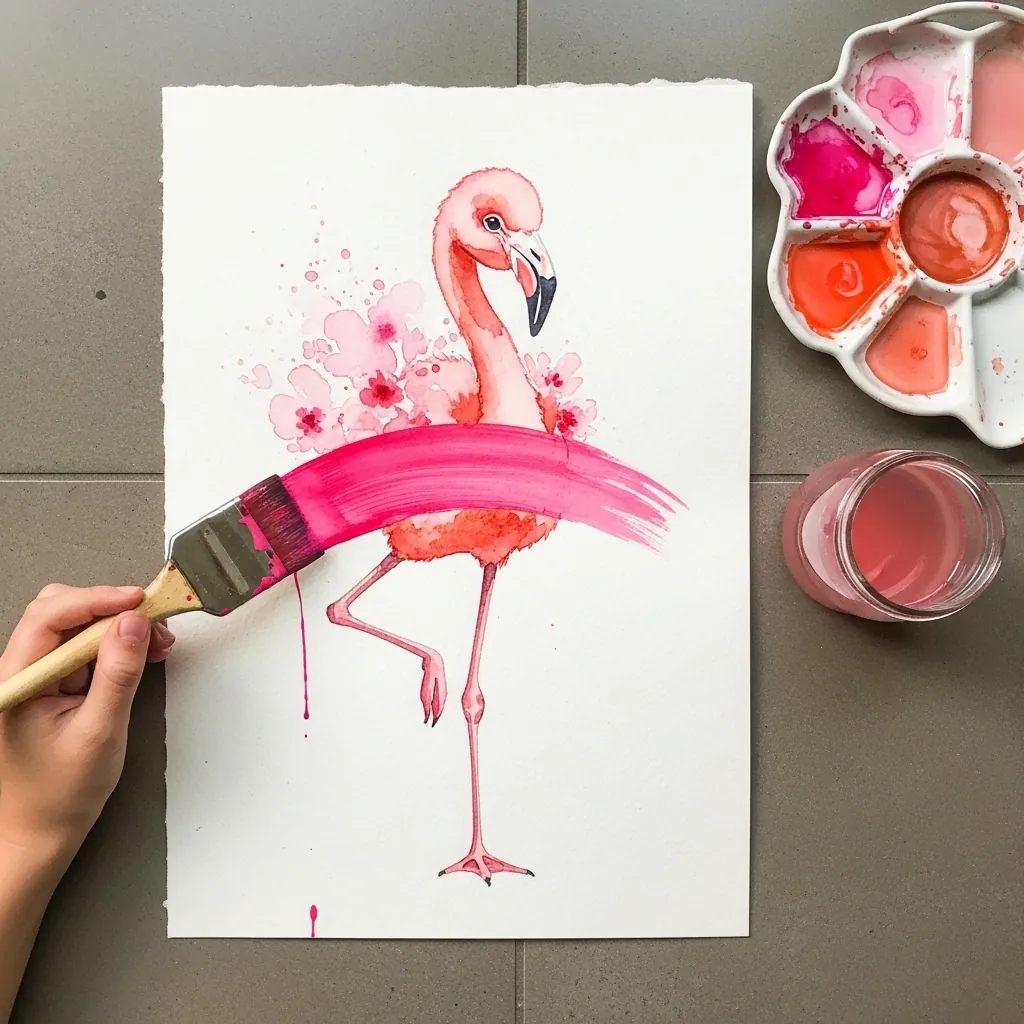
One loaded brushstroke can make the whole body. Press the flat brush down and drag it once for the body, then paint the neck as a thin S curve and the legs as two lines. Adding a spatter of pink around it keeps the piece looking playful rather than careful.
23. Ink Line Raccoon
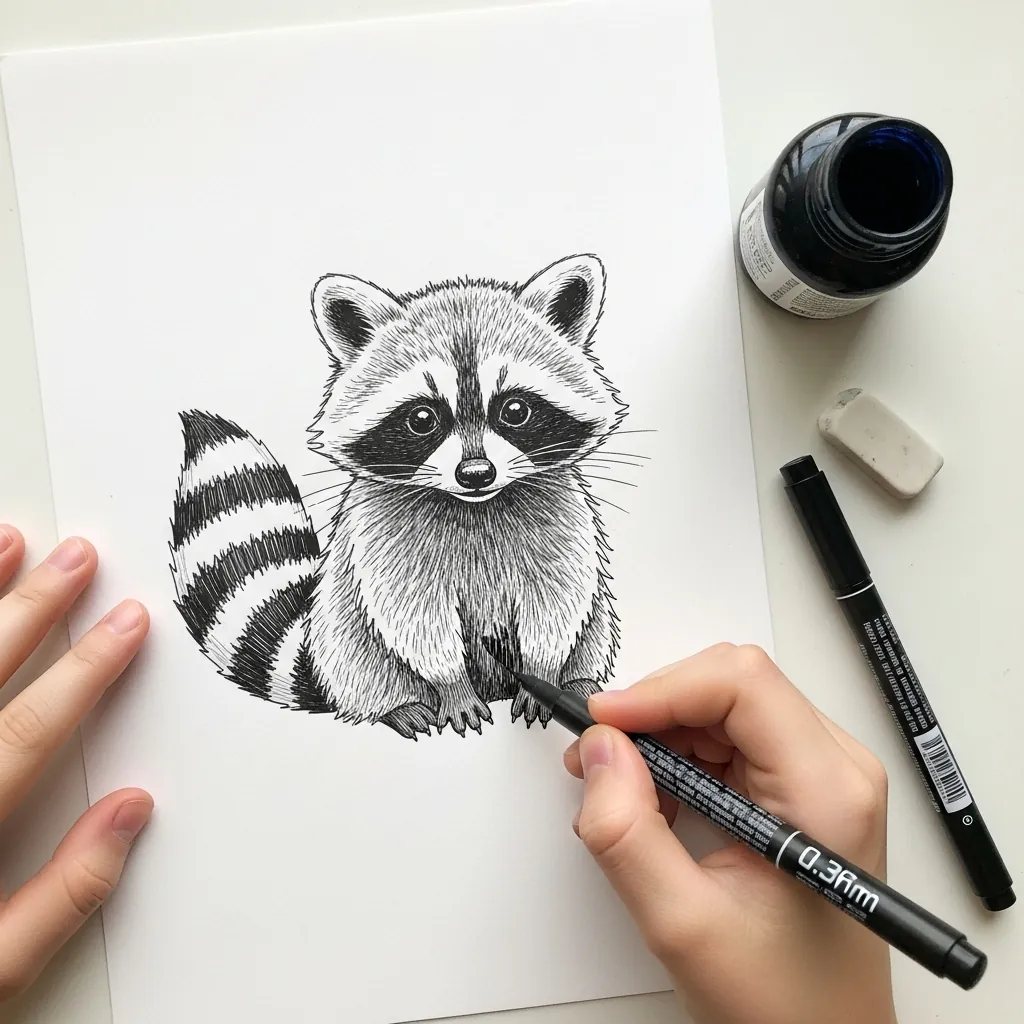
The mask is what makes a raccoon, so get it right early. Draw the dark band across both eyes as one continuous shape rather than two patches, keep the muzzle pale and pointed downward, and stripe the tail with even dark bands. The paws are small and hand-like.
24. Crayon Rainbow Parrot
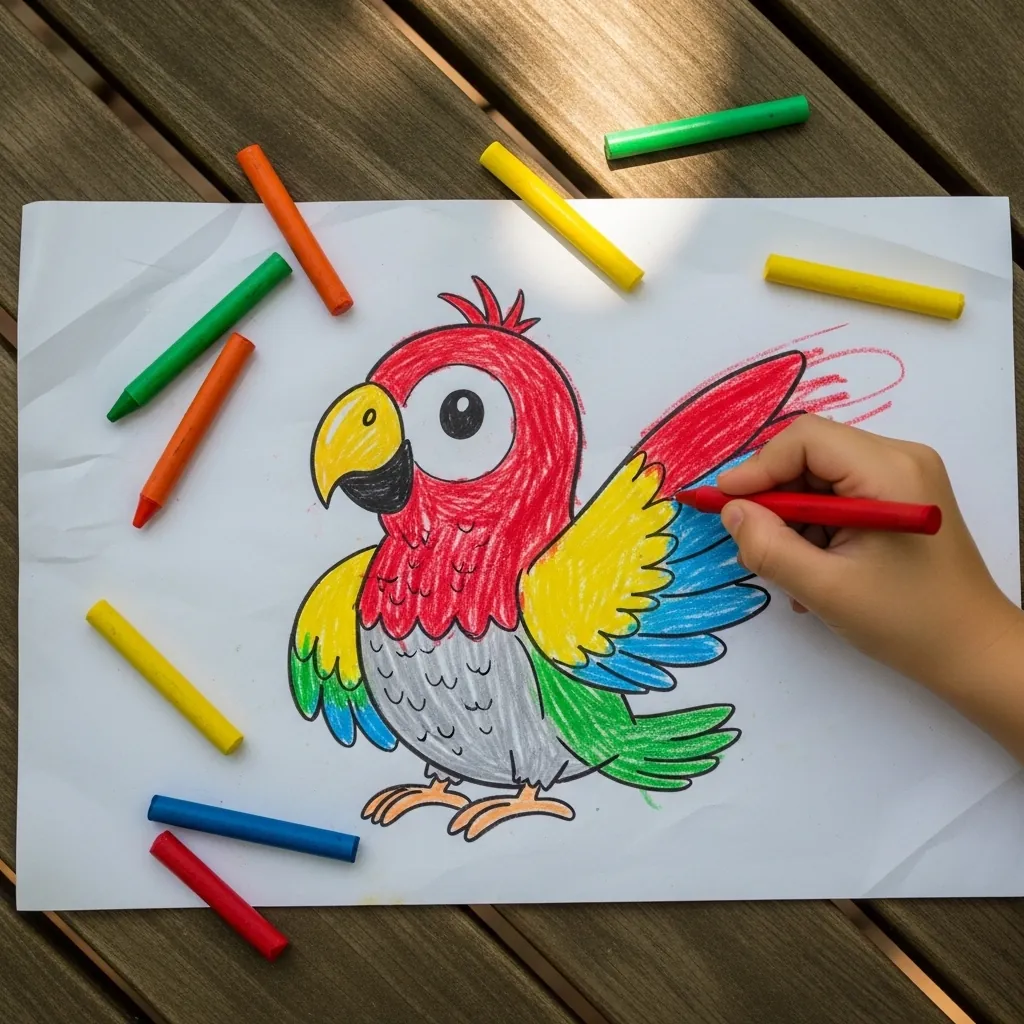
Crayons want bold shapes, not detail. Block each wing feather as its own broad band of color, press hard so the wax sits thick, and outline the whole bird in black at the end to tidy the edges; the beak is a fat hook, not a fine point.
25. Cheetah Cub Face
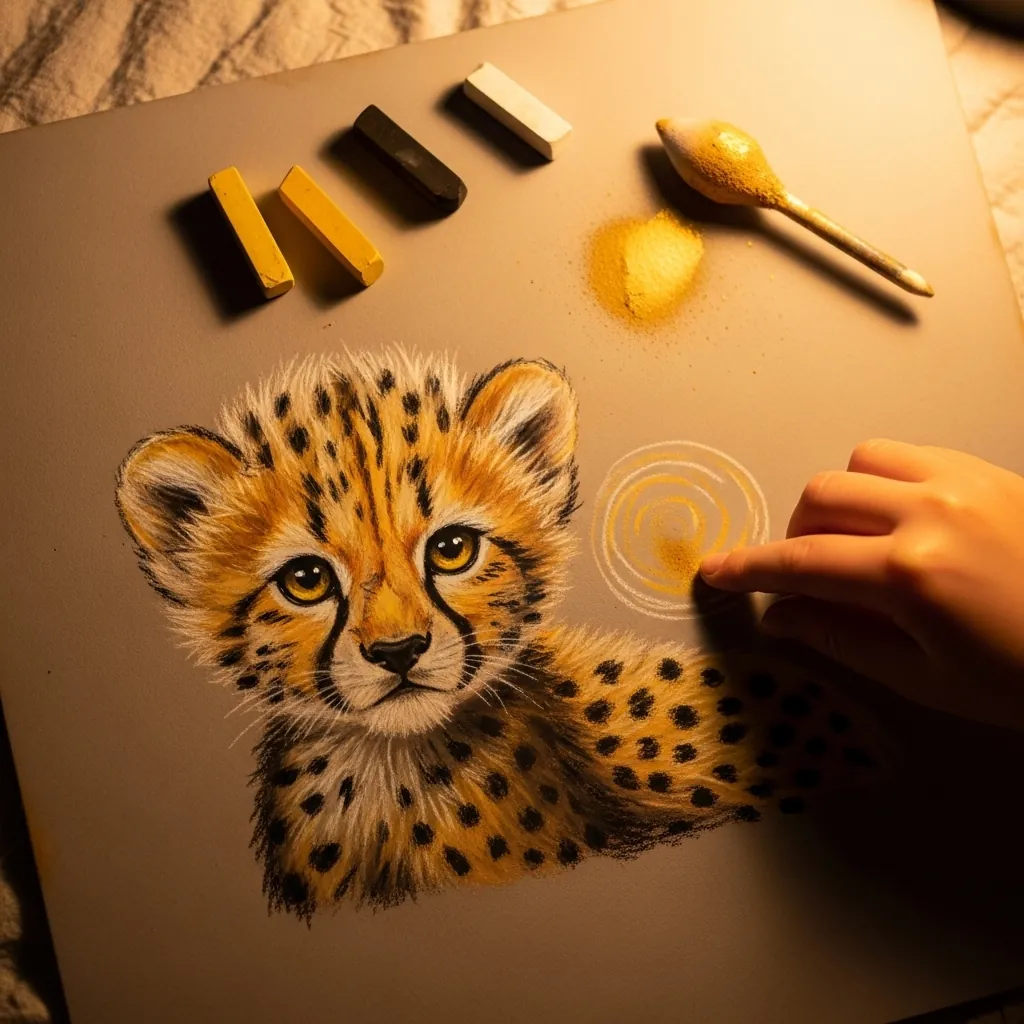
Cheetah cubs have two dark lines running from the inner eye down to the mouth, and those lines are half the character. Draw them before any spots, keep the eyes amber and low in the face, and let the fur edges stay soft and blended.
26. Sheep Made of Loops
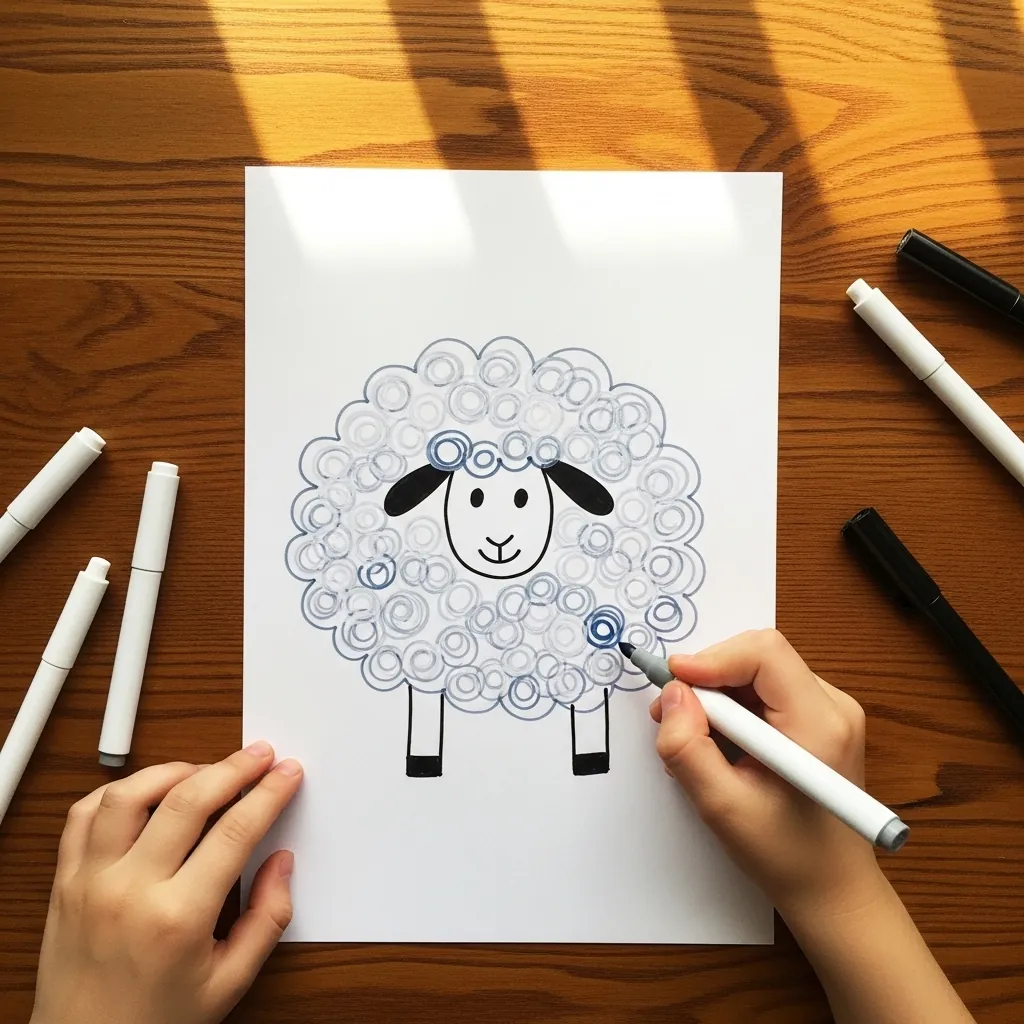
A sheep is one long loopy line that comes back to where it started. Draw the wool as a chain of small circles around a fat oval, leave the face and legs plain and dark by contrast, and keep every loop roughly the same size so it reads as fleece.
27. Graphite Seal Pup
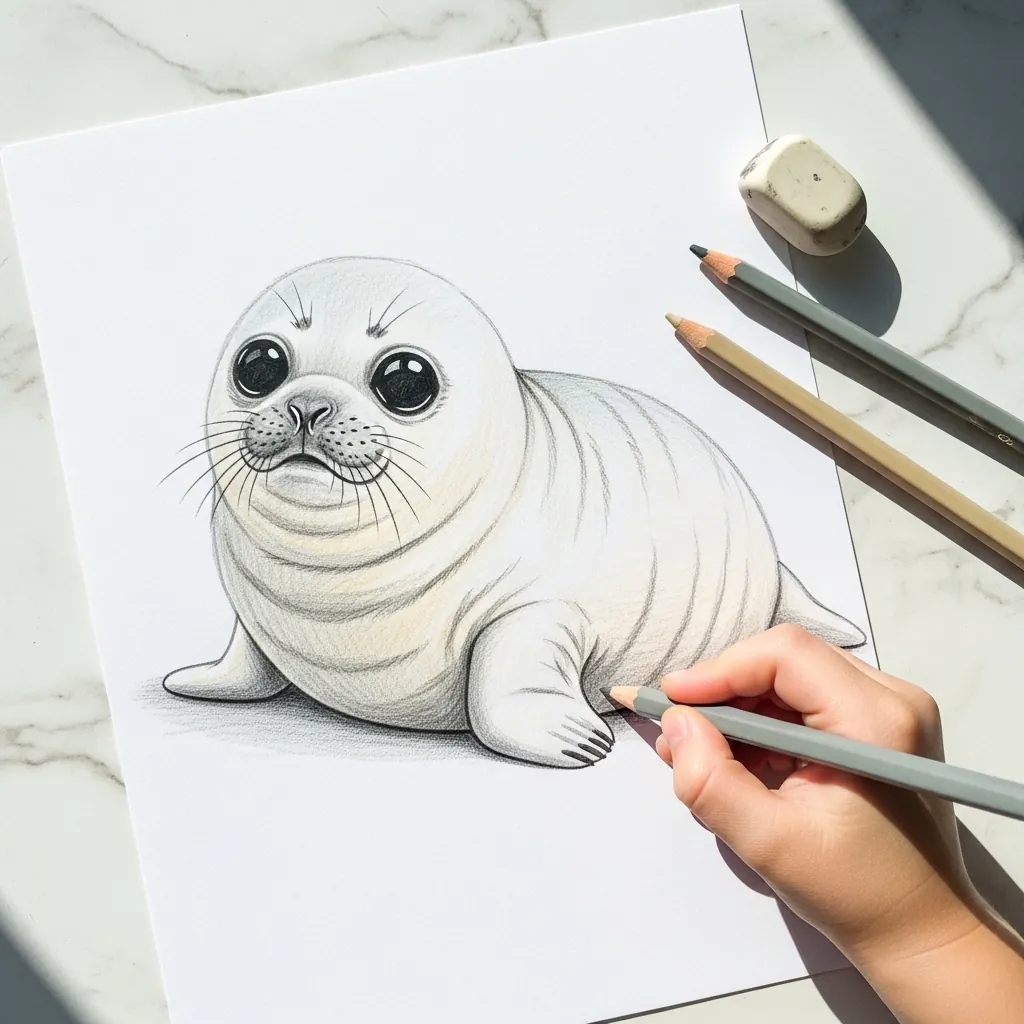
This is the same animal as earlier, taken further. Build the body in smooth graduated tone, keep the darkest value in the eyes and nostrils, and lift a soft highlight along the top of the back with a kneaded eraser; whiskers go on last as fine curved flicks.
28. Pink Axolotl
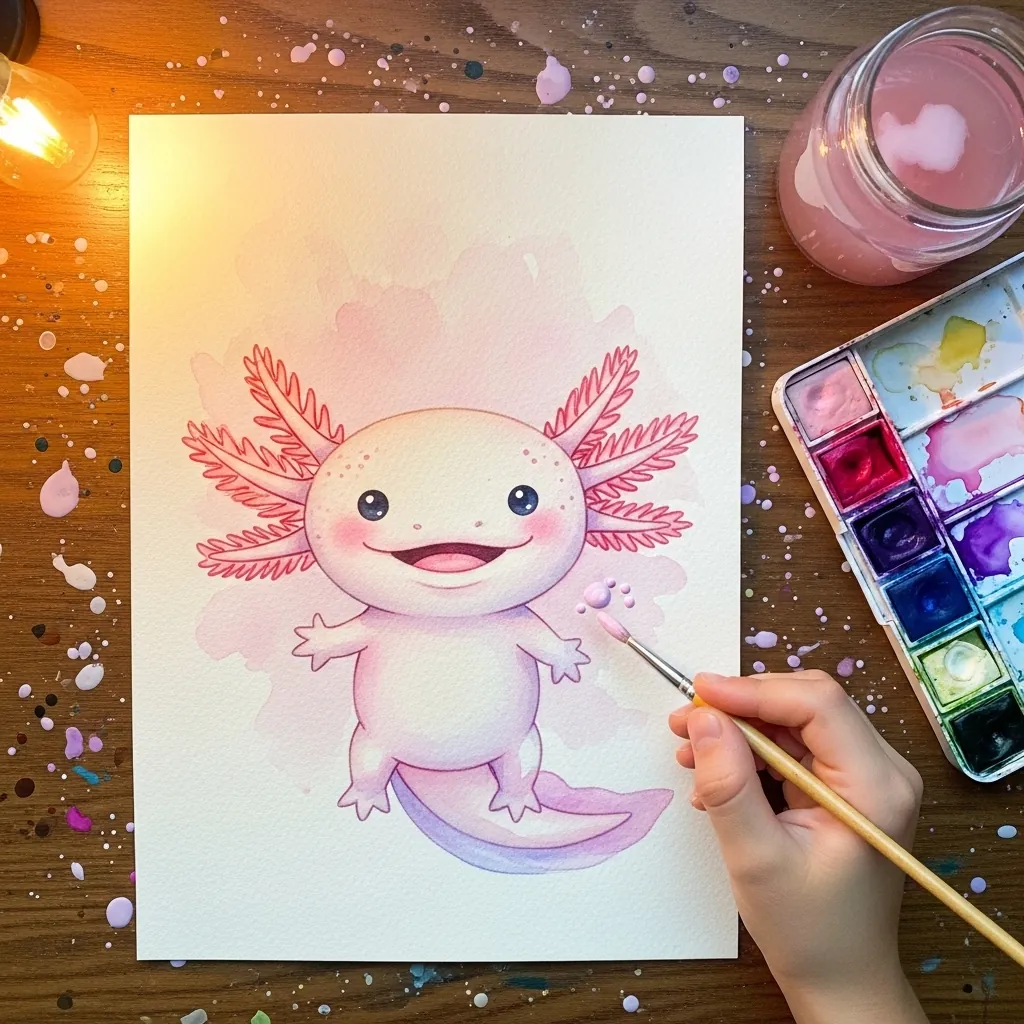
Axolotls are cute because the gills look like a headdress. Paint three feathery fronds on each side, keep the smile a simple upward curve running most of the width of the head, and let the tail fin fade out with a wet brush. The eyes are two tiny dots.
29. Porcupine in Colored Pencil
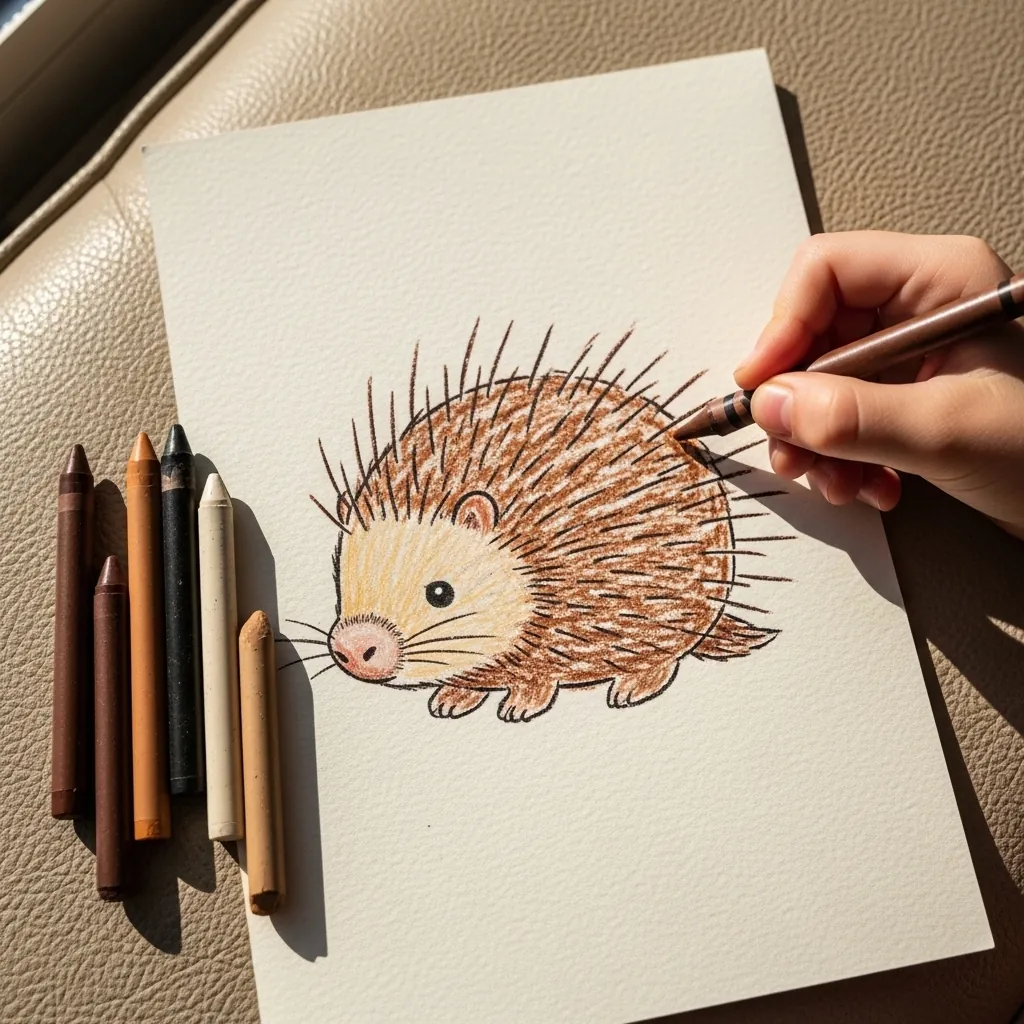
Quills are drawn from the body outward, never inward. Start each stroke on the back and flick away so it tapers naturally, layer three browns for depth, and leave the face free of quills entirely. A small pink nose keeps it friendly rather than defensive.
30. Gentle Manatee
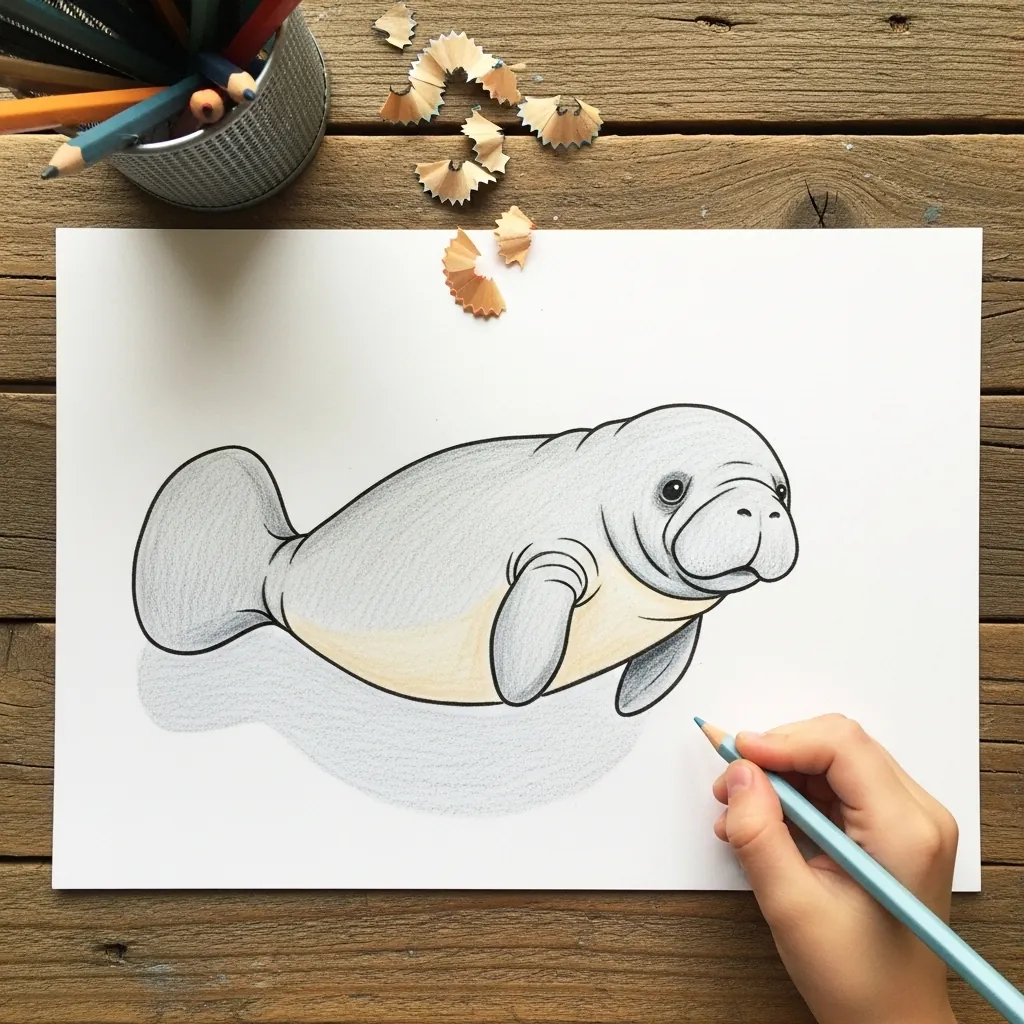
Manatees have no edges anywhere, which is exactly why they suit this style. Keep the whole outline one soft continuous curve, make the snout broad and blunt, and set the small eyes wide apart; two flippers and a paddle tail are all the detail needed.
31. Red Panda With Striped Tail
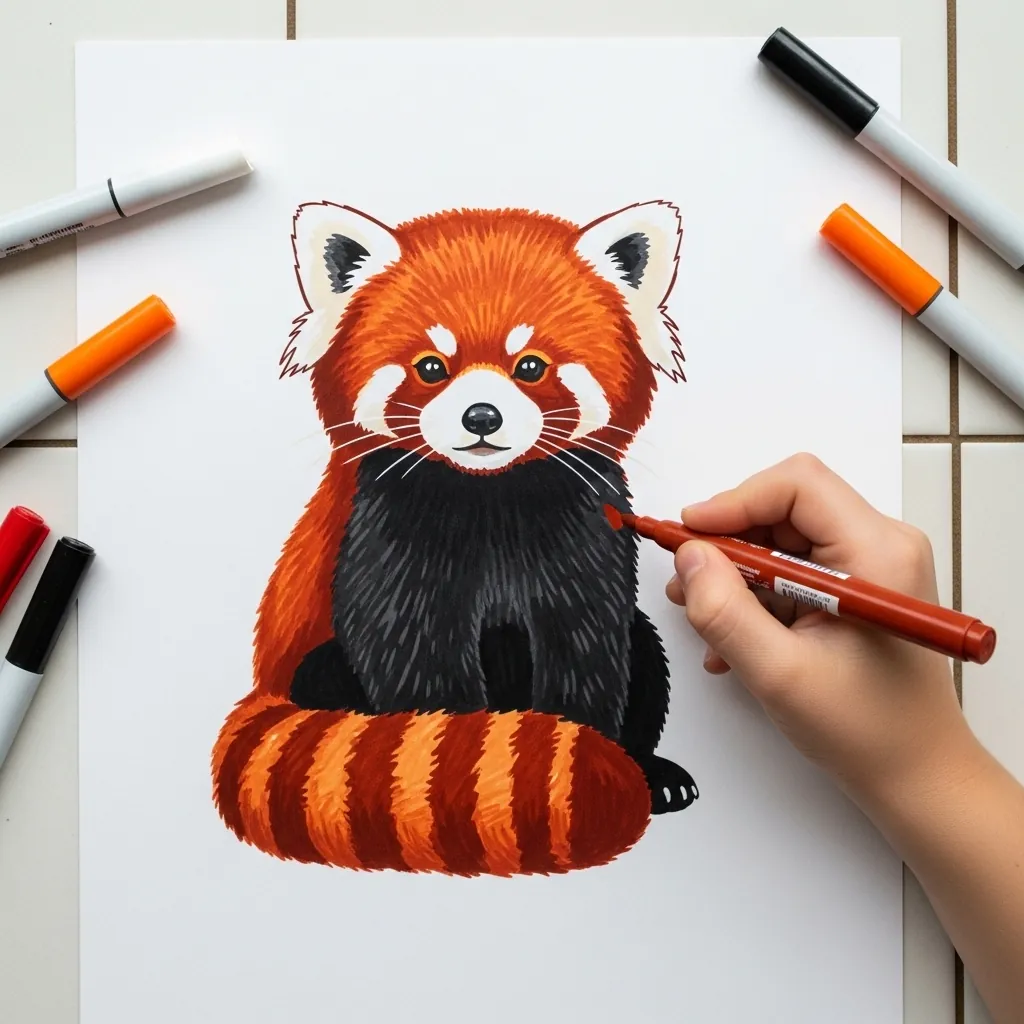
Red pandas are a masked face and a spectacular tail. Draw the white facial markings first as a mask around the eyes and muzzle, then make the tail as long as the body and ring it with alternating bands. The ears are round with pale fluffy insides.
32. Cheerful Snail
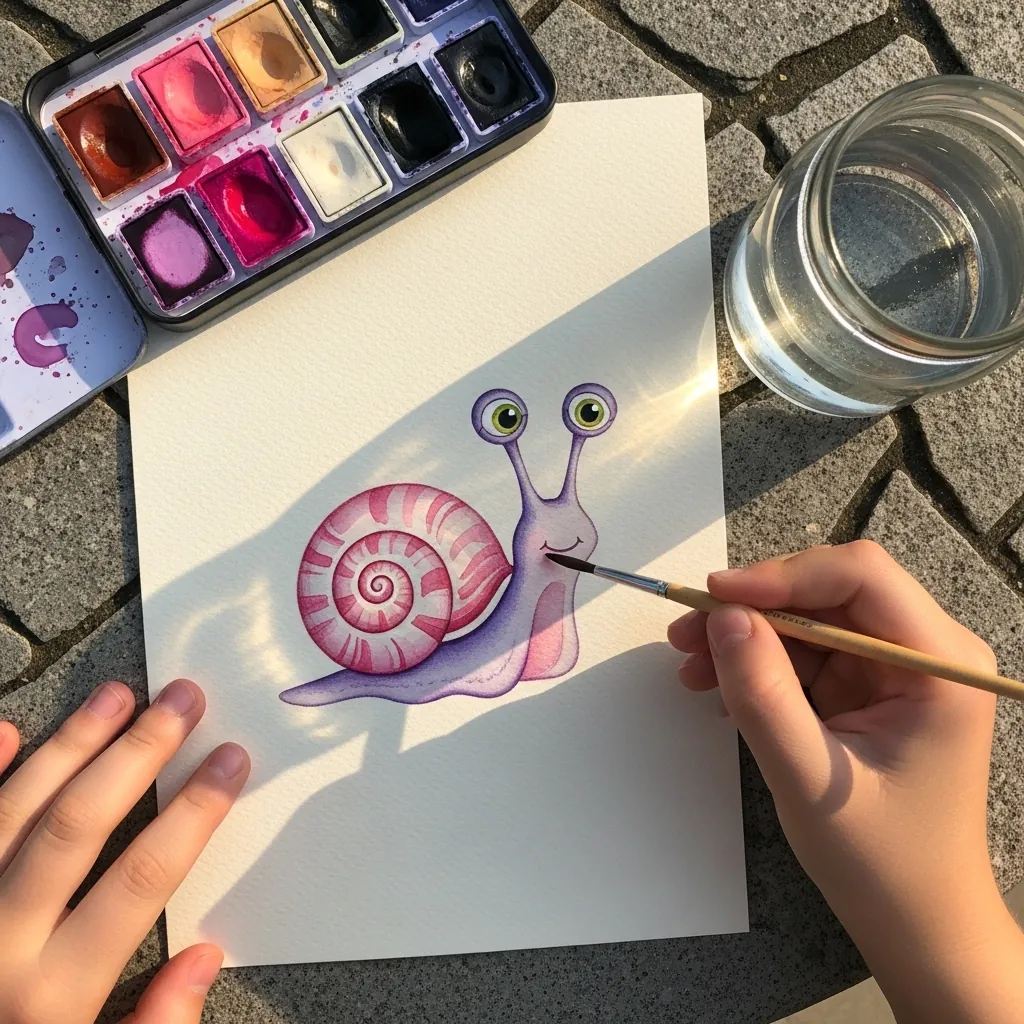
Snail shells are a spiral, and a spiral looks best drawn from the center out. Start with a dot, wind outward in an even curl, and thicken the line as it goes. The two eye stalks lean apart rather than staying parallel, which is what makes it look curious.
33. Calm Capybara
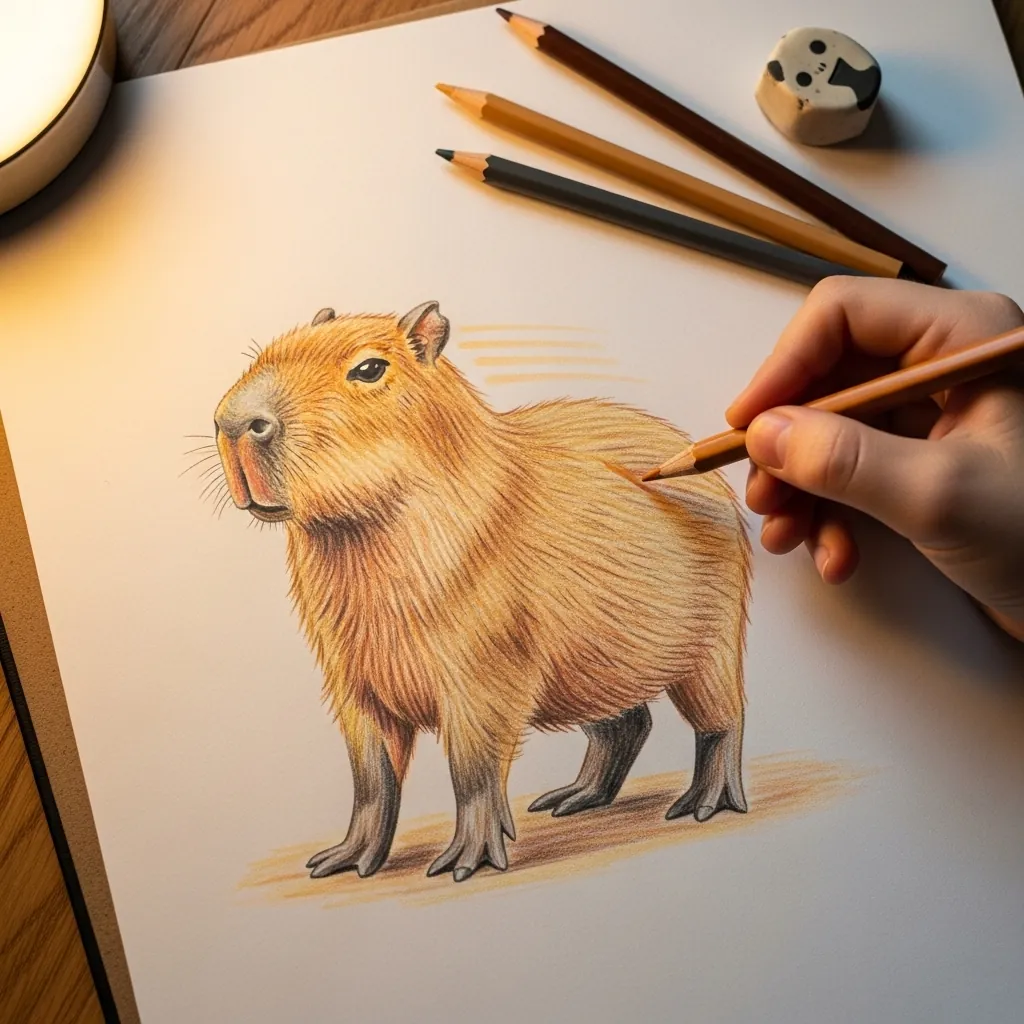
Capybaras look relaxed because their eyes and ears sit high and their mouth is a flat line. Keep the body a plain rounded rectangle on short legs, avoid any expression at all in the face, and layer the fur in short strokes going the same direction.
34. Jewel-Toned Hummingbird
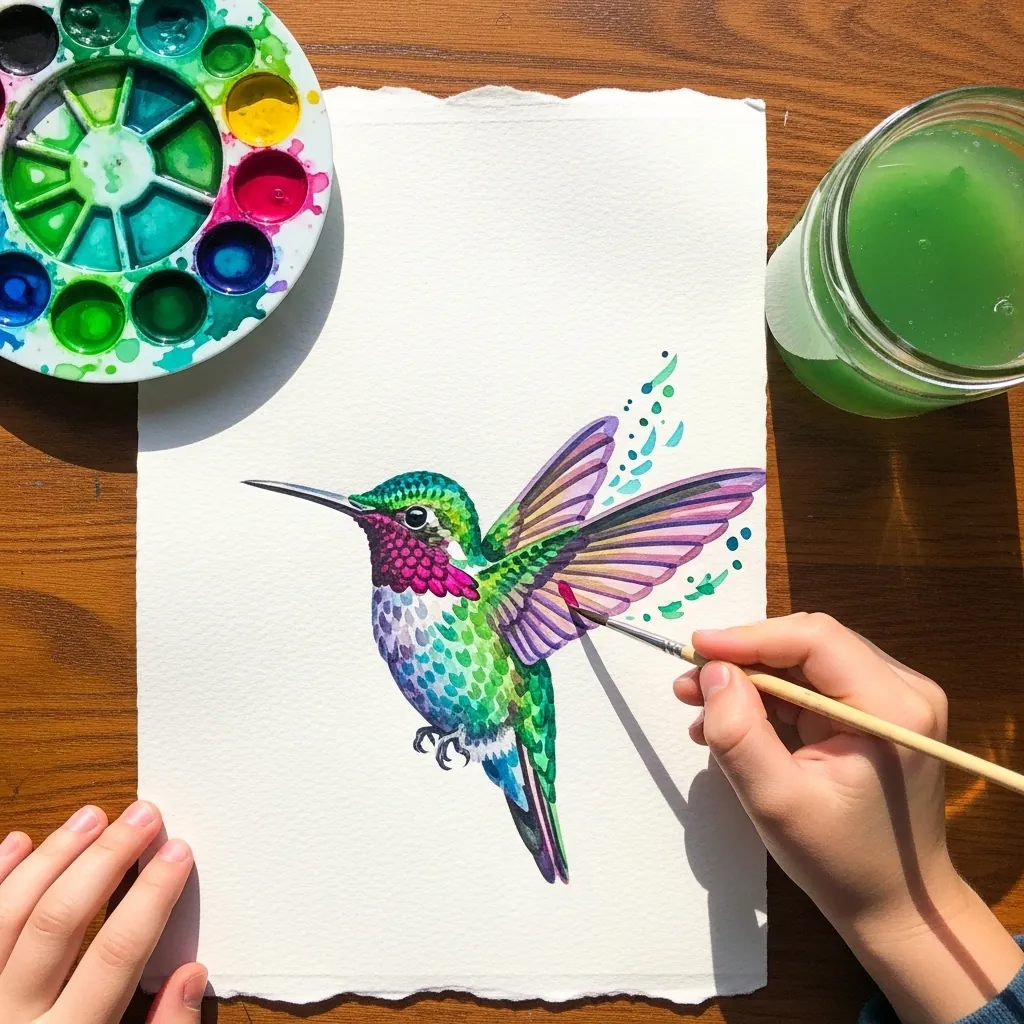
Hummingbird feathers change color with the light, so paint them wet on wet. Drop green into purple while both are damp and let them run together on the paper, then wait for it to dry before adding the fine beak and eye. The wings stay pale and blurred.
35. Glowing Firefly on Black
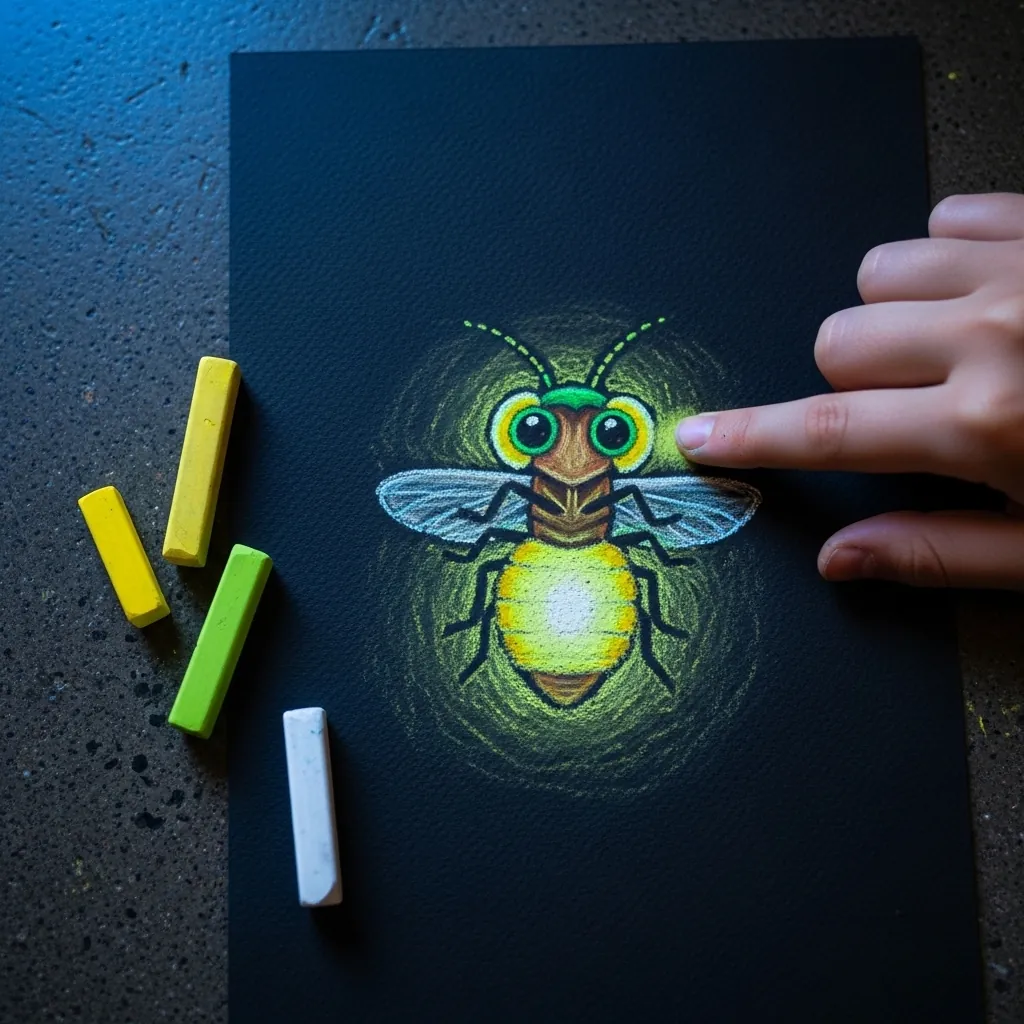
A glow only works if the paper is dark. Draw the firefly in pale green pastel, then smudge a soft halo outward from the abdomen with a fingertip, working from bright at the center to nothing at the edge. Leave the rest of the page completely black.
36. Elephant Face in One Color
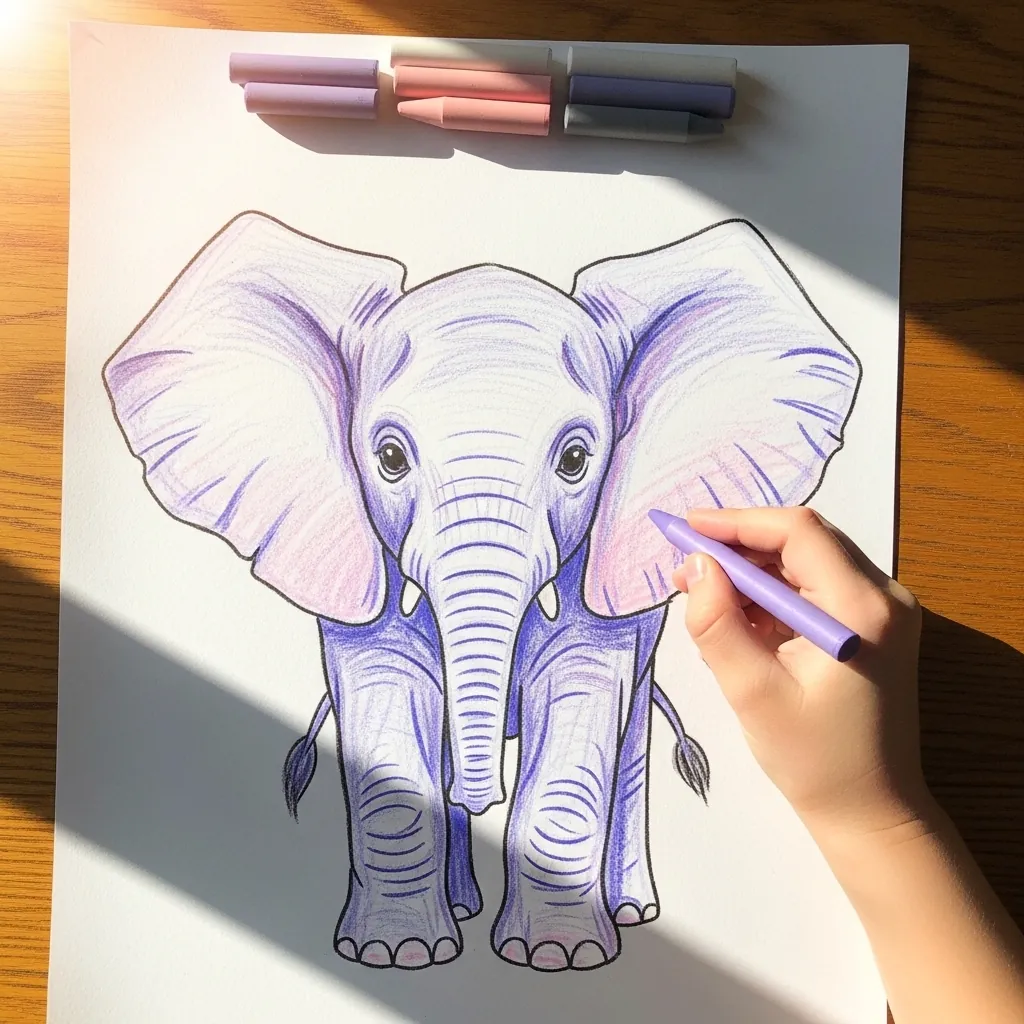
Working in a single color makes the linework do everything. Fill the ears with a fan of lines radiating from where they join the head, keep the forehead almost empty by comparison, and let the trunk hang straight down; density of line stands in for shading.
37. Hanging Sloth
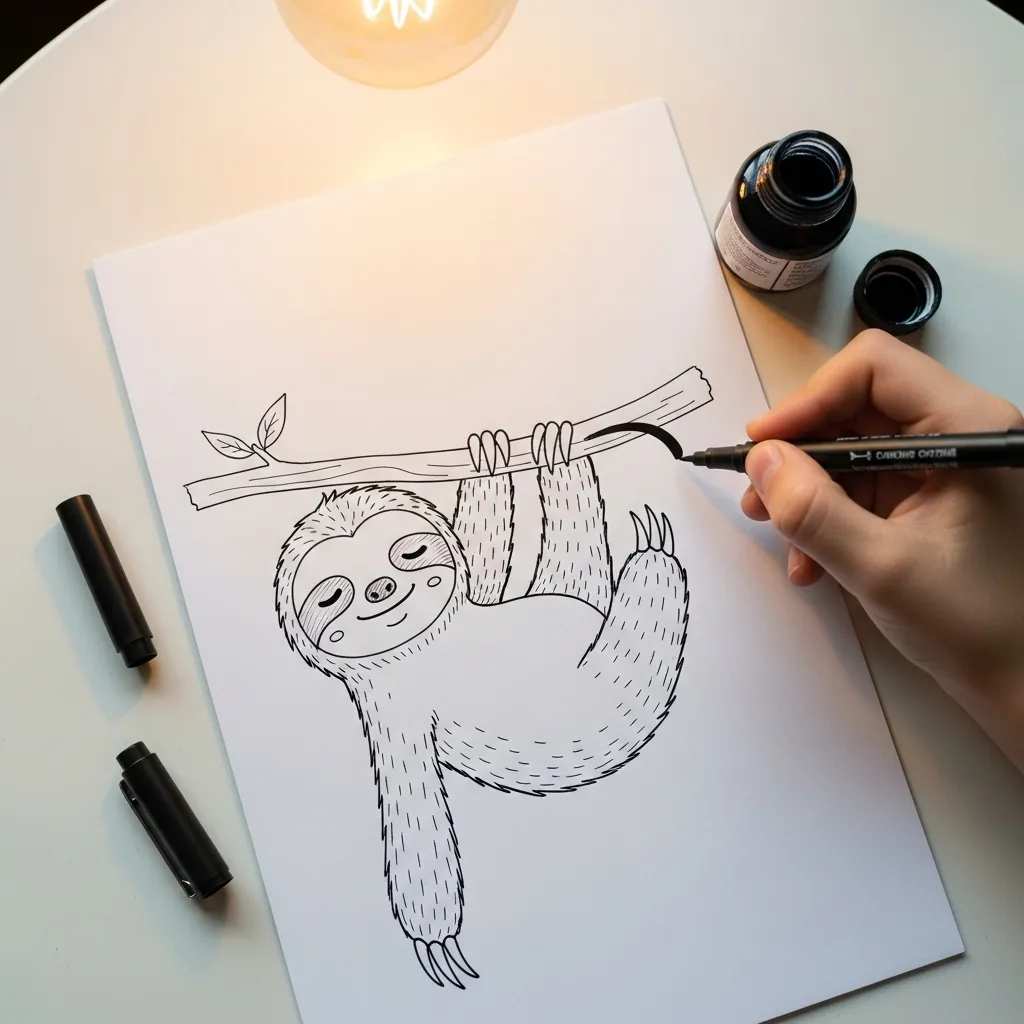
Sloths hang, so everything about the drawing should sag. Draw the branch first, hook the long curved arms over it, and let the body dangle below with a slight droop. The face is a pale mask with two small eyes and a permanent gentle smile.
38. Green Sea Turtle
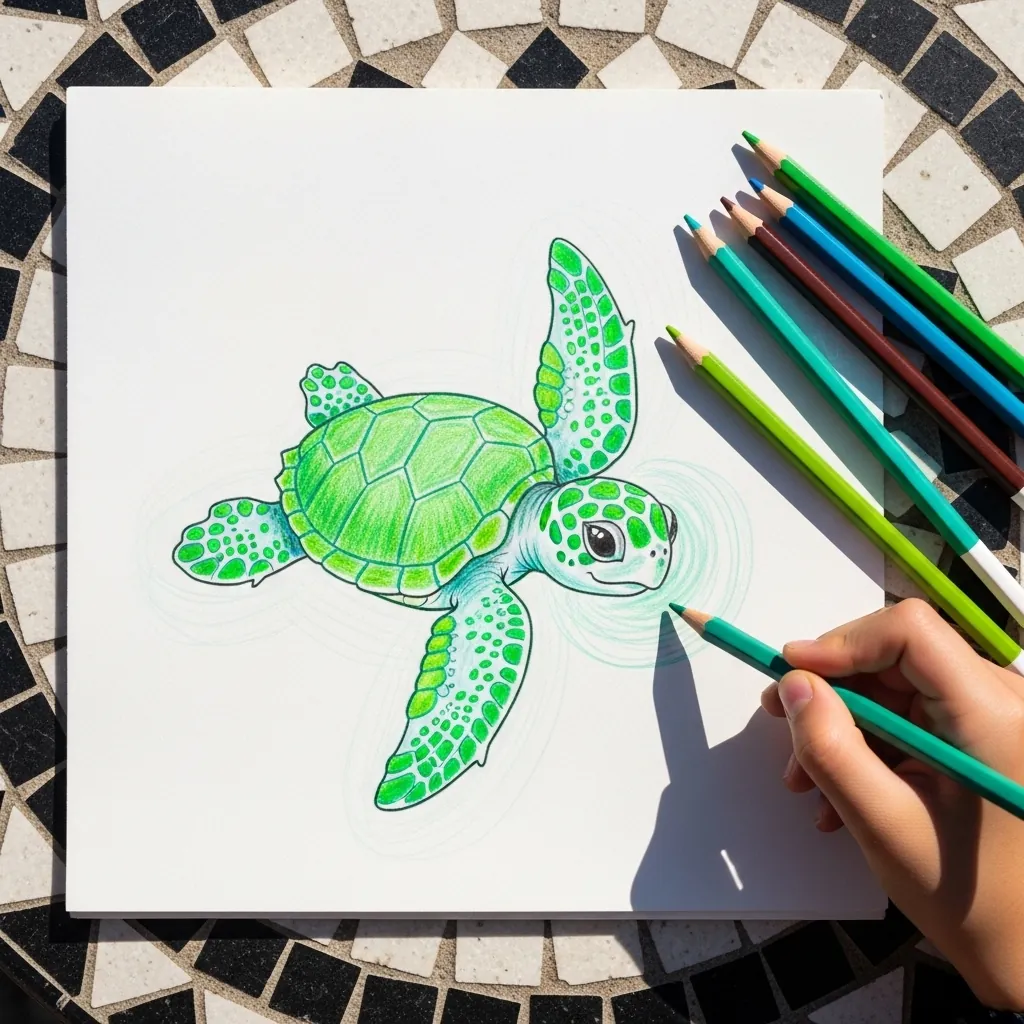
A swimming turtle is drawn from above rather than the side. Spread all four flippers outward like paddles, tilt the head slightly to one side, and pattern the shell in rows that curve with its dome. Keep the greens varied so it does not go flat.
39. Rainbow Chameleon
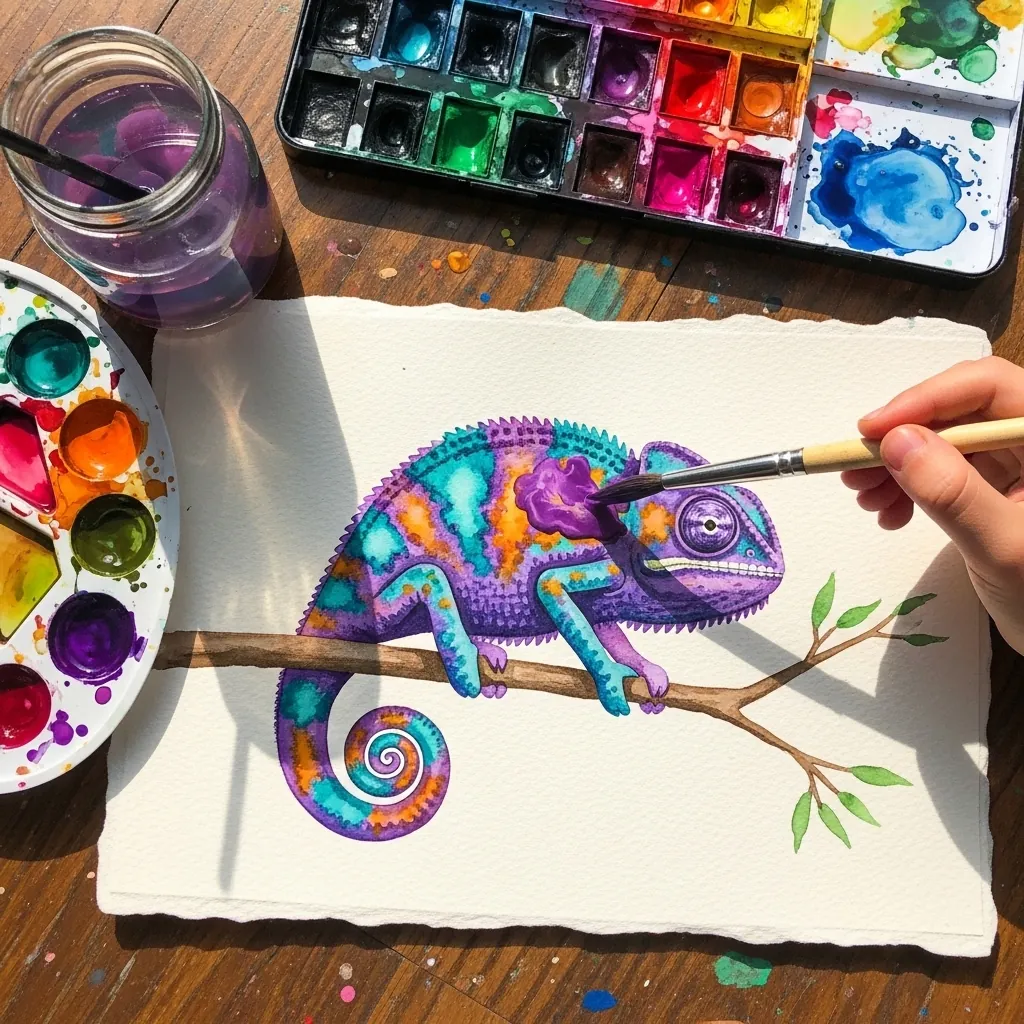
Chameleons let you use every color on the palette without it looking wrong. Blend the body from one hue into the next along its length, curl the tail into a tight spiral at the end, and keep the feet clamped around the branch in pairs; the eye is a bulging cone.
40. Fluffy Alpaca
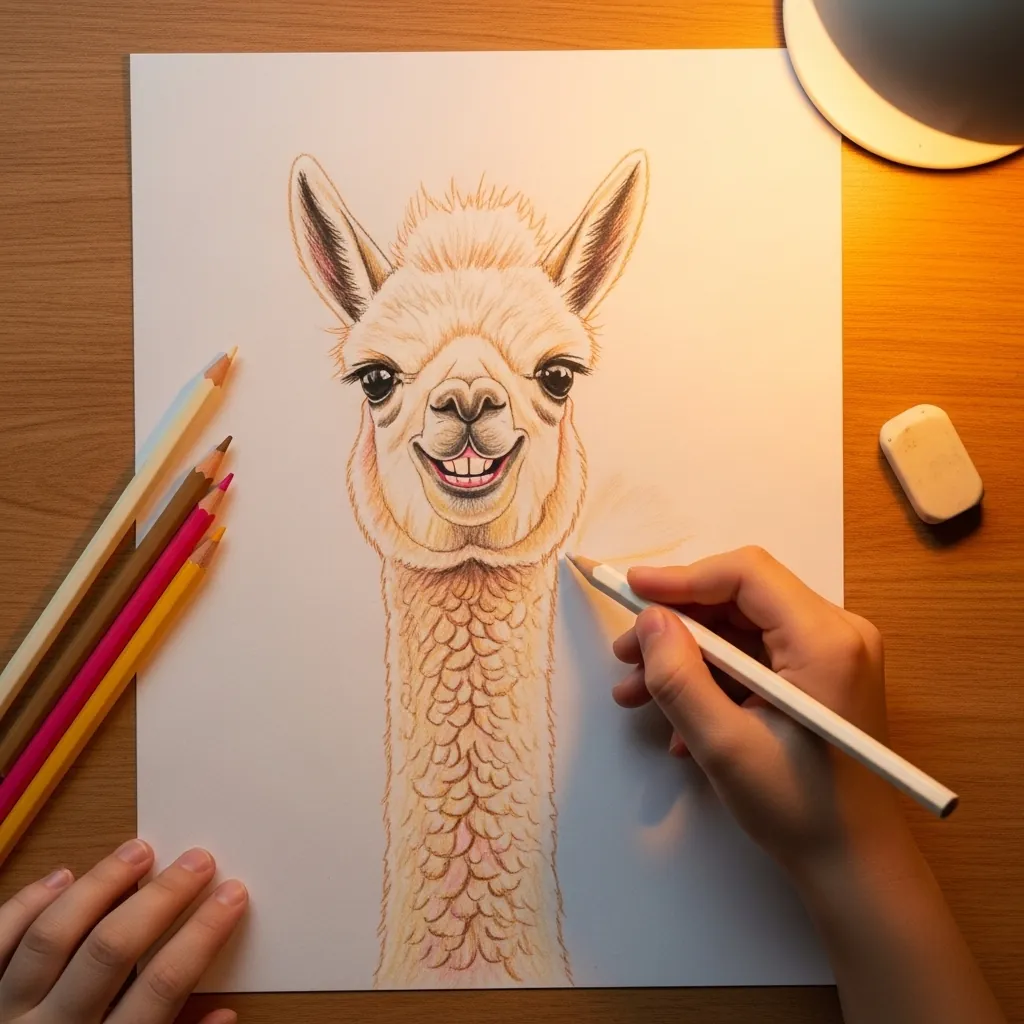
Alpacas are a long neck, a small head and a great deal of fluff. Keep the muzzle short and blunt, pile the fleece up between the ears as a topknot, and draw the neck fur as soft overlapping clouds rather than individual hairs. The eyes sit low with heavy lashes.
Frequently Asked Questions
What makes a drawing look cute?
Proportion, not decoration. A large head, eyes set on or below the middle of the head, a small nose and chin, round cheeks and short stubby limbs. Scientists call this the baby schema, and it is the same set of features that makes human babies and puppies appealing.
Where exactly do the eyes go?
Draw a light horizontal line across the middle of the head circle and put the eyes on it or just underneath. If the eyes end up above that line the animal starts to look adult, and no amount of extra detail will bring the cuteness back.
Why do the eyes need a white dot?
Because a real eye is wet and reflects the light around it. That one highlight is what separates a living eye from a flat black circle, so leave the paper white there rather than coloring it in and adding white on top afterwards.
How big should the head be?
About a third of the whole animal for a cute style, compared with roughly a seventh for a realistic adult animal. Exaggerating the head is the fastest single change you can make, and it works on every creature from a hamster to an elephant.
What is the easiest cute animal to start with?
A hamster or a chick, because both are essentially one round body with a smaller circle on top. There are no legs to work out and no proportions to get wrong, so children finish quickly and want to try a harder animal next.
References and Further Reading