You find your art style by making a lot of work and then looking back at it as a group, since style is the set of choices you already repeat without noticing. Lay twenty of your drawings out together and note what stays the same across them in line weight, value range, edge handling, how much you simplify, what you exaggerate and what you choose to draw. Those repetitions are your style, and deliberate exercises such as drawing one motif many times under different constraints bring them out faster.
Key takeaways
- Style is the residue of repeated choices, so searching for it directly is what keeps it out of reach.
- It is built from line weight, value range, edge handling, degree of simplification, proportion bias and subject choice.
- Your limitations shape it as much as your preferences, and many recognisable styles began as workarounds.
- You cannot see your own style because you compare each drawing to the version you intended.
- Lay twenty drawings out together and look for what repeats, not for what you like.
- Copying many artists produces a blend; copying one produces a weaker version of them.
- Drawing a single motif twenty times teaches you more about your tendencies than twenty subjects would.
The question usually arrives about a year in. You can draw reasonably well now, your work looks competent, and something about it still feels borrowed. So you start looking for your style, trying one approach after another, waiting for the one that feels like yours.
That search is the thing standing in the way. Style is what is left over after you have made the same choices enough times to stop noticing you are making them. You cannot go and fetch it. You can only accumulate it, and then eventually recognise it.
What a Style Is Actually Made Of
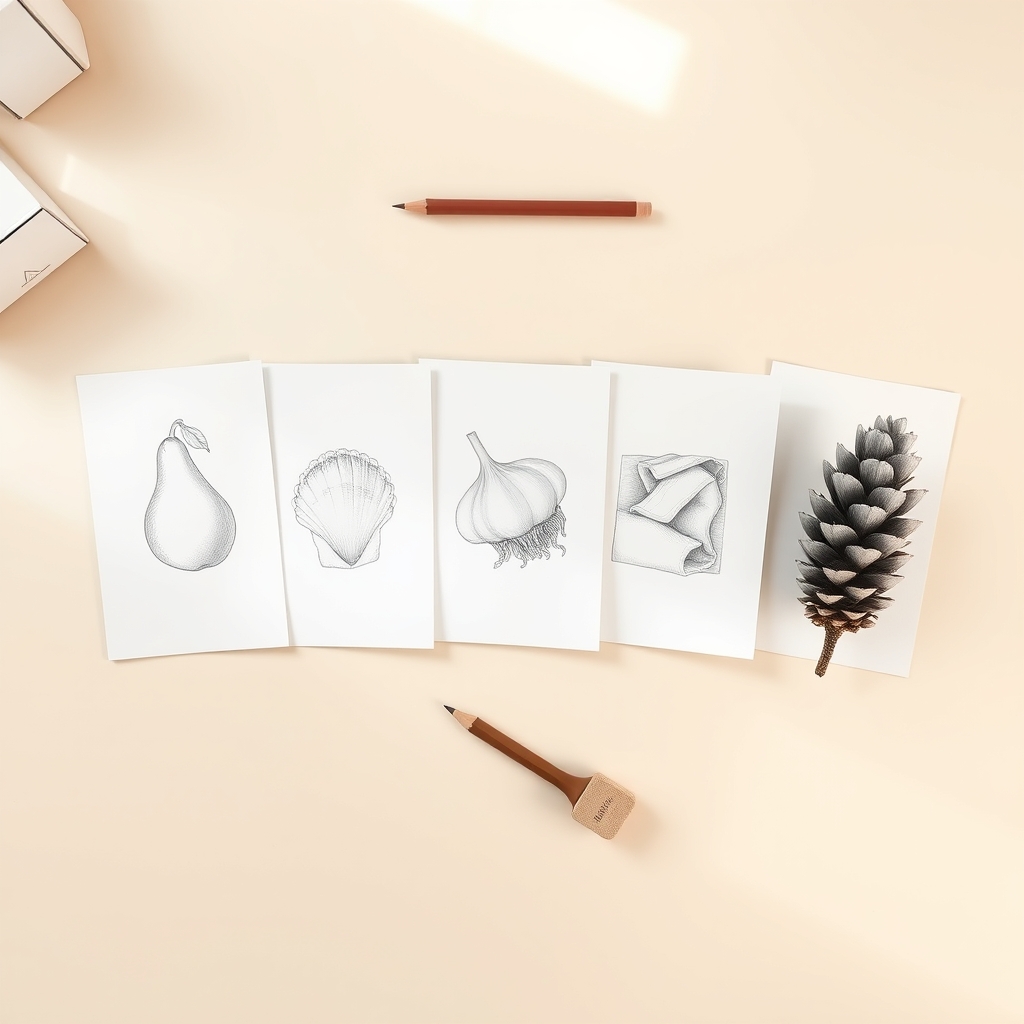
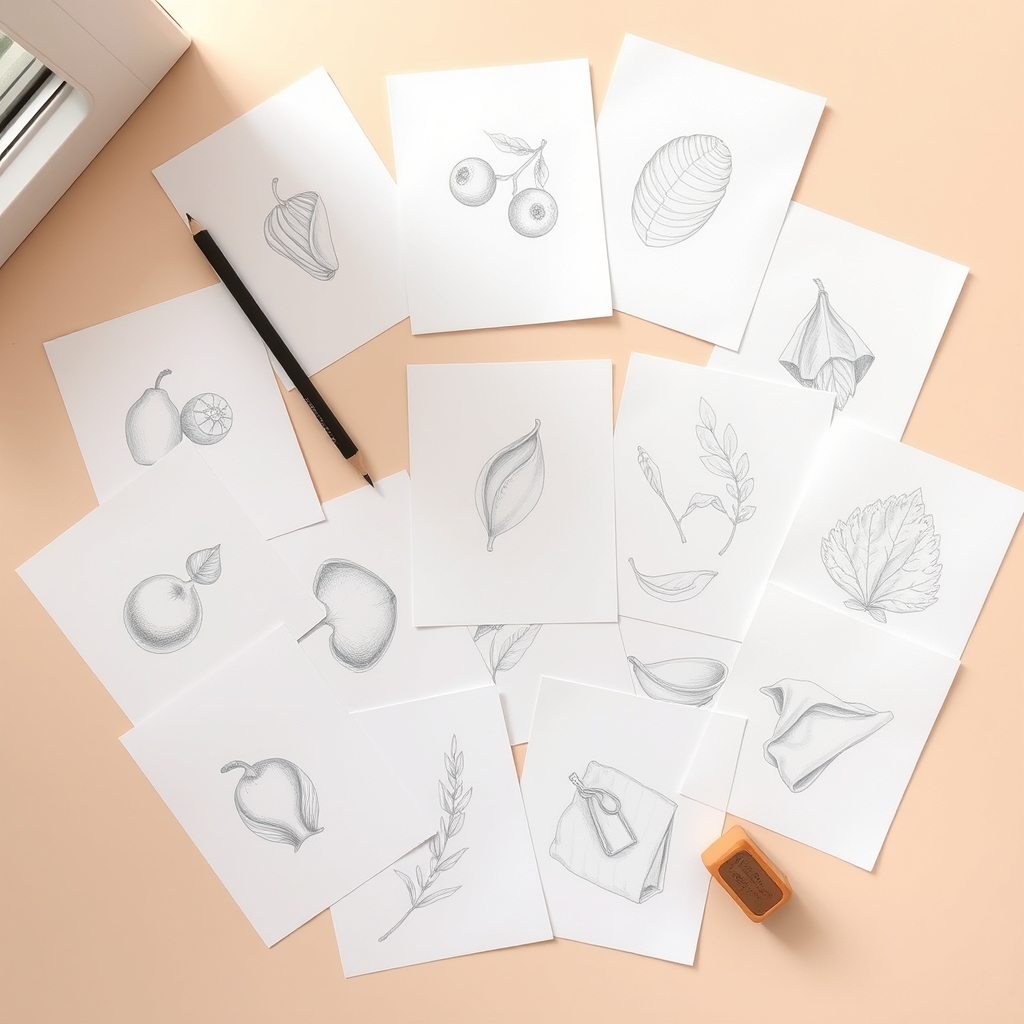
Five different subjects sit in that row and every one of them came off the same hand. The pear and the pine cone have nothing in common as objects, yet the line weight, the amount of detail and the way the shadow is handled repeat across all five. That repetition is the style. It is visible from outside long before it is visible from inside.
Break it down and a style is a small stack of decisions you keep making the same way.
- Line weight and quality. Whether your contour is a single committed stroke, a bundle of searching lines, or barely there at all.
- How far you push value. Some people live in a narrow band of greys by preference, some go straight to black.
- Edge handling. Hard edges everywhere gives a graphic, poster-like result. Losing edges into the background gives an atmospheric one.
- How much you simplify. The number of shapes you are willing to throw away is one of the loudest signals in anyone’s work.
- Proportion bias. Almost everyone exaggerates something without meaning to, bigger eyes, longer limbs, heavier shadows.
- What you choose to draw. Subject matter is part of style, and it is the part people forget to count.
Your limitations feed into this as much as your preferences do. The things you find hard get avoided or simplified, and that avoidance shows up consistently enough to read as a deliberate choice. Plenty of recognisable styles started life as a workaround.
Why You Cannot See Your Own
When you look at your drawing you see the gap between what you meant and what landed. Everyone else sees the drawing. You are comparing your work to an imagined version that does not exist, so the consistent parts read to you as failures to hit the target rather than as a signature.
There is a simple way around this. Put twenty of your drawings out on the floor, or open your gallery and scroll it as a grid instead of one image at a time. Then look for what repeats. Not what you like, what repeats. Those repetitions are your style, and you will usually find four or five of them.
People often report that this exercise is mildly unpleasant, because the repetitions include the habits they were trying to grow out of. That is the point. A style is made of both.
The Copying Stage Is Normal
Almost every artist spends a stretch drawing like somebody they admire. This is how the vocabulary gets in, and trying to skip it produces work with nothing behind it.
The problem is only ever a single influence. Copy one artist and you produce a weaker version of them. Copy fifteen over a few years and the pieces stop being traceable to any one source, because you are combining them according to your own taste, and taste is personal. The blend is where a style comes from.
Study openly, keep it in your sketchbook, and make something of your own with what you took. The related argument about where that line sits is covered in is tracing cheating.
The Exercise That Actually Works
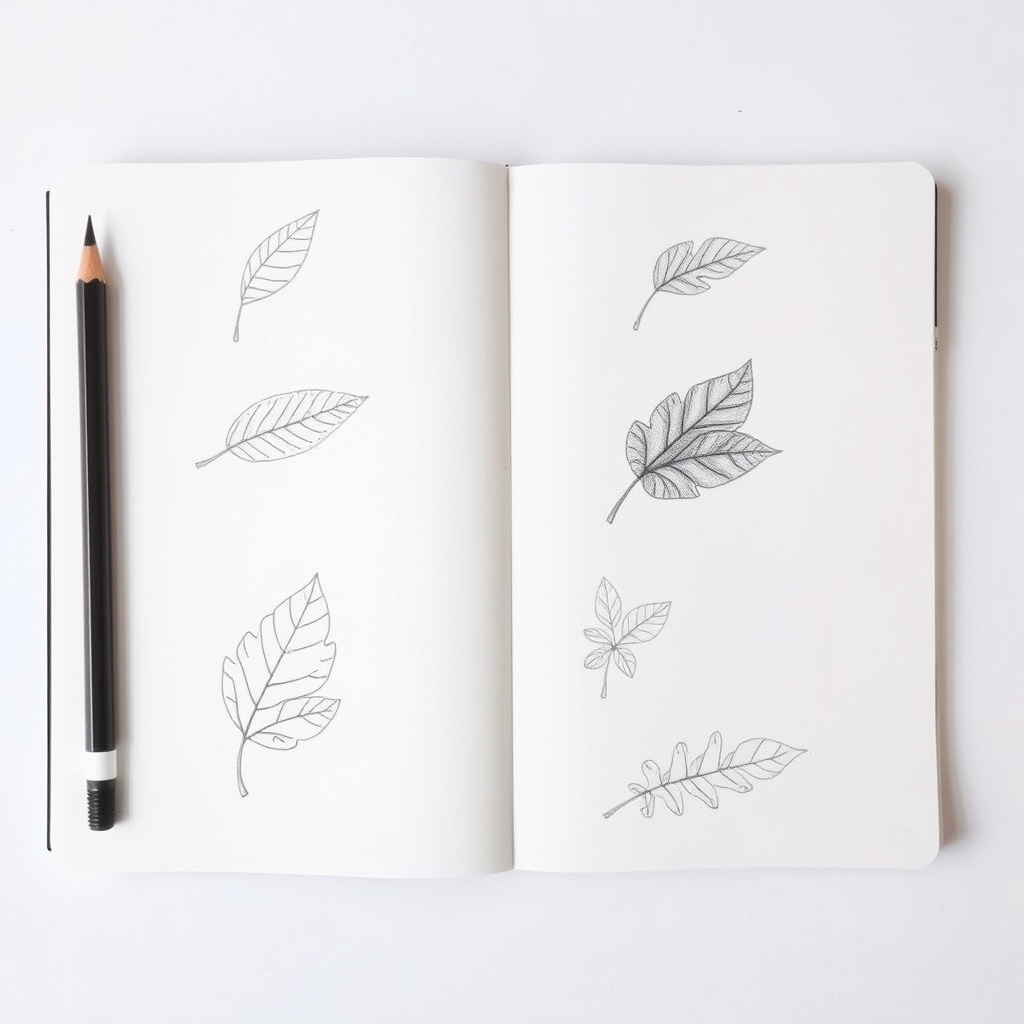
Pick one motif and draw it over and over, the way that page returns to leaves again and again. Twenty attempts at the same thing in one sitting will teach you more about your own tendencies than twenty different subjects would, because the subject stops being the variable and you become the variable.
Then push it deliberately. Draw the same motif with a thick marker so detail becomes impossible. Draw it with no outline, using only shadow shapes. Draw it in sixty seconds. Draw it in an hour. Each constraint forces a decision you normally make on autopilot, and a few of those forced decisions will feel better than your default. Those are worth keeping.
This is also why the timeline matters. Style needs volume to accumulate, and volume is measured the way everything else in drawing is measured, which how long it takes to learn to draw goes through in detail.
Signs You Already Have One
- Someone recognised a drawing of yours without being told it was yours.
- You have a default you fall into when you are tired or not concentrating. That default is a style, whether or not you like it.
- You find certain corrections annoying to make because they feel wrong, even when they are technically right.
- Your old work embarrasses you but is still obviously yours.
Most people asking this question tick at least two of those and have not noticed.
When a Style Turns Into a Cage
The opposite problem shows up later. You settle into something that works, it gets a good response, and you stop taking the kind of risk that produced it in the first place. Work made this way is technically fine and slowly gets duller.
The fix is the same exercise in reverse. Break one of your own rules on purpose for a week. If you always work small and tight, work large and loose. If you always draw from reference, draw a page from memory and accept that it will be bad. A style that survives being interfered with was a real one.
Frequently Asked Questions
How do I find my art style?
Make a lot of work and then look back at it as a group instead of hunting for a style in advance. Lay twenty drawings out together and note what repeats across them in line weight, value range, edge handling, simplification and subject. Those repetitions are already your style. Deliberate exercises help it along, particularly drawing one motif many times under different constraints.
How long does it take to develop an art style?
It emerges from volume, so it tracks hours at the page more than years elapsed. Most people can see clear repetitions in their own work after a few hundred drawings. A style recognisable to other people usually takes longer, and it arrives while you are busy with something else.
Is it bad to copy other artists?
Studying other artists is how almost everyone learns, and doing it in a sketchbook is standard practice. The risk is drawing from a single influence for too long, which produces a diluted version of them. Pull from many sources and your own taste does the combining.
Should I pick a style before I can draw well?
Deciding on a style early tends to lock in your current limitations. Fundamentals give you more to choose from later, and simplification reads as a choice only when the person doing it could have drawn the detail. Build the skills first and let the preferences show up on their own.
Why does my art look inconsistent?
Usually because you are still sampling widely, which is healthy at that stage. Inconsistency also comes from switching materials often, since a brush pen and a hard pencil push you toward different decisions. Staying with one set of tools for a few months makes the repetitions much easier to see.
Where to Go Next
If the honest problem is that your work is not good enough yet for style to be the interesting question, why do my drawings look bad lists the seven faults that show up most, and how to shade a drawing covers the one that changes the most.
If you have stopped making work altogether while you think about this, read what causes art block first. To build the volume a style needs, easy pencil drawing ideas keeps the page turning, and the drawing guide sorts every subject by the skill it trains.