
The best acrylic paint set for beginners is the Caliart 24-color set with 12 brushes: 4.7 stars from 23,851 verified buyers, real pigment, and everything needed to start for $19.99. Budget buyers should grab the Benicci complete set at $9.97, and regular painters get the best value from the Shuttle Art 50-bottle set.
Key takeaways
- Caliart 24-color + brushes is the #1 pick: 4.7 stars from 23,851 reviews, complete out of the box, $19.99.
- Benicci complete set at $9.97 is the best budget entry with 11,613 reviews.
- Bottles beat tubes for beginners: easier to dispense, recap, and resist drying.
- 12 colors can mix anything; 24 is the comfort zone — spend extra on brushes and canvas instead.
- Acrylics wash off while wet but are permanent when dry: rinse brushes constantly, wear old clothes.
Affiliate Disclosure: This post contains affiliate links. If you buy through them, we may earn a small commission at no extra cost to you. Prices were checked in October 2026 and may vary.
Short Answer
The best acrylic paint set for beginners is the Caliart 24-color set with 12 brushes — 4.7 stars from 23,851 reviews, complete out of the box, just $19.99. On a budget, the Benicci complete set at $9.97 is astonishing value, and the Shuttle Art 50-bottle set is the best per-milliliter value for anyone who paints regularly.
Our top pick: Caliart 24-color set with 12 brushes
Acrylics are the perfect beginner paint: vibrant like oils, cleanup like watercolors (while wet!), and dry fast enough to keep impatient learners happy. But watery craft paint ruins the experience. We compared the 10 most popular beginner acrylic paint sets on Amazon, checking pigment quality, what’s actually in the box, brush quality, and verified buyer reviews, to find the sets worth buying in 2026. Our method: we compared specifications and verified buyer feedback — no fake hands-on testing claims.
TL;DR — read this first
- Best overall: Caliart 24 colors + 12 brushes — complete out of the box.
- Best budget: Benicci complete set — the lowest-risk first set.
- Best value for regular painters: Shuttle Art 50 bottles — squeeze bottles, easy to control.
- Start with 12–24 colors. More colors buy convenience, not skill — spend the difference on canvas boards and brushes.
- Acrylic paint is fast-drying, water-based paint that becomes water-resistant once dry. Clean brushes with soap and water while the paint is still wet.
≡ In This Guide
1. Our Top 3 Picks at a Glance
★ BEST OVERALL

Caliart 24 Colors + 12 Brushes
24 colors, 12 brushes, 4.7 stars from 23,851 reviews. The complete answer.
★ BEST BUDGET

Benicci Complete Set
24 colors + brushes for $9.97 with 11,613 reviews. Unbeatable budget.
★ BEST VALUE

Shuttle Art 50 Bottles
Fifty 2oz bottles, 4.7 stars, $0.70 per bottle. Best value.
2. Quick Comparison Table
| # | Product | Detail | Price* | Rating |
|---|---|---|---|---|
| 1 | Caliart Acrylic Paint Set | 24+brushes | $19.99 | 4.7 |
| 2 | Benicci Complete Acrylic Pai | 24+brushes | $9.97 | 4.7 |
| 3 | Shuttle Art Acrylic Paint Se | 50 bottles | $34.99 | 4.7 |
| 4 | Shuttle Art Acrylic Paint Se | 36+kit | $25.99 | 4.7 |
| 5 | Chalkola Acrylic Paint Set | 40 | $28.95 | 4.7 |
| 6 | Shuttle Art Acrylic Paint | 18x250ml | $36.99 | 4.7 |
| 7 | koseibal Acrylic Paint Art S | kit | $24.31 | 4.8 |
| 8 | Shuttle Art Acrylic Paint Se | 16 tubes | $6.99 | 4.6 |
| 9 | Nicpro 68-Piece Acrylic Pain | 68-pc | $28.99 | 4.6 |
| 10 | TMOL Acrylic Paint Set | 24+brushes | $19.99 | 4.4 |
*Prices checked October 2026; they change often on Amazon.
3. How to Choose an Acrylic Paint Set for Beginners
What actually separates good beginner acrylics from bad ones?
Pigment load — the ratio of color to filler. Cheap craft paints are mostly filler: they go on streaky, dry chalky, and need four coats to cover. Decent student acrylics (everything on this list) have enough pigment for opaque coverage in one or two coats. You can judge before buying: check buyer photos in reviews (not the marketing images), look for the word ‘opaque’ in positive reviews, and beware of sets where every color looks neon in the listing — that’s often a sign of thin, filler-heavy paint photographed to deceive. All ten sets here passed the buyer-photo test.
How important are the included brushes?
More important than beginners think. A great paint with a shedding brush still makes a mess — loose bristles stuck in wet paint ruin more beginner paintings than bad pigment does. Look for sets bundling brushes (Caliart, Benicci, Shuttle Art 36, TMOL all do): it signals the maker thought about the whole experience. That said, bundled brushes are student-grade by necessity; when you’re ready, a single good $8 flat brush upgrades your painting more than any new paint set. Until then, rinse brushes every few minutes while painting and never let acrylic dry on the bristles — dried acrylic kills brushes permanently.
What else do you need beyond the paint set?
Four things turn a paint set into a painting practice: surfaces (canvas boards in multi-packs — cheap enough to paint fearlessly), a palette (or a plastic plate; a stay-wet palette is the upgrade that stops paint drying mid-session), water jars (two: one for rinsing, one for clean water), and an apron or old clothes (dried acrylic never comes out). Budget $15–20 for these alongside your set. And when you’re ready to explore beyond acrylics, our watercolor sets for beginners guide and watercolor painting guide cover the next medium to try.
4. The 10 Best Acrylic Paint Sets for Beginners in 2026
1
Caliart Acrylic Paint Set (24 Colors + 12 Brushes)
Best Overall
Our VerdictTwenty-four colors, twelve brushes, and 23,851 reviews averaging 4.7 stars — no other acrylic set on Amazon has this combination of completeness and buyer trust. Caliart nails the beginner formula: real pigment (not watery craft paint), brushes that don’t shed on first use, and everything needed to start painting tonight. At $19.99, it’s priced like a starter set but reviewed like a much more expensive one. The default answer for ‘which acrylic set should I buy.’
24 colors12 brushes included23,851 reviews
What We Like
- Most-reviewed set here
- Complete out of the box
- Real pigment, not watery
Keep in Mind
- Tubes smaller than bottle sets
- Brushes are student-grade
2
Benicci Complete Acrylic Paint Set (24 Colors + 12 Brushes)
Best Budget Pick
Our VerdictUnder ten dollars for 24 colors and 12 brushes, with 11,613 reviews at 4.7 stars — Benicci is the budget king that doesn’t feel like a compromise. The ‘rich pigment’ claim holds up in buyer photos: colors go on opaque and vibrant, not chalky. For a first set, a classroom backup, or the ‘will they actually stick with painting’ experiment, this is the lowest-risk way to start with real acrylics.
24 colors + 12 brushesUnder $1011,613 reviews
What We Like
- Unbeatable starter price
- Surprisingly rich pigment
- Nothing else to buy
Keep in Mind
- Small tubes run out fast
- Basic brush quality
3
Shuttle Art Acrylic Paint Set (50 Colors, 2oz Bottles)
Best Value
Our VerdictFifty 2oz bottles for $34.99 — that’s $0.70 per generous bottle, and 13,050 buyers rate the set 4.7 stars. Bottles beat tubes for beginners: no wrestling with caps, easy to squeeze exactly what you need, and they don’t dry out as fast once opened. The color range covers every mixing need, and the per-milliliter value is the best on this list. For anyone who paints regularly, bottles are simply the smarter format.
50 colors2oz squeeze bottles13,050 reviews
What We Like
- Best per-ml value here
- Bottles are beginner-friendly
- Huge color range
Keep in Mind
- Takes shelf space
- $34.99 upfront
4
Shuttle Art Acrylic Paint Set (36 Colors + Brushes & Canvases)
Best for Beginners

Our VerdictThis is the ‘I want to paint tonight’ kit: 36 colors plus brushes and canvases in one box, rated 4.7 stars by 11,458 buyers. Beginners consistently underestimate how much the extras matter — having canvases ready removes the last excuse not to start. Shuttle Art’s beginner kits are category leaders for a reason: consistent quality across thousands of units and genuinely useful color selections. The most complete first-purchase on this list.
36 colorsBrushes + canvasesAll-in-one kit
What We Like
- Start painting immediately
- Everything included
- 11,458 happy buyers
Keep in Mind
- Canvases are small
- More than minimalists need
5
Chalkola Acrylic Paint Set (40 Colors)
Most Versatile
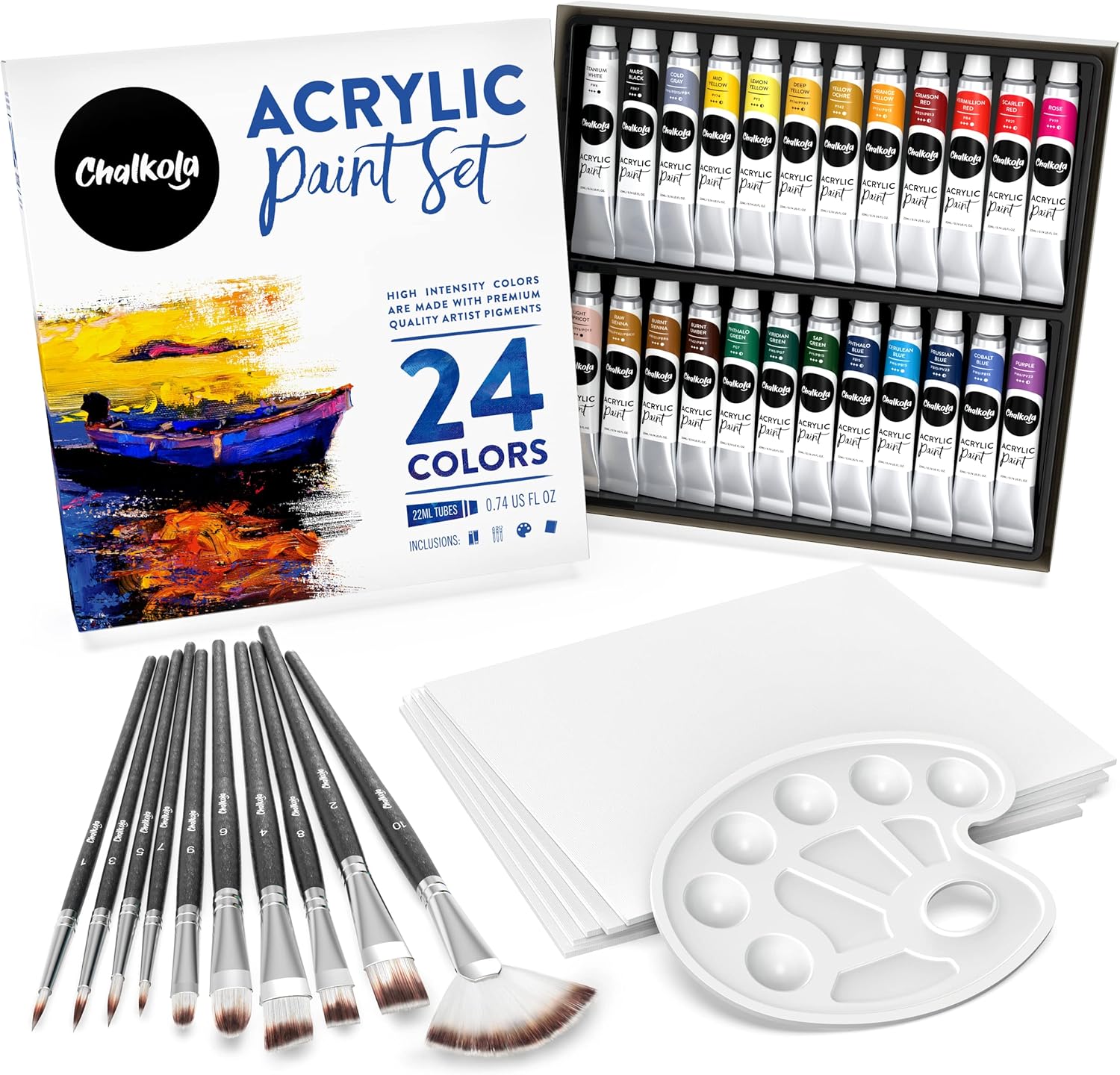
Our VerdictForty colors in 2oz bottles with a 4.7-star rating from 7,644 buyers — Chalkola sits in the sweet spot between starter sets and serious collections. The paint works on canvas, wood, ceramic, and fabric, making it the most versatile medium on this list for crafters who paint more than just canvas. Coverage is consistently praised as thick and even. If your creativity doesn’t stay on one surface, this is your set.
40 colorsMulti-surface2oz bottles
What We Like
- Works on wood, fabric, ceramic
- Thick even coverage
- 7,644 reviews
Keep in Mind
- No brushes included
- Bottles need shaking
6
Shuttle Art Acrylic Paint (18 Large 250ml Bottles)
Best Bulk

Our VerdictEighteen 250ml bottles — that’s 4.5 liters of paint. This is the bulk buy for mural painters, art teachers, and anyone who goes through white and black by the gallon. Rated 4.7 stars by 4,398 buyers, the ‘rich pigment’ claim matters here: bulk paint is only a deal if the color is good, and reviewers confirm it is. For a single casual painter it’s overkill; for heavy users it’s the most economical paint on this list by far.
18 x 250ml bottles4.5 liters totalRich pigment
What We Like
- Cheapest per ml by far
- Great for murals & classes
- 4.7-star quality
Keep in Mind
- Overkill for casual use
- Needs storage space
7
koseibal Acrylic Paint Art Supplies Kit with Canvas
Best Gift

Our VerdictThe highest-rated set on this list at 4.8 stars — and it’s packaged as a complete gift kit with canvases. Koseibal’s 1,231 reviewers consistently praise both the paint quality and the presentation: this is the set that looks thoughtful when unwrapped, not just practical. For birthdays, holidays, or the ‘I want to start painting’ friend, the gift-ready completeness at $24.31 is exactly right.
Complete kit + canvas4.8-star ratingGift-ready
What We Like
- Highest rated here
- Beautiful presentation
- Ready to paint instantly
Keep in Mind
- Fewer reviews than giants
- Kit format, less paint volume
8
Shuttle Art Acrylic Paint Set (16 x 12ml Tubes)
Easiest to Use

Our VerdictSixteen small tubes for $6.99 — the simplest possible entry into acrylics. Small tubes mean small commitments: squeeze a little, try a technique, waste nothing. Non-toxic, rated 4.6 stars by 5,590 buyers, and cheap enough that experimenting feels free. This is the set for the curious: color mixing practice, kids’ projects, testing whether acrylics are even your medium. Start here, upgrade when you know what you like.
16 colors12ml tubesNon-toxic
What We Like
- Cheapest real acrylics
- Zero-waste experimenting
- 5,590 reviews
Keep in Mind
- Small tubes deplete fast
- Limited color range
9
Nicpro 68-Piece Acrylic Paint Canvas Set
Best Premium

Our VerdictSixty-eight pieces: 24 paints plus canvases, brushes, palette knives, and accessories — the most complete creative station on this list. Rated 4.6 stars by 552 buyers, Nicpro targets the beginner who wants the full studio experience without assembling it piecemeal. At $28.99, you’re paying barely more than basic sets for dramatically more gear. For the committed beginner who wants everything at once, this is the premium play.
68 pieces totalCanvases + toolsFull studio kit
What We Like
- Most complete set here
- Great for dedicated beginners
- Fair price for contents
Keep in Mind
- Overwhelming for casual try-outs
- Fewer reviews than leaders
10
TMOL Acrylic Paint Set (24 Colors 2oz + 12 Brushes)
Best for Kids
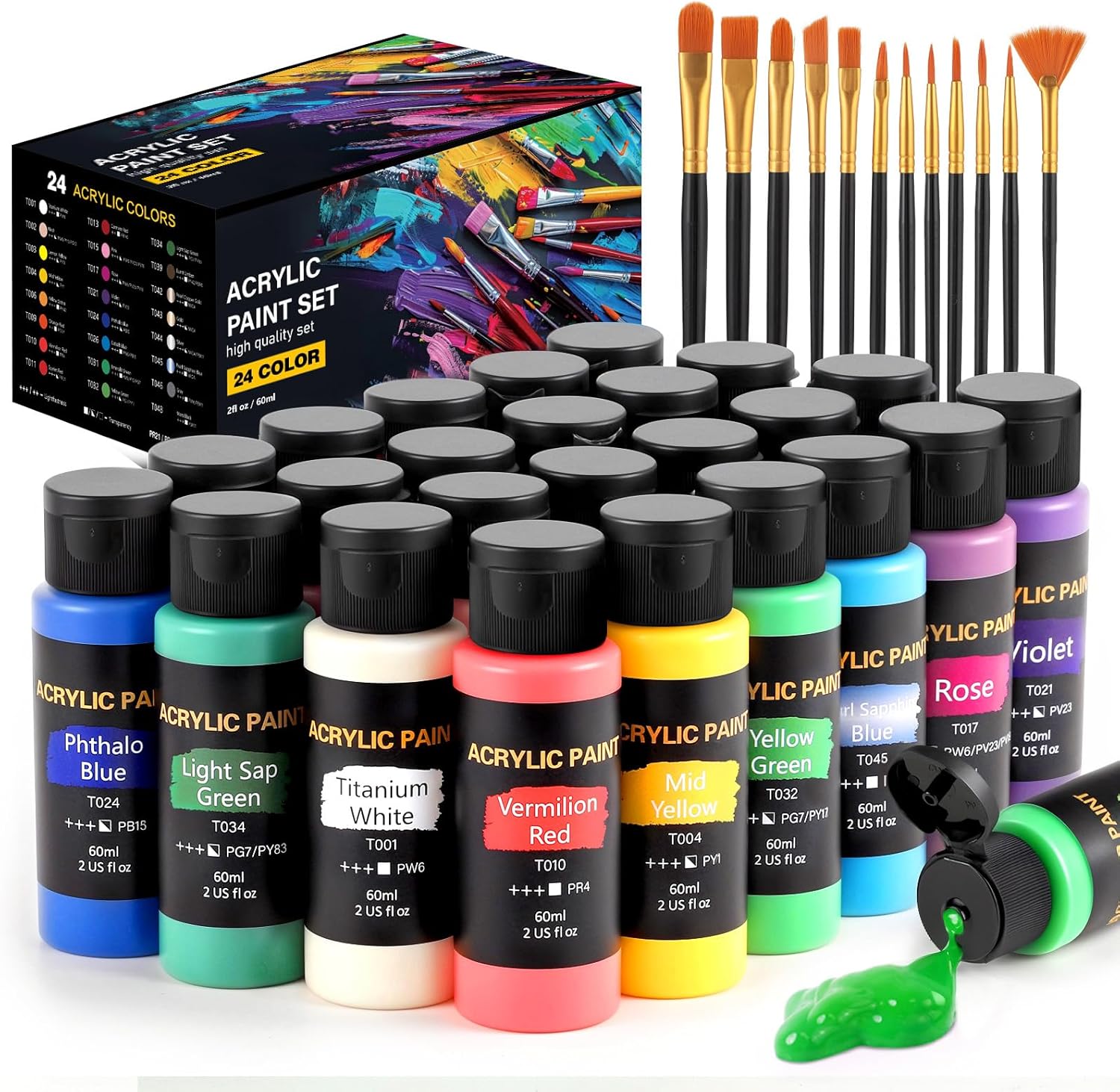
Our VerdictA note on kids and acrylics: they’re permanent when dry, so this pick is for teens and supervised family paint nights — not toddlers. With that said, TMOL’s 24-color set with 12 brushes is the family-friendly choice: easy-squeeze 2oz bottles kids can handle, 6,573 reviews at 4.4 stars, and colors bright enough to keep young painters engaged. Cleanup is easy while wet — the golden rule to teach first.
24 colors + 12 brushesEasy-squeeze bottles6,573 reviews
What We Like
- Great for teens & family painting
- Bright engaging colors
- Good value
Keep in Mind
- Permanent when dry — supervise
- Not for young children
5. Your First Acrylic Painting in 30 Minutes: A Sunset You Can Actually Follow
You do not need a second purchase to use the set you just bought. This 30-minute sunset uses only five colors you already own in almost every set on this list: white, yellow, red, blue, and black. Work on a small canvas board, not a large stretched canvas — small finishes fast, and a finished painting teaches more than a large unfinished one.
Your sunset palette (mix on a plate if you have no palette yet)
Squeeze out a coin-sized blob of each color, keeping a thumb-sized gap between them so they do not turn muddy. You will mix in the gaps: yellow + a touch of red makes orange; red + a touch of blue makes purple; blue + white makes a pale sky blue; every color + white makes a lighter version of itself. Mix a little more than you think you need — matching a mixed color a second time is the hardest part of acrylic painting.
1
Paint the sky, top to bottom, in 5 minutes. With a flat brush, paint a band of blue across the top third, then a band of purple, then orange, then yellow near the horizon. Blend each band into the next while both are still wet, using long horizontal strokes. Do not scrub back and forth — two or three passes are enough.
2
Add the sun while the yellow band is wet. Dab a circle of white mixed with a little yellow just above the horizon. Then pull a thin horizontal line of the same mix across the water or ground below it. This single reflection is what makes a flat sunset look like light.
3
Paint the land in one dark shape. Mix blue + red + a touch of black for a dark silhouette color. Paint one simple hill, a row of trees, or a rooftop line across the bottom third. Keep it as one shape — beginners lose sunsets by adding too many small details too early.
4
Let it dry for 10 minutes, then add only three details. Acrylic dries fast, so use that: a few white dots for stars in the blue band, one bright edge on the hill, and one reflection stroke. Stop there. Three confident details beat thirty hesitant ones.
Tip: If a blend goes muddy, do not keep brushing it. Let that patch dry completely, then paint a fresh thin layer over it. Acrylics cover mistakes cleanly once dry — that is their biggest beginner advantage over watercolor. For small details on top of a dry painting, acrylic paint pens for beginners are an easier next tool than a tiny brush.
Do not let paint dry on your brushes. Rinse in your water jar between colors and wash with soap at the end. Dried acrylic is permanent plastic, and a brush left in paint for one session is often a brush lost for good.
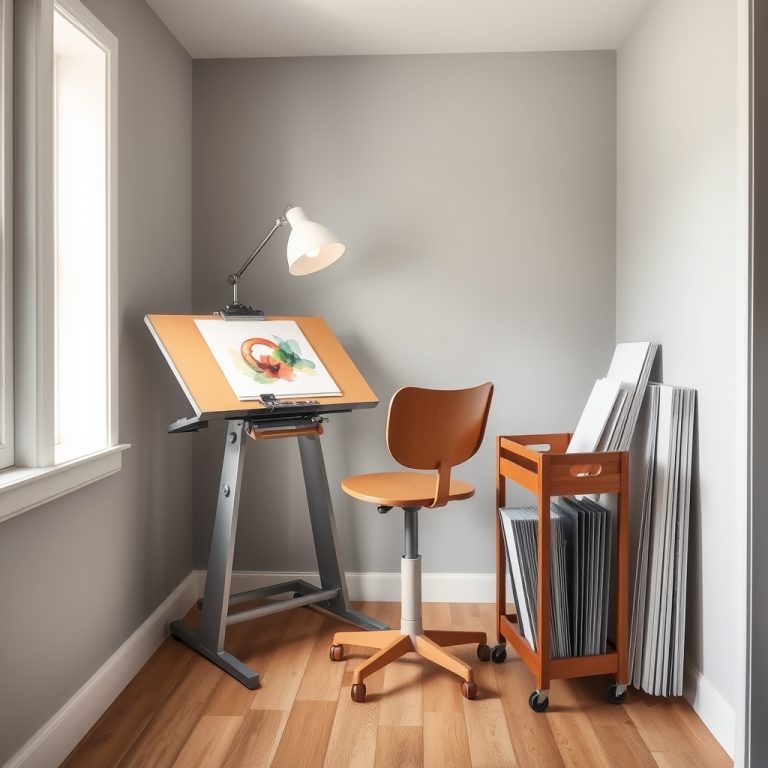
Painting at a table that wobbles or a canvas that slides ruins more first paintings than bad paint does. If you plan to paint standing up or on larger boards, read our guide to easels for drawing and watercolor before you buy a stand — angle matters more than price for a steady surface.
6. 7 Beginner Mistakes That Ruin Acrylic Paintings (and the Fix)
Almost every disappointing first painting comes from one of these seven habits, not from buying the wrong set. Fix the habit and the same paints suddenly behave.
- Using paint straight from the tube, too thick. Fix: add a few drops of water until the paint moves like thick cream. Thick paint drags, shows every brush mark, and dries with ridges.
- Mixing every color together. Fix: mix two colors at a time, plus white or black. Three or more mixed colors usually turn brown-grey.
- Painting on thin printer paper. Fix: use canvas boards, heavyweight mixed-media paper, or a primed surface. Thin paper buckles the moment it gets wet.
- Keeping a muddy water jar. Fix: use two jars — one for rinsing, one for clean water to thin paint. Dirty water greys every light color.
- Blending after the paint has started to dry. Fix: blend fast, or mist the palette lightly and re-wet the area with a thin wash. Acrylic gives you minutes, not hours.
- Starting with the details. Fix: block in big shapes first (sky, land, main object), then details last, on dry paint.
- Buying more colors instead of more practice surfaces. Fix: a multi-pack of canvas boards costs less than a second paint set and removes the fear of ruining a painting — and fearless painting is how beginners improve fastest.
How to store a set so it lasts: recap bottles and tubes immediately after squeezing, wipe the threads clean, store upright in a cool place, and keep the box it came in for the color names. A set stored this way stays usable for months of regular painting; a set left open dries out in days. If you paint with children, the same storage rules apply — see our art supplies for homeschool guide for kid-friendly setups that survive a classroom table.
7. Pro Tips for Acrylic Beginners
- Keep a spray bottle handy. A light mist keeps your palette workable — acrylics dry in minutes, and misting buys you blending time.
- Work thin to thick. Thin washes first, thick impasto last. Thick-over-thin cracks; thin-over-thick is bulletproof.
- Mix more than you need. Matching a custom-mixed color twice is nearly impossible — mix extra and save the struggle.
- Clean brushes constantly. Rinse every few minutes while painting. Five seconds of rinsing beats a ruined $8 brush.
- Photograph your palette. Snap your mixed colors before they dry — it’s the only record of ‘that perfect shade.’
- Varnish finished work. A clear acrylic varnish (used in ventilation) protects paintings and makes colors pop — the pro finishing touch.
8. Frequently Asked Questions
What should a beginner acrylic paint set include?
At minimum: 12–24 colors, a basic brush set (flat and round in a few sizes), and ideally a palette. The best beginner kits on this list (Caliart, Benicci, Shuttle Art 36) bundle all three so you can start immediately. Canvases or canvas boards are a bonus — painting on proper surfaces from day one builds better habits than paper.
Tubes vs. bottles — which is better for beginners?
Bottles (like the Shuttle Art 50-set) are more beginner-friendly: squeeze out exactly what you need, recap easily, and they resist drying out. Tubes are traditional and portable but fiddly — caps get lost and paint oozes. For learning at home, bottles win; for plein air or travel, tubes. Either way, close everything promptly — acrylics dry fast.
How many acrylic colors do beginners need?
Twelve colors genuinely suffice — with red, blue, yellow, black, white, and a few earth tones you can mix anything. Twenty-four is the comfortable sweet spot (no constant mixing). Beyond 36, you’re buying convenience, not capability. Beginners should spend the difference on brushes and canvas instead of more colors.
Are acrylic paints washable? How do you clean up?
Acrylics clean up with soap and water WHILE WET — this is the golden rule. Once dry, they’re permanent plastic: on clothes, brushes, and palettes forever. Keep a water jar for brushes (rinse every few minutes, never let paint dry on bristles), wear old clothes or an apron, and wipe spills immediately. Dried brushes can sometimes be saved with brush cleaner, but prevention beats cure.
What’s the difference between student and artist acrylics?
Pigment load: artist-grade paints contain more pigment and less filler, giving richer color and better coverage. But modern student paints (like everything on this list) are dramatically better than a decade ago — the gap matters for selling work, not for learning. Start student-grade; your technique, not your paint, is the limit for the first year or two.
What surfaces can beginners paint acrylics on?
Canvas boards and stretched canvas are the classics — affordable multi-packs are perfect for practice. But acrylics also work on wood, paper (heavyweight), ceramic, and fabric, making them the most versatile paint for crafters. Whatever you choose, a coat of gesso on raw surfaces gives dramatically better results. See our art supplies guide for surface recommendations.
Three more habits that pay off: (1) Photograph each finished painting in daylight — you will see progress across weeks that you miss day to day. (2) Keep one practice board for color tests, so experiments never ruin a painting in progress. (3) Varnish only fully dry work, in a ventilated space, following the varnish label — varnish deepens color and protects the surface.
Where to Go Next
Finished your first sunset? Keep the momentum with a guide matched to your next question:
- Best watercolor paint sets for beginners — if you want to try the next medium.
- Watercolor painting guide — how watercolor behaves differently from acrylic.
- Art supplies guide — surfaces, palettes, and the extras worth buying.
- Best acrylic paint pens for beginners — for outlines and details on dry acrylic.
- Best art supplies for homeschool — sets and storage for learning at home.
- Best easels for drawing and watercolor — a steady surface for larger paintings.
Final Verdict
For most beginners, the Caliart 24-color set with brushes is the right buy: the most-reviewed, most-complete starter at $19.99. On the tightest budget, the Benicci set at $9.97 is almost suspiciously good value. And if you’ll paint weekly, the Shuttle Art 50-bottle set is the economical long-term choice.
Prices were observed on Amazon.com in October 2026 and may vary — check the current price here.