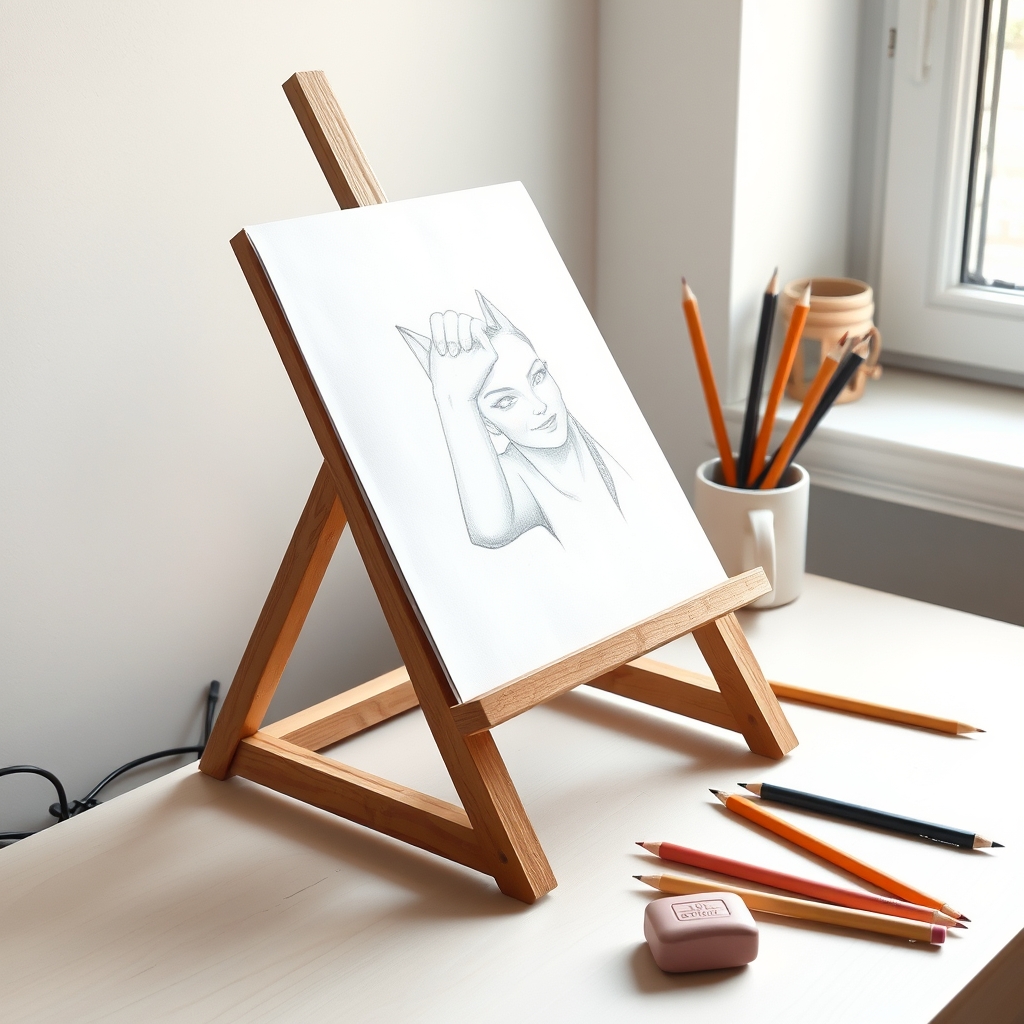
Choose an easel by the angle your medium needs. Watercolor works between flat and about 20 degrees, graphite and colored pencil between 30 and 60 degrees, and oil or acrylic close to vertical. A tabletop easel covers most paper-based work.
Key takeaways
- Drawing flat on a table foreshortens the page and quietly distorts your proportions.
- Watercolor needs a shallow tilt so a bead of paint travels down the page under control.
- Graphite and colored pencil work best between 30 and 60 degrees.
- Tabletop easels suit paper work; standing easels suit canvas you need to step back from.
- A French box easel is worth it mainly if you paint away from home.
Some links on this page are affiliate links. As an Amazon Associate we earn from qualifying purchases, at no extra cost to you. Prices shown were correct at the time of writing.
Almost every easel guide sorts products by price and size. That is the wrong first question. The first question is what angle your medium needs, because oil and watercolor want opposite things and a single easel that does both well is unusual.
Get the angle right and two long-standing problems disappear at once: the distortion that makes your drawings look subtly wrong, and the backruns that ruin a wash halfway through.
Why Drawing Flat on a Table Distorts Your Work
Lay a sheet flat on a desk and you are looking at it from a sharp angle, not straight on. Your eye sees the far end of the page compressed. You compensate without noticing, stretching the top of the drawing to make it look correct from where you are sitting.
Then you pick the drawing up, hold it in front of you, and the head is too long, the circle is an oval, and the horizontal lines sag. Nothing was wrong with your hand. You were drawing a corrected image of a foreshortened page.
An easel that tilts the surface toward perpendicular to your line of sight removes the problem entirely. This is the single most useful and least discussed reason to own one, and it costs about thirty dollars to fix.
The Angle Each Medium Wants
- Watercolor: flat to about 20 degrees. You need gravity strong enough to pull a bead of paint down the page evenly, but not strong enough to make it run into an area you already finished. Steeper than this and every wash streaks.
- Graphite and colored pencil: 30 to 60 degrees. Steep enough to correct the distortion described above, shallow enough that a pencil can press hard without pushing the board away.
- Oil and acrylic: near vertical. Thick paint stays where it is put, and you want to step back and view the canvas the way it will hang.
- Ink and detailed pen work: around 20 to 30 degrees. Fountain and technical pens can starve if held too steeply, so a shallow tilt is a compromise between flow and viewing angle.
Four Easels for Different Jobs
Best for Drawing at a Desk
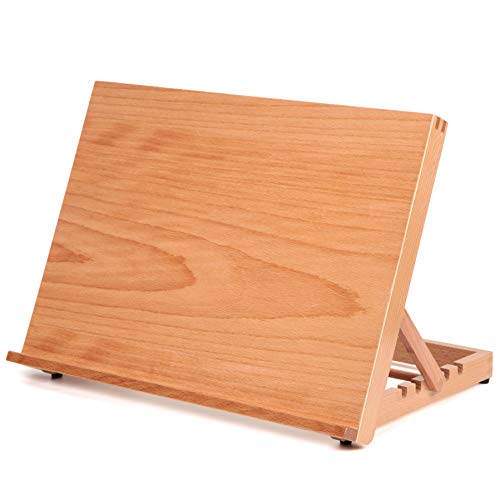

Falling in Art 5-Position Wood Drafting Easel
$33.99on Amazon
If you draw on paper at a table, this is the purchase that most improves your accuracy for the least money.
- ✓Flat through to 68 degrees. That range covers every medium described above, including laying it flat for a wet wash.
- ✓Beech, not softwood. A hard closed grain means the board stays flat over years instead of bowing, which matters when you tape paper across it.
- ✓Under two pounds. Light enough that it moves between the kitchen table and the sofa, which is how it actually gets used daily.
As an Amazon Associate we earn from qualifying purchases. Price shown at time of writing.
Best for Watercolor Outdoors

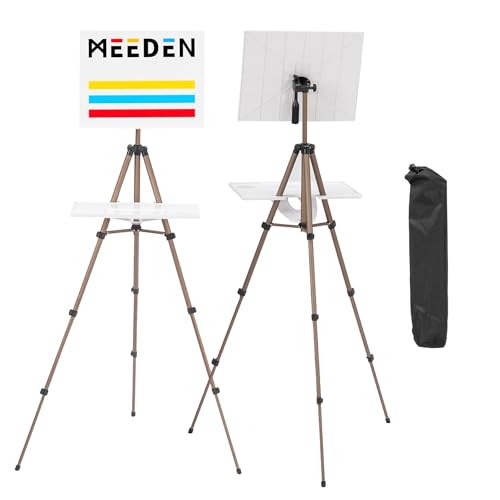
MEEDEN Plein Air Watercolor Easel with Tripod
$65.95on Amazon
Built specifically around watercolor’s problem: holding the board nearly flat while you stand up.
- ✓Tilts to horizontal, not just upright. Standard canvas easels cannot do this, and it is exactly what a wet wash needs.
- ✓Palette tray with a brush-water cup hole. Outdoors, a water container that cannot tip over is the difference between painting and repeatedly chasing a rolling jar.
- ✓Two kilograms with a carry bag. Roughly a laptop’s weight, which is the threshold above which most people stop taking gear out at all.
As an Amazon Associate we earn from qualifying purchases. Price shown at time of writing.
Painting on location is also the fastest way to improve at landscape work, because a photograph has already flattened the values for you. The scenes in our watercolor mountain drawing ideas read very differently once you have tried to paint one in changing light.
Studio and Field in One


Stuelloaf French Style Sketch Box Easel
$69.99on Amazon
The classic French easel design with aluminum legs instead of wooden ones, which removes most of its traditional weight problem.
- ✓The drawer is the real feature. Paints, brushes and rags live in the easel permanently, so setting up is one motion rather than ten trips.
- ✓39 to 71 inches, sitting or standing. Working standing changes how you paint, because you step back constantly instead of staring at one corner.
- ✓Detach the tripod for tabletop use. One object covers the studio corner and the field trip, which is unusual at this price.
As an Amazon Associate we earn from qualifying purchases. Price shown at time of writing.
Cheapest Way to Fix the Angle


TX Liteart Foldable Beechwood Tabletop Easel
$27.99on Amazon
Folds flat and slides behind a bookshelf, which is the practical requirement in a home without a spare room.
- ✓Five settings up to 75 degrees. Steep enough for upright drawing, and it drops flat when a wash needs to stay put.
- ✓Rubber feet that grip. A board that slides half an inch under pressure is worse than no board, because you correct for the movement without realizing.
- ✓Takes the pressure off your neck. Hours spent hunched over a flat desk is the main reason long drawing sessions end early.
As an Amazon Associate we earn from qualifying purchases. Price shown at time of writing.
Frequently Asked Questions
Do I really need an easel to draw?
You need a tilted surface. An easel is the convenient version of that, but a board propped against a stack of books achieves the same optical correction. What you should not do is keep drawing flat on a table and wondering why proportions come out wrong.
What angle should a watercolor easel be set to?
Between flat and about 20 degrees. A slight tilt lets a bead of paint travel down the page under control, which is how a smooth graded wash is made. Steeper angles make the paint run faster than you can follow it.
Tabletop or standing easel?
Tabletop for paper work, detail and small studies. Standing for canvas and anything over about 16 inches, because you need to step back regularly to judge it. Most people working on paper at home are better served by a tabletop model.
Is a French easel worth it for a beginner?
Only if you paint away from home. Its advantage is integrated storage, which matters when setup friction is what stops you going out. In a fixed studio corner a simple H-frame or tabletop easel does the same job for less.
Will an easel help with neck and back pain?
Usually yes. Drawing flat means holding your head bent forward for hours. Raising the surface toward eye level lets you sit upright, which is why drafting tables were built that way long before ergonomics was a word anyone used.
Building the Rest of the Space
An easel is one part of a working corner. Where it sits relative to your window and lamp decides whether your drawing hand casts a shadow across the page, which our guide to art studio lighting deals with directly, and setting up a home art studio covers arranging the whole corner. If you are still choosing surfaces to work on, start with watercolor paper that suits your medium. An easel is a stage-two buy; our art supplies guide explains what should come first.