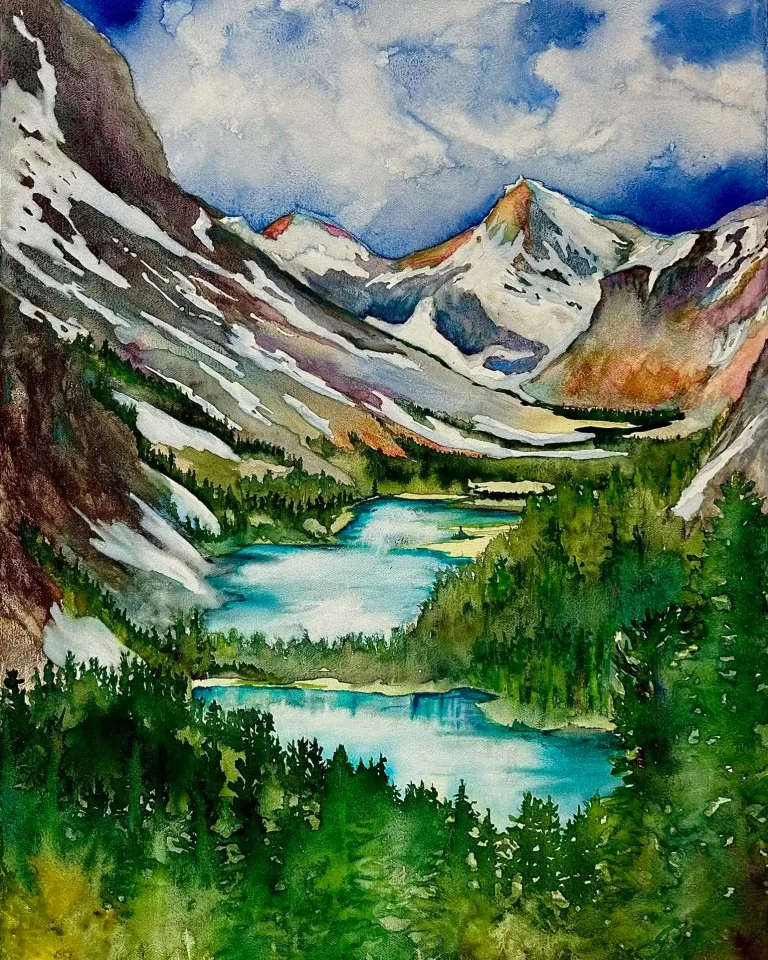
Short answer: Start with a simple rim view, three colors (yellow ochre, burnt sienna, and ultramarine blue), and cold-press watercolor paper. Paint the sky first, then lay the canyon in light-to-dark layers, and save the darkest shadows for last. The 19 ideas below take you from easy beginner sketches to dramatic sunset and river scenes.
Updated: October 2026.
IN THIS GUIDE
- A quick picker to find your first canyon painting
- The simple palette and paper that make canyon rock look real
- How to avoid muddy colors
- A 6-step first wash you can paint today
- 19 original watercolor Grand Canyon ideas, each with its own painting
- Answers to the most common beginner questions
Standing at the rim of the canyon, you feel color, light, and scale calling your brush to move. Watercolor Grand Canyon Drawing Ideas help you translate that vast beauty into expressive washes and confident strokes.
These ideas give you clear direction while leaving space for your artistic voice to grow. Watercolor Grand Canyon Drawing Ideas are powerful because they build technique, deepen observation, and spark creative exploration in every layer.
Whether you crave dramatic sunsets or soft desert mornings, there is always a new angle to paint. With the right Watercolor Grand Canyon Drawing Ideas, you sharpen skills, connect with fellow artists, and discover fresh inspiration waiting in every canyon shadow.
How Do You Paint a Realistic Grand Canyon Sunset in Watercolor?
- Start with a light pencil sketch mapping the canyon ridges, horizon line, and major shadow shapes to create structure before adding color.
- A realistic Grand Canyon sunset begins with a soft wet on wet wash of warm yellows and oranges blended smoothly across the sky.
- Gradually layer deeper reds and violets near the top to build atmospheric depth without overworking the paper.
- Depth in Watercolor Grand Canyon Drawing Ideas comes from contrast between glowing sky and darker canyon silhouettes.
- Mix earthy tones like burnt sienna and ultramarine to create natural rock shadows that feel believable.
- Leave intentional white spaces where sunlight hits the cliff edges to enhance realism and glow.
- Use a dry brush technique on textured paper to mimic rugged rock formations and canyon striations.
- Foreground details should remain sharper while distant cliffs stay lighter and softer for perspective accuracy.
- Lift small highlights with a damp brush to refine light reflections along the canyon walls.
- Finish by deepening selective shadow areas to anchor the composition and make the sunset colors shine dramatically.
What Are Easy Watercolor Grand Canyon Drawing Ideas for Beginners?
- Begin with a simple horizon line and two layered cliff shapes to avoid overwhelming detail.
- Easy Watercolor Grand Canyon Drawing Ideas focus on basic shapes before texture or intricate rock patterns.
- Use a limited color palette such as raw sienna, ultramarine blue, and light crimson to simplify mixing.
- Apply a single flat wash for the sky, allowing natural watercolor blooms to add organic variation.
- Paint distant canyon layers in lighter diluted tones to instantly create depth.
- Gradually add darker layers in the foreground using thicker pigment for visual contrast.
- Avoid outlining rocks heavily and instead suggest texture with quick angled strokes.
- Let gravity help by slightly tilting your paper for natural color blending across canyon slopes.
- Practice negative painting around light areas to define sunlit rock edges effortlessly.
- Finish with minimal detail to maintain freshness, because beginner friendly Watercolor Grand Canyon Drawing Ideas thrive on simplicity and expressive flow.
Pick up your brush, explore bold colors, and experiment freely with Watercolor Grand Canyon Drawing Ideas to turn sweeping canyon views into vibrant art that reflects your imagination and growing skill.
1. Which Grand Canyon Idea Should You Paint First?
Do not start with the hardest scene. Match the idea to your mood and skill level, and you will finish a painting you actually like. Use this picker, then scroll to the idea number that fits you.
| If you are… | Paint this first | Why it works |
|---|---|---|
| An absolute beginner | 10. Plein Air Horizon Sketch | Loose lines and bright washes; no fussy detail needed. |
| Short on time | 17. Misty Morning Buttes | Soft gray washes do the work; fog hides the hard edges. |
| Chasing color | 3. Sunset Crevasse Shadows or 14. Golden Hour Overlook | Warm light against cool violet shadows teaches contrast fast. |
| Drawn to water | 5. Reflections in the Still Water or 15. Hidden Oasis Pool | Calm water doubles your color and forgives wobbly lines. |
| Ready for drama | 6. Horseshoe Bend Perspective or 8. Soaring Above the Abyss | One strong shape carries the whole painting. |
| Love tiny details | 12. Geological Layers Study or 18. Canyon Wren Sentinel | Slow, careful work that rewards patience with realism. |
If you are brand new to the medium, warm up with 30 easy watercolor painting ideas for beginners first, then come back here. And if your sketchbook is the problem, not your painting, see the best sketchbooks for beginners before you buy another pad.
2. What Colors and Paper Work Best for Canyon Rock?
Canyon rock looks complicated, but it is mostly three colors mixed in different amounts. Keep your palette small and your painting will stay clean and glowing instead of turning muddy.
Yellow Ochre
warm light
warm light
Burnt Sienna
red rock
red rock
Ultramarine Blue
cool shadows
cool shadows
Dioxazine Violet
deep shade
deep shade
Mix yellow ochre with burnt sienna for sunlit cliffs. Add a touch of ultramarine blue for shadowed walls, and a little violet for the deepest crevices. Never paint shadows with straight black: black flattens rock, while blue-violet shadows keep it feeling lit by the sky. The same three-color idea powers 30 warm ochre watercolor ideas and the three-color landscape palette, and its red-rock cousin is covered in 29 clay red watercolor ideas.
For paper, choose 140 lb (300 gsm) cold-press paper. It holds big washes without buckling, and its light texture gives you the dry-brush sparkle that makes rock look rugged. Smooth hot-press paper suits the detailed studies (ideas 12 and 18), but it is less forgiving for large sky washes. For supplies that will not fight you, see the best watercolor sets under $25 and the best watercolor brushes for beginners: one large round brush for washes and one small round for edges covers nearly every idea below.
Real-canyon check: The Grand Canyon was carved by the Colorado River, runs about 277 miles long, and in places is over a mile deep, with rock layers recording nearly 2 billion years of Earth history. That is why the walls are striped: each band is a different ancient layer. Paint the bands in slightly different temperatures — warmer on top, cooler below — and the depth appears almost by itself. You can check the park’s own geology notes at the National Park Service Grand Canyon pages.
1. Majestic Rim View Watercolor Grand Canyon on Cold Pressed Paper

Gazing at this piece feels like standing on the edge of a vast prehistoric world. The artist uses layered washes of ochre and sienna to define the massive rock faces. Soft white clouds drift across a pale blue sky, providing a peaceful contrast to the rugged terrain below. Those green trees in the foreground add a refreshing splash of life.
2. River Through the Gorge Watercolor Grand Canyon on Textured Canvas

This detailed study captures the Colorado River as a thin turquoise ribbon winding through deep purple shadows. The brushwork here is incredibly deliberate, highlighting the intricate geological layers of the canyon walls. I love how the warm sunlight hits the upper plateaus, creating a brilliant golden glow. It really makes the ancient stone feel alive and full of history.
3. Sunset Crevasse Shadows Watercolor Grand Canyon on Mixed Media Paper

Dramatic light takes center stage in this bold composition. Deep plums and rich crimson tones fill the narrow gorge, suggesting the quiet cool of an approaching desert evening. The simplified shapes give it a modern, graphic feel while still capturing that overwhelming sense of scale. It is a perfect example of using a limited palette to create maximum emotional impact.
4. Rafting the Inner Canyon Watercolor Grand Canyon on Heavyweight Paper

There is a wonderful sense of adventure in this perspective from the water level. The towering red cliffs dwarf the tiny figures in the boat, emphasizing the sheer power of nature. Soft greens along the riverbank suggest a hidden oasis within the dry rock. The artist used wet-on-wet techniques to make the splashing water feel moving and quite refreshing.
5. Reflections in the Still Water Watercolor Grand Canyon on Arches Paper

Vibrant orange and burning gold tones dance across the surface of the water in this stunning vertical piece. The reflection is almost as clear as the cliffs themselves, creating a symmetrical world of color. It captures that magical moment when the sun sits low and the entire landscape turns into fire. The deep blue sky provides a perfect cooling balance.
6. Horseshoe Bend Perspective Watercolor Grand Canyon on Cotton Rag

The iconic curve of the river creates a powerful focal point that draws your eye right into the center. Earthy browns and deep emerald greens work together to show the relationship between stone and water. This sketch feels very grounded and honest, like a study done by an artist who spent hours simply watching the light change on the bend.
7. High Desert Flora and Peaks Watercolor Grand Canyon on Primed Panel

Thick, textured brushstrokes bring the foreground juniper trees to life against a backdrop of hazy, distant peaks. This style leans into an impressionistic mood, focusing more on the feeling of the heat and the wind than on tiny details. The play between the dark evergreens and the rusty red soil perfectly represents the classic colors of the American Southwest.
8. Soaring Above the Abyss Watercolor Grand Canyon on Panoramic Paper

This wide format allows the viewer to experience the immense breadth of the canyon all at once. A lone bird glides over the chasm, adding a sense of freedom and movement to the stationary rocks. The use of negative space and light washes makes the distant horizon feel miles away. It is a breathtaking tribute to the open sky.
9. Artist Studio View Watercolor Grand Canyon on Watercolor Block

Seeing the paint palette and brushes next to the finished work reminds us of the creative journey. This piece features lovely dappled light across the canyon floor, with shadows that feel soft rather than harsh. The inclusion of delicate white flowers on the side adds a personal, domestic touch to a landscape that is usually known for being wild.
10. Plein Air Horizon Sketch Watercolor Grand Canyon on Travel Journal

Capturing the essence of a place in a quick sketch is a true skill. This journal entry uses ink outlines and bright watercolor pops to freeze a moment in time during a hike. The warm yellow sun on the horizon suggests a new beginning or a long day ending. It feels intimate, like a private memory shared with a friend.
11. Stormy Rim Sketch Watercolor Grand Canyon on Sketchbook Paper

Indigo storm clouds gather above the plateau, creating a moody atmosphere that perfectly captures the unpredictable desert weather. Vibrant purples and oranges clash along the canyon walls, while sketchy ink lines add a raw, energetic feeling to the pine trees in the foreground. This piece feels like a quick, emotional response to a sudden shift in the mountain air.
12. Geological Layers Study Watercolor Grand Canyon on Cold Pressed Surface

Earthly ochre and burnt sienna washes reveal the ancient history written in the stone. The artist used soft blending to show the vast distance between the various peaks and valleys. Subtle gray shadows provide a sense of depth and massive scale, making the viewer feel quite small. It is a wonderful technical exercise in capturing light across complex, rocky terrain.
13. Bright Gorge Perspective Watercolor Grand Canyon on Heavyweight Cotton

Sunlight pours into the deep valley, illuminating the lush green vegetation nestled at the base of towering cliffs. The contrast between the sheer, vertical rock faces and the soft, rolling hills in the distance is striking. Every brushstroke feels intentional and crisp, highlighting the unique textures found in the Southwest. It feels like a warm, inviting afternoon spent exploring.
14. Golden Hour Overlook Watercolor Grand Canyon on Textured Paper

Warm light hits a prominent rock ledge, turning the stone into a glowing beacon against a backdrop of hazy violet depths. The loose, impressionistic style allows the colors to bleed together beautifully, mimicking the way vision softens as the sun sets. Tiny green shrubs anchored to the rim provide a grounded focal point amidst the sprawling, ethereal desert landscape.
15. Hidden Oasis Pool Watercolor Grand Canyon on Watercolor Block

Cool blue water sits at the bottom of a steep, reddish-orange gorge, offering a refreshing visual break from the dry heat. Dense green foliage hugs the shoreline, suggesting a secret sanctuary hidden within the vast stone walls. The composition uses horizontal bands of color to create a peaceful, balanced feeling that celebrates the rare life found in deep canyons.
16. Abstract Desert Peaks Watercolor Grand Canyon on Smooth Bristol

Bold shapes and saturated colors transform the landscape into a dreamlike vision of the West. Neon oranges and deep purples create a high-contrast look that feels modern and playful. The simplified forms ignore fine details to focus entirely on the vibrant energy of the environment. It is an imaginative take that feels like a memory filtered through a kaleidoscope.
17. Misty Morning Buttes Watercolor Grand Canyon on Rough Grain Paper

Soft gray washes suggest a layer of morning fog rolling over the jagged rock formations. Muted tones of rose and tan peek through the haze, creating a quiet and reflective mood. The artist used a dry brush technique to give the distant plateaus a dusty, weathered appearance. It is a calm observation of the canyon during its most silent hours.
18. Canyon Wren Sentinel Watercolor Grand Canyon on Taped Sheet

A detailed bird sits prominently in the foreground, serving as a tiny guardian over the massive river valley below. The orange and yellow canyon walls create a warm, rhythmic pattern that recedes into a hazy gray sky. Combining wildlife with the grand landscape adds a charming, narrative quality. It reminds us that even this giant chasm is a home.
19. Textured Earth Tones Watercolor Grand Canyon on Arches Paper

Granulated pigments create a gritty, realistic texture that mimics the actual surface of the desert floor. Dark, shadowy crevices cut through the sun-bleached plateaus, giving the landscape a rugged and honest character. The artist focused on the tactile quality of the stone rather than clear lines. It feels like a raw, unrefined celebration of the natural mountain elements.
3. How Do You Avoid Muddy Canyon Colors?
Most muddy canyon paintings fail in the same four ways. Fix these and your colors stay clear even with a small palette.
- Do not stir on the paper. Mix the color on your palette, then lay it down in one or two strokes. Scrubbing wet paint into wet paint mixes everything into brown-gray.
- Let layers dry. A new wash over a damp one lifts the layer below. Wait until the sheen is gone before glazing a shadow.
- Limit each wash to two or three pigments. Four or more pigments in one puddle almost always dull each other.
- Keep one light shape. Leave at least one sunlit cliff or bright sky area untouched. Without a light passage, even good colors look dull.
Water is the other half of the problem: reflections double every mistake, so practice still water separately. 40 water drawing ideas and the reflection rule shows how a reflection should mirror shape but stay slightly darker and softer than the real thing.
4. Paint Your First Canyon Wash in 6 Steps
Try this 30-minute exercise before any of the 19 ideas. It teaches the whole canyon method on one small sheet.
1
Sketch three bands. Lightly draw the sky, the far rim, and the near cliff. Three horizontal bands are enough; details come later.
2
Wet the sky only. Brush clean water over the sky band, then drop in warm yellow and a little orange. Tilt the board so the color drifts, then leave it alone.
3
Wash the far cliffs pale. While the sky dries, paint the far rim with thin yellow ochre and a little violet. Distant rock stays light and cool.
4
Glaze the middle layers. Once dry, add burnt sienna bands for the middle cliffs, leaving thin pale gaps between bands for the striped-layer effect.
5
Drop in the dark shadows. With a small brush, paint the deepest crevices in ultramarine and violet. Darkest darks go only in a few places.
6
Lift the light back. While the last wash is still slightly damp, lift a few sunlit edges with a clean damp brush. Stop here: one more layer usually hurts more than it helps.
Beginner trap: painting every layer the same darkness. Real canyons read as near-dark, middle-warm, and far-pale. If your painting looks flat, the values are too close together, not the colors.
5. Frequently Asked Questions About Watercolor Grand Canyon Painting
What colors do I need for a Grand Canyon watercolor?
Three colors cover most canyon paintings: yellow ochre, burnt sienna, and ultramarine blue. Add a violet for deep shadows and a warm yellow for glowing skies. A small palette keeps colors clean and makes mixing predictable.
What paper is best for Grand Canyon watercolor painting?
140 lb (300 gsm) cold-press paper is the safest choice. It handles large washes without buckling and its texture gives rock a natural dry-brush sparkle. Use smooth hot-press paper only for fine-detail studies.
How do you paint Grand Canyon layers without muddy colors?
Mix colors on the palette, not on the paper, let each layer dry before glazing over it, and use no more than three pigments per wash. Leave at least one sunlit area untouched so the painting keeps a bright passage.
Can beginners paint the Grand Canyon in watercolor?
Yes. Start with idea 10, the plein air horizon sketch, or idea 17, the misty morning buttes. Both forgive wobbly lines because loose washes and fog do most of the work. Save detailed layer studies for your third or fourth painting.
How long does a Grand Canyon watercolor take?
A small sketch takes about 30 minutes, while a full detailed scene takes two to three hours including drying time between layers. Most of that time is waiting, not painting, so work on two sheets at once if you like.
Where can I see the real Grand Canyon colors for reference?
The National Park Service Grand Canyon pages publish park geology and seasonal photos, and they are a reliable check for how the rock bands actually look in different light. Compare your painting’s warm-to-cool balance against a real rim photo before calling it finished.
Keep Painting
When the canyon feels comfortable, try 28 watercolor national park drawing ideas for more landscapes, or return to easy watercolor painting ideas for beginners to practice washes. The canyon rewards the same three skills every time: big washes, patient layers, and brave darks.
Canyon rock is where the ochre palette earns its keep: the same three colors behind these canyon walls — yellow ochre, one red, and one blue — mix the muted greens and warm browns of a full landscape. See how that palette works across 30 subjects in 30 warm ochre watercolor ideas and the three-color landscape palette.