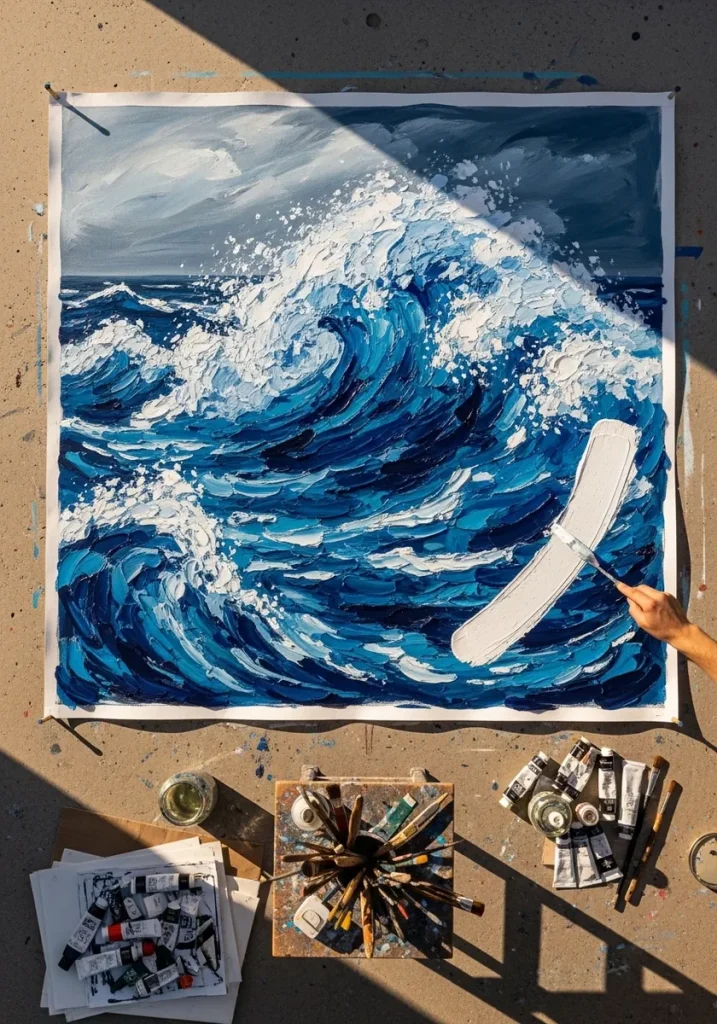
Water has no color and no shape of its own, so you never draw water itself. You draw three things it does to light: the reflection above the surface, the refraction below it, and the specular sparkle where light bounces straight to your eye.
Key takeaways
- A reflection sits directly below its object, never offset to one side|Reflections compress the value range, so lights go darker and darks go lighter|Ripple ellipses flatten toward the horizon, and that alone creates the sense of depth|Still water gives a sharp mirror; moving water stretches the reflection into a column|The brightest part of a breaking wave is the thin translucent lip that light passes through
Water is the subject that defeats most people, and it is because they try to draw the water. Water has no color and no shape of its own. Everything you see is something else: the sky reflected on the surface, the riverbed bent by refraction underneath, and the hard sparkle where light bounces directly back to your eye.
So you draw those three things instead. And the first one has one strict rule that fixes half of all bad water drawings: a reflection sits directly below its object, never offset to one side. It also compresses the value range, so a bright thing reflects a little darker and a dark thing a little lighter.
Depth on a flat surface comes entirely from the ripples. Draw them as open ellipses near the viewer and flatten them steadily toward the horizon until they are almost straight lines. Nothing else is needed to turn a blank blue shape into a receding plane.
The forty ideas below run from graphite and charcoal through graffiti, pixel art, folk painting and art nouveau. For water within a wider scene, see watercolor ocean ideas and watercolor lake ideas.
Compiled by the GS Art Zone editorial team. Last updated August 2026. Each idea is paired with the specific step that produces the effect, so you can go from the reference straight to paper.
What You Need Before You Start
- Masking fluid or a white gel pen, because sparkle has to be reserved rather than added
- A flat brush for horizontal ripple strokes, which a round brush never quite matches
- Two blues, one warm and one cool, since water is almost never a single blue
- A soft eraser for lifting the light streaks back out of a dried wash
- A glass of water on the desk, which teaches more about refraction than any tutorial
1. Figure Riding a Watercolor Wave
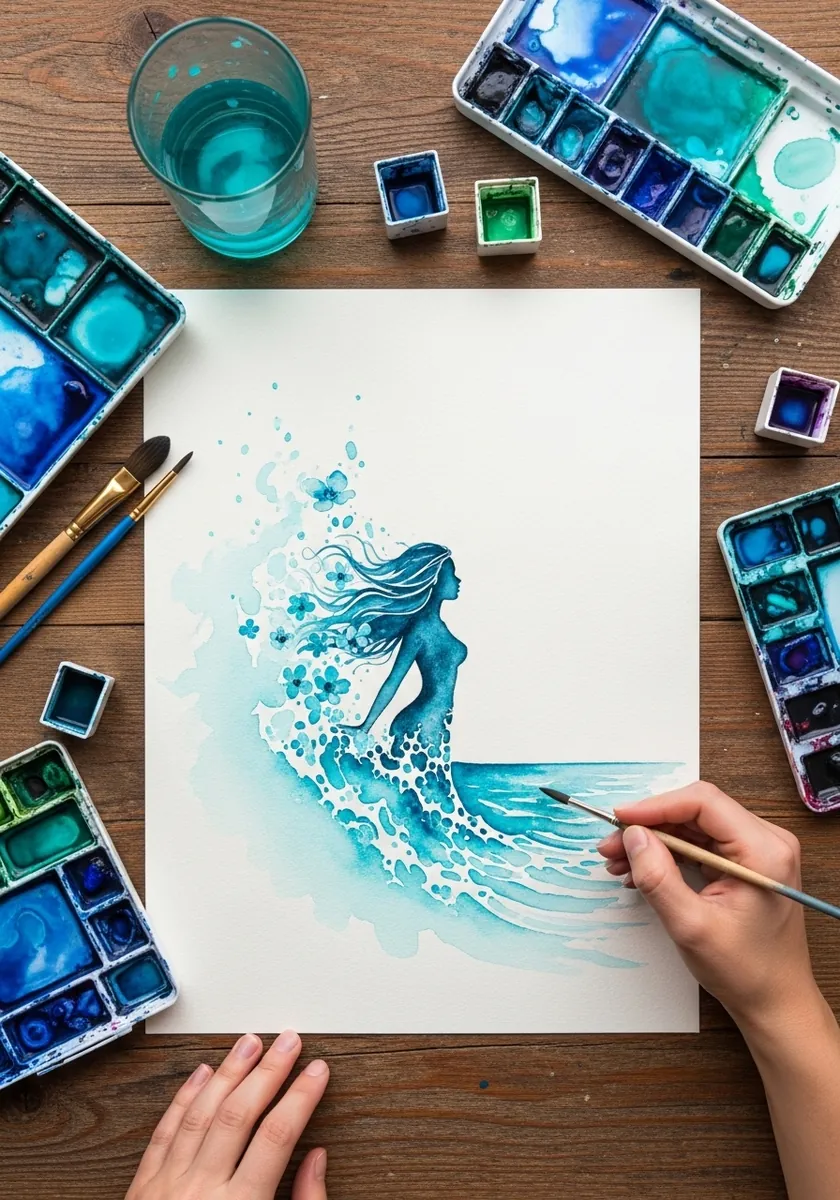
Hair and water are drawn in exactly the same way, which is why this pairing works so well. Let both flow in one continuous direction, keep the edges soft wherever they merge into each other, and reserve the bare paper white only along the very crest of the wave.
2. Underwater World in a Sphere
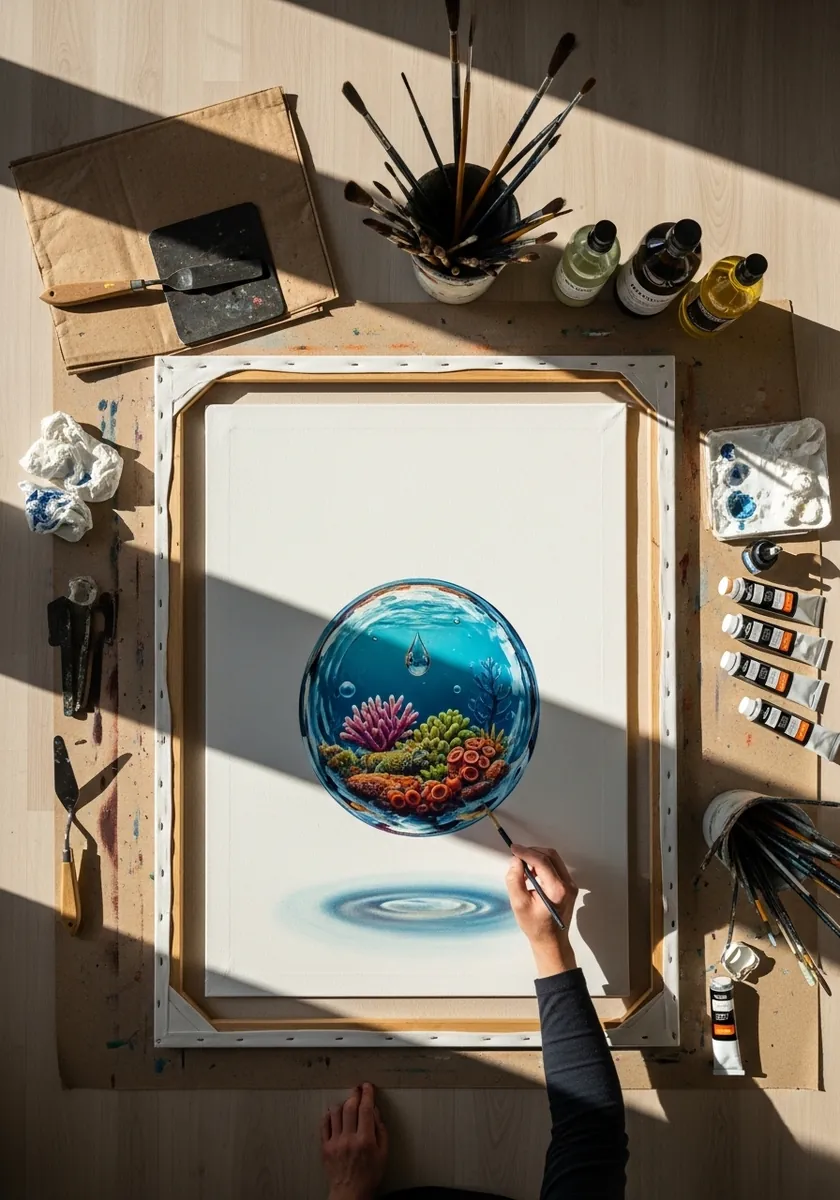
A sphere of water bends everything inside it. Compress the scene toward the center of the circle, curve the horizon line into an arc rather than leaving it straight, and add a hard highlight at the top left of the glass. Keep the sphere’s own shadow on the surface below it a distinct oval.
3. Minimal Contour River Lines
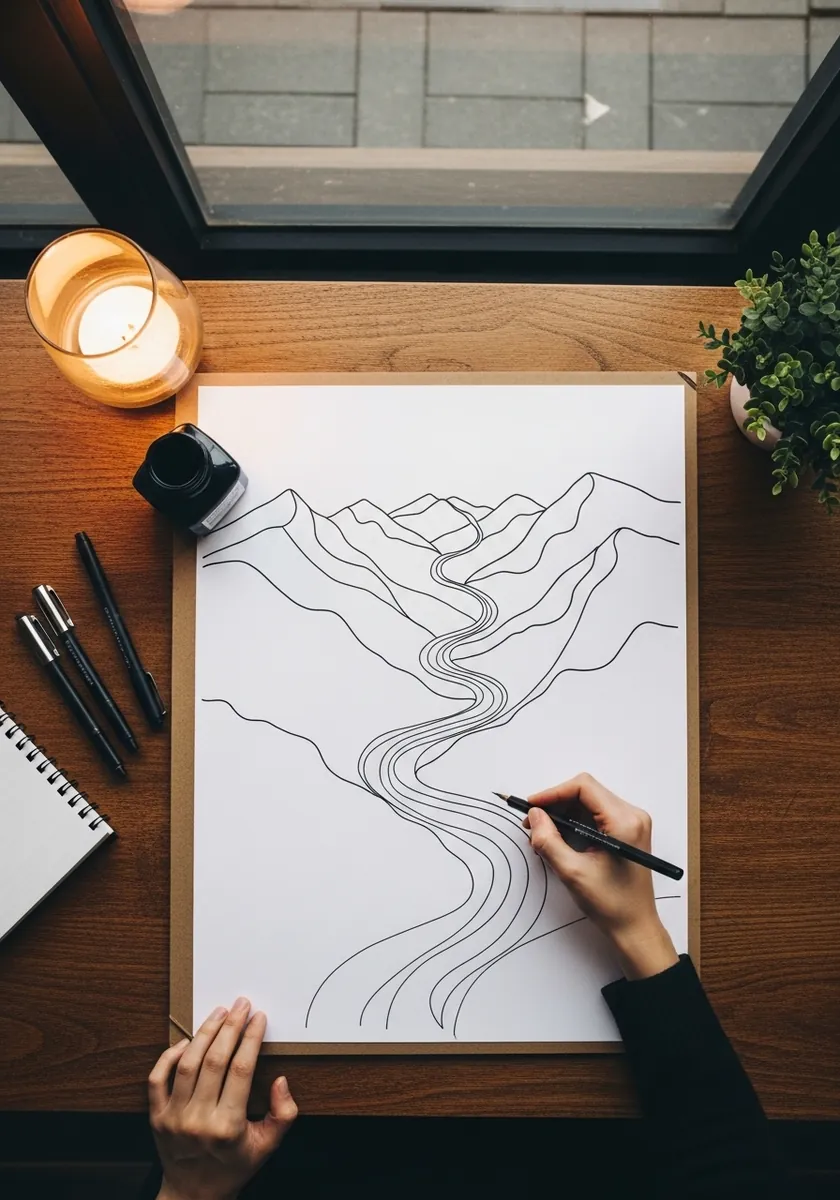
Contour lines describe an entire landscape using no tone whatsoever. Keep the lines closer together wherever the ground steepens and further apart across the flats, and let the river read simply as the clear gap where no line ever crosses.
4. Koi With Ripple Rings
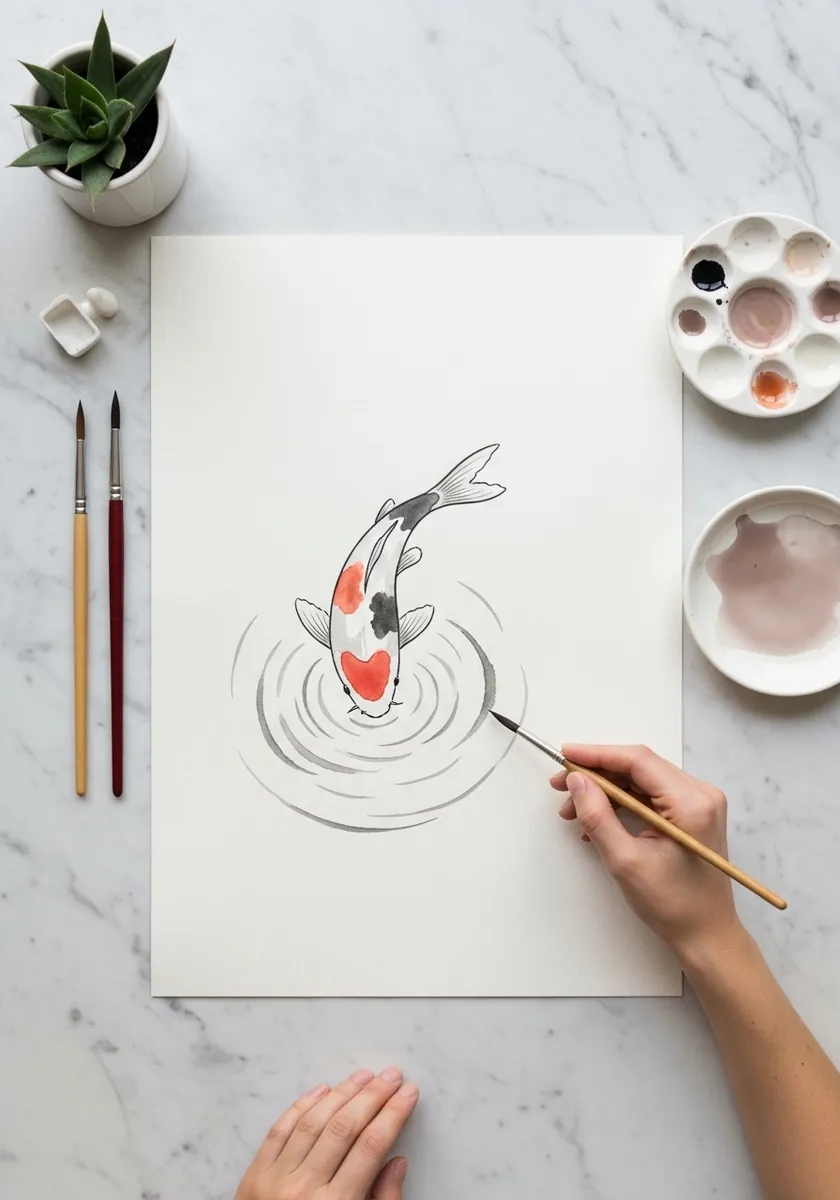
Ripples spread from a single point and get further apart as they travel outward. Draw the innermost rings tight and closely spaced, widen the gaps steadily, and break each ring where the fish body crosses it so the fish sits under the surface.
5. Charcoal Storm at the Cliffs
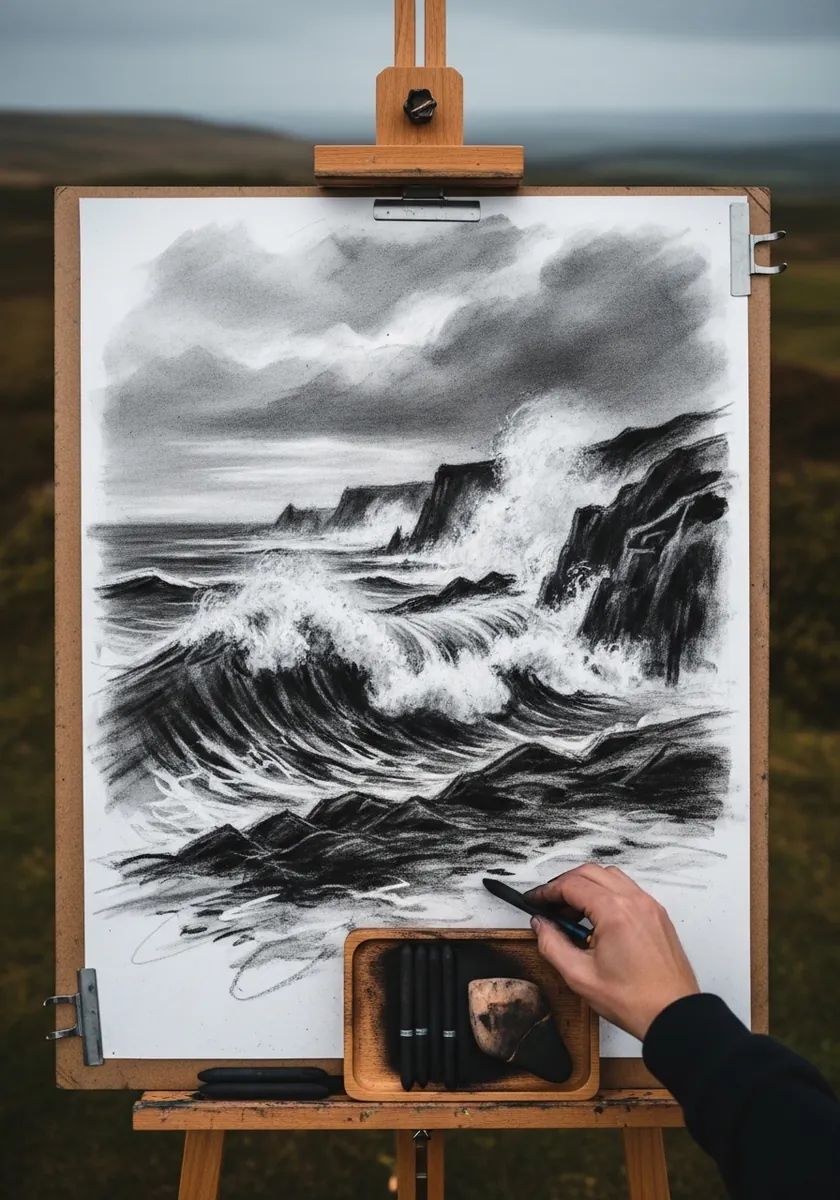
Charcoal handles sea spray better than any other dry medium. Build the whole page dark first, then lift the spray out with a kneaded eraser in upward flicking strokes, because spray thrown against rock always travels up before it falls. Leave the sky almost blank so the sea holds all the drama.
6. Bold Graphic Wave Panel
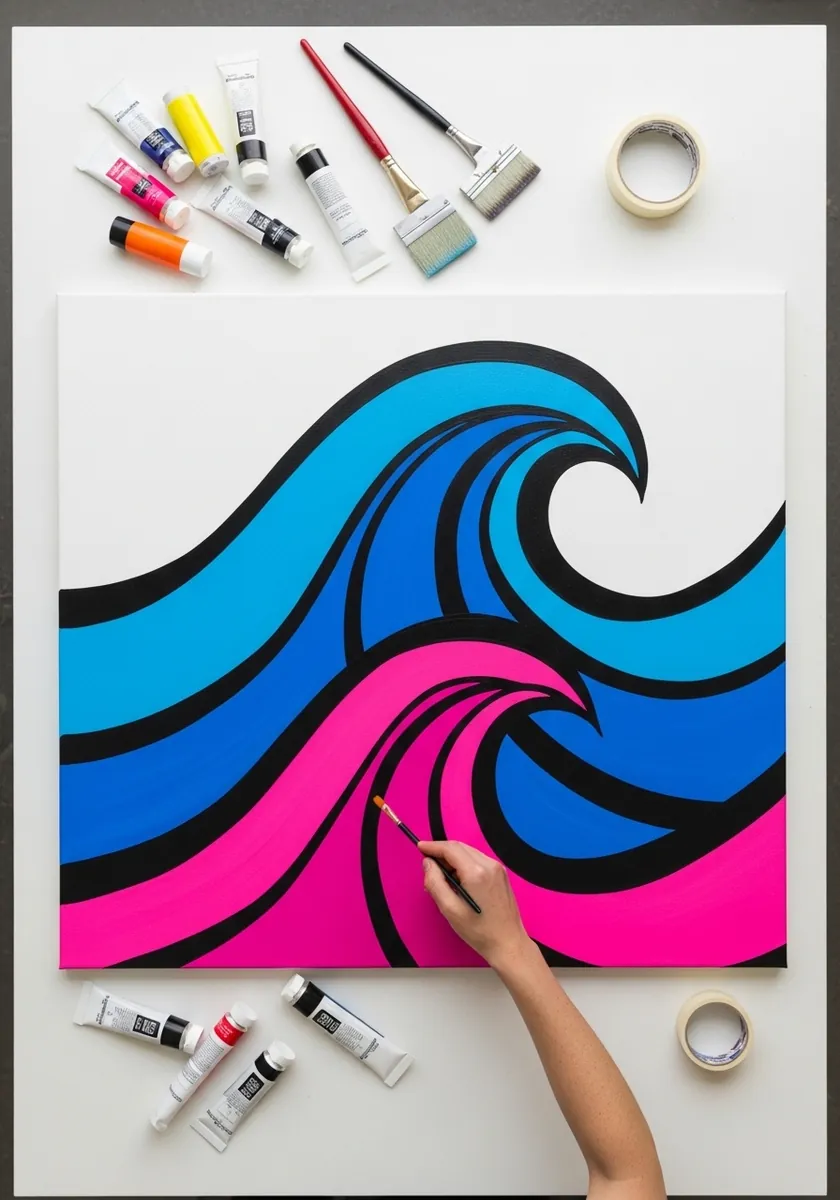
Reducing water to flat bands is a design exercise rather than an observational one. Choose three values only, keep every edge razor sharp, and let the shapes interlock so the eye reads a curling wave without any shading at all.
7. Lotus Pond in Colored Pencil
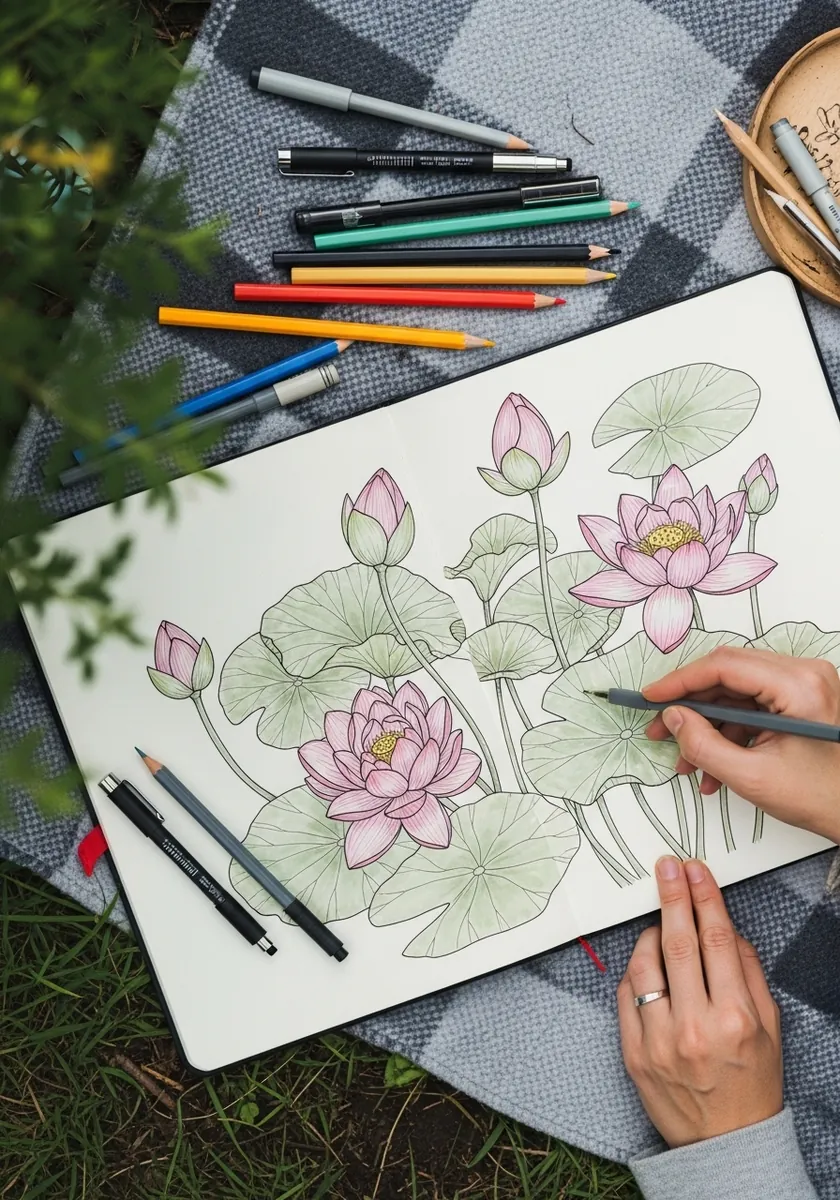
Still water gives you a genuinely sharp mirror to work with. Draw each pad and flower carefully, repeat it directly below at slightly lower contrast, and then break that reflection with two or three horizontal lines where a small ripple crosses it.
8. Melting Clock Over Water
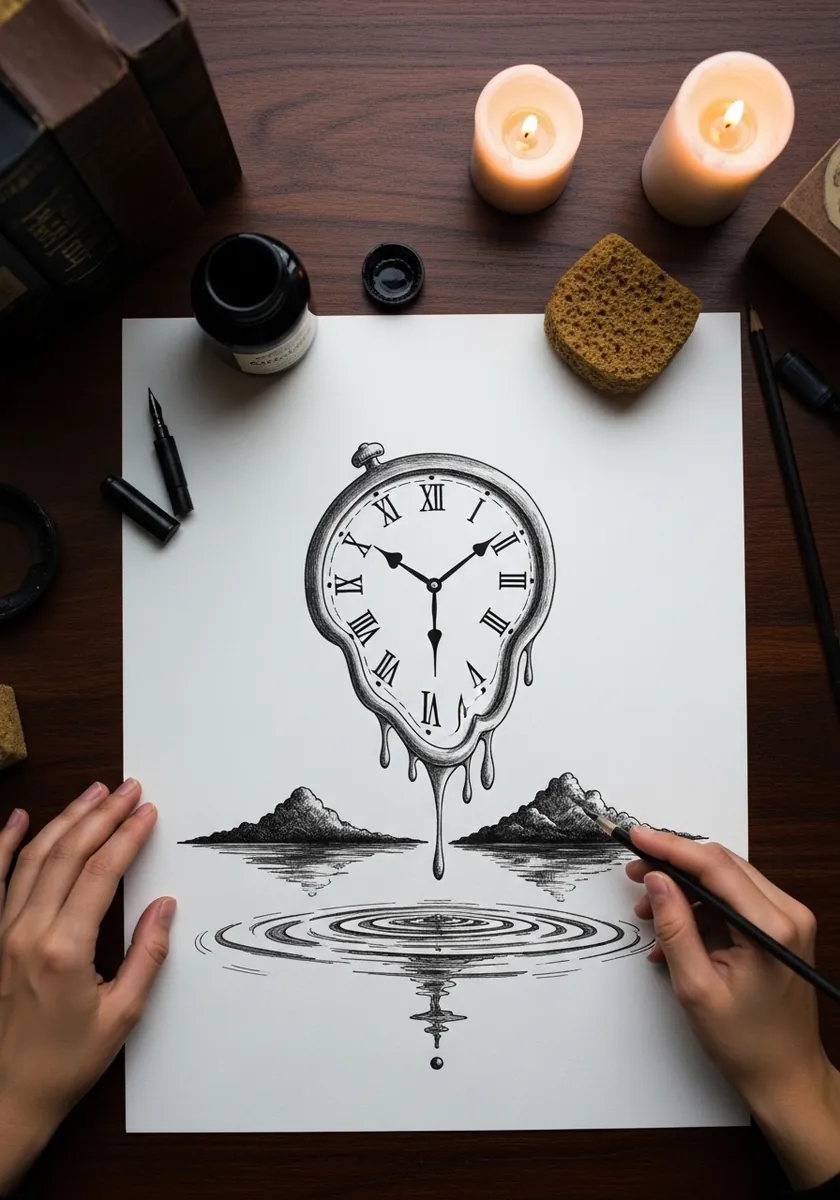
Surreal images still need one honest piece of physics to be convincing. Make the drips form real concentric rings where they land, keep those rings correctly spaced as they widen outward, and let absolutely everything else be as impossible as you like.
9. Pastel Swirl Abstraction
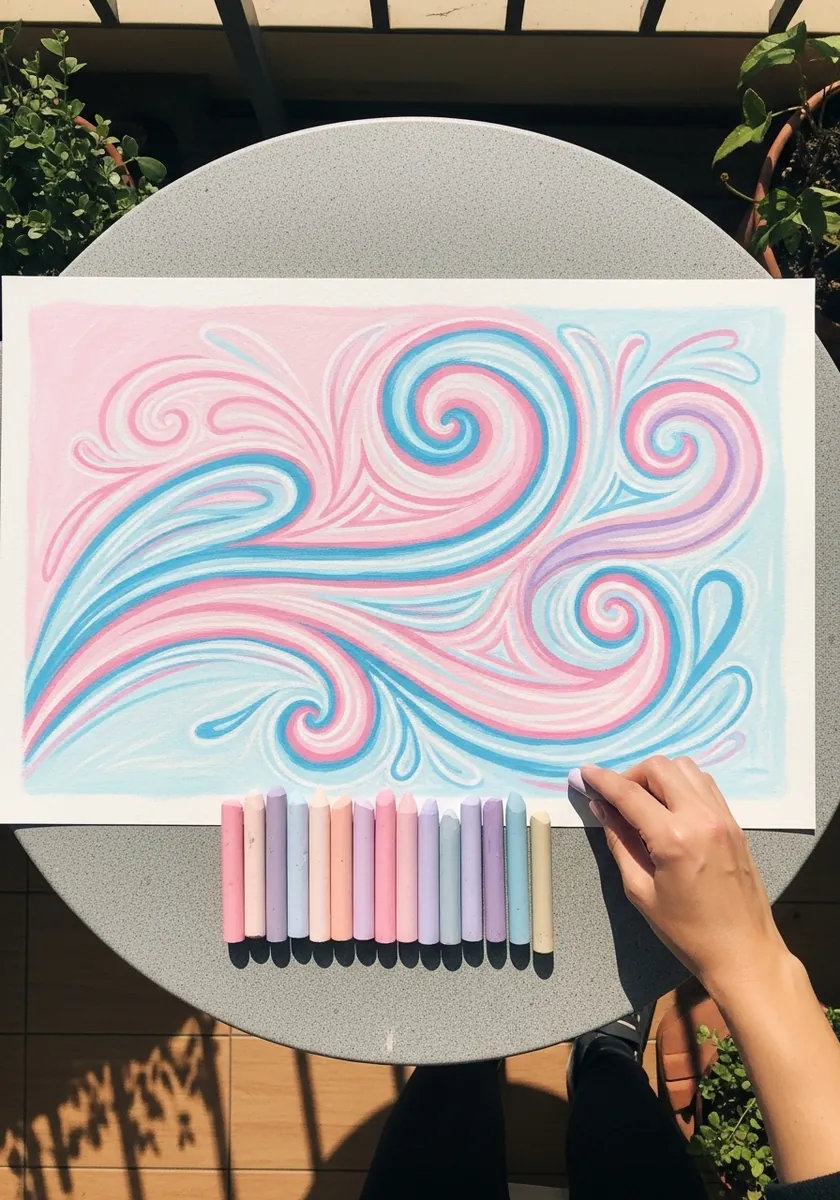
Flow drawn as pure line is closer to calligraphy than to landscape painting. Keep every stroke moving in the same rotational direction, vary only the width and spacing between them, and let a few of the strokes run right off the edge of the paper.
10. Graffiti Great Wave
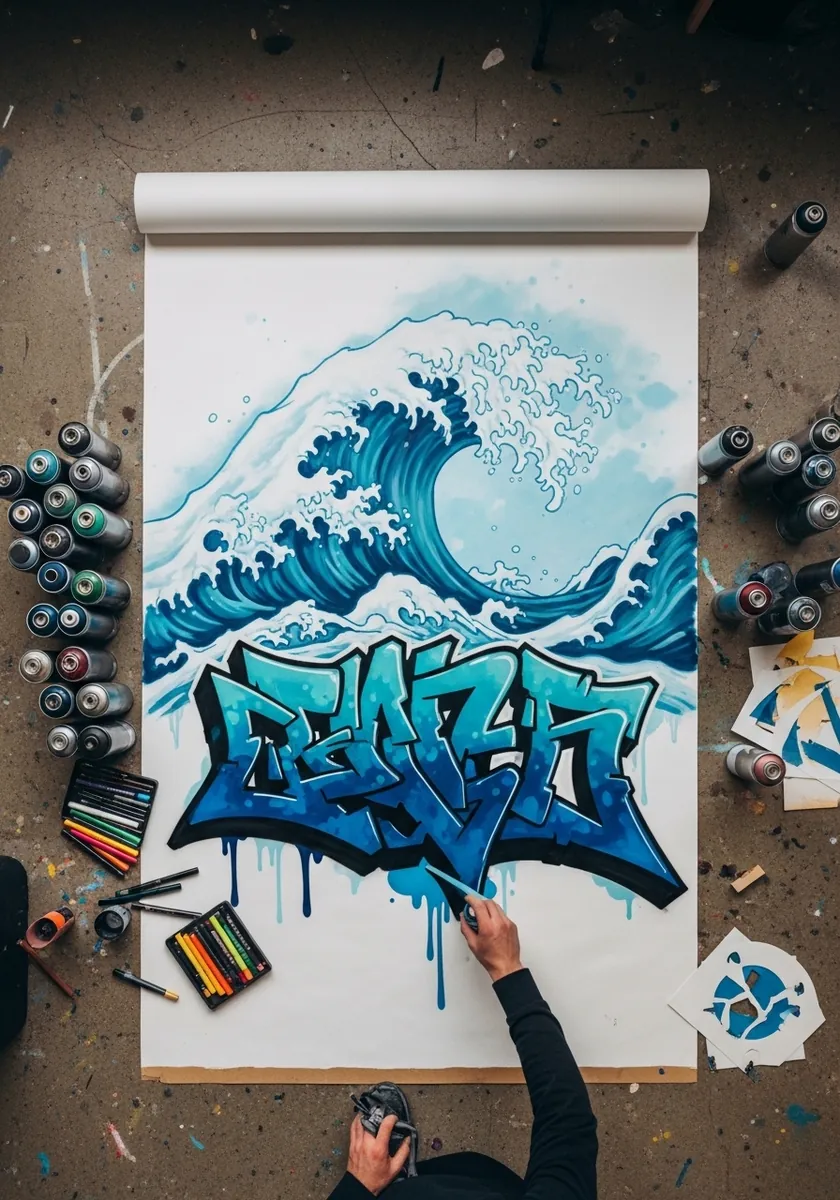
Borrowing Hokusai’s wave means borrowing its underlying structure rather than just its outline. Keep the claw-like foam fingers at the crest, make the wave tower far above the horizon line, and let the lettering sit inside the trough where the composition is emptiest.
11. Geometric Faceted Water
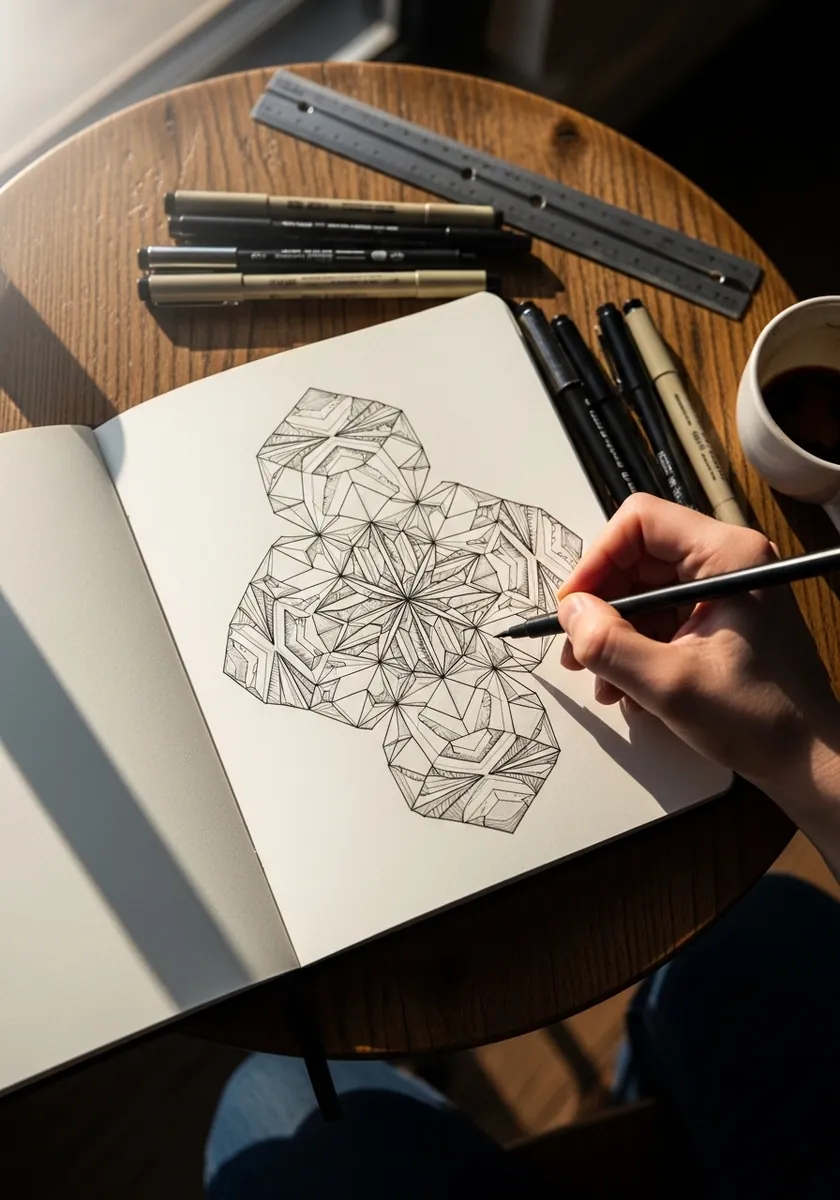
Faceting water is a way of drawing reflection without drawing anything specific at all. Keep every facet a flat unshaded plane, vary the tone between neighboring facets sharply, and make each facet smaller as the surface recedes toward the horizon.
12. Oil Lake at Sunset
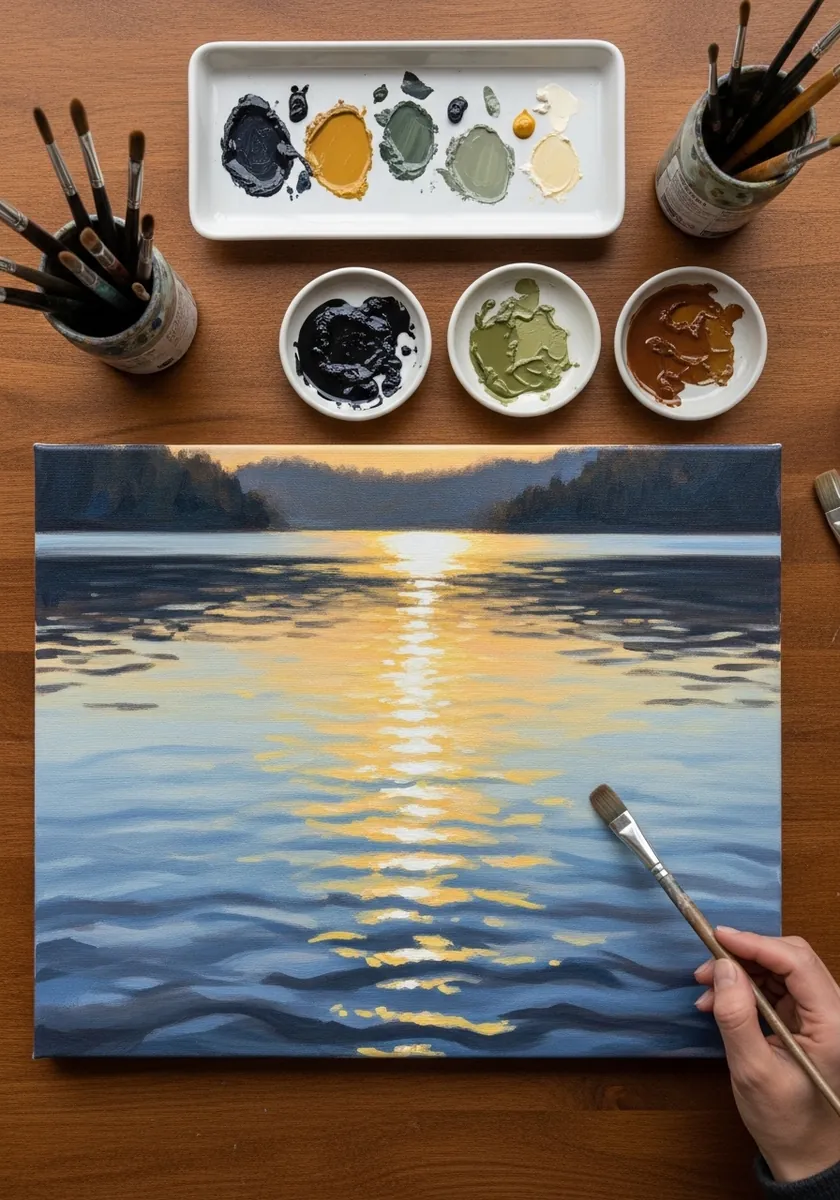
That gold path exists because you are standing in line with the sun. Paint it as a vertical column of broken horizontal dashes, widest near the viewer and narrowing toward the sun, and never as a smooth continuous shape. Break the column with a few dark horizontal accents where a ripple crosses it.
13. Marker Reef Scene
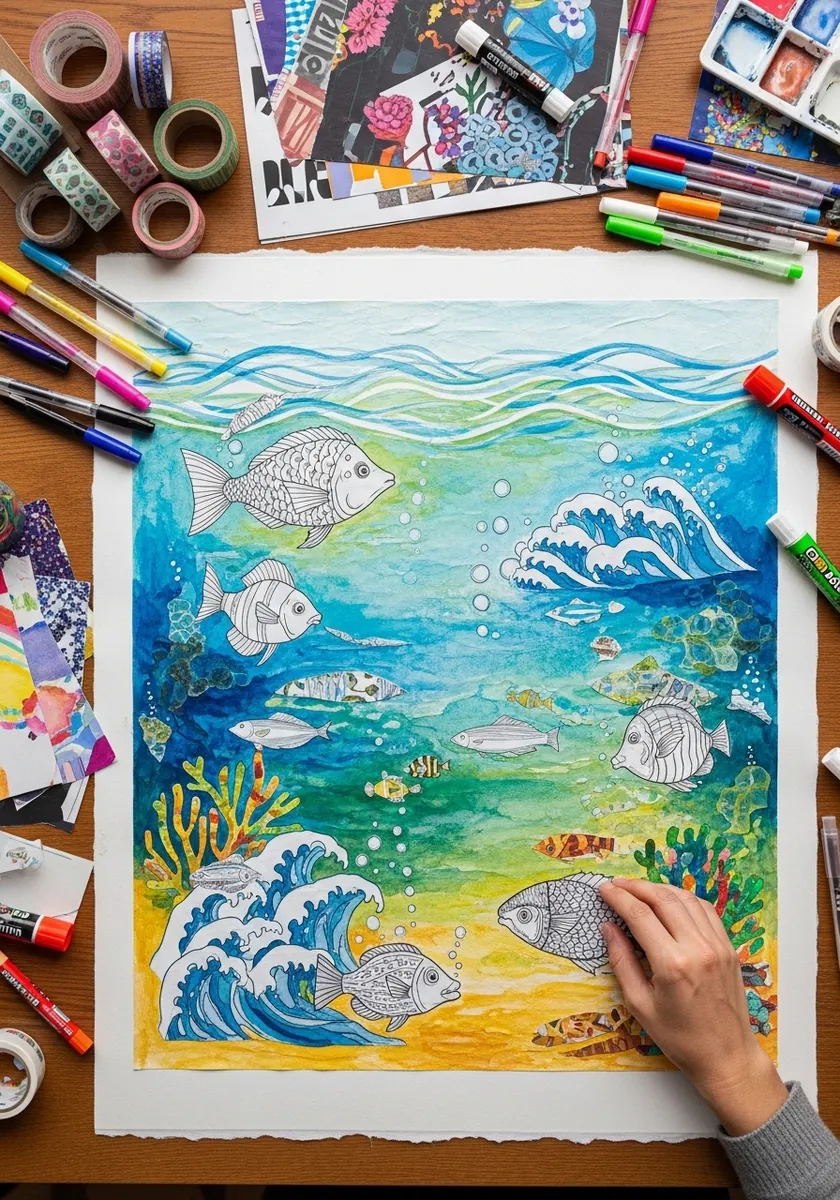
Underwater scenes need color to fade with depth. Keep the foreground warm and saturated, shift everything further back toward blue-green, and drop the contrast steadily so distance reads without any drawn haze. Add one fish partly cropped by the frame so the reef feels larger than the page.
14. Anime Figure in a Water Vortex
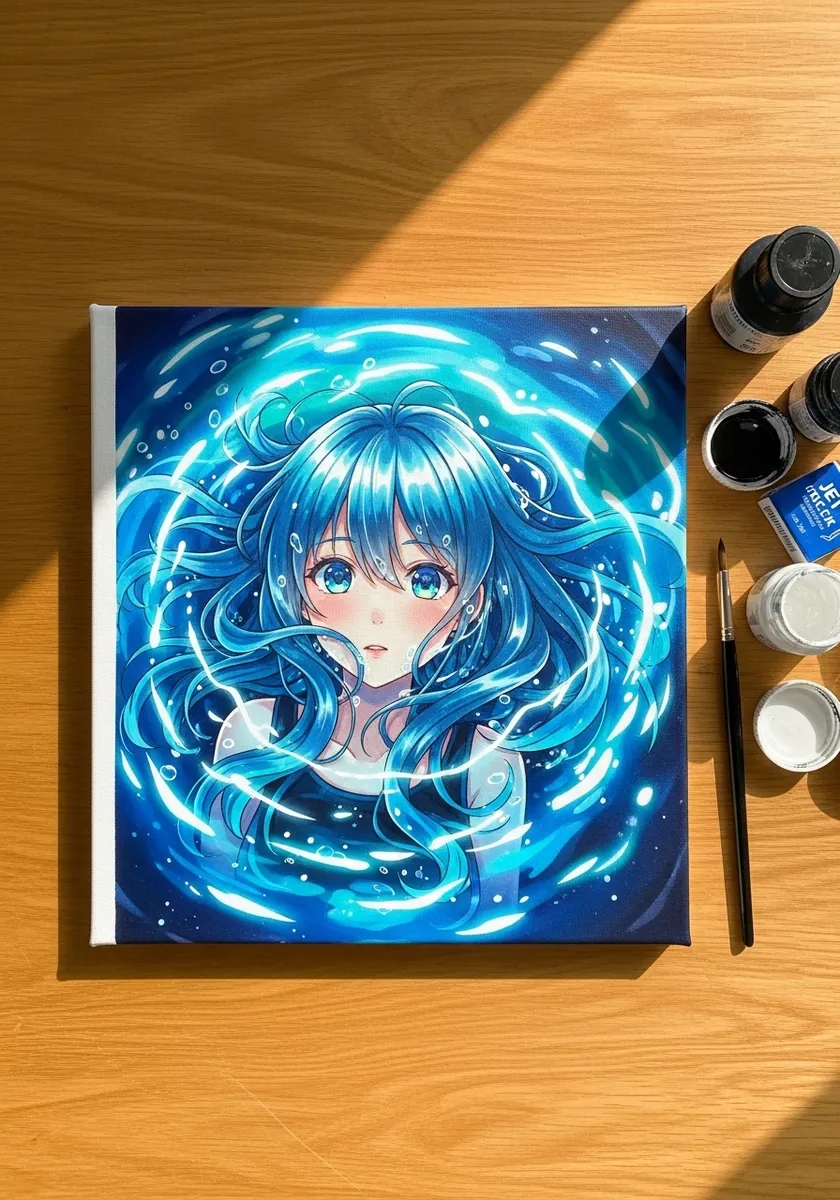
A vortex reads through overlap rather than through speed lines. Let the ribbon of water pass in front of the figure at one point and behind at another, and keep the glow strongest where the two cross. Keep the figure’s own outline crisp so the swirling water stays clearly separate.
15. Hands Cupping Water
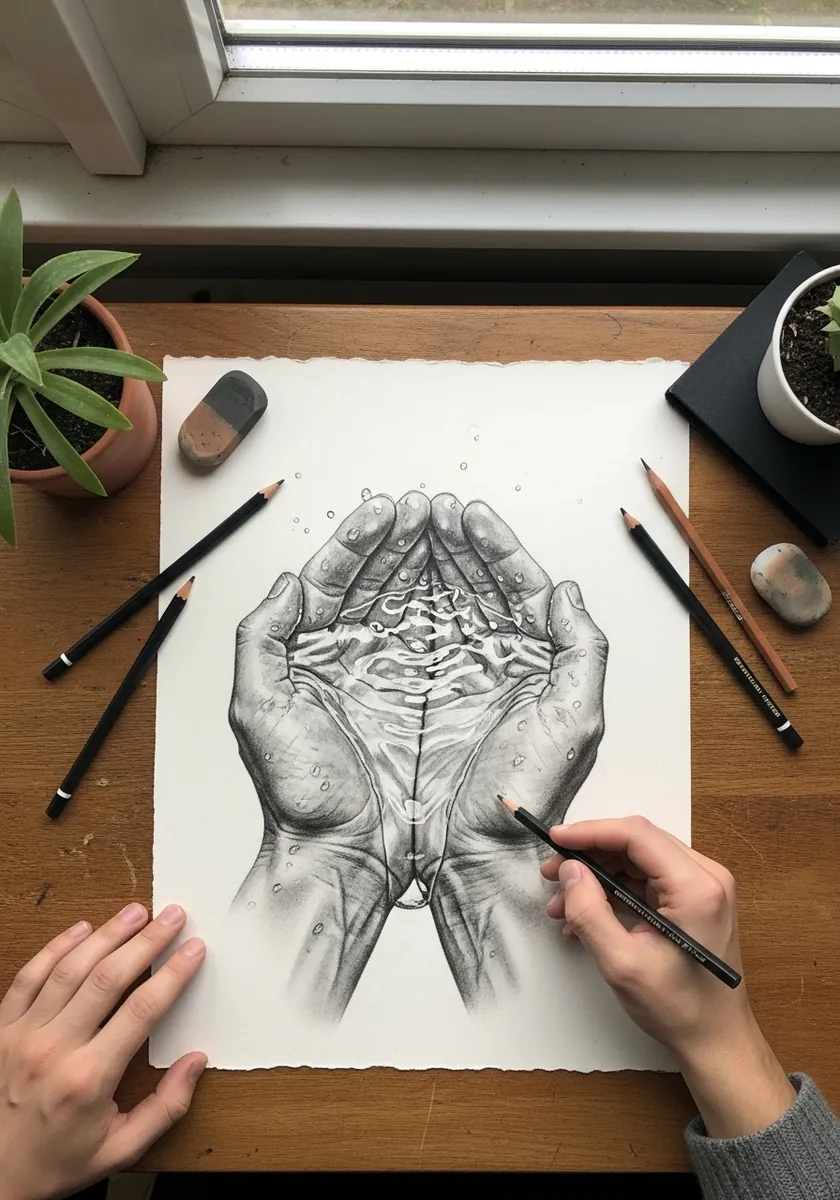
This is the best exercise on the page for refraction. The fingers seen through the water shift sideways and appear shorter, so draw the hand first, then redraw the submerged parts displaced and compressed before shading. Work from your own hand under a tap rather than from imagination.
16. Acrylic Wave Crest
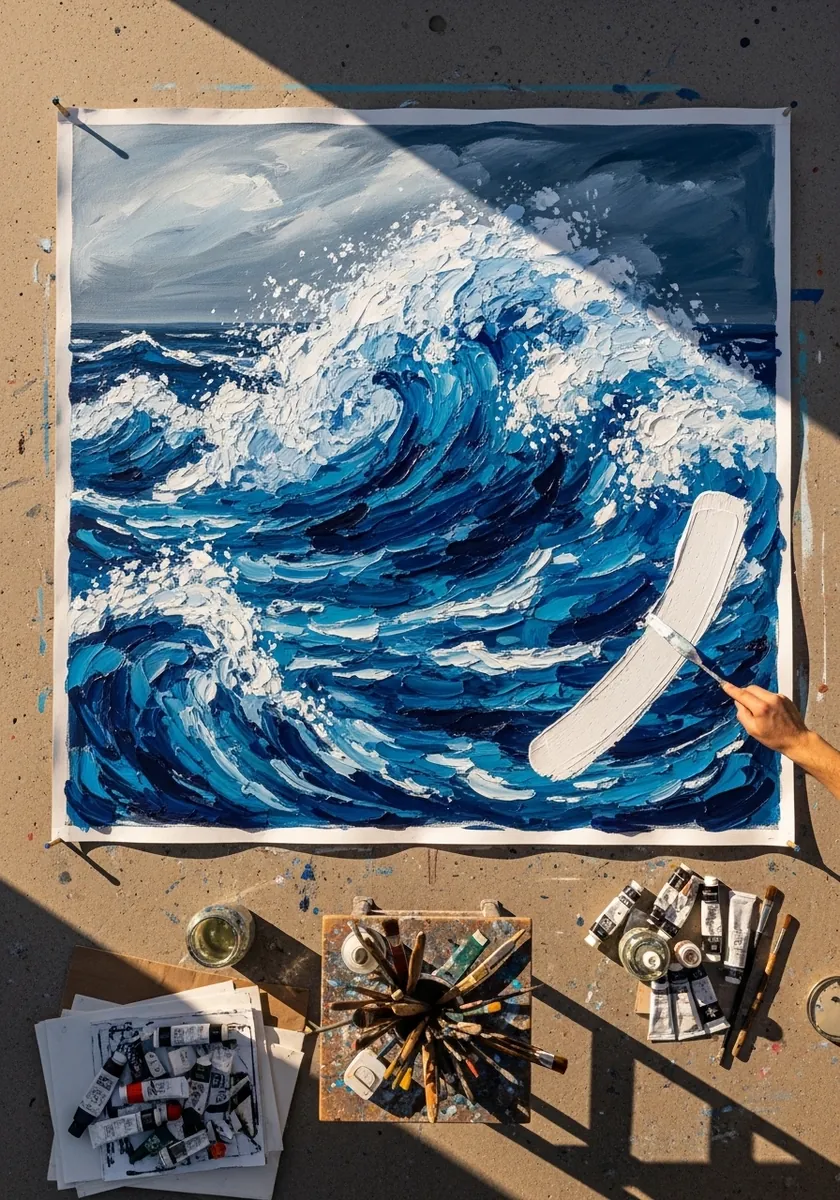
The crest is where the paint should be thickest. Load the brush heavily for the foam so it stands proud of the surface, keep the trough thin and transparent, and let the physical difference in paint depth carry the contrast.
17. Travel Poster Waterfall
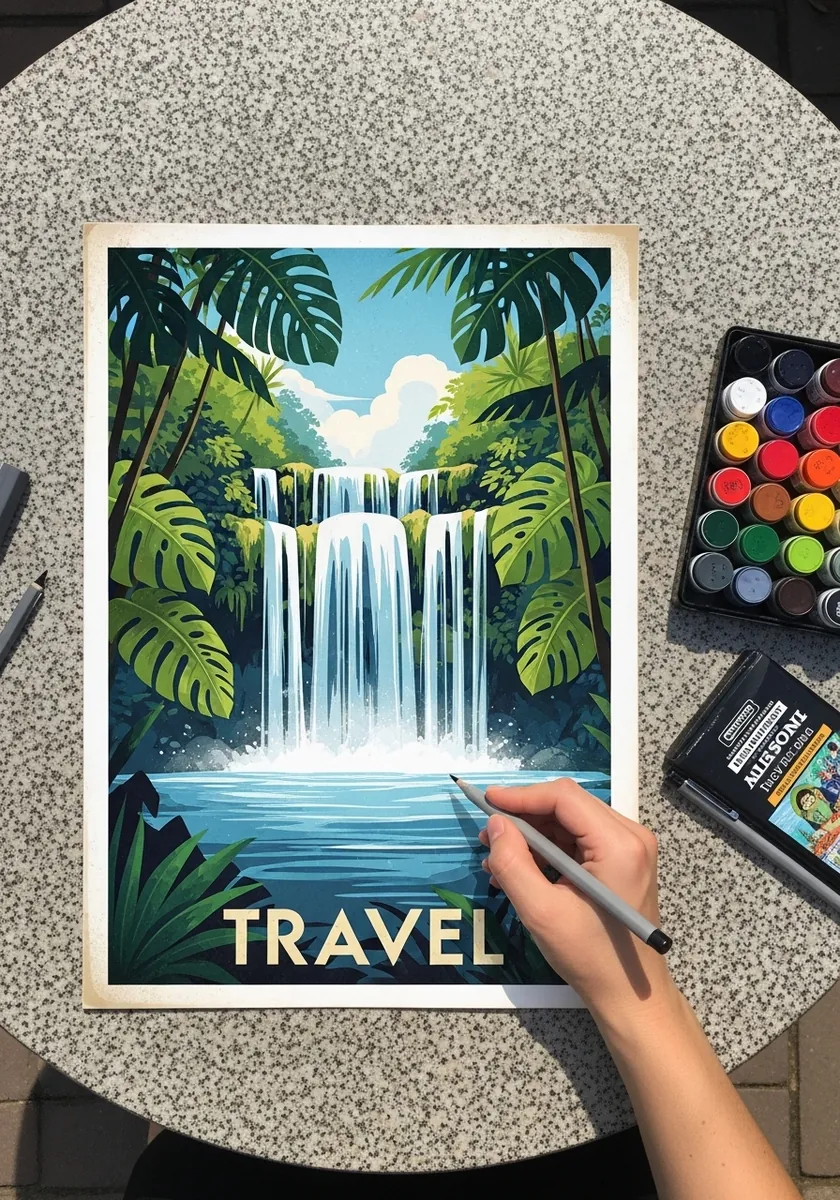
Poster style flattens everything into shapes. Reduce the falling water to three vertical bands of decreasing value, keep the edges hard, and let the mist at the base be one soft shape rather than a gradient. Keep the sky the palest area so the water always reads as the subject.
18. Minimal Ripple Rings
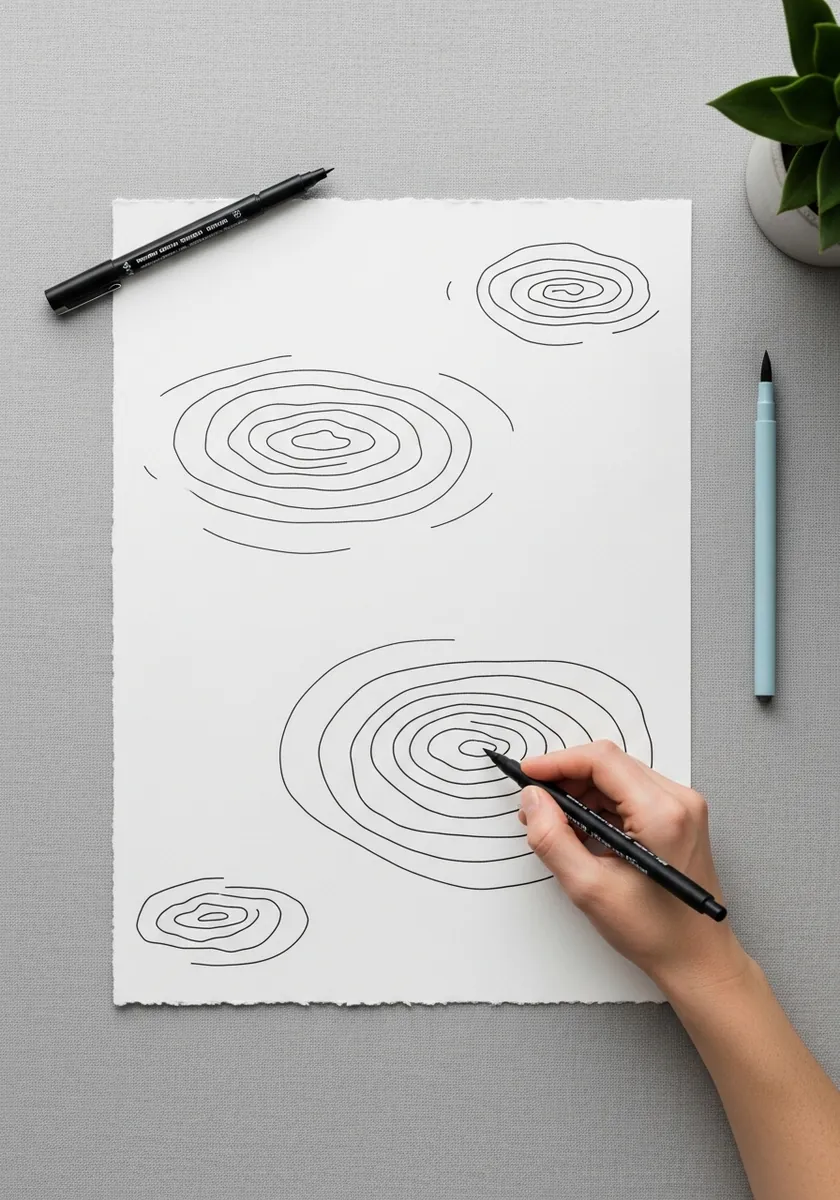
With nothing else on the page, the ring spacing is the entire drawing. Space them widening outward, make each ellipse flatter the further up the page it sits, and resist the urge to add a single other mark anywhere on the sheet.
19. Art Nouveau Koi Panel
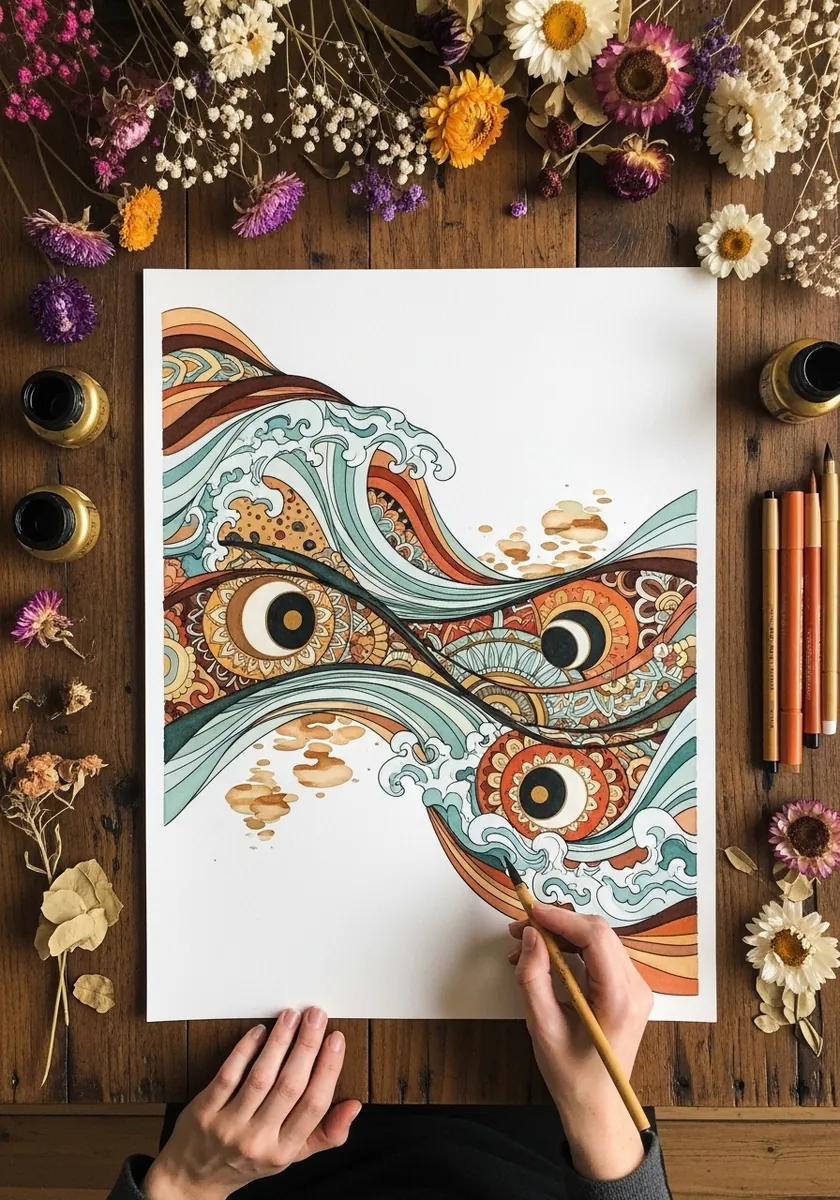
Nouveau water is stylized into repeating curls rather than observed. Keep every curl the same handed direction, let the fish body follow the same flow, and thicken the line where each curve turns tightest. Gold and teal sit close on the wheel, so add one small dark accent for contrast.
20. Anamorphic 3D Wave
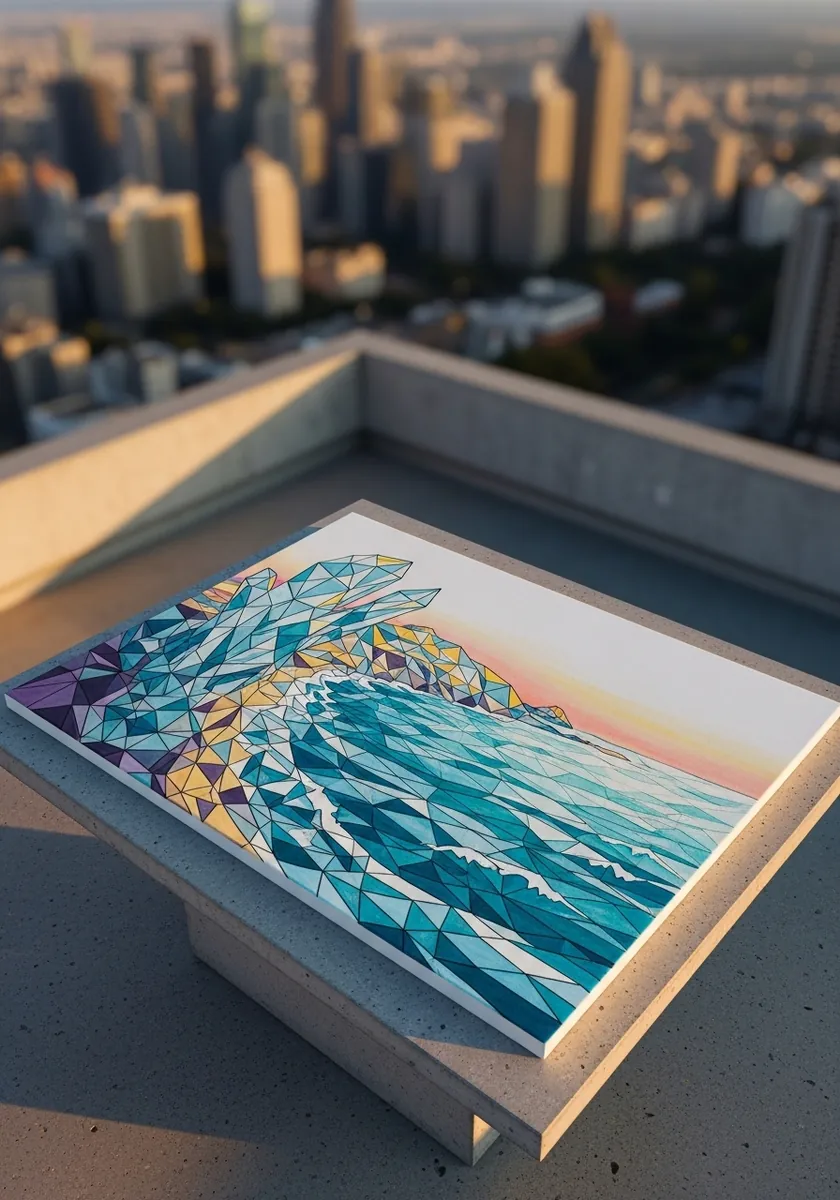
Anamorphic work is drawn for one viewpoint only. Set the camera position first, extend the wave over the edge of the frame, and check constantly through that fixed position, because it will look distorted from anywhere else. Sketch the whole thing small first, since anamorphic errors are expensive to fix.
21. Watercolor Stream With Flowers
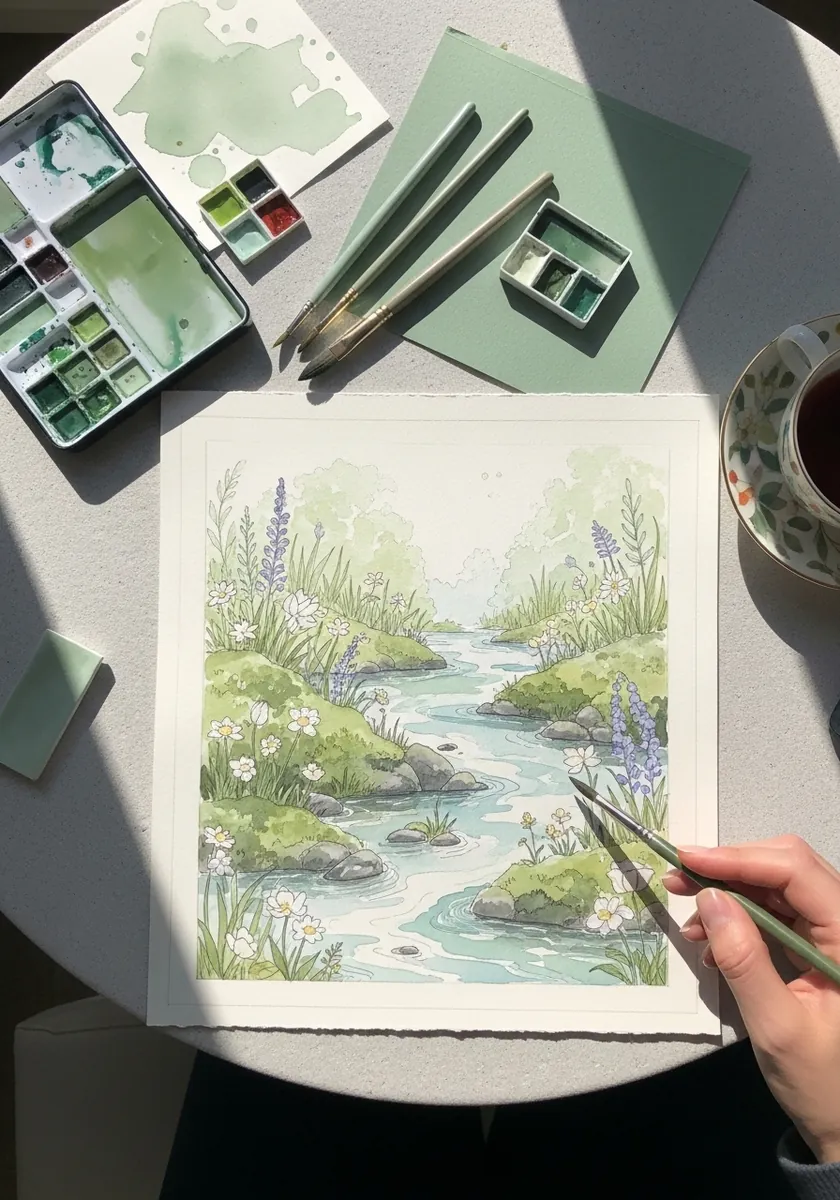
Shallow water shows the bed through it. Paint the stones first and let them dry, then glaze a pale blue-gray over the top and lift a few horizontal streaks back out so the surface sits above the stones. Let one flower break the water line to link the two halves of the picture.
22. Neon Whirlpool on Black
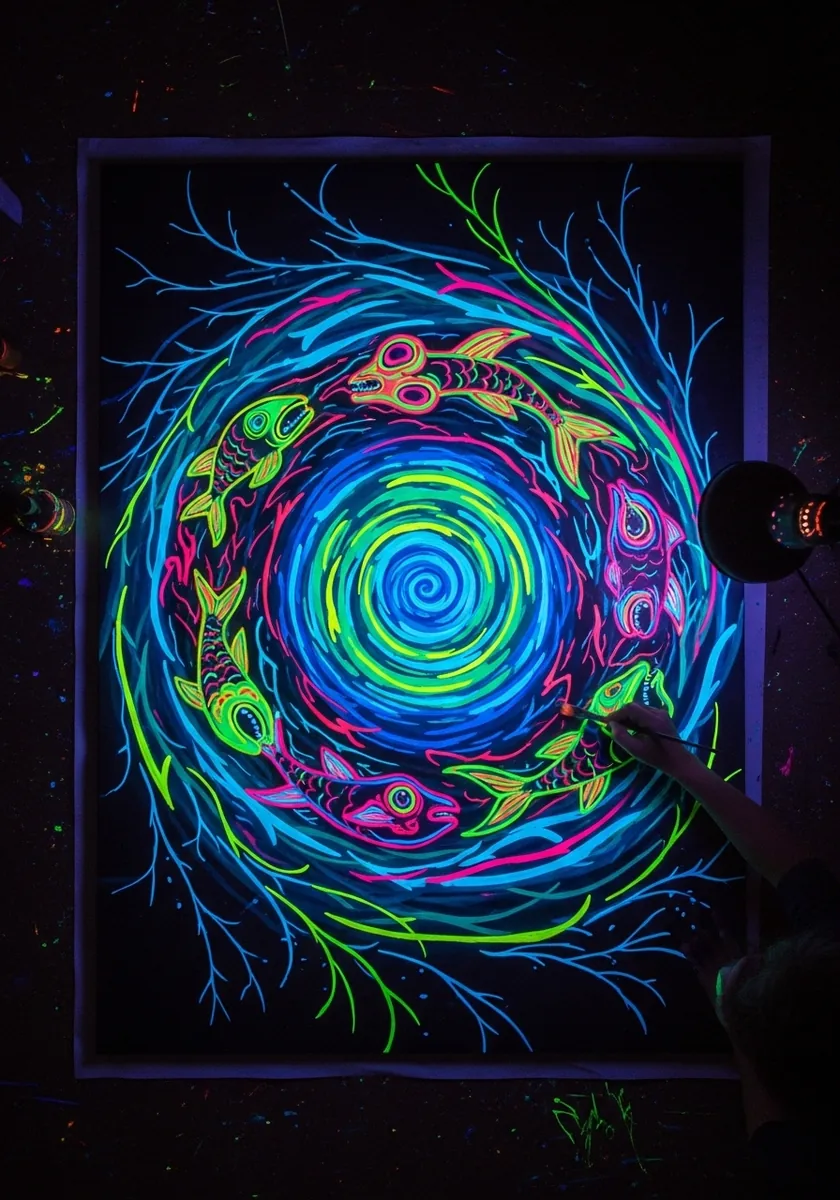
Fluorescent color on black needs a single clear structure to hang on. Draw the spiral first as one continuous line, thicken it toward the outside, and add the small elements only where the spiral has left a gap. Keep one area of the spiral completely empty as a place for the eye to rest.
23. Comic Surfer on a Wave
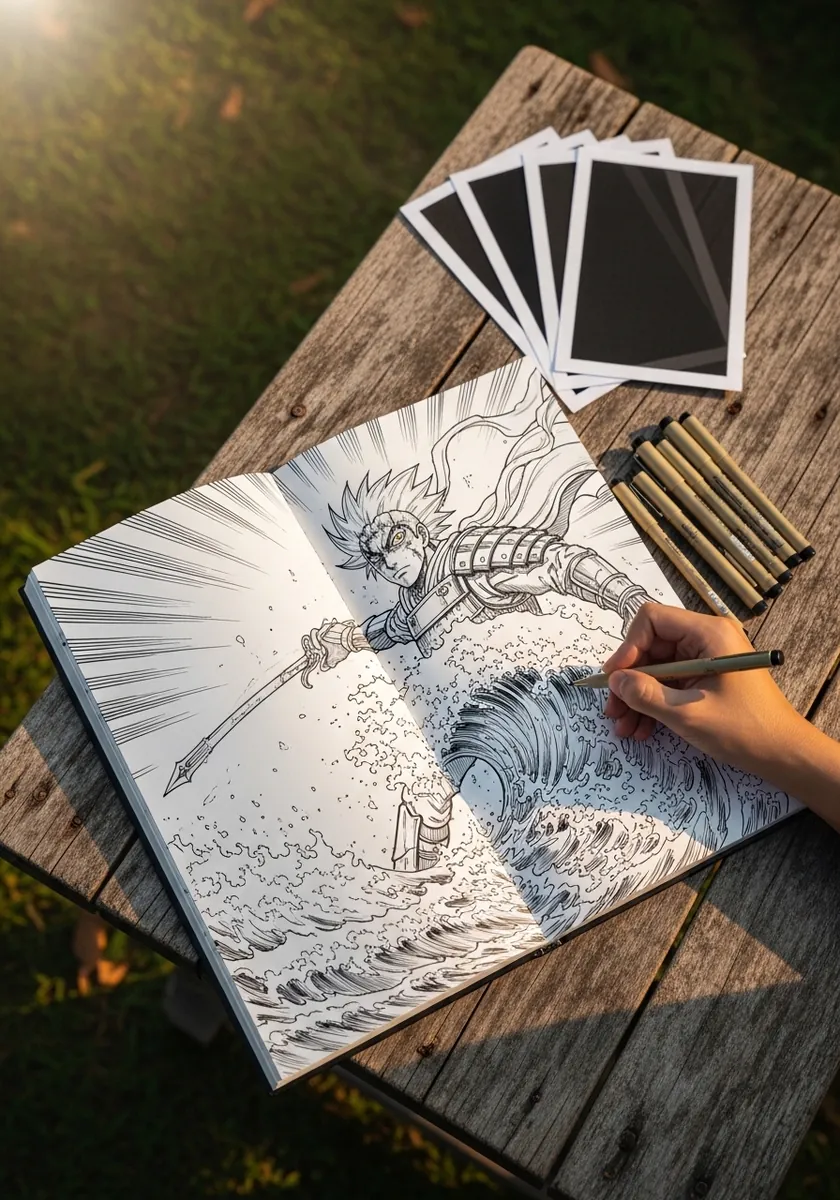
Being inside the barrel is what makes a surf drawing dramatic. Draw the wave curling completely over the figure so a ring of sky shows at the end of the tunnel, and keep the figure small to sell the scale.
24. Dense Bubble Pattern
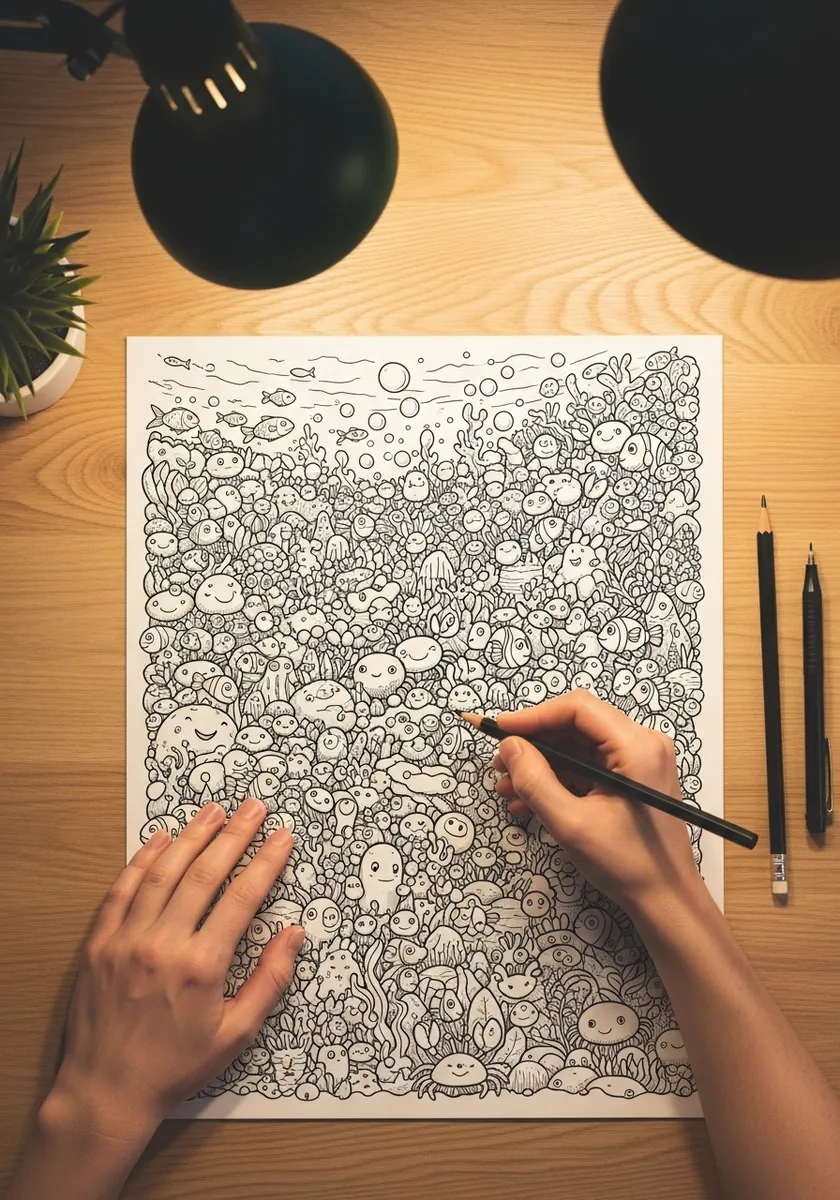
Repeating a single element across a whole page needs size variation to stay alive. Vary the bubble diameters widely, cluster several small ones against each large one, and give every bubble its highlight in the same corner. Leave a handful of bubbles as pure outline with no fill at all.
25. Folk Art Figure on Waves
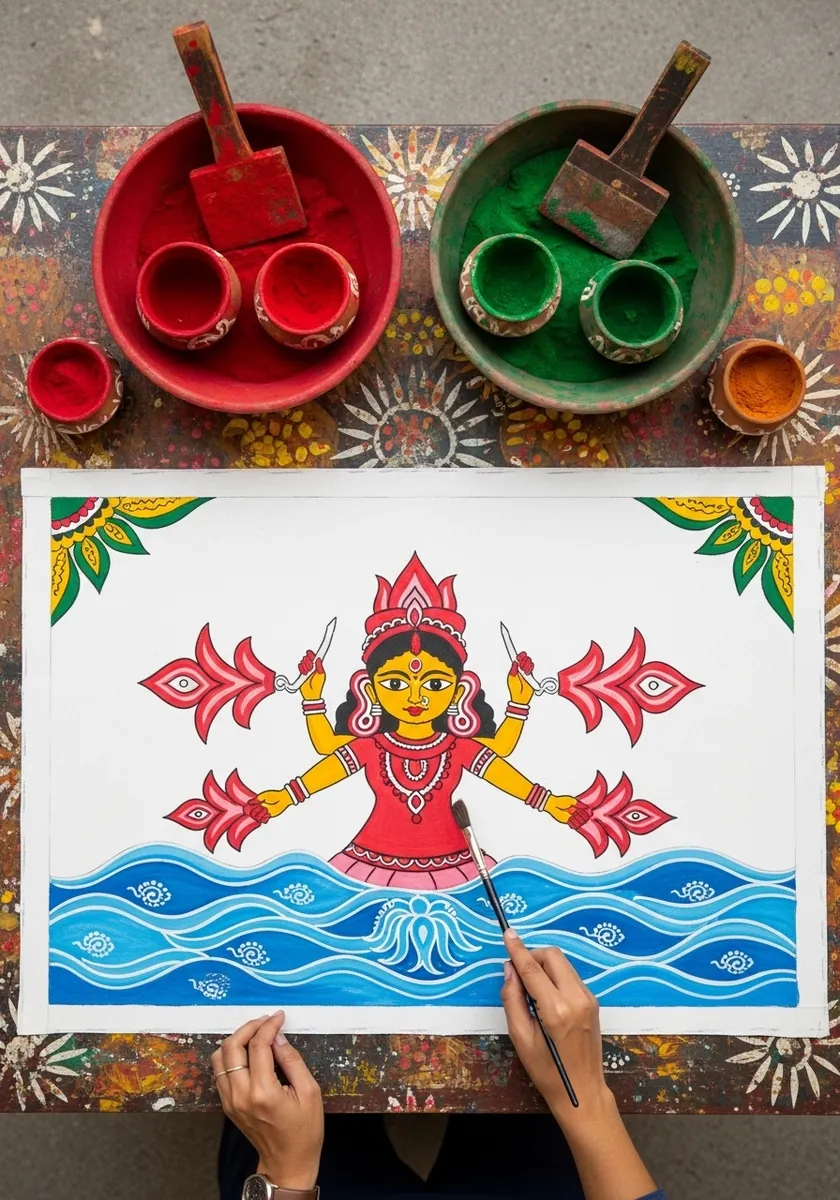
Traditional folk water is pattern rather than observation. Repeat one wave motif across the whole band, keep the crests evenly spaced, and use flat unshaded color so the whole thing reads as decoration. Vary the crest height slightly so the band never looks machine printed.
26. Mid-Century Flat Sea
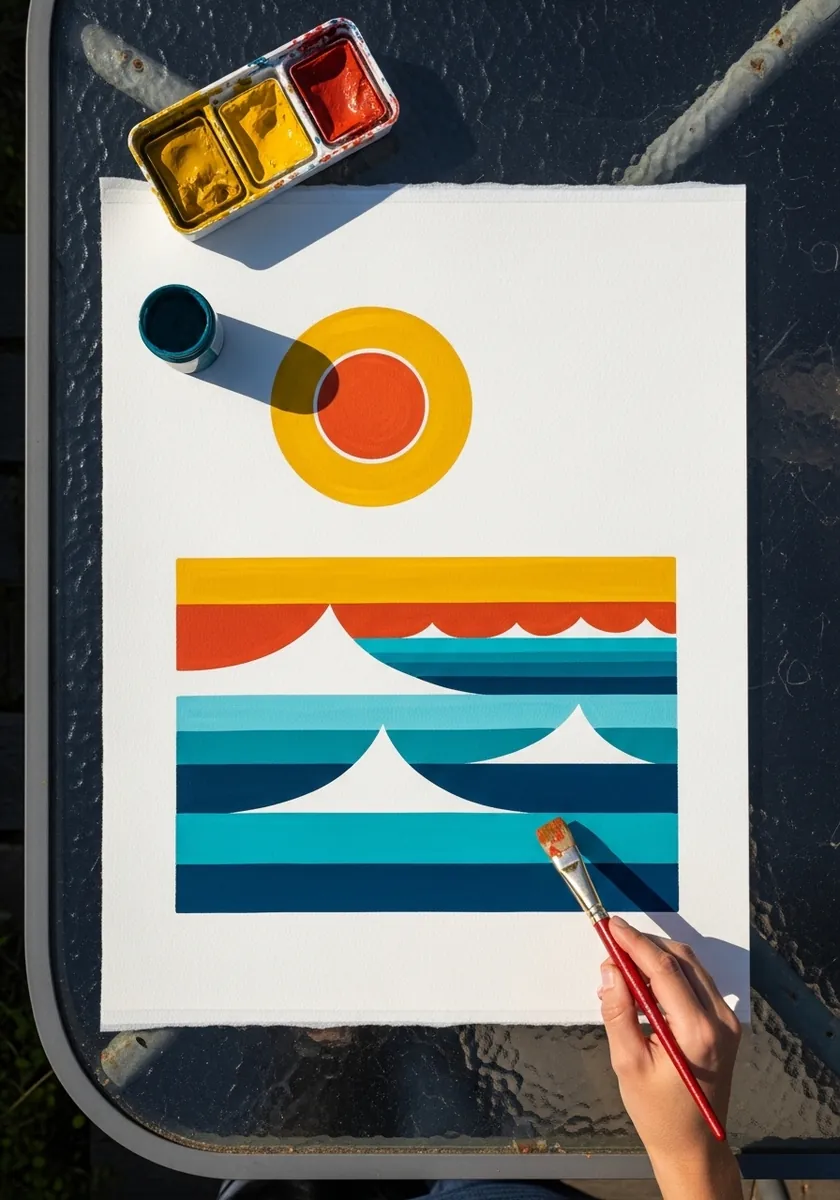
Mid-century design works by removing detail until only the idea remains. Reduce the sea to two or three interlocking shapes, use a limited warm and cool pair, and let a flat circle stand in for the entire sun. Two flat shapes reading as sea and sky is enough; a third only muddies it.
27. Rainbow Waterfall in Oil Pastel
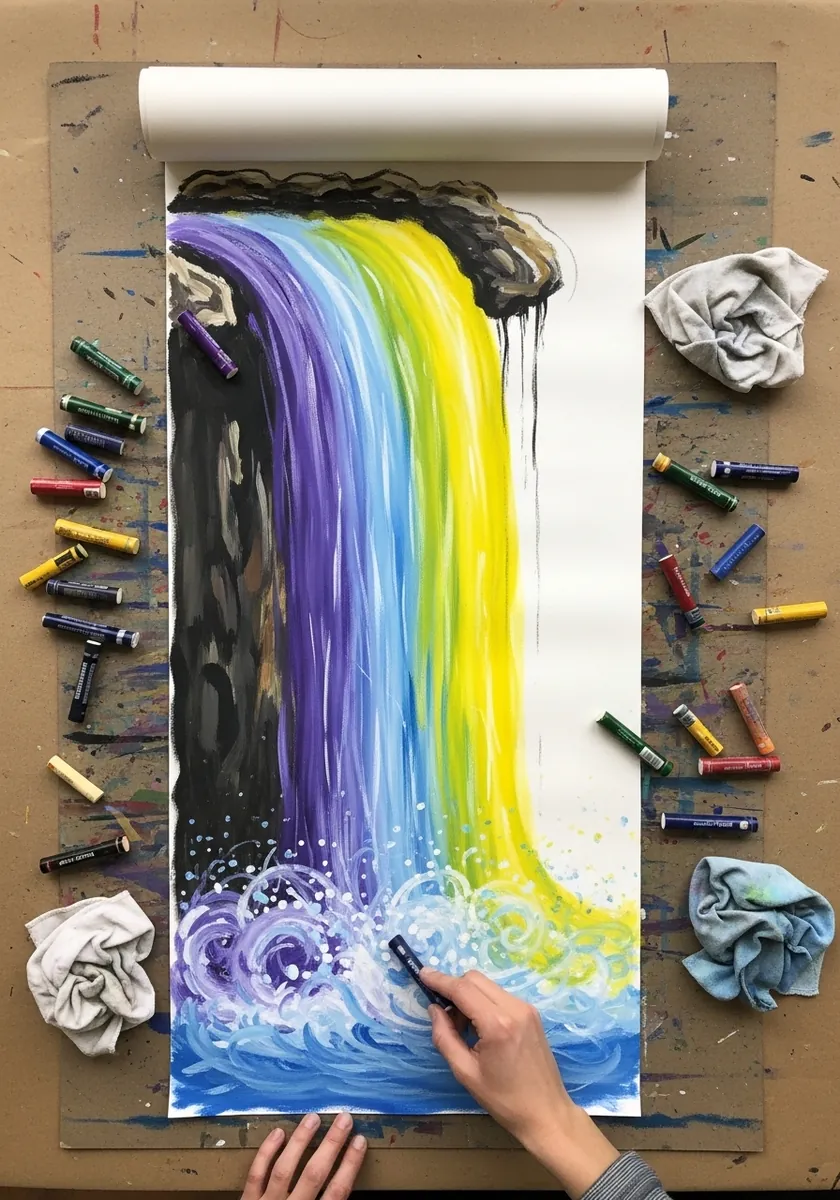
Oil pastel refuses to blend, which suits falling water. Lay each color band as its own downward stroke with no mixing at the edges, and let the strokes break apart at the base where the water hits and scatters. Let the colors overlap slightly at the base where the water churns.
28. Underwater City in Marker
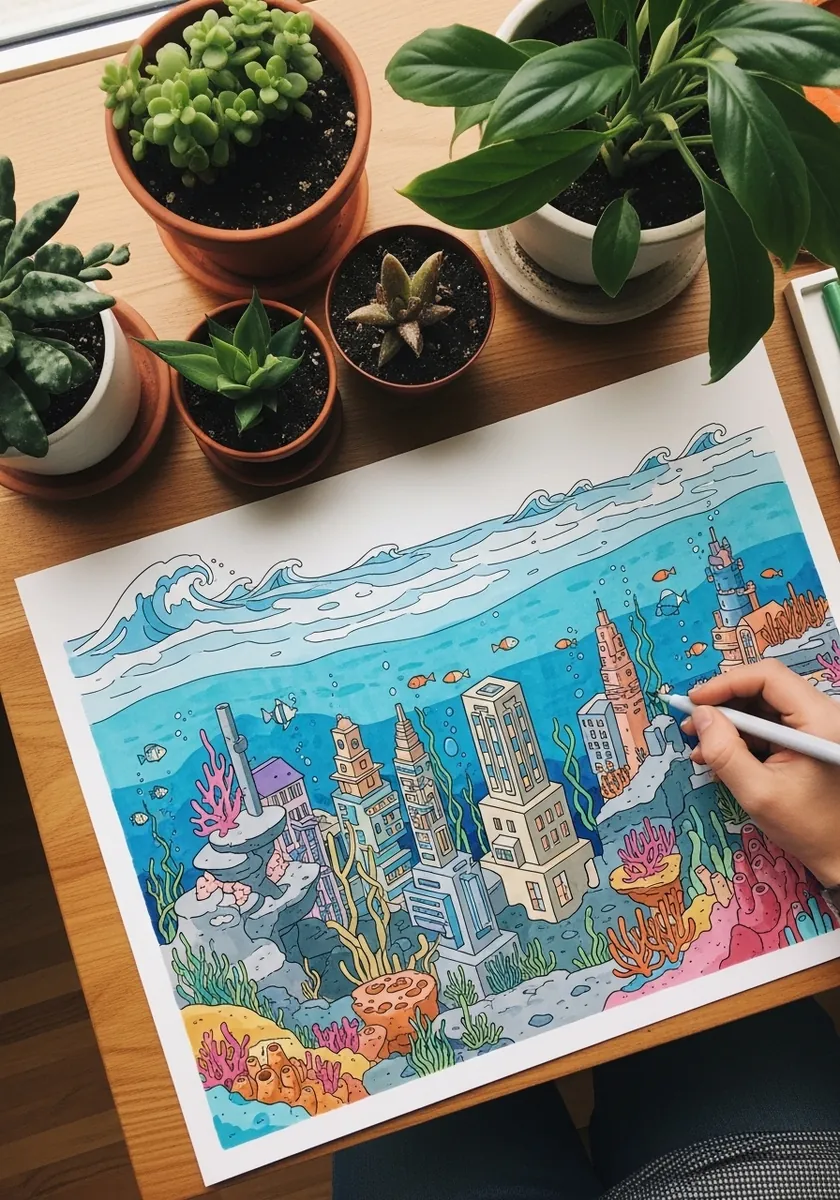
An invented scene still needs consistent light. Decide the sun is above and slightly left, then light every roof and coral head from that direction, because inconsistent lighting is what makes fantasy scenes feel flat. Add a shoal of fish somewhere small to give the buildings a sense of scale.
29. Cubist Water Jug
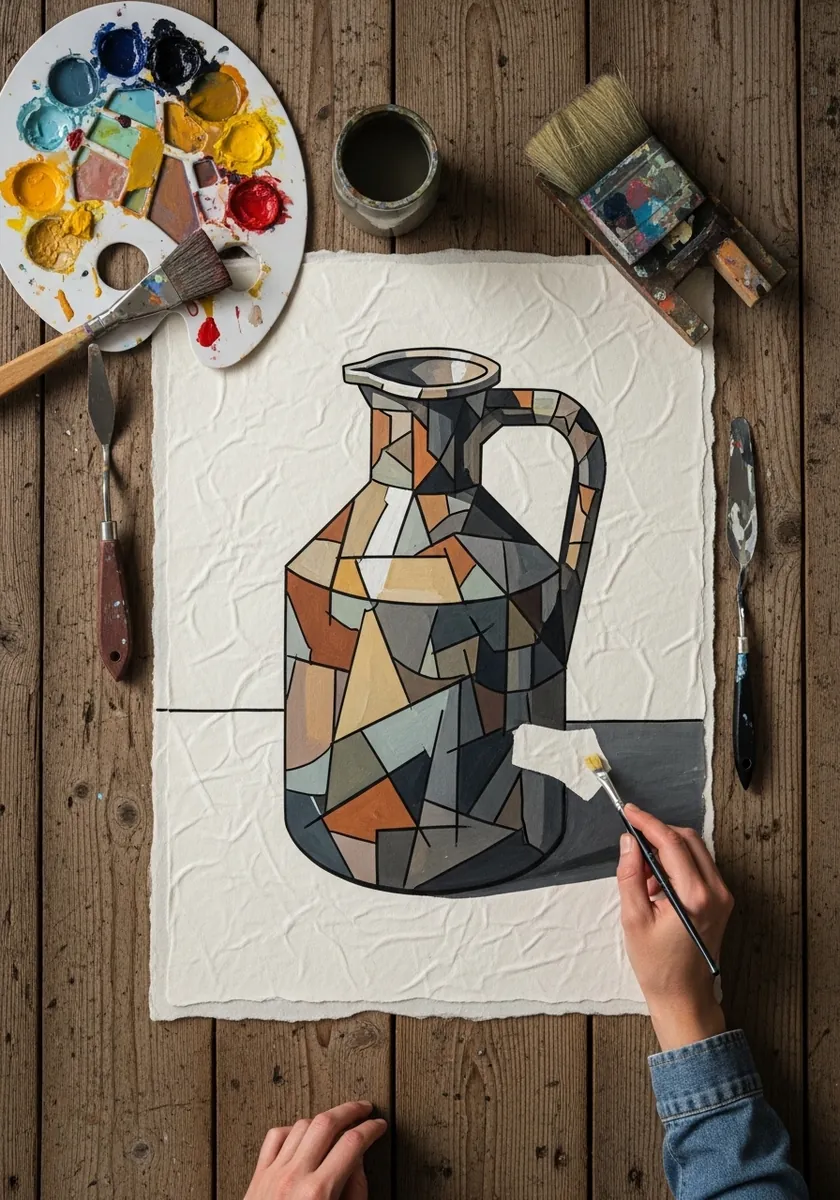
Cubism shows several viewpoints at once. Draw the jug mouth as a full ellipse from above and the body from the side simultaneously, then let the pouring water break into flat planes rather than a smooth stream. A single curved line somewhere stops the whole thing feeling entirely rigid.
30. Hand Lettered Wave
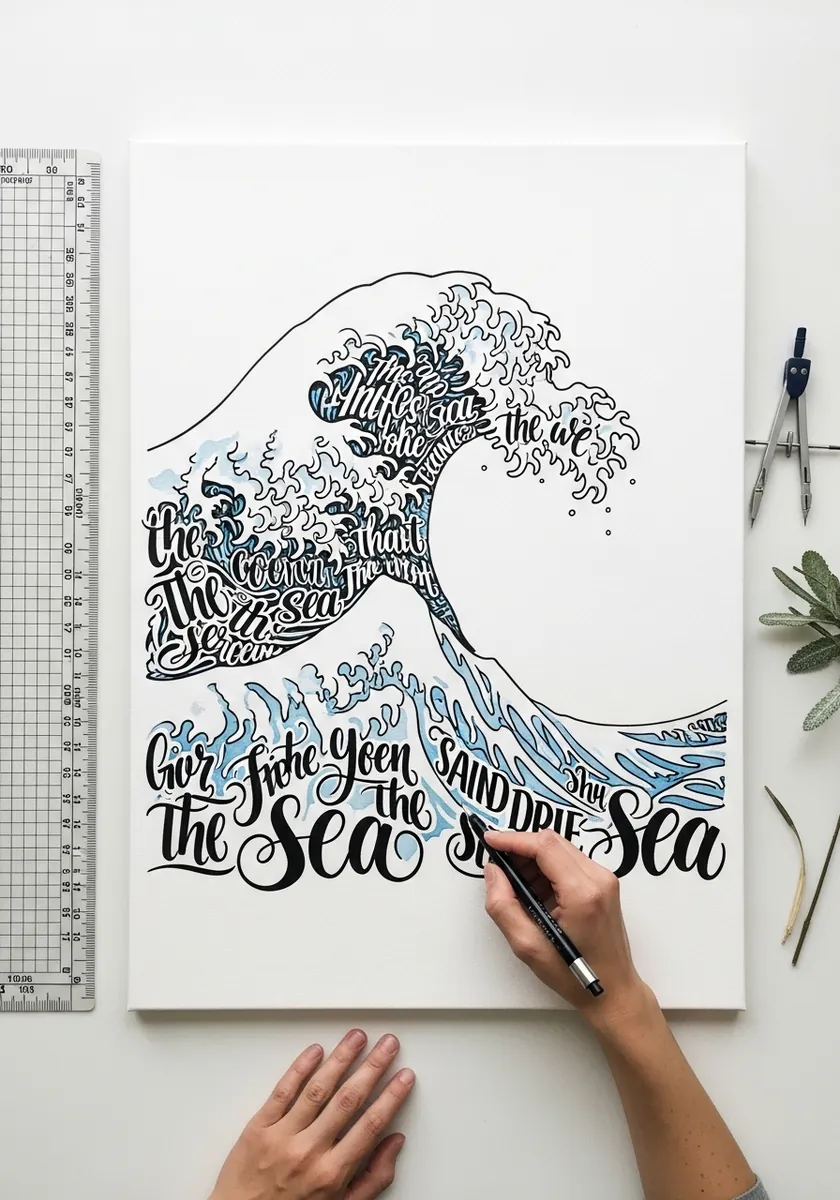
Fitting type into a shape means the letters must follow the form. Draw the wave outline first, rule curved baselines that follow its contour, and write along those rather than trying to squeeze horizontal text into a curve. Rule the curved baselines lightly in pencil first and erase them afterwards.
31. Pastel Lake at Sunrise
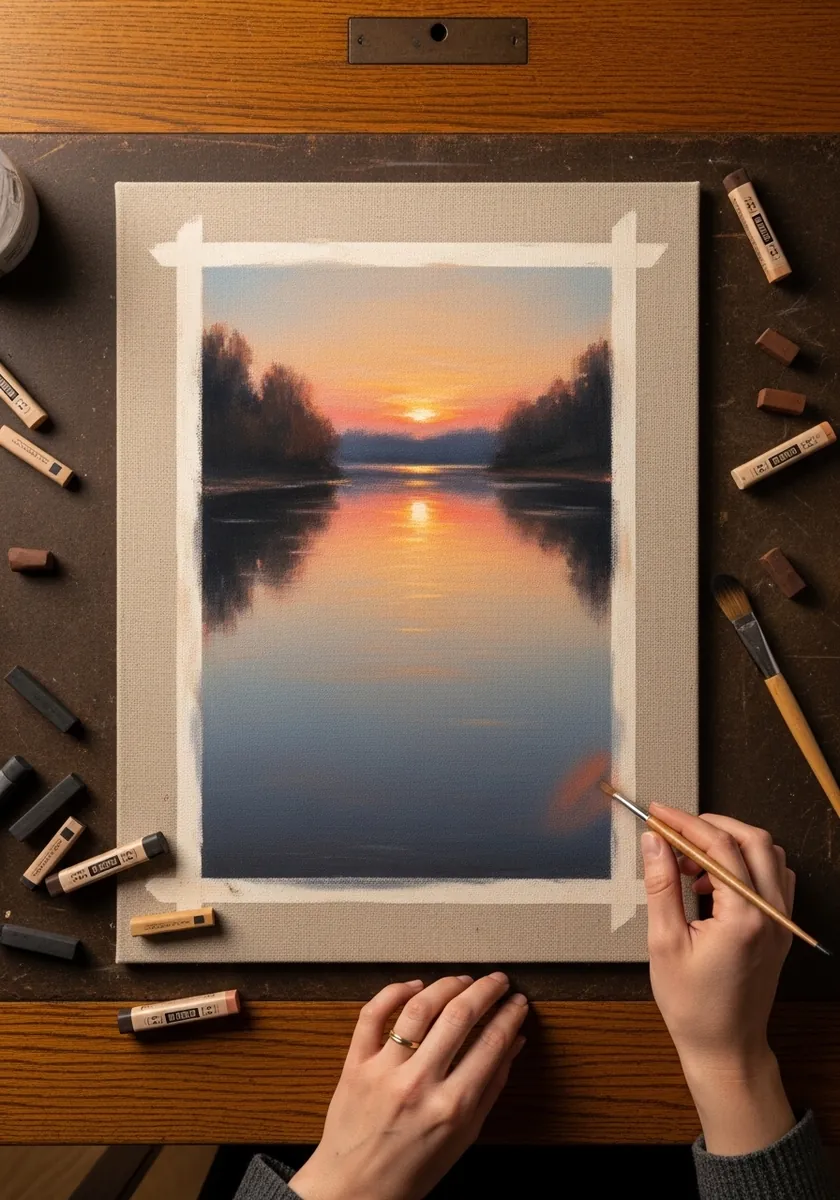
Perfectly still water is the easiest reflection to draw and the hardest to make interesting. Mirror the scene exactly, lower the contrast in the reflection, and break it with one or two thin horizontal lines so it does not look like a folded photograph.
32. Zentangle Koi Panel
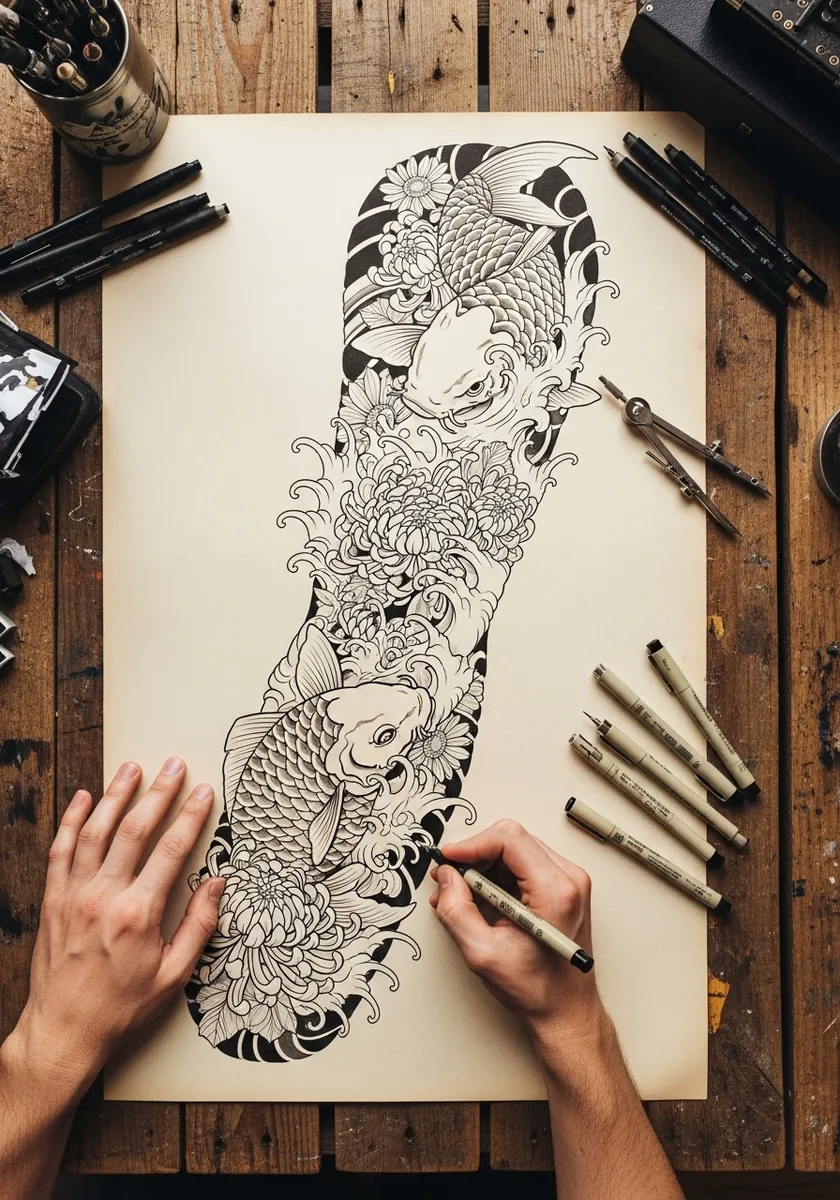
Pattern fills need boundaries or they turn to noise. Divide each fish along its real anatomy into head, body and fins, give each section its own pattern, and keep the surrounding water almost empty by contrast. Keep the tail flowing off the bottom edge so the panel feels continuous.
33. Water Sphere Illusion
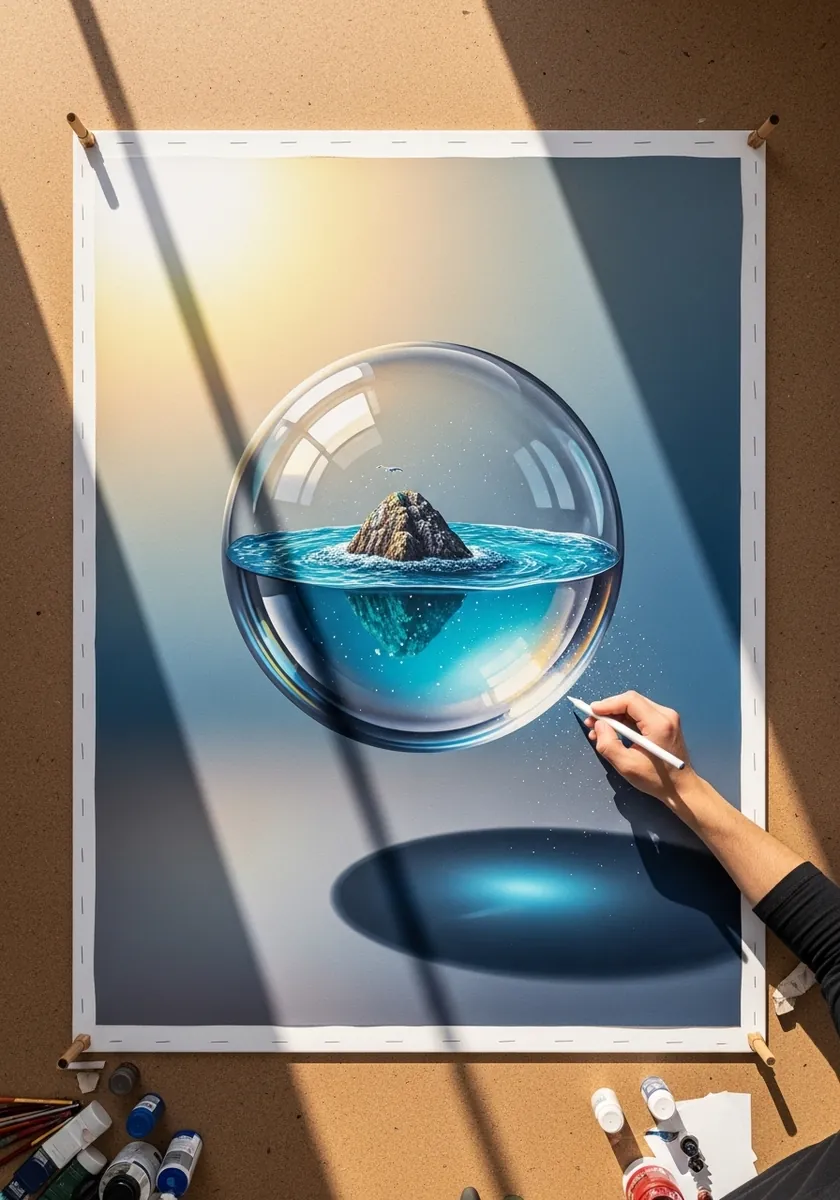
A sphere of water inverts what is behind it. Flip the background upside down inside the glass, add a bright caustic patch on the surface below where light focuses through, and keep the rim highlight razor sharp. Keep the island tiny, because scale is what makes the illusion land.
34. Pixel Art Underwater Scene
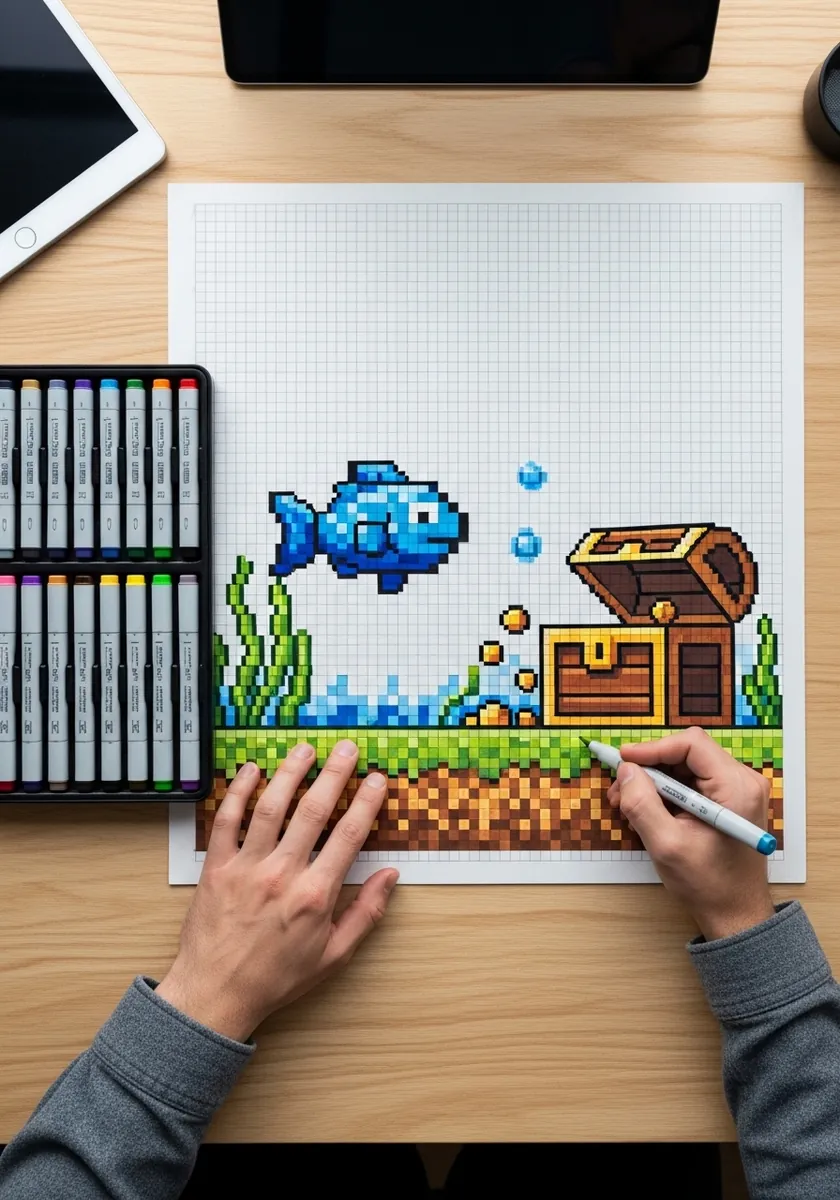
Pixel work is a constraint exercise. Fix your grid, use no more than eight colors, and build the water with two alternating blues in a simple repeating pattern rather than trying to render a gradient. Limit yourself to a single sprite size so the whole scene stays coherent.
35. Blue Ink and Real Water
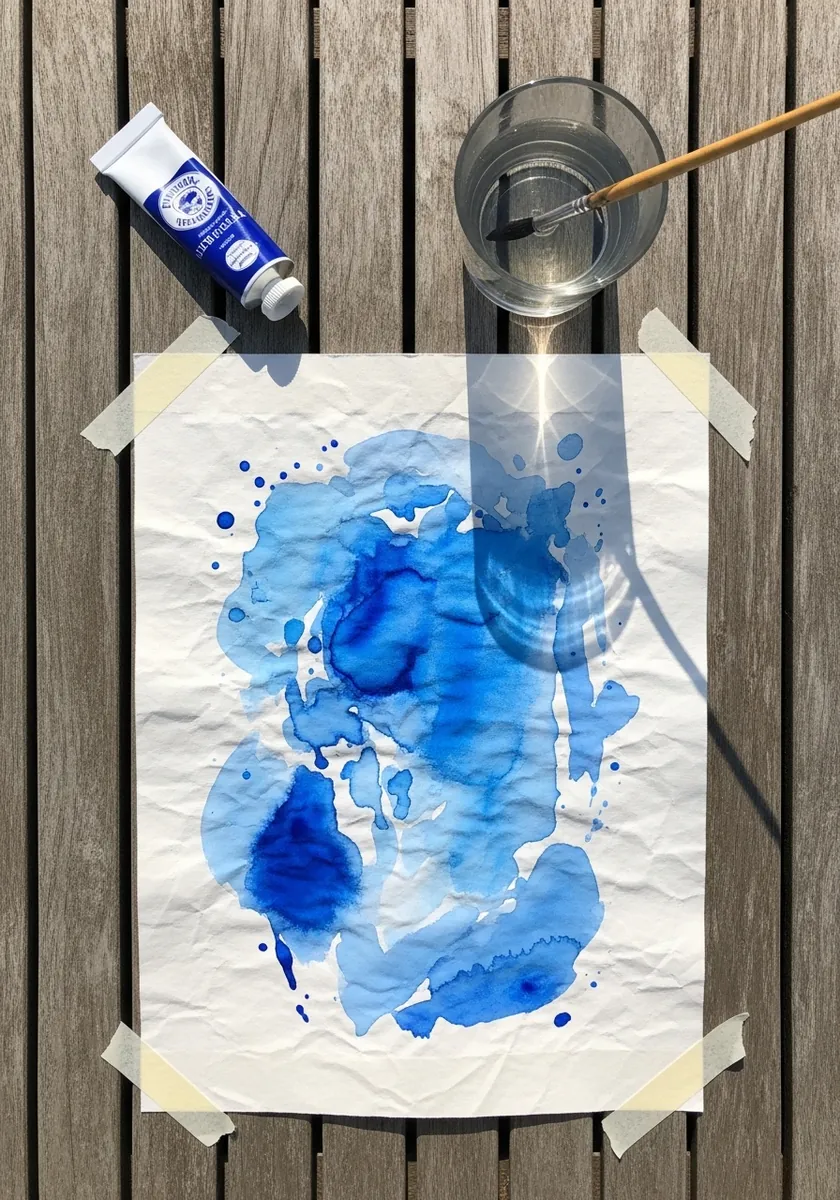
Letting the medium behave on its own is a legitimate technique. Wet the paper unevenly, drop the ink in and tilt the sheet, then stop entirely, because the point is the shape water makes rather than the shape you intend.
36. Detailed Acrylic Waves and Rocks
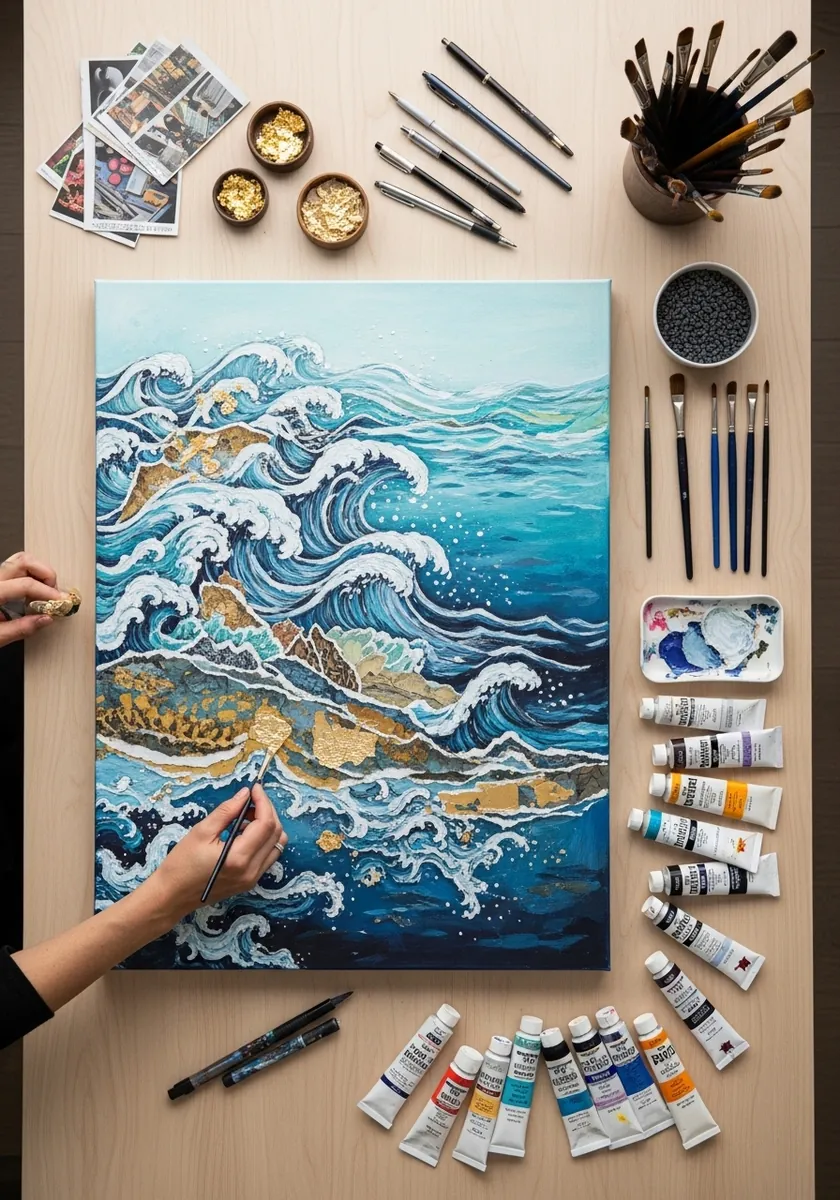
Foam breaking over rock follows a clear order of events. Paint the rock fully first, then glaze the thin sheet of water flowing across it while keeping the stone visible underneath, and add opaque white only where the wave has genuinely broken apart.
37. Realistic Glass of Water
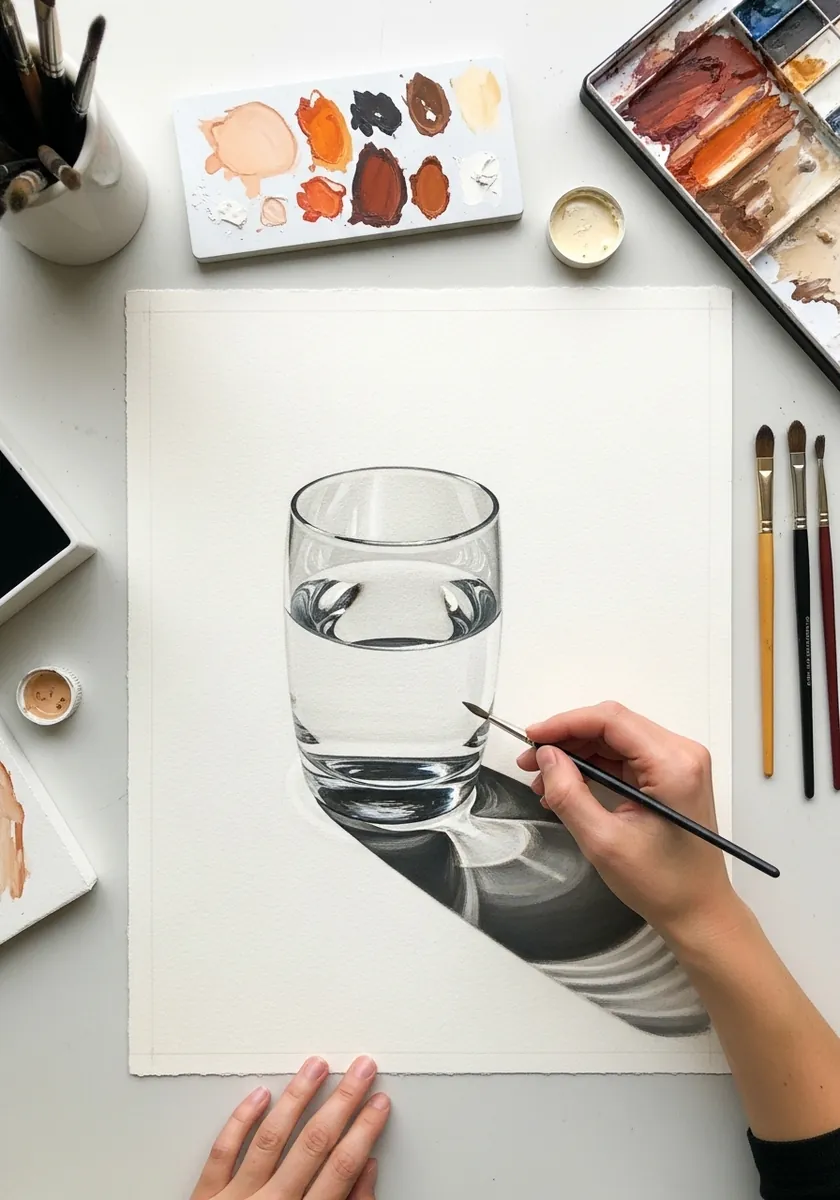
A glass of water is the best refraction study there is. Note that the far edge of the table appears to shift where it passes behind the glass, and that the cast shadow contains a bright caustic spot where light has been focused through. Work from a real glass on a real table rather than from a photograph.
38. Charcoal Moonlit Sea
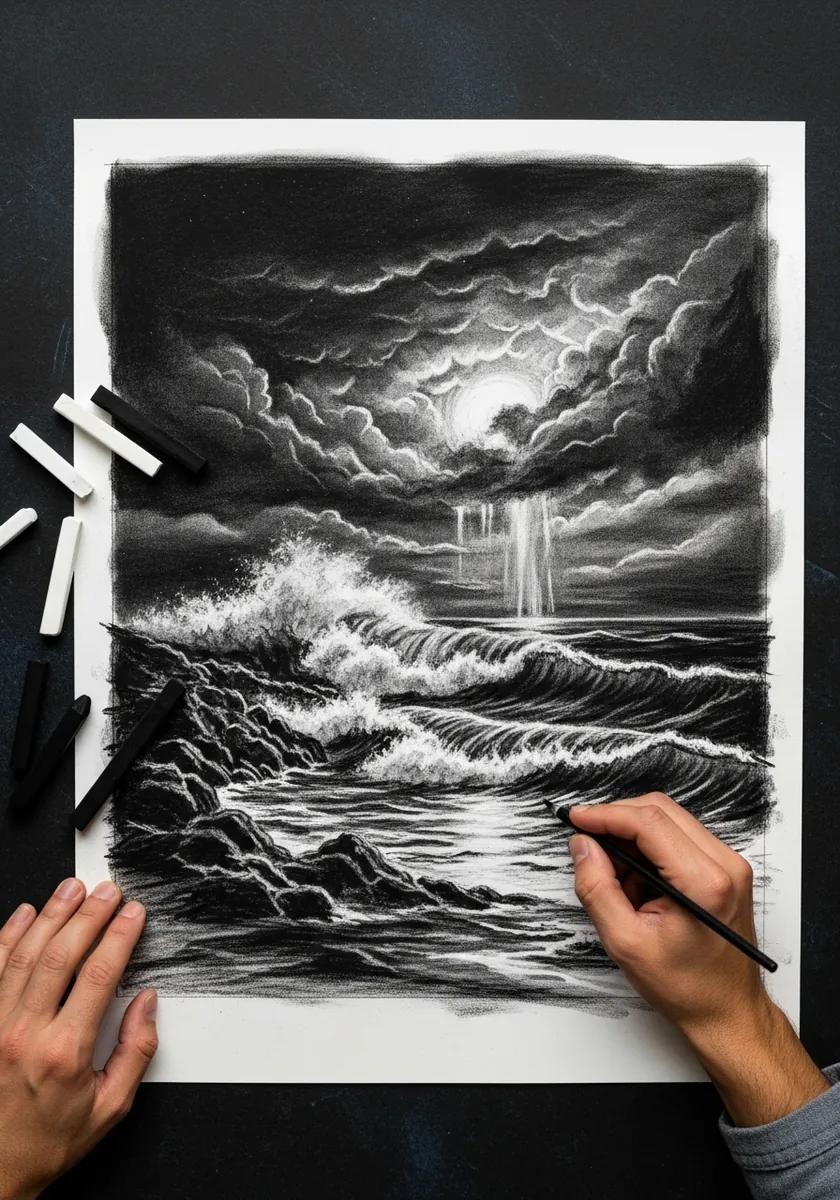
Moonlight on water behaves exactly like sunlight, just dimmer. Run the light path vertically from the moon to the viewer as broken horizontal dashes, keep everything outside that path very dark, and let the sky stay slightly lighter than the sea.
39. Cartoon Fish and Waves
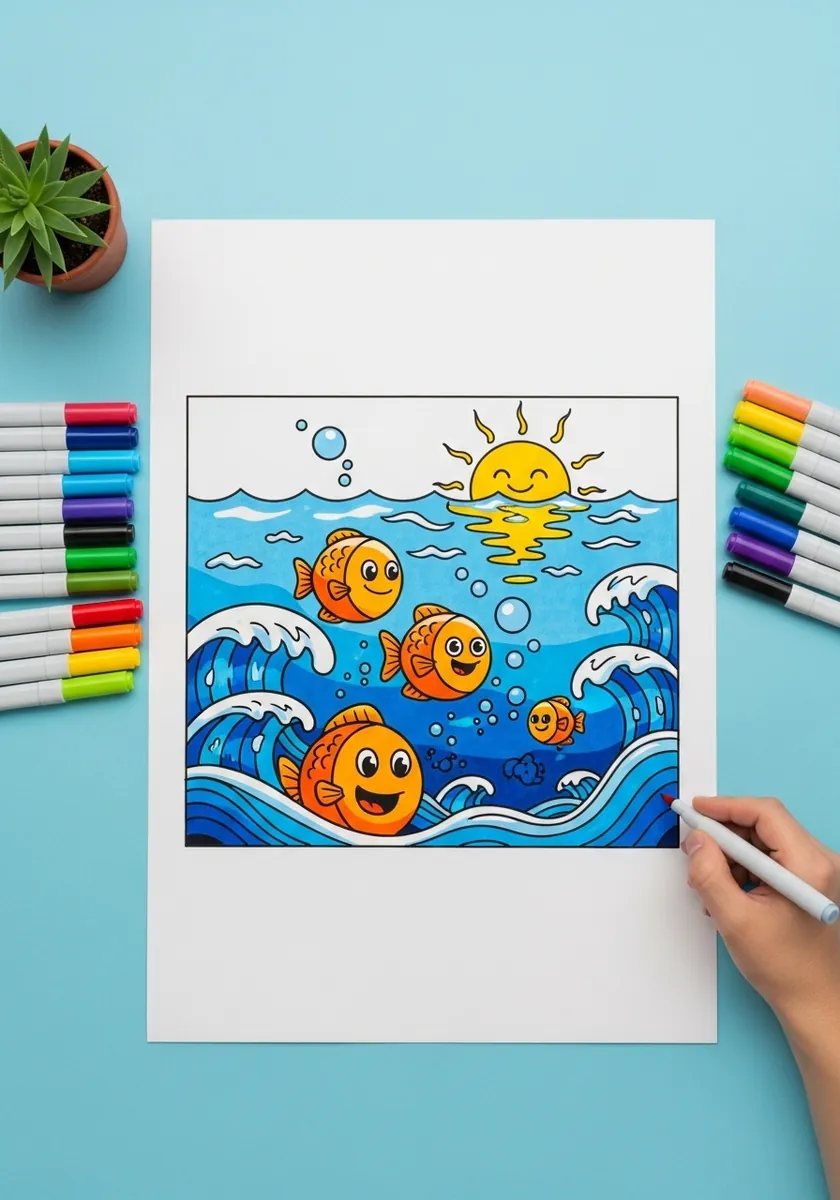
Cartoon water is a repeated shape rather than an observation. Design one wave curl you like, repeat it with small variations across the band, and keep the color completely flat with a single darker line at each crest. Repeat the same wave motif in a smaller size along the very bottom edge.
40. Aurora Over Water
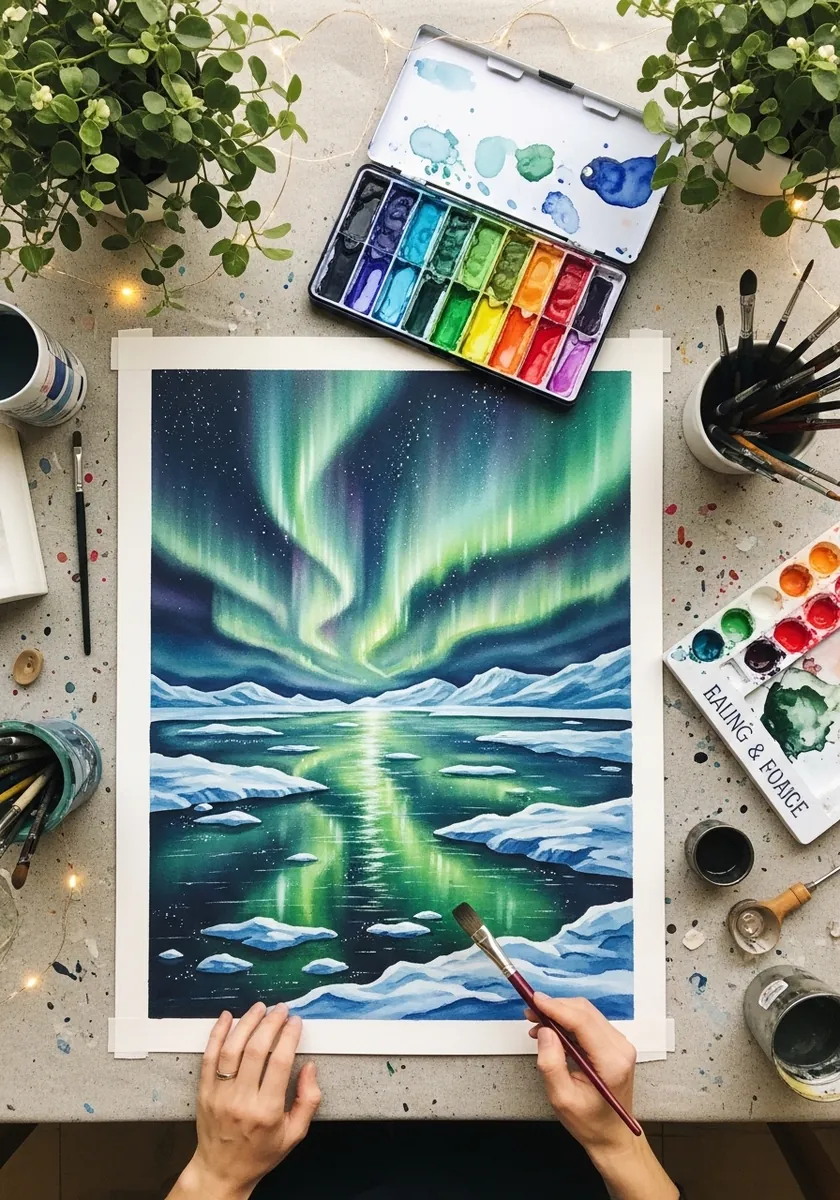
Reflected light in dark water is softer than the source above it. Paint the aurora crisply in the sky, then repeat it below with the edges blurred and the intensity dropped, and let a few horizontal breaks cross the reflection. Keep the near shore very dark so the reflected light has something to sit against.
Frequently Asked Questions
How do you draw water so it looks wet?
Stop drawing water and draw what it does to light. Put in the reflection of whatever sits above it, bend anything visible below the surface, and reserve a few hard white sparkles where the light comes straight back to you. Those three things together read as wet.
Where does a reflection go?
Directly below the object, never to one side. The reflection also compresses the value range, so a bright object reflects slightly darker and a dark object slightly lighter. Offsetting a reflection sideways is the single most common water mistake.
How do I show distance on flat water?
With the ripples. Draw them as open ellipses close to the viewer and flatten them progressively toward the horizon until they are almost straight lines. That change in shape does all the perspective work on an otherwise featureless plane.
Why does my water look like blue paint?
Usually because it is a single flat blue with no reflection in it. Water takes its color from the sky above and whatever sits under it, so include a warm note where the bank reflects and leave some paper white for the sparkle.
What is the brightest part of a wave?
The thin lip at the top as it curls over. Light passes through the water there rather than bouncing off it, so it glows. Hokusai understood this in The Great Wave off Kanagawa around 1831, which is why the crest still reads as translucent.
References and Further Reading