Short answer: Start with a simple lemon branch or a single lemon slice on cold-press paper, using just lemon yellow, cadmium yellow, and sap green. Watercolor lemon painting is the art of painting lemons with water-soluble pigment on paper, where thin, transparent yellow washes let the white paper shine through as light. That glow is what makes lemons look juicy instead of flat.
If this is your very first lemon, pick idea 10 (Minimalist Pattern) or idea 3 (Solitary Branch) below. Both need only one wash layer and dry in under an hour.
Watercolor lemon drawing ideas burst with sunny vibrancy and endless creative potential.
Imagine capturing that juicy glow with simple brushes and bold washes, fueling your artistic passion every stroke.
These watercolor lemon drawing ideas invite beginners and pros to explore juicy textures and luminous hues.
You’ll build skills in layering, blending, and light play while expressing summer’s zest on paper.
Dive into a community buzzing with watercolor lemon drawing ideas, from tutorials to shared sketches.
Let these inspirations guide your next masterpiece and unlock your unique artistic voice.
1. How to Pick Your Lemon Painting in 2 Minutes
With 33 ideas below, the hardest part is choosing. Use this picker, then jump straight to that idea number.
| If you want… | Paint this idea | Why it works |
|---|---|---|
| Your very first lemon painting | Idea 10: Minimalist Pattern | One wash layer, simple shapes, hard to overwork |
| A branch with leaves | Idea 3: Solitary Branch | Teaches leaves, stem, and one fruit at a time |
| A realistic juicy slice | Idea 2: Sliced Zest | Shows pulp, pith, and rind in one small study |
| Something dark and dramatic | Idea 7: Midnight Citrus | Yellow pops against a black background |
| A cozy kitchen scene | Idea 13: Kitchen Harvest Bowl | A full composition you can frame |
| A repeat pattern or print | Idea 12: Patterned Citrus Study | Great for cards, wrapping paper, and fabric |
| A close-up challenge | Idea 33: Macro Pulp Study | Trains your eye for translucency and detail |
Your 6-item lemon starter kit
Cold-press 140lb paper, two round brushes (sizes 4 and 8), lemon yellow and cadmium yellow paint, sap green for leaves, a small jar of clean water, and a rag or paper towel for lifting highlights. That is everything the beginner ideas in this list need. If you are still choosing brushes, see our guide to the best watercolor brushes for beginners before you buy.
Beginner rule that saves paintings: paint light to dark. Lay the palest yellow wash first, let it dry fully, then add the deeper yellow and shadows. Jumping straight to dark yellow is the fastest way to a muddy lemon.
2. How to Paint Realistic Lemon Slices in Watercolor?
- Gather sunny essentials: Start with lemon-yellow, cadmium yellow, and a touch of alizarin crimson for blush; use cold-press paper and round brushes (sizes 2-8) to mimic juicy sheen.
- Sketch loose outlines: Lightly pencil a halved lemon slice, emphasizing pith’s bumpy texture and membrane veins for lifelike depth that draws eyes instantly.
- Build wet-on-wet base: Flood yellow wash for glowing pulp, tilting paper to let pigment bloom naturally; this technique creates soft, radiant highlights effortlessly.
- Layer dry-brush details: Add crisp white rind edges with dry brush, then stipple seeds in burnt sienna; watch realism emerge as shadows deepen motivationally.
- Glaze for pop: Apply thin crimson glazes on rind for zesty realism, lifting color for highlights; step back to admire your juicy, gallery-ready slice.
- Seal your triumph: Spray with fixative, then share online; this 30-minute method boosts confidence and hones precision for endless fruit adventures.
3. Easy Watercolor Lemon Branch Ideas for Beginners?
- Prep your palette joy: Mix sap green, lemon yellow, and Payne’s gray; grab watercolor pencils for easy sketching on 140lb paper to build beginner bravery.
- Outline whimsical branch: Draw a curving stem with leaves and hanging lemons loosely; focus on asymmetry for organic, inspiring flow that feels alive.
- Wet-in-wet foliage magic: Brush green washes for leaves, dropping yellow for sunlit edges; watch colors mingle into vibrant, motivational greenery.
- Paint plump lemons: Layer yellow builds from pale to deep, adding leaf shadows with soft glazes; simple lifts create sparkling dew for wow-factor shine.
- Add branch texture: Dry-brush browns for bark roughness, then negative paint around fruits; this insider trick elevates sketches to pro-level charm.
- Finish with flair: Splatter tiny highlights and sign boldly; your branch masterpiece, done in under 45 minutes, ignites daily practice and creative growth.
Grab your brushes now and transform simple watercolor lemon drawing ideas into your radiant masterpieces today!
1. Cluster of Citrus Watercolor Lemon on Cold Pressed Paper
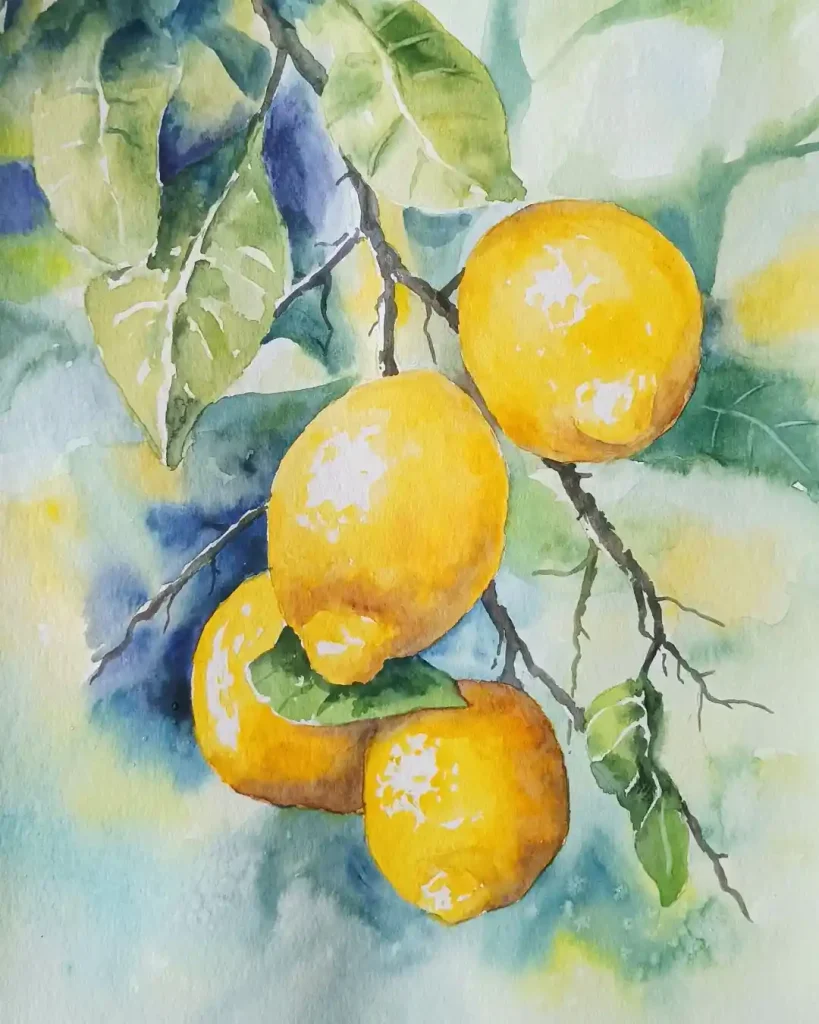
Vibrant yellow tones really sing against the soft, watery blue background in this lively branch study. The artist used a wet on wet technique to blend the greens of the leaves, making them feel lush and full of life. It feels like a sunny Mediterranean morning. Each fruit has a distinct highlight that gives the entire composition incredible volume.
2. Sliced Zest Watercolor Lemon on Textured White Paper
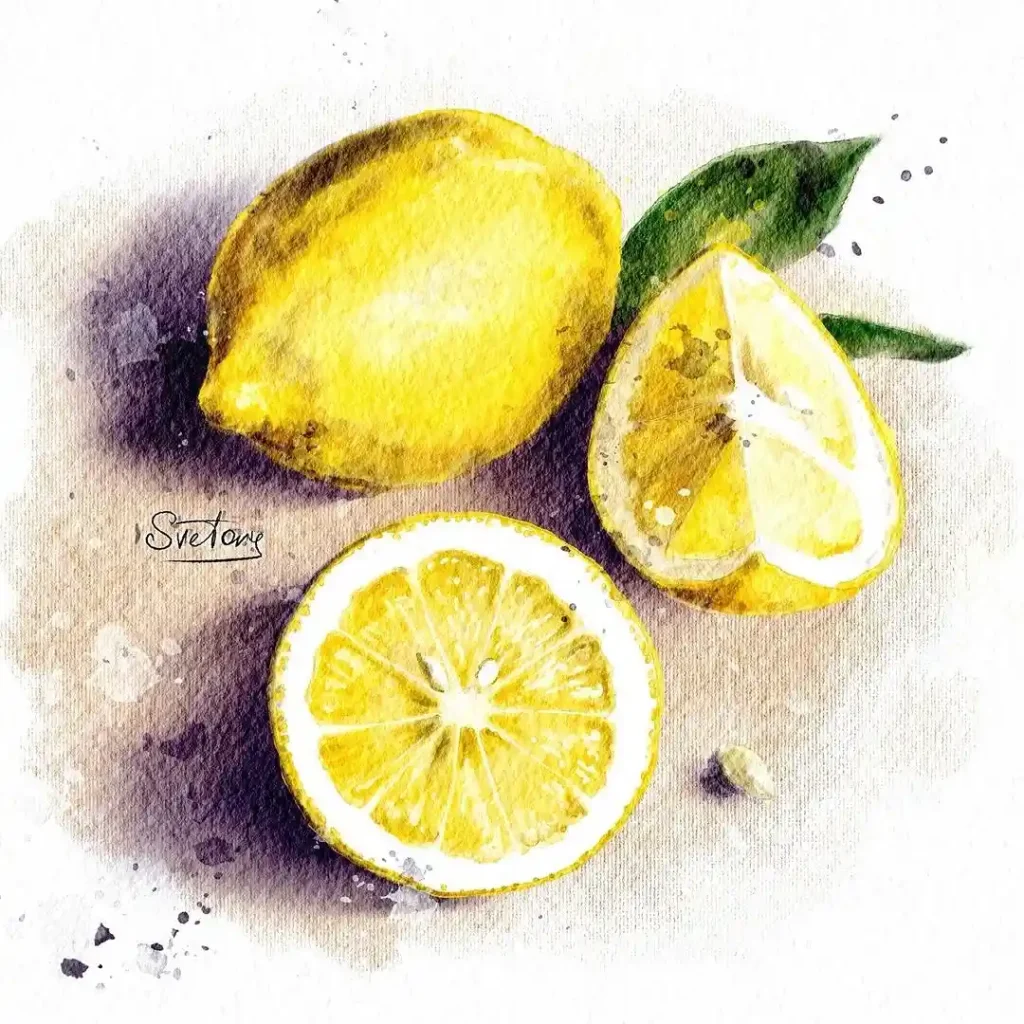
Technical skill is on full display here through the intricate detailing of the fruit pulp. The artist used deep purple shadows to make the yellow segments pop with a realistic intensity. It is an educational look at how to represent translucent textures using watercolor. Seeing the whole fruit alongside the slices provides a wonderful sense of balance and citrus freshness.
3. Solitary Branch Watercolor Lemon on Artist Sketchbook
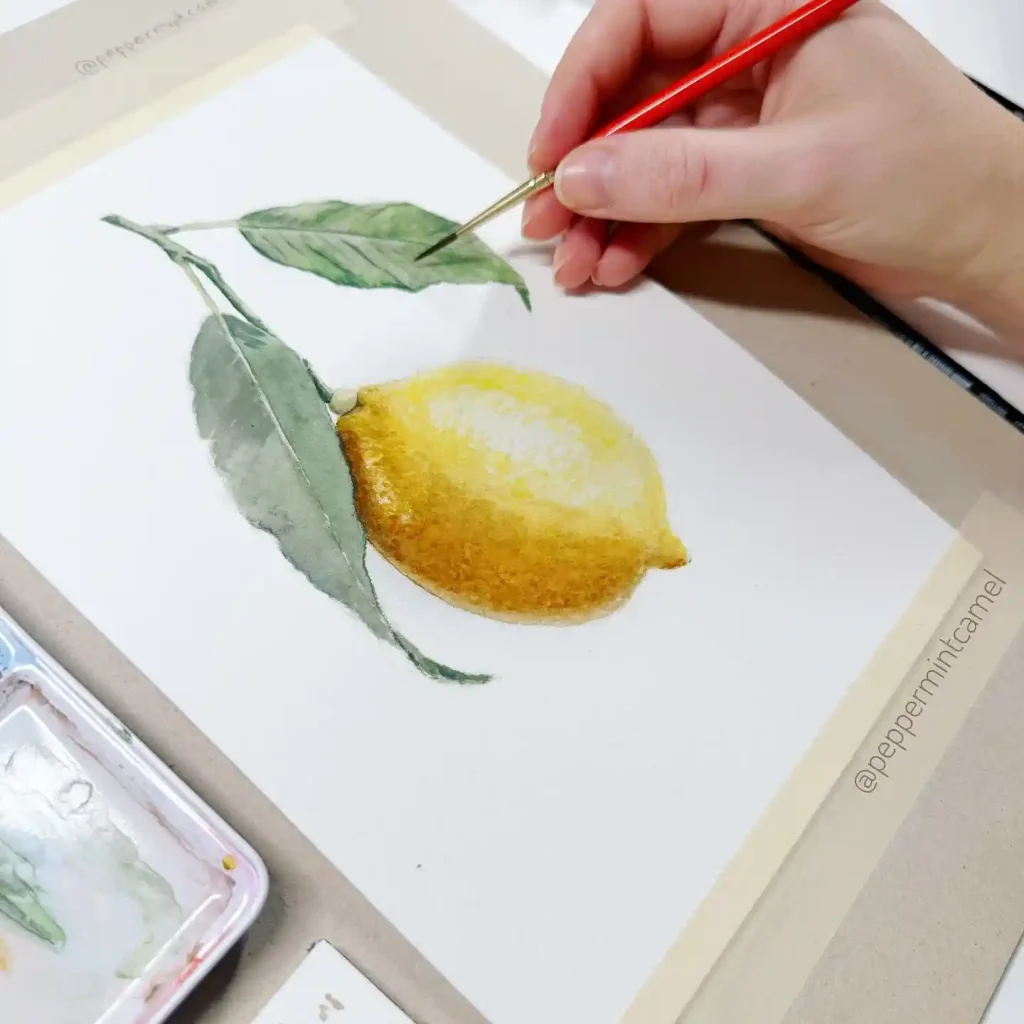
Soft, gradual blending on the skin of the fruit makes this simple study feel very grounded and real. The artist focused on the relationship between the heavy yellow citrus and the delicate green leaves. It is a reflective piece that honors the quiet beauty of a single branch. The warm, earthy yellow provides a comforting and very natural color mood.
4. Realistic Harvest Watercolor Lemon on Heavyweight Paper
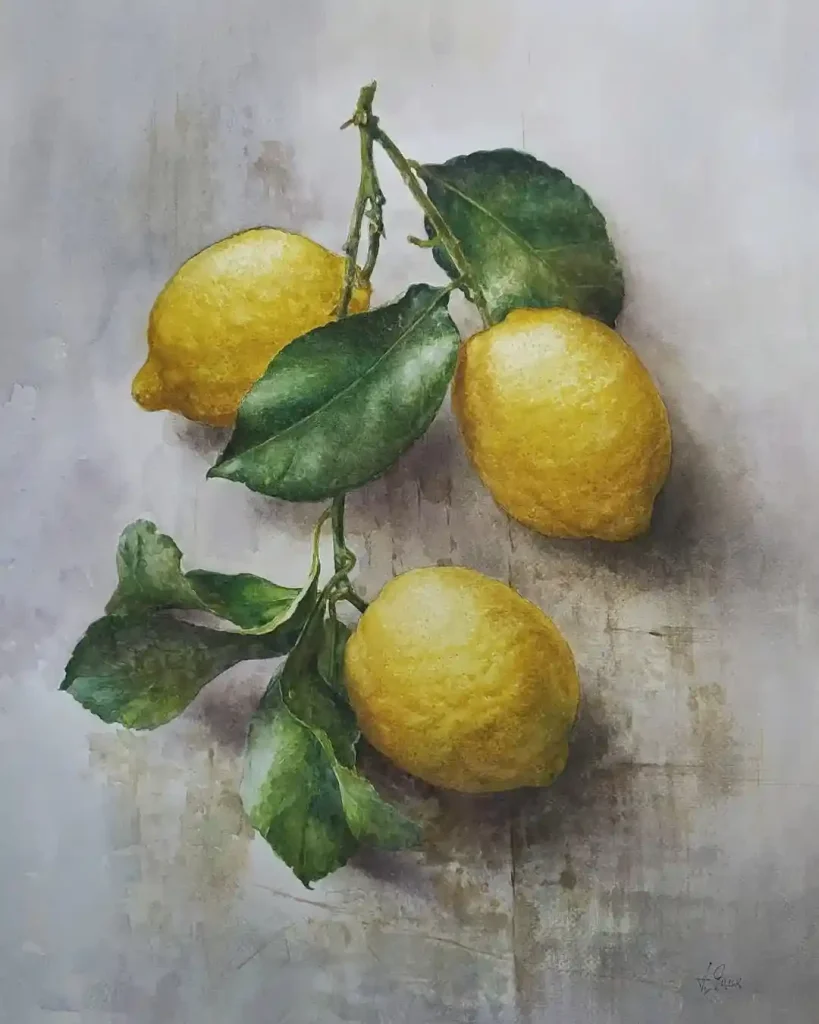
Muted tones and soft shadows give these three hanging fruits a very sophisticated and classical feel. The artist used a dry brush technique on the leaves to suggest a waxy, realistic texture. It feels like a vintage botanical illustration brought into the modern era. The composition is tight and focused, celebrating the simple perfection of a backyard citrus harvest.
5. Rustic Cluster Watercolor Lemon on Handmade Deckled Paper
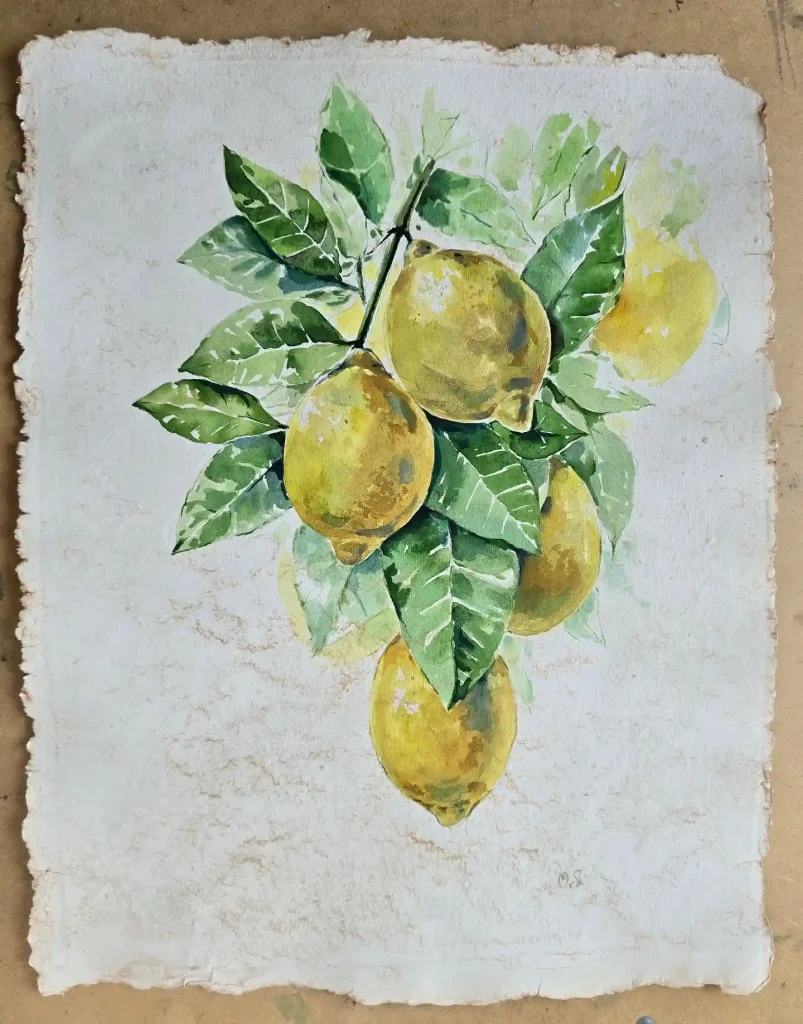
Earthy textures and raw edges on the paper add a beautiful, traditional feel to this hanging branch. The artist used a more illustrative style with varied green tones to create depth among the leaves. It feels like a tribute to Mediterranean agricultural traditions and sunny hillsides. Each lemon sits naturally in the cluster, creating a very balanced and organic flow.
6. Sunny Orchard Watercolor Lemon on Smooth Watercolor Paper
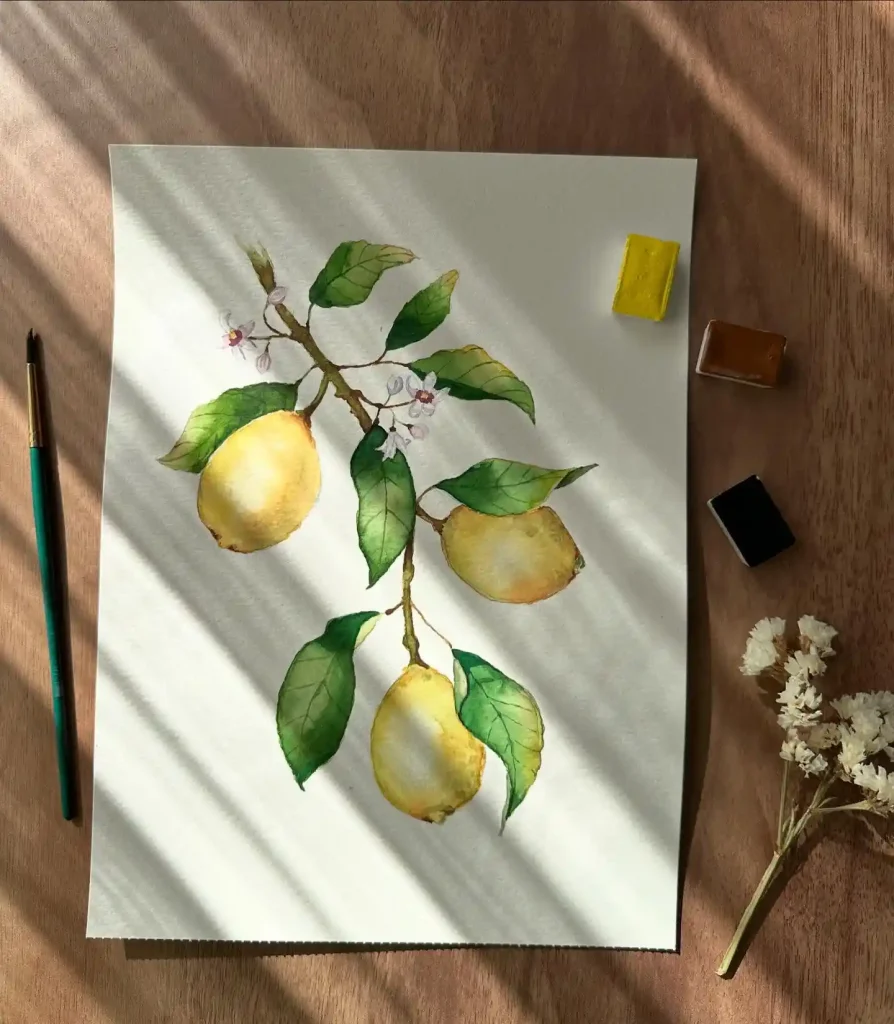
Delicate white blossoms add a touch of whimsy to this bright and airy botanical painting. The artist used light, transparent washes to keep the mood feeling fresh and spring-like. It is a playful interpretation of a tree in transition between flower and fruit. The soft shadows on the lemons provide just enough weight to keep the composition very stable.
7. Midnight Citrus Watercolor Lemon on Black Background
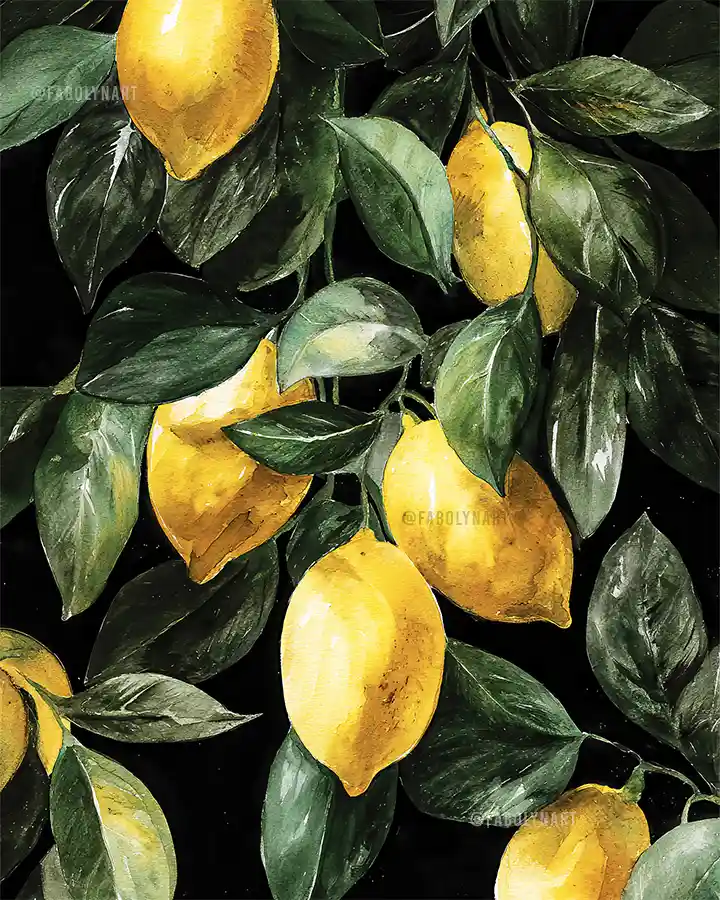
Bold yellow fruit emerges from a deep, dark void in this striking and modern composition. The contrast creates a powerful emotional metaphor for finding light and energy in the darkness. Each leaf has a high-gloss finish that makes the entire piece feel incredibly polished. It is a minimal but high-impact study of light reflection and intense color saturation.
8. Splash of Lime Watercolor Lemon on Fine Art Paper
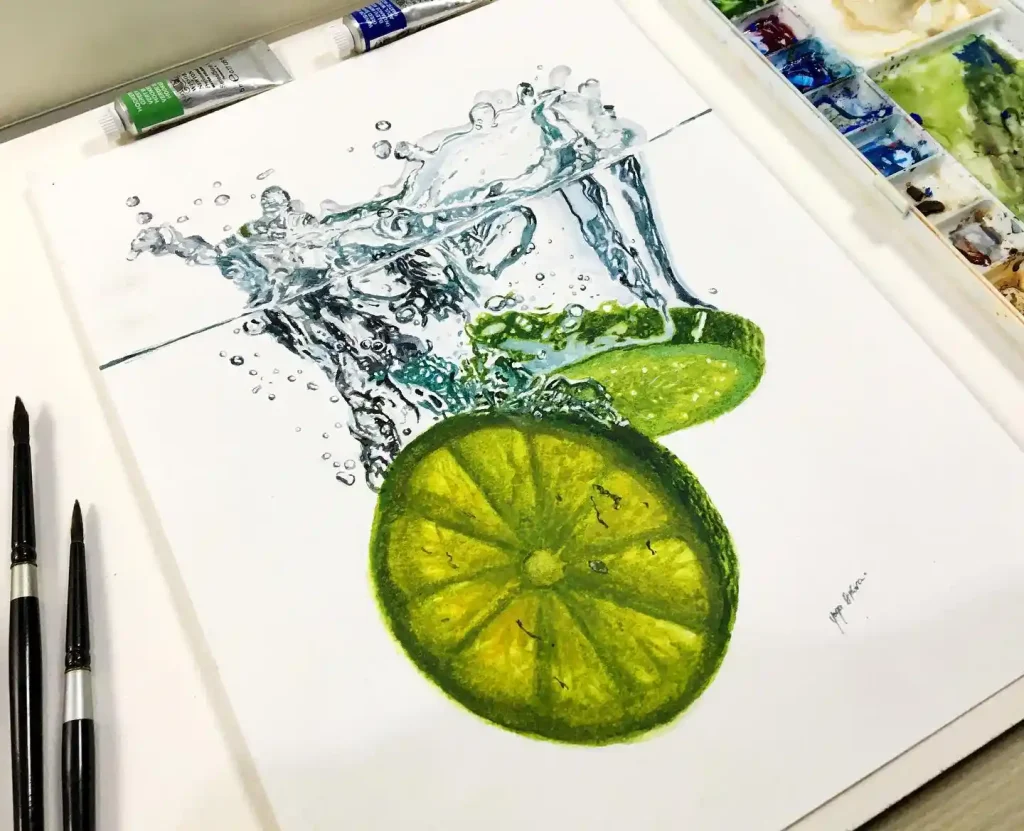
Dynamic water droplets and bubbles create a sense of high energy and refreshing movement here. The artist masterfully used white space to represent the sparkling splash as the citrus hits the water. It is an imaginative and dreamlike take on a simple kitchen moment. The bright green and teal tones make the entire piece feel crisp and very cool.
9. Hand Painted Branch Watercolor Lemon on Arches Paper
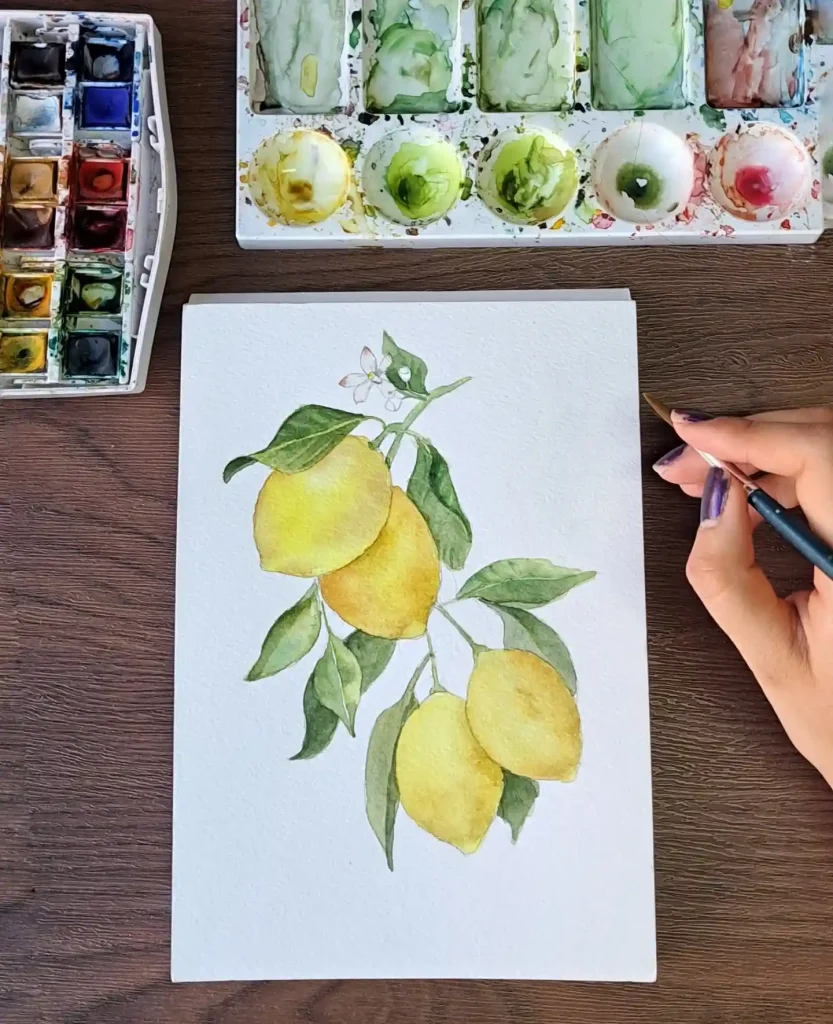
Loose, expressive brushwork gives these four lemons a very spontaneous and artistic personality. The artist used a light touch with the green pigments to keep the focus on the bright, sunny fruit. It feels like a quick study done in a garden while the sun was shifting. The variation in yellow shades adds a lovely, naturalistic sense of ripeness.
10. Minimalist Pattern Watercolor Lemon on Small Format Paper
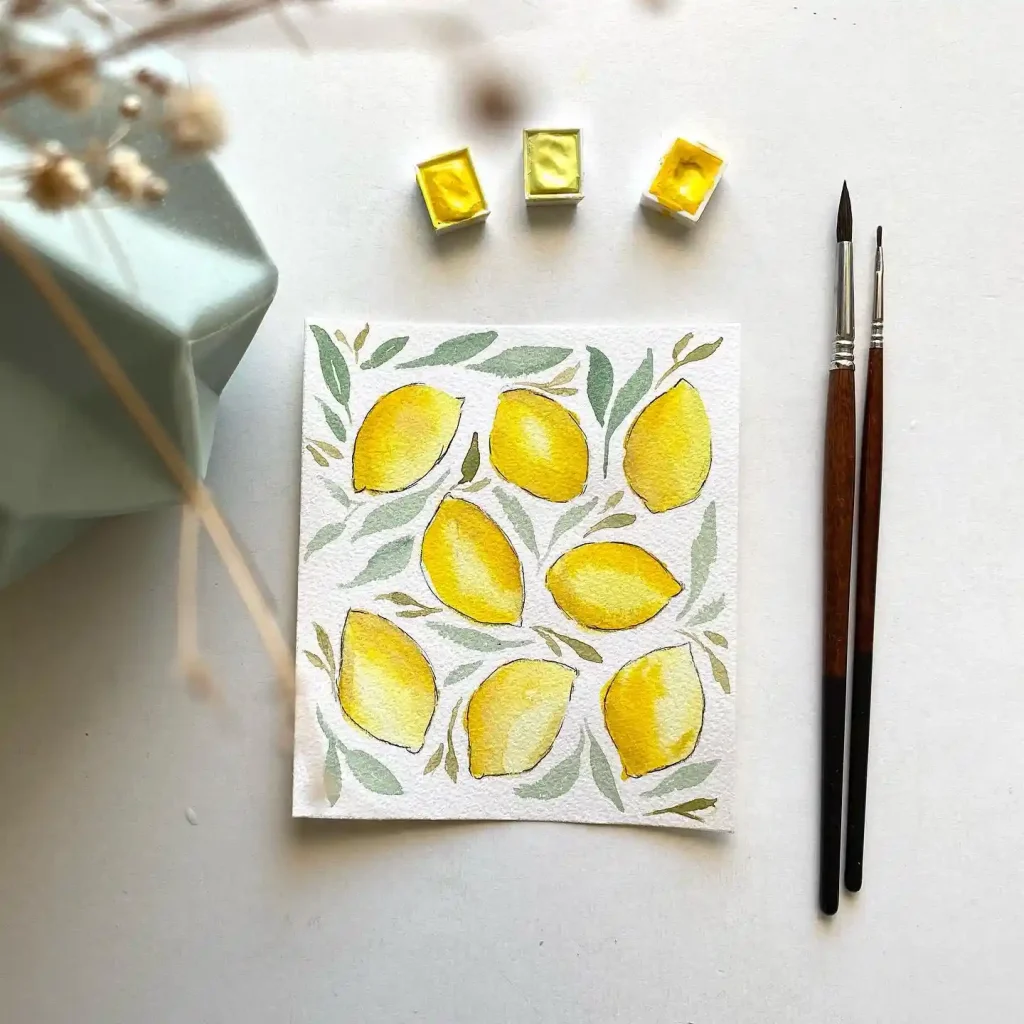
Crisp, clean shapes and a repetitive layout make this piece feel very modern and elegant. The artist used a consistent color palette to create a soothing visual rhythm across the page. It is a great example of how to simplify complex natural forms into a stylish design. The soft gray leaves provide a perfect neutral balance to the bright yellow.
11. Bright Citrus Medley Watercolor Lemon on Fine Art Paper
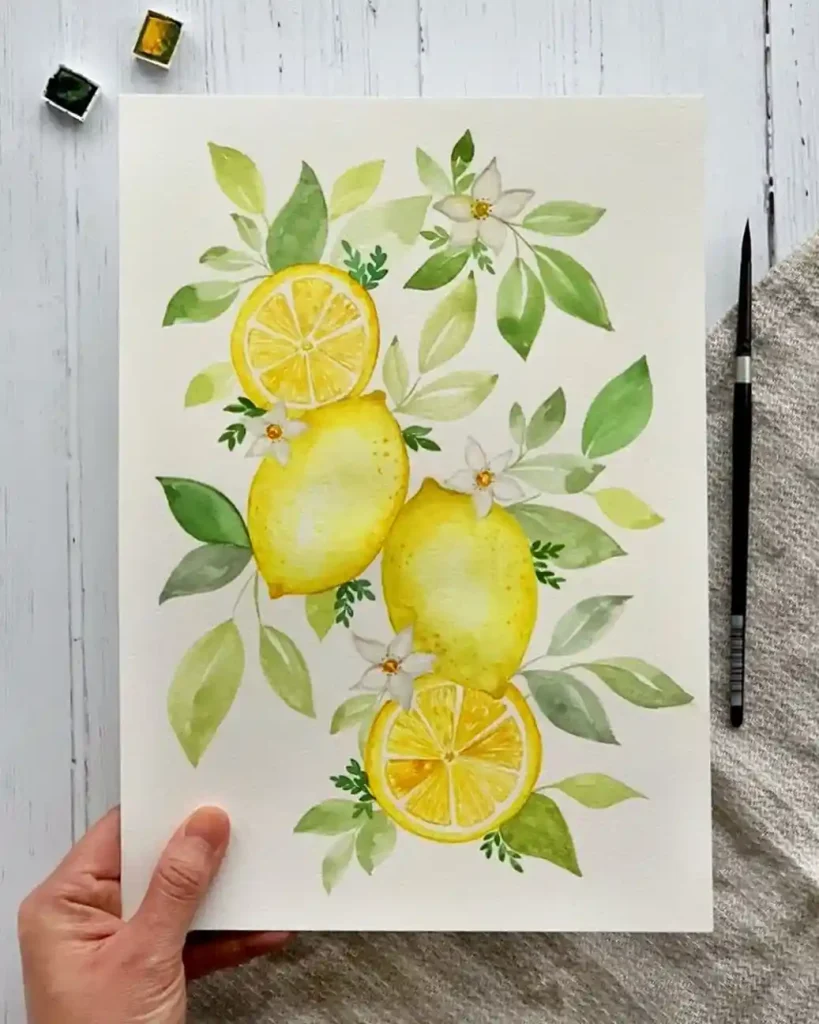
Educational layering takes center stage as we see how to build luminous citrus tones from the inside out. The artist demonstrates a beautiful balance between whole fruit and translucent slices, showing the internal anatomy of the segments. Notice how the pale green leaves and white blossoms provide a soft, secondary frame that keeps the focus entirely on the vibrant yellow cores.
12. Patterned Citrus Study Watercolor Lemon on Artist Sketchbook
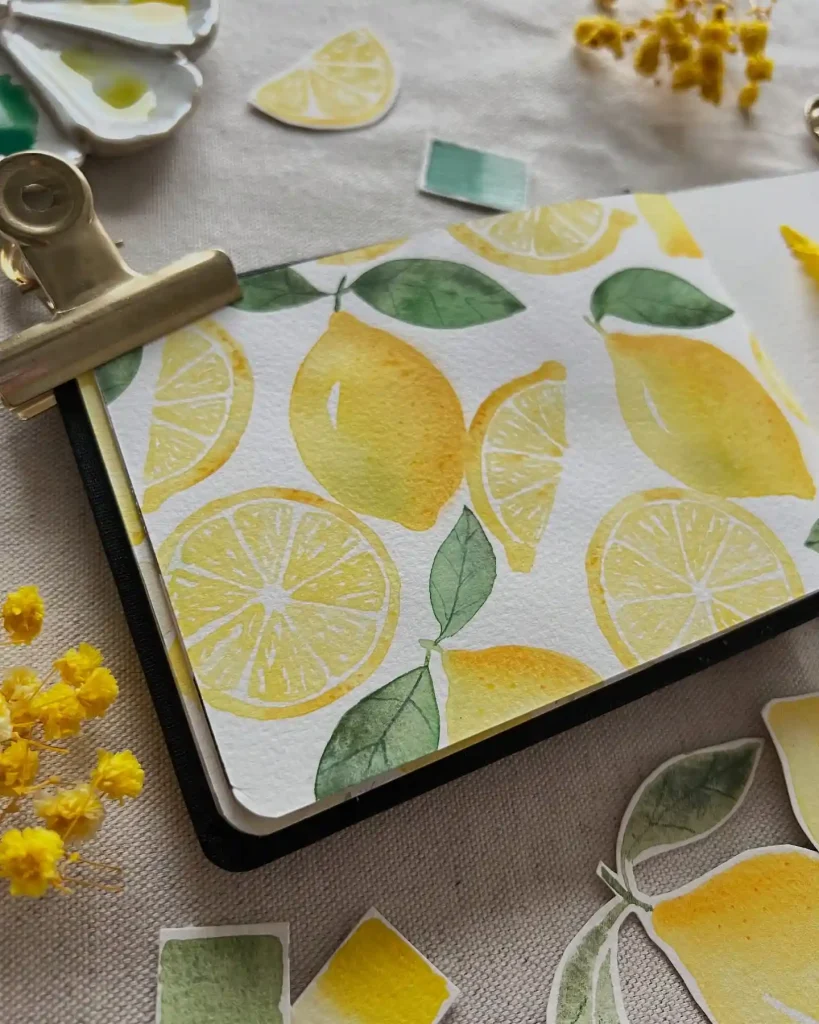
Minimal and modern aesthetics define this crisp arrangement of fruit slices and whole lemons. The clean white background emphasizes the bold shapes and consistent color palette across the page. It is a fantastic example of using negative space to create a stylish, design-forward illustration. Each element feels placed with careful intention to create a soothing, rhythmic pattern for the viewer.
13. Kitchen Harvest Bowl Watercolor Lemon on Spiral Bound Sketchbook
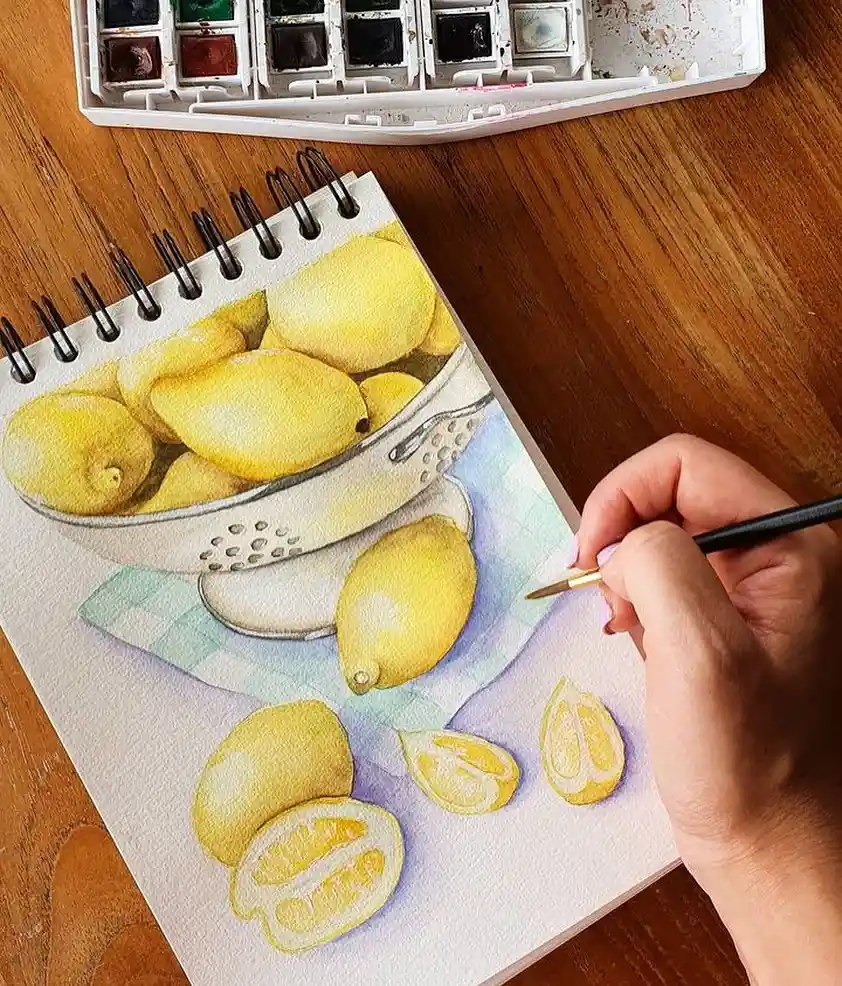
Relaxed hobbyist vibes radiate from this cozy scene of a colander overflowing with ripe fruit. My favorite detail is the tiny blue shadow beneath the bowl, which grounds the entire composition on the table. The artist used soft blending to give the fruit a realistic, rounded volume. It feels like a quiet morning in a sun-drenched kitchen before the day begins.
14. Sunlight and Shadows Watercolor Lemon on Heavyweight Paper
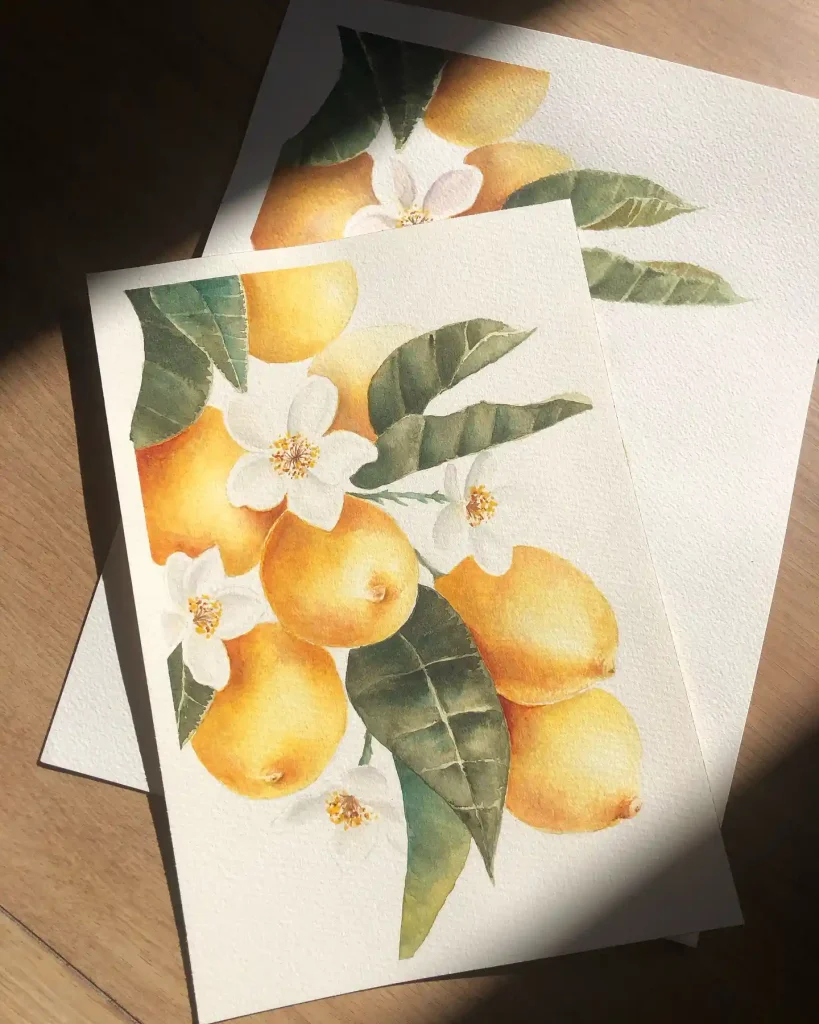
Artistic mastery is evident in the way light filters through the leaves in this botanical study. The painter used varied green pigments to distinguish between the top and underside of each leaf, creating wonderful depth. The warm, golden tones on the lemons look incredibly rich and saturated. It is a beautiful celebration of how natural light interacts with organic, waxy textures.
15. Preserved Sunshine Jar Watercolor Lemon on Mixed Media Paper
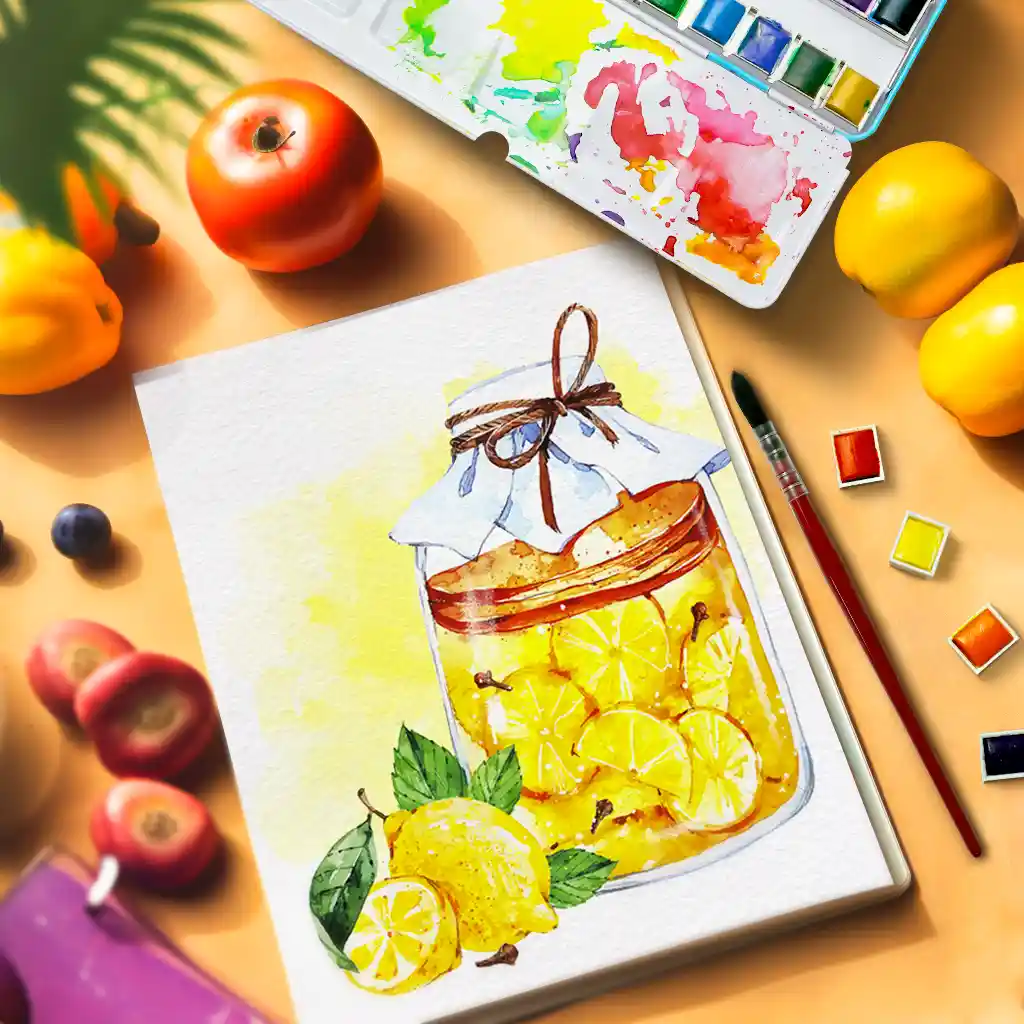
Imaginative and dreamlike elements turn a simple jar of preserved citrus into a glowing beacon of light. The artist infused the liquid inside with shimmering gold tones, making the floating slices look like small, captured suns. It is a whimsical take on home traditions that feels both magical and grounded. The loose, watery background adds to the overall sense of wonder.
16. Mediterranean Branch Study Watercolor Lemon on Cold Pressed Paper
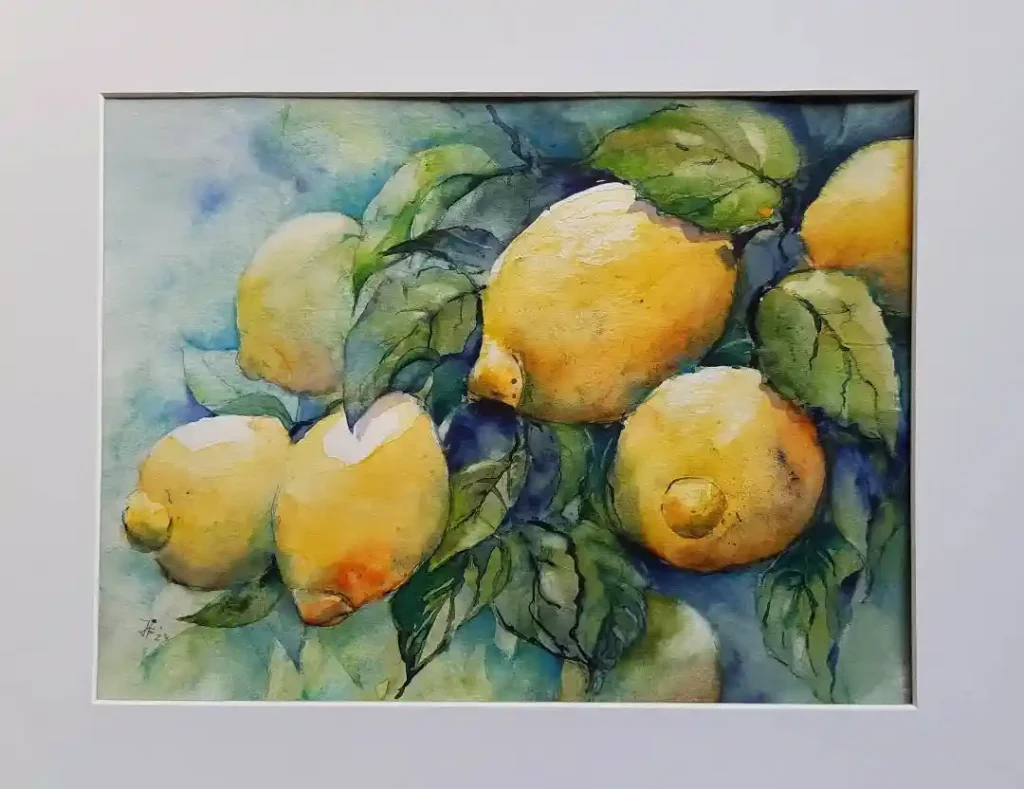
Cultural inspirations are felt deeply in this lush, heavy cluster of fruit hanging from a sturdy branch. The deep teal and emerald greens used for the foliage reflect the colors often found in coastal groves along the sea. It is a dense, rich composition that celebrates abundance and growth. Each lemon feels heavy with juice, adding a lovely, realistic weight.
17. Lavender Orchard Wash Watercolor Lemon on Smooth Watercolor Paper
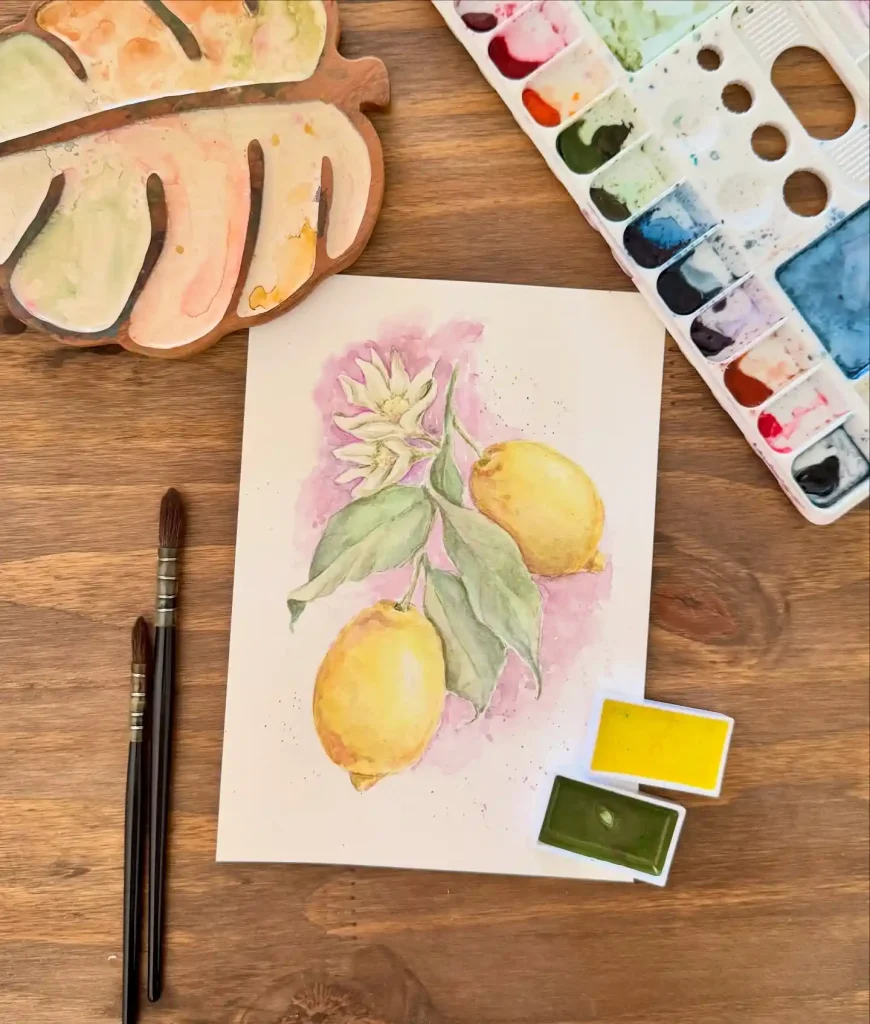
Symbolic purple washes in the background offer a surprising and emotional contrast to the bright yellow fruit. This choice suggests a hidden complexity, perhaps the transition between the heat of the day and a cool evening. The artist used very delicate lines for the blossoms, adding a sense of fragility. It represents the beautiful harmony between strength and soft, floral beginnings.
18. Dancing Leaves Branch Watercolor Lemon on Fine Art Paper
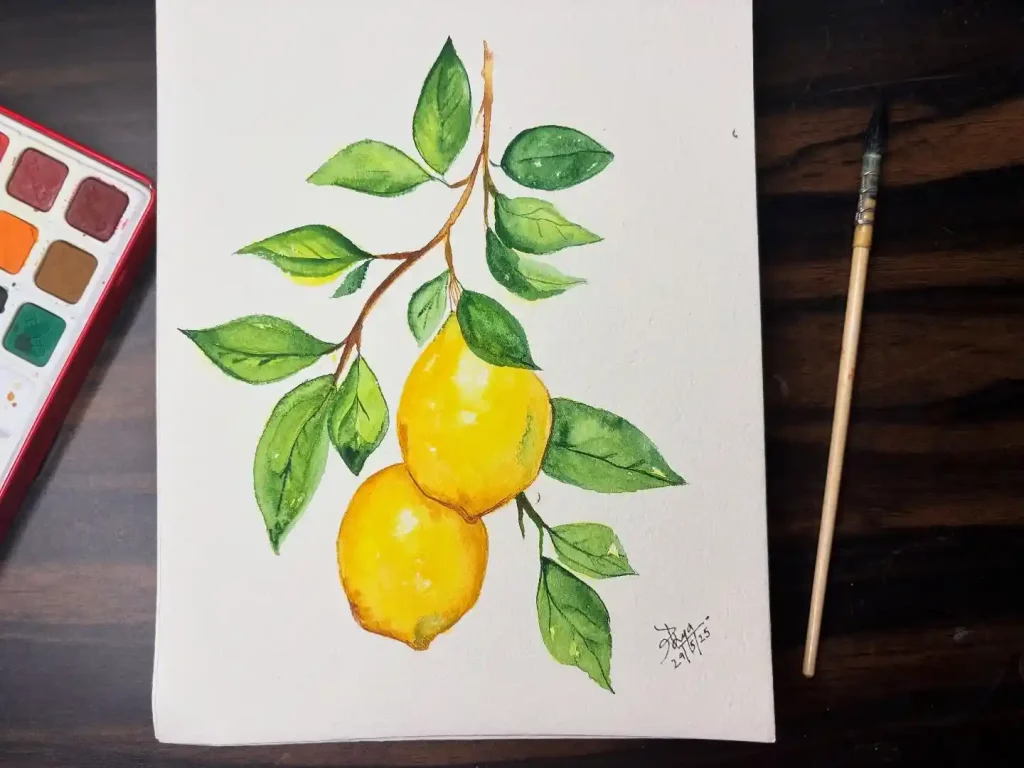
Playful movement is captured through the gestural lines of the stems and the light, bouncy placement of the leaves. The fruit hangs with a cheerful energy that makes the whole piece feel lighthearted and fun. It is a curious look at how a simple botanical subject can feel full of personality. The bright green accents make the yellow skin pop beautifully.
19. Vertical Harvest Vine Watercolor Lemon on Cotton Rag Paper
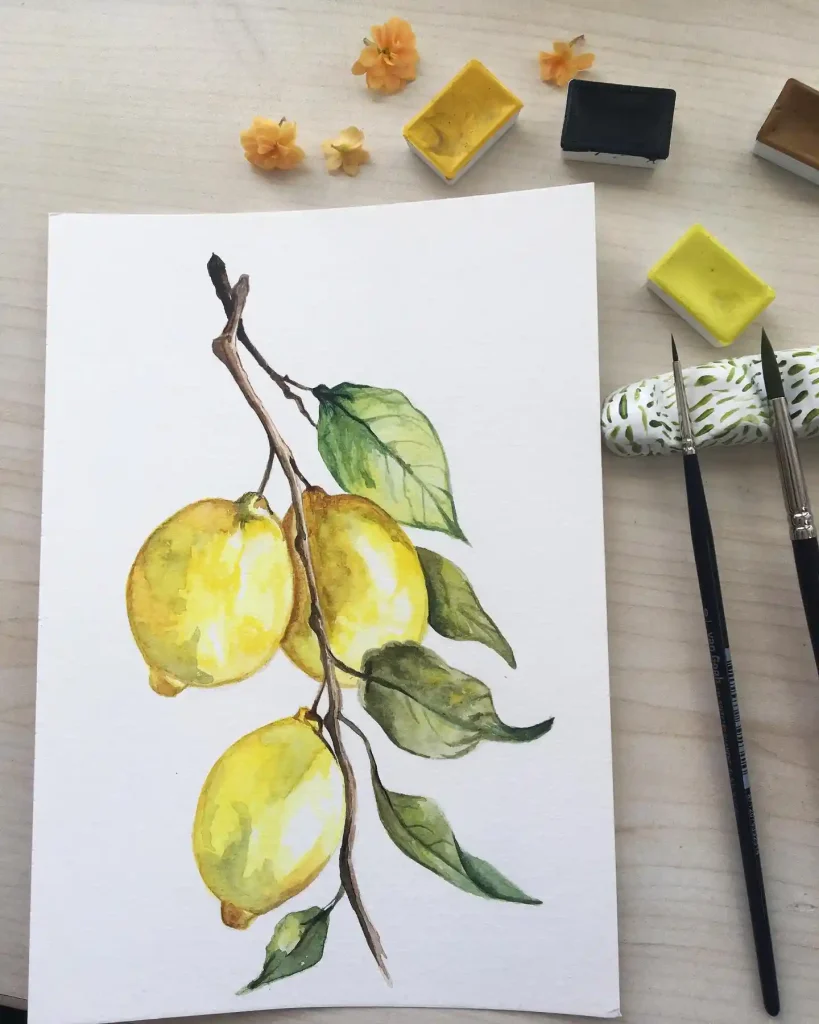
Reflective observations occur as we follow the vertical flow of this long, slender branch. The artist chose a very tall composition to emphasize the natural way fruit hangs in the wild. It feels like a calm, focused look at the cycle of ripening. Each leaf is slightly different, showing the unique imperfections that make nature so interesting to study.
20. Simple Sunlight Branch Watercolor Lemon on Textured Paper
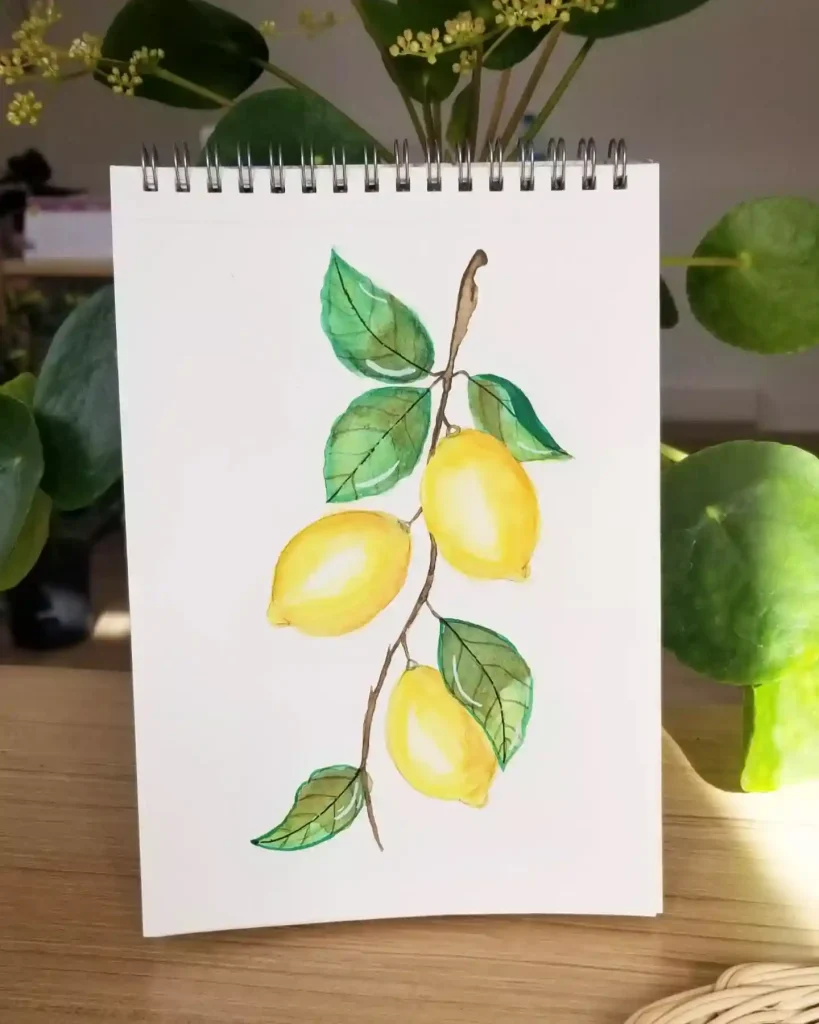
Visual storytelling comes to life through the high contrast between the bright fruit and the soft, neutral background. The sky-blue accents in the leaves suggest a perfectly clear day spent outdoors in the garden. It is a simple narrative of growth and warmth that anyone can connect with instantly. This piece perfectly captures the essence of a quiet summer afternoon.
21. Triple Orchard Branch Watercolor Lemon on Fine Art Paper
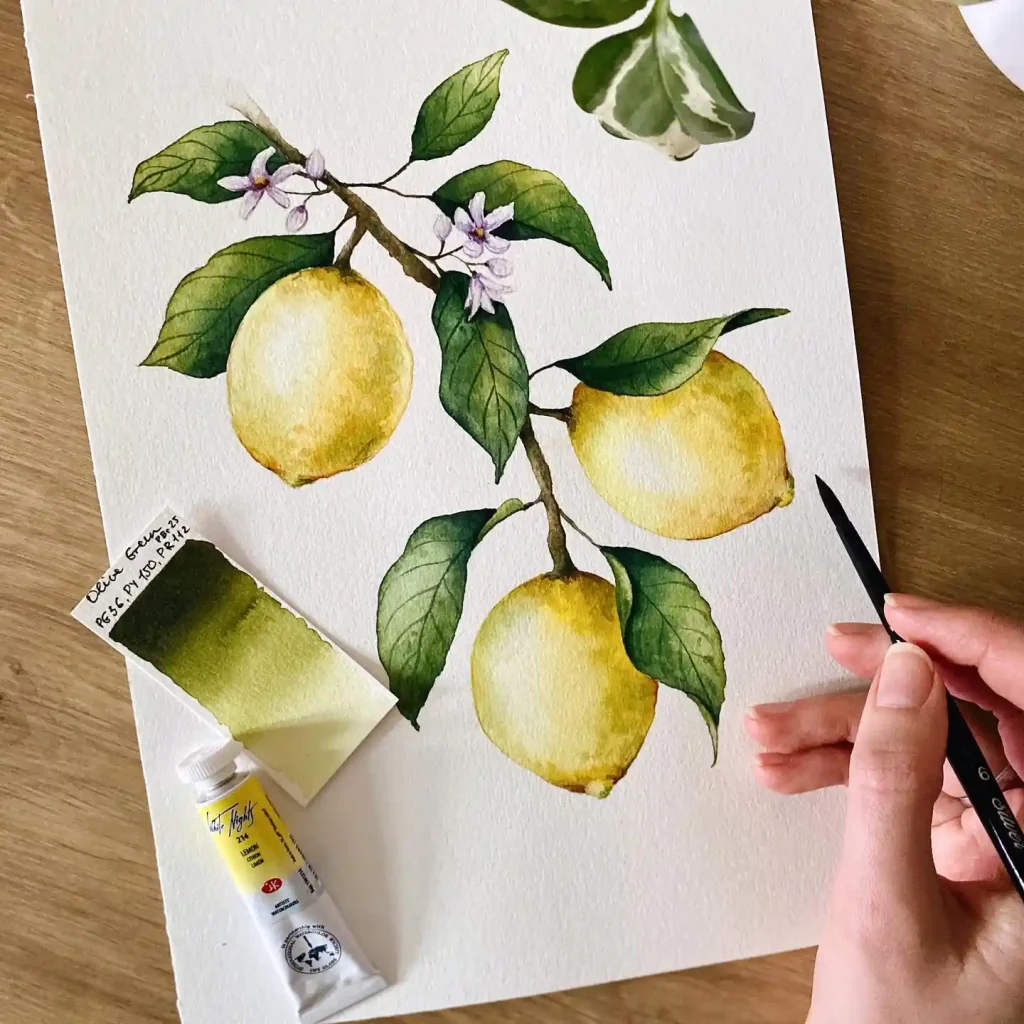
Artistic expression shines through the exquisite light blending on these three hanging fruits. The painter captured a perfect transition from bright highlight to deep, sun-ripened yellow. Notice how the delicate purple blossoms offer a soft color contrast that pulls the whole piece together. The technical flow of the green leaves creates a natural movement that feels incredibly fresh and alive.
22. Blue Bowl Still Life Watercolor Lemon on Cotton Rag Paper
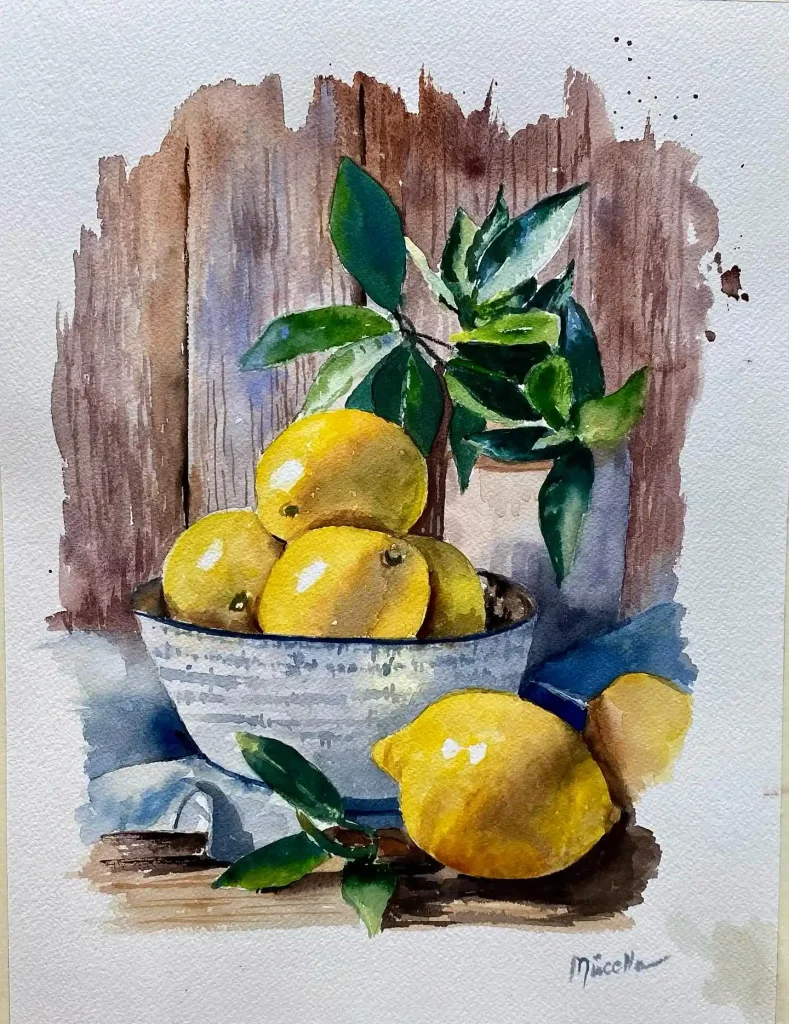
Educational insights into shadow work are scattered all over this rustic tabletop scene. The artist used deep blues and purples to ground the bright yellow citrus in a ceramic bowl. It is a fantastic lesson in using complementary colors to make a subject pop. The rough wood grain in the background adds a lovely tactile quality to the overall composition.
23. Sketchbook Garden Study Watercolor Lemon on Artist Sketchbook
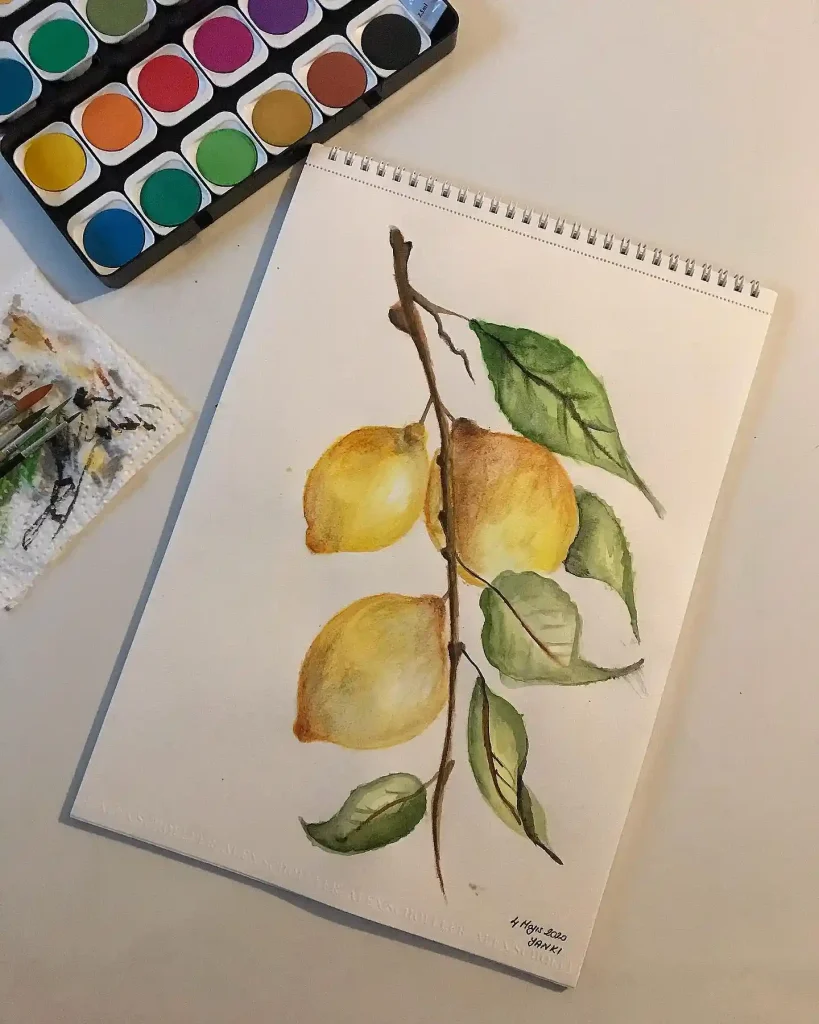
Relaxed hobbyist vibes make this simple study feel so approachable for anyone starting their art journey. My favorite part is the varied green tones in the leaves which suggest different stages of growth. The fruit itself has a wonderful, organic shape that feels very real. It is the kind of quiet practice that turns a simple afternoon into something creative.
24. Splattered Zest Branch Watercolor Lemon on Cold Pressed Paper
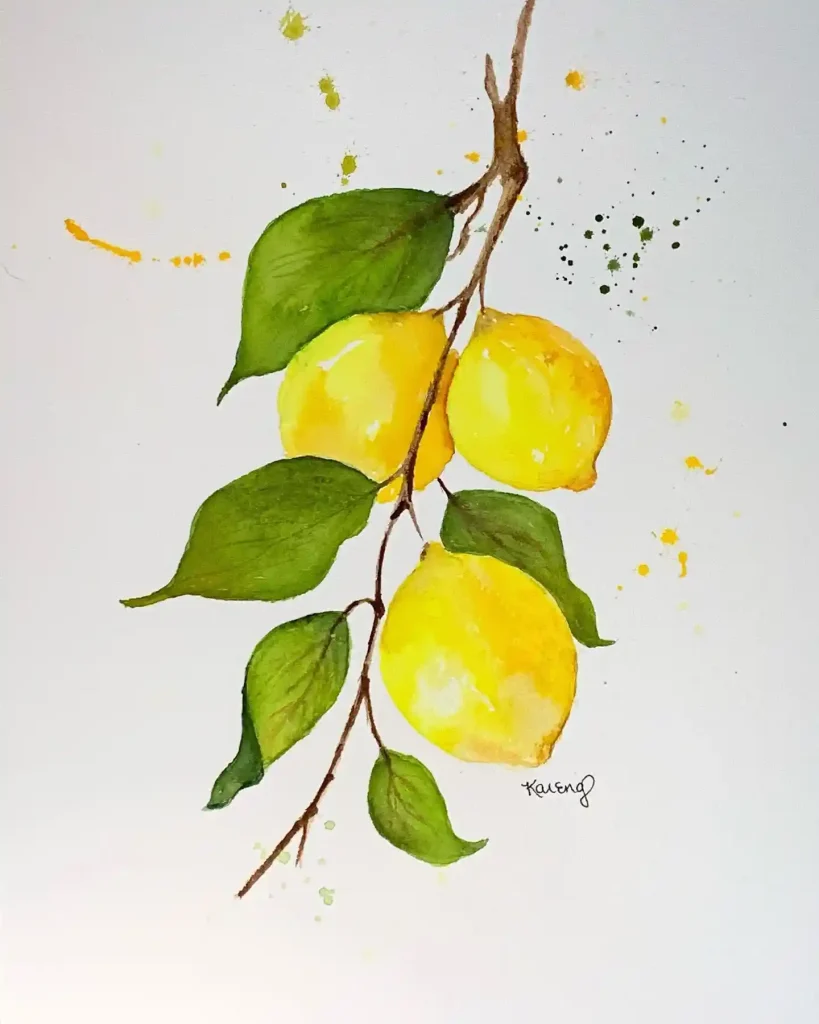
Playful energy bursts off the page with those bright yellow and green splatters surrounding the fruit. It feels like the lemons are full of so much juice they are literally sparkling. The artist kept the branch lines loose and gestural to maintain a sense of fun. This whimsical approach reminds us that painting should be about joy and creative freedom.
25. Sunlight Cluster Trio Watercolor Lemon on Textured Paper
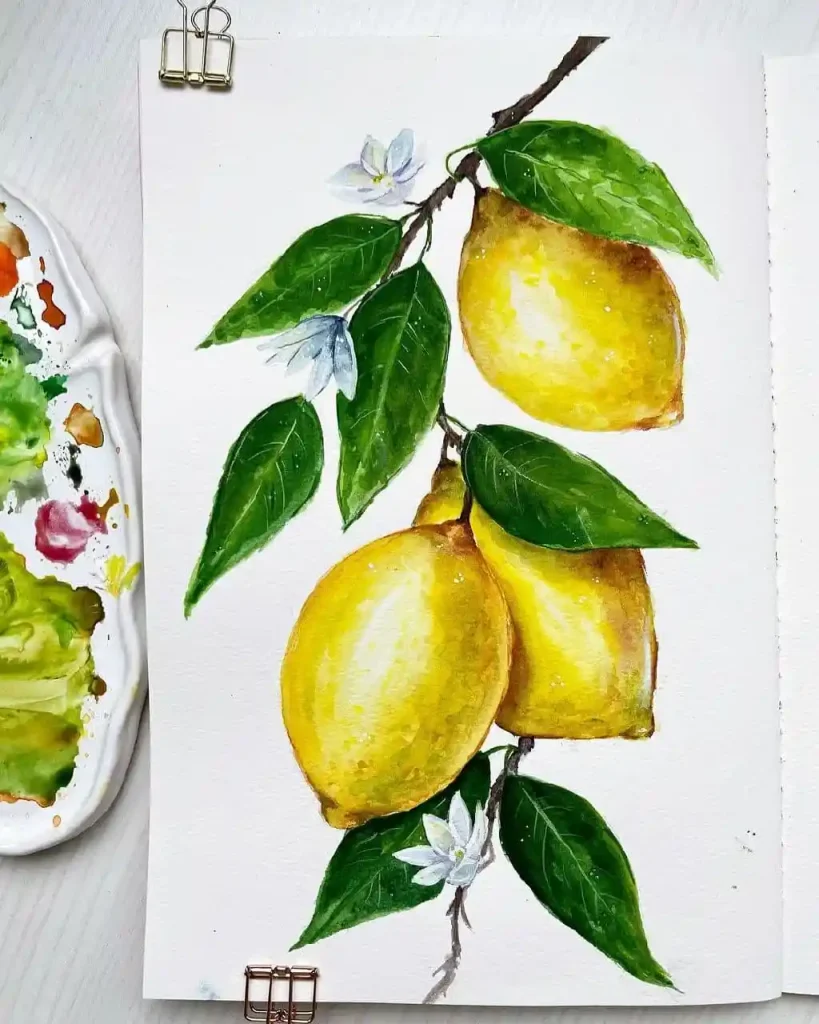
Reflective moments are found in the soft, glowing highlights of this beautiful botanical arrangement. The way the fruit overlaps creates a natural sense of depth and community within the cluster. It makes me think of quiet summer afternoons spent under a heavy canopy of leaves. The muted background keeps your focus entirely on the warmth of the ripening citrus harvest.
26. Pitted Texture Pair Watercolor Lemon on Heavyweight Paper
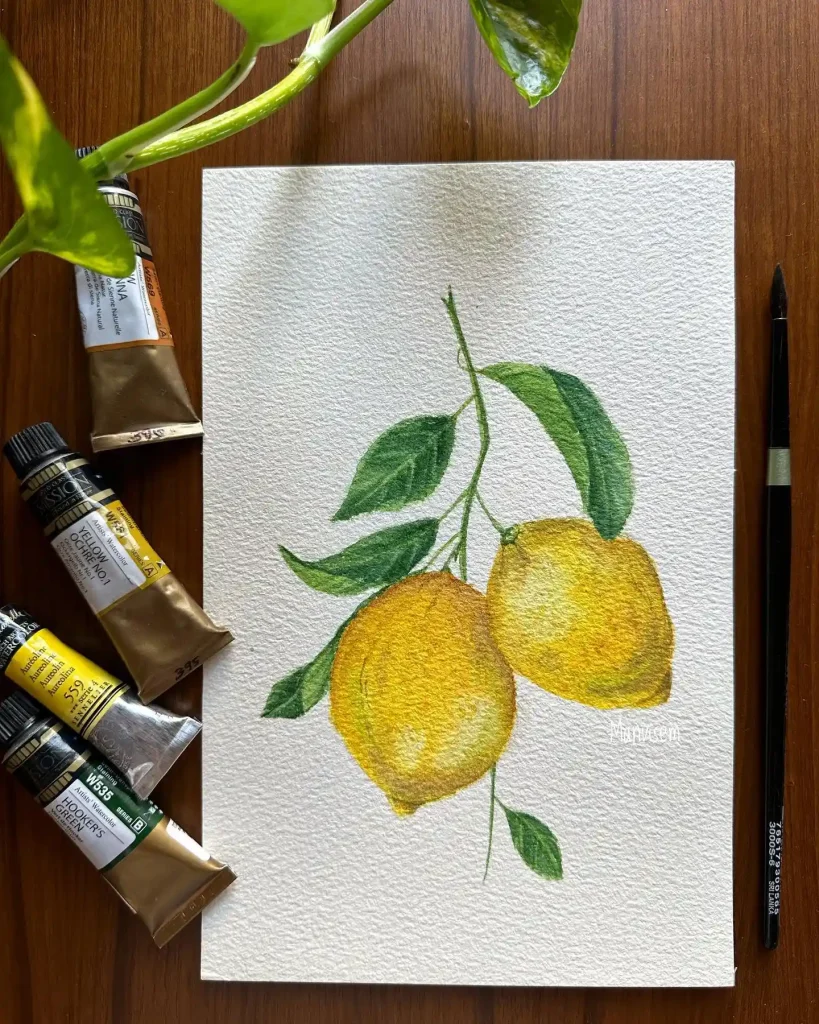
Minimal and modern styling gives this duo of fruits a very clean and sophisticated look. The artist used a subtle stippling technique to suggest the characteristic porous texture of the lemon skin. With plenty of white space around the subject, the vibrant colors really command your attention. It is an elegant study of form, light, and simple natural beauty today.
27. Loose Vine Shadows Watercolor Lemon on Mixed Media Paper
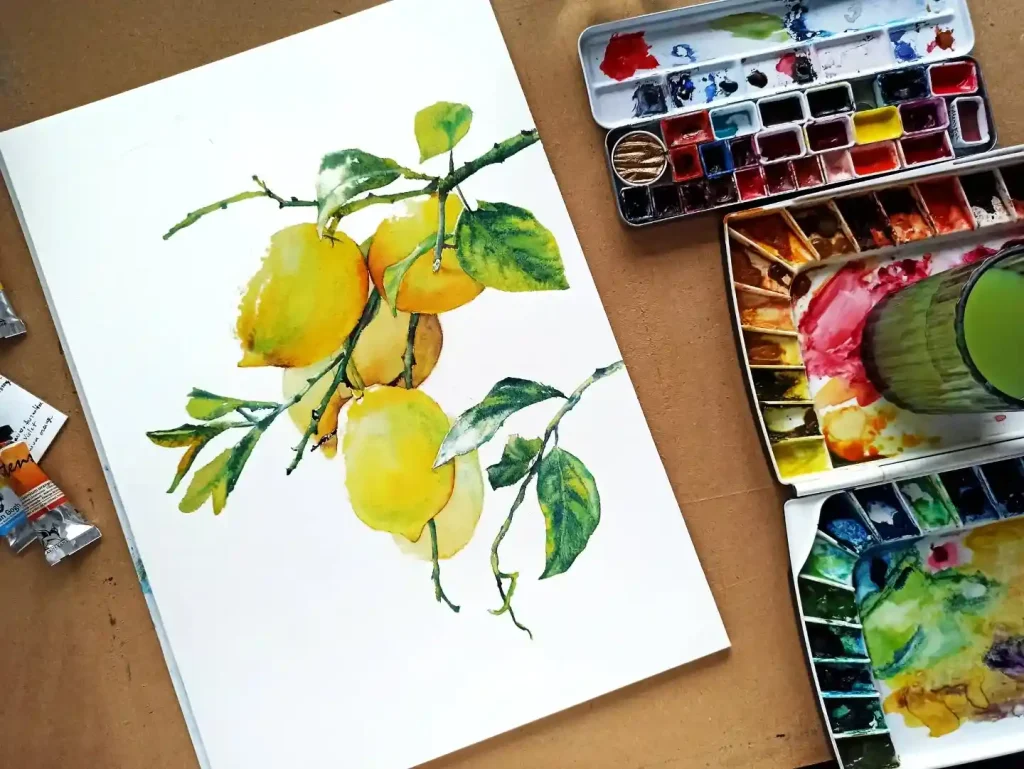
Imaginative and dreamlike washes of color suggest a sunny orchard without needing every single detail. The fruit seems to glow from within against the watery, expressive background. It feels like a hazy memory of a Mediterranean garden at noon. This piece encourages you to let go of perfection and focus on the emotional feeling of the warm light.
28. Woven Basket Harvest Watercolor Lemon on Fine Art Paper
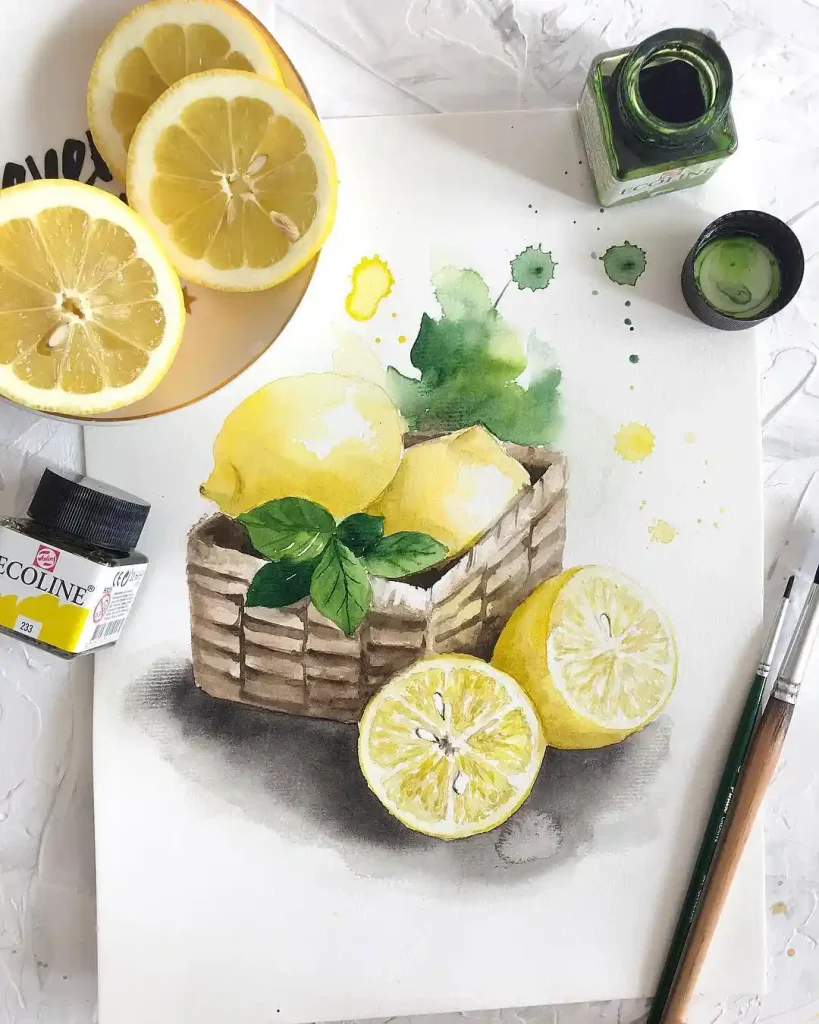
Cultural traditions of the harvest are beautifully represented in this cozy, still life composition. Seeing the lemons nestled in a wicker basket alongside fresh slices reminds me of traditional kitchen hospitality. The artist used rich, earthy browns to contrast with the bright, acidic yellows. It tells a story of gathering, preparing, and sharing the simple gifts of the earth.
29. Twin Leafy Branch Watercolor Lemon on Spiral Bound Sketchbook
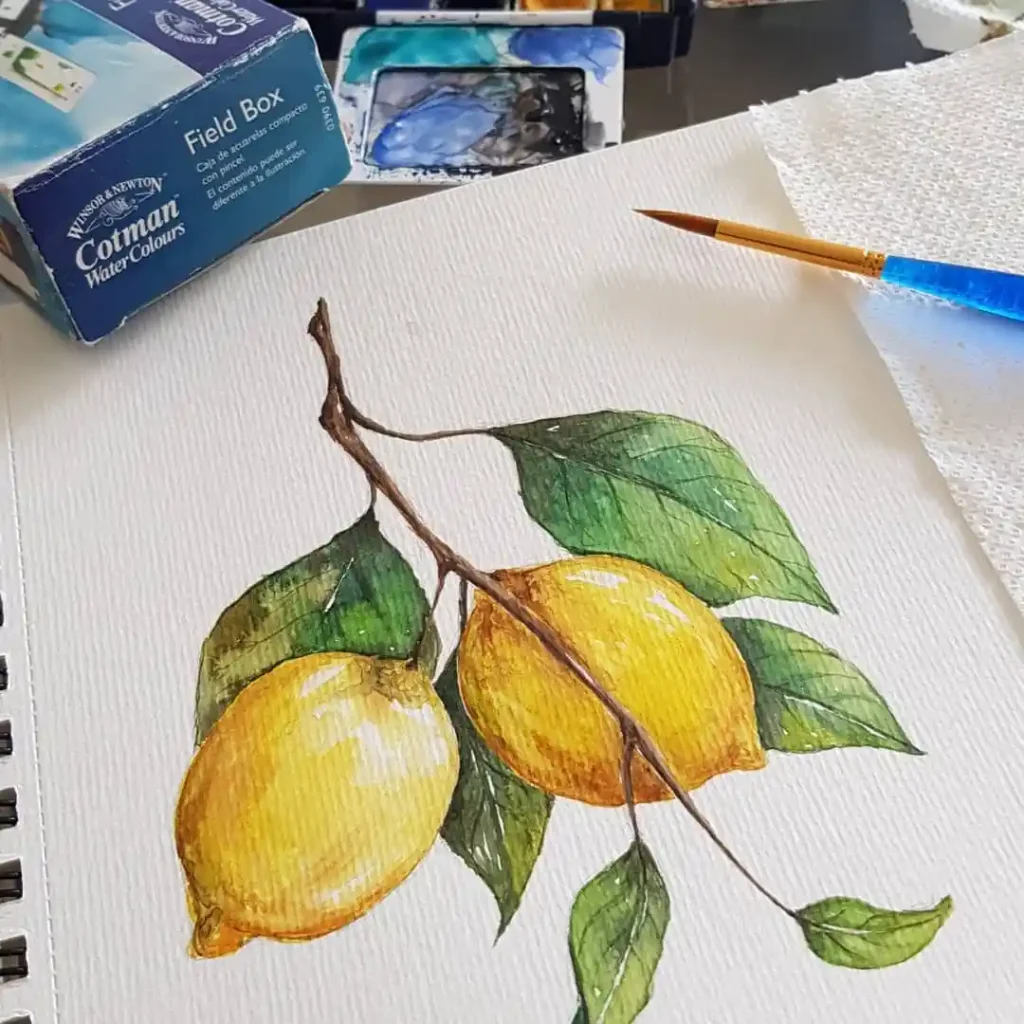
Visual storytelling is at play here as two perfect lemons hang side by side on a sturdy stem. They look like they are sharing a secret while soaking up the midday sun. The artist used dark, saturated greens to frame the fruit, making the yellow skins appear even brighter. It is a simple, beautiful narrative about the harmony found in nature.
30. Single Blossom Stem Watercolor Lemon on Smooth Watercolor Paper
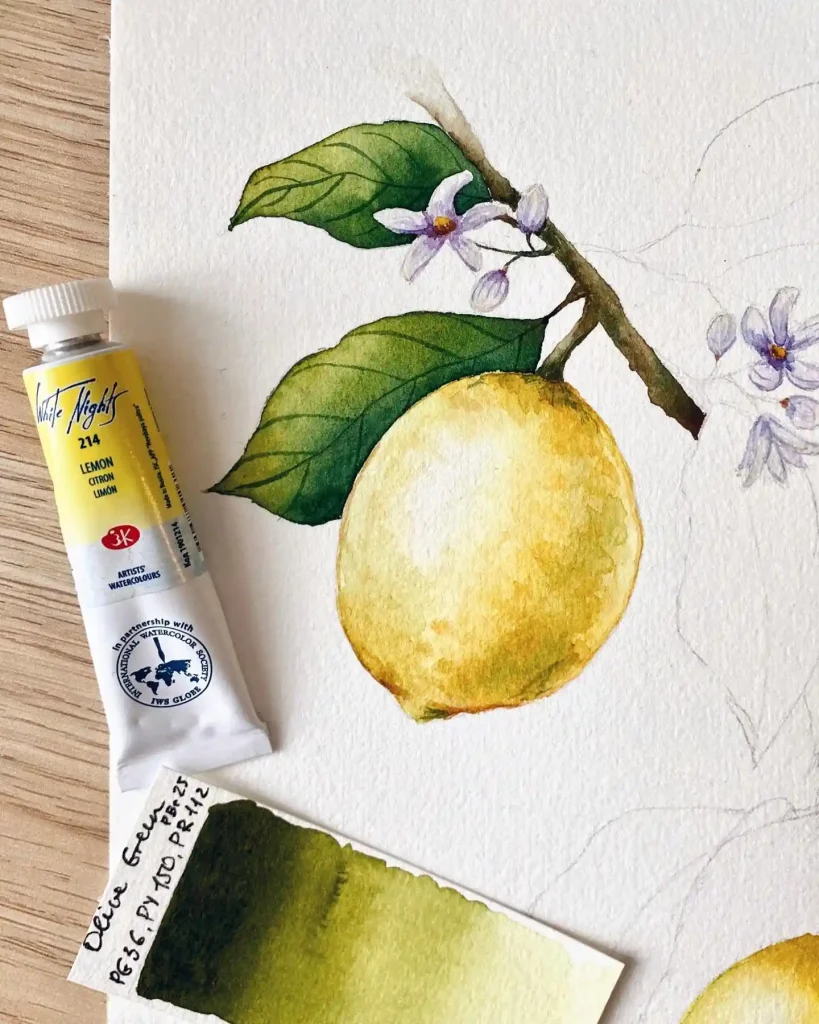
Symbolic beginnings are captured in the delicate white flower appearing right next to the fully grown fruit. It represents the beautiful, continuous cycle of life and growth in the garden. The soft, buttery yellow of the lemon skin feels incredibly soothing and optimistic. This focused composition invites us to appreciate the tiny, miraculous details of the natural world around us.
31. Skyward Citrus Branch Watercolor Lemon on Fine Art Paper
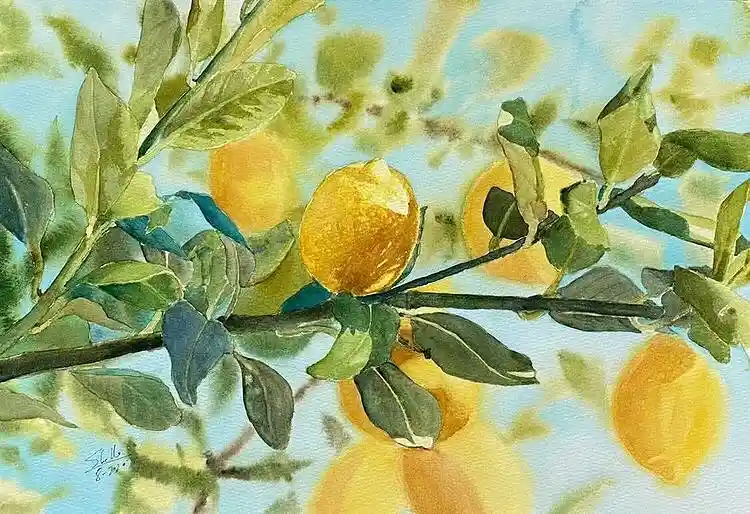
Cultural inspirations are felt deeply in this airy composition where fruit hangs against a pale blue sky. It reminds me of traditional Mediterranean groves where the sun is always bright and the harvest is plentiful. The artist used soft, feathered brushwork for the leaves to keep the atmosphere feeling light. It is a beautiful celebration of outdoor agricultural beauty today.
32. Radiant Citrus Duo Watercolor Lemon on Smooth Watercolor Paper
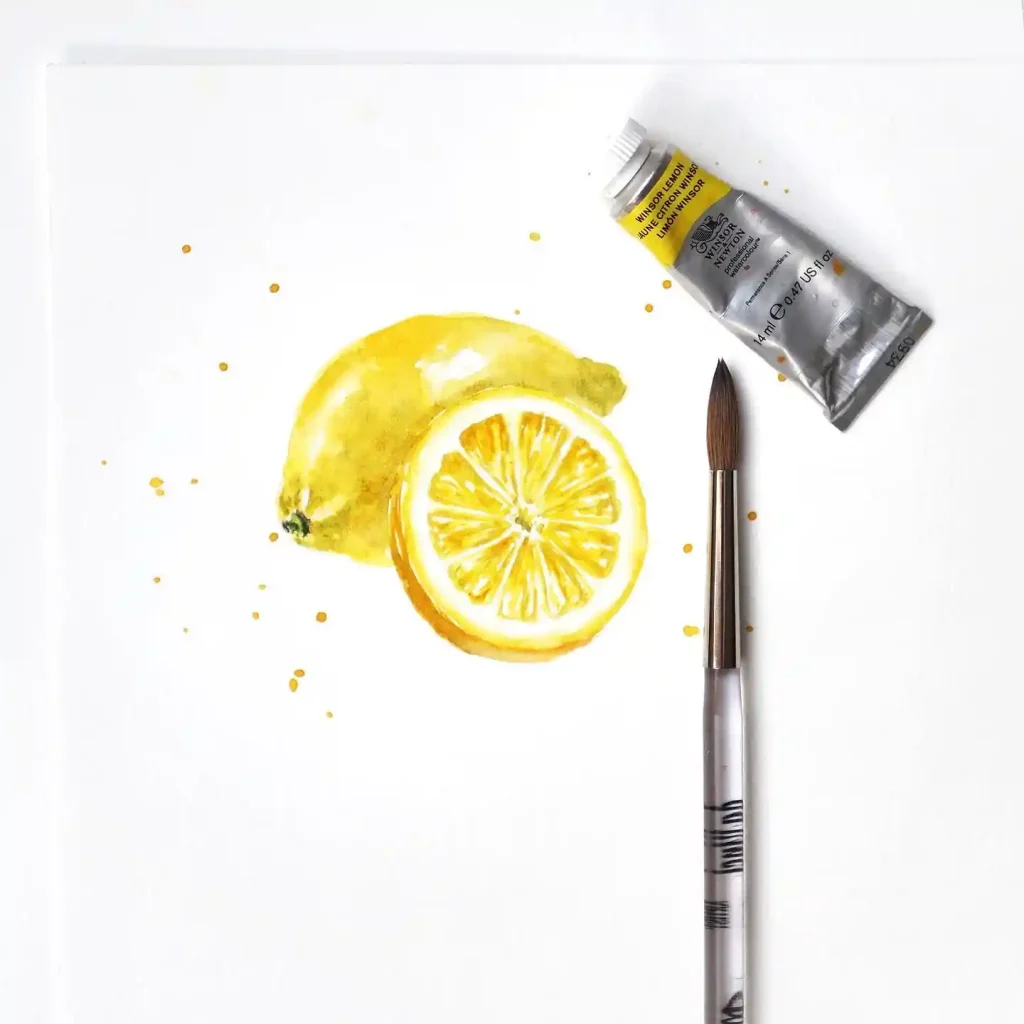
Minimal and modern styling gives this piece a very sophisticated feel through the use of clean white space. The artist focused on a single whole fruit paired with a perfectly rendered slice. Notice how the bright yellow pigment is allowed to shine without any busy background elements distracting the eye. It is an elegant study of pure color and simple organic form.
33. Macro Pulp Study Watercolor Lemon on Heavyweight Paper
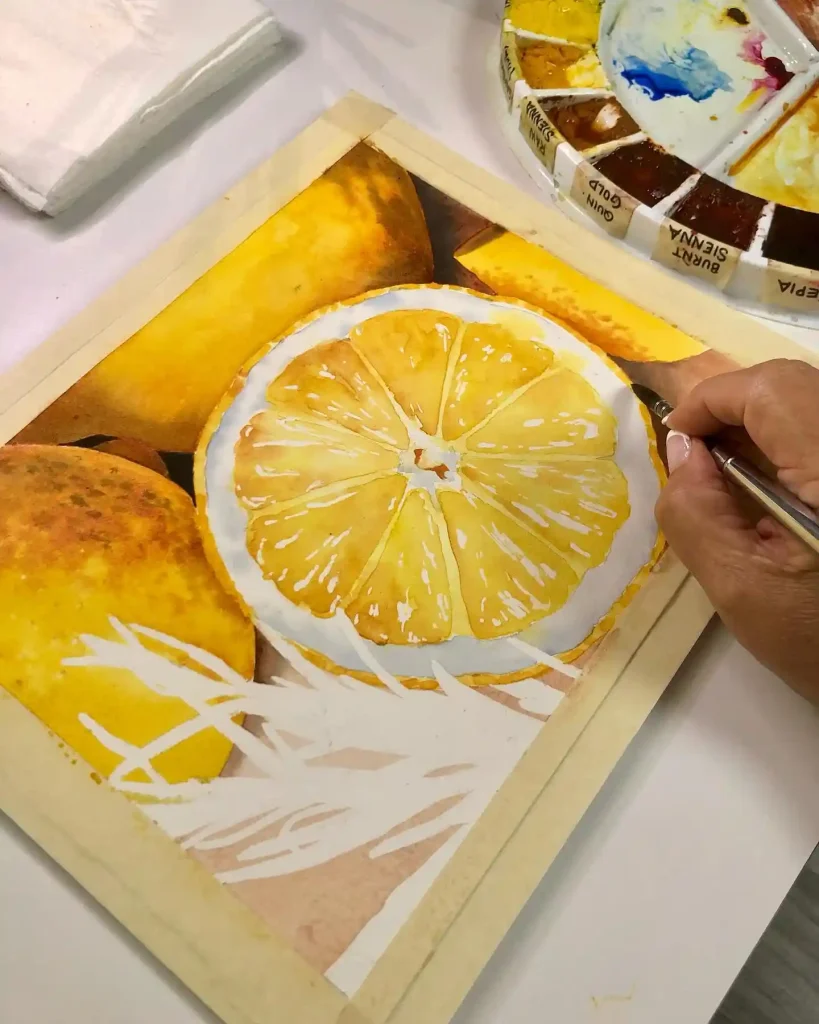
Educational insights into painting internal fruit textures are on full display in this zoomed in composition. The painter used masking fluid or careful negative painting to preserve the white pith and highlight the juicy segments. It is a fantastic lesson in building translucency and realistic detail through layering. The warm, golden color palette makes the entire piece feel incredibly zesty.
After lemons, try a quieter fruit study: watercolor olive drawing ideas use the same highlight and glazing skills, with silvery leaves and ripe green-to-purple fruit.
Keep exploring watercolor: once lemons feel easy, try painting moving water with the same wash skills in our water drawing ideas, or pair a lemon branch with a feathered friend from our watercolor bird drawing ideas. Both use the same light-to-dark layering you practiced here.
4. 5 Lemon Painting Mistakes to Avoid
Most lemon paintings fail for the same few fixable reasons. Check this list before you start your next one.
- One flat yellow everywhere. Real lemons carry at least three yellows: pale lemon yellow in the light, cadmium yellow in the middle, and a warm ochre or burnt sienna touch in the shadow. Idea 14 (Sunlight and Shadows) is the best study for this.
- Painting on soaking-wet paper for too long. Wet-on-wet gives soft blends, but if the paper stays shiny wet, your yellow spreads into a shapeless puddle. Wait until the sheen dulls before adding the next layer.
- Forgetting the white. As Tate explains, watercolour is semi-transparent, so the white of the paper gives washes their natural luminosity. Leave the brightest highlight unpainted instead of adding white paint later.
- Overworking the wash. Scrubbing back and forth with the brush lifts the paper surface and turns yellow grey. Lay a wash in two or three strokes, then leave it alone until dry.
- Skipping a test swatch. Paint a small strip of your yellows on scrap paper first. Yellows dry lighter than they look wet, and a 30-second swatch prevents a whole painting in the wrong shade.
Practice example: paint the same lemon slice twice, once wet-on-wet and once wet-on-dry, on one sheet. The wet-on-wet slice will look soft and glowing; the wet-on-dry slice will show crisp pulp lines. Comparing the pair teaches you faster than reading ten tutorials, and it takes under 20 minutes.
5. Frequently Asked Questions About Watercolor Lemon Painting
What yellow paints do I need for watercolor lemons?
Start with lemon yellow and cadmium yellow. Lemon yellow handles sunlit skin, cadmium yellow gives the rich middle tone, and a dab of yellow ochre warms up the shadows. Two yellows plus one warm earth tone cover every idea in this list.
What paper is best for watercolor lemon painting?
Cold-press 140lb (300gsm) paper is the safest choice for beginners. Its light texture holds washes without buckling and still allows crisp details for slices and pulp. Smooth hot-press paper suits the detailed studies like idea 33, but it shows every brush mark, so save it for later.
How do I paint a lemon slice so it looks juicy?
Paint the pulp segments in pale yellow first, leave thin white lines for the membranes, then glaze a deeper yellow over the outer segments. Add tiny burnt sienna seeds last. Idea 2 (Sliced Zest) and idea 33 (Macro Pulp Study) walk through exactly this order.
How long does a beginner lemon painting take?
Most single-lemon studies in this list take 30 to 45 minutes, including drying time between layers. Simple patterns like idea 10 can be done in 20 minutes, while a full branch or bowl scene takes about an hour.
Can I paint lemons with watercolor pencils?
Yes. Sketch and shade with watercolor pencils, then brush clean water over the pencil marks to melt them into washes. This is a gentle way to start if full watercolor feels intimidating, and it works well for ideas 3 and 10.
How do I keep lemon yellows bright instead of muddy?
Use clean water, rinse your brush between colors, and never mix yellow with its opposite purple in the same wash. Let each layer dry before glazing over it, and keep your darkest shadow to a small area so the bright yellow still dominates.
Love painting citrus? After lemons, try a whole orchard: these 40 vibrant watercolor fruit drawing ideas cover everything from easy single fruits for beginners to imaginative scenes like a grapefruit sea at sunset.