Short answer: Start with one simple mushroom — a round cap, a short stem, and just three colors — on cold-pressed watercolor paper. Paint the cap with a light wash, let it dry, then add one darker layer for shadow and a few fine lines for gills. That small, patient routine is the whole secret behind the 37 watercolor mushroom drawing ideas below, from rustic forest finds to glowing fairy houses.
Watercolor mushroom drawing ideas are more than just cute forest art. They are a gentle gateway into play, color, and meditative creativity.
Every brushstroke can turn a simple mushroom into a tiny world of patterns and emotions. You build real skills while feeling the calm only watercolor can bring.
Watercolor mushroom drawing ideas invite you to explore textures, gradients, and transparency. They help you grow confident in mixing colors and understanding values.
You’ll find inspiration from nature, stories, and even imaginary worlds. With the right ideas, your sketchbook becomes a living gallery of Watercolor Mushroom Drawing Ideas.
In this guide: a plain definition of watercolor mushroom drawing, a 5-minute idea picker, the four techniques used across all 37 paintings, the original tips on realism and beginner confidence, all 37 ideas with their pictures, and answers to the questions beginners ask most.
What is inside
- What is a watercolor mushroom drawing?
- Pick your idea in 5 minutes
- Four techniques that make mushrooms look real
- Realism tips and beginner tips (original guide)
- All 37 watercolor mushroom drawing ideas
- Frequently asked questions
1. What Is a Watercolor Mushroom Drawing?
Watercolor mushroom drawing is painting mushrooms with transparent watercolor paint, so the white of the paper shines through the color and gives the cap and stem a soft, glowing look. Unlike opaque paint, watercolor is built in thin layers: a pale first wash sets the shape, and each later layer, added only after the last one dries, deepens the shadow or adds detail.
That is why mushrooms suit watercolor so well. A cap is basically a dome, a stem is basically a soft cylinder, and the gills underneath are a fan of fine lines. With those three simple shapes you can paint a realistic bolete, a spotted red toadstool, or a completely invented fairy-house mushroom, using the same steps every time.
The three shapes to learn first
Cap: a dome or umbrella shape, darker at the rim and lighter where the light hits. Stem: a slightly tapered cylinder, pale on the lit side and warm brown in shadow. Gills: short, curved lines under the cap, spaced wider apart near the rim. If those three shapes read clearly, the painting reads as a mushroom even before you add moss, leaves, or a snail.
2. Pick Your Idea in 5 Minutes
Thirty-seven ideas is a lot to choose from, so pick by mood and time, not by scrolling until you feel stuck. The table below sorts the gallery into five easy starting points. Beginners do best starting in the first row; painters who want a challenge can jump straight to the detailed studies.
| If you want… | Start with these ideas | Why it works |
|---|---|---|
| A quick, calming win | Simple Garden (26), Tiny Trio Study (2), Pastel Trio (37) | Few shapes, limited colors, clean backgrounds |
| A realistic forest scene | Rustic Forest Find (1), Sunlit Forest Floor (4), Solitary Guardian (23) | Natural browns and greens, soft blurred backgrounds |
| Something magical | Whimsical Fairy House (9), Fantasy Village (30), Celestial Light (25) | Storytelling details like windows, swings, and light beams |
| Bold color practice | Glowing Red Amanita (5), Rainbow Cap (18), Teal and Green (33) | Strong color contrast teaches control of wet paint |
| A careful study | Detailed Cap Study (12), Diverse Species Study (31), Vintage Specimen Cards (36) | Slow, close looking at gills, spots, and texture |
Beginner tip: paint the same mushroom three times — once tiny, once medium, once large. The first try teaches the shapes, the second teaches the colors, and the third is usually the one worth keeping. For a fuller grounding in the medium first, see the complete watercolor painting guide for beginners.
3. Four Techniques That Make Mushrooms Look Real
Nearly every painting in the gallery below uses one or more of these four techniques. Learn them once and you can reuse them on any idea in the list.
1
Wet-on-wet for soft caps. Wet the cap area with clean water, then drop in color and let it spread on its own. This gives the soft, cloudy blends you see in the Vertical Growth Chart (3) and the Moody Shadow study (16). Work while the paper is damp, not puddled, or the color will run past the cap edge.
2
Wet-on-dry for crisp edges. Paint onto fully dry paper when you want a sharp rim, a clean stem edge, or bold white spots. The Textured Red Pair (20) and Bright Red Amanita (32) keep their punchy reds this way, because the paint stays exactly where the brush puts it.
3
Glazing for depth. Glazing means painting a thin, transparent layer over a dry layer. A pale brown wash first, then a second wash only in the shadow, is how the Sturdy Bolete Duo (11) gets its believable weight without ever looking heavy or muddy. The rule is simple: dry first, then glaze.
4
Dry brush and saved whites for texture. A nearly dry brush dragged across rough paper leaves the scratchy grass and bark texture in the Textured Red Cap (7). White spots are handled the opposite way: either paint around them, or cover them with masking fluid first and peel it off when the painting is dry, the method behind the glowing spots in idea 5. Artist Emily Wassell demonstrates the same loose mushroom approach — light wash, dropped-in darks, and flicked gill lines — in her step-by-step tutorial on painting mushrooms in watercolour.
Watch out for mud: mixing more than three or four colors in one wet area, or scrubbing a half-dry layer, turns browns grey and dull. If a wash starts to look muddy, stop, let it dry completely, and glaze a fresh transparent layer on top instead of scrubbing. A good brush also helps control water — see the best watercolor brushes for beginners and, if you are buying a first set, the best watercolor sets under $25.
How to make watercolor mushroom drawings look more realistic?
- Start with light pencil sketches of basic shapes like domes and cylinders, then refine the cap and stem proportions. Blending smooth gradients gives volume and depth.
- Use a damp‑in‑wet technique on the cap to let pigment flow softly, then add a slightly darker halo where the cap curves. This creates instant dimension.
- Build shadows with thin, transparent layers rather than thick paint. Let each layer dry so edges look soft and natural.
- Add subtle texture with tiny dots or strokes for pores or gills underneath the cap. A dry brush “flick” near the base can mimic moss or forest debris.
- Study real reference photos for value contrast and edge variety. Copying light and shadow patterns trains your eye for realistic Watercolor Mushroom Drawing Ideas.
How can beginners create creative watercolor mushroom drawing ideas without getting stuck?
- Begin with themed prompts such as “glowing forest mushrooms” or “mini mushrooms in a teacup” to spark imagination. These ideas guide you while leaving room for improvisation.
- Use simple shapes first, then customize caps with dots, stripes, or ombre colors. This low‑pressure method builds confidence and creativity.
- Limit your palette to 3–4 colors per session so decision fatigue doesn’t block your Watercolor Mushroom Drawing Ideas. Let one color dominate and others accent.
- Treat “mistakes” as part of the design: add extra leaves, clouds, or tiny creatures around your mushrooms to turn errors into storytelling.
- Sketch small thumbnails on scrap paper to test different compositions. This lightweight practice helps you generate a stream of mushroom drawing ideas without pressure.
Grab your brush and start playing with Watercolor Mushroom Drawing Ideas today. Let each stroke surprise you, grow your skills, and turn ordinary paper into a whimsical forest of imagination.
4. All 37 Watercolor Mushroom Drawing Ideas
Browse the full gallery below. Each idea keeps its original picture and description, so you can compare styles side by side — earthy and realistic, bright and playful, or soft and storybook — and pick the one you want to paint today. For woodland settings to pair with these mushrooms, the forest magic scenes guide and botanical leaf tracing ideas cover the leaves, moss, and light that frame a mushroom so well.
1. Rustic Forest Find Watercolor Mushroom on Textured Mixed Media Paper
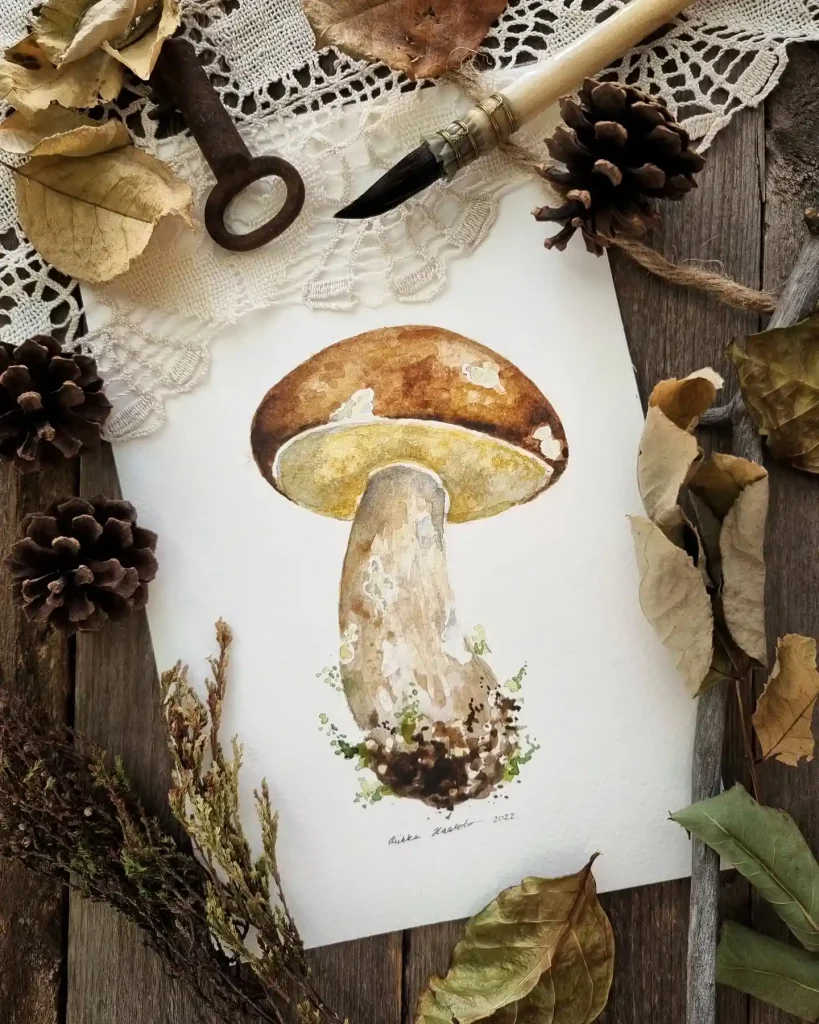
Surrounded by pinecones and dried leaves, this earthy illustration feels like a treasure straight from a woodland walk. The artist used rich brown tones and clever negative space to create a weathered, realistic texture on the cap. It captures the quiet beauty of decay and renewal found on the forest floor. This piece is a cozy reminder of autumn’s simple gifts.
2. Tiny Trio Study Watercolor Mushroom on Cold-Pressed Watercolor Card
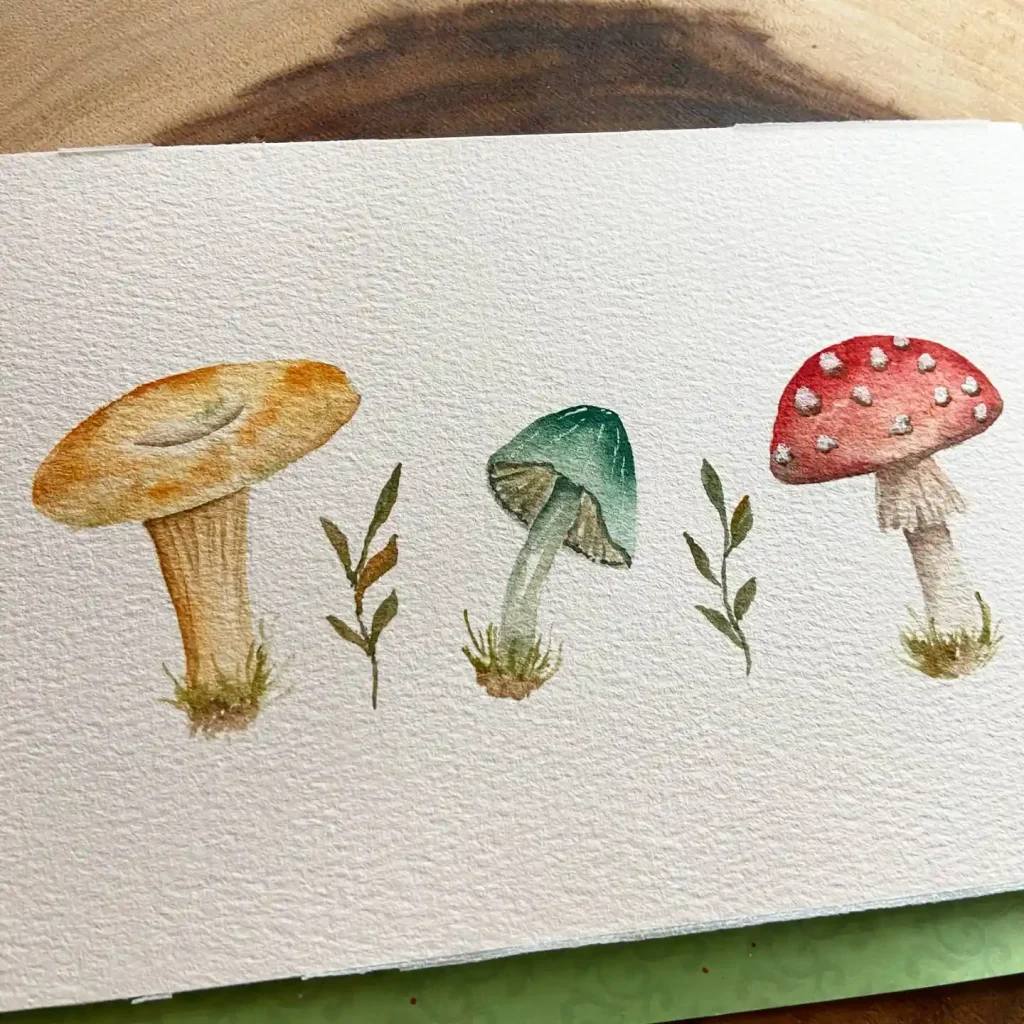
Three distinct fungi stand side-by-side in this charming, minimalist lineup. From the golden chanterelle to the deep teal cap and the classic red toadstool, each one shows off a unique personality. The white background keeps the focus sharp and modern, making the colors pop beautifully. It is a perfect, playful example of how diverse nature’s designs can be.
3. Vertical Growth Chart Watercolor Mushroom on Smooth Hot-Pressed Paper
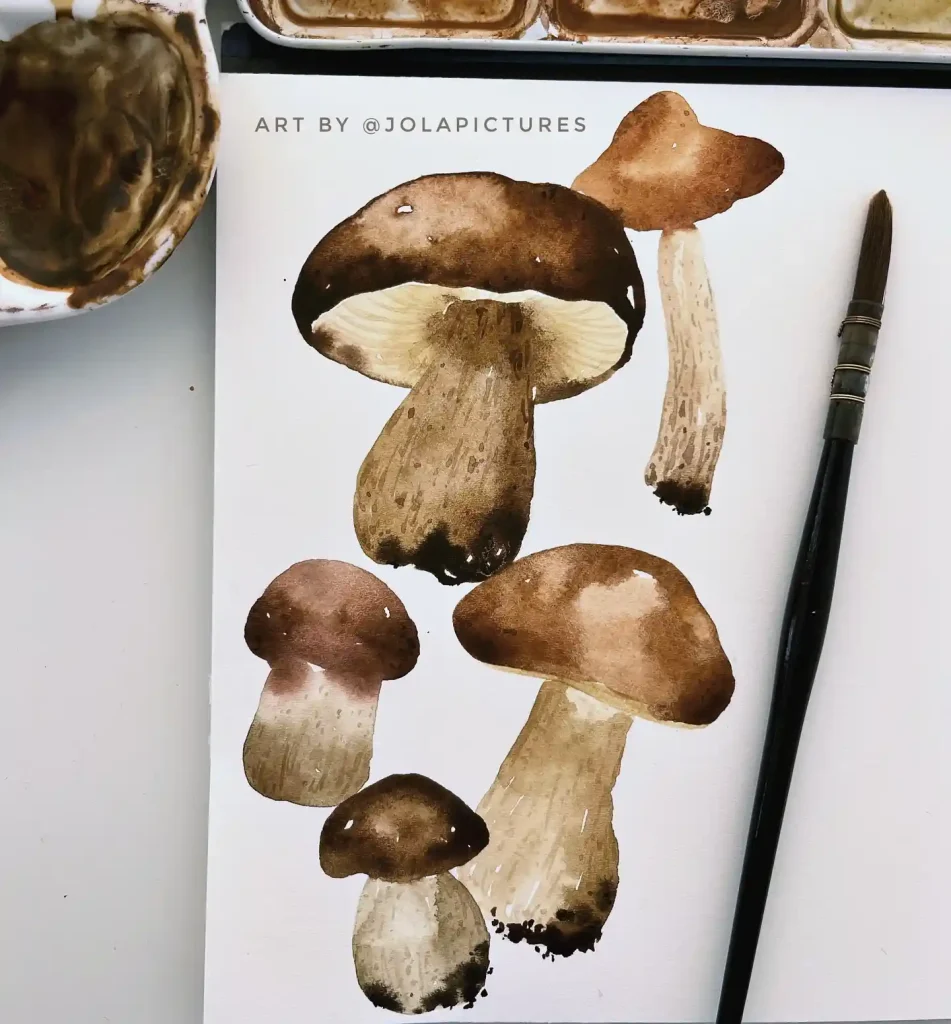
Stacked in a towering composition, these brown mushrooms display a wonderful range of shapes and sizes. The artist used wet-on-wet techniques to blend the sepia tones, giving the caps a soft, organic volume. It feels like a scientific chart brought to life with artistic flair. The subtle spatter at the base adds a nice touch of grit and soil.
4. Sunlit Forest Floor Watercolor Mushroom on Heavy Grain Paper
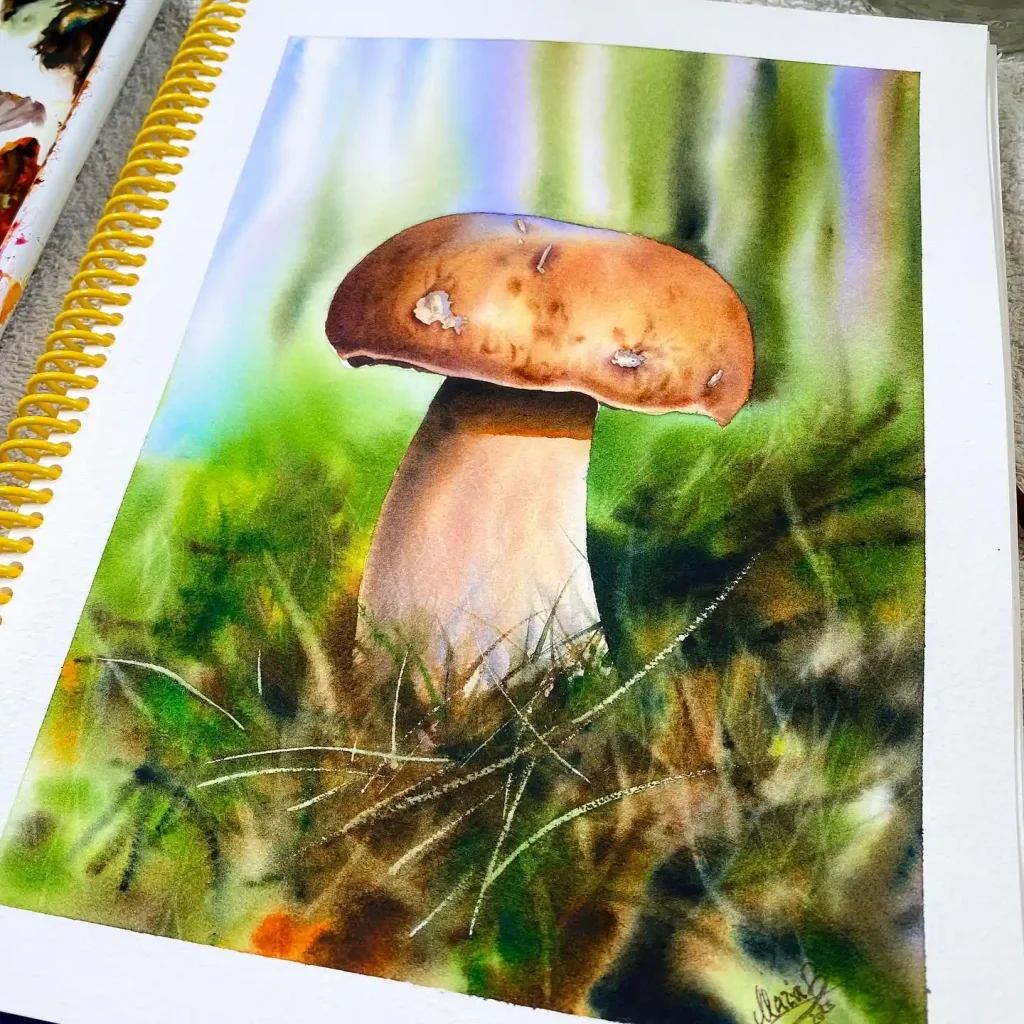
Vibrant greens surround a sturdy brown bolete, creating a scene full of life and light. The soft, blurred background suggests a deep forest setting, while the sharp details on the stem anchor the subject. This piece tells a story of discovery, like stumbling upon a hidden giant in the moss. The play of light and shadow is truly magical.
5. Glowing Red Amanita Watercolor Mushroom on Dark Watercolor Background
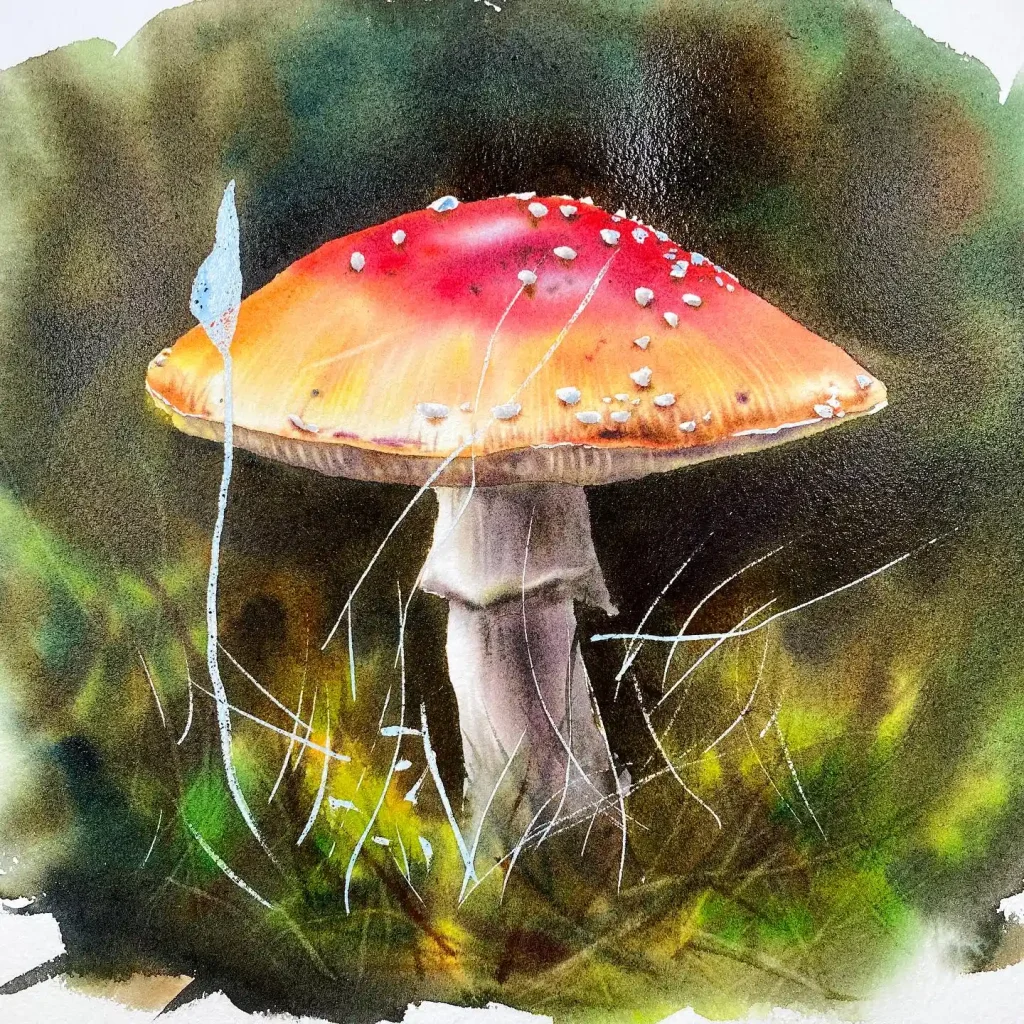
Luminous and bold, this red cap stands out against a mysterious, dark green backdrop. The white spots are left unpainted, showcasing the brilliance of masking fluid techniques. It feels almost fairytale-like, capturing the iconic look of the most famous mushroom in folklore. The contrast between the bright red and the deep shadows creates an intense, dramatic mood.
6. Autumn Still Life Watercolor Mushroom on Cream Art Paper
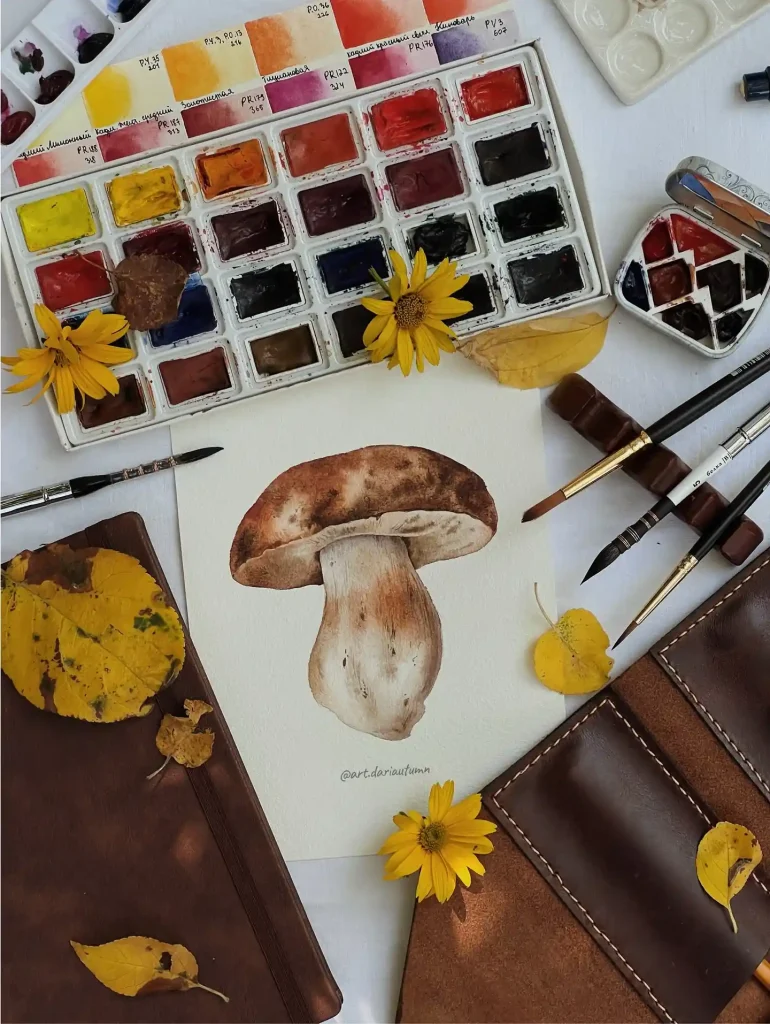
Resting among yellow flowers and fallen leaves, this large bolete is the star of a seasonal flat lay. The artist captured the smooth, matte texture of the cap with delicate layering of brown washes. It is a relaxed, hobbyist-style composition that celebrates the joy of foraging. The warm color palette perfectly evokes the crisp, golden feeling of October.
7. Textured Red Cap Watercolor Mushroom on Rough Surface Paper
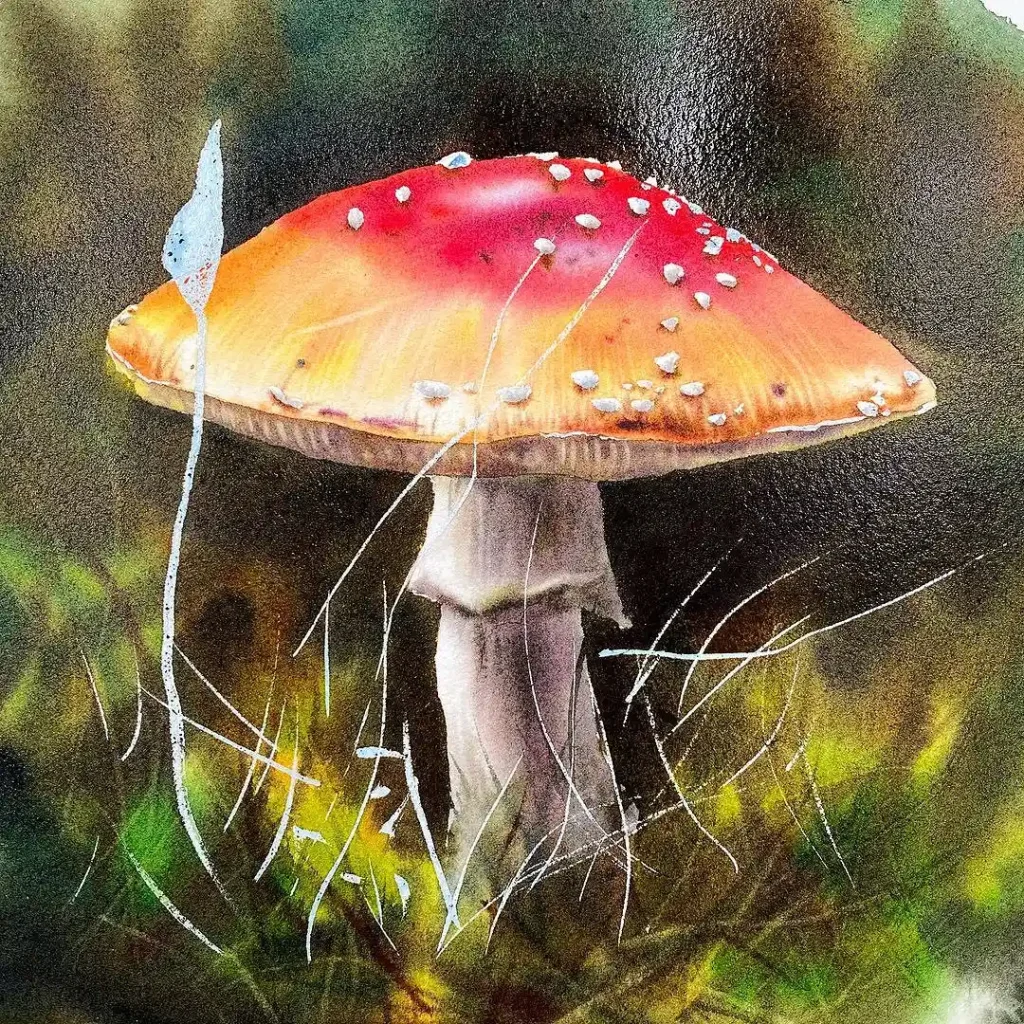
White scratches and texture lines give this red toadstool a raw, energetic feel. The artist used a dry brush technique to create the grassy foreground, adding movement and depth. It represents the wild, untamed spirit of the forest floor. The way the light hits the top of the cap makes it look almost wet with morning dew.
8. Colorful Fungi Lineup Watercolor Mushroom on Sketchbook Page
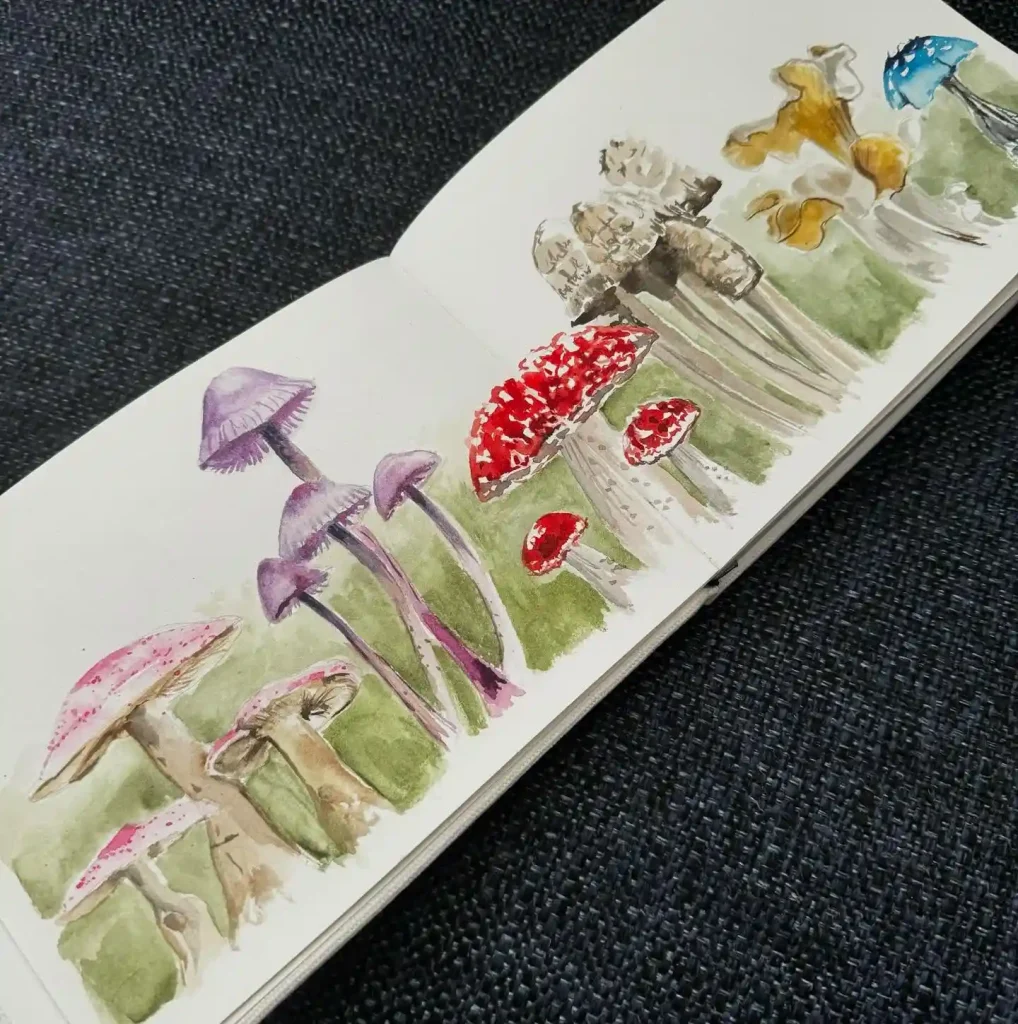
A delightful parade of mushrooms stretches across the page, showcasing everything from purple caps to red-spotted toadstools. This playful panoramic view invites you to compare the incredible variety of shapes found in nature. The loose, sketchy style gives it a fresh, field-journal vibe. It is an imaginative collection that would inspire any nature lover to start drawing.
9. Whimsical Fairy House Watercolor Mushroom on Textured Watercolor Sheet
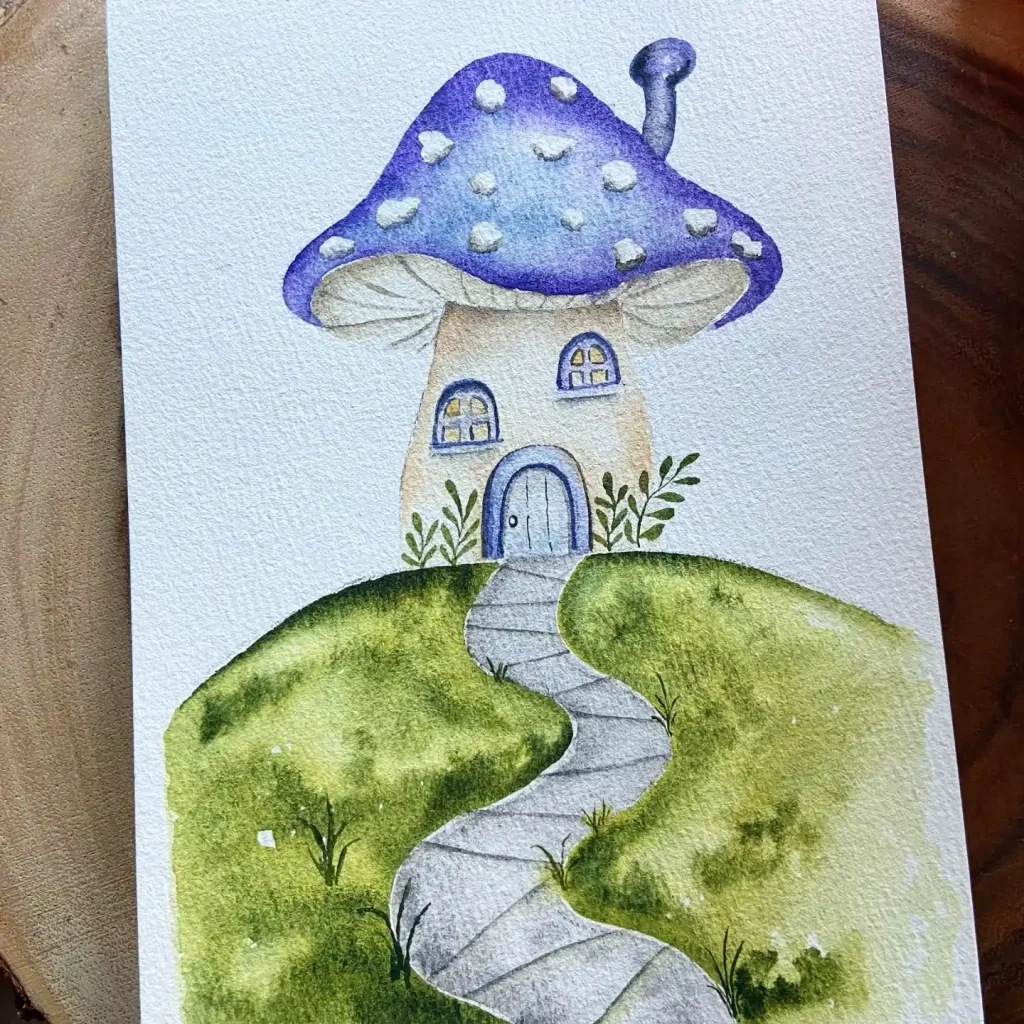
This purple-capped mushroom doubles as a charming little cottage, complete with windows and a stone path. It invites viewers into a magical world where tiny creatures might live. The soft green hill and blue roof create a calm, dreamlike atmosphere. This piece is a wonderful example of how art can turn a simple subject into a storybook adventure.
10. Garden Circle Watercolor Mushroom on Smooth Illustration Board
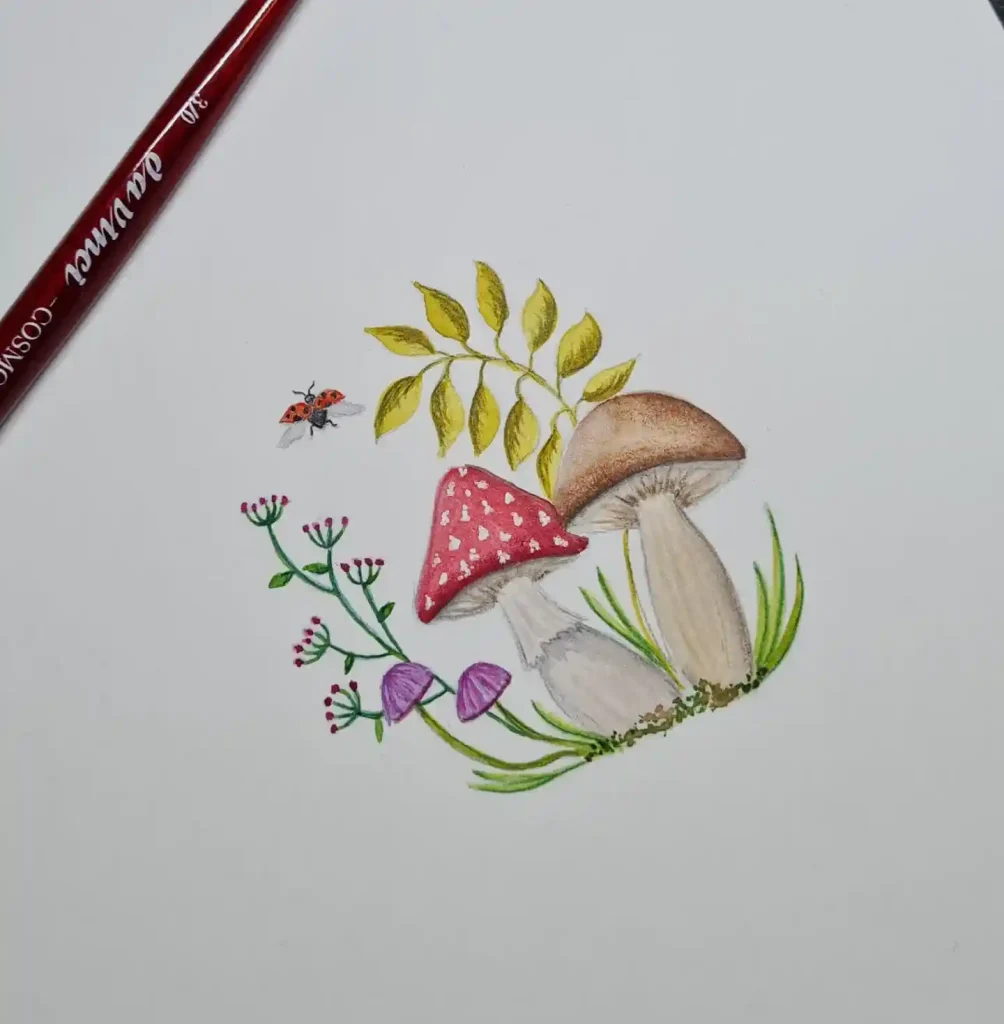
Framed by delicate leaves and a tiny ladybug, this composition feels incredibly sweet and balanced. The pairing of the red toadstool with the brown mushroom creates a lovely color harmony. It is a refined, minimal design that focuses on the elegance of botanical forms. The clean white space around the circle makes the details feel precious and intentional.
11. Sturdy Bolete Duo Watercolor Mushroom on Vertical Art Sheet
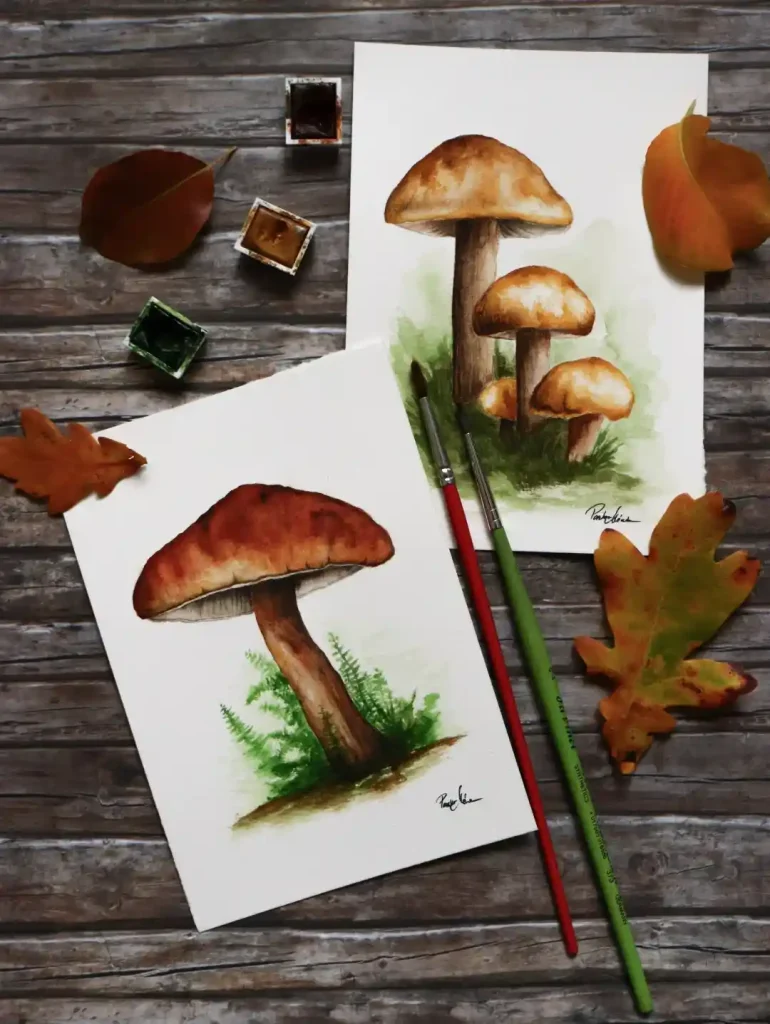
Two robust mushrooms stand tall in this earthy study, featuring smooth, tan caps and thick stems. The artist used a wet-on-dry technique to build up the rich brown tones, giving the caps a believable weight. Notice the delicate green ferns at the base, which add a lovely textural contrast. It feels like a quiet, grounded moment in an old forest.
12. Detailed Cap Study Watercolor Mushroom on Spiral Bound Sketchbook
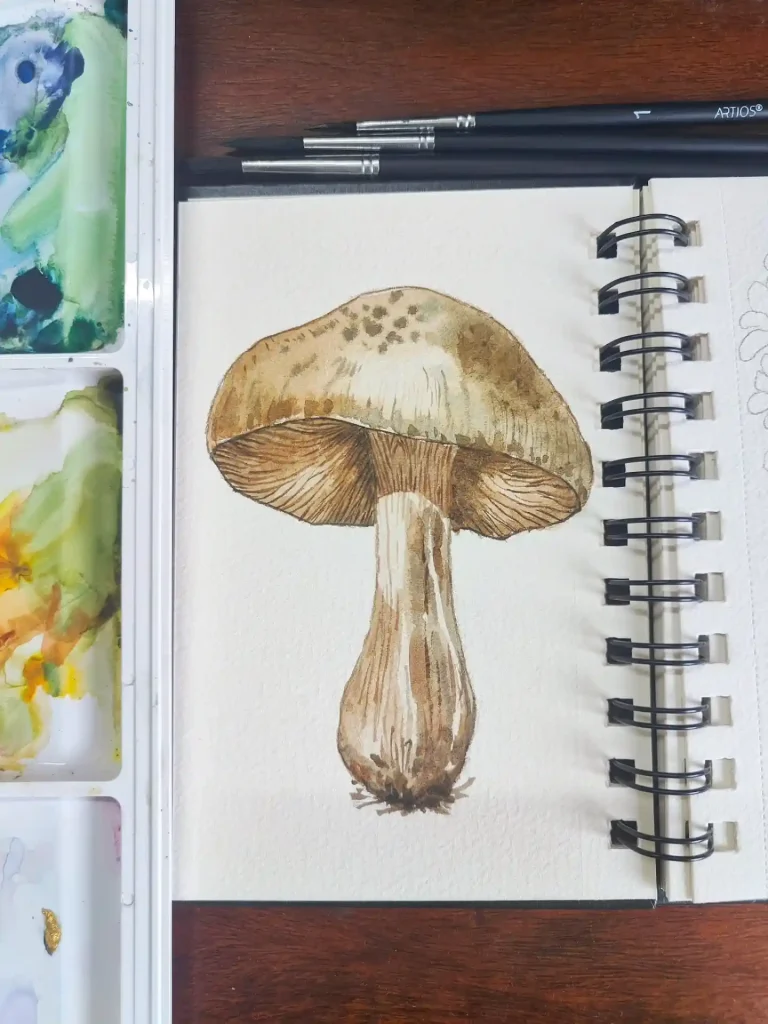
This single, large mushroom dominates the page with its intricate gill details and textured cap. The artist focused on capturing the organic imperfections, using small, precise strokes to render the spots. The neutral background allows the viewer to appreciate the subtle color variations in the stem. It is an excellent educational example of botanical observation.
13. Autumn Crown Watercolor Mushroom on Smooth White Card
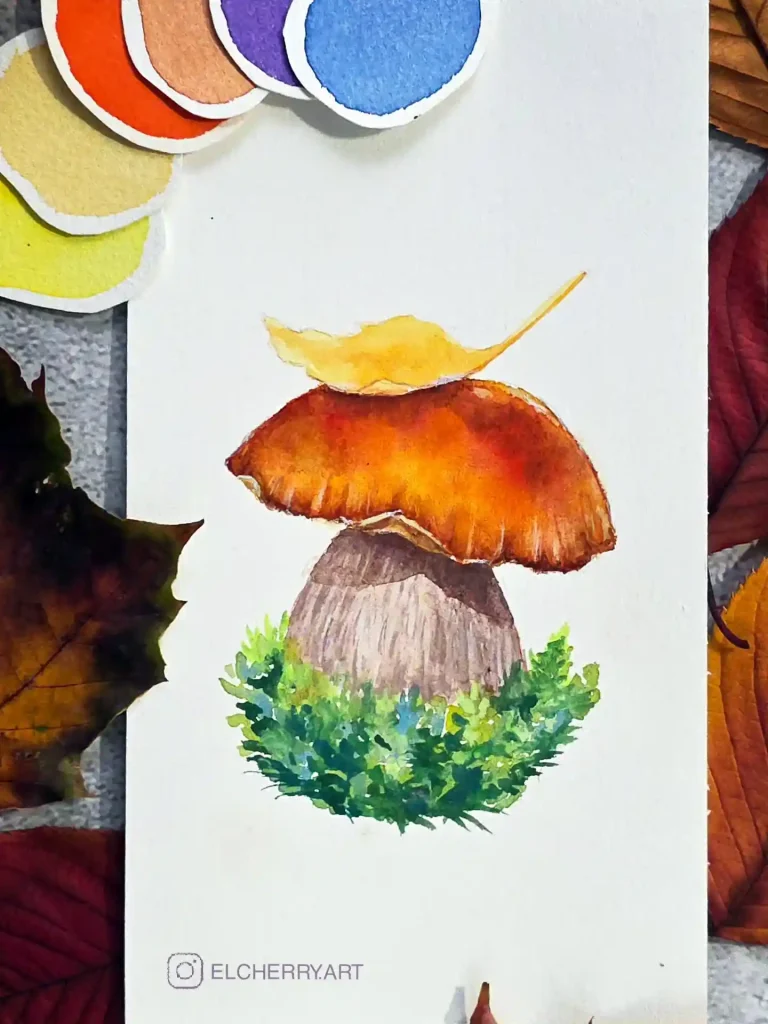
A golden yellow leaf rests perfectly atop this orange-capped mushroom, creating a quintessential fall scene. The vibrant, warm colors of the cap blend beautifully into the cool green moss below. It feels like a playful, serendipitous moment discovered on a crisp afternoon walk. The composition is simple, balanced, and full of seasonal charm.
14. Forest Gathering Watercolor Mushroom on Wide Format Paper
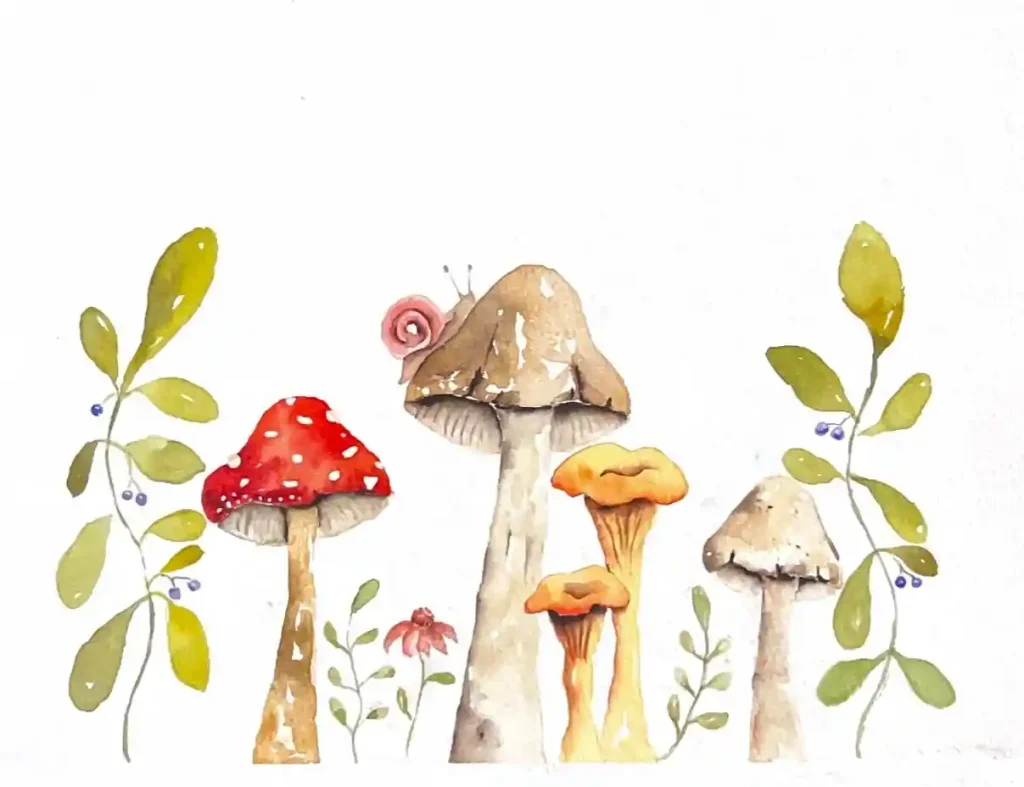
A delightful variety of fungi, from tall brown stalks to bright red toadstools, line up in this whimsical illustration. The addition of a tiny snail and blue berries adds a layer of narrative charm. It feels like a scene from a children’s storybook where the forest floor is teeming with life. The soft, pastel colors create a gentle and inviting atmosphere.
15. Botanical Lineup Watercolor Mushroom on Textured Cotton Paper
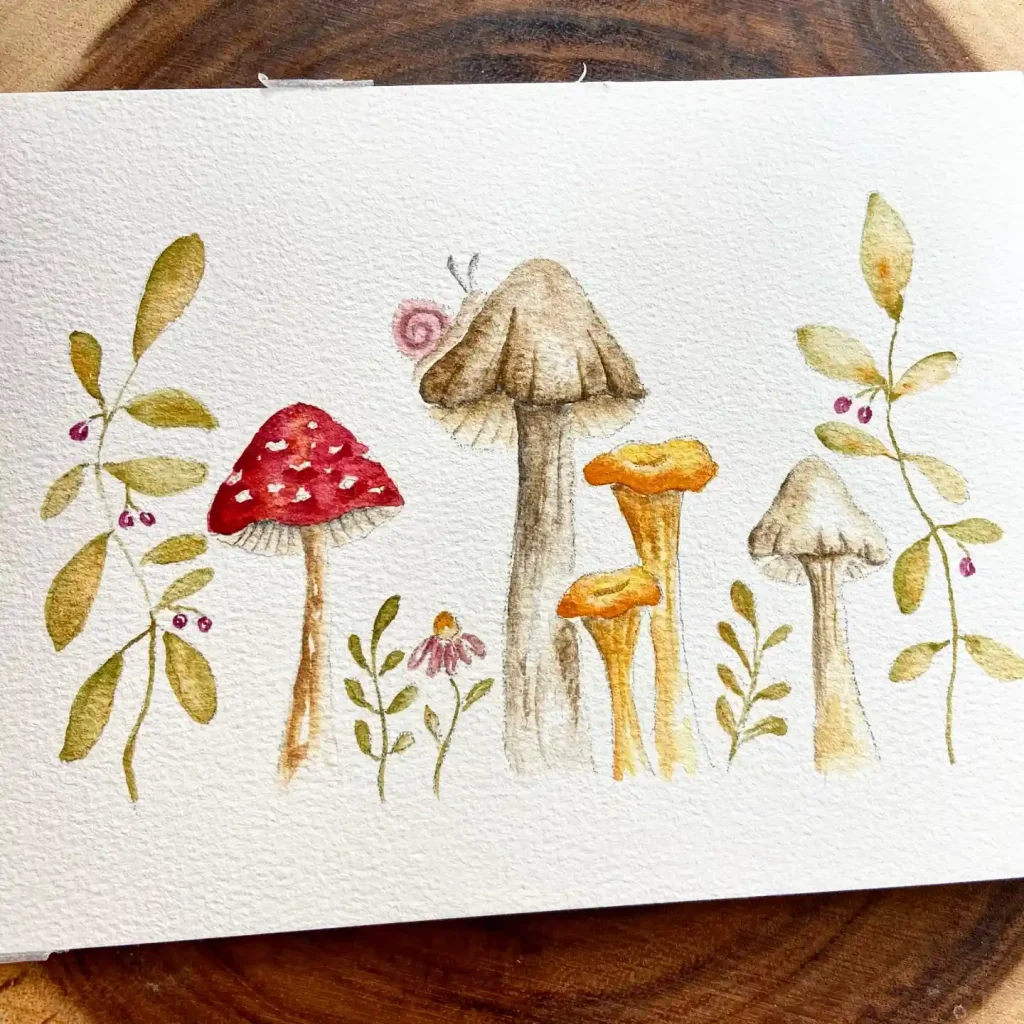
Showcasing a diverse collection of woodland treasures, this piece balances scientific accuracy with artistic softness. The red, brown, and yellow caps create a pleasing rhythm across the page. Delicate sprigs of berries and leaves weave between the stems, unifying the composition. It is a lovely tribute to the biodiversity found on a single nature hike.
16. Moody Shadow Watercolor Mushroom on Rough Watercolor Paper
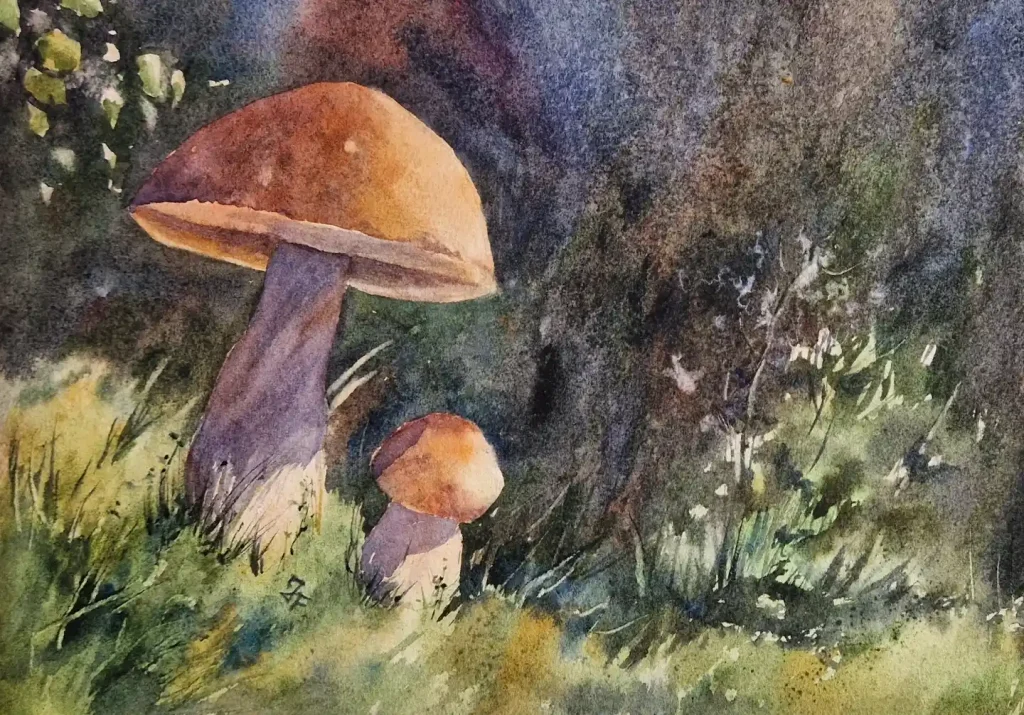
Deep, dark shadows surround this large brown mushroom, creating a mysterious and atmospheric setting. The artist used loose, expressive washes in the background to suggest a dense, overgrown forest. The way the light hits the edge of the cap adds a dramatic sense of volume. It captures the hidden, secretive nature of fungi growing deep in the woods.
17. Green Fantasy Watercolor Mushroom on Sketchbook Page
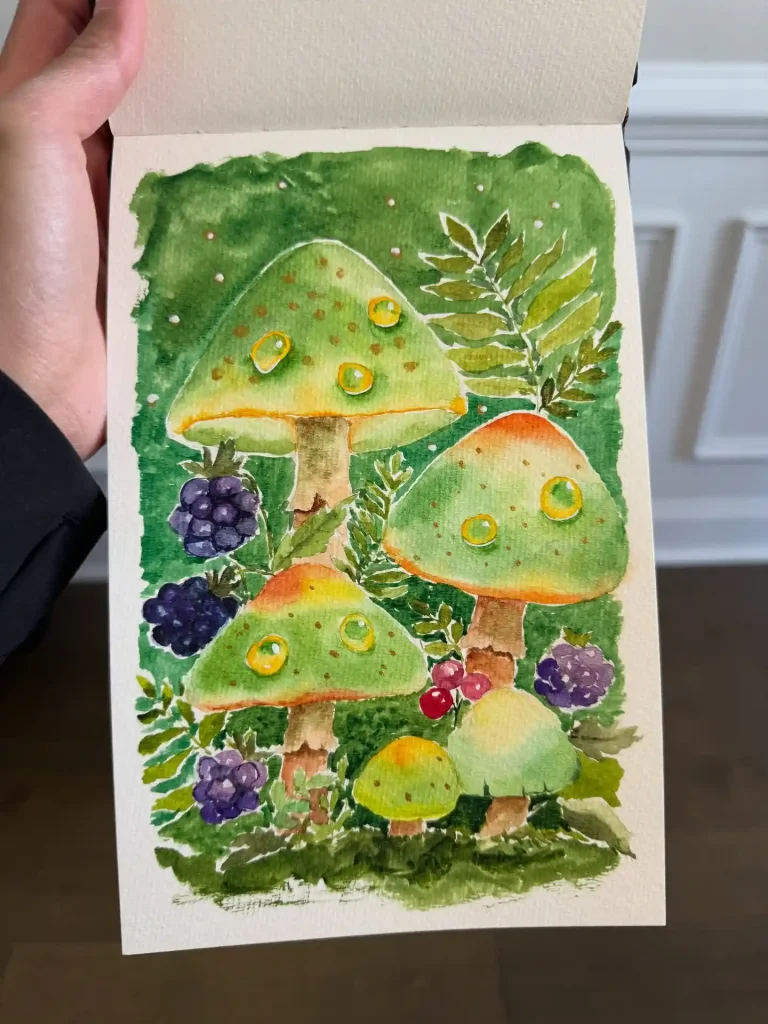
Vibrant green caps with yellow spots give these mushrooms a magical, otherworldly appearance. Surrounded by dark blackberries and ferns, the scene feels like a secret garden potion. The artist used bold, saturated colors to create a striking contrast against the white paper. It is an imaginative and dreamlike interpretation that sparks curiosity.
18. Rainbow Cap Watercolor Mushroom on Textured Art Card
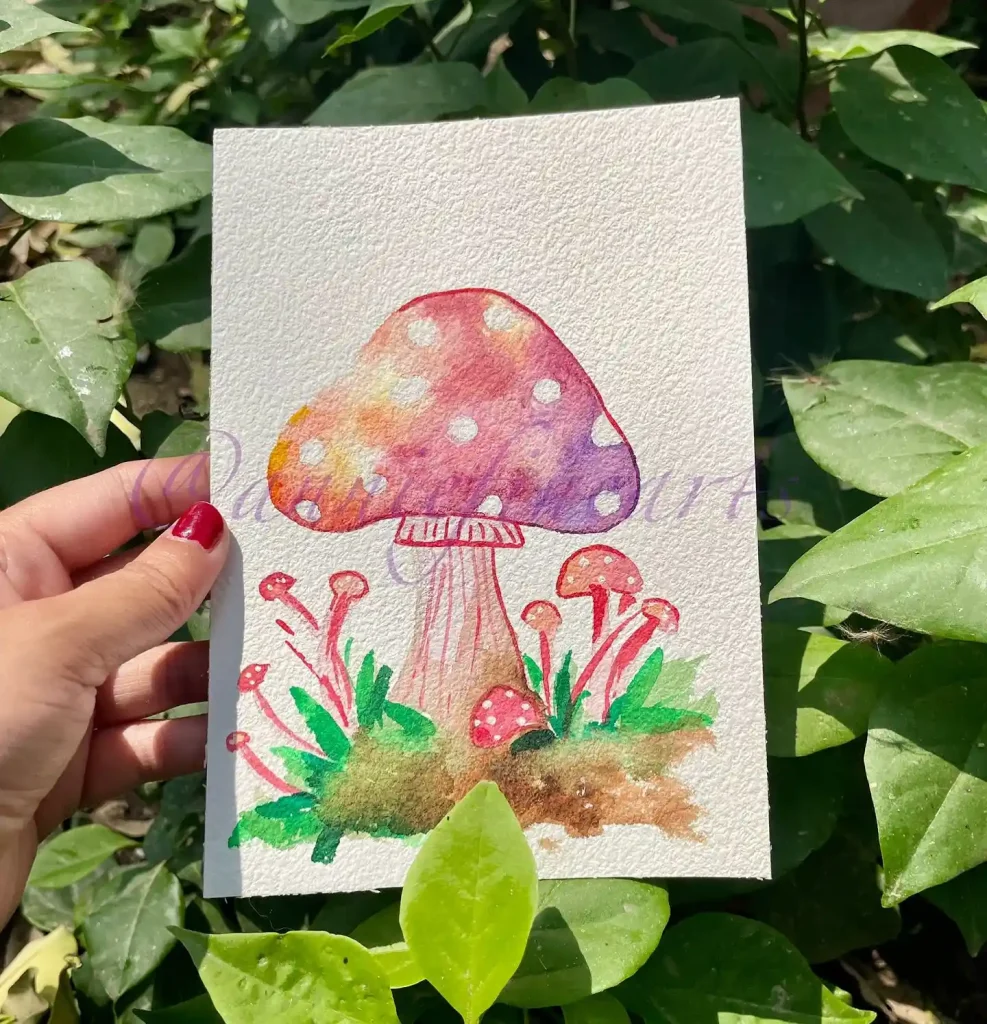
Swirls of pink, orange, and purple blend together on this whimsical mushroom cap. The artist stepped away from realism to explore a more playful, colorful fantasy. The tiny red mushrooms at the base add a sense of scale and community. It is a joyful expression of creativity that reimagines nature in a bright, happy palette.
19. Family Cluster Watercolor Mushroom on Cream Toned Paper
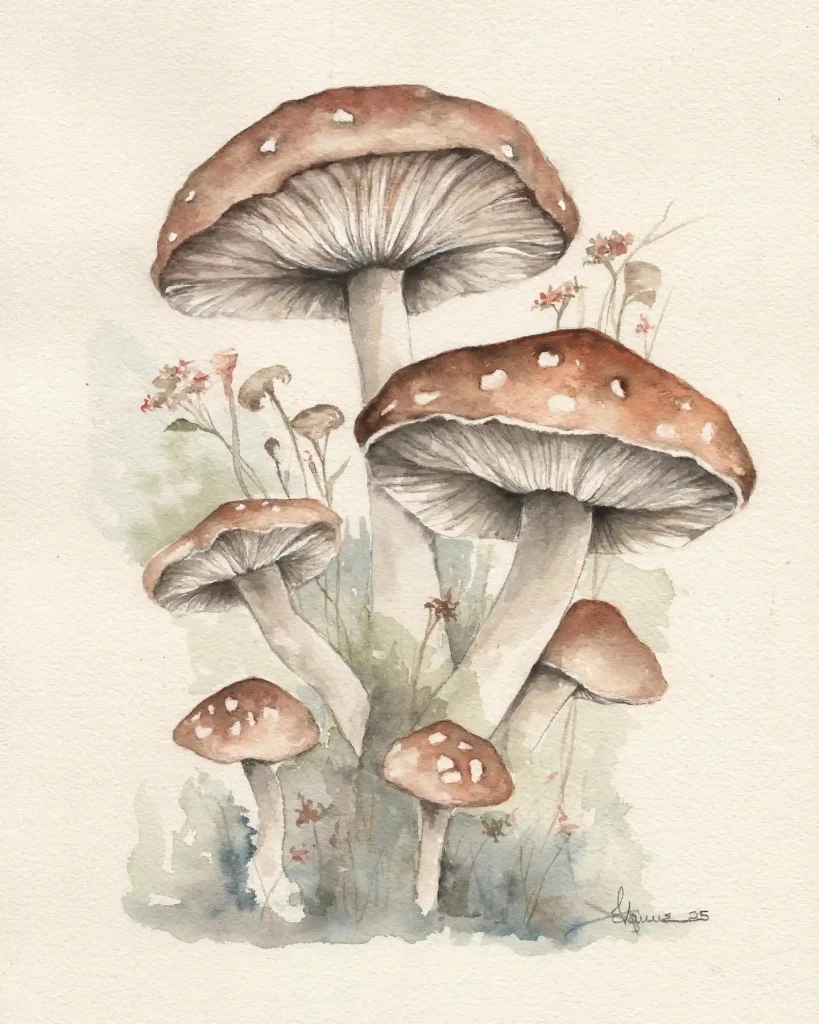
A large group of brown mushrooms huddle together, symbolizing connection and growth. The delicate shading on the gills demonstrates a high level of patience and skill. Soft, muted greens and pink flowers in the background provide a gentle context without distracting from the main subject. It feels like a classic, timeless botanical illustration.
20. Textured Red Pair Watercolor Mushroom on Hand-Torn Paper
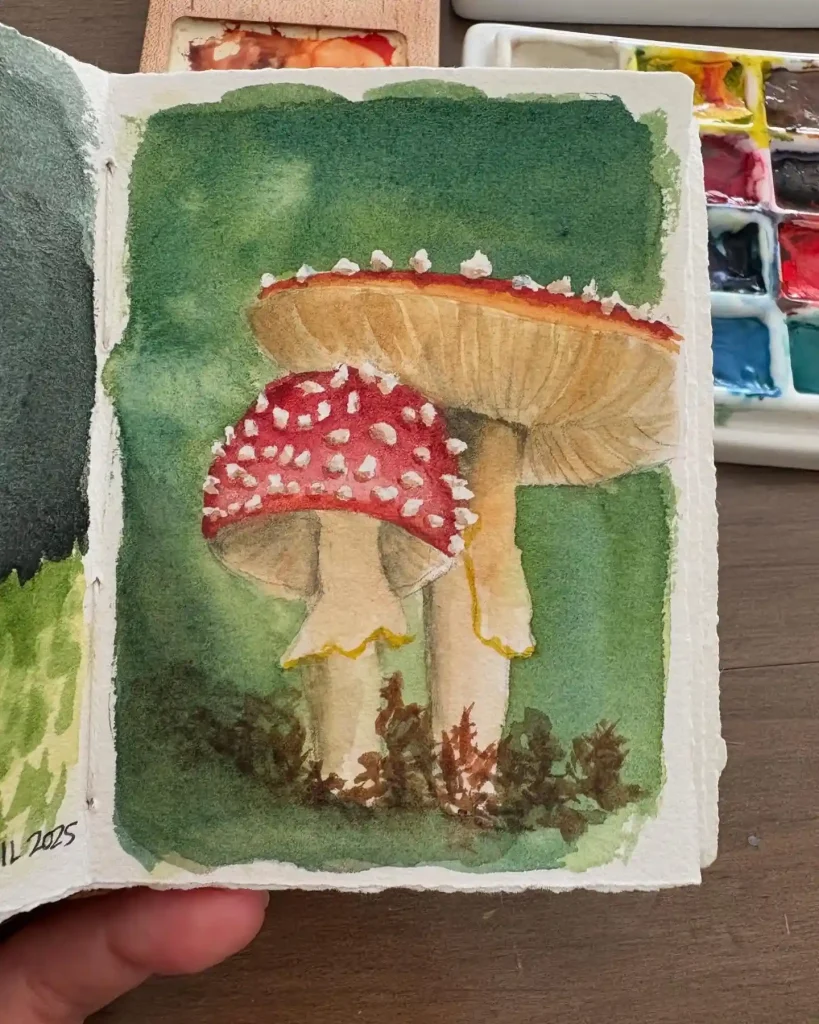
Two bright red amanitas with textured white spots pop against a deep green background. The artist used thick, opaque white paint for the dots, creating a tactile, 3D effect. The rough edges of the paper add to the rustic, handmade feel of the artwork. It is a bold, energetic piece that celebrates the most iconic mushroom of them all.
21. Vibrant Red Trio Watercolor Mushroom on Textured Cotton Paper
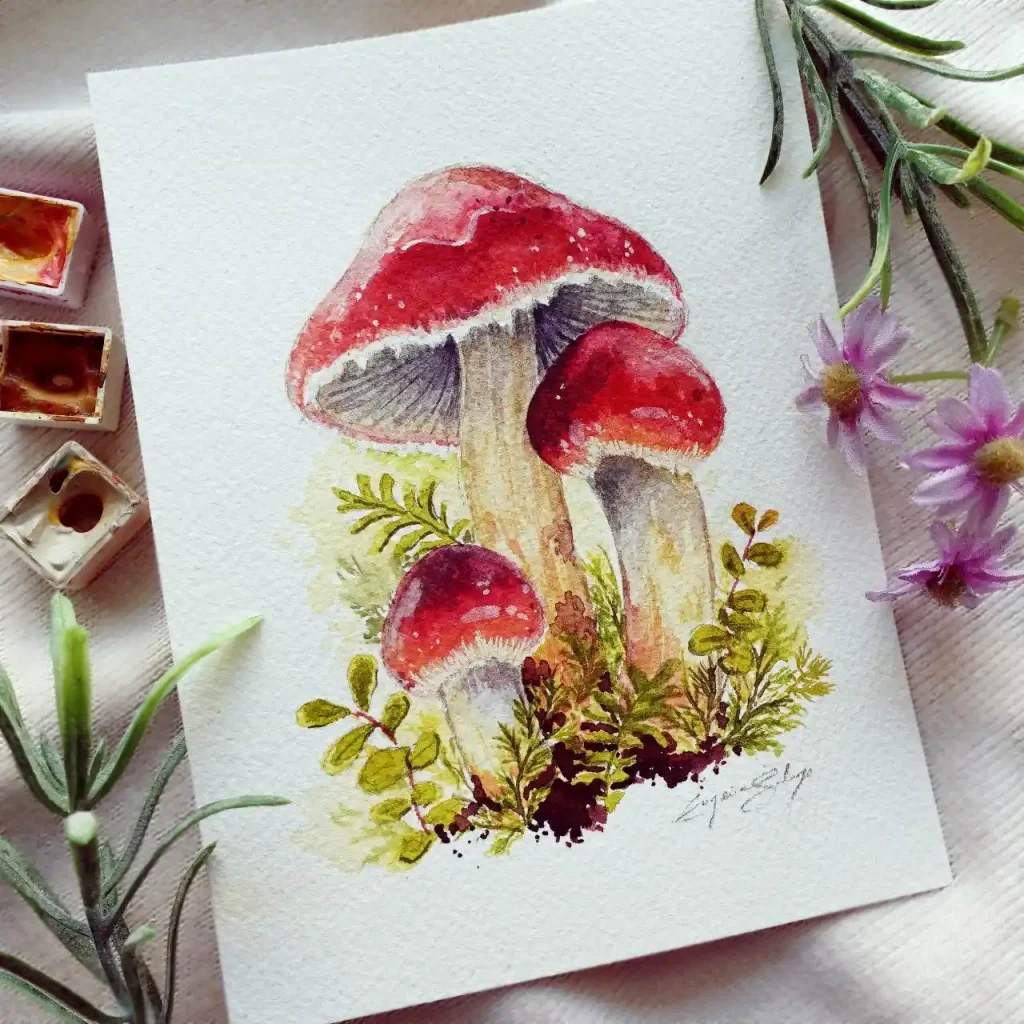
Bright red caps dominate this lively composition, showing a family of fungi in different growth stages. The artist used fine, dry brushstrokes to texture the gills, adding incredible realism to the underside. Vivid green foliage at the base grounds the subjects perfectly. It is a fantastic study of how contrasting colors like red and green can create visual vibration.
22. Autumn Forage Watercolor Mushroom on Square Art Card
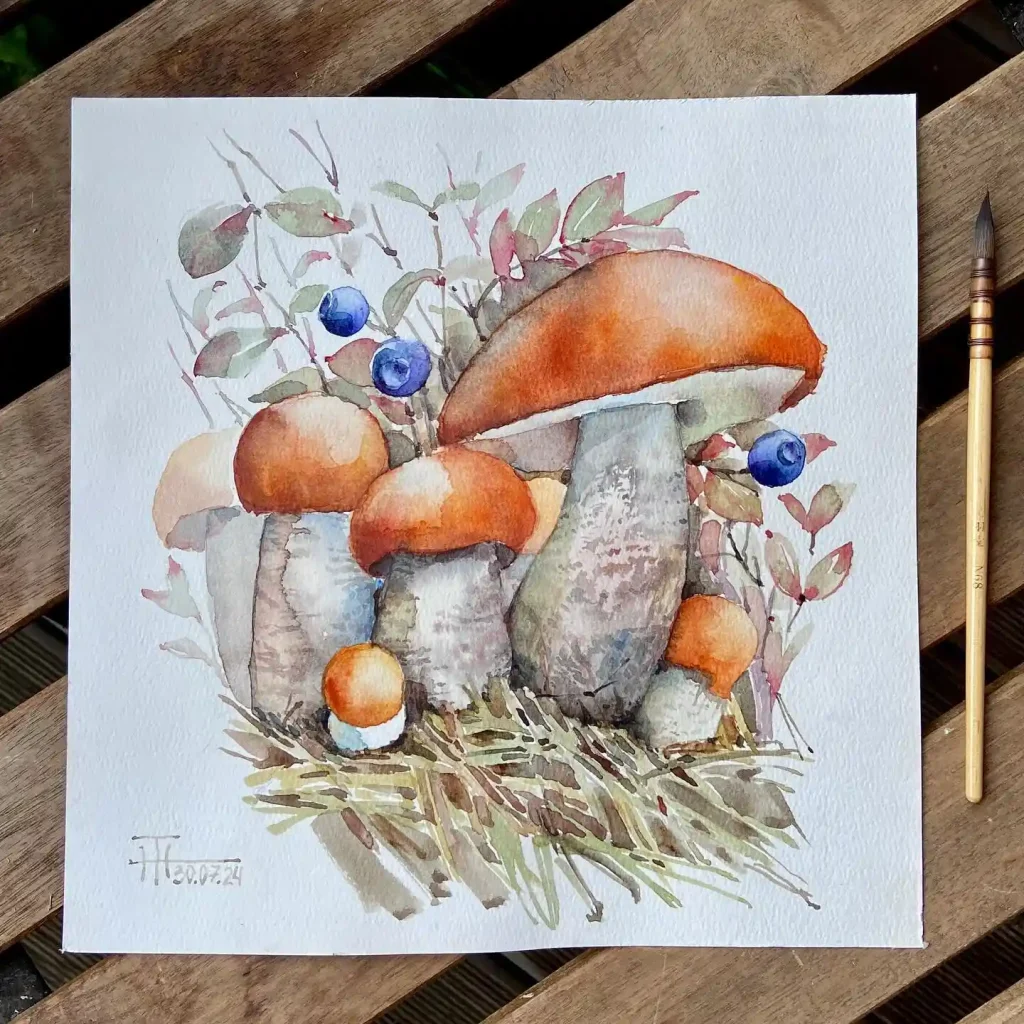
Autumn vibes radiate from this cozy collection of orange-brown mushrooms and plump blueberries. The soft, washed-out background leaves create a lovely sense of depth behind the crisp main subjects. Looking at the textures, you can almost feel the smooth caps and rough stems. It captures the rewarding feeling of a successful forage in a quiet, hidden forest glade.
23. Solitary Guardian Watercolor Mushroom on Cold-Pressed Block
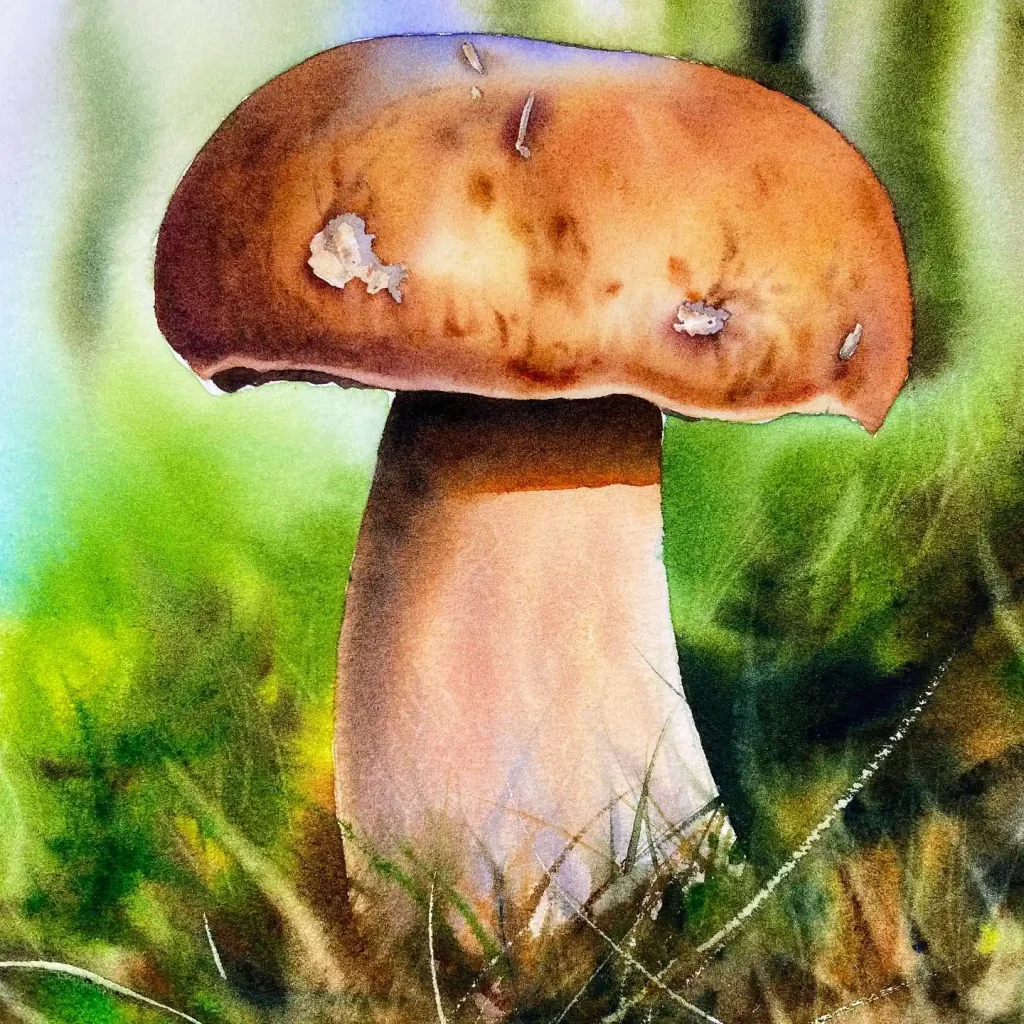
Glowing light hits the smooth cap of this solitary mushroom, creating a warm, inviting focal point. The background is a lush, blurred wash of greens that suggests a deep woodland setting without distraction. This piece focuses heavily on the solidity and weight of the stem. It stands as a silent, sturdy guardian of the forest floor, evoking resilience.
24. Whimsical Spatter Watercolor Mushroom on Smooth White Paper
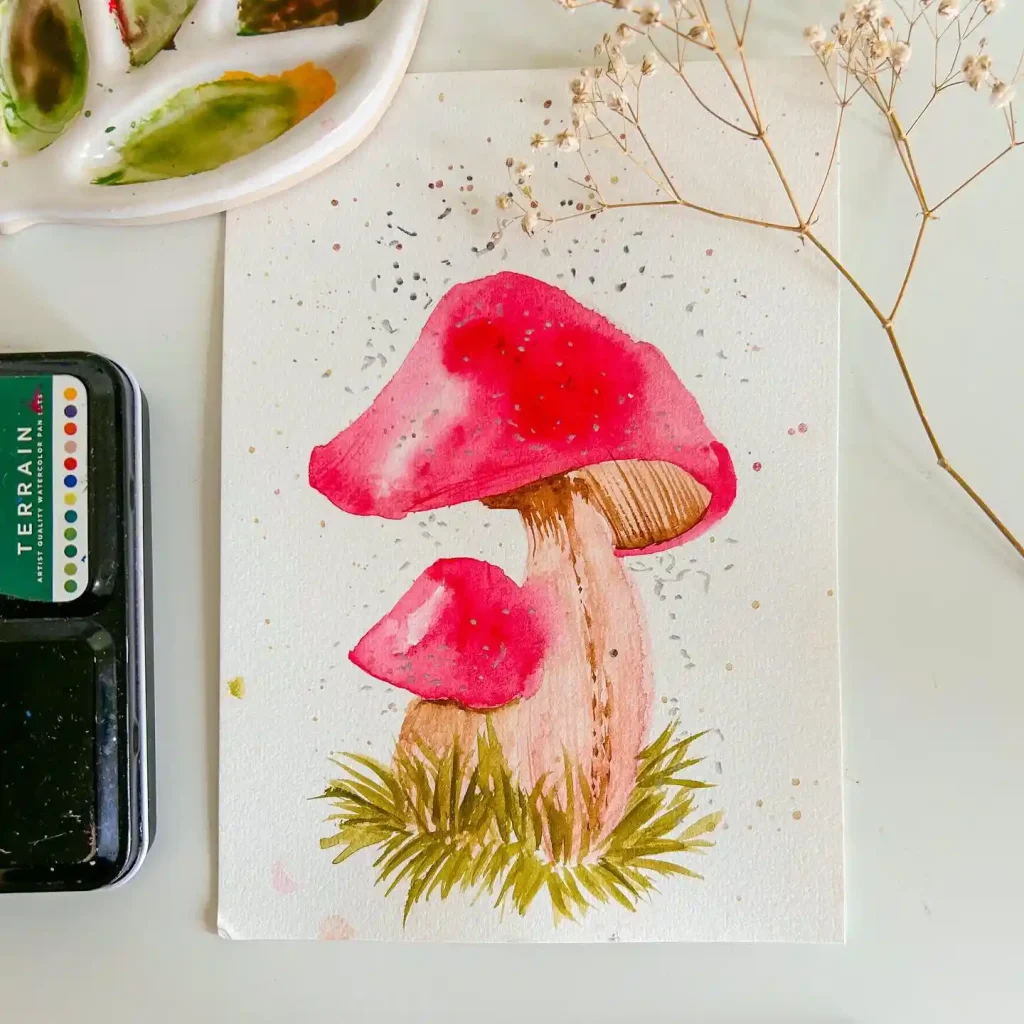
Playful spatters of paint surround these two vibrant mushrooms, giving the piece a sense of magical energy. The artist chose a unique pinkish-red hue that feels modern and fresh compared to traditional earth tones. Delicate grass blades at the bottom anchor the floating forms. It is a whimsical interpretation that reminds us not to take art too seriously.
25. Celestial Light Watercolor Mushroom on Rough Grain Paper
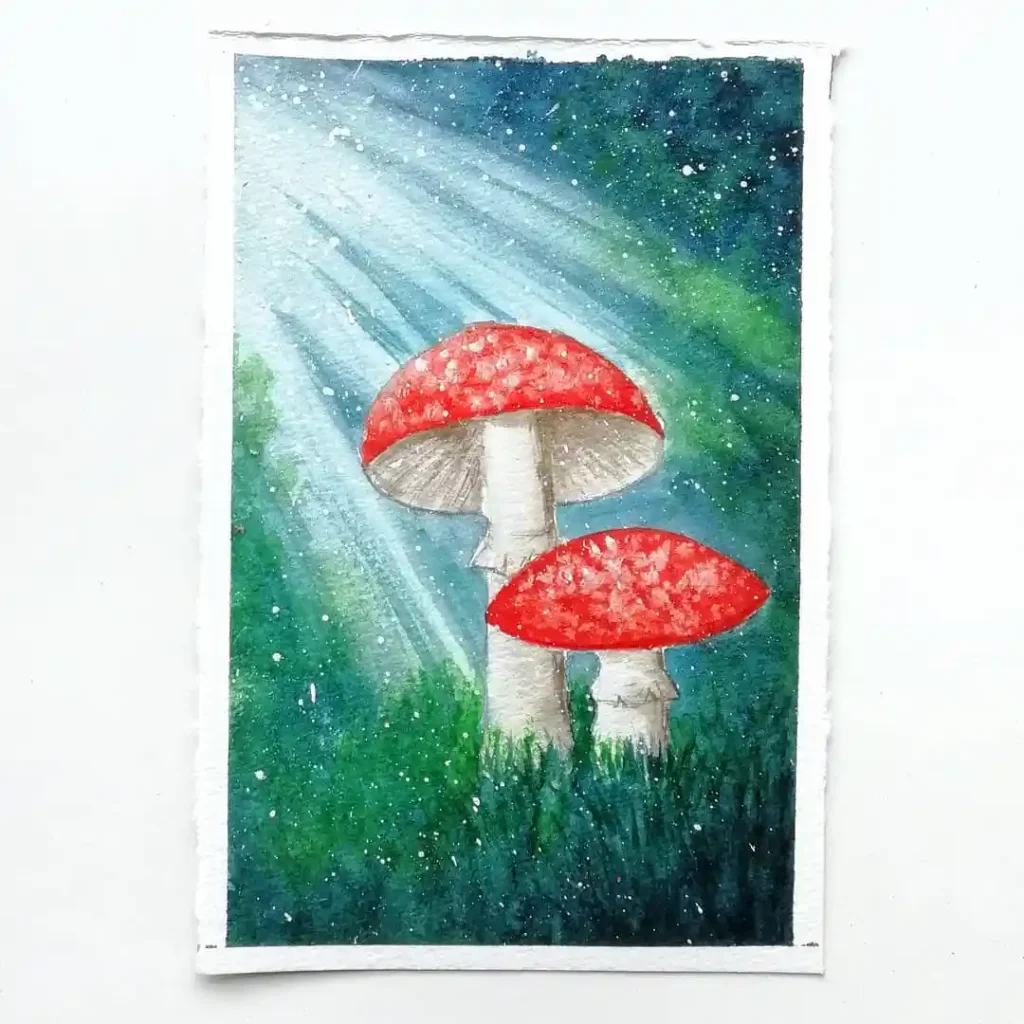
Celestial rays of light beam down on these two red toadstools, turning a simple scene into something sacred. The white speckles on the caps seem to mimic the stars in the night sky above. This composition explores the connection between the earth and the heavens. Deep greens and blues in the background create a mystical, dreamlike atmosphere.
26. Simple Garden Watercolor Mushroom on Postcard Sized Paper
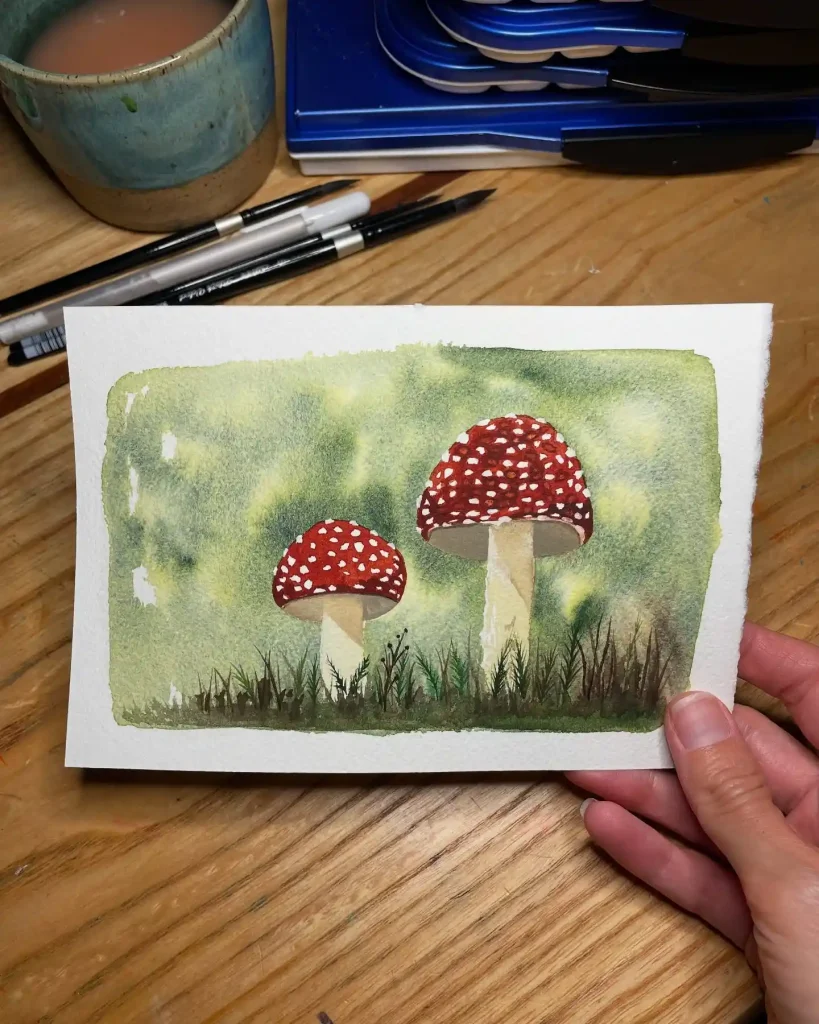
Clean and crisp, this study features two classic red mushrooms against a simple green wash. The artist used negative space effectively to define the white stalks without heavy outlining. It demonstrates how a limited color palette can still produce a striking image. This minimal approach allows the viewer to focus entirely on the beautiful, organic shapes of nature.
27. Sketchbook Specimen Watercolor Mushroom on Journal Page
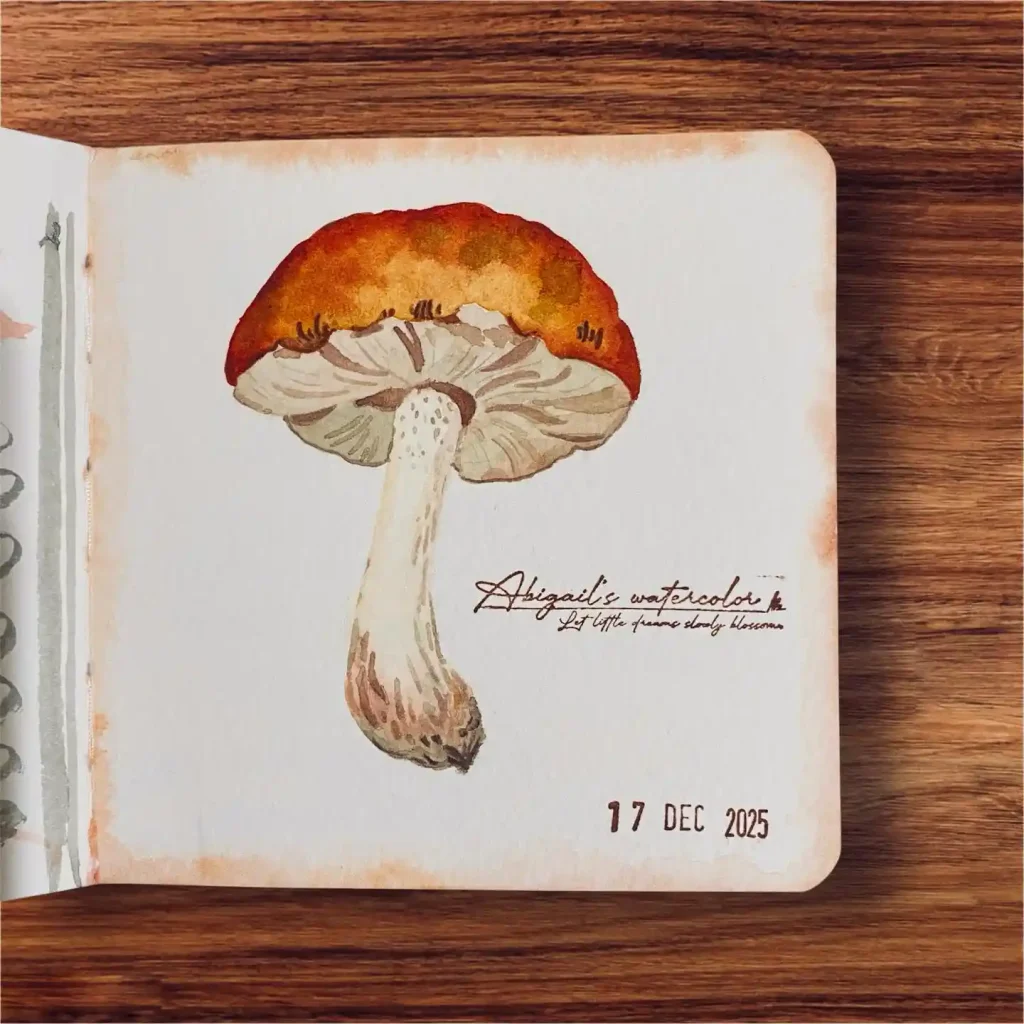
Captured in a sketchbook, this tall, slender mushroom feels like a fleeting memory preserved on paper. The rusty orange cap contrasts beautifully with the pale, textured stem. Handwritten notes add a personal, diary-like element to the composition. It is a reflective piece that honors the quiet practice of daily observation and the simple beauty found in small things.
28. Vintage Trio Watercolor Mushroom on Antique Toned Paper
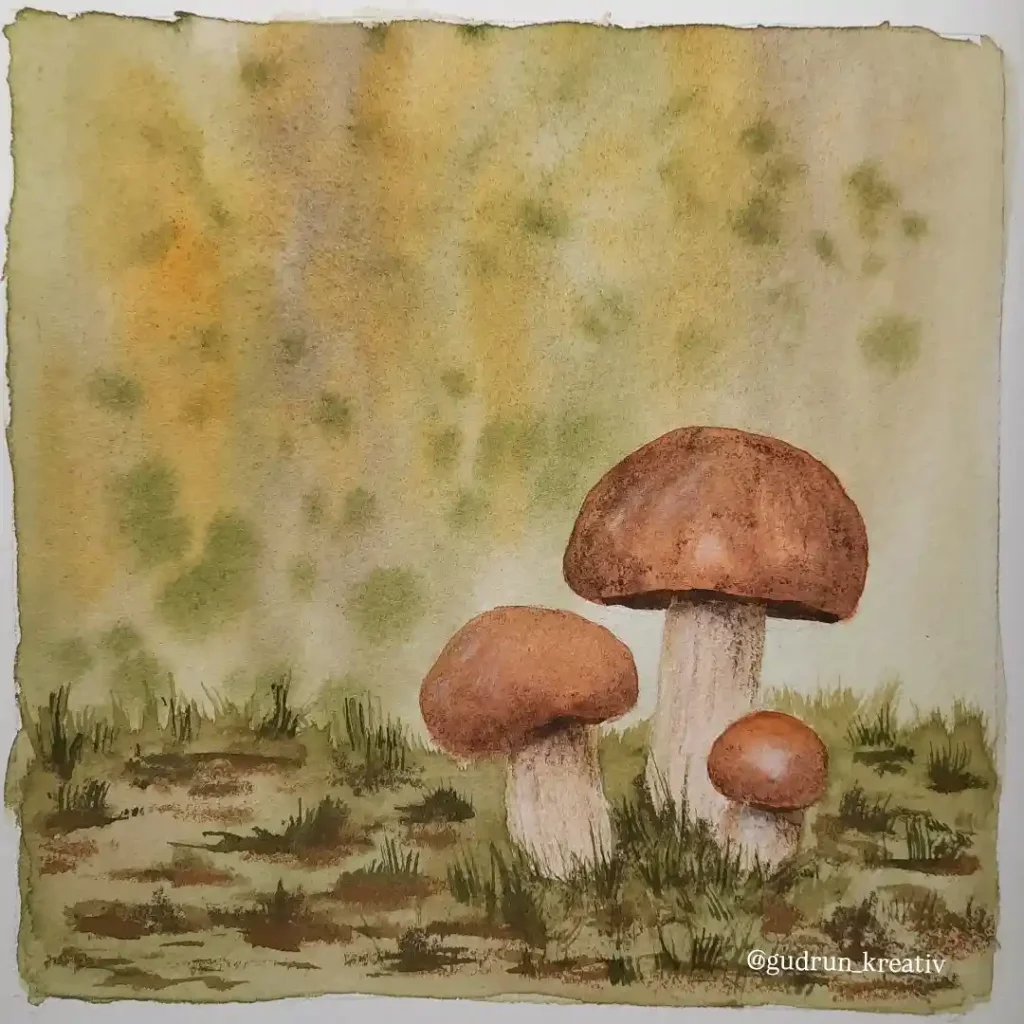
Earthy tones wash over this trio of brown mushrooms, creating a soft and vintage aesthetic. The background is a hazy blend of olive and ochre that mimics a damp, mossy forest floor. This style feels reminiscent of old botanical textbooks used by early explorers. It encourages us to appreciate the subtle, often overlooked colors of the natural world.
29. Red Family Watercolor Mushroom on Bright White Cardstock
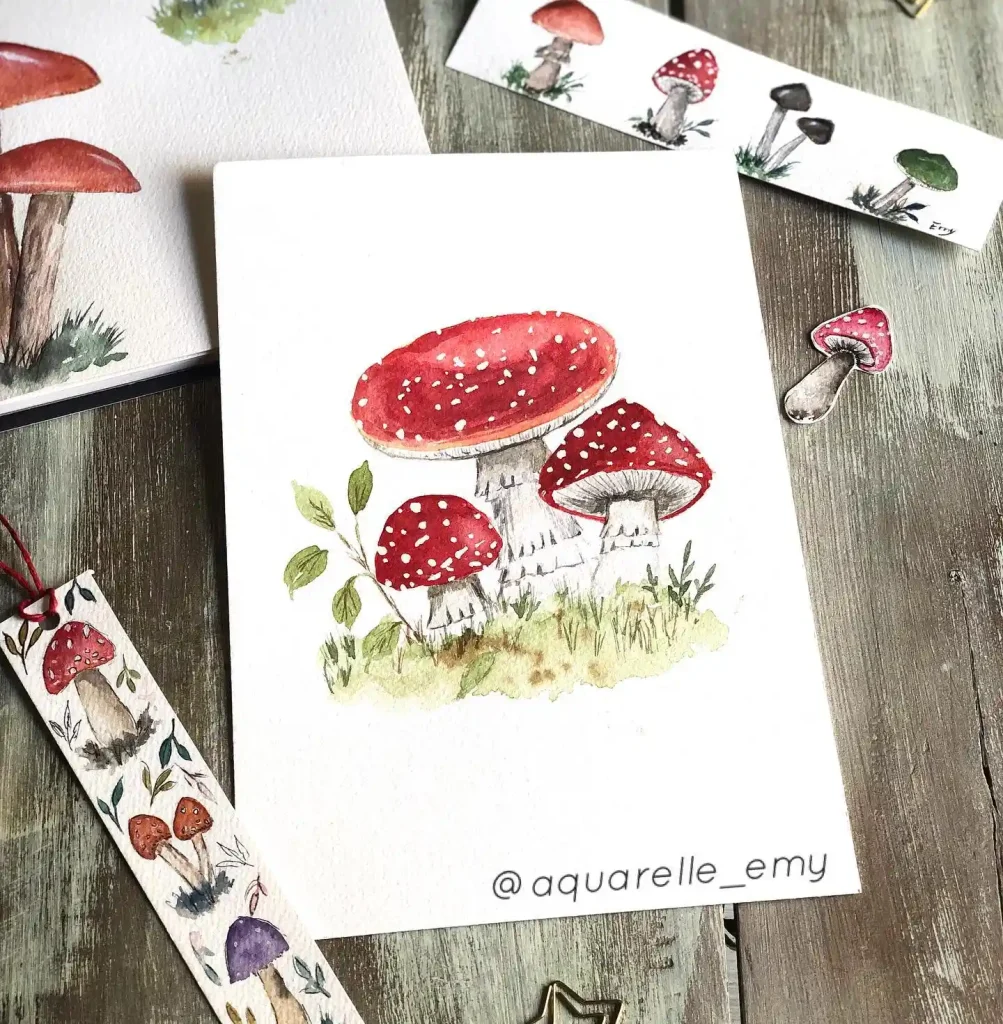
Matching the art to a handmade bookmark adds a lovely, functional dimension to this painting. The bright red caps are rendered with smooth gradients, showing the roundness of each form. Delicate green leaves sprout from the mossy base, adding life to the scene. It is a sweet, creative setup that celebrates the joy of making art for everyday use.
30. Fantasy Village Watercolor Mushroom on Illustration Board
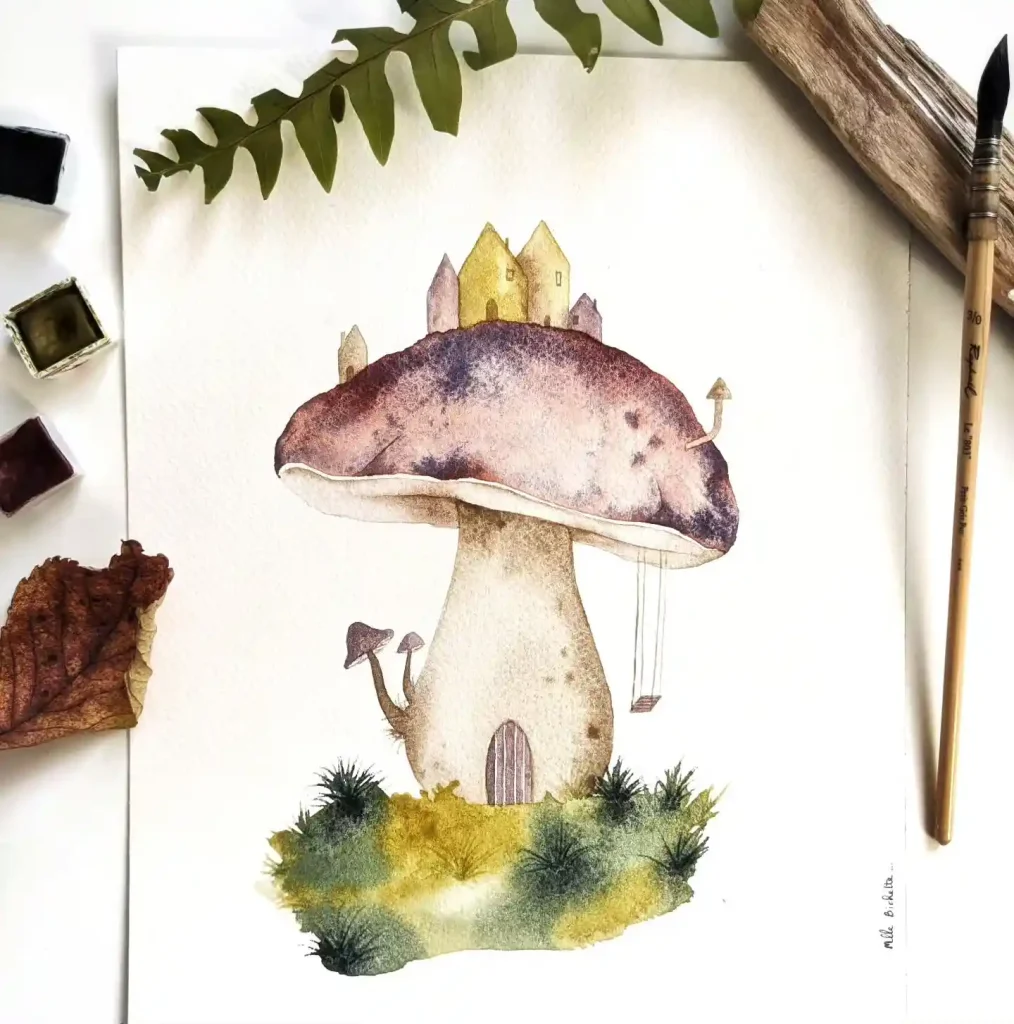
Fantasy comes alive in this charming illustration of a purple mushroom cap supporting a tiny village. A little swing hangs from the brim, inviting imaginary creatures to come and play. The soft, yellow glow from the windows suggests a cozy warmth inside. It is a pure flight of fancy that sparks childhood wonder and endless storytelling possibilities.
31. Diverse Species Study Watercolor Mushroom on Smooth White Paper
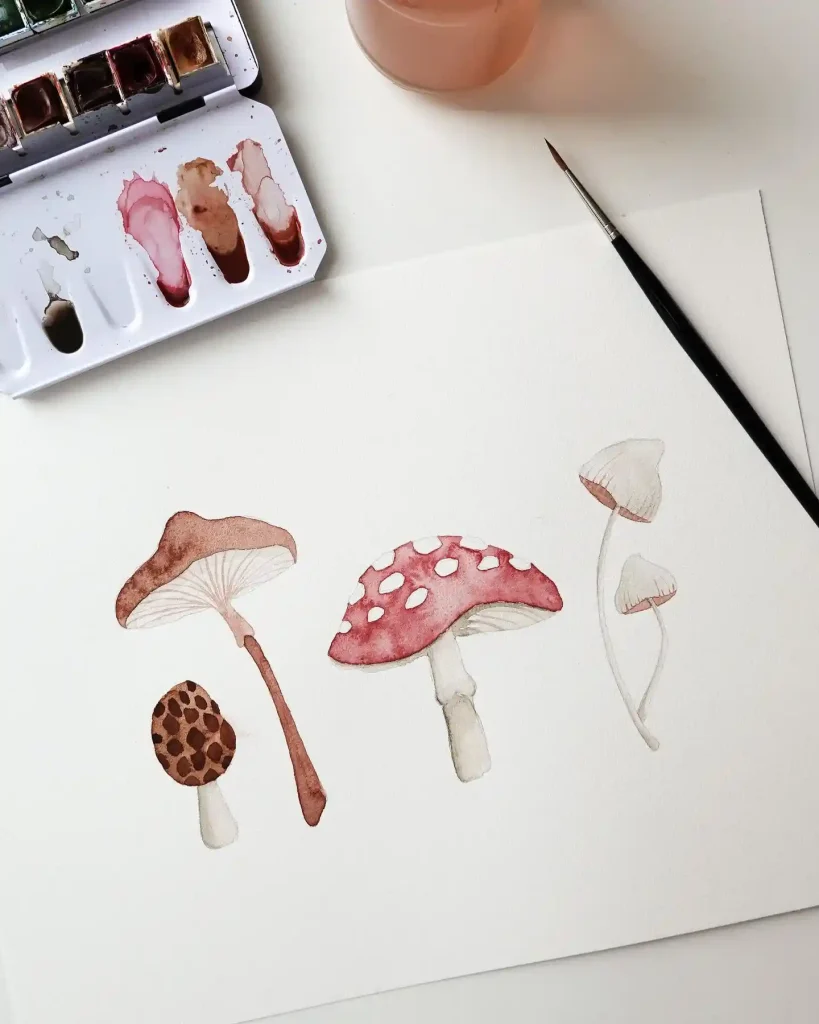
Three distinct species stand side by side, showcasing the diversity of the fungal kingdom. From the honeycomb texture of the morel to the classic spotted red cap, each one is a unique study in shape and pattern. The clean white background emphasizes their silhouettes perfectly. It is a wonderful educational comparison for nature journal enthusiasts.
32. Bright Red Amanita Watercolor Mushroom on Textured Art Sheet
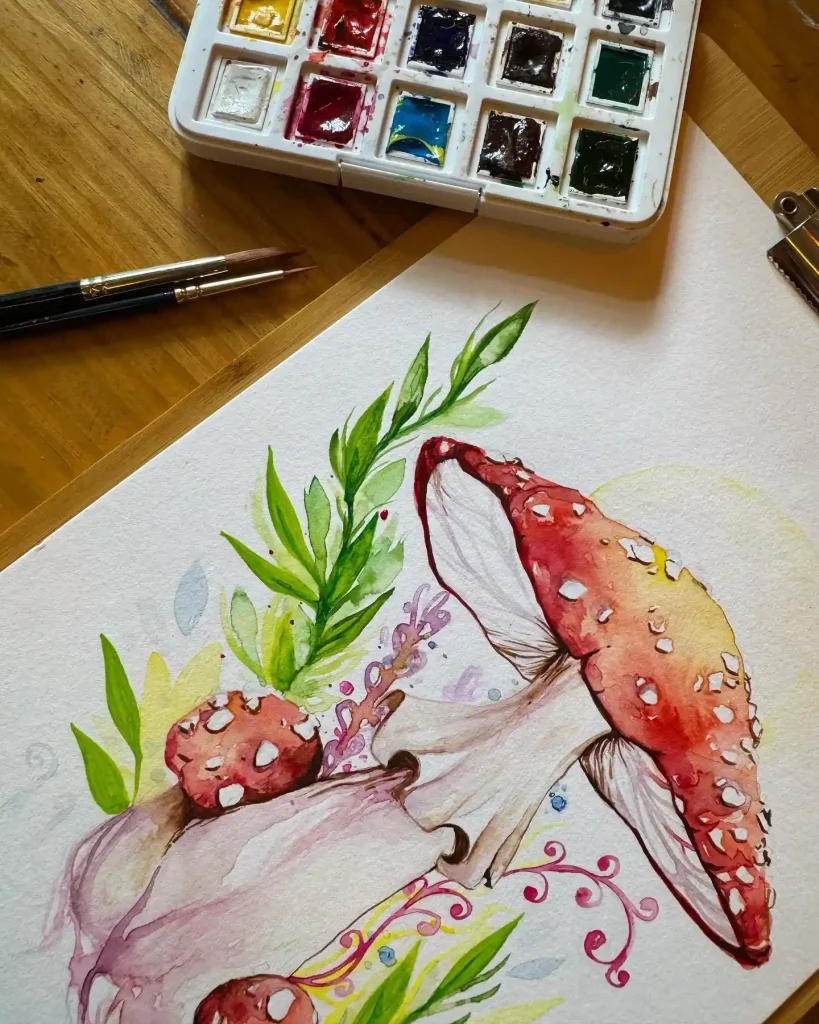
Vibrant red caps speckled with white dots create a striking focal point against the soft green foliage. The artist used a wet-on-dry technique to keep the colors bold and distinct. Bright yellow light seems to glow from the left, adding warmth to the scene. It feels like a cheerful discovery during a summer forest walk.
33. Teal and Green Watercolor Mushroom on Cold-Pressed Block
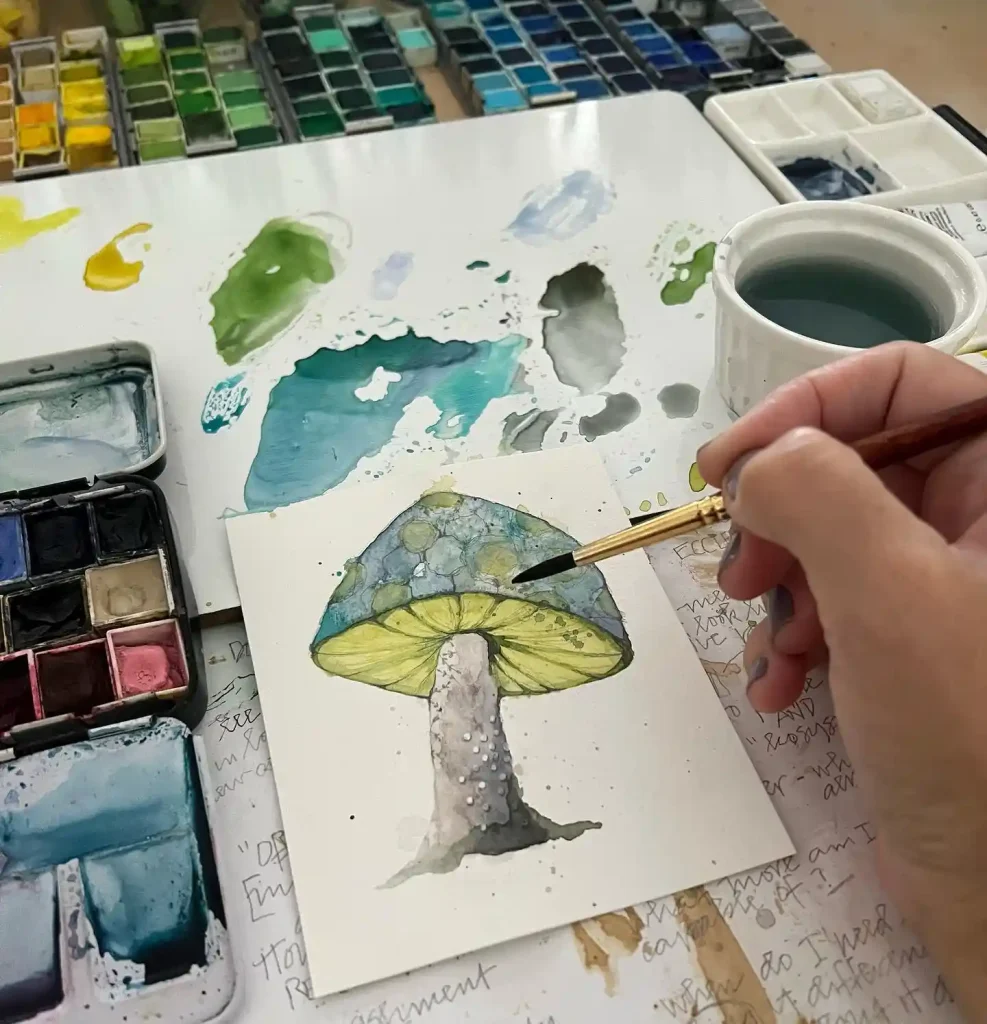
Unique turquoise and lime hues make this mushroom feel magical and rare. The artist is capturing the delicate gills with fine brushstrokes, emphasizing the underside structure. Splashes of blue in the background add an artistic, messy touch. It encourages us to look beyond traditional colors and find beauty in the unexpected shades of nature.
34. Forest Journal Study Watercolor Mushroom on Sketchbook Spread
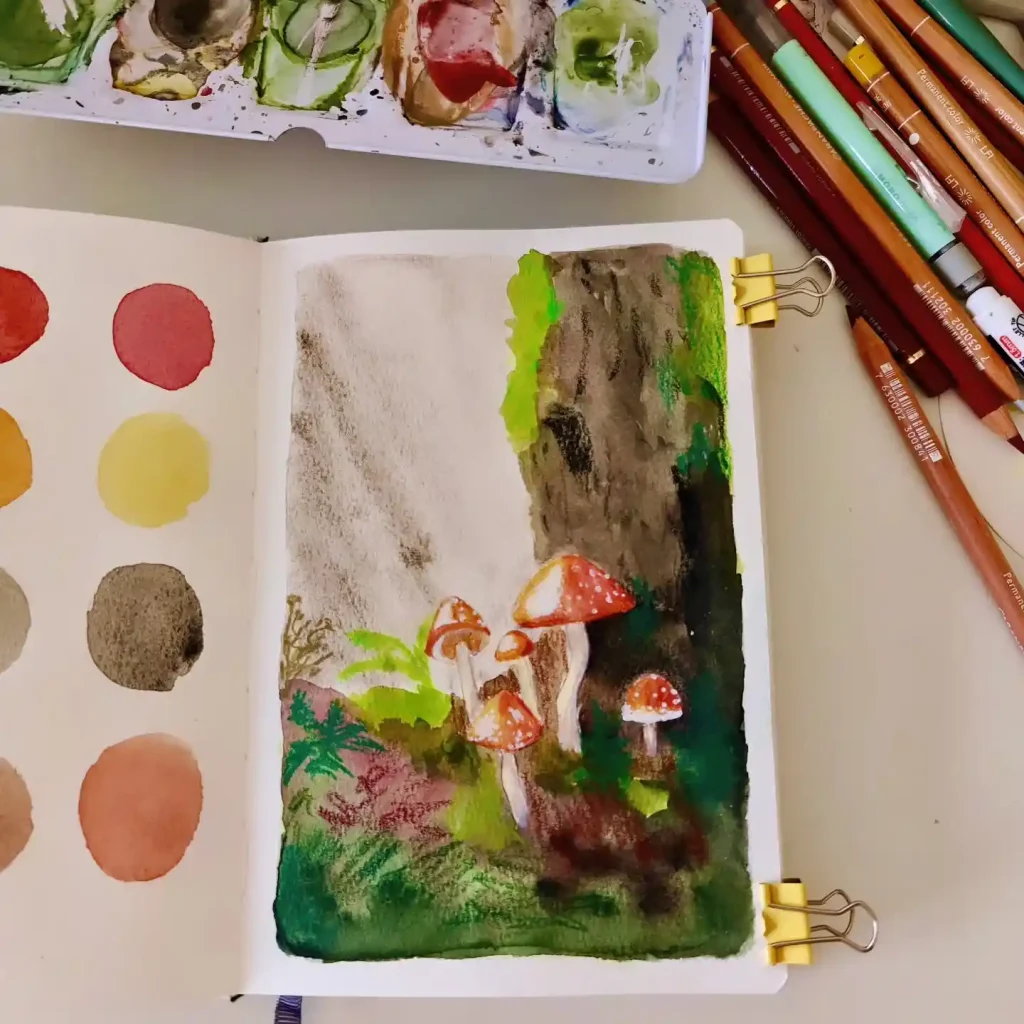
A mossy tree trunk serves as the perfect home for these tiny red fungi. The sketchbook layout includes color swatches, showing the thought process behind the palette. It captures the cozy feeling of sitting in the woods and documenting the small world at your feet. The textures on the bark are incredibly realistic and grounding.
35. Snail Visitor Watercolor Mushroom on Smooth Watercolor Paper
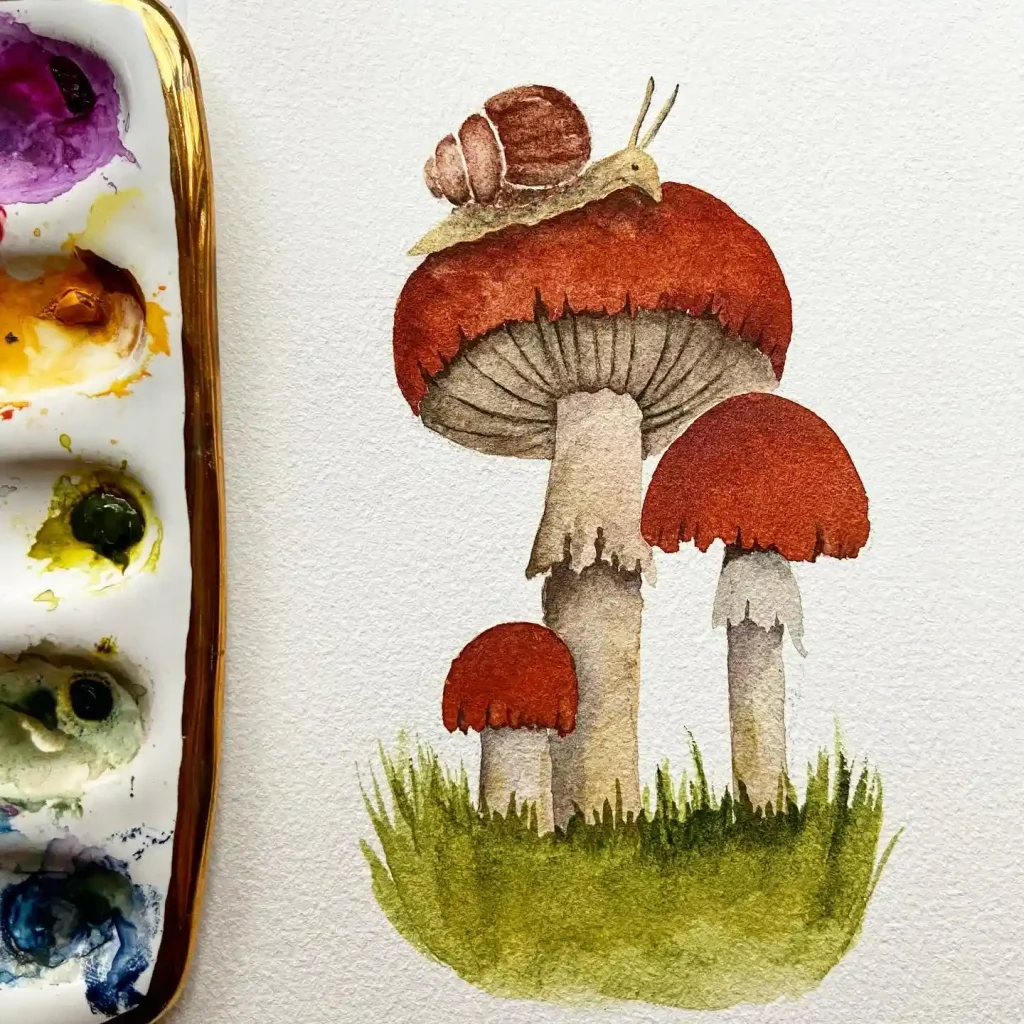
A charming brown snail hitches a ride on top of a large red mushroom, adding a delightful narrative element. The textures on the mushroom caps are rendered with soft, vertical strokes. Green grass blades frame the bottom, grounding the composition. It is a playful, imaginative piece that brings a smile to the viewer’s face.
36. Vintage Specimen Cards Watercolor Mushroom on Deckled Edge Paper
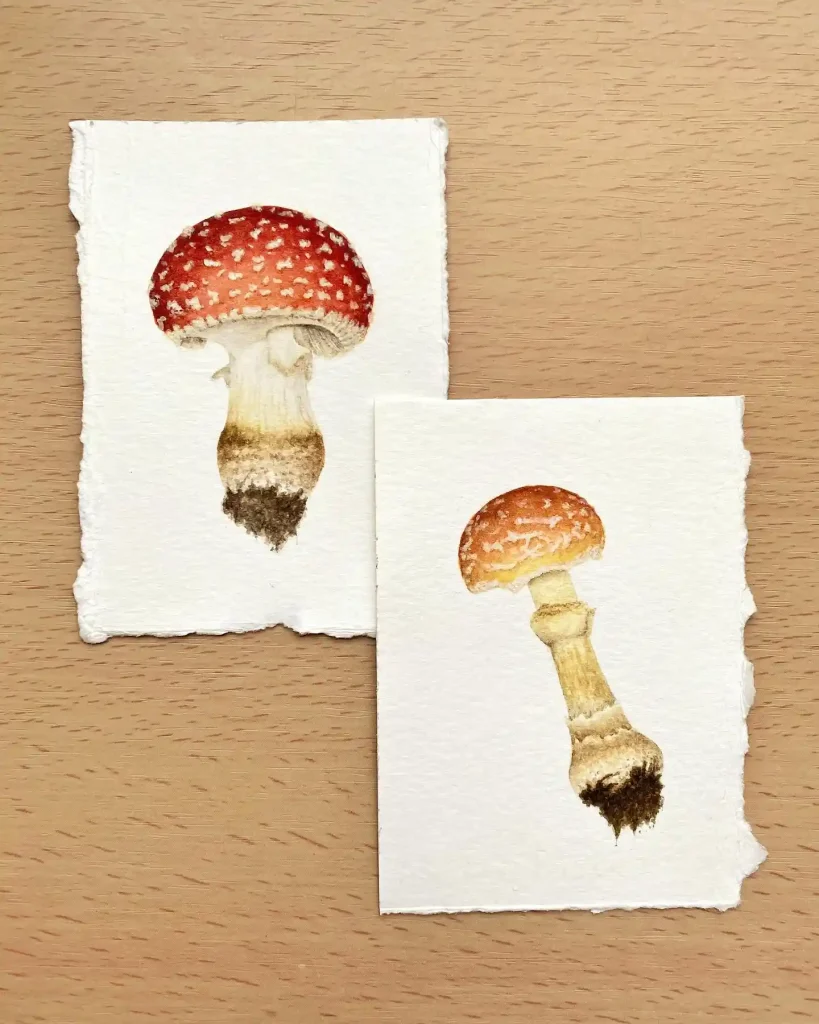
These two isolated studies look like they belong in an old apothecary cabinet. The red and orange caps are painted with high contrast to show their rounded volume. The deckled edges of the paper add a tactile, historical feel to the artwork. It is a beautiful, minimal approach to traditional botanical illustration techniques.
37. Pastel Trio Watercolor Mushroom on Fine Grain Paper
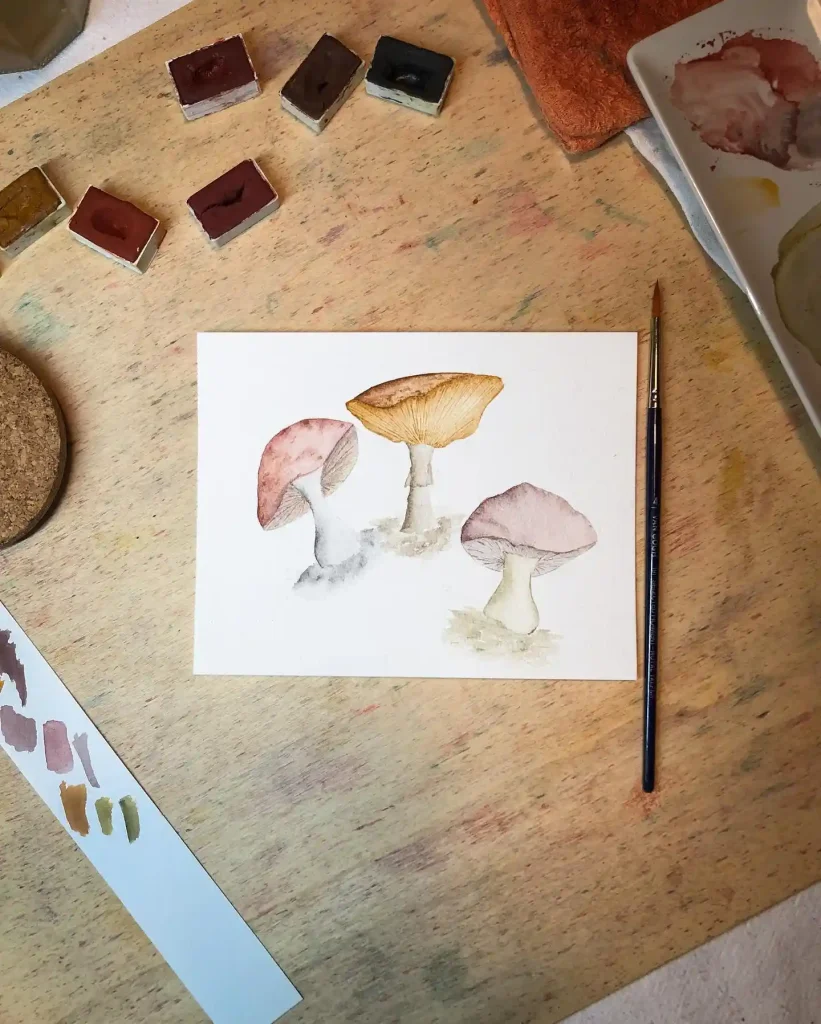
Soft pink and yellow tones give these three mushrooms a gentle, almost candy-like appearance. The artist focused on the delicate fluting of the gills, using very fine lines. The composition is light and airy, avoiding heavy shadows to keep the mood sweet. It feels like a dreamlike glimpse into a fairy’s hidden garden.
For a realism-focused companion to these watercolor studies, see 30 realistic mushroom drawing ideas, which explains the gill rule — how true gills, pores, and false gills differ — across ink, graphite, marker, charcoal, and sumi-e as well as watercolor.
5. Frequently Asked Questions
What paper is best for watercolor mushroom drawings?
Cold-pressed watercolor paper is the safest all-round choice: its slight texture holds washes well and forgives small mistakes. Use heavy paper (around 140 lb / 300 gsm) so it does not buckle when wet. Smooth hot-pressed paper is better only when you want very fine gill lines and crisp detail.
How do I keep the white spots white on a red toadstool?
Paint around the spots and leave the paper bare, or cover the spot shapes with masking fluid before you paint the red cap and peel it off once everything is dry. Both methods are used in the gallery — the Glowing Red Amanita (idea 5) leaves its spots unpainted to keep them bright.
Why do my mushroom colors turn muddy?
Muddy color usually comes from mixing too many colors in one wet wash, or scrubbing paint back into a half-dry layer. Limit each painting to three or four colors, let every layer dry fully before glazing over it, and rinse your brush often so dirty water does not sneak into the next wash.
Can a complete beginner paint watercolor mushrooms?
Yes — mushrooms are one of the friendliest beginner subjects because the shapes are so simple: a dome cap, a cylinder stem, and a fan of gill lines. Start with the Simple Garden (idea 26) or the Tiny Trio Study (idea 2), keep your palette small, and paint small so each try only takes a few minutes.
Should I use wet-on-wet or wet-on-dry for mushroom caps?
Use wet-on-wet when you want soft, dreamy blends inside the cap, and wet-on-dry when you want a crisp rim or bold, flat color. Most painters use both in one painting: a wet-on-wet first wash for the cap, then wet-on-dry details for the rim, spots, and gills once it has dried.
How long should I wait between watercolor layers?
Wait until the paper feels dry and cool to the touch — no damp sheen left — before adding the next layer. Rushing this step is the most common beginner mistake, because wet paint lifts the layer underneath and turns shadows cloudy. If you are in a hurry, paint two mushrooms side by side and alternate between them while each dries.
Keep Exploring
When you finish your first mushroom, try a full woodland scene in the forest magic scenes guide, practice the leaves and moss around it with botanical leaf tracing, or build your foundations with the complete watercolor painting guide for beginners. And for a realism-focused companion, the 30 realistic mushroom drawing ideas explain the gill rule in depth.