
Short answer: Start with a pale wet-on-dry wash for the petals, let each layer dry, then add deeper pink at the petal bases and leave the tips almost white. Paint the leaves with wet-on-wet greens, and save the darkest background wash for last so the flower stays luminous.
A watercolor lotus drawing is a painting of the sacred lotus flower, made with transparent watercolor washes layered on paper so light passes through the pigment. The sacred lotus (Nelumbo nucifera) is an aquatic plant long revered in Hinduism and Buddhism as a symbol of purity and enlightenment rising above muddy water, as described by Britannica’s sacred lotus entry. That contrast, mud below and clean bloom above, is exactly why lotus paintings feel calm even when the palette is bold.
In this guide you will find: how to paint realistic petals and easy leaves, a picker to match a lotus idea to your skill level and paper, all 28 original lotus ideas with their pictures, the mistakes that turn lotus greens muddy, and answers to the questions beginners ask most.
In this article
- How to Paint Realistic Lotus Petals in Watercolor
- Easy Watercolor Lotus Leaves for Beginners
- Pick the Right Lotus Approach Before You Paint
- Common Lotus Mistakes and How to Fix Them
- The 28 Watercolor Lotus Ideas
- Soft Petal Gradients Are the First Thing a Bad Scan Destroys
- Frequently Asked Questions About Watercolor Lotus Drawing
- Keep Painting: More Watercolor Ideas to Try Next
Unlock the serene beauty of watercolor lotus drawing ideas that awaken your creative soul and symbolize purity rising from depths. These techniques refine your brushwork, transforming delicate petals into luminous expressions of tranquility and growth.
Dive into watercolor lotus drawing ideas to master layering, blending, and glowing effects that mirror nature’s elegance. Our guides and inspirations welcome beginners and experts alike, fostering a vibrant community of artists exploring serenity on canvas.
Quick answer: Watercolor lotus drawing ideas use wet-on-dry for petals, salt for texture, and negative painting for leaves.
How to Paint Realistic Lotus Petals in Watercolor?
- Start with light washes: Apply pale rose madder and aureolin yellow wet-on-dry for soft petal bases in watercolor lotus drawing ideas, building translucent glow.
- Layer curved strokes: Use a round brush with diluted quinacridone rose, stroking from base to tip for natural ruffling and depth.
- Add veining details: Drag thin sienna lines with a rigger brush while damp, letting color bleed subtly for lifelike veins.
- Enhance highlights: Lift color with tissue on edges for shimmering dew-like effects, boosting realism in your lotus blooms.
- Glaze shadows softly: Overlay phthalo blue dilutions on undersides for dimension, perfect for skill-building in serene floral art.
The Brush the Veining Step Names
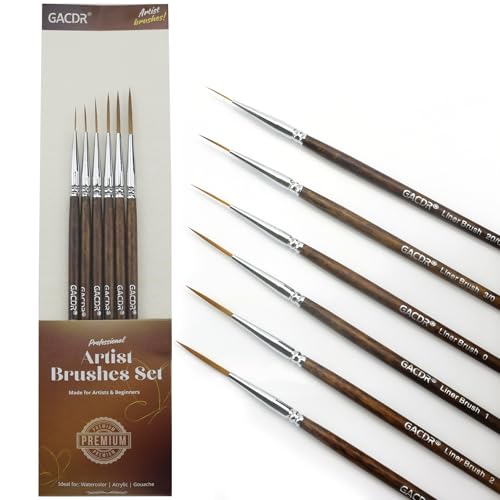
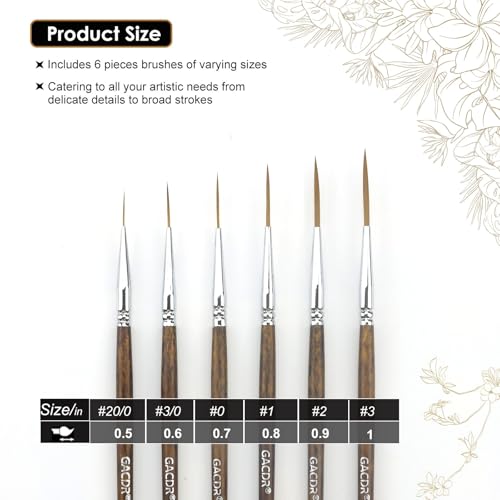
Rigger Liner Brushes – Set of 6 Long Detail Brushes
$9.99on Amazon
The veining instruction above says “with a rigger brush” for a reason. A normal round runs out of paint halfway down the stroke.
- ✓Long bristles hold a full reservoir. That is the whole point of a rigger — one unbroken hairline from petal base to tip without stopping to reload.
- ✓Six sizes for veins and stems both. The finest for sienna veins bleeding into damp petals, the largest for a tall lotus stem in a single confident pull.
- ✓Springs back into a point. Cheap liners splay after a few strokes and every vein afterwards comes out fat and blunt.
As an Amazon Associate we earn from qualifying purchases. Price shown at time of writing.
Easy Watercolor Lotus Leaves for Beginners?
- Wet-on-wet blending: Charge sap green and viridian into damp paper for lush, veined leaves; tilt for organic drips in watercolor lotus drawing ideas.
- Negative painting edges: Paint background first around masked shapes, revealing crisp leaf outlines with glowing whites.
- Texture with salt: Sprinkle on wet phthalo green washes for watery speckles mimicking leaf surfaces and growth patterns.
- Build layers gradually: Dry between light-to-dark glazes of hooker’s green for depth, ideal for budding artists.
- Flick water droplets: Load brush with clean water, flick off for realistic beads that add freshness to your lotus pond scenes.
Twelve Greens, Already Mixed
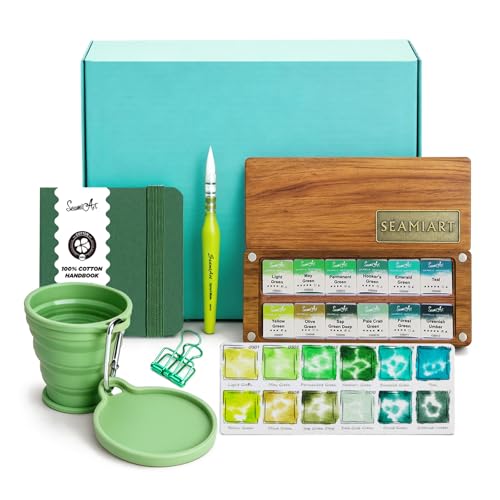
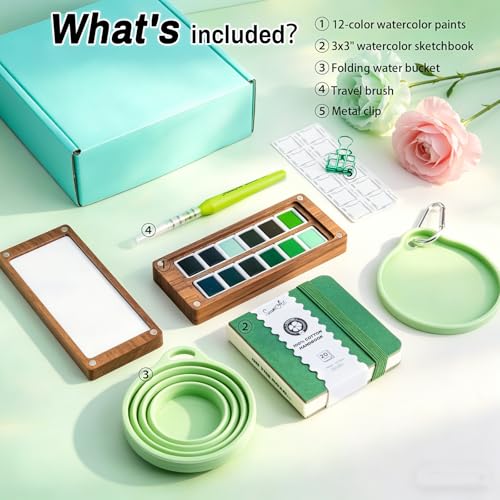
SEAMIART Botanical Green Watercolor Set – 12 Colors + Cotton Journal
$29.99on Amazon
Sap green, viridian and hooker’s green are all named in the leaf section above. Mixing them yourself from a basic set is how lotus pads end up looking grey.
- ✓The full vegetation range in one tin. Light leaf green through to deep greenish umber, which is exactly the light-to-dark glazing ladder the leaf tips describe.
- ✓Transparent enough to layer. Lotus leaves need several glazes to build depth; opaque student greens go flat and chalky by the third pass.
- ✓Includes a 100% cotton mini journal. Cotton is what lets the salt-texture trick actually bloom, so you can test it before committing to a full sheet.
As an Amazon Associate we earn from qualifying purchases. Price shown at time of writing.
1. Pick the Right Lotus Approach Before You Paint
Do not start with the prettiest picture. Start with the combination of paper, wash and difficulty you can actually finish in one sitting. A glowing lotus is mostly a drying-time problem: paint too fast and the petals bleed into each other; wait between layers and the same pigments look clean and luminous.
| If you want | Start with | Paper that helps | Watch out for |
|---|---|---|---|
| A first, low-pressure lotus | Ideas 4, 18 or 26 (sketchbook studies) | Sketchbook or mixed-media paper | Overworking one petal until it goes flat |
| Realistic, glowing petals | Ideas 1, 3 or 15 | Cold press or rough paper | Painting the next layer before the first is dry |
| A misty pond scene | Ideas 6, 16 or 19 | Cold press watercolor paper | Too much green, which swallows the flower |
| A dramatic night lotus | Ideas 7, 17 or 20 | Smooth or taped paper | A background so dark it kills the reflection |
A simple palette that covers most of these ideas
You do not need a huge set. A warm pink or quinacridone rose, a pale yellow for the first wash, a sap green and a viridian or hooker’s green for leaves, and a phthalo blue for shadows and water will carry you through nearly all 28 ideas. Mix the greens rather than reaching for a single tube green, and keep one clean brush and clean water for lifting highlights.
1
Test on scrap first. Paint one petal shape on the same paper you will use, with the same pink, and watch how far it spreads while wet. That one test tells you more than any tutorial about how much water your paper can hold.
2
Paint light to dark, and dry between layers. Pale wash first, then the mid-pink, then only the deepest pink at the petal bases and in the folds. Touch a layer only when it no longer looks shiny wet.
3
Leave white paper on purpose. The brightest part of a lotus is usually unpainted paper, not white paint. Decide before you start which petal tips and which leaf edges stay white, and paint around them.
Beginner shortcut: If you are new to watercolor altogether, read our Watercolor Painting guide for beginners first for washes, drying times and brush control, then come back and pick one sketchbook idea from this list.
2. Common Lotus Mistakes and How to Fix Them
- Muddy leaves: layering too many greens while wet. Let each glaze dry, and limit yourself to two greens per leaf.
- Petals that merge into one blob: painting neighbouring petals while both are wet. Finish one petal, dry it, then paint its neighbour.
- A dull, chalky flower: scrubbing back into a half-dry wash. If a petal goes wrong, let it dry fully, then glaze over it once rather than scrubbing.
- No focal point: painting every petal at the same strength. Keep one bloom sharp and bright, and let the rest sit softer and darker.
Do not fix a wet painting with more paint. Almost every lotus rescue that works starts the same way: put the brush down, let the sheet dry completely, and only then decide whether it needs a glaze, a lifted highlight, or to be left alone.
Pick up your palette and try these watercolor lotus drawing ideas now—let serenity flow through your brush and bloom your artistic passion!
1. Expressive Bloom on Rough Grain Paper

This expressive piece captures the spiritual energy of a lotus rising from the water. The artist used loose, wet washes of violet and blue in the background to make the coral-tipped petals pop forward. It symbolizes enlightenment bursting through the chaos, using broad brushstrokes to keep the feeling spontaneous and raw rather than perfectly manicured.
2. Pond Life Scene on Textured Paper

There is a serene rhythm to this pond scene created by the vertical green stalks rising behind the flower. The soft pink bloom sits gently on lily pads while the watery blue reflection creates depth below. It feels like a quiet morning at a botanical garden where the water is still and the world feels at peace.
3. Sunlit Petals on Cold Press Paper

Capturing the glow of sunlight on petals is the main goal here. This close-up study uses intense magenta and yellow pigments to highlight the seed pod against a backdrop of deep, shadowy greens. The red signature seal in the corner adds a traditional touch, honoring the flower’s rich history in Eastern art and culture.
4. Sketchbook Study on Spiral Paper

Sketchbooks are the perfect place to practice delicate gradients without pressure. This drawing features a soft pink lotus resting against a large, textured green leaf that fills the frame. The cool blue and green background wash helps the warm flower tones stand out. It represents purity and the simple beauty found in nature’s symmetry.
5. Golden Magic on Textured Paper

Adding metallic accents changes the entire mood of a painting. This mystical piece combines soft purple blooms with a shower of gold splatters that look like stardust or pollen. The teal and indigo background enhances the magical atmosphere. It visualizes the divine quality often associated with the lotus in spiritual traditions.
6. Misty Pond on Watercolor Paper

Water is just as important as the flower in this composition. The artist painted a white and a pink lotus floating together, focusing heavily on the ripples and reflections on the surface. Soft, diffused edges create a dreamy, impressionistic feel. It captures the gentle movement of a garden pond stirred by a light breeze.
7. Midnight Reflection on Smooth Paper

Drama is easily achieved with high contrast values. This moody illustration depicts a glowing pink lotus set against very dark, midnight-blue water to simulate nightfall. The reflection is rendered with wet vertical strokes that distort the shape beautifully. It symbolizes hope and light shining brightly even in the darkest of times.
8. Botanical Lifecycle on Hot Press Paper

Illustrating different stages of growth tells a complete story on one page. This botanical layout features fully open blooms alongside tight buds to show the lifecycle of the plant. The clean white background keeps the focus on the delicate pink gradients and green leaves. It is a study of potential and the unfolding journey of nature.
9. Salt Texture Study on Watercolor Paper

Texture can make a simple background fascinating. Here, the artist likely used salt on the wet blue paint to create a speckled, watery effect around the stems. The pale pink petals contrast with the decaying, olive-toned leaf. It embraces the wabi-sabi aesthetic, finding beauty in the natural imperfections and textures of the marsh.
10. Realistic Leaf Detail on Taped Paper

Achieving this level of realism takes layers of patience. This work-in-progress shot shows vibrant pink flowers paired with incredibly detailed leaves where every vein is visible. The artist is using a fine brush to refine the stems. It is a celebration of the lush, vibrant life that thrives in summer ponds.
11. Botanical Growth Study on Cold Press Paper

Botanical illustrations tell a story of development. This piece beautifully captures the stages of a lotus, featuring tight buds alongside a fully opened pink bloom. The colored pencil details enhance the texture of the green leaves and petals against the clean background. It is a study of patience that highlights the journey from a closed potential to a radiant flower.
12. Midnight Blue Bloom on Textured Paper

Rare colors always catch the eye. This illustration features a striking blue-violet lotus standing tall on a slender stem, contrasting with the bright green pads below. The simple composition focuses entirely on the unique hue and vertical posture of the flower. It symbolizes mystery and the calming energy associated with evening meditation practices.
13. Verdant Garden Scene on Watercolor Block

Greenery provides the perfect backdrop for pink florals. Here, a large, soft pink lotus dominates the frame, resting against a background of broad, watery green leaves. The loose wash technique creates a lush, humid atmosphere typical of a summer pond. It captures the fullness of nature where the flower is cradled by the vibrant life surrounding it.
14. Lifecycle Illustration on Hot Press Paper

Nature is a constant cycle of renewal. This clean illustration pairs a delicate pink blossom with a mature green seed pod to represent the past and future simultaneously. The smooth gradient on the petals shows mastery of water control. It serves as a reminder that beauty exists in every stage of life, from the bloom to the seed.
15. Serene Water Reflection on Rough Paper

Reflections double the beauty of a subject. This piece features a white lotus with pink tips floating on deep blue water, mirrored perfectly on the wet surface. The purple background wash adds a royal, spiritual tone to the scene. It visualizes the concept of “as above, so below,” connecting the ethereal flower with the grounding water.
16. Dreamy Marsh Abstract on Grainy Paper

Soft focus art feels like a memory. This painting uses wet-on-wet techniques to create a blurred, impressionistic background of greens and teals. The small pink flowers emerge gently from the haze without hard outlines. It captures the dreamy, humid feeling of a marsh at dawn when the world is still waking up.
17. Solitary Pink Bloom on Cold Press Paper

Dark backgrounds make light subjects pop. A single pink lotus rises from dark, indigo waters in this moody composition. The contrast emphasizes the purity of the petals against the murky depths below. It is a classic symbol of resilience, showing how beauty and enlightenment can thrive even in the darkest and most difficult environments.
18. Vibrant Petal Detail on Sketchbook Paper

Crisp details bring a drawing to life. This sketchbook page features a vibrant lotus with sharply defined pink petals and a textured, veined leaf. The bright colors feel energetic and cheerful against the white space. It celebrates the structural beauty of the plant, focusing on the interplay between the delicate flower and the sturdy, protective foliage.
19. Misty Lotus Pond on Watercolor Paper

Atmosphere is everything in landscape painting. This scene depicts a field of lotuses fading into a minty green mist, creating a sense of depth and abundance. The white splatters mimic morning dew or pollen floating in the air. It transports the viewer to a quiet, magical garden where nature feels endless and peaceful.
20. Glowing Night Lotus on Taped Paper

Light looks most dramatic when surrounded by shadow. This painting shows a glowing pink and yellow lotus reflected in dark, midnight blue water. The reflection is painted with loose, vertical strokes that distort the shape beautifully. It symbolizes hope and inner light, shining brightly regardless of the time of day or the surrounding darkness.
21. Dreamy Glow Lotus on Textured Paper

Soft edges define this dreamy piece. The artist uses a wet-on-wet technique to blend the pink petals into the background. A distinct white outline highlights the large green leaf to give it a glowing effect. It symbolizes spiritual awakening by showing the flower rising beautifully above the murky waters.
22. Minimalist Violet Bloom on Smooth Paper

Minimalism creates a powerful impact here. This painting features a single, elegant bloom with petals transitioning from soft pink to deep violet. The long, dark stem anchors the flower to create a strong vertical line. The traditional red seal adds a cultural touch. It honors the lotus as a symbol of purity and perfection in Eastern art.
23. Precision Circle Study on Square Paper

Precision is the focus of this study. The artist confines the pink lotus within a faint pencil circle to emphasize symmetry and balance. Delicate shading on the petals creates a realistic, three-dimensional volume. It feels like a meditation on form. This captures the intricate beauty of nature in a contained, focused space.
24. Raindrop Bokeh Scene on Watercolor Paper

Light plays a magical role in this illustration. A vibrant pink lotus takes center stage against a background of soft, white bokeh circles that mimic dappled sunlight. The vertical water droplets add movement and freshness to the scene. It captures the refreshing energy of a summer rain shower revitalizing the garden.
25. Ethereal Misty Marsh on Fine Grain Paper

Ethereal mist surrounds this masterpiece. A striking purple and pink lotus stands out against large, blue-green leaves that fade into a foggy background. The dry seed pod adds a narrative of time and life cycles. It evokes a sense of mystery and the quiet solitude found deep within a marsh at dawn.
26. Hand Painted Botanical on White Paper

Watching art come to life is inspiring. This work-in-progress shot shows a hand adding details to a fresh pink lotus and its broad green leaves. The white background keeps the attention solely on the botanical accuracy. It represents the act of creation itself. This celebrates the artist’s connection to their subject through the brush.
27. Impressionist Pond Trio on Mixed Media Paper

Impressionism captures the feeling of a moment. Loose, expressive strokes define these white and red blooms floating on a deep blue pond. The purple shadows in the water add depth and moodiness. It is a vibrant celebration of color that mimics the shifting light and reflections on the water surface.
28. Dramatic Mud Bloom on Taped Paper

Contrast creates drama in this horizontal piece. A luminous pink lotus glows intensely against a dark, muddy background of browns and greys. The decaying leaves around it emphasize the flower’s pristine condition. It symbolizes hope and resilience. This illustrates the classic metaphor of the lotus blooming beautifully from the mud.
Soft Petal Gradients Are the First Thing a Bad Scan Destroys
The whole appeal of a lotus painting sits in the slow fade from deep pink at the petal base to almost nothing at the tip, and that gradient is exactly what gets crushed into bands when a file is captured at low bit depth. Scanning at 48-bit color and 600 dpi preserves those half-steps so the print looks like the painting rather than a posterized copy of it. If you plan to sell lotus prints, choosing a scanner for artwork is worth reading before you buy anything.
Layered petals are the transferable skill here rather than the flower itself. Once you can keep one petal’s edge from bleeding into the next, the clustered blooms in our watercolor hydrangea ideas become far less intimidating.
If you love how a lotus carries a whole painting, try a subject where the lotus shares the frame with a calm face: our Buddha watercolor paintings pair lotus blooms with serene, meditative expressions for meditation corners and quiet rooms.
3. Frequently Asked Questions About Watercolor Lotus Drawing
What is the easiest watercolor lotus idea for a beginner?
Start with a sketchbook study such as idea 4 or idea 18. One bloom, one large leaf and a simple background wash are enough, and sketchbook paper forgives the small timing errors that show up on expensive cotton paper.
Which paper is best for watercolor lotus paintings?
Cold press paper is the safest all-rounder for petals and leaves, rough paper suits expressive blooms with visible texture, and hot press paper suits clean botanical studies with fine detail. If you only buy one, choose cold press.
How do you keep lotus petals luminous instead of flat pink?
Paint in thin layers from light to dark, let each layer dry, keep the deepest pink near the petal base, and leave the petal tips as bare paper or a very pale wash. One strong dark accent per bloom matters more than covering every petal evenly.
Why do my lotus leaves turn muddy green?
Usually because several greens were mixed while wet on the paper. Use two greens at most per leaf, let glazes dry between passes, and keep the leaf wash transparent so the paper still glows through it.
Can I paint a lotus if I cannot draw well?
Yes. A lotus is a forgiving subject because its petals are simple curved shapes that overlap. Lightly sketch the outer shape, paint the petals one at a time, and let the watercolor edges do the softening that a perfect drawing would otherwise have to provide.
How do I keep soft petal gradients when I scan or print a lotus painting?
Scan at high resolution and colour depth so the slow fade from deep pink to white is not crushed into bands, as explained in the scanning section above. Keep the original painting flat and dry, and check the scan on screen before printing.
4. Keep Painting: More Watercolor Ideas to Try Next
If the lotus has given you confidence with layered washes, try these next: our watercolor painting guide for beginners for core techniques, the best watercolor brushes for beginners if your brush is fighting you, flower drawing ideas for more blooms, water drawing ideas for reflections and ripples, and the watercolor rose ideas and watercolor hydrangea ideas already linked above for clustered petals that build directly on the lotus skills practised here.



super
Thank you so much! 😊