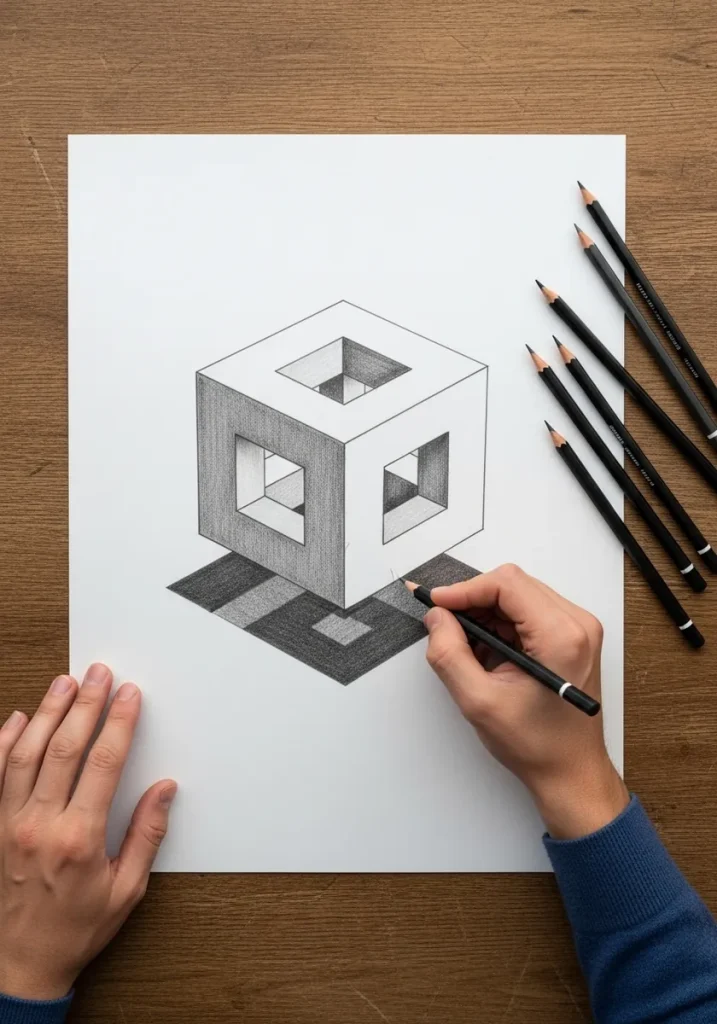
A 3D pencil drawing creates depth on flat paper using three tools: overlap, a value range from light to dark, and converging perspective lines. Fix one light source and one vanishing point, then keep every shape obedient to both.
Key takeaways
- Depth comes from three things only: overlap, value contrast, and converging lines toward a vanishing point.
- Set the light source before you shade anything, because inconsistent shadows flatten a drawing instantly.
- Build a full value range from paper white to near black; a drawing stuck in mid grays always looks flat.
- Line weight is a depth tool on its own, so keep near edges heavier and far edges lighter.
- Practice line, value and perspective as separate studies before combining all three in one piece.
Depth on flat paper comes from exactly three things: overlap, value contrast, and lines converging toward a vanishing point. Every convincing 3D pencil drawing uses at least two of them. Every flat one is missing all three.
That is why this list mixes true illusions with plain studies. An impossible cube and a low poly wolf are pure depth exercises. A misty mountain range and a willow by a pond are value exercises. A one point perspective interior is a perspective exercise. You need all three before the showpieces work.
The pieces are ordered so the geometric and structural ones come early and the looser, more atmospheric ones come later. If you want to build pencil control alongside this, mandala practice is excellent, and drawing eyes teaches you the smooth gradients that curved forms need.
Each entry names what the piece is and the single technique that makes it work, so you can pick one and start without watching anything first.
Compiled by the GS Art Zone editorial team. Last updated August 2026. Each idea is paired with the specific step that produces the effect, so you can go from the reference straight to paper.
What You Need Before You Start
- An HB for construction, a 2B for mid tones and a 6B or charcoal for the darkest darks
- A kneaded eraser for lifting highlights and a hard eraser for cutting clean edges
- A blending stump for smooth gradients, though many pieces here are better left unblended
- A ruler for the perspective and isometric pieces, plus a compass for the mandala work
- Smooth paper for fine line and ink, and a slightly toothed paper for charcoal and value work
1. Impossible Open Cube
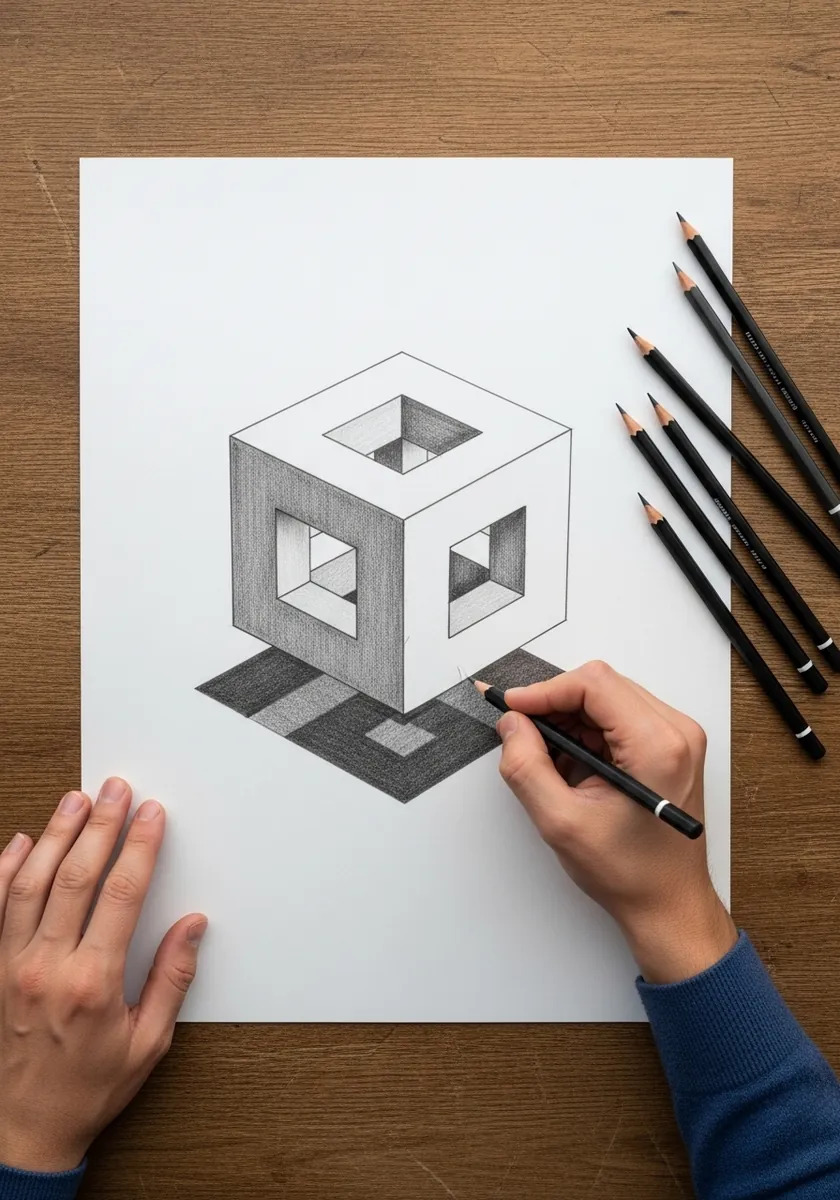
A cube with square openings cut through it, hovering above a flat shadow. Shade the three visible faces in three clearly different values and never blend between them. The hard edge where two values meet is what makes the box read as solid.
2. Continuous Line Portrait
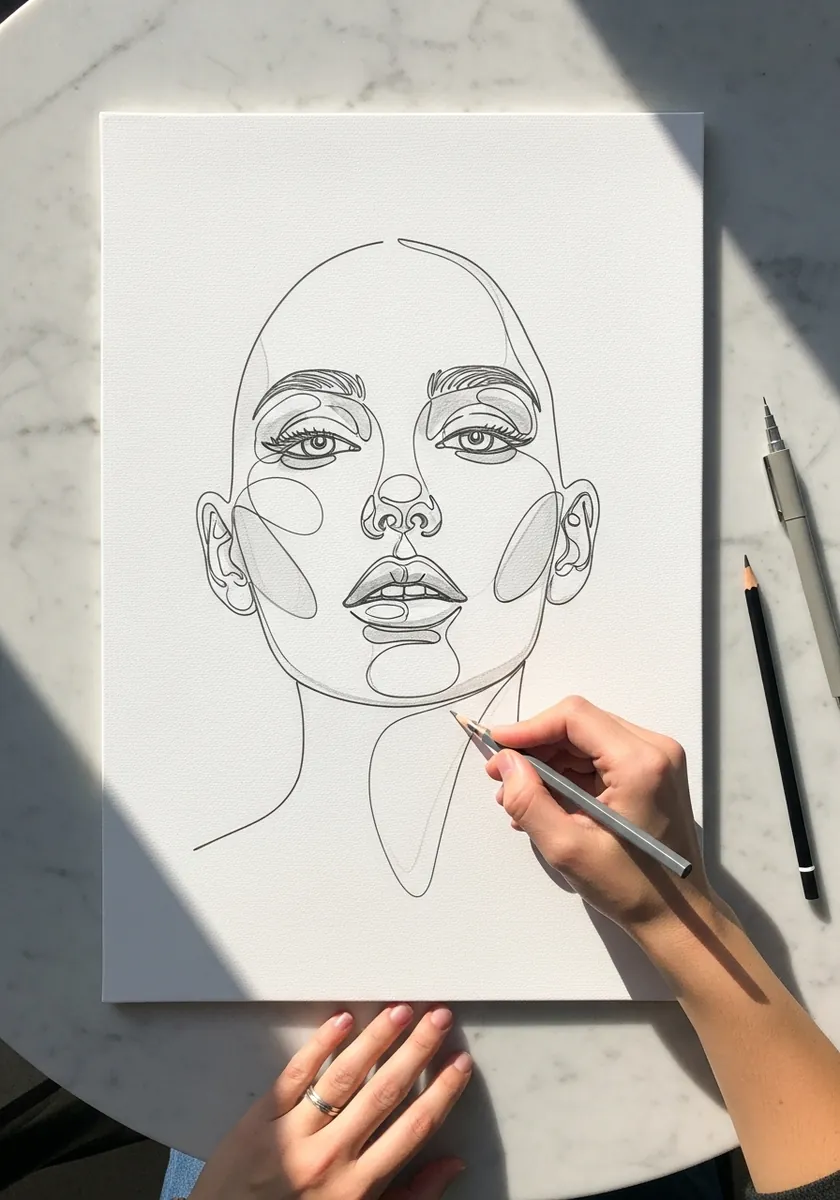
A face drawn with one unbroken line that never lifts. Depth here comes only from overlap, so plan which contour passes in front of which before you start, because you cannot correct it once the line is moving.
3. Melting Clocks Still Life
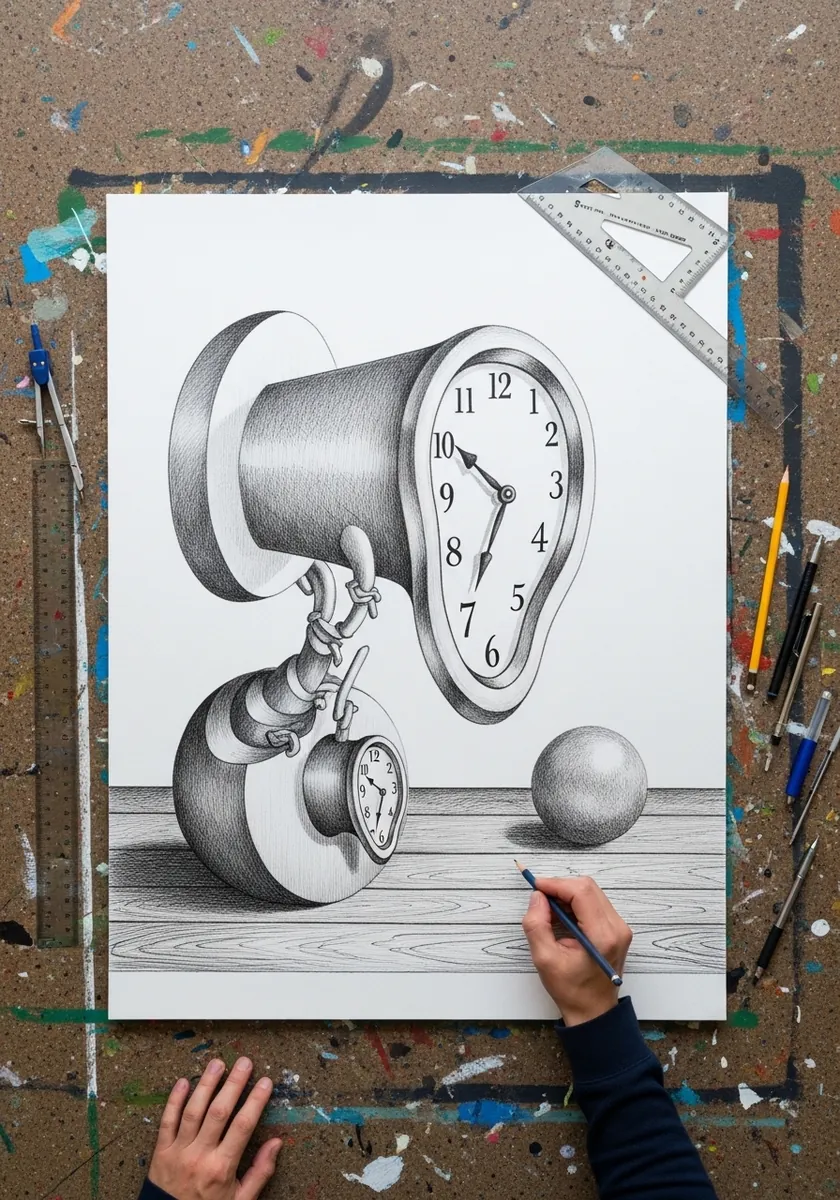
Clocks sagging over a cylinder and a ball in the surrealist manner. Draw the solid forms first and get their perspective right, then drape the soft shapes over them so the melt follows a structure that already exists.
4. Low Poly Faceted Wolf Head
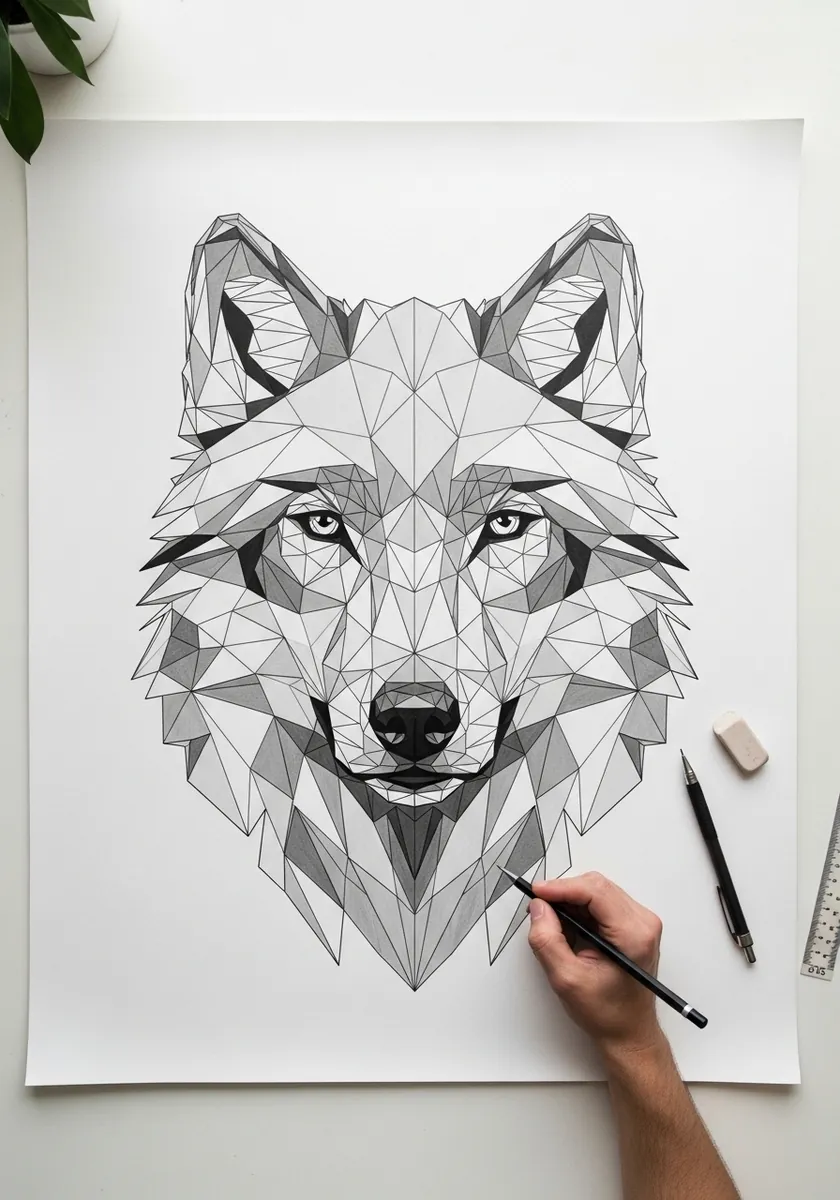
A wolf head broken into flat triangles, each holding one value. Draw the head normally in light pencil first, then lay the facet map on top, making the triangles smaller wherever the form turns fastest.
5. Realistic Eye with a Teardrop
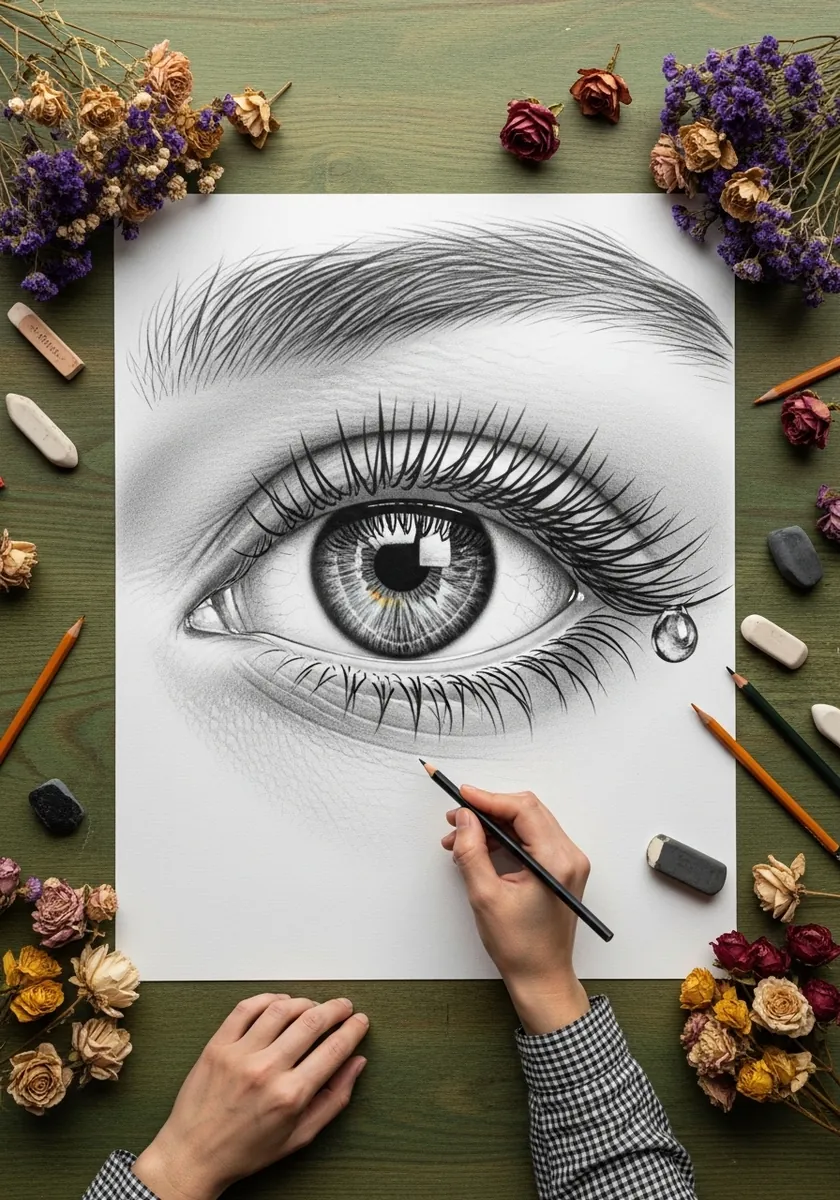
A close-up eye with a tear catching the light. Build the iris with strokes radiating out from the pupil, keep the pupil the darkest point on the page, and place one hard white highlight that you never touch again.
6. Wildstyle Graffiti Letters with Extrusion
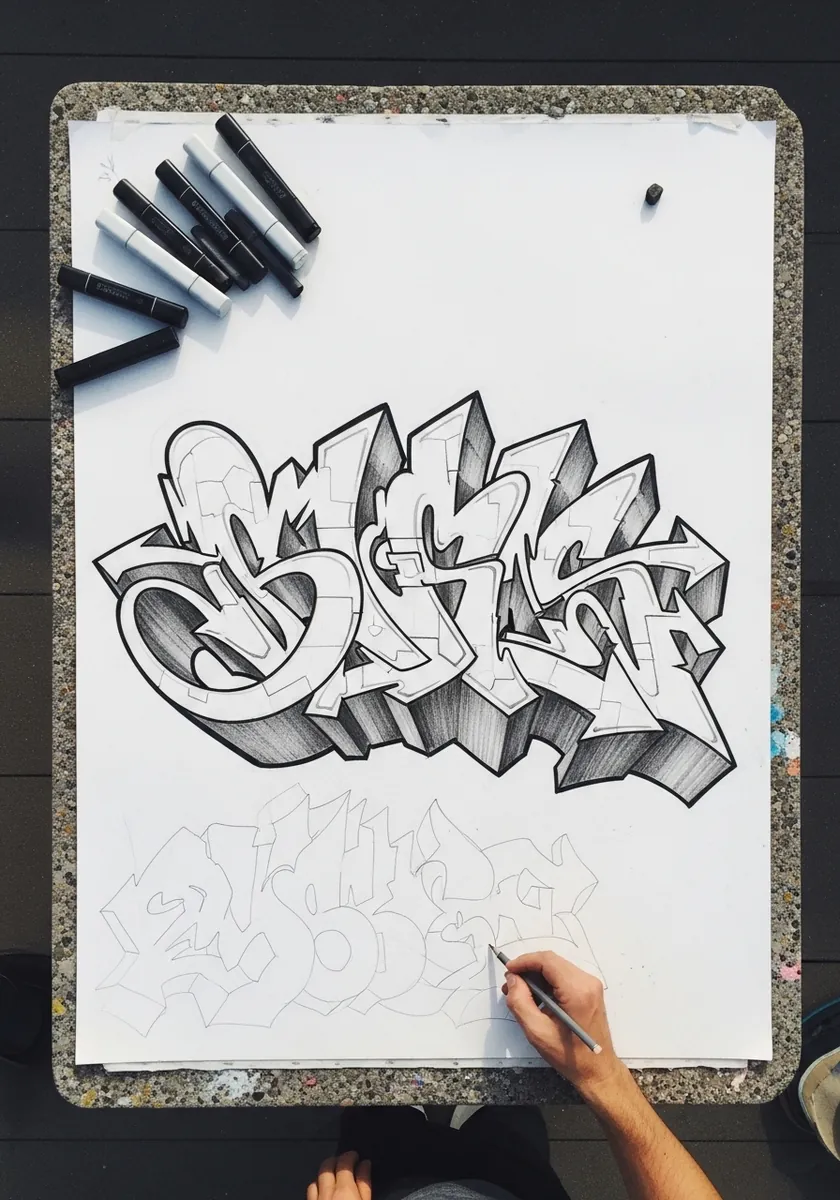
Interlocking graffiti letters pushed back into deep side faces. Sketch plain readable capitals first, then stretch and overlap them, keeping every letter extruded in the same direction so the whole piece shares one perspective.
7. Monstera Leaf Line Study
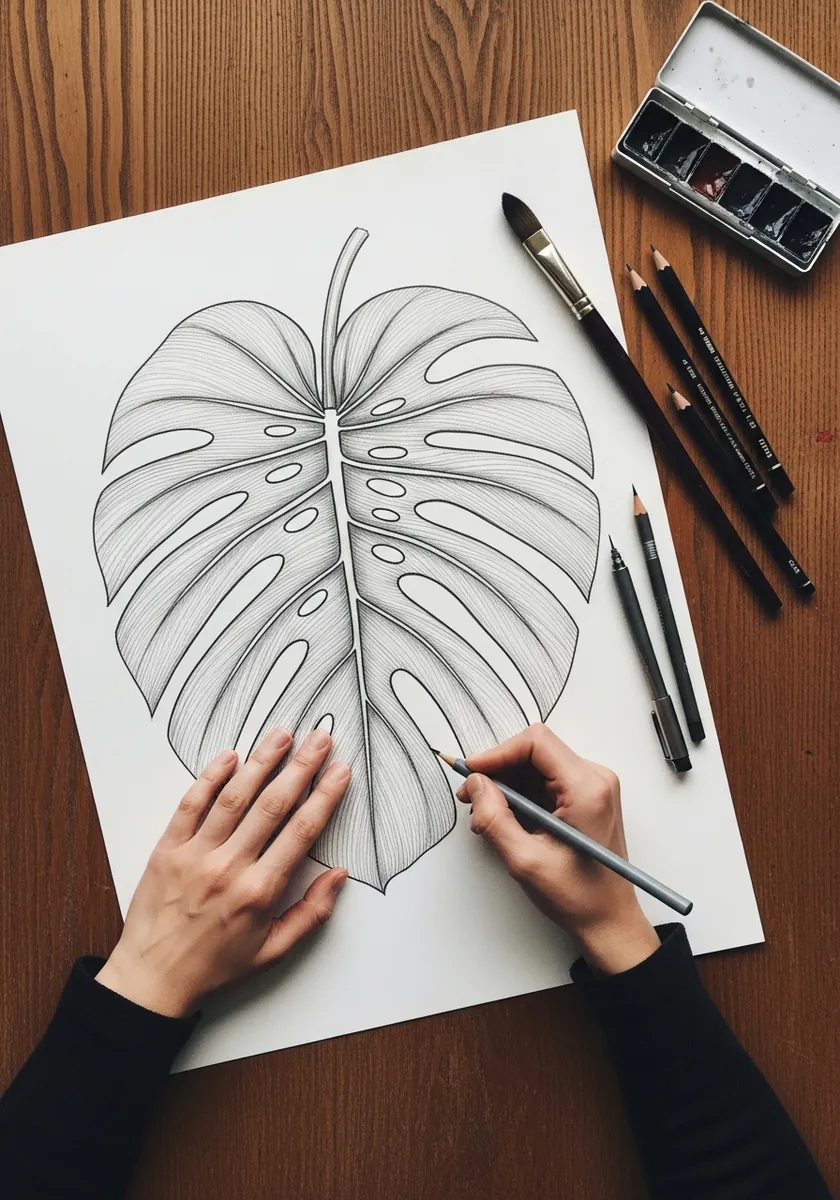
A single monstera leaf drawn in pure line. Draw the central rib first and grow every vein out of it at a consistent angle, then let the line weight thicken slightly where the leaf turns toward you.
8. Expressive Charcoal Portrait
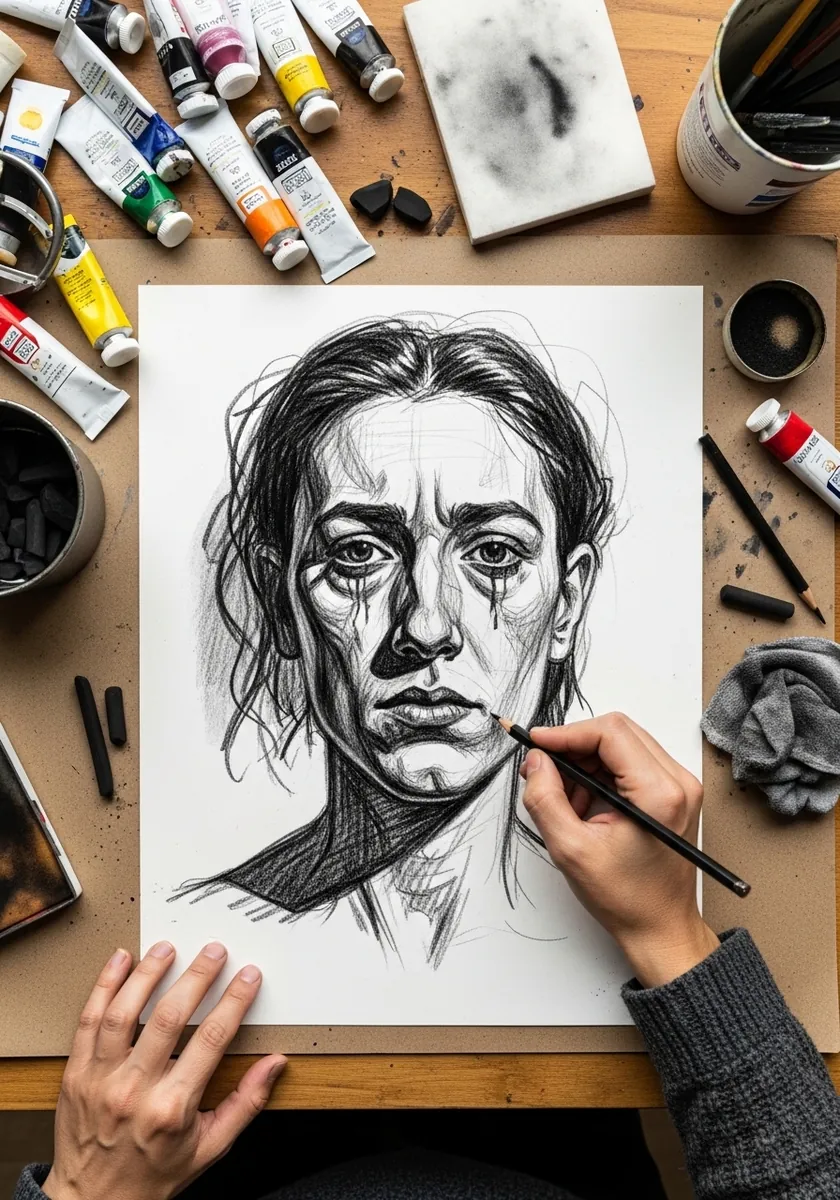
A portrait built from fast charcoal strokes with heavy shadow. Block in the darkest masses first with the side of the stick and only refine the eyes and mouth, leaving everything else loose so the drawing keeps its energy.
9. Doodle City on a Grid
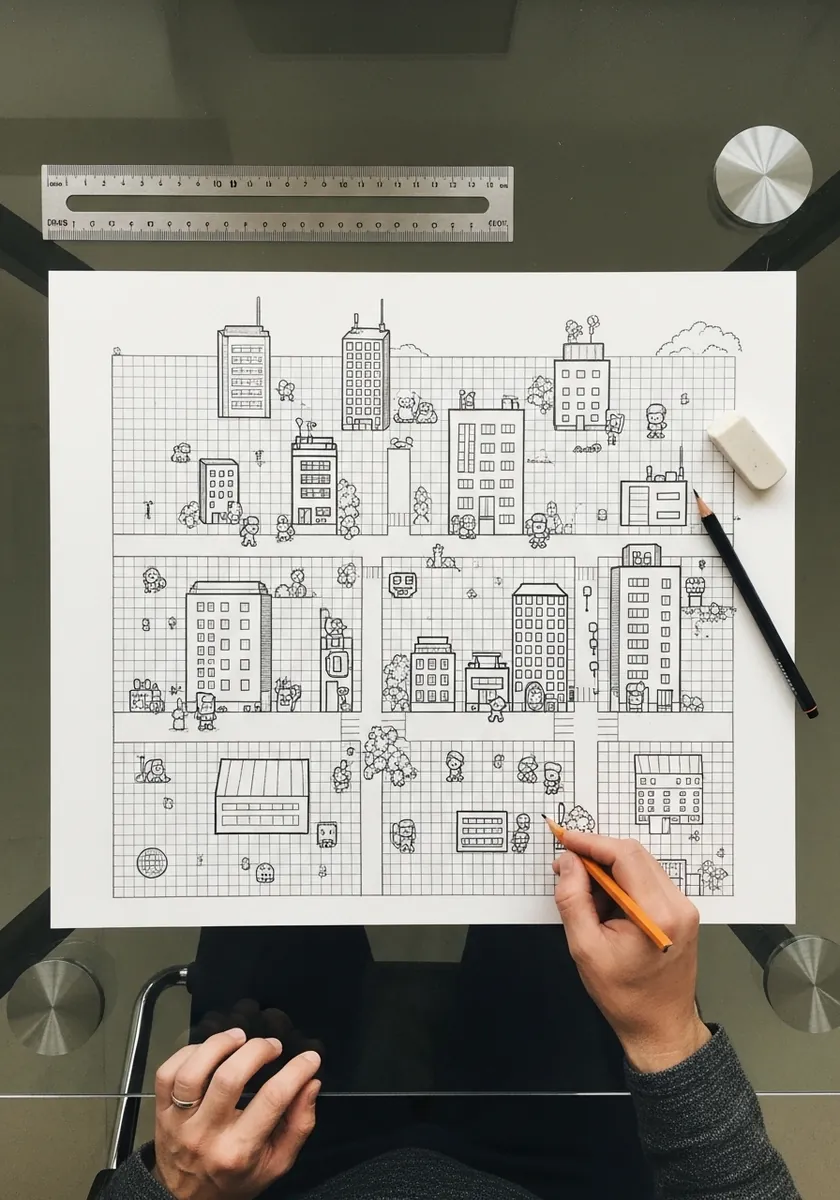
A city of small buildings drawn on a ruled grid. The grid is doing the perspective for you, so keep every building aligned to it and vary only the heights, which is what stops a doodle city from looking chaotic.
10. Geometric Fractured Portrait
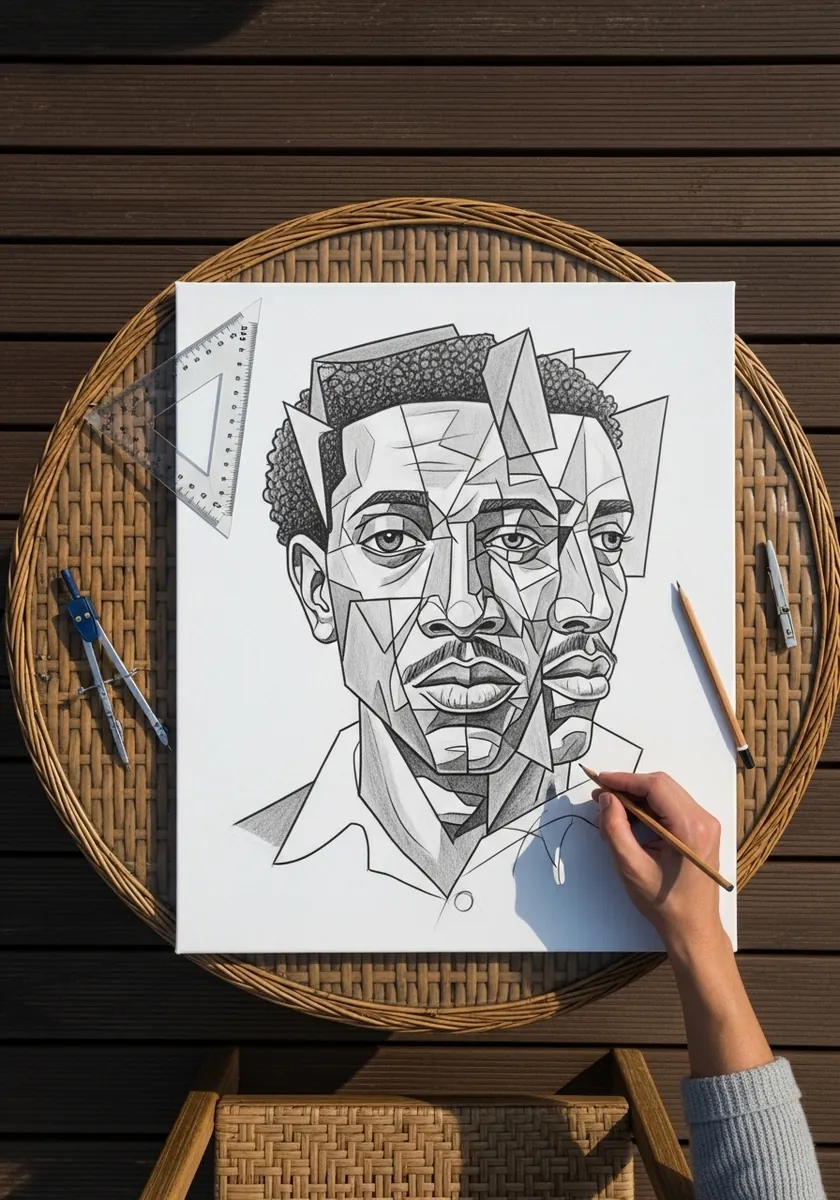
A face broken into overlapping geometric planes. Draw the head accurately in light pencil first, then fracture it, and shift each fragment slightly rather than a lot so the face still reads through the distortion.
11. Ornate Mushroom Mandala
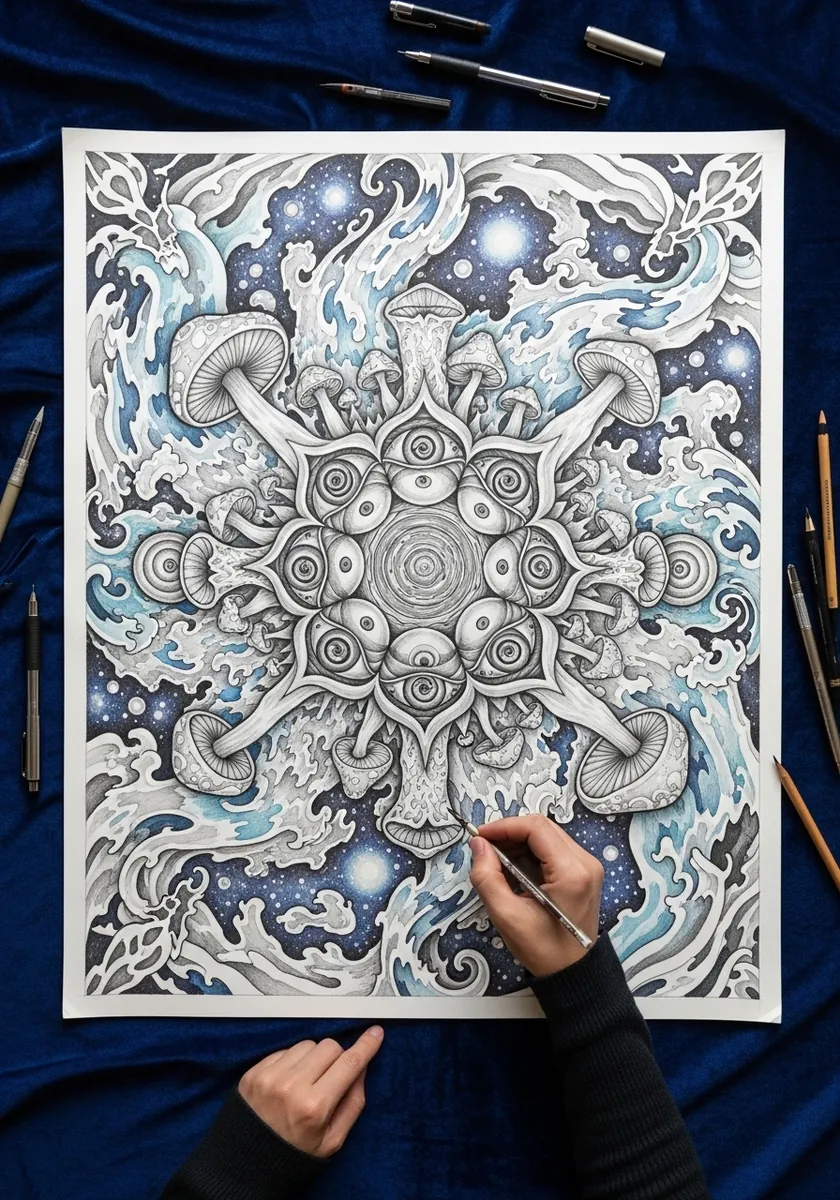
A dense mandala of mushrooms, waves and eyes. Mark the center and rule your division lines before drawing a single motif, then work outward ring by ring so the symmetry stays true as the detail builds.
12. Mushroom Cottage Line Sketch
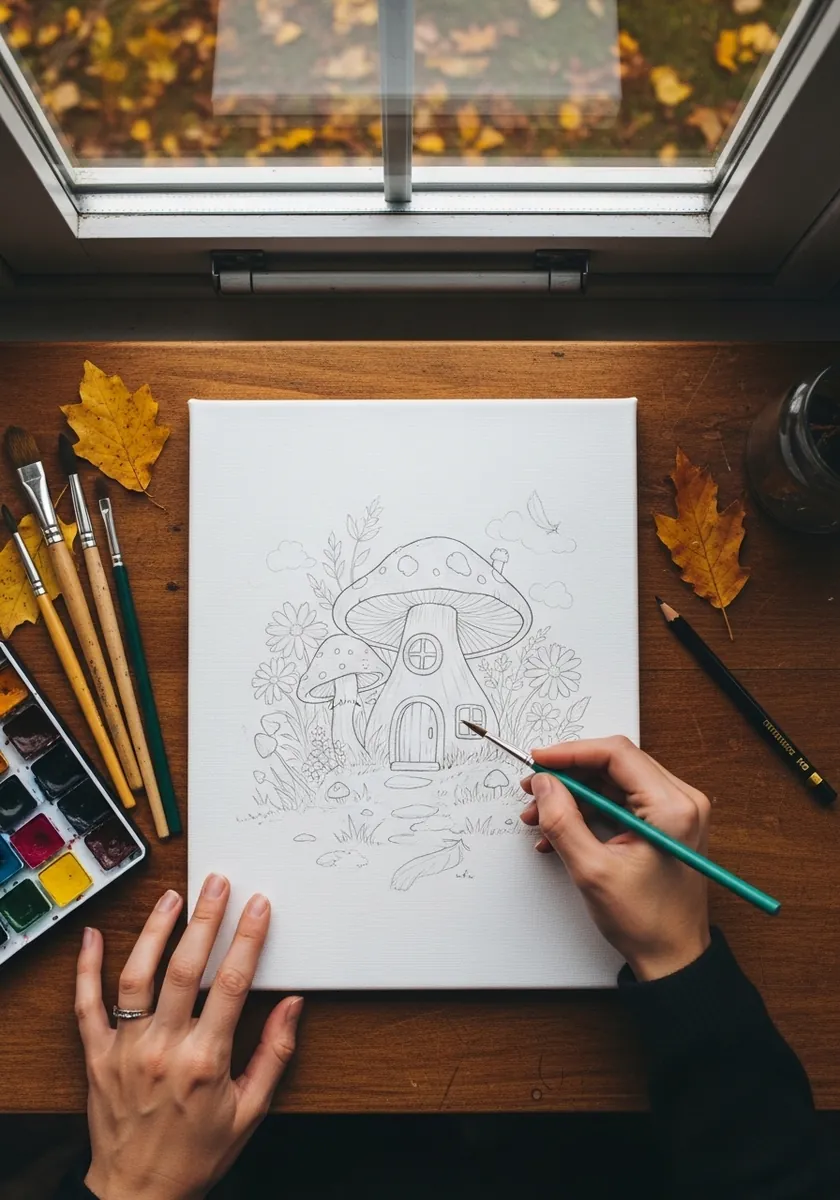
A tiny cottage built into a mushroom cap. Keep the whole piece in light line with no shading and let overlap alone create the depth, with flowers in front of the door and the cap arching over everything.
13. Halftone Dot Portrait
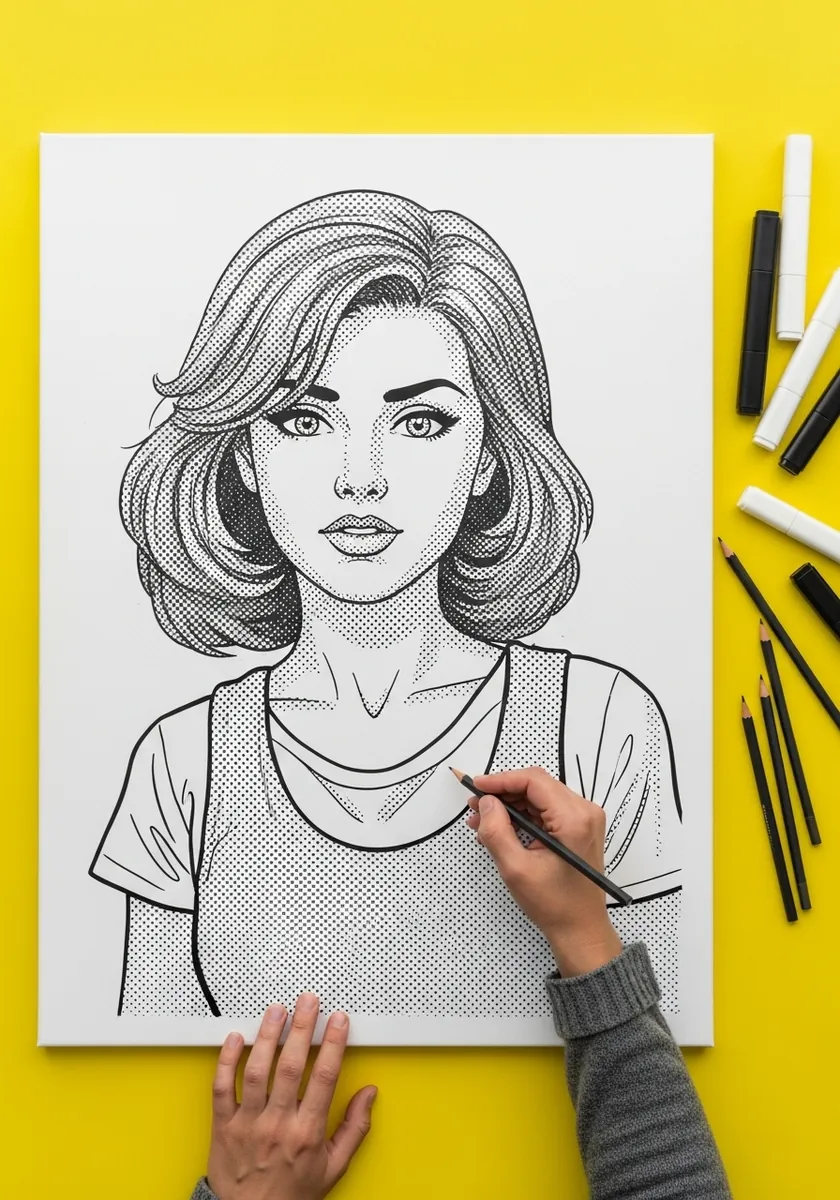
A portrait shaded entirely with dots in the comic printing style. Vary the density of the dots rather than their size, and leave the paper completely bare in the brightest areas so the range stays wide.
14. Misty Layered Mountain Range
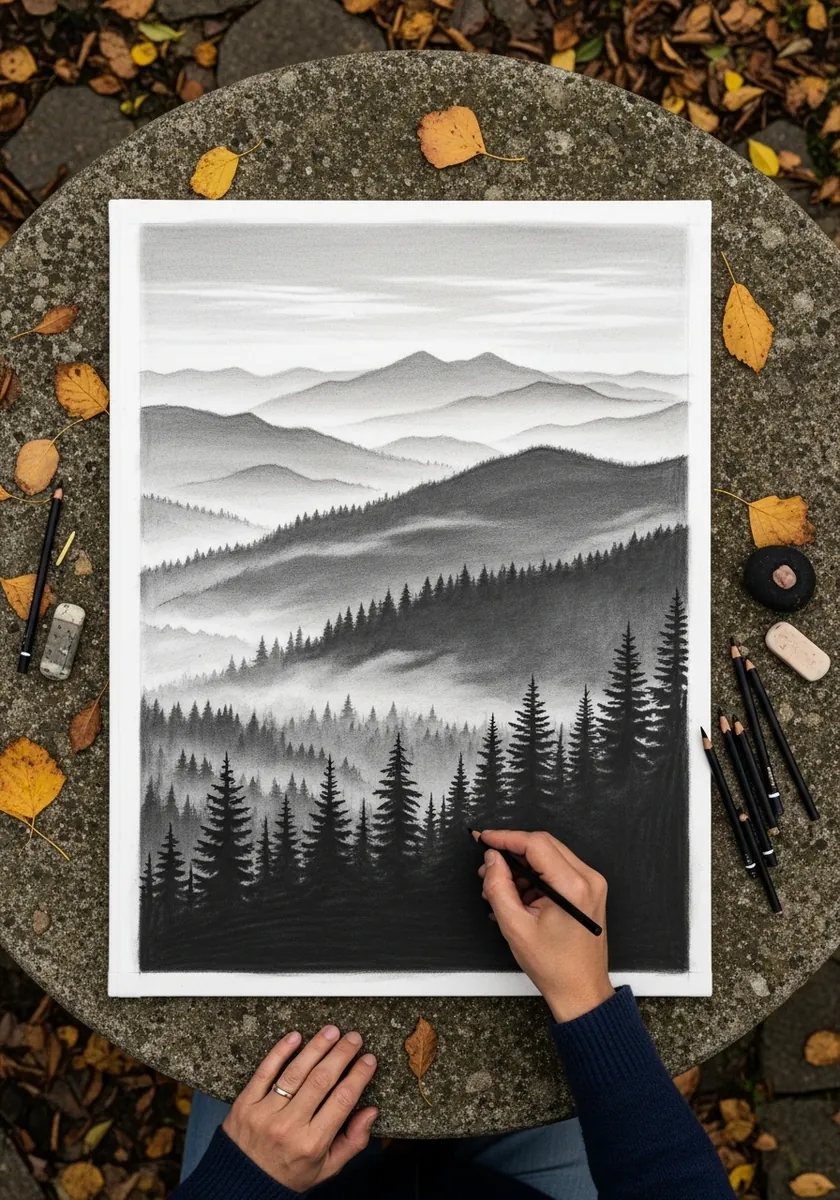
Mountains receding into mist in distinct layers. Make each layer lighter than the one in front of it and never let two layers share a value. That single rule creates the entire sense of distance.
15. One Point Perspective Room Interior
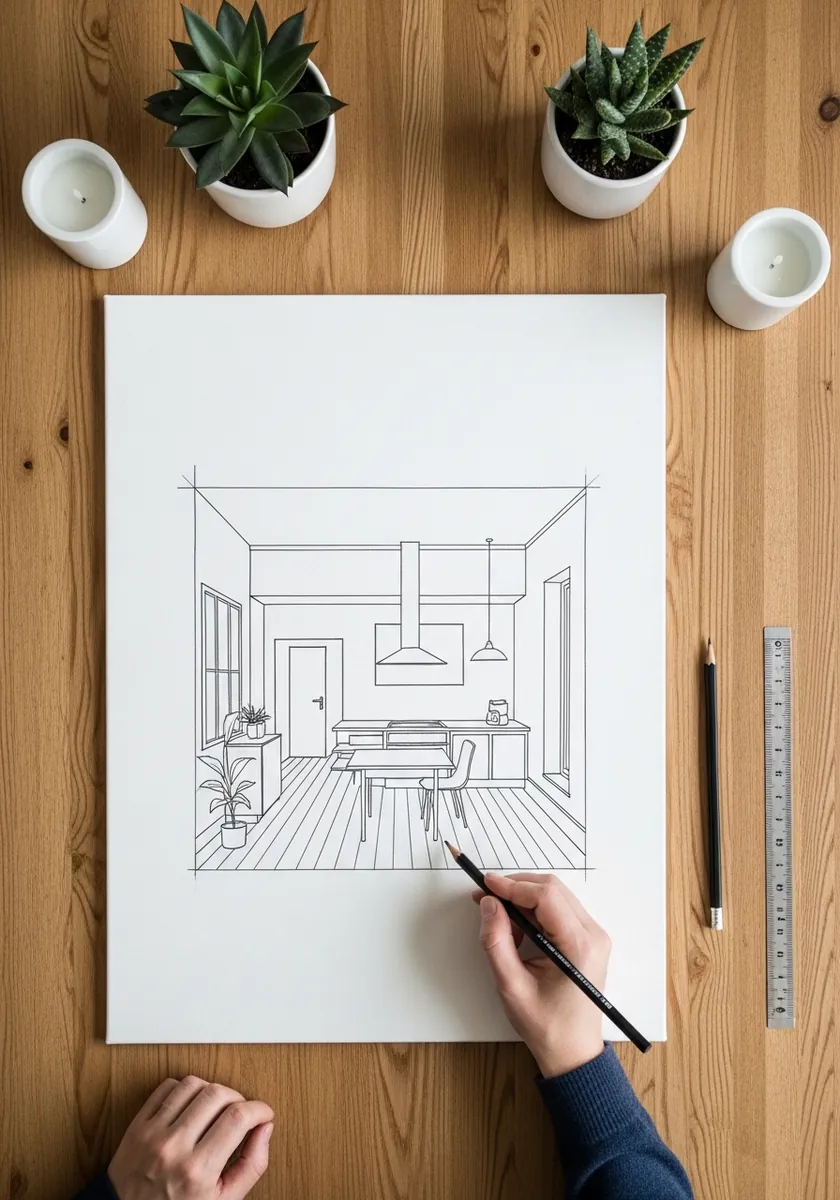
A room drawn in one point perspective with furniture receding to a single point. Set the horizon line and the vanishing point before drawing anything, then rule every depth line to that point without exception.
16. Dynamic Samurai Line Art
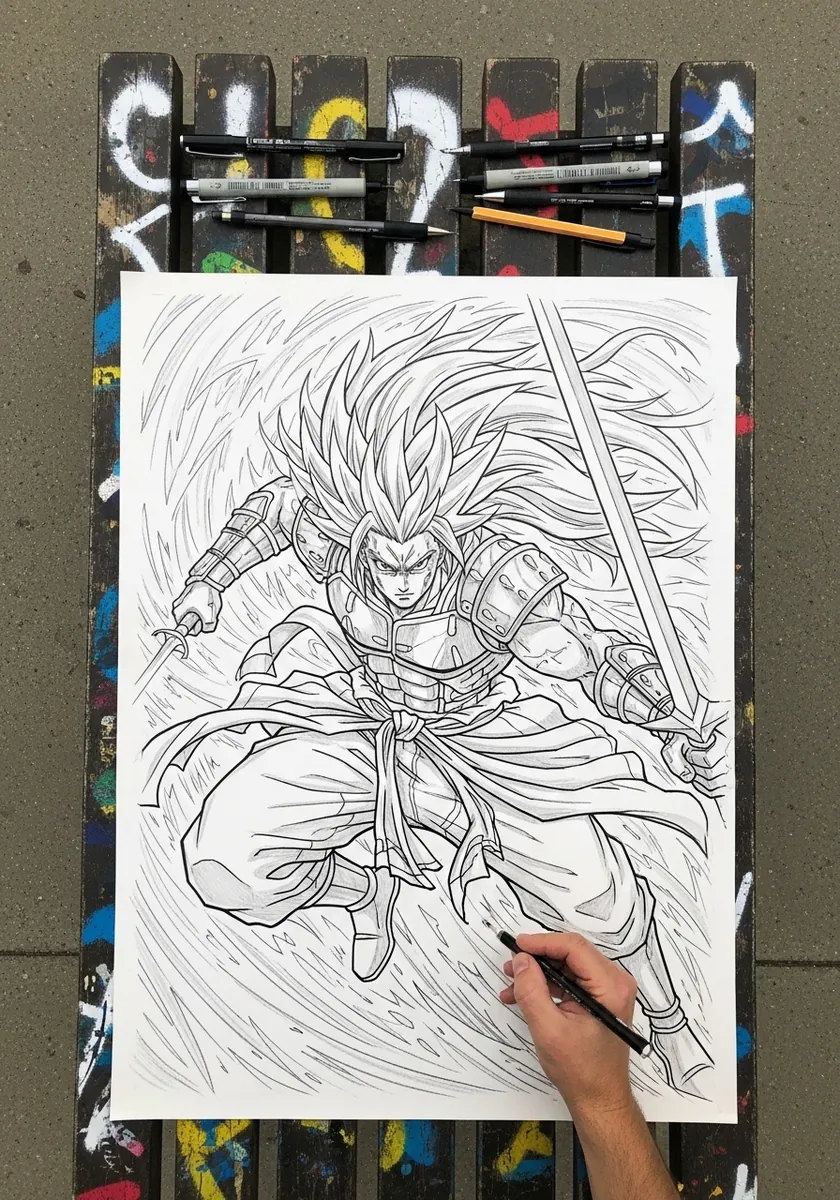
A samurai caught mid swing with motion lines behind him. Draw the line of action through the whole figure first as one sweeping curve, then hang the armor and the sword on it so the pose keeps its momentum.
17. Folk Art Rooster in a Border
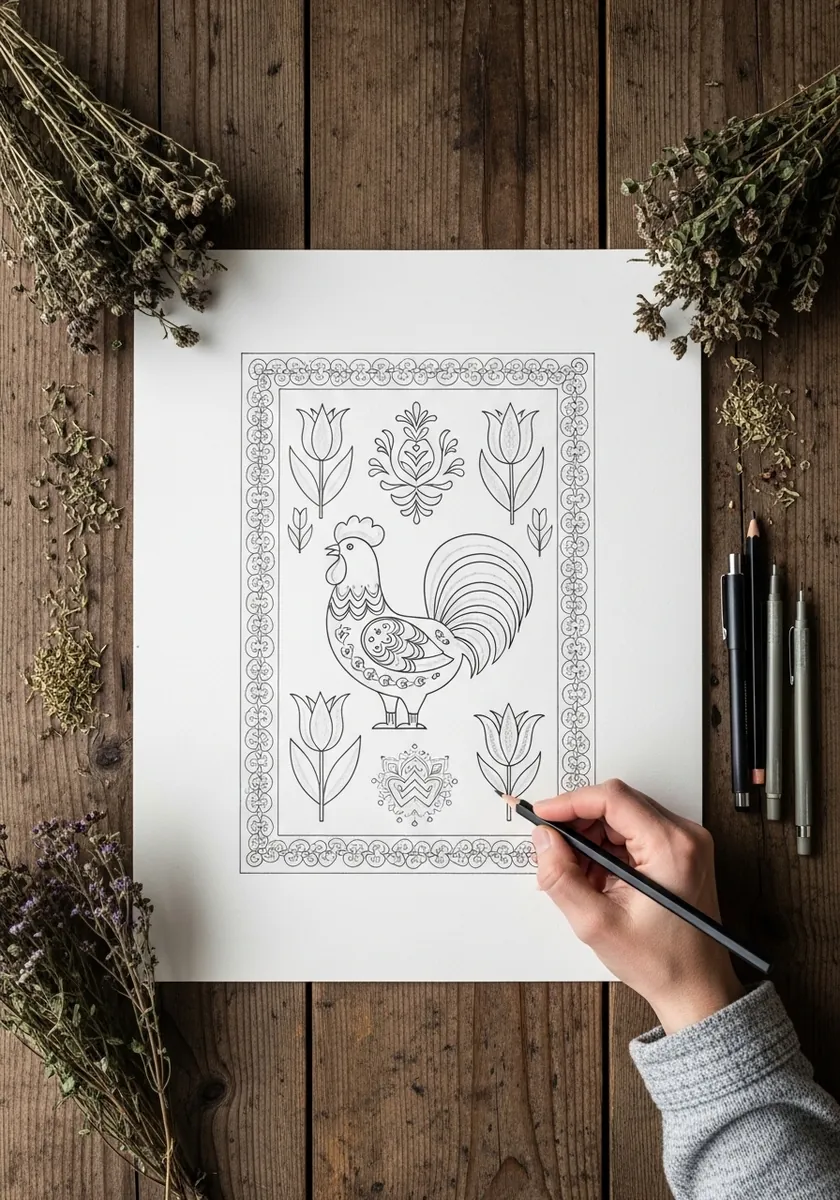
A patterned rooster inside a decorative frame. Rule the border first and treat it as a fixed container, then fit the bird inside it, which forces you to design the composition rather than let it drift.
18. Fantasy Island Map
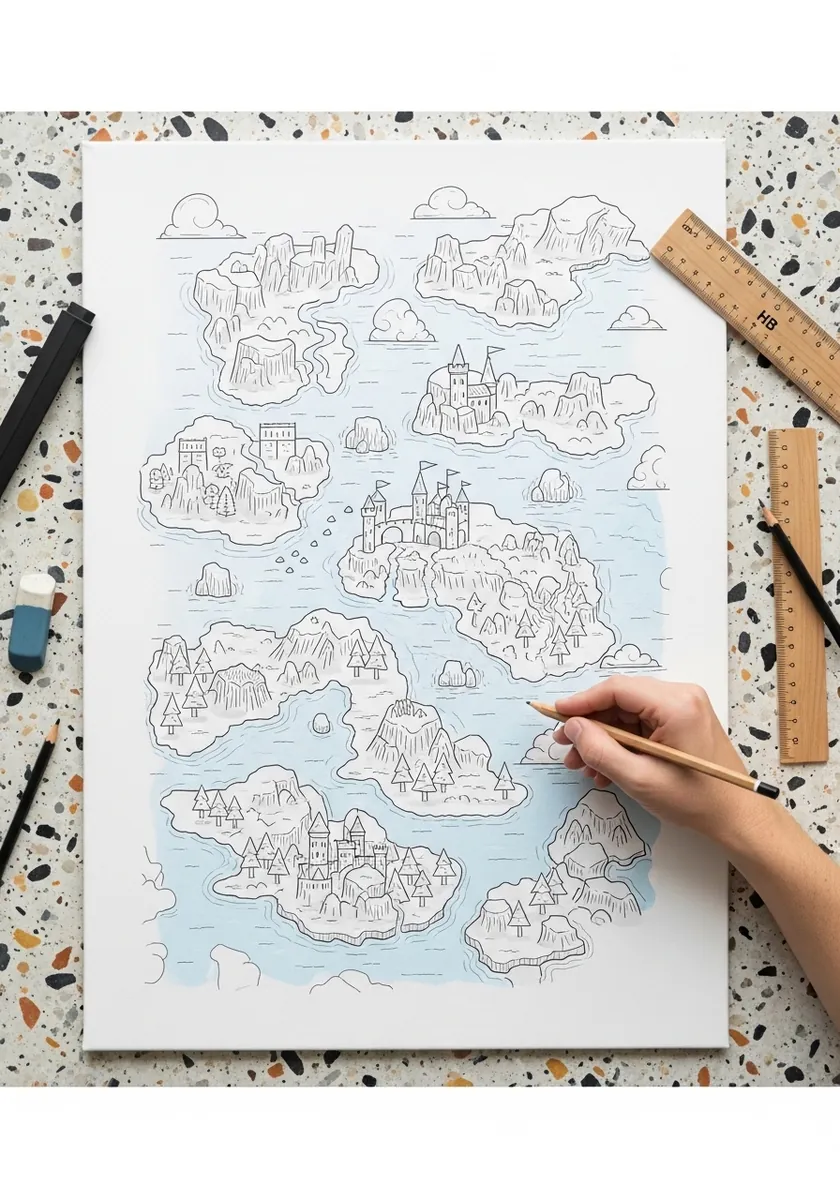
A map of islands with castles and mountain ranges. Draw the coastlines first as one continuous wobbling line, then place the terrain inside them, keeping every mountain drawn from the same viewing angle.
19. Retro Rocket Poster Lettering
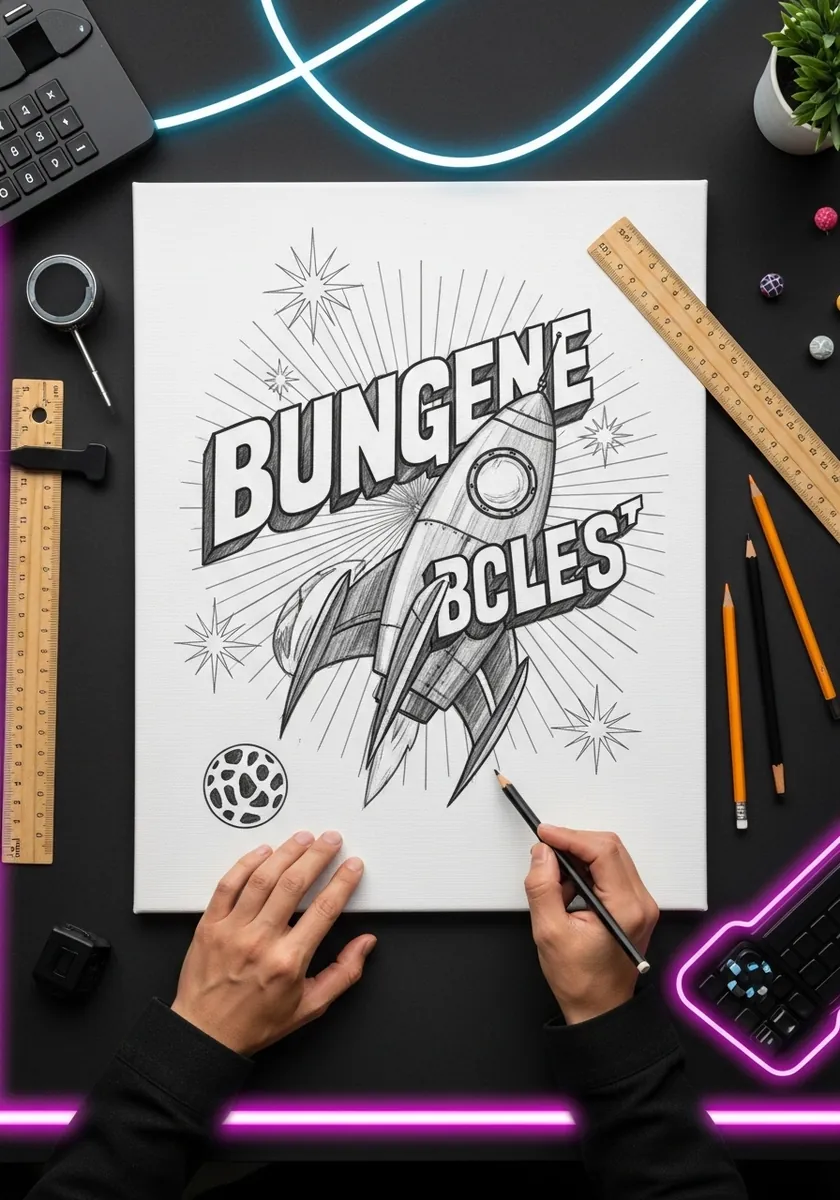
A rocket with bold lettering and a starburst behind it. Rule the starburst lines from a single point and let the rocket and type overlap them, since anything crossing those lines instantly sits in front.
20. Anime Character in Rain
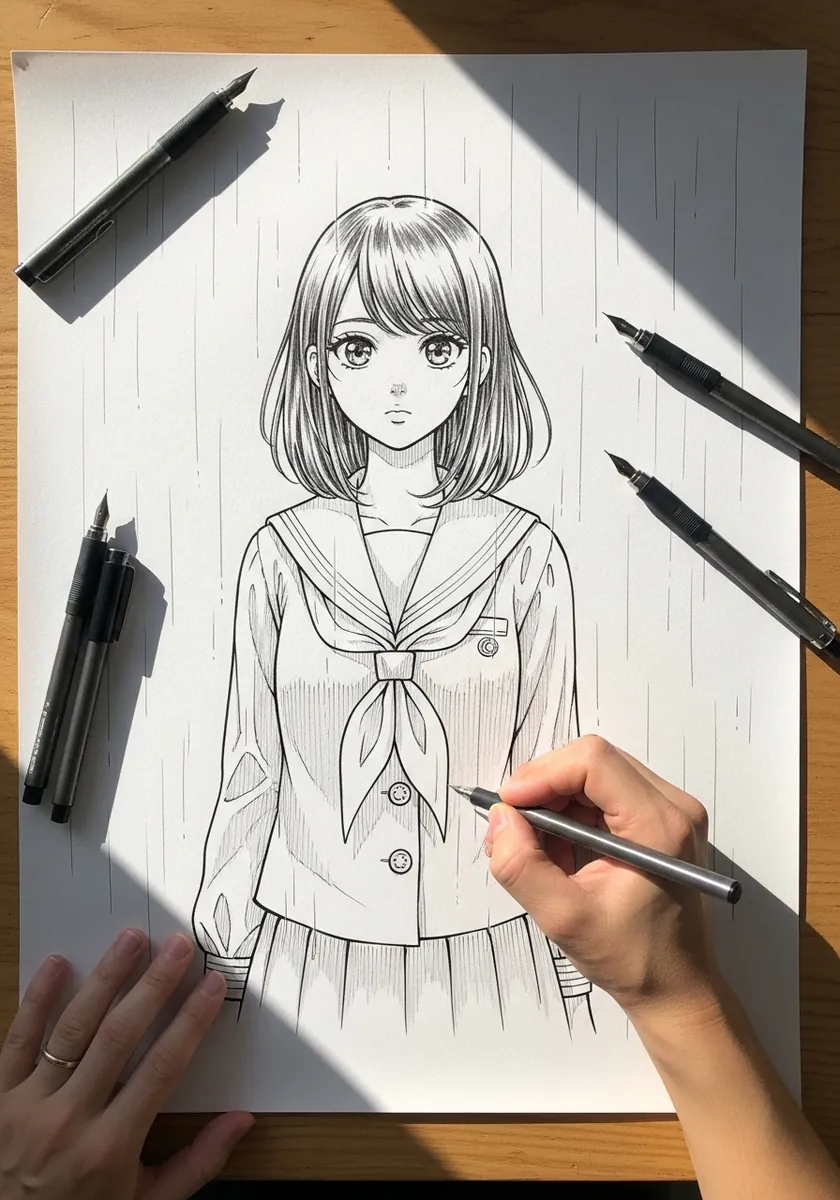
A character standing in rain drawn as fine vertical lines. Keep the rain lines perfectly parallel and let them stop where they meet the figure, which is what makes the person read as being in front of the weather.
21. Octopus Wrapped Around a Lighthouse
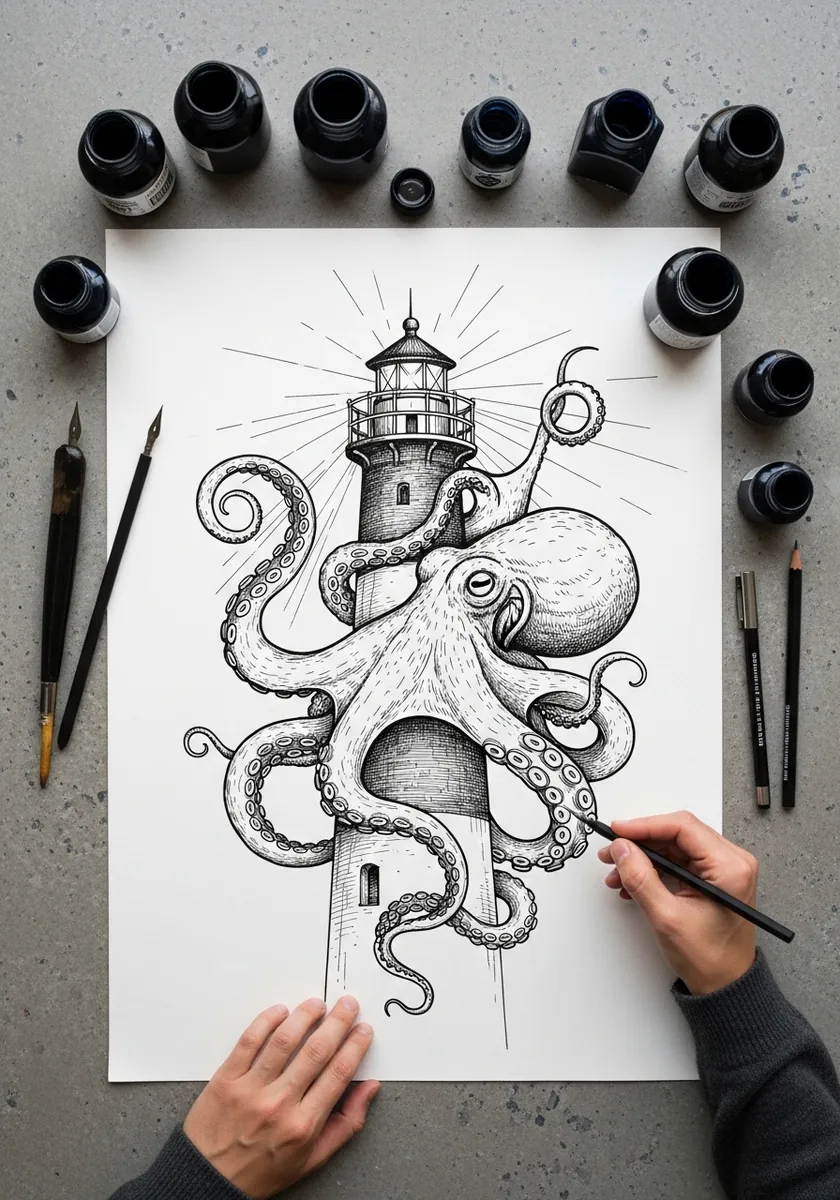
An octopus coiling around a lighthouse tower. Draw the lighthouse as a clean cylinder first, then wrap the tentacles around it, making each one pass behind the tower at least once so the wrap reads as real.
22. Abstract Overlapping Rounded Shapes
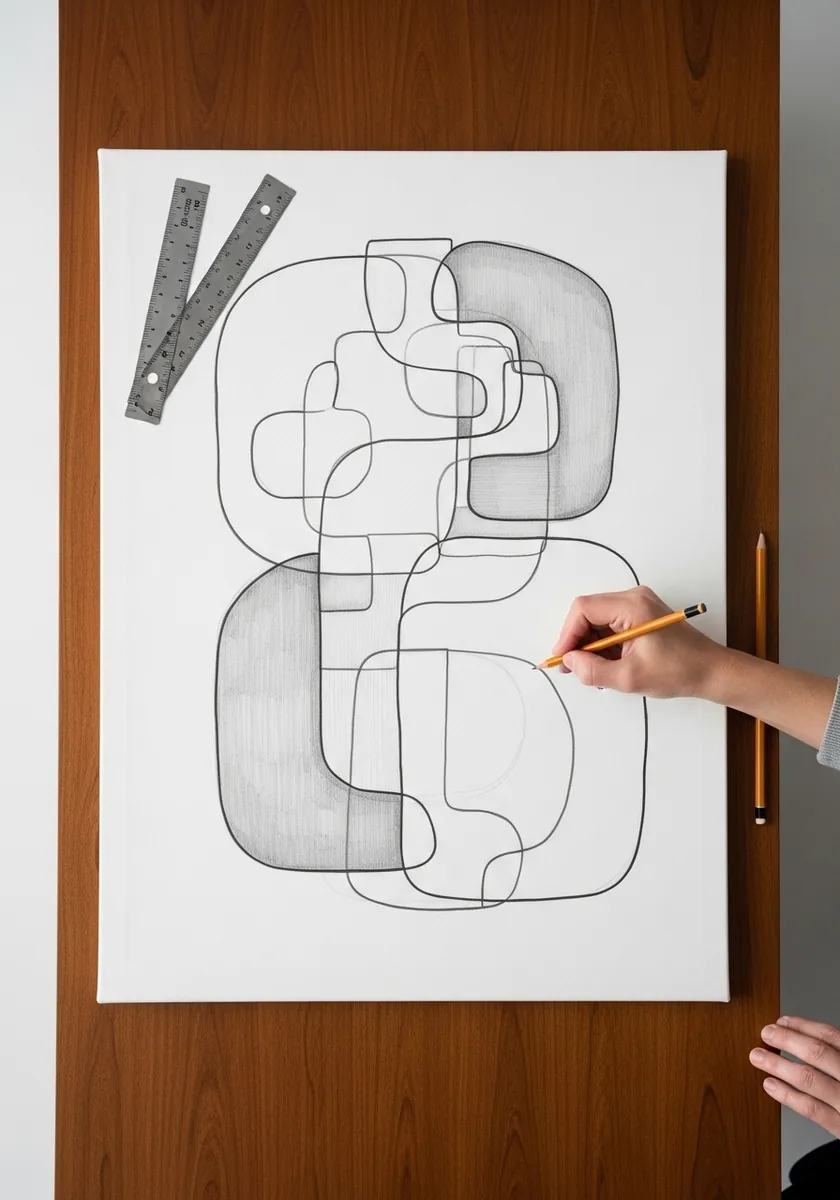
Rounded shapes layered over one another with light shading. This is the purest overlap exercise on the page, since depth comes entirely from deciding which shape passes in front and shading only a few of them.
23. Ornamental Moon Dreamcatcher
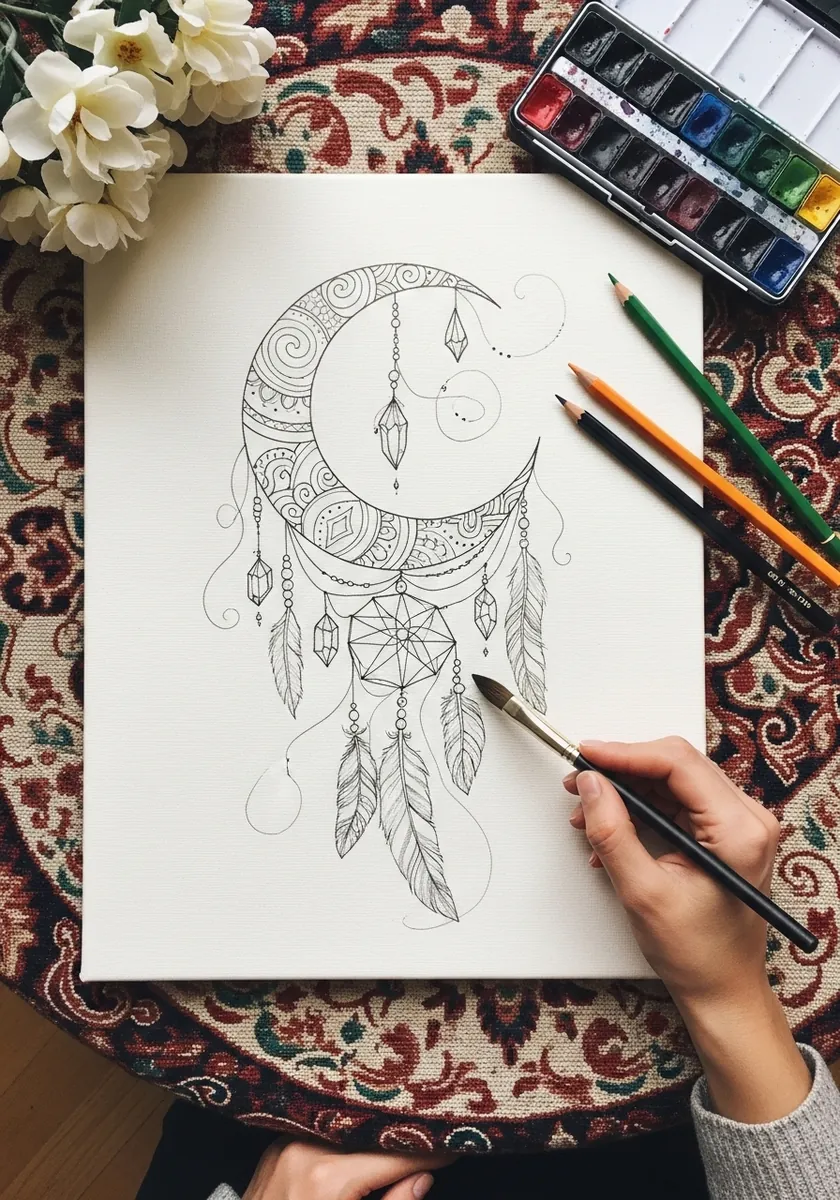
A crescent moon strung with feathers and beads. Draw the moon and the hanging threads first as a structure, then add each feather along those threads so everything hangs from a believable anchor point.
24. Skull and Roses Sleeve Design
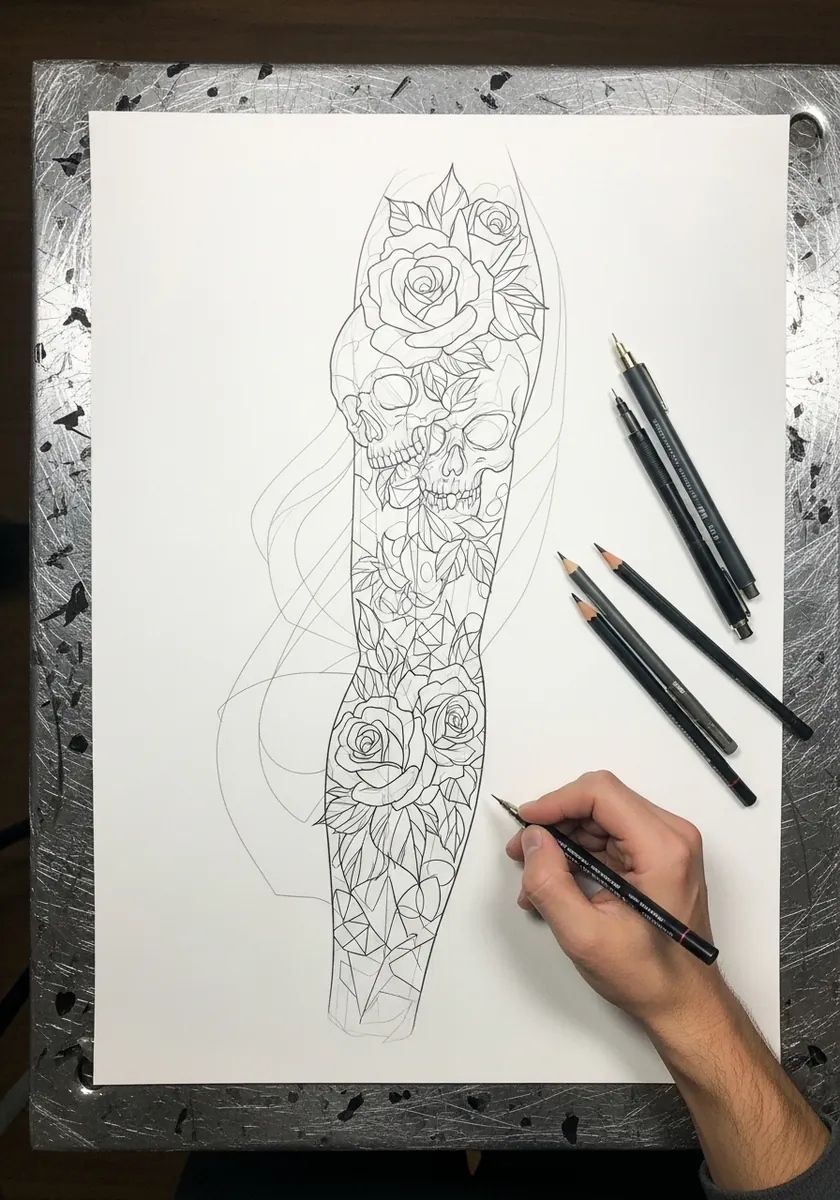
A tattoo sleeve laid out with a skull and roses. Draw the arm as a tapering cylinder in light pencil first and curve every element around it, because flat artwork on a curved limb is the usual mistake.
25. Doodle Sheet of Small Characters
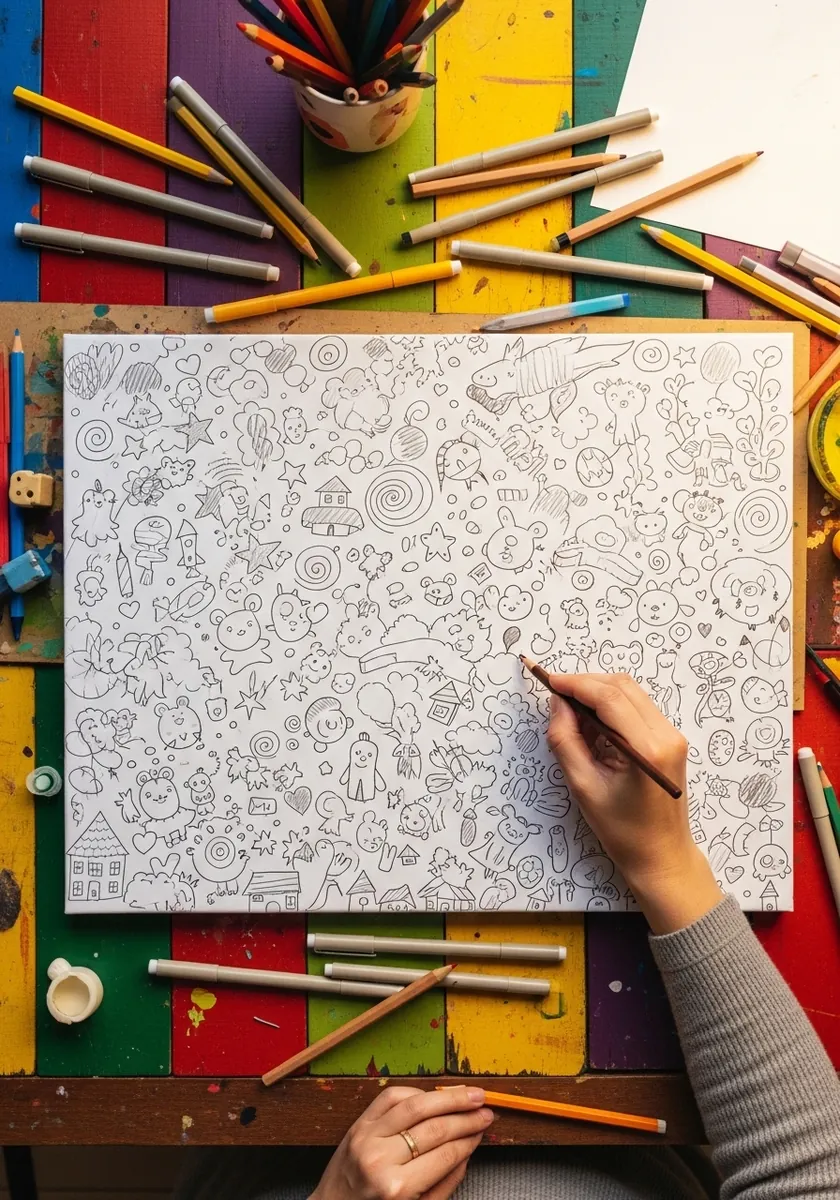
A page packed with small doodles at every angle. Work with no plan and fill outward from the center, keeping every doodle roughly the same size so the page reads as one texture rather than a jumble.
26. Willow Tree Beside a Pond
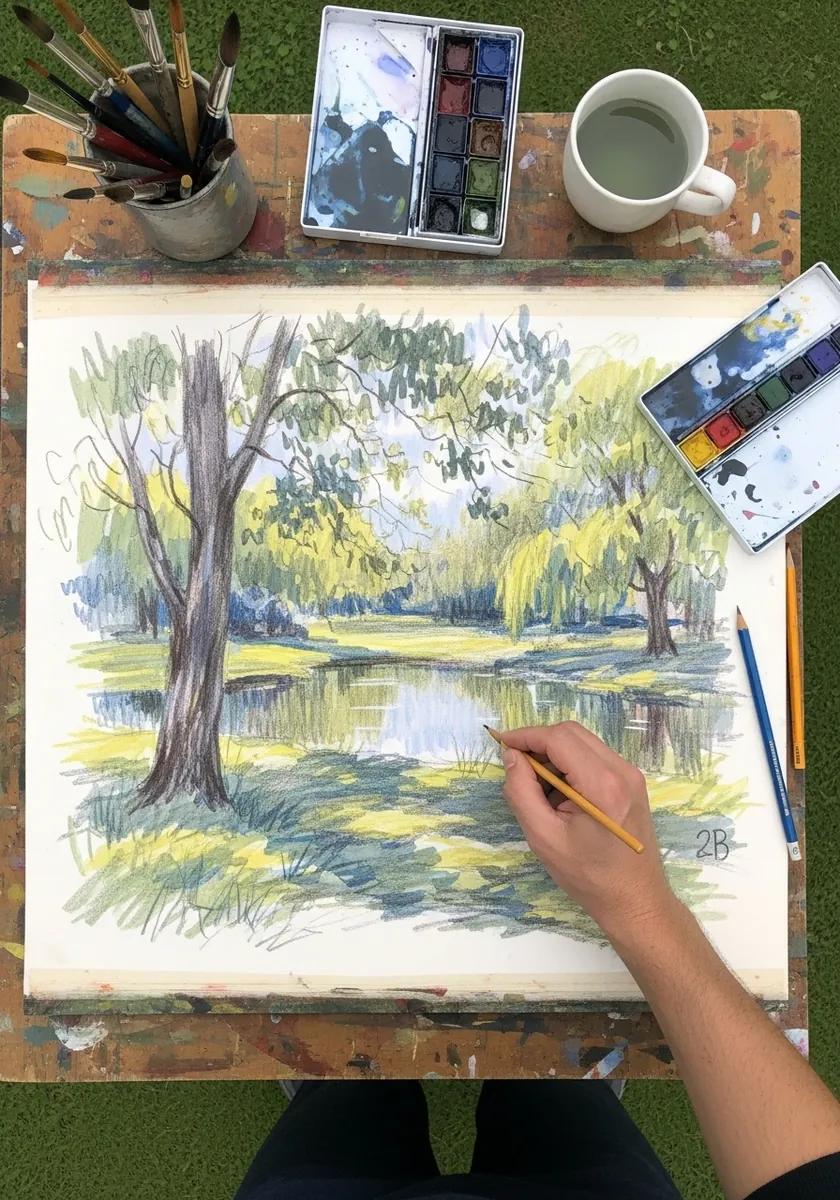
A willow leaning over water in loose pencil and wash. Put the darkest value under the tree where it meets the bank, since that one dark anchors the whole scene and everything else can stay light.
27. Sleeping Kitten in Color Pencil
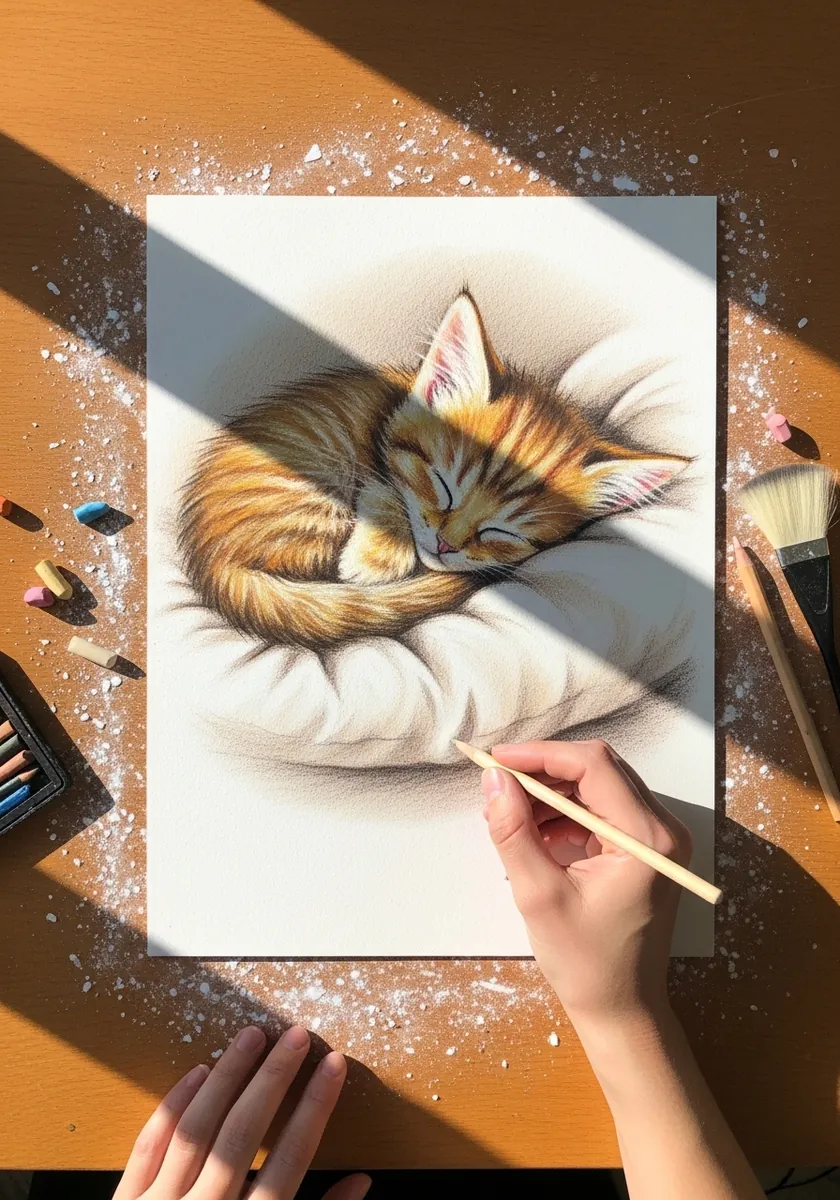
A kitten curled asleep on a cushion. Build the fur in layers of short strokes following the direction it grows, and keep the cushion soft and low contrast so the animal stays the focus.
28. Decorated Alphabet Sheet
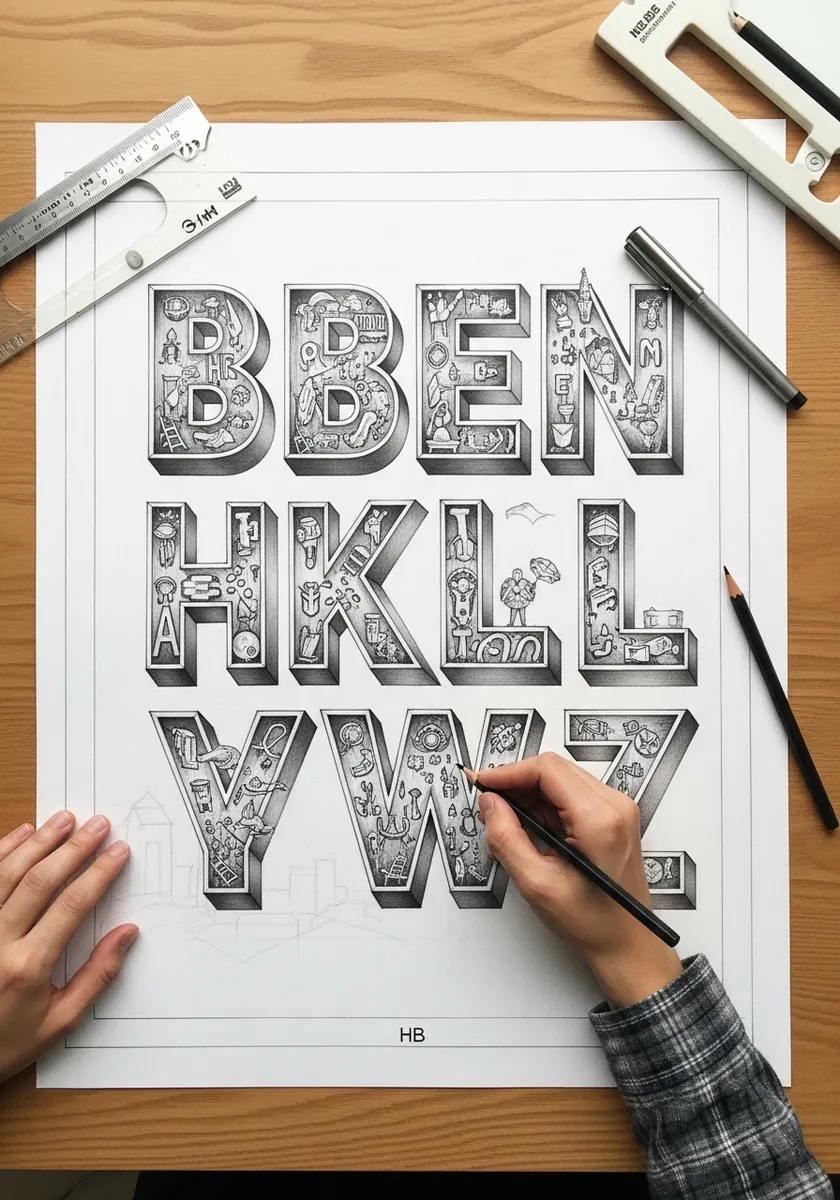
Block capitals filled with tiny drawings. Construct the letters and their extrusion completely before adding any illustration inside, or the drawings will distort the letterforms and the alphabet stops being readable.
29. Scribble Texture Study
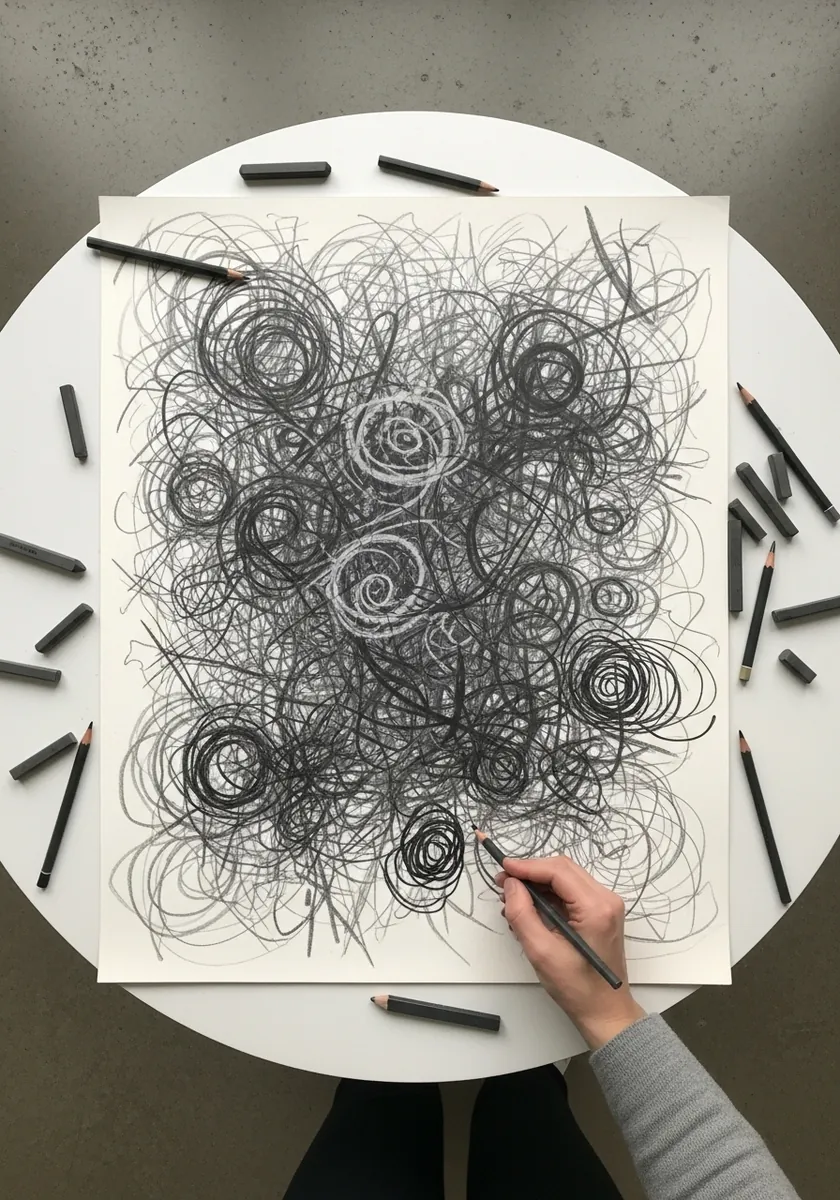
A page of dense overlapping scribbles. This is a value exercise disguised as an abstract, so build the darkest areas by layering more passes rather than pressing harder, which keeps the paper from going shiny.
30. Surreal Head Filled with Architecture
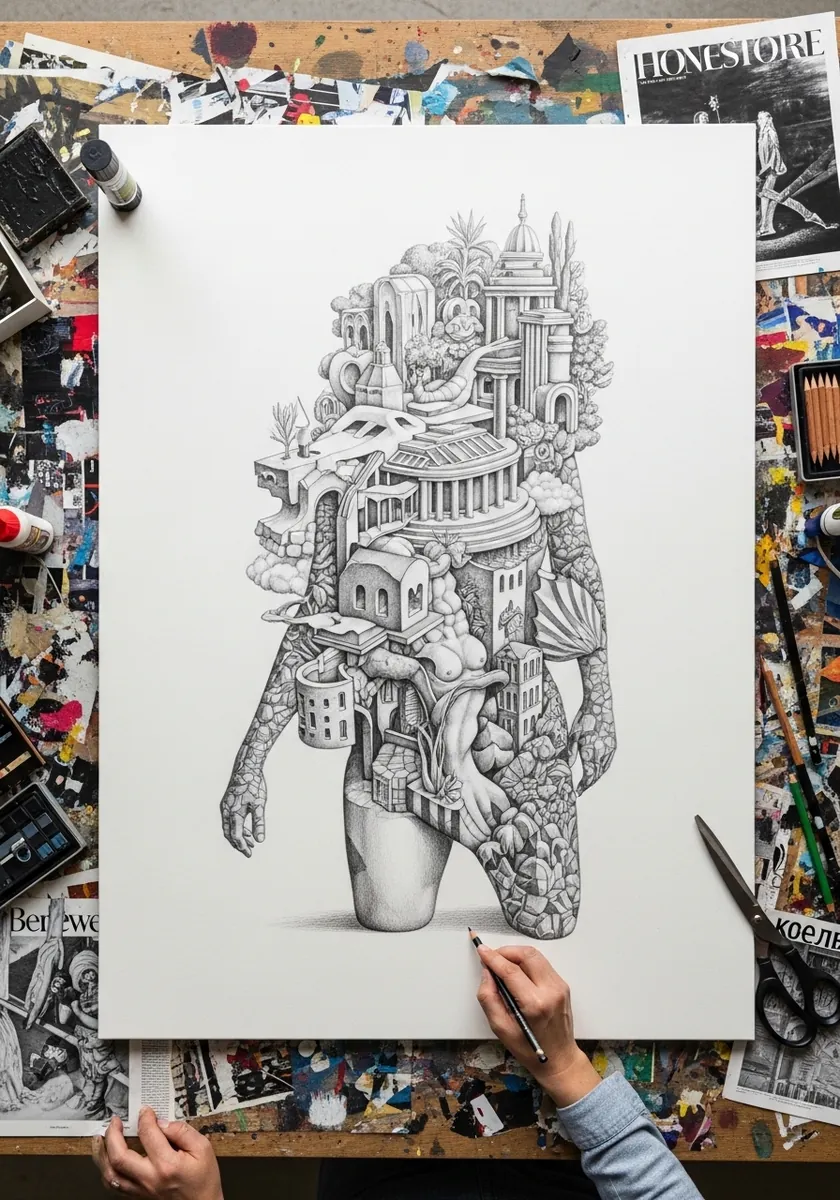
A head built from buildings, stairs and greenery. Draw the head silhouette first and keep it recognizable, then fill it with architecture that follows the curve of the skull rather than sitting flat inside the outline.
Frequently Asked Questions
What is a 3D pencil drawing?
A 3D pencil drawing is a flat graphite drawing that reads as solid. It uses overlap, a wide value range and converging perspective lines to trick the eye, so the subject appears to occupy real space rather than sit on the paper surface.
How do you make a pencil drawing look three dimensional?
Pick one light source and stay with it. Shade the side facing away from that light, add a cast shadow on the surface below, overlap nearer shapes in front of farther ones, and keep near edges drawn with a heavier line than far ones.
Which pencil grades do you need for 3D drawing?
Three grades cover almost everything. An HB for light construction lines, a 2B for mid tones and general shading, and a 6B or a charcoal stick for the darkest accents. The full range from paper white to near black is what creates depth.
What should a beginner draw first to learn depth?
Start with a cube and a sphere lit from one side, each with a cast shadow. Between them they teach flat planes and curved gradients, which are the only two shading situations that exist. Everything more complex is a combination of the two.
Is blending necessary for realistic pencil drawing?
No. Blending smooths gradients on curved forms, but on flat planes it destroys the hard edges that make a shape read as solid. Many of the strongest pieces here use no blending at all and build value with directional strokes instead.
References and Further Reading