Each segment of a capture spiral sags slightly between two radii rather than running as a straight chord. Drawing straight lines between spokes is the single reason most spider webs look like wire wheels.
Key takeaways
- Sag every spiral segment slightly between the two radii it connects, deepest at the outer rings|Build in the spider's order: bridge line, Y frame, radii to the hub, then the spiral inward|Only the capture spiral is sticky, so draw dew on the spiral and leave the radii bare|Lay twenty-five to thirty-five radii and keep the hub above center as real webs do|Leave a free zone gap between the hub mesh and the start of the capture spiral
One detail decides whether a drawn web looks like silk or like a bicycle wheel. Each segment of the capture spiral sags slightly between the two radii it connects, because thread hangs under its own weight. Draw straight chords between the spokes and the whole thing goes rigid.
It also helps to build in the spider’s own order. A bridge line first, then a Y-shaped frame, then every radius meeting at the hub, and only then the spiral working inward. A real orb weaver lays a temporary outward spiral first and eats it as it returns.
Two more facts change what you draw. Only the capture spiral is sticky, so dew collects there and not on the radii, and a clear free zone separates the hub from where the spiral begins. A garden orb weaver typically lays twenty-five to thirty-five spokes.
The thirty pieces below run through fine ink, op art, art nouveau panels, sacred geometry, neon on purple and stained glass color. For the animal itself, spider drawing ideas pairs directly with these, and mandala construction shares the same radial discipline.
Compiled by the GS Art Zone editorial team. Last updated August 2026. Each idea is paired with the specific step that produces the effect, so you can go from the reference straight to paper.
What You Need Before You Start
- A ruler for the radii, since spokes drawn freehand rarely converge on one point
- A 0.05 fine liner for the spiral, which should be finer than the radii it crosses
- A compass for the construction circles that guide the spiral spacing
- A white gel pen for the dew drops and for the pieces drawn on dark grounds
- Black or toned paper for the metallic, neon and galaxy pieces further down
1. Classic Pencil Orb Web
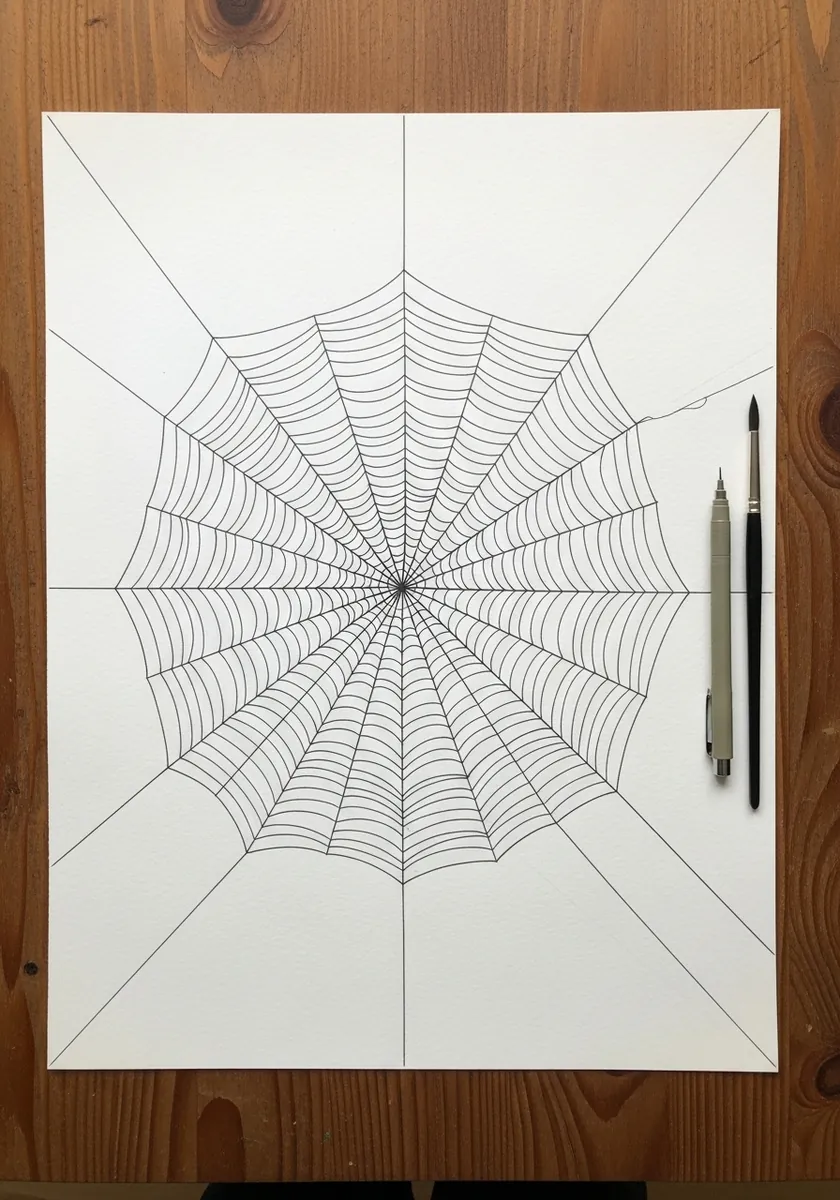
This is the version everything else builds on. Rule about thirty radii to a single hub, add construction circles at even spacing, then draw the spiral segment by segment with a slight downward sag between each pair of spokes. Keep the sag shallowest near the hub and deepest at the outer rings, as real silk does.
2. Blue Watercolor Half Web
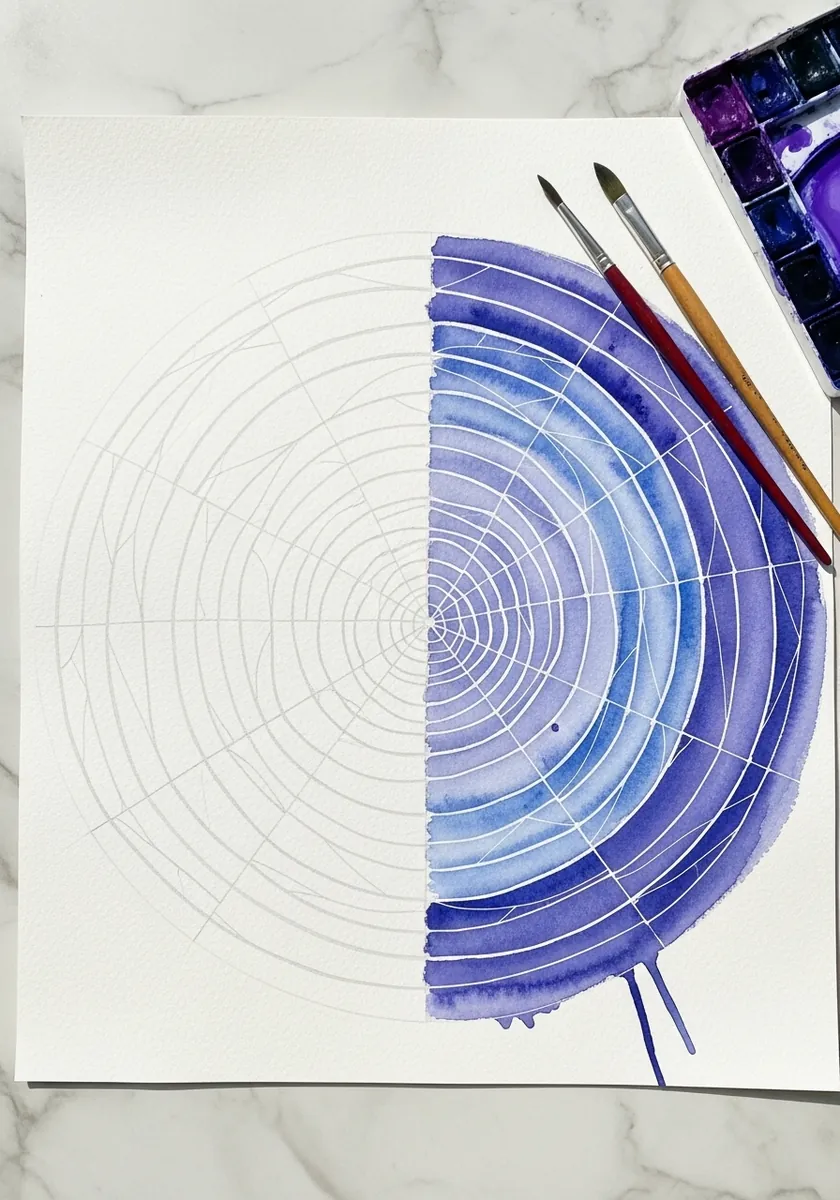
Leaving half a piece unpainted turns a study into a demonstration. Keep the pencil guides showing on the unfinished side, let the painted side reach full saturation, and make the division fall along a single radius rather than mid-segment. Keep the wash inside the frame threads, so the structure stays legible on both halves.
3. Art Nouveau Web Panel
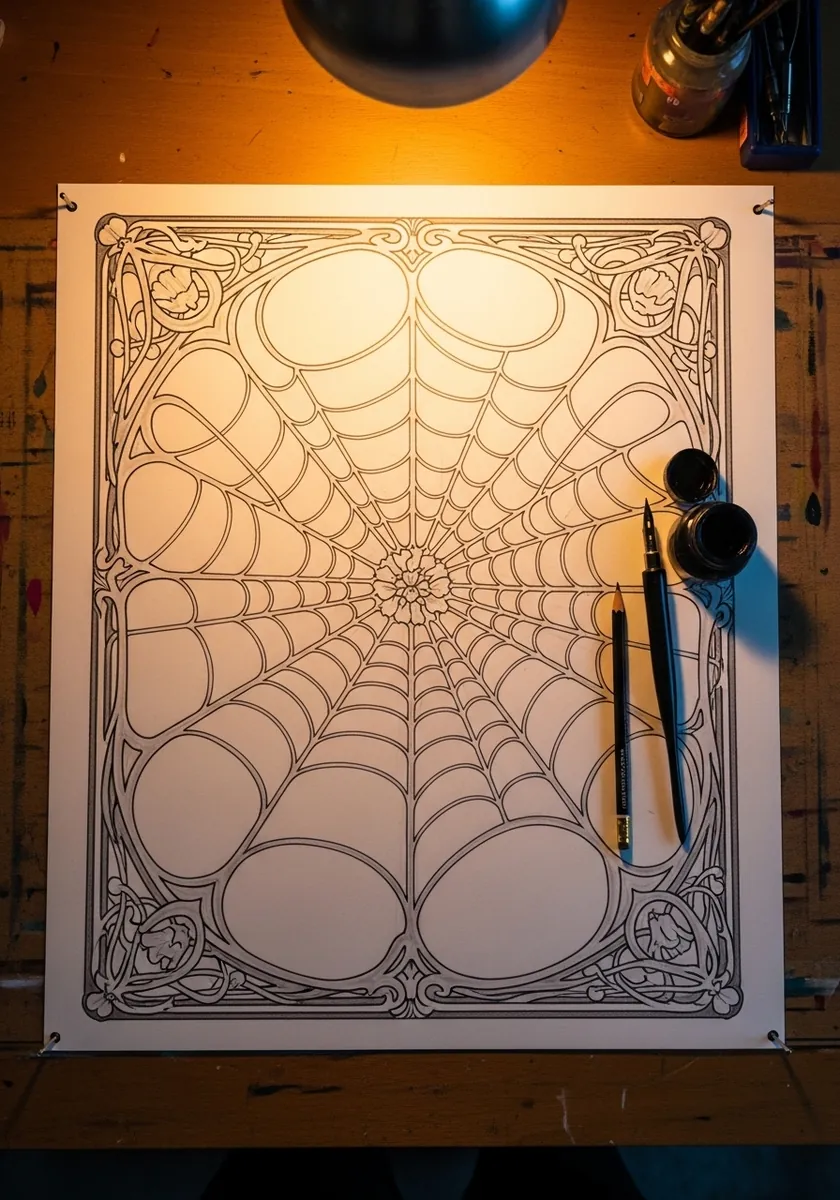
Nouveau borders and a web share the same swelling line quality. Draw the frame with a brush pen so the line thickens through every curve, then keep the web inside at a single fine weight. The contrast in weight separates the two layers.
4. Op Art Concentric Octagon
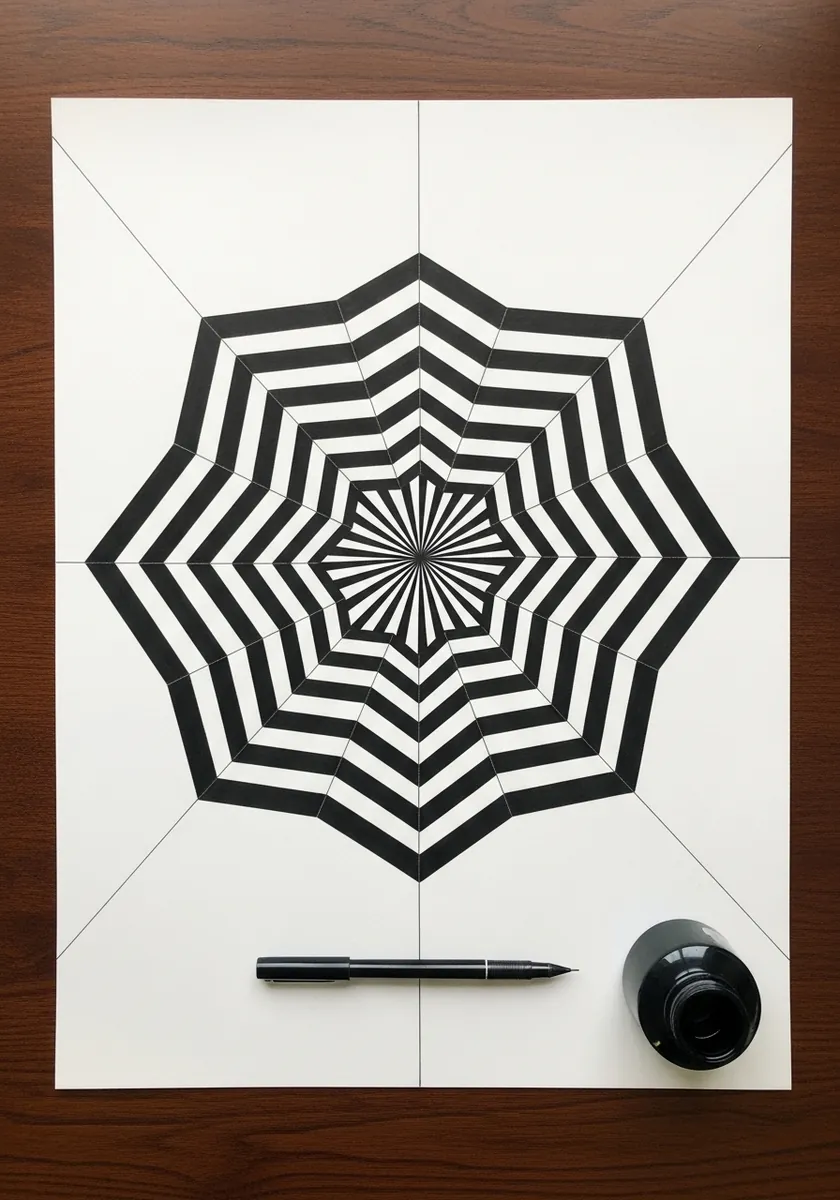
Op art wants maximum contrast and progressive spacing. Alternate solid black and pure white bands, narrow each ring slightly as you move inward, and keep every corner absolutely sharp. Any softness at the edges reduces the effect. Rule every corner with a straightedge, since one soft angle undoes the whole optical effect.
5. Fine Ink Web With Dot Pattern
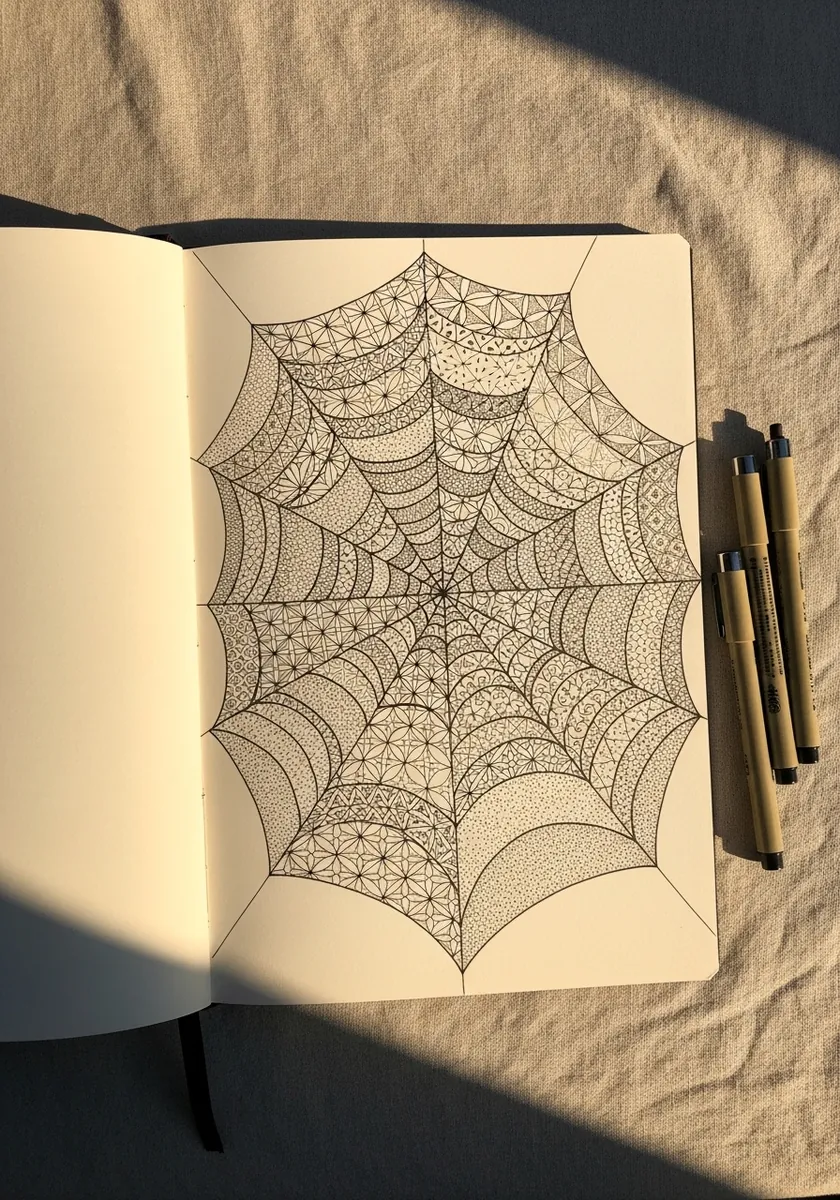
Stippling inside a web needs somewhere to breathe. Fill only alternate segments with dots, keep the density highest near the outer frame, and leave the hub area almost bare. Filling every cell turns the whole page gray. Work outward from the hub, so your hand never rests on finished stippling and smudges it.
6. Orange Geometric Web in Gouache
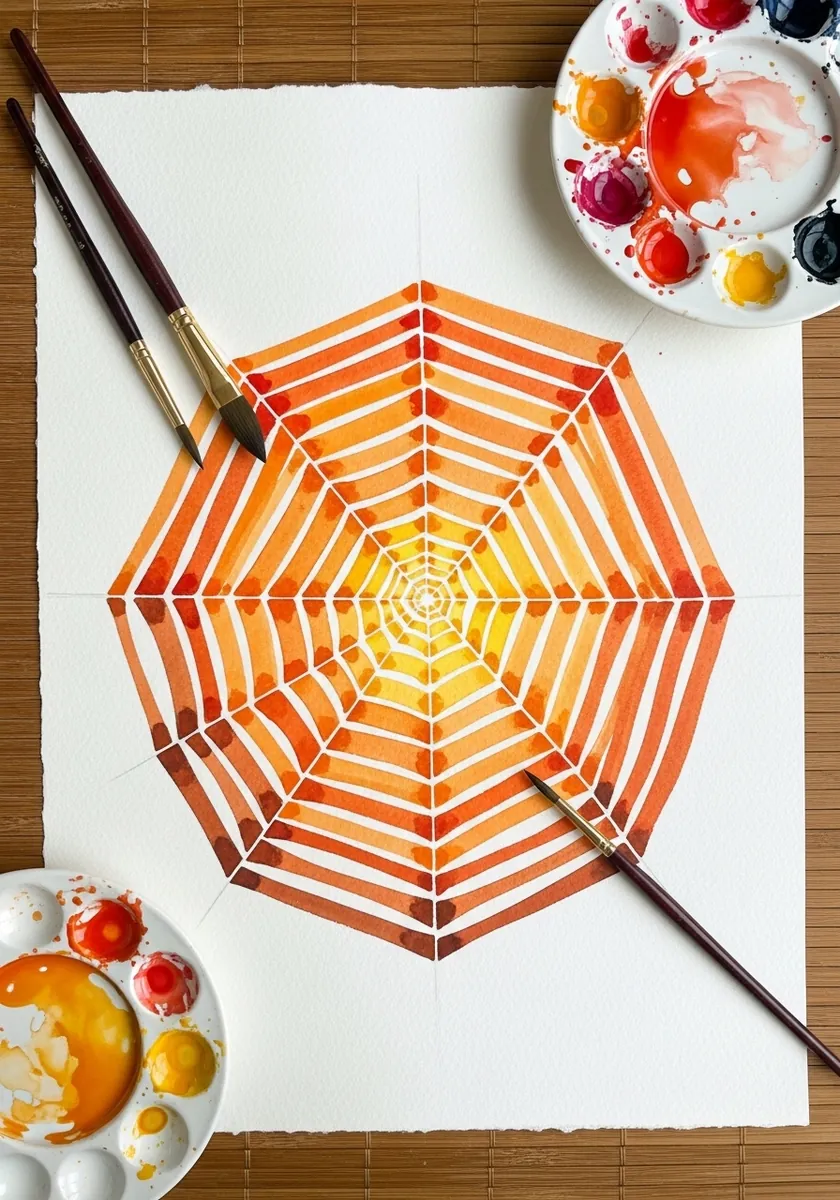
Flat color across a radial design needs a clear system. Give each concentric band one unmixed hue, move steadily from warm center to cooler edge, and keep the radii as clean unpainted gaps. No gradients anywhere. Paint the lightest band first, because gouache covers a pale layer far better than a dark one.
7. Gothic Arch With Webs
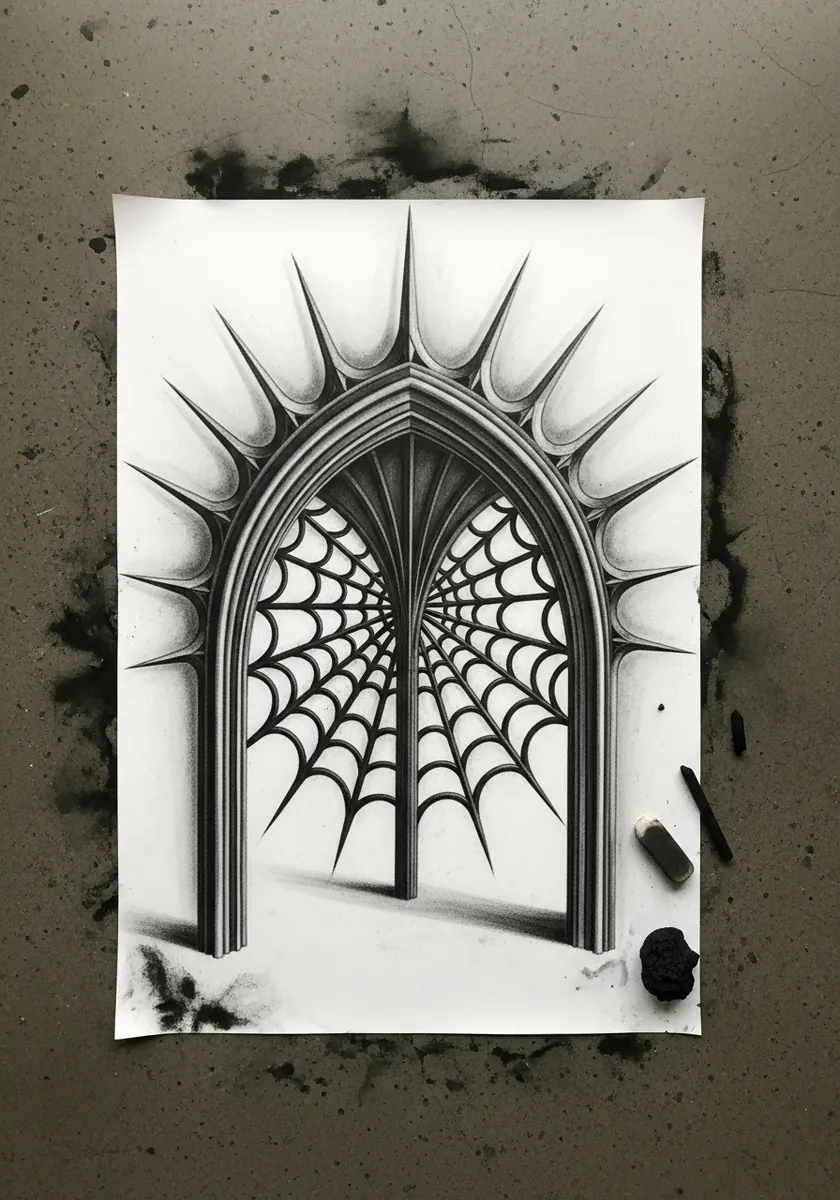
Webs in architecture should follow the corners. Let each one span the angle between two stone surfaces, keep the frame threads anchored at real edges, and sag the lower sections more heavily. Old webs collect dust and hang unevenly. Keep the stonework crisper than the silk, which pushes the webs forward into the foreground.
8. Bold Ink Web With Splatter
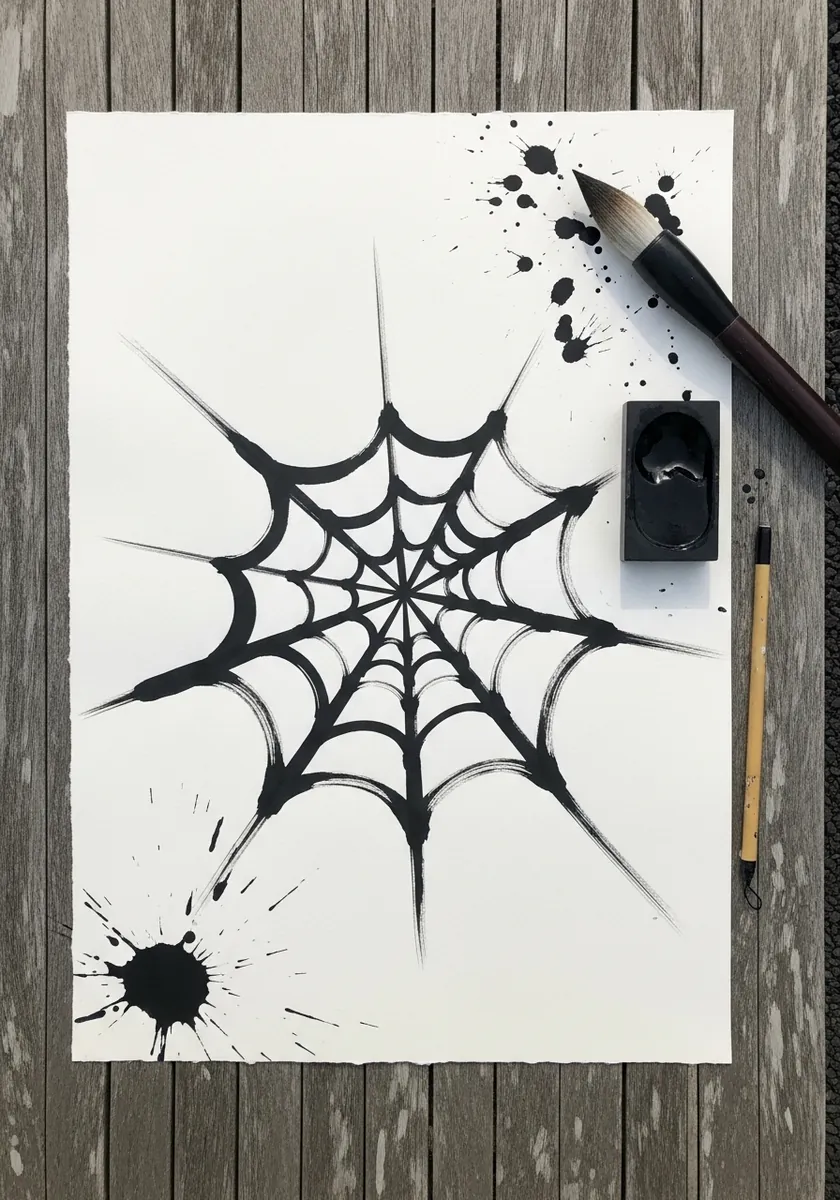
Splatter around a precise subject works if it stays on one side. Flick from a single direction, keep the web itself completely clean, and let a few marks fall well outside the frame threads. Even distribution reads as an accident.
9. Large Dewy Pencil Web
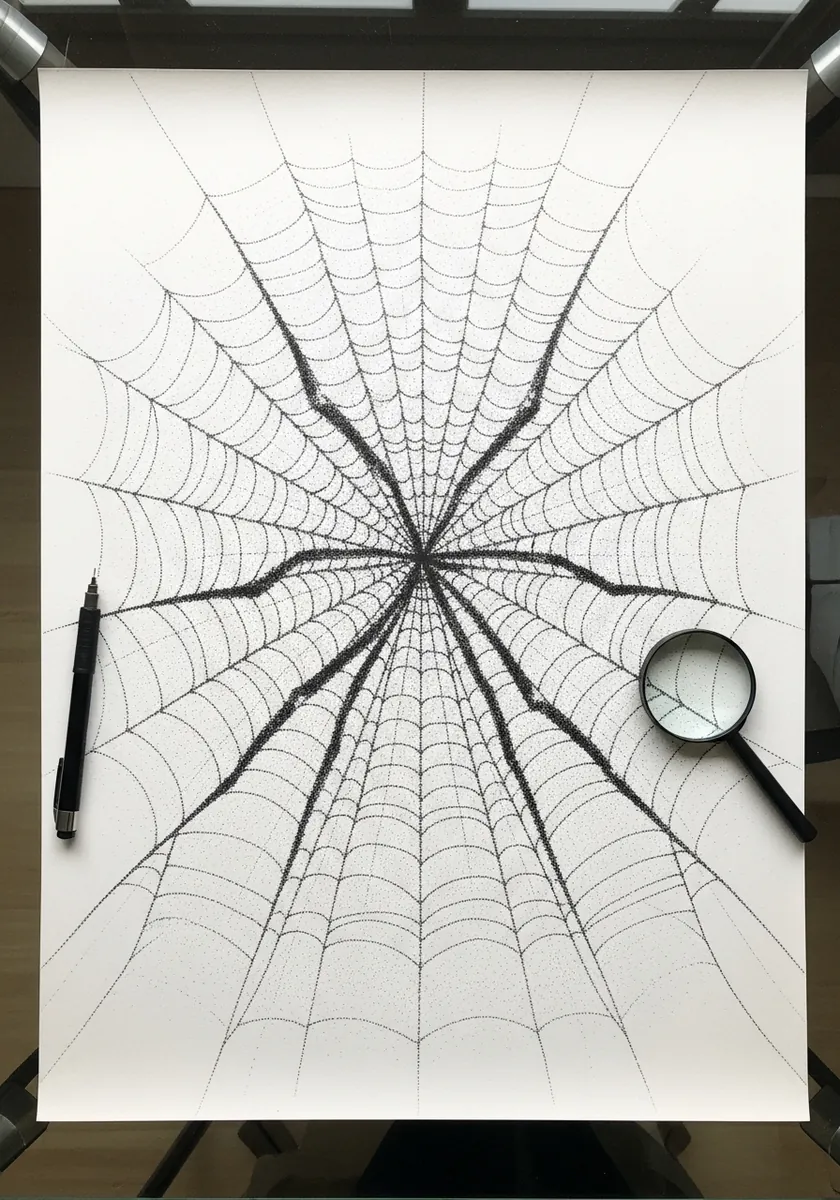
Dew collects only on the sticky capture spiral, never on the dry radii, which is a detail almost nobody draws. Space the drops unevenly along the spiral, make them slightly larger at the lowest points, and leave the spokes bare.
10. Stained Glass Hexagon Webs
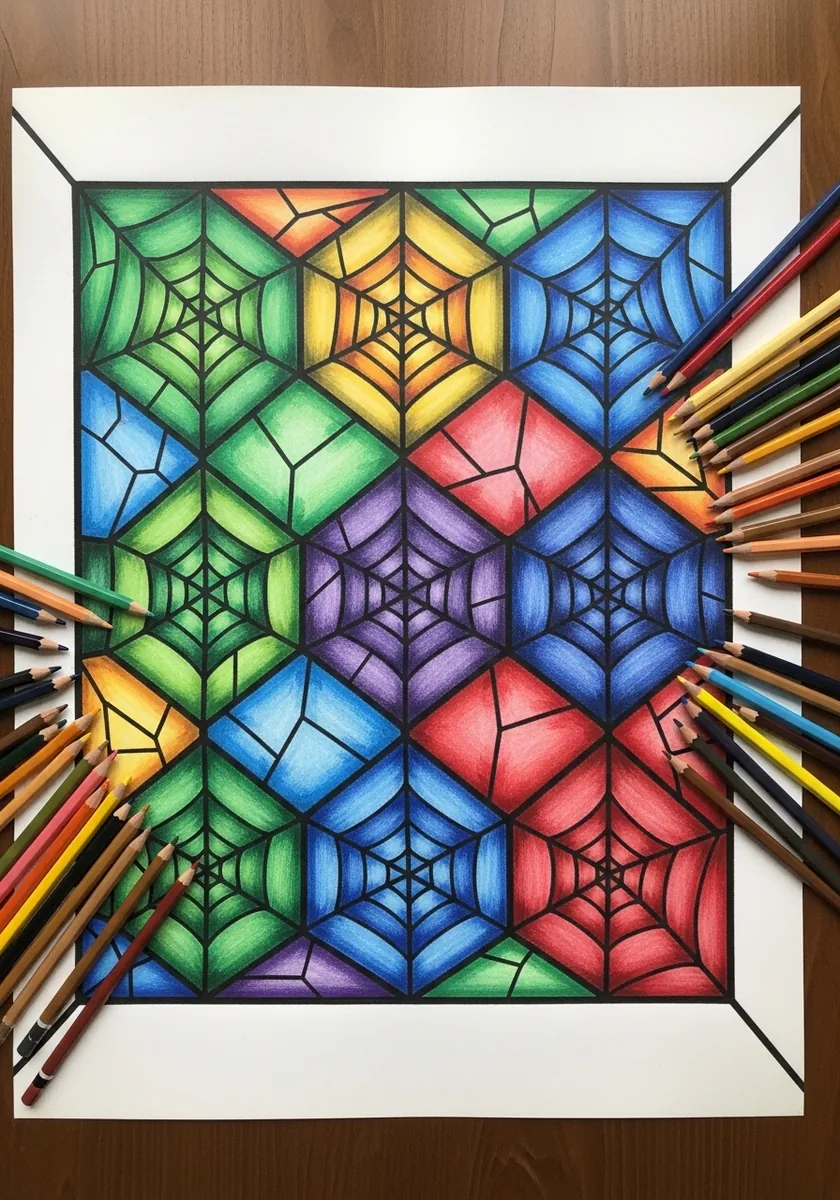
Repeating a motif across a grid needs each cell to differ slightly. Keep the hexagon frame identical throughout but vary the web color and spoke count inside, so the eye finds something new in each one without losing the rhythm.
11. Celtic Knot Star Web
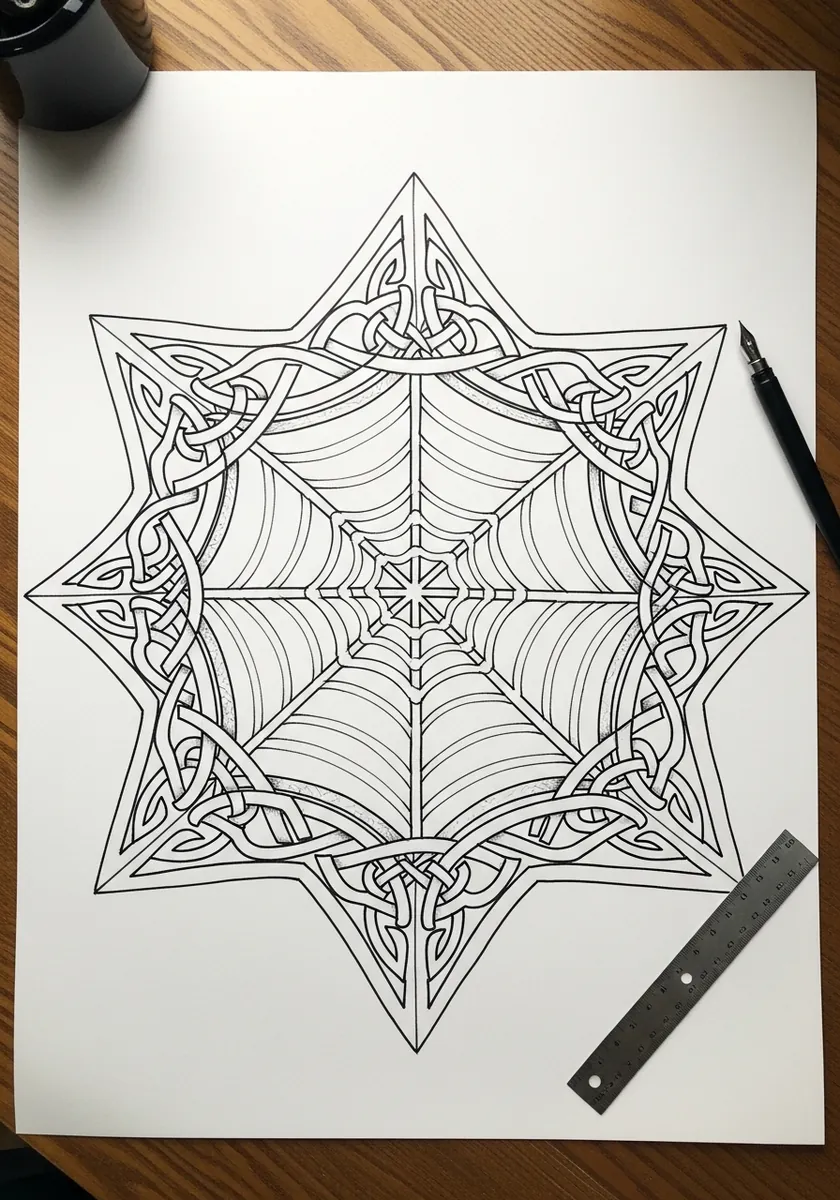
Interlacing demands consistent over-and-under. Decide the sequence at the first crossing and never break it, alternating strictly all the way around. One inconsistent junction is immediately visible in a knot pattern. Draw the knot in pencil completely before inking, since a single wrong crossing cannot be fixed later. Count the strands at every corner to confirm the sequence still holds.
12. Neon Web on Purple Ground
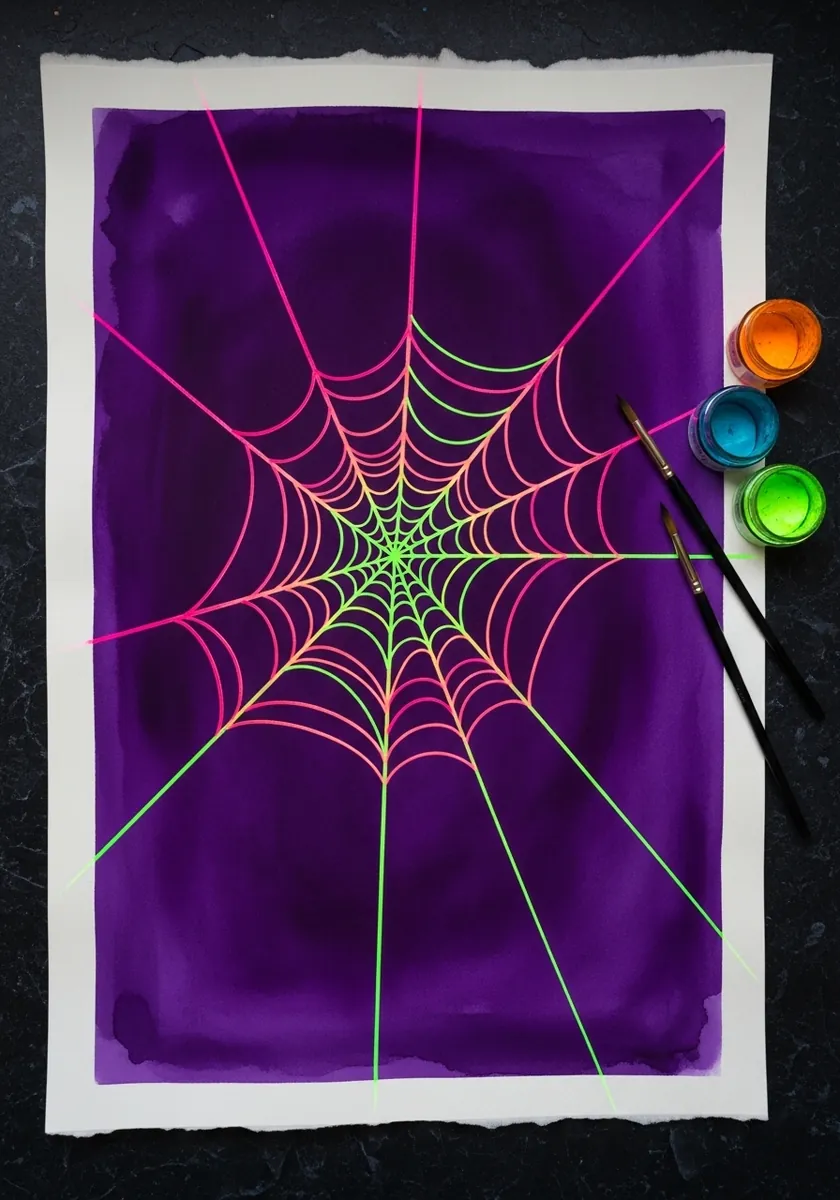
Neon over a dark saturated ground needs the ground laid first. Paint the purple flat and let it dry completely, then draw the web in one pass so the color sits on top. Working wet into wet dulls the neon immediately.
13. Silver Web on Kraft Paper
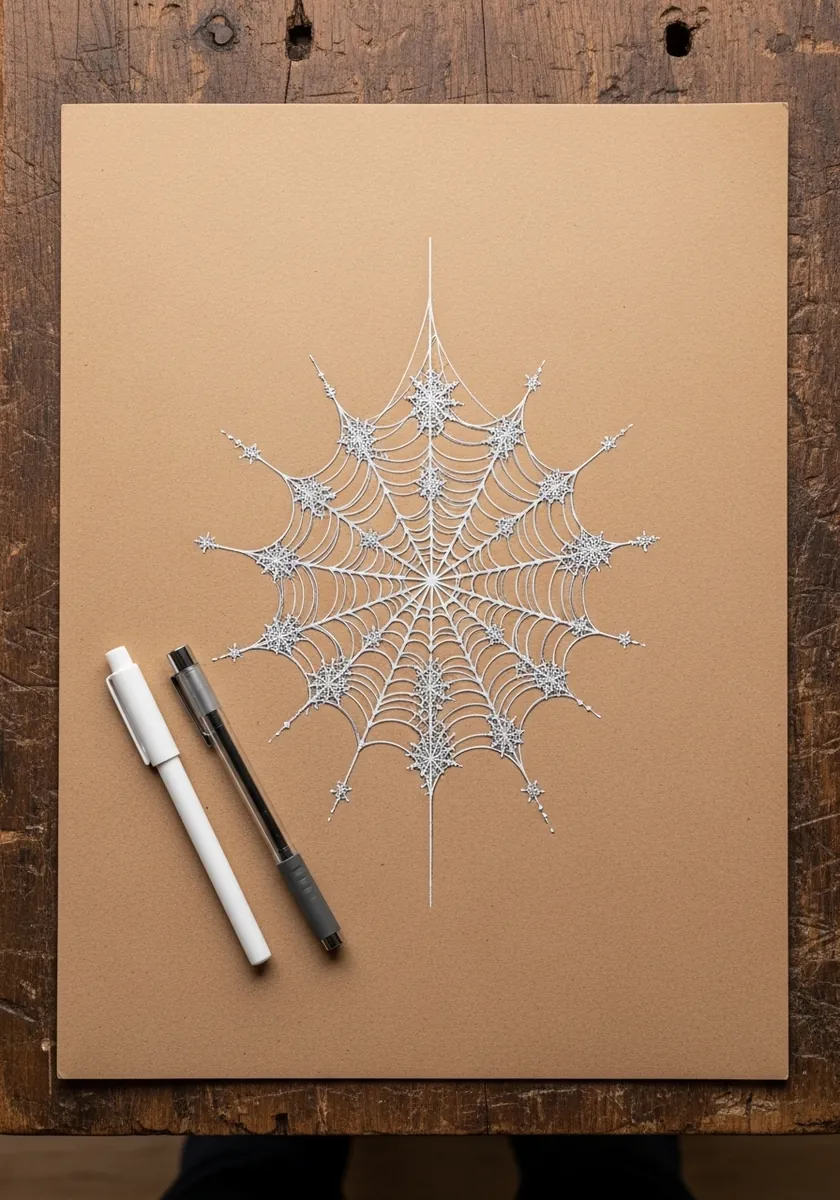
Metallic line on kraft reads as light rather than color. Keep the whole web fine and even, add small radiating tufts at each spoke tip, and leave the paper untouched everywhere else. The warm ground makes the silver look cold.
14. Web With Mandala Nodes
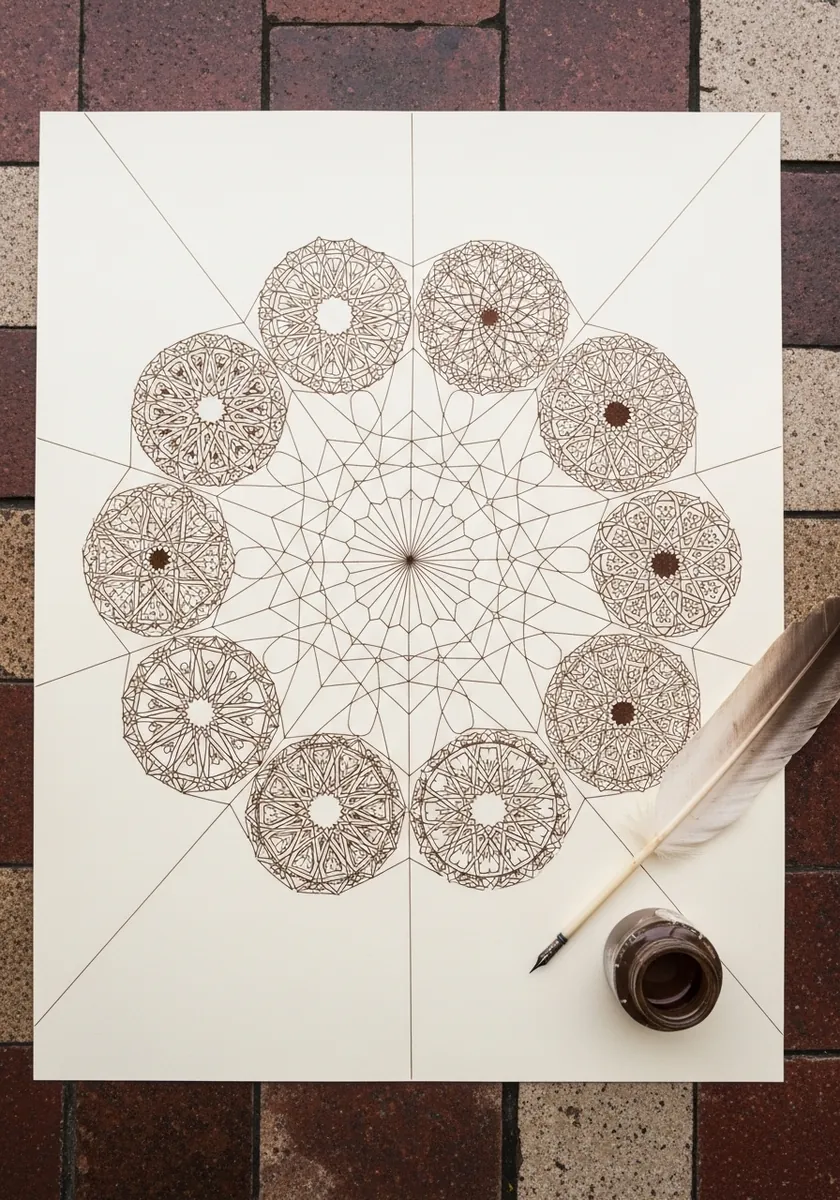
Placing ornament at the frame anchor points is historically how webs get decorated in illustration. Keep every mandala the same diameter, space them evenly around the perimeter, and let the web threads pass behind rather than through them. Draw the web first and the mandalas second, so the nodes land exactly on the frame anchor points.
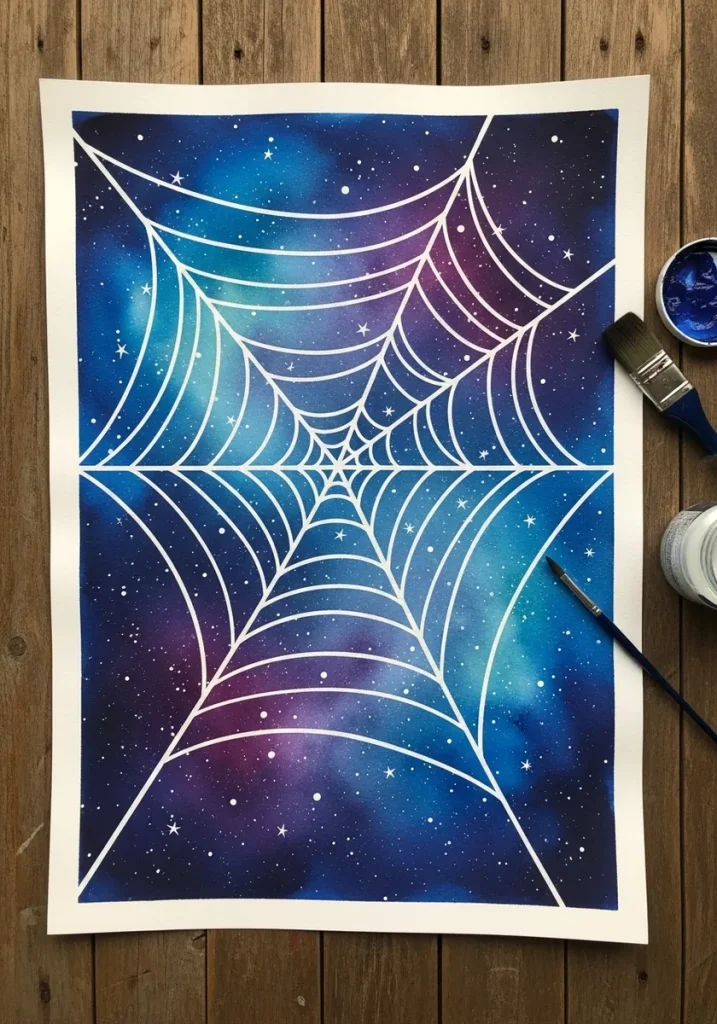
15. White Web on a Galaxy Ground
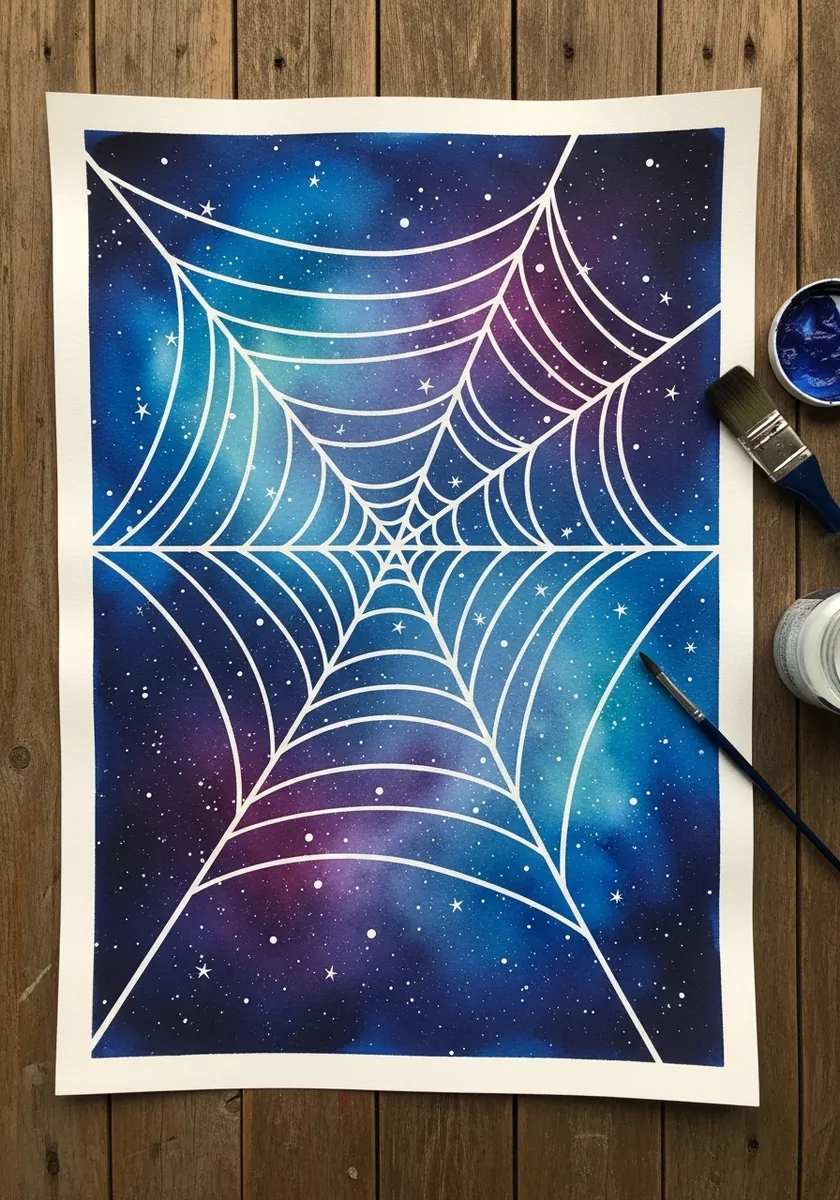
Painting light over a dark wash requires opaque white rather than reserved paper. Lay the galaxy first with plenty of granulation, let it dry fully, then draw the web with a gel pen or white gouache in one confident pass.
16. Candlelit Graphite Web
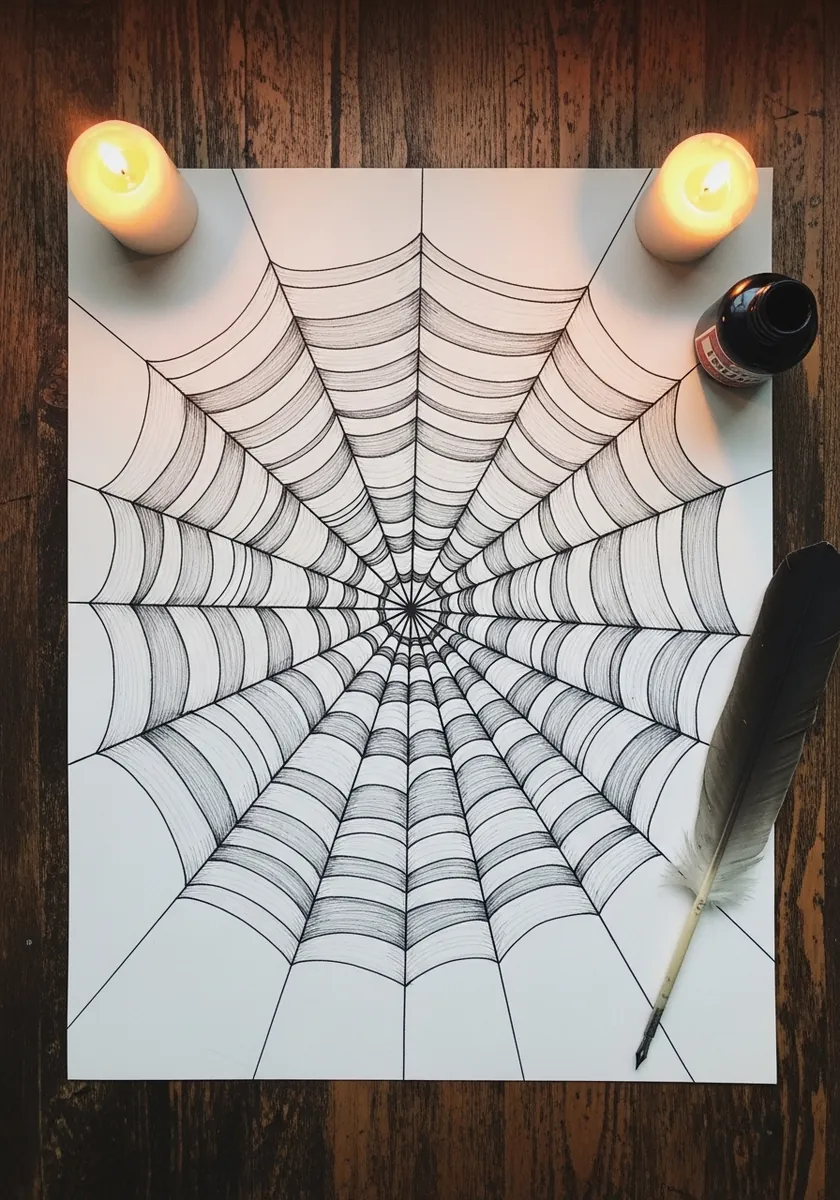
Working under warm low light changes how you judge value. Everything looks darker than it is, so check the drawing under daylight before finishing. Keep the graphite lighter than instinct suggests while working by candle. Keep a daylight lamp behind you for the final pass, which is when the value errors show up.
17. Indigo Circular Web
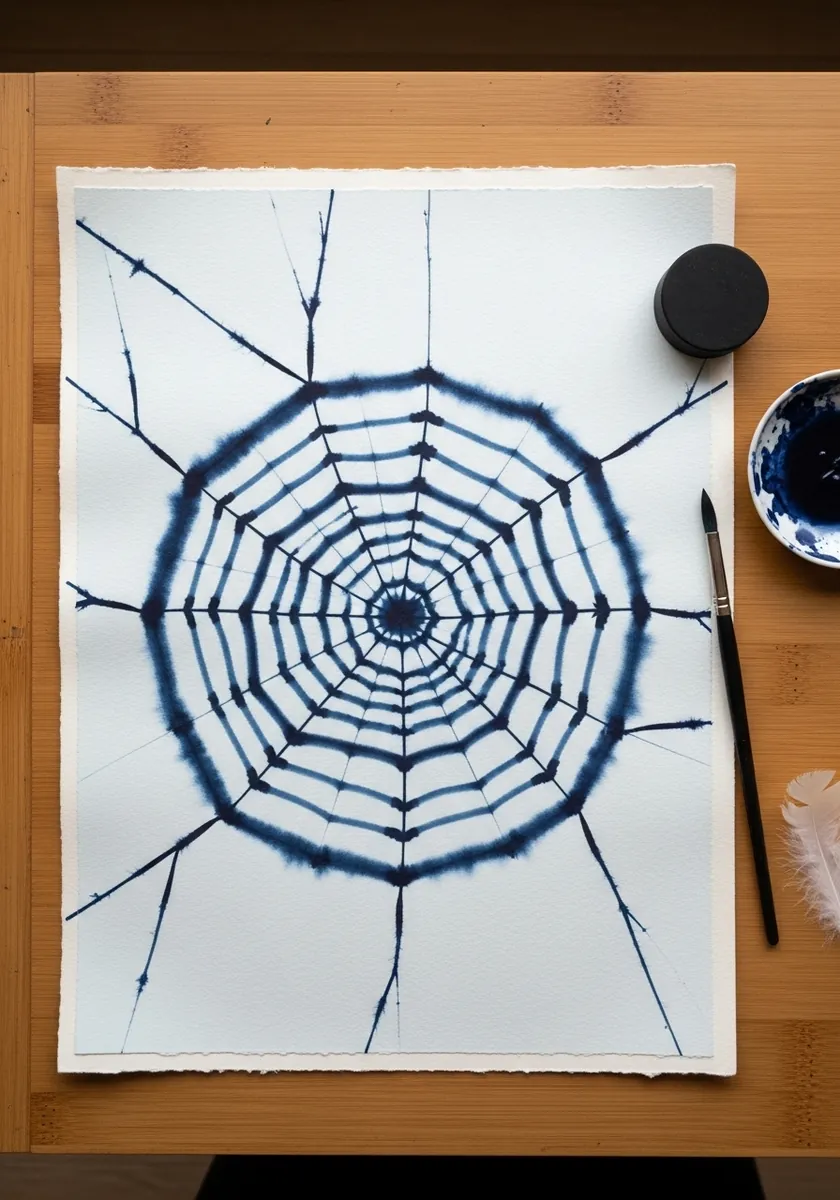
Letting the outer edge bleed while the center stays sharp creates useful focus. Paint the hub with a nearly dry brush, then flood water into the outer rings so the pigment spreads. The gradient in edge quality carries the piece.
18. Art Deco Gold and Black Web
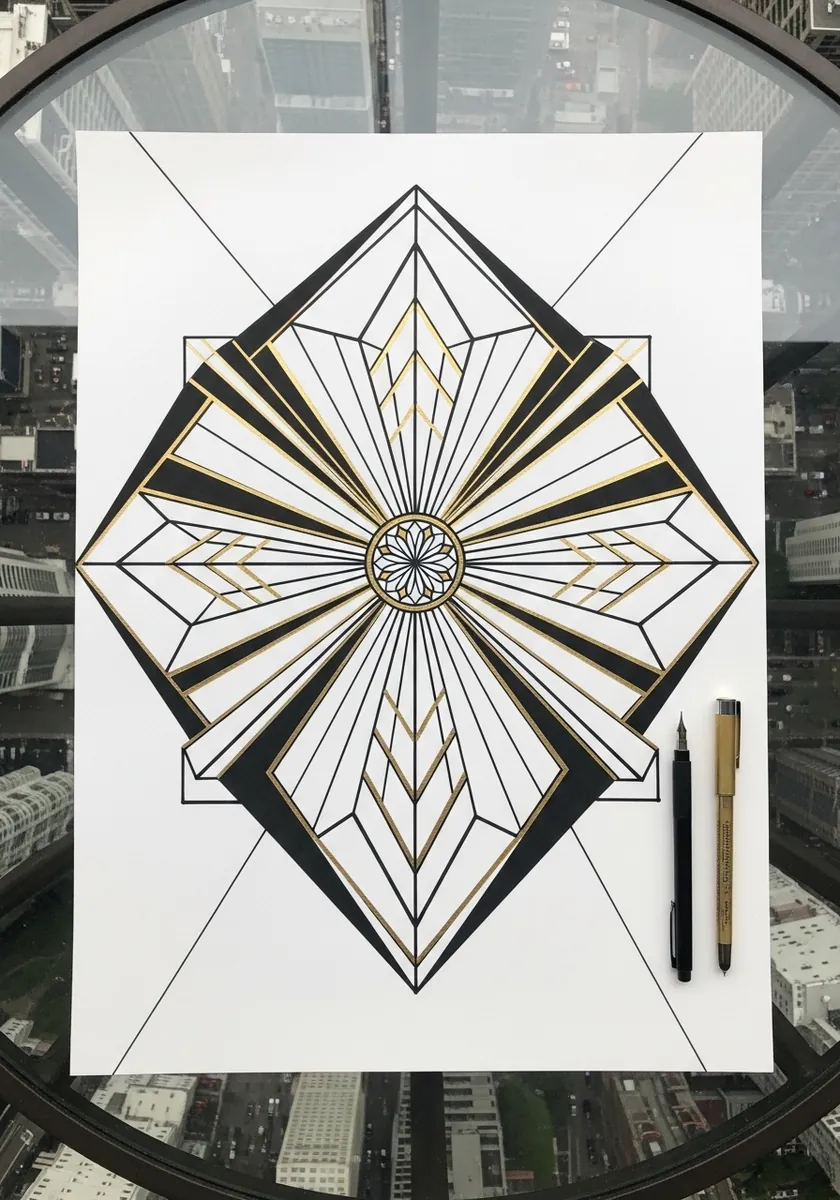
Deco reduces every curve to a straight or an arc. Replace the sagging spiral with straight chords deliberately here, since the style demands it, and let the symmetry be exact. This is the one case where the sag rule is broken on purpose.
19. Ornate Curling Black Web
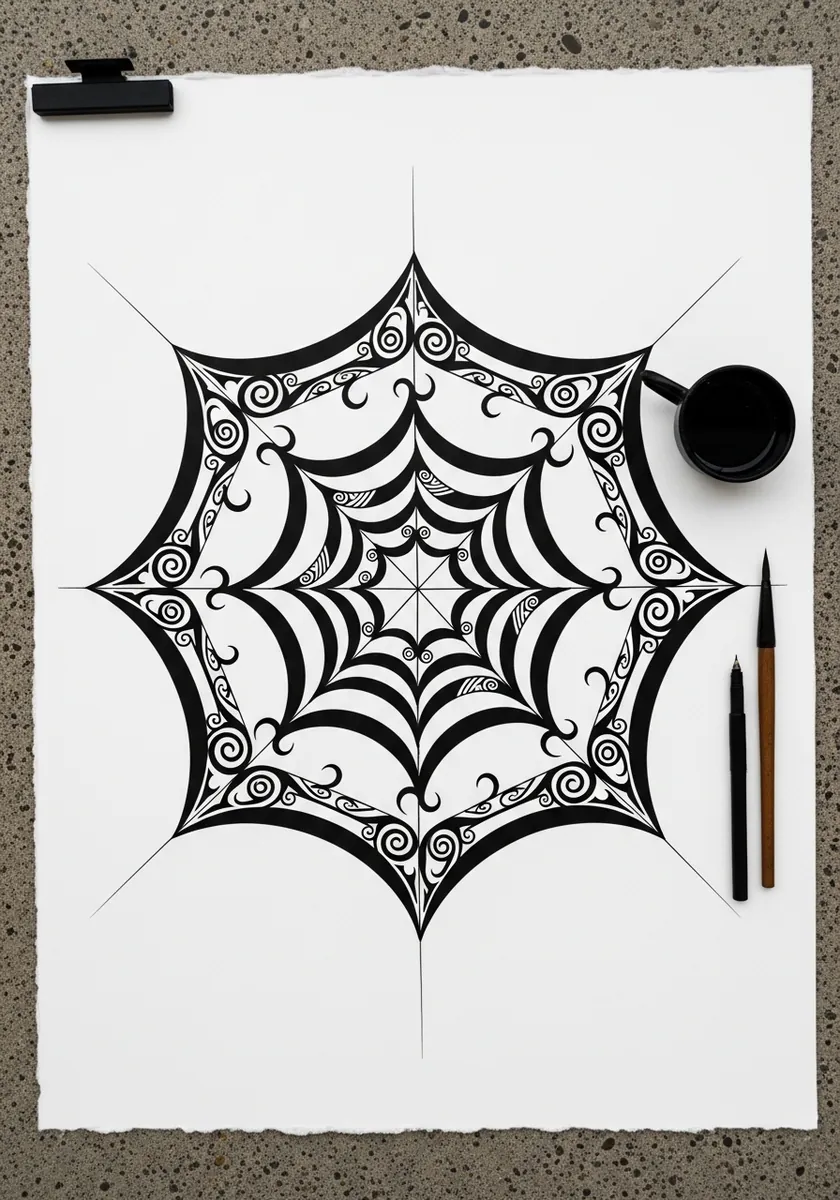
Adding flourishes works when the underlying structure stays honest. Keep the radii and spiral correct throughout, then let only the outermost frame threads curl into scrolls. Ornament applied everywhere destroys the web reading. Limit the flourishes to three or four places, since scattered curls read as clutter rather than design. Let each one grow from a frame anchor rather than floating free.
20. Pale Teal Watercolor Web
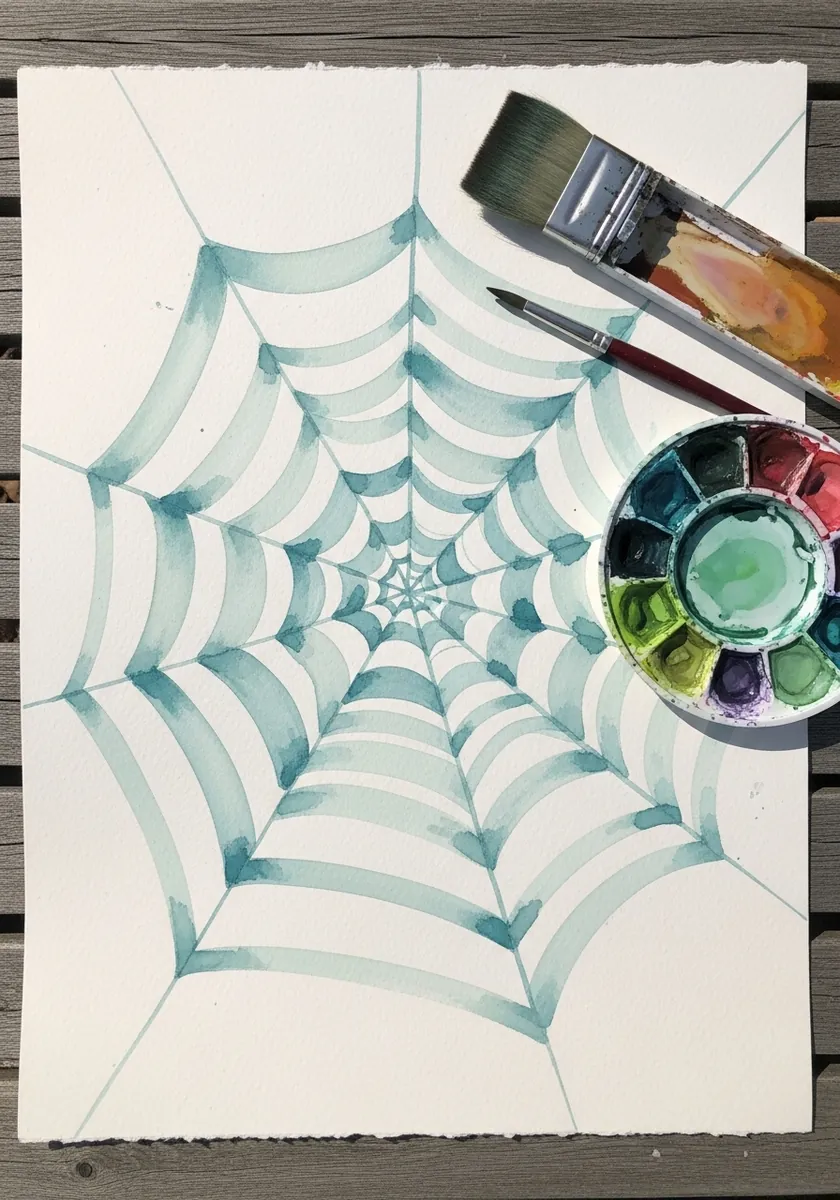
Very pale work depends on edge control rather than value. Keep the radii slightly crisper than the spiral, let the outer segments fade toward nothing, and add a single darker accent at the hub. Restraint is the whole method. Work on smooth hot press paper, because rough tooth breaks a pale line into something unreadable.
21. Rainbow Oil Pastel Web
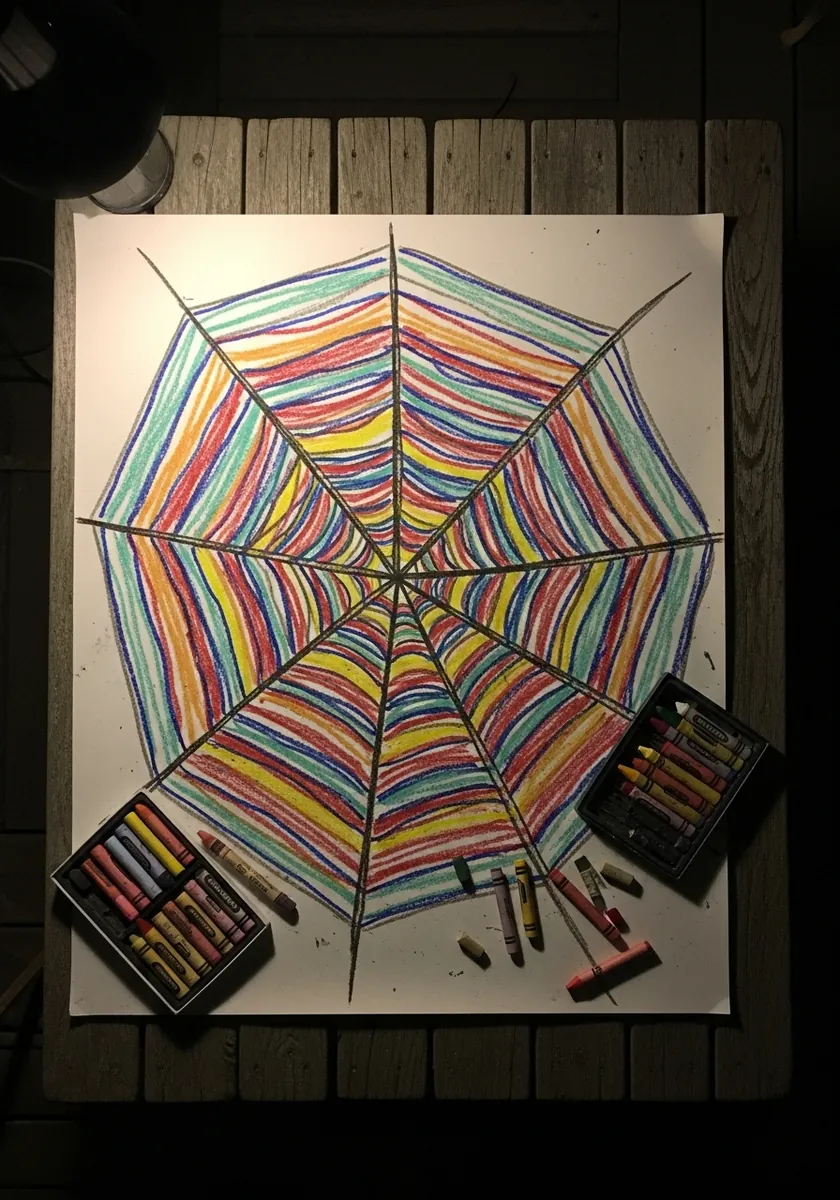
Oil pastel sits on top rather than blending, which suits concentric bands. Lay each ring in one color without mixing, press hard for saturation, and scrape the radii back through with a blade to reveal the ground beneath. Warm the pastel in your hand first, which makes the scraped radii come away far more cleanly.
22. Off Center Pencil Web
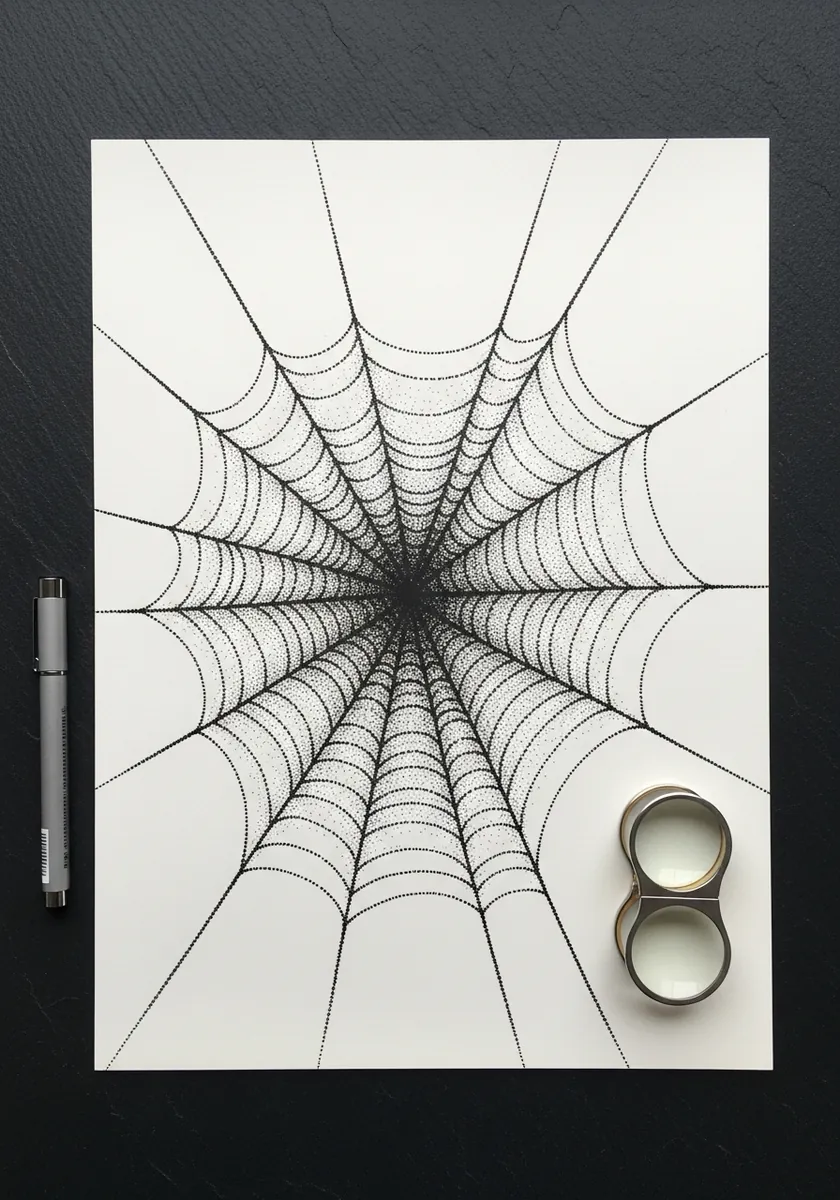
Real webs are rarely symmetrical, because the hub sits above center so the spider can drop quickly. Push your hub up and to one side, lengthen the lower radii, and the whole drawing immediately reads as observed rather than invented.
23. Pop Art Web With a Border
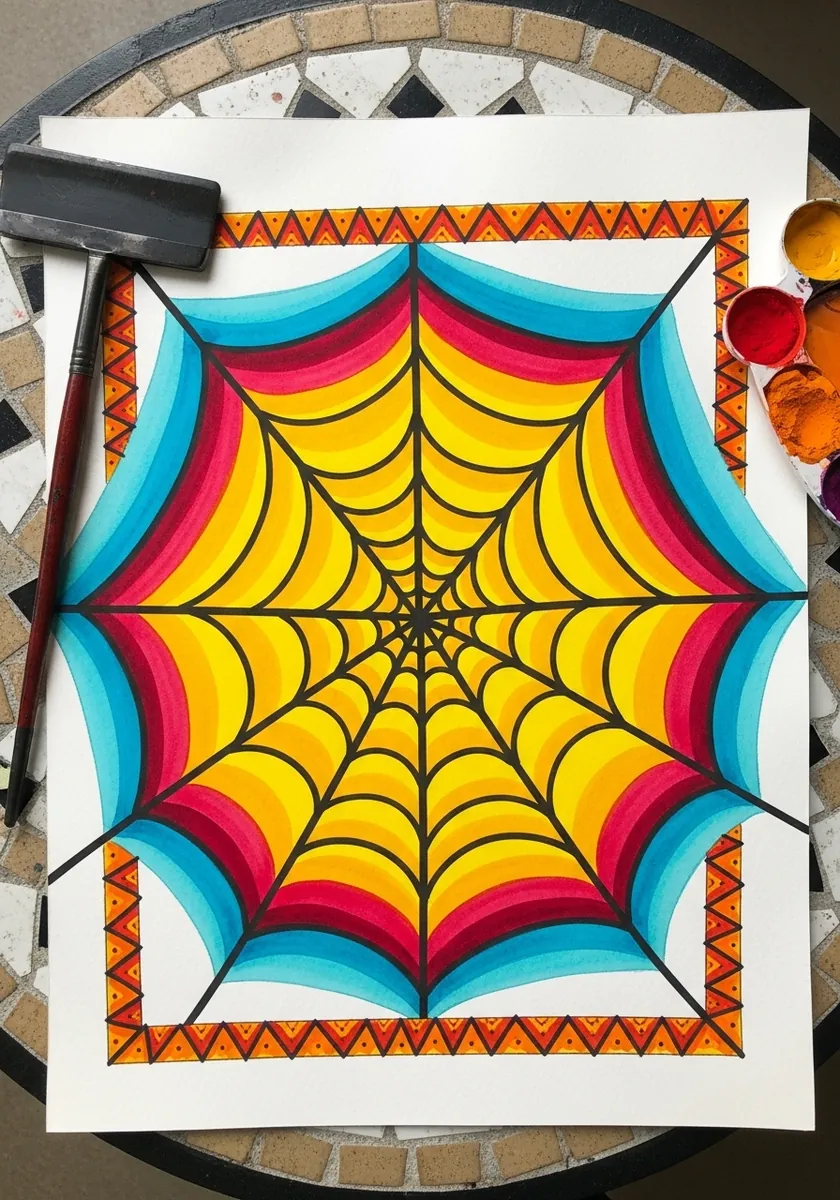
Flat primaries need a strong containing edge. Rule the border first, fill it with a simple repeating triangle motif, and keep the web inside to three colors only. The border stops the saturated fills spilling visually off the page. Keep the border motif smaller than any shape inside, so it frames rather than competes.
24. Sacred Geometry Construction
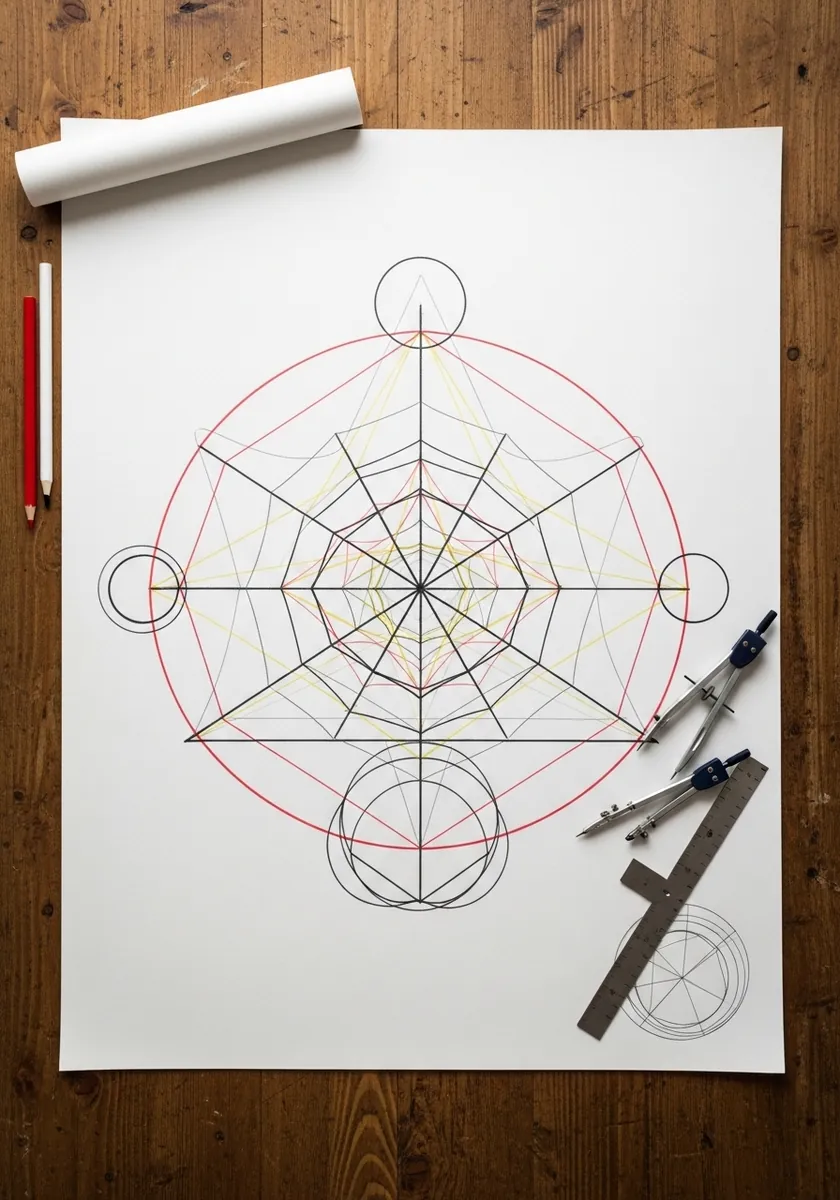
Overlapping equal circles give you natural division points. Draw a ring of circles all sharing one radius, mark where they intersect, and run the radii through those points. The spacing that results is more even than eyeballing ever manages. Work in red for the construction and graphite for the web, which keeps the two layers separable.
25. Rainbow Colored Pencil Web
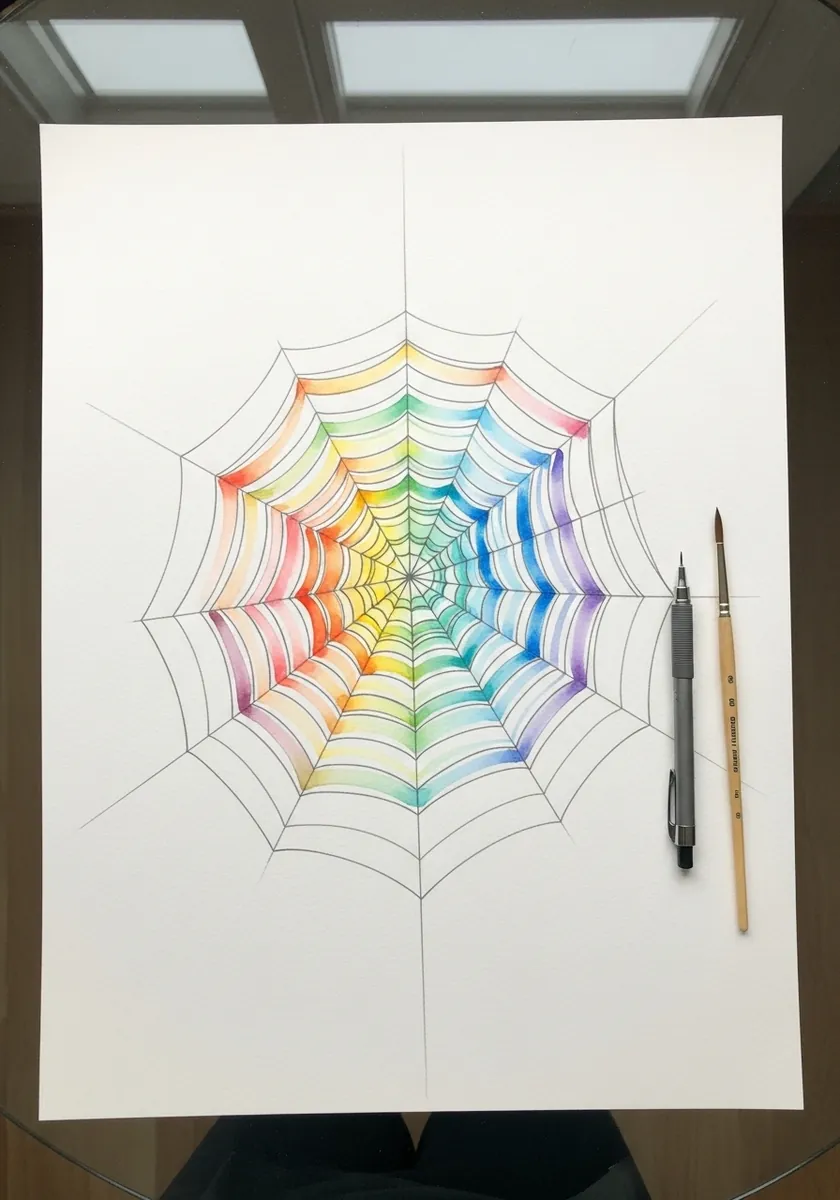
Running a spectrum outward from a hub reinforces the radial structure. Move around the color wheel in order without doubling back, keep each ring one hue, and let the value stay constant so only the color changes. Burnish each ring before starting the next, since colored pencil layers muddy once they overlap.
26. Light Concentric Construction
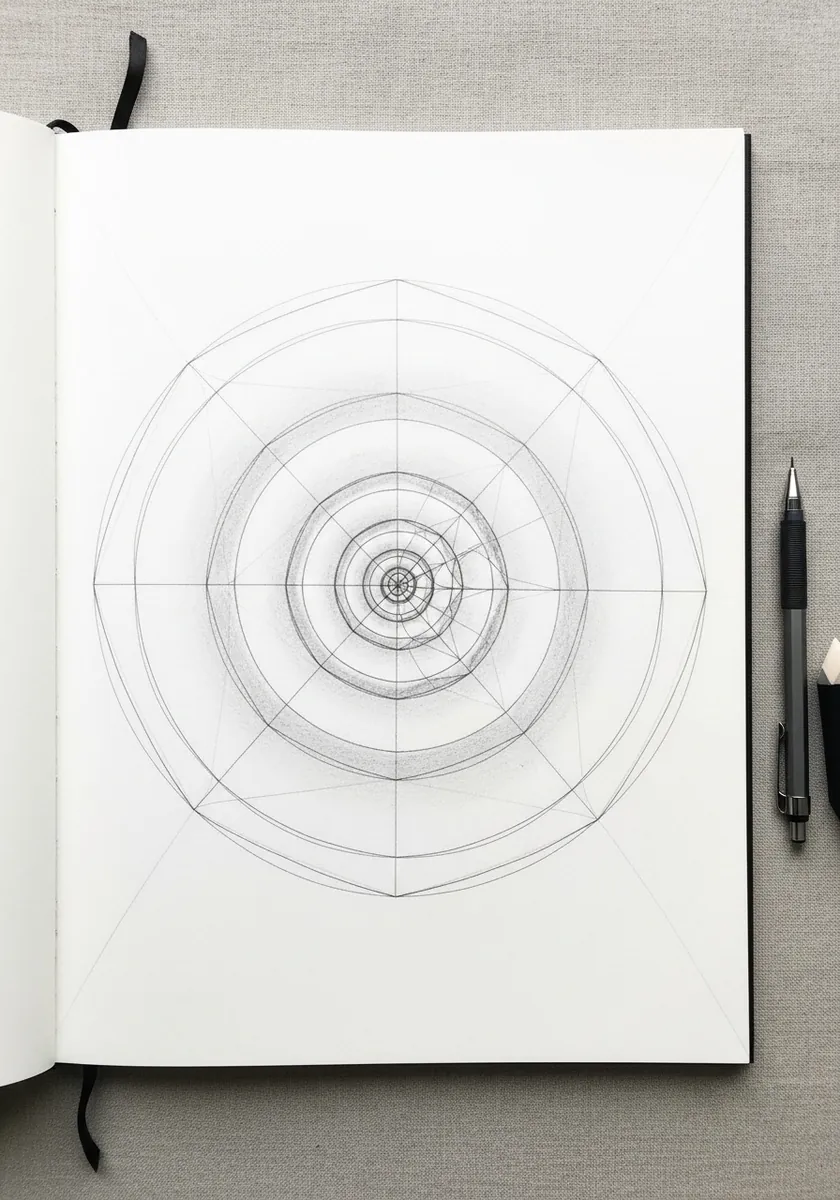
This stage is worth photographing before you go further. Draw the guide circles at even spacing, mark the free zone gap around the hub, and check the spacing before committing any ink. Everything afterward depends on this scaffold. Use a 4H throughout, because anything softer leaves a groove the ink will later sink into.
27. Ochre Dot Painting Web
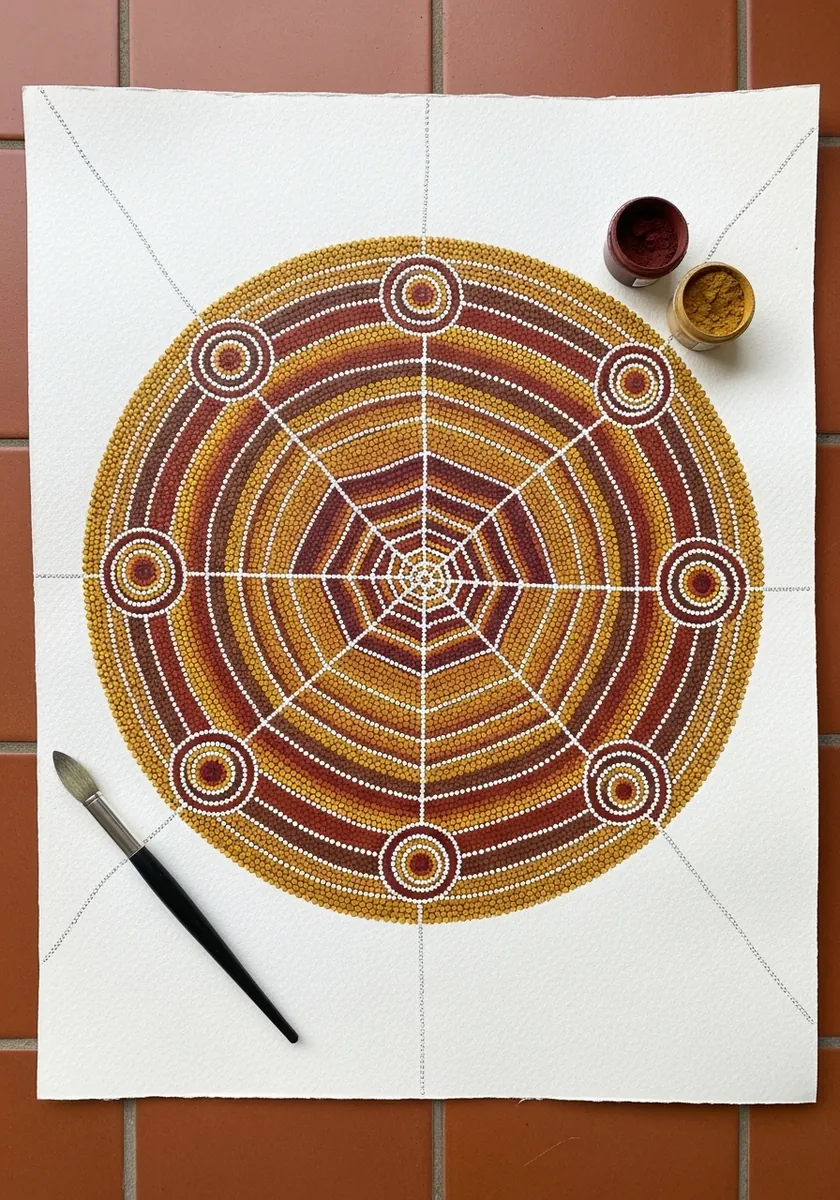
Dot work needs consistent size and spacing to read as pattern. Load the tool the same way each time, keep the dots touching but not merging, and let the color change happen between rings rather than within them. Work one ring at a time and let it dry, since a dragged wet dot ruins the even spacing.
28. Ink Spider on Its Web
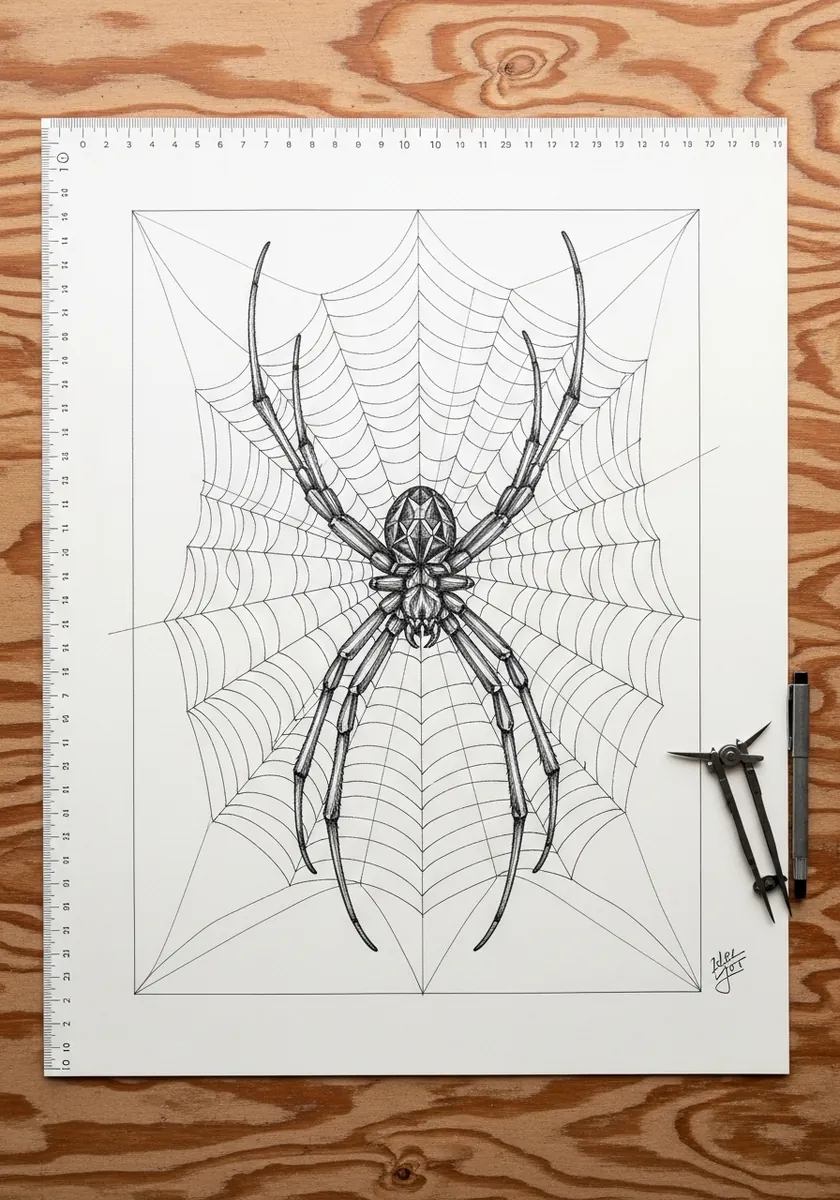
Placing the animal at the hub is anatomically right, since that is where an orb weaver waits. Draw all eight legs reaching to different radii, keep the front pair extended forward, and let the abdomen hang slightly below the plane.
29. Gradient Web Panels
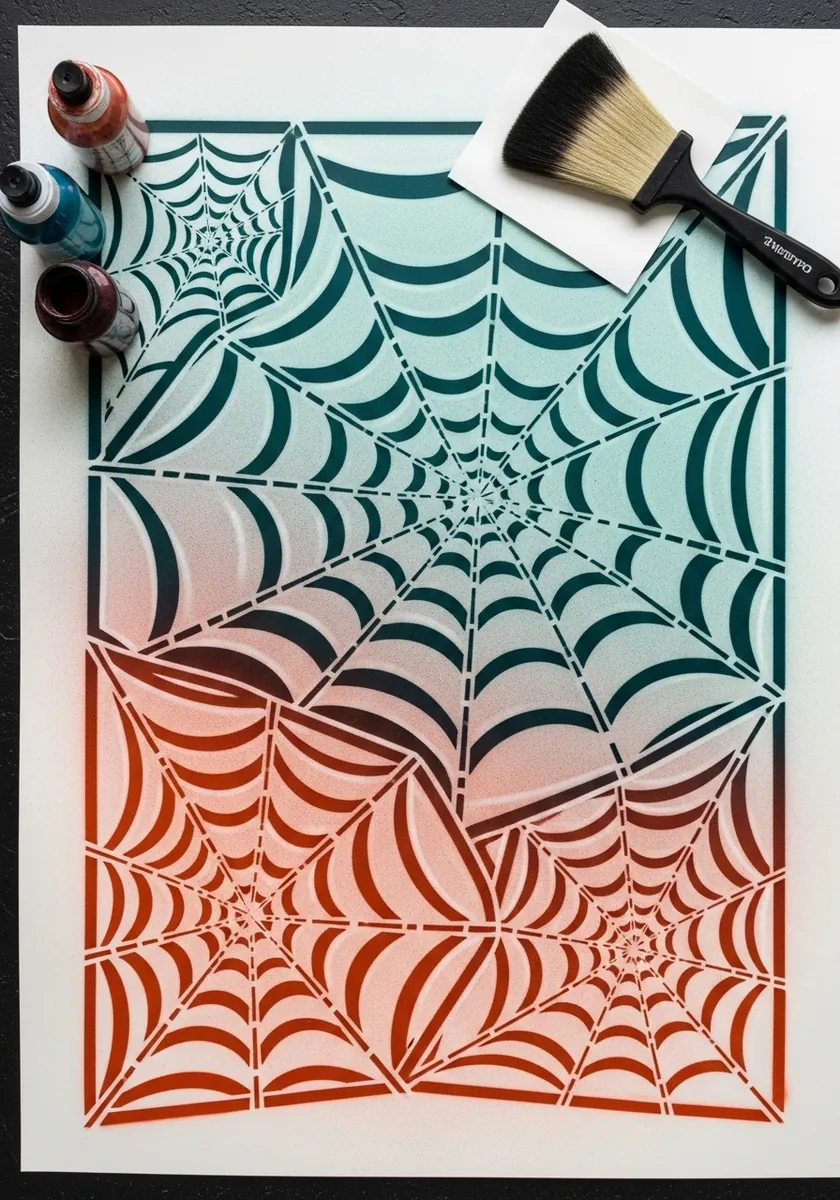
A panel series works through variation within a fixed frame. Keep every panel the same size and the same web structure, then change only the color and the spoke density. Consistency is what makes the differences readable. Print or paint all the gradients in one session, so the color transitions stay genuinely matched.
30. Gold Sacred Geometry Web
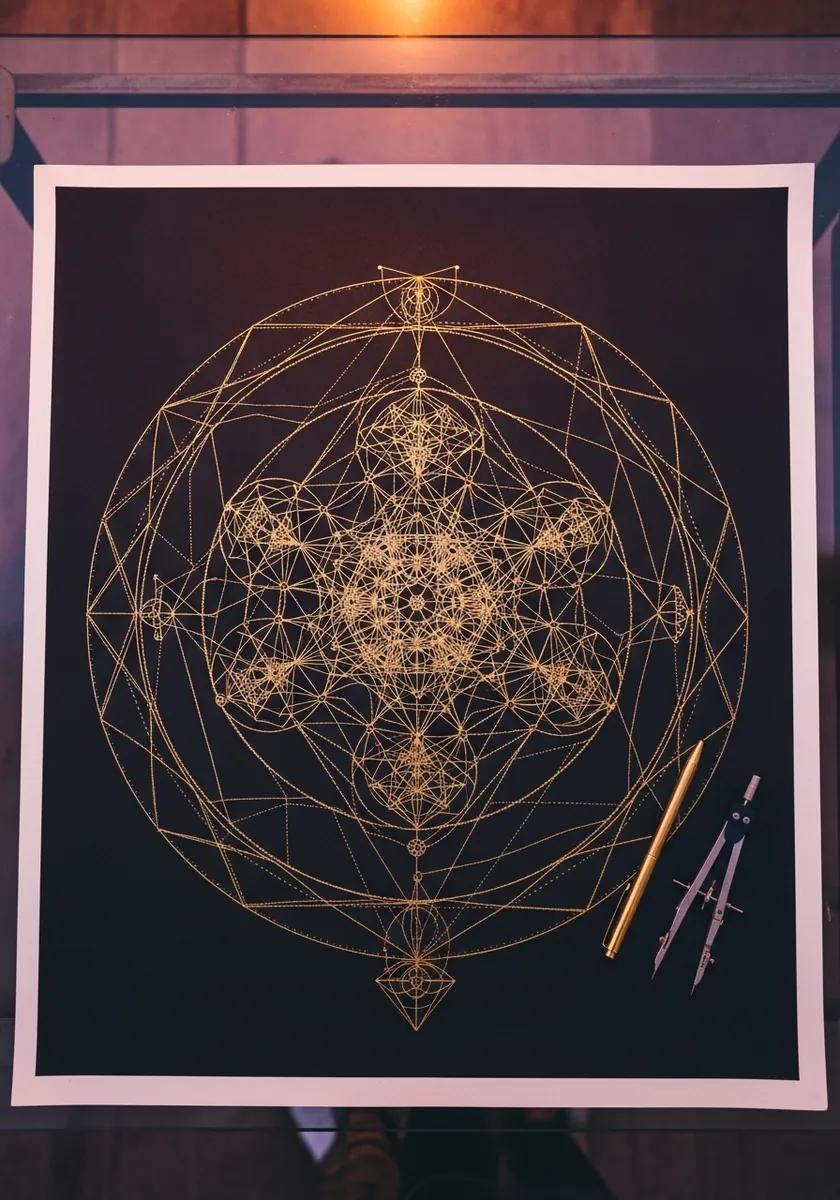
Metallic ink on black shows every wobble, so rule what you can. Use a compass for the circles and a straightedge for the radii, and reserve freehand work for the sagging spiral alone. Precision is the point of this style.
Frequently Asked Questions
Why do my spider webs look like wheels?
Because the spiral is drawn as straight lines between the spokes. Real silk hangs, so each segment sags into a shallow downward curve between the two radii it connects. Adding that sag to every segment is what turns a wheel into a web.
What order does a spider build an orb web in?
A bridge line first, then a Y-shaped frame, then all the radii meeting at the hub. Next comes a temporary auxiliary spiral working outward, and finally the sticky capture spiral working inward, with the spider eating the temporary one as it goes.
Are all the threads sticky?
No. The radii and the frame are dry structural silk, and only the capture spiral carries glue droplets. That is how the spider walks across its own web without getting caught, and it is worth knowing when deciding which threads to draw with dew.
How many spokes should a web have?
A garden orb weaver usually lays between twenty-five and thirty-five radii. Fewer than about twenty reads as sparse and more than forty starts to look like a sunburst, so that range is a useful target for a convincing drawing.
What is the gap between the center and the spiral?
The free zone. It separates the dense hub mesh, where the spider waits, from the start of the capture spiral, and it gives the spider room to cross between the two faces of the web. Leaving that gap out makes a drawing look crowded.
References and Further Reading