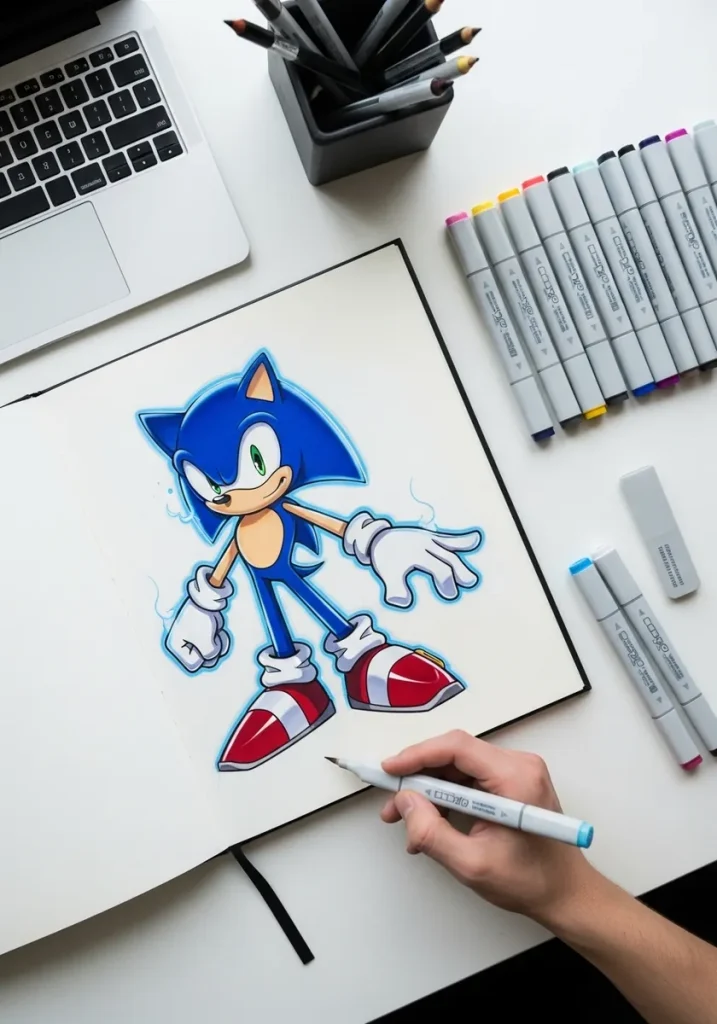
The whole character is built from circles: a large one for the head, a smaller one for the body, and a horizontal oval for the muzzle overlapping the lower head. Get those three right and everything else follows.
Key takeaways
- Build the figure from circles, with the muzzle as a horizontal oval overlapping the lower head.
- In the classic style both eyes join into one continuous white shape holding two pupils.
- Six quills fan from a single point at the back of the head, three angled up and three down.
- The shoes are deliberately oversized relative to the legs, with a white strap and a gold buckle.
- The first game launched on the Sega Mega Drive and Genesis on 23 June 1991.
This design is circles all the way down, and knowing that makes it far easier to draw. A large circle for the head, a smaller one for the body, and a horizontal oval overlapping the lower head for the muzzle. Place those three accurately and every feature afterward has somewhere to sit.
Two details separate a good likeness from a near miss. In the classic style both eyes merge into a single continuous white shape holding two pupils, and six quills fan from one point at the back of the skull, three up and three down. Draw the eyes apart and it collapses.
The shoes are exaggerated on purpose. Oversized feet give a fast character a stable silhouette, which is why they carry the only strong warm color in an otherwise blue design. The first game launched on the Mega Drive and Genesis on 23 June 1991.
One honest note before you begin: he is a copyrighted and trademarked character, so these are practice pieces rather than anything saleable. The twenty-eight ideas below run from blueprint construction sketches through sumi-e, oil pastel, chalk on black and art nouveau panels. See also 3D cartoon character ideas.
Compiled by the GS Art Zone editorial team. Last updated August 2026. Each idea is paired with the specific step that produces the effect, so you can go from the reference straight to paper.
What You Need Before You Start
- A circle template, since the construction genuinely depends on clean circles
- One mid blue and one darker blue, enough for the whole body in most of these
- A red plus an opaque white for the shoes, which are the only warm note in the design
- A brush pen for the bold outline styles, where the line needs to swell around curves
- Black or toned paper for the chalk, neon and lamp-lit pieces further down
1. Pencil Running Pose
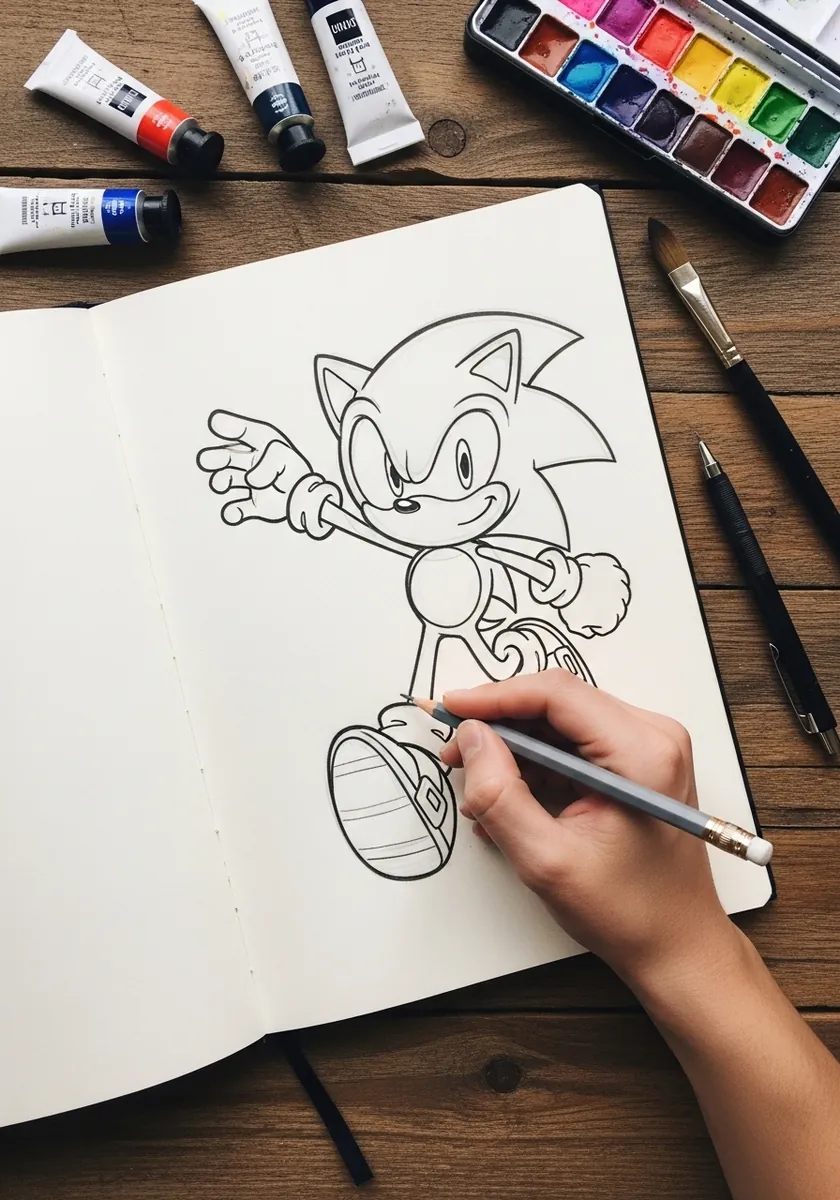
A running pose needs a strong line of action. Run one long curve from the leading hand through the spine to the trailing foot, then hang everything off it. Lean the whole body forward past the supporting leg so momentum reads immediately.
2. Dynamic Ink With Speed Lines
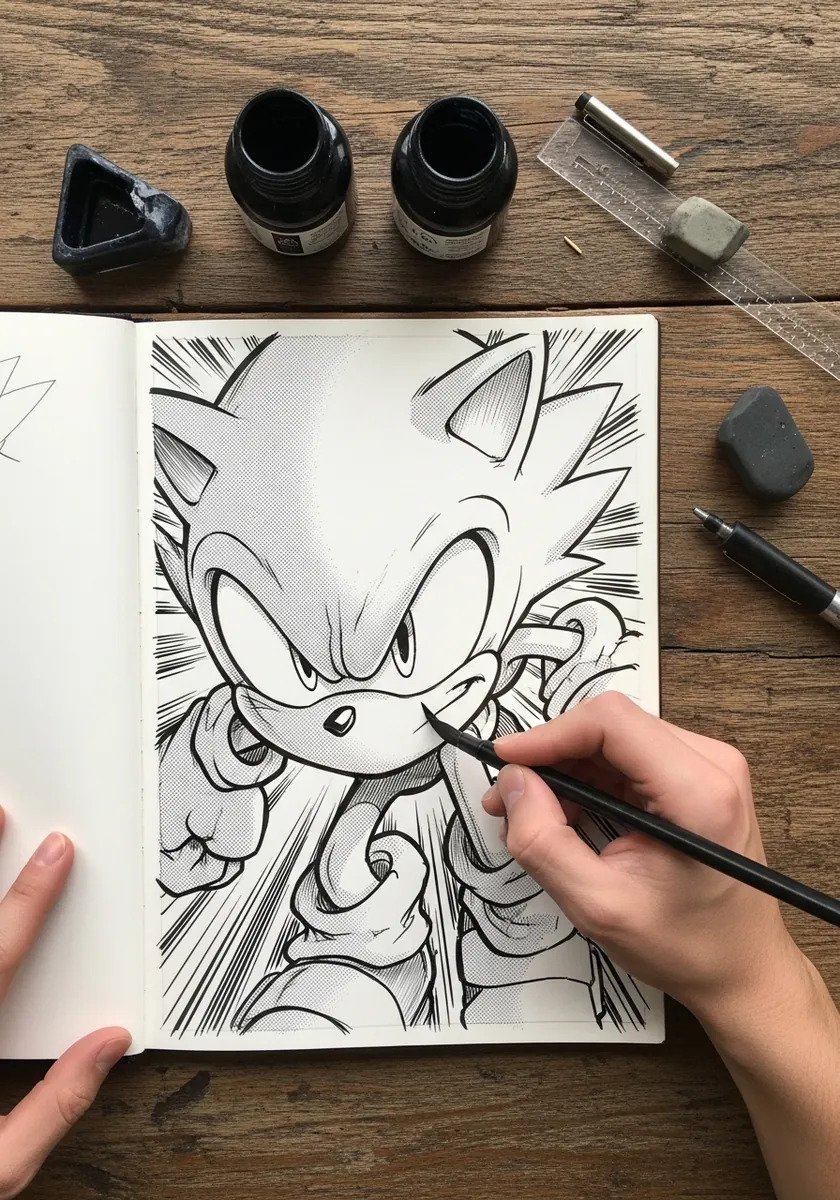
Speed lines all need one origin. Rule them from a single point well behind the figure, vary their lengths irregularly, and keep them clear of the outline itself. Lines touching the character make the page look crowded rather than fast.
3. Fine Ink Full Body Study
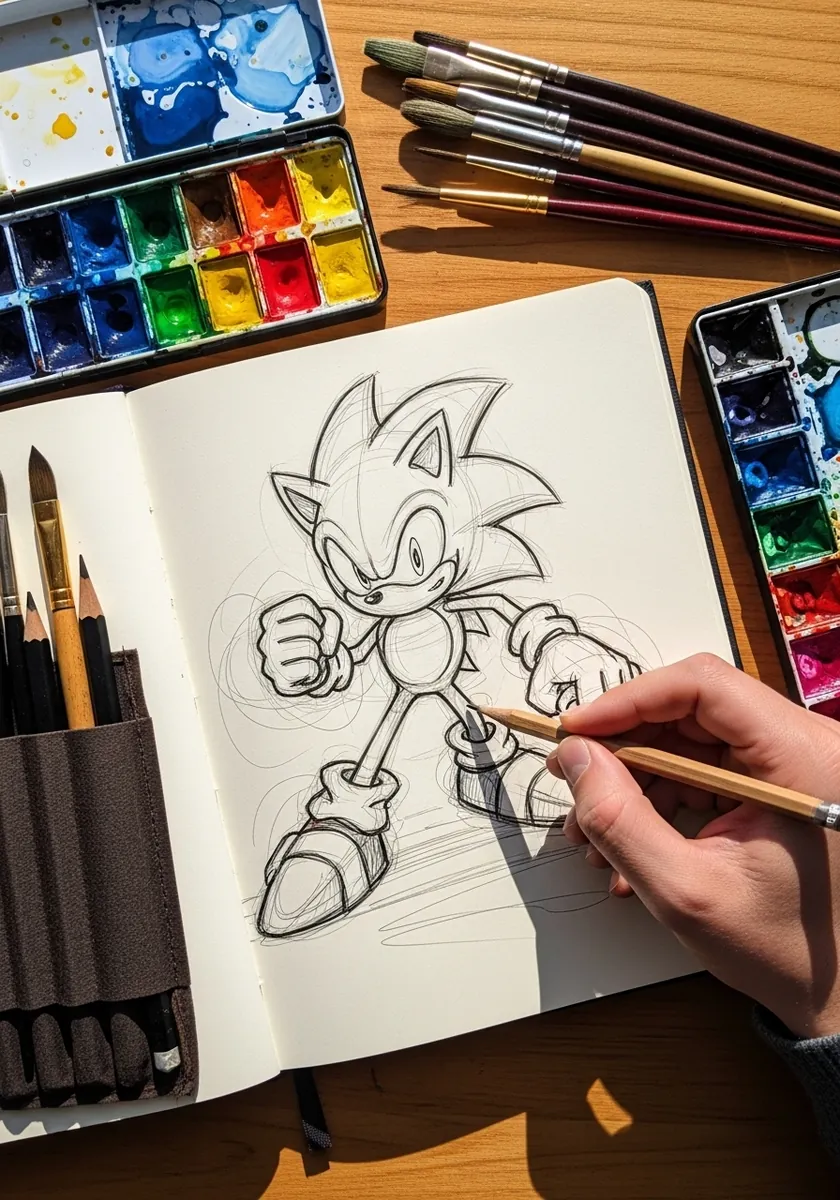
Full figures expose proportion errors immediately. Check the head against the body: the skull should be noticeably larger than the torso, and the shoes larger again than realistic scale allows. Everything about this design is deliberately top and bottom heavy.
4. Loose Blue Watercolor Figure
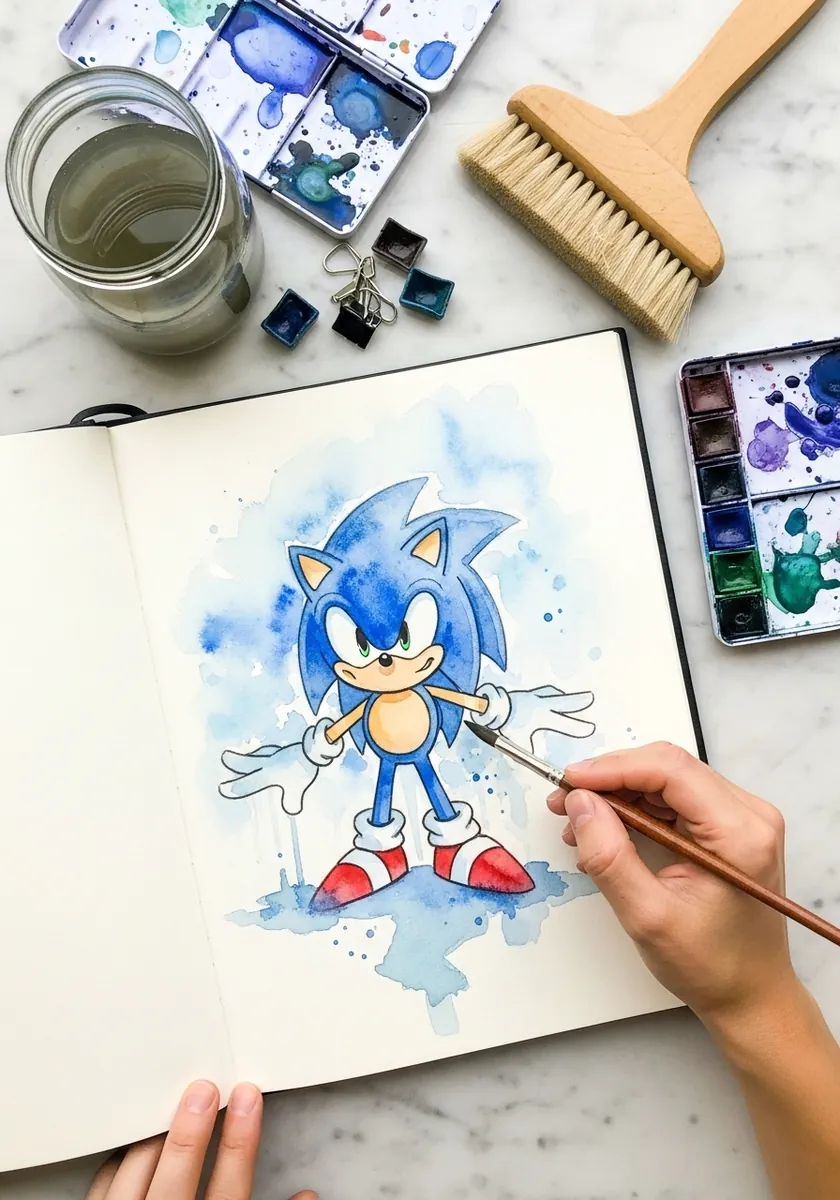
Loose washes around a hard-edged character work if the character stays crisp. Paint the blue background wet and let it bloom freely, wait for full drying, then ink the figure over it. Reversing that order softens exactly what you need sharp.
5. Graphite Standing Figure
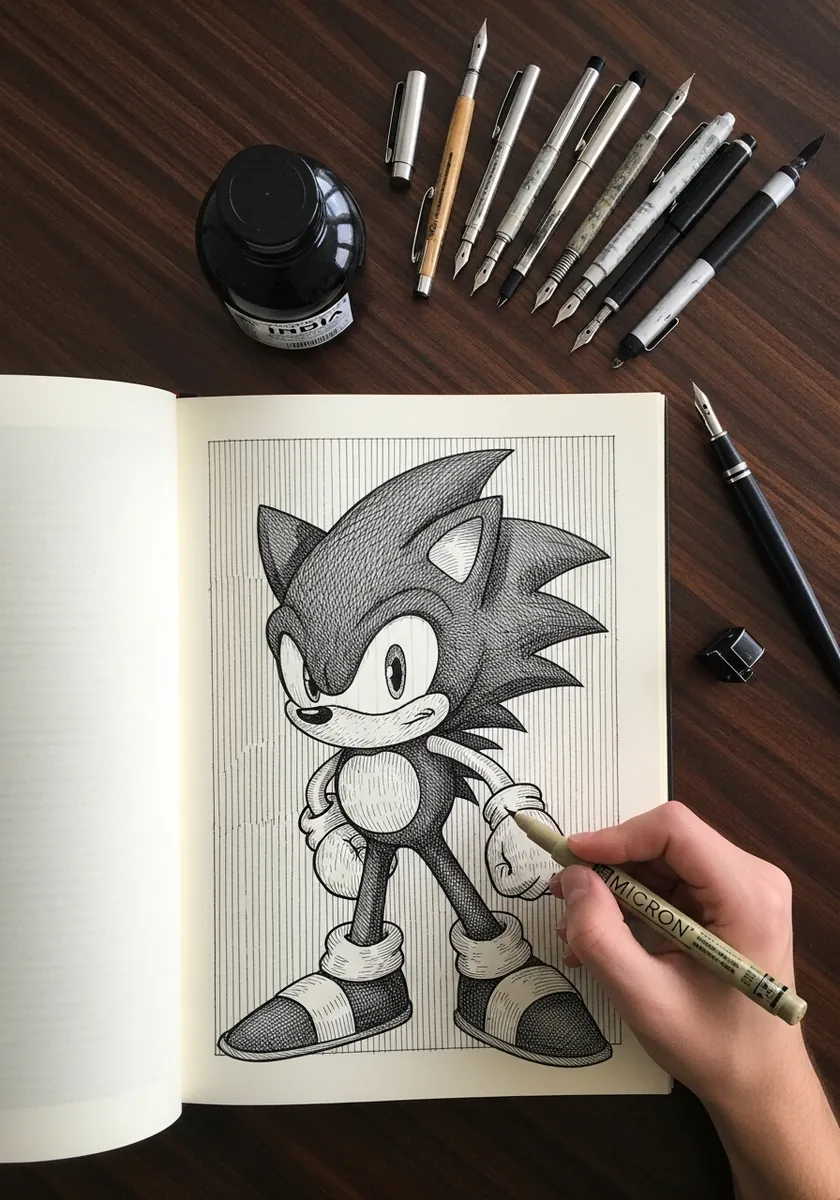
Drawing on lined paper is a useful constraint. Let the existing rules act as your horizon and baseline, keep the figure standing on one of them, and use the spacing to check proportions. Working around a grid teaches measurement fast.
6. Half Colored Study
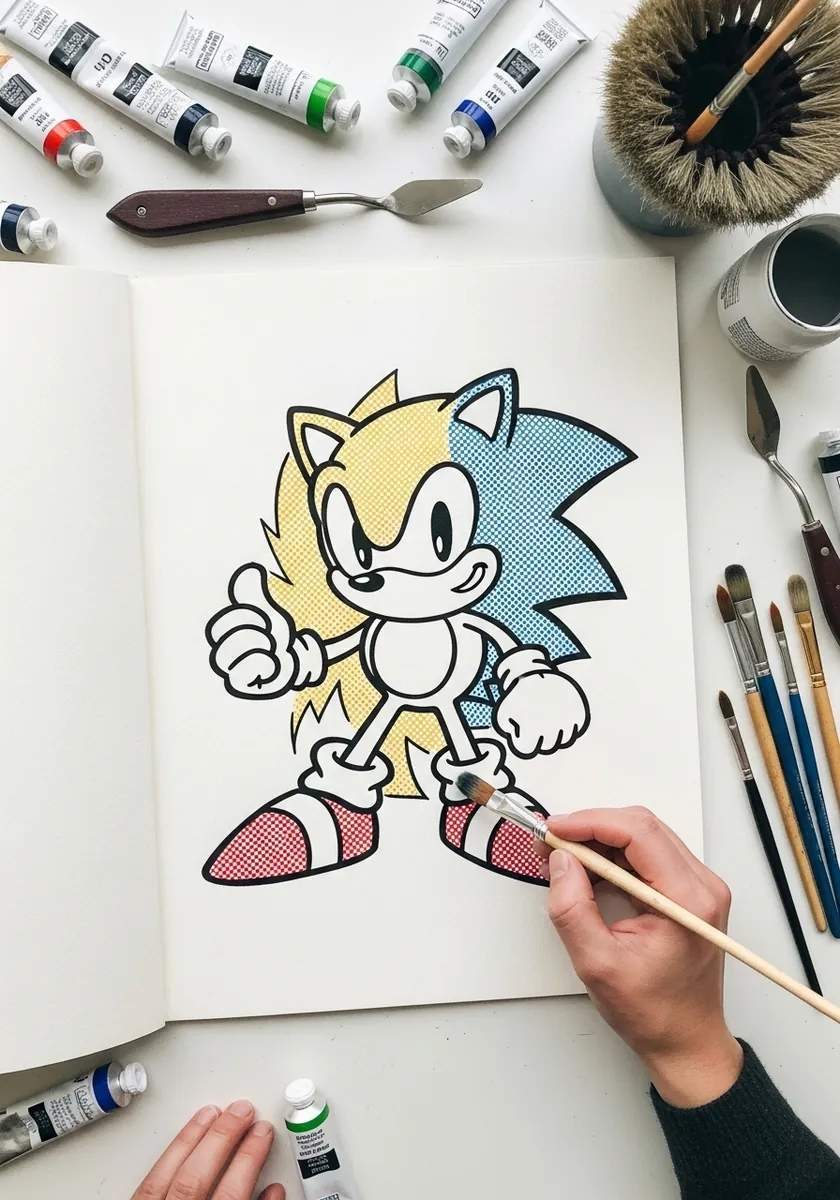
Splitting a drawing between line and color shows what each half contributes. Ink the whole figure evenly first. Fill only one side afterward, keeping the division vertical down the center of the body. The contrast makes both halves more interesting than either would be alone.
7. Dark Graphite Rendering
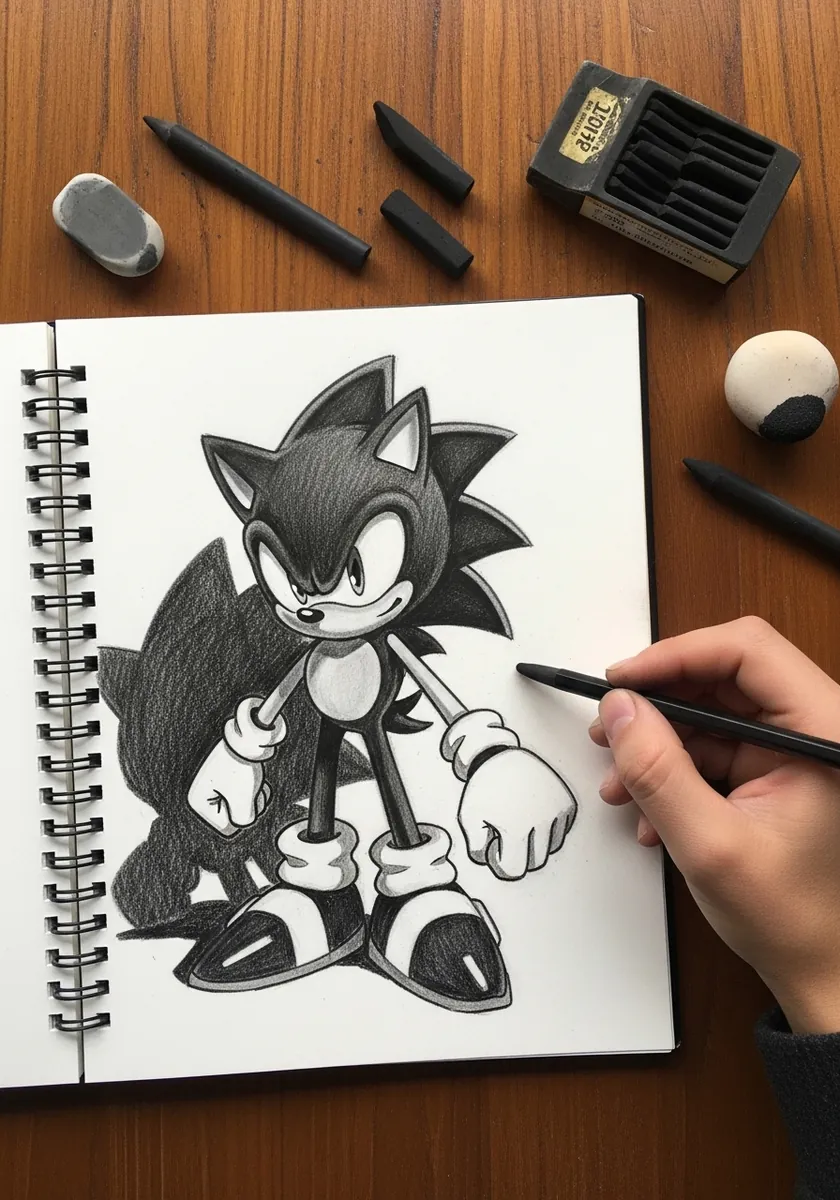
Rendering a flat design in full tone is a genuinely useful exercise, so keep every proportion exactly as drawn and then add real form on top: a rounded skull, quills with actual thickness, and shoes with visible volume underneath them rather than flat shapes.
8. Watercolor Figure in a Field
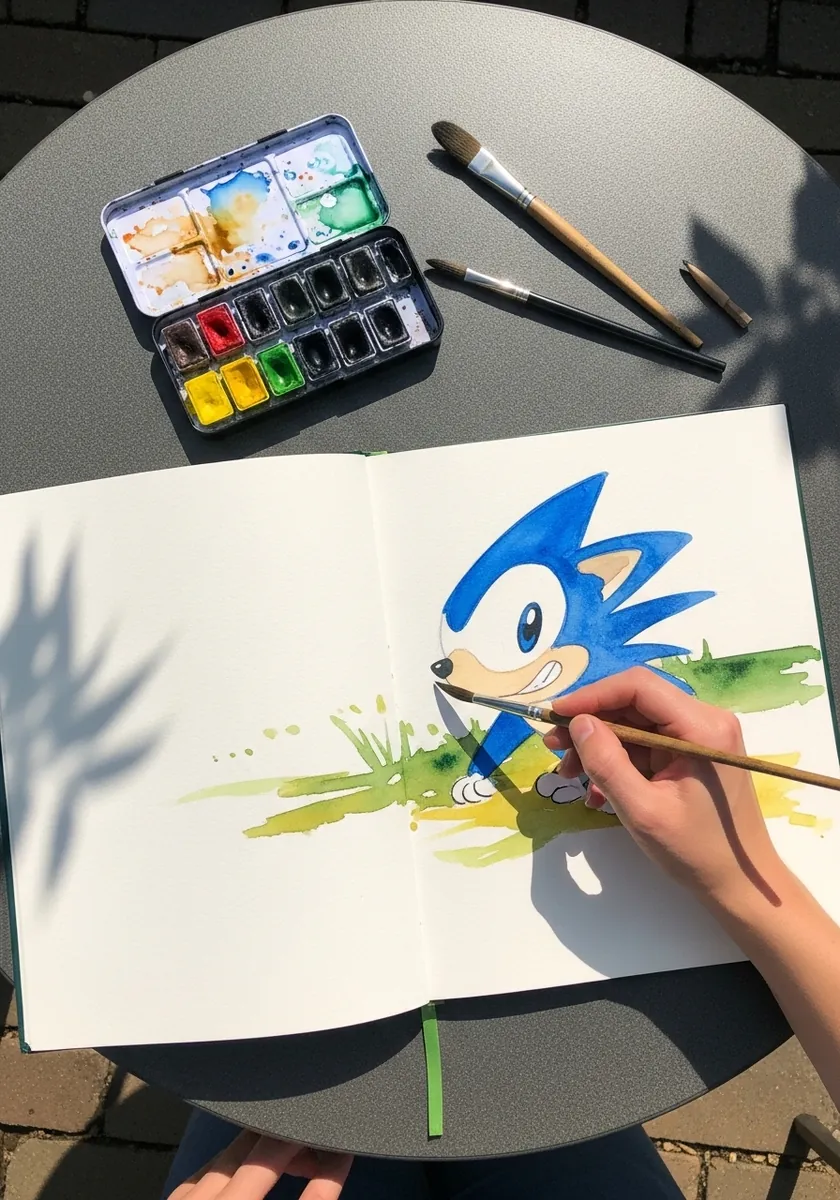
Placing a character in a landscape needs a color bridge. Echo the blue faintly into the sky and bring a little of the field green into the shadow side of the body. Without that exchange the figure sits on the scene like a sticker.
9. Red Conte Sketch
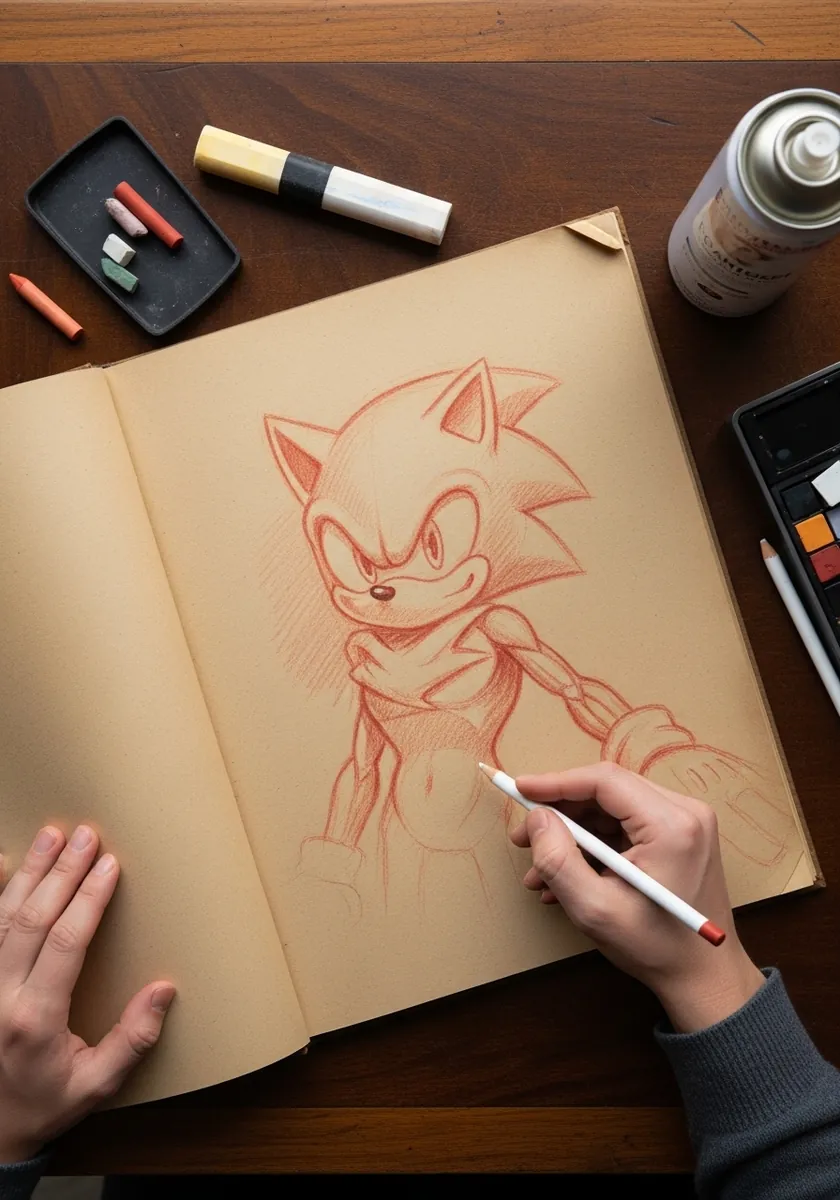
Sanguine suits gesture work because it moves quickly and blends with a finger. Build the pose loosely with the side of the stick. Sharpen only the eyes and the shoe edges afterward, and leave every searching line visible across the page as part of the finish.
10. Marker Figure With a Glow Outline
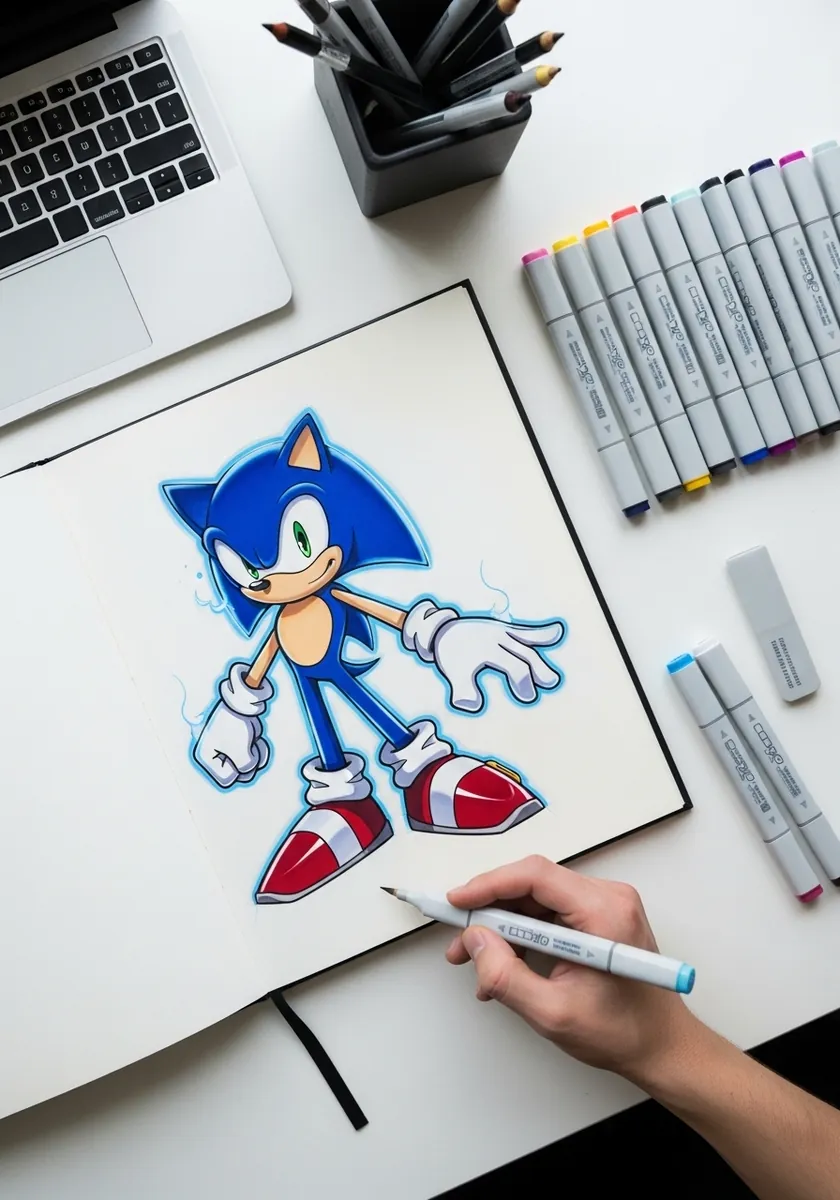
A glow outline is a second lighter line just outside the first. Draw the character normally, then trace a diluted version of the same blue around the silhouette at a small offset. That gap is what makes it appear to emit light.
11. Impasto Acrylic Head
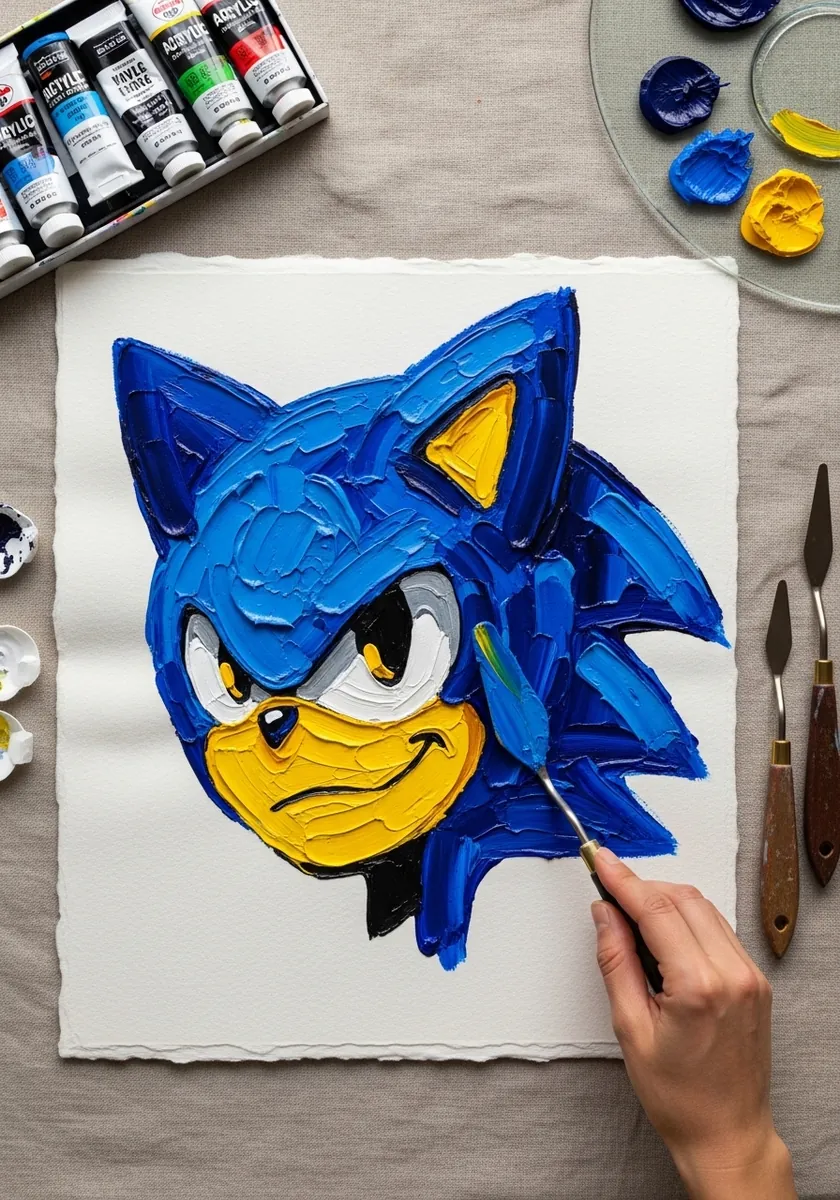
Thick paint contradicts a flat design, which is exactly why it is worth trying. Keep the shapes absolutely true to the original, build them from loaded strokes, and let the ridges catch real light from the room. Never rework a stroke while it is still wet.
12. Sumi-e Head With Brush Lettering
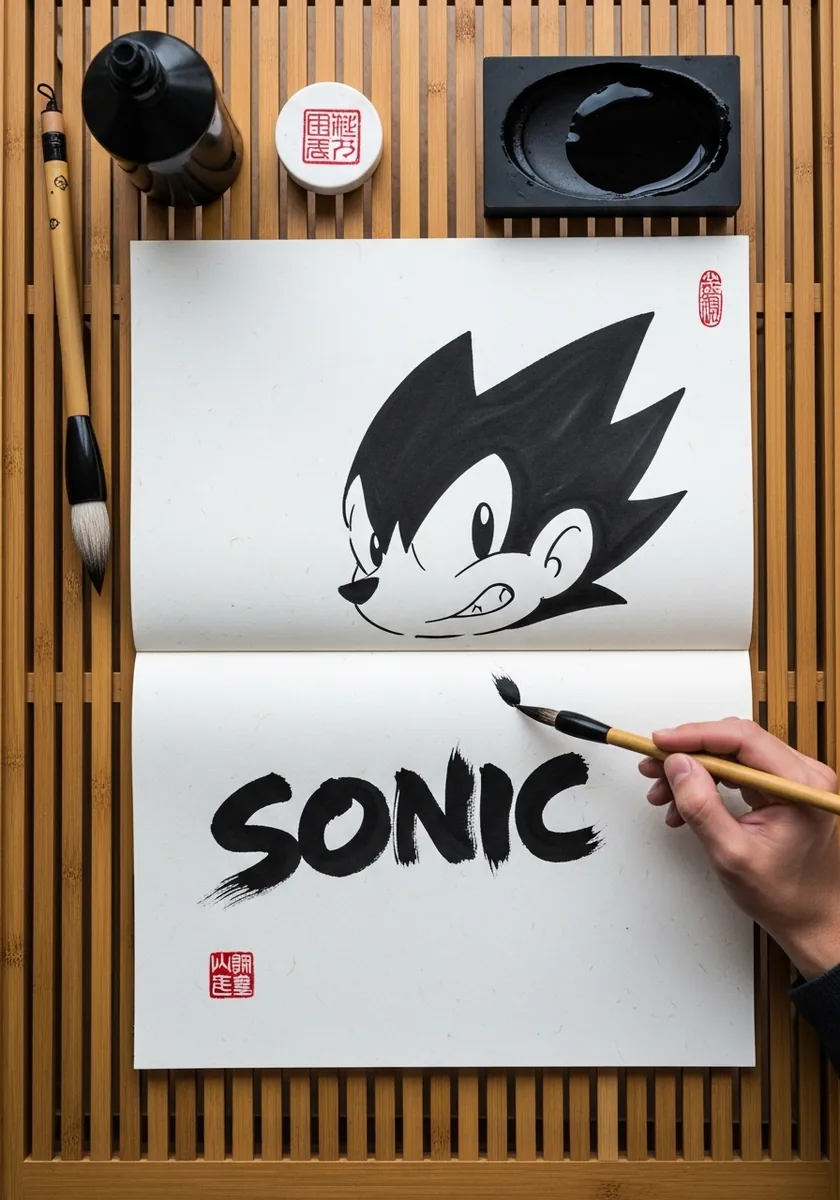
Brush lettering and a brush drawing need the same loading to belong together. Paint the character first while the brush is fully charged. Write the lettering afterward as the ink runs down, and let that natural fade between them tie the whole page together.
13. Bold Outline Marker Figure
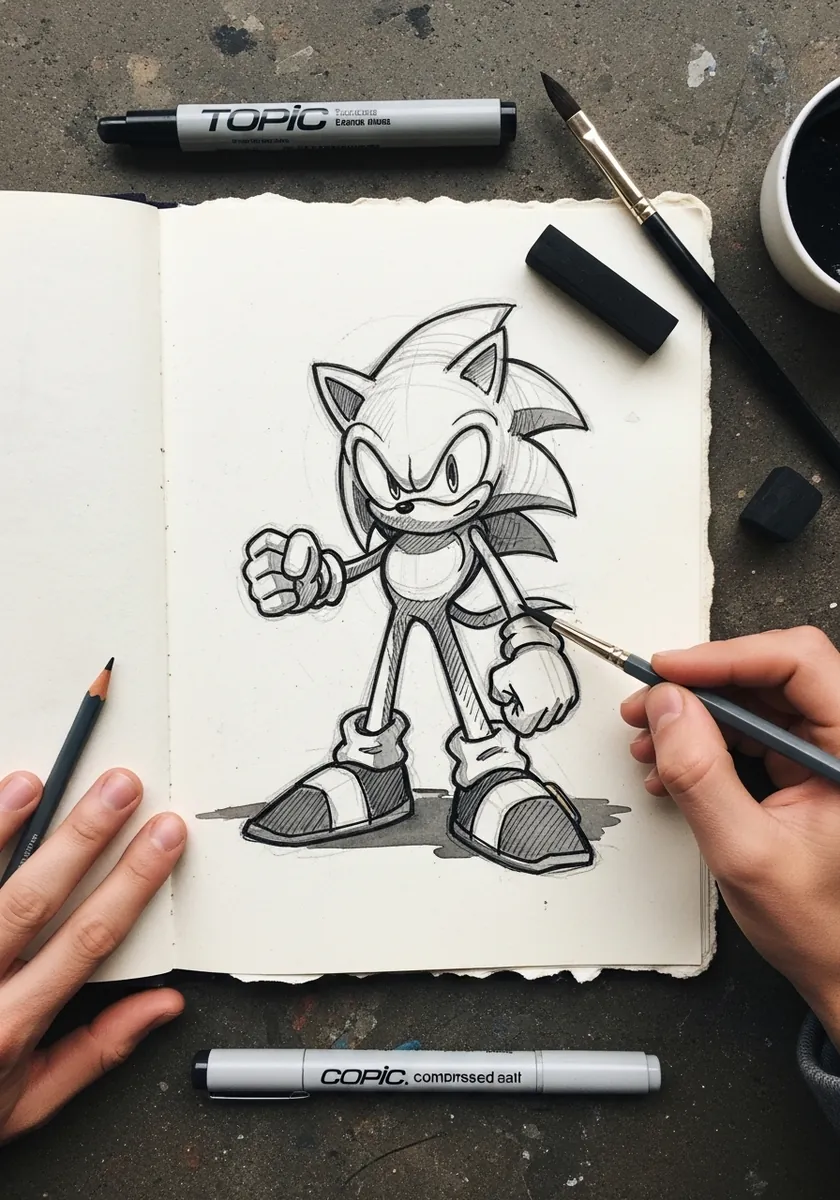
Heavy uniform outline is a design decision rather than a shortcut. Keep the weight identical everywhere, including the internal divisions, fill flat with no shading at all, and let the silhouette carry the entire drawing on its own without help.
14. Oil Pastel on Kraft With Blocks
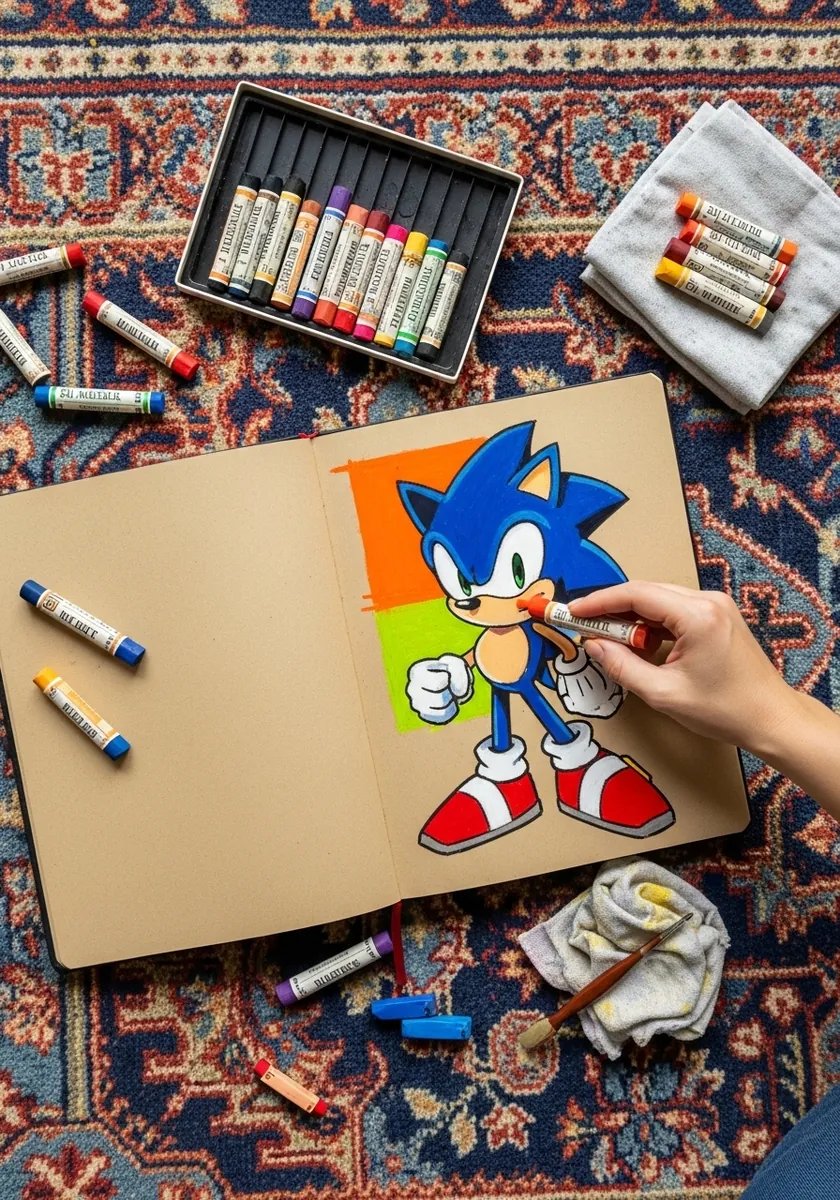
Oil pastel over kraft gives you saturation without any mixing. Lay the flat color blocks first. Work the figure across them afterward, letting the paper show through at every edge, then scrape back with a blade wherever you want a highlight.
15. Blueprint Construction Sketch
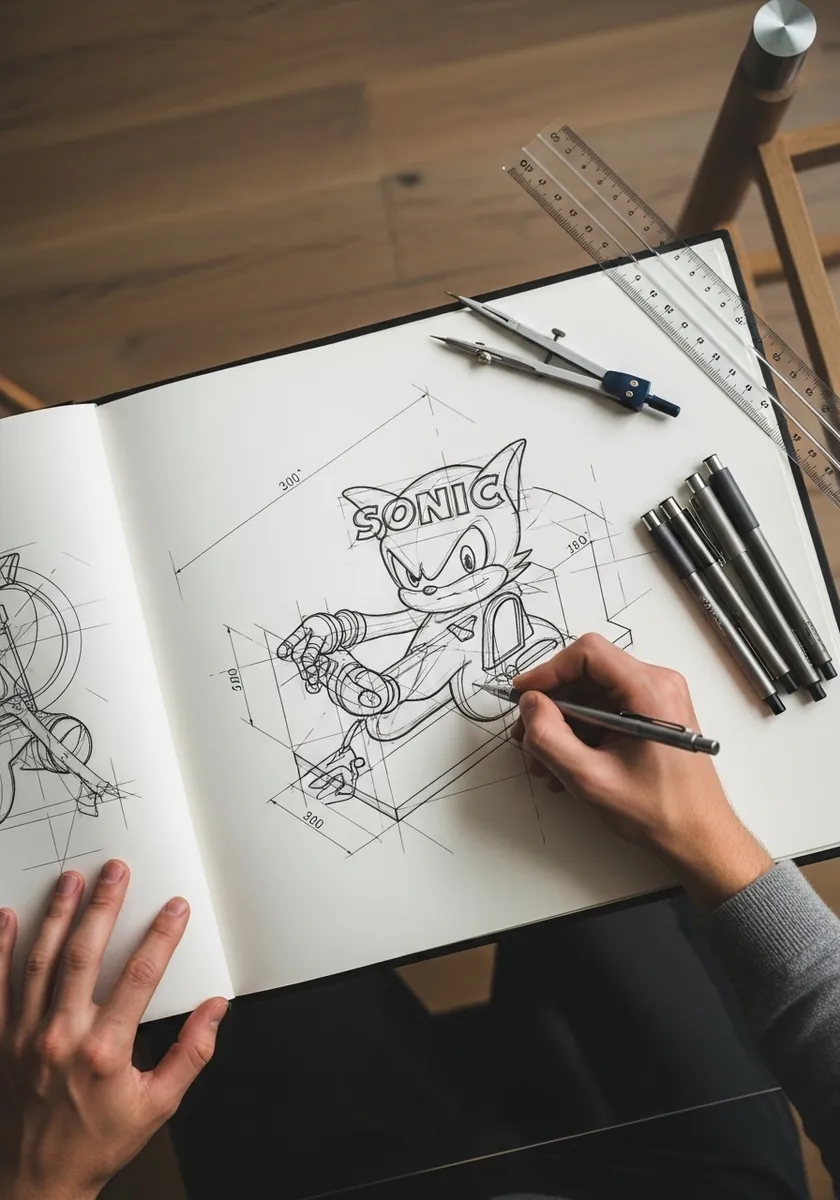
Turning a character into a technical drawing forces you to name its proportions, so rule the head height, step it down the body, mark the quill angles and write every number in the margin. Those figures stay reusable on every drawing you make afterward.
16. Neon Figure Under a Lamp
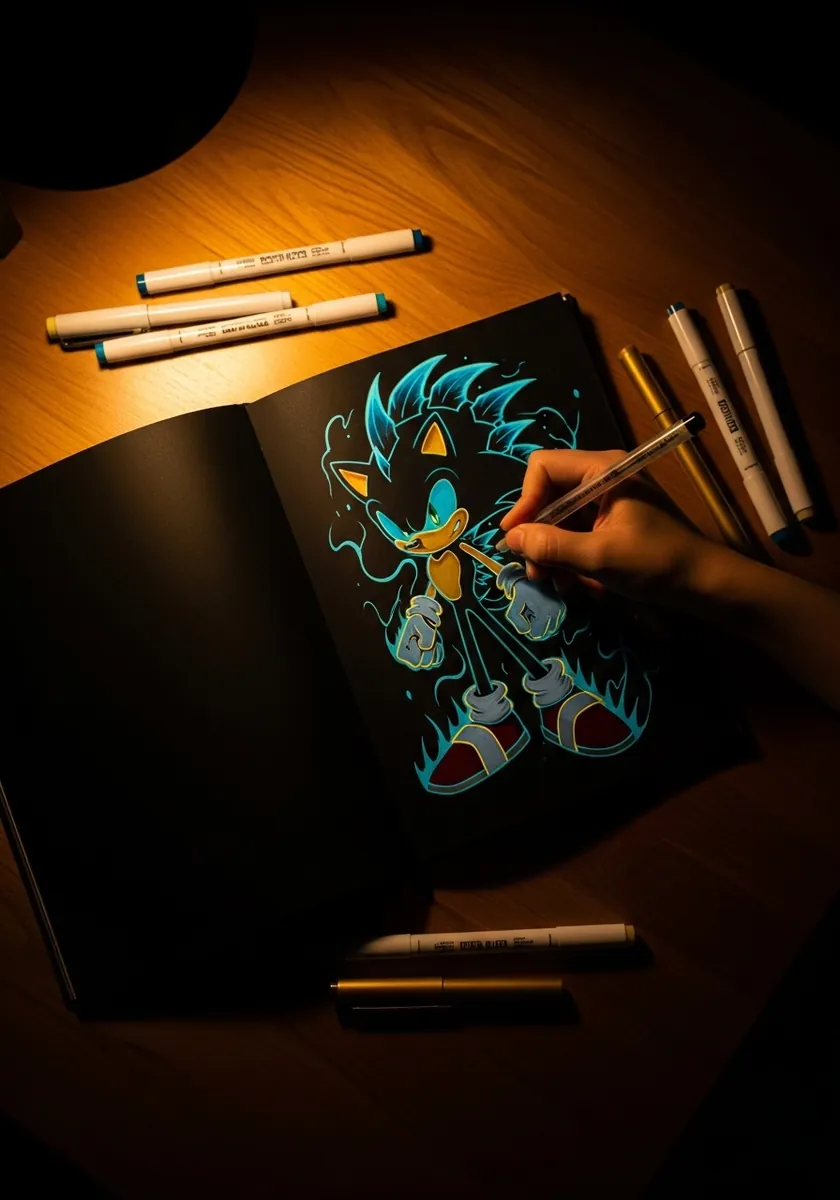
Neon on black needs restraint in how much of the page you cover. Draw the outline and a few internal lines only. Leave the black entirely untouched everywhere else, then add one faint halo just outside the silhouette to make the color appear lit.
17. Rainbow Splatter Watercolor
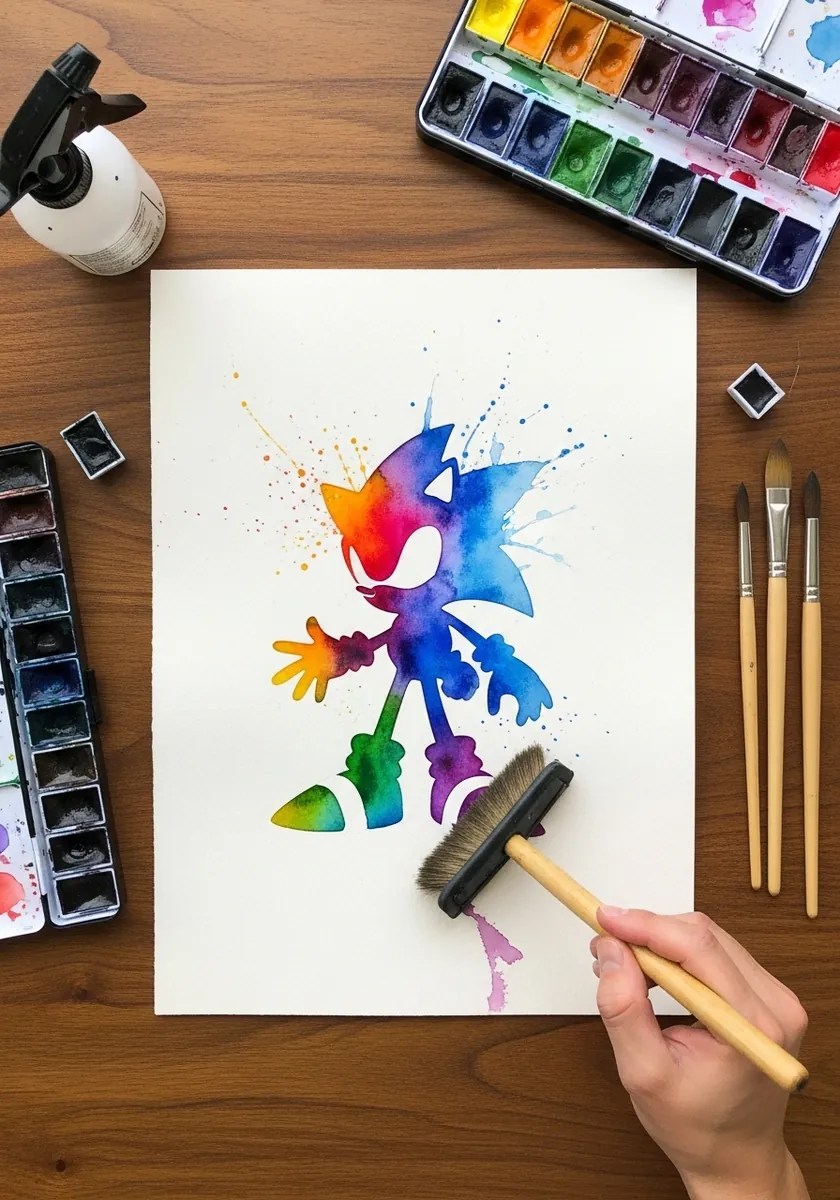
A full spectrum on one figure needs a fixed order. Move around the wheel from top to bottom without doubling back, and let each hue bleed only into its neighbor. Jumping randomly produces mud at every junction. Keep the face clear of splatter, since the joined eye shape is what carries the whole likeness.
18. Clean Ink on a Mosaic Table
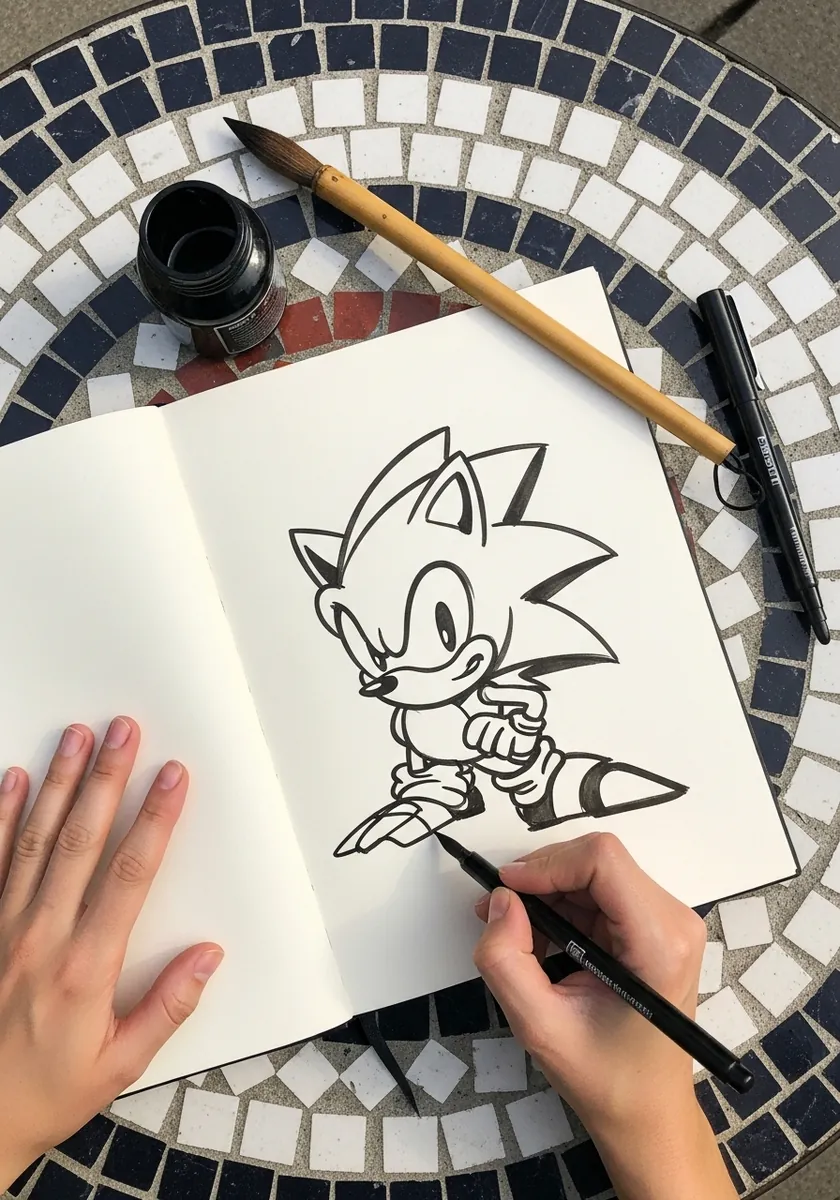
Clean line work rewards planning over speed. Pencil the whole figure lightly, check the eye shape and quill fan before inking, then commit in one pass. Going back over an inked stroke always shows in the final line. Rotate the sketchbook rather than your wrist on the long curves, which keeps every line smooth.
19. Art Nouveau Two Panel Spread
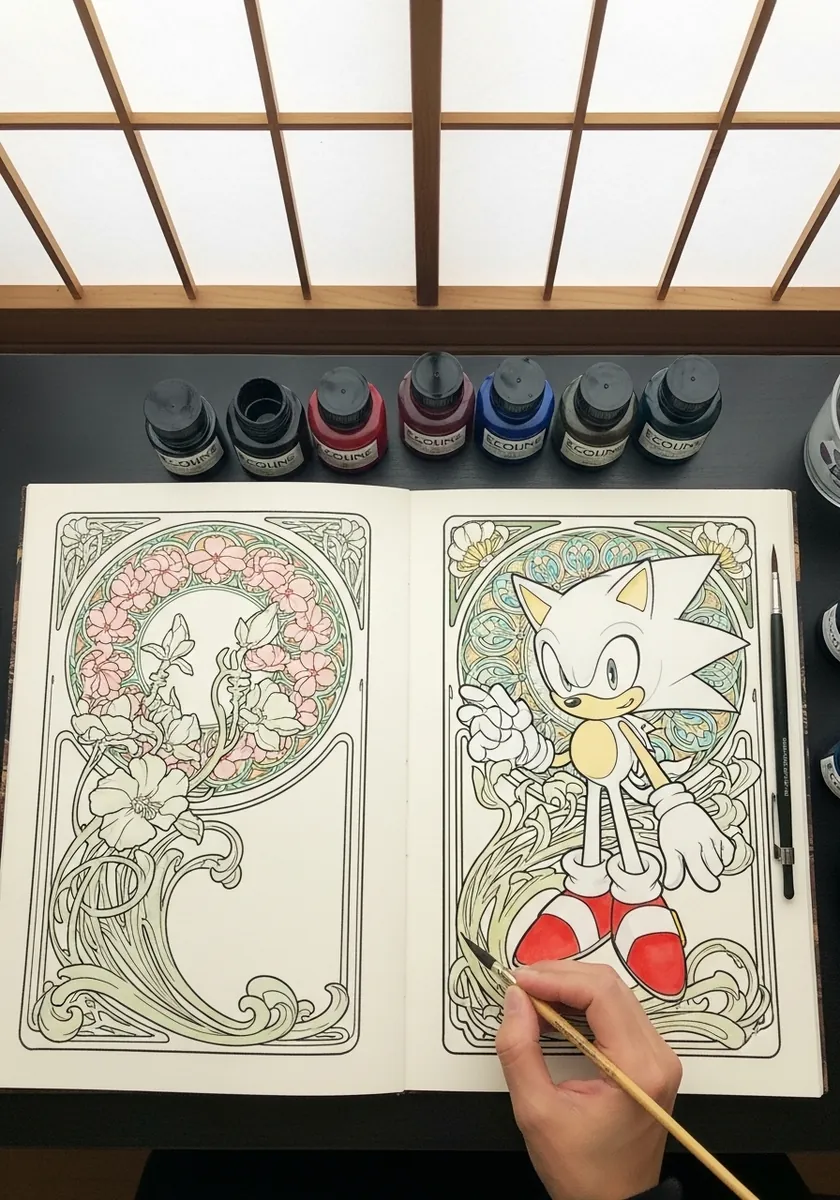
A two-panel spread needs matching frames but varied contents. Rule both borders identically, keep the floral motifs mirrored, and let the character pose differ between them. Identical panels read as a printing error. Rule both borders before drawing anything inside, so the two panels stay exactly the same size.
20. Visible Circle Construction
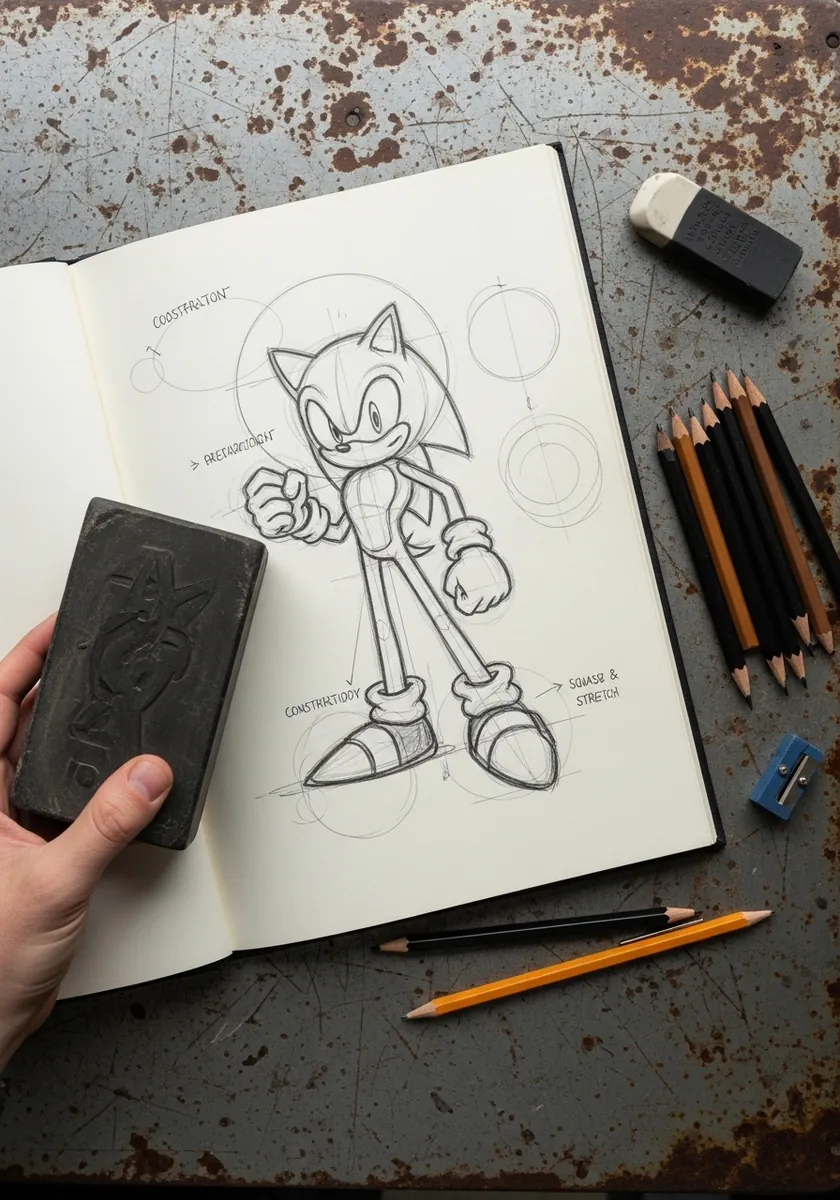
Leaving the circles showing is the most instructive version on this list. Draw the head circle, body circle and muzzle oval with a template, build the character over them, and never erase the guides. The scaffolding is the lesson. Use a harder pencil for the circles than the figure, which keeps the two layers readable apart.
21. Colored Pencil on a Toned Page
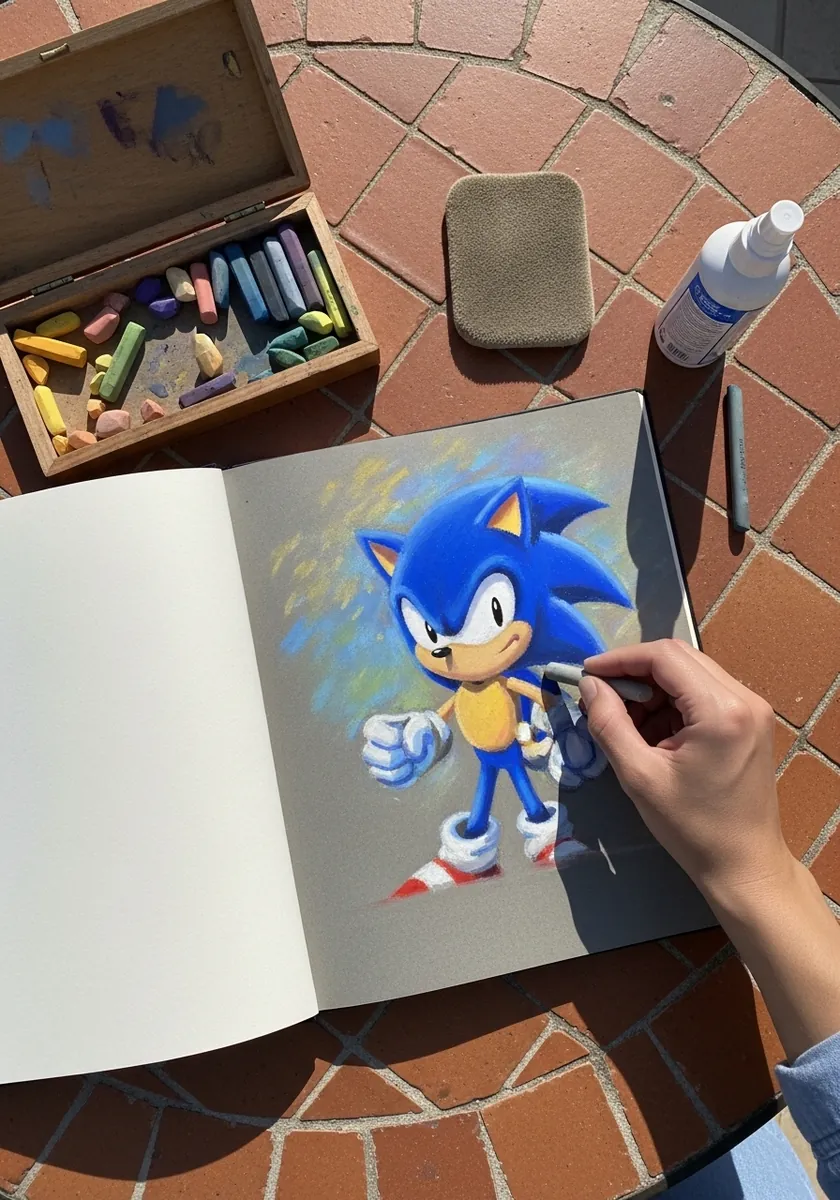
Toned paper supplies the mid value so you add only the extremes. Bring bright blue to the lit surfaces and a deeper blue to the shadow side, then let the page itself carry everything between. Add white last, sparingly. Test the toned page in the corner first, since some warm papers dull a cool blue considerably.
22. Coffee Toned Ink Figure
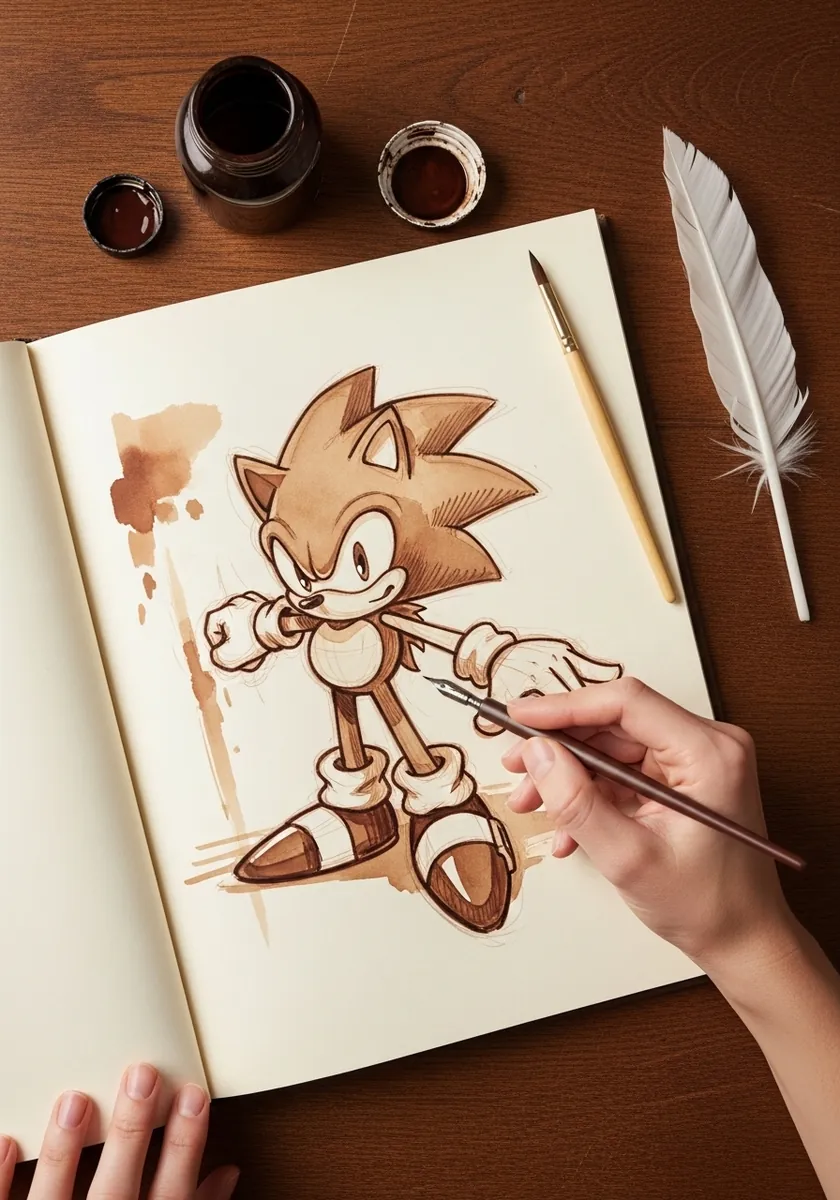
Staining paper with coffee before drawing gives an aged surface that suits sepia ink. Let the stain dry completely and unevenly, then draw over it, keeping the darkest passages in the areas the stain already pooled. Weight the paper down while it dries, or the stain will cockle it badly before you draw a line.
23. Compass Construction Study
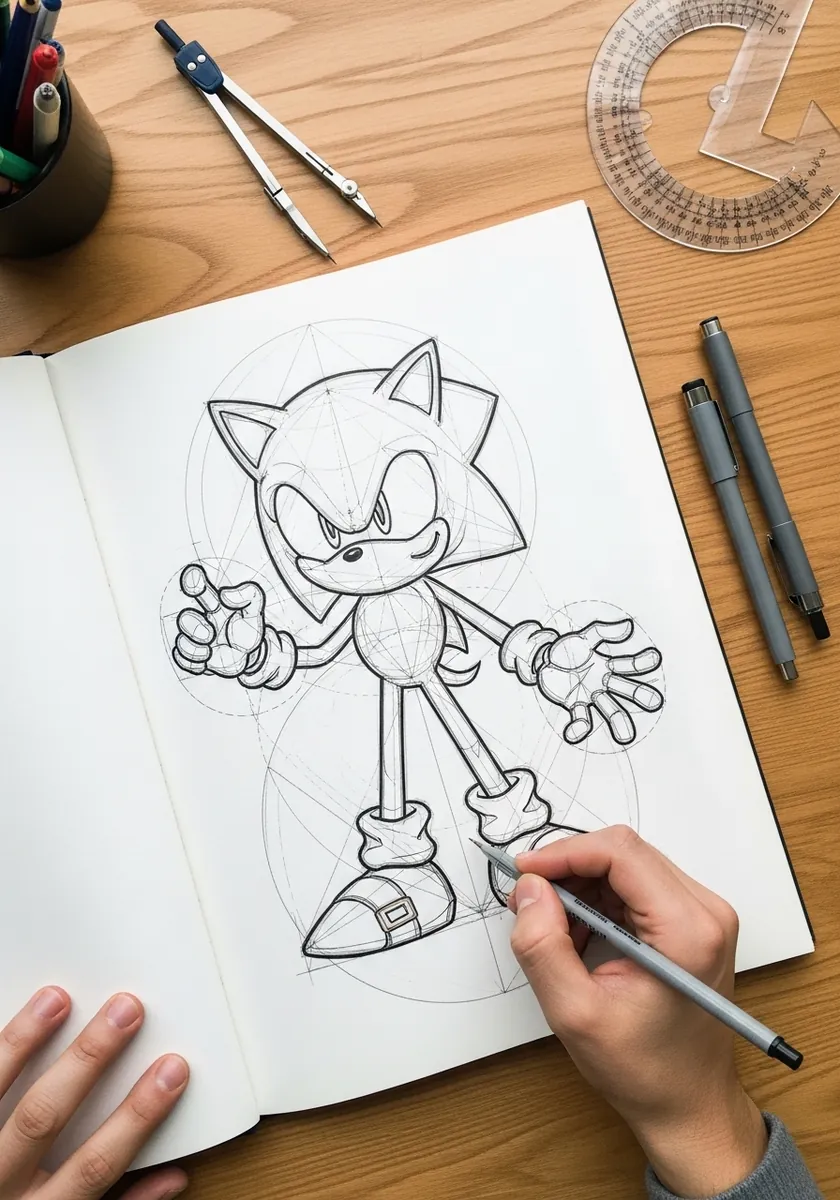
Using a compass rather than freehand circles changes the accuracy noticeably. Set the head radius, halve it for the body, and keep both centers on one vertical axis. Precise circles make the freehand parts easier, not harder. Prick the compass point through scrap first, so the working page keeps a clean center mark.
24. Sketchbook Figure With Red Shoes
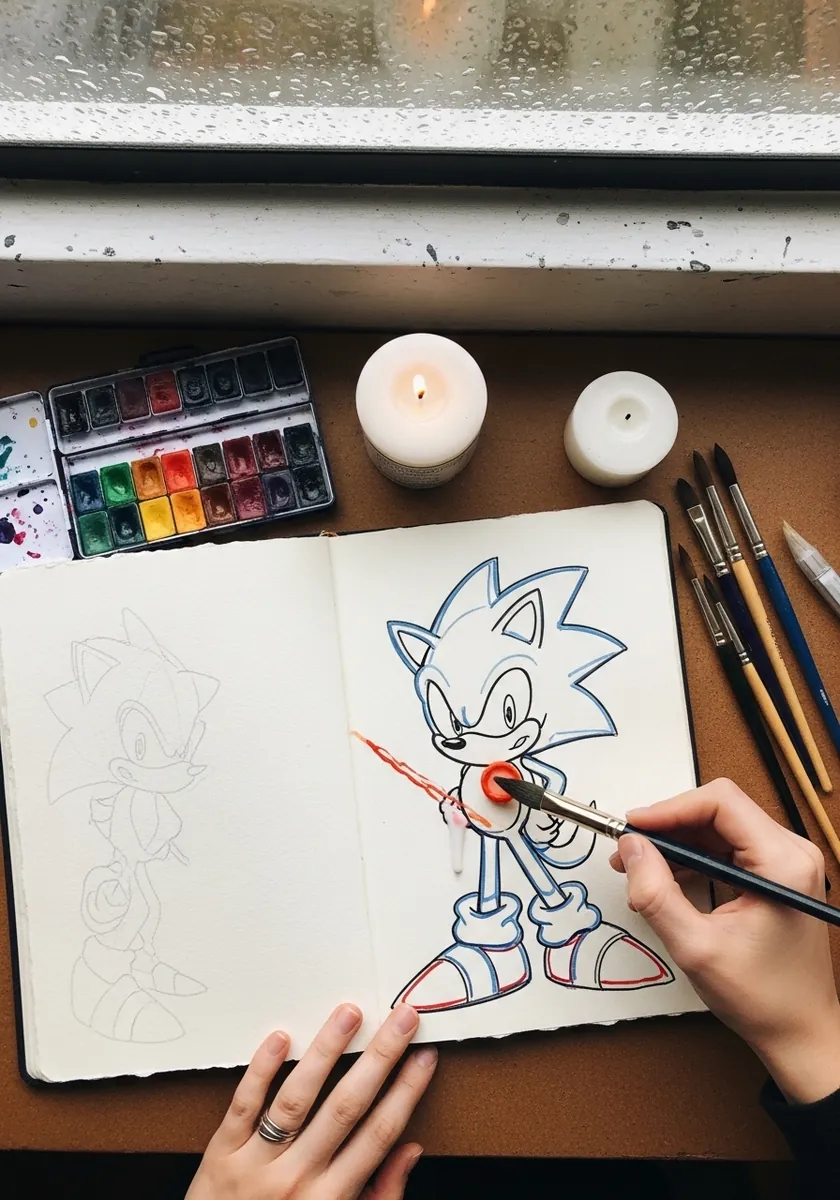
Selective color directs the eye better than coloring everything. Leave the whole figure in pencil, bring full saturation to the shoes alone, and let that single warm note carry the page. Restraint reads as a decision. Burnish the red hard, because a partially filled shoe undermines the whole selective-color idea.
25. White Chalk on Black Paper
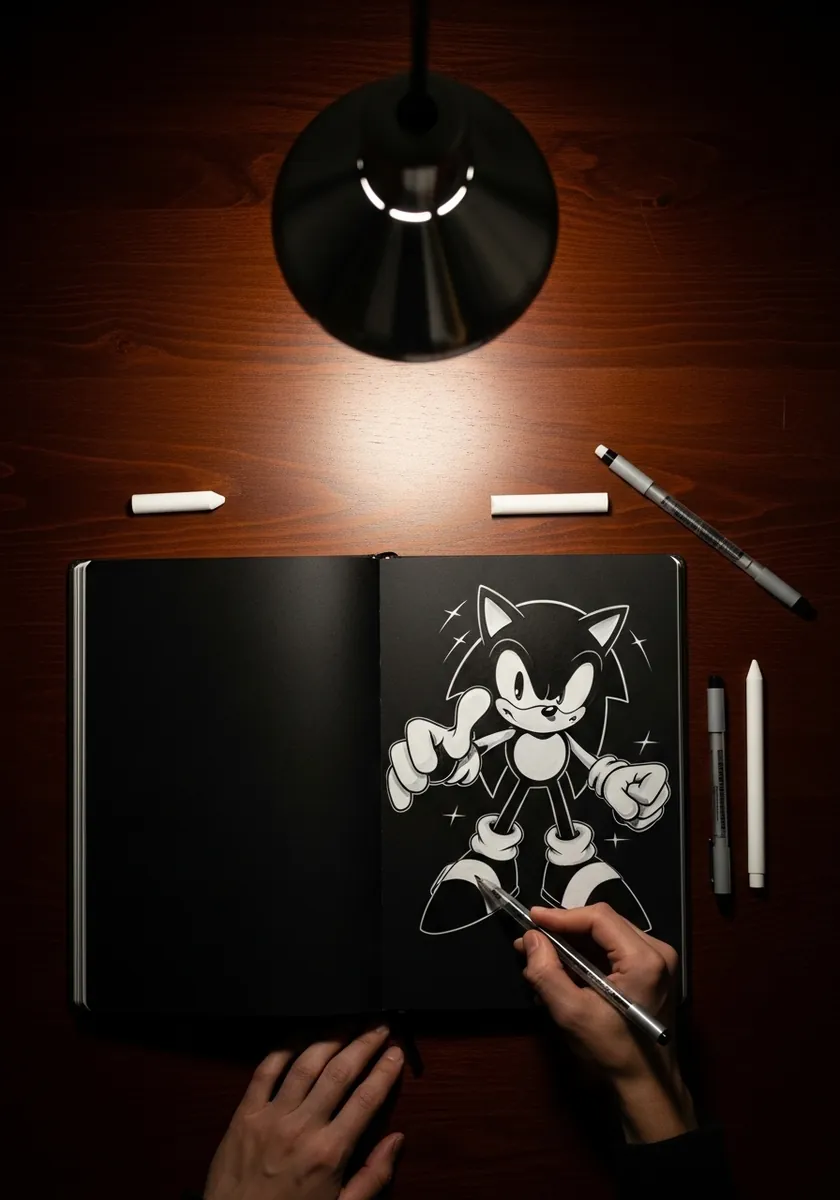
On black paper you draw only the light. Mark the top of the skull, the upper edge of each quill and the shoe straps, then stop. Everything you leave untouched becomes shadow with no further work. Sharpen the chalk on sandpaper first, since a blunt stick cannot reach the fine quill edges.
26. Blue Ink Line on Deckled Paper
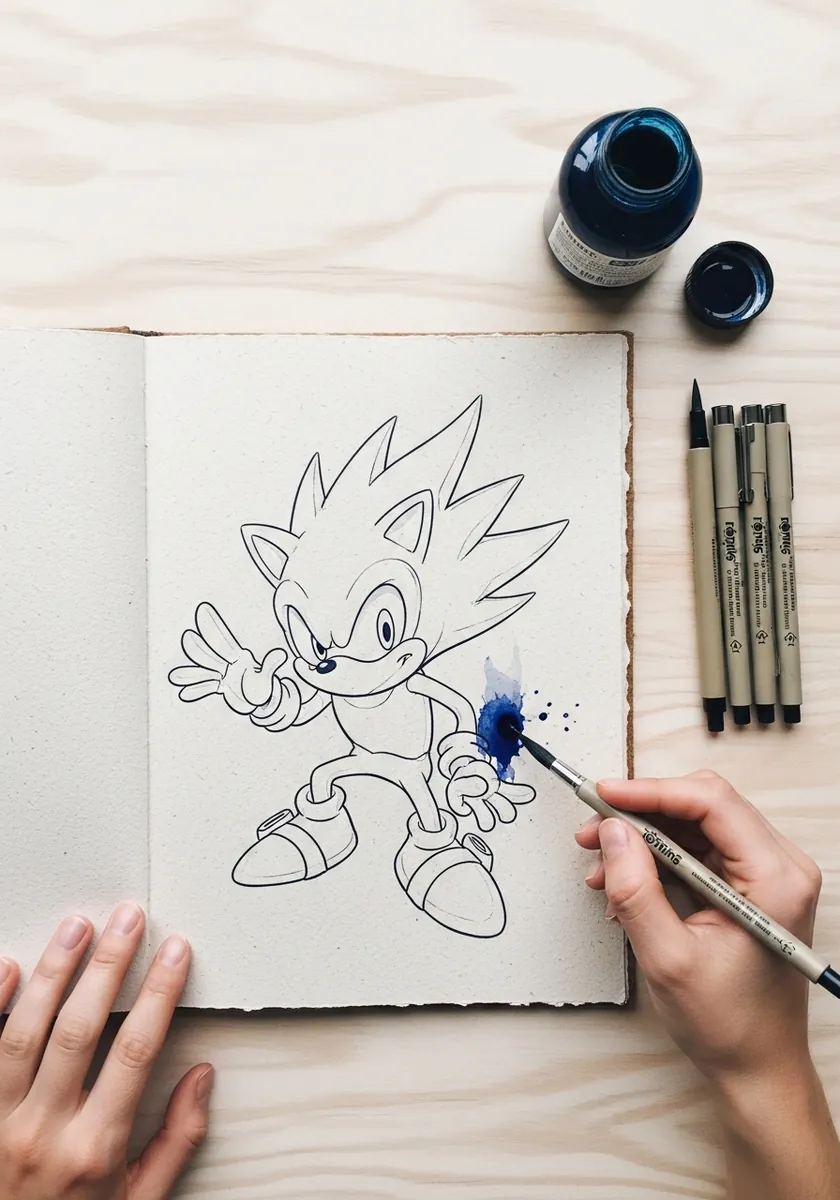
Heavy textured paper breaks a fine line into a granular edge. Use that rather than fighting it: draw slowly with even pressure and let the tooth do the work. The broken line suits a fast character surprisingly well. Leave the deckled edge completely bare, because a border of untouched paper frames the figure well.
27. Abstract Splatter With Lettering
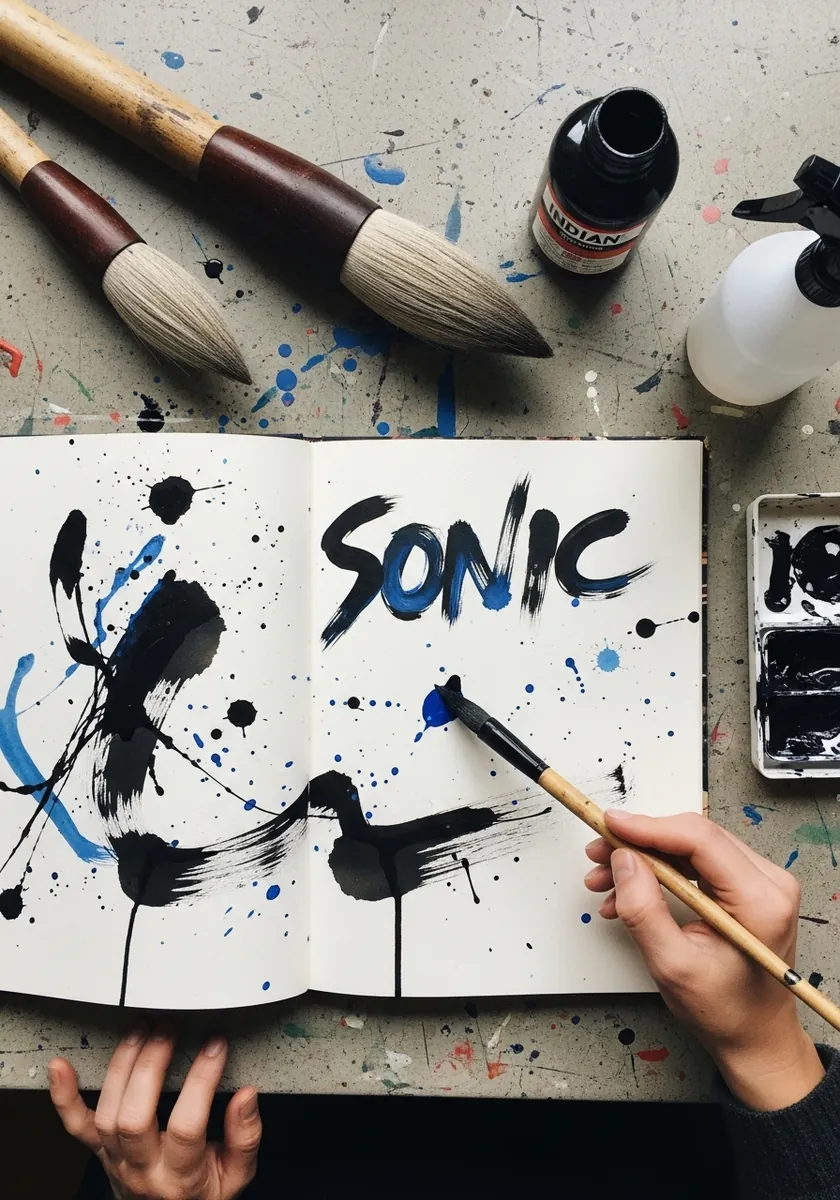
Pure gesture still needs one anchor. Let the splatter run freely across both pages, then place the lettering as the only controlled element. That single legible passage stops the spread reading as an accident. Let one splatter cross the gutter, which binds the two pages into a single continuous image.
28. Rainbow Chest Colored Figure
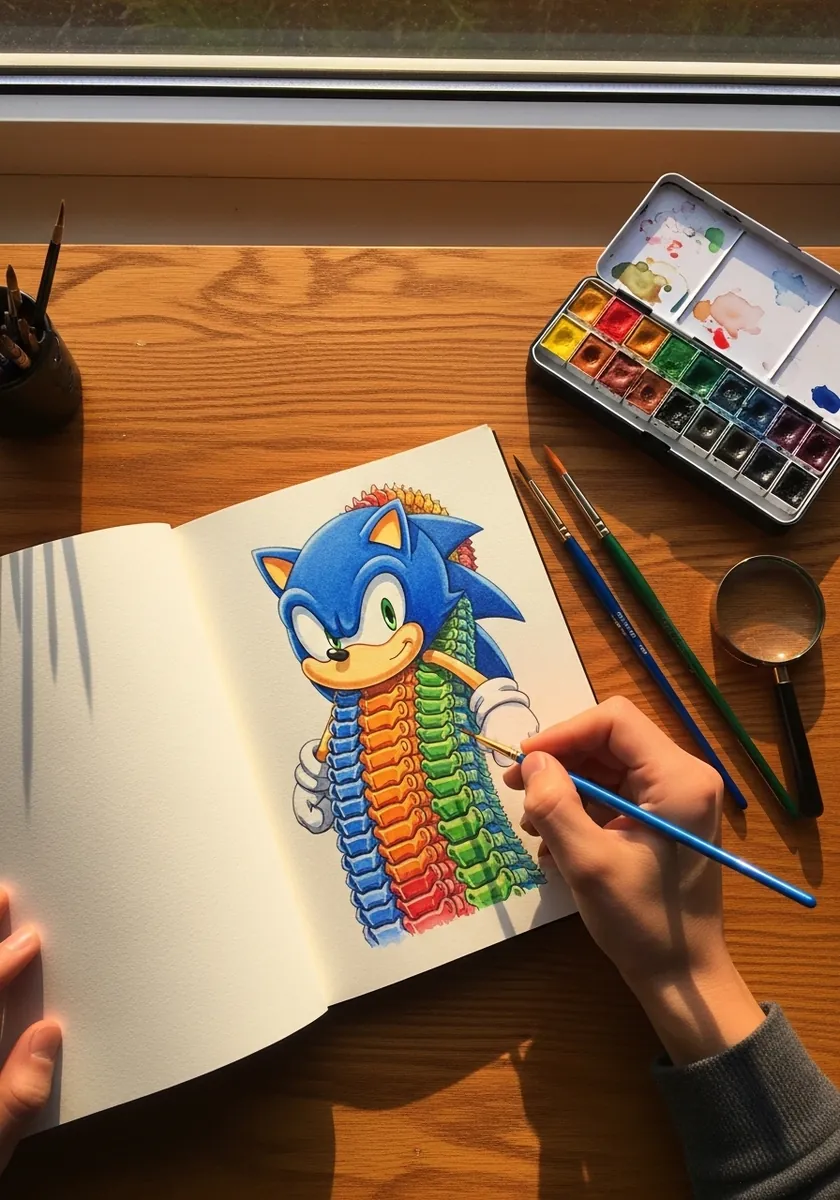
Recoloring one area of a familiar design is a low-risk way to experiment. Keep every other color canonical, apply the rainbow bands following the curve of the chest, and let the blue around it stay completely unchanged. Keep the band edges soft where they meet the blue, so the recolor looks intentional rather than pasted.
Frequently Asked Questions
How do you draw Sonic step by step?
Start with a large circle for the head and a smaller one for the body, then overlap a horizontal oval across the lower head for the muzzle. Add the joined eye shape above it, fan six quills from the back of the skull, and finish with oversized shoes.
Why do the eyes look like one shape?
Because in the classic design they are. The two eyes merge into a single continuous white form with two separate pupils inside it, rather than sitting as two isolated ovals. Drawing them apart is the fastest way to lose the likeness.
How many quills does he have?
Six on the head, arranged as three angling upward and three angling downward, all fanning from one point at the back of the skull. Two more sit at the back as a short tail. Keep them straight and tapered rather than curved.
Why are the shoes so big?
Deliberate exaggeration. Oversized feet give a fast character a stable, readable silhouette and emphasize the running action, which is why they carry the strongest color in the design. Draw them noticeably larger than realistic proportion would allow.
Can I sell my Sonic drawings?
No. He is a copyrighted and trademarked character, so fan art is fine for practice and personal use but cannot be sold or used commercially. Study the circle construction, then apply the same method to a character of your own design.
References and Further Reading