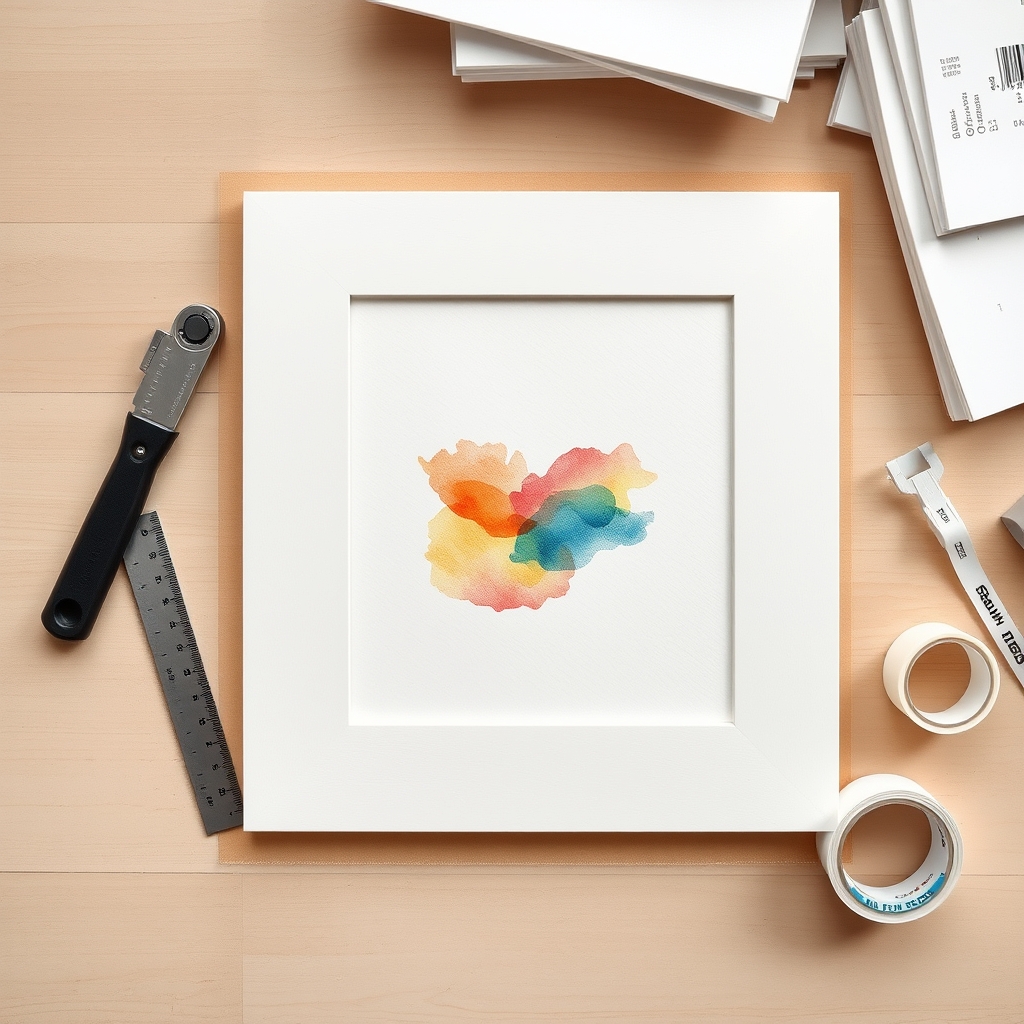
A mat's real job is structural: it holds the glazing about a sixteenth of an inch off the artwork so condensation on the glass cannot reach the paper. Use acid-free board, and cut the bottom border 10 to 20 percent deeper than the top and sides.
Key takeaways
- A mat is a spacer that keeps glass off the artwork, not a decorative border.
- Non-archival board contains lignin, which burns a permanent brown line into paper.
- Make the bottom border 10 to 20 percent deeper than the top so the work does not look low.
- Hinge artwork from its top edge with acid-free tape; never glue or spray mount it.
- Working to standard sizes such as 11 by 14 inches removes almost all framing cost.
Some links on this page are affiliate links. As an Amazon Associate we earn from qualifying purchases, at no extra cost to you. Prices shown were correct at the time of writing.
Custom framing a single piece at a shop costs more than most of the art supplies on this site. Doing it yourself is not difficult, but almost everyone starts by treating the mat as a decorative border, which is the one misunderstanding that leads to ruined work.
A mat is a spacer. Its structural job is to hold the glazing off the surface of the artwork. Everything aesthetic about it is secondary to that.
Why Art Must Never Touch the Glass
Framed work goes through a daily temperature cycle. Warm room air meets cold glass, moisture condenses on the inside face, and if paper is pressed against it that moisture goes straight into the sheet. Over months this produces foxing, cockling, and in the worst case the paint layer bonding to the glass so the piece cannot be removed without tearing.
A four-ply mat holds an air gap of roughly a sixteenth of an inch. That tiny space is the entire defense. It is why frames sold with the glass sitting directly on the print are fine for a poster and wrong for anything you painted.
What Acid-Free Actually Prevents
Ordinary wood-pulp board contains lignin, which breaks down over time into acidic compounds. Those compounds migrate into whatever the board touches. The visible result is a brown line burned into the paper exactly where the mat opening sat, and it is permanent.
You can see this on almost any framed picture from the 1970s. Acid-free or buffered board simply does not have the lignin to give, which is why the specification appears on every product below and is worth checking on anything you buy elsewhere.
The Border Rule Galleries Use
Cut all four borders equal and the piece will look like it is sliding downward in the frame. The eye reads the optical center of a rectangle as slightly above the geometric center, so an equal bottom border appears too small.
Professional framers correct this by making the bottom border around 10 to 20 percent deeper than the top and sides, a convention called weighted or bottom-weighted matting. Nobody consciously notices it. Everybody notices its absence.
The second convention is generosity. A border narrower than about two inches makes the work feel cramped; galleries routinely use three or four inches on small pieces, which is why a modest painting in a large mat reads as more valuable than the same painting crammed to its edges.
What to Buy
Best Kit for Selling Work


Falling in Art Show Kit – 11″ × 14″ Mats, Backers and Bags
$16.99on Amazon
The complete sandwich, mat plus backer plus sleeve, which is exactly what a bin of work at a market or fair requires.
- ✓Matted work sells for more unframed. A mat and sleeve turn a loose sheet into a finished object a buyer can carry home and drop into a standard 11 × 14 frame.
- ✓The sleeve keeps fingers off the surface. People browse by touching, and a soft graphite or pastel edge does not survive being handled twenty times.
- ✓Buffered to neutral pH throughout. Mat, backer and bag are all archival, so nothing in the stack is quietly attacking the work from behind.
As an Amazon Associate we earn from qualifying purchases. Price shown at time of writing.
This matters most for the small, repeatable pieces people actually buy on impulse. Bookmarks, cards and postcard-size studies like the ones in our watercolor bookmark gallery live or die on presentation rather than size.
Cheapest Per Mat


Phinus Picture Mats – 8 Pack, 11″ × 14″ for 8″ × 10″
$6.99on Amazon
Under a dollar a mat. At this price you can mat a stack of studies just to see which ones hold up when they are presented properly.
- ✓Beveled opening, not a straight cut. The angled edge shows a clean white core and visually steps the eye down into the picture; a square cut looks like cardboard.
- ✓4-ply and flat. Thin mats bow inside a frame and press against the glass at the corners, defeating the whole purpose of using one.
- ✓Standard size, standard frames. Working to 11 × 14 means any cheap off-the-shelf frame fits, which is where the real saving against custom framing comes from.
As an Amazon Associate we earn from qualifying purchases. Price shown at time of writing.
For Non-Standard Sizes
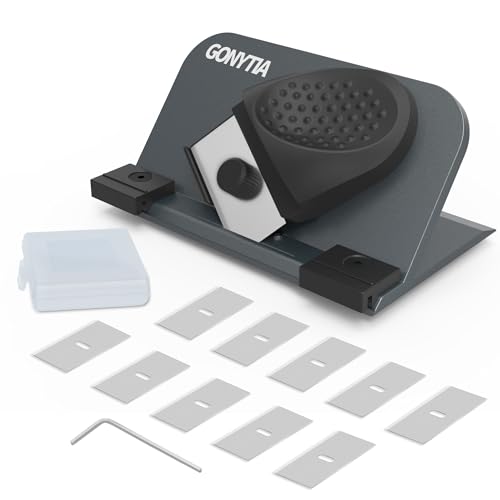

GONYTIA Bevel Mat Cutter with 10 Blades
$18.99on Amazon
Precut mats only fit standard sizes. The moment you paint something long, square or oddly proportioned, you need to cut your own.
- ✓Engraved start and stop marks. Overcut corners are the classic beginner failure; these marks are how you stop the blade in the right place every time.
- ✓Adjustable blade depth. Set it just past the board thickness. Too deep and the blade drags in your cutting surface and wanders off the line.
- ✓Ten spare blades included. Mat blades dull after surprisingly few cuts, and a dull blade tears the core rather than slicing it, which shows in the finished bevel.
As an Amazon Associate we earn from qualifying purchases. Price shown at time of writing.
Backing in Bulk


Somime Acid-Free Backing Boards – 25 Pack, 11″ × 14″
$22.21on Amazon
The unglamorous half of the sandwich. Skipping it is why unbacked work in a bin arrives home with a crease across the corner.
- ✓Rigid enough to protect in transit. Most damage to sold work happens between the table and the buyer’s car, not on the wall.
- ✓Acid-free on the side that matters. The backer touches the whole reverse of the sheet, so a cheap one damages a larger area than the mat ever could.
- ✓Uncut, so it trims to any size. Useful once you start cutting custom mats and need backers that match unusual proportions.
As an Amazon Associate we earn from qualifying purchases. Price shown at time of writing.
Hinge It, Do Not Glue It
Artwork should hang from two small hinges of acid-free tape along its top edge only, attached to the backing board. It then expands and contracts freely with humidity instead of buckling against fixed corners.
Never use ordinary adhesive tape, glue stick, or spray mount on anything you care about. All three yellow, and all three are effectively irreversible on paper. The whole point of archival framing is that a future owner can take the piece apart without harming it.
Frequently Asked Questions
Do I need a mat if my frame already has a backing?
Yes, unless the frame provides a spacer. Without one the glass sits directly on the artwork, and condensation is then in contact with the surface. The mat is what creates the gap.
What color mat should I choose?
White or off-white for almost everything. A colored mat competes with the artwork and dates quickly, and it also pulls one hue out of the piece and exaggerates it. Neutral board lets the work set the palette.
How wide should the mat border be?
At least two inches, and three or more looks better on small work. Make the bottom border 10 to 20 percent deeper than the top and sides so the piece does not appear to sit low in the frame.
Is glass or acrylic glazing better?
Acrylic is lighter, does not shatter, and is the sensible choice for anything shipped or hung above furniture. Glass resists scratching and stays cleaner over decades. Neither should touch the artwork.
Can I mat a piece without cutting anything?
Yes. Work to a standard outer size such as 11 by 14 inches, buy precut mats with the opening you need, and paint within that window from the start. Planning around standard sizes removes almost all framing cost.
The Rest of the Selling Chain
Matting is the last step in turning work into something people buy. The two steps before it are capture and reproduction: scanning artwork properly so the file holds the texture, and printing art prints at home so you can sell an edition rather than a single original. If the paintings themselves are the bottleneck, start further back with choosing better paper, or read the whole sequence in our art supplies guide.