For beginners, buy 140 lb (300 gsm) cold press watercolor paper in a block. Cotton content matters most: cotton fibers hold water so you can move pigment and lift highlights, while cheap cellulose absorbs instantly and dries with hard blooms.
Key takeaways
- Cotton content, not brand, is what gives you working time in a wet wash.
- 140 lb (300 gsm) is the lightest weight that will not buckle under a real wash.
- Cold press suits almost every beginner; hot press is smooth and far less forgiving.
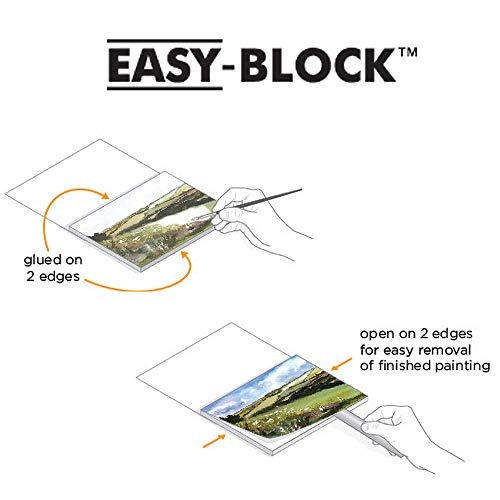
- A block is glued on all four edges, so you never need to stretch or tape paper.
- Sizing is the unlisted spec that decides whether you can lift and scrub color back off.
Some links on this page are affiliate links. As an Amazon Associate we earn from qualifying purchases, at no extra cost to you. Prices shown were correct at the time of writing.
Almost every beginner buys paint first and paper last. That order is backwards. A student-grade pan set on good paper produces work that looks like watercolor; professional pigment on cheap pulp paper produces something that buckles, dries blotchy, and cannot be lifted or corrected. Paper is the only material in watercolor that decides whether a technique is even possible.
This page explains the three specifications that actually change what happens on the page, then names four papers at different budgets. If you have been frustrated that your washes look nothing like the ones in our watercolor abstract drawing gallery, the paper is the first thing to check.
The Three Specs That Actually Matter
Watercolor paper is sold with a wall of numbers on the front. Only three of them change how the paint behaves.
1. Cotton content is the one that costs money
Paper is made either from cotton fiber or from wood cellulose. Cotton fibers are long and they tangle, so the sheet holds water in place and lets you push pigment around for a minute or two after it lands. Cellulose fibers are short; water races along the surface and soaks straight down, which is why a wash on cheap paper dries with hard blooms and cannot be softened afterwards.
Every classic watercolor technique that involves working into a damp wash — wet-on-wet skies, soft-edged petals, lifting a highlight back out with a clean brush — needs that open working time. On 100% cotton you get it. On cellulose you are essentially painting flat shapes quickly and hoping.
2. Weight decides whether the sheet buckles
140 lb (300 gsm) is the standard, and it is the lightest weight that will take a genuinely wet wash without cockling into ridges. Anything at 90 lb will ripple the moment you flood it, and the paint pools in the valleys. Heavier stock at 300 lb stays perfectly flat but costs roughly double, which is not a sensible first purchase.
3. Surface texture changes the mark, not the quality
Cold press has a light tooth and is what almost everyone should start on: the texture catches pigment and gives washes a slight sparkle. Hot press is smooth and suits fine botanical or ink-and-wash work, but it is far less forgiving because the paint sits on the surface and dries fast. Rough is heavily textured and best for loose landscape work. None of these is better; they are different tools.
Four Papers Worth Buying
The Benchmark


Arches Watercolor Block – Cold Press, 7″ × 10″, 140 lb
$32.91on Amazon
When a tutorial says something should work and it does not, this is the paper that tells you whether the problem was you or the surface.
- ✓Gelatin tub sizing. This is the reason Arches lifts and scrubs better than anything near its price. You can pull a highlight back out days later without tearing the surface.
- ✓Glued on all four edges. A block holds the sheet flat while it dries, so you skip stretching and taping entirely. Slide a knife under the corner when the painting is finished.
- ✓Small size keeps the cost sane. At 7 × 10 inches you get 20 sheets for the price of one large pad, which is the right trade while you are still learning.
As an Amazon Associate we earn from qualifying purchases. Price shown at time of writing.
Arches is the reference point the rest of the market is measured against, and it is worth owning at least one block so you know what correctly sized cotton paper feels like. Once you have painted on it, faults in a cheaper sheet become obvious instead of mysterious.
Best Value Cotton
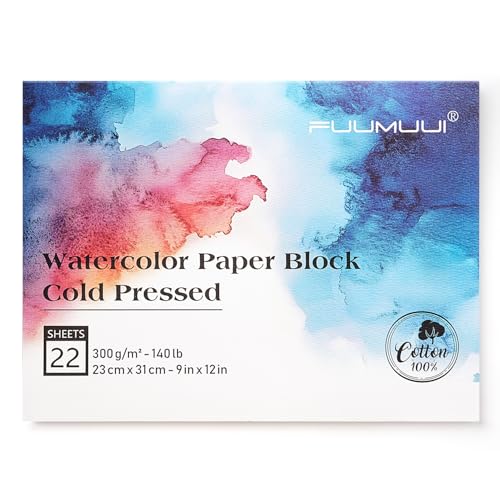

Fuumuui 100% Cotton Block – 9″ × 12″, 22 Sheets, 140 lb
$25.87on Amazon
Real cotton at roughly a third of the per-square-inch cost of the benchmark. This is the practical everyday choice.
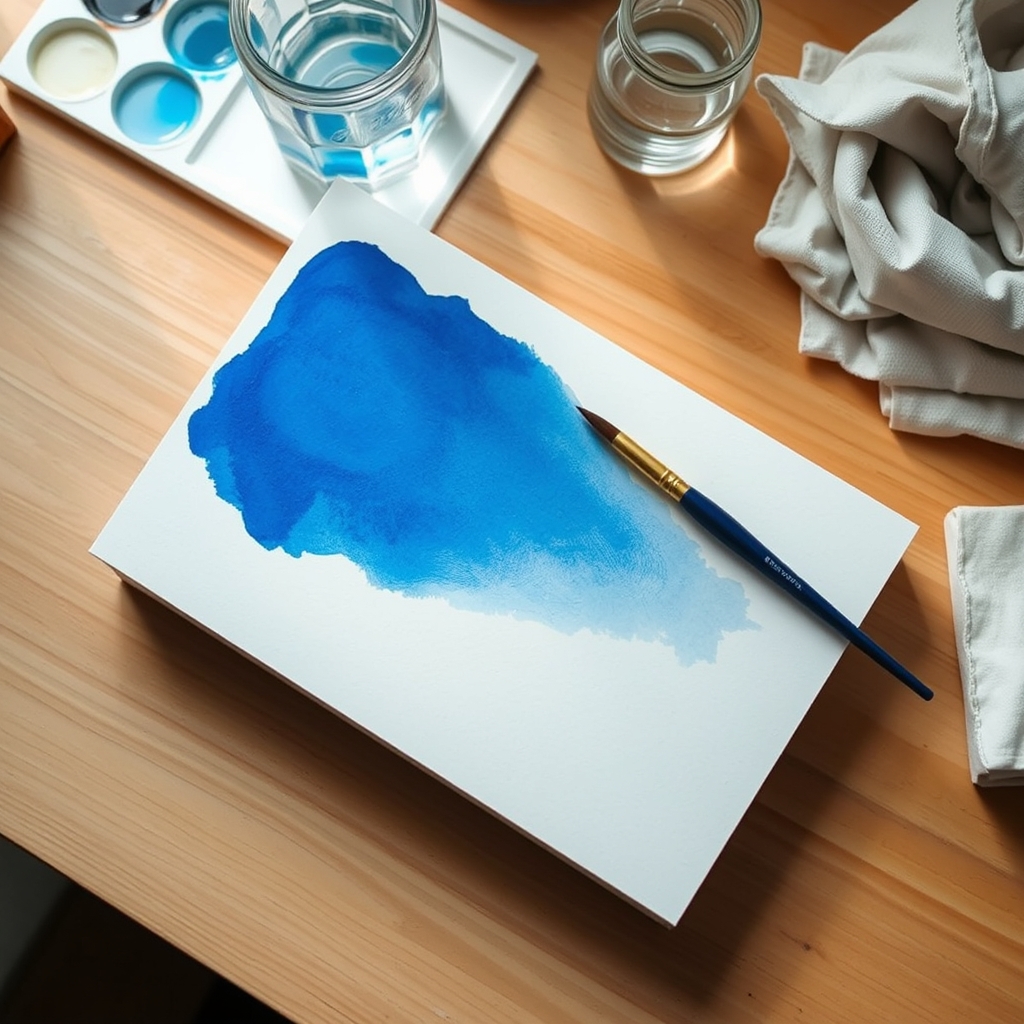
- ✓Full sheet size for washes. At 9 × 12 inches you have room for a proper sky gradient, which is exactly the technique that fails on a small sheet.
- ✓Takes masking fluid and tape. Cylinder-mould cotton does not shed fibers when you peel masking off, which is where budget cellulose paper usually tears.
- ✓22 sheets is enough to practice badly. Learning watercolor means wasting paper on purpose. Cheap enough cotton is what makes that psychologically possible.
As an Amazon Associate we earn from qualifying purchases. Price shown at time of writing.
If you only buy one thing from this page, make it this one. Cotton at this price removes the main excuse for not practicing, and the large landscape format suits the mountain and sky studies in our watercolor mountain drawing collection.
Best Non-Cotton

Fluid Watercolor Block – Cold Press, 9″ × 12″, 15 Sheets
$16.49on Amazon
High alpha cellulose rather than cotton. It will not lift like cotton, but it is honest paper at an honest price.
- ✓Archival despite the price. Acid-free alpha cellulose will not yellow the way pulp sketch paper does, so studies you like are still worth keeping in five years.
- ✓Bound on two sides. Sheets come away cleanly one at a time, and the board backing keeps everything flat in a bag.
- ✓The right paper for flat color work. Ink-and-wash, line drawings and gouache do not need cotton’s long working time, so paying for it there is waste.
As an Amazon Associate we earn from qualifying purchases. Price shown at time of writing.
Cheapest Way to Try Cotton

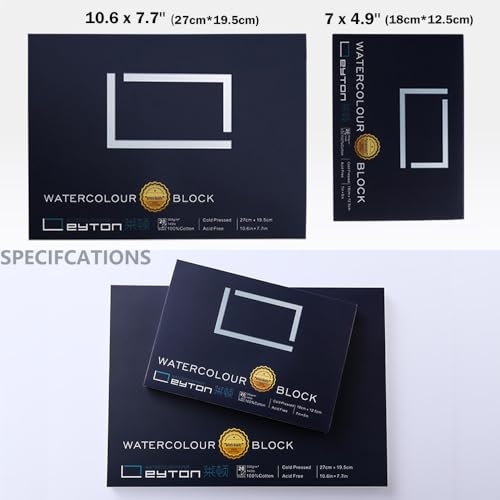
100% Cotton Non-Warping Block – 7″ × 5″, 160 lb, 20 Sheets
$9.99on Amazon
Under ten dollars to find out whether cotton actually changes anything for the way you paint. It does, and this proves it cheaply.
- ✓160 lb, heavier than standard. The extra weight plus four-edge gluing means it stays genuinely flat even when you flood it.
- ✓Postcard size is a feature. Small sheets finish in one sitting, which is how you actually build a habit rather than one abandoned masterpiece.
- ✓Handles gouache and acrylic too. Useful if you are still deciding which water-based medium you want to commit to.
As an Amazon Associate we earn from qualifying purchases. Price shown at time of writing.
Blocks, Pads and Loose Sheets
A block is glued around all four edges, so the sheet is held flat while it dries and released with a palette knife afterwards. That single feature removes the stretching and taping step that puts most beginners off working wet. A pad is glued along one edge only, which is fine for drawing and sketching but will ripple under a real wash.
Loose full sheets are the cheapest way to buy cotton by area, and experienced painters tear them down themselves. That only becomes worthwhile once you know which size you actually work at.
A Note on Sizing
Sizing is the gelatin or synthetic coating that stops paper behaving like blotting tissue. Internal sizing is mixed into the pulp; external or tub sizing is applied to the finished sheet. Papers with both hold a wash on the surface long enough to move it, and they let you scrub a color back off without the surface pilling.
If a sheet drinks the paint the instant it lands and every edge dries hard, poor sizing is usually the cause rather than your brushwork. It is the specification manufacturers mention least and the one you notice most.
Frequently Asked Questions
Is 100% cotton watercolor paper really worth the extra cost?
Yes, for wet techniques. Cotton gives you roughly a minute of working time in a damp wash where cellulose gives you a few seconds, and it allows lifting and scrubbing that cellulose simply cannot survive. For dry or line-based work the difference matters far less.
Which side of watercolor paper do I paint on?
The side with the watermark reading correctly is the intended front, and it carries slightly more sizing. Both sides are usable, though, and painting on the back is a perfectly normal way to get more out of an expensive sheet.
Do I need to stretch watercolor paper?
Not if you use a block or work at 300 lb. Stretching only becomes necessary with loose sheets at 140 lb or lighter that you intend to soak heavily. Soak the sheet, tape all four edges to a board, and let it dry flat before painting.
Why does my paint dry lighter than it looked wet?
All watercolor dries lighter, typically by twenty to thirty percent, because the water that made the pigment look glossy has gone. Absorbent paper exaggerates this. Mix a stronger puddle than looks right and test it on a scrap of the same paper. This is one of seven problems covered in why watercolors are so difficult.
What weight should a complete beginner buy?
140 lb (300 gsm) cold press, in a block. That combination is forgiving, needs no preparation, and covers every technique a beginner will attempt in the first year of painting.
Where to Go Next
Once your paper is no longer fighting you, the next constraint is usually the light you are working under, because mixing accurate color under a warm bulb is close to impossible. Our guide to art studio lighting covers that, and setting up a home art studio deals with finding a corner you can leave work out in. When you start producing pieces worth reproducing, scanning artwork properly is the step that protects all this texture in the final file. Paper is stage one; our art supplies guide covers everything that should follow it.