The best colored pencils for kids are the Crayola 36-count set — vivid color, break-resistant leads, and a 4.8-star average from 50,000+ buyers for under $7. Crayola Twistables (50ct) are the easiest for young kids since they never need sharpening, and the Shuttle Art 80-count gives the most color per dollar.
Key takeaways
- Crayola 36-count is the best overall: 4.8 stars from 50,000+ buyers, under $7
- Twistables need no sharpening — easiest option for kids under 8
- Look for high pigment (rich color with light pressure) and break-resistant cores
- 24-36 colors is the sweet spot for ages 4-7; 50-80 for ages 7+
Affiliate Disclosure: This post contains affiliate links. If you buy through them, we may earn a small commission at no extra cost to you. Prices were checked in October 2026 and may vary.
Short Answer
The best colored pencils for kids are the Crayola 36-count set — vivid color, break-resistant leads, and a 4.8-star average from 50,000+ buyers, all for under $7. For kids who hate sharpening, Crayola Twistables (50ct) are the easiest pencils they’ll ever use, and the Shuttle Art 80-count gives the most color per dollar.
Colored pencils are a childhood staple — but the gap between waxy, faint pencils and rich, smooth ones is enormous, and kids feel it immediately. The right set lays down vivid color with light pressure, survives being dropped, and stays non-toxic. We compared the most popular kids’ colored pencil sets on Amazon — checking color payoff, breakage reports, safety certifications, and verified buyer feedback — to find the ten best colored pencils for kids in 2026.
≡ In This Guide
Our Top 3 Picks at a Glance
★ BEST OVERALL

Crayola Colored Pencils, 36 Count
4.8 stars from 50,000+ buyers. The classroom classic that just works.
★ EASIEST TO USE

Crayola Twistables, 50 Count
Twist-up color, zero sharpening. The easiest pencils kids will ever use.
★ BEST VALUE

Shuttle Art 80 Colored Pencils
80 rich soft-core colors under $10. Maximum color per dollar.
Quick Comparison Table
| # | Product | Detail | Price* | Rating |
|---|---|---|---|---|
| 1 | Crayola 36ct | 36 colors | $6.57 | 4.8 |
| 2 | Crayola Twistables 50ct | 50 twist-up colors | $13.46 | 4.7 |
| 3 | Shuttle Art 80ct | 80 soft-core | $9.99 | 4.7 |
| 4 | Shuttle Art 149pc Deluxe | 149pc wooden case | $35.99 | 4.7 |
| 5 | Disney Stitch Set | Character set + case | $24.82 | 4.6 |
| 6 | SKKSTATIONERY 50ct | 50 vibrant colors | $8.79 | 4.6 |
| 7 | YEGEER 288ct Bulk | 24 x 12ct sets | $24.99 | 4.6 |
| 8 | Colorations STUBPEN 48ct | Chubby toddler pencils | $21.99 | 4.3 |
| 9 | KALOUR 72ct | 72 soft-core | $11.99 | 4.7 |
| 10 | Cra-Z-Art 144ct Bulk | 144 pre-sharpened | $17.92 | 4.7 |
*Prices checked October 2026; they change often on Amazon.
How to Choose Colored Pencils for Kids
What should you look for in kids’ colored pencils?
Three things matter most: pigment load, break resistance, and safety. High-pigment pencils lay down rich color with light pressure — kids press hard enough already, and faint waxy pencils only make them press harder, which snaps tips. Break-resistant cores (look for ‘break-resistant’ or thicker 3.3mm+ cores in listings) survive drops and heavy hands. And every set should be labeled non-toxic, ideally with AP certification. Beyond that, match the format to the age: chubby pencils for toddlers, Twistables for ages 4-7, and standard wood pencils once their grip matures around age 6-8.
How many colors does a child really need?
More than you’d think, fewer than the marketing suggests. 24-36 colors is the sweet spot for ages 4-7 — full rainbow, skin tones, and neutrals, without decision paralysis. Around age 7-8, kids start noticing that ‘green’ isn’t one color, and that’s when 50-80 color sets earn their keep and teach real color awareness. Beyond 100 colors is enthusiast territory; fun, but no child needs it. One practical tip: sets with color names printed on each pencil (like Crayola) quietly teach color vocabulary every time a kid asks for ‘burnt sienna.’
Wood pencils, Twistables, or something else?
Classic wood pencils sharpen to the finest point and are cheapest per pencil — best for careful, detailed work with older kids. Twistables eliminate sharpening entirely and never snap, making them the lowest-friction option for young kids, at the cost of fine detail. Chubby/toddler pencils are strictly for ages 2-4, with grips little hands can actually hold. There’s no single winner: many families keep Twistables for everyday coloring and wood pencils for ‘serious’ art time. Pair any of them with a good sketchbook from our best sketchbooks for beginners guide — paper quality affects pencil color more than most people expect — and see the complete art supplies guide for the rest of the kit.
The 10 Best Colored Pencils for Kids in 2026
1
Crayola Colored Pencils, 36 Count
Best Overall
Our VerdictThere is a reason Crayola has owned the classroom for generations: these pencils simply work. The colors go on smooth and vivid rather than waxy and faint, the leads resist breaking under kid-pressure, and at $6.57 for 36 colors the value is almost silly. With a 4.8-star average from over 50,000 buyers — one of the most-reviewed art products on Amazon — this is the safest first colored pencil set you can buy. If you only get one, get this one.
36 vibrant colorsBreak-resistant leadsNon-toxic, kid safe
What We Like
- 50,000+ buyer reviews at 4.8 stars
- Rich color payoff, easy to sharpen
- Unbeatable price
Keep in Mind
- Basic cardboard box, not a case
- 36 colors may limit older kids
2
Crayola Twistables Colored Pencils, 50 Count
Easiest to Use
Our VerdictTwistables solve the two things kids hate about colored pencils: sharpening and broken tips. The plastic barrel twists up fresh color — no sharpener, no shavings, no tears when the point snaps mid-masterpiece. With 50 colors and a 4.7-star average from nearly 30,000 buyers, they’re a proven classroom favorite. They’re chunkier than wood pencils, so very detailed work is harder, but for kids under 8 the convenience wins by a mile.
50 colors, twist-upNo sharpening neededDurable plastic barrels
What We Like
- Never needs a sharpener
- Tips don’t snap like wood pencils
- Huge color range for kids
Keep in Mind
- Bulkier for fine details
- Can’t sharpen to a fine point
3
Shuttle Art 80 Colored Pencils
Best Value
Our VerdictEighty soft-core pencils for under ten dollars — the per-pencil math here is the best on this list. The soft cores lay down richer color than hard school pencils, which kids notice immediately: coloring feels smoother and looks brighter. With 27,000+ buyers rating them 4.7 stars, they’re proven far beyond the price tag. Marketed for adult coloring, but older kids (7+) who’ve outgrown the basic 24-count will love the range. Just know soft cores need a gentler hand.
80 soft-core colorsRich, smooth laydownUnder $10
What We Like
- Best price per pencil here
- Vivid color kids love
- 27,000+ happy buyers
Keep in Mind
- Soft cores break if pressed hard
- Best for ages 7+
4
Shuttle Art 149-Piece Deluxe Art Set
Best Gift

Our VerdictThis is the gift that makes a kid gasp: 149 pieces — colored pencils, crayons, paints and more — in a real wooden case. It turns ‘art supplies’ into an event, and at $35.99 it looks far more expensive than it is. Buyers rate it 4.7 stars, with parents praising it as the ultimate birthday or holiday gift for creative kids. It’s more than any beginner needs to start, but as a gift, abundance is the whole point.
149 pieces in wooden casePencils, crayons & moreGift-ready presentation
What We Like
- Huge wow factor for gifting
- Everything in one organized case
- Great value per piece
Keep in Mind
- Overkill as a first set
- Wooden case is bulky for travel
5
Disney Stitch Colored Pencils Set
Best for Kids
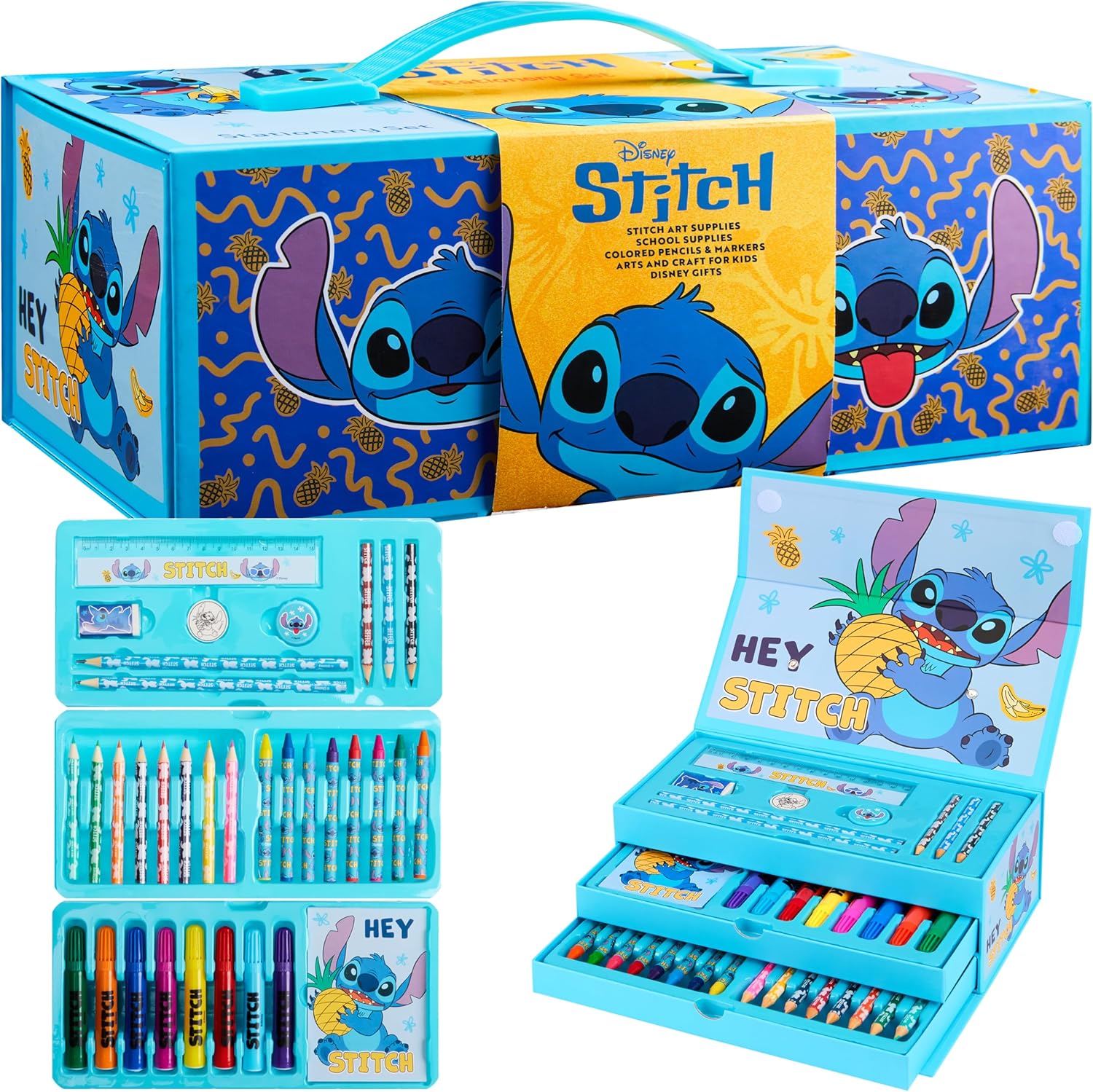
Our VerdictSometimes the best art supply is the one a kid actually reaches for — and Stitch on the case guarantees that. This Disney set bundles colored pencils with school-ready stationery in a travel case kids love carrying. The 4.6-star rating from 1,200+ buyers reflects genuine kid approval, not just parent hope. You’re paying a character premium versus plain sets, but if it gets them drawing daily, it’s money well spent.
Disney Stitch designTravel case includedKid-approved stationery
What We Like
- Kids genuinely love using it
- Great for school & travel
- Fun gift pick
Keep in Mind
- Character premium in the price
- Fewer pencils than plain sets
6
SKKSTATIONERY 50 Colored Pencils
Best for Beginners

Our VerdictFifty vibrant colors for under nine dollars from a brand built specifically for kids’ stationery. The color range hits the sweet spot for beginners — enough variety to feel exciting, not so many it’s overwhelming. Buyers give them 4.6 stars, praising the bright payoff for the price. They won’t match Crayola’s consistency stick for stick, but as a starter set for a curious kid, the value is hard to argue with.
50 vibrant colorsKid-focused brandUnder $9
What We Like
- Great variety for the price
- Bright, fun colors
- Perfect starter quantity
Keep in Mind
- Less consistent than big brands
- Basic packaging
7
YEGEER 288-Count Bulk Colored Pencils
Best Bulk
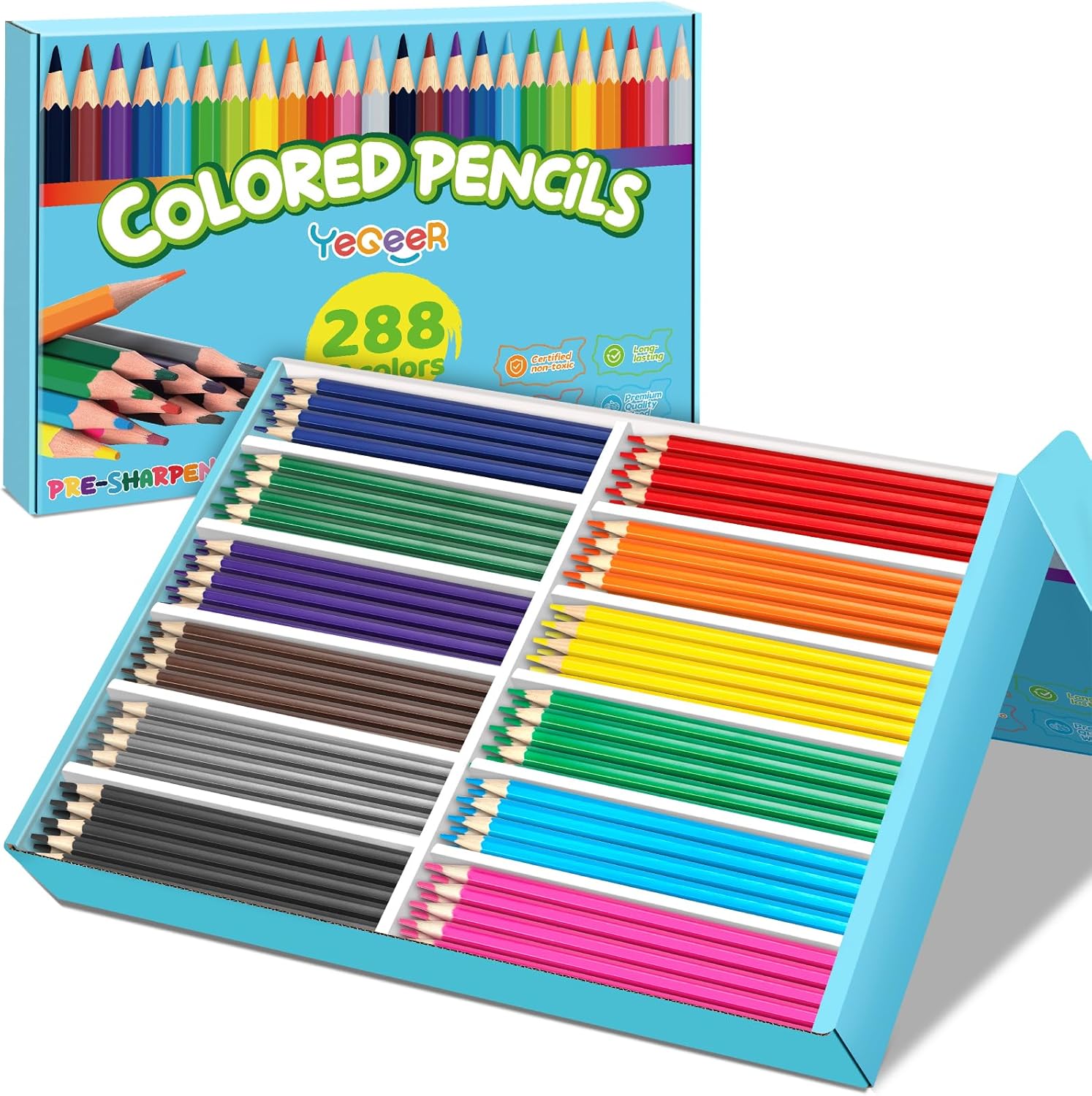
Our VerdictTwenty-four pre-sharpened 12-color sets in one box — this exists for classrooms, parties, and art camps, and it nails the assignment. Every kid gets a full set (no sharing fights), each pencil arrives pre-sharpened (no first-day chaos), and at $24.99 the per-set cost is barely a dollar. For a single child it’s overkill; for a teacher or party parent, it’s the smartest buy on this list.
24 sets of 12 colorsPre-sharpenedNon-toxic
What We Like
- Every kid gets their own set
- Lowest per-set cost here
- Classroom & party ready
Keep in Mind
- Overkill for one child
- 12 colors per set only
8
Colorations STUBPEN Chubby Pencils, 48 Count
Best for Toddlers

Our VerdictRegular pencils are genuinely hard for 2- to 4-year-olds: too thin to grip, too fragile, too frustrating. These stubby, chubby pencils are engineered for tiny hands — easy to hold, hard to break, and sized so they can’t roll away. The 4.3-star rating reflects a niche product with fewer reviews, and honest buyers note the price is high per pencil. But for toddlers, the right tool matters more than the count: these turn scribbling from a struggle into play.
48 stubby chubby pencilsDesigned for ages 2-4Easy-grip, roll-proof
What We Like
- Perfect for tiny hands
- Very hard to break
- Builds early confidence
Keep in Mind
- Pricey per pencil
- Too chunky for older kids
9
KALOUR 72 Soft-Core Colored Pencils
Best Premium

Our VerdictWhen a kid graduates from flat coloring to blending and shading, soft-core pencils are the upgrade — and KALOUR’s 72-color set is the affordable way in. The creamy cores layer and blend like pencils costing three times more, which is why 13,000+ buyers rate them 4.7 stars. Marketed for adult coloring, so this is for older kids (8+) ready for real technique, not toddlers. At $11.99, it’s a low-risk taste of artist-quality color.
72 soft-core colorsBlendable, artist-gradeAges 8+
What We Like
- Blends like premium pencils
- Huge range for technique
- 13,000+ buyer reviews
Keep in Mind
- Too advanced for little kids
- Soft cores need careful handling
10
Cra-Z-Art Bulk Colored Pencils, 144 Count
Best Budget Pick

Our VerdictOne hundred forty-four pre-sharpened, non-toxic pencils for under eighteen dollars — that’s about twelve cents a pencil. This 12-pack-of-12 bulk box is the budget king for classrooms, after-school programs, and big families where pencils vanish like socks. The 4.7-star rating from 640 buyers confirms the quality holds up at bulk pricing. Individually they’re basic pencils, but at this price you can afford to be generous.
144 pencils (12 x 12ct)Pre-sharpened, non-toxic~$0.12 per pencil
What We Like
- Unbeatable bulk value
- Great for classrooms & families
- No sharpening needed day one
Keep in Mind
- Basic pencil quality
- Bulk box, not giftable
Pro Tips
- Store pencils tip-up in a cup — drops fracture the core inside and cause endless breakage.
- A sharp pencil colors better: teach kids to rotate the pencil as they shade for even wear.
- Layer light colors first, then dark — you can’t lighten a dark layer, but you can always darken.
- Keep a dedicated sharpener with a shavings catcher; kid-friendly sharpeners need less force.
- Rubber-band a small set for travel — a full 80-count tin is miserable in a backpack.
Frequently Asked Questions
Frequently Asked Questions
What age can kids start using colored pencils?
Most kids are ready for regular colored pencils around age 4-5, when their grip is developed enough to hold a thin pencil. For ages 2-4, chubby pencils like the Colorations STUBPEN are much easier to grip and nearly unbreakable. Twistables are a great middle ground for ages 4-7 since there’s no sharpening involved.
Are colored pencils safe for kids?
Yes — look for sets labeled non-toxic, which all ten picks on this list are. Reputable brands also carry AP (Approved Product) certification from the Art & Creative Materials Institute. Non-toxic doesn’t mean edible though, so supervise toddlers who still put things in their mouths.
How many colored pencils does a child need?
Twenty-four to 36 colors is plenty for most kids — it covers the full rainbow plus skin tones and neutrals without overwhelming them. Jump to 50-80 colors around age 7-8, when kids start caring about getting shades ‘right’ and experimenting with blending.
Why do my kid’s colored pencils keep breaking?
Two common causes: pressing too hard (kids do this a lot) and cheap hard leads. Softer-core pencils actually resist kid-pressure breakage better because they lay down color with less force. Also teach the ‘gentle twist’ — dropping pencils tip-first onto hard floors fractures the core inside, causing endless breakage later.
Are Twistables better than regular colored pencils for kids?
For kids under 8, usually yes: no sharpener needed, no shavings, and the tips can’t snap off. The trade-off is that Twistables can’t be sharpened to a fine point, so detailed work is harder. Many families keep both — Twistables for everyday coloring, wood pencils for careful projects.
What’s the difference between cheap and good colored pencils for kids?
It comes down to pigment vs. wax: cheap pencils are mostly wax, so kids press hard and get faint, scratchy color. Better pencils pack more pigment, so color goes on rich with light pressure — which also means fewer broken tips. You don’t need artist grade; even mid-range sets like Crayola or Shuttle Art show the difference clearly.
Final Verdict
For most kids, the Crayola 36-count set is the right buy — proven color, tough leads, and a price that makes replacements painless. Hate sharpeners? Grab the Crayola Twistables 50-count. Want maximum color per dollar? The Shuttle Art 80-count is unbeatable under $10.
Pair them with paper that does them justice — see our best sketchbooks for beginners guide — or browse the complete art supplies guide.