Short answer: Start with a simple tiger idea that matches your skill level, sketch the body shape first, then add stripes that wrap around the form instead of lying flat on top. Beginners do best with the cartoon cub (idea 1) or a resting tiger (idea 2); confident artists can try the realistic eye study (idea 11) or a full portrait (idea 15). Every one of the 23 ideas below keeps its original artwork and notes.
TL;DR: Tigers look real when three things work together: stripes that follow the body curves, fur drawn in clumps rather than single hairs, and a solid body sketch underneath. Pick one idea, use a reference photo, and finish the eyes last, because the eyes carry the whole drawing.
In this guide
The tiger, a symbol of power and grace, offers an incredible subject for any artist. Drawing a tiger is more than just recreating an image; it’s about channeling their wild spirit and majestic beauty onto your paper. It’s a journey of precision, passion, and artistic growth.
Here, we celebrate that journey. Our site is a treasure trove of inspiration, tutorials, and a vibrant community ready to support you. Whether you’re a beginner or a seasoned pro, let’s explore the art of tiger drawing together, turning your blank page into a roar of creativity.
1. How to Pick the Right Tiger Drawing Idea
All 23 ideas below are worth trying, but the right starting point depends on your time and comfort level. Use this quick picker before you choose, and you will avoid the most common beginner frustration: picking a detailed portrait when a 30-minute study would have built the skill first.
| If you are… | Start with | Why it works |
|---|---|---|
| Brand new to animal drawing | Idea 1 (cartoon cub) or idea 5 (sleeping cub) | Simple shapes, forgiving lines, and no realistic fur pressure |
| Comfortable with pencil shading | Idea 3 (stalking tiger) or idea 20 (sitting sketch) | Full-body practice without a face taking all the attention |
| Ready for realism | Idea 11 (tiger eye) or idea 15 (realistic portrait) | Close detail work that teaches fur, stripes, and values |
| Short on time | Idea 21 (grid-method eye) | The grid keeps proportions right even in a quick session |
A useful fact to keep in mind while you draw: the tiger (Panthera tigris) is the largest member of the cat family, and no two tigers share the same stripe pattern, which is why copying stripes from a photo beats inventing them. For the real animal behind the art, see the Britannica guide to tigers. The same “study the animal first” habit helps with other subjects too: try our horse drawing ideas for leg joints, fox character ideas for muzzle shapes, fawn and deer sketches for gentle poses, and forest magic scenes if you want a background for your tiger.
Artist tip: Keep one reference photo open while you draw, even for cartoon tigers. The photo answers the small questions (where the ear sits, how the stripes bend at the cheek) that guessing gets wrong.
How can I make my tiger drawings look more realistic and less flat?
- Master the Stripes: Don’t draw stripes as simple lines. Observe how they wrap around the tiger’s form. They follow the contours of the muscles and bones, creating a three-dimensional effect. Vary the thickness and density of your stripes to show where the body curves and where shadows fall.
- Focus on Fur Texture: Instead of drawing every single hair, focus on creating clumps and layers of fur. Use short, directional strokes that follow the tiger’s body. Use a kneaded eraser to lift highlights, and use darker tones to create deep shadows.
- Study the Anatomy: A tiger’s power comes from its muscular build. Before you add fur and stripes, sketch the underlying structure. Understand the placement of the shoulders, hips, and facial bones. This foundation will give your drawing a believable and powerful form, preventing it from looking flat.
What are some creative ways to draw a tiger that goes beyond a simple portrait?
- Symbolic Storytelling: Consider incorporating elements that represent the tiger’s cultural significance. Draw a tiger leaping through bamboo forests, symbolizing strength and resilience, or use traditional Asian art styles to give your drawing a historical and symbolic depth.
- Expressive & Dynamic Poses: Move away from static poses. Sketch a tiger in motion—mid-pounce, stalking through tall grass, or even swimming. This challenges you to understand animal kinetics and allows you to capture a sense of energy and narrative in your work.
- Focus on Facial Expressions: A tiger’s face can convey a range of emotions. Practice drawing a tiger with a fierce snarl, a calm, focused gaze, or a quiet, majestic demeanor. This focus on expression adds personality and emotional resonance to your artwork.
Unleash your creativity and begin your tiger drawing journey!
2. How to Draw a Tiger in 5 Simple Steps
Use this process for any of the 23 ideas. It works for pencil, colored pencil, and digital drawing, because the order stays the same even when the tools change.
1
Block in the big shapes. Sketch a loose oval for the head, a longer oval for the body, and simple lines for the legs and tail. Do not draw any detail yet. If the big shapes look wrong, the finished tiger will look wrong no matter how good the fur is.
2
Place the face features. Mark the eye line halfway down the head, then place the eyes, nose, and ears. Check that both eyes sit at the same height and that the nose lines up with the center of the face.
3
Map the stripes before shading. Lightly sketch where the main stripes fall, bending them around the cheeks, shoulders, and legs. Stripes that follow the form create depth; stripes drawn as straight lines flatten the drawing.
4
Build fur in layers. Use short strokes in the direction the fur grows, in clumps rather than hair by hair. Add a mid-tone layer first, then darker shadows, then leave the lightest areas for highlights.
5
Finish the eyes last. Add the darkest darks in the pupils, a small white highlight, and the warm golden color around them. Step back and compare your drawing with the reference photo before calling it done.
3. 5 Tiger Drawing Mistakes That Make Tigers Look Flat
Watch out: Most flat-looking tigers fail in the same few places, and all of them are fixable without starting over.
- Stripes drawn as outlines. Stripes are markings on fur, not borders. Let them break, taper, and follow the muscles.
- Every hair drawn separately. Real fur reads as clumps and layers. Suggest texture with grouped strokes instead.
- No structure underneath. Sketch the skull, shoulders, and hips first, or the fur has nothing believable to sit on.
- Both eyes the same size in a turned head. In a three-quarter view, the farther eye is narrower and sits slightly higher.
- Shading only the outline. Push the darks under the chin, inside the ears, and between the legs, and keep one clear light side.
1. Happy Cartoon Tiger on a Digital Canvas

This is such a cheerful take on a tiger! The digital line drawing shows a cartoon tiger cub with big, expressive eyes and a friendly smile. The clean lines and simplified design make it perfect for a coloring page or a cute illustration. It’s a whimsical piece that captures the playful and endearing side of these powerful creatures.
2. Resting Tiger on a Canvas
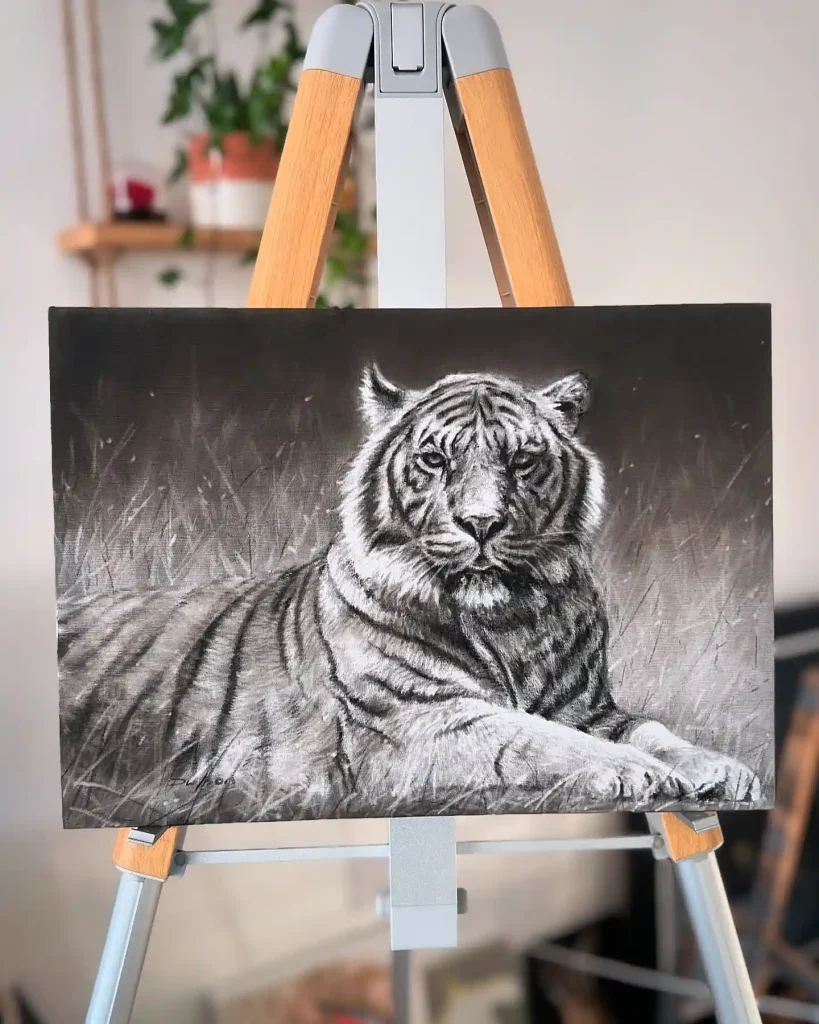
Look at this one—a majestic tiger is captured in a moment of rest, lying among the tall grasses. This charcoal drawing on canvas uses a beautiful range of grays and blacks to create a dramatic, lifelike scene. The focused gaze of the tiger and the detailed textures of the fur and grass make it a powerful piece that speaks to the animal’s wild strength and quiet dignity.
3. Stalking Tiger on a Sketchbook
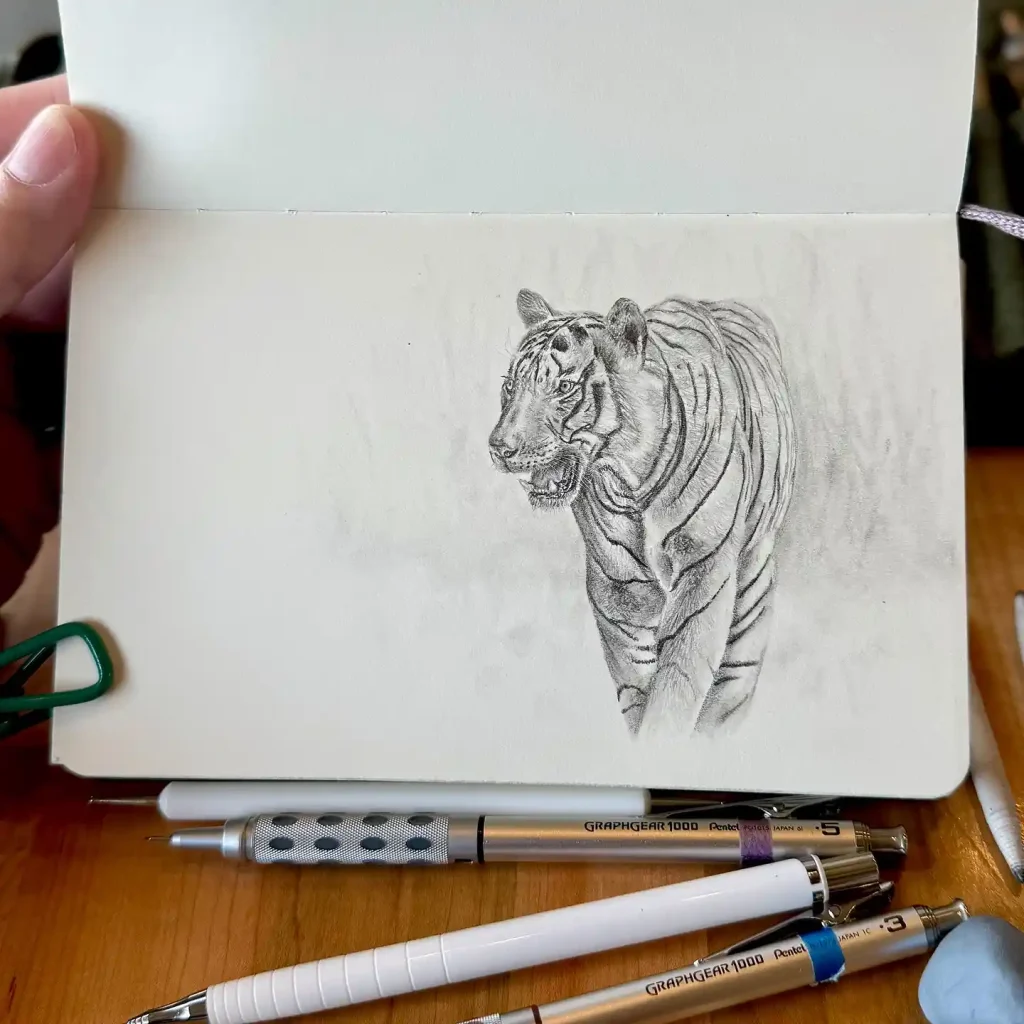
This graphite drawing on sketchbook paper perfectly captures a tiger on the move. The artist has sketched a tiger in a stalking pose, showing its powerful, muscular body with a sense of purpose and intensity. The use of light shading and quick lines gives the piece a dynamic energy, making it feel like a snapshot of a wild animal in its element.
4. Roaring and Content Tigers on a Canvas
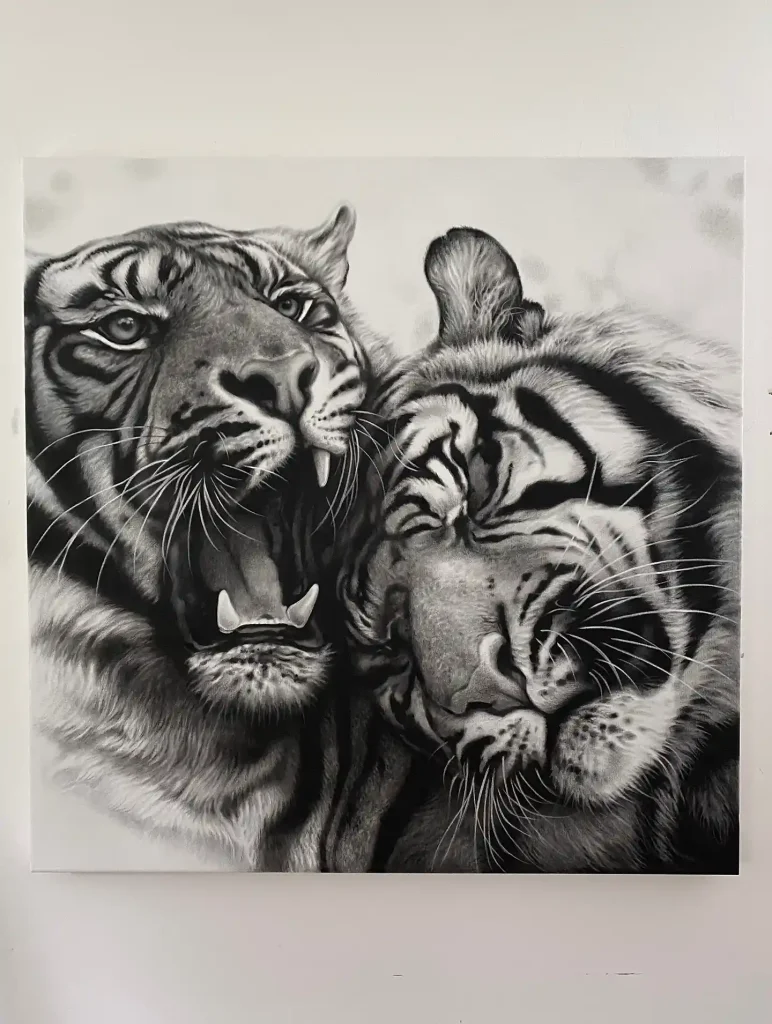
This is an incredible piece—a powerful contrast between two tiger portraits on a canvas. One tiger is captured mid-roar, its sharp fangs on full display, symbolizing raw power and ferocity. The other is calm and serene, resting its head peacefully, showcasing the duality of the tiger’s nature—a true blend of power and tranquility.
5. Sleeping Tiger Cub on Paper
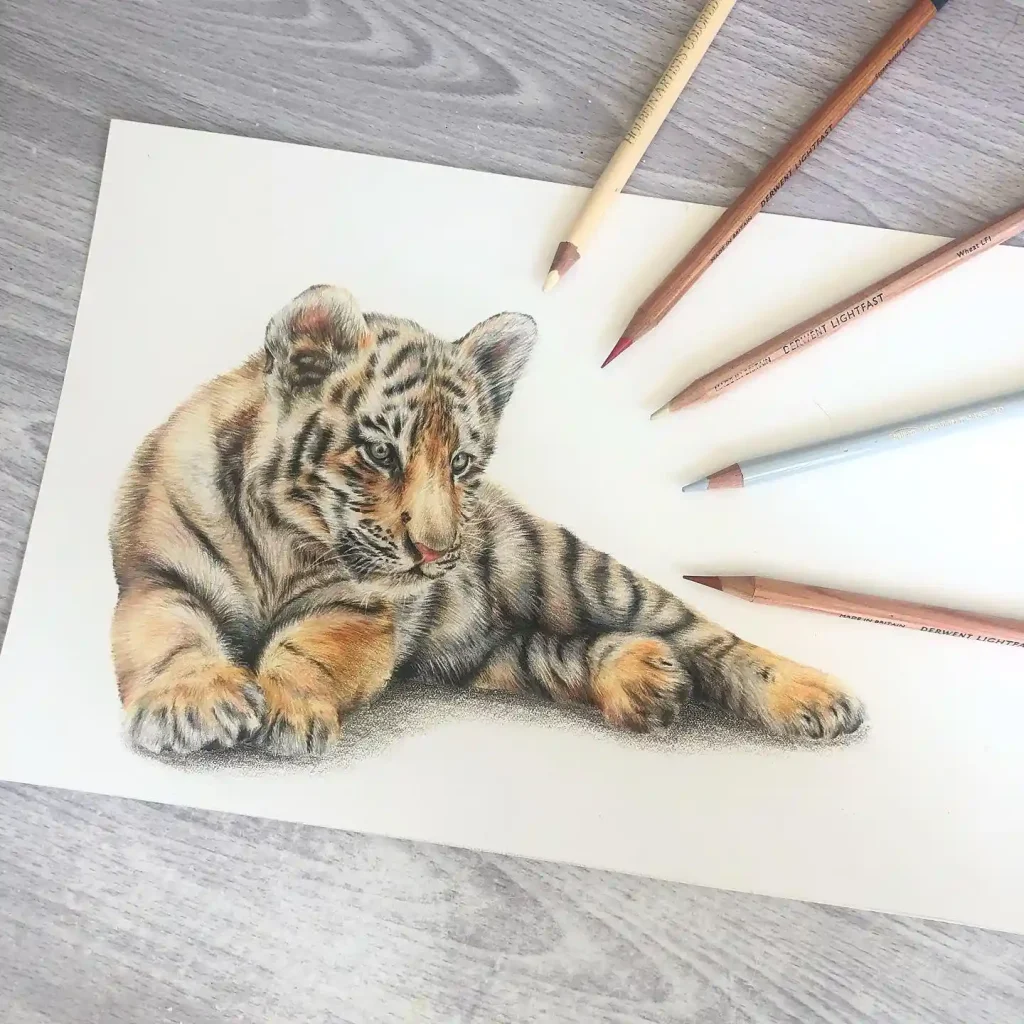
This colored pencil drawing on paper is just adorable! A tiny tiger cub is captured in a moment of sleepy innocence, resting peacefully. The artist’s meticulous use of warm tones and soft shading makes the fur look incredibly realistic and soft, creating a heartwarming portrait that highlights the gentle and vulnerable side of these magnificent animals.
6. Tiger Studies on a Sketchbook
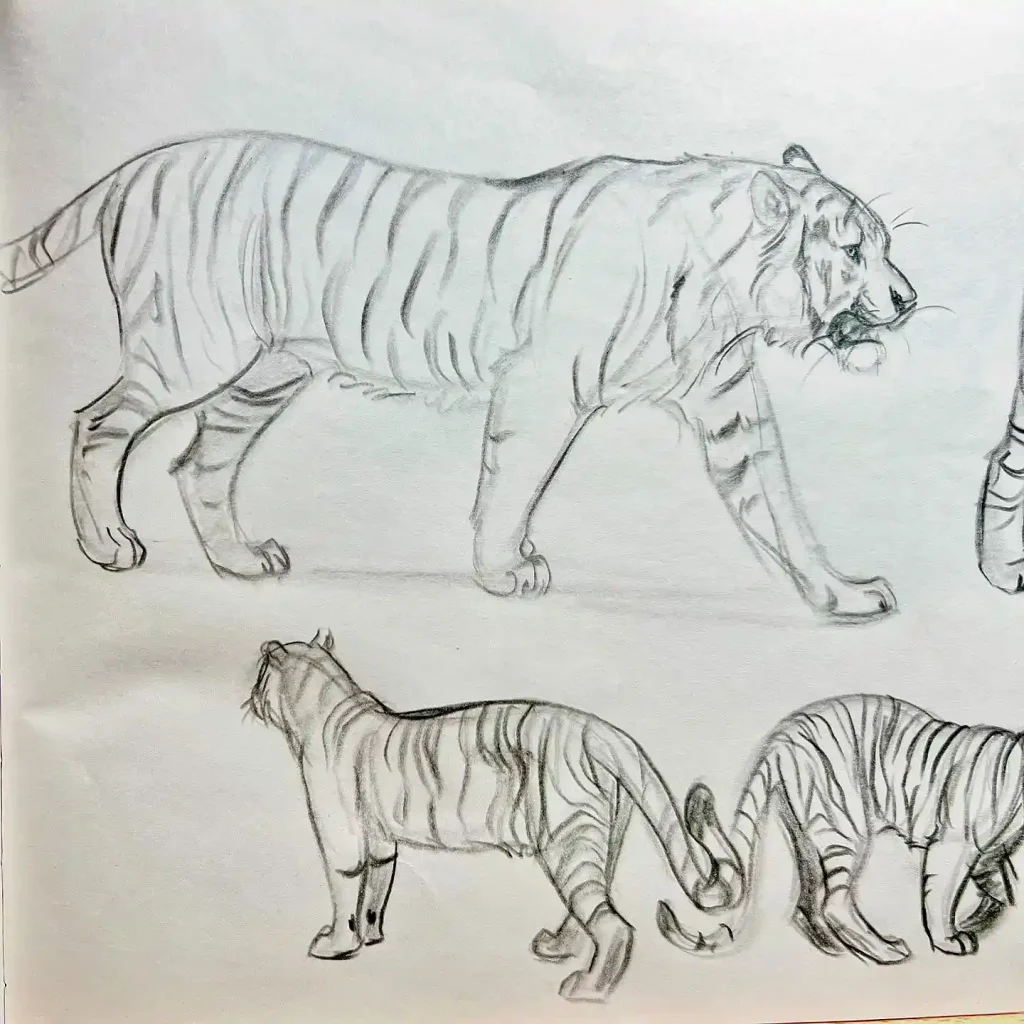
This page is a wonderful glimpse into an artist’s process. The graphite sketches on a sketchbook show multiple angles of a walking tiger, from a side profile to a rear view. This collection of studies demonstrates the importance of understanding a subject’s form and movement from all perspectives, which is key to creating dynamic and realistic animal art.
7. Roaring Tiger Profile on Paper
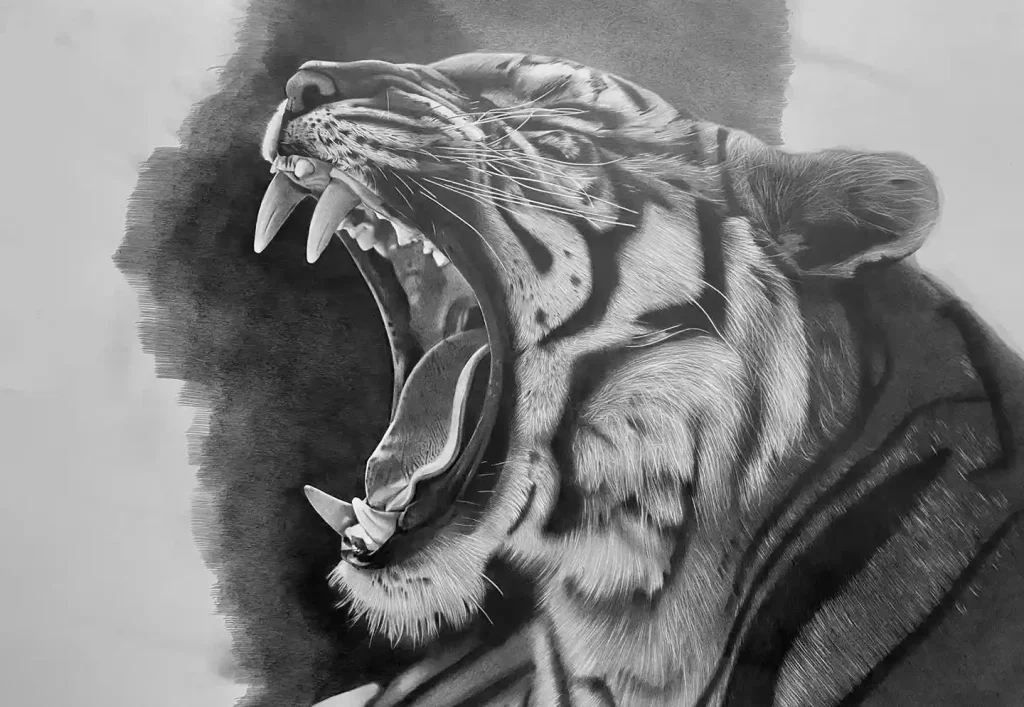
This powerful graphite drawing on paper captures a tiger mid-roar from a striking side profile. The artist’s incredible attention to detail is evident in the rendering of the snarling mouth, the intricate textures of the fur, and the menacing fangs. It’s an intense and captivating piece that symbolizes raw, untamed power.
8. Stylized Roaring Tiger on Paper
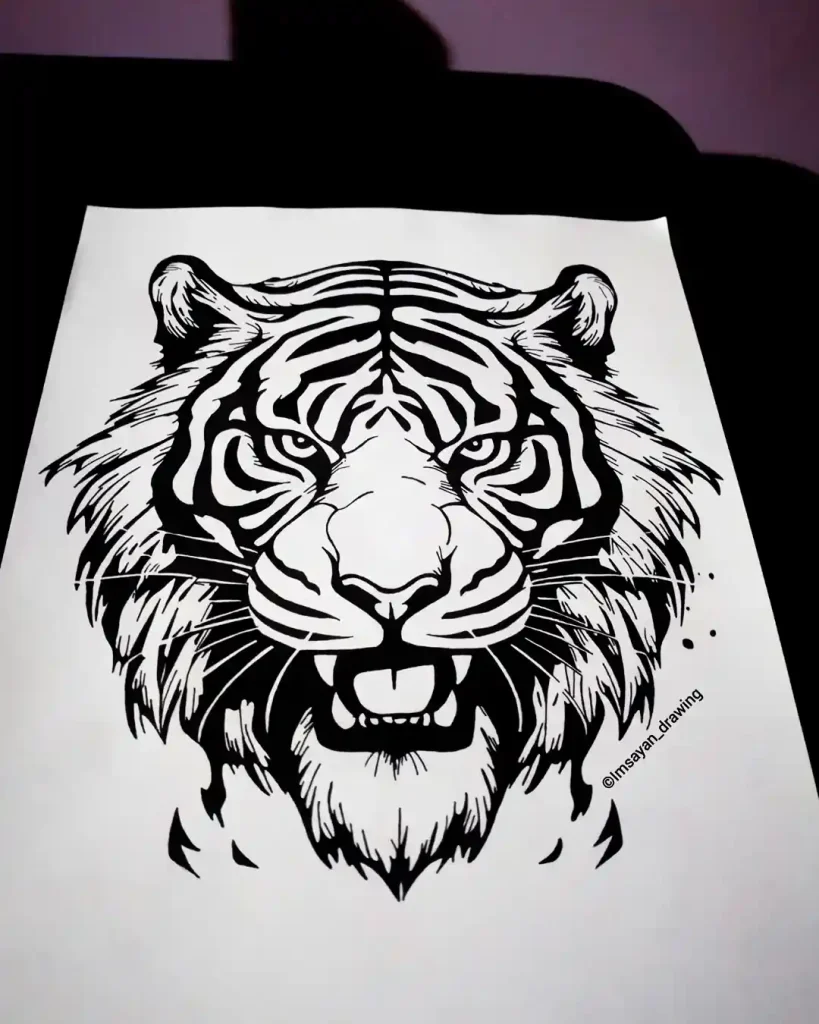
This bold ink drawing on paper is an excellent example of a stylized tiger portrait. The artist uses a graphic, black-and-white style with thick lines and sharp contrasts to convey a sense of aggression and power. The symmetrical design and focused stare make it a powerful, iconic image that feels both modern and timeless.
9. Majestic Tiger Portrait on Paper
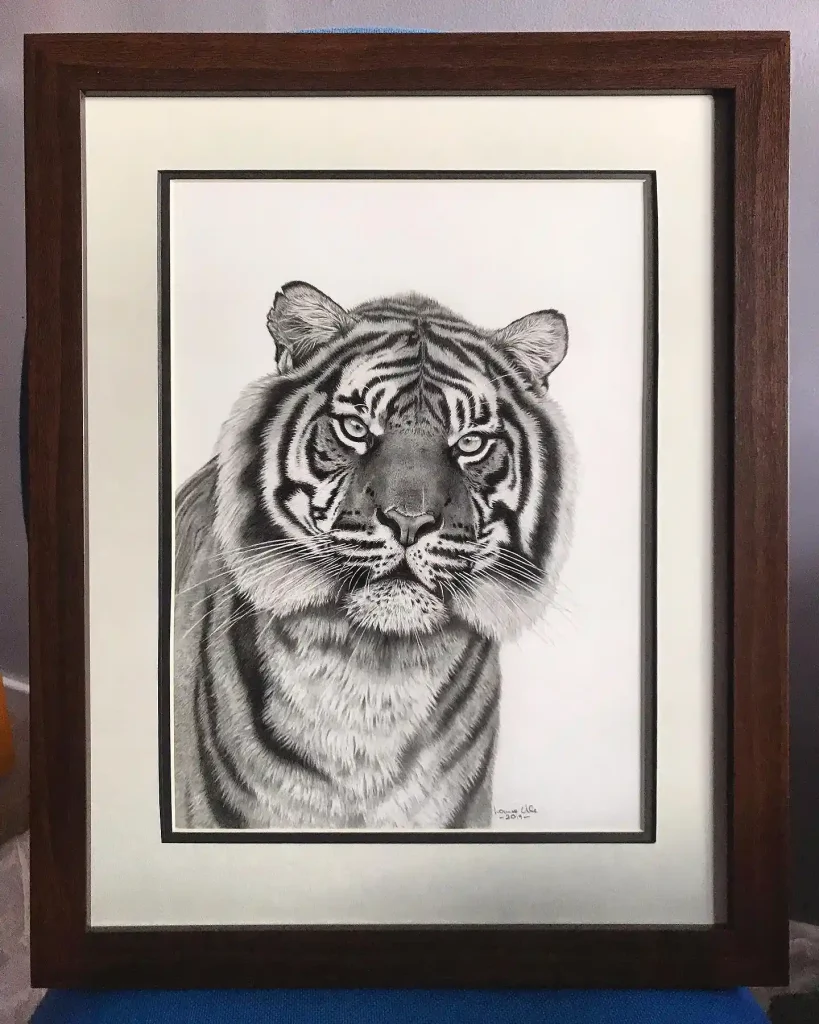
Framed for display, this graphite drawing on paper is a majestic portrait of a tiger looking directly at the viewer. The artist has achieved a stunning level of realism, from the detailed fur texture to the intense, captivating gaze of its eyes. It’s a powerful piece that commands attention and highlights the tiger’s regal and dignified presence.
10. Tattoo-Style Tiger on Paper
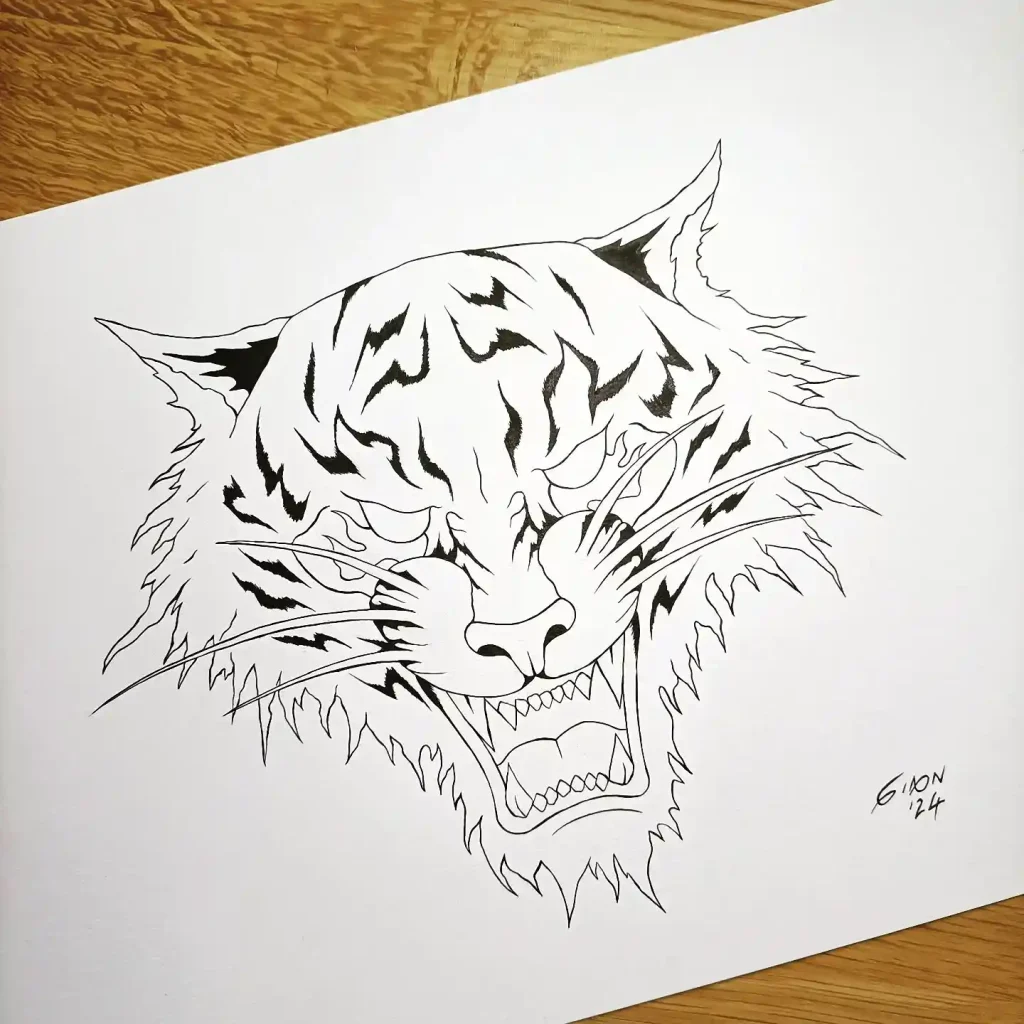
This clean line art drawing on paper is a cool take on a tiger, reminiscent of traditional tattoo flash. The artist uses bold, confident lines to define the tiger’s form and expressive snarl. The stylized flame-like stripes and simplified features give it a fierce yet artistic feel, making it a great example of a modern, graphic design.
11. Realistic Tiger Eye on White Paper

This is a stunning close-up! This mixed-media drawing on white paper focuses intensely on a tiger’s eye, capturing its captivating golden hue with colored pencils. The surrounding fur is rendered with incredible detail, showing how each stripe and hair contributes to the animal’s powerful gaze. It’s a masterful study in texture and color, inviting you to get lost in the tiger’s vision.
12. Majestic Tiger Portrait on Paper
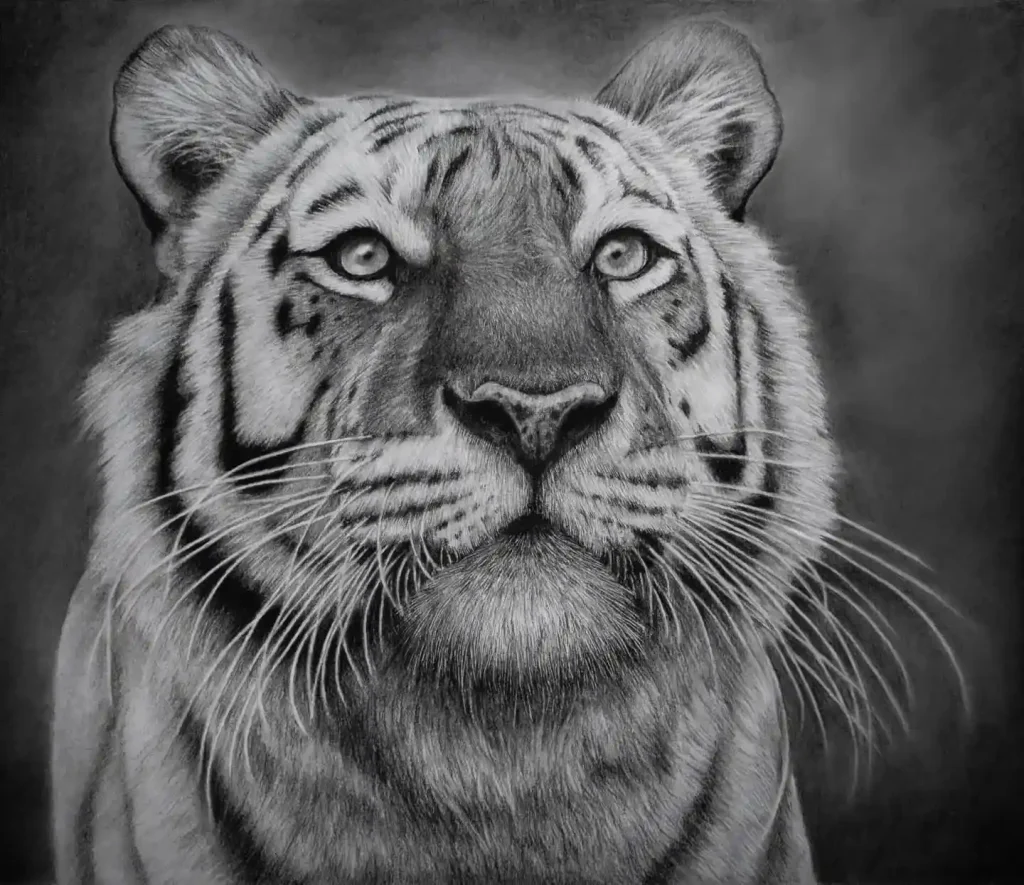
Here’s a fantastic example of a powerful portrait. This graphite drawing on paper showcases a tiger’s face with a calm, yet intense gaze. The artist uses a wide range of values, from deep shadows to bright highlights, to create a three-dimensional form. The meticulous detail in the fur and whiskers gives this tiger a truly dignified and realistic presence.
13. Stylized Tiger with Ginkgo Leaves on Paper
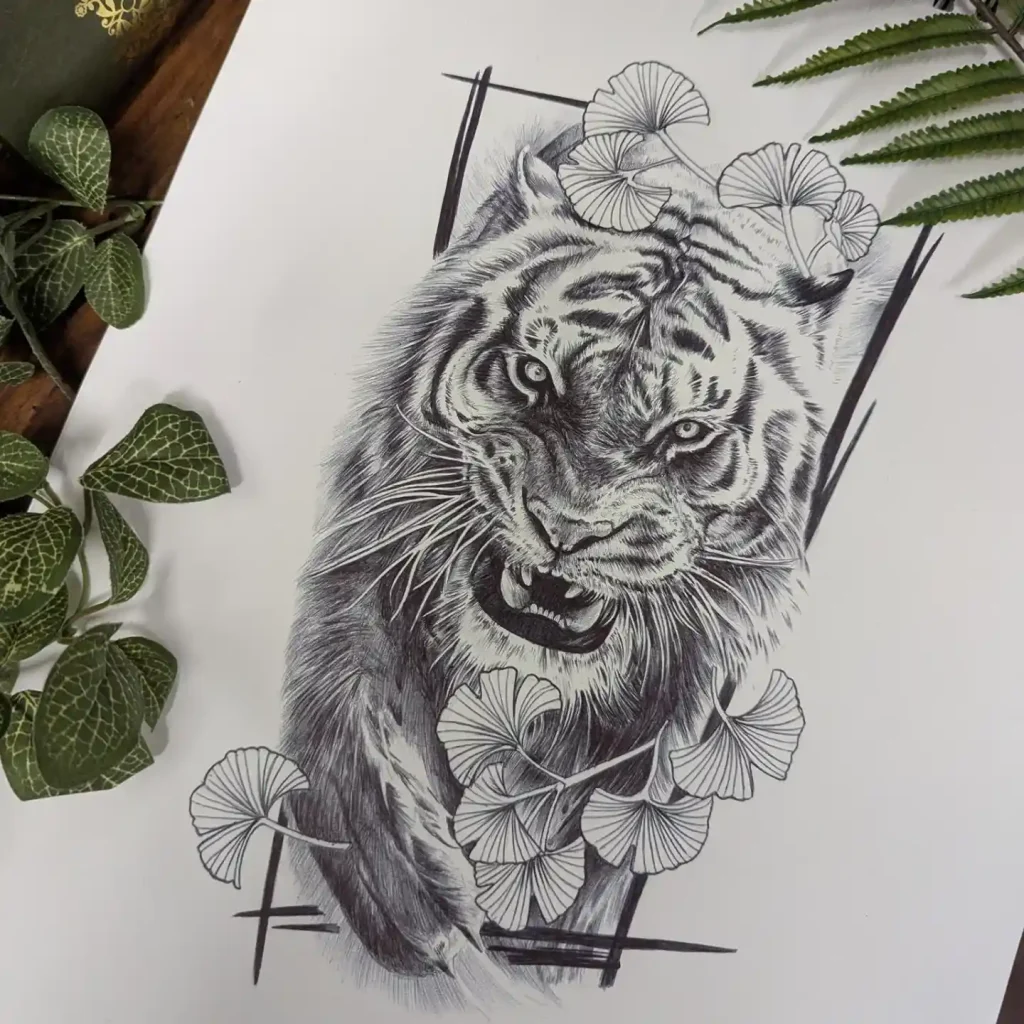
This is a beautiful blend of nature and a powerful animal. This pen-and-ink drawing on paper shows a tiger’s fierce snarl framed by delicate ginkgo leaves. The contrast between the aggressive tiger and the peaceful leaves creates a fascinating tension. The bold lines and intricate hatching give the tiger a dynamic, energetic quality.
14. In-Progress Tiger Sketch on Brown Paper
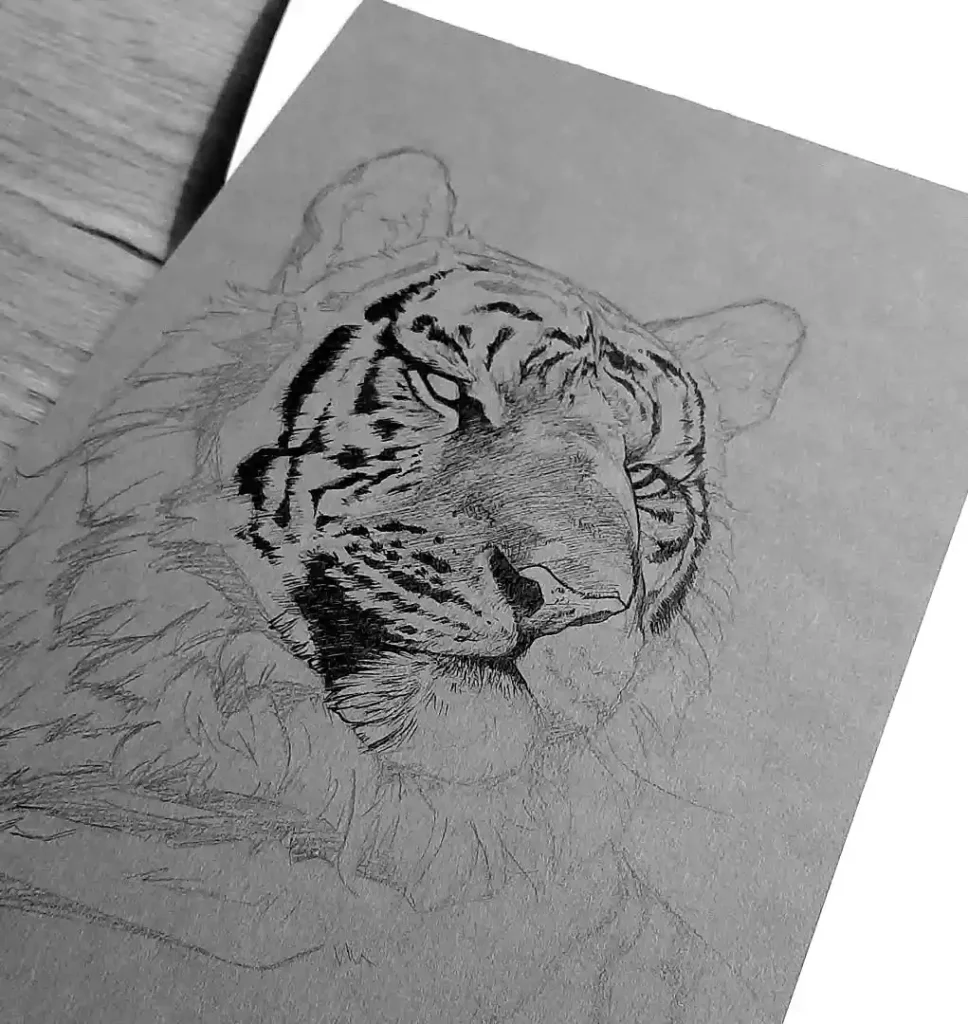
This is a cool peek into a work in progress. This graphite sketch on brown paper shows the early stages of a tiger portrait, with just enough detail to establish its fierce expression. The contrast of the dark pencil on the warm paper creates a moody, dramatic feel. It’s a great example of how to build a drawing layer by layer.
15. Realistic Tiger Portrait on White Paper
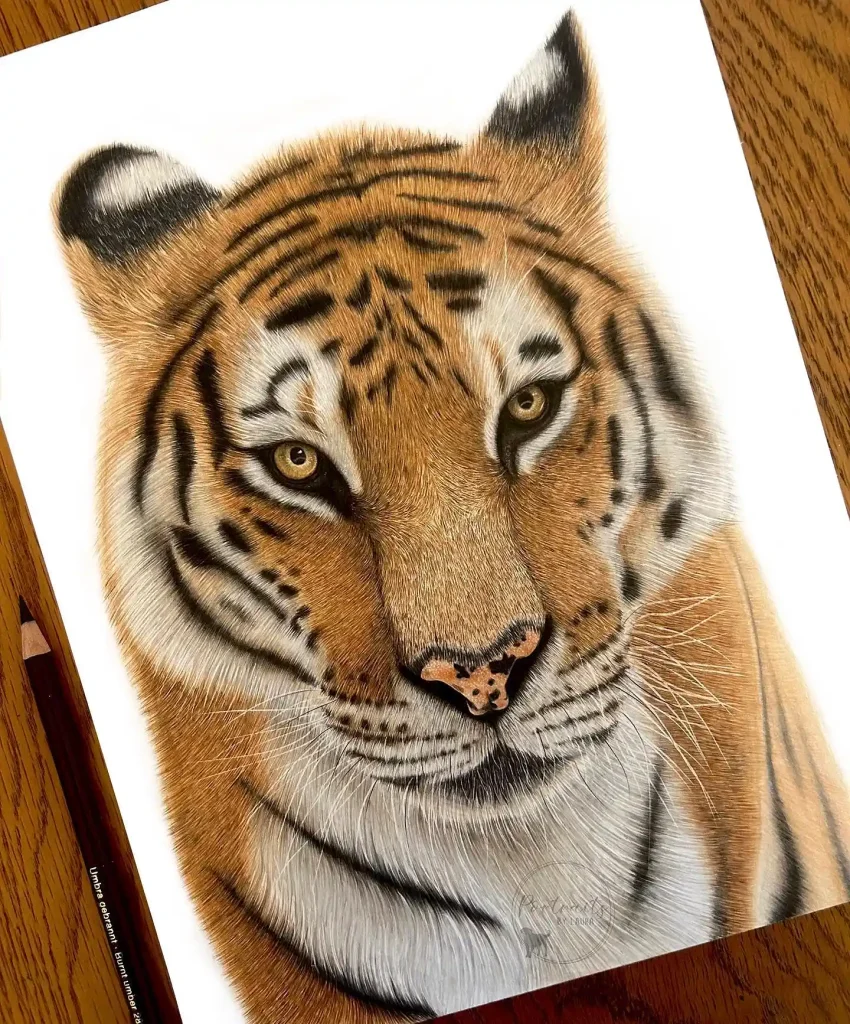
Look at this gorgeous, realistic portrait! This colored pencil drawing on white paper captures the warm, vibrant colors of a tiger’s face. The artist’s skill is evident in the detailed fur texture and the piercing yellow eyes that seem to follow you. It’s a lifelike piece that celebrates the tiger’s majestic and untamed beauty.
16. In-Progress Tiger Face on Paper
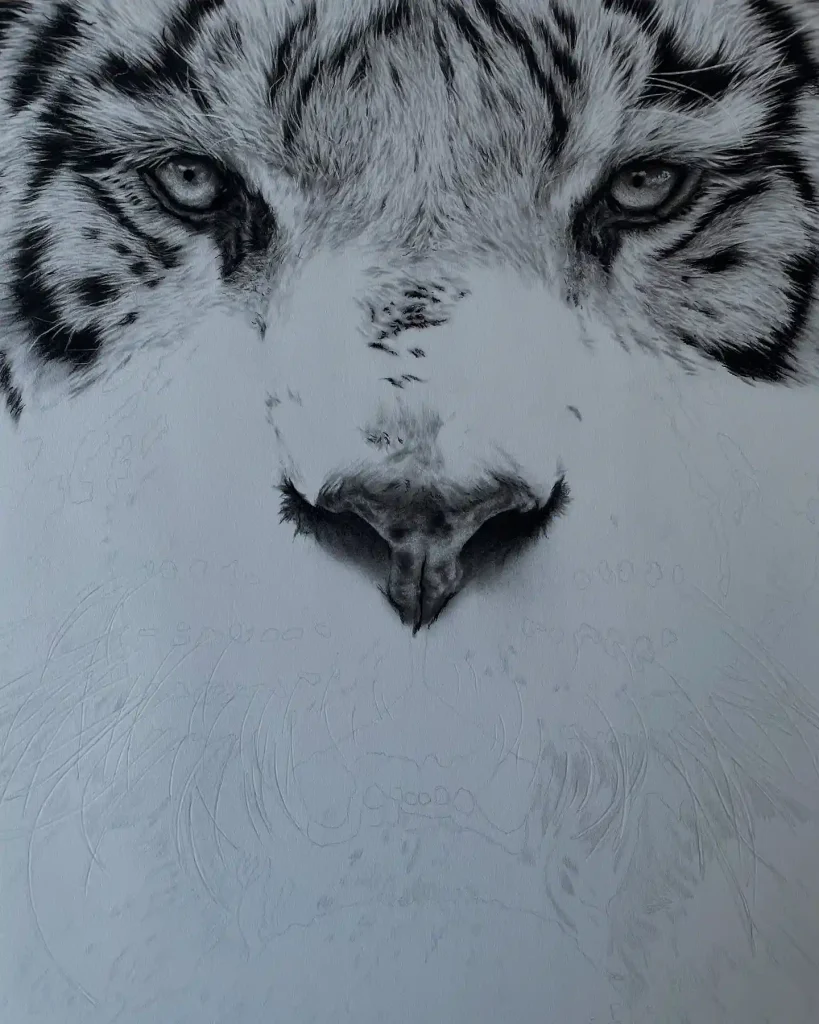
This close-up on an in-progress drawing on paper is fantastic. The artist has meticulously detailed the eyes and nose of a tiger with graphite, leaving the rest of the drawing sketched out. The contrast between the hyper-realistic finished areas and the raw outline is captivating, showcasing the intense work that goes into a truly realistic piece.
17. Split-Face Tiger on White Paper
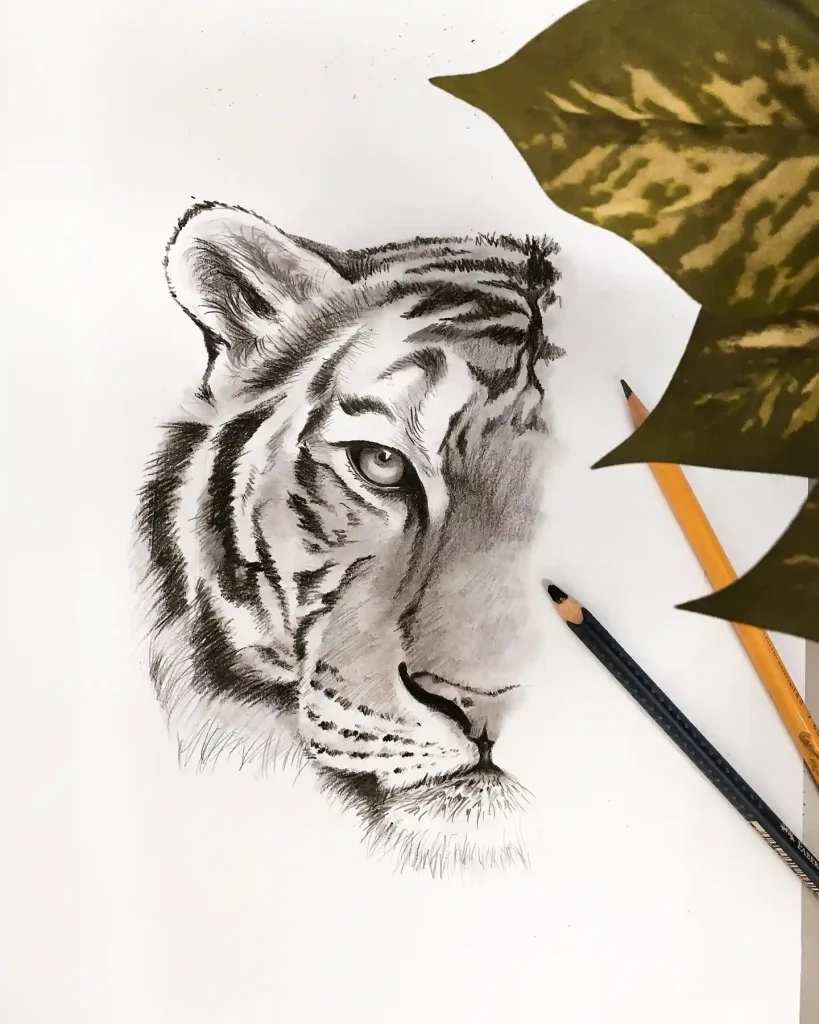
This graphite drawing on white paper is a unique concept. The artist has completed a hyper-realistic half of a tiger’s face, leaving the other side as a clean white space with a simple outline. This creates a symbolic contrast between the detailed beauty of nature and the abstract, unfinished potential of art.
18. Fierce Tiger Portrait on Paper
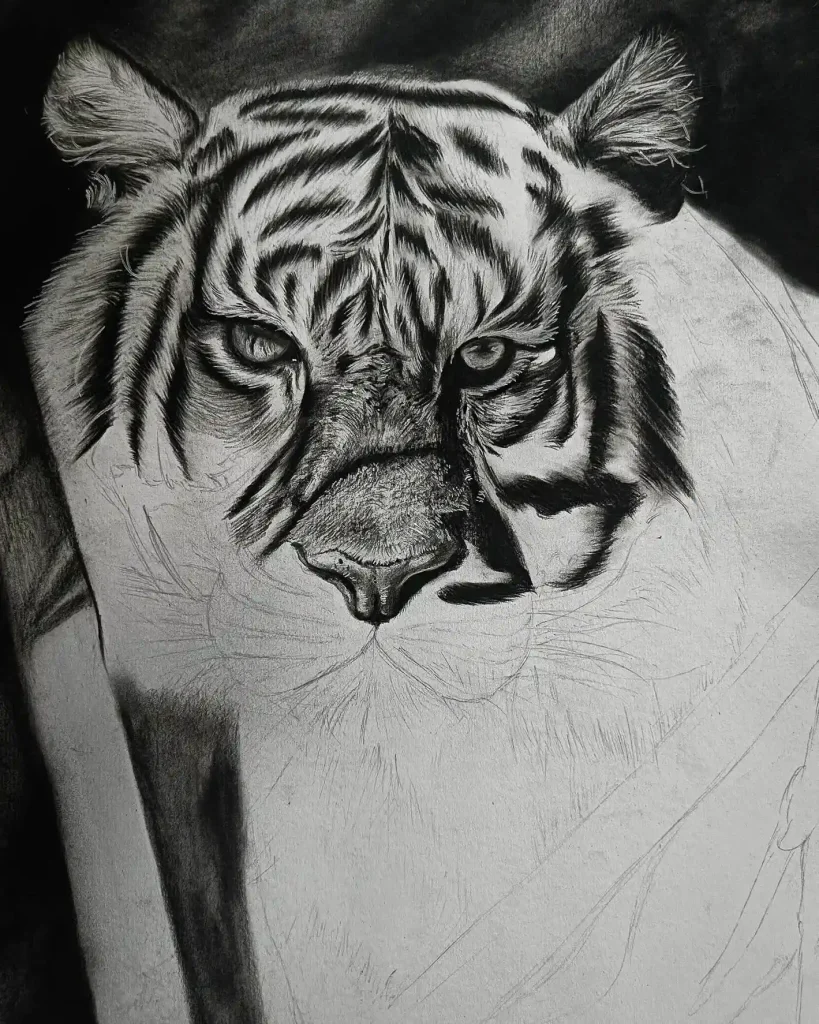
This unfinished graphite drawing on paper is already so intense. The artist has masterfully rendered the tiger’s eyes and nose, giving it a fierce and focused stare. The raw pencil strokes for the rest of the face show the raw energy of the artistic process. It’s a powerful piece that hints at the majesty yet to be fully revealed.
19. Aggressive Tiger Portrait on Paper

This vertical graphite drawing on paper is all about power. The artist has captured a tiger mid-snarl, with incredible detail on the exposed fangs and the aggressive expression. The intricate shading on the fur and the deep shadows create a sense of raw, untamed energy. It’s a dramatic and intense portrait of a truly magnificent beast.
20. Sitting Tiger Sketch on a Notebook
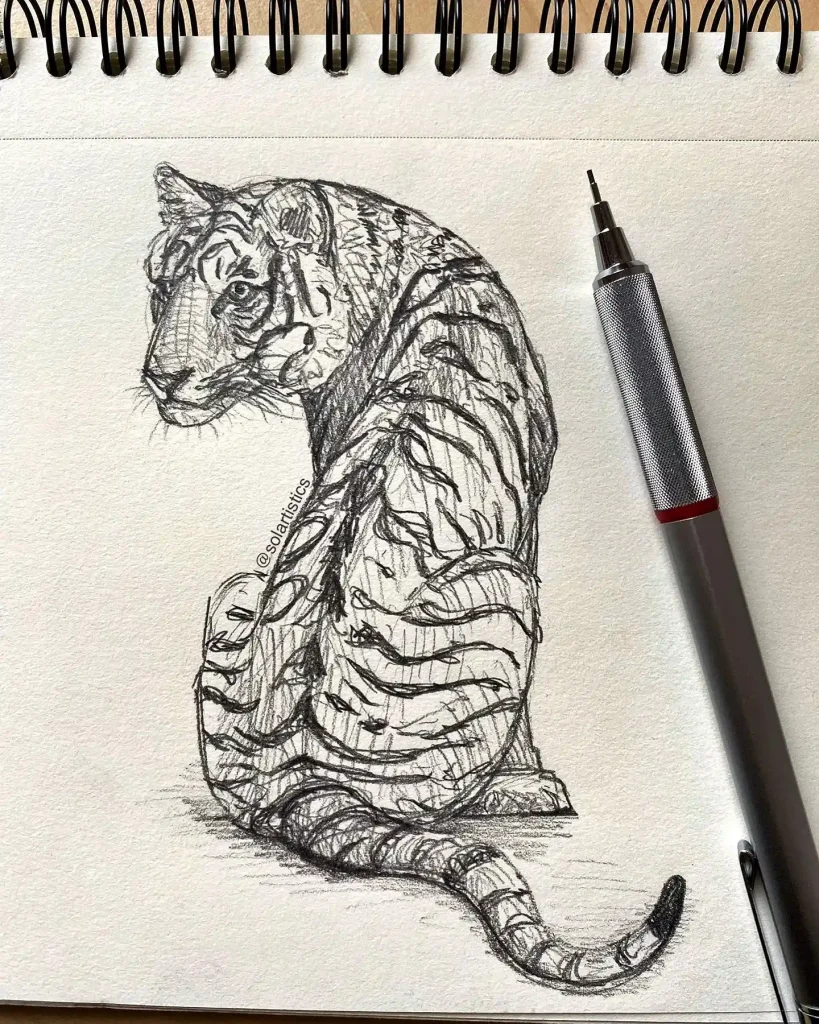
What a cool, spontaneous sketch! This graphite drawing on a notebook page shows a tiger looking over its shoulder, its body curled in a relaxed yet powerful pose. The loose, energetic lines give the drawing a sense of movement and spontaneity. It’s a fantastic example of a quick study that captures an animal’s posture and attitude perfectly.
21. Tiger Eye in a Grid on White Paper

This is an amazing example of a grid-method drawing. This graphite drawing on white paper focuses intensely on a tiger’s eye and the fur around it, using a grid to ensure perfect proportions. The artist’s meticulous shading and attention to detail bring the eye to life, showcasing the power of precision in creating a lifelike texture and form.
22. Japanese-Style Tiger on White Paper
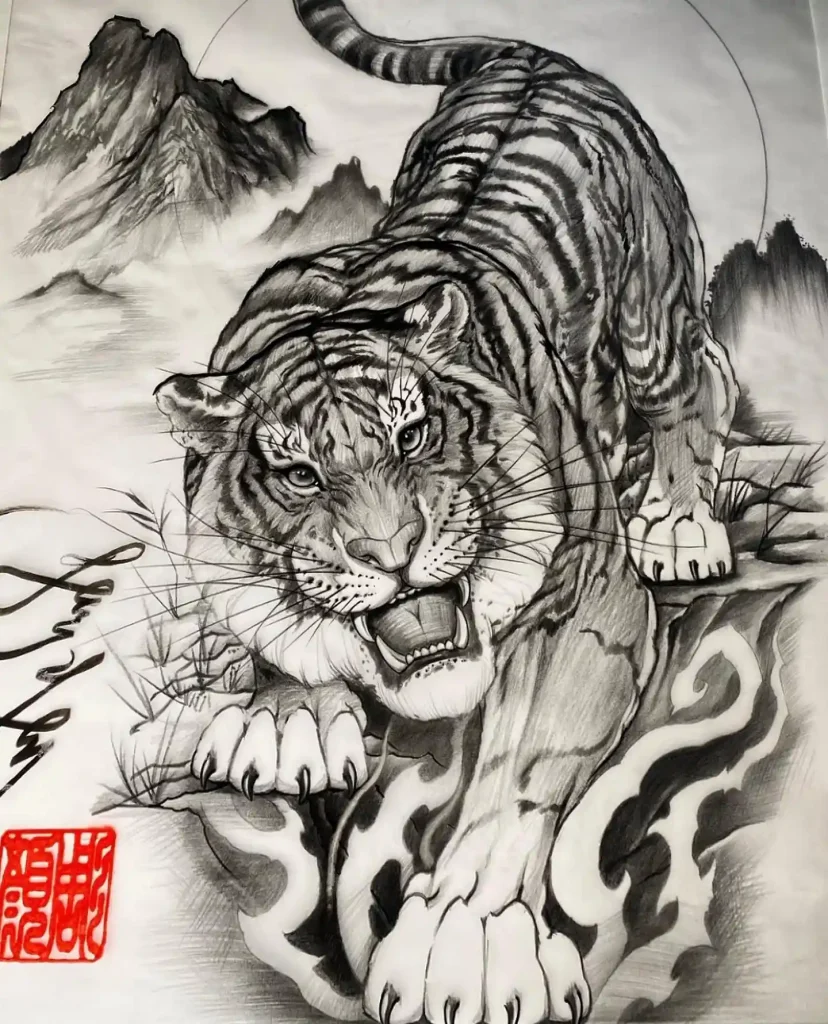
What a dynamic piece! This graphite drawing on white paper combines a ferocious tiger with a traditional Japanese landscape. The tiger leaps with powerful, almost mystical energy, surrounded by mountains, a full moon, and stylized flames. It’s a powerful symbolic drawing that represents both the untamed force of nature and the cultural significance of the tiger in East Asian art.
23. White Tiger with Blue Eyes on a Black Canvas
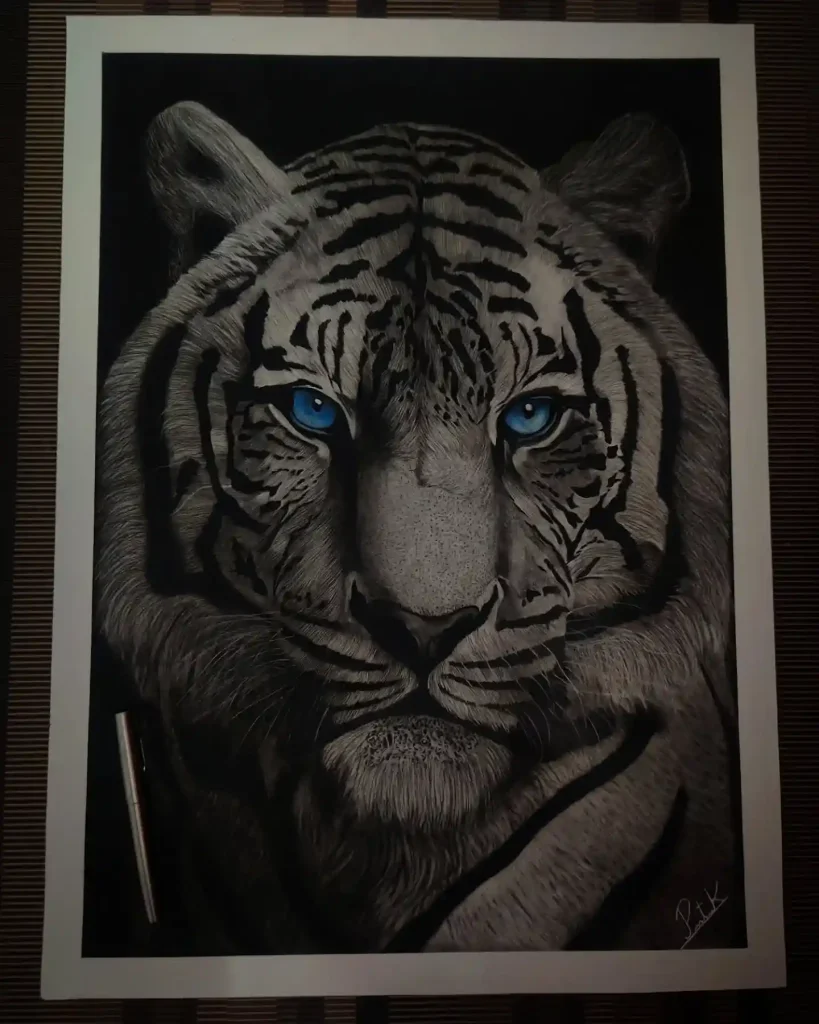
This is an absolutely captivating portrait. This mixed-media drawing on a black canvas features a white tiger with piercing blue eyes that practically glow. The artist uses a stark black background to make the tiger’s fur and face pop, creating a dramatic and powerful effect. The drawing’s intensity and emotional depth are truly stunning.
Key takeaway: A believable tiger needs only three habits: structure first, stripes that wrap around the form, and fur in layered clumps. Practice those on one idea from this list before moving to a harder one, and each new tiger will look noticeably stronger than the last.
4. Tiger Drawing FAQs
What is the easiest tiger drawing for a beginner?
The happy cartoon cub (idea 1) is the easiest place to start. Its big shapes and simple lines let you practice tiger proportions without worrying about realistic fur, and it still looks finished when you are done.
How do I draw realistic tiger stripes?
Sketch the stripes lightly first, bending them around the cheeks, shoulders, and legs so they follow the body. Vary their thickness, let some stripes break or taper, and never draw them as identical straight lines across the body.
What pencils are best for a realistic tiger portrait?
A small range of graphite pencils covers most portraits: HB for the light sketch, 2B for mid-tones, and 4B to 6B for deep shadows and dark stripes. Add a kneaded eraser to lift soft highlights in the fur.
How long does a detailed tiger portrait take?
A simple tiger sketch can take 30 to 60 minutes, while a detailed portrait usually takes several hours spread over more than one sitting. Working in short sessions helps you spot proportion mistakes with fresh eyes.
Why does my tiger drawing look flat?
Flat tigers usually have one of three causes: stripes drawn straight instead of wrapping around the form, missing structure underneath the fur, or shading that is all one mid-tone with no deep darks and bright highlights.
Can I draw a tiger without a reference photo?
You can once you know tiger anatomy well, but even experienced artists use references. A photo keeps the ear placement, stripe flow, and eye shape honest, and it is the fastest way to improve.
Keep drawing animals
If you enjoyed these tigers, try our horse drawing ideas, fox character ideas, fawn and deer sketches, and forest magic scenes for backgrounds your tiger can live in.