1. Tree Drawings at a Glance: The Short Answer
Short answer: Start with one simple tree, not twenty. Sketch a tapered trunk, add branches that get thinner as they split, block in the canopy as one big cloud shape, and only then add bark lines and shading. That four-step order is what turns a flat tree symbol into a tree that looks alive, whatever medium you use.
What tree drawing is: Tree drawing is the practice of drawing trees from observation or imagination, using trunk structure, branch patterns, foliage shapes, and light and shadow to show a real species, season, and mood on paper or screen.
Start here in 30 seconds: Beginners, pick idea 4 (minimalist tree) or idea 1 (solitary tree in a field) and a soft pencil. If you want realism, read the bark section first and draw idea 2 (ancient gnarled tree) or idea 11 (stippled oak). If you want something playful, try idea 10 (cartoon palms) or idea 13 (orange tree). Every idea below keeps its original drawing, caption, and description exactly as published.
On this page
A practical way to use these 20 ideas
Work in this order and you will avoid the two mistakes beginners make most: drawing every leaf, and shading before the structure is right. First, look at the whole tree for ten seconds and name its silhouette: triangle pine, round oak, drooping willow, or tall palm. Second, draw the trunk and the three biggest branches only. Third, block the canopy as one shape and shade its dark side. Fourth, add bark marks and a few branch tips that poke out of the canopy edge. That is the whole method, and it is why the same 20 ideas work for a five-minute sketch and for a finished piece.
If shading feels like the hard part, how to shade a drawing walks through finding your darkest dark first, which is the single habit that stops trees looking grey and flat. For leaves themselves, the vein and cluster studies in botanical leaf tracing ideas are a useful next step once your trunk and canopy shapes are solid.
Beginner tip: Draw big. A tree squeezed into a corner of the page forces tiny branches and muddy shading. Fill at least two-thirds of the page height, and keep your first lines light so you can correct the trunk lean before you commit to dark bark lines.
Tree drawing ideas unlock the infinite beauty of nature through artistic expression, allowing creators to capture everything from delicate cherry blossoms to mighty oak silhouettes. Whether you’re sketching your first simple trunk or mastering intricate bark textures, tree art connects us deeply with the natural world around us.
Drawing trees develops fundamental art skills like observation, proportion, and shading while offering endless creative possibilities across seasons and styles. From minimalist line drawings to detailed realistic portraits, tree artwork serves as both meditation and technical practice for artists at every level.
Our comprehensive tree drawing ideas collection provides step-by-step tutorials, seasonal inspiration, and technique guides that transform blank pages into living forests. Join thousands of artists discovering how tree drawing enhances creativity, builds confidence, and creates stunning artwork that celebrates nature’s most enduring symbols of growth and strength.
2. What Are Easy Tree Drawing Ideas for Beginners?
- Simple trunk shapes: Start with basic oval or rectangular trunks, then add gentle curves for natural movement and character
- Basic branch patterns: Draw Y-shaped branches that gradually get thinner, creating realistic tree structure without complexity
- Leaf cluster techniques: Use circular or cloud-like shapes for foliage instead of individual leaves for quick, effective results
- Seasonal variations: Practice bare winter trees first, then add simple spring buds, summer fullness, or autumn colors
- Different tree types: Master pine triangles, weeping willow curves, and palm tree fronds for variety in your artwork
- Shading basics: Apply light pencil strokes for bark texture and darker areas where branches meet the trunk
- Background elements: Add simple grass lines, hills, or sky gradients to complete your tree drawing composition
For Mood and Atmosphere
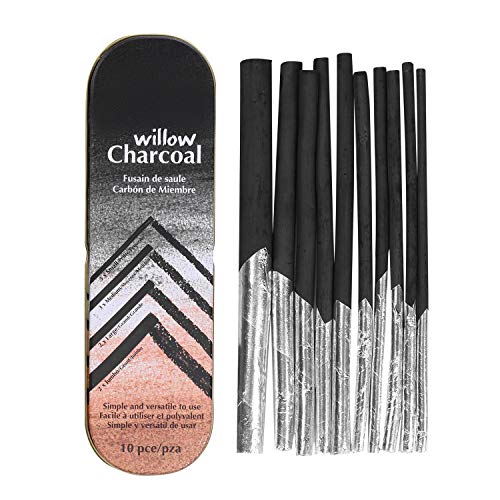
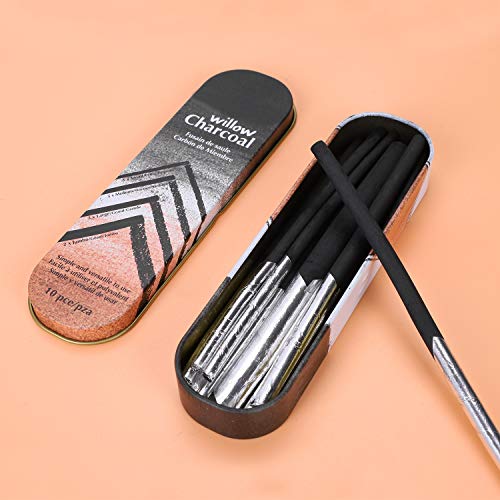
Willow Vine Charcoal Sticks – 10 Sticks, 4 Diameters, Tin Box
$9.99on Amazon
Several drawings below are charcoal, not pencil. Willow is the forgiving kind – it lifts off with a cloth, so a bad tree costs you nothing.
- ✓Covers a whole canopy in seconds. Turn the stick on its side and a full tonal mass lands in one stroke – the same shape would take a pencil twenty minutes.
- ✓Erases almost completely. Willow sits on the surface instead of biting in, so you can rough out a trunk, wipe it back, and try the angle again.
- ✓Four diameters in one tin. The 9mm stick blocks in sky and shadow mass; sand the 4.5mm to a point for bare winter branches.
As an Amazon Associate we earn from qualifying purchases. Price shown at time of writing.
3. How to Draw Realistic Tree Bark and Texture Details?
- Observation techniques: Study real tree bark patterns, photographing different species to understand unique texture characteristics and growth patterns
- Layering method: Build bark texture gradually using light pencil strokes, adding darker lines for cracks and crevices
- Cross-hatching application: Use intersecting lines to create depth and shadow in bark grooves, varying pressure for realistic effects
- Stippling technique: Apply small dots and dashes to represent rough bark surfaces like oak or pine trees
- Directional strokes: Follow the tree’s natural growth direction when drawing bark lines, typically vertical with slight curves
- Highlight placement: Leave lighter areas where sunlight hits the bark, creating three-dimensional appearance and natural contrast
- Tool variety: Experiment with different pencil grades (2H to 6B) and blending stumps for varied bark textures
Named in the Bark Section Above
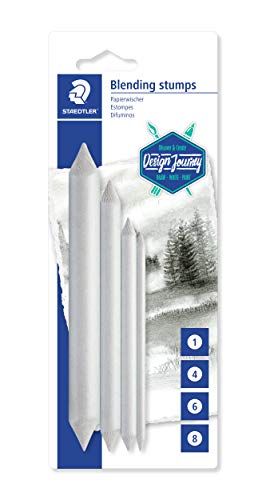

Staedtler Blending Stumps – 4 Assorted Sizes
$8.45on Amazon
The bark section above lists these by name. Blending with your finger leaves oil on the paper and the graphite goes patchy weeks later.
- ✓Four widths, from broad to needle-fine. The wide stump softens a whole canopy mass; the fine tortillon works a single bark groove without smearing the ones beside it.
- ✓Makes the misty-forest look possible. That heavily blended charcoal fog effect further down comes from stumps, not from pressing harder with a pencil.
- ✓Re-sharpen with sandpaper and reuse. When a tip goes grey and saturated, sand it back to clean paper – one set lasts years.
As an Amazon Associate we earn from qualifying purchases. Price shown at time of writing.
Ready to bring your tree drawing ideas to life? Grab your pencils and start creating beautiful nature art that grows your artistic skills today!
1. Solitary Tree in a Grassy Field on Paper

This beautiful pencil drawing captures a moment of perfect stillness in nature. The artist’s incredible attention to the wild, flowing grass in the foreground and the soft, hazy sky gives the scene a wonderful sense of depth. Standing alone, the tree feels like a quiet, steadfast anchor in the vast, peaceful landscape.
2. Ancient Gnarled Tree on Toned Paper

You can feel the age and wisdom in this tree. The artist uses a powerful, twisting trunk and deep, sprawling roots to symbolize centuries of resilience and strength. Rendered with high-contrast ink or charcoal on toned paper, this ancient being feels less like a plant and more like a timeless monument sculpted by nature itself.
3. Textured Canopy Study on Drawing Paper

Look at the amazing energy in that foliage. Rather than drawing individual leaves, the artist uses a controlled, scribbling motion to build up a rich and complex texture. This clever technique perfectly captures the impression of a dense, shimmering canopy, making the entire treetop feel alive with movement and the rustling of countless leaves in the wind.
4. Minimalist Tree Study on Drawing Paper

Sometimes, simplicity makes the boldest statement. In this elegant drawing, a single, delicate tree stands alone in a vast expanse of white. The artist’s use of negative space is brilliant, focusing all of your attention on the tree’s quiet resilience and grace. It’s a beautiful reminder that there is profound power in simple, solitary forms.
5. Path Through the Trees on Drawing Paper

This soft pencil drawing feels like an invitation to a peaceful walk. The gentle, winding path naturally guides your eye through the landscape, past the welcoming trees and toward the calm water in the distance. The artist creates a serene, almost dreamlike atmosphere, turning a simple scene into a quiet story about a journey forward.
6. Festive Christmas Tree Line Art on Paper

This is pure holiday joy captured in clean, happy lines. Ready for a splash of color, this charming drawing is filled with all the classic symbols of the season, from shiny baubles and sweet candy canes to the star on top. It’s a simple, playful piece that perfectly embodies the festive and cheerful spirit of Christmas.
7. Intricate Winter Branches on Drawing Paper

There is a stark, captivating beauty in this leafless tree. With its foliage gone, the tree’s true form is revealed—a stunningly complex network of branches reaching for the winter sky. The artist’s meticulous line work celebrates this intricate skeleton, symbolizing resilience and the hidden beauty that is present in nature even in its most dormant seasons.
8. Framed Tree of Life in Sketchbook

By containing this gnarled tree within a circle, the artist transforms it into a powerful symbol. It feels like a “Tree of Life,” representing the cycles of nature, connection, and endurance all within its own self-contained universe. It’s a wonderfully thoughtful sketchbook drawing that elevates a simple tree into a cosmic, sacred emblem.
9. Human Nature Connection in Pen and Ink on Paper

What a deeply surreal and meaningful image. This stunning ink drawing visualizes the fundamental connection between humanity and the earth, showing a tree growing directly from a person’s heart. It’s a powerful metaphor for life, personal growth, and the idea that we are all intrinsically rooted in nature, drawing our strength and existence from it.
10. Cartoon Palm Trees Line Art on Paper

You can almost feel the warm, tropical breeze. This fun and simple line drawing perfectly captures the relaxed, carefree vibe of a sunny paradise. The bold, graphic style gives the palm trees a cheerful personality, instantly making you think of sandy beaches and vacation days. It’s a simple sketch that delivers a big dose of sunshine.
11. Stippled Oak Tree in Pen and Ink on Paper

This is an incredible testament to patience and precision. The artist has constructed this entire tree from thousands of individual dots, a technique known as stippling. This meticulous process creates a stunning depth of texture, from the rough, weathered bark to the dense, shimmering leaves. It’s a beautiful example of how complexity can arise from the simplest mark.
12. Classic Cartoon Tree on a Digital Canvas

Here is the quintessential tree that lives in our collective memory. With its friendly, puffy canopy, bold outlines, and sturdy trunk, this drawing is a perfect and simple icon of nature. Its clean, graphic style feels approachable and cheerful—a fantastic piece of inspiration for anyone just beginning to explore drawing the natural world.
13. Cheerful Orange Tree on a Digital Canvas

What a wonderfully bright and abundant image. This playful cartoon drawing is bursting with life, with perfectly round oranges popping against the vibrant green leaves. It stands as a simple but powerful symbol of fruition, health, and sunny days. It’s a joyful and optimistic design that is practically guaranteed to make you smile.
14. Solitary Tree in Ink and Wash on Paper

There’s a beautiful, fluid atmosphere to this piece. The artist combines the crisp, definitive lines of ink for the trunk and branches with a soft, diluted grey wash for the leaves. This wonderful technique gives the solitary tree a sense of quiet elegance, making it feel as though it was captured on a cool, misty morning.
15. Solitary Study in a Sketchbook

Sometimes, a single page in a sketchbook can hold an entire world. This lone tree, rendered with a delicate, stippled technique for the leaves, stands as a quiet testament to the artist’s focus. Surrounded by clean, white space, the tree’s detailed form and texture become the whole story—a peaceful moment of pure observation.
16. Moody Tree Trunk in Charcoal on Paper

This drawing is all about atmosphere. Using soft, heavily blended charcoal, the artist conjures a mysterious, fog-laden forest where a lone tree trunk emerges from the haze. The lack of sharp detail creates a powerful sense of mood, inviting your imagination to wander into the misty unknown. It’s a beautifully haunting and dreamlike scene.
17. The Treehouse Sanctuary in Pen and Ink on Paper

This isn’t just a tree; it’s a vessel for childhood dreams. The artist’s meticulous pen work details every branch and leaf, but the tiny, whimsical treehouse hanging from a limb is the true heart of the piece. It’s a beautiful symbol of adventure, imagination, and the simple joy of having a secret hideaway.
18. Expressive Eucalyptus Sketch on Drawing Paper

You can really feel the artist’s hand moving in this lively sketch. The loose, confident pencil strokes perfectly capture the full, slightly shaggy form of a eucalyptus tree. Rather than getting lost in tiny details, the artist captures the overall energy and impression of the tree, making it feel alive and shimmering with natural light.
19. Light and Shadow Study on Textured Paper

This is a fantastic study of how light and shadow define form. The artist uses bold, directional strokes and deep contrast to carve out the tree’s unique, heavy canopy against the sky. The strong sense of a single light source gives the drawing a dramatic feeling of volume, perfectly capturing a specific, sunlit moment in time.
20. Windswept Pine Sketch on Drawing Paper

This expressive sketch perfectly captures the rugged character of a pine tree. The artist’s energetic, almost jagged, pencil work mimics the texture of pine needles, while the graceful, drooping branches suggest a form shaped by wind and weather. It’s an authentic portrait that conveys the wild and resilient personality of the tree with every stroke.
4. Which Tree Should You Draw First?
Pick by your goal, not by how impressive the finished drawing looks. A calm first success teaches you more than a hard drawing abandoned halfway through, and each row below points to the idea in this collection that fits that goal best.
| Your goal | Start with | Why it works |
|---|---|---|
| First tree ever | Idea 4, Minimalist Tree Study | One trunk, one canopy shape, lots of white space. Nothing to hide behind, so you learn clean lines fast. |
| A calm, finished sketch | Idea 1, Solitary Tree in a Grassy Field | A single subject with a simple ground line. Easy to frame, easy to shade in one light direction. |
| Realistic texture practice | Idea 2, Ancient Gnarled Tree | Twisting trunk and roots give you bark, shadow, and age in one subject. Pair it with the bark guide in tree bark texture drawing ideas. |
| Pen and ink patience | Idea 11, Stippled Oak Tree | Dots build tone slowly, so you control darkness dot by dot instead of fighting a smudged pencil. |
| Something fun and quick | Idea 10, Cartoon Palm Trees | Bold outlines and simple fronds. A good warm-up before a serious study, and a good confidence builder for kids. |
| Season or mood | Idea 7, Winter Branches, or idea 20, Windswept Pine | Bare branches teach structure with no leaves to hide behind, and wind-bent pines teach movement. |
Before you start: three checks that save a redraw
- Light direction: Decide where the sun is before you shade anything. Every shadow in the drawing must fall away from that side.
- Trunk taper: A trunk that stays the same width top to bottom reads as a post, not a tree. Narrow it as it rises, and narrow each branch at every split.
- One darkest dark: Pick the single darkest spot, usually where a branch meets the trunk or deep inside the canopy, and keep everything else lighter. Without it, the whole drawing goes mid-grey.
Your paper matters more than your pencil brand for bark work: a slightly textured sketchbook holds charcoal and graphite layers instead of letting them slide into a shine. The comparisons in best sketchbooks for beginners explain tooth and weight in plain terms. And if you are choosing between pencil styles overall, easy pencil drawing ideas for beginners covers the three-pressure habit that keeps early lines correctable.
Reference tip: When you draw bark from a real tree, note whether it is smooth, furrowed, peeling, or plated before you draw a single line. The University of New Hampshire Extension guide to identifying trees by their bark shows how those four patterns separate common species, which is exactly the observation step that makes bark drawings believable rather than generic.
5. Bark Texture Is Only as Good as the Light You Draw It Under
Every technique on this page depends on seeing a value difference, and overhead room light flattens exactly the shallow ridges that make bark read as bark. A single side-angled lamp at roughly 45 degrees restores those shadows on your reference and on the paper itself. If your trees keep coming out grey and muddy, the fix is often the lamp rather than the pencil, and art studio lighting worth the money covers what actually changes with a better one.
Bark also happens to be one of the best subjects for learning colored pencil, because a trunk needs twenty layers of closely related browns and greys before it stops looking flat. Which binder your pencils use decides whether those layers keep sticking, and wax versus oil cores explains the difference.
Copic markers bleed through thin paper, so check our guide to the best sketchbook for Copic markers before you start a marker piece.
6. Frequently Asked Questions About Tree Drawings
What is the easiest tree to draw for a beginner?
A solitary tree with a round canopy, like idea 1 or idea 4 in this collection. Draw a tapered trunk, three main branches, and one cloud-shaped canopy, then shade only the side away from the light. Skip individual leaves entirely until the big shape reads as a tree.
How do you draw realistic tree bark?
Study one real bark pattern first, then copy its rhythm: vertical furrows for oak, peeling strips for birch, deep plates for pine. Draw the dark furrows as short, broken vertical marks that follow the trunk, leave the ridges light, and add a side light so the ridges cast their own tiny shadows. The bark section above and tree bark texture drawing ideas go deeper into why bark cracks the way it does.
Why do my trees look flat?
Almost always because the shading has no single light direction and no true dark. Pick one light side, shade the opposite side of trunk and canopy, and put your darkest dark where branches meet the trunk. How to shade a drawing explains the darkest-dark-first method step by step.
Should I draw leaves one by one?
No, not at first. Block the canopy as one mass, shade it as one mass, and then suggest leaves only at the lit edge and a few branch tips. Individual leaves belong in a close-up study, like a single branch, not across a whole tree, where they turn into noise.
What pencil is best for tree drawing?
A mid-range graphite set covers almost everything here: a light pencil (2H or HB) for structure, HB or 2B for general work, and 4B or 6B for the darkest bark cracks and canopy shadows. Charcoal suits moody, atmospheric trees like idea 16, but it smudges, so beginners should master graphite first.
How long does a good tree drawing take?
A clean minimalist tree can take 10 to 15 minutes. A shaded realistic study usually takes 45 minutes to two hours, and a stippled ink tree like idea 11 can take several sessions. Time is not a quality score: a confident 15-minute sketch with correct structure beats a two-hour drawing shaded before its trunk was right.
Still choosing what to draw next? Drawing ideas: what to draw and the order to learn it puts trees in a sensible learning sequence alongside other subjects, so your next sketch builds on this one instead of starting from scratch.