Short answer: Yes, you can paint beautiful watercolor flowers as a beginner. Start with one loose bloom, not a full bouquet: wet the petal shape, drop in one colour, let it dry, then add a darker layer for depth. The 20 ideas below all use that same simple method, so pick the flower you like most and paint it first.
Inside this guide
- Pick your first flower
- The 5-step method every idea below uses
- Supplies, paper and colour mixing
- 20 easy watercolor flower art ideas
- Turning a practice painting into wall art
- Common mistakes and quick fixes
- Frequently asked questions
1. Pick Your First Flower: A Beginner’s Comparison
If you are not sure where to start, use this picker. Loose, single flowers forgive wobbly edges; detailed bouquets need more patience. There is no wrong first flower, only an easier or harder one.
| First flower | Difficulty | Why it works for beginners |
|---|---|---|
| Single loose bloom | Easiest | One shape, one wash, and soft edges hide mistakes. |
| Daisy | Easy | Simple white petals around a yellow centre; the shape does the work. |
| Sunflower | Easy | Bold yellow petals and a dark centre give strong contrast with little detail. |
| Rose | Medium | Layered petals need two or three dry layers, but each layer is simple on its own. |
| Marigold | Medium | Full, ruffled petals reward patient layering and warm colour mixing. |
| Full bouquet | Harder | Many flowers, leaves and overlaps to plan; save it for your third or fourth painting. |
Children painting alongside you will enjoy the simplest shapes first: these watercolor art ideas for kids use the same loose washes with shorter, easier steps. For outdoor scenes to paint next, try these nature watercolor art ideas.
2. The 5-Step Method Every Idea Below Uses
Every painting in the gallery follows the same five steps. Learn them once, and you can paint any flower on this page.
1
Sketch lightly. Draw the flower shape in faint pencil. Keep the outline simple: a circle for the centre and petal shapes around it.
2
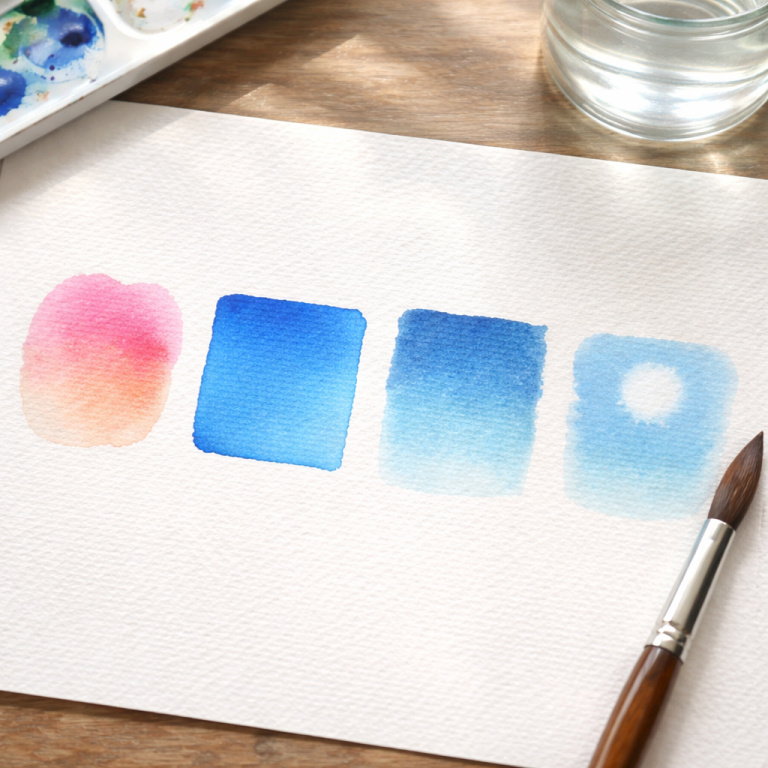
Wet the petal. Brush clean water over one petal shape only, not the whole flower. Wet paper lets colour spread softly instead of sitting in hard lines.
3
Drop in light colour. Touch a watery mix of your lightest petal colour into the wet shape and let it move. Do not scrub it around.
4
Let it dry completely. This is the step most beginners skip. A second layer painted onto damp paper will blur; the same layer on dry paper stays crisp.
5
Add the dark layer last. Paint the shadow side, the centre, and one or two crisp petal edges. Stop here: one dark layer adds depth, but three more usually muddy the colour.
Beginner tip: Paint the lightest flowers first and the darkest details last. You can always darken a watercolor painting, but you cannot easily lighten it.
3. Supplies, Paper and Colour Mixing in Plain English
You do not need expensive supplies to start. A small set of paints, one round brush, and thick paper will carry you through all 20 ideas.
- Paper: thick watercolor paper (cold-press is the usual beginner choice) so wet washes do not buckle or tear.
- Brushes: one medium round brush for petals and one small round brush for centres and details.
- Paints: a warm and a cool version of red, yellow and blue, plus a green, is enough to mix almost any flower colour.
- Water: two jars, one for rinsing and one for clean water, so muddy rinse water never reaches your painting.
- Palette: a white plate or tile where you can see exactly how light or dark each mix is before it touches the paper.
Two techniques explain most of what you see below. Wet-on-wet means painting onto wet paper for soft, blended edges, while wet-on-dry means painting onto dry paper for sharp edges. Winsor & Newton’s masterclass on working wet on wet in watercolour shows how colour moves and mixes on a wet surface, which is exactly the effect behind the soft petals in ideas 1, 7 and 12.
Watch out for muddy colour: mixing more than three colours in one wash, or scrubbing a half-dry area, usually turns bright petals grey-brown. If a wash goes muddy, let it dry, then glaze one clean colour over it rather than scrubbing.
For a calm, simple subject after flowers, these Buddha watercolor painting ideas use the same soft washes with very few shapes.
4. 20 Easy Watercolor Flower Art Ideas
Here are the 20 ideas, each with its original painting and description. Work through them in order, or jump straight to the flower you want to paint first.
Unleash your creativity with these stunning yet simple watercolor flower art ideas! Perfect for beginners, these projects will brighten any space and boost your artistic confidence. Discover step-by-step guides to painting beautiful blooms, from roses to daisies, and enjoy the calming process of watercolor art. Get inspired today
Watercolor Flower Art Ideas
1 Vibrant Watercolor Bloom

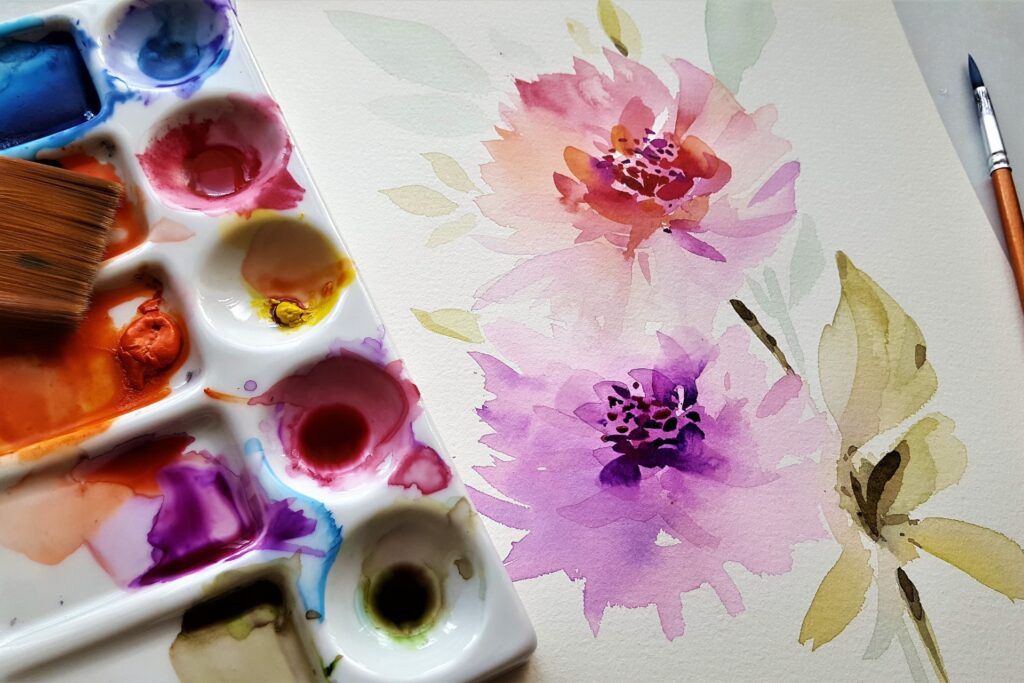
This image showcases a stunning watercolor painting of a single, vibrant flower. The petals are painted in rich shades of red and pink, with hints of yellow at the center, creating a captivating contrast. The soft blending of colors gives the flower a delicate and ethereal appearance, highlighting the artist’s skill in capturing the essence of nature through watercolor. The background is kept minimal, allowing the flower to be the focal point. This artwork beautifully exemplifies the fluidity and expressiveness that can be achieved with watercolor techniques.
2 Floral Arrangement in Progress

In this image, an artist is carefully painting a floral arrangement using watercolors. The composition includes a variety of flowers in shades of purple, blue, and green, creating a harmonious blend of colors. The artist’s hand is visible, holding a fine brush as they add intricate details to the petals and leaves. A palette with an array of colors sits nearby, suggesting the thoughtful selection of hues used in the artwork. This scene captures the creative process and dedication involved in bringing a beautiful floral painting to life.
3 Colorful Floral Collection

This image features a delightful collection of watercolor flowers arranged neatly on paper. Each flower is distinct in color and shape, ranging from vibrant reds and yellows to soft purples and blues. The arrangement showcases various types of blossoms, each painted with attention to detail and a playful use of color. The diversity in this collection highlights the artist’s ability to capture different floral forms and their unique beauty. This artwork serves as an inspiring display of creativity and mastery in watercolor painting techniques.
4 Delicate Watercolor Bloom

This painting features a single, elegant flower rendered in soft pinks and reds. The petals are gently layered, creating a sense of depth and texture. The stem and leaves are painted in subtle greens, adding a natural touch to the composition. The torn edges of the paper give the artwork a rustic charm, enhancing its handmade feel. The artist’s brush is visible, suggesting the process of creation and inviting viewers into the moment of artistic expression. This piece captures the beauty and simplicity of nature through delicate watercolor techniques.
5 Vibrant Floral Trio

This artwork showcases three vibrant flowers in shades of red and pink, surrounded by lush green leaves. The watercolor technique gives the flowers a fresh and lively appearance, with colors blending seamlessly into one another. A palette with various shades of green is visible in the background, hinting at the artist’s creative process. The wooden surface beneath adds warmth and texture to the scene. This painting celebrates the vividness of nature, capturing the essence of blooming flowers in a simple yet striking composition.
6 Colorful Floral Explosion

A burst of colorful flowers fills this painting, featuring a variety of shapes and hues. From deep blues and purples to bright yellows and pinks, each flower is uniquely detailed with intricate line work. The overlapping petals create a sense of movement and energy, drawing viewers into a vibrant garden scene. This lively composition is both playful and intricate, showcasing the artist’s skill in handling color and form. It’s an exuberant celebration of floral diversity, inviting viewers to explore its many layers.
7 Floral Harmony

This watercolor artwork presents a harmonious blend of flowers in soft pastel tones. The arrangement flows gracefully across the canvas, with roses and other blossoms intertwined in a delicate dance. Each flower is painted with gentle brushstrokes, creating a dreamy atmosphere. The muted colors evoke a sense of calm and serenity, while the overall composition suggests an embrace between nature and art. This piece beautifully captures the subtle elegance of flowers, offering a peaceful visual experience.
8 Golden Blossoms

This image showcases a delicate watercolor painting of yellow flowers. The soft, swirling petals are captured with gentle brushstrokes, creating a sense of lightness and movement. The use of various shades of yellow, from deep golden to pale lemon, adds depth and dimension to the blooms. A hint of green in the center provides contrast, enhancing the vibrancy of the flowers. The overall composition is airy and elegant, reflecting a serene and cheerful mood. The artist’s technique highlights the transparency and fluidity typical of watercolor art, making the flowers appear almost lifelike.
9 Spring Bouquet

In this image, a vibrant watercolor painting depicts a bouquet of spring flowers. Bright yellow tulips and deep blue hyacinths are arranged with lush green leaves, creating a lively contrast. The colors blend beautifully, with subtle drips adding an artistic touch. The painting is set on an open sketchbook, surrounded by art supplies like paints and brushes, suggesting an atmosphere of creativity and inspiration. The date “21 Feb 2024” is inscribed on the page, marking the moment this artwork was created. This piece captures the freshness and vitality of springtime blooms.
10 Floral Harmony

This image features a circular watercolor painting of a floral arrangement. Delicate blue and yellow flowers are intertwined with soft green foliage, creating a harmonious composition. The artist has skillfully used light washes to convey the texture and form of each bloom, resulting in a gentle and soothing visual effect. The addition of real white flowers around the painting enhances its natural beauty, bridging the gap between art and reality. This piece exudes tranquility and elegance, inviting viewers to appreciate the subtle intricacies of floral design.
11 Colorful Garden

A whimsical watercolor painting bursts with an array of colorful flowers in this image. Bold reds, bright yellows, soft pinks, and deep purples fill the canvas with energy and joy. Each flower is uniquely detailed with fine lines and vibrant hues, showcasing the artist’s playful style. Leaves and stems intertwine throughout the composition, adding structure to the lively scene. This artwork radiates happiness and creativity, capturing the essence of a blooming garden in full splendor. The signature at the bottom adds a personal touch to this delightful piece.
12 Vibrant Watercolor Blooms

This watercolor painting features a delicate arrangement of flowers in shades of red, pink, and orange. The artist uses soft brushstrokes and gentle blending to create a sense of movement and life. Each petal appears to float effortlessly, capturing the essence of nature’s beauty. The green stems add a touch of contrast, grounding the composition. This piece evokes a feeling of tranquility and elegance, making it a perfect representation of floral art.
13 Elegant Orchid Blossoms

Orchid blossoms are depicted with meticulous detail in this watercolor painting. The rich pink hues and subtle shading bring out the intricate textures of each petal. The flowers are set against a soft background, allowing their vibrant colors to stand out. Delicate stems and buds add depth, creating a lifelike appearance. This artwork captures the grace and sophistication of orchids, making it a stunning piece for any floral enthusiast.
14 Bold Floral Expressions

In this watercolor painting, bold flowers burst with vibrant colors of pink, purple, and blue. The artist employs dynamic brushstrokes and splashes to convey energy and spontaneity. The dark centers of the flowers contrast sharply with their bright petals, drawing the viewer’s eye. Green leaves provide balance and harmony to the composition. This piece exudes creativity and passion, celebrating the joy found in nature’s palette.
15 Colorful Pansy Bouquet

A lively bouquet of pansies is beautifully rendered in this watercolor artwork. With a variety of colors including purple, yellow, and orange, each flower is distinct yet harmoniously arranged. The artist uses fluid brushwork to capture the softness and delicacy of the petals. The greenery complements the vibrant blooms, enhancing their visual impact. This painting embodies cheerfulness and charm, perfect for adding warmth to any space.
16 Golden Roses

Two watercolor paintings depict vibrant yellow roses. Each painting showcases a unique arrangement, capturing the delicate petals and lush green leaves. The soft brushstrokes create a gentle, flowing effect, highlighting the roses’ natural beauty. The use of light and shadow adds depth, making the flowers appear almost lifelike. These artworks evoke a sense of freshness and elegance, perfect for brightening any space.
17 Deep Bloom

This watercolor painting features deep burgundy flowers with elongated green leaves. The composition is simple yet striking, with the rich colors contrasting against the white background. The artist’s use of bold brushstrokes and subtle shading brings out the texture and form of the petals and leaves. This elegant piece exudes sophistication and tranquility, making it an ideal choice for modern decor.
18 Sunlit Sunflowers

A vibrant watercolor painting captures a cluster of sunflowers basking in sunlight. The artist uses bold colors and dynamic brushstrokes to convey the energy and warmth of these cheerful blooms. The interplay of blues and greens in the background creates a lively contrast, enhancing the sunflowers’ golden hues. This artwork radiates positivity and joy, perfect for uplifting any room.
19 Scarlet Poppies

This watercolor painting showcases vivid red poppies in full bloom. The intricate details of the petals and leaves are rendered with precision, creating a sense of realism. The background features soft blues and greens, providing a harmonious setting for the bold flowers. This piece is both dramatic and serene, capturing the timeless beauty of poppies in a captivating way.
20 Vibrant Floral Fantasy

This watercolor painting bursts with vibrant colors and intricate floral designs. Each flower is uniquely detailed, showcasing a range of warm hues like pinks, oranges, and yellows. The use of bold outlines adds a whimsical touch to the delicate watercolor washes. Leaves and stems intertwine, creating a lush garden scene that feels both lively and serene. Various flower shapes and sizes contribute to the dynamic composition, drawing the viewer’s eye across the canvas. The artwork captures the essence of a blooming garden, evoking feelings of joy and tranquility. Its playful yet sophisticated style makes it visually captivating.
If you enjoyed these flowers in watercolor, try the same subjects in a medium that covers instead of washing: our 40 acrylic flower painting ideas pair each bloom with the acrylic technique behind it, including the dries-darker rule that catches most beginners.
If sunflowers are your favorite flower to paint, try them in pencil, ink, and charcoal too: our 19 creative sunflower drawing ideas cover the same bloom in 19 different styles and media.
Once you have tried the flowers above, paint a sunflower next: these watercolor sunflower drawing ideas use the same washes and palette across 17 beginner-friendly paintings.
5. Turn a Practice Painting Into Wall Art
A painting does not need to be perfect to look good on a wall. Trim the paper to a clean rectangle, leave a white border around the flowers, and frame it behind glass so the colours stay bright. Group three small flower paintings in matching frames for a hallway display, or paint one large single bloom as a calm focal point above a desk. If a painting has one strong flower and a weak corner, cropping the weak corner out is a fair fix, not cheating: most finished artwork is cropped before it is framed.
6. Common Mistakes and Quick Fixes
| Mistake | Why it happens | Quick fix |
|---|---|---|
| Muddy, grey petals | Too many colours mixed, or scrubbing half-dry paint | Let it dry, then glaze one clean colour over the top. |
| Hard, blotchy edges everywhere | Painting onto dry paper when a soft edge was wanted | Wet the shape first next time; keep dry-paper strokes for final details only. |
| Flat-looking flowers | Only one layer of colour, no dark side | Add one darker layer on the shadow side and in the centre. |
| Paper buckling | Very wet washes on thin paper | Use thicker watercolor paper and tape the edges down before painting. |
| Overworked details | Going back into a drying wash again and again | Stop at step 5. A fresh painting beats a rescued one most of the time. |
7. Frequently Asked Questions About Watercolor Flower Art
What is the easiest watercolor flower for a beginner to paint?
A single loose bloom or a daisy. Both use one simple shape, one light wash, and a darker centre, so you practise wet-on-wet blending without juggling a whole bouquet.
Do I need to draw the flower perfectly before painting?
No. A light, simple pencil outline is enough: a centre circle and petal shapes around it. Watercolor flowers look best slightly loose, so a wobbly outline is part of the style, not a flaw.
Why do my watercolor flowers look muddy?
Usually because too many colours were mixed in one wash, or a half-dry area was scrubbed. Mix no more than three colours per wash, let each layer dry fully, and glaze one clean colour over a muddy area instead of scrubbing it.
Should I paint wet-on-wet or wet-on-dry for petals?
Use wet-on-wet for soft, blended petals and backgrounds, and wet-on-dry for crisp centres, veins and final edges. Most flower paintings on this page use both: soft washes first, sharp details last.
How long does a simple watercolor flower painting take?
A single loose bloom takes about 20 to 30 minutes including drying time between layers. A full bouquet takes longer, mainly because each layer must dry before the next one goes on.
Keep Painting
If you enjoyed these flowers in watercolor, try the same subjects in a medium that covers instead of washing: our 40 acrylic flower painting ideas. If sunflowers are your favourite, try them in pencil, ink and charcoal in our 19 creative sunflower drawing ideas, or stay in watercolor with these watercolor sunflower drawing ideas.
If you want to practice the same blooms in pencil or pen before adding watercolor, our 32 flower drawing ideas cover roses, sunflowers, lilies, tulips, and more across pencil, pen, markers, and watercolor, so you can nail the shape first and color second.
Ready to go deeper on one flower? These 68 watercolor rose drawing ideas take the loose washes from this guide further, with 68 rose styles from classic red blooms to geometric and gouache roses.