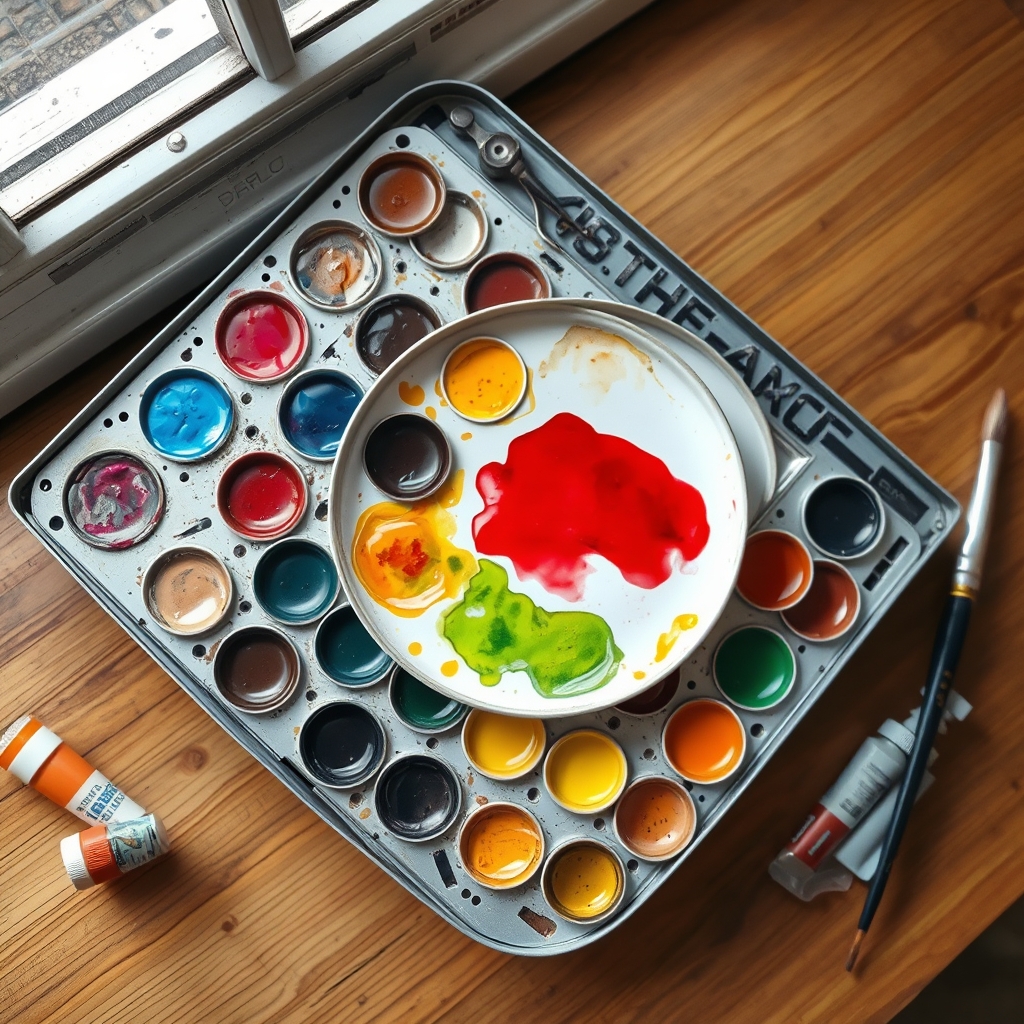
Buy a watercolor set whose paints list single pigment codes, such as PB29 or PR108. Mixing two single-pigment colors gives a clean result, while mixing multi-pigment convenience colors puts six or more pigments in one puddle, which the eye reads as mud.
Key takeaways
- Pigment codes on the label tell you what is really in the paint; color names do not.
- Muddy mixes are usually caused by multi-pigment paints, not by poor brushwork.
- Pans suit sketchbook and travel work; tubes dissolve fast enough for large washes.
- Full pans beat half pans because a large brush can actually load from them.
- Six to eight colors, a warm and cool of each primary plus an earth tone, cover most work.
Some links on this page are affiliate links. As an Amazon Associate we earn from qualifying purchases, at no extra cost to you. Prices shown were correct at the time of writing.
There is a specific frustration every beginner meets: you mix two colors that should give you a clean green, and what appears on the paper is grey sludge. That is almost never a technique problem. It is what happens when you mix two paints that were each already a mixture of three or four pigments plus filler.
Understanding that one fact changes how you shop for paint permanently. This page explains what separates student sets from artist grade, whether pans or tubes suit how you work, and which four sets are actually worth the money.
Read the Pigment Code, Not the Color Name
Every genuine watercolor lists a pigment code somewhere on the tube or pan: PB29 is ultramarine, PR108 is cadmium red, PY35 is cadmium yellow. That code tells you what is physically in the paint, and it is the only thing on the label that cannot be marketing.
A paint listing one code is a single-pigment color. Mix two single-pigment paints and you get a clean third color, because only two pigments are involved. A paint listing three or four codes is a convenience mixture, and mixing two of those puts six or eight pigments in the same puddle. Beyond three, human eyes read the result as mud. That is the whole explanation.
The second code to look for is lightfastness, usually rated I to IV or as a star count. Fugitive pigments visibly fade within a few years in daylight, which matters enormously the moment you start selling or gifting work rather than filling a sketchbook.
Pans or Tubes?
Pans are dried cakes of paint you wake up with a wet brush. They travel well, waste nothing, and are ideal for sketchbook work and anything done away from a table. Their limitation is volume: lifting enough pigment for a large wash off a small cake takes a long time, and you often give up before the puddle is strong enough.
Tubes solve exactly that. A pea of tube paint dissolves into a full puddle in seconds, which is what large skies and background washes require. The trade-off is mess, and the fact that tube paint dries hard in the cap if you leave it. Many painters end up squeezing tube paint into empty pans and letting it dry, which gives them both.
Four Sets Worth Buying
Best Pigment Quality


Paul Rubens Artist Grade Watercolor – 24 Colors
$44.99on Amazon
The cheapest set on this page that behaves like professional paint when you mix it rather than going grey.
- ✓Purer pigment loads. This is the practical difference described above: cleaner secondary mixes, because fewer pigments are fighting each other in the puddle.
- ✓Rated for lightfastness. If any of this work ends up framed on a wall, fade resistance stops being an abstract specification.
- ✓Individually removable pans. Replace the three colors you actually exhaust instead of rebuying a whole tin, which is where the long-run cost really sits.
As an Amazon Associate we earn from qualifying purchases. Price shown at time of writing.
Best for Large Washes


Paul Rubens Full Pan Watercolor Set – 24 Colors
$25.99on Amazon
Full pans instead of the usual half pans, which is the single most underrated feature in a travel set.
- ✓A large brush fits the pan. Half pans force you to load a small brush repeatedly, which is exactly how a sky wash dries in stripes before you finish it.
- ✓Rewets cleanly without chalkiness. Cheaper pans leave a dusty film when they dry; these keep the transparency that makes watercolor look like watercolor.
- ✓The tin lid is the palette. One object holds paint, mixing space and lid, which is what makes painting outdoors actually happen.
As an Amazon Associate we earn from qualifying purchases. Price shown at time of writing.
Full pans matter most for landscape work, where the first wash covers half the sheet in one go. If that is the kind of painting you are after, the studies in our watercolor sky drawing ideas depend almost entirely on getting a big wash down before it starts to set.
Best Travel Tin


MozArt Supplies Watercolor Set – 24 Colors with Brush
$24.99on Amazon
The set to keep permanently in a bag. Its value is that it is always with you when something is worth painting.
- ✓Three separate mixing wells. You can keep a sky puddle, a shadow puddle and a warm mix apart, which a single flat lid does not allow.
- ✓Light enough to forget about. A travel kit that is heavy stays on the shelf, and the best paint set is unavoidably the one you have with you.
- ✓Certified non-toxic. Tested to ASTM D-4236, which matters if children paint alongside you or the tin lives on a kitchen table.
As an Amazon Associate we earn from qualifying purchases. Price shown at time of writing.
Best Tubes on a Budget


MEEDEN Watercolor Tube Set – 24 × 12 ml
$15.95on Amazon
The cheapest sensible way to find out whether you prefer working from tubes before committing real money.
- ✓Enough paint to be wasteful with. 12 ml per color means you can mix a genuinely strong puddle rather than rationing pigment, which is the habit that keeps beginner work weak.
- ✓Fills empty pans perfectly. Squeeze into a pan tray, let it dry for a day, and you have a custom travel palette of only the colors you actually use.
- ✓Acid-free and certified. ASTM D-4236 and AP rated, so it is safe for classroom and family use as well as your own.
As an Amazon Associate we earn from qualifying purchases. Price shown at time of writing.
You Need Fewer Colors Than the Tin Suggests
Most working painters use six to eight colors for the majority of their output: a warm and a cool version of each primary, plus an earth tone or two. A warm and cool blue, a warm and cool red, a warm and cool yellow, and burnt sienna will mix almost anything you need, including far better greys than any tube labeled grey.
The reason to still buy a 24-color set is that it lets you find out which eight are yours. After a few months you will notice the same pans wearing down and the rest sitting untouched, and that is your real palette telling you what it is.
Frequently Asked Questions
What is the difference between student and artist grade watercolor?
Artist grade carries more pigment and less filler, and usually more single-pigment colors. In practice that means stronger tinting, cleaner mixes, and better lightfastness. Student grade is not fake paint, but it goes grey much faster when mixed.
Why do my mixed colors always turn out muddy?
Usually because you are mixing convenience colors that each contain several pigments already. Check the pigment codes and mix single-pigment paints where you can. Overworking a drying wash is the other common cause.
Should a beginner start with pans or tubes?
Pans, if you mostly paint small work in a sketchbook or away from home. Tubes, if you want large washes and full sheets. Many painters keep tubes at the desk and a pan tin in the bag.
How long does a watercolor set last?
Pans last years because dried watercolor rewets indefinitely; you only lose them to physical damage. Tubes eventually harden, but even a solid tube can be scraped into a pan and used as one, so very little is truly wasted.
Does expensive paint make a beginner better?
No, but bad paper and muddy paint make a beginner look worse than they are, which is discouraging in a way that stops people practicing. Decent materials mainly remove excuses.
What to Sort Out Next
Paint is the second thing to fix, not the first. Good pigment on absorbent pulp paper still dries blotchy, so start with the right watercolor paper and then upgrade paint. After that, the useful investments are lighting you can judge color under and, once work starts leaving the house, a printer that can reproduce it. For the complete sequence, see our art supplies guide.