Short answer: Start with a simple goldfish or betta shape — an oval body, a triangle tail, and one round eye — and you can finish a good-looking fish drawing in about 15 minutes. The 22 ideas below run from the simplest minimalist and stippled fish to detailed koi, lionfish, and a great white shark, so beginners can start at idea 1 and work forward, while more confident artists can jump straight to the detailed studies.
In this guide
- Pick the right fish idea for your level
- Adding movement and life to your fish
- Using color and pattern
- The 22 easy fish drawing ideas
- Keep drawing: more sea and animal ideas
- Frequently asked questions about fish drawing
There’s a unique magic in capturing the beauty of the world with a pencil and paper, a way to express our inner vision and refine our skills. For those of us fascinated by the depths of the ocean, the art of drawing fish offers a boundless source of inspiration. Our “Fish Drawings Ideas” is a dedicated space for artists like you to explore the stunning variety of aquatic life.
It’s a place where you’ll find a wealth of techniques, from realistic renderings to whimsical designs, all to help you bring your underwater worlds to life. Join our community and let your imagination swim free.
1. Pick the Right Fish Idea for Your Level
Not every fish in this gallery needs the same skill. Use this quick picker to find your starting point, then move up the list as your confidence grows.
| Your level | Try these ideas first | Why they work |
|---|---|---|
| Complete beginner | Ideas 7, 11, and 14 | Simple outlines and soft shading; no fiddly detail to get wrong. |
| Ready to shade | Ideas 5, 8, and 17 | Goldfish bowls and a detailed study that teach light, glass, and form. |
| Love color | Ideas 4, 16, and 19 | Colored pencil, bright betta color, and bold stripes for pattern practice. |
| Want a challenge | Ideas 3, 15, and 22 | Lionfish spikes, a flowing koi, and a great white shark with full shading. |
What you need to start
You do not need fancy supplies. A graphite pencil, an eraser, a sketchbook, and, if you want color, a small set of colored pencils will cover every idea here. Smooth paper suits the stippled fish (ideas 1 and 2), while textured or sketchbook paper suits the koi and lionfish studies. A white gel pen is handy for the small reflective highlights mentioned in the color tips below.
Know the parts before you draw them
Every fish in this gallery is built from the same few parts: a body, a dorsal fin on top, pectoral fins at the sides, and a caudal fin (the tail) that does most of the pushing. If you can place those four parts, the fish will read as a fish even before you add scales. For a clear, plain-language rundown of each fin and what it does, see The Complete Anatomy of a Fish — it is a useful reference to keep open beside your sketchbook.
How can I add more movement and life to my fish drawings instead of them looking static?
- Study Fluid Dynamics: Observe how fish bodies curve and flow, especially the spine and tail. Instead of drawing a straight line, use a gentle S-curve to suggest motion, even in a resting pose. This fundamental shape makes the fish feel like it’s gliding through water.
- Emphasize Fins and Tails: The fins and tail are key to movement. Draw them with a slight blur or in a flowing, extended position to show propulsion. Use loose, confident strokes to capture the impression of motion rather than rigid, hard lines.
- Incorporate Environmental Interaction: Show the fish reacting to its surroundings. Add small bubbles trailing from the mouth or have a few wavy lines around the body to indicate the water current. This simple detail adds context and makes the fish feel integrated into its environment.
What are some creative ways to use color and pattern to make my fish drawings stand out?
- Layer and Blend Colors: Instead of using a single color for a fish, build up layers of different shades. For a vibrant koi fish, for example, blend warm yellows and oranges with a touch of red and cool blues in the shadows. This creates depth and a more realistic, luminous effect.
- Invent Your Own Patterns: Don’t feel limited to realistic scales. Experiment with intricate patterns like mandalas on the fish’s body, geometric shapes, or even abstract designs. This transforms the drawing from an observation into a unique piece of fantasy art.
- Highlight with Iridescence: Use a white gel pen or a metallic paint to add small, reflective highlights on the scales and eyes. This mimics the iridescent quality of many fish, catching the light and making your drawing sparkle with life.
2. The 22 Easy Fish Drawing Ideas
Explore our curated gallery of “Fish Drawings Ideas” and start creating your own stunning aquatic masterpieces. Grab your pencils and let’s make some waves!
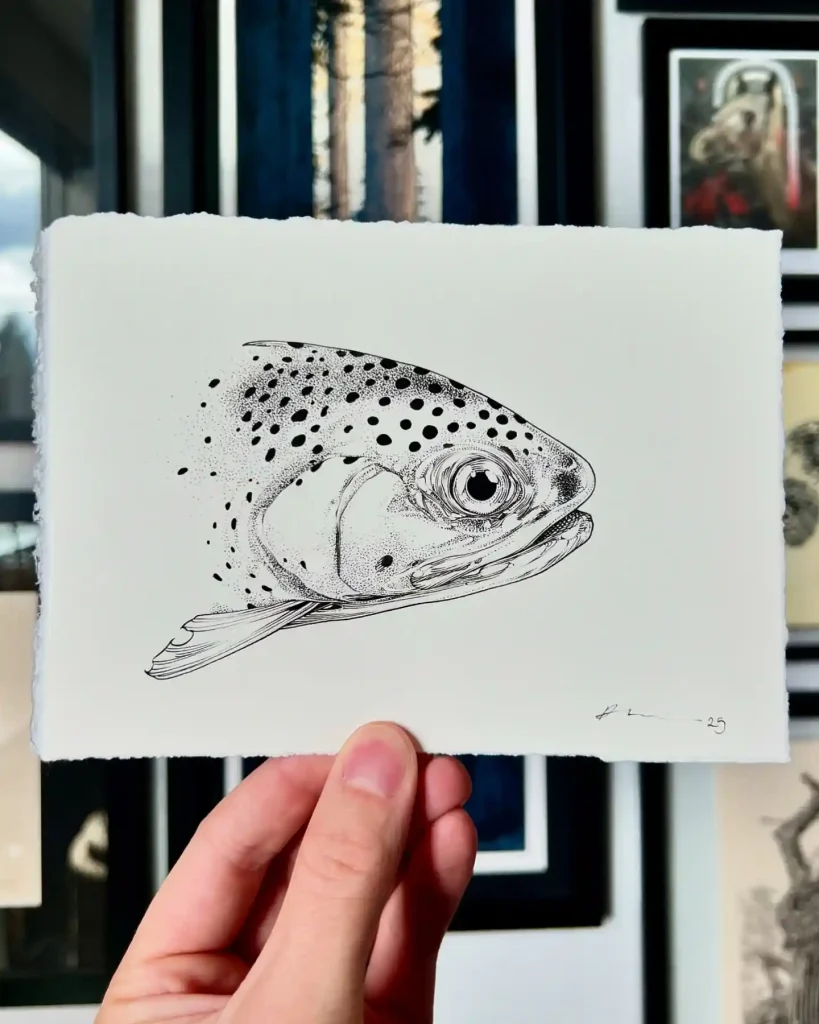
1. Dotted Fish Head on Rough Paper
 Fish Drawing” class=”wp-image-2629″/>
This is an amazing stippling piece, capturing a fish’s head with a thousand tiny dots. The artist uses this meticulous technique to create both texture and a sense of depth, with the dots fading out to the edge of the paper. It feels like a moment caught in time, a study of a fish just emerging from the water.
2. Stippled Fish on Smooth Paper
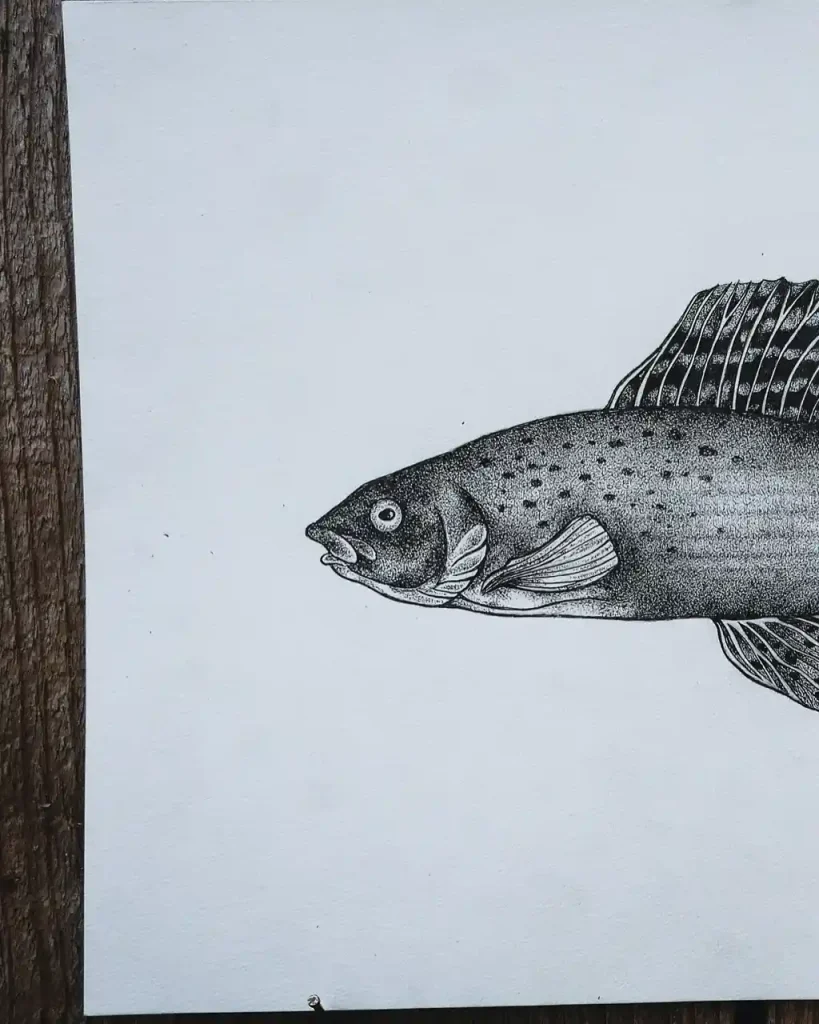
Another fantastic example of stippling, this drawing uses countless tiny dots to create a rich, textured representation of a fish. The artist masterfully uses varying dot density to shade the body and give the fins a unique, almost translucent quality. It’s a beautiful, patient study of detail and form.
3. Lionfish on Sketchbook Paper
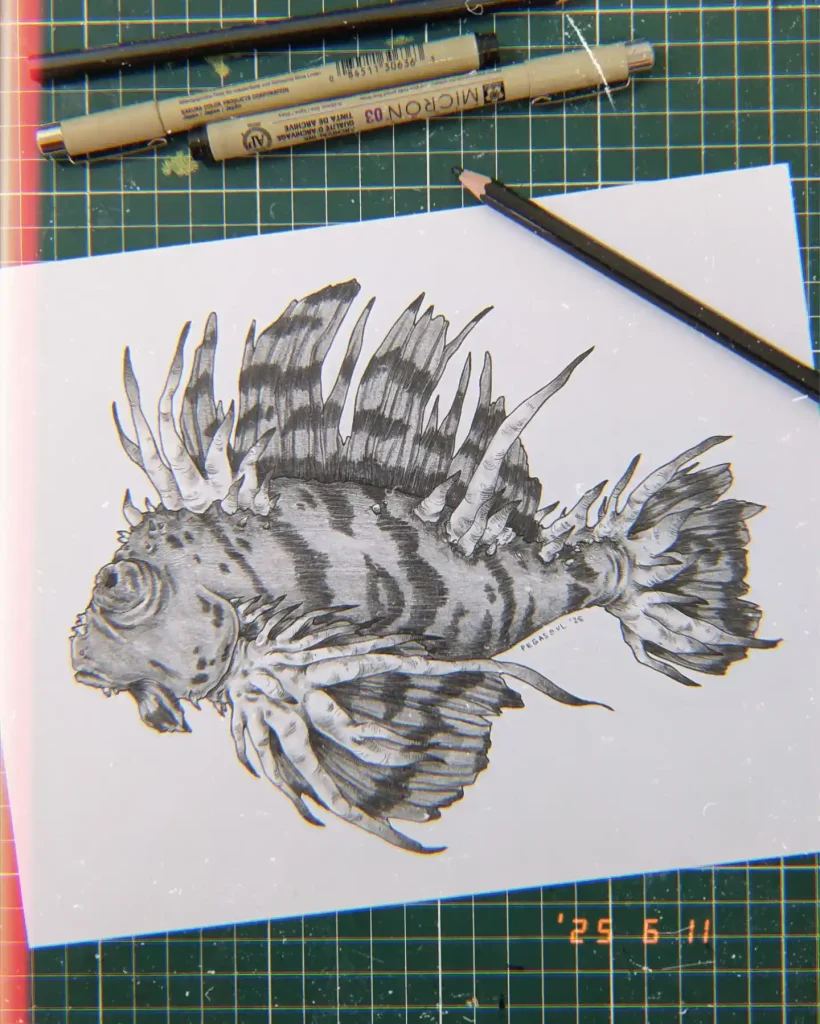
What a stunningly detailed drawing of a lionfish! The artist has perfectly captured its spiky, dramatic form using a mix of intricate linework and careful shading. The texture on the fins and body is incredible, making this fearsome creature look both elegant and powerful, a true showstopper of the reef.
4. Two Colored Pencil Fish on White Paper
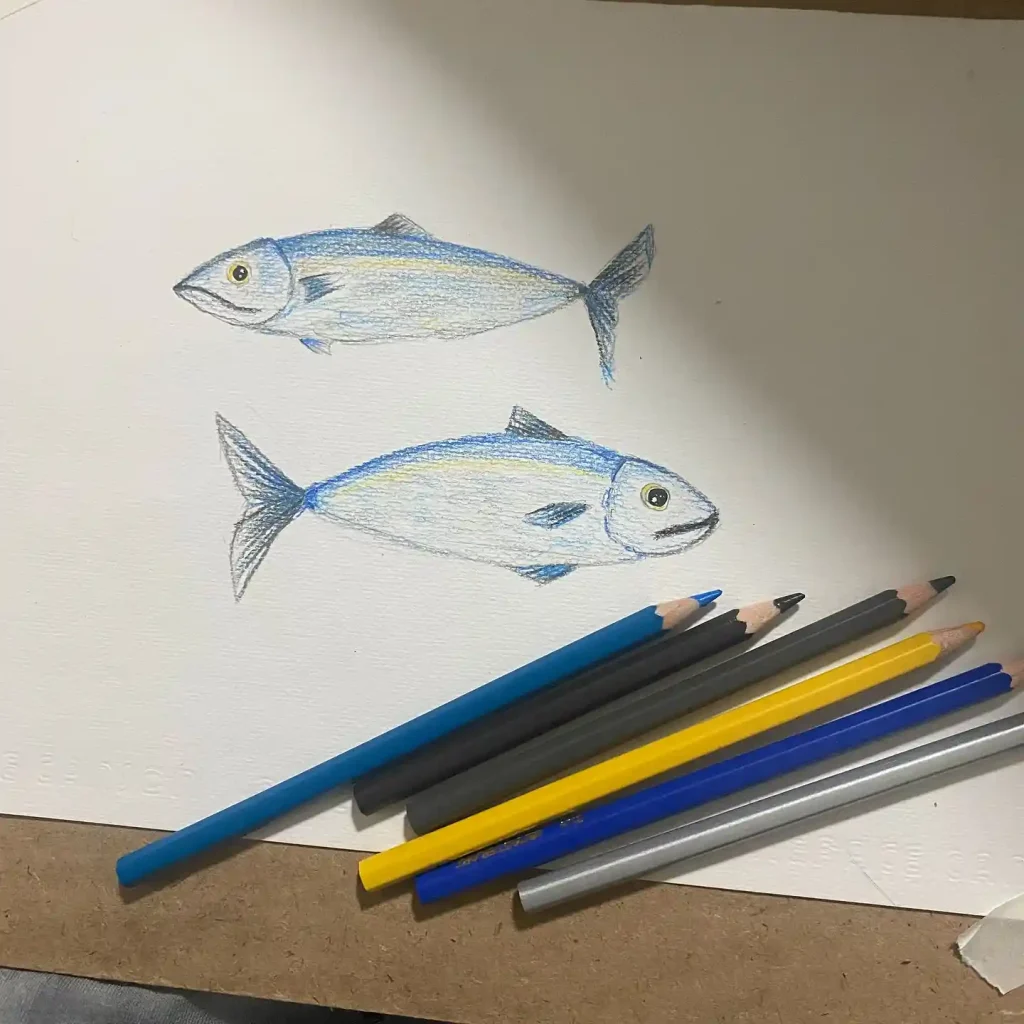
These two fish are so vibrant and full of life! The artist has used colored pencils to create a lovely blend of blues and yellows on the bodies, with a cool shimmer. The subtle shading gives them a nice sense of form, making them look like they’re mid-swim, a simple and cheerful aquatic scene.
5. Goldfish in a Bowl on Sketchbook Paper
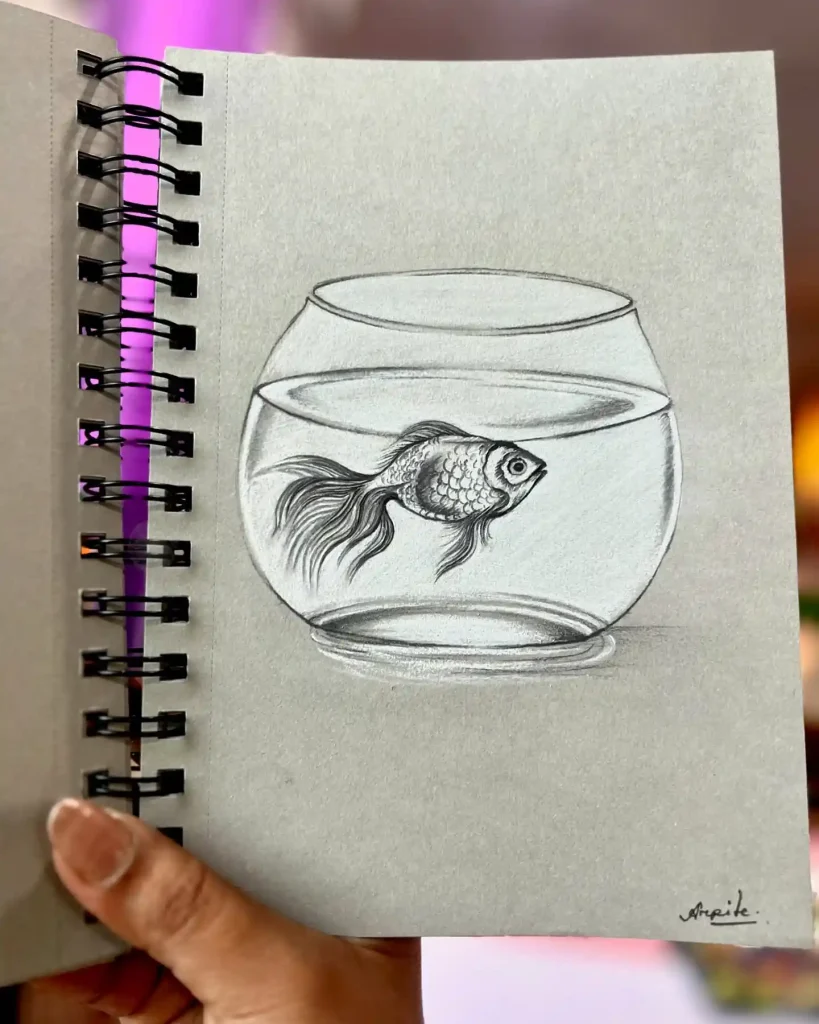
This drawing is a beautiful study of light and form. The artist’s pencil work creates a realistic sense of a glass bowl and the water within it, with the goldfish gracefully swimming in its space. The soft, gentle shading captures a sense of quiet contemplation and the delicate world of a pet fish.
6. Koi Fish Study on Textured Paper

A beautiful, graceful study of a fish in motion. The artist has used charcoal or a soft pencil to capture the flowing curves of the fish’s body and its long, elegant fins. The shading creates a strong sense of a cast shadow, making the fish feel like it’s floating just above the surface.
7. Minimalist Fish on Smooth Paper

This drawing is a wonderful example of how to say a lot with very little. The simple, clean lines capture the essence of a goldfish in motion, with a few bubbles to suggest its underwater world. It’s a very playful and approachable piece, proving that great art doesn’t always need to be complex.
8. Goldfish in a Bowl on White Paper
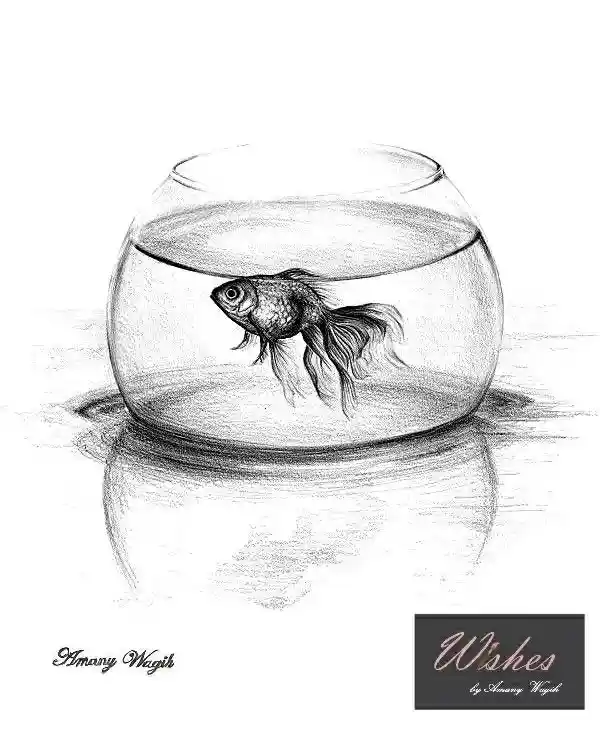
The incredible detail on this goldfish and its bowl is just captivating. The artist has skillfully used pencil to render the reflections and light on the glass and water, creating a stunning sense of transparency. The fish itself is beautifully textured, a powerful little swimmer in its contained world.
9. Two Large Mouth Bass on Sketchbook Paper
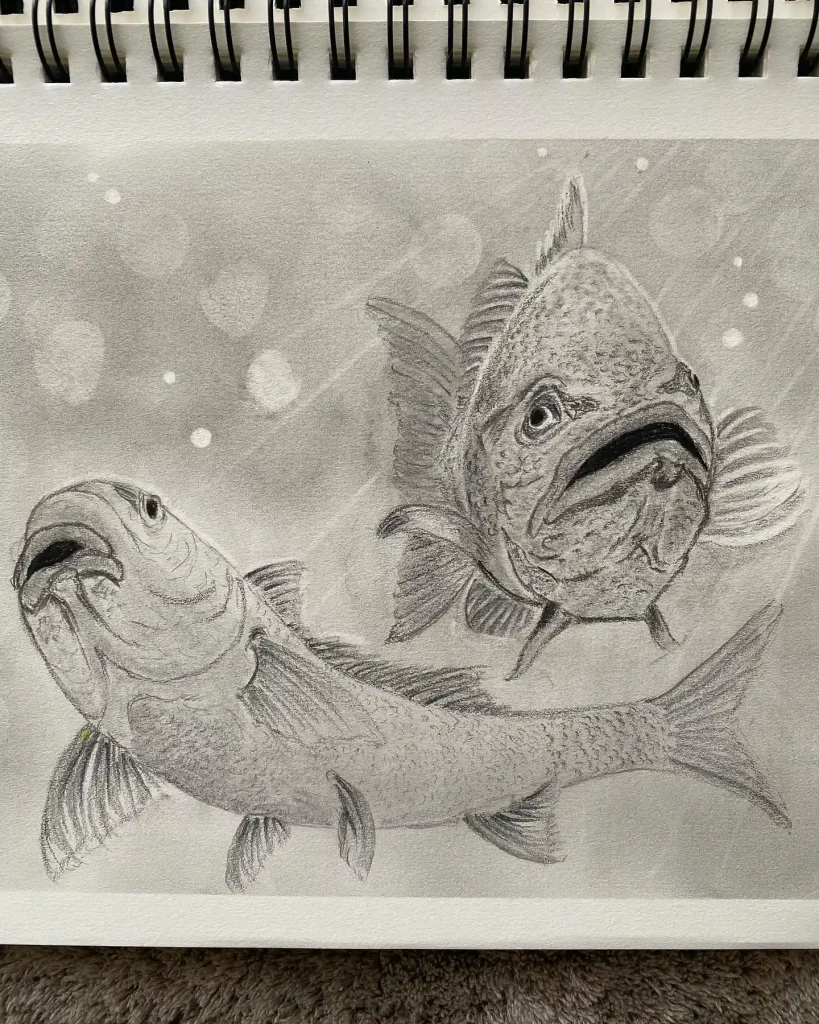
This drawing captures two fish in a way that feels intimate and close-up. The artist’s detailed shading on their scales and fins gives them a very tactile, realistic quality. The soft, bubbly background adds a sense of being underwater, making the viewer feel like they are right there with them.
10. Catfish and Plant on White Paper
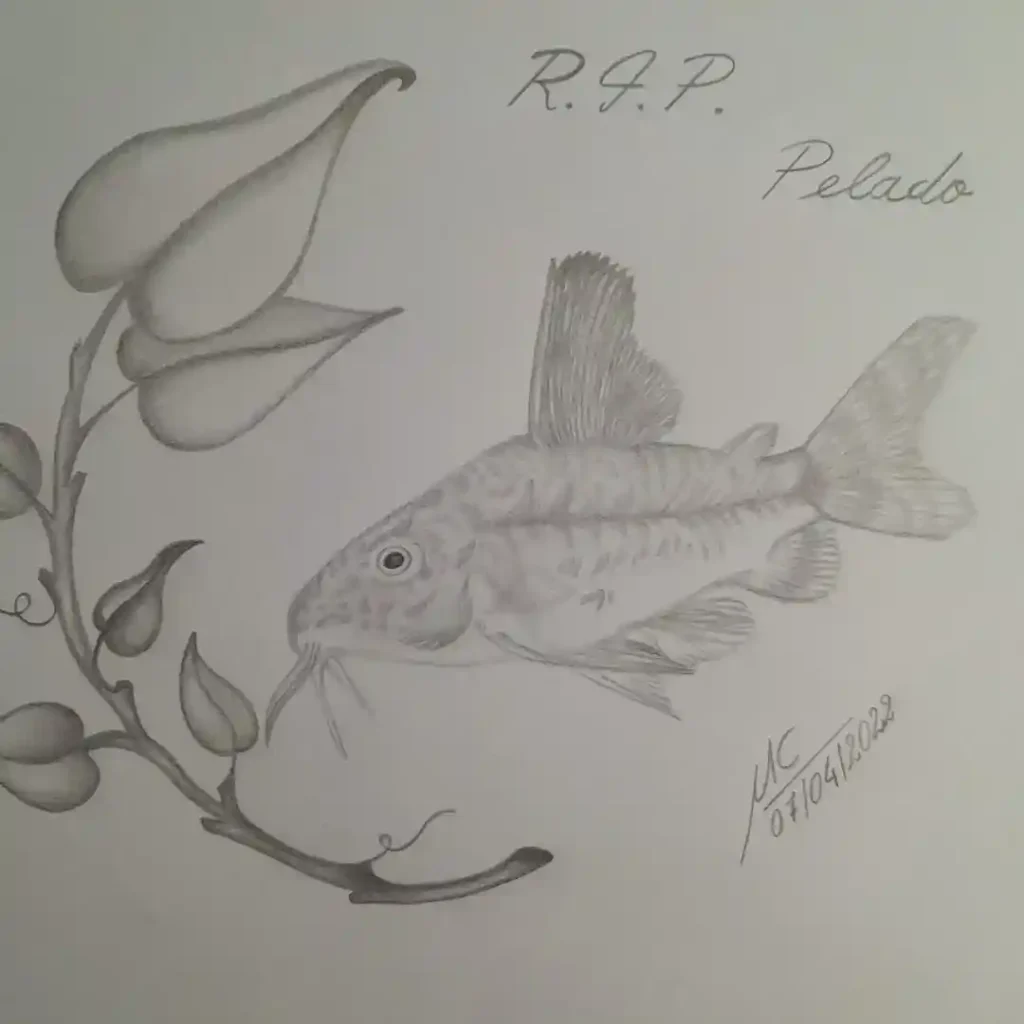
This drawing is a charming little tribute to a pet fish. The artist has lovingly rendered a catfish with its distinctive whiskers and fins, swimming next to a delicate plant. The drawing has a gentle, commemorative feel, celebrating the quiet beauty and personality of a beloved creature.
11. Stylized Goldfish on Sketchbook Paper

This drawing is a great example of an expressive, gestural style. The artist uses quick, confident lines and a bit of soft shading to suggest the form of a goldfish in motion. It feels lively and dynamic, capturing the playful energy of the fish with a few simple strokes rather than focusing on hyper-realism.
12. Surreal Eye Fish on White Paper

This surreal drawing is definitely a conversation starter. The artist has replaced the main body of the fish with a large, detailed human eye, a powerful symbol of perspective, observation, and the unseen depths of the soul. The meticulous scales and eye detail create an unforgettable and thought-provoking image.
13. Top-Down Fish on Sketchbook Paper

This is a really cool perspective! The drawing of the fish is seen from above, with its flowing tail and fins dominating the page. The deep, dark line down the center of the body creates a sense of depth and form, making the fish feel like it’s gracefully moving just below the water’s surface.
14. Cute Goldfish on Sketchbook Paper
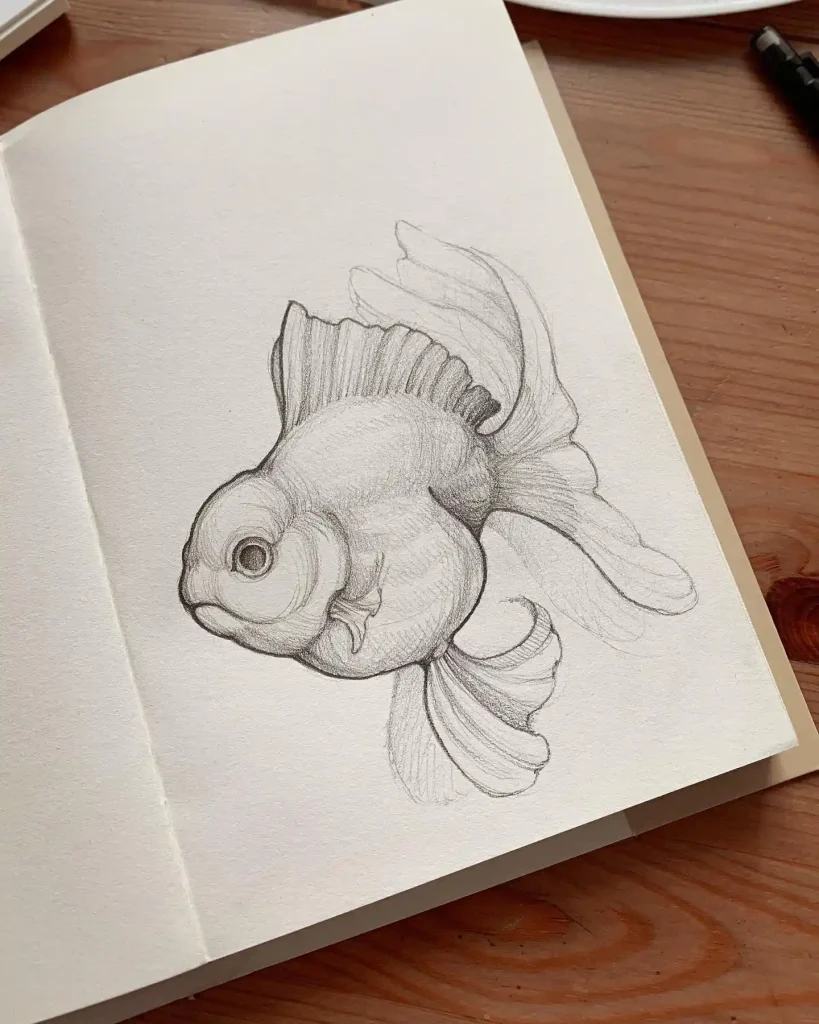
What a charming and detailed goldfish! The artist has captured its plump body and fluttering fins with such gentle, careful shading. It has a slightly whimsical, almost cartoon-like quality that makes it incredibly endearing, a perfect drawing for anyone who loves the softer side of aquatic life.
15. Swimming Koi Fish on Sketchbook Paper
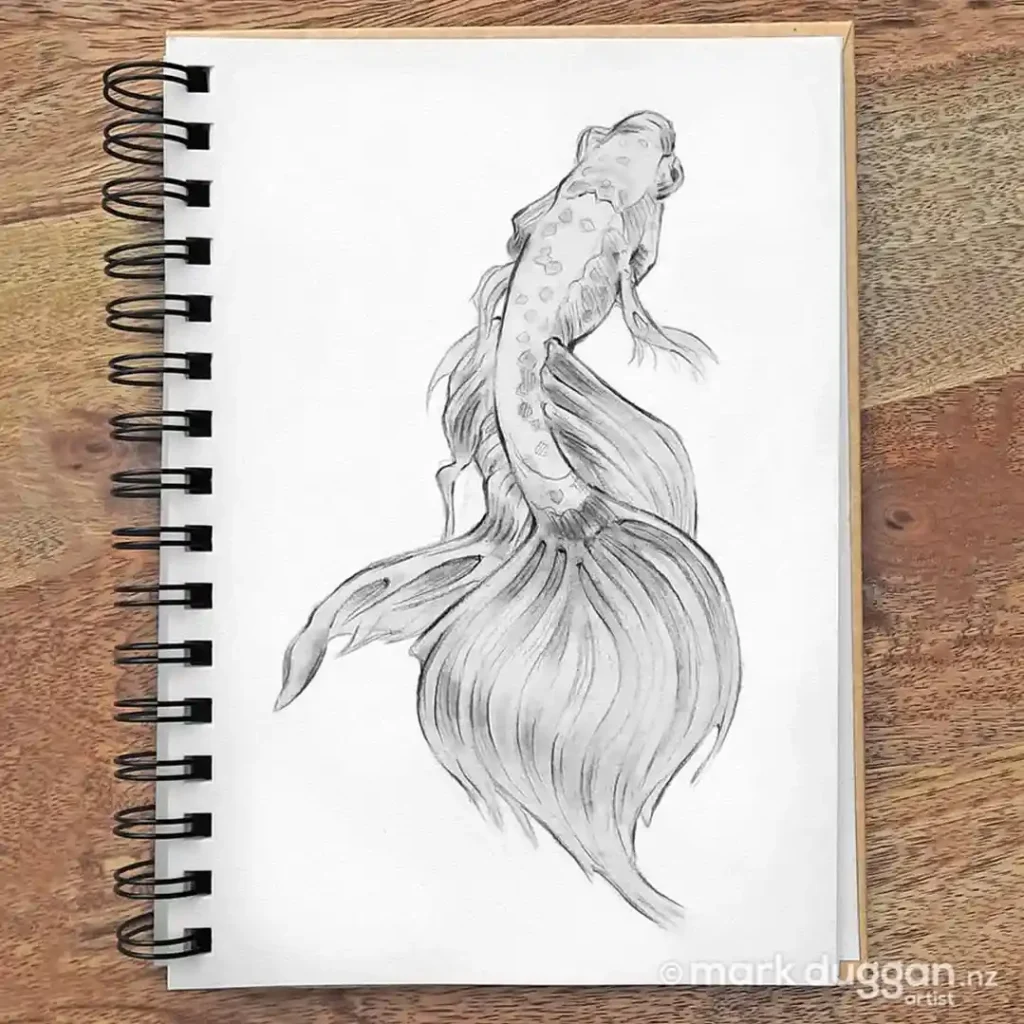
This drawing beautifully captures the elegant flow of a koi fish. The artist’s focus on the long, sweeping tail and fins is mesmerizing. The light shading and delicate lines on the body give it a sense of grace and movement, making the fish look like it’s dancing through the water.
16. Colorful Betta Fish on White Paper
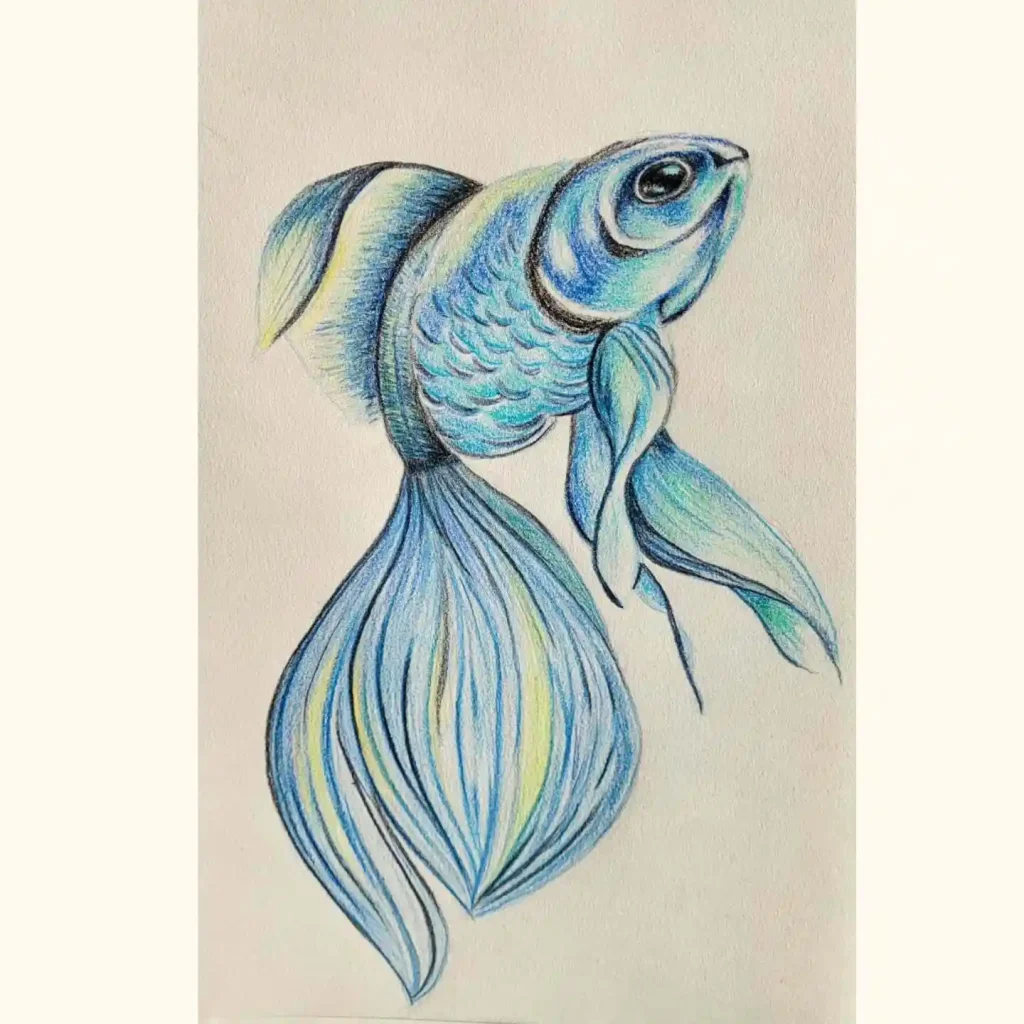
The colors in this drawing are absolutely stunning. The artist has used a mix of blues, yellows, and greens to create a vibrant, iridescent effect that really brings the betta fish to life. The long, flowing fins are a masterpiece of color and form, making this fish a beautiful fantasy creation.
17. Detailed Fish on White Paper
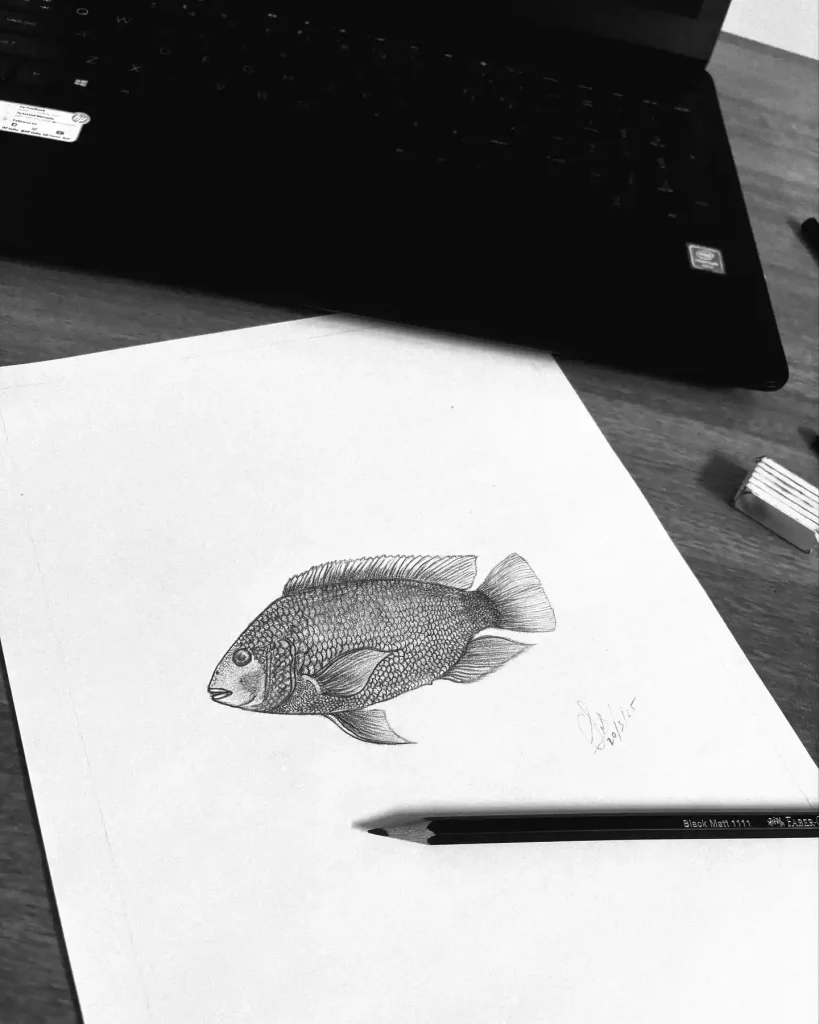
This drawing shows a fantastic command of realism and texture. The artist has meticulously rendered every scale and fin with incredible detail and fine shading. The result is a lifelike fish that looks almost ready to swim off the page, a true testament to the artist’s dedication to their craft.
18. Elegant Goldfish on White Paper
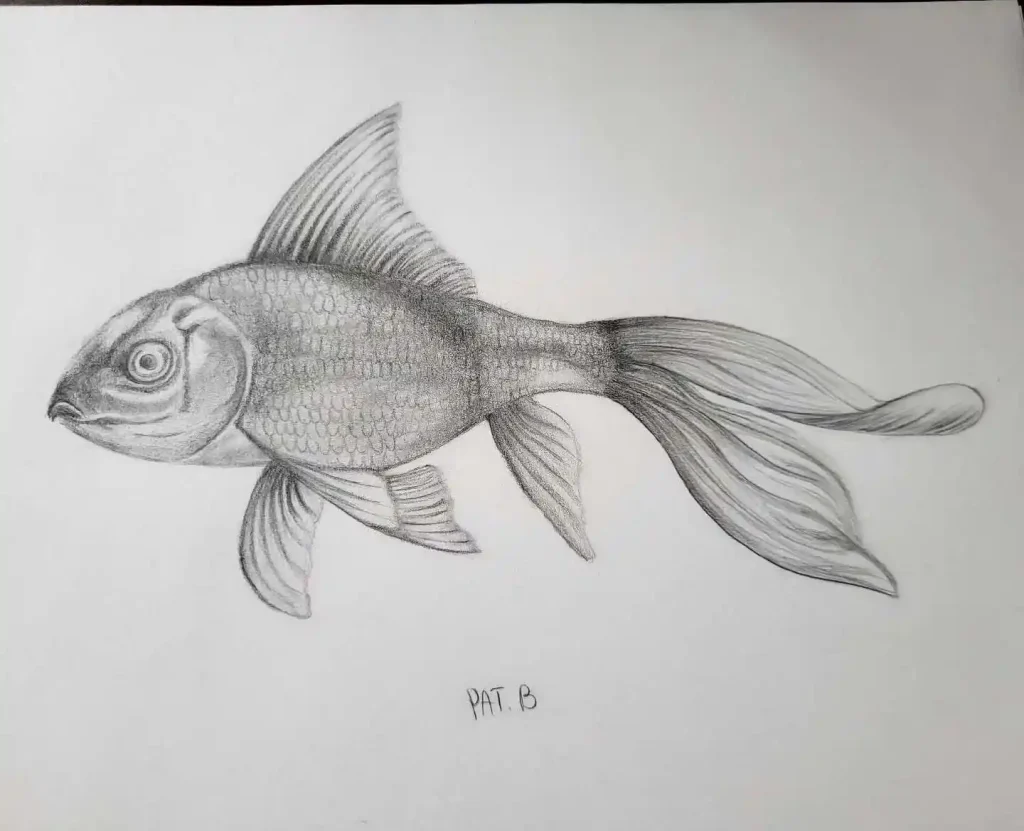
This is a classic and elegant take on the goldfish. The artist has used soft, subtle shading to give the fish a gentle sense of form. The long, flowing fins and tail are beautifully rendered, suggesting a slow, graceful movement through the water, a truly serene and timeless piece.
19. Black and White Fish on Sketchbook Paper
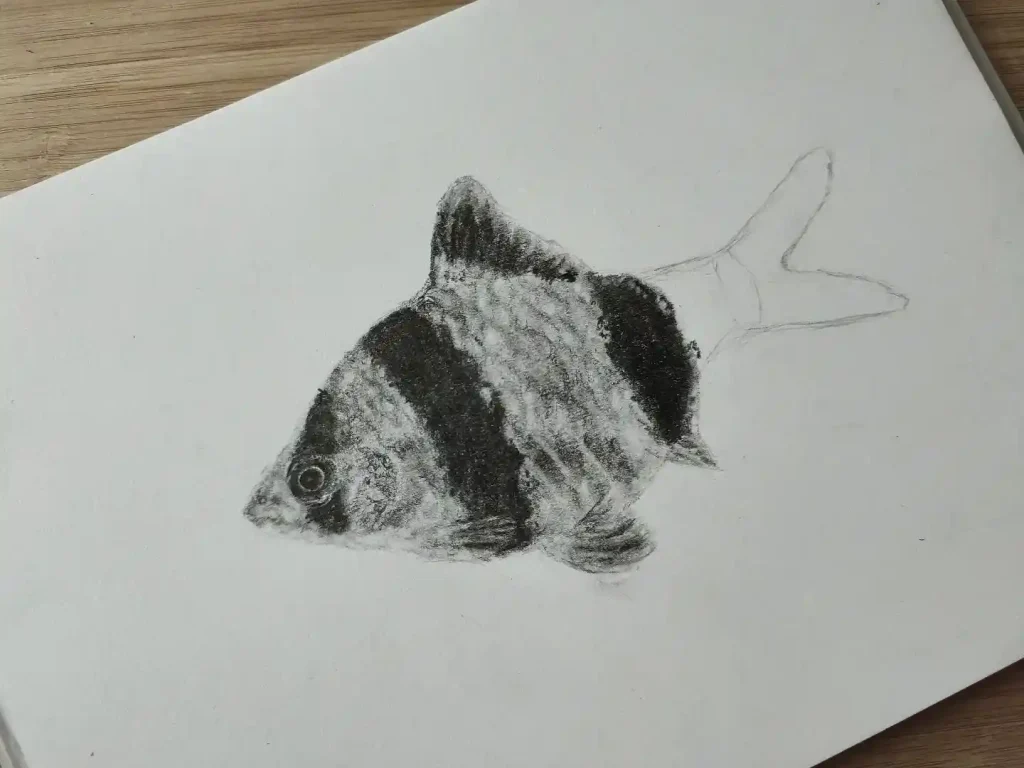
A playful and graphic drawing of a striped fish. The artist uses a thick, dark pencil to create the bold, dramatic stripes on the fish’s body, contrasting with the unfinished tail. It has a spontaneous, almost childlike energy that feels fresh and fun, a great example of a less-is-more approach.
20. Five Fish Drawing on White Paper
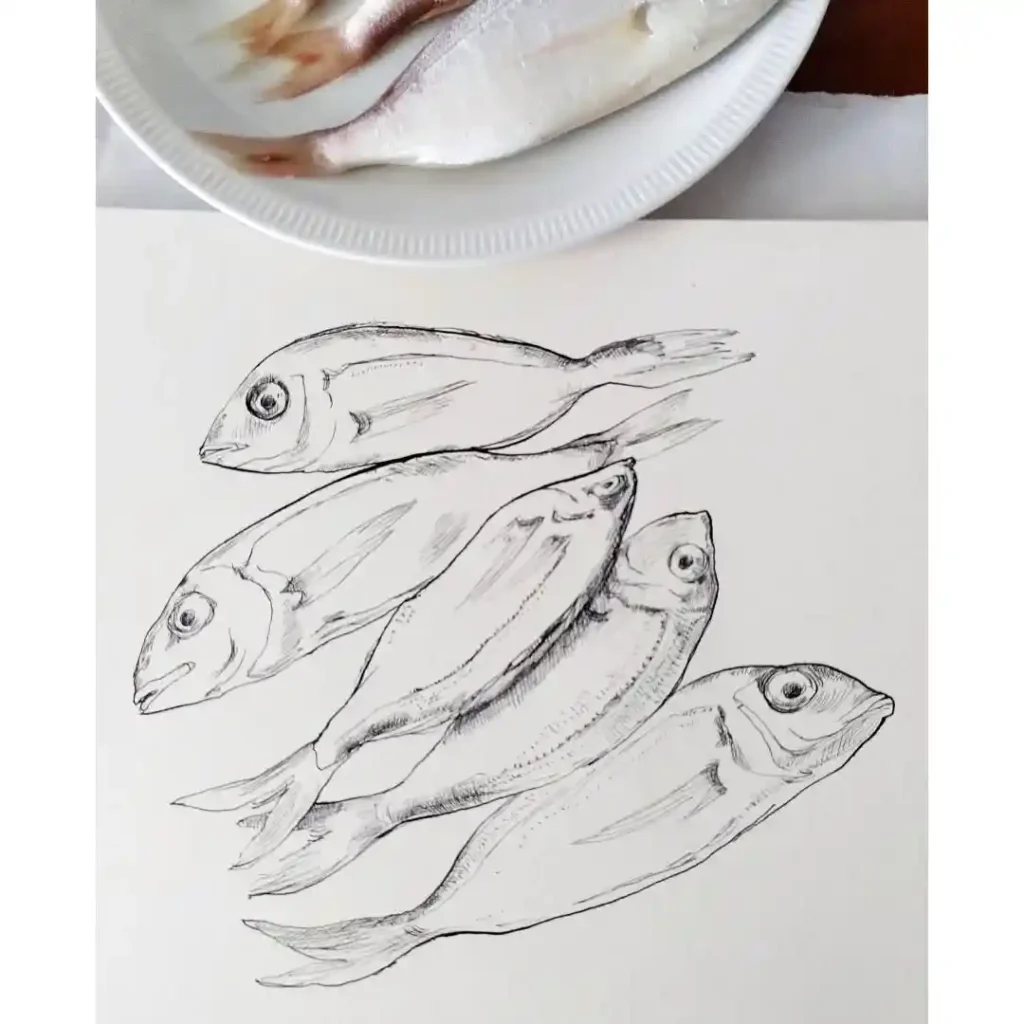
This unique drawing captures a still life of five fish. The artist’s bold linework and subtle shading give them a sense of texture and form. This piece is a beautiful study in observation, turning what could be a simple subject into a compelling and artful composition.
21. Playful Koi Fish on Sketchbook Paper

This drawing is so full of life! The artist has captured a whimsical koi fish with dynamic, flowing lines that give it a fun, cartoon-like energy. Holding the drawing up to a real beach scene creates a beautiful connection between the imaginative art and the natural world, a perfect moment of creative inspiration.
22. Great White Shark on White Paper
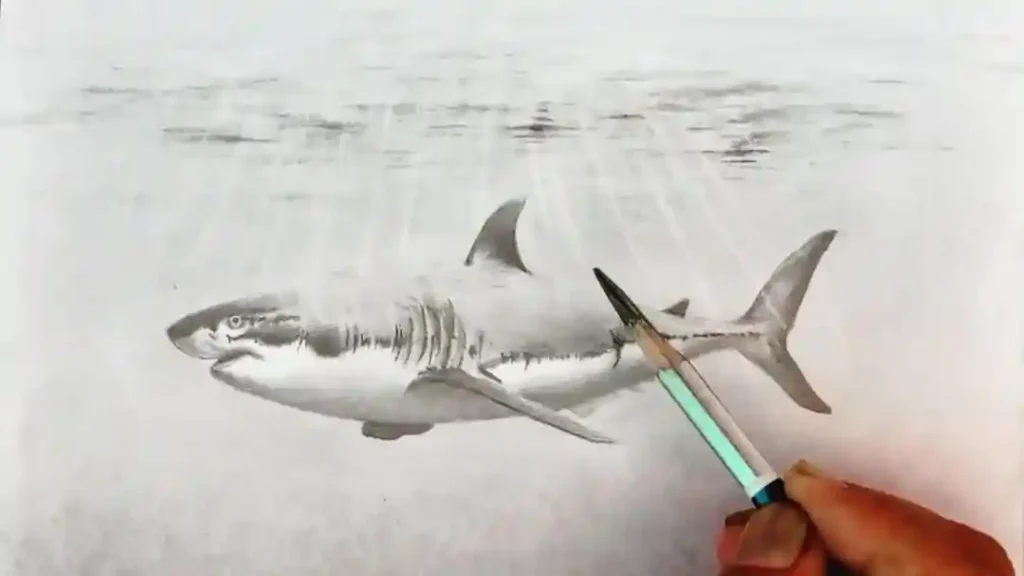
What an intense and dramatic drawing! The artist has masterfully used shading to create the powerful form of a great white shark, with the light rays streaming down from the surface. The meticulous detail on the gills and jaw gives it a realistic and formidable presence, a true homage to this magnificent apex predator.
3. Keep Drawing: More Sea and Animal Ideas
Finished your fish? Keep the momentum going with these related guides from GS Art Zone:
- 15+ Easy Watercolor Fish Drawing Ideas for Beginners — the same fish subjects in watercolor, with soft washes instead of pencil shading.
- 59 Shark Drawing Ideas — if idea 22 left you wanting more sharks, this gallery goes much deeper.
- How to Draw a Dolphin in 10 Easy Steps — a gentle step-by-step for another favorite sea animal.
- 37 Stunning Watercolor Jellyfish Drawing Ideas — flowing tentacles and glowing color, great after the betta and koi ideas here.
- 30 Watercolor Seahorse Ideas — curly tails and tiny details for patient color work.
- 40 Water Drawing Ideas — learn the ripples, reflections, and waves your fish swim in.
- Watercolor Painting: A Complete Guide for Beginners — washes, layering, and paper, from the very start.
- 30 3D Pencil Art Ideas to Practice Depth and Shading — take the shading skills from ideas 5, 8, and 17 further.
4. Frequently Asked Questions About Fish Drawing
What is the easiest fish to draw for a beginner?
The minimalist goldfish (idea 7) is the easiest place to start. It needs only a simple curved outline, one eye, and a few lines for the fins. Once that shape feels comfortable, try the stylized goldfish (idea 11) and the cute goldfish (idea 14), which add a little more shading without adding difficult detail.
What pencil should I use for fish drawings?
An ordinary graphite pencil is enough for every pencil idea in this gallery. Use light pressure for your first outline so mistakes erase cleanly, then press a little harder for the final lines. A softer pencil, or charcoal, gives the darker, flowing shading seen in the koi study (idea 6).
How do I draw fish scales without it taking forever?
Do not draw every scale. Draw a few neat rows of small overlapping arcs where the light catches the body, then fade them out toward the belly and tail. The stippled fish (ideas 1 and 2) use the same trick with dots: dense dots in shadow, sparse dots in light, and the eye reads the rest as scales.
How do I make my fish look like it is swimming?
Curve the spine into a gentle S-shape instead of drawing the body straight, sweep the tail and fins backward as if water is pushing past them, and add a few small bubbles or wavy lines around the fish. The movement tips near the top of this guide explain each of these steps in more detail.
Should I use pencil or watercolor for fish?
Pencil is best for detail, texture, and realistic shading, which is why most of the ideas here are pencil drawings. Watercolor is best for glow and flowing color, especially for koi and betta fish. If you want to try color next, start with the watercolor fish ideas and the beginner watercolor guide.
If you enjoyed drawing sea creatures, try our 48 jellyfish drawing ideas next: the same dome-and-tentacles shape works in pencil, ink, watercolor, or neon on black paper.
If you are stocking up for these projects, our guide to the best oil pastels for kids compares kid-friendly sets for smooth blending, bright color, and easy cleanup.