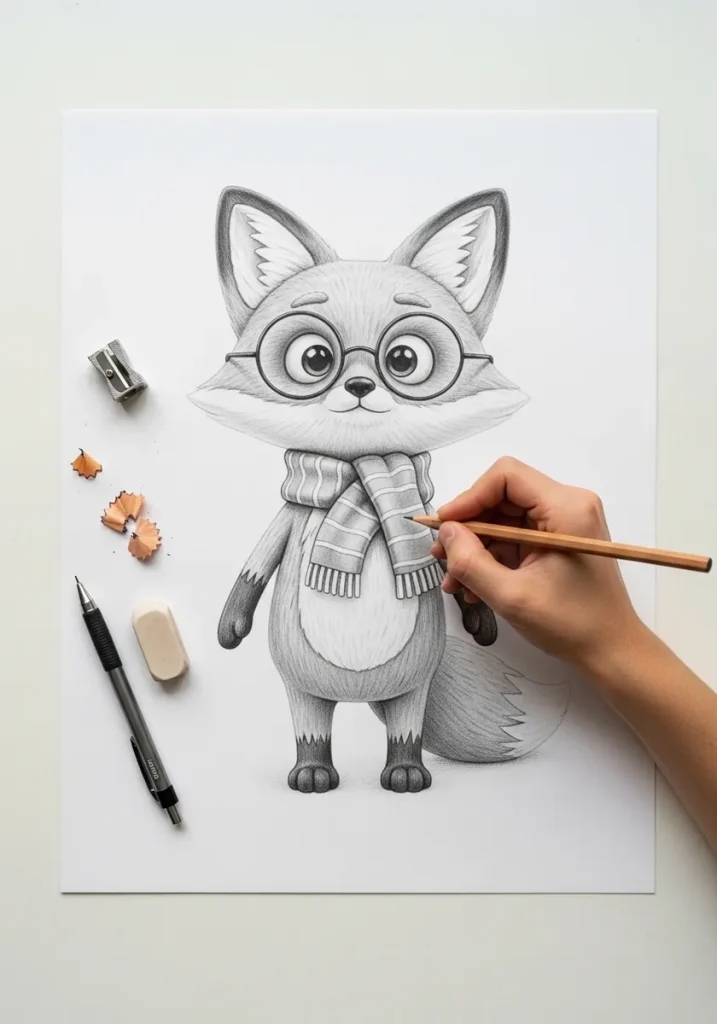
Clay style character art means drawing a character as if it were sculpted from soft modeling clay. Build every body part from spheres and rounded cylinders, keep all edges soft with no sharp corners, and shade with gentle gradients rather than hard shadows.
Key takeaways
- Build the whole character from spheres and rounded cylinders, never from flat shapes.
- Clay has no sharp corners, so soften every edge including fingers, ears and clothing folds.
- Use soft gradient shading rather than hard-edged shadows, since clay is a matte material.
- A small contact shadow under the figure is what makes it sit on a surface instead of floating.
- Exaggerate roundness: oversized head, stubby limbs and a heavy base read as clay instantly.
Clay style is not a drawing technique so much as a construction rule. Every part of the character is built from a sphere or a rounded cylinder, and nothing anywhere is allowed a sharp corner. Once you accept that rule, the shading almost takes care of itself.
The second half of the effect is the surface. Clay is matte, so it takes soft gradient shading with one broad highlight rather than the tight glossy specular you would put on plastic or glass. Add a small dark contact shadow where the figure meets the ground and it stops floating.
The twenty-nine characters below run from a sleeping dragon and a bespectacled fox to a samurai, a sumo wrestler, a Ganesha figure and a trumpet-playing skeleton, drawn in watercolor, colored pencil, marker, neon pen and stipple. If you want related work, these 3D cartoon character drawing ideas use the same volume-first approach.
For the underlying shading skills, 3D pencil art for beginners covers spheres and cast shadows directly, and watercolor face drawing is useful once you start pushing facial expression on these rounded heads.
Compiled by the GS Art Zone editorial team. Last updated August 2026. Each idea is paired with the specific step that produces the effect, so you can go from the reference straight to paper.
What You Need Before You Start
- A blending stump and soft graphite, since clay style depends on smooth gradients not line work
- Colored pencils or alcohol markers, which layer into the soft transitions this style needs
- A kneaded eraser to lift the broad highlight that sits on top of every rounded volume
- Toned, kraft or black paper with a white pencil for the reversed studies later in the list
- Real modeling clay if you have any, because a physical maquette beats any photo reference
1. Sleeping Baby Dragon in Line
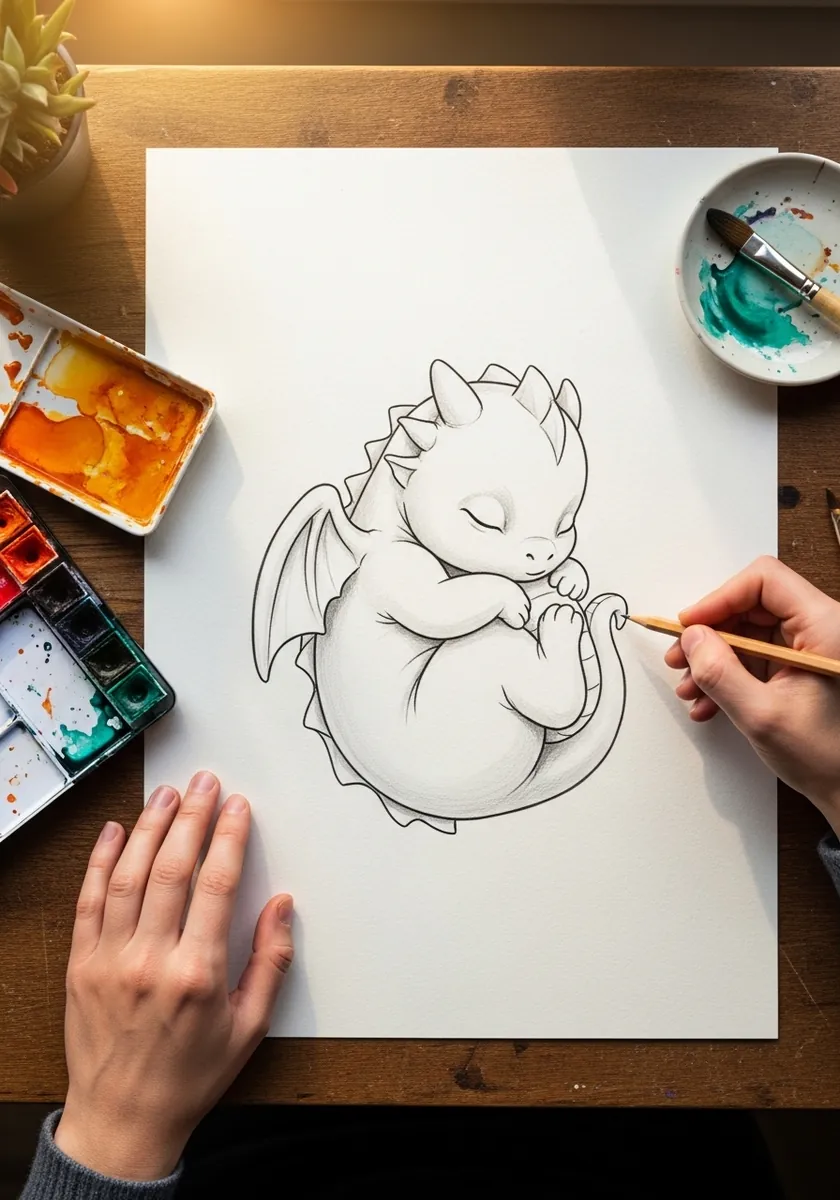
Start here, because a sleeping pose hides every difficult problem. The body is one large sphere, the head a smaller one resting against it, and the tail a tapering cylinder wrapped around the base. Round the wing tips and the spine spikes rather than pointing them.
2. Chunky Samurai Warrior in Sepia
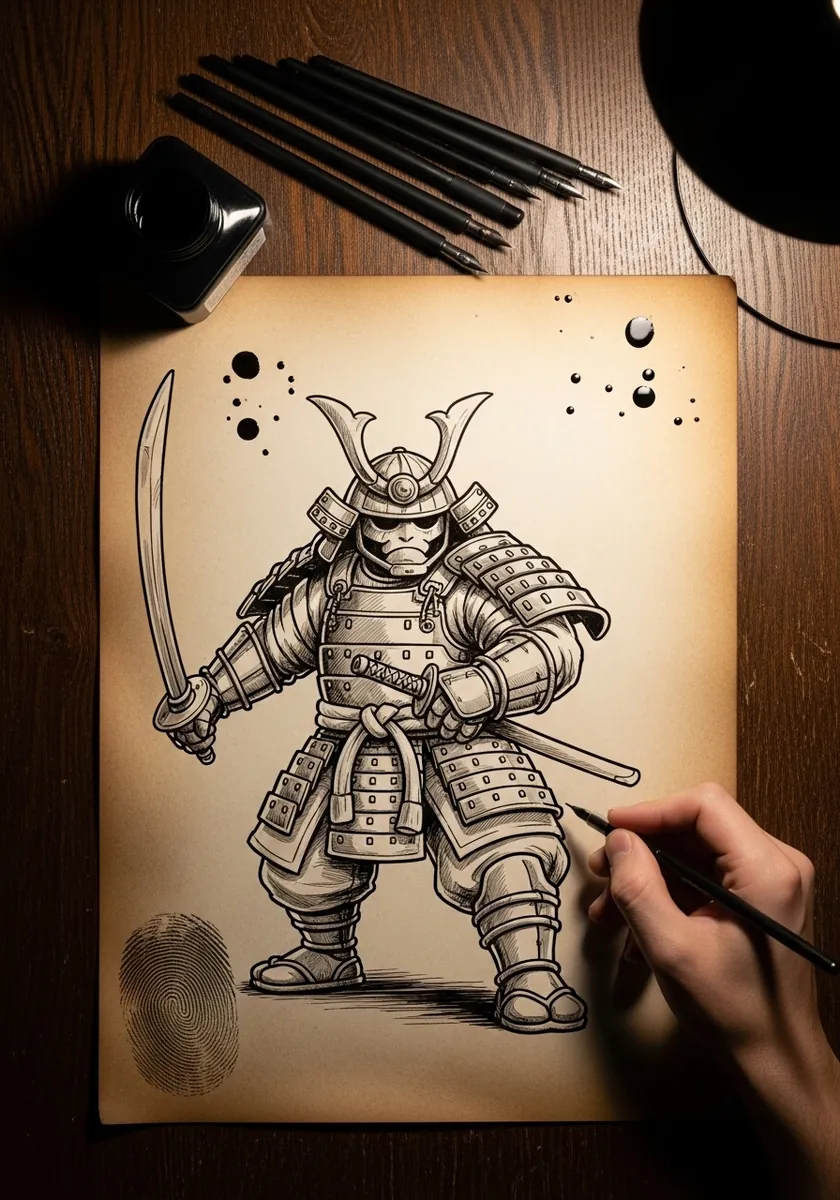
Armor is the hardest thing to keep clay-like, since real plates have hard edges. Round every corner of every plate and let each one bulge slightly outward as if pressed by thumb. The sword stays straight, which gives the eye one rigid element for contrast.
3. Cheerful Mermaid in Soft Watercolor
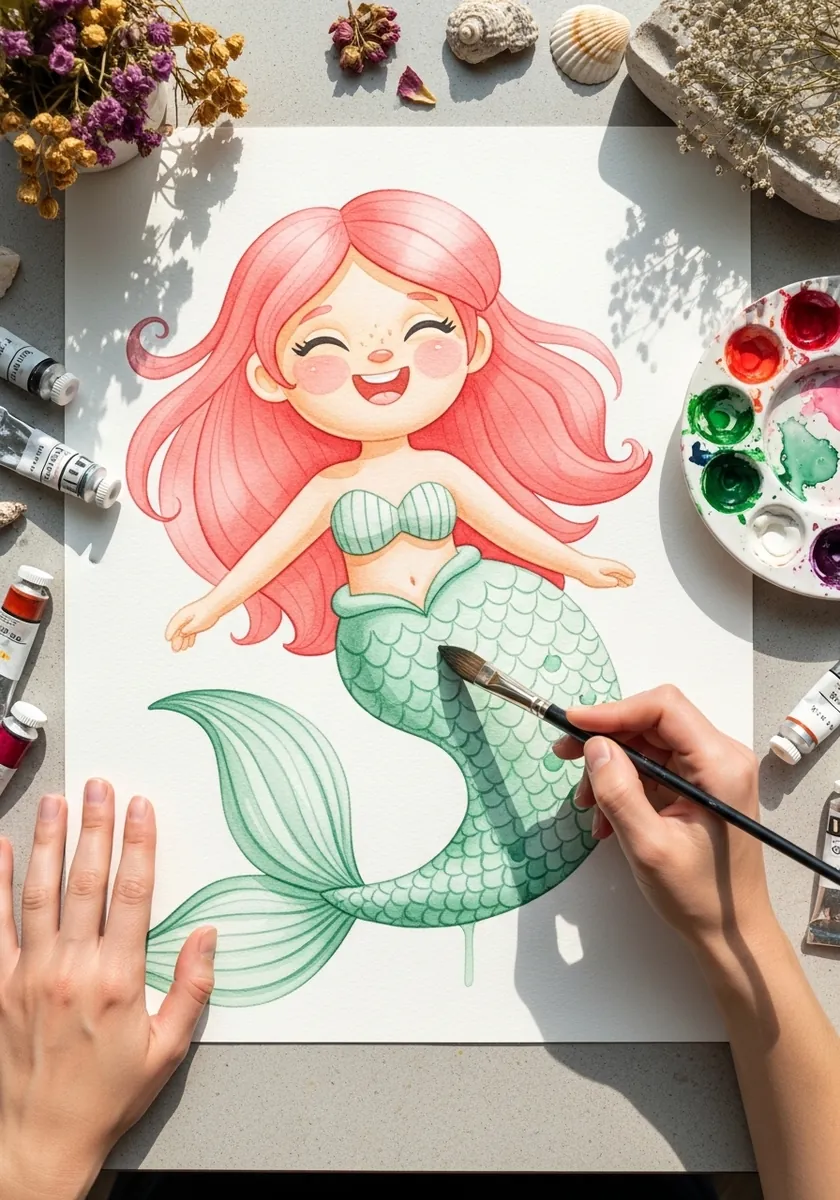
Hair is where clay style usually fails. Instead of drawing strands, model the hair as three or four large soft masses that flow together, exactly as a sculptor would. The tail scales become shallow dents pressed into the surface rather than drawn outlines.
4. Hip Hop Character in Marker
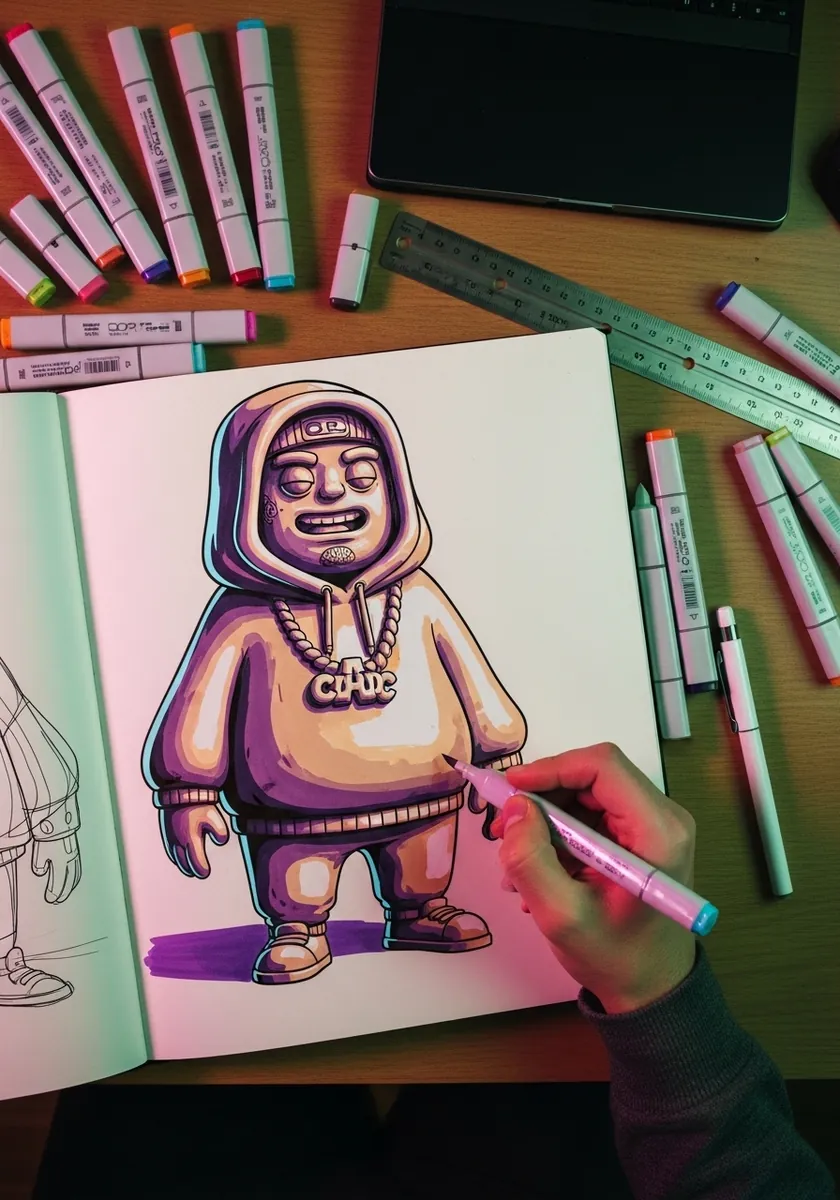
Loose clothing suits this style because fabric on a clay figure hangs in thick rounded folds. Draw the hoodie as one large soft mass with three or four deep creases, and let the drawstrings and chain sit on top as separate rolled cylinders.
5. Floating Astronaut in Galaxy Wash
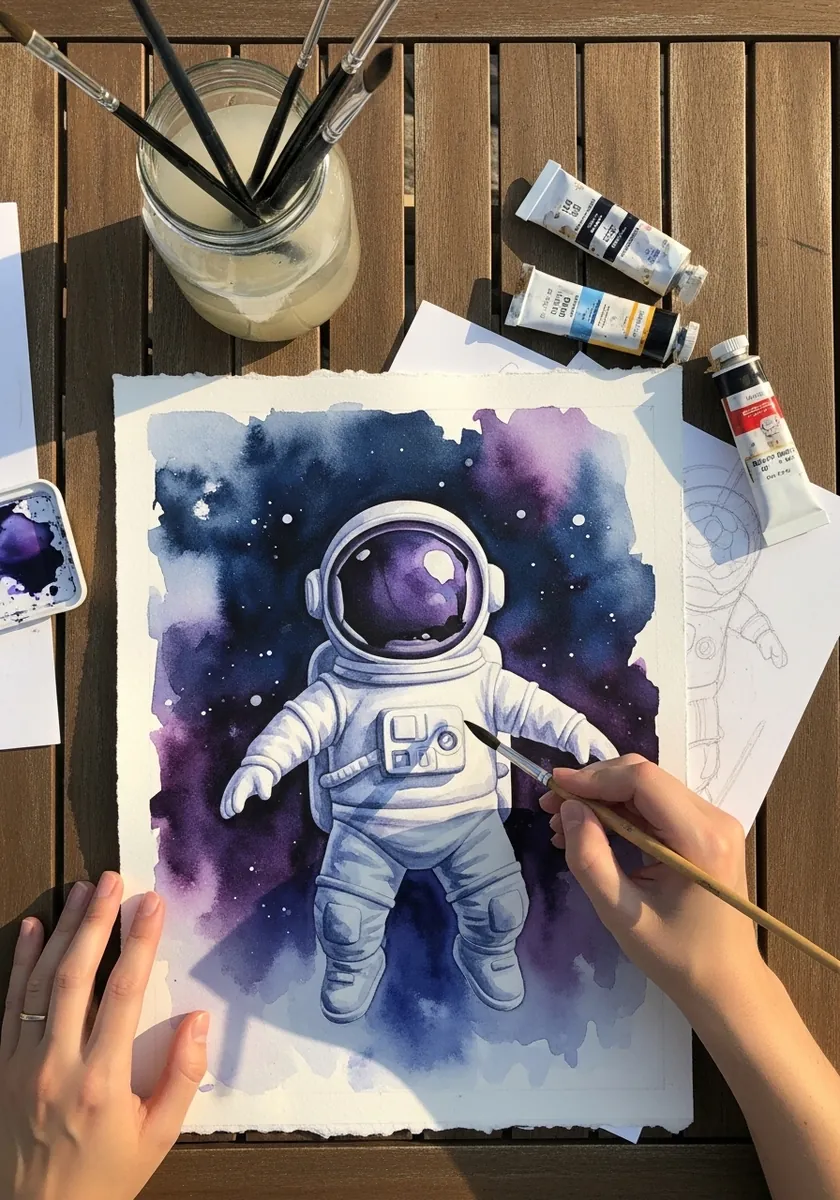
A space suit is essentially a set of stacked cylinders, which makes it an ideal clay subject. Build the torso, arms and legs as separate padded segments with a visible gap at each joint. The dark visor gives you one flat area against all that roundness.
6. Bespectacled Fox in Graphite
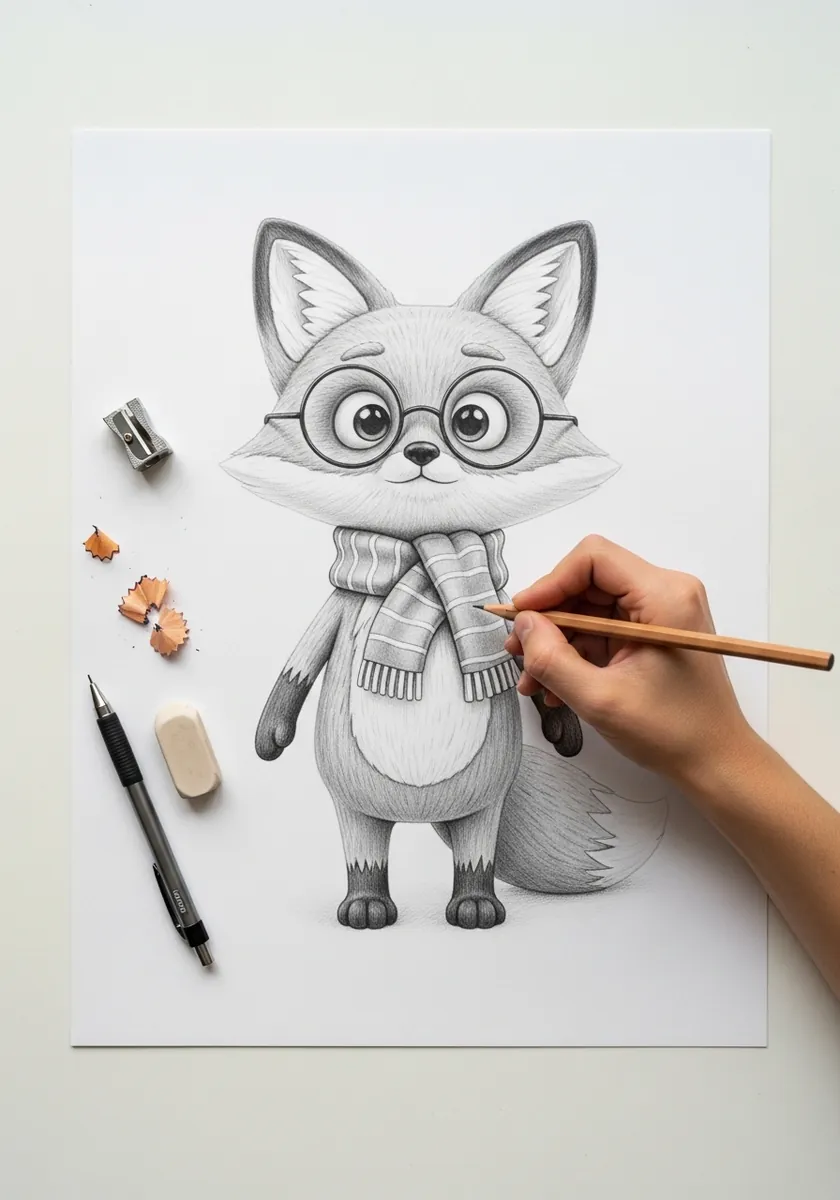
This is the cleanest shading exercise in the list. Work entirely with a blending stump, keep every transition gradual, and lift one broad soft highlight on the forehead, muzzle and belly. The glasses and scarf add hard elements that make the softness read. The same blending discipline drives these 3D pencil drawing studies.
7. Retro Robot on Kraft Paper
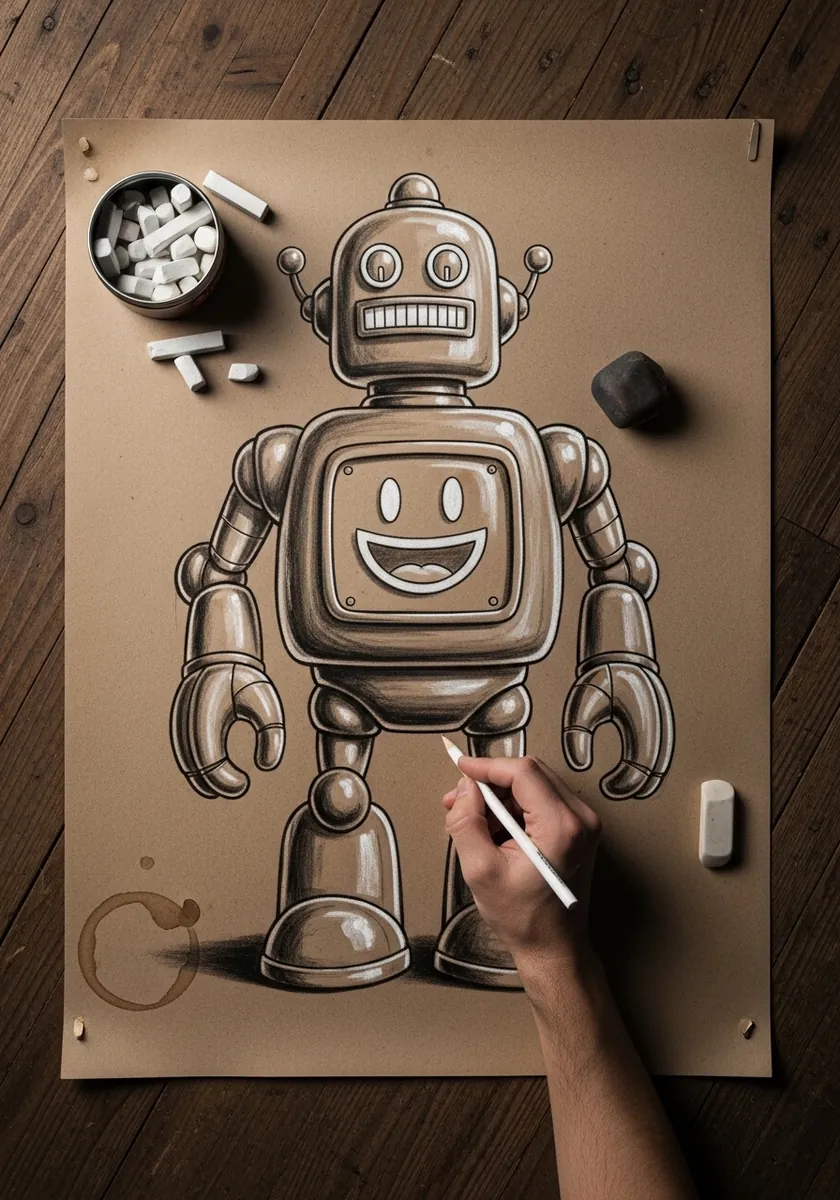
A robot should be all hard edges, so making one from clay is a deliberate contradiction. Keep the boxy silhouette but round every corner generously and let the panel lines sit as shallow grooves. Kraft paper gives you the mid tone free.
8. Witch with a Bubbling Cauldron
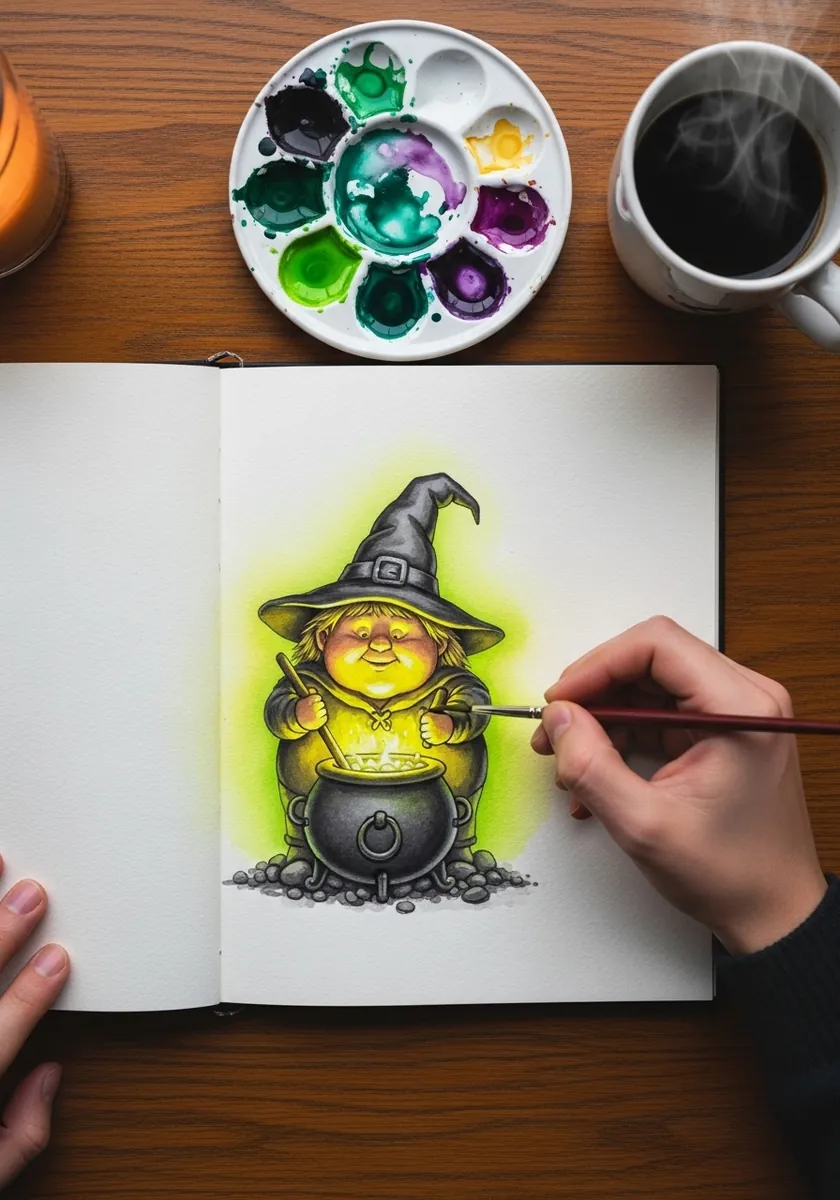
Glow and clay work well together because both are soft. Build the witch from stacked spheres, then let the green light from the cauldron wrap up under her chin and hat brim. Light from below is unusual, which is exactly why it looks striking.
9. Sumo Wrestler in Blue Ink Wash
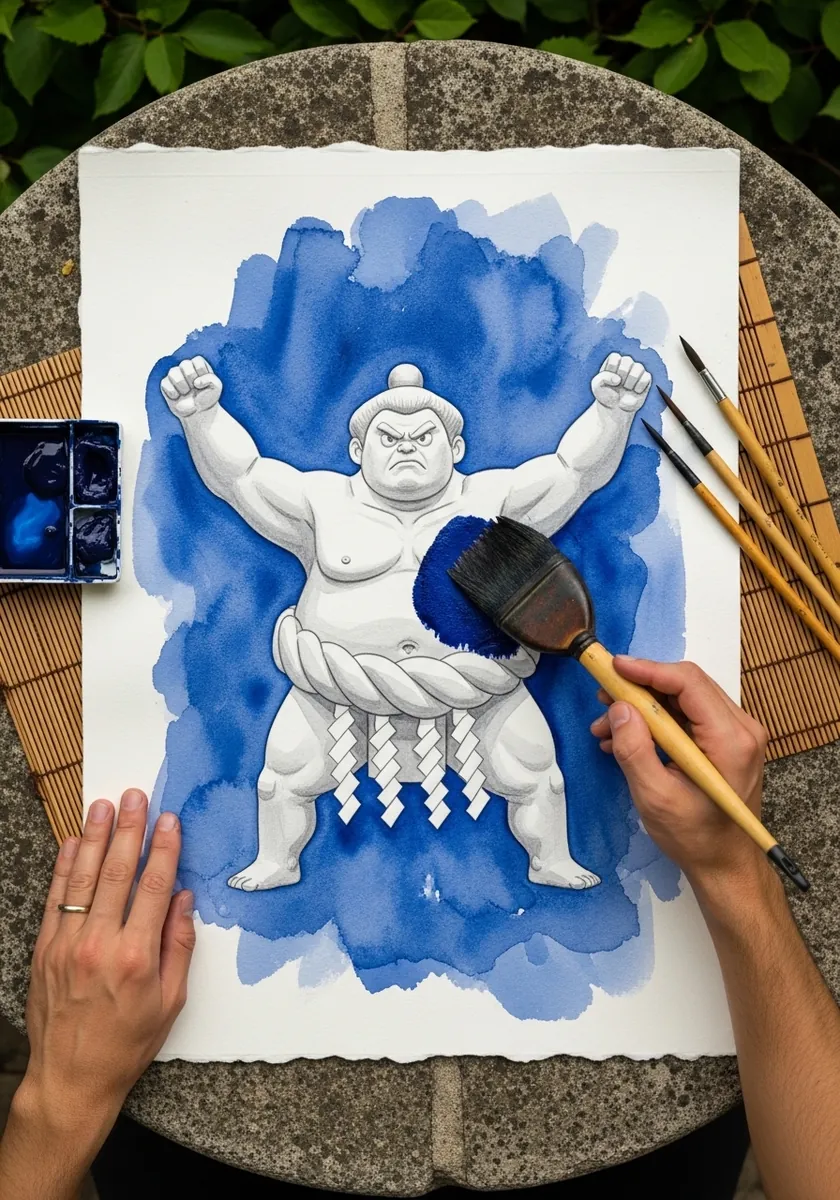
Weight is the whole subject here. Make the base wide and heavy, the legs short, and let the mass settle downward as if the clay is slumping. The rope belt becomes a thick rolled cylinder, which is the most sculptural element on the figure.
10. Cloud Spirit in Soft Pastel
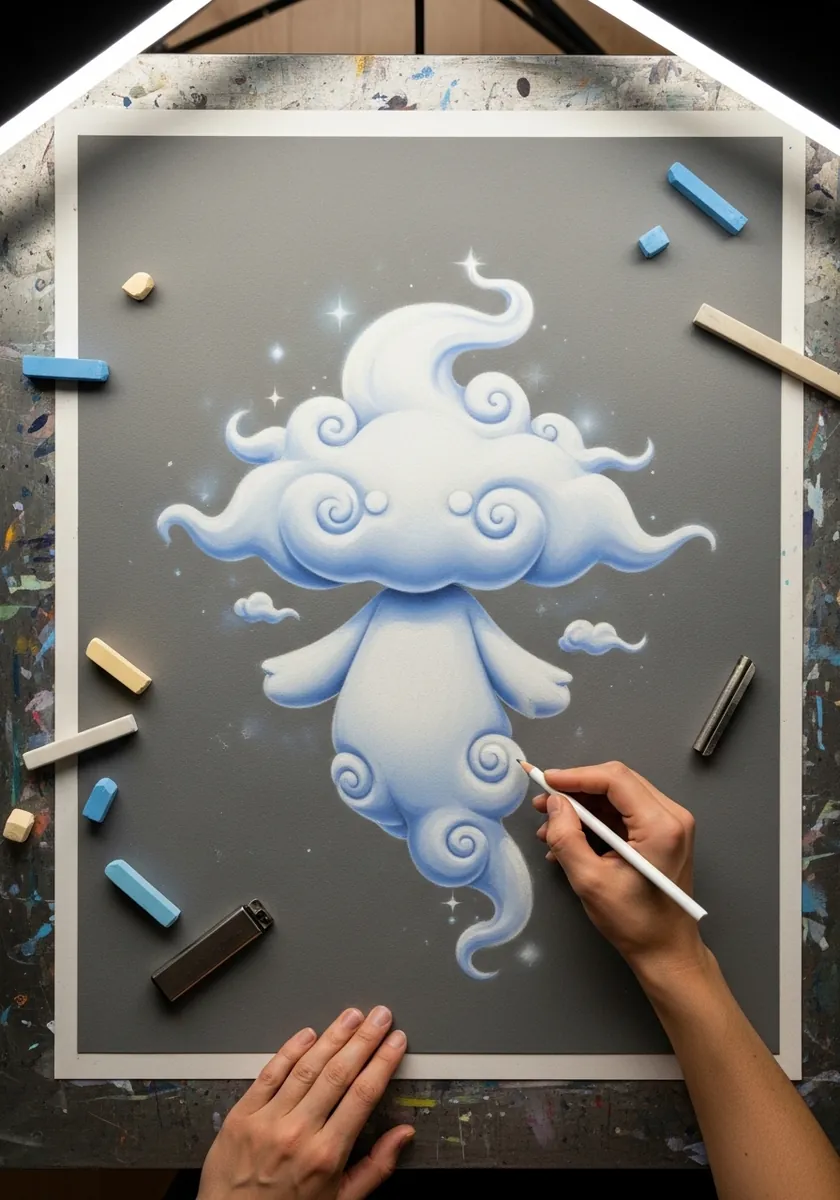
Not everything needs a hard silhouette. Build this one from soft spiralling masses that dissolve at the edges, working in pastel on gray so you can push both lighter and darker. Keep the face barely suggested so the shape stays the subject.
11. Stout Viking with a Hammer
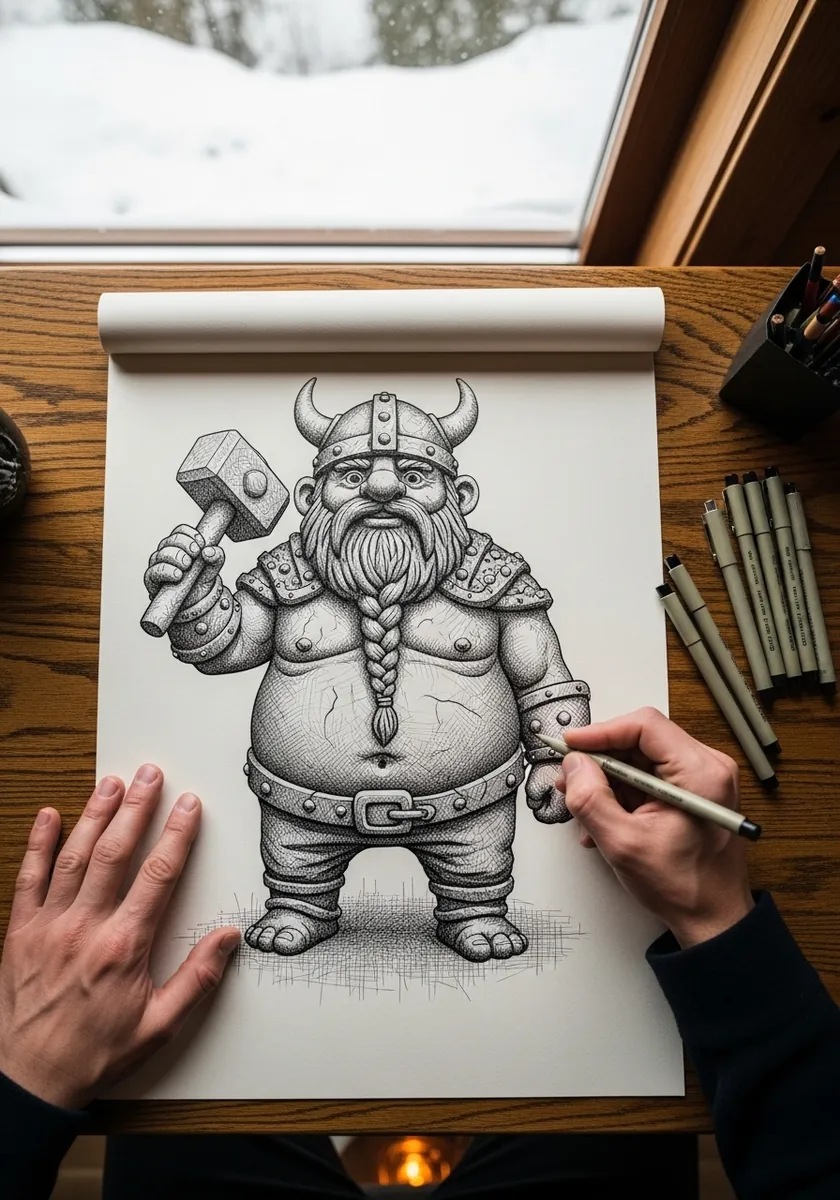
Beards are just another rounded mass. Model it as one large soft form with a few deep grooves rather than individual hairs, and let the braid be a stack of small spheres. The hammer head stays blocky, which anchors all that softness.
12. Sleepy Bear in Warm Watercolor
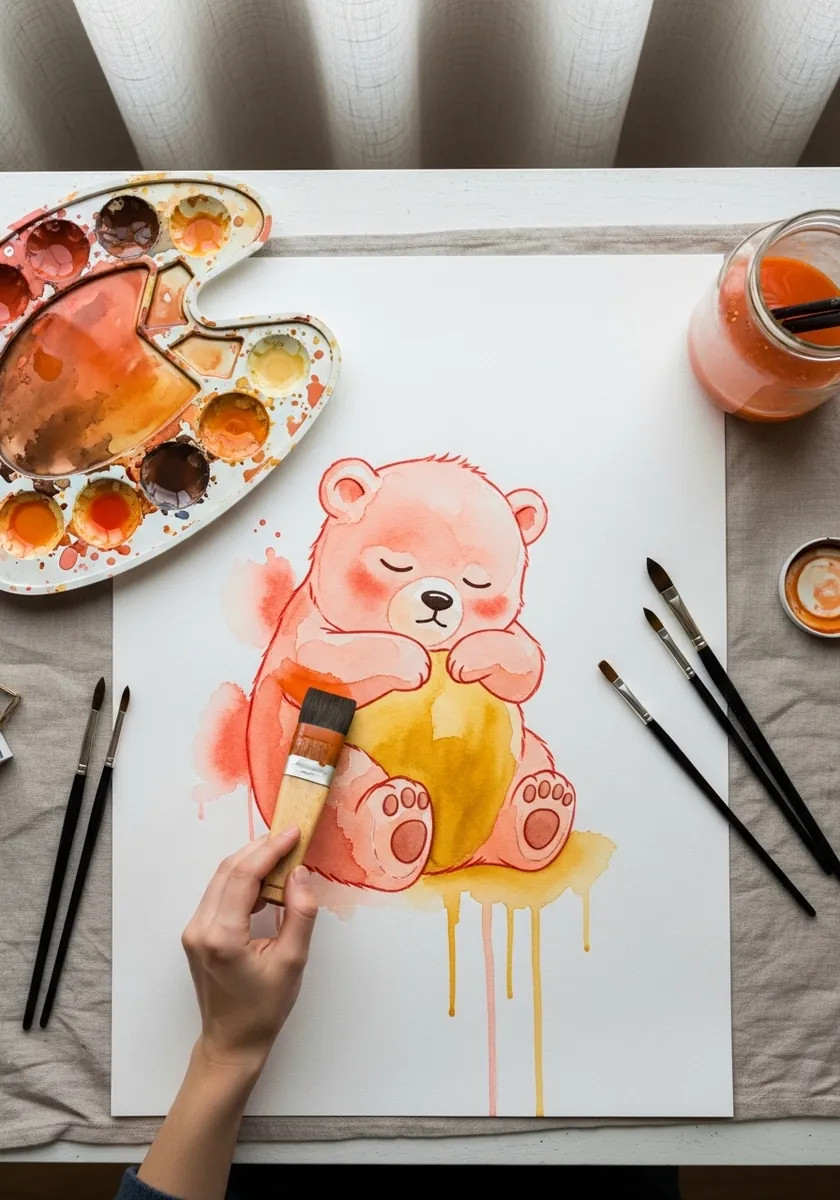
Warm limited color plus wet edges suits a soft subject perfectly. Paint the bear as three overlapping rounded shapes, let the pigment pool at the lower edge of each one, and allow the drips at the bottom to read as clay slip running off.
13. Celestial Fox in Gold Line
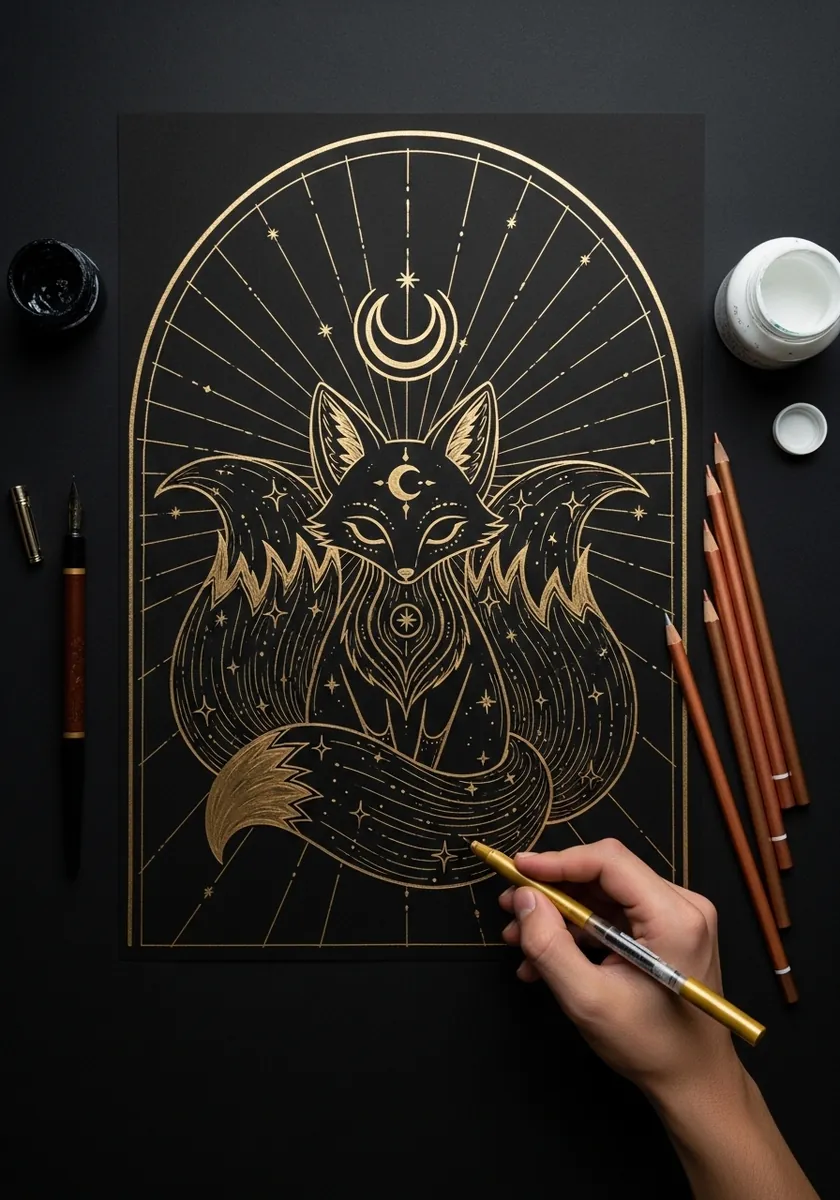
Reducing a clay character to pure line is a real test. On black, draw only the contour of each volume and a single curved line to suggest where it turns away from the light. If the volumes read from that alone, the underlying construction is sound.
14. Pirate Character Modeled in Real Clay
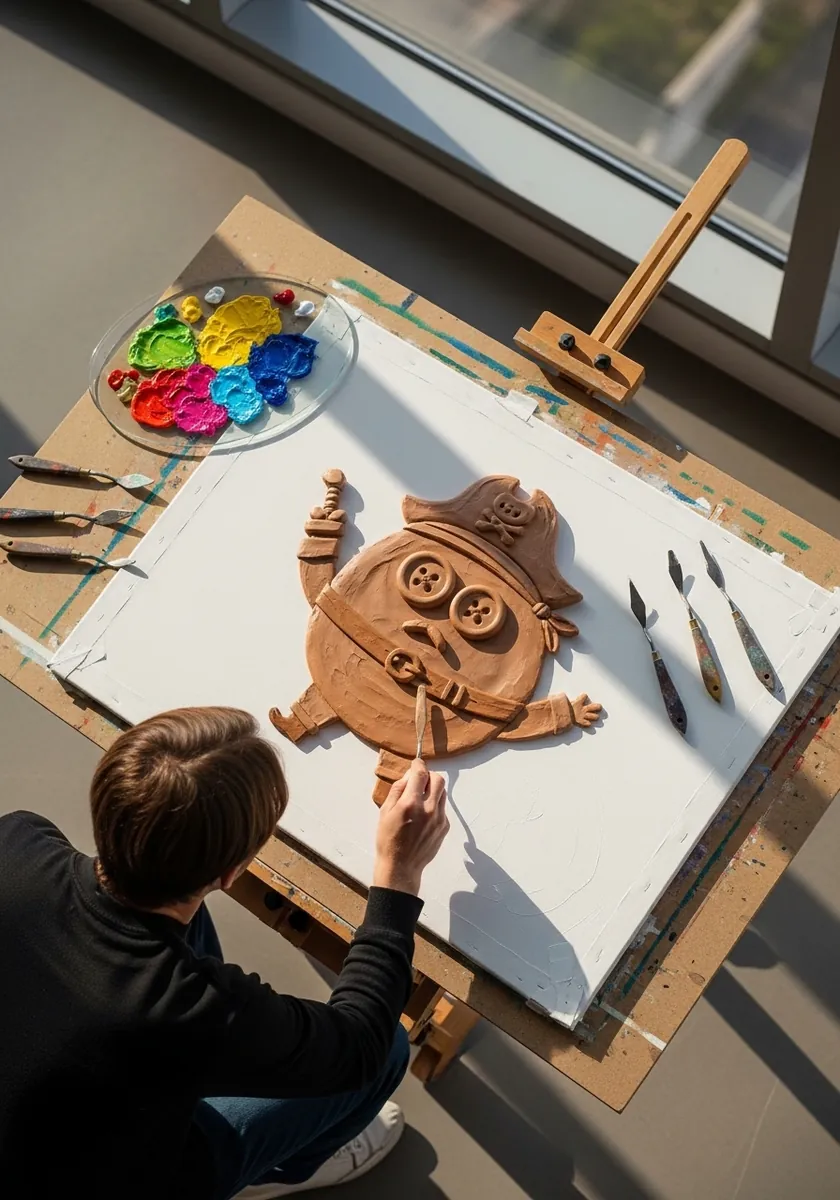
This is the reference the rest of the list is imitating. Building a rough maquette from real modeling clay for an hour teaches you more about how light falls on rounded forms than a week of drawing from photographs ever will, and you can rotate it to check the silhouette from every angle before committing to paper.
15. Flamenco Dancer in Red and Gold
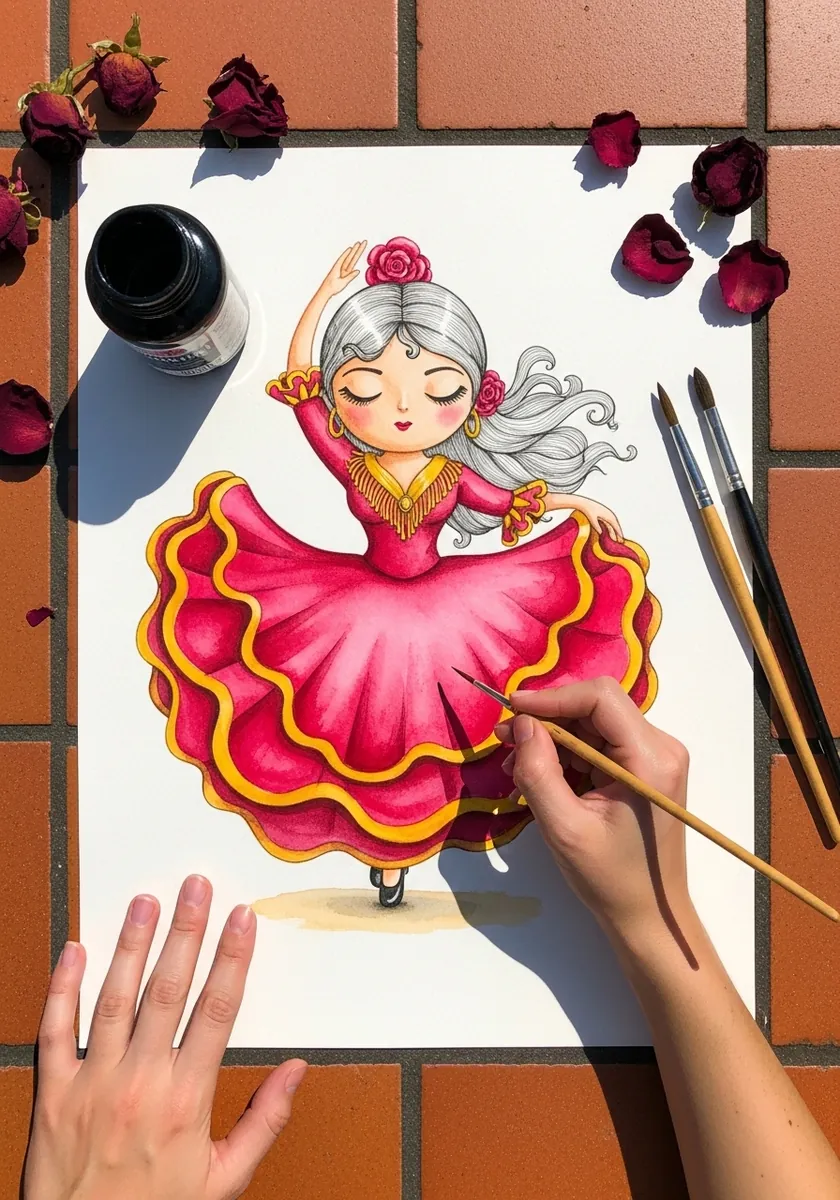
Ruffles are stacked rounded ridges, not zigzags, and treating them as zigzags is what flattens most dancer drawings. Build the skirt as a series of thick overlapping bands, each one bulging outward and casting a soft shadow onto the band below it. The tiny head and hands exaggerate the skirt’s enormous mass.
16. Mushroom Character in Graphite
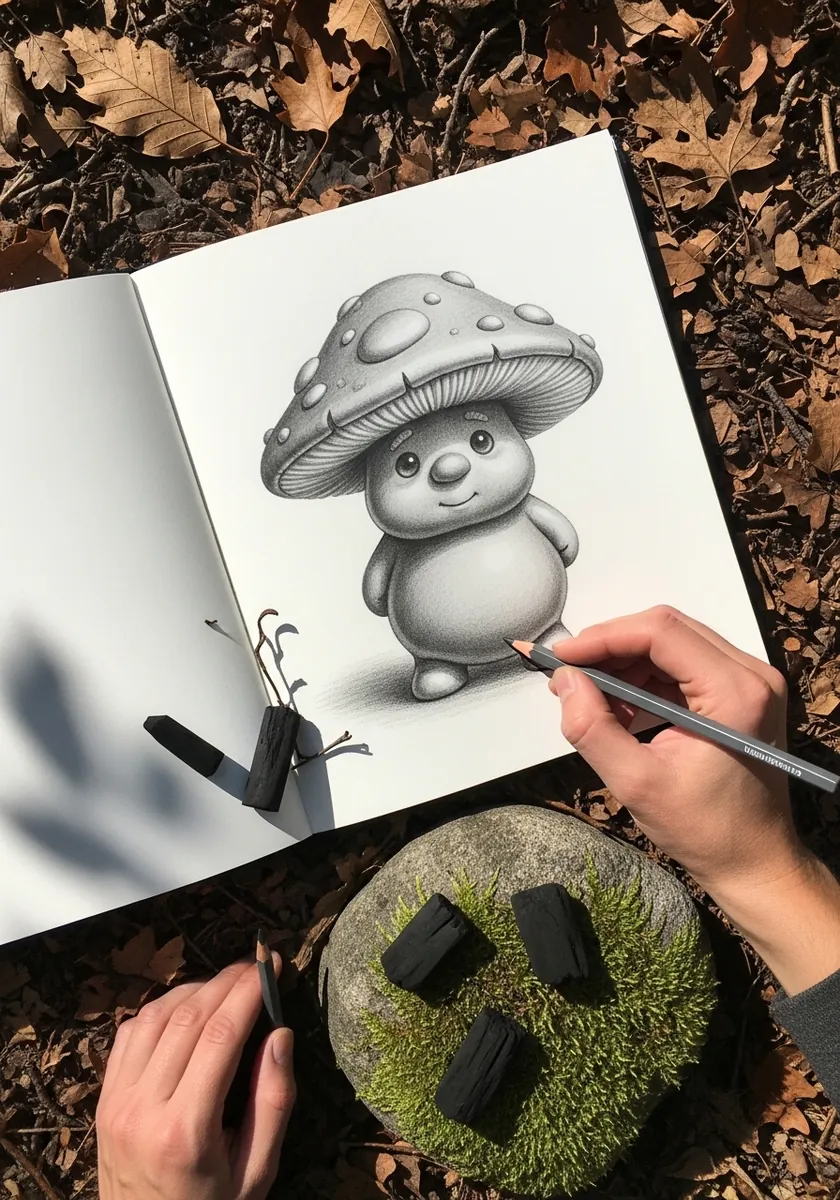
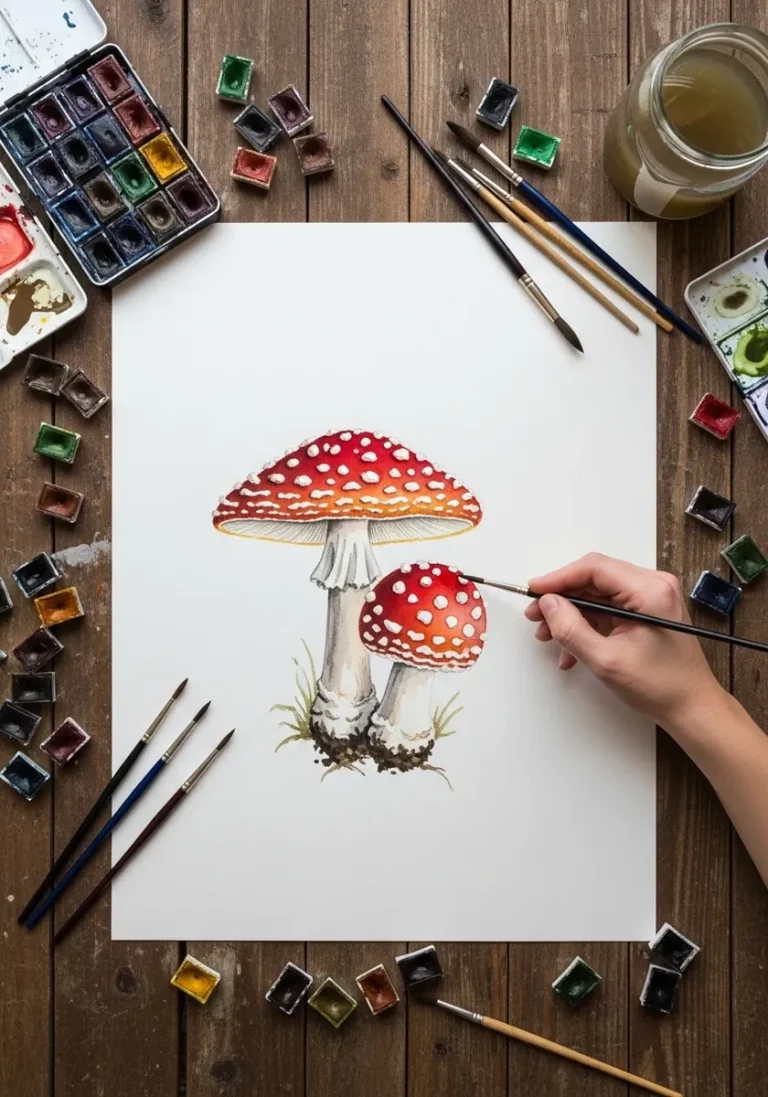
A mushroom cap is a dome, which is the single easiest clay form to shade. Put the broad highlight just off center on the upper left, let the tone deepen evenly toward the rim, and press the spots in as shallow dents rather than drawing them flat.
17. Bold Folk Koi Fish in Red and Blue
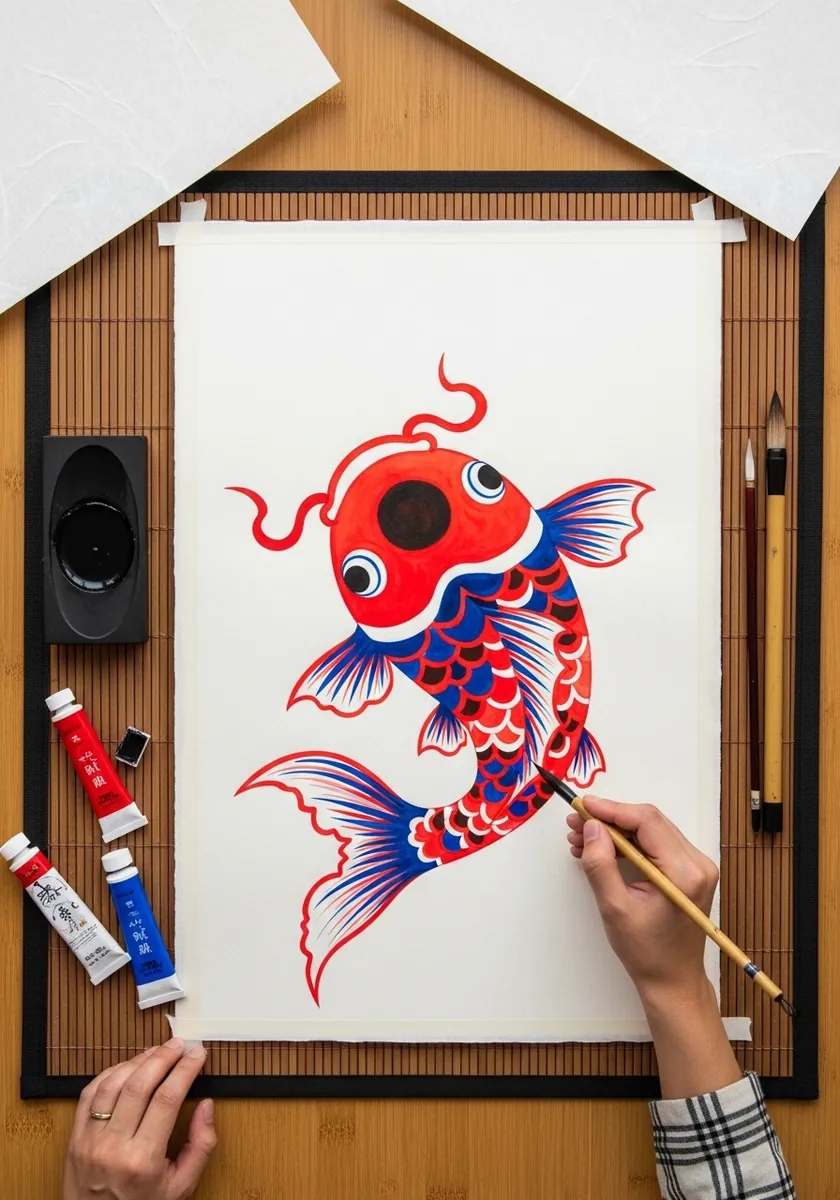
Flat folk color and clay volume can coexist if you commit to one or the other. Here the forms stay rounded and sculptural but the color is laid completely flat, so the drawing reads as a painted clay figurine rather than a shaded one.
18. Round Chef with a Baguette
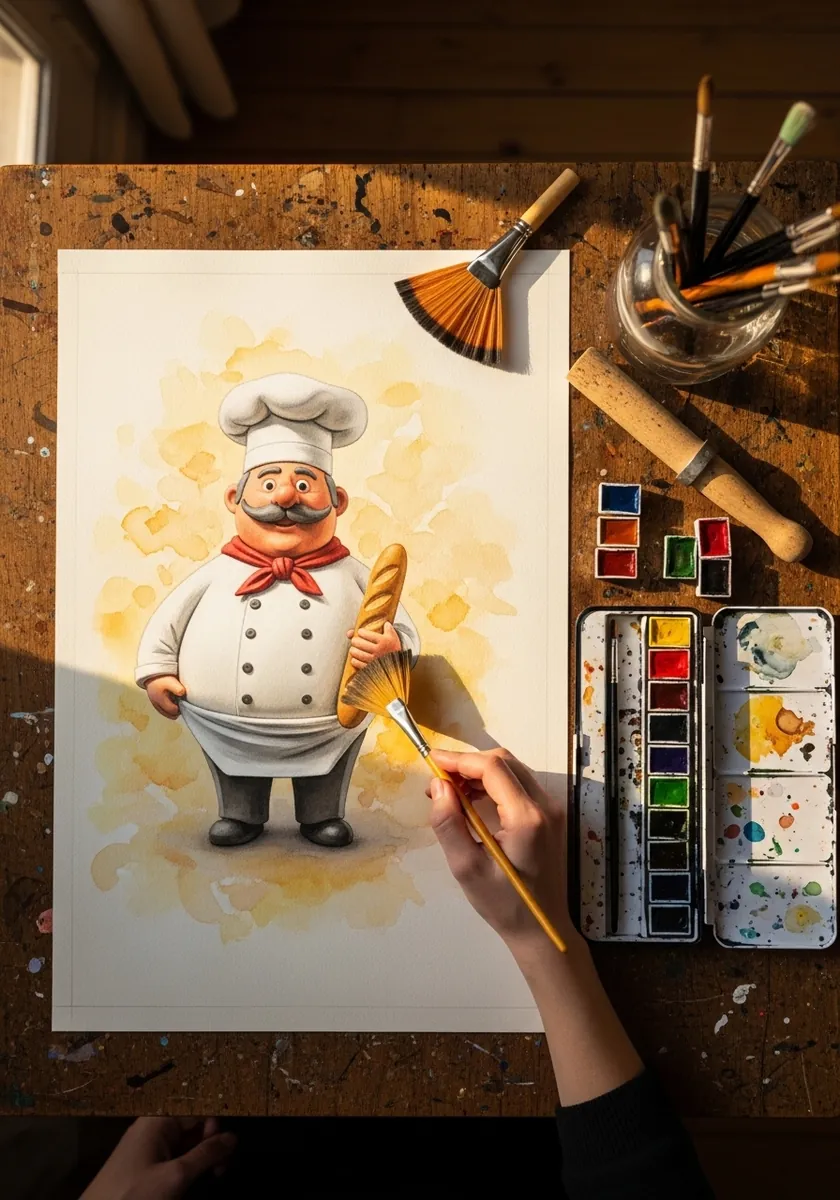
The chef’s hat is a soft cylinder that flops outward at the top, which is a good test of whether you are thinking in volumes. Keep the uniform almost white and let the shading alone describe the belly, since there is no outline to help you.
19. Astronaut Cat in Gouache
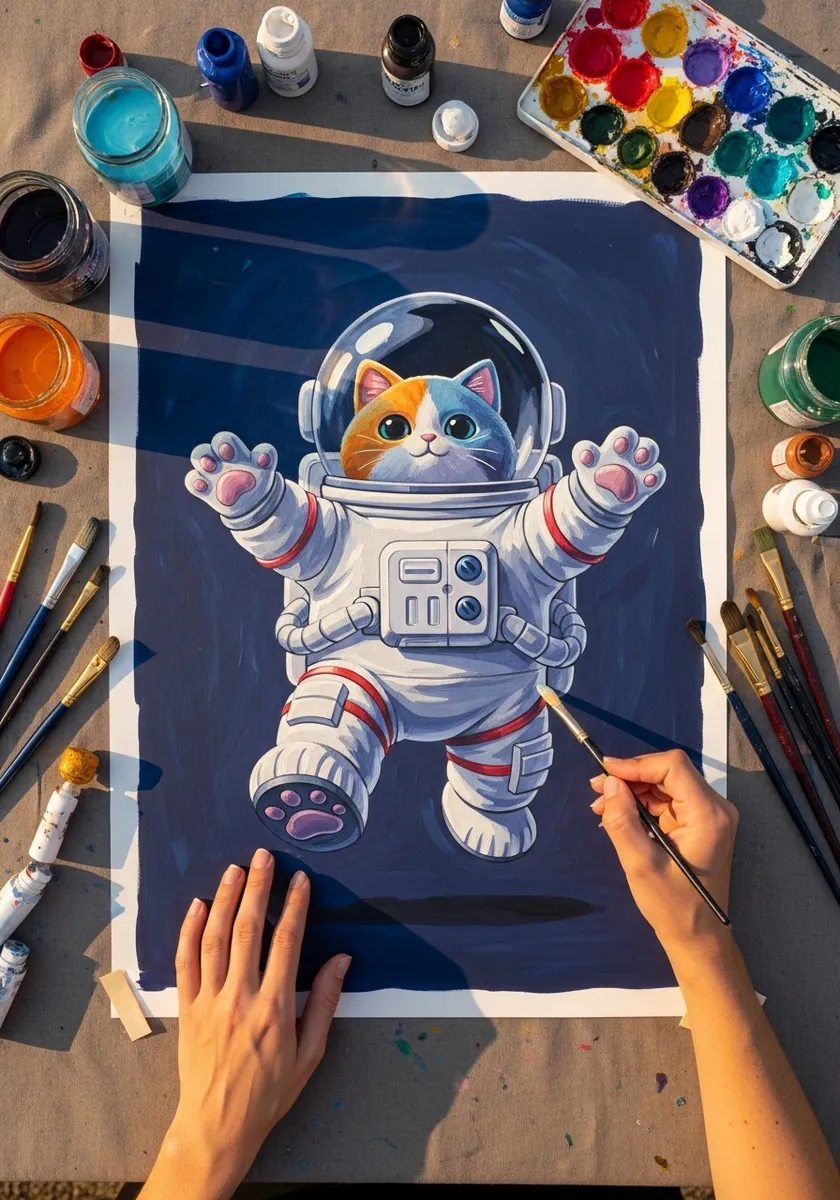
Two rounded characters in one: the cat and the suit. Draw the suit as padded segments with visible ring joints, then let the cat’s face fill the helmet dome. The paw prints on the boots add a small flat detail against all the curves. If you want the cat anatomy underneath first, these 3D pencil art cat studies cover it.
20. Superhero Toddler in Oil Pastel
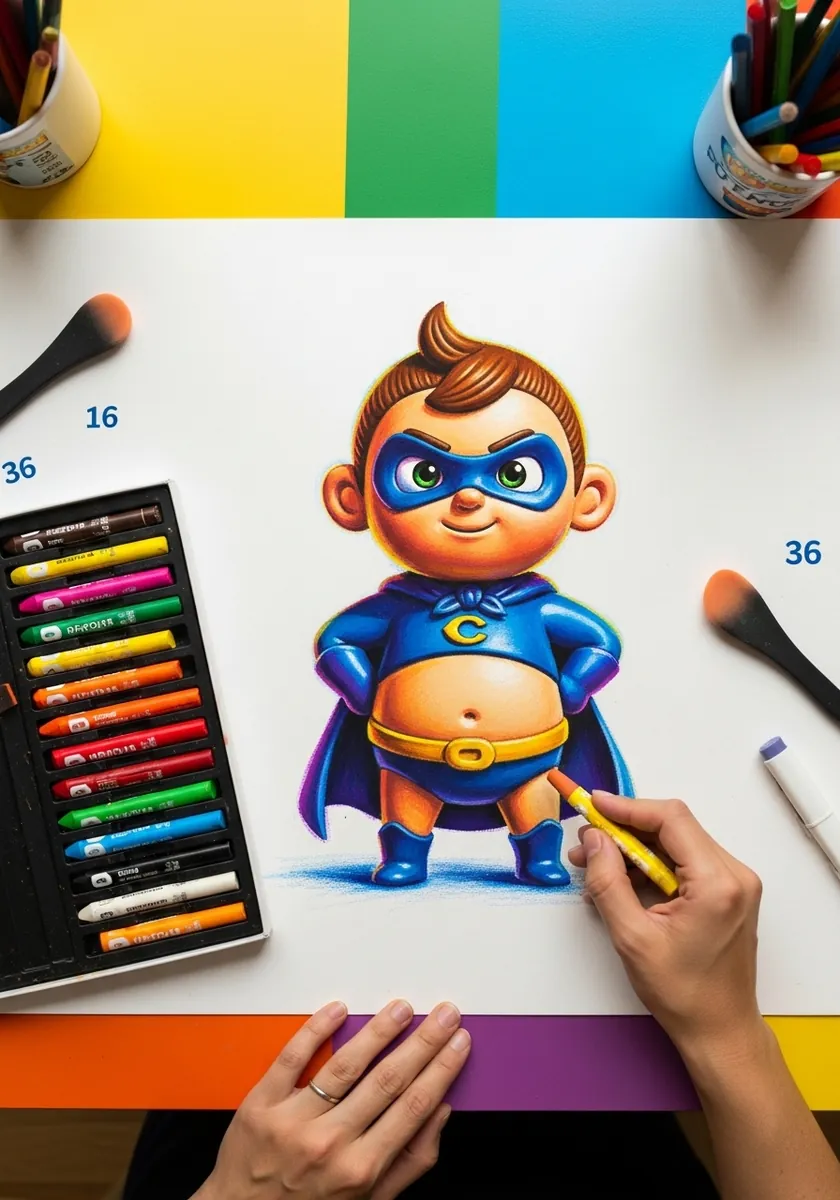
Oil pastel is too thick for detail, which forces you to describe everything with volume alone. Block each body part in one color, then work a lighter tone over the top of each rounded form and blend the join with a finger.
21. Cute Tiger Cub in Flat Color
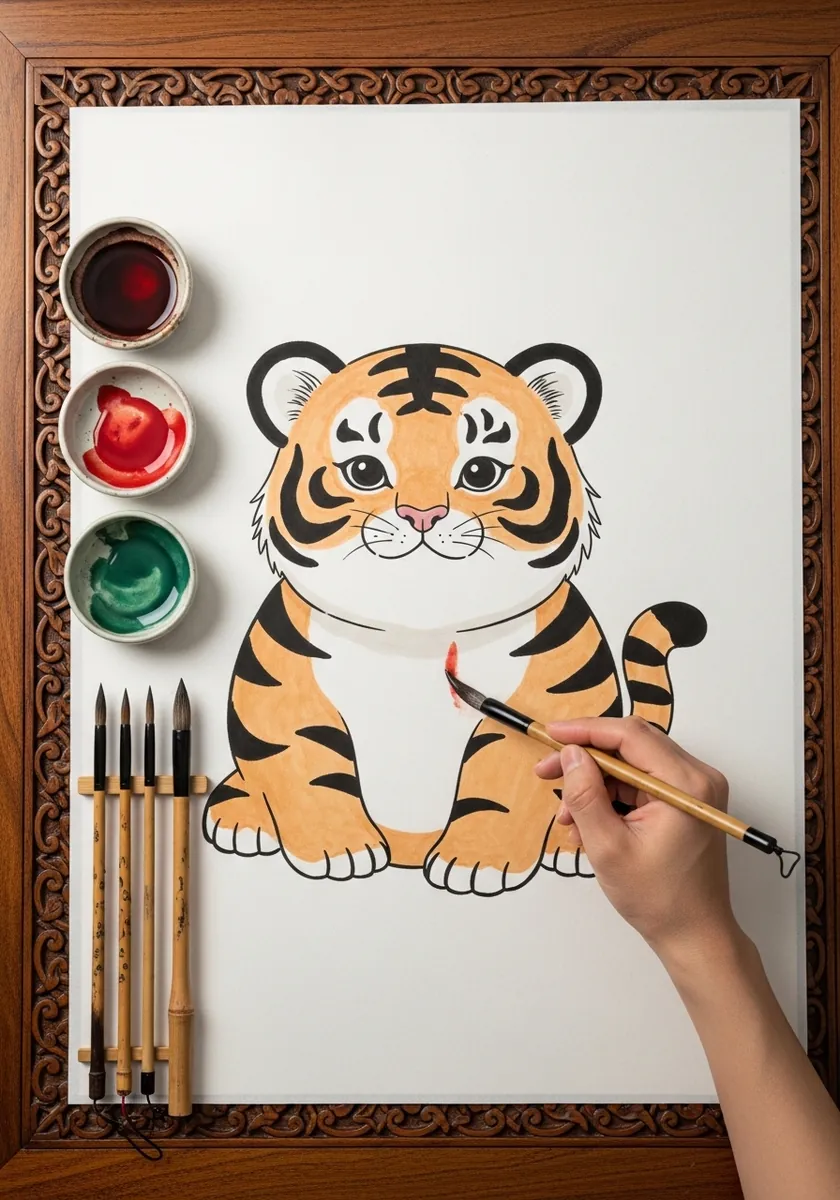
Stripes wrap around a volume, and drawing them straight across is the single mistake that flattens a character fastest. Curve every stripe so it follows the surface of the limb or body underneath, compressing them where the form turns away from you. The same rule governs the knitted sweater later in this list.
22. Neon Ninja on Black Paper
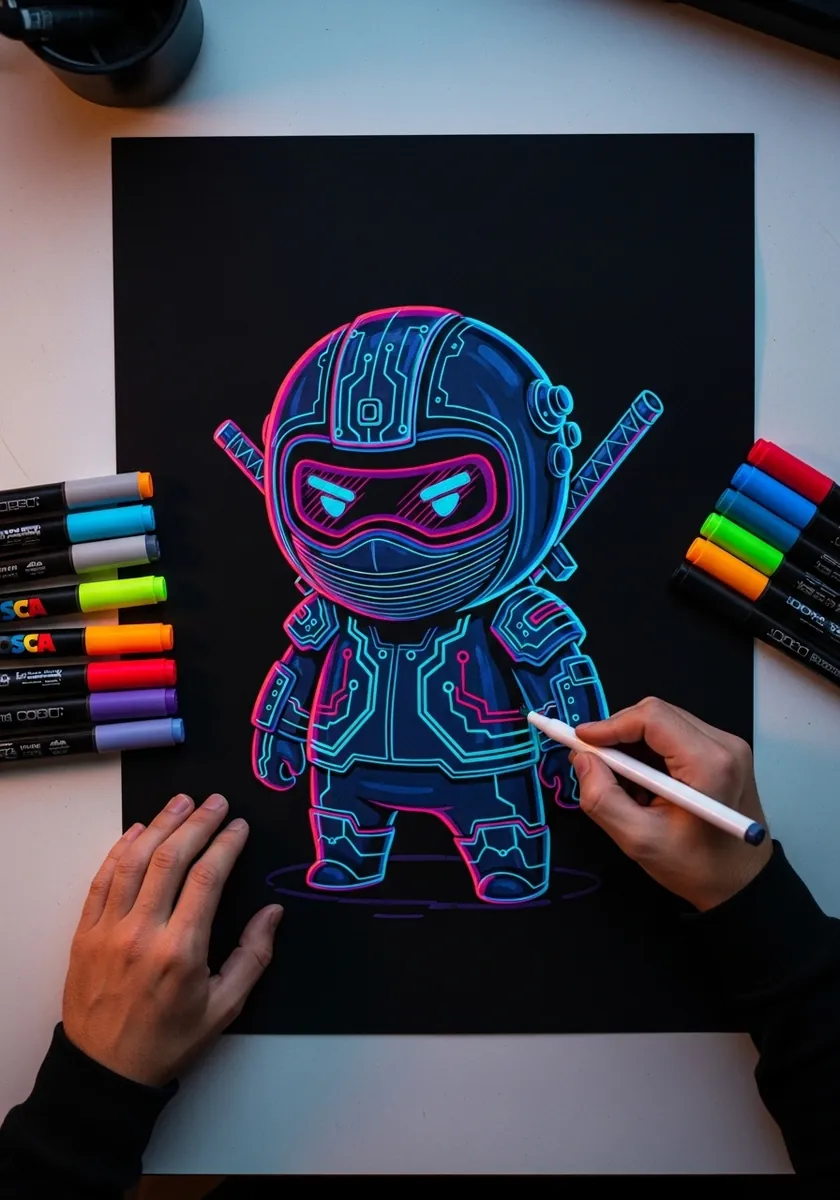
Neon and clay are opposites, so this one keeps the round silhouette and throws away the shading entirely. Draw only the outer contour and the ridge where each volume turns, then double every line with a softer glow color outside it.
23. Victorian Gentleman in Block Print Style
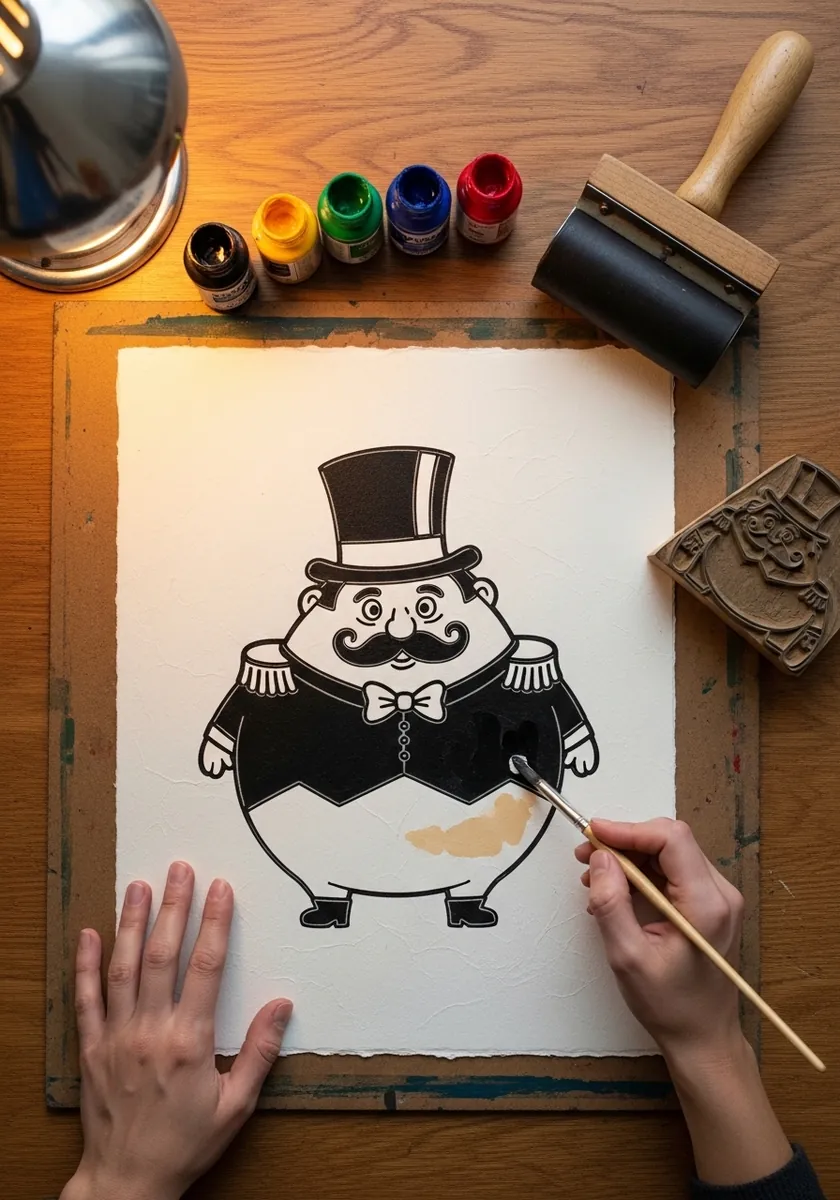
Reducing to pure black and white removes shading as an option, so the volumes have to be implied by silhouette alone. If a rounded belly and a stubby arm still read as clay in flat black, the underlying shapes are doing their job.
24. Ganesha Figure in Traditional Colors
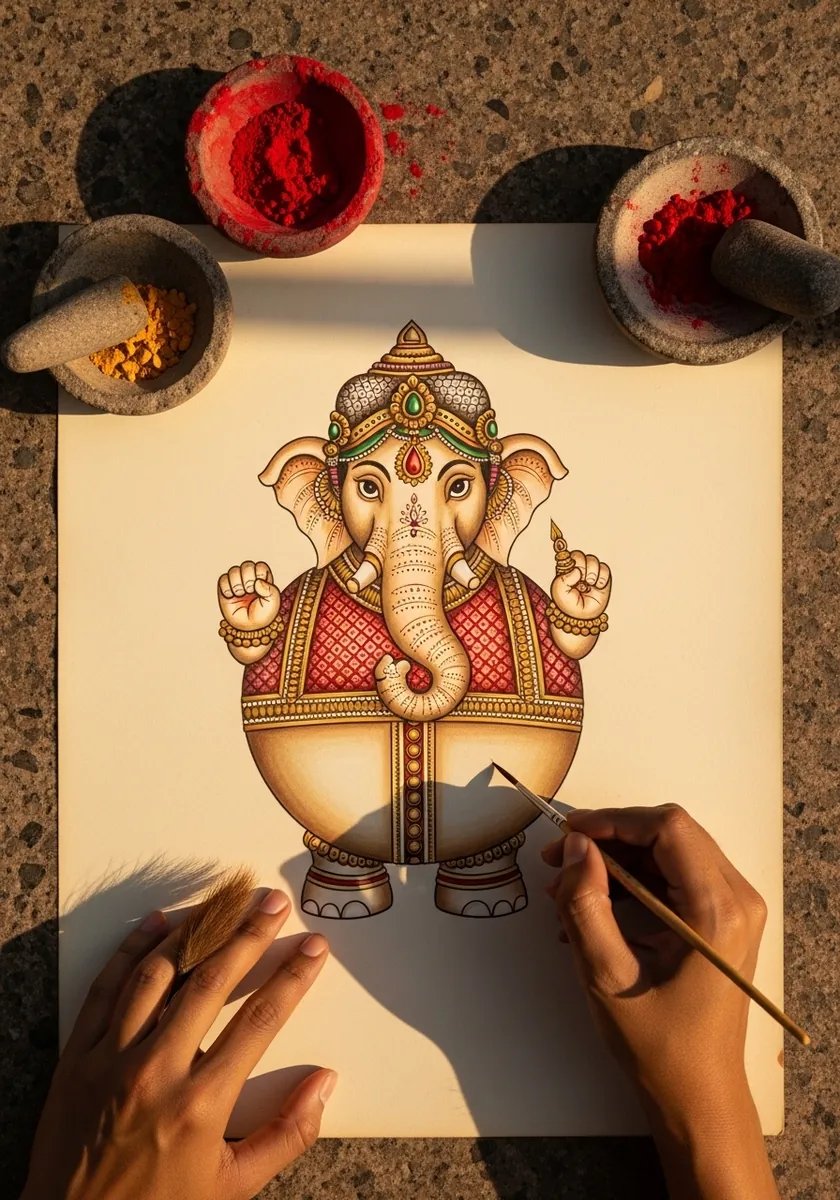
Traditional forms and clay style meet naturally here, since clay Ganesha idols are made every year for festivals. Keep the volumes soft and rounded, then lay the fine ornamental line work over the top without letting it flatten the underlying form.
25. Polar Bear in a Knitted Sweater
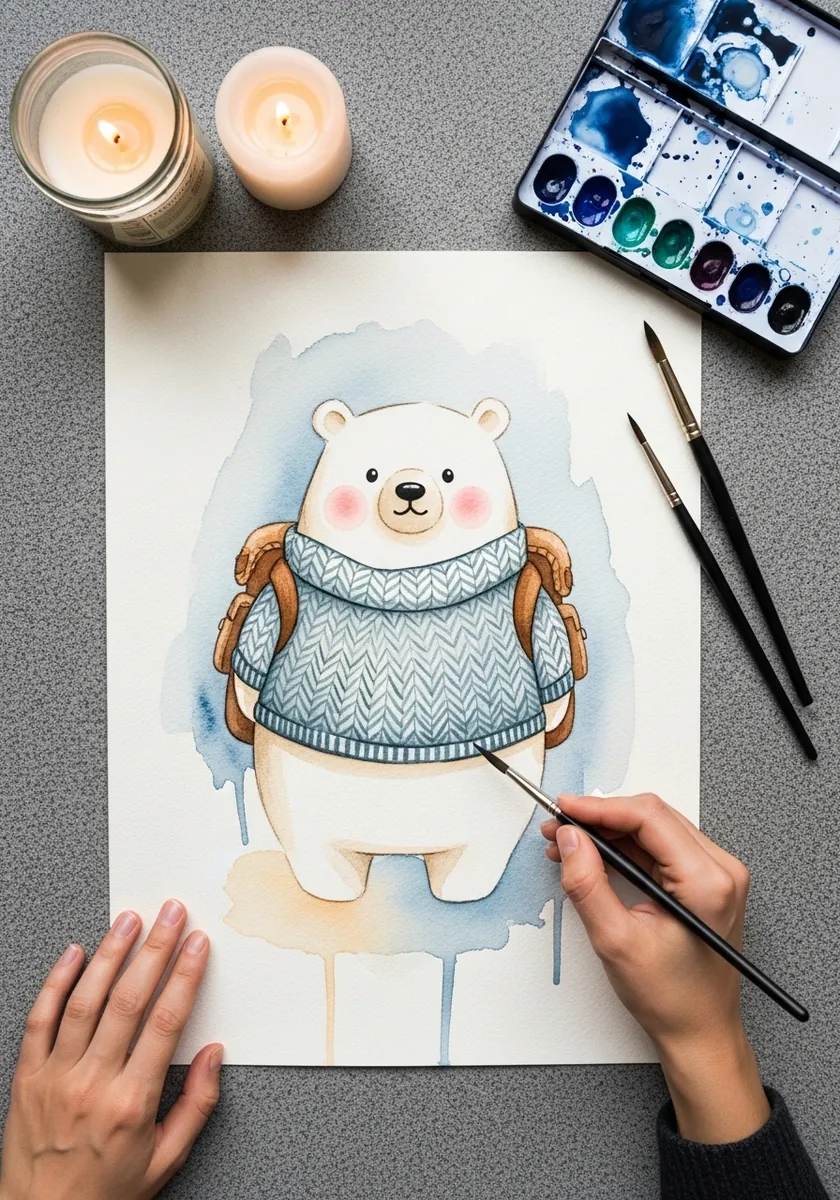
A knitted texture on a rounded body is a useful problem. Draw the stitch pattern following the curve of the chest and let it compress at the sides where the body turns, exactly as the stripes on the tiger do.
26. Skeleton Playing a Trumpet
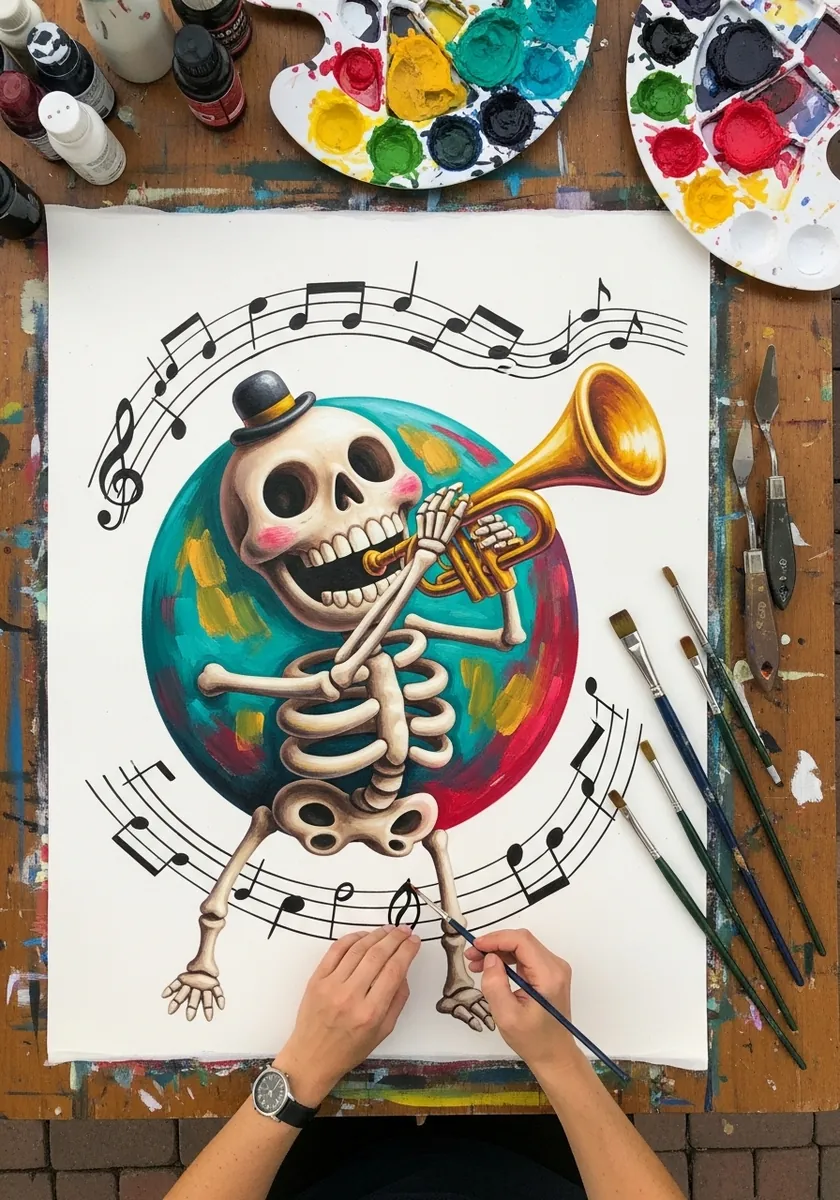
A skeleton is all hard edges, so rounding one is the strongest test in this list. Make every bone a smooth rounded rod with bulbed ends, keep the skull a soft dome, and the figure stops being macabre and turns friendly instead.
27. Surfing Duck at the Beach
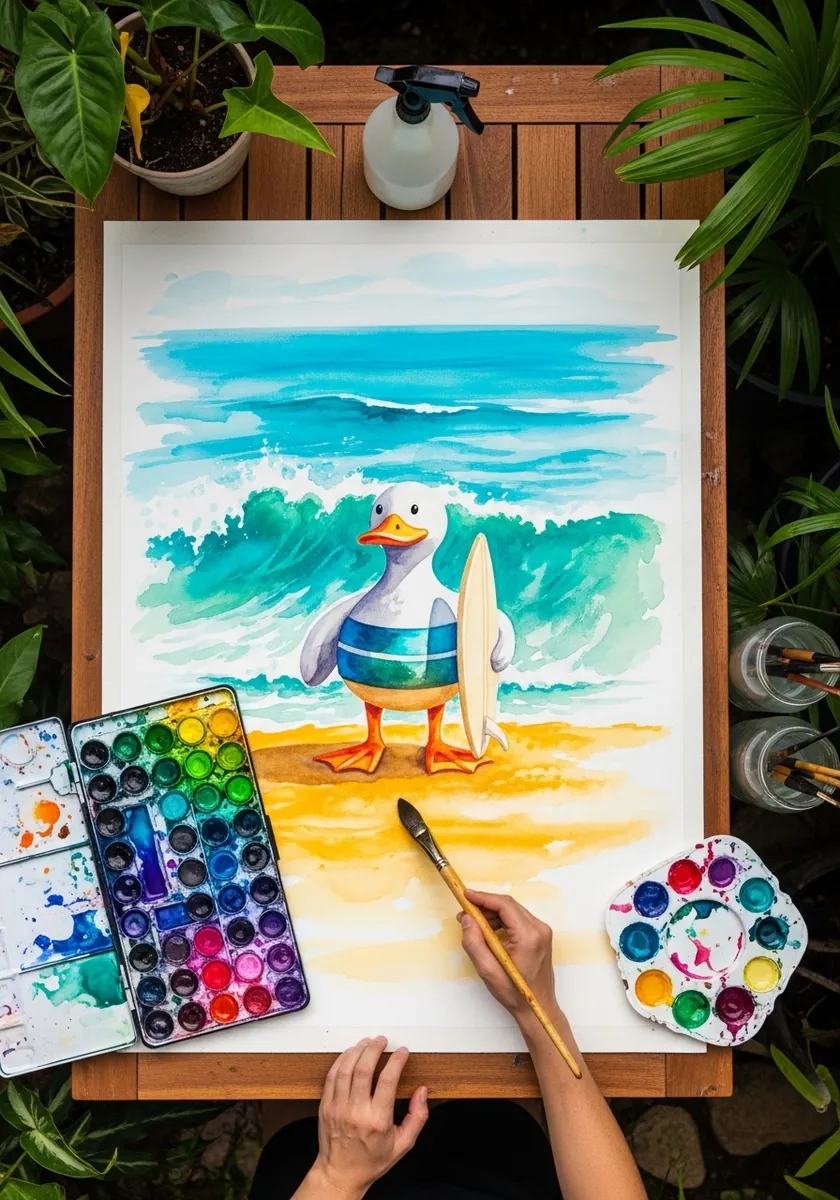
Simple characters need environmental support to carry a whole page. The duck itself is three spheres and a beak, so the breaking wave and the stretch of sand behind have to supply everything else. Keep the background loose and wet and the character crisp, so the two layers stay clearly separated.
28. Stippled Lucky Cat in Fine Ink
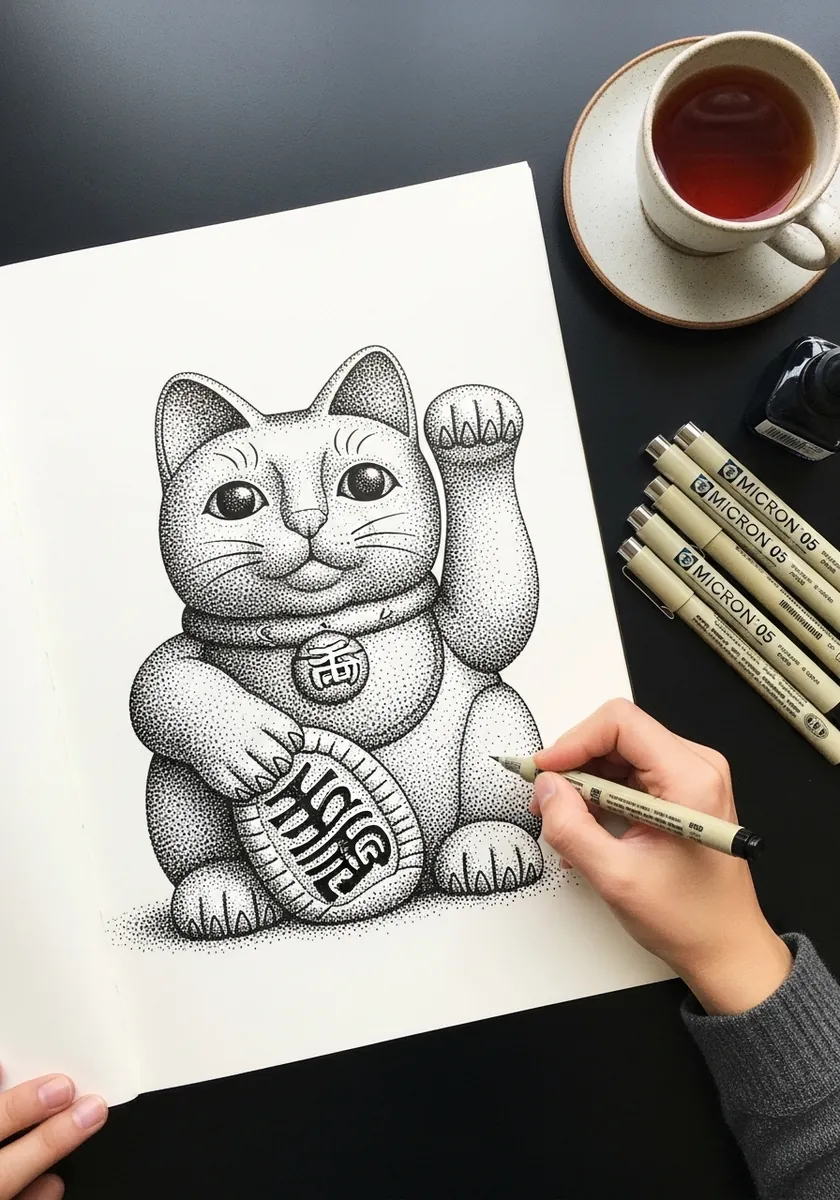
Stippling a rounded form is the slowest way to shade it and also the most instructive. Increase dot density gradually as the surface turns away from the light, and leave the paper bare at the broad highlight on the forehead and chest.
29. Small Angel with Feathered Wings
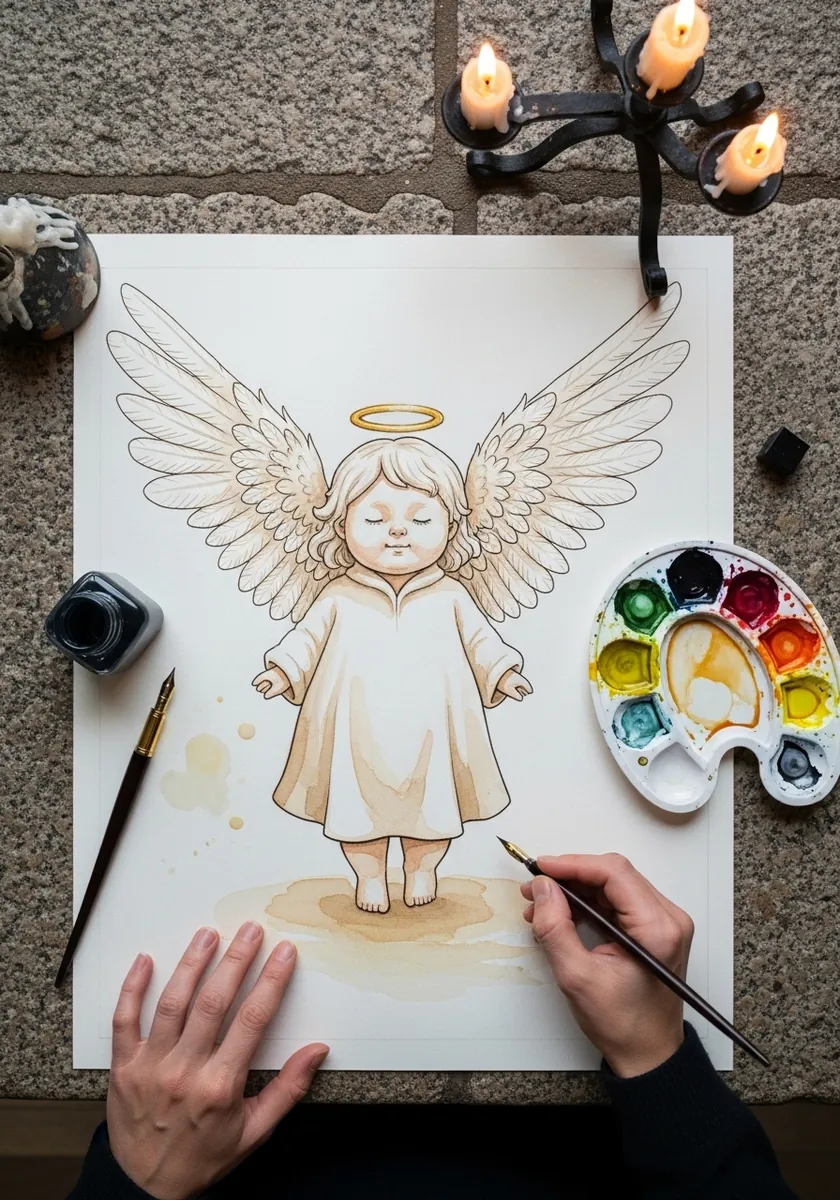
Wings are the one place to break the roundness rule. Keep the body as soft stacked volumes but let the feathers stay flat and layered, which gives the figure a contrast of textures and stops the whole thing turning shapeless. For the feather structure itself, watercolor bird drawing is the closest reference.
Frequently Asked Questions
What is clay style character art?
Clay style character art is drawing or painting a character so it looks sculpted from soft modeling clay rather than drawn flat. Every form is built from rounded volumes, edges stay soft, and the shading uses gentle gradients that suggest a matte physical surface.
How do you make a drawing look like clay?
Round off every edge, build each body part from a sphere or cylinder, and shade with soft gradients instead of hard shadows. Add one broad soft highlight on top of each volume and a small contact shadow underneath, which together suggest a solid matte object.
What makes clay style different from normal cartoon style?
Flat cartoon art uses outlines and flat color fills, so the character reads as a drawing. Clay style removes the reliance on outline and builds the figure entirely from shaded volumes, so the character reads as an object that exists in three-dimensional space.
Which proportions work best for clay characters?
Push everything toward roundness. An oversized head, a wide heavy base, short stubby limbs and simplified hands all read as clay, because real modeling clay sags under its own weight and cannot support thin extended shapes.
Do you need real clay to draw in this style?
No, but a small physical maquette helps enormously. Roughly shaping the character in modeling clay lets you rotate it, see how light falls on real rounded forms, and check the silhouette from angles a photo reference would never give you.
References and Further Reading