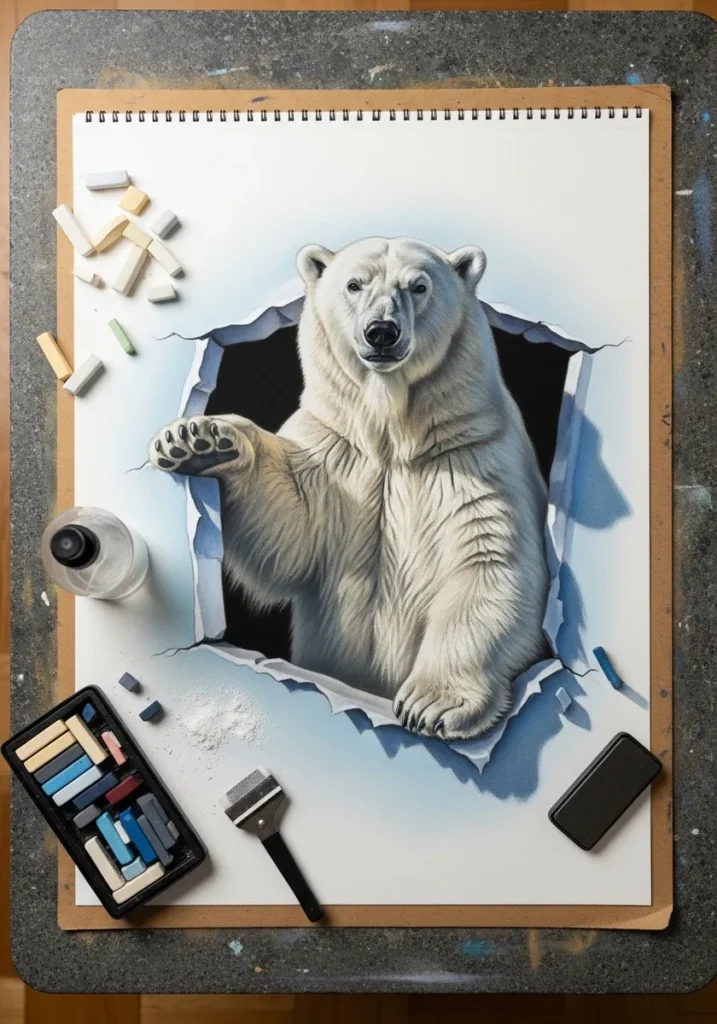
Anamorphic 3D art is a drawing distorted so it snaps into a solid-looking form from one specific viewing angle. On paper the effect comes from breaking the sheet's edge and casting a shadow onto the blank paper outside the drawing.
Key takeaways
- Anamorphic art only resolves from one viewing angle, so choose that angle before you draw anything.
- The illusion lives at the boundary: something must cross from the drawing onto the blank paper.
- A cast shadow belongs on the untouched sheet, never inside the picture, or the subject stays flat.
- Any hole or portal needs visible wall thickness drawn around its rim to read as an opening.
- Render the subject conventionally first; the escape effect is added last, not built in from the start.
Anamorphic art is a distortion that only resolves from one place. Stand in the right spot and a stretched smear on the floor becomes a solid object. On a sheet of paper the same principle applies in miniature, and it comes down to what happens at the edge of the drawing.
Every piece below uses one of three boundary tricks. Something crosses the tear onto blank paper. A shadow falls on the undrawn sheet rather than inside the picture. Or a hole is given thick walls so it reads as an opening instead of a printed image.
The subjects range from a breaching whale and a polar bear pushing through cracked paper to a nautilus spiral and a clockwork owl. What connects them is not the subject at all, it is that final boundary decision. If you want to build the underlying shading first, these 3D digital art ideas use the same logic, and eye drawing practice builds the gradients these pieces need.
Each entry names the subject, the medium, and the one technique that makes it escape the page.
Compiled by the GS Art Zone editorial team. Last updated August 2026. Each idea is paired with the specific step that produces the effect, so you can go from the reference straight to paper.
What You Need Before You Start
- An HB for construction plus a 4B and 6B for the deep darks inside torn edges and holes
- A kneaded eraser to lift the pale top lip along every tear, which is what gives paper thickness
- A ruler for the perspective pieces and a compass for the spiral and mandala work
- Watercolor or ink in a small set for the color pieces, and a white gel pen for black paper
- Heavy paper of at least 200 gsm so wet media does not buckle and ruin the flat sheet illusion
1. Humpback Whale Breaching a Floating Platform
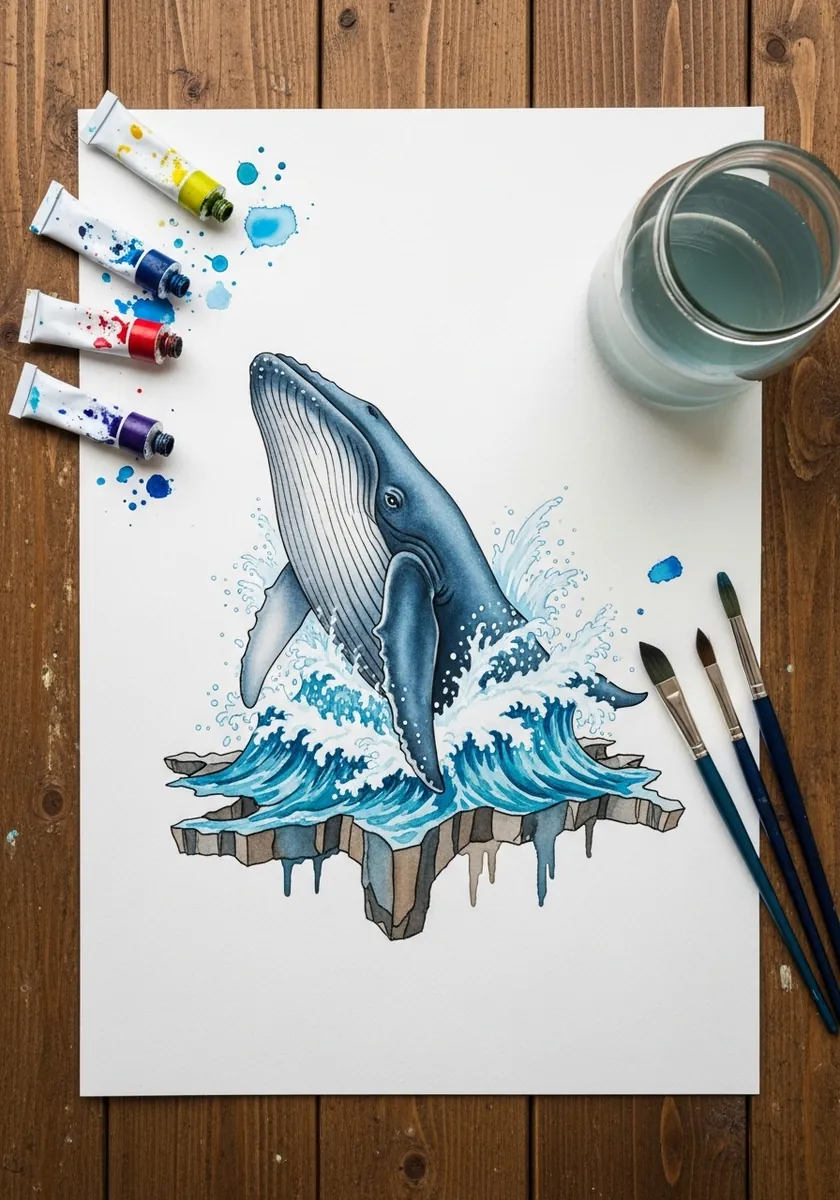
A whale bursts from water sitting on a floating chunk of rock. Give the slab real thickness with a dark underside and let the drips fall past its edge, since the visible base is what turns a flat scene into a levitating object.
2. Twin Tree with Roots Below the Surface
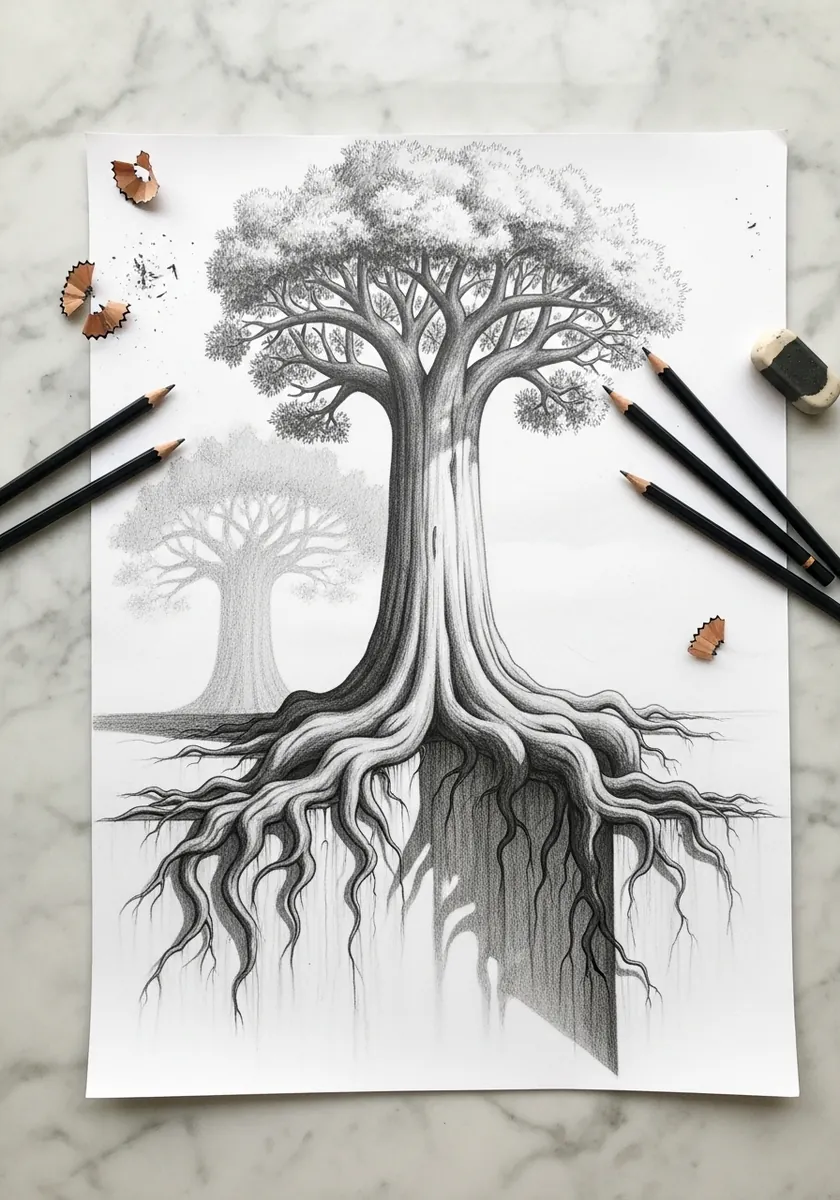
A tree drawn above and below a horizontal ground line. Keep everything above the line light and everything below it dark, and let the roots cast a wedge of shadow so the ground reads as a solid plane cutting through the page.
3. Golden Lion on a Cracked Gold Slab
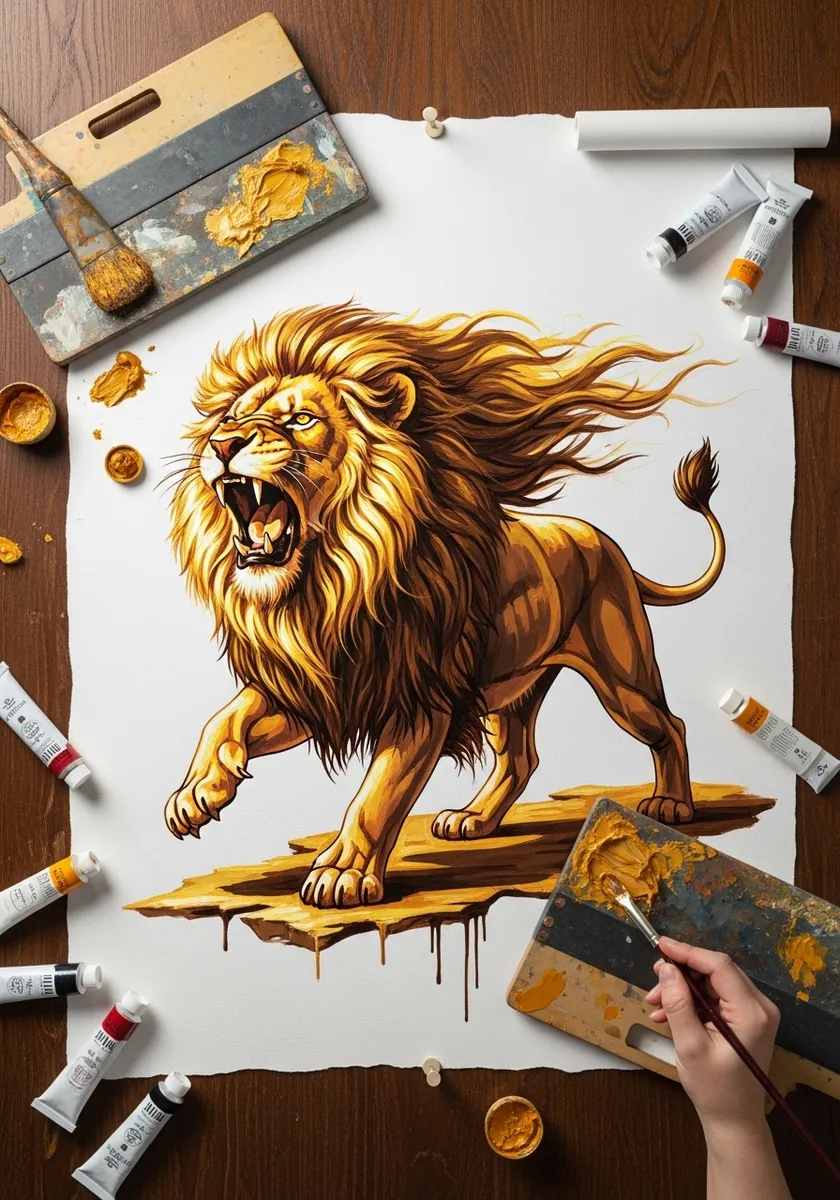
A lion standing on a broken gold platform with paint running off the edge. The drips are the trick here, because liquid falling past the boundary tells the eye the slab has an underside and therefore a real height.
4. Erupting Volcano with Lava Drips
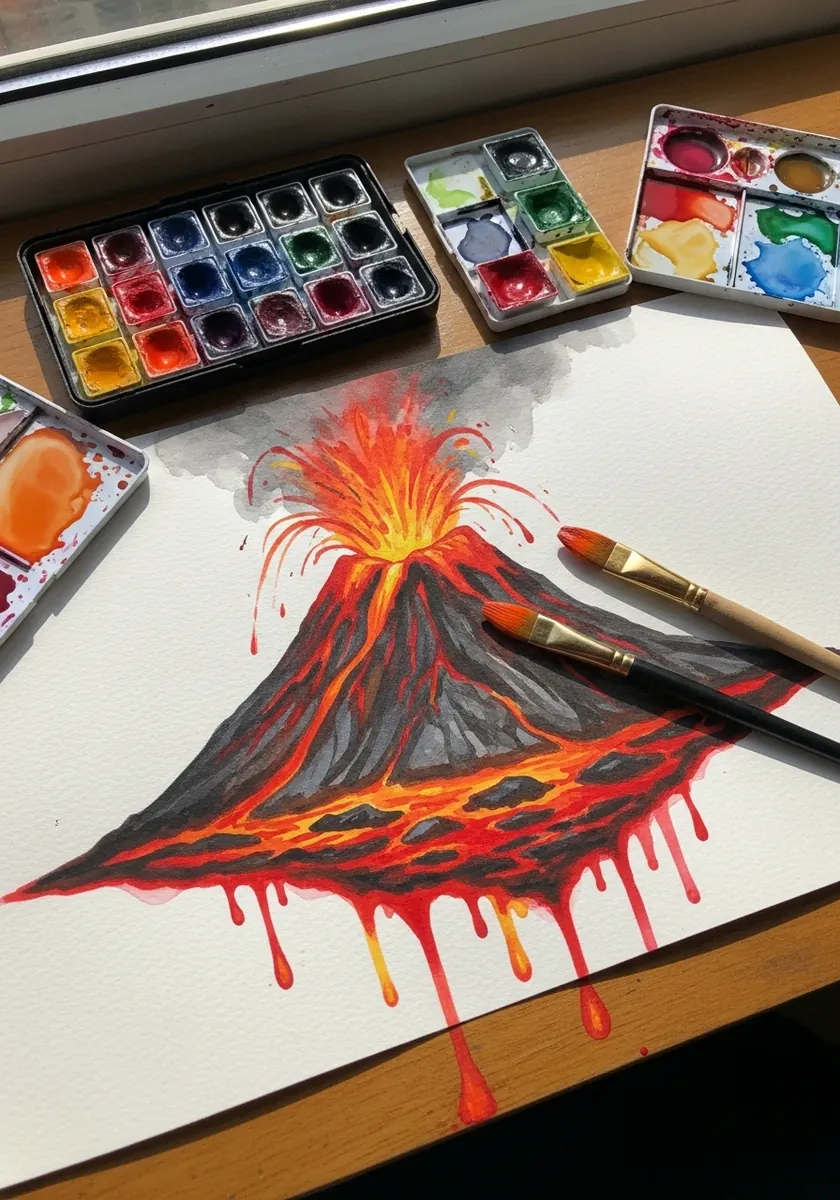
A volcano with lava that runs off the bottom of the image. Let the paint physically drip below the drawn base line so the lava appears to leave the picture and pool on the paper itself.
5. Coiled Dragon Over Mountain Peaks
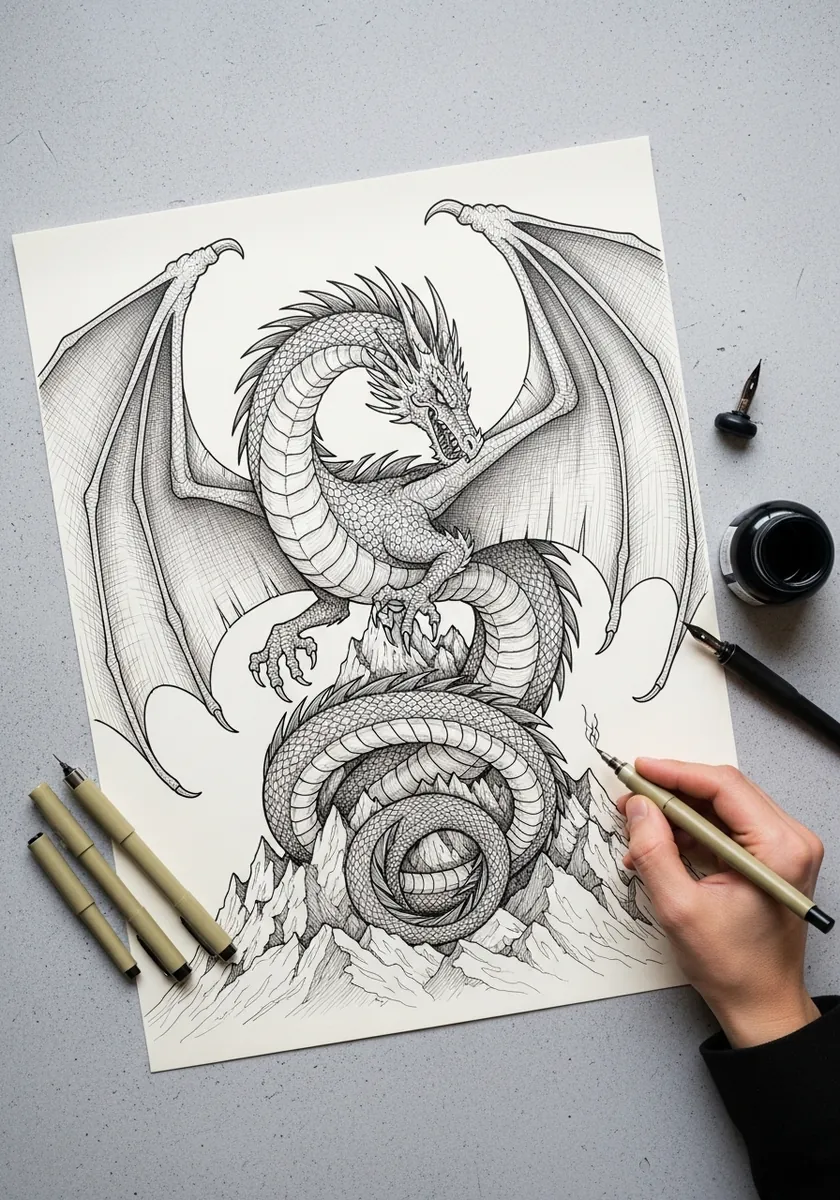
A dragon coiling above mountains in fine line. Draw the wings so one passes in front of the peaks and one behind them, since that single overlap decision creates all the depth in an otherwise flat line drawing.
6. Leaping Koi Fish in a Wave
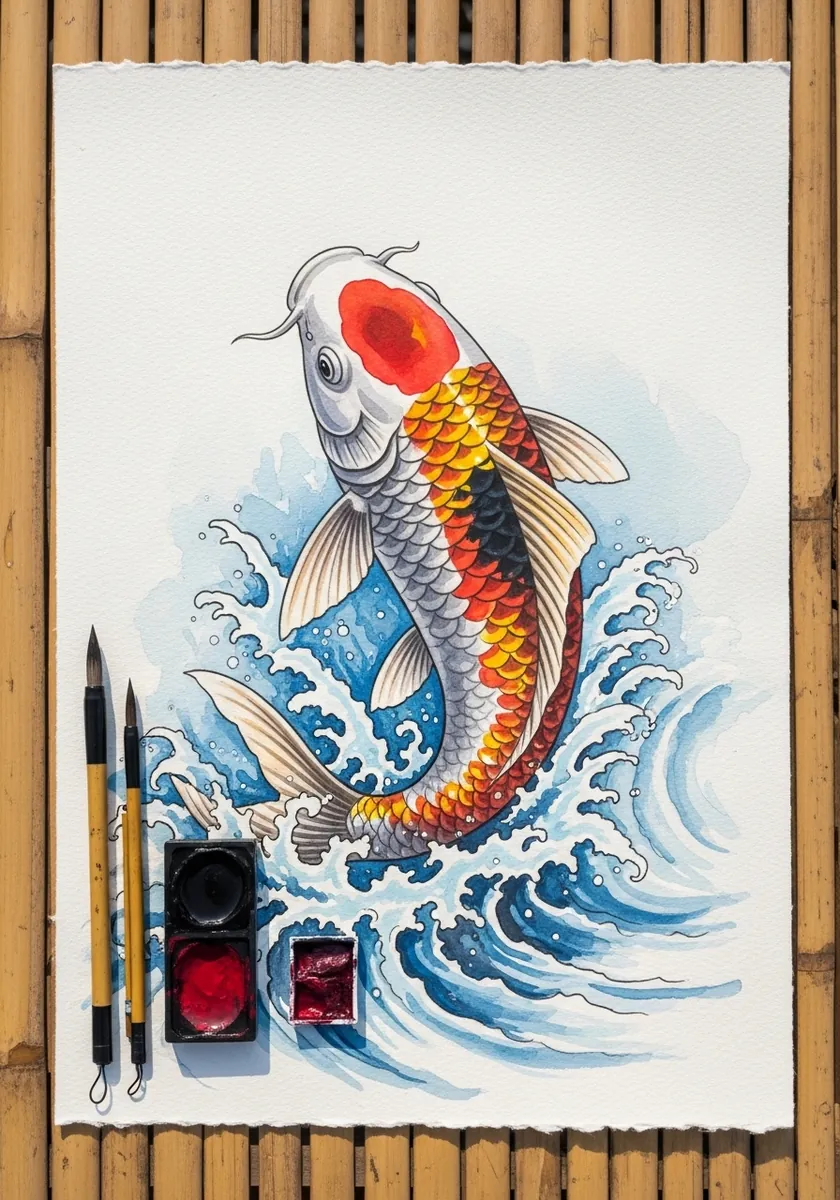
A koi leaping clear of a curling wave. Overlap the fish’s body across the wave crest and keep the water behind it lighter in value, which pushes the fish forward without any shading on the fish itself.
7. Galloping Horse Kicking Up Dust
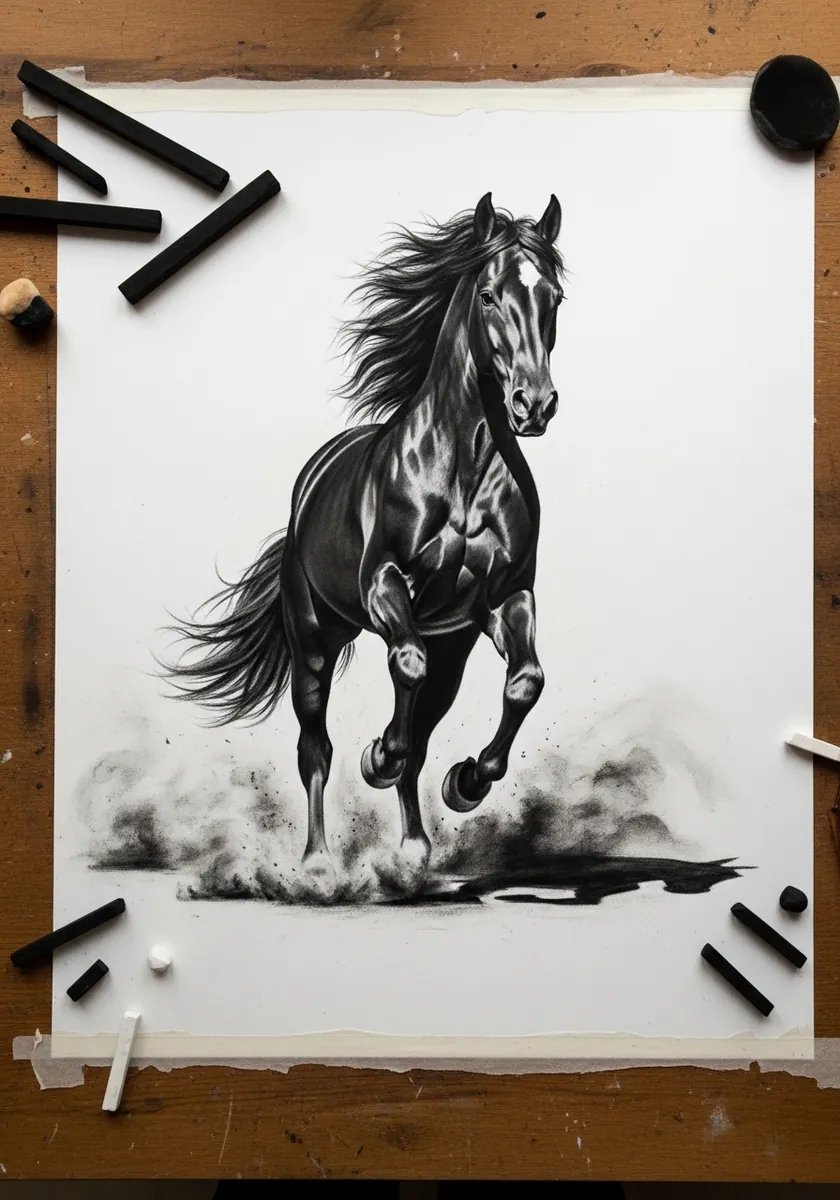
A horse charging forward with dust at its feet. Blend the dust into nothing at the outer edges and keep the horse’s leading edge sharp, because a hard edge against a soft one always reads as nearer.
8. Butterfly Above Its Own Shadow
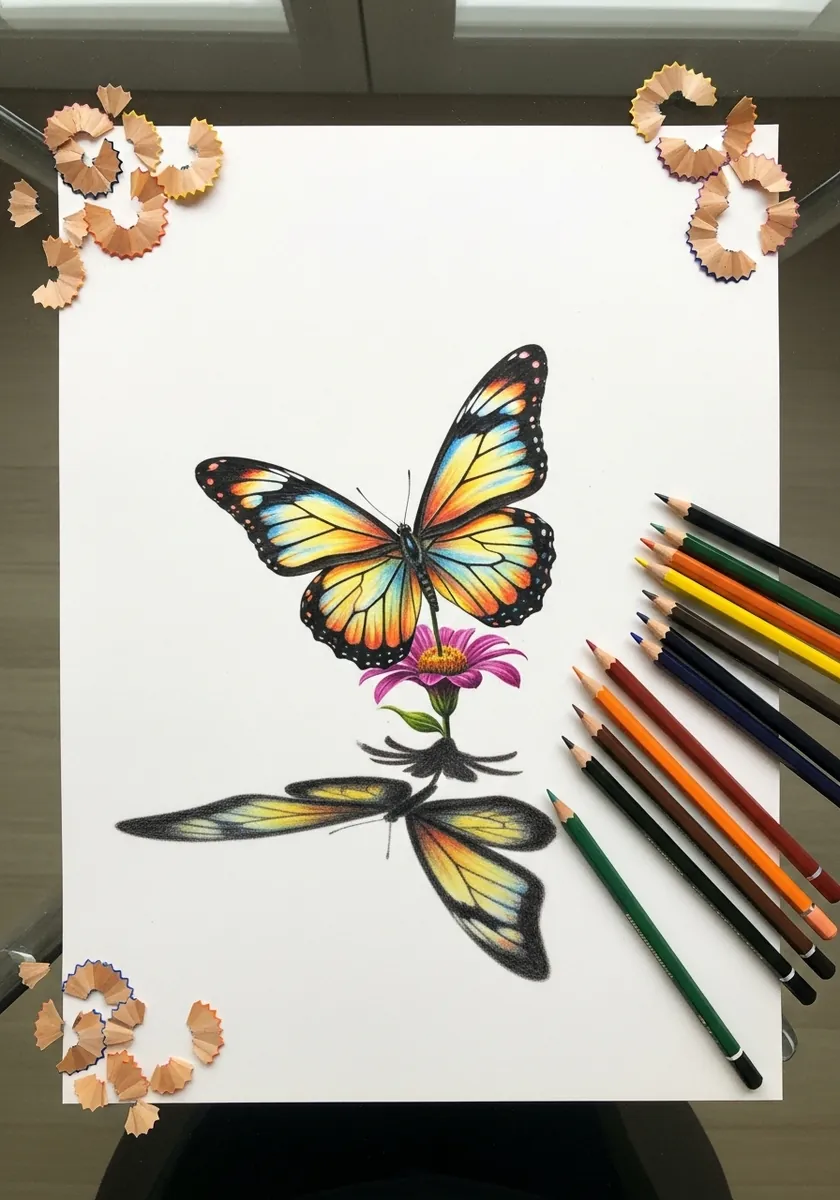
A butterfly hovering with a full shadow beneath it. Draw the shadow as a flattened, distorted copy of the wings rather than a blur, since a shaped shadow is far more convincing than a soft gray patch.
9. Storm Cloud Being Swept Away
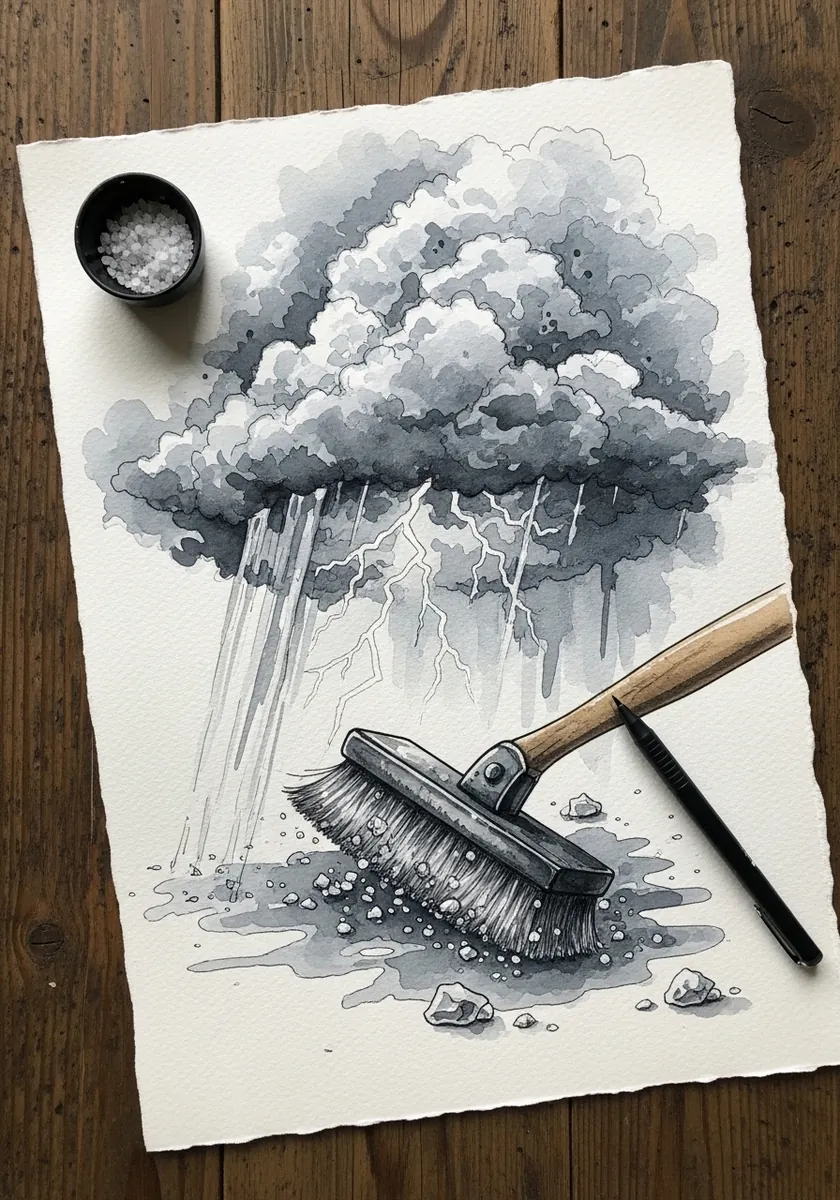
A rain cloud with a broom sweeping the downpour away. The joke only works if the broom is rendered solidly and the cloud is loose and wet, so the two objects clearly belong to different layers.
10. Octopus with Curling Tentacles
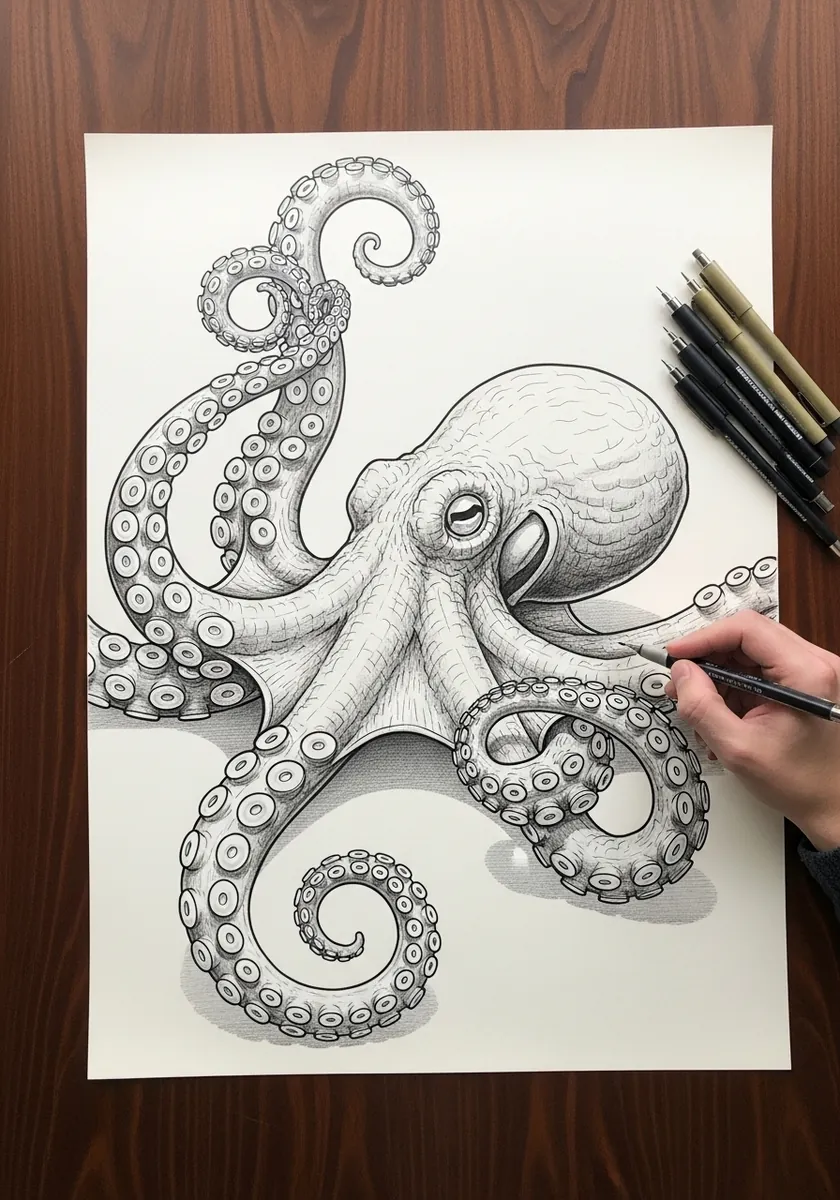
An octopus with tentacles curling toward the viewer. Make the nearest suckers larger and more detailed than the far ones and let one arm cross the drawing’s border onto blank paper.
11. Rising Phoenix in Flame
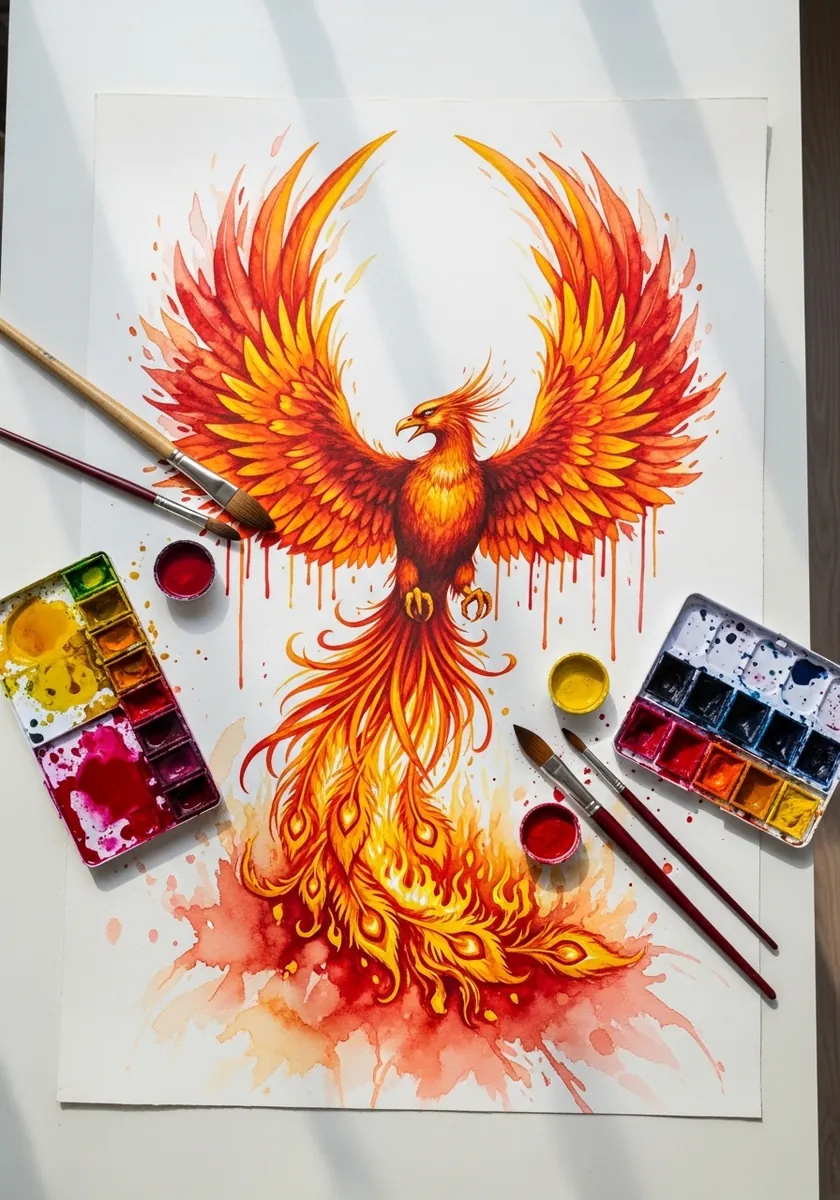
A phoenix lifting out of fire in wet watercolor. Work wet on wet for the flames so they bleed outward past any drawn boundary, which makes the bird look like it is emerging from something formless.
12. Lotus Flower with Soft Cast Shadow
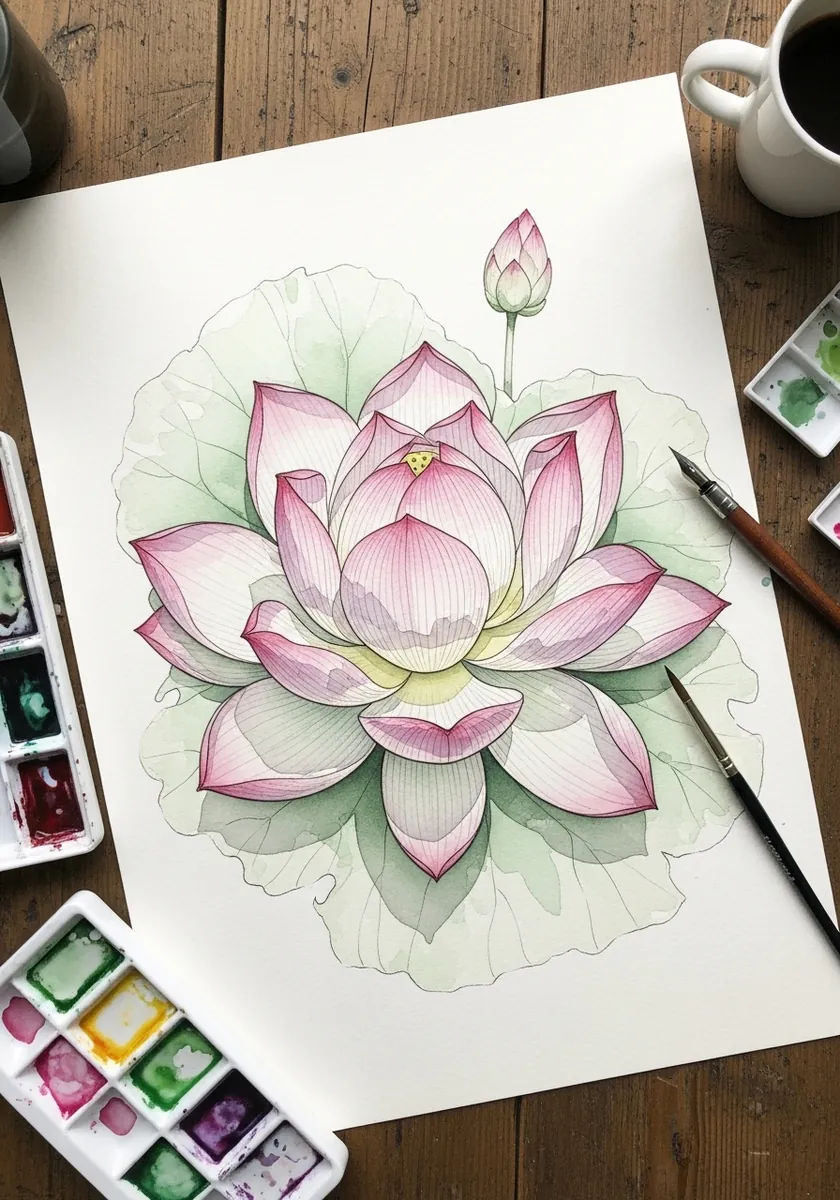
A lotus with a soft shadow pooled under it. Keep the shadow flat, gray and slightly offset, and never let it share an edge with the petals, because a gap between object and shadow implies height.
13. Polar Bear Through Cracked Paper
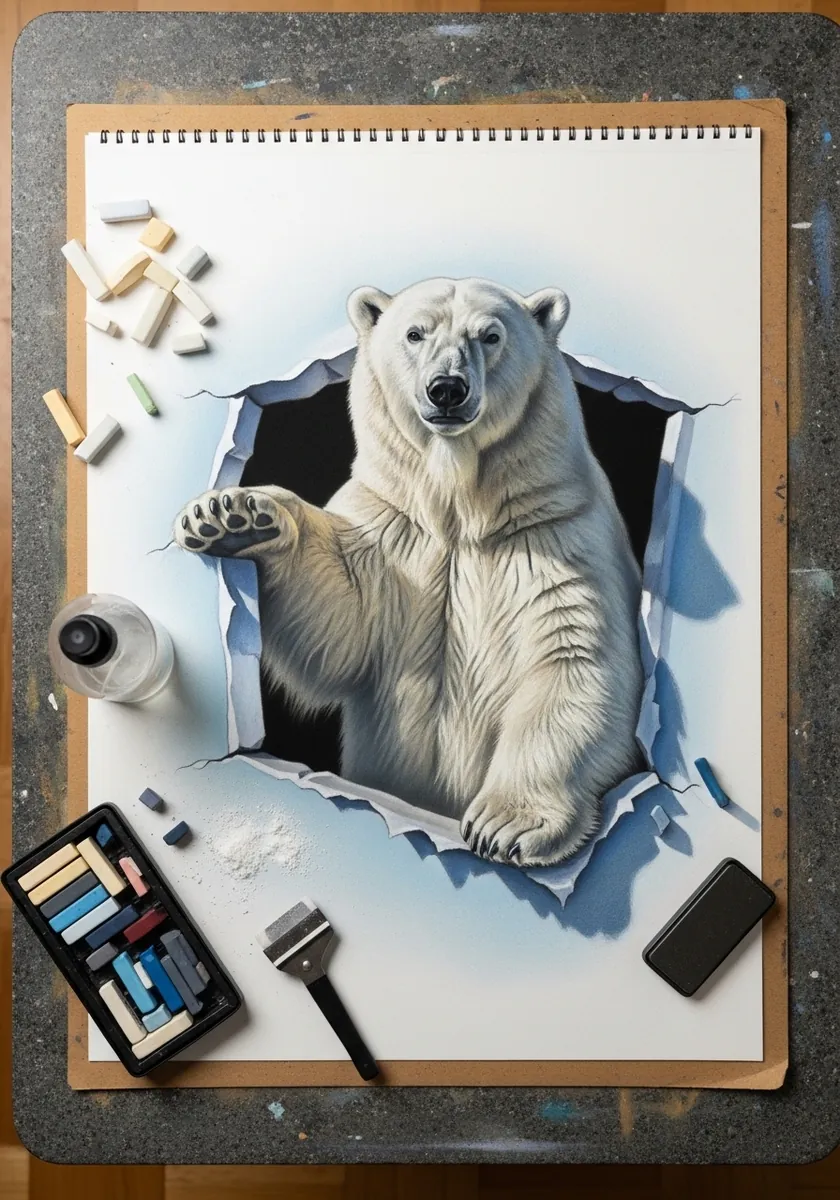
A polar bear climbing out through a broken sheet. Let the paw cross fully onto the untouched paper and keep the inside of the hole almost black, so the contrast at the rim does all the work.
14. Isometric Fortress Castle
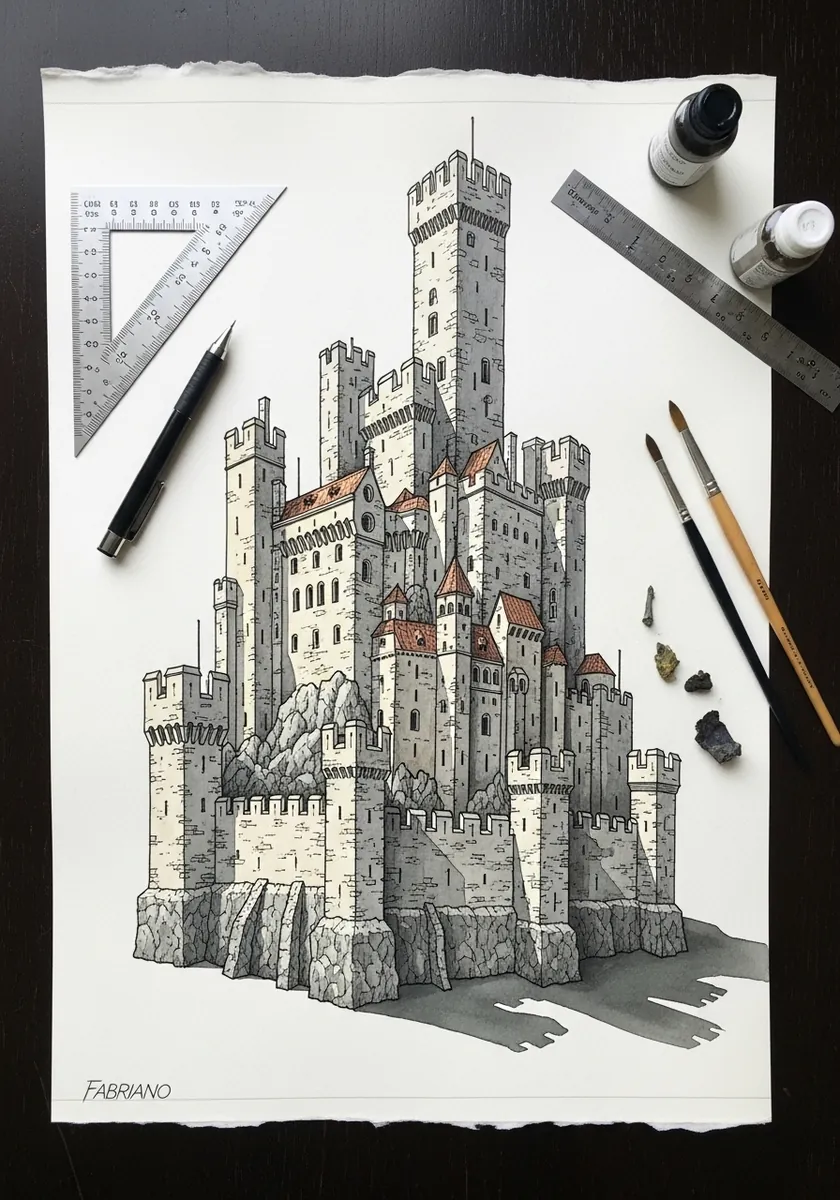
A castle drawn on an isometric grid with a solid shadow beside it. Rule the grid first so every tower shares one angle, then lay the shadow as a flat silhouette with no internal detail at all.
15. Tiger Face Among Leaves
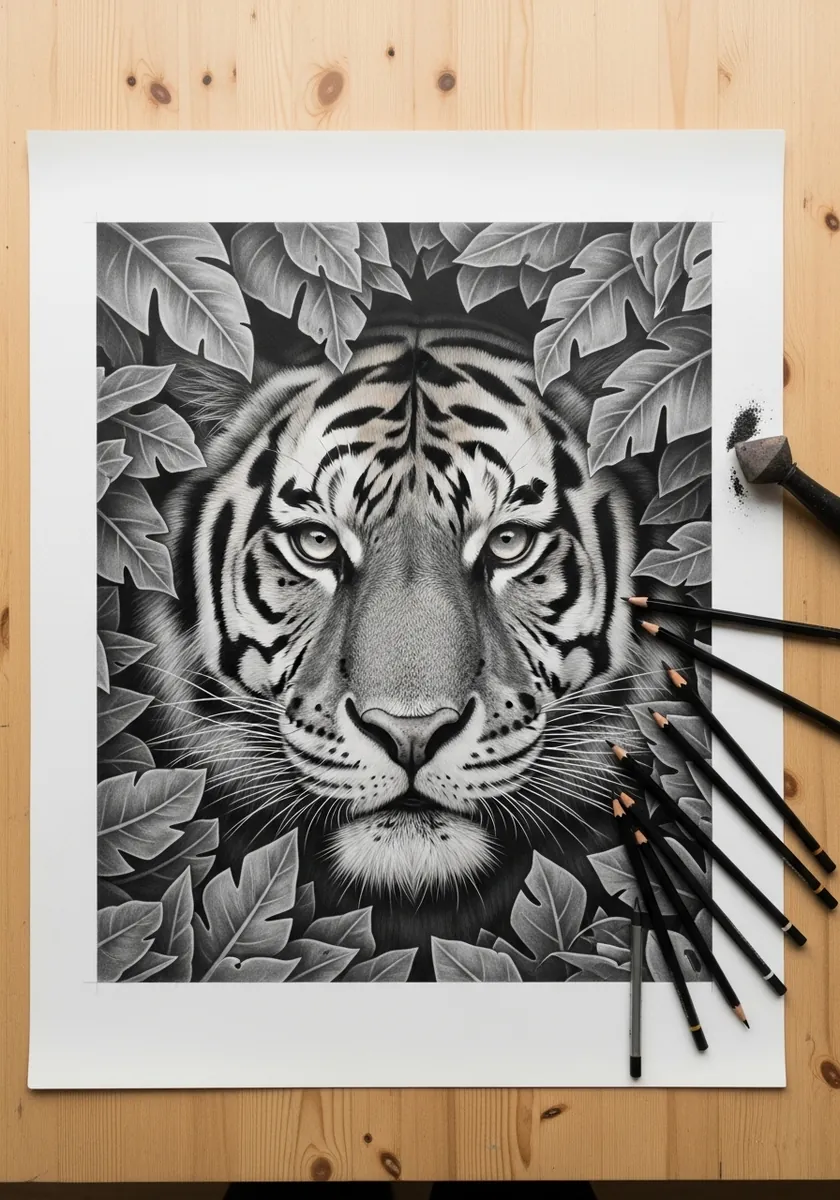
A tiger emerging from foliage. Keep the leaves nearest the viewer darkest and sharpest, then lighten each receding layer, which builds a tunnel of depth around the face without moving the face itself.
16. Walking Elephant with a Long Shadow
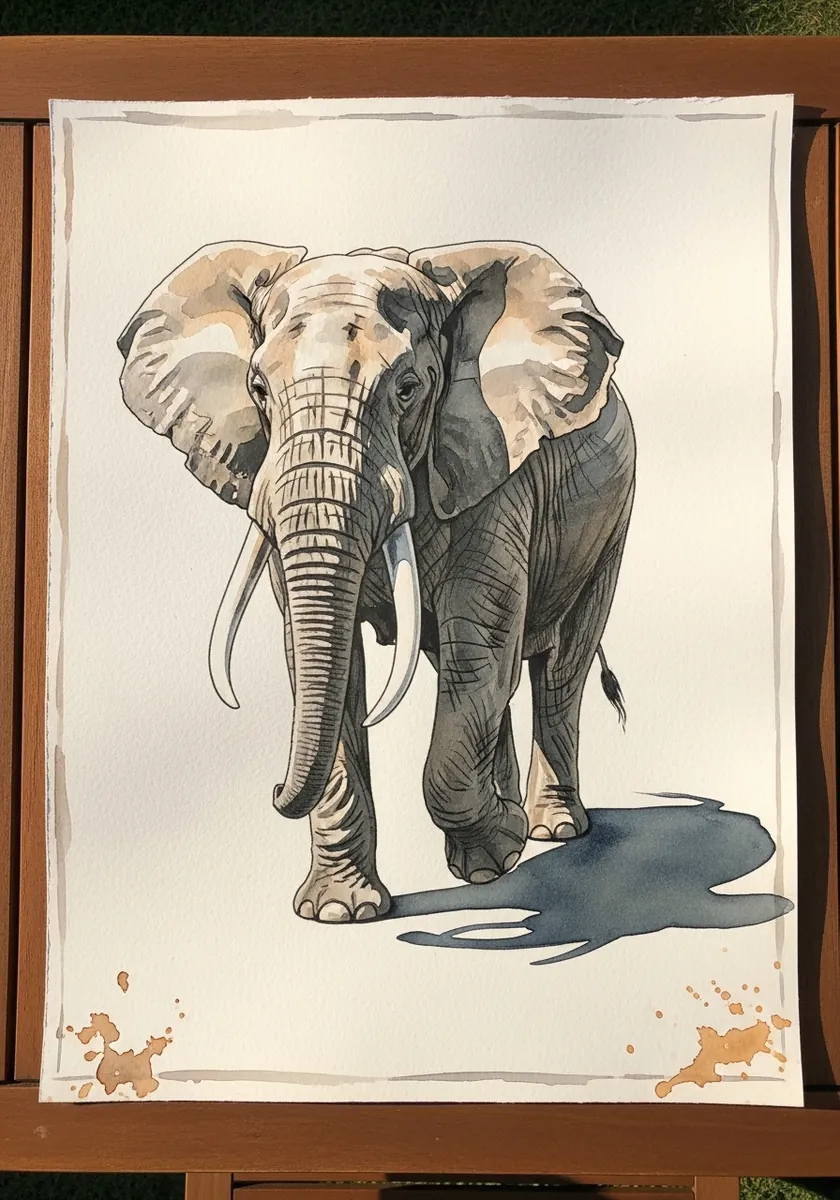
An elephant striding forward with a long shadow. Draw the shadow at a steep angle and let it stretch well past the animal’s feet, since a long shadow implies a low light source and a wide open space.
17. Spiral Galaxy on a Floating Disc
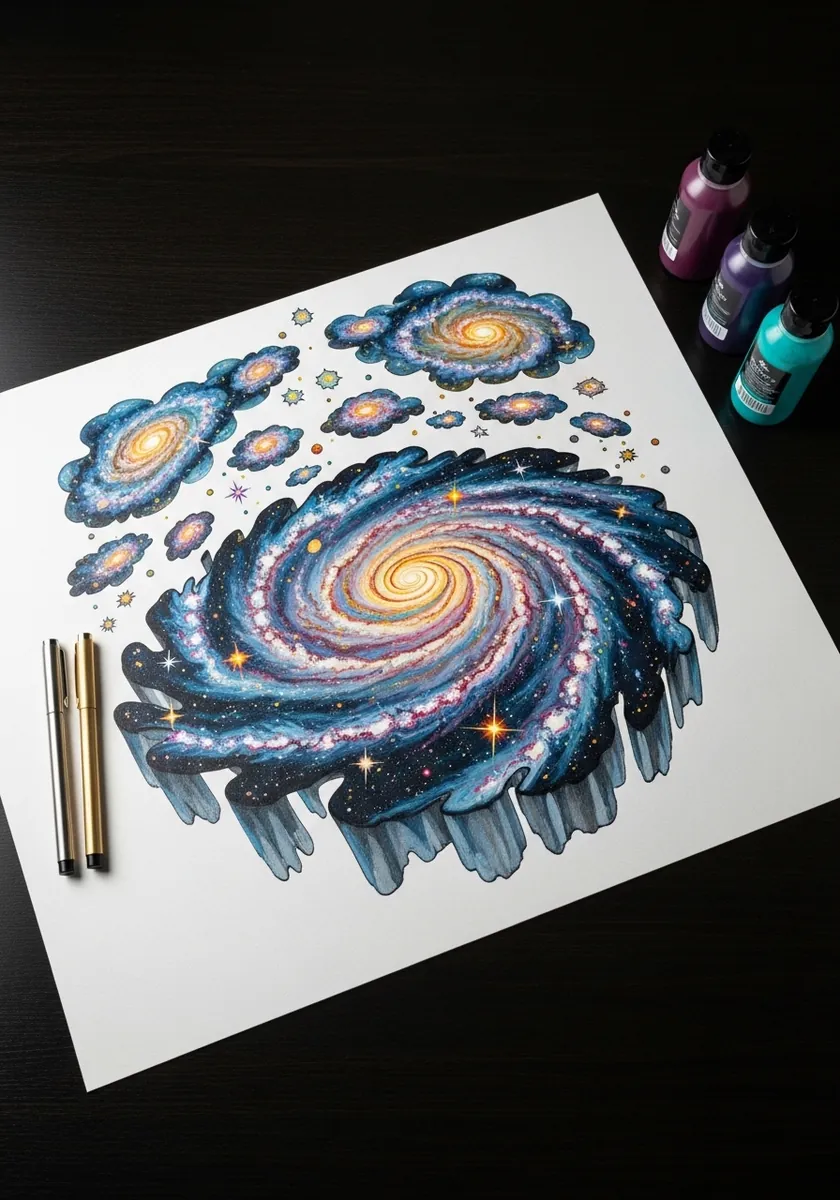
A galaxy sitting on a levitating disc. Give the disc a jagged, visible underside in a cooler tone than the top, because showing the bottom of a floating object is the fastest way to lift it off the page.
18. Stippled Nautilus Shell Spiral
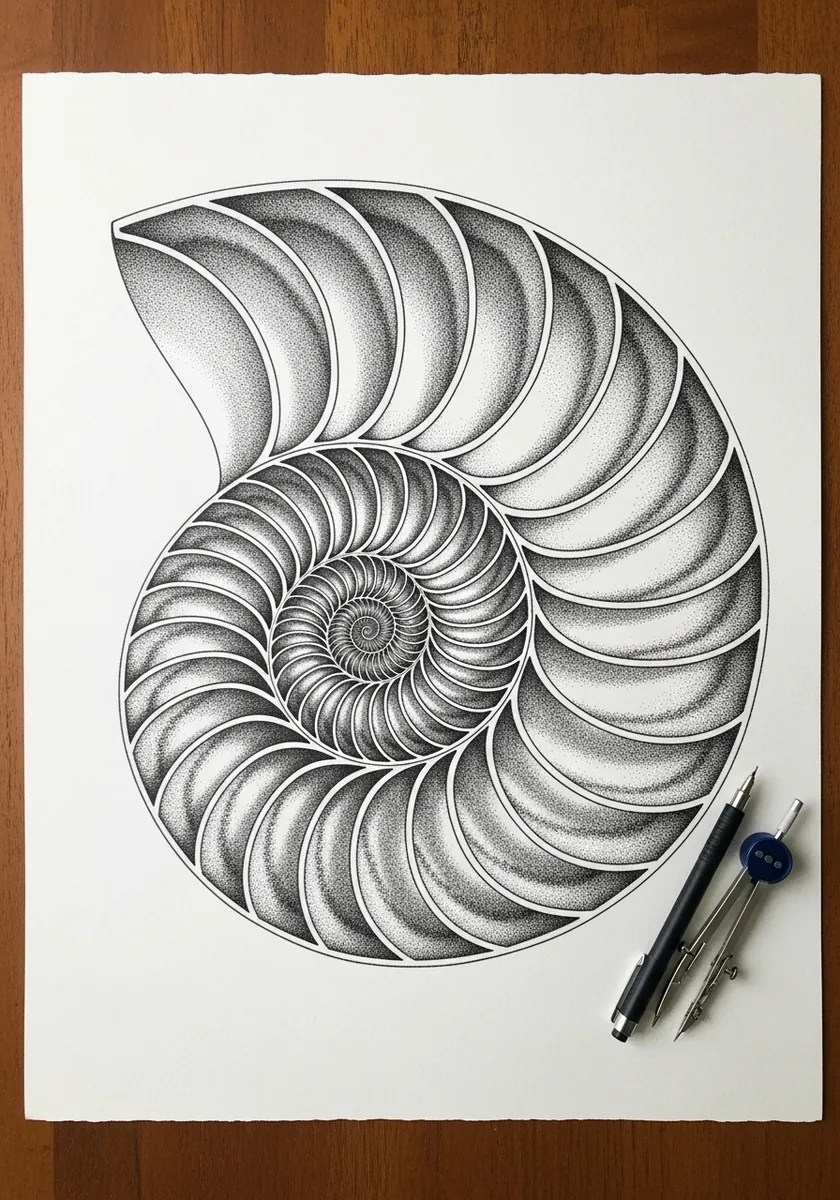
A nautilus shell built entirely from dots. Increase the dot density inside each chamber and leave the outer edge of every wall bare, which turns a flat spiral into a series of receding compartments.
19. Rearing Cobra from a Cracked Hole
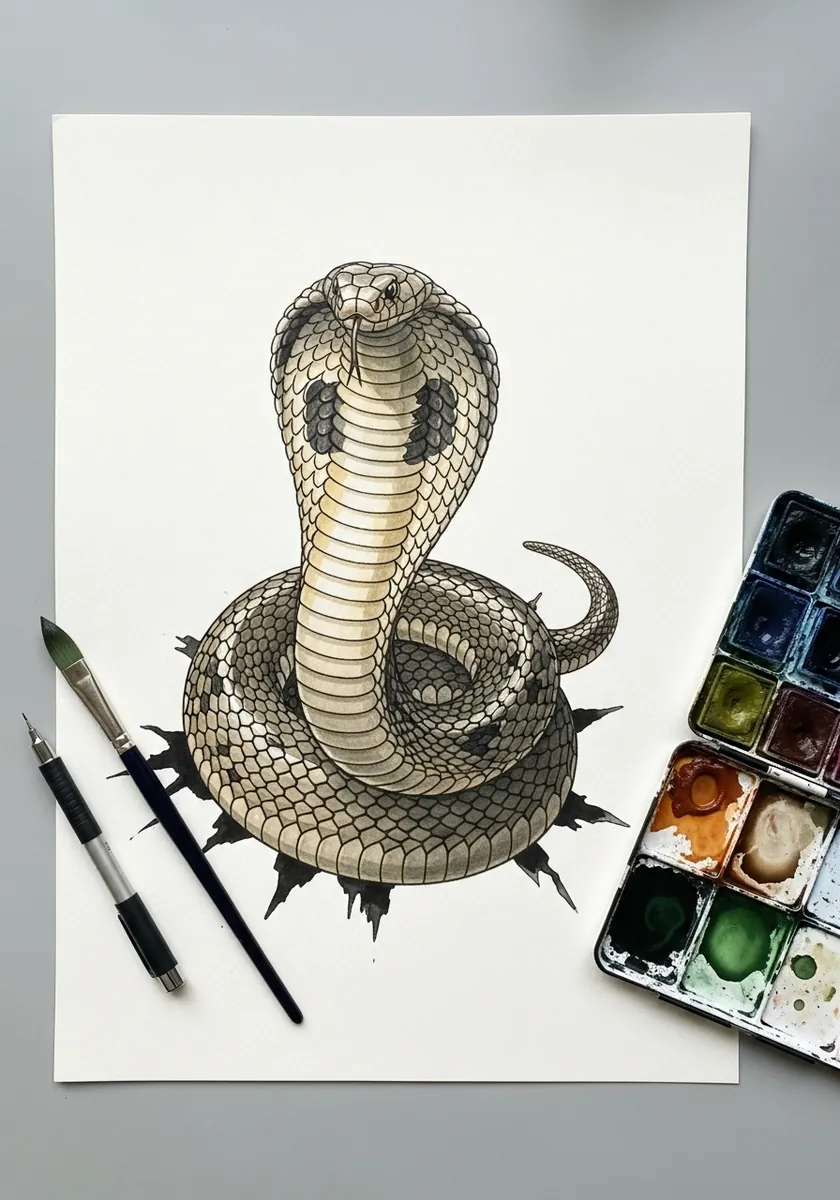
A cobra rising from a broken hole with its hood spread. Draw the crack radiating outward with lines that thin as they travel, and keep the darkest value directly beneath the snake where it enters the page.
20. Manta Ray in an Underwater Portal
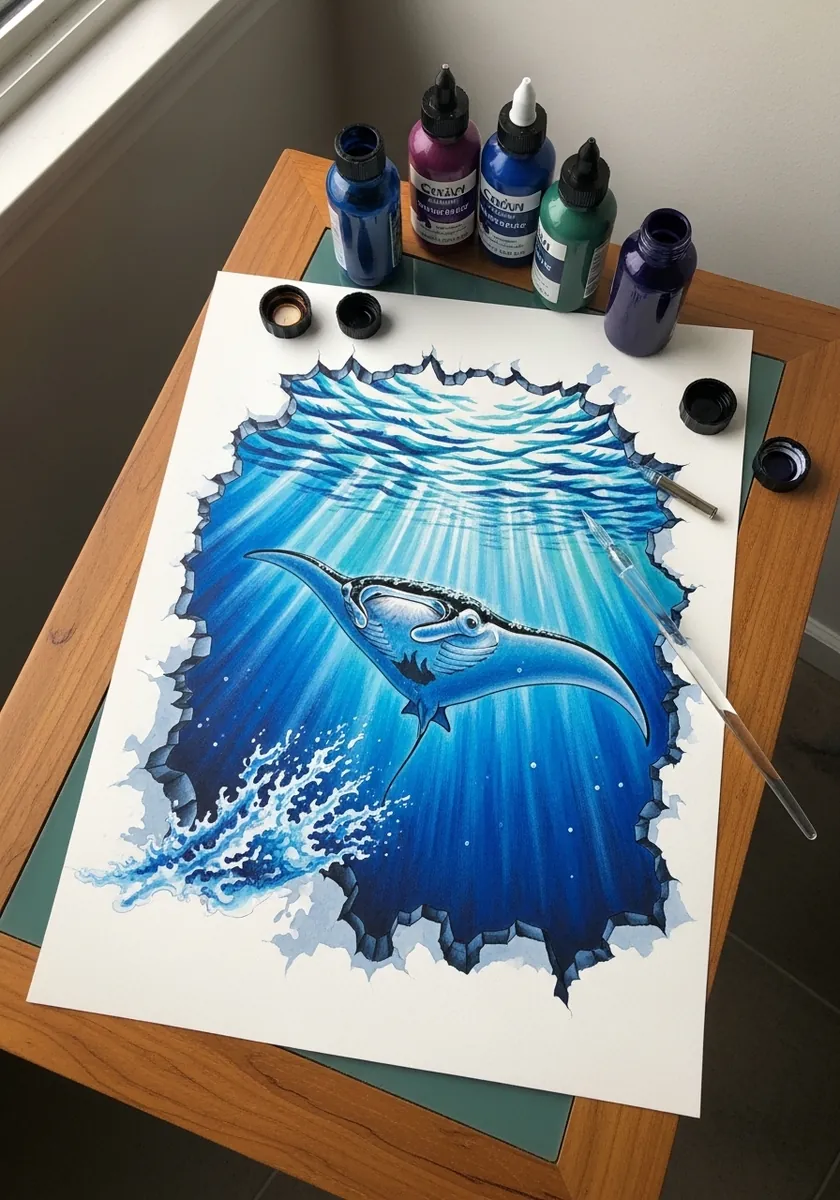
A manta ray seen through a ragged opening. Draw the four inner walls of the portal with visible thickness before painting anything inside, or the whole thing collapses into a flat picture.
21. Misty Waterfall in Watercolor
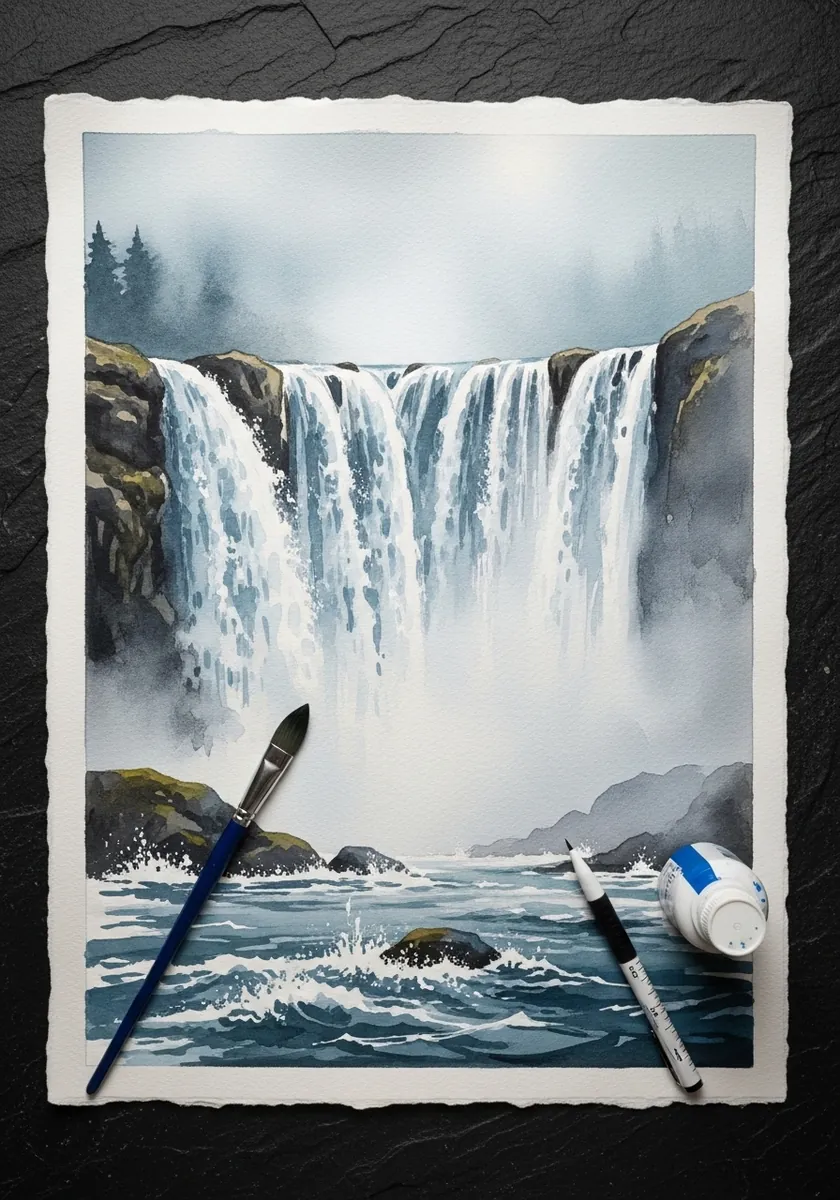
A waterfall dropping into mist. Lift the mist out with a damp brush rather than painting it in, and let the spray blur the base of the falls so the water appears to be moving toward you.
22. Fox Leaping Through Autumn Leaves
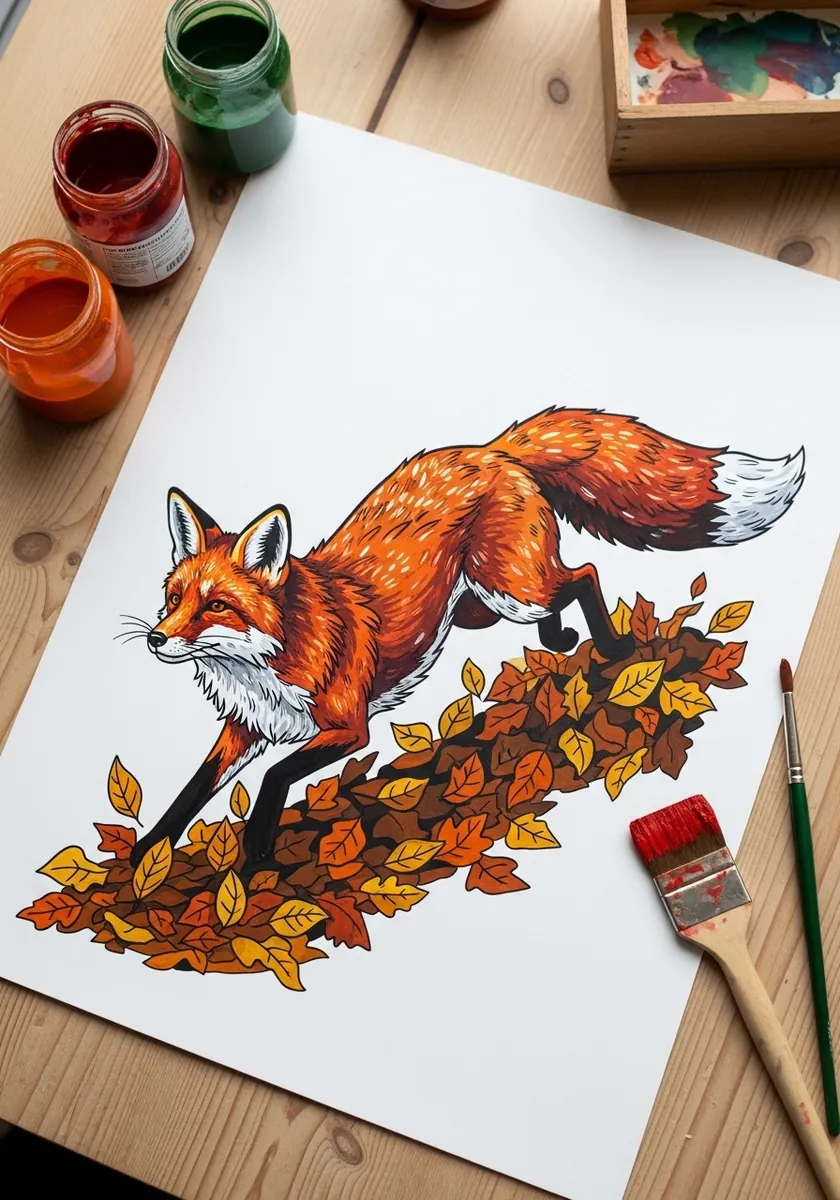
A fox mid-leap through falling leaves. Place a few leaves clearly in front of the fox and a few behind, which sandwiches the animal into the middle of a three-layer space.
23. Sea Turtle in Sunlit Water
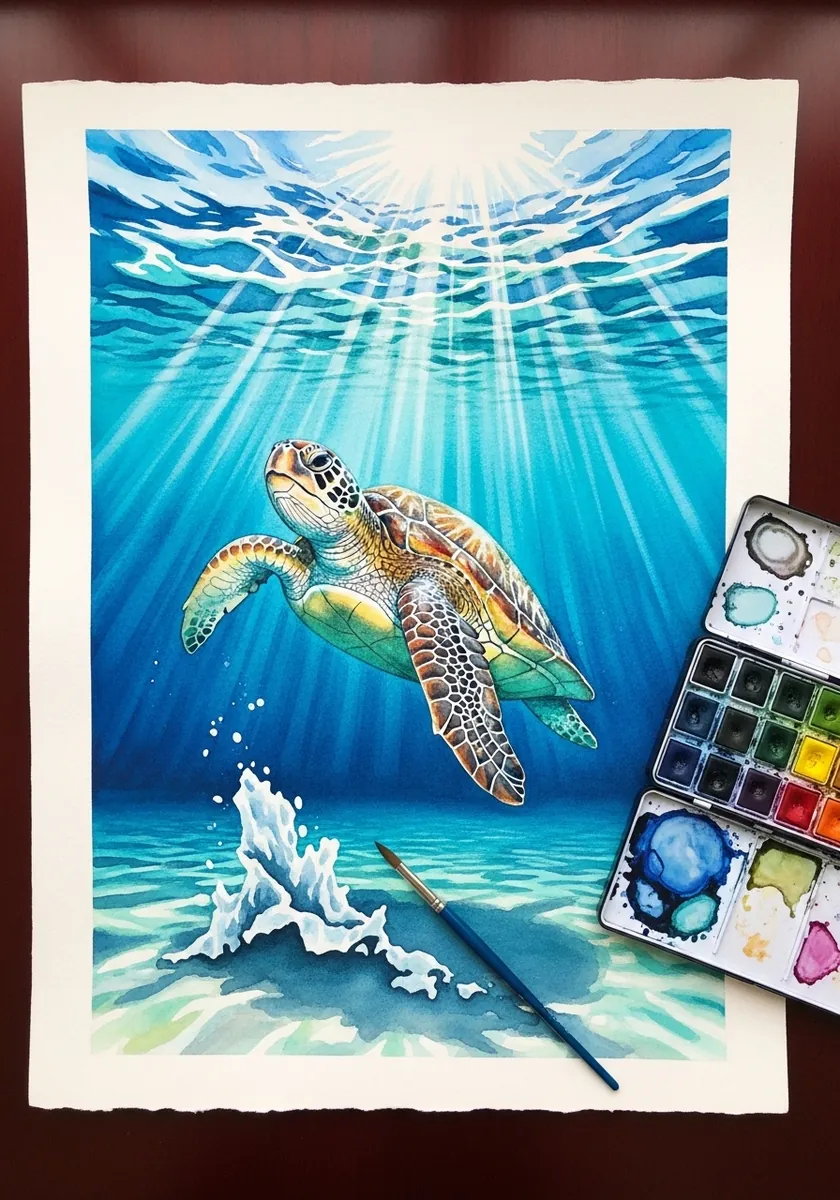
A turtle swimming under light shafts. Draw the shafts converging toward a point above the surface and let them pass over the shell in places, so the light reads as being in front of the animal.
24. Charcoal Wave About to Break
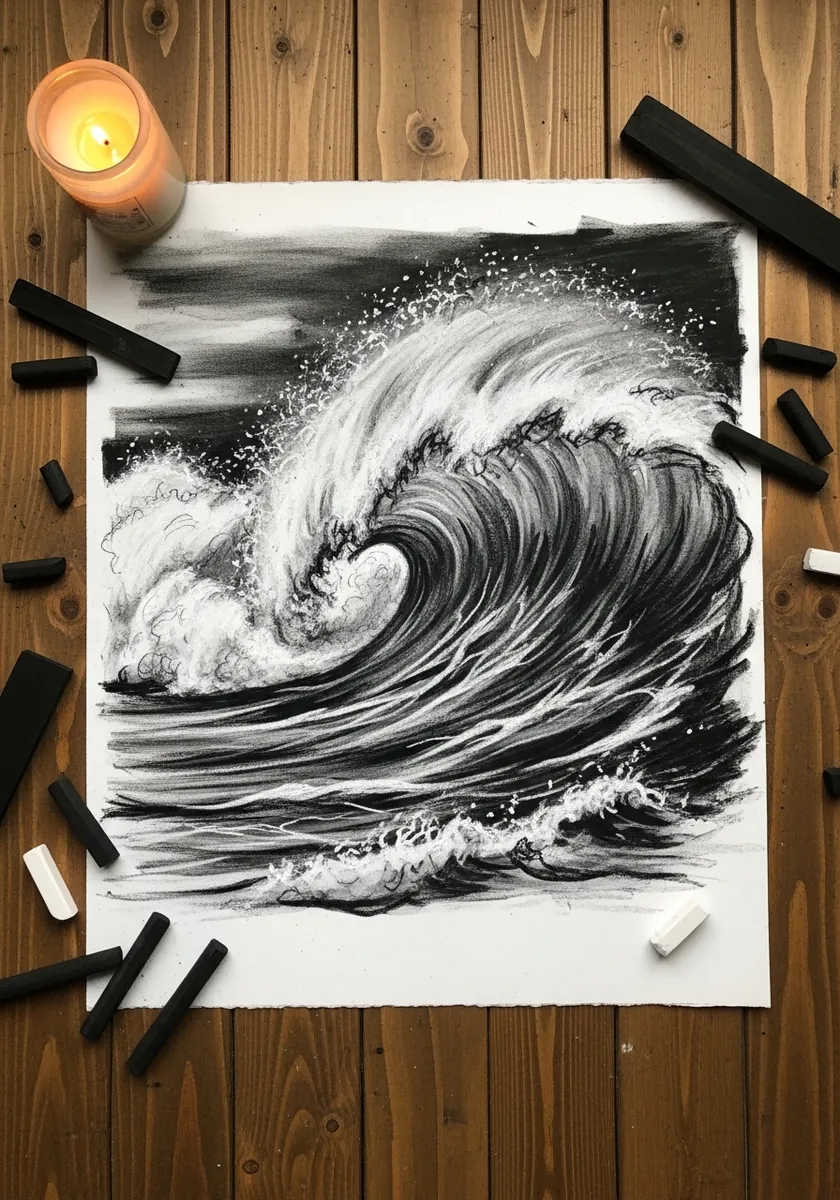
A wave curling at the point of breaking. Cover the whole area in charcoal first, then pull the white foam out with a kneaded eraser rather than drawing around it, which gives the spray real luminosity.
25. Magnolia with a Flat Gray Shadow
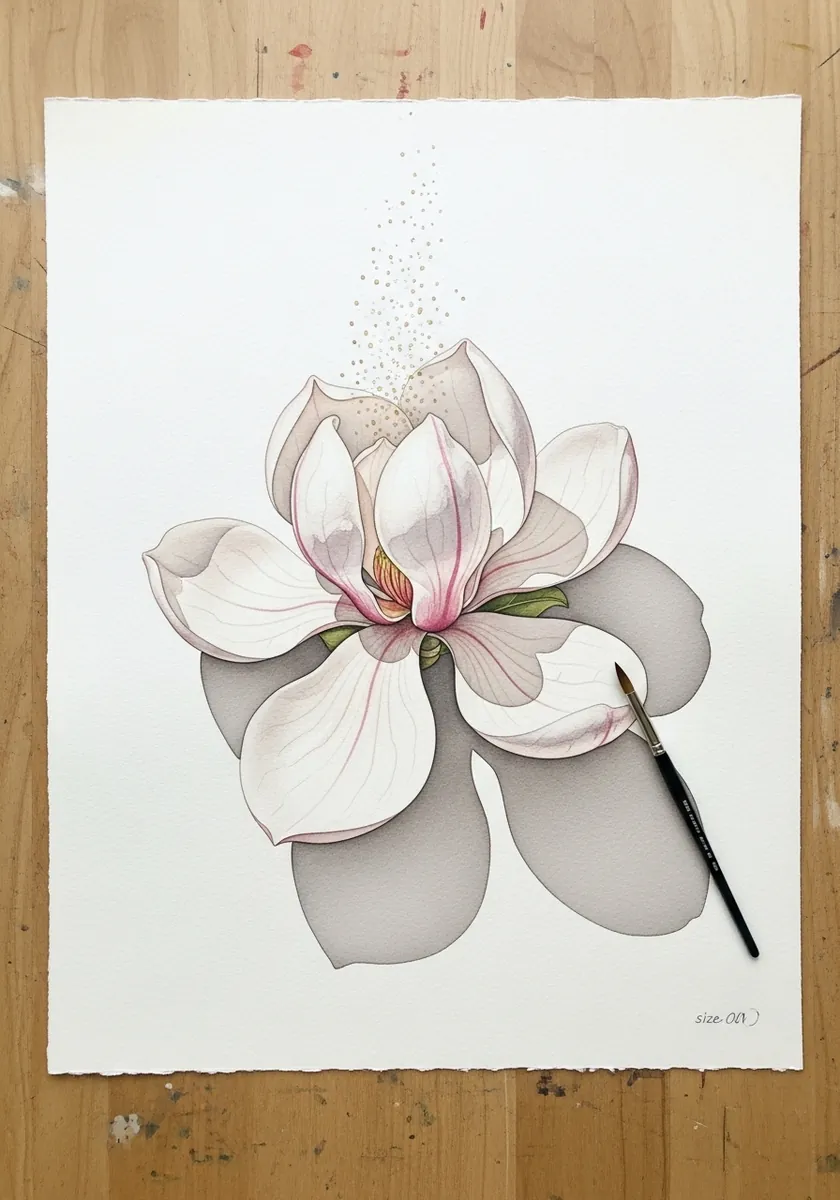
A magnolia floating above a hard-edged gray shadow. Making the shadow a simple flat shape with no gradient is what makes this work, because the eye reads the flatness as a surface far below the flower.
26. Ornate Skull in a Geometric Frame
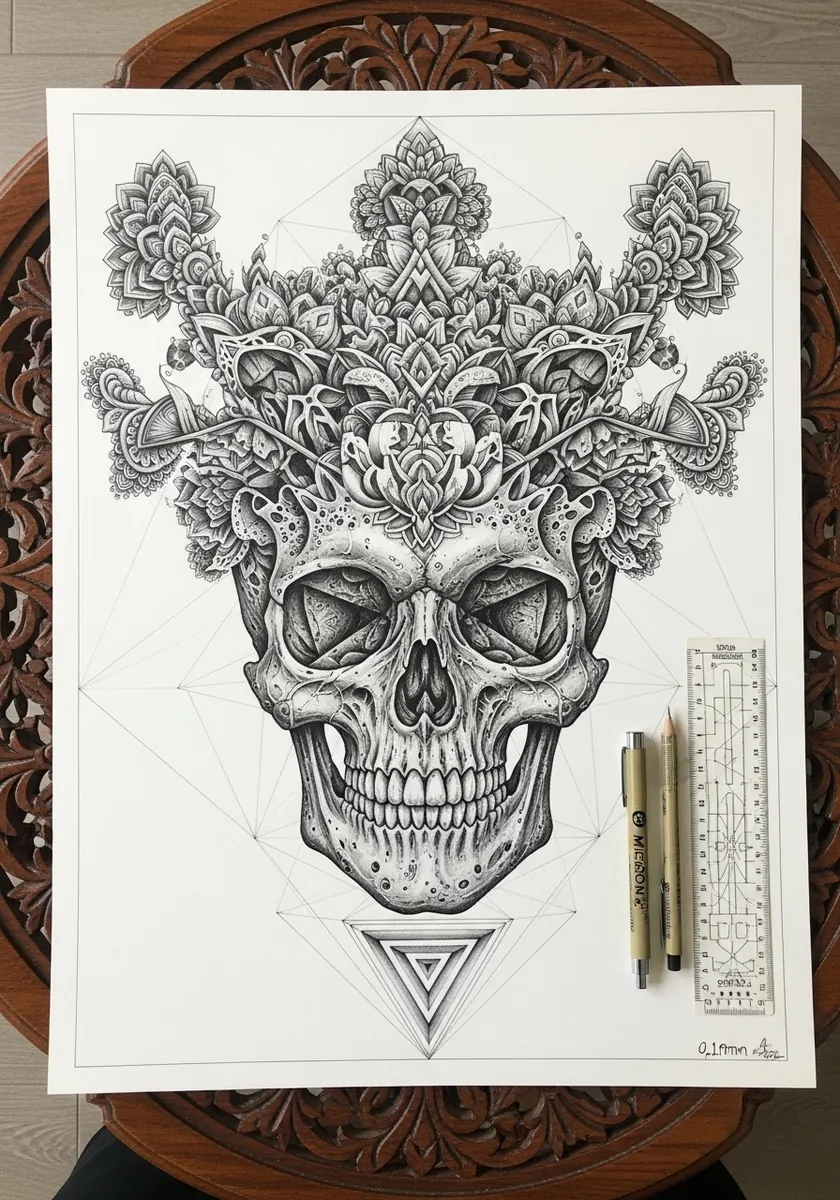
A patterned skull inside a ruled geometric frame. Draw the frame first and let the ornament break out past its lines in two or three places, which is what makes the skull sit in front of the frame.
27. Patterned Rooster with a Hard Shadow
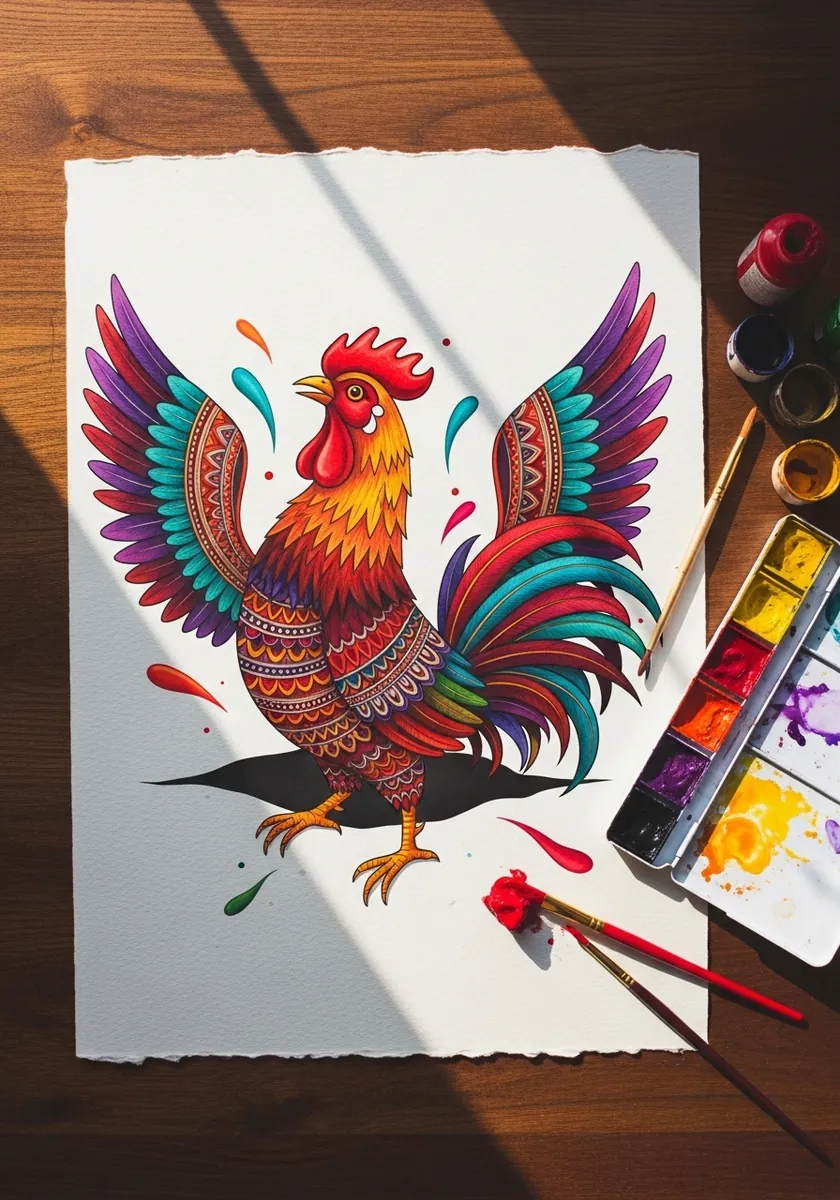
A decorated rooster with a solid shadow behind it. Keep the bird highly colored and the shadow completely flat black, since maximum contrast between subject and shadow reads as maximum height.
28. Glowing Jellyfish on Black Paper
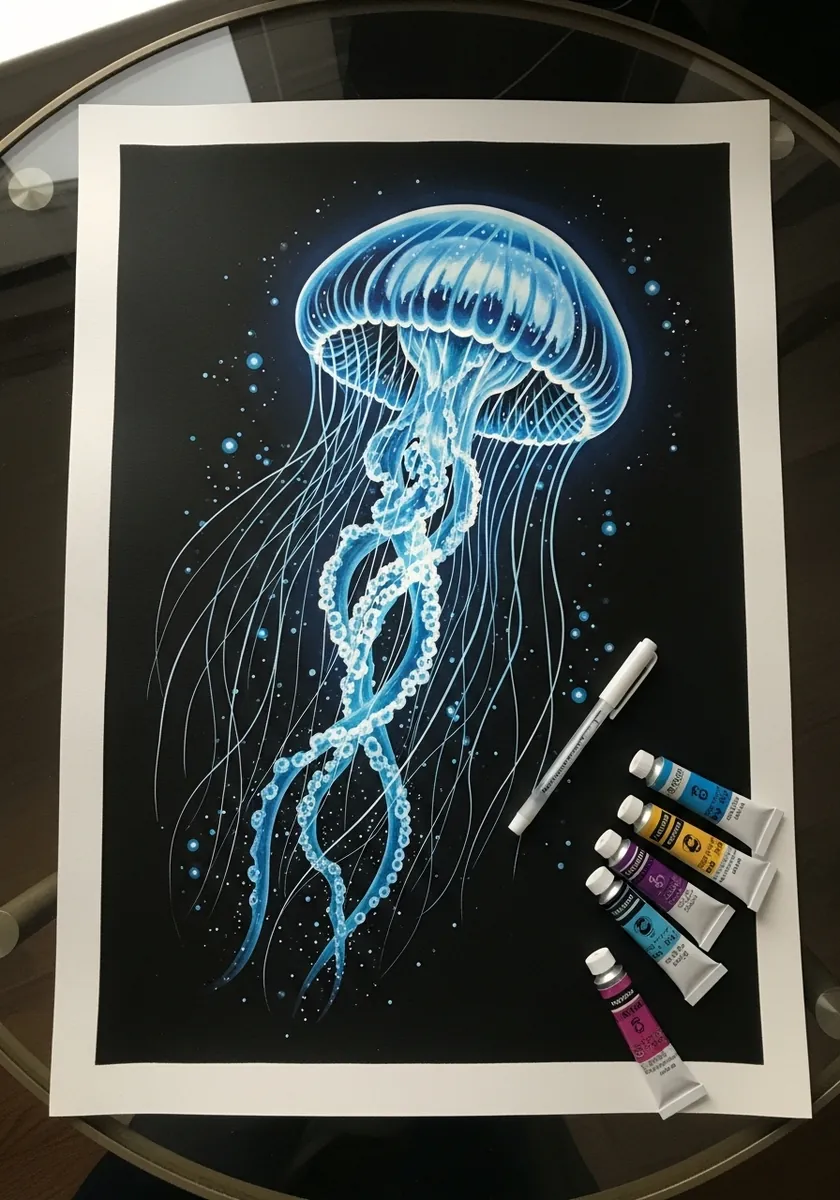
A luminous jellyfish on black. Build the glow in two passes, a wide soft halo then a tight bright core, and let the tentacles fade out completely at the bottom so the creature recedes into darkness.
29. Mountain Climber on a Ridge
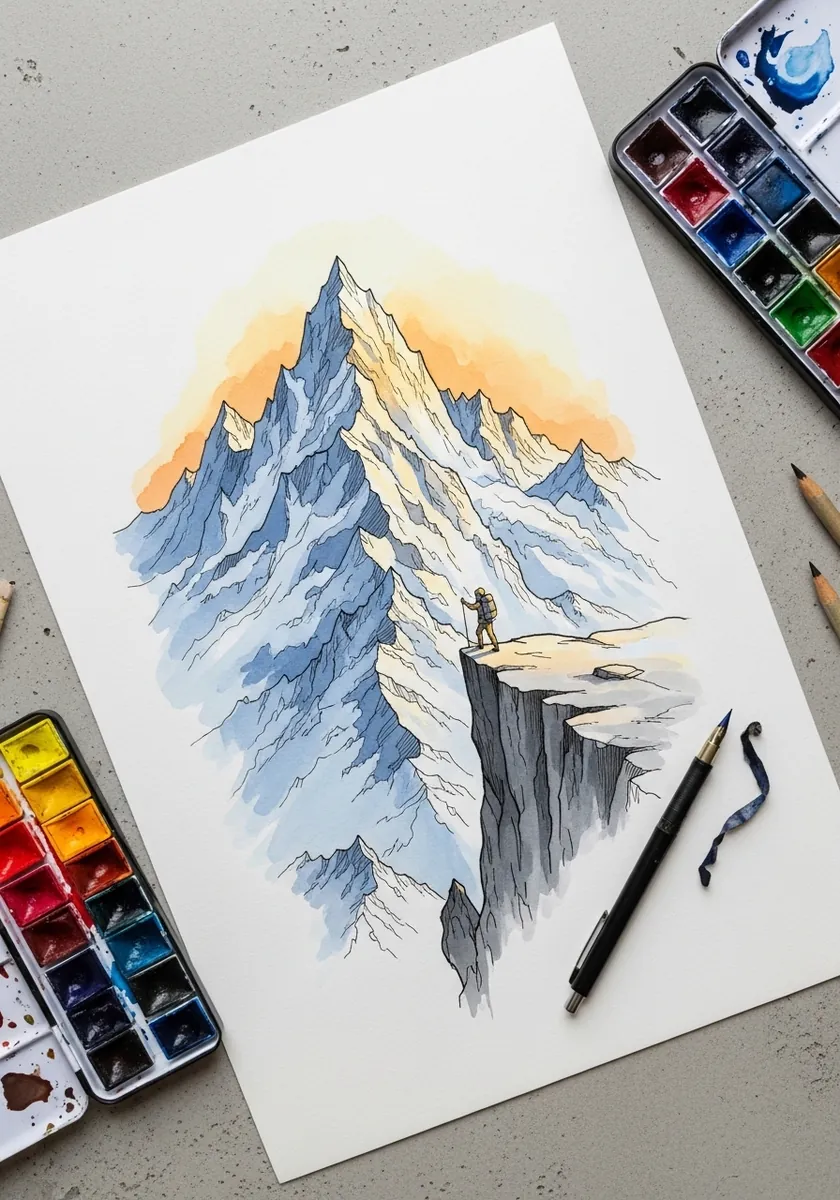
A climber dwarfed by peaks. Scale is the whole illusion, so keep the figure genuinely tiny and give the nearest ridge the darkest value, which pushes the peaks far back into the distance.
30. Clockwork Owl on a Branch
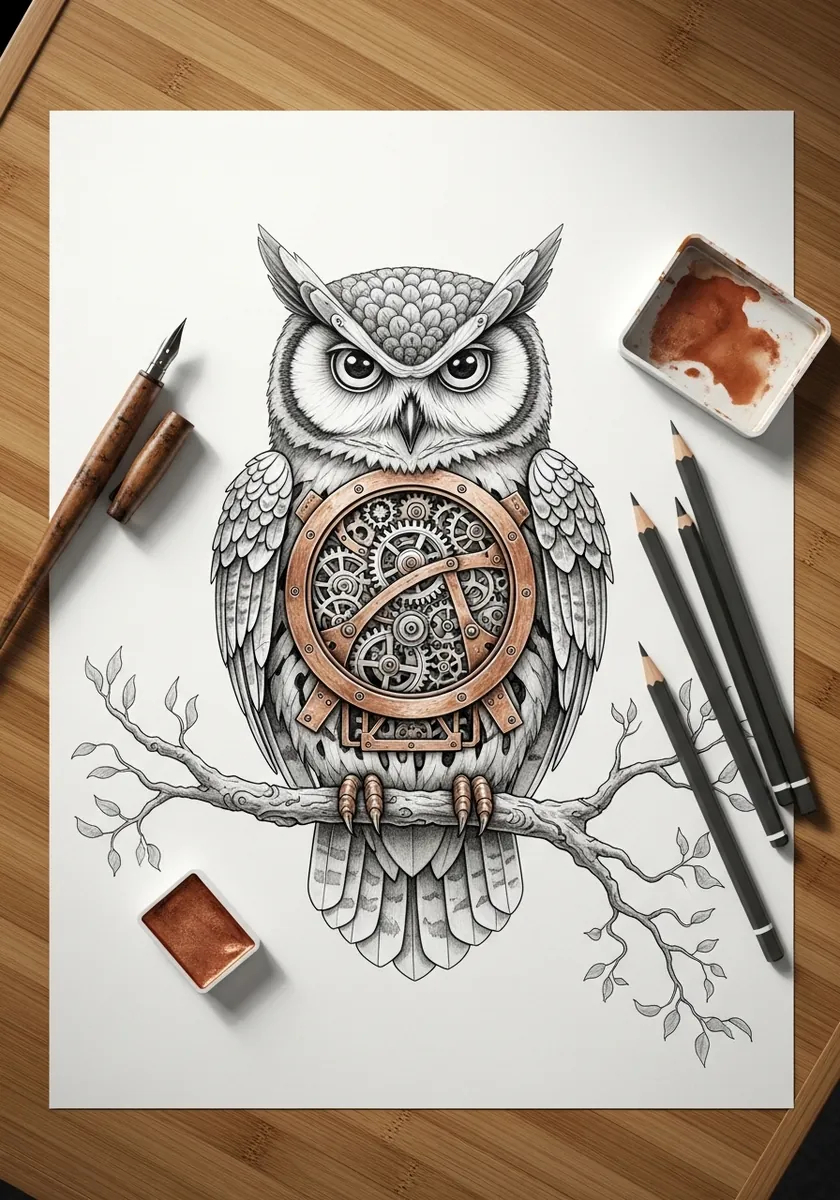
An owl with a mechanism set into its chest. Draw the owl fully first, then cut the opening and render the gears inside it darker than the surrounding feathers so the chest reads as hollow.
Frequently Asked Questions
What is anamorphic 3D art drawing?
Anamorphic 3D art is a deliberately distorted drawing that resolves into a convincing solid form when viewed from one particular angle. On a flat sheet, artists create it by breaking the paper’s edge and casting shadows onto the undrawn area beside the image.
How do you make a drawing look like it comes off the page?
Break the boundary. Draw a torn or cracked edge around the subject, give that edge a pale top lip and a dark underside, and let part of the subject cross onto the blank paper. Then cast its shadow on the untouched sheet.
What is the difference between anamorphic and normal 3D drawing?
A normal 3D drawing looks solid from any angle because it uses ordinary perspective. Anamorphic art is stretched so it only resolves from one fixed viewpoint, which is why photographs of these pieces are always taken from a specific spot.
Do you need special paper for anamorphic drawings?
Not special, but heavier. Use at least 200 gsm so the sheet stays perfectly flat, because any buckling breaks the illusion instantly. A smooth surface suits fine ink work and a light tooth suits graphite and charcoal shading.
Which subjects work best for beginners?
Animals with a strong silhouette, such as a whale, a snake or a bear. Their outline is easy to break across a torn edge, and a single limb or fin crossing onto the blank paper does most of the illusion for you.
References and Further Reading