
Art block is usually caused by the gap between your taste and your current skill, not a shortage of ideas. High stakes, too much freedom of choice, and one unnamed skill weakness make it worse. If drawing for twenty minutes leaves you feeling better it was a block; if it leaves you feeling worse it is burnout.
Key takeaways
- Art block is a taste-skill gap, not a shortage of ideas.
- The test: draw 20 minutes. Feeling better means block; feeling worse means burnout.
- Blocks need lower stakes; burnout needs rest, and pushing through makes it worse.
- Twenty tiny thumbnails break a block faster than one ambitious piece.
- Constraints work where prompts fail, because the obstacle is choice, not ideas.
Art block is usually not a shortage of ideas. It is a gap between the standard in your head and the skill in your hand, and that gap makes starting feel pointless. You still know what you want to make. You just already know it will come out worse than you imagined it.
This matters because art block and burnout produce almost identical symptoms, an empty sketchbook and a bad feeling about it, but they need opposite treatments. Push through a block and it usually breaks. Push through burnout and it gets worse.
Here is how to tell which one you have, what causes each, and what actually clears them.
What Art Block Actually Feels Like

The recognizable pattern is starting and stopping. You open the sketchbook, put down five lines, decide it is going badly and turn the page. Ten minutes later you do it again. By the end you have a page of abandoned starts and the conclusion that you have nothing to draw.
Notice what that actually proves: you had at least four ideas. The problem was never the supply of ideas. It was that each one failed to survive contact with the page, which is a completely different problem with a different fix.
The Four Things That Actually Cause It
- The taste gap. Your eye improves faster than your hand. That gap is largest for beginners and for people who have just consumed a lot of very good work, which is why scrolling art feeds so reliably precedes a block.
- Stakes that are too high. The blank page has become a test rather than practice. This gets worse the moment an audience exists, even a small one, and it is why people who start posting often stop drawing.
- Too much freedom. “Draw anything” is a harder brief than “draw this cup in twenty minutes”. Unlimited choice reads to the brain as risk, because every option carries the possibility of picking wrong.
- A skill wall you have not named. Often the block is specific and hiding: you cannot draw hands, so you avoid figures, so you avoid drawing. It feels general but it is one identifiable gap.
Only the fourth one is about ability, and it is the easiest to fix once you name it. If your block is really a hands problem, our step-by-step hands tutorial removes the specific obstacle rather than the general mood.
Art Block vs Burnout: How to Tell Them Apart
| Signal | Art block | Burnout |
|---|---|---|
| Do you still want to make things? | Yes, badly | Not really |
| How do you feel opening the sketchbook? | Frustrated | Tired, flat |
| Does looking at other art help? | Sometimes inspires | Makes it worse |
| Is it only art? | Usually yes | Usually other things too |
| What does drawing anyway do? | Often breaks it | Deepens it |
| Rough duration | Days to weeks | Weeks to months |
The single most useful question is the last row. If forcing yourself to draw for twenty minutes leaves you feeling better, it was a block. If it leaves you feeling worse, it is burnout and the answer is rest, not discipline.
One honest caveat: if the flatness covers your whole life rather than just your art, and it has lasted months, that is outside what a drawing article can help with, and it is worth talking to a doctor rather than buying a new sketchbook.
Fix 1: Shrink the Page Until Failure Is Cheap
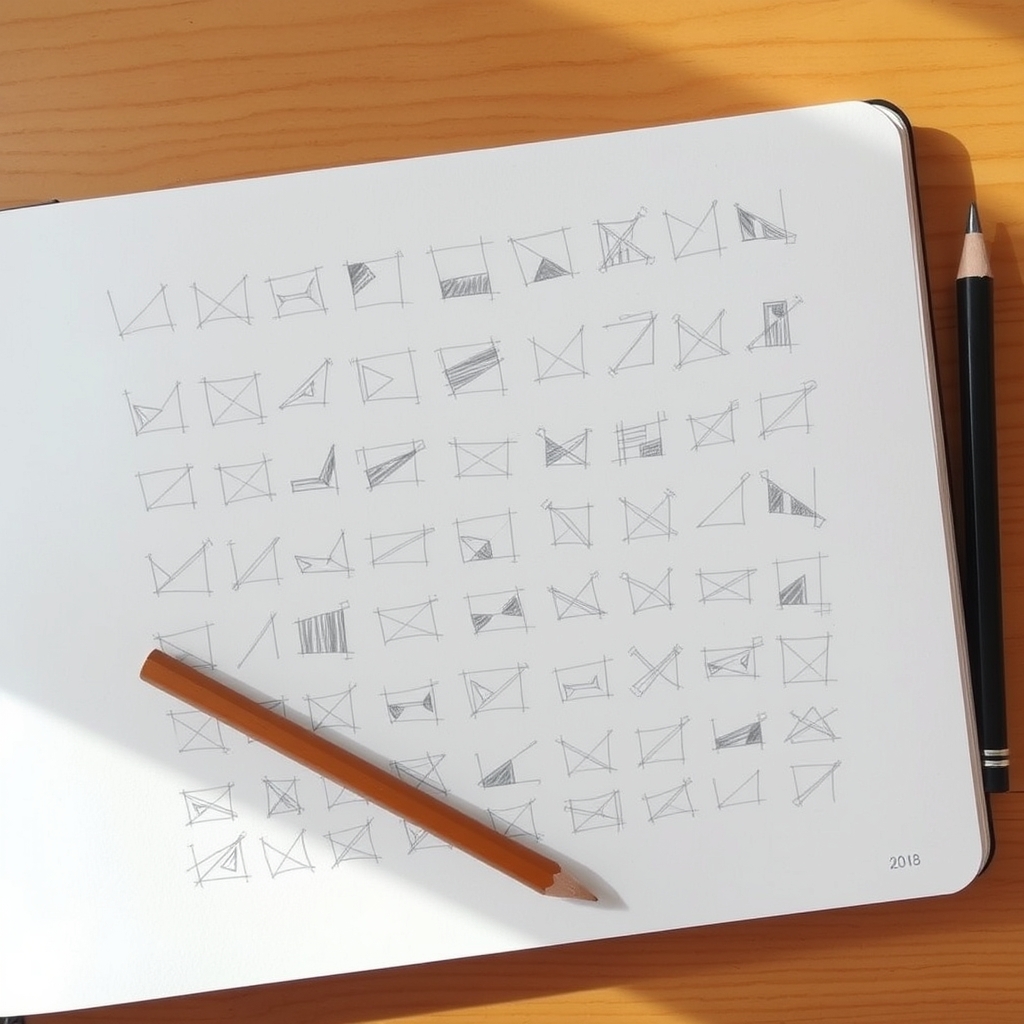
Rule a grid of twenty boxes about two inches across and fill every one. At that size nothing can be a masterpiece, so nothing can be a failure either. The stakes drop to almost nothing and the starting problem disappears.
This works because it attacks the actual cause. You were not short of ideas; you were unwilling to risk a whole page on one. Twenty small risks are easier to take than one large one.
Fix 2: Draw the Same Thing Five Times
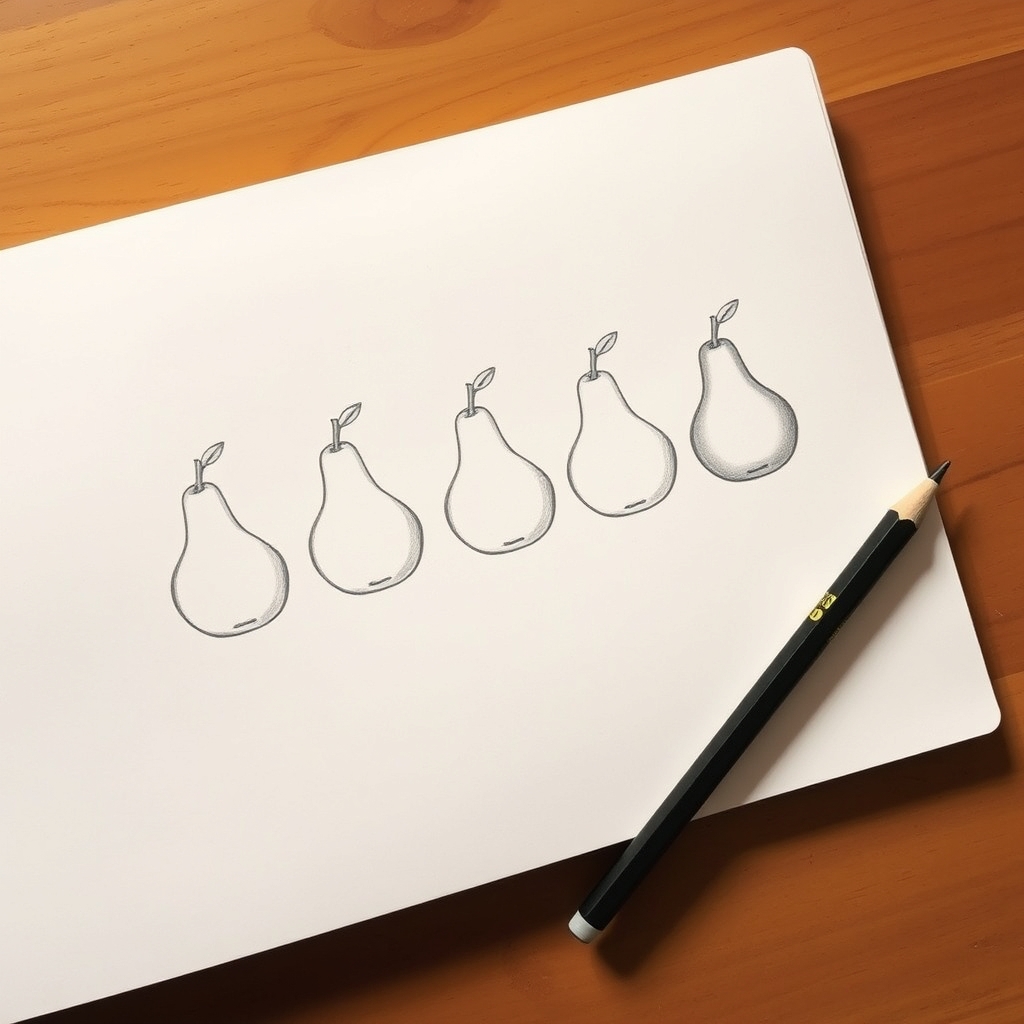
Pick one dull object, a pear, a mug, your own shoe, and draw it five times in a row on the same page. Deciding what to draw is the step that was blocking you, so remove it entirely.
The fifth drawing is always noticeably better than the first, and seeing that improvement on one page is the fastest available proof that the problem was never talent. It is also why repeating a subject beats hunting for a new one.
Fix 3: Give Yourself a Constraint, Not a Prompt
Idea generators hand you another open-ended choice, which is the thing that was already paralysing you. A constraint does the opposite: it removes decisions.
- Only one pencil grade, no blending
- Ten minutes on a timer, then stop wherever you are
- Three values only: white, mid grey, black
- No erasing, so every wrong line stays
- Draw only what is within arm’s reach of you right now
If you want a subject chosen for you as well, our drawing guide sorts subjects by the skill each one trains, so you can pick by what you want to improve instead of by what you feel like.
Fix 4: Change the Medium, Not the Subject
If pencil has gone stale, the problem may be the tool rather than your imagination. Switching to ink, charcoal or watercolor changes what is even possible, which forces different decisions and bypasses the stuck loop.
Watercolor is especially good for this because it cannot be controlled precisely, so perfectionism stops being an option. Our watercolor guide covers the four core techniques, and abstract washes require no subject decision at all.
Frequently Asked Questions
What causes art block?
Usually the gap between your taste and your current skill, made worse by high stakes, too much freedom of choice, or one specific unnamed weakness you are avoiding. It is rarely a shortage of ideas, which is why idea lists so often fail to fix it.
How long does art block last?
A true block typically lasts days to a few weeks and often breaks in one session once the stakes are lowered. If it has lasted months and you no longer want to make anything, that pattern fits burnout rather than block.
What is the difference between art block and burnout?
In a block you still want to make things and cannot start; in burnout the wanting itself is gone. The practical test is to draw for twenty minutes: a block usually feels better afterwards, burnout feels worse. Blocks need lower stakes, burnout needs rest.
Do art block idea generators work?
Rarely, because they solve the wrong problem. They supply ideas when the actual obstacle is the risk of starting. Constraints work better than prompts: fewer decisions rather than more options.
Should I force myself to draw through art block?
Yes if it is a block, but at reduced scale rather than full effort. Twenty tiny thumbnails will break a block where one ambitious piece deepens it. If drawing consistently leaves you feeling worse, stop and rest instead.
Where to Go Next
If the block is really frustration with results rather than a lack of ideas, why do my drawings look bad lists the seven faults behind that feeling and the test that exposes each one.
For a low-stakes subject to restart on, how to draw a rose and flower drawing ideas both finish in one sitting, which is exactly what a stuck week needs.